Author Archives: Roger Farnworth

Unknown's avatar

About Roger Farnworth

A retired Civil Engineer and Priest

17th April 2015 – Stephen and Brenda’s Wedding!

Friday morning 10.30am: Everything is really relaxed … I’ve got a talk sorted … but I know very little about what I have to do … just go with the flow … hopefully Stephen and Brenda will end up legally married at the end of the day and won’t need to head for a registry office to make things legal!

I have to start by saying thank you to both Stephen and Brenda – perhaps particularly to Brenda. Stephen has known me since 1997, when he was 13 or 14 years old. Brenda will meet me for the first time as she comes down the aisle. That’s taking quite risk! Stephen has a good idea whether he can trust me to lead the wedding service, Brenda is having to trust Stephen’s judgement! I hope that after today, Brenda will feel that Stephen made the right call. I would not want to be the cause of any disharmony so early in their married life! It is, though, a real privilege to be asked to lead the service today!

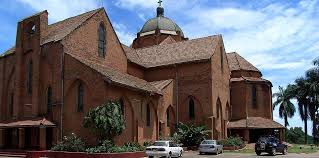
This is the church where the ceremony is taking place: 

https://m.facebook.com/pages/Church-of-the-Resurrection-Bugolobi-Church-of-Uganda/580834558627619100_6129

Friday evening 9.50pm: I am writing to the sound of loud music having retired a little earlier than most of the younger generation. It was a real privilege to be able to marry Stephen and Brenda. Here are a few pictures to give you a flavour of the afternoon.

100_6133

100_6140100_6144100_6138


IMG_20150417_191908

The wedding service book!


The reception was held at the Speke Resort Hotel: http://www.spekeresort.com. This is a 5 star hotel on the edge of Lake Victoria.

100_6152

download (1)

100_6151

100_6149

100_6150

100_6147


It is difficult to post much from the evening event as it was dark and I could not get the camera to focus properly in the dark. But here are a couple of photos.

100_6162

100_6159

16th April 2015

The plan: travel to Kampala …. not sure how …..!

This got slightly more clear during the first few days in Uganda. But in the end did not quite go according to plan. There was no electricity in the morning so it was an early start to get packed in the dark and get breakfast by candlelight at 5.00am.IMAG1301

Bishop Cranmer came to see me off from the guest house. My lift down to the bus did not materialise, so Cranmer put me in the diocesan vehicle and took me down in time for the 6.30am bus ….. which did not leave until 7.05am.

It was a good journey up though the hills to Kabale and then on through the Kabale hills towards Ntungamo. But …… just a few mikes short of Ntungamo something in the transmission on the bus failed. One of the staff from Bismarkan went off to Ntungamo to get a mechanic and we all stood around waiting for an hour or more. The mechanic did a lot of clever things with a hammer and some spanners underneath the coach but seemingly to no avail!

The offending bus! As you can see, not quite the same quality as the one on last night's blog!

The offending bus! As you can see, not quite the same quality as the one on last night’s blog!

Some us managed to squeeze onto another bus. My carefully laid plans of a double seat and luggage with me were to no avail as the luggage all went in the compartment under the seats and I stood for a distance before someone got off the coach and I got a seat.

At 6.00pm, or thereabouts, I got off the coach at Busega, got some charge into the phone at one of the charging booths, got some credit on the phone, contacted Alice and then, after an entertaining chat with some young men, found a taxi and travelled round the Kampala suburbs to Lebowa and Whitecrest Guesthouse.

https://m.facebook.com/pages/Whitecrest-Guesthouse-Whitecrest-Tours-Travel-Ltd/246153055400599


15th April 2015

Early morning outside the Diocesan Guest House.

100_6124

The church teacher is part of the organising committee for the water tank. The construction is providing local jobs.

100_6118

Diocesan Secretary, Stephen, with the part buit water tank. It is difficult to exaggerate how grateful people are for the gift of this tank. It is not a final solution to water supply problems for Nyakimanga but it is an unbelievable improvement for them. So a big THANK YOU to all who contributed to the appeal. The dry season without rain is 3 months long. The tank will give at least 2 months supply for the whole village, perhaps more if they are careful!


Spent the day in and around Kisoro. First managed to get my mobile phone up and running on the internet. Watched while very fast fingers did something to my phone that I could not follow! Then it was off to Nyakimanga (pronounced Nyachimanga with a hard ‘g’) with Diocesan Secretary, Stephen, to see the water tank which was paid for by St. Martin Droylsden and the Good Shepherd, Ashton. Then travelled out to Nyakimanga (pronounced Nyachimanga with a hard ‘g’) with the diocesan secretary Steven. The base for the water tank has been completed, the plumbing is in place and they have started constructing the reinforced concrete walls. Another 10 days or do and the tank will be complete. The roof to the adjacent house has been replaced and new guttering will be added. Once complete +Cranmer will dedicate it.

100_6113

Nyakimanga in the wet season is beautifully green.

Back in Kisoro, I booked tomorrow’s bus journey to Kampala. I’ll be setting off at 6.30am and will arrive in Kampala just before nightfall. Seems quite exciting provided I get up in time! 

The journey is of the order of 500 kilometres, they tell me. It costs 25,000 Ug Sh. Sounds rather a lot until you divide by the exchange rate to get it into UK pounds. There are 4250 Ug Sh to 1 pound! The princely sum of £5.88! So, I have bought myself a pair of seats so that I can keep the luggage with me and have a little space! I’ll be travelling on a Bismarkan Bus. Will it be this good? Wait and see!

download


14th April 2015

100_6061Here’s the plan – leave Solace Guest House in Kigali at 9.00am in taxi to travel to the Ugandan border. Cross the border and be picked up by a Muhabura Diocese vehicle, perhaps travel to Nakyimanga on the way down from the border to Kisoro. Spend the remainder of the day in Kisoro. …………..


100_6071The reality – offered a lift by some friendly folk from Kisoro Baptist Church, Was brought all the way to the guest house in Kisoro. Enjoyed the company and the views on the journey.

A quiet lunch of pumpkin soup and chapati and then a wander down into Kisoro to get some Ugandan Shillings (now 4250 UgSh to the pound!) and a Sim Card which I have 100_6095discovered works fine for calls local and international but not for texts nor the internet. I’ll have to sort this out tomorrow,

Later in the day I visited Seseme Girls High School to see the water tank which was paid for by St. Martin, Droylsden and the Parish of the Good Shepherd, Ashton. The tank is complete except for the connections to the guttering to collect the water!100_6100

We had a party at the guest house in the evening to welcome people from Winchester and yours truly,

+Cranmer very kindly loaned me his laptop to allow me to catch up on emails, etc,

13th April 2015

The plan for today … get to Manchester Airport for 4.30am book in luggage, travel to Kigali, Rwanda via Amsterdam, arriving at just after 7pm local time. Get a taxi into Kigali and stay the night at:

http://guesthouse.solacem.org/

All worked out fine! Kigali at night has a lot of electric lighting, perhaps not so striking to those whonmlive in the UK. But in Uganda, I am used to power cuts and often dark nights. Met someone from Kisoro here at the guest house -Baptist Pastor – Pastor George. He has offered me a lift tomorrow. The taxi driver who was going to give me a lift dropped in this evening so I was able to rearrange things for tomorrow.

kigali_city_night

Some pictures of Kisoro to whet your appetite!

Kisoro itself is not the most impressive town, but the area around it is beautiful! The volcano in the pictures is Mt Muhabura which gives its name to the Diocese of Muhabura. The name means ‘It leads me home’ in Bufumbira the local bantu dialect. I have never seen the mountain from the South, as I have never before been into Rwanda. I’m looking forward to the experience!

5c629d62bbfd59cd04eed6ace6e7de65 4f9c5f276d6ca6876be7c32efcfb938a 9259b61ec6a172638d8bdb3d89c59af4 e277608f0e570017956f179dbf40ca99 f8e4a280aa0dc6811ca0e9f4233cfc5a a38641c09d33894735e7f3c168b32028 b53b932538a69bacb3fc7bb83beca2b8

Uganda April 2015

On Monday I’ll be in Uganda for 10 days visiting friends and hopefully making a valuable contribution in a few different ways.10447622_10204586288887820_7962076033077622007_n

I fly to Kigali in Rwanda on 13th and hopefully cross the border that evening into Uganda to stay at Kisoro for 3 nights. I hope that I’ll get a chance to visit two projects that churches in Ashton Deanery have funded at Nyakimanga, a village near the Rwandan border and at Sesame Girl’s School near the Cathedral in Kisoro. I’ll be staying with Rt. Revd. Cranmer Mugisha, Bishop of Muhabura and his wife Hope.

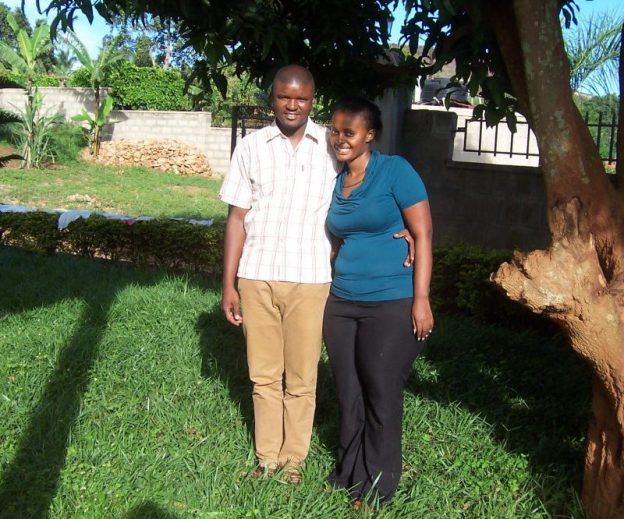
Stephen and Brenda 1

I then find my way to Kampala where I have been asked to take the wedding of Stephen and Brenda. Steve was a teenager the second time I went to Uganda in 1997 and it is a real privilege to be asked to take their wedding service. The picture is from their giving away ceremony earlier this year.

This will be my 5th visit to Uganda! People in Ashton may remember visits from Uganda to Ashton by a number of friends: SimonPeter Kansiime, Revd. John and Alice Tumusiime, Bp. Cranmer and Hope Mugisha. It has been good to establish a partnership in the Gospel with friends from Uganda!

Bake for them two

I have just read this post from Jessica Kantrowitz. It is worth the attention it has been getting. It is challenging and helpful!

Jessica Kantrowitz's avatarTen Thousand Places

gay weddingIn Jesus’ time, the nation of Israel was under Roman rule. The Israelites were allowed to live there and practice their faith for the most part, but they had to pay taxes to Caesar and obey the Roman laws.

To the Israelites, the Romans were evil and ungodly. They had no place ruling over God’s chosen people in God’s chosen nation. That land had been promised to Moses and his descendants when God brought them out of Egypt. Their very presence in the land was blasphemous.

One of the Roman laws stated that any man could be required to drop what he was doing and carry a Roman soldier’s equipment for him for up to a mile. In the sermon on the mount, with his followers gathered around him, Jesus referenced that law and told his followers what they should do in that case:

“If anyone forces you to go…

View original post 1,047 more words

Times Educational Supplement – School Chaplaincy

Back in September 2013 TES carried an article which reported on an Edinburgh Secular Society (ESS) report decrying the influence of chapliancy posts in schools:

http://www.tes.co.uk/article.aspx?storycode=6352780

ESS conducted countrywide research with help from the National Secular Society, and said that large chaplaincy teams – rather than individual chaplains – were becoming more common in schools, and claimed that these teams include members with “more fundamentalist views”, such as creationism and faith healing.

The group, which scrutinised religious groups’ websites and other publicly available information, said that chaplaincy teams regularly had six to eight members in both primary and secondary schools. One secondary – Larbert High, in Falkirk – had 10 members on its chaplaincy team.

The report carried responses from the Church of Scotand and Scripture Union Scotland …. The Rev Sandy Fraser, convener of the Church of Scotland’s education committee, hit back at the criticism. “The Church of Scotland is increasingly disappointed in the nature of these comments by the Edinburgh Secular Society,” he said. “It is extremely inaccurate to suggest chaplains inveigle their way into schools. Chaplains and other community figures are in schools by invitation of the headteacher to assist in whatever way the headteacher feels is helpful to the school. Chaplains are very clear that their job is not to impose their views on the school community.”

A Scripture Union Scotland spokeswoman said that her organisation agreed with ESS that “pupils have a right to hear about different faith perspectives, and that proselytising within a school context is wholly inappropriate”. She stressed that Scripture Union Scotland work took place at the invitation of schools, across all denominations, and was supported by Scottish government guidance.

A Scottish government spokeswoman said that it was “for a headteacher to decide, in conjunction with the local authority and wishes of parents, what links a school should have with its local faith communities”.

This week TES carried a very different article abour chaplaincy in schools. The number of school and college chaplains has more than doubled in the past decade, with support for stressed teachers becoming an important part of their role. Church of England figures show that the number of school chaplains has grown from 200 to more than 400 in the past 10 years.

The role of chaplain “varies hugely, from comforting students in the aftermath of a tragedy or helping to celebrate their successes to quietly listening to a tutor who is facing redundancy or exploring what it means to believe in God at all”, according to the Reverend Garry Neave, the CofE’s lead on chaplaincy.

In an article for TES, he writes that a chaplain “may be the one person the principal can unburden themself to.”

The Reverend John Seymour, chaplain of Twyford CofE High School in Acton, West London, said that he made a point of speaking to teachers who seem troubled.

“You can see on their faces when they’re stressed, whether it’s about work or their personal life,” he said. “I go into their classroom at a quiet time and say, ‘How are you at the moment?’

“I think the fact that they can articulate what’s going on helps them to make decisions about what they want to do, rather than feeling trapped by it.”

The full article in TES on 3rd April is well worth a read.


Listen to the Women!

LISTEN TO THE WOMEN!?!Empty-Tomb-759395

Have you noticed? Perhaps you have.

In the four gospels we have differing accounts of what happened on that first ‘Easter’ morning. I’m pretty sure that you will have noticed that … but have you noticed one of the things that they have in common? All of them concur that it was the women who remained with Jesus to the end and who were first privy to the wonder of the empty tomb. The men seem to have a secondary role in the story. Why does this matter?

In the Jewish culture of the time a woman’s witness was not deemed admissible evidence in a court of law. Women could not to be counted as members of the obligatory ten persons necessary to begin prayer or to set up a Synagogue. The prevailing culture did not trust women. Yet it is women that Jesus trusts to be the first witnesses of the resurrection and it is predominantly the women who remain faithful to Jesus through the story of the crucifixion.”

St. Bede explained, many years ago, that the festival of ‘Easter’ was derived from the name of a goddess whose festival was held on the spring equinox, ‘Eostre’. Interestingly the name ‘Eostre’ is at the root of the word ‘oestrogen’ a female sex hormone. So should we be surprised that those who physically bear new life into the world should also be the first witnesses of the New Life of the Resurrection, and that the English language both preserves and reflects that truth.

Was there something special about these women?

Perhaps the reason these women were privileged to be the first witnesses on this earth of Christ’s resurrection was because they were amongst the few disciples who didn’t leave Christ during His great trial, and were with Him at the cross when some of His other disciples had betrayed or deserted Him.

Not only did these women never desert Jesus, but also they never stopped serving Him – even after he had died. We are told that on the morning after the Sabbath, Mary Magdalene, and other women who had followed Jesus out of Galilee, came with spices to anoint and prepare His body for burial. One of many ‘woman’s tasks’ – like cooking, cleaning, washing and sewing – that these women were accustomed to doing, and which they’d done for Jesus many times before.

Christ acknowledged the faithful and loving service that these women had given Him throughout His mortal life, and realised that what women do to sustain and provide physical life is important and valued in the eyes of God. He knew that their willingness to take care of His physical body, even after He was dead, was a sign of their great love and devotion, and so He blessed and rewarded them for it.

The last century has seen great changes in what is considered ‘women’s work’. The traditional role of a woman staying at home and running the household has virtually disappeared. Women are increasingly free to find fulfilment in the work place as well as, or instead of, the home. However, surveys show that women still do the majority of housework, and there are areas of work where women still find it hard to be accepted. There are places where gender stereotypes still prevail!

The Venerable Rachel Treweek the new Bishop of Gloucester

Under God, our church (the Church of England) now recognises that gender is not a barrier to serving Christ in any role. The recent ordinations of Libby Lane as Bishop of Stockport,  Alison White as Bishop of Hull and Rachel Treweek as Bishop of Gloucester are testimony to the truth that in God there is neither male nor female. That, ultimately, there is no longer something which we can call ’women’s work’ (or for that matter, ‘men’s work’).

The resurrection stories highlight the truth that God entrusts important messages to those who faithfully serve him. When we argue about who does what; when we become too focussed on gender roles; or when we become too concerned about our status and about power and influence we miss out. For while we are arguing our case, Jesus turns to someone else who has been faithful in service and entrusts his message of love to them.

What matters most of all is our relationship with God, with Jesus and with each other. It is relationships that are central to the Christian faith, and it is love that matters more than power, or rights, or influence. It is relationships that matter more than codes of conduct, or fulfilling what is expected of us. Yes, during Jesus’ life on earth, women had traditional roles; they ministered to Jesus’ physical needs and remained faithful to him. As a result they were among the most privileged of all Christ’s disciples: they never deserted the Saviour; their testimonies of Him never faltered; they never stopped bearing witness of His divinity.

So, it was the women who were entrusted first with the Good News, ‘Christ is Risen!’

It was the women who first were told to ‘Go and tell’.

We have heard their message down the ages. A quick glance around almost any congregation will of course confirm that it is women who constitute the numerical majority of the Christian faithful. But this is not just a message for women to share. Christ calls on all his faithful ones to shout, ‘Christ is Risen!’ and to find ways to ‘Go and tell’ others of all that we have received from him – men, women and children!

The message is alive in both men and women, and we both have a mandate to share the message this Easter. Christ is alive and well; He dwells within us, and calls us (all, whoever we are) to share in the work of the Kingdom. Ashampoo_Snap_2015.04.06_07h20m56s_045_

HAPPY EASTER