Author Archives: Roger Farnworth

Unknown's avatar

About Roger Farnworth

A retired Civil Engineer and Priest

MOD Kineton and its Railway History

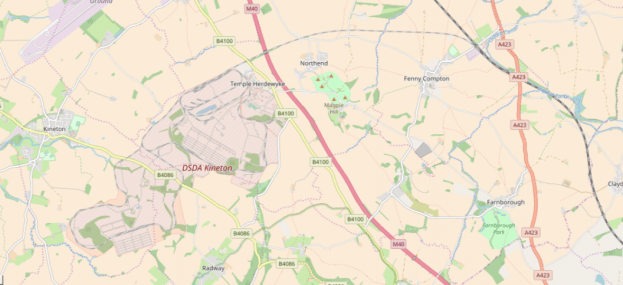
MOD Kineton developed as a depot in the Second World War. Construction began in 1941 and the depot came to occupy most of the land between Kineton and Temple Herdwyke. It was a Central Ammunition Depot, it also served during the war as a transit camp, with Polish and Czechoslovakian troops based there. [1]

Today, the site houses the Defence Explosive Ordnance Disposal, Munitions and Search School, and there is an extensive military family married quarters patch at Kineton, along with its associated information centre – Kineton HIVE. [1]

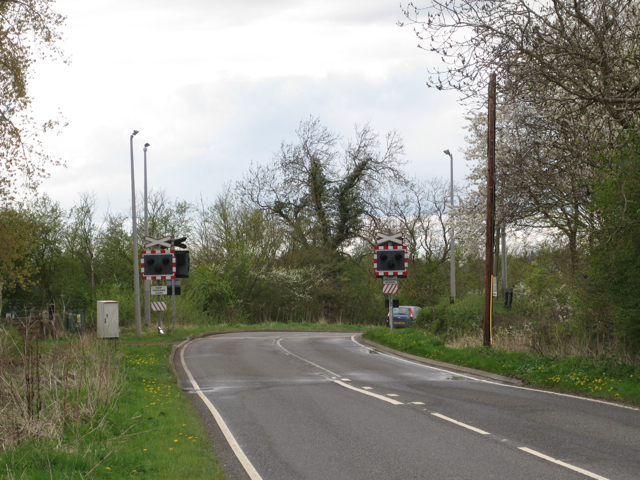
The MOD site at Kineton extends over several hundred acres and is linked to the main railway network by a branch-line. The branch-line is the remains of the old Stratford-upon-Avon and Midland Junction Railway (SMJ) from Fenny Crompton. The site was located just to the west of what was Burton Dassett station.

The Stratford-upon-Avon and Midland Junction Railway (SMJ) was a railway company formed at the beginning of 1909 by the merger of three earlier companies: the East and West Junction Railway; the Evesham, Redditch, and Stratford-upon-Avon Junction Railway; and
the Stratford-upon-Avon, Towcester, and Midland Junction Railway.

In 1910 the Northampton and Banbury Junction Railway was purchased and an east-west network was formed which linked routes to Bedford and Northampton in the east to lines leading towards Banbury and Gloucester in the west, by way of Towcester and Stratford-on-Avon.

The constituent lines had each been built with a view to carrying Northamptonshire iron ore to South Wales and the West Midlands, but they were all unable to finance their planned lines in full. The formation of the SMJ in 1909 was in effect a financial reconstruction, but the management of the combined company also showed a certain flair for generating tourist income, based on the connection with Shakespeare and also the family connections with George Washington. In addition the line developed as a shorter route for Midland Railway goods traffic from the Bristol area to London.

Some upgrading of the poor-quality infrastructure was undertaken, and some heavy mineral flows – continuing until as late as 1960 – passed along the line, but the severe operational constraints led to the diversion of traffic to other routes in 1964. By that time all of the passenger traffic had dwindled to nothing and the line was closed down piece by piece. A short section of the original network remains in use serving a Ministry of Defence depot at Kineton. [11]

Burton Dassett Station was known as Warwick Road Station and closed in 1873.
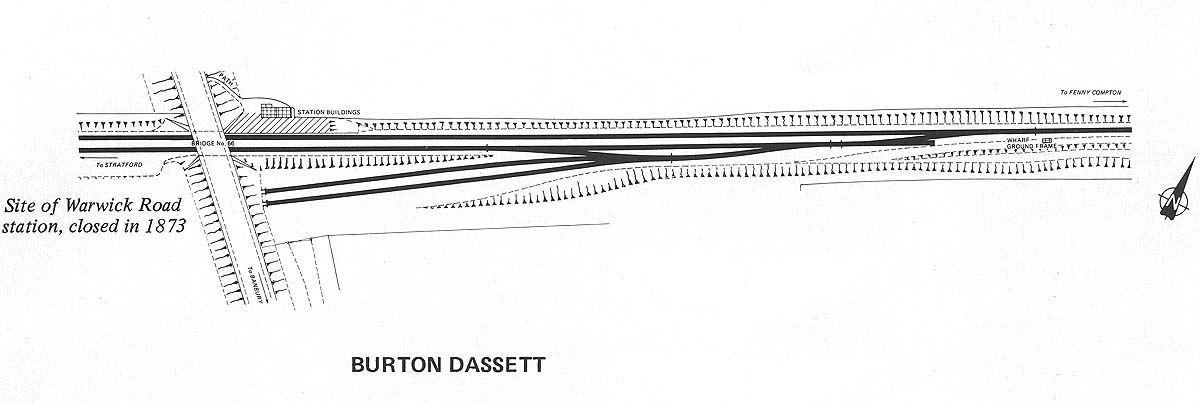
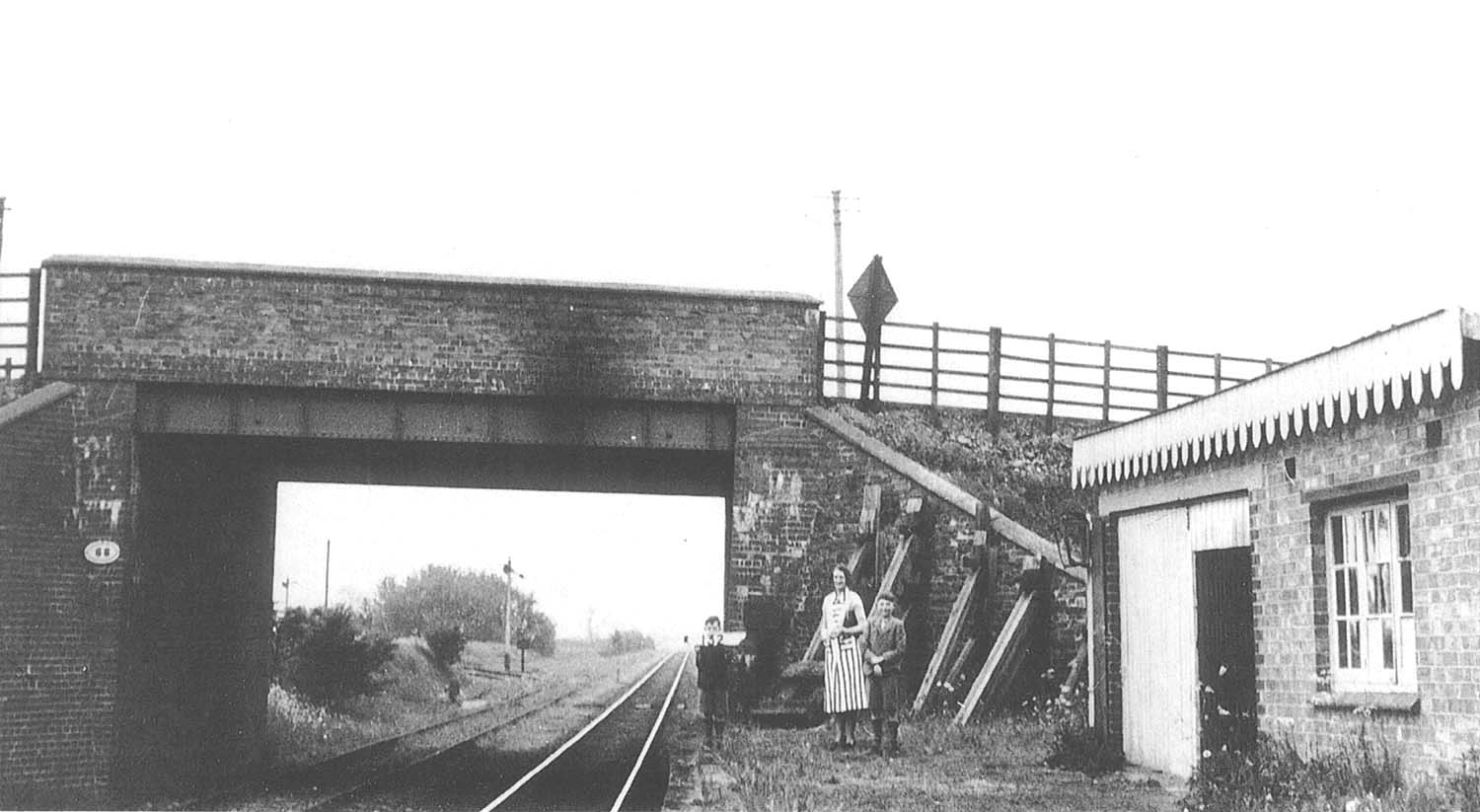
A schematic drawing showing Burton Dassett Platform and its two sidings goods yard post 1909 when it was operating under the control of the SMJ company. The Edge Hill sidings were built near to the site of the Warwick Road station some fifty years later. The photograph below shows the platform while still in place. [5]
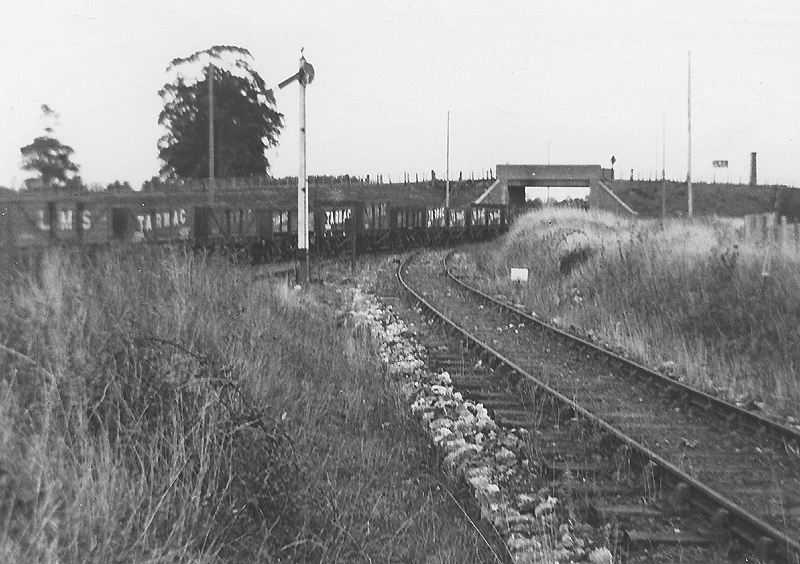
The ammunition magazines were set out over a wide area and the depot was served by a yard branching off the LMS leading to an extensive network of sidings serving the magazines. Following closure of the through former SMJ line in 1965, the operation of the 4 mile stub from Fenny Compton (with connection to the Banbury to Leamington Spa main line) serving the Depot was taken over by the MoD. The line later passed into MoD ownership. It included some of the route of the disused Edge Hill Light Railway. [6]

The Edge Hill Light Railway [6] was formed to exploit the large ironstone reserves which lay just under the surface on the Northamptonshire/Oxfordshire border at a time when the enormous demands of Word War 1 were really making themselves known. The driving force behind the proposal seems to have been the proprietors of the Stratford on Avon and Midland Junction Railway who saw it as a means of increasing traffic on their railway. These proprietors were well connected City operators who specialised in increasing the value of railways before selling them on. The promoters acquired mineral rights to over 600 acres around Edge Hill. Unusually, instead of going for a simple mineral railway they opted for a public light railway and appointed Holman F Stephens, recently released from his army commitments, as engineer. This use of light railway powers for an essentially mineral railway has echoes of the still far from completed East Kent Light for which Stephens had been responsible since 1910. 

The proposed railway was 11¼ miles long, including a triangular junction with the SMJ at Burton Dassett and after two miles a rope-worked incline followed by three branches serving different parts of the ore field. These branches stretched well south into the ironstone field. In view of objections from landowners and the local authorities, the proposals were scaled down to a total of 5½ miles, and it was agreed to construct bridges instead of a number of level crossings, very unlike Stephens, but not unprofitable as the excavations were through exploitable ironstone.

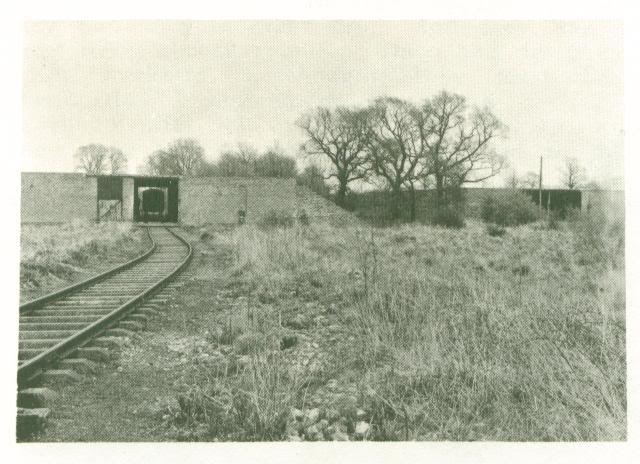
The SMJ would have running powers from Burton Dassett to the foot of a cable-worked incline (just over two miles) and passengers might be carried over this portion. A high-level line from the summit of the incline to the quarries would be for mineral traffic only. The maximum permitted speed was 12mph on both parts of the line. The Light Railway Order was finally approved on 17 July 1918.View of the connection between the EHLR with the SMJR with ‘Burton Dasset Platform’ located beyond the bridge on the right.
Two Brighton ‘Terriers’ were purchased from the LB&SCR to work the low-level line, No 1 (an A1X, No 673, formerly named Deptford), in April 1919, and No 2 (an un-rebuilt Al class, No 674, formerly named Shadwell) in July 1920. The Edge Hill had no engine shed, though strangely there was a turntable at the junction, and the engines were serviced and largely kept at the SMJ’s Stratford-upon-Avon locomotive shed, under a ‘gentlemen’s agreement’, facilitated by the two companies’ shared chief officers. As a quid pro quo, the SMJ is said to have used one of the ‘Terriers’ for its Stratford to Broom Junction trains at times when it was short of locomotives.

Construction of the Edge Hill Light Railway began sometime in 1919, with the expectation that that it would be feeding traffic to the SMJ by the end of the year. However construction work was very slow and may have been suspended for a while. This was no doubt because the railway had been started at the time of a post war industrial boom which ended in 1920 resulting in poor economic prospects for a line dependent on iron ore. Further the SMJ, still government controlled, was soon to be nationalised or grouped and the proprietors could now see their investment being compulsorily matured somewhat sooner than expected.

During construction some limited traffic had developed when the incline was finished in summer 1922, as the ground through which construction was taking place at the top of the ridge was usable ironstone under a light overburden. This traffic was assessed in later years by a former engine driver, Mr H Green, to have been about 180 tons, or three 60 ton trains, a day. A siding agreement for the junction had been concluded with the SMJ on 1st March and ore was dispatched to Midlands and Staffordshire ironmasters.

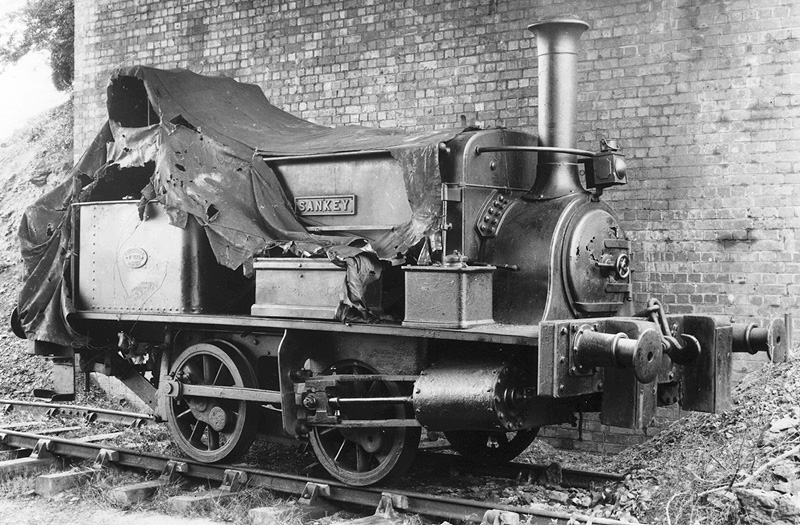
The ‘self acting’ or gravity worked incline was still only partially completed but plant could now reach the top and a small Manning Wardle 0-4-0ST (1088/1888), named Sankey from its original employment on the building of the Manchester Ship Canal, was obtained from Topham Jones and CoCo. in June 1922.EHLR 0-4-0ST ‘Sankey’ is protected from the elements both by a tarpaulin as well as standing under the bridge. On the buffer-beam ‘Sankey’ is equipped with an inside set of dumb buffers.
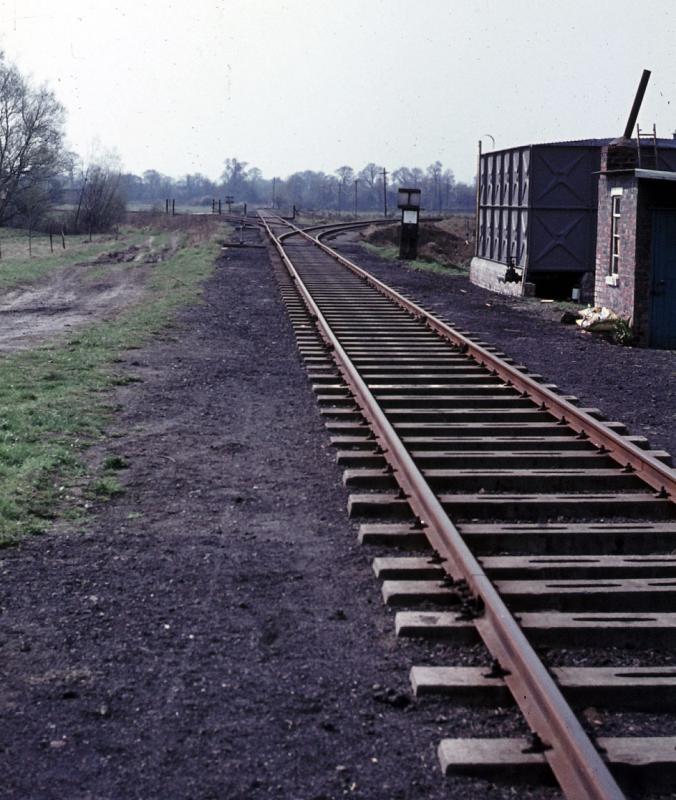
The railway started from a small yard adjacent to the SMJ’s Burton Dassett platform. It then proceeded on slight gradients for some 2½ miles to a fan of sorting sidings at the foot of the 1 in 6 cable worked incline. At the top of the incline the line extended some yards to finish at an uncompleted cutting near the road to Ratley village; near the incline top there was a back shunt and a few yards of track towards Nadbury.

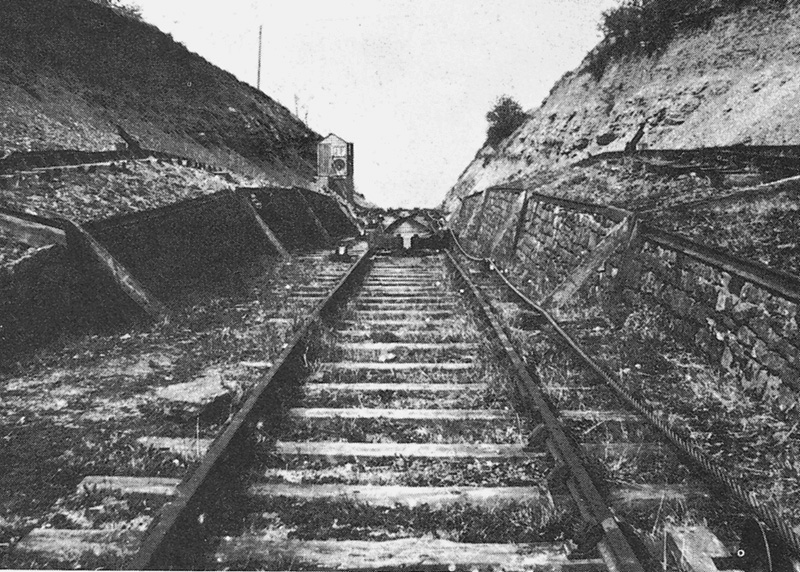
On Tuesday 10 October 1922 a directors’ inspection took place in connection with the incline mechanisms. During the inspection, there was a fatal accident resulting from runaway wagons. The incline was never repaired and commercial traffic ceased.View of the top of the EHLR incline showing the hut used to house the cable controlling equipment on 11th May 1930. Either side of the track the initial portion of the embankment has been supported by stone walling laid at an incline with rail used to anchor the top of the wall.Looking up the EHLR incline with EHLR 0-6-0 No 1 standing on the left of the photograph on 28th May 1935. The locomotive was purchased from the LBSCR being previously No 673 ‘Deptford’.
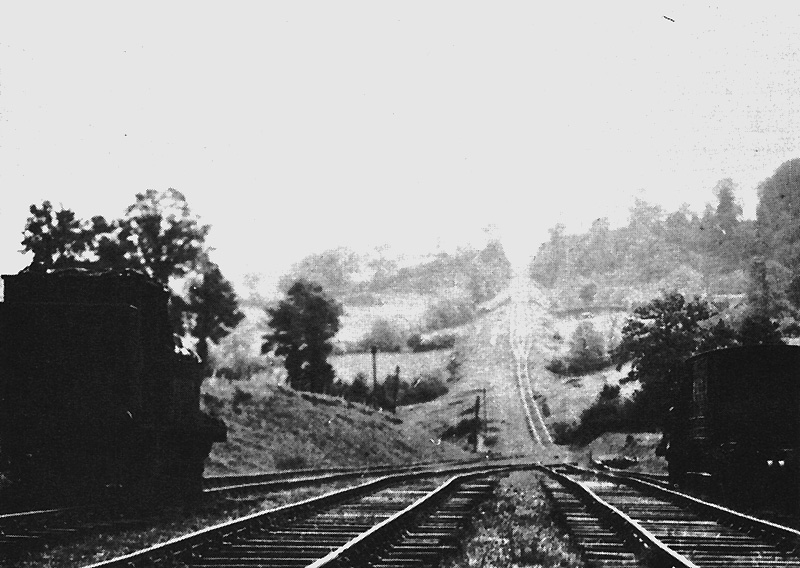
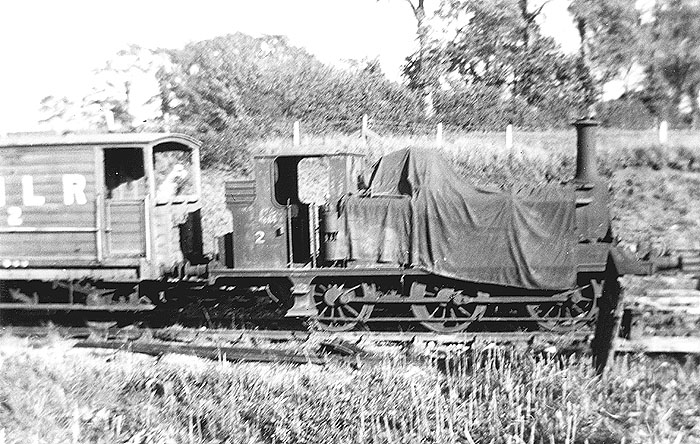
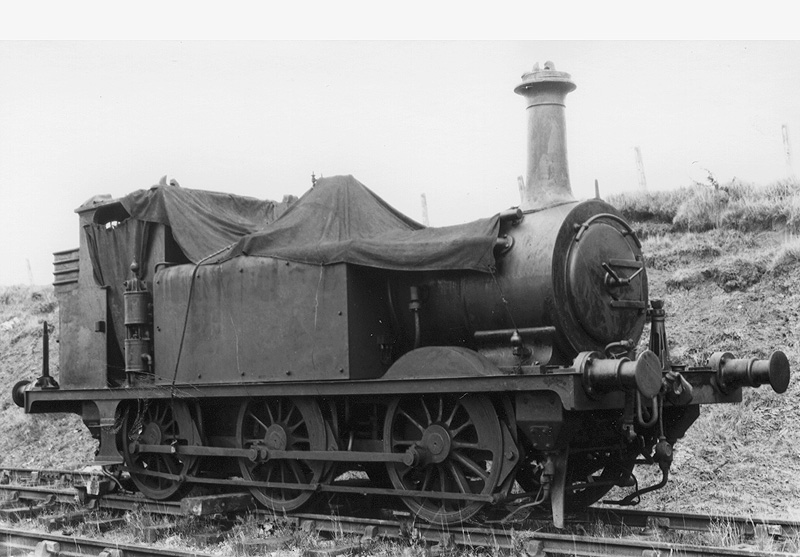
Photographic evidence seems to show little change over the years, except encroaching vegetation and rot, although a few construction tipper wagons seem to have disappeared at an early date and Brake Van No 1 was moved by persons unknown and ran away towards the junction, coming to a halt after about a mile. The Terriers were considered for purchase by the Southern Railway in 1938, but although they were assessed as ‘reasonable’ later in 1942, they were rejected due to their condition.This photograph is being taken from the base of the incline looking across the plain towards the SMJ junction. The EHLR storage sidings can be seen with the derelict Terrier locomotives and rolling stock.EHLR 0-6-0T No 2 is seen coupled to the brake van whilst being protected from the elements with a tarpaulin.EHLR 0-6-0T No 1, an ex-Brighton ‘Terrier’ stands with a tarpaulin covering the cab, boiler and fittings whilst the chimney has a protection inserted to prevent water ingression to the inside cylinder chest. Prior to being sold to the EHLR it carried the LBSCR running number 73 and was named ‘DEPTFORD’.
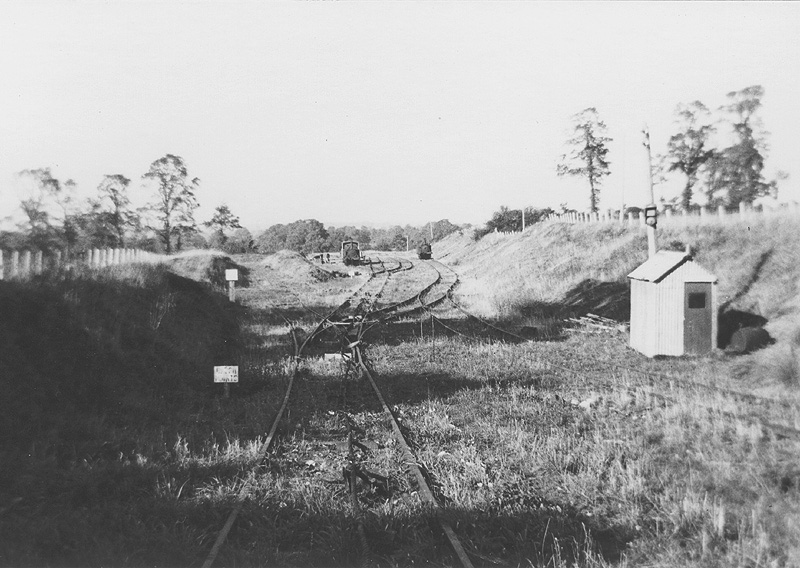
Resurrection of the line was considered early in WW2. However the site was requisitioned for the war effort and the Terriers were marooned on unconnected track. The Terriers were not finally cleared until the renewed demand for scrap that swept the bankrupt nation after WW2 and were all cut up by James Friswell and Son of Banbury over spring and summer 1946. 

The company story did not quite end with WW2. The owners, claiming they wished to take advantage of the boom in UK ironstone production during the 1950s, sought compensation from the MoD to reinstate the bottom end of the line via a deviation. This was probably simply a device to obtain greater compensation and no detailed plans seem to have been submitted. The Lands Tribunal gave the claim short shrift. The Company was finally wound up in November 1957. [6]

MOD Kineton

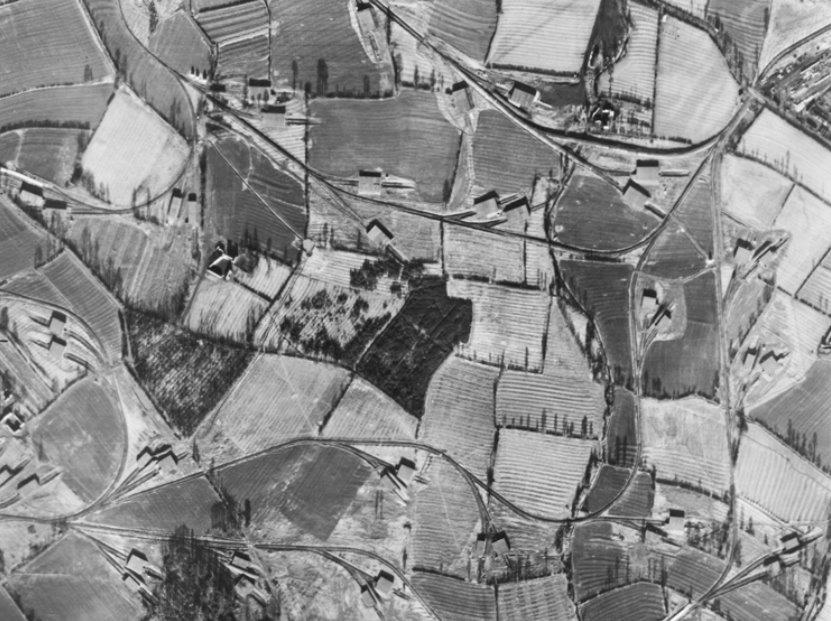
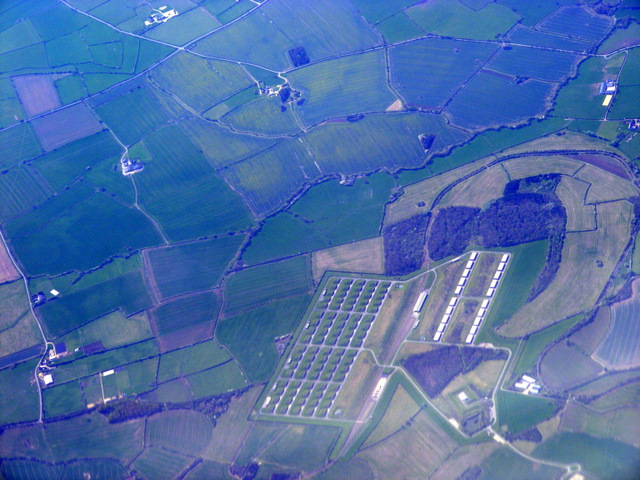
The depot itself has an extensive railway system of 76 miles of track. [5] The sketch plan below shows the extent of the network in 1947, it also shows in green the line or the Edge Hill Light Railway. [4]A part of the extensive ordnance depot at Kineton, Warwickshire, surrounded by ridge
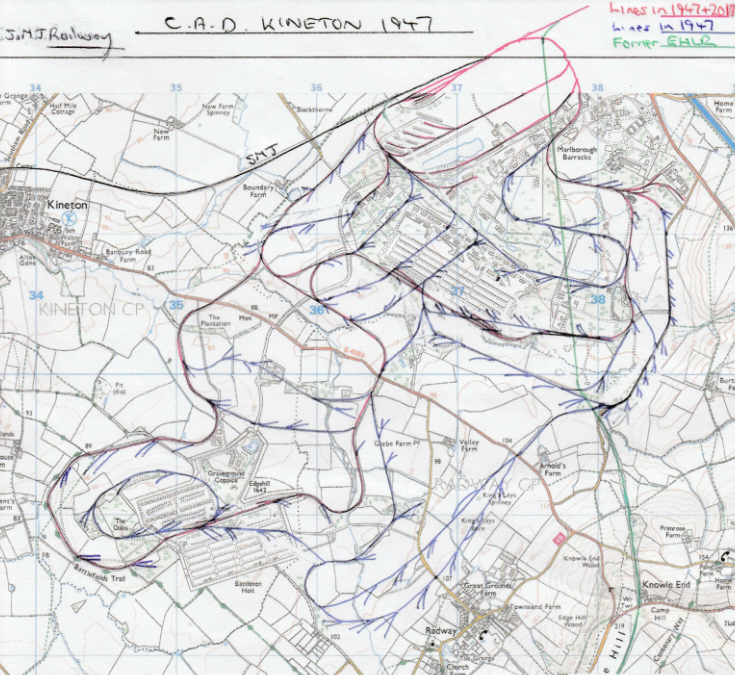
and furrow. An extract from NMR RAF/CPE/UK/1926 509216-JAN-1947 English Heritage (EHA)
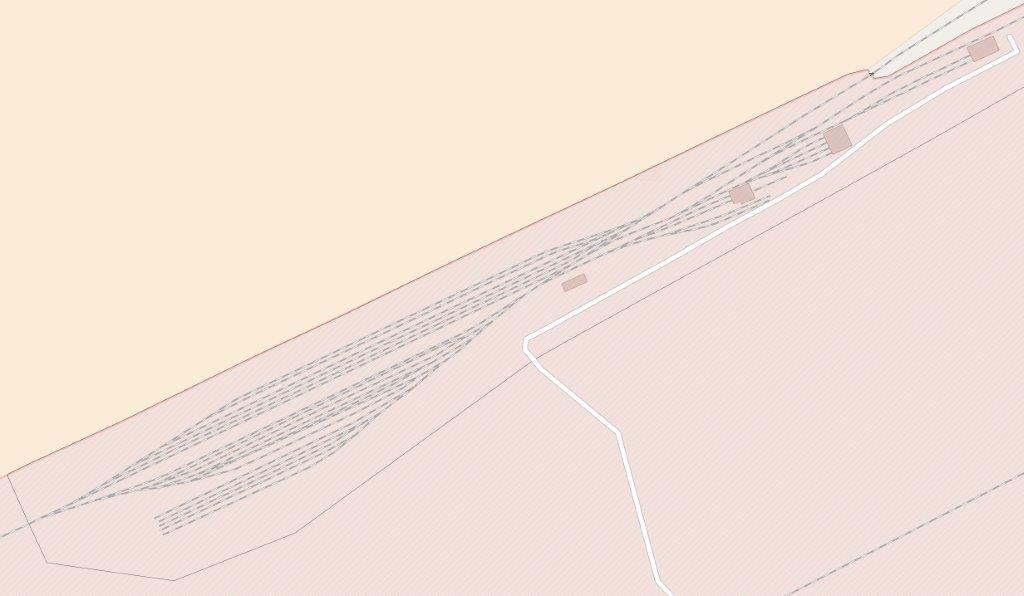
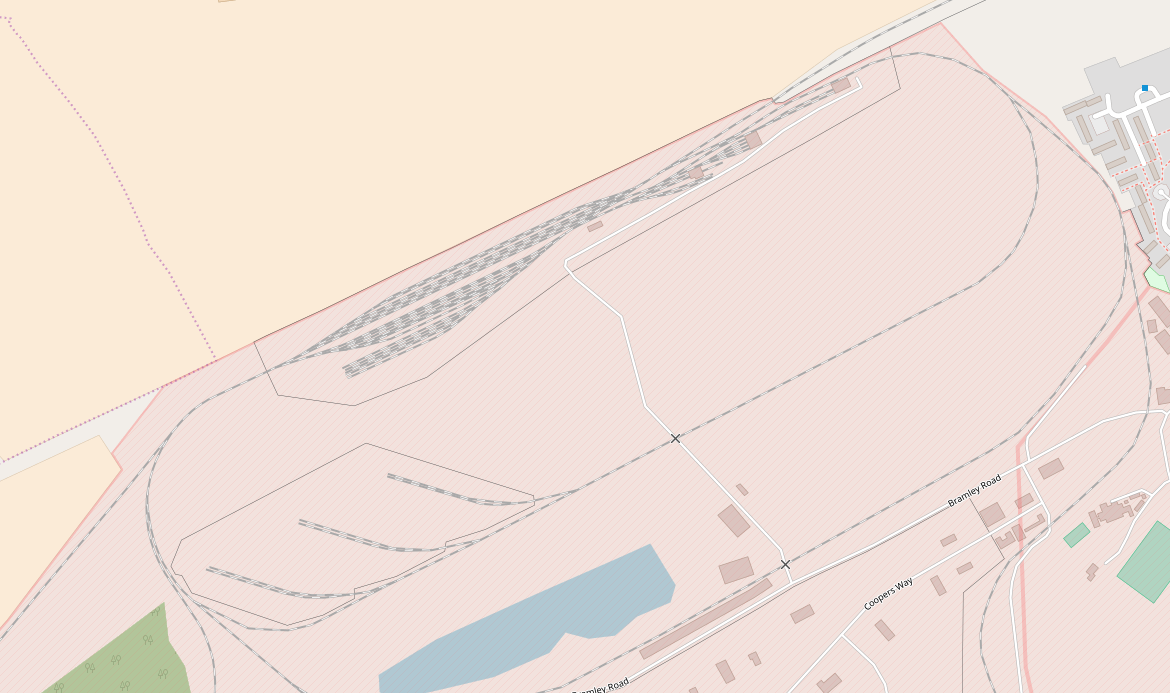
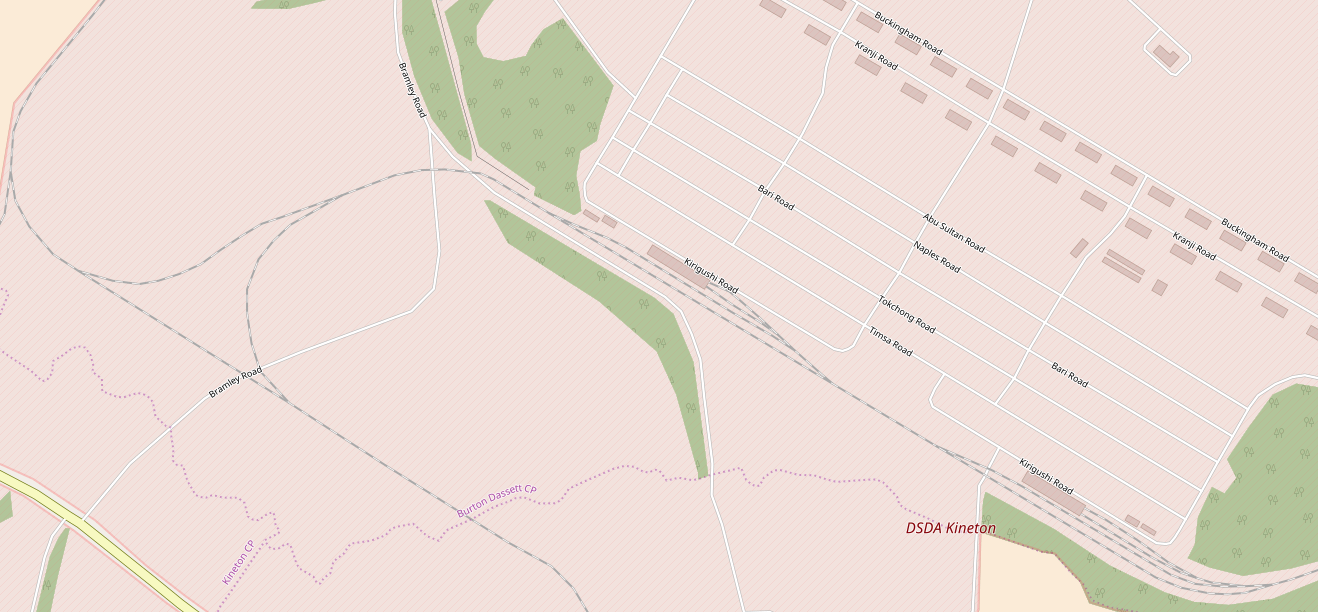
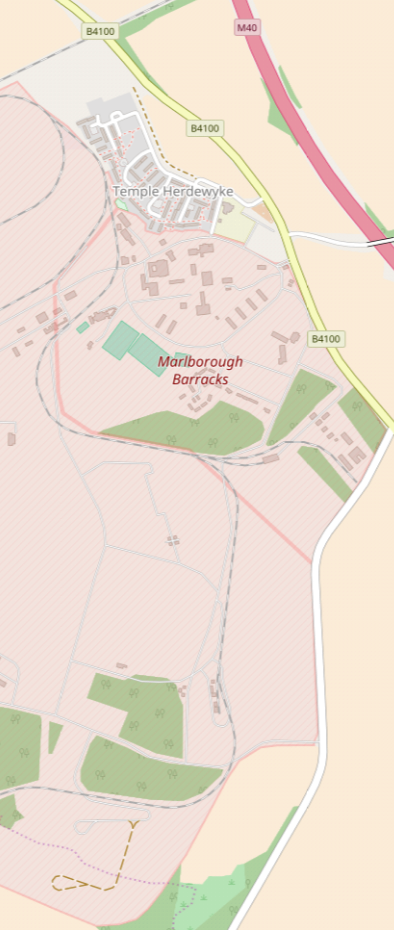
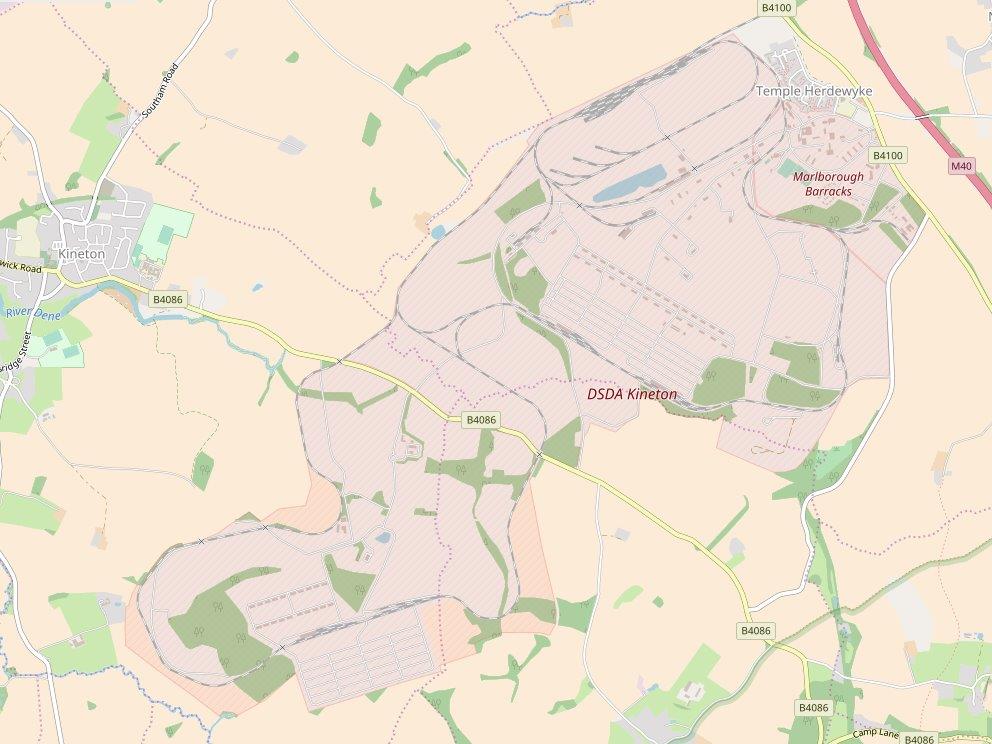
RAF Photography. [9]Openstreetmap shows the extent of the internal railway system in the 21st Century.
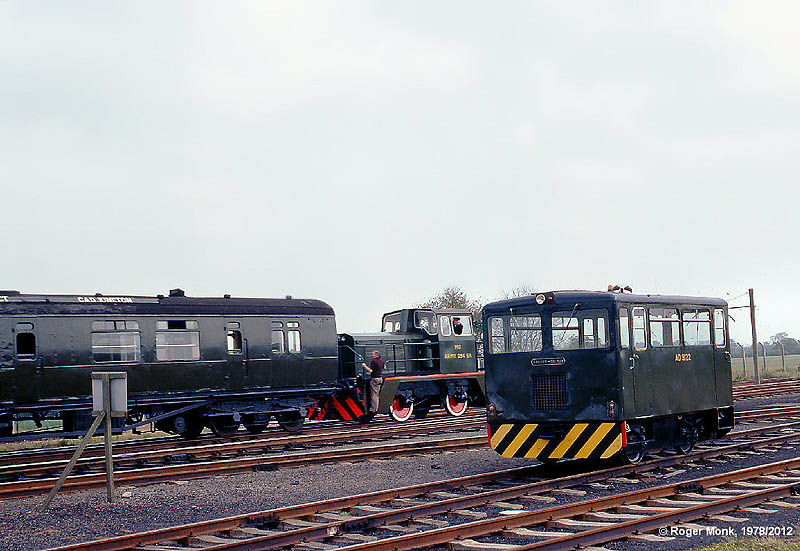
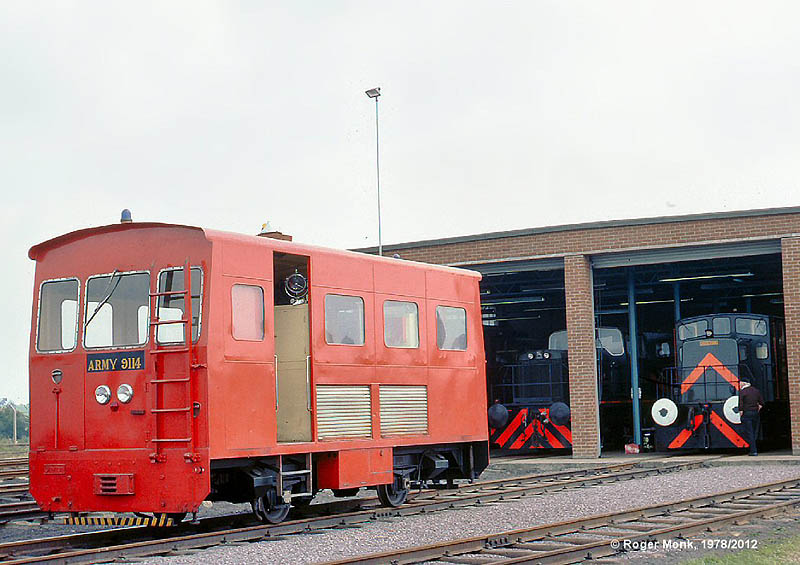
Some of the storage magazines had no road access so small railcars were used as staff transport. Some were fitted out as fire tenders. [4]MoD No 9122 a four-wheel personnel transport Railcar built by Baguley-Drewry in 1975 (Works No 3711 of 1975) stands in the sidings. (c) Roger Monk. [4]View of Army 9114, a Fire Tender Railcar, seen standing outside Kineton Central Ammunition Depot’s locomotive shed. The unit was built by Clayton Equipment Company in 1968 (Works No. 5380/1), (c) Roger Monk. [4]
Kinston had other small fire-tenders operating in the 1960s. Two which were scrapped in 1970 can be seen in a flickr photo posted by Gordon Edgar. [7]

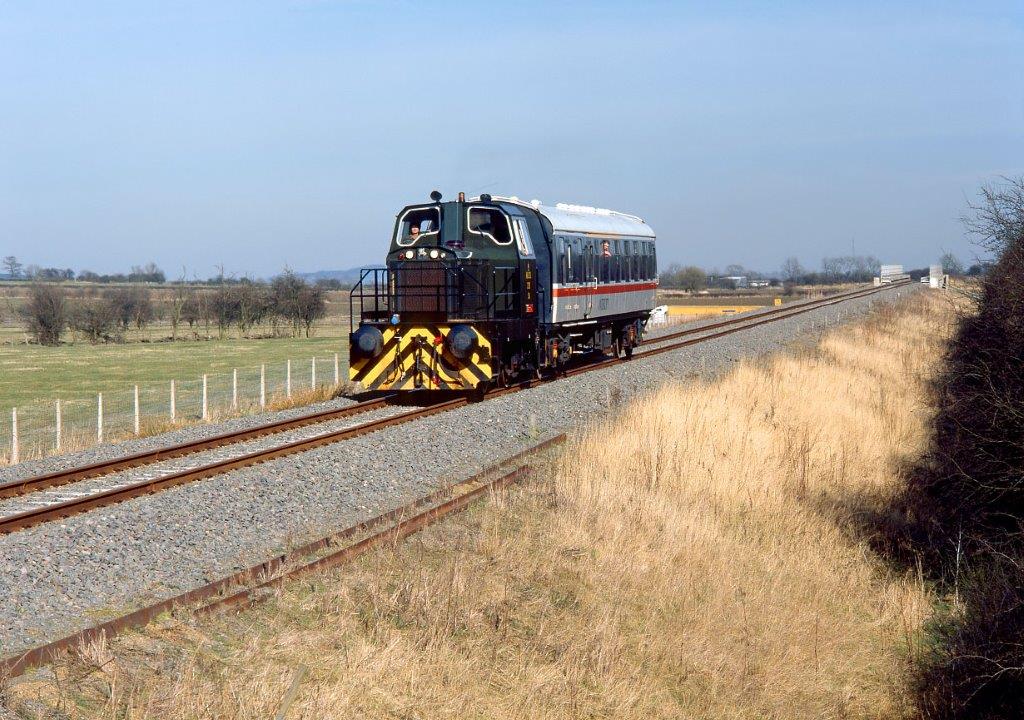
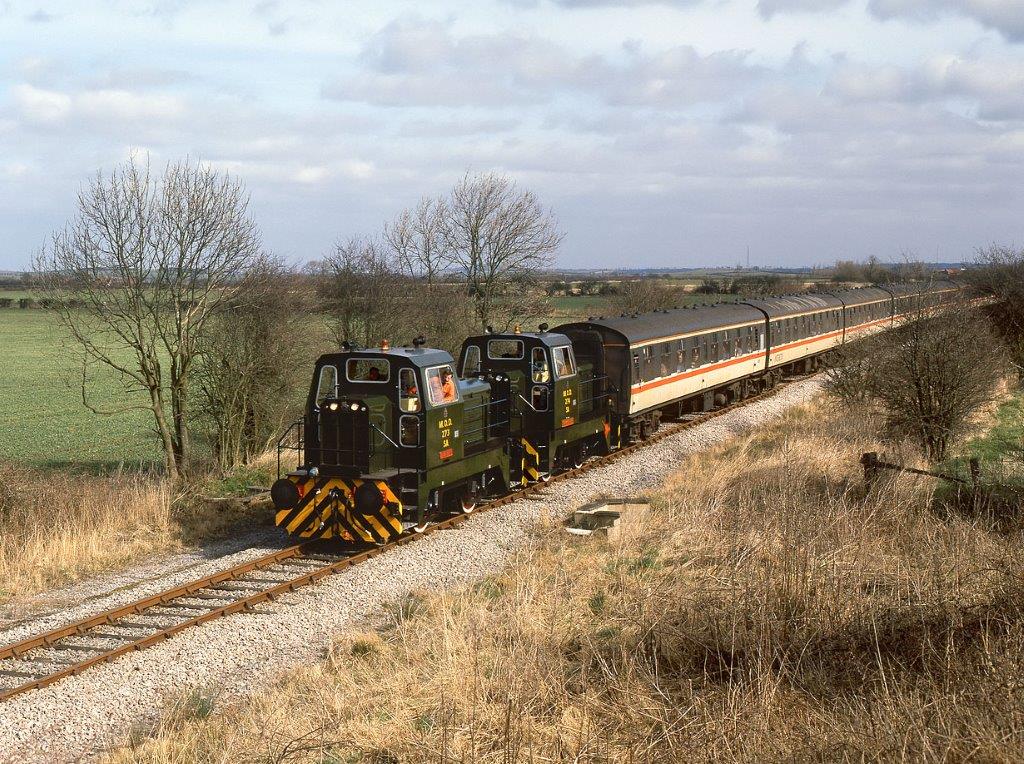
When the M40 was built there was a period when the rail link to the MOD site was cut. It was a while before a new bridge was built over the motorway. After the bridge was built, the branch-line was completely renewed with full depth ballast and welded joints. [1][2]Martin Loader comments (see below): Army loco 278 Coppice (built by Thomas Hill in 1988) heads towards MoD Kineton on 12 March 1995 after taking ex-works Mk1 coach 21274 for a run along the MoD Kineton to Fenny Compton line. It is pictured on its way back from Fenny Compton and has just crossed over the M40 motorway (note the lorry just behind the coach). The rebuilding required when the motorway was built a few years previously has given this stretch of track a very modern appearance for a freight line with deep ballast and continuously welded rails, (c) Martin Loader. [2]
During the 1980s the extensive network of sidings was cut back when internal road transport to serve a central rail/road transfer facility was introduced.

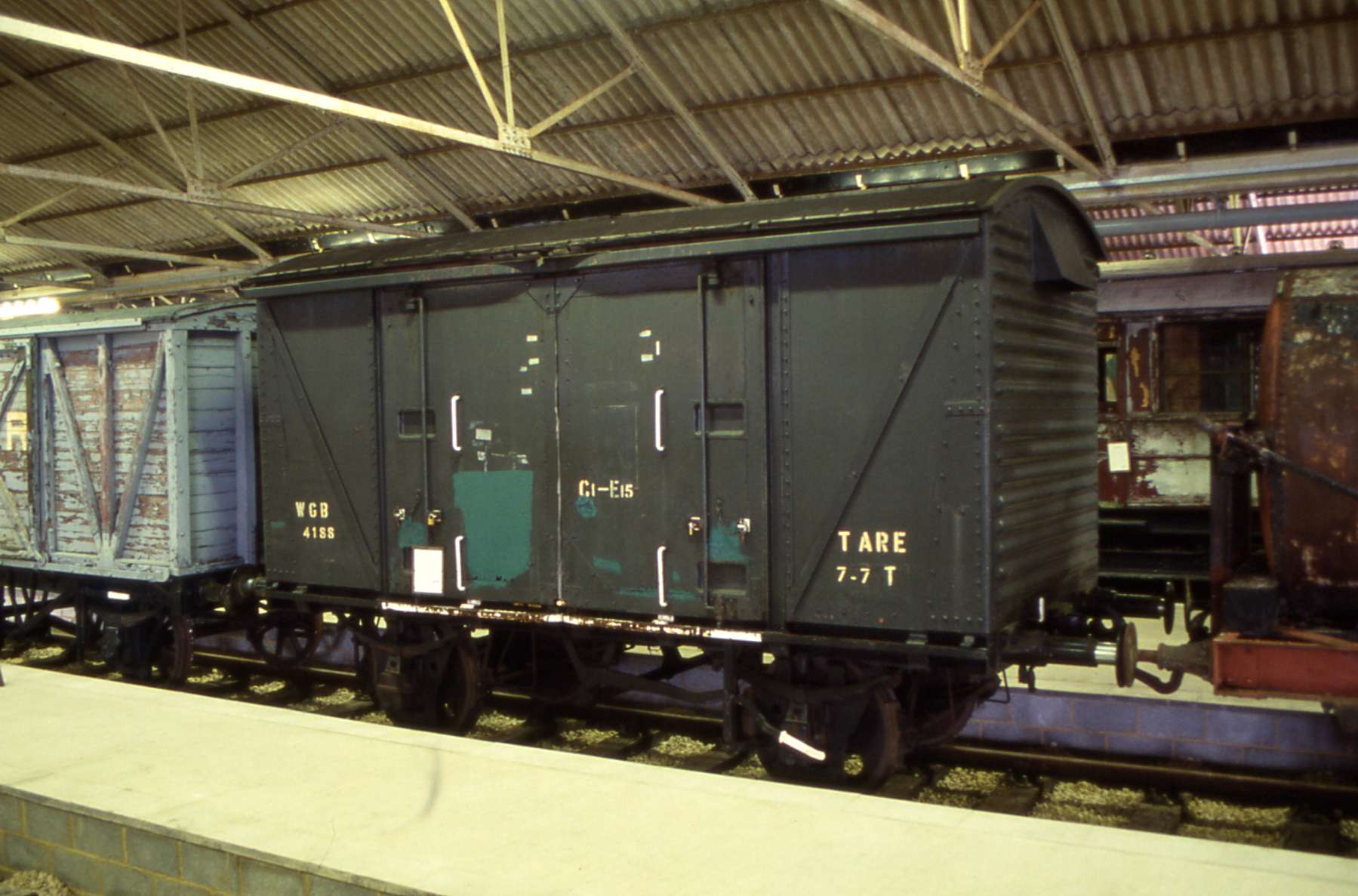
The depot stores spare railway carriages and locomotives on behalf of the various UK Train Operating Companies, [1] utilizing some of the redundant sidings for this purpose. In 2018, the Depot and railway are still in use. The above information and more can be obtained from the Industrial Railway Society’s Preliminary Draft Handbook Industrial Railways & Locomotives of Warwickshire. [3][4]

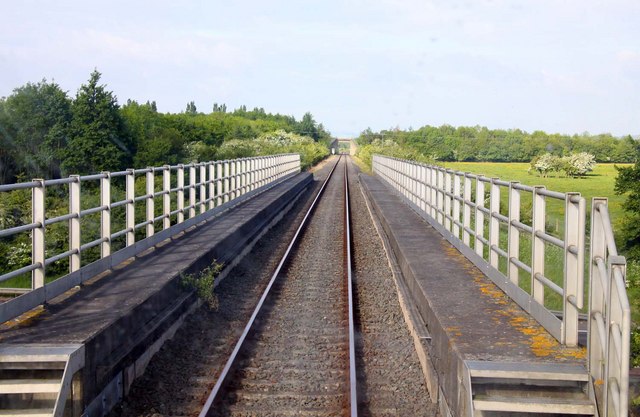
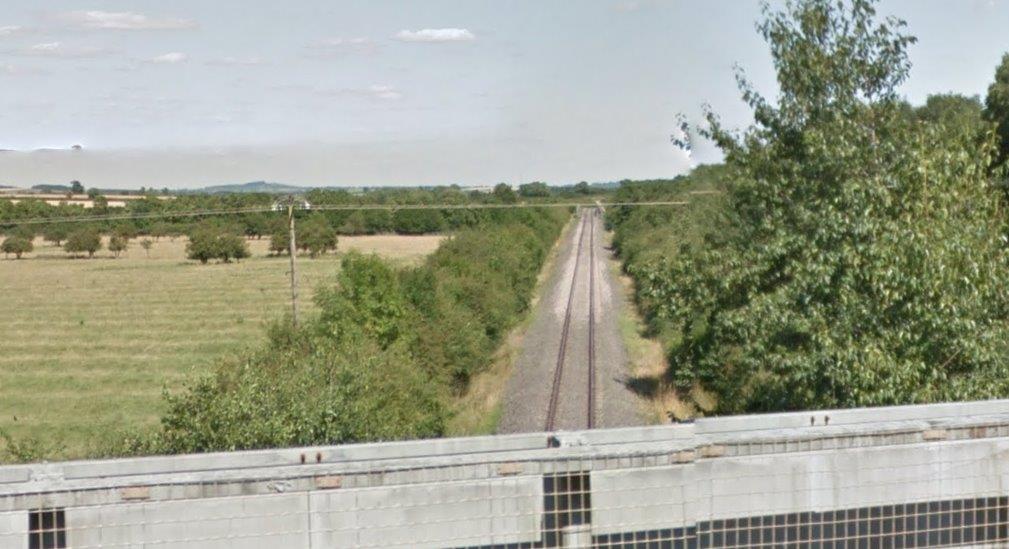
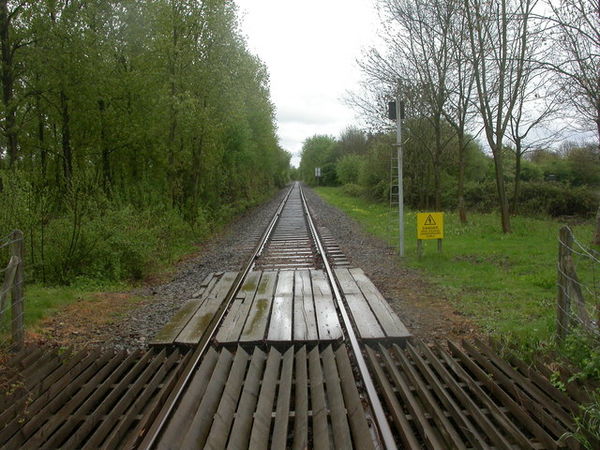
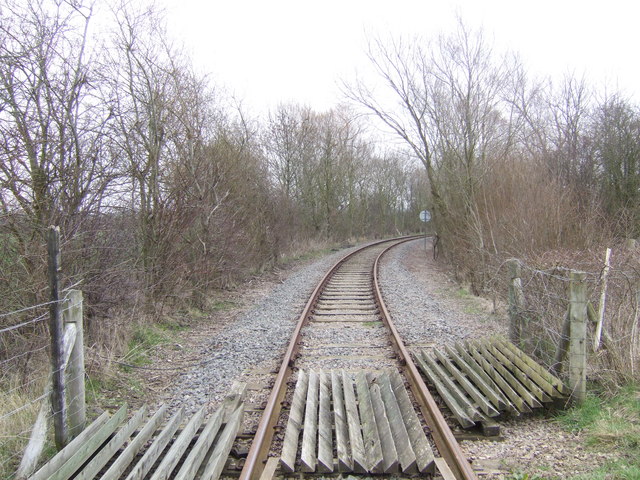
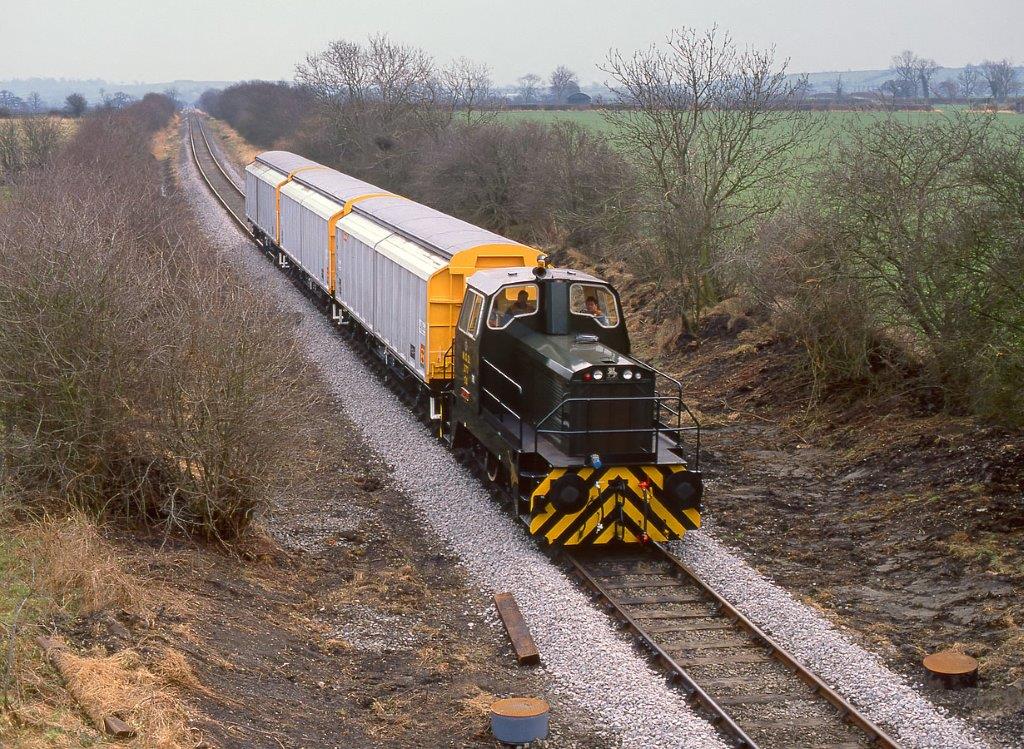
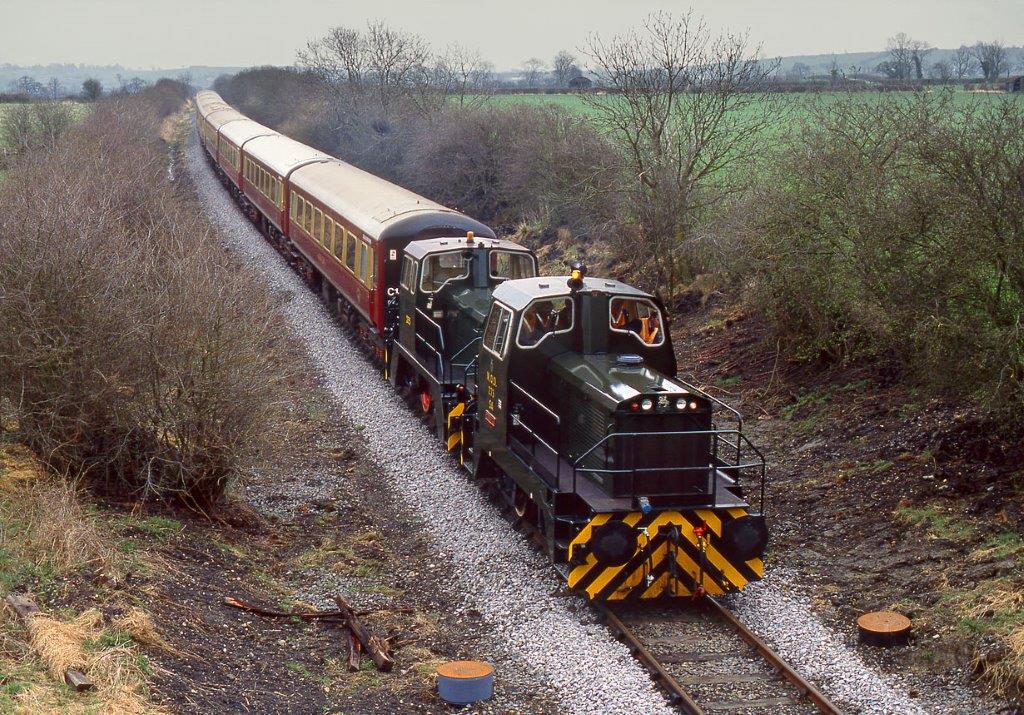
The rail link left the main line and crossed the motorway (M40), before running in a straight line towards the depot.Some pictures of the link follow, three at Google Streetview images and others are used with the kind permission of Martin Loader. [10] The rail-link bridge over the M40.Martin Loader comments: Army loco 277 trundles along the Army’s Fenny Compton to Kineton line near Knightcote, heading for the MOD depot on 24 February 1992 with three immaculate VGA wagons of military stores. The wagons had been tripped up to Fenny Compton on the 6M19 07:45 Didcot to Fenny Compton, behind 47309, (c) Martin Loader. [10] Looking east toward the mainline from Knightcote Lane.Looking east toward the mainline from Church Road.Looking west toward the M40 from Church Road. Martin Loader comments: Army locos 273 Edge Hill & 265 have a very unusual load to haul as they traverse the MoD line from Fenny Compton to Kineton on 28 March 1992. They are passing Knightcote with the Branch Line Society ‘Kineton Pullman’ railtour. The tour had started from Manchester Piccadilly behind 47597, with 58013 added later for working top’n’tail up various branches. Ironically I had visited this location a month previously and had taken a picture of a more normal sort of train you would expect to see at this location. [10]Army locos 273 Edge Hill & 274 Waggoner (built by Thomas Hill in 1987) head towards Kineton on the MoD branch from Fenny Compton exchange sidings with the Hertfordshire Railtours 1Z16 09:35 Paddington to Kineton ‘Edgehill’ railtour on 13 March 1994. They are pictured approximately half way along the branch, near Northend. The tour had traveled from Paddington behind 47811, and would soon be moving around the Army depot via a complicated set of reversals, which involved another Army loco (278 Coppice) on the rear. [10]Two ppictures above of the M40 Bridge, (c) Steve Daniels. [21]The rail-link bridge over the M40. The rail-link, looking east toward the M40.The B4100 over-bridge, (c) Steve Daniels.. [20]The rail-link looking west toward MOD Kineton.And a driver’s eye view, (c) Steve Daniels. [22]In miserable light, Army locos 273 Edge Hill & 265 head back towards Fenny Compton with the Branch Line Society ‘Kineton Pullman’ railtour on 28 March 1992, after doing a tour of Kineton Army Depot (in the background). The tour had arrived at Fenny Compton behind 47597 & 58013 working top’n’tail. [10]Class 47 No. 1714  with vans arriving at MoD Kineton in April 1971. [15]
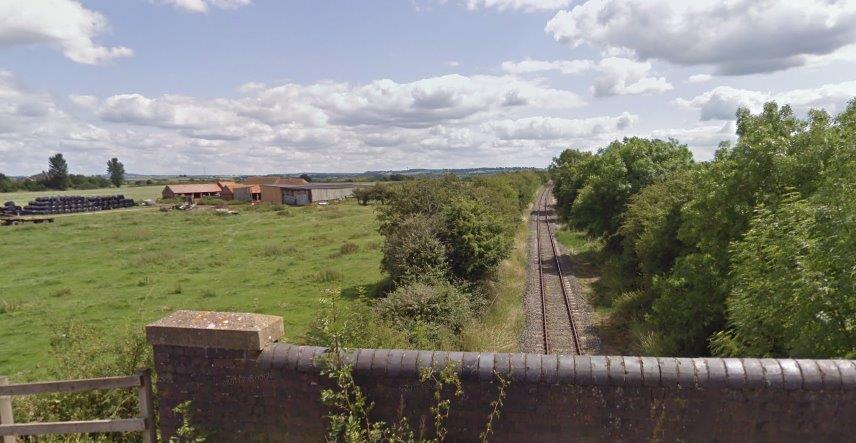
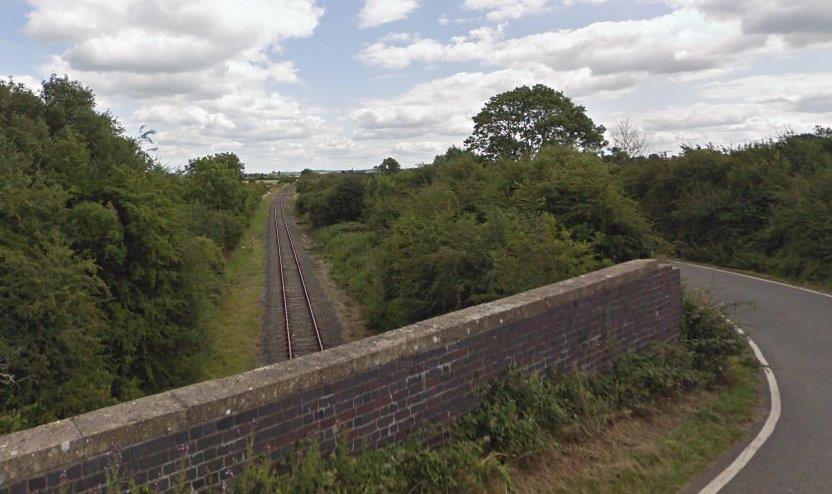
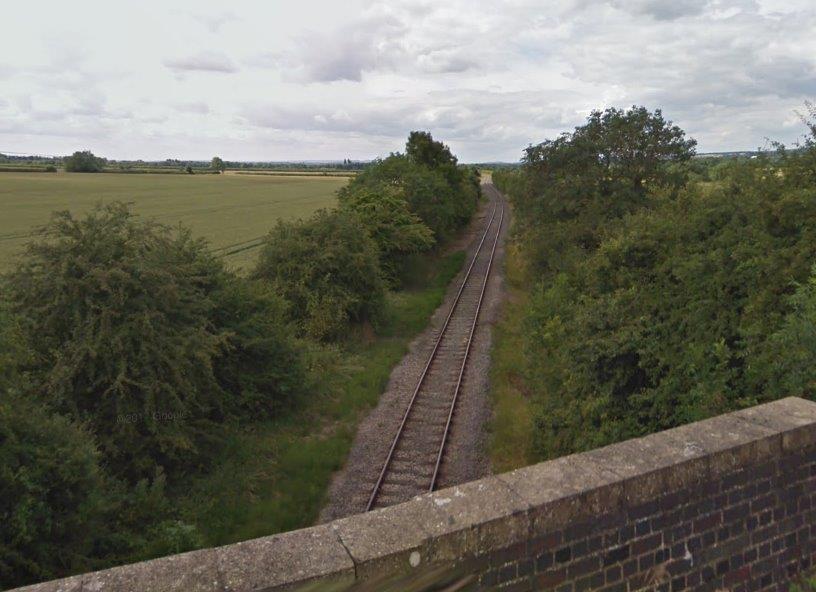
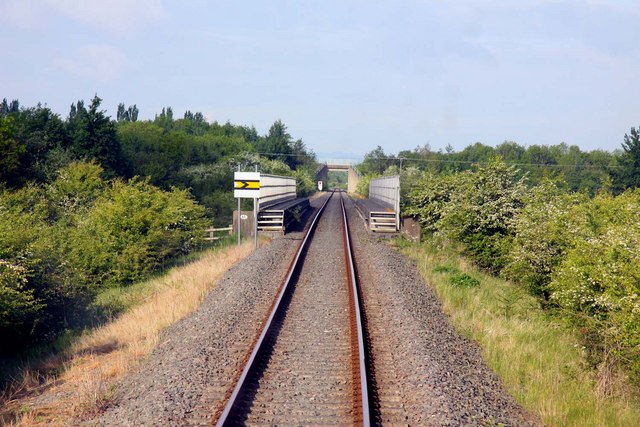
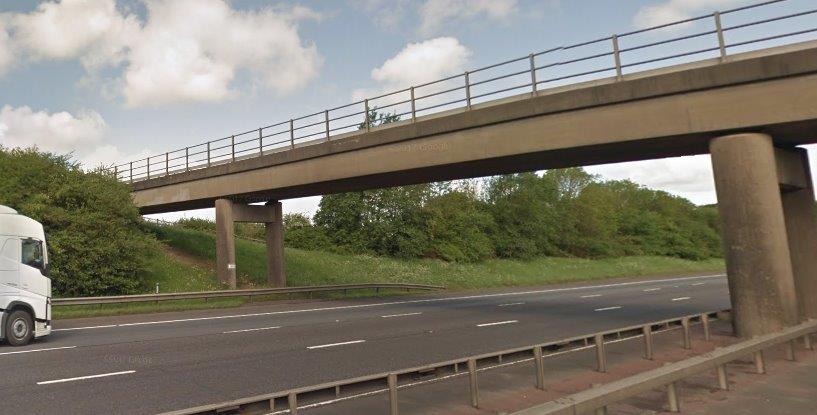
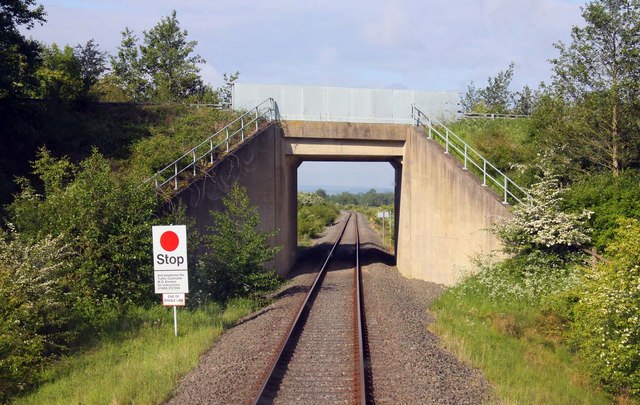
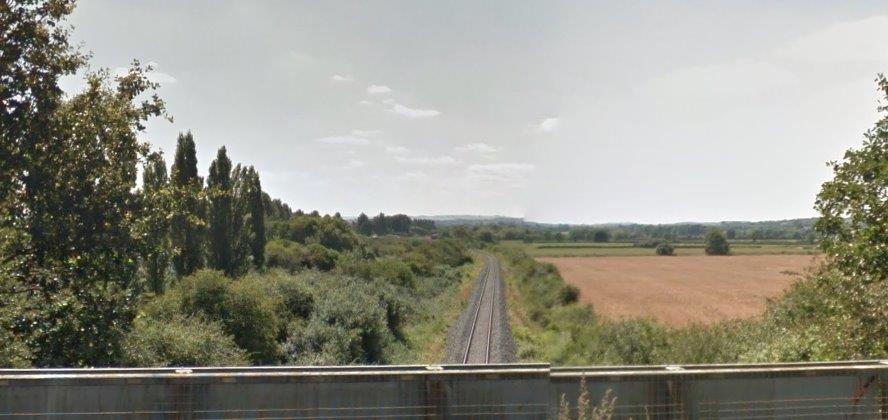
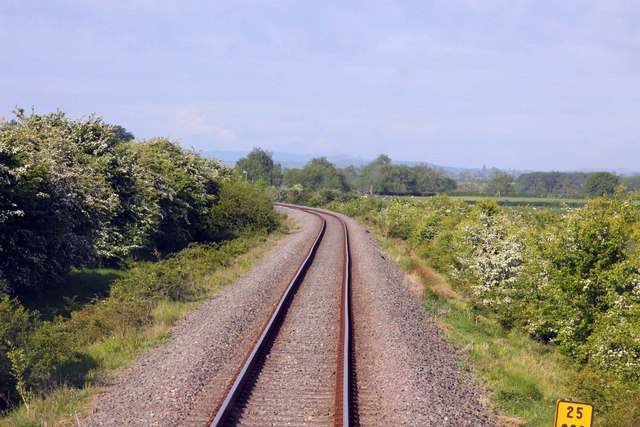
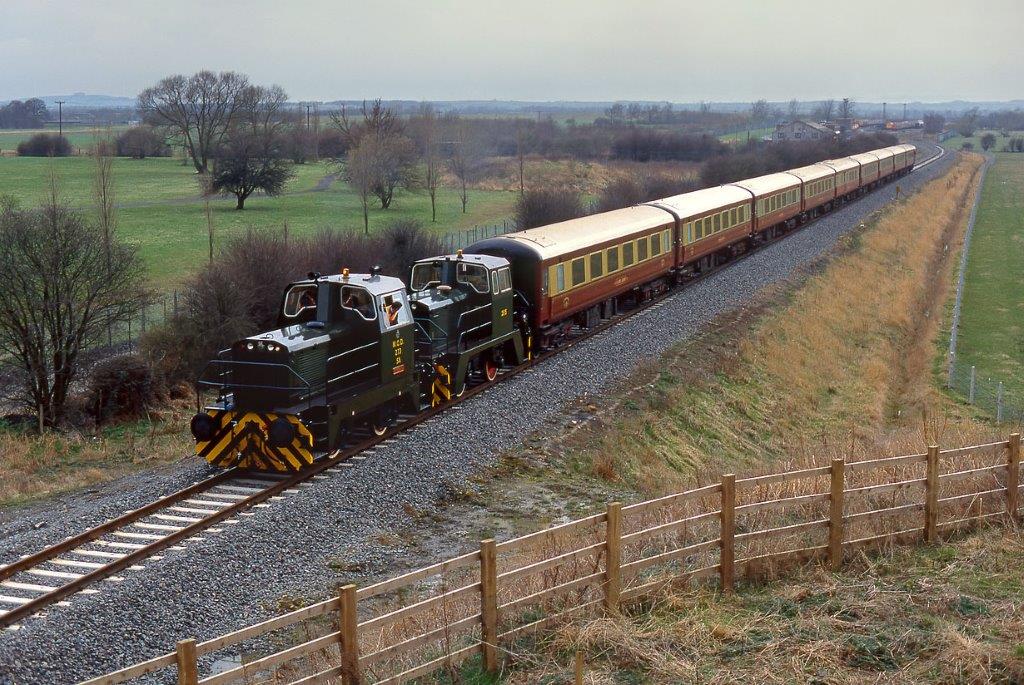
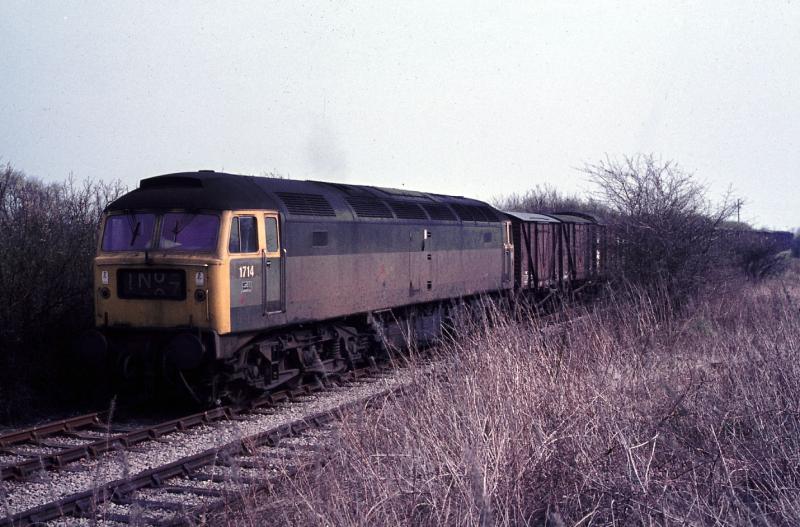
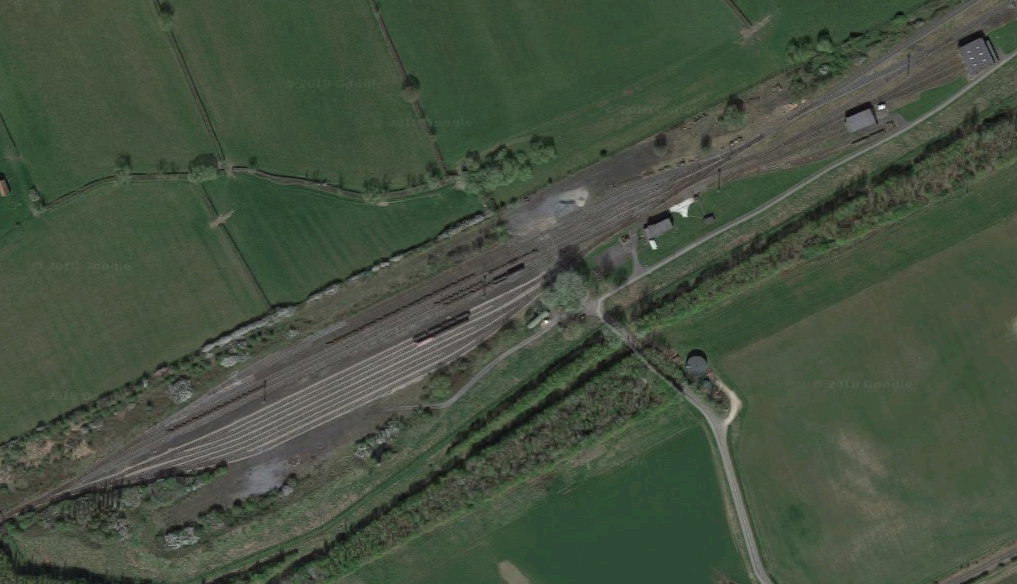
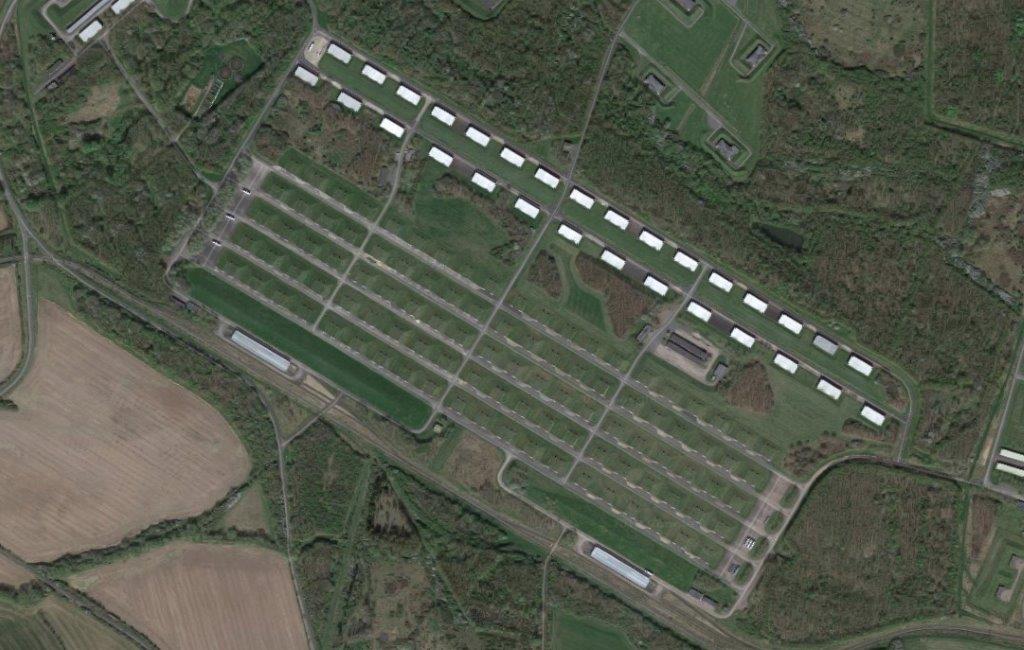
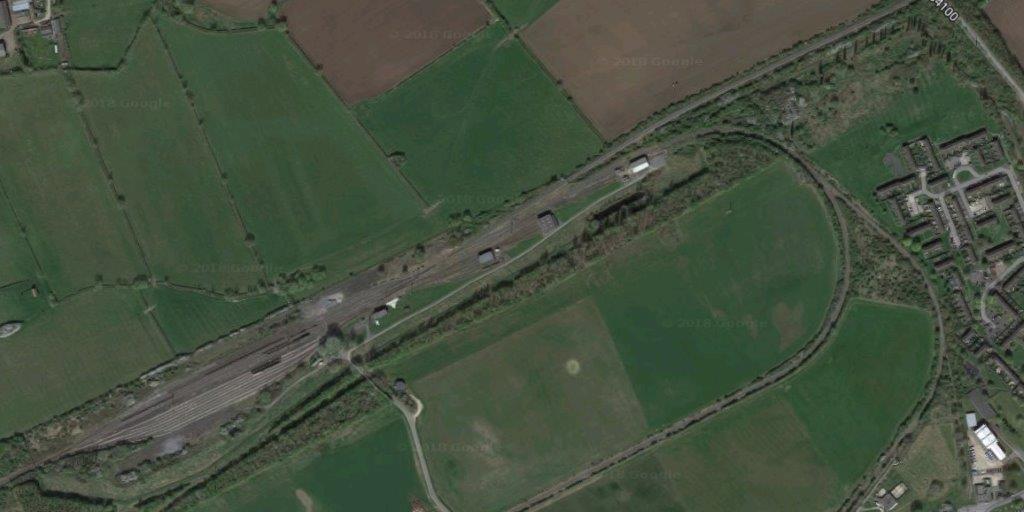
MOD Kineton’s rail link enters the satellite image below by passing under the B4100 which can just be picked out at the top-right of the image. The location of the old Burton Dassett  platform was just off the image at the top-right corner on the north side of the line and to the east of the road bridge. The first element of the rail network encountered by an arriving train was the receiving and dispatch sidings which also are visible on the satellite image below.In the satellite image immediately above the four-track engine shed can easily be picked out close to the centre of the picture. A few images of the loco shed follow:
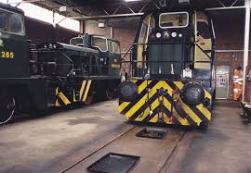
Thomas Hill V307, V272 and one other, unidentified TH in the loco shed at Kineton [8]

Thomas Hill V333 at M.O.D B.A.D. Kineton Loco Shed. [8]

AB663 at Kineton. IIRC, this had recently arrived from Germany where it operated with the BAOR and was built to continental loading gauge. [8]

Thomas Hill (Rotherham) Limited (THR) was a company which repaired and sold steam road vehicles, diesel and electric road vehicles and railway locomotives. It later made its name building and rebuilding diesel locomotives. In 1962, negotiations were started with Rolls-Royce Ltd to take a financial interest in THR. These negotiations were concluded in April 1963 with Rolls-Royce Ltd taking a 51% controlling interest and THR became a subsidiary of Rolls-Royce, Diesel Engine Division, Shrewsbury.

On 30 June 1989 the company was sold again, this time to RFS Engineering Ltd. RFS were already operating at the old BR Doncaster works. The Thomas Hill name was dropped, but developments of TH designs continued to be produced. RFS’s first seven locos (narrow gauge locos for the channel tunnel contract) were numbered into their own scheme, thereafter works numbers of locos continued TH’s numbering.

Stock and work were transferred to RFS’s Doncaster works by August 1993. The final loco (CRACOE, for Tilcon, Grassington, N Yorks) was built at Doncaster as RFS Doncaster went into receivership. In 1998 RFS was acquired by Westinghouse Air Brake Co and in 2000 was renamed Wabtec Rail Limited. Wabtec has retained the IPR in the Thomas Hill and Sentinel ranges of locomotives. [12]

Locomotives

I have been endeavouring to find details of all the locos used on the site. The SMJ Society (http://thesmjr.ning.com) led me to a table prepared in 1960 which gives details of the locos on the site up to that date. [17]

Loco No Power Type Builder Year Dates Disposition
013 Steam 0-4-0ST WB 1941 3/58 Gone by 7/59
102 Steam 0-6-0ST HE 1943 1/52 To BIS 11/53
128 Steam 0-6-0ST HE 1944 1/52 to 3/58 To BIS 7/58
137 Steam 0-6-0ST HE 1944 7/57 to 3/58 To BIS 7/58
147 Steam 0-6-0ST WB 1944 7/57 to 3/58 To ARN 3/60
149 Steam 0-6-0ST RSH 1944 1/52 to 11/53 To ARN 10/54
150 Steam 0-6-0ST RSH 1944 4/56 to 3/60
155 Steam 0-6-0ST RSH 1944 3/55 to 3/58 To BIS by 7/58
164 Steam 0-6-0ST RSH 1945 8/55 to 3/60
172 Steam 0-6-0ST WB 1945 3/58 To LM by 7/59
174 Steam 0-6-0ST WB 1945 3/55 to 7/59
182 Steam 0-6-0ST VF 1945 11/53 to 5/56 To BIS by 4/57
197 Steam 0-6-0ST HE 1953 3/58 to 3/60
8206 Diesel 0-4-0DH NBL 1955 7/59 to 3/60
8209 Diesel 0-4-0DH NBL 1959 7/59 to 3/60
8210 Diesel 0-4-0DH NBL 1958 7/59 To ARN 9/59
8212 Diesel 0-4-0DH NBL 1959 9/59 To ARN 3/60
8212 Diesel 0-4-0DH NBL 1959 7/59 to 3/60
9001 Petrol 4w Wkm ? 3/58
9003 Petrol 4w Wkm ? 3/58, 7/59
9008 Petrol 4w Wkm ? 3/58
9009 Petrol 4w Wkm ? 3/58
9010 Petrol 4w Wkm ? 3/58
9011 Petrol 4w Wkm ? 3/58
9012 Petrol 4w Wkm ? 3/58
9013 Petrol 4w Wkm ? 3/58
9014 Petrol 4w Wkm ? 3/58
9015 Petrol 4w Wkm ? 3/58
9016 Petrol 4w Wkm ? 3/58
9019 Petrol 4w Wkm ? 3/58
9024 Petrol 4w Wkm ? 3/58
9025 Petrol 4w Wkm ? 3/58
9026 Petrol 4w Wkm ? 3/58
9027 Petrol 4w Wkm ? 3/58
9028 Petrol 4w Wkm ? 3/58

Key: ARN = Royal Engineers, Arncott, Oxon.      BIS = Base Ordnance Deport, Bicester, Oxon

Loco Builders: HE = Hunslet Engine Co.; NBL = North British Locomotive Co.; RSH = Robert Stephenson & Hawthorns Ltd.; VF = Vulcan Foundry Ltd., WB = W.G. Bagnall & Co.

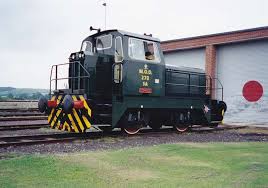
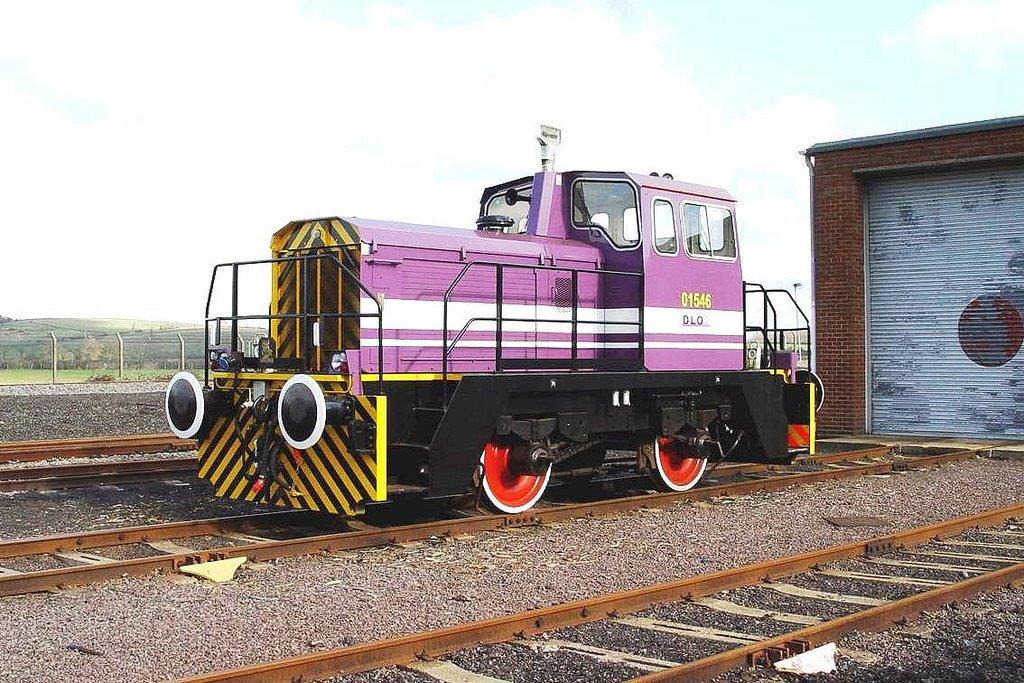
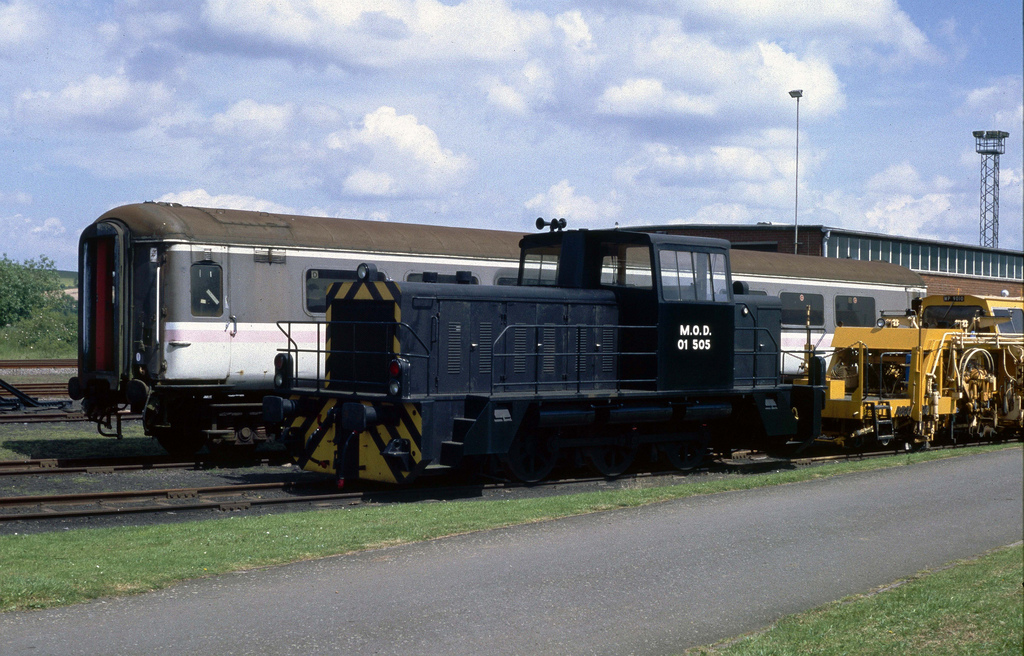
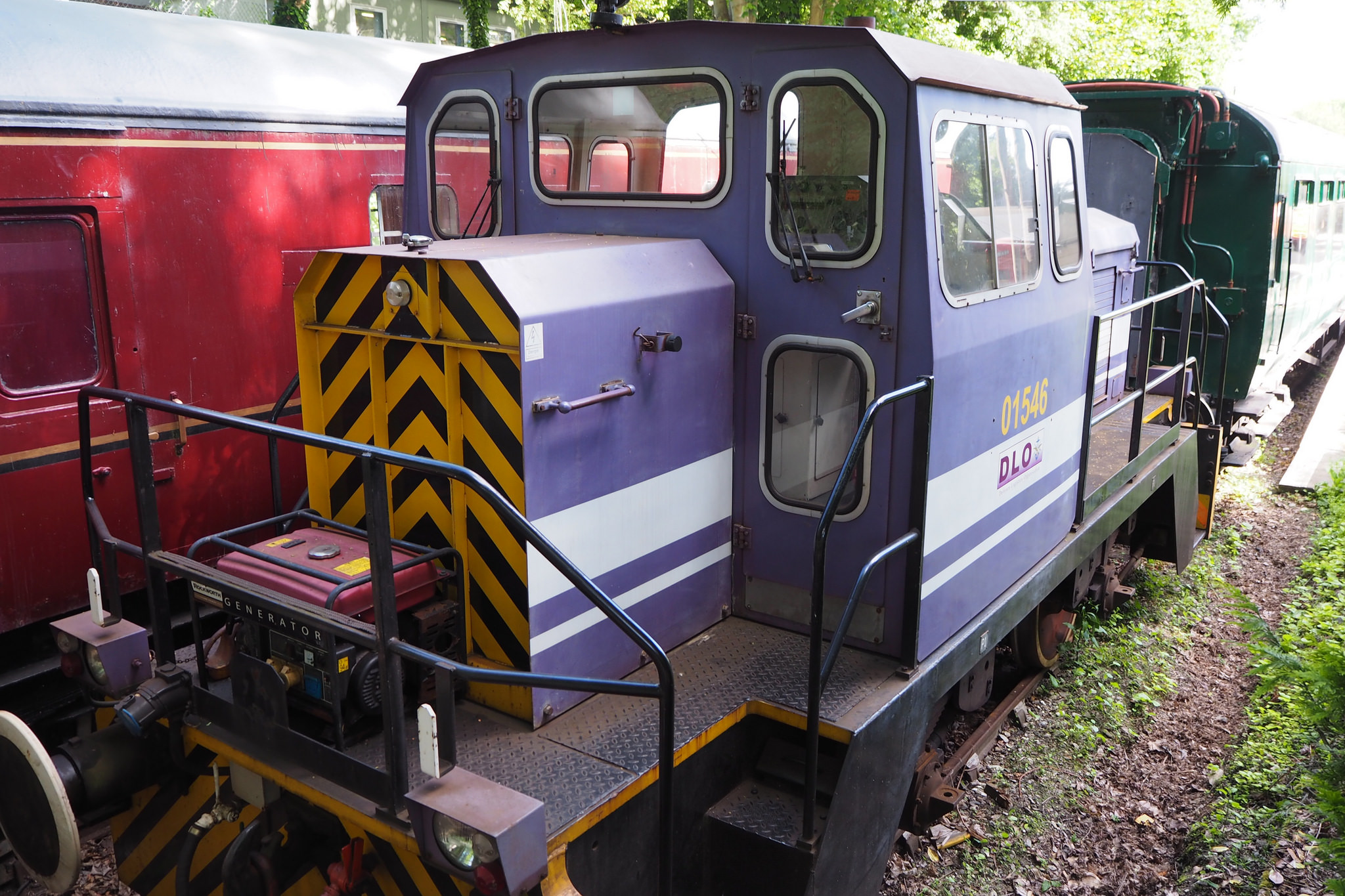
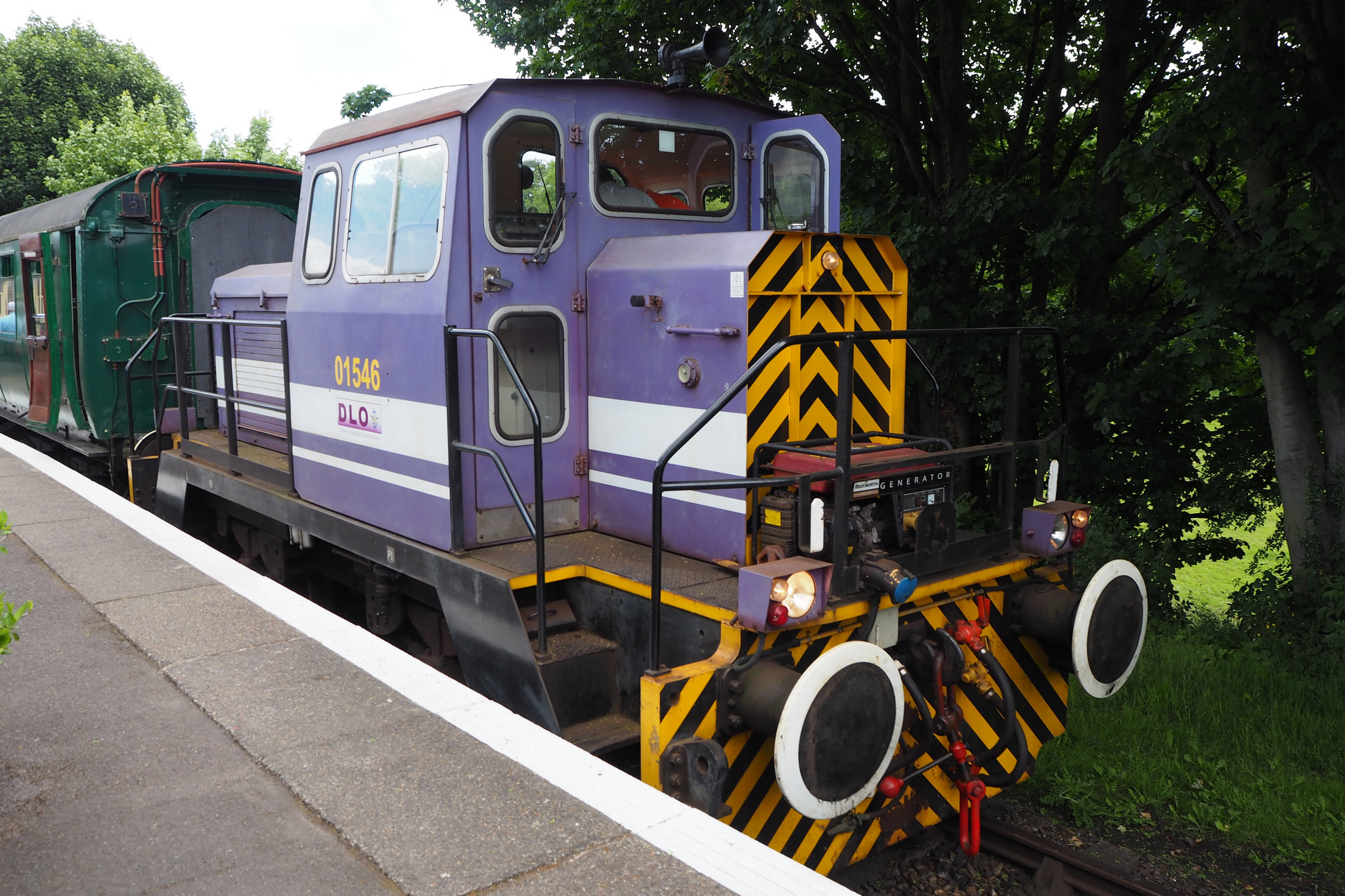
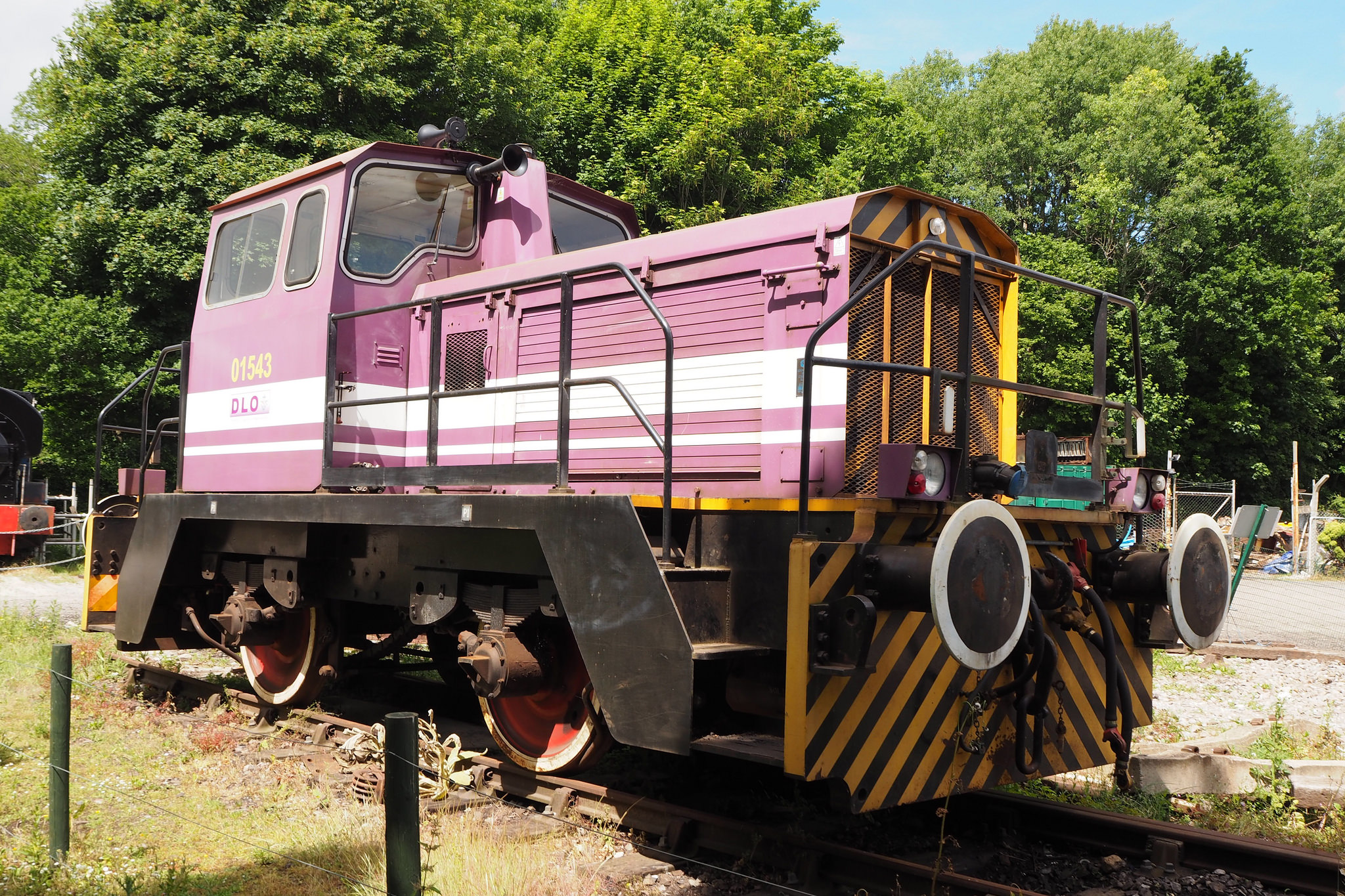
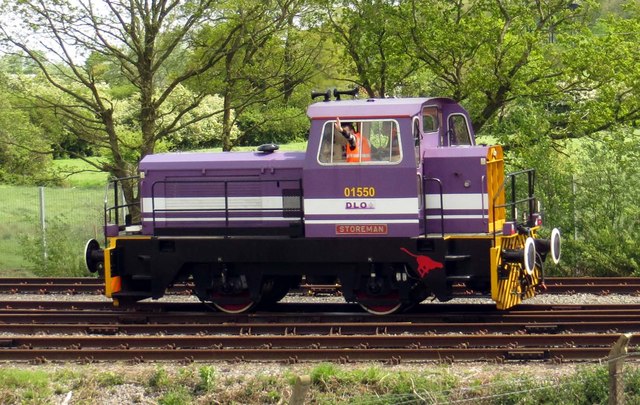
The three pictures above show 0-4-0 Thomas Hill Locos which at one time served at MOD Kineton now serving elsewhere. The first two of these images are of the same loco No. 01546 now based at the East Kent Railway.

The Network

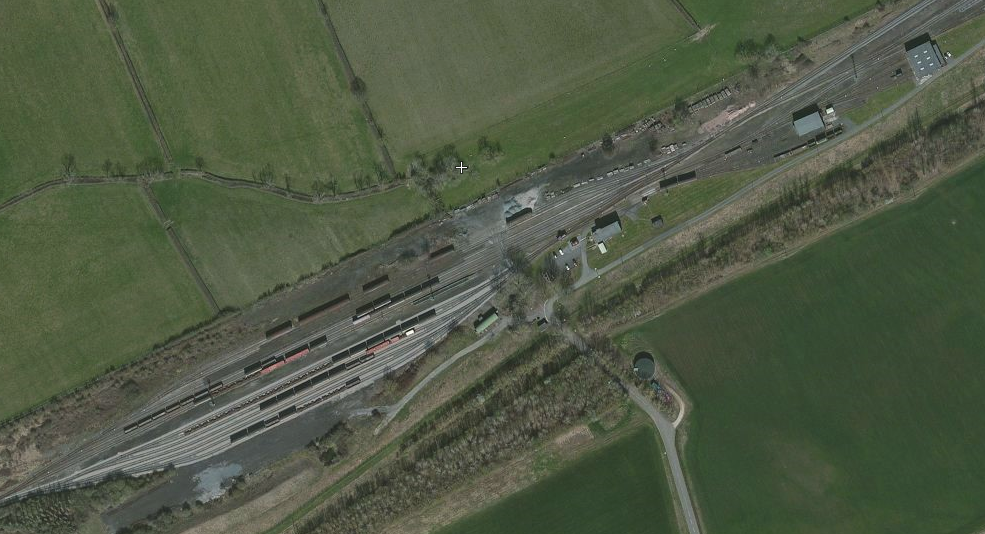
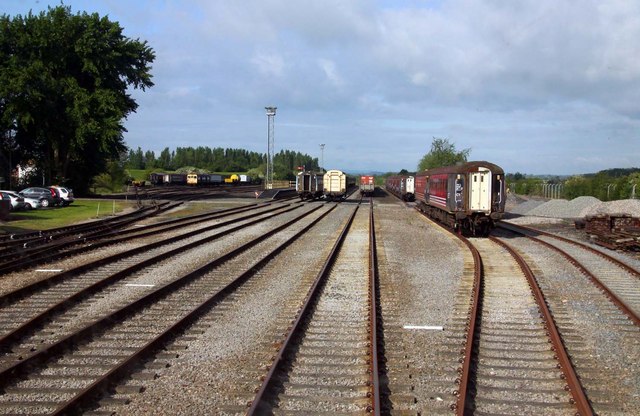
Microsoft Bing Satellite Image of the Exchange Sidings shows some significant activity.Google’s Satellite Image is, I believe, taken more recently and shows sidings with much less activity.Stored railway rolling stock, (c) Steve Daniels. [18]

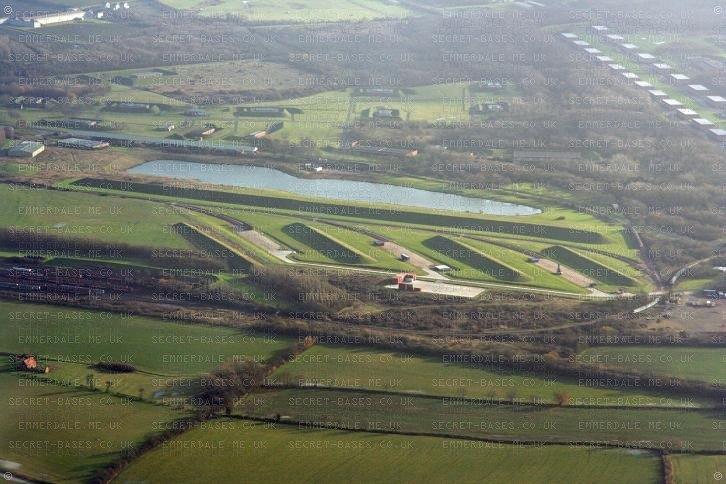
Unlike Bicester MOD Railway, (see https://rogerfarnworth.wordpress.com/2018/08/01/bicester-military-railway) the site at Kineton has restricted access and photographs of the railway lines, level-crossings and the buildings served are scarce.The exchange sidings can just be picked out (centre-left) in this aerial view taken from the north-west. [19]

At either end of the exchange sidings a single track line heads away into the base. There are two return lines which run parallel to the exchange/storage sidings, and which each form a loop. The first has three double stub-sidings which serve the storage bunkers which can be seen on the above image immediately below the lagoon. The first loop is shown fully on the map below. The second loop runs on the south side of the lagoon.Four different branch-lines leave the loop to serve the rest of MOD Kineton. The first divides off the loop to the west of the exchange sidings. It heads down to the south-west of the depot past Boundary Farm.Train on the line past Boundary Farm, (c) David P. Howard. he comments: This train suddenly appeared pulled by a small blue diesel engine. The track is part of the extensive network surrounding DSDA Kineton, from where munitions are distributed. [23]These tracks are just by the footpath to Gaydon from Kineton are part of the extensive network at DSDA Kineton, from where munitions are distributed. The train in the picture above was travelling a long this line., (c) David P. Howard [24]

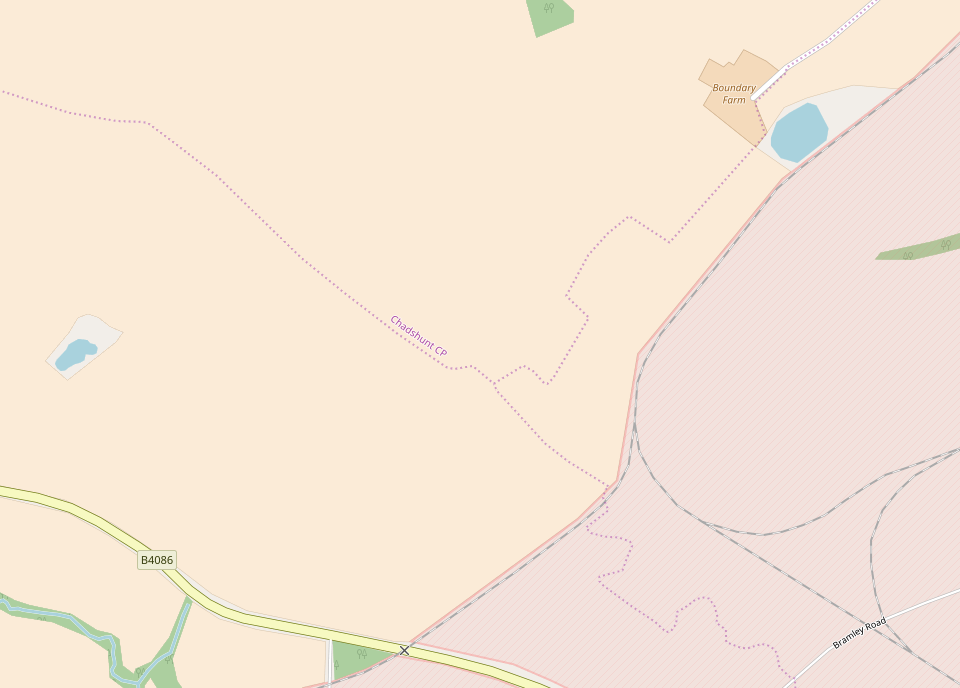
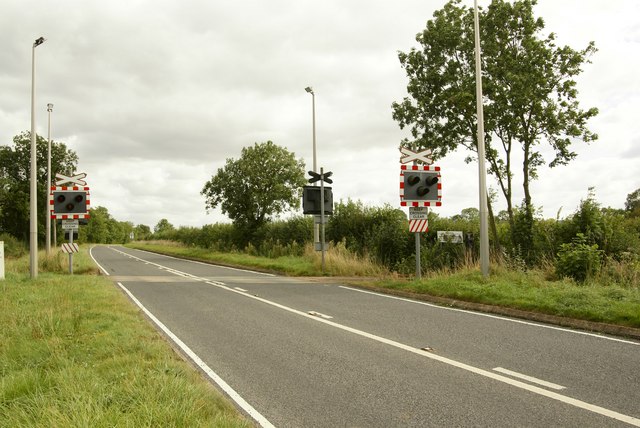
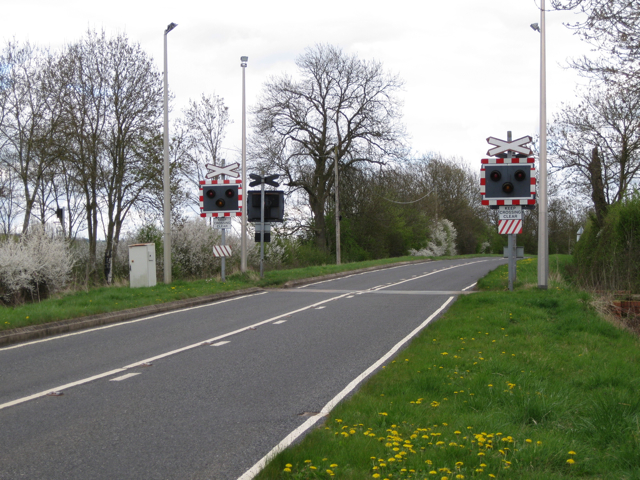
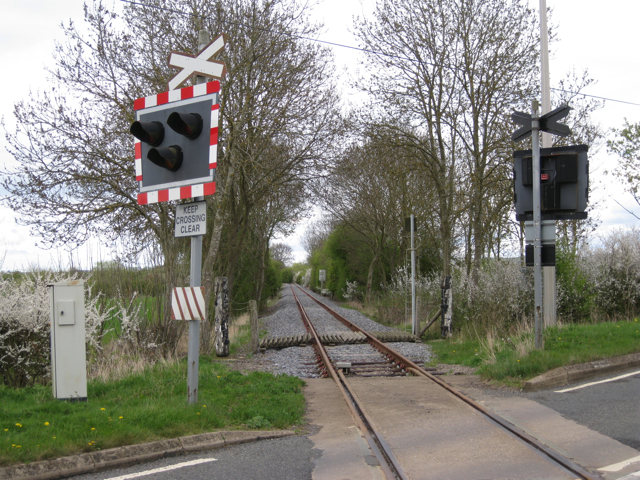
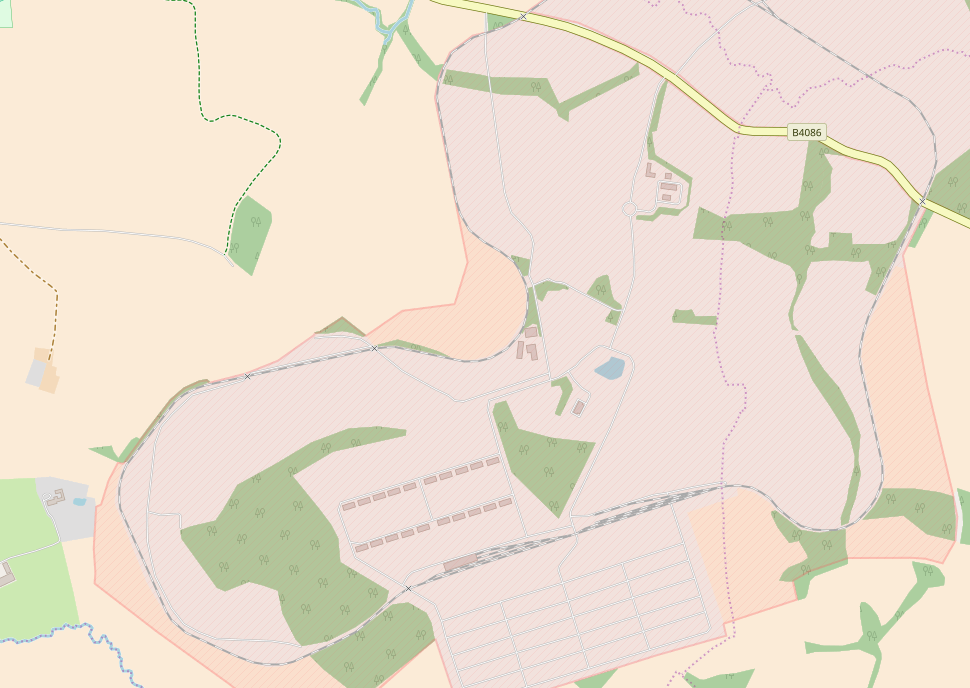
To the south-west of Boundary Farm the line divides once again with the most northerly branch heading towards the B4086 Kineton to Banbury Road.The railway/road crossing can be seen marked with an ‘x’ in the bottom middle of the above map.Railway crossing on the B4086 to the East of Kineton, © Colin Craig.  [13]Railway crossing on the B4086 to the East of Kineton, © Robin Stott. [25]Railway crossing on the B4086 to the East of Kineton, looking North-East up the railway line, © Robin Stott. [26]The line near Red House Farm, (c) David P. Howard. [29]

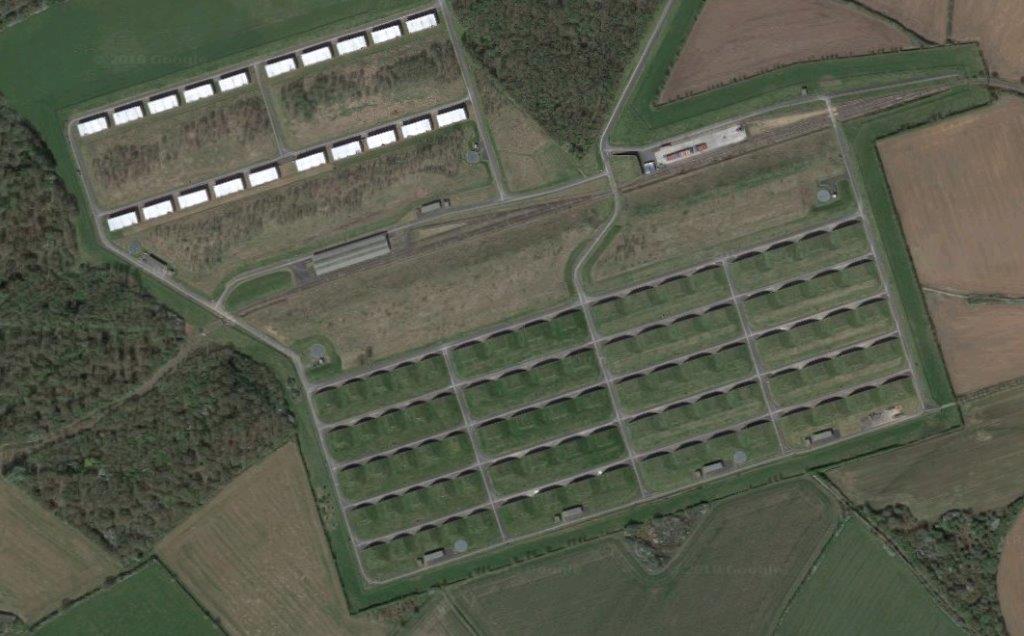
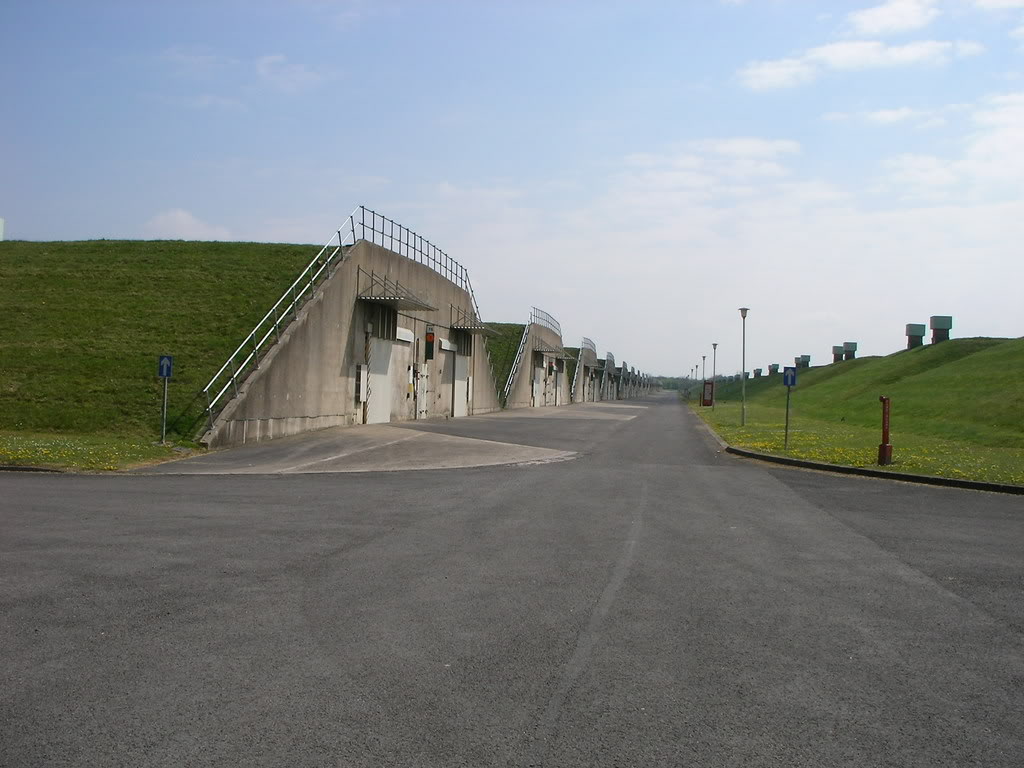
South-west of the B4086 the network forms a large irregular loop with a series of sidings towards the southern perimeter of MOD Kineton.This aerial image is taken of the area south-west of the B4086 . The view is looking from East to West. [27] The storage bunkers in this area of the depot can be most easily seen in the satellite image below.Modern ‘High Density’ Road-Fed Explosives Stores Houses (ESHs) at Kineton in the 21st Century. [14]

The line returned across the B4086 at another level-crossing to the East of the first, and north of  the village of Radway.Part of the extensive rail network that exists around MoD Kineton, here a level crossing at Radway and a view back down the line towards the storage facility pictured above, (c) Mike Faherty. [1]The level-crossing near Radway is on a bend in the B4086, (c) Robin Stott. [28]

North of the level crossing the line branched into two, the left-hand line returning to the line we followed down the north-west boundary of the site the other branch turning north and swinging sharply round to run alongside another storage facility.Modern ‘High Density’ Road-Fed Explosives Stores Houses (ESHs) at Kineton today (above). The phone boxes are provided because Mobile Phones (& Digital Cameras) are banned from the Explosives Area. [14]To the East of the storage bunkers, the line turned north and headed towards Marlborough Barracks. After circumnavigating the Barracks, the line passed close to the west of Temple Herdewyke before rejoining the loop close to the exchange sidings at the rail access to the site. A sketch plan of Marlborough Barracks.

We finish this post with a number of miscellaneous photographs taken at different times at various places around the MOD Kineton railway network.

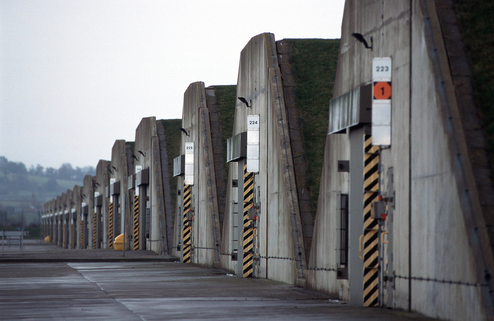
A Double Sided Rail Fed Explosives Store House (ESH) at Kineton before the re-build (only one now remains as an example for the training school. [14]

Kineton Depot April 1971. [15] Kineton Depot April 1971. [15]

References

  1. https://en.m.wikipedia.org/wiki/MoD_Kineton, accessed on 5th August 2018.
  2. http://hondawanderer.com/278_Kineton_1995.htm, accessed on 5th August 2018.
  3. https://www.irsociety.co.uk/books/books.htm, accessed on 6th August (the book referred to is a preliminary draft).
  4. http://www.warwickshirerailways.com/misc/kineton-mod.htm, accessed on 6th August 2018.
  5. http://www.warwickshirerailways.com/lms/burtondassett.htm, accessed on 6th August 2018.
  6. http://www.warwickshirerailways.com/misc/ehlr.htm, accessed on 6th August 2018.
  7. https://www.flickr.com/photos/12a_kingmoor_klickr/6057577970, accessed on 7th August 2018. The Army Ordnance Depot at Kineton possessed two rail-borne fire tenders up until their disposal in 1970. This is them shortly after arrival at the scrapyard of Bird’s Commercial Motors Ltd, at Long Marston on 30th March 1970. They bore the Army running numbers 9041 and 9042 and were built by D. Wickham and Co.Ltd at Ware in 1956, works numbers 7390 and 7391 respectively.
  8.  http://www.rmweb.co.uk/community/index.php?/topic/28530-industrial-locomotives-in-the-late-80s-to-mid-90s/page-6, accessed on 1st August 2018.
  9. file:///C:/Users/Roger%202/Downloads/SouthEastWarwickshireandCotswoldsHigherLevelStewardship(HLS)TargetAreasNMP.pdf, accessed on 7th August 2018.
  10. http://www.hondawanderer.com/Industrial_Diesels.htm, accessed on 5th August 2018.
  11. https://en.wikipedia.org/wiki/Stratford-upon-Avon_and_Midland_Junction_Railway, accessed on 7th August 2018.
  12. https://en.wikipedia.org/wiki/Thomas_Hill_(Rotherham)_Ltd, accessed on 7th August 2018.
  13. http://www.geograph.org.uk/photo/1491963, accessed on 7th August 2018.
  14. https://www.28dayslater.co.uk/threads/leyland-ammunition-store-23-09-08.33114, accessed on 7th August 2018.
  15. http://www.rmweb.co.uk/community/index.php?/topic/85326-dave-fs-photos-ongoing-more-added-8th-june/page-384, accessed on 7th August 2018.
  16. http://picssr.com/photos/kimctomcat/interesting/page18?nsid=60787812@N06, accessed on 7th August 2018.
  17. CAD KINETON – LOCOMOTIVES 1952 to 1960; Source: “British War Department Locomotives 1952 – 1960” by G.P. Roberts, published by the Birmingham Locomotive Club 1960  via http://thesmjr.ning.com/page/kineton-camp, accessed on 8th August 2018.
  18. http://www.geograph.org.uk/photo/1334830, accessed on 7th August 2018.
  19. http://archive.is/iu9dp, accessed on 8th August 2018.
  20. http://www.geograph.org.uk/photo/1334817, accessed on 8th August 2018.
  21. http://www.geograph.org.uk/photo/1332709 and http://www.geograph.org.uk/photo/1332711, accessed on 8th August 2018.
  22. http://www.geograph.org.uk/photo/1334823, accessed on 7th August 2018.
  23. http://www.geograph.org.uk/photo/1864229, accessed on 8th August 2018.
  24. http://www.geograph.org.uk/photo/1864244, accessed on 7th August 2018.
  25. http://www.geograph.org.uk/photo/1825272, accessed on 7th August 2018.
  26. http://www.geograph.org.uk/photo/1825284, accessed on 7th August 2018.
  27. http://www.geograph.org.uk/photo/2355847, accessed on 8th August 2018.
  28. http://www.geograph.org.uk/photo/1825265, accessed on 8th August 2018.
  29. http://www.geograph.org.uk/photo/2837711, accessed on 8th August 2018.

Nice to Digne-les-Bains Part 9 – Floods and Landslides (Chemins de Fer de Provence 72)

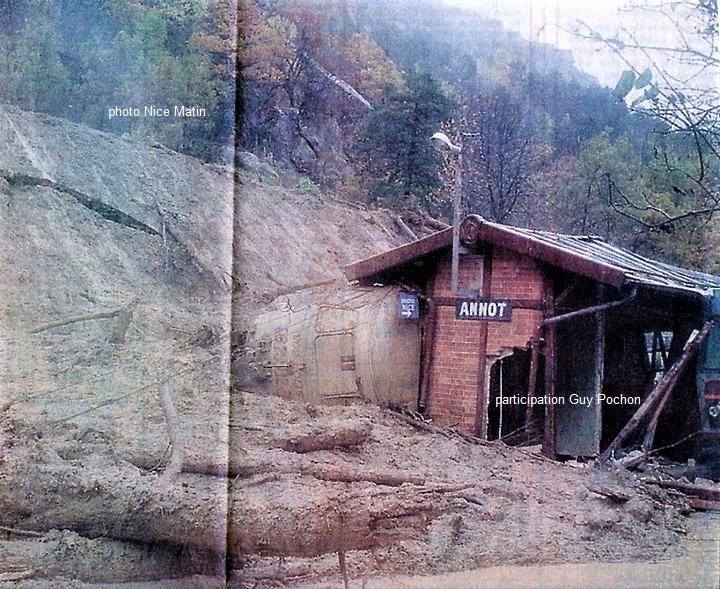
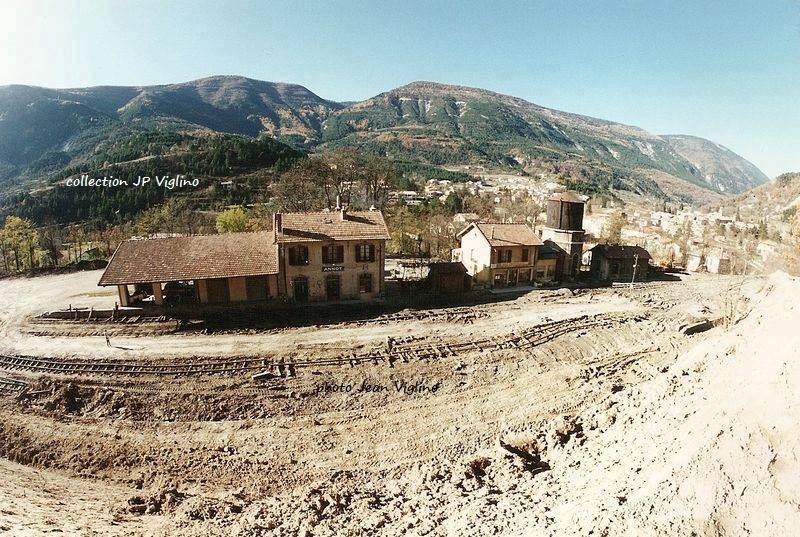
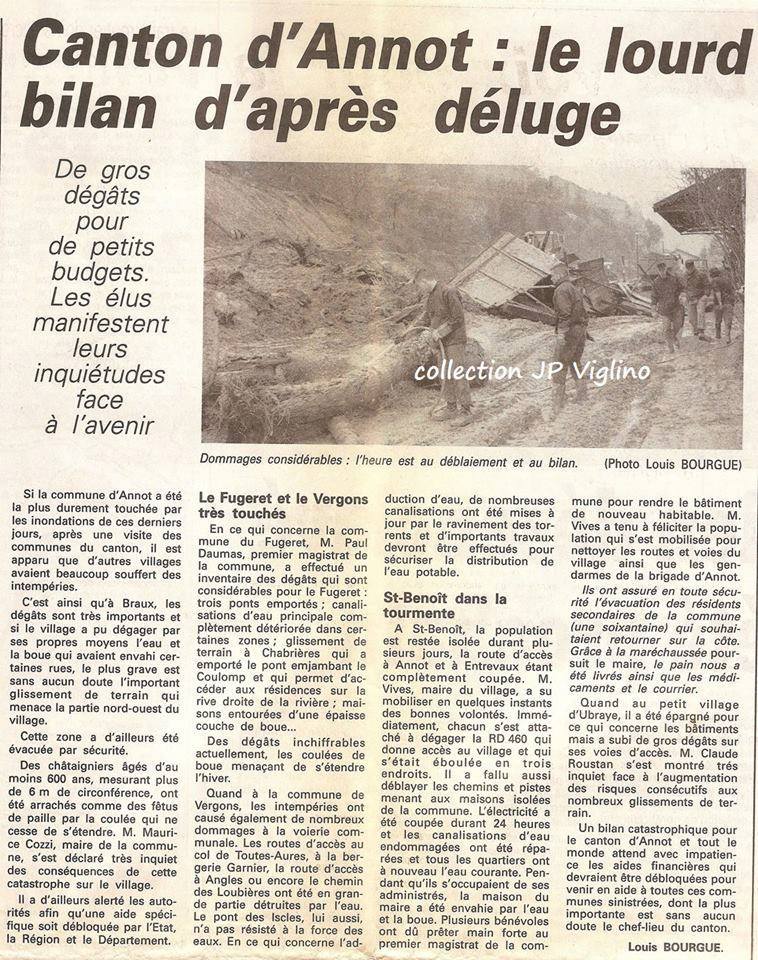
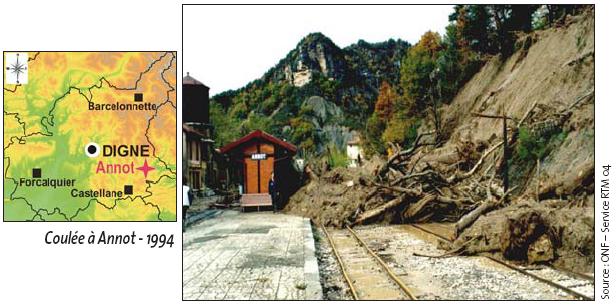
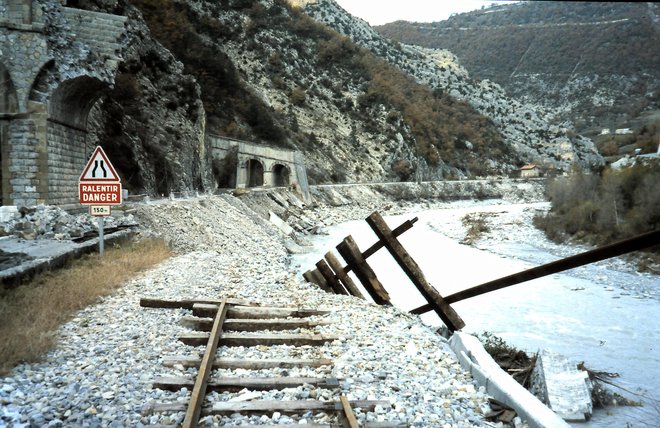
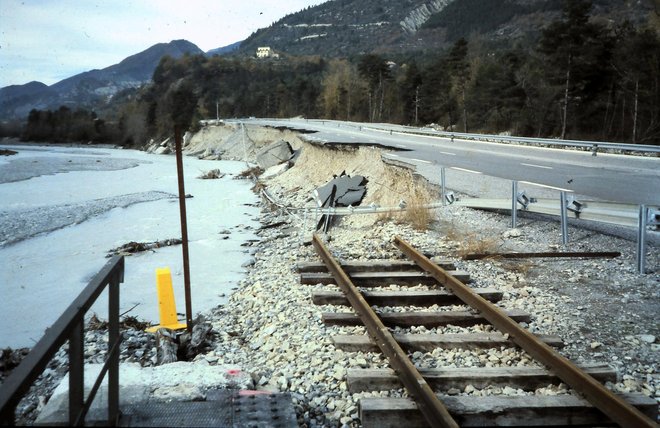
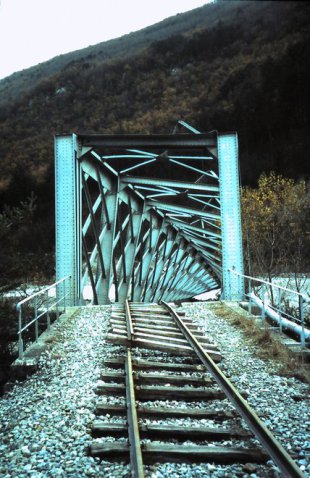
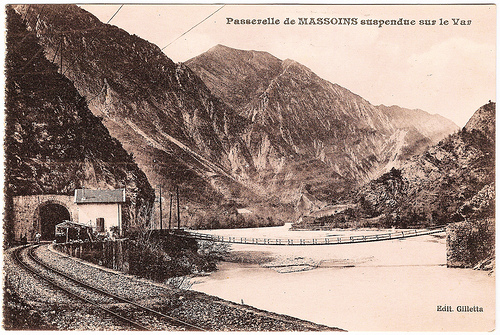
Christopher James contacted me having read a number of my posts because he remembered images of a major landslide at Annot Station. He undertook some research and found a newspaper article and some photographs of the landslide at Annot. The images he sent me and the newspaper article are immediately below. We corresponded a little about the date of the landslip and I think we now believe that it happened as part of a major incident which occurred in November 1994.

On 5th November 1994 an extreme flood event caused the lowest and the second-lowest dams on the Var to collapse. The flood wave inundated parts of Nice, including Nice’s international airport which is situated near the river mouth. It was out of service for several days. The airport lost the business of 50,000 passengers, with damages running up to an estimated 4.5 to 6 million euro. Elsewhere roads like the RN202 were cut, power and telephone lines were interrupted, and three people died and four disappeared. [1] This estimate of lives lost is low compared with some, for instance HydroEurope say that 70 people were estimated to be killed, with large scale infrastructure damage and economical losses from the closure of the airport. The economic damage is estimated at 550 – 800 million Euros. Of the three most recent flood events the flows of 1994 were an order of magnitude higher than the others – 1994 (3680 m3/s), 2011 (1330 m3/s), 2016 (1280 m3/s). [2]

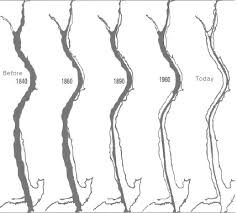
My blog: https://rogerfarnworth.wordpress.com/2018/04/06/nice-to-digne-les-bains-part-1-nice-chemins-de-fer-de-provence-57, provides a number of pictures of the damage done to the watercourse, it revetments and its structures. Part of the problem has been the gradual encroachment into the valley of the Var by various land reclamation schemes over the years. [3]

But these events are not a recent penomenon. The Observatoire Regional des Risques Majeurs (ORRM) En Provence-Alpes-Cote d’Azur has reported on a series of similar events over the past 150 years. [4] These events have occurred across the whole of the southern alps – Sisteron in 1886; Valette (Ubaye Valley) in 1982; Annot in 1994 and 1996; Rochaille in 2001; Villard-des-Dourbes in 2002; Barles in 2008, are all events mentioned by the ORRM. Their website includes the following photograph taken at Annot in 1994. [4]

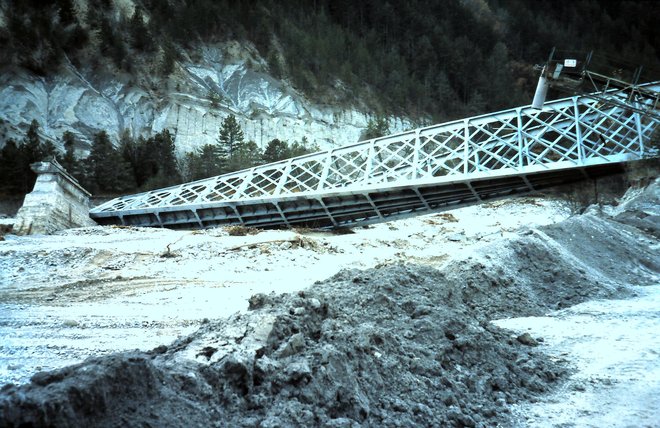
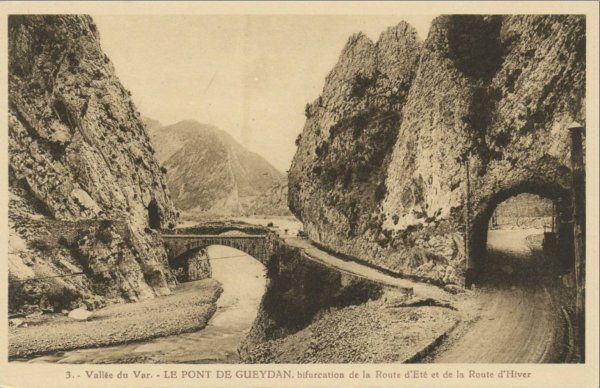
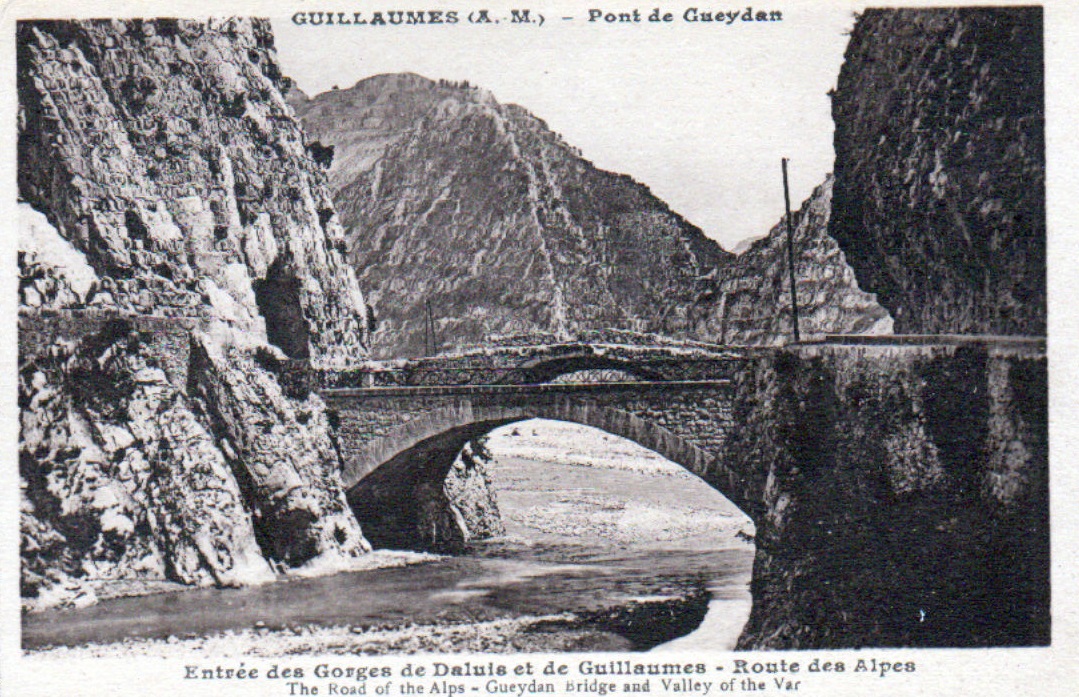
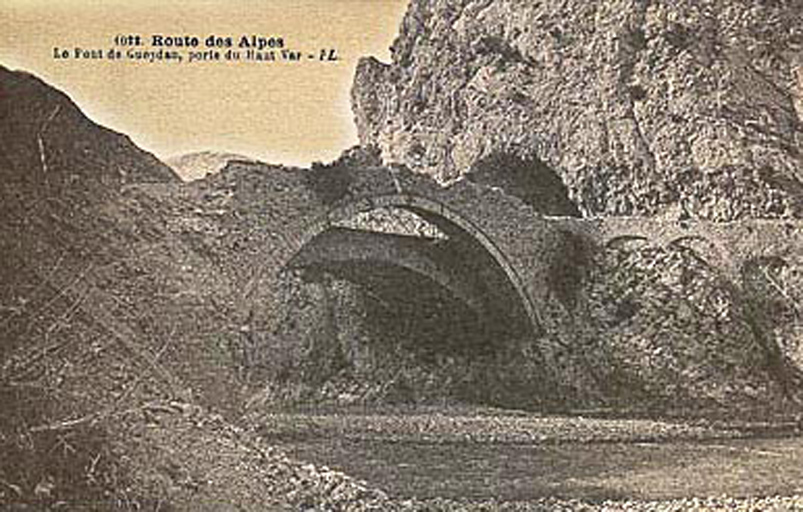
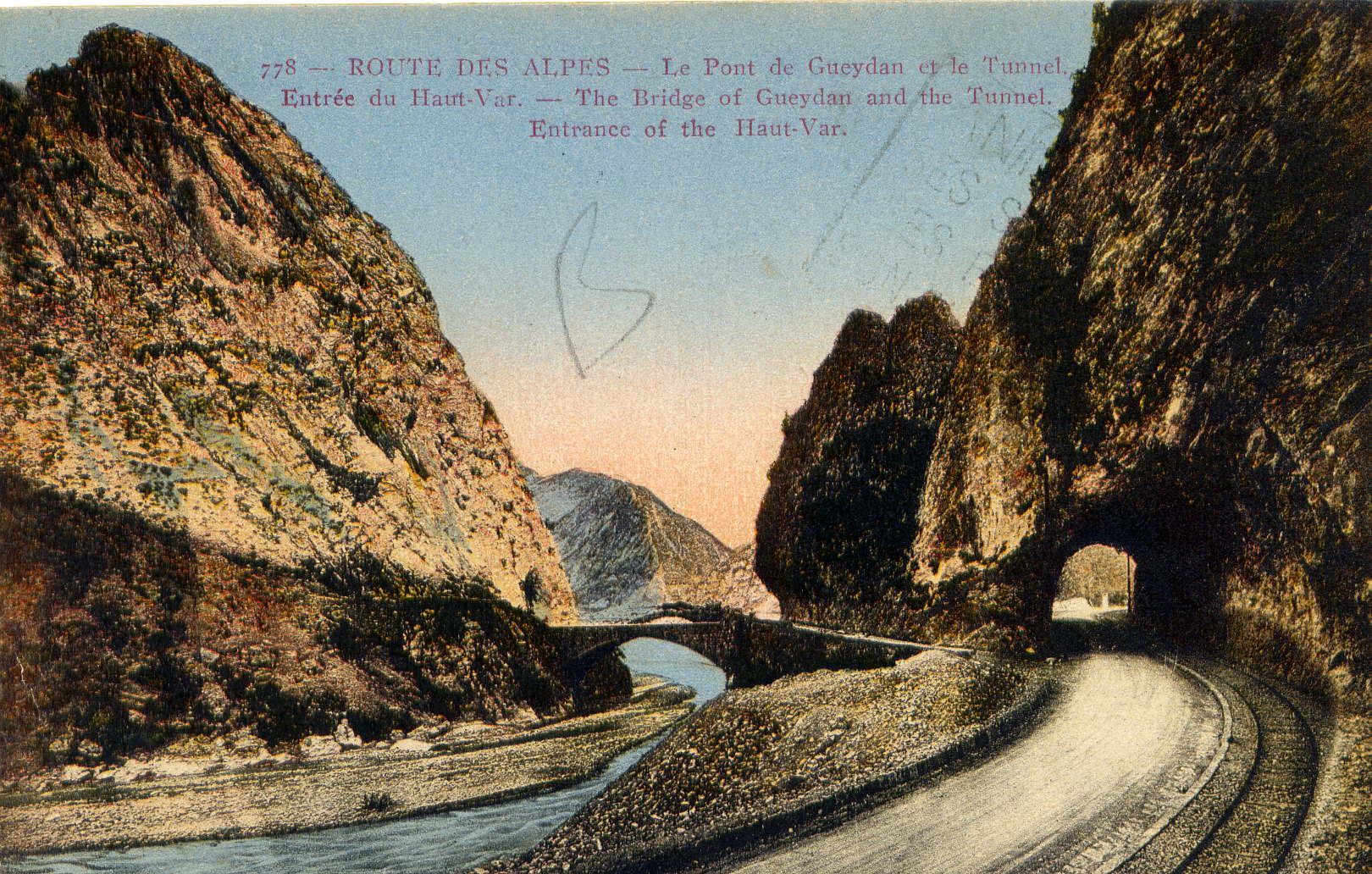
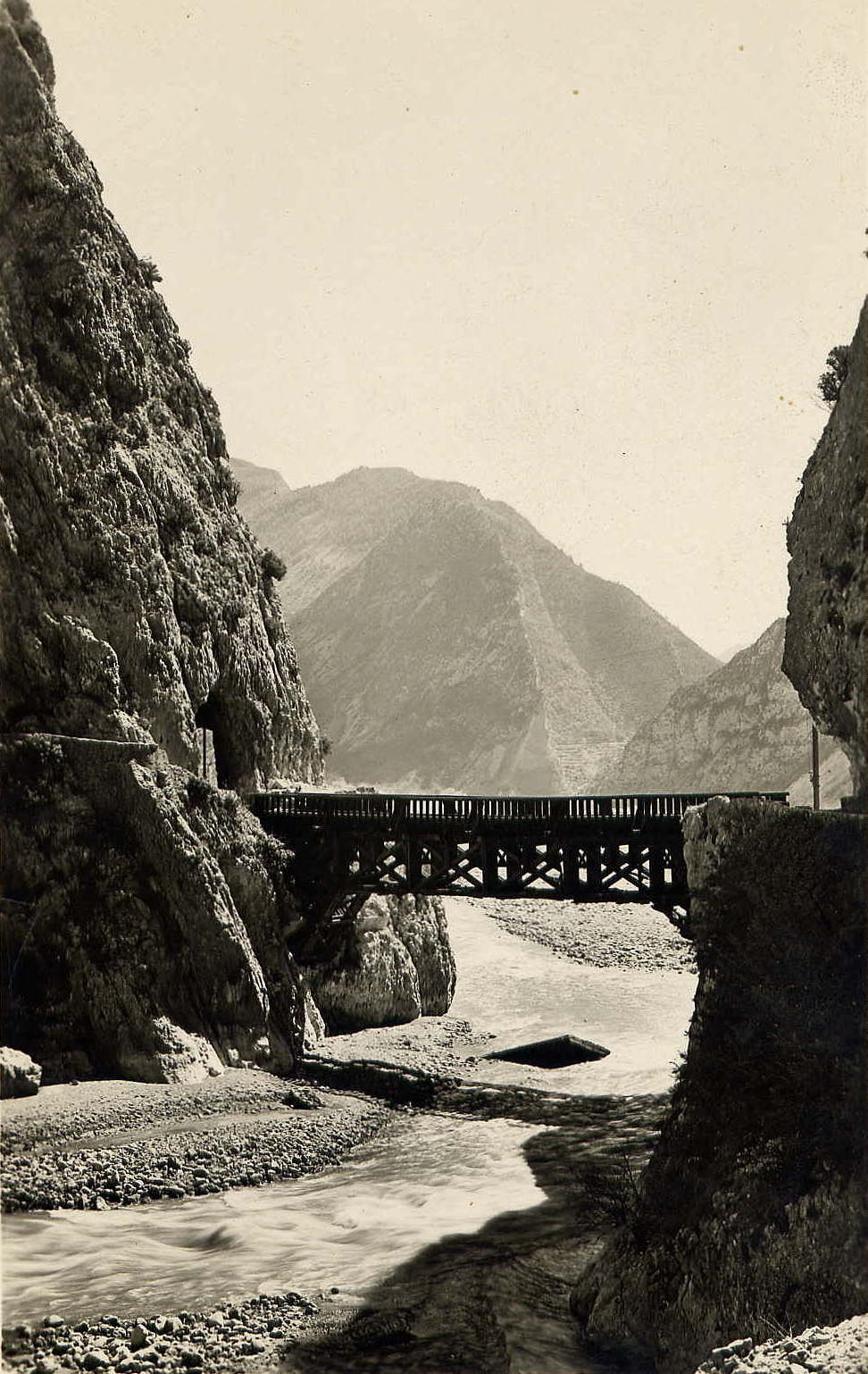
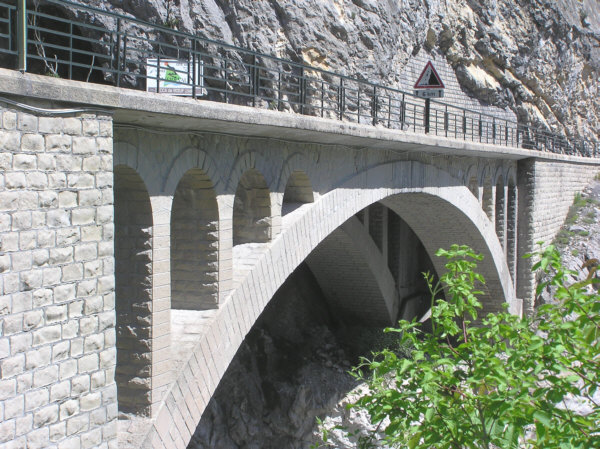
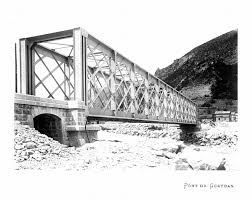
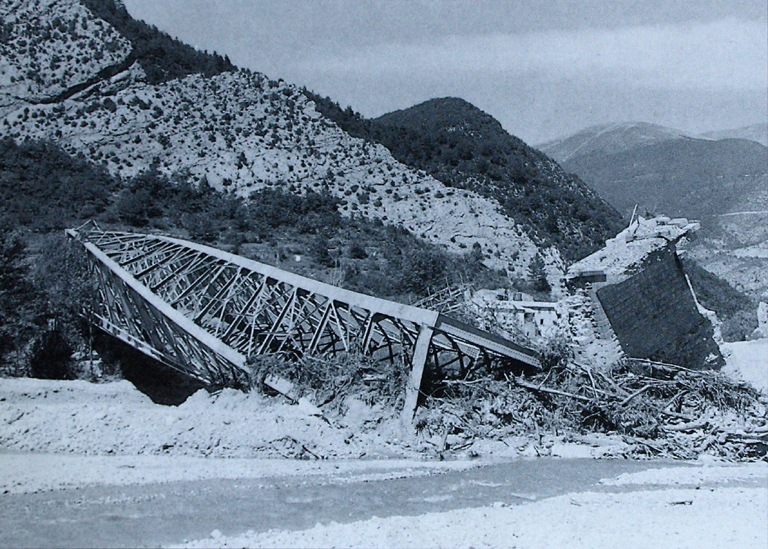
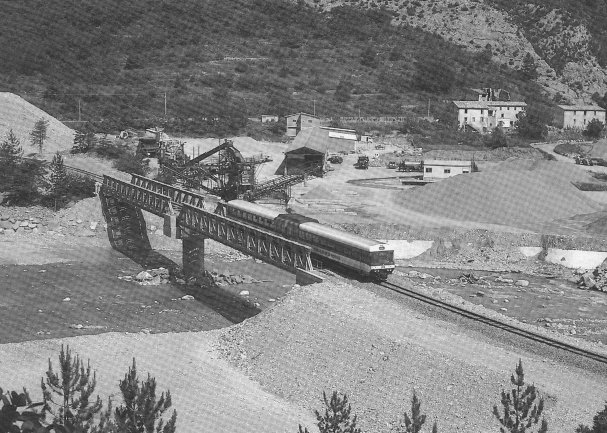
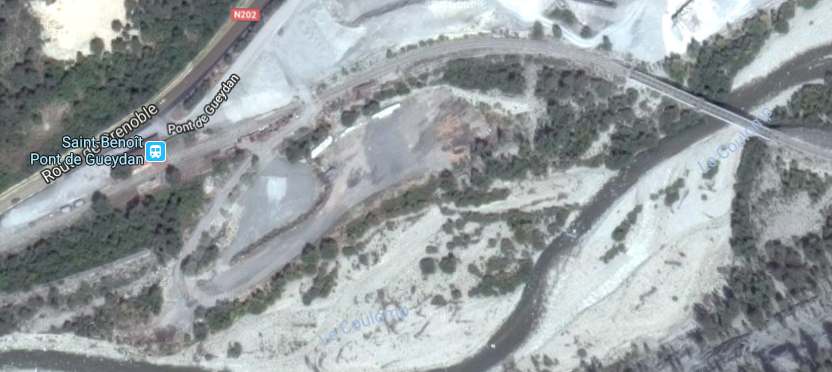
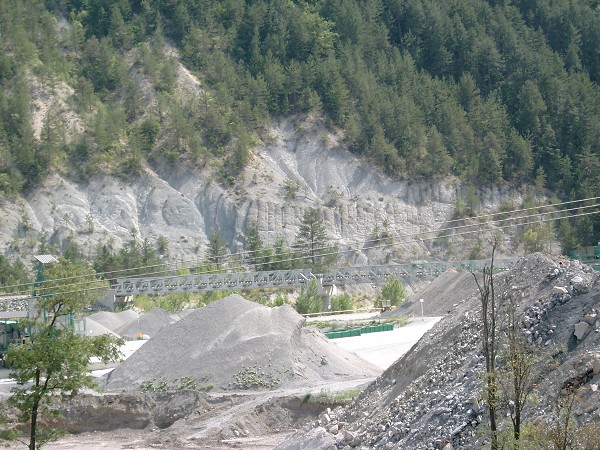
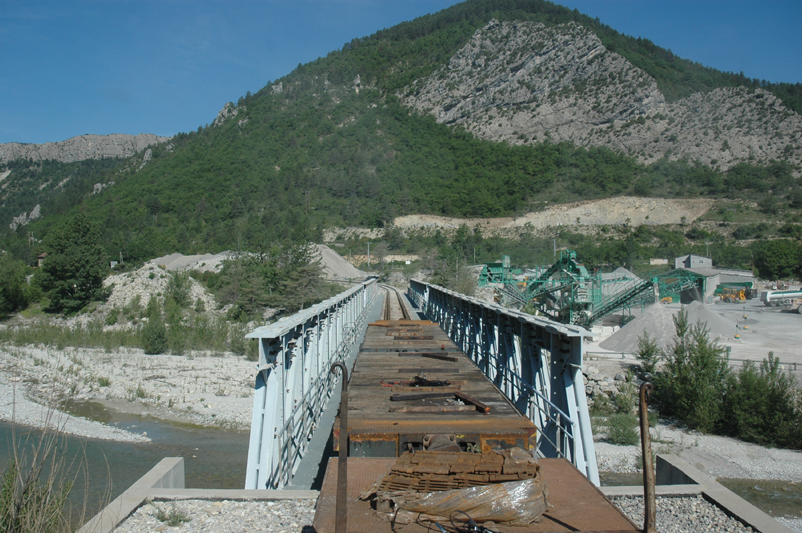
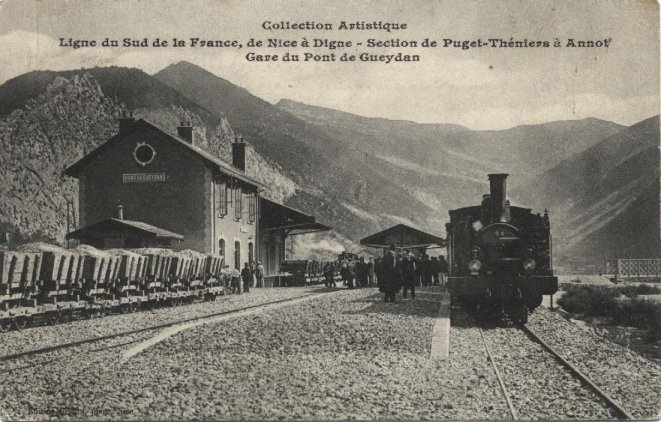
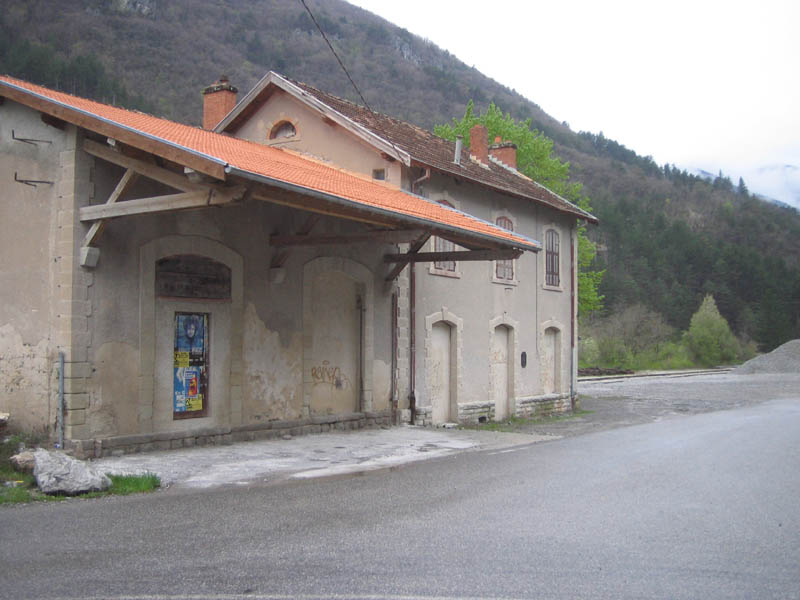
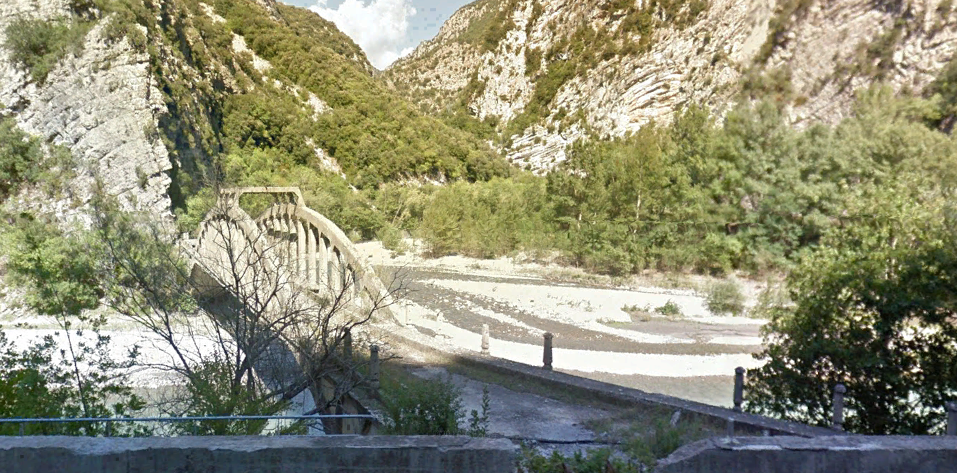
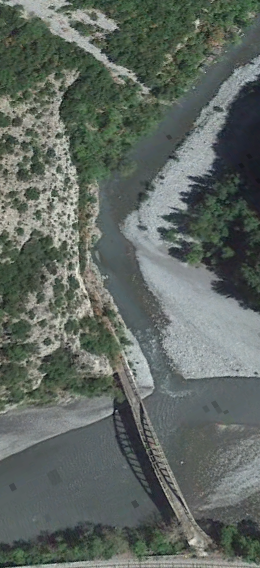
As we have already noted, the events of November 1994 were of an order of magnitude greater than had been experienced in the catchment of the River Var in the century or so before 1994 and in the years after. Significant structures were destroyed, such as the Pont de Gueydan, immediately below.

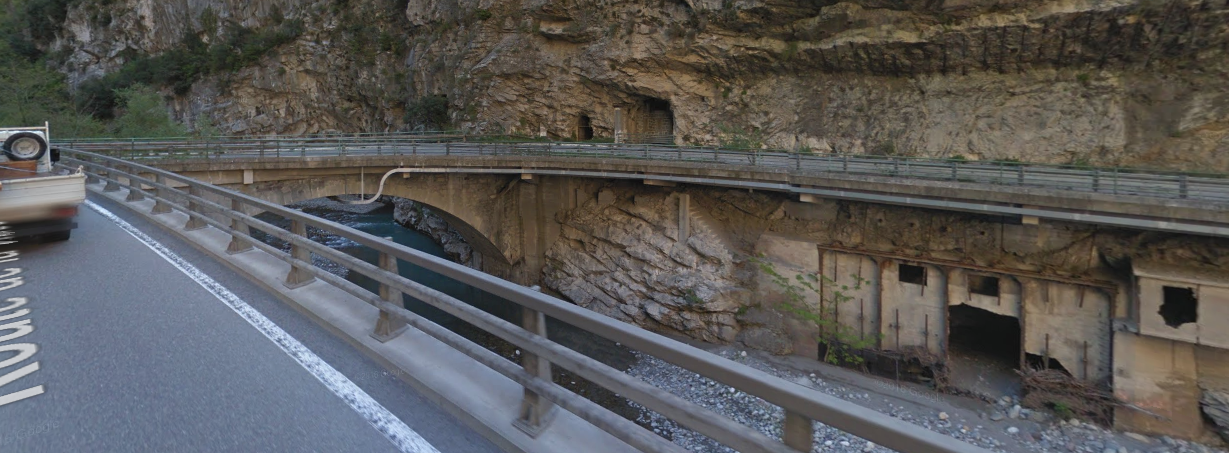
The main A8 was cut by the river. The railway was cut at various points and it was 18 months before it re-opened. At the time there was a significant risk of complete closure of the line. The image below shows one of the ‘elephants’ along the line which was destroyed and had, along with the road and river embankment, to be rebuilt.

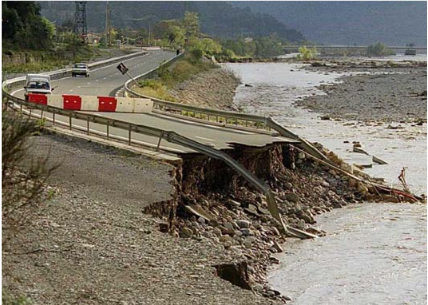
More damage to the A8 and the railway line.

The bridge at the mouth of the River Vesubie was destroyed.

The floods of 1994 were devastating for the railway and for the communities it served. They left a number of communities inaccessible except by mountain tracks. Rebuilding of railway and roads was no easy task and the subject of some wrangling about what was best for the communities alongside the river.

In 1994 a new highway was planned, situated in part on the right bank of the Var. This would result in a further reduction of the river bed in the order of 10%. The plans met with strong opposition from the riparians, who fought the proposed highway in the Administrative Court.

A decision was taken in 2001 to further investigate the road alignment. The highway was eventually built along a modified itinerary and under a different name. [1]

If anyone knows more about flooding and landslides that have affected the Nice to Digne line it would be good to hear from you.

References

  1. http://potamology.com/exhibits/show/var_river_project_france/var_river_situation, accessed on 6th August 2018.
  2. http://archives.aquacloud.net/17he/a/aquacloud.net/17he05/home/2-the-var-river/2-4-le-var-floods.html, accessed on 6th August 2018.
  3. http://www.vliz.be/imisdocs/publications/36/253236.pdf, accessed on 6th August 2018.
  4. http://observatoire-regional-risques-paca.fr/article/quelques-evenements-mouvements-terrain-marquants-alpes-haute-provence

MOD Ashchurch and Ashchurch Railway Station

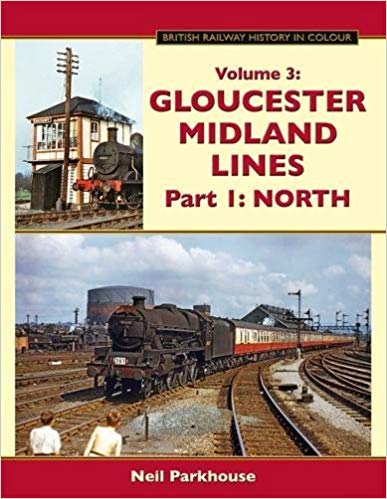
I was reading a book by Neil Parkhouse and looking at a series of photographs of the historic station at Ashchurch which was demolished as part of the fall out from the cuts associated with Dr. Breeching. Apart from feeling a sense of dismay that the original station and its building, together with the branch-lines it served, has been lost for ever, I noticed a reference to a siding serving MOD Ashchurch and decided to investigate. [1] …

DE&S Ashchurch, known locally as “Ashchurch Camp”, was the UK MOD’s primary vehicle storage and distribution site for all types of armoured and soft-skinned vehicles, together with Royal Engineer bridges, boats and construction plant. The Centre was the only vehicle depot in the UK using Controlled Humidity Environments (CHE) for long-term vehicle storage. [2]

In March 2012, the UK MOD’s Defence Infrastructure Organisation confirmed its intention to consult publicly on proposals to redevelop ‘MOD Ashchurch’ for creation of a sustainable mixed use development, likely to include new homes, community and local retail facilities, a primary school, employment uses and open space. [2][4]

After this a campaign was fought to save the site and in 2015 the GMB Union reported that the site had been save and would remain in operation at least until 2025. [3]  However, continuing pressures on MOD budgets leave the position of the site uncertain. Atb present proposed developments are adjacent to the site but they indicate that pressure still exists in the locality for new housing. [5]

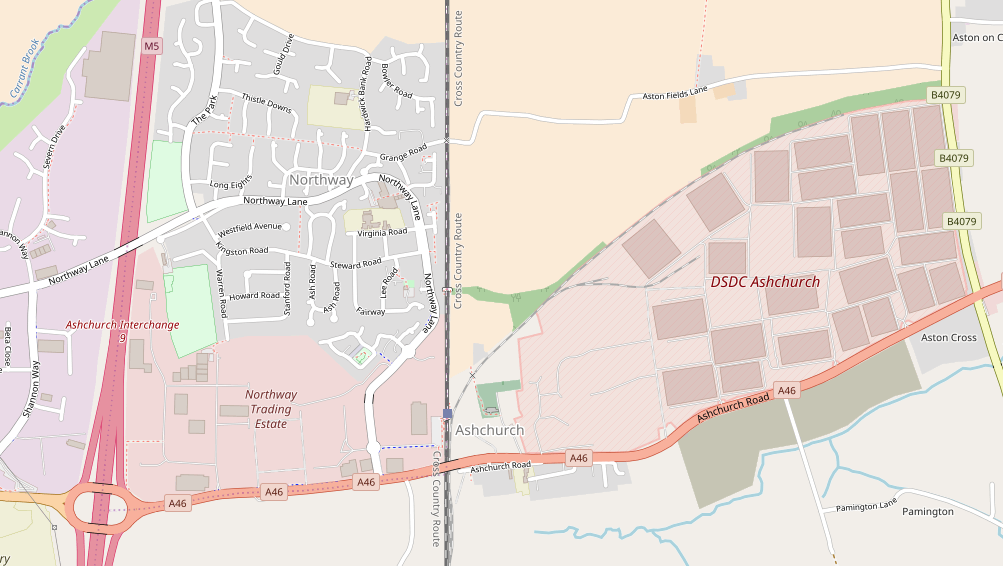
A rail link remains, as can be seen on the OpenStreetMap excerpt below.

This blog provides some details of the history of the site and its rail link and inevitably covers some of the history of the railway station at Ashchurch.

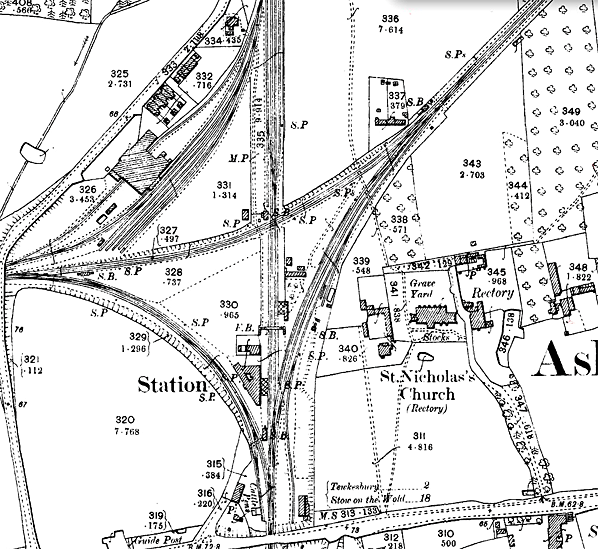
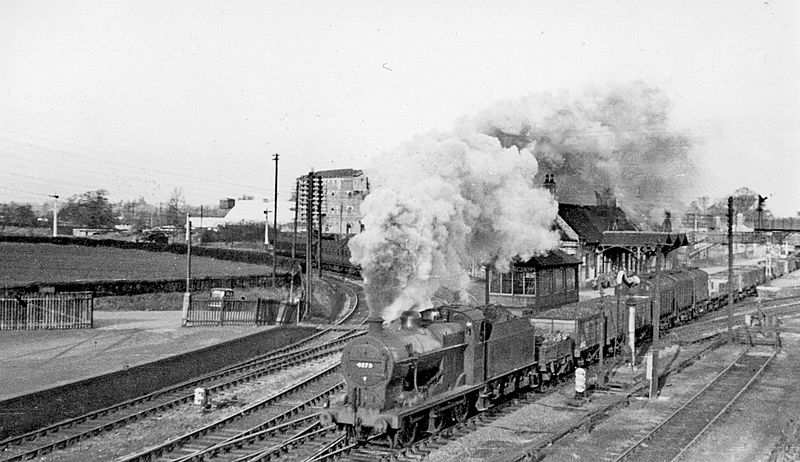
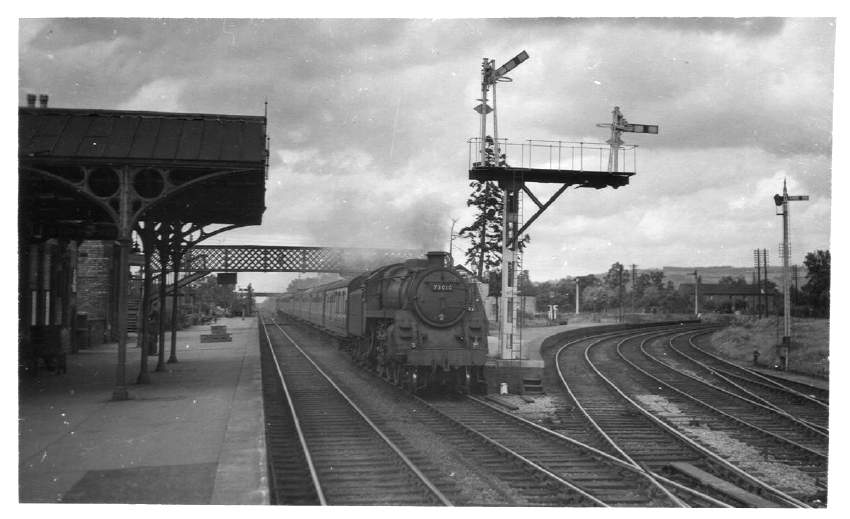
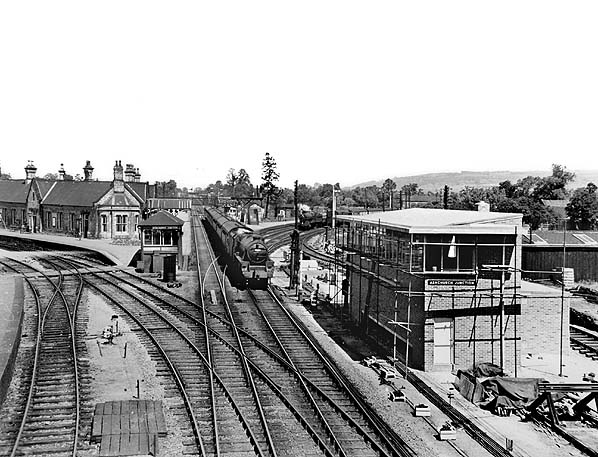
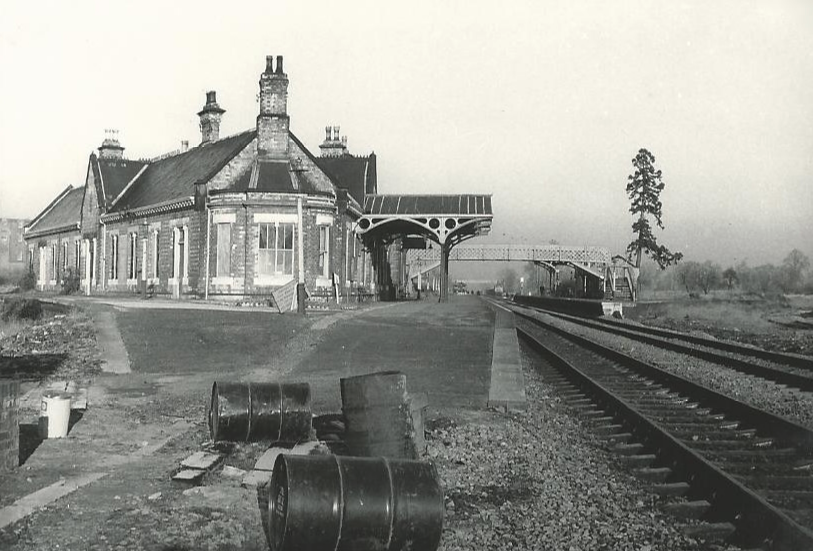
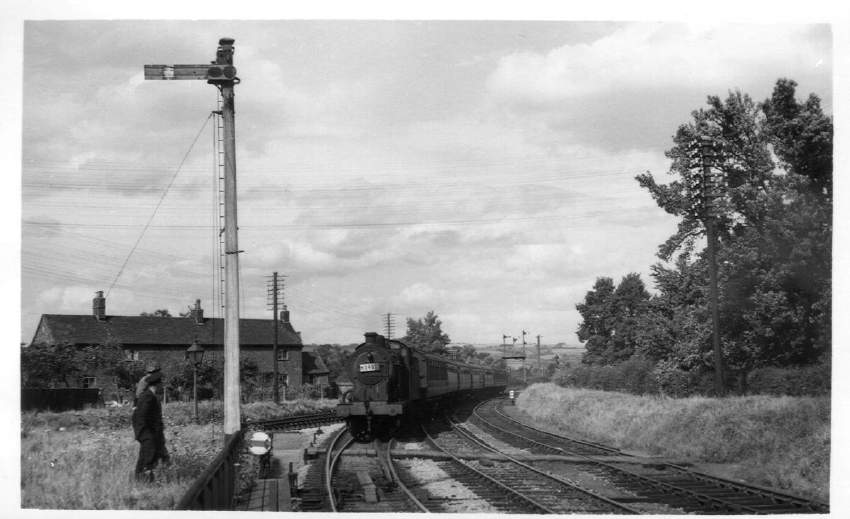
Ashchurch Railway StationThe 1902, 1:2500 OS Map of the station. The line to Tewkesbury leaves to the West, that which formed the relieving line via Evesham heads off to the East. The goods sidings enter at the top of the map and there is at at-grade crossing which makes a through route between the two branch-lines. MOD Ashchurch is off the map to the right. [6]View looking Northwest of the ex-Midland Birmingham – Bristol main line, the Down freight being on the Down Main, headed by LMS 4F 0-6-0 No. 4272 (not yet renumbered). On the left is the branch to Tewkesbury and Great Malvern, with a train at the branch platform and its engine further left, running round. Out of view to the right is the line to Evesham, Redditch and Birmingham – also the Ashchurch Military Depot. Ashchurch Junction signalbox (rebuilt 10 years later) is in the centre, in the ‘V’ of the Up platform. To get onto the station platform, you had to use the level-crossing from the approach road to the left: the booking office etc. was on the Up platform, where there was also a privately owned Public House. Behind the smoke is the large Provender Store. This picture was taken on Christmas Eve 1948, (c) Ben Brooksbank. [8]No. 73010 is on the main line in August 1952 and is heading towards Gloucester. The line curving off to the right leads to Evesham and the cottages on the far right can be seen in the third picture below, (c) D. J. Norton. A donation has been made to Ashtma UK to acknowledge the use of this photograph. [9]A view taken from the south of Ashchurch Station from A438 road bridge, in 1957 with the new signal box under construction. The 08.06 Sheffield – Gloucester express (hauled by a Class 5 4-6-0) is approaching. On right, the line to Evesham etc. (also the MoD Depot), with a GWR 2-8-0 waiting on a southbound freight. On left, the line to Tewkesbury and Malvern, with Ashchurch Junction signalbox in the V of the Up main and branch platforms. The new signal box will not open for another year and will last only until February 1969. (c) Ben Brooksbank. [10]The station in January 1970 after the removal of both branch-lines, (c) Hugh Llewelyn. [7]No. 44362 is approaching the station on the Birmingham & Gloucester Loop on 4th August 1952 on its way from Evesham. The line in front of the cottages leads to the at-level rail crossing on the map above. The line on the right provides access to the sidings for MOD Ashchurch, (c) D. J. Norton. A donation has been made to Ashtma UK to acknowledge the use of this photograph. [9]

Ashchurch Railway Station was opened by the Birmingham and Gloucester Railway on 24 June 1840. Later it became a part of the Midland Railway and later still the LMS. This was once a railway centre of some importance, as it was the spring-off point for two branches, one each side of the main line.

The Evesham line was actually a lengthy loop serving Evesham, Alcester and Redditch, re-joining the main line at Barnt Green, near Bromsgrove. This line closed between Evesham and Redditch on 15 October 1962 due to poor condition of the track, while Ashchurch to Evesham followed on 17 June 1963 (Redditch to Barnt Green remains open on the electrified Birmingham suburban network).

The line to Tewkesbury, Upton-upon-Severn and Malvern, closed beyond Upton on 1 December 1952, Ashchurch to Upton following on 14 August 1961. At this time Ashchurch station was renamed Ashchurch for Tewkesbury, but it too was to close, on 15 November 1971, reopening on 1 June 1997 as a through station.

There used to be a connecting curve linking the two branches, crossing the main line on the level just north of the station, creating a layout which may have been unique in Britain, but this curve closed in December 1957. There was an extensive goods yard to the south and another to the north, and to the north west a large grain store.

The remains of the old line are still apparent, in places, with much of its infrastructure in existence. The old connecting curve and the two branches it served could be clearly be traced on a map as late as 2007. With much of the Ashchurch to Tewkesbury line now being used as a Segregated Cycle Path and Footpath, this section proved valuable during the 2007 floods as it was the only dry route into, and out of, Tewkesbury at the time. [2] Much of the station site has been built over and we are left with a new incarnation of the railway station with no real character.

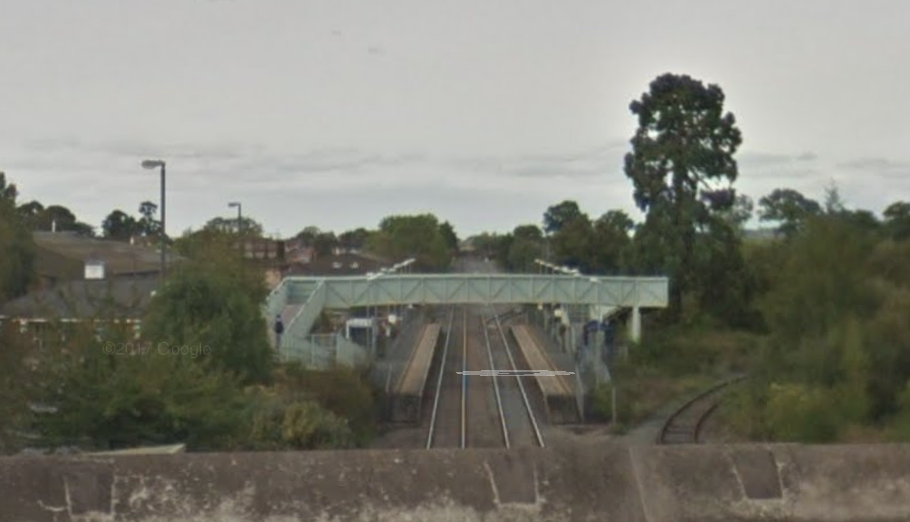
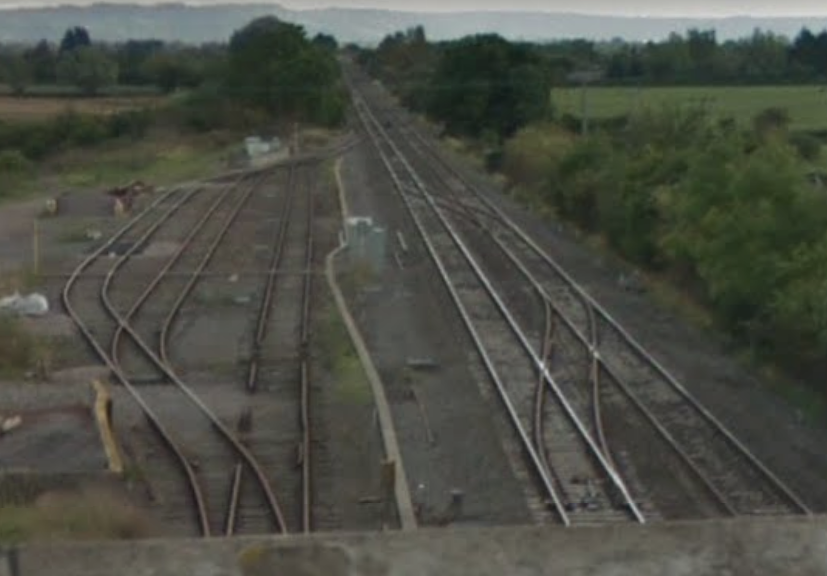
An access siding to MOD Ashchurch remains, together with exchange sidings alongside the main line. In the image below, the single-track to the right of the mainline leads to the army depot. The exchange sidings are to the south of the road bridge on which the photographer is standing.MOD Ashchurch’s Exchange Sidings to the south of the present A46.

MOD Ashchurch

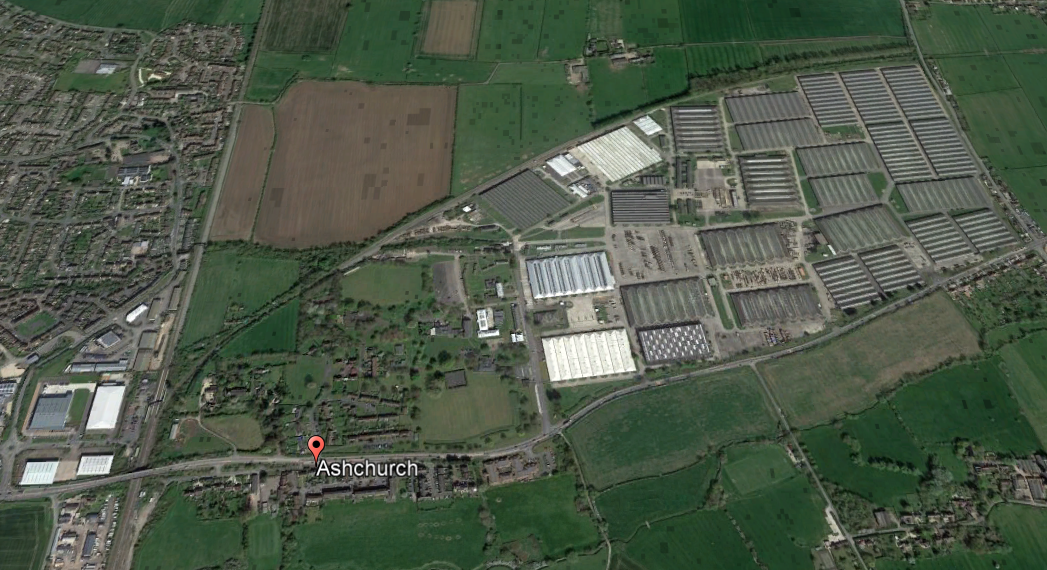
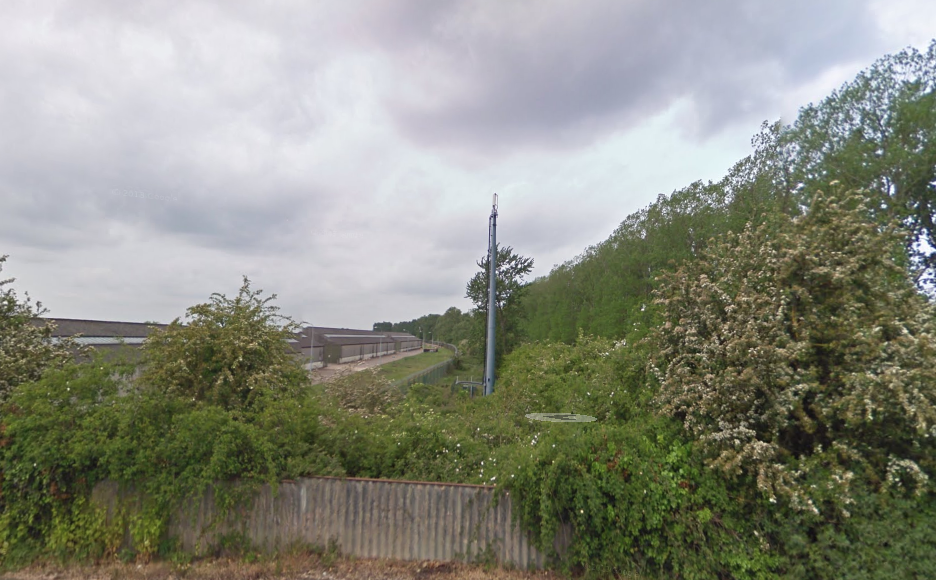
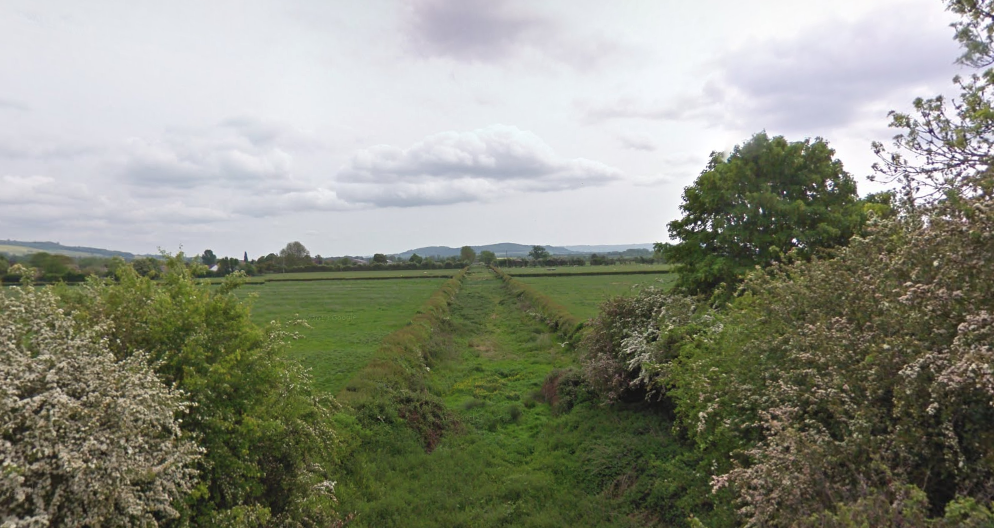
This satellite image shows the full extent of MOD Ashchurch and the rail access which can be seen curving away from the present Ashchurch Railway Station across the north side of the depot. The old Evesham line continues beyond the extent of the depot as a defined line of vegetation across the fields the two images below are pictures take looking first west, then east from the B4079 which forms the eastern boundary of MOD Ashchurch.Looking West from the B4079 along the north side of MOD Ashchurch.Looking East from the B4079 along what was the railway line to Evesham.

MOD Ashchurch was confirmed as an Army depot in 1939 and is visible under construction on aerial photographs taken in 1940. On aerial photographs taken in 1943 it comprised eleven very large rectilinear vehicle storage and repair buildings that measure between 90m and 122m wide and between 97m and 147m long. A number of long narrow buildings are dispersed between them, plus a number of separate circular possible fuel stores, protected by flat-topped mounds which measure circa 12m in diameter. The buildings were painted with camouflage patterns during World War II. [11]

A large rail terminus was situated to their north-east, around SO 9393 3408, but this was replaced with more large rectangular buildings by 1954. Railway tracks also formed a loop through the buildings and around the rail terminus and are connected to the main line at SO 9296 3375, with additional sidings at SO 9333 3383. A large number of assorted vehicles and other equipment were parked in rows between the railway tracks and the buildings, and in large spaces at SO 9347 3372, SO 9365 3366 and SO 9385 3367. [11]

The site has continued in use as a military vehicle depot and in 2005 was the Ministry of Defence’s primary vehicle storage and distribution site, known as Defence Storage and Distribution Centre (DSDC) Ashchurch. In Summer 2016, relocation of the depot was being considered. Ashchurch and its sister site in Mönchengladbach, Germany were the 2 major “controlled humidity storage” sites preserving vehicles and kit for all three the Services, but government wanted to close both by 2018. [12]

Broadly, the construction of the depot may be divided into two phases, wartime and early 1950s post-war expansion. Construction work began shortly after the outbreak of the Second World War and building work is visible on 1940 aerial photographs. By 1943 building work was complete and the depot comprised eleven large storage and workshop buildings, a large rail loading areas to the north, and barrack accommodation to the west (SO 93 SW 115). A ring of light anti-aircraft guns defended the depot and other defence sites in the vicinity, sites (SO 93 SW 108, 109, 117 and 126, and SO 93 SE 65). [11]

The adjacent Ashchurch railway junction was one of the reasons why the depot was located here and in the event of damage to one of the lines trains could easily be rerouted. When this line was closed in 1964 a section was left in place to serve the depot. Today a siding leads to a loading area where vehicles may be driven directly on to flatbed rail wagons and the transport and loading area. [11]

The depot was originally entered through four gates off the A46, three of these are now closed and it is entered from a single western entrance, Austin Road that leads to the guardroom. Functionally, the depot may be divided into two uneven areas. To the west of Austin Road is an essentially domestic and administrative area with two playing fields, the one to the south has a 1960s sports club on its north side (SO 93 SW 115). To the west of this playing field is a small, post-war service housing estate known as St Barbara’s Barracks. To the north of the guardroom and west of the main approach road is the unit headquarters, a NAAFI, barrack accommodation, and at its northern end a small maintenance area. To the north are also a handful of timber wartime huts, remnants of a once far larger camp. [11]

At the northern end of the main approach road is the triangular transport and loading area. A railway siding enters here from the branch line to the west and is today served by a travelling crane. Along the southern side of this area, Churchill Avenue, are three, single storey, brick buildings, with steel Crittall-style windows and flat concrete roofs with raised clerestory lights. These were originally gas decontamination buildings and in the event of a poison gas attack would have provided changing and washing facilities for the workforce. On the northern side of the loading area are two less substantial wartime buildings constructed from hollow clay blocks: a wartime measure to economise on clay and fuel. [11]

To the north and east of the main approach road are 11 large wartime maintenance and storage sheds and smaller ancillary buildings. Two types of shed were built. To the north are four steel framed sheds with brick walls, which are lit by northlight roofs. The provision for good lighting in these buildings may suggest that they were used for maintenance activities. Along the side walls of these buildings are integral brick air-raid shelters. Most have been stripped, although at some their entrances traces of the sloping support for the anti-gas curtains may be seen. Internally, a few retain wooden bench seats along their walls and emergency bulkhead lights. The remaining eight large sheds are also steel-framed with brick walls, but these have hipped, corrugated asbestos sheet clad roofs illuminated by glass roof lights. These buildings are entered from either end of the aisles through pressed steel folding doors. Between some of the buildings are large open spaces that were used for marshalling vehicles or storage, at the centre the largest of these is known as Liaison Square. [11]

Between the main store sheds are a variety of smaller brick ancillary buildings and as described above, some, such as, the administrative offices are built from wartime hollow bricks. Other smaller workshop and stores buildings are brick-built with hipped roofs.

During the war extensive railway sidings and open storage areas covered the northeast part of the site. By 1954, this area had been covered by a further 14 large storage sheds. These are steel framed structures comprising standard gabled aisles arranged in different number configurations. The external walls appear to be infilled with low breeze block walls to about 1m in height and above by corrugated asbestos cement sheeting, this is also used for the roofs, which are lit by glass roof lights. The buildings are entered from either end through sliding steel-framed doors clad in corrugated metal sheets. Also built at this time was the double-storey structure with a gabled roof set adjacent to the A46. This is also steel-framed with low concrete, or cement rendered, walls at its base and the upper part is clad in corrugated asbestos cement sheets with horizontal glazing bands. [11] The main sidings are shown on this satellite image along the northwest boundary of the depot.One end-loading platform was provided at the depot to allow vehicle to roll on or roll off wagons.

A few images taken withing the site of MOD Ashchurch follow below. The adjacent image shows Andrew Barclay 0-4-0D ARMY 236 in excellent order during the 1980s and based at Ashchurch. The image immediately below shows warflats in the sidings at Ashchurch. [14] MOD Ashchurch’s future is uncertain. Cheltenham, Gloucester and Tewkesbury Councils have included the site for housing in their Strategic Allocation for redevelopment as housing. [13]

References

  1. Neil Parkhouse; British Railway History in Colour, Volume 3: Gloucester Midland Lines Part 1: North; Lightmoor Press, Lydney, 2017. (http://lightmoor.co.uk/books/gloucester-midland-lines-part-1-north/L8184).
  2. https://en.m.wikipedia.org/wiki/Ashchurch, accessed on 4th August 2018.
  3. http://www.gmb.org.uk/newsroom/mod-ashchurch-saved, accessed on 4th August 2018.
  4. https://www.telegraph.co.uk/news/uknews/defence/9088261/MoD-considers-moving-6000-tanks-and-military-vehicles-to-Germany.html, accessed on 4th August 2018.
  5. https://www.gloucestershirelive.co.uk/news/cheltenham-news/8million-windfall-could-lead-more-1167508, written on 5th February 2018, accessed on 4th August 2018.
  6. http://www.disused-stations.org.uk/a/ashchurch, accessed on 4th August 2018.
  7. https://www.flickr.com/photos/camperdown/8446048076, accessed on 4th August 2018.
  8. https://commons.wikimedia.org/wiki/File:Ashchurch_13_railway_station_geograph-2188680.jpg, accessed on 4th August 2018.
  9. http://www.photobydjnorton.com/Stations/Ashchurch.html, accessed on 4th August 2018.
  10. https://commons.wikimedia.org/wiki/File:Ashchurch_for_Tewkesbury_train_station_1738932_243ca718.jpg, accessed on 4th August 2018.
  11. http://www.pastscape.org.uk/hob.aspx?hob_id=1439231, accessed on 4th August 2018.
  12. http://ukarmedforcescommentary.blogspot.com/2015/11/a-last-summary-two-weeks-from-sdsr-day.html, accessed on 4th August 2018.
  13. http://www.gloucester.gov.uk/resident/Documents/Planning%20and%20Building%20Control/EvidenceBase/City_Plan_Evidence_2017/Infrastructure_Delivery_Position_Updates_MOD_Ashchurch_2016.pdf, accessed on 4th August 2018.
  14. https://sites.google.com/site/gloucestershirerailwaymemories/home/ashchurch/ashchurch—a-rural-railway-rendezvous, accessed on 4th August 2018.

Nice to Digne-les-Bains Part 7 – Annot to Meailles (Chemins de Fer de Provence 71)

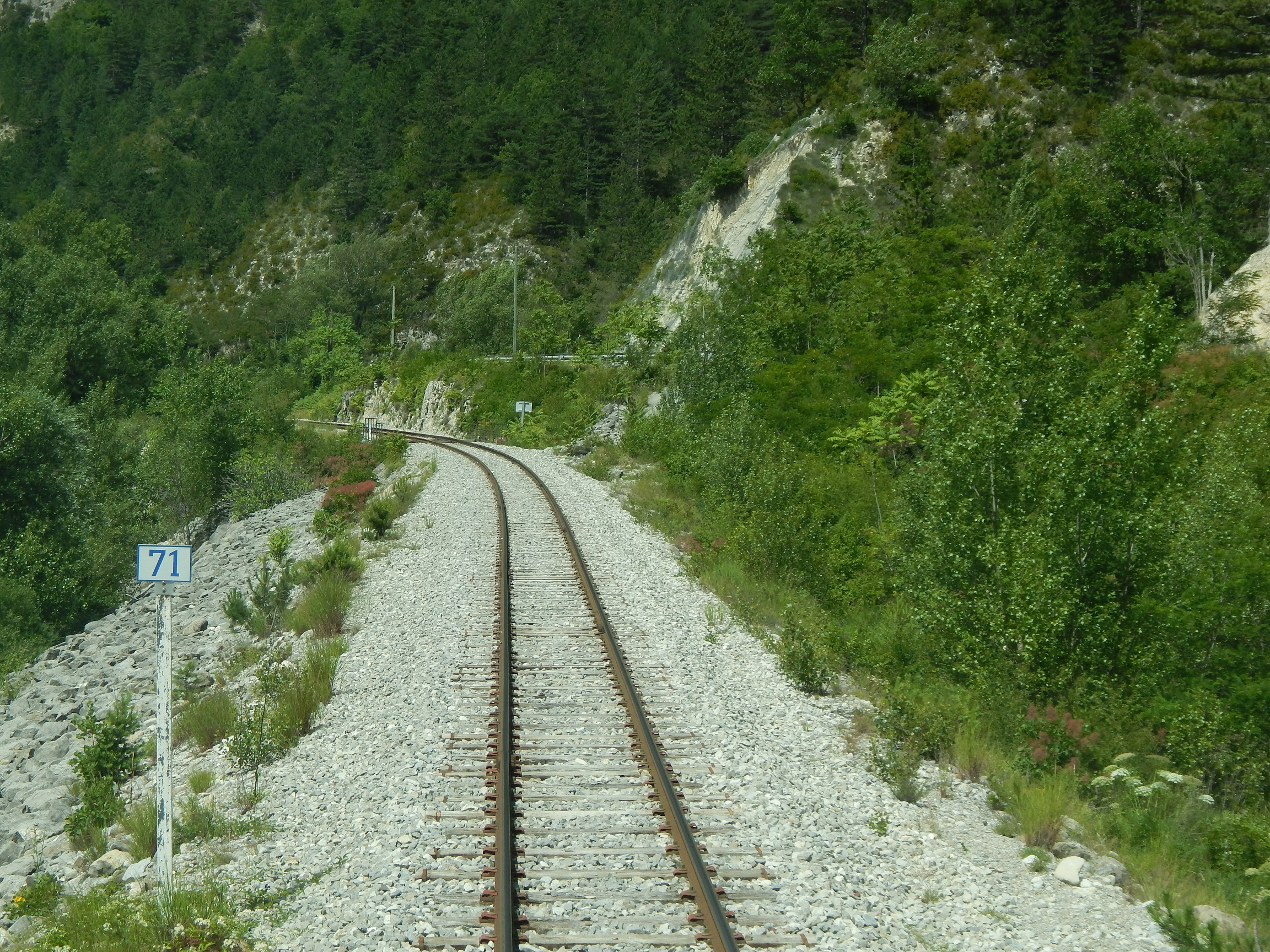
Our journey along the Nice to Digne line recommences at Annot. We are halfway between Nice and Digne. My memory of travelling on the line is that Annot was touted as being an excellent destination when travelling from Nice, to allow access to mountain walking. A little research shows that to be the case. The map below is a copy of the hiking route map which includes an extensive range of walks. The “.pdf” from which it is taken can be accessed by following the link in the references at the bottom of this post. [1] The train we travelled on through Annot to Digne in 2001 was full of hikers who left the train at Annot.It will also be evident from the above map that the line has left behind the department of Les Alpes Martimes and is now in the Alpes de Haute-Provence. The Tramway from Pont de Gueydan northwards (https://rogerfarnworth.wordpress.com/2018/07/25/tam-tramway-from…r-de-provence-69) followed the approximate boundary between the two departments.

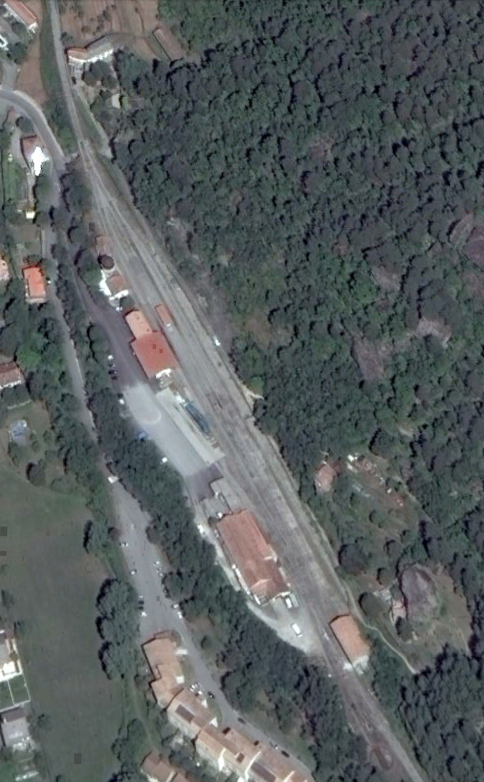
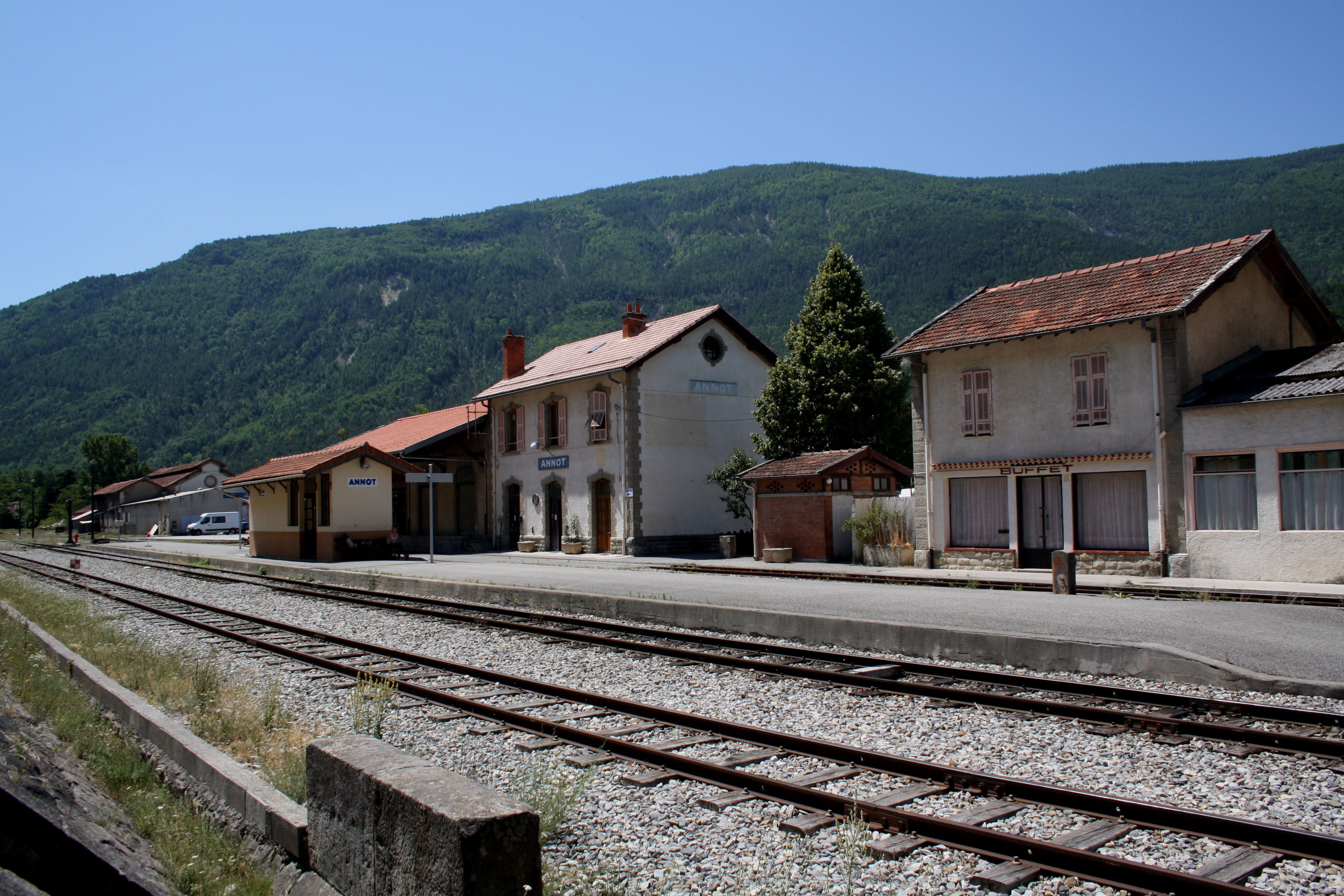
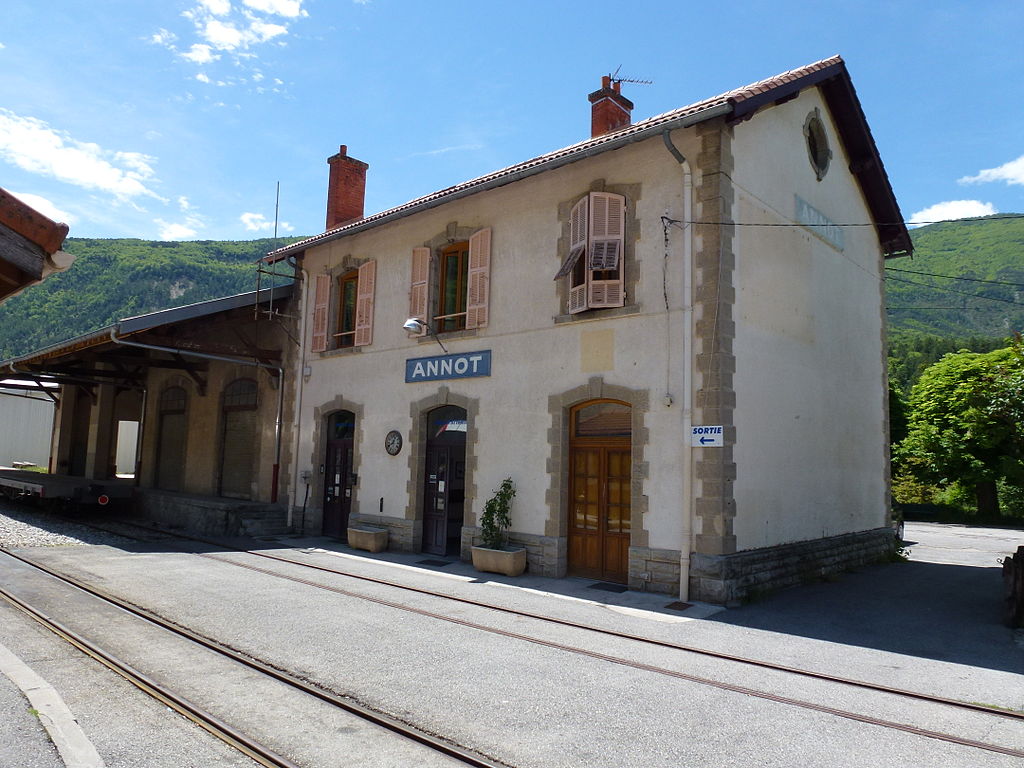
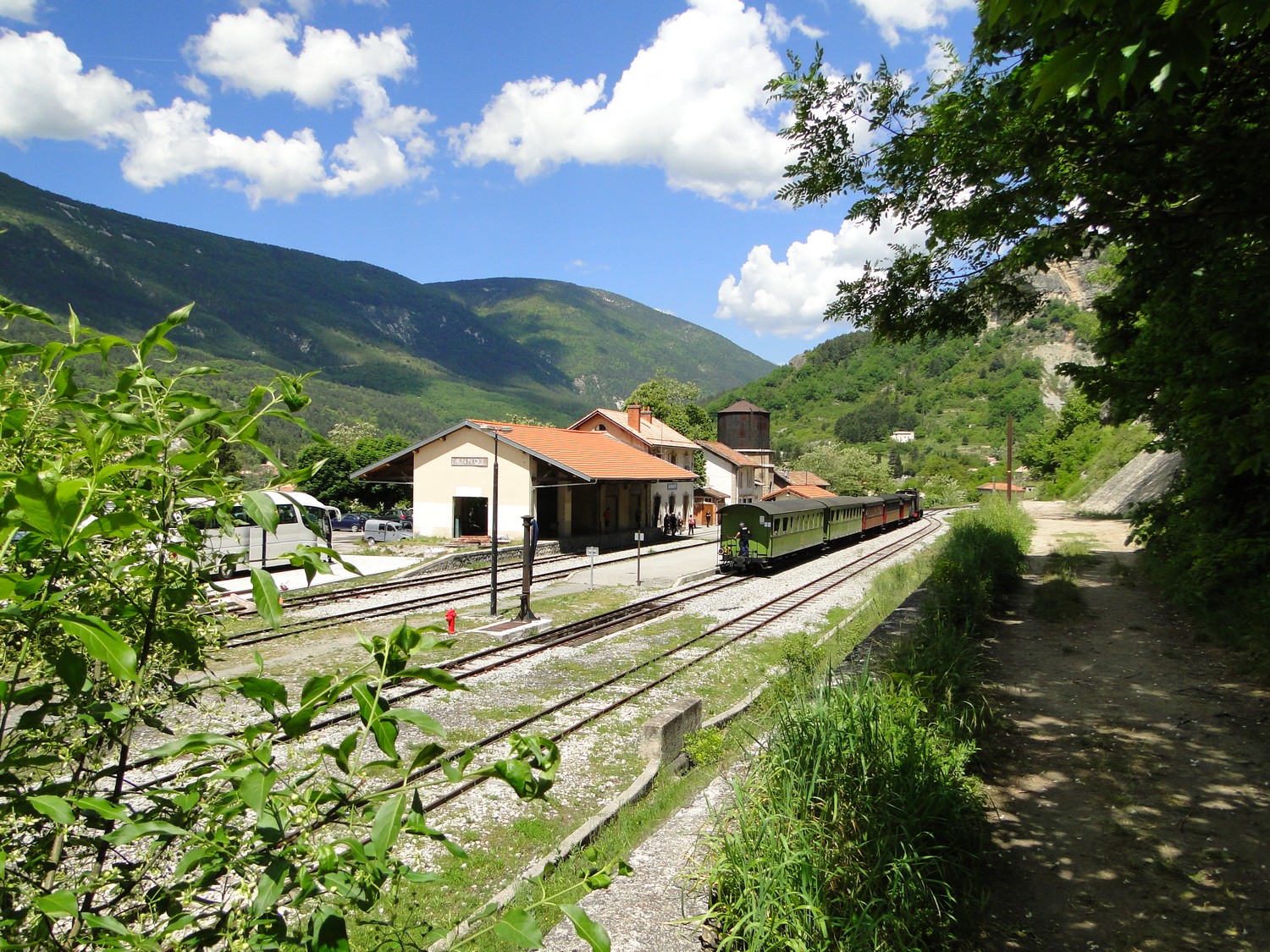
Annot is in the valley of La Vaire. Its station is on the valley side to the southeast of the town centre. [2]

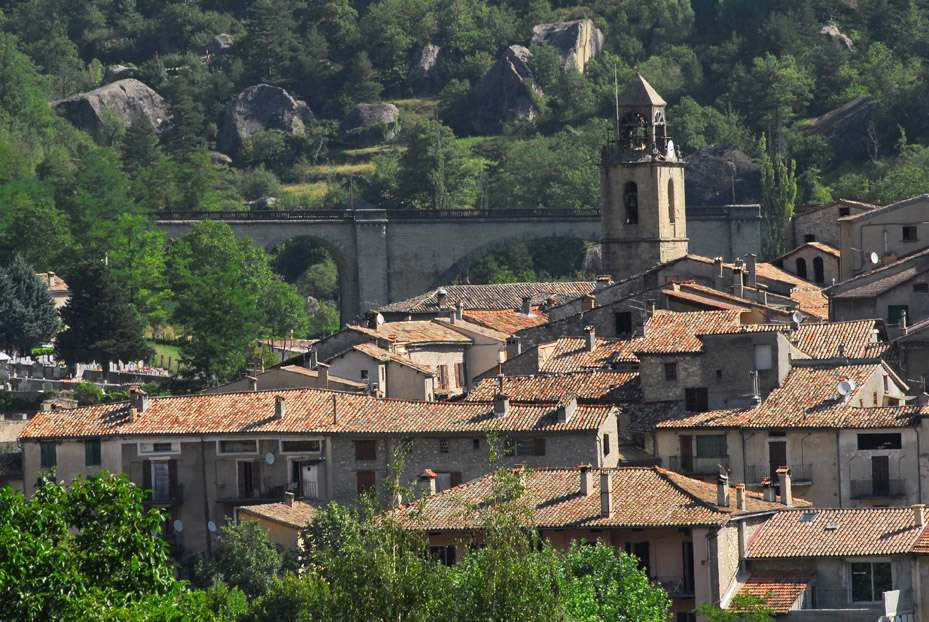
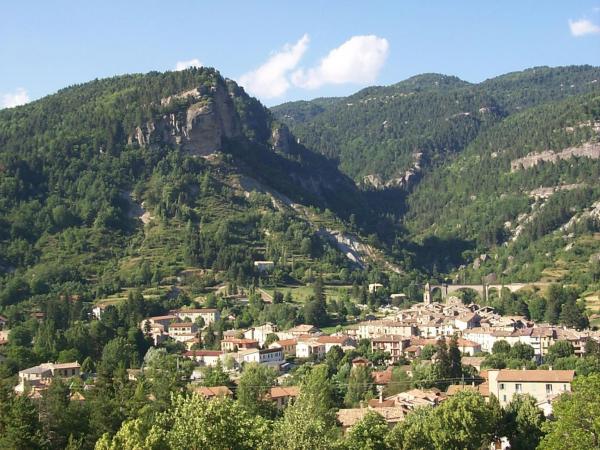
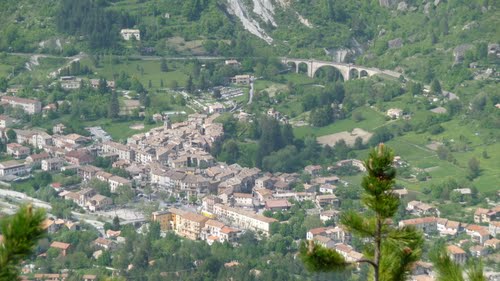
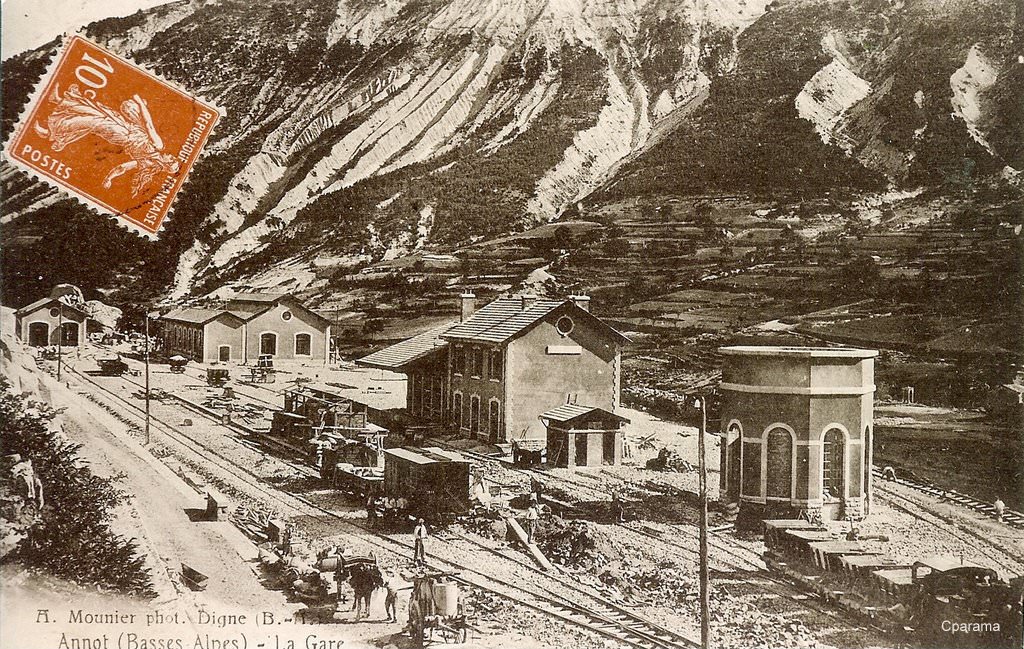
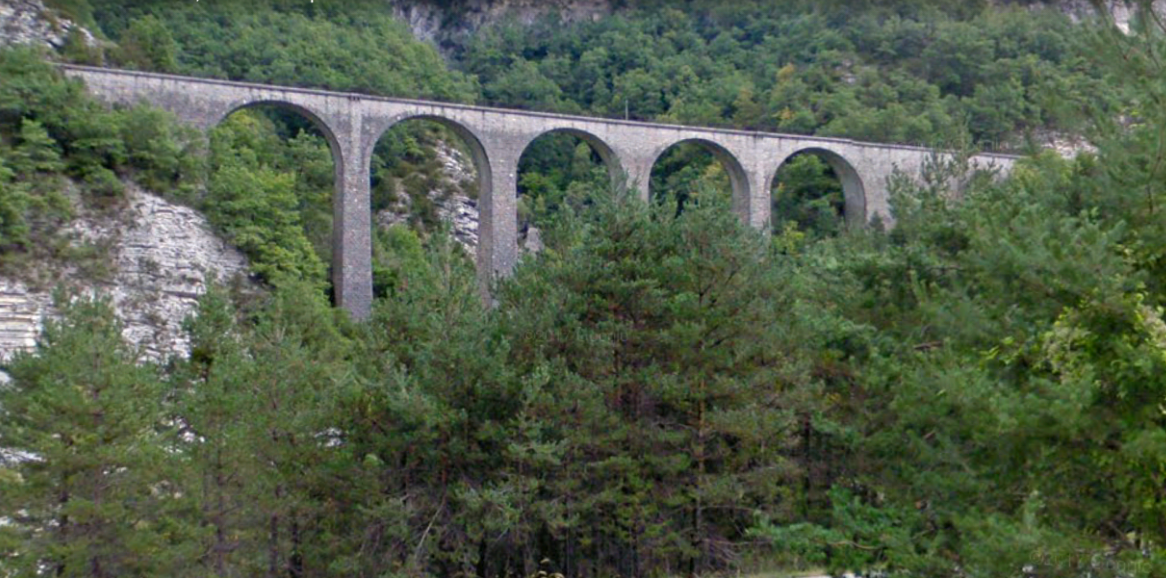
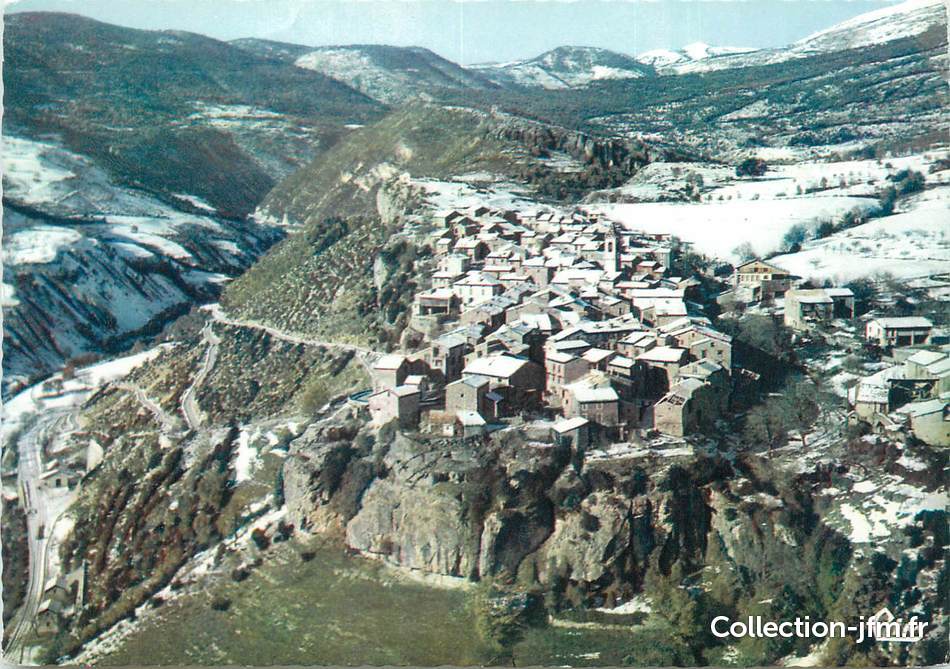
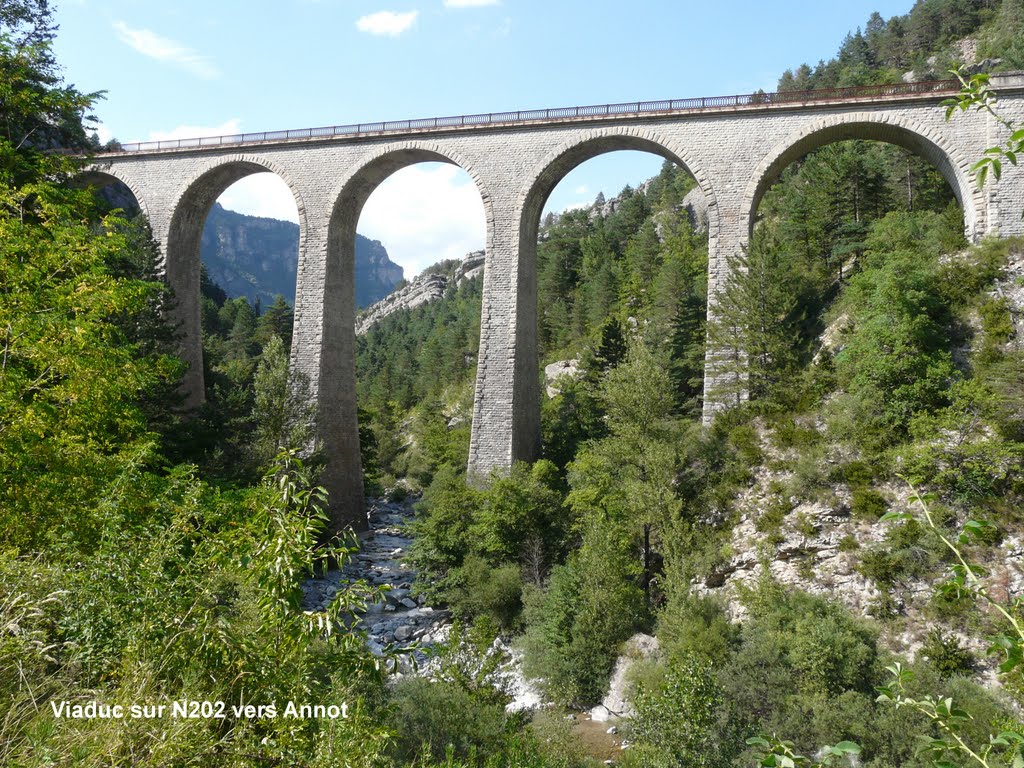
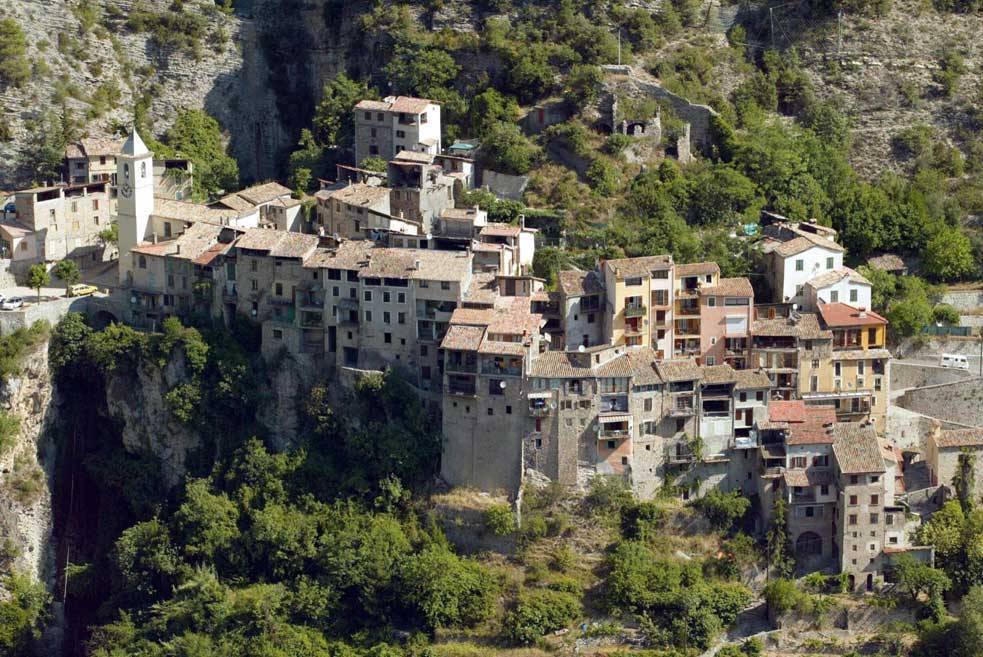
Annot is located on the edge of Mercantour National Park, it was founded on a small hill and surrounded by wooded mountains, the village which dates from the 11th century, has little by little spread along the banks of La Vaïre. The old village is built in sandstone. Immense boulders of this rock (sometimes more than 100 metres high) can be seen at close quarters by following the “Chambre du Roi” waymarked circuit. Some of these rocks can be seen in the background of the image below.The viaduct seen from beyond the village. [3]A view of Annot from further to the southwest. [4]Annot from above. the railway can be seen crossing the viaduct behind the town. Annot railway station is just off picture to the right. [5]

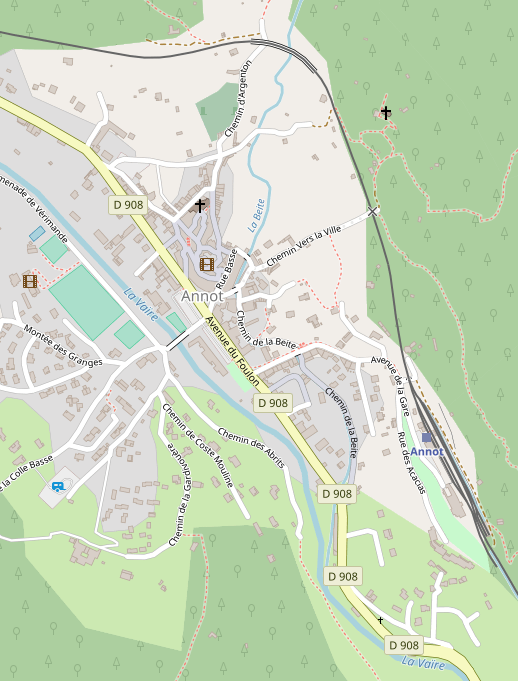
OpenStreetMap provides an excellent cartographic image of the town, station and viaduct. The railway can be picked out easily as a black line to the east and north of the town. [6]

So, we return to the railway station and prepare to leave travelling North, initially, towards Digne-les-Bains.

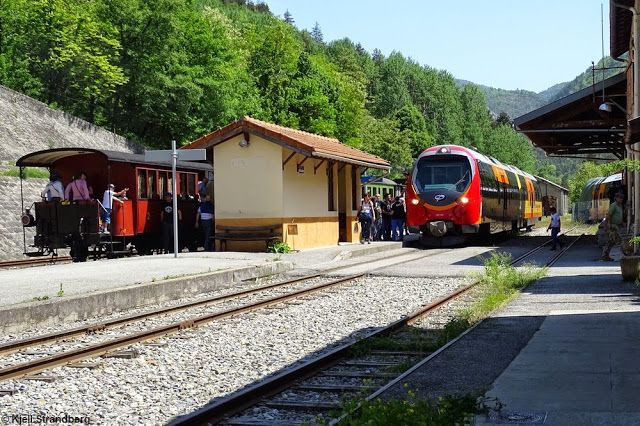
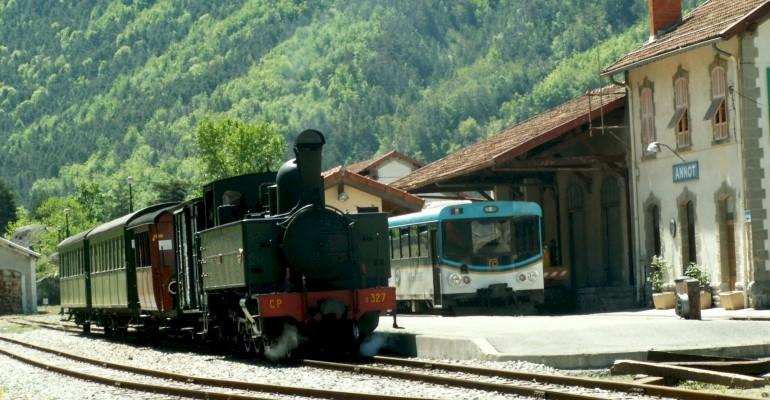
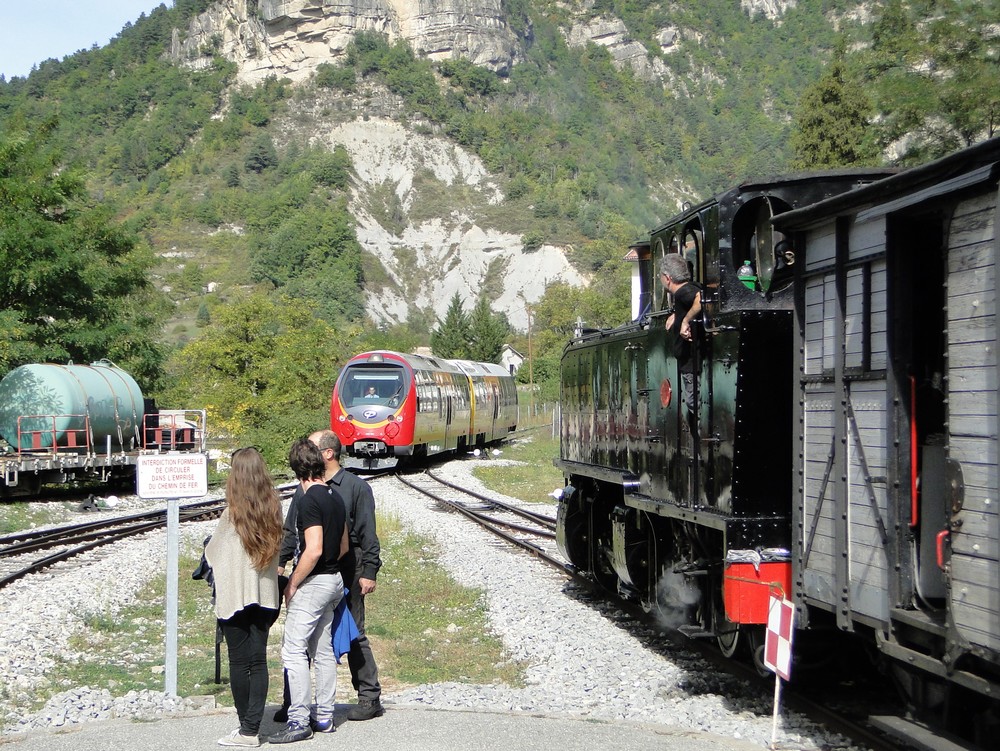
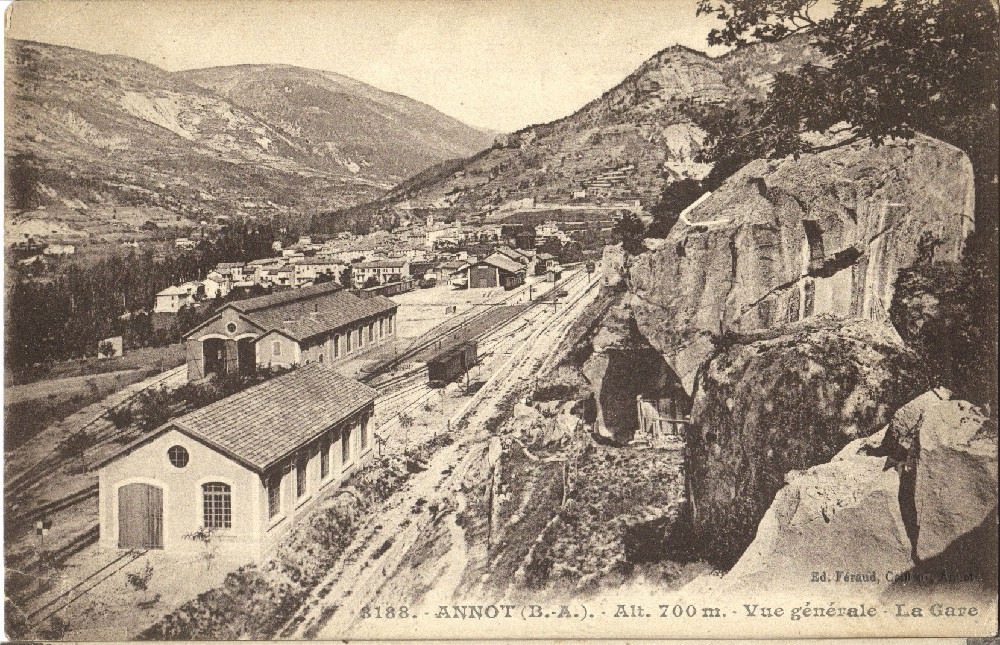
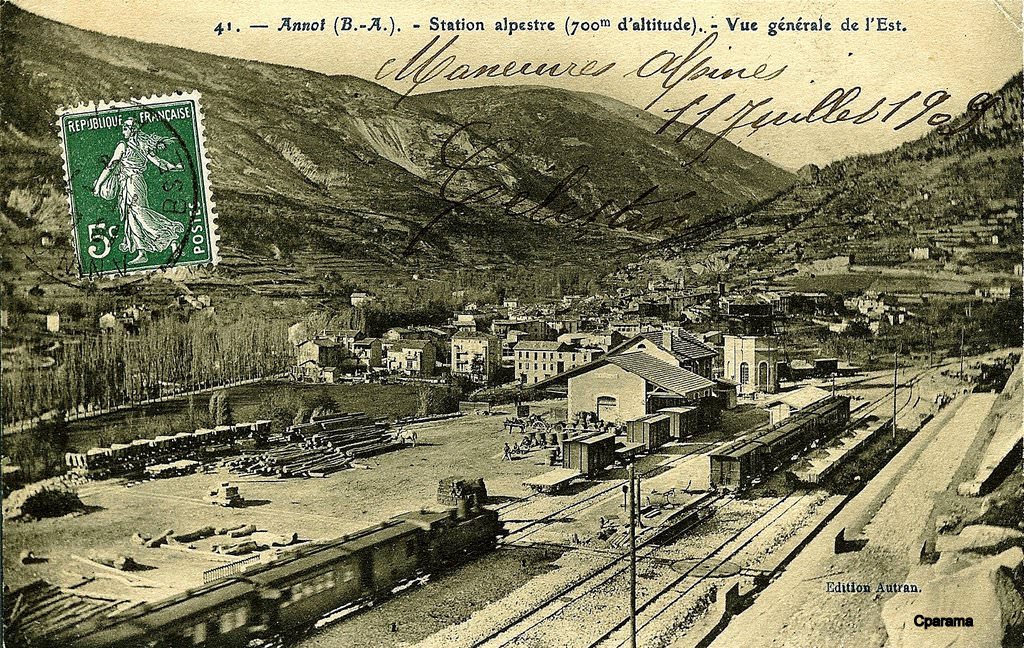
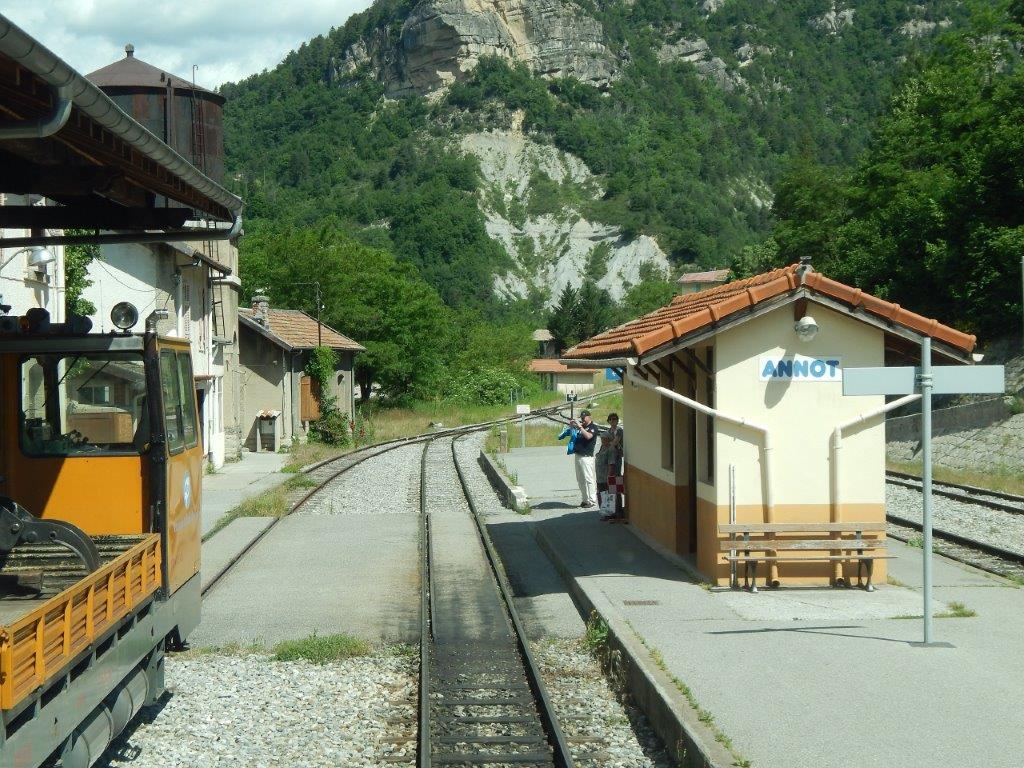
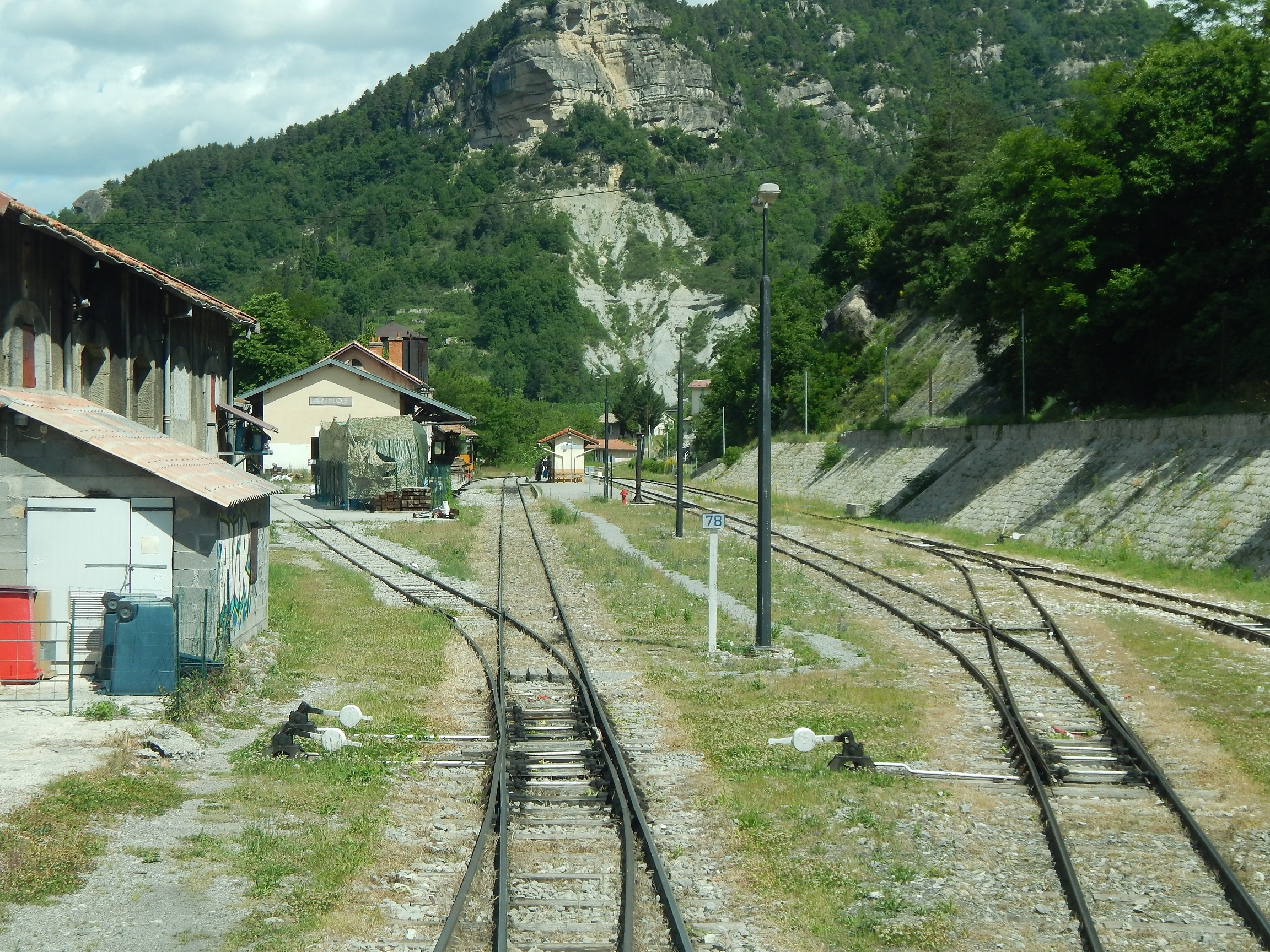
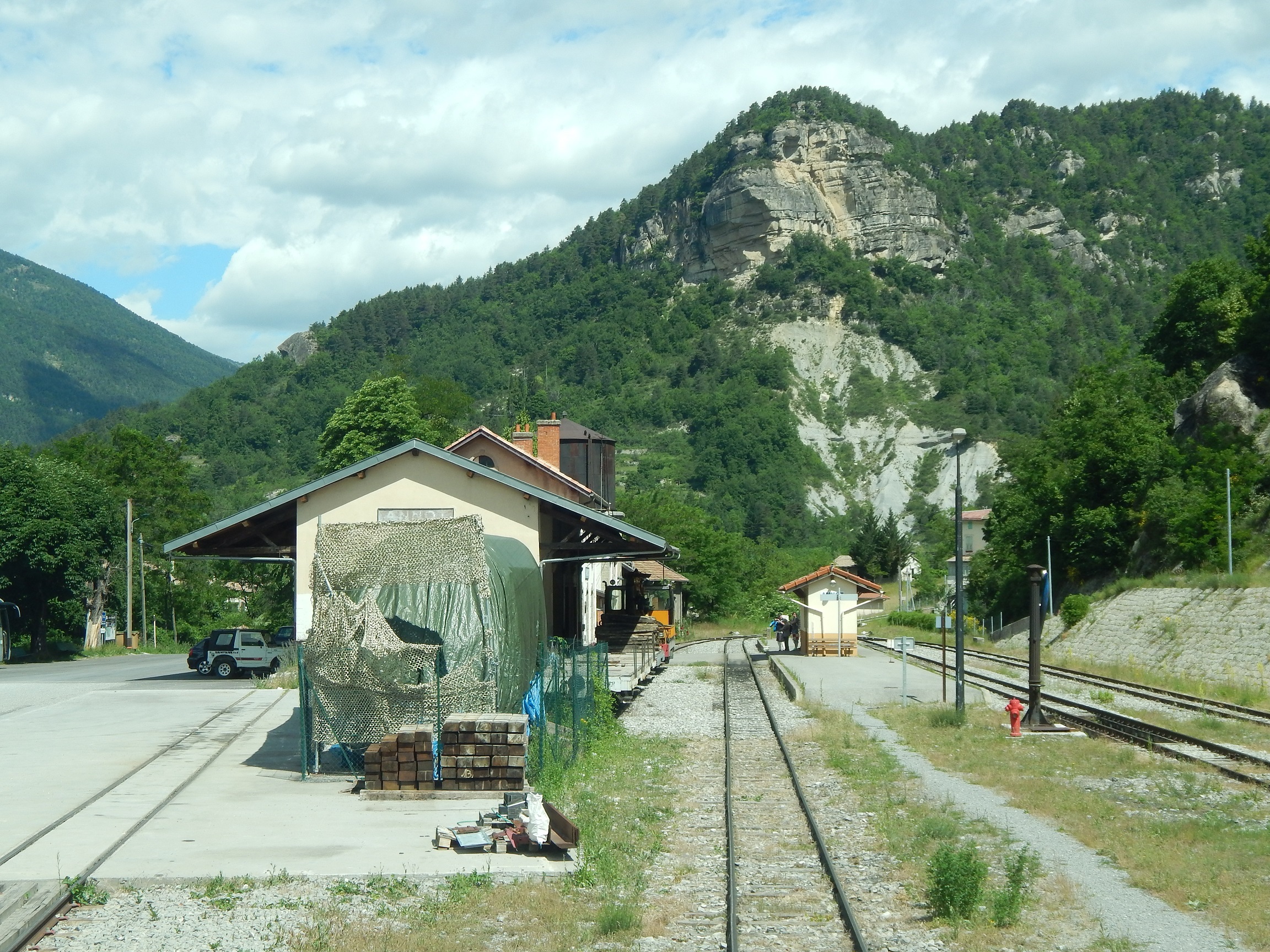
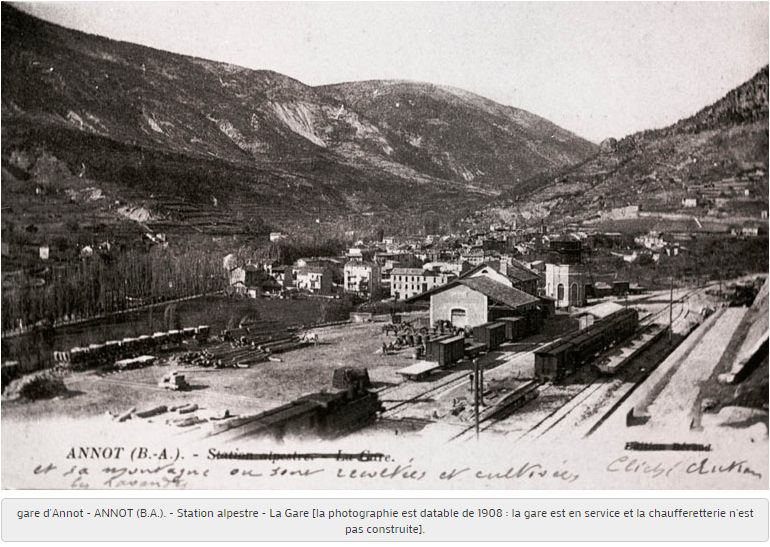
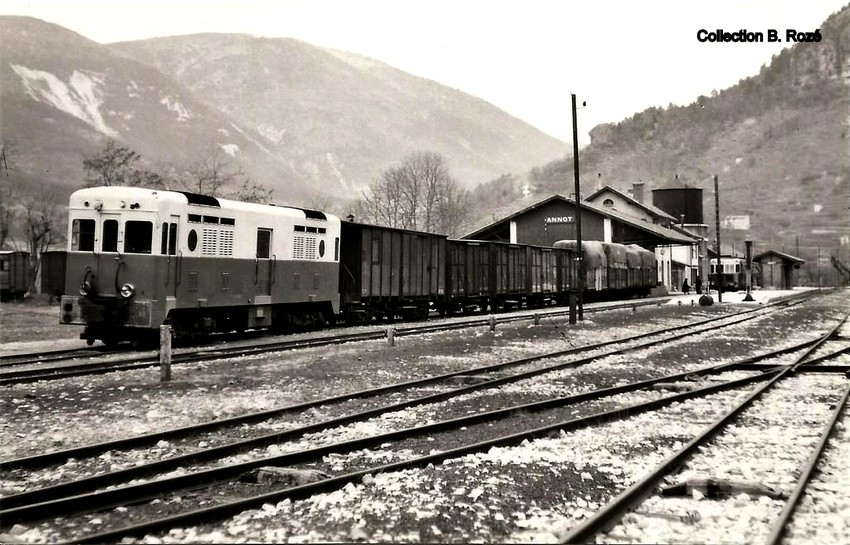
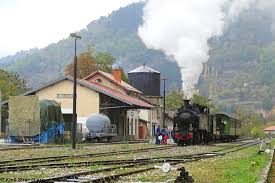
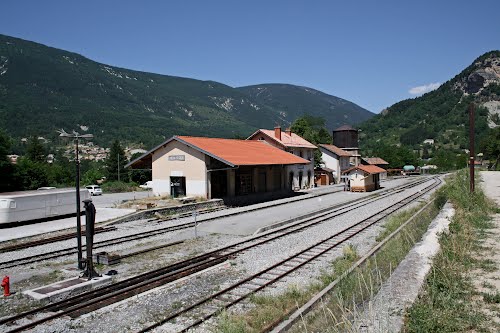
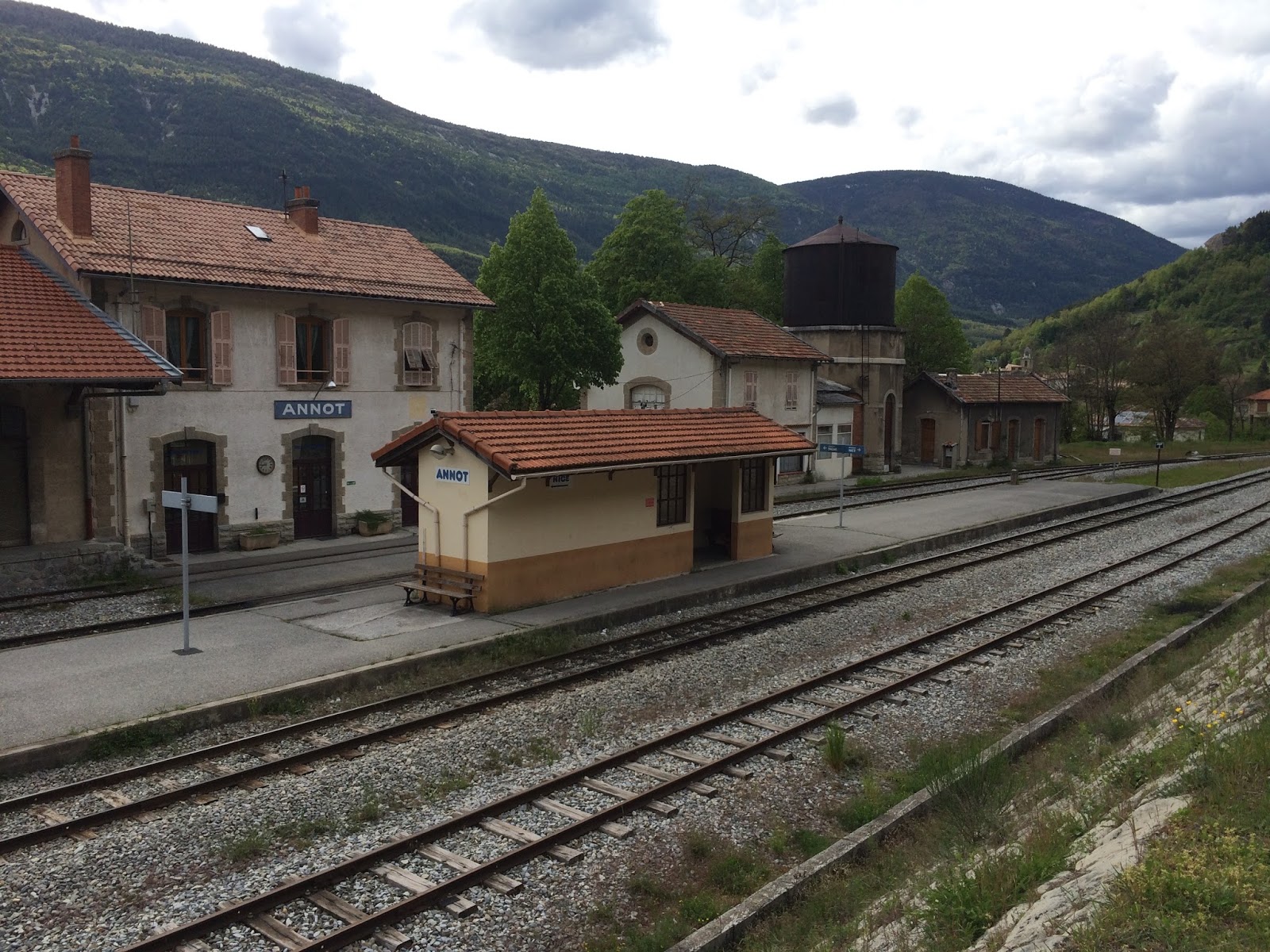
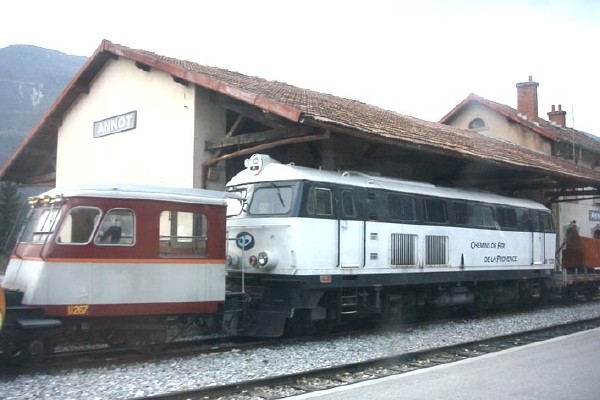
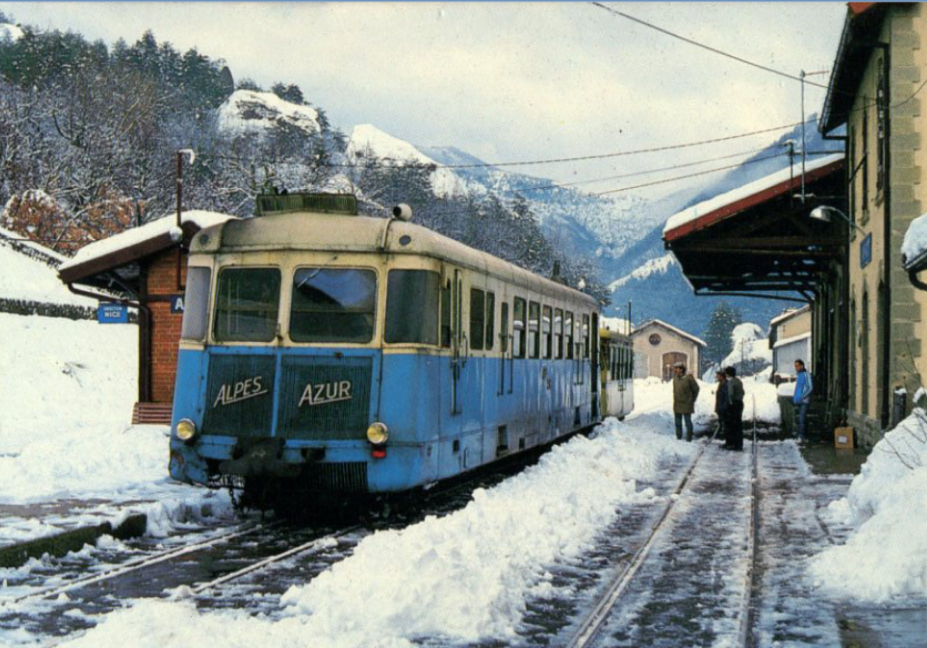
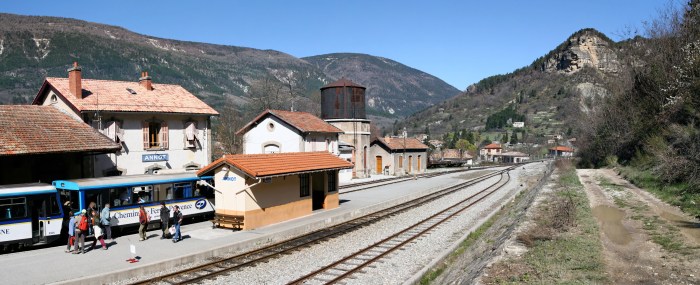
The pictures immediately below are taken at the station. The first shows the most modern trains on the line and the carriages of the Steam service. [7]An older railcar (autorail) and the steam service waiting at Annot Station. [8]A modern train approaches the throat of Annot station from Digne while the “Portuguese” Steam Locomotive waits in the station. [9]The three images above show Annot station in its very early days. [16]

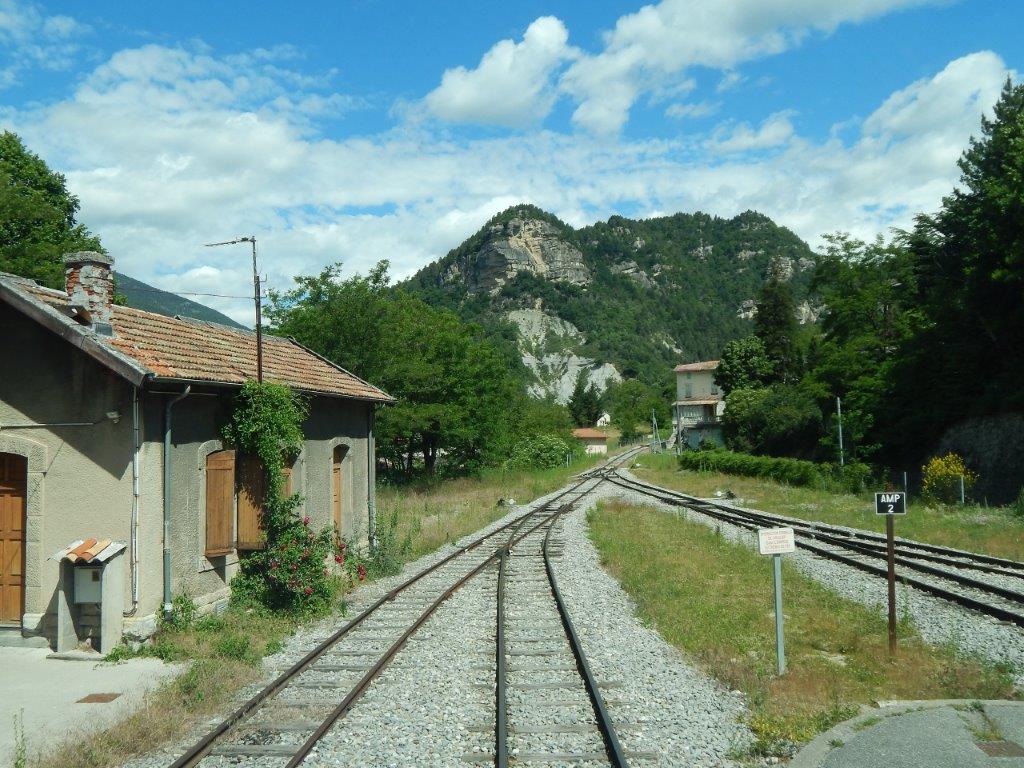
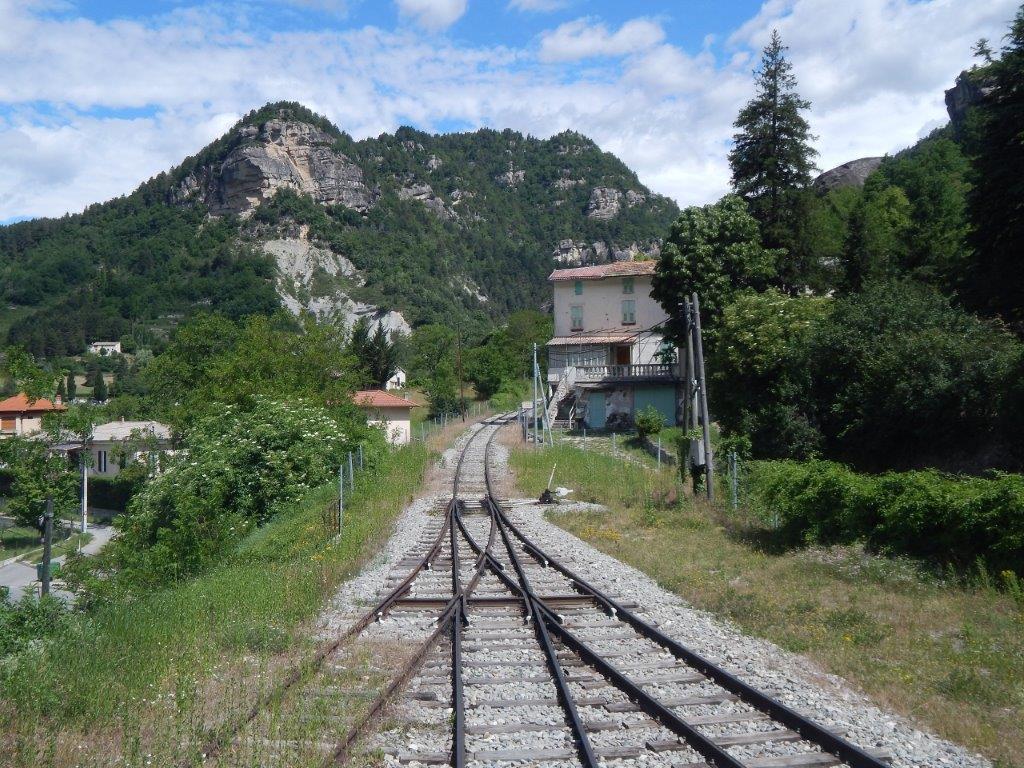
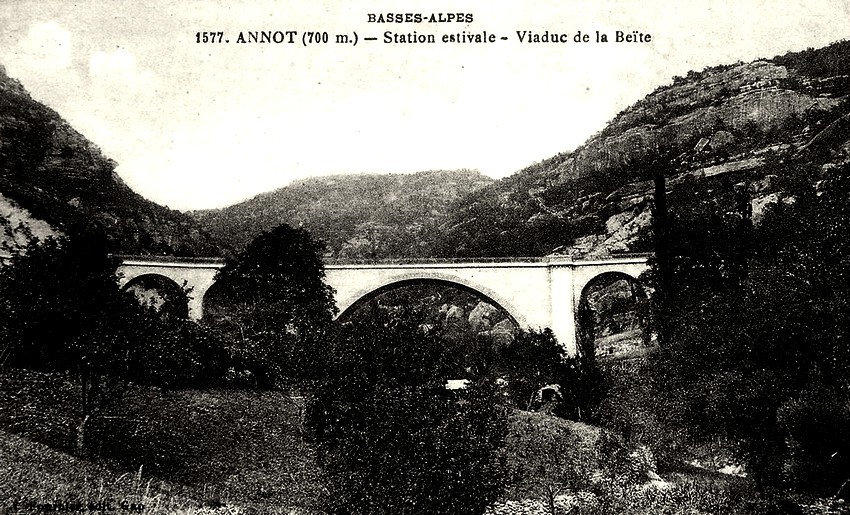
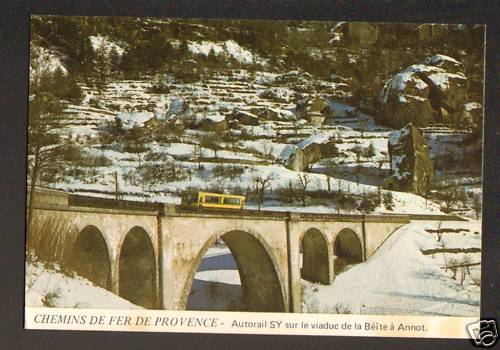
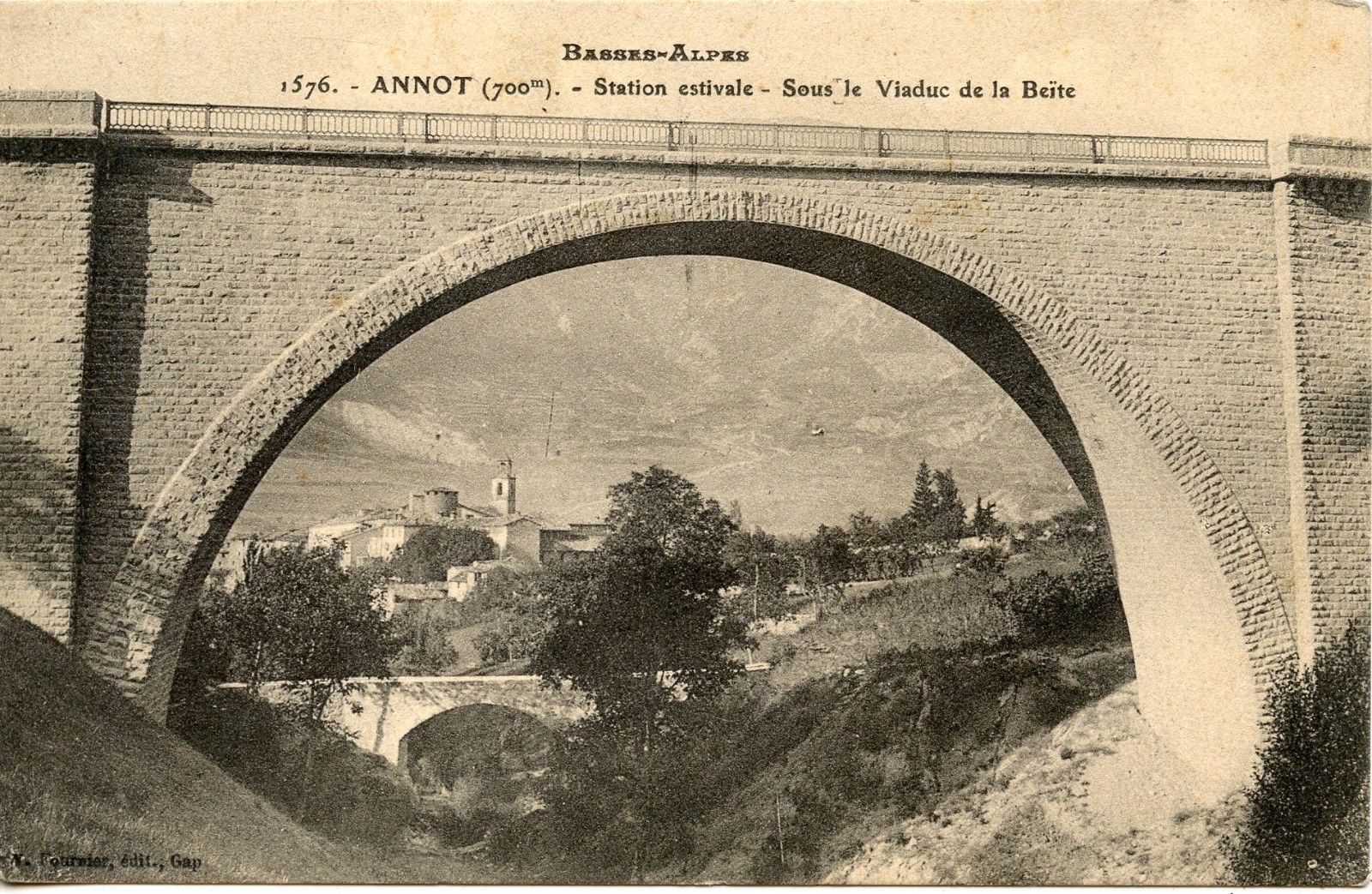
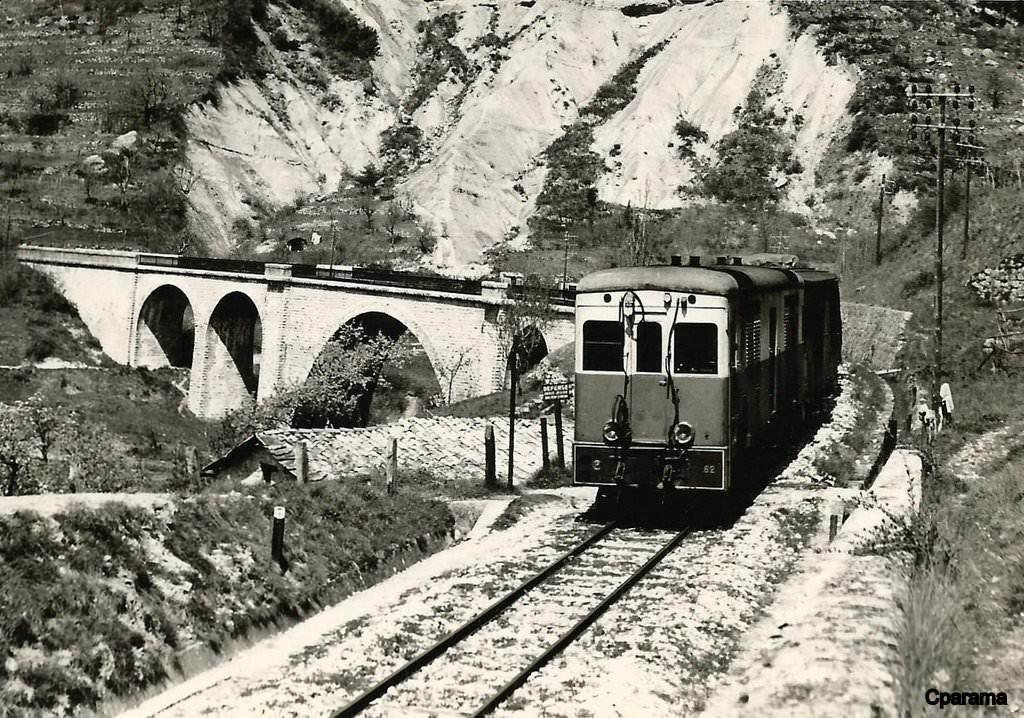
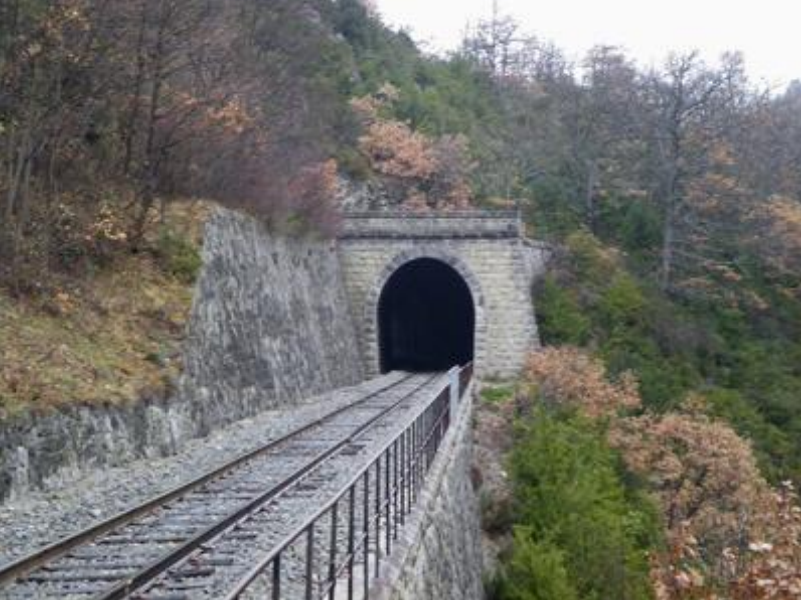
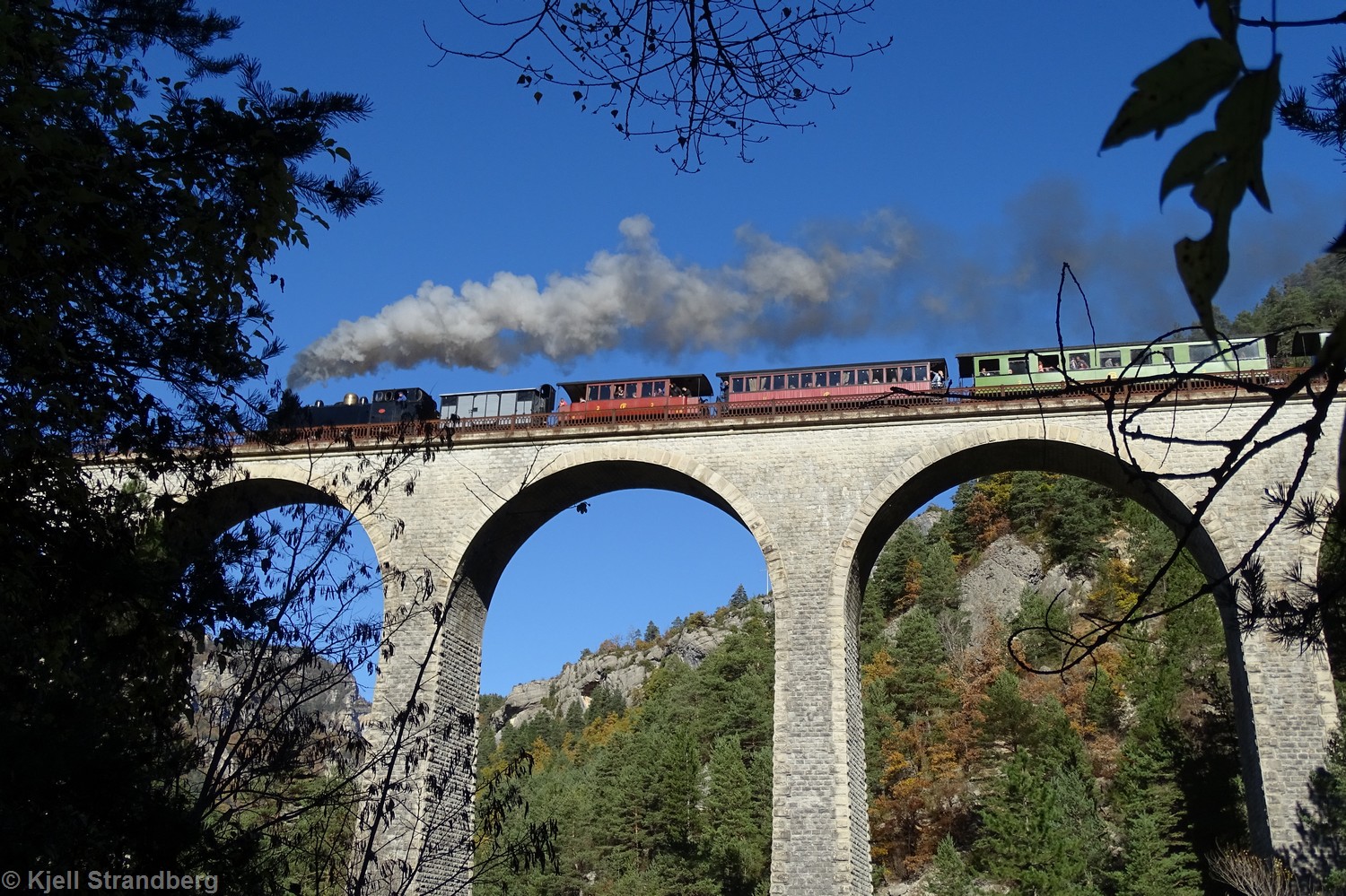
Our train sets off from Annot. The next few images give a driver’s eye views along the line as we leave the station. [10] About 700 metres beyond the Station the line crossed the Viaduc de la Beite, across the valley of La Beite. We have already seen the viaduct in the photographs of the town of Annot above. But it is an elegant structure, so more photographs seem appropriate.This is Le Train des Châtaignes. It is the last day of the 2013 season (Saturday 2nd November) for the “Train des Pignes” It circulated between Puget-Théniers and Le Fugeret for the Fête de la Châtaigne at Le Fugeret, (c) Jose Banuado. [11]

Post card images follow: A freight train has just crossed the viaduct heading for Annot, circa 1956. [16]

As trains travel over the Viaduc de la Beite, they turn back to towards the D908 and for a short distance travel east-west before turning to the northwest once again. As the road and railway continue in a northwesterly direction their paths drift closer together so that around 4 kilometres northwest of Annot they are running side by side.as they approach l’Arret des Lunieres. [10]l’Arret des Lunieres.

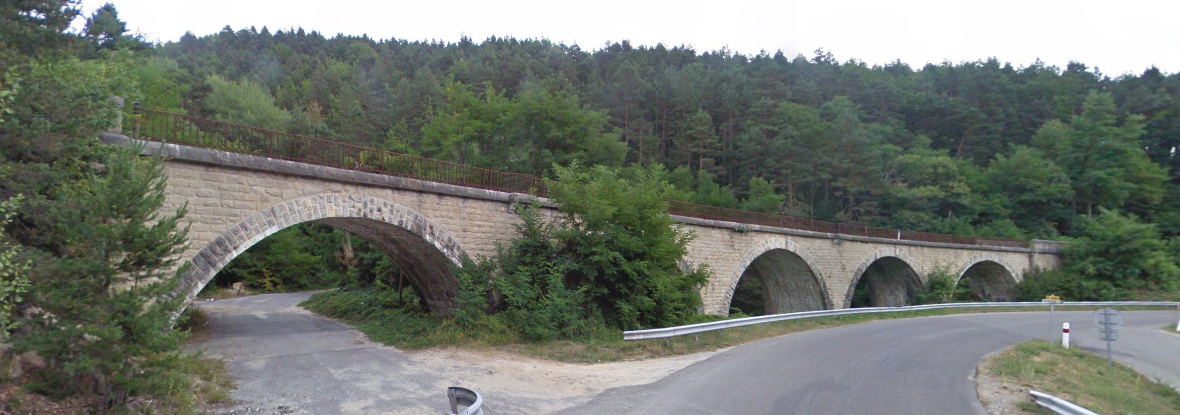
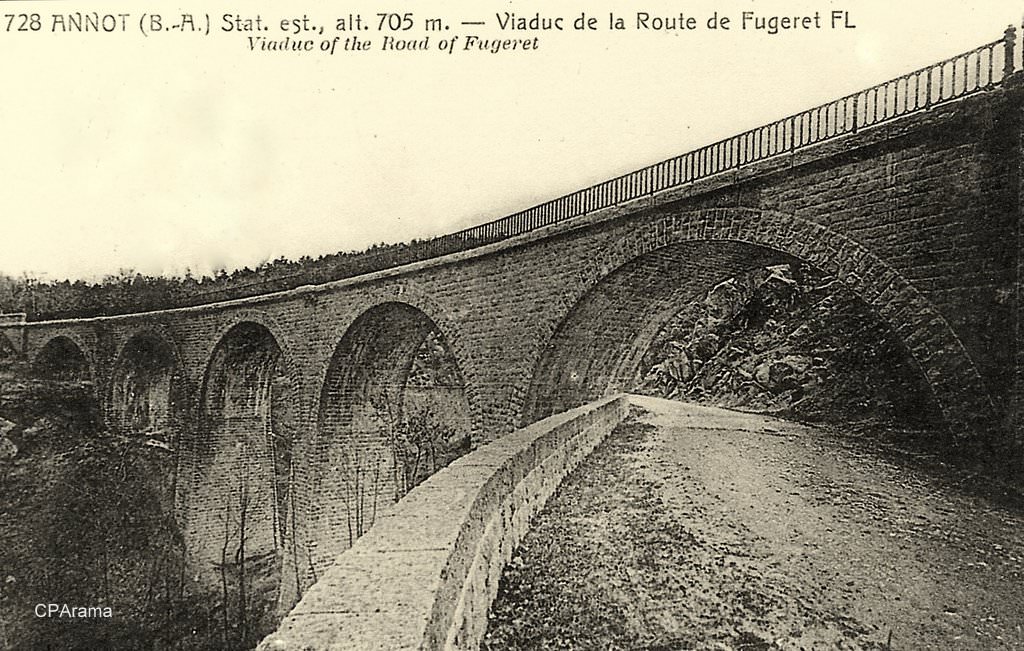
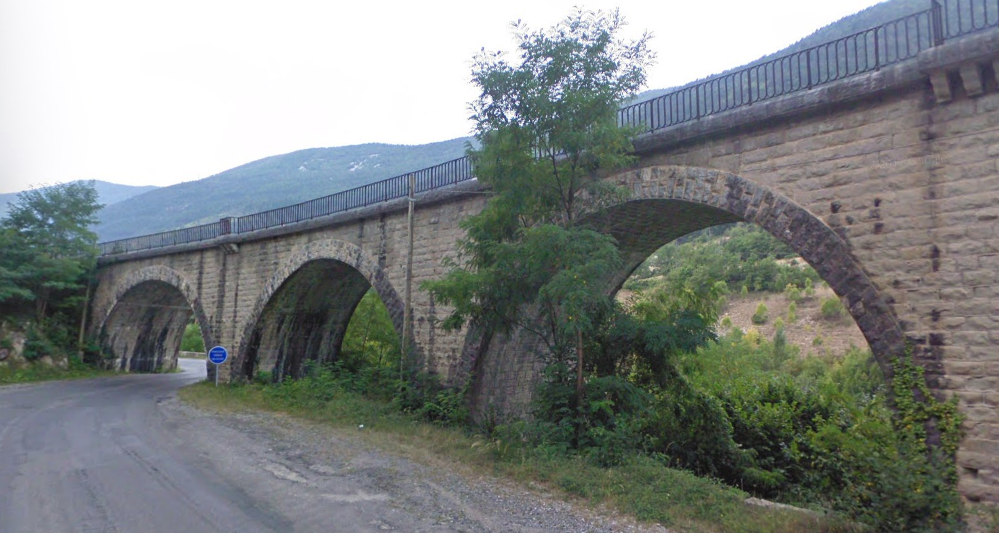
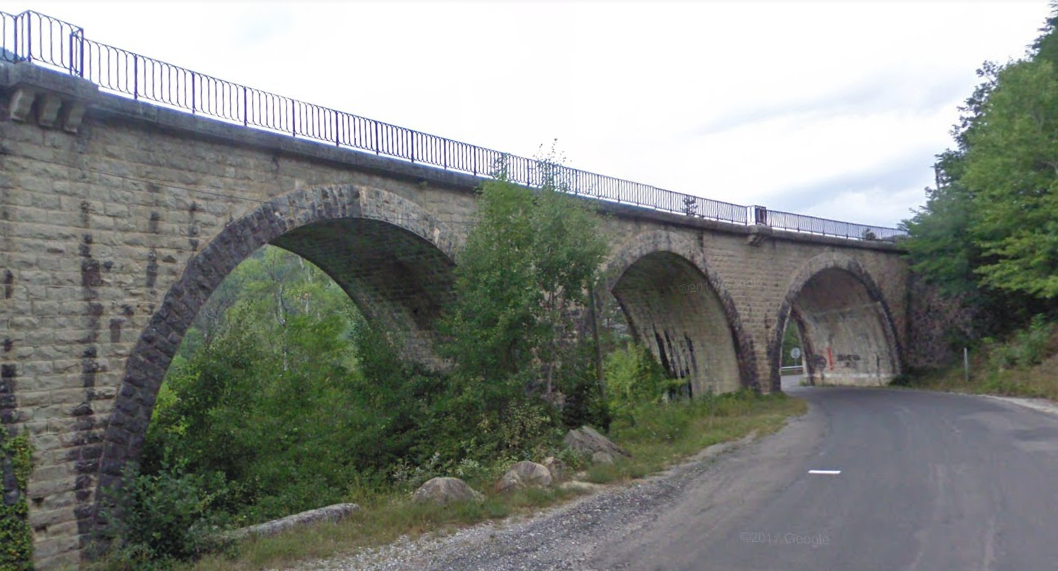
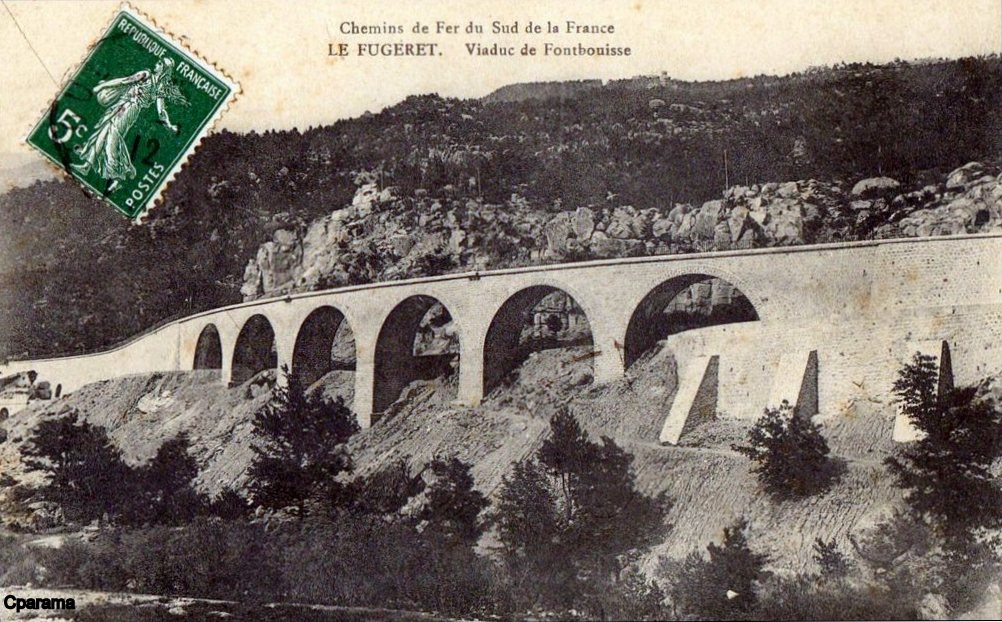
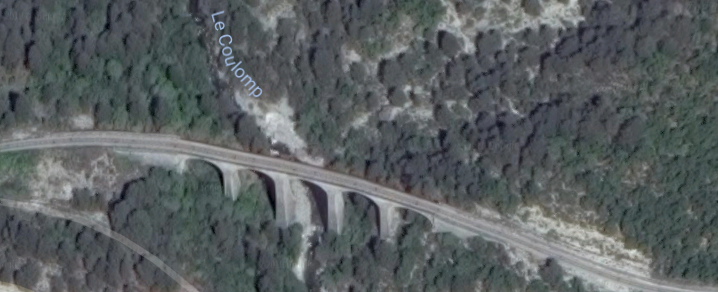
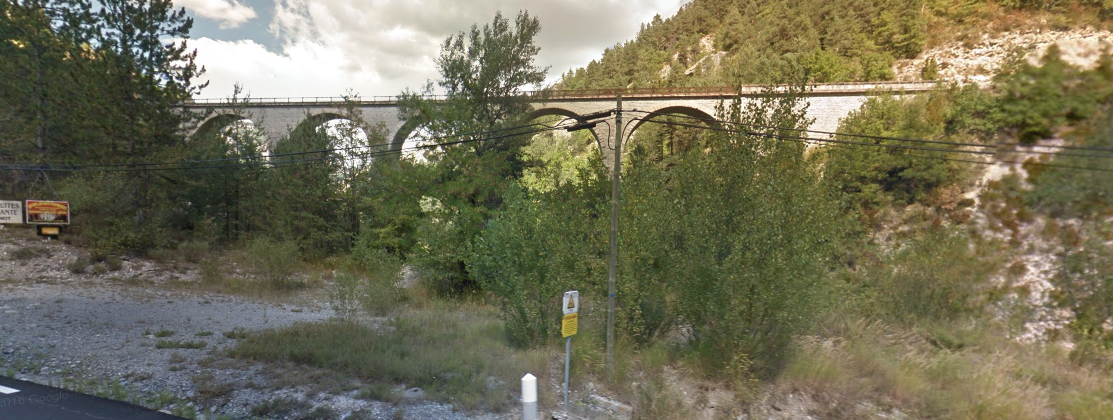
North of the Halt the road drifts down toward the valley floor while the railway follows the contours. As the disparity in levels increased the old road swung underneath the railway at Ravin de Fouent Bouisse and back again under the viaduct having crossed the stream. The clearances between road and rail were not adequate fro modern vehicles and the road had to be diverted to stay on the southwest side of the railway.The viaduct before any consideration of diversion of the road. [14]

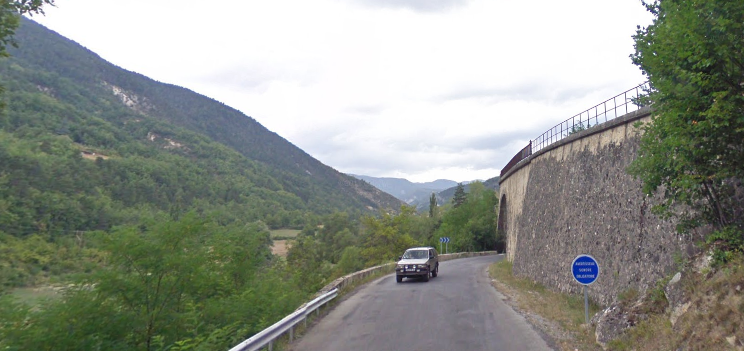
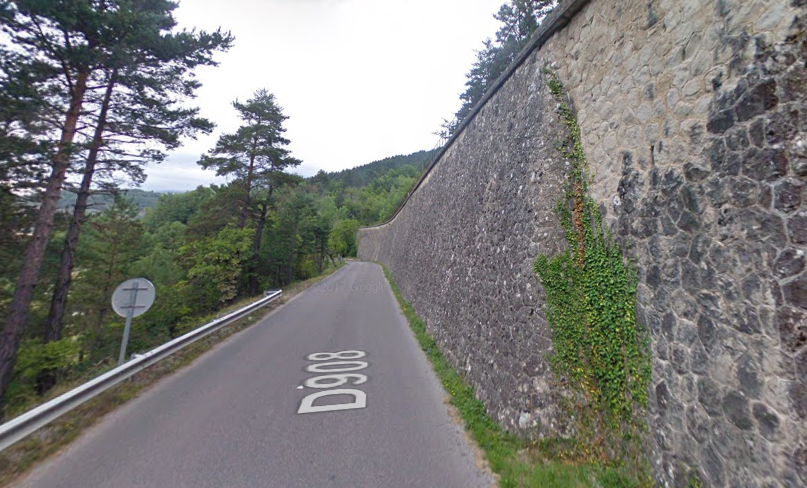
In no more than a couple of hundred metres, the road had dropped sufficiently to pass under the railway at a second viaduct and then follow it on its northeast side. before switching back to the southwest side again. The viaduct was named, “Viaduc de Fontbouisse.”Looking back towards Annot.From the same position, looking forward towards Le Fugeret.An early picture of the Viaduct. [14]With the road back on the southwest side of the railway, the lines are supported a significant height above the road by a substantial retaining wall.

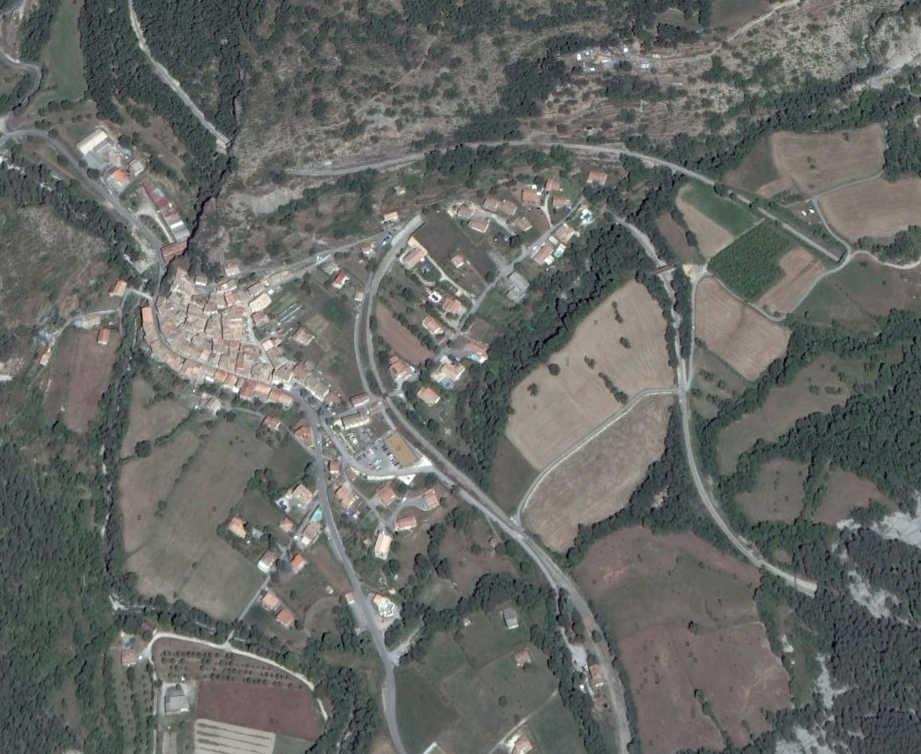
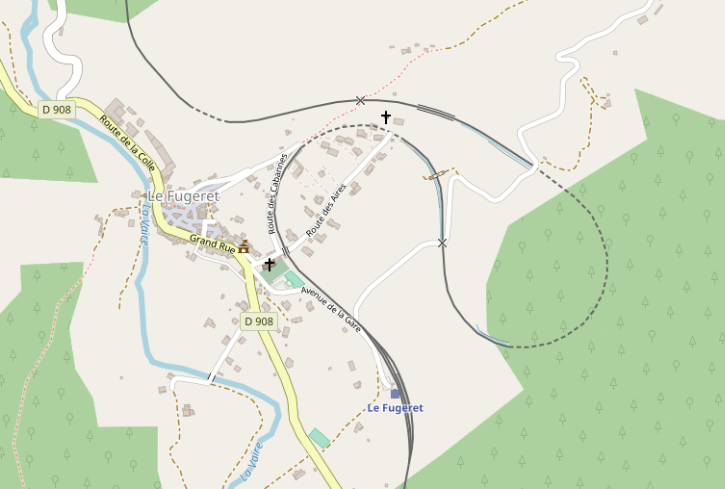
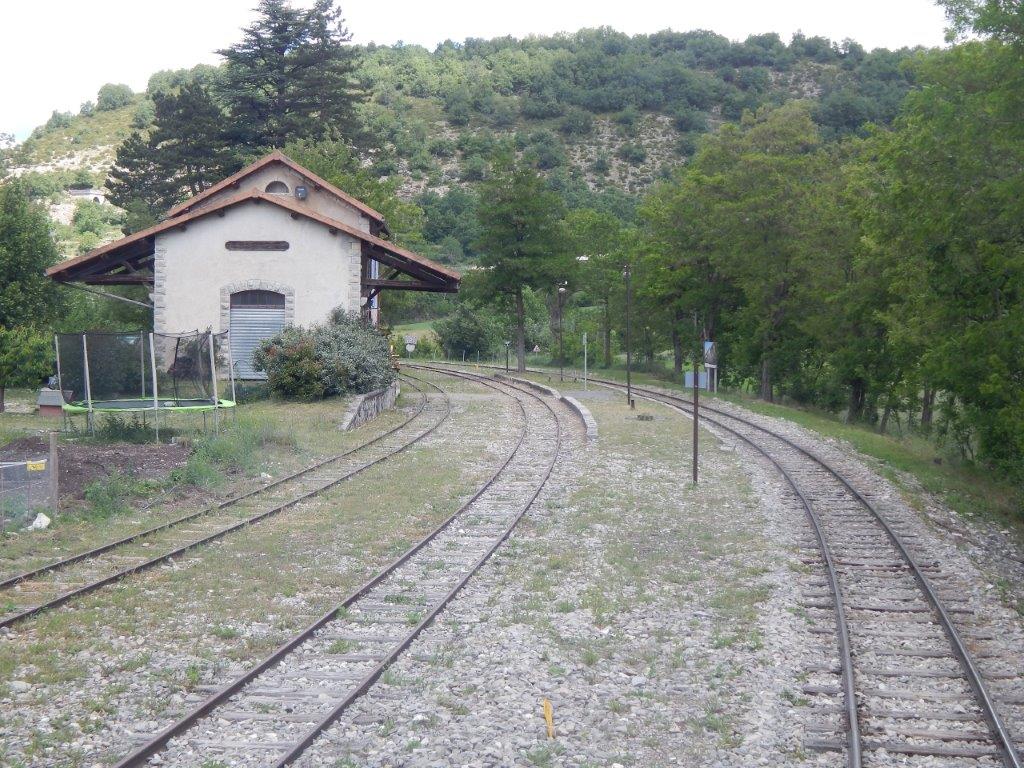
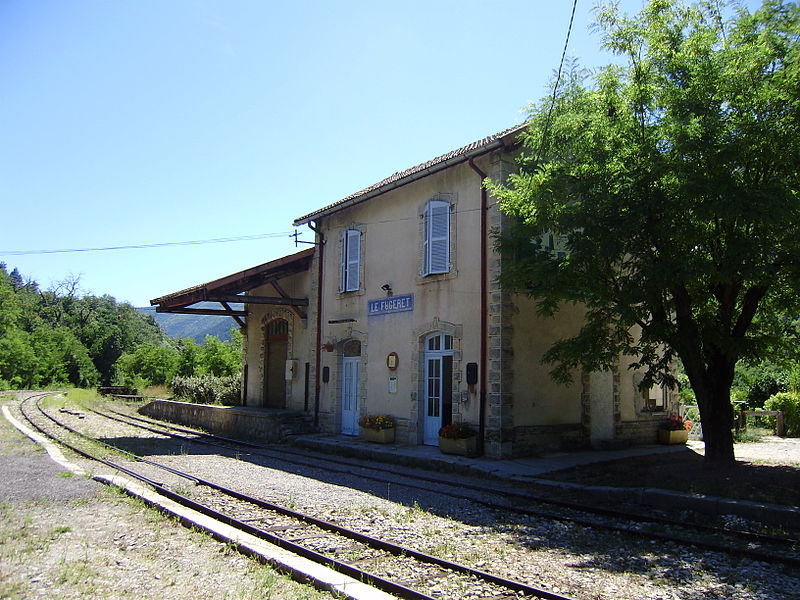
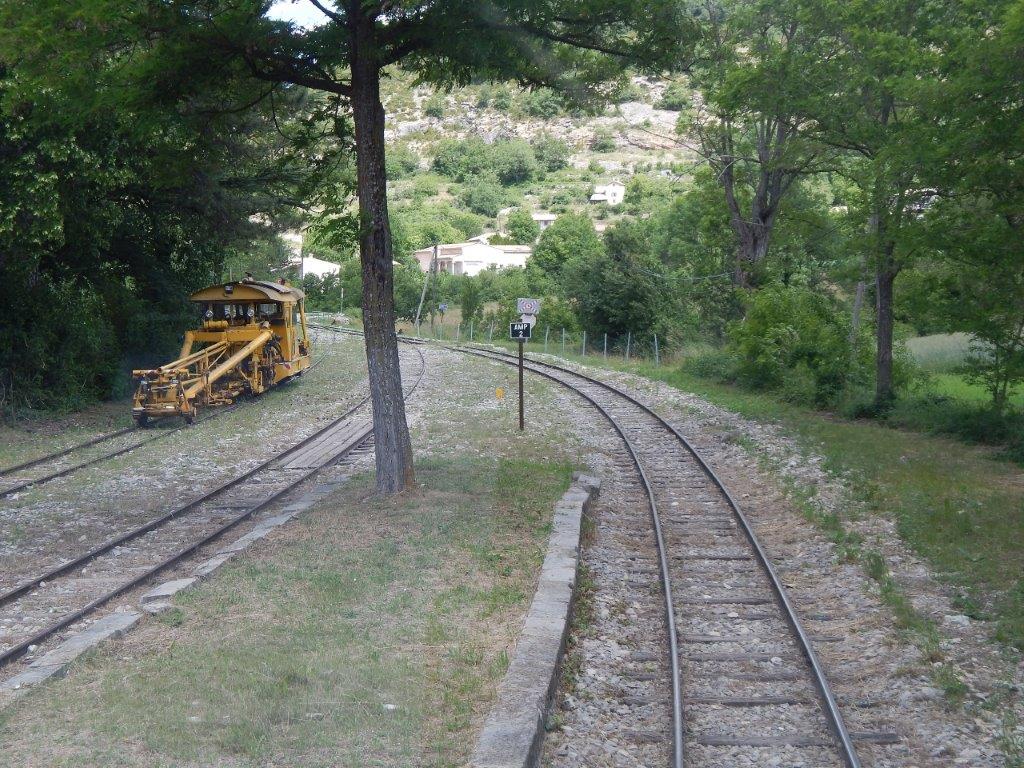
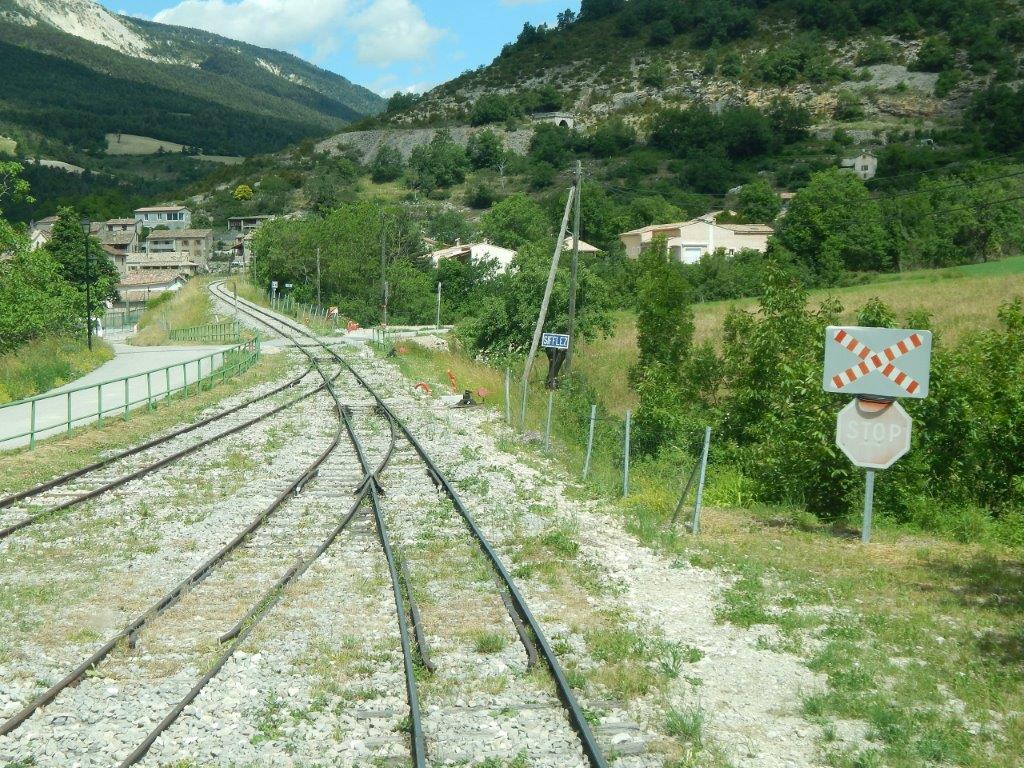
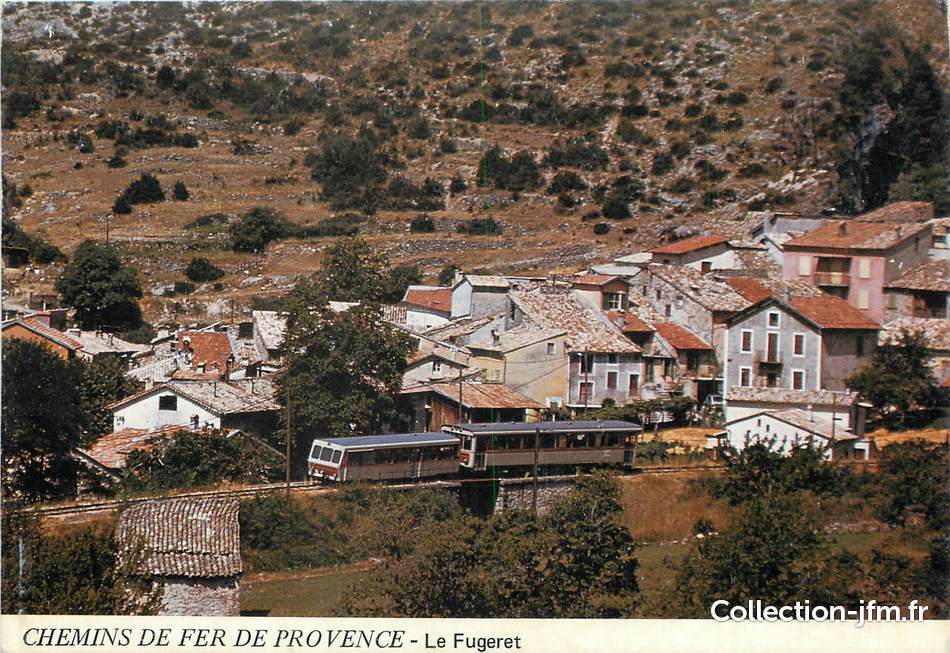
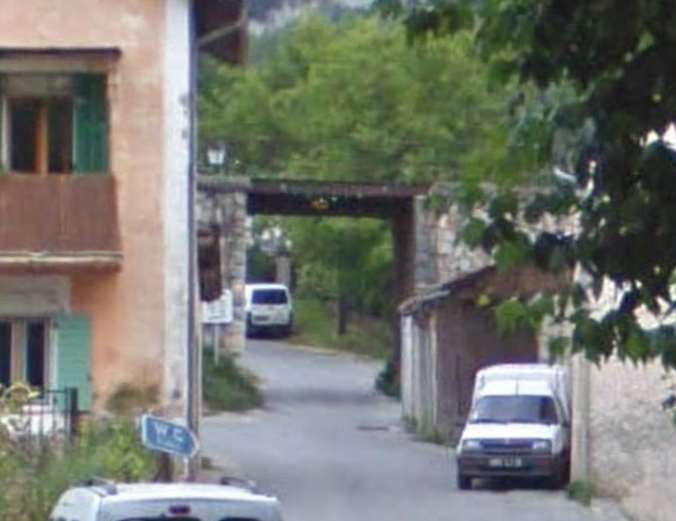
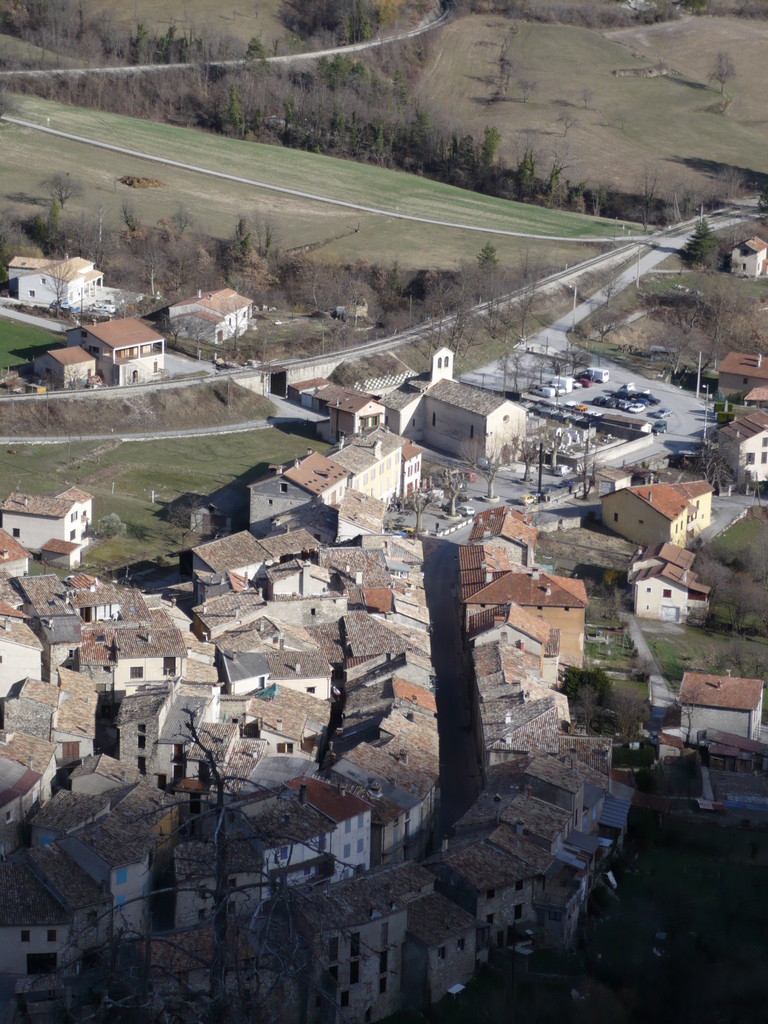
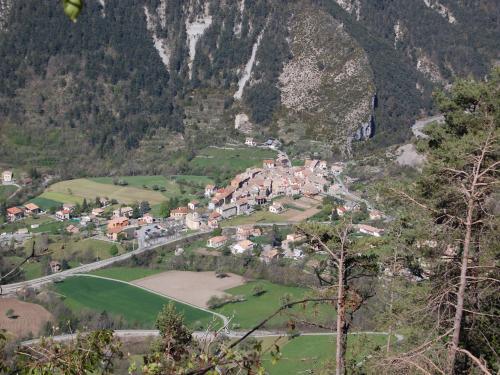
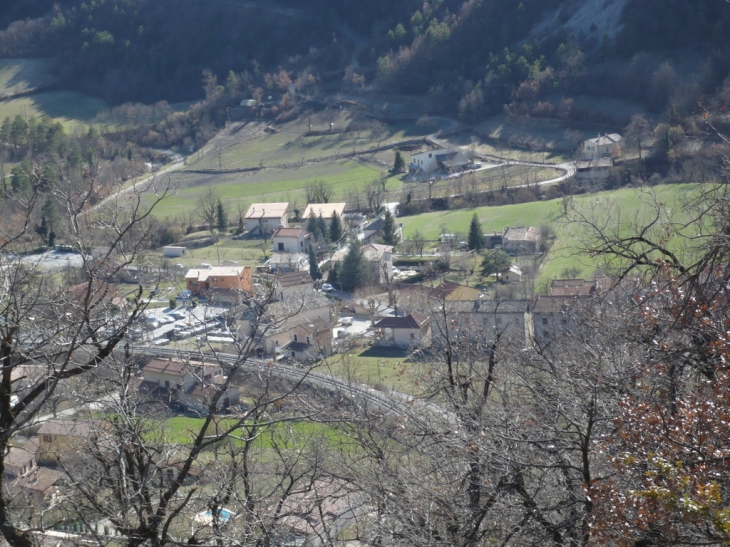
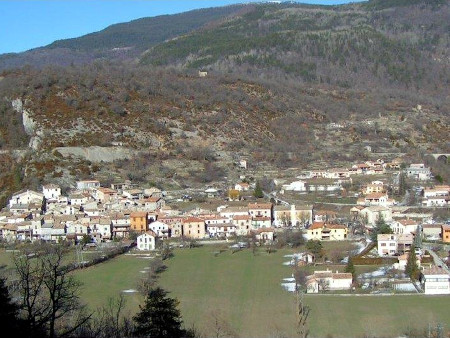
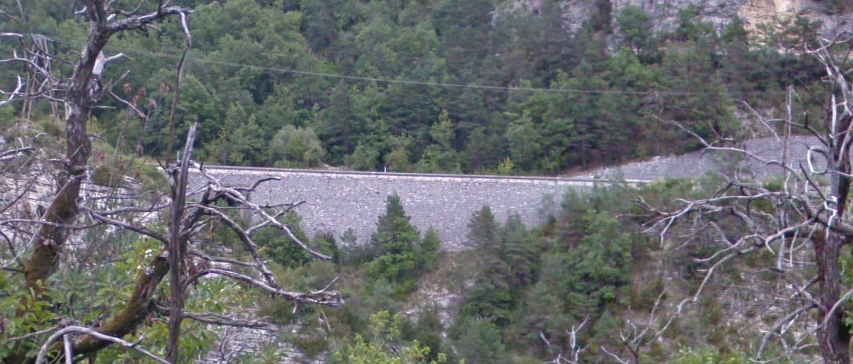
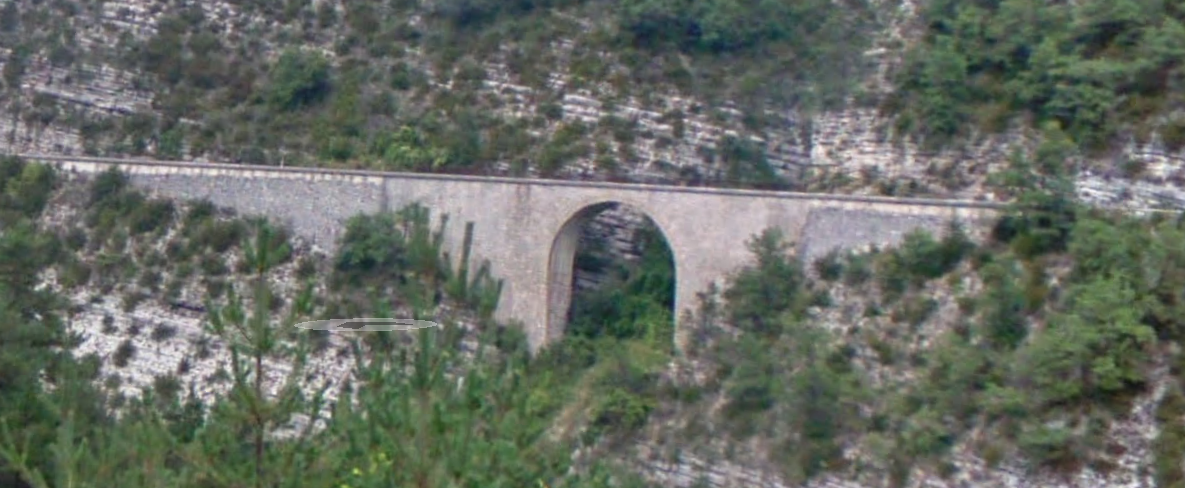
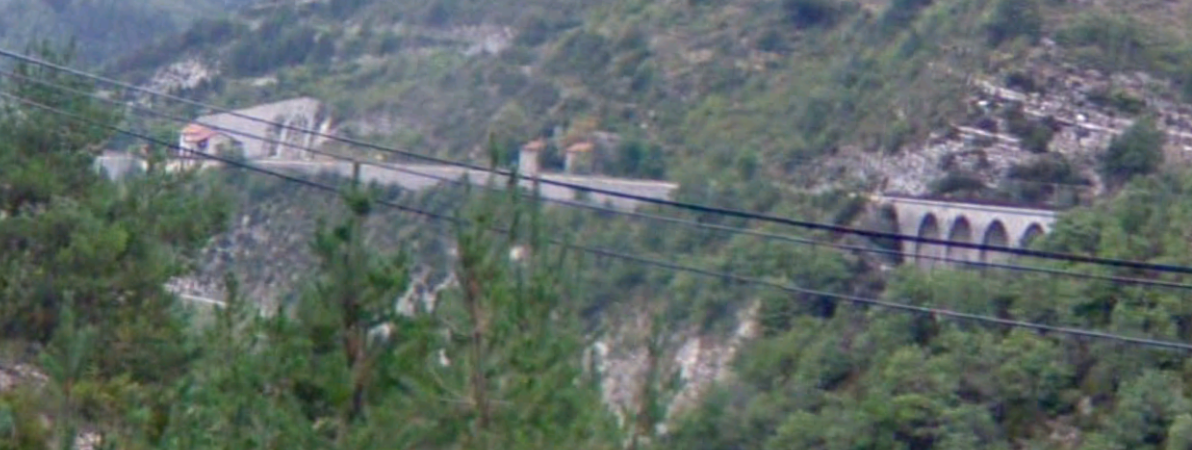
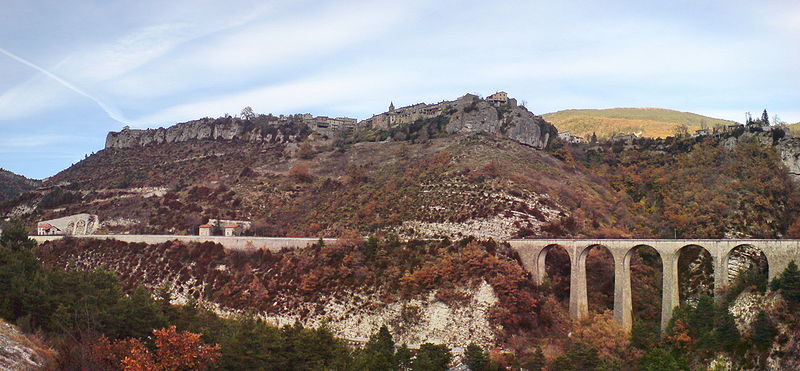
As the road and railway approach the village of Le Fugeret, they separate and Google Streetview becomes less effective in showing the route of the railway! Before entering the station at Le Fugeret it is worth looking at the satellite image below to get a feel for the railway in the immediate vicinity of the village. As can be seen in the image, the railway station is some distance from the old village. The station is just visible at the bottom of the picture, with the old village to the middle left. The railway line uses this location to loop back on itself to gain height before continuing once again in a northwesterly direction. It’s track can be picked out on the satellite image, and can more easily be seen on the openstreetmap extract below it.Le Fugeret Station was set on an approximately north-south alignment to the southeast of the village to permit the line to gain sufficient height to continue on its journey up the valley of La Vaïre. The station buildings from the south. [10]The station buildings looking south towards Annot. [12]The northern end of the platforms at Le Fugeret Railway Station. [10]The northern station throat with the old village of Le Fugeret visible to the left of the track ahead. [10]A rural idyll near Le Fugeret. [13]A train leaves Le Fugeret station for Digne and passes the old village. The small bridge under the train in the image is shown below in a telephoto view from the main road in the village. [15]The line leaves the station and heads towards the loop. The station is off the picture to the right, the village is in the foreground, the accommodation bridge is visible to the left of the churchThe railway can be seen again right at the top of the photograph having turned through 180° close to the village, as seen below. [17]The railway turns round to the northeast with the old village behind. [18]The village is off the photo to the left. The railway continues to turn through 180° in the foreground, and can be picked out again, after turning through another loop, at the top of the picture. To the bottom right of this picture and hidden behind the trees, the line passes through a short tunnel. [17]

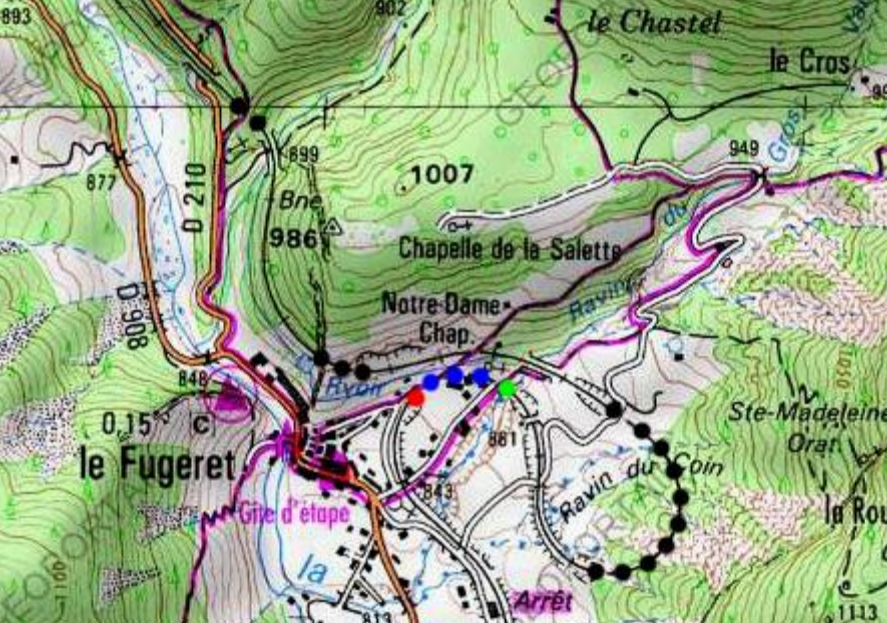
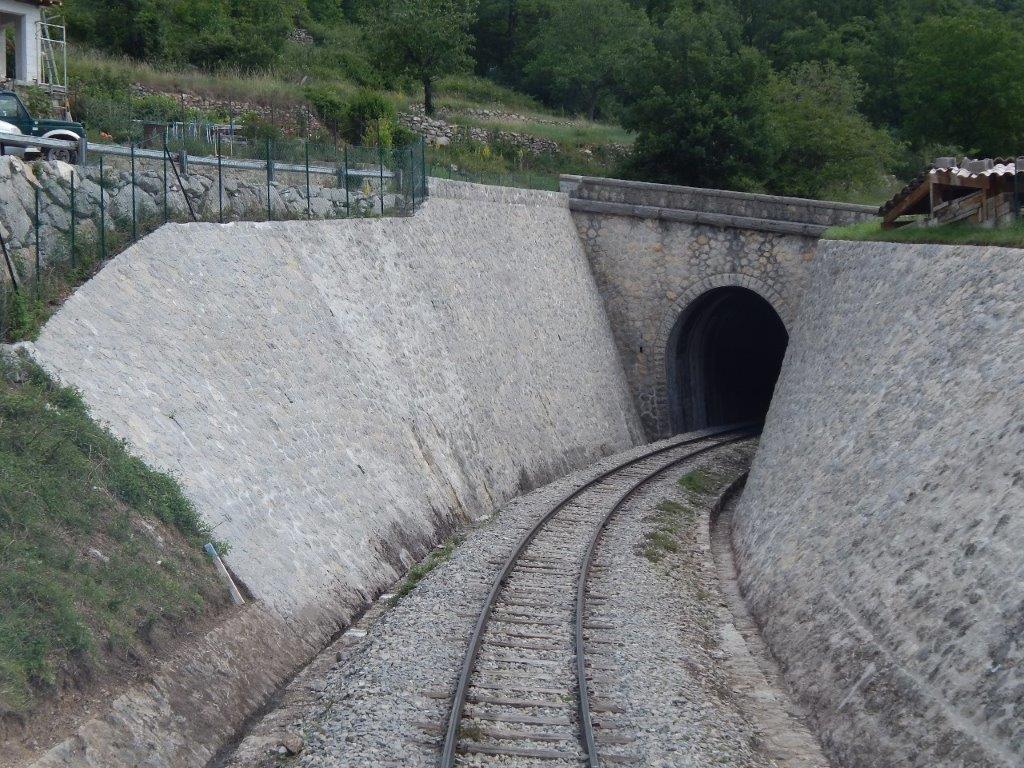
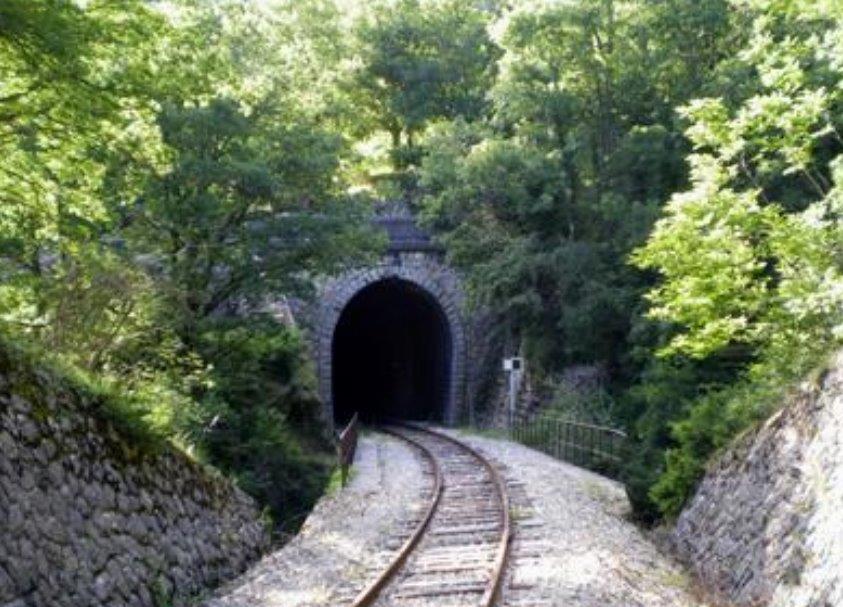
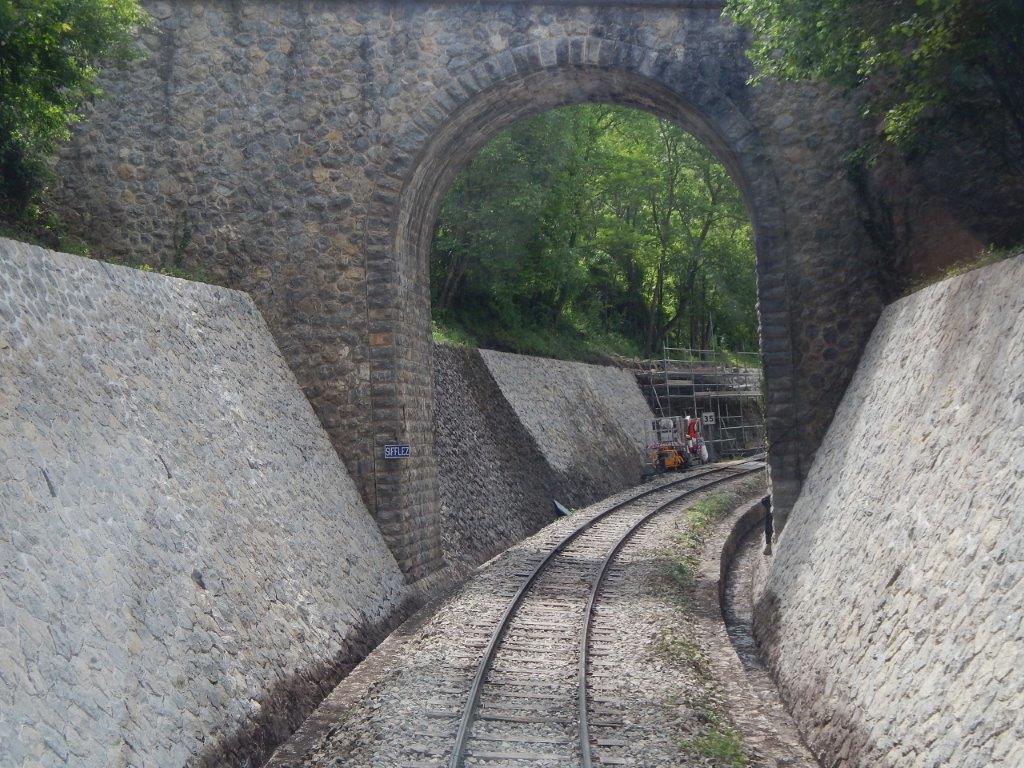
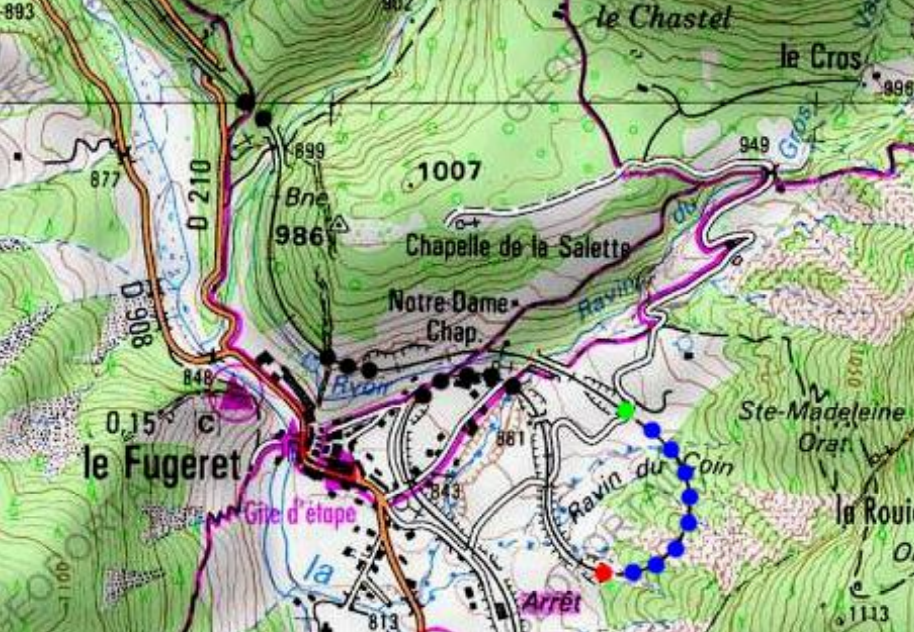
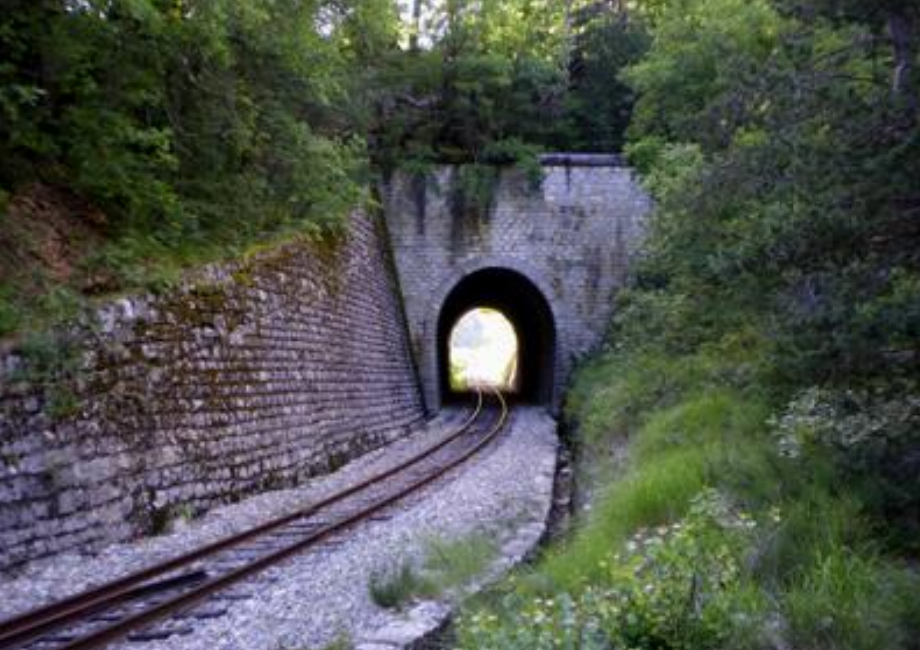
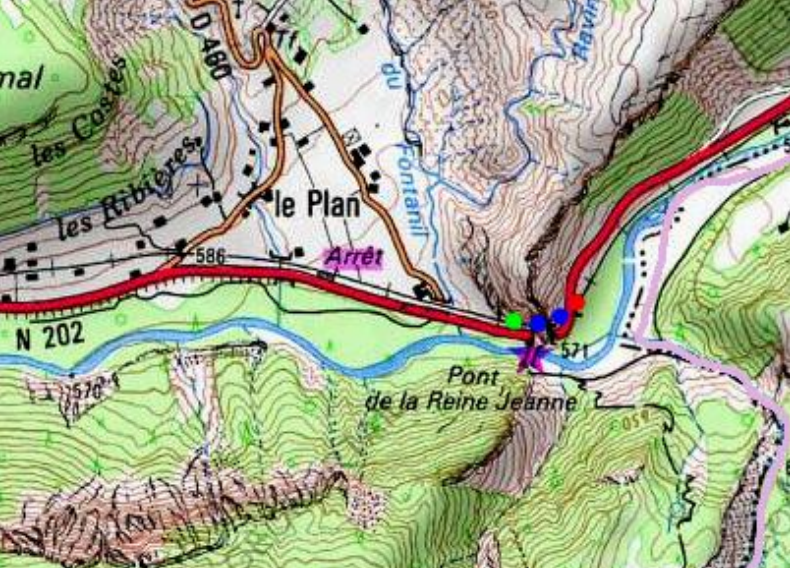
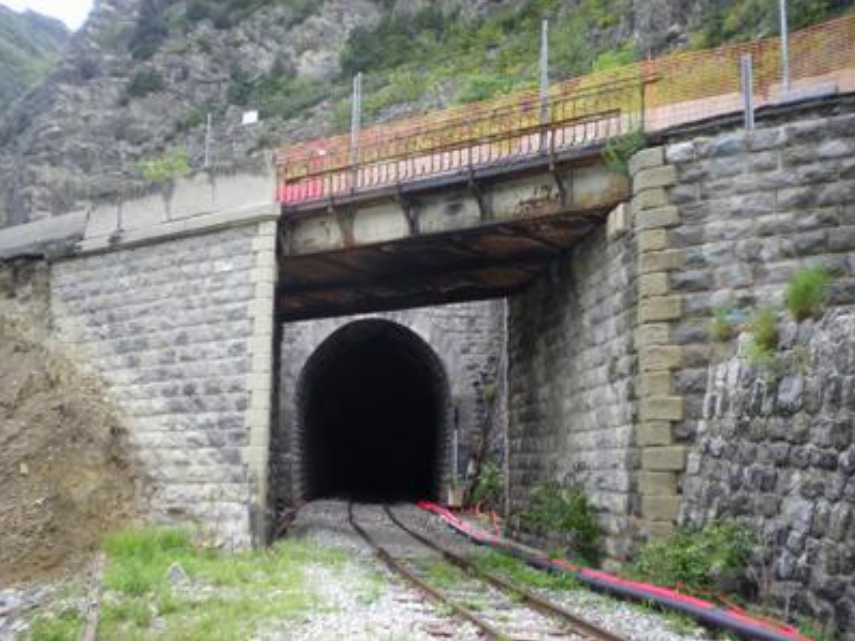
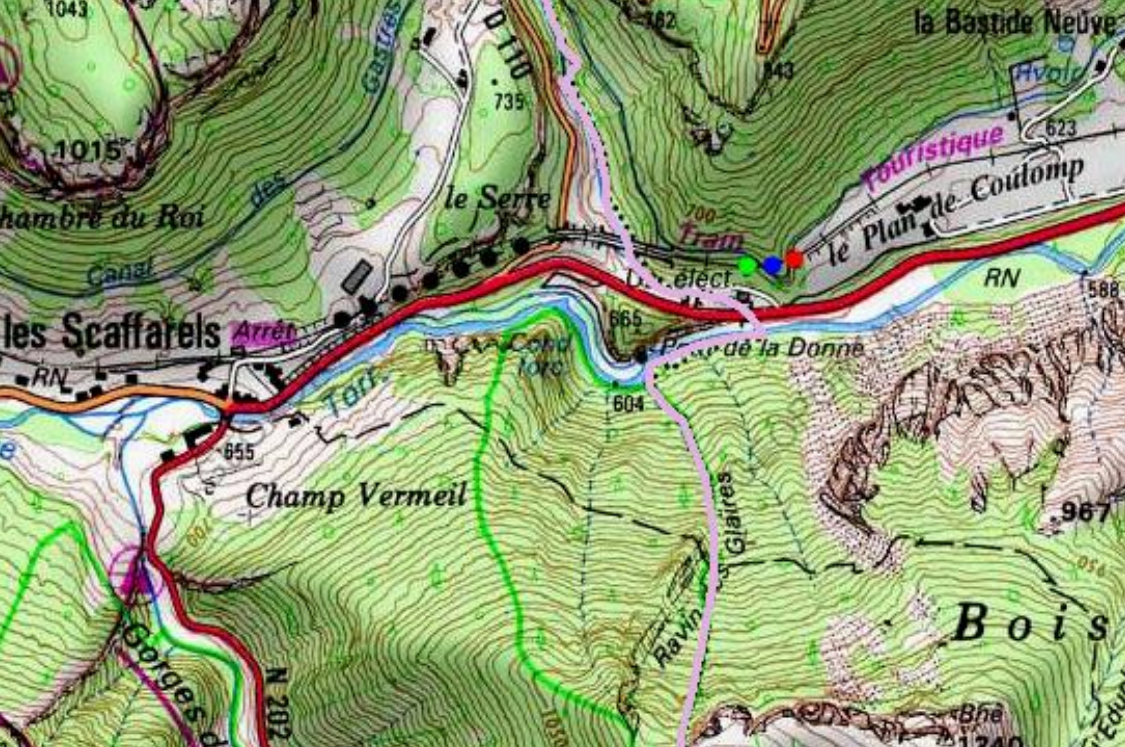
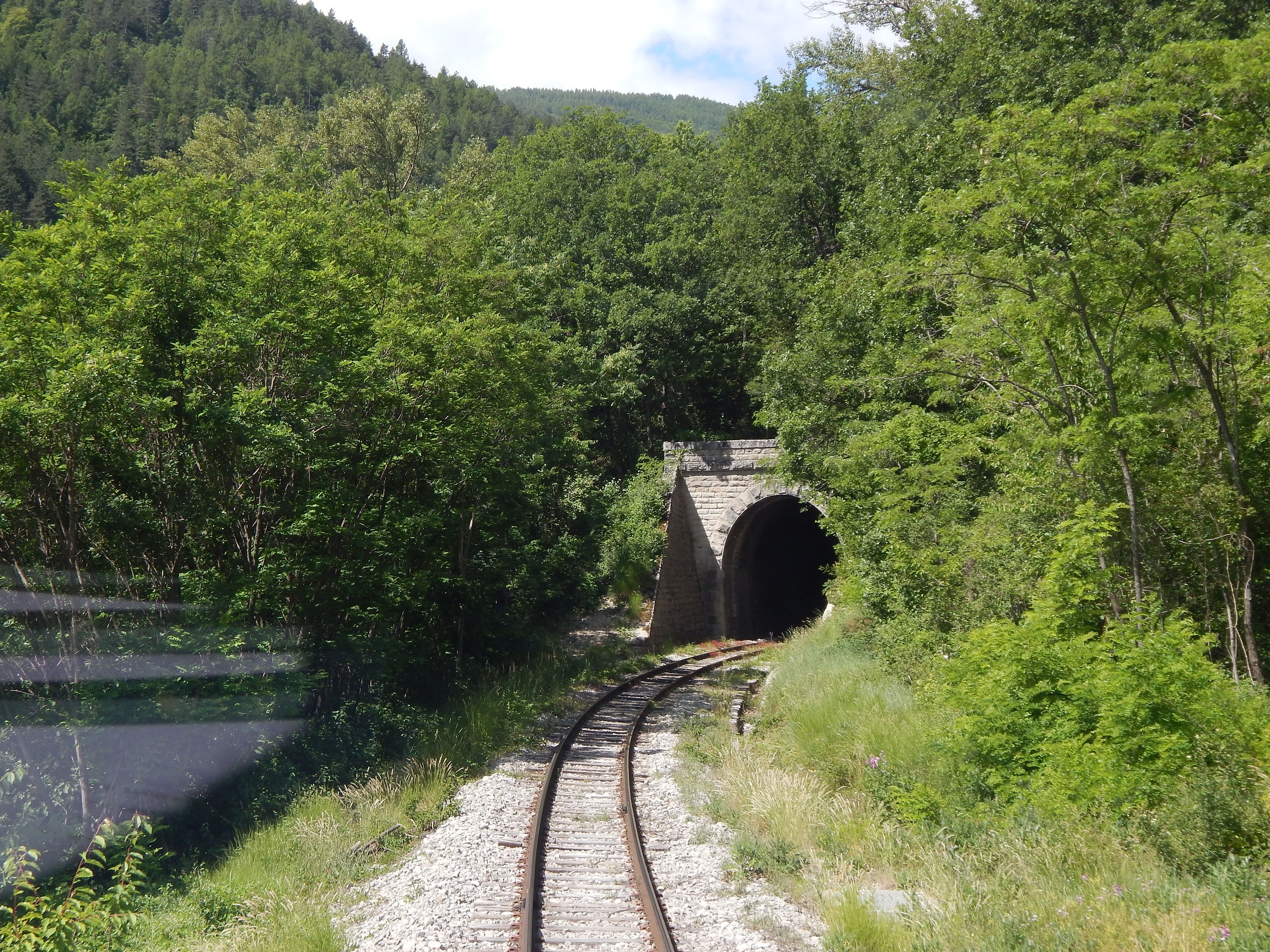
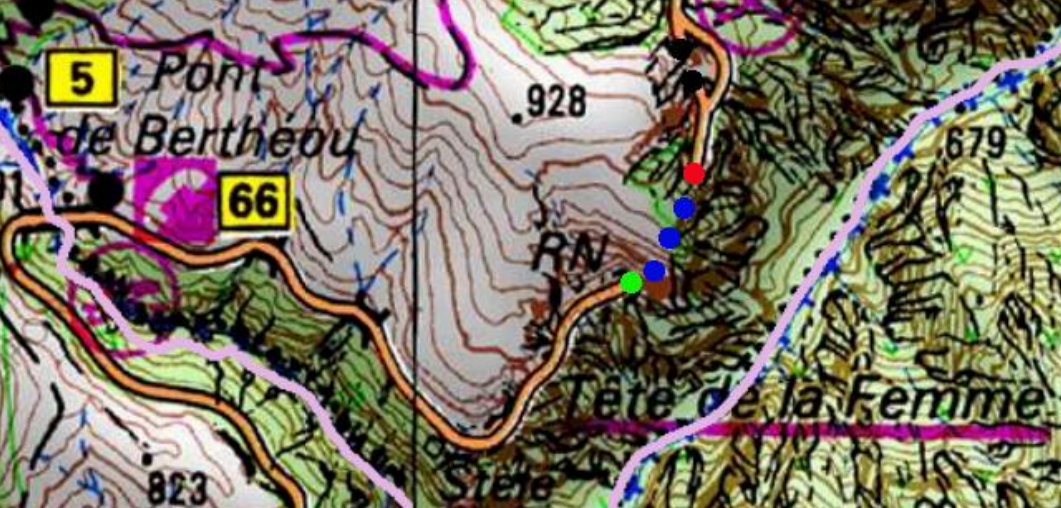
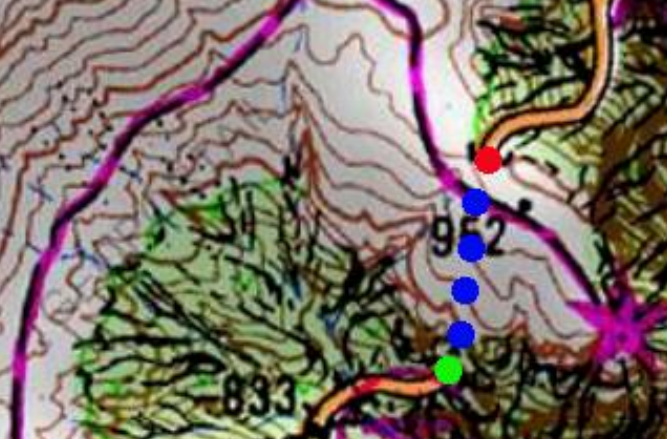
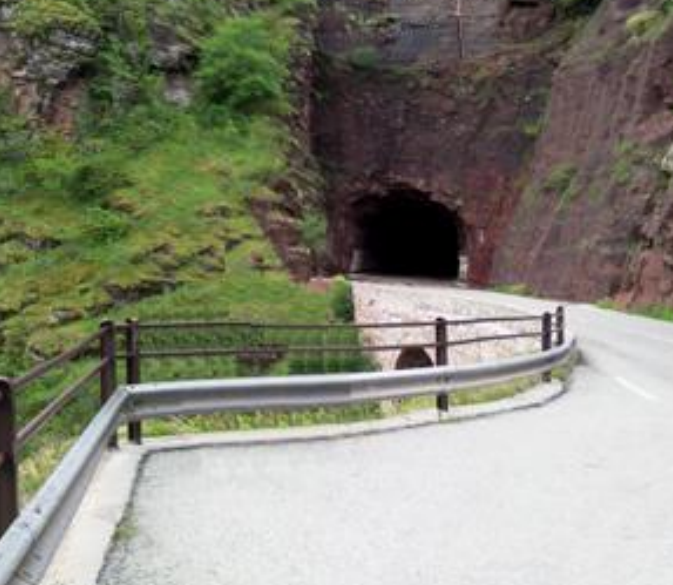
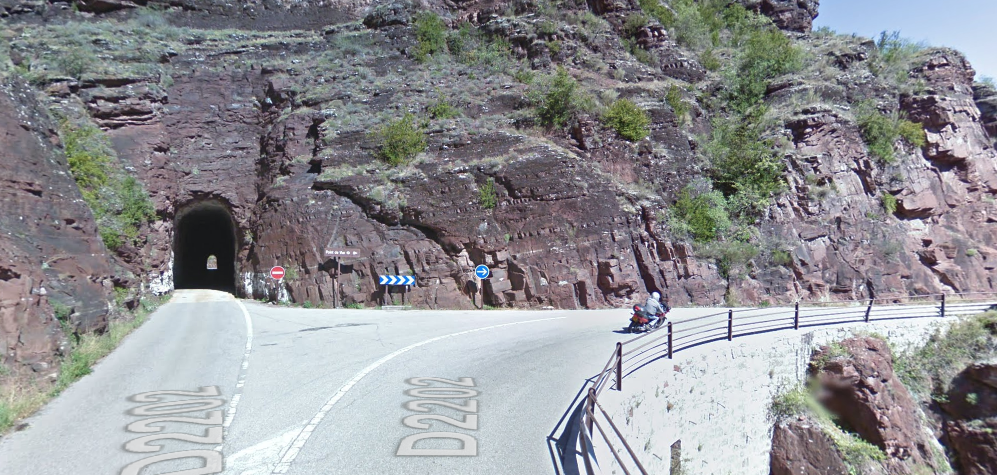
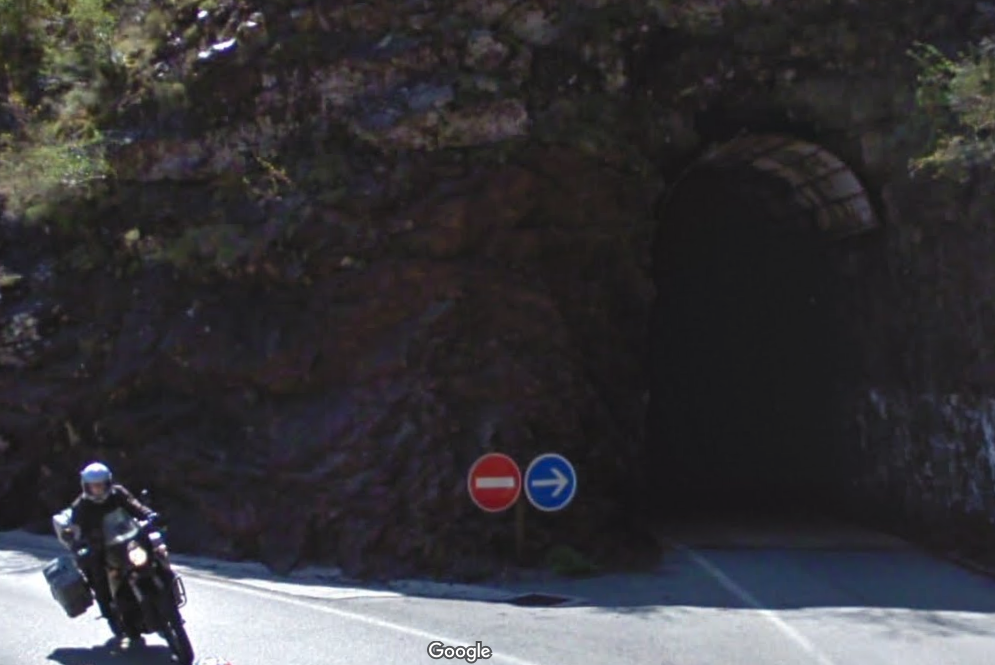
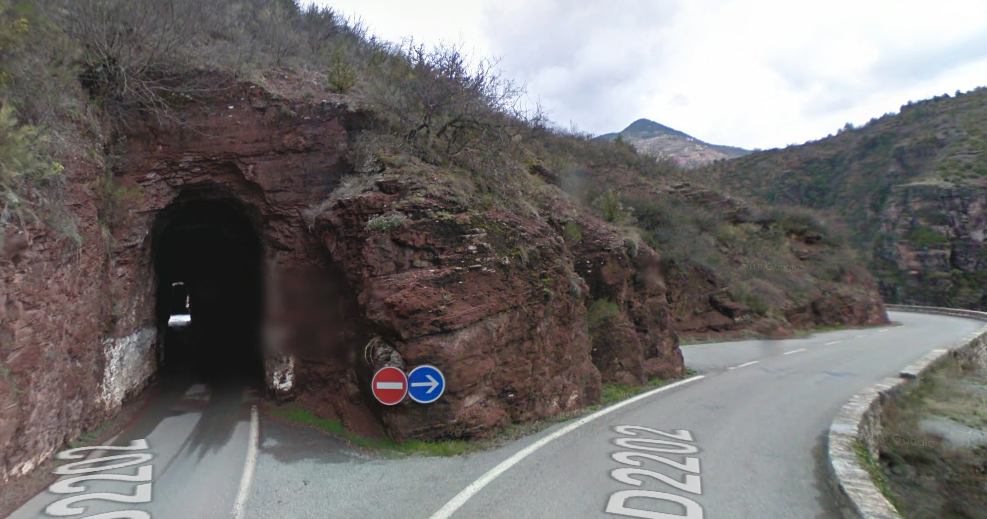
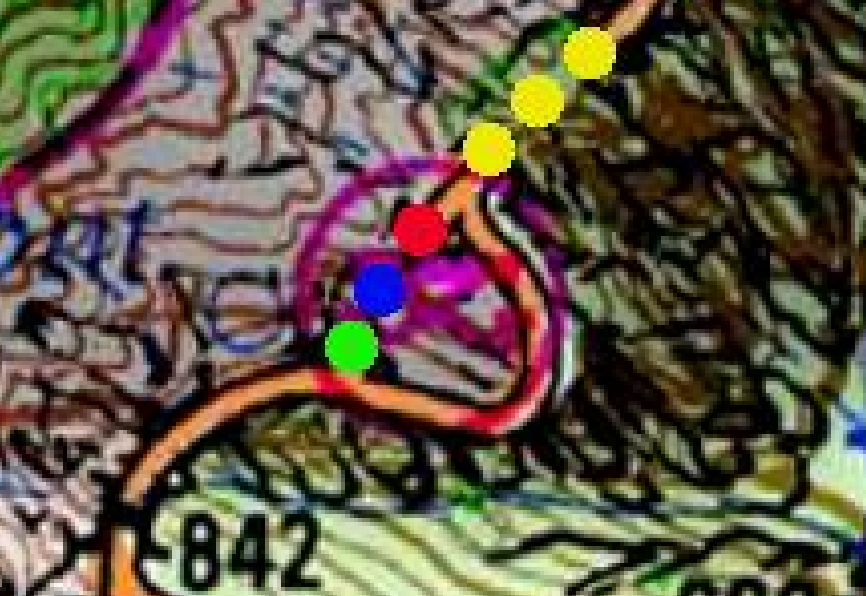
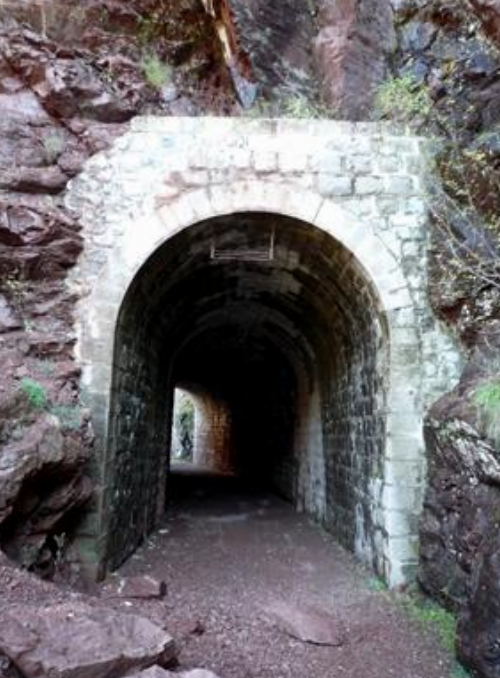
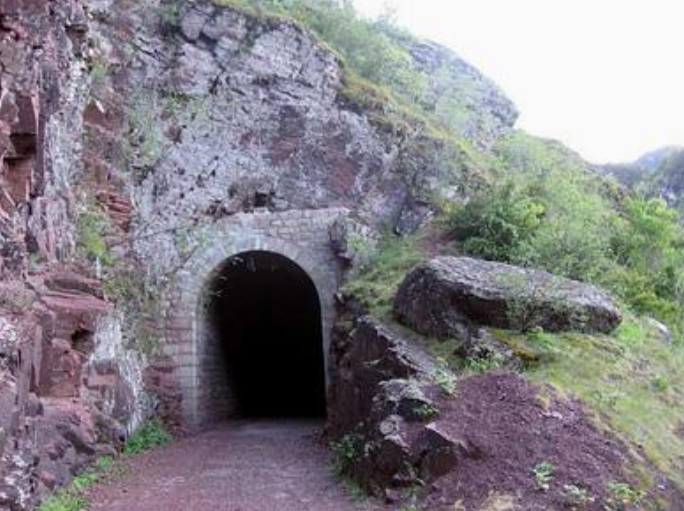
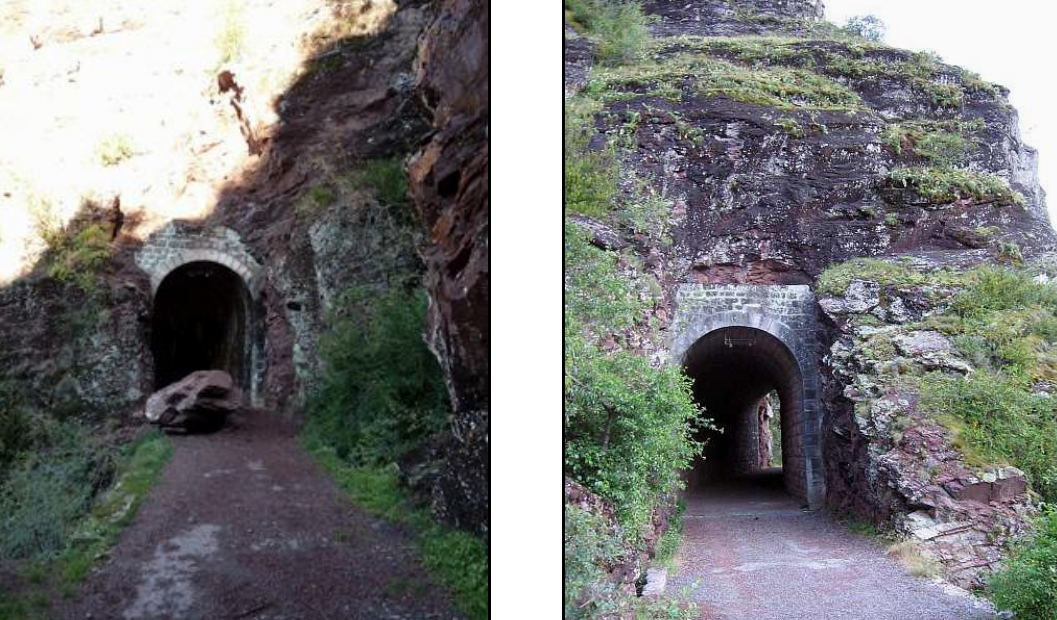
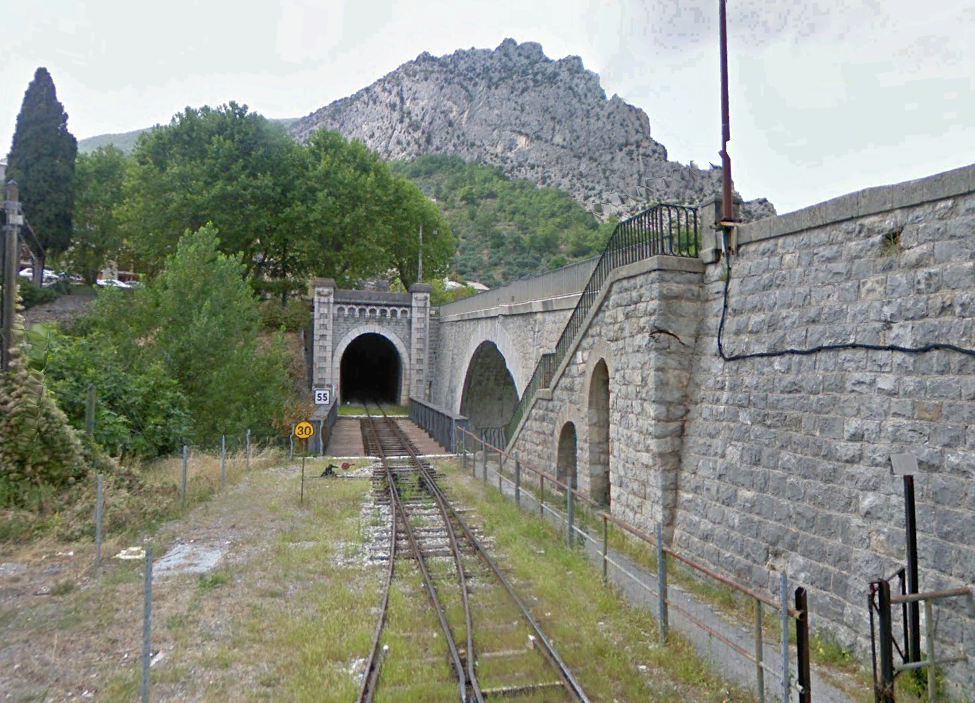
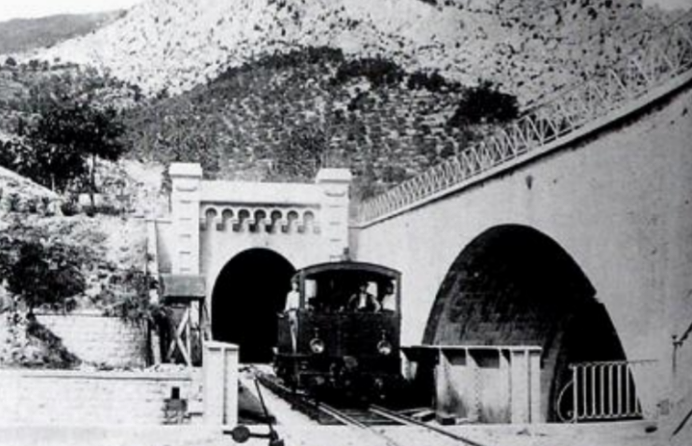
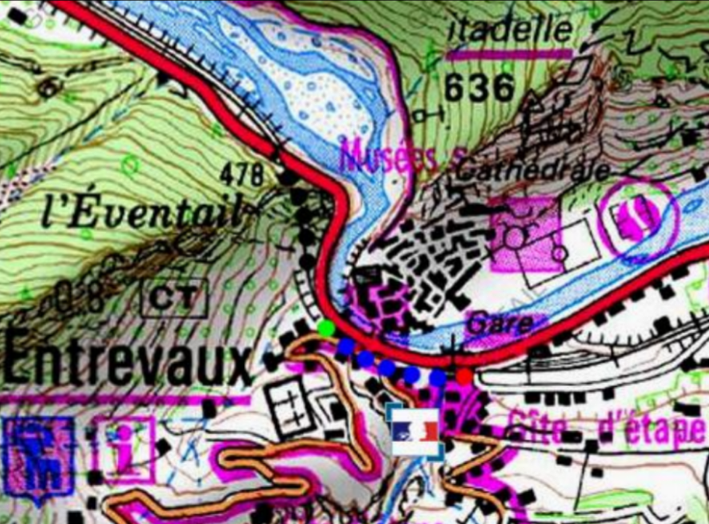
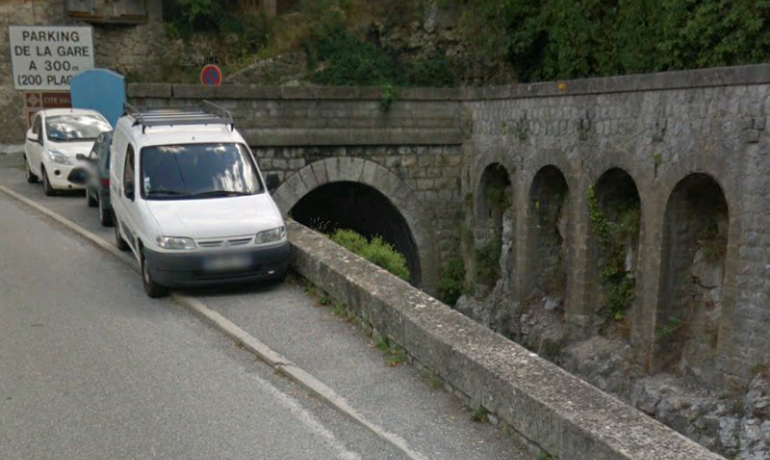
A 194 metre tunnel allows the 180° turn to negotiate the topography of the village. This tunnel is called “Tunnel Notre Dame.” It is shown below marked with red, blue and green dots. [19]The southwest portal of the Tunnel Notre Dame. [10]The southeast portal of the Tunnel Notre Dame and the small bridge over the grandly named Ravin du Gros Vallon. [19]An accommodation bridge provides access between fields either side of the line. There are a number of driver’s eye views in this post which have been taken from the website of Reinhard Douté (www.rd-rail.fr) [10]

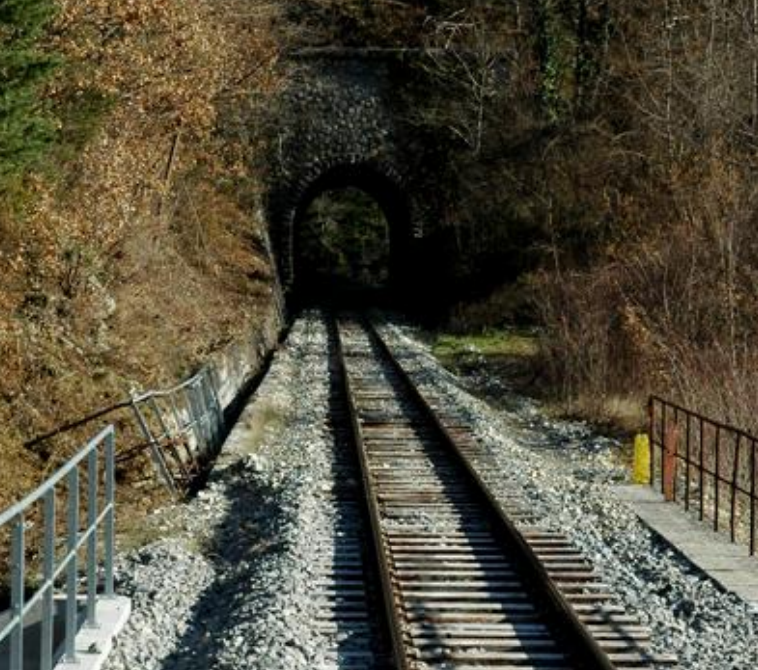
The line completes its first 180° turn after passing under the accommodation bridge above. It then crosses the Ravin du Coin, on an embankment, before entering a lengthy curved tunnel which accommodates the next 180° turn – The Tunnel du Fugeret. The tunnel is marked by red, blue and green dots below and is over 500 metres long. [20]The southern portal of the Tunnel du Fugeret. [20]The northern portal of the Tunnel du Fugeret. [20]

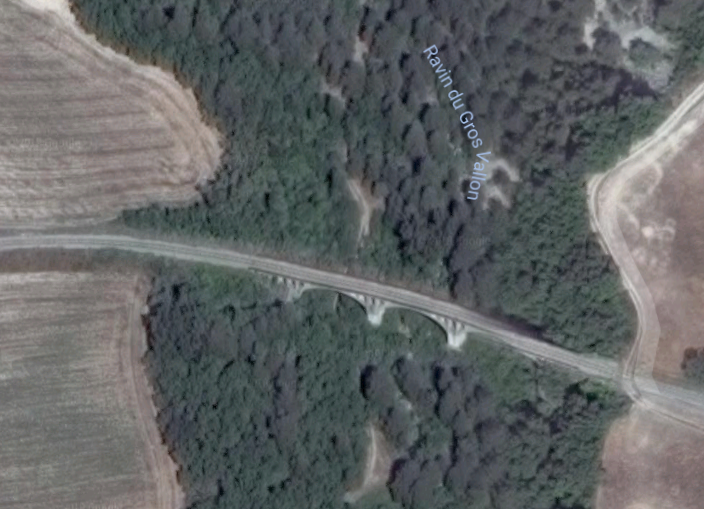
The line then curves gently across the north of the village to the Tunnel de la Barre which can be picked out on the left of the satellite image immediately below. On the way, it crosses the Ravin du Gros Vallon again. The second image below shows the viaduct which spans the ravine.The third image below shows Le Fugeret with the line running high on the hillside behind it and the viaduct over the Ravin du Gros Vallon can bee seen on the right of the picture.Le Fugeret from the southwest. [21]

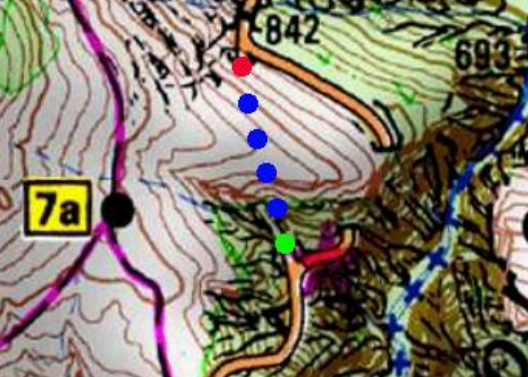
The Tunnel de la Barre is marked on the map below by red, blue and green dots and is just 75 metres long its portals are shown below. [22]The east portal of the Tunnel de la Barre. [22]The west portal of the Tunnel de la Barre. [22]

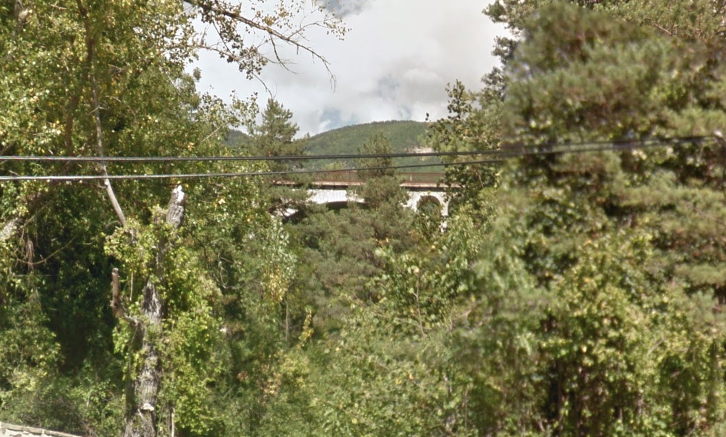
After leaving the tunnel the line continues to curve round to the north and then crosses a viaduct and passes through another short tunnel.The Viaduc de l’Hubac. [10]The viaduct and tunnel of l’Hubac. The Ravine is known as the “Ravin de l’Ubac.” [14]

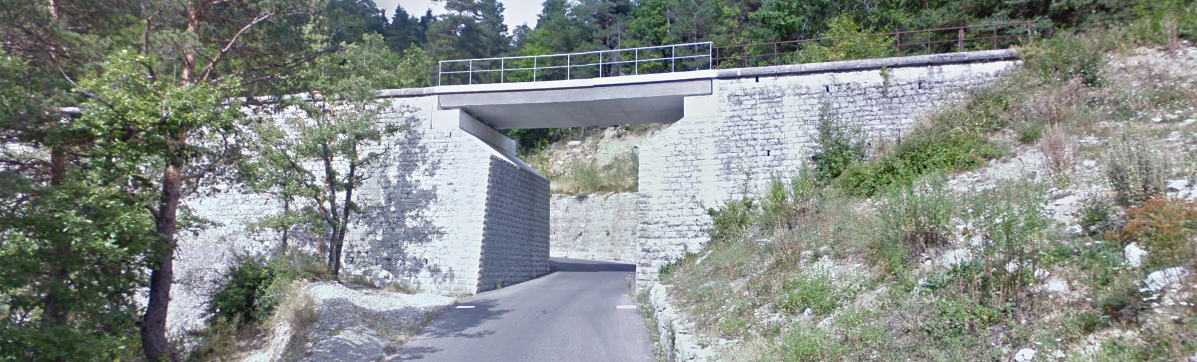
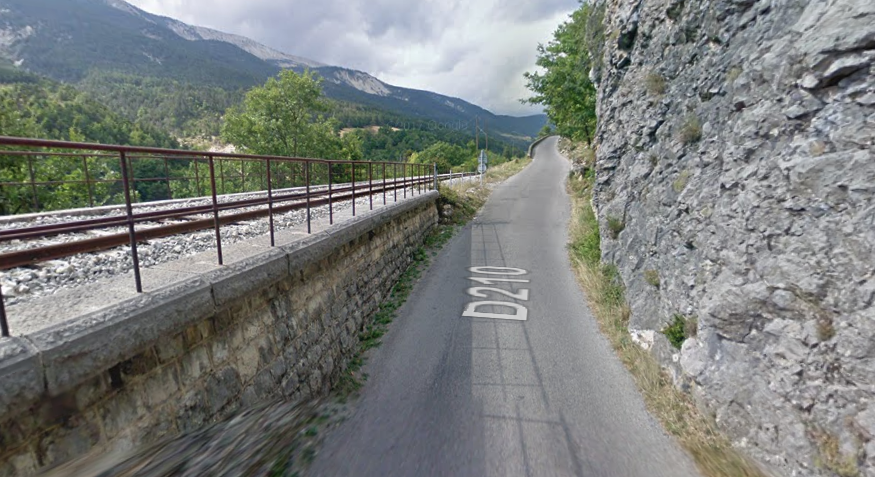
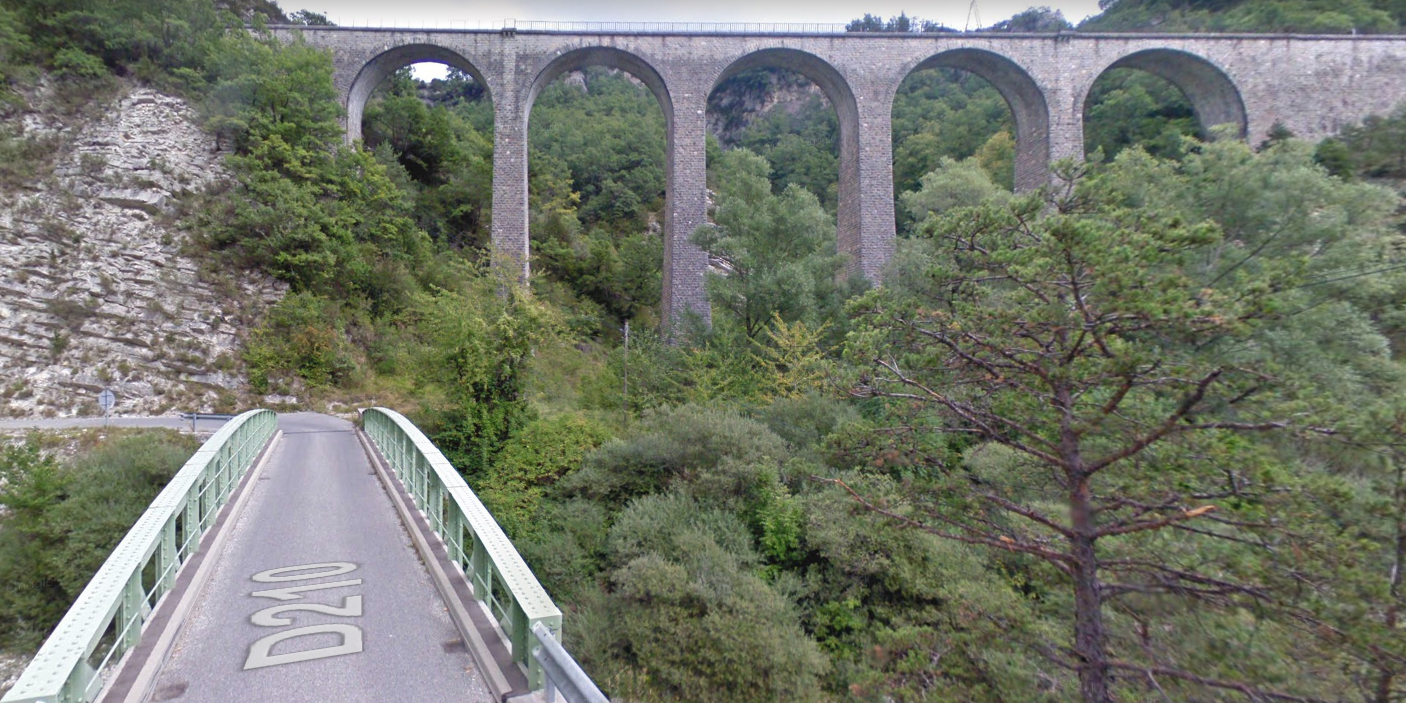
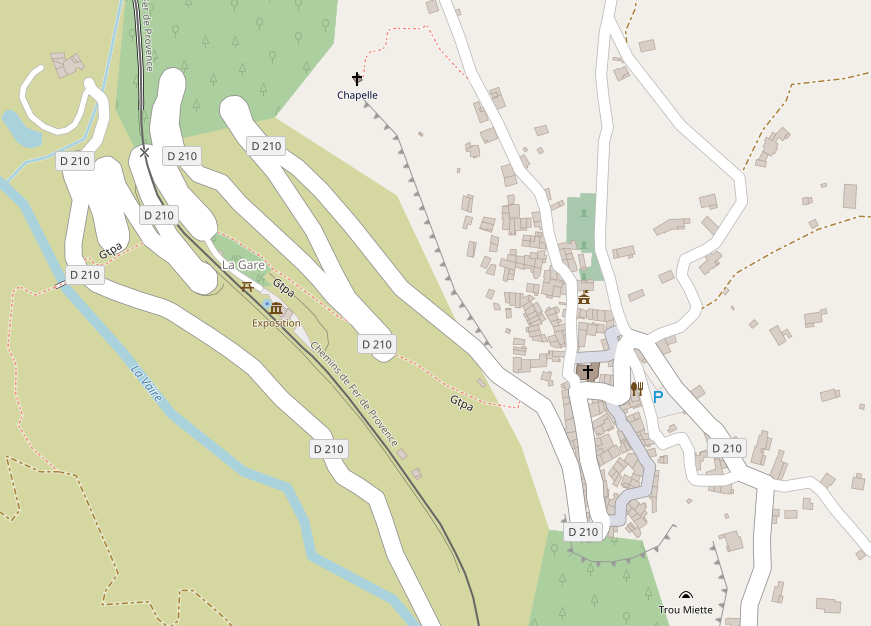
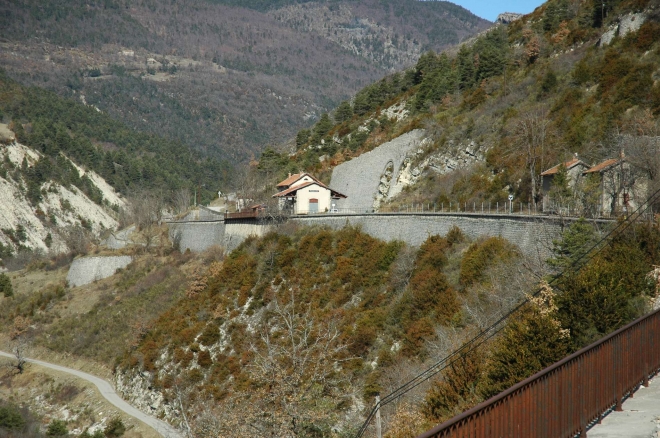
The viaduct is a substantial structure, the tunnel is short, only 35 metres in length. The south east portal is shown in the first image below and the northwest portal can be seen in the second image below. [23] A short distance beyond the Tunnel de l’Hubac, the line crosses the D210 on what is now (2018) a very new, short-span structure. The road then climbs steeply, first to run, for a very short distance, at the same elevation as the track, and then to rise high above it.In the two images immediately above, the line continues alongside La Vaire, but high above it to the East, towards the next station at Méailles. Along the way it crosses a series of viaducts and requires a number of retaining walls. [10]High retaining walls can be seen from the D908 on the West side of the valley of La Vaire. Some, as above, hold the hillside above the railway. Some, like immediately below, support the railway. And in places the railway leaves the hillside to run on its own retained embankments and crosses ravines by means of bridges, as in the second image below.Looking forward up the line towards the station at Meailles from the D908 across the valley.A similar view from a few hundred metes further north along the D908. [24]Two images (above) of the Meailles Viaduc Sud, both taken from Google Streetview.

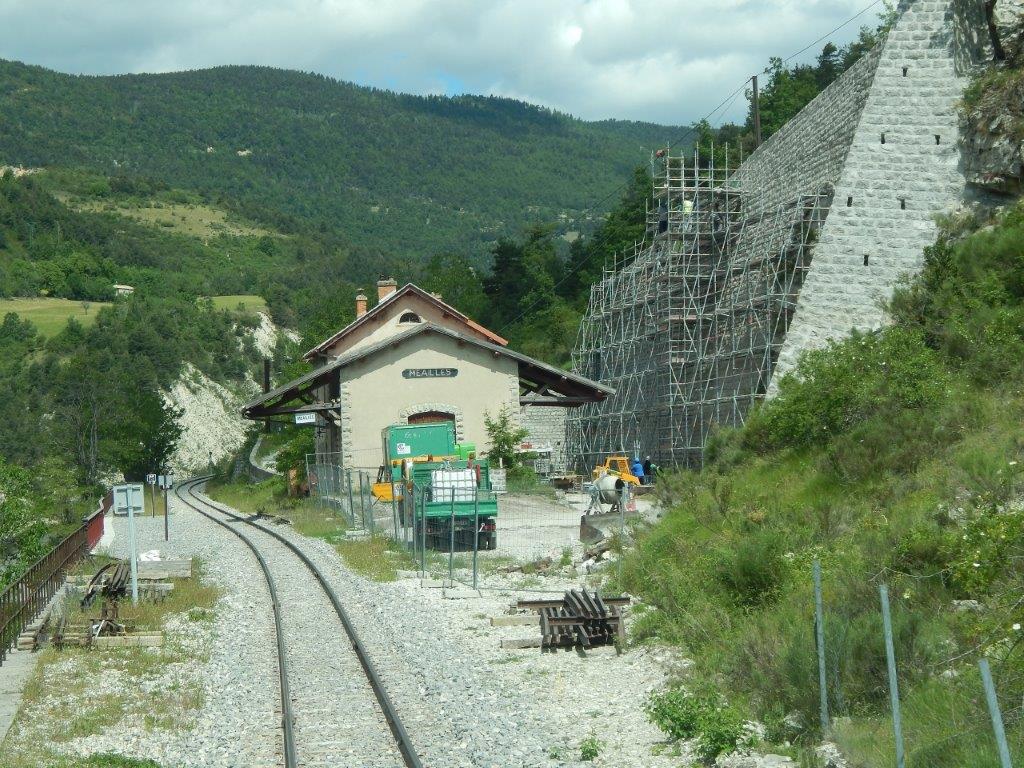
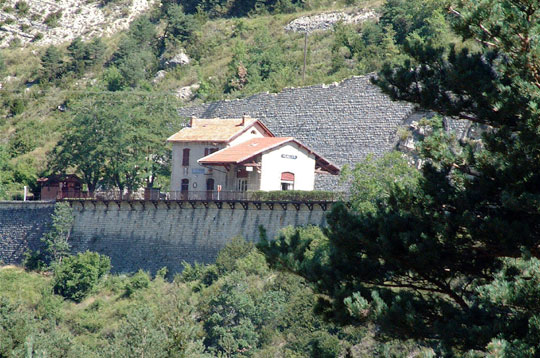
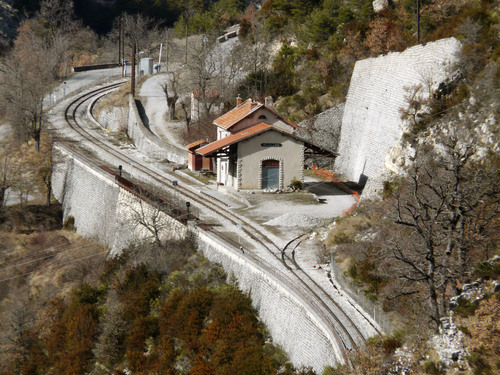
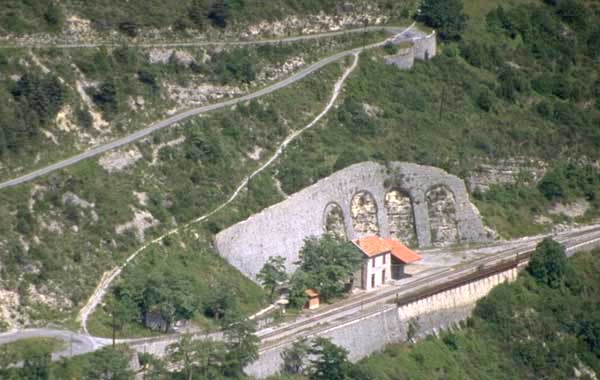
The Village of Meailles sits high above the valley floor to the East of La Vaire. The railway station sits midway between the village and the river, as shown on the map below (OpenStreetMap). [25]The station is overlooked by a massive retaining wall. [28] In the image below from 2016 we can see the wall under repair. [10] It is obvious in this image that now-a-days the station is little more than a Halt. But this is where we are going to stop and take time out. Meailles is that end of this stage of our journey and we finish this post with some pictures of the station.The station sits on a platform built into the valley side. [26]There was once a single siding which branched off the mainline to the south of the station and clung to the retaining wall behind the station buildings. [27]The civil engineering works associated with this small station are very significant. [29]The station is just visible to the bottom left in this postcard view of the village of Meailles. [30]

References

  1. http://www.annot-tourisme.com/GB_carte_des_randonnees_en_pays_d_annot.html, access on 2nd August 2018.
  2. https://www.viamichelin.co.uk/web/Maps/Map-Annot-04240-Alpes_de_Haute_Provence-France, accessed on 2nd August 2018.
  3. http://www.tourism-alps-provence.com/annot, accessed on 2nd August 2018.
  4. https://www.france-voyage.com/tourism/annot-1473.htm, accessed on 2nd August 2018.
  5. http://www.map-france.com/Annot-04240, accessed on 2nd August 2018.
  6. https://www.openstreetmap.org/search?query=Annot#map=16/43.9654/6.6669, accessed on 2nd August 2018.
  7. https://www.pinterest.co.uk/pin/356206651756315603/?lp=true, accessed on 2nd August 2018.
  8. http://www.annot-tourisme.com/GB_train-des-pignes.html, accessed on 2nd August 2018.
  9. https://trainmec.blogspot.com/2012/10/train-des-pignes-puget-theniers-to-annot.html, accessed on 2nd August 2018.
  10. http://www.rd-rail.fr/1-PHOTOS/PH43/index-ph43.html, accessed on 30th July 2018.
  11. https://www.facs-patrimoine-ferroviaire.fr/phototheque/albums/train-des-chataignes, accessed on 2nd August 2018.
  12. https://fr.m.wikipedia.org/wiki/Gare_du_Fugeret, accessed on 2nd August 2018.
  13. http://www.archives04.fr/arkotheque/visionneuse/visionneuse.php?arko=YTo3OntzOjQ6ImRhdGUiO3M6MTA6IjIwMTgtMDgtMDIiO3M6MTA6InR5cGVfZm9uZHMiO3M6MTE6ImFya29fc2VyaWVsIjtzOjQ6InJlZjEiO2k6MTk7czo0OiJyZWYyIjtpOjI0NDA7czoyMDoicmVmX2Fya19mYWNldHRlX2NvbmYiO3M6MTQ6ImNhcnRlc3Bvc3RhbGVzIjtzOjE2OiJ2aXNpb25uZXVzZV9odG1sIjtiOjE7czoyMToidmlzaW9ubmV1c2VfaHRtbF9tb2RlIjtzOjQ6InByb2QiO30=#uielem_move=5%2C65&uielem_islocked=0&uielem_zoom=99, accessed on 2nd August 2018.
  14. https://www.cparama.com/forum/le-fugeret-t28157.html, accessed on 2nd August 2018.
  15. https://collection-jfm.fr/p/cpsm-france-04-le-fugeret-train-19533
  16. https://www.cparama.com/forum/annot-t1810-20.html, accessed on 2nd August 2018.
  17. https://www.communes.com/photo-le-fugeret,12099, accessed on 3rd August 2018.
  18. https://www.france-voyage.com/cities-towns/le-fugeret-14492.htm, accessed on 3rd August 2018.
  19. http://www.tunnels-ferroviaires.org/tu04/04090.4.pdf, accessed on 3rd August 2018.
  20. http://www.tunnels-ferroviaires.org/tu04/04090.3.pdf, accessed on 3rd August 2018.
  21. http://www.lefugeret.com, accessed on 3rd August 2018.
  22. http://www.tunnels-ferroviaires.org/tu04/04090.2.pdf, accessed on 3rd August 2018.
  23. http://www.tunnels-ferroviaires.org/tu04/04090.1.pdf, accessed on 3rd August 2018.
  24. https://commons.wikimedia.org/wiki/File:Meailles_gare_et_viaduc_sud.jpg, accessed on 3rd August 2018.
  25. https://www.openstreetmap.org/search?query=Annot#map=17/44.02336/6.62999, accessed on 3rd August 2018.
  26. http://www.linternaute.com/sortir/chemins-de-fer/chemin-fer-provence/diaporama/11.shtml, accessed on 3rd August 2018.
  27. http://www.map-france.com/Meailles-04240, accessed on 3rd August 2018.
  28. http://www.forum-train.fr/forum/viewtopic.php?f=18&t=4208&start=20, accessed on 3rd August 2018.
  29. http://www.beyond.fr/villphotos/meailles-photo-gallery.html, accessed on 3rd August 2018.
  30. https://collection-jfm.fr/p/cpsm-france-04-meailles-vue-generale-aerienne-213831, accessed on 3rd August 2018.

MOD Bicester Military Railway

I have been aware of the Longmoor Military Railway for some time now. I knew nothing of the Bicester Military Railway until my wife and I had part of a weekend in the area. We were travelling along the M40 and using Satnav and we noticed and interesting area off to the East of the motorway which was just visible on the Satnav. Our initial thought was that there might have been some opencast workings in the area.

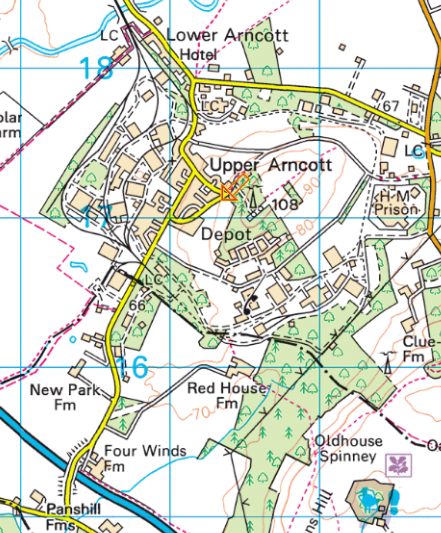
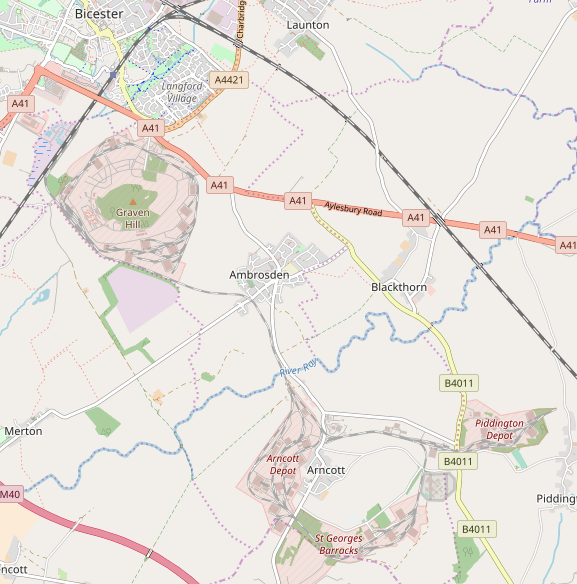
From looking at maps, we must have seen the area around Upper Arncott on the Satnav. It stood out far more clearly on the Satnav than it seems to do on the adjacent map. We thought that it would be good to investigate what we had seen. All we could manage was to drive through the area on the way to a wedding that we were attending.

Although some of the original railway appears to have been removed, much is still in place.

Further investigation seemed in order!

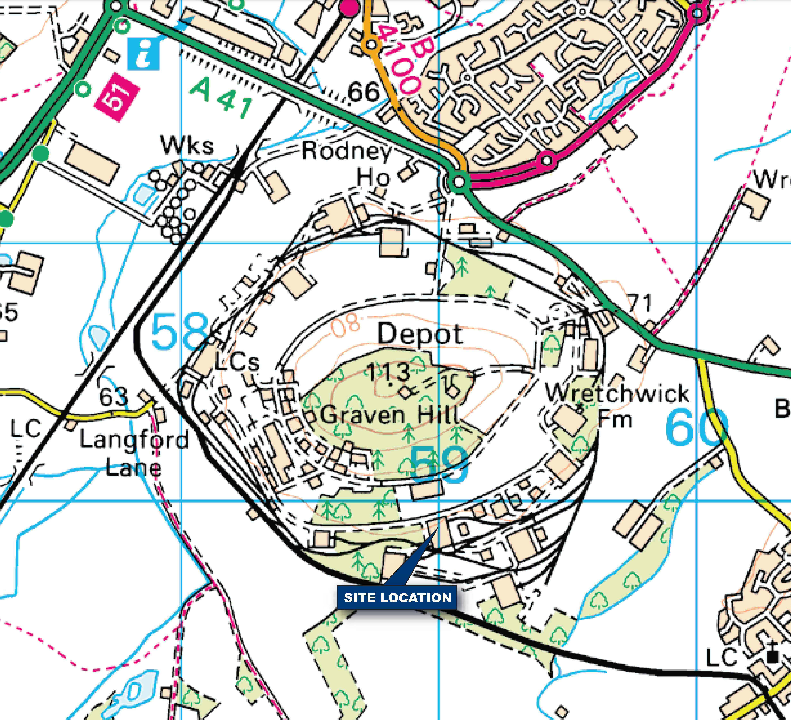
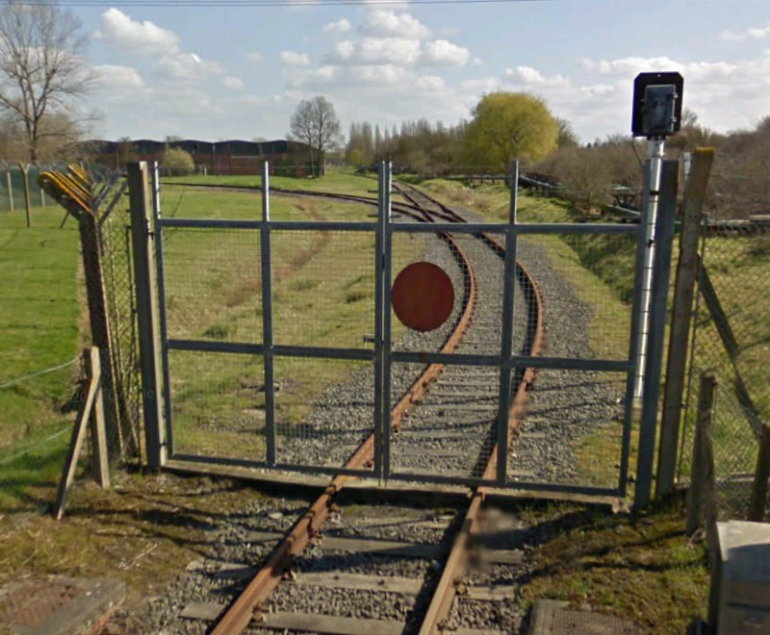
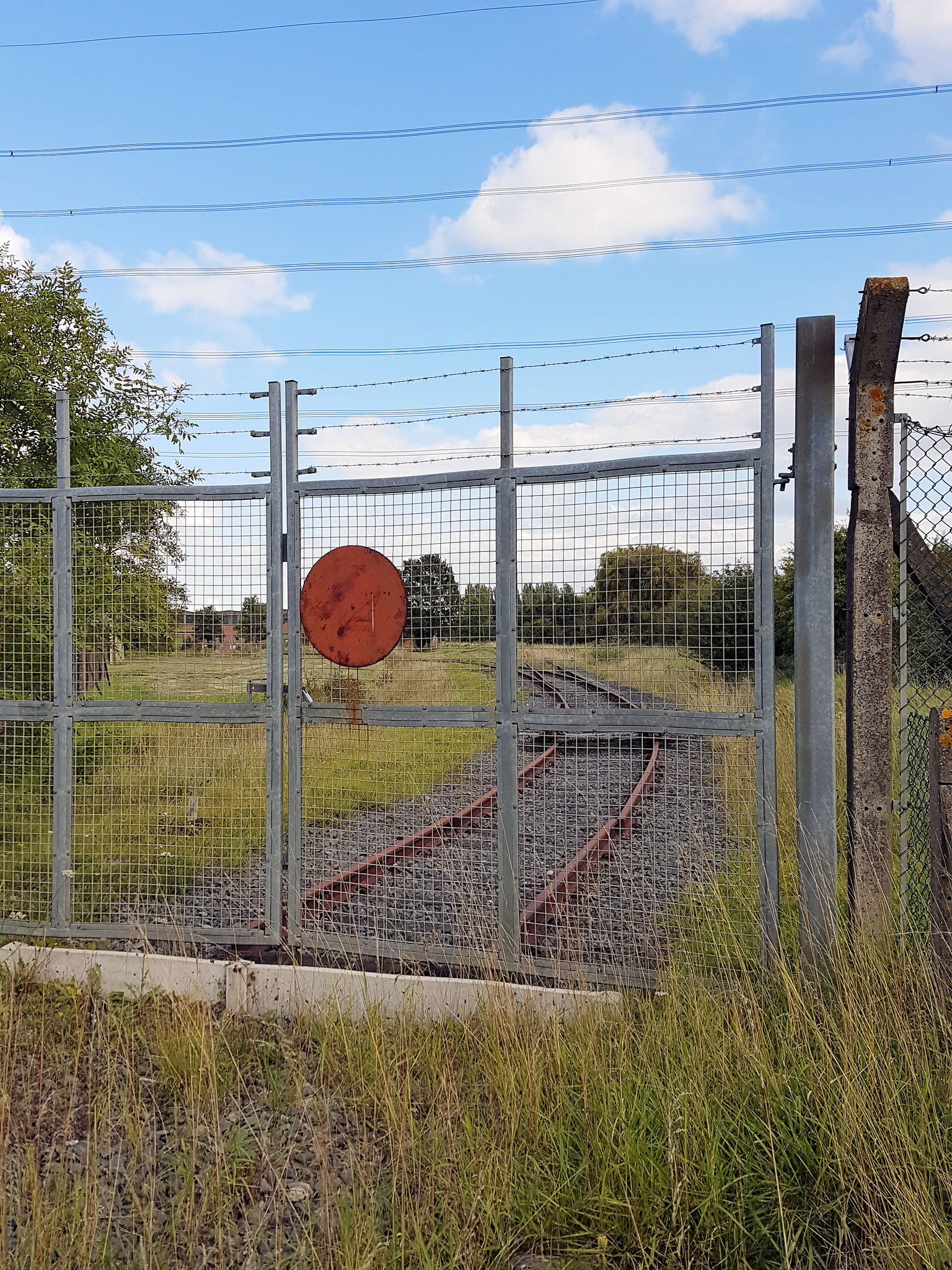
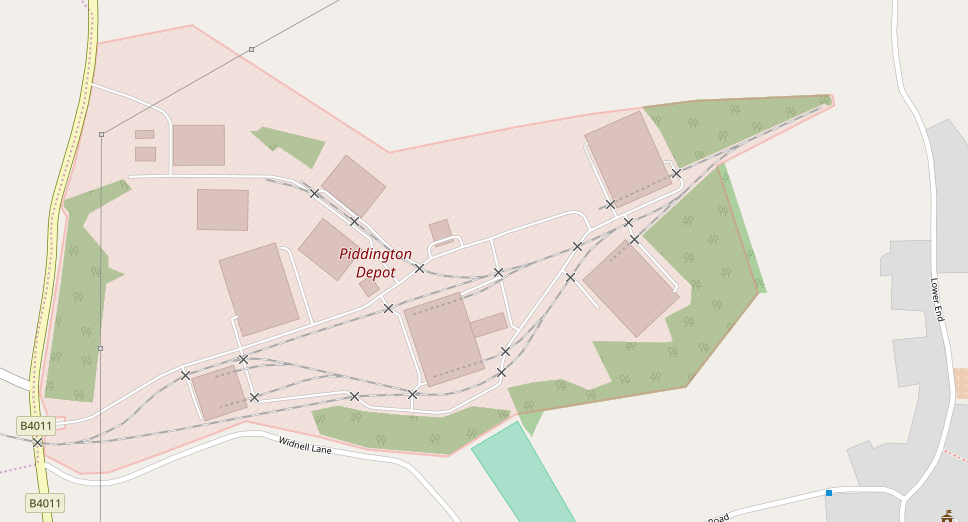
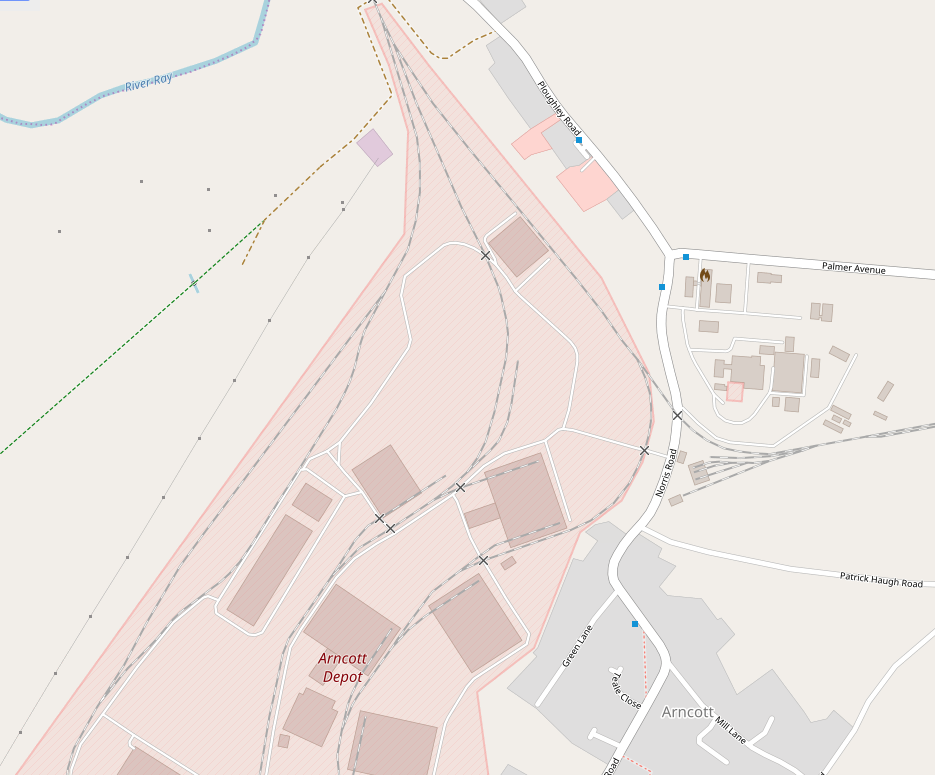
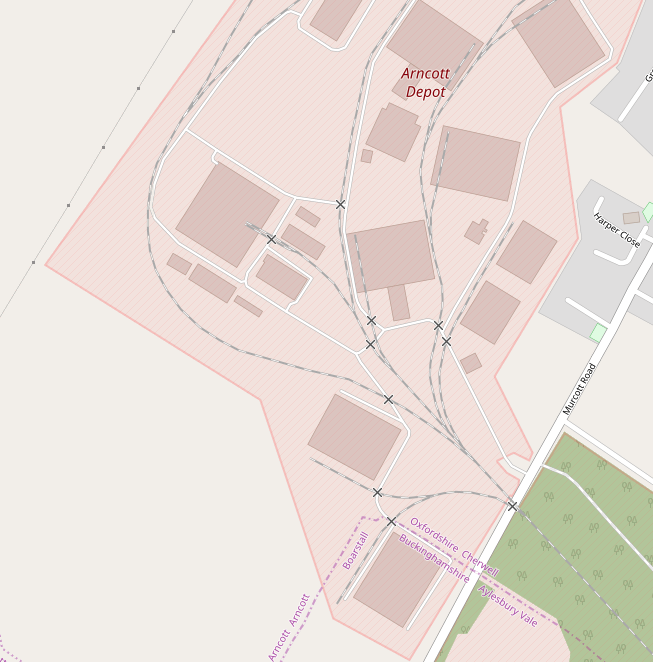
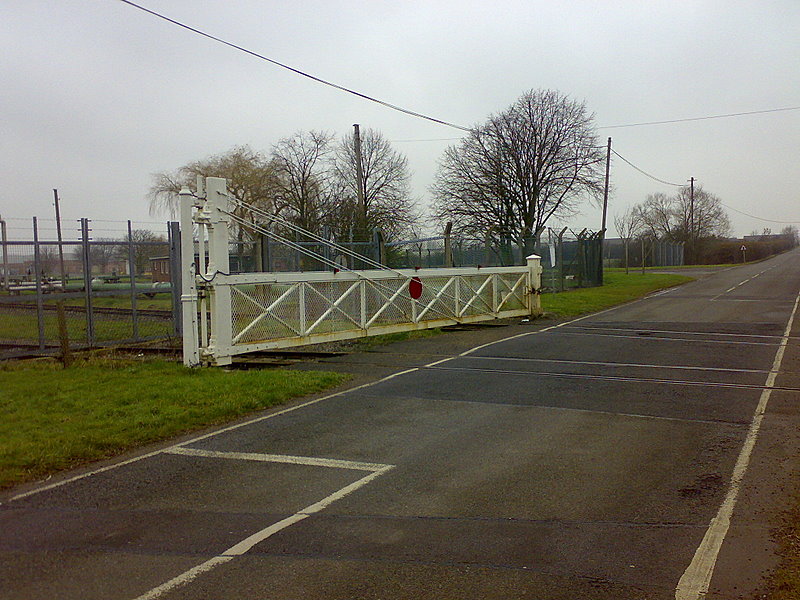
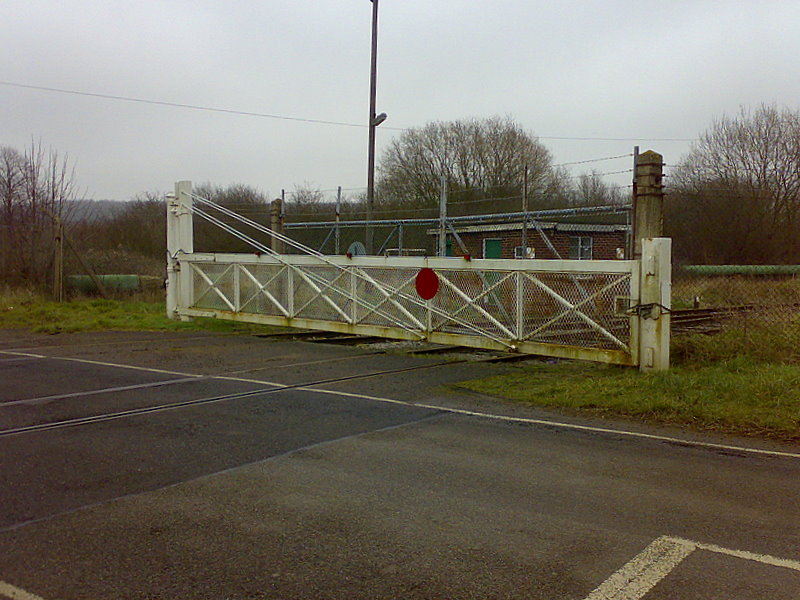
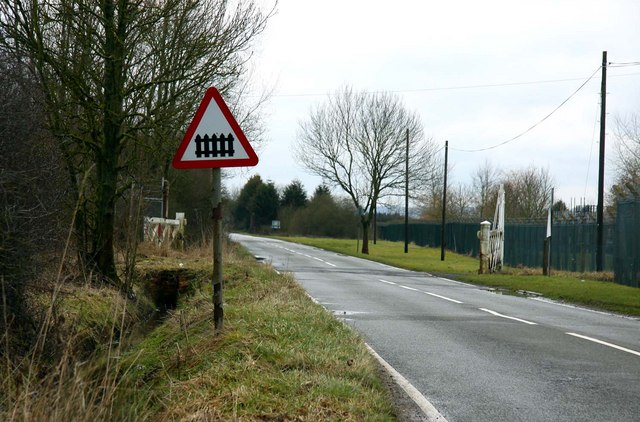
I have discovered that the Bicester Military Railway (BMR) is now a scheduled monument. It was the primary mode of transport at the Central Ordnance Depot Bicester. [1] It was opened in 1942 as part of the war effort. It belongs to the Ministry of Defence and links the military depots at PiddingtonArncott and Graven Hill with the Oxford to Bicester Line. The BMR has no road bridges. All of its crossings of public roads at Ambrosden, Arncott and between Arncott and Piddington are level crossings. [2]

Historic England provides the following information: [1]

Work on surveying the land for the rail system commenced in April 1941 and the 2.6 miles of railway that circled Graven Hill was pegged out ready for construction by August 1942. Track laying was well underway by the following month. Initially the entire track was to be laid using ‘philplug’ concrete sleepers and the rails were held in place by simple bearing plates and ‘dog’ spikes. These sleepers were found to be unsatisfactory and were replaced by different types of concrete sleeper; including those manufactured by Stent that can still be found at a number of points on the railway, especially within the spurs leading into the storage hangars.

Elsewhere on the system, once it was realised that the concrete sleepers were highly visible at night, it was intended to replace them with conventional timber sleepers; however, limitations on the supply of timber dictated that some of the concrete sleepers were retained and these were painted with a thin coat of black bituminous paint to tone them down.

The concrete sleepers that were gathered up after replacement were not wasted and they were put to a number of alternative uses, including the building of passenger platforms. Six passenger platforms were built around the Graven Hill depot – Langford Farm Halt (demolished), E2 Platform (demolished), Westacott Platform (partially demolished), D6 Platform (demolished), Queens Platform (demolished), and Graven Hill Platform. Fragmentary remains of the Westacott Platform can still be found to the west of the level-crossing gates on Westacott Road, and Graven Hill platform adjacent to the running line within the Sorting Sidings complex is the only fully extant example left. In addition to these improvised passenger platforms, a purpose-built ramped two-road loading / unloading bay was built in the gun park for the handling of artillery pieces.

The scale of the operations during the Second World War can be appreciated when it is realised that up to seventeen steam locomotives were working virtually around the clock to receive, sort, deliver, recover, and despatch wagons to the various storage hangars and sidings. During 1944 with the build up to D-Day and the supply of the invasion forces in Europe, 78,623 wagons were received and 77,896 were despatched through the exchange sidings; together with135,034 internal movements, this gives a grand total of 291,554 wagons being handled during one year.

Initially all train movements were controlled by a manual ‘Regulator’ system, using a block system whereby the drivers of any train had to stop at a phone cabin and ring for permission to advance into the next section, all controlled from the railway control office at Graven Hill and the regulator building at Arncott.

Eventually in 1947, two redundant locking lever frames, rodding, and semaphore signals were obtained from the defunct Cairnryan Military Railway and installed at Bicester to control major rail movements on the running lines at Graven Hill and the 2-mile section to Arncott depot that ran through Ambrosden. The lever frames were installed in two new two-storey structures that resembled a civilian signal box called ‘Blockposts’; the example at Graven Hill was called ‘A’ Blockpost and it housed a 16-lever interlocking frame (SP 58417 19846).

In 1960 a two-road locomotive shed with inspection and ash pits was built together with associated locomotive yard sidings at the north western end of the Sorting Sidings. The locomotive shed was designed to hold up to six locomotives and originally this structure had a flat central roof flanked by a row of smoke ventilators over each road, with a single pitch roof dropping to the side walls. This arrangement was to allow the smoke and steam to escape up through the roof. With the withdrawal of steam locomotives and introduction of diesel locomotives in 1965, these vents were removed and replaced by simple electrically driven extraction fans, and the roof was altered to a gabled design.

During the 1980s, the old Romney hut C1 (Carriage and Wagon Shop) at C Site, Arncott was closed and the work was transferred to a new purpose-built two-road Carriage and Wagon Department workshop at Graven Hill. The workshop was constructed against the north eastern corner of the Graven Hill locomotive shed. The shed is a simple rectangular-plan steel framed structure clad with corrugated steel sheeting.

The original railway administrative centre was located at Arncott depot, but it was moved in 1978 to a new two-storey Railway Headquarters (Building D99) over-looking the southern end of the Sorting Sidings (SP 58361 19972).

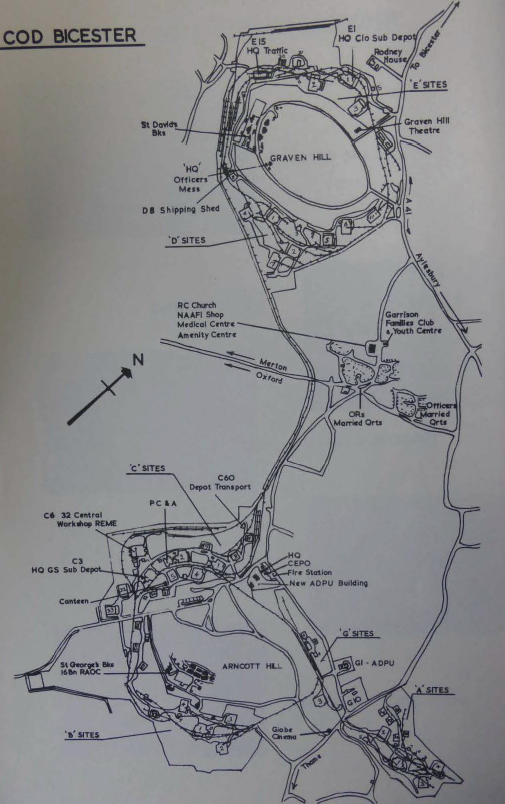
The map above is clearer than the one near the top of this post. The section of the railway which feeds Piddington Depot is now abandonned. The Military railway links into the Oxford to Cambridge line close to Bicester Outlet Village. A sketch plan of the site is included below. [10]

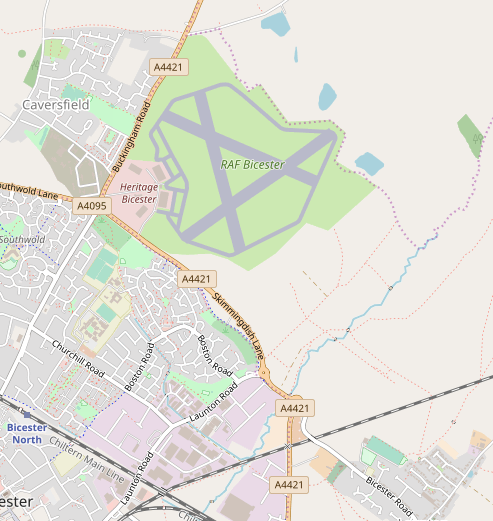
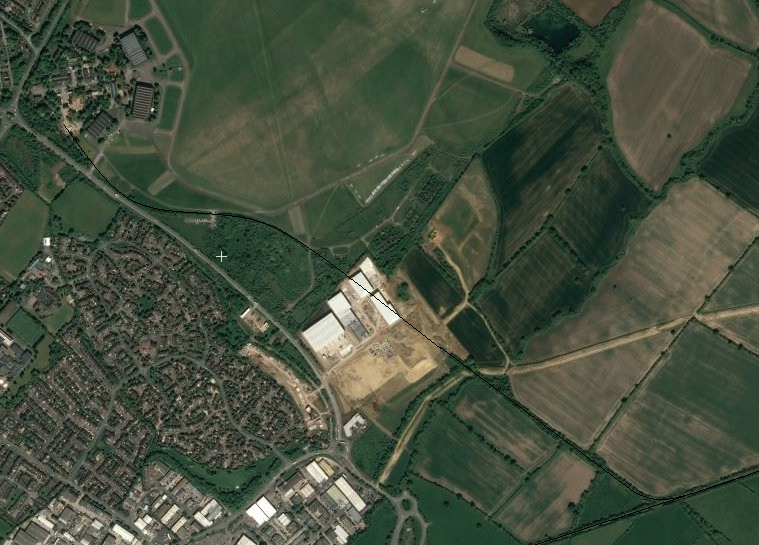
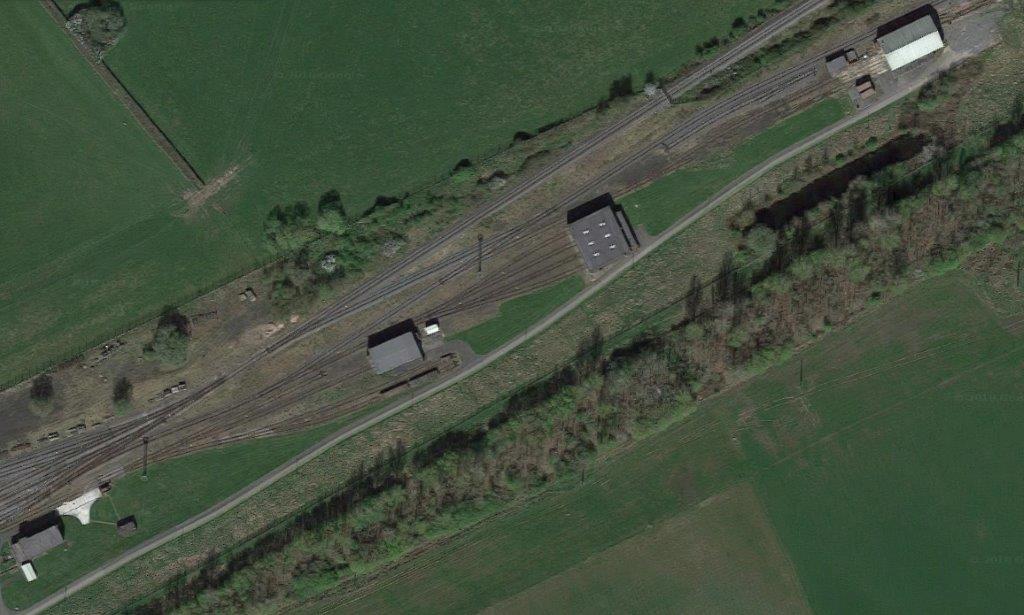
As an aside, RAF Bicester was also rail served and connected to the Oxford to Cambridge line as well. The old line cannot be seen on the adjacent map, but it is clearly visible on the satellite image below. The thin black line shows the route of the branch/siding. For much of its length the line of trees betrays its path. In 2008 the route was walked and pictures were taken for the website ‘Dereliction in the Shires’. [3] At the time, there was little hope for the rejuvenation of the Oxford to Cambridge line.
The Bicester Military Railway (BMR) had no connection to the RAF branch/siding and was a much more significant endeavour. It served what is now the Defence, Storage and Distribution Centre (DSDC), the construction of which began in 1941. By September 1942 the Headquarters and first storehouse had opened and in 1943 the Depot assumed its first role as a main Support Base for future operations in Europe, and an Army Mobilisation Centre.

By 1943, 31 miles of track had been laid which was operated by 7 locomotives. The personnel of the BMR was formed of the Railway Operating and Maintenance Detachment of the Royal Engineers, which in 1943 consisted of 136 officers and men. The railway personnel resided at No. 3 Camp in Arncott, in poor conditions in overcrowded Nissen huts. Most of the BMR staff had been employed by the civilian railway lines. In addition to training on the Longmoor or Melbourne Military railways, the personnel also received basic military training in drill, weapons and explosives. [10]

The original BMR was considered an excellent achievement and a testament to the Corps of Railway Engineers, Royal Pioneer Corps, Royal Corps of Siganls, the 3rd Non-combatant Corps and the Italian PoW. The network was built quickly, and performed very well for a heavy loading job. [10][11]

The depot achieved its peak activity in the latter part of the war when some 20,000 troops and members of the ATS were employed there. Since then the depot has had a number of roles.

It was in 1961 that Central Ordnance Depot (COD) Bicester was selected to play a key role in a major reorganisation of the UK Base Ordnance Installations. The ordnance depots at Didcot and Branston, together with their associated “outstations”, were closed and their functions concentrated at Bicester.

Further reorganisation in 1980-82 led to the closure of other Depots – Chilwell and Ruddington (near Nottingham) – and the transfer of its stock holdings to Bicester and even more responsibilities.

The Garrison occupies an area of 12½ square miles. The storage area was initially dispersed to minimise the effect of conventional aerial bombing. The Garrison roads stretch over 32 miles and the Army railway has over 41 miles of track. The storage areas are enclosed by 21 square miles of perimeter fence.

In April 1999, the depot changed its name to Defence Storage and Distribution Centre (DSDC) Bicester.

In 2000, the Garrison had 850 servicemen and 2500 civilians working within its boundaries. They were the largest employer within Cherwell District Council. [4]

Bicester Garrison has responsibilities extending to Banbury in the north, Milton Keynes in the east and Oxford city in the south. The Bicester site occupies an area of some 12 square miles, this is primarily because of the storage depots which were spread out and dispersed to minimise the effects of conventional aerial bombing. The Garrison roads stretch over 32 miles and the Army railway has over 41 miles of track. The perimeter fence is 23 miles long round the storage areas, but the estate boundary is considerably more. [5]

As of 31st July 2018, Bicester Garrison lists the following units as being active on site:

HQ Bicester Garrison and Garrison Support Unit (HQ BG & BGSU)
23 Pioneer Regt RLC/1 CSL Regt RLC
DEMS Trg Regt
241 Signals Squadron – 10 Signal Regiment
299 Signals Squadron (SC) – Bletchley
Bicester Army Learning Centre 77 AEC
Logistic Commodities and Services (DES LCS)
262 Signal Squadron – 15th Signal Regiment (IS) – LogNEC (Fwd)
16 Cadet Training Team (CTT)
Defence Storage Group (DSG)
DES Log NEC PMG
142 Veh Sqn RLC – Banbury
710 Op Hygiene Sqn RLC – Aylesbury
Oxford University Officer Training Corp
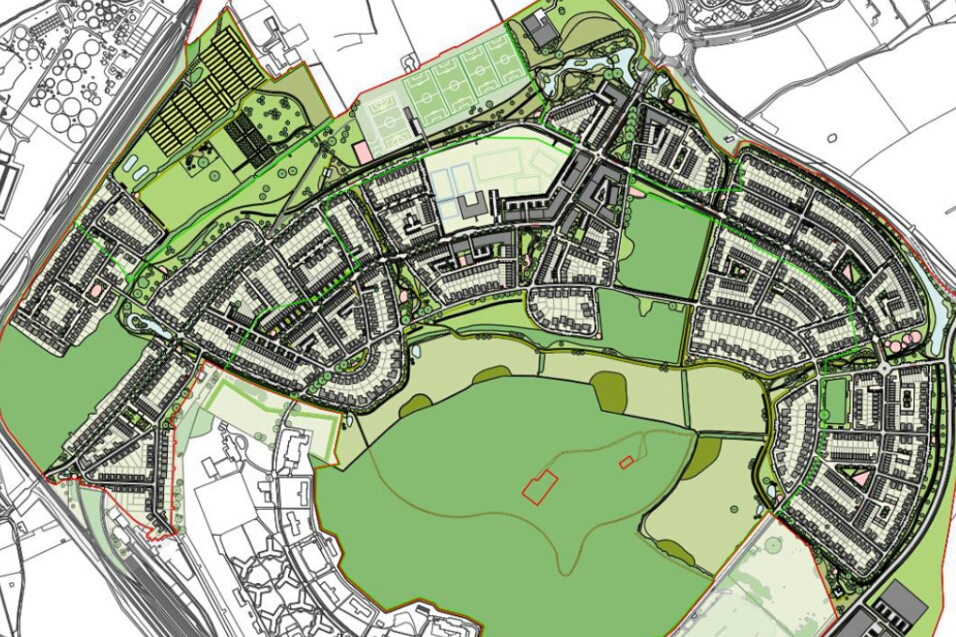
Army recruiting Team
HQ Oxon/Bucks Cadet Force. [5]

Very recently (2018) the MOD has been selling off some of its estate and the Graven Hill Depot area of this site has now been turned over to housing which has inevitably resulted in the closure of lengths of the railway. The site of Graven Hill was an ordnance depot first used during World War Two and still in use in the early 21st Century. Arncott Hill and Graven Hill formed the focii of the vast site. Some areas of the site have fallen out of operational use. However, numerous storage hangars and much of the original infrastructure remain. It is the outstanding example in the UK of a bulk storage depot built during the Second World War, designed to be fully integrated into rail and road transport networks and is the precursor of the modern commercial distribution depots dotted around the motorway network. [6]

The Bicester site was divided into two main areas. The depots were named for the hills that they surround – Graven Hill Depot and Arncott Depot. The two depots were further sub-divided into six distinct functional sites, A, B, C, and F at Arncott, and D and E at Graven Hill.

Graven Hill Depot Railways

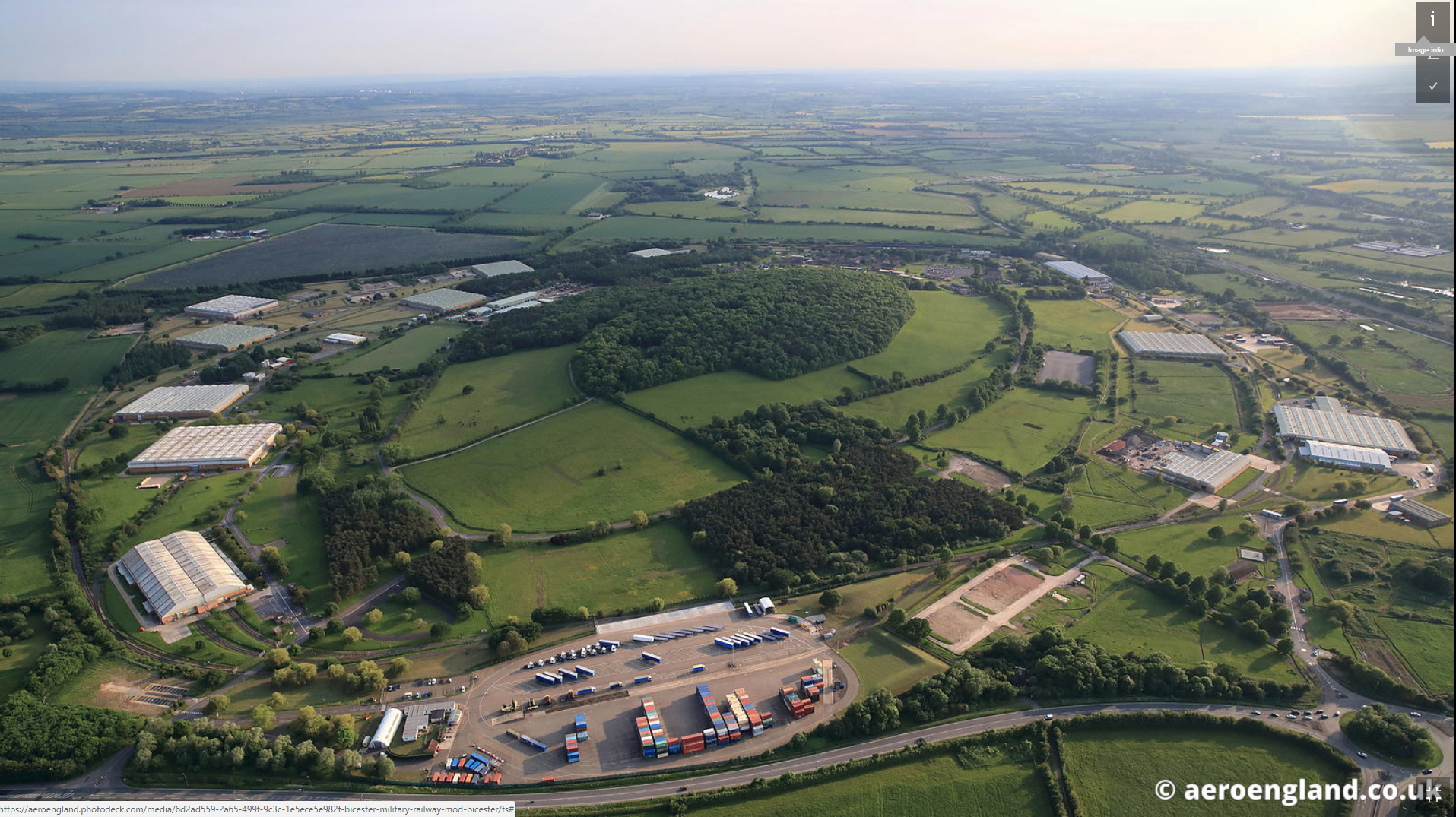
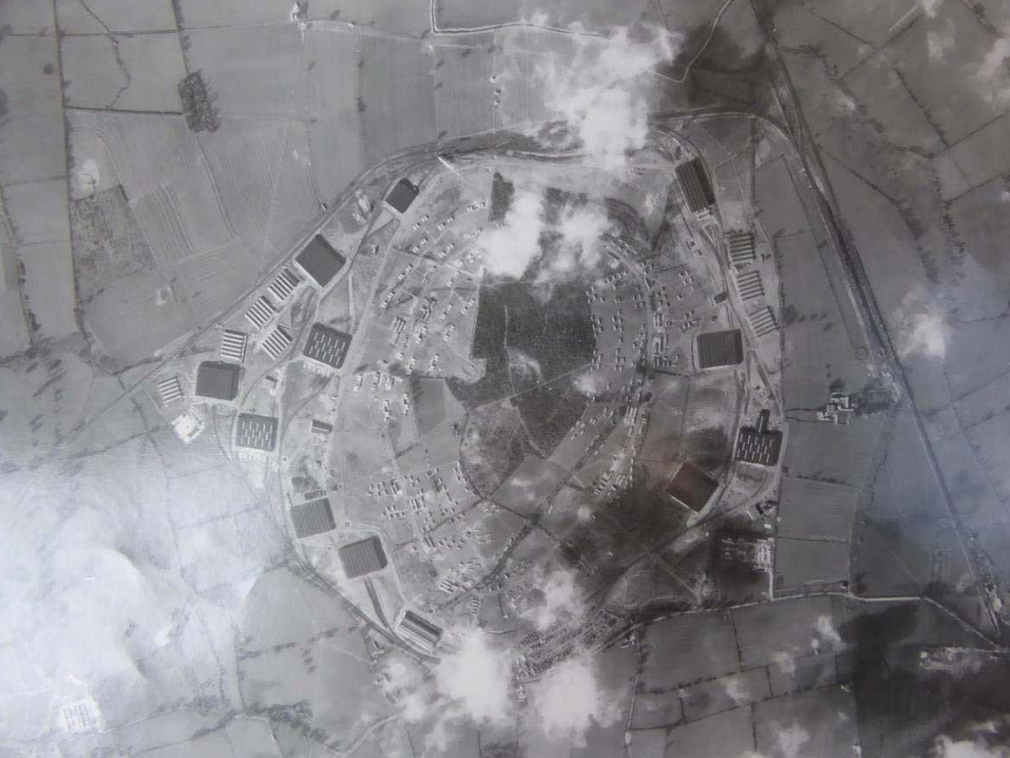
Completed in 1943, the depot at Graven Hill was operated by a mixture of soldiers, Auxiliary Territorial Service (ATS), and civilian staff; military personnel were originally housed in temporary Nissen huts, later to be replaced by permanent barrack blocks – St. David’s Barracks (completed 1958). The complex was served by the Bicester Military Railway, fed from the Oxford to Bletchley railway line. After 1945, COD Bicester remained the premier ordnance depot for the British Army, although since the 1960s, the functions associated with the different parts changed. The depot is now subject to disposal. [6]. The site is shown below courtesy of an image from aeroengland.co.uk available on the internet. [7]An aerial view of the Graven Hill Site taken in 1945. The connection to the national network can be seen on the top right of the image. [10]An extract from the Ordnance Survey plan of the site taken from an archaeological report on the site which shows the general railway layout well. Graven Hill signal box can be picked out to the southwest side of the main line. [12]The proposed housing development plans from 2015 leave the railway intact on the southwest side of the site. [13]

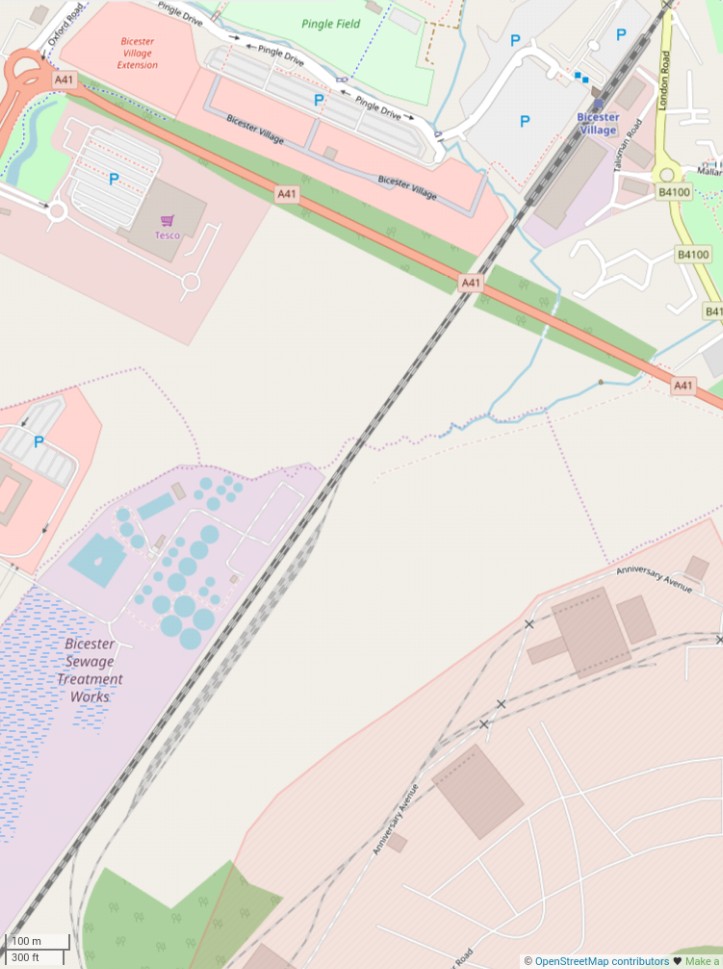
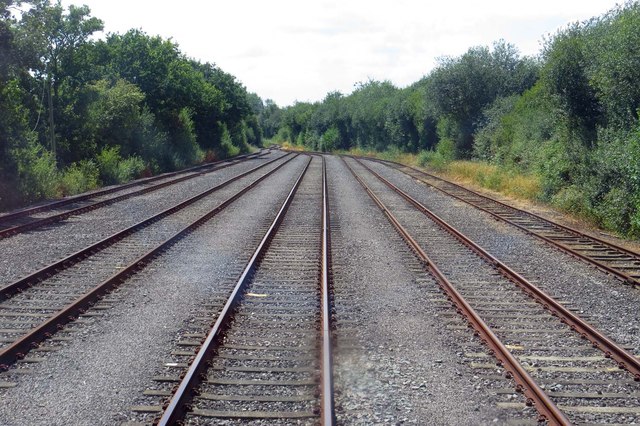
The Bicester Military Railway left the national network to the South of Bicester. The OpenStreetMap map below shows Bicester Village Railway Station and Bicester Outlet Village and to the south of these, Bicester Sewage Treatment Works and the network rail-side exchange sidings for Bicester Military Railway.Holding sidings at MOD Bicester. Wagons are brought into the holding sidings by main line locomotives. They are then taken onto the military railway by the MOD locomotive, (c) Steve Daniels. [19]

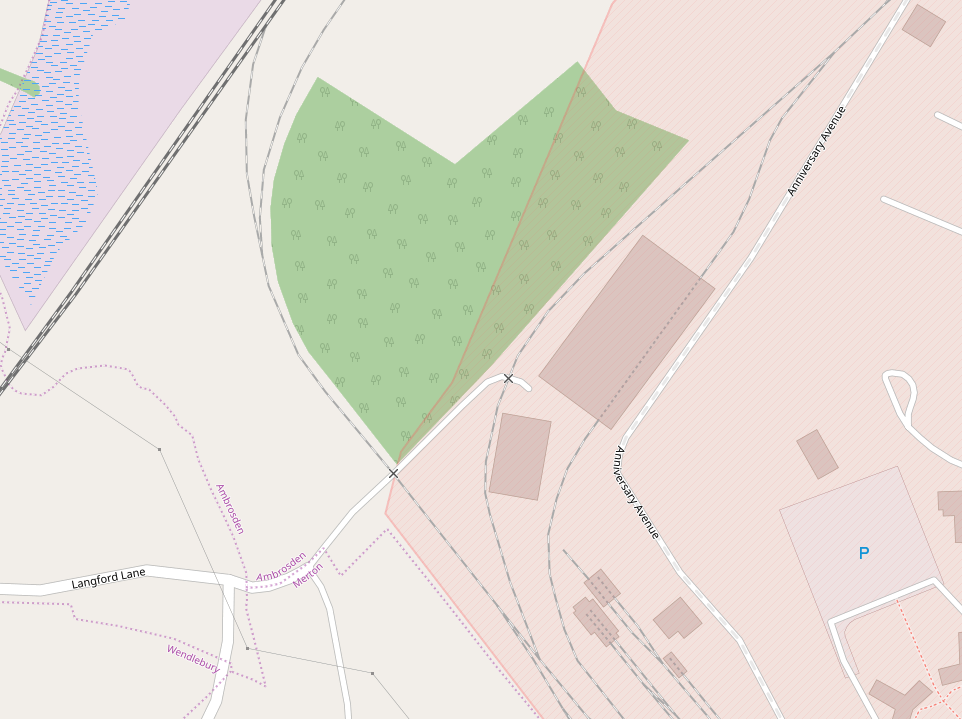
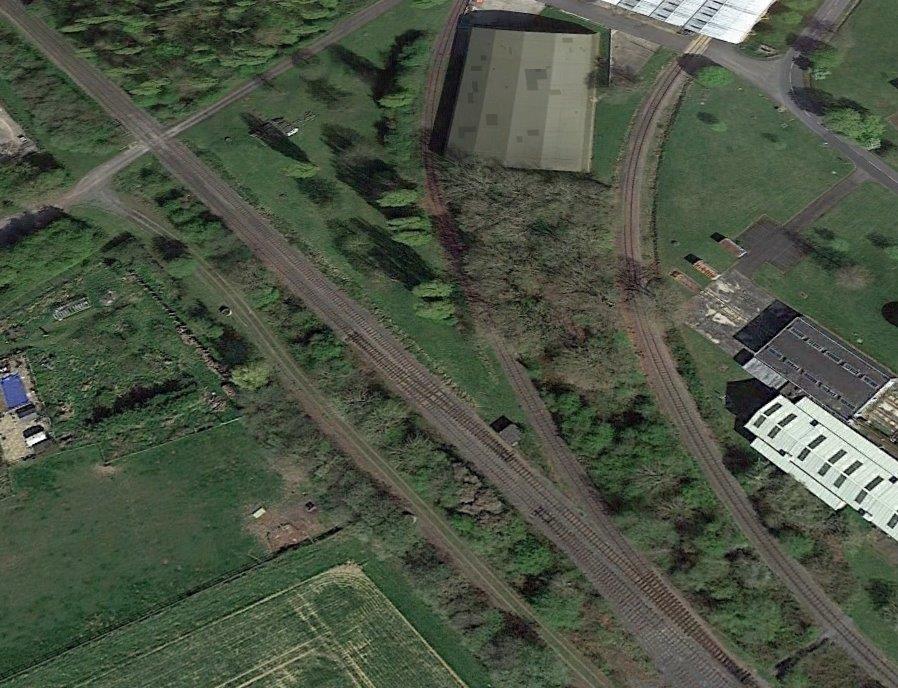
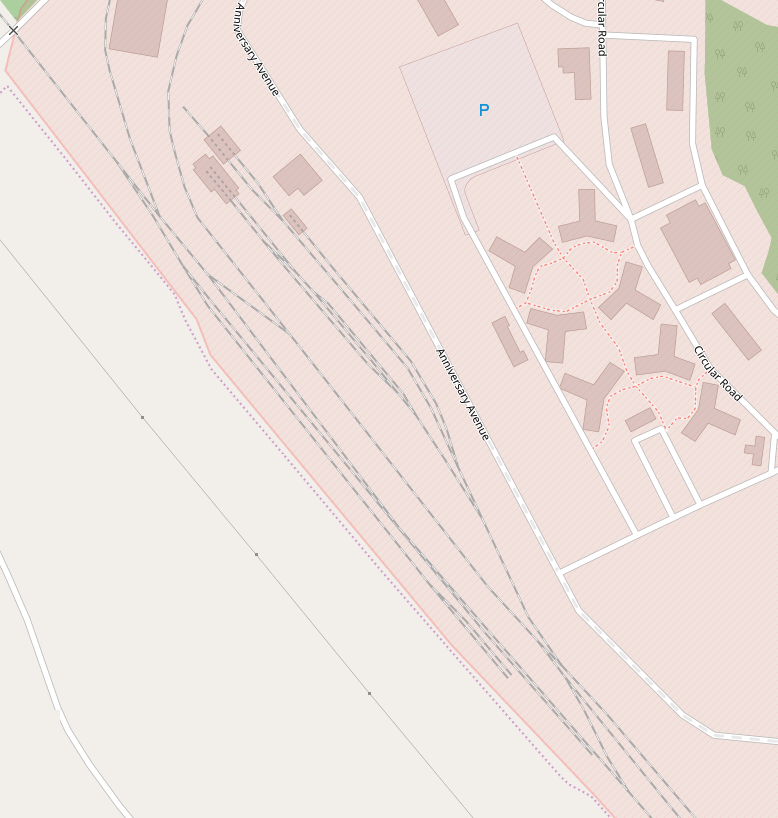
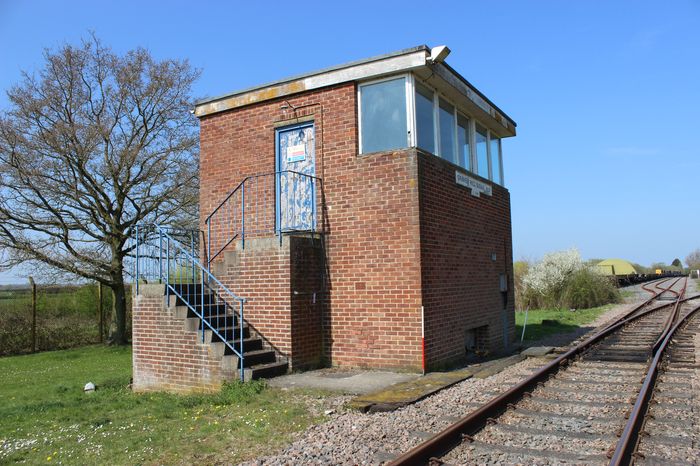
Access to the Military Base was from the south end of the exchange sidings above and is shown on the map below.The military base is shown as a light pink tinged area, surrounded by a red line. The railway entered it as it crossed Langford Lane, marked with a ‘x’ above and shown at the north-west corner of the satellite image below.A train enters the Bicester Miltary Railway site, (c) Steve Daniels. [8]There was a complex network of sidings at the entry point to the Military railway. [9]Graven Hill Signal Box viewed from the East was south east of the sidings shown on the map above. [10] It can be seen casting a long shadow in the bottom right-hand corner of the satellite image below.

The main line linking Graven Hill to Arncott continues along the south boundary of the military site (below). A network of rails surround Graven Hill providing access to a whole series of warehouses.

Ambrosden

Leaving Graven Hill Depot, the railway line approaches Ambrosden on the way to Arncott Depot.The first road encountered on the journey was crossed by a level crossing – Merton Road was crossed just to the West of Ambrosden.Looking north-west towards Graven Hill from Merton Road Level Crossing, Bicester Military Railway. Ambrosden platform was situated on the right hand side of the track. 28th March 2017, (c) Roger Marks.Merton Road west side gate, (c) John Grey Turner.Looking south-east towards Arncott from Merton Road Level Crossing, Bicester Military Railway. The building on the left once housed the crossing keeper. 28th March 2017, (c) Roger Marks.Merton Road Level Crossing at Ambrosden on the Bicester Military Railway. 28th March 2017, (c) Roger Marks.Merton Road ground frame, (c) John Grey Turner.  

The line continues on beyond Merton Road with the village of Ambrosden on its left and then runs parallel to the road between Ambrosden and Lower Arncott, and crosses the River Ray.

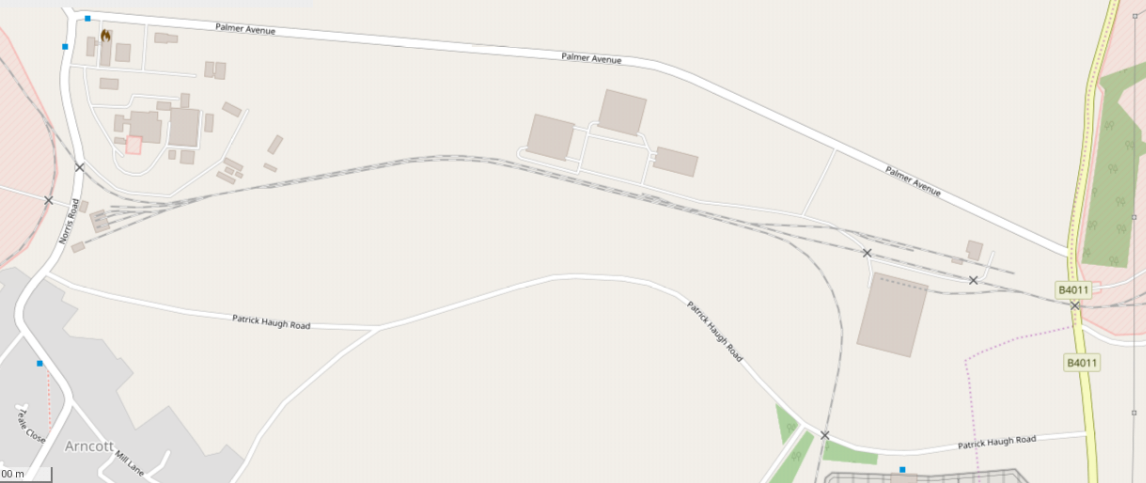
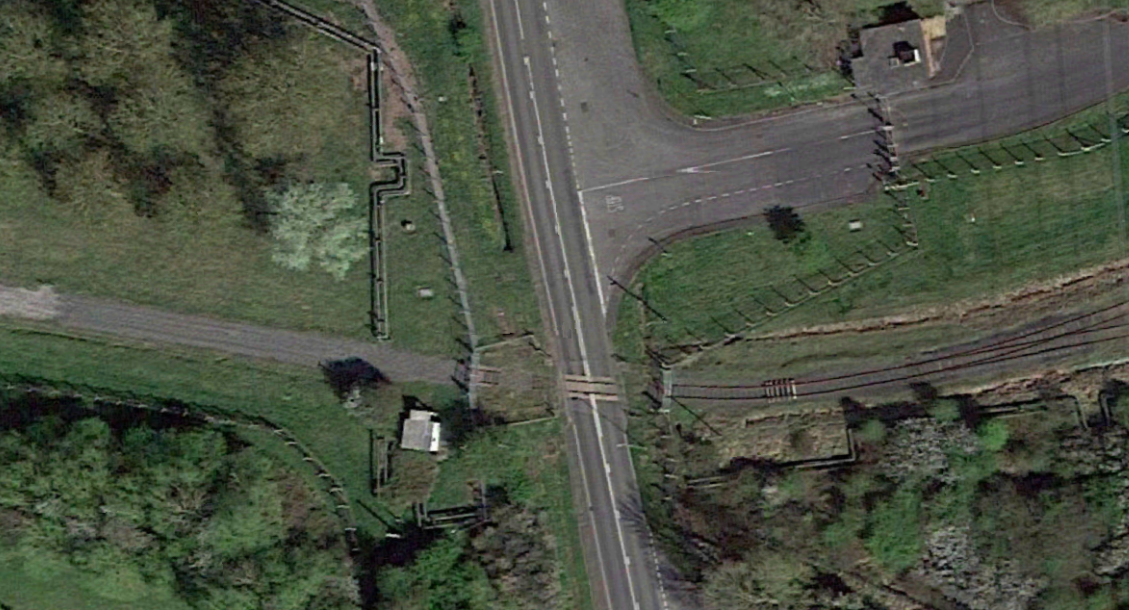
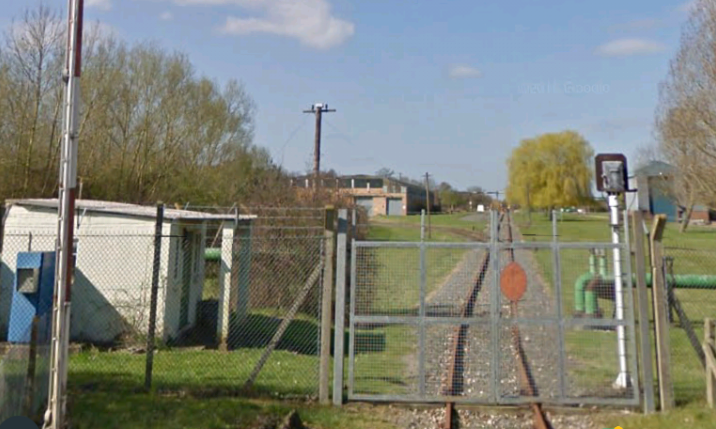
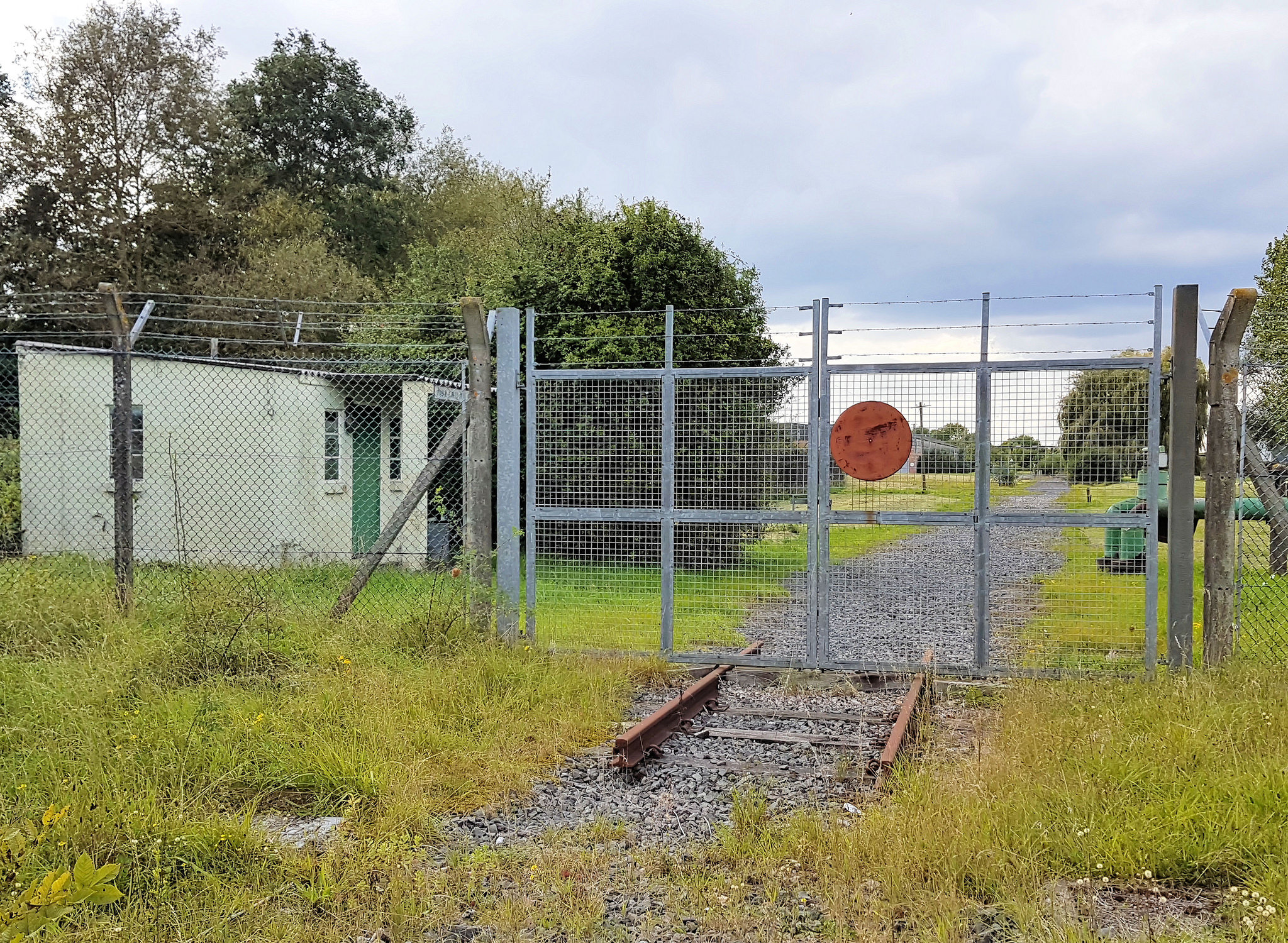
Arncott Depot

Just to the south of the River Ray the line enters the Arncott Depot. The depot boundary extends out towards the River Ray so as to encompass the multi-way points which opened out into the depot sidings and the signal box which can be seen towards the top of the satellite image below.Arncott Depot entrance gates and signal box, (c) Mark Edwards. [14]The railway spreads out to serve a series of warehouses and operational buildings. Top centre to bottom right is the line which runs toward the now disused Piddington Depot which crossed Norris Road close to the also doused Arncott halt.

The next three pictures show the area immediately around the blue flag on the satellite image above, the road crossing and halt.The disused Arncott Main level crossing on the Bicester Military Railway, looking towards Arncott yard and Bicester. 12th September 2017, (c) Roger Marks.Arncott Halt before the track was lifted, this view looks towards the level crossing above, (c) 70023venus2009. The remains of Arncott station on a disused section of the Bicester Military Railway. 12th September 2017, this view is taken from the level crossing above, (c) Roger Marks.

The line to the Paddington Depot travelled to the south of Palmer Avenue to meet the B4011. The level-crossing on the B4011 is shown after removal of some of the line. Looking West towards Arncott with tracks in place. The view looking towards Arncott and the working part of the Bicester Military Railway, from the disused Piddington branch at Piddington crossing. The former crossing keeper’s hut is on the left. 12th September 2017, (c) Roger Marks.The view from the level crossing looking east towards Piddington Depot before the removal of the line. The disused Piddington branch of the Bicester Military Railway, looking towards the terminus from Piddington Crossing. 12th September 2017, (c) Roger Marks.

The site beyond the gates (above) is shown on the extract from ‘OpenStreetMap’ below. The depot is now disused.

Returning to Arncott Depot. The map below shows the northern part of the Depot with the gate/signalbox at the top  and the line to Piddington leaving the image on the right. The second map below shows the southern half of the depot and its connection across Murcott Road to St. George’s Barracks.The crossing at Murcott Raod is shown in the next few images.Murcott Road Crossing west side, (c) John Grey Turner.Murcott Road Crossing west side, (c) John Grey Turner.Murcott Road Crossing, (c) Steve Daniels.Murcott Road West, (c) John Grey Turner.This plan shows St. George’s Barracks and the link at the top right back up to the line to the Piddington Depot.

Locomotives and Rolling Stock

I have only been able to find a small number of pictures without all rights reserved. There are a variety of sources of photographs of the line and it rolling stock. One interesting set of photos are taken by Chris Turnbull on a Railway Study Association visit to the BMR. [16] A short, eclectic series of photographs follow below, some taken at Bicester, others elsewhere. The common thread is that locomotives and rolling stock once served on the BMR.D2700, 0-4-0DM built by the North British Locomotive Co.Ltd., Glasgow in 1955 No.27426. Originally numbered WD8205, it worked at Bicester, Marchwood and Longmoor Military Railways before passing into private ownership in the 1980’s. [17]MoD No.01512 (ex-301) “Conductor”, a Thomas Hill (Vanguard) 34t 0-4-0 diesel hydraulic locomotive with 255 hp Rolls Royce C6SFL engine. On display at Long Marston Open Day in June 2009, from its home base of the Defence Storage & Distribution Centre, Bicester. [15]Shunting loco “Storeman”, (c) Steve Daniels. [22]The exchange sidings, with a coach and loco from the Bicester Military Railway © Ian Mortimer.BR Mk1 SO 4754 ex Bicester Military Railway, Horsted Keynes, 2 August 2014, (c) Nigel Menzies.Purchased from the Army’s Central Ordnance Depot Military Railway at Bicester, its TOPS classification is VJX. It was built as No. 23136. [23]BR Box Van B784284 – B784284 was withdrawn from British Rail service in November 1984, going into Army service. It was purchased from the Army’s Bicester Central Ordinance Depot in October 2000, the Army’s number being WGB 4188. This van is fitted with instanter couplings, which are a later version of the three link, (c) Mark Cann. [18]Looking through the boundary fence at MOD rolling stock, (c) David Luther Thomas. [20]M.o.D. and ex railway company rolling stock at Bicester Depot. (c) David Luther Thomas. [21]LSWR Goods Van (AD 47253) – Arriving at Quainton in August 1972 from the Ministry of Defence, Graven Hill, Bicester; this van carried the army number AD47253. It is fitted with a hand brake only. [24]The 2-row carriage shed at the Bicester Military Railway, June 2007. [25]

References

  1. http://www.pastscape.org.uk/hob.aspx?hob_id=1363495, accessed on 30th July 2018.
  2. https://en.m.wikipedia.org/wiki/Bicester_Military_Railway, accessed on 30th July 2018.
  3. https://sites.google.com/site/derelictionintheshires/military-sites/raf-bicester-rail-siding, accessed on 30th July 2018.
  4. https://www.blhs.org.uk/index.php?page=bicester-cod, accessed on 30th July 2018.
  5. http://www.bicester-garrison.co.uk/Bicester-Garrison/Bicester-Garrison-Past-and-Present-26062015.htm, accessed on 31st July 2018.
  6. http://www.pastscape.org.uk/hob.aspx?hob_id=1411454&sort=2&type=&rational=a&class1=None&period=43%7C410%7CROMAN%7C38%7C0&county=None&district=None&parish=None&place=Bicester&yearfrom=43&yearto=410&recordsperpage=10&source=text&rtype=&rnumber=, accessed on 31st July 2018.
  7. https://aeroengland.photodeck.com/media/6d2ad559-2a65-499f-9c3c-1e5ece5e982f-bicester-military-railway-mod-bicester/fs, accessed on 31st July 2018.
  8. By Steve Daniels, CC BY-SA 2.0, https://commons.wikimedia.org/w/index.php?curid=13983840, accessed on 31st July 2018.
  9. https://www.openstreetmap.org/#map=17/51.87673/-1.15561, accessed on 31st July 2018.
  10. NMR Aerial photograph Library No: 6914 Frame No: 5033/5034, in http://archaeologydataservice.ac.uk/archiveDS/archiveDownload?t=arch-2170-1/dissemination/pdf/EED13983-106-R-1-1-3-TM_.pdf, accessed on 31st July 2018.
  11. E.R. Lawton and Major M. W. Sackett;  The Bicester Military Railway and the Army’s Central Railway
    Workshops;  Oxford Publishing Co. Ltd, 1992.
  12. http://archaeologydataservice.ac.uk/archiveDS/archiveDownload?t=arch-2170-1/dissemination/pdf/EED13983_WSI/EED13983-106_S_1_1_3_TM.pdf, accessed on 31st July 2018.
  13. http://righttobuildtoolkit.org.uk/case-studies/graven-hill-bicester, accessed on 31st July 2018.
  14. https://www.geograph.org.uk/photo/256274, accessed on 31st July 2018.
  15. https://en.wikipedia.org/wiki/Bicester_Military_Railway#/media/File:Thomas_Hill_(Vanguard)_319V_(5676879108).jpg, accessed on 1st August 2018.
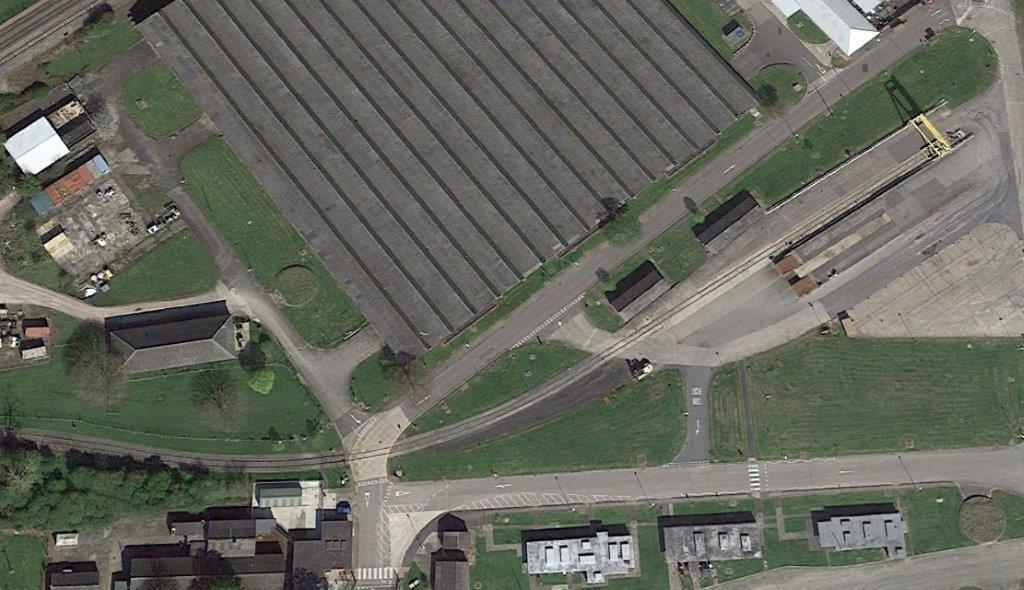
  16. http://www.rmweb.co.uk/community/index.php?/topic/91758-chris-ts-photo-archives-updated-6th-march/page-13. Pictures were posted on 10th December 2014 at 20:41, and were accessed on 30th July 2018.
  17. http://colnevalleyrailway.blogspot.com/2012/10, acessed on 1st August 2018.
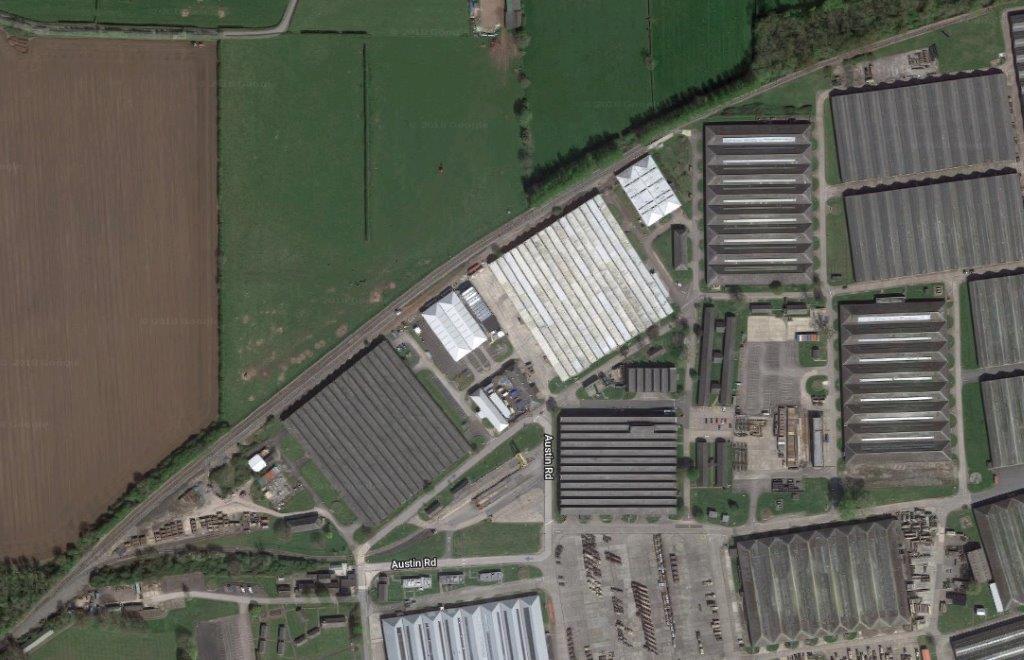
  18. https://www.pinterest.co.uk/pin/56435801566058783, accessed on 1st August 2018.
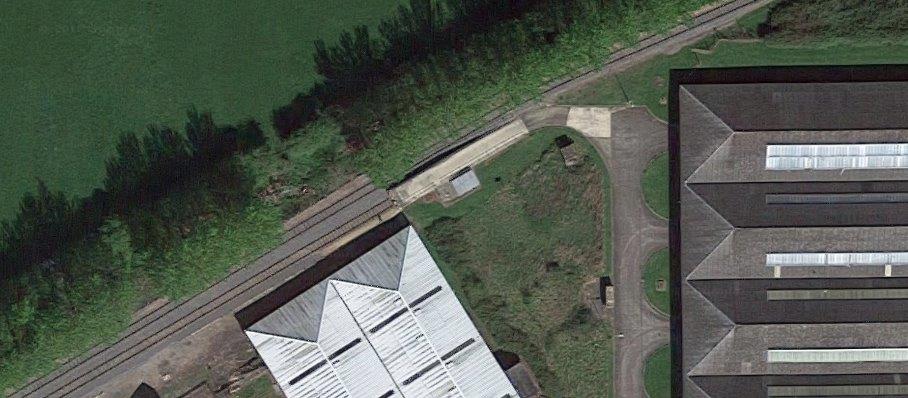
  19. http://www.geograph.org.uk/photo/3647138, accessed on 1st August 2018.
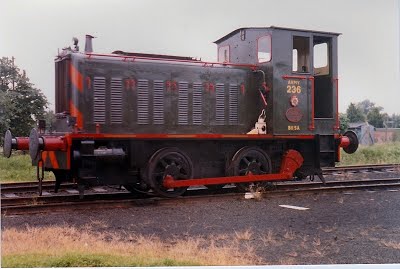
  20. http://www.geograph.org.uk/photo/464267, accessed on 1st August 2018.
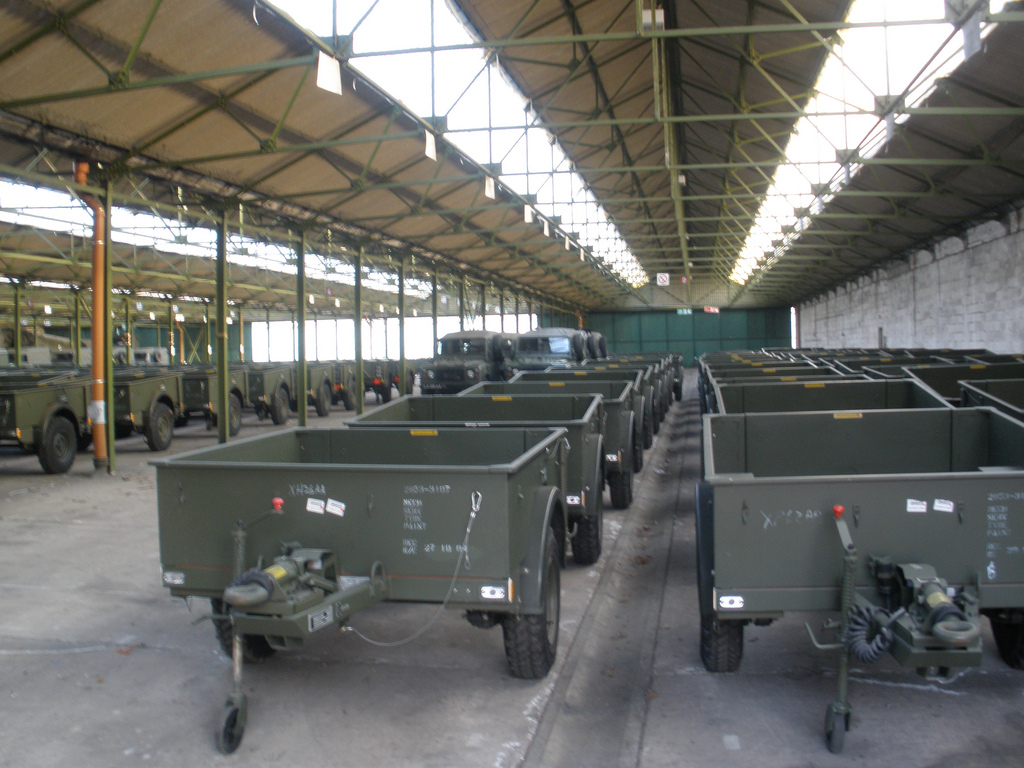
  21. http://www.geograph.org.uk/photo/464271, accessed on 1st August 2018.
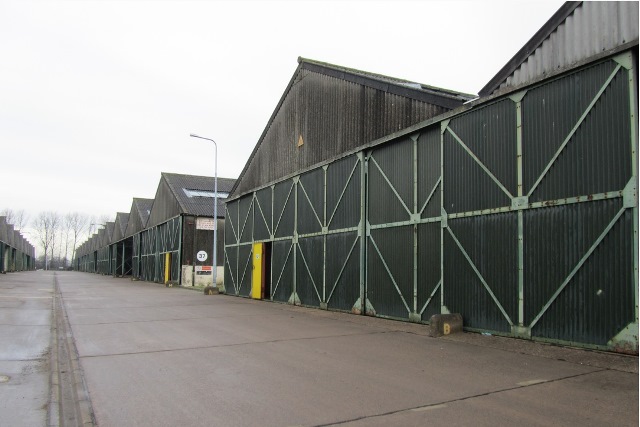
  22. http://www.geograph.org.uk/photo/4120799, accessed on 1st August 2018.
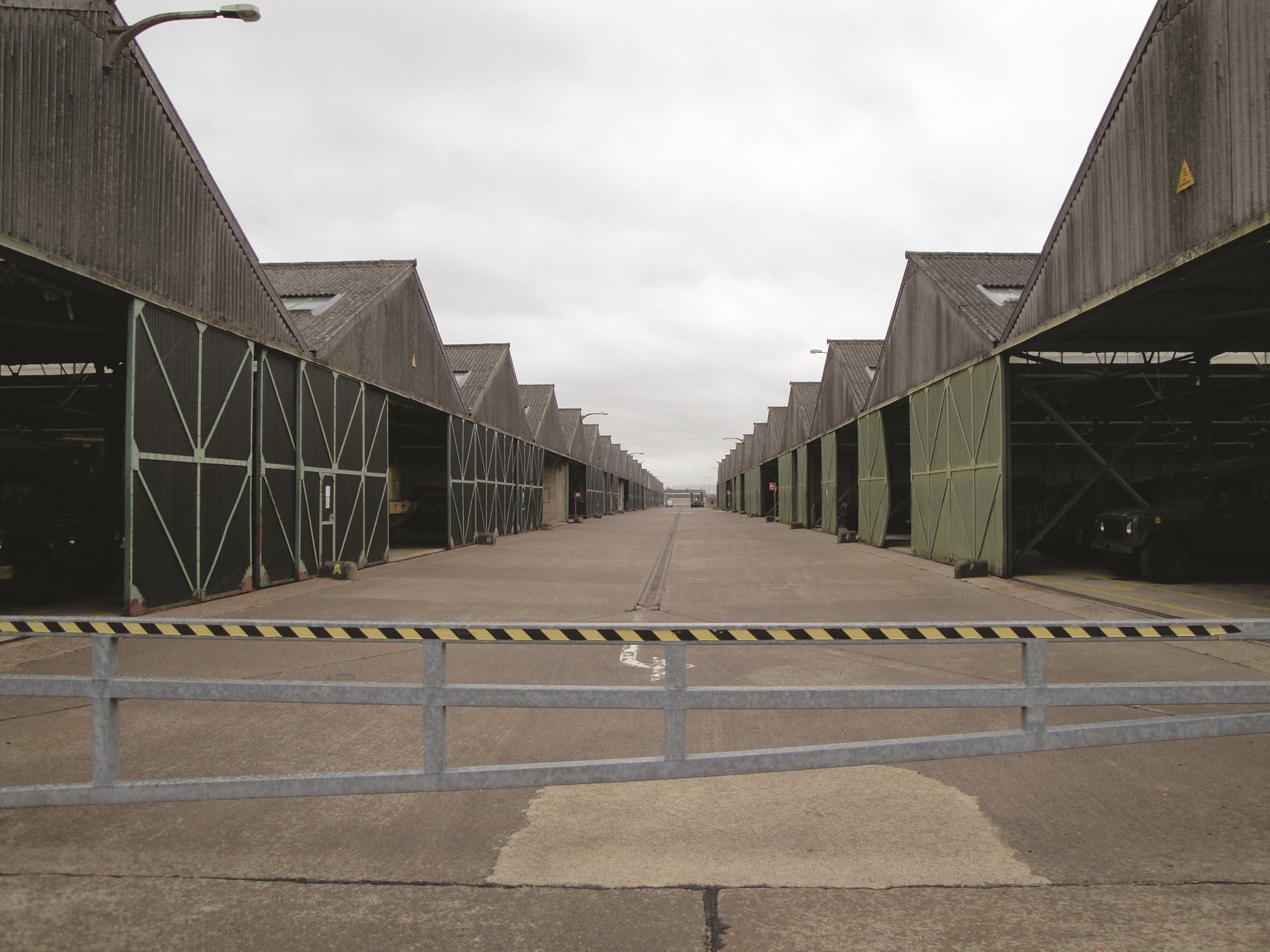
  23. https://www.pinterest.pt/cannyuk/locomotion, accessed on 1st August 2018.
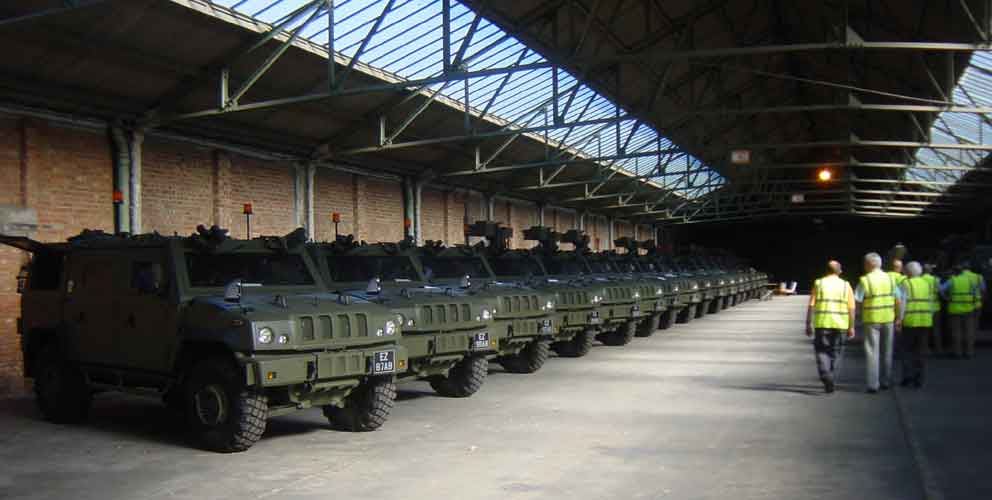
  24. https://www.pinterest.co.uk/pin/56435801566058820, accessed on 1st August 2018.
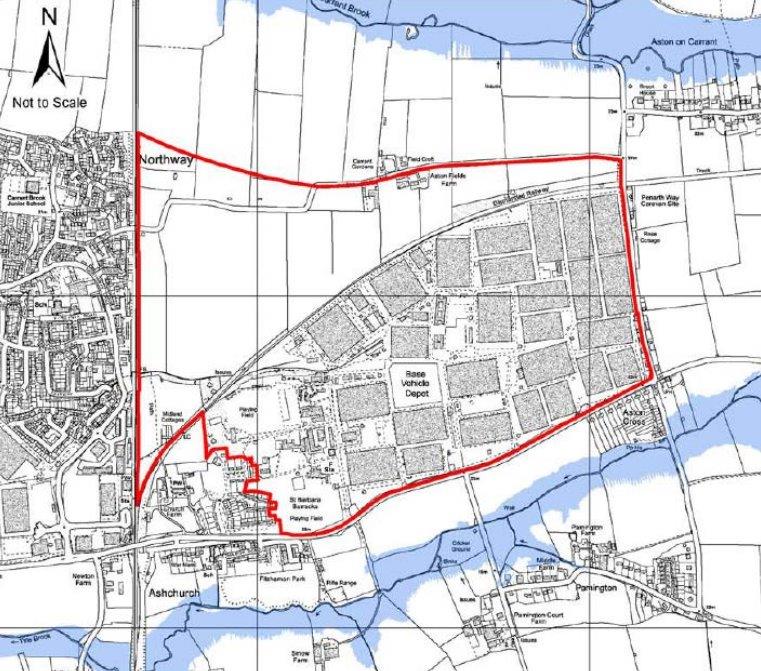
  25. https://wikivividly.com/wiki/Bicester_Military_Railway, accessed on 30th July 2018.
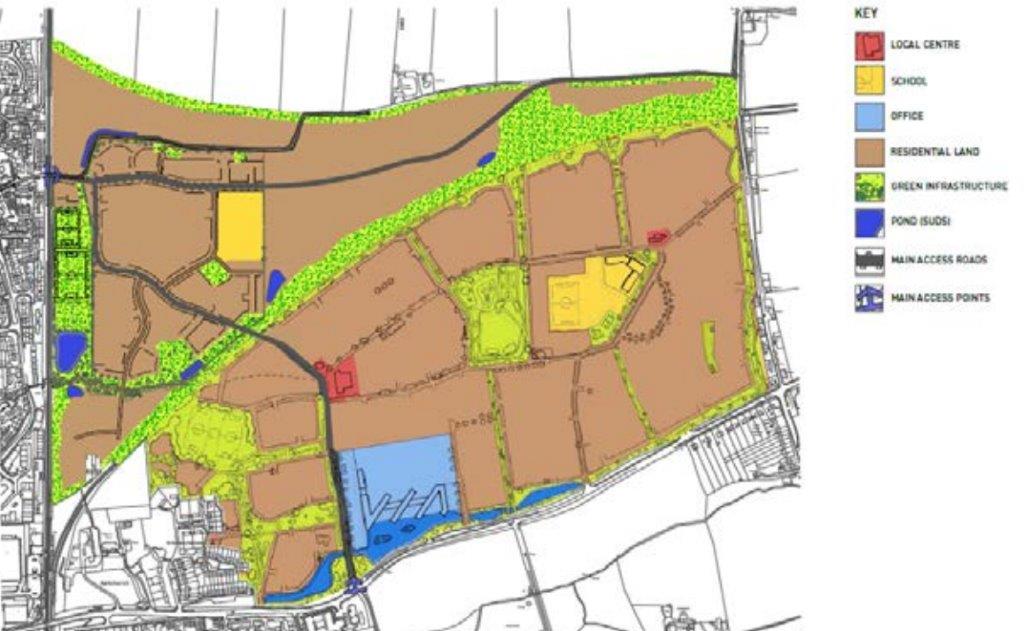
Nice to Digne-les-Bains Part 6 – Saint-Benoît Pont de Gueydan to Annot (Chemins de Fer de Provence 70)

After a detour up another branch tramway (Saint-Benoît Pont de Gueydan to Guillaumes) operated by the TAM: https://rogerfarnworth.wordpress.com/2018/07/25/tam-tramway-from-le-pont-de-gueydan-to-guillaumes-chemins-de-fer-de-provence-69, we continue our journey along the Nice to Digne line from Saint-Benoît Pont de Gueydan.Two images of the station building at St. Benoit Pont de Gueydan. It has been abandoned but once acted as the junction station for the TAM line to Guillaumes. The first looks back towards Entrevaux, the second looks forward towards Digne. [1]A Nice to Digne service at St. Benoit Pont de Gueydan Station. [2]Ballast train at St. Benoit Pont de Gueydan Station. [3]The station is shown close to the centre of the map above, which also shows the start of the line to Guillaumes, the Pont de Gueydan and the railway bridge across the River Coulomp. We are travelling West along the line. [4]  Two pictures (above) of the line west of Saint Benoit Pont de Gueydan. [5]

The first two significant structures on this section of the line are a bridge which carries the N202 over the railway and then the Tunnel de Saint Benoit which is also known as the Tunnel du Pont de la Reine Jeanne and is curved in plan and 110 metres long. This tunnel’s north-east portal is a matter of metres from the road bridge. The bridge is located under the red dot on the map below and the tunnel is marked by the blue and green dots. [8] The steel or wrought iron road bridge shown above [8] has now been supplemented by a more modern structure (below). [5]The western portal of the tunnel is shown is the various images below.  [5] The monochrome image is an old postcard which shows the railway and road tunnels alongside the bridge which provides the alternative name for the tunnel – Tunnel du Pont de la Reine Jeanne. [9] The following two images are of the same bridge. The first comes from the era before the construction of the railway and is taken from upstream of the bridge. [10] The second comes from the modern era and shows much the same view as the older image above this text. It is also taken from upstream of the bridge.  [11]Beyond the tunnel, the railway runs parallel to the N202 on its North side until reaching the halt at St. Benoit. [5] The two pictures above are the remainder of a sequence of photographs from this source which have taken us along the first length of the line to the west of Saint Benoit Pont de Gueydan to the next stop on the line – Saint Benoit Halte [5]Saint Benoit Halte before refurbishment. [6]Saint Benoit Halte after refurbishment. [7] The two pictures above are taken about 1 kilometre beyond Saint Benoit Halt. The track to the right of the crossing on the first image is the access road to Saint Benoit Halt. The line continues west alongside the small retaining wall shown on the second image. It then follows the N202 until reaching the next ravine – Ravin de Gross Vallon. On the road it is hard to even notice the ravine. On the railway the bridge is easy to identify. [5]From the N202, the viaduct can only be glimpsed through the vegetation.Google Earth provides the best view of the viaduct that I have been able to find.

The railway continues about 100 metres north of the N202 for a further kilometre before encountering another tunnel – Tunnel du Plan de Coulomp. [12] The Tunnel du Plan de Coulomp is shown on the map below by the red, blue and green dots. It is 75 metres long and is followed immediately by another viaduct and another two tunnels which are shown by a series of back dots on the map. These tunnels are known as Scaffarels Nos. 1 and 2.The eastern portal of the tunnel du Plan de Coulomp. [5]The western portal of the Tunnel du Plan de Coulomp. The picture also shows the retaining wall which supports the formation of the railway on the approach to the next viaduct.  [12]The view of the viaduct over Le Coulomp. The picture is taken from the N202 which itself is relatively high above the river.The Portuguese steam locomotive owned by GECP pulls a train over the viaduct heading for Annot. [13]The same viaduct but this time showing its full height. [14] And below, another view of a steam train, this time travelling away from Annot. [15]A short distance to the west of the viaduct, trains plunged into another tunnel – Galerie des Scaffarels. This was a protective structure avoiding the worst effects of rock and snowfalls. [16] It was 151 metres long. The first two images below are taken from the East looking at the tunnel portal. The third image is taken inside the gallery and shows the small arched openings in the south wall of the gallery. [16] The fourth image below shows the western portal of the gallery. The gallery is immediately followed by a 207 metre long tunnel – Tunnel des Scaffarels. [17] The first two images below are taken from inside the gallery and show just how close the two structures are to each other. They depict the eastern portal of the tunnel. The third photo below shows the western portal in cutting. The 100 metre cutting gives way yo open land and the line immediately encounters another halt – Les Scafferals. [5]400m metres after the halt at Les Scafferals, the line begins to swing round to the northwest and in a further kilometre or so the Station of Annot is encountered. [5] Annot functions as the usual terminus of the GECP steam services from Puget-Therniers. The station is shown in plan on the adjacent satellite image.

Annot is located some 80 km north-west of Nice, 15 km east of Saint-Andre-les-Alpes, and 13 km west of Puget-Theniers. Access to the commune is by National Road N202 from Saint-Andre-les-Alpes to Puget-Theniers which passes through the south of the commune. Access to the village is by road D908 running north off the N202 and continuing north to Le Fugeret. There are two railway stations in the commune: Scaffarels station, an optional stop built on a masonry embankment; and Annot Railway Station near the village. [18]

We finish this section of our journey from Nice to Digne at Annot station and with a few different vies of the station taken at different times in its history. [19] [20][21][22][23][18][23][24]The next photograph below shows a Renault ABH railcar and Billard trailer in the snow at Annot station in 1987 (Pierre Boyer Collection).

References

  1. https://www.google.co.uk/maps/place/Saint-Beno%C3%AEt+Pont+de+Gueydan/@43.967581,6.75664,17z/data=!4m13!1m7!3m6!1s0x12cc41f9dc0aa187:0xf10a773ab9badd02!2sPont+de+Gueydan,+04240+Saint-Beno%C3%AEt,+France!3b1!8m2!3d43.969065!4d6.7597711!3m4!1s0x12cc41fbe0e4fe7d:0x425b3824df9b5b03!8m2!3d43.9678859!4d6.7570404, accessed on 26th July 2018.
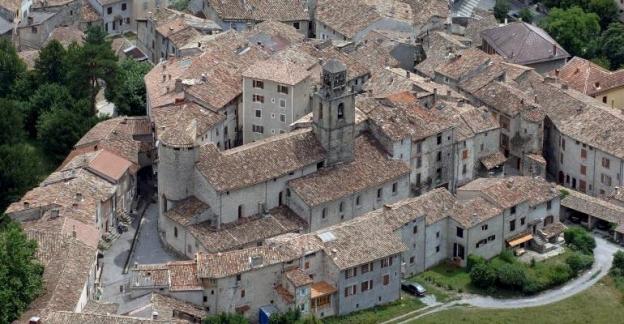
  2. https://www.cparama.com/forum/pont-de-gueydan-cne-de-saint-benoit-t28160.html, accessed on 20th July 2018.
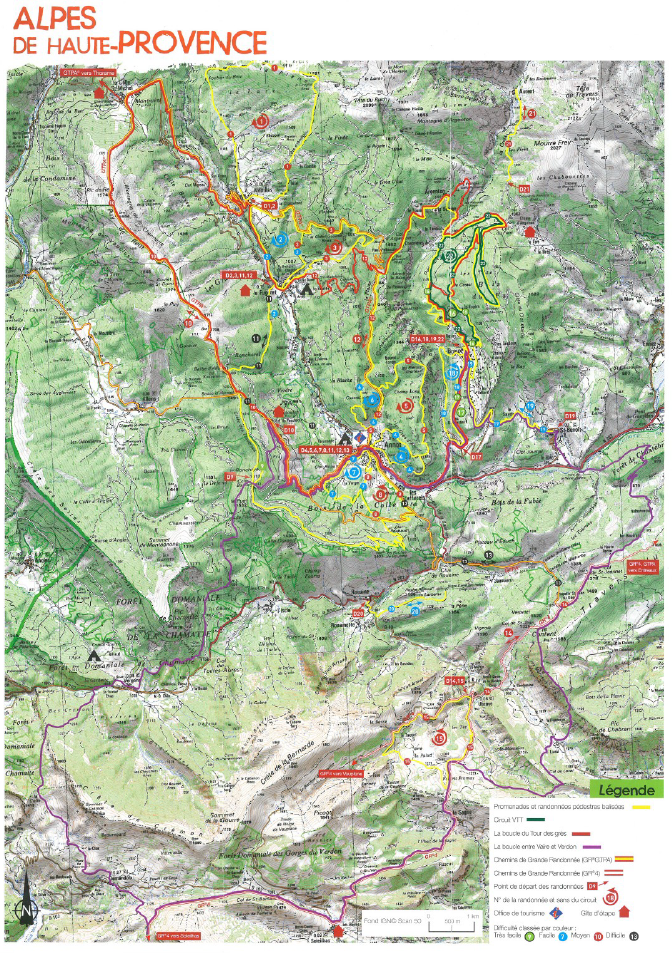
  3. https://mapio.net/a/60593367, accessed on 26th July 2018.
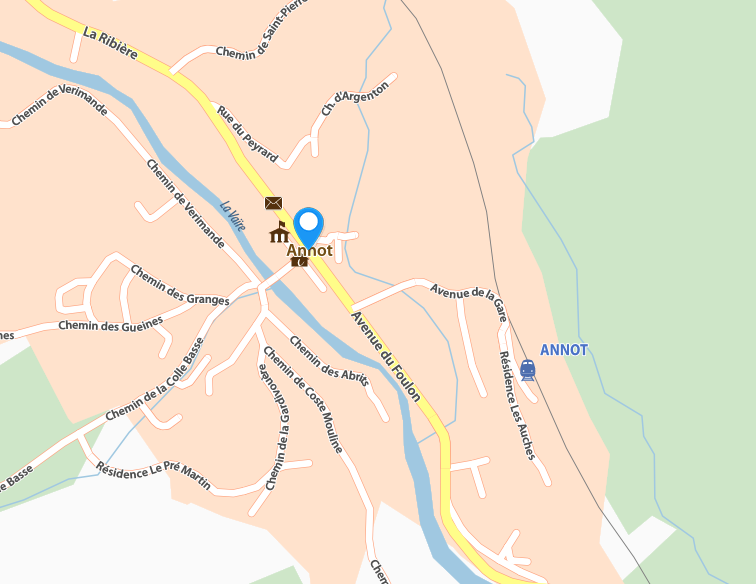
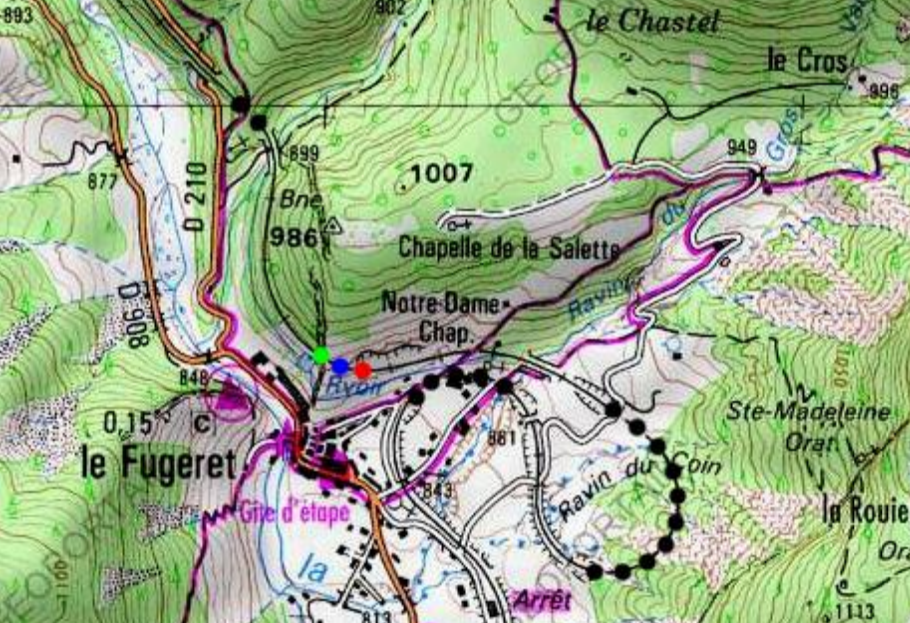
  4. http://sierm.eaurmc.fr/surveillance/eaux-superficielles/etat-qualitatif.php?station=06710029, accessed on 26th July 2018.
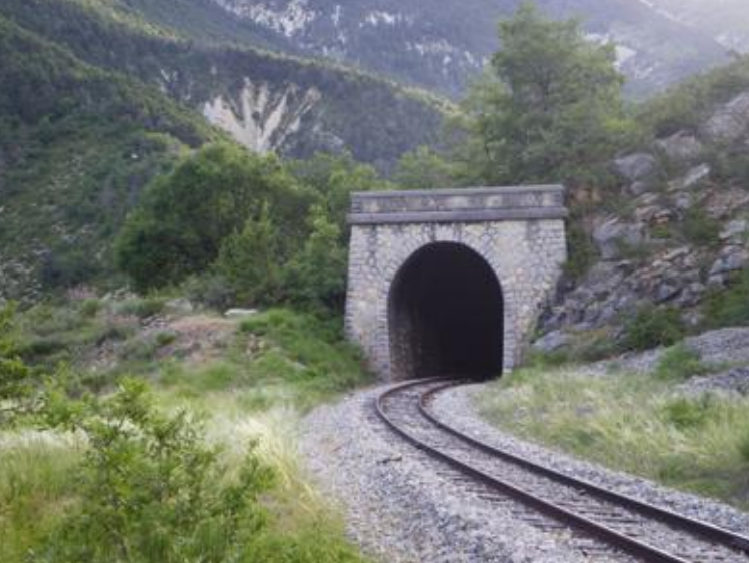
  5. http://www.rd-rail.fr/1-PHOTOS/PH43/index-ph43.html, accessed on 26th July 2018.
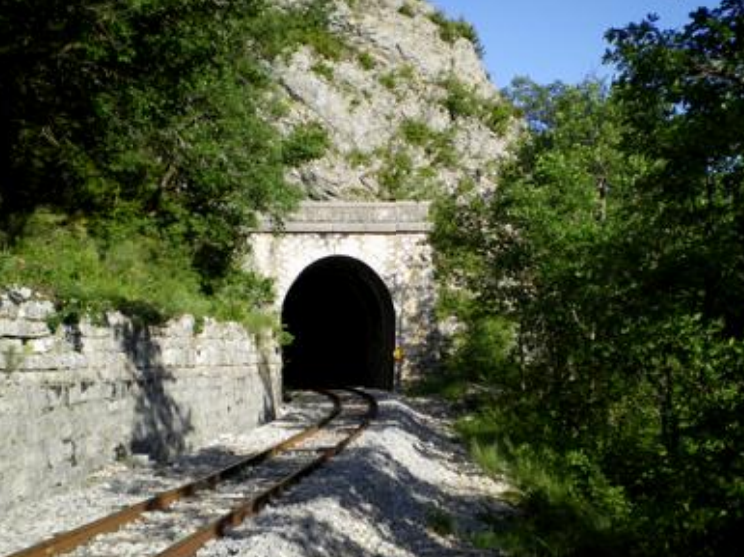
  6. http://trip-suggest.com/france/provence-alpes-cote-d-azur/ourges, accessed on 26th July 2018.
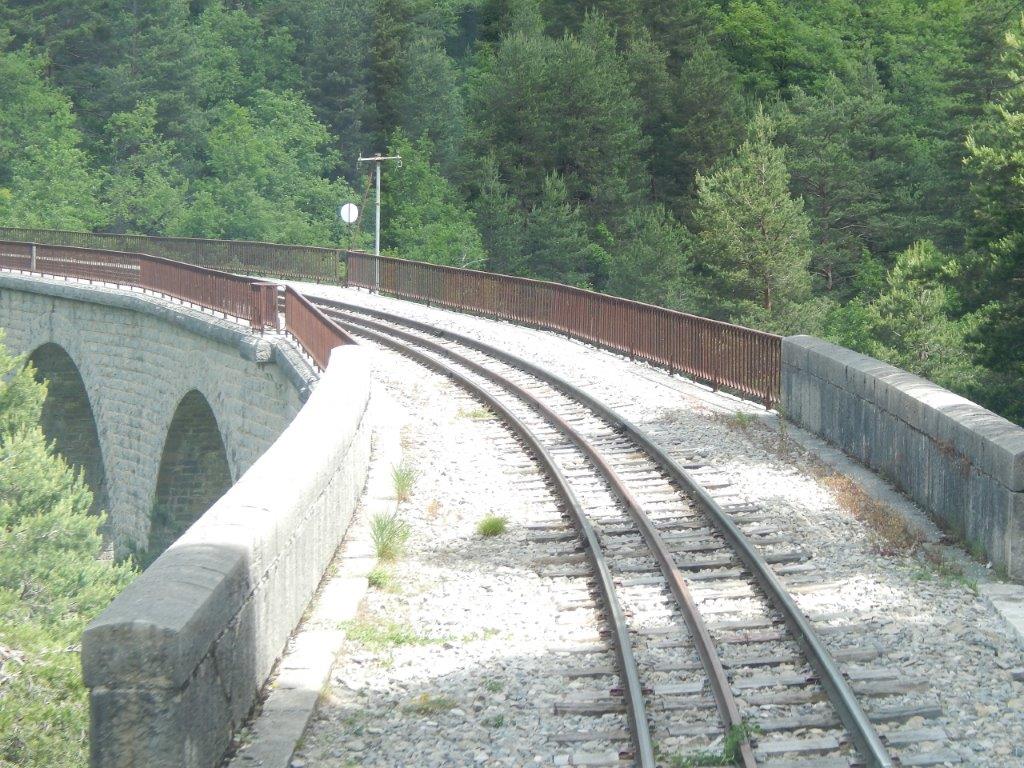
  7. https://www.google.co.uk/maps/place/Saint-Benoit/@43.960033,6.727445,3a,75y,90t/data=!3m8!1e2!3m6!1sAF1QipMXVem6e6mYYcyxeYWboq42DYz51wFSABmPfpoI!2e10!3e12!6shttps:%2F%2Flh5.googleusercontent.com%2Fp%2FAF1QipMXVem6e6mYYcyxeYWboq42DYz51wFSABmPfpoI%3Dw129-h86-k-no!7i1500!8i1000!4m13!1m7!3m6!1s0x12cc41f9dc0aa187:0xf10a773ab9badd02!2sPont+de+Gueydan,+04240+Saint-Beno%C3%AEt,+France!3b1!8m2!3d43.969137!4d6.759779!3m4!1s0x12cc6a3dfd6d4f0b:0xfc663905836cc5!8m2!3d43.9600332!4d6.7274449, accessed on 26th July 2018.
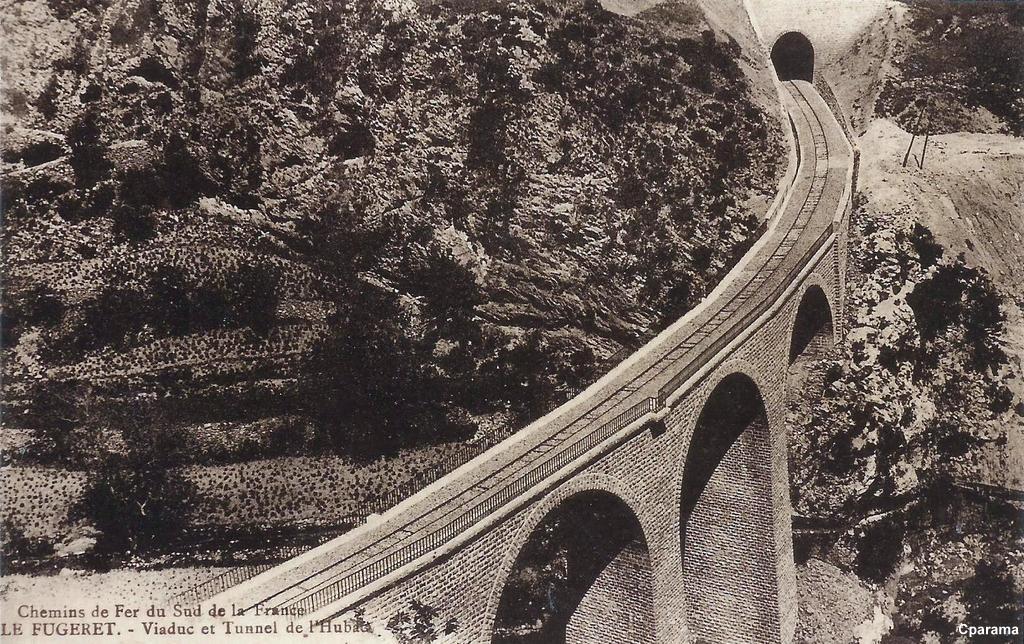
  8. http://www.tunnels-ferroviaires.org/tu04/04174.2.pdf, accessed on 26th July 2018.
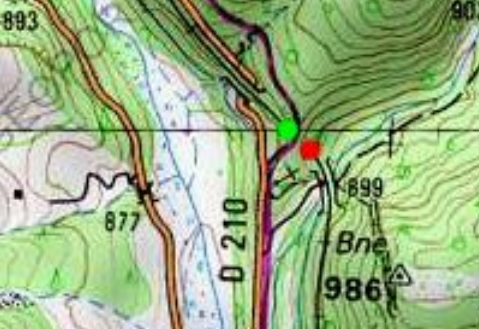
  9. http://www.cparama.com/forum/saint-benoit-t28171.html, accessed on 18th July 2018.
  10. https://entrepierres.net/wiki/Pont_Reine_Jeanne, accessed on 27th July 2018.
  11. This image has been saved on my computer for a while and I cannot find details to attribute it. I’d be very happy to do so should someone contact me with details.
  12. http://www.tunnels-ferroviaires.org/tu04/04174.1.pdf, accessed on 27th July 2018.
  13. https://trainmec.blogspot.com/2016/01/la-portuguese-moving-in-steam.html, accessed on 27th July 2018.
  14. http://www.proxiti.info/photoscommune.php?o=04174&n=Saint-Beno%C3%AEt, accessed on 27th July 2018.
  15. http://www.cartophilie-viroflay.org/article.php?id_article=163, accessd on 27th July 2018.
  16. http://www.tunnels-ferroviaires.org/tu04/04008.2.pdf, accessed on 27th July 2018.
  17. http://www.tunnels-ferroviaires.org/tu04/04008.1.pdf, accessed on 27th July 2018.
  18. https://en.wikipedia.org/wiki/Annot, accessed on 27th July 2018.
  19. http://www.en-noir-et-blanc.com/rch-k1-171879.html, accessed on 27th July 2018.
  20. http://www.map-france.com/Annot-04240/photos-Annot.html, accessed on 27th July 2018.
  21. http://jan-san-climbing.blogspot.com/2017/05/annot-trad-climbing.html, accessed on 27th July 2018.
  22. http://www.ravnsbak.dk/Railways/France/Railcars/Narrow%20gauge%20railway%20Nice%20Digne/index.html, accessed on 27th July 2018.
  23. https://mapio.net/pic/p-7389278, accessed on 27th July 2018.
  24. https://mapio.net/pic/p-80055650, accessed on 27th July 2018.

TAM Tramway from Le Pont de Gueydan to Guillaumes (Chemins de Fer de Provence 69)

The line from Le Pont de Gueydan north to Guillaumes followed the valley of the River Var and ran through the Gorges de Daluis.

Marc Andre Dubout, writing in French, says that the line was probably the moist daring of secondary line construction work with very steep gradients, numerous tunnels, two remarkable bridges. He comments that it is the most impressive tramway from a tourist perspective with ‘unique viewpoints and singular landscapes’.

The proposed line was declared as being of public utility on the 10th February 1906. It did not open until 29th July 1923 and closed only 6 years later on 16th May 1929. The line was just under 19km long and had 17 tunnels, numerous culverts and retaining walls. This was all provided for just two daily services in each direction. [1]

As with a number of these lines, the expenditure was profligate and the value limited. by the time the line was completed road transport was already becoming reliable and more comfortable. The line stood no chance of being profitable.

The Gorges de Daluis is a 6km long canyon reaching south from Guillaumes to Daluis. The canyon was formed by the River Var. The gorge [2] is cut in the red rock (sandstone colored by iron oxide, 260 million years old). [3]  Notable views along the gorge (a touristic high point[3] and one of a number of “long, lonely canyons” in the area)[4] include the final waterfall of the Clue d’Amen. [5][6]The Gorges de Daluis are to the West of the dominant Dome de Barrot. [1]The Gorges de Daluis are narrow and dramatic! [1]

The station at St. Benoit Pont de Gueydan was the junction station for the line north through the Gorges de Daluis. The tramway followed the road round the bluff which faced  west across the River Var and entered its first tunnel as it rounded the curve. The main road (N202) continues West and the D902 travels north up the valley of the Var using the old tramway tunnel.The south portal.The postcard view (above) of the north portal shows the old bridge on the main road – Le Pont de Gueydan. The image below shows the old bridges more clearly.The same bridges from the south side.This image clearly shows the tramway in place.

After the old bridges were removed there was a temporary structure in place for a time. This is shown in the adjacent monochrome image. A new structure was planned for the main road and was built in 1949. That new structure is shown in the picture immediately below. The image shows the south side of the bridge. [7] The image below that shows the 1949 structure from the north side. The old bridge abutments are still visible to the north of the 1949 bridge. The road tunnel is now disused. The third image below provides a final image of the tunnel and its north portal.The tramway and road travelled north through the relatively wide valley of the Var heading for Castellet-lès-Saussesm and crossing streams on the way. The original bridge over Ravin du Riou was also the location of a stop serving Enriez.The road/tramway followed the river bank and at times that closeness meant that the track-bed or in later days the road were disturbed by flood flows in the river.

The road ran below the villages of Castellet-lès-Sausses and Sausses with the next station being at the bottom of the road from Sausses, adjacent to another Ravin du Riou.

The tramway continued up the valley, tightly following the river. The departmental boundary sees the road number change from D902 to D2202 and we soon encounter a bridge over the Var, not for the tramway but for the D316. It is an elegant concrete arch with a capacity of only 3 tonnes.

At Daluis, the tramway crossed the Vallons de la Salette on a viaduct which has now been replaced by a modern structure. The viaduct is visible on the right of the picture on the left below and is circled in blue on the map. The red circle highlights the position of the station building. [8]Daluis Station Building. [1]Pont de Berthéou (Berthet). [9]

After Daluis, the tramway climbed steadily above the river and at the Vallon de Berthéon turned away from the Var to negotiate the tributary, seeking to avoid  a much longer viaduct that was required higher up the valley. The Pont de Berthéou was the compromise position. The detour is shown on the satellite image below. The Pont de Berthéou is in the top left of the image, the River Var, at the bottom right. The picture immediately below the satellite image shows the road/tramway formation just before entering the Gorges de Daluis, clearly a significant height above the valley floor.The rock formations alongside the tramway/road have changed significantly in appearance. The Gorge de Daluis is , as we have already noted, in an area of red sandstone. The satellite image below sows that this is a very discrete area. Both Daluis and Guillaumes are shwn on the image and it is just possible to pick out the Vallon de Berthéon on the western edge of the red sanstone to the Northeast of Daluis.The commune of Guillaumes has produced information about this distinctive area. Tourist brochures [10], are supplemented by detailed geological information. [11].

At the end of the Paleozoic Era, about 250 million years ago, following the erosion of a Hercynian crystalline massif, now extinct, clay sediments, quartz, mica flakes, minerals rich in iron and volcanic ash settled on the site of the dome of Barrot which was then a floodplain. As they accumulated, these sediments were sunk into a collapsing basin (a graben in distension, named the Argentera-Barrot basin) where pressure and heat turned them into rocks called pelites.

The hot and humid climate of the time caused the oxidation of the iron, which coloured the sediments red.

In the Mesozoic Era, the sea settled on this pelitic base rock and new sediments were deposited from a massif located in the current Mediterranean. Over tme, these new sediments produced limestones, gray marl and sandstone.

In the Cenozoic Era, the formation of the Alps resulted in this area being forced up to create Dome de Barrot whose pelites cut by the erosive action of Var and Cians are today visible for several hundreds of metres in the Gorges de Cians and de Daluis. [11]We have reached the entrance to the Gorges and continue the journey from the point marked with a blue flag on the satellite image above. The road/tramway cut a deep cleft in the rock, and as can be seen there is a warning of tunnels ahead!The tramway is visible in this postcard image which is taken facing towards Daluis. [1]

The scenery is dramatic! At certain points along its length the tramway/ road clung to the rockface.

The first tunnel built for the road and used by the tramway is shown in the two images  below which are taken from Googles Streetview. The south portal of the first tunnel.The north portal of the first tunnel.The first and second tunnels are marked on the map above. The first, has a combiination of green, blue and red dots. It is 117 metres long. The second tunnel is marked north of the first by two black dots. It was built for the tramway as the road bend on the valley side was too tight for trams to negotiate. It was only 31 metres long. [12][13]

The very narrow and deep gorges of the Var, north of Daluis, were always a serious blockhampering communications between the high and low valleys. A road was built in the late 19th Century to replace mule tracks and required the drilling of 10 tunnels. [8]

Subsequently, when secondary railways were being built, the town of Guillaumes lobbied for a railway. But the nature of the terrain would only permit the construction of a tramway between Pont de Gueydan and Guillaumes. 

The ten tunnels already built became combined road/tramway tunnels, but it was also necessary to by-pass some very tight curves in the road using a dozen new
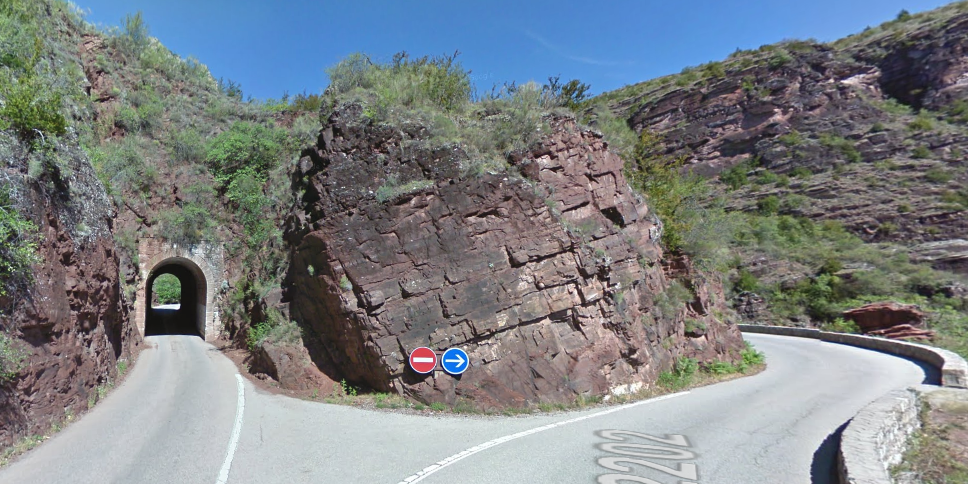
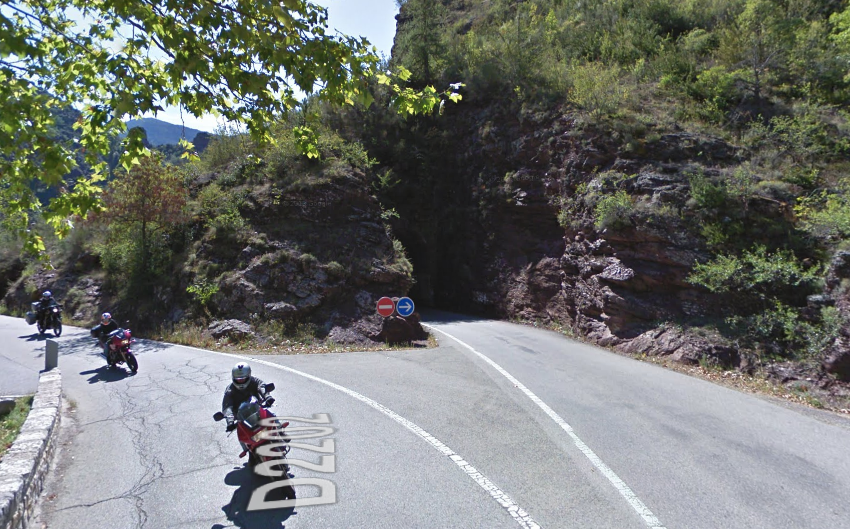
tunnels specific to the tramway. These also became road tunnels after the tramway was abandonned,

It was only north of the Gorges de Daluis, before arriving at Guillaumes, where the valley became wider, that the tramline was free to choose its own route. That section contains the last four tunnels on the line.

Because of their number, proximity and lack of specific place names, these
Tunnels do not have specific names and are often referred to as numbers in registers of structures. The numbering starts close to Daluis and heads towards Guillaumes.Tunnel 2, South Portal.The two images immediately above show the north portal of tunnel No. 2.Tunnel No. 3, south portal.Tunnel No. 3 is marked on the above map by the green, blue and ed dots. It is 233 metres long and was originally constructed for the road in the late 1800s before becoming a shared tunnel when the tramway was built. [14]

The north portal of Tunnel No. 3 is immediately followed by an arch bridge carrying the road [14] and a couple of significant retaining walls before Tunnel No. 4 is reached.Tunnel No. 4 was built for the tramway, and again avoided a sharp bend on the road. It was a straight tunnel of 241 metres in length. The picture above shows the south portal and the road curving away to the right. As can be seen on the map below the road entered a tunnel just off shot on the picture above.Tunnel No. 4 is marked with green, blue and red dots on the plan above. Immediately to the north of the tunnel, the road/tramway crossed another arch bridge. [15]Looking back at the north portal of Tunnel No. 4 from the arch bridge above.In a very short distance we encounter Tunnel No. 5 (above), this was built for the tramway as was 69 metres long. It is marked on the plan below  with a green, blue and red dot. The yellow dots represent Tunnel No. 6. [16]Tunnel No. 5, north portal.

Tunnel No. 6 is encountered immediately, it was originally built for the road, although at the time of its construction the road was much narrower than at present. The shot immediately below shows the old arch bridge over the stream which was directly before the tunnel entrance and clearly shows the modern widening of the bridge.The south portal of Tunnel No. 6The north portal of Tunnel No. 6 demonstrates the asymmetrical shape of the tunnels after conversion for the trams. The higher side allowed for the catenary and poles which supplied electrical power to the trams.The south portal of Tunnel No. 7, which only about 15m in length. The road curves sharply to the left beyond the tunnel and the picture below looks back at the rock wall from round the corner.Tunnel No. 8 is another very short tunnel, encountered within 10s of metres of Tunnel No. 7. It also is very short, no more than 10 metres in length. The first image below shows the south elevation in the 21st Century, and the second shows the same elevation while the tram tracks and catenary were still in place. [17]The north elevation of Tunnel No. 8 in the 21st Century.

Tunnel No. 9 is a longer tunnel (43m). It was built for the tramway, as the road heads out round another rocky promontory. Tunnel No. 9 South elevation. Tunnel No. 9 North elevation.The bridge over the Ravine immediately after Tunnel No. 9.

This next map shows the locations of Tunnels Nos. 9, 10 and 11. Tunnel No. 9 is marked with yellow dots at the bottom of the map; Tunnel No. 10 is marked with a read and a green dot; Tunnel No. 11 runs is a more southwest to north east direction close to the top of the map. Tunnel No. 10 was just 22m in length but was, like Nos. 9 and 11, built for the tramway. The tunnel roof has been removed and the road diverted along the line of the tunnel.Tunnels and bridges alternate along this route with frightening regularity! This structure is between Tunnels Nos 10 and 11.This ‘interesting’ three-way junction heralds Tunnel No. 11. It appears very narrow but was built wide enough to accommodate the 1.9 metre loading gauge of the trams on this route.The north-east portal of Tunnel No. 11. Immediately after leaving the 57 metre-long tunnel the road/tramway needed the support of a substantial retaining wall.

Tunnel No. 12 is just 16 metres long.South portal of Tunnel No. 12.North portal of Tunnel No. 12.Turning 180 degrees from the location of the last photo … the south portal of Tunnel No. 13 and the bridge over a gully immediately before the tunnel.A panoramic view from above Tunnel No. 12 of the road approaching the dramatic bridge, Le Pont de la Mariée. The 2CV is on the road adjacent to Tunnel No. 13. [18]The north portal of Tunnel No. 13.The south portals of Tunnels Nos. 14 and 15.The south portal of Tunnel No. 15.The north portal of Tunnel No. 14.The north portal of Tunnel No. 15.The southwest portal of Tunnel No. 16, which reveals further tunnels beyond!The northeast portal of Tunnel No. 16.

The southwest portal of Tunnel No. 17, with another bridge over a ravine.The northeast portal of Tunnel No. 17.The road and the tramway diverge. Le Pont de la Mariée was built for and carried the tramway.Looking back at the tramway/road from the east bank! [26]A drammatic photo (above) that shows the upstream part of Les Gorges de Daluis. In the foreground we can see Tunnel No. 16, then the entrance to Tunnel No. 17 and then Le Pont de la Mariée which is one of the fist reinforced concrete arched bridges in France. The route of the road is shown by a blue arrow and the route of the tramway is marked with red arrows. [19]

Le Pont de la Mariée was built in the early part of the 20th Century. It has a 62 metre span and sits 80 metres above the valley floor. It is salutary to think that this bridge only saw active use for a period of  6 years in the 1920s. So much work for so little gain! The image below was taken during its construction. [20]The next tunnel, Tunnel No. 18, is the first of these tunnels on the east side of the River Var. [21] Tunnel No. 18 is marked on the plan above by the green and red dots. It is 42 metres long and was built specifically for the tramway. Access in the 21st Century is restricted to pedestrians.  Its west postal is shown immediately below and its east portal on the second image below. Tunnel No. 19 is shown by the two black dots on the above map. It is just 28 metres long and also only accessible on foot.The West portal of Tunnel No. 18.The East portal of Tunnel No. 18. [22]Tunnel No. 19: south portal (left above) and north portal (right above).The satellite image above shows the bridge and the tramway route passing through the rock in Tunnels Now 18 and 19 before heading north until quite close to the River Var. The image immediately below picks up the line of the tramway travelling further north through a heavily wooded area, and the one below that shows the tramway formation leaving the wodds and passing a campsite. The old tramway has now become an access road for the campsite.The tramway formation crosses the Vallon de Tireboeuf and continues north as shown on the map below. Two tunnels were encountered on this part of the journey – Tunnels Nos. 20 and 21. Tunnel No. 20 is marked by the green and red dots on the plan. Tunnel No. 21 is marked by the black dots.Tunnel No. 20 is also known as Tunnel de Ruine. It is no more than 20 metres long. The picture below shows it north portal. [23]Tunnel No. 21 is in fact a 4i metre-long protective gallery over the line which the images below show clearly. [24]The tramway ran north from the gallery towards Guillaumes on the east side of the River Var. In the adjacent satllite image the gallery can be seen close to the bottom of the picture. The point at which the road crosses the river to rejoin the tramway alignment can be seen close to the top of the picture. The modern road bridge seems to dominate the location , but the old road bridge can be picked out immediately to the north of the modern bridge.

The location is shown in the images below.

The first picture shows the modern road bridge and alongside it the original road bridge built in the mid-1800s. The picture is taken looking towards Daluis, downstream of the location.

The second image below shows the the modern bridge and, on the east bank of the river the tramway formation under high cliffs. This picture is taken looking upstream towards Guillaumes.

The third picture is taken from the south looking up the valley of the Var towards the same bridge – Pont des Roberts. [25]

The road/tramway followed a straight course northward to just south of Guillaumes. After a minor deviation to the left and then the right the tramway crossed the Pont de Tuébi. [1]

The station buildings can be easily picked out on the images above. The ones below are annotated in French. [1]

The station buildings were sited on the south side of the town and the tram tracks ran beyond them (as can be seen in the sketch plan above). A loop was provided which extended into the village. [1] The postcard below shows the loop extending into the village and the second image below shows the same location in the 21st Century.The only remaining building is the passenger station building which is now occupied by a pharmacist. [1]

References

  1. http://marc-andre-dubout.org/cf/baguenaude/daluis/daluis.htm, accessed on 22nd July 2018.
  2. Rainer Eisenschmid; Provence, Côte d’Azur. Baedeker, 2011. p. 266.
  3. Reinhard Scholl; Französische Seealpen: Alpes-Maritimes: Mercantour – Merveilles; 50 ausgewählte Berg- und Talwanderungen (in German). Bergverlag Rother, 2002. pp. 48–55.
  4. Dana Facaros, Michael Pauls; Provence. New Holland, 2004. p. 254.
  5. M. Victor de Cessole; “En Hiver: Ascensions dans les Alpes Maritimes”. Annuaire (in French). 24. Club Alpin Français, 1898. pp. 157–72.
  6. https://en.wikipedia.org/wiki/Gorges_de_Daluis, accessed on 22nd July 2018.
  7. https://structurae.net/structures/pont-de-gueydan, accessed on 22nd July 2018.
  8. http://www.inventaires-ferroviaires.fr/hd04/04174.a.pdf, accessed on 22nd July 2018.
  9. https://www.camptocamp.org/waypoints/439483/fr/pont-de-bertheou, accessed on 22nd July 2018.
  10. https://www.guillaumes.fr/la-mineralogie and http://paca.lpo.fr/images/mediatheque/fichiers/section_protection/espaces/reserve_naturelle_regionale_des_gorges_de_daluis/documentation/depliant_presentation_rnr_daluis.pdf, accessed on 23rd July 2018.
  11. https://www.guillaumes.fr/le-circuit-cyansdaluisle-circuit-cyansdaluis, accessed on 23rd July 2018.
  12. http://www.tunnels-ferroviaires.org/tu06/06071.1.pdf, accessed on 23rd July 2018.
  13. http://www.tunnels-ferroviaires.org/tu06/06071.2.pdf, accessed on 23rd July 2018.
  14. http://www.tunnels-ferroviaires.org/tu06/06071.3.pdf, accessed on 23rd July 2018.
  15. http://www.tunnels-ferroviaires.org/tu06/06071.4.pdf, accessed on 23rd July 2018.
  16. http://www.tunnels-ferroviaires.org/tu06/06071.5.pdf, accessed on 23rd July 2018.
  17. http://www.tunnels-ferroviaires.org/tu06/06071.8.pdf, accessed on 23rd July 2018.
  18. http://club.caradisiac.com/interceptor-s4/cartes-postales-81352/photo/gorges-daluis-2cv-5554845.html#photo_5554845, accessed on 24th July 2018.
  19. http://www.tunnels-ferroviaires.org/tu06/06071.16.pdf, accessed on 24th July 2018.
  20. http://www.tunnels-ferroviaires.org/tu06/06000.1.pdf, accessed on 24th July 2018.
  21. http://www.par-monts-et-par-vaux.eu/ponts_alpes-maritimes_1.html#Pont_Mari%C3%A9e_Guillaumes, accessed on 24th July 2018.
  22. http://www.tunnels-ferroviaires.org/tu06/06071.18.pdf, accessed on 24th July 2018.
  23. http://www.tunnels-ferroviaires.org/tu06/06071.20.pdf, accessed on 25th July 2018.
  24. http://www.tunnels-ferroviaires.org/tu06/06071.21.pdf, accessed on 25th July 2018.
  25. http://dan-randos-photos.monsite-orange.fr/page-592d18d4a3c5a.html, accessed on 25th July 2018.
  26. http://draillescantoun.canalblog.com/archives/2009/05/11/13841773.html, accessed on 25th July 2018.

Nice to Digne-les-Bains Part 5 – La Mescla to Le Pont de Gueydan (Chemins de Fer de Provence 68)

We return once again to the Nice to Digne metre-gauge line and continue our journey from La Mescla.We start at the La Mescla Station which was completed in 1904 to replace an earlier building which had been located about 500 metres further north.The next image shows the station which was abandonned in 1904, and the colour image shows the same site later in the life of the line. The road and the tunnel in the distance have been widened.Beyond La Mescla the railway continues to hug the river bank on the South West side of the River Var. The satellite image below shows the extent of quarry workings on the north bank of the river associated with Lafarge Bétons Centrale Malaussène (Construction Material Wholesaler)! Two bridges are visible in the satellite image. The first in the bottom right crosses both railway and river, the second appears to be an internal industrial bridge across the river.The route continues in a generally northwesterly direction for a distance of little more than a kilometre alongside the river, before turning to a more westerly alignment. The line continues to remain close to the River until crossed by the road as shown on the second image below.The 50 metre span suspension bridge is Pont Auguste Dubois at Massoins has a maximum load capacity of 3 tonnes and it provides access for the D126 across the river to Massoins high above the river on the north bank. Malaussène holds a similar position on the south bank! Their shared station is in the valley floor on the south side of the river after the short tunnel known as Tunnel de Malaussène which is marked on the plan immediately above by the red and green dots. Early in the life of the line there was a crossing keepers cottage alongside the railway crossing at the eastern tunnel portal, as the Gilletta postcard below shows.The eastern portal of the Tunnel de Malaussène. [1]The western portal of the Tunnel de Malaussène is hidden beyond a road over-bridge and a myriad of road signs!A road underpass immediately before Malaussène Station.La gare Malaussène, trackside. [2]La gare Malaussène, forecourt – hidden from the road by trees and a hedge. [2]

After La gare Malaussène, the railway drifts away from the road as it travels west across the flood plain. The road remains close to the River Var. The road (D6202) then swings away from the river to allow it to access a new bridge across the watercourse. As it does so, it alignment comes close once again to the railway, and road and railway cross the river in close proximity.The old road travelled along the south bank and under the railway bridge before crossing the river on a bridge which is now long-gone. The two shots immediately below show the old road bridge upstream of the railway bridge. The third picture below shows a goods train pulled by a diesel locomotive heading towards Nice. [6] Now on the north side of the valley, modern road and railway run closely in parallel until reaching Villars-sur-Var. The entrance to the station area is shown below.CP-X-304 arrives at Villars-sur-Var travelling towards Nice in 2016, (c) Kjell Strandberg. [3]Villars-sur-Var Station building in 2016, (c) Kjell Strandberg. [3]An aerial view of the station. [4]An overall view of the station site featuring the watertower. [5]A Renault Railcar at Villars-sur-Var Station. [6] And in the two images immediately below the station is shown with other railcars present. [7]
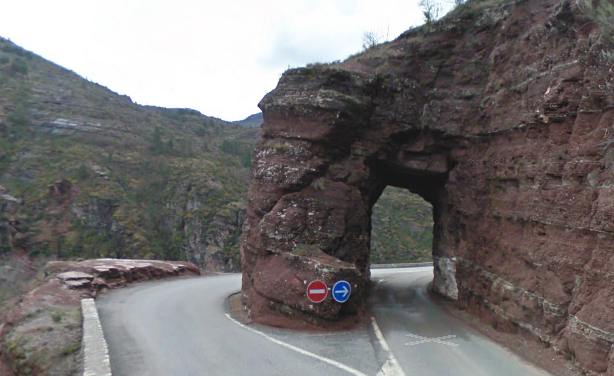
The final image of the station at Villars-sur-Var is taken from the road side in winter.

Travelling on from Villar-sur-Var the line closely follows the northern bank of the river as far as the station at Plan Souteyran. In that length of the line the river meanders back and forth and only very occasionally is the line more than 100 metres from the River Var.

The halt at Plan Souteyran is not evident on the ground and appears to have been destroyed. It sat between the railway and the old road as can be seen on the map and satellite image below and served a very small community on the river bank.The next halt was at Touet-sur-Var – Le Tournel, and came after another length of line hugging the north bank of the Var. There appears to be no evidence of this halt which may have been removed to allow for the modern road formation.Just beyond the location of the halt is a small lattice truss bridge, typical of those crossing small streams along the line.Another kilometre or two along the line the railway entered the village of Touet-sur-Var. Its alignment can easily be picked out in the satellite image below. The village station can be seen to the left of the image.The old village of Touet-sur-Var sits high above the more modern village which has formed around the railway station. [10]

After Touet-sur-Var the line closely follows the river once again in a westerly direction, smaller lattice girder bridges carry the railway over tributaries of the Var, such as the one below which crosses Le Cians immediately before the halt of the same name.The Halt Shelter can just be picked out on the right side of the image above. Beyond l’Arret Cians the road, railway and river continue in close proximity, typically as below, until approaching Puget-Théniers.En-route to Puget-Théniers, the line once passed through a further three halts, of which there is no evidence of two in the early 21st Century. The third appears to to be no more than a sign and a length of railing alongside the main road into Puget-Théniers.The Station Approach, Puget-Théniers.A satellite plan of the whole station site including the GECP workshops.The station can be seen on the left of this elevated image of the village, adjacent to the river. [13]In another elevated image, the railway can be seen alongside the river. A train is entering the shot from the bottom (the East). [14]The railway is even more visible in this image. [15]Landslide on the approach to the village in 1960. [12]The railway is in the immediate foreground of this picture of Puget-Théniers. [16]Renault ZZ-06 and XR-1336 at the bridge shown in the postcard above at Puget-Théniers on 08/07/1987, (c) Photo Martijn Haman. [18]Old postcard of the station. [11]The station building early in the 21st Century. [17]SY 03 in Puget-Théniers on 07/07/1987, (c) Martijn Haman. [18] A later image is shown below. [19]Puget-Théniers is the headquarters of the GECP (Groupe d’Étude pour les Chemins de fer de Provence). The GECP was formed to: renovate and restore rolling stock and locomotives on the line; promote of the line of the Railways of Provence; operate the Train des Pignes à vapeur; and undertake Heritage Activities and Historical Research. [20]GECP’s workshops are in an old station building (above and below). [20][21]The loco shed. [19]The new and the old together. [22]
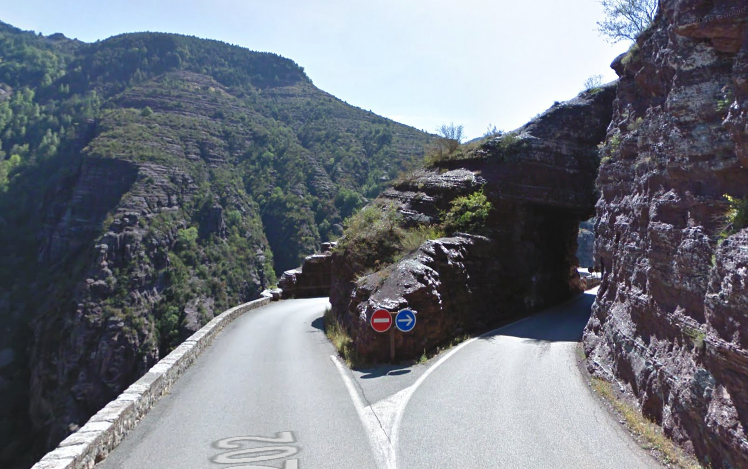
The “Train des Pignes” operates out of Puget-Théniers on parts of the 151 km metre-gauge Chemins de fer de Provence (CP). The steam trains run by the GECP which was founded in 1975 when the line was seriously threatened with closure. Most trains operate to Annot (a distance of around 20 km), with an intermediate stop at Entrevaux, on select days from early May to early November and are hauled by ex-CP (Portugal) 2-4-0+0-6-0T Mallet E 211 (Henschel 19874/1923). In Portugal, the loco was in use out of Sernada on the Val de Vouga lines until 1975, out of Lousado from 1975 to 1976 and out of Regua on the Corgo line from 1976 to 1981. The loco was sold to the GECP in 1986, she first saw use on the CP between 1988 and 1992, after which she went through a major overhaul at the Lucato Termica workshops in Castelletto-Montferrato (Alessandria, Italy) only to return to service in 2010.

Prior to the arrival of the Portuguese Mallet, the GECP used ex-SNCF ‘Réseau Breton’ 4-6-0T E 327 (Fives-Lille 3582/1909) between 1980 and 1987, and again between 1993 and 2007. Before it came to the CP, it had been saved by FACS in 1967 and saw limited use on the Vivarais line between 1969 and 1979. Since 2007 it has been out-of-use and stored inside the shed at Puget-Théniers. It would need some major repair to work once again, but is not really adapted to the steep gradients. Also at Puget, GECP uses ex-SNCF ‘Blanc-Argent’ 0-6-0DM No. 11 (CFD Neuillé-Pont-Pierre 1940-41) as a shunter. Built on the frames of CFD Indre & Loire Nord 0-6-0T No. 8 (Couillet 1885), the little diesel first saw use on the CFD Indre & Loire Nord and Yonne lines, before being sold to the Blanc-Argent (BA) railway in 1952 and ending up with GECP in 1988. [23]

After leaving Puget-Théniers, heading west towards Digne-les-Bains, trains continues tofollow the river course. The railway, for about one kilometre, remains on the northside of the river.Trinité bridge on the Var between Puget-Théniers and Entrevaux. [11]Trinité bridge, taken from the south side of the River Var.

Once on the south side of the river, the railway and the road stay clos together. One year while staying in Nice, my wife and I took the train to Entrevaux and walked back along the line to Puget-Théniers. I remember the trees shading the road and the line really well. The picture below is typical of that length of the line.En-route to Entrevaux the line passes through an abandonned station (above), and as it gets closer to Entrevaux is crossed by the road at grade (below). The old cottage for the crossing-keeper still remains.A view of Entrevaux Station from the East.Entrevaux taken from a drone. The railway station can be seen on the right of the river and in the top half of the image. [24] Four historic images of Entrevaux Station and bridges above. [25]
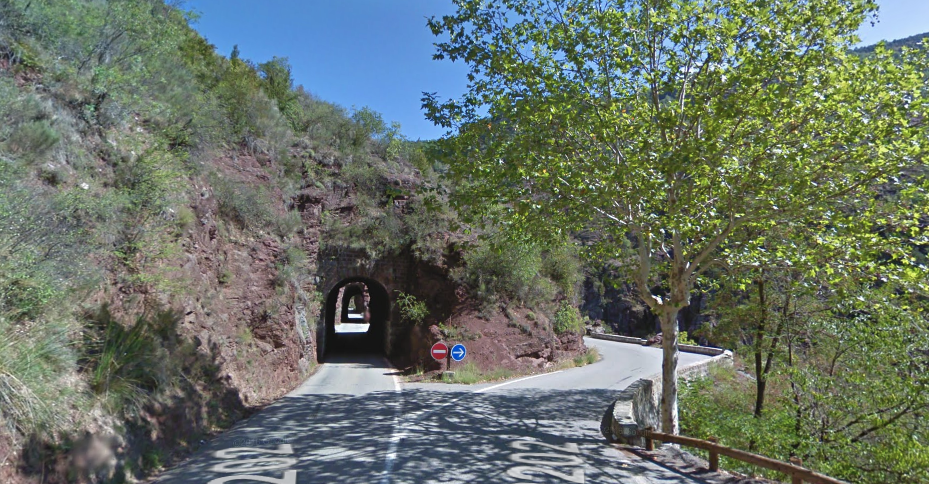
In 2011, my wife and I spent an hour or so sitting on the platform at Entrevaux Station, the following six pictures were among a number taken then.Immediately after the railway station at Entrevaux the railway crossed a tributary of the River Var and plunged into a 164m long curved tunnel. The two pictures immediately above show the tunnel portal in the 21st Century and in the time of steam. The map below shows the tunnel highlighted in red, blue and green. A few tens of metres beyond the west portal of this tunnel, trains entered another tunnel, shown as black dots on the map which was 128m long. [26][27]The western portal of the first tunnel is quickly followed by the Eastern portal of the second tunnel.After the western portal of the second tunnel, the railway crossed the road once again at a level crossing and resumed a path close to, and on the south side of, the River Var.In the 21st Century, the crossing is automated, but the crossing keeper’s cottage remains a few tens of metres beyond the level crossing. While the road meanders away from the river, the railway line hugs the river bank as we travel on. After a few kilometres, road, rail and river converge once again after the railway has passed through a mall halt at Plan d’Entrevaux.Along the next length of track two interesting structures are encountered, both are visible in the picture above. These are false tunnels/aqueducts and have been given the nickname ‘Elephants’ because they bear some resemblance to an elephant. They provide for some relatively high water flows on two temporary streams. [28][29] Both are shown on the map below.The first encountered is marked with red and green dots, the second with black dots. These provide an interesting location for photographs, as can be seen below. After the ‘elephants’ the line swings more to the north following the course of the river and passes through another halt – Entrevaux-Agnerc. The halt immediately precedes another level crossing. The location of the halt, the crossing and the crossing keeper’s cottage can be seen below.The railway then dives into another tunnel – Tunnel des Cornillons. The tunnel is just 62m long and is marked with black dots towards the top-middle of the map above.The East Portal.The West Portal. [30]A steam train leaves the west portal of the tunnel on is way west. [30]
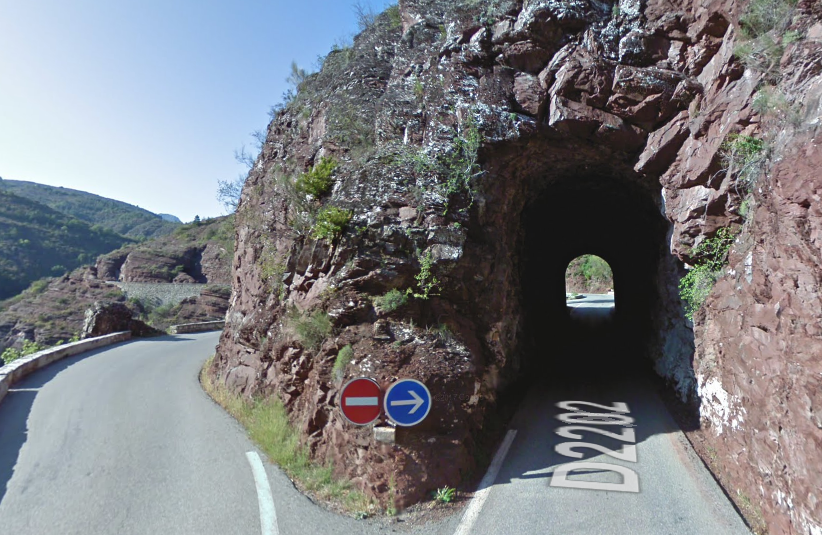
The road crosses the River Var at this point (just north of the East Portal of the tunnel). The location is known as ‘Le Pont Noir’. The railway remains on the south side of the valley for another kilometre or so before reaching Le Pont Gueydan. The adjacent photograph shows the railway bridge as it was before 1994. The image immediately below shows the structure after the floods.The four images above show the new railway bridge installed after the floods of 1994. The Bridge spans the Le Coulomp. Just to the east of the bridge, the River Var turns sharply to the north and the railway follows the course of a tributary – Le Coulomp. The first station after the bridge is Saint Benoit Pont de Gueydan. This station was a junction station. The TAM ran a tramway north up the valley of the Var from Le Pont de Gueydan. It was the starting point of the tramway, which was often referred to as the Haut-Var tramway, which ran as far as Guillaumes.
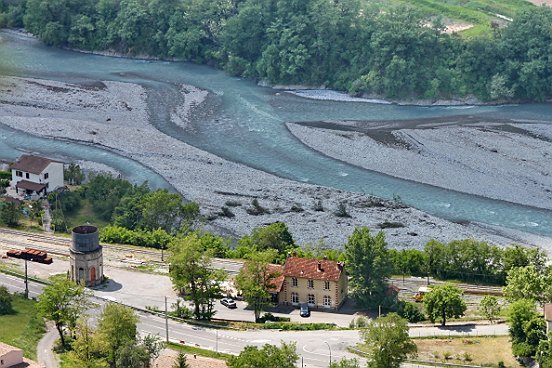
This is the end of this stage of the journey.

References

  1. http://www.tunnels-ferroviaires.org/tu06/06078.1.pdf, accessed on 18th July 2018.
  2. http://cccp.traindespignes.free.fr/gare-malaussene.html, accessed on 18th July 2018
  3. https://trainmec.blogspot.com/2016/04/five-minutes-at-villars-sur-var-station.html, accessed on 11th July 2018.
  4. http://www.lecomtedenice.fr/Visi_nice/val_var_villars_sur_var_village.html, accessed on 19th July 2018.
  5. http://www.map-france.com/Villars-sur-Var-06710/photos-Villars-sur-Var.html, accessed on 19th July 2018.
  6. https://www.cparama.com/forum/villars-sur-var-t23761.html, accessed on 19th July 2018.
  7. https://www.delcampe.net/fr/cartes-postales/europe/france/06-alpes-maritimes/autres-communes?f=lieux:chemin-de-fer, accessed on 19th July 2018.
  8. https://dossiersinventaire.maregionsud.fr//gertrude-diffusion/dossier/gares-des-chemins-de-fer-de-provence/5db69410-c3ec-4217-b30c-92f975a65c27/illustration/66, accessed on 19th July 2018.
  9. http://cccp.traindespignes.free.fr/gare-touet.html, accessed on 19th July 2018.
  10. https://fr.m.wikipedia.org/wiki/Touët-sur-Var, accessed on 19th July 2018.
  11. https://www.cparama.com/forum/puget-theniers-t8978.html, accessed on 20th July 2018.
  12. https://www.geneanet.org/cartes-postales/view/271322#0, accessed on 20th July 2018.
  13. https://collection-jfm.fr/p/cpa-france-06-puget-theniers-222734, accessed on 20th July 2018.
  14. https://collection-jfm.fr/p/cpa-france-06-puget-theniers-vue-generale-pont-sur-le-var-carte-toilee-7207, accessed on 20th July 2018.
  15. http://www.collection-jfm.fr/p/cpa-france-06-puget-theniers-sur-la-route-des-alpes-et-sur-les-bords-du-var-171856, accessed on 20th July 2018.
  16. https://collection-jfm.fr/p/cpa-france-06-puget-theniers-la-place-et-la-roudoule-21338, accessed on 20th July 2018.
  17. http://cccp.traindespignes.free.fr/gare-puget.html, accessed on 20th July 2018.
  18. http://cccp.traindespignes.free.fr/phototheque-digne.html, accessed on 20th July 2018.
  19. http://www.beyond.fr/villages/puget-theniers-provence-france.html, accessed on 20th July 2018.
  20. https://www.gecp-asso.fr, accessed on 20th July 2018.
  21. https://trainmec.blogspot.com/2015/02/train-des-pignes-steam-train-winter.html, accessed on 20th July 2018.
  22. https://www.pinterest.co.uk/pin/356206651752278128/?lp=true, accessed on 1st July 2018.
  23. http://www.internationalsteam.co.uk/tales/francetales04.htm, accessed on 20th July 2018.
  24. http://www.dronestagr.am/citadelle-dentrevaux, accessed on 20th July 2018.
  25. https://www.cparama.com/forum/entrevaux-t17950.html accessed on 20th July 2018.
  26. http://www.tunnels-ferroviaires.org/tu04/04076.5.pdf, accessed on 20th July 2018.
  27. http://www.tunnels-ferroviaires.org/tu04/04076.4.pdf, accessed on 20th July 2018.
  28. http://www.tunnels-ferroviaires.org/tu04/04076.3.pdf, accessed on 21st July 2018.
  29. http://www.tunnels-ferroviaires.org/tu04/04076.2.pdf, accessed on 21st July 2018.
  30. http://www.tunnels-ferroviaires.org/tu04/04076.1.pdf, accessed on 21st July 2018.
  31. http://ollivier.haemmerle.free.fr/entrevaux.html, accessed on 21st July 2018.

TAM Tramway from La Mescla to Saint-Sauveur-sur-Tinée – Revisited (Chemins de Fer de Provence 67)

I first looked at this tramway in 2013. It was only a short blog recognising the existence of the line in the valley.

https://rogerfarnworth.wordpress.com/2013/12/19/chemins-de-fer-de-provence-8-tramway-in-the-tinee-valley.

This line was 26.5 Km long and connected villages in the Tinée valley to Nice to Digne line. Like other lines of the Tramways Alpes Maritimes (TAM), the electric current was single phase. The civil engineering works (bridges, tunnels) were executed by the Department.

The line was built in 1911 and operation started on 1st April 1912. Landslides affected the operation of the line in the early months. The original opening was delayed from January to April because of landslides and on 2nd April a further landslide affected several hundred metres of track and destroyed power lines.

The line operated until July 1931.

The line left the Nice to Digne line at Pont de la Mescla. The junction station was south of the confluence of the two rivers. La Tinee Station is featured in a previous blog, …

https://rogerfarnworth.wordpress.com/2018/07/12/nice-to-digne-les-bains-part-4-plan-du-var-to-la-mescla-chemins-de-fer-de-provence-65La Tinee Railway Station.

Trams left La Tinee Station and travelled along the Nice to Digne line into Les Gorges de la Mescla and their route along the a River Var is covered in detail in the blog above. Trams passed through the halt at La Mescla and then crossed the River Var on a new bridge built for the tramway.A modern view of the tramway bridge taken from upstream on the banks of the River Var. [1]The tramway left the mainline and curved tightly onto the concrete arch bridge built for it in the early 20th century. It replaced an earlier suspension bridge which would not have been able to carry the loads imposed by the trams. [2]
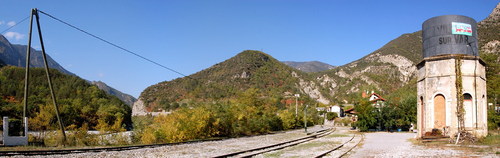
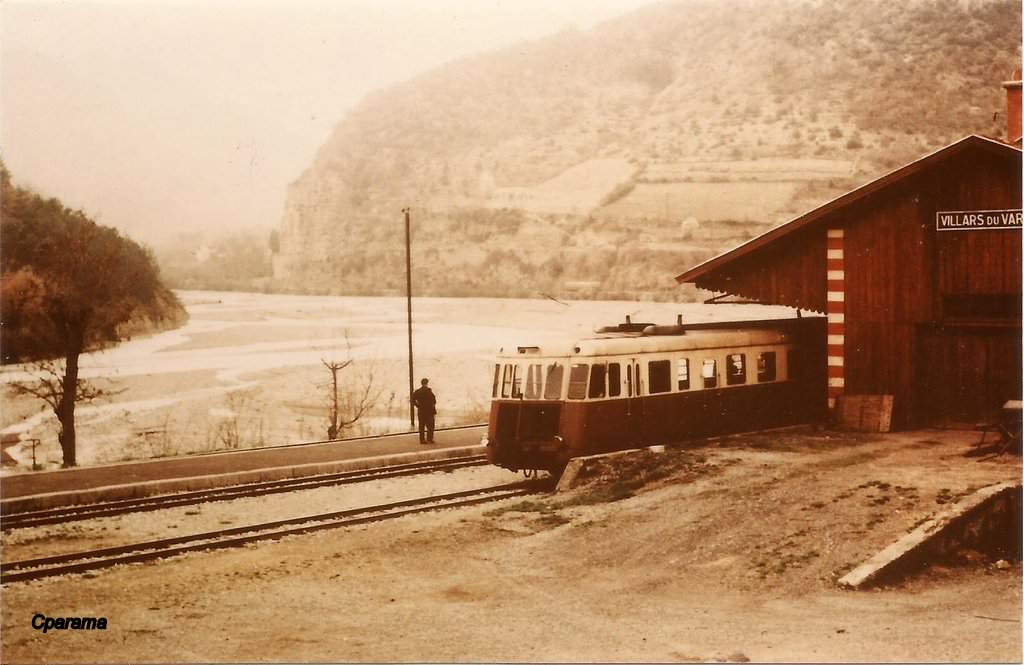
A view taken from upstream on the West bank of the River Var, © Provence-Alpes-Côte d’Azur Region – General inventory [3]Once across the bridge, the tramway hugged the western side of the valley of La Tinee. On the adjacent image, the formation of the line is visible at the base of the rock outcrop. The line continued on the west side of the valley with the road on the east side for around 500 metres. The formation of the tramway is easily visible along that length of the river/road on the far bank. The images below are taken from Google Streetview and show first the tramway formation (indicated by the line of vegetation) on the West bank of the Gorge, then the old road bridge (taken from the new bridge).
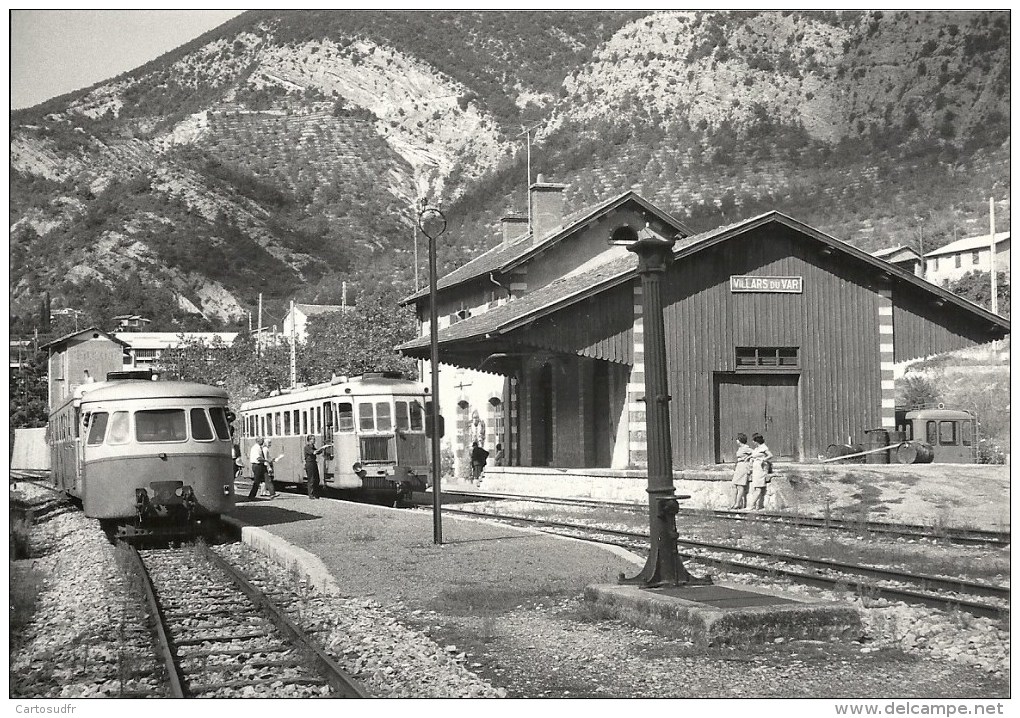
There are some very interesting structures built into the rock of the valley walls at this point. The picture of the old road bridge includes pictures of structures on the East side of yhe valley and the follwing image shows those to be found on the West side of the valley above the road. The structures are known as Les Chuise de Bauma Negra.

The Chuise de Bauma Negra belongs to the system for controlling the gorges that lead to Nice within the Séré de Rivières’ system. [4] 

The fortification was constructed between 1884 and 1887 to block the way to Nice from la Tinée. The Chuise is situated at the narrowest point of the valley, in the Mescla gorges, just before the confluence with the Var. Its design is identical to that of the Chuise de Saint-Jean-de-la-Rivière. It is a fort built into a dam.


The limestone valley of La Roya was and is a communications route that has been controlled in turn by the Sardinians, the Spanish, the Austrians and the French. The southern part was incorporated into France in 1860 during the reintegration of the county of Nice. Control of this border region allowed the regulation of Italian activity. In this respect, the fort (Chuise de Bauma Negra) provided support for the Fort du Pic Charvet. It is built on the right bank of the gorge, on the edge of the road. It combines concrete parts with a two-storey façade in stone cut into the cliff. The structure comprises two floors next to the road. It has openings for 40 and 120 mm canons. Underground galleries lead to the gun shelters and firing posts that in turn lead on to the main road. Two rolling bridges, which could be moved from inside the fort, allowed the road to be cut off. It could house between 30 and 60 men. There was no separation between the stores and billets. On the left bank of the gorge, the engineer had planned to install mortars to catch the enemy in crossfire. [4][5]North of the Chuise de Bauma Negra, the tramway shares its formation with the M2205 road and runs through La Courbaisse and on towards La Tour. It passes a large quarry at La Courbaisse which dominates the satellite image below.Typical or the road/tramway route north of La Courbaisse.Before reaching La Tour the gorge closes in once again.

The road/river/tramway turn westward and immediately before reaching the Station of La Tour the road/tramway cross to the North side of the river. In the satellite image below the station building is on the left, the road accessing the village of La Tour leaves the main road just to the left og the bridge which is on the right of the photograph.The old road/tramway bridge has been superseded by a modern structure.The station building at La Tour still bears its station-board. It is 4 kilometres from the village of the same name which sits above the valley to the North.Second World War gun emplacement to the west of the station at La Tour.

The next stop on the line was the halt for Tournefort [2] (a village high above the river to the South). There is an old arched bridge across the river at the approximate location of the halt and an old barn that might have been used for storage of goods close to the tramway. Any other evidence of the halt appears to have been lost.Marc Andre Dubout records this building as being the Station at Roussillon. [2] It is at the bottom of the road which leads to the higher parts of the village but some distance to the West of the village in the valley.

Roussillon was the next stop on the line, followed by Pont de Clans.Three bridges at Pont de Clans. The roadway now uses what was the alignment of the tramway.In the image above [2] the tramway uses the middle bridge. It avoids the sharp turn of the road that we see at the rear of the picture and is of the same construction as the road bridge (in the foreground) which crosses La Tinée and leads to the hillside beyond. in the two images below the tramway bridge is shown first in the foreground with the old road bridge behind and then on the right with the road bridge which provides access across La Tinee, centre-left. In this aerial image the tramway alignment it shown as a pink line. [2]Sadly, the old tramway bridge was not able to support modern highway loading and has been replaced by a far more functional structure. The same is not true of the bridge which provides access across La Tinee (see below). The station building can be found just round the bend travelling north from the bridges. It bears the station name-board.North of Pont de Clans the road/tramway remain on the East bank of the river. The next stop is the halt for Bancairon which is a little to the north of the present village. Soon after the Station (below) the modern road runs on a viaduct down the middle of the gorge with the river beneath, and at the end of the viaduct it ends up on the West bank of the river.The old road (and so also the tramway) remains on the East bank of the river. [6]

The old road/tram route continued on the East side of the river and was eventually joined once again by the modern M2205. Just before the modern road crosses back over the river the old road/tramway was carried over the Vallon d’Ullion on a viaduct.

The point where the old road and tramway meet the new M2205 is shown in the first image below. North of this point the tramway encountered its next stop at Marie. The station is at the bottom of the side-road leading to the village of Marie.

The village sits high above the valley floor on the East side of the River.

The station is shown in the satellite image below in the top left corner, the village is in the right bottom corner.

Just as for the village of La Tour, the climb to the village of Marie along the M58 road is steep and long.

The 1:50000 plan from the 1950s and the most up-to-date IGN plan show the road clearly below. [7] In the case of both villages it required some stamina to return home after being dropped off by the tram.

North of Marie the tramway continued on the East side of the valley all the way to St. Sauveur sur Tinee. Very occasionally the modern road and the oldroad/tramway followed a different course – as here just south of La Bolinette.And when crossing the Valley of the Bramafan River.The tramway required three tunnels within less than one kilometre at Les Fours (Rimplas).

In all three pictures immediately above the tunnels are of an asymmetrical shape. The additional height on one side allowed space for the catenary and its support poles.

Continuing north along the valley the tramway closes in on Saint Sauveur sur Tinee. Marc Andre Dubout says that the station was located at the southern entrance to the village. [2]Dubout goes on to say that the passenger building was demolished to make way for the building in the above photograph. The locomotive shed was located on the right just before the present building above. He provides the picture below which is taken in almost the same location as the one above, in fact just a few metres closer to the village centre. It is taken after tracks have been lifted but before the removal of the station building

The postcard image above is similar to one offered by Dubout but with less of a postage stamp obscuring part of the image. This picture was taken a few steps further into the village but this time with the tramway in place. Dubout suggests that we should note the width of the rolling stock – 1.90 metre was the loading gauge width. [2][8]Dubout also provides a sketch map of the station and details of the timetable for the line. [2]

References

  1. https://fr.m.wikipedia.org/wiki/Tramways_des_Alpes-Maritimes, accessed on 16th July 2018.
  2. http://marc-andre-dubout.org/cf/baguenaude/tinee/tinee.htm, accessed on 16th July 2018.
  3. Frédéric Pauvarel; https://dossiersinventaire.maregionsud.fr/gertrude-diffusion/dossier/pont-de-la-mescla/e99d7d30-cbac-47bb-9047-9484f60ccce4/illustration/1, accessed on 17th July 2018.
  4. http://www.cheminsdememoire.gouv.fr/en/chuise-de-bauma-negra, accessed on 17th July 2018.
  5. http://www.lignemaginot.com/ligne/sf-am/bauma/index.htm, accessed on 17th July 2018.
  6. https://remonterletemps.ign.fr/comparer/basic?x=7.132322&y=44.014557&z=15&layer1=GEOGRAPHICALGRIDSYSTEMS.MAPS.SCAN50.1950&layer2=GEOGRAPHICALGRIDSYSTEMS.MAPS.SCAN-EXPRESS.STANDARD&mode=doubleMap, accessed on 17th July 2018
  7. https://remonterletemps.ign.fr/comparer/basic?x=7.132666&y=44.031035&z=15&layer1=GEOGRAPHICALGRIDSYSTEMS.MAPS.SCAN50.1950&layer2=GEOGRAPHICALGRIDSYSTEMS.MAPS.SCAN-EXPRESS.STANDARD&mode=doubleMap, accessed on 18th July 2018.
  8. https://www.cparama.com/forum/saint-sauveur-sur-tinee-t4668.html, accessed on 18th July 2018.

TAM Tramway in the Valley of the River Esteron – Revisited (Chemins de Fer de Provence 66)

I first looked at this tramway in 2013. It was only a short blog recognising the existence of the line to Roquesteron:

https://rogerfarnworth.wordpress.com/2013/12/20/chemins-de-fer-de-provence-9-tramway-to-roquesteron.This map of the Esteron Valley tram route can be found on Marc Andre Dubout’s Website. [1]

Marc Andre Dubout comments: “The declaration of public utility dates from February 10, 1906 and the commissioning takes place seventeen years later, July 29, 1923. The commissioning of the line was delayed by landslides occurring on the line of Daluis which have monopolized the teams of roadmenders. … One month after the opening, an accident due to a braking problem interrupted the operation from November to December 15, 1924, barely a year after it was put into operation. The inauguration took place on July 24, 1924 in great pomp with MM. the prefect, mayors of the communes crossed, and of course banquet, Marseillaise, etc.”

The line departed from the Nice to Digne mainline at the station for the Charles Albert Bridge.The Charles-Albert Bridge station at the time of the Estéron line. [1]The modern day halt. [1]Before the tramway was constructed the Charles Albert Bridge was a suspension bridge (built by Marc Seguin in the mid-19th Century) [2] but this bridge was not designed to accommodate tramway loading. In 1913 it was rebuilt to accommodate the trams, just as was necessary with the Pont de la Mescla on the Tinée tramway. The replacement structure had six spans of over 30 metres in concrete built by the company Thorrand. In the foreground of the image immediately below, there is the Pont-Charles Albert stop and the lime kilns at La Lauziere overseen by the perched village of La Roquette sur Var, © Yann Duvivier. [6] This ‘new’ bridge was replaced in the mid-20th Century by the one which is in use today. The bridge as it is in the early 21st Century is shown on the three images immediately above. [3][4]The west end of the present bridgebridge (above), recovered from Google Streetview.

Leaving the end of the Charles Albert Bridge the tramway turned right and began to climb the Route de Gilette (M17), first, in a northerly direction and then, after a hairpin bend, in a southerly direction. That southerly direction was only maintained for a short distance (about 1.5 kilometres) as the M17 approached another hairpin bend and then returned to a northerly course.

After about 2 kilometres a further hairpin bend led to the tramway and road returning to a southerly direction for over a kilometre. A branch-line struck off from this hairpin to provide a service to Bonson. A further bend led to the road and tramway travelling in a north-westerly direction. The excerpts from Google Maps illustrate the route.We can also follow the route of the tramway on Google Earth, as immediately below, and on the http://www.inventaires-ferroviaires.fr website [5] in the following image.There is a discrepancy between the two lines (pink and red) shown above, at the eastern end. I can find no evidence to support the wide-sweeping approach by the tramway to the Charles Albert Bridge as suggested in the Google Earth image above. The tramway at other locations on the network could manage some very tight curves. There is evidence of this at Le Pont de la Mescla. The railway station in the photograph of the bridge which was built for the tramway in 1913, is close to the bridge. This mitigates against the tramway joining the main line further south after crossing the main line.

Carrying on with our journey, we have seen that the tramway gained height along with the M17 by running through a series of hairpin bends so as to keep the gradient reasonable. At ‘la Senegoge’ there was a junction. A branch-line went north to Bonson (blue arrows, below) and the mainline continued to Roquesteron (red arrows, below). [5]Before continuing towards Roquesteron, we will check out the branch-line to Bonson. Sadly I have not yet been able to find any images along the route to Bonson which are contemporary to the tramway. We will have to be satisfied with images from Google street view in 2017 which show a wide metalled road in place of what would have been a narrow un-metalled carriageway not much wider than the loading-gauge of the trams. The tram loading gauge was 1.9 metres and the road width would have been no more than 3.3 metres if not less.Initially the road/tramway travelled northwest from La Senegoge approximately following the contours of the hillside, before turning tightly to the east in the Vallons du Baus de Lunel. The road/tramway climbed through La Salles and turned north. The approximate line of the route is marked in pink on the satellite image below.North of La Salles the road/tramway continued following the contours through olive groves towards Bonson.The route enters the satellite image above at the third point on the left side at the bottom, and travels through this olive groves to Bonson, the village in the top flight of the photograph and the terminus of the tramway branch-line. [6][7][8]We now return to ‘la Senegoge’ and resume our journey up the valley of the Esteron River. As we have already seen the road/tramway travelled south from ‘la Senegoge’ before turning sharply to the northwest and heading for the village of Gilette high on the slopes above l’Esteron and visible on the left side of the picture immediately below. [9]The village of Gillette sits in a craggy location above the River Esteron. Two features are highlighted here. The blue circle marks the location of a bridge over the road/tramway in the pictures immediately below. The red circle is the location of the tramway station. [5]The bridge from the North, Google Street view.Gillette tramway station.Gilette is a small village sited approximately 480 metres above sea-level. In 1999, its population was 1,252 which increased to 1,449 in 2007. [10]

Heading on from Gillette, the road/tramway followed the contours above l’Esteron, through the forested slopes on the north side of the valley.The route circumnavigated the side valley of Le Latti. The route is shown in blue above entering the satellite image from Gilette on the right.The route continues to follow the contours through the forests on the north side of l’Esteron. There is a very short tunnel on the route close to the top right of the above image, its location is shown below. [5], and in images immediately below the map, first from the East and then from the West.It is very likely that the tramway followed the track on the outside of the bluff.

The next point of interest on the rout is the halt at Colle Belle which is identified on the map below by a red circle.The small station building of Colle Belle, the name-plate is still visible on the face of the building. [5]

Before leaving Colle Belle, it is worth noting a significant accident which occured here in November 1924, soon after the line was finally opened. The headline is shown below and a translation of the article is provided in the references below, courtesy of Marc Andrea Dubout. [12]At Ciavarlina, the tramway passed through a steeply side cutting which inevitably has been widened to accommodate the modern road.

It then passed under the D117 at Vescous in another short tunnel, marked with a black circle on the adjacent plan, [5] before winding its way into what was the station. The old station building is circled in red on the adjacent plan. It is now a restaurant.

The tunnel portals are shown in the next couple of pictures which are followed by a picture of the old station building.The old station building at Vescous (above) still bears the station name-board but it is now a restaurant. [11]

The next stop on the line was le Villars (sometimes spoken of as the halt serving Pierrefeu). The station building is circled in red on the adjacent map. It was much smaller than the station building at Vescous which probably suggests the the stop was of lesser importance at the time the tramway was built.After le Villars, the line continued to share its formation with the road. The route is shown on the satellite image below.  It is the lowest blue line in the photograph, running southwest from le Villars before turning east and the following the contours around the valley of Le Riou.The present bridge over Le Riou, the image is taken from Google Streetview.

The road/tramway is seen leaving the satellite image above heading in a southerly direction. Very soon, it turns to the west and runs parallel to the River Esteron which can be seen at the bottom of the satellite images below. The blue line continues to show the alignment of the road/tramway.The valley is heavily forested at this point and the image above is typical of the next few kilometres of the route. The road/tramway follows the contours on the north side of  l’Esteron Valley, crossing a series of different culverted run-off water courses from the hills above. The images below show the locations of the culverts provided for the Ravin de Vuefort and Ravin de Caine which are typical of a number along the route.The next station on the tramway was at Le Ranc. The location of the station building is circled in red on the adjacent map.

The building design closely mirrors that at Le Villars. The location od the station name-board can be picked out on the elevation of the building which once faced the tramway.We are closing in on the end of the line – just a few more kilometres to go. The map below shows the remaining 3 to 4 kilometres of the line. Le Ranc appears in the bottom right and Roquesteron in the top left.A little before Roquesteron the tramway crossed a more substantial viaduct over La Villette. Now-a-days the road divides as the viaduct was only constructed for the width of a single vehicle. The adjacent pictures show the viaduct. [5]

Another couple of kilometres and the tramway reached Roquesteron, both road/tramway and river turned north into the village.Before entering the village proper, the tramway/road crossed Le Riou a tributary  of l’Esteron. A popular local name for a watercourse! The bridge can be seen above and on the right of the map below.The tramway entered the village on what is now called Boulevard George Salvago. The terminus was adjacent to the Post Office and the depot was almost next door. The image below shows the arrival of the first tram in Roquesteron when the line was first opened.And finally … the timetable ….. [1]

References

  1. http://marc-andre-dubout.org/cf/baguenaude/esteron/esteron.htm, accessed on 20th December 2013.
  2. https://gallica.bnf.fr/ark:/12148/bpt6k612616g/f591.image, accessed on 12th July 2018.
  3. https://structurae.net/structures/charles-albert-bridge, accessed on 12th July 2018.
  4. https://wikivisually.com/lang-fr/wiki/Liste_de_ponts_des_Alpes-Maritimes, accessed on 12th July 2018.
  5. http://www.inventaires-ferroviaires.fr/hd06/06109.a.pdf, accessed on 12th July 2018.
  6. https://www.provence7.com/portails/villes-et-villages/communes-a-visiter/bonson-a-visiter-06, accessed on 14th July 2018.
  7. https://pt.m.wikipedia.org/wiki/Bonson_(Alpes_Mar%C3%ADtimos), accessed on 14th July 2018.
  8. https://www.france-voyage.com/cities-towns/bonson-22627.htm, accessed on 14th July 2018.
  9. http://ratatoulha.chez-alice.fr/_genealogie/gilletta-stmartinvar.html, accessed on 15th July 2018.
  10. https://www.communes.com/photo-gilette,183966, accessed on 15th July 2018.
  11. https://www.restaurant-lacapeline.fr, accessed on 15th July 2018.
  12. http://marc-andre-dubout.org/cf/baguenaude/esteron/esteron.htm, accessed on 20th December 2013. Source: http://www.basesdocumentaires-cg06.fr/archives/ImageZoomViewerPA.php?WDIDDOC=2005113151655959104300&WDVOLUMEID=VOL239&j=02&m=11&a=1924&journal=1. … The accident referred to in the text was reported in Le Petit Niçois , it occurred on 2nd November 1924. The article was written in french and the following text is a paraphrase translation of the text:After the accident the three cars in the consist rolled over on the road. The power car was resting against electricty poles; the second car lay across the road; the last car, whose fasteners broke, faced in the opposite direction.
    A little more than a month ago, on 20th September 1924, the officials of our Department inaugurated the tram line going from Charles Albert Bridge to Roquestéron via Gilette. Yesterday, a very serious accident halted all traffic on the line which since its inauguration has been well-received by the populations of the villages and hamlets along the route. This accident, although serious – as we shall see later – has caused the death of no one and we hope that all four of the injured can be saved.
    Curiously, exactly one year and one day a similar accident occured on the Villeneuve-Loubet line, and as in yesterday’s incident, only employees on that train were injured.Yesterday morning at 6:25, a train consisting of two power cars and a freight car left Charles Albert Bridge for Roquesteron. Many travellers had taken their places in the first two cars. The freight car was carrying 6 tons of wooden sleepers. Most of the travellers left the tram at Gilette,  only six or seven travellers continued up the line.
    Among them were Mr. and Mrs. Jules Aubert, residing in Nice, 19 rue d’Alsace-Lorraine, Mr. Pleinera, Administrative Officer of the Chiefdom of Engineering in Nice, MA Bonhomme, residing in Grasse, Benaud district, Mr. Marius Farau As a farmer, he went to Pierrefeu and the other travelers went to Roquesteron, as well as M Désiré Jauffrel, a railway driver from South France who was on leave.
    The wattman of the train, Mr Adolphe Faissole, 30 years old living in Roquesteron, the driver, Mr Marius Fredy, 52 years old retired from the Arsenal Toulon living in Roquesteron, with his wife having also taken place on a car, M Honoré Saurin, 26 years old, single living in Gilette, brigadier, poseur of the company.
    At the Collebelle stop, another employee of the departmental trams joined the tram, Mr. François Bruni, 34 years old, married and father of a charming baby only 14 days old.
    About 400 metres from the Collebelle stop – 4.86 kilometres from Gilette  at 9.35am the accident occurred. In what circumstances exactly? This is what has not yet been established, the wounded could not be questioned being all employees of the Company and the only ones who would have been able to provide an answer. 
    However, according to the people we spoke to at the scene of the accident and the condition of the cars overturned, here is what we presume:

    Leaving Collebelle, the road has a fairly steep descent turns to the right at about 400 metres. Approaching the curve, the wattman began to put the brakes but the train failed to slow sufficiently. When his car left the rails and hit  two of the catenary supports, the wattman jumped out of the car by the door and rolled on the road.
    The first engine, left the rails, and was thrown to the side of the road. The next car tipped over onto its right side, completely obstructing the road. The coach of rail sleepers was overturned to the left.
    Our picture, shows the position of the three cars after the accident and their position is explained by the following findings: The brakes of the first motor did not work; those of the second, on the other hand, were tightly packed and those of the freight car had not been connected to the engines and could not be used.

    That most of the travellers escaped almost unscathed and that there have only been four seriously wounded,  is almost incredible given the state of the cars on the road. But it is fortunately so!  When the cars were overthrown, the able occupants helped the wounded who were the employees of the Company Fred Bruini, Saurin and Faissole. The Brigadier of Gendarmerie Barandon, the Gendarme Dubeau, Mr. Brezès, judge of Peace of Roquesteron, then arrived and undertook their respective investigations.
    An ambulance was requested from Nice and immediately arrived. After around 14 hours it went back carrying the four wounded to the Hospital Saint Roch, it was from Les Ambulances Automobiles of the Côte d’Azur , 1 place Gambetta. Meanwhile, first aid was given to them by Gilette’s doctor. In the meantime all the traffic was naturally interrupted on the line, a bus of the service of the Upper Valley came from Roquestéron to collect travellers going in this commune.

    By 2.15pm, MM. Couturier, Inspector of Compagnie du Sud-France, Talent, Inspector of Traction, Fouquet Inspector of the Way arrived to begin their investigation. At 3:35 pm, MM. Israel and Lotier, Engineers of the Control of Roads and Bridges and Mr. Capiello, Wattman Chief of South-France also arrived. According to the findings of MM. Israel and Lotier, the wattman was no longer in control of the tram about 800 metres before the scene of the accident. On the other hand, it would be the driver who was in the second car who should have applied the brakes to this car, seeing the danger. These gentlemen will be returning to the scene today with the Chief Engineer of Alpes Maritimes to complete the investigation.

    The wounded were received at the Saint Roch Hospital by Mr. Gasigila, an intern who provided them with the most enlightened care. Their diagnosis is as follows:
    – François Brun, open fracture of the left leg
    – Honoré Saurin, slight bruises all over his body
    – Marius Frédy minor bruises to the head and kidneys
    – the most seriously affected is the Faissole wattman who has received a strong concussion.
    We wish them the most sincere wishes for their recovery.

    All traffic on the line of departmental trams Pont Charles Albert-Roquestéron suspended for a few days. It may be possible before the complete reopening of the line in operation, to ensure aservice to and from Gilette. The road, as we said above, is completely obstructed by the second power car. After the accident, no vehicular access along the highway was possible. As we leave, a team of diggers arrived to open a passage in the embankment on the right side of the road because we can not touch the cars until the official investigations are completed. However, a night and day will be, at least, necessary for this work.