
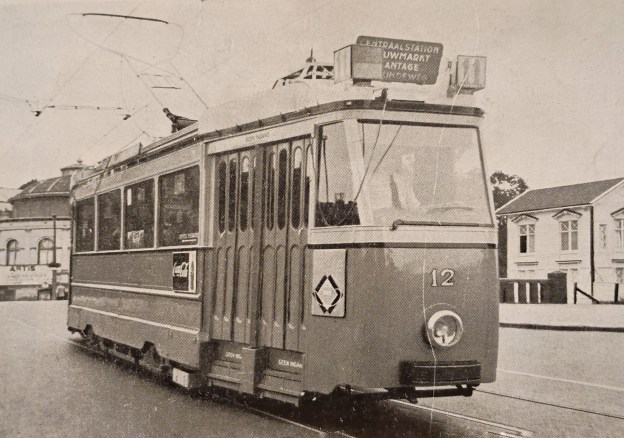
In 1939, Amsterdam acquired twelve 2-axle motor cars from the closing electric city tram network in Utrecht (Gemeentetram Utrecht – GTU). These trams, built by Werkspoor in 1927, were introduced to the Amsterdam network and later renumbered, serving as the only secondhand motor cars purchased by the Amsterdam city transport service.
These twelve cars (originally numbered 67-78 in Utrecht) were subsequently renumbered 1–12 in Amsterdam. The purchase helped Amsterdam boost its fleet for expansion, particularly as new tracks were being laid in Amsterdam-Oost and around the new Amstel station (opened in Oct 1939). [1]
These “Utrechtenaren” remained in service for over a decade, eventually renumbered 301-312 in 1954 before being replaced by new buses. [1]
The trams which came from Utrecht are still represented by one unit. The sole surviving ex-Utrecht car is No. 301 (originally Amsterdam No. 1)
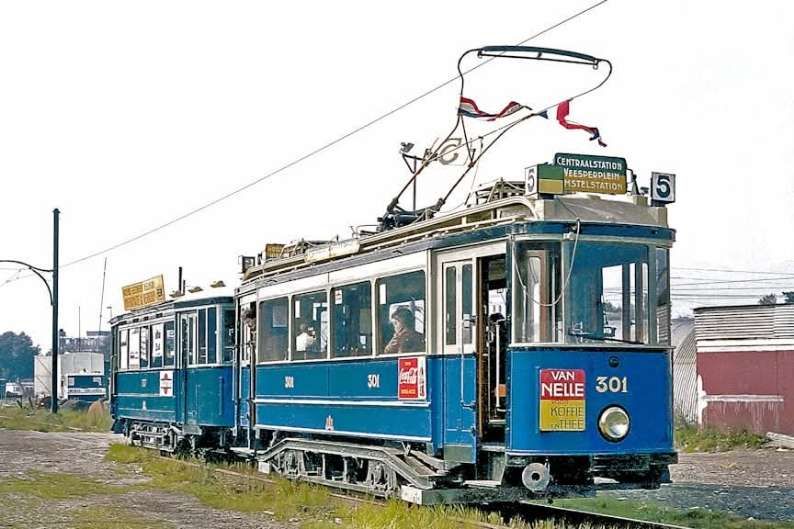
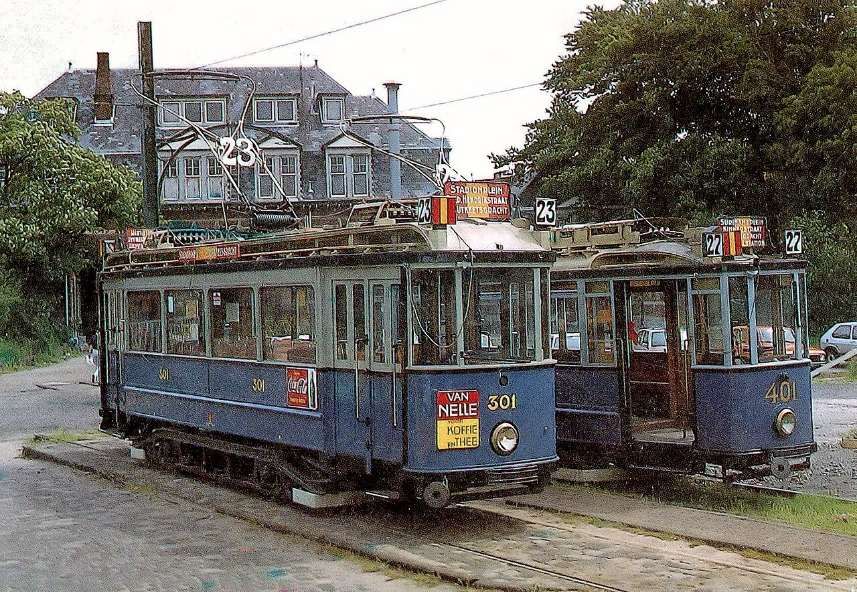
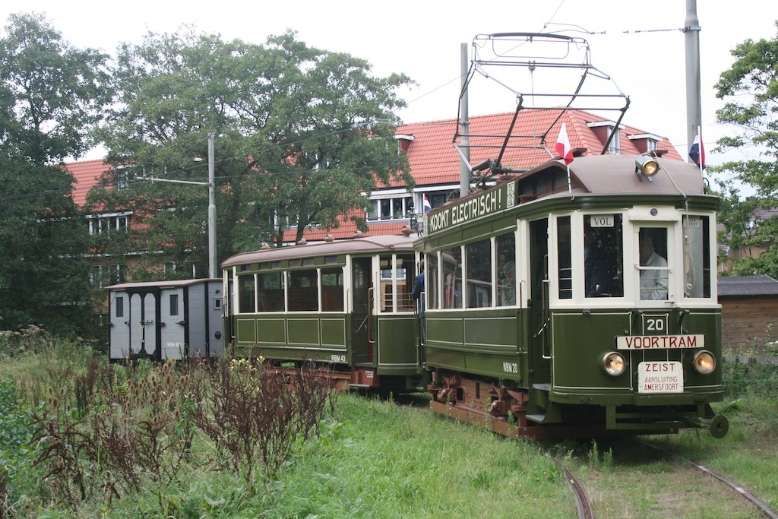
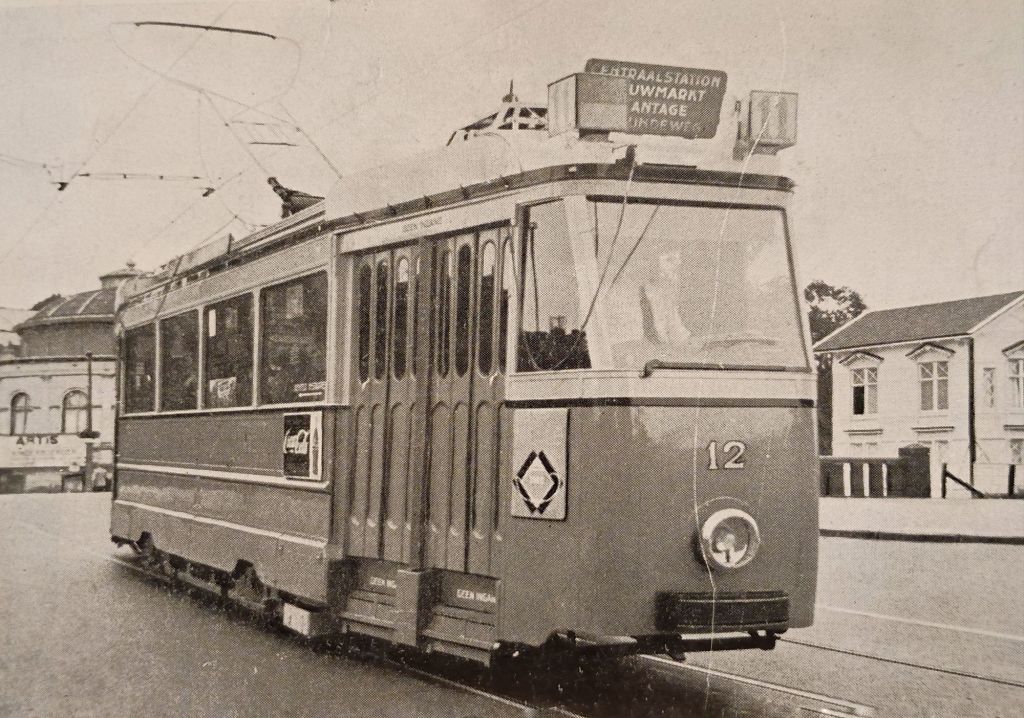
However, this is not all that is known about the twelve trams from Utrecht. Amsterdam’s rolling programme of modernisation of their trams included work on Amsterdam No. 12 in 1950. The Modern Tramway reported in February 1951 that:
“In continuation of their policy of modernising their rolling stock, the Amsterdam Tramways have rebuilt car No. 12, one of those taken over from Utrecht Corporation in 1939. The reconstruction has as far as possible followed the principles adopted in the new 6-wheeled cars (Nos. 491-550), and the result of the rebuilding can be seen in the photograph [featured and below].
“The body has been lengthened from 10.38 metres to 11.40 metres and the floor has been brought to the same level throughout the car. This latter feature, together with the wide gangway, greatly contributes to a speedy circulation of passengers – an important requirement in any car equipped for the Peter Witt system (seated conductor).“At the rear of the car the former partition between the saloon and the platform has been removed; the front partition has been retained but the sliding door has been removed. A separate compartment has been made for the driver, closely resembling the driving compartment of the 6-wheeled cars but lacking the track-brake pedal (it has not been possible to fit a track-brake to the existing truck) The old controller has been replaced by a multi-notch ratchet controller. The driver has a seat which can be easily removed. The front window and ‘nose’ of the car is identical to that of the 3-axle cars and the front trailer coupling has been retracted.
“The conductor’s post with the payments table has been moved somewhat further forward from the entrance doors thus providing more space for those passengers who have not yet paid their fares … The total capacity of the car is now 72 of which 16 are seated, whereas it was formerly 62 with 32 seats. The double entrance and exit doors are provided with double folding sections operated electro-magnetically by the conductor. When the doors are closed, the bottom step folds up.
“The original interior lighting has been completely removed and replaced by 6 Phillips fluorescent tubes placed in a line along the centre of the ceiling, and giving a remarkably bright and even illumination.
“Drop windows and ventilating louvres remain unchanged and the circulation of air has been improved by placing an additional air scoop at the front and a pair of Flettner rotary extractors at the rear.
“In order to keep the costs as low as possible no optical signalling has been introduced and contact between conductor and driver is solely by bell.”
(Translated from Streek en Stadsverecer, August 1950, by J. D. A. Floyd). [2: p42-43]
As a ‘bonus’ here are two interesting films of Utrecht’s early tramways in operation in the late 1920s. [5][6]
And finally, Utrecht’s modern and earlier trams networks are compared here. [7]
References
- https://www.facebook.com/share/p/1BsQ6Qmsrt, accessed on 12th May 2026.
- J. D. A. Floyd (trans); Amsterdam: Modernisation of No. 12; in Streek en Stadsverecer, August 1950; in The Modern Tramway, Volume 14, No. 158, February 1951, p42-43.
- https://nl.wikipedia.org/wiki/Utrechtse_museumtrams#/media/File%3AGVB_301%2C_401.jpg, accessed on 18th May 2026.
- https://nl.wikipedia.org/wiki/Trams_in_Utrecht#/media/File%3ATramstel_NBM_20_%2B_43_%2B_402%3B_Bovenkerk.jpg, accessed on 19th May 2026.
- https://youtu.be/-Zn9820fFV0?si=zdHS2eGIyFmD-AAq, accessed on 19th May 2026.
- https://youtu.be/QaAOo6x23_U?si=Ytg4CrOMnwt0zFT2, accessed on 19th May 2026.
- https://wp.me/p5afWR-KS, accessed on 19th May 2026.


