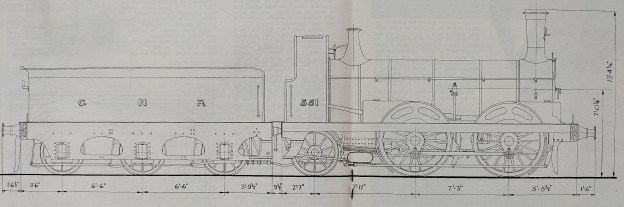
The Great Northern Railway recognised the value of ‘mixed traffic’ locomotives in the 19th century. Lindsay says that seventy five locos of this class were built. One source says that a total of 117 Class 18 locos were built. [4] The Great Northern Railway Society says that 153 were built. [5] The different sources seem to agree that fifty of the class were out-sourced from locomotive builders, the remainder were built in-house at the Great Northern’s Doncaster works. [1]
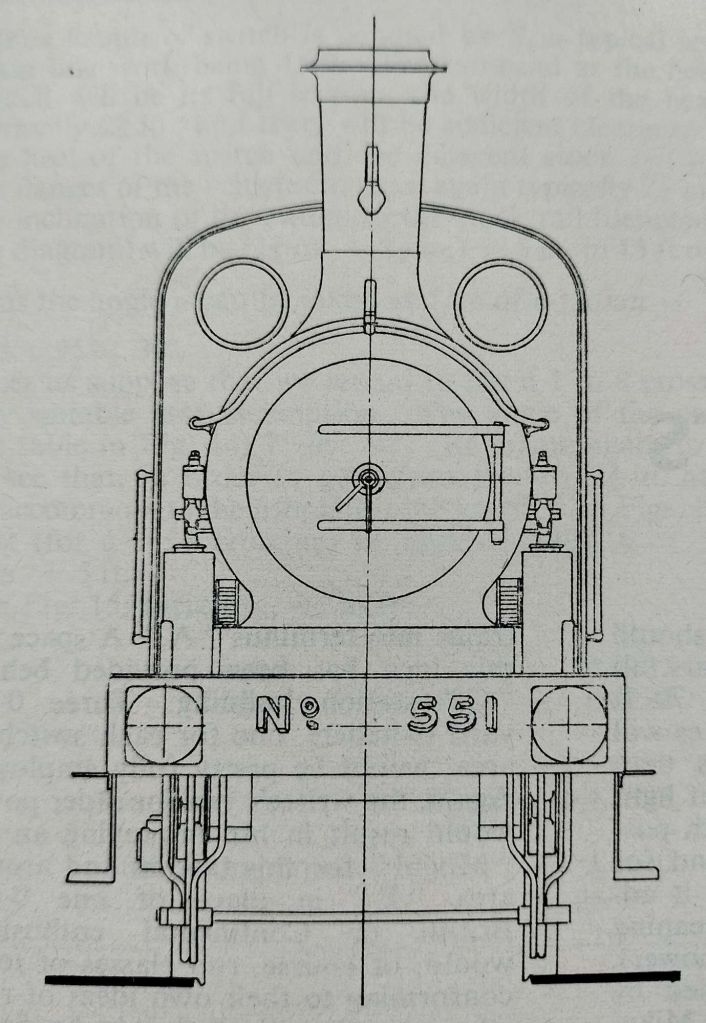
Side Elevation [1]Front Elevation [1]Tender – Front and Back Elevations [1]
The specification sent to outside loco constructors differed in at least one respect from that used in-house – the total heating surface of the outside builders locomotives was 543 sq. ft rather than 537.5 sq ft. [1]
Delivery of locomotives from outside firms was in the following order:
1875 – Nos. 551-556 from Sharp, Stewart & Co. (Works Nos. 2564-2569)
1876 – Nos. 557-580 from Sharp, Stewart & Co. (Works Nos. 2570-2575, 2585-2594, 2646-2653))
It should be noted, however, that there was no direct correlation between the sequence of Works Nos. and the locomotive fleet numbers. “For instance, engine Nos. 563 and 564 bear makers’ Nos. 2586 and 2585 respectively.” [1]
Messrs Sharp, Stewart & Co. locomotives were recorded as being 31 tons 13 cwt in weight. [1]
The Great Northern Railway (GNR) “was … By incorporated in 1846 with the object of building a line from London to York. It quickly saw that seizing control of territory was key to development, and it acquired, or took leases of, many local railways, whether actually built or not. In so doing, it overextended itself financially.” [2]
“Nevertheless, it succeeded in reaching into the coalfields of Nottinghamshire, Derbyshire and Yorkshire, as well as establishing dominance in Lincolnshire and north London. Bringing coal south to London was dominant, but general agricultural business, and short- and long-distance passenger traffic, were important activities too. Its fast passenger express trains captured the public imagination, and its Chief Mechanical Engineer Nigel Gresley became a celebrity.” [2]
There was a significant amount of cross-country good traffic which saw these locomotives being well-used. I believe that they were designated ‘Class 18’ within the GNR’s fleet. They were “the first type of loco to actually be built at Doncaster, rather than by outside contractors … they were used on goods trains and certain secondary passenger trains,” [3] and at times were referred to as ‘luggage engines’, because they were used to bring a second train carrying larger trunks and other passenger luggage in the day when carriages carried regular luggage on their roofs.[3].
References
T.A.Lindsay; Great Northern Railway Engine No. 551; in Model Railway News Volume 40 No. 748, October 1964, p532-533. (Non-commercial use of drawings authorised.)
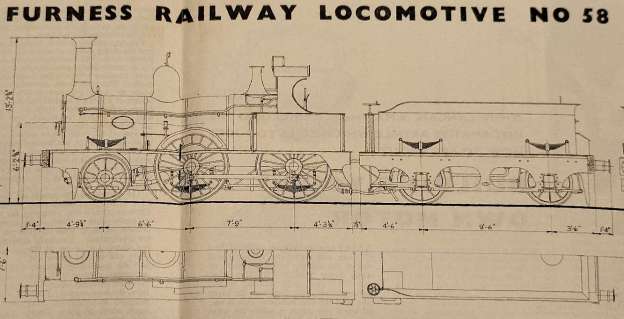
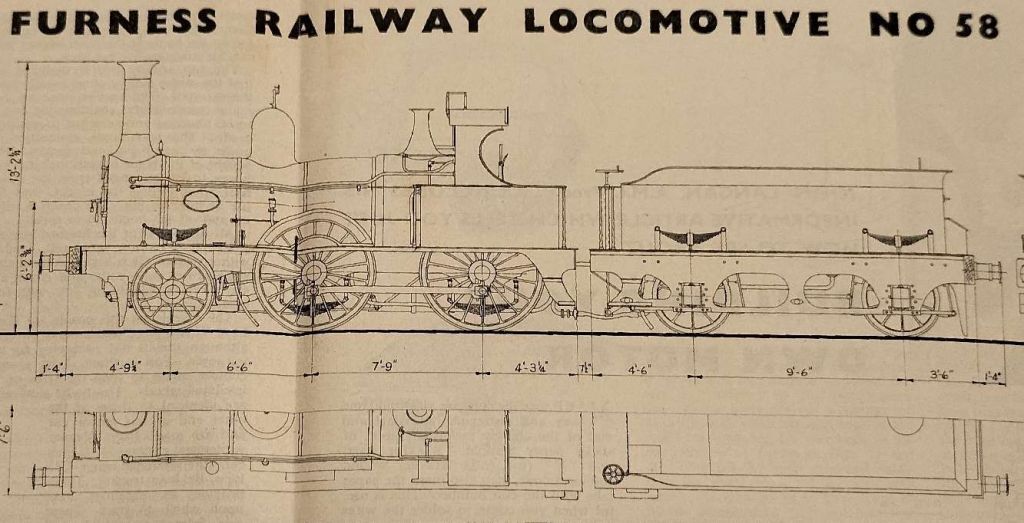
Looking through a number of 1964 Model Railway News magazines, I came across drawings of Sharp, Stewart & Co. 2-4-0, built in 1870 for the Furness Railway Co. and numbered 58 on their roster.
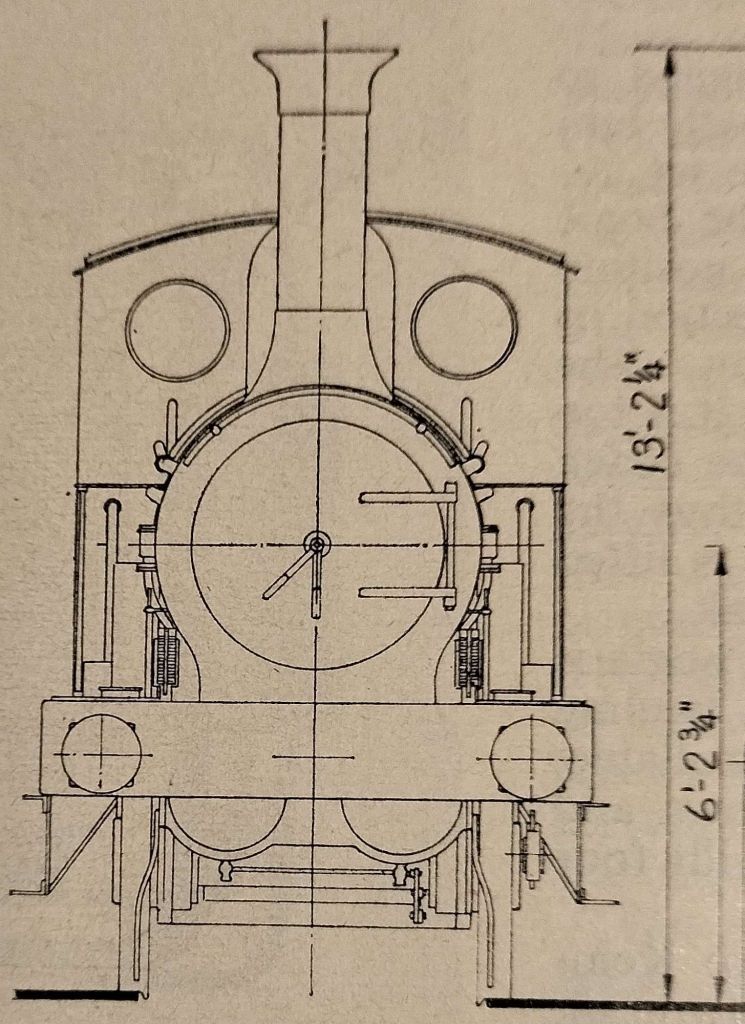
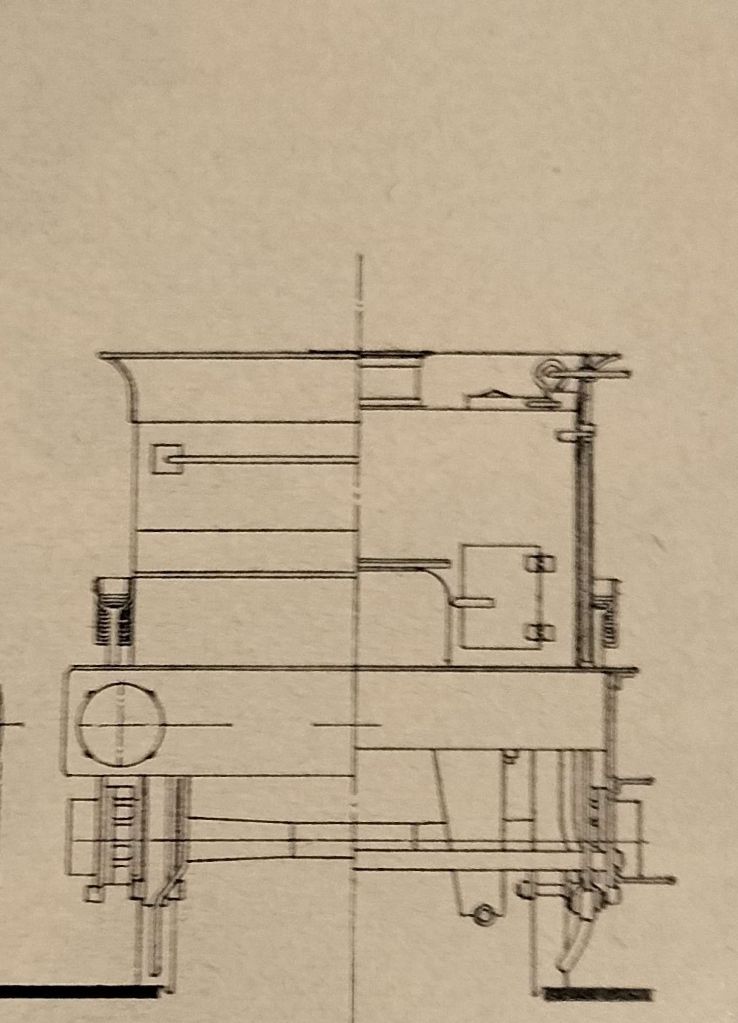
Side elevation and half plan of Locomotive No. 58 [1]Front elevation. [1]Tender, front and back half-elevations. [1]
Originally conceived as a mineral railway, the Furness Railway later played a major role in the development of the town of Barrow-in-Furness, and in the development of the Lake District Tourist industry. It was formed in 1846 and survived as an independent, viable concern until the Grouping of 1923. [4]
The Furness Railway contracted out the building of its locomotives until Pettigrew became Chief Locomotive Engineer in 1897. He put his first locomotive on the line in 1898.
2-4-0 Locomotive No. 58 had inside cylinders (16 in by 20 in), 5 ft 6 in diameter coupled wheels. It operated with a boiler pressure of 120 lb and weighed 30 tons 5 cwt. Its tender was 4-wheeled with a 1,200 gallon water capacity.
The locomotive, as designed, had no brake blocks, the only brake being a clasp type on the tender.
This relatively small locomotive was one of a series of 19 locos built to the same design. The class fulfilled the needs of the Furness Railway as passenger locomotives. The class was given the designation ‘E1’ by Bob Rush in his books about the Furness Railway. Rush’s classification was his own not that of the Furness Railway, but has become accepted generally. [2]
A photograph of one of this class can be found by clicking on the link immediately below. No. 44 was built in 1882 by Sharp Stewart & Co., Works No.3086. It was rebuilt in 1898, presumably in the Furness Railway works. Renumbered 44A in 1920, it became LMS No. 10002 – but was withdrawn in April 1925. [5]
Later, seven of the class were converted to J1-class 2-4-2 tank engines in 1891. [3]
References
T.A. Lindsay; Furness Railway Locomotive No. 58; in Model Railway News, Volume 40, No. 480, December 1964, p608-609. (Permission to copy granted for any non-commercial purpose.)
Towards the end of March 2024, I stumbled across a number of journals of the New Zealand Model Railway Guild. One of these, the March 2021 edition, included a pictorial article about J1211 North British 4-8-2 Locomotive No. 24534 of 1939. [6] The June 2021 issue included a history of the class [7: p13-15] and General Arrangement plans as originally carried in the Railway Gazette in 1940. [7: p22-24] Also in that journal are four photographs of J1211 in service between 1960 and 1970. [8]
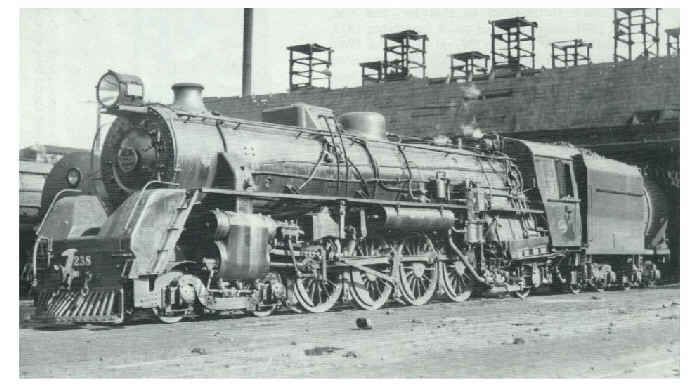
40 No 4-8-2 locomotives which were built in 1939 by the North British Locomotive Company and became the New Zealand Railways (NZR) J class.
They were designed to provide a mixed traffic locomotive suitable for running on the lighter secondary lines of the NZR network, and for express passenger trains in major routes.
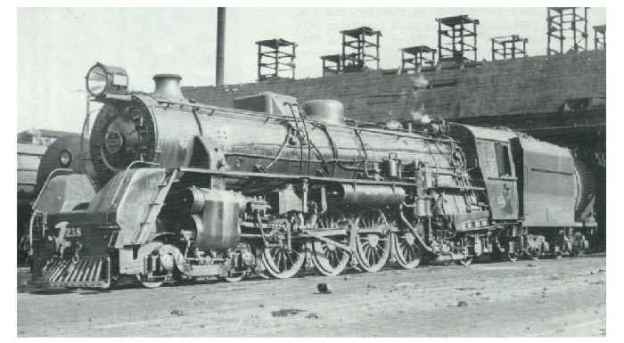
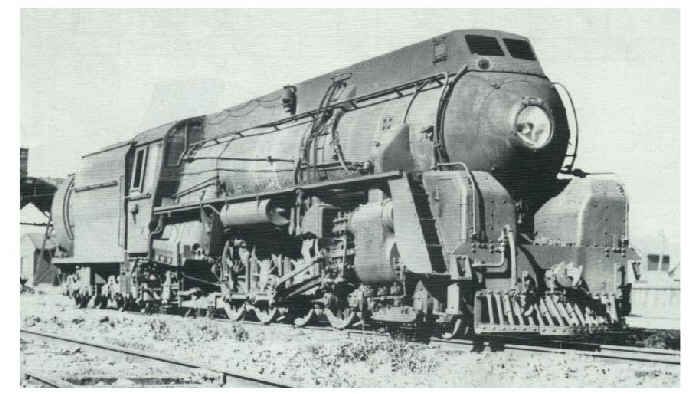
“The J class incorporated roller bearing axles, hydrostatic lubrication and twin Westinghouse brake pumps. … They had bar frames instead of plate frames and were equipped with Baker Valve-gear. The locomotives were attached to Vanderbilt tenders and were outshopped with distinctive bullet-nosed streamlining.” [1] The streamlining also encompassed the full length of the top of the boiler between the cab and the smoke box door and the area immediately beneath the smoke box door.
The J Class locos were out shopped with a distinctive streamlining from the cab to the top of the smoke box door and with a bullet-nosed smoke box door. [2]
New Zealand’s North Island benefitted from the first thirty of the class placed into service. The South Island hosted the remaining ten locomotives which apparently were used “The first 30 of the class in service were allocated to the North Island, with the remaining ten locomotives allocated to the South Island where they were used “on the hilly section between Dunedin and Oamaru. They were immediately placed into service on the main trunk routes in both islands in order to help move wartime traffic during the Second Word War. Although used on freight trains as well, the class was well suited to high-speed running on the passenger trains of the era.” [1]
Apparently, the streamlining became “burdensome for maintenance and the skyline casing, which was open at the top proved to be a trap for soot from the locomotive’s exhaust. After a time, the skyline casing started to be removed from some examples of the class leaving them with just the bullet nose.” [1]
Ultimately the bullet nose was also removed from the majority of these locomotives.
The locomotives of the class had their streamlining removed in the war years. [2]
Members of the class “were generally considered to be a very reliable engine and well suited to their task. … They were capable of speeds of over 60 mph with a 300-ton express train. …. However, today surviving engines being used to haul excursion trains are restricted to 80 kph. … On favourable grades a single J could move a 1000-ton train.” [7: p14]
“The design was successful enough that NZR opted to build an improved variant … in its own Hillside workshops from 1946.” [1] These ‘Ja’ class locomotives were numbered 1240 to 1274 and became “the mainstay of the South Island rail services. Meanwhile North British were commissioned to build another 16, numbered from 1275 to 1290, also classified ‘Ja’, but they were oil fired and to be based in the North Island. … The sixteen ‘Ja’ from North British were the last steam locomotives to enter service with the NZR.” [7: p15]
Three J Class 4-8-2 are noted by Trainweb [2] as having been preserved:
J 1234, North British #24557/1939. For some time based at Glenbrook Vintage Railway, Auckland.. This locomotive is owned by Steam Incorporated of Paekakariki, and was leased to the Glenbrook Vintage Railway in 1998. The locomotive was returned to Paekakariki in June 2015. [4] It is now in storage awaiting a 2nd restoration at Paekakariki. [5]
J 1211 “Gloria”, North British #24534/1939. Mainline Steam Heritage Trust, Auckland (Operational). [3]
J 1236, North British #24559/1939. Mainline Steam Heritage Trust, Auckland (Being Restored). [2]
The 950mm-gauge line from Massawa on the coast, inland to Agordot, was built during colonial occupation by the Italians with some steep gradients which meant that Mallets were considered to be suitable motive power.
The line should not be confused with the metre-gauge line running from Djibouti to Addis Ababa. A metre-gauge railway that was originally built by the French from 1894 to 1917 which has since been replaced by a Chinese built standard-gauge line. [5]
In 1907, Maffei built three 0-4-4-0T locomotives for the Massawa to Agerdot line.
Ansaldo the “supplied twenty five further engines of the same class between 1911 and 1915, and in 1931 and 1939 Asmara shops assembled a nominal three new engines from d components of earlier withdrawn engines. All these were standard European narrow-gauge Mallet tanks, saturated, slide-valved and with inside frames.” [1: p64]
In the mid-1930s, a series of fifteen larger 0-4-4-0T locomotives were built. These were “built to a superheated, simple expansion design, of which ten had piston valves and Walschearts gear and the other five, Caprotti poppet valves driven from outside cardan shafts.” [1: p65] A later series of “eight engines built by Analdo in 1938 reverted to compound expansion, retaining the superheater and piston valve features.” [1: p65]
The last of the Eritrean Mallets was built in their own shops in 1963, making it the last Mallet built in the world. [6]
The line closed in 1975. Eritrea was occupied by Ethiopia for many years. After gaining independence in 1993, some of the former railway staff started to rebuild their totally destroyed railway. Some of the Mallets, built by Ansaldo (Italy) in 1938, were brought back to life. Also one of the small Breda built shunters, two diesel locos and two diesel railcars (one from 1935) were put back into working order. [7]
A section of the line, between Massawa, on the coast, and Asmara, was reopened in 2003 and has offered an opportunity for Mallet locomotives to be seen in operation in East Africa. Indeed, an internet search using Google brings to light a list of videos of locomotives heading tourist trains in the Eritrean landscape.
Wikipedia notes that the line has a track-gauge of 950mm and that locomotives operate over a 118 km section of the old line. Italian law from 1879 officially determined track gauges, specifying the use of 1,500 mm (4 ft 11 1⁄16 in) and 1,000 mm (3 ft 3 3⁄8 in) gauge track measured from the centre of the rails, or 1,445 mm (4 ft 8 7⁄8 in) and 950 mm (3 ft 1 3⁄8 in), respectively, on the inside faces. [4]
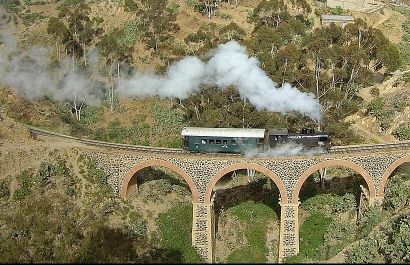
Between Arbaroba and Asmara in November 2008, a single coach is headed by one of the surviving Mallet locomotives. This is an extract from an image on Wikimedia Commons (public domain). [13]
Steam operation on the line is over, no regular services are provided but occasional tours still take place with plenty of caveats about the availability of any form of propulsion. An example is a German-speaking tour planned (as of 24th March 2024) for November 2024. [8]
Tanzania (Tanganyika)
The metre-gauge line inland from Dar-es-Salaam was built by the Ost Afrika Eisenbahn Gesellschaft (East African Railway Co.). A.E. Durrant tells us that its first main line power “was a class of typical German lokalbahn 0-4-4-0T Mallets, built by Henschel in 1905-7. These were supplemented in 1908 by four larger 2-4-4-0Ts from the same builder, after which the railway turned to straight eight-coupled tank and tender engines.” [1: p67]
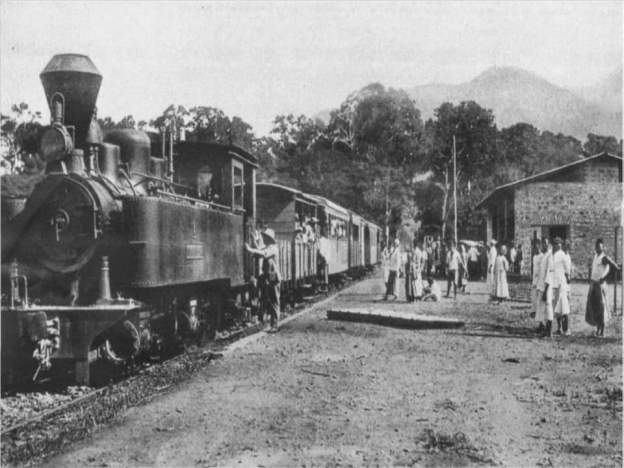
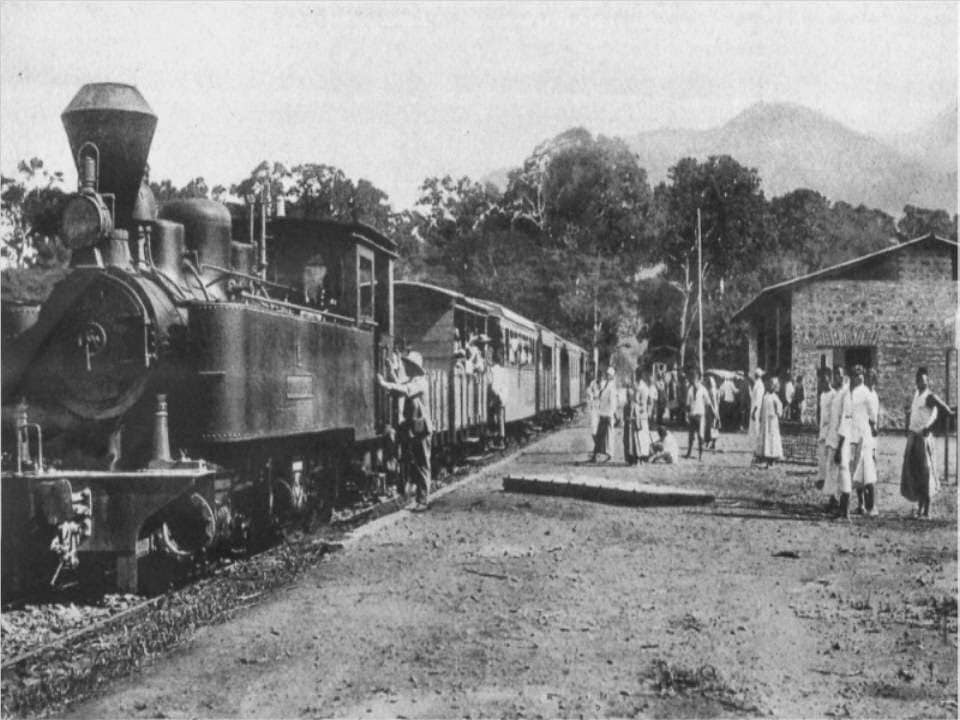
R. Ramaer notes that the first locomotives used by the Usambara Eissenbahn (UE) on the Tanga Line were five 0-4-2 locos which arrived on the line in 1893. Rising traffic loads led the UE “To look for something more substantial and in 1900, Jung supplied five compound Mallet 0-4-4-0T’s as numbers 1-5, later renumbered 6-10. … To provide enough space for the firebox and ashpan, the rigid high-pressure part, comprising the third and fourth axles, had outside frames, whereas the low-pressure part had inside frames.” [9: p19]
UE engine No. 1 (0-4-4-0T – supplied by Jung) with an early passenger train ready for departure at Tanga station in 1890. This image was posted on the Urithi Tanga Museum Facebook Page [10] and is also reproduced in R. Ramaer’s book. [9: p19]UE Mallet 0-4-4-0T No. 8 heading a passenger train at Mombo. This image was shared in error on the Old Asmara Eritrea Facebook Page. [11] It also appears in R. Ramaer’s book. [9: p20]
On the Central Line (Ost Afrikanische Eisenbahn Gesellschaft – or OAEG) which ran inland from Dar-es-Salaam, construction work started in 1905 and the first locomotives used by the OAEG were four 0-4-0T engines built by Henschel, a further four of these locomotives were supplied in 1909. These small engines had a surprisingly long life. Mallets were first supplied in 1905 by Henschel and were suitable for both coal and oil firing. These were 0-4-4-0T locos (four supplied in 1905 and one supplied in 1907). “The problem with this type of engine was the restricted tractive effort and running was not satisfactory because of the lack of a leading pony truck. … Therefore Henschel supplied a second batch of four locomotives in 1908 as 2-4-4-0Ts with larger boilers and cylinders. They also had a higher working pressure of 14 atmospheres (200lb/sq in) in comparison to 12 atmospheres (170lb/sq in) for the earlier engines, while the bunker capacity had been increased from 1.2 to 2.2 tonnes of coal. (Oil fuel had been discarded).” [9: p21-23]
OAEG 2-4-4-0T No. 27, in the last Mallet class to be built for German East Africa. This locomotive appears in the Wikipedia list of Henschel steam locomotives. [12] It also appears in R. Ramaer’s book [9: p23] and A.E. Durrant’s book. [1: p66]
Kenya-Uganda
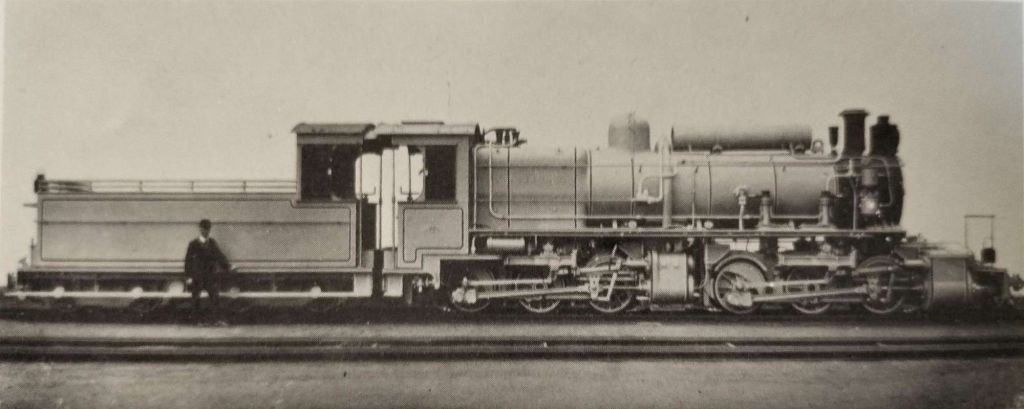
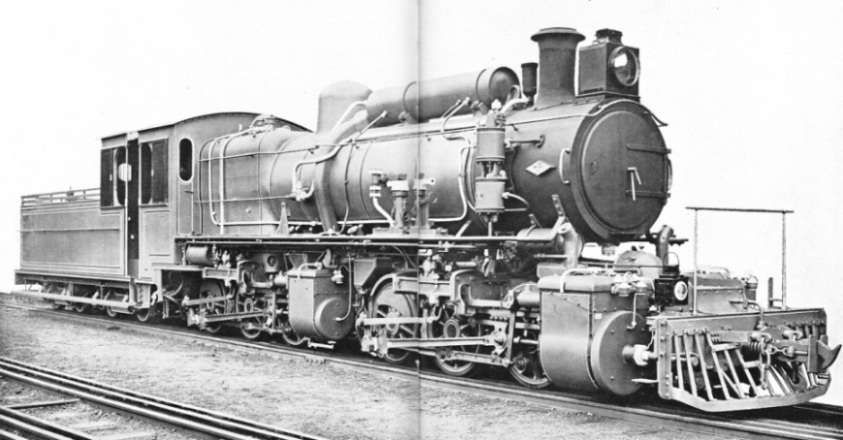
An ‘MT’ class locomotive in ex-Works condition at the Queen’s Park works of the North British Locomotive Co. [1: p66]
Mallets were the first articulated locomotives to operate in East Africa. Mallets were introduced on the Uganda Railway in 1913. A.E. Durrant notes that they consisted of “a batch of eighteen 0-6-6-0 compound Mallets to what was the North British Locomotive Co’s standard metre-gauge design, as supplied also to India, Burma, and Spain. They had wide Belpaire fireboxes, inside frames and piston valves for the high pressure cylinders only. Built at Queens Park works in 1912-1913, these locomotives entered service in 1913-14 and remained at work until 1929-30, when they were replaced by the EC2 and EC2 Garratts.” [1: p66]
North British Class ‘MT’ Mallets arrived in Kenya just before the start of WW1. [2]
These locomotives were given the classification ‘MT’ within the Uganda Railway fleet. Disappointing performance and high maintenance costs led to them being relegated to secondary duties and eventually being scrapped in the late 1920s as the Beyer Garratt locomotives began to arrive. [2] Their presence on the system was heralded by, “Railway Wonders of the World,” with the picture shown below. [3]
An ‘MT’ class Uganda Railway locomotive as illustrated in ‘Railway Wonders of the World’. [3]
References
A.E. Durrant; The Mallet Locomotive; David & Charles, Newton Abbot, Devon, 1974.
Kevin Patience; Steam in East Africa; Heinemann Educational Books (E.A.) Ltd., Nairobi, 1976.






 Roger Farnworth
