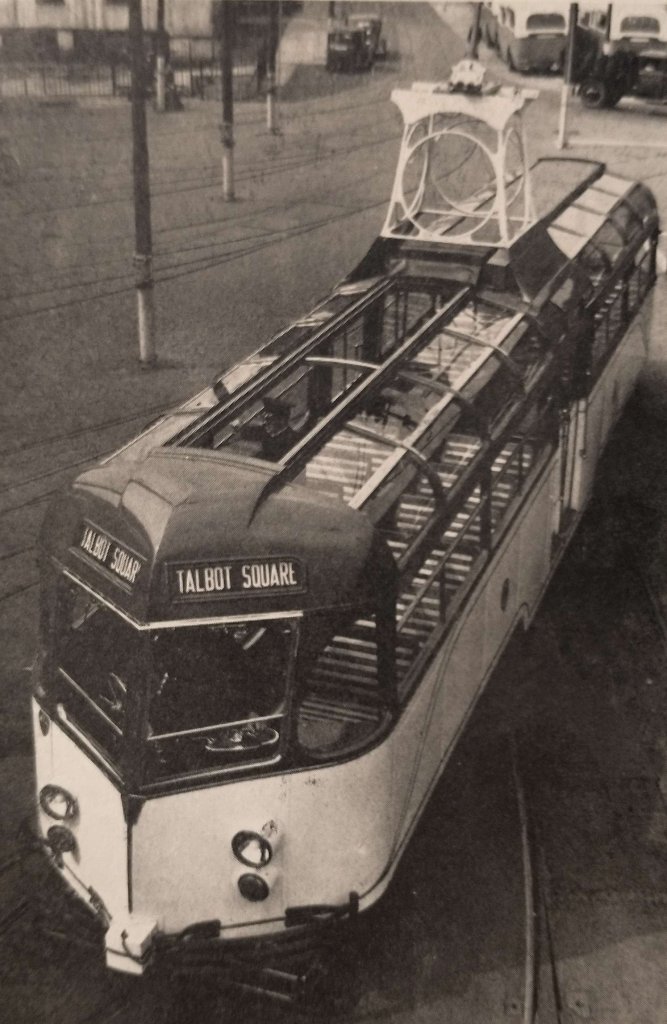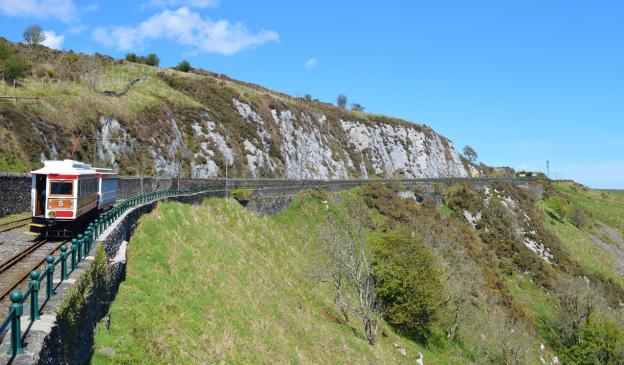
Tag Archives: the modern tramway

Manx Electric Railway – 1957 to 1962 – a review 5 years after nationalisation. ….

The June and July 1962 issues of ‘Modern Tramway’ included a 2-part review of the first five years of operation and maintenance of the Manx Electric Railway (MER) after nationalisation on 1st June 1957.

June 1962 marked the end of the first term of office of the MER Board. … ‘Modern Tramway’ Journal, in its June 1962 edition, begins:

“We should first explain something of how the Isle of Man Government sets about its work; day-to-day administration is in the hands of Boards of Tynwald, consisting partly of elected members of the House of Keys (the Manx House of Commons) and partly of non-Tynwald members appointed by the Governor. These Boards occupy much the same position as Ministries in the British Government, except that they serve in a part-time capacity. The M.E.R. Board, set up in 1957, has three Tynwald members and two others.

The first Manx Electric Railway Board was appointed in May, 1957. Its Chairman was Sir Ralph Stevenson, G.C.M.G., M.L.C., with Mr. R. C. Stephen, M.H.K. (a journalist), Mr. A. H. Simcocks, M.H.K. (a lawyer), Mr. T. W. Kneale, M.Eng. (a former Indian Railways civil engineer, with an expert knowledge of permanent-way) and Mr T. W. Billington (an accountant) as it’s members. … They were entrusted with the task of running the railway and reconstructing much of the permanent way, and an annual estimate of the money required was to be presented to Tynwald by 31st March of each year. No changes were made in the railway’s staff, the full-time management, as under the Company, remaining in the capable hands of Mr. J. Rowe (Secretary and Joint Manager) and Mr. J. F. Watson, M.I.E.E. (Chief Engineer and Joint Manager), who occupy the same posts today.

The new Board took over from the Company with due ceremony on 1st June, 1957, but found during their first year of office that, owing to rapidly rising costs, far more money than anticipated would be needed to reconstruct the railway at the rate intended, and to keep it running. Instead of a grant of £25,000 per year (the figure agreed upon by Tynwald), they would require £45,000, and after Tynwald had rejected both this request and their alternative proposed economies (cutting out early and late cars, and closing down in winter) the entire Board, with the exception of Mr. Kneale, resigned. A new Board then came into being, the Chairman being Mr. H. H. Radcliffe, J.P., M.H.K., with the following gentlemen as Mr. Kneale’s new colleagues: Mr. W. E. Quayle, J.P., M.H.K.. (Vice-Chairman), Lieut.-Commander J. L. Quine, M.H.K., and Mr. R. Dean, J.P. The new Board undertook to do their best to run the railway within the originally- planned subsidy of £25,000 per year, and reaffirmed that they would continue the work of reconstruction, but at a rate such as to lie within the original budget, the effect being of course that the rate of reconstruction has been somewhat slowed down and the method of financing has varied from that originally planned. The original. intention was to finance the relaying of the Douglas-Laxey section by an outright. annual grant, so that the track would enjoy. many years of debt-free life, but after the 1958 re-appraisal Tynwald reverted to the proposal of the second Advisory Committee to finance this work by a loan repayable over the 20-year life of the new track.” [1: p201-203]
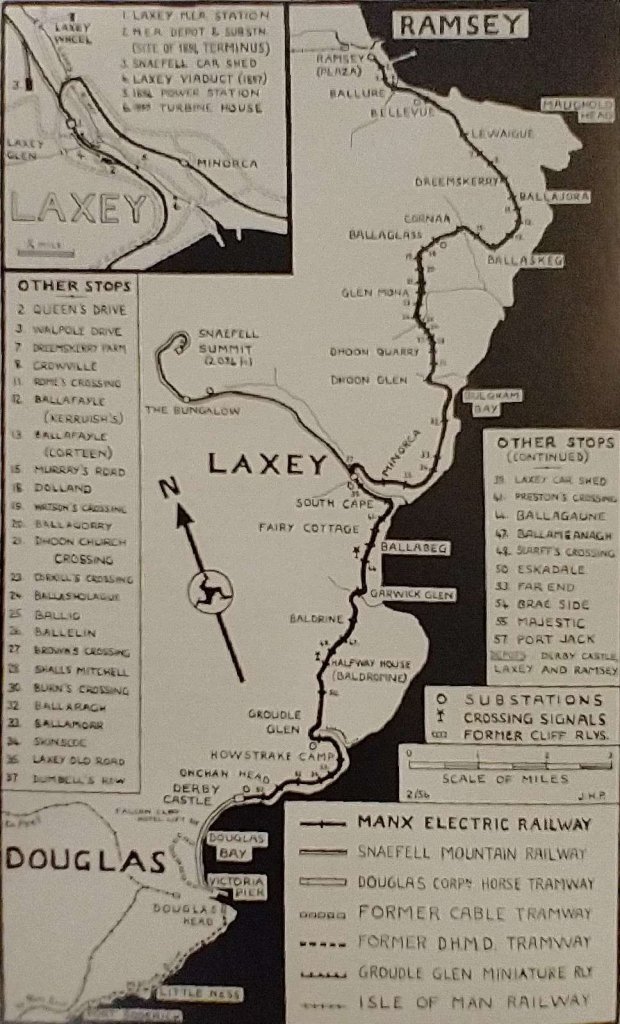
A map of the MER and other rail routes. I find the hand drawn maps, which appear in the post-war to 1960s period magazines, of greater interest than the computer-aided mapping/drawings of layer years. This image should assist in placing elements of the MER referred to in the text. [1: p202]
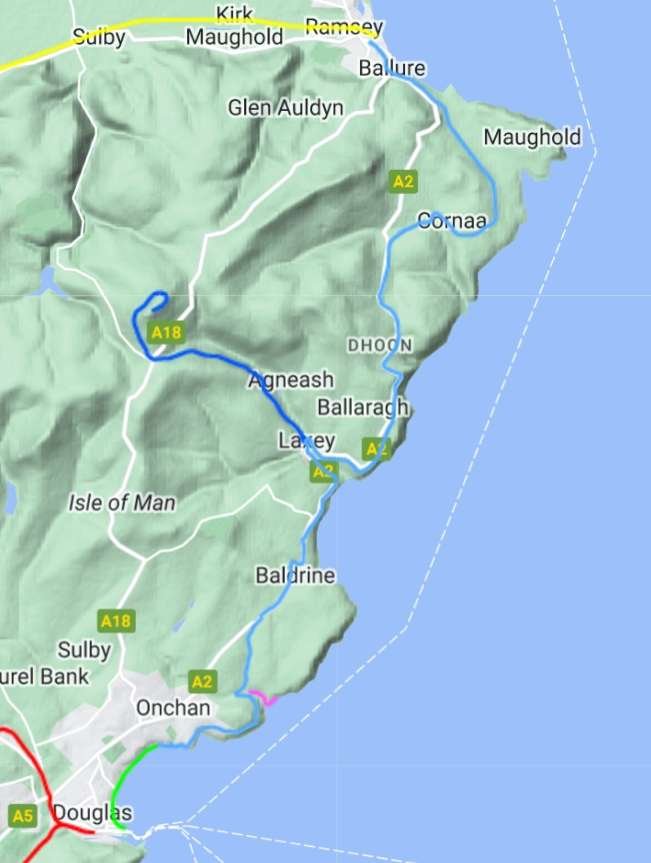
Roughly the same area as shown on the hand-drawn map above. The light blue line is the MER. The red lines are the Isle of Man Railway. The pink line is the Groudle Glen Railway. The Green line is the Douglas Bay Horse Tramway. The Dark Blue line is the Snaefell Mountain Railway. Manx Northern Railway is shown in Yellow. []

Modern Tramway continues:

“In July, 1958, the Board was granted borrowing powers up to a maximum of £110,000, and of this the sum of £20,000 has been borrowed at 5 per cent, the usual interest and sinking funds being set up to provide for repayment. The money was used to relay 200 tons of rails, including labour, rail fastenings, sleepers and ballast. In January, 1960, however, Tynwald made a special grant of £9,000 for the next stage of the track relaying, with another grant a year later, while the traffic results from the 1960 and 1961 seasons were so good that in these two years a sizeable part of the £25,000 operating subsidy remained in hand and was able to be spent on relaying; 4,000 sleepers were bought out of the annual grant in 1961, and 100 tons of rails and 4,000 sleepers by the same means early in 1962. …

Since June, 1957, despite the overall financial stringency, quite a lot has therefore been done. Five hundred tons of new rail have been laid, and to date the Board has completely renewed about seven single-track miles of line between Douglas and Laxey. Concurrently, more than half of the 24,000 sleepers on this section have been renewed. To date, new 60 lb. per yard flat-bottom rails have been laid on the following sections: both tracks from Douglas Bay Hotel to Onchan, the northbound track from Far End to Groudle, both tracks from Groudle to Baldrine, the northbound track from Baldrine to Garwick, the southbound track from Ballagaune to Ballabeg, the north- bound one from Ballabeg towards Fairy Cottage, and the southbound track from Fairy Cottage to South Cape, plus new crossovers at Onchan Head and Groudle. Many of the new sleepers were produced on the island by the Forestry Board, but the more recent ones have been imported from Scotland since no more are available locally at present. The old ones, apart from a few sold to the Groudle Glen railway, are sent to Douglas prison and cut up there for firewood.

Since the M.E.R. Company had been living a hand-to-mouth existence for several years prior to the nationalisation, the management had lost touch with manufacturers, and had to make fresh contacts. This has had the incidental advantage of allowing them to benefit from the very latest improvements in track components, and much of the recent relaying has been done with elastic rail spikes, while to the north of Ballagaune is an experimental 200-yard length of track laid with rubber pads, giving a superb and almost noiseless ride. Modern techniques have also been adopted when relaying some of the sharp curves, with careful prior calculations to determine the correct transition and super-elevation for each, instead of the rule-of-thumb methods used in earlier days.

The permanent way renewal carried out to date represents about half the total trackage between Douglas and Laxey, including all the heavily-worn sections which in 1956 were overdue for renewal. At the time the Government took over, it was hoped to relay the entire line to Laxey within seven years, followed by the Snaefell line in the ensuing three. …

Corresponding renewals have also been made to the overhead line, using round-section trolley wire and phosphor-bronze overhead parts supplied by British Insulated Callenders’ Cables Ltd., who have undertaken to continue the manufacture of whatever components the MER. may require. With gradual change to grooved wire at Blackpool, the Manx Electric will probably be the last British user of tradi- tional round trolley wire, with its big trolley wheels and “live” trolley poles reminiscent of American interurban practice. The gradual corrosion of the overhead standards in the coastal atmosphere … has been very largely arrested by a very thorough repainting.” [1: p204-205]

By 1962, traditional liveries had been brought back, with full ‘lining-out’ and ‘Manx Electric Railway’ logo. The two cars here are, first, winter saloon car No.19 at Laxey during the 1961 Light Railway Transport League convention, and, second, reupholstered saloon No. 57 at Derby Castle Works. Both pictures © J.H. Price. [1: p203]

Further support from the Manx Government was forthcoming during the first-year period after nationalisation under a scheme designed to offset the seasonal nature of the island’s biggest industry, tourism. £7,000/year was allocated dependent on the level of employment achieved. This funding could not be for planned major work as it covered the provision of work for those employed in the summer tourism period. It was “used for marginal rather than essential work, and the Board prepare[d] estimates of such work that could usefully be done and submit them to Tynwald for eventual adoption later on. Under these schemes, Laxey and Ramsey stations [were] resurfaced in tarmac, and the whole of the Douglas-Ramsey line and most of the Snaefell line [were] completely weeded and the fences and drainage works trimmed and cleaned, which when related to the real mileage (all double track) is a considerable achievement. … The Board, … in addition, treated the whole right-of-way with a selective weed-killer. … The chemical [was] applied by a special 6-ton wagon rebuilt as a weed-killer tank wagon, with a small petrol engine providing pressure spraying at 5 m.p.h. This unit [was] based at Laxey depot.” [1: p205]

Track maintenance formed the largest element of the Board’s expenditure. Little, other than routine maintenance, was done to rolling stock during this period. Physical deterioration to stock was reduced as a result of track improvements. As the images above show, some stock received cosmetic treatment, what might be called rebranding in the 21st century world.

Modern Tramway continues:

“The passenger stock remains at 24 cars and 24 trailers (excluding trailer 52, which is now a flat car). … With the increased amount of track work, car No. 2 has been converted each winter to a works car, with work-benches and equipment in place of its longitudinal seats, but like No. 1 it can be restored to passenger service in mid-summer if need be. Certain freight wagons not required for engineering purposes, including those lying derelict at Dhoon, have been dismantled in the general clearing-up. The average age of the present 48 cars and trailers is now 61 years, but most of them are only used in the summer and should be good for many years yet.” [1: p205]

This begs the question about the stock remained on the MER in the 21st century. …

In 2023, Wikipedia tells us that, “The Manx Electric Railway … is unique insofar as the railway still operates with its original tramcars and trailers, all of which are over one hundred years old, the latest dating from 1906. Save for a fire in 1930 in which several cars and trailers were lost, all of the line’s original rolling stock remains extant, though many items have been out of use for a number of years, largely due to the decrease in tourism on the island over the last thirty years. Despite this, members of each class are still represented on site today, though not all are in original form or in regular use.” [2]

The following list details what has happened to the full fleet of motorised trams:

No. 1: built in 1893 by G.F. Milnes & Co., Ltd is an Unvestibuled saloon and painted Red, White and Teak. It has 34 seats and is painted in the MER 1930s house style. It remains available for use.

No. 2: built in 1893 by G.F. Milnes & Co., Ltd is an Unvestibuled saloon and painted Red, White and Teak. It has 34 seats and is painted in the MER 1930s house style. It remains available for use.

Tram Car No. 2 in 2009 in a different livery, standing at the Derby Castle terminus, © Gordonastill and licenced for reuse under a GNU Free Documentation License. [8]

No. 3: lost in 1930 in a shed fire.

No. 4: lost in 1930 in a shed fire.

No. 5: built in 1894 by G.F. Milnes & Co., Ltd is a Vestibuled saloon and painted Red, White and Teak. It has 32 seats and is painted in the MER 1930s house style. It remains available for use.

No. 6: built in 1894 by G.F. Milnes & Co., Ltd is a Vestibuled saloon and painted Maroon, White and Teak. It has 36 seats and is painted in the MER late Edwardian livery. It remains available for use.

No. 7: built in 1894 by G.F. Milnes & Co., Ltd is a Vestibuled saloon and painted Blue, Ivory and Teak. It has 36 seats and is painted in the original MER livery. It was rebuilt between 2008 and 2011 and remains available for use.

No. 8: lost in 1930 in a shed fire.

No. 9: built in 1894 by G.F. Milnes & Co., Ltd is a Vestibuled saloon and painted Red, White and Teak. It has 36 seats and is painted in the standard MER livery. It is illuminated and remains available for use.

No. 10: built in 1895 by G.F. Milnes & Co., Ltd is a Vestibuled saloon, painted Grey and has no seats. It was rebuilt as a freight car and is currently stored.

No. 11: was scrapped in 1926.

No. 12: was scrapped in 1927

No. 13: was scrapped in 1957.

No. 14: was built in 1898 by G.F. Milnes & Co., Ltd is a roofed ‘toastrack’ and painted Maroon. It has 56 seats and was rebuilt/restored to original condition between 2015 and 2018 and remains available for use.

No. 15: was withdrawn from service in 1973, it is currently stored. It was originally built by G.F. Milnes & Co., Ltd in 1898 and is a roofed ‘toastrack’. It is painted Red & White and has 56 seats.

No. 16: was built in 1898 by G.F. Milnes & Co., Ltd is a roofed ‘toastrack’ and painted Red & White. It has 56 seats . The livery is described as ‘House Style’. It remains available for use.
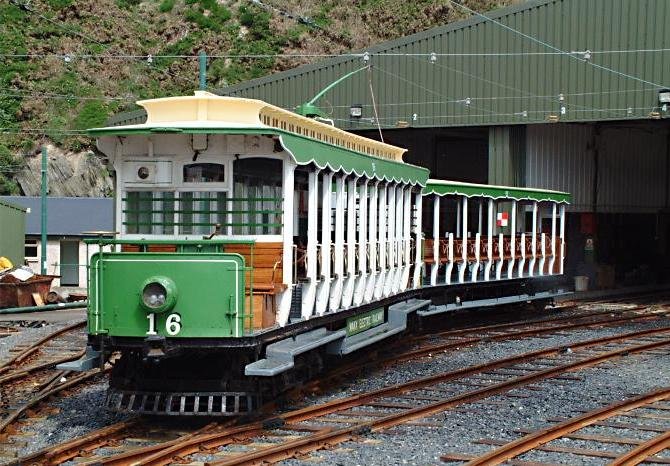
Tramcar No.16, a roofed ‘toastrack’ car in the Nationalisation livery with an unidentified ‘toastrack’ trailer also in the Nationalisation livery. This photograph was taken in 2009, © Gordonastill and licenced for reuse under a GNU Free Documentation License. [9]

No. 17: was built in 1898 by G.F. Milnes & Co., Ltd is a roofed ‘toastrack’ and painted Red &White. It was withdrawn in 1973. It has 56 seats and is currently stored.

No. 18: was built in 1898 by G.F. Milnes & Co., Ltd is a roofed ‘toastrack’ and painted Red &White. It has 56 seats and was withdrawn to storage in 2000.

No. 19: was built in 1899 by G.F. Milnes & Co., Ltd is a winter saloon and is painted Maroon, Cream & Teak. It has 48 seats and is in its original livery. It remains available for service.

No. 20: was built in 1899 by G.F. Milnes & Co., Ltd. It is a winter saloon and painted Red, White & Teak. It has 48 seats and is in 1970s style. It remains available for service.

No. 21: was built in 1899 by G.F. Milnes & Co., Ltd. It is a winter saloon and painted Green & White. It has 48 seats and is in nationalisation livery. It remains available for service.

No. 22: was built in 1899 by G.F. Milnes & Co., Ltd. It is a winter saloon and painted Red, White & Teak. It has 48 seats and is in standard livery. It remains available for service.

No. 23: was built in 1900 by the Isle of Man T. & E.P. Co., Ltd. It is a Green & Grey Locomotive. It was withdrawn to storage in 1994.

No. 24: was lost in a shed fire in 1930.

No. 25: was built in 1898 by G.F. Milnes & Co., Ltd was a roofed ‘toastrack’ and painted Red &White. It had 56 seats and was withdrawn in 1996.

No. 26: was built in 1898 by G.F. Milnes & Co., Ltd was a roofed ‘toastrack’ and painted Red &White. It had 56 seats and was withdrawn in 2009.

No. 27: was built in 1898 by G.F. Milnes & Co., Ltd was a roofed ‘toastrack’ and painted Yellow, Red &White. It had no seats and was withdrawn in 2003.

No. 28: was built in 1898 by the Electric Railway and Tramway Carriage Co., Ltd. It was a roofed ‘toastrack’ and painted Red &White. It had 56 seats and was withdrawn in 2000.

No. 29: was built in 1904 by the Electric Railway and Tramway Carriage Co., Ltd. It is a roofed ‘toastrack’ and painted Red &White. It has 56 seats and was rebuilt between 2019 and 2021.

No. 30: was built in 1904 by the Electric Railway and Tramway Carriage Co., Ltd. It was a roofed ‘toastrack’ and painted Red &White. It had 56 seats and was withdrawn in 1971.

No. 31: was built in 1906 by the Electric Railway and Tramway Carriage Co., Ltd. It was a roofed ‘toastrack’ and painted Red &White. It had 56 seats and was withdrawn in 2002.

No. 32: was built in 1906 by the United Electric Car Co., Ltd. It is a roofed ‘toastrack’ and painted Green &White (Nationalisation livery). It has 56 seats and is still available for service.

No. 33: was built in 1906 by the United Electric Car Co., Ltd. It is a roofed ‘toastrack’ and painted Red &White (Nationalisation livery). It has 56 seats and is still available for service.

No. 34: was built in 1995 by Isle of Man Transport. It is a diesel locomotive, painted Yellow & Black.

As an aside, G.F. Milnes & Co., Ltd was initially based in Birkenhead but before the turn of the 20th century had purchased a site in Hadley, Shropshire, now part of Telford. “Production commenced at Hadley in June 1900, and the works in Birkenhead closed in 1902. There were around 700 employees and 701 tramcars were built in 1901. The business benefitted from the rush of orders when horse and steam tramway systems were converted to electric traction, but the market had begun to contract by the beginning of 1903. The Company went into receivership in September and, after some complex manoeuvering, became part of the United Electric Car Company Ltd. in June 1905.” [3]

Hadley is only a few miles away from our home in Malinslee, Telford. The Works are still referred to as the Castle Car Works.

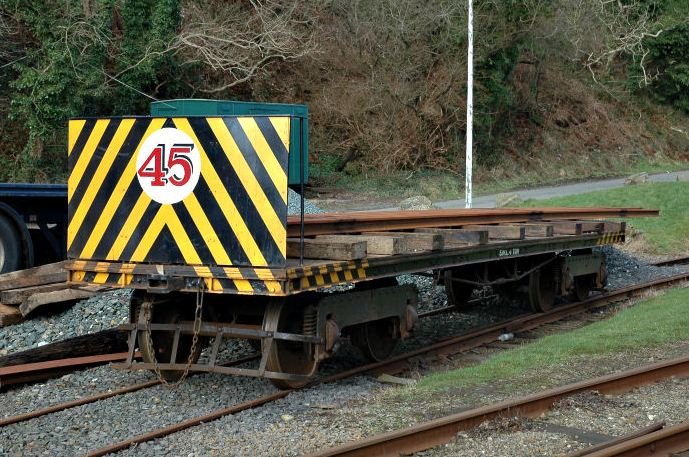
Other rolling stock on the MER included four roofed ‘toastrack’ trailers which were lost in the 1930 fire (Nos. 34, 35, 38, & 39); two ‘toastrack’ trailers in storage (No. 50, withdrawn in 1978; and No. 55, withdrawn in 1997); two ‘toastrack’ trailers being rebuilt in 2020 (Nos. 36 & 53); nineteen available for passenger service in 2020 (Nos. 37, 40-44, 46-49, 51, 54, 56-62); and two flatbed trailers (Nos. 45 & 52). [2]

MER roofed ‘toastrack’ trailer No. 37 © Gordonastill and licenced for reuse under a GNU Free Documentation License. [6]
Flatbed trailer No. 45 © Gordonastill and licenced for reuse under a GNU Free Documentation License. [7]

In addition to ‘home-based’ stock the MER has welcomed a number of visiting vehicles over the years details of which can be found on Wikipedia. [2]

Returning to the ‘Modern Tramway’ articles: the Journal reported that, “Maintaining this picturesque but veteran fleet has brought its usual quota of problems, and in view of the age of much of the equipment the Company has installed an ultrasonic flaw-detector at Derby Castle works, which is being used very successfully to detect cracks in axles, and has also been used to test axles bought from British Railways before turning them down to size for use in trailers. This method of flaw-detection is markedly superior to the earlier method with magnetic fluid, since the latter could not reveal faults that were hidden by the wheel boss or the gear seating. The car motors are being rewound with glass fibre insulation, which is expected to cure burn-outs caused by the moisture that tends to accumulate while the cars are idle in winter, and should therefore bring longer motor life. Cars 7 and 9 have been fitted experimentally with hydraulic shock-absorbers on the bogie bolster springs to counteract excessive sideways motion, and the Brush type D bogies of car No. 2 have had their axlebox leaf-springs replaced with a system of brackets and coil-springs, allow- ing more movement in the hornways and. giving a smoother ride. The Management hope that these two modifications when combined will give a vastly superior ride on the ten cars with this type of bogie.” [1: p205]

In the second of the two articles, [4] the Journal continued to note that in 1960 further modern compressor sets were purchased from Sheffield Corporation which were fitted to cars Nos.1, 5, 6, 7, 9, 16, 25, 26, 27, 32 & 33.

For a short while after nationalisation a green and white colour scheme was employed to mark the change. It was quickly realised that the vehicles looked their best when painted and trimmed in accordance with their builders intentions. So, in 1962, the Journal noted that, “The more recent repainting of M.E.R. cars has therefore seen a reversion to varnished teak and Post Office red with white and light brown secondary colourings, and with full lining, crests and detail in pre-war style, and many visitors have expressed their pleasure at this reversion. For the open cars, the equivalent livery is red and white, in each case with the full title instead of the initials M.E.R. During the winter of 1960, saloon trailer No. 57 was splendidly re- upholstered in blue moquette, replacing the original cane rattan which dated quite unchanged from 1904, and No. 58 has undergone the same transformation during the past winter; the concurrent refurbishing of the interior woodwork is a joy to behold. The red used on these two cars is somewhat deeper than that mentioned above.” [2: p221-222]

Planned addition provision of four new saloon cars had by 1962 been deferred indefinitely. Grants being only sufficient to address trackwork concerns. And, since inflation had seen the cost of new cars rise significantly, it was likely that in future the Board would “probably be forced back on the alternatives of reconstructing existing cars or buying others second-hand, if any can be found. Unfortunately, the engineering restrictions imposed by the 3ft. gauge and the 90ft. radius curves and reduced clearances are such that none of the available second-hand cars from Continental narrow-gauge systems is acceptable, and although quotations were obtained for relatively modern cars from the Vicinal and the E.L.R.T., the Vicinal cars were too wide and the cost of the others including modifications was prohibitive. In the whole of Continental Europe, the 3ft. gauge (exact or approximate) is found on electric lines only in Majorca, Linz and Lisbon, and although Lisbon has some two-motor Brill 27G trucks that would be ideal for the MER, the Lisbon tramway staff think the world of them and have no intention of selling.” [2: p222]

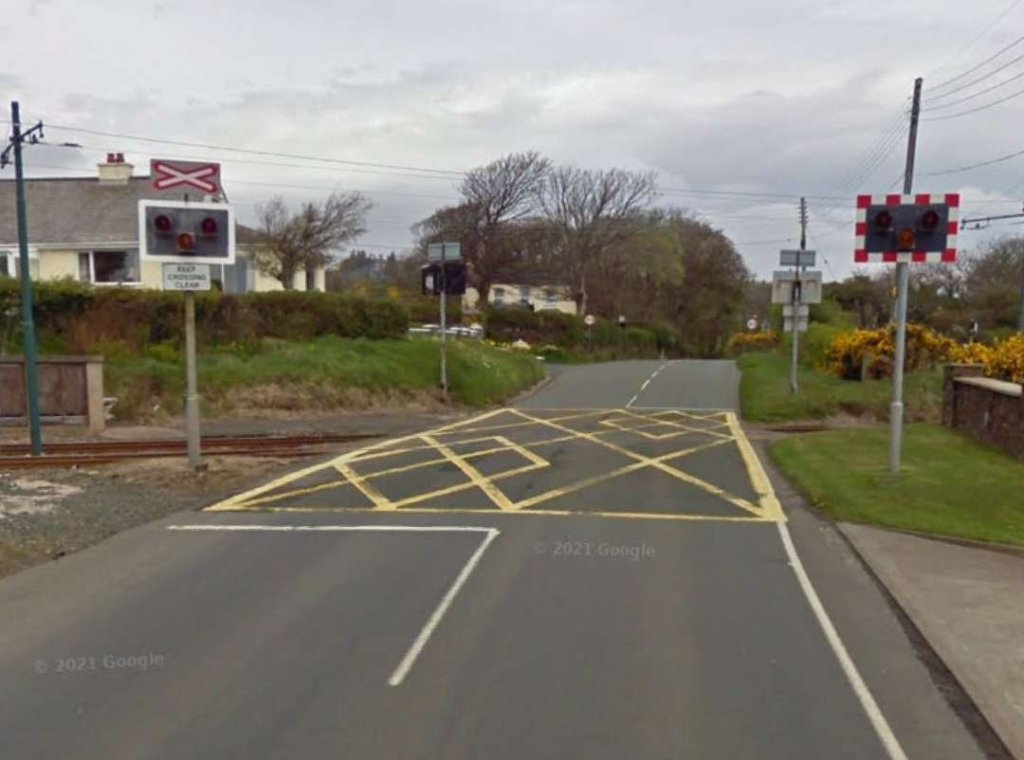
The Journal also observed that “the problem of the two main-road crossings between Douglas and Laxey, … still remains unsolved, and although a quotation was obtained for installing powerful flashing lights, the Highways Board whose responsibility this is has not yet been willing to find the money. This is a pity, for 1962 will see the introduction of a car-ferry steamer from the mainland and the arrival of many motorist visitors unfamiliar with such Manx phenomena as rural electric railways. Despite the vigilance of MER drivers, accidents are likely to continue at these points until something drastic is done; in the meantime, some prominent warning boards and white letters on the road surface would be better than nothing.” [2: p222]

A quick look at Google Maps/Streetview shows that by 2023 that problem had been resolved.

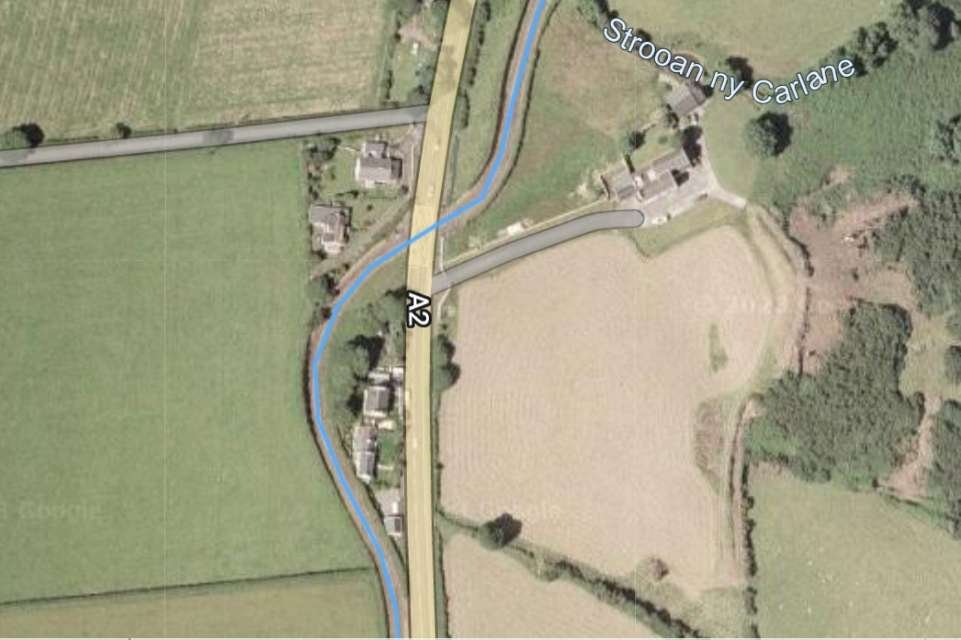
The road crossing closest to Douglas is at the top-right of this extract from RailMapOnline. [5]
The view North-northeast along the A2 at the above crossing. [Google Streetview, October 2010]
The road crossing closer to Laxey. [5]
The view North along the A2 at the crossing above. [Google Streetview, October 2010]

By 2010, both crossing points were protected by standard crossing lights.

During the 5 years from 1957 to 1962 traffic, as predicted, fluctuated with the weather. It was “doubly unfortunate that the first two summers (1957 and 1958) were rather poor ones. However, the splendid weather in the summer of 1959 revitalised the railway, and the new Board was happily surprised to find that the returning popularity of the railway was sustained in 1960 and even more evident in 1961.” [2: p222]

The Journal provided a comparison of passenger numbers on a number of heritage lines on the Isle of Man and in Wales. Their table is reproduced below.
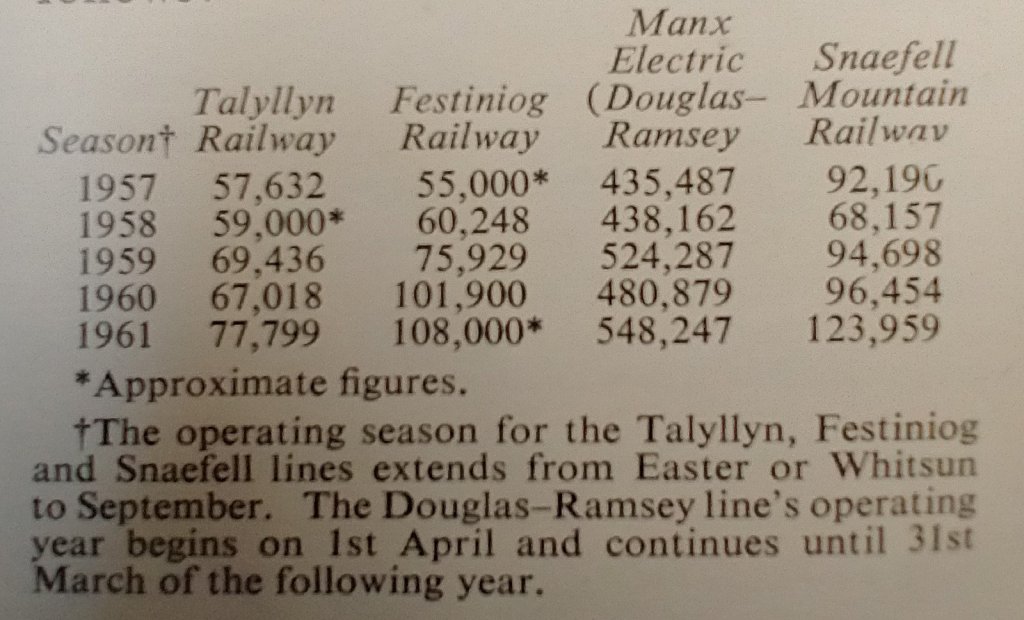
‘Modern Tramway’ cautions against making too much from the figures in this table as season are not comparable. It is clear however that the MER was performing acceptably when it’s performance was judged against its peers. [2: p222]

Throughout 1957 to 1962, the MER operated with the limits imposed by Tynwald (operating revenues plus an annual grant of £25,000, supplemented by monies allocated under employment relief schemes). A wage increase threatened to upset this equilibrium, but Tynwald responded by increasing the annual grant by £3,000 in 1961. Performance improvements meant that the sum was not actually drawn down.

References

  1. Manx Electric 1957-1962; in Modern Tramway, Volume 25, No. 294, June 1962; Light Railway Transport League and Ian Allan, Hampton Court, Surrey, p201-205
  2. https://en.m.wikipedia.org/wiki/Manx_Electric_Railway_rolling_stock, accessed on 4th August 2023.
  3. https://en.m.wikipedia.org/wiki/G.F.Milnes%26_Co., accessed on 5th August 2023.
  4. Manx Electric 1957-1962; in Modern Tramway, Volume 25, No. 295, July 1962; Light Railway Transport League and Ian Allan, Hampton Court, Surrey, p221-225.
  5. https://www.railmaponline.com/UKIEMap.php, accessed on 5th August 2023.
  6. https://commons.m.wikimedia.org/wiki/File:MER-Trailer-37.jpg#, accessed on 6th August 2023.
  7. https://en.m.wikipedia.org/wiki/Manx_Electric_Trailers_45-48, accessed on 6th August 2023.
  8. https://commons.m.wikimedia.org/wiki/File:MER-Tram-2.jpg#, accessed on 6th August 2023.
  9. https://commons.m.wikimedia.org/wiki/File:MER-Tram-16.jpg#, accessed on 6th August 2023.
‘Modern Tramway’ – Blackpool: The Marton Experiment …

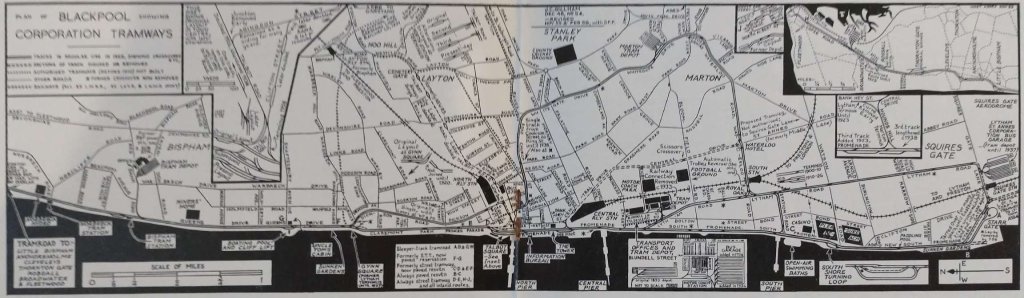
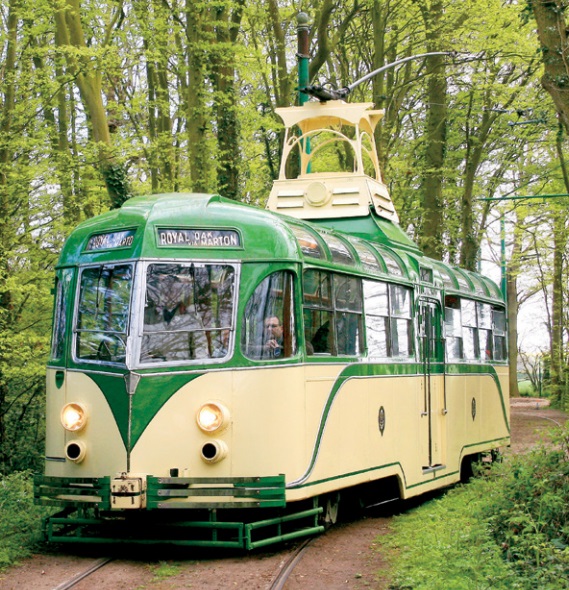
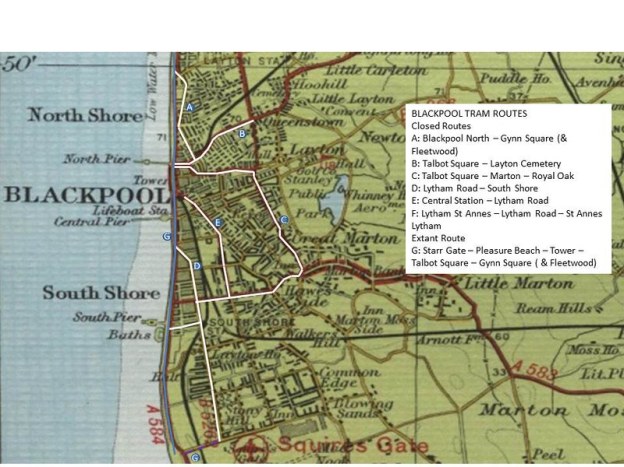
The ‘Modern Tramway’ reported in January & February 1963 on a relatively short lived experiment on Blackpool’s trams. The Marton route was an inland route through Blackpool which complemented the promenade route. It is route ‘C’ on the featured image above. [11]

The two articles were written by F.K. Pearson who suggested that his articles could perhaps have been entitled, ‘The Experiment That Didn’t Quite …‘ [1]

The Marton Route opened in 1901 but by 1938 it was approaching the end of it’s useful life, needing relaying and requiring a new fleet of 15 trams. A decision to undertake the work was deferred by Blackpool Town Council. War intervened and the existing trackwork was patched up to last a few more years.”By the time relaying could be considered again, technical progress had rendered the 1938 plan out of date, and the Marton route was chosen for one of Britain’s most interesting public transport experiments, the only attempt ever made to provide a tram service which by its sheer frequency, comfort and riding qualities could compete not just with the bus but with its future competitor, the private car.” [1: p14] Pearson’s article reports on that experiment, how near it came to success. and where it eventually failed.

Pearson continues:

“The story begins with the acquisition in 1945 by Crompton Parkinson Ltd. of a licence to manufacture in Britain certain equipment similar to that in the American PCC-car, the patents of which were held by the Transit Research Corporation in the USA. The experiments which followed were aimed at producing a vehicle which in silence, comfort, performance and soothness of riding would outshine any existing public service vehicle and rival that of the best private car. Blackpool already had modern trams, plenty of them, designed for the straight, open, track on the Promenade where even orthodox cars could give a smooth and quiet ride, but what was promised now was a tram with silent ‘glideaway’ performance even on grooved street track with frequent curves These route conditions, frequently met with in other towns, existed in Blackpool only on the Marton line, and Mr. Walter Luff the Transport Manager, made no secret of the fact that he hoped to persuade the Town Council to let him use the Marton route for a large-scale experiment that might have considerable repercussions on the future of tramways elsewhere in Britain; in short, to make it a show-piece.

The question of relaying the route was reopened as soon as the war ended, and the Town Council asked for comparative estimates for trams, buses and trolleybuses. Mr. Luff reported that to keep trams would cost £136,380 (£61,360 for new track £75,000 for 15 new cars), buses would cost £56,940 including road reinstatement and depot conversion, and trolleybuses would cost £87,360. He made no secret of his belief that the experiments then in progress would result in a vehicle superior to be existing tram, bus or trolleybus, and the Town Council, wishing to await the outcome of the trials, postponed a decision and asked that the track be patched up for a few more months.

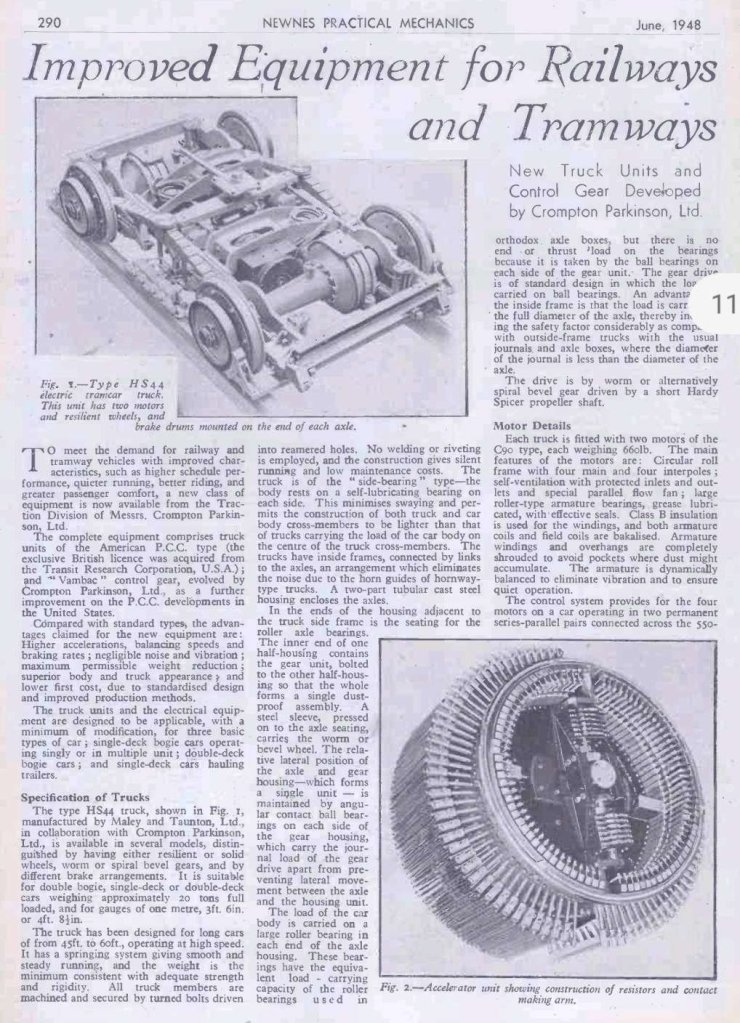
The first objective of the new equipment was silent running on grooved street track. This was achieved by using resilient wheels with rubber sandwiches loaded in shear between the tyre and the wheel hub, which would absorb small-amplitude vibrations arising from irregularities in the track instead of transmitting them through the springing to the rest of the car, and in the process would achieve virtual silence. Furthermore, the resilient wheel allows slight lateral flexibility and reduced side friction between flange and rail, eliminating the usual scrub on curves and incidentally reducing flange wear to an extent which eliminated the need for re-turning the tyre profile between successive re-tyrings. These rubber-sandwich wheels could be unbolted and changed like those of a bus, necessitating a newly-designed inside-frame truck (type H.S. 44) produced by Maley & Taunton, Ltd., who also designed and supplied a “silent” air-compressor to eliminate another source of noise. The experimental trucks were placed under car No. 303, and on 26th April 1946, the B.B.C. took sound-recordings on street track on this and an older car, with the microphone only three feet from the wheels.

With the old-type car the noise was considerable but with No. 393 it was practically nil.

Another traditional source of tramcar noise is the straight spur-gear drive, and this was replaced in the new truck by a right-angle spiral bevel drive, completely silent in operation, and requiring the two motors to be placed fore-and-aft in the truck. In many towns this alone would have led to a remarkable reduction in noise level, but Blackpool also knows how to keep spur gears quiet, and one wonders whether a right-angle drive (less efficient mechanically) can be justified by noise reduction alone. However, these and similar gears had been developed to such a pitch of efficiency for motor vehicles by their manufacturers (David Brown, Ltd.) that their use in a tram presented little difficulty. The technical and metallurgical problems had long since been overcome, and the only question was that of expense.

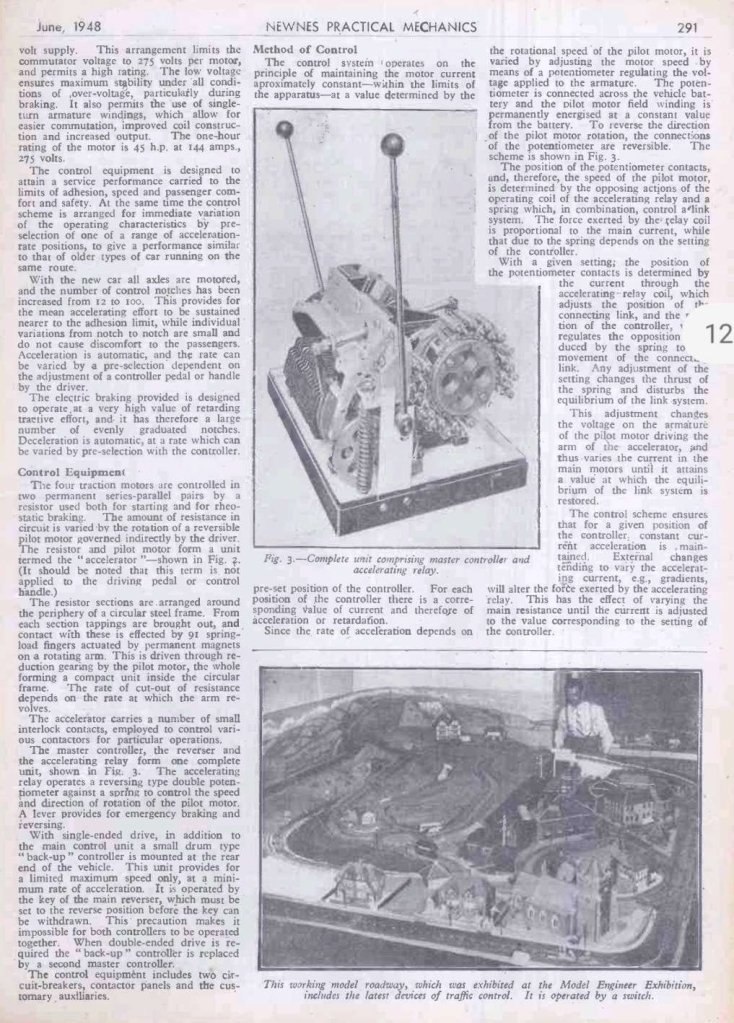
The other main objective was complete smoothness of acceleration and braking with private-car performance, and for this experiments were carried out by Crompton Parkinson, Ltd., using Blackpool car No. 208 to which the experimental trucks were transferred from No. 303 later in 1946. All four axles were motored, giving a possible initial acceleration rate of 3.5 mph. per second, and a smooth rate of change was achieved by arranging the motors in permanent series-parallel pairs and feeding them through a resistance having 94 steps instead of the usual eight. This resistance, mounted on the roof for ease of ventilation, was built around a circular steel frame with contacts on a rotating arm, turned by a small pilot motor, and the master control was by a joystick control by which the driver could select the rate of acceleration or braking required. Acceleration was automatic, for if the lever were left in a constant position the traction motors would accelerate or decelerate at constant current, yet it could also be varied by moving the stick, which explains the trade-name “Vambac” (Variable Automatic Multi-notch Braking and Acceleration Control) used for this equipment. Although inspired by that of the American PCC-car, it differed in several important respects, notably in that it enabled the car to coast. A car with this equipment, operating at the limit of its potential, was expected to consume about 4.5 units per car per mile (about 2.5 times the Blackpool average), but provision was also made to give a lower performance comparable to that of older trams if the two had to provide a mixed service on the same route. This reduced performance later became the Blackpool standard.” [1: p14-15]

Two pages from Newnes Practical Mechanics which give details of the type H.S. 44 bogies produced by Crompton Parkinson Ltd. and Maley & Taunton, Ltd. [4]

It transpired that the complete car was ready to begin trials in December 1946, and the Town Council were very soon invited for a demonstration. The track was now in an awful condition requiring a relay or abandon decision.

“After considerable debate, the Transport Committee recommended that it be relaid, and the Town Council on 8th January, 1947, decided by the narrow margin of 25 votes to 21 to instruct the Borough Surveyor to proceed with the reconstruction of the track. Blackpool Town Council, then as now, included some shrewd business-men, and the fact that they were prepared to spend twice as much on keeping trams than would have been needed for buses is the most eloquent testimonial to car No. 208 and the impression which its revolutionary equipment and performance had made. For the first time, they realised, it was possible for a public service vehicle to offer a performance as good as the private car, and it was bound to be popular.

Work began straight away, using rail already in stock, followed by 600 tons of new rail and Edgar Allen pointwork to complete the job. Other traffic was diverted, with single-line working for the trams, and by the autumn of 1948 new Thermit-welded asphalt-paved track extended throughout the 3-mile route, save only for a short section held back until 1950 because of an anticipated new road layout. …

Meanwhile, the experiments with prototype car No. 208 continued, and by mid-1947 the car (specially equipped with fluorescent lighting) was ready for regular service, though frequently in demand for demonstration runs with visitors from other undertakings. The car was not used on Marton, for the Marton schedules were based on 78-seat instead of 48-seat cars, and for its first three years the new Marton track was traversed by the same cars that had worked the service since the mid-twenties, the gaunt, upright standard-type double-deckers, some of them with open balconies. These had no part in the Marton Experiment, and were due to disappear as soon as the heralded 15 new cars made their appearance.

At this point, compromises were made. Inflation meant that the planned new cars could no longer be obtained at anything like the estimated figure. Blackpool decided, for the sake of economy, to fit the new equipment to existing trams. Twelve surplus modern single-deckers were seen as suitable.

One of the twelve cars that were. Built cheaply in 1939 for use during the holiday season. It had a sunshine roof, secondhand electrical equipment, wooden seats, no partition between driver and passengers, the minimum of interior lighting, waste-high sliding doors, and the upper half of the windows permanently open. The twelve cars were originally built by English Electric. This photograph, which was included with Pearson’s article, shows the tram on 30th August 1939. It shows both the sunshine roof and the wooden seats to good advantage, © Fox Photos Ltd. [1: p17] The copyright of the photograph is now held by ‘Getty Images’ and a link to the original photograph can be found here.

“These cars (10 to 21) had been built cheaply in 1939 for use during the holiday season only, with second-hand electrical equipment, wooden seats, no partition between driver and passengers, the minimum of interior lighting, waist-high sliding doors, and the upper half of the windows permanently open. … Scarcely had they entered service than war intervened and they were put in store, emerging in 1942 with full-length windows, doors and cabs for use on extra workings such as troop specials.

Late in 1947, the Corporation ordered 18 sets of H.S. 44 trucks and Vambac equipment, to enable them to equip sufficient cars to work the entire Marton service, including spares. Rigby Road Works set to work rebuilding the 10-21 series into a new silent-running fleet, soon to become known as the ‘Marton Vambacs’. … Internally, the cars were given soft fluorescent lights, comfortable seats upholstered in brown moquette, new floor-coverings, and tuneful bells. The first car, No. 21, appeared in December, 1949, and its lack of noise when running was quite uncanny, the only remaining sounds being the soft buzz of the “silent” compressor, the hissing of the motor brushes, the clicking of the accelerator contacts, and the sound of the trolley wheel. Even this latter was to have been eliminated in due course, for when the Marton overhead next needed renewal the round wire was to be replaced by grooved wire suitable for use with silent-running carbon skids, of the type used on trolleybuses.” [1: p17-18]

Pearson tells us that, “Conversion of the 12 cars, took just over two years, and during this period the “new” cars could be seen side by side with the older double-deckers. In the eyes of the tramway enthusiast, the “vintage” year of the Marton route was undoubtedly 1951, when about half the service was still in the hands of the venerable but never decrepit standard cars, and mingled with these like gazelles among heavier quadrupeds (a purist might say ‘octopeds’) were the first half dozen Marton Vambacs’.” [1: p18-19]

The map of Blackpool’s trams included in Pearson’s article. [2: p54-55]

In the second installment of the story, Pearson moves on from the Autumn of 1951 to the early months of 1952, when conversion of trams No.10-21 was complete. With No. 208, this meant that there were 13 tram cars serving the Marton route which had to be supplemented at times by older double-deckers. The Council’s resources were by this time dedicated to introducing Charles Roberts cars on the Promenade.

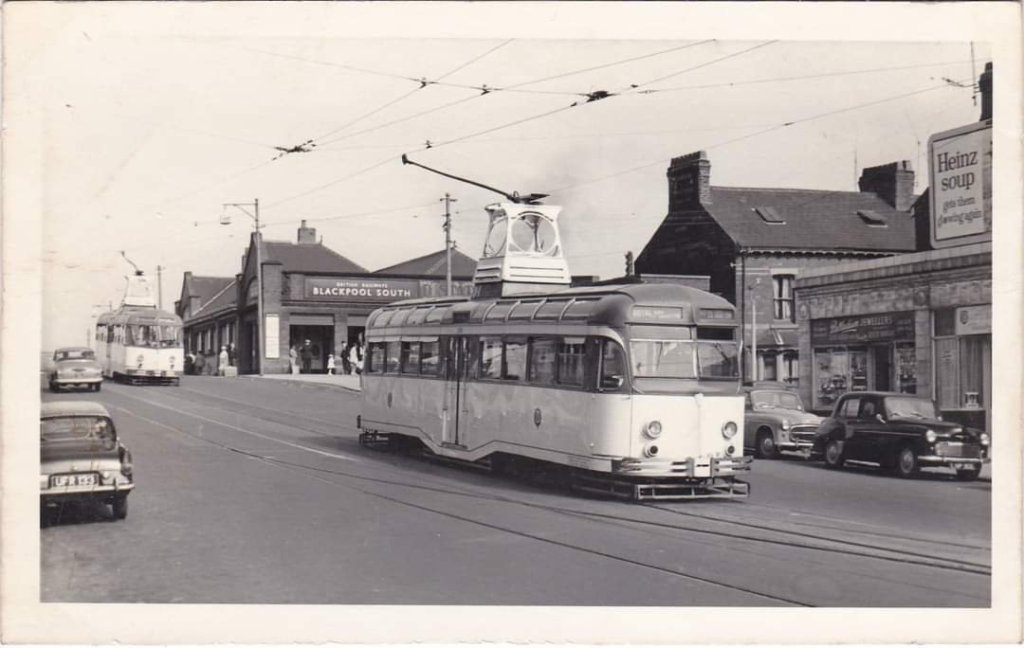
Two of the Marton Vambac trams in Blackpool South. The nearest Vambac Railcoach No. 208 was prototype test bed for the new type of controller & inside frame bogies. Behind is one of the twelve Marton Vambac’s, rebuilt from 1939-built sun saloons. This image was shared on the History of Blackpool Facebook Group on 6th February 2021 by Pete Dumville. [5]

From 1954, when the double-deckers had been withdrawn from service. The Marton route was worked by the 13 Vambac cars and, usually, three pre-war English Electric rail coaches.

It was unfortunate that rising crew costs began to become a significant issue for the Council.

“It may perhaps have been overlooked that the success of the PCC-cars on the street routes in the USA was nearly always coupled with one-man operation. … If passengers were satisfied with the new equipment, so we’re the platform staff.

The manufacturer’s claims were fully borne out, for the automatic acceleration and the provision of simple joystick and pedal control made the cars delightfully simple to drive, reducing fatigue to a minimum and eliminating some of the finer points of instructional training, since “notching up” no longer depended on the driver’s skill. However, it was rather curious to observe the use which different drivers made of the two braking systems, due, perhaps, to the admixture of pre-war and Vambac cars. The Vambac equipment provided a smooth and reliable brake effective down to a speed of less than two miles per hour, and was intended as the main service brake, the air brake being used only for the final stop, brake-shoe life being increased accordingly. This theory can be seen in everyday application on the Promenade, with the post-war cars, yet on the Marton Vambacs many drivers seemed to prefer the familiar air brake for service use, leaving what they termed the “stick brake” in reserve for emergencies. The smoothness of braking was thus dependent once again on the skill of the driver, and the smooth automatic deceleration purchased at such expense was wasted. Other drivers would use the Vambac brake to commence deceleration but would then change to air at a speed higher than intended by the designers for the final stop, and at least one journey made by the writer was marred by the Vambac deceleration being “interrupted” each time while the driver remembered to “put on the air.” One wonders why they were so fond of the air brake, but a possible reason lies in the fact that both terminal approaches were on slight gradients, where the air brake had in any case to be applied to hold the car on the grade, unlike the flat expanses of the Promenade.” [2: p51-52]

Another factor associated with the trial was that of maintenance of the tram cars.

On the one hand, the provision of automatic acceleration and electric braking with minimum and controlled current peaks certainly eliminated the possibility of mishandling the electrical equipment, and must have reduced routine maintenance on the control gear, while the use of cardan shafts and totally-enclosed spiral bevel drives eliminated the troubles associated with the servicing of motor-suspension bearings and reduced the shopping periods. The service availability of the Vambac cars, judging from their daily appearances has been quite as high as that of the orthodox cars, and from this one can safely say that the new equipment must have been fully adequate in avoiding excessive servicing requirements. Moreover, while new and somewhat revolutionary equipment in any field has to cope with the burden of tradition on the part of older generation staff (human nature being what it is), this hurdle seems to have been surmounted with conspicuous success. On the other hand, obtaining spare parts must have been very awkward quite apart from the cost aspect for apart from Blackpool’s own 304-class cars no one else used the same equipment, despite all the hopes that were placed in it. In 1947 the potential British market for modern tramway equipment still included Leeds, Sheffield, Glasgow and Aberdeen, and anyone who had sampled the new equipment could be forgiven for seeing in it a germ of resurgence for tramways and a hope of further orders; but this was not to be. From this aspect, one begins to understand why the five extra sets of trucks and equipments were used as a source of spares rather than to equip further cars.” [2: p52, 54]

An interesting claim made for the new resilient-wheeled trucks was a saving in track costs. Although the track was abandoned before claims of a 30-year life could be tested, the track, “certainly stood up very well to 15 years’ life, and even at the end much of the track and paving was still of exhibition standard, Some of the sharper curves had been renewed, but this was only to be expected, for grooved rail generally lasts four times as long on straight track as on curves. On the sections with non-welded joints (usually) curves), there has been none of the usual deterioration of joints through hammer-blow … [found in] towns using heavy double-deck cars. The one unexpected phenomenon [was] the appearance of a few patches of corrugation.” [2: p54]

Pearson spent a short while alongside a corrugated stretch in Whitegate Drive, listening to sounds made by different types of car. He comments: “The passage of a Vambac car, even on the corrugations, was a process of exemplary quiet, but the occasional pre-war solid-wheeled car produced a roaring noise that told its own story.” [2: p54]

In his opinion, it was the “periodic traverse of the Marton tracks by these few pre-war solid-wheeled railcoaches (and by cars going to and from the Marton depot) that ha[d] given rise to the corrugations, and Whitegate. Drive residents who wrote to the papers in complaining terms can only have had these cars in mind. From the track aspect, it is therefore a pity that the original plan to equip 18 cars was not carried out, for the pre-war Blackpool cars, lacking track brakes, beget corrugations wherever they encounter solid foundations.” [2: p54-55]

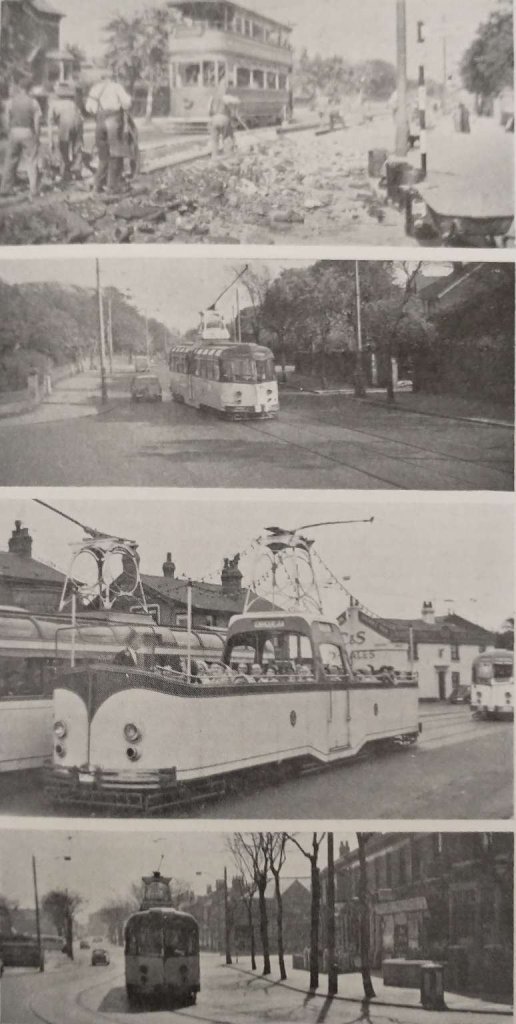
A sequence of monochrome photos which were published as part of Pearson’s articles are shown below. The first four show something of the lifespan of the experiment. The following three show Marton Vambac trams at the various termini of the Marton Route.

The four pictures above span the life of the experiment (1947-1962). The top photograph, taken in 1947, shows the new outward track being laid in Whitegate Drive, with balcony car No. 144 passing on the wrong track. The second photograph shows the finished job some years later, with a Vambac car not far from the same spot, and the third shows one of the pre-war solid-wheeled cars which Pearson blamed for the Whitegate Drive corrugations – 1934 open “boat” car No. 227 on the Circular Tour duty at Marton Depot in 1959, one of the two post-war seasons in which the Department ran a genuine “Circular Tour” via Squires Gate Lane and Marton, loading in Talbot Square. The fourth view, taken only a few weeks before abandonment, shows the track and paving at Devonshire Square, still in good-as-new condition. © C. G. Stevens, R. P. Fergusson, C. E. Macleod. [2: p53]
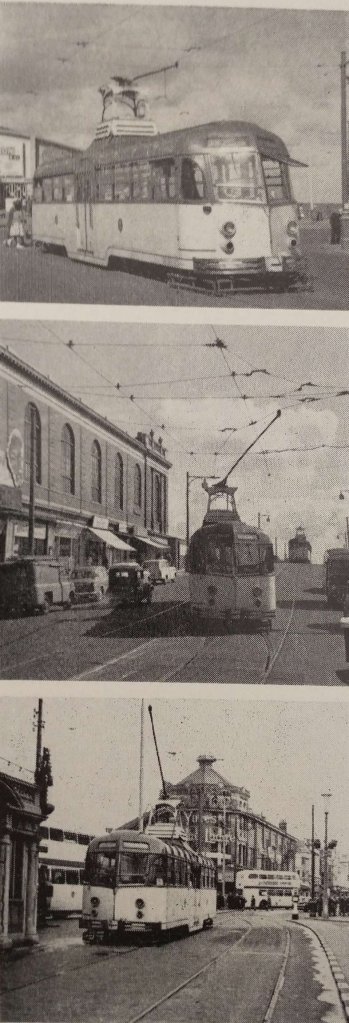
The three pictures above show the three termini of Blackpool’s Marton route, showing 10-21 series Vambac cars. Top, No. 16 at South Pier, the point to which the service was extended in summer (until 1961). Centre, a car reverses on the crossover at Royal Oak in 1960. Bottom, the town-centre terminus at Talbot Square, © K. M. Chadbourne. [2: p52]

Pearson states that:

“From the various engineering aspects – performance, silent running, case of control, routine maintenance, track wear, and availability – the Marton Experiment was therefore a success, even though it did not induce any other tramways to invest in similar equipment. The new equipment did all that the manufacturers claimed for it, and once the teething troubles were overcome ha[d] continued to function smoothly and efficiently for more than 10 years, with no further modifications of any importance. The Crompton Parkinson/Maley & Taunton Vambac/H.S.44 combination represented the ultimate development of street tramway practice in this country.” [2: p55]

Pearson considered that the VAMBAC trams had infinitely superior qualities both in riding and silence, so far as solid track was concerned. They were popular with the public – when abandonment was first proposed there was a significant outcry from customers who said that the VAMBAC trams were the finest transport service they had known. “Marton residents organised a massive petition to the Town Council for its retention, without any prompting from tramway-enthusiasts, in fact without their even knowing of it. The campaign was headed by Alderman J. S. Richardson, now the Mayor of Blackpool, and it is a sad coincidence that in his mayoral capacity Alderman Richardson himself had to preside at the closing on 28th October, 1962.” [2: p55]

It is Pearson’s view that the main reason for the failure of the experiment and the closure of the Marton tram route was the economic impossibility of two-man operation with only 48 seats per tram. While this was the main reason, there were at least three subsidiary factors: the cost of spare parts; the high energy cost of starting from rest; awkward relationships with other road users as visiting road users were no longer used to mixing with trams in their own communities.

He notes that crew costs in the 1960s accounted for an average of about 75% of a transport budget. Tram costs were higher than buses, the only way to offset that difference was to maximise the customer load-factor (this was effective on the Promenade) or to use tramway units of higher capacity than the largest available bus, so as to bring the cost per seat-mile down to a competitive figure. Had articulated cars been available that would have addressed the issue. “The 48-seat Marton Vambacs were below the minimum economic size … and throughout the experiment the route … had to be increasingly subsidised from the receipts of others. The Marton residents … enjoyed a superb service at considerably less than cost, and were naturally loth to lose it, but any suggestion of passing on the cost by raising the fares to a scale above that of the inland bus routes (as is done in summer on the Promenade) would clearly have been politically out of the question.” [2: p56]

Pearson’s own opinion, expressed in his article, is that the 12 year experiment proved that “revolutionary new concepts in tramway engineering [could] be applied to a normal street route as well as on the special field of the Blackpool Promenade, and Marton’s disappearance [was] a sad occasion for all who [saw] in the tramcar a still only partially-exploited form of transport. Looking back, it seems a repeat of a sadly familiar pattern; the engineering profession has delivered the goods, but the confused pattern of public transport in this country has never made full use of the potential made available by the engineers, electrical and mechanical, who gave practical expression to what [was], for most of us, still a composite dream.” [2: p56]

The Blackpool Trams website tells us that, “the first VAMBAC was withdrawn in 1960 as car 10 suffered accident damage and was scrapped soon after. The second VAMBAC withdrawn was 21 in 1961, which was withdrawn as a source of spare parts for the remaining trams, while 14 was also withdrawn for use as a driver training car. The writing was on the wall for the Marton Route, which had been isolated and lost it’s summer services to South Pier following the closure of the Lytham Road route in 1961, however, the remaining VAMBACS remained in use until October 1962 when the Marton route closed, with 11, 13, 15, 17 and 18 operating on the last day. The VAMBACS remained in Marton Depot and were joined by other surplus trams for scrapping in 1963. … One VAMBAC did manage to survive however, VAMBAC 11 was requested for a tour of the remaining parts of the tramway early in 1963 and was extracted from Marton Depot and made it’s way to Rigby Road. Following the tour, 11 was eventually preserved and found its way into preservation and is now at the East Anglia transport museum, where it still sees regular use today.” [3]

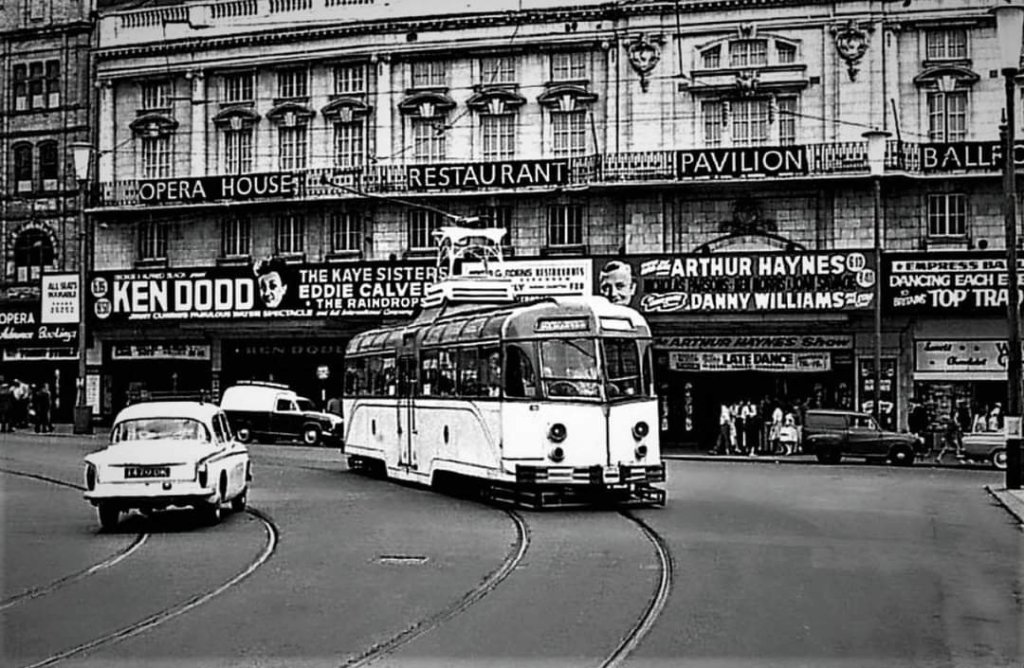
One of the Martin Vambacs in service in Blackpool in the late 1950s or early 1960s. This image was shared on the History of Blackpool Facebook Group on 7th April 2017 by Tony Latham. [6]
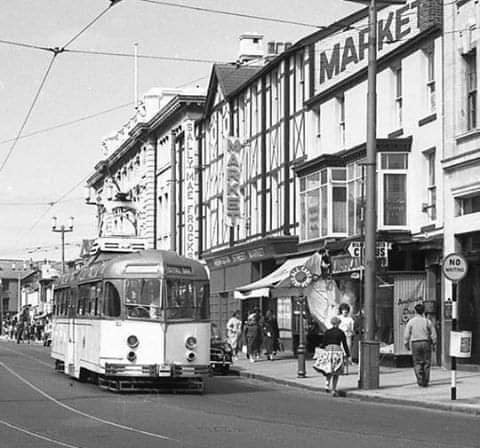
Another Marton Vambac outside Abingdon Street Market. This photograph was shared on the History of Blackpool Facebook Group on 18th May 2023 by Jess Tulloch. [8]
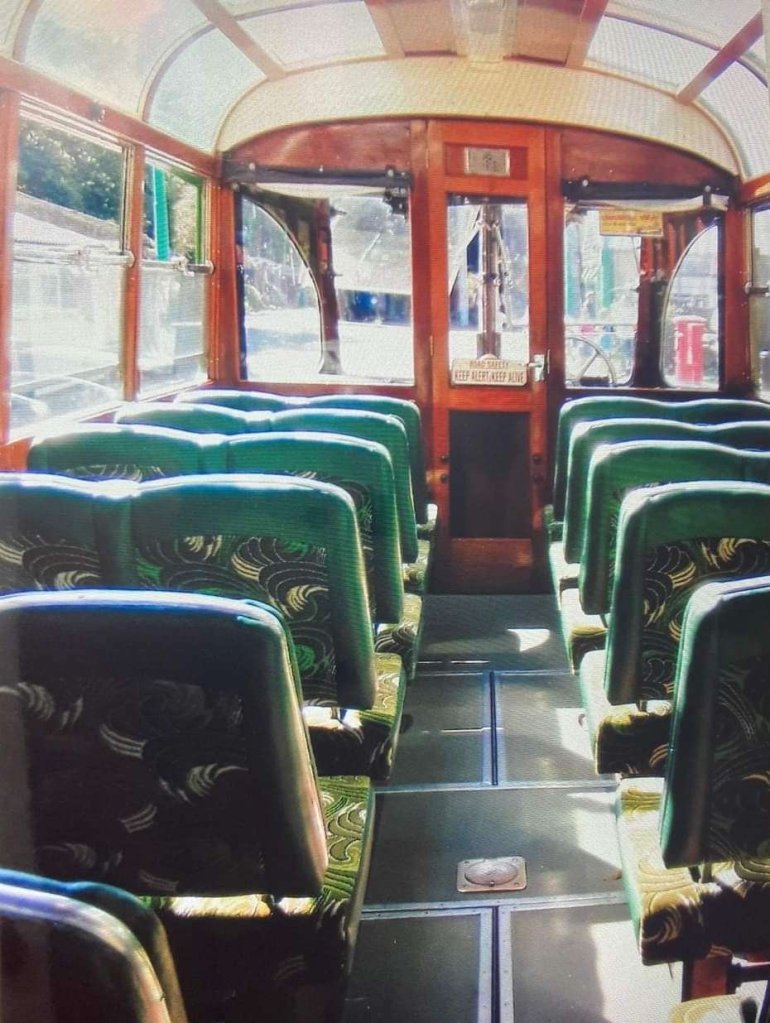
The interior of Marton Vambac No. 11 in its preserved condition at the East Anglia Transport Museum near Lowestoft. This image was shared on the History of Blackpool Facebook Group on 23rd February 2023 by Col Macloud. [7]
A composite image of Marton Vambac No. 11 as used by ‘Videoscene’ in their range of transfers applied to mugs. [9]
Marton Vambac No. 11 at its present home – the East Anglia Transport Museum. [10]

References

  1. F.K. Pearson; The Marston Experiment; in Modern Tramway, Volume 26 No.301; Light Railway Transport League & Ian Allan, Hampton Court, Surrey, January 1963, p14-19.
  2. F.K. Pearson; The Marston Experiment …. ; in Modern Tramway, Volume 26 No.302; Light Railway Transport League & Ian Allan, Hampton Court, Surrey, February 1963, p51-56.
  3. https://blackpool-trams.yolasite.com/vambac-trams.php, accessed on 28th July 2023.
  4. Newnes Practical Mechanics June 1948, p290-291; via., https://www.google.com/url?sa=t&source=web&rct=j&opi=89978449&url=https://worldradiohistory.com/UK/Practical-Mechanics/40s/Practical-Mechanics-1948-06-S-OCR.pdf&ved=2ahUKEwiRjbjumbKAAxVUmFwKHYifAcUQFnoECB0QAQ&usg=AOvVaw24PI5xxITo516frkIf-ZsM, accessed on 28th July 2023.
  5. https://m.facebook.com/groups/blackpoolhistory/permalink/1632707573581243, accessed on 29th July 2023.
  6. https://m.facebook.com/groups/blackpoolhistory/permalink/691364481048895, accessed on 29th July 2023.
  7. https://m.facebook.com/groups/blackpoolhistory/permalink/2196698053848856, accessed on 29th July 2023.
  8. https://m.facebook.com/groups/2251377838346012/permalink/2713552708795187, accessed on 29th July 2023.
  9. https://www.videoscene.co.uk/blackpool-tram-mug-collection-2011-vambac-11, accessed on 29th July 2023.
  10. https://www.eatransportmuseum.co.uk/wp-content/uploads/2021/04/Leaflet2021Web.pdf, accessed on 29th July 2023.
  11. https://www.skyscrapercity.com/threads/blackpool-tram-system-u-c.572141/page-33, accessed on 29th July 2023.

‘Modern Tramway’ in the early- to mid-1960s – February 1963 – The Strange Tale of No. 2

As part of a batch of magazines from the 1950s and 1960s I picked up a number of editions of ‘Modern Tramway’ from 1963 into 1964. ‘The Modern Tramway’ was the journal of the Light Railway Transport League (LRTL). By 1963 it had dropped the ‘The’ and was published jointly by Ian Allan and the LRTL. Its formal title was ‘Modern Tramway and Light Railway Review’.

The February 1963 edition of the journal was priced at 2s 6d.

Among a number of articles in the journal was a piece by G. Hyde, The Strange Tale of No. 2.

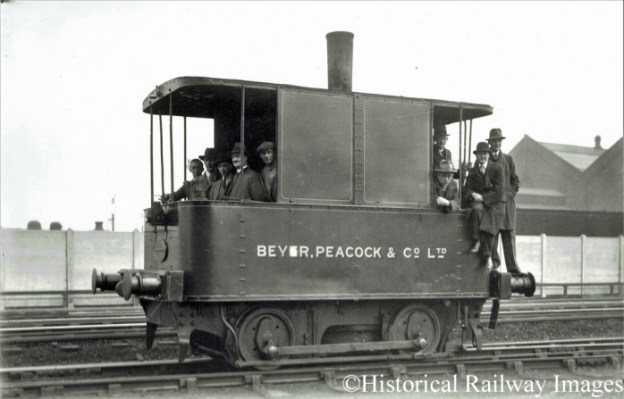
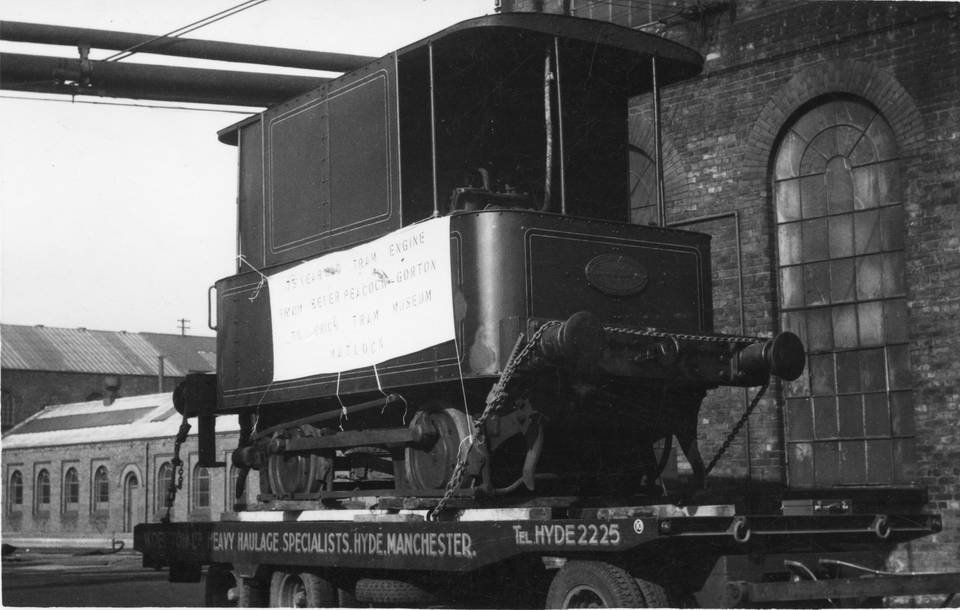
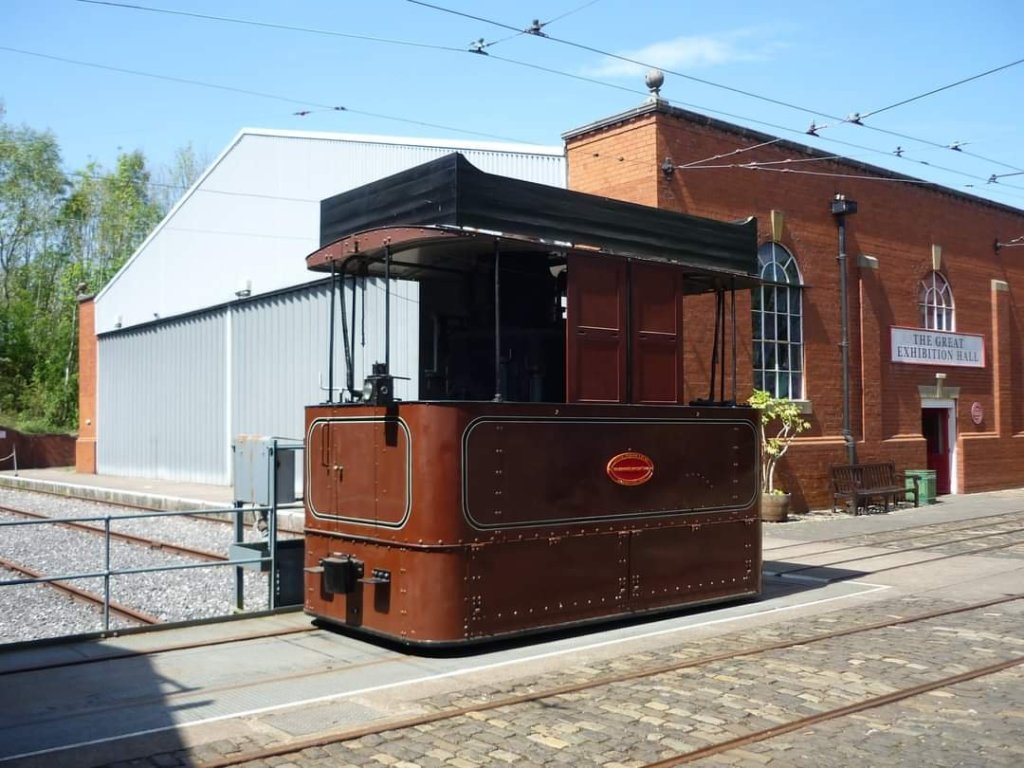
This No. 2 was Beyer Peacock steam tram engine No. 2. It is shown in the featured image above in which it is seen at Beyer Peacock’s works in Gorton, Manchester. [2]

It was originally built to a Wilkinson patent for the New South Wales Government tramways in 1885 and shipped to Australia in April of that year. It made several trial runs on the Redfern Station line of the Sydney steam tramways, but it evidently did not compare favourably with the Baldwin locomotives then in use there. Hyde says that, “It was reputed to have a heavy fuel consumption. and Beyer Peacock’s received complaints about the difficulties in maintaining a sufficient head of steam, but the engine hardly had a fair trial as only short runs were made with it, and the drivers’ inexperience may have contributed to its shortcomings. The trials were invariably carried out after midnight so no photographs were taken of the engine in service; neither was it ever incorporated into the Sydney tramway stock, consequently it never had a fleet number. Whilst in Australia it was referred to as ‘John Bull’.” [1: p48]

After its short unsuccessful trials in Sydney, John Bull was shipped to the small port of Wollongong and worked the isolated Wollongong-Clifton section of the New South Wales Government railways. It stayed there until the section was connected to the main coastal line in 1886.

Hyde commented that at this point “John Bull” disappeared. “Nothing further is known about it until it turned up again at Manchester in 1890, when it featured in Beyer Peacock’s stock list as yard engine No. 2. The mystery of this missing four years is heightened by the fact that Beyer Peacock’s records refer to the engine as having been salvaged, and returned to their works. This led to the rumour which persists in the Gorton works that No. 2 fell into the sea at one point during its travels round the world.” [1: p48]

In 1890 the loco was modified, the duplicate controls were removed, as also were the wheel curtains, then railway type buffers and drawgear were fitted.

In 1915 a steam brake was fitted, then in 1930 a new boiler was installed and in 1958 a new steam dryer was fitted. It was ultimately withdrawn from service in early 1959.

Hyde asserted that No. 2 was “certainly the biggest tramway engine ever built to Wilkinson’s patent, and was one of the most powerful steam tramway engines ever to be built in this country Its gross working weight of 16 tons compares with the 12 tons of the heavy 83-86 class Wilkinson engines of the Manchester, Bury, Rochdale & Oldham tramway, one of which is being kept by the British Transport Commission.” [1: p49]

Hyde provided detailed information about No. 2. … It had two simple cylinders, 9.5 in. diameter by 12 in. stroke. The crank axle had a pinion in the centre with 20 teeth geared to a spur wheel on the driving axle having 33 teeth, thus having a ratio of 1.65 to 1. It was fitted with a Stephenson type link motion. The four coupled driving wheels were of 30 in. diameter, with a wheelbase of 6 ft. 8 in. The water capacity was 225 gallons and there was a fuel space of 11 cubic feet. The vertical boiler was of the Field type, and had 121 tubes, each with an outside diameter of 2.13 in. The tubes, which project down into the firebox, were between 19 and 27 inches long, and had fitted concentric open-ended internal tubes known as circulating tubes. The working pressure is 150 lb. per sq. in., and the total heating area was about 184 sq. ft. with a total fire grate area of 10.8 sq. ft. The engine has an overall length of 13 ft 6 in. and an overall width of 7 ft.

“For close on 70 years, No. 2 trundled round the Gorton works of Beyer Peacock’s being affectionately known there as Old Coffeepot,” and it is hoped that it will now see many more years of active life at the Crich Tramway Museum. In the erecting shops at Beyer Peacock’s the wheels were re-tyred and the new tyres turned down to tramway standards. Then, after boiler inspection and insurance formalities had been completed, it was despatched to join the T.M.S. fleet at Crich as the only working British steam tram engine.” [1: p49]

Hyde noted that “Project Steam Tram” would involve the Tramway Museum Society in some heavy capital outlay, and that the Society was appealing to tramway enthusiasts to take an interest in the project and support it with donations. [1: p49-50]

More recent research has filled in some of the unknowns which Hyde commented on in 1963. It was Beyer Peacock Works No. 2464 and carried an operational number of 47 in Australia. In the missing years the locomotive is thought to have spent time working in Illawarra between 1887 and 1888 prior to returning to the UK in 1889. That it was at Illawarra may be a reference to its work on the Wollongong-Clifton section of the New South Wales Government railways. If so then it remained in New South Wales longer than the article in ‘Modern Tramway‘ suggested. [2][3]

As a works shunter, the tram operated in the firm’s large works complex towing huge Beyer-Garrett locomotives from one shed to another.

No. 2 in 1962 at Gorton Works just prior to its journey to the Crich Tramway Museum, © Crich TMS Archives. [3]

After arriving at Crich in 1962, No. 2 “was operated under steam for some years from 1966. A period of off-site storage between 1971 and 1978 was followed by a return to steam in the 1980s, during which it even performed on the Santa specials. However, the work involved in firing it up, supplying it with coal and clearing away the ash helped to explain why steam traction gave way to electricity on Britain’s tramways in the early years of the twentieth century.” [3]

Beyer Peacock steam tram No. 2, New South Wales Government Steam Tram No. 47 at the Crich Tramway Village, © John Huddlestone and shared by him on The Tramway and Light Railway Society Facebook Group on 15th May 2022. [4]

Crich Tramway Museum’s website tells us that, “because it was destined for export and as it was expected to be pulling much heavier loads it was much larger than those built for the home market. With 30 inch driving wheels and weighing almost 16 tons it was a true giant of a tram engine, though it did boast a number of features in common with other road-going locomotives including the fully enclosed wheels and a mechanism – in this case a “Wilkinson Patent” exhaust superheater – that was designed to reduce the amount of smoke emitted.” [3]

References

  1. G. Hyde; The Strange Tale of No. 2; in Modern Tramway Volume 26 No. 302, LRTL  and Ian Allan, Hampton Court, Surrey; February 1963, p48-50.
  2. https://preservedbritishsteamlocomotives.com/beyer-peacock-company-works-no-2464-no-47-john-bull-0-4-0vb-tram, accessed on 26th July 2023.
  3. https://www.tramway.co.uk/trams/new-south-wales-47, accessed on 26th July 2023.
  4. https://m.facebook.com/groups/www.tlrs.info/permalink/557174155756970, accessed on 26th July 2023.

The Modern Tramway, May 1957 – Rotterdam’s Trams in the 1950s

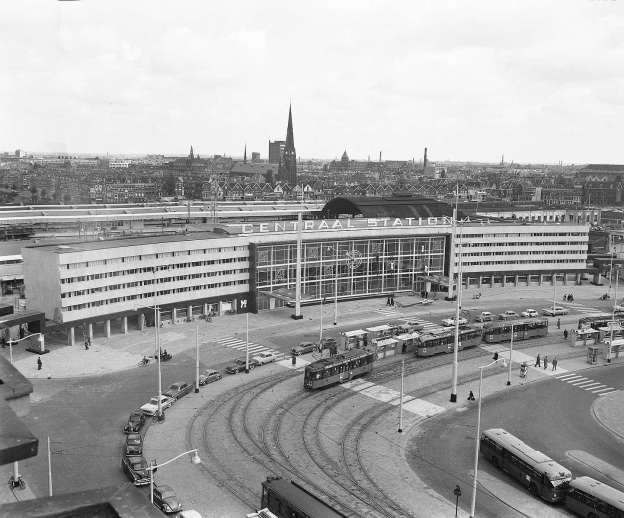
This short article could be entitled, ‘The Modern Tramway takes on the Manchester Guardian‘. In. Its May 1957 journal the Light Railway Transport League asks whether its readers had read the Manchester Guardian on 22nd January. The featured image shows trams in Rotterdam in May 1957. [3]

In an article entitled ‘A Twisted Tale’, The Modern Tramway Journal is surprised to see the Manchester Guardian being taken in by the spirit of the current age which was decidedly anti,-Tram. [1: p83]

Did you read the ‘Manchester Guardian’s’ account of the re- building of Rotterdam in the issue of 22nd January? It was a good article, catching the spirit of the modern conception of town planning, and making you feel that the writer had not only visited Rotterdam but had been genuinely inspired by the creat- ive talent of its designers until you got to his last sentence, which pro- vided so violent a contrast that it might have been written by a different person. It read: “It is odd to see trams still clanking through the city and to hear that there is no intention as yet of scrapping them.”

Whatever was the writer [on] about? Rotterdam’s trams are among the finest and most modern in Europe, as well as some of the quietest, a system that conforms to the League’s highest ideals and amply attains its motto of “Vlug, veilig en goedkoop (fast, safe and cheap).””

[1: p83]

As the article goes on to explain, “nothing about a Rotterdam tram could remotely be described as clanking; they run on track entirely free from dropped joints and corrugations, and their noisiest feature is the click of the controller ratchet. As for the town planning aspect, if you have visited Rotterdam during the last 10 years you will have seen how the rebuilding of the city went hand in hand with the rebuilding of the transport system; the tramways in the main streets in the city centre are now sited on central reservations, free from other traffic, and the busiest stops are laid out with a foresight rare else- where, the track dividing so that each group of routes has its own stop and shelter side by side. The service the trams give is one of the finest a city could have, a smooth, effortless flow of high-capacity vehicles operating at the cheapest fares in Holland, and how any trained observer could visit the city and fail to be impressed by it is difficult to understand.” [1: p83]

While it may have been true that the oldest tramcars on the Rotterdam network were contemporaries of the HR2s in London they were actually almost silent! Indeed, The Modern Tramway expressed surprise that the city’s tram company(Rotterdamse Ekectrische Tram (R.E.T.)) considered those vehicles due for retirement. Apparently the company had already ordered a first batch of replacement single, and two car articulated sets. Pointedly The Modern Tramway comments:

As for the other post-war cars, their equipment came from Trafford Park, and the ‘Guardian’s’ outburst is hardly calculated to further the export trade of Metropolitan-Vickers who made them.”

[1: p84]

So, what might have been the explanation for the Manchester Guardian’s faux-pas? The Modern Tramway thought that it had an explanation which might be charitable:

Perhaps the writer, putting his impressions on paper some time after his visit, searched in his mind for the sound of Rotterdam’s trams (and failed, since they are noiseless), and unconsciously completed his mental picture by substituting the tram noises he knew in Manchester, the home of groaning motors, rattling windows, dropped joints, broken check-rail, lifeguard trays tied up with string, four-wheel cars with odd bearings, bogie cars with odd trucks and all the rest of it. Either this, or he deliberately set out to mislead and based his words on three quite erroneous assumptions, to wit:

(a) A modern city with trams is odd;

(b) Trams, including Rotterdam ones, clank;

(c) Rotterdam’s trams will ultimately be scrapped, but not as yet.

We had always looked on the Manchester Guardian as a factual paper with a liberal outlook, a traditional supporter of oppressed minorities, and free of the bigoted outlook that is so often present elsewhere. We did not expect a paper that devoted page after page to the horrors of shipping live horses to Antwerp to show the customary English attitude of ignorance and intolerance towards tramcars; trams, after all, are a persecuted minority without the means of defending themselves.”

[1: p84]

I suspect that The Modern Tramway editor had his/her tongue firmly in his/her cheek as they penned that last paragraph!

The article continues:

If the contributor had written about St. Malo or Douai or Maubeuge or some other of those French towns whose trams were capable of racing a tortoise on equal terms then we might have felt a glimmer of sympathy, but the article was on Rotterdam, and it is possible only to say that the remarks were inappropriate, misleading and absolutely untrue.

Of course, we wrote to the ‘Guardian’; on enquiring among our readers who know Rotterdam, we found that they too had not been slow to refute this smear against the R.E.T., and we believe that some of the Guardian’s’ overseas readers wrote as well. Last (but by no means least), our friend Ir. Bogstra, the General Manager of the R.E.T., was so surprised by the Guardian’s remarks that he sent the paper a set of photographs of the newest trams and a coldly factual analysis of the reasons why Rotterdam prefers trams to buses. From all this, we might have expected to read at least one “Letter to the Editor” disagreeing with the contributor, but all that happened was the appearance of a childish note of defiance in the “Miscellany” gossip-column a fortnight or so later, expressing surprise that there were such things as silent modern trams; because the word “tram” rhymed with “slam” you expected it to be noisy, and so on in the same vein. There are newspapers from which we should have expected unenlightened comment, but we never thought that we should have to include the Manchester Guardian’ among their number.”

[1: p84]

Rotterdam’s Trams remain an integral part of the city’s transport provision. “Opened in 1879, the network currently has nine regular tramlines, and three special or seasonal tramlines. It has been operated since 1927 by Rotterdamse Elektrische Tram (RET). The tram network is the city’s more extensive public transport system, while the rapid transit Rotterdam Metro is the more utilized system.” [2]

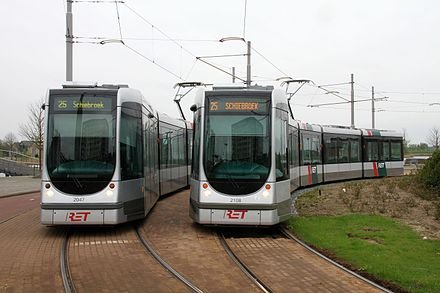
Trams in Rotterdam in the 21st century. These two were both built by Alstrom. The image shows two generations of Alstom Citadis trams; the older one is on the left and the newer on the right, © Maurits90 (Public domain). [2]

References

  1. A Twisted Tale; in The Modern Tramway, the Journal of the Light Railway Transport League; May, 1957, p83-84.
  2. https://en.m.wikipedia.org/wiki/Trams_in_Rotterdam, accessed on 1st July 2023.
  3. https://commons.m.wikimedia.org/wiki/File:Centraal_Station_in_Rotterdam,_exterieurs_en_interieurs,_Bestanddeelnr_908-6089.jpg, This is an image from the Nationaal Archief, the Dutch National Archives, donated in the context of a partnership program, © Herbert Behrens/Anefo, it is shared here under the Creative Commons CC-0-1.0 Universal Public Domain Dedication.

‘The Modern Tramway’ – April 1957 – “Down the ‘Goldmine'”

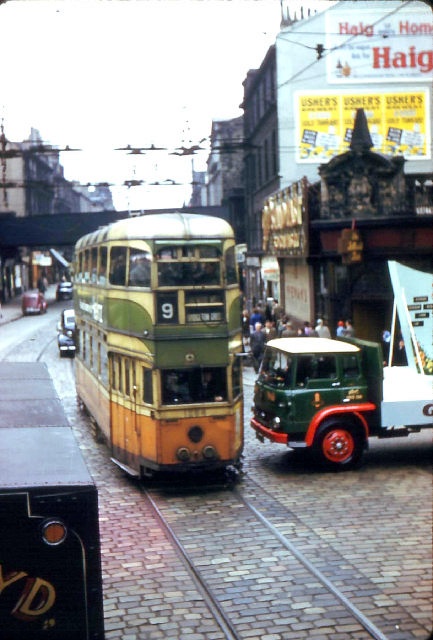
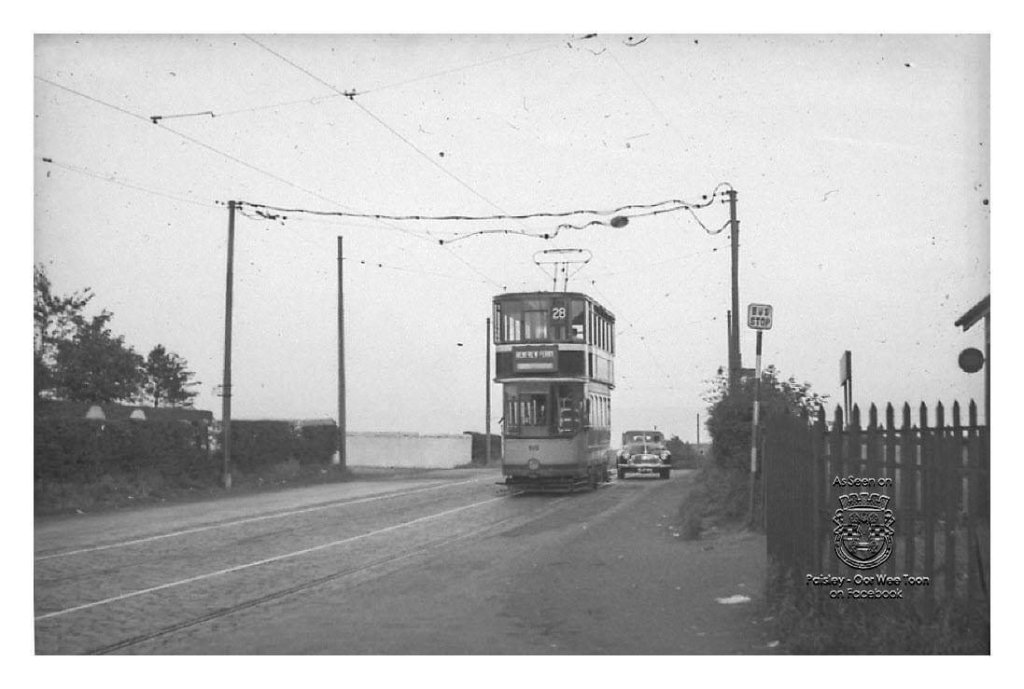
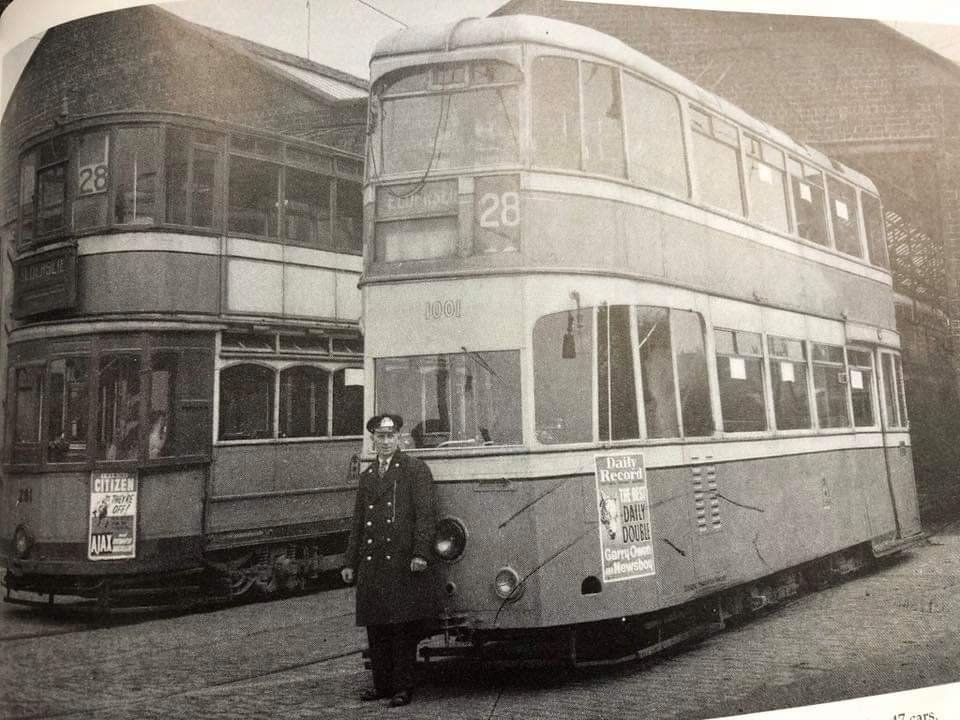
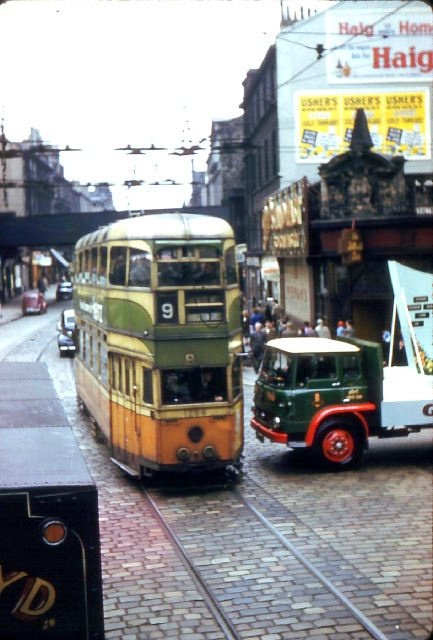
The Modern Tramway Journal of April 1957 included a nostalgic look at one of the Glasgow tram network’s successes. [1] An ‘out-boundary’ route, No. 28, which at one time was part of the longest tram route in the UK, almost 23 miles in length. End to end it was a 2 hour tram journey. At that time, the early 1930s, the route from Renfrew Ferry to Milngavie was numbered 14. “In 1943 it was cut at Spiersbridge and renumbered 28, and on 3rd April 1949, the Glenfield – Cross Stobs section was closed.” [1: p61] The truncated line (No. 28) ran from Renfrew Ferry to Glenfield – a distance of 5.24 miles.

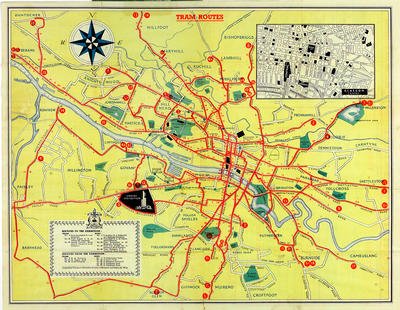
For some general information about Glasgow’s trams, please look towards the end of this article. First, we focus on Line No. 14 which was renumbered 28. …

The route of Line No.14 passed through the following ‘stations’/stops:

Renfrew (Ferry Road, High Street, Paisley Road); Paisley (Renfrew Road, Gilmour Street Station, Causeyside Street, Neilston Road); Barrhead (Cross Arthurlie Street, Main Street, Darnley Road); Nitshill Road; Jenny Lind; Thornliebank Main Street; Mansewood; Pollokshaws Road; Shawlands Cross; Strathbungo; St Andrew’s Cross; Laurieston; Glasgow Bridge; Union Street; Renfield Street; Sauchiehall Street; Cambridge Street; Gartnethill; St George’s Cross; Queen’s Cross; Wyndford; Maryhill (Maryhill Road); Bearsden (Milngavie Road); Milngavie (Main Street). [4]

Line 28 was much reduced in length, as we have noted, it still ran from and to Renfrew Ferry but the locations mentioned by Coonie in his article do not appear in the list above.

Glenfield Road and Caplethill Road met close to the Glenfield Terminus of the No. 28 route. The image below shows the terminus in use.

The Glenfield tram route terminus. This photograph was shared on the Paisley Oor Wee Toon & Environs Facebook Group on 27th May 2016, © Frank Ross. [10]
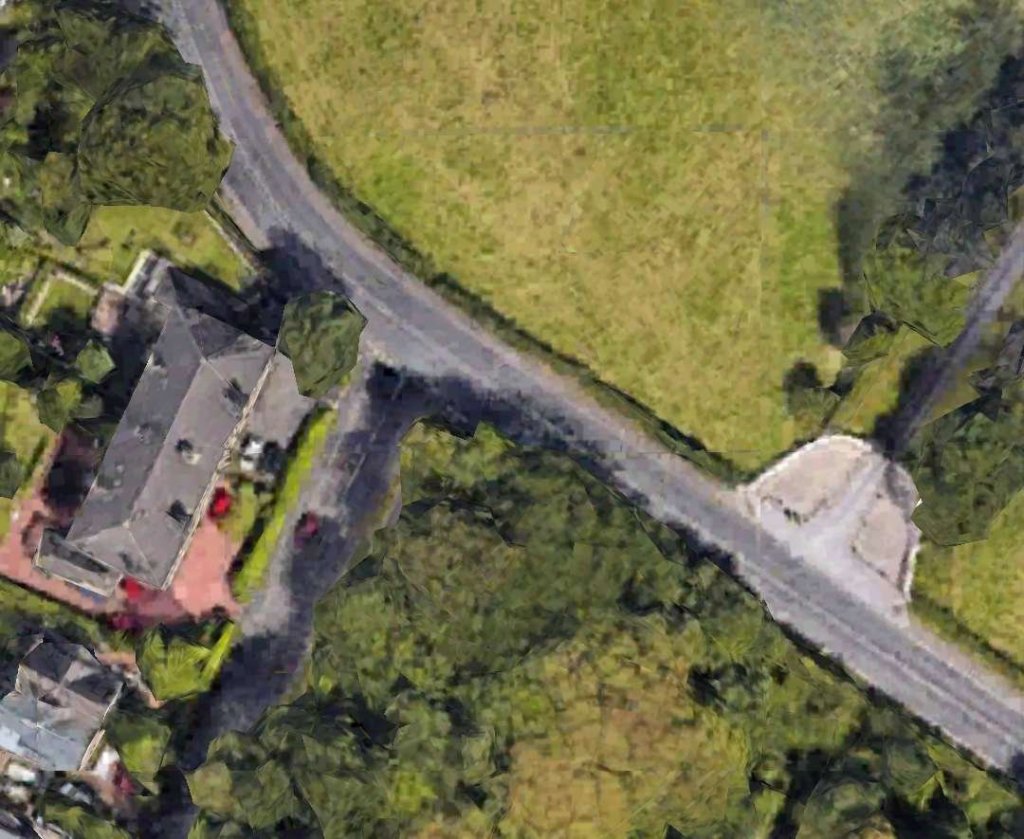
The Glenfield Terminus was on Caplethill Road between Glenfield Road (on the left) and the entrance to Thorscrag House (on the right). [Google Earth, June 2023]

The old No. 14 continued beyond this terminus following Caplethill Road to Barrhead and then left Barrhead along Athurlie Street continuing on through the centre of Glasgow. As you will see below Coonie talks of the Glenfield Terminus being ‘out in the wilds’. [1: p63] Even in 2023 this appears to be the case!

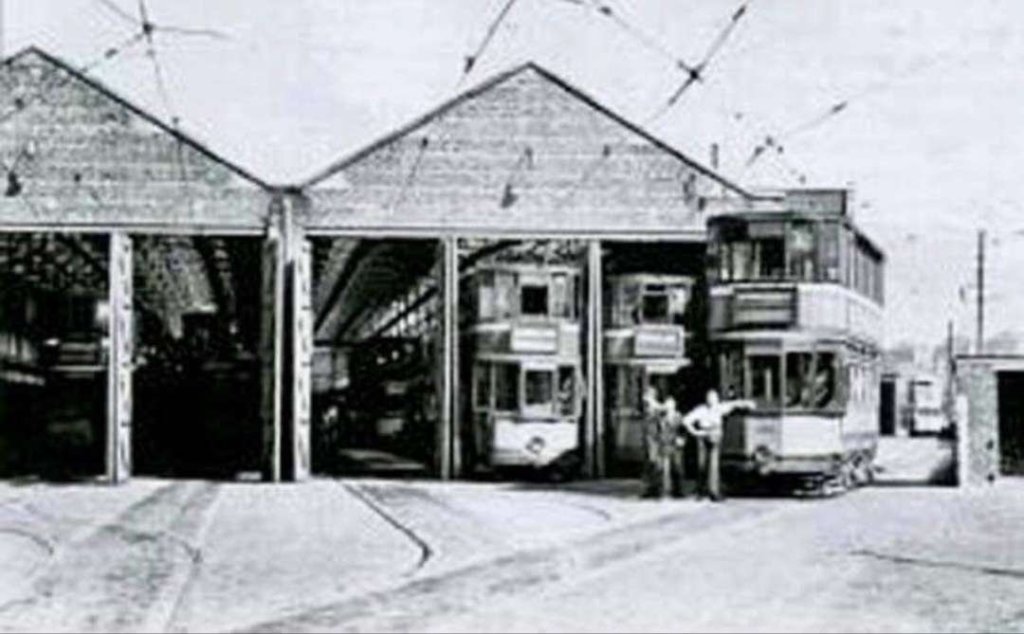
The Elderslie Depot mentioned by Coonie below is, of course, long-gone. Elderslie itself remains, South of the A737 to the West of Paisley and also immediately to the South of the railway line from Paisley to Johnstone. The tram depot was on Main Road, Enderslie. It was opened in 1904 by Paisley District Tramways, it was acquired by Glasgow City Transport in 1923. It was also used as as bus garage between 1932 and 1955 and eventually closed in 1957. The entrance was just before the railway bridge.

Elderslie Tram Depot. This image was shared on the Paisley Heritage Facebook Page on 1st March 2020. [11]

The nickname for the No. 28 route was ‘The Goldmine’ as the pence-per-mile average was well above the city average!

In his article, Coonie talks first of the old line (No. 14):

It is a rare “double-ended” service, taking the crowds both ways at once, shipyard workers to the Clyde, engineering workers to Porterfield Road, shop and office workers into Paisley, factory workers to the south side, workmen’s business and shopping traffic all up and down the same five- mile stretch, with busy two-way peaks but without the awkward tidal traffic flow so common in city transport and yet so uneconomic. Of all the out- boundary routes, the 28 is probably the only one they are sorry to lose; the others lost £80,000 a year, but not the “Goldmine.” It has a history too. In the days of Paisley District Tramways it ran from the Ferry through Renfrew and Paisley burghs to Barrhead and beyond, and after the 1923 take-over Glasgow made it part of Britain’s longest tram route-22.9 miles and two hours, the No. 14 from Renfrew Ferry to Milngavie.  … The weekday service is every six minutes (73 before mid-day), with two and three-minute intervals at rush hours and extra cars on Saturdays, so that you get 48 cars in the two-hour morning rush, including ten coming round from Elderslie. There are buses too, for Glasgow Corporation have no monopoly in Paisley or Renfrew and four bus companies are on the same road, red, green and blue- and-white buses racing green-and-orange trams, and most of the buses bought second-hand at that. Patons, Western S.M.T. and Cunninghams run from the Ferry to Paisley, McGills and Western from Paisley to Barrhead, all competing with the trams, … but this is the one place where the trams fought back and held their ground.”

[1: p61-62]

Coonie tells the story of the ‘battle’:

Up to 1949, Elderslie had only six modern cars (Nos. 1266-1271) and since one of the loops on the Glenfield- Barrhead section was a bit short, only 4-wheel cars were used there. But with that obstacle removed, things be- gan to warm up; the road-widening scheme north of Paisley gave the trams a real speed-track, a new lye at Porter- field Road kept rush-hour cars clear of the main line, a new crossover at Lochfield Road allowed economical short-workings, and then they brought over twelve more Coronations and five modern 4-wheelers from the city to work the base service, kept the old cars on the 21 or in the depot (except at rush hours) and sat back to watch the fun. It was worth watching; the comfort, the headway and the rapid acceleration soon brought passengers back to the trams and kept them, the average speed including stops was 2 m.p.h. above the city’s average, and although the 28 modernisation was expensive, it paid off. The “Goldmine” was a fine example of what you can do with modern trams if you try – even in 1950 – and although the boundary agreement means that its days are numbered now, that’s politics and no fault of the trams.

Most trips are busy and uneventful, with the accent on good timekeeping and good service, but (keep it dark) the “Goldmine Handicap” is still run two or three times a month, depending on the rosters, the weather, and whether anyone is around. My last race was on [Car No.] 1272 just before Christmas, with Dennis up front … We left the Ferry dead on time, but were held at Renfrew Cross, and the pride and joy of Cunningham’s Bus Service (second-hand ex-London R.T. 1481) got away in front, driven by tram-hater Duncan who once called Coronations a “pile of junk.” Dennis decided to show ’em; he opened her up, but passengers were already leaving the tram stop at Robertson Park to get on the bus, which always gets his goat, and with strange oaths, half-Irish, half-Glasgow, he went on gaining ground to Renfrew South. The road widened out; the Coronation was put on the last notch, traction motors whining, lamp-shades swinging, Rosie the clippie squealing ‘Whit ur you playin’ et?’ as we tore up Moorpark, over the hill, down past the boundary sign and round the curve till at Sandyford Fire Station the R.T. gasped and called it a day. Dennis whined past, picked up six passengers, and kept right on at full power to Paisley North, the 17-year-old tram beating London’s wonderful post-war bus as usual. Officially these things don’t happen, and the names in this story are fictitious, but that’s how the insulator suffered at Moorpark.”

[1: p62-63]
Trams at Elderslie Depot. This photograph was shared on the Paisley Heritage Facebook Page on 1st March 2020. [11]

Apparently, it was important, if one wanted to make a claim to have done the ‘Goldmine’ properly, to start at Enderslie Depot. Coonie describes the route in detail:

The cars for [Route No.] 28 are all shedded at Elderslie; Coronations 1266 to 1283, older hex- dash and round-dash cars, and the five single-truck experimentals 1001-4 and No. 6, dating from 1939-41. No. 6 is “The Coffin”; once a standard car, it was destroyed in the Clydeside blitz of March, 1941, rebuilt as a modern car, burnt out at Newlands Depot in 1948, rebuilt, sandwiched between 1280 and 1282 in 1951 and rebuilt again. But ours is flagship 1279, a Phoenix with a 1954 Coronation body, running number eight due out 6.20 am. On the dark winter’s morning, the wind blows across the railway and the jungle that was once a garden, tended by the staff of Paisley District Tramways; we enter the main road, reverse, cross over, and roar down through Paisley and the darkened High Street, picking up the “regulars” for the south side starch and textile-finishing works. At the Cross, the driver changes the points (no points- man till 7 a.m.), then we take the curve into Gilmour Street, and the passengers rise and swing the seats unasked as we reverse in County Square for the ten-minute run south through the waking town to Glenfield.

Glenfield terminus is almost out in the wilds. A few derelict standards remind you that eight years ago you I could travel by a “Saxby” down the narrow country road to Barrhead, with sharp turns into the loops and the power a bit on the weak side, though that didn’t prevent No. 1005 taking a League party down there in 1947. But we turn the seats, wait for a minute and then head north again; down the grade, past the road from Glenburn housing estate whose people are forever complaining at their bus service, up again through Potterhill where the “nobbery” live and, over the goods line at the old Potterhill station. If you look back now, you see the majestic skyline of the Gleniffer Braes, made famous by the Paisley poet Robert Tannahill.

Things begin to warm up now, with customers at every stop. Over Lochfield Road crossover and Neilston Road, we pass Brown and Polson’s cornflower works and the line becomes a real town tramway with tenements, 3-story buildings and the Royal Alexandra Infirmary. The final descent, Causeyside Street, is rather wider, and then we pass a crossover round a curve, and ride up the 1 in 12 St. Mirren Street Brae to stop more often than not at the Paisley Cross traffic lights. Despite the grade there is no record of any tram accident here, though a bus ran away in a heavy frost some years back. Later in the day, at 9 a.m., 12 noon, 3, 6 or 9 p.m. you can hear the carillon of Paisley Town Hall across the garden in Dunn Square, old Scottish tunes with hymn-tunes on Sundays. At Christmas, the square is a fairyland of coloured lights.

The lights change, we rattle over the points and crossings of the 21 route (Paisley’s best-known sound), and pull up in narrow Gilmour Street, the main loading point for the “Goldmine” to Renfrew. On Saturday, the scene in Gilmour Street has to be seen to be believed, with long queues at both north and southbound stops and never a wasted journey. Then we pass Paisley Municipal Buildings and the old jail, all turreted and crenellated like a medieval fortress, facing on County Square and harmonising with the G.P.O. and the railway station built to the same style. There is a crossover, and a small loop, once connected at both ends to the northbound line but now a fossilised remnant; it was once the terminus of the Abbotsinch service worked latterly by oneman single-deck car No. 92 from Finnieston until it closed on 26th March 1933. The loop was still used for short-working 28s until about five years ago.

Under Gilmour Street bridge we turn into Old Sneddon Street, cross the River Cart by Abercorn Bridge and see on our left the red-brick Abercorn Street sub-station of G.C.T., its siding connected to our northbound track by a trailing point. Excluded from the frequency-change scheme, Abercorn Street is the last sub-station working at 25 cycles, and since its closure will complete the change to industrial frequency at Pinkston this explains why the Department are pre- pared to give up serving Paisley. Just past here, a tenement block juts out and causes the track to become single for twenty feet in Weir Street, the only single track on the Glasgow system, and then we turn left into Renfrew Road, pass some engineering works and Paisley (Abercorn) station, and gain the open road again. There are several schools here, and until 1953 a special school car was run from Elderslie.

Next come Sandyford Road crossover (“Paisley North”), the terminus of the long No. 4 from Springburn. At the fringe of the New Gallowhill housing scheme is a small cairn, marking the spot where Marjorie Bruce, mother of Robert the Bruce, was thrown from her horse and fatally injured. In contrast, there is nothing at all to mark the site of Renfrew tram depot at Newmains Road, which was swallowed up completely by a housing scheme in 1949 after being used for 13 years as a store. We are now on a stretch of road which until 1949 was just a dusty cobbled lane with no pavement and the “Saxby” cars brushing the hedges; to-day it is a fine broad tarmac road, on which the Elderslie Coronations and Govan Cunarders can really show their paces. When the road was widened, the track was completely realigned. Beyond, on the right, we can see the runways of Renfrew Airport, and on the skyline the shipyard cranes of the Clyde and the tower of Glasgow University.

From here, we climb over the hill and down to Porterfield Road (“Renfrew South” on the screens). One of the sights of the “Goldmine” is the 5.30 p.m. scene on the Porterfield Road lye, a new track (with a double-track triangle junction) put in in 1950 to cater for the Babcock and Wilcox engineering works traffic. As the hour approaches, specials arrive from both north and south, from Elderslie and from Govan, to line up on the works track; then at 5.28 the whistle blows, the crowds stream out to the waiting cars, and from 5.31 to 5.38 a queue of packed special cars moves off nose- to-tail, some for Paisley (Causeyside Street), some to Lochfield Road, and some to take the curve at the Cross for Elderslie. The sight is warmly recommended to all tram-lovers.

Passing the Robertson Park (second finest in Scotland) we reach Renfrew Cross and the turreted Town Hall, six times the height of a tram. Away to the right swing the tracks of the 4 and 27, linking Renfrew with Glasgow via Shieldhall and Govan, and we are on our own again, round a slight curve, under the goods railway and past some shipyards on our right, perhaps with a dredger fitting out. Ahead lies the end of the line, the slipway of Renfrew Ferry, and the towering mass of the Clyde Valley Power Station across the water. Originally the terminus was nearer the ferry gates and consisted of a trailing crossover, but this was cut back to ease congestion in 1954 and replaced by a single line in the middle of the road. The slack wire used to facilitate the bow reversal here is one of the longest on the system.

The car comes to a stand; the crew turn the seats, and the passengers walk down to the diesel-electric chain ferry and float slowly across to where other trams – standards, Coronations, Kilmarnock bogies, and strange beasties like 1809 and 1100 – run up and down between cranes and shipyard walls to Whiteinch, Clydebank and Dalmuir. And as we pay the penny toll to enter Dunbartonshire, we can look back at the grid pylon reflected in the water, to the chain of the ferry vanishing into the depths, and to the Coronation standing in Ferry Road beyond, almost out of sight, waiting for another good payload and another run “Down the Goldmine,” the route where the tram hit back – and won.”

[1: p63-65]
A “Coronation” tram in Trongate, in June 1962, three months before the final closure of the system, © Chris Coleman and licenced for use under a Creative Commons Licence (CC BY-SA 2.0) [4]

Glasgow Corporation Tramways were formerly one of the largest urban tramway systems in Europe. [2] Over 1000 municipally-owned trams served the city of Glasgow, Scotland, with over 100 route miles (160 route kilometres) by 1922. [3] The system finally closed in 1962 and was the last city tramway in Great Britain (prior to the construction of new systems in the 1990s). [4]

From a maximum of more than 1,200 trams in 1947, the system was gradually wound down from about 1953 in what proved to be a lingering death.” [8]

Wikipedia tells us that the Glasgow system’s initial network of a few lines expanded greatly in the early years of the 20th century, [5] extending to burghs and rural areas outside the city boundaries which were soon incorporated into it as well as outlying neighbouring towns [6]

The Glasgow Tram Network in 1938. [6]

Glasgow Corporation Tramways

The image above is embedded directly from Flickr. Clicking on this low grade image will take you directly to the image on Flickr. It shows a schematic diagram of the Tramway Network in Glasgow in 1938, © The Magnificent Octopus. [7]

The time of the 1938 Empire Exhibition held in the city’s Bellahouston Park is viewed by some as the apex of the system’s timeline, [6][7] with new cars recently put into service [8] and special routes added for the exhibition, while the city was as yet undisturbed by World War II and subsequent redevelopments, with the trams winding through the dense network of tenements and factories which characterised industrial Glasgow in the first part of the 1900s, [9] but also into some new ‘garden suburb’ developments with widened streets to accommodate the tracks. After the war the trams began to be phased out, although periodic reviews of routes were still conducted. Tellingly, the routes were not extended to any of the large 1950s peripheral housing schemes nor to the new towns being developed outside the city. [4]

References

  1. Ian M. Coonie; Down the ‘Goldmine’; in The Modern Tramway, The Light Railway Transport League, April 1957, p61-65.
  2. https://www.scotsman.com/arts-and-culture/scottish-flashback-glasgow-corporation-tramways-1519953, accessed on 29th June 2023.
  3. https://www.glasgowlife.org.uk/libraries/family-history/stories-and-blogs-from-the-mitchell/times-past-blogs/glasgow-tramways-golden-jubilee-1922-times-past, accessed on 29th June 2023.
  4. https://en.m.wikipedia.org/wiki/Glasgow_Corporation_Tramways, accessed on 28th June 2023.
  5. The Glasgow Municipal Tramways System (extracts from The Tramway and Railway World, 7 September 1911) C Glasgow Transport 1871-1973 (archived version, March 2019); https://web.archive.org/web/20190323045631/http://www.semple.biz/glasgow/gcthistory1911.shtml, accessed on 29th June 2023.
  6. Tram routes, 1938 (Museum of Transport), The Glasgow Story; https://www.theglasgowstory.com/image/?inum=TGSE00122&t=2, accessed on 28th June 2023.
  7. This stunning map shows just how big Glasgow’s tram network used to be . It was sourced  from Glasgow Live, 21 May 2019.
  8. Ian Stewart; Glasgow ‘a city that loved trams’; BBC News, 4th September 2012; https://www.bbc.co.uk/news/uk-scotland-glasgow-west-19474957, accessed on 29th June 2023.
  9. No Mean City: 1914 to 1950s – Everyday Life, The Glasgow Story; https://www.theglasgowstory.com/story/?id=TGSEA, accessed on 29th June 2023.
  10. https://m.facebook.com/paisleyoorweetoon/photos/a.300846973361677/947838858662482/?type=3, accessed on 29th June 2023.
  11. https://m.facebook.com/190989774408411/posts/elderslie-tram-depot-the-location-of-the-tram-depot-in-main-road-elderslie-opene/1483987731775269/#, accessed on 29th June 2023.

The Modern Tramway – Part 5 – Trams and Road Accidents

The featured image shows the aftermath of one accident involving a London tramcar, © Evening Standard. [4]

Professional thinking in London in the early 1950s was that tramway modernisation would reduce road accidents. Accordingly, The Light Railway Transport League was invited to exhibit at a number of post-war Road Safety Exhibitions. [1: p59]

However, on 1st January 1954, a London Transport Executive press release carried the title ‘Tram Scrapping has reduced London accidents’. [2] This claim was based on a study “undertaken … by the Road Research Laboratory of the Department of Scientific and Industrial Research and summarised in a Report issued towards the end of [1953].” [3]

The Modern Tramway noted that the report was a serious well-intentioned piece of research into trends in London traffic accidents. It was “cautious in its approach and highly qualified in its conclusions.” [1: p59] However, the article continues, “the fact is that the parts of this Report, divorced from their contexts, which received notice in the Press appears to have given an incorrect impression, and this we point out lest students of transport fail to draw a proper distinction between the study itself and the conclusions drawn from it.” [1: p60]

This has often been a malaise which had affected public reporting of detailed technical papers. The LTE release chose to remove all qualifying statements and ignored the manifest caution in the way conclusions were expressed by the original report. It perhaps is also symptomatic of a general presumption that tramways (and also railways) were not the transport of the future. The internal combustion engine was seen as the future. At the time, this was not necessarily an unreasonable view. It has, however, been proven to be a significant miss-step in policy direction as the years have unfolded.

The original accident study considered all London accidents from 1950 to 1952, and compared the general trend of all kinds of accidents with those on ex-tram routes; only if the ex-tram route reduction was significantly greater than the more general reduction could the greater reduction be associated with tram-scrapping. So far, so good. BUT of all the accident classes surveyed, only that of ‘Accidents involving public service vehicles’ was found to have a reduction which was statistically significant, and within this class, fatal accidents actually increased, serious accidents were not reduced significantly, and the much-vaunted reduction was, in fact, limited to ‘slight accidents involving public service vehicles’. The L.T.E. handout omitted all mention of this vitally important word ‘slight’ and … gave the same statistical weight to all … classes of accident.” [1: p60]

Surely, one fatal accident is more concern to the community than fifty ‘slight’ accidents, “and the Report confirms the views of the Road Safety Organiser for Greenwich that by disciplining other traffic, London’s trams did at least keep the proportion of fatal or serious accidents well below the average for the whole country. It may well be that in this way, and by the tendency of the tram’s life- guard to reduce the proportion of fatalities in accidents, the tram has saved many valuable lives.” [1: p60]

The Modern Tramway comments that, “the over-simplification of this theme in the L.T.E. handout is the more regrettable in view of the fact that the London Transport Executive were the sole agency through which the results of the study were made public. A different body with no direct interest in the justification of tramway abandonments might have presented the results in a totally different way.” [1: p60]

Perhaps of even greater significance in that contemporary debate was the way in which the different transport authorities and borough councils had created a context in which tramway accidents were more likely to occur. “For eighteen years, every suggestion that would have reduced accidents was turned down on the excuse that the trams were to be scrapped, and dozens of urgently needed road improvement works were held up on the excuse that they must await the final abandonment; no wonder acci- dents happened.” [1: p60]

The Modern Tramway highlighted a number of issues/examples which are worthy of note:

  1. Many tram stops in South London desperately needed to be equipped with loading islands but, except in two isolated instances, nothing was done, even where the road was sufficiently wide to leave room for two lines of traffic between the island and the kerb.
  2. On 11th March 1948, Croydon Highways Committee, acting on the recommendation of their Accident Prevention Sub-Committee and with the approval of the local police, asked London Transport to lay a double tram track through the bottleneck at Crown Hill, Croydon, in place of the single track. This proposal … was rejected.
  3. As part of the general determination not to spend money on the tramways, the headlamps of London’s trams remained obscured until the end by their wartime masks. In most other towns trams would long since have been fitted with separate rear lights, and sometimes also with stop lights and indicators.
  4. The same excuse of eventual abandonment was given when complaints were made about the type of tramway paving adopted, yet when the new lines were constructed in Lambeth for the Festival of Britain it was shown that even conduit tracks could be given a surrounding surface equal to that of the best modern roads.
  5. The cars themselves, although efficient and extremely reliable vehicles, were not always maintained to the best possible standards; this is shown by the fact that in 1947 the men of Telford Avenue Depot actually staged a one-day strike to draw the attention of the public to the state of the vehicles which they were expected to drive. It is also significant that the Ministry of Transport would not allow the sale of ex-L.C.C. cars to other cities unless the braking systems were improved.

The consequences of the LTE’s shoddy approach to the dissemination of the report’s findings were also of significance. The Modern Tramway continues:

Wherever tramways are the subject of Press attacks, the London figures were triumphantly reproduced with a “We told you so” air, often omitting the fact that only accidents involving public service vehicles were concerned and thus making it appear that tramway abandonment reduced all road accidents by a third, which is sheer nonsense. Other papers such as the Yorkshire Evening News developed their own patent theories as to the probable effect of tram-scrapping in their own areas, consequently, ignoring the different conditions. We have not forgotten how this newspaper treated two accidents in Leeds on 10th December, 1953, when the fact that a tram had grazed the side of a lorry, injuring no one, was reported with headline while the case of a 12-year-old girl knocked down by a bus on the same day was relegated to a small paragraph.” [1: p61]

The Report itself extrapolated its own findings, suggesting that if the effects in other towns were the same as in London, then the replacement of all the remaining tram services in Great Britain would result in a further saving of about 1,100 accidents per year. “In fact,” says The Modern Tramway, “any tramway officer outside London would have pointed out … that this gratuitious extrapolation is quite pointless.” [1: p61]

The Modern Tramway went on to point out some of the key distinctions: [1: p61-62]

  • London tramways, for the most part, retained the outmoded conduit system of current collection, with a central slot and broken road surface. Except on the semi-reserved Embankment area lines, no one would have recommended its retention had the tramways been modernised.
  • London tramways were almost completely devoid of reserved tracks, loading islands, and other modern aids to tramway safety. Where tramways on reserved tracks were replaced by buses running on the public highway, the opposite effect has been the case, and accidents had increased.
  • The use of modern vehicles and well maintained tracks in other locations invalidates any comparison.
  • In London, motorists were permitted to overtake stationary tramcars. Elsewhere this was usually prohibited by local bye-laws.
  • In London, buses and trams shared the same road space. Elsewhere, they were kept on separate roads wherever possible.
  • London’s trams relied on a magnetic brake, elsewhere, by 1953, air brakes were in use.

Experience in Sheffield and in a number of German towns suggests that the findings of the report about London were not replicated. In those cases “accident figures had risen as a result of tramway abandonment.” [1: p62]

The Modern Tramway concludes it article with two further thoughts:

  1. Prior to the period examined by the Report, a considerable proportion of the public service vehicles involved in accidents would have been buses and coaches. The article states: “In our experience, a mixed service of buses and trams running along the same road is far more obstructive and dangerous than an equivalent service of one type of vehicle only; in these circumstances the replacement of the trams by extra buses may well result in fewer accidents, but exactly the same effect would be obtained by replacing the buses by extra trams. We understand that this is the case in Brussels, where several pre-war bus routes are now tram-worked and of 14 bus routes in 1939, only three now remain.” [1: p62]
  2. All public service assessments, “the article continues, “should be made, not on a ‘per vehicle’ basis, but on the basis of per unit service to the public. Since it is acknowledged that the replacing bus service is 5-10% less than the corresponding tram service, it follows that there are roughly 73% fewer vehicles, and each has 56 rather than 73 seats, ie., there are 29% fewer replacing seats – and it is seats, on road public service vehicles, which represent service to the public. Assuming, however, that a third of the public service vehicles operating along tram-served roads were buses, there were still 20% fewer public service seats available along ex-tram routes after the scrapping of the trams. If it further be assumed that proportionality might be the criterion for accident assessment, a decrease of 20% in accidents might be permitted before significance is attached to the type of vehicle providing the service; after all, a 20% reduction in tram service might well have produced a 20% reduction in accidents involving trams. The actual decrease in accidents was nearly 30%, so it remains to be tested whether the unexpected extra reduction of 10% was significant in the light of the total number of such accidents.” [1: p62]

In fact, performing a “chi-square” test of significance with the revised figures, in the light of the service provided, showed that any reduction in accident numbers was no longer statistically significant.

The Modern Transport article concluded firstly that London Transport and the Press made far too much of a Report in which its D.S.I.R. authors qualified their conclusions very heavily. And insisted that the observed decrease in accidents is only in ‘slight’ accidents with other accident numbers not having changed appreciably.

It seems to me that there is a salutary lesson here for us all which relates to the need to treat press reports with care particularly where those publishing press releases about those reports may have their own agenda.

References

  1. Trams and Road Accidents: A Fresh London Analysis; The Modern Tramway, Volume 17, No. 196, April 1954.
  2. Tram Scrapping Has Reduced London Accidents; LTE Press Office, G.P.N. 257, 1st January 1954.
  3. DSIR Road Research Laboratory Report R.N. 2061, October 1953. … It is worth noting that the report was not released to public scrutiny but that its substance appeared in reports within the technical press of the time.
  4. https://www.standard.co.uk/news/london/historic-london-when-trams-and-trolleybuses-ruled-the-capital-s-roads-a2923361.html, accessed on 15th June 2023.

The Modern Tramway – Part 6 – Modern Articulated Cars for Stuttgart

The featured image shows one of the 220-passenger articulated tramcar sets in an ex-works condition, © H. Fuchs Wagonfabrik. [1: p70]

The April 1954 edition of ‘The Modern Tramway’ included an article about the introduction of new articulated tramcars in Stuttgart. It is interesting to listen to the discussion about the relative merits of articulated cars and trains of two or three cars coupled together. …..

In April 1954, the first of these new cars were going into service, supplied by H. Fuchs Wagonfabrik A.G. of Heidelberg. As far as I can ascertain, Stuttgart sourced later articulated tramcar sets from manufacturer Maschinenfabrik Esslingen. [2]

“The decision of the Stuttgart authorities to order articulated cars rather than the standard German grossraumwagen was reached after careful consideration of local conditions. The city is very hilly and of 116 route Km.

20 Km. have gradients of from 3-5%.

21 Km. have gradients of from 5-8%.

5 Km. have gradients more than 8%.

and only a very few routes (15 Km. in length), are so slightly graded that they can be considered level. In overcoming the differences of gradient the tramways are very sharply curved and there are many curves with a radius of 20 metres. The city centre is narrow and congested and high speed running is impossible. In order to raise average speeds, the uphill speeds of the trams must be increased.

The articulated design was partly chosen as it gave increased adhesive weight (69% of the available weight is carried on driving axles with forward and rear bogies motored). The new cars are slightly wider than the older types and some realignment of curves was necessary.

Each unit has 60 seats and room for 160 standing passengers. To obtain the greatest advantage from the extra width, sliding doors are fitted, with folding stops. Whilst the capacity is roughly that of a two-car car grossraumwagen set, the total length Is about 5 metres shorter and actually 6.8 metres shorter than a standard Stuttgart three car four-wheeler set. This represents a 20% saving. The reduced length is also an asset in traffic.

Passengers enter through the centre pair of doors and alight from either front or rear. Waiting passengers can therefore concentrate at one point on the loading island and British type queue barriers are being erected to guide passengers to the point where the centre doors will be; alighting passengers are not discharged into the waiting queue. The two conductor’s desks face the entrance doors and passengers can either pass forward or rearward according to the accommodation available.

The new cars will not entirely replace the existing three-car tram-trains of four wheel cars-at least not for some years. The capacity of these sets can be matched to traffic demands, using one, two or three units as required. The articulated cars have not this adaptability and will, there- fore, be used on routes where traffic remains fairly constant through the day; on these routes they will replace 3 car sets (used intact all day), thus representing a saving of one conductor per unit.”

Modern Articulated Cars for Stuttgart; The Modern Tramway, Volume 17, No. 196, April 1954, p70-71. [1]

It is interesting to note that each articulated set was to be staffed by 3 people, a driver and two conductors. Modern UK articulated sets only have a driver and if two articulated sets are paired there would still only be one driver.

The article in The Modern Tramway goes on to provide technical descriptions which came from the manufacturer of the tramcars, starting with leading dimensions:

“Overall length of car, 25 metres (82 ft.); Distance between bogie cen- tres, 18 metres (59 ft. 1 in.); Wheel base, 1.750 metres (5 ft. 9 in.): Overall height from rail level, 3.115 metres (10 ft. 3 in.); Height of floor, 0.82 metres (32.25 in.); Overall width of car, 2.2 metres (7 ft. 2.625 in.); Weight of car including electrical equipment 26,000 kg. (25 tons 11 cwt.); 4 motors having each 58 kW. …

The whole car body including the underframe is built up of edged columns and girders welded together, so that the supporting structure is formed by side wall, underframe, and car roof.

The car roof, which is of the arched type, is fitted with an all-around rain gutter drained by means of outlet pipes located in various columns.

The windows are embedded in rubber, so no draught and rain water can enter. The windows are fixed at the bottom, and sliding at the top.

The car is single-ended. There are four sliding doors arranged on the outside, of identical size and operated from the conductors’ seats through an electro-pneumatic door valve. The door opening or closing operation simultaneously operates the folding footsteps through air cylinders, thus preventing any person from hopping on the car whilst in motion. Should the door remote control fail, the doors can be opened by hand, by reversing an emergency cock.

The two car sections are separated from each other, in the centre, by a “corridor connection.” This was necessary to enable the car to nego- tiate narrow curves, and to compensate for the various movements.

Each of the two car sections includes a conductor’s place of the stationary type, where all necessary controlling apparatus and push- buttons are arranged to operate the doors, loud-speakers, heating systems, etc.

The space available between the two conductors’ places serves as a collecting point for passenger flow. The arrangement of the hand-rails guide the passengers past the conductor to the inside. Since the conductor’s seat is elevated, he has a good view over the passengers entering or leaving the car.

The driver’s cab is separated from the passengers’ compartment by a partition. This partition has been so formed that the electrical controllers are at its upper part, leaving some space for a cupboard below to store lost property. The access is by means of a hinged door.

The controllers and levers to be operated by the driver are arranged so as to be easily accessible.

The lighting equipment of the car consists of fluorescent type tubes running through lengthwise. There is an illuminated number plate on the roof, and an illuminated direction board in the upper part of one side window.

The whole of the cable wiring is arranged in the underframe, and this in suitable conduits adequately protected from splash water. Separate cable tubes lead to the various electrical appliances. The entire Bosch type pneumatic equipment is also located in the underframe. The brake equipment consists of the following:-

Service brake: Electrical braking through the motors;

Additional brake: Electro-pneumatic, hand-operated air brake having at all times at its disposal a brake force supply from bent springs (so- called spring storage brake);

Emergency brake: 6 electro-magnetic rail brakes being fed from a separate battery and directly opera- ting on the rails with a 24,000 kg. force.”

Modern Articulated Cars for Stuttgart; The Modern Tramway, Volume 17, No. 196, April 1954, p71-72.

The article concludes with details  of suspension and bogie centre pins:

Suspension of axles: Through helical springs with no damping at all. There are intermediate rubber layers for silencing, in conjunction with the helical springs.

Steering of axles is through a suspended and continuous spring leaf transmitting the longitudinal and transverse forces to the bogie frame. There are auxiliary axle guards to protect from spring breakage.

Bolster suspension: Undamped helical springs located far on the out- side, with built-in hydraulic shock absorber, serve to quickly eliminate any lateral up-and-down movement. In addition, to cushion the lateral bolster movement and to transmit the force longitudinally from the bolster to the bogie frame, there are rubber pieces arranged on each bolster end, and these pieces are vulcanized on metal plates. The bolster springs are housed in cross-bars suspended on the frame by means of a pendulum. The bolster is led through small stop plates, eliminating wear and tear.

Bogie centre pins: There is an entirely rigid pivot pin transmitting all forces to the bolster. Thus, no lateral sliding pieces subject to wear and tear are necessary. The torsional friction moment is practically non-existent compared with that obtained by use of sliding pieces, resulting in minimum wear and tear of tyres and rail, and insignificant impact effect when curves are being negotiated.”

Modern Articulated Cars for Stuttgart; The Modern Tramway, Volume 17, No. 196, April 1954, p73.

References

  1. Modern Articulated Cars for Stuttgart; The Modern Tramway, Volume 17, No. 196, April 1954, p70-73.
  2. For example, https://en.sporvognsrejser.dk/tram/stuttgart-articulated-tram-416, and subsequent sets, accessed on 15th June 2023.