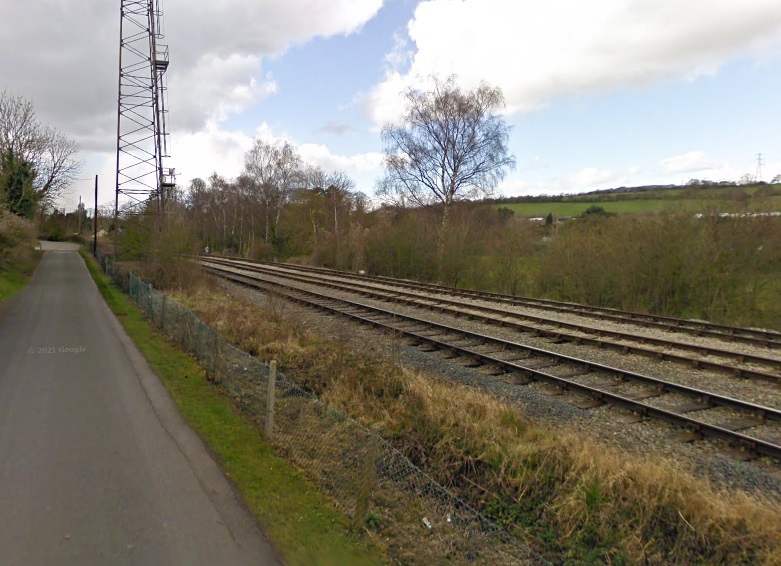
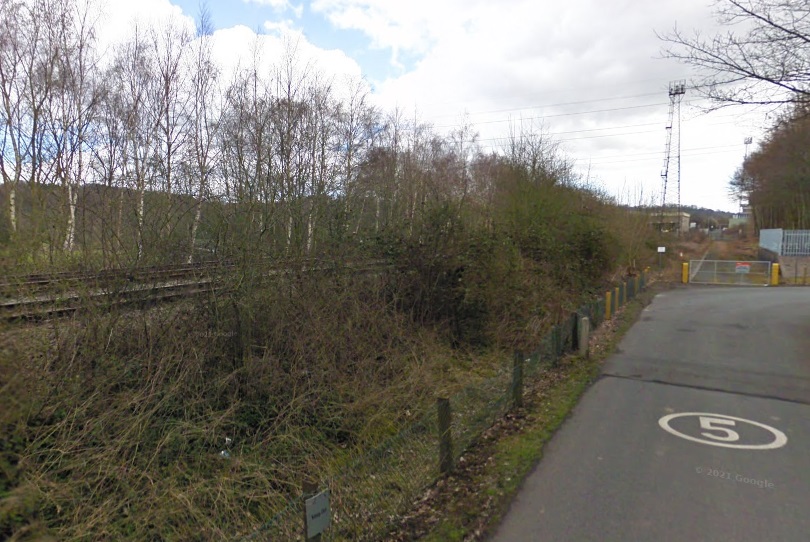
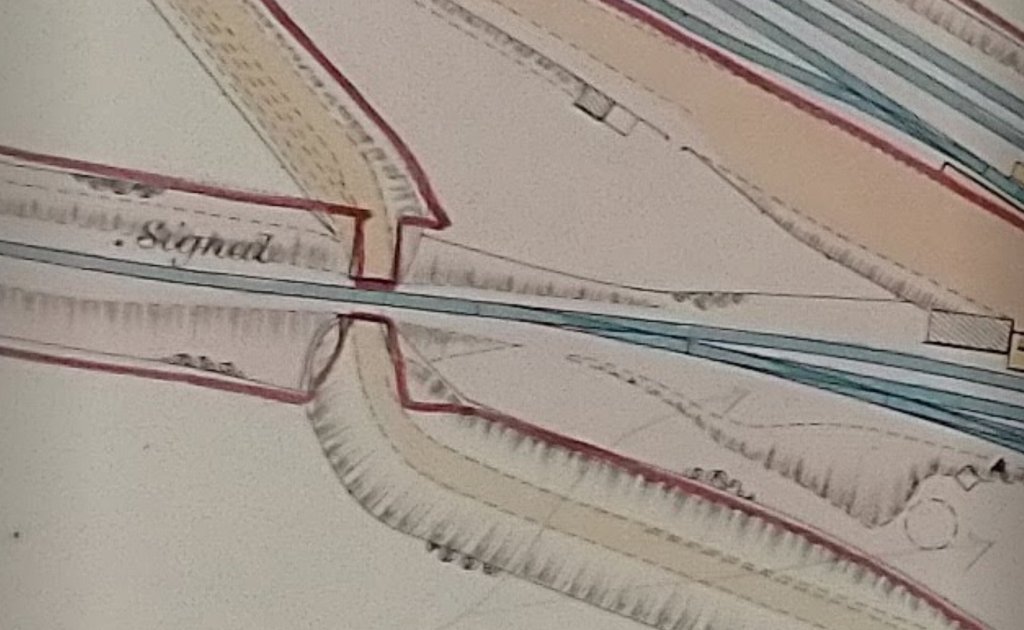
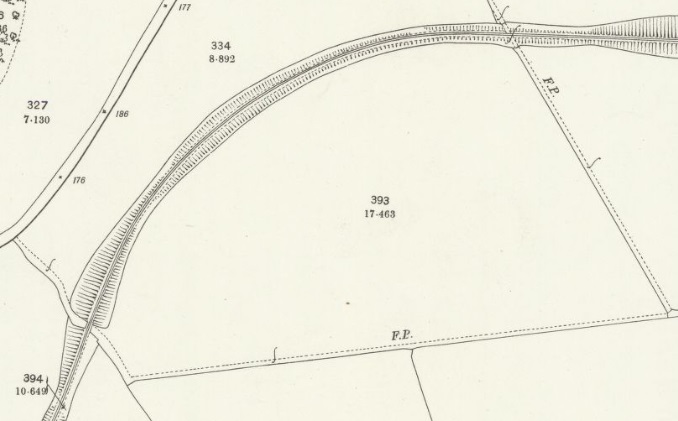
Tag Archives: much wenlock

Much Wenlock Talk – 17th September 2024

The file below is the talk given on 17th September 2024 at the Much Wenlock Civic Society.

References

  1. The featured image at the head of this post comes from: https://www.everand.com/article/594958258/There-s-Something-Special-About-Much-Wenlock, accessed on 1st September 2024.
  2. Wherever possible permission has been sought for the use of images in this talk. If an omission has been made, please accept my apologies. If you would like an image with your copyright removed from this post please contact the author on rogerfarnworth@aol.com.

The Wenlock Branch from Much Wenlock to Presthope

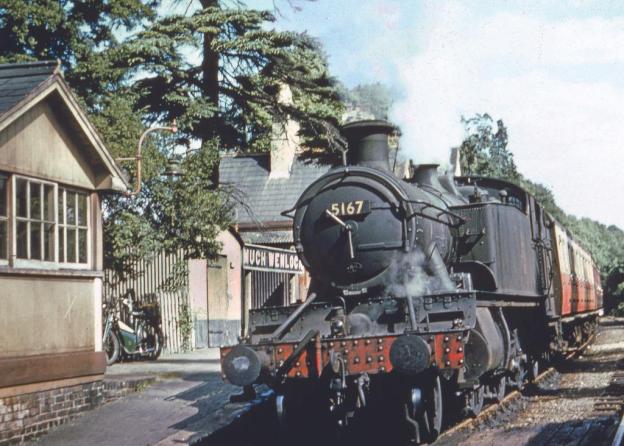
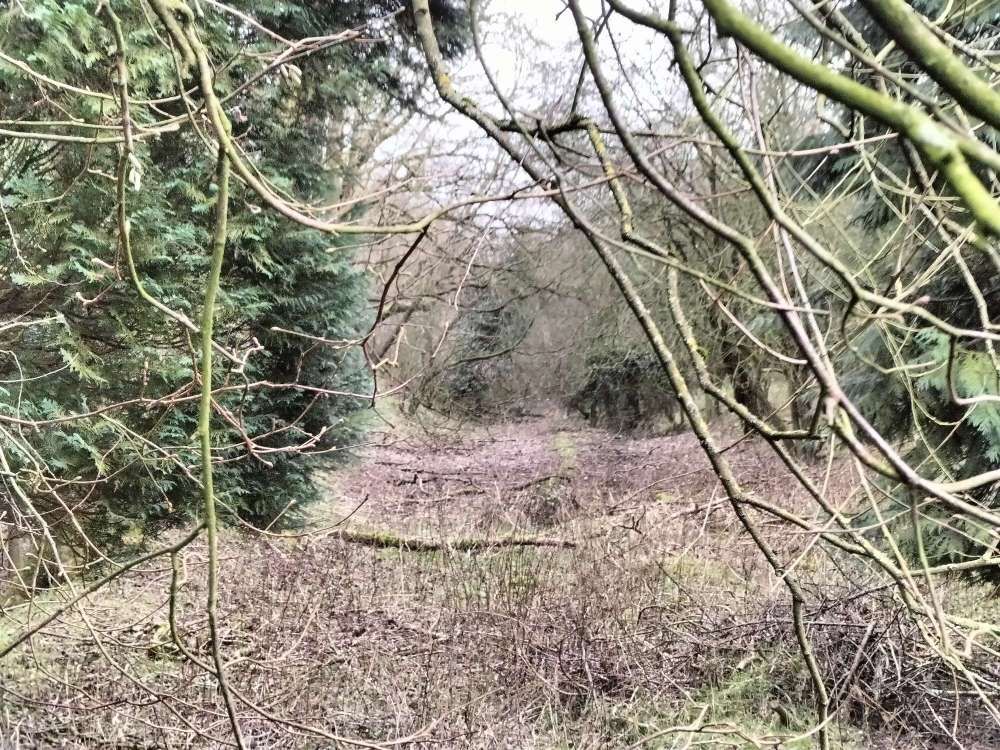
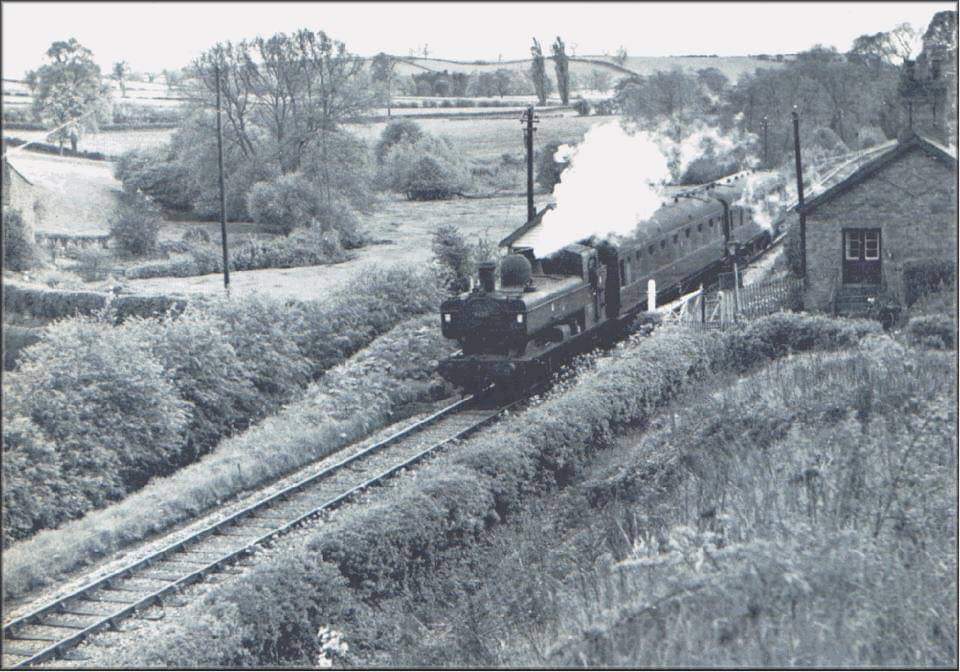
The featured image shows Presthope Station with the 18.00 hrs Craven Arms – Much Wenlock – Wellington train is leaving on 21st April 1951, heading for Much Wenlock. [30]

This article follows on from four other articles which covered the Wellington to Severn Junction Railway and this line from Buildwas to Much Wenlock. The first three articles can be found on these links:

https://rogerfarnworth.com/2022/07/07/the-railways-of-telford-the-wellington-to-severn-junction-railway-wsjr-part-1-wellington-to-horsehay

https://rogerfarnworth.com/2022/07/12/the-railways-of-telford-the-wellington-to-severn-junction-railway-wsjr-part-2-horsehay-to-lightmoor-junction

https://rogerfarnworth.com/2022/07/18/the-railways-of-telford-the-wellington-to-severn-junction-railway-wsjr-part-3-lightmoor-junction-to-buildwas

The most recent article covers this line between Buildwas and Much Wenlock and can be found here:

The Railways of East Shropshire (and Telford) – the Much Wenlock and Severn Junction Railway, Buildwas to Much Wenlock.

Much Wenlock to Presthope and on to Craven Arms

From the commencement of the building of the line between Buildwas and Much Wenlock, the directors hoped that the line could be extended to Craven Arms via Presthope on Wenlock Edge (linking with the limestone quarries/works at that location).

The directors of the Wellington & Severn Junction Railway were, however, fully occupied with the line from Wellington to Buildwas. Another company was set up to build the ‘Wenlock & Craven Arms and Coalbrookdale Extension Railway‘. The bill went through the parliamentary process unopposed and authorised the ‘Wenlock Railway Company‘ to construct the line. Work started on 23rd October 1861.

By 5th December 1864, the line was open from Much Wenlock to Presthope. At this time, because it was a freight-only line, the Board of Trade saw no need for an inspection of the line. It had already been agreed at a meeting held on 4th December 1863 not to proceed with the line from Presthope to Craven Arms for the time being. It was to be three years after the line reached Presthope before the connection to the Shrewsbury & Hereford Railway close to Craven Arms was completed. It was finally opened on 16th December 1867.

Much Wenlock to Presthope

This article focusses on the length of the line which was completed in December 1864 – Much Wenlock to Presthope. Another article will follow the line to the West of Presthope.

We start at Much Wenlock Railway Station.

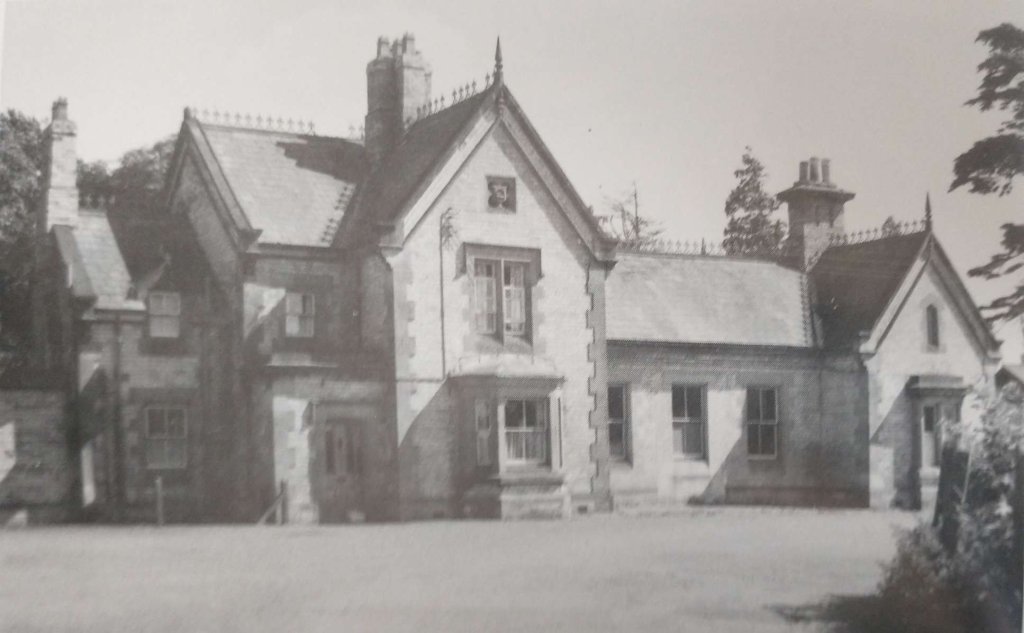
The forecourt of Much Wenlock station in the early 1960s. The building was designed by Joseph Fogerty © R.S. Carpenter. [1: p100]
The Wenlock Branch ran across the Northwest side of the town. The railway station was due North of the town centre and was accessed from a loop off  Sheinton Road. Station Road leading up to the Station from close to the railway bridge. [4]
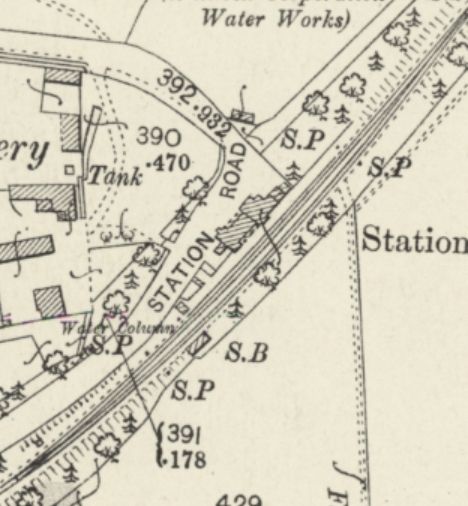
The 25″ Ordnance Survey of 1901 shows Much Wenlock Station with its platform on the Northwest side of the running line and a passing-loop to the Southeast. Partially off the left of the map extract is the town brewery. [5]

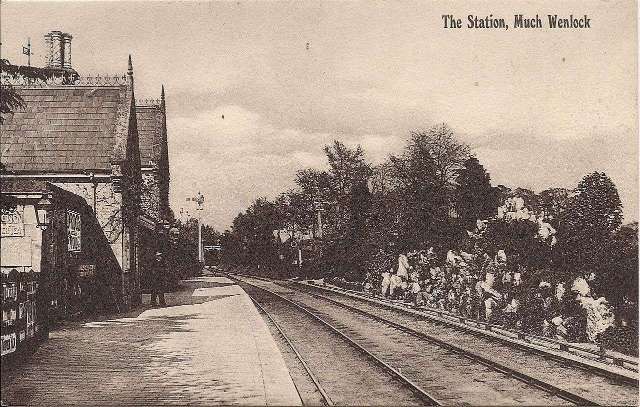
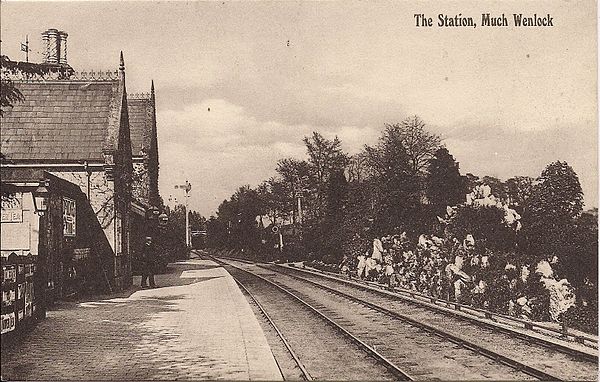
Much Wenlock Railway Station had a single platform adjacent to the main running line. A passing loop was provided opposing the platform, and beyond it there was a rockery garden, “large limestone boulders [were] interspersed with shrubs and alpine plants flanked by a row of rhododendron bushes. In the centre of the rockery was a fountain.” [1: p97]

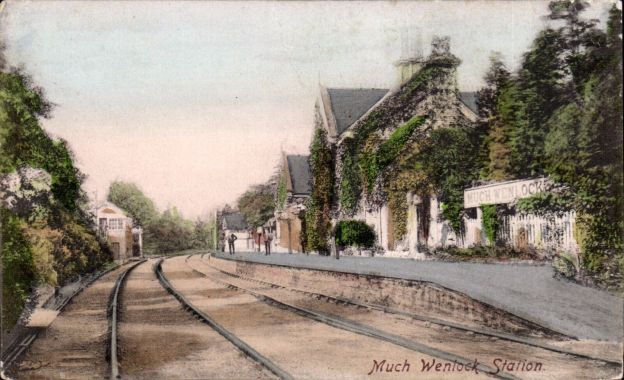
Much Wenlock Railway Station in the very early 20th century. The passing-loop and the adjacent rockery garden are on the right of the image. The photograph looks Northeast through the station. [7]
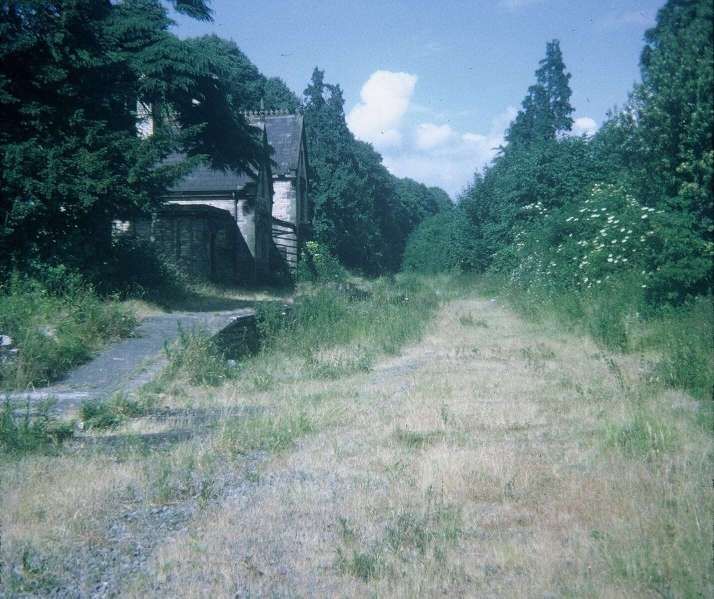
The photographer is standing on the running line a few steps further to the Southwest. This photo was taken on 12th July 1969 by David Hillas and is used here under a Creative Commons Licence (CC BY-SA 2.0 DEED). [8]
The length of the station site as shown on Railmaponline.com. The running line is shown in green with a single line indicating the location of the Goods Yard. [12]
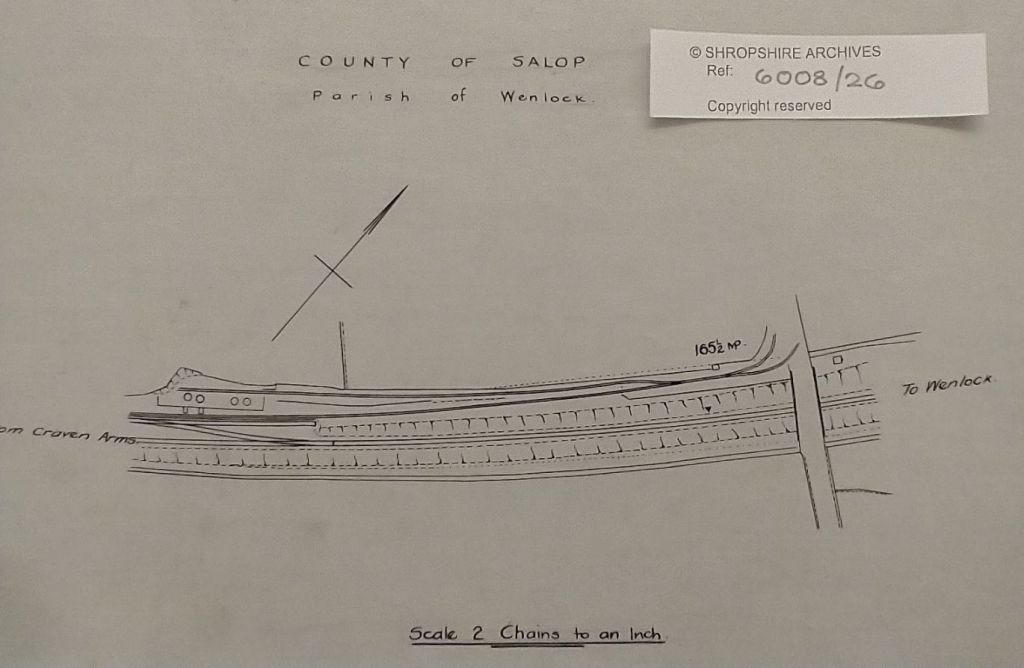
This is a first extract, in this article, from the pre-contract plans of the Much Wenlock line which are held in the Shropshire Archives in Shrewsbury. It shows the full length of the station facilities (passenger and goods) at Much Wenlock. It shows approximately the same length as the RailMapOnline image above. The Station building was on the West side of the line and North of the bridge which carried the line over what became the A4169. The goods yard was South of the bridge on the East side of the line. … As we have noted in the article about the line between Buildwas and Much Wenlock, these precontract plans were orientated in respect to the North point so as to get the greatest possible length of the proposed railway onto each sheet,, © Shropshire Archives Ref. No. 6008/26 copyright reserved, used by kind permission. [9][My photograph of the plan, 5th August 2022]

Trains leaving for Craven Arms crossed Sheinton Road/Street Bridge and passed the goods shed and yard on the left and then the engine shed. When the line terminated at Much Wenlock, the goods facilities used until the final closure of the line were the temporary railway station.

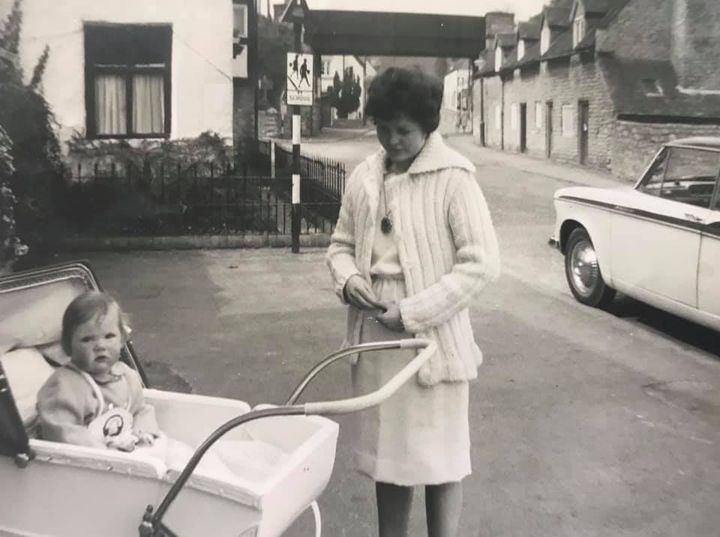
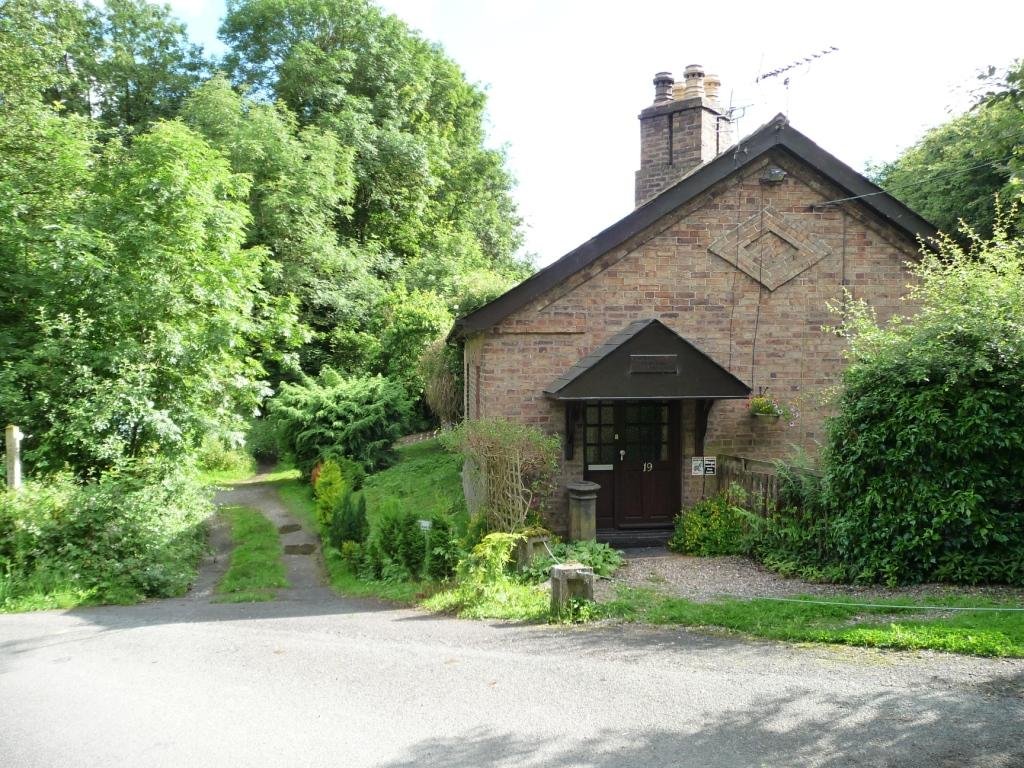
A view Northwest along Sheinton Street taken outside number 19 Sheinton St. It is included here for the view of the railway bridge over the road and was taken in the first half of the 1960s. This image was shared on the Much Wenlock Memories Facebook Group by Lynne Steele on 10th April 2021. [10]
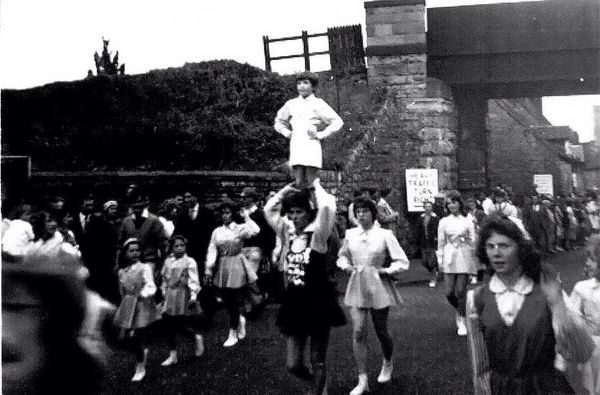
A view Southeast along Sheinton Street showing one of the carnival walks in Much Wenlock probably in the mid-60s. It is included here for the view of the railway bridge which span the road. This image was shared on the Much Wenlock Memories Facebook Group by Colin Onions on 2nd February 2015. [11]
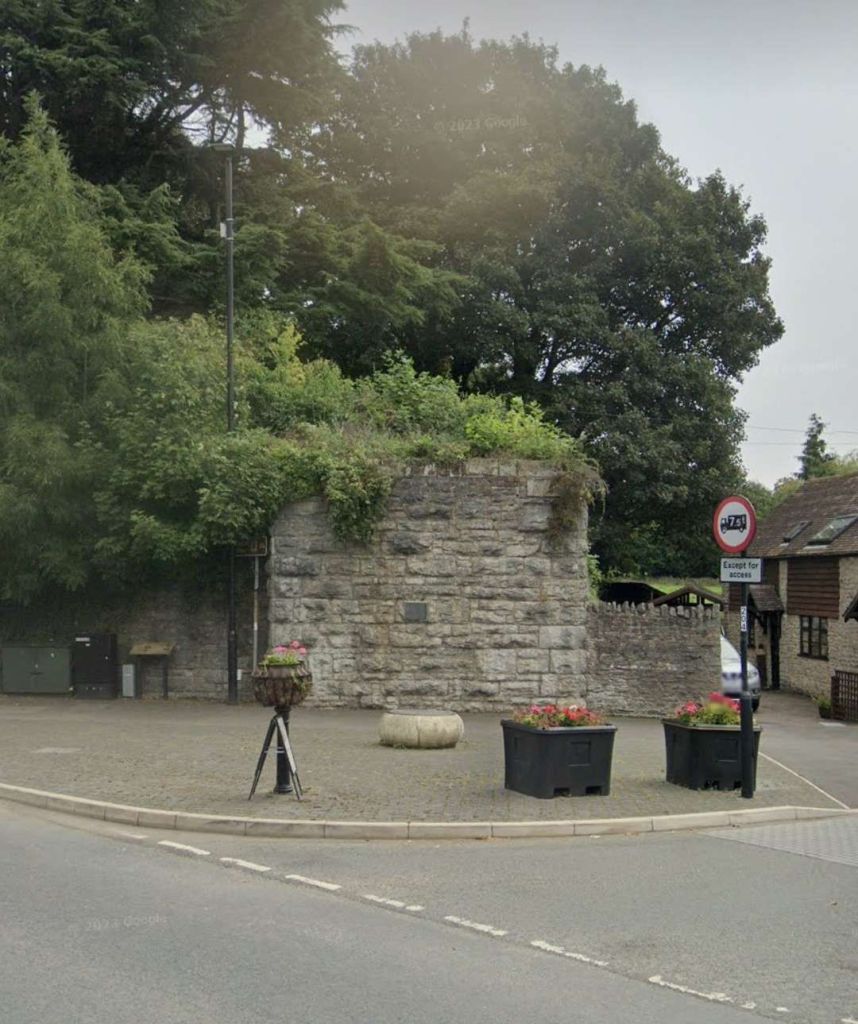
Looking Northeast along the line of the old railway towards the passenger Station from the approximate location of the second abutment of the railway bridge. Just the one abutment remains, the other having been removed to facilitate a road realignment. The road from Buildwas (Sheinton Street) becomes New Road at this point with Sheinton Street heading away to the right of the image. [Google Streetview, August 2023]
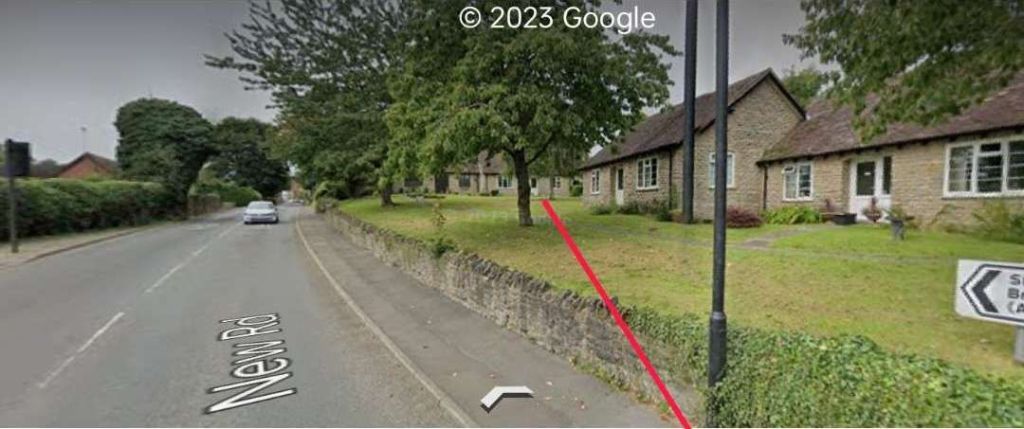
This is the view when the camera is turned through 180°. The approximate line of the old railway is marked, in this case, by the red line. New Road and the route of the railway diverged and provided space for what became the Goods Yard and for a coal depot which, in the early 21st century is occupied by a builders merchant (Travis Perkins). [Google Streetview, August 2023]
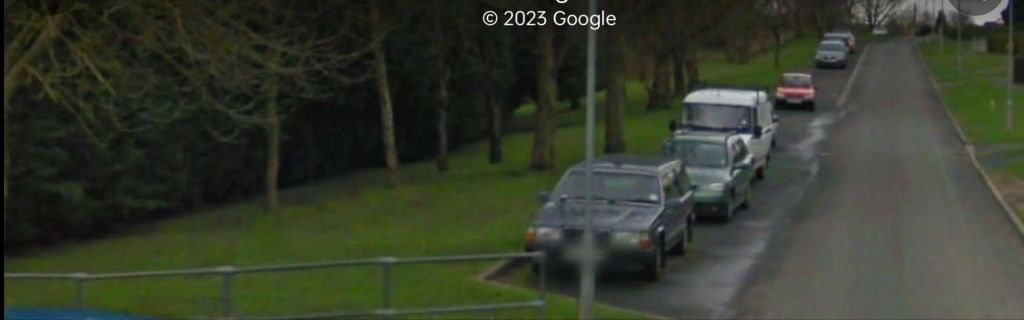
Looking Southwest along Southfield Road. The hedge line on the left of this image is approximately on the line of the old railway. [Google Streetview, 2009]
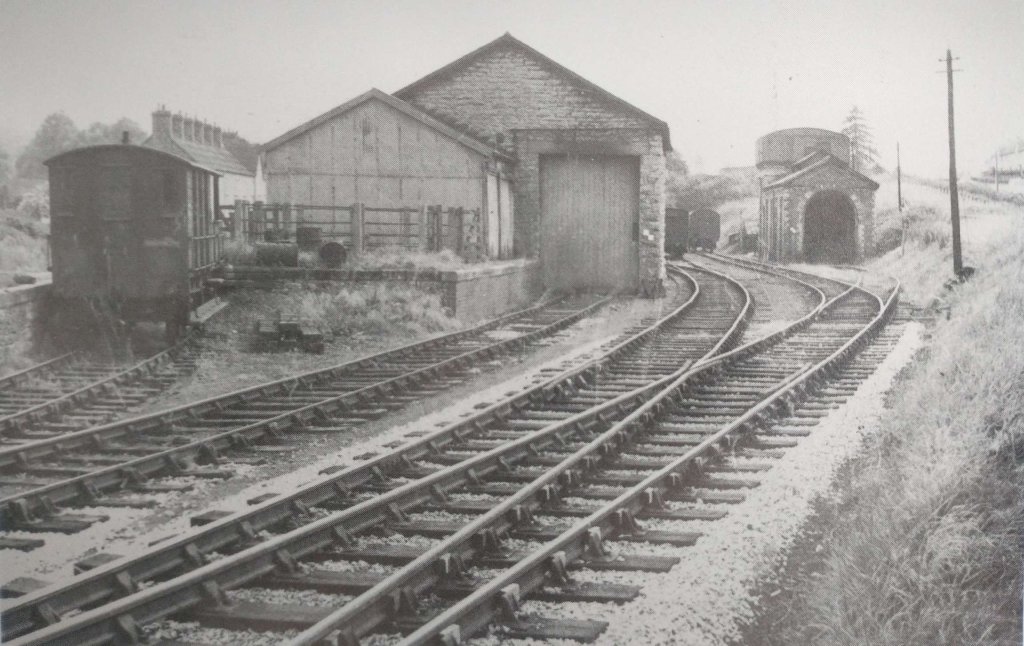
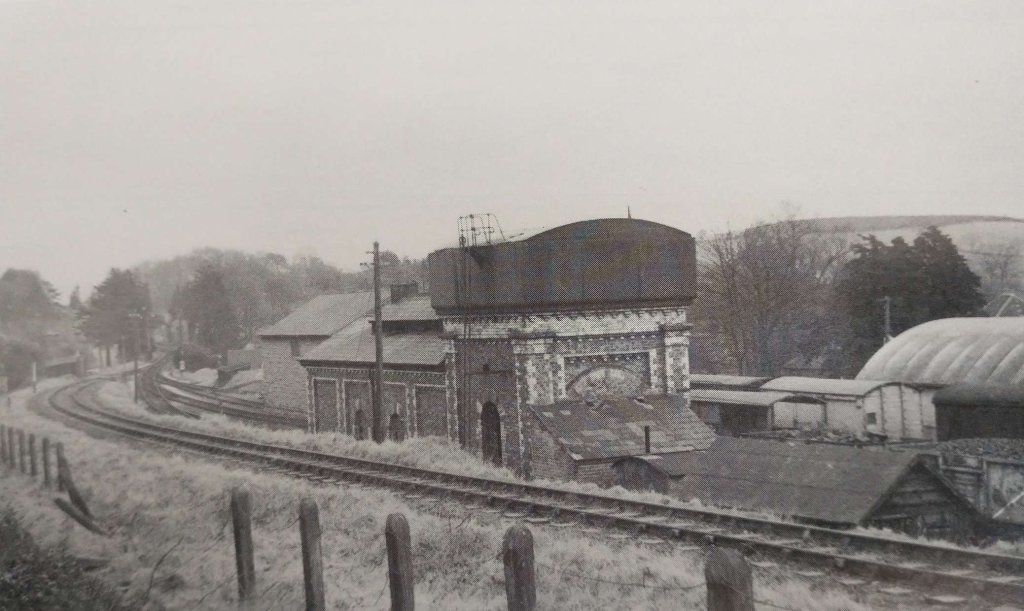
Much Wenlock Goods Yard. Centre-left are the cattle pens and grain store. The grain store is attached to the good shed. On the right is the engine shed with the water tank. The water tank was fed by a reservoir further Southwest along the line – about halfway to the next halt, Westwood Halt, © Shropshire Museum Service [1: p101]
The goods yard, viewed from the Southwest the line in the foreground is the main running line which claims along the flank of Wenlock Edge. The good yard was, for a short time, the terminus of the line after the partial opening on 1st February 1862 © Pat Garland. [1: p101]

Trains began the climb towards Wenlock Edge. The pictures above show the climb had already begun alongside the goods yard. Neither the goods shed nor the engine shed remain in the 21st century.

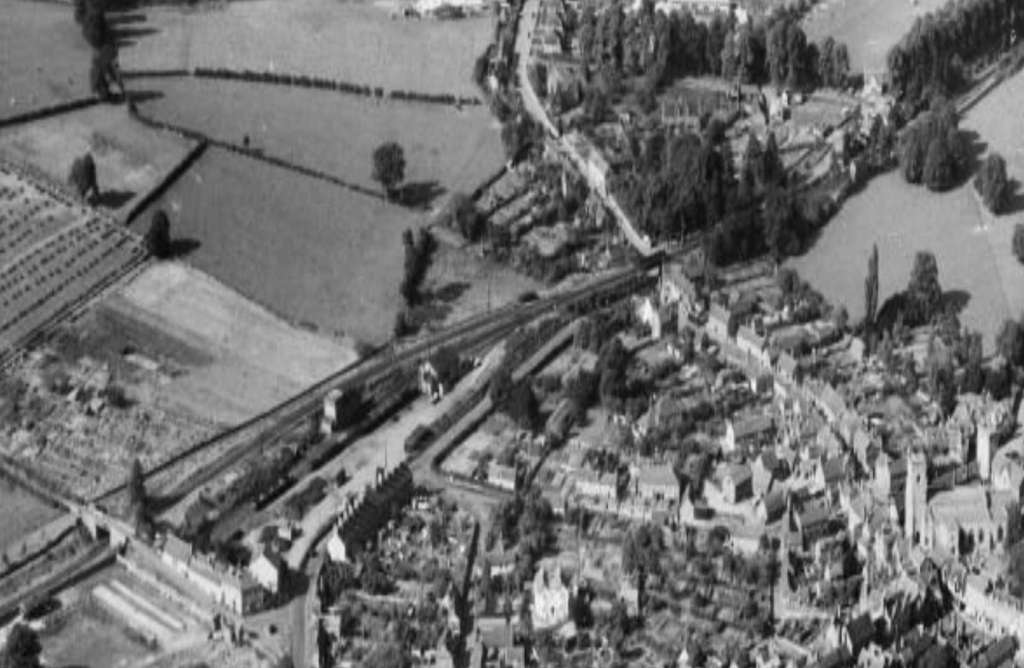
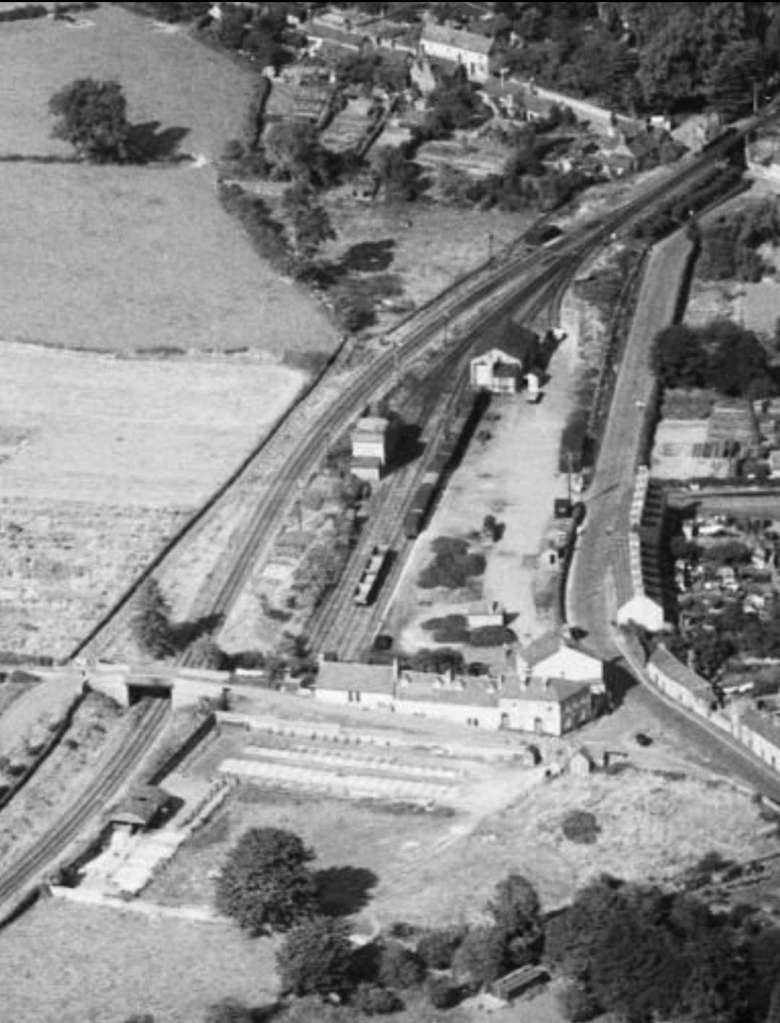
This aerial view is taken looking North across Much Wenlock (EAW046197 © Heritage England). The station goods yard is prominent approximately at the centre of the image, with Sheinton Street and the railway bridge separating the yard from the passenger facilities in the top-right of the image, and the bridge carrying Bridge Road over the line at the bottom-left. [3]
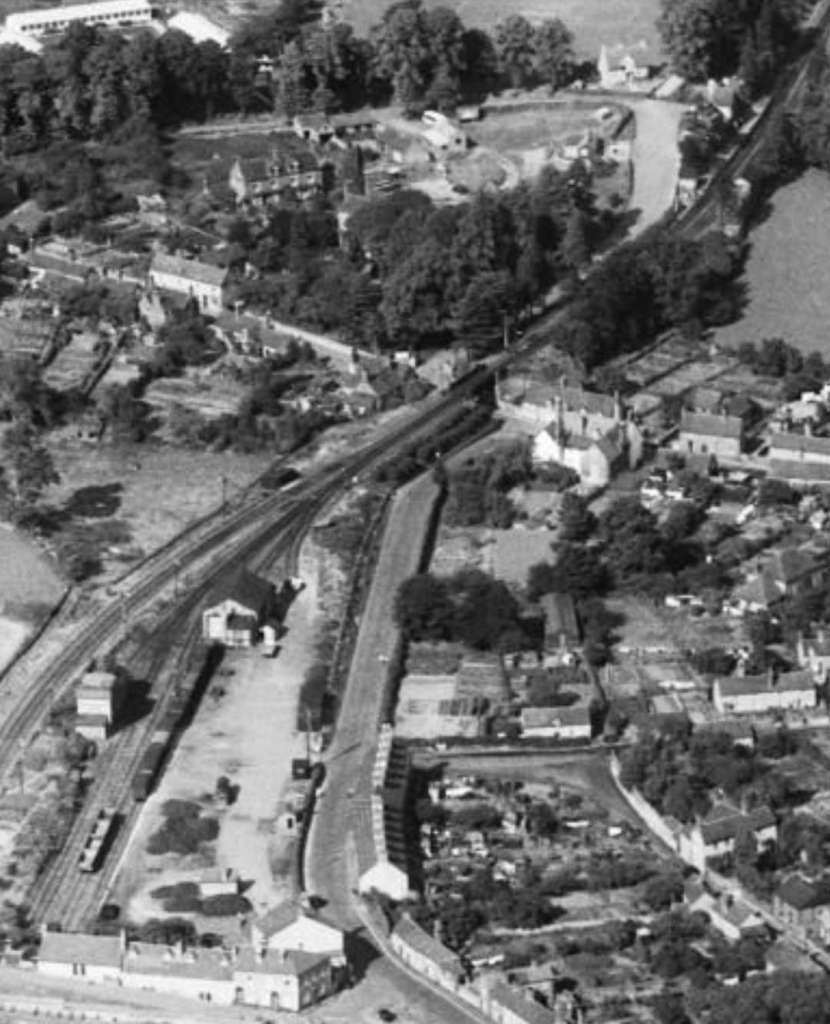
This extract from an aerial image (EAW046196 © Heritage England) shows the full length of the station facilities at Much Wenlock. The passenger Station building is visible top-right, the goods yard and engine stabling facilities, bottom-left. Between the two Sheinton Street passed under the railway. [2]
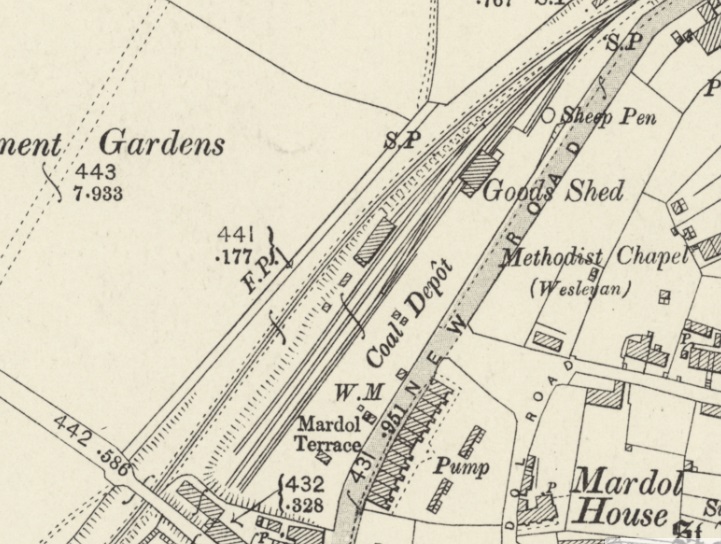
New Road ran along the Southeast side of the Goods Yard. The Goods Shed and the Engine Shared appear on this additional extract from the 25″ Ordnance Survey of 1901. A coal depot sat between the road and the sidings in the yard. The road bridge is at the top-right of the map extract. Bottom-left as the running line leaves the map extract it passes under Bridge Road. The bridge here was simply-supported cast iron beams on masonry abutments. [6]
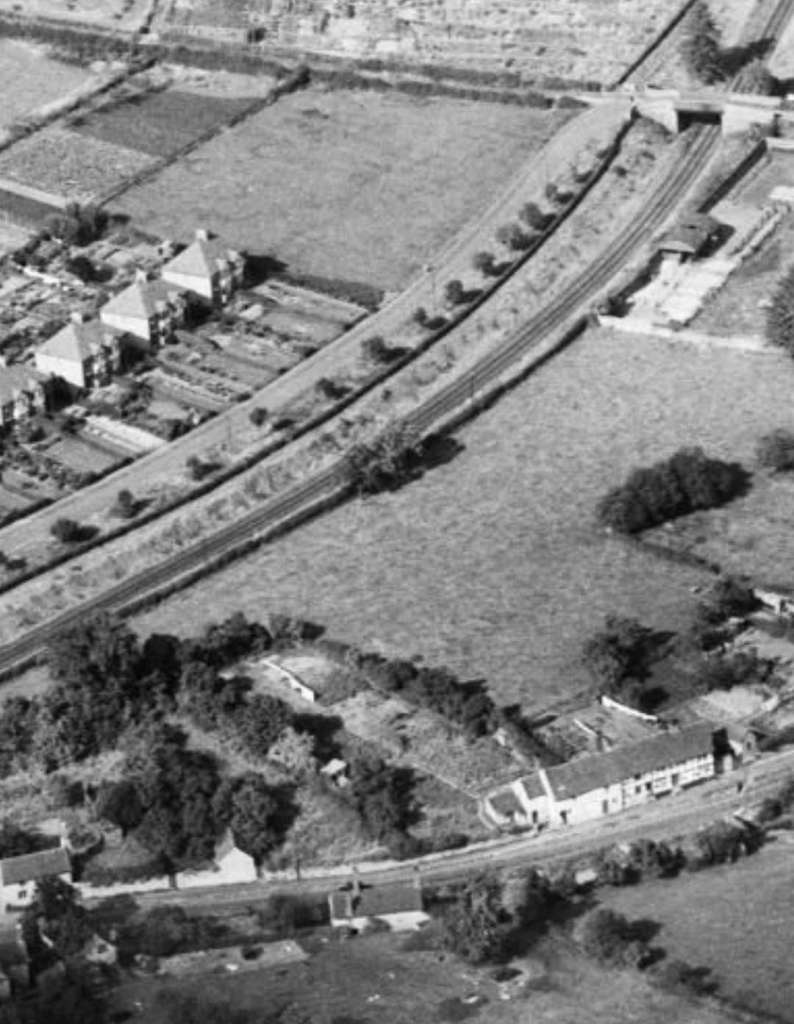
Another extract from the same aerial image centres on the goods yard with the running line to the left and passing under the cast iron bridge carrying Bridge Road. New Road runs down the right side of the picture. [2]
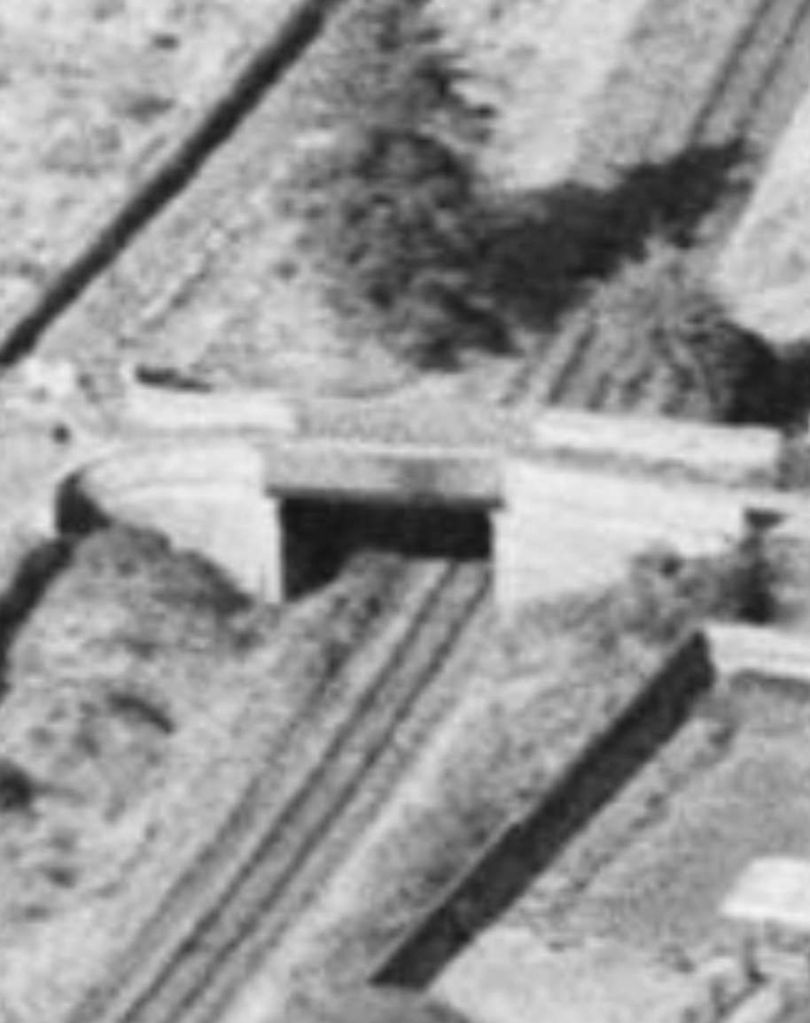
A closer view of the cast iron bridge carrying Bridge Road over the railway. This is an enlargement from the same aerial image. [2]
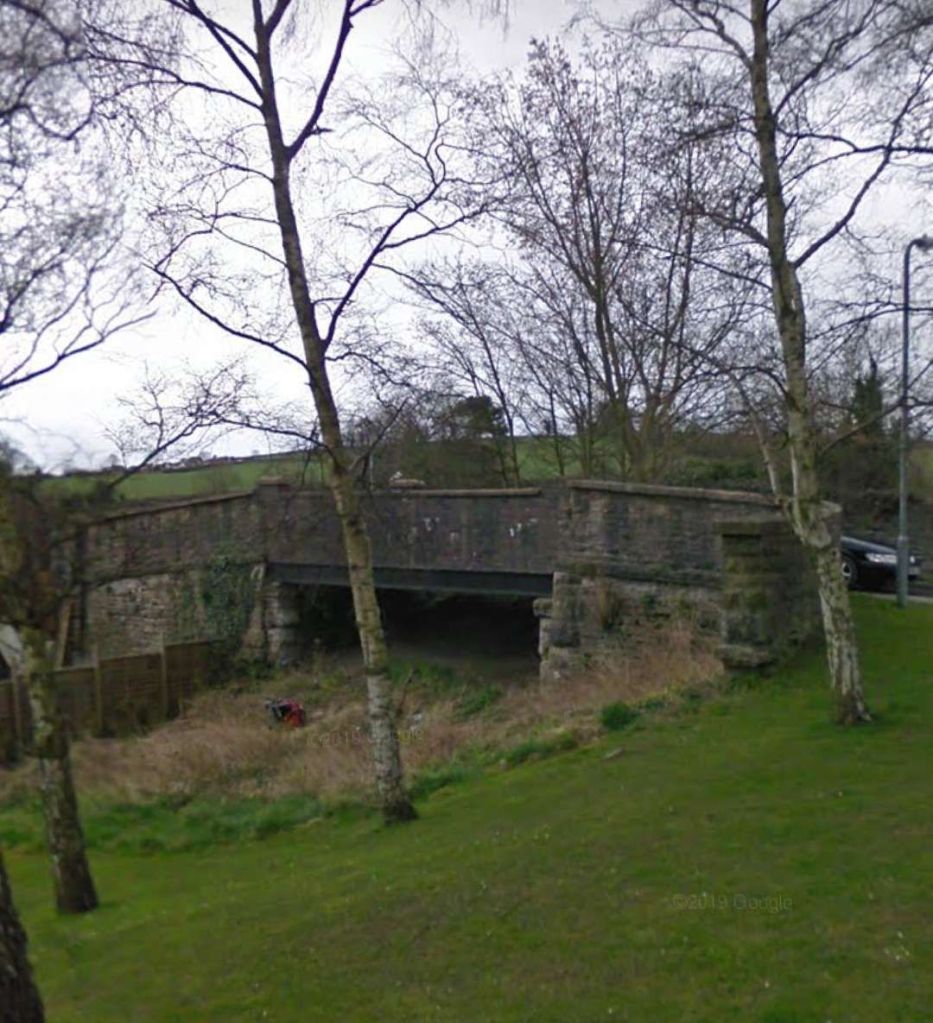
Looking Southwest from Southfield Road. The main structure of the bridge is still evident in the early 21st century. [Google Streetview, 2009]
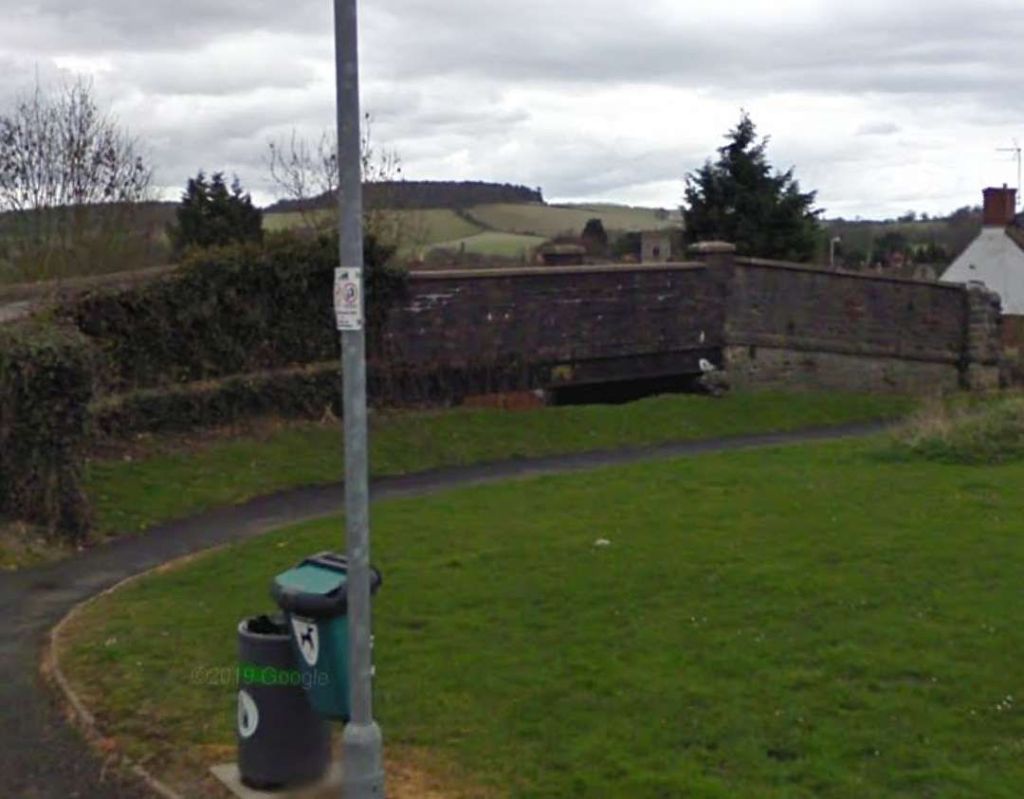
Looking Southeast at the other elevation of the cast-iron bridge. The partial infill is much closer to the soffit on this side of the bridge. [Google Streetview, 2009]
Looking North over the bridge parapet from Bridge Road. The old railway ran parallel to Southfield Road in the grass area at the centre of the image. [Google Streetview, 2009]
Looking West over the bridge parapet from Bridge Road. The old railway ran parallel to Southfield Road in the grass area at the centre of the image. [Google Streetview, 2009]
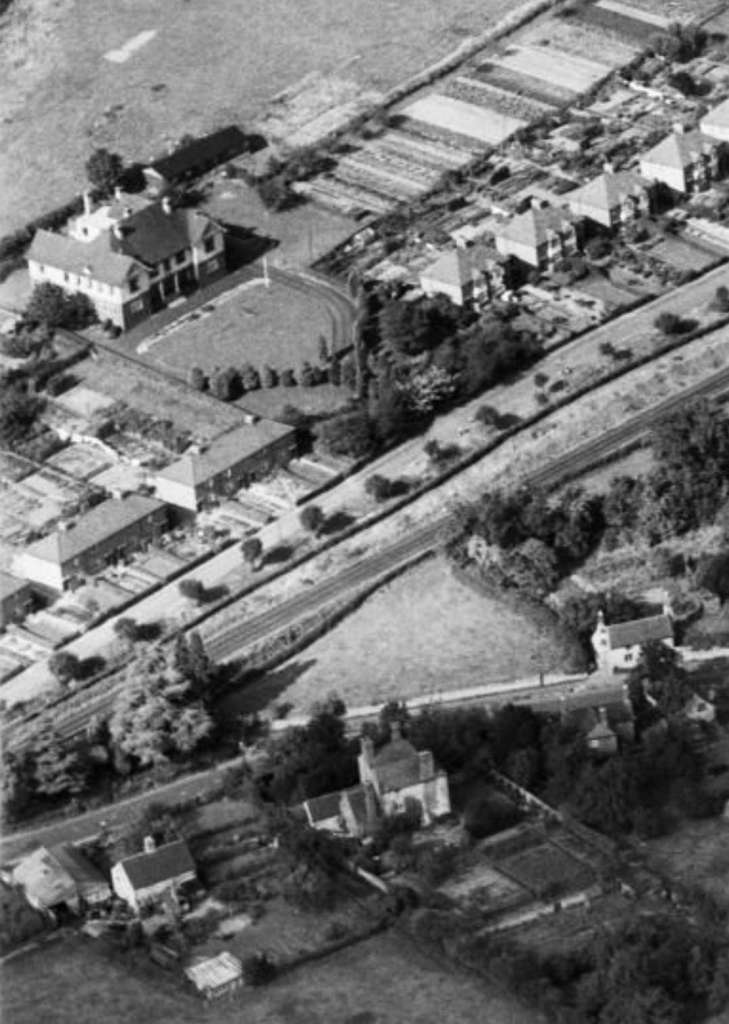
Southwest of Bridge Road, Southfield Road ran parallel to the old railway as it climbed along the Northwest side of the town. Victoria Road can be seen at the bottom of this image. [2]
The line continued in a southwesterly direction. Southfield Road ran alongside it. Victoria Road can be seen at the bottom of this image. It passed under the railway a short distance beyond the edge of the aerial image which is also the left edge of this extract. [2]
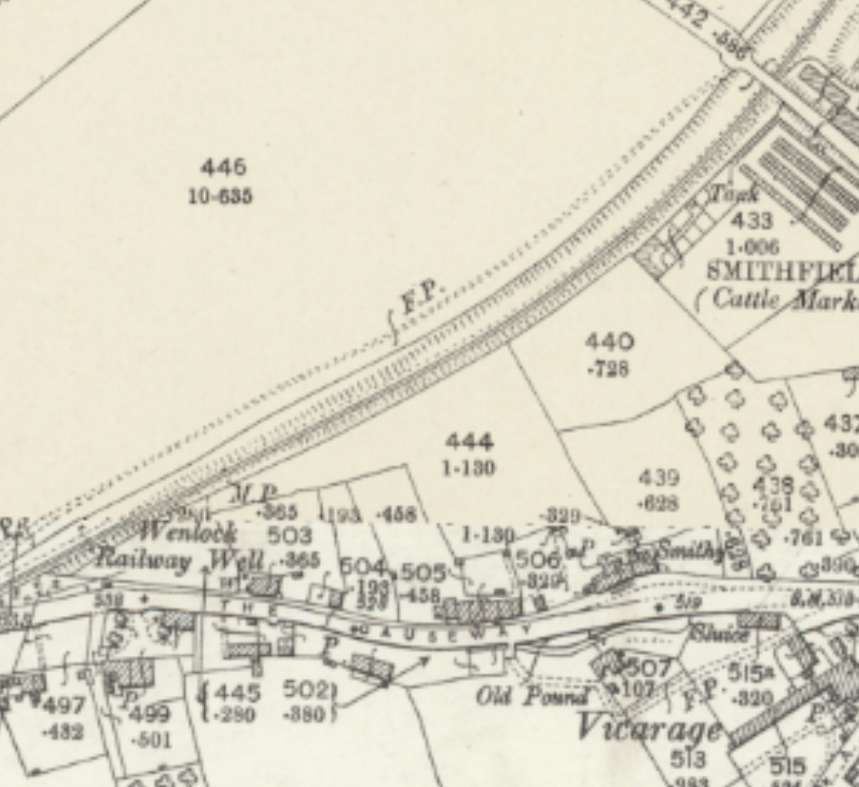
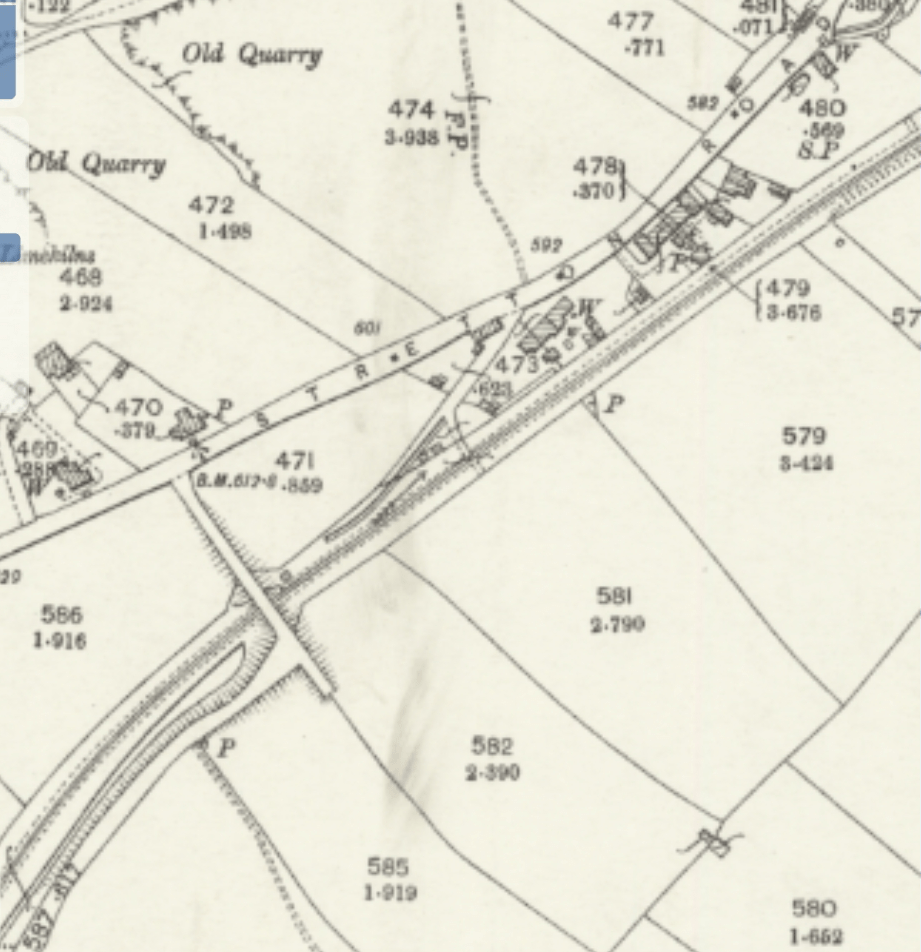
The next length of the railway appears on this extract from the 25″Ordnance Survey of 1901. Bridge Road bridge is top-right and the road to Shrewsbury runs East-West across the bottom half of the image. In 1901, this was known as ‘The Causeway’. It became the A458, Victoria Road. [14]
Approximately the same length of the railway as shown in the map extract above, but now on the satellite imagery from ralmaponline.com. The primrose yellow line shows the route of the A458, Victoria Road. [12]
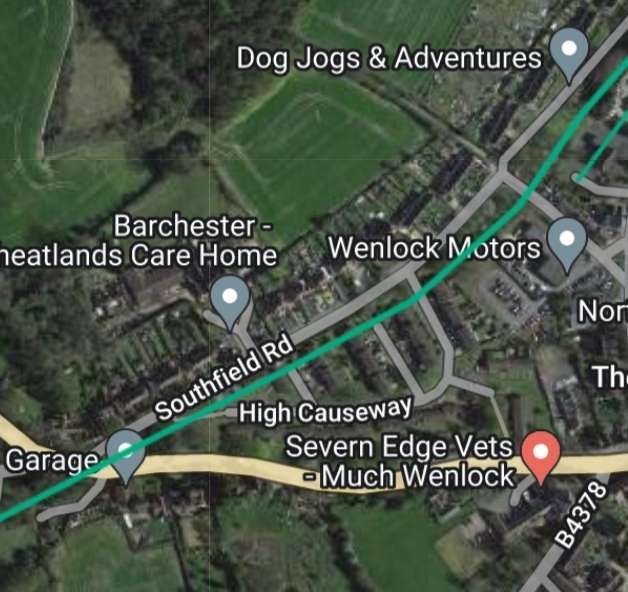
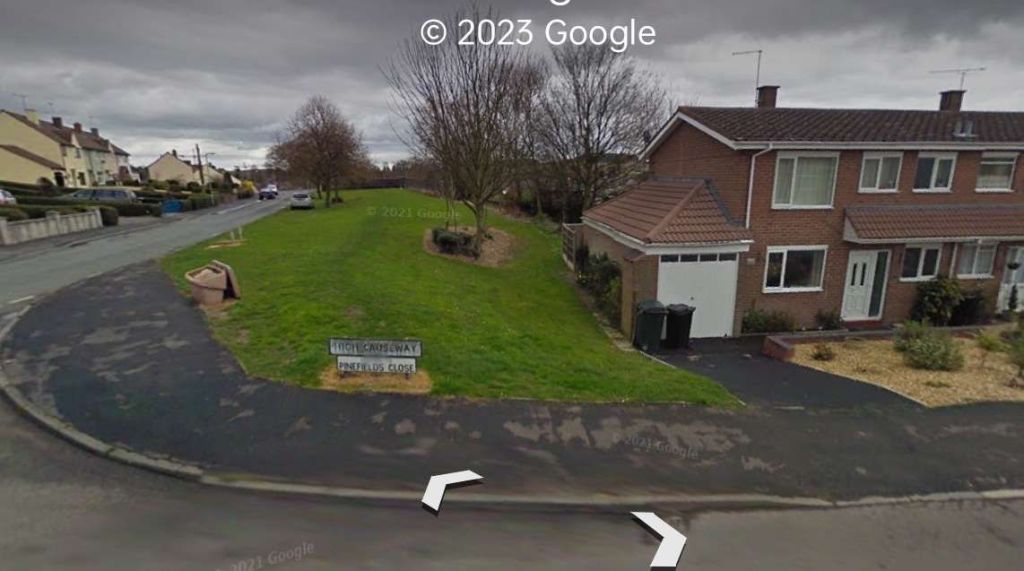
Looking back Northeast towards Much Wenlock Railway Station from High Causeway. Southfield Road is on the left. The housing estate has been built over the Goods Yard. [Google Streetview, 2009]
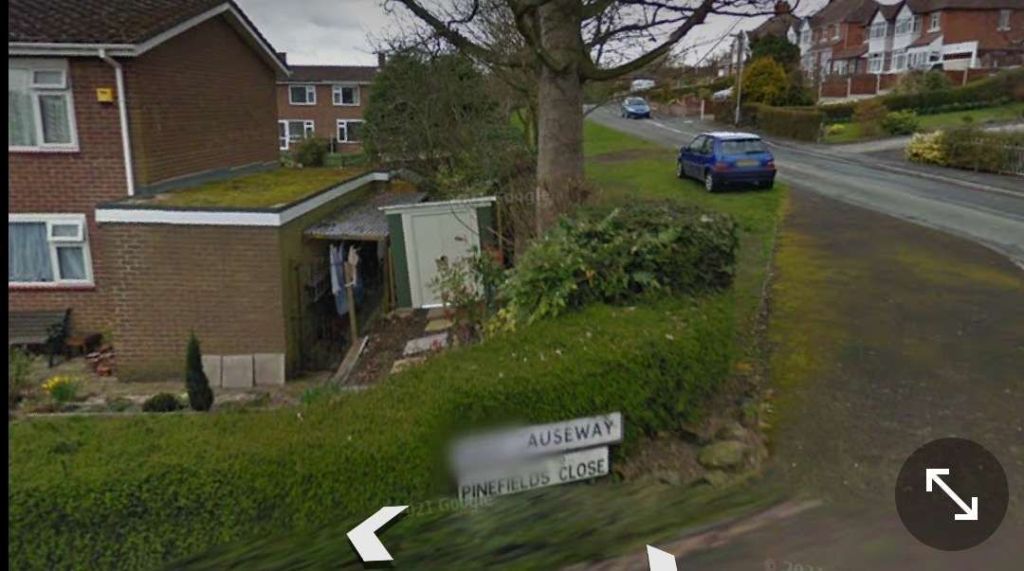
Looking Southwest along the line of the old railway. Southfield Road is on the right. The railway
This and the next three OS map extracts cover the first part of the climb out of Much Wenlock the bridge over the A458 is at the top-right of this map extract. [15]
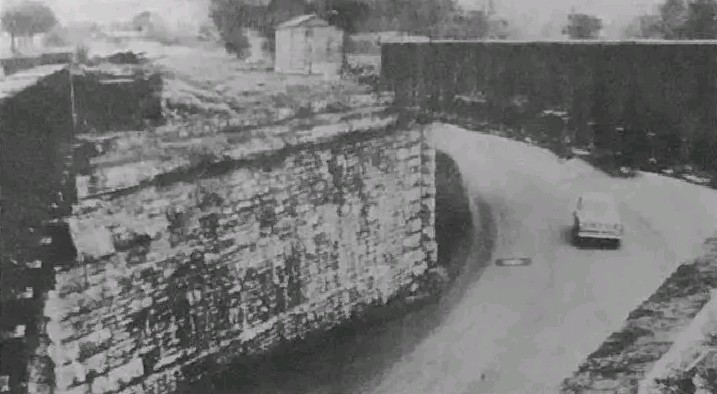
The bridge over what is now the A458 in the midst of its demolition at the end of the 1960s. This image looks Northeast along the railway formation towards Much Wenlock Station and Goods Yard. It was shared on the Much Wenlock History Facebook Group by Linda West on 2nd April 2020. [18]
The remaining abutment of the bridge which carried the Wenlock Branch over Victoria Road (A458), © Richard Webb and licenced for use under a Creative Commons Licence (CC BY-SA 2.0 DEED). [20]
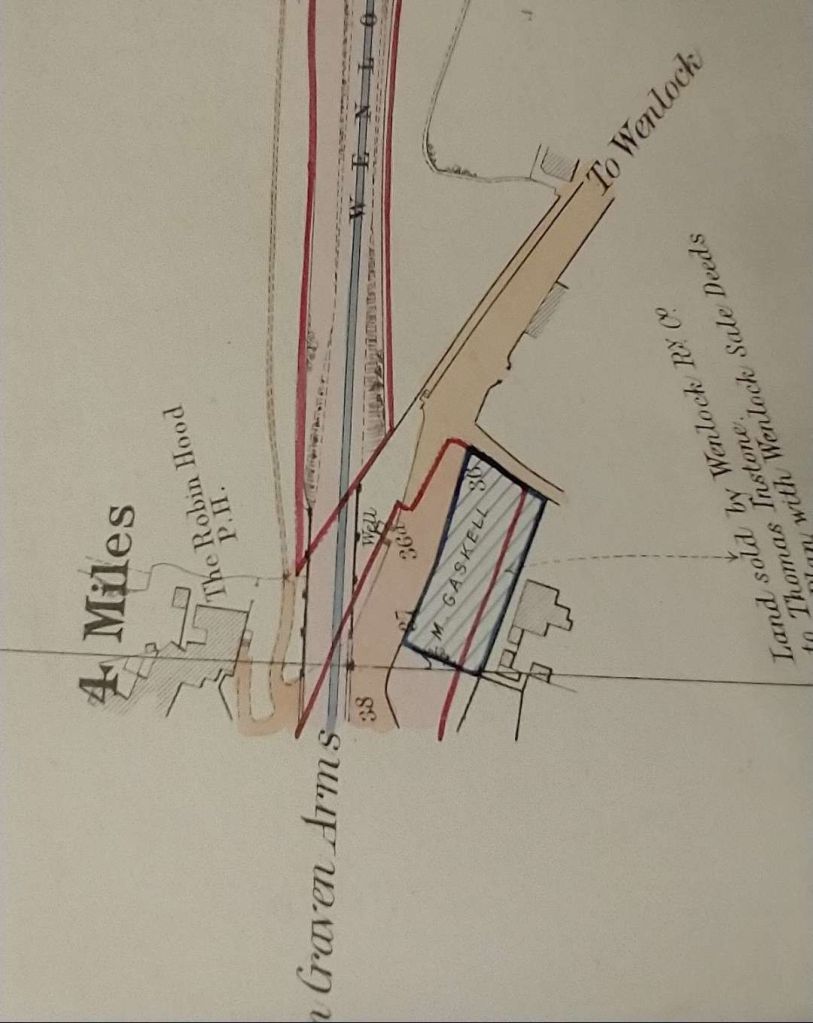
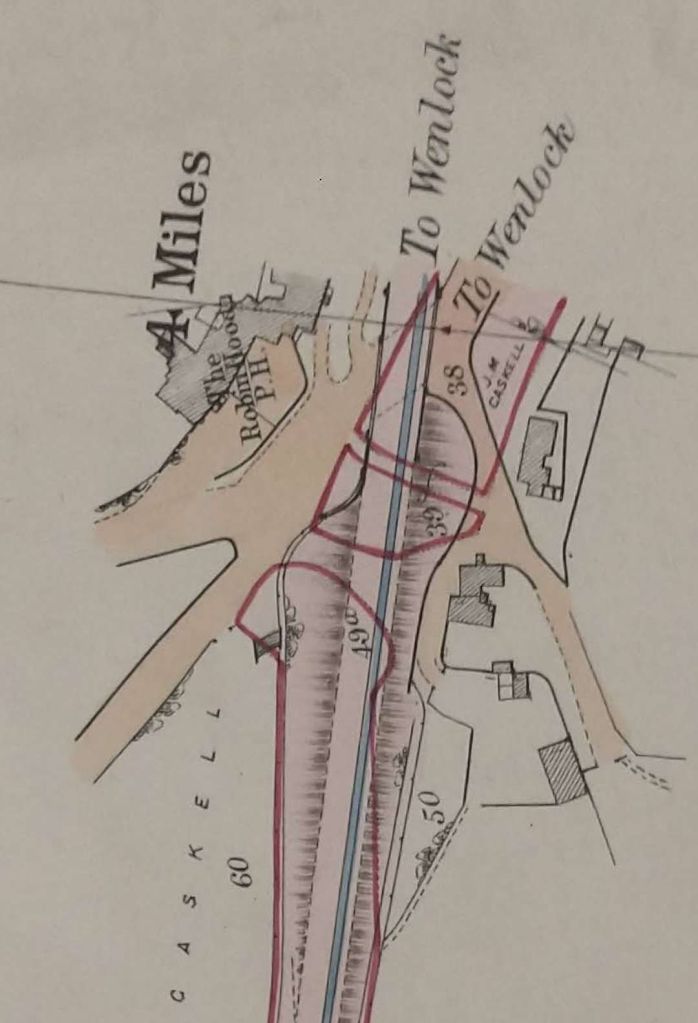
These two images are extracts from the pre-contract drawings of the Wenlock Branch. The girder bridge which spanned the road at this location was almost exactly 4 miles from Buildwas Junction and fell, in these drawings at the edges of two drawings. Both are reproduced here because they have something to contribute to local information. Perhaps of greatest significance for the railway was the fact that the bridge was constructed allowing for the possibility of providing an additional line, if traffic volumes made it worthwhile. These pre-contract plans were orientated in respect to the North point so as to get the greatest possible length of the proposed railway onto each sheet, © Shropshire Archives Ref. No. 6008/26 copyright reserved, used by kind permission. [9][My photograph of the plan, 5th August 2022]
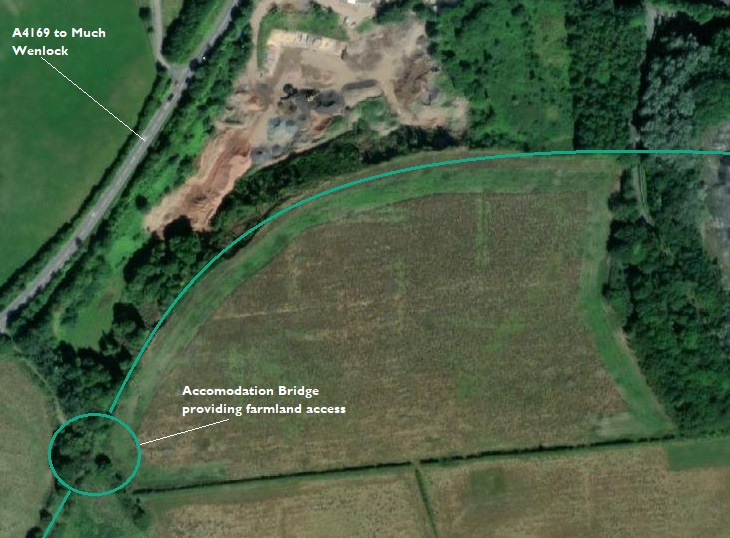
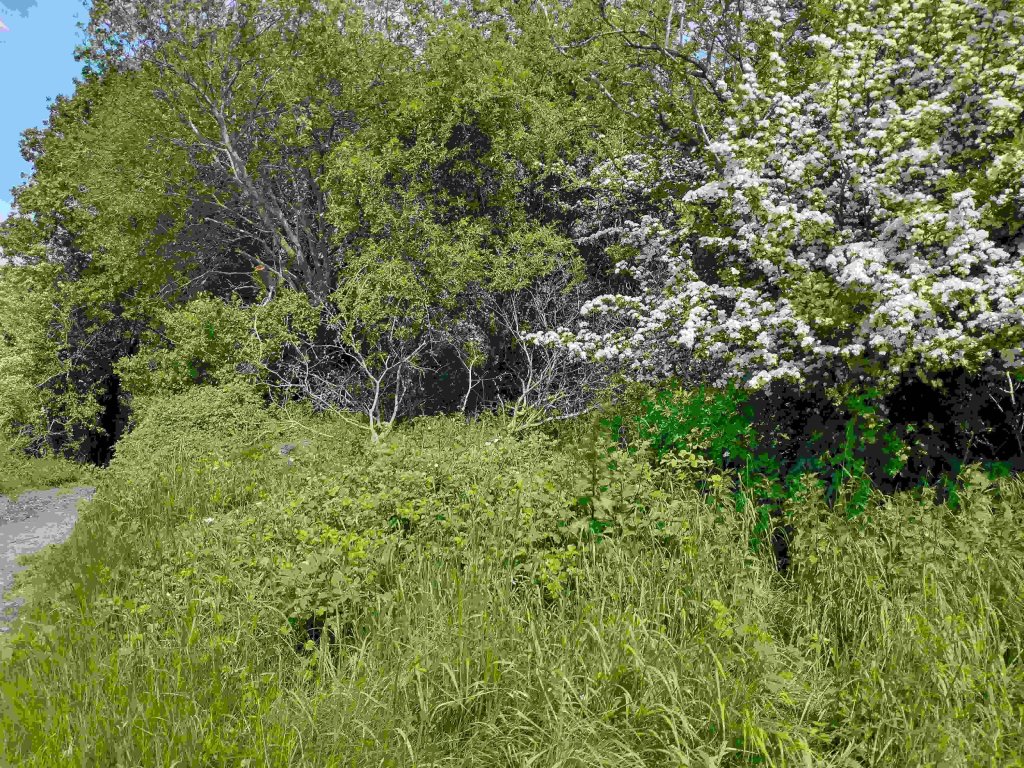
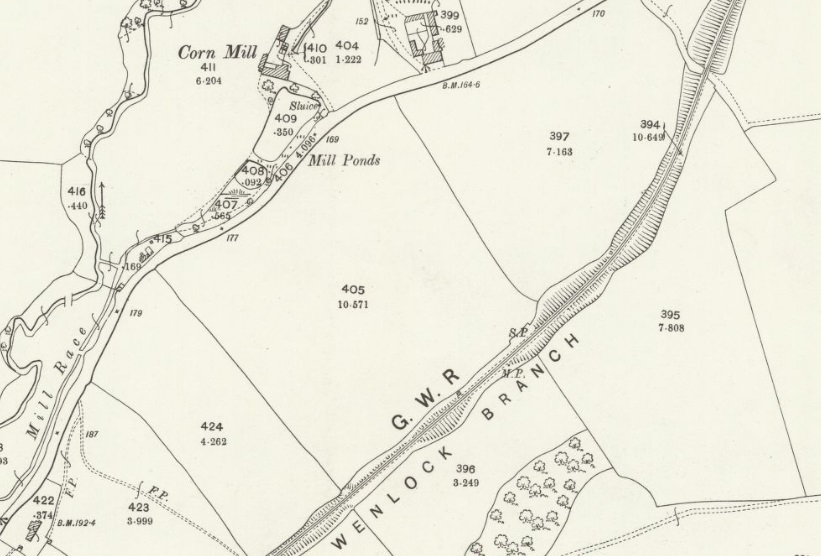
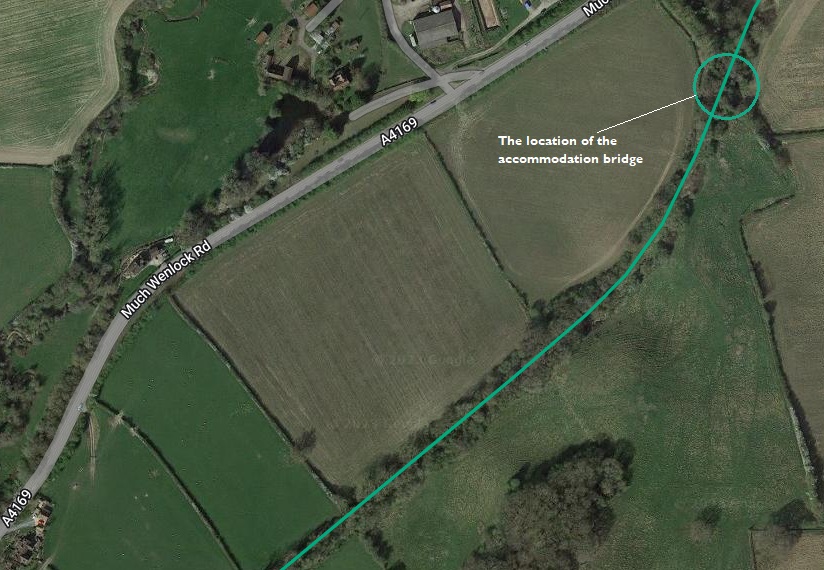
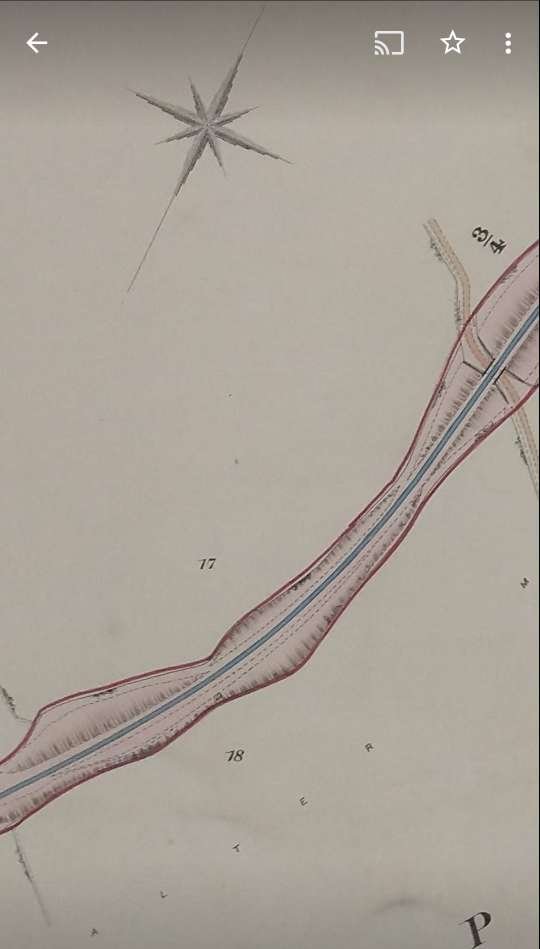
The next length of the line continued in a Southwesterly direction. After passing under an accommodation bridge, it began to turn to the South. [13]
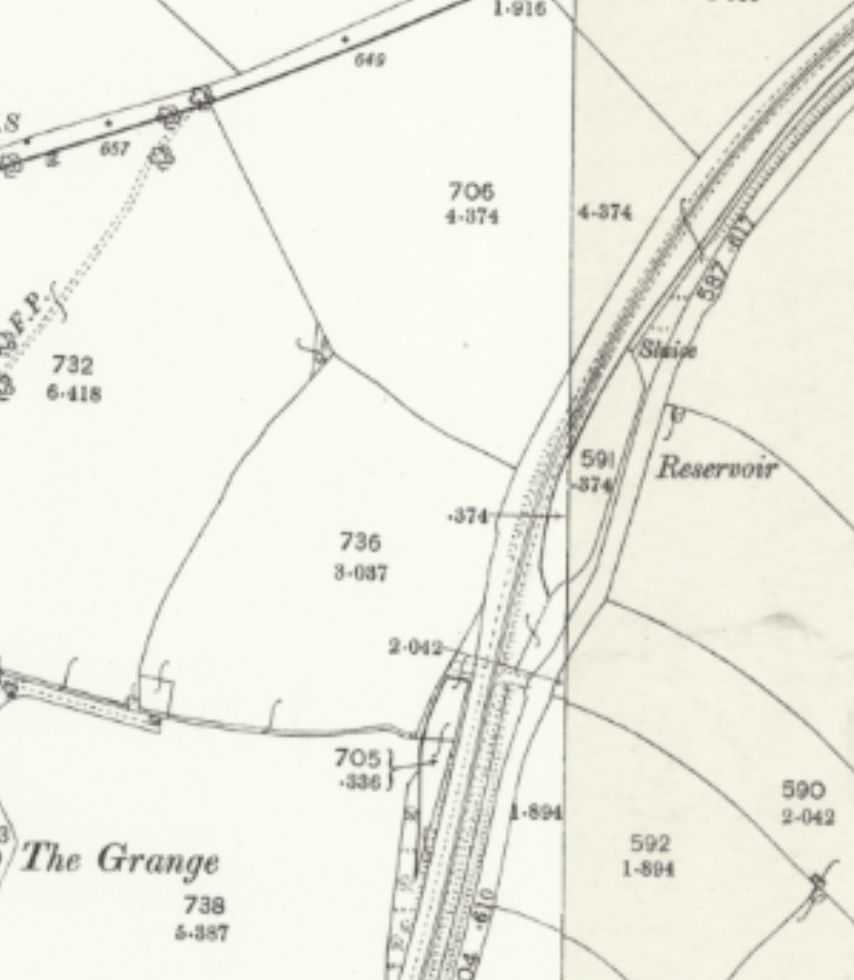
The reservoir which appears on this OS map extract on the East side of the line was used to provide water for the column at Much Wenlock Station. [1: p97] [16]
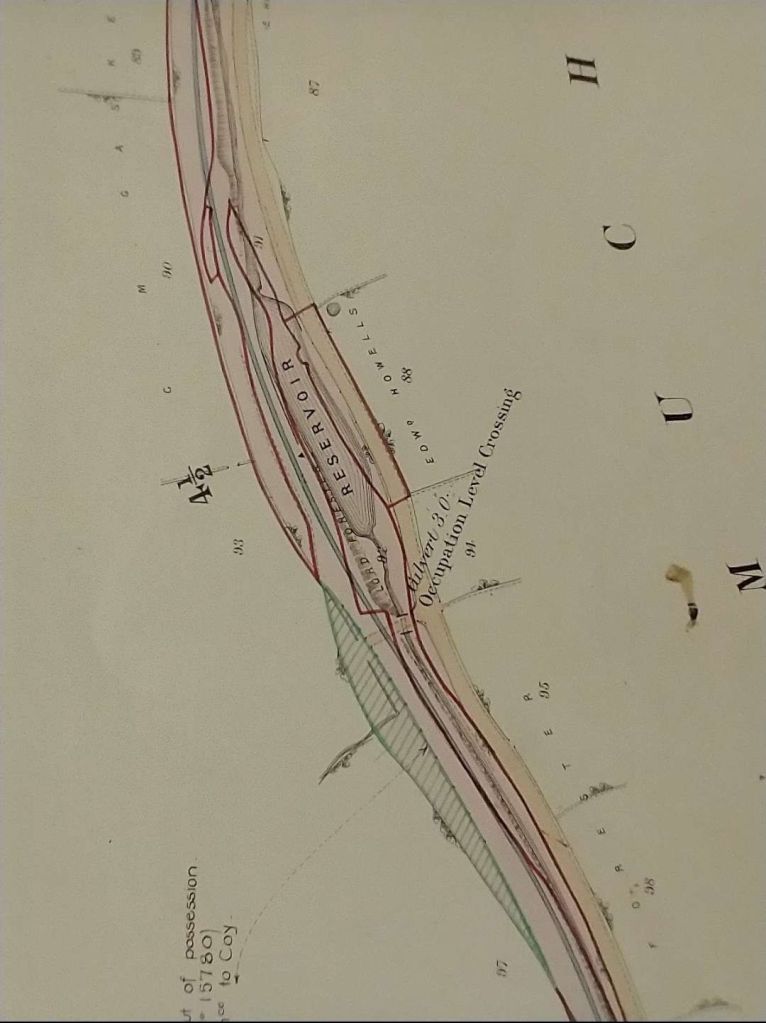
The reservoir which supplied the water column at Much Wenlock Station was around half a mile beyond the bridge over the A458. These pre-contract plans were orientated in respect to the North point so as to get the greatest possible length of the proposed railway onto each sheet, © Shropshire Archives Ref. No. 6008/26 copyright reserved, used by kind permission. [9][My photograph of the plan, 5th August 2022]
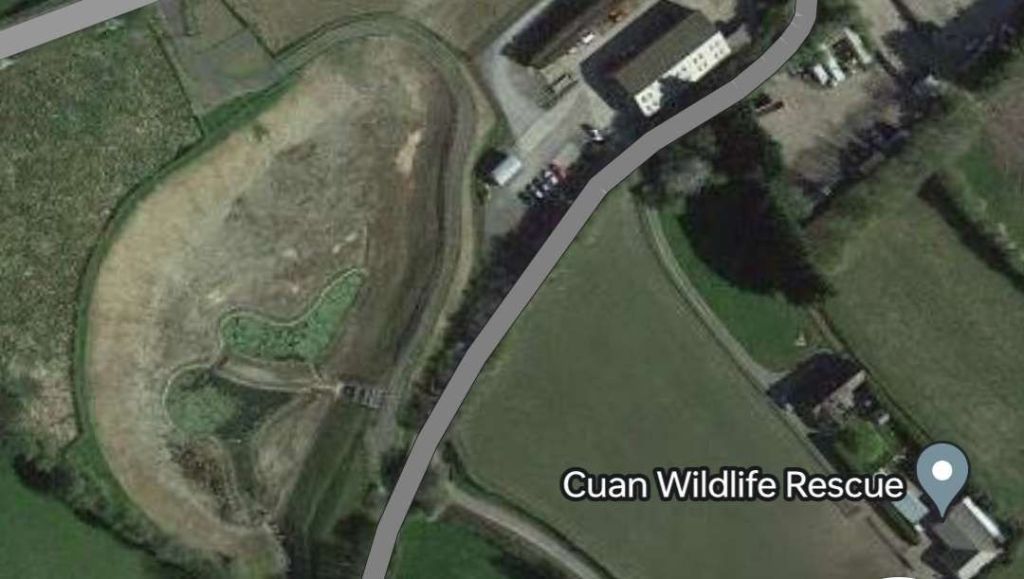
The reservoir as it appears in the 21st century. It has been extended and has varying levels over time suggesting that it may be used as a balancing pond to moderate the flow on the stream which follows the old railway line and which appears to now follow the old railways route in an improved channel to the Southwest of the reservoir. The track shown in this extract from Google Maps continues a short distance to the South before crossing both the stream and the old railway route.A footpath continues alongside the old line to the East. [Google Maps, 13th January 2024]
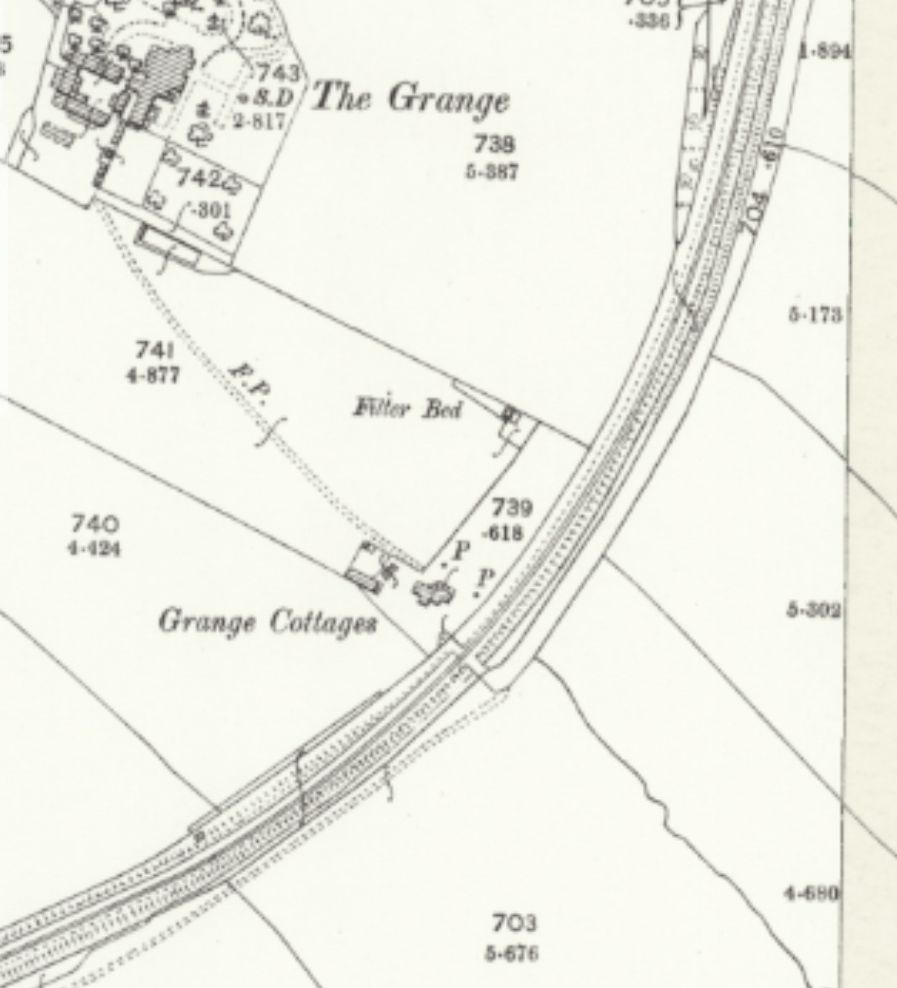
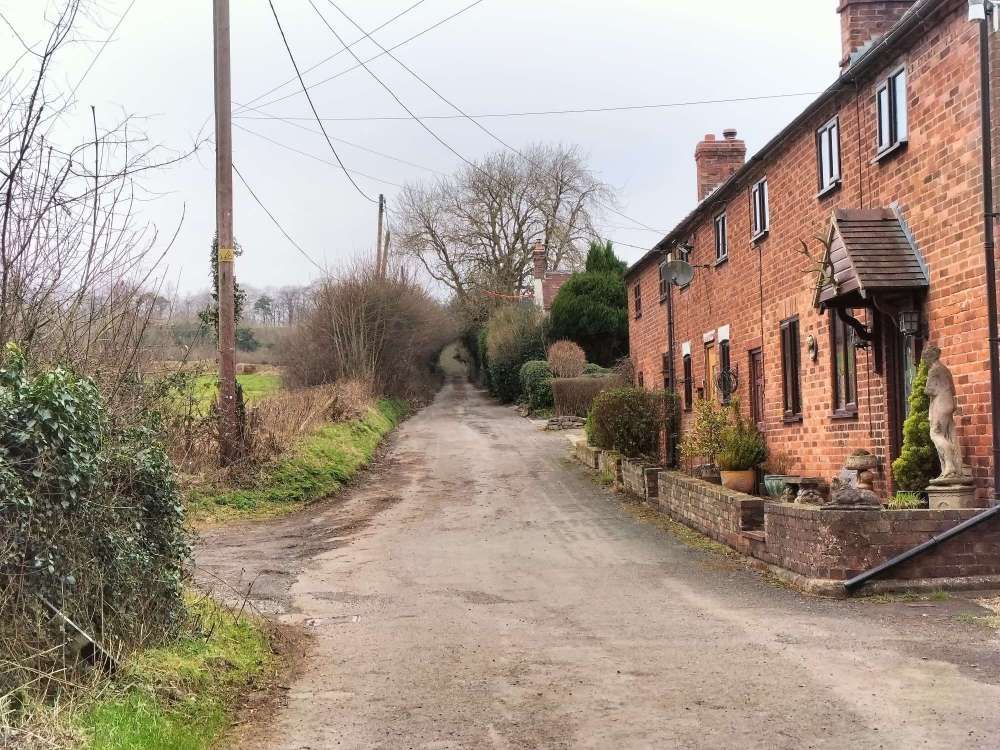
Curving round again towards the Southwest, the line passed Grange Cottages. [17]
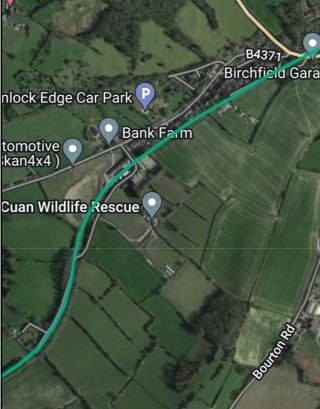
This railmaponline.com satellite image covers the same length of line as the last four OS Map extracts. [12]
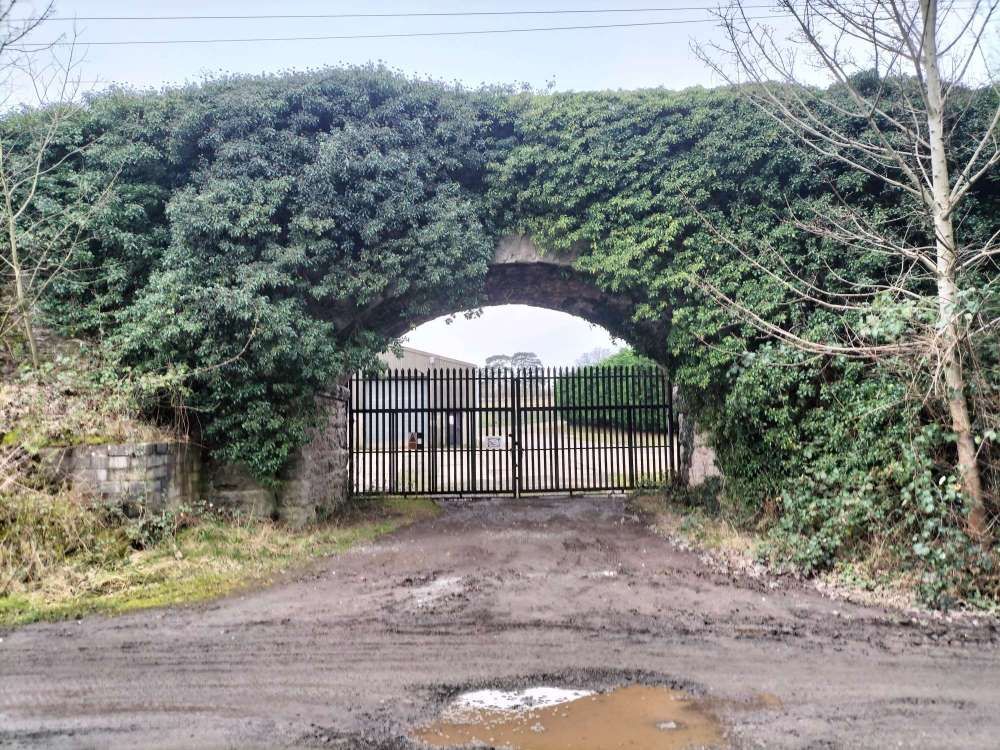
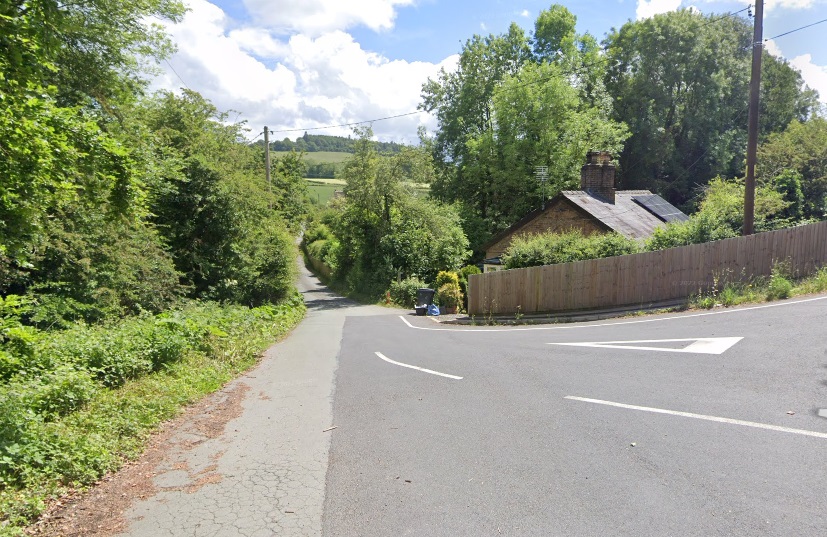
The first road overbridge to the West of Much Wenlock. This view looks Southwest along the line of the old railway. The bridge carries a track which leaves the B4371, Stretton Road in a southerly direction and provides access in the 21st century to the Cuan Wildlife Centre. [My photograph, 12th January 2024]
The view Northeast from the overbridge. The old railway route is now followed by a line of conifers on its North side. [My photograph, 12th January 2024]
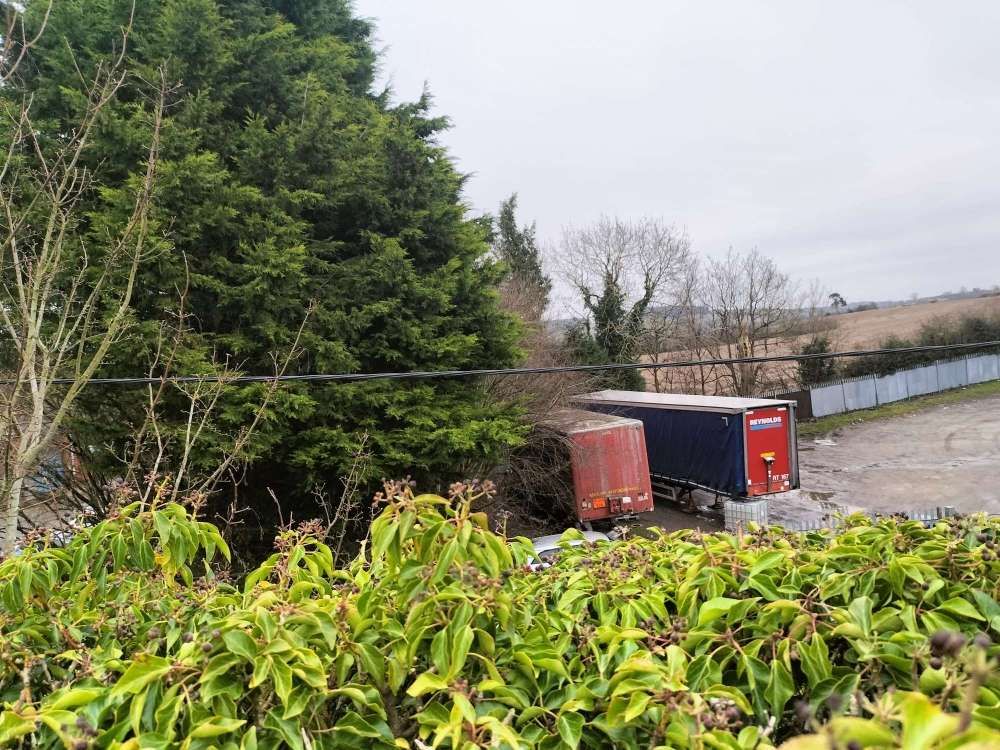
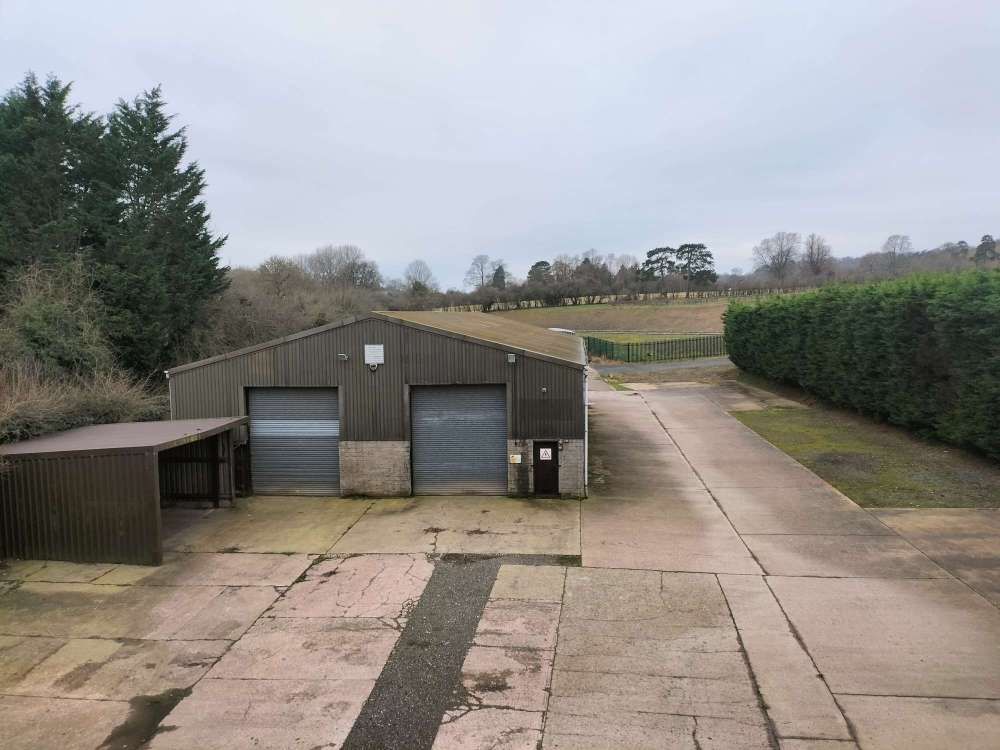
The view Southwest over the parapet of the same bridge. The warehouse is built over the old railway line. [My photograph, 12th January 2024]
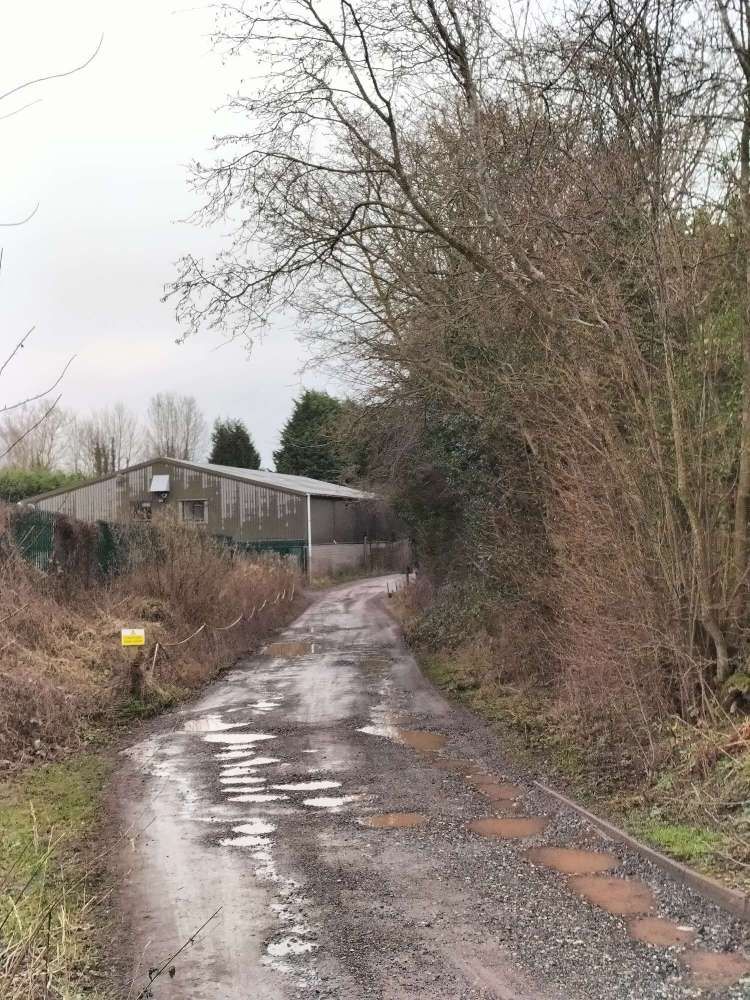
Looking Northeast again for a point beyond the warehouse in the last picture. The warehouse sits over the line of the old railway which continued Southwest to the left of the green palisade fencing on the left side of this image. The track in the centre of the image runs parallel to and to the South of the line of the railway. [My photograph, 12th January 2024]
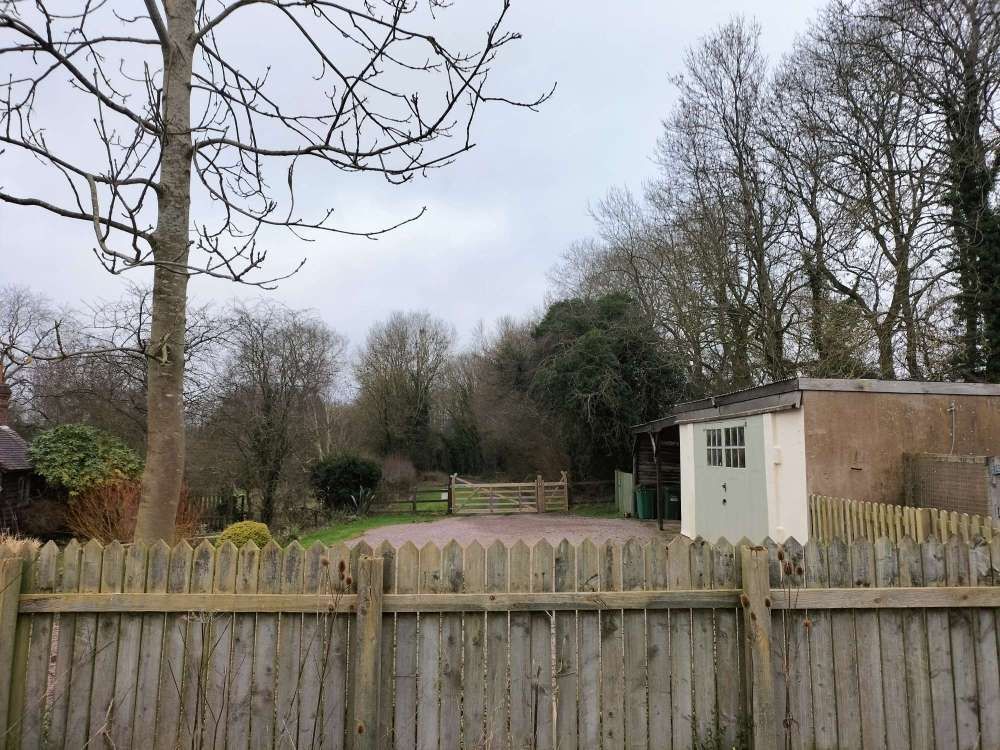
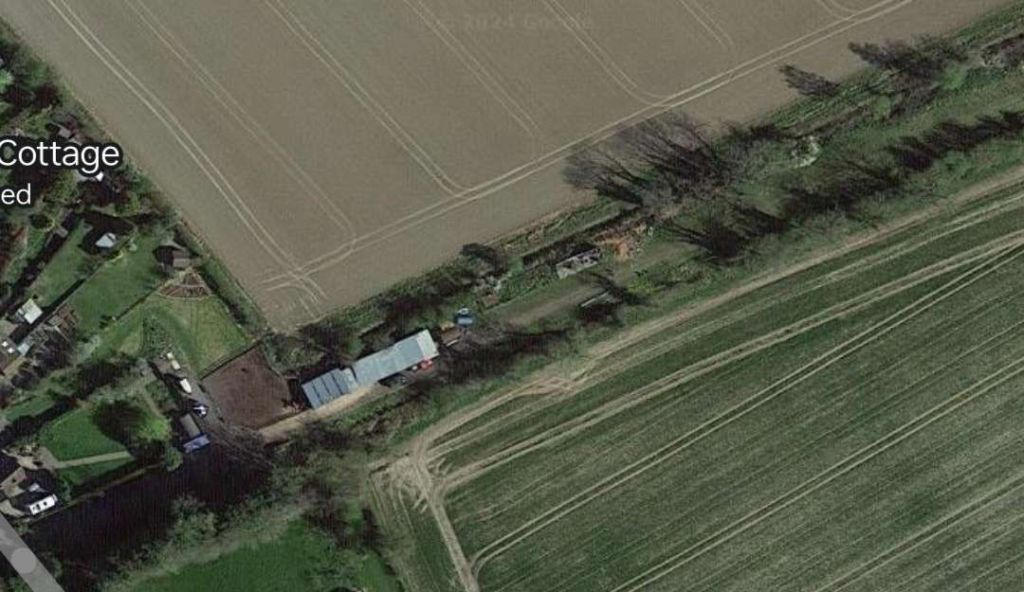
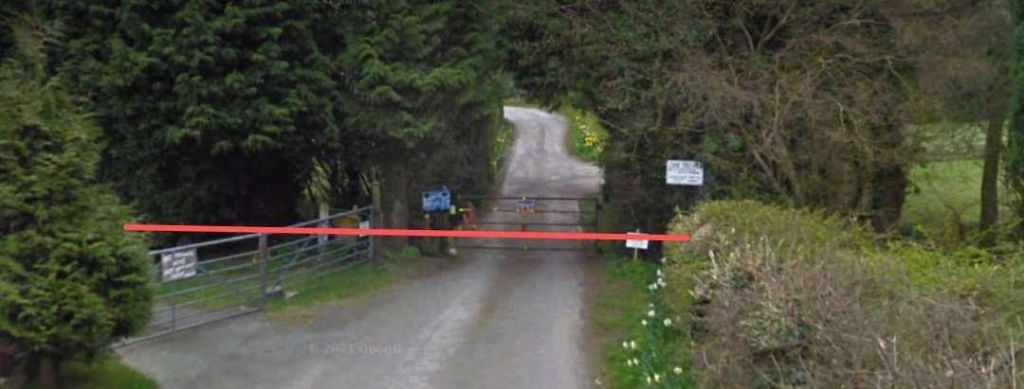
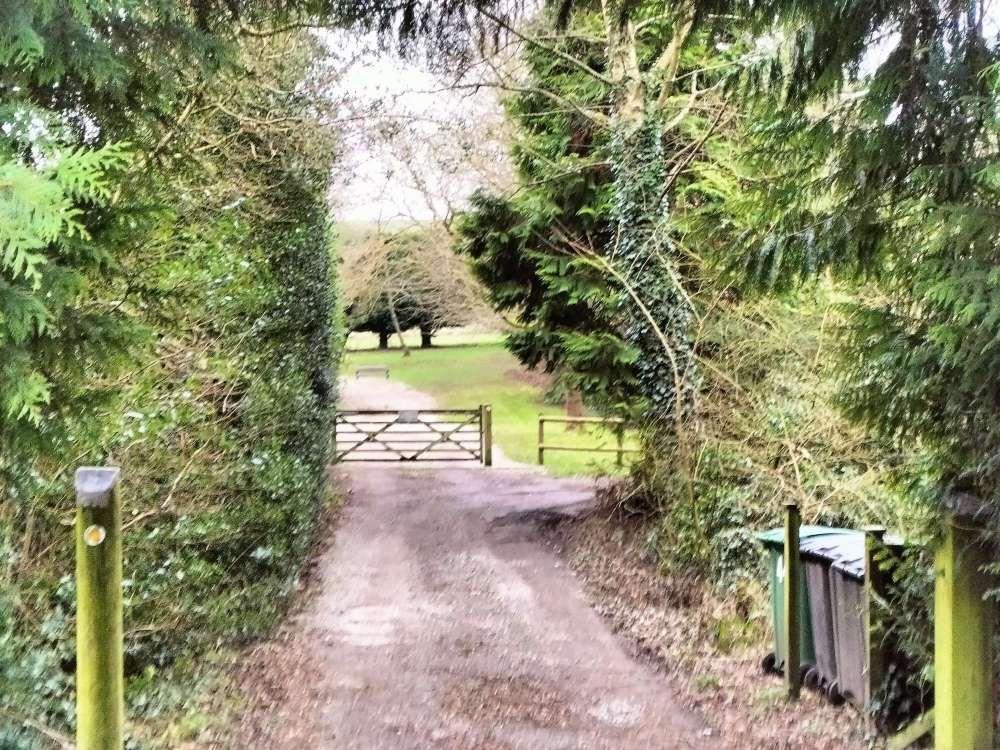
Looking back Northeast along the route of the old railway. The gate towards the back of this photo straddles the centre-line. The gardens associated with Grange Cottages now extend across the line of the railway. [My photograph, 12th January 2024]
Looking Southwest along the line of the old railway from the fence line of Grange Cottages garden. The gate across the line of the old railway indicates that the next length is also in private hands. A public footpath runs to the left of the tree line
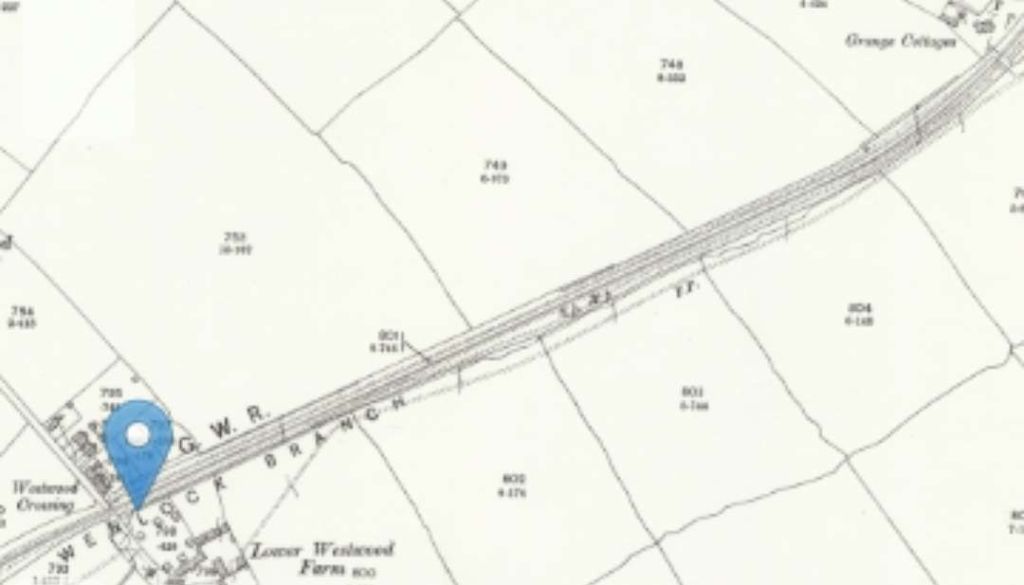
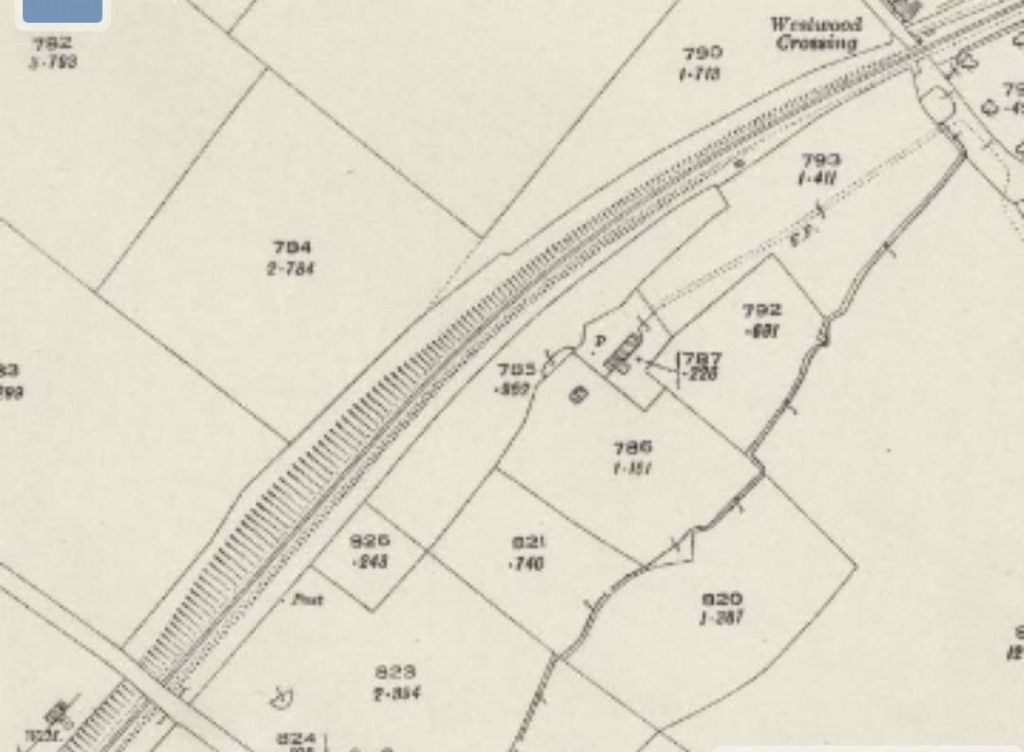
This next extract from the OS mapping of 1901 takes the line as far as the location of Westwood Halt which was at the location marked by the blue flag above. [21]
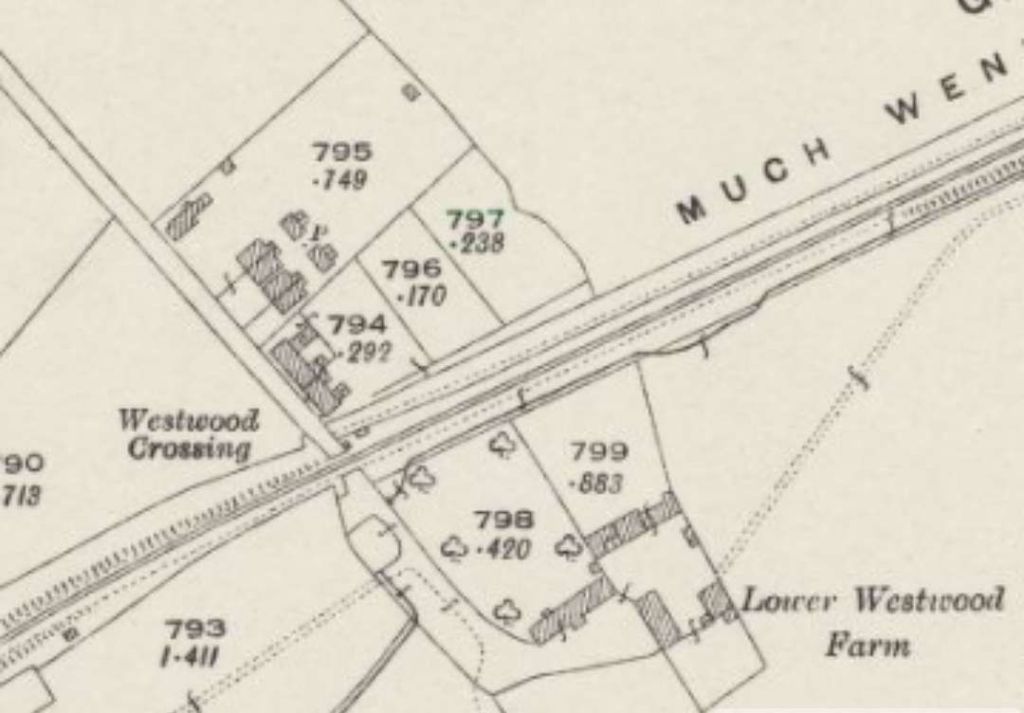
A closer view of the location of the Halt in 1925. The 25″ OS mapping indicates that the Halt was not built by 1925. [22]
The length of the old railway between Grange Cottages and Westwood Halt as shown on the satellite imagery from railmaponline.com. [12]

That length is in private hands with a significant length in use as a paddock for horses and a small holding.

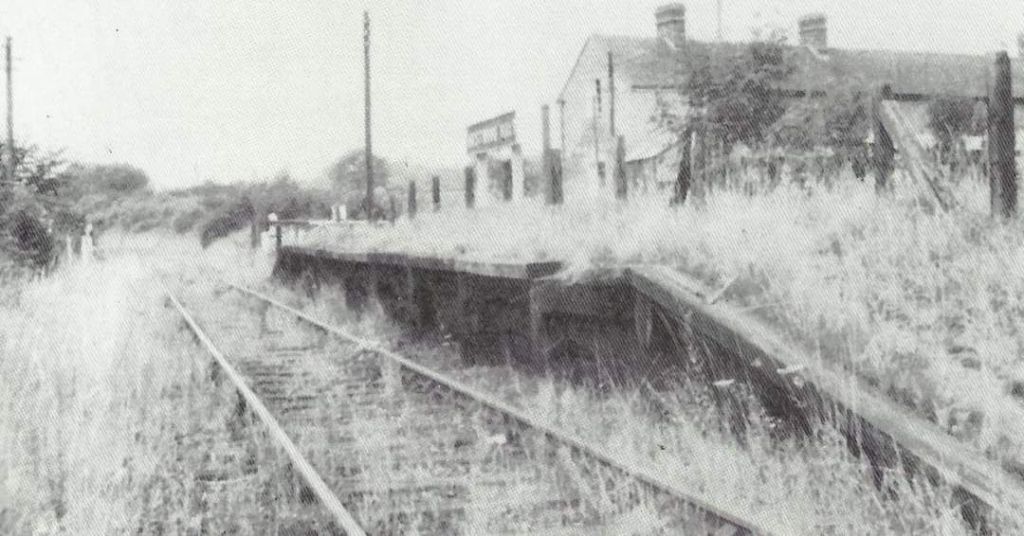
Westwood Halt in around 1960 – seen from the East. The single platform sat on the North side of the line immediately to the East of Westwood Crossing. It was not until 7th December 1935 that the Halt opened. It closed to passenger traffic on 31st December 1951. This picture was shared on the Much Wenlock Memories Facebook Group by Judith Goodman on 8th December 2020. The photographer is not known and the image is used under a Creative Commons Licence (CC BY-SA 4.0). [19]
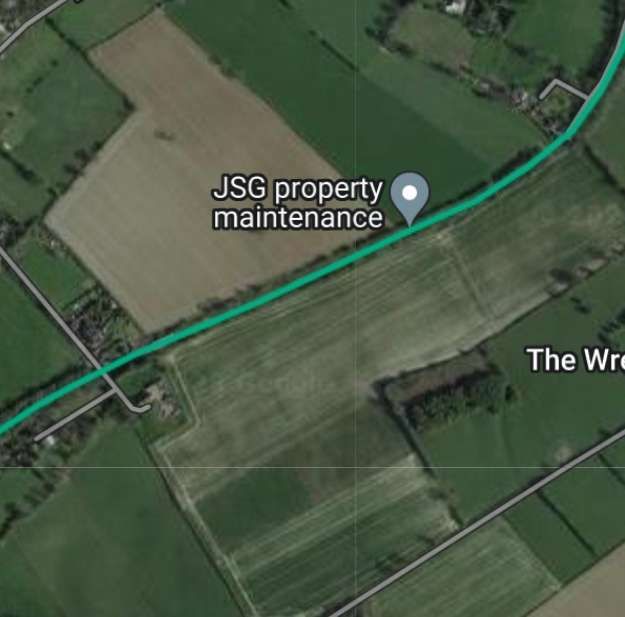
Google Maps image of the site of Westwood Halt. [Google Maps, 12th January 2024]
Westwood Crossing seen from the North. The red line marks the approximate centre-line of the old railway. The Halt would have been off to the left of this image. [Google Streetview, 2009]
Looking Northwest from Westwood Crossing towards the B4371. [My photograph, 12th January 2024]
Looking Southeast from the location of Westwood Crossing. It is not possible to follow the route of the old railway to the West of this location as it is in private hands. To continue following the route requires a diversion along the footpath ahead, across one field to join another track and then heading back Northwest towards the olod line. [My photograph, 12th January 2024]
The line leaving Westwood Crossing and heading towards Presthope. [My photograph, 12th January 2024]
Westwood Crossing to the next overbridge, as shown on the 25″ Ordnance Survey of 1901. [22]
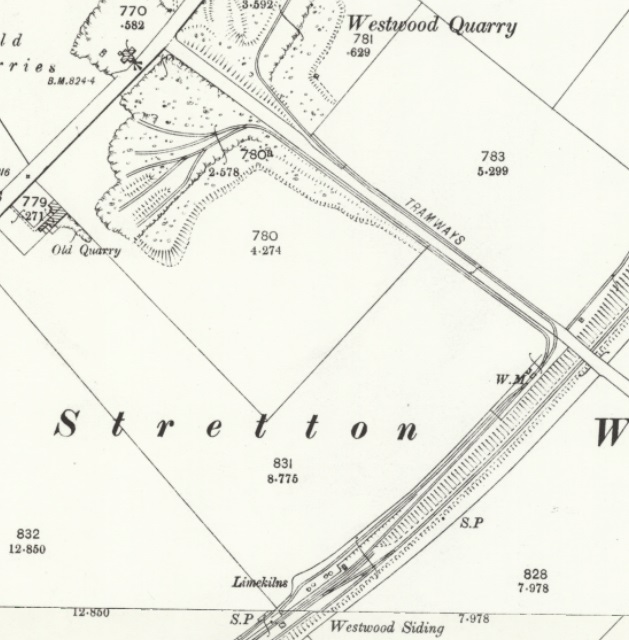
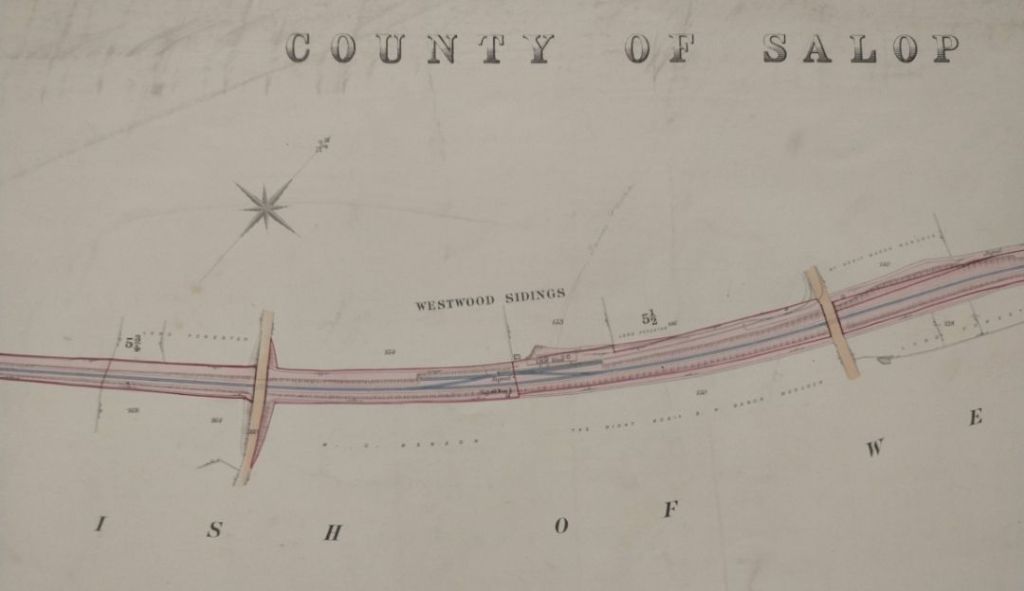
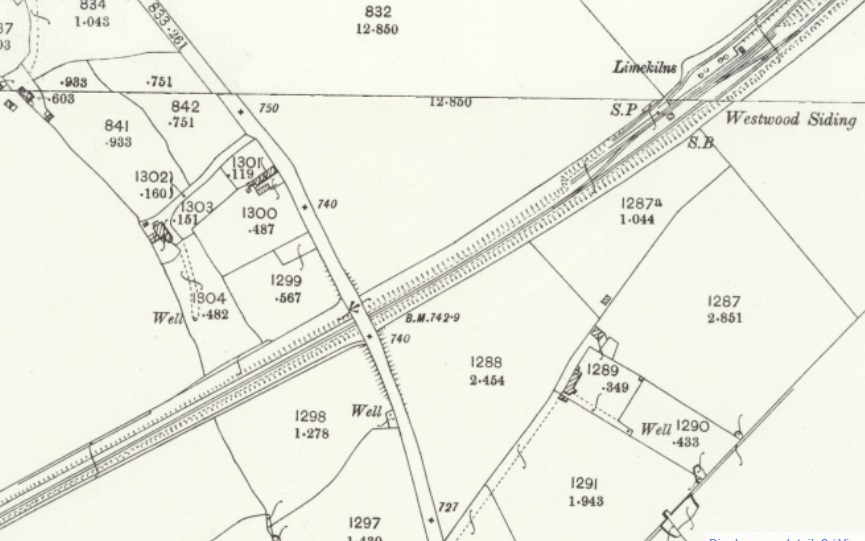
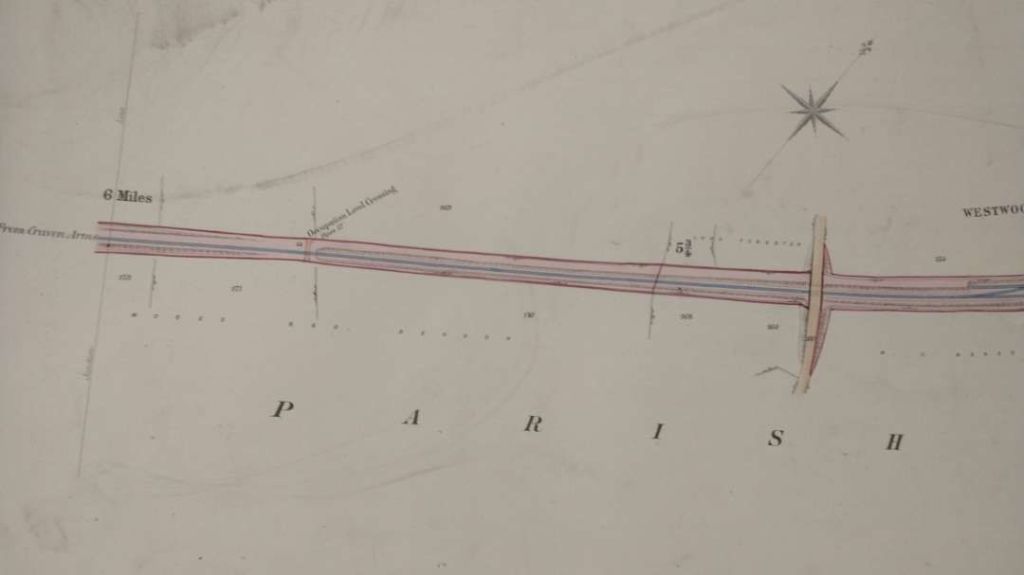
Within a couple of hundred yards, trains passed Westwood Sidings. The sidings served Westwood Quarry. There were ground frames controlling access at each end of the siding. [23]

When the Wenlock Branch opened “limestone was being extracted [at Westwood Quarry] for use in the Madeley Wood Company’s furnaces. Horse-drawn tramways ran from the quarry on to a loading ramp above the sidings.” [1: p97]

The immediate vicinity of the line close to Westwood Quarry. A tramway track ran from the quarry to the old railway. A sharp 90° turn took horse-drawn trams alongside the old railway to a wharf/loading ramp alongside the siding, © Shropshire Archives Ref. No. 6008/26 copyright reserved, used by kind permission. [9][My photograph of the plan, 5th August 2022]
Westwood Sidings as they appear on the pre-contract drawings for the construction of the Wenlock Branch, the tramway serving the Quarry ran alongside the Wenlock Branch from East to West, © Shropshire Archives Ref. No. 6008/26 copyright reserved, used by kind permission. [9][My photograph of the plan, 5th August 2022]
This extract from the 1901 25″ Ordnance Survey shows the length of the old railway immediately to the West of Westwood Sidings. [25]
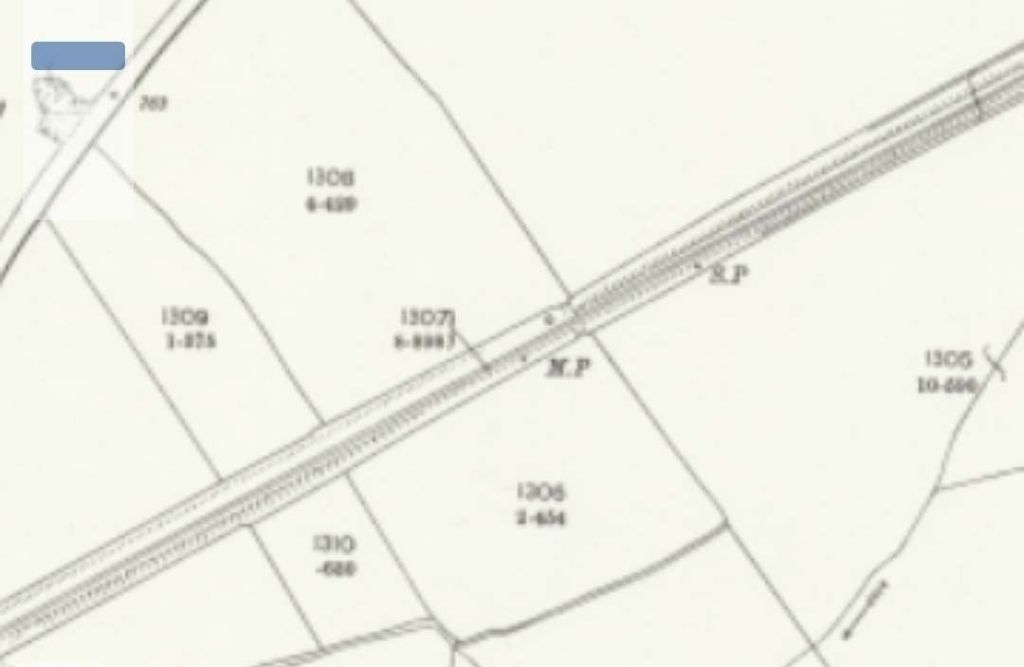
And a little further to the Southwest. [26]
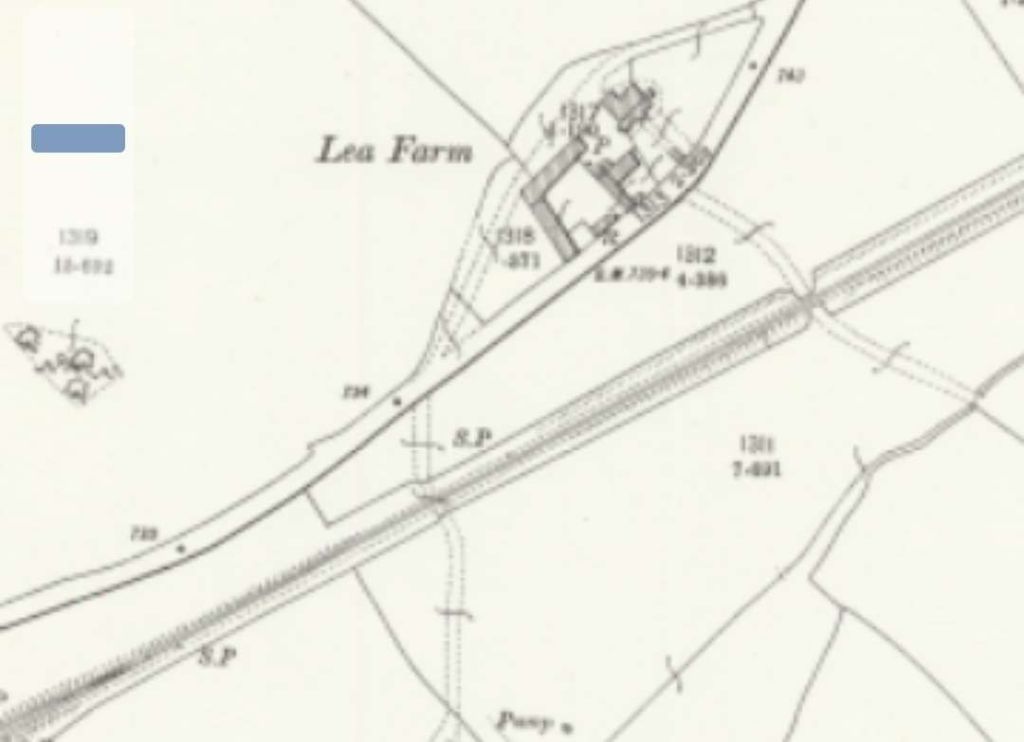
The 25″Ordnance Survey of 1901 again. Close to Lea Farm the B4371 and the Wenlock Branch run close to each other. [27]
This extract from the pre-contract drawings covers the same length of the Wenlock Branch as the three OS map extracts above, © Shropshire Archives Ref. No. 6008/26 copyright reserved, used by kind permission. [9][My photograph of the plan, 5th August 2022]
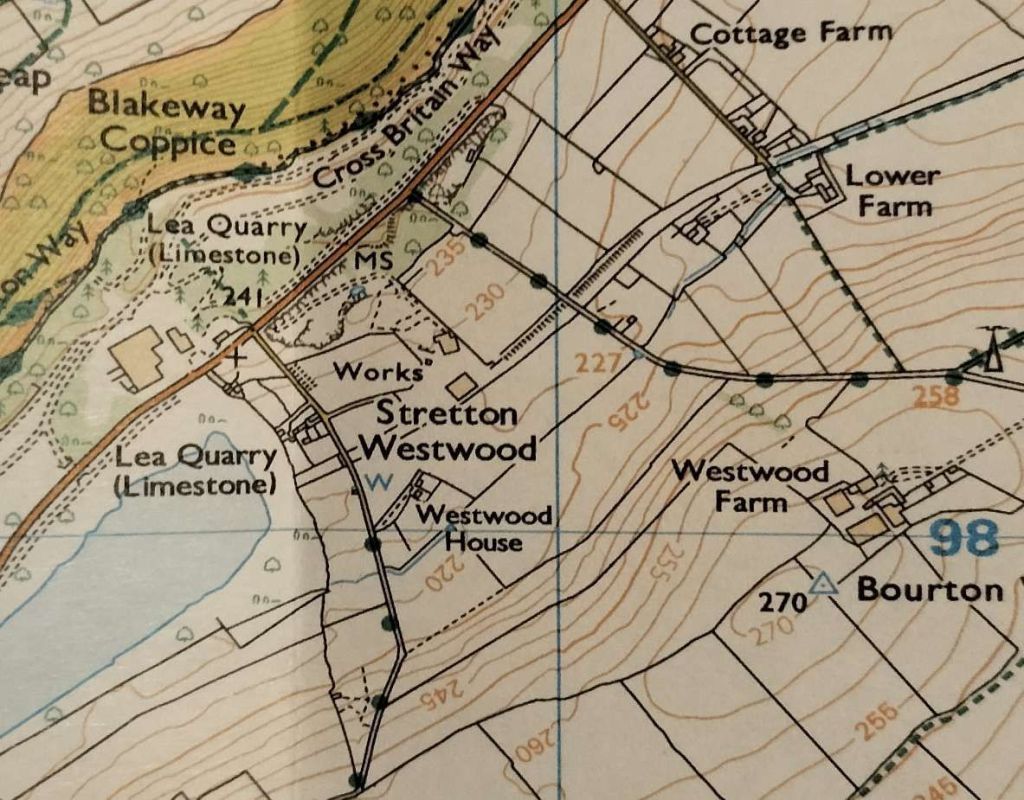
The immediate vicinity of the old Westwood Sidings as shown on modern Ordnance Survey mapping (OS Explorer No. 217). The route of the old railway can easily be picked out entering top-right and running across the North side of Lower Farm, a public footpath follows the line as far as the location of Westwood Crossing. The route of the old line is then crossed by an unmetalled track (which, on the North side of the line, was once a horse-drawn tramway) before it encounters the bridge illustrated below which, in the 21st century, is crossed by a metalled track. Westwood Sidings sat between these two tracks. Continuing Southwest, the route of the old line encounters quarry workings which postdated the closure of the railway and which in the 21st century are now flooded. [24]
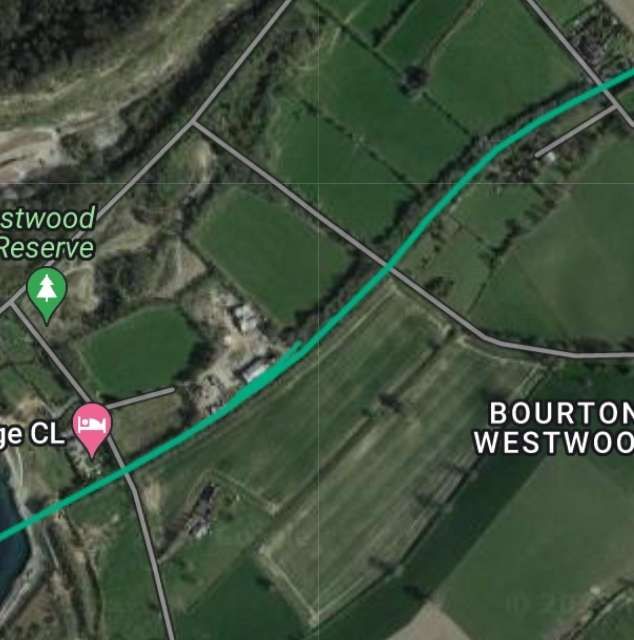
The length of the old line from Westwood Crossing to the Eastern edge of the flooded workings of Lea Quarry which straddle the old rail route. [12]
Looking back towards Westwood Crossing from the first overbridge to the West. [My photograph 12th January 2024]
The bridge viewed from the top of the cutting to the West of the bridge. [My photograph, 12th January 2024]
The view from the Southeast along the track over the bridge. Westwood Sidings were along the old railway to the left. A tramroad climbed the track in front of the camera towards Wenlock Edge and the B4371. Thetramway served Westwood Quarries which were between the railway and the B4371. [My photograph, 12th January 2024]
The old railway ran ahead towards Presthope in cutting towards the next overbridge. [My photograph, 12th January 2023]
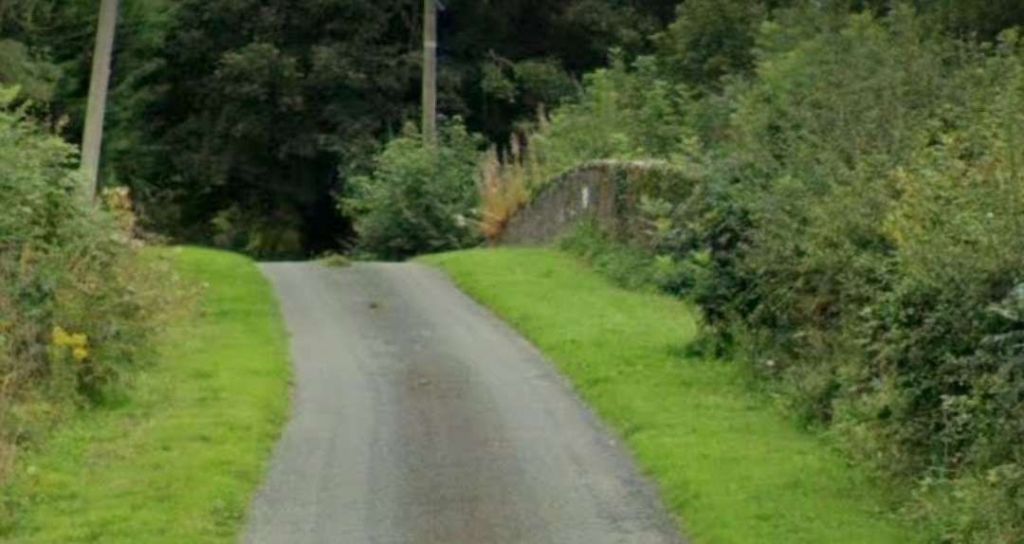
The next accommodation bridge which spanned the line was just a little further to the West, beyond of the Westwood Sidings. This photograph looks South along the road over the bridge. [Google Streetview, August 2021]
The same bridge which This photograph looks South along the road over the bridge. [Google Streetview, August 2021]
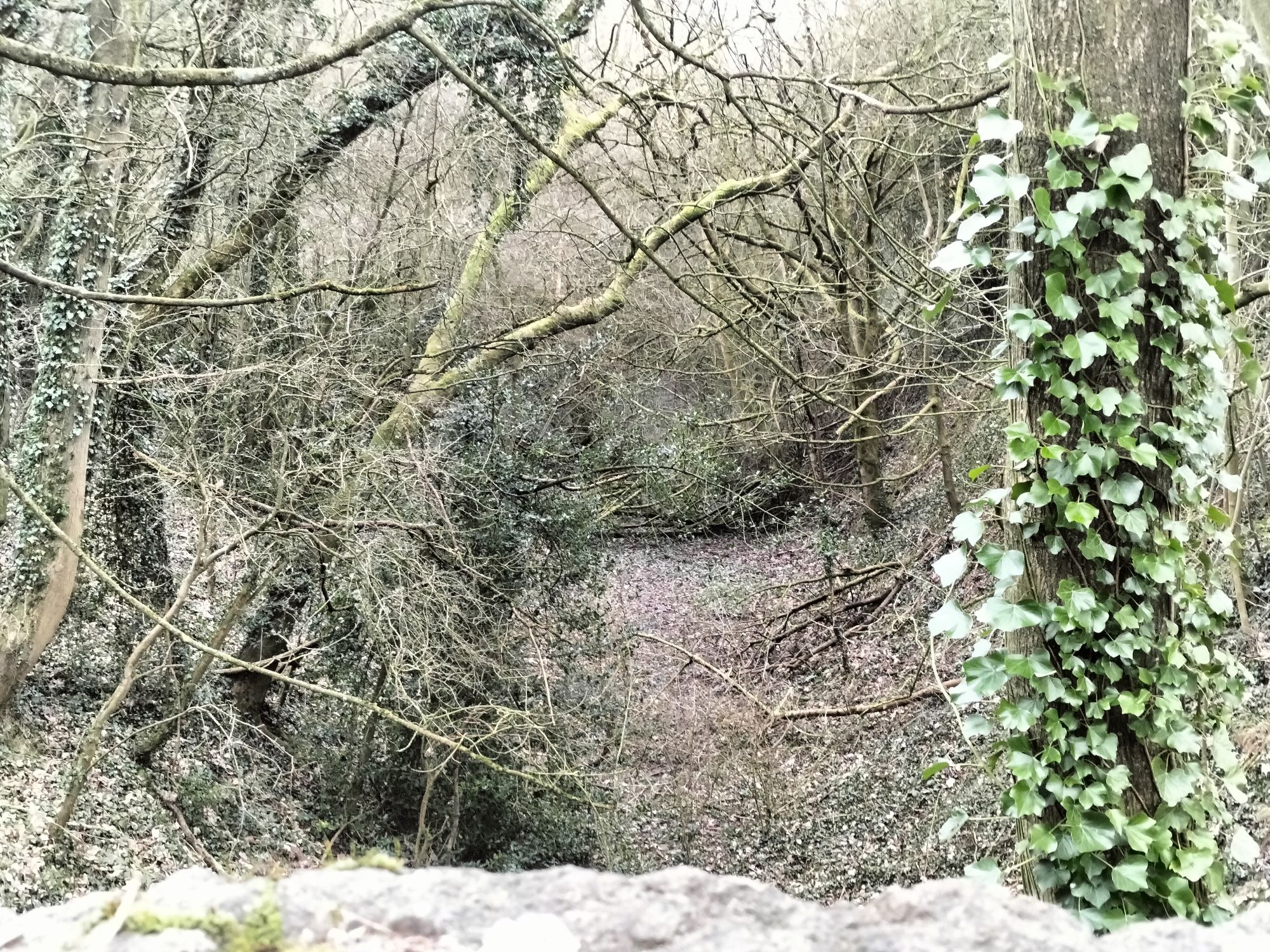
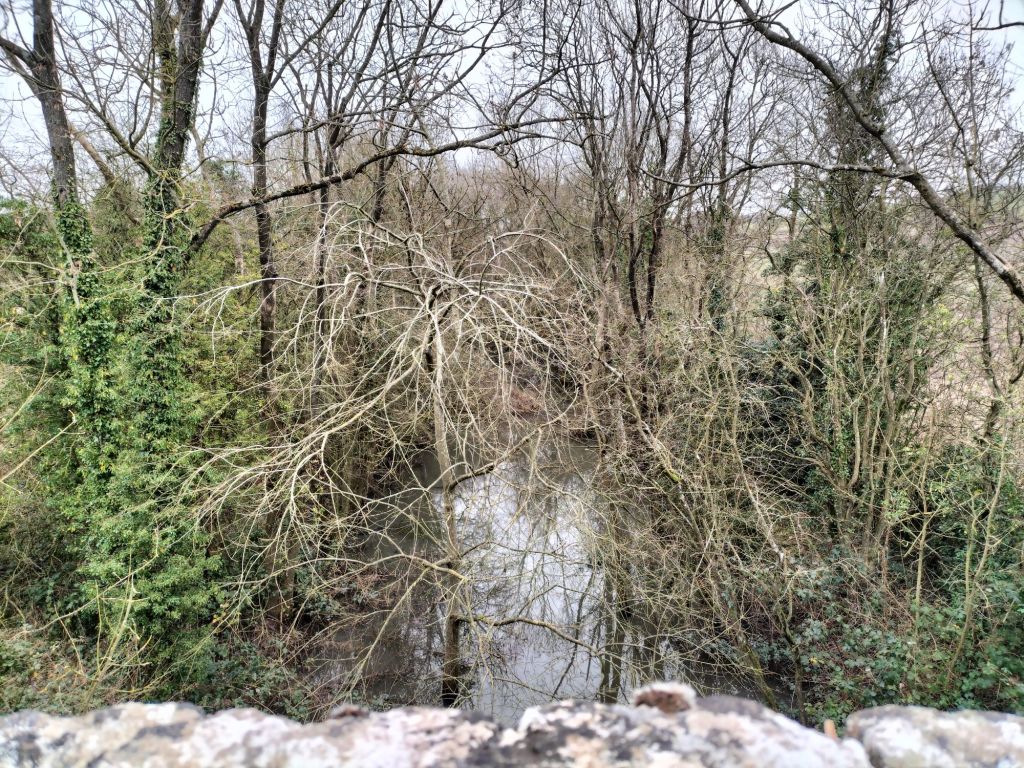
Looking back towards Westwood Halt from the next overbridge. Heavy winter rain means that the cutting floor is flooded. Westwood Sidings were between the last overbridge and this one. [My photograph, 12th January 2024]
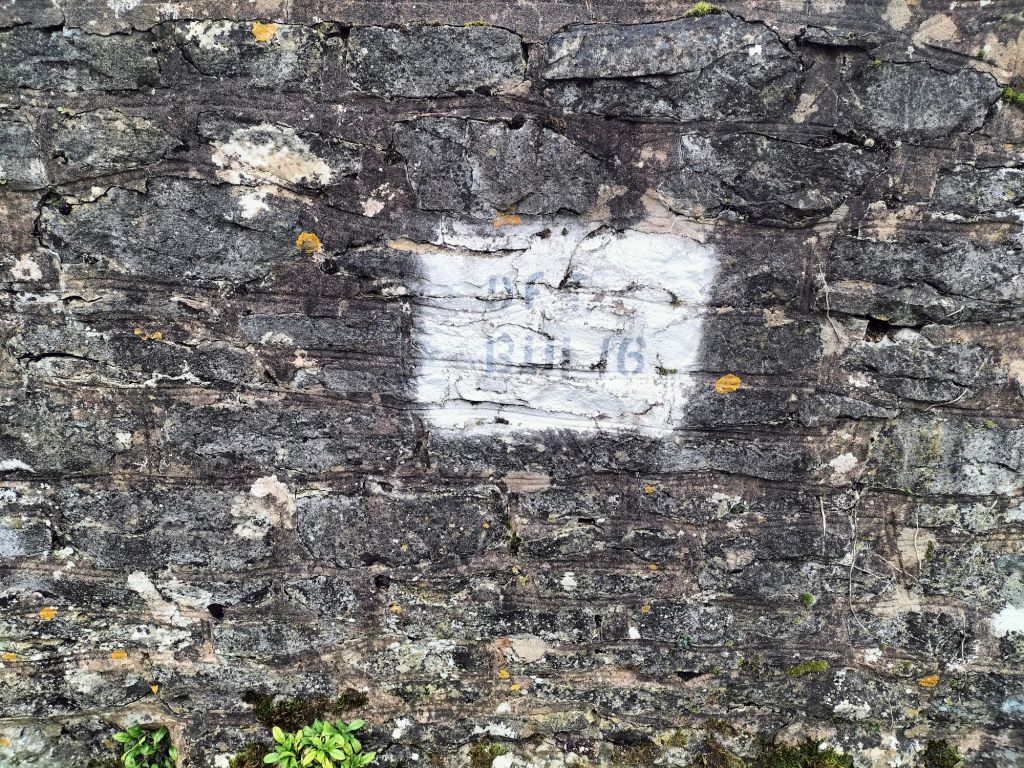
Each of the bridges on the old line are numbered. It is probably sometime since the stenciled numbers were renewed. Is this Bridge No. 16?
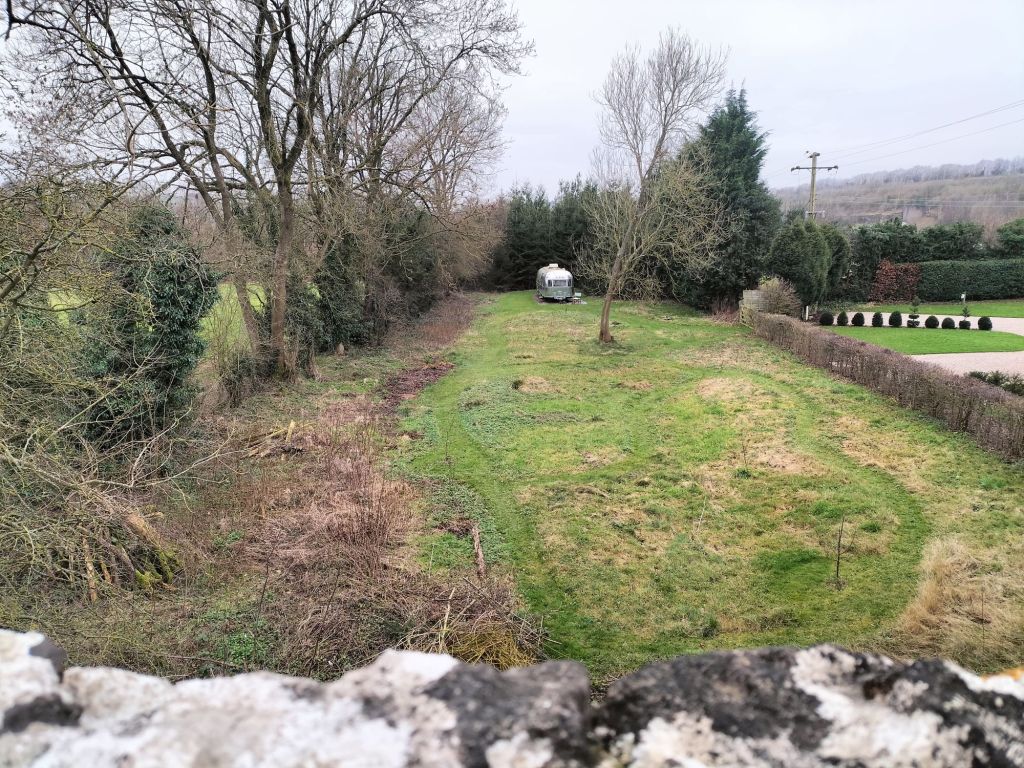
The view to the Southwest from the bridge. A small caravan site occupies the formation here. Immediately beyond the conifers ahead are the flooded workings of Lea Quarry. [My photograph, 12th January 2024]
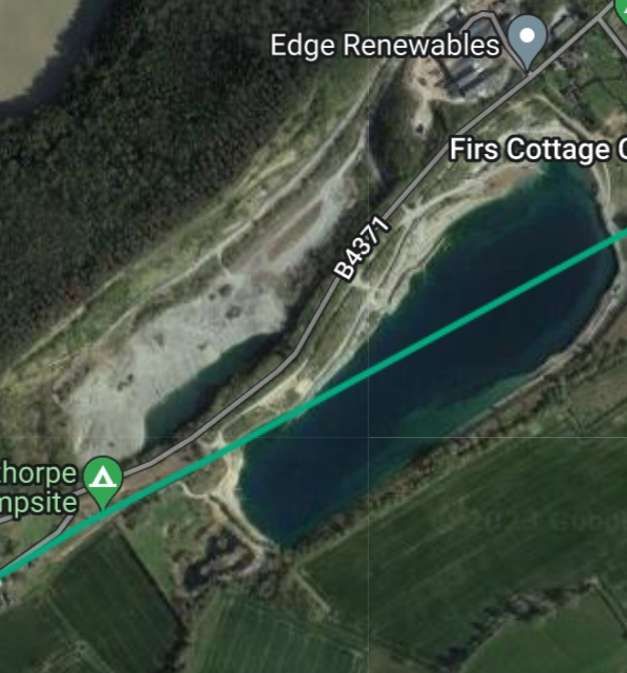
Lea Quarry was only a short distance from the location of Westwood Quarry. Lea Quarry’s flooded workings appear in full on this extract from the railmaponline.com satellite imagery. The flooded workings to the North of the B4371 sit where once Lea Farm would have been found. It is not obvious when travelling along the road that it is effect on a causeway between two lakes! Edge Renewables was founded in 2011 and is active in the part of Lea Quarry to the North side of the road.[12]
Another extract from the 25″ Ordnance Survey of 1901. This extract focuses on Presthope Station which sat just to the South of the B4371 accessed by a dedicated approach road. [28]
This next extract from the railmaponline.com satellite imagery shows Presthope Grange Campsite and Residential Park sitting over the route of the old Wenlock Branch on the site of Presthope Station. The branch from Presthope Station into what were Presthope quarries is illustrated leaving the main running line as it continues to climb toward the short tunnel close to the top of Wenlock Edge. [12]
The 18.00 hrs Craven Arms – Much Wenlock – Wellington train leaving Presthope Station on 21st April 1951, heading for Much Wenlock. This image was shared on the Telford memories Facebook Group by Metsa Vaim EdOrg on 8th October 2019. [30]
Presthope Station after the removal of the passenger facilities. This photograph was taken by J. Langford in April 1962, the signal box and presumably the station master’s house remain. This image was shared on the Much Wenlock Memories Facebook Group by Judith Goodman on 9th February 2023. [31]
A view North across Presthope Grange Residential Park which sits on the site of Presthope Railway Station. [32]

References

  1. Ken Jones; The Wenlock Branch; The Oakwood Press, Usk, Monmouthshire, 1998.
  2. https://www.britainfromabove.org.uk/image/EAW046196, accessed on 1st November 2023
  3. https://www.britainfromabove.org.uk/image/EAW046197, accessed on 1st November 2023.
  4. https://www.british-history.ac.uk/vch/salop/vol10/pp399-447, accessed on 25th December 2023.
  5. https://maps.nls.uk/geo/explore/#zoom=17.5&lat=52.59954&lon=-2.55716&layers=168&b=1, accessed on 25th December 2023.
  6. https://maps.nls.uk/geo/explore/#zoom=16.9&lat=52.59775&lon=-2.56049&layers=168&b=1, accessed on 25th December 2023.
  7. https://en.m.wikipedia.org/wiki/Much_Wenlock_railway_station, accessed on 25th December 2023.
  8. https://www.geograph.org.uk/photo/2268995, accessed on 25th December 2023.
  9. The photographs of the pre-contract drawings for the line were taken by myself and show extracts from the construction plans held in the Shropshire Archive. There is a standard charge of £10 per visit for taking photographs of their records.
  10. https://www.facebook.com/photo?fbid=871714362892537&set=pcb.1583276891885898, accessed on 13th October 2023.
  11. https://en.m.wikipedia.org/wiki/File:Much_Wenlock_railway_station.jpg, accessed on 14th October 2023.
  12. https://railmaponline.com/UKIEMap.php, 14th October 2023.
  13. https://maps.nls.uk/geo/explore/#zoom=16.5&lat=52.59360&lon=-2.57210&layers=168&b=1, accessed on 27th December 2023.
  14. https://maps.nls.uk/geo/explore/#zoom=16.5&lat=52.59611&lon=-2.56444&layers=168&b=1, accessed on 27th December 2023.
  15. https://maps.nls.uk/geo/explore/#zoom=16.5&lat=52.59513&lon=-2.56857&layers=168&b=1, accessed on 27th December 2023.
  16. https://maps.nls.uk/geo/explore/#zoom=16.5&lat=52.59146&lon=-2.57500&layers=168&b=1, accessed on 27th December 2023.
  17. https://maps.nls.uk/geo/explore/#zoom=16.5&lat=52.58847&lon=-2.57795&layers=168&b=1, accessed on 27th December 2023.
  18. https://www.facebook.com/groups/1532191000361509/permalink/2624088597838405/?app=fbl, accessed on 27th December 2023.
  19. https://m.facebook.com/groups/1470137459866509/permalink/3158174324396139, accessed on 27th December 2023; and https://commons.m.wikimedia.org/wiki/File:Westwood_halt.jpg, accessed on 28th December 2023.
  20. https://www.geograph.org.uk/photo/6220870, accessed on 27th December 2023.
  21. https://maps.nls.uk/geo/explore/#zoom=15.5&lat=52.58777&lon=-2.58269&layers=168&b=1&marker=52.58420,-2.58663, accessed on 28th December 2023.
  22. https://maps.nls.uk/view/121151366, accessed on 28th December 2023.
  23. https://maps.nls.uk/geo/explore/#zoom=16.2&lat=52.58321&lon=-2.59431&layers=168&b=1, accessed on 28th December 2023.
  24. Ordnance Survey Explorer Map No. 217.
  25. https://maps.nls.uk/geo/explore/#zoom=16.4&lat=52.58031&lon=-2.59601&layers=168&b=1, accessed on 30th December 2023.
  26. https://maps.nls.uk/geo/explore/#zoom=16.4&lat=52.57873&lon=-2.60143&layers=168&b=1, accessed on 30th December 2023.
  27. https://maps.nls.uk/geo/explore/#zoom=16.4&lat=52.57772&lon=-2.60633&layers=168&b=1, accessed on 30th December 2023.
  28. https://maps.nls.uk/geo/explore/#zoom=15.9&lat=52.57594&lon=-2.61148&layers=168&b=1, accessed on 2nd January 2024.
  29. https://maps.nls.uk/geo/explore/#zoom=15.9&lat=52.57503&lon=-2.61667&layers=168&b=1, accessed on 2nd January 2024.
  30. https://scontent.fbhx4-2.fna.fbcdn.net/v/t1.6435-9/72309512_205899980403678_7031472482779398144_n.jpg?_nc_cat=106&ccb=1-7&_nc_sid=3ba11c&_nc_ohc=emwNw6dTtOEAX98lstF&_nc_oc=AQltLJN6CydIE1iwVeZIhsh7FebhgpjYSXj4bSzrDzZFN1GkxA9MgvTWDIpb8u77FAIVOOqJDbVO3NSZWciOhtxl&_nc_ht=scontent.fbhx4-2.fna&oh=00_AfBnQj18_fNuJPC8cc8S55O0uoHKcfFj4B4xt0r1e4TwTA&oe=65BB609F, accessed on 2nd January 2024.
  31. https://www.facebook.com/photo/?fbid=10219517828553747&set=a.10201009954868472, accessed on 13th January 2024.
  32. https://fb.watch/pjIctGeJKI/, accessed on 2nd January 2024.

The Railways of East Shropshire (and Telford) – the Much Wenlock and Severn Junction Railway, Buildwas to Much Wenlock.

This article follows on from three other articles which covered the Wellington to Severn Junction Railway and which reached as far along the line as Buildwas. Those articles can be found on these links:

https://rogerfarnworth.com/2022/07/07/the-railways-of-telford-the-wellington-to-severn-junction-railway-wsjr-part-1-wellington-to-horsehay

https://rogerfarnworth.com/2022/07/12/the-railways-of-telford-the-wellington-to-severn-junction-railway-wsjr-part-2-horsehay-to-lightmoor-junction

https://rogerfarnworth.com/2022/07/18/the-railways-of-telford-the-wellington-to-severn-junction-railway-wsjr-part-3-lightmoor-junction-to-buildwas

In this article we follow the line from Buildwas to Much Wenlock which was initially the Much Wenlock and Severn Junction Railway, “established by the Much Wenlock and Severn Railway Company. The company itself was formed on 21 July 1859. The railway was later constructed between 1860 and 1862 forming part of the Wellington to Craven Arms Railway.” [1]

The Wellington to Craven Arms Railway was formed by a group of railway companies that eventually joined the Great Western Railway family, and connected Wellington and Shifnal with Coalbrookdale, Buildwas, Much Wenlock and a junction near Craven Arms on the route between Shrewsbury and Hereford. It’s purpose was particularly focussed on the iron, colliery and limestone industries around Coalbrookdale.

The line was built over a number of years by what started out as a number of different independent ventures:

The Wenlock branch, with its four original constituent companies passed through areas as complex and diverse as its original organisation: from the slag tips and pennystone pit mounds of the East Shropshire coalfield to the wooded crest of Wenlock Edge and Ape Dale. The one central strand however on which the companies focused their attention was the ironworks nestling in the tree-lined Coalbrookdale valley, the success of their venture depending solely on the support which they would receive from the Coalbrookdale Company.” [61: p5]

The railways were opened to traffic between 1854 and 1867. The railways local to Coalbrookdale were heavily used by mineral traffic; the hoped-for trunk hauls to and from South Wales via Craven Arms were not realised. Passenger traffic was never heavy, and was sparse between Much Wenlock and Craven Arms. Passenger traffic closures took place from 1951 and ordinary goods traffic closed down in the 1960s. Ironbridge B Power Station generated significant volumes of merry-go-round coal traffic between 1967 and 2015. The line is now entirely closed to ordinary traffic, but the heritage Telford Steam Railway operates on a section between Lawley and Doseley. [2]

The immediate location of the railway station at Buildwas disappeared under the redevelopment of the power station.

These first few maps are taken from StreetMap.co.uk [17] and show the route of the railway South from Buildwas through Much Wenlock as it appears on 21st century Ordnance Survey mapping. …..

Buildwas to Much Wenlock – The Route

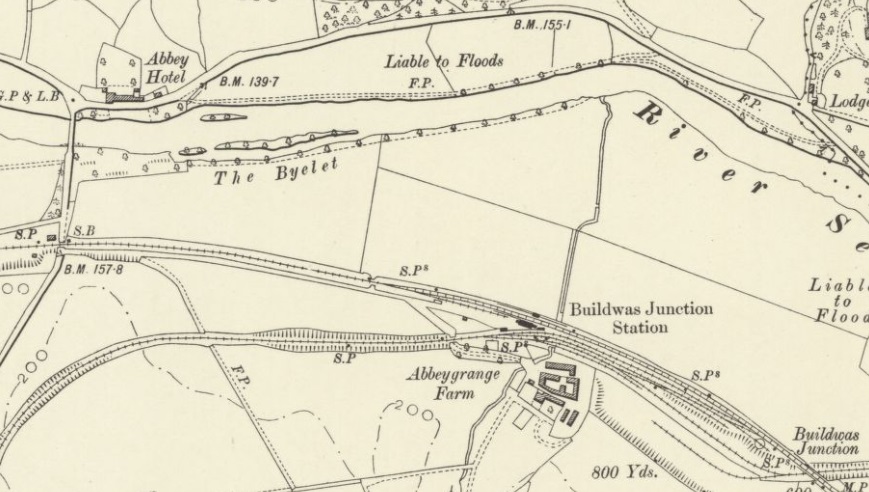
Buildwas Junction Station was on the South side of the River Severn close to what was Abbeygrange Farm. The Village of Buildwas was on the North side of the river. The Station was a relatively busy junction The Severn Valley line was met by the line from Wellington and the line via Much Wenlock to Craven Arms. A short goods line left the station to serve a pumping station on the South bank of the Severn. This extract is from the 1901/2 6″ OS Map. [3]
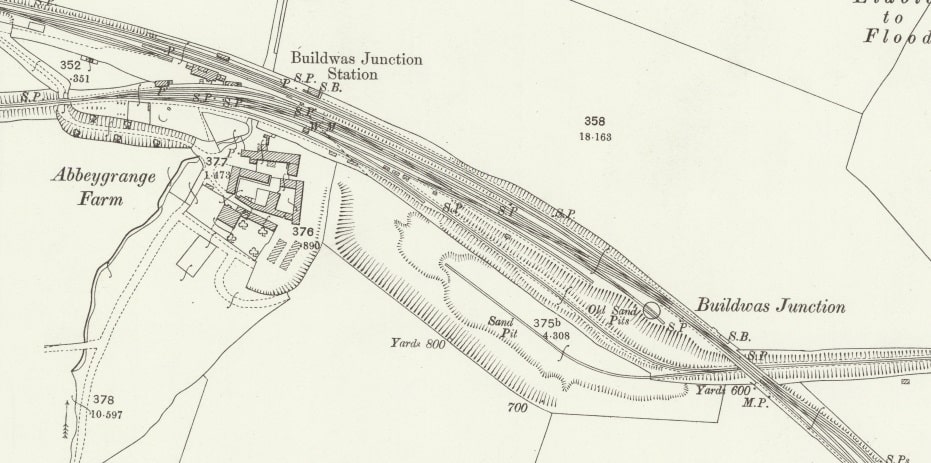
This 25″ Map provides greater clarity and is taken from the 1901 25″ Ordnance Survey. [4]
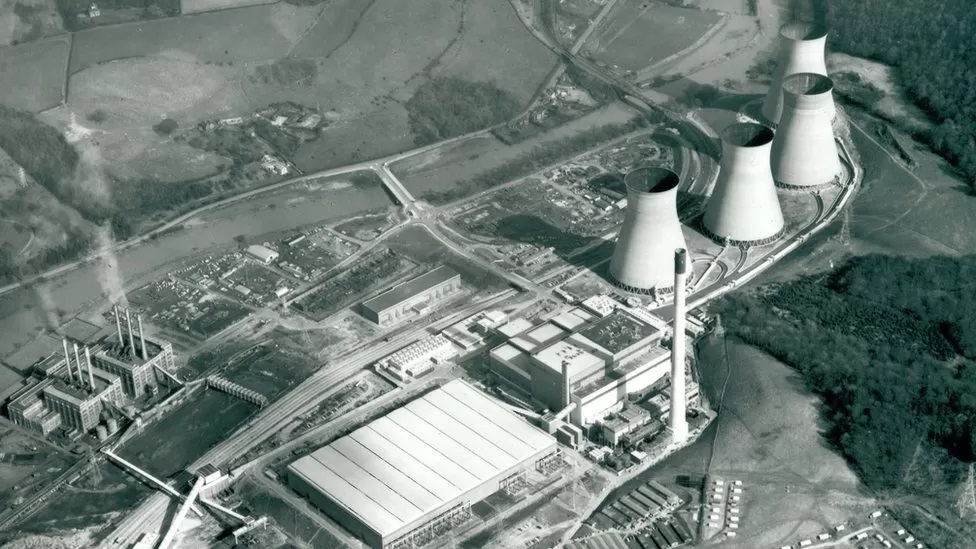
This aerial image was taken in 1968 a short while before Ironbridge B Power Station was commissioned and linked to the national grid. Ironbridge A Power Station is on the left of the image and is still operational. The railway as it remained in 1968 can be seen snaking across the centre of the image (c) E-ON. [18]
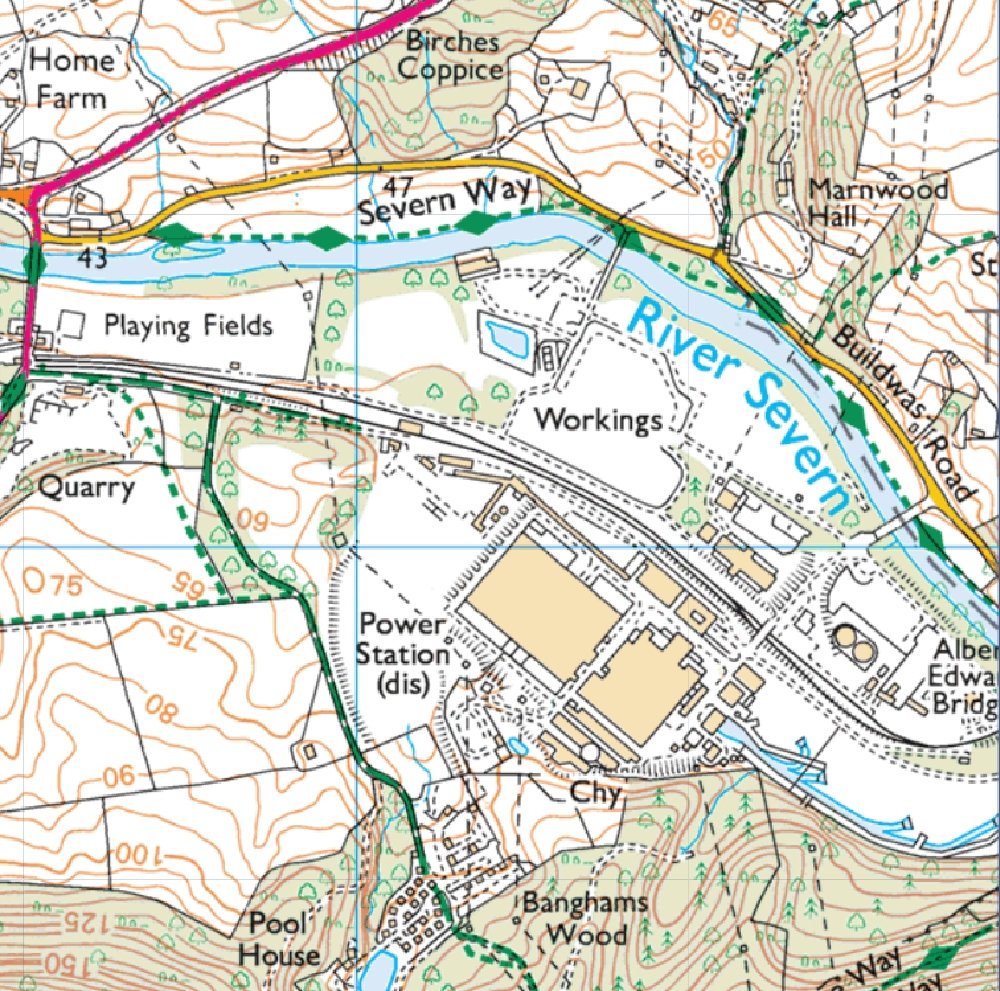
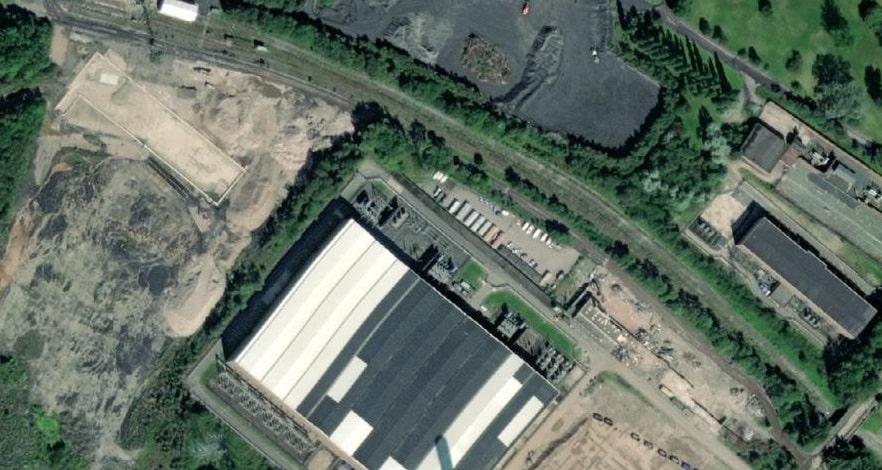
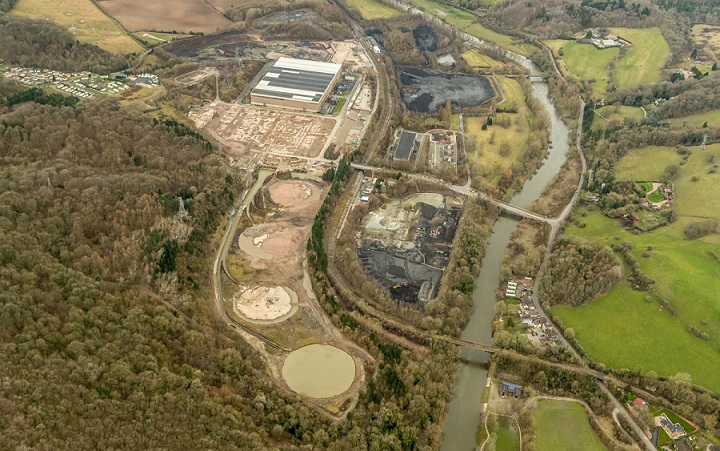
The site is unrecognisable in 21st century. The power stations on the site have both been consigned to history (2023) at different times. This ESRI satellite image as supplied by the National Library of Scotland (NLS) does show remnants of the railway still in place. [5]
An aerial view of the site taken from the East after the demolition of the cooling towers. The railway enters on the bottom right and runs up the centre of the image to the South of the River Severn. In this image, the site has yet to see any major redevelopment. [19]
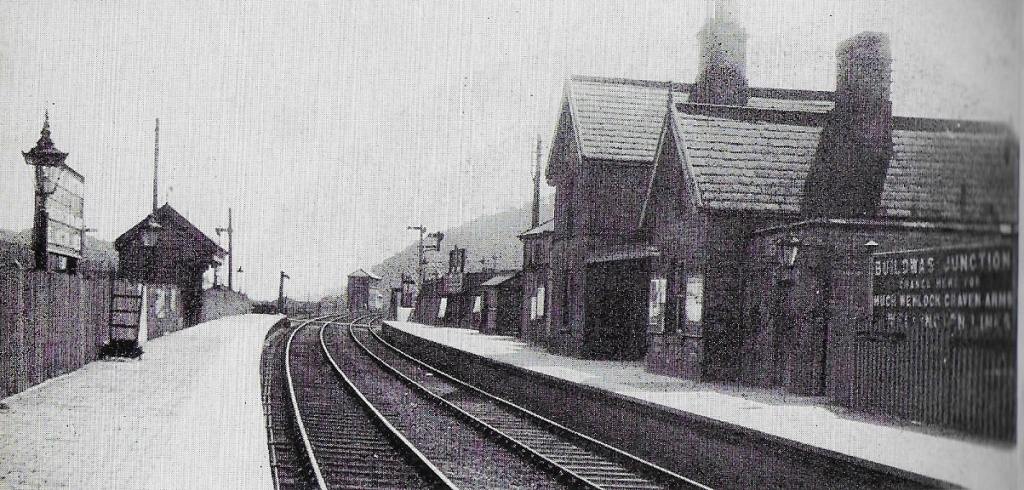
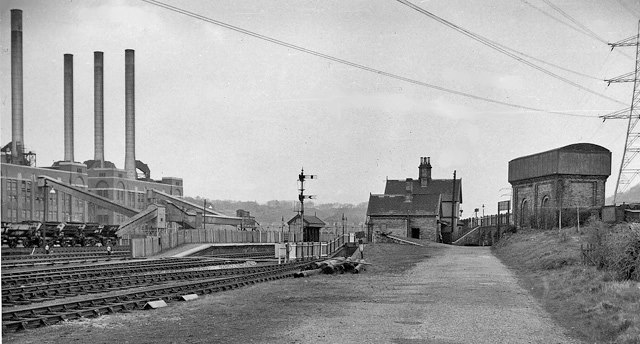
Buildwas Junction Railway Station in 1962. This view looks West towards Bridgenorth on the Severn Valley line. The junction for services to Wellington via Coalbrookdale was a few hundred meters beyond the station in this view. The line to Much Wenlock is indicated by the platform name board which can be seen just to the left of the water tower on the right of the image. This picture was shared on the Telford Memories Facebook Group on 11th May 2017 by Paul Wheeler. He comments: “The station was closed on 9/9/63 on closure of the Severn Valley line. Passenger services from Craven Arms had ceased on 31/12/51, from Much Wenlock and from Wellington on 23/7/62, but the line to Buildwas remained open from Longville for freight until 4/12/63 and from Ketley on the Wellington line until 6/7/64. However, coal traffic for Ironbridge Power Station (B Station built on site of Buildwas railway station) … continued from Madeley Junction, on the main line between Shifnal and Telford Central” until 2016. The Power Station in this photograph was Ironbridge A. This image is reproduced under a Creative Commons Licence [Some Rights Reserved] © Copyright Ben Brooksbank and licensed for reuse (CC BY-SA 2.0). [6]
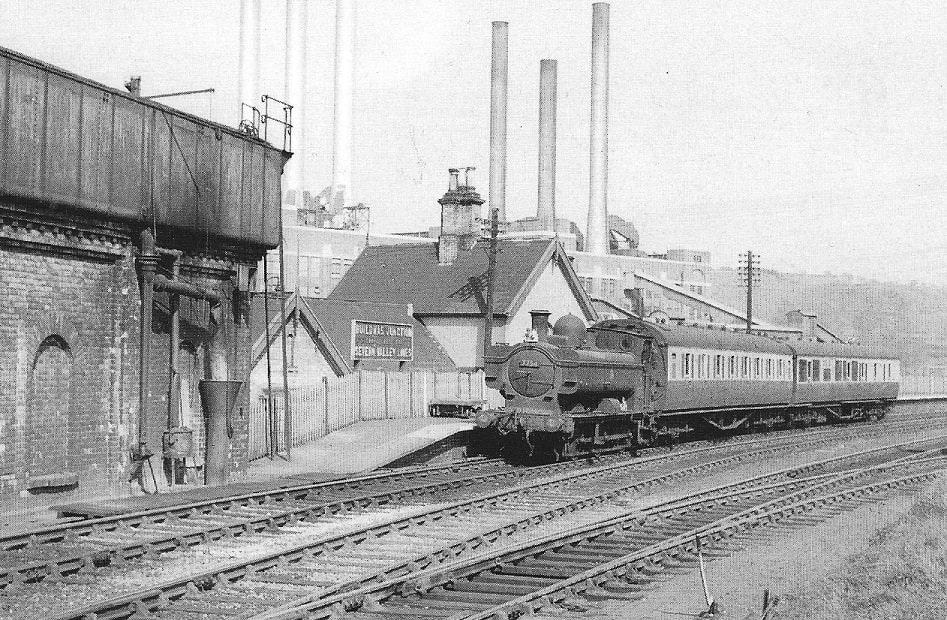
A service for Much Wenlock sits at the station platform in 1957 in the capable hands of 0-6-0PT No 7744 . The line to Much Welock went through the combined station at a higher level than the Severn Valley line. Buildwas Junction Station was overshadowed by the Ironbridge ‘A’ power station. Note the ‘fire-devil’ next to the water column to the left of the picture, in front of the water tower. The Fire Devil is the container with a long chimney which is beneath the water tower. It is used in freezing conditions to prevent the water column from freezing. This picture was shared on the Telford Memories Facebook Group by Metsa Vaim EdOrg on 17th October 2020, © G.F. Bannister. [7]
A similar view from 1954, this time with a service for Wellington at the branch platform. This was shared by Metsa Vaim EdOrg on the Telford Memories Facebook Group on 2nd March 2020, (c) G.F. Bannister. [8]
This image of Buidwas Railway Station comes from 1961. This time the image shows the Severn Valley lines. The photographer has chosen to focus tightly on the railway station which avoids including the power station in the image. This picture was shared on the Telford Memories Facebook Group by Marcus Keane on 20th May 2019. [9]
This image from 1959 was shared by Metsa Vaim EdOrg on the Telford Memories Facebook Group on 24th February 2020. It shows an ex-GWR railcar in the East-bound platform on the Severn Valley line and a service for Wellington arriving from Much Wenlock on the branch. The relative levels of the platforms can easily be seen in this image. [10]
This image from 1932 was shared by Metsa Vaim EdOrg on the Telford Memories Facebook Group on 24th February 2020. [11]
A Westbound SVR passenger service at Buildwas, with service that has arrived from Much Wenlock in the higher branch line platforms in the background. Taken 9 June 1961. From the Sellick collection, hosted online by the National Railway Museum, © National Railway Museum and included here under a Creative Commons Licence, Attribution 4.0 International (CC BY 4.0). [12]
A particularly busy moment at Buildwas Junction Station on 9 June 1961. On the right, two Severn Valley passenger services cross, whilst on the left, a passenger service stands at the single platform for the Much Wenlock branch, with a goods train for Much Wenlock standing in the branch loop waiting to depart. From the Sellick collection, hosted online by the National Railway Museum, © National Railway Museum and included here under a Creative Commons Licence, Attribution 4.0 International (CC BY 4.0). [13] .
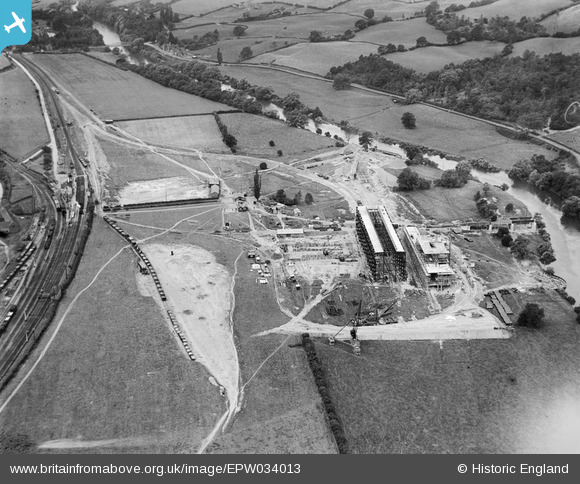
This aerial image is embedded from Historic England’s Britain from Above site. It shows the construction of Ironbridge Power Station. It was taken in 1930. Buildwas Station can be seen on the left of the image which has been taken facing West and the line to Much Wenlock curves away to the left from what was the old Severn Valley Line.  [14]
Ironbridge Power Station, Buildwas Junction Station and associated sidings in 1948 (EAW012667) © Historic England (Britain from Above). Both the Severn Valley line and the line to Craven Arms via Much Wenlock leave the image on the left (West) with the Much Wenlock line just to the South of the Severn Valley line. [15]
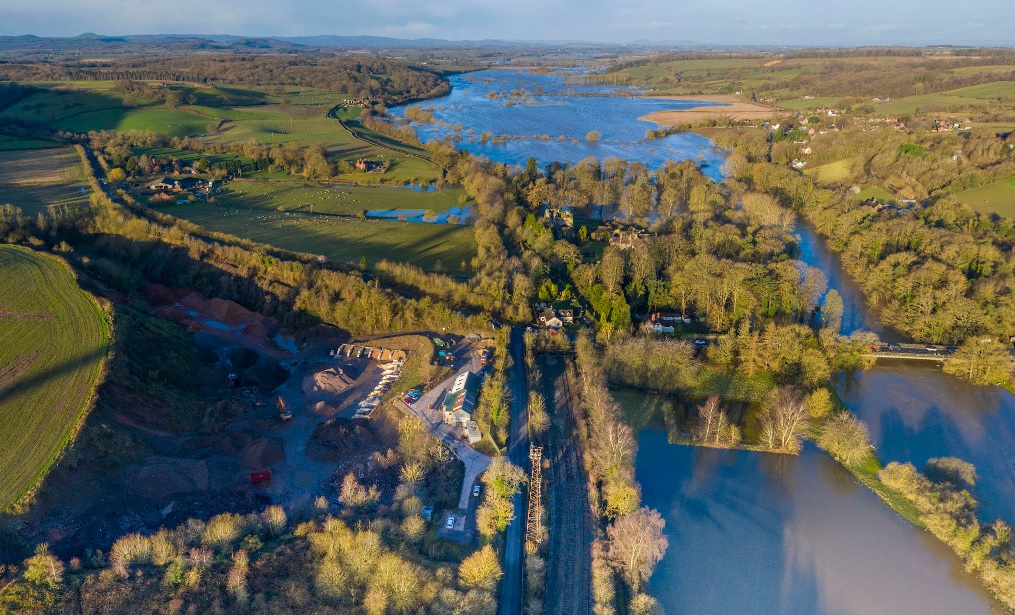
Looking West along the River Severn in a time of flood. Buildwas Abbey is close to the centre of the screen. The sidings associated with the power station can be seen running from bottom centre to the mid-point of the image, The Much Wenlock Branch curved away to the left of the image and its route is marked by the modern field boundary. (c) xerdnA. [Google Streetview, February 2020]
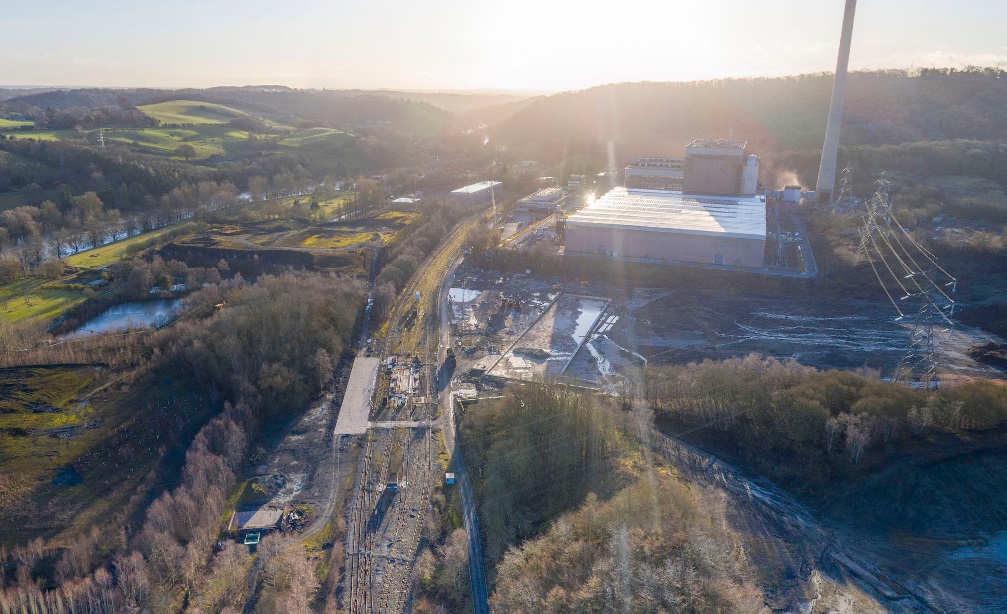
Looking East through the power station site from the same elevated location, (c) xerdnA. [Google Streetview, February 2020]
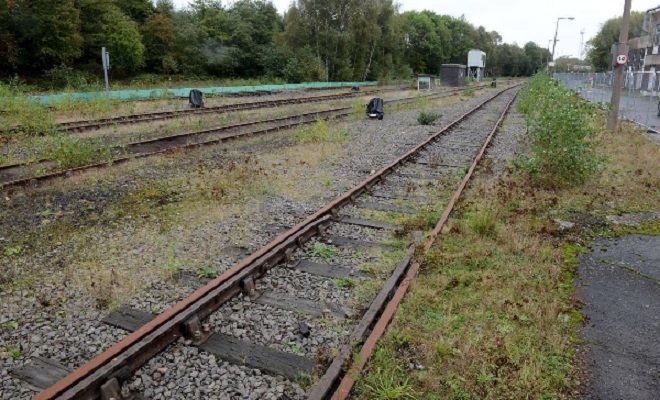
A view of the Power Station sidings in 2020. [20]
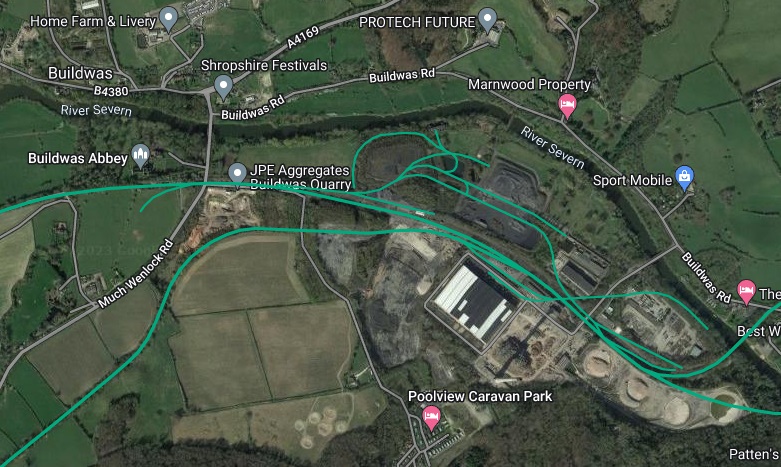
Google Maps satellite imagery is used by RailMapOnline.com as a background to its mapping of old railway lines. This image shows the area around the two power station sites with the railways of the past shown by the turquoise lines. The route of the Severn Valley Line enters from the left near Buildwas Abbey and runs off the image to the bottom-right. The line to Wellington and Madeley Junction leaves the image mid-right. The Much Wenlock branch leaves the image in the bottom-left corner. [16]
Looking Northwest from the access road to Poolview Caravan Park. For a short distance, that access road runs immediately beside the Power Station sidings. [Google Streetview, March 2009]
Looking Northeast from the access road to Poolview Caravan Park  just before the point where it turns away to the South from the power station sidings. [Google Streetview, March 2009]
The area to the West of Buildwas Junction Station as shown on the 1901 25″ Ordnance Survey. Note the station approach road which widens out into an open area between the the two railway lines and the access road to Abbeygrange Farm which passes under the line to Much Wenlock towards the West of the image. [4]
This very grainy image is a significant enlargement of a small section of the aerial image held by Heritage England on their Britain from Above website which is shown above, (EPW034013). It shows the point where the access road to Abbeygrange Farm passed under the line to Much Wenlock. The view is from the East. [14]
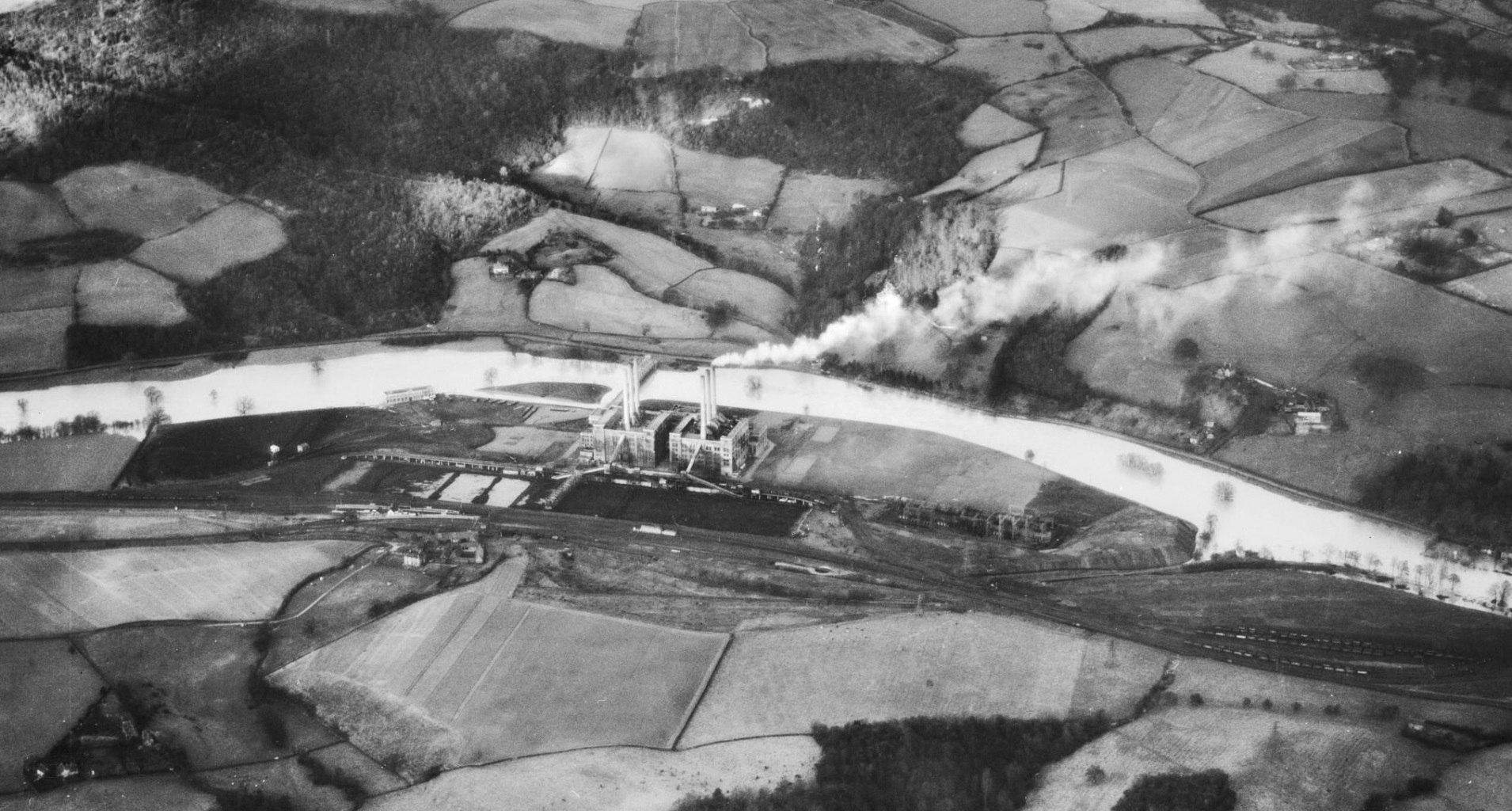
The similarly grainy image is also an extract from a Britain from Above aerial image, (EAW012578), which is taken looking South in 1948. Ironbridge Power Station is off the left of this extract. The Severn Valley line is in the foreground with the River Severn to the North (off the bottom of the extract). The Much Wenlock line runs across the centre of the image. The access road to Abbeygrange Farm enters the image from the right and passes under the line at the centre of the image. [21]
This is a first extract from the plans of the Much Wenlock line which are held in the Shropshire Archives in Shrewsbury. It shows the accommodation underbridge which permits access to Abbeygrange Farm which effectively defines the rail approach to Buildwas Junction Station, © Shropshire Archives Ref. No. 6008/26 copyright reserved, used by kind permission. [22][My photograph of the plan, 5th August 2022]
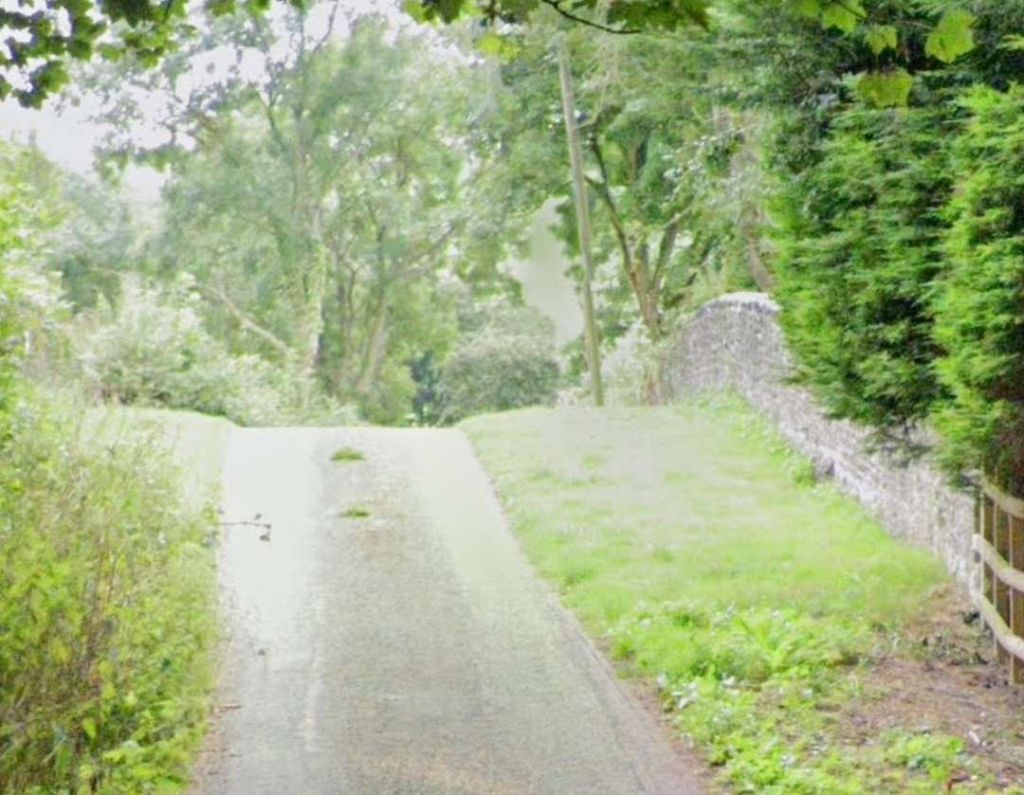
Looking South along the access road to Poolview Caravan Park at the point where the old railway line crossed the line of that road. [Google Streetview, March 2009]
Another extract from the 25″ Ordnance Survey of 1901. The red line superimposed on the image is the route of the modern access road to the Poolview Caravan Park. [4]
Approximately the same area as that covered by the map extract above but shown on the modern satellite imagery provided by the NLS. The modern access road is visible under the tree canopy. The superimposed red lines indicate the approximate position of the station approach road and the alignment of the farm access road. The superimposed turquoise line is the approximate route of the Much Wenlock line. [23]
This next extract from the archived plans shows the length from the accommodation underbridge to a first crossing of the railway on the line of a public footpath just beyond the half-mile point. This is approximately the same length as shown on the map extract and satellite images above, © Shropshire Archives Ref. No. 6008/26 copyright reserved, used by kind permission. [22][My photograph of the plan, 5th August 2022]

The footpath shown on the map extract above was accessible from the old station access road as far as the field boundary on the North side of railway land but not beyond that point. A public footpath runs East-West across the field shown to the West of the access road and to the South side of the old railway. In 2023, the field was in use to grow potatoes. Walking West along that path brings one to the first remaining significant structure on the line to Much Wenlock. The map extract below shows the line curving round to the South before crossing a farm access road.

A further extract from the 25″ Ordnance Survey of 1901 shows the line to Much Wenlock turning away to the South-southwest. An underbridge is shown in the bottom-left of the extract. [4]
The same area in the 21st century with the line of the railway and the location of the underbridge superimposed on the satellite image. [24]
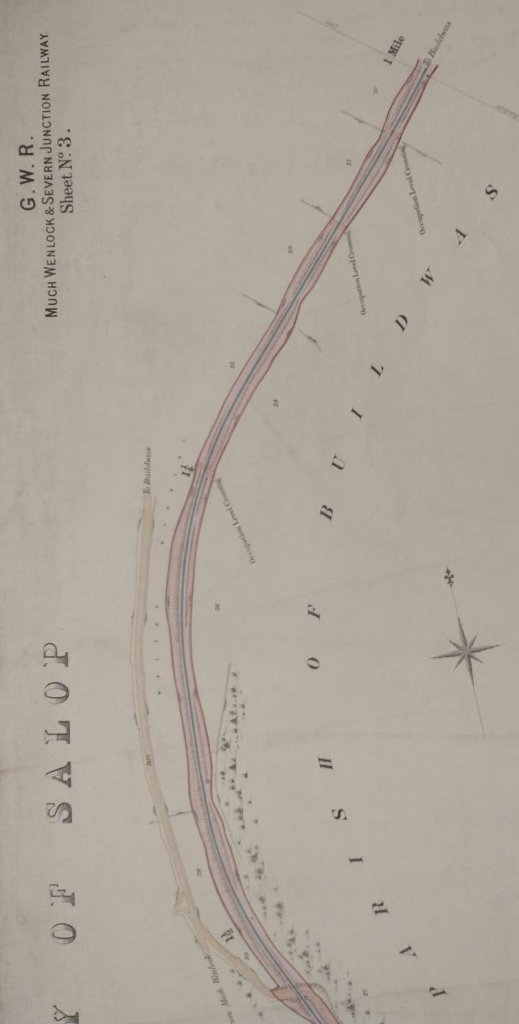
The construction plan shows the curve towards the South, please note that the construction plans are drawn with the North point oriented so as to get significant lengths of the line shown on each plan. The occupation crossing referred to above is at the right side of this image, © Shropshire Archives Ref. No. 6008/26 copyright reserved, used by kind permission. [22][My photograph of the plan, 5th August 2022]
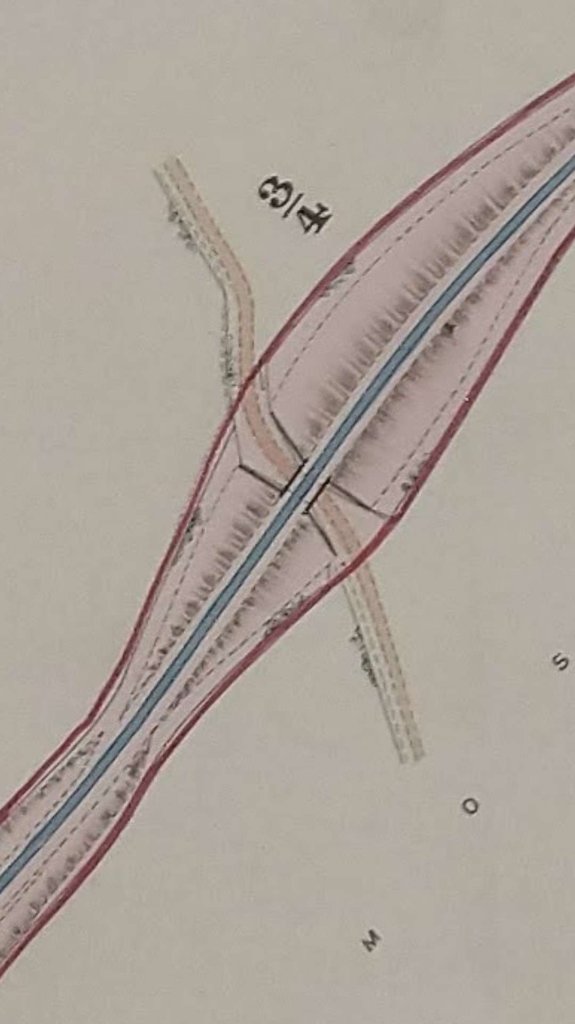
An enlarged extract of the construction plans for the line shows the location of the accommodation bridge which was just beyond the three-quarters of a mile point on the line, © Shropshire Archives Ref. No. 6008/26 copyright reserved, used by kind permission. [22][My photograph of the plan, 5th August 2022]
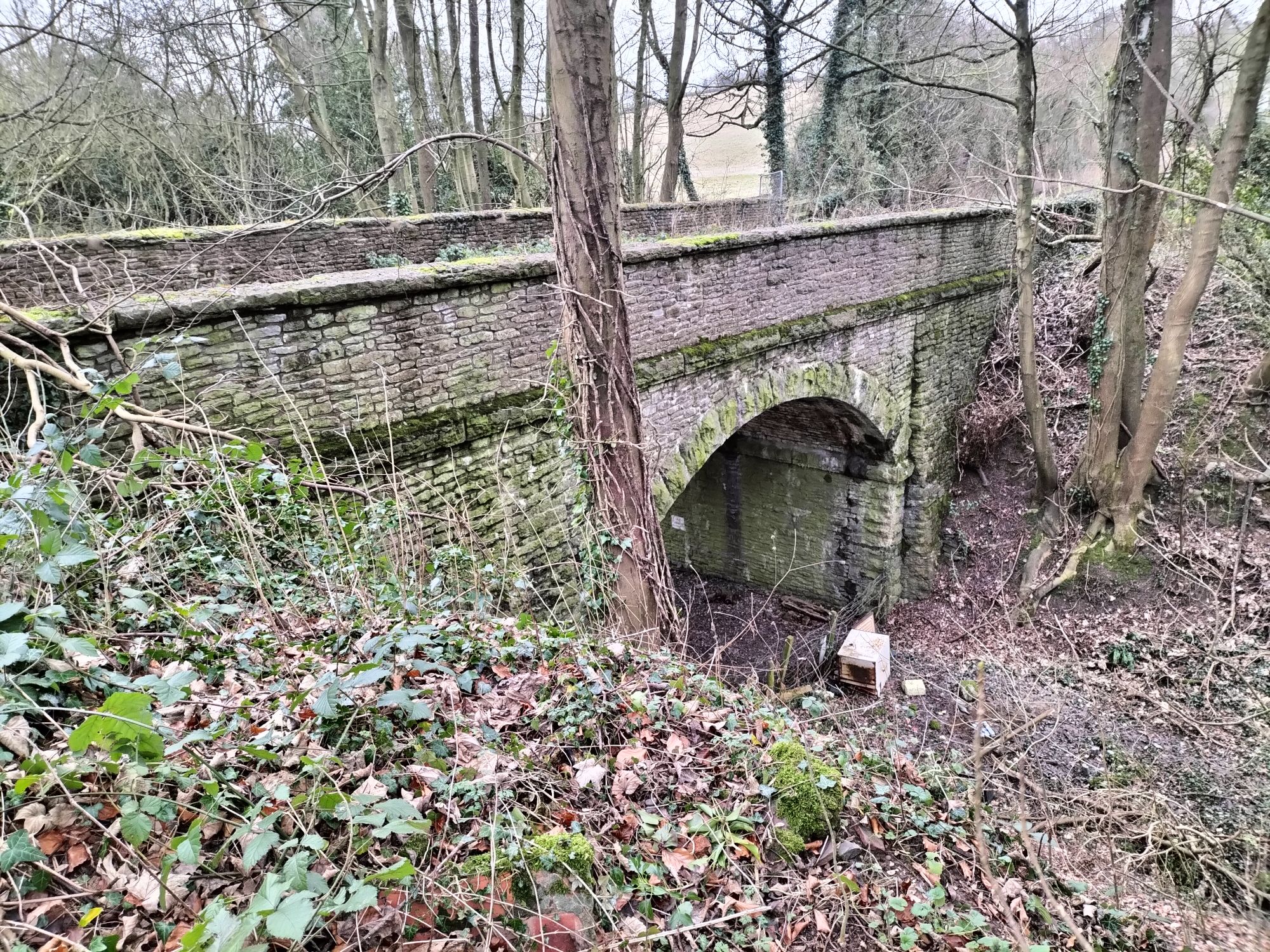
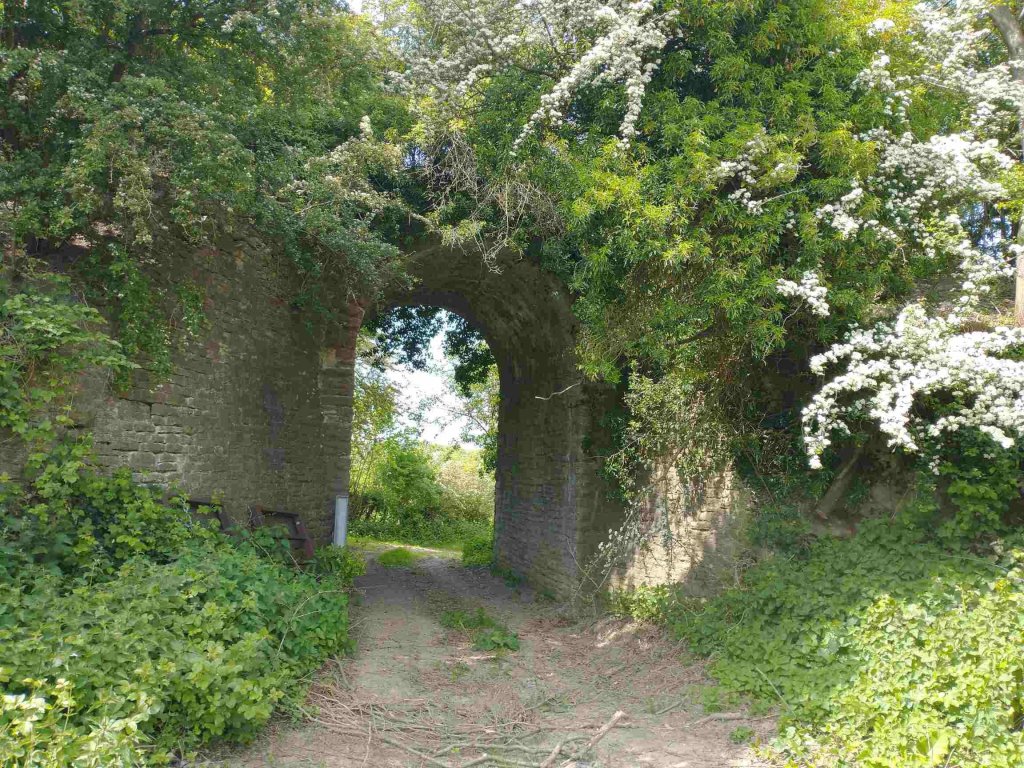
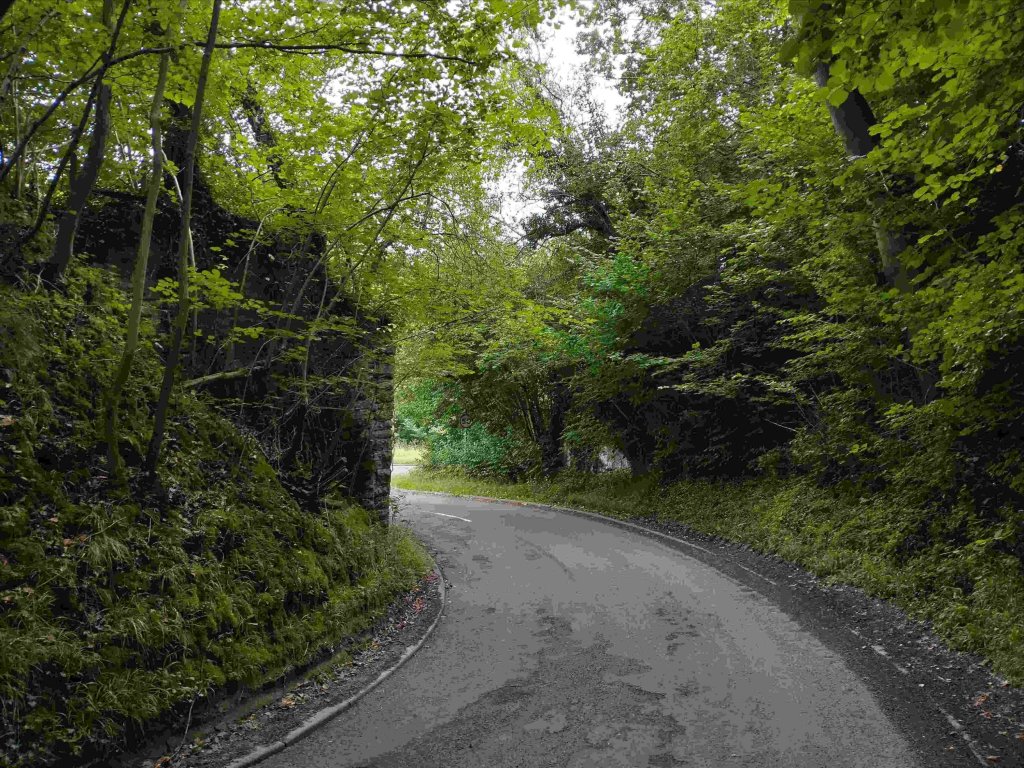
The first accommodation underbridge on the branch is a significant stone-arched structure. This photograph shows it from the East. [My photograph, 24th May 2023]
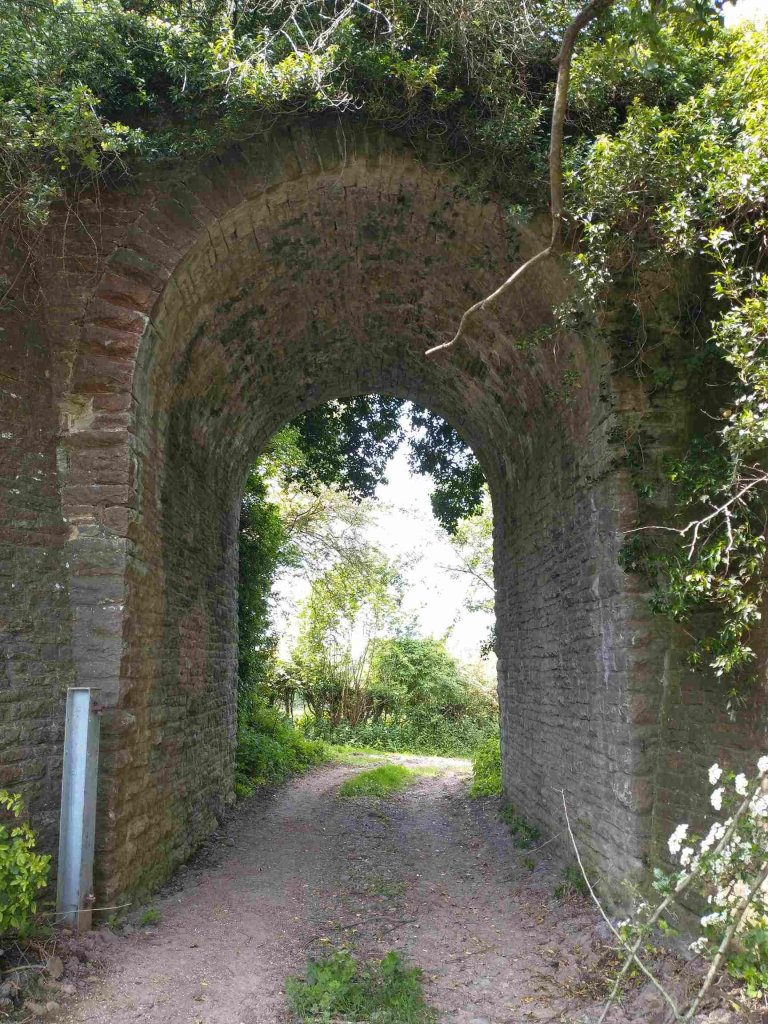
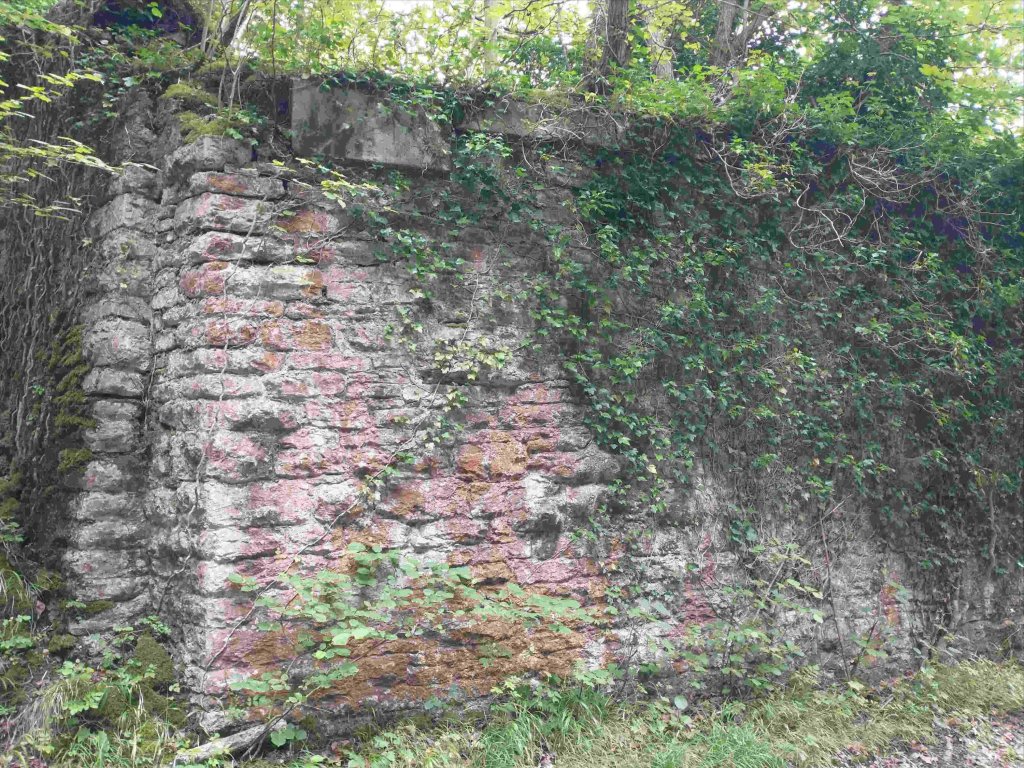
A closer image, also from the East. [My photograph, 24th May 2023]
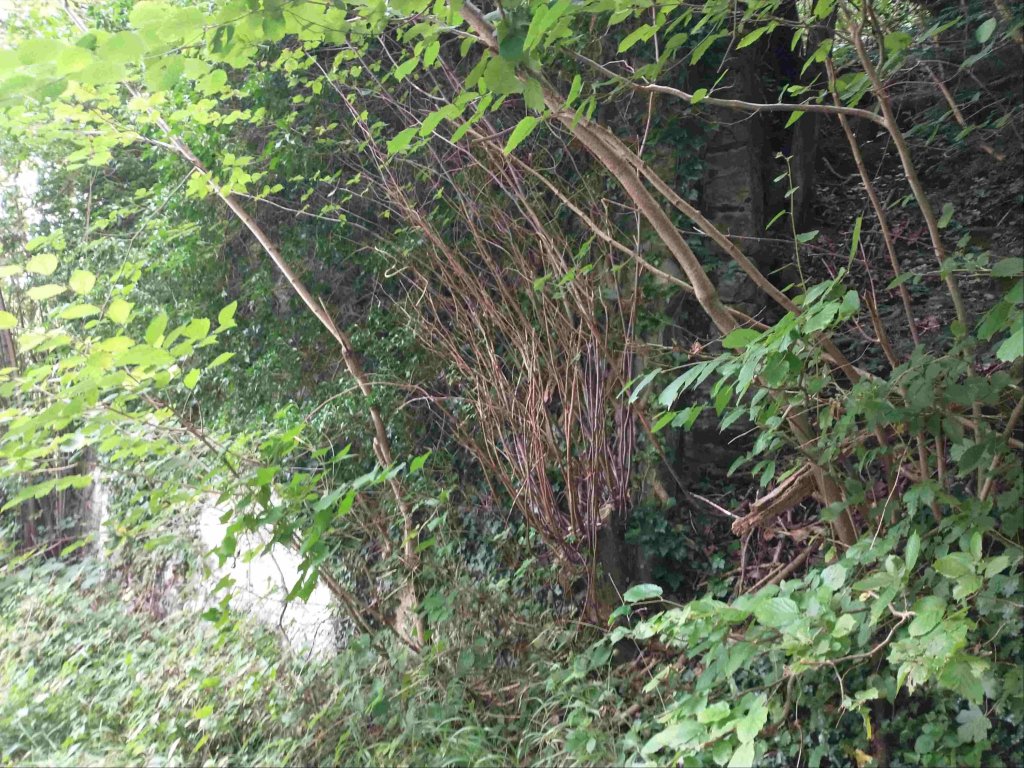
The same structure seen from the West. [My photograph, 24th May 2023]

A steep track alongside the underpass leads South-southwest alongside the old railway route to allow field access and it is possible, at the top of that access road, to step onto the old railway formation and follow it for a short distance to the Southwest through increasingly dense vegetation. Walking Northeast along the formation over the accommodation bridge was not feasible because vegetation obstructed the route over the bridge.

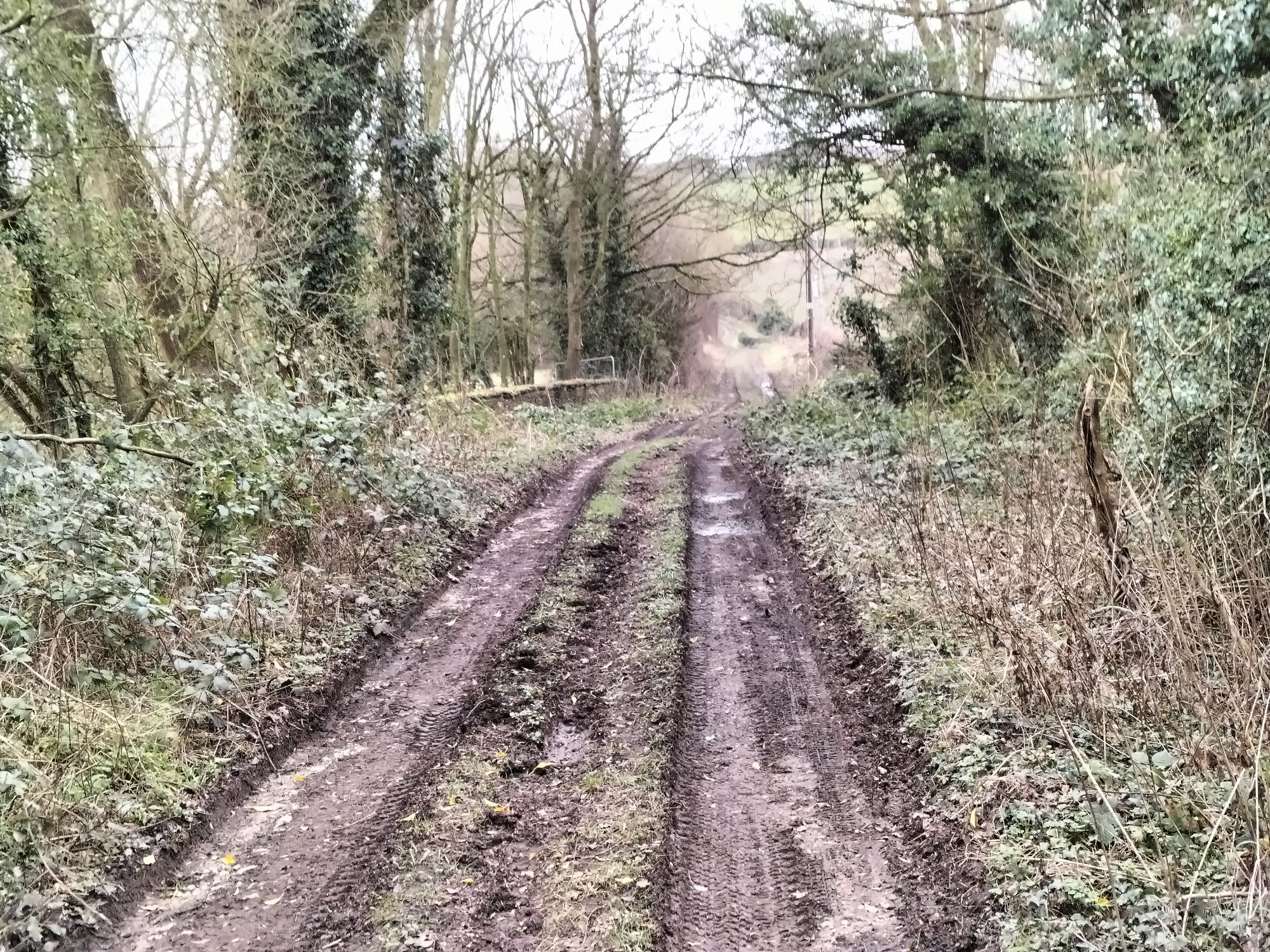
After following a track South-southwest alongside the accommodation bridge which led up to the level of the old railway, this is the view back to the North along the route of the railway. [My photograph, 24th May 2023]
The line to Much Wenlock continues in a Southwesterly direction. [25″ 1901 Ordnance Survey as supplied by the NLS. The underbridge appears in the top-right of the extract. [4]
Approximately the same area as shown on the map above as supplied by RailMapOnline.com. [16]
This image and the one below taken together also show a similar length of the old railway to that on the 1901 25″ Ordnance Survey above. These two extracts from the archived construction plans get us to the one mile post on our journey along the line to Much Wenlock, © Shropshire Archives Ref. No. 6008/26 copyright reserved, used by kind permission. [22][My photograph of the plan, 5th August 2022]
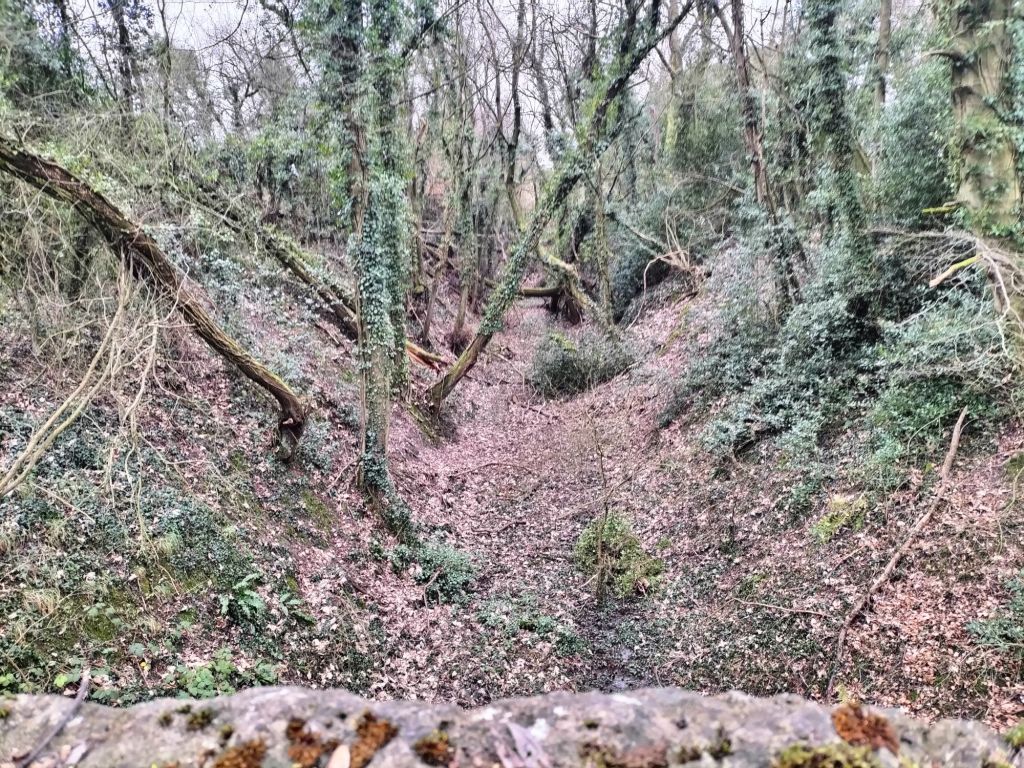
For a short distance it was possible to walk along the old railway route Southwest of the accommodation bridge, however undergrowth encroached to such an extent that it was nigh impossible to continue to follow the railway formation. This picture shows the route a hundred metres, or so, Southwest of the underbridge. [My photograph, 24th May 2023]

As the picture above shows, the trackbed from a point just to the West of the accommodation bridge is inaccessible. The next location where access is possible is at the next minor road on the East side of the A4169.

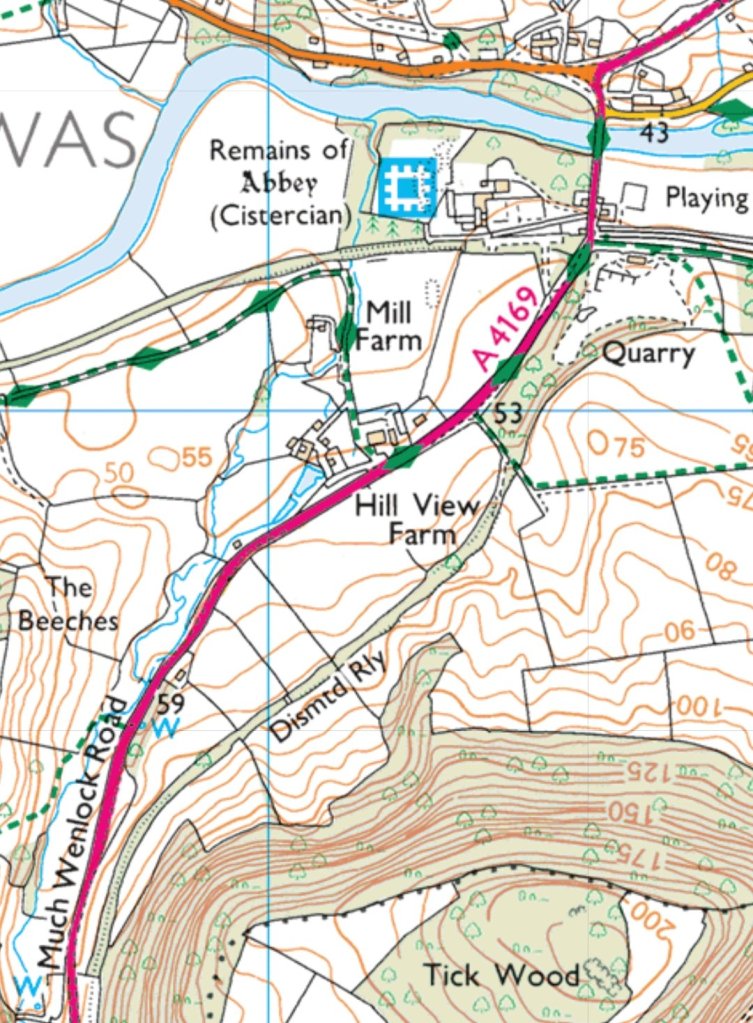
This next map extract takes the railway line to the bottom edge of the the 25″ OS Map Sheet. The road and the railway are running in parallel over the bottom half of this extract. [4]
A narrow lane can be seen entering this map extract in the bottom-right. It passes under the old railway and meets the old road. The bridge deck is long-gone but the abutments remain in an overgrown condition. [25]
This extract from RailMapOnline shows that the tight bends in the old road have been removed by realignment and widening. The A4169 turns away from the line of the old Much Wenlock Road and starts to run on the formation of the old railway. As the new road drifts East towards the route of the old railway it meets the side road which approaches from the East. As we have just noted, the bridge abutments are still present. [16]
This image is a length of the construction plan which shows the length of the line from the 1mile post to the under bridge noted above, © Shropshire Archives Ref. No. 6008/26 copyright reserved, used by kind permission. [22][My photograph of the plan, 5th August 2022]
Looking Southeast from the A4169. The South abutment of the old bridge is hidden in the shadows close to the road junction. The old railway ran on alongside the new road alignment to the left. Comparison of this photograph with the preconstruction plan above shows that the new road alignment is taking much closer order to the route of the old railway by this point. [Google Streetview, June 2022]
Looking Northwest from the minor road, the South abutment of the old railway bridge can be made out easily on the left. The North abutment is more camouflaged by vegetation. [My photograph, 8th August 2023]
The face of the North abutment peeks out from the undergrowth on the left of this image. The East abutment wall-return can be made out on the right of the image. [My photograph, 8th August 2023]
The South abutment face is considerably less covered by vegetation. [My photograph, 8th August 2023]

After clearing the bridge the old line was on embankment for a short distance with the minor road rising to the same height and continuing then on an upward grade. The next two pictures show the old railway formation at the point where the minor road and the old railway formation were at a similar height.

Looking North towards the old bridge abutment. [My photograph, 8th August 2023]
Looking South along the line of the old railway. In a matter of around 100 metres, the climbing modern A4169 occupies the same space as the old railway. [My photograph, 8th August 2023]
Looking North along the A4169. In the distance the old railway route was on the right of the area now occupied by the modern road. Closer to the camera the newer road encroaches into the space occupied by the old railway. [Google Streetview, June 2022]
This extract from the precontract drawings for the Much Wenlock line takes us as far as the bottom edge to the last RailMapOnline.com image above, © Shropshire Archives Ref. No. 6008/26 copyright reserved, used by kind permission. [22][My photograph of the plan, 5th August 2022]

The next two extracts from the 1901/1902 OS mapping take us as far as Farley Halt.

These two map extracts from the 1901/1902 Ordnance Survey show the old railway curving to the Southwest and for a short distance running immediately adjacent to the Much Wenlock Road. [26][27]
This extract from RailMapOnline covers the same length of the old railway as the two map extracts above. For a distance, the modern Much Wenlock Road (A4169) follows the same line as the old railway formation, pulling away from it at the point where the old road and railway were closest. The lane to Farley Mill can be seen leaving the modern road in the bottom-left of this image. [16]
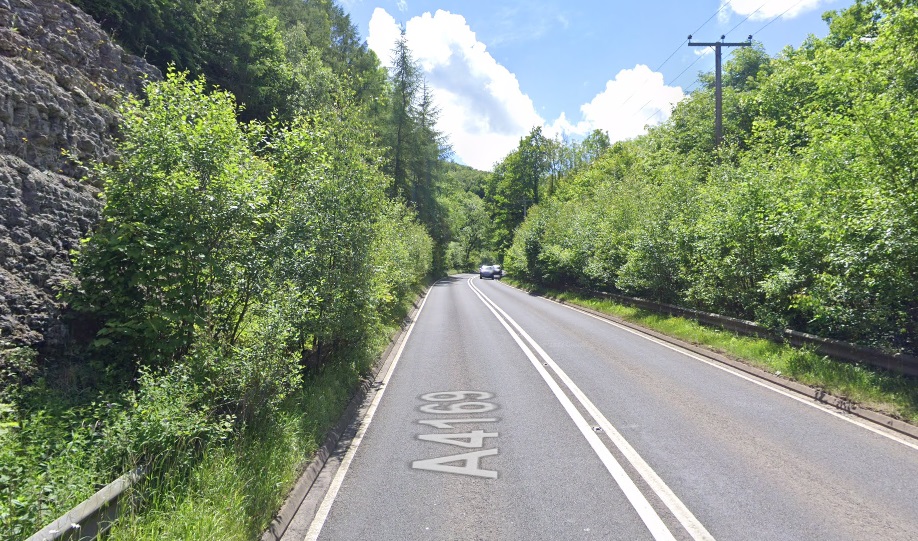
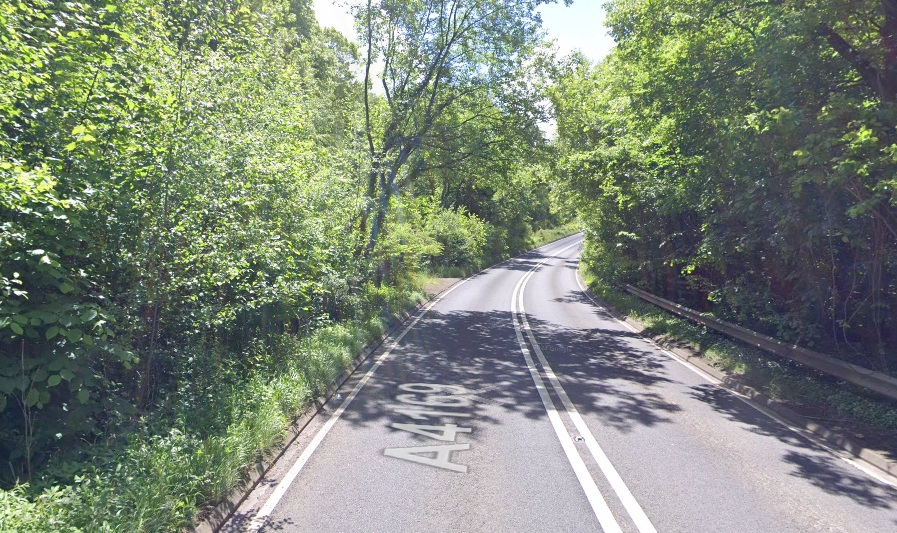
Looking Southwest along the A4169. Along this length the road occupies the formation of the old railway. [Google Streetview, June 2022]
Also looking Southwest along the A4169. The road curves away from the line of the railway which ran straight ahead. [Google Streetview, June 2022]
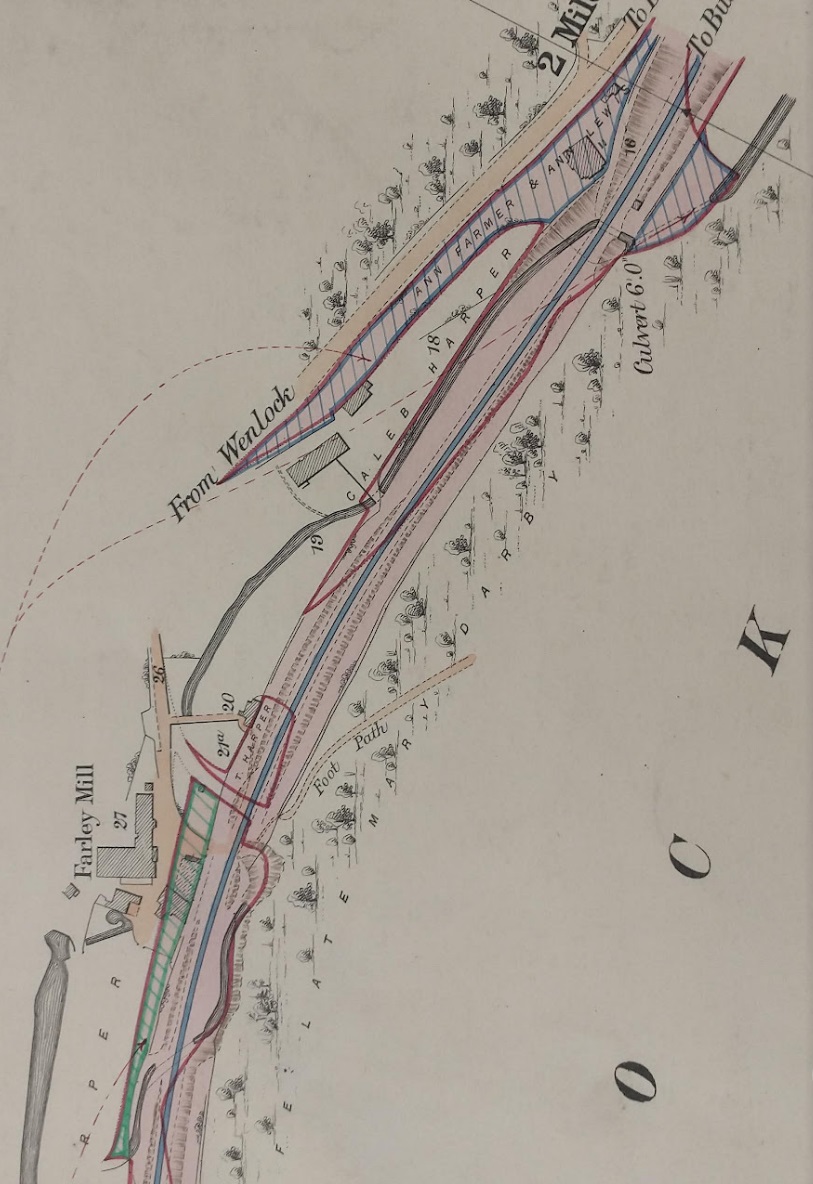
This next extract from the precontract drawings takes us to the 2 mile point on the old railway, just short of Farley Halt, © Shropshire Archives Ref. No. 6008/26 copyright reserved, used by kind permission. [22][My photograph of the plan, 5th August 2022]
This enlarged extract from the precontract plans shows the area around Farley Mill. Farley Halt was provided at a much later date and was sited about 400 metres South of the Mill close to what was Bradley Rock Quarry, © Shropshire Archives Ref. No. 6008/26 copyright reserved, used by kind permission. [22][My photograph of the plan, 5th August 2022]

Farley Halt was opened in 1934 and closed in 1962. It had a short timber edged platform with a wooden shelter on the west side of the line behind the former Rock House Inn. The halt could be accessed by steps down from a road over bridge to the south. On the other side of the overbridge was an access siding to Bradley Rock Quarry. The halt has been demolished, but its nameboard can be found displayed 400 metres to the north of the site on a stone barn adjacent to the A4169 Much Wenlock Road. [28]

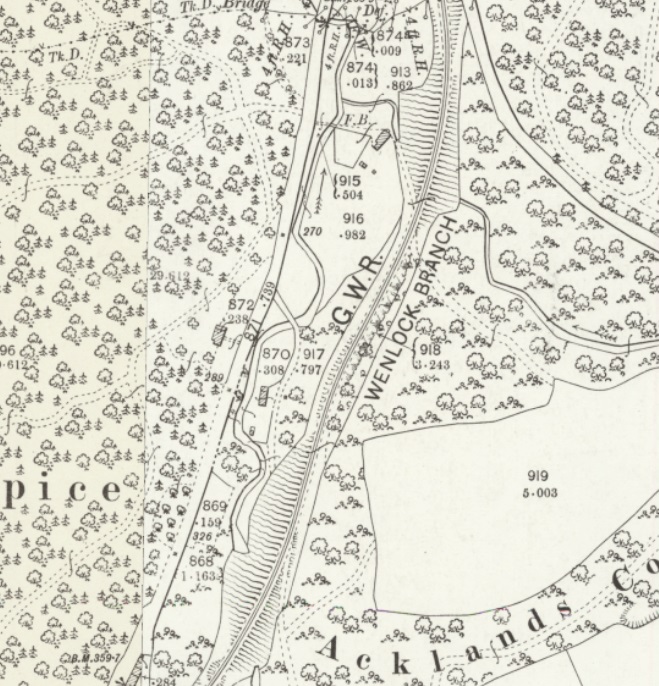
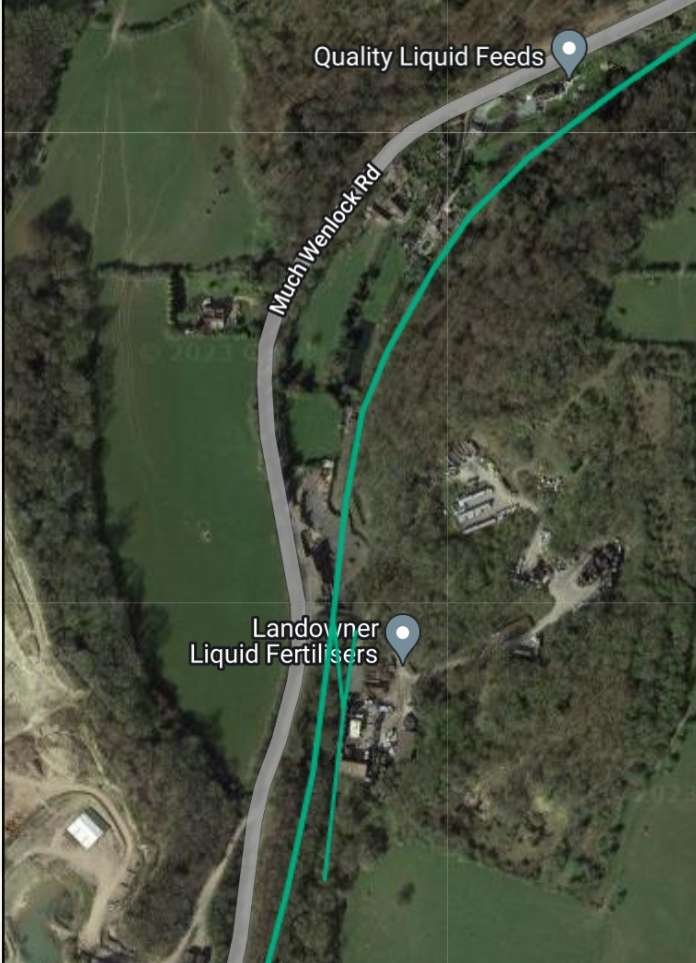
This next extract from the 1901/1902 Ordnance Survey takes the line as far as Farley Halt which was just on the North side of the road overbridge shown close to Rock House Inn. On the South side of the bridge were the sidings which served Bradley Rock Quarry. It is worth noting the tramways/tramroads associated with the Quarry and the incline and lime kilns to the East. Landowner Liquid Fertilisers now occupy the site of the sidings. [29]
This map extract shows the full length of the sidings and most of the tramway/tramroad network on the East side of the old railway as surveyed in 1901. [30]
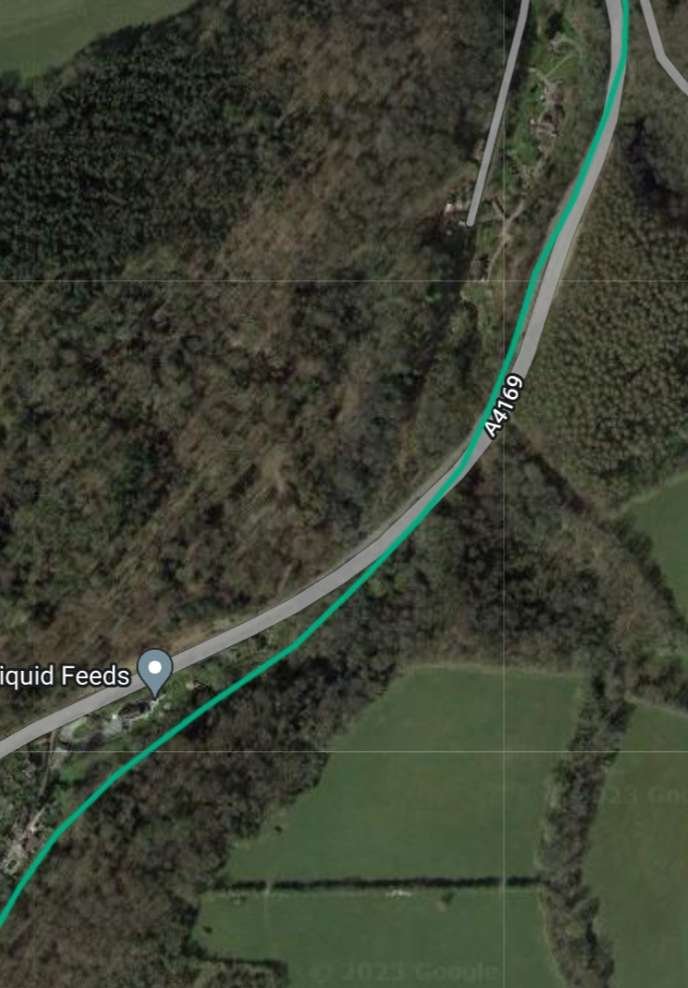
This RailMapOnline extract covers the same length of line as the two map extracts above. [16]
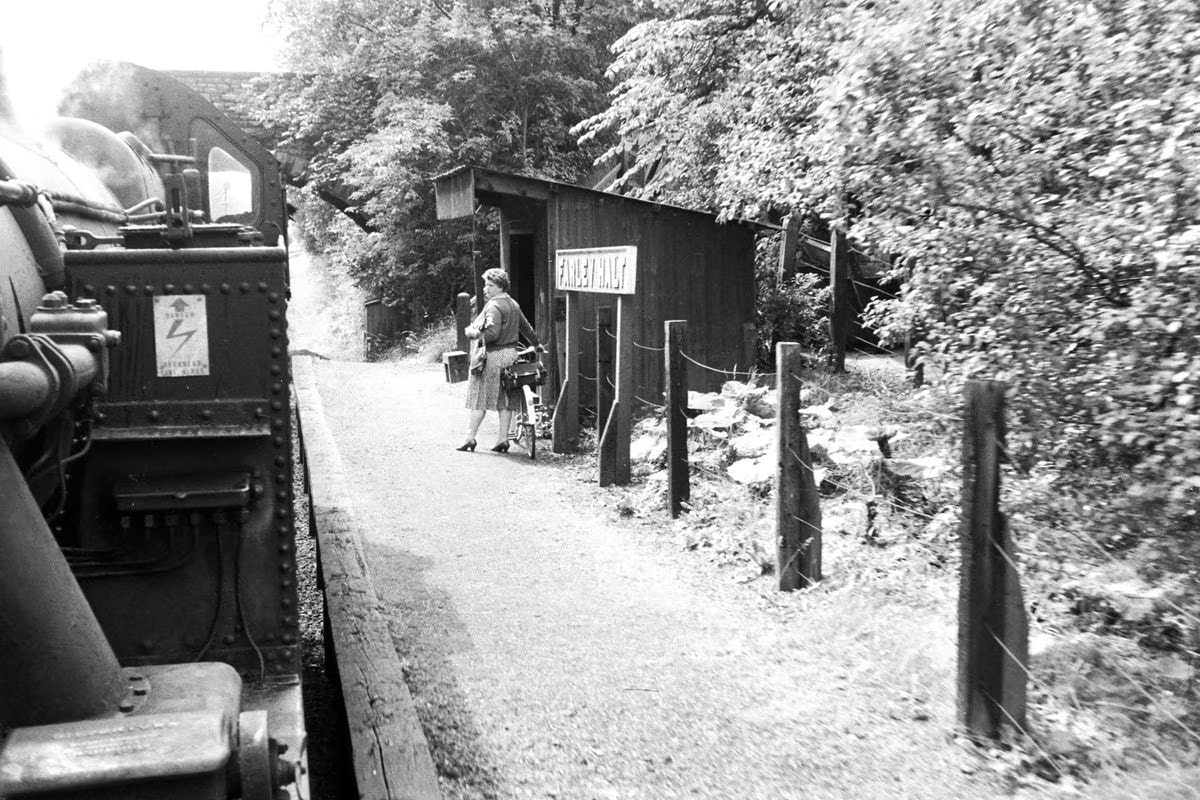
Farley Halt before the closure of the line to Much Wenlock. The access road bridge is visible beyond the locomotive. The shelter was made of timber, as can be seen, was the platform edge. [39]

Adrian Knowles

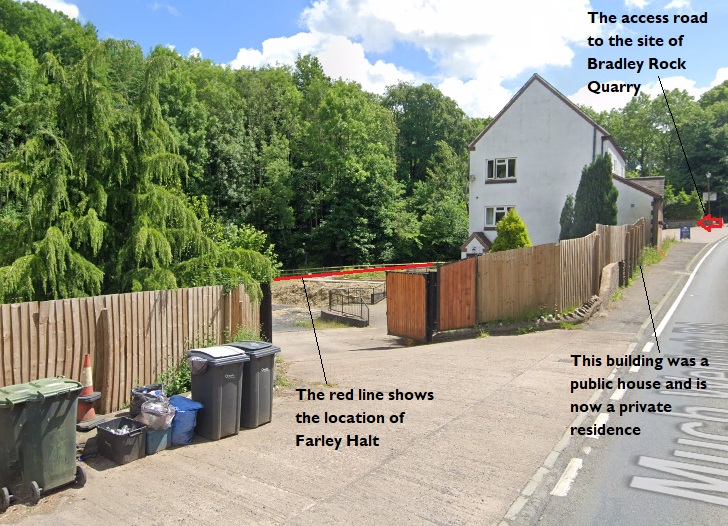
The building shown in this photograph used to Rock House Inn. The railway ran to the East of the Inn and Farley Halt was to the East of the Inn and to the North of the access road to Bradley Rock Quarry. Steps led down from that access road to the wooden-platformed halt. [Google Streetview, June 2022]
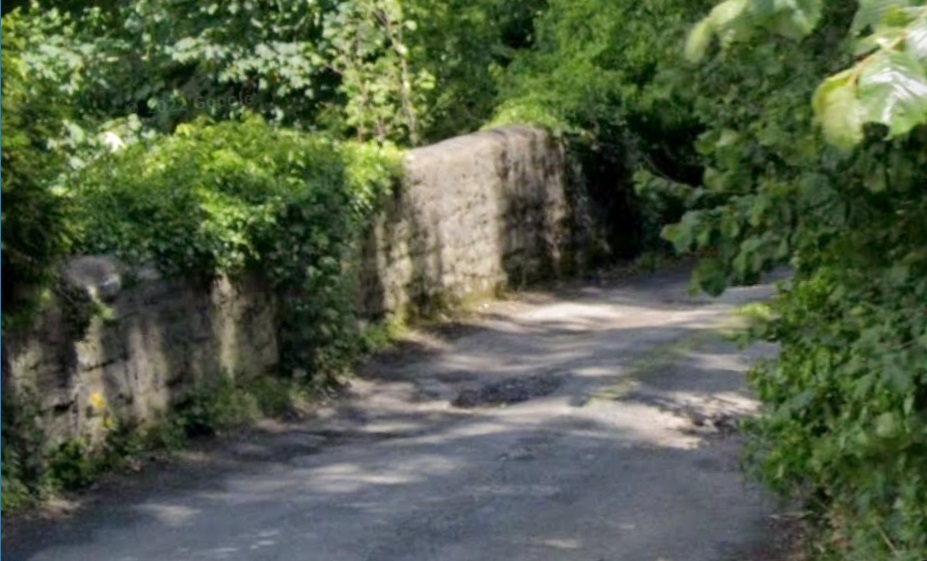
The Northern Parapet of the bridge over the old railway at the entrance to what was Bradley Rock Quarry. Farley Halt was on the North side of the bridge. [Google Streetview, June 2022]
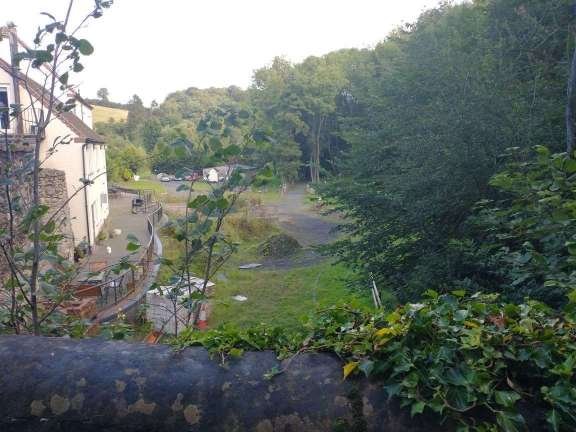
Looking North over the Northern parapet of the bridge. Farley Halt’s platform was on the right-hand (West) side of the line. [My photograph, 19th August 2023]
Looking South over the Southern parapet of the bridge towards Much Wenlock. The railway formation between here and the next minor road is overgrown. Bradley Rock Sidings were alongside the railway on this side of the bridge. [My photograph, 19th August 2023]

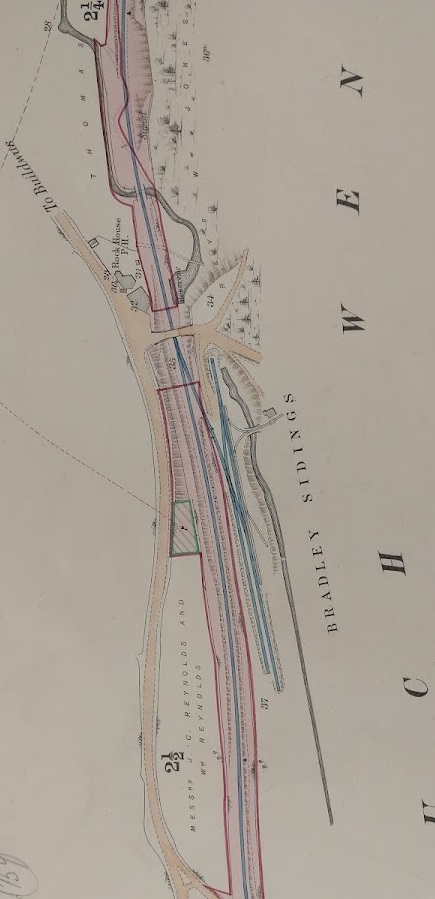
On the South side of the accommodation bridge were Bradley Rock Sidings. They can be seen clearly on the precontract plan below.

This next extract from the precontract drawings takes us to just South of the 2.5 mile point and brings us to the same location as the bottom edge of the RailMapOnline image above.. It covers the full length of the Bradley Rock Quarry sidings and indicates the presence of the quarry’s internal system of tramways. The transhipment wharf is shown with tramways parallel to the Standard-gauge siding. This indicates that at the time of the construction of the line in the early 1860s, the tramways were already present or were at least being constructed, © Shropshire Archives Ref. No. 6008/26 copyright reserved, used by kind permission. [22][My photograph of the plan, 5th August 2022]

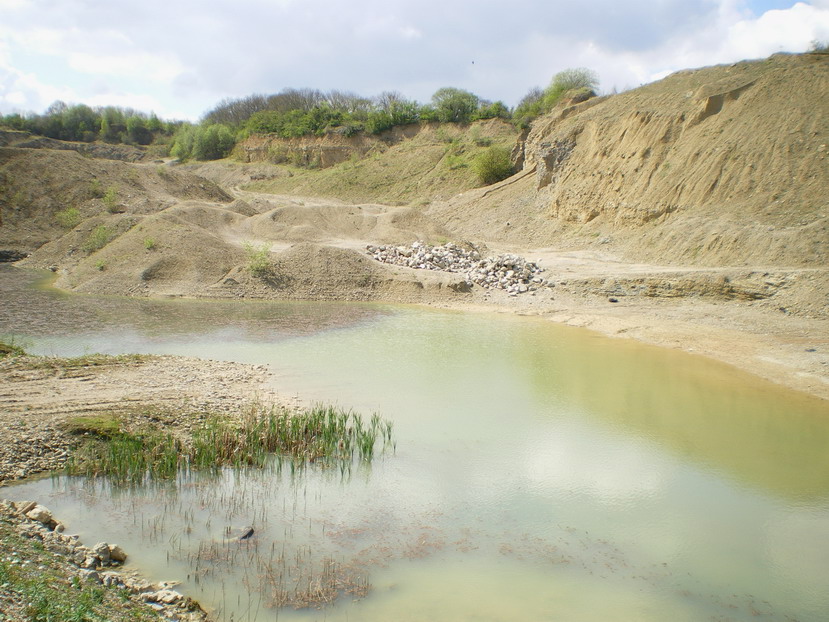
Bradley Rock Quarry appears to have been a relatively significant operation at the turn of 20th century. The Quarry is also known as Farley Quarry and it is under this name that more details can be found online. Much Wenlock is situated in the area of a Limestone outcrop. Kent Geologists Group comment on the Quarry: “The strata exposed in Farley Quarry consist mainly of Wenlock Reef Facies interbedded with nodular and tabular limestones of Silurian age and display clearly the particular feature known as “ball stones”. In the deeper parts of the quarry the strata gradually pass downwards into the Farley member. … The Wenlock Series was subdivided by Bassett et al (1974) into bio-zones based on graptolite fauna and the Farley Member is placed at the top of the Coalbrookdale Formation. Within the Coalbrookdale formation, the uppermost mudstones of the underlying Apedale strata grade upwards over some ten metres into an alternating sequence of grey, shaley mudstones and thin, nodular, buff to blue-grey limestones – the Farley Member.” [31]

The two images above were taken in Farley Quarry/Bradley Rock Quarry and illustrate the kind of rock encountered, © Richard Law and licensed for reuse under a Creative Commons Licence (CC BY-SA 2.0). [32][33]

It is worth pausing our journey along the Much Wenlock & Severn Junction Railway to wonder what might have been the way in which stone and lime from Bradley Rock Quarry was exported to the probable primary users along the River Severn and to its immediate North. There appears to be no evidence of a tramway along the line of the Much Wenlock & Severn Junction Railway. This suggests that transport from the quarry followed one of two possible routes. The first option was to use the old road from Much Wenlock to Buildwas, and that would have been the original route used. An alternative option was to gain access in some way to the Gleedon Hill Tramroad. John Wooldridge tells us about the tramways/tramroads which served this area. [34]

“In the early 18th century Abraham Darby brought Wenlock stone for iron smelting in Coalbrookdale. As the local iron industry expanded, quarries between Much Wenlock and the River Severn were acquired by ironmasters operating in the southern part of the East Shropshire coalfield. The Wenlock-Buildwas road (now A4169) led to a wharf on the River Severn downstream (East) of Buildwas bridge from where stone was carried downriver to the ironworks. In 1780 William Ferriday of Lightmoor leased stone quarries near Gleedon hill and the Coalbrookdale Company leased quarries nearby. In 1800 William Reynolds leased quarries at Tickwood and Wyke. In the early 19th century the Madeley Wood Company succeeded to the Wenlock quarries of Richard and William Reynolds (probably the quarries at Tickwood and Wyke) and also to the Coalbrookdale Company quarries (probably near Gleedon Hill). The late 19th-century decline of Shropshire’s iron industry curtailed demand for Wenlock stone and Gleedon Hill quarries closed between 1882 and 1901.

The first stone carrying railway may have been built some time after 1800 – the date when William Reynolds took a lease on quarries at Tickwood and Wyke – to transport stone north eastwards, probably to a Severnside wharf on the Buildwas-Benthall boundary (perhaps the area now occupied by Buildwas power station). This railway had gone by 1833 and I have found no other reference to it, nor indeed any trace of it on the ground. Between 1824 and 1833 the Madeley Wood Company built a railway north from Gleedon Hill to a Severnside wharf [a short distance] upstream (west) of Buildwas bridge. In 1862, mainly to improve the transport of limestone to the Severn, and of coal from there to the kilns at Much Wenlock, a steam railway was opened from Buildwas to Much Wenlock [35].” [34]

The railway built by the Madeley Wood Company between 1824 and 1833 was probably the route which was known as the Gleedon Hill Tramroad. This did not follow the valley in the way that the later railway did but ran South from wharves on the River Severn to the West of Buildwas. Bertram Baxter noted that this was about 1.75 miles in length. [34]

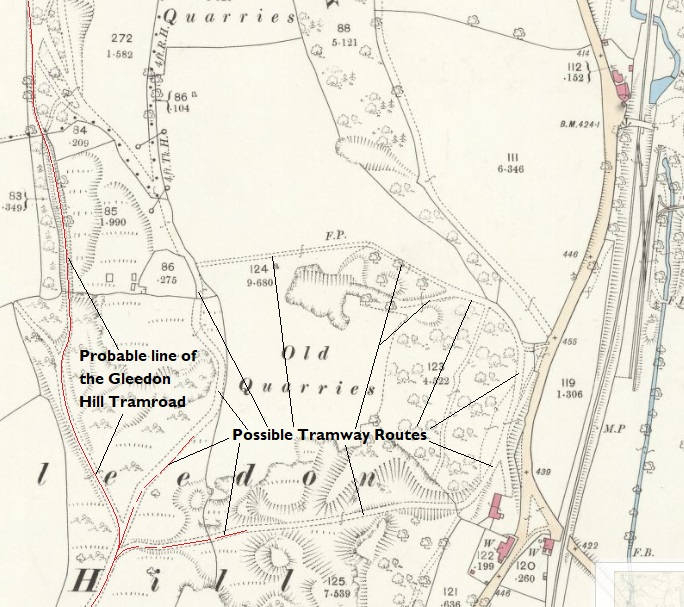
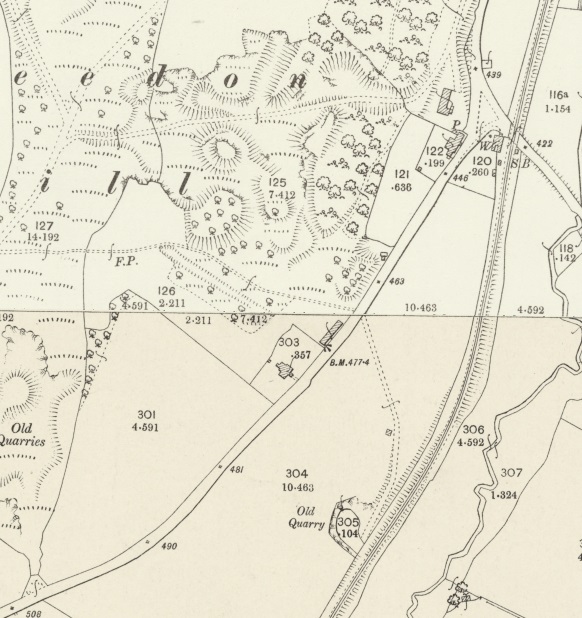
The route of the tramway can be followed on the 25″ Ordnance Survey of 1881/1882. Doing so, is beyond the scope of this article but one extract from the 1881/1882 Ordnance Survey will illustrate its relative proximity to the Bradley Rock Quarry.

It should be noted that, while there is clear evidence for the existence of the Gleedon Hill Tramroad and of the red line drawn onto this extract from the 25″ 1881/182 Ordnance Survey being correct, the suggested possible tramway routes are speculative. They do illustrate, however, that they were possibly used to access the Much Wenlock Road by the owners of Gleedon Hill Quarry before the construction of their tramroad. It is possible that they were also able, later, to take materiel from Bradley Rock Quarry to the Gleedon Hill Tramroad. To be able to firm up this possibility, further research would be required. [36]

Adrian Knowles, in his excellent book about the line, “The Wellington, Much Wenlock and Craven Arms Railway, that quarrying ceased at the Bradley Rock Quarry in 1927, “and this ended a quaint tradition. Each morning, just before 10.00am, the quarry timekeeper had stood at the connection to Bradley Sidings from where the crossing keeper’s cottage at Farley could just be seen down the line. The crossing keeper would stand at the door with his arm raised and at the instant he dropped his arm the quarry man would know that the Greenwich time signal had been relayed by telephone. Thus, for many years, railway time was quarry time.” [40: p105]

Apparently, “The redundant quarry buildings were later purchased by the Midland Counties Dairy for conversion to a creamery, mainly engaged in cheese production, which opened in April 1934 under the name ‘Dingle Dairy’. Bradley Sidings were left intact but were seldom used as the Midland Counties Dairy operated its own lorries to collect milk from surrounding farms and despatch the finished cheeses. Even the small tramway, which ran into the old quarry from Bradley Sidings, was left in place but was not used.” [40: p105]

The dairy was active until the mid-to late 1930s, but after its closure the newly formed Railway Executive Committee brought about an agreement for the Sidings to be taken over by the Air Ministry “which cleared most of the old buildings in 1938 and installed 16 large underground oil storage tanks. The original quarry tramway, which had been left in place while the dairy had occupied the site, was removed at this time, but the standard gauge siding and connection to the branch were retained. The establishment of the Air Ministry fuel depot was to have dramatic and exciting implications for the Much Wenlock branch and a hint of what was to come was given when strengthening work was undertaken on an occupation bridge near Farley.” [40: p115-116]

When, on 1st September 1939, the Railway Executive Committee took control of the railways, weight restriction on the Much Wenlock line were substantially lifted. “All ‘red’ engines (except ’47xx 2-8-0s and the ’60xx King’ Class) were now permitted to run from Madeley Junction and Ketley Junction to Builders and as far South as Much Wenlock, subject to a 20mph overall maximum speed limit.” [40: p116]

Local airfields were supplied by the oil stored at Bradley and regularly ’63xx’ Moguls and ’28xx’ heavy freight 2-8-0s were seen on the branch. There may even have been the occasional ‘USA’ 2-8-0 as well.

The next length of the railway shows a road crossing and a small disused quarry. The Much Wenlock Road is now moving away from the railway. [37]
The road is further away still on this extract from the 1901/1902 25″ Ordnance Survey. This shows the area that inn the 21st century has a lagoon  [38]
This extract from the RailMapOnline.com satellite imagery shows the same length of line as the two map extracts above. The most notable feature other than the location of the minor road crossing is the presence of a lagoon in the bottom-left of this image. [16]
The crossing in use. This image was shared by Linda West on the Much Wenlock History Facebook Group on 13th March 2018. [54]
Looking Southeast from the A4169 along the minor road which crossed the old railway on the level. [Google Streetview, June 2022]
Looking Northwest along the same minor road. The crossing-keepers cottage features in this and the last image above. Southwards from this point the line of the old railway is now a public footpath. [Google Streetview, June 2022]
The view North along the route of the old railway towards Farley Halt. The area between this point and the bridge over the line noted earlier is overgrown. [My photograph, 19th August 2023]
This photograph was taken from the line of the old railway, looking towards Much Wenlock. The crossing cottage is much as it was when the line was active. There is a small canopy over the doorway which was not present in the past and the land levels were adjusted with a slight realignment of the road carriageway so that wooden steps were no longer need to access the cottage door. This photograph was taken pon 11th July 2012, © Christine Johnstone and included here under a Creative Commons Licence (CC BY-SA 2.0). [41]
An oblique view of the crossing-keeper’s cottage in 2023. The porch at the North end of the cottage is an addition (as are the solar panels). [My photograph, 19th August 2023]

Since completing this article, I have been contacted by Eddie Challoner. His grandfather had time as the crossing-keeper at this location in the mid-1950s. This article brought back a series of memories for him and he very kindly provided two photographs from that time ….

This first picture shows a pannier tank approaching the crossing from the South and gives an excellent view of the front face of the signal cabin, © Eddie Challoner.
This picture shows a small family group which Eddie says “includes my father, a railwayman for 51 years, myself and later an engineering student on the railways, sister and grandfather the crossing keeper at Farley Crossing in the mid 50s, © Eddie Challoner.
This extract from the precontract plans shows the location of the crossing-keeper’s cottage and the road crossing. © Shropshire Archives Ref. No. 6008/26 copyright reserved, used by kind permission. [22][My photograph of the plan, 5th August 2022]

The next few images were taken along the length of the line to the South of the cottage which is now a public footpath and part of the Jack Mytton Way.

The line runs South passed a lagoon to its right which was not present when the line was built.

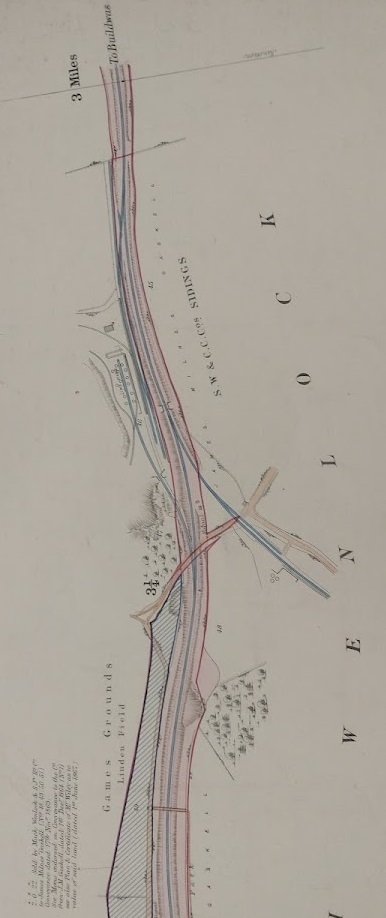
This extract from the pre-contract drawings take us to the 3 mile point, © Shropshire Archives Ref. No. 6008/26 copyright reserved, used by kind permission. [22][My photograph of the plan, 5th August 2022]
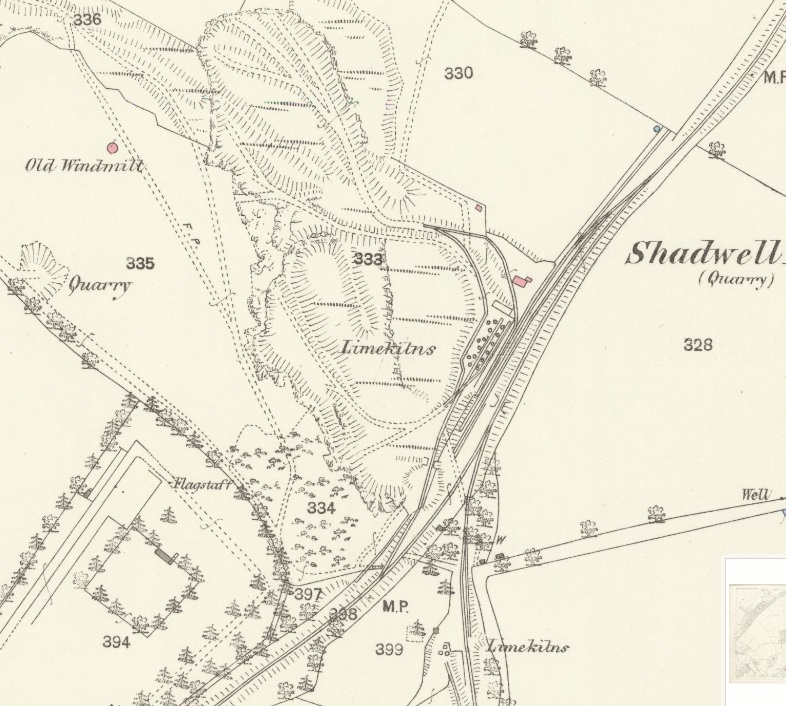
Shadwell Rock Quarry appears on this next extract from the 1882 25″ Ordnance Survey. [42]
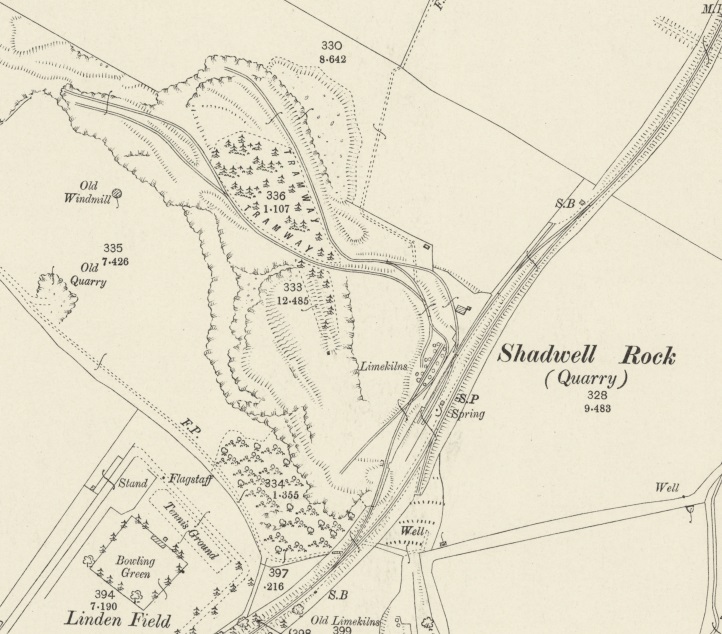
Shadwell Rock Quarry appears again on this extract from the 25″ Ordnance Survey of 1901. The layout of the tramways associated with this area seems to have been relatively fluid. [43]

Shadwell Rock Quarry  was located at the South side of the modern lagoon. It grew significantly in size during the 20th century and its workings have now formed the lagoon which remains into the 21st century.

This aerial image of the quarry is taken looking South towards Much Wenlock in 2002. the line of the old railway is very clear on the East (left-hand) side of the quarry with the Much Wenlock Road (A4169) on the West (right-hand) side of the quarry. The original quarry area was to the South (the far side) of the modern quarry. [44]
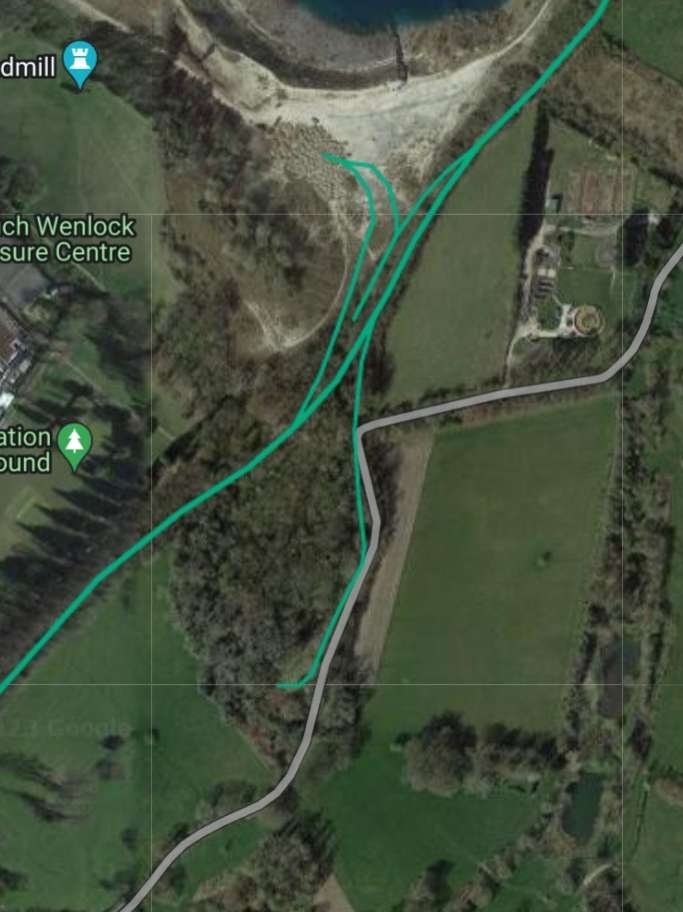
This extract from the RailMapOnline satellite imagery shows the route of the line to Much Wenlock as well as the various sidings which were in use when the line was active. [16]
This extract from the precontract drawings shows approximately the same length as the RailMapOnline image above. The elbow in the minor road to the East of the line is evident in both. These precontract plans were orientated in respect to the North point so as the get the greatest possible length of the proposed railway onto each sheet, © Shropshire Archives Ref. No. 6008/26 copyright reserved, used by kind permission. [22][My photograph of the plan, 5th August 2022]

The various maps above and below show ‘Games Grounds’ or ‘Recreation Ground’. This were called Linden Field. This was the site of the very earliest revival of the World Olympic Movement. the field was immediately to the North of Much Wenlock Railway Station. The first Olympic games were held in 1850 on this field and continue to be held in the 21st century. The 130th games were held in July 2016.

The Olympic Memorial celebrates the use of these fields for the first modern revival of the Olympic Games. [45] More information can be found here: https://wp.me/p2zM3f-67v [46]
This extract from RailMapOnline.com includes the full length of the site of Much Wenlock railway station. [16]
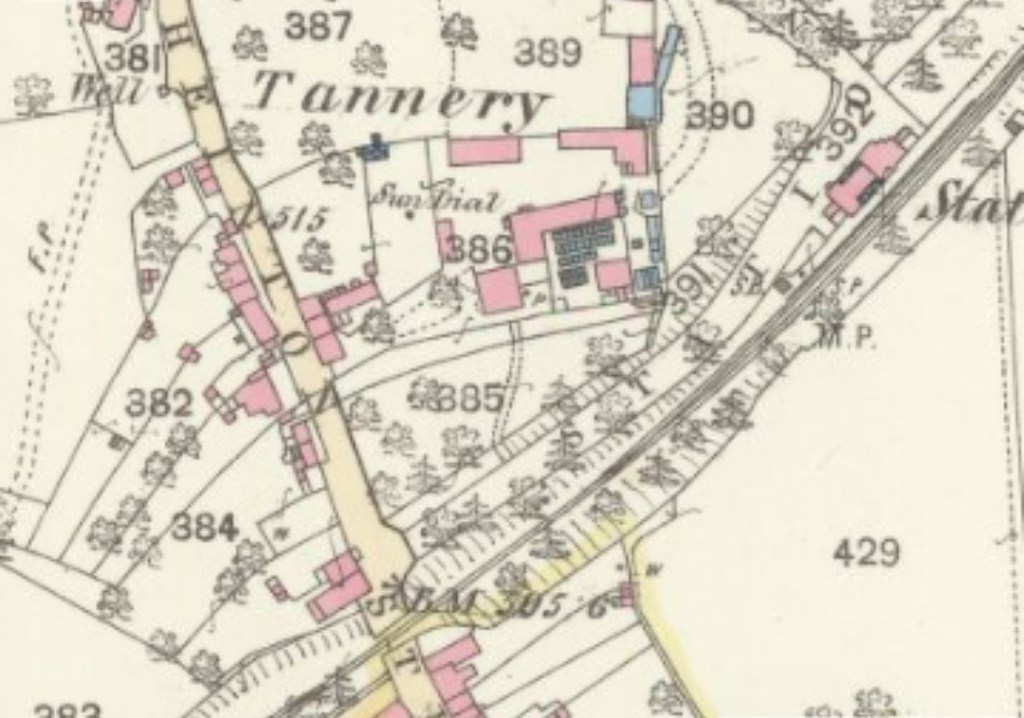
An extract from the 25″ Ordnance Survey of 1882. The Station building and forecourt are at the top-right of this extract, the road bridge is at the bottom, just left of centre. [47]
Another extract from the same 25″ Ordnance Survey sheet of 1882. The goods shed is central to the extract. The yard is framed at the bottom-left by a road bridge. The running line climbs away from the passenger station towards Wenlock Edge on the North side of the yard and passes under that bridge. [47]
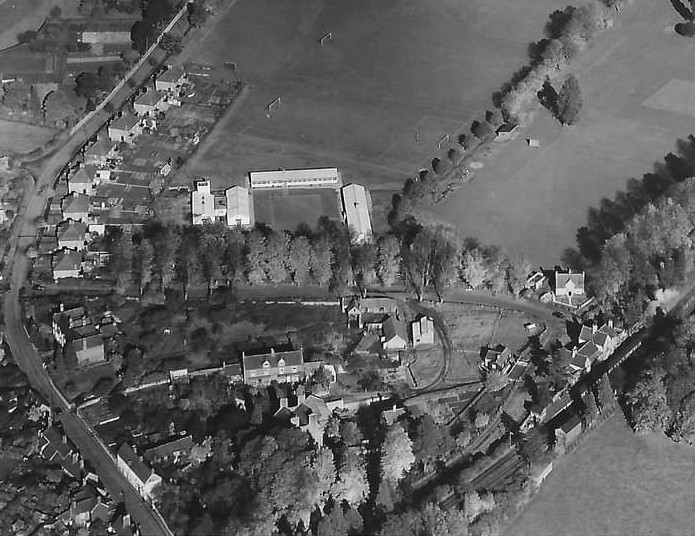
An aerial view of Much Wenlock Railway Station and the A4169 from 1955. This image was shared on the Much Wenlock Memories Facebook Group by Janet Jones on 8th September 2022. [52]
This next extract from the precontract drawings shows approximately the same length as the RailMapOnline image above. The Station building was on the West side of the line and North of the bridge which carried the line over what became the A4169. The goods yard was South of the bridge on the East side of the line. … As we have already noted, these precontract plans were orientated in respect to the North point so as to get the greatest possible length of the proposed railway onto each sheet, © Shropshire Archives Ref. No. 6008/26 copyright reserved, used by kind permission. [22][My photograph of the plan, 5th August 2022]
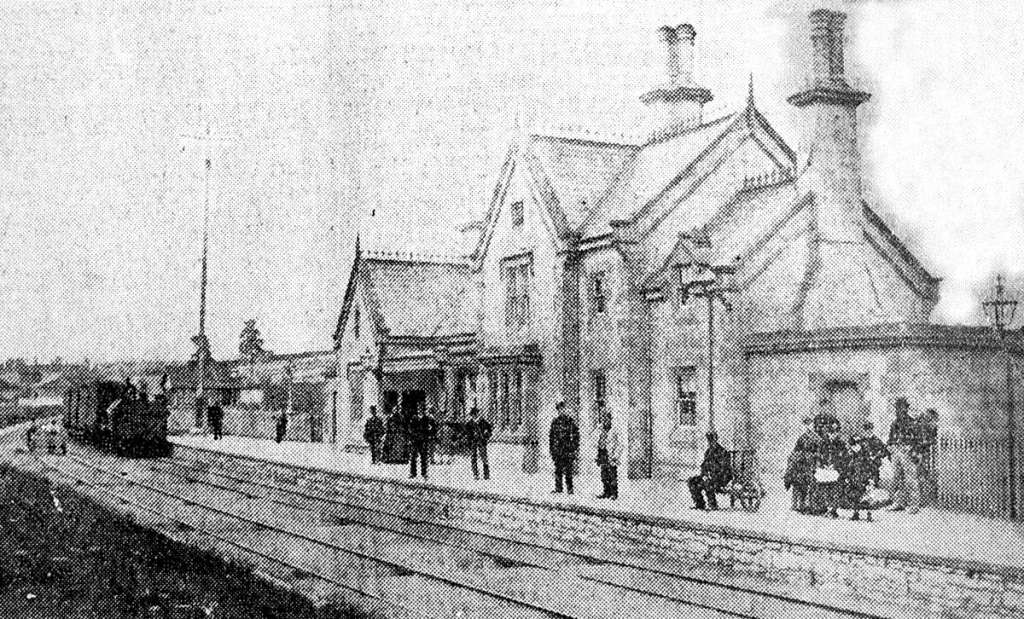
Much Wenlock Station in 1868. [51]
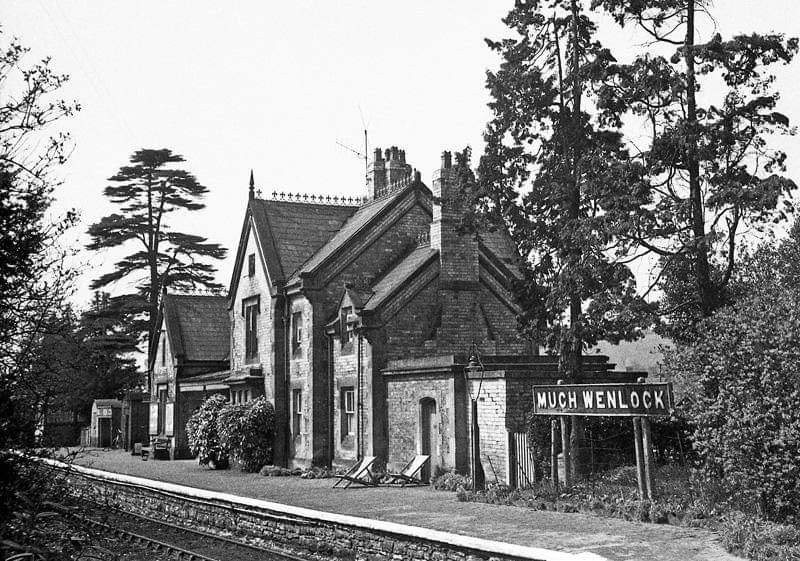
Much Wenlock railway station around the turn of the 20th century. This view looks Northeast along the single platform towards Buildwas. [50]
Another view of the station, this time looking to the Southeast. This image was shared on the Much Wenlock Memories Facebook Group by Shane Leavesley on 8th September 2014. [53]
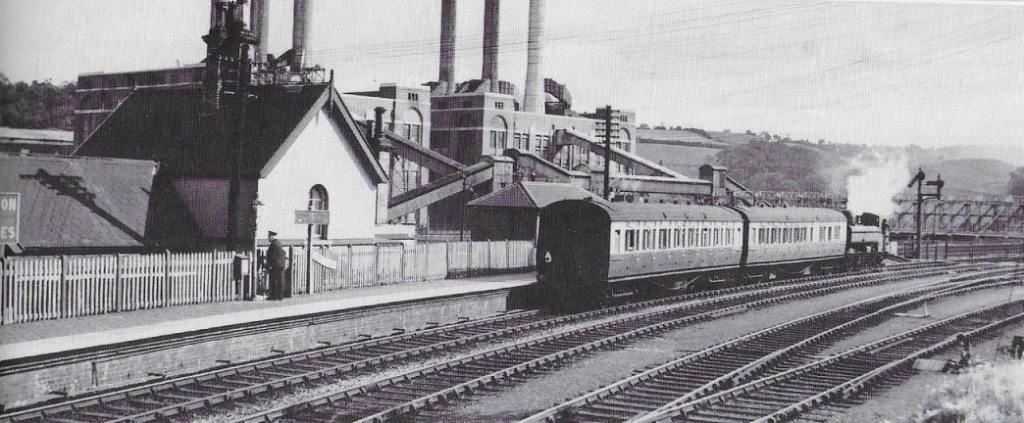
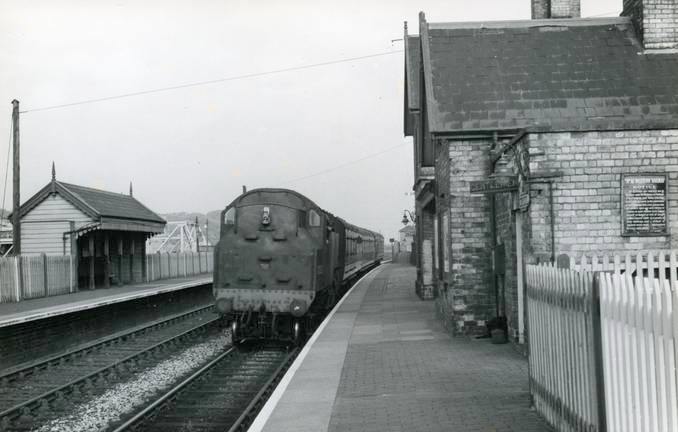
The platform side of Much Wenlock Station Building. This image was shared on the Much Wenlock History Facebook Group by Linda West on 27th May 2020. [55]
The street side of Much Wenlock Station Building. This image was shared on the Much Wenlock History Facebook Group by Linda West on 27th May 2020. [55]
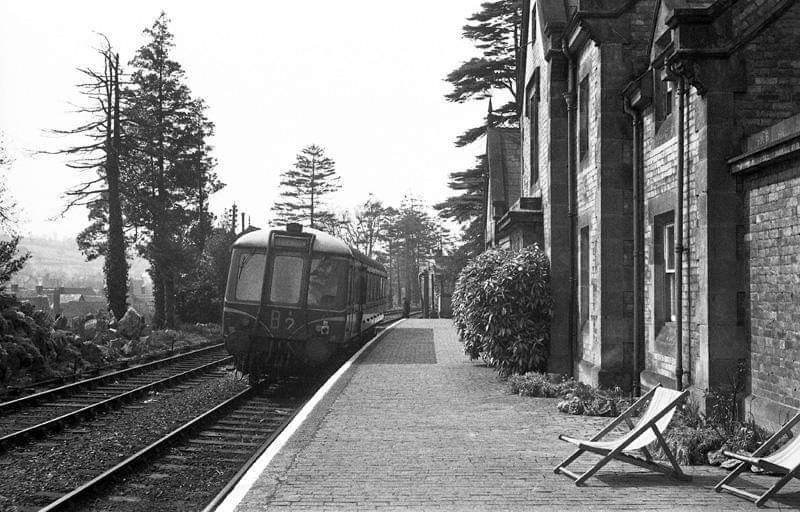
A DMU at Much Wenlock Station. This image was shared on the Much Wenlock Memories Facebook Group by Shane Leavesley on 8th September 2014. [53]
Much Wenlock Station Building seen from the Northwest on Station Road,© John Winder and licensed for reuse under a Creative Commons Licence (CC BY-SA 2.0 DEED). [58]
Much Wenlock Railway Station seen in 2012 from the Southwest on Station Road © Nigel Thompson and licensed for reuse under a Creative Commons Licence (CC BY-SA 2.0 DEED). [59]

Travelling Southwest from the passenger station, trains crossed Sheinton Street at high level and the either entered the goods yard or continued on towards Craven Arms rising up above the town and along the flanks of Wenlock Edge.

The railway bridge in Much Wenlock in 1901 as shown on the 25″ Ordnance Survey of that year, published in 1902. [60]
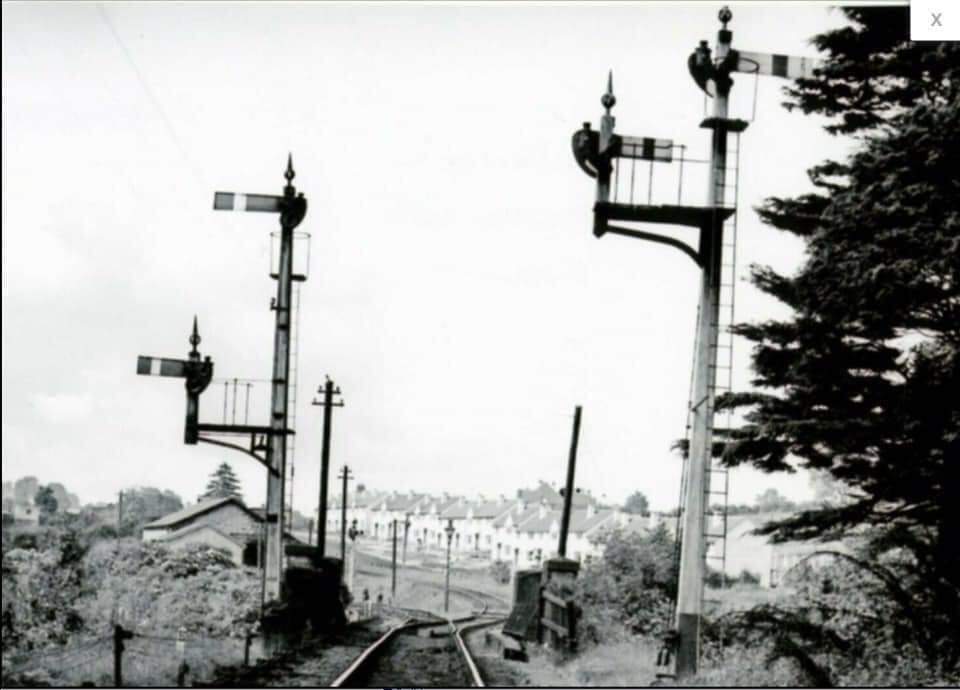
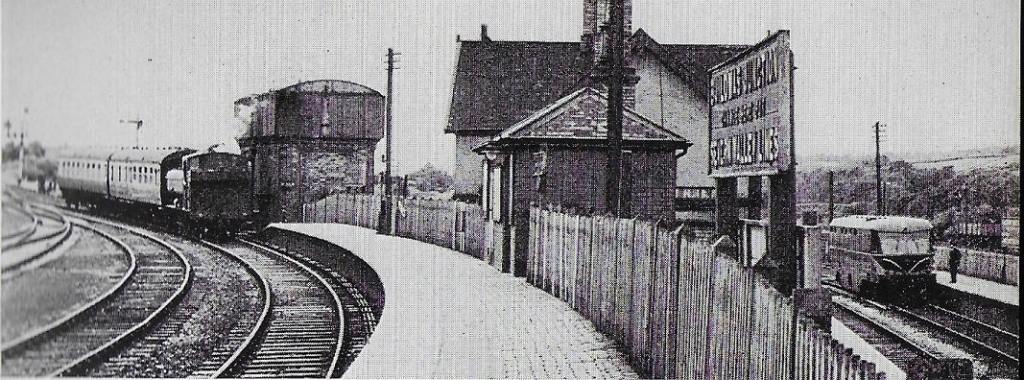
The view looking Southwest from Much Wenlock Railway Station towards the goods yard. The parapets of the bridge crossed Sheinton Street are visible in the foreground. The signals control access to the different lines in the yard. The line on towards Craven Arms can be picked out to the right in front of the housing. It climbs away from the facilities in Much Wenlock, © D Chandler Collection. [57]
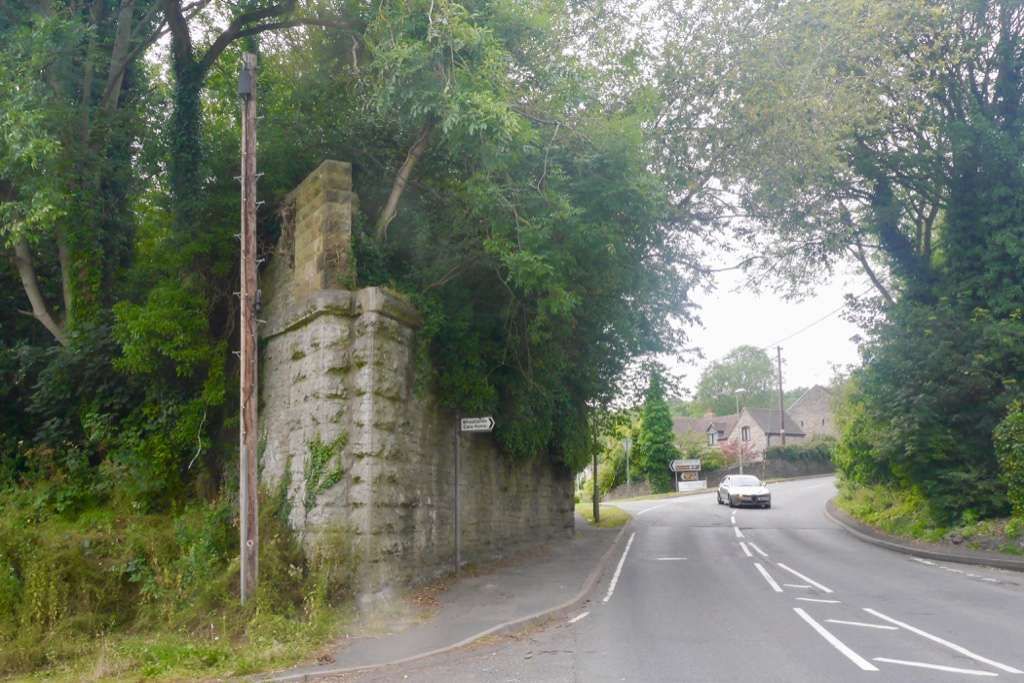
A view Northwest along Sheinton Street taken outside number 19 Sheinton St. It is included here for the view of the railway bridge over the road and was taken in the first half of the 1960s. This image was shared on the Much Wenlock Memories Facebook Group by Lynne Steele on 10th April 2021. [48]
A view Southeast along Sheinton Street showing one of the carnival walks in Much Wenlock probably in the mid-60s. It is included here for the view of the railway bridge over the road. This image was shared on the Much Wenlock Memories Facebook Group by Colin Onions on 2nd February 2015. [49]
Looking South along Sheinton Street in 2023. One bridge abutment remains (immediately behind the pedestrians in the picture. The a4169 was realigned and in this image runs away to the right. The main road used to run down Sheinton Street and into Much Wenlock with what is now New Road meeting it at a T-junction just beyond the old bridge and in front of the black and white timbered building in the photograph. [Google Streetview, May 2021)
Looking North along Sheinton Street with the remaining bridge abutment on the right of the image. [Googl;e Streetview, September 2021]
Looking Northeast along New Road (A4169) towards the remaining bridge abutment. The realigned road runs through the location of the more southerly of the abutments to the old bridge. [Google Streetview, May 2021]

The station goods yard and engine shed were immediately to the Southwest of the railway bridge. We finish this part of our journey along the Wellington to Craven Arms railway in the goods yard at Much Wenlock.

Much Wenlock Engine Shed. This image was shared by Linda West on the Much Wenlock History Facebook Group on 13th March 2018. [54]
The goods yard and engine shed at Much Wenlock. This image was shared on the Much Wenlock Memories Facebook Group by Shane Leavesley on 8th September 2014. The line towards Craven Arms runs behind the Engine Shed. [53]

References

  1. https://en.m.wikipedia.org/wiki/Much_Wenlock_and_Severn_Junction_Railway, accessed on 2nd March 2023.
  2. https://en.m.wikipedia.org/wiki/Wellington_to_Craven_Arms_Railway, accessed on 2nd March 2023.
  3. https://maps.nls.uk/view/101594479, accessed on 4th March 2023.
  4. https://maps.nls.uk/view/121150853, accessed on 18th July 2022.
  5. https://maps.nls.uk/geo/explore/#zoom=17&lat=52.63304&lon=-2.51557&layers=168&b=1, accessed on 18th July 2022.
  6. https://www.facebook.com/photo/?fbid=1844651349192200&set=gm.1655719937779336, accessed on 18th JUly 2022.
  7. https://www.facebook.com/photo/?fbid=409683050025369&set=gm.4793839370634028, accessed on 18th July 2022.
  8. https://www.facebook.com/photo/?fbid=255663442093998&set=gm.3788208897863752, accessed on 18th July 2022.
  9. https://www.facebook.com/photo?fbid=10205802893027076&set=gm.2905708482780469, accessed on 18th July 2022.
  10. https://www.facebook.com/photo/?fbid=251261995867476&set=gm.3765229570161685, accessed on 18th July 2022.
  11. https://www.facebook.com/photo/?fbid=251261115867564&set=gm.3765224093495566, accessed on 18th July 2022.
  12. http://www.nrm.org.uk/ourcollection/photo?group=Sellick%20collection&objid=1997-7219_RJS_SV_46, sourced from https://www.svrwiki.com/File:Buildwas-SVR-Wenlock-1961-06-09.jpg, accessed on 4th March 2023.
  13. http://www.nrm.org.uk/ourcollection/photo?group=Sellick%20collection&objid=1997-7219_RJS_SV_43, sourced from https://www.svrwiki.com/File:Buildwas-4-trains-1961-06-09.jpg, accessed on 4th March 2023.
  14. https://www.britainfromabove.org.uk/en/image/EPW034013, accessed on 18th July 2022.
  15. https://www.britainfromabove.org.uk/image/EAW012667, accessed on 4th March 2023.
  16. https://www.railmaponline.com/UKIEMap.php, accessed on 23rd May 2023.
  17. https://www.streetmap.co.uk, accessed on 25th May 2023.
  18. https://www.bbc.co.uk/news/uk-england-shropshire-34876922, accessed on 25th May 2023.
  19. https://www.investinshropshire.co.uk/locations/former-ironbridge-power-station, accessed on 25th May 2023.
  20. https://www.shropshirestar.com/news/local-hubs/telford/ironbridge/2020/11/04/hi-tech-railcars-idea-for-new-ironbridge-park-and-ride-service, accessed on 25th May 2023.
  21. https://www.britainfromabove.org.uk/en/image/EAW012578, accessed on 26th May 2023.
  22. These photographs were taken by myself and show extracts from the construction plans held in the Shropshire Archive. There is a standard charge of £10 per visit for taking photographs of their records.
  23. https://maps.nls.uk/geo/explore/#zoom=17.0&lat=52.63386&lon=-2.52054&layers=168&b=1, accessed on 26th May 2023.
  24. https://maps.nls.uk/geo/explore/#zoom=17.0&lat=52.63327&lon=-2.52504&layers=168&b=1, accessed on 26th May 2023.
  25. https://m.facebook.com/groups/352799184389/permalink/10158618389784390, accessed on 8th April 2023.
  26. https://maps.nls.uk/geo/explore/#zoom=17.3&lat=52.61992&lon=-2.53764&layers=168&b=1, accessed on 14th August 2023.
  27. https://maps.nls.uk/geo/explore/#zoom=17.3&lat=52.61696&lon=-2.53998&layers=168&b=1, accessed on 14th August 2023.
  28. https://en.wikipedia.org/wiki/Farley_Halt_railway_station, accessed on 14th August 2023.
  29. https://maps.nls.uk/geo/explore/#zoom=17.3&lat=52.61423&lon=-2.54290&layers=168&b=1, accessed on 14th August 2023.
  30. https://maps.nls.uk/geo/explore/#zoom=17.3&lat=52.61163&lon=-2.54320&layers=168&b=1, accessed on 14th August 2023.
  31. https://www.kgg.org.uk/farleyh.html, accessed on 14th August 2023.
  32. https://www.geograph.org.uk/photo/1841547, accessed on 14th August 2023.
  33. https://www.geograph.org.uk/photo/1841545, accessed on 14th August 2023.
  34. http://www.telford.org.uk/tramways/gleedon_hill.html, accessed on 14th August 2023.
  35. A History of the County of Shropshire, Volume 10: Munslow Hundred (part), The Liberty and Borough of Wenlock, 1998, p339-477: http://www.british-history.ac.uk., accessed on 14th August 2023.
  36. https://maps.nls.uk/view/121151300, accessed on 14th August 2023.
  37. https://maps.nls.uk/geo/explore/#zoom=17.0&lat=52.60946&lon=-2.54796&layers=168&b=1, accessed on 15th August 2023.
  38. https:/https://www.geograph.org.uk/photo/3042155/maps.nls.uk/geo/explore/#zoom=17.0&lat=52.60637&lon=-2.54931&layers=168&b=1, accessed on 15th August 2023.

  39. https://www.shropshirestar.com/news/nostalgia/shrewsbury-nostalgia/2021/07/16/memories-of-a-1960s-train-journey-never-to-be-repeated, accessed on 15th August 2023.
  40. Adrian Knowles; The Wellington, Much Wenlock and Craven Arms Railway; Lightmoor Press, Lydney, Gloucestershire, 2022.
  41. https://www.geograph.org.uk/photo/3042155, accessed on 17th August 2023.
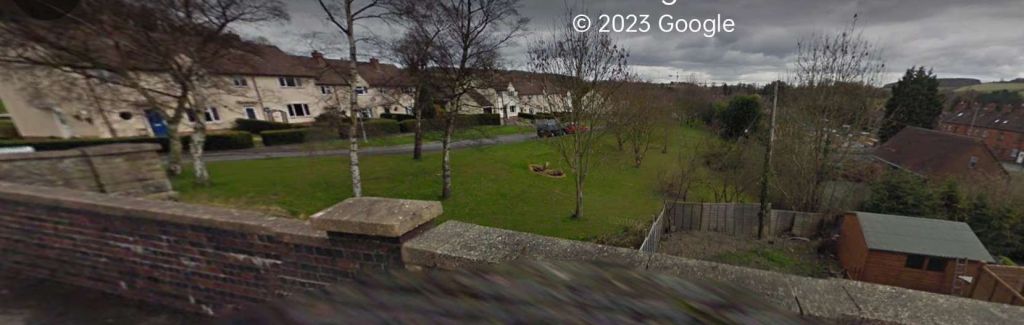
  42. https://maps.nls.uk/view/121151333, accessed on 30th August 2023.
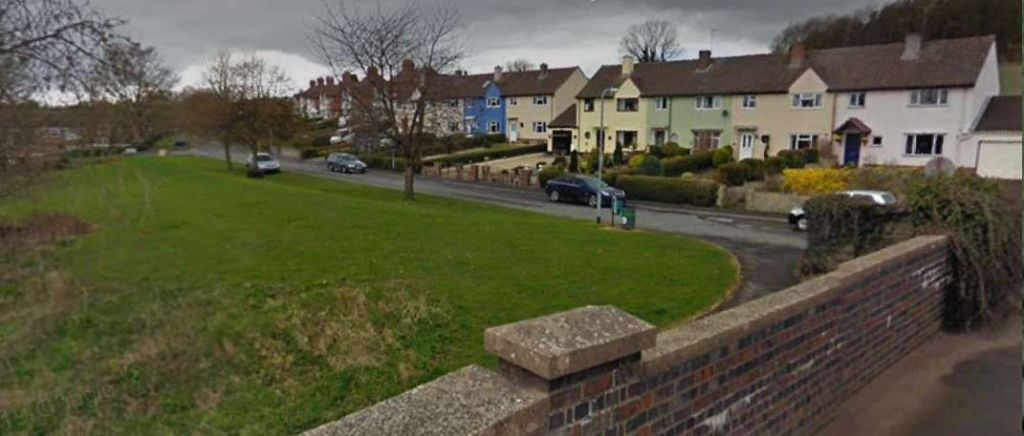
  43. https://maps.nls.uk/geo/explore/#zoom=17.0&lat=52.60319&lon=-2.55248&layers=168&b=1, accessed on 30th August 2023.
  44. https://historicengland.org.uk/services-skills/education/educational-images/shadwell-quarry-near-much-wenlock-4267, accessed on 30th August 2023.
  45. https://www.muchwenlock-tc.gov.uk/property-and-assets/the-gaskell-recreation-ground, accessed on 30th August 2023.
  46. https://wp.me/p2zM3f-67v, accessed on 13th October 2023.
  47. https://maps.nls.uk/view/121151333, accessed on 13th October 2023.
  48. https://scontent.fbhx4-1.fna.fbcdn.net/v/t1.6435-9/171398056_5264731283601330_7585531238603702981_n.jpg?_nc_cat=104&ccb=1-7&_nc_sid=bd3046&_nc_ohc=tjiydGZcDfcAX-DYKVT&_nc_ht=scontent.fbhx4-1.fna&oh=00_AfBZDkK_GfCn6WMHmKJ0ASZWiMiwyiHjEE0dM8Vxgk47nA&oe=65511915, accessed on 13th October 2023.
  49. https://www.facebook.com/photo?fbid=871714362892537&set=pcb.1583276891885898, accessed on 13th October 2023.
  50. https://en.m.wikipedia.org/wiki/File:Much_Wenlock_railway_station.jpg, accessed on 14th October 2023.
  51. https://www.shropshirestar.com/news/features/2019/12/02/final-days-of-wenlock-station, accessed on 14th October 2023.
  52. https://m.facebook.com/groups/1470137459866509/permalink/3753567794856786, accessed on 15th October 2023.
  53. https://m.facebook.com/groups/1470137459866509/permalink/1482470245299897, accessed on 15th October 2023.
  54. https://www.facebook.com/groups/1532191000361509/permalink/2075425426038061/?app=fbl, accessed on 16th October 2023.
  55. https://m.facebook.com/groups/1532191000361509/permalink/2670607383186526, accessed on 17th October 2023.
  56. https://m.facebook.com/groups/1532191000361509/permalink/2624088597838405, accessed on 17th October 2023.
  57. https://www.facebook.com/groups/1532191000361509/permalink/3363056680608256, accessed on 17th October 2023.
  58. https://www.geograph.org.uk/photo/4879308, accessed on 19th October 2023.
  59. https://www.geograph.org.uk/photo/4354465, accessed on 19th October 2023.
  60. https://maps.nls.uk/geo/explore/#zoom=19.0&lat=52.59812&lon=-2.55899&layers=168&b=1, accessed on 19th October 2023.
  61. Ken Jones; The Wenlock Branch; The Oakwood Press, Usk, Monmouthshire; 1998.