The Coleford Branch between Monmouth and Coleford replaced an earlier tramroad. The Monmouth Tramroad, linked Monmouth with Coleford and opened in 1810. It was the first rail transport in the immediate area.
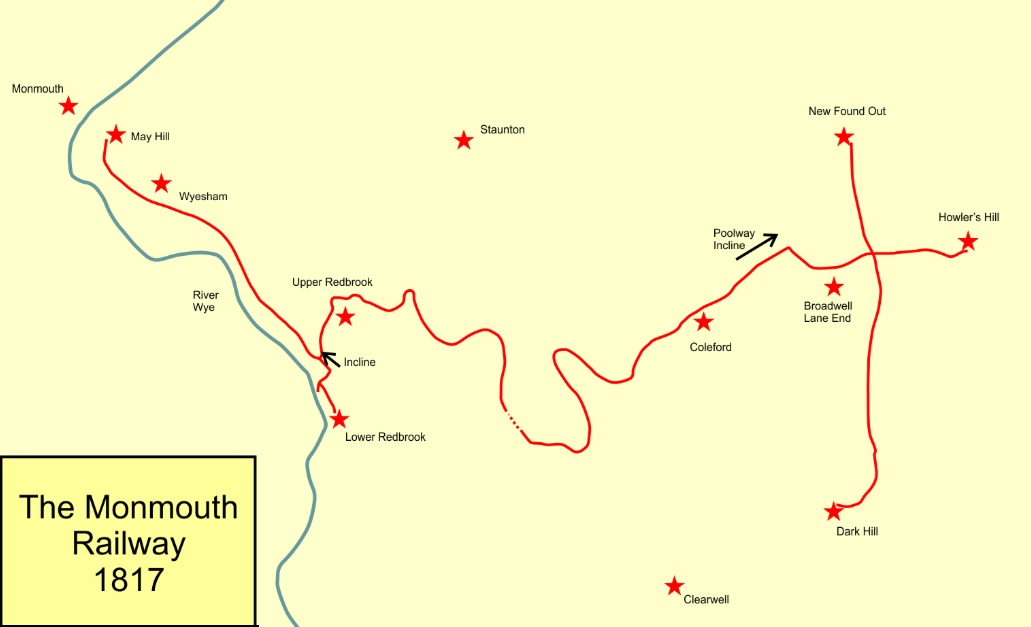
Wikipedia tells us that the “Monmouth Railway Act was a Parliamentary act from 1810 (50 Geo. 3. c. cxxiii) that authorized the construction of a 3 ft 6 in gauge plateway, a type of early tramroad, from mines east of Coleford to May Hill in Monmouth, running through Redbrook. The purpose was to create a toll road for carriers to transport coal and iron ore, but it would not be operated by the company itself. The line opened in stages between 1812 and 1817.” [4]
For just under half a century this was the only ‘railway’ serving Monmouth. This was true for even longer in respect of Coleford.
It is of interest that this line was originally planned to be at the core of a significant network. It had a long tunnel near Newland and is thought to have been the first railway to include a paying passenger service within its Act. [1]
The original tramway bridge (pictured towards the end of this short article) was a low timber girder on stone abutments crossing a minor road serving a couple of farmsteads. This created a large loop up this side valley, which initial plans for the railway involved amputating and replacing with a gently curving viaduct.
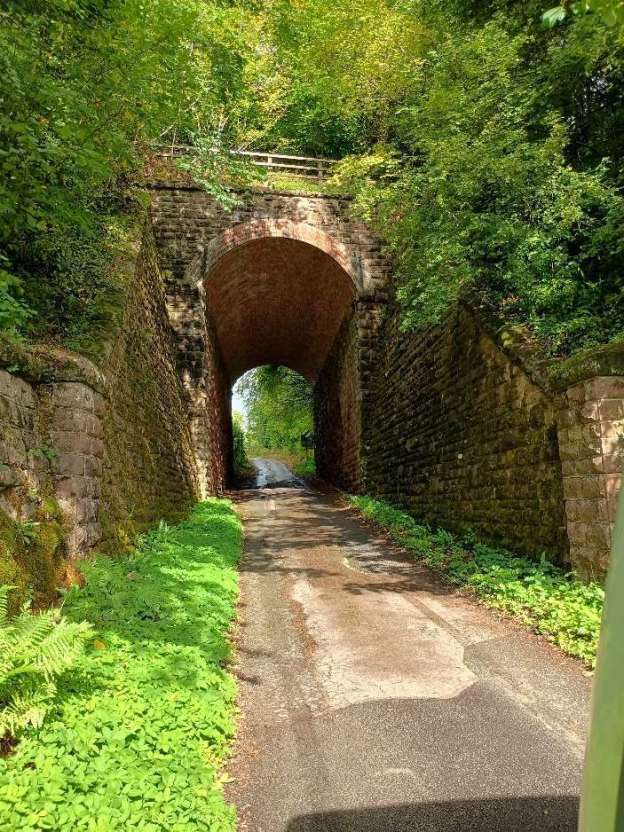
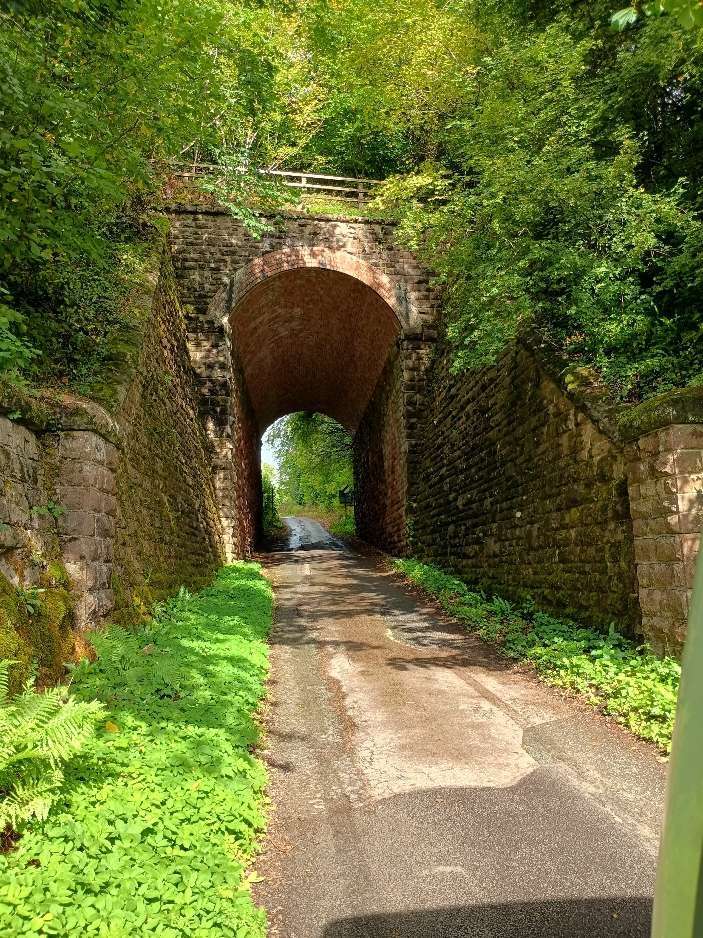
Viaducts are expensive, however, and taking a straight course means going a shorter distance and consequently trains would have to climb more steeply. So the viaduct was dropped from the plans and replaced by a huge embankment which made a smaller loop up the side valley. Through this embankment passed the new bridge for the minor road. Although it is a rather large structure (particularly by single arch standards), the top of the arch is still well below the top of the embankment, which carried a minor single track railway. It now carries an overgrown trackbed which is about the same width as the road below. The railway was built to last and, 92 years after the last train to Monmouth from Coleford, the Dog Kennel Bridge remains in excellent condition.
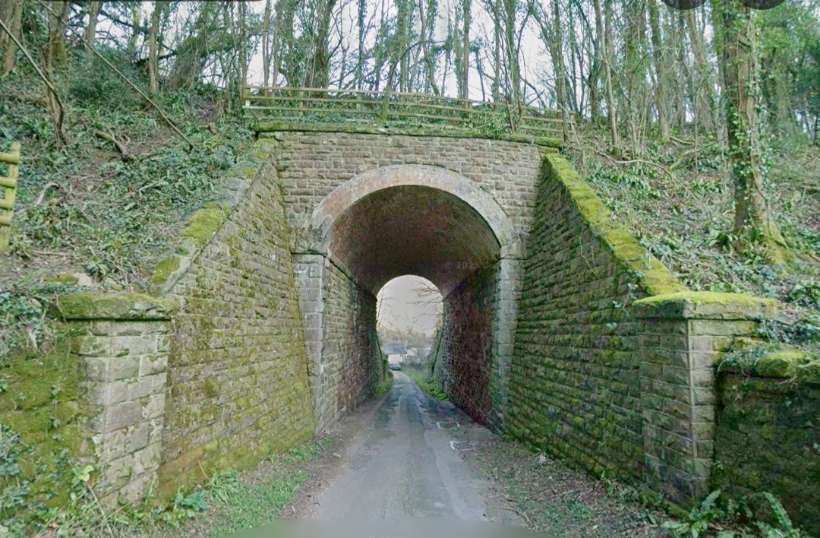
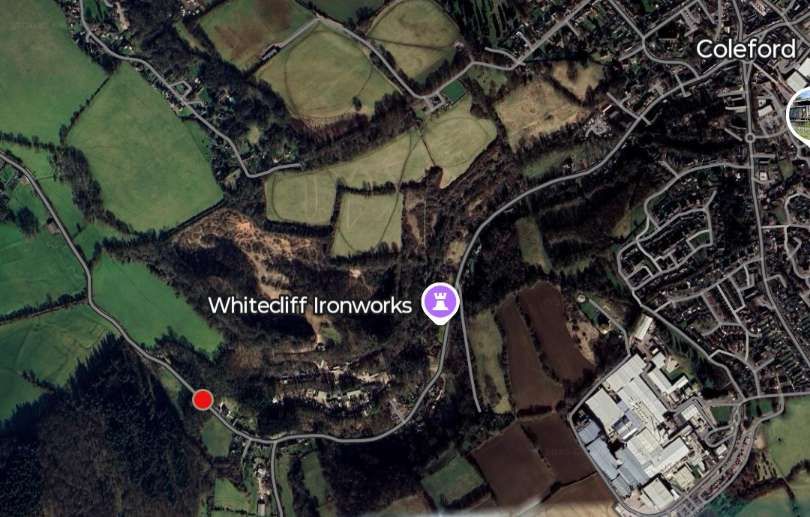
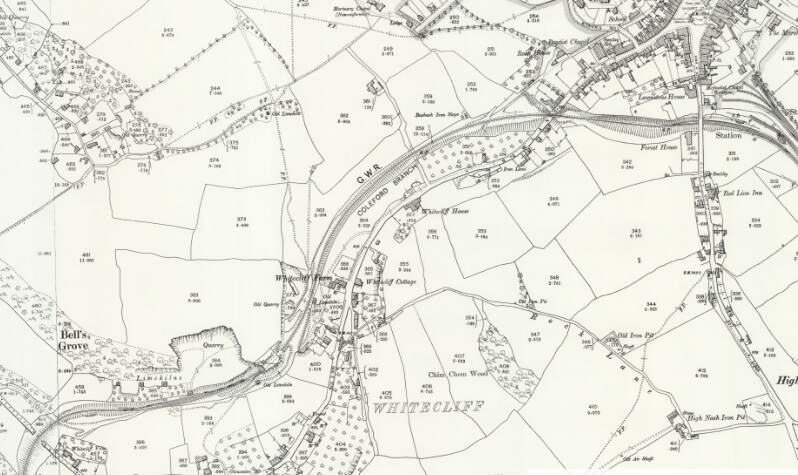
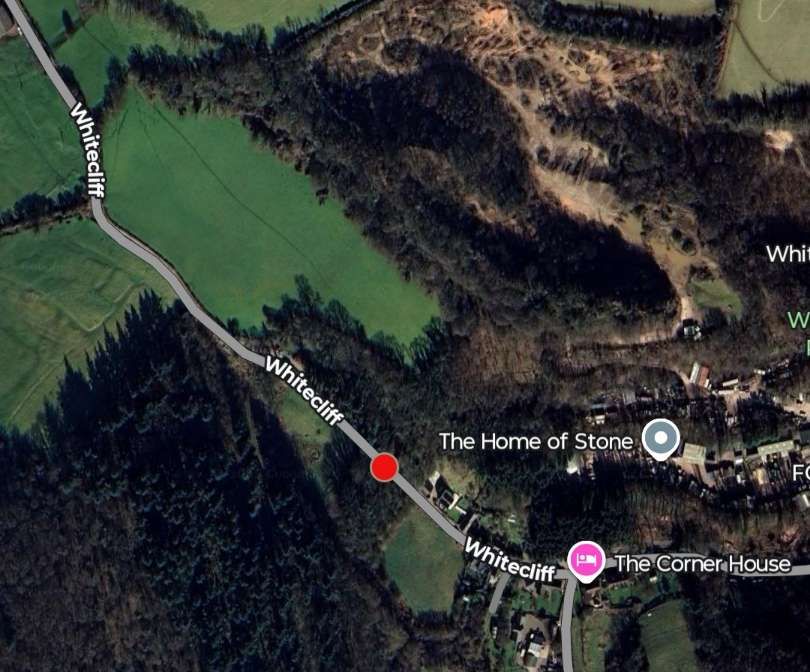
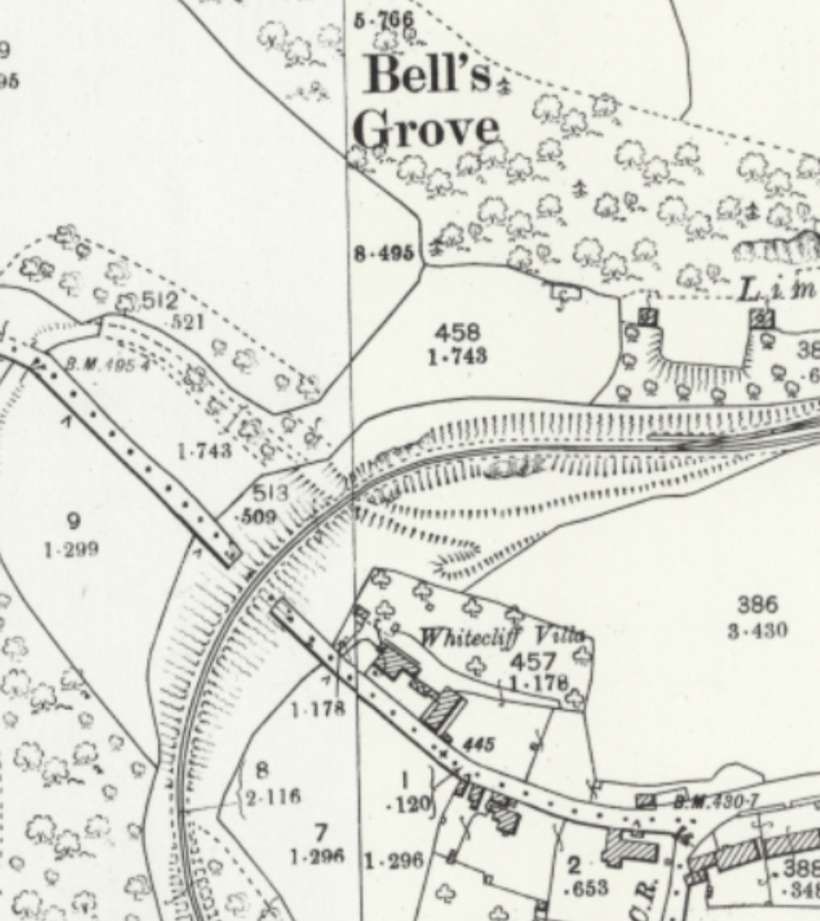
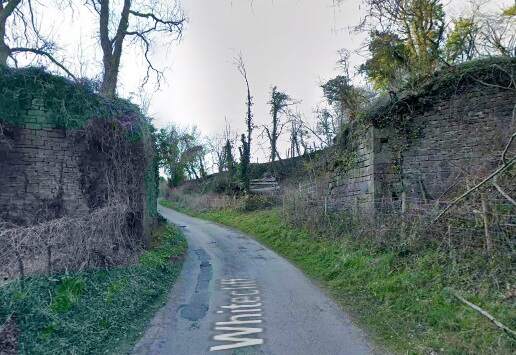
Dog Kennel Bridge, seen from the Northwest on Whitecliff. The featured image at the head of this article is a photograph taken by me on 3rd September 2025. It shows the same structure, seen from the Southeast on the same minor road. The featured image is repeated below. [Google Streetview, March 2025]The featured image for this short article is a photograph of Dog Kennel Bridge as seen from the Southeast. The bridge is unusual, being more like one span of a tall viaduct than a single-span arches bridge. [My photograph, 3rd September 2025]The red dot marks the location of Dog Kennel Bridge. The line of the branch can be made out as two parallel lines of trees which pass to the West of the ‘flag’ marking the position of Whitecliff Ironworks. [Google Maps, September 2025]The extract from the 25″ Ordnance Survey of 1900, published in 1902, shows the location of Dog Kennel Bridge in relation to the small town of Coleford. The bridge is in the extreme bottom-left of the map extract. Coleford’s two adjacent stations feature in the top-right of the map extract. [2]The red dot marks the location of Dog Kennel Bridge. [Google Maps, September 2025]The 25″ Ordnance Survey of 1900, published in 1902, shows the GWR single-track line crossing Dog Kennel Bridge. The earthworks for the older Monmouth Railway are visible running across the map extract on the South side of the GWR line above Whitecliff Villa, passing under the GWR line to head further up the valley before curving tightly over the road. [3]
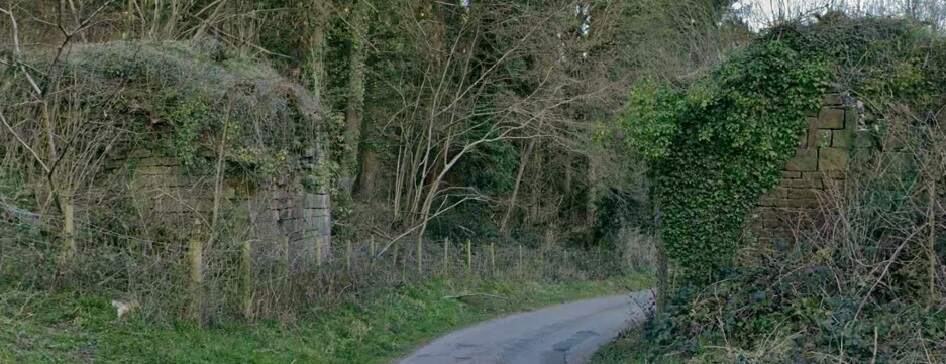
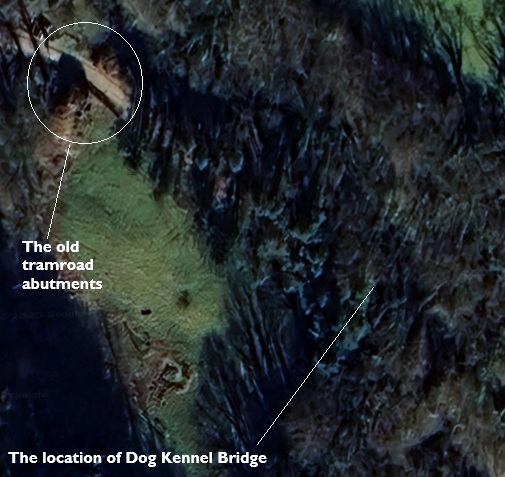
Dog Kennel Bridge carried the Coleford Railway, which ran from Wyesham Junction, near Monmouth, to Coleford, over a minor road between Whitecliff and High Meadow Farm. Construction of the line began in 1880, the contractors being Reed Bros & Co. of London, and it was opened on 1st September 1883. In common with other underbridges on the line, Dog Kennel Bridge is predominantly of stone, but the arch is made of brick. It has massive stone abutments and wing walls. The smaller stone bridge abutments of the Monmouth Railway, which the Coleford Railway replaced, are still visible about 100 metres up the lane (SO 56321007) where the old tramroad crossed the valley on a much sharper curve. [5]
The abutments of the tramroad bridge remain on either side of Whitecliff. This is how they appear from the Southeast. [Google Streetview, March 2025]The tramroad (Monmouth Railway) bridge abutments seen from the Northwest. [Google Streetview, March 2025]The relative positions of the older tramroad bridge and Dog Kennel Bridge. [Google Earth, September 2025]
The GWR’s Coleford Branch closed by 1st January 1917, most of the track soon being lifted for the war effort. [5]
A contemporary account of the completion of the additional rail bridge over the River Tyne.
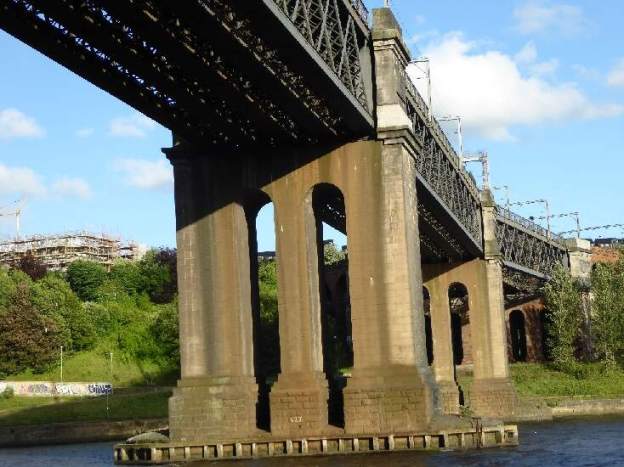
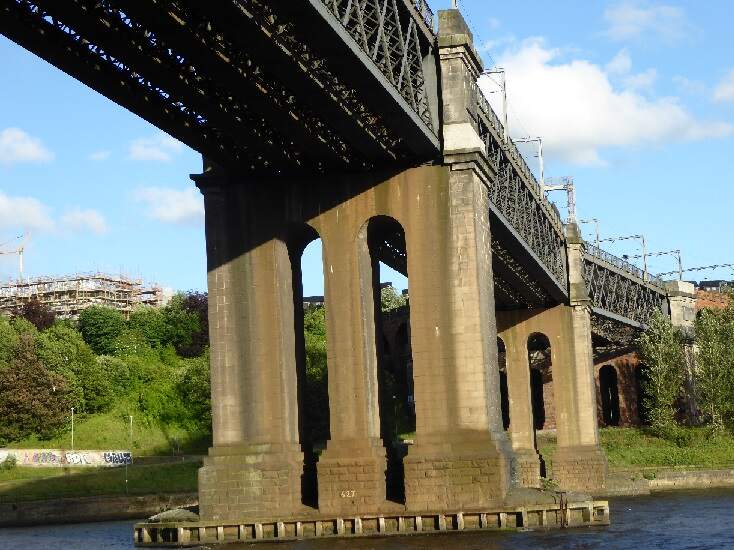
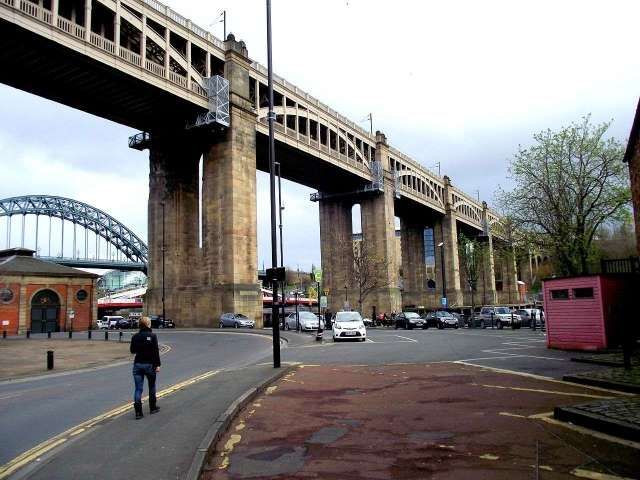
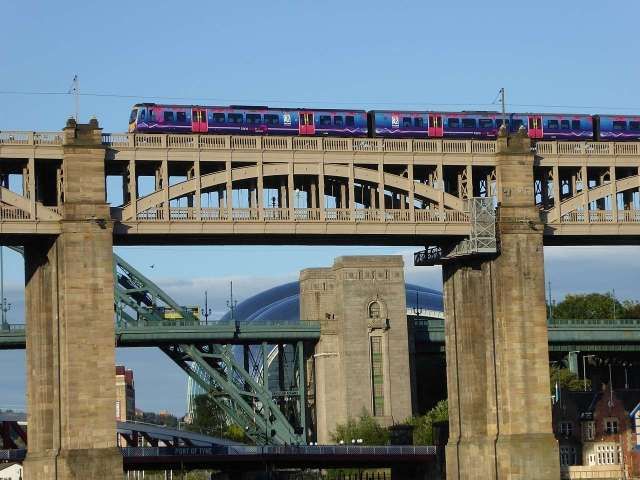
This is the Bridge that became known as the King Edward VII Bridge. It is a Grade II listed structure and has been described as “Britain’s last great railway bridge”. [4]
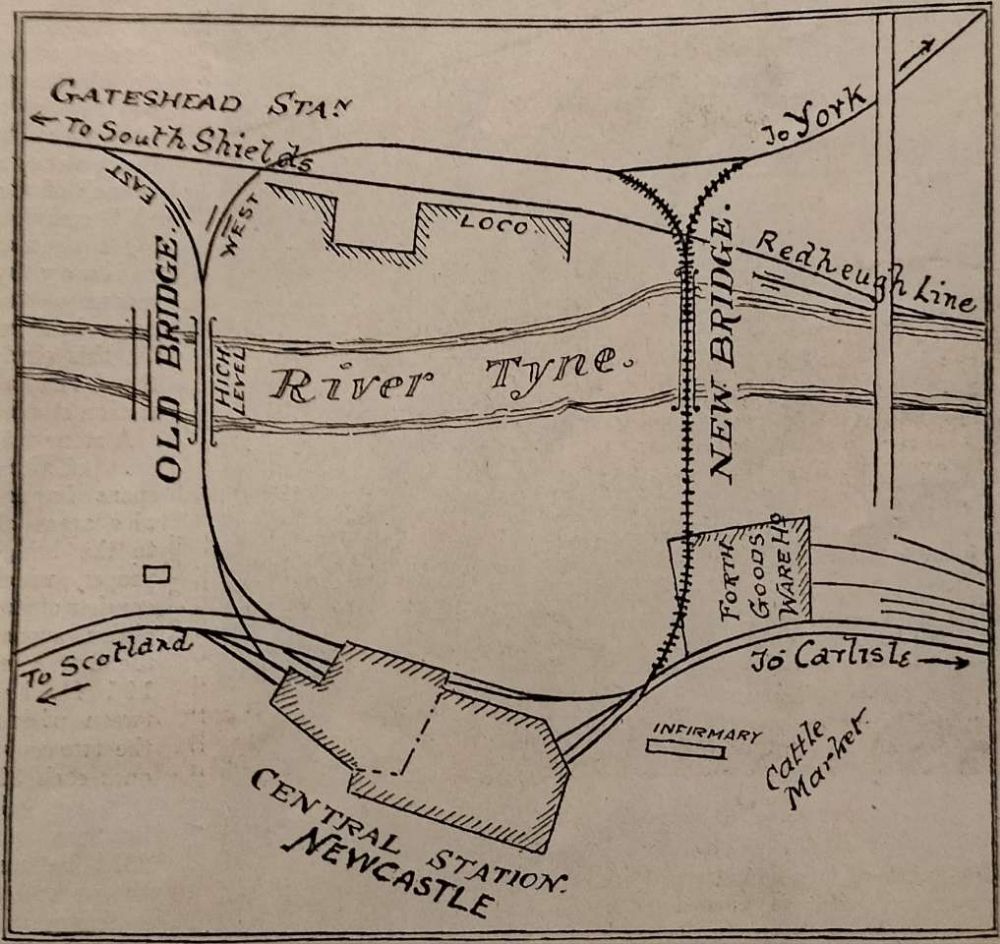
The King Edward VII Bridge, Newcastle, (c) Ardfern and licenced for reuse under a Creative Commons Licence (CC BY-SA 3.0). [5]A map of the North-Eastern Railway at Newcastle -on-Tyne. This sketch comes from the article in The Railway Magazine and suffers from a minor problem that left me struggling, for a short while, to make sense of it. Surely Central Station, Newcastle is on the North bank of the Tyne? It was the lack of a North point on the map that left me confused! [1: p9]
The introduction to the article in the Railway Magazine says:
“Travellers journeying by the East Coast route to and from places north of Newcastle-on- Tyne, have always commented on an anachronism of the twentieth century, that hitherto has required trains to run into a ‘dead end’ station, thus compelling a stop, with consequent delay, whatever might be the stress of competition between the rival routes. Now however, all this is to be altered. Readers of The Railway Magazine are acquainted with the fact that for some years past the North-Eastern Railway has had under construction a duplicate high-level bridge across the Tyne, by means of which trains north to south, and vice versa, will be enabled to pass through the Central Station, without stopping, if necessary, but, at all events, without having the direction in which the train is travelling altered. The plan [above shows] how this improvement is effected by means of the new bridge and connecting lines. His Majesty the King has consented to open the new bridge, and thus inaugurate the improvement, on Tuesday, 10th July, after which date it will be possible to work the North-Eastern Railway trains that pass through Newcastle-on-Tyne in a manner showing a considerable improvement in the system now [pertaining]” [1: p9-10]
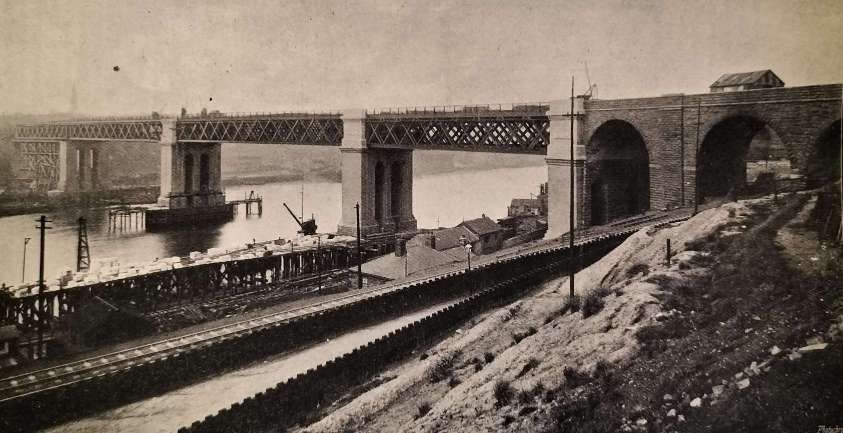
The New High Level Bridge Carrying the North Eastern Railway across the Tyne at Newcastle. [1: p10]
From the South side of the River Tyne a triangular junction gives access to the bridge, which is described by The Railway Magazine::
“A stone viaduct of three spans forms the approach to the bridge proper, which consists of four girder spans; the first being 191 ft. between piers, the two centre ones each 300 ft., and the northern span 231 ft. between the piers; this is followed by a stone viaduct of 10 spans each 25 ft. wide. The height of the ten piers of this viaduct, from road level to the spring of the arch, is 18 ft., and the arches are semi-circular, the arch stones being 18 in. in depth. The distance from road level to rail level is 33 ft., the foundations being on clay and averaging about 7 ft. in depth. This arching rests on ashlar piers 4 ft. thick and 51 ft. transversely, each pier being relieved by three 7 ft. arches.
The new line is next carried by a bridge across Pottery Lane, and then enters the well-known Forth goods warehouse of the North-Eastern Railway at the first storey level by steel girders resting on brick piers. The spans through the warehouse are 40 ft., and the foundations for the piers are taken down to good clay beneath the cellar floor. The distance from rail to the bottom of the foundation is 40 ft. The roof of the warehouse is held up by a wind screen, resting on the piers outside the parapet girders, and the corner of the building, cut off by the railway, is now being used as offices for the goods staff.
Beyond the goods warehouse the new line continues to a junction with the Newcastle and Carlisle Railway, a short distance west of the Central station at Newcastle.
The new bridge carries four pairs of metals.
The total length of the main bridge, measuring from the first abutment on the north side to the abutment on the south side is 1,150 ft. The girders measure 48 ft. 6 in. from centre to centre of parapets, and the breadth of steel work overall is 50 ft., so that there is thus provided a space of 6 ft. between the tracks, and room for a pathway for the use of platelayers on either side. The girders are built of double lattice work, with top and bottom booms 3 ft. deep, and are braced together at the top and bottom by transoms, of which the lower are of lattice work and the upper of plate work 164 in. deep, the latter carrying the timberway on which the rails run. Each girder has panels of 23 ft., of which the struts or ties are lattice girders 4 ft. 1 1/2 in. wide.
The girders for the centre spans have a camber of 7 1/2 in. and the north span of 6 in. The parapets, which are 5 ft. high are bracketed to the outside of the girders and are of lattice work, and, in order to carry the railway over the piers, the opposite top booms are bracketed out towards each other leaving a space of 6 in. between the ends of the top booms of the girders. To provide for expansion these girders rest on roller bearings at one end of cast steel, with a base of 38 sq. ft. each. The total weight of steel for each of the spans is: North span, 950 tons; two central spans, 3,482 tons; southern span, 1,350 tons. As the rails begin to diverge on the pier in the southern side of the river they are some distance apart at the next pier, there being then 132 ft. between the parapets. For this span of 191 ft. there are also five girders, but they spread out towards the south like a fan instead of being parallel.
The river piers are of Norway granite, and the foundations have all been taken down to the same depth, namely, 69 ft. below high water, and they have been built in caissons. The adoption of the caisson method of constructing the foundations marks a difference between the new high-level and the old bridge, as the latter was built on piled foundations. It should, however, be remembered that in 1845, when Stephenson’s great work was undertaken, the Tyne could almost be forded at low water, whilst there is now a deep-water channel beneath both bridges.
The total length of the new railway is 4 furlongs 2 chains, whilst the loop to the south-east is 1 furlong 2 chains in length. Of this length of railway 19 chains is straight, including the crossing of the river, but the rails are on a 10-chain curve on leaving the west end of the Central station, and again, on a similar curve on reaching the south side of the river, the south-east curve having a radius of 7 chains. The line is level from the commencement on the north side as far as the pier on the south side of the river, when the main curve falls to the south-west on a gradient of 1 in 132, and the loop falls at 1 in 226. The new high-level bridge has been constructed from the designs of Mr. C. A. Harrison, the chief engineer of the Northern Division of the North-Eastern Railway, and this gentleman laid the foundation stone on 29th July 1902, so that less than four years have been occupied in constructing the bridge and new approach railway to Newcastle Central station.” [1: p10-11]
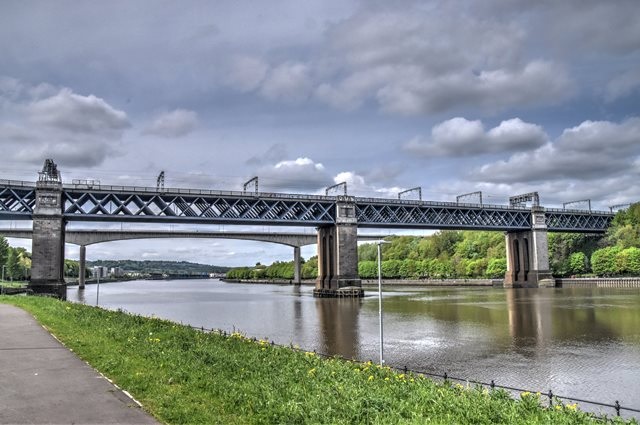
Another view of the King Edward VII Bridge, Newcastle, (c) Nathan Holth, 13th May 2018. [6]
The original ‘High Level Bridge’ – designed by Robert Stephenson
The first High Level Bridge across the Tyne at Newcastle was opened in 1849. It was designed by Robert Stephenson, that bridge carried rail and road traffic and was the first in the world to do so.
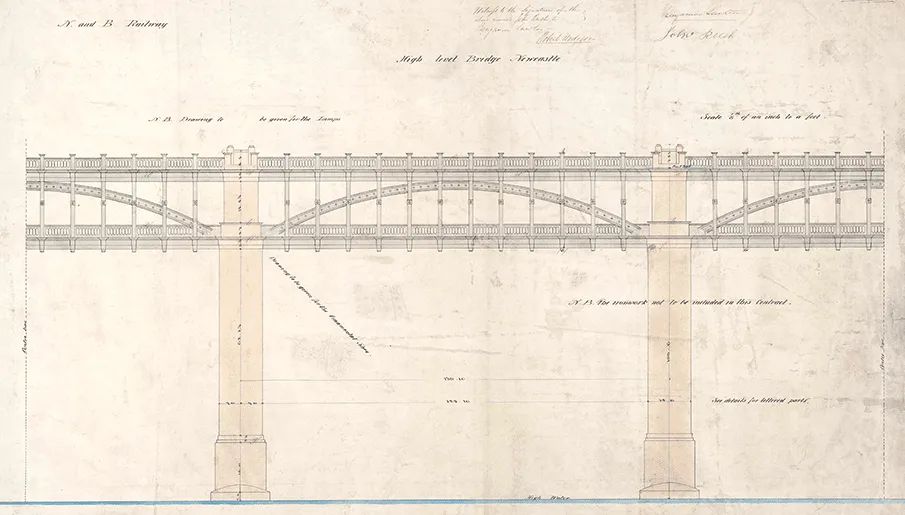
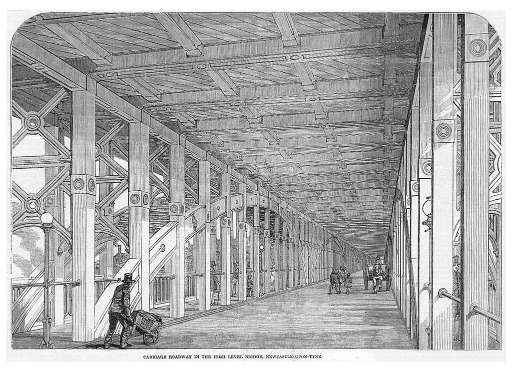
Network Rail tells us that “the Newcastle & Berwick Railway secured the Act to build its line in 1845. It stipulated that the company should construct a combined road and rail bridge across the River Tyne between Newcastle and Gateshead, to be completed within four years. … The bridge was designed by Robert Stephenson and detailed drawings were made under the supervision of Thomas E Harrison. To avoid excessive width, and thereby expense, it was decided to carry the railway above, rather than beside, the roadway. The roadway itself was designed to be 20ft (6m) wide with a 6 1/2ft (2m) footway on either side. The combined width allowed three standard gauge tracks to run across the top rail level of the bridge. The overall length of the bridge was to be 1338ft (408m).” [2]
An extract from the contract drawings for Stephenson’s bridge. [2]
Network Rail goes on to describe the construction of the bridge:
“The bridge was a tied arch (or bow-string) bridge with the main structural elements made of either cast or wrought iron. It had in total six spans each 125ft (38m) in length, the cast iron bows supporting the railway while wrought iron ties supported the road deck below. To enable a level line for the railway across the deep and wide Tyne valley, the roadway was built at 96ft (29m) and the railway 120ft (37m) above high water on the river. Contracts for the production of the ironwork were let to local firm Hawkes, Crawshay & Co. of Newcastle.
The bridge sits on five masonry piers, 50ft (15m) thick and 16ft (5m) wide. Although the River Tyne at the point the bridge is constructed was no more than 3ft (1m) deep at low water, its bed consisted of some 30ft (9m) of silt before underlying bedrock could be reached.
A recent invention, the ‘Nasmyth Steam Pile Driver’, was used for the first time in bridge building, enabling the piles for the bridge foundations to be driven down to the bedrock quickly and efficiently. Rush & Lawton of York were contracted to build the five main masonry piers and the land arches on each side carrying the approaches; 50,000 tons of stone was quarried near Newcastle, mainly at Heddon on the Wall.
To assist in the construction work a wooden viaduct was built immediately to the east of the permanent one. This temporary structure was opened to railway traffic on 29 August 1848, just a year before the High Level Bridge itself was opened by Queen Victoria on 28 September 1849. The public roadway over the bridge was not completed and opened until some six months later.” [2]
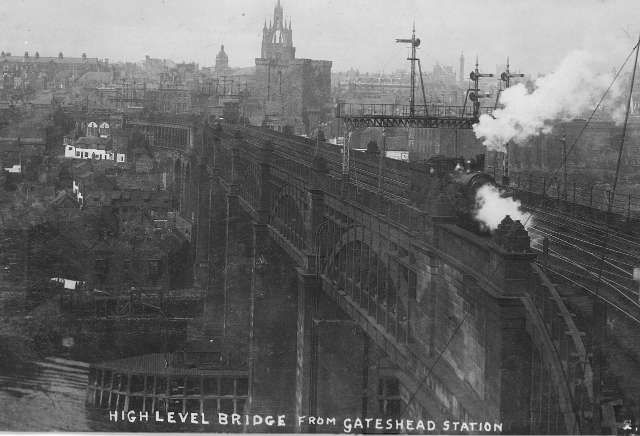
A Gallery of photos, drawings and engravings of Stephenson’s High Level Bridge. …..
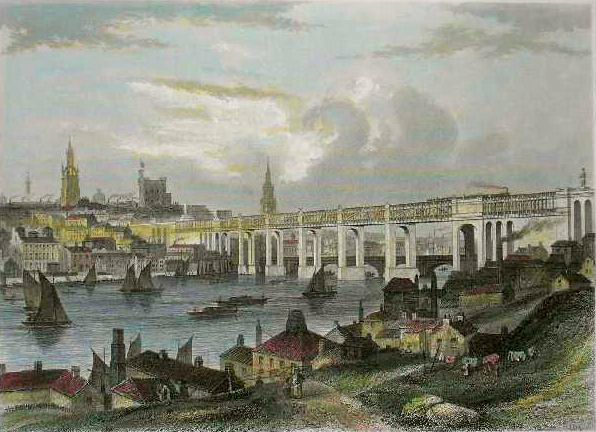
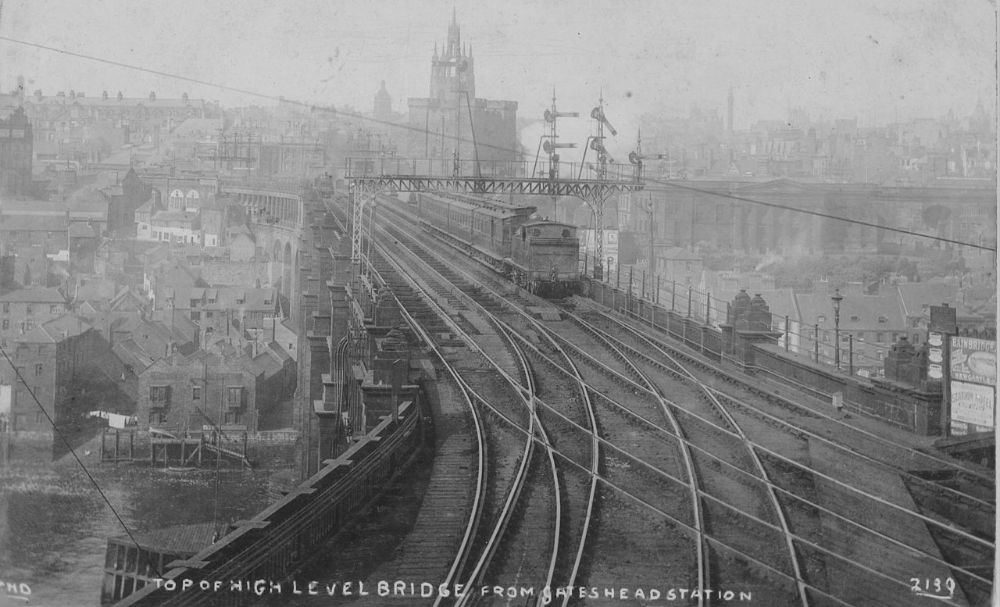
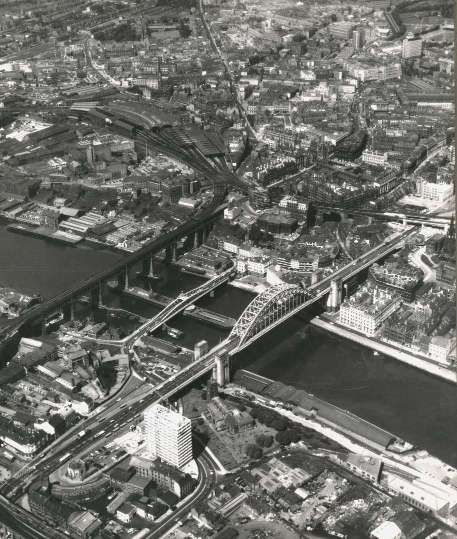
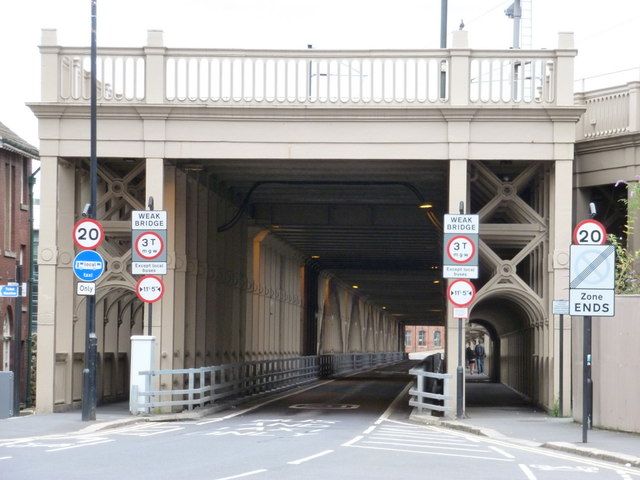
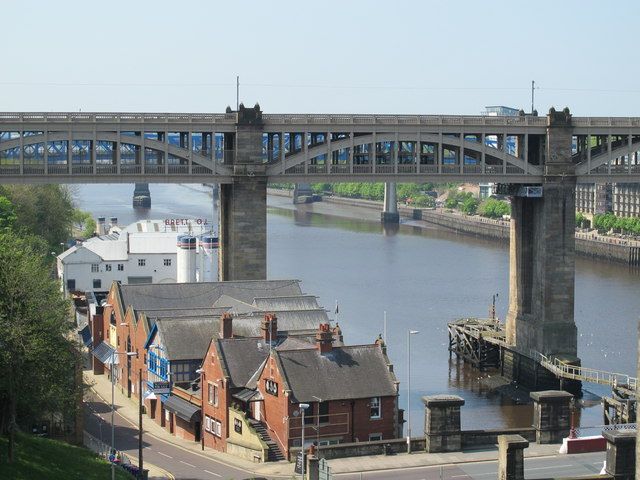
A coloured early engraving looking downstream (1863). [3]An engraving showing the roadway under the rail bridge in early days. [3]Three lines crossed the bridge. This is a view from the South side of the Tyne at high level. [3]A similar image but this time showing more of the West face of the structure. [3]An aerial view of the High Level Bridge in 1967. [3]The entrance to the road bridge in more modern times, after weight and width restrictions were imposed. [3]A view of the High Level Bridge from the Southeast in 2012, looking upstream. [3]A view of the High Level Bridge in 2014 from the Northwest. [3]A modern DMU (A Class 185 diesel multiple unit) crossing the High Level Bridge in 2015. [3]
References
The New High Level Bridge at Newcastle-on-Tyne; in The Railway Magazine, London, July 1906, p9-11.
I was reading (in August 2024) the July 1903 Railway Magazine and came across an article about the Welshpool & Llanfair Light Railway. [1: p64-68] The article marked the opening of the line at the beginning of April 1903.
After the first railway entered Welshpool on 10th June 1862 – the Oswestry (by 1903, the Cambrian) Railway – a series of three different schemes were proposed to connect Welshpool and Llanfair Caereinion. The first scheme was put forward in 1864, the second in 1875, the third in 1887. None of these schemes came to fruition. However, “in 1896 a ray of light (the Light Railways Act) illumined the gloomy darkness of uncertainty and failure. Before the measure had received the Royal assent, Dr. C. E. Humphreys (Llanfair) had launched a scheme for connecting Llanfair with the Cambrian Railways, by means of a line through the Meifod Valley and Four Crosses. This was not allowed to pass unchallenged. Immediately Welshpool … entered the lists with a Bill for a 2ft. 6in. gauge light railway, to run from Welshpool to Llanfair. If Llanfair was to have a railway (which was of all things most desirable) that railway, said they, must run from Welshpool. … A spirited war of routes resulted, terminated by the Light Railways Commissioners giving the award to Welshpool for a 2ft. 6in. gauge railway from Welshpool to Llanfair.” [1: p64]
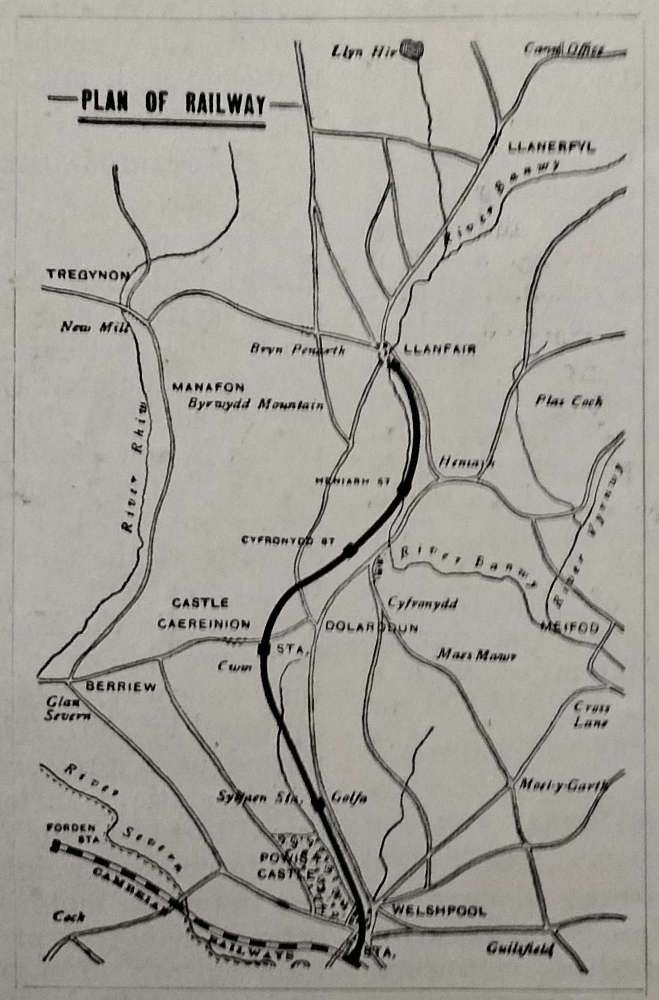
The successful company “was liberally supported by Welshpool, the Montgomery County Council, Forden District Council, and Llanfyllin Rural District Council.” [1: p64]. The Treasury granted a gift of £17,500 – one-third of the estimated cost. The new railway was planned as a single line, 2ft, 6in. gauge running from the road outside Welshpool Railway Station, along “the Lledan Gorge, over the Pass at Glyn Golfa to Castle Caereinion, through the Banwy Valley to Llanfair. An agreement was entered into with the Cambrian Railways to work and maintain the line; the construction of the line [was] … under the supervision of the Cambrian Railway’s Engineer, Mr. A.J. Collin: Mr. Strachan (Cardiff) being the contractor. On 30th May 1901, … Viscount Clive the son of the Earl and Countess Powys … cut the first sod for the new line. In February [1903] the line was completed; and passed by Major Druitt, of the Board of Trade.” [1: p64-65]
On 4th April 1903, the first passenger train navigated the new line. The Railway Magazine described the route: “The new railway [cut] through the town of Welshpool, over the brook and canal, and burrow[ed] its way up the Golfa Pass.” [1: p66]
The length of the line through the town of Welshpool has already been covered. For the relevant articles, please check these two links …
Those articles cover the length of the line abandoned when Welshpool undertook highway improvements, the run from Welshpool Railway Station as far as Raven Square, now a roundabout.
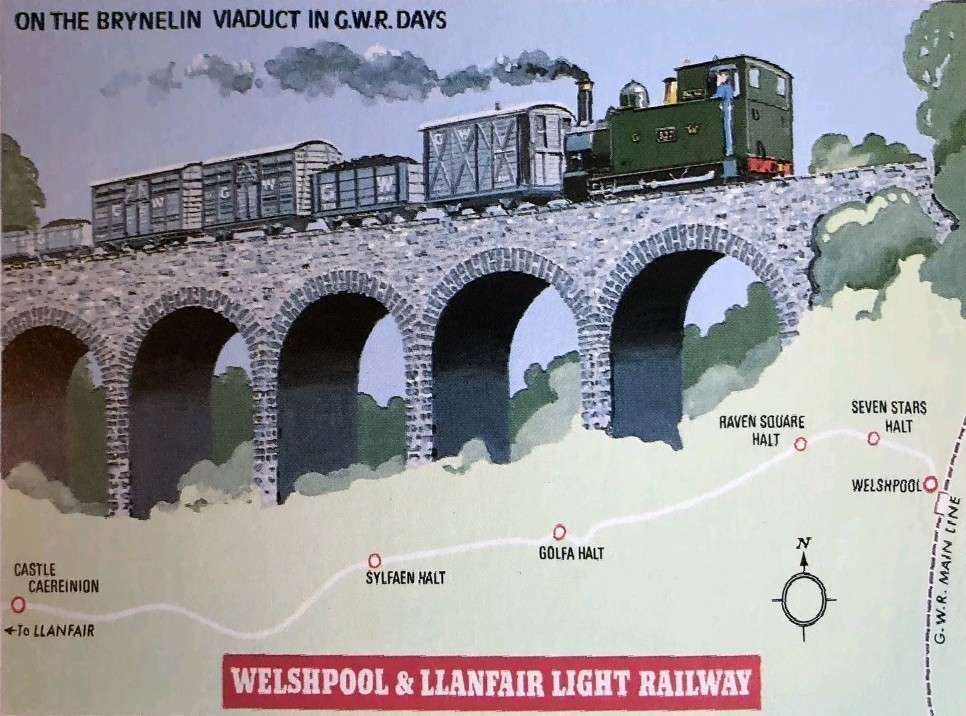
The roundabout at Raven Square appears top-right. The abandoned length of line heads off to the Northeast. The preservation line has a new station to the Southwest of the roundabout, approximately on the site of the passing loop shown here. 1:2500 Ordnance Survey SJ2007-SJ2107 – AA Revised: 1966, Published: 1967. [4]A sketch map of the Welshpool & Llanfair Railway. [1: p64]
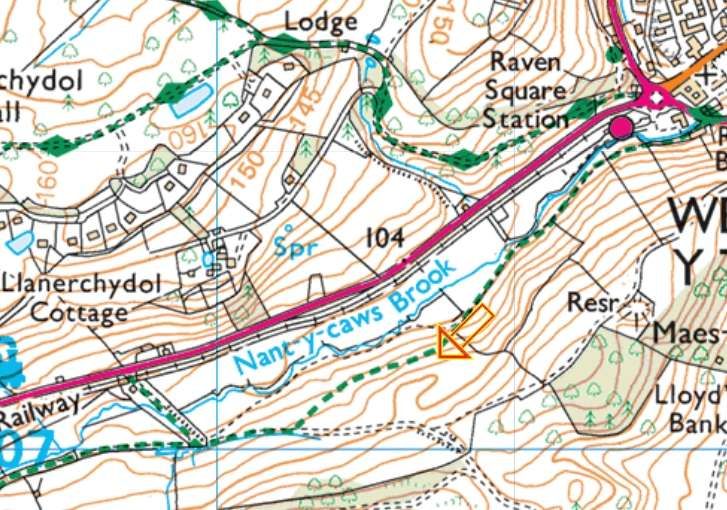
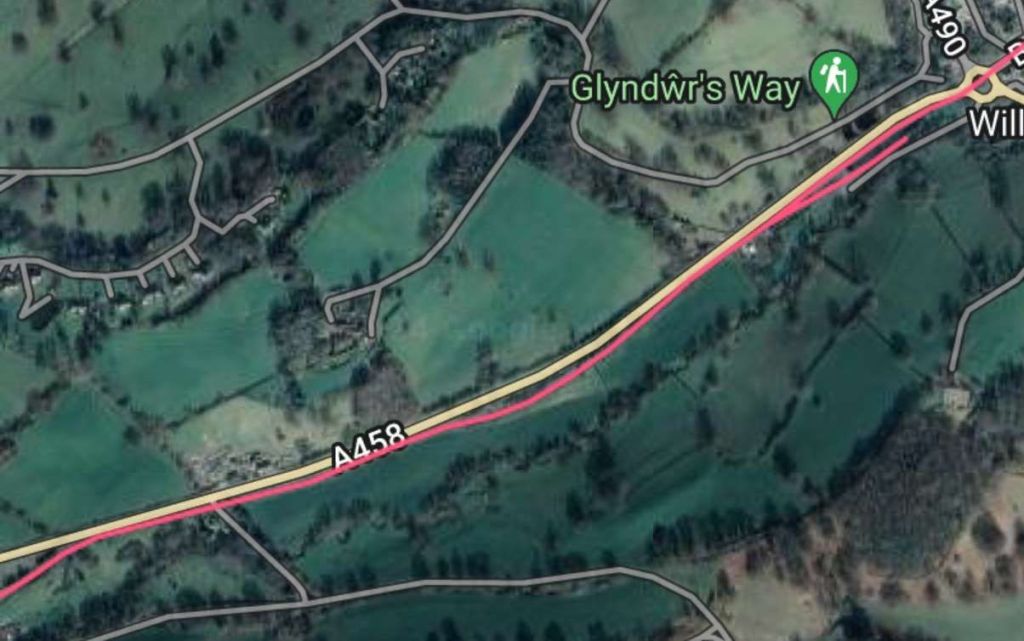
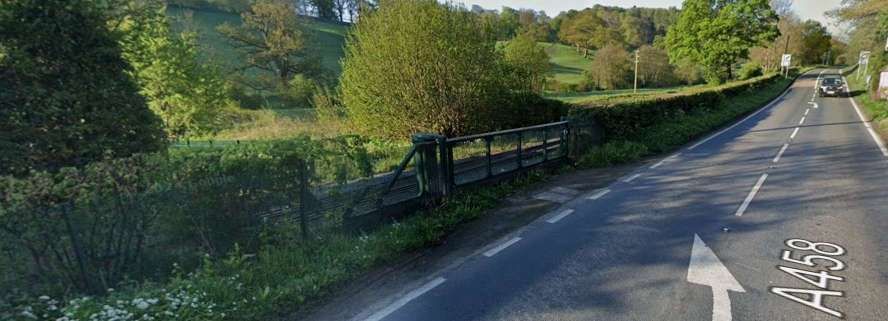
The preservation line occupies the trackbed of the line from Raven Square to Llanfair. It runs immediately alongside the A458 on the North side of Nant-y-caws Brook.
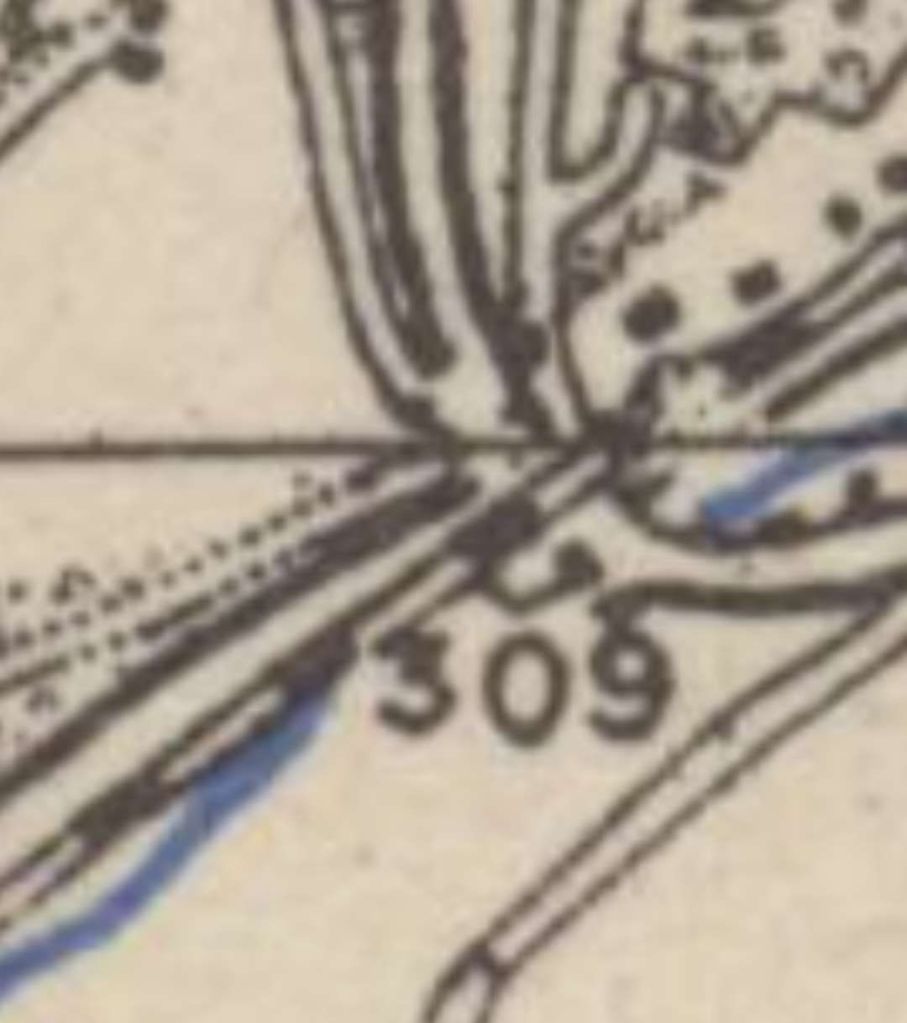
A first length of the line to the West of Raven Square. This extract, and the following map extracts, is from the OS Landranger map series as held by Streetmap.co.uk. [5]The same length of the line as it appears on railmaponline.com’s satellite imagery. [6]This extract from the OS War Office, England and Wales One-Inch Popular, GSGS 3907 – 1933-43, Sheet 60 – Shrewsbury & Welshpool was printed in 1943 on a base map dated around 1916. It shows the location of the halt at Raven Square (immediately above the ‘309’) and shows the line continuing Northeast towards the centre of Welshpool. [18]Looking Southwest along the A458. The road and railway are separated by no more than a hedge or fence. [Google Streetview, May 2024]Ungated crossing adjacent to the A458 at the junction with the lane which appears bottom-left in the map extract and satellite image above. [Google Streetview, May 2024]
The Railway Magazine continues: In the Golfa Pass, “by means of a series of curves of small radii and steep inclines, the great natural beauty of the surrounding country has been retained. Rising 300ft, in the first two miles it reache[d] Golfa … with its lung-filling expanse of common – its garden of fern, gorse, and broom – where at 1,000ft above the sea level is presented a glorious panorama of typical Welsh pastoral scenery – the ideal of the pedestrian, artist, and rambler.” [1: p66]
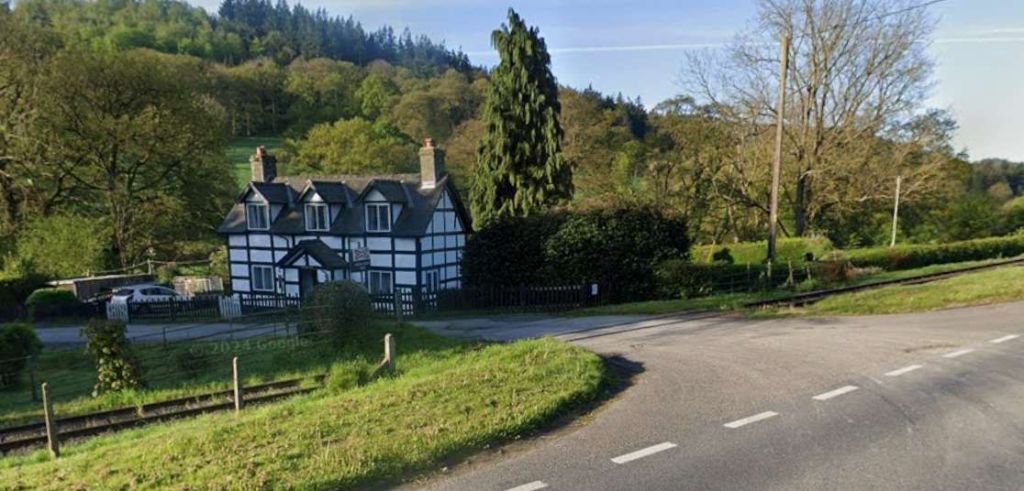
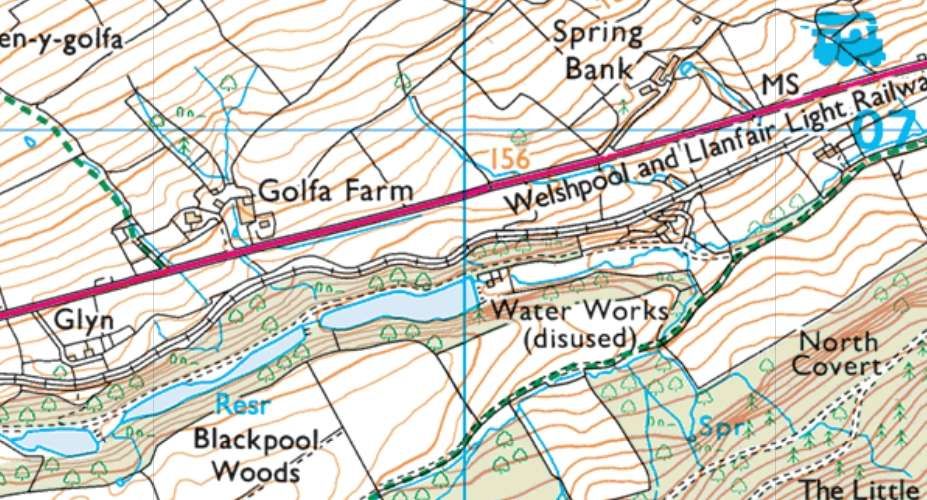
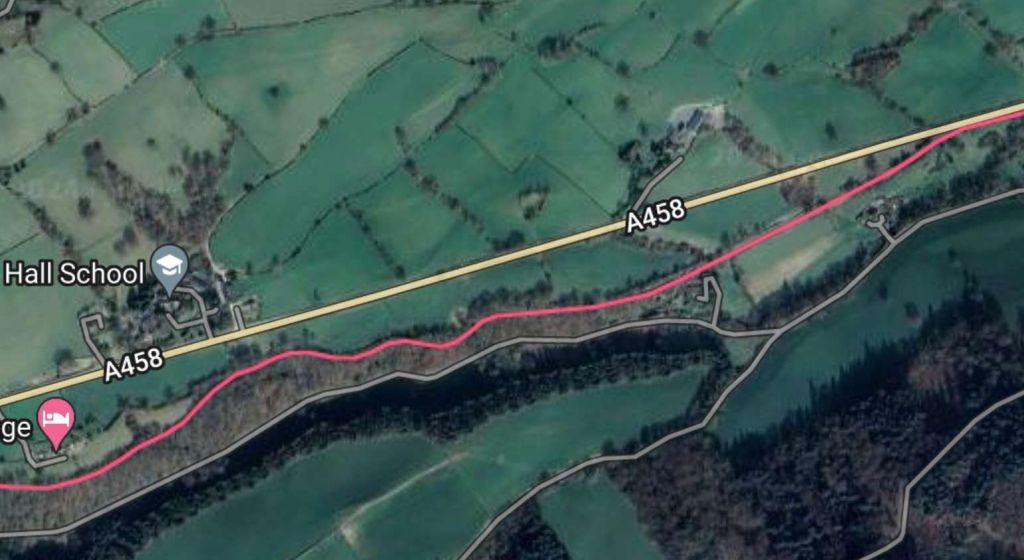
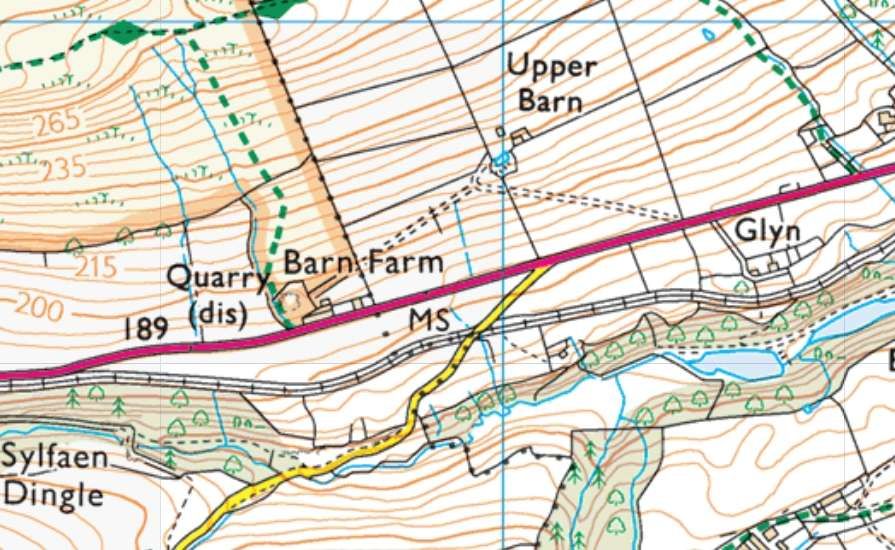
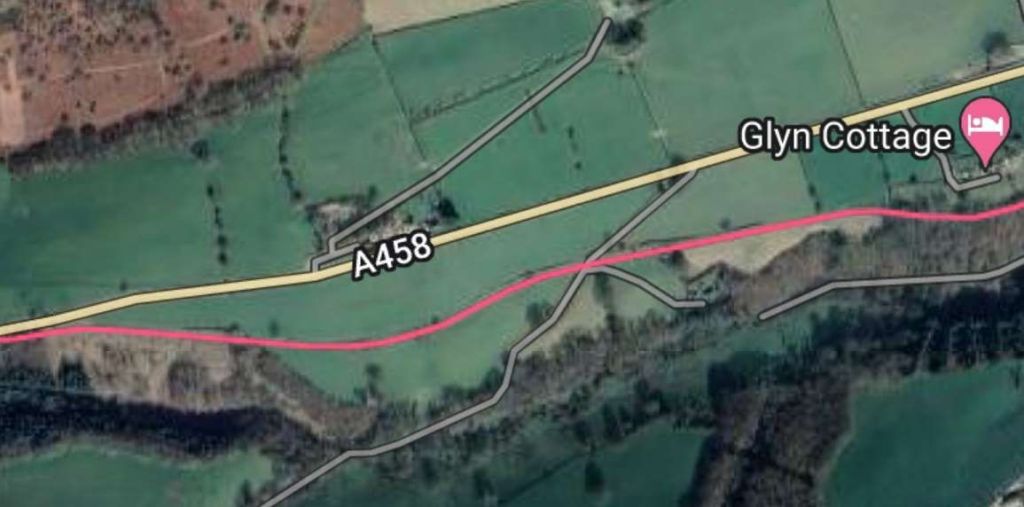
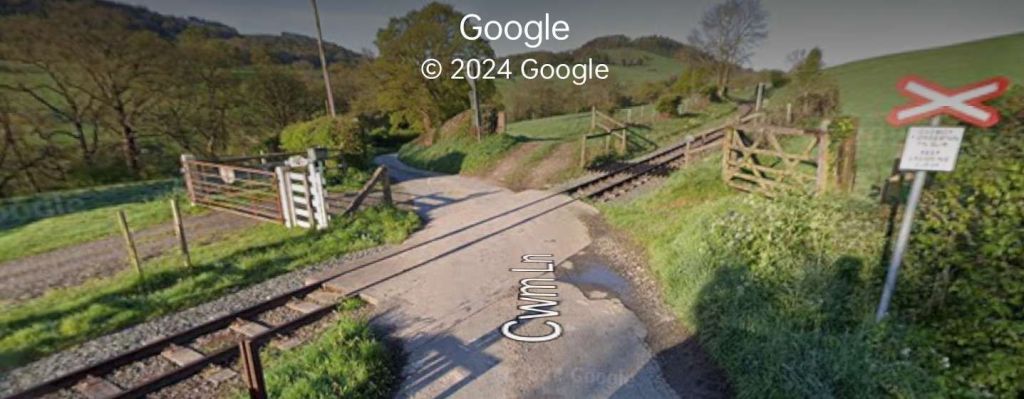
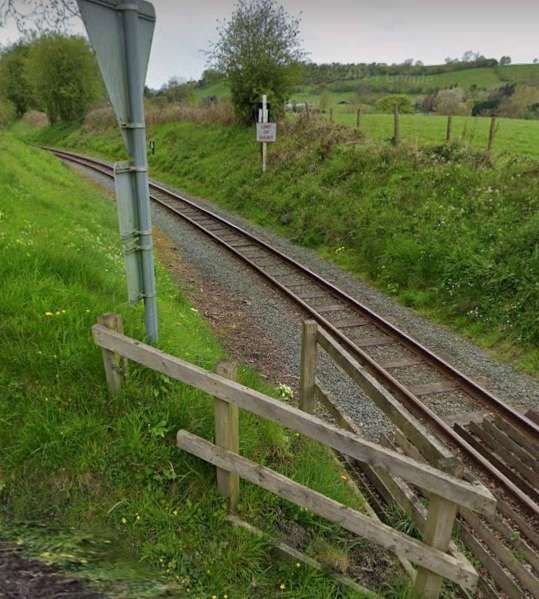
The line then moves away from the A458 to enable it to best find its way up the valley at a reasonable grade. In doing so it follows the contours and passes through a series of tight curves. [5]The same length of the line on satellite imagery. [6]In Sylfaen Dingle, to the West of Barn Farm, it returns to run very close to the A458. [5]Once again, this satellite image covers the same length of the line as the map extract above. [6]The level crossing at Cwm Ln from the Northeast. [Google Streetview, May 2024]
The Railway Magazine continues to describe the route ahead, the line “threads the beautiful Pass of Sylvaen; there, far to westward, is spread the famous vale of Caerinion, where, silhouetted against the misty horizon, Cader Idris and The Arrans lend an air of magnificent solemnity to an impressive scene.” [1: p66]
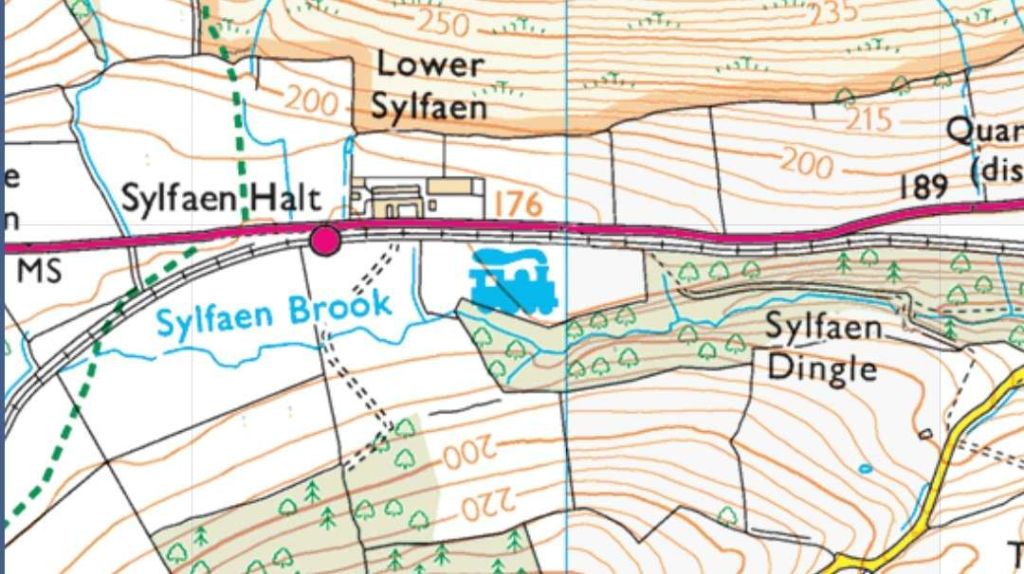
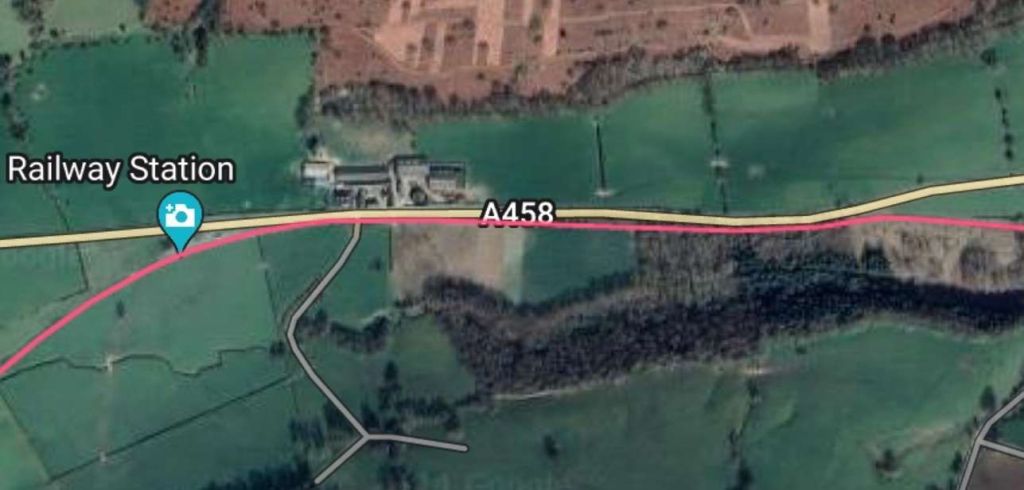
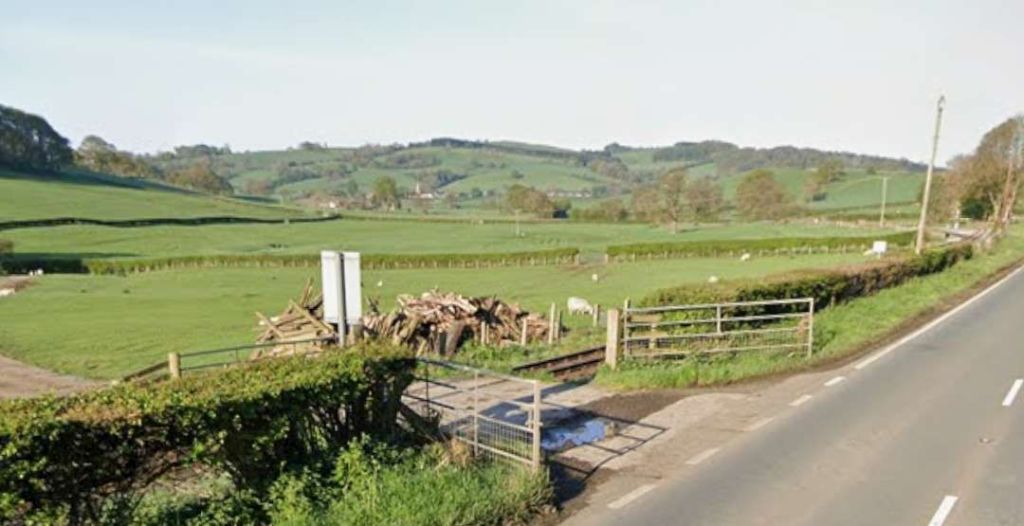
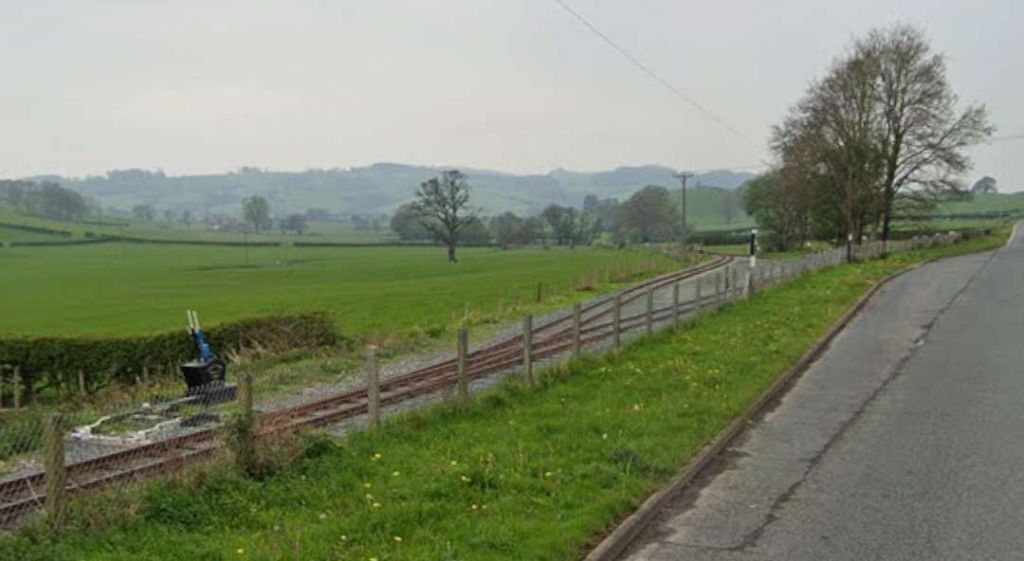
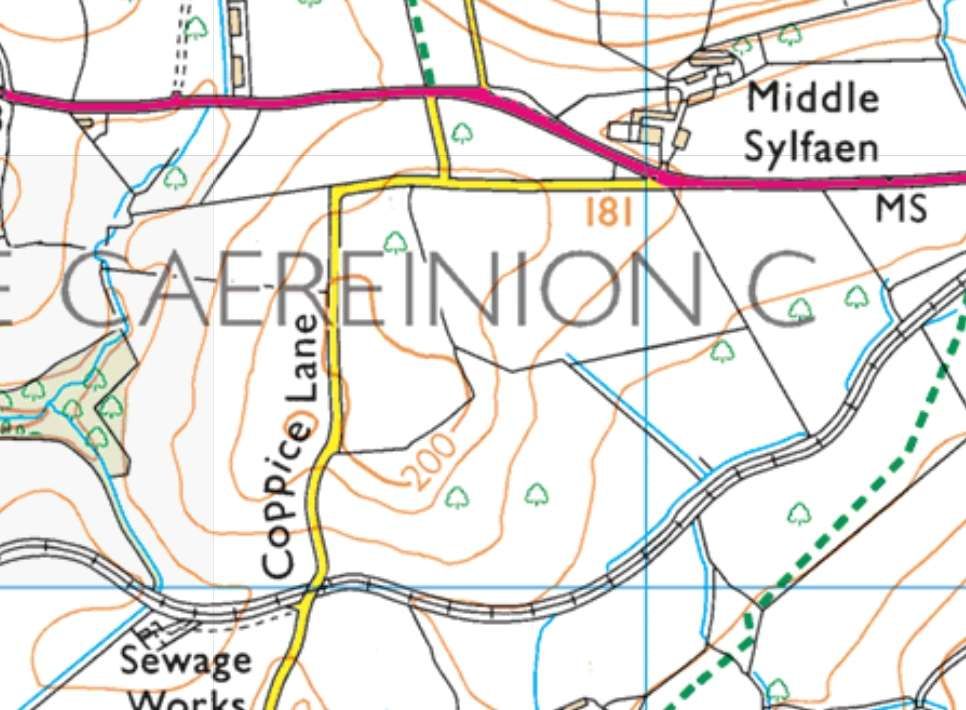
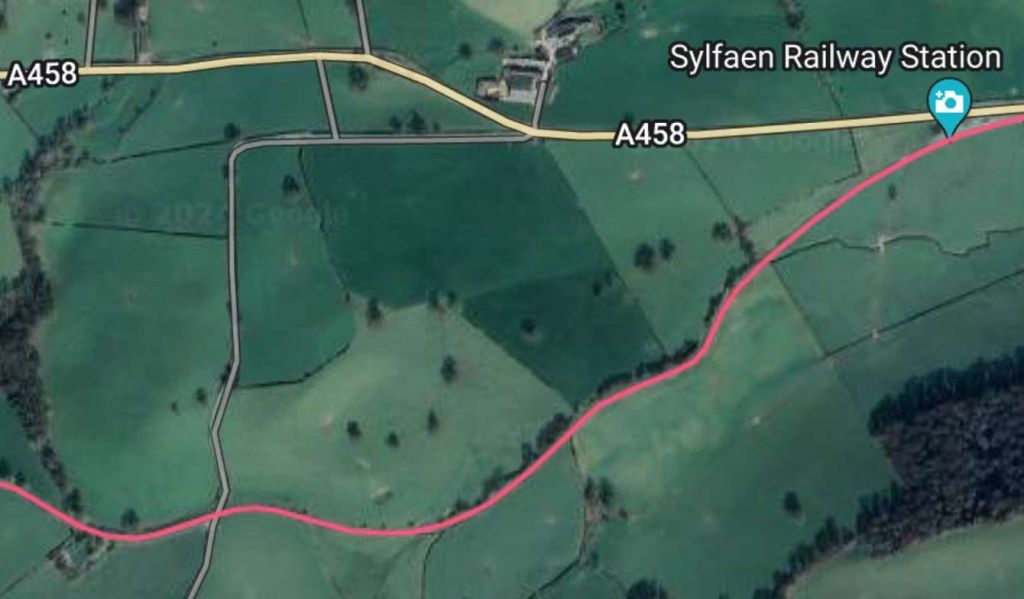
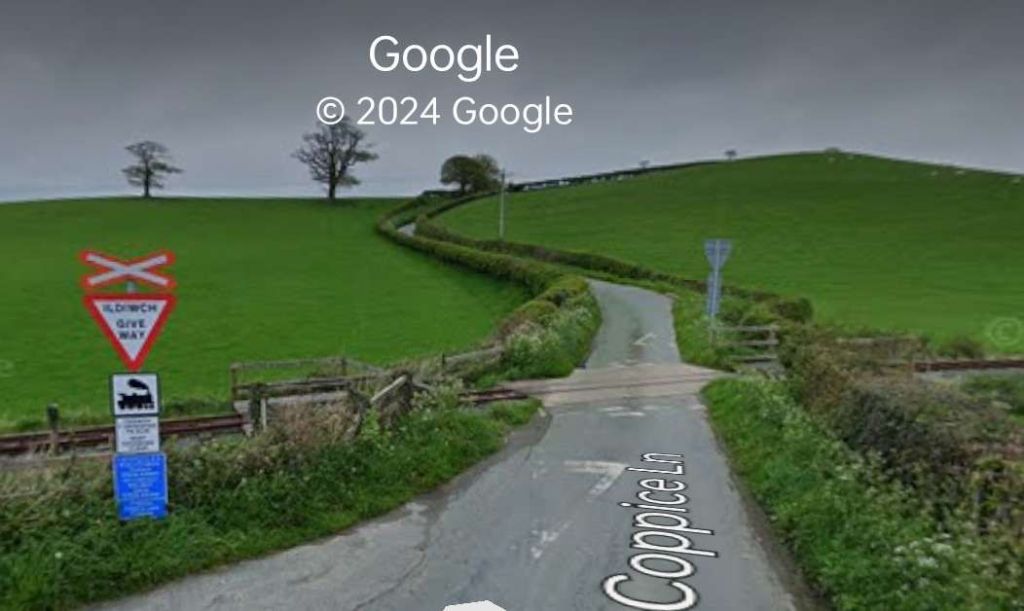
The railway remains close to the road as far as Sylfaen Halt after which it turns away to the South. [5]A similar length of the line on railmaponline.com’s satellite imagery. [6]Farm/forest access road crossing just to the East of Sylfaen Halt. [Google Streetview, May 2024]Sylfaen Halt seen from the A458. The photo is taken from the East. [Google Streetview, May 2024]Gradients are shallower here, witnessed by the broadening of the contours. the line crosses Coppice Lane and passes to the North of the Sewage Works. [5]A very similar length of the line as it appears on railmaponline com’s satellite imagery. [6]
Castle Caereinion is South of the line down Coppice Lane from the level crossing which can be seen in the bottom-left of the image above.
Coppice Lane level crossing seen from the South. [Google Streetview, May 2024]
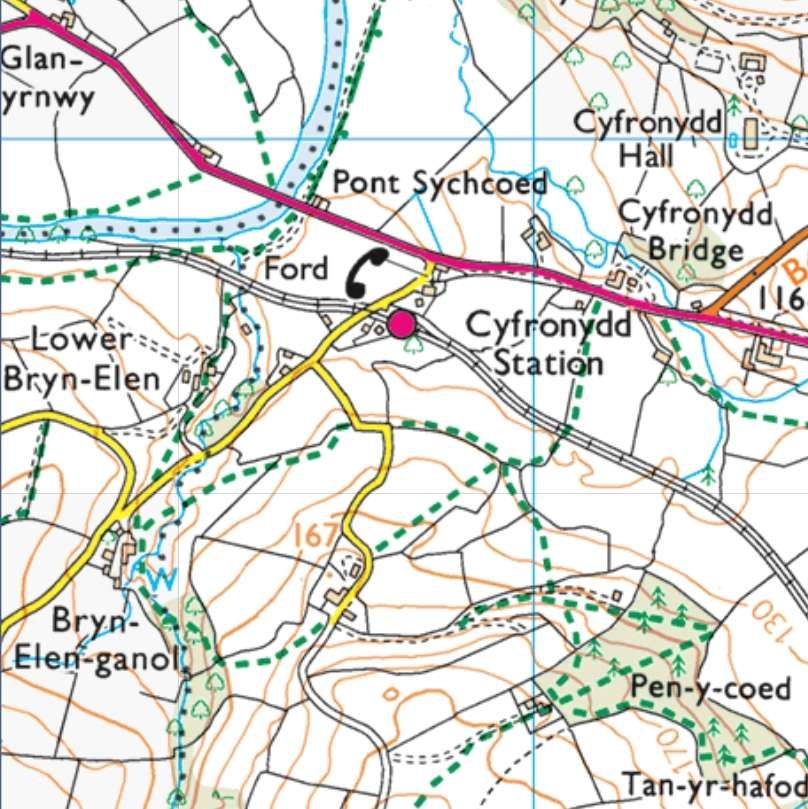
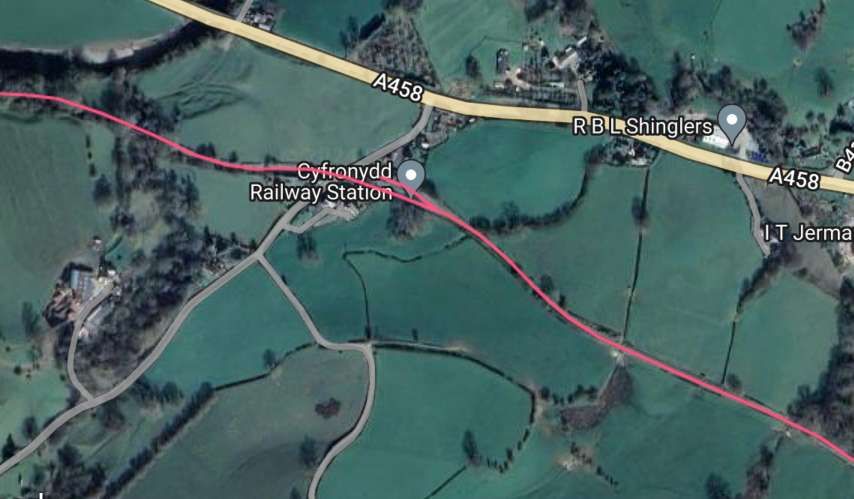
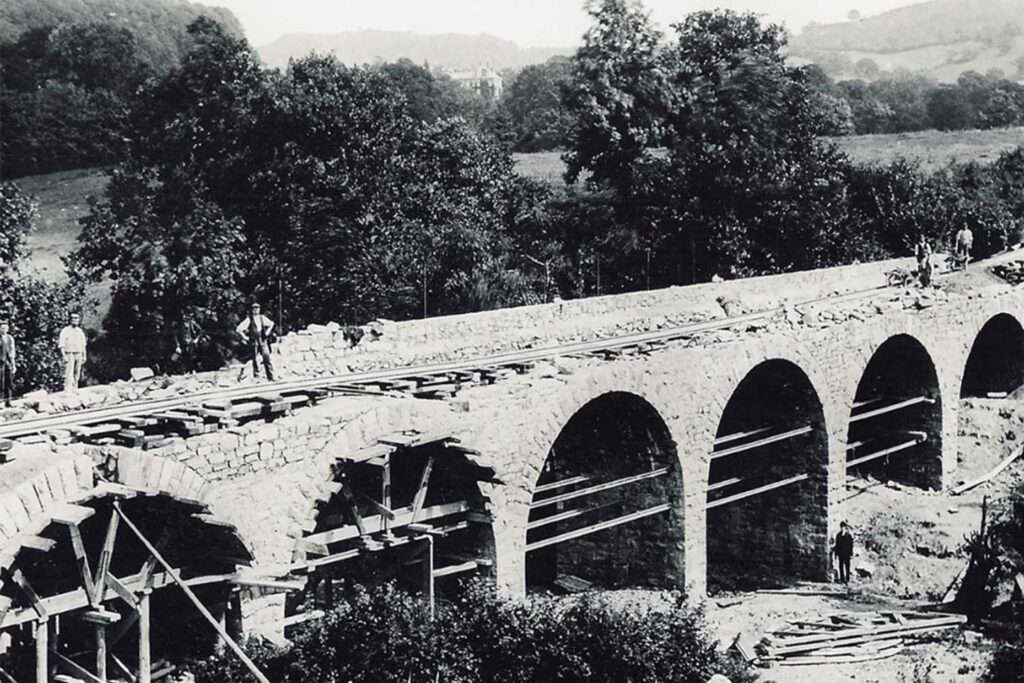
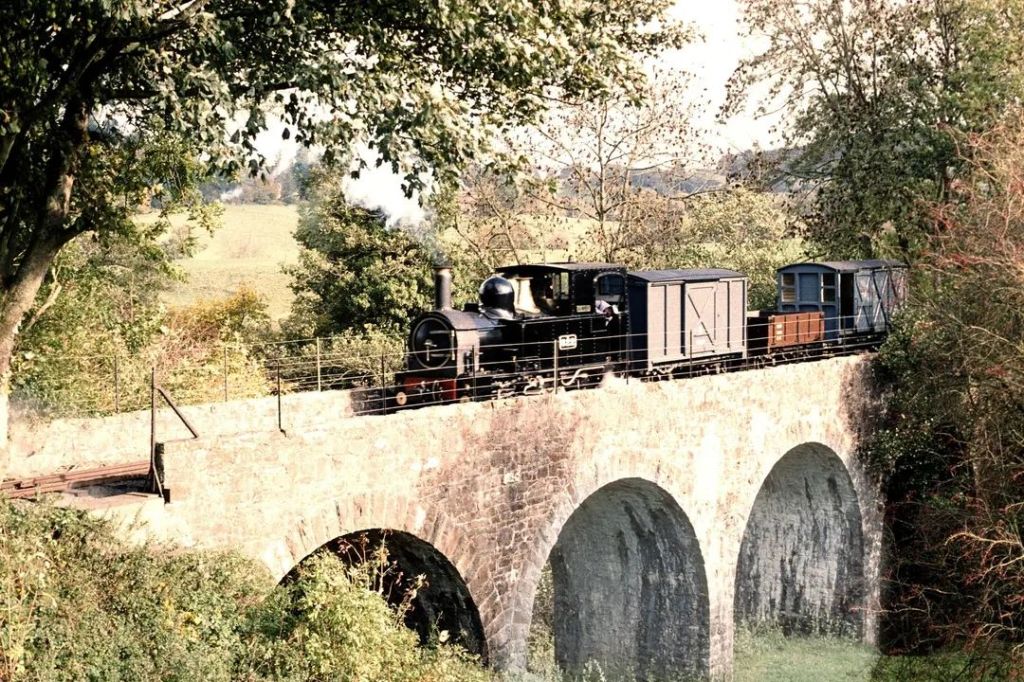
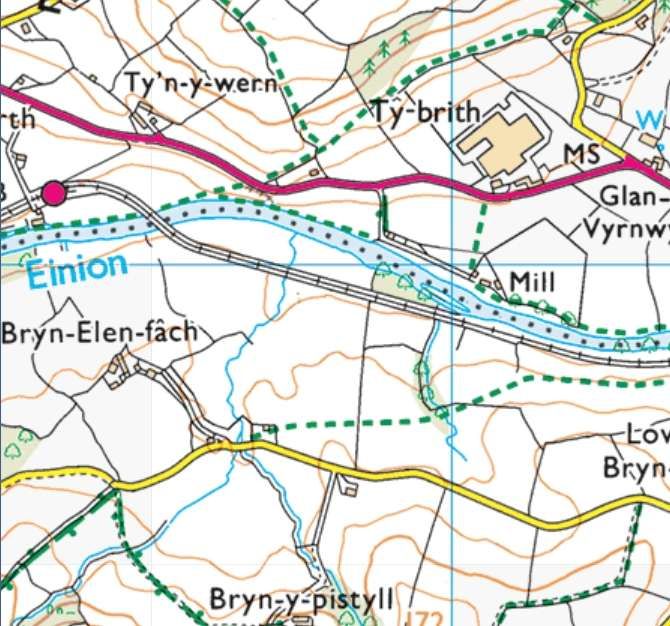
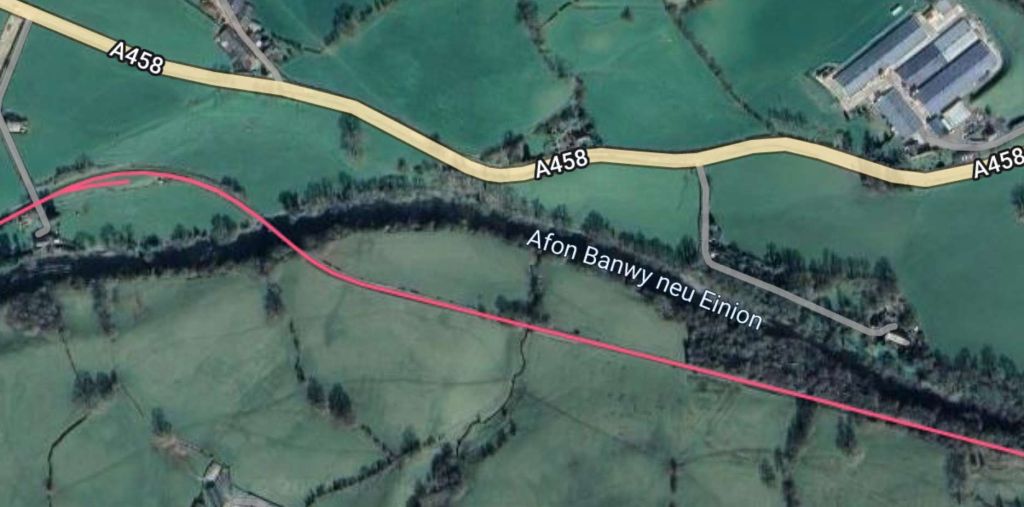
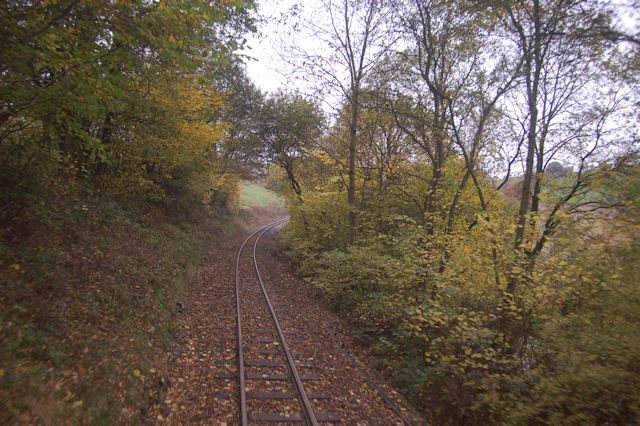
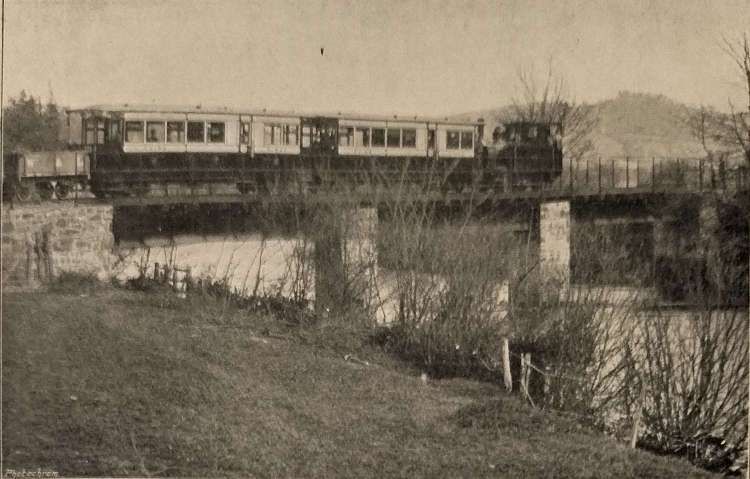
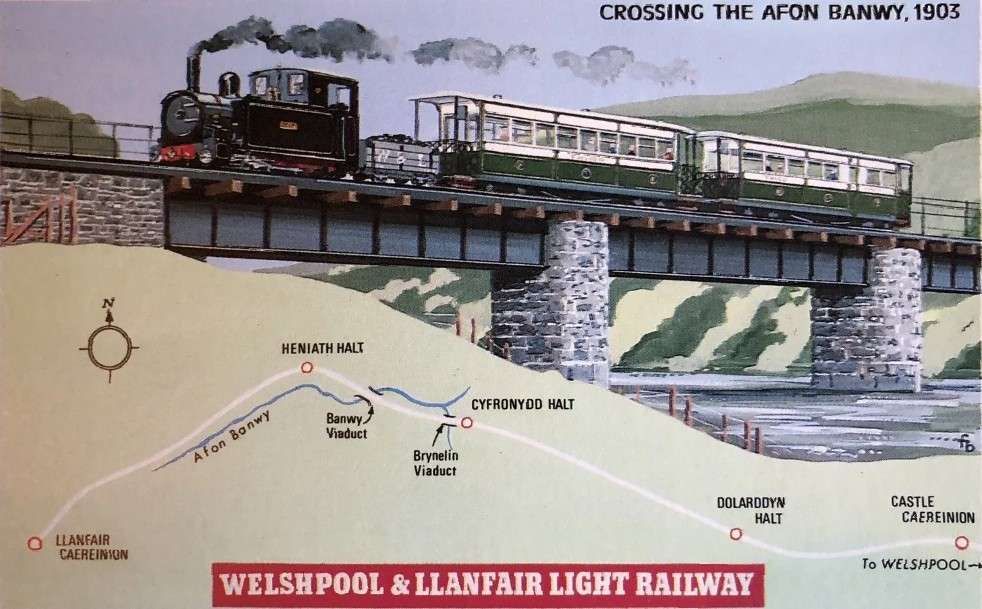
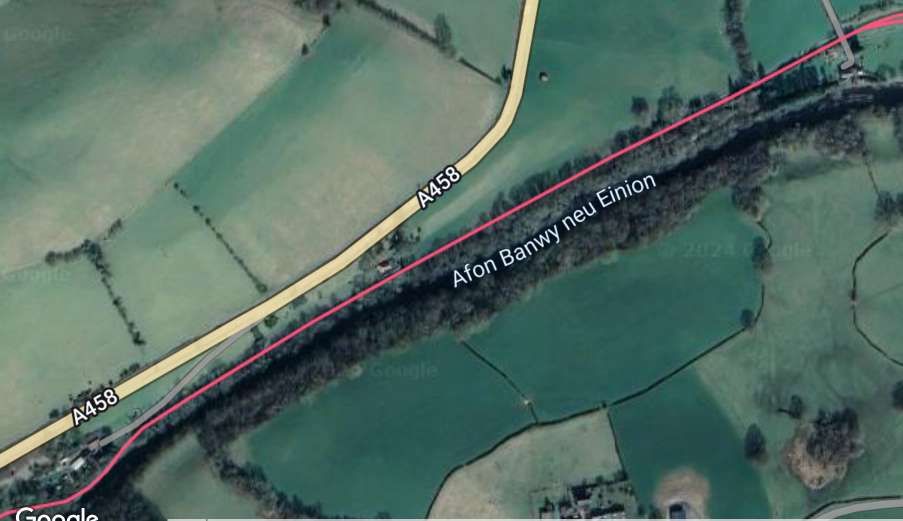
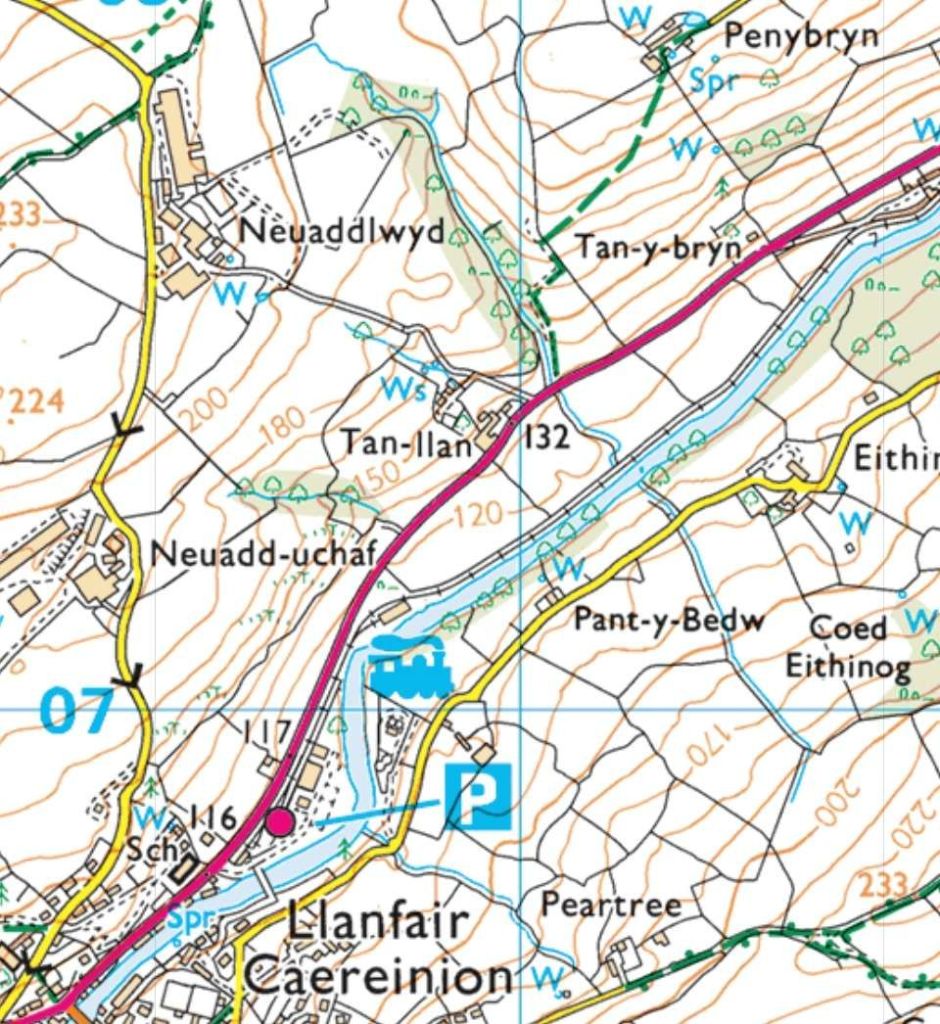
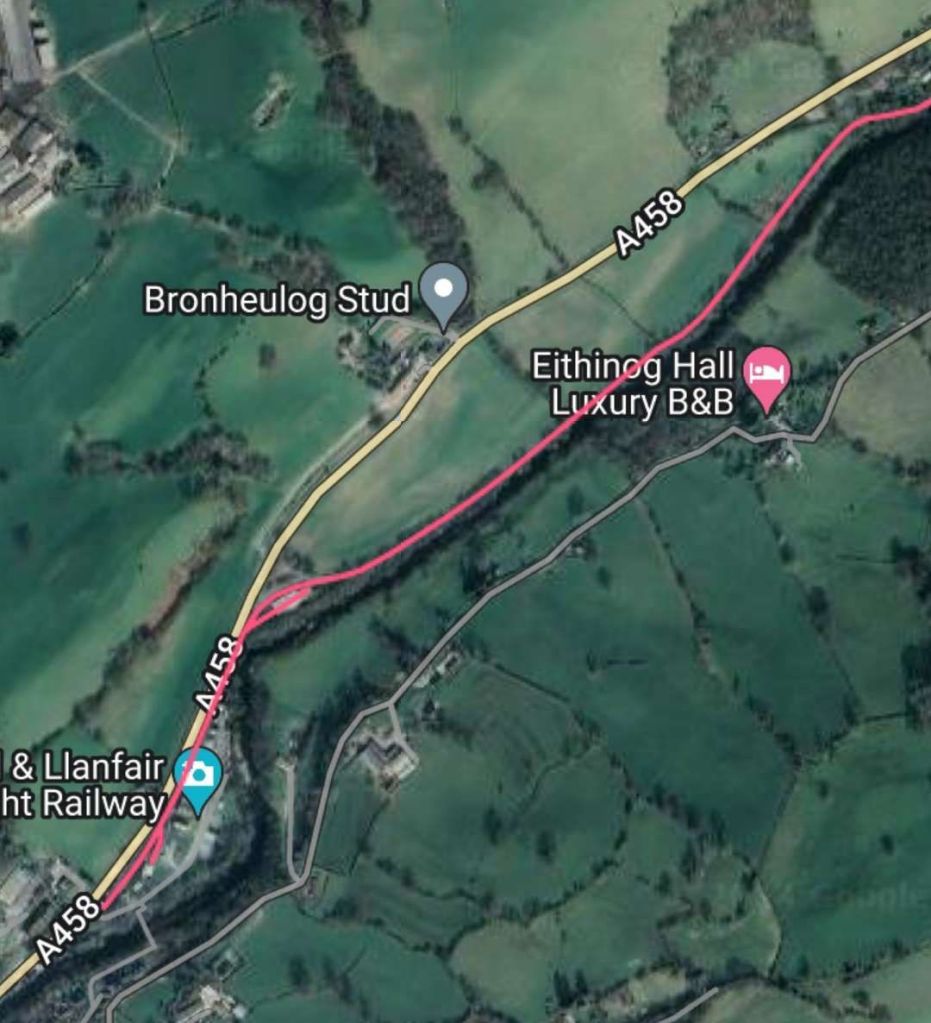
Again, the article in The Railway Magazine continues: the village of Castle Caereinion is about 0.5 mile from the station bearing its name. The line passed the site of the Castle of Caereinion and ran on through Cyfronydd and along the banks of the Afon Banwy, also known as the Afon Einion. It crossed the Bryn-Elen Viaduct, “a very substantial piece of engineering. The rails [were] then carried across the dingle which [ran]up to Cwmbaw by a stone bridge of six arches, at a considerable height above the bottom of the ravine. Half a mile further on is the Banwy Viaduct.” [1: 67]
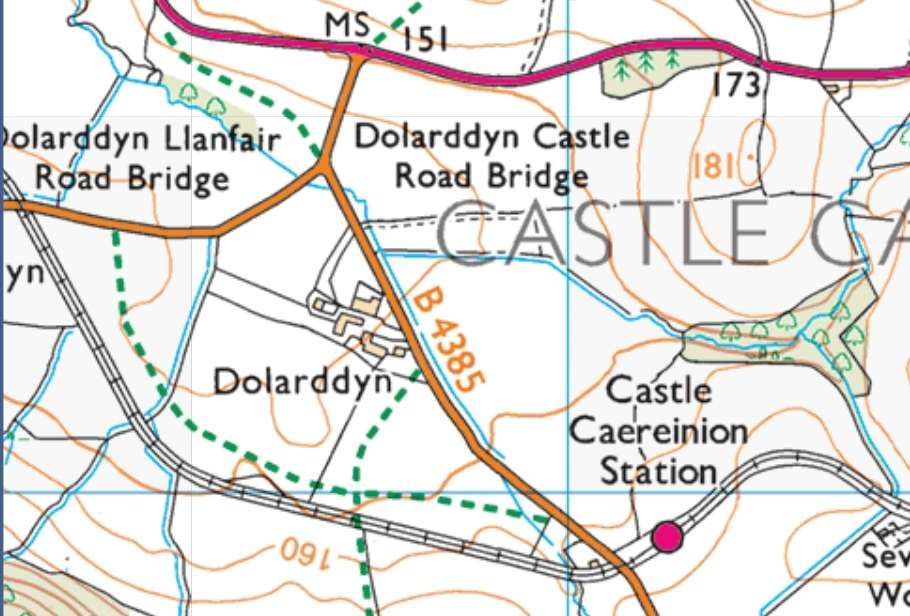
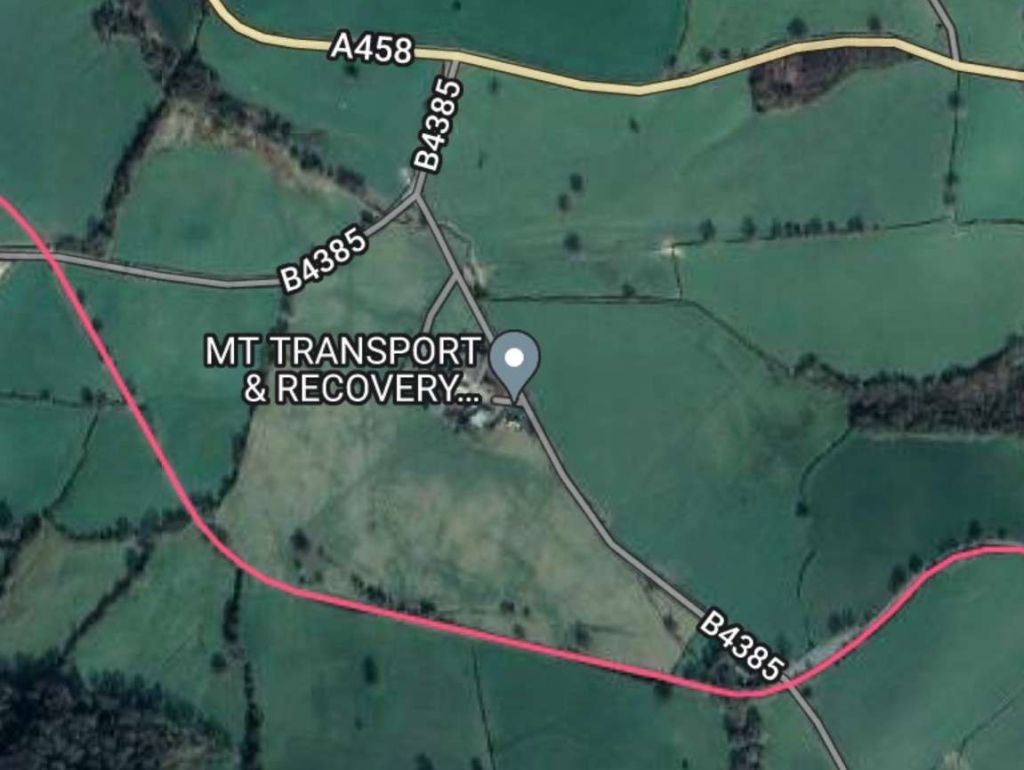
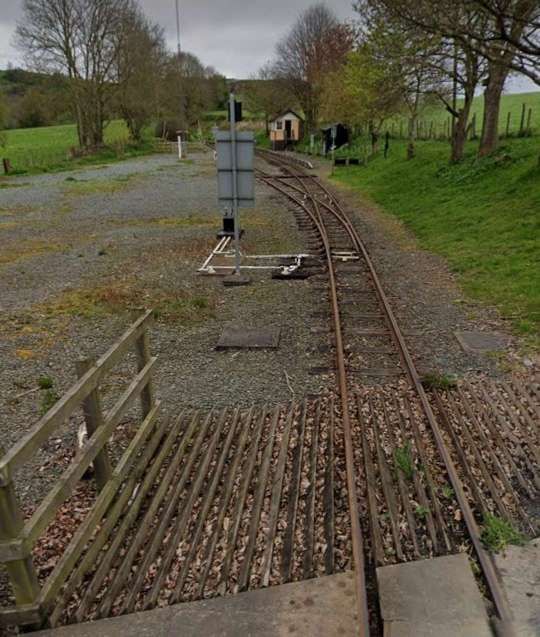
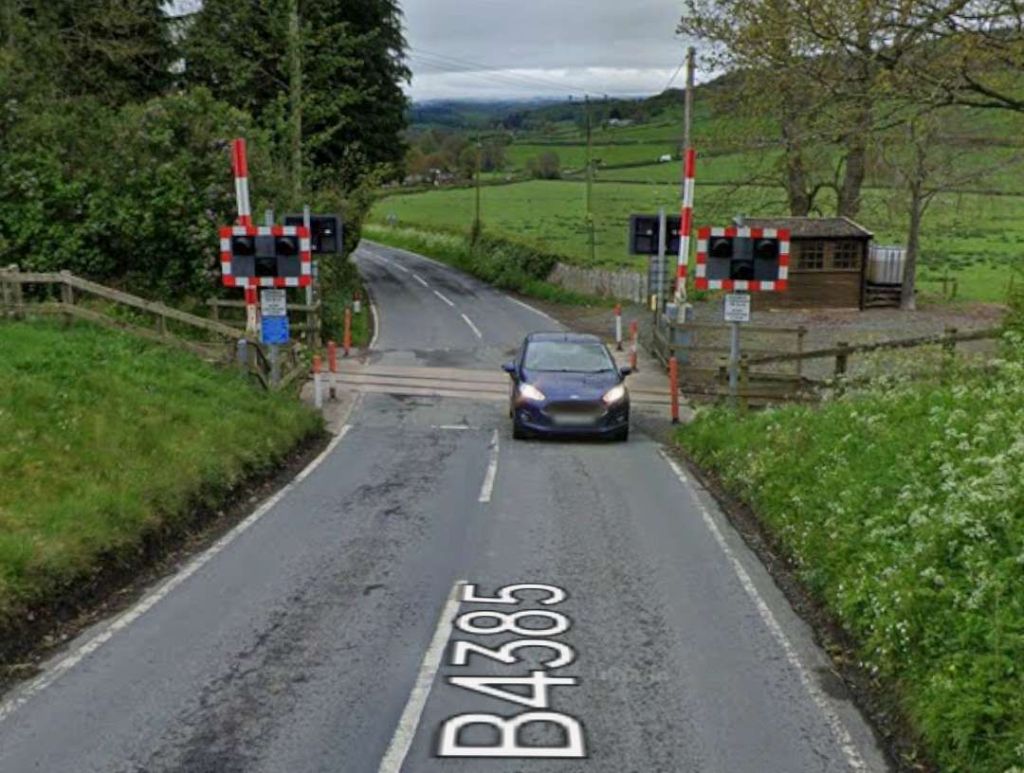
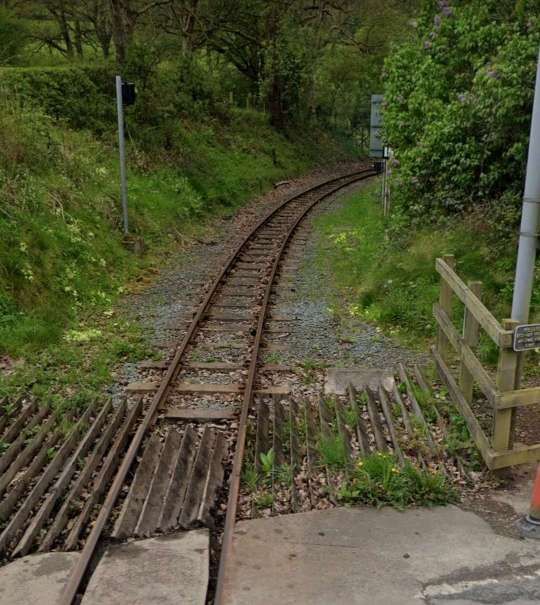
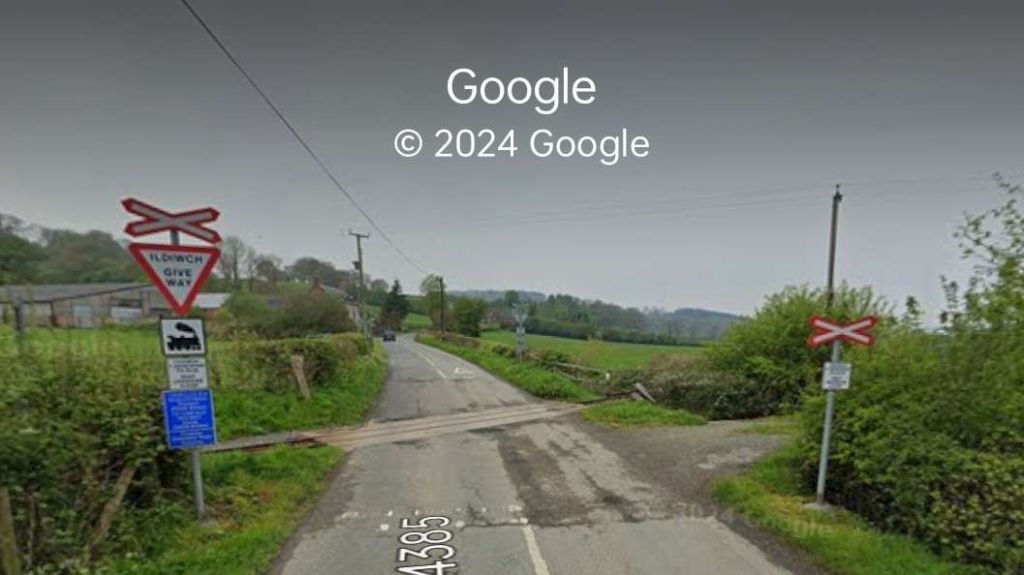
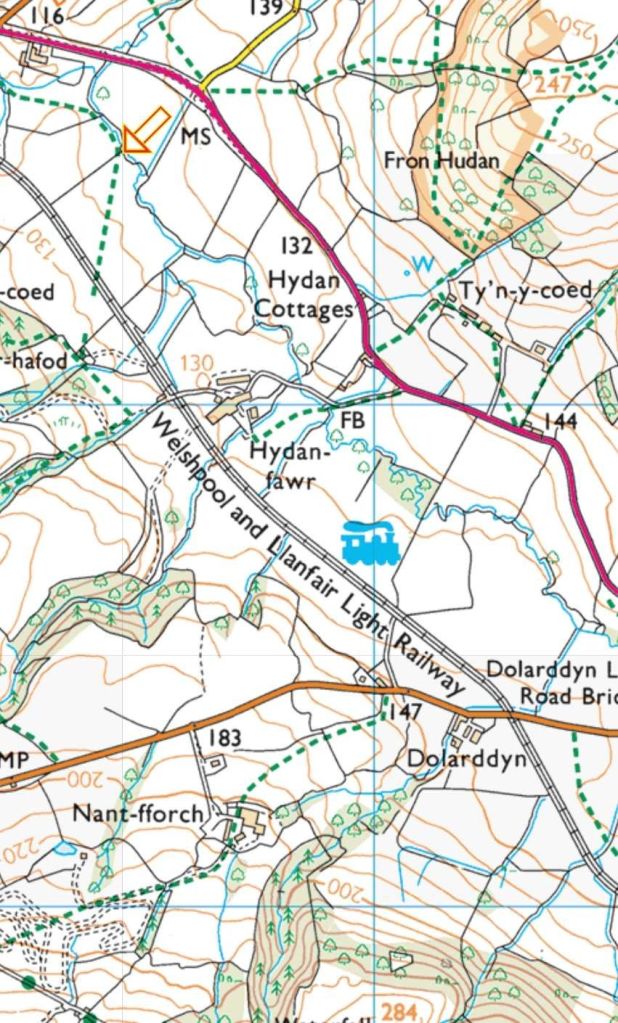
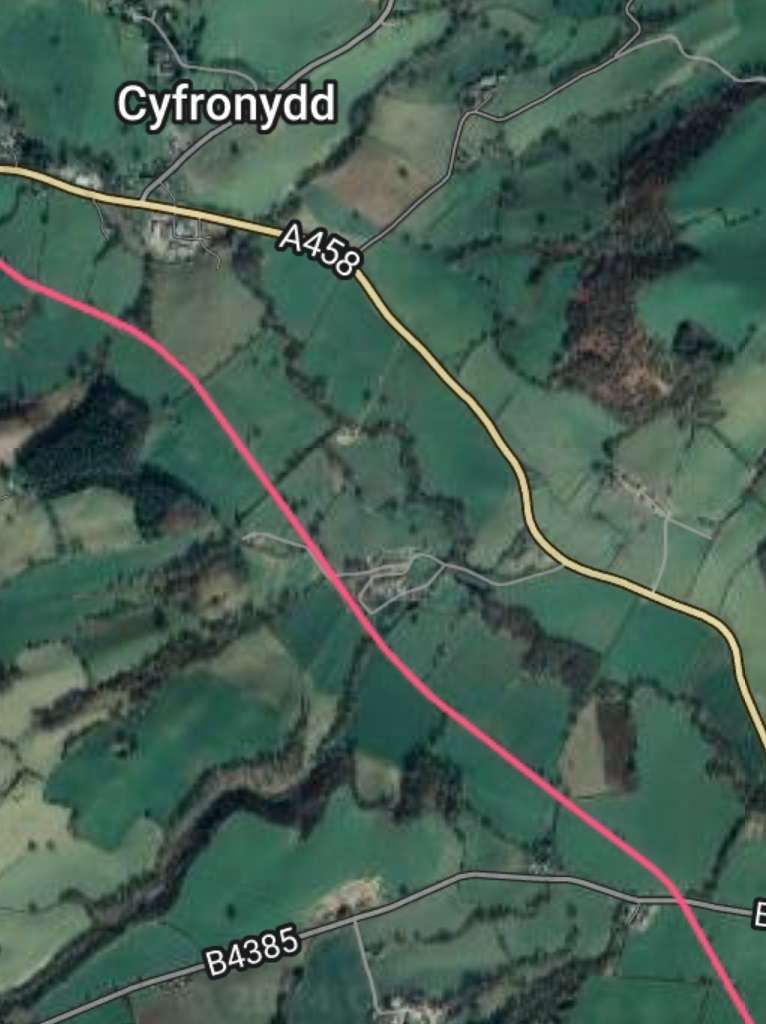
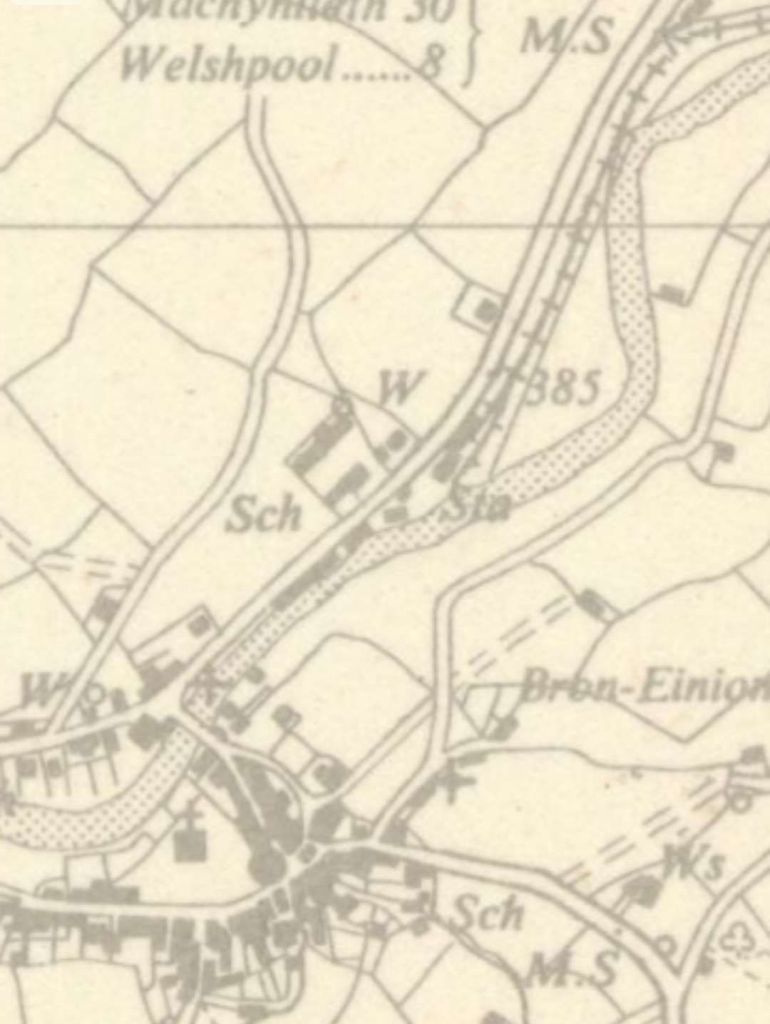
After another tight curve the line enters Castle Caereinion Station. It is here that some of the services from Llanfair on the preservation line terminate. The loco runs round its train and then shepherds its carriages back to Llanfair Caereinion. Immediately at the edge of the station site the line crosses the B4385 and turns sharply to the Northwest. [5]Once again, a similar area to that covered by the OS map extract above. Along this length of the line trains for Llanfair first encounter Castle Caereinion Station, then cross the B4385 and, as they turn northward they again cross the B4385. [6]Castle Caereinion Railway Station as seen from the first level-crossing with the B4385, looking East. [Google Streetview, May 2024]The first rail-crossing on the B4385 seen from the South. Castle Caereinion Station is of the picture to the right. [Google Streetview, May 2024]The vIew West along the line from the same level-crossing with the B4385. [Google Streetview, May 2024]The second, more westerly, level-crossing over the B4385. [Google Streetview, May 2024]The view back towards Welshpool. [Google Streetview, May 2024]The line ahead towards Llanfair. [Google Streetview, May 2024]The line runs Northwest towards Cyfronwydd Bridge and Cyfronydd Station from the crossing on the B4385. [5]Railmaponline.com covers the same length of the railway. [6]
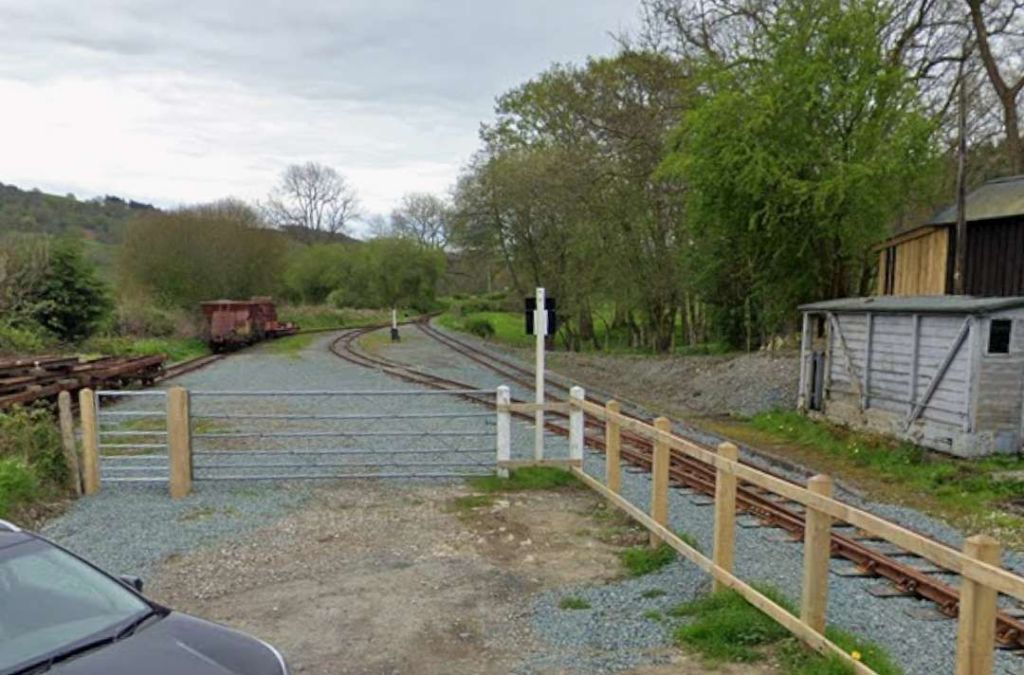
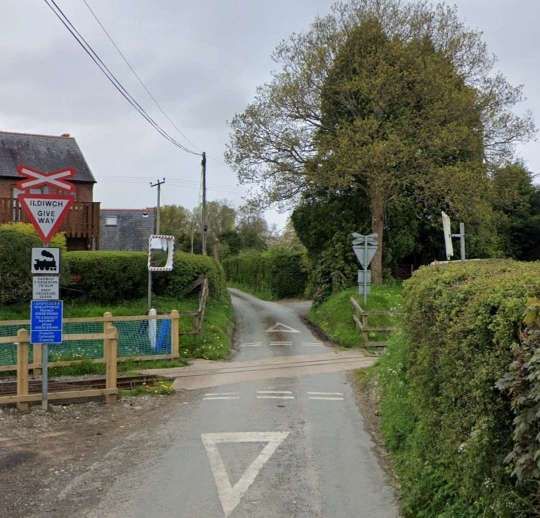
The line continues down through Cyfronydd Railway Station, over Bryn-Elen Viaduct to the banks of the Afon Banwy.
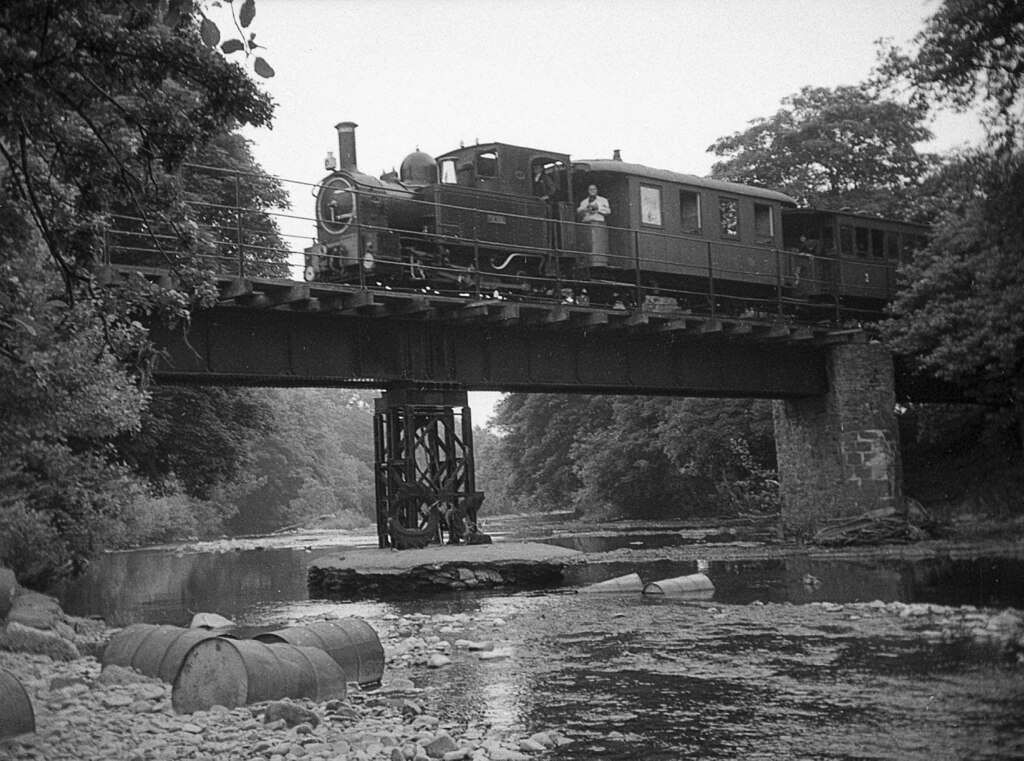
After running for a while on the South bank of the Afon Banwy (Afon Einion) the line crosses the river on a three-span girder bridge, Banwy Viaduct. It turns West once again and enters Heniarth Railway Station. Opened as Heniarth Gate on 6th April 1903 the station was renamed ‘Heniarth’ on 1st February 1913. [16]
Heniarth “is the centre for Meifod District. A short distance further on is the picturesque Melin [Dol-rhyd-y-defaid] where the rails are carried between the mill race and the River Banwy, by means of a substantial stone embankment.” [1: p67]
The Railway Magazine commented on the importance of this new railway: “This railway opens up and connects to an established system of railways, an area of over 100 square miles of Welsh scenery of great natural beauty-possessing abundance of excellent fishing and many other attractions. … Llanfair, a typical little Welsh town, is now within easy access, and the greatest obstacle to its success as a health resort has been removed. In the year 1824 (Montgomeryshire Collections) the medicinal properties of the springs of Llanfair, were discovered by one ‘Madock’, sulphur being present in one; another, close by, had chalybeat properties; while a third was saline. Pumps and other appliances were erected for the convenience of those who would make use of the springs, and the value of the waters becoming more widely known, the place was largely visited by invalids. The waters are still in good repute, and now that the difficulties consequent upon bad roads are removed, it is believed that they will become as popular as the waters of Llandrindod and Llanwrtyd in South Wales.” [1: p67]
The track is of a small gauge – 2ft 6in. The Railway Magazine described the rails as being “of the Vignoles section, flat bottomed, 421bs. per yard. The small radii of the curves, with their steep gradients, have necessitated a general use of check rails, sole-plates, and cross-stays to ensure a safe and substantial track.” [1: p67]
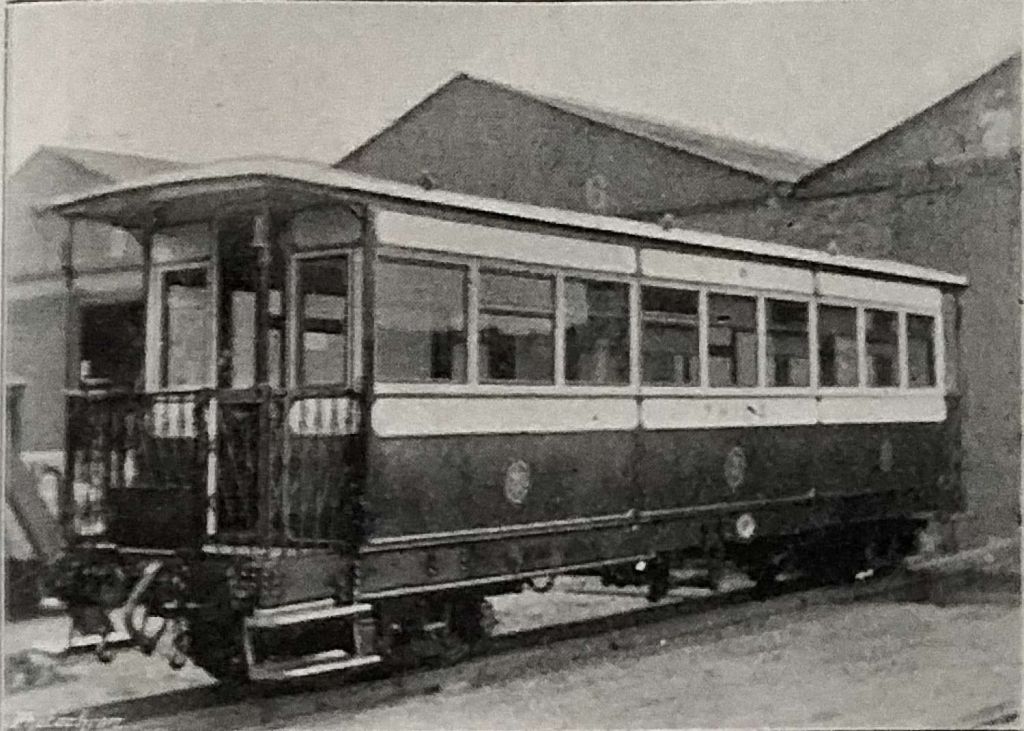
Although the railway gauge is only 2ft 6in “care in designing the rolling stock has prevented this line being catalogued under the title of ‘Toy Railways’, as will be apparent from the photographs. The responsibility of designing and providing the whole of the rolling stock devolved upon Mr. Herbert Jones, the Locomotive Superintendent of the Cambrian Railways, and is of a substantial and commodious character. The coaches, very roomy and comfortable vehicles – bogie type being built after the style of the one-storey electric car, are provided with first, third, and smoking compartments, divided by sliding doors; adjustable platforms, also, at the ends provide a convenient means of communication.” [1: p68]
The railway was initially worked by the Cambrian Railways, for 60 per cent. of the earnings. [1: p68]
Original Locomotives
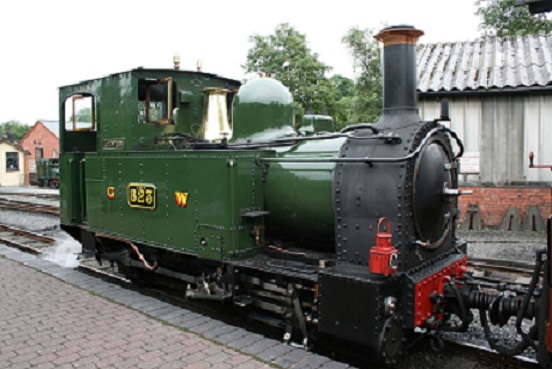
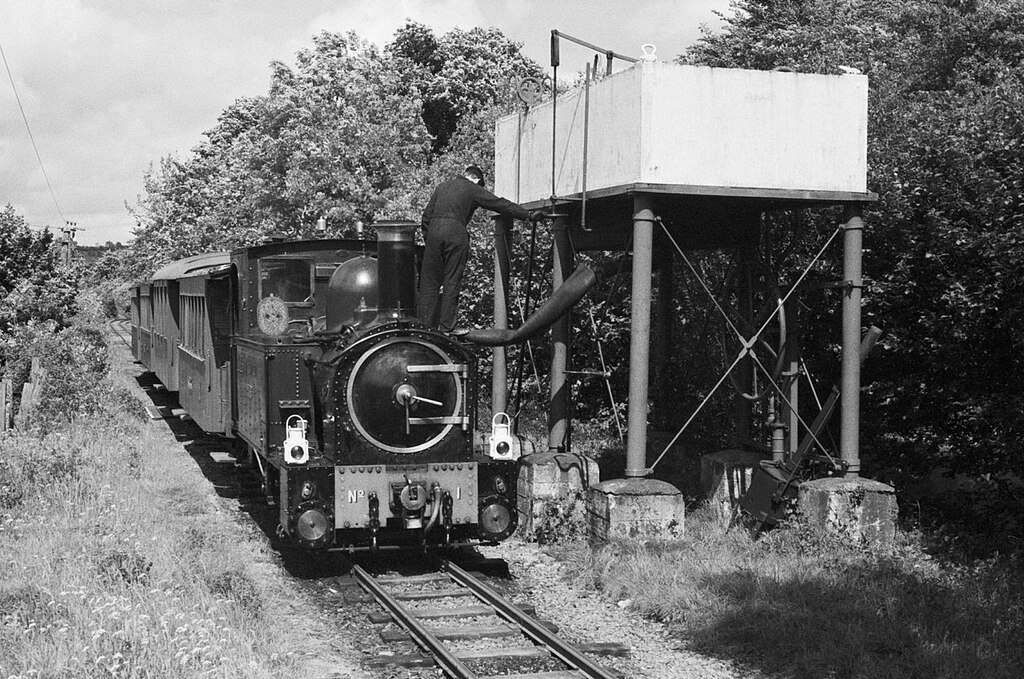
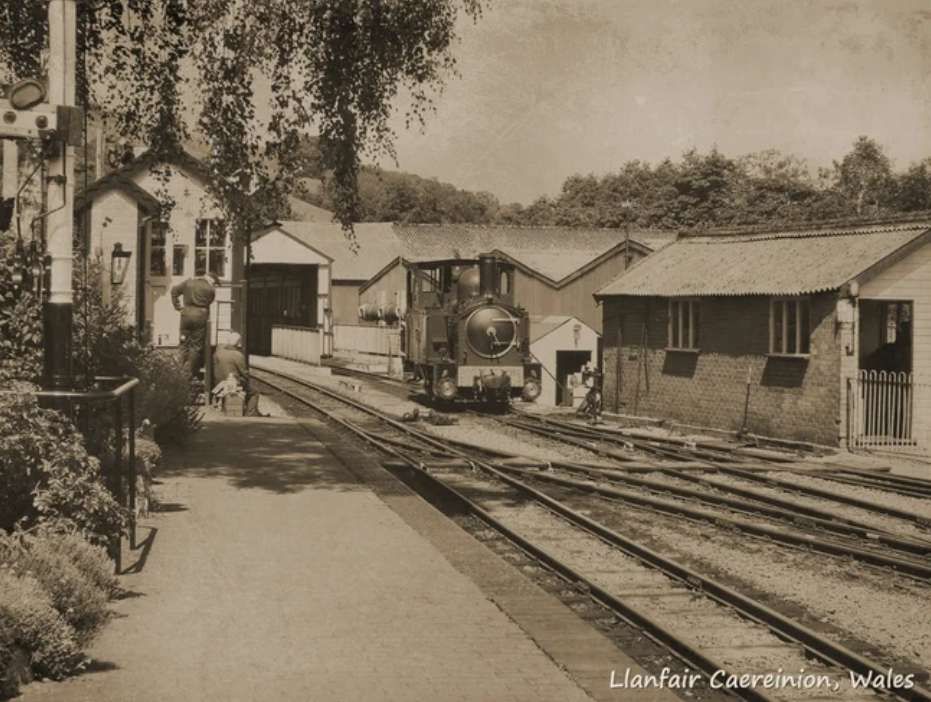
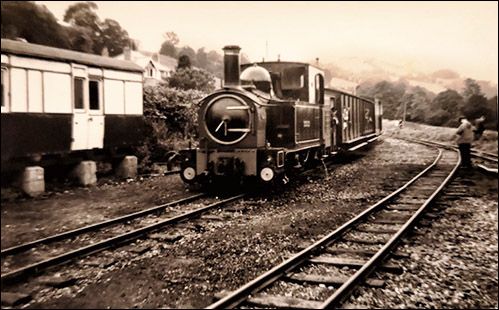
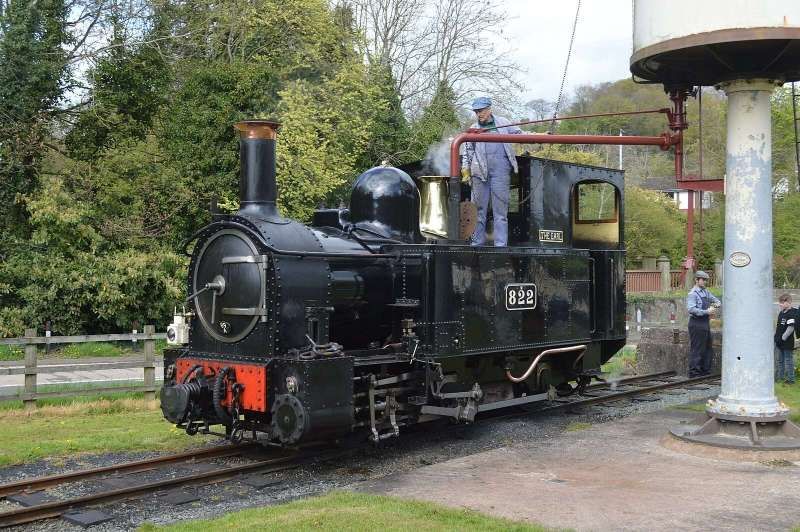
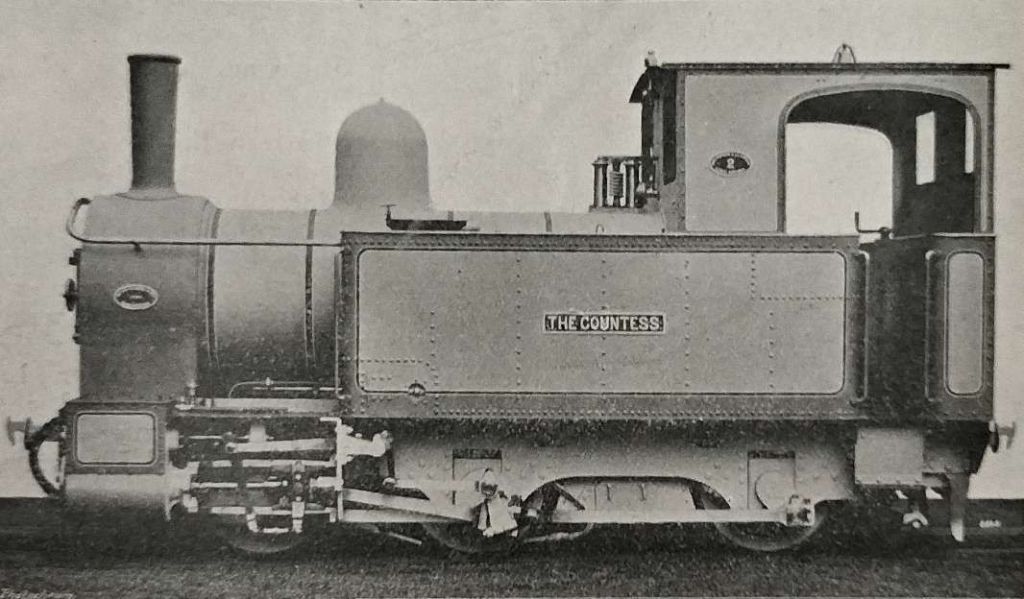
The railway originally operated with two locomotives, No. 1, ‘The Earl’ and No. 2, ‘The Countess’.
As The Railway Magazine says: the engines were “two in number, named respectively ‘The Earl’ and ‘The Countess’, [they were] six-wheeled coupled, side tanks, with outside cylinders, built by Messrs. Beyer, Peacock and Co. Weight in working order, 194 tons; cylinders, 11in. diameter by 16in. stroke; diameter of cast-steel wheels, 2ft. 9in.; wheel base, 10ft.; steel boiler, 7ft long, 3ft. 5.5in. diameter; 119 copper tubes, 1.75in. diameter.” [1: p68]
With Walschaerts valve gear and a maximum boiler pressure of 150 lbf/in2 (1.03 MPa), they yielded a tractive effort of 8,175 lbf (36.36 kN). [17]
The Earl and TheCountess ran the line from 1903 until closure of the railway in 1956. The engines were overhauled at Oswestry Works and were sent there on closure of the railway. [17]
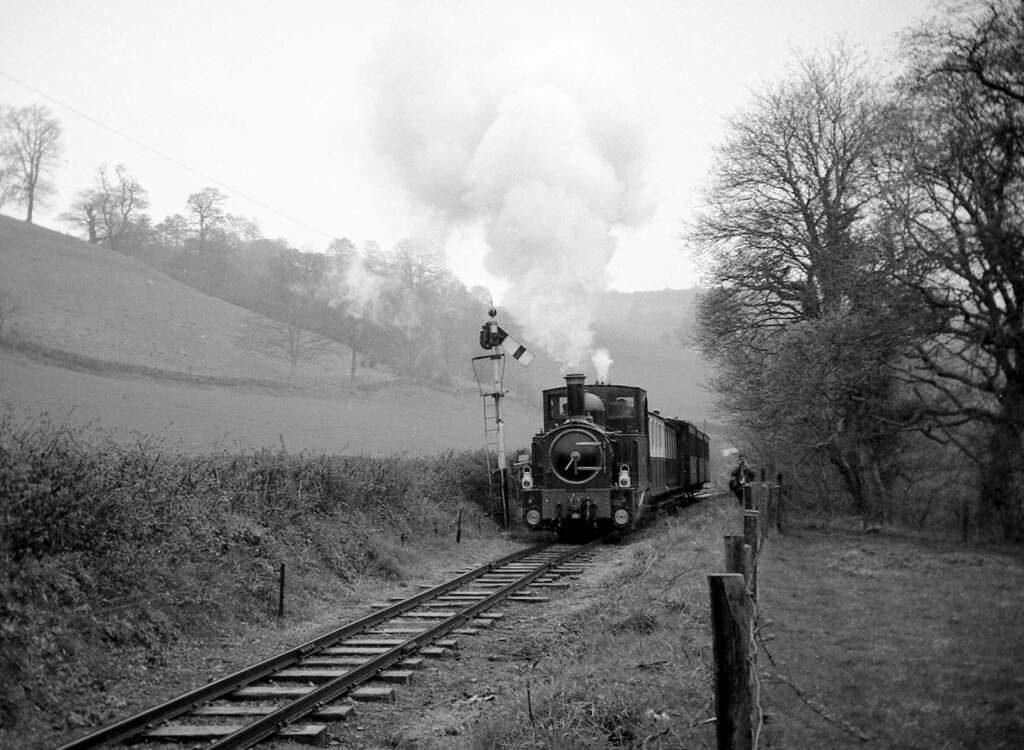
By 1959, negotiations had begun with British Railways and the Welshpool and Llanfair Light Railway Preservation Company had leased the line from British Railways by the end of 1962. On 28 July 1961, The Earl returned after storage and overhaul at Oswestry Works, with Countess following not long after. They have continued to work on the line ever since. [17]
During their lifetime the locos have had many modifications, particularly after the takeover by the Great Western. During this period they were fitted with a larger cab, handles on the smokebox door, rather than the original wheel, a larger dome, a much larger and more sophisticated safety valve and two different funnels. They were painted in Great Western green. … When taken over by British Railways, their shunting bells and chopper couplings were removed, and were repainted black. … From 1997 to 2001, the locomotives were fully overhauled at Llanfair, which included the fitting of new boilers and cylinders. They are currently the same design as the BR era, but have worn different liveries in preservation. [17]
Original Rolling Stock
The Railway Magazine said: “The stock is painted in the Cambrian colours coaches, bronze, green and white; engines, black, picked out with red and yellow.” [1: p68]
3rd class bogie coach. [1: p67]
Carriage details were: “Length over headstocks, 35ft.; centres of bogies, 24ft.; width outside, 6ft. 6in.; wheel base of bogies, 4ft.; size of journals, 6in. by 3in. diameter; centres of journals, 4ft. The body [was] built of oak and mahogany, the steel underframes [were] fitted with the automatic vacuum brake, and a hand brake [was] placed on each carriage. Weight of carriage, 94 tons.” [1: p68]
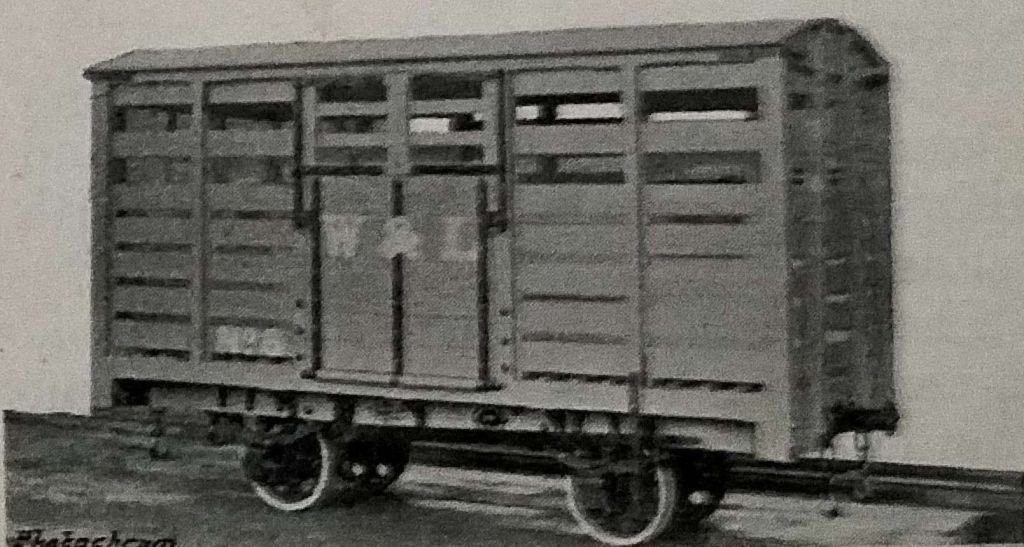
Cattle Wagon. [1: p67]
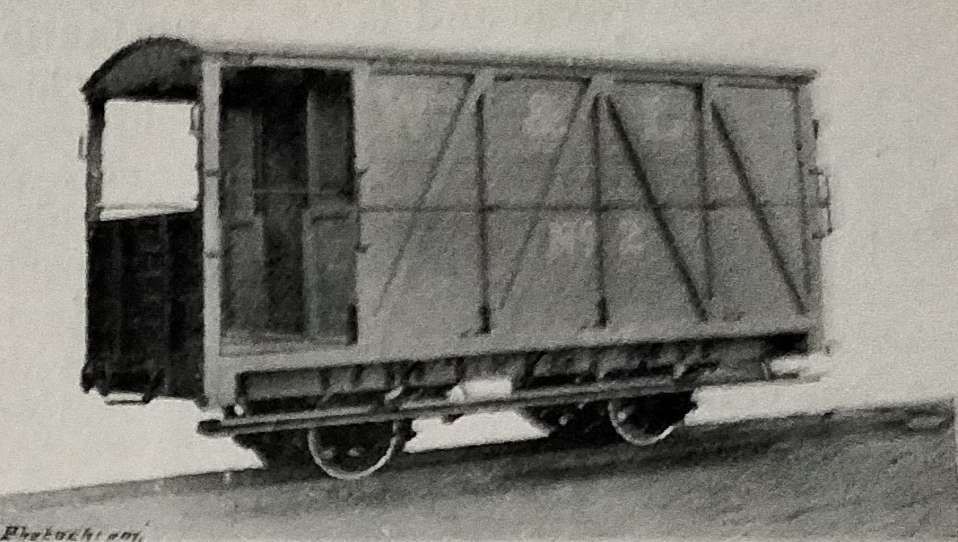
“The whole of the stock was fitted with central ‘buffer couplings’ and safety chains.” [1: p68]
Goods Brake Van [1: p67]
Sadly, the coaches purchased for the opening of the line did not survive into preservation. When passenger services were suspended in 1931 the coaches were sent to Swindon for ‘storage’ but never re-entered traffic and were broken up in 1936. That would have been the end of the story but for a desire by the preserved Welshpool & Llanfair Light Railway to reverse history and through the generosity of donors a complete new rake was built by the Ffestiniog Railway at their Boston Lodge works. [23]
References
Welshpool & Llanfair Light Railway; in The Railway Magazine, London, July 1903, p64-68.


 Roger Farnworth

.JPG)