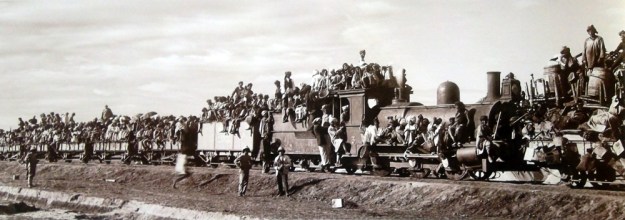
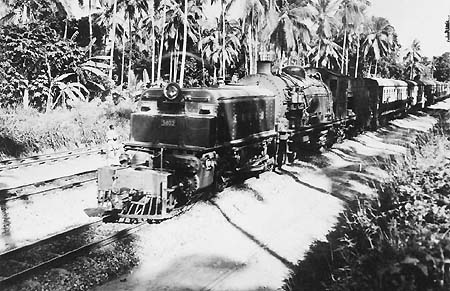
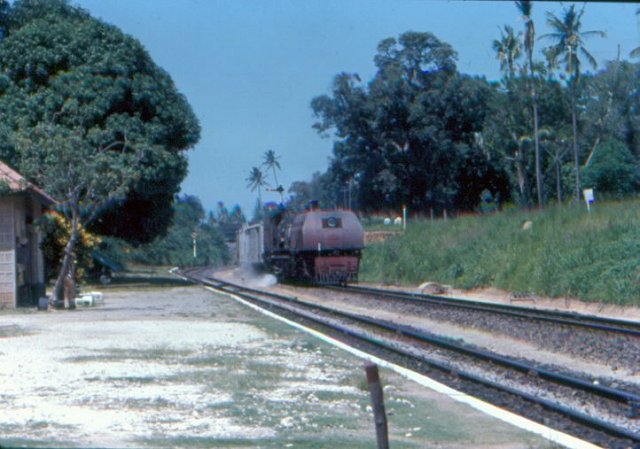
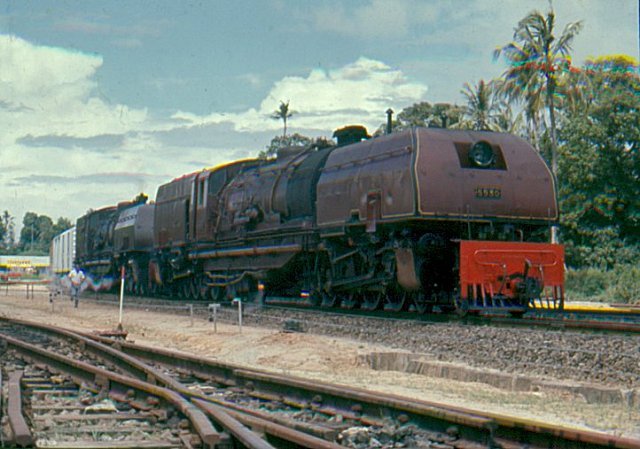
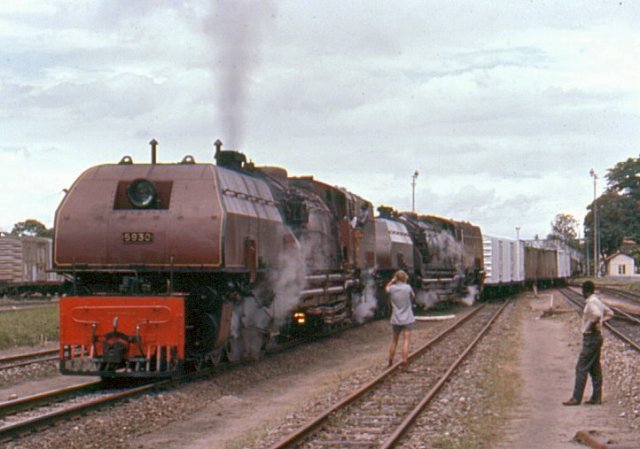
Category Archives: Railways and Tramways Blog

Mombasa, Kenya – A very early tramway?

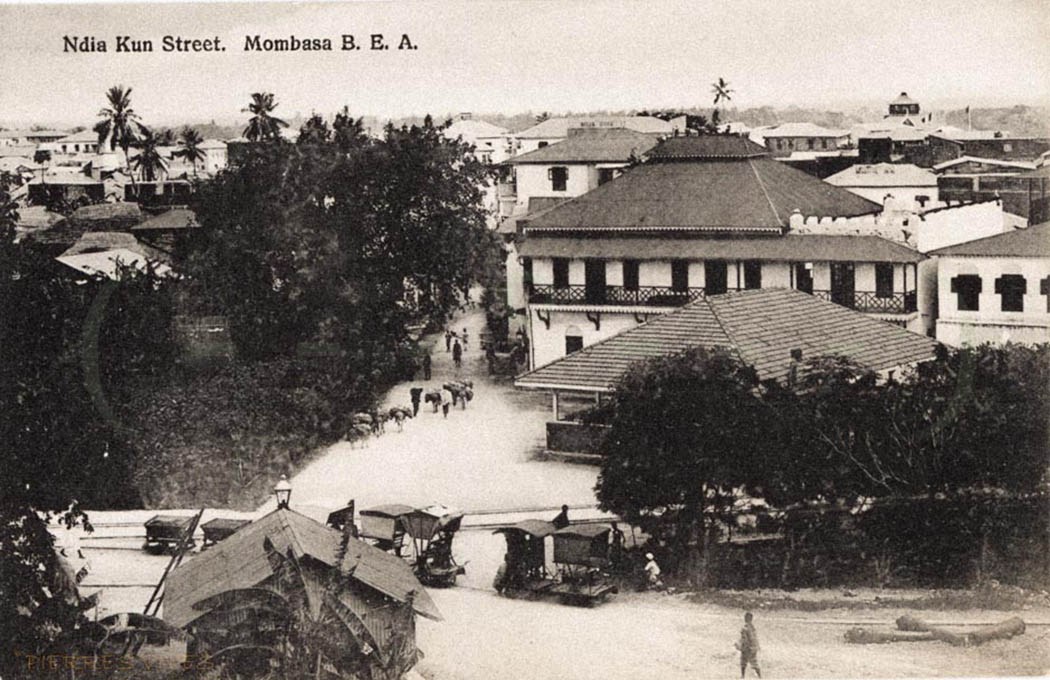
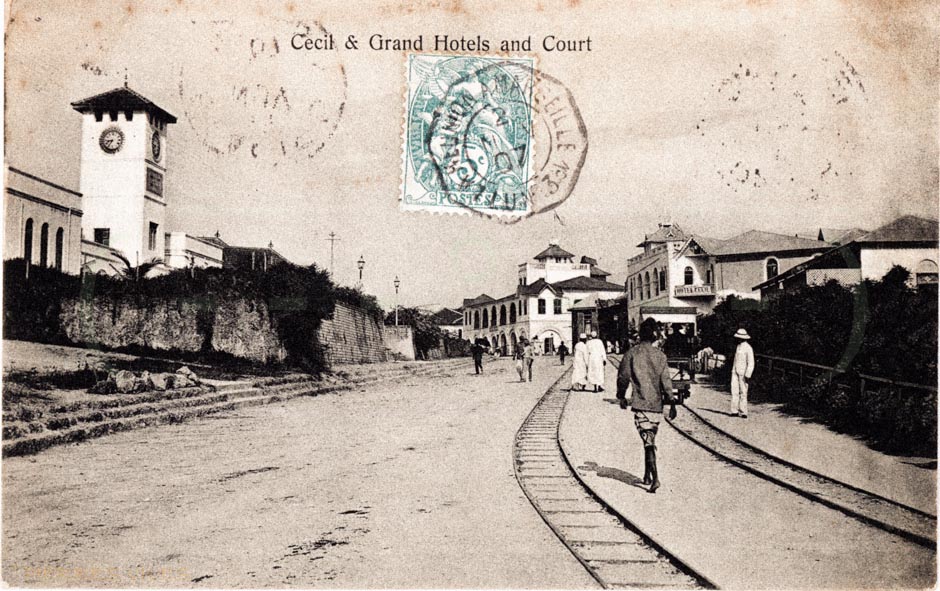
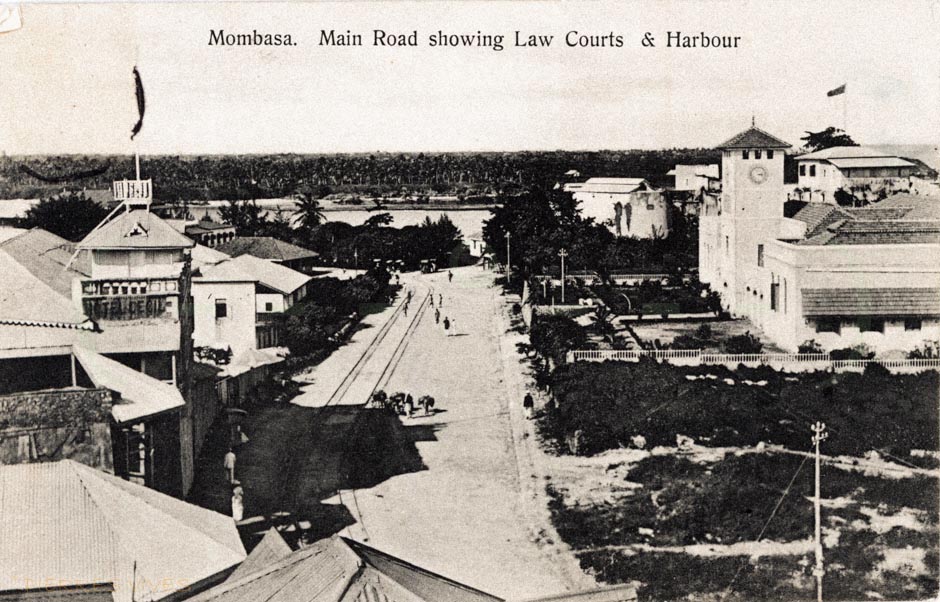
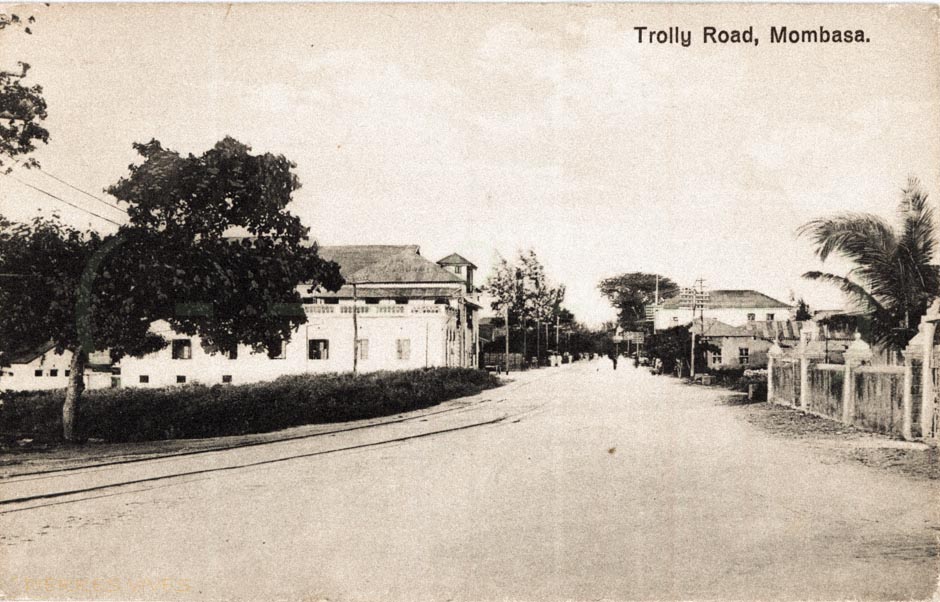
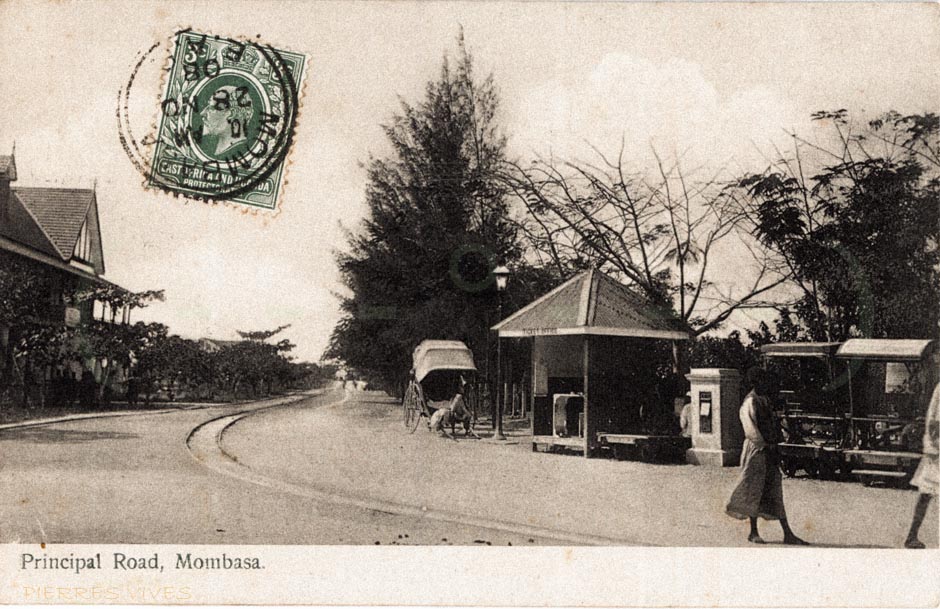
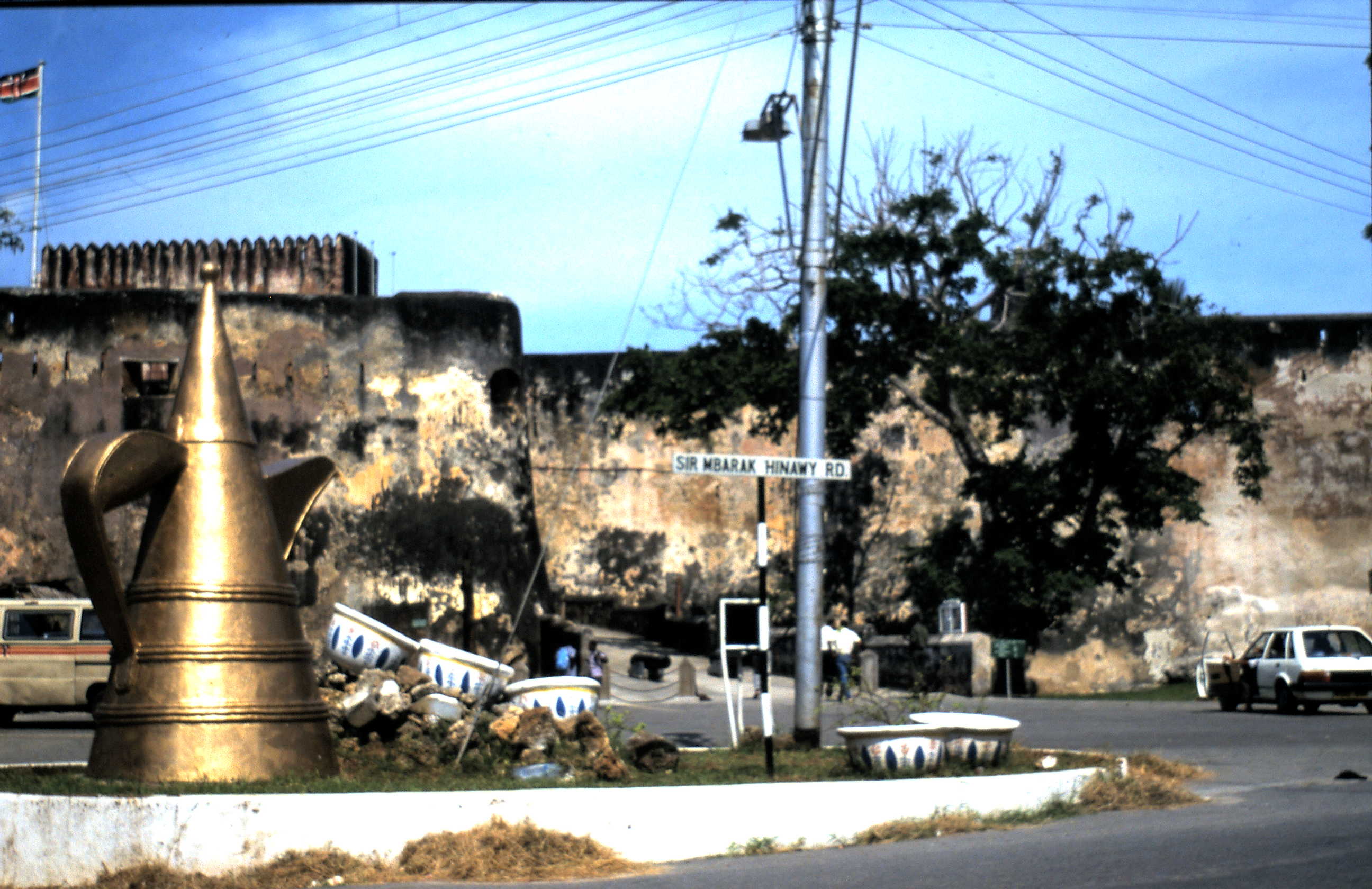
I came across some photographs while doing some research for my posts about the Uganda Railway. Further investigation led to a discovery of a very early tramway system in Mombasa. The adjacent image was one of these. There are clearly a set of tracks running on the streets of Mombasa.

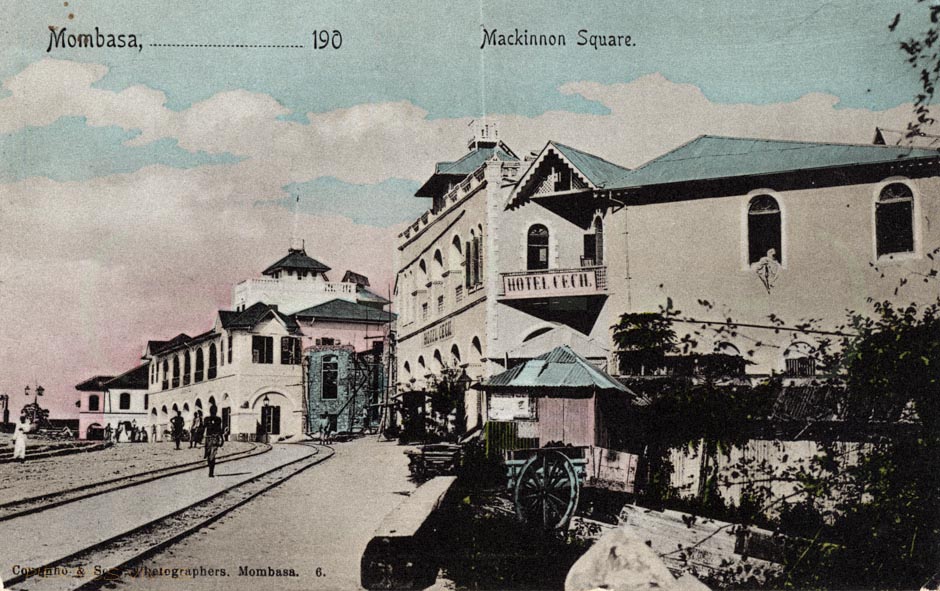
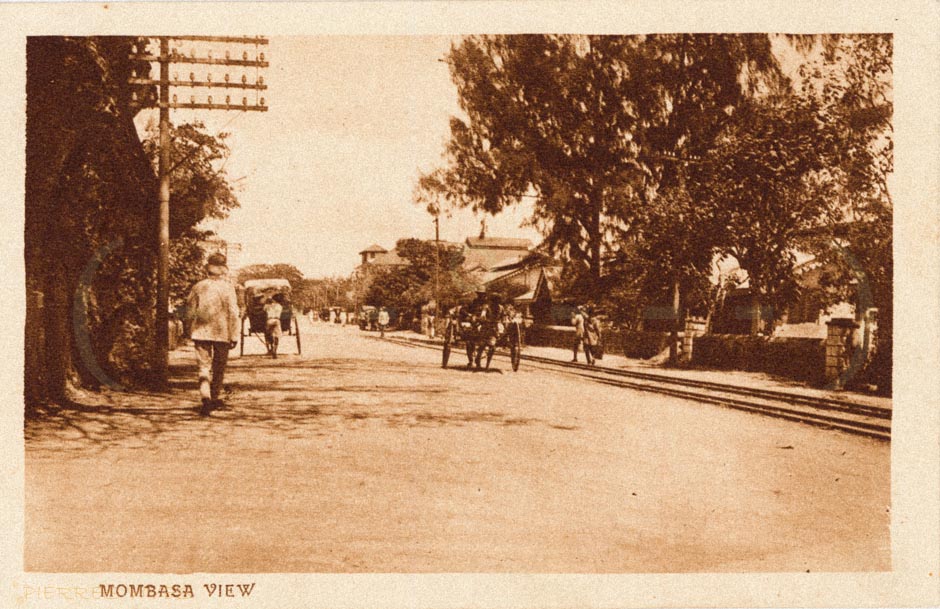
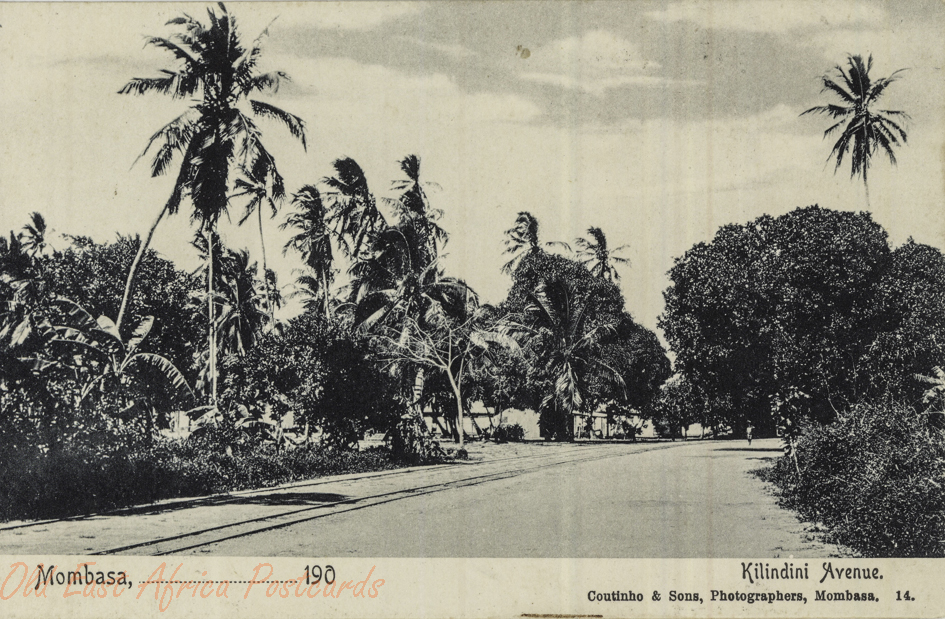
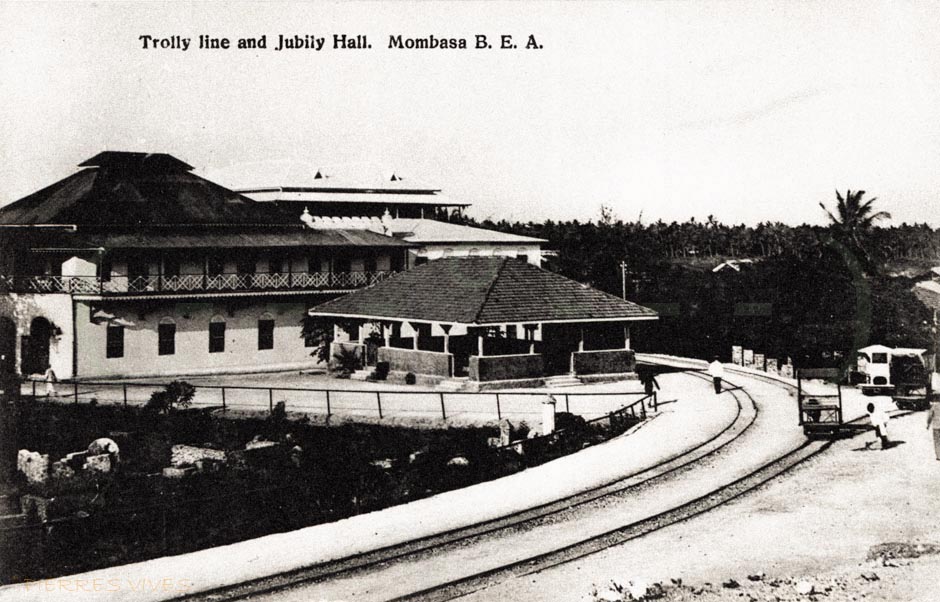
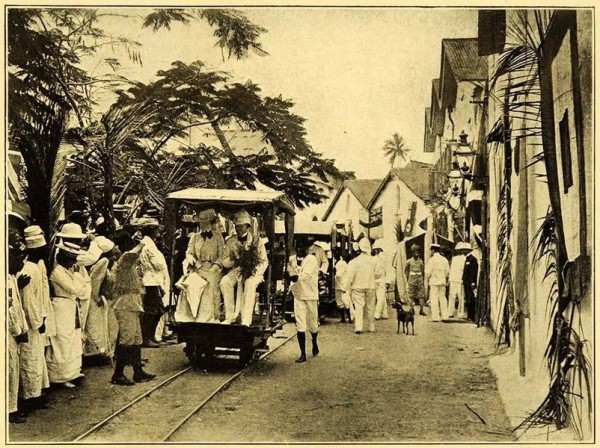
Further investigation highlighted the existence of what was called a ‘trolley'[1]There were stations throughout Mombasa Island. The next picture shows the station at Kilindini.[1] It did not take long to find a significant number of other photographs showing the trolley and the tracks used.The trolley track, ran from Mbarak Hinawy Road (Vasco da Gama Street) to Government Square (Customs Area, Leven House) and on to Nkrumah Road (Macdonald Terrace) past the Old Law Court on to Kilindini. It provided access to the “Jubilee Hall” (put up to commemorate the English Queen Victoria’s diamond jubilee in 1897 and also used as a meeting place for Old Town elders until 1950’s) and veered to the right to the famous Mombasa Club which was also built in 1897 by the trader Rex Boustead.[1]Old postcard showing the main street (Ndia Kuu) in Old town. You can see the trolleys in the bottom left hand corner of the picture.[2]Between 1890 and the early 1920s, Mombasa Island was serv­ed by an unusual transport system. A light two-foot gauge railway line was laid across the island from Government Square (in the old port) to Kilindini docks, and on it were pushed by hand small trolleys which could carry goods or passengers. By 1903 a branch had been laid to the station (then in Treasury Square), the hospital, the sub-­commissioner’s house, the lighthouse at Ras Serani, the sports club and to the cemetery.

In 1900 it cost 4 annas to travel from Government Square to Kilindini, or 2 annas as far as the station. If two trolleys met on a single line, the lower ranking officer or civilian had to have his trolley lifted from the rails to allow his senior to pass.

The trolleys were withdrawn in about 1923, after which people had the choice of walking, hiring a rickshaw or taking a motor car. The first car arrived in Kenya in about 1900. A horse and carriage was a rare phenomenon, horses being very susceptible to local diseases.[1]

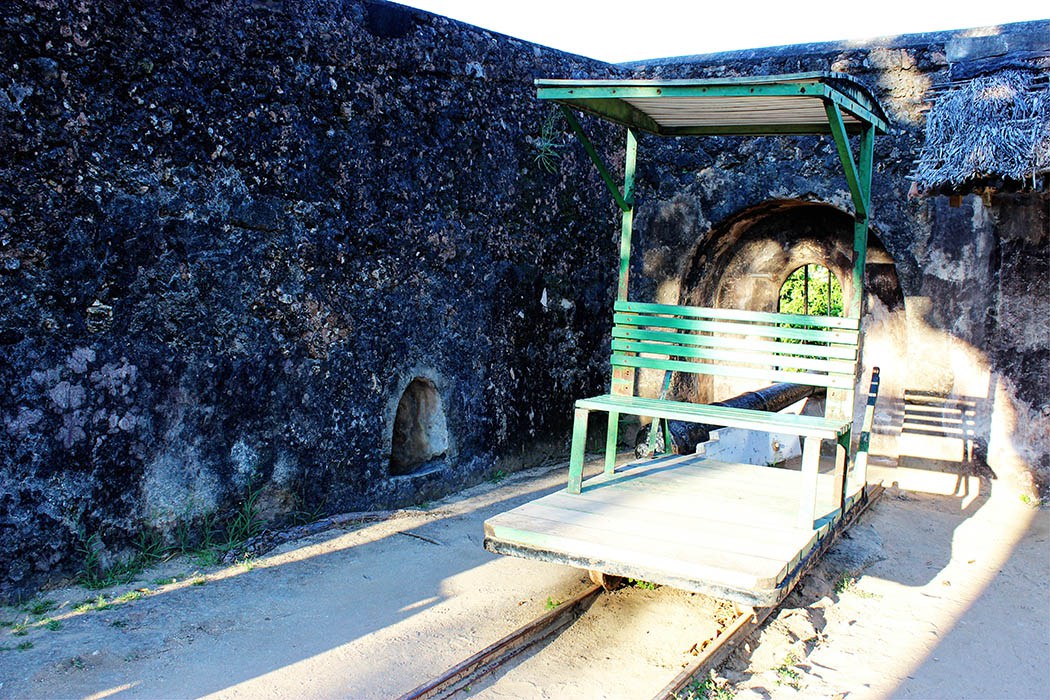
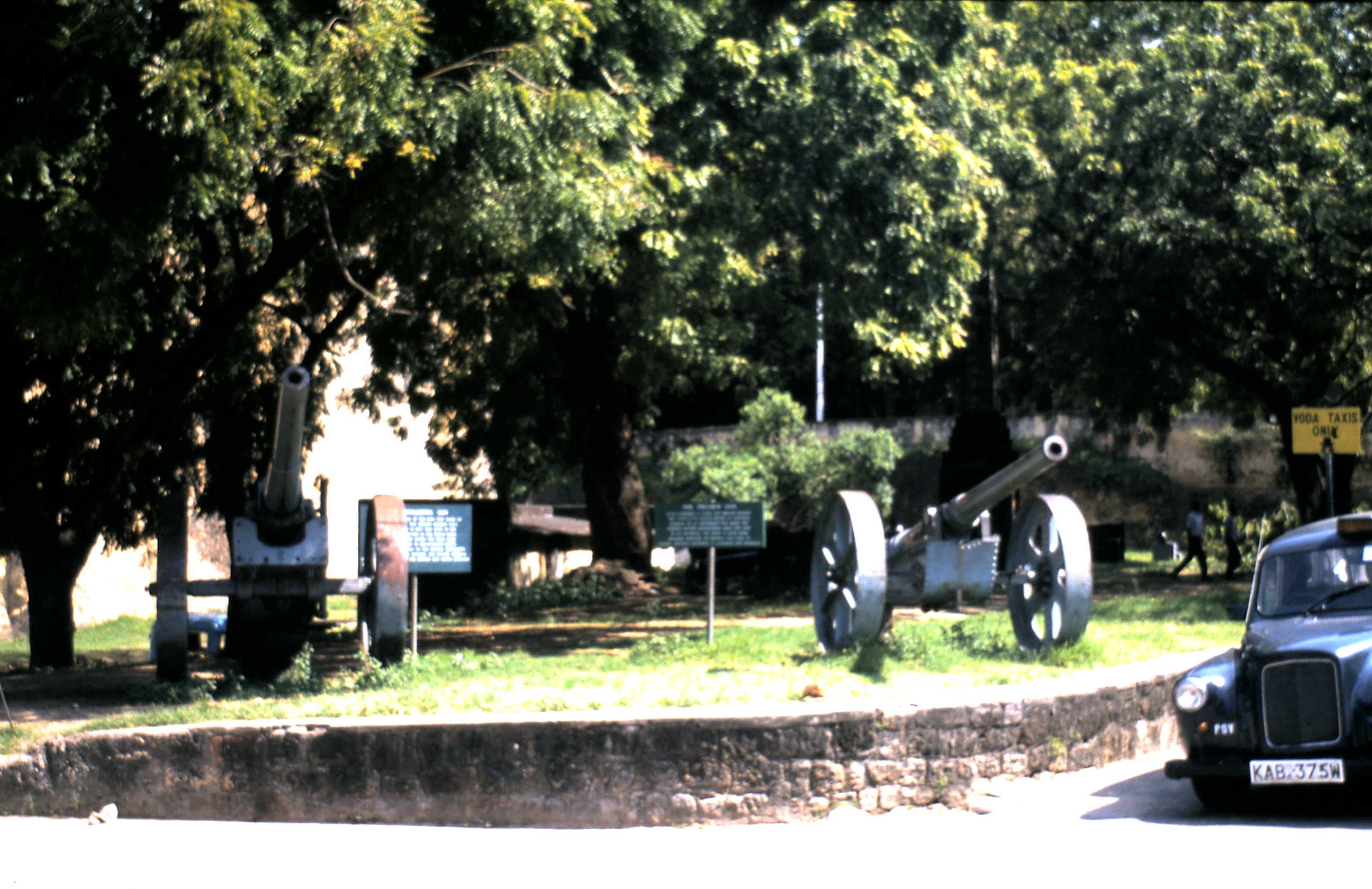
A replica trolley stands in the courtyard of Fort Jesus, on some reconstructed original line.[2]The track for the two-foot gauge trolley line came from an abortive attempt to build a railway into the interior, The “Central African Railway” which had reached a mere 11 kilometres inland from Mombasa Island![3]

The ” Central African Railway” had an interesting history ……. [1] The story which follows is sourced mainly from the Friends of Mombasa Website.

Sir William Mackinnon, the ship owner in charge of the IBEA (Imperial British East Africa) Company, lost no time in writing to Lord Salisbury, six months after the signing of the Brussels Treaty, suggesting Government assistance for the construction of a 60-mile (96.5 kms) railway inland from Mombasa. He also sought aid for opening up roads and forming “stations” along the route to Lake Victoria.

As a result of this successful appeal, the Director of the IBEA in London was able to send out sufficient materials and rolling stock for building a narrow gauge light railway to cost £50,000. The following year construction got under-way, starting from a point on the mainland opposite Mombasa Island, at the head of what has now become Kilindini Harbour.

It was given the very ambitious title of the “Central African Railway”, and as a symbol of the good intentions of the IBEA to open up the hinterland, sounded very impressive., but the venture got no further than seven miles (11.2 kms) before work stopped. Although it covered no more than a tiny fraction of the distance to Lake Victoria and the source of the Nile, the “Central Africa Railway” did secure a place for itself in history as one of the first railways to be built in East Africa, albeit no wider than two feet (61 cms) gauge. The tracks were later pulled up and, together with some of the unused rails, were re-laid to form the trolley line on Mombasa Island. Until 1923 this line was mainly used by Government officials, the more senior of whom had their own trolleys and received monthly allowances to pay the Africans employed to push them.

In its original form the “Central Africa Railway” was used only once for official purposes. It was used, however, as a stylish conveyance for picnic parties venturing inland from the port.

By 1893, the IBEA had withdrawn from Buganda, but remained temporarily at Mombasa until the British Government finally “took the plunge” by declaring a protectorate over the Buganda Kingdom and neighbouring lands as an alternative to outright annexation. It then began to consider a “proper” railway that would run all the way from the Indian Ocean to Lake Victoria. Not only would this be a really serious indication of Britain’s intentions to open up the interior for trade, and combat slavery, but it would be useful for transporting British troops, whom the government in London thought would be necessary for maintaining a permanent garrison at the source of the White Nile, near Jinja.

This post should perhaps, therefore have been written before may posts about the development of the Uganda Railway![4]

I was blissfully unaware of this little bit of railway history when I wandered round Mombasa Island before embarking on the night train for the journey to Nairobi and Kampala.No automatic alt text available.On the left of the picture above is a replica of a Mombasa trolley. [5]

References

  1. http://www.friendsofmombasa.com/british-empire-in-east-africa/east-african-railways, accessed on 11th May 2018.
  2. http://www.oldeastafricapostcards.com/?page_id=512, accessed 12th May 2018.
  3. http://www.greywall.demon.co.uk/rail/Kenya/nrm.html, accessed on 22nd May 2018.
  4. The posts on my blog start with the Uganda Railway Story and continue to review the line along its full length. Please see https://rogerfarnworth.wordpress.com/category/uganda.
  5. https://www.facebook.com/nrailwaymuseum/photos/pcb.1699207140092552/1699205880092678/?type=3&theater, accessed on 23rd May 2018.

The Uganda Railway – Part 5 – Voi to Ulu

We start this next post with a variety of images from the station at Voi, and from its immediate surroundings. The first picture is the featured image which shows the publicity photo for the railhead reaching Voi in 1897.Class 59 Garratt No. 5902, Ruwenzori Mountains takes on water at Voi Station. Image result for voi railwayVoi Station Sign. [1]An old colonial-era railway line sits near the site of the new Mombasa-Nairobi Standard Gauge Railway line under construction in Voi, Kenya. Bloomberg photo by Riccardo Gangale.[8]

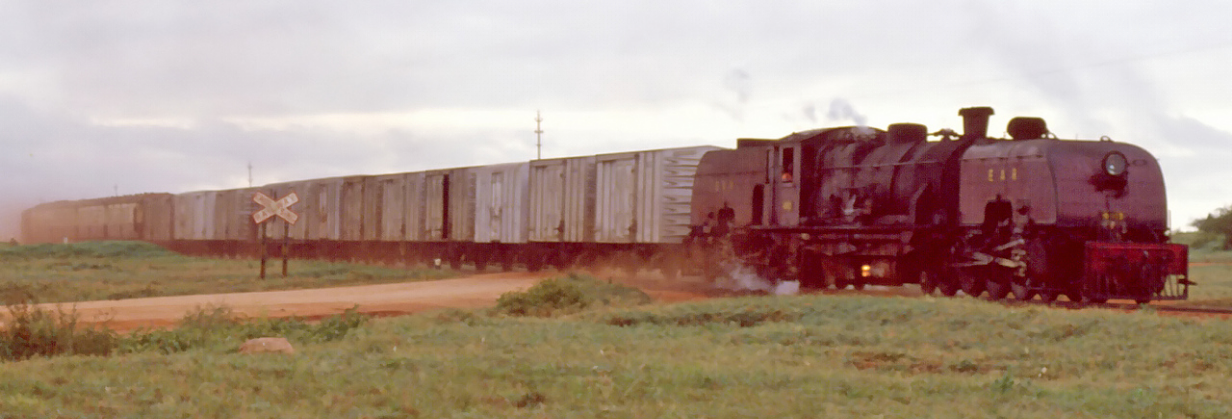
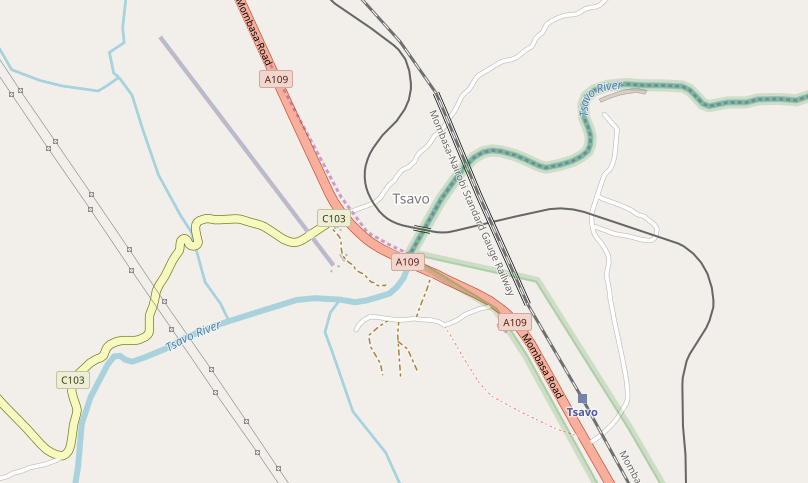
EAR Class 59 Garratt No. 5902 “Ruwenzori Mountains” heads away from Voi with a Mombasa to Nairobi Goods train on 10th December 1976 © Bingley Hall, on flickr.[2]Class 59, 5914 at the same location. [5]The map shows the branch-line to Moshi as a dotted line turning away from the A109 and following the A23 to the bottom left of the image. The route is bridged by the SGR. The next two images are taken of trains on that branch-line. Both show the same locomotive, Class 60 Garratt No. 6013, © CPH 3 on flickr.[3]Class 59 Garratt en-route to Voi – © James Waite.[4]

Travelling north from Voi and after the branch to Moshi turns away to the West, the line passes through Irima, Ndi and Manyani Stations and between the two game reserves of Tsavo East and Tsavo West in a corridor which also includes the A109 road between Mombasa and Nairobi and the new SGR.Irima Railway Station.Ndi Railway Station.Manyani © Thomas Roland on Flickr [6]

The SGR and the A109 run consistently parallel to each other the metre-gauge line follows a route which best works with the contours of the land. All three pass through Tsavo.

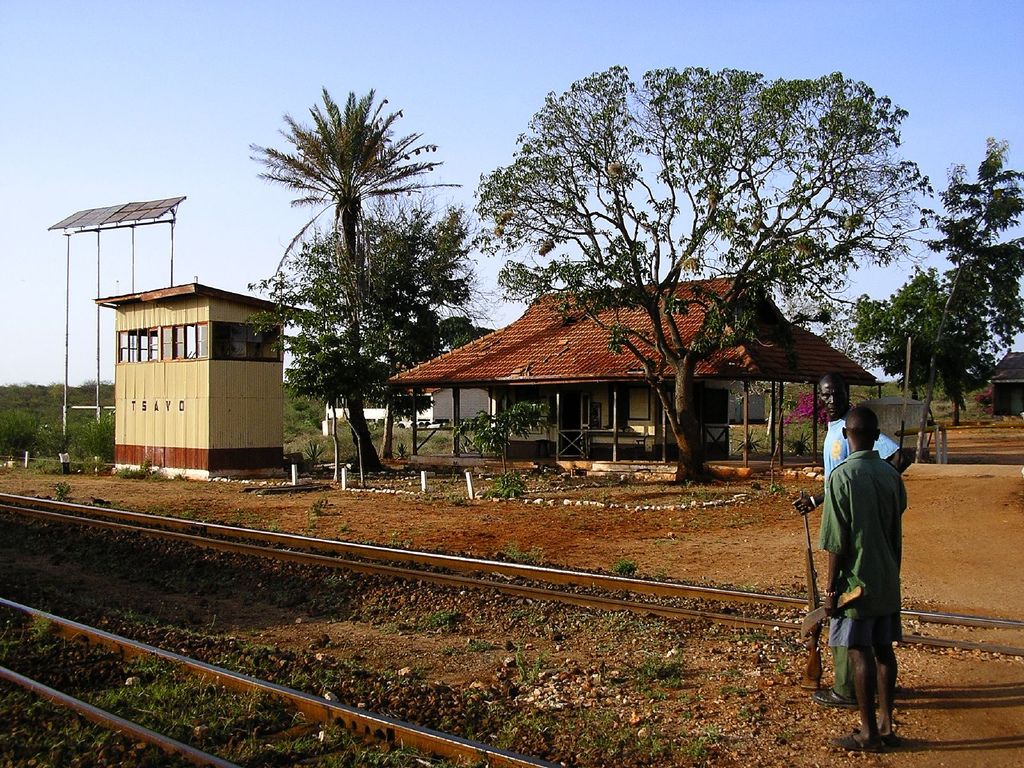
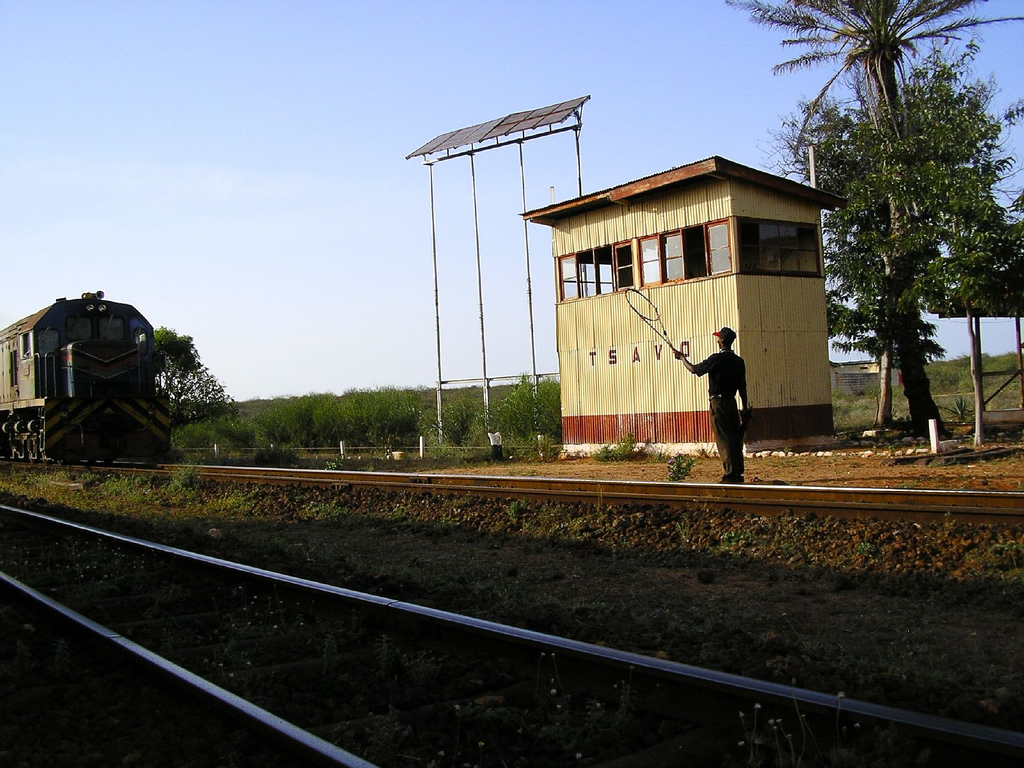
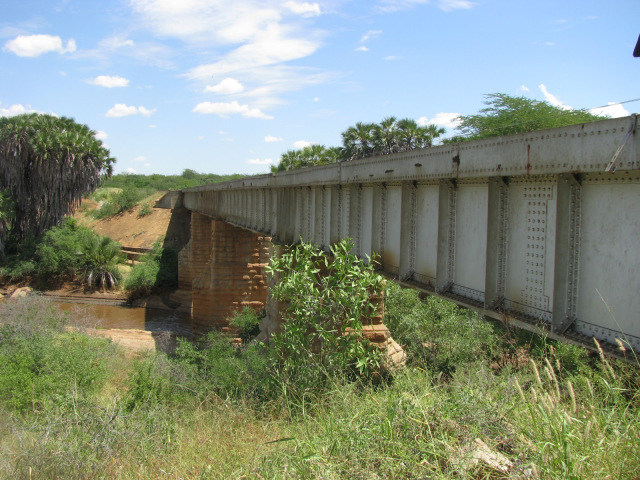
Tsavo railway station was some distance from the village.An image from google maps. [7]The metre-gauge line crosses a relatively low level bridge over the Tsavo River, just beyond Tsavo Station, which can be seen in the next few images, the first of which is taken from the A109 bridge over the Tsavo River.Class 59 Garratt, 5903 Mount Meru, on Tsavo Bridge, heading towards Voi – © James Waite.[4]Another shot of the bridge. [6]

The last image at Tsavo shows the construction work on the SGR viaduct across the Tsavo River … all along the length of the new line provision is made to allow wildlife access under the line and to avoid high-speed collisions between trains and wildlife.

Moving on from Tsavo the line continues to meander in a generally North-westerly direction for a number of kilometres on almost exactly the same line as the SGR, through Kyulu Railway Station.[9]
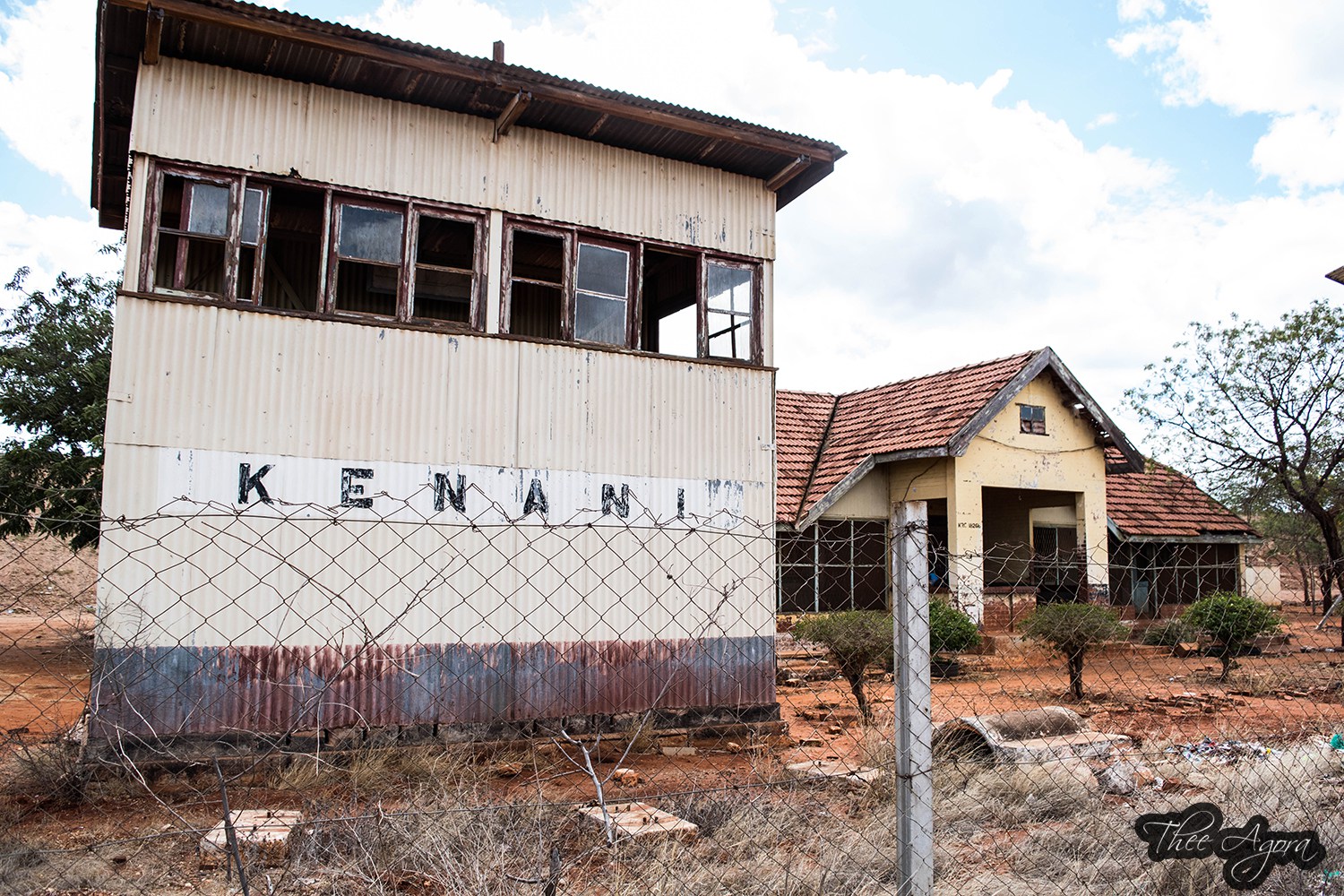
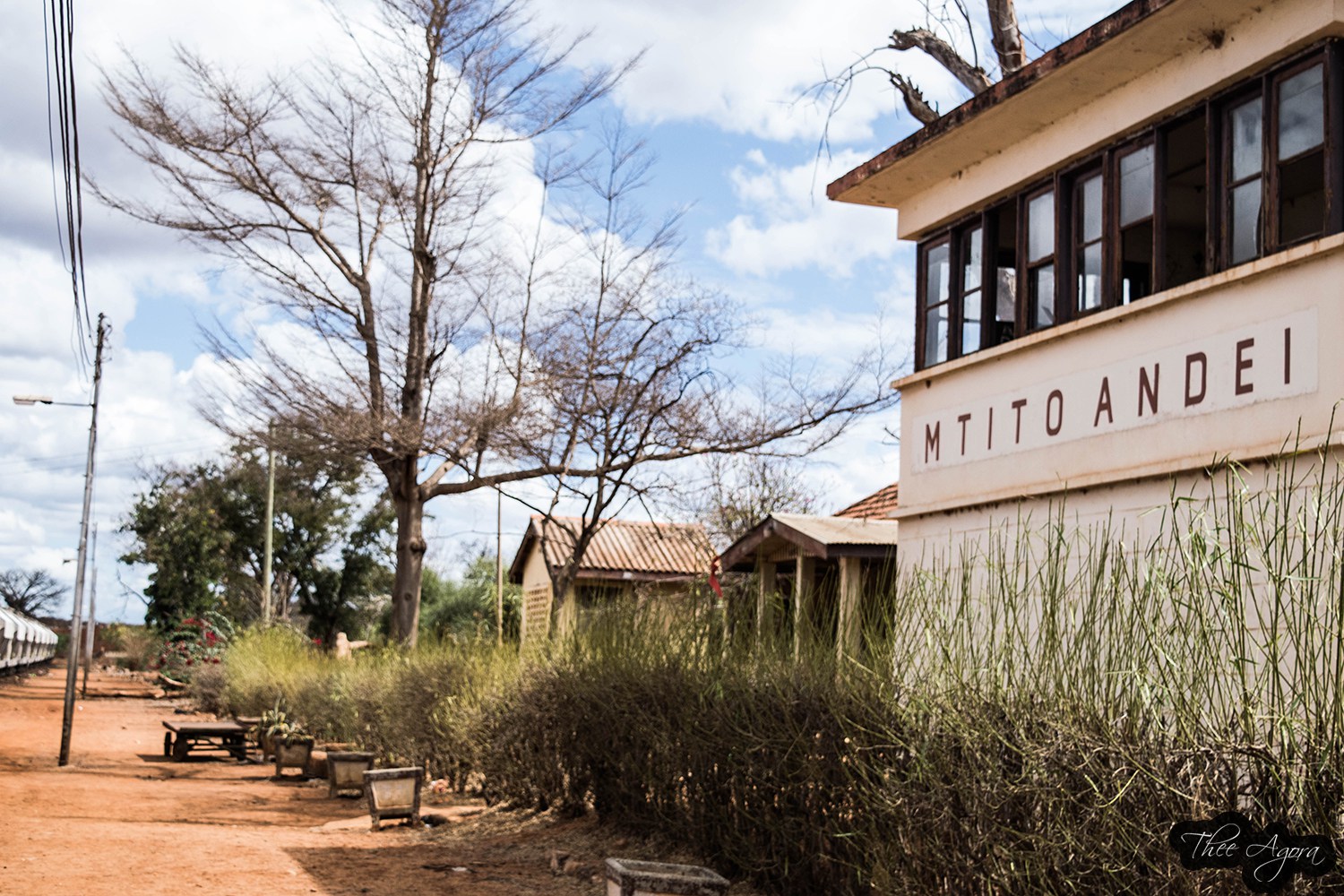
And Kenani Railway Station,[9] and then Kanga, before reaching Mtito Andei.
Mtito Andei is the nearest stop on the SGR to Tsavo.[10]It supersedes the station on the old metre-gauge line, although that line may well remain open for goods traffic.[9]

The old metre-gauge line continues on through Kathekani, Darajani, Ngwata, Masongaleni,  Kikumbulyu, and Kibwezi.Darajani, © Matthew O’Connor on flickr. [11]The last three sepia pictures are courtesy of the UK National Archive. [12]

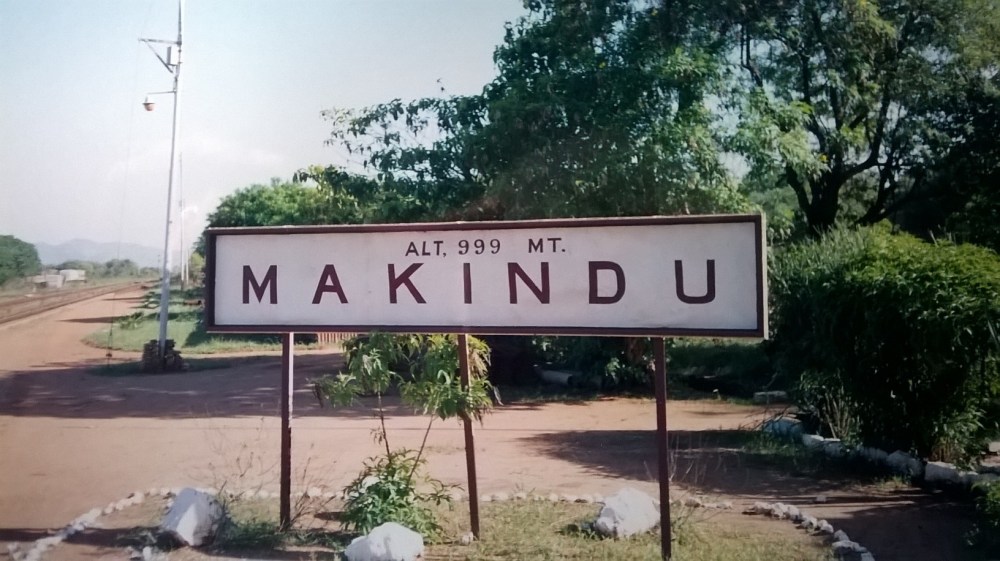
The Railway continues in a north-westerly direction through Mbuinzau, Makindu, Ikoyo,  Kiboko, Simba,  Kabati and Emali Stations

Plan of Makindu Station and sidings.[12] The following photos are from Dr Gurraj Singh Jabal [14] and a few other sources.There was a rail accident at Makindu on 29th March 1958.

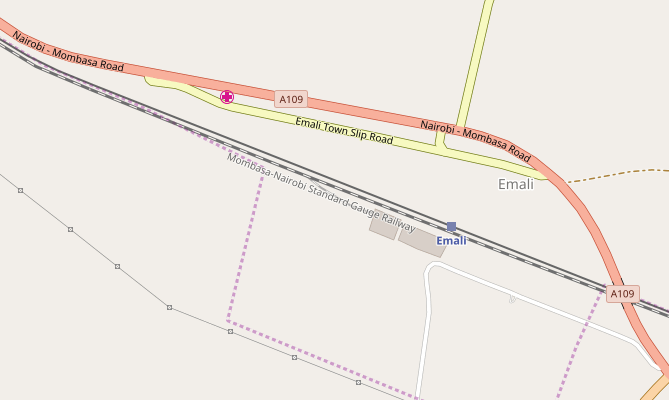
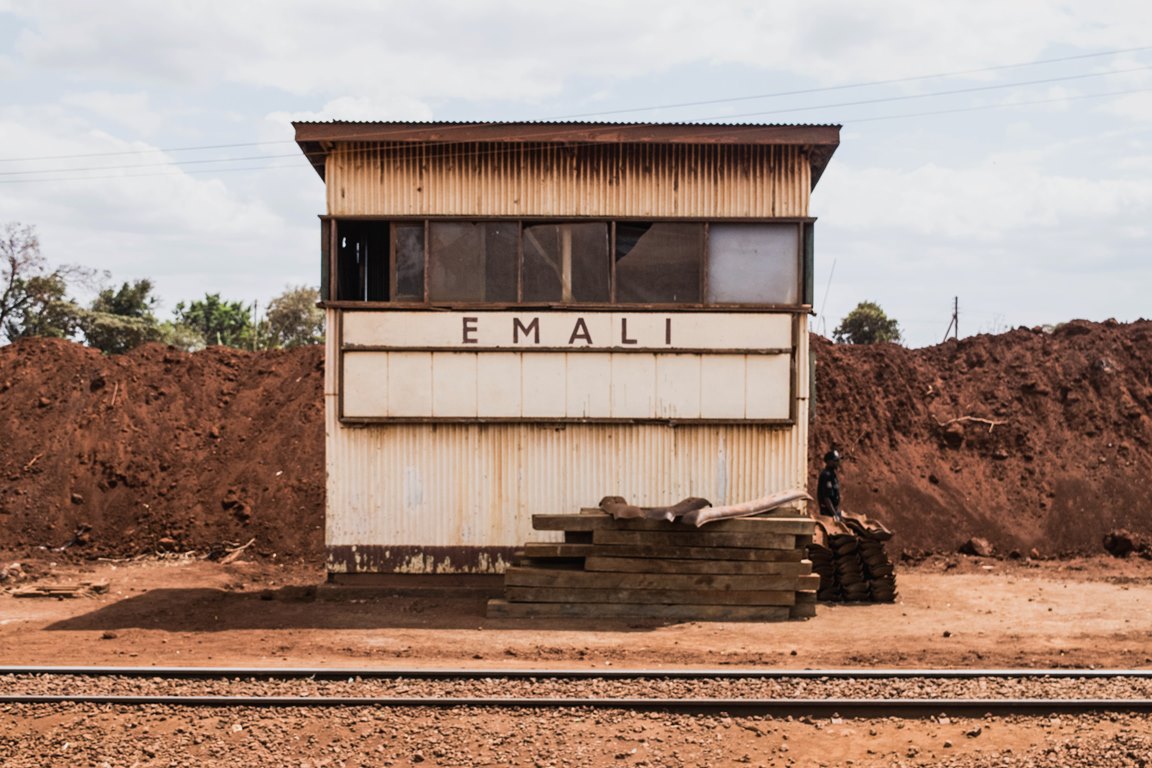
Emali. [9]

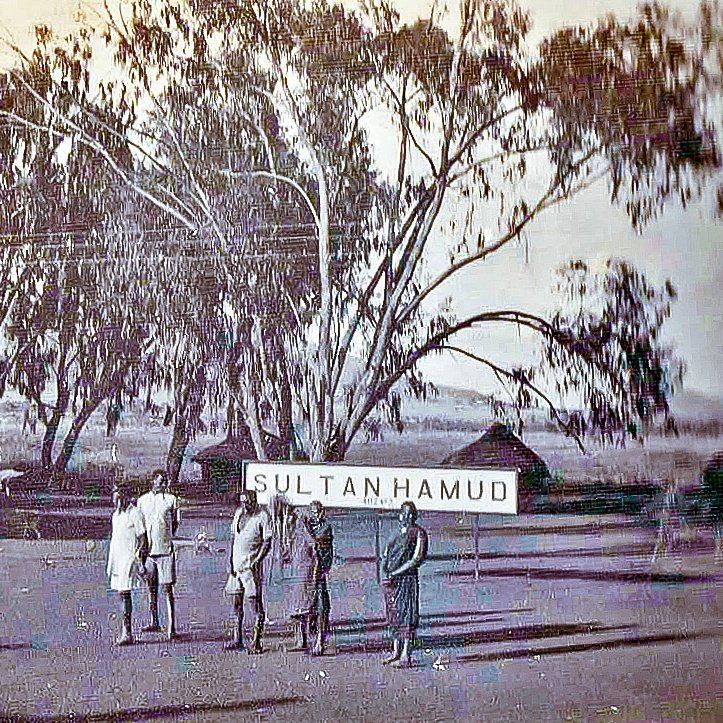
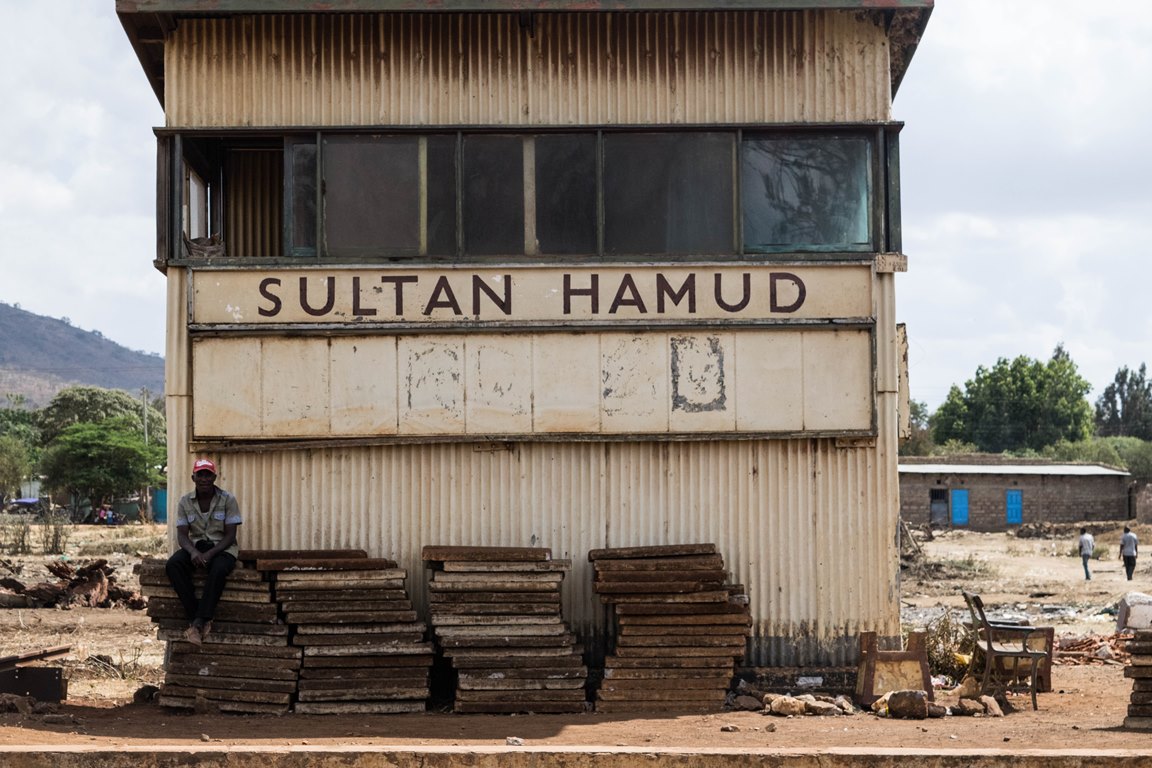
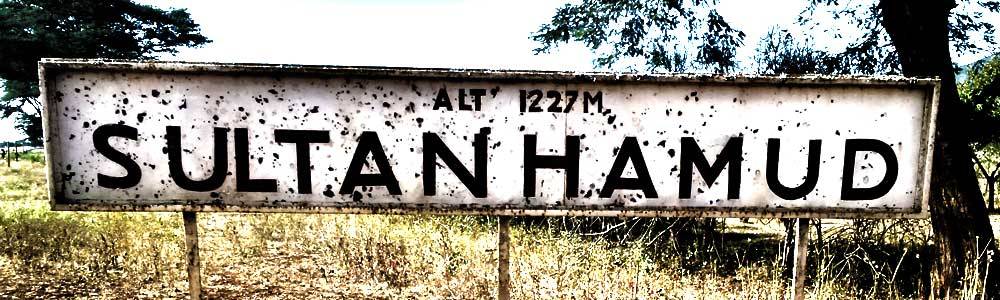
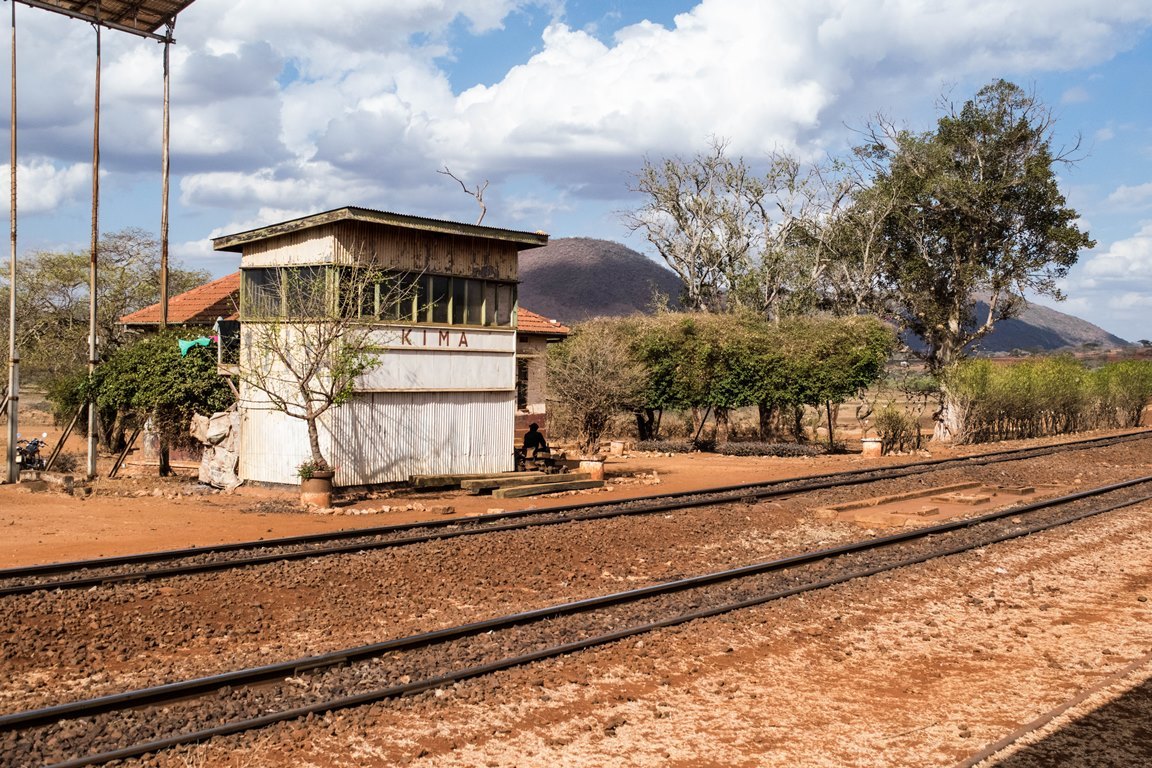
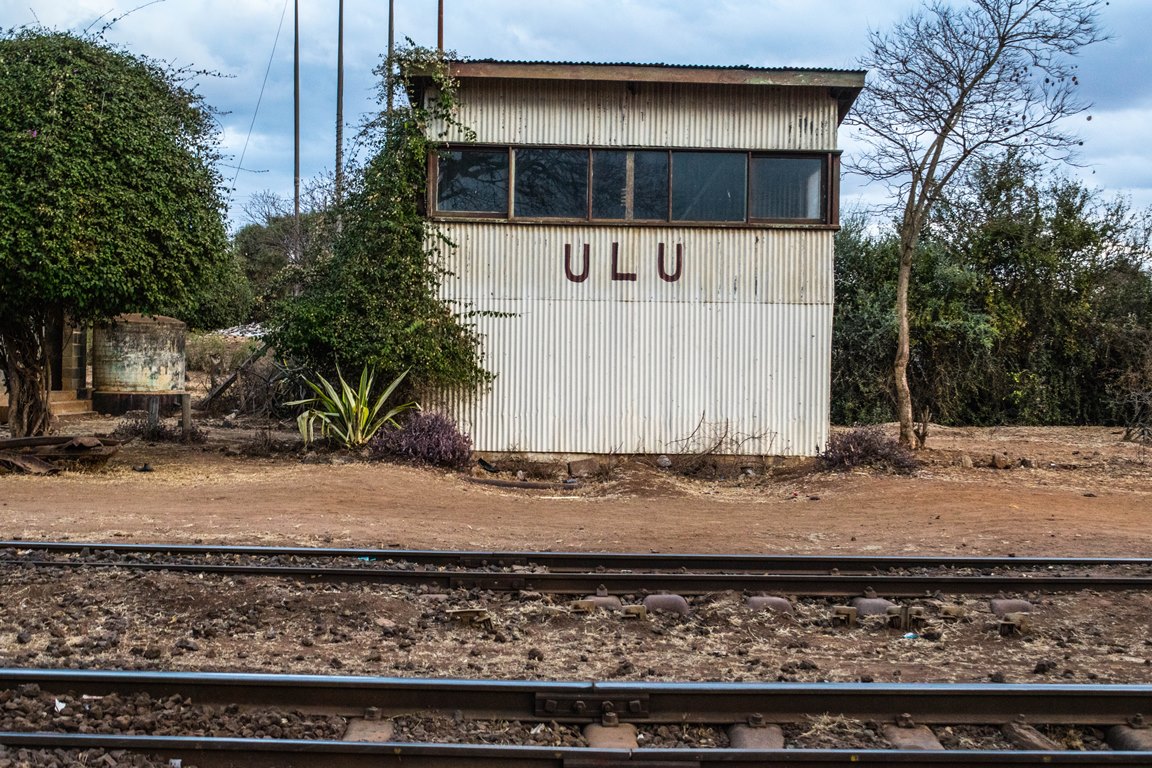
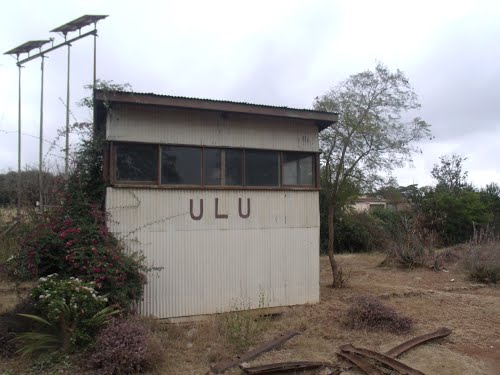
After Email, is passes through Nzai, Sultan Hamud, Kima, Kalembwani and Kiu Stations before reaching Ulu.Kima. [9] Kalembwani. [9] Ulu. [9]Ulu. [15]

We finish this leg of the journey at Ulu and look forward to travelling on to Nairobi in the next post.


References

1. https://theeagora.wordpress.com/2013/08/03/voi-railway-station, accessed on 19th May 2018.

2. https://www.flickr.com/photos/markcarter/14338441191/in/photolist-nR3g2i-sYdBgH, accessed on 19th May 2018.

3. https://www.flickr.com/photos/steam_locos/12132360645/in/photolist-ju6w8P-iDJaq6-iFiks9-iFkoFj, accessed on 20th May 2018.

4. http://www.mccrow.org.uk/EastAfrica/EastAfricanRailways/NairobiMombasa.htm, accessed on 19th May 2018.

5. https://www.pinterest.co.uk/pin/688839705474887109, accessed on 20th May 2018.

6. https://strategicdepth.org/2017/06, accessed on 20th May 2018.

7. https://www.google.co.uk/maps/place/Tsavo+Station/@-2.9931068,38.4689082,3a,75y,90t/data=!3m8!1e2!3m6!1sAF1QipP4jOul9RQMOMR3VrJAfu6wgE7GFS4rrEiAIhTD!2e10!3e12!6shttps:%2F%2Flh5.googleusercontent.com%2Fp%2FAF1QipP4jOul9RQMOMR3VrJAfu6wgE7GFS4rrEiAIhTD%3Dw129-h86-k-no!7i6000!8i4000!4m5!3m4!1s0x183959f41c019539:0x786fe9903739f4c5!8m2!3d-2.9931068!4d38.4689069, accessed on 20th May 2018.

8. https://www.bloomberg.com/news/articles/2016-04-08/africa-s-30-billion-rail-renaissance-holds-ticket-for-trade, accessed on 20th May 2018.

9. http://www.savetherailway.com/railway-stations, accessed on 18th May 2018.

10. https://www.google.co.uk/maps/uv?hl=en&pb=!1s0x183bb8751a761d9b%3A0x1c2fac4b35e4a8bf!2m22!2m2!1i80!2i80!3m1!2i20!16m16!1b1!2m2!1m1!1e1!2m2!1m1!1e3!2m2!1m1!1e5!2m2!1m1!1e4!2m2!1m1!1e6!3m1!7e115!4shttps%3A%2F%2Flh5.googleusercontent.com%2Fp%2FAF1QipO1kG9cbCL_gJ17EFd6RpYfv7oz1cTQUYj2HzDz%3Dw240-h160-k-no!5sMtito%20Andei%20railway%20station%20-%20Google%20Search&imagekey=!1e10!2sAF1QipOUxm6EAfKZtxK1rg-xvRhE1dQw39qbHCaKRHMB&sa=X&ved=0ahUKEwiX8tWvgpXbAhUfOsAKHQa4BOYQoioIjwEwDg, accessed on 20th May 2018.

11. https://www.flickr.com/photos/hadenoak/29842259871/in/photolist-Mt4oaV-kaYDpr-8nLN2m-bPabo4-bAfL3A-aCVMTM-FLyXgK-FRQ2qr-GxHPuU-GxHPKy-bPapRi-bAfwiy-NQoAC-r4WnTo-aWe2DD-fnT25s-bokDL-9HDBH5-6EDL3M-jh9DA9-aWiuJx-Jz64hu-NA9jZ-LbXZSJ-f9iWQE-8u155z-peR8pW-8oNqcF-aWivXi-7wknz8-9WNrqo-aWivNx-cyUfZw-aWe2z2-aWitUR-cyUfJ7-7wkniM-9ePedD-aWivAV-aWe3YH-6EDKRv-aWe1PD-aWe2wR-ReNwV5-LinKah-aWe39x-dZgfjY-8NqyQB-aeZZzh-7XevFt, accessed on 20th May 2018.

12. UK National Archives; http://www.nationalarchives.gov.uk, accessed on 20th May 2018.

13. https://www.openstreetmap.org/#map=17/-2.28318/37.82820, accessed on 20th May 2018.

14. http://www.savetherailway.com/remembering-makindu-station, accessed on 20th May 2018.

15. http://ke.geoview.info/ulu_railway_station,109548331p, accessed on 21st May 2018.

The Uganda Railway – Part 4 – Mazeras to Voi

The next instalment of the journey from Mombasa to Kampala.

We start at Mazeras Station.

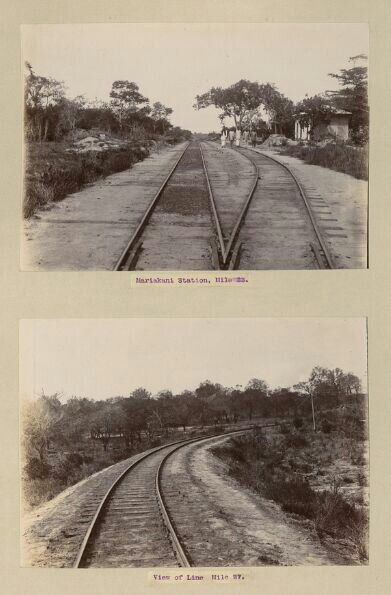
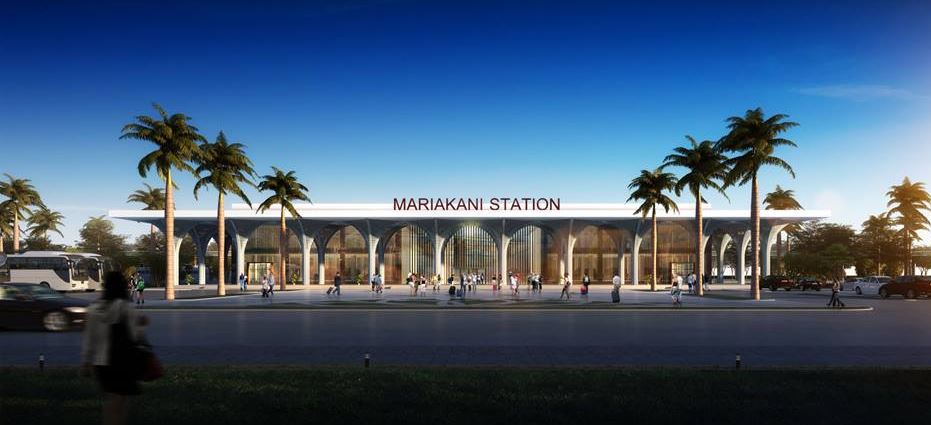
The railway roughly follows the Mombasa to Nairobi Road in a North-north-westerly direction to the next station on the line, Mariakani, a distance of 15 kilometres. The first image is ©Rohn Wood. [1] The second image below is © East African Corridors (Image 5031), [2] and the third image (consisting of two photographs comes from the National Archive Library (CO 1069-185-81). [3]

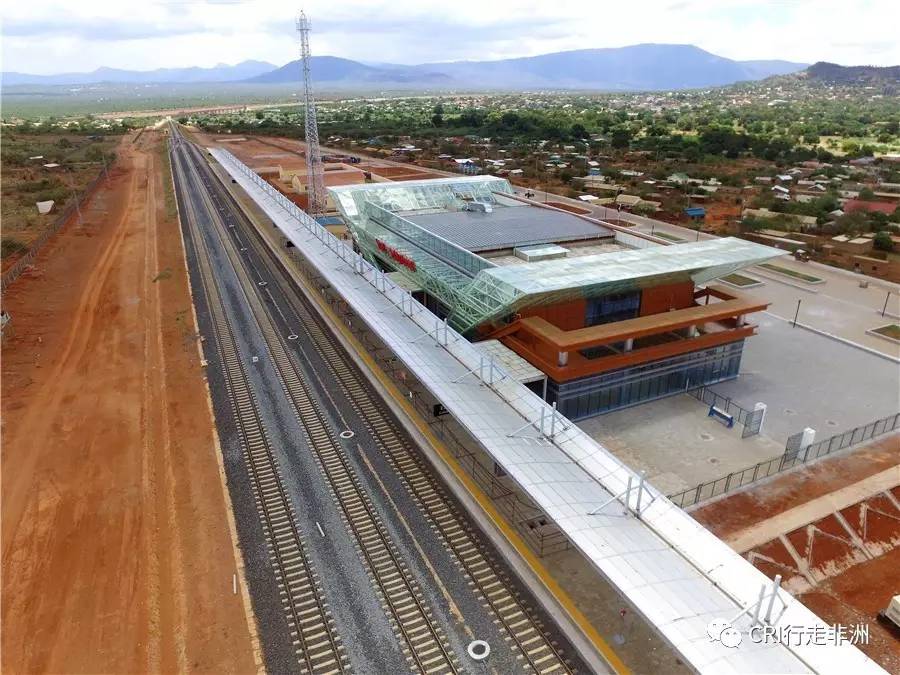
Mariakani is the first stop on the new Standard Gauge Railway (SGR) after leaviing Mombasa.

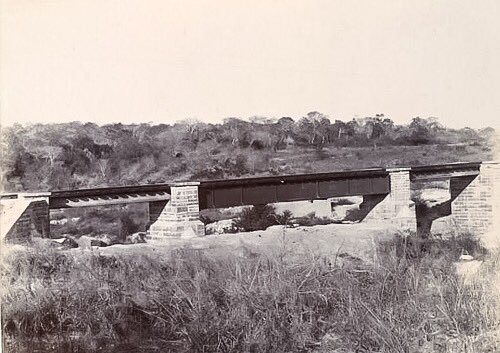
From Mariakani, the metre-gauge line continued a further 13 kilometres in a Northwesterly direction to Maji ya Chumvi, initially the railway and road followed a similar path, but just under halfway between the two stations as the crow flies,the road and the old metre-gauge line separate to allow a steadier grade for the railway. For a short distance railway and river are close to each other before the railway crosses the river and heads for Maji Ya Chumvi.Maji Ya Chumvi River Bridge

In the map below the deviation away from the road is evident and the location of the bridge over the river. The line of the SGR is also visible. The road and metre-gauge line converge once again at Maji ya Cumvi and the road crosses the railway line at that point.

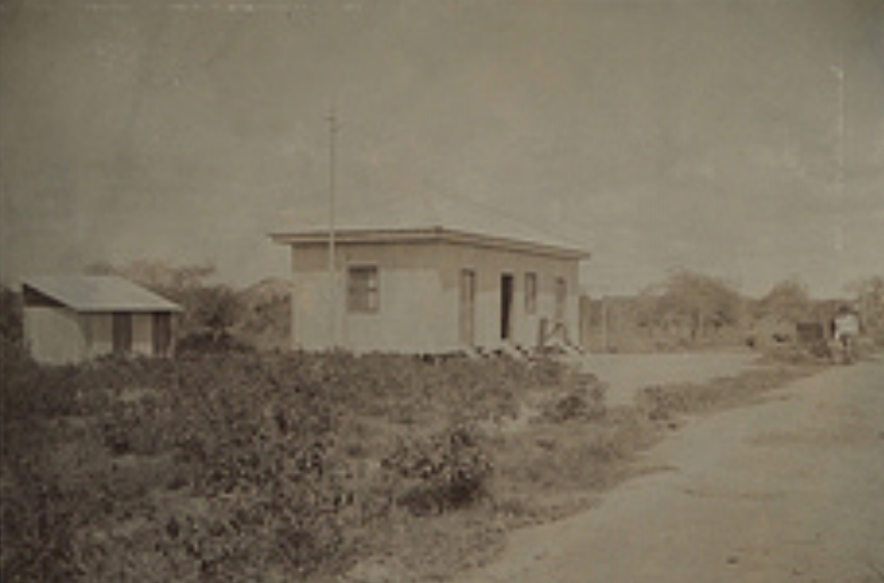
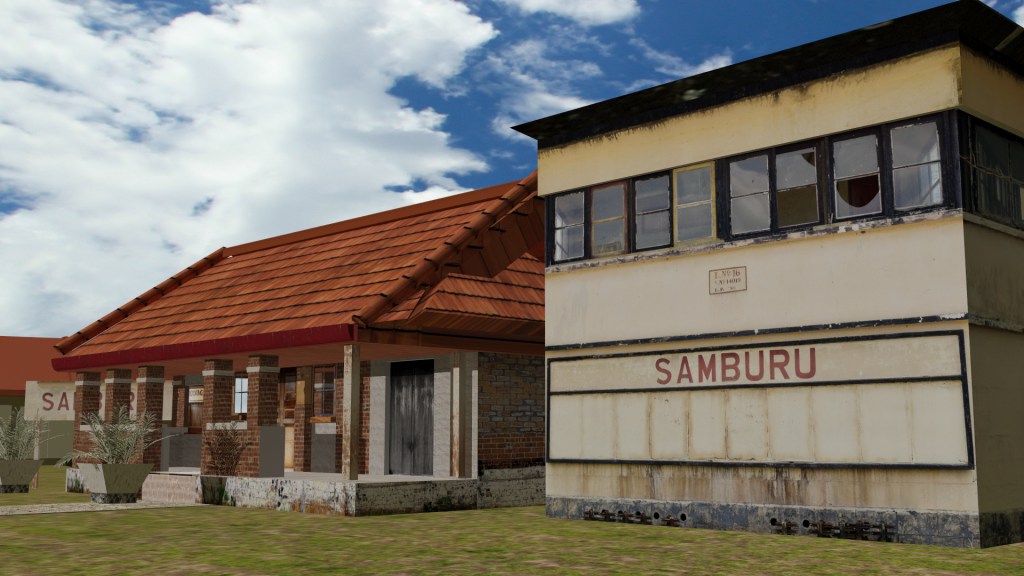
Beyond the road crossing the railway heads on a further 16 kilometres in a westerly direction to Samburu village (not to be confused with Saburu County and the Wildlife reserve of the same name which is in that county).The image immediately above is a photograph taken in 2015 and can be found in a library of photos of stations on the metre-gauge line.[4] The photo of Mazeras Station, further above, comes from that same library. Much more ancient images follow. The first two come from very early in the line’s history and were both taken at Samburu. The third is a later image of the station from the early 1900s. An interesting digital 3D model of this station has been created by ADH (African Digital Heritage).[5]

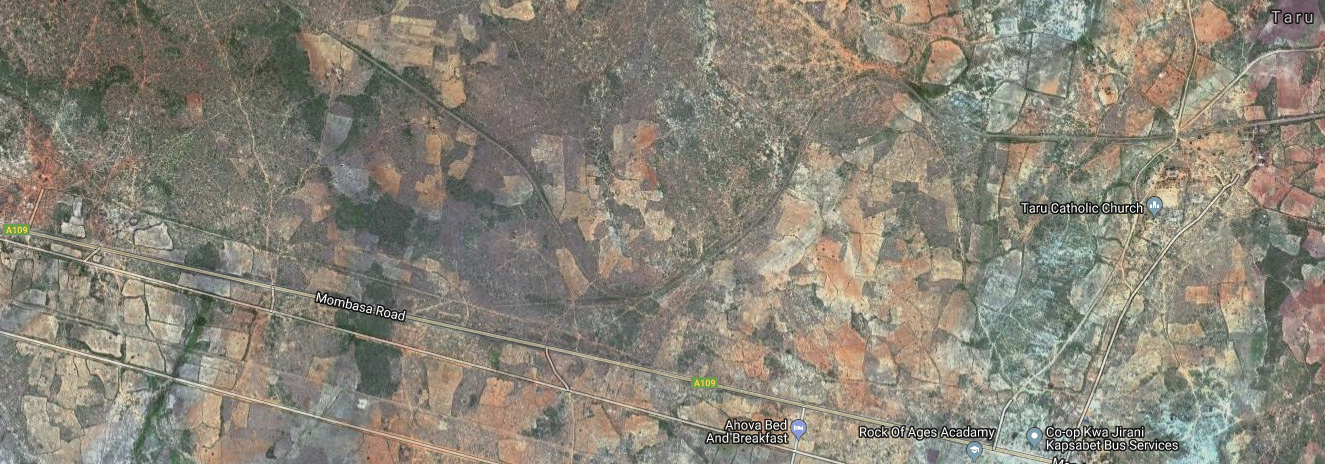
After Samburu, the line continued west-north-west to Taru a distance of about 18 kilometres.

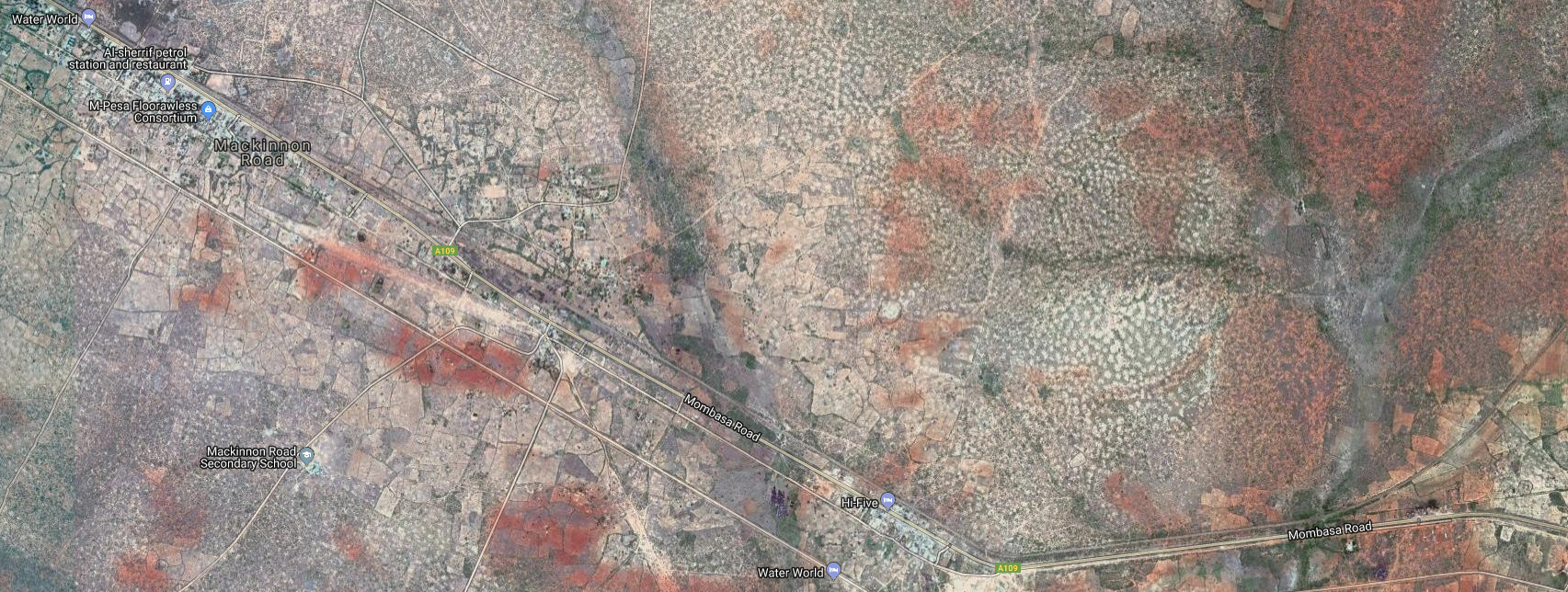
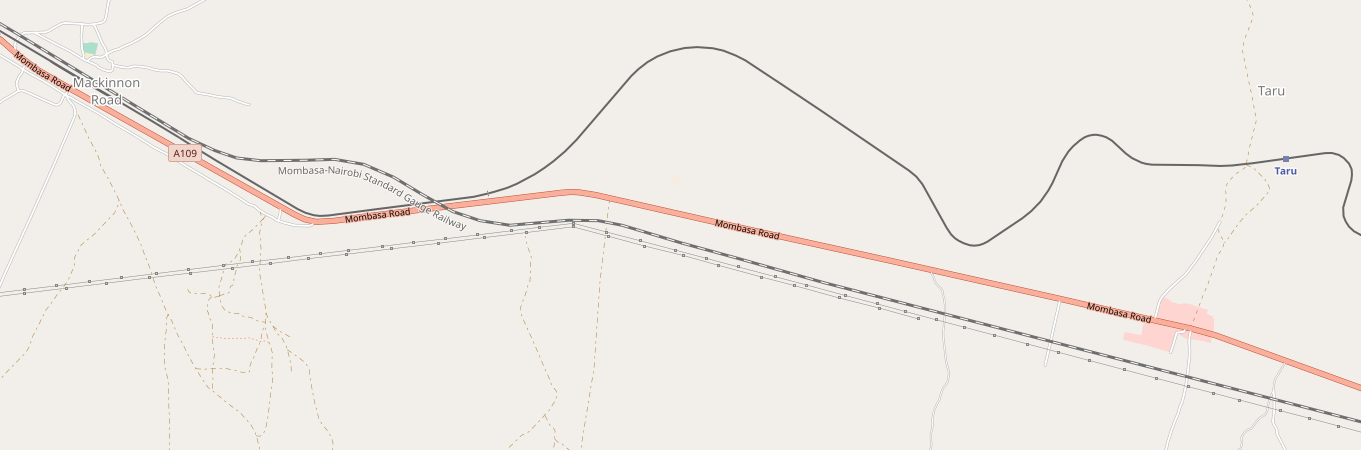
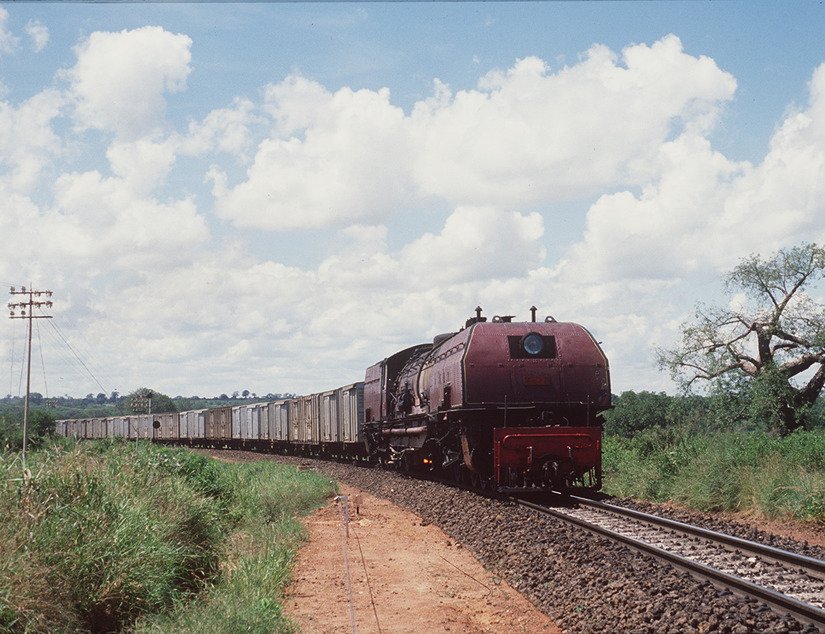
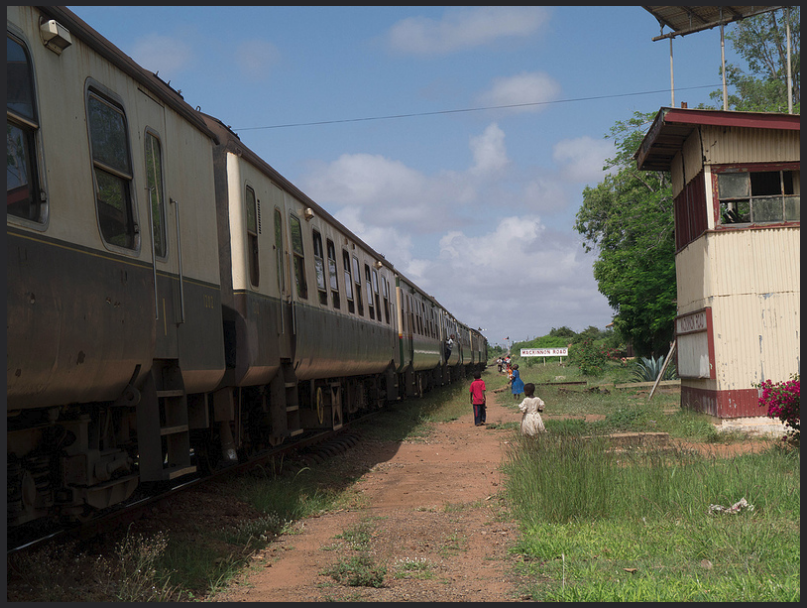
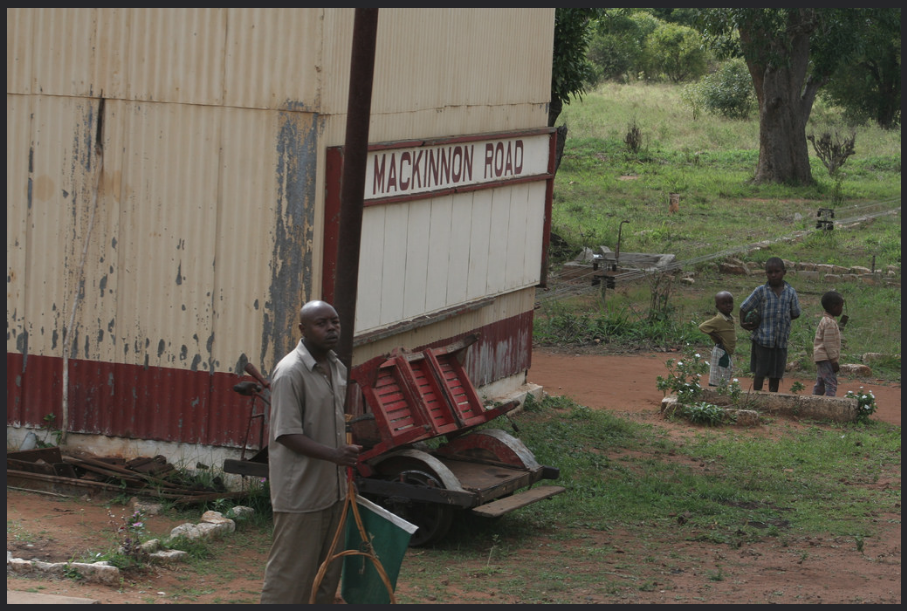
From Taru, we head on to Mackinnon Road Station, probably so named because it was at the junction between the old Mackinnon ox-cart road, construction of which was started in 1890 by the British East Africa Company, and the railway. Quickly, once the railway was complete the Ox-cart road became disused.[6]The railway was some distance north of the Nairobi to Mombasa Road at Taru. En-route to Mackinnon Road it converged again with the line of the road, before deviating north and then approaching the line of the road very closely.At Mackinnon Road, as can be seen above, the old metre-gauge railway route through the town has been superseded by the SGR.5903 at Mackinnon Road – Class 59 Beyer-Garratt on a Nairobi-Mombasa freight train near Mackinnon Road on 21st February 1978, © James Waite.[7]

In Dec 1977 No.5918 Mount Gelai hauls the A38 goods eastwards over steep
gradients towards Mackinnon Road. The 59 class was well suited to hauling heavy loads.
They had double the tractive effort of any locomotive employed on passenger service in the UK, where they were built in 1955.[8]. The next three photos can be found on the same reference.[8]Mackinnon Road  Jennifer Wu. [9]Mackinnon Road Inspection Vehicle, National Archives.Mackinnon Road  Ken Flottman. [10]

Immediately adjacent to the running lines of both the metre-gauge line and the SGR is Mackinnon Road Mosque. The track of the metre-gauge line can be seen in the image below.

Travelling on from Mackinnon Road, the railway travels in a straight line in a North-westerly direction. The next station is Miasenyi at the corner of the Tsavo East National Park. And then along the boundary of the park is passes through intermediate stations at Buchuma, Wangala and Maungu before passing under the new SGR.

Bucuma Railway Station.

The new SGR station at Miasenyi is shown above the old railway station at Maungu, below.

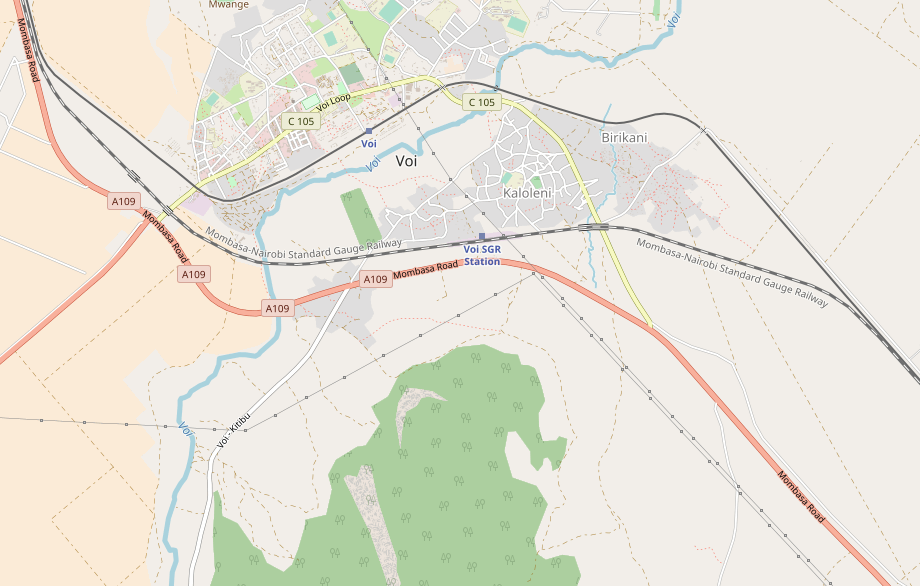
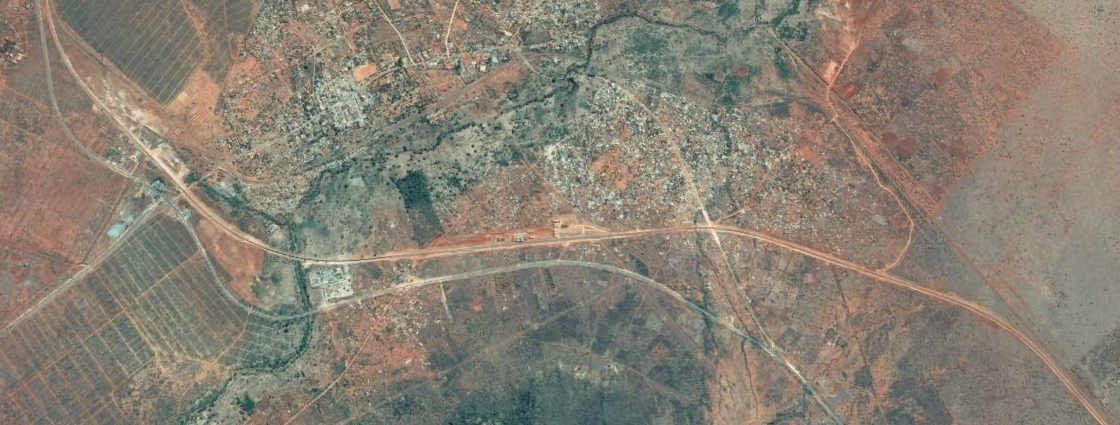
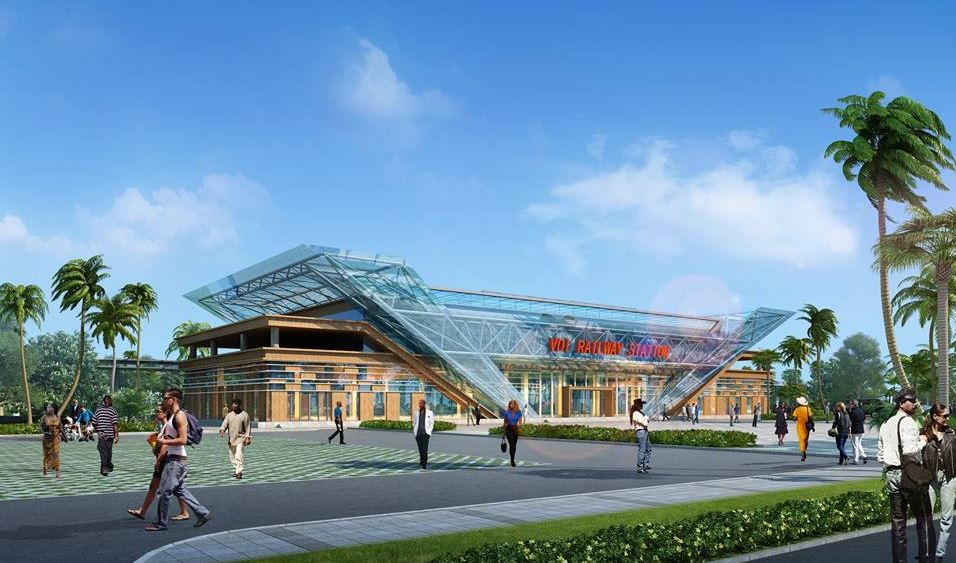
There is another station at Ndara before we reach Voi.At Voi, the SGR station is outside the town limits and south of the River Voi, The metre-gauge line is in the centre of the urban area and north of the River Voi. The images below show the SGR station.

The remaining images in this post show different aspects of the metre-gauge line in and around Voi and station at Voi. Voi is the largest town in Taita-Taveta County in southern Kenya, in the former Coast Province. It lies at the western edge of the Taru Desert, south and west of the Tsavo East National Park. The Sagala Hills are to the south. [12] It is also a junction station with a branch-line leaving the Nairobi-Mombasa line to head into Kenya. Stations on that branch-line are Mwatate,  Bura,  Mashoti,  Maktau,  Murka,  Ziwani and  Taveta, all in Kenya. The line connects with the Tanzanian main-line at Moshi, close to Mt. Kilimanjaro.

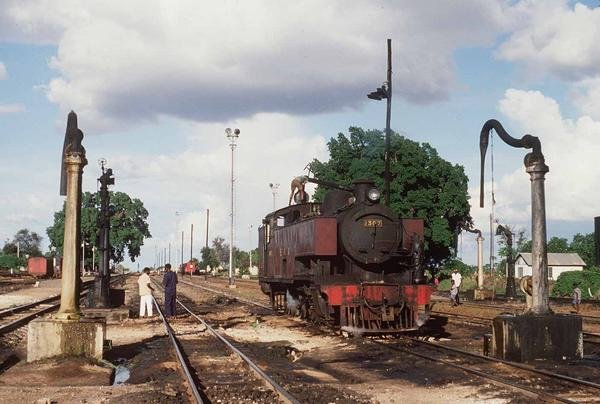
The River Voi Bridge, not far before the Station at Voi.Tribal Class 3113 Bamba in the passing loop near Voi. Note the meticulously maintained ballast. –  © James Waite. [11]A 59 Class at speed with a tank train train near Voi –  © James Waite. [11]5903 Mount Meru at Voi with a train from Taveta in the loop, © James Waite. [11]2455 detaches from its train and prepares to take on water at Voi –  © James Waite. [11]1307 4-8-4T takes water at Voi Shed – © James Waite. [11]

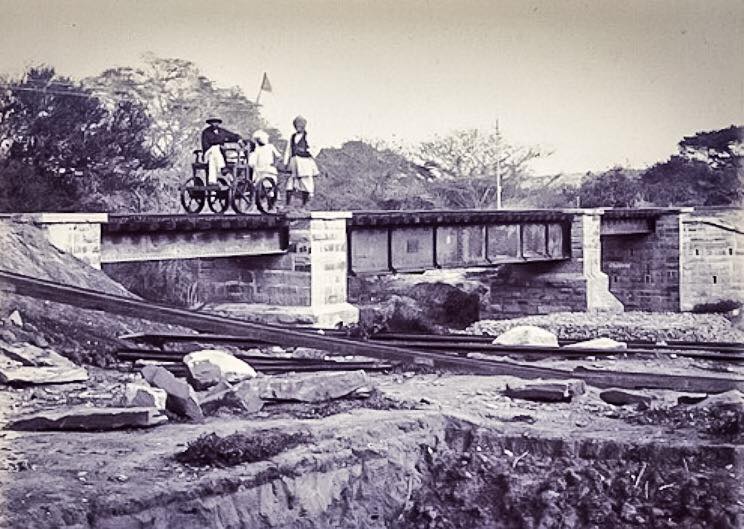
Station name board in 1979 © CPH3 on Flickr [13] and a considerably old picture courtesy of the National Archive of the Eastern End of Voi Station.


References

1. https://www.flickr.com/photos/99955440@N00/5769666434/in/photolist-9MR3Pu-ozRbFX-oQksuC-ozTi1V-fY73g6-f7yutZ-ZYFAJw-6CyFbU-9we32a-8wscyi-8ws5yH-8wrsnM-eDFyrF-8wu1L1-a471FW-8wvJJm-ohCG7b-8wuzqE-f7QNcg-f7t5ep-8wsgyR-8wvdph-8wraCr-9eNPFi-8wvk27-ofDfwN-eDFz7x-8wrjar-o1cHbg-8wtWab-ctLxKh-ojrcLp-8wqYyH-8wqSbH-8wr416-dsfbym-8wr7vP-8wu5K9-o98cvX-8wvMyJ-ozRx1q-8wv83L-8wvxZJ-8wsq3K-ojre6i-gJqL1G-8wuVzC-G5N9ne-ohF7Wk-G5N9fk, accessed on 16th May 2018.

2. https://www.flickr.com/photos/47611518@N05/4938958783/in/photolist-8wrsnM-eDFyrF-8wu1L1-a471FW-8wvJJm-ohCG7b-8wuzqE-f7QNcg-f7t5ep-8wsgyR-8wvdph-8wraCr-9eNPFi-8wvk27-ofDfwN-eDFz7x-8wrjar-o1cHbg-8wtWab-ctLxKh-ojrcLp-8wqYyH-8wqSbH-8wr416-dsfbym-8wr7vP-8wu5K9-o98cvX-8wvMyJ-ozRx1q-8wv83L-8wvxZJ-8wsq3K-ojre6i-gJqL1G-8wuVzC-G5N9ne-ohF7Wk-G5N9fk-8wvm4G-8wuBqL-ohF3Ck-8wuPXw-9XYj2v-o98cDx-8WMrNX-opkeZ4-CVkCYJ-8WQyTE-4Wm3nw, accessed on 16th May 2018.

3. https://www.flickr.com/photos/nationalarchives/5407104131/in/photolist-9eNPFi-8wvk27-ofDfwN-eDFz7x-8wrjar-o1cHbg-8wtWab-ctLxKh-ojrcLp-8wqYyH-8wqSbH-8wr416-dsfbym-8wr7vP-8wu5K9-8wvMyJ-ozRx1q-8WMrNX-8WQyTE-8wv83L-8wvxZJ-8wsq3K-ojre6i-8wuVzC-G5N9ne-ohF7Wk-G5N9fk-8wvm4G-8wuBqL-ohF3Ck-8wuPXw-o98cDx-9XYj2v-opkeZ4-CVkCYJ-4Wm3nw-4WgHP2-4WkxAd-KmrH99-874wuf-8wvGVf-8WQx99-CVkDbN-ejxoqQ-f7QNwF-ofDdwq-f863wq-9XYxe2-8WMtVD-f7QNqT, accessed on 16th May 2018.

4. #Savetherailway; http://www.savetherailway.com, accessed on 14th May 2018.

5. African Digital Heritagehttp://africandigitalheritage.com/2017/11/21/3d-reconstruction-of-samburu-railway-station.

6. Wikipedia, Mackinnon Roadhttps://en.wikipedia.org/wiki/Mackinnon_Road, accessed on 19th May 2018.

7. https://www.narrow-gauge.co.uk/gallery/show.php?image_id=472&cat_id=93, accessed on 19th May 2018.

8. Sikh Heritage in East Africahttps://www.sikhnet.com/news/sikh-heritage-east-africa, accessed on 19th May 2018.

9. https://www.flickr.com/photos/wippetywu/8334292244/in/photolist-dCVoSC-QsEenu-RaD6ny-6MTzC7-dGtqHS-cyt9W9-673J6P-yENGnZ-dNcMXE-9eSeFo-EPDdqs-8nNbSk-au78S2-dsRSfD-dsRZmb-T7YJZB-EPD4NN-dsS285-pRFA4Y-oUKYKU-DTNExR-JxcHi6-JxcHrc-dRKYJy-dsRY5s-DTsZts-DQatYa-au6W7i-Sx6upE-itmJVp-DQauNg-JxcHSn-pTuNZj-fr49Ei-e8Ujgm-frirKj-frirys-e8NEUk-e8NERK-wxHG4-wxHGQ-oj1Vwc-oCfZK2-oj1qDd-oj1r1L-9eC7YM-oraXMr-DQatEp-oAtmPU-9eFjX9, accessed on 19th May 2018.

10. https://www.flickr.com/photos/oaxacania/3350214665/in/photolist-dCVoSC-QsEenu-RaD6ny-6MTzC7-dGtqHS-cyt9W9-673J6P-yENGnZ-dNcMXE-9eSeFo-EPDdqs-8nNbSk-au78S2-dsRSfD-dsRZmb-T7YJZB-EPD4NN-dsS285-pRFA4Y-oUKYKU-DTNExR-JxcHi6-JxcHrc-dRKYJy-dsRY5s-DTsZts-DQatYa-au6W7i-Sx6upE-itmJVp-DQauNg-JxcHSn-pTuNZj-fr49Ei-e8Ujgm-frirKj-frirys-e8NEUk-e8NERK-wxHG4-wxHGQ-oj1Vwc-oCfZK2-oj1qDd-oj1r1L-9eC7YM-oraXMr-DQatEp-oAtmPU-9eFjX9, accessed on 19th May 2018.

11. http://www.mccrow.org.uk/EastAfrica/EastAfricanRailways/NairobiMombasa.htm, accessed on 19th May 2018.

12. Wikipedia, Voi; https://en.wikipedia.org/wiki/Voi, accessed on 19th May 2018.

13. https://www.flickr.com/photos/steam_locos/11603191816/in/photolist-iFkoFj-aLaZ5n-9eFoeL, accessed on 19th May 2018.

The Uganda Railway – Part 3 – Mombasa to Mazeras

This post follows the line of the Uganda Railway from Mombasa. In the light of the advent of a standard gauge line between Mombasa and Nairobi, there is a campaign to save some of the older stations and perhaps part of the metre-gauge line as well. Some of the pictures of stations come from the campaign website.[1]

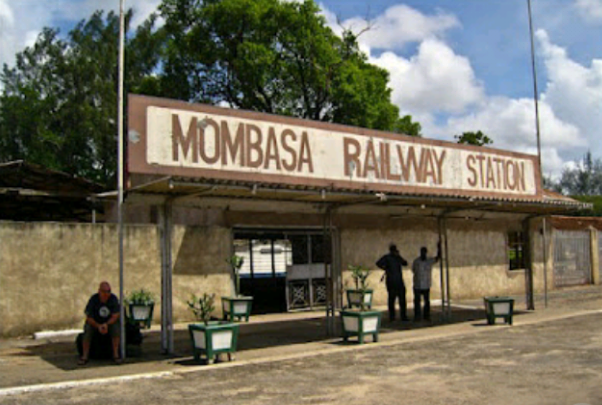
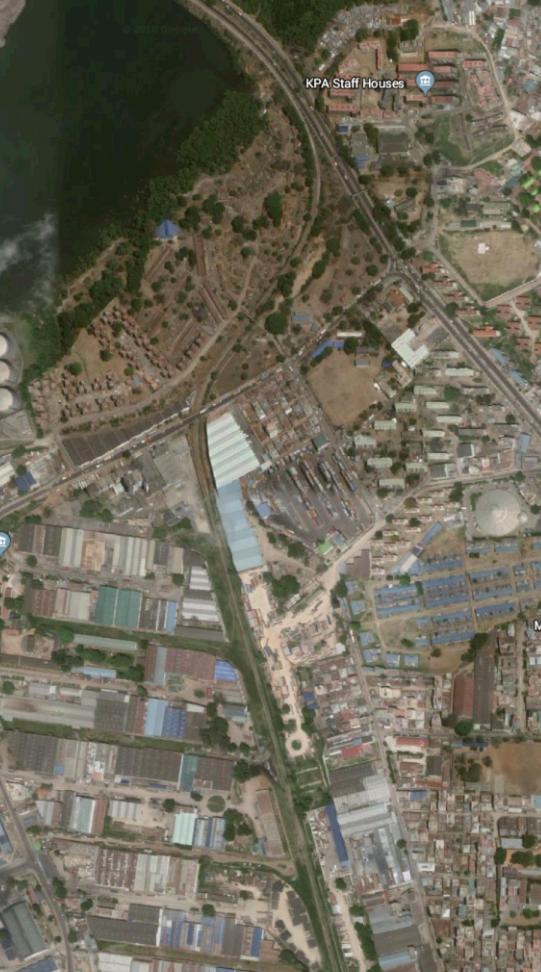
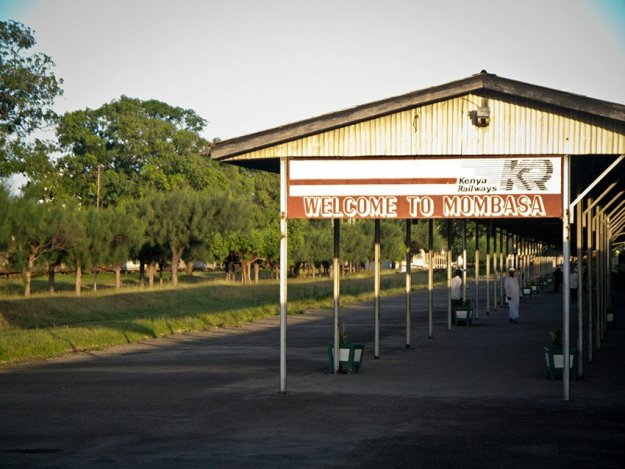
We start at Mombasa. The first image is a Google Earth satellite image showing the station and some immediate goods sidings. the station is in the middle of Mombasa Island and at the heart of the city.

The station retains it old colonial style but has been upstaged by the new standard-gauge station on the mainland.

Trains travelled north out of the station throat passing the station engine shed. The pictures of the shed are courtesy of the Friends of Mombasa website.[2]

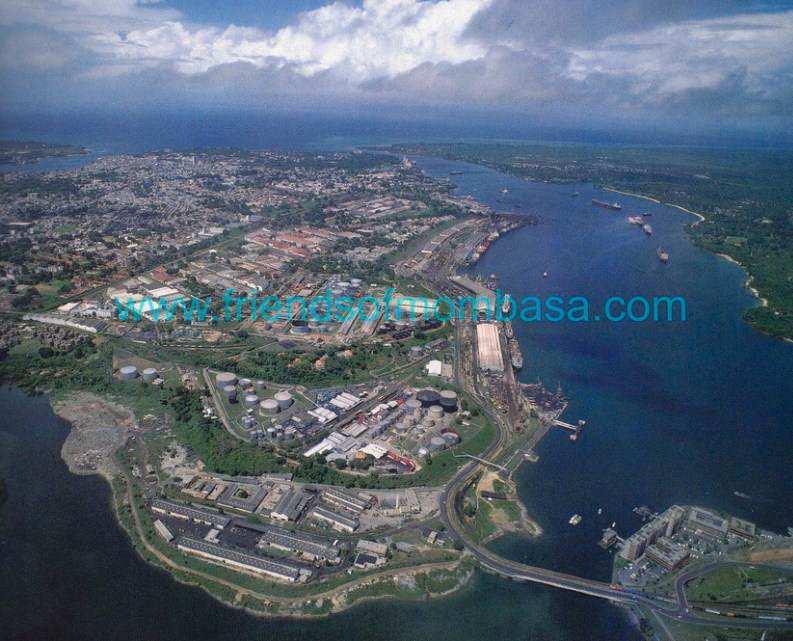
The line was joined by a branch from Mbaraki Creek and then had a series of small industrial branches evident to the west of the line, before first swinging to the north-east and then back to a roughly north-westerly trajectory to cross the water between Mombasa Island and the mainland.

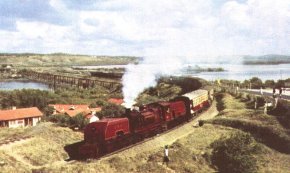
Once on the mainland the mainline turned west and then north. The picture above is courtesy of the Friends of Mombasa.[2] These two images of Garratt locomotives are taken close to the bridge on Mombasa Island.[3] They are both publicity pictures for East African Railways.

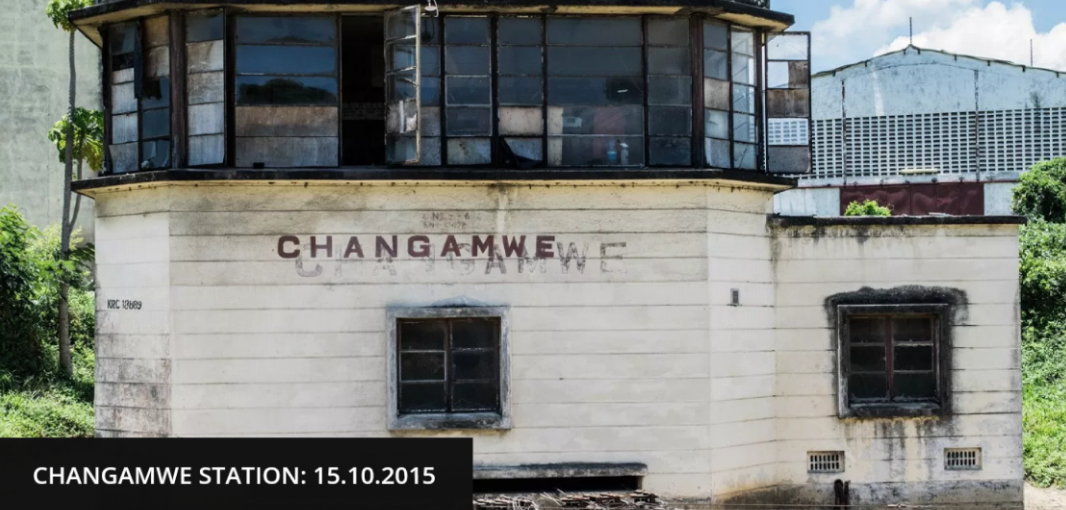
download6c89ff1a_f0_2fPictures_2fScreenshots_2fScreenshot_2018-05-14-09-47-15As the line turned to the north it was joined by a branch which served the Chamgamwe Oil Refinery to the south. Next came the first station on the line at Chamgamwe. The photographs of this station from the 1960s and 1970s are courtesy of Malcolm McCrow’s website [3] and are copyright Malcolm McCrow and Kevin Patience.

This picture shows a single-headed goods train arriving at Chamgamwe from Nairobi.

Double-headed by Class 59 Garratts a goods train travels through Chamgamwe Station in the two pictures above.

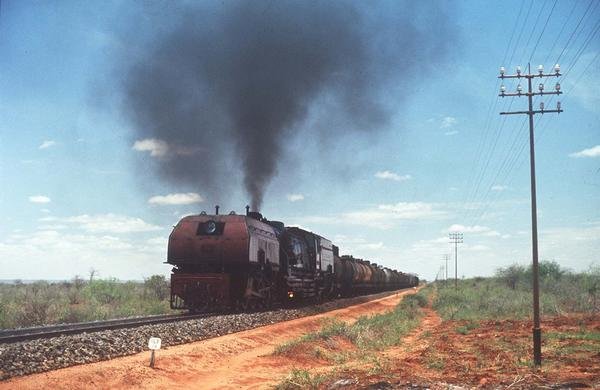
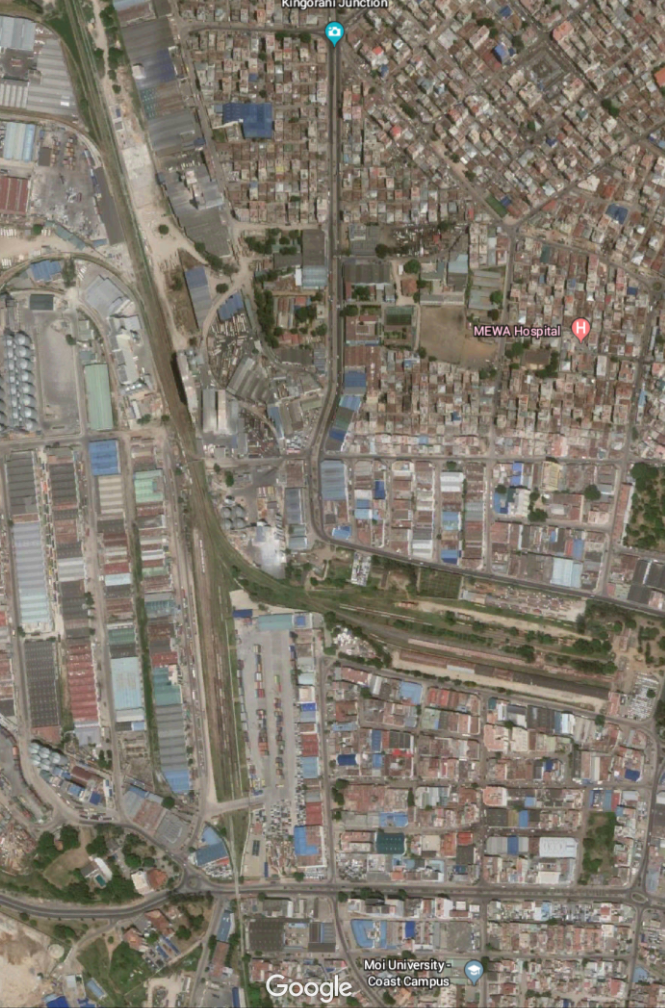
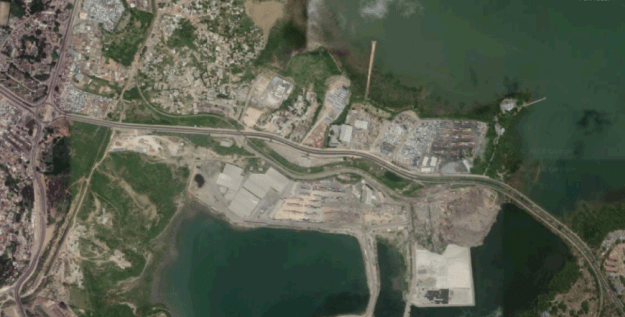
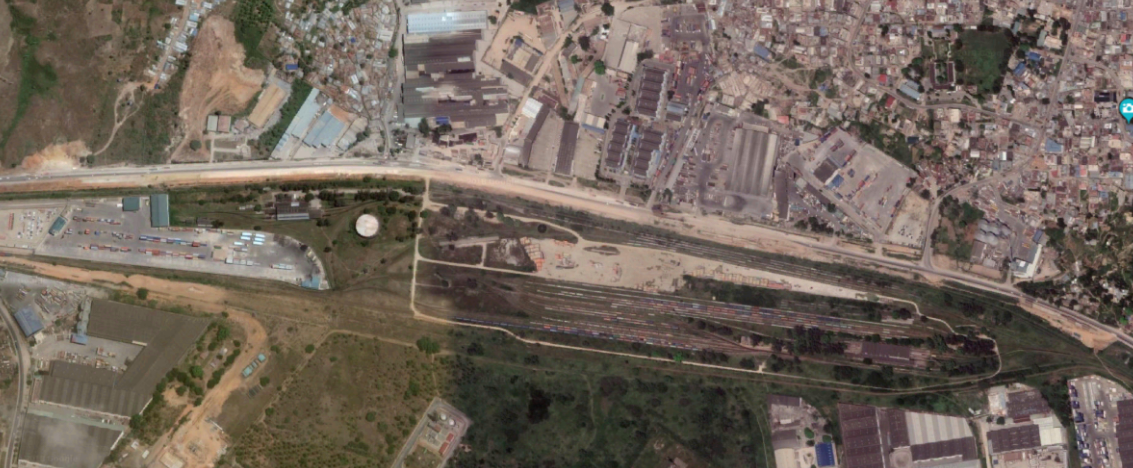
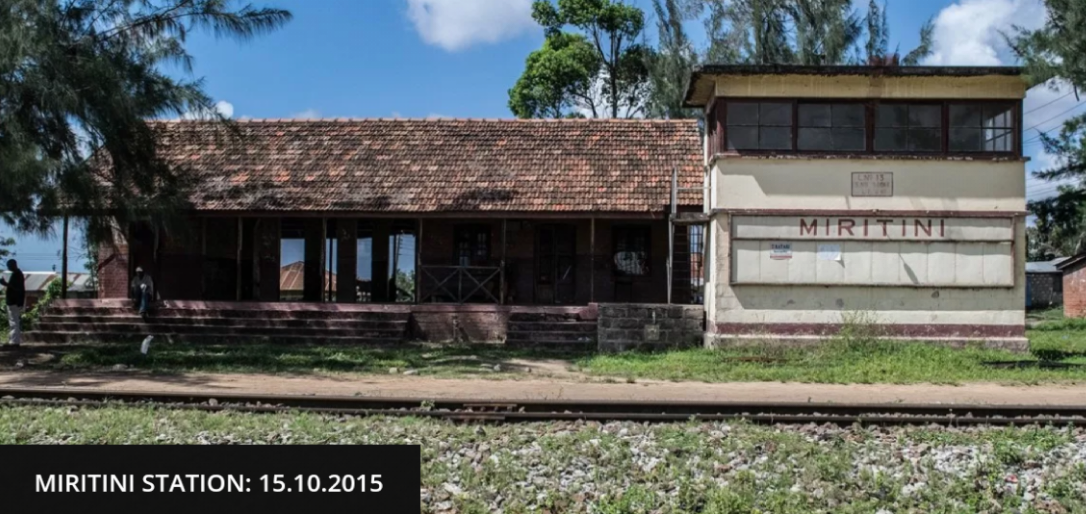
As we travel further along the line, the next station is Miritini. This is the location of the terminus of the new SGR (Standard Gauge Railway). It is close to the north end of the runway of Moi International Airport. The route of the line is marked on the map below just below the Mombasa Road. The two satallite images below show the line passing through a goods marshalling yard to the north-east of the airport and then travelling passed the north end of the runway.

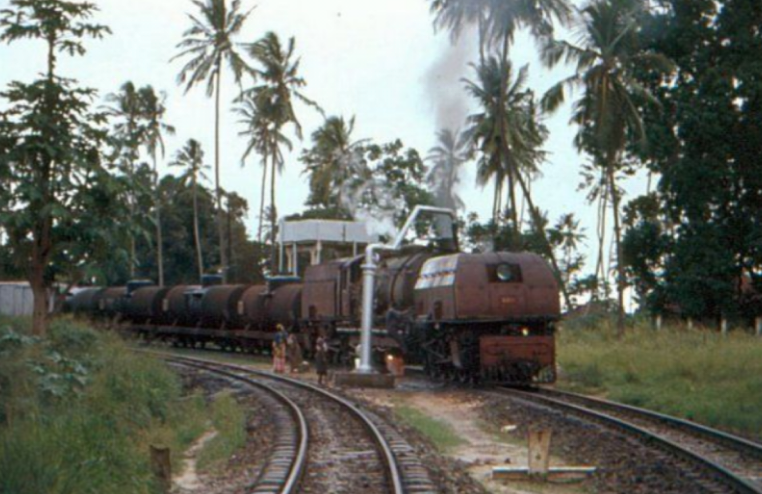
Class 59 Garratt 5911 Mount Sekerri from Nairobi arrives beneath the palm tress at Miritini hauling a tank train.[4] 

The passenger train station in Miritini, Mombasa, on May 2017. [5]

At the time of writing of this blog post, the old metre-gauge line can still be followed on the satellite images provided by Google Earth beyond Mirtini. The next significant points on the line are the station and spiral at Mazeras. The spiral is encountered first and a kilometre or two further along the line we encounter the station.

Approaching the spiral from Mombasa the railway has been following the Mombasa to Nairobi main roadroad andntravelling in a roughly westerly direction. The map and the satellite image below show the railway separating from the road and travelling in a south-westerly direction towards the spiral.

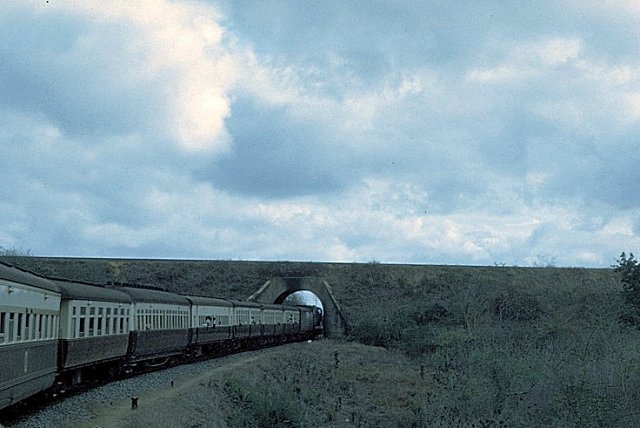
Nairobi-bound trains pass under the higher level of the spiral before then crossing over the lower line. Malcolm McCrow provides a few images from 1970s. [3] I have not yet been able to find any other pictures.

An evening train from Mombasa approaches the spiral, © Peter Ritchie (1971).

The view from the cab of a Class 59 Garratt as it comes down off the spiral and passes under the higher line. ©Kevin Patience.

The Morning Train A02 from Nairobi descends the Mazeras Spiral as it heads for its 8:00am arrival in Mombasa, © Peter Ritchie.

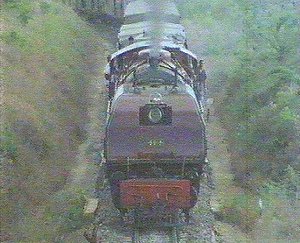
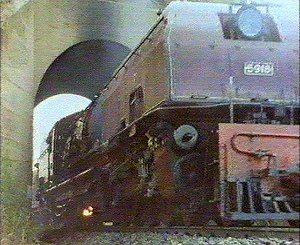
And before we leave the spiral, a sequence showing Class 59 Garratt No. 5918 Mount Gelai negotiating the spiral in 1975.[3] The picture quality is lower as these images come from  video, © Ian Stone.Mazeras station comes a short distance north along the line.

In the next post we will travel on toward Voi and then on to Nairobi.


References

1. #Savetherailway; http://www.savetherailway.com, accessed on 14th May 2018.

2. The Friends of Mombasahttp://www.friendsofmombasa.com, accessed on 15th May 2018.

3. McCrow.org.uk; http://www.mccrow.org.uk/EastAfrica/EastAfricanRailways/NairobiMombasa.htm, accessed 14th May 2018.

4. https://www.pinterest.com/pin/554083560377607729, accessed on 15th May 2018, sourced from http://www.mccrow.org.uk © Kevin Patience.

5. Photo courtesy of the Nation Media Group photographer, Jeff Angote; Ng’ang’a Mbugua; SGR can open up Kenya if we build lines to feed it; Friday 2nd June 2017, https://www.nation.co.ke/oped/opinion/sgr-can-open-up-kenya-if-we-build-service-lines-to-feed-it/440808-3953710-bxs6l0z/index.html, accessed on 15th May 2018.

The Uganda Railway – Part 2

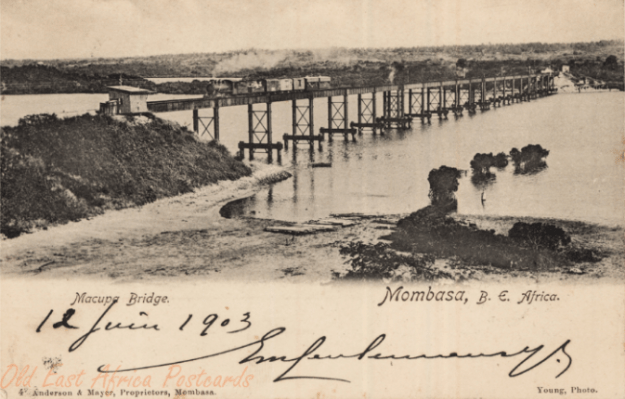
Although the featured image bears the title ‘Zanzibar’ it is actually a picture of an early wooden trestle bridge on the Uganda Railway at Mombasa. The picture is probably taken in 1899.[1] The card itself is dated 1901. The pictures were taken by Coutinho Bros. Photographers of Zanzibar. The picture of the railway is taken from “the lead in to the wooden trestle bridge built across the creek for the Uganda Railway between Mombasa Island and the mainland in 1896.”[2] This only remained in service for a short time, being replaced by an iron pile bridge, which itself was only in service until the 1920s. Pictures of this iron bridge are shown below. The crossing was called the Macupa (Salisbury) Bridge. The first picture was taken in 1903, the second in 1909 …
More about the History of the network of Metre-Gauge Railways in East Africa

A. Uganda Railway: The Uganda Railway was, first of all, a means of reaching Lake Victoria from Mombasa. Construction of the railway line started, as we have noted in the first post in this series,[3] just before the turn of the 20th Century. The Uganda Railway Company lasted until 1927 when it was reorganised and renamed as the Kenya-Uganda Railways & Harbours Company.

The terminus at Lake Victoria was called Port Florence and was named for the wife of the railway engineer, Ronald Preston. On 20th December 1901, Mrs Florence Preston took a hammer to symbollically drive in the last spike of the last rail immediately on the shore of the Lake.[4]

Within a year the name of the settlement had reverted to that given by the Luo people. The Luo called it ‘Kisumo’ (a good place to look for food). Kisumu was not the first port used by the British on the East coast of Lake Victoria. They first established Port Victoria, but by 1898, British explorers decided that the location of Kisumu was favourable. It was at the cusp of the Winasm Gulf and at the end of caravan trails from Pemba, Mombasa and Malindi and had great potential for access by lake steamers.

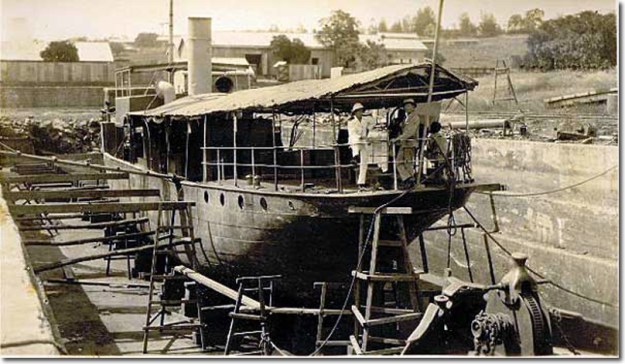
Almost from its inception the Uganda Railway developed shipping services on Lake Victoria. In 1898, it launched the 110 ton SS William Mackinnon at Kisumu, having assembled the vessel from a kit supplied by Bow, McLachlan and Company of Paisley in Scotland. A succession of further Bow, McLachlan & Co. kits followed. The 662 ton sister ships SS Winifred and SS Sybil (1902 and 1903), the 1,134 ton SS Clement Hill (1907) and the 1,300 ton sister ships SS Rusinga and SS Usoga (1914 and 1915) were combined passenger and cargo ferries. The 812 ton SS Nyanza (launched after Clement Hill) was purely a cargo ship. The 228 ton SS Kavirondo launched in 1913 was a tugboat. Two more tugboats from Bow, McLachlan were added in 1925: SS Buganda and SS Buvuma.[1],[5],[6]

The amazing story of the delivery and construction of the SS William Mackinnon is covered elsewhere but is worth reading. The ship was dismantled into a series of parts, all but two of which were less than the weight designated for an individual porter. The parts made their way across the interior by porter long before the railway was completed.[7]
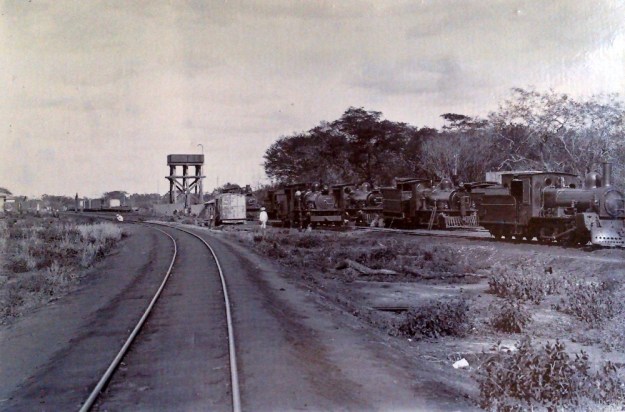
Boats, ships and steamers are not the main focus of this post, so let’s get back on track! Here are two images of the railway which I have found on another WordPress blog.[8]. The first shows construction in progress the second shows the railway passing through a small local settlement.

There is an excellent collection of photographs relating to the construction of the Uganda Railway on this link:

https://www.theeagora.com/the-lunatic-express-a-photo-essay-on-the-uganda-railway

Just a few of those images are reproduced here … three examples include the arrival of the line at its first station out of Mombasa, Chamgamwe, just 6 miles out of Mombasa. It was opened on 15th December 1897.

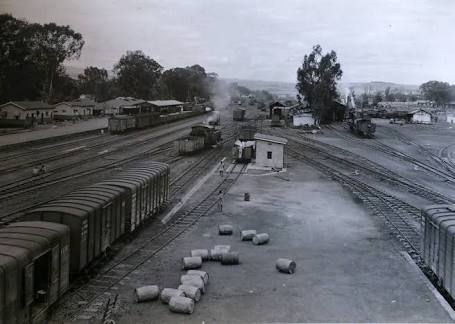
Voi (below) was 100 miles from Mombasa.

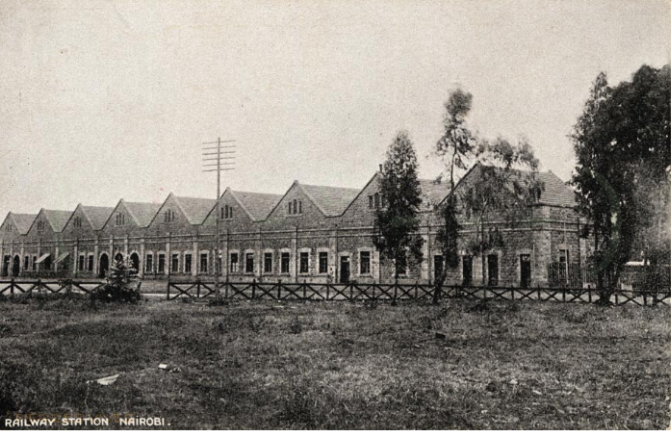
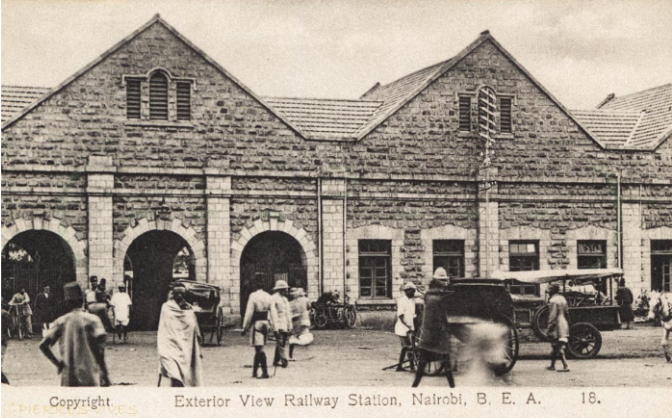
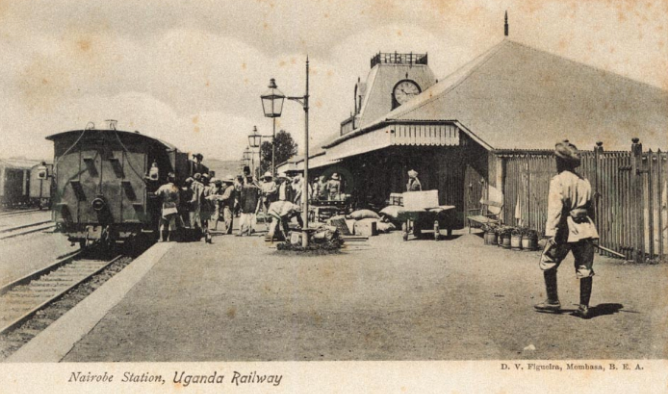
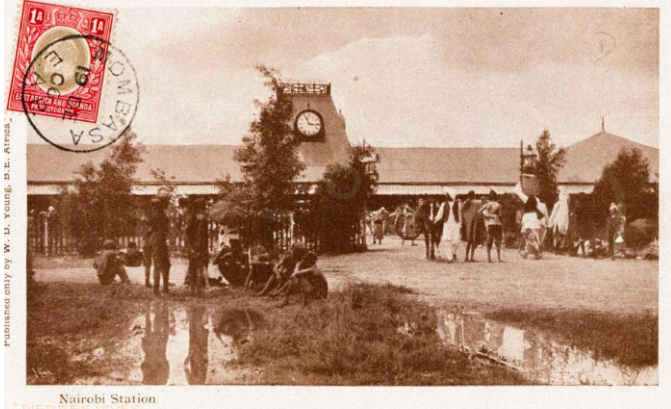
Nairobi Station was 326 miles from Mombasa and is shown in old postcard pictures below.


The railway continued through a series of smaller stations to Kisumu. Once the railway reached Kisumu, access to Lake Victoria was transformed, and an 11-kilometre (7 mile) rail line between Port Bell and Kampala was the final link in the chain providing efficient transport between the Ugandan capital and the open sea at Mombasa, more than 1,400 km (900 miles) away.[1]

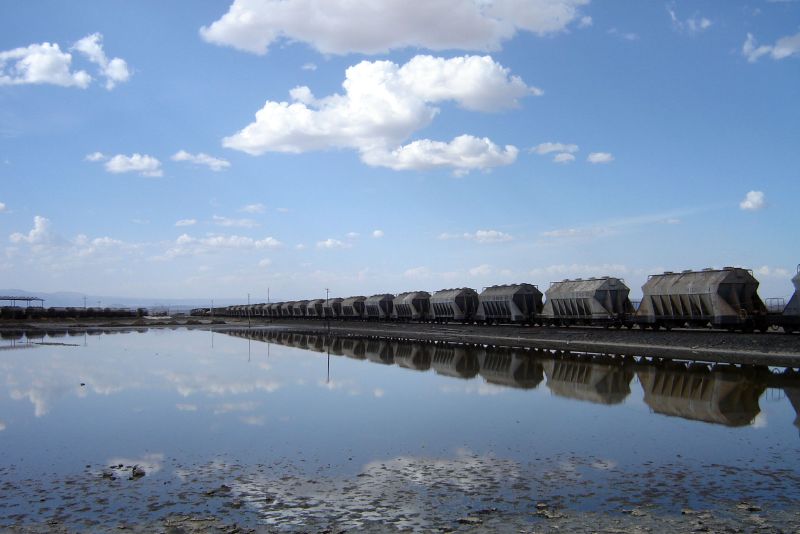
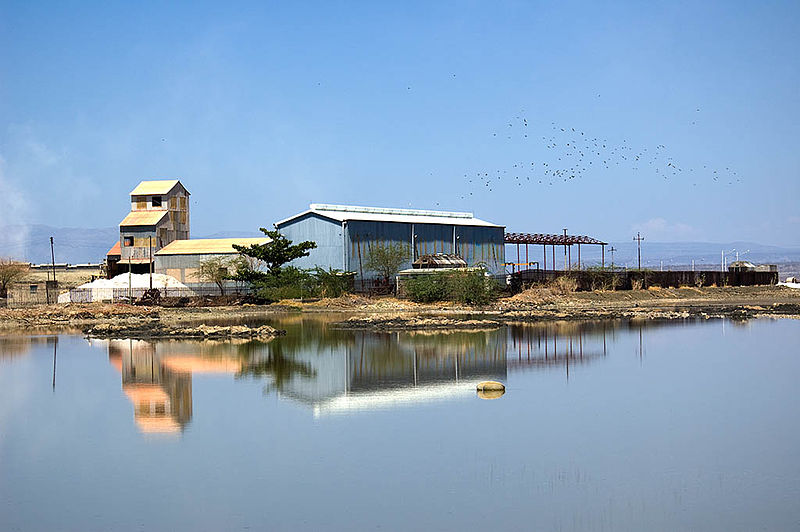
Branch lines were built to Tikka in 1913, Lake Magadi in 1915, Kitale in 1926, Naro Moro in 1927 and from Tororo to Soroti in 1929. Lake Magadi provided a strong commercial interest as it proved to be an excellent place for harvesting naturally occuring soda.

Lake Magadi is the southernmost lake in the Kenyan Rift Valley, lying in a catchment of faulted volcanic rocks, north of Tanzania’s Lake Natron. During the dry season, it is 80% covered by soda and is well known for its wading birds, including flamingos, it is a saline, alkaline lake, approximately 100 square kilometres in size and an example of a “saline pan”. The lake water, which is a dense sodium carbonate brine, precipitates vast quantities of the mineral trona (sodium sesquicarbonate). In places, the salt is up to 40 metres thick. The lake is recharged mainly by saline hot springs (temperatures up to 86 °C) that discharge into alkaline “lagoons” around the lake margins.[8]
I enjoyed a visit to the soda works at Lake Magadi in 1994, sadly by car and not by train!

The Soda Works

A soda train on the Magadi branch in Kenya

Theeagora.com refers to the Uganda Railway as ‘The Lunatic Express’, as do a number of different sources.[1],[9] It was first given a similar moniker as early as the late 19th Century. The Uganda Railway faced a great deal of criticism in the British Parliament, as many MPs felt that the railway was a Lunatic Line:

What is the use of it, none can conjecture,
What it will carry, there is none can define,
And in spite of George Curzon’s superior lecture,
It is clearly naught but a lunatic line.
— Henry Labouchère, MP, [1],[10]

“Political resistance to this “gigantic folly”, as Henry Labouchère called it,[1],[11] surfaced immediately. Such arguments along with the claim that it would be a waste of taxpayers’ money were easily dismissed by the Conservatives. Years before, Joseph Chamberlain had proclaimed that, if Britain were to step away from its “manifest destiny”, it would by default leave it to other nations to take up the work that it would have been seen as “too weak, too poor, and too cowardly” to have done itself.[1],[12] Its cost has been estimated by one source at £3 million in 1894 money, which is more than £170 million in 2005 money,[1],[13] and £5.5 million or £650 million in 2016 money by another source.”[1],[14]

“Because of the wooden trestle bridges, enormous chasms, prohibitive cost, hostile tribes, men infected by the hundreds by diseases, and man-eating lions pulling railway workers out of carriages at night, the name “Lunatic Line” certainly seemed to fit. Winston Churchill, who regarded it “a brilliant conception”, said of the project: “The British art of ‘muddling through’ is here seen in one of its finest expositions. Through everything—through the forests, through the ravines, through troops of marauding lions, through famine, through war, through five years of excoriating Parliamentary debate, muddled and marched the railway.””[1],[15]

The modern term Lunatic Express was coined by Charles Miller in his 1971 “The Lunatic Express: An Entertainment in Imperialism.” [9]

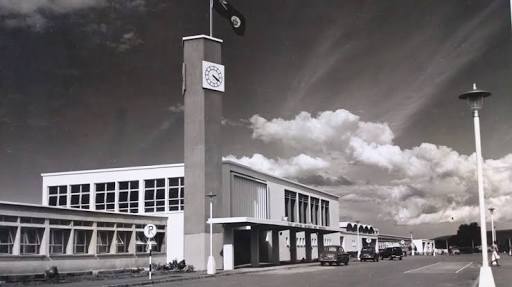
B. Kenya-Uganda Railways and Harbours: In 1927 the Uganda Railway was transformed into Kenya-Uganda Railways & Harbours by the British colonial administration. The railway system in Kenya & Uganda operated in this guise until 1948. during this time the railway system was further expanded. In 1931, a branch line was completed to Mount Kenya and a significant extension to the mainline was made from Nakuru to Kampala in Uganda. This line made the route to Kisumu less significant. Nakuru Station had significant marshalling yards. The first image is an early picture of the station and its sidings. The second picture shows the station building built in the mid-1950s. This new station was opened on 14th June 1957 by the then Governor of Kenya Sir Eveleyn Baring. As can be seen it was of an architectural style redolent of buildings in the UK in the 1950s.


C. East African Railways and Harbours – 1948 to 1966: in 1948, Kenya, Uganda and Tanzania came under the same British Colonial Administration. Following the terms of the Versailles Treaty in 1919 Germany lost all her colonies worldwide. The colonies became the mandate territories of the League of Nations (currently United Nations). Victorious nations surrounding the mandate territories were allowed to administer them on behalf of the League of Nations. The railways of the three colonies/ protectorates were amalgamated.

D. East African Railways Corporation – 1966 to 1978: following independence, the three East African Presidents Jomo Kenyatta, Julius Nyerere and Milton Obote met in Arusha and came up with the Arusha declaration in 1966. In the declaration, it was resolved that efficiency in parastatals needed to be improved. One of the parastatals identified for reform was East African Railways & Harbours. It was decided in this meeting that harbours be divorced from the railways administration. This was done purely for the purpose of efficiency. In 1969, the name changed to East African Railways Corporation.

E. Kenya Railways Corporation, Uganda Railways Corporation and Tanzania Railways Corporation – 1978-2006: by the late 1970s, the distrust between the three East African leaders, Nyerere, Kenyatta and Idi Amin had reached fever pitch. This was partly due to the different political ideologies that the three leaders practiced. Additionally, Nyerere and Amin believed that Kenya was benefiting more from the East African Community than Tanzania and Uganda. Personal differences between the three leaders culminated in the break-up of the East African Community in 1977. The break up led to the birth of Kenya Railways, Uganda Railways & Tanzania Railways as separate entities.

F. Rift Valley Railways – 2006 to 2017: Rift Valley Railways (RVR) took over the operations of the Kenya and Uganda Railways on 1st November, 2006. RVR was established on October 14, 2005, when the Government of Kenya and the Government of Uganda jointly tendered through a bidding process, a 25 year concession for the rehabilitation, operation and maintenance of the railways then run by Kenya Railways Corporation (KRC) and Uganda Railways Corporation (URC) respectively. The concession was terminated in October 2017.[16]
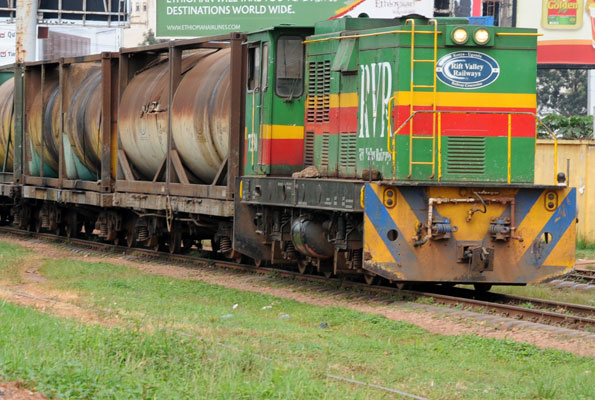
G. Uganda Railways Corporation – 2017 to …….: The railways of Uganda and Kenya are now back under government control. Kenya is already developing a standard gauge railway system and it is very possible that with Chinese investment , a standard gauge system will extend across Uganda  and Tanzania into Rwanda, Burundi and the Democratic Republic of Congo. There may be more about this in a future post.

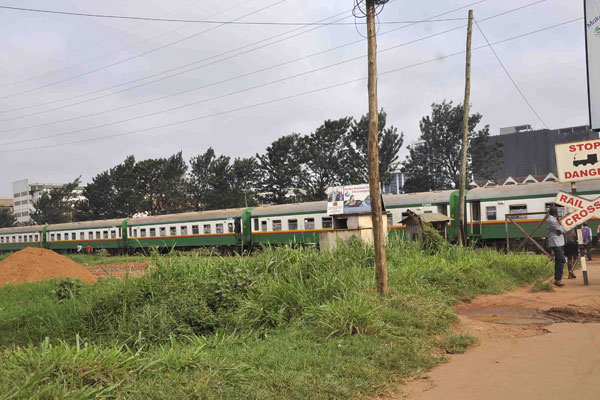
The existing lines within Uganda are in the hands of a renewed Uganda Railways Corporation. The transfer finally occurred in February 2018.[18] Commuter services in Kampala are due to resume in 2018, now that the railway is back in Ugandan hands.
References

1. Wikipedia, Uganda Railway; https://en.m.wikipedia.org/wiki/Uganda_Railway, accessed on 6th May 2018.

2. Old East Africa Postcards; http://www.oldeastafricapostcards.com/?page_id=2352, accessed 7th May 2018.

3. https://rogerfarnworth.wordpress.com/2018/05/09/uganda-railways-part-1.

4. AllAfrica.com; A Hundred Years Down the Drain; http://allafrica.com/stories/200110220533.html, accessed 9th May 2018.

5. Stuart Cameron, David Asprey & Bruce Allan; SS Buganda. Clyde-built Database, accessed on 22nd May 2011.

6. Stuart Cameron, David Asprey & Bruce Allan; SS Buvuma. Clyde-built Database, accessed on 22nd May 2011.

7. Ian H. Grant; Nyansa Watering Place, the Remarkable Story of the SS. William MacKinnon; The British Empire; https://www.britishempire.co.uk/article/nyanzawateringplace.htm, accessed on 9th May 2018.

8. Wikipedia, Lake Magadi; https://en.m.wikipedia.org/wiki/Lake_Magadi, accessed on 9th May 2018.

9. Theeagora.com, The Lunatic Express; https://www.theeagora.com/the-lunatic-express-a-photo-essay-on-the-uganda-railway,accessed on 9th May 2018; & Charles Miller, The Lunatic Express – An Entertainment in Imperialism; The History Book Club, 1971.

10. Peter Muiruri, End of road for first railway that defined Kenya’s history; The Standard; https://www.standardmedia.co.ke/article/2001241674/end-of-road-for-first-railway-that-defined-kenya-s-history, accessed on 9th May 2018.

11. Henry Labouchère. “UGANDA RAILWAY [CONSOLIDATED FUND]. HC Deb 30 April 1900 vol 82 cc288-335”. Hansard 1803–2005. UK Parliament. Retrieved 10 March 2012. I am opposed entirely to this sort of railway in Africa, and I have been opposed to this railroad from the very commencement because it is a gigantic folly. . . . This railroad has been, from the very first commencement, a gigantic folly.

12. Joseph Chamberlain. “CIVIL SERVICES AND REVENUE DEPARTMENTS ESTIMATES, 1894–5: CLASS V. HC Deb 01 June 1894 vol 25 cc181-270”. Hansard 1803–2005. UK Parliament, accessed on 10th March 2012.

13. Currency converter; The National Archives, accessed on 10th March 2012.

14. Daniel Knowles; The lunatic express. 1843; The Economist, 23rd June 2016, accessed on 15th July 2016.

15. Winston Spencer Churchill,; My African Journey; William Briggs, Toronto, 1909, p4-5.

16. Uganda, Kenya, failed railway deal, (Rift Valley Railways); The Monitor; http://www.monitor.co.ug/Business/Markets/Uganda–Kenya-failed-railway-deal—RVR-chief/688606-4140902-15aa6p0/index.html, accessed on 10th May 2018.

17. Isaac Khisa; The Independent (Kampala) AllAfrica.com, Uganda Railways is back! http://allafrica.com/stories/201708140089.html, accessed on 10th May 2018.

18. Amos Ngwomwoya“Passenger train services to resume on Monday”Daily Monitor. Kampala, 23rd February 2018, accessed on 10th May 2018 & Alfred Ochwo, and Mercy Ahukana (27 February 2018). “Kampalans welcome revamped passenger train services”The Observer (Uganda), Kampala, 27th February 2018, accessed on 10th May 2018.

The Uganda Railway – Part 1

From late April to mid May 2018 my wife and I were in Uganda. This was my 6th visit to the country. On the first, in 1994, I travelled to Kampala from Mombasa on the railway. It was a fantastic journey in a slow moving train with silver service in the dining car and with beds made up for us by staff each night. There were two separate trains, a njght train from Mkmbasa to Nairobi run by the then Kenya Railways and a train from Nairobi to Kampala run by Uganda Railways.

The track is metre-gauge.

This short series of posts tells the story of the line to 2018 and then looks forward from that year into the future. In recent times the railway system in Uganda has had a chequered history and had been relatively badly managed, as you will see. The present network is in a dilapidated state. The network is shown in the image below.


The country of Uganda has about 1,350 kms of railway lines and most of it has not been operational for over 25 years. Repairs had been completed on the Tororo-Gulu line and were still ongoing on the Gulu-Pakwach Line in early 2014. [1]

The railway originating at Mombasa on the Indian Ocean connects to Tororo in Uganda, where it branches westward to Jinja, Kampala, and Kasese and northward to Mbale, Soroti, Lira, Gulu, and Pakwach (to the south-east of Arua and on the northern edge of the Murchison Falls National Park – the Pakwach Bridge crosses the White Nile close to the town).

There was no chance, in 2018, for me to check out the railway system. After a very short stay in Kampala we spent the rest of our time in the south-west of the country in Kyegegwa, Rukungiri and Kisoro.

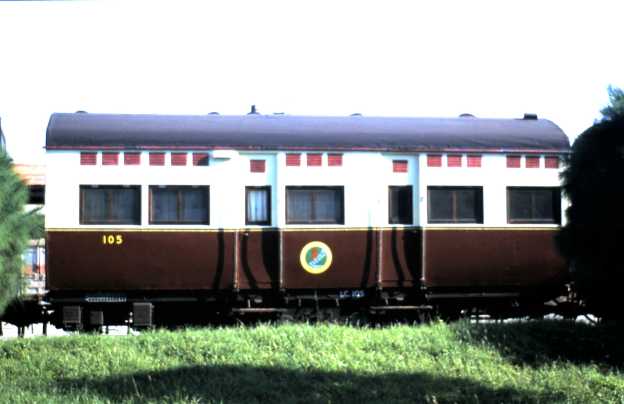
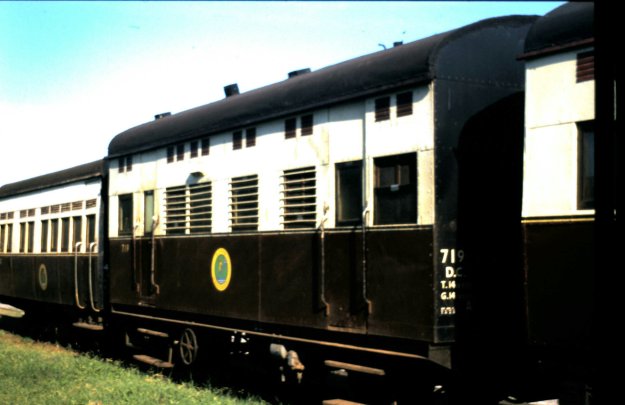
Back in 1994, I was taking slides and being very careful not to exhaust my supply of film. How much things have changed! I do have four pictures, taken at Mombasa railway station, of coaches from the early to mid 20th Century which were stored among slightly more modern stock, at least three seemed still to be in use. …..

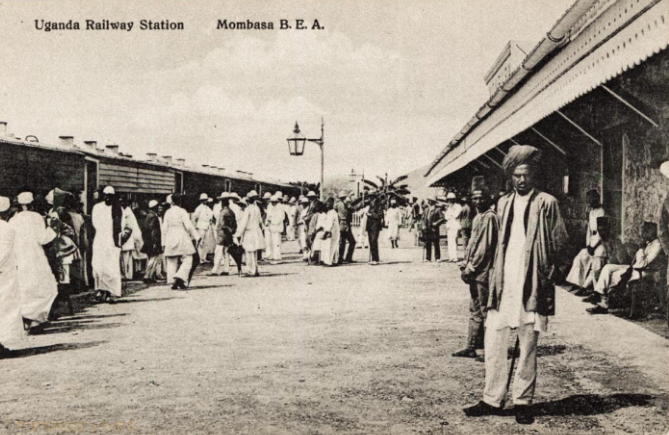
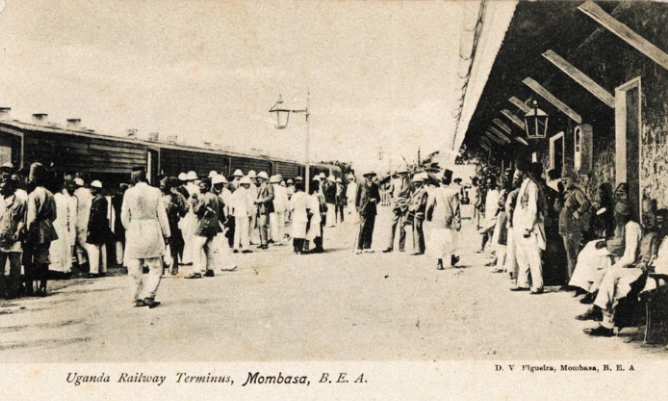
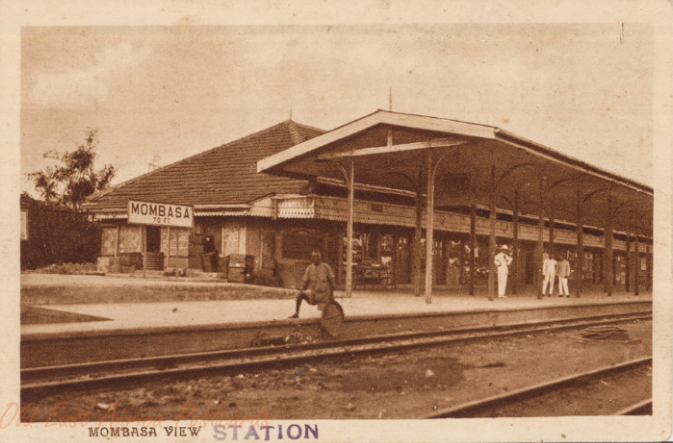
The last photo above is courtesy of Jennifer Wu (https://www.flickr.com/photos/wippetywu/8333244855), those below are some early postcards of the station in Mombasa.

The Early History of the Line

The Uganda Railway was built during what became known as the Scramble for Africa, (the struggle between European powers for dominance in Africa). It provided a strategic link between the coast at Mombasa and the Great Lakes region. In doing so, it effectively secured British domination of the region.[2],[3]

The Uganda Railway was named for its ultimate destination. Its original length of 660 miles (or 1056 kilometres) lay entirely in what we now call Kenya.
Work on the railway began at the port of Mombasa, in what was then called British East Africa, in 1896. The intended terminus at Kisumu on the shores of Lake Victoria was reached in 1901.[2],[4]

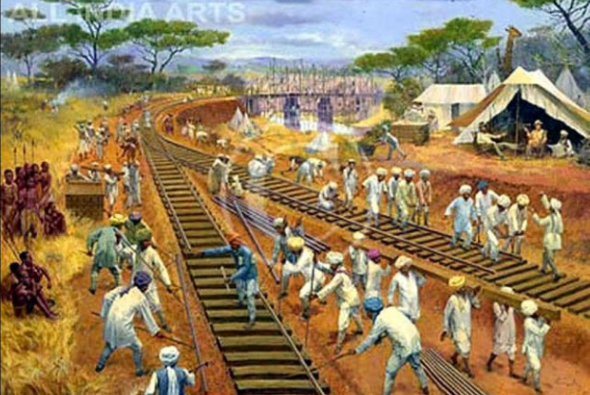
Construction was carried out principally by labourers from the Indian subcontinent, 32,000 of whom were brought in because of a lack of local labour in very sparcely populated areas of East Africa. The horrendous truth is that the line was built on the lives of those labourers. 2,498 workers died during the construction of the railway.[2],[5] An artists impression of the work is shown in the image below (courtesy of Charan Kundi).

Many of the labourers returned to India but 6,724 decided to remain after the line’s completion, creating a community of Indian East Africans.

The railway is, almost in its entirety, single-track. A massive logistical exercise was put in place to import from India a very significant amount of steelwork – rails; fishplates and bolts; keys; and girders. Over 1.2 million sleepers were also required. To secure the necessary throughput of materials, Kilindini Harbour ws created in Mombasa. “The railway was a huge logistical achievement and became strategically and economically vital for both Uganda and Kenya. It helped to suppress slavery, by removing the need for humans in the transport of goods.” [2],[6]

The railway line had a significant impact. It effectively created Uganda and Kenya as the countries that they became. As we have already noted, the railway defeated the slave trade in British East Africa. It allowed heavy equipment to be transported with relative ease.

The use of indian sub-continent labour resulted in a very significant minority of Asians in East Africa. These Indians worked as “dukawallas” (shopkeepers), artisans, traders, clerks, and, finally, lower-level administrators. Excluded from the middle and senior ranks of the colonial government and from farming, they became a commercial middleman and professional community.[7] The British administration encouraged European settlement and farms were set up for coffee and tea production with the railway available to ensure easy shipping to Europe for processing. As the numbers of settlers and farms increased native populations became alienated from their land and seeds were sown for the later struggle for independence. At the same time, inceeases in white settlement made demands on the railway. New small stations were required to allow transportation of agricultural produce. These stations included: Nakuru, Naivasha, Tigoni, Kijabe and Sigona.

In addition, the railway contributed to increased urbanisation. Many of today’s towns in Kenya, and some in Uganda, have reulted from the presence of the railway. Mombasa urbanisation can be traced to the start of the construction of the line. Nairobi was a rail depot placed in the middle of a swamp, and is now the capital of Kenya. Other towns for which this is true are … Kikuyu, Naivasha, Nakuru (where the main line splits, one branch going to Kisumu and the other to Uganda), Nanyuki, Eldoret (originally called “64″ its distance, in miles, from the railhead at the time), Kitale (a small farming community in the foothills of Mount Elgon), Kisumu (then called port Florence, a city and port on Lake Victoria allowing ferry transport between Kenya, Tanganyika (modern Tanzania) and Uganda), Port Bell (a rail-linked port, near to Kampala, on Lake Victoria allowing ferry transport between Kenya, Tanganyika and Uganda), and Jinja.
Tourism also began to develop. “The railway provided a ‘modern’ means of transport from the East African coast to the higher plateaus of the interior. US president Theodore Roosevelt is one of the notable people who had safari adventures aboard a train in the early days of the use of the Kenya-Uganda railway.”[7]

The railway also opened up the interior to systematic government programmes to attack slavery, witchcraft, disease and famine. [7]

We have already heard that close to 2,500 of the 32,000 workers on the line died during its construction. There are two particular causes worthy of significant note.

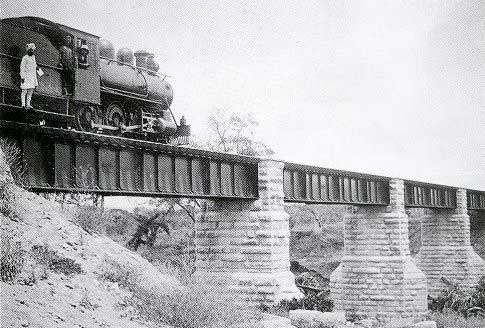
The first concerns the death of a number of conctruction workers in 1898 during the building of a bridge across the Tsavo River. Hunting mainly at night, a pair of maneless male lions stalked and killed at least 28 Indian and African workers – although some accounts put the number of victims as high as 135.[2],[8] The picture above shows one of the two lions and Lieutenant-Colonel John H Petterson who killed it.

The second concerns resistance from locals. Building the railway met local resistance on various occasions. A major incident was the Kedong Massacre, when the Maasai attacked a railway worker’s caravan killing around 500 people because two Maasai girls had been raped. An Englishman unconnected to the railway, Andrew Dick, led a counter-attack against them, but ran out of ammunition and was speared to death by the Maasai.[2],[9] At the turn of the 20th century, the railway construction was disturbed by the resistance of the Nandi people led by Koitalel Arap Samoei. He was killed in 1905 by Richard Meinertzhagen, finally ending the Nandi resistance.[2],[9]

Some of the socio-economic background to the construction of the Uganda Railway will be considered in later articles in this series.

References

1. Lucy Styles, Uganda Railway Assessment, January 2014 (updated to June 2015); http://dlca.logcluster.org/plugins/servlet/mobile#content/view/3375402, accessedon 8th May 2018.

2. Wikipedia, Uganda Railway; https://en.m.wikipedia.org/wiki/Uganda_Railway, accessed on 6th May 2018.

3. Richard T. Ogonda & George M. Onyango; Development of Transport and Communication. In William Robert Ochieng’; Historical Studies and Social Change in Western Kenya. Nairobi: East African Educational Publishers, 2002. p219–231.

4. Richard T. Ogonda; Transport and Communications in the Colonial Economy. In William Robert Ochieng’ & R. M. Maxon; An Economic History of Kenya. Nairobi: East African Educational Publishers, 1992. p129–146.

5. Christian Wolmar; Blood, Iron & Gold: How the Railways Transformed the World. London: Atlantic Books, 2009.

6. Frank Richardson Cana; British East Africa. In Hugh Chisholm. Encyclopædia Britannica. 4 (11th ed.). Cambridge University Press, 1911. p601–606.

7. The Enzi Museum, Construction of the Kenya-Uganda Railway;
http://www.enzimuseum.org/archives/275, accessed on 8th May 2018.

8. Man eating lions – not (as) many dead; Railway Gazette International. 27 November 2009. http://www.railwaygazette.com/news/single-view/view/man-eating-lions-not-as-many-dead.html, accessed on 8th May 2018.

9. David Kaiza; End of Lunatic Express; The East African. 21 September 2009. http://www.theeastafrican.co.ke/magazine/-/434746/660876/-/view/printVersion/-/32dc3d/-/index.html, accessed on 8th May 2018.

The Schynige Platte Railway, Interlaken, Switzerland

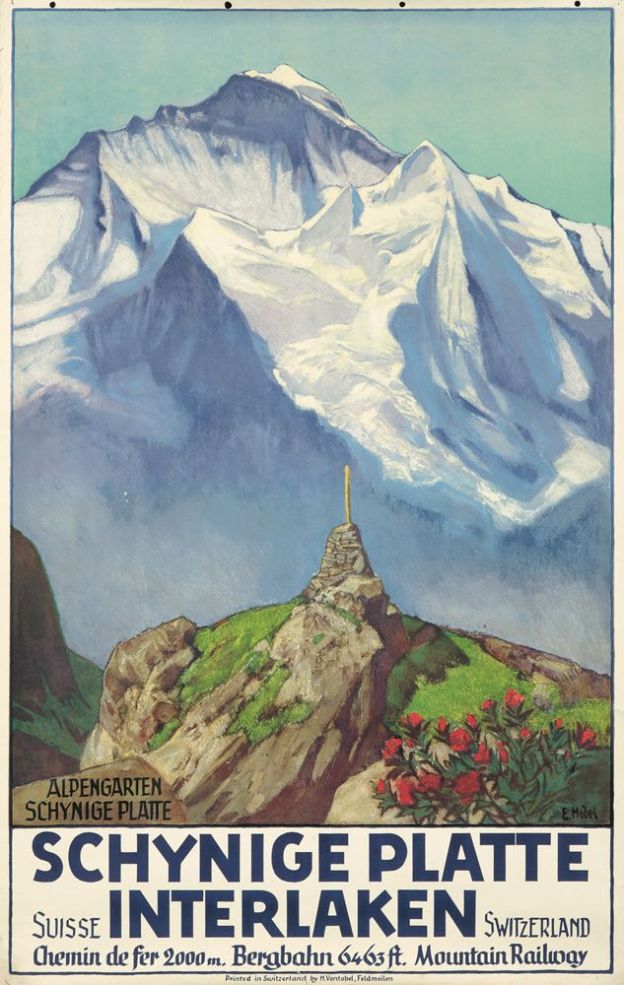
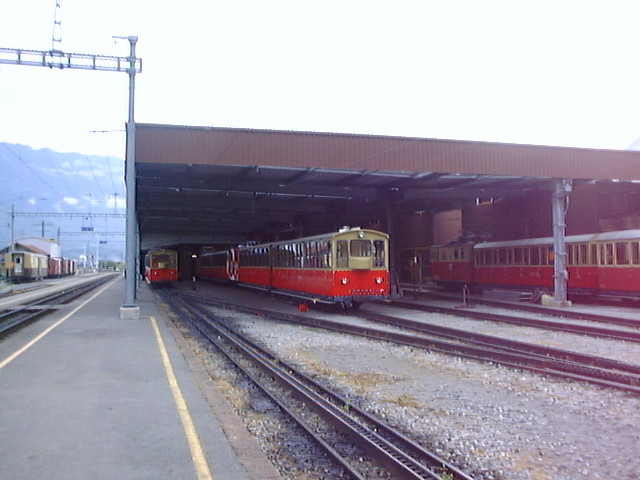
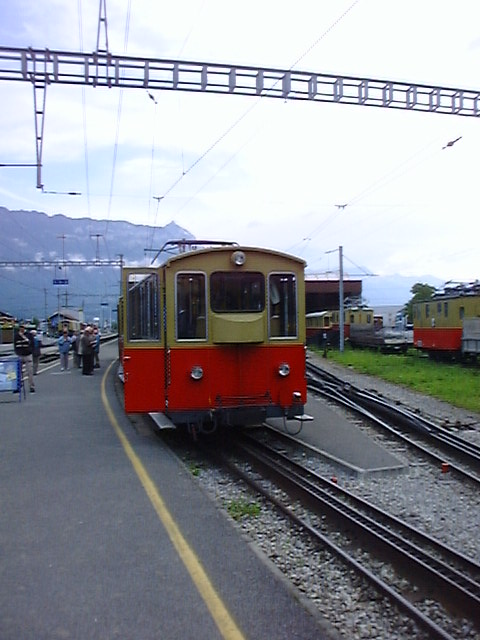
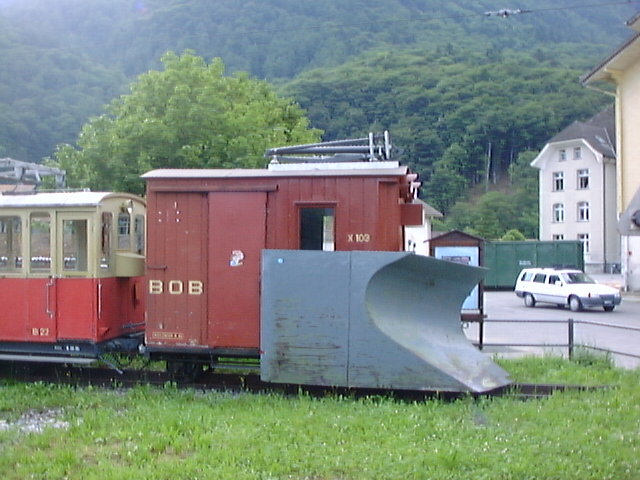
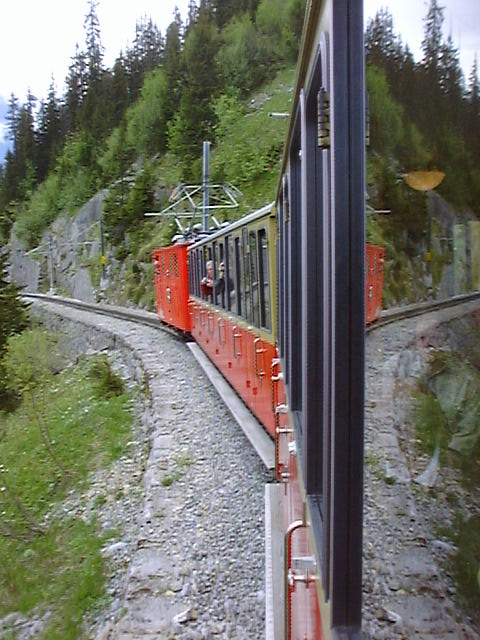
My wife and I visited Switzerland in 2004 and enjoyed travelling extensively by train. One little railway that we enjoyed was the Schynige Platte Railway near Interlaken. The track gauge for this line is 800mm. Trains leave Wilderwil station and run alongside the Berner Oberland-Bahan (BOB) for a third of a mile (0.5km) before turning away, crossing the River Lütschine and climbing the side of the valley. Forest eventually gives way to alpine pasture and views across Lake Thun and Lake Brienz. When the weather is good there are excellent views of the Eiger, Monch and Jungfrau as the train climbs to the terminus at Schynige Platte. In 4.5 miles (7.25km) the line rises 4,659ft (1,420m).[1] The route is shown on the map below.[2]

Close to the station there are a botanical garden,[3] a hotel and a restaurant.

Technical Details: Track-gauge 800mm. Power: 1500 volt DC overhead. Rack: Riggenbach. Maximum Gradient: 1 in 4 (25%). The line’s depot and workshops are located adjacent to Wilderswil Station.

“The line is owned by the Berner Oberland-Bahnen AG, a company that also owns the Berner Oberland-Bahn. Through that company it is part of the Allianz – Jungfrau Top of Europe marketing alliance, which also includes the separately owned Wengernalpbahn, Jungfraubahn, Bergbahn Lauterbrunnen–Mürren, Harderbahn, and Firstbahn.” [1]

Photographs: Except where referenced otherwise, the photographs below were taken by us in 2004. My digital camera in those days was not of the same standard as I am used to now.

Schynige Platte Zahnradbahn.jpg – Wikimedia Commons.[4]

Taken at Schynige Platte Station by Uve Mockel in 2004.[5]

References

  1. Wikipedia, Schynige Platte Railway; https://en.wikipedia.org/wiki/Schynige_Platte_RailwayRailway, accessed on 21st April 2018.
  2. MySwisAlps.com; https://www.myswissalps.com/schynigeplatte/gettingthere
  3. Schynige Platte Alpine Garden; http://www.alpengarten.ch/en.
  4. Wikimedia Commons – Schynige Platte Zahnradbahn.jpg; https://commons.m.wikimedia.org/wiki/File:Schynige_Platte_Zahnradbahn.jpg, accessed on 21st April 2018.
  5. http://www.familie-moeckel.net/Builder/sonstiges/1280/Zahnradbahn1280.jpg

The Rochers-de-Naye Line

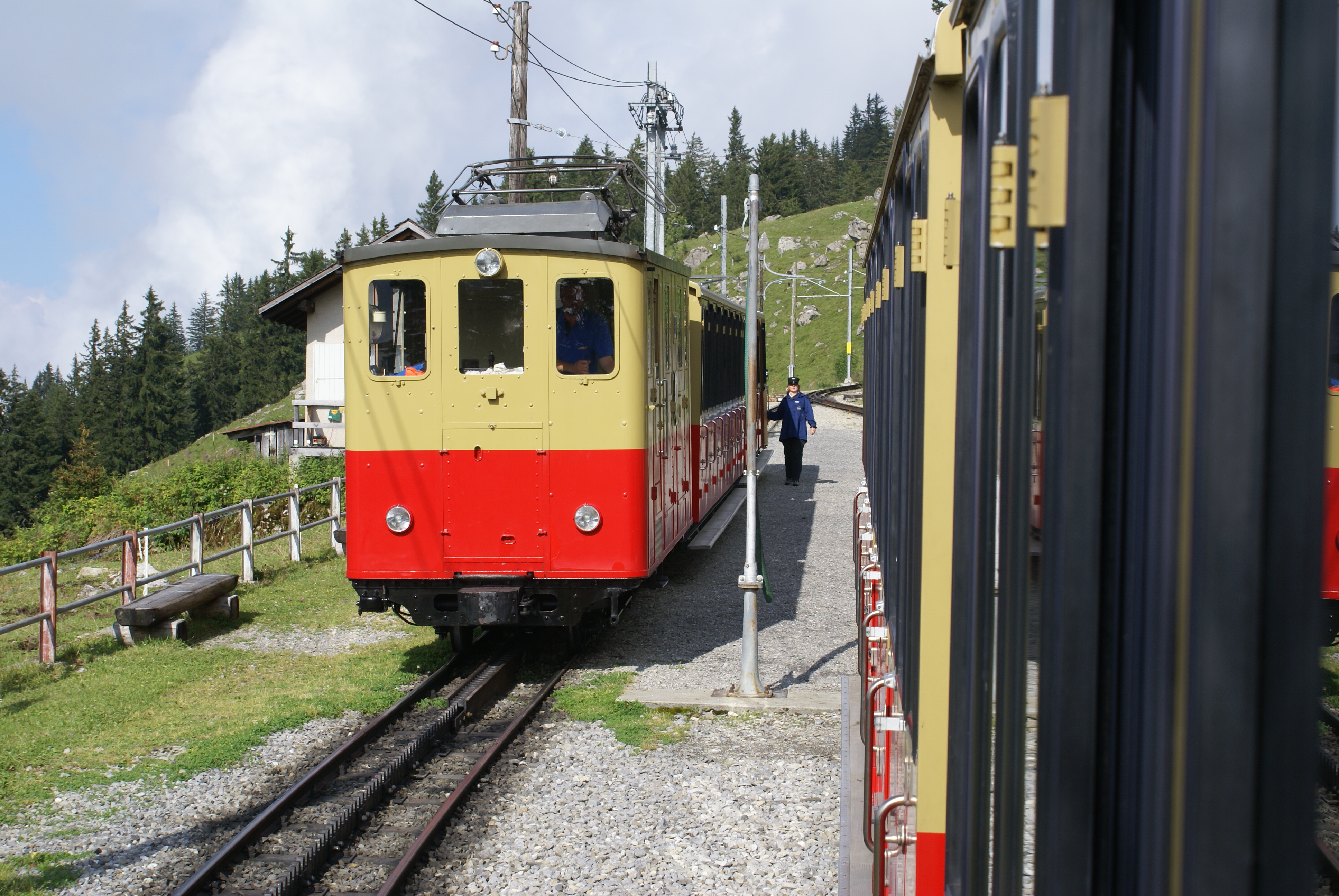
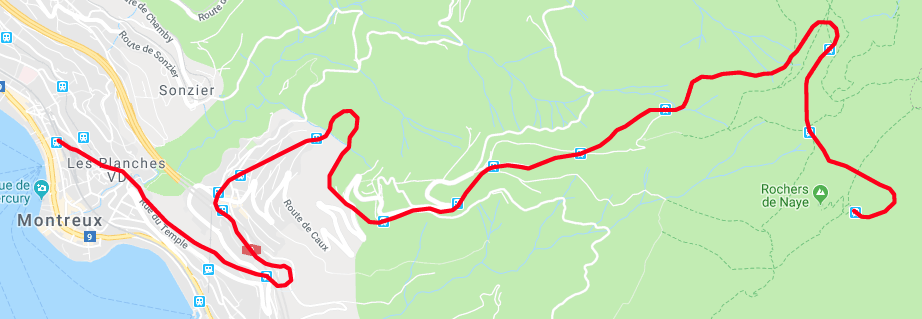
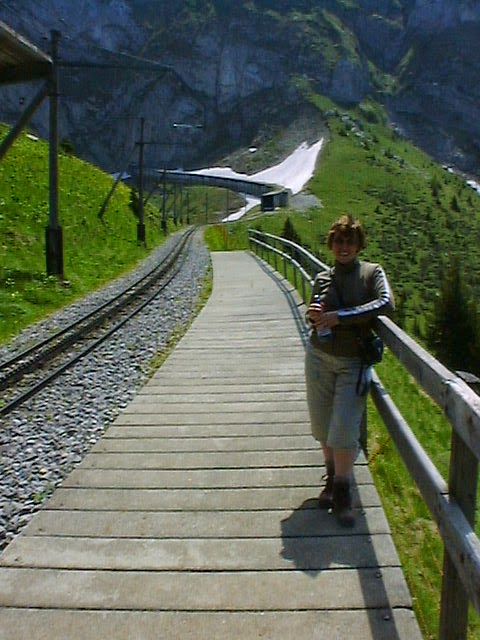
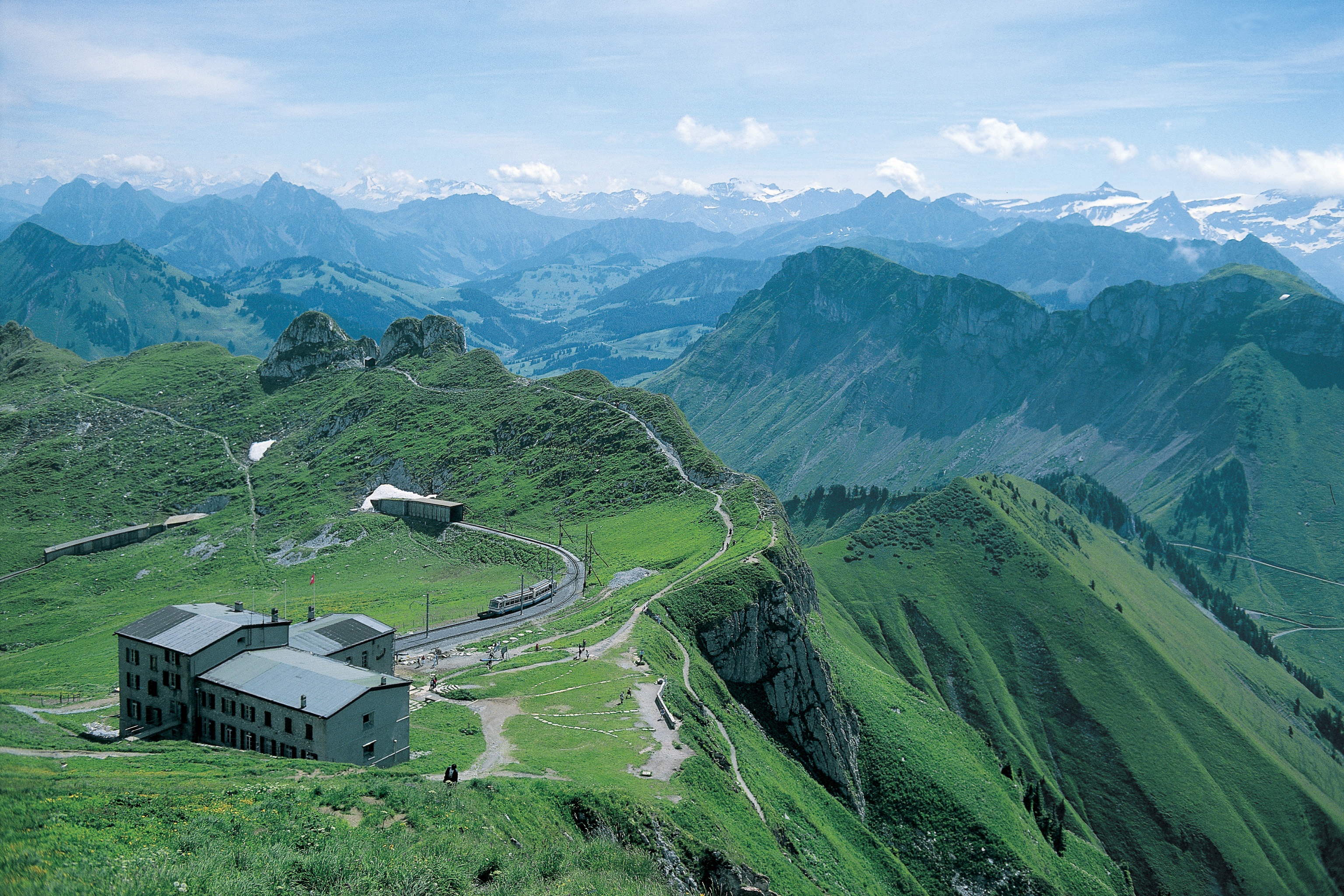
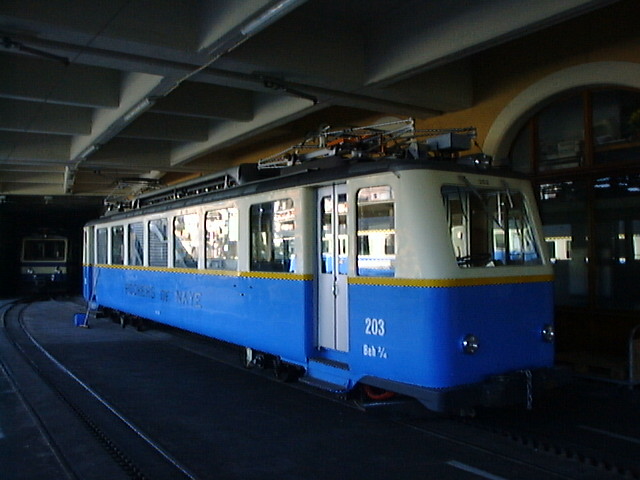
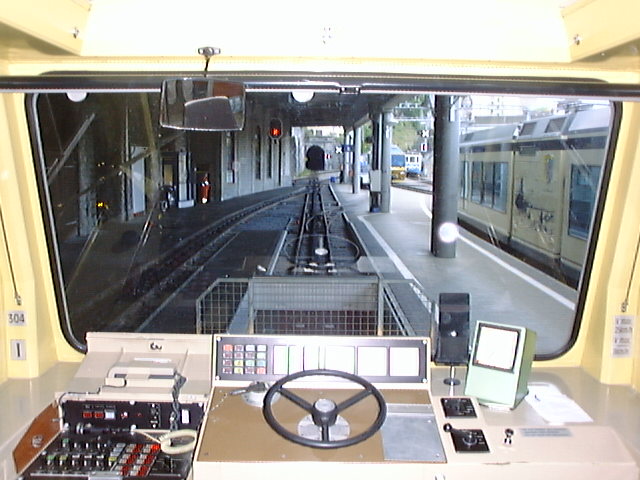
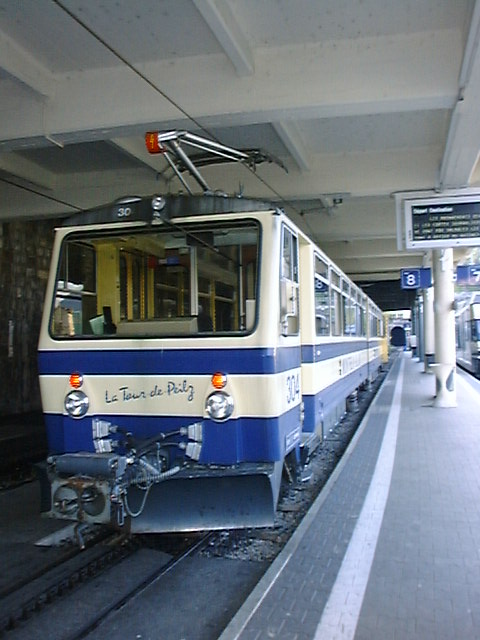
My wife and I travelled this line in 2004. The views were spectacular and the weather wasn’t bad at all! My camera, in those days, was not able to produce high resolution photos. But these give a very good impression of the line and the views from the top. The first image is a map of the line. Trains depart from Montreux station and climb steeply on a rack railway, first in tunnel, and then through the village of Gilon (300m above Montreux) which was historically the start of the steam railway when opened in 1892. The line is known as the MGN (Montreux, Gilon, Rochers-de-Naye) Railway.

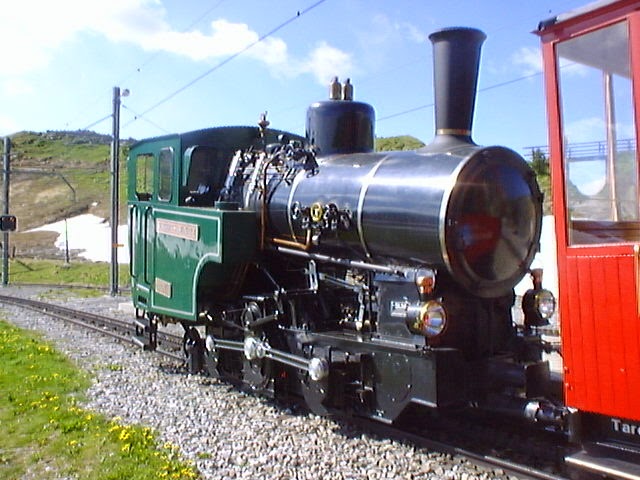
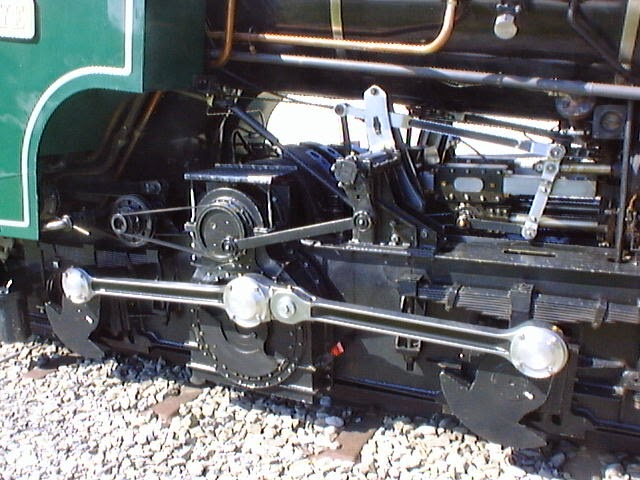
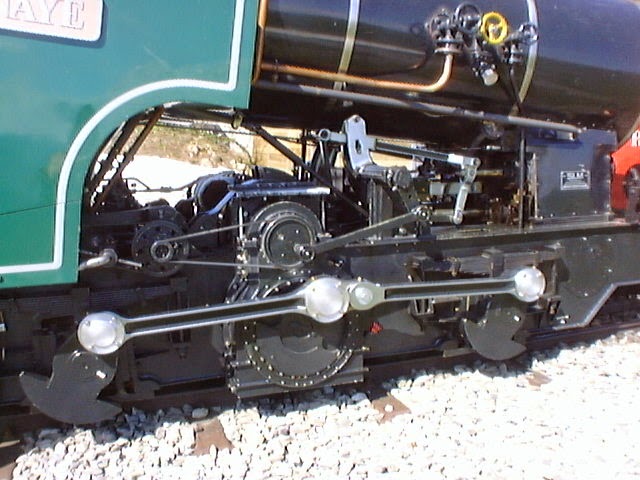
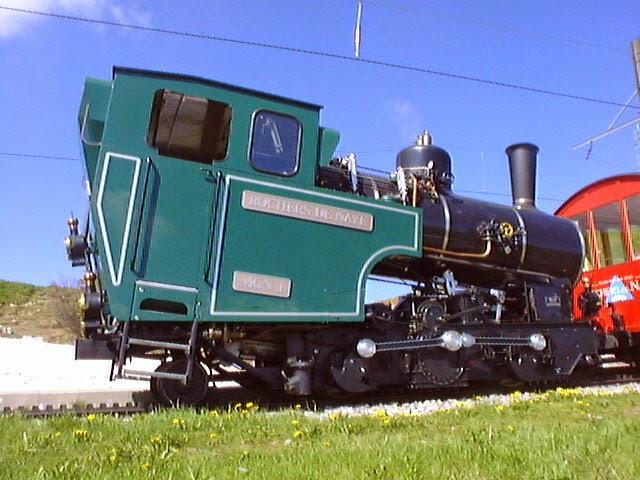
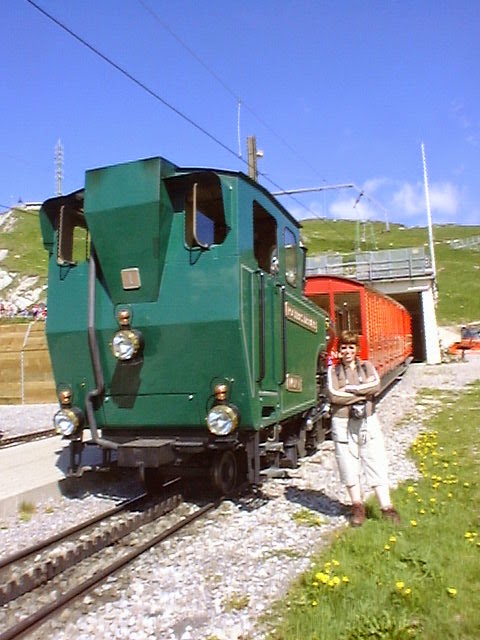
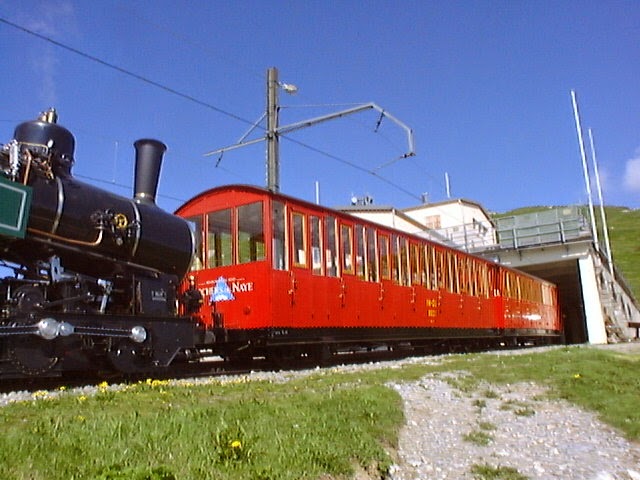
242T66 on the Passions Metrique et Etroite Forum has pointed out to me that in 2004 I was fortunate to enjoy a ride on a steam driven service on the higher reaches of the line (pictures below). It was apparently only for a few summer seasons that the steam service was operated on this line between Caux and Rocher-de-Naye.

242T66 comments that the MGN line was electrified since 1938. It was the early 1990s when the former SLM company at Winterthur built a few modern oil fired steam locomotives for the Brienz Rothorn Bahn and for a couple of Austrian rack railways (Schneeberg and Schafberg Bahnen). At that time, they also built one for the MGN line.

This was H2/3 n° 1 Rochers-de-Naye which features below. A nostalgic steam train was in operation for just a few years before the steam loco was eventually sold to the Brienz Rothorn Bahn.

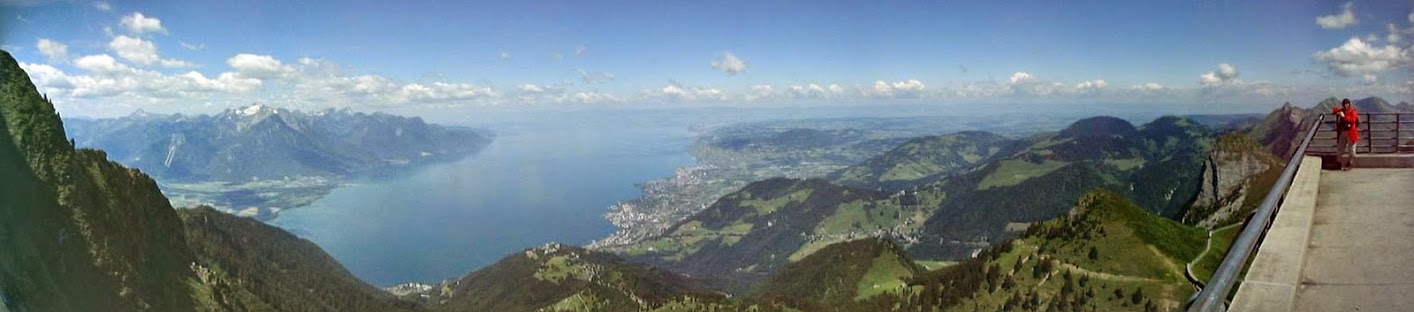
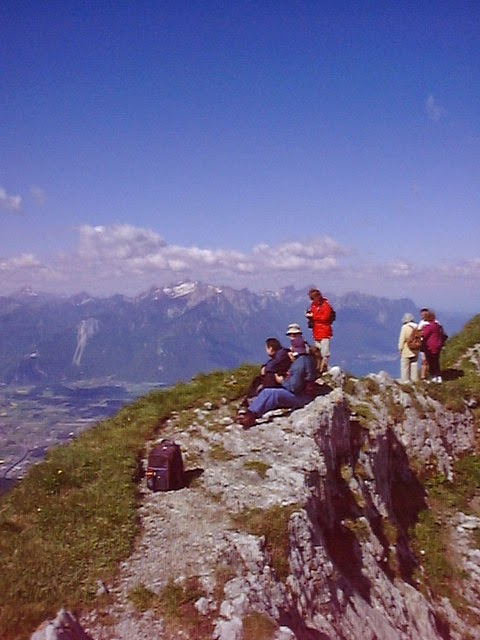
The next few images show the views from the top of the line.

And finally a few images at the bottom of the line, in Montreux

eBooks on Les Chemins de Fer du Sud de la France?

As an aside to the regular blog posts, I am wondering about collating my posts into a series of eBooks. I have developed the first few chapters of the first book, which will be about the Central Var Line in Provence. I would appreciate comments about the draft.
http://anyflip.com/zydj/rtke/#.WtjoPZ4iRBs.wordpress


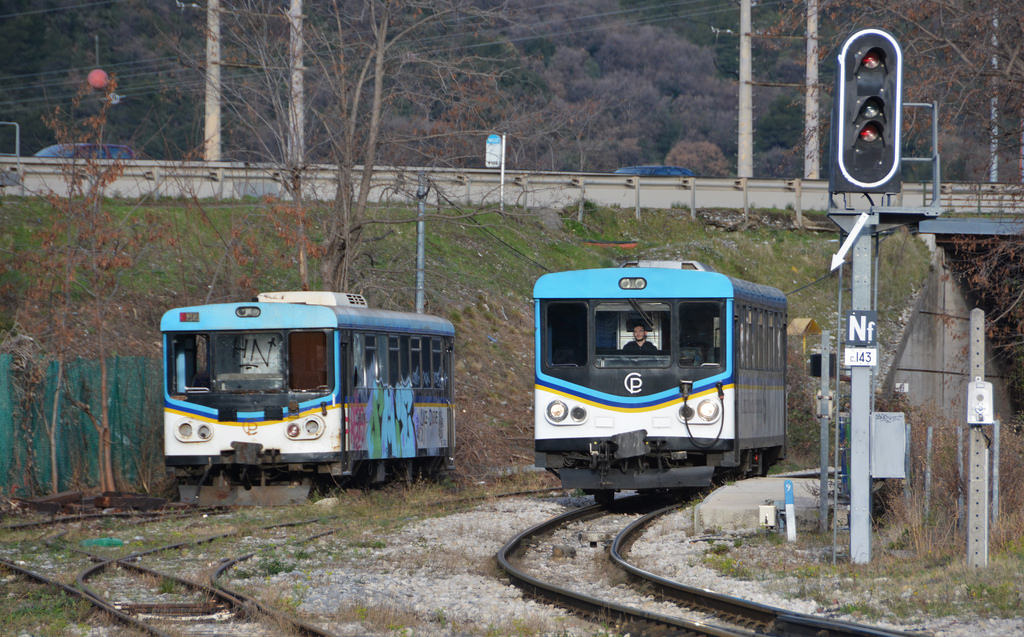
Nice to Digne-les-Bains Part 2 – Nice to La Manda (Chemins de Fer de Provence 58)

Trains left la Gare du Sud in a Westerly direction before turning first North-West and then round to the south towards St. Philippe. The video below shows the first part of the route from Nice to Colomars (La Manda).[7]

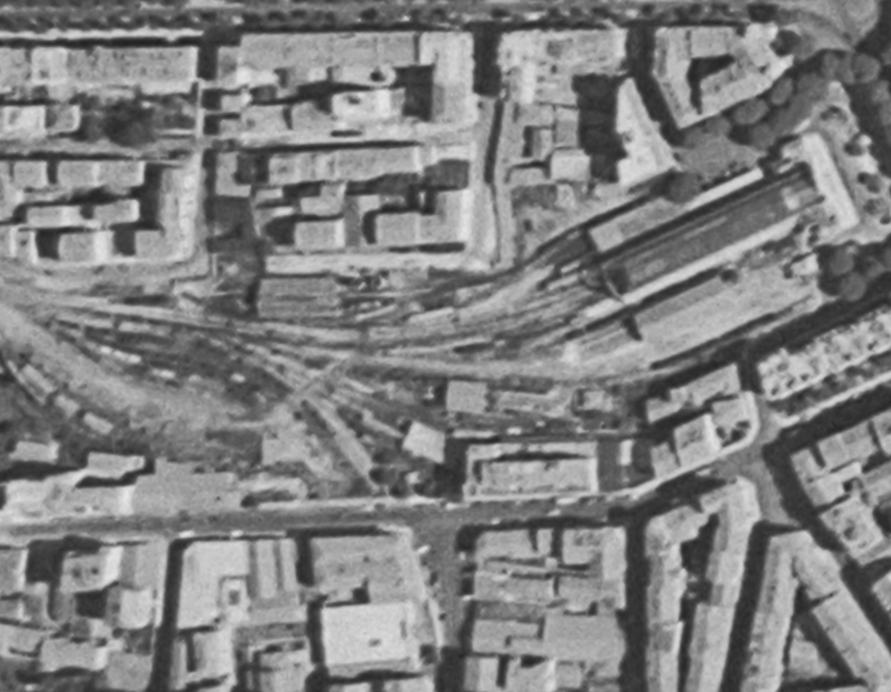
On the map below the site of the original Gare due Sud appears as a void in the right middle of the image with the present station to its West.

The two station sites are covered in the previous post in this series:

https://rogerfarnworth.wordpress.com/2018/04/06/nice-to-digne-les-bains-part-1-nice-chemins-de-fer-de-provence-57

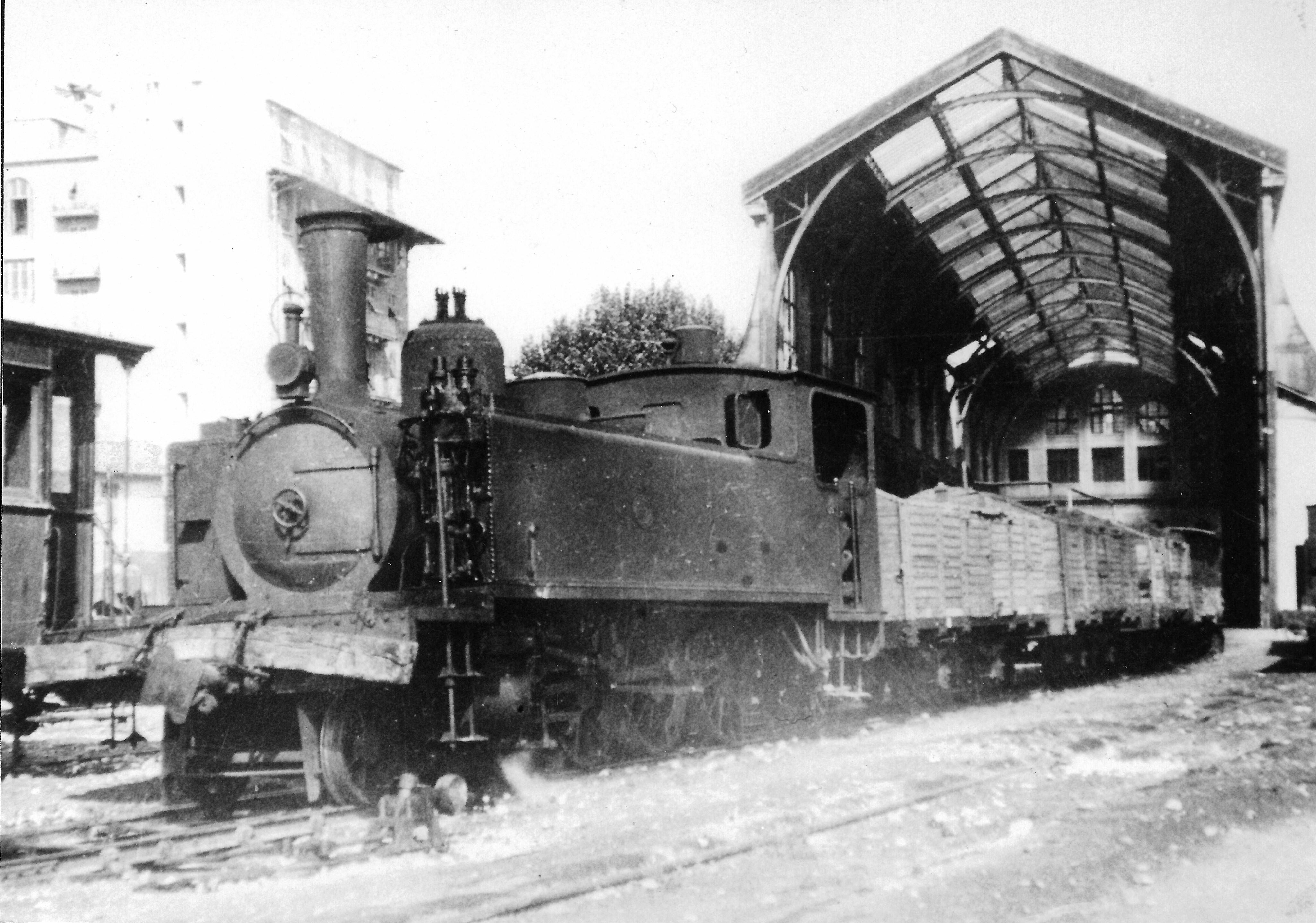
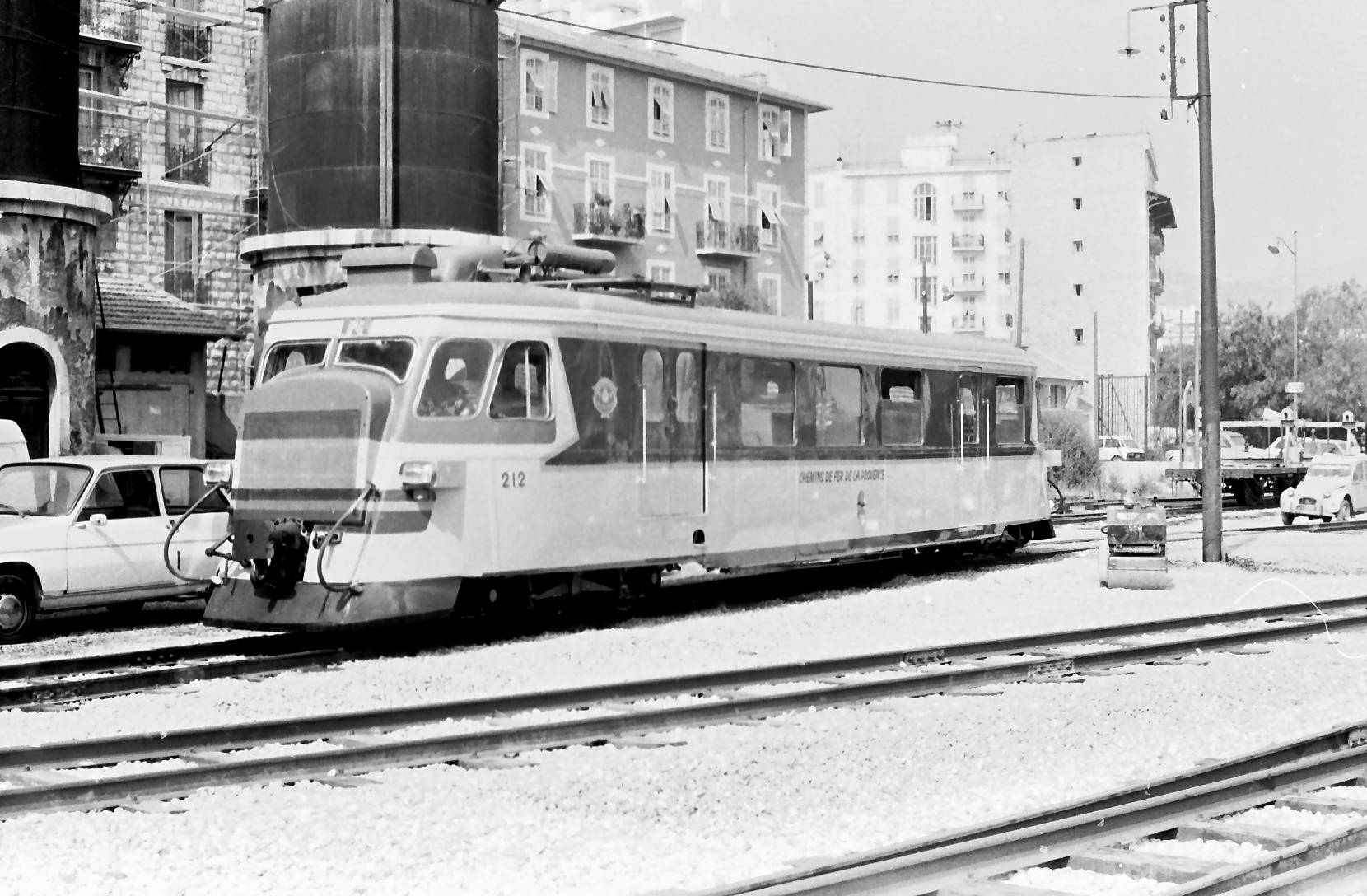
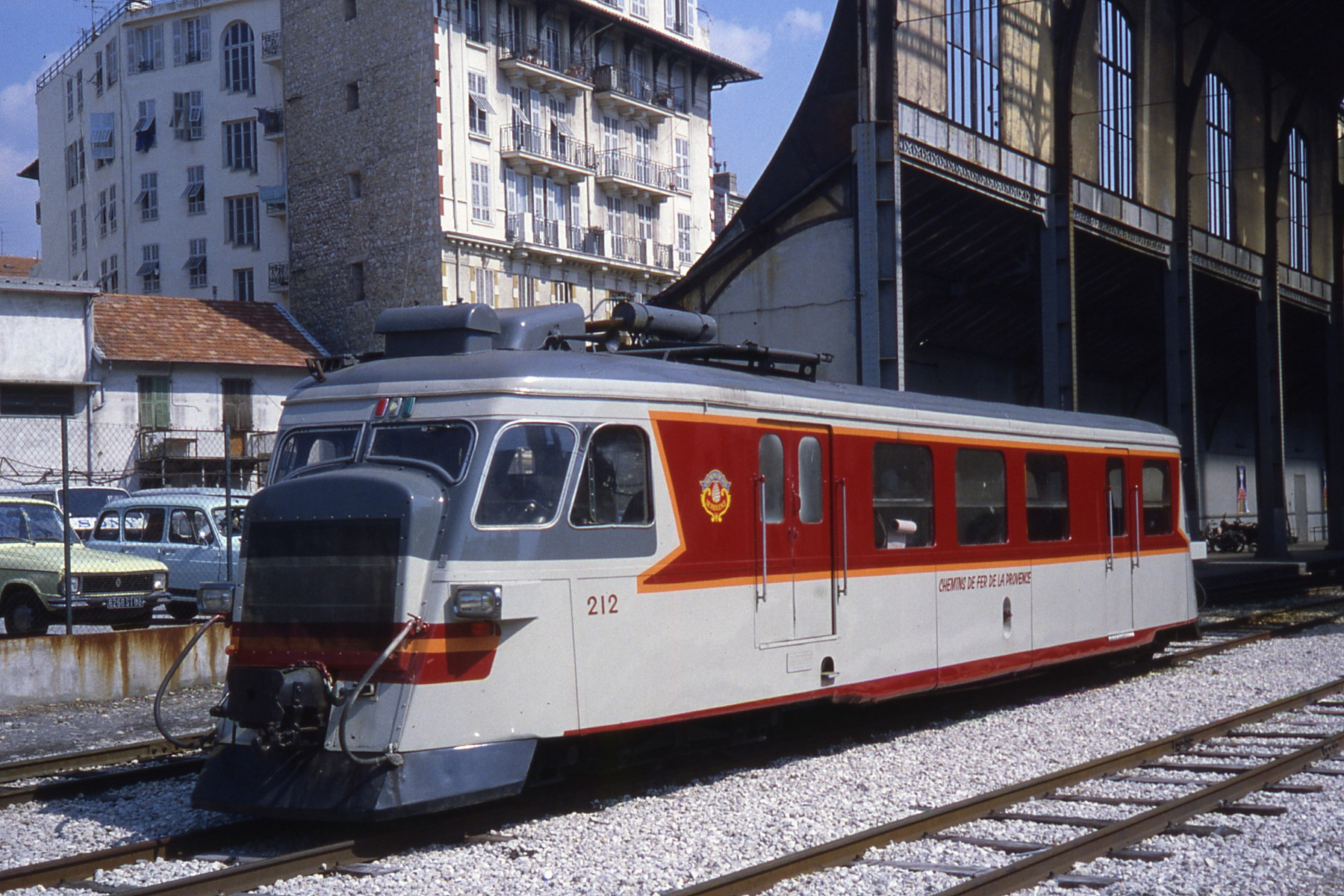
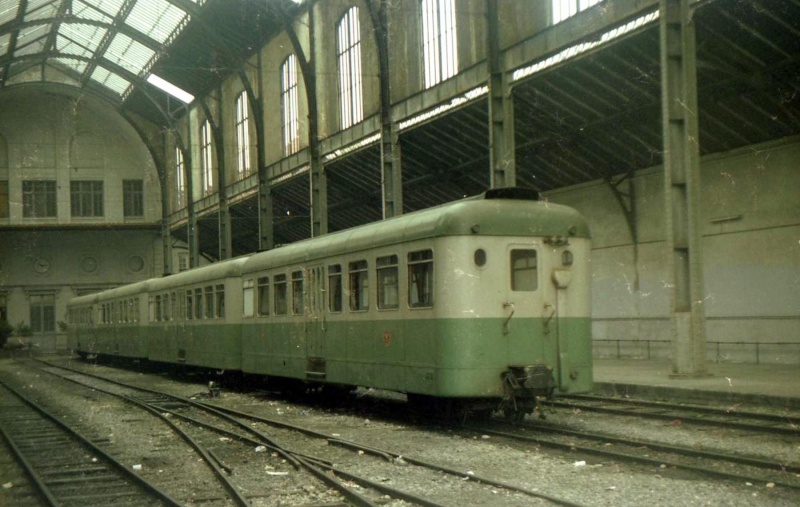
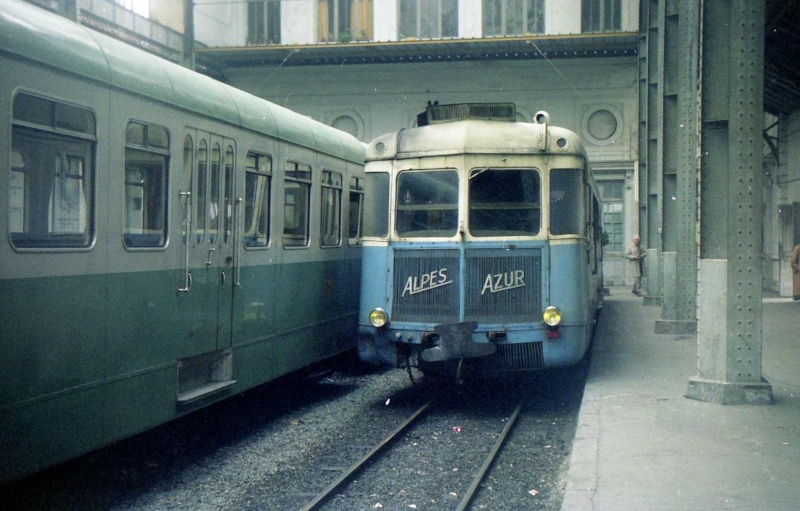
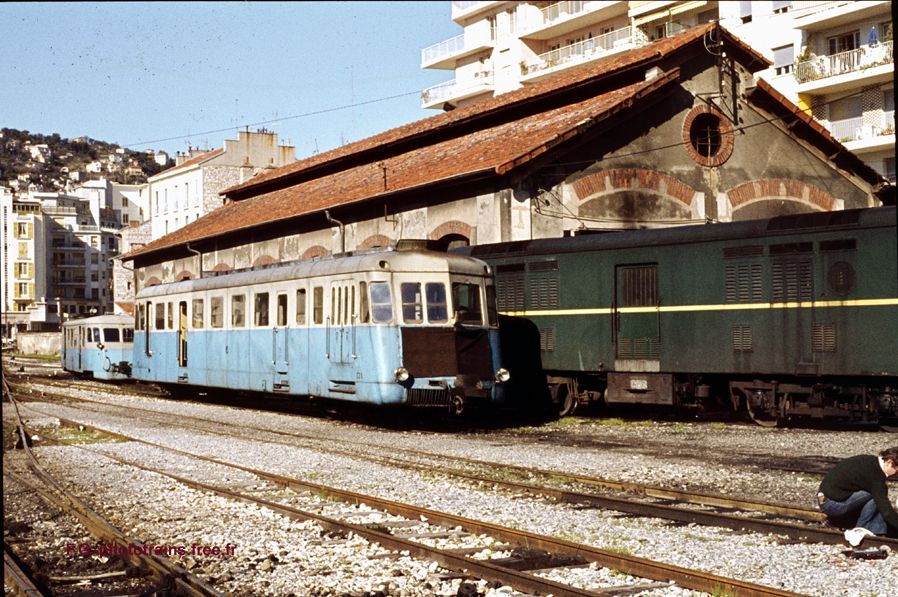
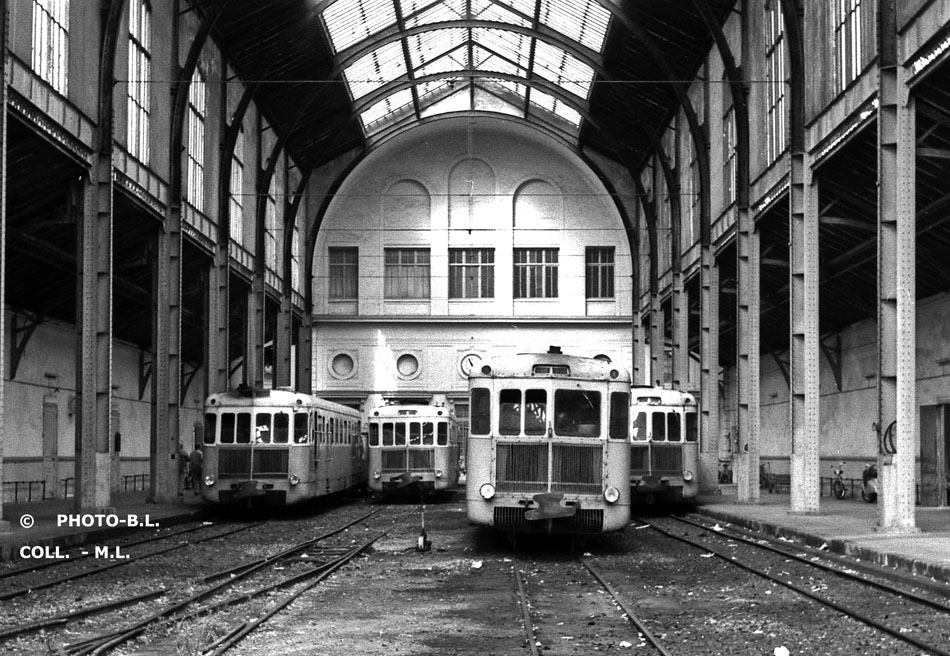
Before we finally leave the site of the two stations, modern and old, here are a few more images of the two stations and rolling stock at the site.  The first image is the only one I have found which shows a steam locomotive leaving the old Gare du Sud.More photographs can be found by following the links in the reference section at the bottom of this post. [1]Les tirages sont datés de Juillet 1983. Le jour exact n’a pas été retrouvé (c) Claude Villetaneuse. [14]1984 Autorail Billard en gare de Nice Chemins de fer de Provence.

Some amazing photos can be found on various french forums. The next four are from Les Trains de l’Histoire [2] and a thread which focusses on diesel motive power on the Nice-Digne Line.

Taken in 1971/72 (c) Locky on Forum: Les Trains de l’Histoire. [15]

Taken in 1971/72 (c) Locky on Forum: Les Trains de l’Histoire. [15]

Renault autorail at La Gare du Sud (c) Gerard, Forum: Les Trains de l’Histoire [5]

Renault autorails in La Gare du Sud (c) Michel/57 Forum: Les Trains de l’Histoire. [7]

Further photographs can be found on a variety of websites.[3]

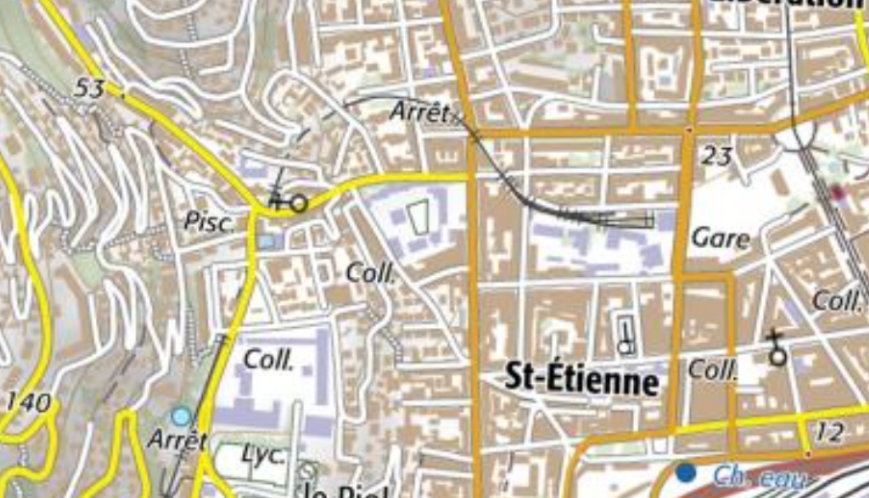
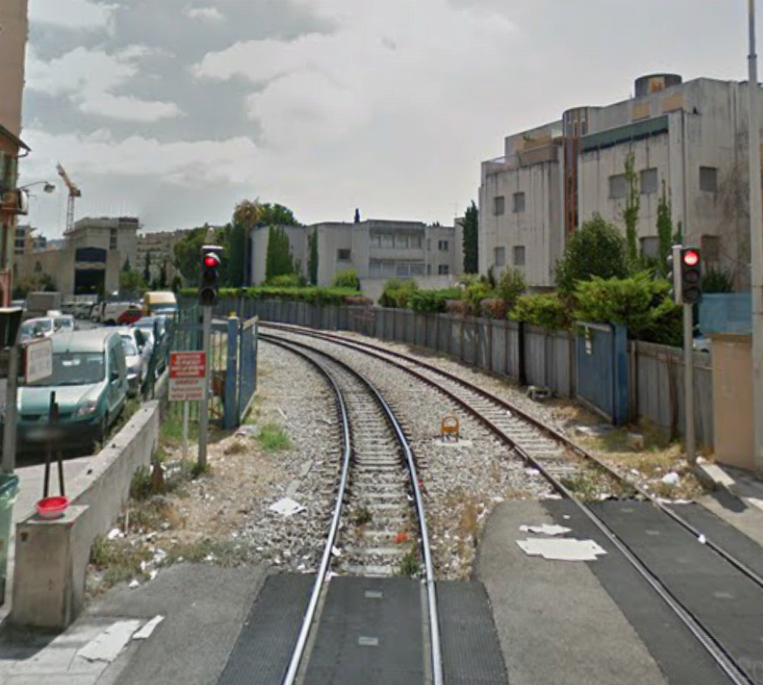
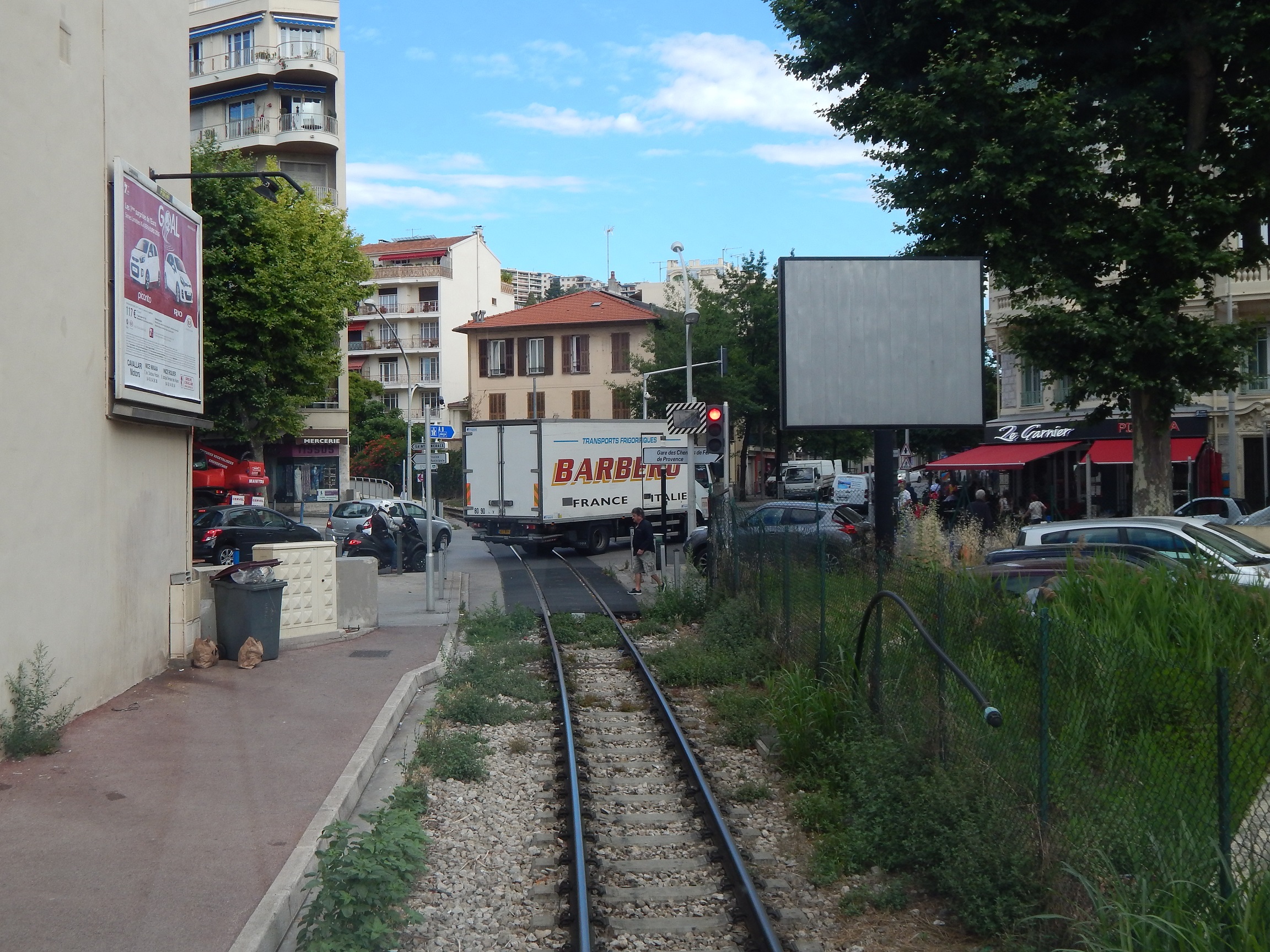
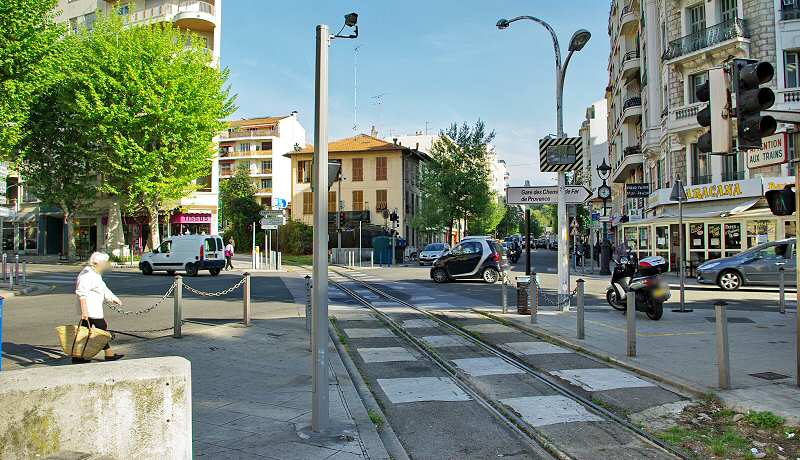
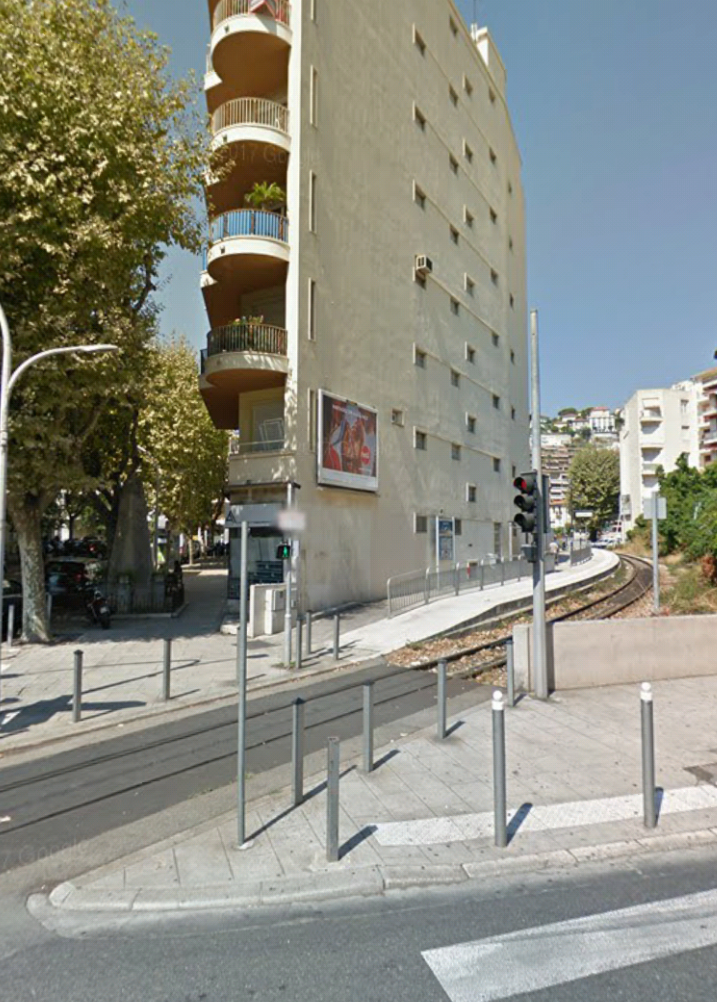
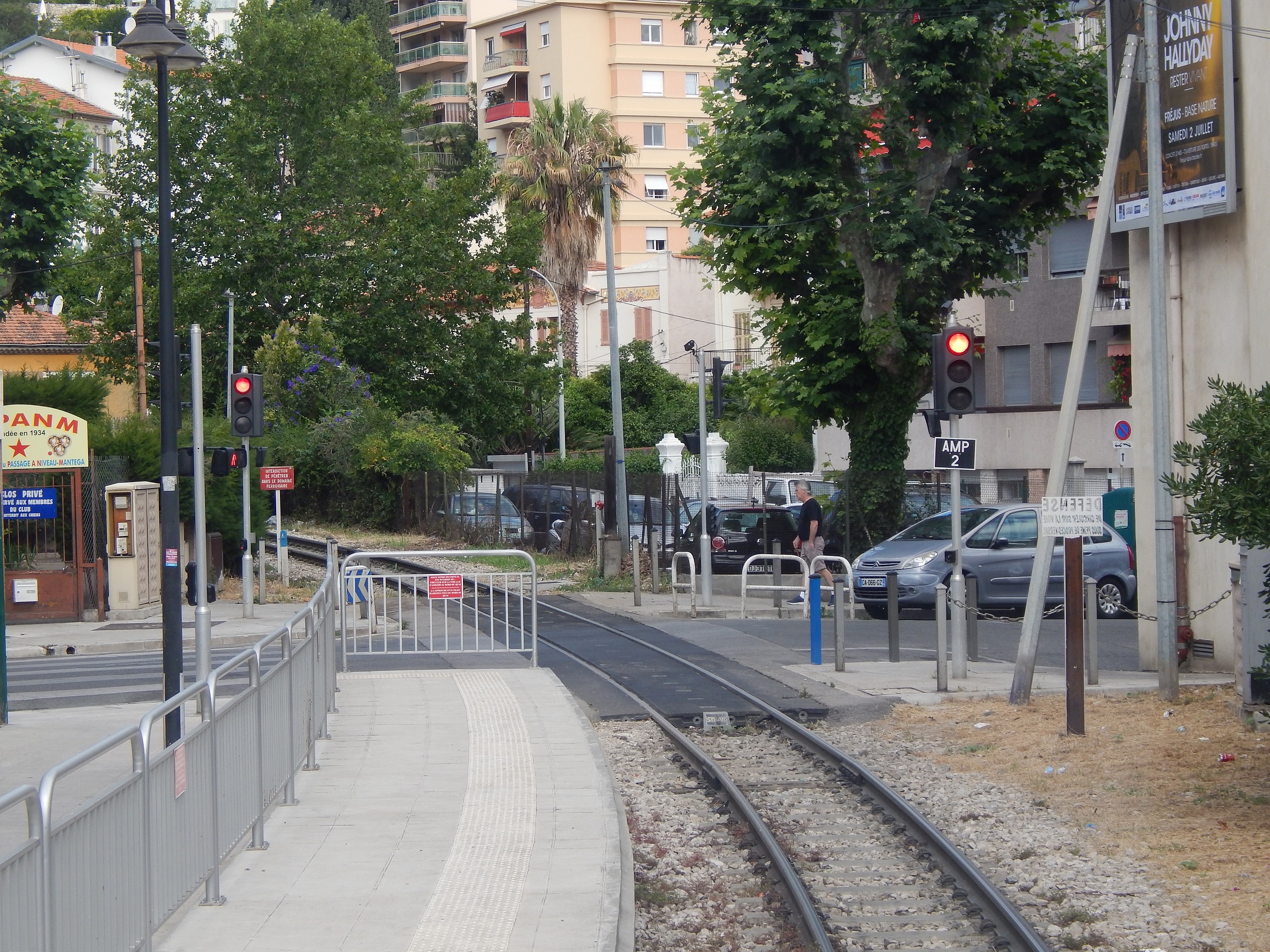
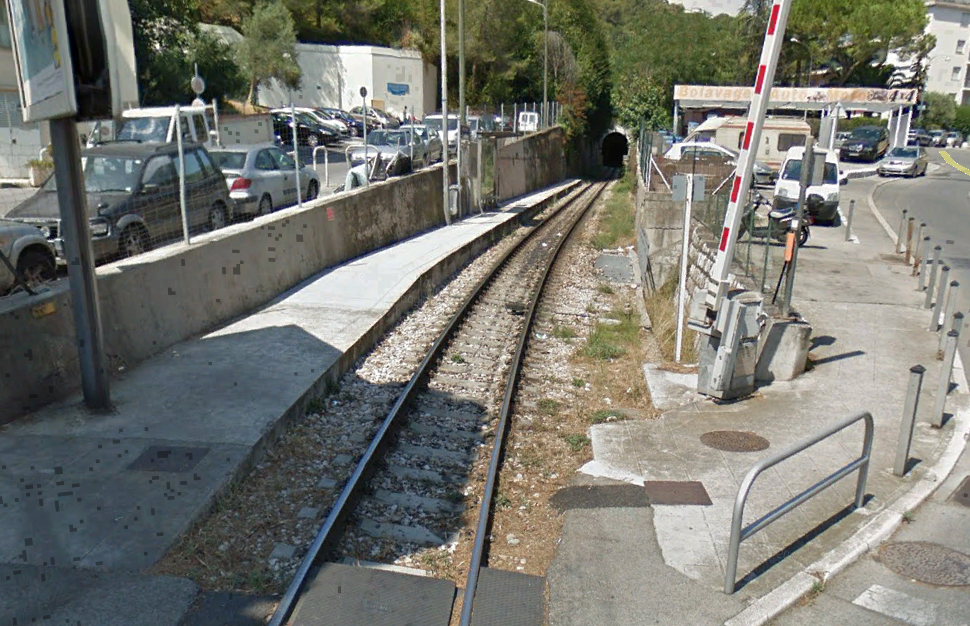
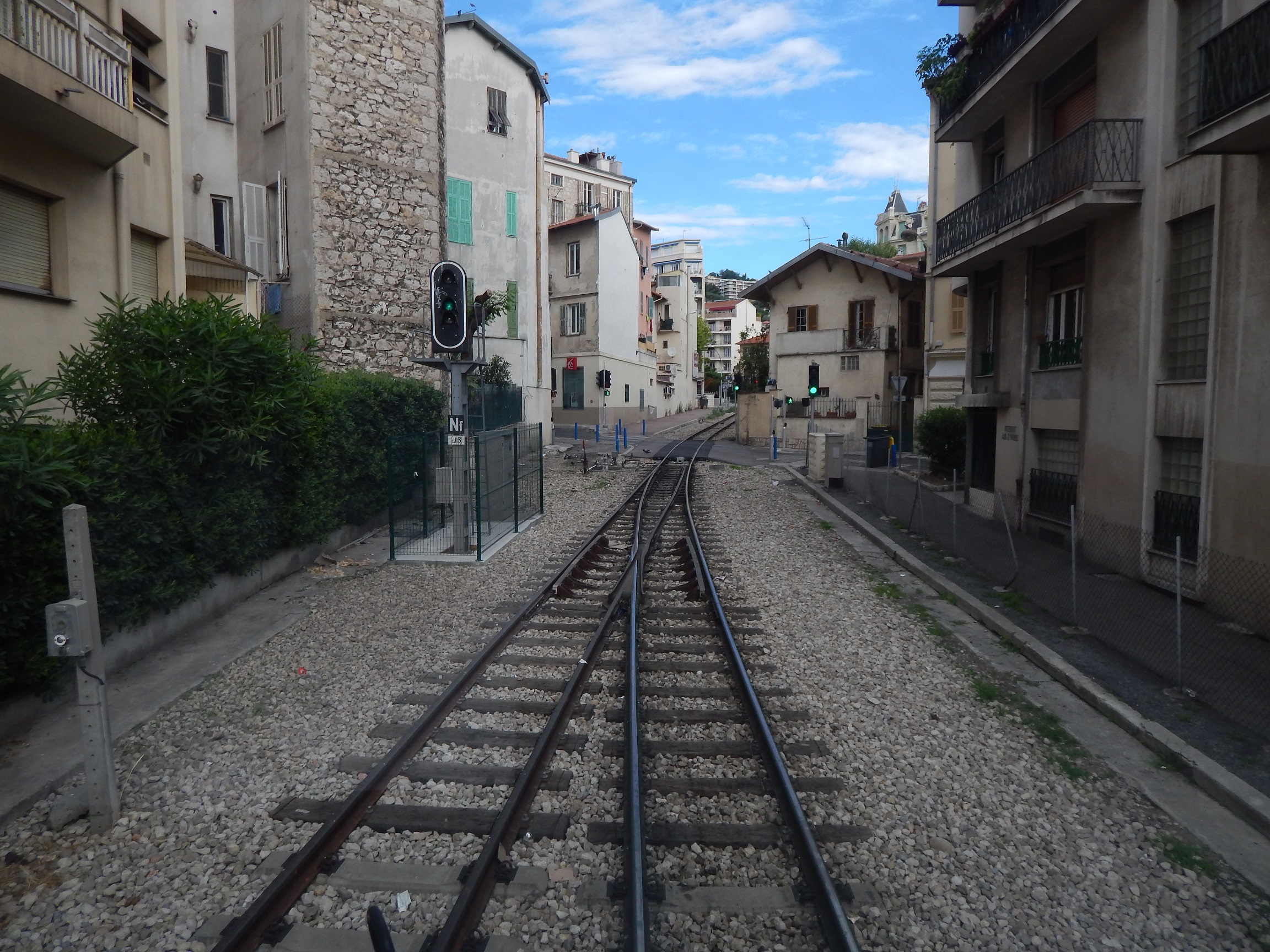
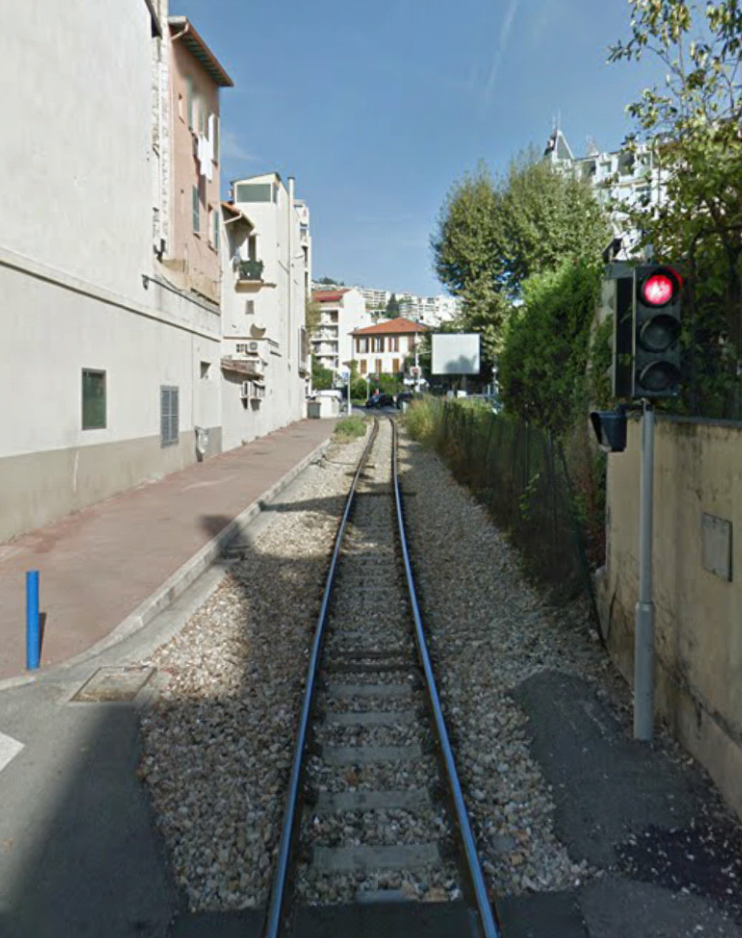
After leaving the old station, trains remained within the station site for some distance. Rue Alfred Binet did not cross the old station site in those days. Trains then had at grade crossings at Rue Dabray, Rue Gutenburg and the junction of Boulevard Joseph Garnier and Boulevard Gambetta. The first small stop on the line was immediately after the road junction.Looking back towards the station from Rue Dabray.Looking ahead from Rue Dabray across Rue Gutenburg. [4]Looking forward from Rue Gutenberg towards the Arrest Gambetta beyond the next road junction.Looking forward to the road Junction at Gambetta [4]The road junction, Google Streetview.

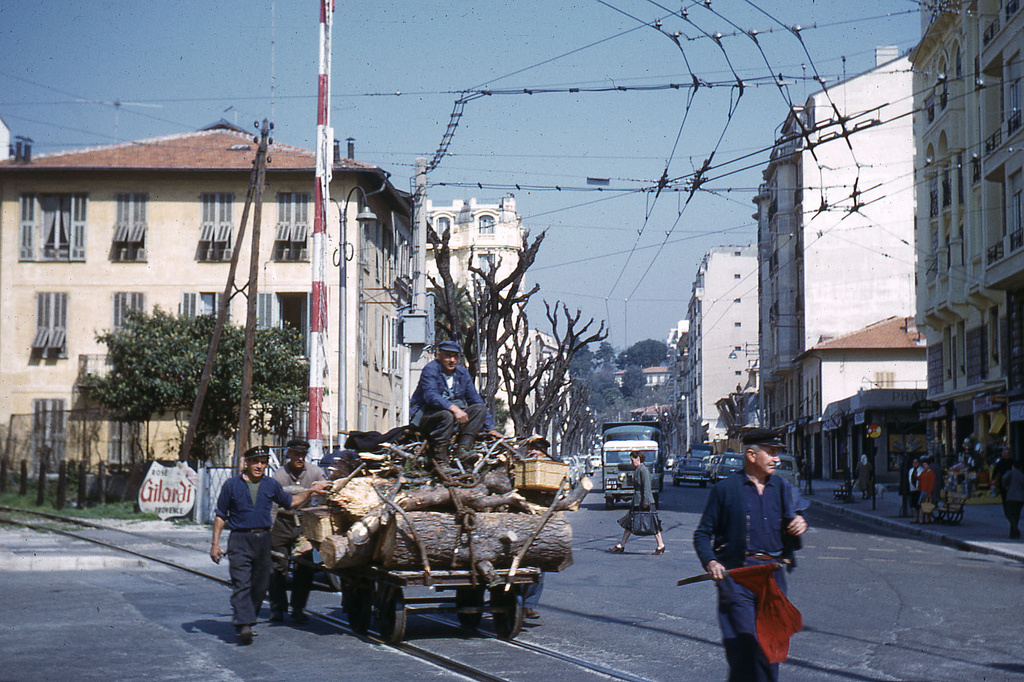
In gentler times – with the red flag to alert traffic! [6]The Arret at Gambetta.Looking forward from the Arret Gambetta.[4]

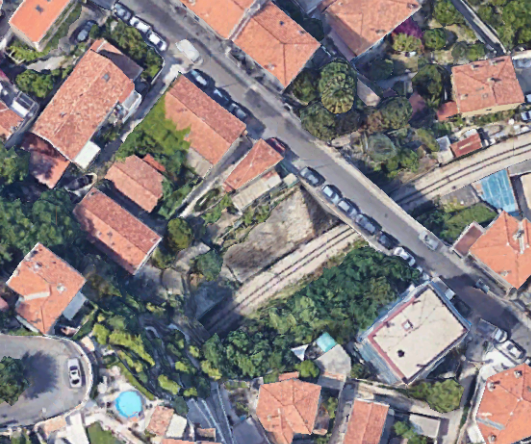
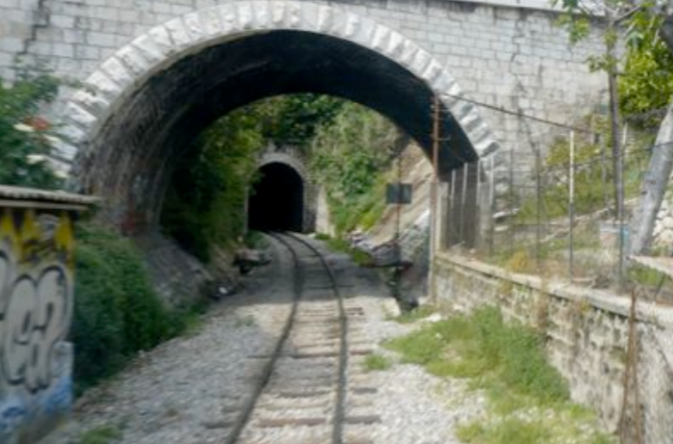
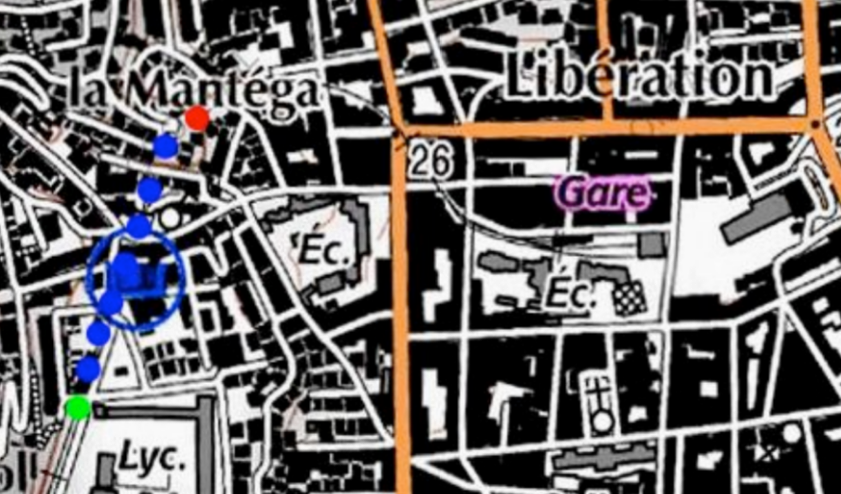
Just beyond the small Station called Gambetta the line curved round under Boulevard Mantega Righi and then entered the tunnel at La Mantega – the tunnel Piol Mantéga.The tunnel was 350 metres long. The current Piol Mantéga Tunnel is the result of the joining of two older tunnels by a modern one of 174 metres in length. The two older tunnels were La Mantega Tunnel (88 metres long) closest to La Gare du Sud, and Piol Tunnel (78 metres long).
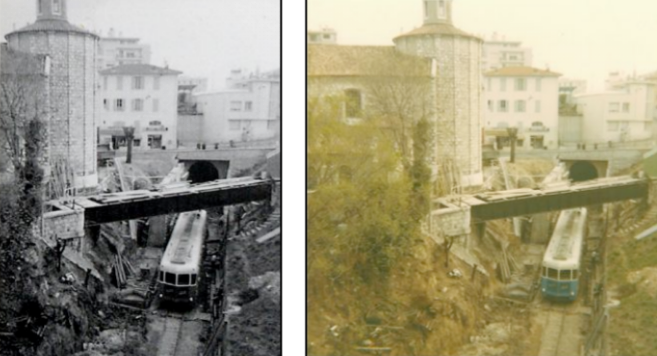
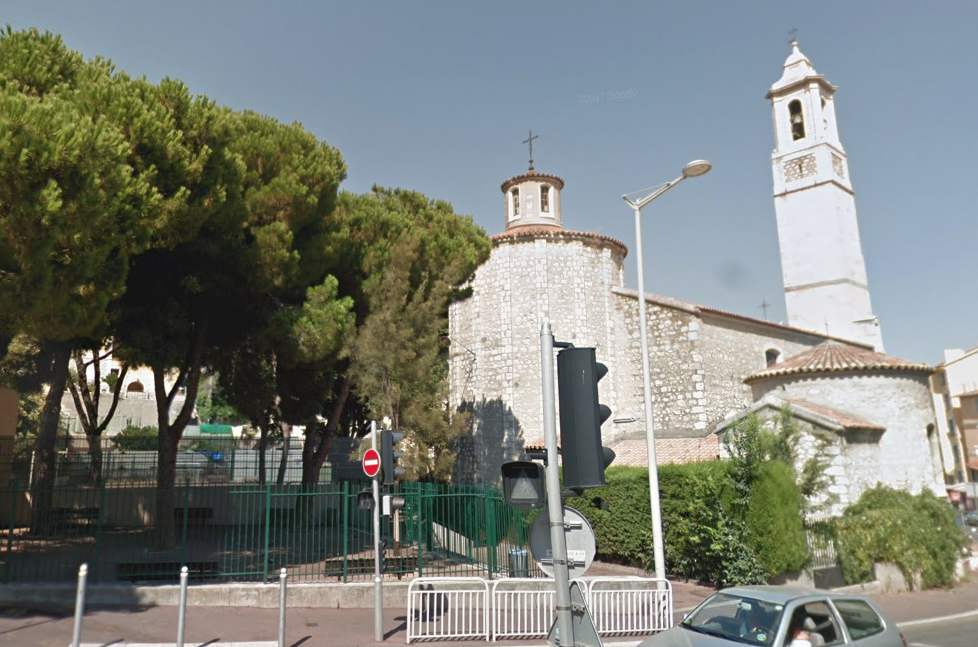
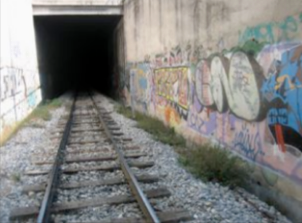
In addition, the entrance to the Piol tunnel was extended by a dozen meters towards Saint-Philippe in concrete. [8]The images below are two views of the cutting between La Mantéga and Piol tunnels close to Saint Paul’s Church. The North portal of Piol Tunnel is visible as well as an aqueduct which carries a small stream over the tunnel. A picture of St. Paul’s Church follows the views of the works. The picture of the church is taken from over the old tunnel portal in the images immediately below.
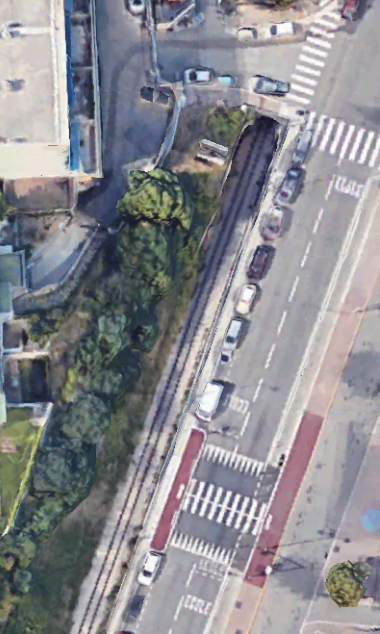
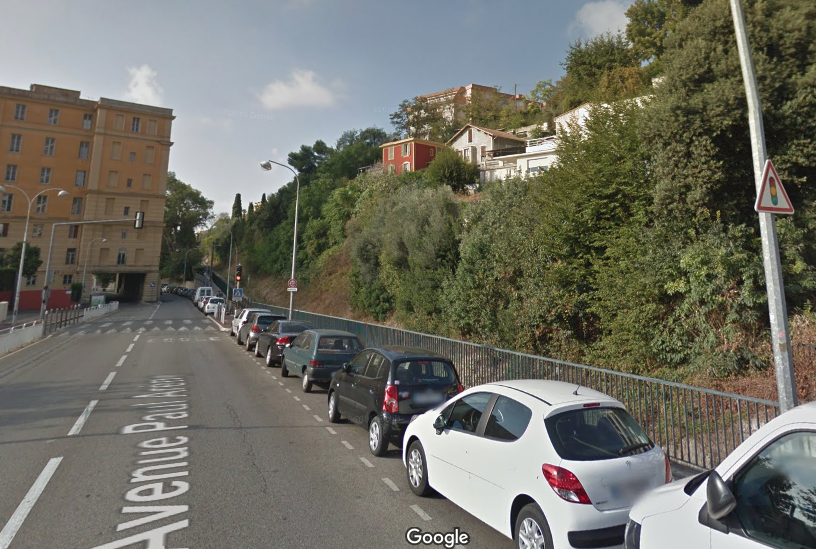
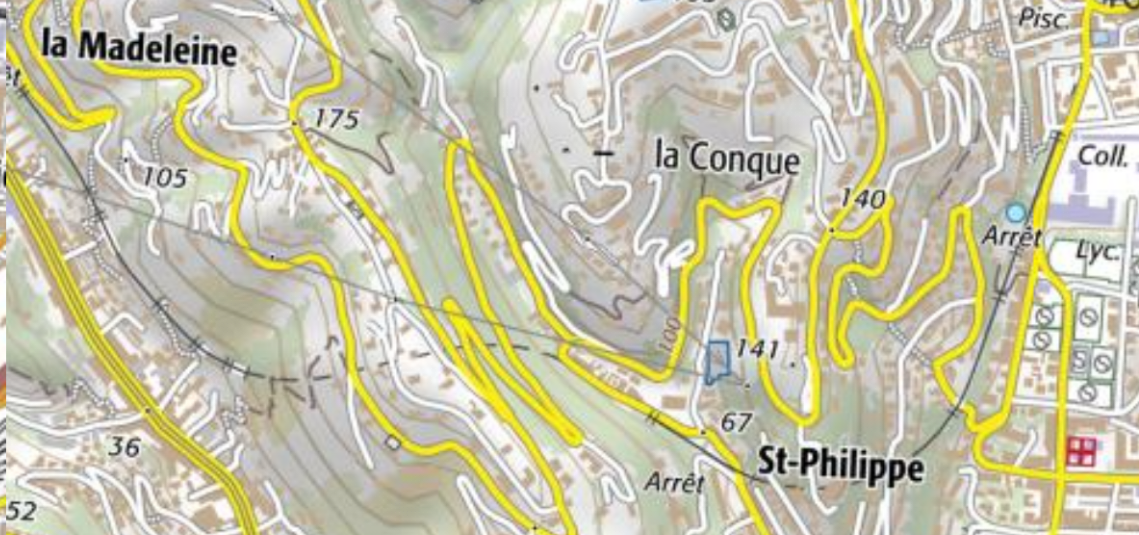
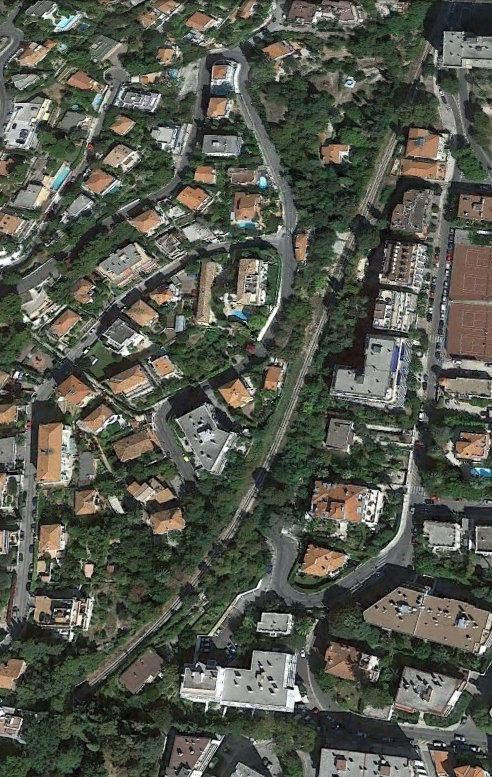
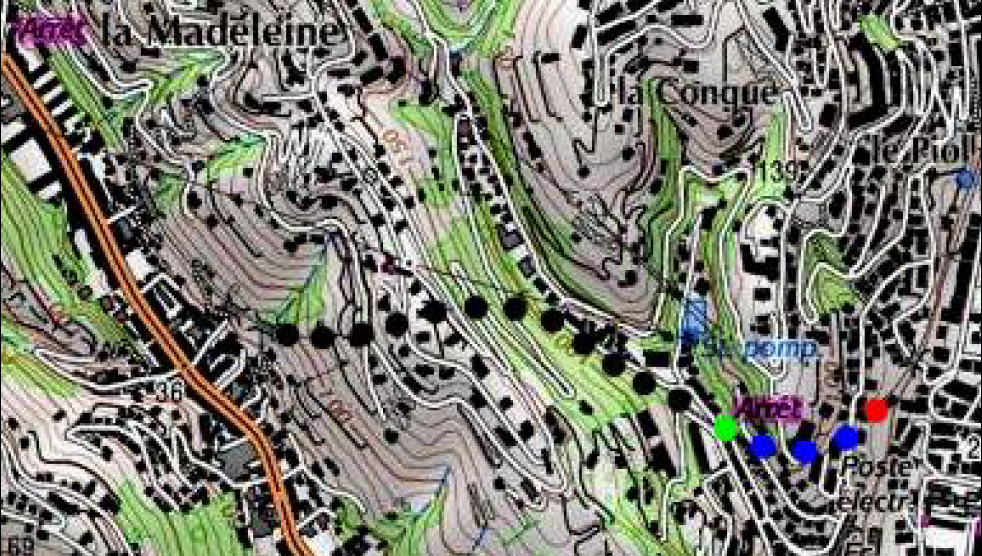
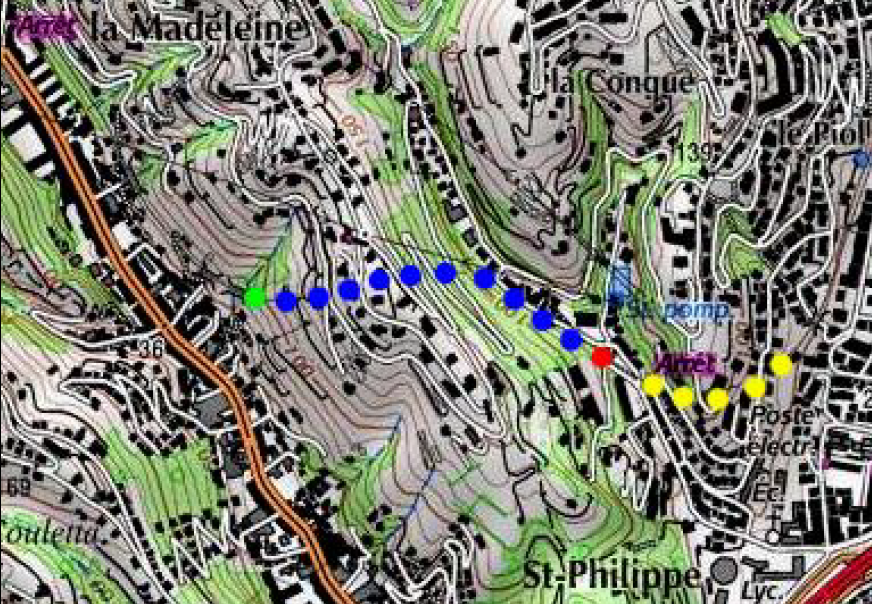
The tunnel runs below the trees to the left of the church.In the photograph above the railway runs to the right of the road (Avenue Paul Arene) towards the next Station, another small halt called Nice-Parc Imperial which can be seen marked Arret on the right side of the map below.The line is shown below in the satellite image from Google Earth

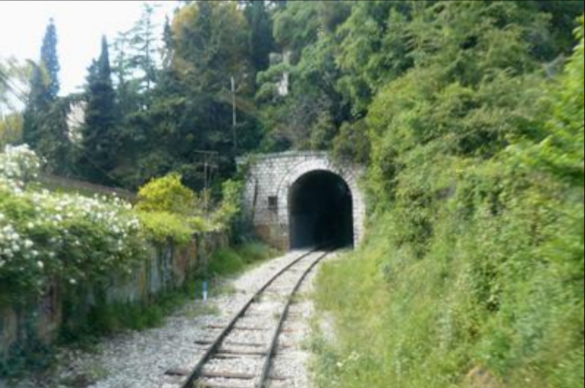
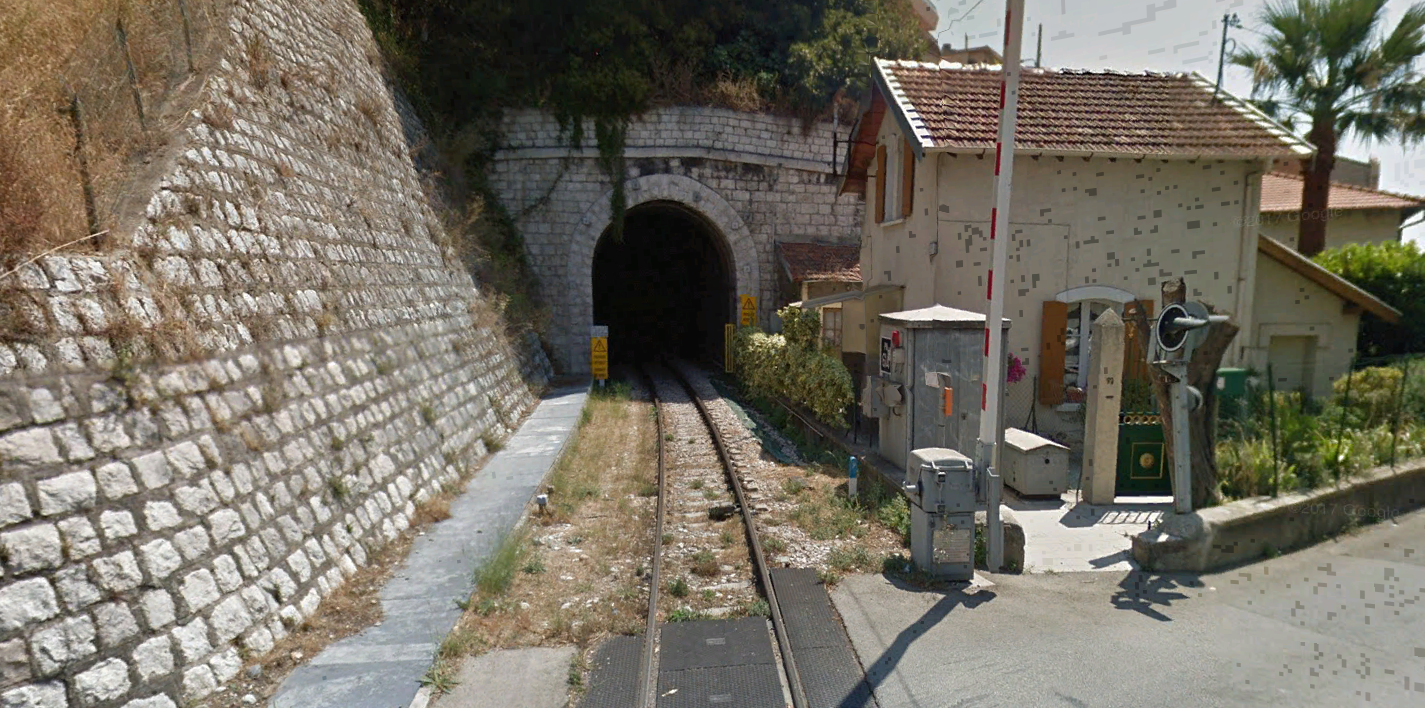
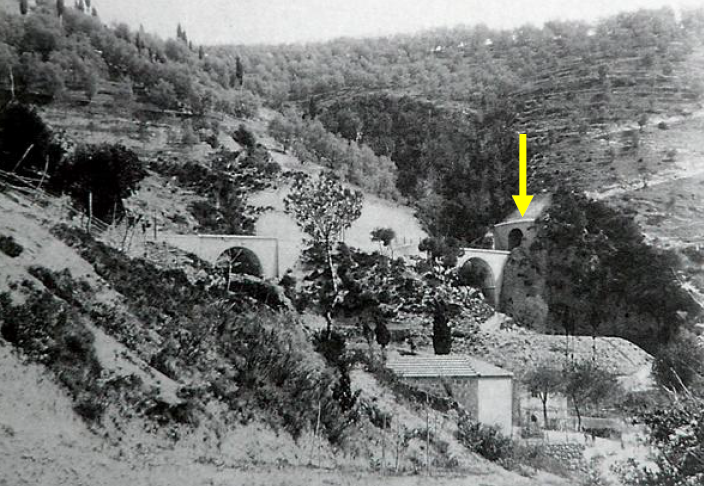
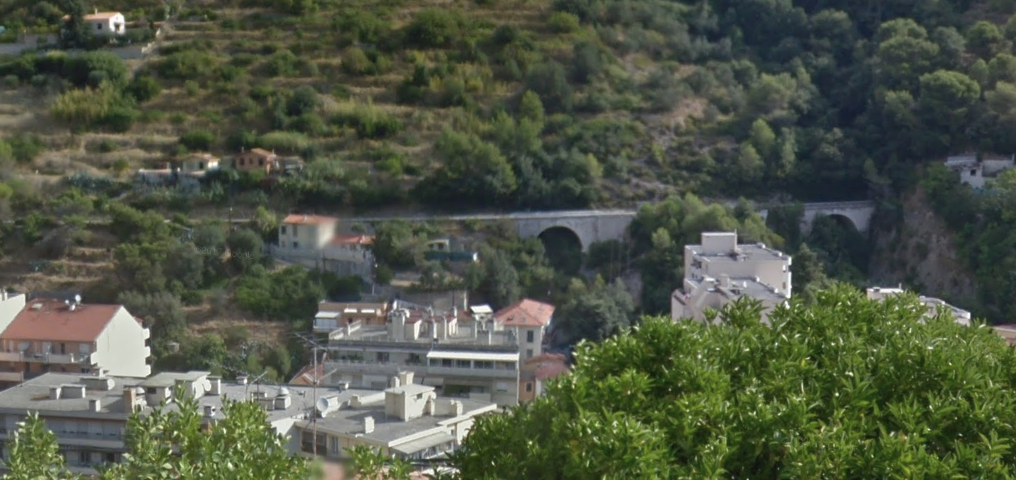
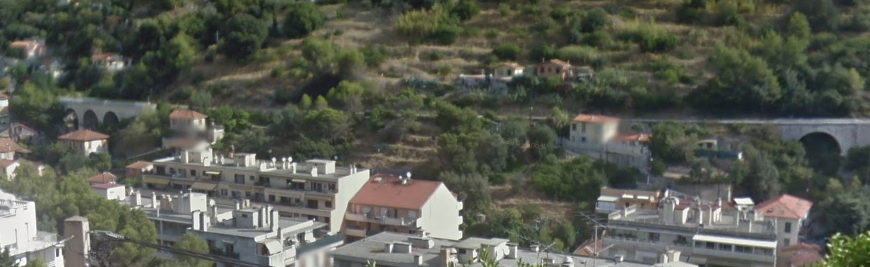
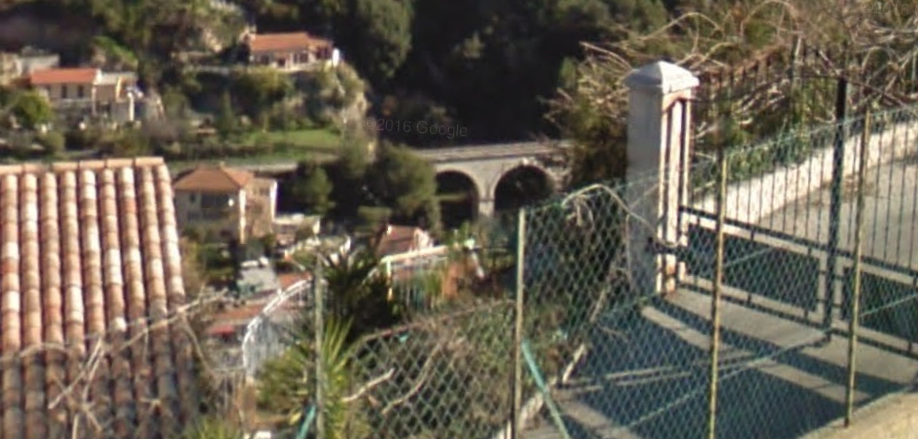
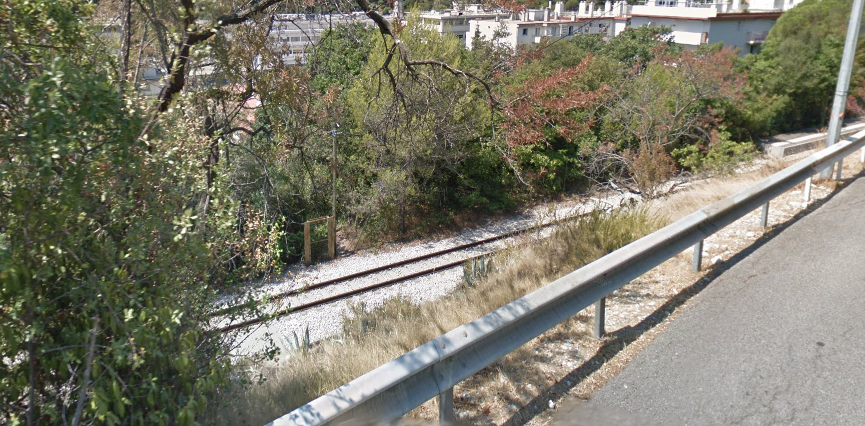
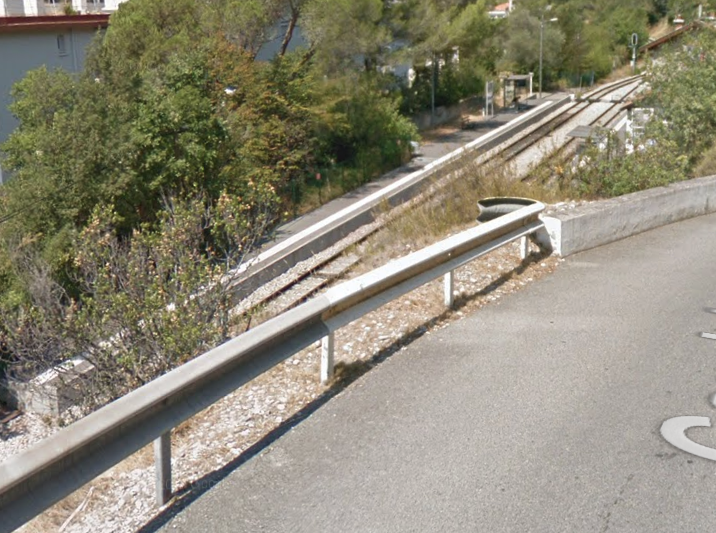
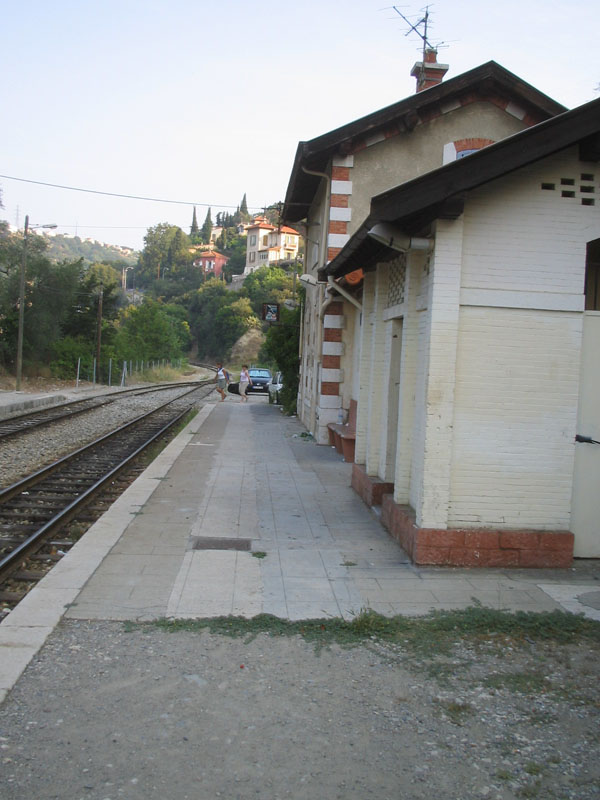
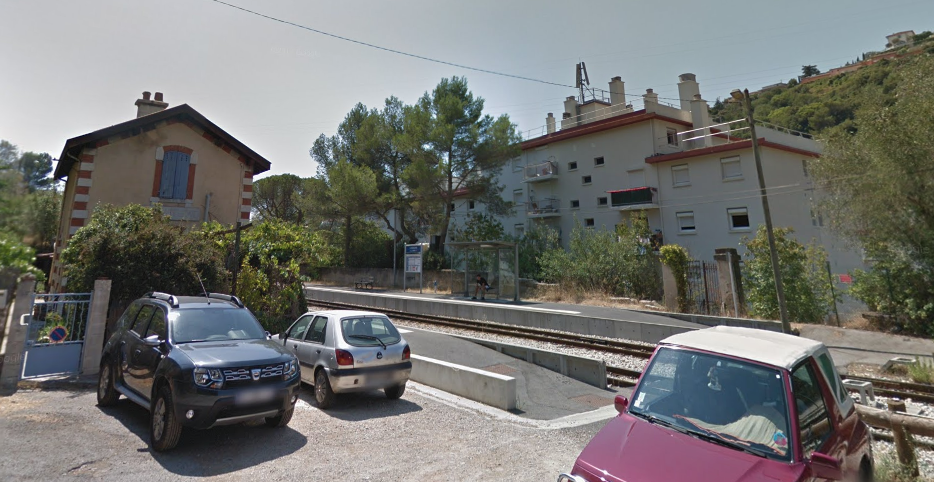
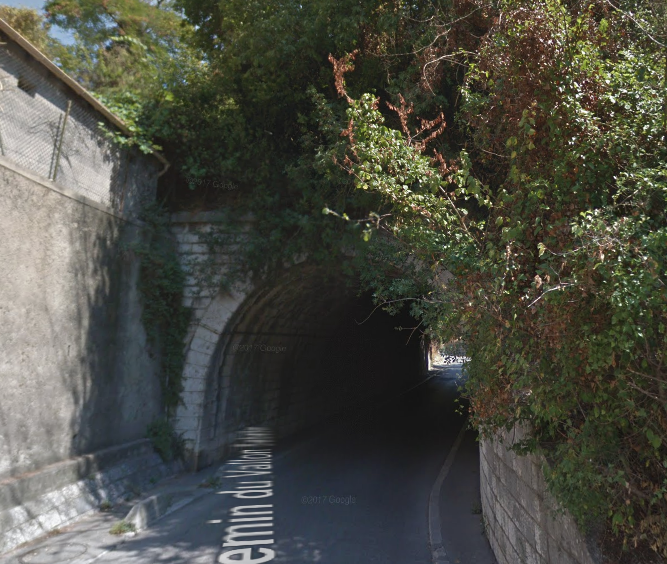
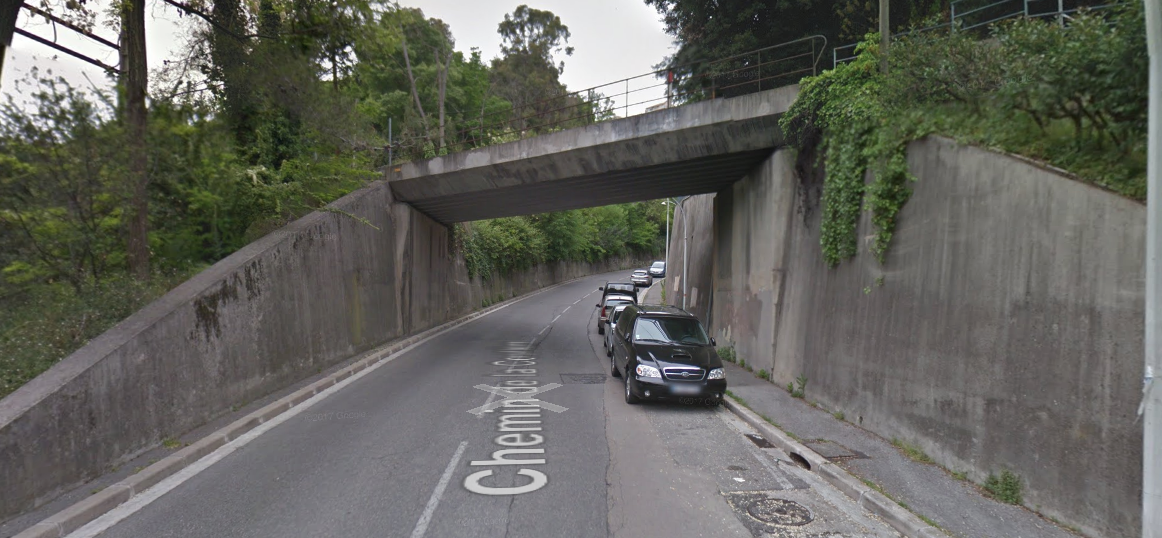
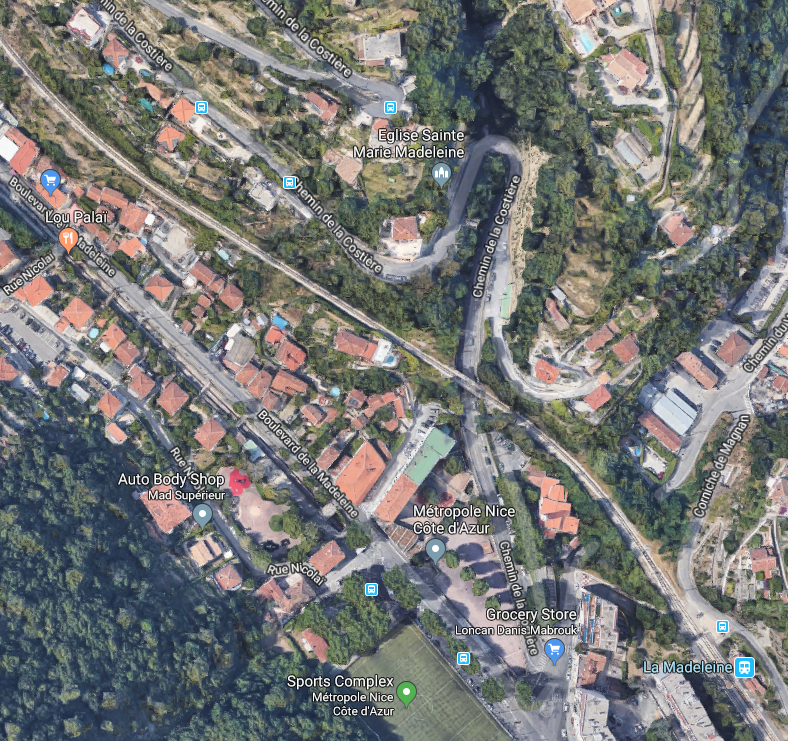
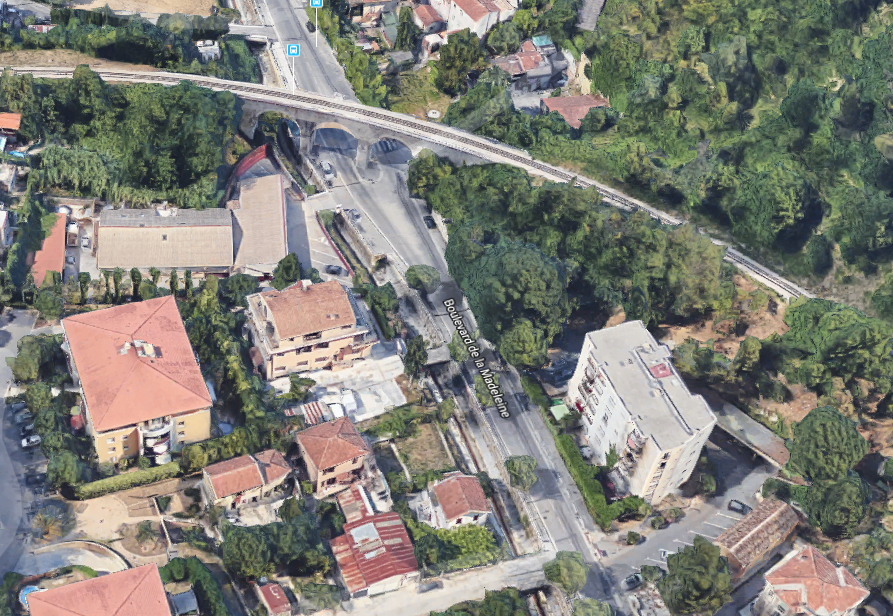
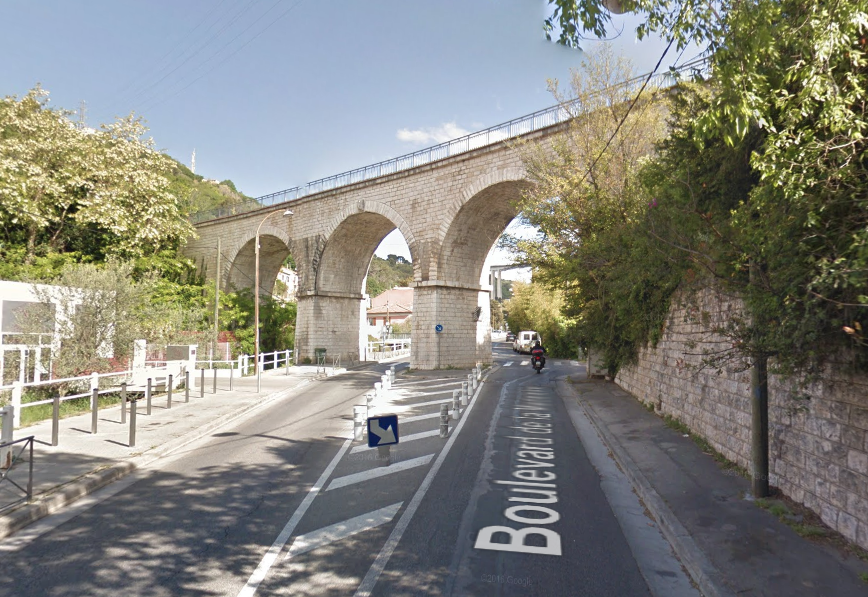
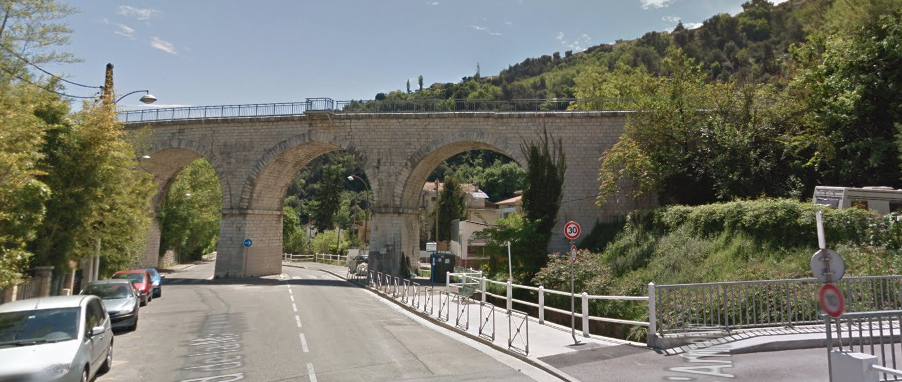
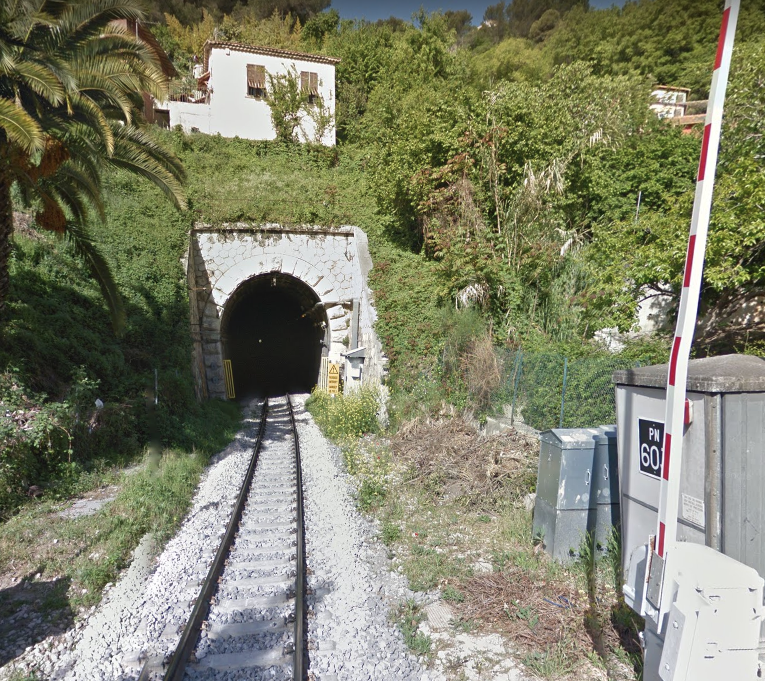
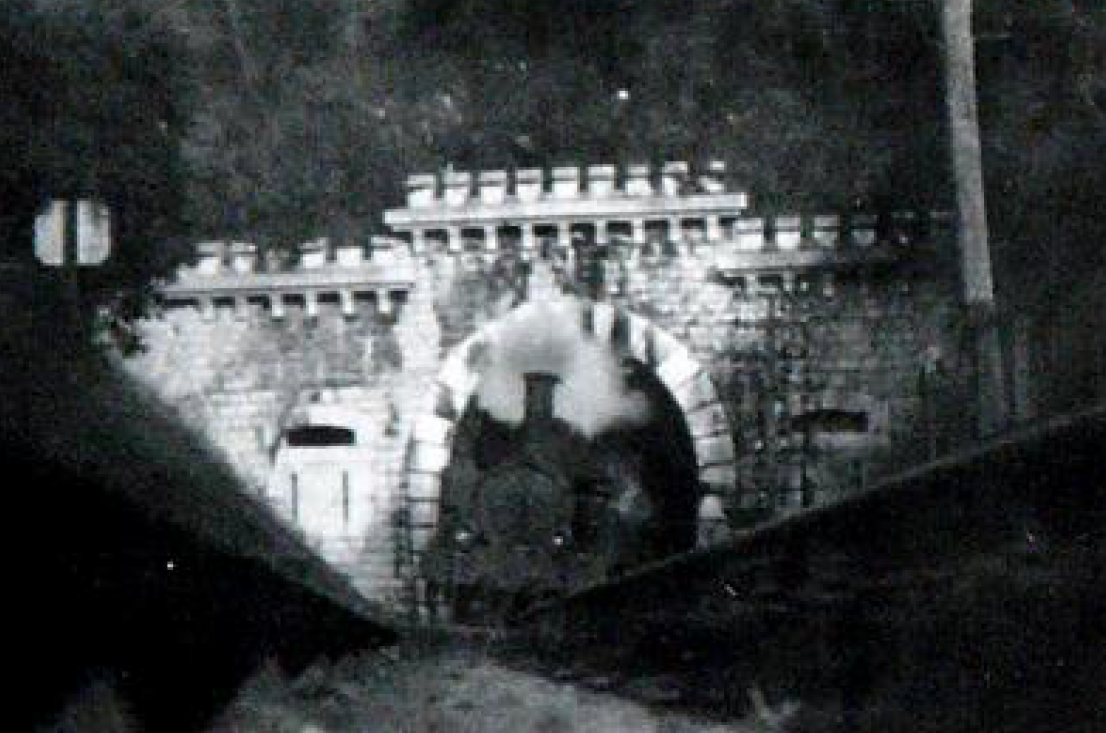
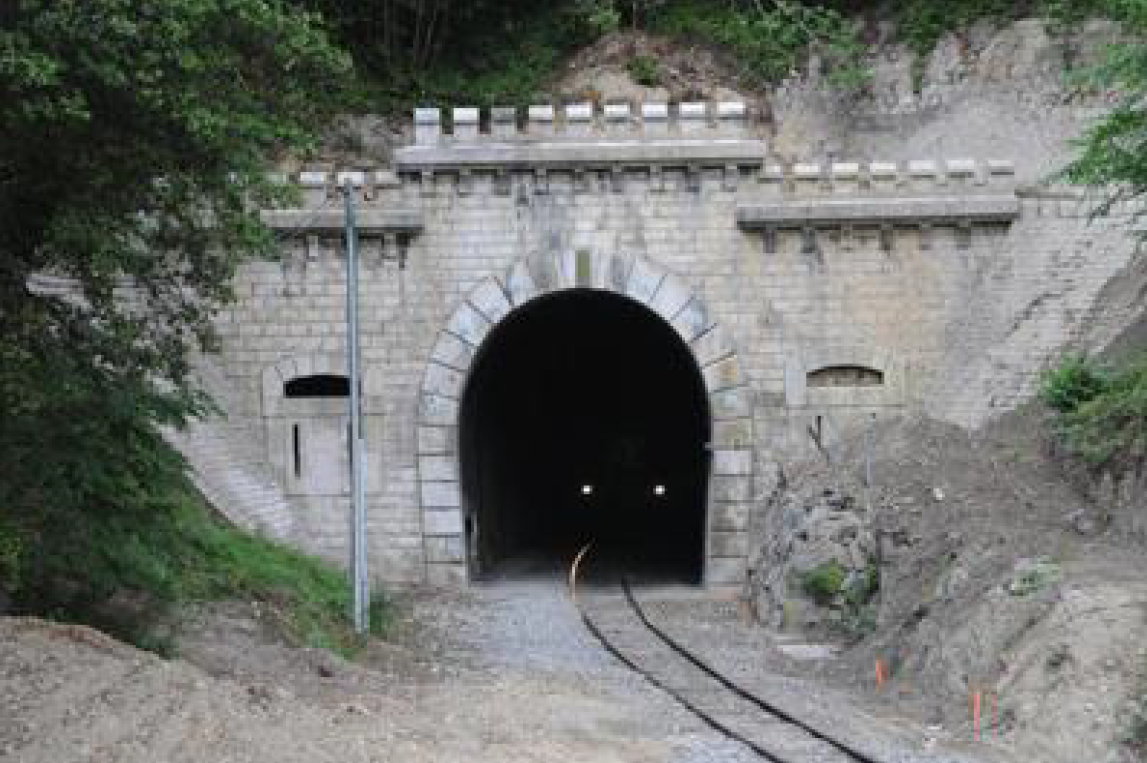
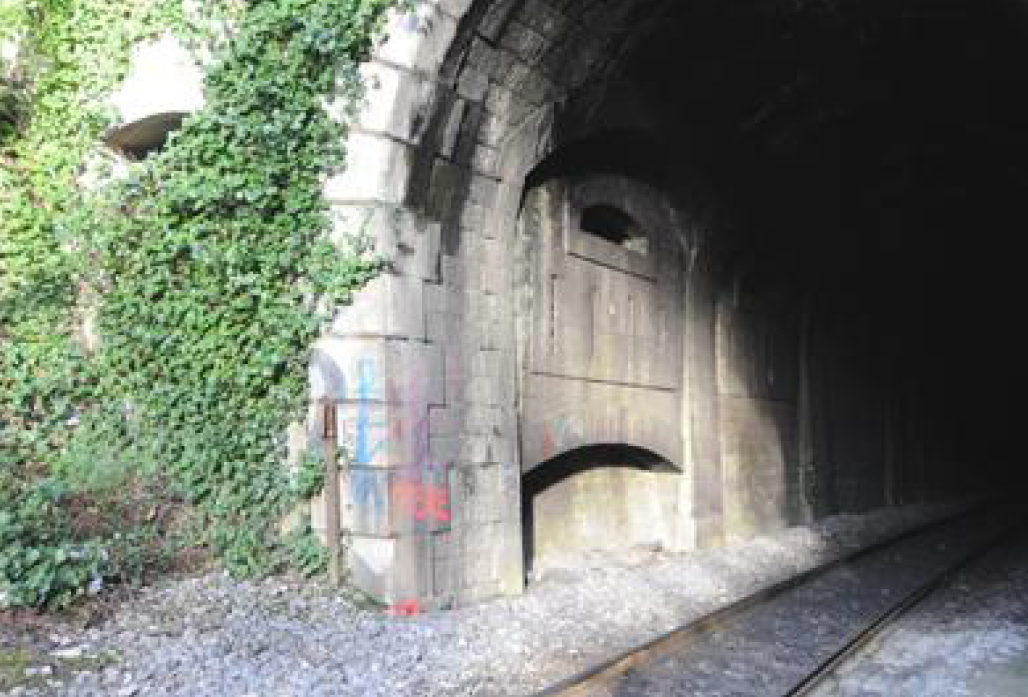
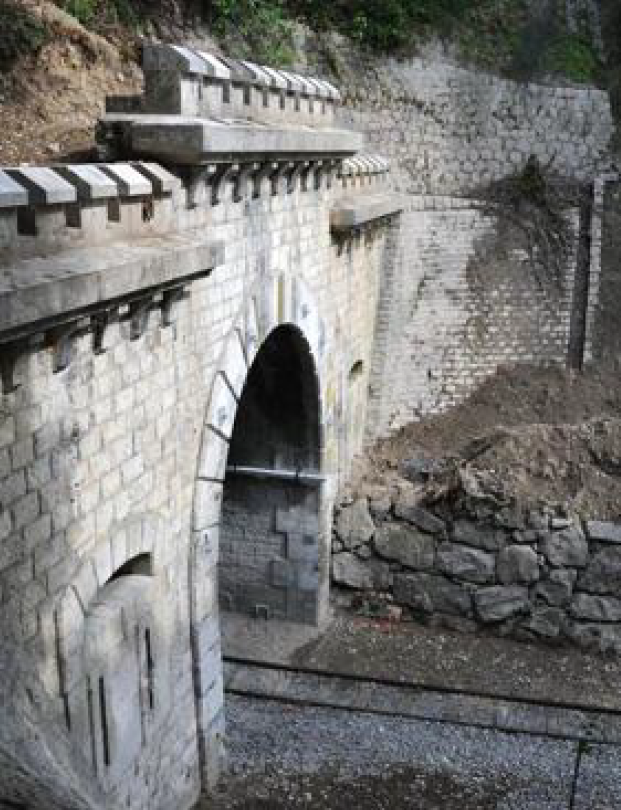
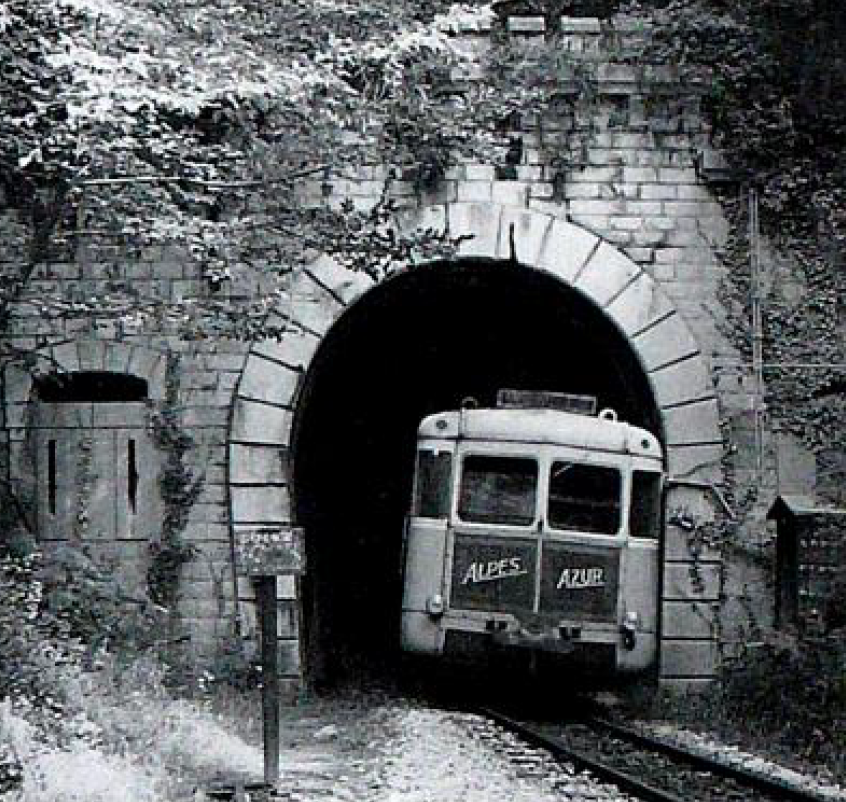
The portal of the next tunnel, that of Saint-Philippe, is just visible in the bottom left of the satellite image. Details of this tunnel can be found on the Inventaire des Tunnels Ferroviaires de France website. [9]Saint-Philippe Tunnel is 255 metres long, in it the line curves round from a south-westerly direction to a north-westerly direction. Leaving the tunnel the line immediately crosses Avenue d’Estienne d’Orves and enters another small halt.The halt of Nice-Saint-Philippe consists of no more than a small concrete platform and immediately precedes the entrance to the next tunnel, that of Saint Pierre.[10] The tunnel was 633 metres long and as the black and white image below shows, trains immediately crossed two bridges after leaving the tunnel. The tunnel portal is marked with a yellow arrow. [10]These last three pictures show the bridges along the hillside and are taken from across the valley. The pictures that follow show the approach to and the location of the next halt – La Madeleine.Chemin du Vallon Sabatier Passes under the railway to the immediate north-west of the station.As does Chemin de la Costière.The line continues North-west from La Madeleine Halt before swinging round to the West and crossing Boulevard de la Madeleine on an elegant viaduct.It then enters another tunnel – le Tunnel de Bellet (also known as  le Tunnel de Saint Antoine). The tunnel is 950 metres long and straight enough to be able to see the far end from outside the near portal. The far portal, furthest from La Madeleine is interesting. Because of its proximity to the Italian border, the entrance to the tunnel was been equipped at its construction in 1892 with a fortified defence system. Six years later, in 1898, defences were reinforced by the introduction of a pit 4.2 metres long in front of the portal which in normal times was filled with sand. In times of war, it could either be emptied, or receive explosives to destroy the tunnel entrance if required.
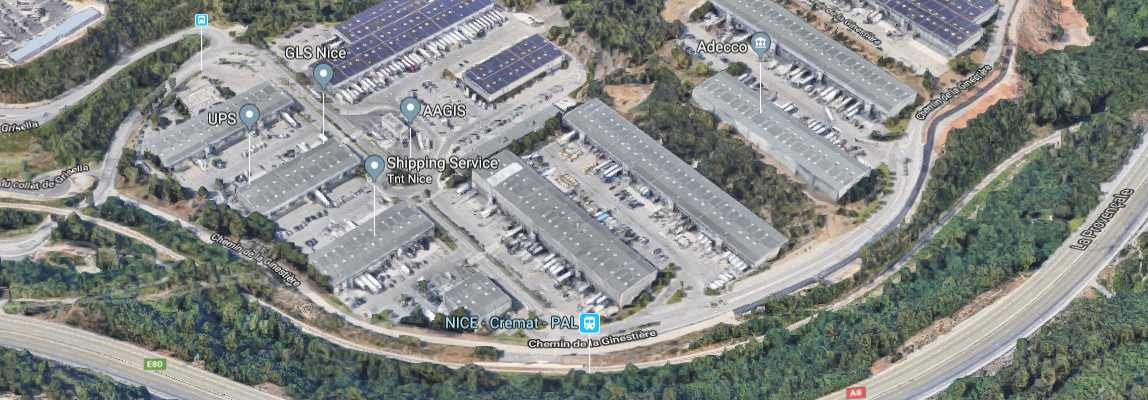
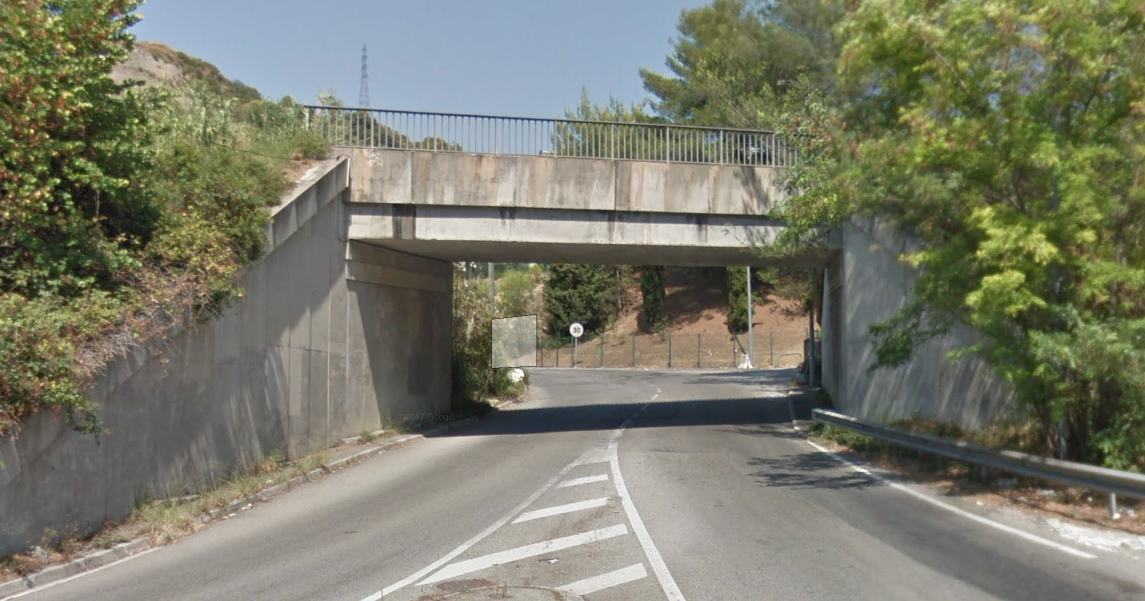
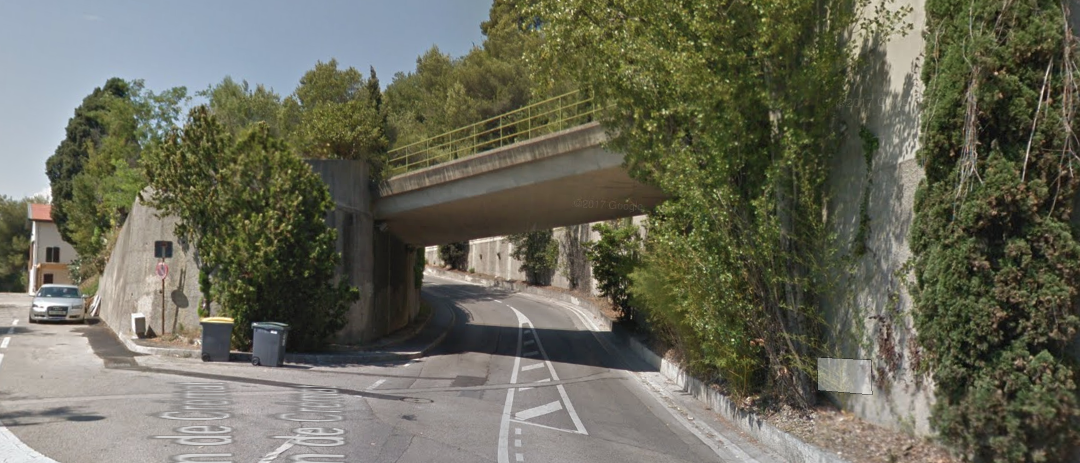
The tunnel portal now sits just under the A8 and can be seen to the right of the satellite image below. The railway continues around the edge of the industrial complex at Cremat and a halt is provided to serve the area – Nice-Cremat-PAL.This was at one time the stop of Zygofolis details of which can be found in the last post in this series. [11] Slip-roads from the A8 now travel under the line using purpose built bridges.

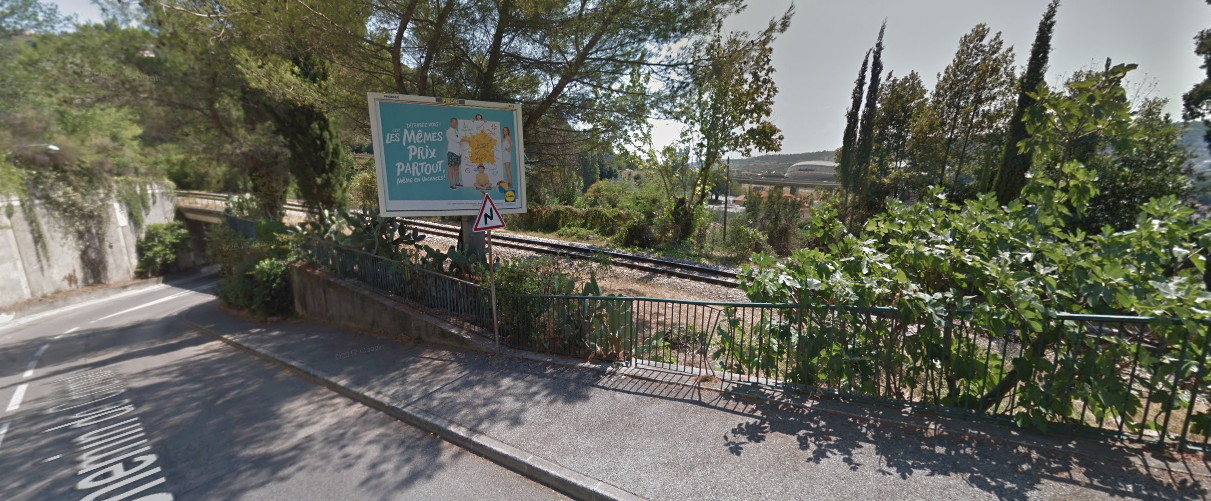
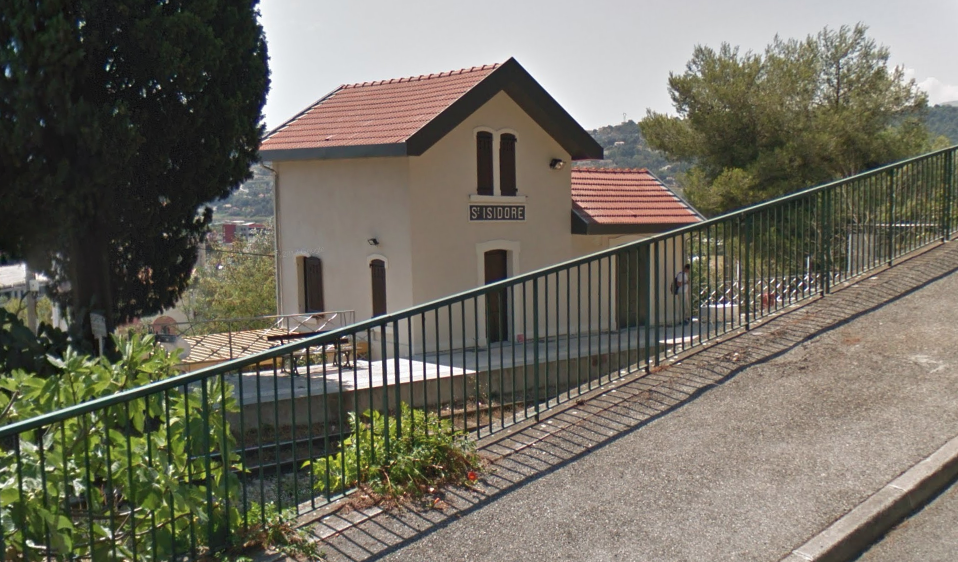
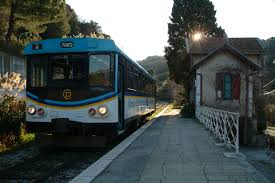
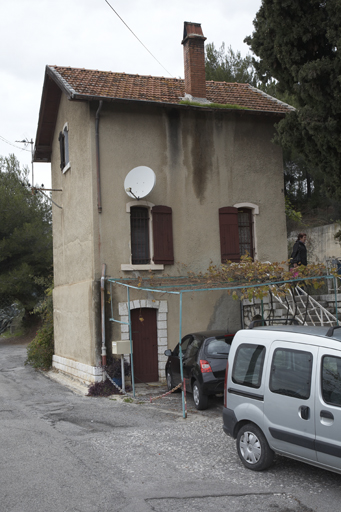
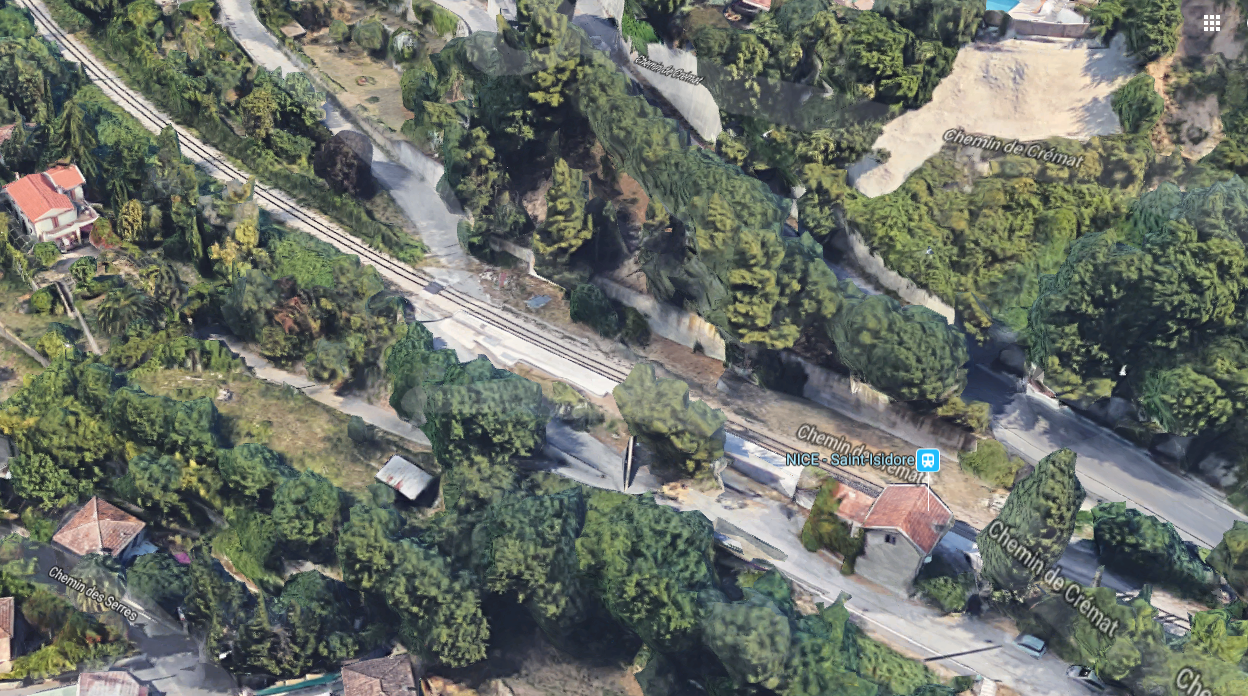
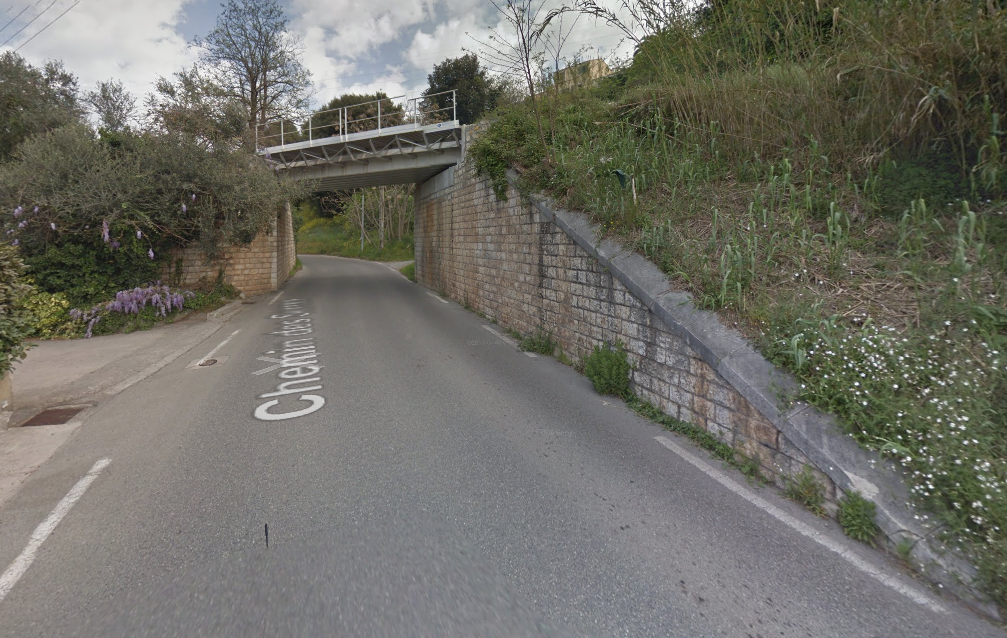
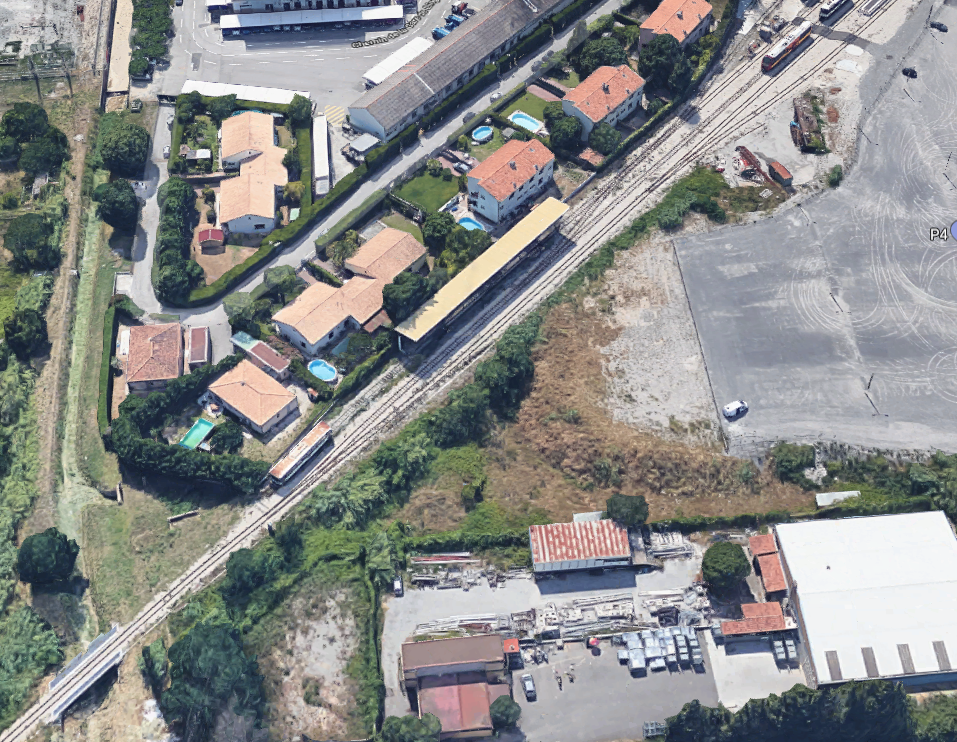
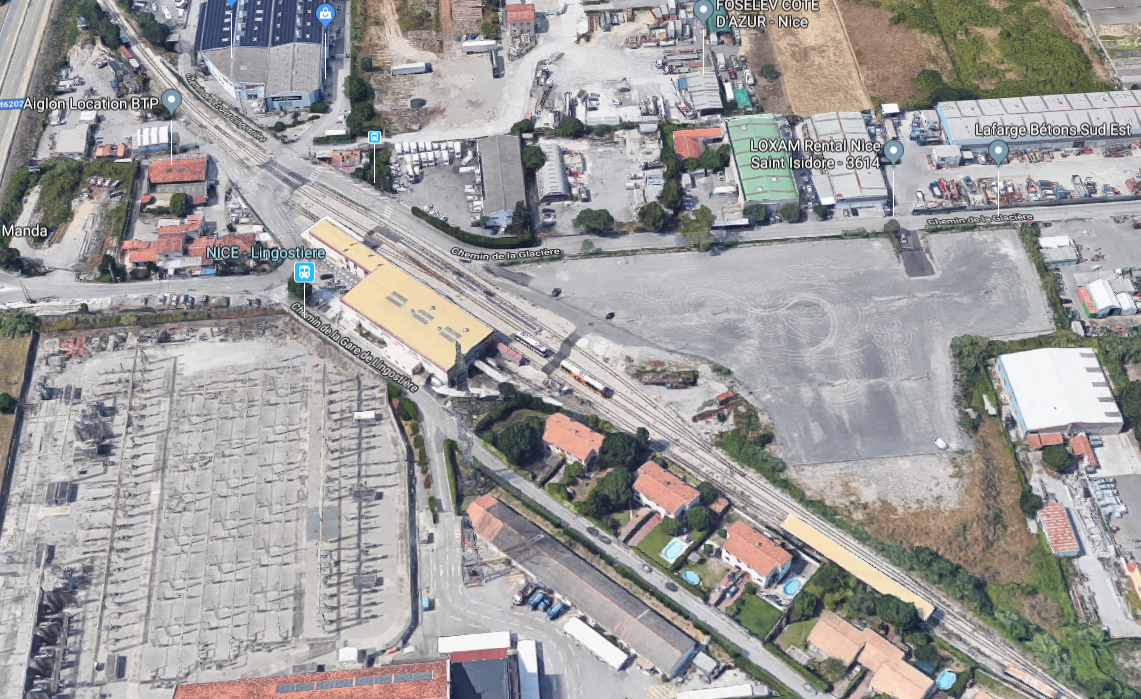
In the picture above, Nice-St. Isidore station building can just be glimpsed to the left of the image. The approach along the line is shown below. The station building can just be glimpsed from the Chemin de Crémat.From St. Isidore, the line continues and turns to a more northerly direction and then switches back towards the North-West and crosses Chemin des Serres and Chemin de la Glacière before entering the complex at Lingostiere.

The first image of the depot at Lingostiere has been rotated to show the underpass flood channel at Chemin de la Glacière in the bottom left of the picture. Just to the North-West of this bridge the tracks fan out to serve the depot.The depot at Lingostiere was the main depot on the Nice to Digne Line. The workshops were created in 1975 before that the workshops were in Draguignan despite the closure of the Central Var line in 1949.

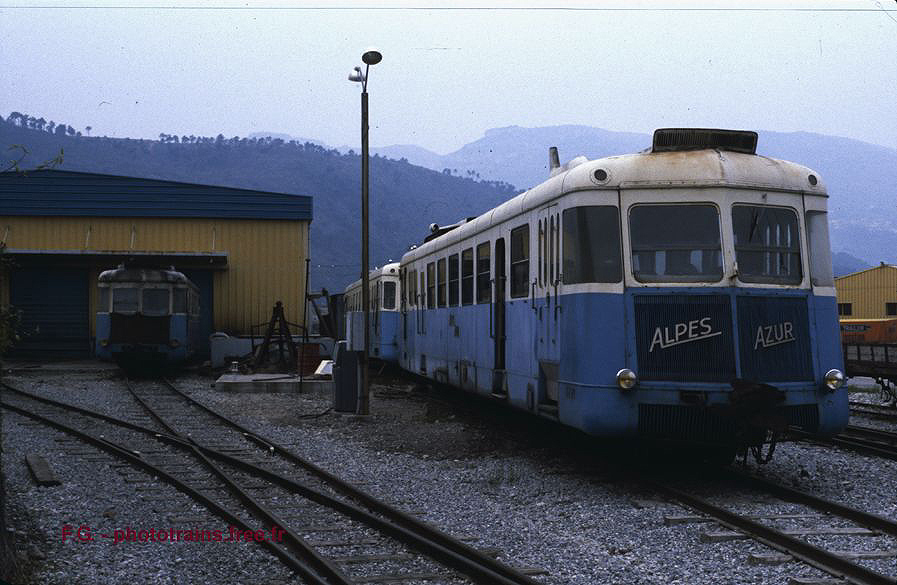
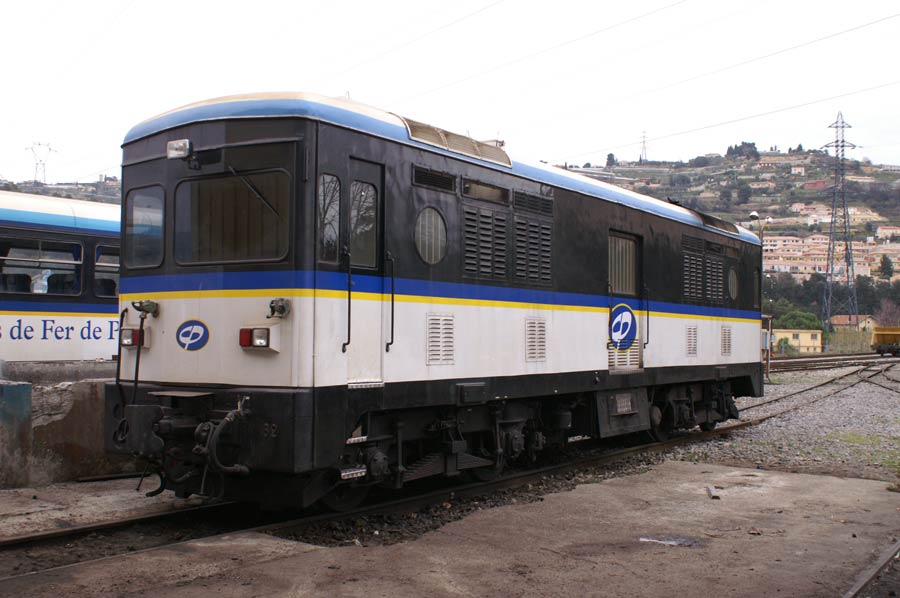
A variety of rolling stock and traction could be observed alongside the line out of Nice towards La Manda. Another photograph from Les Trains de l’Histoire, Sur les Chemins de Fer de Provence (Nice-Digne) shows the depot in 1979. [2]T62 at Lingostière on 14th February 2007. [12]

The following images are from Alain Mionnet. [13]

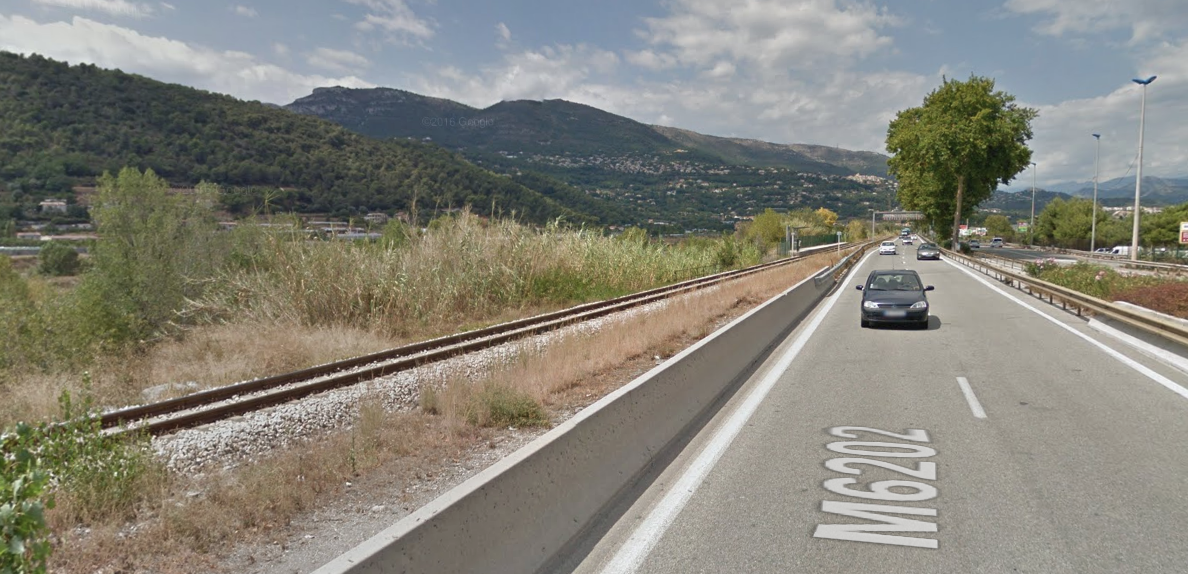
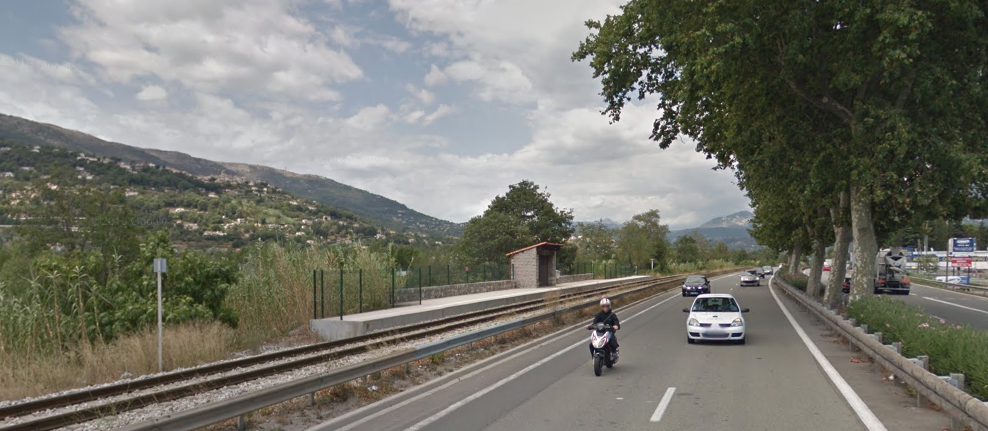
The line leaves Lingostiere and passes under the M6202 dual carriageway before settling in alongside that road. The M6202 and the Chemin de Fer de Provence follow each other for some distance alongside the River Var.

The picture below shows the two running in parallel. The halt visible in the distance is Saint-Sauveur.

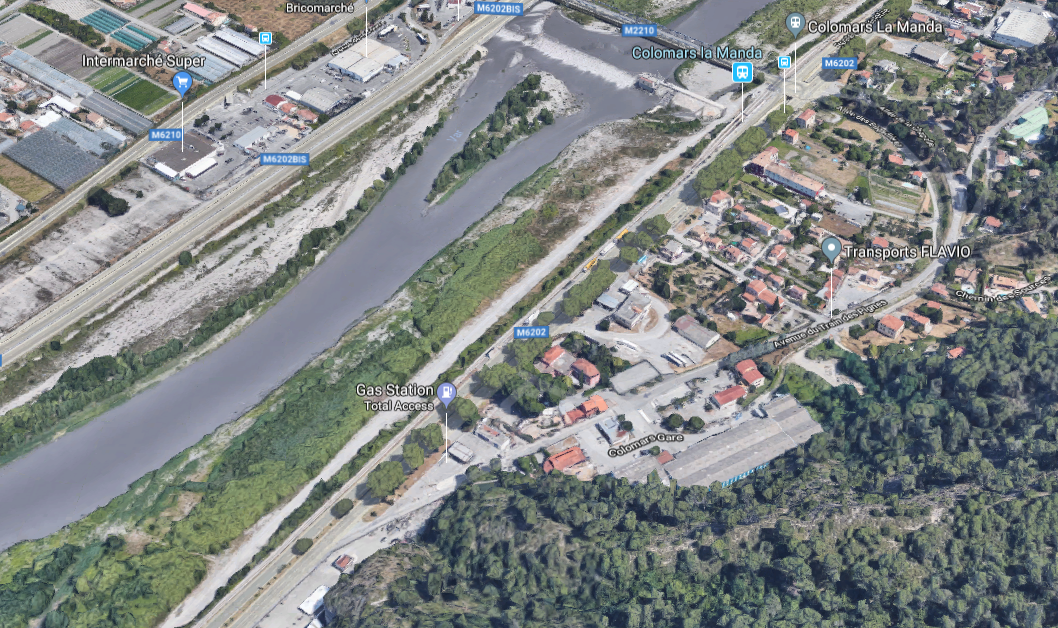
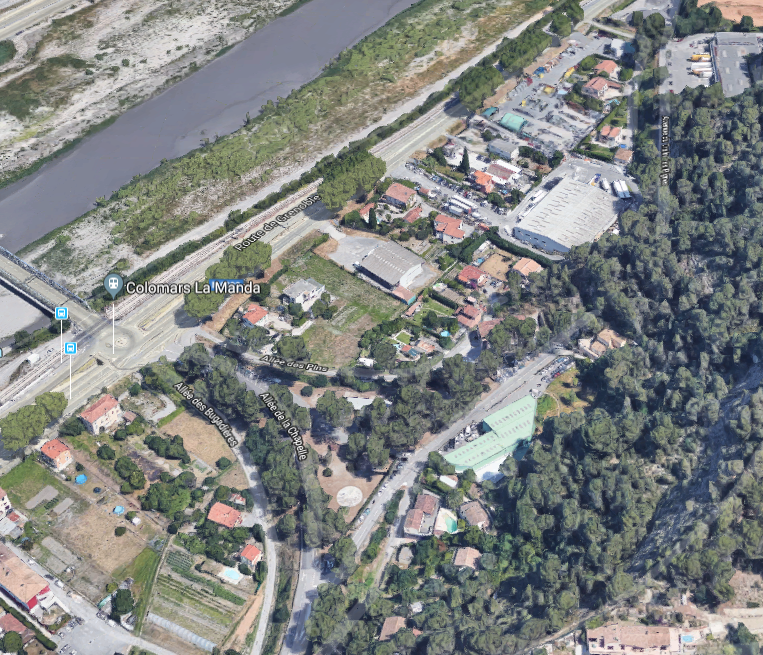
The next halt is Bellet.And the next is Colomars/La Manda. The satellite image below is of great interst to those who are following the original line of the railway. The modern line follows the River side and the M6202, the original line deviated to the East. The wide sweep of the line which branched off the Nice to Digne line can be seen curving round to the La Manda bridge. Even though the railway disappeared in the 1950s, its route is still visible in the layout of the roads at La Manda.A little less obvious because of the trees is the old alignment north of La Manda heading towards Digne-les-Bains. It can still be picked out on the next satellite image below and returns towards the river bank in the top right of the image. If your eyesight is really good you might just be able to make out the name of the road which follows the old line – Avenue du Train des Pignes.

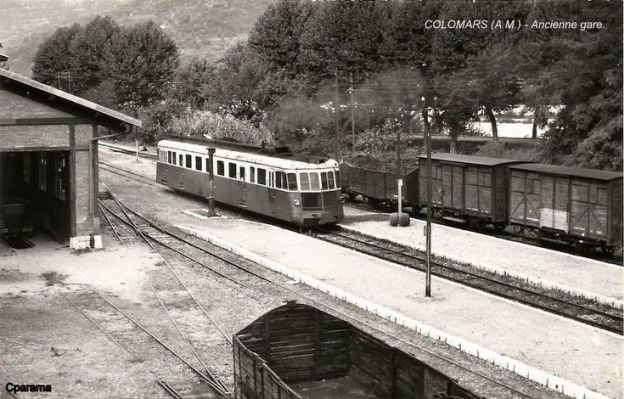
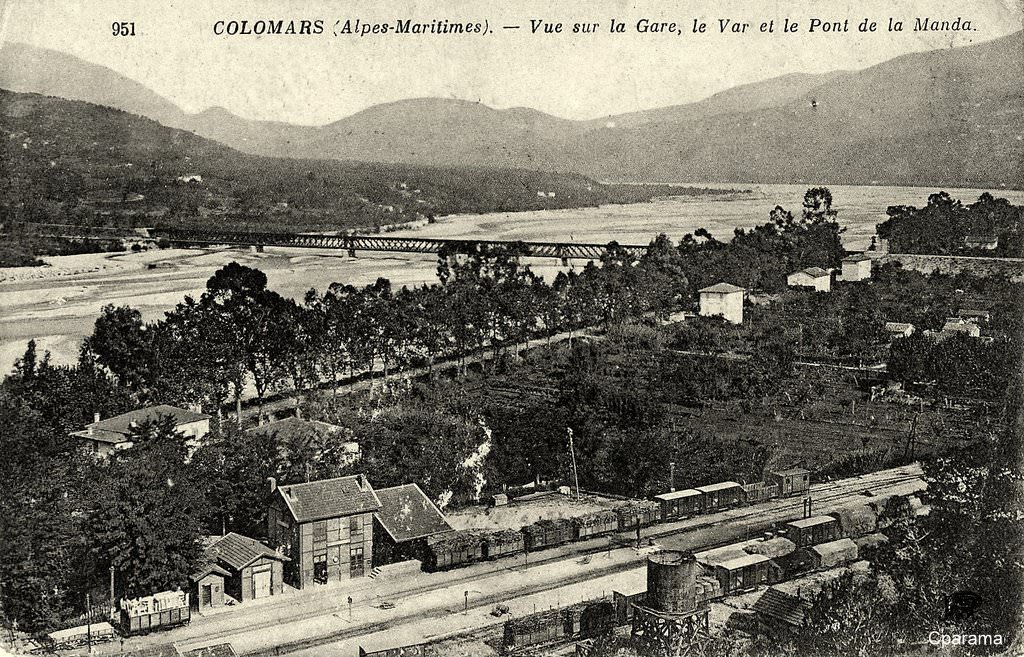
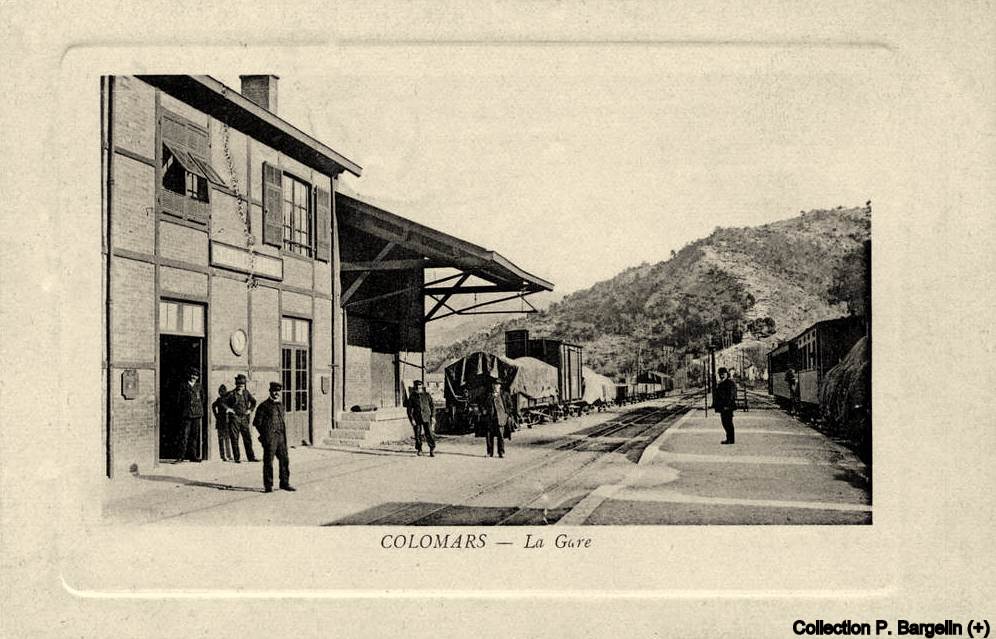
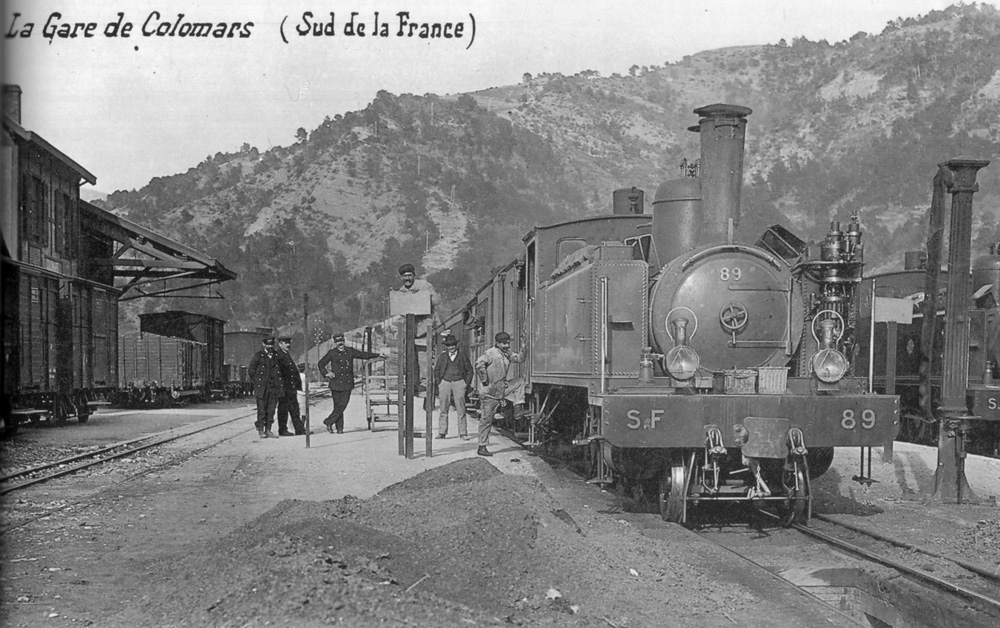
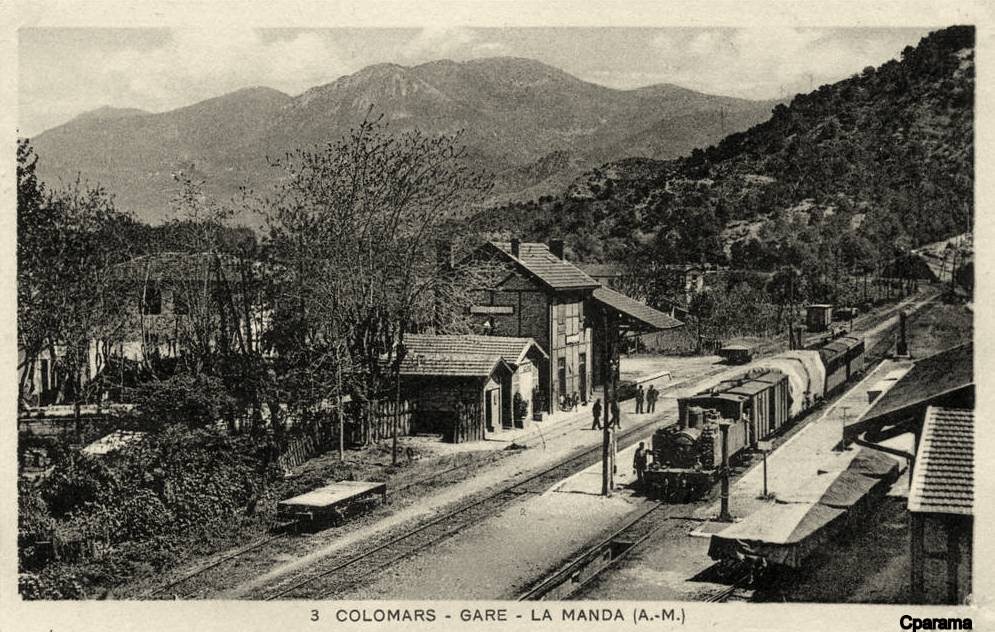
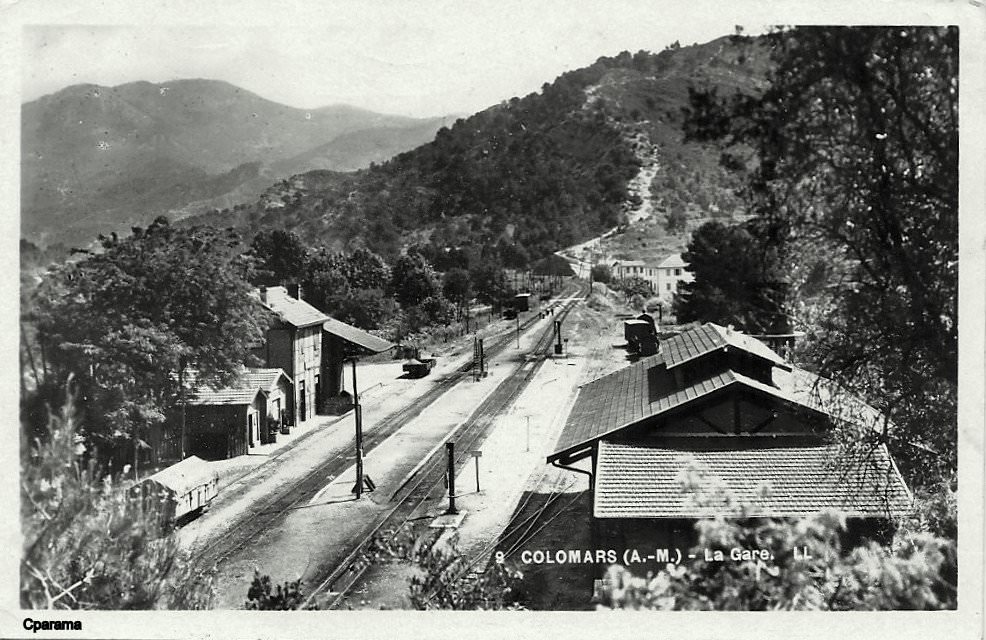
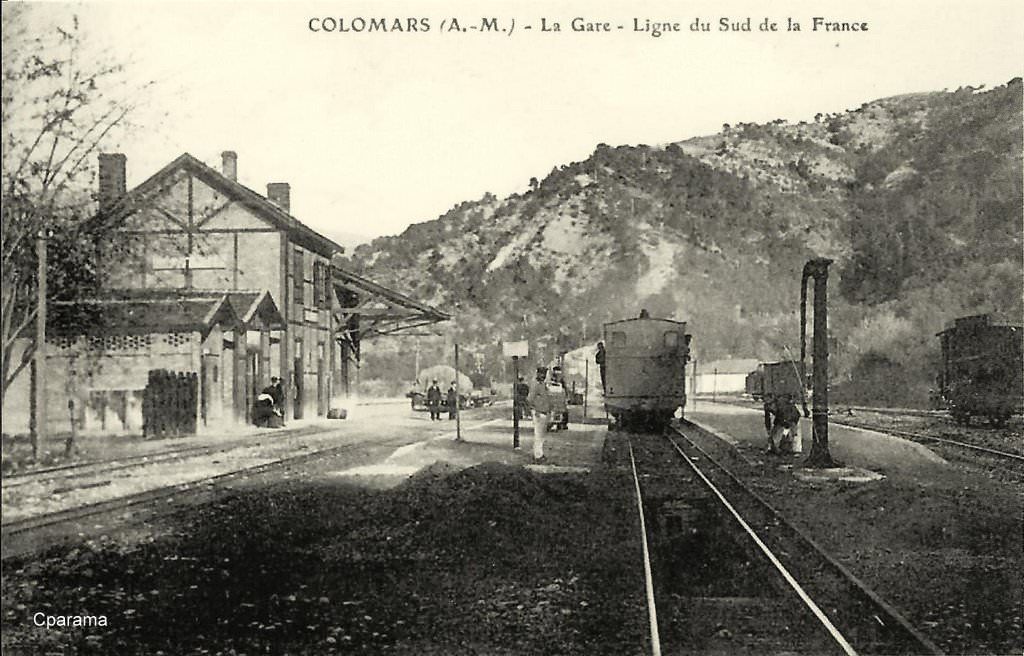
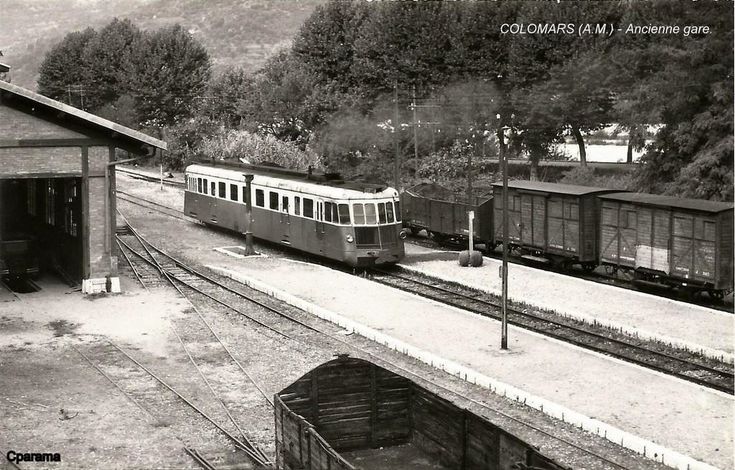
We finish this second part of the journey along the Nice to Digne line by focussing on the station at La Manda which was usually referred to as Colomars in the early life of the line.

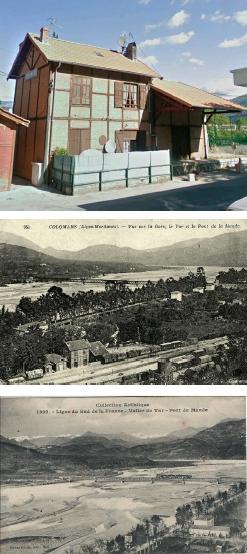
The Ligne de Central Var left the Nice to Digne line at La Manda close to Colomars on the River Var. The station building at Colomars Station remains as evidence of the line. The line branched off the current Digne line just to the north of the hamlet of La Manda.

The station construction is typical of many of the stations still evident on the route of the line. A few historic postcards are reproduced here to give an idea of the station in the early years of the 20th century.

The second of these postcard views has been ‘adapted’ by Jean Giletta the photographer to include a hand drawn train. While it is a pity that the photographer did not wait for a real train to cross the bridge, the picture illustrates the nature of the river crossing. The railway line crossed the river on the top of the truss girders with provision between the trusses for road traffic!

References

  1. Ravnsbak.dk, Narrow gauge railway Nice Digne; http://www.ravnsbak.dk/Railways/France/Railcars/Narrow%20gauge%20railway%20Nice%20Digne/index.html#, accessed on 10th April 2018
  2. Les Trains de l’Histoire, Sur les Chemins de Fer de Provence (Nice-Digne); https://www.tdh-forum.fr/viewtopic.php?t=71551, accessed on 10th April 2018. Copy right for these images rest with the photographers …. the relevant names on that site are: chavance, michel/57, Gérard and there are some great photographs to enjoy there.
  3. Wikipedia, Chemins de Fer de Provence; https://en.wikipedia.org/wiki/Chemins_de_Fer_de_Provence, accessed on 10th April 2018; Flickr, Nice JHM-1980-0268 – France, Chemins de fer de la Provence, Nice; https://www.flickr.com/photos/jhm0284/14640888993, accessed on 10th April 2018; Flickr Hive Mind – The World’s Best Photos of x304; https://hiveminer.com/Tags/x304, accessed on 10th April 2018; Ruhn Feldt, Nice – Annot – Digne-Les-Bains; http://provence.jvgspv.se, accessed on 10th April 2018. The last link provides photographs along the full length of the Nice to Digne Line.
  4. http://www.rd-rail.fr, Railways of Provence: from Nice to Digne (June 15, 2016); http://www.rd-rail.fr/1-PHOTOS/PH43/index-ph43.html, accessed on 10th April 2018.
  5. Picture (c) Gerard on Forum: Les Trains de l’Histoire, accessed on 10th April 2018.
  6. Picssr, JHM0284’s Most Interesting Flickr Photos; http://picssr.com/photos/jhm0284/interesting/page9?nsid=15205793@N06, accessed on 11th April 2018.
  7. Picture (c) Michel/57 on Forum: Les Trains de l’Histoire, accessed on 10th April 2018.
  8. Inventaire des tunnels de ferroviaires de France, Tunnel du Piol Mantéga; http://www.tunnels-ferroviaires.org/tu06/06088.11.pdf, accessed on 11th April 2018.
  9. Inventaire des tunnels de ferroviaires de France, Tunnel du Piol Mantéga; http://www.tunnels-ferroviaires.org/tu06/06088.10.pdf, accessed on 12th April 2018.
  10. Inventaire des tunnels de ferroviaires de France, Tunnel du Piol Mantéga; http://www.tunnels-ferroviaires.org/tu06/06088.9.pdf, accessed on 12th April 2018.
  11. https://rogerfarnworth.wordpress.com/2018/04/06/nice-to-digne-les-bains-part-1-nice-chemins-de-fer-de-provence-57, there are also some excellent photographs of the trains and buses that served the theme park taken by Jean-Henri Manara; https://www.flickr.com/photos/jhm0284/albums/72157665103843167 accessed on 24th April 2018.
  12. Simplon Postcards, Chemins de Fer de Provence – CP, Page 1B: Rolling Stock – Diesel Locos & Trailers; http://www.simplonpc.co.uk/CPb.html, accessed on 12th April 2018.
  13. Alain Mionnet, Le Chemin de Fer de Provence; http://alain.mionnet.pagesperso-orange.fr/cfp.htm, accessed on 12th April 2018.
  14. https://commons.wikimedia.org/wiki/File:Autorail_Billard_212_des_CP_-_Juillet_1983-8.jpg, accessed on 12th April 2018.
  15. Taken in 1971/72 (c) Locky on Forum: Les Trains de l’Histoire, accessed on 10th April 2018.
  16. Inventaire des tunnels de ferroviaires de France, Tunnel du Piol Mantéga; http://www.tunnels-ferroviaires.org/tu06/06088.8.pdf, accessed on 12th April 2018