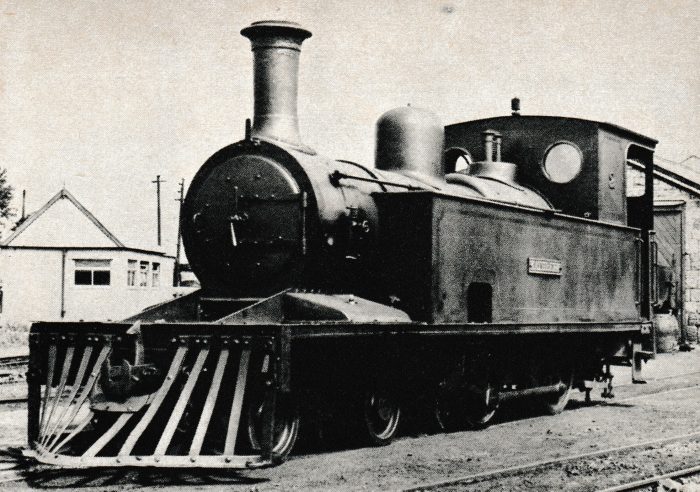
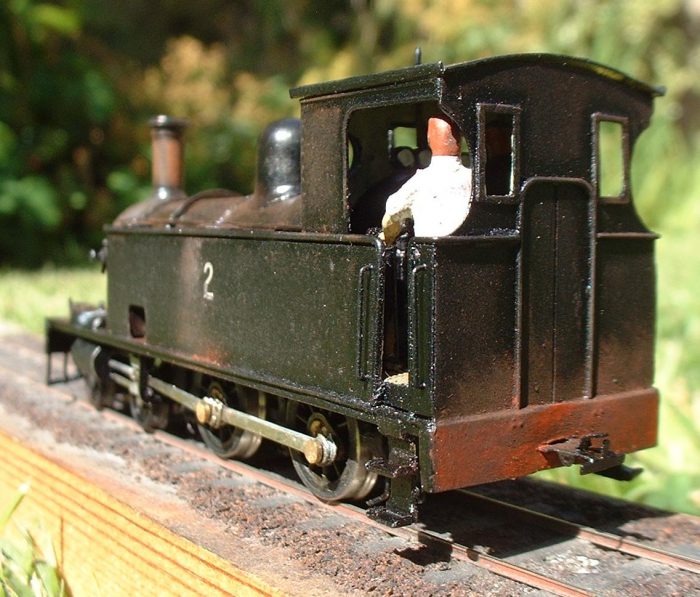
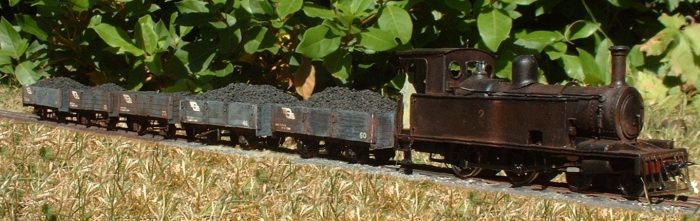
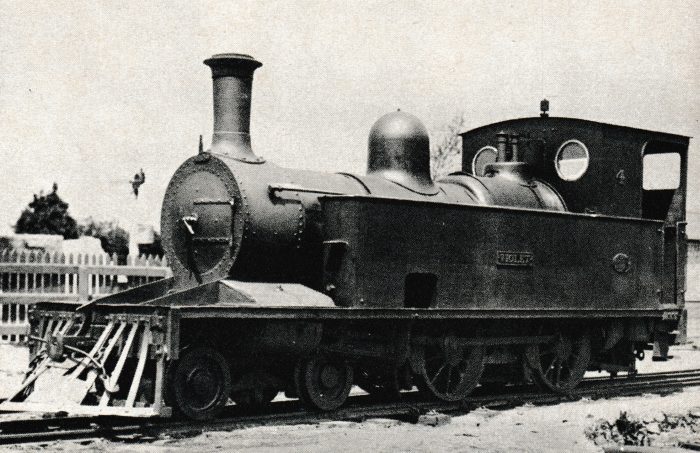
Category Archives: Railways and Tramways Blog

Skelton Junction

I still have a number of older railway magazines to read through. The pile still seems to be growing!

The November 2003 issue of Steam Days has an epic article about Skelton Junction. [1] Skelton Junction is in Broadheath which is just North of Altrincham. I picked up my copy of magazine in August (2019).

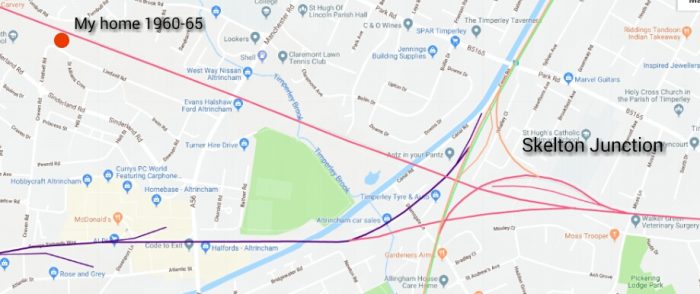
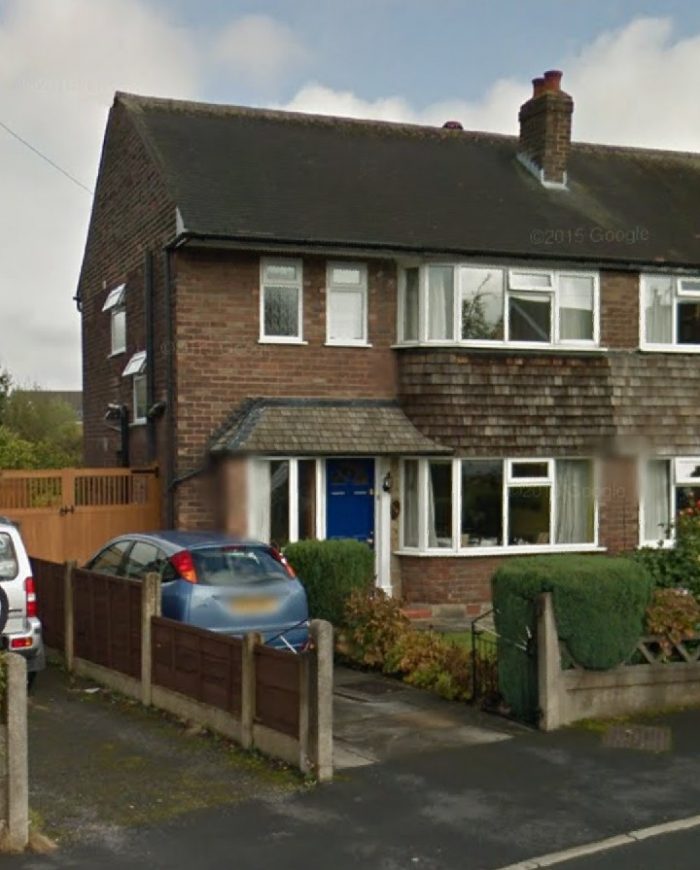
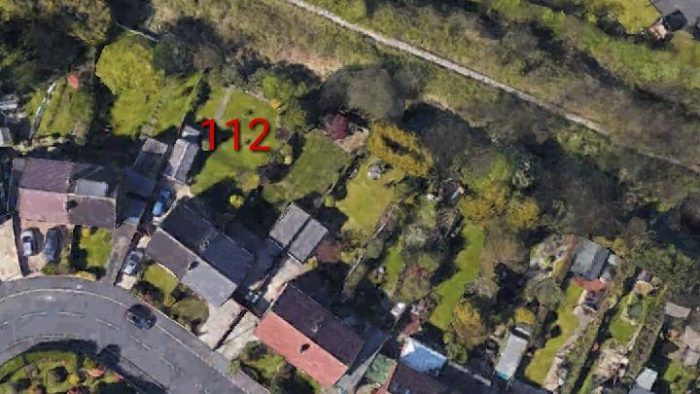
Broadheath was my home for the first five and a half years of my life. I can remember the railway at the bottom of the garden and also vaguely remember my grandparents waving to me from their train as I stood in the back garden of our home – 112, Lindsell Road, Broadheath, Altrincham.

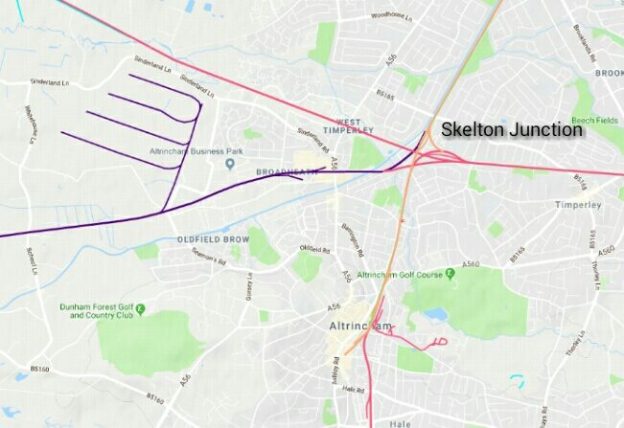
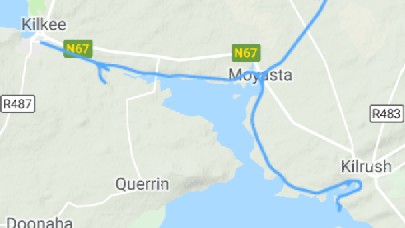
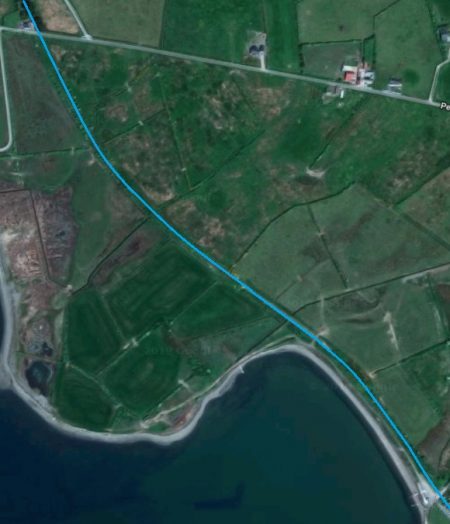
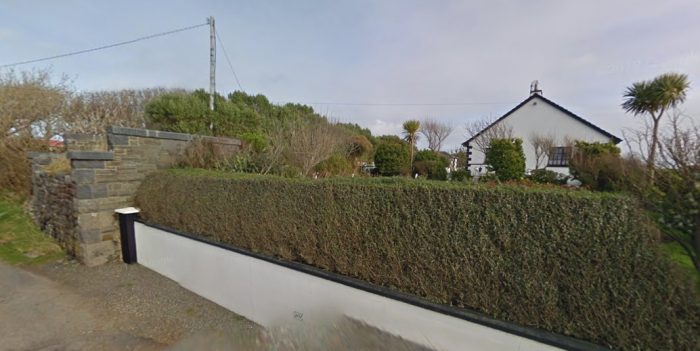
The featured image for this post is taken from RailMapOnline. It shows the immediate area to the North of Altrincham. [2] The same website shows, below, the distance of our home from Skelton Junction. [2] … Not that close, but enough to provoke my interest as I read the article.No. 112 Lindsell Road in the early 21st Century (Google Streetview).No. 112 Lindsell Road in the early 21st Century (Google Earth) the disused West Timperley to Glazebrook line is visible to the top right of the satellite image.

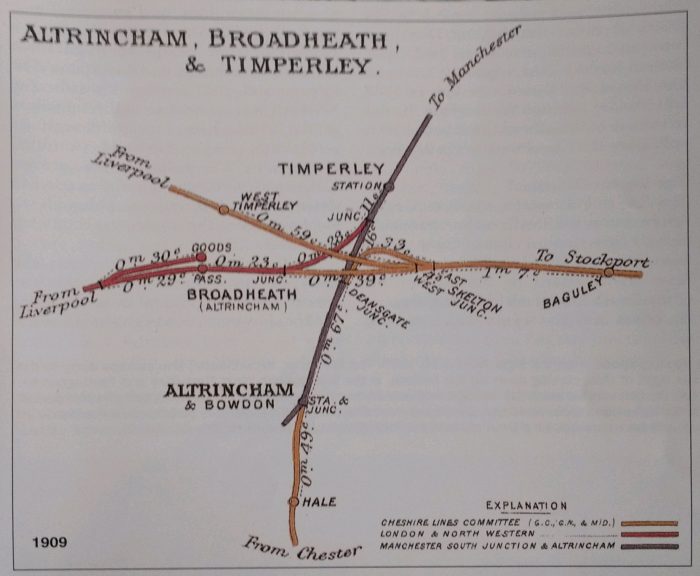
Skelton Junction is actually a complex of railway junctions to the south of Manchester in Timperley/Broadheath. Both the Cheshire Lines Committee’s Liverpool to Manchester line, via the Glazebrook East Junction to Skelton Junction Line and the LNWR’s Warrington and Altrincham Junction Railway arrived at the junction from Liverpool in the west. The Manchester, South Junction and Altrincham Railway connected Manchester with  Altrincham. The CLC’s Stockport, Timperley and Altrincham Junction Railway continued east to Stockport. [3]Skelton Junction in 1909. [1: p689]

Railways arrived in the vicinity in 1849. An Act of 21 July 1845 had incorporated ‘The Manchester South Junction & Altrincham Railway’ (MSJ&AR). It opened for traffic on 28th May 1849. I was interested to note that the development of the railway sysytem in this area can be linked back to shared decisions in which The Sheffield, Ashon-under-Lyne and Manchester Railway was involved!

This “line sprang from a desire by the Manchester & Birmingham and the Sheffield, Ashton-under-Lyne & Manchester railways to reach Liverpool. Thus was taken on board by the two companies the so-called South Junction Railway — a line about one mile long from Oxford Road in Manchester to a junction with the Liverpool & Manchester Railway at Ordsall Lane in Salford, immediately west of Liverpool Road station. Given the line’s original concept, the branch west to Altrincham was an afterthought. This new railway would parallel the Bridgewater Canal for much of its course, and inevitably become a competitor for its traffic. Eight miles long, the MSJ&AR could be fairly said to have created many of the suburbs through which it travelled.” [1: p687]

All of the suburbs between Altrincham and South Manchester did not exist before the building of the line – Old Trafford, Stretford, Sale, Brooklands, Timperley. They all only became viable as dormitory areas when public transport became adequate to convey the middle classes into Manchester. The building of this line also acted as a catalyst for the construction of further lines. many of these lines came early in railway development across the country:

  1. The line from Warrington to Timperley (1854) which was extended to Stockport (1865)
  2. The extension of the Altirncham line to Knutsford (1862) and on to Chester (1874).
  3. A line through West Timperley and on via Glazebrook to Liverpool (1873).

“Broadheath, whose only transport focus was once the Bridgewater Canal, would see a myriad of industrial development in the late 19th and early 20th centuries. … The Earl of Stamford, the major landowner in the area, was careful to restrict development in the main to the north bank of the Bridgewater Canal.” [1: p689]

“John Skelton sold some of his … land to the Stockport, Timperley and Altrincham Railway Company in the 1860s to build a link line between Stockport and Warrington, and his name is preserved in Skelton Junction.” [9]

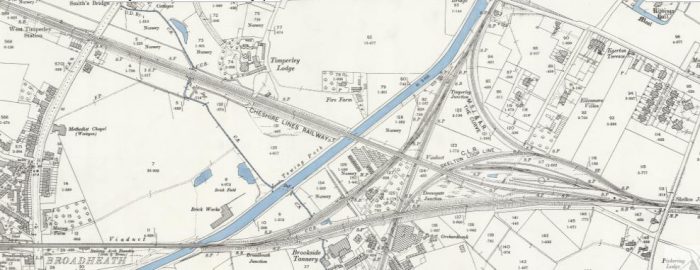
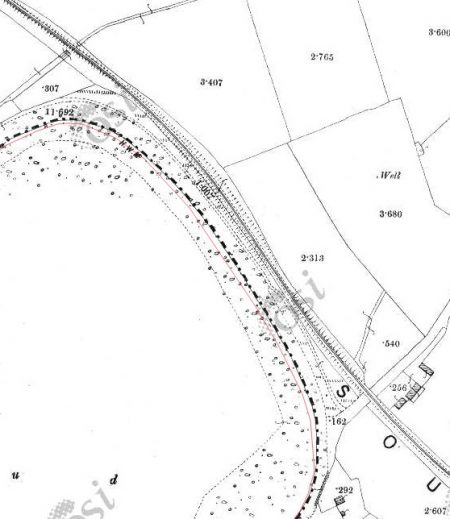
An OS Map extract showing Skelton Junction and Broadheath in 1898. There is no sign of Lindsell Road at this time. [4]

West Timperley Station was about 3/4 mile to the West of Skelton Junction, just off to the Northwest of the map above. It was on the Cheshire Lines Railways’ (CLC) Glazebrook to Stockport Tiviot Dale Line. The length of the line through the station opened to goods from Cressington Junction to Skelton Junction in 1873 with passenger workings beginning later in the same year. The line gave the CLC their own route to Liverpool. Previously they had had to operate over LNWR metals between Skelton Junction and Garston.

Paul Wright, writing on the Disused Stations Website says:

“Partington (and by inference, West Timperley) was served by local trains running between Stockport Tiviot Dale and Liverpool Central with some short workings going only as far as Warrington Central. Express services to London St. Pancreas and other destinations along with a steady stream of goods workings passed through the station.

Situated on an embankment [West Timperley] station had two platforms which linked to the road by slopes. Booking and waiting facilities where located on the platforms with the main facilities on the Stockport platform.

The station remained part of the Cheshire Lines Railway until 1948 when it became part of British Railways London Midland Region. The station closed to passenger services on 30.11.1964. Regular passenger trains continued to pass through the station site until 1966 when Liverpool Central closed to long distance services. The line remained a busy route for goods services until 1984 when the bridge over the Manchester Ship Canal at Cadishead closed. The line was cut back to Partington and singled. Goods services operated along this section of line until the 10th October 1993. Today [2006] the platforms at West Timperley are still extant and the single line remains in situ.” [5]

West Timperley would possibly have been the station my grandparents used when they came to visit!

There is discussion of Skelton Junction and surrounding lines on a number of threads on http://www.railforums.co.uk. [6][7][8]

References

  1. Eddie Johnson; Skelton Junction, Its Traffic and Environs; in Steam Days, Red Gauntlet, Bournemouth, November 2003, p687-702. This article is excellent. Copyright restrictions prevent me copying it as an appendix to this post.
  2. http://www.railmaponline.com/UKIEMap.php?fbclid=IwAR1t7uT66nNlgLdQOfpDOP2lKzJqdua7Y8GZVS6kwbYKQ7kVDj99aA_cObM, accessed on 12th August 2019.
  3. https://en.m.wikipedia.org/wiki/Skelton_Junction, accessed on 14th August 2019.
  4. https://maps.nls.uk/geo/explore/#zoom=16&lat=53.4018&lon=-2.3439&layers=168&b=1, accessed on 14th August 2019.
  5. http://www.disused-stations.org.uk/w/west_timperley, accessed on 15th August 2019.
  6. http://www.railforums.co.uk/showthread.php?t=30909, accessed on 15th August 2019
  7. https://www.railforums.co.uk/threads/skelton-junction.56892 accessed on 19th August 2019.
  8. https://www.railforums.co.uk/threads/skelton-junction-dunham-massey.145504
  9. http://www.mossparkgardens.org.uk/index.php/history, accessed on 19th August 2019.

The Shropshire and Montgomeryshire Light Railway and the Nesscliffe MoD Training Area and Depot – Part 2

On the outbreak of war in 1939 the S&MLR received a letter dated 1st September “informing it that under the Defence of the Realm, Defence Regulations 1939, the railway was now under government control. It was the last of 11 in a list of railways affected. The only other light railways were the Kent Light Railway and the Kent & East Sussex Light Railway, two other lines once run by Stephens, and probably selected because of their strategic significance.” [1: p79]

Criggion provided a significant source of income. The building of the East Lancs road provided a major outlet for roadstone. However, with the Depression and consequent crash in mineral traffic after the East Lancs road contract had been completed, income for the S&MLR dried up. “Passenger traffic had long become uneconomic and even the bank holiday specials had been abandoned in 1936. Agricultural traffic was thin and the line survived on residual quarry traffic and substantial local traffic in Shrewsbury to the Anglo-American Oil Company’s depot established at Abbey station in June 1934.” [2]

A reconnaissance of the railway was undertaken by the military which found the S&MLR to be in a poor state,” with sleepers rotting and bridges devoid of decking. The track consisted in part of 82.5lb per yard bullhead rail, but there were some lengths of 60lb rail laid in 1922. Approximately 25% of the sleepers needed renewing. The axle loading on the line was as low as 11 tons.” [15: p27]

“Nothing could cover up the terminal nature of the enterprise, which could only be rescued by a massive upturn in the Criggion roadstone traffic. The latter months of 1939, like everywhere in these early months of the war, were fairly normal and the only intrusion of the war was the use of the waiting room at Abbey Station for ARP meetings for 1 hour every evening.” [2]

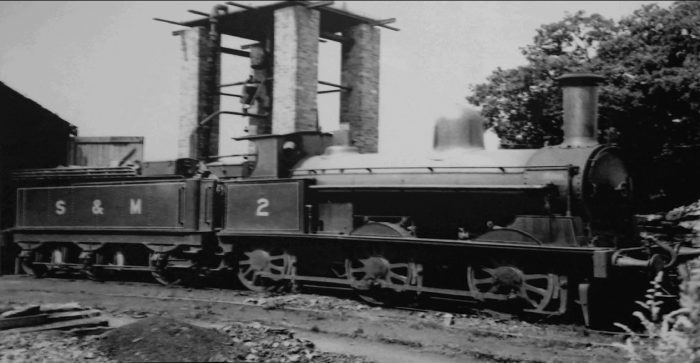
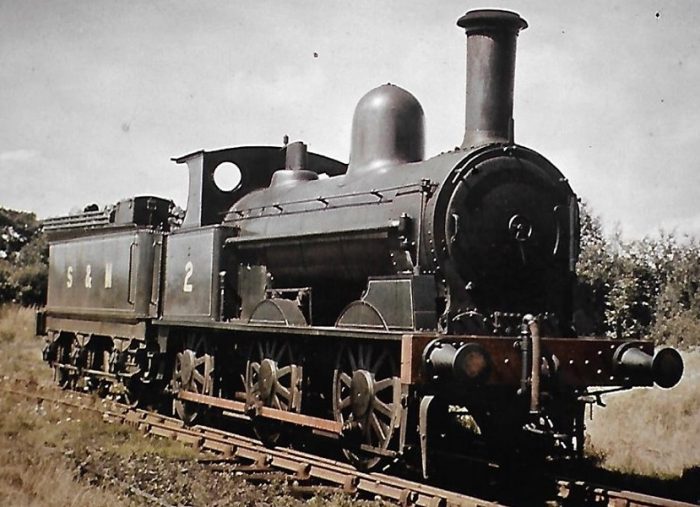
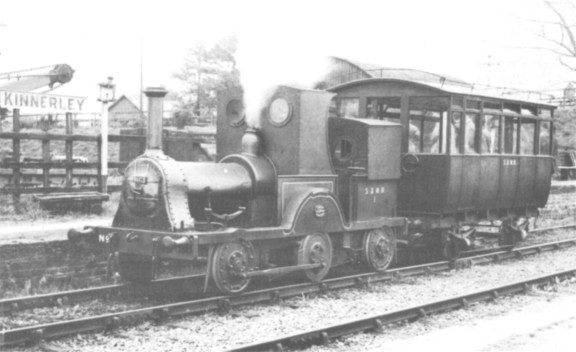
“By the end of 1939 the S&MLR owed £16,439 offset by less than £2,000 of realisable current assets. The remainder on the so-called credit side of the balance sheet £9,756 of capital expenditure paid from revenue and £4,929 of accumulated losses. Of the five locomotives owned by the railway, only one, No. 2, the former No. 8108, was in use; the S&MLR was really in a poor state.” [1: p79][cf.15: p33]Shropshire and Montgomeryshire Light Railway No. 2 was the only operating steam locomotive on the Railway at the time it was commandeered by the military. [1: p88]LNWR Collier No 2 at Kinnerley. No. 2 was the last loco repainted by the S&MLR before the military takeover. It is resplendent in sage green, (c) David Giddins. [14]

“Government control allowed the line to continue at a guaranteed return of £1 profit but there were continuing concerns about paying for the maintenance backlog which this arrangement did nothing to alter. This factor raised doubts in the Ministry of War Transport about the continuance off government control and decontrol was actively discussed in February 1940.” [2]

This discussion eventually resulted in the terms of the arrangement being confirmed on the basis of the actual performance of the line in 1935-1937, which was poor, and the £1/annum payment being confirmed. Maintenance, including renewals was capped at £900. No provision was made for debenture interest. “Clearly being under government control was not going to be of much benefit to the railway.” [1: p94]

The Colonel Stephens Society website says: “With the outbreak of war the S&MLR was seen … as a railway that was important to the nation and was accordingly taken into government control, although formal terms were not agreed till April/May 1940. Delays arose not only through bureaucracy but concerns about the Railways finances and the Directors misgivings about the indirect control relationship arising from a decision to deal with smaller companies through the majors; in the S&MLR case the old enemy, the GWR. This was causing continuing tension on major issues, but in the short term, … it continued to be managed and run as before.” [2]

“During the 1930s, there was a recognition of a need to provide secure storage for munitions within the United Kingdom. The proposal was to create three Central Ammunition Depots (CADs) in easily-hewn and relatively horizontal rocks: one in the south (Monkton Farleigh); one in the north of England (Longtown, Cumbria); and one in the Midlands. While Monkton Farleigh came into operations in 1939, CAD Nesscliffe was only opened by the War Office in 1941. In order to service the extensive property, the War Office took over the virtually defunct Shropshire and Montgomeryshire Railway and built extensive additional service tracks along the 8¾ miles of railway line from Maesbrook to the former Ford and Crossgate railway station.” [3]

Peter Johnson says: “The war gave the S&MLR a new lease of life, but not straight away. Until January 1941, things carried on much as they had done before. The winter of 1939/40 was, however, extremely severe and played a cruel trick on the railway.” [1: p94]

January 1940 brought disaster to the S&MLR: Ice flows in the river Severn attacked the Achilles heel of the line, Melverley Bridge, which was so damaged on the 27th January that all Criggion branch traffic ceased. [2]

The quarry was severely hit and only managed to divert a part of its potential output by road to Four Crosses station. The S&MR could not afford the required repairs to Melverley Bridge. Although of little consequence to the nation, the Quarry had a Director with influence,  “Sir Henry Maybury former Director-General of Roads, Ministry of Transport 1919-1928, and a pioneer of the arterial road network. He used his contacts to press the Ministry of Transport to safeguard the bridge and get it repaired and also to get the GWR to operate the Llanymynech-Criggion section.” [2]

“Matters dragged on and the financial situation of the S&MLR was so severe that they decided that their resources had to be concentrated on those parts of the line which might be made to pay. The Kinnerley to Moele Brace section was to be closed and arrangements made for the remaining lines to be worked by the GWR. In the light of this decision and Ministry pressure, the REC (Railway Executive Committee) approved financial arrangements to repair Melverley Bridge and these were confirmed in discussions over the June to September 1940 period.” [4]

The Colonel Stephens Society says that had this been a time of peace the decision would have been implemented immediately, “but others held the ultimate destiny of the line in their hands, for the War Department announced in October that they wanted the mainline of the S&MLR for storing munitions.” [4]

The depot(s) to be constructed would replace other planned facilities “at Wem and Nantwich and be capable of accommodating 50,000 tons of ammunition; 50 ammunition sheds would be required, not less than 200 yards apart.” [1: p94]

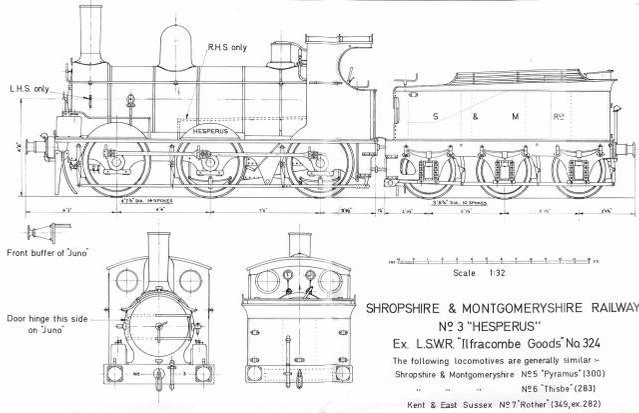
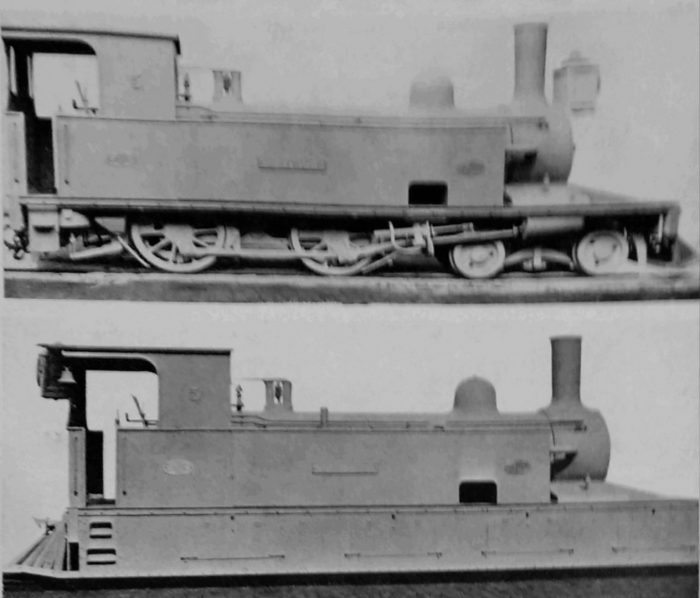
The War Department “began to take over the main line, but not the branch, in late 1940 and in a meeting on Christmas Eve 1940 between the Ministry and the War Office it was revealed that the military were about to remove some girders [from Melverley Bridge]. Indeed they had already removed some but the work was stopped. However these changes and lack of materials and other resources delayed the bridge work further. It was not until 8 May 1941 that reconstruction commenced under the supervision of the GWR. These repairs involved more work than originally envisaged and ultimately cost £5,700, with a further £2,350 of repairs to the track of the branch itself. The bridge was not reopened until 27 October 1941, and crucially, the GWR’s contractors had, through accident or design, only rebuilt it for an axle load of 9 tons. Moreover, it appeared later that they had done a poor job that would not endure. So now the S&MLR did not, following the loss of the last Ilfracombe goods Hesperus in 1941, have a light enough locomotive to work the reconnected line. Although they tried to obtain a small locomotive for the work ,they did not succeed.” [4]This drawing shows “Hesperus” as bought in 1910 which was light enough to serve on the branch-line and to cross Melverley Bridge. It was lost to the line in 1941. [5]

Initially, as we have noted, the War Department’s plan was to take over the S&MLR but not the Criggion Branch. It identified an area between Shrawardine and Nesscliffe for an amuntion depot.  [1: p95] However, the War Department (WD) eventually agreed to work the branch line. The decision was confirmed in May 1942, and small locomotives that came to be used by the WD, such as a Manning Wardle 0-6-0ST, could have been used on the whole branch. The records show that the WD worked the Branch as far as the Bridge until 7th May 1947, including both quarry and other goods traffic, which had increased, particularly with the construction of a BBC transmitting station near the branch.  Workings were not however on a daily basis but appear to be about every other day, unless quarry traffic was heavy. The quarry’s Sentinel worked the branch beyond Melverley Bridge. [4] The GWR had placed a 9 ton axle limit on the Melverley Bridge. [1: p99]

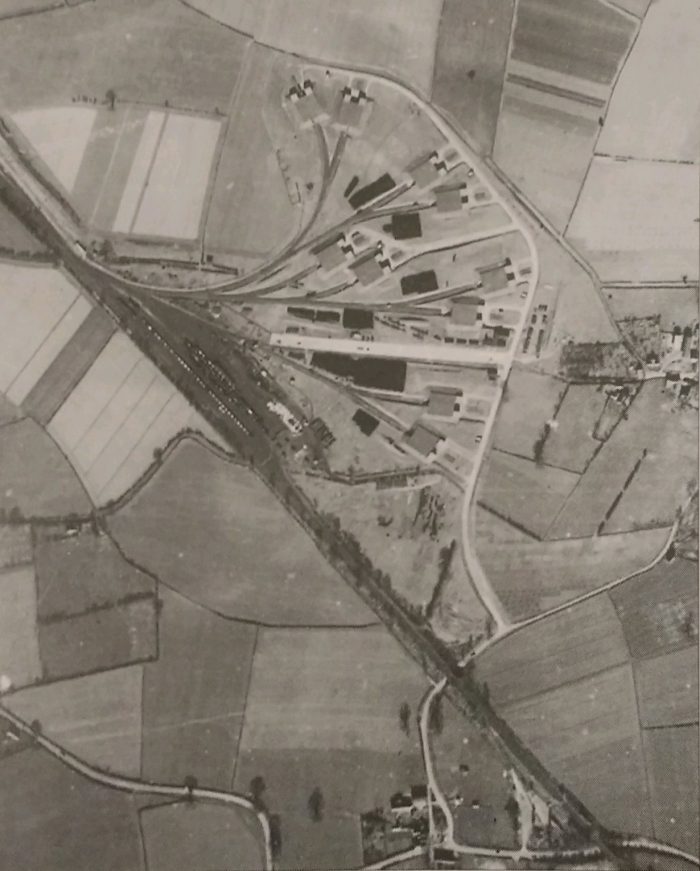
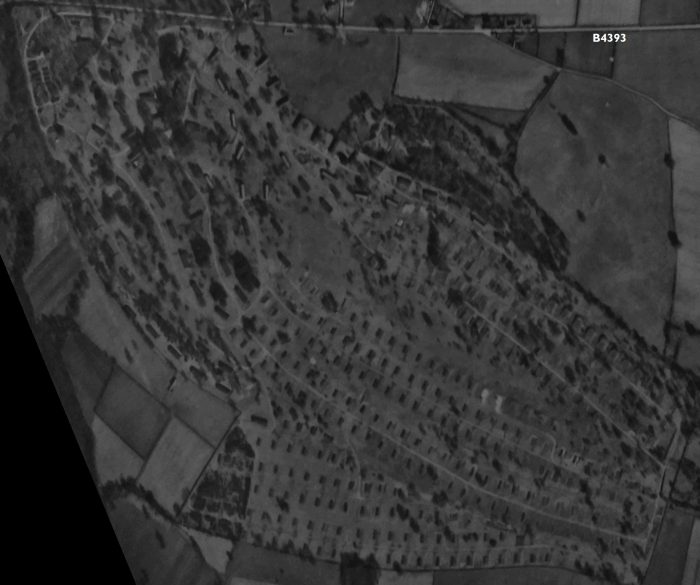
The WD, in the form of No. 1 Railway Group, Royal Engineers, formally accepted control of the S&MLR mainline and a number of S&MLR employees on 1st June 1941. [1: p99][cf., 15: p37] Prior to that, McAlpines had been engaged to undertake both the repair of the S&MLR and the construction of the depots. The work of the civilian contractors continued after the formal handover. “Sir A. McAlpine personally attended a progress meeting on 30th January 1942. He made it clear that for a project of this nature he would have wanted roads to give him ready access to the many shed (and other) construction sites for materials and men. Denied the use of roads (new roads are highly visible from the air and draw attention to the location of newly constructed targets), he considered that the contract required at least eight locomotives, six of them working at any one time. There were 525 PoWs working on construction, but some of the bricklayers had been idle for lack of a rail service.” [15: p45]An excerpt from an aerial photograph which was taken in 1948 and shows Ford Sub-depot and the nearby marshalling sidings. The picture makes it clear that the concern raised about roadways being highly visible from the air carries weight. By the time of the photograph these roads had been built for about 6 years and they are still highly visible, (c) MoD Ref. No. CPE/UK/1492 frame 4320. [15: p84]

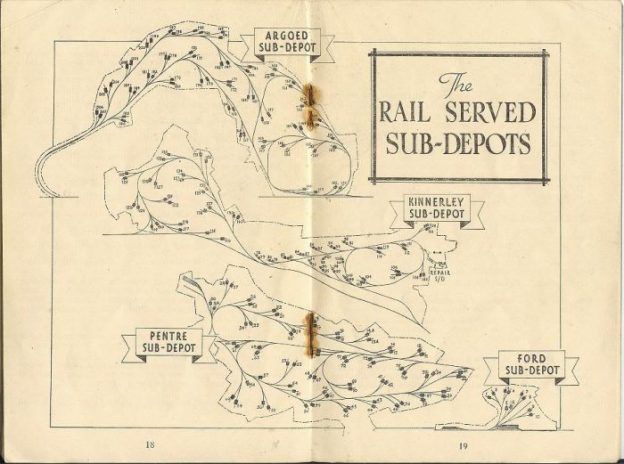
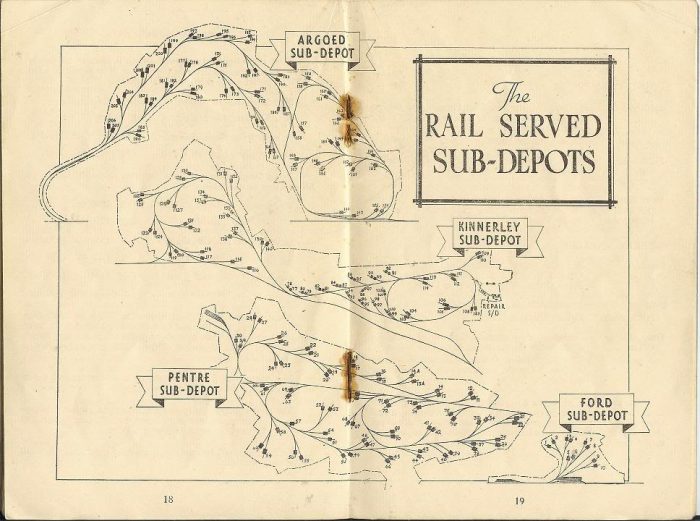
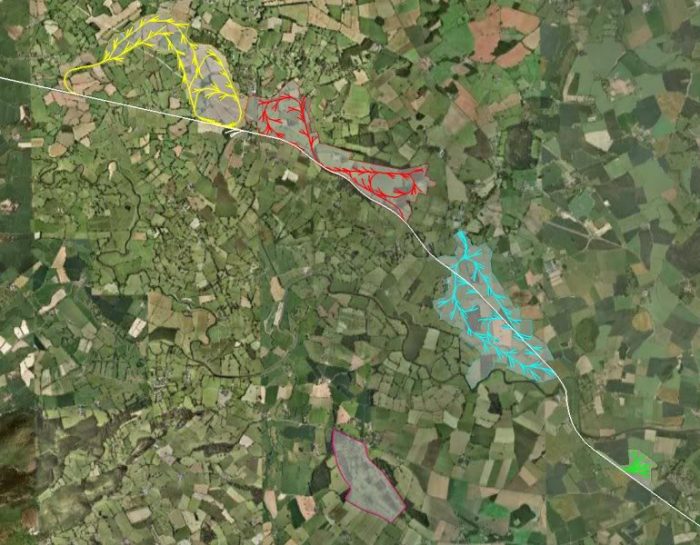
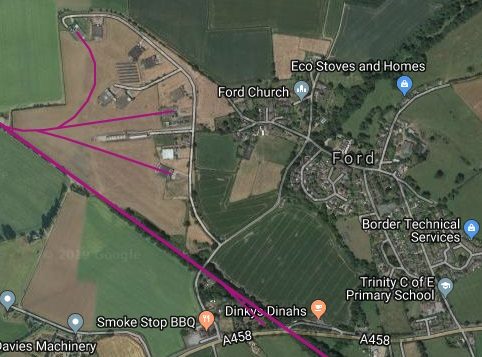
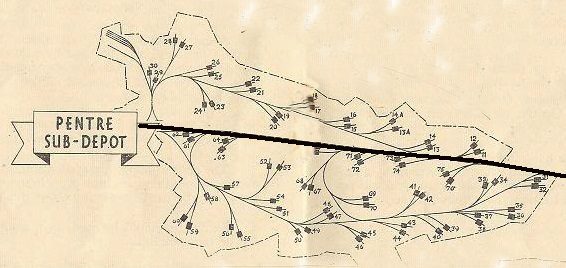
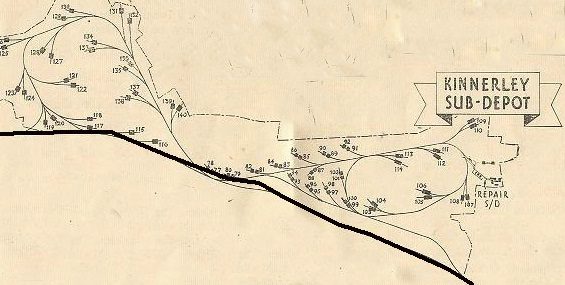
The WD built extensive additional service tracks along the 8¾ miles of railway line from Maesbrook to the former Ford and Crossgate railway station.  Like a typical ammunition depot, the site was laid out over an extensive area to avoid total destruction should an accidental explosion occur, or the site be attacked by enemy. The depot was made up of five separate sites at : Kinnerley (SJ354192); Pentre (SJ374170); Ford (SJ408139); Argoed (SJ327217); Loton Park (SJ357137). [3] This meant that during construction access without roads was very difficult and McAlpine’s concerns are easily understood. CAD Nescliff Depot Map. [6]A GE trace showing the 80+ miles of rail-track laid and operated by the Royal Engineers to serve the multiple storage areas in and around Kinnerley and Nesscliffe. [7]

To ameliorate McAlpine’s concerns it was agreed to make every effort to ensure that ammunition traffic ran each day before the contractors work started. This would at least eliminate on specific conflict. [15: p45]

The first four sites were capable of storing around 55,000 tons of shells. Loton Park was used for storage of both incendiary ammunition and chemical weapons shells from 1943. This was one of only two Chemical Warfare depots operated in co-operation with and guarded by the United States Army Air Force, specifically 7th US Chemical Depot Company. Locomotives and train drivers were provided by the Royal Engineers, who also maintained the extensive network. Their main servicing depot for rolling stock was on the stub-junction of the former branch-line to Criggion. [3]

“The informal nature of the agreement under which the military took over the assets of the S&M was to cause endless problems, notably on the upkeep of land and buildings” [15: p38] and produced a series of disagreements with local businesses and land owners. [15: p38]

Ammunition traffic began to arrive from 12th January 1942. [15: p49] “At Pentre, sheds 31-44 and 65-76 were complete by 1st April 1942 and were receiving ammunition traffic. Shrawardine was under construction. Work was just starting at Ford and would not be completed before August. Nesscliff would not be ready before the end of the year and Kimberley would not be available until 1943.” [15: p50]

During the first three weeks of February 1942, 342 wagons of ammunition were received and 73 dispatched. The WD was also required to work the civilian traffic on the S&MLR. Stone traffic was the most significant civilian cargo, averaging over 20,000 tons/annum from November 1942 to October 1948. [15: p63]

Ammunition storage on site officially stopped in 1959 and the ammunition depot closed in 1961.

Ford Sub-depot.

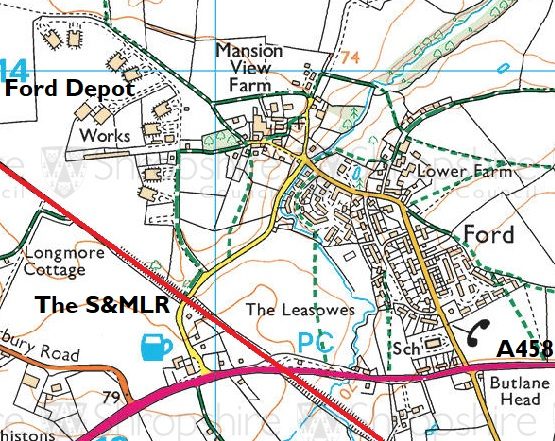
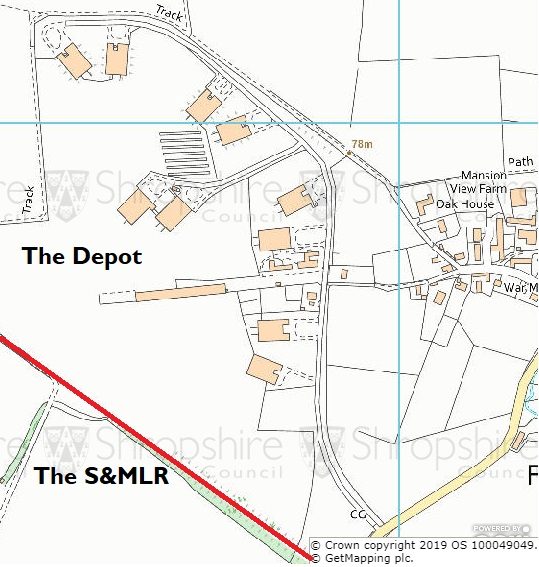
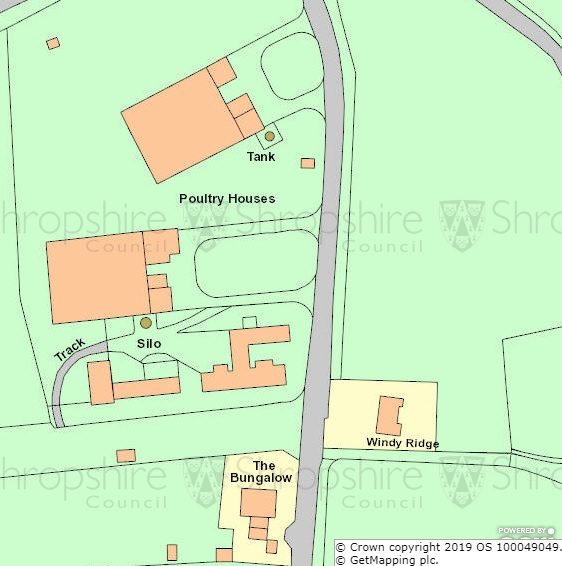
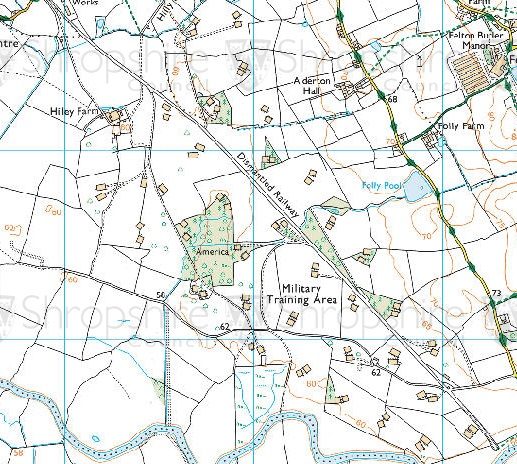
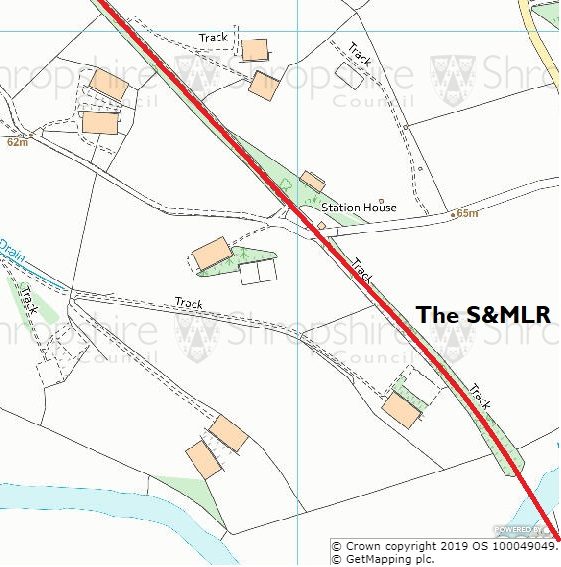
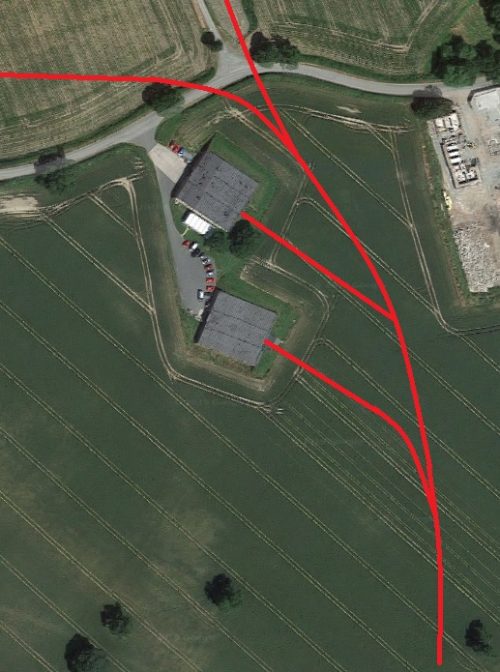
The first site encountered on the journey West from Shrewsbury was next to the village of Ford.Ford Munitions Depot is visible in this OS extract to the West of the village of Ford. [8]The majority of the buildings used by the military are still in place in a relatively poor condition. [8]The site is now a poultry farm. [8]

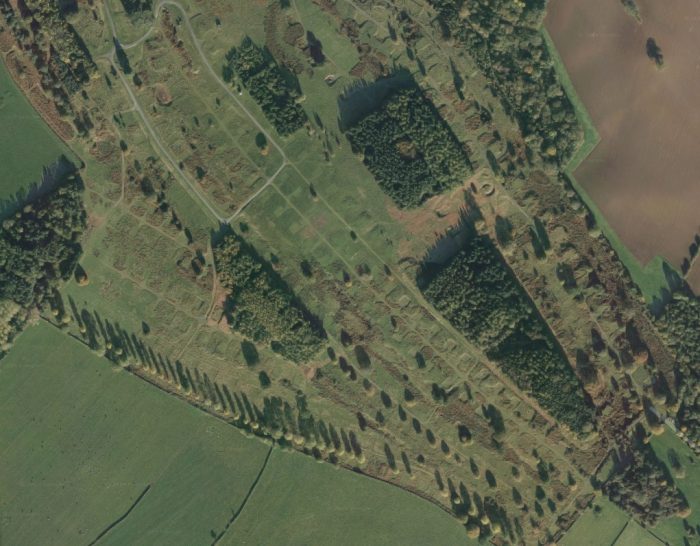
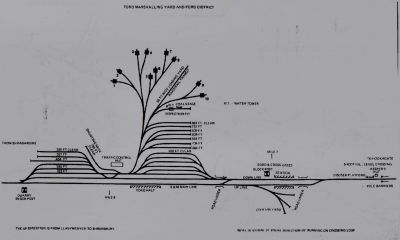
Access to the site was from the West, with the tracks fanning out to serve the storage facilities. Ford Sub-depot had 10 sheds adjacent to the sorting/marshalling sidings, and one Road/Rail Transit (RRT) siding. “Unlike the other sheds in the Depot, those at Ford were not used for long term storage, but only for transfer storage. All were accessible by road and formed part of the facility that allowed for the transfer of ‘sensitive’ munitions to the open air storage in Loton Deer Park. … Loton Deer Park was used by American forces as a depot for chemical weapons.” [15: p88][16] Loton Park was at Alberbury to the West of Ford along what is now the B4393.The Chemical Weapons storage area at Loton Deer Park at Alberbury. Small sheds were laid out among the trees in the park (c) The Office of the Welsh Assembly Government (MoD Ref. No. CPE/UK/2492, frame 4315). [15: p90]A part of the Deer Park in the early 21st century showing the locations of storage facilities after their removal. (Google Earth).RailMap Online shows a simplified diagram of the sidings at the depot. Each store building was actually provided with its own access track [10][15: p84] and the marshalling yard which ran alongside the S&MLR is completely ignored. A diagrammatic representation of the depot and the marshalling yard, which was quite substantial, is shown here. [11]

Hansard in May 1960 contains a record of the planned sale of Ford Depot as the War Office had no further need for it. [9] The tracks serving the depot are long-gone. Loton Deer Park was returned to its owners once the need for it had gone.

Pentre/Shrawardine Sub-depot

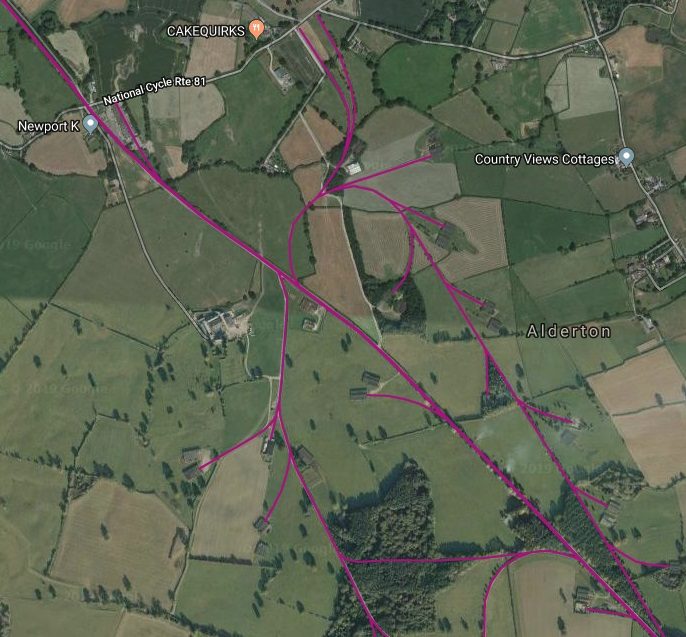
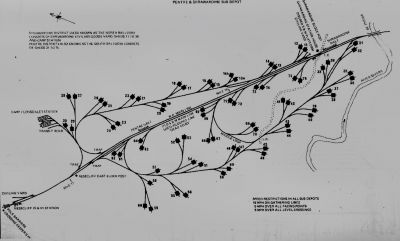
A short distance to the Northwest of Ford the S&MLR crossed the River Severn at Shrawardine and almost immediately entered land sequestered by the War Office. Pentre/Shrawardine Sub-depot was much larger that the site at Ford. It consisted of two Districts. “The North Balloon Area included Camp Station, sheds 11 to 30 inclusive, and the civilain yard at Shrawardine. This District could be accessed in three places, at Nescliff East Block Post via the we leg of the triangle or via the East leg, and also at Shrawardine Station yard. It was permissible for more than one train to operate in the District, except in darkness when ‘One Engine in Steam’ only was allowed. … All points within the District were operated locally by handnlevers. … In addition to the normal traffic to sheds the North Balloon handled the daily Works Passenger trains to and from Camp Station.” [15: p93] On the satellite image below, Camp Station was located close to ‘Cakequirks’. Wilcot Camp was to the North of the Station and to the East of the location of the modern ‘Cakequirks’.The Pentre/Shrawardine Sub-depot was served by a significant network of sidings which were decided into Two Districts. Railmap Online has slightly simplified the track diagram as each storage building had its own rail access and there was a triangle at the West end of the site close to Nesscliff East Block Post. [10]

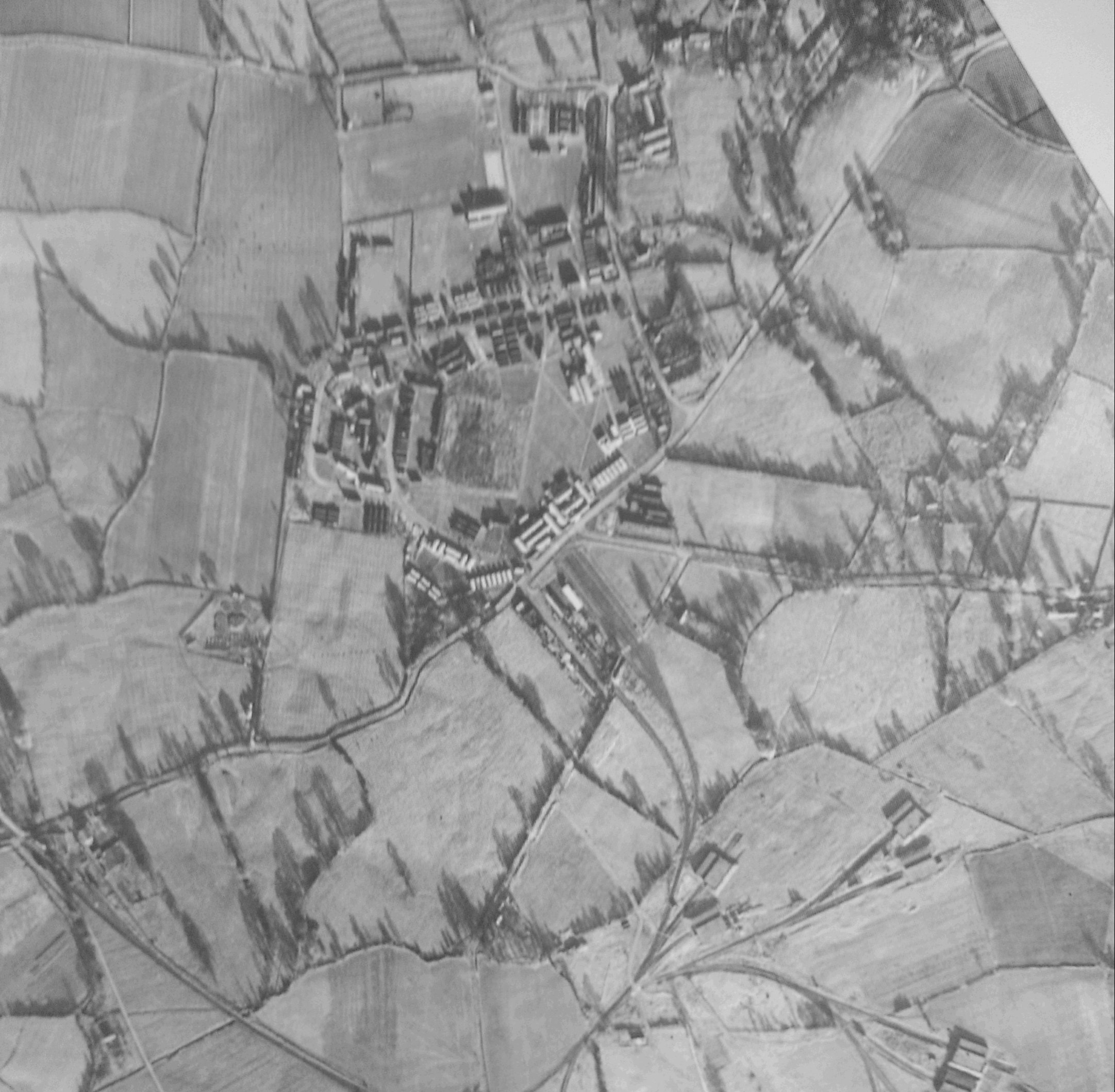
Wilcot Camp was the principal army camp at Nescliff CAD. Across the road from the Camp was the station which served it. To the South of the station was a single-line siding which was used to transfer from road to rail and vice-versa.An aerial image of Wilcot Camp which shows ‘Lonsdale’ Station to its South. Lonsdale Station was usually just know as ‘Camp’, © National Monuments Record of English Heritage (now Historic England, MoD No. 541/214 frame 3036. [15: p100]

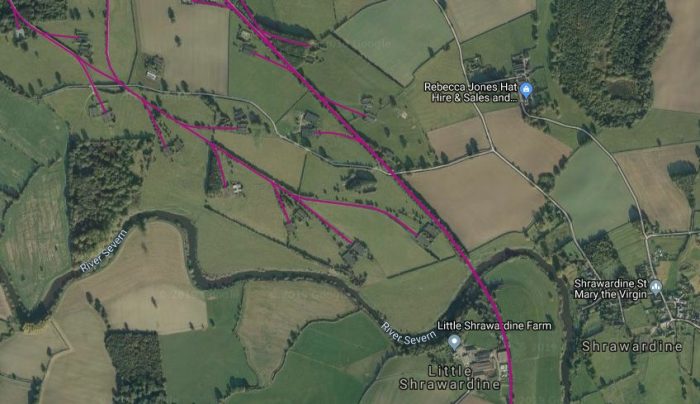
Hansard in May 1960 records this Sub-depot as being named Shrawardine. It notes, at that date, that it was a former ammunition depot; mostly to be sold, but a small area to be kept for training. [9] Pentre was to the Northwest of the Sub-depot, Shrawardine to the South-East.This modern OS Map extract shows that most of the buildings of the original depot are still in place. [8]A closeup, above, of the Southeast of the site close to the River Severn. [8]

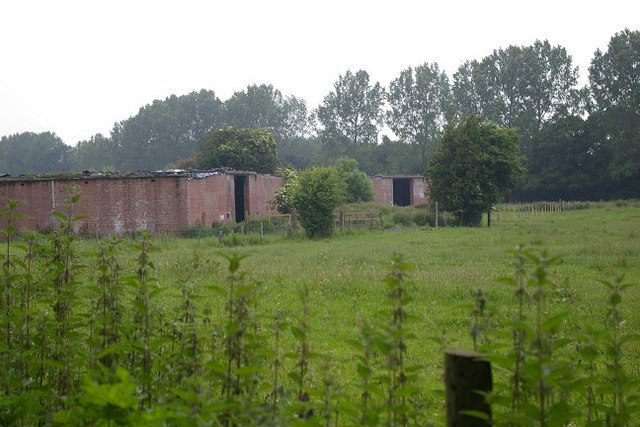
Adjacent is a sketch plan of the site showing all of the railsidings. Note that the North point is different on this sketch. The River Severn is shown on the right of the sketch. [11]The two buildings immediately adjacent to the 62m height-point on the OSMap above. The picture is taken from the road to the Southeast, © Peter Craine. [12]Every sketch map that I have found of the Pentre Sub-depot has its north point in a different pace! This is probably the best quality image on the internet bug also chooses an unusual North point. [13]

Google Earth is of little help in providing up-to-date images of the site as the vast majority of the depot was remote from the surrounding highways.

Kinnerley Sub-depot

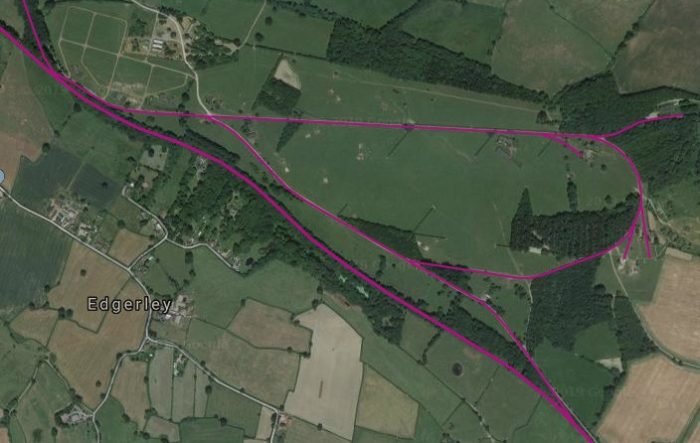
The third complex of sidings was known as Kinnerley Sub-depot. It was formed of two almost separate loops of sidings – two Districts. These Districts cwere Kinnerley and Nescliff. Sheds 77 to 114 were in Nescliff District and sheds 115 to 140 were. In Kinnerley District. “The whole was worked as a single yard, with entrance cand exit at Kimberley (in an emergency also at Edgerley). Only one train was allowed to operate during darkness.” [15: p106]Kinnerley Sub-depot. [13]Again Railmap Online slightly simplifies the arrangement of railway tracks. [10]

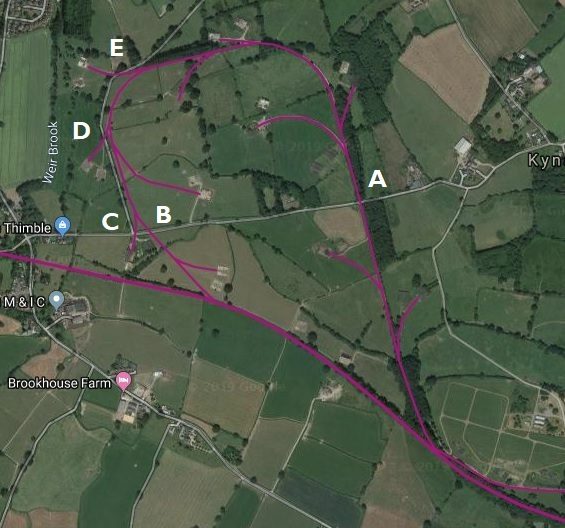
Google Earth cannot help with modern images of the Nescliff District. There is more of the Kinnerley District that can easily be seen from the public roads. On the satellite image above, I have marked a number of locations and pictures at these locations are provided below:

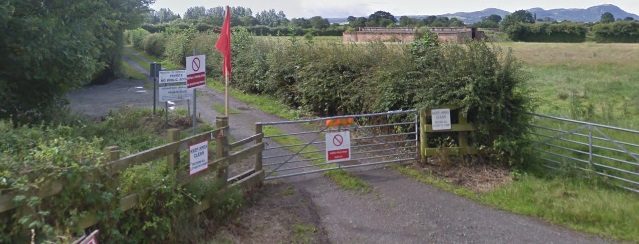
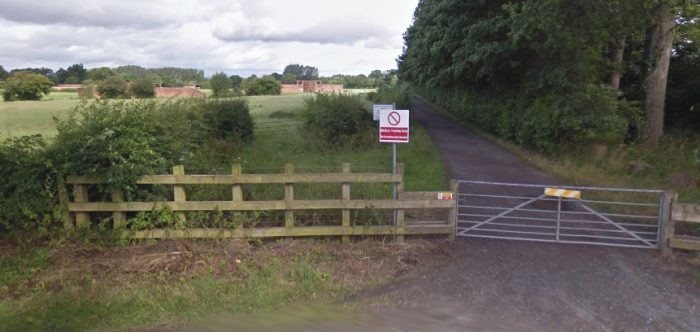
A. There was a gated road-crossing at this location. The two pictures below show the view in each direction along the old MOD line from the road. Looking back along the line to the South, (Google Streetview).Looking North along the siding., (Google Streetview). A number of MOD buildigns can be picked out in this view, specifically buildings 135 and 136, which were rail-served despite that not being shown on the Railmap Online image above.

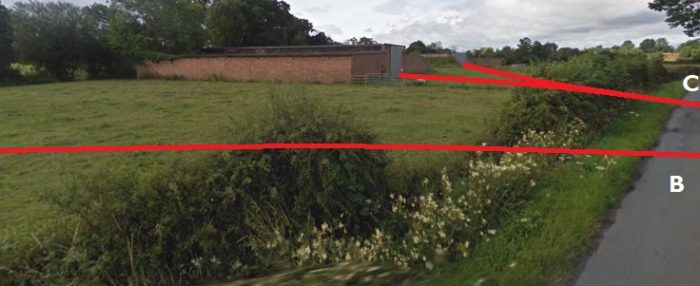
B. Another gated road-crossing was to be found at this location.Looking Southeast, the line of the MOD railway is marked in red together with the two sidings which served store buildings 117 and 118. The S&MLR mainline ran just behind these two buildings.Turning towards the West, we see buildings 119 and 120 and the location of the road-crossing at B.

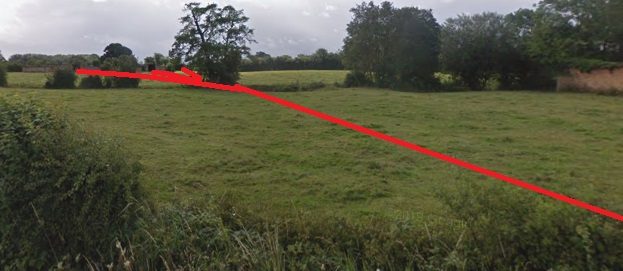
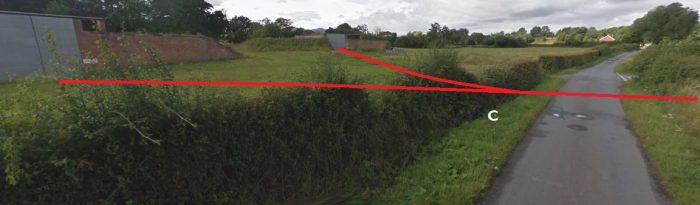
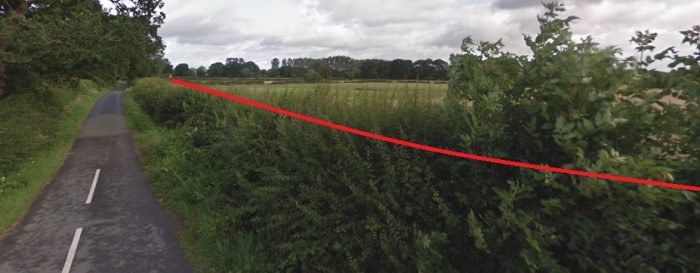
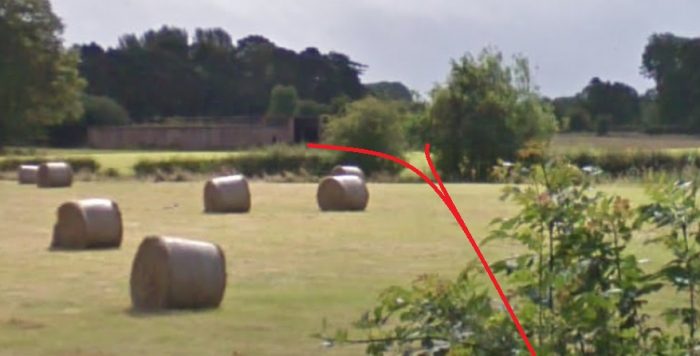
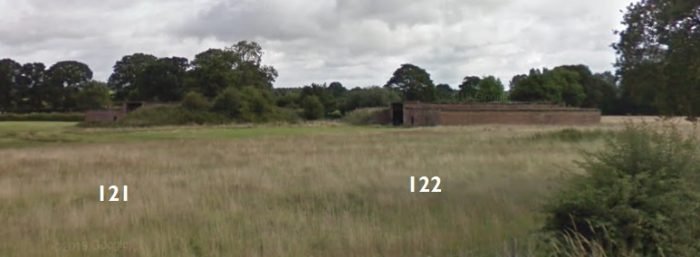
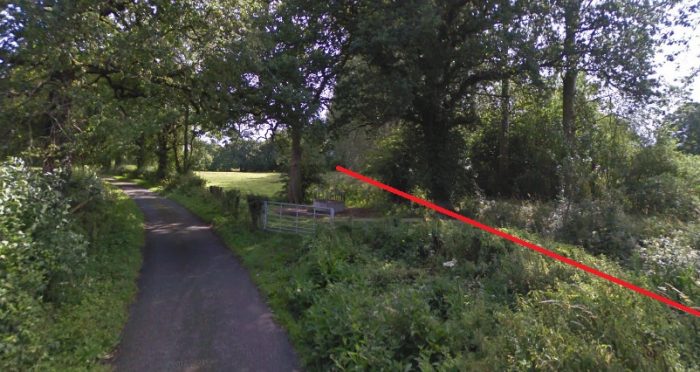
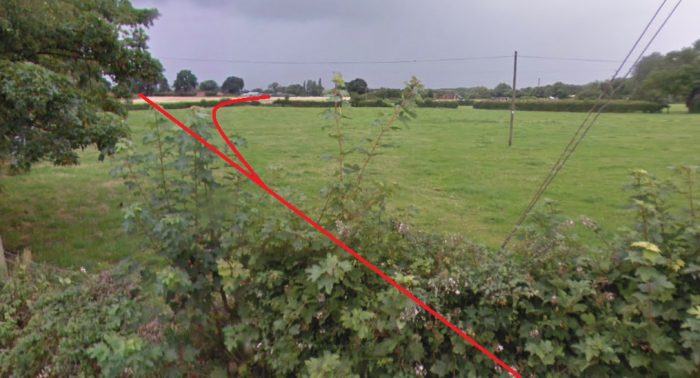
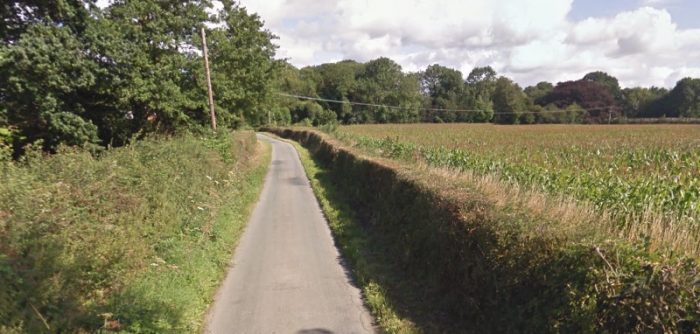
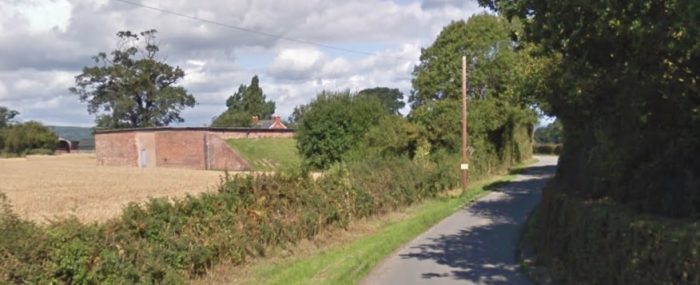
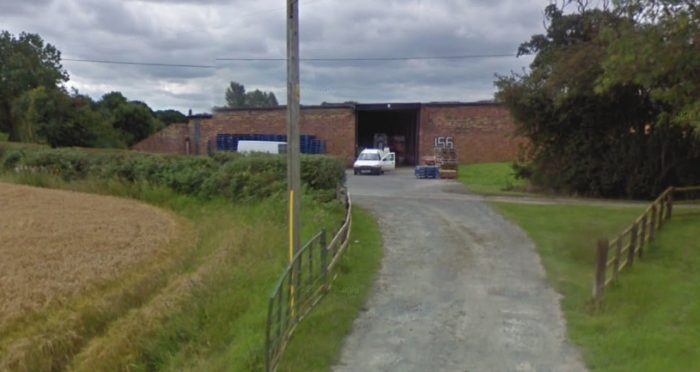
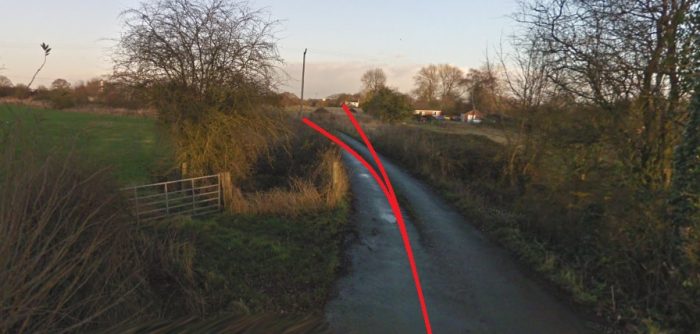
C. The road-crossing at location C was only a very short distance from location B.Buildings 119 and 120 were rail served and their sidings crossed the public road before their junction with the main MOD line. There are no obvious signs of the main MOD line on the North side of the public road. It did, however, run north from ‘B’ and ‘C’ in close proximity to the narrow lane shown in the picture below, at approximately the location, just beyond the modern boundary hedge, indicated by the red line.D. At this location two siding separated from the MOD mainline, both trailing to locos travelling north. The first accessed buildings 121 and 122 on the East side of the line, the second linked to stores numbered 123 and 124.Building 121 with 122 hidden behind a tree, (Google Streetview).Buildings 121 and 122 seen from close the road crossing and ‘B’, (Google Streetview).Buildings 123 and 124, (Google Streetview).

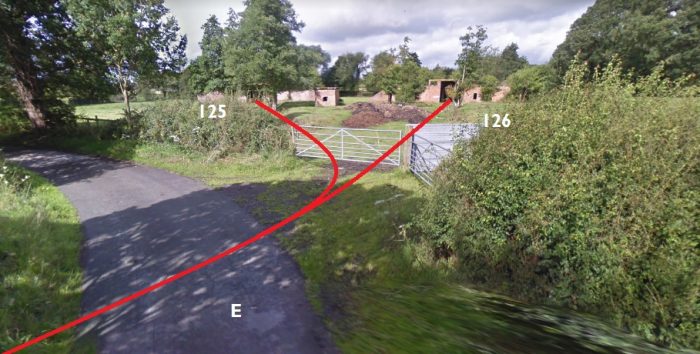
E. There was another road crossing at ‘E’ which provided rail access to two further stores – Nos. 125 and 126.Location ‘E’ and Buildings 125 and 126.

To the East of ‘E’ the narrow road and the railway ran in parallel for a few hundred yards before the road turned gradually away to the Northeast.Looking East with the minor road turning away to the Northeast and the MOD line continuing to the East and then turning south to cross the road at point ‘A’ above.

The Maesbrook and Argoed Sub-depot

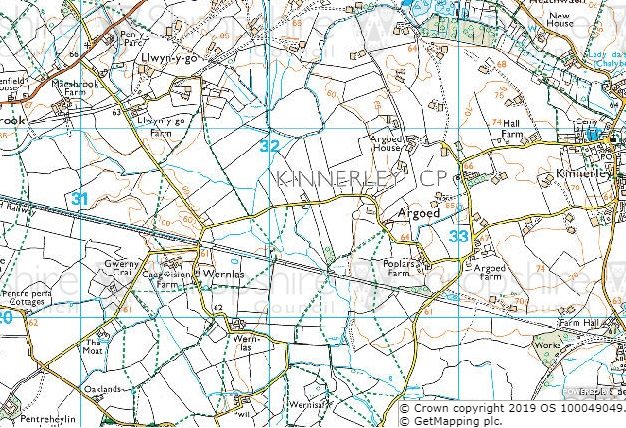
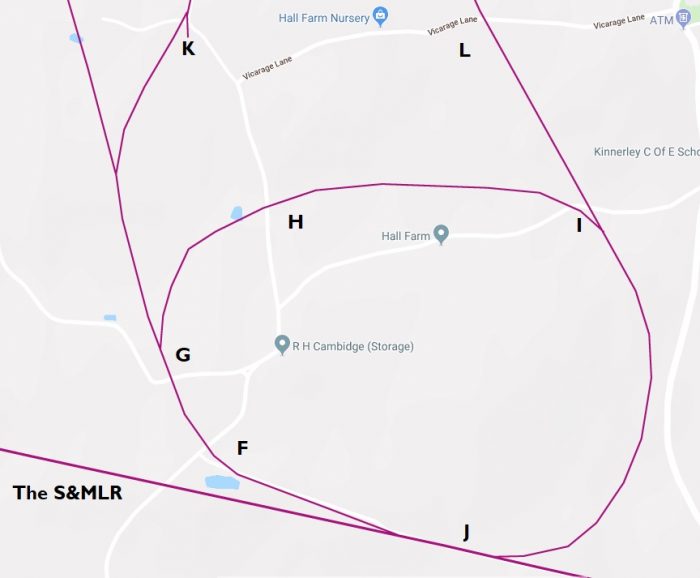
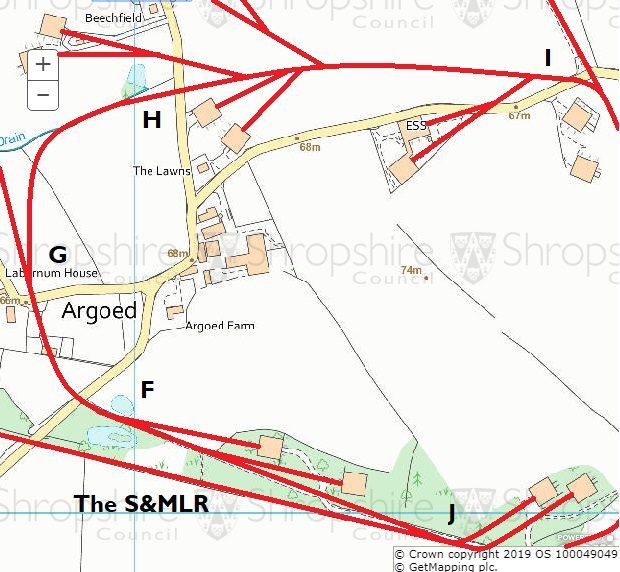
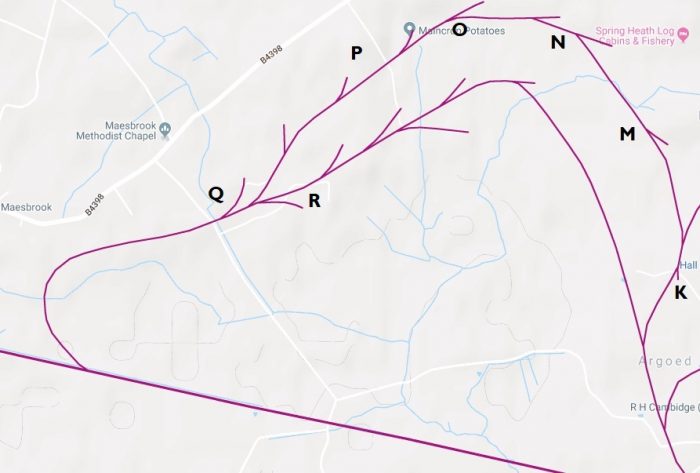
The fourth sub-depot was located to the Northwest, beyond Kinnerley Station and Junction. The whole Sub-depot was worked as one yard with avrestriction nallowing only one loco at night.Sketch Plan of Argoed Sub-depot. [13]Again Railmap Online simplifies the arrangement of railway tracks. [10]This modern OS Map extract shows the location of the Argoed Sub-depot to the West of Kinnerley village. [8]The Southeastern part of Argoed Sub-depot. [10]The approximate track layout at the South of the Sub-depot. [8]

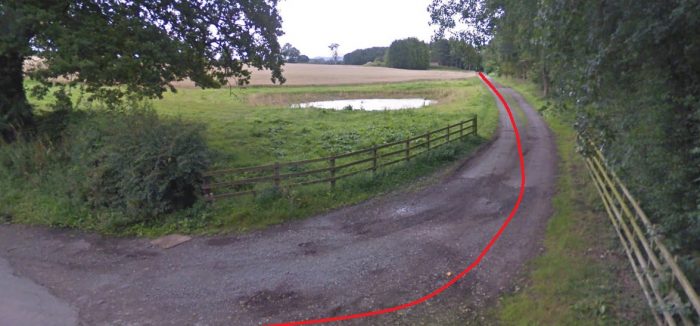
F. The MOD line diverged slowly from a junction with the S&MLR mainline (‘J’) to a gated road-crossing just to the North of the road bridge over the mainline.The MOD line at ‘F’ looking back eastwards to its junction with the S&MLR, (Google Streetview).Looking forward from location ‘F’ to location ‘G’.

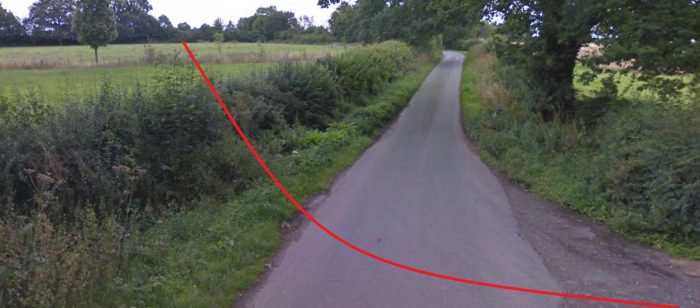
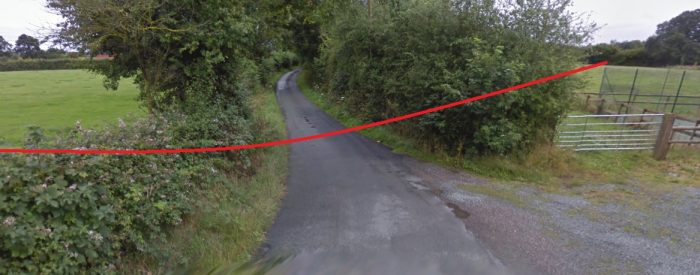
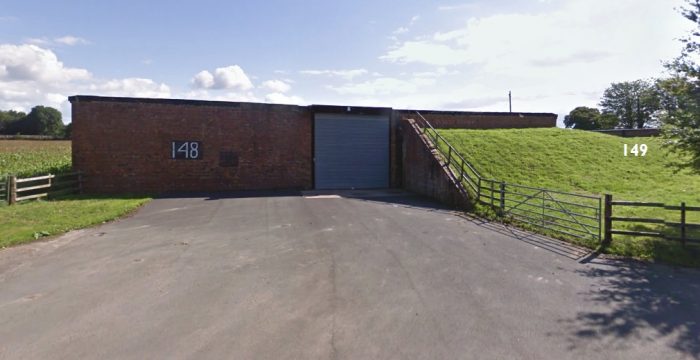
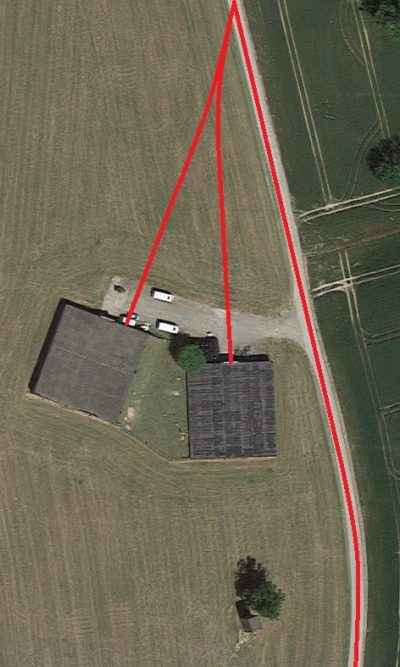
G. The MOD line crossed another minor road at a gated crossing close to Laburnham House on the OS Map extract above. There is no sign of the route on the ground in the 21st Century.Looking back eastward along the minor road from Laburnham House. The red line shows the approximate line of the old railway, (GoogleStreetview). Immediately to the North of the road, off the left side of this picture the MOD line split into two as illustrated in the image below.H. The MOD line at location ‘H’ was crossed by a minor road which travelled North to South. Just to the south of the crossing were two storage buildings – No. 148 and No. 149. which were linked to the line by sidings on their East side.Buildings 148 and 149 seen from the highway south of the old MOD line and North of The Lawns, (Google Streetview).Building 149 seen from the road to the South, on the East side of The Lawns, (Google Streetview).Looking North at location ‘H’. Between the camera and the slight bend in the road there were two railway-crossings. All evidence has now disappeared. The second of those lines fed two storage buildings to the West of the road which can be seen below – Buildings 146 and 147, (Google Streetview).I. The line travelled back East from location ‘H’ passing the two buildings 148 and 149 and buildings 150, 151, 152 and 154 before once again encountering the public highway at location ‘I’ close to storage buildings 166 and 153 which are shown on the adjacent Google Earth satellite image.

At location ‘I’ there were again two rail-crossings of which there is no longer any evidence. At this point the railway turned southwards joining a line form further north and then turned gradually back to form an opposing junction at location ‘J’ above.

K.  Another loop of the MOD Line encompasses the two locations ‘K’ and ‘L’. ‘K’ is shown on the Google Streetview image below.This is the nearest that Google Streetview can get us on the South side to the location of the two road crossings at ‘K’. There were two road crossings on the bend visible ahead. The closest led to Building number 156 which appears in the picture the second loop line ran across the fields just beyond the storage building.The same building (No. 156) viewed from the North along the route of the railway, (Google Streetview). The image below is taken from the same location but this time looking North along the formation of the old line. Lwashere is no obvious sign in the 21st Century of the rail-crossing further to the East on Vicarage Lane, although it is quite likely that the access road running North from the lane follows the formation of the railway.Vicarage Lane looking West at the possible location of the rail-crossing, (Google Streetview).The remaining area of the Argoed Sub-depot is relatively remote from public roads, but some access is possible.

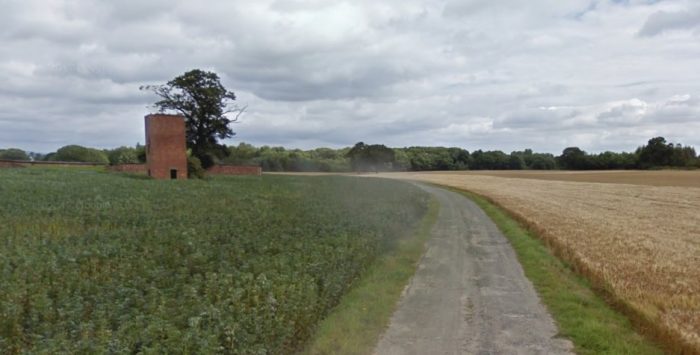
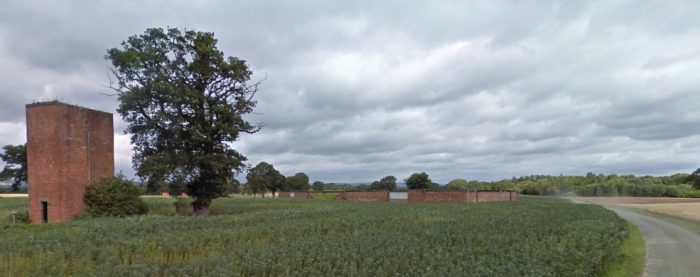
M. Along the line between location ‘K’ and location ‘M’ there is a semi-metalled road on the formation of the old line.The route of the old line is on the right of the image above, an observation tower is on the left with a storage building in between.

The adjacent satellite image shows the same observation tower and storage buildings 158, closest to the line, and 159.

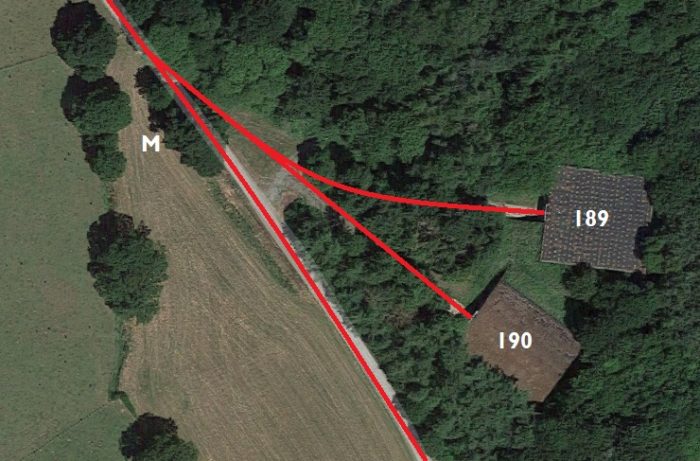
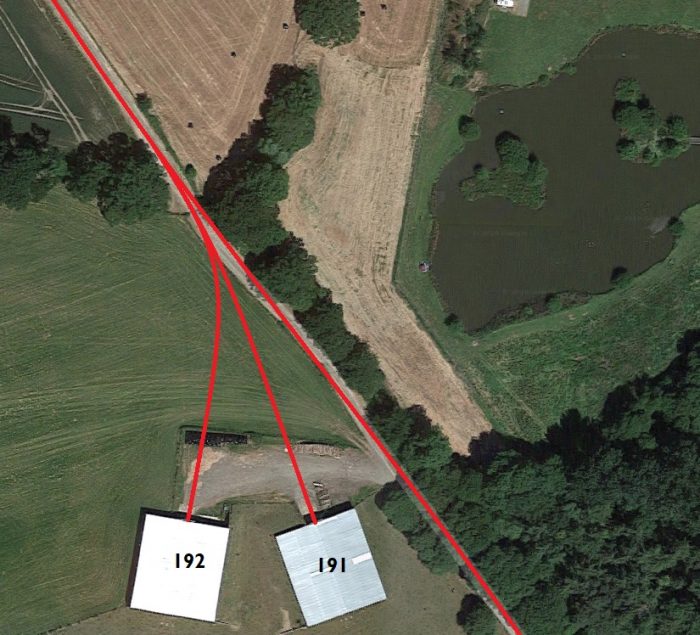
The first two pictures below show the two storage buildings, 189 and 190 which connected to the line at point ‘M’; and secondly, the next set of storage buildings a little to the North along the line and on its West side and numbered 191 and 192.

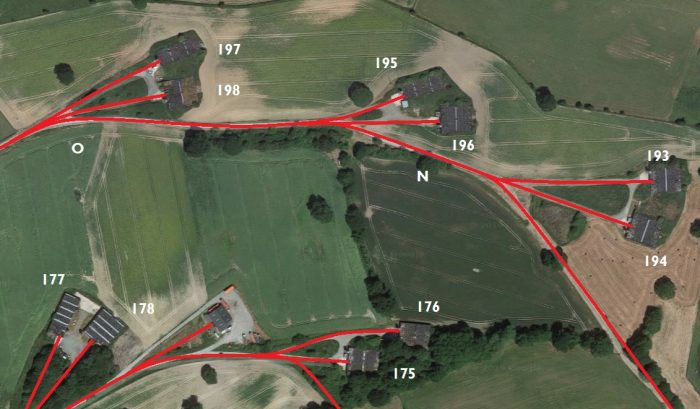
The third picture below shows both of the two main MOD line near the North of the Argoed site and more of the storage buildings served by those lines. The most northerly line allowed Google Streetview access.

N. The formation of the old line remains, access is over a lightly maintained gravel road. Looking East from location ‘N’.

O. The track formation continues through location ‘O’ as a gravelled road.Looking East from location ‘O’.

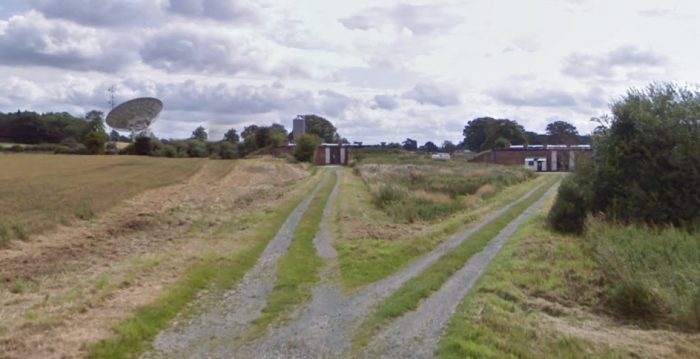
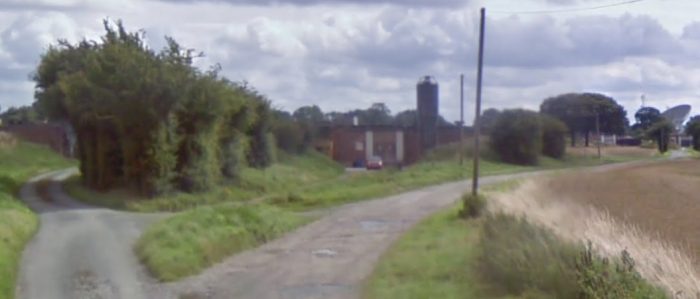
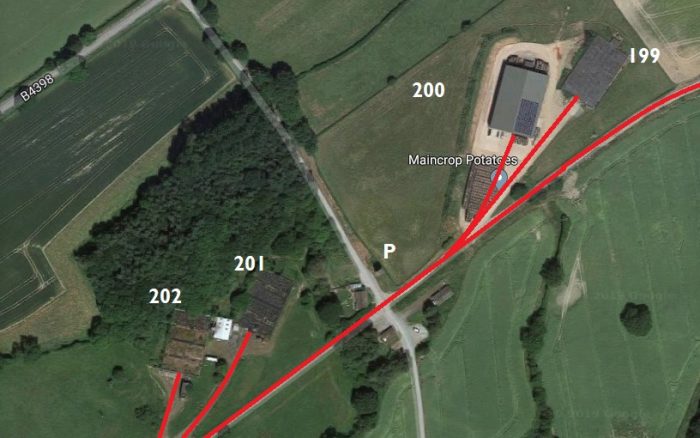
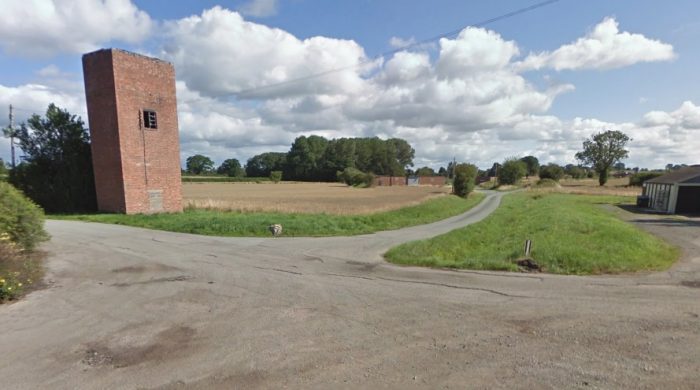
P. A road connection exists in the 21st Century from the B4398 to the track formation at location ‘P’.Location ‘P’.The observation tower at location ‘P’ with store buildings 199 and 200 in the distance.

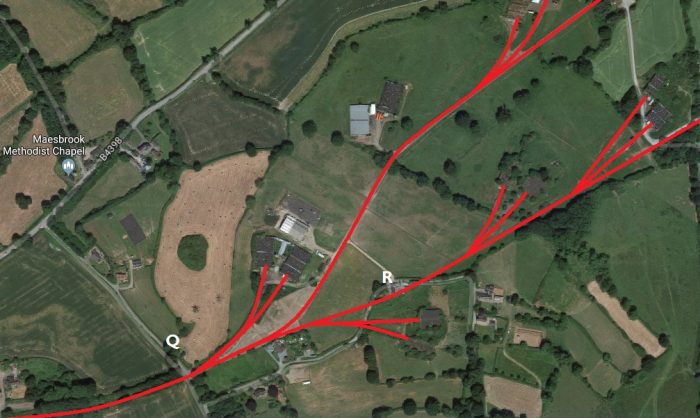
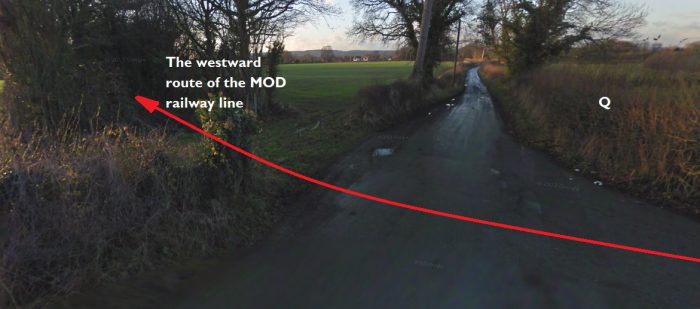
Q. Both arms of the railway met to the East of point ‘Q’ on the above plan and then continued westward before looping through to the East and forming a junction with the S&MLR.Looking East from location ‘Q’ (Google Streetview).Looking Northwest at point ‘Q’ on the above map showing the onward route of the MOD line to the West (Google Streetview).

Llanymynech

The military adapted the layout at Lanymynech so that it could act as the “emergency exchange point with the national railway system. The initial WD layout constructed in 1941 provided four loop sidings, but this was later reduced to just two yard roads.” [15: p127]

The Post-War Years

It was anticipated that the ammunition depot would remain open for at least 10 years Carter the end of the War, but the military wanted to allow men to return to civilian life at the earliest possible date. “The manpower shortage created by constant turnover and demobilisation was expected to be so serious that the Army was forced to consider asking the S&MLR Company to take over the operation of the line again and act as agents for working WD traffic.” [15: p133] However, difficulties were encountered in the negotiations and thecdealy proved fortuitous for the WD. The predicted reductions in manpower were not realised. A much larger compliment of military and civilian staff remained available to the Army than had been predicted. The cArmy withdrew from negotiations with the S&MLR Company.

It did not take long after nationalisation for BR, who took on ownership of the line, to realise that receipts did not compare well with staff costs. BR decided to close many of the stations on the line and the Criggion branch, the War Office raised no objection, so closure took place on 1st May 1949.

With a view to a further ten years of occupation, the WD had to face the cost of continuing the upkeep of the railway. As early as May 1945, underused track was lifted to provide rails for necessary replacements on the main line, some parts of which still had the S&M bull head rail.” [15: p141] The Llanymynech to Kimberley blanc by of the railway had only never been intended by the WD to be a necessary emergency provision, so this length was cannibalised. By 1954, this length of line was in a very poor condition and required £25,000 of expenditure to render it adequate for use. [15: p141]

On 4th April 1957, the government published a Defence White Paper reviewing the armed forces in the light of the Suez campaign of the previous year. The result was that “on 18th Oçtober 1957, the WD wrote to the General Manager of British Railways (Western Region) to say that CAD Nescliff would be closed progressively, and completely by March 1960. The WD would then give up its lease on the line, and the working of the civilian traffic would become the responsibility of BR.” [15: p154]

The closure of the S&MLR was inevitable and by 1961, the WD and the BTC were left with the need to reach a financial settlement which recognise that the WD was not going to restore the line and its rolling stock to pre-1941 condition. [15: p166]

References

  1. Peter Johnson; An Illustrated History of the Shropshire and Montgomeryshire Light Railway; OPC, Ian Allan, Hersham, Surrey, 2008.
  2. http://colonelstephenssociety.co.uk/shropshire%20ww1/shropshire%20and%20montgomeryshire%20topics.html, accessed on 4th August 2019.
  3. http://shropshirehistory.com/military/camps.htm, accessed on 5th August 2019.
  4. http://colonelstephenssociety.co.uk/shropshire%20ww1/melverley%20bridge.html, accessed on 5th August 2019.
  5. http://colonelstephenssociety.co.uk/light%20railway%20modelling/light%20railway%20modelling%20-%20ilfracombe%20goods.html, accessed on 5th August 2019.
  6. https://web.archive.org/web/20131012030418/http://www.28dayslater.co.uk/forums/military-sites/33114-leyland-ammunition-store-23-09-08-a.html, Post #5, accessed on 5th August 2019.
  7. https://web.archive.org/web/20131005010516/http://www.airfieldinformationexchange.org/community/showthread.php?4825-Kinnerley-Ammunition-Depots, accessed on 5th August 2019.
  8. http://www.shropshiresgreatoutdoors.co.uk/site/nesscliffe-hills-and-the-cliffe-countryside-heritage-site, accessed on 6th August 2019.
  9. Hansard: HC Deb 04 May 1960 vol 622 cc1066-7; https://api.parliament.uk/historic-hansard/commons/1960/may/04/land-shrewsbury, accessed on 6th August 2019.
  10. http://www.railmaponline.com/UKIEMap.php, accessed on 6th August 2019.
  11. http://www.oswestry-borderland-heritage.co.uk/?page=115, accessed on 6th August 2019.
  12. https://www.geograph.org.uk/photo/464750, accessed on 6th August 2019.
  13. http://shropshirehistory.com/railways/mineral.htm, accessed on 6th August 2019.
  14. https://www.facebook.com/groups/512212695656054, accessed on 6th August 2019.
  15. Mike Christensen OBE; The Shropshire & Montgomeryshire Light Railway Under Military Control 1940-1960; Lightmoor Press, Lydney, 2011.
  16. https://www.lotonpark.co.uk/visiting-loton/deer-park, accessed on 10th August 2019.

Slovenia Railways and the Slovenia Railways Museum

I have just picked up a copy of Global Railway Review. The July 2019 issue. The feature article focusses on infrastructure in Slovenia. Jo, my wife, and I travelled to Slovenia in 2006 and stayed in Bled. Reading the article in Global Railway Review brought back memories of that holiday.

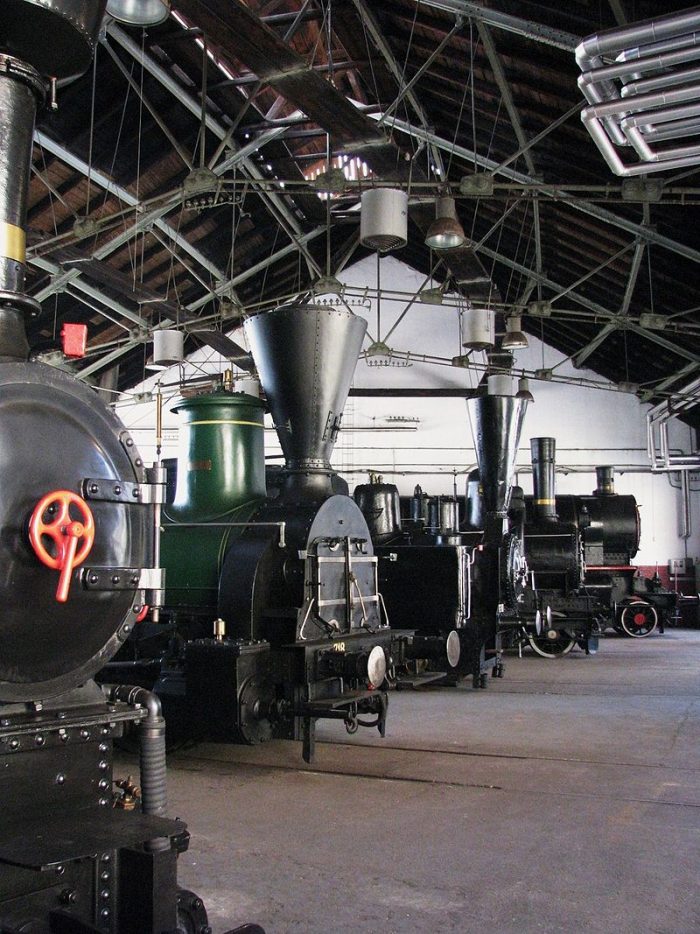
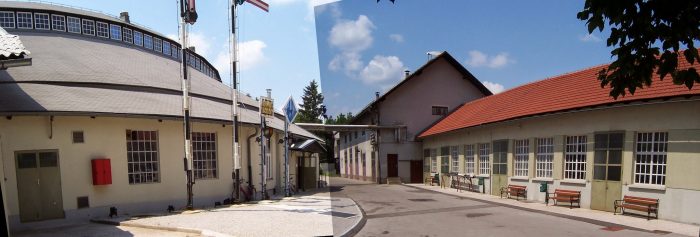
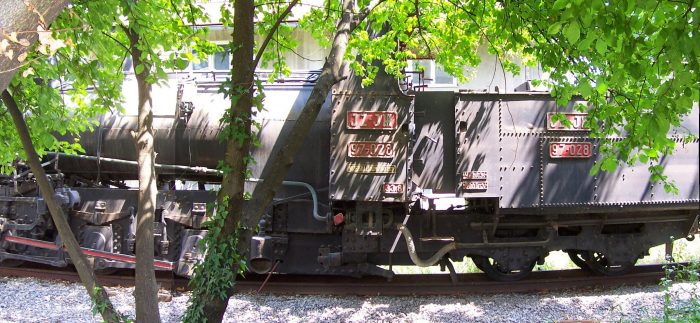
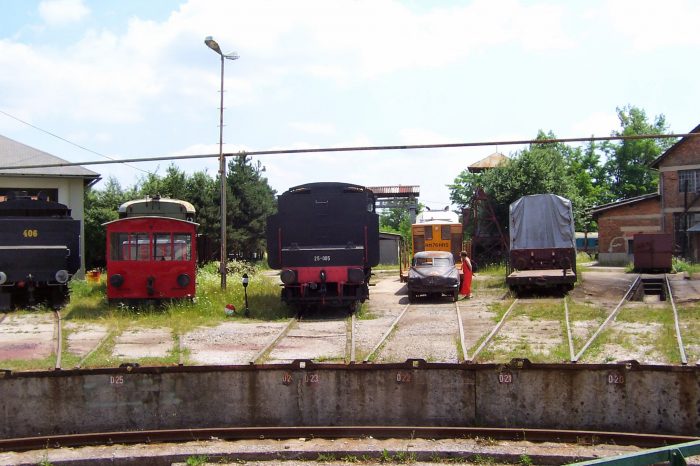
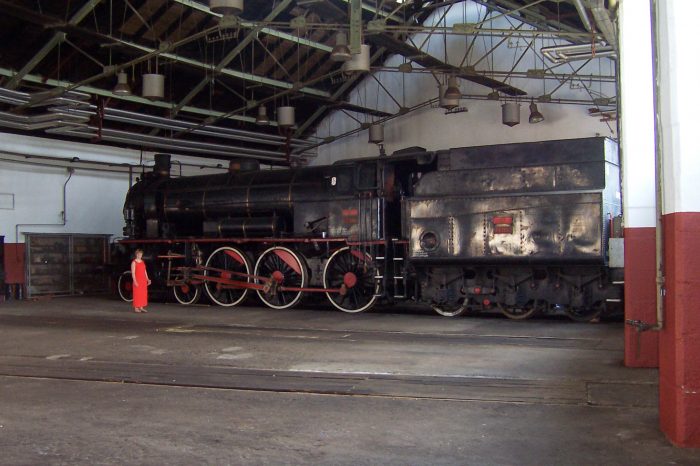
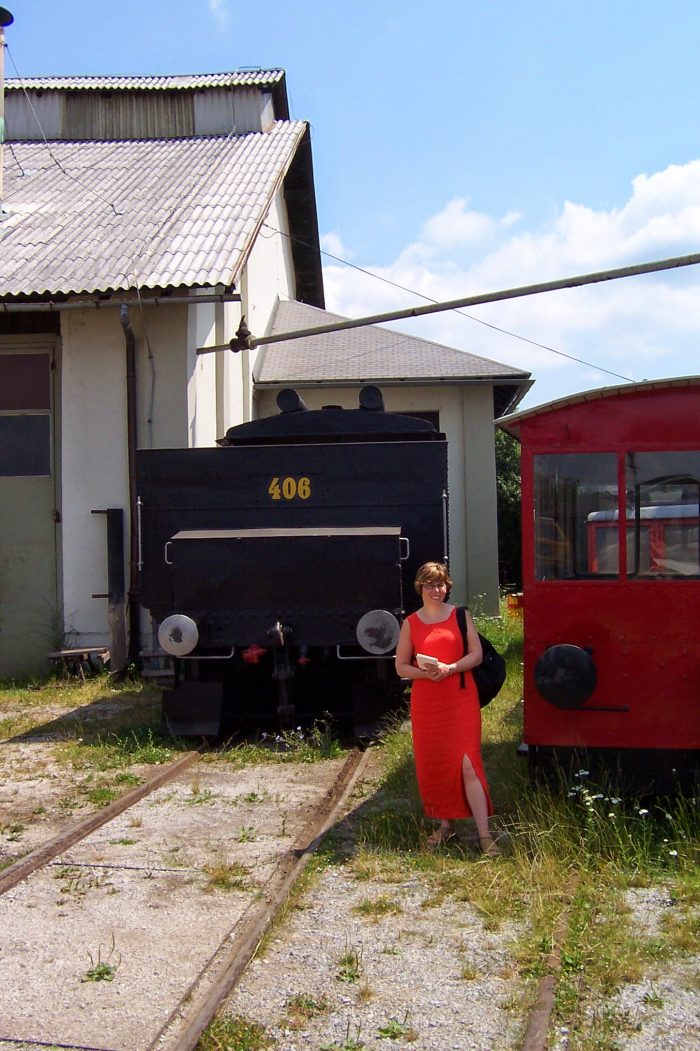
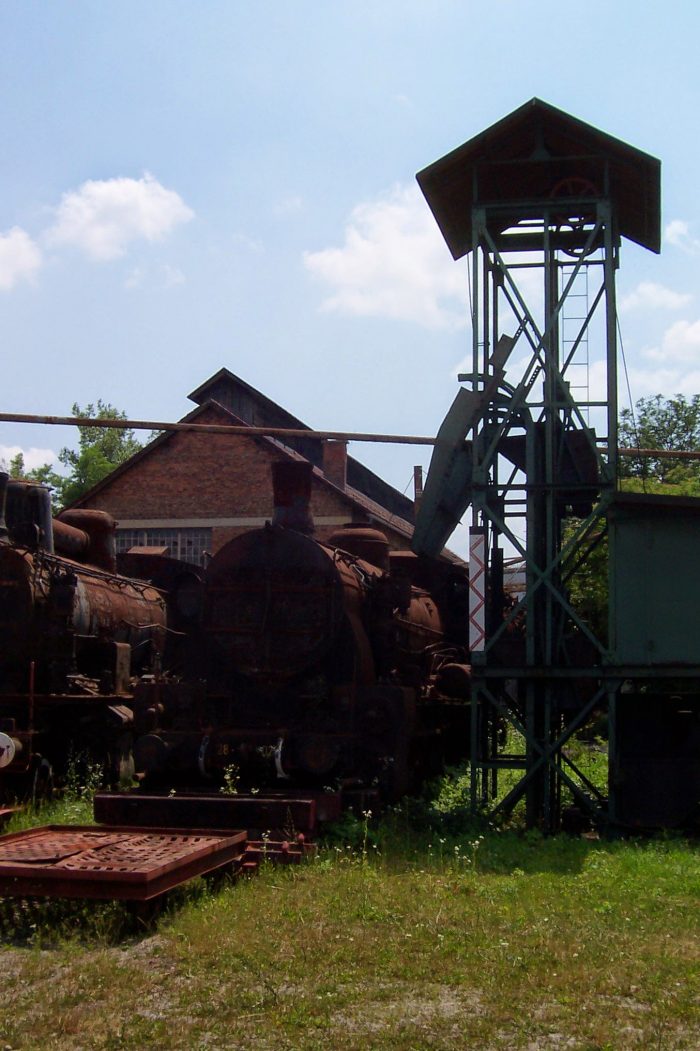
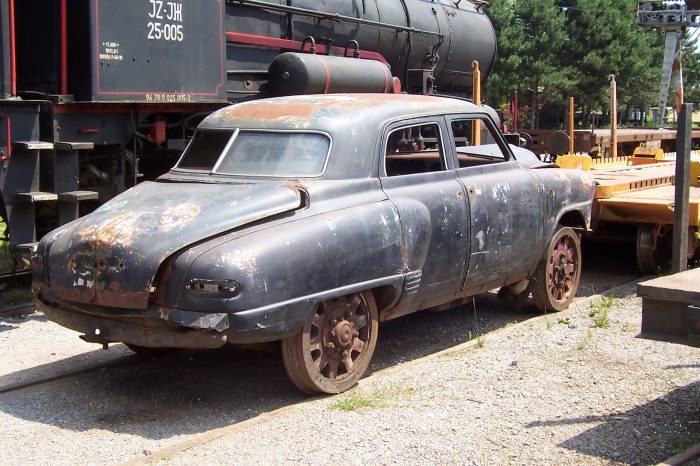
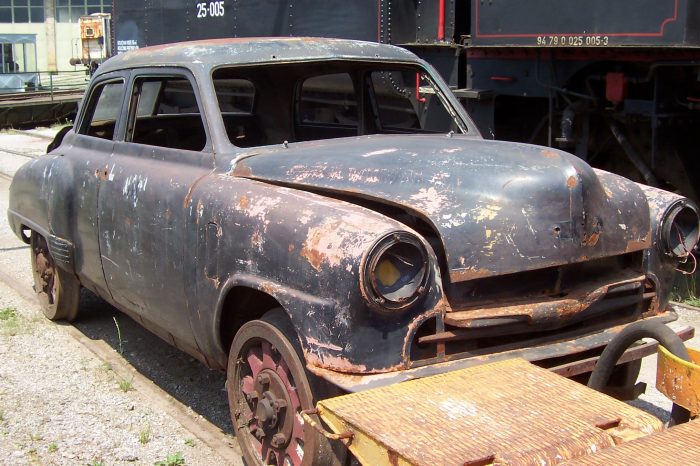
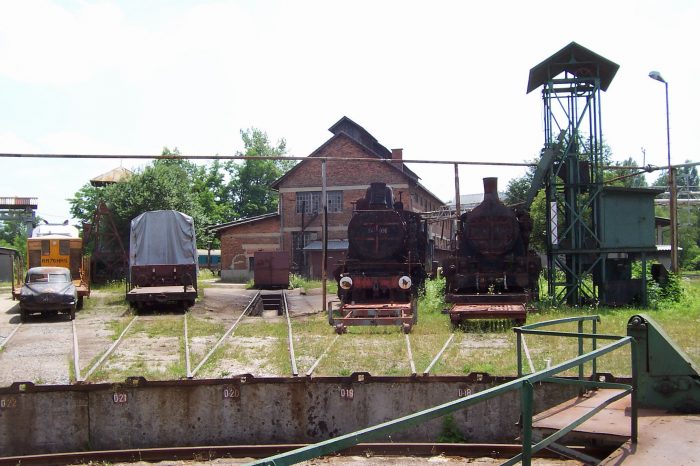
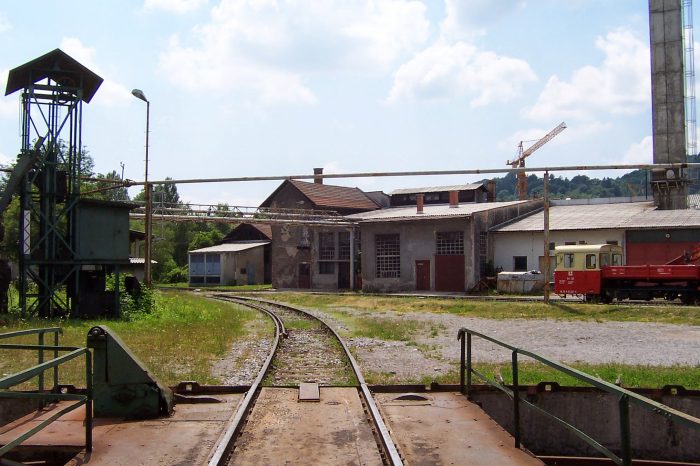
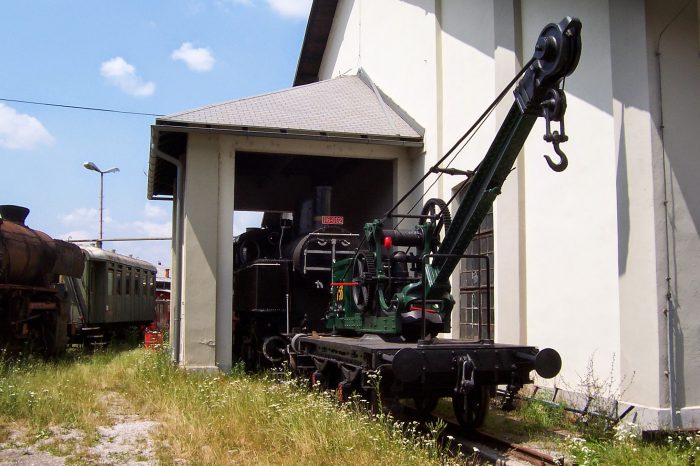
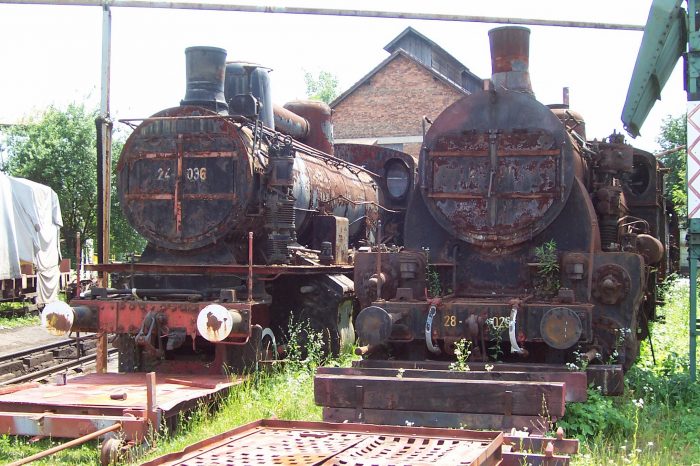
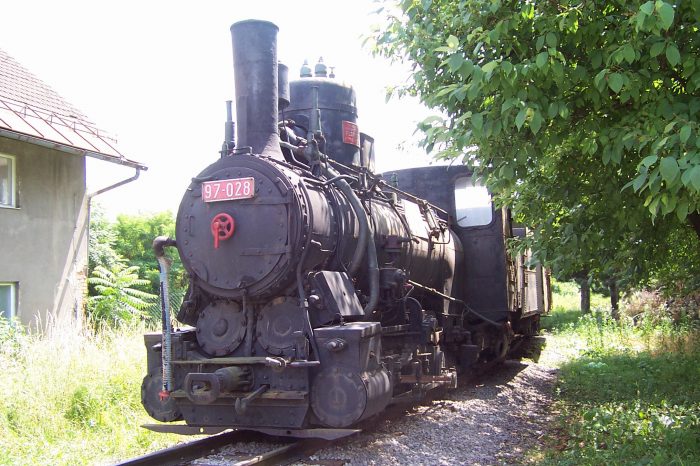
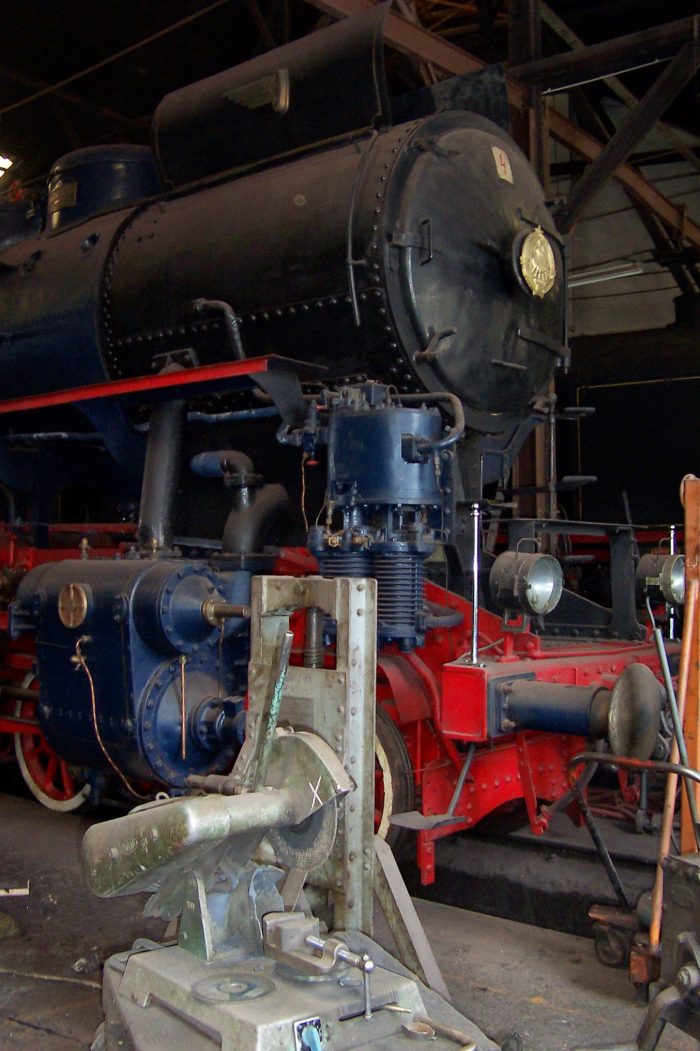
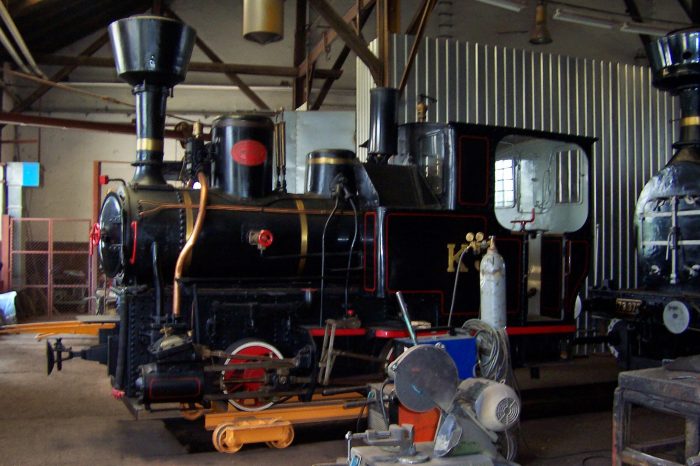
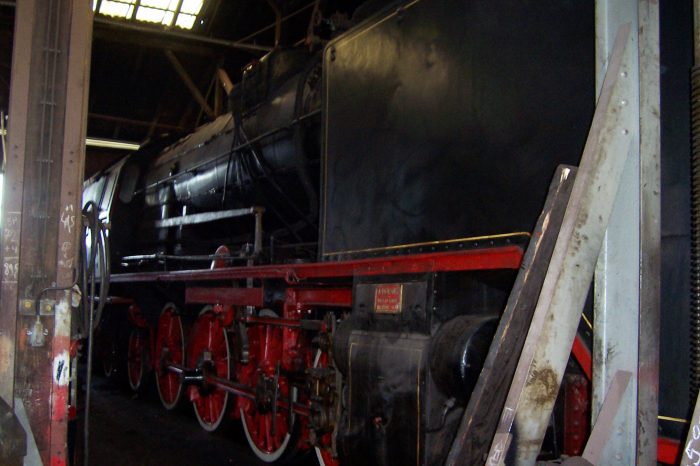
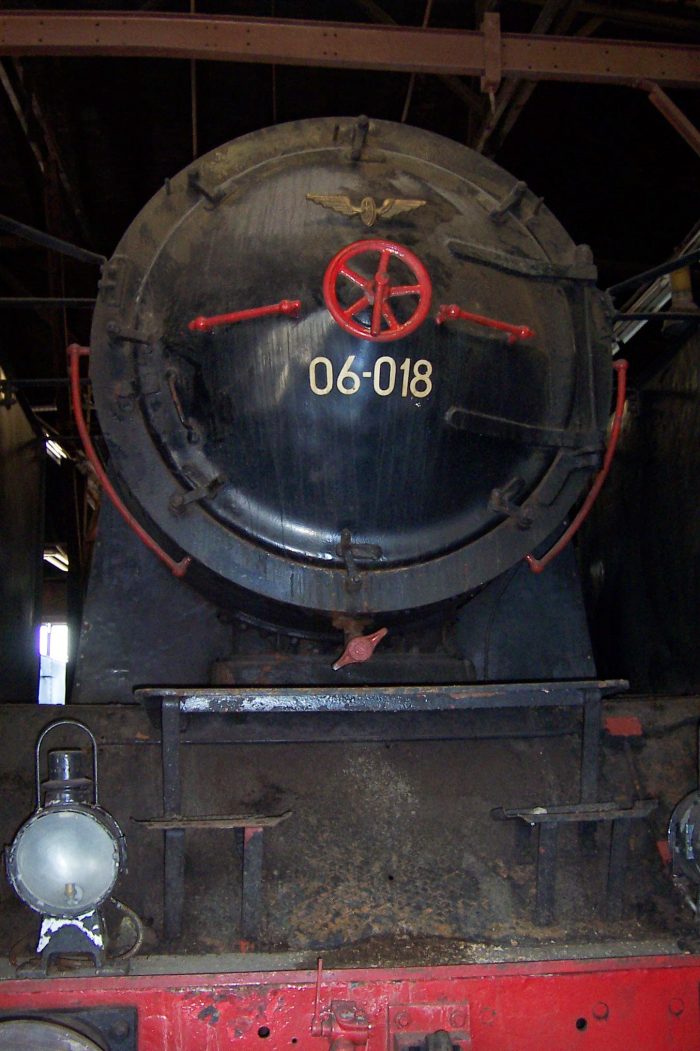
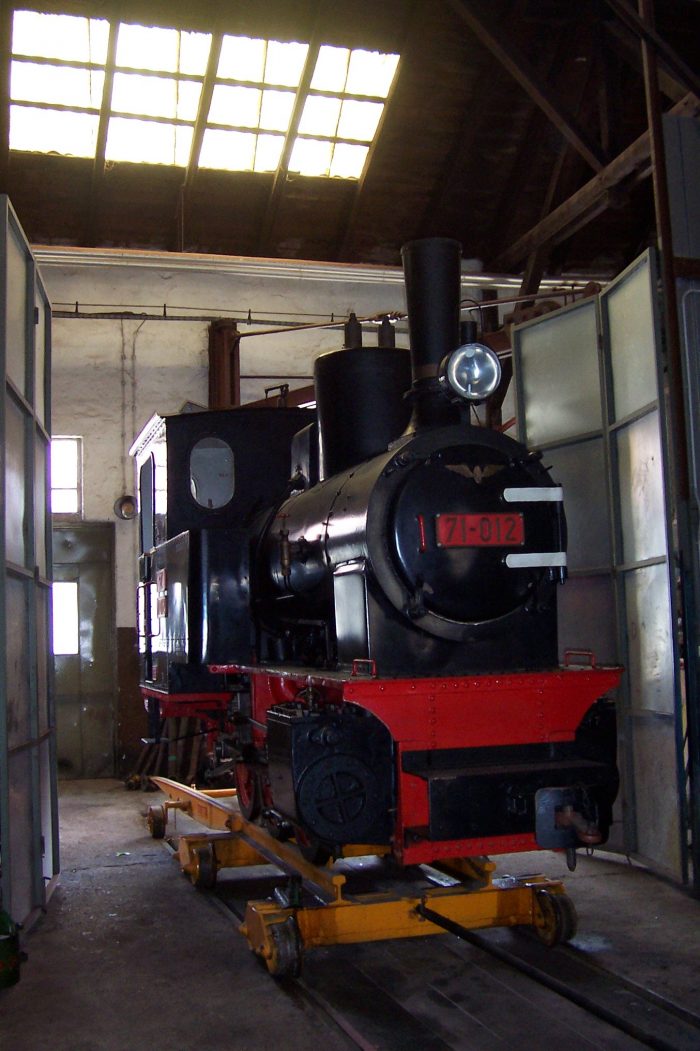
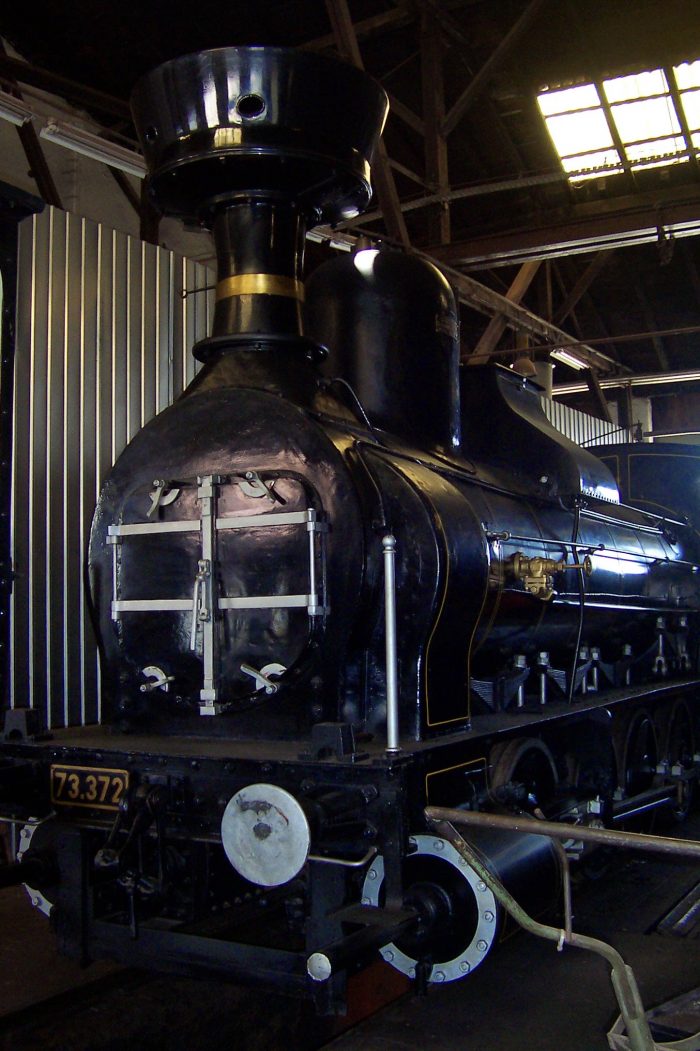
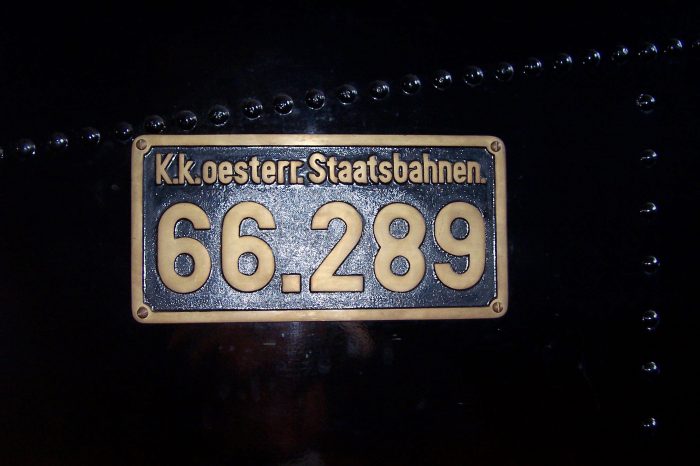
One of my highlights of that holiday was a visit to the railway museum in Ljubljana – the Železniški muzej Slovenskih železnic. It seemed to be closed, but a short chat with someone on site allowed us access to the workshop area if not to the museum itself. I have appended photos of the visit to this post.This image comes from 2010. By this time, the old Roundhouse had been significantly tidied an the collection was on much better display. “The oldest locomotive is the former Austrian Southern Railkway No. 29.718, built in 1861. Keeping her close company is the diminutive No. 162-001. Her huge chimney earned her the nickname ‘the Kamnic Cornet’. Next is the most eminent of the engines, express locomotive No. 03-002, designed in 1910 particularly for the Ljubljana-Trieste line. Nearby is mighty No. 06-018 of 1930, also designed especially for lines in Slovenia. The smallest of all is No. K3, a little gem built in 1892 especially for the narrow gauge Poljčane – Slovenske Konjice Line.”  [4]

The article in Global Railway Review provided some insight into major projects being undertaken by SZ-Infrastruktura, the Slovenian Railways Group in 2019. The Slovenian rail network comprises 1,207km of track and has excellent connections with the pan-European rail network. Three significant rail corridors cross the country’s territory:

  • The Baltic to Adriatic Corridor (RFC 5)
  • The Mediterranean Corridor (RFC 6)
  • The Amber Corridor (RFC 11)

In the future, another Corridor will cross Slovenia – the Alpine to Western Balkan Corridor (RFC 10) connecting Austria with the Turkey-Bulgarian border. [1: p7]

Investment in recent years has been between 200 & 300 million Euros. As of July 2019, there are six major projects and ten more minor projects underway in Slovenia.

Plans for the network in the next 5 years include optimising business processes and updating IT systems; renewing and modernising main lines. [1: p9] The modern network is a far cry from the condition of the network when Slovenia was part of the old Yugoslavia.

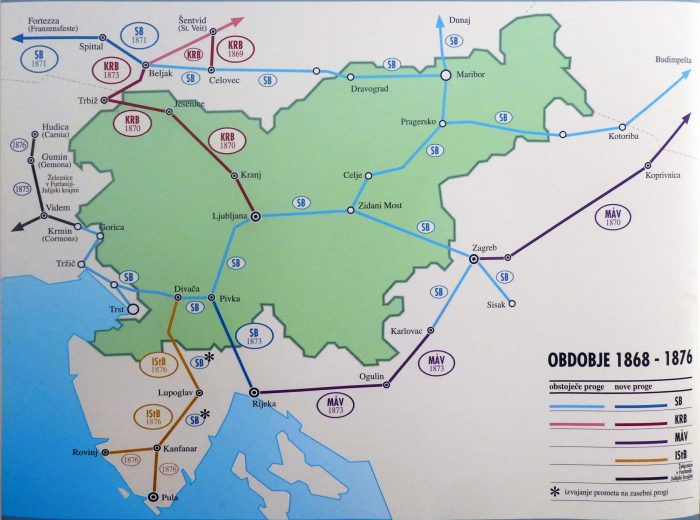
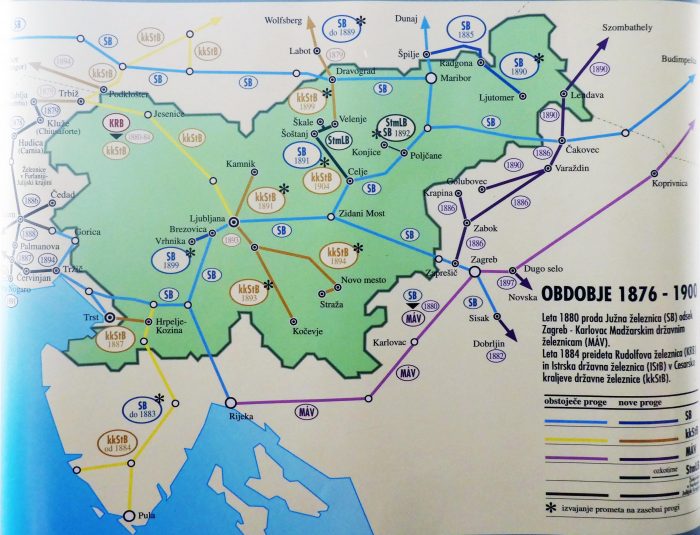
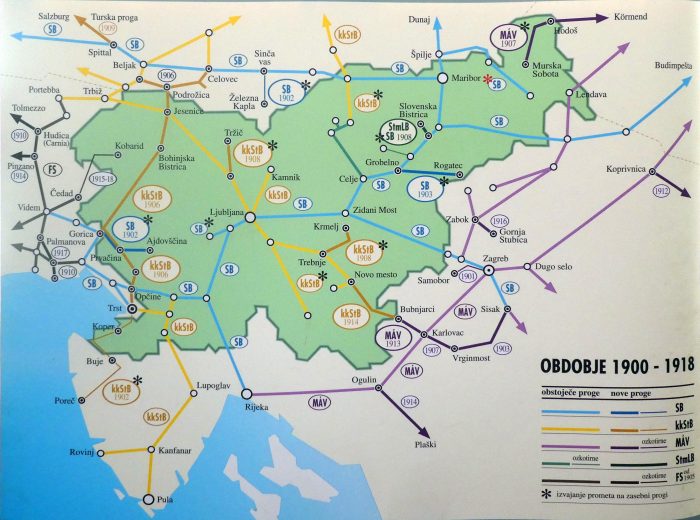
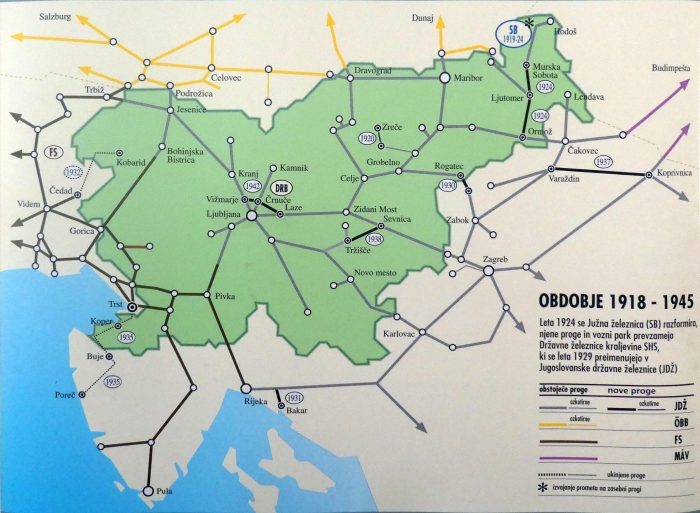
Slovenia received its first railway connection in the 1840s, when the Austrian Empire built a railway connection – Südliche Staatsbahn or Austrian Southern Railway – between its capital, Vienna, and its major commercial port, Trieste. Maribor was connected by railway to Graz in 1844. The stretch was extended via Pragersko to Celje in 1846, and further via Zidani Most to Ljubljana in 1849. A double-track line was continued via PostojnaPivka, and Divača, finally reaching Trieste in 1857. [2] The network before 1876. [5]The network grew significantly throughout the 19th century and until the Great War. [5]After the War, development was slow and only minor improvements were undertaken. Few new lines were opened after World War I.

One of lines built after the Great War “connected Ormož with Ljutomer and Murska Sobota, and opened in 1924. After World War II, a single-track electrified line connecting Prešnica with Koper was built in 1967. In 1999, a single-track line between Murska Sobota and Hodoš was rebuilt, offering a direct connection with the Hungarian railway system. The line was originally built in 1907 and closed down in 1968 among numerous other lines closed down during the 1960s. In April 2016 the electrification of the Pragersko – Hodoš line was completed.” [2][5]

The Railway Museum contains a collection of steam locomotives, which includes several rare models, and an extensive collection of old apparatus, tools and other items of technical heritage related to railways. It provides an opportunity to learn about the workings of railways from the period of the Austro-Hungarian Empire. Exhibits on view include items such as light auxiliary rail vehicles (draisines) once used by rail supervisors and maintenance personnel and all kinds of tools and communication devices, including telegraphs, telephones, printing telegraphs, and radio stations.  [3]

In spring and summer, the Railway Museum hosts occasional meetings of train enthusiasts. On such occasions, old steam locomotives are taken out of storage and their furnaces are fired up as part of the museum’s efforts to keep all the artefacts in operational condition. [3]

As I have already noted we managed to be at the museum when it was closed to public access and were pleased to at least have seen inside the roundhouse. We were left to our own devices and wandered all over the museum grounds. The pictures are in the appendix below.

References

1. Matjaz Kranjc; Investment Secures a Modern Future for Slovenia’s Rail Network; Global Railway Review Vol. 25 No. 4, p6-9.

2. https://en.m.wikipedia.org/wiki/Slovenian_Railways, accessed on 10th August 2019.

3. https://www.visitljubljana.com/en/visitors/things-to-do/art-and-culture/railway-museum, accessed on 10th August 2019.

4. https://en.m.wikipedia.org/wiki/Slovenian_Railway_Museum#/media/File%3ASlovenian_Railway_Museum_2010.JPG, accessed on 10th August 2019.

5. http://www.projectmapping.co.uk/Europe%20World/sloveniatrainrai.html, accessed on 10th August 2019.

Appendix

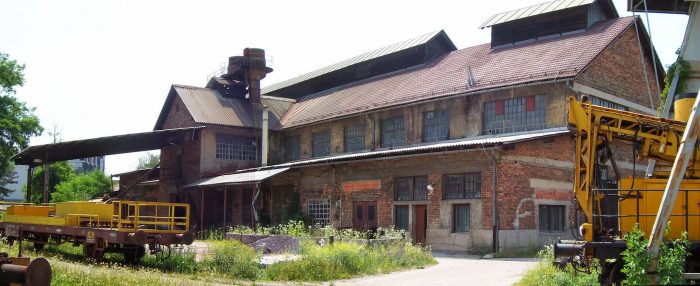
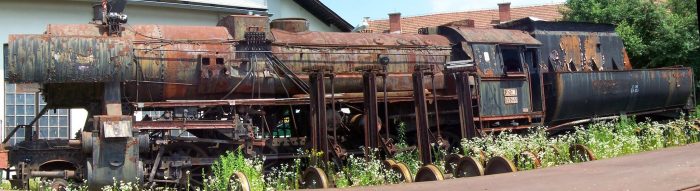
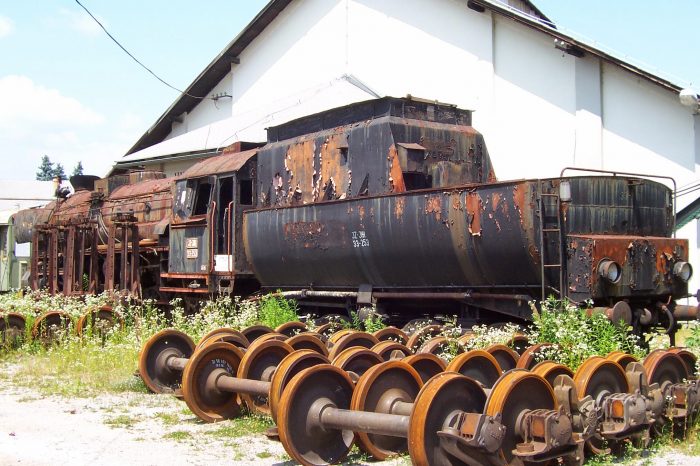
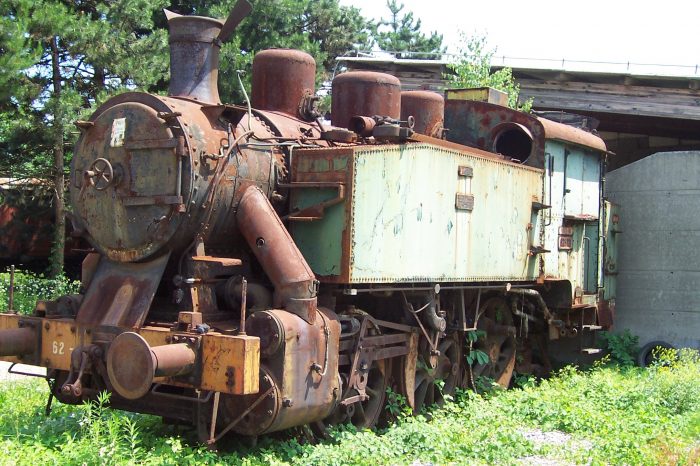
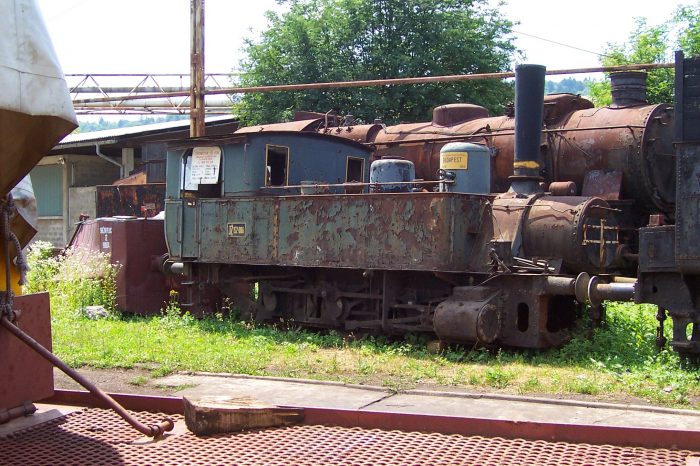
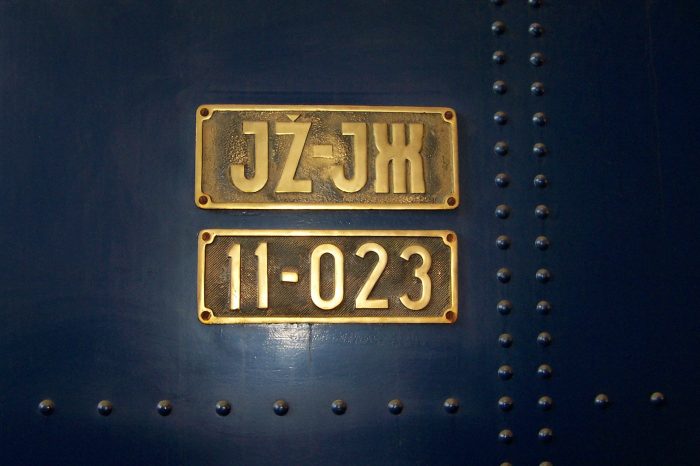
Some of the photographs taken by myself in Summer 2006 at the Slovenian Railway Museum in Ljubljana (Železniški muzej Slovenskih železnic).


Ford Railmotors on Colonel Stephens’ lines in general and on the S&MLR

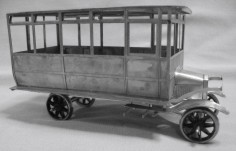
Colonel Stephens made use of a wide variety of different vehicles on his light railways. The adjacent picture shows a model of a Ford Railmotor under construction, complete except for the painting and comes from the steamandthings website. [2]
Colonel Stephens purchased four pairs of these Railmotors. The earliest set was purchased for the Kent & East Sussex Railway (K&ESR).

Stephens built his first independent railway, the Rye and Camber, intending to use ‘an oil motor on a bogie passenger car’ to operate the service. This was a step too far. The internal combustion engine was less than ten years old and Stephens was unable to realise his ambition. A small steam locomotive had to be used. [4]

Ten years later he returned with another innovation, a light steam railmotor. It proved mechanically unreliable and inevitably the First World War brought the experiment to an end. During the First World War petrol road lorry and bus development leapt forward and traffic on rural railways was under threat. To help counter this, Stephens returned to the new technology. A first experiment was in October 1921 on the Weston, Clevedon and Portishead but the vehicles were effectively hand built one-off products and therefore expensive; too expensive to adopt on cash starved independent light railways. [4]

The Colonel Stephens Society continues: “Stephens had begun experimenting on the Kent & East Sussex at some time before 1921 with a cheaper alternative using an Edwardian Wolseley-Siddeley car chassis that was adapted as a rail lorry and then as a bus. In using such adaptations Stephens was in the forefront of world practice, for only a few lines in North America and one French manufacturer were trying such things at the time.” [4] Details of this vehicle can be found at: https://rogerfarnworth.com/2019/07/27/gazelles-trailers. Its ultimate use was as a reconstructed coach to run behind the locomotive Gazelle on the Shropshire & Montgomery Light Railway. [5]

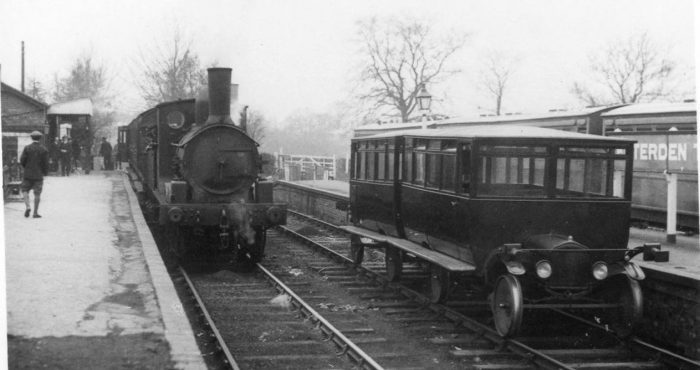
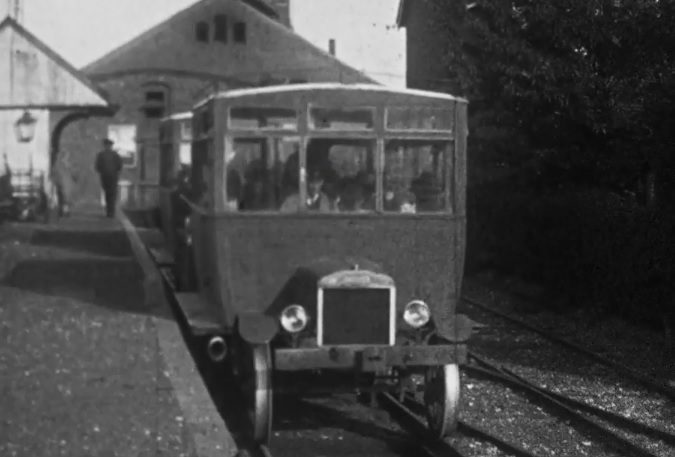
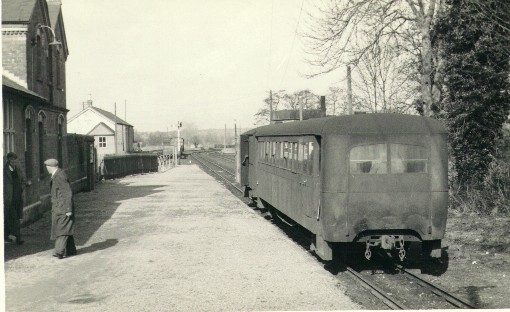
Ford Railmotor set No. 1 arrived on the Kent and East Sussex in 1922, featuring in the Commercial Motor Magazine of 12th December 1922. [4] It came from Edmonds of Thetford. The bodywork was made by Eton Coachworks of Cringleford. The seating capacity was 20 in each car. Later models had the same capacity in seating but some design differences. Set No. 1 can be seen in the picture below.

Railmotor No. 1 on the K&ESR at Tenterden in 1923, sitting alongside an Ilfracombe goods loco (c) Colonel Stephens Museum. In its early years the railmotor sets had head lamps either side of the radiator. Later a headlamp was sited on the roof [3]

Ford Railmotor No. 1 at Tenterden Town Station, (c) Ronald Shephard Collection, West Sussex Record Office Ref No: Shephard 1/28/1. [6]

The twin T type Ford set at Headcorn Junction, (c) Ronald Shephard Collection, West Sussex Record Office Ref No: Shephard 1/28/5. [6]

Ford Railcar at Tenterden Town Station on the Kent and East Sussex Railway. The line opened in 1900 as the Rother Valley Railway from Robertsbridge to Tenterden Town in 1903 and to headcorn in May 1905. In 1904 the name of the line was changed to the Kent & East Sussex Railway, (c) Ronald Shephard Collection, West Sussex Record Office Ref No: Shephard 1/28/3. [6]
In September 1923, Stephens wrote to the Commercial Motor Magazine saying: “I have nine small steam railways under my control and am trying several forms of motor trains…. In a previous experiment I learnt, to my sorrow, that it is cheaper to have a car at each end than to put in a reverse gear.’ Col. Stephens gave his reason for choosing Ford chassis as follows: ‘The motive units are the much despised 1-ton Fords; we chose this type, as we can always get spares without delay and for no other reason.” [4]

There were problems with reliability but these railmotors provided a much more efficient passenger service than did the mixed trains that preceded them. One significant advantage for passengers was that they were not detained at intermediate stops to shunt goods wagons. Set No. 1 was followed 12 months or so later by set No. 2 of a very similar design. The second set had all the strengths and weaknesses of the first set but could easily be distinguished from set No. 1 as its windscreen was divided into three panes of glass rather than into two.

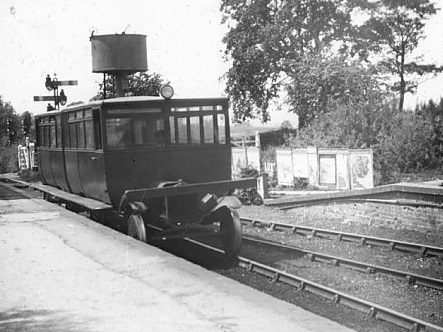
Ford Railmotor No. 2 on the K&ESR at Rolvenden in the 1930s. [7]

Ford Railmotor No. 2 on the K&ESR at Junction Road in 1930. [8]

The third Ford Railmotor set was also supplied by Edmonds of Thetford and was very similar to Ford Railmotor No. 2. It ran on the Selsey Tramway. It arrived with headlamps either side of the radiator in 1924 as shown in the adjacent image. [9]

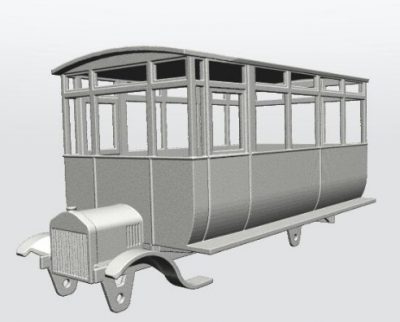
The next image is a CAD image from Shapeways showing their 3-print of the second design of Ford Railmotor. [10]

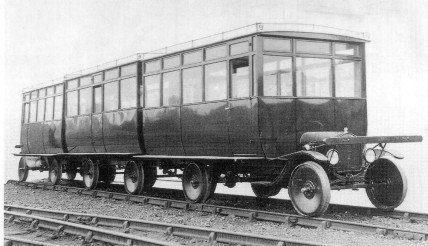
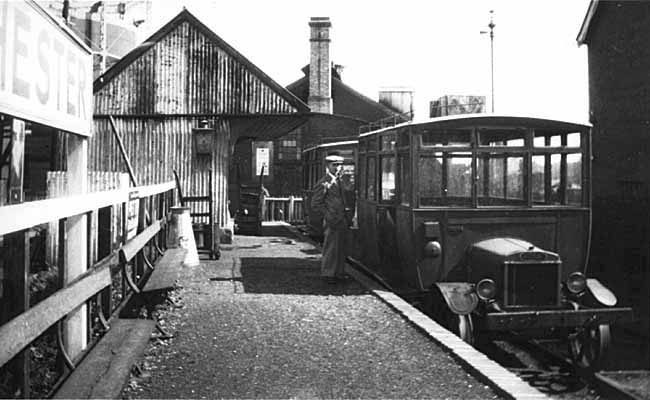
The fourth of the Ford Railmotor sets purchased by Colonel Stephens was for the Shropshire & Montgomery. It was purchased in 1923 and perhaps should be referred to as the second set. As it set the design parameters for the remaining Ford Railmotor sets bought by Colonel Stephens. This fourth set was different from the other paired sets in that it was provided with a central carriage, increasing the passenger carrying capacity. Visually, the two powered cars were identical to sets 2 and 3 above. Sadly, it may be that these Railmotors were under-powered and the use of the central carriage on the incline out of Shrewsbury Abbey Station may have been impracticable with the intended passenger loading. [1: p22]

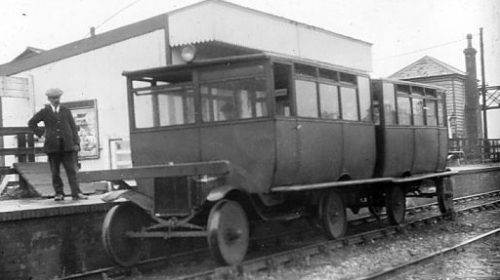
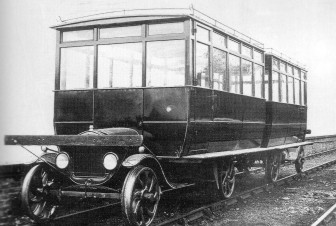
The Shropshire & Montgomeryshire Light Railway Ford Railmotor set. [11]

Interestingly, these Railmotors kept the low level headlights, or at least one of them throughout their lives. It was usual to see the powered cars working together and the central carriage laid up in a siding somewhere! In most cases pictures show only the two paired powered cars. The usually operated along the S&MLR mainline and left the brach to Gazelle and is coaches.

The Ford Railmotor set in action at Kennerley in 1926. Note the missing headlamp. [12]

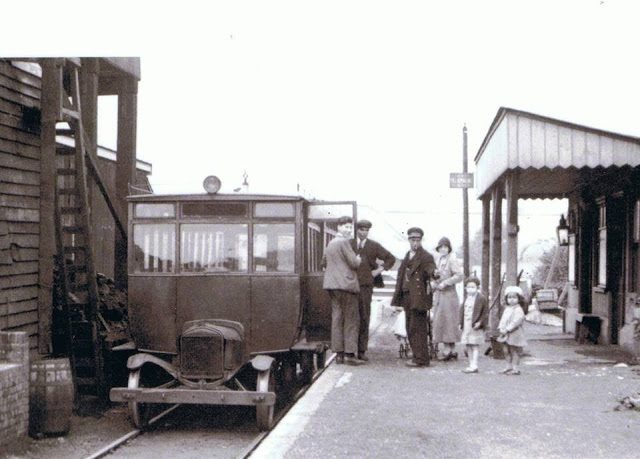
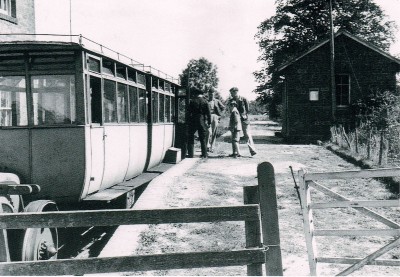
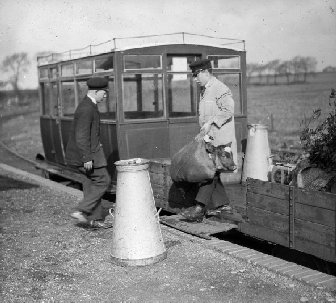
The adjacent image shows Criggion station and is dated 5th August 1935. The Ford Railmotor has made an unusual excursion up the branch line. It is on a showing a Railcar set at the platform on a summer excursion from Kinnerley, (c) Roger Carpenter. [13]

References

  1. Stephen Garrett & John Scott-Morgan; Colonel Stephens Railmotors; Irwell Press, Caernarfon, 1995.
  2. http://www.steamandthings.com/page44a.htm, accessed on 27th July 2019.
  3. https://twitter.com/KandESRailway/status/923509399003549698?s=19, accessed on 27th July 2019.
  4. http://colonelstephenssociety.co.uk/rollingstock%20topics/ford%20railmotors.html, accessed on 27th July 2019.
  5. https://rogerfarnworth.com/2019/07/27/gazelles-trailers.
  6. https://www.sussexpictures.co.uk/west-sussex-record-office/ronald-shephard-railway, accessed on 27th July 2019.
  7. http://railwayheritageroutes.blogspot.com/2017/02/the-ford-railcar-at-rolvenden.html, accessed on 27th July 2019.
  8. http://colonelstephenssociety.co.uk/kent%20and%20east%20sussex/accident%20at%20junction%20rd.html, accessed on 28th July 2019.
  9. http://www.steamandthings.com/page44.htm, accessed on 28th July 2019.
  10. https://www.shapeways.com/product/38RB92Y8V/0-55-ford-railcar-1a, accessed on 28th July 2019.
  11. http://colonelstephenssociety.co.uk/colonel%20stephens%2C%20kits%20and%20models/ford%20railmotor.html, accessed on 28th July 2019.
  12. John Scott-Morgan; British Independent Light Railways; David & Charles, Newton Abbott, Devon, 1980; p84.
  13. http://www.oswestry-borderland-heritage.co.uk/?page=115, accessed on 14th May 2019

Gazelle’s Trailers

After completing a short article about ‘Gazelle’, I became interested in the two different trailing cars which served behind it on the Shropshire & Montgomeryshire Light Railway. ….

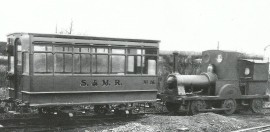
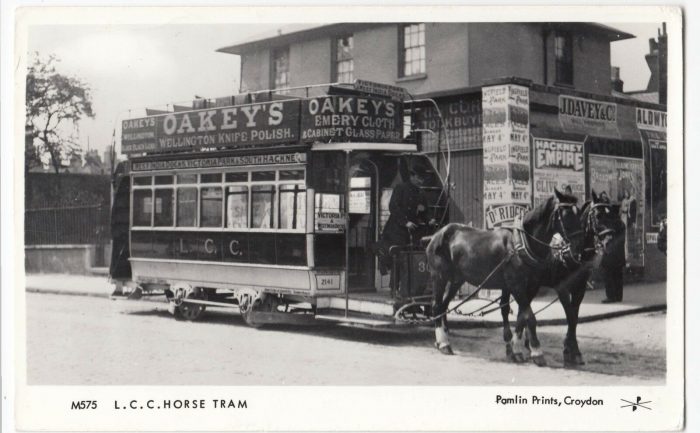
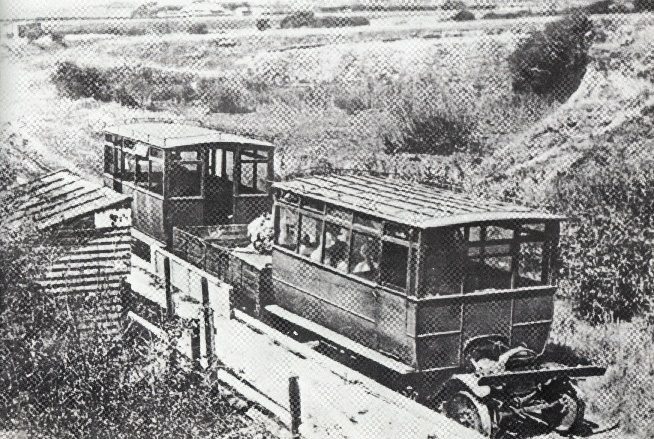
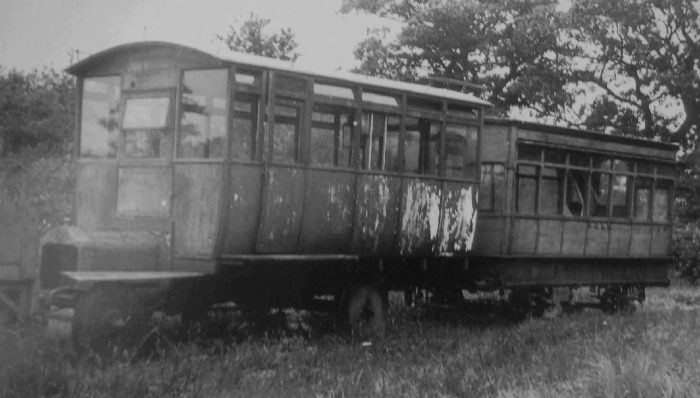
The LCC Tram Body: the first was a London County Council tram body on another chassis. The tram having been cut down from a double-decker to serve on the railway. [15]

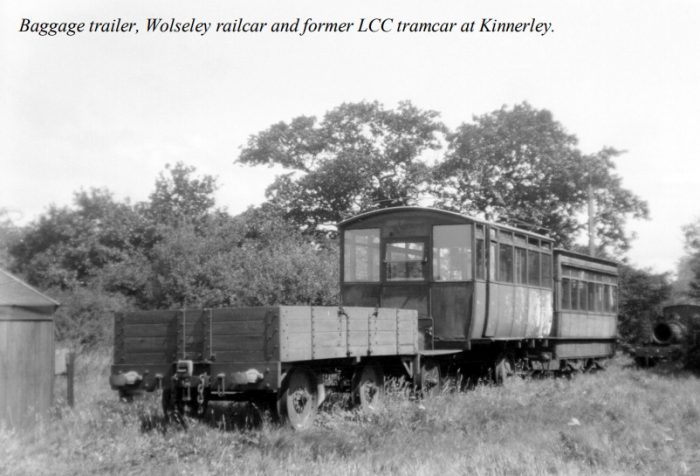
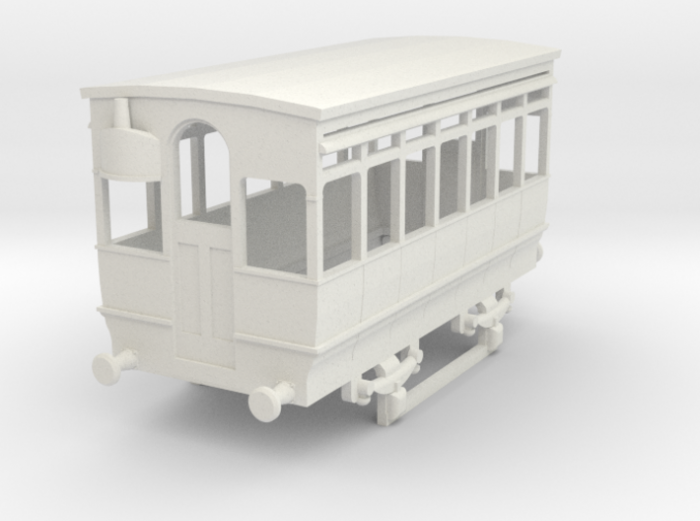
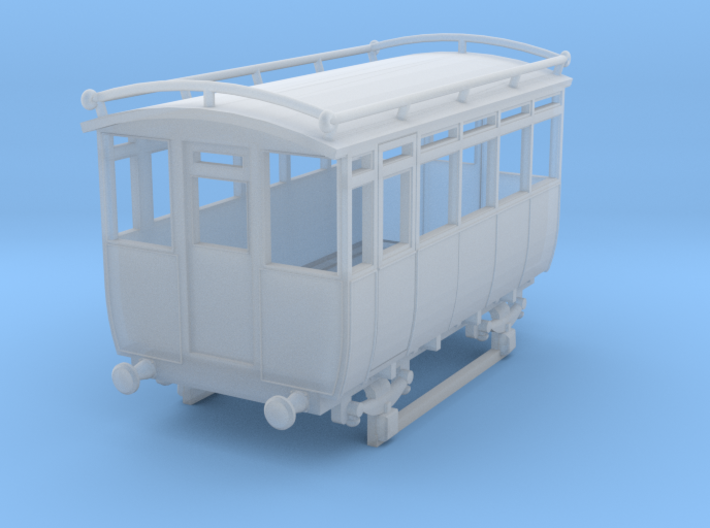
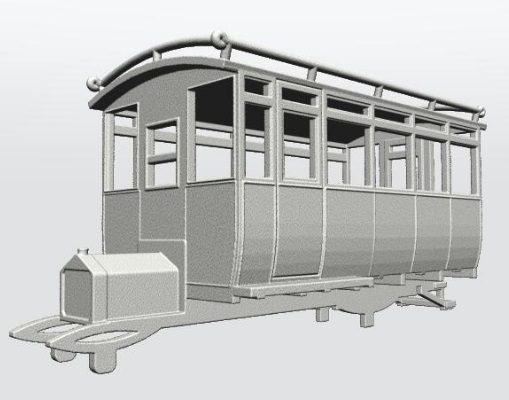
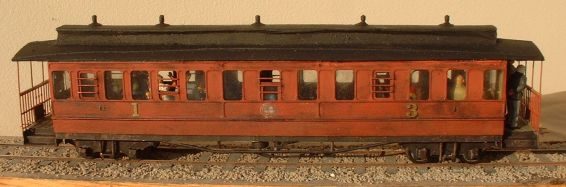
Gazelle’s first trailer was not that photogenic. it looked like a cut down tram body, rather than a purposely designed trailer for Gazelle. It was an excellent example of Colonel Stevens ability to extend life of time-served rolling stock. Then image below shows one of the horse trams that was used for the conversion. Horse-drawn London tram of the type converted by Colonel Stephens. [18]The first trailer car sits at the back of the siding at Kinnerley. [19]A Shapeways 3D print of the Gazelle’s first trailer on the S&MLR. [20]

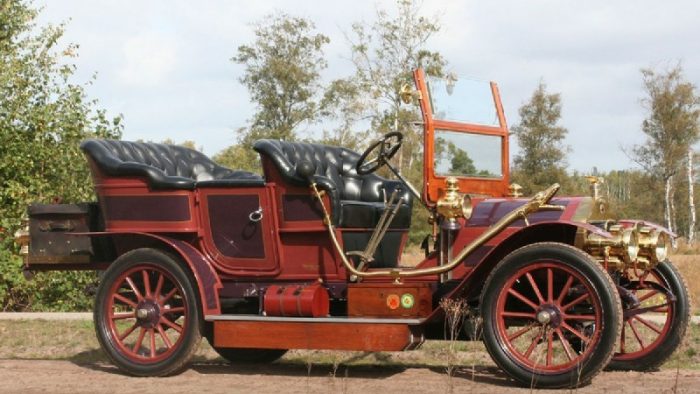
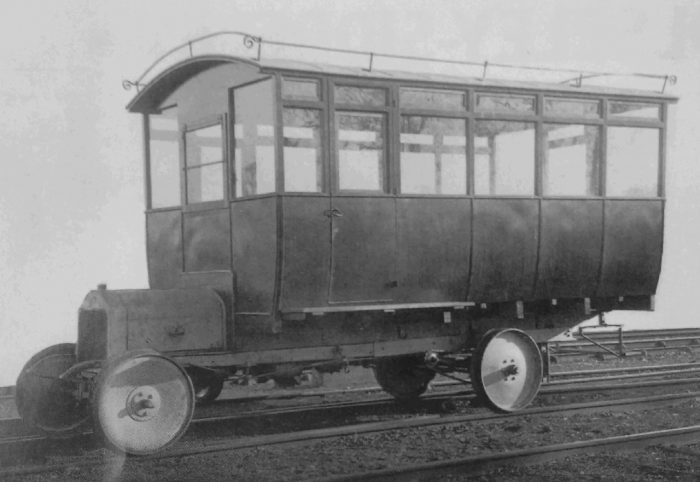
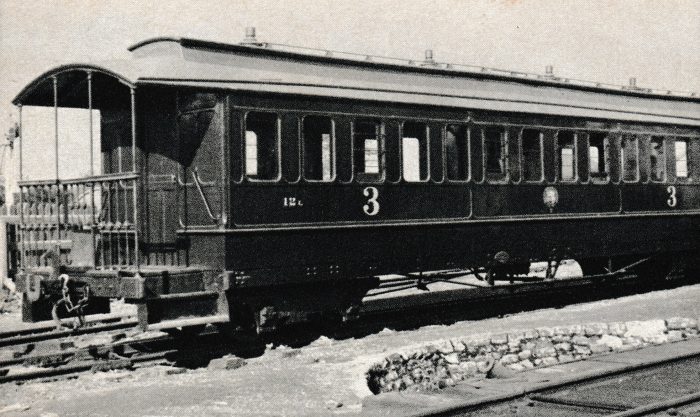
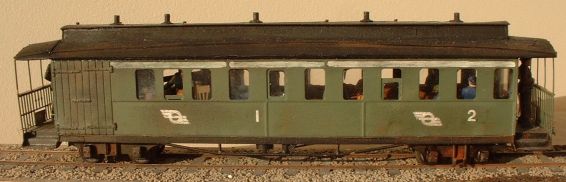
The Wolseley-Siddeley Railcar Body: the second [15] utilised the body of a Wolseley Siddeley railcar and reused the chassis of the older trailer. Wolseley and Siddeley worked together building motor cars from 1905 to 1910. Grace’s Guide [2] says that in 1905, the Wolseley Tool and Motor Car Co purchased the Siddeley Autocar Co, with founder John Davenport Siddeley in charge. Siddeley took control of the merged concern, renaming the marque Wolseley-Siddeley. The company made the stately Wolseley-Siddeley motorcars. They were used by Queen Alexandra and the Duke of York, the later King Edward VII.

In 1905, the company produced  6 h.p., 12 h.p., 15 h.p., 18 h.p., 25 h.p., 32 h.p. and 70 h.p. models of car. These were constructed by Wolseley. [3]A Wolseley-Siddeley Pheaton from 1908. [4]

Later in 1905, the company produced a 100-hp car using four-cylinders and of 15,685cc capacity. [2]

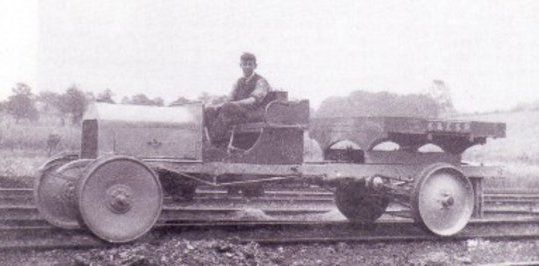
Garrett and Scott-Morgan say that the first evidence for the construction of the railcar was found ” on the premises of Drake & Fletcher, motor engineers of Maidstone. The photograph is unfortunately not dated and Drake & Fletcher has no other record or recollection of the vehicle. The photograph shows a Wolseley-Siddeley motor car chassis fitted with rail wheels and carrying what appears to be the body if a platelayer’s trolley, lettered K&ESR. The chassis seems to have been lengthened and a second radiator has been fitted at the back, presumably for cooling when running in reverse.” [1: p15]

The Museum of English Rural Life holds a number of records for Drake & Fletcher. The firm began business, c.1882, as Drake & Muirhead, concerned with the repair of light domestic appliances such as sewing machines, but in the 1890’s branched out into hop spraying machinery, and thereafter concentrated on spraying machinery as its principal item of manufacture. In 1890 the concern was re-christened the Kentish Engineering Works and became Drake & Fletcher in 1898. The limited company was formed in the mid 1920’s and from 1958 onwards the firm has held the royal warrant. The records at the museum are nearly all advertising publications, covering the range of Drake & Fletcher’s products from the 1930’s onwards. As well as spraying machinery, the firm also dealt in oast house equipment and fruit and vegetable grading and packing machinery. There is no reference in these records to an association with the railcar. [5]

Grace’s Guide [6] says that the Company was formed in 1898 as a small engineering shop. They built their first motor car in Maidstone but although used by the family, the car never went into production. They produced their first tractor in 1903. It had a three-cylinder petrol engine. 

There is an early picture of the chassis on the K&ESR seemingly acting as goods transport vehicle with a rear platform.The Wollesley and Siddeley chassis at work on the K&ESR. [7]

Later, the chassis was “fitted with a passenger body at Rolvenden. There is a tantalising glimpse, of what appears to be the body under construction, in the background of an undated photograph of 0-8-0T ‘Hecate’, but reliable reports testify to its construction ‘in a cowshed in Cake Road, Tonbridge, and the scene at Rolvenden was presumably it’s attachment to the chassis. Official photographs of the completed vehicle were then taken at Rolvenden,” [1: p15] and it must be presumed that the railcar at least ran trials on the K&ESR.The official photograph of the Wolseley-Siddeley Railcar (c) Colonel Stephens Railway Museum. [1: p16]

There is evidence that the railcar spent time on the Selsey Tramway at Chichester. There are photographs, and it was also clearly remembered by Herbert Warwick who drove on the Tramway from 1923 to 1926.  “He recollected that it was extremely difficult to start and that the rear radiator was smashed when the railmotor was being turned on the Southern turntable at Chichester.” [1: p17]

The film accessed via the link below was taken in 1928 and shows two very similar units to the Wolesley-Siddeley railcar in use on a train on the Selsey tramway. These units were built by the Shefflex Motor Co.

https://player.bfi.org.uk/free/film/watch-the-selsey-tramway-1928-online [8]

This unique film shows the 7¼ mile long West Sussex Railway (Tramway Section) as it was called at the time of filming, working in its declining years and using railcars made by the Shefflex Motor Company. We see an arriving service drop off its passengers at the line’s Chichester terminus, while waiting passengers, including schoolchildren, get on board. The driver starts the petrol-engined railbus by hand-cranking the engine and then it’s back down the line to Selsey. [8]A still from the above short film taken in 1928. This shows a different but very similar railcar to the Wolseley-Siddeley, but this one was made by the Shefflex Motor Company standing at the platform at the station in Chichester. [8]

Incidentally, originally intended as a standard gauge railway, the Hundred of Manhood & Selsey Tramway, as it was known on opening in 1897, was engineered by Colonel Stephens, as a tramway in order to bypass expensive legislation and regulations that applied to normal railway working. At first the line ran all the way to Selsey Beach, though this section closed around 1904 or 1908. The years prior to WW1 were the line’s most profitable but with increasing competition from road vehicles and bus services after the war, the number of passengers dropped dramatically. The introduction of petrol-engined railcars was an attempt to reduce operating costs but by January 1935 the line had ceased operating. [8]

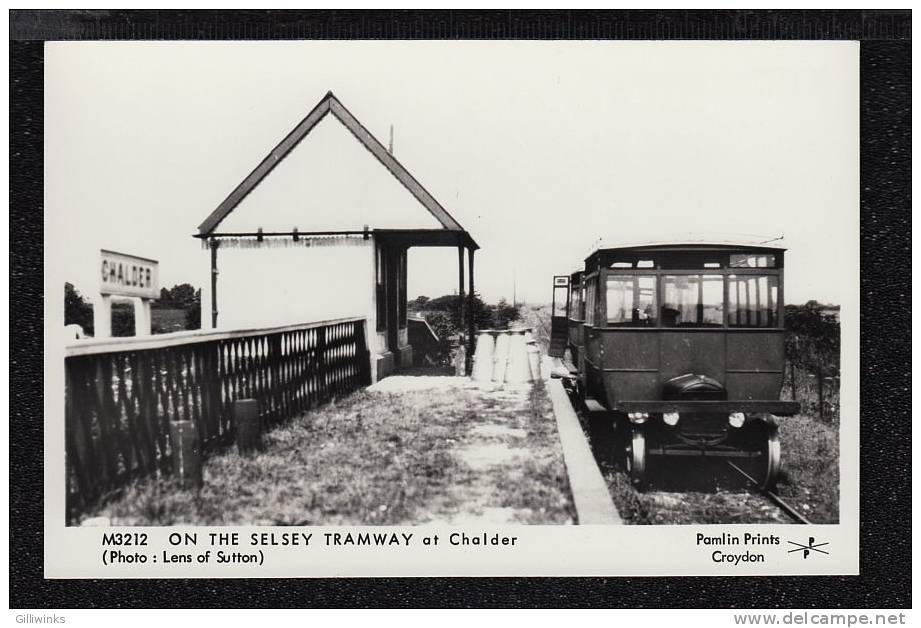
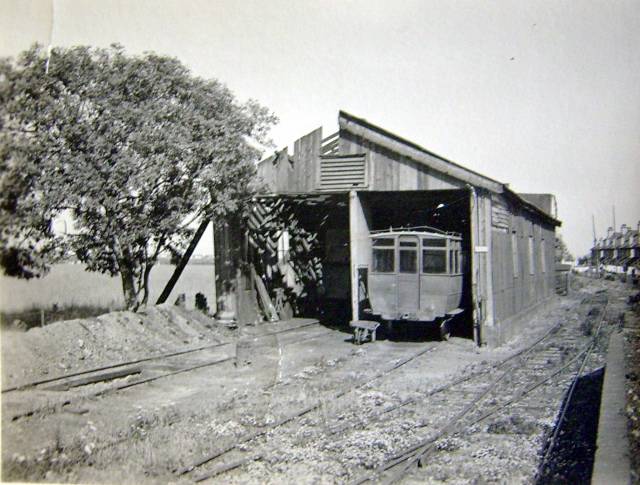
The Shefflex Railcars are shown in use in the images below.Shefflex Railcars in train at Selsey Bridge Station. [9] Shefflex Railcars in train at Chichester Station. [9]Shefflex Railcar in train at Hunston Station. [9]Shefflex Railcars in train at Chalder Station. [9]The above image purports to show Wolseley-Siddeley Railcar at Selsey Shed. [9]

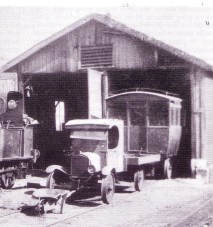
The adjacent image purports to show the Wolseley-Siddeley Railcar paired with the Rail Lorry at Selsey Shed. [11]

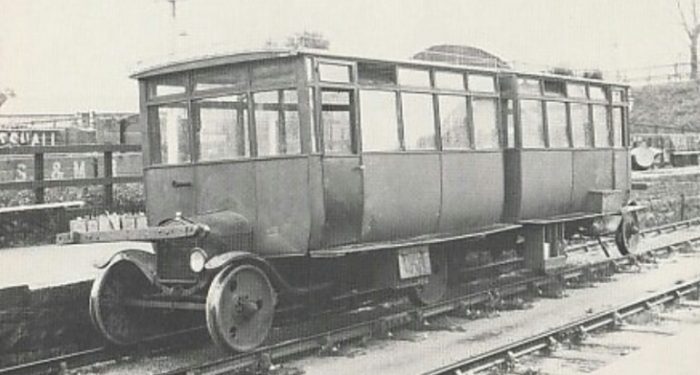
Below, ‘steamandthings’ say that the Wolseley-Siddeley Railcar is still paired with the Rail Lorry after being moved to the Shropshire and Montgomery Light Railway, although there seems to have been a change in the roof profile. [11]This change in roof profile in all three pictures and the arrangement of the top-lights and the end of each carriage may well be significant. The running board also runs the full length of the body in the bottom photograph which was not the case on the Wolseley-Siddley Railcar (see above). All of this suggests that Colonel Stevens might have rung the changes between the different railcars available to him on the Shropshire & Montgomery Light Railway in the period before removing one of the railcar bodies to create the second version of the tram paired with Gazelle. The rail lorry, it seems, was paired in a push-pull fashion with the railcars and so avoided the need for a turntable at the end of any chosen service. This Shapeways O-Gauge 3D print shows clearly the more curved profile of the Wolseley-Siddeley body compared to the picture above which probably shows on of the ‘Ford’ railcars. [13]

There is a helpful reflection on these matters, and the 1928 photograph above, from Jim Lake on the Disused Stations website: [12]

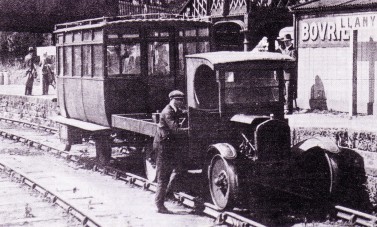
“Believed taken in 1928, [the] view shows a Shropshire & Montgomeryshire train at Llanymynech Junction. Lt. Colonel H.F.Stephens introduced a number of petrol railmotors to his light railway empire in an attempt to control operating costs. There was a single Wolseley-Siddeley railmotor, a number of Ford Railmotors and a number of Shefflex (Sheffield Simplex) sets. The Ford and Shefflex railmotors ran, usually, in pairs coupled back to back and with the leading vehicle towing the other. There was also a three-car Ford set; two powered cars with a matching intermediate trailer car. This intermediate trailer remains something of a mystery as, following a short period of use, it simply vanished. The three-car set is known to have been seriously underpowered and could not cope with the gradient out of Shrewsbury (Abbey). This exists a common misconception that the Ford passenger railmotors were converted road vehicles but they were not. They were actually built-up using Ford Model T components (possibly the 1 ton version), with bodywork by Messrs. Edmonds of Thetford, Norfolk. It is, however, unclear if Edmonds constructed the entire vehicles or if they merely supplied the bodies and the railmotors completed in Stephens own workshops. With the exception of no steering and a locking device to prevent passengers meddling with the controls of the trailing vehicle, the method of driving the Ford railmotors was the same as with the Model T road vehicles; hand operated throttle and ignition advance/retard with foot pedals for brake, reverse and top gear ratio plus a handbrake lever which also initially engaged the drive. Starting was by means of a cranking handle.

Two of the railmotors were converted road vehicles; the Wolseley-Siddeley car and the somewhat mysterious Ford lorry. The lorry is said to have been used by Stephens as his personal road transport and could, when required, be converted for rail use by changing the wheels and locking the steering. Indeed, close examination of the above photograph shows the steering wheel to be present. Whether or not the ‘convertible’ story is true has never been established but the lorry, believed to be a Model TT (the 1 ton lorry version of the Model T car), seems to have taken permanently to the rails as a partner for the one-off Wolseley-Siddeley railmotor which is itself something of a mystery as it is known to have had a second radiator at its rear end but is thought to have only been driveable from its leading end. This conjures up comical images of the railmotor rattling along, slowly, in reverse gear with the driver looking over his shoulder! Whatever the truth, paring the Ford lorry to the Wolseley-Siddeley overcame the reversing problem. The Wolseley-Siddeley, incidentally, also ran on the Selsey Tramway where it is known to have been turned on the Southern’s turntable at Chichester and this inconvenience plus, perhaps, some damage it received to its second radiator during one such move, could have been the reason for the introduction of the lorry.

Both vehicles spent a time on the S&M and the photograph shows the lorry coupled to one of the railmotors. Whilst this combination could be described as a ‘mixed’ train, it is more likely that on the day it was photographed the lorry was deputising for a failed railmotor. The (passenger) railmotor is one of the Ford vehicles. Just visible is the sliding door in its rear which allowed passage between two such vehicles when coupled together. Luggage was carried on the roof, hence the railings, but whether this actually occurred in practice is not known. Seating was wooden, in the Fords at least, and of the reversible type as used in tramcars. As if that wasn’t enough luxury, the railmotors are thought to have been heated by diverting engine exhaust through pipework within the saloon and then to atmosphere. Contemporary reports (and haters of the modern ‘Pacer’ DMUs take note) state the ride quality of the Colonel Stephens railmotors was atrocious. Nevertheless they did the job they were designed to do and provided a service where such would have been totally uneconomic with conventional rolling stock and steam locomotives.” [12]

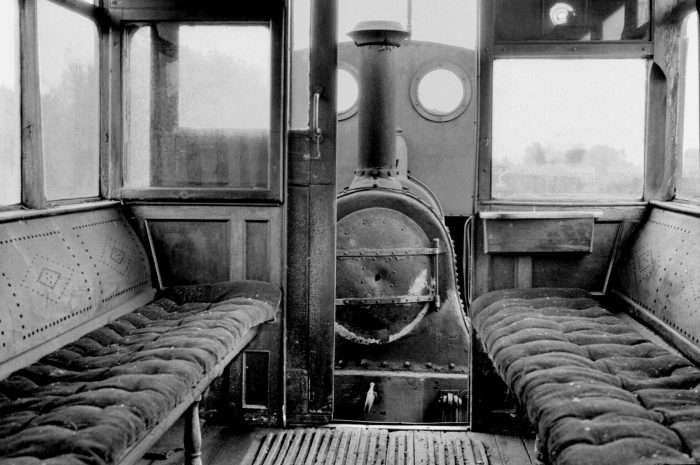
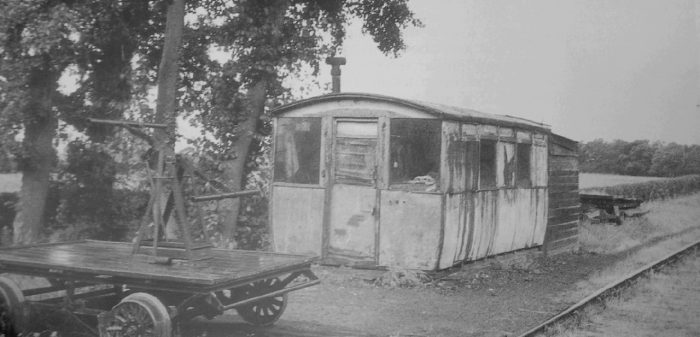
The Wolseley-Siddley Railcar and the original trailer built from the LCC tram sit alongside each other on the Shropshire and Montgomeryshire Light Railway at Kinnerley, (c) Lens of Sutton. [1: p16]The Shapeways O-gauge body kit for the Wolseley-Siddeley Railcar! [14]The Wolseley-Siddeley after its conversion to the second trailer car, seen at Kinnerley behind the diminutive Gazelle, (c) L.W. Perkins. [16]An excellent view of Gazelle from within its first trailer car! [17]The Wolseley-Siddeley trailer in its final guise as a permanent way hut on the Shropshire and Montgomeryshire Light Railway. [10]

References

  1. Stephen Garrett & John Scott-Morgan; Colonel Stephens Railmotors; Irwell Press,  Caernarfon, 1995.
  2. https://www.gracesguide.co.uk/Wolseley-Siddeley, accessed on 23rd July 2019.
  3. Ed. Paul  N. Hasluck; The Automobile Vol. III.; Cassell and Co., 1906.
  4. https://www.prewarcar.com/280153-1908-wolseley-siddeley-pheaton, accessed on 23rd July 2019.
  5. https://discovery.nationalarchives.gov.uk/details/r/3a4d359a-f193-48b1-af01-8846cd6e55d0, accessed on 23rd July 2019.
  6. https://www.gracesguide.co.uk/Drake_and_Fletcher, accessed on 23rd July 2019.
  7. http://colonelstephenssociety.co.uk/colonel%20stephens%2C%20kits%20and%20models/Wolseley-Siddeley%20railcar.html, accessed on 26th July 2019.
  8. https://player.bfi.org.uk/free/film/watch-the-selsey-tramway-1928-online, accessed on 26th July 2019.
  9. http://www.starzina.com/Starzina%20Z%20Railways%20West%20Sussex%20Tramway.htm, accessed on 26th July 2019.
  10. http://railthing.blogspot.com/2013/09/selsey-tramway.html, accessed on 26th July 2019.
  11. http://www.steamandthings.com/page56.htm, accessed on 26th July 2019.
  12. http://www.disused-stations.org.uk/l/llanymynech/index10.shtml, accessed on 27th July 2019.
  13. https://www.shapeways.com/product/UCB42JF2F/o-148fs-smr-second-gazelle-coach-1, accessed on 27th July 2019.
  14. https://www.shapeways.com/product/CFQGY45J9/0-76-wolseley-siddeley-railcar-1, accessed on 27th July 2019.
  15. http://www.steamandthings.com/page51.htm, accessed on 27th July 2019.
  16. Eric S. Tonks; http://www.irsociety.co.uk/Archives/24/Gazelle.htm, accessed on 20th July 2019.
  17. https://twitter.com/mrtimdunn/status/895694664799444992, accessed on 27th July 2019.
  18. https://www.ebay.co.uk/itm/London-LCC-Horse-Tram-RP-PPC-By-Pamlin-M575-Note-Oakeys-Knife-Polish-Advert-/202580508725, accessed on 27th July 2019.
  19. http://colonelstephenssociety.co.uk/onewebmedia/Colonel%2071.pdf, accessed on 27th July 2019.
  20. https://www.shapeways.com/product/SZE8G8VJZ/o-76-smr-first-gazelle-coach-1, accessed on 26th July 2019.


Gazelle!

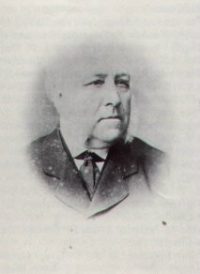
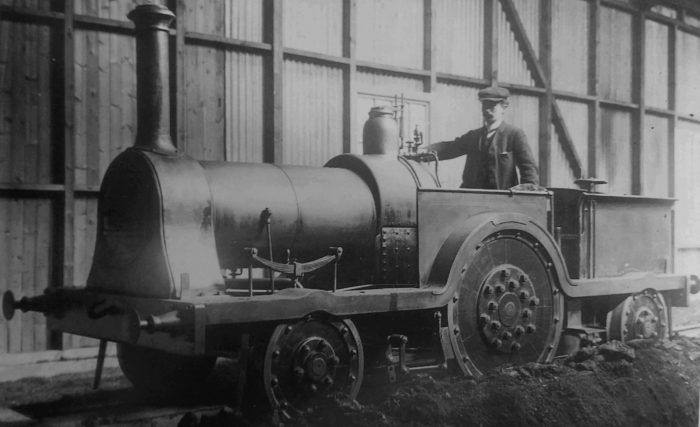
Possibly the strangest locomotive operated by Colonel Stephens was the tiny tank engine Gazelle. This had been built in 1893 by Alfred Dodman & Company of Kings Lynn [9] for the private use of Mr William Burkitt (shown in the adjacent photograph), [2][8] a prominent local businessman, who was able, at least on one occasion, to persuade the main-line railway companies to let him travel over their lines using it. It was a 2-2-2WT with seats for four passengers fitted where the coal bunker would normally he found. The footplate had no cab or weather-board and the passenger ‘compartment’ was also without any sort of roof. Its dimensions were: Driving wheels, 3ft. 9in. diameter; Leading and trailing wheels, 2ft. 3in. diameter; Wheelbase, 10ft. 6in.; Cylinders, 4ft. by 9in.; Height to top of chimney. 7ft. 9in.; Length over buffers, 17ft. 2in.; Weight, 5 tons 6 cwt. The only concession to comfort was that the wheels were of the Mansell type with wooden centres to reduce noise. [1]

Gazelle was very small but not the smallest standard gauge steam locomotive. If one is pedantic and includes the very early days, Ericsson’s NOVELTY and Burstall’s PERSEVERANCE were two and three tons lighter than GAZELLE respectively. All the original locomotives of the Liverpool & Manchester Railway were lighter, moreover.” [7]

There is no complete record of Gazelle’s travels in Mr Burkitt’s ownership, but it is known to have reached Chesterfield on one occasion. Burkitt grew up in Chesterfield and as a young man he boasted that one day he would travel from the East Coast to Chesterfield and back in a single day in his own railway engine. He grew up and prospered in his subsequent career and moved in due course to West Norfolk, retaining close connections with the family firm in Chesterfield. [2]

In 1892, William Burkitt remembered his youthful ambition to travel on his own engine, or perhaps was reminded of it by his friends, and as one of the wealthiest men in West Norfolk was well placed to fulfil it. It is not certain what prompted his action at this time, but it may be significant that it was in 1892 that work began on the central section of the Lancashire, Derbyshire & East Coast Railway. Planned as a route from Boston to Warrington, to link the coalfields of Nottinghamshire and Derbyshire to deepwater ports, only the central portion from Lincoln to Chesterfield, together with various branches, was ever built. Williams brother Samuel not only ran the Chesterfield business but also farmed 385 acres on the route of the new railway, and so William Burkitt would have taken a close interest in its progress, not only as an enthusiastic amateur but also as a prospective customer. [2]

In 1897 Gazelle ran a round trip from Kings Lynn to Chesterfield! Birkitt was able to use his engine on the railway network by virtue of being a director of a railway – the Kings Lynn Docks & Railways. It is possible that this was one of only two rips on the wider rail network. The first is referred to below  – a trial trip from Lynn to Downham Market and back. The Colonel Stephens Society is skeptical about the regular use of Burkitt’s engine on the main-line:

“Did William Burkitt decide to have an engine built for himself for any reason other than the whim of a wealthy man? Modern references to Gazelle have given the impression that she was intended for business travel around East Anglia – the nineteenth century equivalent of the company car or even the executive jet. There is some contemporary support for this view; the Lynn Advertiser refers to Gazelle as being “intended for the owner’s use between Langwith and Mansfield”, and the Derbyshire Times to her having “been specially designed by himself for use in his extensive works and docks on the Eastern coast”.

Nonetheless, it is doubted that Gazelle was seriously used in this way. While travel on the open footplate might have been exhilarating on the occasional pleasure trip but the novelty would have quickly palled for a man of nearly seventy, even if he were an enthusiast, in the vagaries of East Angolan weather. If Mr Burkitt had wanted a private train for travel on business, he would surely have ordered something more along the lines of the Duke of Sutherland’s Dunrobin and its carriage, or more practically a private saloon to be hauled by a GER engine.

Again, inspection of the board minutes of the GER and the M&GNJR for the period has failed to show any reference to an agreement with Mr Burkitt. While a private locomotive might be allowed to make occasional test runs under the personal supervision of a senior official of the company, as a special favour to a valued customer, its regular use would surely have called for official approval and an agreed scale of charges.” [2]

Perhaps the most clear indication that the engine was only used very sparingly comes from the papers provided when the locomotive was advertised for sale by T.W.Ward Ltd in 1910. Gazelle was described as having made “two trial trips”. In short, William Burkitt wanted an engine that was capable of occasional demonstration trips with a few passengers, but with no more refinements than were necessary, and that is what he got. [2]

Alfred Dodman (1832-1908) of King’s Lynn was a local engineer and ironfounder. He set up his business in King’s Lynn in 1854. [6]  “He built his first traction engine in 1872, and was also a manufacturer of engines for marine purposes. In 1875 he moved to the Highgate Works, adjacent to Highgate Bridge and with a siding connection to the dock railway. The firm was reorganised as a limited company in 1897, and in fact long survived its founder’s death, continuing to trade until 1975. Dodman seems to have been working on the designs for Gazelle, as the engine was called, as early as March 1892, and in August 1892 Mr Burkitt paid him £150 on account.” [2]

Dodman’s had considerable experience with road traction engines and occasionally repaired shunting engines for local companies such as the West Norfolk Farmers’ Manure & Chemical Co. Ltd. However, Mr Burkitt’s was the first, and probably the only, order they received for a new railway locomotive. For the general design and proportions, advice was sought from a Mr S. Stone of the GER’s Stratford locomotive works, while the details, apart from the wheels, were worked out by Mr Dodman himself, who made use of traction engine components wherever possible. [2] Rodney Weaver, writing in the Industrial Railway Record of December 1969, suggests that Dodman’s had experience in making small locomotives as they also supplied fairground equipment, and Frederick Savage, a neighbouring King’s Lynn engineer, was well known as a builder of the tiny asymmetrical steam locomotives that used to run on small circular tracks as fairground amusements in the late 19th century. [3]

As Dodman’s were suppliers of fairground equipment, Gazelle is just what one might expect if they received an order for a standard gauge engine and had in stock parts for a circular railway locomotive on 2ft 0in or 2ft 6in gauge. However, Dodman’s are not known to have supplied any of the genuine fairground asymmetrical locomotives, but their neighbours at King’s Lynn – Savage – were well-known in this field. [7]

R.H. Clark, in “A Short History of the M&GN Joint Railway,” states that Gazelle was the second of of two similar 2-2-2 well tank engines built by Alfred Dodman & Sons Engineers of Kings Lynn. The first was for the West Norfolk Farmers’ Chemical & Manure Works, and eventually found its way to Australia! [4] However, there is no evidence of this locomotive in the records of the Australian Railway Historical Society. [5] Clark repeats his assertion that Gazelle was one of two locomotives built by Dodman’s in “Steam Engine Builders of Norfolk.” [7][10] But the Colonel Stephens Society, as we have already discovered, believes that Gazelle was the only steam engine made by Dodman’s. [2]

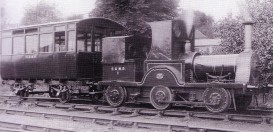
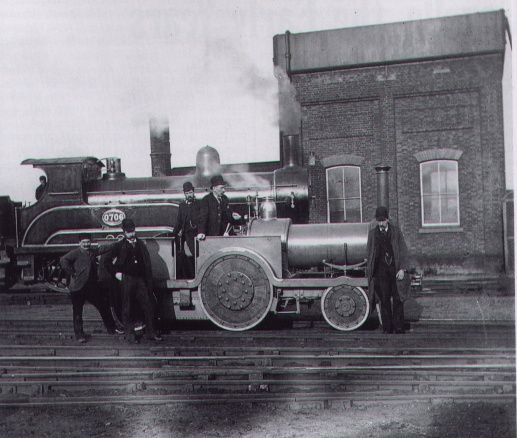
“By mid-January 1893, Gazelle was complete, and could be seen standing at King’s Lynn GER station, where it attracted much attention. A trial trip was run on Sunday 5 February 1893, from Lynn to Downham Market and back, with Mr John Wilson, the District Locomotive Superintendent of the GER at King’s Lynn, as driver. The eleven-mile trip was run in 30 minutes, including two stops to check the machinery. The return was non-stop. The average speed of 45 mph claimed for the return is likely to have been an exaggeration, although there is better evidence for a mile covered at an average speed of 43 mph, still very good going for an engine as diminutive as Gazelle.” [2]Gazelle, is seen at King’s Lynn as a 2-2-2WT. The picture was taken immediately after the trial referred to above. The cameraman was Dr Tice F. Budden, who had taken up railway photography as an undergraduate at Cambridge in 1889, and had evidently been tipped off that there would be a chance to record an unusual event. Gazelle is posed alongside No. 0706 of the Great Eastern, a rebuild of a Sinclair compound 4-4-0 and a regular performer on the Cambridge main line at that period.  [2]

“After the trial in 1893, Gazelle underwent some minor modifications but then seems to have been little used for the next four years. Mr R.H. Clark has suggested that she was used on the King’s Lynn to Hunstanton branch, and perhaps even as far afield as Cambridge, but no details of any such trips seem to have been recorded. Surprisingly, Gazelle ‘was offered for sale on account of death’ in The Engineer of 16 February 1894. There were evidently no takers, and the engine seems to have passed out of public attention.” [2] However the time had now come for William Burkitt to realise his boyhood dream. The first part of the Lancashire, Derbyshire & East Coast Railway (LD&ECR) opened for goods in December 1896, and with the official opening throughout to Chesterfield on 8 March 1897. William Burkitt was able to undertake the epic journey, which he promised some sixty years before. [2]

In 1900, two years after Birkitt’s death, Gazelle was advertised for sale once more in the Locomotive Magazine “to railway superintendents, inspectors, &c. A beautiful and highly-finished locomotive engine, 4-inch cylinders, with car to hold four persons, on six wheels…. Two trial trips of 80 miles, running perfectly smooth and remarkably steady. Highest speed 45 miles per hour. To be sold on account of a death.” [2]

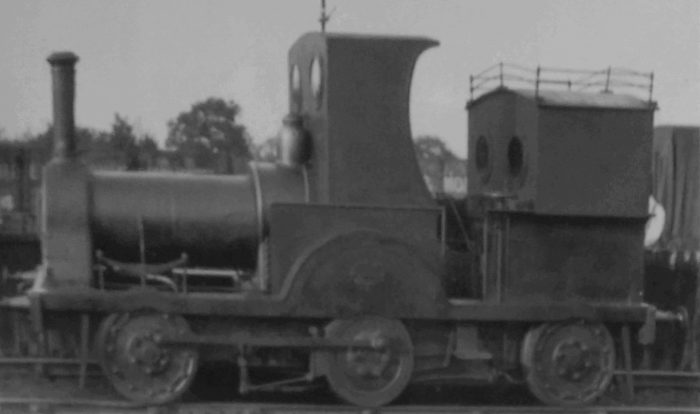
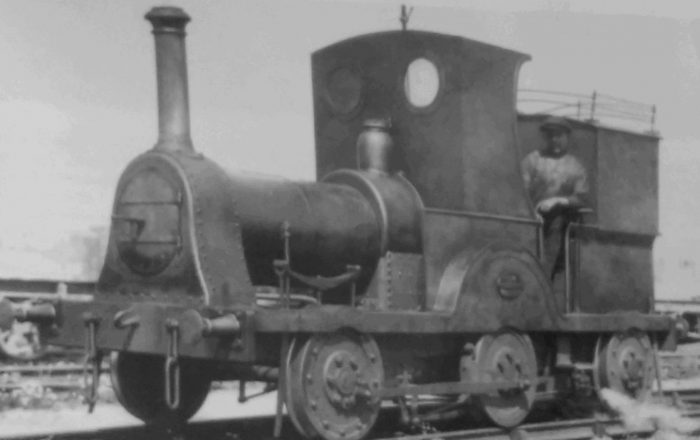
William Birkitt’s brother Samuel died in 1906 leaving an estate valued at £219,501. The business was taken over by his nephew, William Burkitt Jr, who was also the principal executor of the will. Gazelle was not his first concern and it was not until about 1909 that the locomotive that had been his uncle’s pride and joy was sold to the machinery and scrap dealer Thos. W. Ward & Co. of the Albion Works, Sheffield. They advertised Gazelle for sale in January 1910 and in February 1911. [2] The loco was purchased by Colonel Stephens in February 1911 for use as an inspection engine on the Shropshire & Montgomeryshire Railway (S. & M.R.), which he was reconstructing at the time. After a short period of inspection service Gazelle was sent away to W.G. Bagnall Ltd. at Stafford for conversion to an 0-4-2WT. [1]Gazelle immediately after purchase is seen standing at Kinnerley before being sent to Bagnall’s for its conversion. [1][2]

“Gazelle returned to the S. & M.R. in July 1911 and continued in use as an inspection engine. Although the S. & M.R. ‘main line’ had reopened from Shrewsbury to Llanymynech in April 1911 the branch line from Kinnerley to Criggion had remained closed while a new viaduct was built over the River Severn at Melverley. The branch line was reopened for goods traffic in February 1912 and for passengers in August 1912. Traffic on the branch was rarely substantial and Stephens felt that Gazelle could provide an adequate service when numbers were particularly light.” [1]

The vicar of Criggion, Reverend R Brock, thought otherwise, as his letter of complaint of 23rd November 1912 to the Board of Trade shows:

“Preceding to the branch to Criggion I was put with another man and two women into the back part of an engine with only a screen between us and the fire – no roof and the sparks and smuts falling over us – one spark nearly got in my eye – with danger of being blinded – my clothes too injured by the same.” [11] 

Reverend Brock continues…

“I have occasion to use the Railway for my wife and daughter and friends from London and of course I cannot subject them to such risk and barbarous treatment”. [11]

Colonel Stephens wrote to the Board of Trade in answer to the complaint to explain that with traffic levels on the branch being so low, Gazelle was ideally suited to the provision of a passenger service. W.F. Marwood, writing on behalf of the Board of Trade, did not agree. The Board of Trade insisted on the provision of a carriage. Stephens however came up with a different solution, Gazelle was returned to W.G. Bagnall to have a cab and passenger compartment fitted. The work did not produce a thing of beauty. “The cab was distinctly utilitarian with a shallow curved roof and bereft of all ornamentation apart from a pair of round spectacle glasses at the front and a spindly whistle protruding from the roof. The passenger cabin had all the welcome appearance of a portable prison cell. It was fitted with round spectacle glasses at the front and two small square windows at the rear. The original half height rear door was retained but the rest of the doorway remained open to the elements. Baggage could be carried on the roof which was surrounded by an incongruously ornamental pair of luggage rails. None of this did anything for Gazelle’s appearance since the passenger cabin was a foot or more shorter than the driver’s cab and its roof was curved at a much sharper radius.” [1]Two views of Gazelle after its alteration had been undertaken. [1]

It is not entirely clear how often Gazelle served as a miniature railmotor in this form. There appear to have been no more letters of complaint from the Criggion vicarage and it may well be that Gazelle was only pressed into passenger service when absolutely necessary.

In 1915 or 1916 a more acceptable solution to the problem of lightly loaded passenger services on the Criggion Branch was found in the purchase and adaptation of a horse tram. This is reputed to have come from London County Council. and was originally a double-deck vehicle. The top deck, stairs and end platforms were removed and the running gear made suitable for operation on railway track. In this form it made an ideal light trailer for Gazelle which is unlikely to have been capable of hauling a conventional carriage. [2]

“The tramcar became No.16 in the Shropshire & Montgomeryshire stocklist. The idea of using a tramcar in this way was almost certainly borrowed from the narrow gauge Torrington & Marland Railway which had adapted two such cars, also reputedly from London County Council, in 1909. Stephens travelled on this line in August 1909 in connection with his application for the North Devon & Cornwall Junction Light Railway Order in November that year. The Torrington & Marland cars were slightly smaller than No.16 and retained short end platforms so that they could be entered from the lineside.” [1]

Gazelle and the tramcar continued to operate the Criggion Branch passenger service until the late 1920s. By October 1928 a service was only operating on Saturdays and by October 1932 this was only running as far as Melverley because of subsidence to the piers of Melverley viaduct.

Garrett and Morgan say that “by this date Gazalle had been taken out of service and the tramcar relegated to a siding at Kinnerley. There does not appear to be any record of when Gazelle and the tramcar were taken out of service nor of the means by which the Criggion passenger service was provided in their absence, though it is possible that the S & M.R.’s Ford railmotor set was used between trips on the main line. By May 1932, Gazelle had been partially stripped down in Kinnerley.” [1]In 1915 or 1916 Gazelle finally got a carriage in the form of a modified horse tram. This picture purports to show that tramcar with Gazelle in 1937. [11]Also taken at Kinnerley, this time in 1939, (c) L.W. Perkins. [9]This and the next picture are of interest because the tramcar is clearly different from the first two images immediately above. Garrett and Morgan say that this was taken during the 1920s. Tonks offers an explanation below. [1]This image is dated August 1926. [12]

In 1936 W H Austen decided to reinstate it as an inspection engine and in June 1937 it emerged from Kinnerley repair shop in a smart green livery. To accompany it, the old Selsey Tramway Wolseley Siddeley railmotor body was fitted to the under frame previously used by the tramcar to form a new inspection saloon. [2]

Tonks comments: “The original tram body had rotted away beyond repair, but as the frames were all right the body off the Wolseley-Siddeley railcar set (or it may have been one from the West Sussex Railway) was fitted. The unit was then used for inspection trains and private parties. The latter was chartered locally at Bank Holidays mainly but on Sunday, 23rd April 1938, the Birmingham Locomotive Club ran what is believed to be the first-ever enthusiasts’ railtour over a minor railway in this country, using Gazelle and her coach. Attendance was limited to twenty-two and an overflow tour took place the following week. It is almost impossible to convey adequately the pleasure of this delightful trip, which was unique and quite unrepeatable; but the lucky participants will remember it to the end of their days.” [9]

Gazelle survived to serve the Armed Forces when they took over the railway in 1941. The War Department acquired the S & MR in 1941 for conversion into a military railway serving a series of ammunition storage sites, and introduced a large fleet of locos, mainly “Dean” 0−6−0’s at first. Gazelle was found a job – to run over the main line before the first train left Kinnerley, to ensure that all points were correctly set and to counteract the efforts of possible saboteurs. Teh loco was repainted light green with black frames and red motion, and in this form outlived all the other S & M stock. [9]  It was also used at times to move ammunition. [11]

Eventually Gazelle’s duty was allocated to a Wickham railcar and her last public showing was in 1945 in connection with a National Savings campaign. She was then stored at the end of a siding by the pond at Kinnerley, where she suffered some collision damage from a “Dean”; earlier she had lost the top of her chimney on a trip to Criggion and the remainder had been sawn off level and a crude lip riveted on. [9]

In 1947 a member of 161 Railway Construction Company was surprised to find Gazelle hidden under a pile of corrugated sheets. The soldier who found the locomotive later said.

“I just couldn’t believe it when I first saw her very dirty etc, more like a toy than a small engine”. [11]

During the army period, Gazelle seems to have become something of a mascot for them. In May 1950 the remaining Shropshire & Montgomeryshire rolling stock was transferred to British Railways. Nearly everything was immediately condemned but Gazelle was saved and placed on permanent loan to the War Department. It had previously been despatched to Bicester works for a repaint and then to the Longmoor Military Railway arriving for their open day in  September 1949. It was subsequently placed on display by the parade ground, where it was  painted in Longmoor blue. After the closure of that railway in 1970, Gazelle was reclaimed by its custodians, the Science Museum, and for the next twenty-five years was displayed at the National Railway Museum, York and the Museum of Army Transport at Beverley. [1]Gazelle on display in the Museum of Army Transport at Beverley in August 1995, (c) Ben Brooksbank. [13]

Gazelle’s remarkable travels were not at an end and speedy action by enthusiasts on the closure of the Beverley museum in 2003, brought Gazelle into the care of the Colonel Stephens Railway Museum – a most appropriate home. It is shown in the adjacent image just after its arrival at the Museum. [2] It has become a prized exhibit in the Museum, its longevity a tribute to its original builder. On display at Tenterden, it is a fitting memorial to those two “bustling individuals” of nineteenth century King’s Lynn, Alfred Dodman and William Burkitt, the opportunism and enthusiasm of Colonel Stephens and William Austin and the affection of the army and enthusiasts for such a wonderful English eccentricity. [2]

The loco is shown in the adjacent picture , once more in army livery at Tenterden in 2017, (c) David L Quayle. [14]


References

  1. Stephen Garrett & John Scott-Morgan; Colonel Stephens’ Railmotors;  Irwell Press, Clophill, Bedfordshire, 1995.
  2. http://colonelstephenssociety.co.uk/locomotive%20notes%20topics/gazelle.html, accessed on 20th July 2019.
  3. Rodney Weaver; Industrial Railway Record, December 1969.
  4. R.H. Clark; A Short History of the M. & G.N. Joint Railway; Goose & Son, 1967.
  5. http://www.westernthunder.co.uk/index.php?threads/gazelle.2588, accessed on 20th July 2019.
  6. https://www.gracesguide.co.uk/Alfred_Dodman_and_Co, accessed on 20th July 2019.
  7. https://www.irsociety.co.uk/Archives/28/Letters_28.htm, accessed on 20th July 2019.
  8. The Railway Engineer; August 1893; p257.
  9. Eric S. Tonks; http://www.irsociety.co.uk/Archives/24/Gazelle.htm, accessed on 20th July 2019.
  10. R.H. Clark;  Steam Engine Builders of Norfolk; G T Foulis & Co Ltd., 1988.
  11. https://blog.railwaymuseum.org.uk/railfest-2012-the-little-loco-that-gave-a-vicar-barbarous-treatment; February 2012, accessed on 20th July 2019.
  12. https://nationalrailwaymuseum.wordpress.com/2012/02/01/railfest-2012-the-little-loco-that-gave-a-vicar-barbarous-treatment/gazelle-and-horse-tram-on-criggion-branch-train-28-august-1926, accessed on 21st July 2019.
  13. https://en.wikipedia.org/wiki/Museum_of_Army_Transport#/media/File:Beverley_Museum_of_Army_Transport_Gazelle_geograph-3283289-by-Ben-Brooksbank.jpg, accessed on 21st July 2019.
  14. https://preservedbritishsteamlocomotives.com/1-0-4-2wt-shropshire-montgomery, accessed on 21st July 2019.

The West Clare Railway – Part 8 – A Miscellany

One Person’s Identification with Miltown Malbay

A friend has sent me a copy of an old book by Gabriel Vaughan entitled ‘My Affair with Malbay’. [10] It is an anecdotal history of the western part of Co. Clare centred on the life and times of a series of generations of The Vaughan family. It has one chapter devoted to the West Clare Railway. [10:p26-36]

Gabriel Vaughan’s father, Paddy Vaughan, worked on the railway. Family life revolved around the station at Miltown Malbay. Gabriel Vaughan says:

“It was almost impossible for me to miss the train at 8.56 a.m. when going to school in Ennistymon every morning. Dad knew the benefit of the proverbial saying “Go to work or school on an egg.” A good breakfast was sacrosanct and I also had to be in time for the train. So often the refrain would go like this: “hurry up, take your time, and eat enough”. Sometimes the train would be held for me for a minute or two until I had safely boarded the train. Other times, I was put into the guard’s van with a mug of tea and a few slices of bread. No way was I going to miss school. Thanks Dad!

On one or two occasions when the porter Tommy Honan was absent and my Dad had slept it out, the train, after passing the Flag Road gates, could be heard from a distance, whistle blowing urgently, alerting the station master to have the gates across the line opened.

The train approaching Miltown in the morning carried a lot of girls from Doonbeg and Quilty going to work in The Malbay Knitwear Factory and was called “The Glamour Express”.

I had a privileged ticket because my father worked for the West Clare Railway Company and I travelled first class to school. Often the only other passenger with me was the local Protestant Minister, Rev. Cannon Elliot travelling up to Ennistymon to greet his flock there. Although he was a kind gentleman, I did not find it easy to converse with him.

Jackie Fox together with his horse called Friday, was the local carrier of goods from the railway station to the town. Every young boy in the town rode on his cart from time to time. A low sized good-humoured fellow was he and strong as an ox. Flour was then delivered in sacks weighing 280 lbs but this enormous weight proved no obstacle to Jackie as each sack was deftly swung onto his cart. I remember walking with Dad down Cloonboney way, when for the first time I heard peals of thunder. This noise, strange to my ears, was explained to me by my father, as Jackie unloading firkins of Guinness for subsequent delivery. Guinness was then delivered in wooden casks, the iron or aluminium lung had not yet arrived on the scene.” [10:p26]

“The railway station was a centre where the youth of the town gathered to play. The boys playing cops and robbers would split into two groups. One group had to seek the other in different hiding places throughout the station and lock them up in prison, cattle wagons being our “Mountjoy”. The hero was the lad who surprised the prison guards and released the prisoners, thus the game lasted longer. In the station yard we had a large flat concrete area, a disused cattle pen and we erected a tennis net made up of two poles and a rope. Mo Connolly, the American tennis star was our idol of the time.

When my father went fishing in the evening, we had a “swimming gala” in the water tank perched 20 feet on top of the engine shed. The tank was about 30 feet long by 12 feet wide and held about 10,000 gallons of water which was pumped up from Cloonboney river just 500 yards beyond the distant signal on the line to Lahinch. Needless to say there were wigs on the green when my father found out what was happening in his absence.

As well as tennis and swimming, other sports such as, running, jumping, golf and baseball were organised in the environs during the summer holidays. A novelty for us was playing baseball and this was made possible by Richard McMahon’s ball and bat sent to him by relatives in America. Paddy Griffin who lived on the Lahinch road near the White Strand, fell down between two wagons and managed to rip a bad gash in his thigh.

One day my brother Michael was heard screaming way down town by the local Garda Sergeant who post haste got on his bicycle and went to the station to investigate. Michael had been sitting on the track when Tommy Honan changed the points to be ready for the evening train. Luckily for Michael his position was about 2 yards from the tip of the points so no damage was done. It could have been very serious, as it was, he escaped with only a bruised backside.

I can remember one fatal accident that occurred on Sunday the 25th August 1946. The unfortunate train driver Patrick O’Neill was killed. Early that day he was the driver on a “Special” to Lahinch, probably for Garland Sunday, a locally observed former pagan festival, now extinct. The light engine … was driven on its own to Miltown to be turned on the turntable for the return journey to Ennis later that evening from Lahinch. Patrick O’Neill who came from Limerick may not have been familiar with the layout of Miltown railway yard. When reversing past the points to drive off to the turntable, he had his head out the right hand cab window, not realising there was only 8 inches clearance between the engine cab and the goods store wall. He was squashed between the engine and the goods store gable wall. It was a horrific accident. Dad had gone to Ennistymon for the day not being on duty, and was immediately summoned by the Gardai to deal with the horrible stiuation.” [10:p27]

“As it happened, Tom Reidy, another driver was a passenger to Lachich that day and he was contacted and brought by road to Miltown to act as relief driver.” [10:p28]

Vaughan goes on to discuss some of the history of the line which we have dealt with elsewhere. He makes reference too to the Percy French song ‘Are Ye Right There, Michael?’ and then goes on to say:

“Why the line, one of the best loved of all the distinctive Irish narrow gauge railways, should have closed is a mystery. It’s chronic unreliability, perpetuated by Percy French’s song was a myth. In fact the line by today’s standard, was as well engineered as any in Ireland. It was well maintained by the staff, with no rubbish strewn about the line. Unfortunately, it lost money and in 1960 losses amounted to £23,000. In all my years travelling on The West Clare Railway, I have to say, it may have been colourful for all the wrong reasons, but it mostly ran on time.

In the summertime they put tourist or saloon coaches on the line, these were panoramic coaches with large glass windows to allow for maximum viewing of the scenery. They are now all the rage with European railways … The West Clare tourist coaches, of which were four, were all constructed on six wheel bogies, in Ennis between the years 1905 and 1906. Each coach had seating for 32 passengers.

I remember early morning “specials” leaving Miltown at about 7.30am. These “specials” transported hundreds of matchgoers to Ennis, and pilgrims to Knock and to Croagh Patrick, who of course transferred at Ennis to the Great Southern Railway Company to finish out their journey.

Some say it’s a pity that the line wasn’t constructed in standard gauge instead of narrow gauge. This would have done away with the necessity of trans-shipment of goods at Ennis. The Swiss who are acknowledged expert rail builders have no problem conforming with both gauges. Their solution is to transfer the narrow gauge wagons, intact onto broad gauge bogies. Imagine all the work involved in transferring beet from one wagon to another at Ennis, for trans-shipment to the Tuam or Carlow sugar factories. A proposal was made in 1936 to widen the gauge from 3 feet to the standard 5 feet 3 inches, but this came to nothing despite much debate which carried on until the 1940’s. I think £23,000 of a loss in the 60’s was not an enormous loss to bear.

The fact that C.I.E. scheduled buses to leave Kilrush and Ennis at the same time as the train, did not help either. The door to door deliveries by ever increasing numbers of lorries, owned by the manufacturers of goods and providers of services, seemed more efficient than deliveries by train and horse cart by the local carrier. The outcome of all these changing trends, was that the business community did not give enough support to their railway.” [10: p31]

“At this time it was normal practice for maintenance at the stations to be carried our by a pool of C.I.E. tradesmen based in Limerick or Ennis. Picture the scenario, a burst pipe in Miltown has to be repaired. A plumber would leave Limerick at 9 a.m. and connect with the 11 a.m. West Clare at Ennis, arriving at Miltown at noon. After a long and slow trip from Limerick, tea is first the order of the day naturally. Work would begin at 1.30pm and cease at 3.30pm in order to wash and shave for the trip home on the 4 o’clock train. Of course if it were a big job the trades men stayed over- night in the town. Economy how are you? I could not understand the logic of it. For years my Dad tried to rectify this wastage of time and money by C.I.E., by getting this maintenance done by local tradesmen. It worked eventually when they saw light at the end of the “tunnel.” Actually we had no “tunnels” on the West Clare line! There is no use in crying over spilt milk!

Because Miltown was once a terminal station on the West Clare Railway, provision was made for engine drivers to sleep over- night at the station and so a bedroom and kitchen was provided for them. During my Dad’s term at Miltown there was no need for this facility, the line having been extended as far as Kilkee and Kilrush. The kitchen continued to be used to make that extraordinary, wonderful sweet tea in a billy-can by various tradesmen. A small double-sided tin containing on the one side tea and on the other side sugar was emptied into the boiling water in the billy-can together with milk. The ensuing beverage was out of this world to us as youngsters. Potatoes were often half boiled by us also in the billy-can and with a pinch of salt and lump of butter, those potatoes tasted far superior to anything cooked at home.

The bedroom, which at this stage was rough and ready was used to store the turf which came from Shragh bog. The wagon of turf arrived at Miltown station on the up-line on the 3.35 p.m. goods train. All hands were on the platform in a mad scramble to get the wagon emptied of it’s fuel before the passenger train’s arrival at 5.30pm.

The Shragh bog yielded sods of turf that were really massive, some were 4 inches square by 14 inches long and had to be broken with a hatchet in order to fit into the grate of the stanley range. In a way it was like the steam engine, as one had to have a really hot fire going, to get enough heat in the oven for baking, so you had to be a good stoker as well as a good cook. This breaking of the turf was one of the Saturday morning chores to be done by either my brother Michael or myself.

During and immediately after the 2nd World War, spare parts for the engines as well as fuel were in short supply. The steam locomotives were “rag order” for want of spending a bit of money on them. About this time saw anthracite for the first time being used on the locomotives. We called them “duck eggs” because of their shape.” [10:p32]

“In 1945, C.I.E. had taken over responsibility for The West Clare Line from The Great Southern Railway Company. A report first published in 1948 (Milne Report)  gave the hint of possible closure of the West Clare branch of C.I.E. The closure was postponed and it was decided to modernise the roIling stock by dieselisation. This took place between the years 1952-1955. First to appear were 4 diesel rail-cars which resembled buses on railway wheels, and these were augmented by 3 diesel locomotive for goods haul. Thus, the West Clare was the only narrow-gauge railway in Britain or Ireland to be fully under diesel power.” [10:p32-33]

“I remember going for a trial run on the first railcar that was delivered. The railcar was driven by an engineer from Dublin, a Mr Curran whom Dad thought was going to derail the “blasted” thing it was going so fast. It handled very well and did not derail. About the age of ten or twelve, I often  stood in the cab of the goods engine when the fireman, Joe Carmody was shunting and I remember the driver, John Hartney taking a break for his cup of tea. On the railway line down to Clonbony river having passed the distant signal, I would turn the wheel for reverse, ease the regulator gently forward to open and so begin shunting. Of course I threw the few shovels of coal into the firebox as well as helping to take on water, for they were all thirsty “old ladies” as locomotives were called.

I “worked” with Micko Conway and his gang of permanent way men, picking weeds and general cleaning up for a period of a few months after school in the evenings. Every Friday, I queued with the men for my wages. Dad had my name pencilled into the wages book, and paid me the wage of 6d a week, for which I was very grateful. I honestly believed I would not get any “wages” if I did not put in my stint with the men.

Generally the trains ran on time but from time to time the odd cow straying onto the line delayed us. It was deemed necessary to monitor wind speed in areas exposed to Atlantic gales. An anemometer was erected at Quilty for the purpose of measuring the wind velocity. If it exceeded 60 miles an hour, only stock that was ballasted could run. If winds were over 80 miles per hour, the trains were stopped. Ballasting took the form of large concrete slabs placed under the seats to weigh down the carriages. A gale of 112 mph was reportedly recorded here in January 1927.” [10:p33]

One evening, the 5.30 p.m. train approached the spot now occupied by the Rinseen Ambush Monument, a carriage door opened and a baby left on the floor near the door tumbled out. The distraught mother had to endure the next five minutes until the halt of the train on its arrival at Miltown station, where she reported the accident, was comforted by fellow passengers as she waited in agony for Dad and his search party to return. An hour elapsed and the party returned with the baby. As luck would have it, the baby, having fallen into a clump of bushes, luckily escaped with only minor superficial scratches and was re-united to the loving arms of its mother, no doubt to be minded and cosseted for the rest of its life after such a scare.” [10:p33-34]

“Amongst the droves of boys who went to “The Brothers” by train in Ennistymon for their daily dose of education, admittedly there were some adventurers in the bunch. I recall Eugene who could change carriages by walking on the running board outside the carriage while the train was in motion. Invariably this would happen on leaving the station at Ennistymon before the train had time to pick up speed. To the best of my memory none of the school-going boys had an accident except Paddy Griffin whom I previously mentioned.

One day I had the desire to be as good as the big boys and try my hand at smoking. I bought ten Woodbines to smoke on the way home on the train. Knowing I had about half an hour to experience the joy of being grown up, like the big boys, but there was one snag, I had to have them all smoked before I got home. In the process I got violently sick having almost “eaten the packet.” That experience cured me of the desire to smoke and thankfully I have never smoked since.

Dad was well liked by the travelling public and went out of his way to accommodate everybody especially those with sparse means. One old lady who travelled to Ennistymon to visit the dispensary and collect her pension used to sleep in one of the waiting rooms overnight because she was afraid of missing the train. A breakfast of tea and bread was often provided for her by Dad.

The senior schoolboys when they got good jobs on leaving school, were often canvassed later by Dad for private insurance. I remember being told after landing my first job to take out life cover but not to stretch myself. That I did, taking out a policy for £300 over a period of 30 years, a princely sum no doubt. The insurance inspectors who came from the Norwich Union Head Office in Galway were always remarking on Dad’s knowledge of the whereabouts of every man, woman and child and even the animals. They would jokingly say, that if he did not know where two bonhams (baby pigs) came from, he knew what creel they came from.” [10: p34]

“Michael Tynan, father of Maureen Ryan (nee Tynan), Ennis, and my father both worked in the Limerick Goods Department of G.S.R. and both applied for the position of Station Master in Miltown. My father got the position, but shortly after Michael Tynan was appointed to Kilkee.” [10: p34-35]

“Miltown Station, in common with all other stations on the West Flare did not have a telephone line to the outside world. Telephone communication only existed between stations, and only very important calls were made to Kingsbridge as this entailed making a trip to the local post office, which was run by Mrs Hynes.” [10: p35]

Gabriel Vaughan concludes:

“On January 31st 1961 the last train returned to Ennis, driven by Paddy Hanrahan whom at the time was I think one of the younger drivers on the line and so ended a history of 76 years. It was a very sad day for all Clare people and is looked back on with great regret. The much loved West Clare had a very short life and was mourned by many. It served its people well and I, like many others, retain many happy and much cherished memories of the West Clare. What a tourist attraction even a section of the restored line would be today!. Full marks to the Moyasta group headed up by Joe Taylor who intends restoring a section of the line.

It was sad indeed to come back from Switzerland in January 1961 to witness the end of an era – the closure of The West Clare Railway after 76 years.” [10: p35]

In reality, all of these rural lines had no long-term future once the motor-car and larger road-going vehicles began to hold sway. Co. Clare was still losing population and emigration was increasing. There was just not enough traffic and the line was eventually and inevitably closed on January 31st, 1961. [18]

Locomotives and Rolling Stock

The original estimated cost of the West Clare Railway was £176,000 which included £23,000 for rolling stock and repair shops. The Grand Jury allocated £170,000 and the Board of Works reduced the element for rolling stock and repair shops to £21,000. At ratepayers insistence the Privy Council then reduced the overall budget to £163,500.

The original estimate for the South Clare Railway was £127,300 which included £10,000 for rolling stock and repair shops. The Grand Jury and then the Privy Council whittled the principal sum down to £120,000. [1]

The net effect of this pairing back of the budget was the need for the board of the company to cut back investment on the infrastructure and rolling stock.

The issue was further exacerbated by some of the financial constraints placed on the operating company by the legislation under which the lines were built. The two companies ” were not allowed to issue fresh capital or to borrow money not form a reserve fund and carry forward from one half year to another. If a profit was made in one half year and a loss in the second half of the year they were not allowed to put profit of one against loss on the other. Expenditure incurred in increase to rolling stock, renewals or improved facilities at stations had to be charged to working expenses of the half year in which they were effected. This finally led to such an absurd position that the Treasury saw the force of objections to it and they agreed to a certain sum being put aside each year towards renewals. A further provision and the one that caused the most controversy was that each year was divided into two portions and returns had to be made for the half years ending on 30th April and 31st October and the profits, if any, divided equally between the Treasury and the Company. If, however, there was a loss in any half year’s working although there may have been a profit in the other half year, the Treasury was not liable for their share of the loss and unfortunately for both railways there was what was termed a fat half year and a lean half year.” [1]

When assessed by the Railway Commission (1906-10), net receipts since the opening of the line were about £24,200, net expenses were about £20,300. A balance of around £3,900 should have gone to the relief of the guarantee, but owing to the provisions above, the Treasury receive a figure of £12,000 and the County Council carried a debt of £8,000. [1]

These factors meant that the amount of rolling stock needed for the effective operation of the line had to be significantly reduced. The planned repair depot had to be abandoned and repairs had to be undertaken elsewhere. The result was a 25% increase in repair costs and a much longer period of downtime associated with each repair. The effect of all this was an over use of stock and reduced life-spans for locos and rolling stock. [4]

It was originally intended to purchase totals of rolling stock across the two companies of:

18 third class coaches
8 composite coaches
3 first class coaches
6 brake vans
2 horse boxes
28 open wagons
43 covered goods
40 cattle wagons
17 ballast wagons
3 timber wagons

This level of provision was not actually reached until 1913. [5]

Until then, wagons were in short supply which led to a loss of revenue in the conveyance of turf, slates, kelp and livestock. There were also disputes with various individuals over the deterioration of goods left too long awaiting transport. [5]

Carriages were also in short supply particularly for excursion traffic in the summer months.

Passenger traffic in the first year of operation of the South Clare Railway, across the two companies was about 177,800. Five years later it was 201,000 and by the turn of the century it was around 211,000. The gradual increase in traffic volumes continued to a peak in 1908 of close to 236,300. After the war traffic levels were much lower averaging around 100,000. Numbers declined significantly in the GSR era and only saw an increase when the CIE adopted diesel working in 1952. [5]

In the year immediately prior to the introduction of diesel traction only 41,000 people were carried. By 1960, this has risen to around 120,000. [6]

Goods and minerals traffic reached its peak in the 5 years before the Great War, averaging, in those years, around 45,000 tons. Livestock carried peaked in the first 10 years of the 20th century at an average of over 40,000 tons. [7]

Steam Locomotives: There were a total of nineteen steam locomotives which worked on the West and South Flare Railways between 1886 and 1956. “Twelve were purchased by the West Clare Railway, four by the South Clare Railway, two came under CIE auspices from the Tralee & Dingle section, and one was a contractor’s engine.” [12] Loco 3C, Ennistymon, ex-Works. [19]
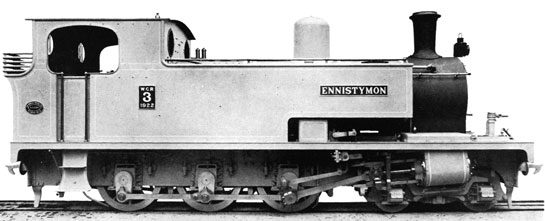
When writing in 1994, Patrick Taylor continued: “The average age of the steam locomotives when withdrawn was 40 years, but one had a very short life of only 13 years, and another lasted only one year longer. Two were still working after 64 years, when the system changed over to diesel. All were six-coupled tank engines, and with but two exceptions, originally carried both number and name. One has been preserved at Ennis.” [12] It remained at Ennis until 1996.Above, locomotive Slieve Callan on a plinth at Ennis Station. In 1996, in dramatic circumstances, the 40-tonne Slieve Callan was lifted off this plinth at Ennis railway station despite the efforts of protesters and taken to Moyasta in West Clare. [16][17]
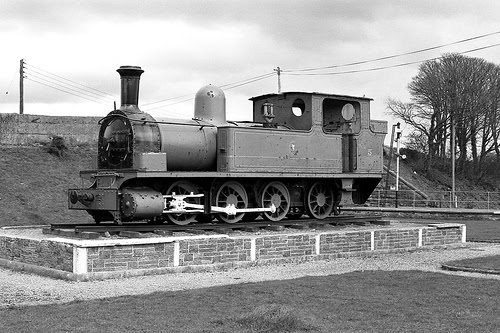
Adjacent, locomotive No. 2C at Ennistymon in 1940. [20]

It appears that a contractor’s engine was not a six-coupled but a four-coupled engine. ‘Sponden’ was owned by Murphy’s contractors. It was built in 1878 at the Hunslet works in Leeds. Its original owners were Benton & Woodrow Contractors of Audenshaw, Manchester. This is a local connection for me, writing as I am at the moment in Ashton-under-Lyne. This loco arrived as deck cargo at Kilrush on 26 the April 1891, to assist on the construction of the South Clare line. previously, Murphy had been using one of the West Clare Bagnalls and continued to do so occasionally throughout the construction of the South Clare. [14]

Chapter 7 of Taylor’s book on the West Clare Railway [13] describes the locomotives on the West Clare in great detail. It would not be appropriate to reproduce that detailed work here, the book is easily purchased secondhand via a variety of sources.

Diesel and Other Traction: It has been suggested that the “West Clare had a self-propelled inspection car. However, the Great Southern Railway introduced one in 1925, and followed this with two passenger carrying railcars in 1927.” [12] It was the early 1950s which saw a major change in traction on the West Clare – three diesel locomotives and four diesel railcars were purchased by the CIE. These were:

3386 diesel railcar by Walkers of Wigan 1952.

3387 diesel railcar by Walkers of Wigan 1952.

3388 diesel railcar by Walkers of Wigan 1952.

3389 diesel railcar by Walkers of Wigan 1952.

F501 Bo-Bo diesel locomotive by Walkers of Wigan 1955.

F502 Bo-Bo diesel locomotive by Walkers of Wigan 1955.

F503 Bo-Bo diesel locomotive by Walkers of Wigan 1955. [3]

Before focussing on diesel traction it is worth giving some thought to petrol! Proposals were considered in West Clare days to make use of ‘motors’. These came to nothing, although late in January 1907 estimates were obtained for a motor and parcels van. In 1927 the GSR authorised the purchaseof two petrol cars for the West Clare section. They initially intended these to be 25-30hp but this was increased after advice from their builder to 40-45hp because of the gradients on the line. The cars were ordered from the Drewery Car Company Limited (Order No. 2800 of 20th April 1927), but were made by Baguley Engineers Limited of Burton-on-Trent, through a working agreement between the two Companies. These four-wheel cars were numbered 395 and 396. [15]The Drury Petrol Railcars (above) entered service for the GSR in October 1927 and ran the Kilkee branch services on the West Clare section until they were both withdrawn in 1936. They were transferred to the GSR works at Inchicore in 1939 and scrapped in 1943. [21] No. 396 is shown above at Kilkee in around 1930. The crew are Frank O’Brien and M. Jinan © A.W. Croughton, Real Photographs. [28]  The adjacent image shows the excellent model made by Dirk Shrapnel for the Trawbreaga Bay Light Railway. [21]
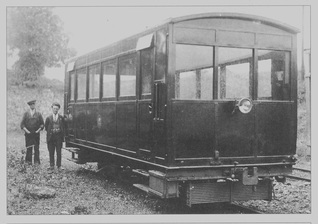
The Walker Bo-Bo Diesel locos: These locos became the standard motive power for goods trains in the last years of the West Clare Railway and could also be seen at the head of mixed/passenger services. “These Córas Iompair Éireann (CIE) 501 Class locomotives were built in 1955 by Walker Brothers Limited of Wigan, Lancashire for use on the narrow gauge (3 ft or 914 mm) lines on the West Clare section of CIÉ. They were small diesel mechanical locomotives, of 0-4-0+0-4-0 wheel arrangement. Controlled from a central cab the locomotives had two Gardner engines of 224 hp (167 kW), one under each end casing, driving through a fluid coupling and Wilson gear box the inner axle of the opposite bogie, through a spiral-bevel-reverse and reduction gear box. Unusually the locomotives were driven from a seat mounted sideways to the direction of travel giving a clear field of vision both ways by a mere turn of the head. The locomotives were fitted with vacuum brakes, emergency braking coming from a “deadman’s” pedal, one at the driving position and two others, one mounted on each side of the cab. When used on freight services their maximum speed was 40 kilometres per hour (25 mph), but with an overdrive fitted, released by a key, this was raised to 51 kilometres per hour (32 mph) for passenger trains.” [22]The F501-503 Bo-Bo series built by Walker Bros of Wigan. The drawing was undertaken by Ian Beattie and first produced in the Railway Modeller Magazine, (c) Peco Publications Ltd. [30]
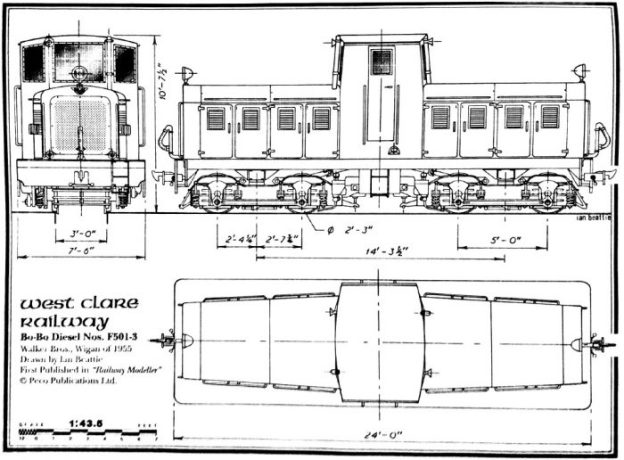
“They were originally numbered C31-C33 in the West Clare steam locomotive series, but were subsequently renumbered into the diesel locomotive series as F501-F503. They were withdrawn in 1961 when the West Clare lines were closed and stored at Inchicore Works for seven years. The Isle of Man Railway made an offer for the locomotives which was rejected by CIÉ who subsequently made less money by selling them for scrap in 1968.” [22]Above, F502 at Ennis in 1962. [22]
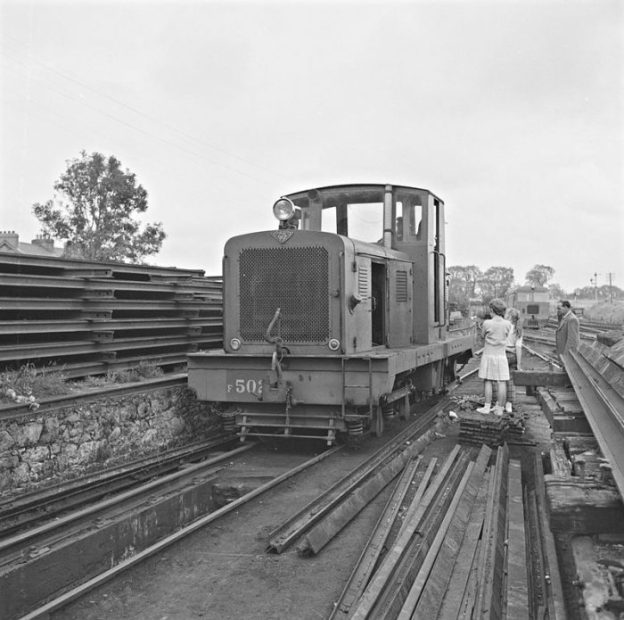
Adjacent, F503 (c) Colour-Rail. [23]

Below right, all three locos F501 to F503 at Inchicore in 1966. They were broken up in 1968. (c )Peter Excell.[24]

J. Scarisbrick Walker and Brothers of Pagefield Ironworks, Wigan were iron-founders and general engineers. The company was founded by J.S. Walker in the 1870s and later joined with his two brothers, T.A. & E.R. Walker to form Walker Bros. (Wigan) Ltd in 1880.

About twenty steam locomotives were built. The company subsequently manufactured diesel railcars. [26]4mm model of Walker Diesel as used on the West Clare Railway built from a Worsley Works NG kit by Robin Winter. [8]A similar model of F501. [23]
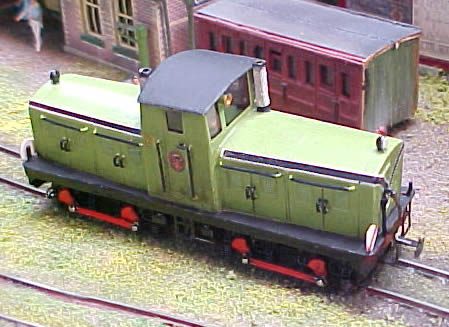
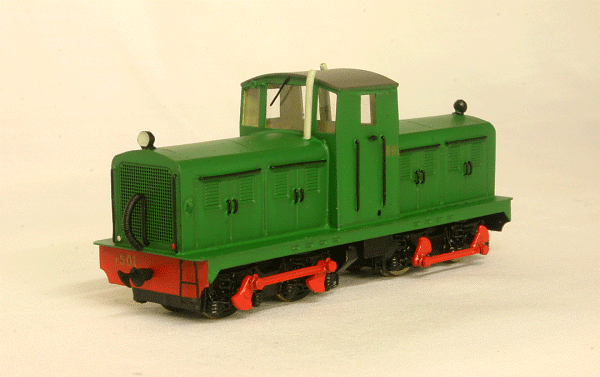
The “three diesel locomotives were put into service to haul goods,turf, beet and livestock trains, and finally eliminate working. When passenger traffic was heavy, as on Fair days for example, they were also employed on passenger and excursion trains, and a small fleet of locomotive hauled coaches were retained for this purpose.” [31]

Walker Railcars: The four railcars in use on the West Clare were designed and built by Walker Bros (Wigan) Ltd. The same company supplied railcars/railmotors in a variety of gauges around the world. These included 40 railmotors supplied to Victorian Railways in Australia. [27]On 24th June 1959, two diesel railcars sit at the junction station at Moyasta. The one on the left has travelled from Kilrush, that on the right from Kilkee [11] Railcar 3389 at Moyasta in 1960 (c) Roger Joanes. [24]
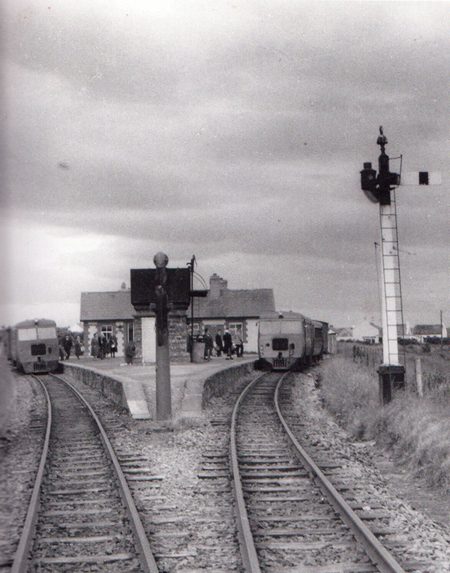
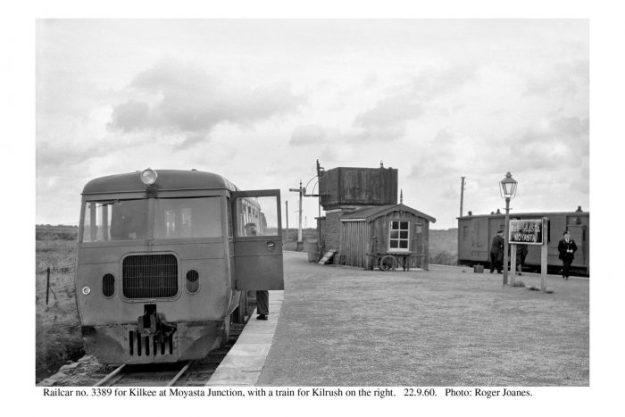
The railcars were powered by “a Gardner 6LW diesel engine, driving through a ‘Don-Flex’ plate clutch, four speed Meadows gearbox, and thence through a Hardy-Spicer propeller shaft, to a Meadows worm gear final drive gearbox, on the rear axle of the bogie, the two pairs of wheels being coupled by conventional coupling rods. The bogies had inside frames.” [29]

“Each car had a maximum speed of 38.5 mph in top, 23.8 in third, 14.2 in second and 8.3 in first gear, the engines developing 107 bhp at 1700 rpm. Except at very slow speed (7 mph), the cars would work forwards only.” [29] New turntables had to be installed to turn the railcars. “Heating was from the engine cooling system, and this was the first time West Clare passengers had anything better than simple footwarmers. The cars weighed 11 tons in working order, and were capable of hauling, when necessary, a standard passenger coach, and a lightly constructed four wheel luggage car.” [29]Walker diesel railcar No. 286 – renumbered 3386 before entering service. The picture was taken during the final preparations for the railcar to be shipped from Inchicore to Ennis (c) Patrick Taylor. [29]
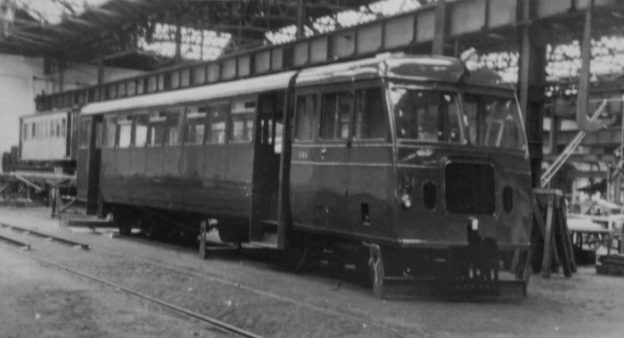
Carriages: for the opening of the West Clare Railway, “thirteen … coaching stock vehicles were purchased from the Bristol wagon & Carriage Works Company of Lawrence Hill, Bristol oder, which in its entirety was left in the hands of William Martin Murphy, as had been the case with the locomotives, consisted of three composites, six thirds and four brake vans. The original passenger carrying  coaches were six-wheelers, 30ft long and of James Cleminson’s patient, with the three sets of wheels and axles mounted on separate trucks, the central one of which was given considerable side play, being mounted slides. This truck was connected to its outer sisters by radius rods, themselves being pivoted about their centre. … There were only three other narrow gauge railways in Ireland that used the principle, the Ballycastle, West Donegal and the Londonderry & Lough Swilly, and only the latter continued to purchase such vehicles after the West Clare; doing so as late as 1899. After 1894, although continuing the use of six-wheelers, the West Clare abandoned building on the ‘Cleminson’ principle.” [32]

“The livery of the coach sides was green and the roofs white, the West Clare heraldic device being displayed in gold leaf on the second and fifth doors of the thirds, and the second and fourth of the composites, and on each door the class was clearly denoted. On the panelling between the roof, and the doors and windows, immediately under the cant rail, the words West Clare Railway appeared.” [32]

Of the four brake vans, two were 30ft long with an under-carriage to match the six-wheel coaches, and two were four-wheelers.

As the latter years of the 19th century unfolded, it became clear that the passenger stock needed to be augmented. Eight additional items were ordered. Five arrived before the South Clare was opened, three after. The first five consisted of two thirds, one composite and two brake vans. The remaining three were two composite coaches and one third.

For the South Clare, six more carriages were purchased. All coaches came from the Bristol company and apart from their lettering were almost identical to those built for the West Clare.

About the turn of the century, around the time Grand Juries gave way to County Councils, there were complaints about inadequate provision for excursion traffic. The Metropolitan Carriage & Wagon Company were commissioned to build two coaches. These were the last ordered from outside contractors.

In 1904, the Company workshops in Ennis were commissioned to build a brake-third and one third class coach. In 1905, a further three coaches, two thirds and a first, were commissioned. Ennis completed all five coaches in a little under 15 months. [33]

In 1909, Ennis built another six-wheel brake van, this time for use on ballast trains. In 1910, two more brake-third were built. “In addition, … two service vehicles were built at Ennis. … In 1905, four wheeled brake van No. 12 was rebuilt as a cattle wagon, taking a new number, No. 93, in the wagon list. A new No. 12 in the coaching stock list was built at Ennis. … In 1908, the other four wheeled brake van No. 2, was rebuilt as another wagon, and took the No. 143 in the wagon list. The new No. 2, also a four wheeler, … was a Directors Inspection Saloon.” [34]

“For the remainder of it independent existence, the railway had 38 coaching stock vehicles, but it was common practice at times of heavy demand, race meetings and the like, to provide additional seating in the brake compartments, and sets of forms were kept for this purpose.” [35]

When the Tralee and Dingle closed to passenger traffic in 1939, the GSR moved 12 bogie coaches to the West Clare. They were number 39C to 50C respectively. The bulk were third class coaches.

In 1951, when CIE introduced diesel railcars, three coaches, Nos 46C, 47C and 48C were converted at Inchicore into railcar trailers. They were given old omnibus bodies and had electric lighting fed from a 12V battery. Three four wheel light weight luggage vans were also built for use with the railcars. These were given Nos 187C, 188C and 190C. [35]

In 1953, the Tralee & Dingle closed completely and two brakevans arrived on the West Clare from the Tralee & Dingle. In 1954, two West Clare coaches were transferred to the Cavan and Leitrim (Nos. 42C and 52C. In 1957, 18 vehicles were withdrawn. In 1958 brake vans Nos 38C and 41C were withdrawn. In 1959, three four wheel vehicles and brake No. 36C were withdrawn. Further minor changes occurred before full closure of the West Clare in 1961, specifically including the transfer of two coaches from the Cavan & Leitrim (one of which was 42C). [36]6-wheel tourist coach No. 35 [9]1:22.5 model of West Clare Railway Brake Van 17c. [2]1:22.5 model of West Clare Railway Bogie- Coach No. 42c. [2]
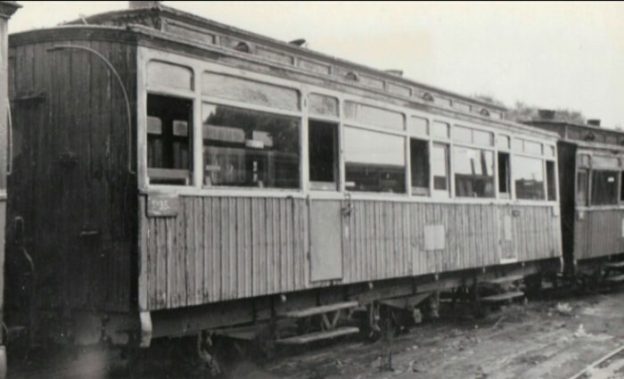
Wagons: The wagon stock for the opening of the line was also ordered by Murphy and supplied by the Bristol Company. [36] 65 wagons were ordered (15 low side open, 25 covered, 10 covered cattle, 12 ballast and 3 flats). Ten wagons were ‘convertible’ which meant that they had an open centre-portion to the roof which could be covered by canvas.

For the opening of the South Clare in 1892, the Bristol Company supplied a further 21 wagons (6 convertible and 15 cattle). [36]

The next increase in stock came in 1899, when 10 covered wagons were supplied by the Bristol Company. With the opening of the workshops at Ennis, wagon construction started. The first wagons were built in 1902 (6 large open wagons suitable for cattle and turf. In 1904, a further 17 wagons  were built for the cattle traffic. Then, one covered cattle wagon in 1905 and two large open wagons in 1907. In 1908, six luggage vans were built for passenger trains and a further cattle wagon was provided. In 1911, another six covered goods wagons were built. Then six open coal wagons in 1912 and a further 5 covered wagons. In 1913, the last batch of wagons was built while the Company was independent – 10 covered cattle wagons.  [37]At Ennistymon on 28 July 1952, locomotive No 9C is on the 9:58 am goods from Kilrush with a typical rake of wagons. The loco is taking water. Driver Tom Reidy is on the engine, (c) C.L. Fry. [38] 1:22.5 model of West Clare Horsebox No.28c. [2] 1:22.5 model of West Clare Railway open Wagon 134c. [2]1:22.5 model of West Clare Railway open Cattle Wagon 79c. [2]
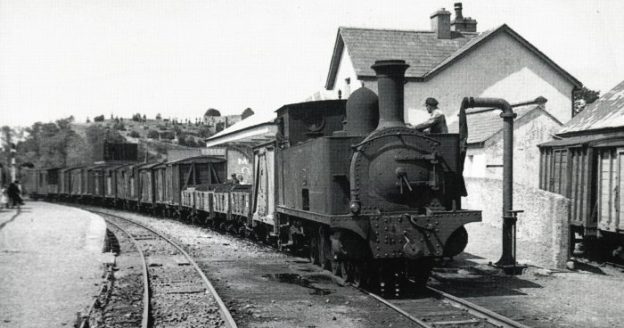
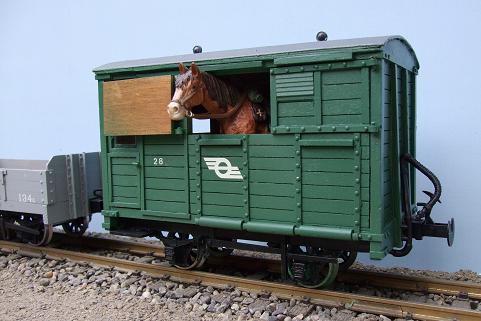
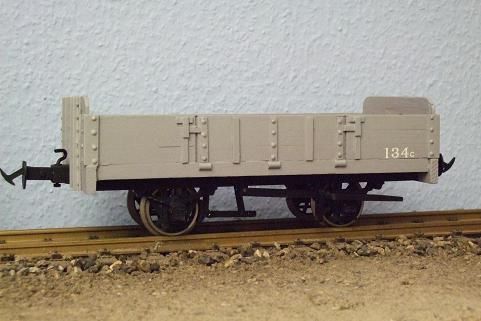
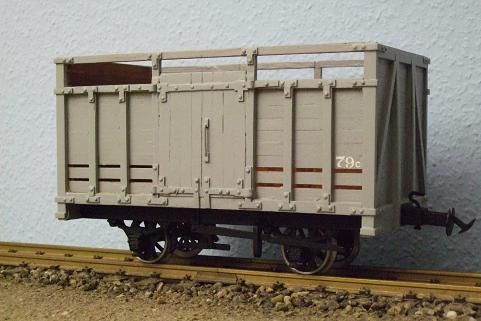
The GSR closed the Ennis workshops soon after it took over the West Clare. Between 1925 and 1929, 46 wagons were withdrawn (15 covered, 10 cattle, 19 open, 1 flat and 1 timber). 50 new wagons commissioned from Inchicore started to arrive on the West Clare in April 1929. These were 17 covered, 15 cattle and 18 open wagons. After the closure of the Cork & Muskerry in 1934 13 open goods wagons were transferred to the West Clare – the first foreigners! These had non-standard couplings and so were semi-permanently coupled in rakes. [39]

On closure of the Cavan & Leitrim in 1959, 25 wagons arrived on the West Clare, 18 open and 7 covered. All surviving wagons were scrapped on closure of the West Clare, with the exception of a few sold to Bord na Mona. [39]

References

  1. Patrick Taylor; The West Clare Railway; Plateway Press, 1994, p53.
  2. https://largescaleworld.hpage.com/west-clare-railway-ireland.html, accessed on 10th July 2019.
  3. http://www.narrowgaugerailwaymuseum.org.uk/collections/public-carriers/west-clare-railway, accessed on 10th July 2019.
  4. Patrick Taylor; op.cit., p55
  5. Ibid., p57.
  6. Ibid., p58
  7. Ibid., p59.
  8. http://www.worsleyworks.co.uk/Image-Pages/Image_NG_Irish_WCR2.htm, accessed on 10th July 2019.
  9. https://www.ebay.co.uk/itm/fg-irish-ireland-plain-back-postcard-6-wheel-tourist-coach-west-clare-railway-/401499456892, accessed on 10th July 2019.
  10. Gabriel Vaughan; My Affair with Malbay; ColourBooks Ltd, 2000.
  11. http://forum.e-train.fr/viewtopic.php?f=5&t=88663, accessed on 10th July 2019.
  12. Patrick Taylor; op.cit., p77.
  13. Ibid., p77-122.
  14. Ibid., p107.
  15. Ibid., p111.
  16. http://www.skibbereeneagle.ie/ireland/west-clare-railway, accessed on 12th July 2019.
  17. https://www.irishtimes.com/news/restored-steam-engine-back-on-the-tracks-after-57-years-1.691033 (2nd July 2009), accessed on 12th July 2019.
  18. http://www.westclarerailway.ie/about/history, accessed on 12th July 2019.
  19. https://orion.math.iastate.edu/jdhsmith/term/sleiwcr.htm, accessed on 12th July 2019.
  20. https://www.ebay.co.uk/itm/362292119376, accessed on 13th July 2019.
  21. http://www.trawbreagabaylightrailway.com/railcars.html, accessed on 16th July 2019.
  22. https://en.wikipedia.org/wiki/CIE_501_Class, accessed on 16th July 2019.
  23. http://www.stephenjohnsonrailways.co.uk/F501%20Class.htm, accessed on 16th July 2019.
  24. https://www.flickr.com/photos/110691393@N07, accessed on 5th May 2019.
  25. http://www.irishtractiongroup.com/withdrawn.html, accessed on 16th July 2019.
  26. https://www.gracesguide.co.uk/J._Scarisbrick_Walker_and_Brothers, accessed on 16th July 2019.
  27. https://en.wikipedia.org/wiki/Walker_railmotor, accessed on 16th July 2019.
  28. Taylor: op.cit., p111.
  29. Ibid., p124.
  30. Ibid., p119.
  31. Ibid., p117.
  32. Ibid., p123.
  33. Ibid., p128.
  34. Ibid., p132.
  35. Ibid., p134.
  36. Ibid., p139.
  37. Ibid., p143.
  38. Ibid., p60.
  39. Ibid., p148.

British Standard Steam Locomotives

I have been reading though copies of 1950 and 1951 editions of The Railway Magazine. This has given me the opportunity to read some really interesting articles. Most of the ones that I have chosen to reflect on have been about narrow gauge lines. Just occasionally I have strayed onto the standard gauge.

This post is perhaps the exception that proves that rule. 1951 was the year of the new Standard Types of Locomotive which the newly formed British Railways sought to develop. The Railway Magazine carried an article based on a paper by Mr E.S. Cox, Executive Officer (Design), Railway Executive, read before the Institution of Locomotive Engineers on 21st March 1951. [6]

British Railways came into being in 1948 and a decision was taken at the time to construct a range of “standard” steam locomotives. Cecil Allan states that “in the interests of economy standardisation of new types for the whole country obviously was desirable with dimensions and weight so planned as to give each new type the widest possible range of action”. The principal progenitors of the locomotives were:

  • R.A. Riddles – Railway Executive member for mechanical engineering
  • E.S. Cox – locomotive design
  • E.S. Bond – building and maintenance

The parent design office was Derby but, as in the case of other B.R. standard locomotives, all the Regional drawing offices contributed to various sections of the design.

The decision to build steam locomotives of a new design still causes controversy to this day. There are at least 3 different arguments

  • The new build could have been from existing steam locomotive designs.
  • As prototype diesels were being built, full scale dieselisation should have been the choice. The counter argument was that diesel engineering in the UK was still at an early stage and the importing of American technology was politically undesirable. Later events in the 1950s with the introduction of diesels would prove that this was an option to avoid in the late 40s.
  • Electrification. This was Riddles’ long term choice but the technology was still evolving in 1948. The Woodhead line electrification proceeded after the Second World War but this used 1500V DC. A decision to adopt 25kV AC electrification as standard was adopted in 1956. Proceeding with full scale electrification in 1948 would have chosen the wrong technology.

A series of trials was held in 1948 to ascertain the qualities of the existing locomotive stock. Unfortunately the scope and purpose of the trials were not clearly defined to the loco crews and there were widely differing results. [3]

E.S. Cox, the author of the paper reported in The Railway Magazine, was the author of an historic Ian Allan publication which received its latest reprint in 1973 in paperback – “British Railways Standard Steam Locomotives.”

BR’s attempt to harmonise its locomotive designs was a very significant project. E.S. Cox was at the very heart of the project in his role as Executive Officer for Design on the former Railways Executive, who worked with two other former LMS (London Midland Scottish) men – Robert Riddles and Roland C. Bond to bring about standardisation.

E.S. Cox was the lead design engineer in the team that headed British Railways in the 1950s. The war years had left the railways in a poor state and many new locomotives were required. That team, says R. Holt, “drew on the best features from the Big Four Railway companies that preceded nationalisation, and built a complete set of locomotives that covered every requirement for freight and passenger, local and long distance, and light and heavy work. … The result was a set of locomotives that were strong, efficient, economical and easy to maintain. The names of Cox, Riddles and Bond are not perhaps as well known as the like of Stanier, Churchward, Gresley and Bulleid, yet they contributed the final chapter of British Steam power.” [4]

In his preliminary discussion of the pros and cons of locomotive standardisation, the author describes a number of previous exercises in this field prior to 1948.

The main part of his book relates the inception, development and design of this final range of British steam engines. It follows closely the lives of those locomotives through construction, testing and performance on the line. The book also covers such matters as maintenance, teething troubles and costs.

In dealing with these locomotives, Cox sheds light on the last days of steam, and makes many interesting comparisons with the final designs of the LMS, LNER, GWR and SR with which the BR engines had to compete. “Cox … is … honest and quite critical of things that they did wrong, and yet obviously proud of what they achieved in such a short time.” [5]

The book ends with some original thoughts on what trends design might have followed had nationalisation never taken place, or had the triumph of the diesel been delayed for another decade or more.

It has been commented that, “The designers of the standard locomotives under Riddles are unfairly castigated these days for sticking to steam rather than pursuing diesel and electric traction. Actually, all they were guilty of was not having the benefit of hindsight that we now have! We can sit in our armchairs now and look back and know exactly what should have been done. … This is … unfair, and … Cox goes a long way in this book to explain the reasons behind the decisions taken, along with their instruction from government and higher bodies. He is a good writer, … the development of these locomotives [was] … the pinnacle of steam development in this country, and it’s a great pity that a change of government stopped the plan mid-way, and set in motion the half baked modernisation plan that was to result in the mad rush to dieselisation that virtually bankrupted BR.” [5]

In parallel with this standardisation process there was a significant programme of scrappage. This, perhaps at least in part, might explain the lack of confidence in existing standard designs from the pre-BR companies. Most had been thrashed and not that well maintained during the Second World War.

Professor Alan Earnshaw states: “After the resumption of peace the railways were in a terrible state, the locomotive situation being one of the worse aspects. By the end of the 1940s some engines were still in use when, had it not been for the war, they would have been scrapped a decade earlier. The situation was initially alleviated by the arrival of the Riddles 2-8-0/2-10-0s and the Stanier 8F 2-8-0s, which had finally been released to the newly formed British Railways by the War Department. The British Railways Modernisation Plan, which included … 999 new steam locomotives … finally seemed to provide the answer to BR’s chronic lack of motive power. As these new machines became available, the faithful worn-out servants of the pre-Grouping era slid quietly into the back roads and thus into oblivion. They were soon to be followed by the old standard types of the Grouped companies.” [7]

The poor state of these older locomotives and their resultant performance figures was combined with a sense, manifest across the whole of society, that new, bigger, bolder and perhaps even brash was better than maintaining and improving of the old. This was after-all an era when many excellent railway buildings were destroyed to be replaced by what, with hindsight we can see, were considerable poorer structures. In the late 1950s and the 1960s, new was better and almost always associated without question with progress.


References

  1. The Railway Magazine No. 604, July 1951, p438-445 & p449.
  2. E.S. Cox; British Railways Standard Steam Locomotives; Ian Allan, 1973.
  3. https://www.theclanproject.org/Clan_History.php, accessed on 25th April 2019.
  4. R. Holt; Book Review; https://www.amazon.co.uk/British-Railways-Standard-Steam-Locomotives/product-reviews/0711004498/ref=cm_cr_dp_d_show_all_btm?ie=UTF8&reviewerType=all_reviewsreviews, accessed on 25th April 2019.
  5. Capelbond; Book Review; https://www.amazon.co.uk/British-Railways-Standard-Steam-Locomotives/product-reviews/0711004498/ref=cm_cr_dp_d_show_all_btm?ie=UTF8&reviewerType=all_reviews
  6. E.S. Cox; British Standard Locomotives; Journal of the Institution of Locomotive Engineers, Paper No. 502, Volume: 41 issue: 221, May 1951, p287-403.
  7. Professor Alan Earnshaw; Down in the Dumps: A prelude to the Scrapping of British Steam; in BackTrack Volume 11 No. 1, Atlantic Publishers, 1997, p45.


The West Clare Railway – Part 7 – Moyasta to Kilrush and Cappagh Pier

The Line of the West Clare Railway from Moyasta to Kilkee

Moyasta was a junction station. The two lines which left to the south and to the west served Kilrush and Kilkee respectively. The two routes feature on the adjacent map. This post focusses on the line to Kilrush and on to Cappagh Pier.Before we set off, we note two things, as we did in the last post, about the station at Moyasta. First, the presence, in the 21st century, of a preservation line based at the station; and second, the layout of the junction at Moyasta. Although a direct line was provided to allow trains to travel between Kilkee and Kilrush. In practice it was little used in later years as trains tended to enter Moyasta station from either of the two villages and the set off from the station for the other village. This required some manoeuvrings in the station area!

However, when the pier was in use at Cappagh, “the Loop … was extremely useful for allowing a direct passage to through traffic, especially from Cappagh to Kilkee.” [2]

We spent time in the last post in this series looking at the preservation line. The link to that post is: https://rogerfarnworth.com/2019/05/09/the-west-clare-railway-part-6-moyasta-to-kilkee

We also considered the loop line in the same post and we will not repeat what was said in that post about the link that made direct services between Kilkee and Kilrush/Cappagh Pier possible.There were four road-crossings at Moyasta, all within a radius of 200 yards of the station-house. By the late 1980s, Lenihan observed that, “as at most other such places, there was nothing, for at Moyasta, just as at Knockdrumniagh, near Ennistymon, road widening has changed utterly the lie of the land.” [2] The plan is taken from Patrick Taylor’s book. [1] 

We allow our two guides, Edmund Lenihan and Patrick Taylor to take us out of the station and its environs and on to Kilrush and Cappagh Pier. The presence of the preservation railway means that the locations of the crossings shown above are easier to define in the early 21st century than they might otherwise have been.Moyasta No. 1 Crossing (above).

The adjacent image is taken at Moyasta No. 2 Crossing looking back towards No. 1.

The picture below is also taken  at the No. 2 Crossing looking towards Kilrush. The Shannon estuary can be seen in the distance.

The Line to Kilrush

Edmund Lenihan comments in the late 1980s that the line from the station beyond Moyasta Crossing No. 1 was so overgrown as to be impassable. [3][7] The forty-third milepost was at Crossing No. 2. This crossing was the site of a serious accident “when a young boy, trying to save the gates from an oncoming trail, was knocked down and killed.” [4]

From the road to the junction with the loop is only a relatively short distance.Moyasta junction with the Kilkee/Kilrush loop on the left. The railcar has left Moyasta Station which is of the extreme right of the picture with a service to Kilrush. As we have already noted, there were few non-stop workings between Kilrush and Kilkee. Trains from one or other village used to enter the relevant platform at Moyasta and then propel backwards before using the loop to head on to the other village.

The line continues from the crossing in a wide, graceful sweep along the edge of the bay no more that 300 mm above the high-water level. Effectively the line was on causeway as there is evidence of the sea invading the land beyond the line.Continuing on into the townland of Carrowncalla North the embankment of the old line acts as a breakwater. After a length of straight track, the line curved southwards again. Soon the next road crossing was encountered, Carrowncalla No. 1. In the late 1980s the crossing-keeper’s cottage was intact but seemingly unoccupied. [5] Later, in a return visit in 2008, Lenihan noted that the cottage had been renovated but was still not lived in. [6] 150 yards to the West of the crossing, the road bridged a boat channel. The crossing is shown on the OS Map extract and satellite images below. [7]The narrow neck of land to the west of the boat channel continued on and came to a head at Ilaunalea, 500 metres distant. This can be seen easily on the satellite image above. “From here in 1863 it was proposed to build an embankment across the mouth of Poulnasherry, by way of Black Island and Ilaunbeg, to Kilnagalliagh, on the western shore. It was a daring plan and probably would have succeeded but for the ill-advised attempt to close the mouth of the bay in the face of winter tides.” [5] By the 1980s, only eroded, scattered remains  were visible, and that only at low tide. The blue line on the satellite image above shows the route of the West Clare Railway. The orange line shows the route of the planned but eventually incomplete railway crossing the mouth of Poulnasherry. The orange line could have been extended in a northwesterly direction and looking at satellite image shows the old formation still evident to the Northwest. The importance of the line drawn on the image above to to show its route across the tidal estuary.  The embankments show clearly on the OS Map extract from the 1950s, immediately above. [7]


Immediately south of the point where the orange and blue lines diverge/meet (and just off the satellite image above is the location of an un-named accommodation crossing there was then a straight length of track before Carrowncalla No. 2 Crossing. Lenihan diverted a way from the West Clare for a time to explore the coast line and the older earthworks before heading back to the West Clare at the point of this level crossing. [8]

Between the unnamed crossing and Carrowncalla No. 2, the line ran in a straight South-southeasterly direction. In the 21st Century, it is in use as an access road for much of that length. Lenihan visited the level-crossing location again in 2008 and commented that the house had been fully renovated and was now lived in. [6]Looking North-northwest along the formation of the West Clare Railway (marked by the blue line) from Carrowncalla Crossing No. 2. The Crossing-keeper’s cottage has been extended to make an excellent modern home. (Google Streetview).Above, looking South-southwest from the same location. (Google Streetview). The image below comes from Taylor’s book and is taken on the North side of the crossing. [16]

South of Carrowncalla Crossing No. 2 the line curved a little towards the Southeast and ran for a short while alongside a small bay before crossing Brew’s Bridge. The location of Brew’s bridge can just be picked out at the bottom right of the adjacent satellite image.The extract from the OS Maps shows the location clearly, just to the Southeast of the bay. Lenihan has a lot to say about this location. [9]
The northern abutment of Brew’s Bridge in 2009. (Google Streetview).The more southerly of the two bridge abutment  in 2009 with the house alongside the old formation as mentioned by Lenihan. (Google Streetview).

Beyond Brew’s Bridge the line gradually turned Eastward. The going was relatively easy.The next crossing was Leadmore No. 1 which was south of the Shanakyle Graveyard. The Crossing-keeper’s cottage here has also been renovated and is lived in. [6][7]

In the 1980s, Lenihan commented that “to enter Leadmore no. 1 cottage was to get a brief glimpse of the past, for the interior of the house was quite unchanged from how it would have looked in West Clare days. An old railway clock, the open fireplace, a drawing of engine no. 5 from 1892, all testified to a lingering regard for old times, though the owner was quite adamant that she had no regrets over the passing away of the railway.” [10]Leadmore Crossing No. 1 with the old keepers cottage to the right and the line back towards Moyasta shown by the blue line. (Google Streetview).Looking ahead along the line to the East and towards Kilrush from the smae location, (Google Streetview).From Leadmore Crossing No. 1, the line heads East-northeast into Kilrush.En-route to Kilrush the old line passed through Leadmore village. [7]

One length of the line en-route to Kilrush was close enough to the water to need a revetment constructing to protect the line. That location can be seen above on the left of the OS Map extract. The school shown on the right of the extract is now the location of L&M Keating (Maritime) Ltd. We are actually now very close to Kilrush station. The OS Map extract below shows the first part of the station site which was to the West of the Level Crossing.Taylor comments: “The line from the down home signal, where a short steep decline at 1 in 72 commenced, continued past the two road carriage shed, and one road engine shed on the up side, until Leadmore No. 2 level crossing was reached before entering the yard at Kilrush. This crossing, whcih was built on a curve, was protected by up and down signals.” [16]This view looks back along the old line towards Moyasta. The renovated Crossing-keeper’s cottage is on the right. The crossing gates were relatively narrow and the stone pilasters which supported the gate are still evident. (Google Streetview). To the left of the line behind the cottage were two buildings which were rail-served. The engine shed and carriage shed. The engine shed was the smaller building closer to the cottages.From the same location (Google Streetview), looking into the station yard which in 2009 was now grassland. The station building can be seen in the distance immediately to the left of the blue line.The station site at Kilrush taken from the East. (Google Streetview in 2011). The station building and platform edge are still visible. The goods shed has been replaced by a corrugated steel roofed structure.The station site at Kilrush also taken from the East. (Google Streetview). The station building is shown to greater advantage. The old Merchants’ Quay which is on the left of the image, is now (2011) the access route to Kilrush Marina.An early (circa. 1890) picture of Kilrush Station taken from the West. [11] The next four pictures are closer looks at this image.This image shows the view across the station site to the docks/Merchant’s Quay and Leadmore. The old goods shed can be seen in the centre of the picture. [12]This view of the harbour at Kilrush shows the station building and goods shed, centre-right. A signal and ground-frame hut can be seen centre-left. [12] The image below is an excellent period photograph of the station building. [12]The access road to Kilrush Marina has been improved and is now (2018) metalled and Merchant’s Quay has been refurbished. It provides a good location to take a picture of the station building(s) and Glynn’s Mill building(s) as they appear in the first quarter of the 21st Century. [12]

Taylor describes Kilrush as “the self-styled ‘Capital of West Clare'” [16]Taylor provides a number of important photographs of the Kilrush station site – the first of these shows the engine shed and carriage shed in 1958. [16]Also taken by D.F. Russell, this picture looks back towards the engine and carriage sheds from the middle of the station yard. [17]The station in the 1950s viewed from the Goods platform, (c) IRRS No. 10748. [18]

Edmund Lenihan, writing in the late 1980s, having just explored the station site, said:

“Uncomfortable, even dangerous, though it was to have to pick our way through this wasteland, we did it, still hopeful of finding something. We might as well have gone by the road; there were no wonderful discoveries, no magical ending, only the station-house, standing, as always, just across the road from Glynn’s mills and round the corner from Merchants’ Row and Frances Street.” [13]

The station building has been significantly refurbished as the modern photos above show. In 1999, Lenihan wrote:

“In the years since I last visited [Kilrush] a great deal has changed, and for the better, particularly at the station end. Gone is the rubbish dump that defaced the area beside Leadmore no. 2 level-crossing cottage (p.249). It is now as clean and level as a town park, and an unimpeded view of the station is possible from several hundred yards away. ‘Crush marina, which was then only in its planning stage, is now in full operation and has brought life back to the creek, though hardly to the same extent as when Turf Quay, Customs Quay and Merchants’ Quay were in their heyday. Close by, a Scattery Island interpretative centre has been opened, and across the creek, beside Doherty’s timber yard and the site of the removed railway bridge (p. 256), is a new activity centre.” [14]

Writing in 2008, Lenihan describes the station site again:

“The station-house is there, certainly, and is once more a dwelling, for two families now. Its eastern gable, which was disfigured by a large door during the building’s days as a truck garage, has been restored. But the fine triangle of clear ground between it, the marina and Leadmore no. 2, which common sense might suggest should be preserved as a public amenity, is now under pressure of commercial development, despite the fact that the future of some of the similar recent developments in the town is uncertain because of the deflation of the property bubble.” [15]


The sketch plan above shows Kilrush station in its heyday. It is provided by Patrick Taylor. [1]

The adjacent OS Map extract shows the West Clare railway continuing beyond Kilrush Station. It turns through 180 degrees on a tight radius curve. The bridge over the tidal channel is Bridge No. 68 shown on the sketch plan above.[7]

The railway then continued in a Southwesterly direction on the South side of Kilrush Creek, as shown in the OS Map further below. [7]The way ahead to Cappagh Pier. Bridge No. 68 has been removed and replaced with a footbridge, (c) D.F. Russell. [21]The approximate line of the old railway to Cappagh Pier is shown by the blue line (Google Streetview – 2011). The footbridge is at approximately the location of the old railway bridge.Looking West down Kilrush Creek in 2011 (Google Streetview). The station is visible on the right of the picture the railway embankment and bridge abutment are right of centre. In this picture from 2011 (Google Streetview) the road which used to turn through a very sharp right-angle bend has been diverted to run directly alongside what was the alignment of the railway.As can be seen in the OS Map extract below the road and rail drift apart on their way westward.Passing Bleak House on their left, trains from Kilrush then curved round to the South east before entering Cappagh Pier Station close to Cappagh House. Just prior to the station a gravel extraction pit was passed on the right. Beyond the station there was a short gated stub line with a turntable. The turntable gave access to Cappagh Pier and the line ran out to the end of the pier and a Goods Store. [7]

Taylor’s sketch plan of the station and pier is shown below. [1]

Historically there were two platforms at Cappagh Pier Station and each had canopies. Taylor’s comments about the station appear below.The gravel pit in the OS Map extract is now the site of the RNLI station (Google Streetview).From this point road and rail run immediately parallel to each other into Cappagh Pier Station (Google Streetview).The turntable location is marked in the paving at the site of the station and pier at Cappagh, (Google Streetview).This satellite image shows the full extent of the old line in the vicinity of Kilrush and Cappagh. [19]The terminus at Cappagh in 1953, (c) IRRS No. 10439. [20]Turning 90 degrees to the left from the above photograph, this is the view down the pier at Cappagh. The turntable is in the foreground and the Good Store is visible at the end of the pier. [21]

Taylor writes: “On the last mile of line from Kilrush to Cappa Pier, after passing through the level crossing gates at 47 m.p., and over the Ballykett stream bridge No.68, past Doherty’s timber yard (where a private siding ran into the yard on the up side) the line veered sharply to the right and ran along the opposite bank of Steamers Quay passing Supples crossing before turning left into Cappa. The line continued through a gate on to a small turntable 9’6″ long which turned wagons singly to the right and on to the pier which was provided with two sidings running parallel. The second siding was installed by the G.S.R. in 1933 for the quick turn round of wagons. Cappa was provided with two running roads and two platforms. The Platforms had overhead concrete roofs and entrance was gained to them at the pier end. The roofs and the down platform were removed by the G.S.R., possibly also in 1933.” [21]

This brings us to the end of our survey of the West Clare Railway. What remains is to look at locomotives and rolling stock in a future post.

References

  1. Patrick Taylor; The West Clare Railway; Plateway Press, 1994, p48.
  2. Edmund Lenihan; In the Tracks if the West Clare Railway; Mercier Press, Dec. 2008, p228.
  3. Ibid., p230.
  4. Ibid., p231.
  5. Ibid., p234.
  6. Ibid., p304.
  7. http://geohive.maps.arcgis.com/apps/webappviewer/index.html?id=9def898f708b47f19a8d8b7088a100c4, accessed on 2nd July 2019.
  8. Lenihan, op.cit., p238.
  9. Ibid., p241.
  10. Ibid., p245.
  11. https://www.facebook.com/kilrushcu/posts/railway-station-kilrush-co-clare-circa-1890/1200065626698858, accessed on 4th July 2019.
  12. https://docplayer.net/58337136-A-tribute-to-kilrush-in-the-great-war-by-ger-browne.html, accessed on 4th July 2019.
  13. Lenihan, op.cit., p250-251.
  14. Ibid., p293.
  15. Ibid., p305.
  16. Taylor, op.cit., p49.
  17. Ibid., p50.
  18. Lenihan, op.cit., p253.
  19. http://www.railmaponline.com/UKIEMap.php, accessed on 5th July 2019.
  20. Lenihan, op.cit., p258.
  21. Taylor, op.cit., p52.

The Cavan and Leitrim Railway – A Miscellany.

A. ‘The Cavan and Leitrim Railway’ at Dromod:   is the preservation society hoping to create a line between Mohill and Dromod along the C&L’s old route. Over the years, that society has seen some great successes. Most recently, the bringing back to steam of the locomotive ‘Nancy’. The preservation society asked me to include the adjacent pictures in this post.

The first view shows the station in the late 1950s, (c) J.P. O’Dea. [4]
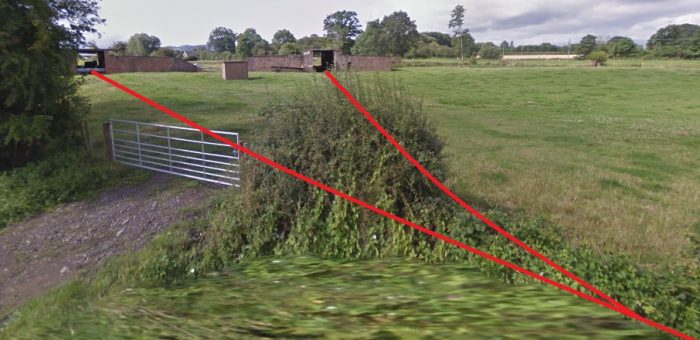
The second is taken  after the station buildings had been renovated in the early 1990s, (c) C&L 1992. [5]

That below shows the station from the West, (c) Jonathon Clinton 2019. [5]One early success, alongside the renovation of the station building, was the rescue of the engine shed and water tower. This picture shows …….. (c) Philip Bedford March 28th 2019. [5]‘Nancy’ beside the water tower, (c) D. Connolly. [5]‘Nancy’ at Dromod Station platform, (c) Jonathon Clinton 2019. [5]

Wikipedia says: “The privately owned Cavan & Leitrim Railway is based in the former Dromod Station, in Co. Leitrim. There is a transport museum, with narrow-gauge trains of several gauges, buses, planes, fire engines and artillery guns from World War I and World War II. …….. With the help of volunteers trains are run on a short section of line. The Avonside steam locomotive “Nancy” was rebuilt at Alan Keef in Wales where it first steamed on 23 March 2019 after twenty years of restoration work. [6] The locomotive was shipped to Dromod where it now resides.” [7]

Best contact details:   

Address:      Clooncolry, Drumod, Co. Leitrim

Tel:                071 963 8599

Website:       https://cavanandleitrim.wixsite.com/home

Facebook:     https://www.facebook.com/cavanandleitrimrailway


B. Belturbet Heritage Railway:  the heritage centre in Belturbet sits at what was an interchange between the Cavan and Leitrim Narrow Gauge Railway (3ft) and the Great Northern Railway which was Irish standard gauge (5ft 3ins). The Great Northern (GNR) branch connected to Ballyhaise on the Clones to Cavan line. The Cavan and Leitrim (C&L), at Dromod, connected to the Midland Great Western Railway (MGWR) mainline from Dublin to Sligo. The line was extended to Arigna in 1920 in the form of a roadside tramway. [3]

The centre was once Belturbet Station and shared by the C&L and the GNR. It has been significantly refurbished from an overgrown and dilapidated state in the 1990s to a modern well equipped centre in the 2010s.[3]

The station buildings lay derelict for almost 40 years until the Belturbet Community Development Association purchased the entire 10 acre site in 1995. The buildings had during that time served as farmyard buildings and had been subjected to the effects of weather, fire and theft. They were subsequently refurbished to the original state with great attention to detail gained by reference to original plans drawn on silk. [3]

The original/restored Station Buildings include:

  • Main Station Building and Station Master’s House
  • Platform (Roof totally replaced)
  • Great Northern Railway Goods Shed (Extension added to the original building. Attempts had been made to remove part of the original building for safety reasons prior to restoration)
  • Cavan and Leitrim Railway Goods Shed (Effectively no restoration needed)
  • Engine Shed
  • Water Tower
  • Transhipment Shed

The Main Station Building contains a museum hosting an interesting collection of railway memorabilia and audiovisual footage of the Cavan and Leitrim railway and the restoration of the station itself. [3]The Great Northern Railway Goods Shed serves as a 120 person capacity conference hall and is used for business, social, sport, leisure and educational/training purposes. The Goods Store/Visitor Centre has  meeting & conference room facilities for rent. [3]The refurbished Station-house is on the right. The main GNR station building is directly ahead of the camera. [8]

Contact Details:     

Address:    Railway Road, Belturbet, County Cavan

Tel:      086 069 9749

Web:    https://belturbetheritagerailway.com


C. Locomotives

An order was placed with Robert Stephenson & Sons of Newcastle-upon-Tyne in 1886 for 6 railway engines. The order was later extended to 8 locomotives. Four of these engines were fitted with condensing apparatus and modified for working on the tramway. The original order valued the locos at £1,100 each. The modifications cost £38 per engine. [1: p81]

“The first of the eight was delivered at Belturbet specially early, in May 1887, for the use of the contractor. With the exception of the second engine (which came to Dromod in June) all the engines reached the C&L via the GNR, the deliveries continuing until early in 1888.” [1: p81]

All the engines were 4-4-0Ts with stovepipe chimneys. The firebox crown sloped down towards the back of the engine to avoid the danger of uncovering on steep banks. The cabs had round front spectacles and rectangular ones at the back. The back also had an opening door to a height of 2ft 11ins which was used for coaling. Cowcatchers were provided and each engine carried as large headlamp. Probably all originally had a sloping cover below the smokebox door (as retained by No 3 till 1925) which was removed early on to make room for jacks and tool-boxes. [1: p82-83]

All the engines had the same dimensions. They weighed in excess of 25 tons and had makers’ numbers 2612-2619 in order. The last four were intended for use on the tramway and were externally quite different. Skirts were fitted over the wheels to 4in above rail height and extending the full length oif the frame. The back weather boards on the cxab were cut away arvthge csides and the forward facing spectacles could be opened. [1: p83]

Unusually, the tramway engines had a set of duplicate driving gear. This meantvthat the driver had full control of the engine while always being able to watch the road ahead. Flanagan says that “this provision of two sets of controls was unique, on Irish railways at any rate. As supplied, the tramway engines had the cowcatcher and the head-lamp at the back end and when the makers chose to photograph one of these as a mainline engine the catcher and the lamp were reversed and the U-pipe and exhaust-vent of the condensing gear, as well as the skirts, were removed. All engines ran in conflict with the 1884 Order in Council which specified a maximum axle-loading of eight tons.” [1: p83]The two different incarnations of the tramway engines. In the first picture we see the manufacturers photograph of No. 5, ‘Gertrude’ fitted as a mainline engine in 1887. It was then converted back so as to be supplied to work on the tramway. The tramway version is shown in the second picture above and has the cowcatcher and headlamp fitted behind, or in effect in front of, the cab. These engines were designed to be driven cab first. [1: between p100 & p101]Loco No. 8, Queen Victoria) heads an up coal special past Drumcong Post Office in 1957. A very photogenic location! [1: between p100 & p101]No. 3, Lady Edith in 1903. [1: in between p100 & p101]

The engines were named after the company directors’ daughters with the exception of one engine which was named for Queen Victoria. A variety of modifications were made to these engines over the years. These are all detailed by Flanagan [1: p84-89] and those details do not need to be repeated here. Nonetheless, despite modification,these engines struggled to cope with the heaviest livestock and excursion traffic of the early 1900s and by January 1904 the C&L was looking for a more powerful loco. The specification called for an 0-6-4T locomotive. Robert Stephenson and Sons tendered the lowest price of £1750 and promised delivery within 18 weeks. They were given the work. The order was placed on 7th July and the engine was tried on the line in steam on 28th October of the same year. [1: p89]

As soon as No. 9,’King Edward’, arrived it became the pride of the C&L fleet. It was considerably more powerful than the rest of the fleet, being able to take 24 wagons of cattle to market. However, it became a ‘white-elephant’ because its long rigid wheel-base tended to spread the running rails. A variety of different things were tried to address this but the ‘King’ continued to spread rails on tight curves. Eventually, it came to only be used in exceptional circumstances. “in December 1922, the board decided to offer it for sale. However, it was reported in 1923 that nobody was interested, and after that the ‘big engine’ spent most of its time at Ballinamore, leaving only for a very occasional jaunt on the main line. ” [1: p91]0-6-4T locomotive No. 9, ‘King Edward’ in ex-shop condition in 1904. [1: between p100 & p101]

The company considered buying other locos but it was some time before other engines were employed on the network. “The next ones to run on the line were ‘foreigners’ the tow hired by the Ministry of Transport in April 1920 for use in the conrtuction and working of the Arigna Valley Railway. Transferred temporarily to the C&L, they were originally Nos. 1 and 2 of the Ballymena, Cushendall & Red Bay Railway. Built at Black Hawthorn in 1874 and 1875 respectively, they were renumbered on various occasions, becoming 101A and 102A of the Northern Counties Committee in February 1920. … These little engines were very popular on the C&L and were amazingly sturdy machines. Probably as a result of excessive use on the C&L, their condition in June 1921 was poor and it was ordered that they be returned to the NCC at the end of Control. They returned north in November 1921 and were not used again. ” [1: p94-95]One of the two foreigners , No. 101A from the NCC was originally a Ballymena, Cushendall and Red Bay Railway engine. [1: between p100 & p101]

By the summer of 1924, No. 8 was no longer Queen Victoria. The name had become synonymous with colonial rule and after one false start the name plate was removed and destroyed. [1: p97]No. 8, Queen Victoria without her nameplates, pictured in 1924. [1: between p100 & p101]

Engine Livery: the basic C&L livery was dark green with lining consisting of “a three-quarter inch band with a much thinner line inside. The band was generally red and the line white but, depending on the taste of the locomotive superintendent or the painter, there were variations. For example, No. 7 had a red band but a black line, while the band on No.8 was yellow and the line light blue. Lined parts of the engine were the front and side of the tanks, the cab panels and back, and the sides of the cylinders. The smoke-box and the cover over the cylinders were in variably black.” [1: p97-98]No. 2, Kathleen in 1933 prior to its regular use on the Arigna Tramway. Flanagan says: “The engine has the flat Hunslett dome cover and is fitted with smoke-box lubricators.” [1: between p100 & p101] Two views of a model of No. 2, Kathleen in 00n3. This model was produced from a kit from Backwoods Miniatures which has been modified including a scratch-built rear cab sheet as the one in the kit was for the era prior to Kathleen being fitted out to run on the Arigna tramway. The original loco still exists at Cultra. These pictures were found on the website of Chester Model Railway Club. [16]A typical Arigna Coal train modelled in 00n3 with Kathleen at the head, also . [16]No. 4, Violet in 1932. Flanagan says: “The step on the [front of] the side tanks was a feature of this engine for a long time.” [1: between p100 & p101]This image of No. 1, Isobel is taken in 1931 at Dromod MPD and mirrors pictures above from the preservation era. [1: between p100 & p101]

At the amalgamation heavy excursion traffic was a thing of the past and the border between Northern Ireland and Ireland  was depleting the cattle traffic. However, the Arigna Coal traffic was substantial and growing steadily. Modifications were first made to the remaining members of the existing fleet of locomotive (1925). Heavy repairs were undertaken at Ballinamore until around 1932, after which such repairs were undertaken at Inchicore Works. Regular repairs kept 4 of the original 8 locos in use but their overall condition was deteriorating gradually and by 1951 no further havey repairs were undertaken. Flanagan says that “At the closure, the four remaining C&L engines were very run down. As the line was lifted, No. 8 was cut up in the shops in Ballinamore. The lifting of the Dromod line was done with Nos. 2 & 4, and in February 1960, No. 4 was cut up at Dromod. After a long wait, No. 2 was brought by road to the Belfast Transport Museum, where it no rests. The remaining engine, No. 3, was shipped to America by the Lady Edith Society.” [1: p116-117]No. 2, Kathleen at the Ulster Transport Museum, (c) Skimann . [9] Three shots, video stills of Lady Edith on shed at Pine Creek Railroad, New Jersey in 2017. [10]

The Lady Edith Society was a consortium of New York area railroad enthusiasts–Edgar T. Mead, Jr., Oliver Jensen and Roger E.M. “Frimbo” Whitaker. They pooled their money and in 1959 shipped to the U.S. the Lady Edith, a second locomotive, a passenger carriage from the Cavan and Leitrim, and later they were joined by a goods van and a brake van from the West Claire Railway. First displayed at Pleasure Island Amusement Park in Boston, Massachusetts, the equipment was moved to Freehold, NJ, then to Allaire in 1965. Lady Edith first steamed on 16th June 1966. It was serviceable up until around the millenium when it became apparent that the front flue sheet was too thin for safe operation. An $11,000 repair was put on hold when New Jersey adopted new regulations. [11]

The second locomotive was the former Cavan & Leitrim, ex-Great Southern Railway, nee-Tralee & Dingle 2-6-2T No. 5, which was brought over in 1959 to go to Edaville. Instead, it went to the Steamtown collection in 1961. It remained part of the Steamtown collection until 1986. In that year, it was purchased from the Steamtown Foundation and repatriated to Ireland by the Great Southern Railway Preservation Society, Ltd. It operated for a time on a restored section of the T&D between Tralee and Blennerville. [11] However, that heritage line is currently not operational and No. 5 sits unused on the Tralee & Blennerville Railway. It has not worked for some years now.Above, Loco No. 5T is at Creagh on the afternoon Arigna train. [1: between p100 & p101].

In the adjacent image, which was frequently seen on postcards, No. 3T sits at Creagh on another Arigna bound train. [3]

Locomotives from Down South!

The Cork, Blackrock & Passage Railway (CBPR) closed in 1932. Four of its engines, built in 1900 by Neilson and Company, were 2-4-2T locos. They had maker’s numbers 5561-5564 and CBPR Nos. 4-7. By the middle of 1934 all four engines had been repaired either at Cork or Inchicore. The locos were renumbered Nos. 10L – 13L respectively and  arrived at the C&L in August and September of 1934. No. 11L did not last long and was scrapped in 1939 at Inchicore. After experimentation it was determined that these locos were not suited to the Arigna Extension. No. 13L was laid up at Inchicore in 1951 and scrapped in 1954. The two remaining CBPR locos lasted until the end of the C&L and were cut up in 1959. [1: p117-119]

The GSR considered supplementing C&L motive power with locomotives from  the Tralee & Dingle Line, the West Clare Line and the Schull & Skibbereen Line. All would have been within the loading gauge and turntable lengths. The most suitable proved to be those from the Tralee & Dingle Line. Four engines were sent from the Tralee & Dingle Railway (T&D) to the C&L. They came in numerical order over a period of 16 years.

“The first to come were Nos 3T and 4T in late 1941. The former was a Hunslett 2-6-0T of 1889 (maker’s number 479) and was one of the original T&D engines, having been delivered early to Robert Worthington for use in construction work. … This endine (and all other T&D engines except No. 4) was fitted with Walschaert’s valve gear. … The second engine to come in 1941, No. 4T, was … built by Kerr, Stuart & Company (No. 836) in 1903. it was a 2-6-0T to a standard maker’s design and resembled other engines supplied to various overseas railways. … It was not until 1949 that No. 5T went to Inchicore Works, … en-route to the C&L. On 10th November the following year, it was sent to Ballinamore to begin a nine-year spell of heavy duty. … Generally similar to No. 3T, it was a larger engine – a 2-6-2T – with longer boiler and firebox. Made by Hunslet in 1892, its number was 555. … No. 5T has a cow-catcher but this gradually worked loose and had a tendency to stick on the points. When this … happened one day in Drumshanbo yard the catcher was … removed for good. … The last of the Dingle engines, No. 6T, was identical with No. 3T in everything except age. However, as built (in 1898, Hunslet No. 677) it had no tramway fittings. … No. 6T … came to Inchicore and was condemned in March 1957 but was immediately reprieved  for the C&L coal traffic and went into service shortly afterwards. It ran the greatest mileage of all on coal specials, 1,312 miles in four weeks of April-Mat 1958.” [1: p120-122]

“On closure of the C&L, Nos 3T and 4T (with 10L) were used on the Belturbet lifting and were cut up on completion of the task; 6T (and 12L) went to the Dromod end and were also scrapped. 5T alone survived, being shipped to America.” [1: p122]

6T was the last steam locomotive in steam on the original C&L. 6T went on to haul lifting trains into 1960 and was scrapped in March. It seems as though 5T did operate at Blennerville in the States but is currently in pieces having not steamed in 10 years. [28]

D. Rolling Stock

Carriages: In 1886 the Company instructed the engineer to prepare specifications 8 composite, four third-class carriages and 6 brake vans. The carriages were to be long bogie vehicles. Automatic vacuum brakes were to be used.

In January 1887 the tender from the Metropolitan Carriage & Wagon Company in the sum of £10,554 was accepted and the chosen carriages were 40ft in length by 7ft in width and ran on two four-wheel bogies with 2ft diameter wheels.

The seating arrangement was “longitudinal, slatted, wooden seats in all third-class sections, and similar, black, leather-upholstered seats in the small central smoking first-class sections of the composites. The non-smoking firsts had swivel armchairs on one side and fixed armchairs on the other, dark blue upholstery being used. The accommodation was fifty in the thirds, thirty-four third class and fourteen first-class (six smoking) in the composites. The carriages weighed 7 tons 12cwt.” [1:p148-149]

Externally, “the overall painting was red-brown and there was a fine red line around the windows and panelling. Midway along the waist panel there was a gold transfer of the letters ‘C.L.& R.Ry’ and below was the number. They had open platforms at the ends, though the roof extended the full length of the frame. Protection was afforded by railings. … Lighting was by oil, with four lamps in each third and five in each composite, and the windows were fitted with blinds. No permanent form of heating was provided and in December 1887 two-dozen copper foot warmers were ordered. … In the early days … the foot-warmers were filled from large iron kettles … purchased by the traffic manager in January 1888.” [1: p149]C&L Loco. No. 5 on a board inspection train at Belturbet in the early 1900s. I guess that the bogie coach at the rear of the train would at least have had some first class accommodation! [1: between p100 & p101]

“The first coach, a composite, was delivered in July 1887. … The chief complaint made was that rain had freely found its way inside the coach and the locomotive superintendent was instructed to make a thorough inspection. He reported that the workmanship might have been a bit better in some respects but that, on the whole, the coach was fairly satisfactory. ” [1: p149]

Steam heating of the coaches was considered on a number of occasions but was not fitted. Internal alterations saw the removal of swivel chairs and their replacement with longitudinal bench seating in 1903. It was soon realised that the original coaches had a surfeit of first-class accommodation. It was decided in 1891 to convert two composites to thirds, however the work was not carried out until mid-1899. A third conversion was made in 1907. The possibility of adding a lavatory to No. 11, which was then being modified, was considered and rejected because the cost of £35 6s 6d was considered to be far too high.

“As traffic built up over the years, the carriage stock proved insufficient for the heavy demands made on it. Things came to a head in 1909 and it was then proposed that two new carriages be bought, but the plan had to be withdrawn  in the face of opposition from the council directors.” [1: p150] Further please were made at intervals for an increase in the number of carriages, but to no avail. The C&L made no further additions to is carriage stock.

“Very shortly after the formation of the GSR, plans were drawn up for a standard coach for all the acquired narrow-gauge lines. It would have been 40 ft long and 6ft 11 ins wide with longitudinal seating for 34 third-class passengers. There were to be two four-seater first-class compartments, the central one for smokers. Electric light was planned and entrance would be gained from inward-opening side doors at each end.” [1:p151] These plans came to nothing.

After an attempt at re-panelling of two C&L coaches both deteriorated rapidly, one was scrapped, the other was return with a replacement body made up of “two ‘N’-class single-decker bus bodies joined together in the middle, the original bus entrances being kept and new, similar ones provided opposite. … In appearance, the bus-coach was quite smart at first but it had some very distinct disadvantages. The roof leaked badly, there was no heating, … and although battery lighting was provided it was necessary to send the batteries to the Broadstone to for recharging.” [1: p152]Coach No. 7 of the C&L was re-bodied with a pair of bus bodies shunted together. [14]
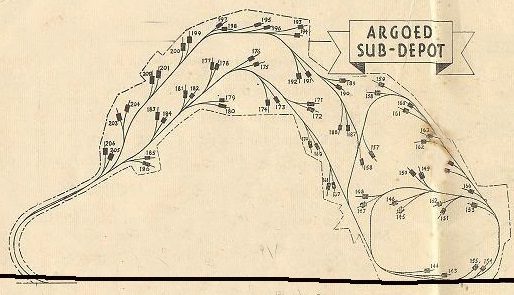
Of the remaining two untouched coaches, the first was allowed to rot away until closure, the other, “a composite, was hauled into Ballinamore shops in 1958 and given a completely new body. It was second-class only and extended the full length of the frame, the familiar end platforms disappearing and inward-opening doors being provided instead. The edns were blocked off and there was no access from the next vehicle.” [1: p152]
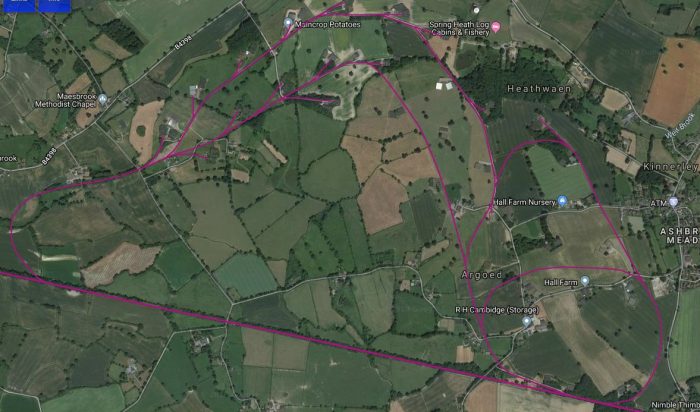
“In 1954, the CIE made an effort to relieve the situation by giving the line its first ‘foreign’ coaches – two from the West Clare, though originally of Tralee & Dingle origin.” [1: p152]

Flanagan provides a full list of all the C&L carriages: [1:p153-154]
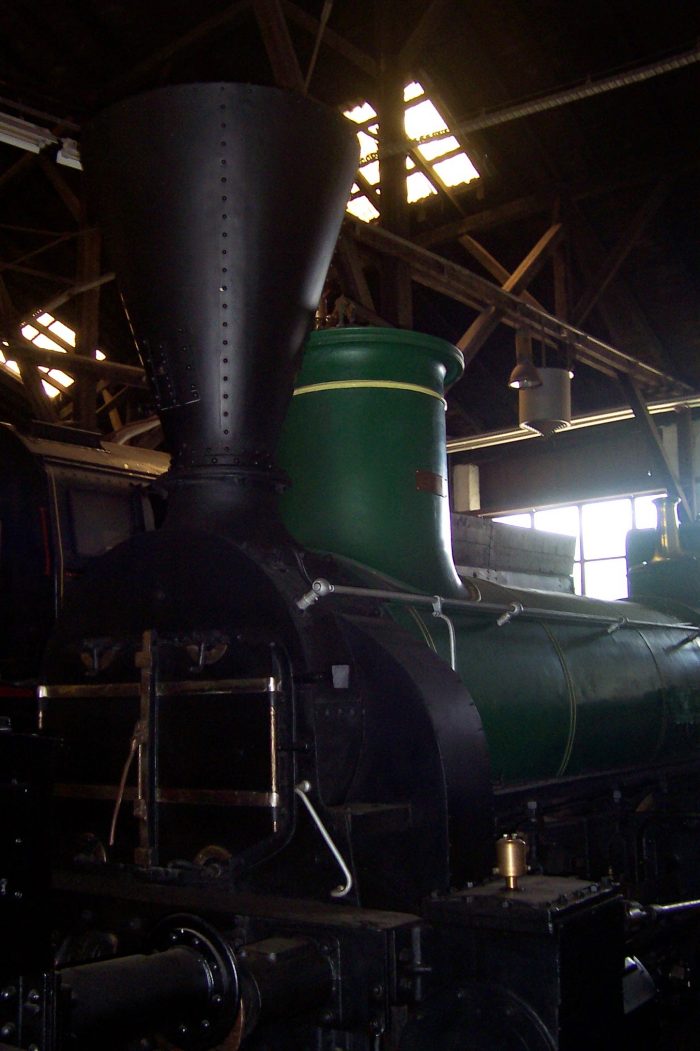
No I Composite: Derelict in GSR livery in Ballinamore to 1958. Then rebuilt in C&L shops as all-second. Transferred to West Clare in June 1959 and used in traffic and later as P.W. sleeping-car on lifting train. Body sold to Bord na Mona in Bellacorick, Co Mayo.

No 2 Composite: Converted to third 1900-07; written off 1950.

No 3 Composite: Converted to third 1900-07; written off 1950.

No 4 Composite: Sent by GSR to Inchicore for repairs; came back with ‘cardboard’ sides. Very little used on return. Frame again sent to Inchicore 1951 but scrapped there.

No 5 Composite: Converted to brake-composite 1945-6 and painted green. Panelling later covered with painted sheet aluminium. On closure sent to Dromod and later brought to Belfast Transport Museum.

No 6 Composite: Converted to brake-composite 1950. Little used at end (No 5 was regular tramway carriage). Body sold to Gaelic Athletic Association 1959 and now in use as changing-room at sports-field in Ballinamore.

No 7 Composite: Sent to Inchicore with No 4 by GSR. Also little used on return. Frame also sent to Inchicore 1951 for new body. Returned December 1953 as `bus-coach’. New body all-second. On closure, sent to Dromod and fittings removed. Sold to Bord na Mona in Lanesboro’, Co Longford.

No 8 Composite: Converted to third 1899; written off 1943.

No 9 Third: Written off 1943.

No 10 Third: Written off 1950.

No 11 Third: Lasted till closure (then scrapped) but, although used in 1949-50 period on tramway, had been derelict for years.

No 12 Third: Written off 1943.

Coach No. 12 was a third class coach. It is shown here newly repainted in 1931. [1: between p100 & p101]
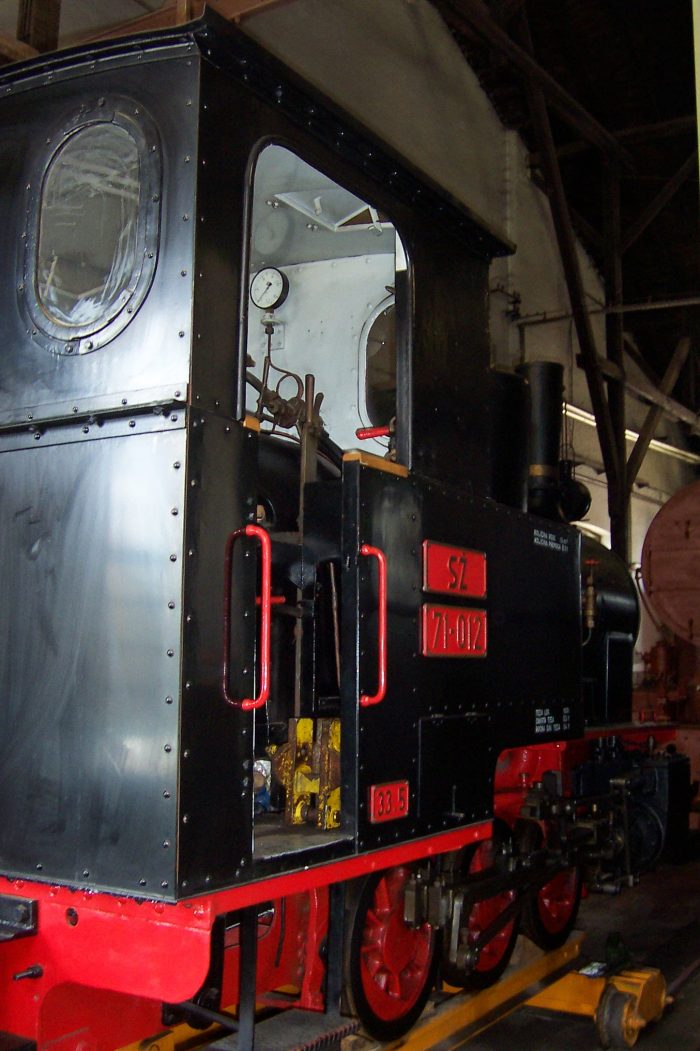
In 2019, Flanagan’s list needs to be reviewed in the light of 50 years of further developments ….

Coach No. 1: Flanagan says that this was on the West Clare Railway for a short while. I have not been able to follow up on the subsequent history and demise of the coach. Worsley Works makes a kit of this coach and carry a picture of it circa 1959 in West Clare colours.Model of Coach No. 1, kit by Worsley Works, built by Simon Starr. [15]

Coach No. 5 (‘6’):  is shown in this early postcard from what was the Belfast Transport Museum. The card was part of a restoration appeal in the early 1960s. Have they got the number wrong? Or did Flanagan?cl-belfast-transport-museum-appeal-pcIn the days before the new Irish Transport Galleries were built at the Ulster Folk & Transport Museum in Cultra, the collection was housed in a cramped old warehouse in Witham Street, Belfast. The carriage featured in this early 1960s card of Witham Street has since been fully restored and is on show at Cultra. [12] Further investigation suggests that the correct designation for the coach under renovation in Belfast was No. ‘5’. The Ulster Folk & Transport Museum now lists it as such. [13]Model of Coach No. 5, kit by Worsley Works, built by Simon Starr. [15]This image shows either Coach No. 5 or Coach No. 6 after conversion to a brake-composite. [1]The image above shows either Coach No. 5 or Coach No. 6 after conversion to a brake-composite, at Ballinamore. [17]

The adjacent image shows Coach No. 5 at the Ulster Folk & Transport Museum and was found on the Chester Model Railway Club website. [18]

Below, there are two images of the interior of Coach No. 5, also sourced from the Chester Model Railway Club website. [18]

The first shows the interior of the 1st Class compartment. The second shows the interior of the 3rd Class compartment. Despite being more plush, the 1st Class compartment was no warmer than the 3rd Class compartment – neither had steam heating! [18]

Coach No. 6:  Was used as a changing room at Ballinamore. I have been unable to verify its life at Ballinamore after the closure of the C&L, nor have I found details of its demise.

Coach No. 7: Flanagan indicates that this coach was passed to the Bord na Mona Railways in Lanesboro’, Co Longford. This picture shows Coach 7L dumped at BnM Mountdillon Works near Lanesborough in 1970, © A. Wilson. [29]The carriage was purchased as a chassis minus it’s body by the Irish Steam Preservation Society in 1972 and moved to Stradbally where it was shortened and the bogie centres relocated to shorted it to 20ft and allow it negotiate the curves of the line, © Ernie Shepherd. [29]7L in 2018 at Stradbally Railway Works it’s 1973 body still going strong and 1887 underframe and bogies with CL&RR axleboxes retained. [29]

Other Coaching Stock: The C&L had 6 brake vans which measured 15ft 6ins in length and 7ft in width. Panelling on the brake vans originally matched that on the coaching stock. As built they had a birdcage lookout at one side. Once refurbished the birdcage lookout was lost and the sides were panelled in Aluminium.Brake Van no 17L after cladding with aluminium, also at Ballinamore. [17]

There were just two horse boxes and high were numbered 19 and 20. They carried a dark blue livery with white lettering.The two horse boxes were number 19 and 20. This is No. 20. The picture was taken in 1949. [1: between p100 & p101]

The C&L had two milk vans to cater for creamery traffic. They were also in dark blue livery but we’re also fitted as brake vans and could often be seen acting in that capacity.This image shows a model in 00n3 of one of the milk vans in its later livery with CIE. The image comes from the Chester Model railway Club website. [16]
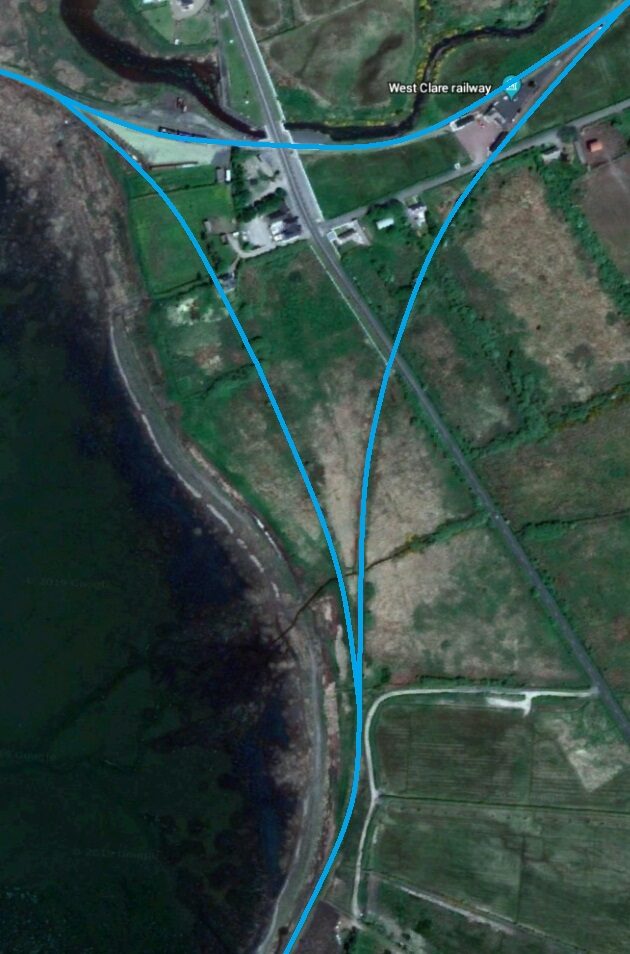
Timber trucks were provided, just 2, which also were designated as coaching stock.

“At its peak, the C&L coaching stock comprised twenty-five vehicles, if which half were carriages.” [1: p155]

Foreign Coaches: vehicles were transferred from the Tralee & Single. There were two, numbered 21L and 22L. The former was a 30ft. composite coach, the latter was originally a brake third but converted to a van in 1940. 21L was renovated internally on arrival at Ballinamore and again in 1959, when it was sent to the West Clare for further use. [1: p155]This picture comes from the Chester Model Railway Club website [16] and shows, to the right, vehicle 22L referred to above, modelled in 00n3 scale. In addition, the picture includes two wagons used on the C&L which are referred to below.

Wagons: The C&L first considered wagons in October 1886. The order which was finally placed with Metropolitan [20] was for “forty open, forty covered and twenty cattle wagons. In addition, two timber trucks were obtained. Of the covered wagons, half were close-roofed and the rest were ‘convertibles’, that is, they had an open centre portion in the roof and could be used for cattle. When used formgoods, tarpaulin covers were employed. The original numbers were  1-40 open; 41-80 goods; 81-100 cattle; 101-102, timber.” [1: p156]Convertible Wagons at Dromod. [19]

Later, in 1888, six ballast wagons were purchased from the Bristol Carriage & Wagon Co. [22] This number was insufficient. The traffic manager asked for 20 more. The board decided on seven, which were purchased in 1889 from Metropolitan. [20] By 1893, the traffic manager was again asking for an increase in allocated stock. The board chose to take no action. It was not until the C&L began building it’s own wagons at Ballinamore that the stock was increased. The first wagon out-shopped from Ballinamore was an open wagon which was in use by 1899. This was followed by two convertibles. [1: p156]

In 1903, an order for a further 20 convertibles was placed with R & Y Pickering of Glasgow. [24] This was followed, in 1911, by a further order for 10 open and 10 covered wagons from the same supplier. (The traffic manager had requested 50 of each type!) This was the last significant sized order to placed outside the company and indeed the only new wagons after this date are listed by Flanagan as: “one open wagon, … built in 1913, a second in 1917, and two timber trucks (to supplement the original pair for the Dromod-Bawnboy timber traffic) in 1918; all were built at Ballinamore.” [1: p157]

Flanagan also provides general details of all of the wagon types and of various re-numberings which took place. The wagon livery was grey with black ironwork. Lettering and numbering were in white. The ballast wagons were the only exceptions, having a special yellow livery of their own; lettering was in black.” [1: p158] All wagons were 15ft 6ins long and 7ft wide. They had a 7ft wheelbase with 2ft diameter wheels.

As the years progressed a series of ‘foreign’ wagons arrived at the C&L. twenty were borrowed from the NCC by the Ministry of Transport, arriving in 1920. In 1934, thirty-eight open wagons were transferred to the C&L, all but six came from the Passage line. The remaining six appear to have been built new at Inchicore, although it is actually more likely that they were new bodies on old Cork & Muskerry wagons. With the wagons came two goods brake vans of Passage origin.

In 1942, a further 12 wagons came to the C&L from the Clogher Valley Railway, 8 open and 4 covered. No further wagons were added until 1953 when the Tralee & Dingle closed and three ballast wagons were transferred to the C&L. Finally, in 1957, a total of 10 wagons (8 Muskerry and 2 Clogher Valley) were sent to Ballinamore from the West Clare. Many of the wagons transferred in the latter years of the C&L saw little use as they had coupling problems and/or were in poor condition. [1: p159-162]

Other Stock: The C&L had two locomotive department service vehicles – a hand operated accident crane (ex Cowan & Sheldon) [25] which arrived in 1887 and a wooden four-wheeled bogie which was used for moving equipment around the Ballinamore yard and for moving coal to Corgar. [1: p163]

References

  1. Patrick J. Flanagan; The Cavan & Leitrim Railway; Pan Books, London, 1972.
  2. https://www.ebay.co.uk/itm/Cavan-Leitrim-NG-Railway-3-different-Sets-of-10-6×4-Black-White-photo-prints-/292954701892, accessed on 5th June 2019.
  3. https://belturbetheritagerailway.com, accessed on 7th June 2019.
  4. http://catalogue.nli.ie, accessed on 8th June 2019.
  5. The series of images was sent to me by Darragh Connolly of the C&L. Those not credited to others are C&L copyright.
  6.  “Industrial Notes and News”. Bulletin. 1031. – Industrial Railway Society. accessed in May 2019. p. 13.
  7. https://en.wikipedia.org/wiki/Cavan_and_Leitrim_Railway, accessed on 5th June 2019.
  8. http://discovertheshannon.com/listings/belturbet-railway-station, accessed on 6th June 2019.
  9. https://commons.wikimedia.org/wiki/File:C%26LR_4-4-0T_2_”KATHLEEN”.jpg, accessed on 22nd June 2019.
  10. https://youtu.be/b3ZsG-4pFWg, accessed on 22nd June 2019 and shown beneath these references.
  11. http://www.rypn.org/forums/viewtopic.php?f=1&t=4246, accessed on 22nd June 2019.
  12. https://irishpostcards.wordpress.com/transport, accessed on 25th June 2019.
  13. https://en.wikipedia.org/wiki/Ulster_Folk_and_Transport_Museum, accessed on 25th June 2019.
  14. http://homepage.eircom.net/~yarpie/clr/archive/11.html, accessed on 25th June 2019.
  15. http://www.worsleyworks.co.uk/Image-Pages/Image_NG_Irish_C&L_4mm.htm, accessed on 25th June 2019.
  16. http://www.chestermodelrailwayclub.com/stock.htm, accessed on 26th June 2019.
  17. https://picclick.co.uk/Cavan-Leitrim-NG-Railway-3-different-292954701892.html, accessed on 26th June 2019.
  18. http://www.chestermodelrailwayclub.com/Cultra.htm, accessed on 26th June 2019.
  19. http://homepage.eircom.net/~yarpie/clr/archive/10.html, accessed on 26th June 2019.
  20. The Metropolitan Railway Carriage and Wagon Co. of Saltley Works, Birmingham was registered in 1862 by Joseph Wright and Sons with a nominal capital of £100,000. In 1864, that share capital was increased to £200,000. In 1902, it was incorporated into the Metropolitan Amalgamated Railway Carriage and Wagon Co. Eventually, in 1929 the next successor company, Metropolitan Carriage, Wagon and Finance Co was merged with the railway business of Cammell, Laird and Co to form Metropolitan Cammell Carriage, Wagon and Finance Co better known as Metro Cammell. [21]
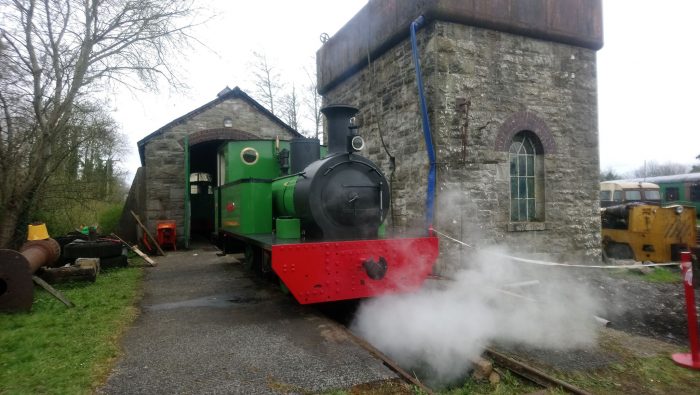
  21. https://www.gracesguide.co.uk/Metropolitan_Railway_Carriage_and_Wagon_Co, accessed on 30th June 2019.
  22. The name “Bristol Wagon & Carriage Company”  was applied to a company on Lawrence Hill, Bristol. Prior to 1889 its name was the Bristol Wagon Works Co. By 1905 the company was also producing road vehicles. It produced a stationary internal combustion engine – ‘The Victoria Engine’ – from 1906 to around 1920. During that time around 3,500 were built. By 1915, it was one of 15 established companies involved in manufacture and hiring-out of railway rolling stock. It was acquired in 1920 by the Leeds Forge Co. [23]
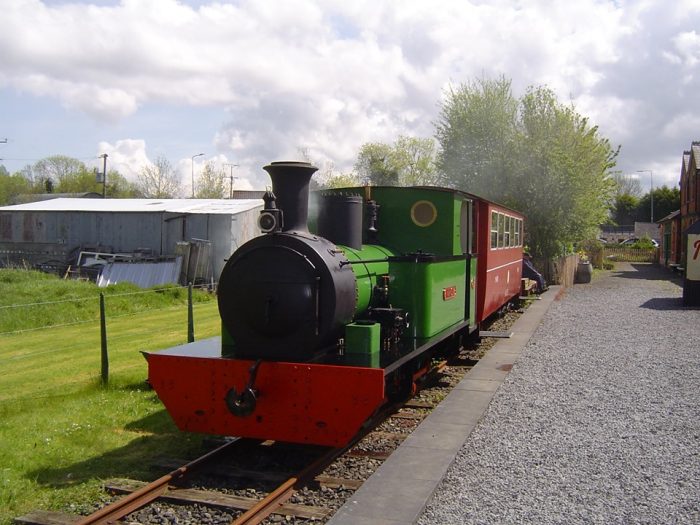
  23. https://www.gracesguide.co.uk/Bristol_Wagon_and_Carriage_Works_Co., accessed on 30th June 2019.
  24. R. Y. Pickering and Co. of Wishaw were manufacturers of railway carriages, wagons and rails and were established in 1864. Around 1900 they produced a few steam railcars but by 1911 they were primarily a manufacturer of Carriages and Wagons for the Railways. Later they diversified and then refocussed so that by 1961 they were general engineers and fabricators, producing welded marine engine fabrications, ship and barge hatch covers, ships welded sternframes and rudders; welded tanks; machine tool fabrications; screening equipment; foundry plant; winches; oil drilling masts and substructures; forgings and drop stampings; sheet metal work and had 600 employees. [26]
  25. Cowans, Sheldon and Co, crane makers, of Carlisle began in a small way at Woodbank near Upperby. John Cowans and Edward Pattinson Sheldon had been apprentices to Robert Stephenson & Co. on Tyneside. There they had been friendly with a William Bouch from Thursby, and it was his younger brother, Thomas, who eventually found the premises at Woodbank, which had been a calico works. In 1866, the company built their first railway recovery crane. They made cranes for the railways, heavy lifting gear which could be used to return locomotives that had gone off the rails to the right track. Cowans Sheldon’s fate was tied to the fate of the railways and the British engineering industry. Britain stopped being the workshop of the world. The postwar years saw increased competition. In 1961, the 450 employees found themselves working for the Glasgow firm of Clyde Crane and Booth and in 1982 the firm became Cowans-Boyd. Five years later, manufacturing ceased and only the design office team was retained in Carlisle. The giant sheds were demolished and beefburgers are now fried where once some of the world’s greatest cranes were made. [27]
  26. https://www.gracesguide.co.uk/R._Y._Pickering_and_Co., accessed on 1st July 2019.
  27. https://www.gracesguide.co.uk/Cowans,_Sheldon_and_Co., accessed on 1st July 2019.
  28. Helpful comments made by Darragh Connolly of the C&L at Dromod on 4th July 2019.
  29. Sean Cain, https://m.facebook.com/groups/2016302075275558?view=permalink&id=2311590155746747, accessed on 5th July 2019.