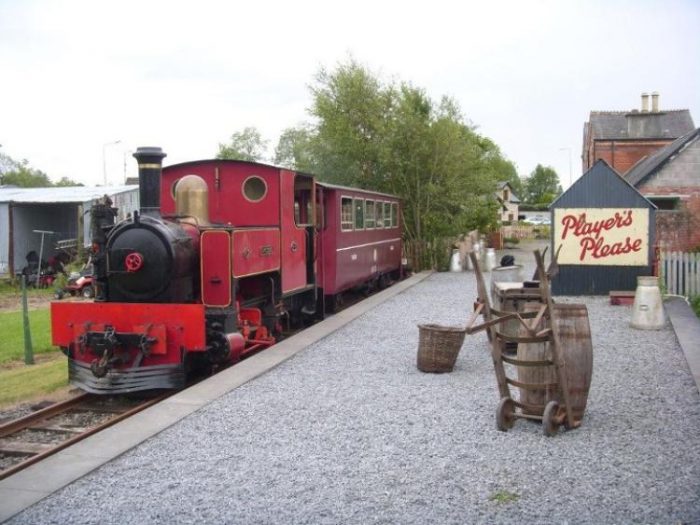
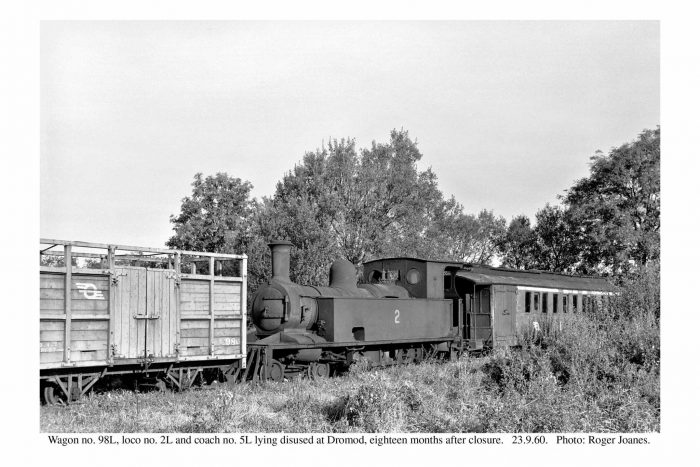
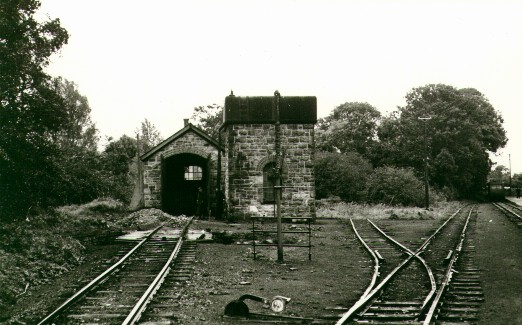
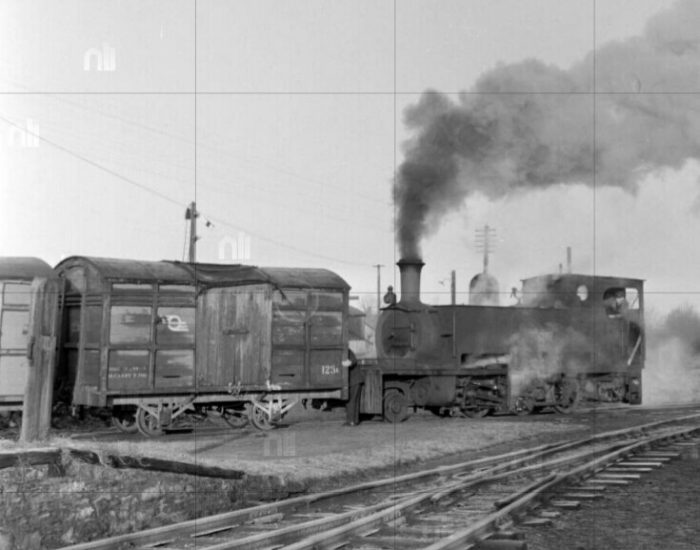
Category Archives: Cavan and Leitrim

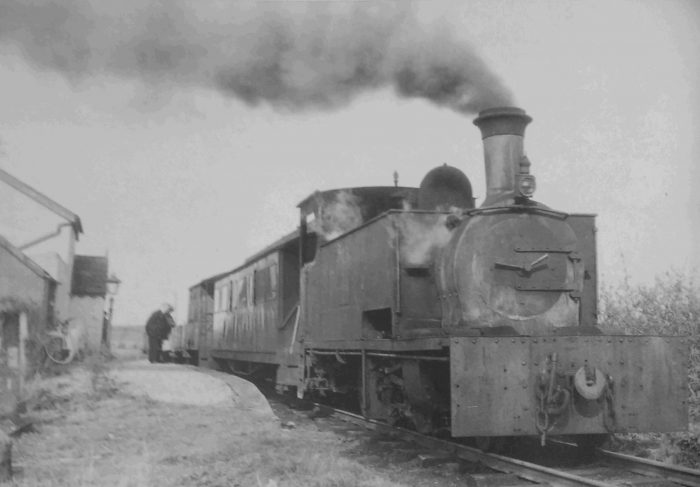
The Cavan and Leitrim Railway at Dromod again. …

It has taken me a while to get round to completing this article! ….

Saturday 6th May 2023 was the first time that I had been able to visit the Cavan & Leitrim at Dromod. A planned visit in 2020 was prevented by the COVID-19 pandemic and the associated lockdown which was enforced for our safety.

We were en-route, on 6th May, from Co. Donegal to Dublin after two great weeks following the route of the Burtonport Extension Railway between Burtonport and Letterkenny.

I had been intending to drop in to see the preservation society at Dromod either on the way to Co. Donegal or on the return journey. The second option worked in best with our travel arrangements.

My wife granted me an hour or so of freedom to explore the site at Dromod. Jo decided that she’d enjoy reading her novel more than traipsing around another railway related site. She had, after all, spent a good bit of her holiday walking along the track bed of abandoned railways.

My previous articles about Dromod and the first length of the Cavan & Leitrim Railway from Dromod to …. can be found on these links:

https://wordpress.com/post/rogerfarnworth.com/18449, and

https://wordpress.com/post/rogerfarnworth.com/19957.

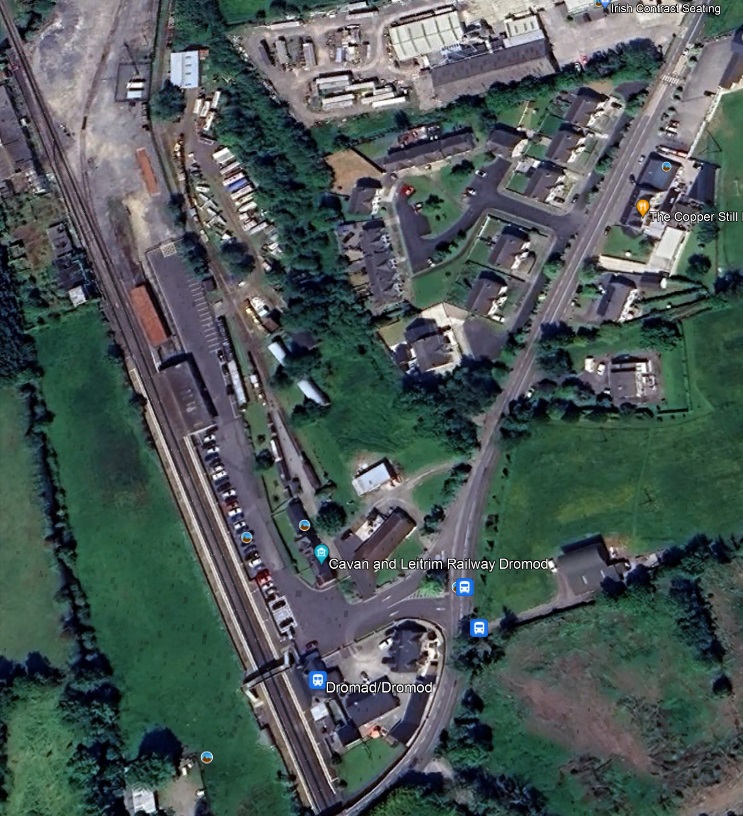
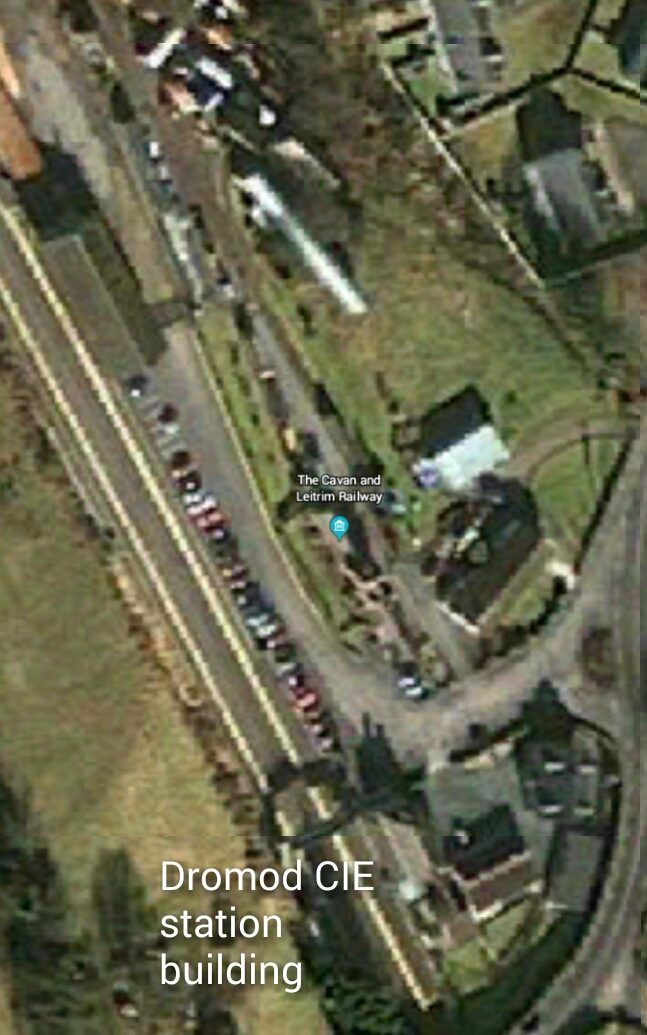
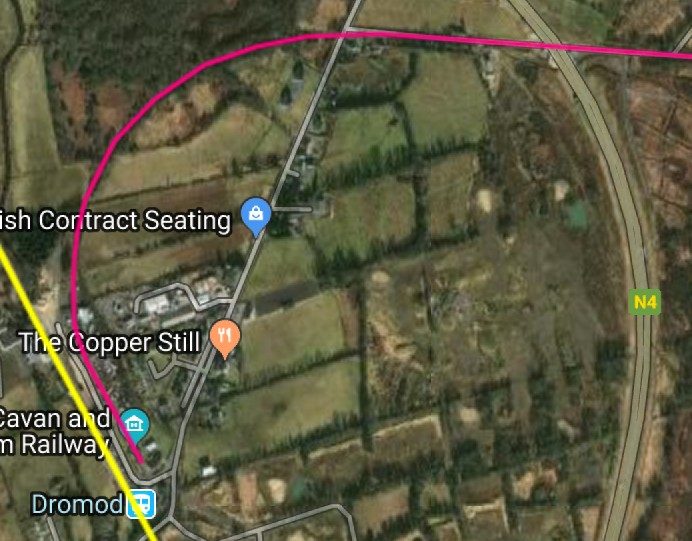
The first image below shows the site of the two stations at Dromod as they appear on Google Earth’s satellite imagery.

Dromod’s railway stations as they appear on Google Earth. [Google Earth, 18th July 2023]

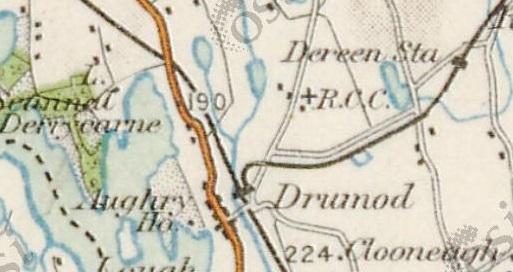
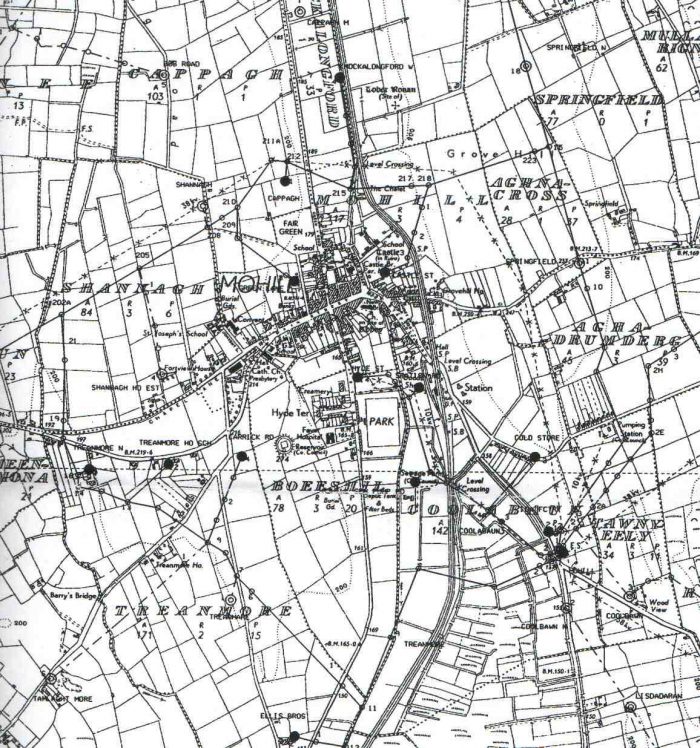
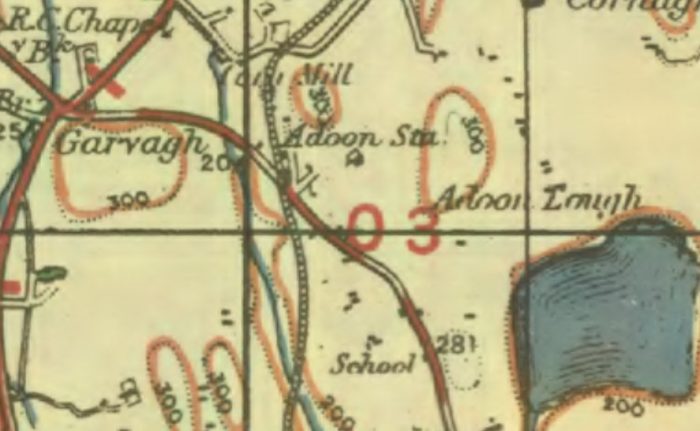
Drumod/Dromod on the 1″ OSi mapping of the mid-20th century. The Iarnrod Eireann Line runs from the centre-bottom of the image in a Northwest direction. The Cavan & Leitrim Railway curved away to the East from its terminus close to the mainline station.

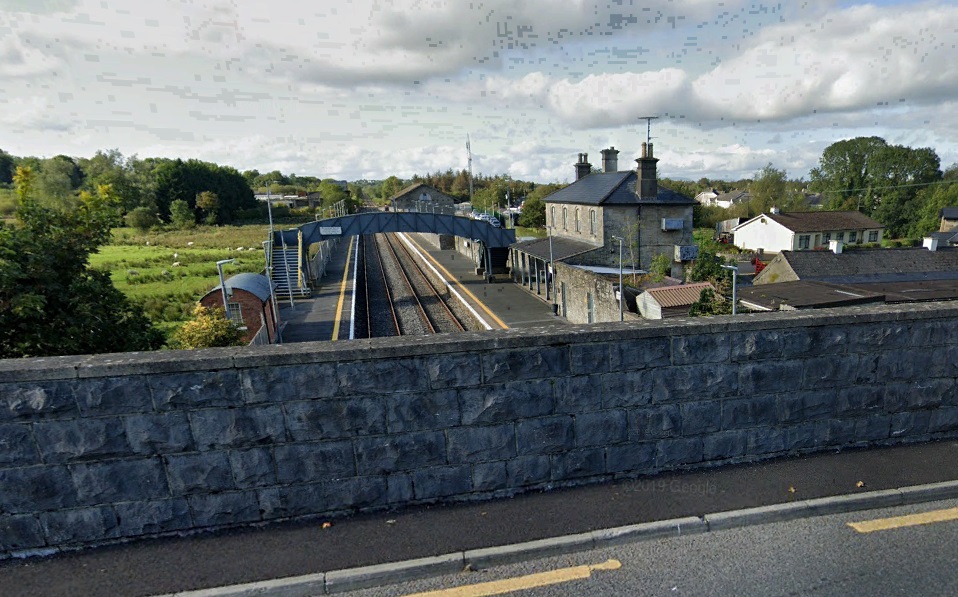
Dromod Iarnrod Eireann Railway Station seen from the road-bridge over the approach to the station from the South. The Cavan & Leitrim Station building is hidden behind the mainline building. The Goods Shed associated with the mainline station can be seen beyond the footbridge sitting at the end of the platform. [Google Streetview, September 2019]
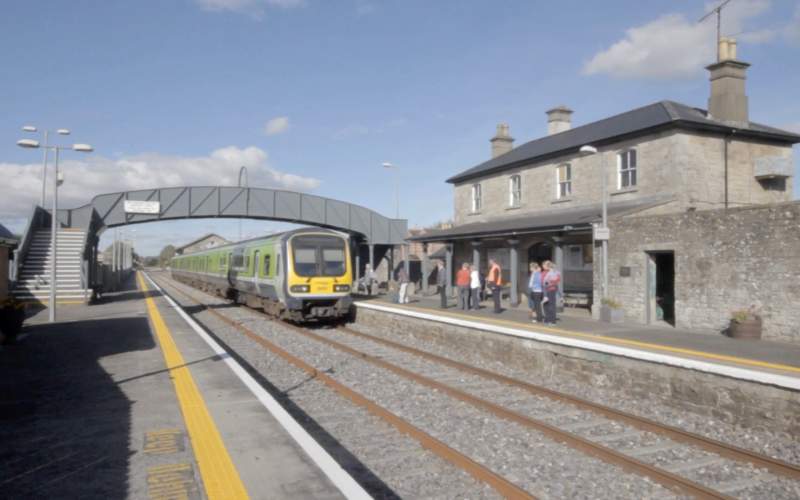
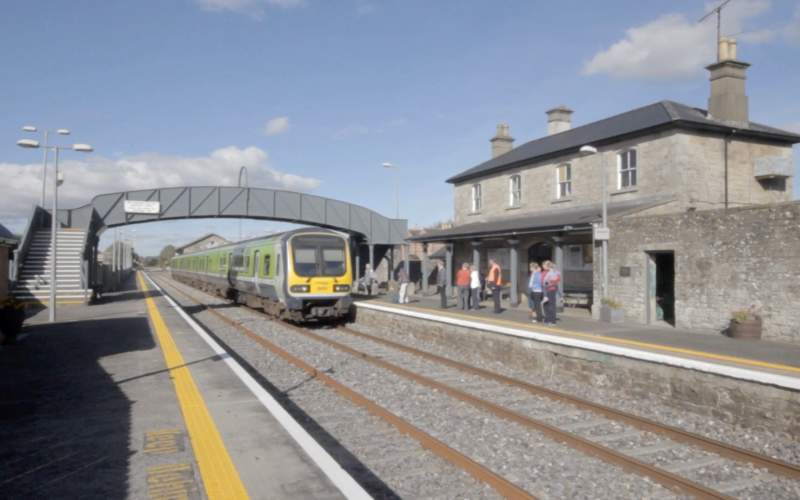
A platform level view of the Iarnrod Eireann Station looking North. The Cavan & Leitrim Railway Station sits behind the Station buildings in this view. Just visible above the train is the roofline of the mainline Goods Shed. [1]
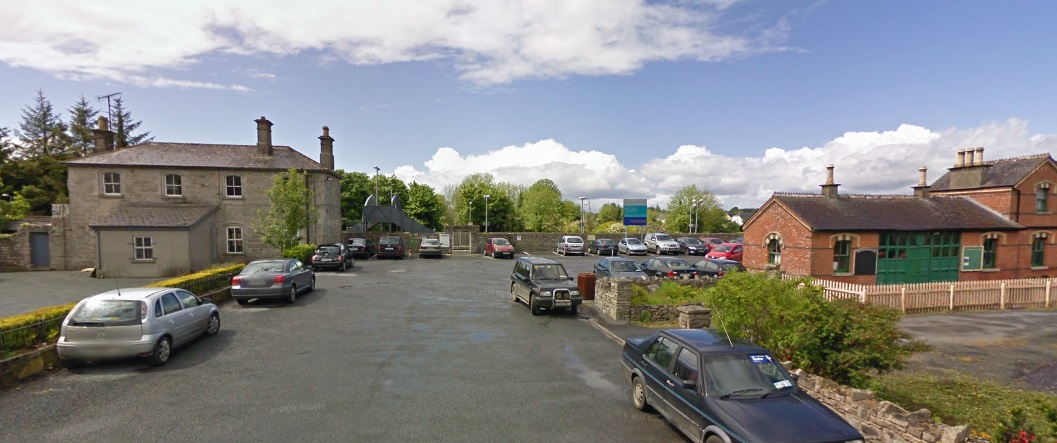
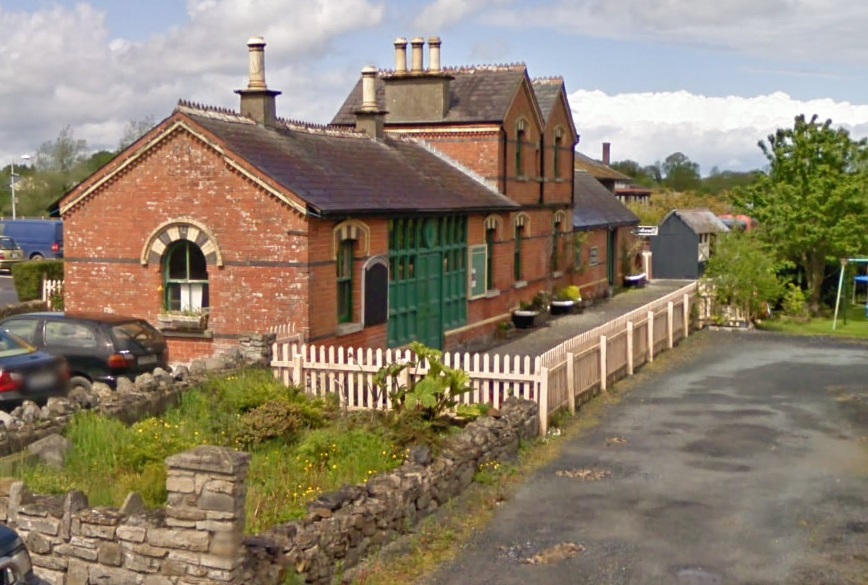
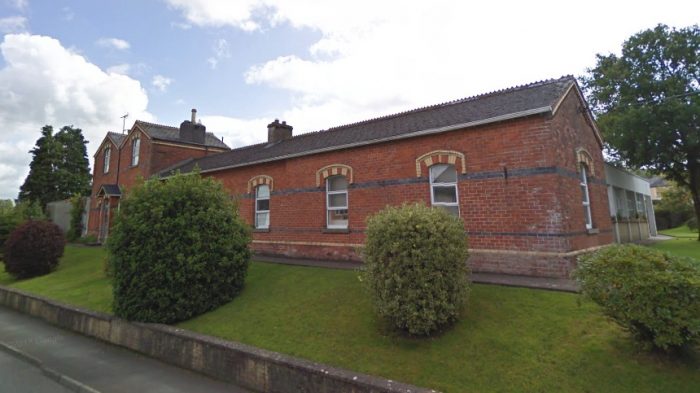
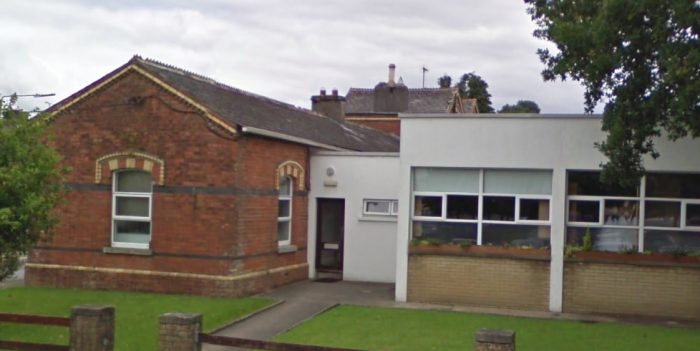
The Station Approach seen from the East. The Cavan & Leitrim Railway terminus can be seen on the right of the picture, the Iarnrod Eireann Station building is on the left. [Google Streetview, May 2009]
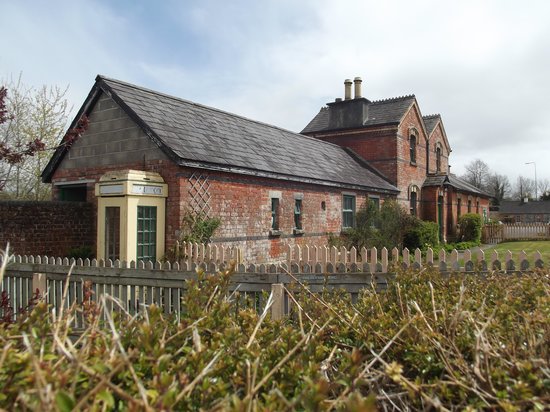
The Cavan & Leitrim Railway terminus buildings at Dromod as seen from the Station Approach to the mainline station. The platform face was approximately on the line of the picket fence.[Goggle Streetview, May 2009]
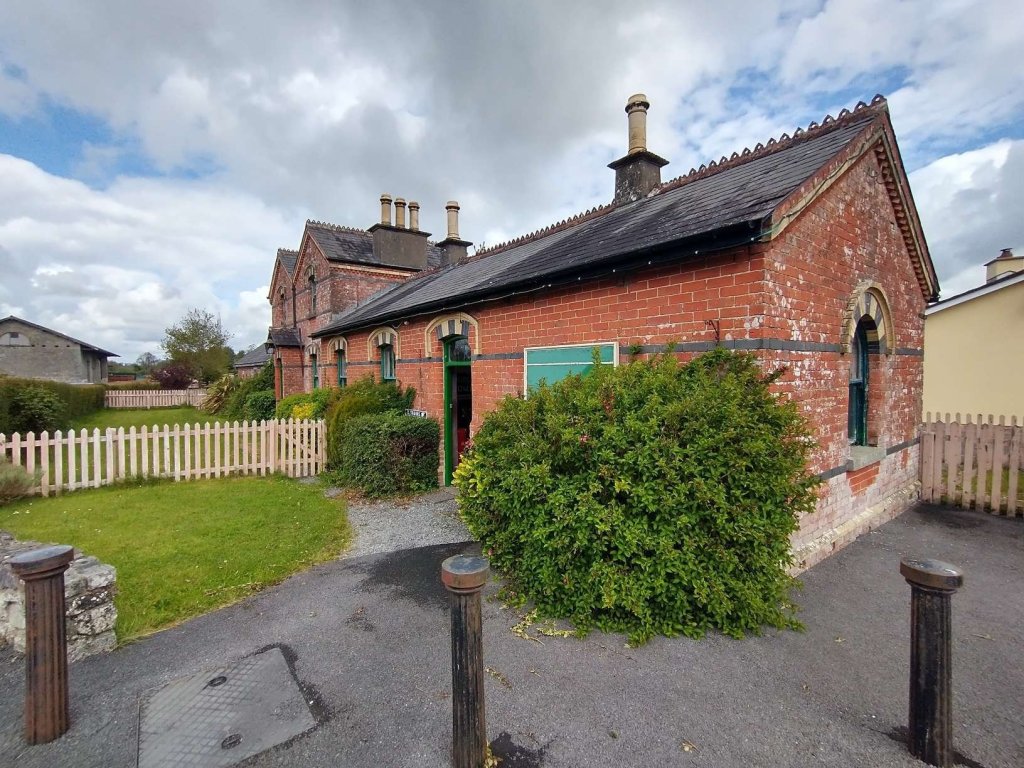
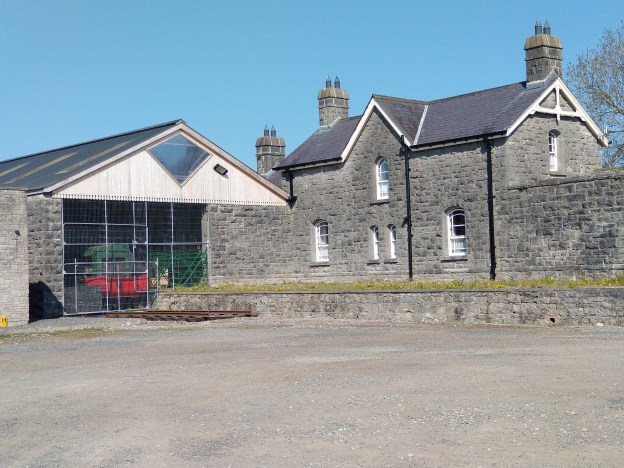
The street side approach to the station building. The photograph is taken looking North. [My photograph, 6th May 2023]
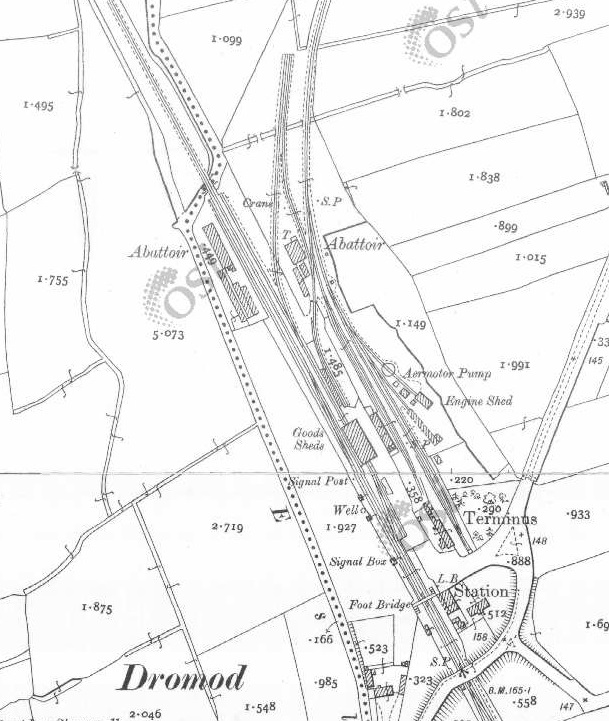
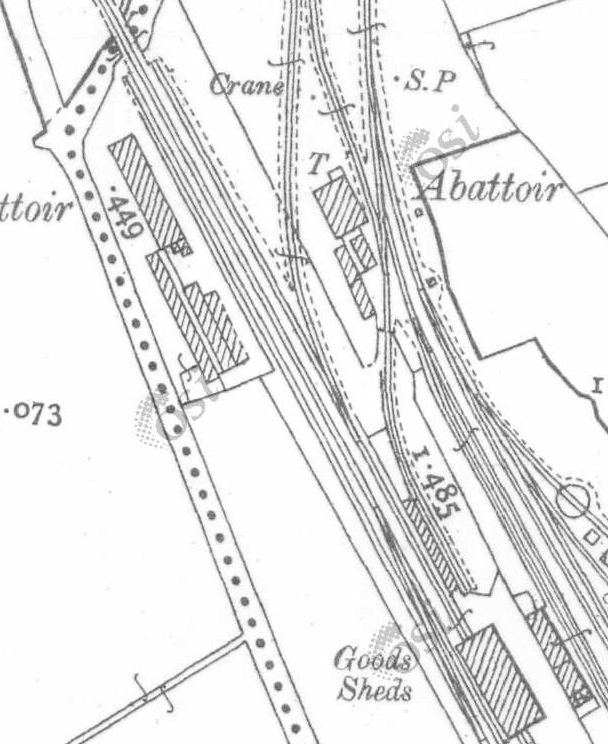
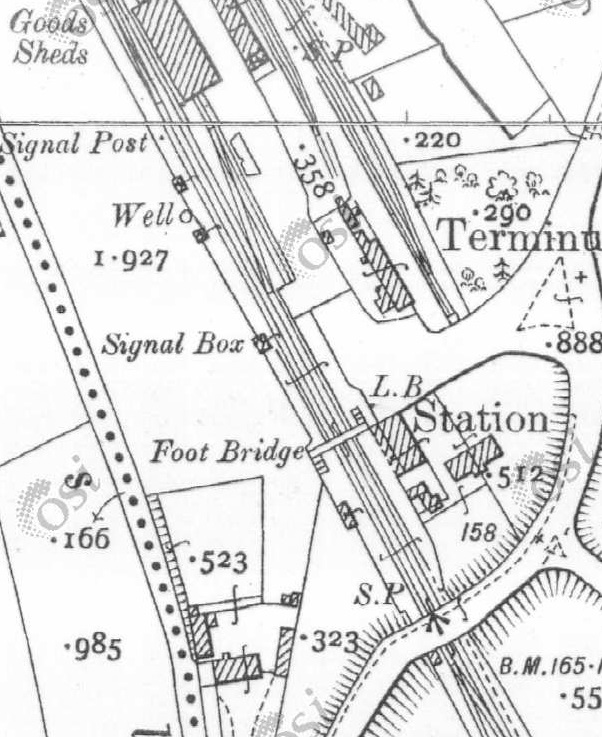
The two stations as they appear on the 25″ OSi survey of the early 20th century. The northern approach to each station seems to have been guarded by an abattoir! [2]
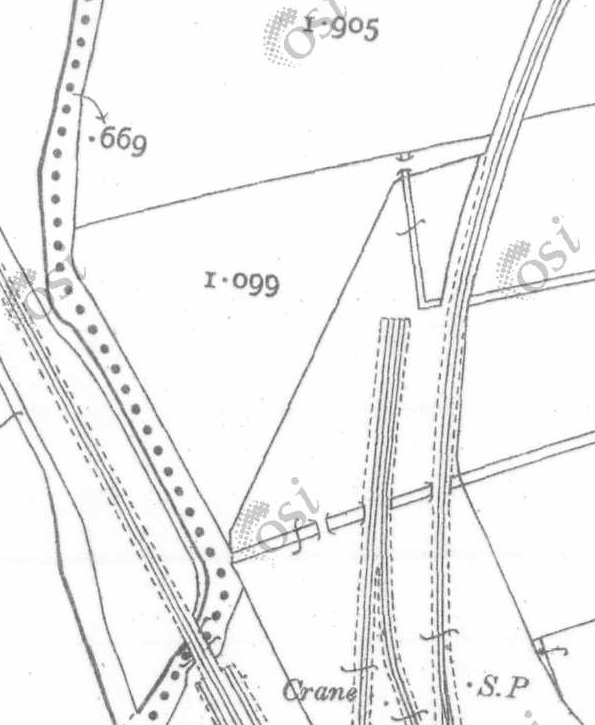
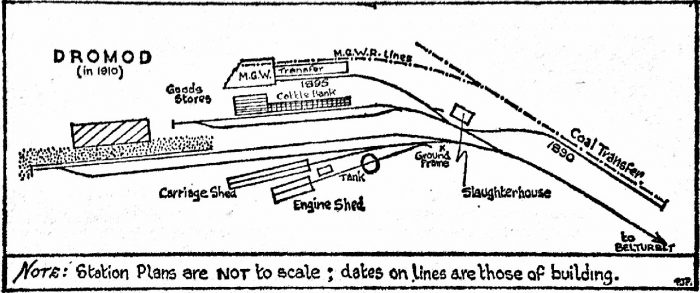
Three enlarged extracts from the same mapping make it easier to pick out details at the two station sites. North of the mainline Goods Shed, there appears to have been a goods transfer platform with the 3ft gauge siding on its East side and an Irish standard-gauge line on its West side. These three map extract do not properly show the Cavan & Leitrim Railway carriage and engine shed. The next map extract shows both these buildings which were to the North of the passenger facilities. [2]
This map extract from the 25″ OSi survey shows the Cavan & Leitrim carriage shed, engine shed and turntable close to the centre of the image, the standard-gauge Goods Shed and the transfer platform are to the left of the image. [2]

The preservation line is only short in length and extends as far as the limits of the site permits towards Mohill. However, it is rightly proud of its work and continues to achieve much more than might be expected given the relatively small number of volunteers. You can visit its website by clicking here. [3]

Trains run on Saturdays, Sundays and Mondays. The group also has a transport museum, with narrow-gauge trains of every gauge, buses, planes, fire engines and artillery guns from WW1 and WW2.

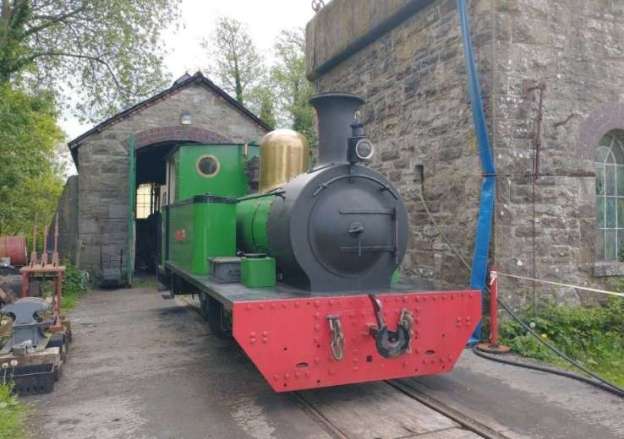
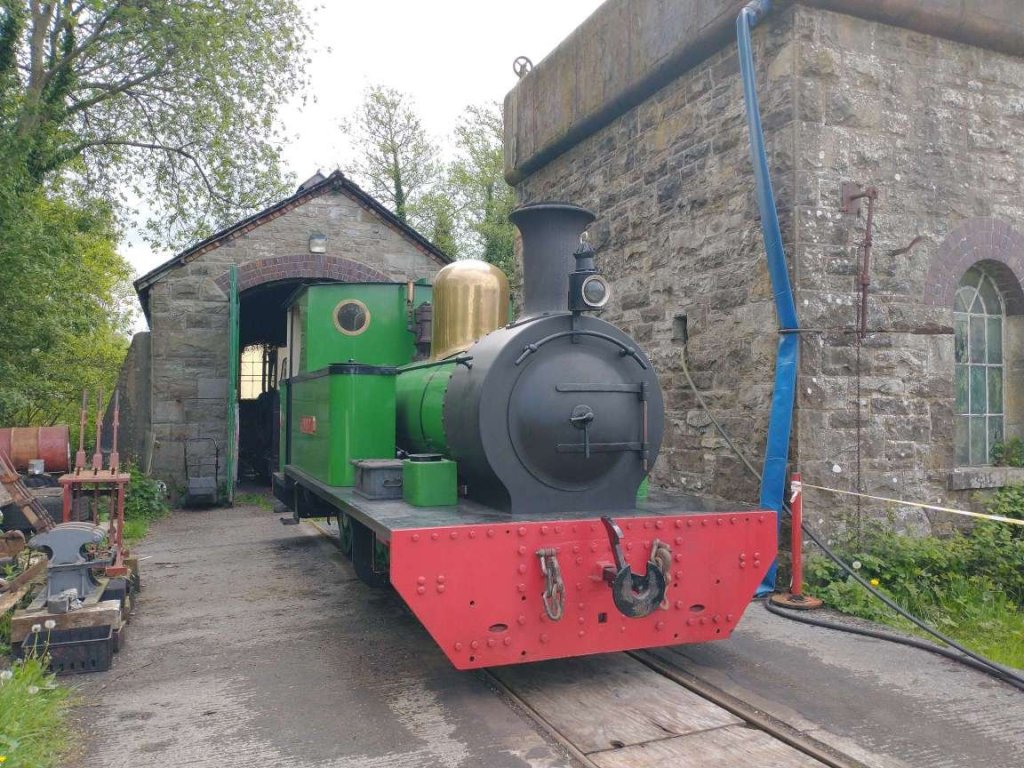
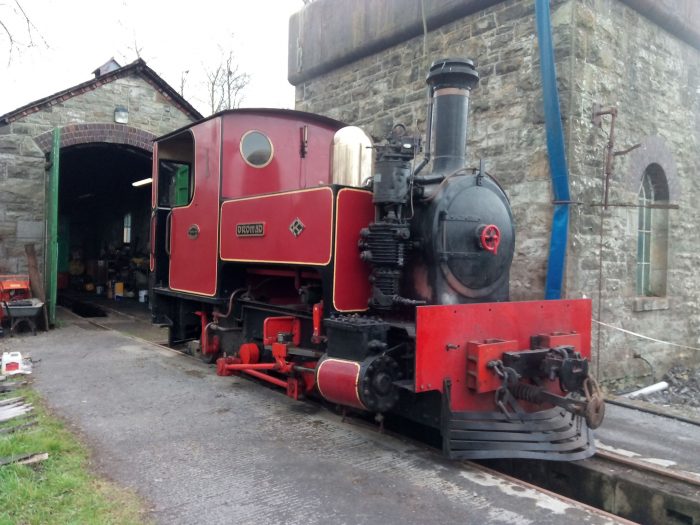
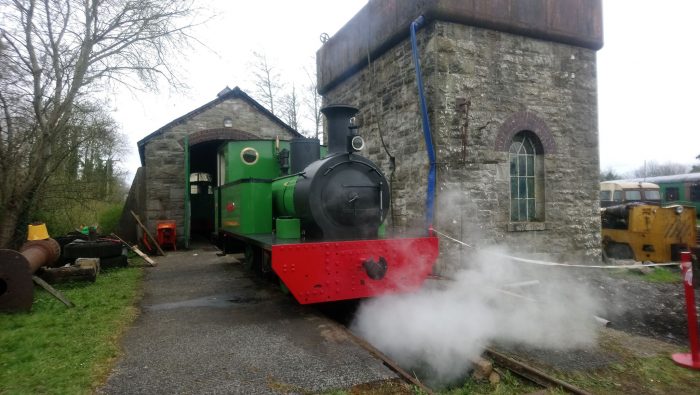
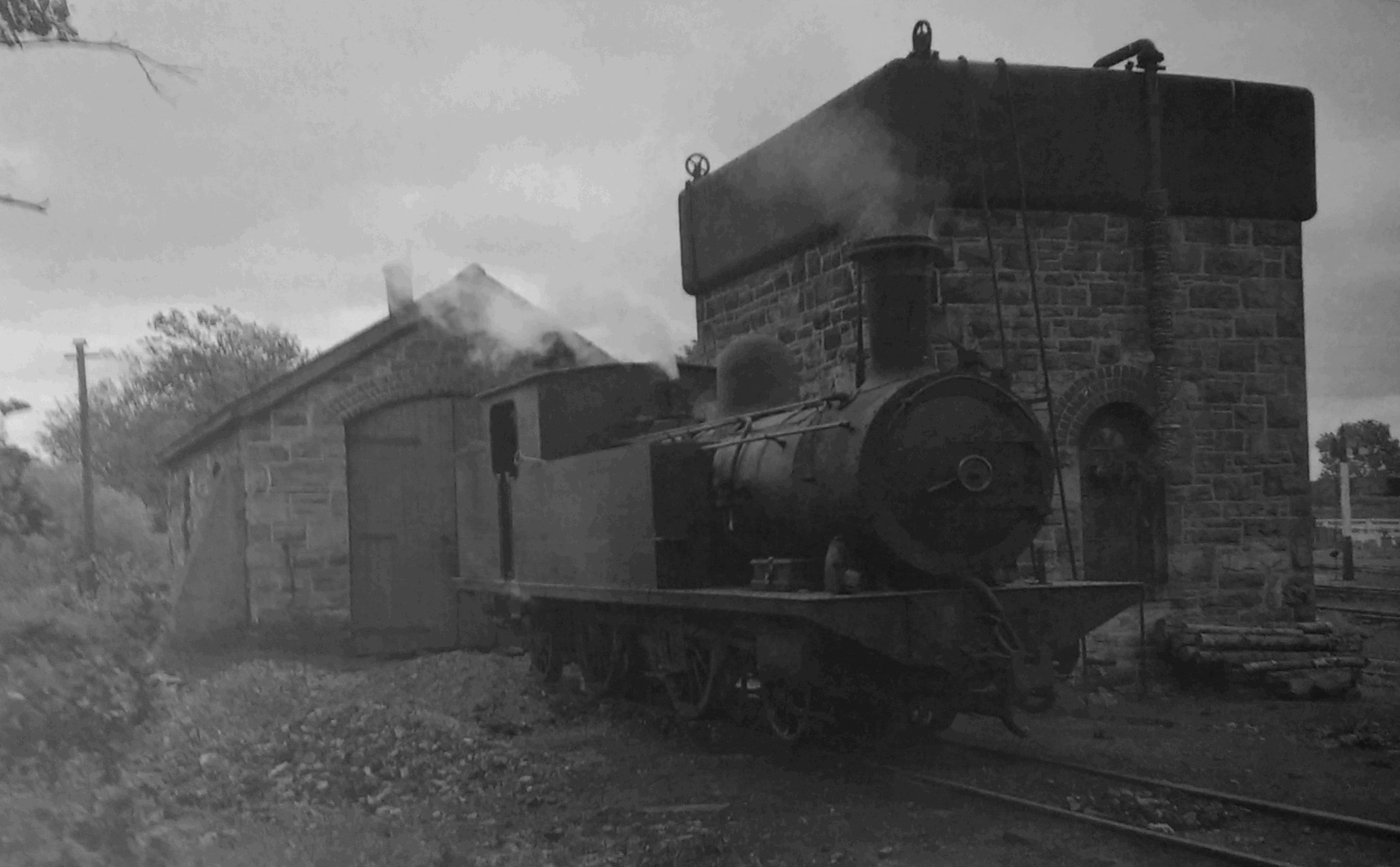
‘Nancy’ sits alongside the Water Tower, outside the Engine Shed, at Dromod. She was not in steam on 6th May 2023. [My photograph, 6th May 2023]

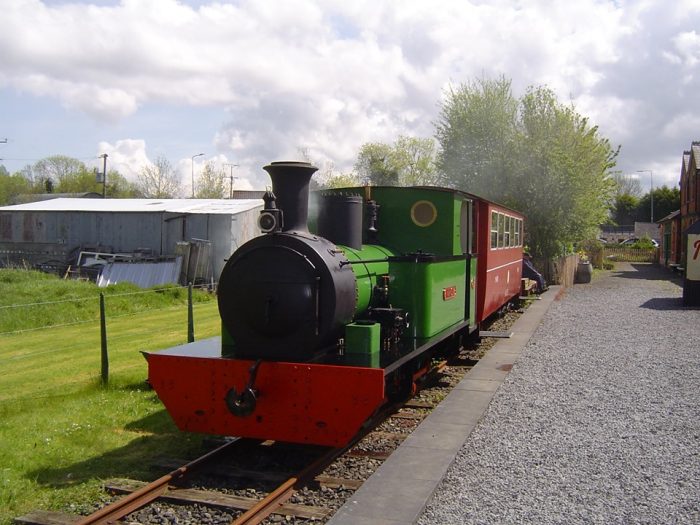
‘Nancy’ was refurbished in the years prior to the pandemic. Work was finally completed in 2019. ‘The Railway Hub‘ reported the completion of the work on 22nd September 2019: “The restoration of the Cavan & Leitrim Railway’s Avonside 0-6-0T Nancy is officially complete after 22 years’ work and £160,000 investment. The former ironstone loco returned to steam at Alan Keef’s Ross-on-Wye workshops in March, but was delivered to Dromod without its brass dome cover as this was still being manufactured by ‘The Dorset Copperfish’. The new dome was finally delivered by Alan Keef on 27th July, and C&L volunteers wasted no time fitting it to Nancy as a final finishing touch.” [4]

The pictures taken at the preservation/museum site below are predominantly my own and were taken on 6th May 2023. By no means are these an exhaustive survey of the exhibits at Dromod.

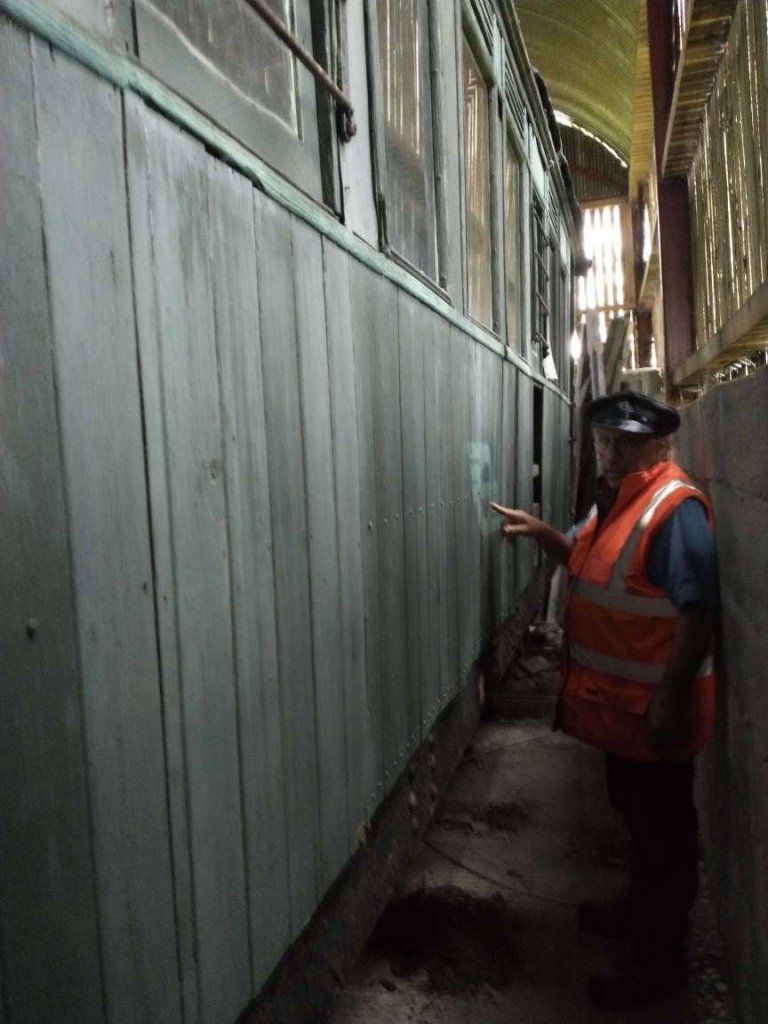
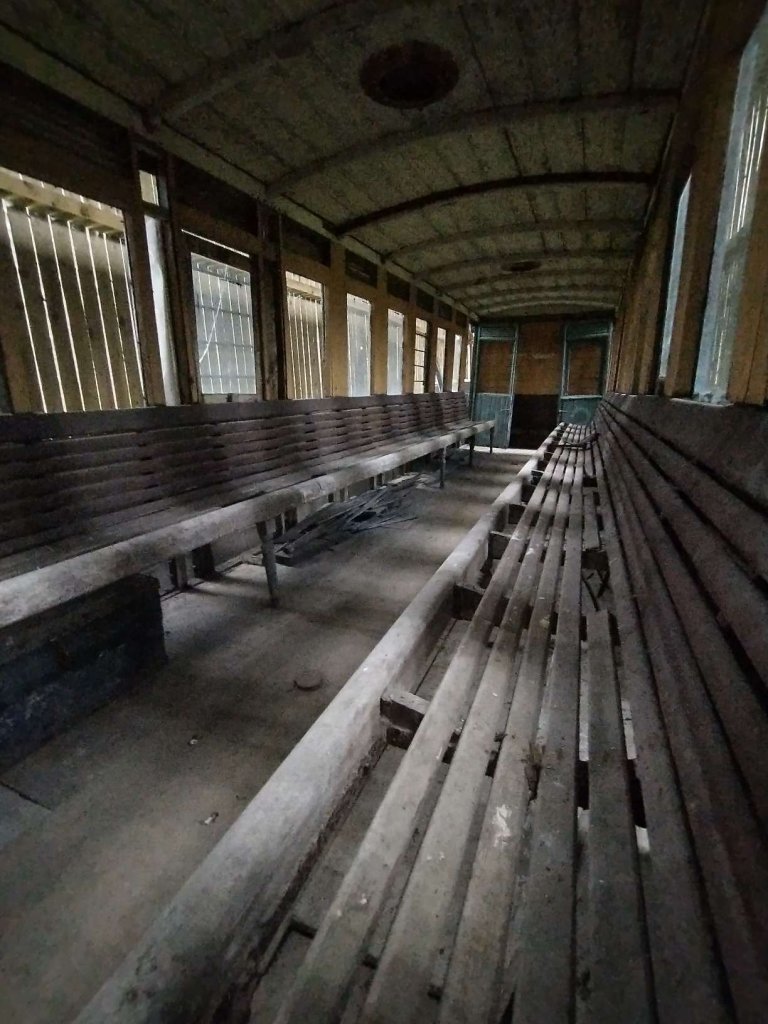
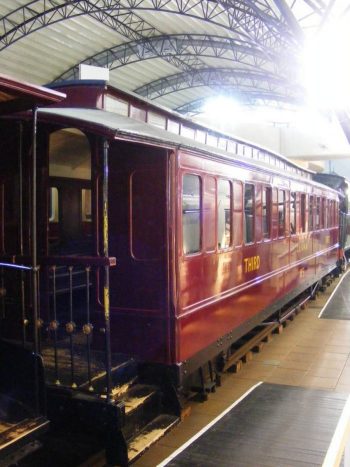
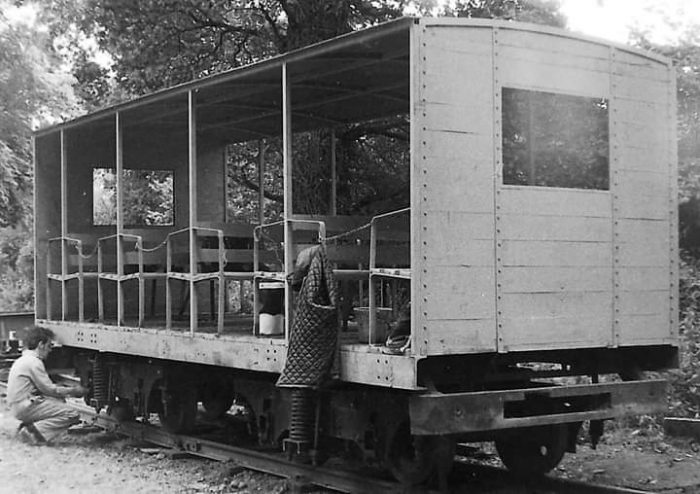
We start with Michael Kennedy showing me Tralee and Dingle Railway Carriage No.10 (1891) which is stored in the carriage shed at Dromod awaiting restoration.

Tralee and Dingle Railway Carriage No.10T (1891) which is stored in the carriage shed at Dromod awaiting restoration. Michael is pointing to the faded CIE logo on the carriage side. It was in 1945 that Córas Iompair Éireann (CIÉ) was founded, uniting the Great Southern Railways with the Dublin United Tramway Company. The name means “Irish Transport Service” in the Irish language. CIÉ began its operations on 1st January 1945 as a private company with shares traded on the Dublin stock exchange. The Tralee & Dingle Railway became part of its empire! [My photograph, 6th May 2023]
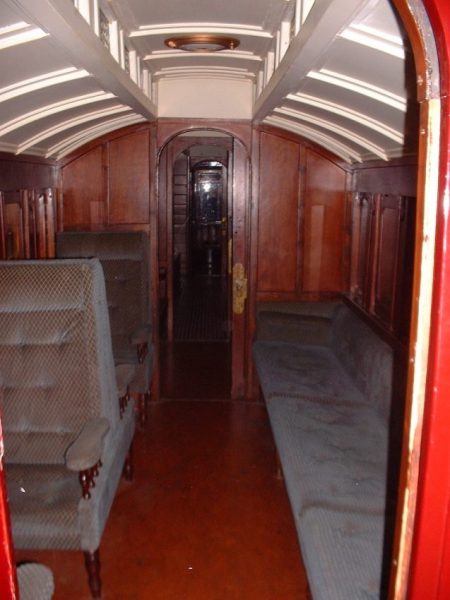
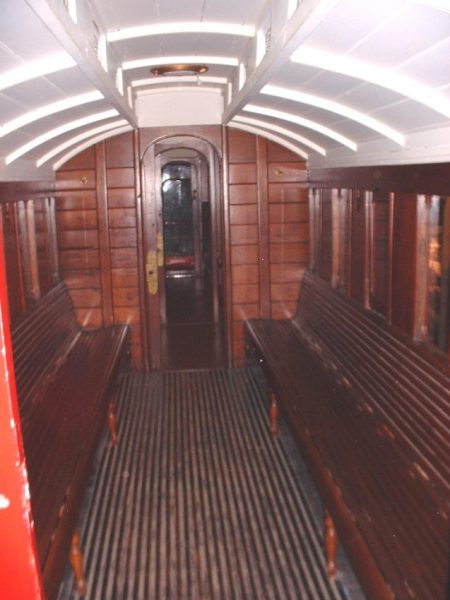
An internal view of Tralee & Dingle Carriage No. 10T which sits under cover awaiting restoration. [My photograph, 6th May 2023]

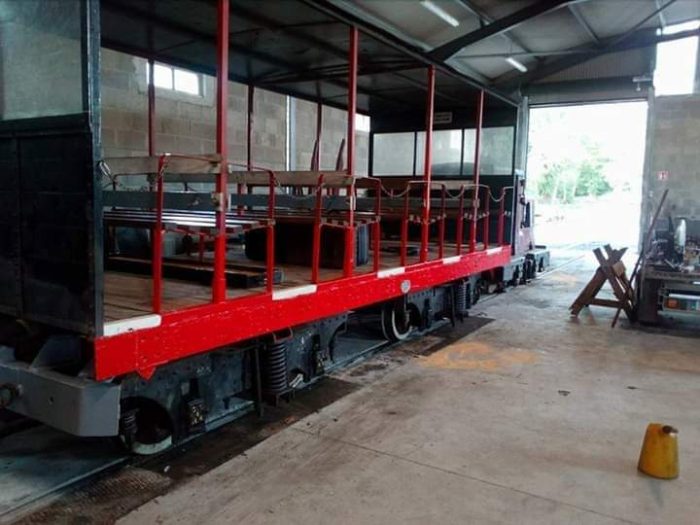
Tralee & Dingle Railway Carriage No. 10T sits in the Carriage Shed at Dromod awaiting restoration. It is one of a pair of Tralee &Dingle carriages (7T and 10T). Its sister (7T) is currently in Cumbria. Both carriages were built by the Bristol Wagon and Carriage Works, 7T in 1890 and 10T in 1891. They served on the Tralee & Dingle until it closed to passenger traffic in 1939 and we’re then moved to the West Clare Railway.

They served on the West Clare until the West Clare section was dieselised in the 1950’s and the carriages became redundant, they were then sold off as bodies and used as holiday homes and huts. Number 7T and 10T became huts for drainage contractor Gerry Walsh. Micheal Kennedy recovered the carriages a number of years back. 7T is being restored in Cumbria, as of 2023, work is ongoing on the bogies and chassis.

To find out more about these carriages and about donations to the work being undertaken please follow this link. [5]

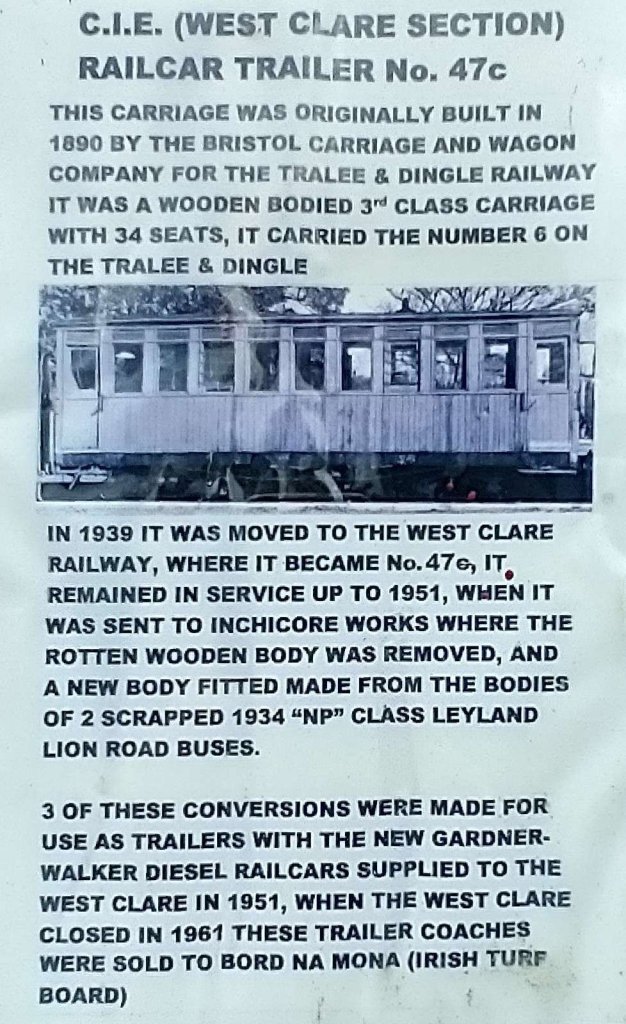
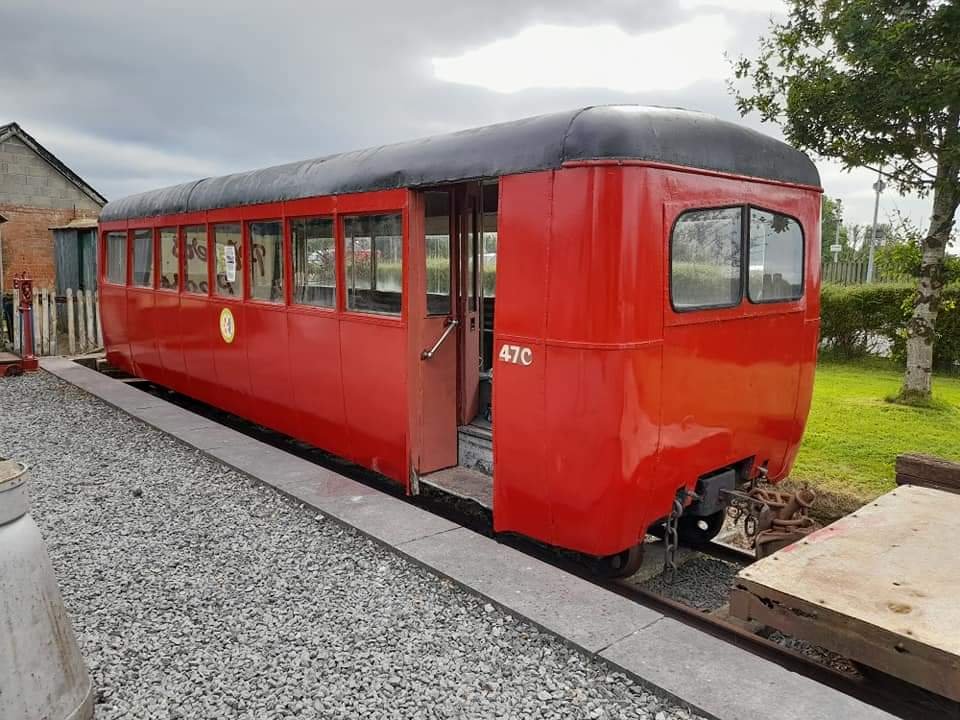
Also at Dromod is railcar trailer No. 47C of the CIE West Clare Section. Originally built in 1890 by the Bristol Carriage and Wagon Company for the Tralee & Dingle Railway as a wooden bodied 3rd Class 34 seat carriage, it carried the number 6 on the Tralee & Dingle. On one of its windows is a short history of carriage conversions undertaken to make railcar trailer No. 47C.

The information sheet on the side of Carriage No. 47c. [My photograph, 6th May 2023]
Carriage No. 47c alongside the platform at Dromod. This photograph was shared on The 3ft Gauge Enthusiasts Facebook Group by Philip Bedford on 2nd October 2021. [6]
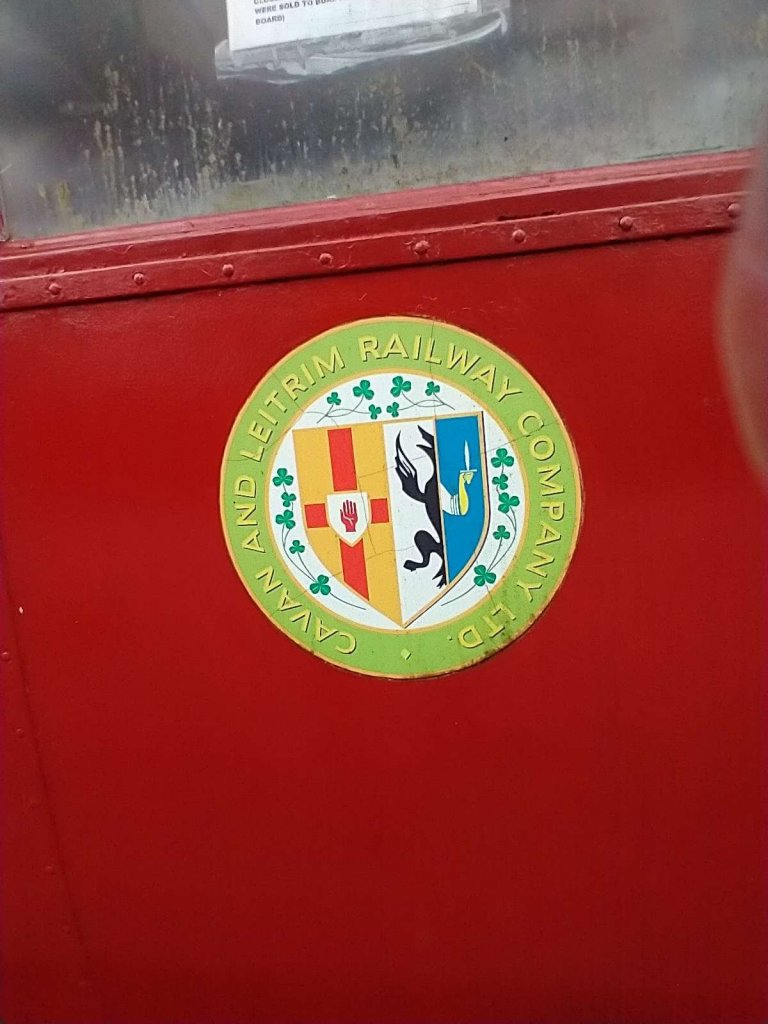
The Cavan & Leitrim Railway logo on the side of Carriage No. 47c. [My photograph, 6th May 2023]
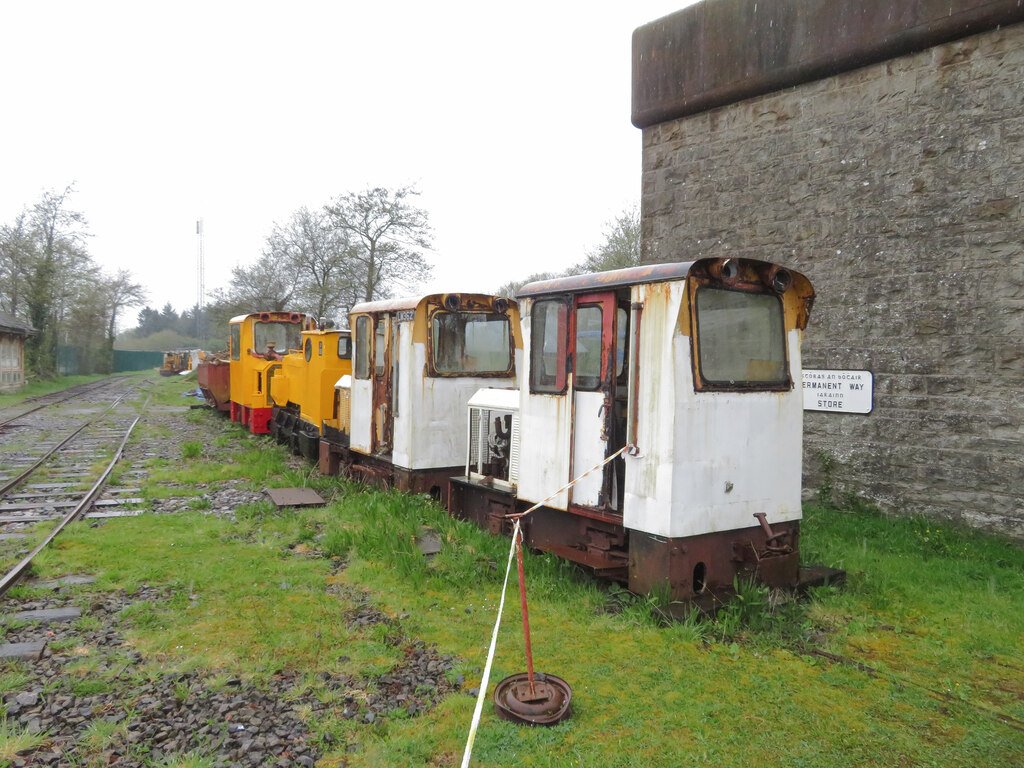
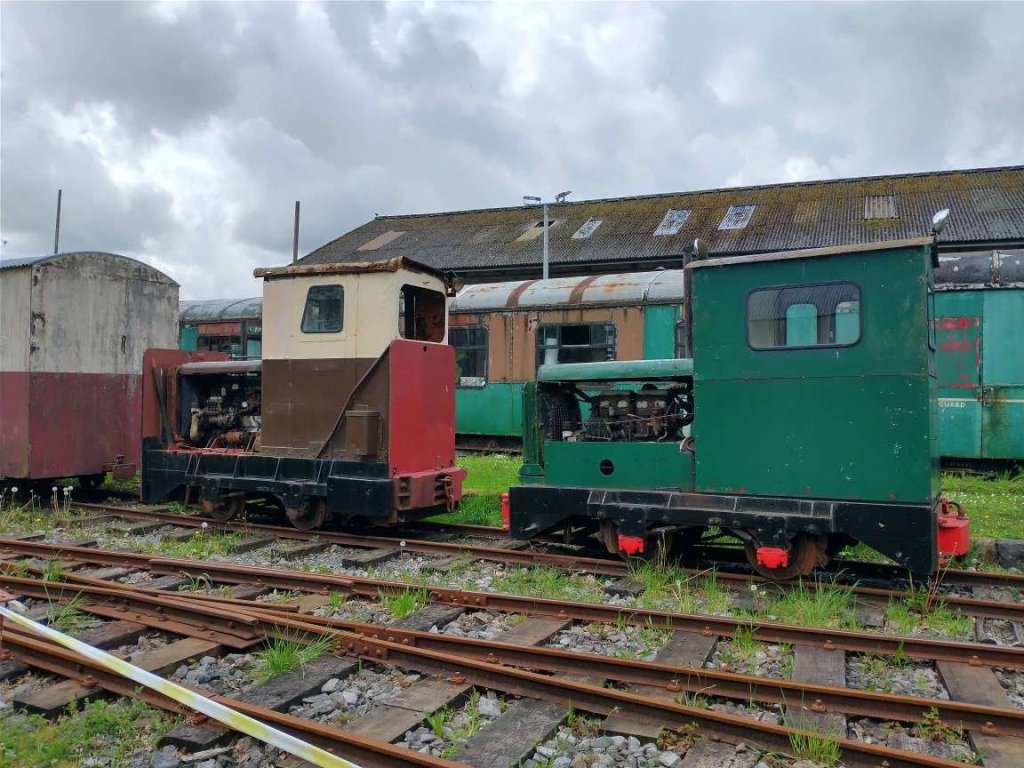
Ex-Bord Na Mona locos at Dromod on Saturday 22nd April 2023, © Gareth James and licensed for reuse under a Creative Commons Licence (CC BY-SA 2.0). [7]
More ex-Bord Na Mona at Dromod on 6th May 2023. [My photograph, 6th May 2023]
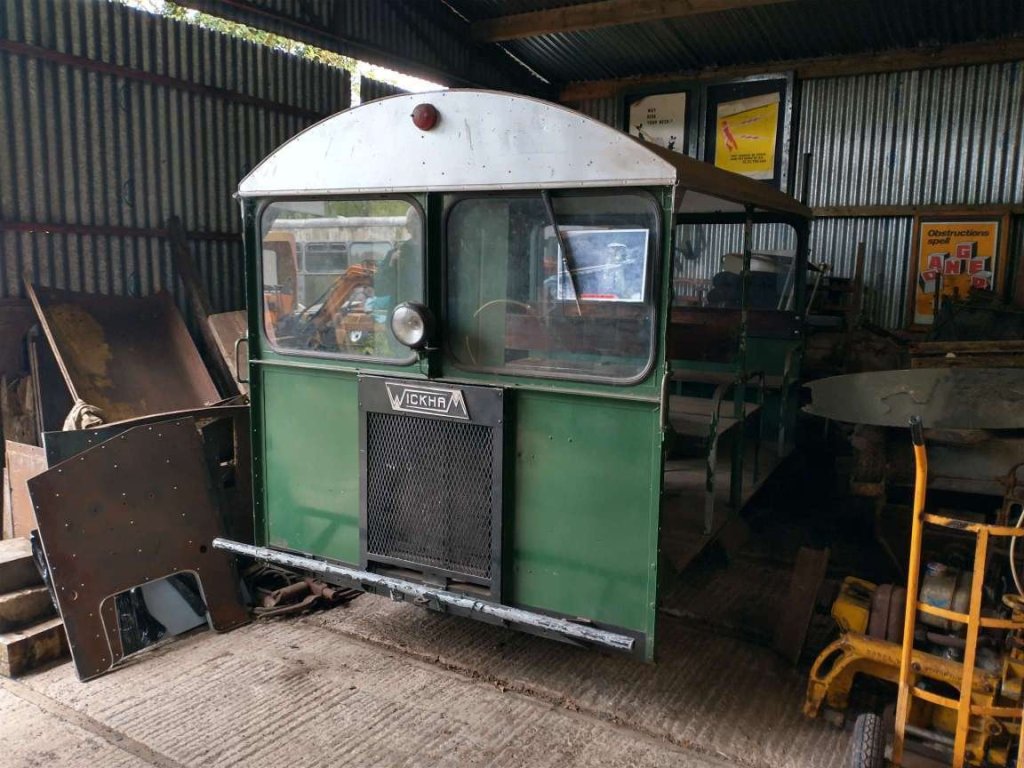
A Wickham Trolley in the shed at Dromod. This is number W6/11-4 (Works No. 9673). It was once based at Lochaber and was used for inspection duties on the 3ft gauge Lochaber system which included a section of railway going up Ben Nevis! It arrived at Dromod in the winter of 1996. [My photograph, 6th May 2023]
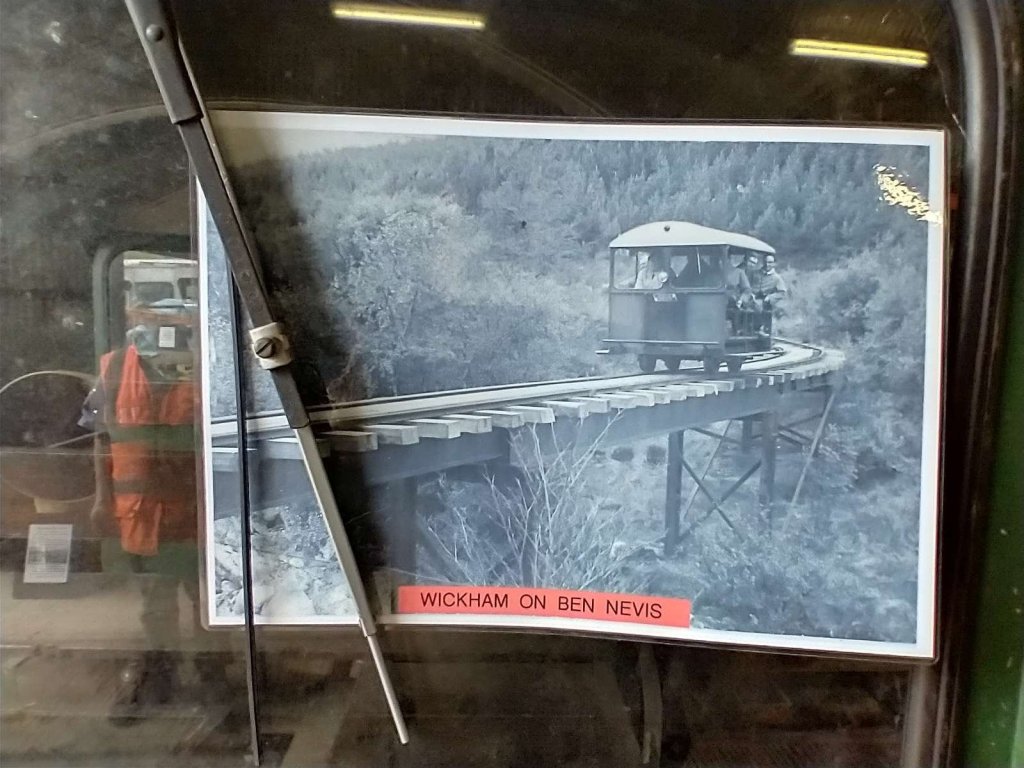
Affixed to the front window of the Wickham Trolley is a picture of it in use on Ben Nevis. [My photograph, 6th May 2023]

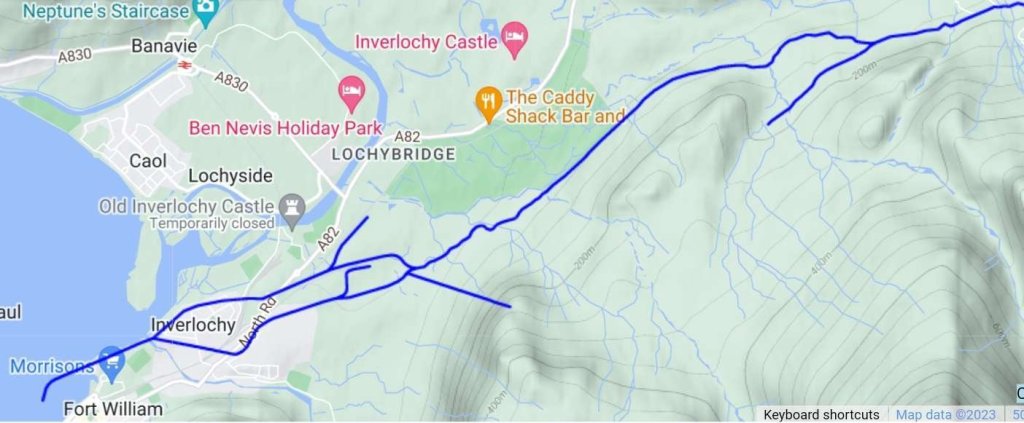
Wikipedia informs us that “the Lochaber Narrow Gauge Railway was a 3 ft (914 mm) narrow-gauge industrial railway. It was a relatively long line, built for the construction and subsequent maintenance of a 15-mile-long (24-kilometre) tunnel from Loch Treig to a factory near Fort William in Scotland.[1] The tunnel was excavated to carry water for the Lochaber hydroelectric scheme in connection with aluminium production by British Aluminium. The railway came to be known colloquially as the ‘Old Puggy Line’.” [7]

A proper look at the Lochaber Narrow Gauge Railway is for another time but it ran from Fort William to Loch Treig and on to the Laggan Dam on Loch Spean, as shown below.

Thes five extract from RailMapOnline taken together show the full length of the Lochaber Narrow Gauge Railway. Opened in 1925, the Lochaber Narrow Gauge Railway finally closed in 1977. [8]

Back to the Cavan and Leitrim at Dromod. The museum includes a series of different means of transportation. Just a few photos from my visit in 2023.

A Great Northern Railway Gardner bus sits in front of carriage 10T in the carriage shed. [My photograph, 6th May 2023]
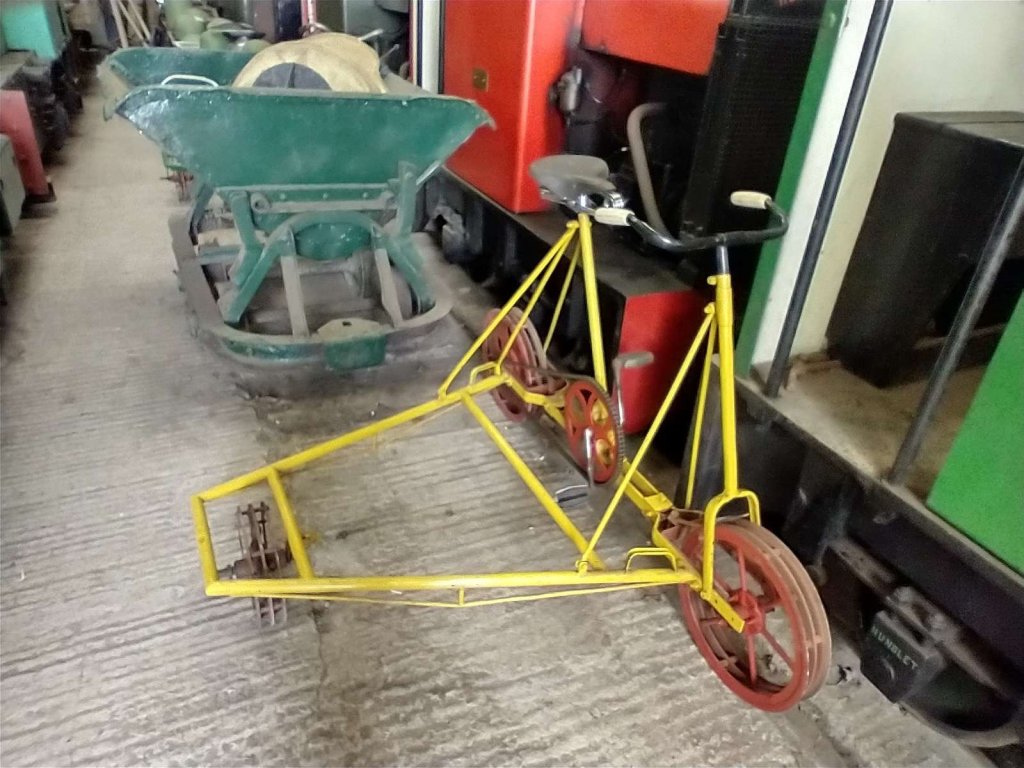
One of the Bergbolagen Rail Tricycles restored by volunteers at the Cavan and Leitrim Railway. This tricycle was last in use by Bord na Mona on Clonsast Bog in County Kildare. [My photograph, 6th May 2023]

https://youtu.be/oxa_s5WfWn8 [11]

The Cavan and Leitrim Railway has restored two 3 foot gauge Bergbolagen Rail Tricycles, part of a batch purchased by Bord na Mona (The Irish Turf Board) in 1957 from the Bergbolagen Company in Stockholm, Sweden, the yellow one was used on Clonsast Bog in County Kildare, the green one (running second on the video) was used on Boora Bog in County Offaly. Andrew Wilson kindly donated the parts (rescued in the 1970s) from which both of these machines were restored. [9]

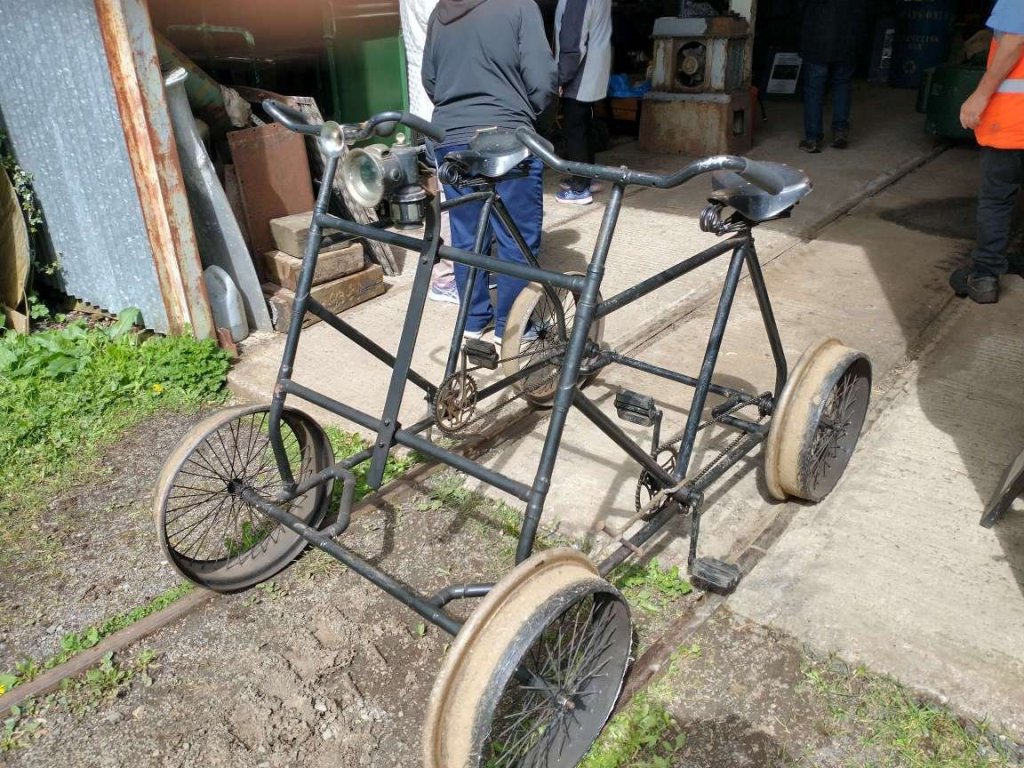
A replica 3 ft gauge rail inspection bicycle built by Cavan and Leitrim volunteers using the frames of 2 1920s “High Nelly’s” and original early 1900s american Teetor & Hartley wheels. [My photograph, 6th May 2023]
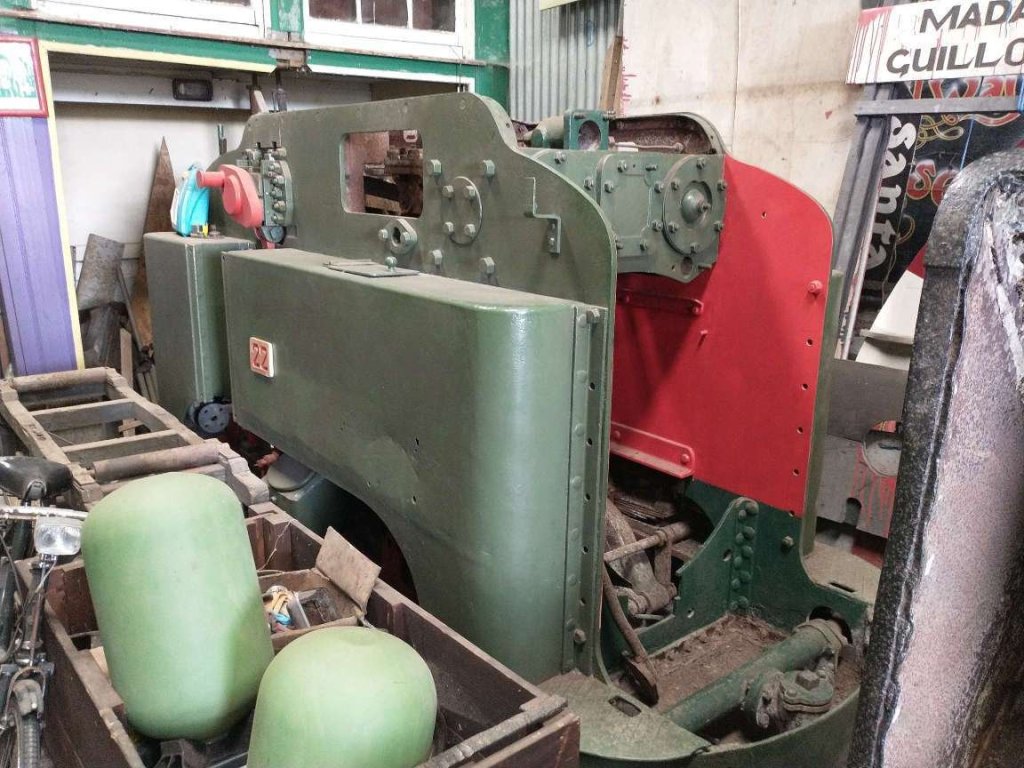
The Guinness Steam Loco (No. 22) at the Cavan & Leitrim at Dromod was 100 years old in 2012 which made it 111 years old in 2023. This is it, in storage at Dromod on 6th May 2023. Loco No. 22 was built in Spense’s foundry, Cork Street, Dublin in 1912.
It was part of an extensive network of locos in the Guinness brewery at St. James’s Gate in Dublin and continued in operations until 1957. In August 2003, No. 22 arrived in Dromod and since then, hard work began to restore it back to its former glory. So far the bodywork has been restored. No. 22 isn’t fully restored. Its Boiler is missing. The task of replacing it has proven challenging as it is designed to run on a 1ft 10in track, slightly narrower than the standard of 2ft. However that doesn’t mean it will never be restored. The Cavan & Leitrim continue in their search for the best replacement boiler and hope some day soon No. 22 will return to steam. [10]

Hidden amongst series of different important relics are two wagons. The first shown below comes from the West Clare Railway, the second

A chassis and frame from a 5 ton covered wagon from the West Clare Railway in storage at Dromod. [My photograph, 6th May 2023]
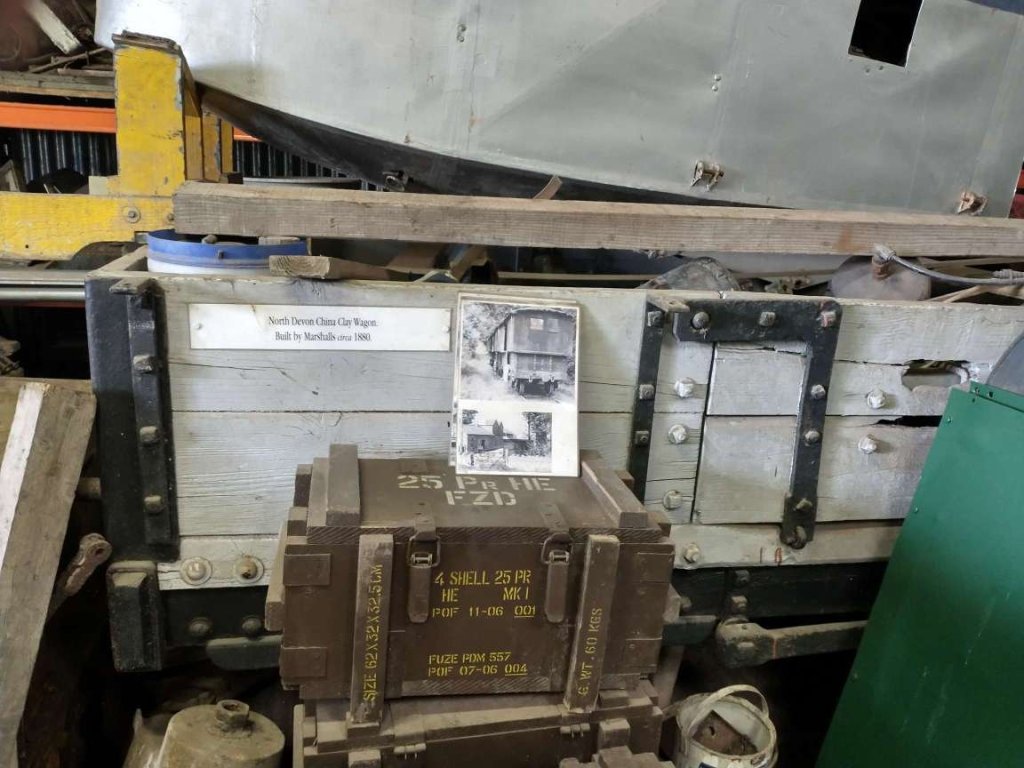
A 2-plank China Clay wagon from North Devon built by Marshalls in 1880 in store at the Cavan & Leitrim Railway at Dromod. [My photograph, 6th May 2023]
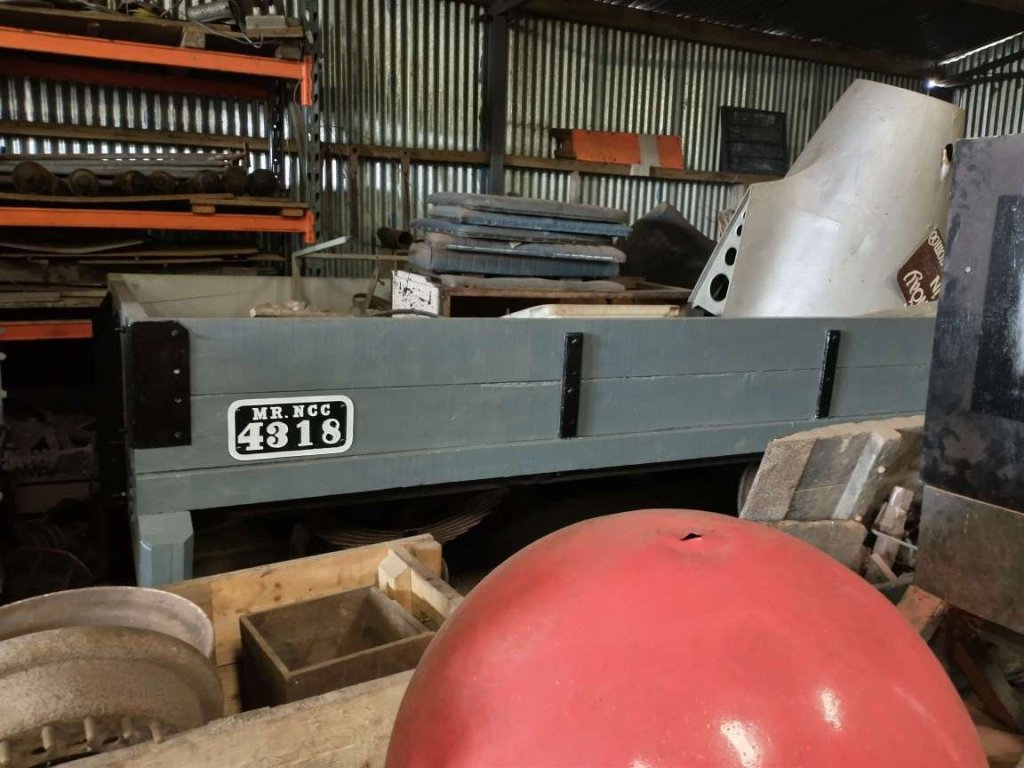
A restored two-plank wagon No.4318. [My photograph, 6th May 2023]

References

  1. https://www.irishrail.ie/Admin/IrishRail/media/Stations/dromod_pic.jpg, accessed on 18th July 2023.
  2. https://osi.maps.arcgis.com/apps/webappviewer/index.html?id=bc56a1cf08844a2aa2609aa92e89497e&extent=608964.6235%2C603547.0536%2C610175.0947%2C604299.7947%2C2157, accessed on 18th July 2023.
  3. https://www.cavanandleitrimrailway.com, accessed on 18th July 2023.
  4. https://www.therailwayhub.co.uk/7671/new-dome-completes-22-year-restoration-of-nancy-at-dromod, accessed on 18th July 2019.
  5. https://www.cavanandleitrimrailway.com/post/railbike, accessed on 19th July 2023.
  6. https://m.facebook.com/groups/1529628147328240/permalink/2815090888781953, accessed on 23rd July 2023.
  7. https://en.m.wikipedia.org/wiki/Lochaber_Narrow_Gauge_Railway, accessed on 3rd August 2023.
  8. https://www.railmaponline.com/UKIEMap.php, accessed on 5th August 2023.
  9. https://www.cavanandleitrimrailway.com/post/other-bike, accessed on 5th August 2023.
  10. http://thecavanandleitrimrailway.blogspot.com/2012/06/guinness-brewery-steam-loco-celebrates.html?m=1, accessed on 6th August 2023.
  11. https://youtu.be/oxa_s5WfWn8, accessed on 6th August 2023.

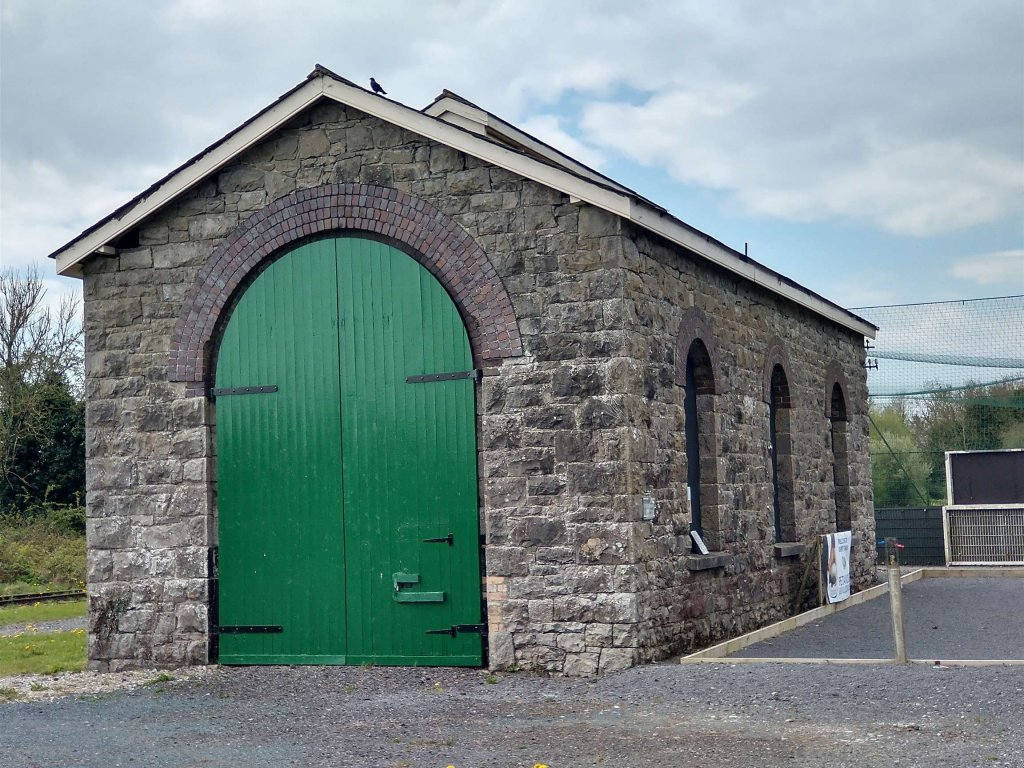
The Cavan and Leitrim (C&L) Railway again – Belturbet Railway Station …..

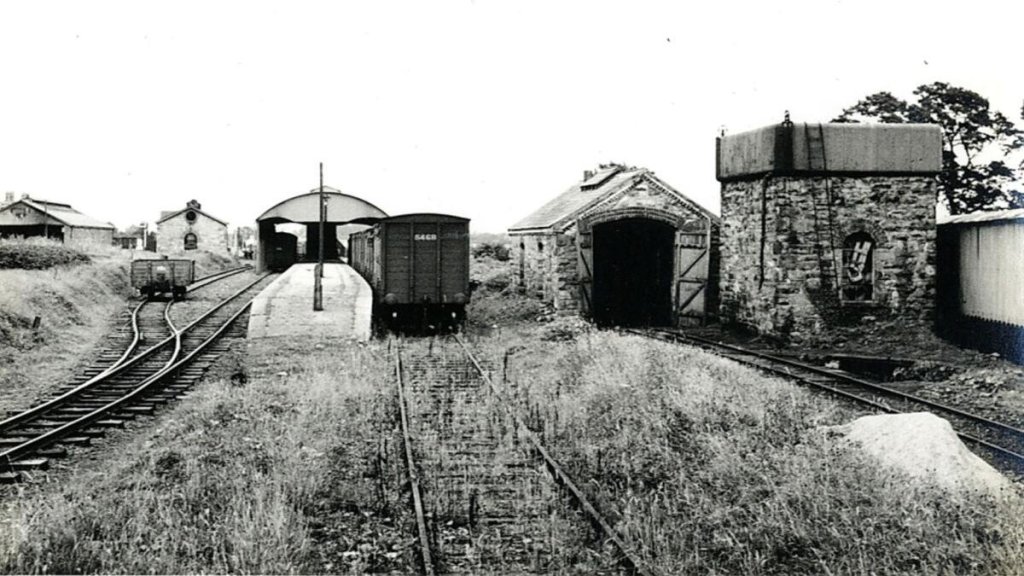
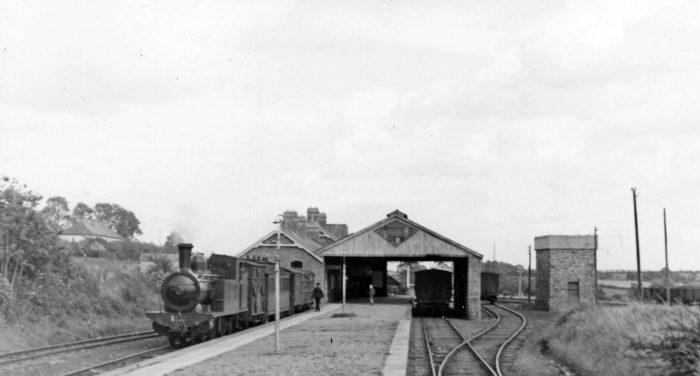
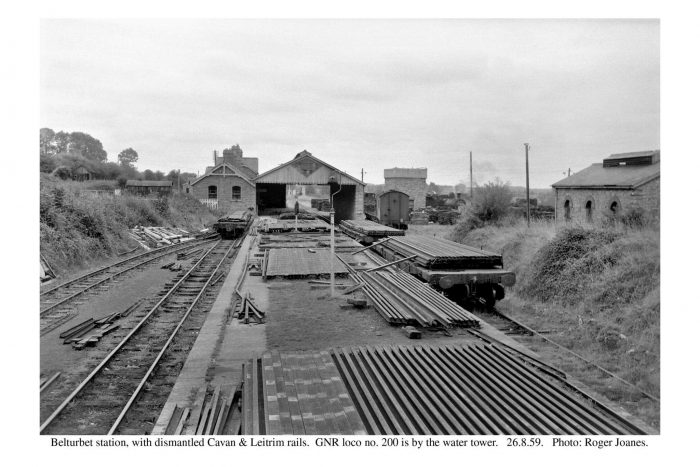
Belturbet Railway Station viewed from the West. The main passenger facilities are on the left behind an unidentified C&L locomotive with its mixed goods/passenger train. The 3ft gauge C&L entered Belturbet Railway Station from the West and it’s trains used the North face of the platform. Great Northern Railway (GNR) trains entered the station from the East and were able to make use of the protection afforded by the station roof as they used the South face of the station platform. The GNR water tower, shown here on the right of the image was relocated during the renovation of the site to occupy the location of the C&L Engine Shed which would, at the time of this picture been some distance behind the photographer and over to the right. [5]
Taken from further Northwest this photograph, which was shared by the Heritage Railway Magazine on its Facebook page on 8th August 2021, shows the transshipment platform and shed at Belturbet with the broad gauge on the right of the platform and the 3ft gauge C&L to the left. On the right are the C&L Engine Shed and Water Tower and in the distance to the left, the GNR Engine Shed and at the extreme left of the image the passenger station’s roof. [6]
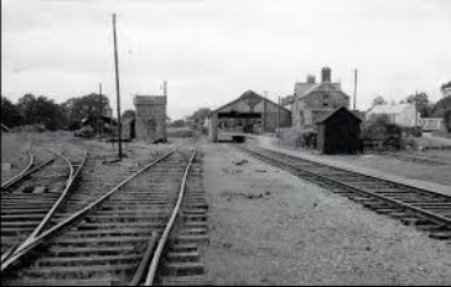
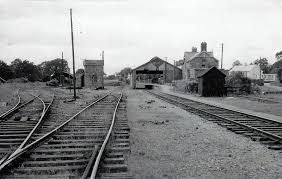
A view of Belturbet Station from the East, only GNR broad gauge is visible in this image. [7]

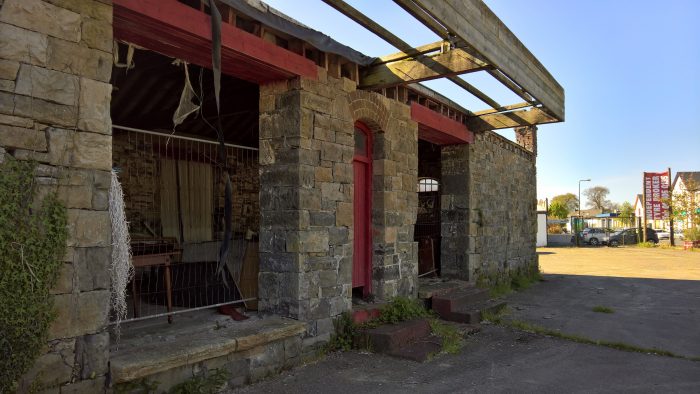
In April 2023 we were able to drop in at Belturbet Railway Station on our way to Co. Donegal. The Station Museum was open Fridays, Saturdays and Sundays from 12noon to 5pm throughout the Summer season. [1][2][3] A small group of enthusiast’s have turned a derelict site into a good museum and rescued the majority of rail related buildings on the site. A patient wife allowed me a pleasant hour or so looking round the Museum.

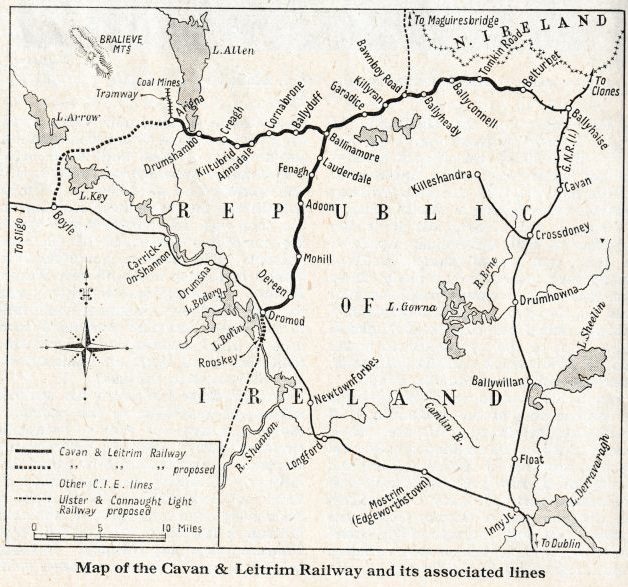
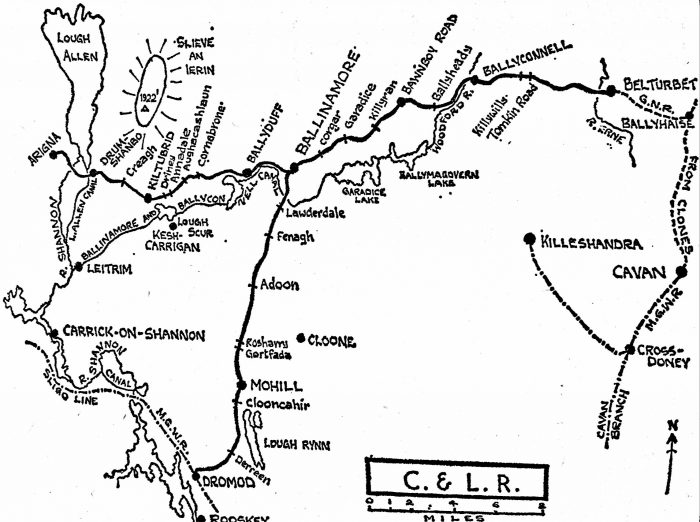
Belturbet was the terminus for two different railway lines: the Irish standard gauge (5ft 3in) line from Ballyhaise on the Cavan Branch of the Great Northern Railway (GNR), and the Cavan and Leitrim Railway (C&L) – a 3ft gauge line which served Dromod to the Southwest and Arigna to the West with its three 3ft gauge lines meeting at Ballinamore in Co. Leitrim). At Dromod the C&L connected to the Midland Great Western Railway mainline from Dublin to Sligo.

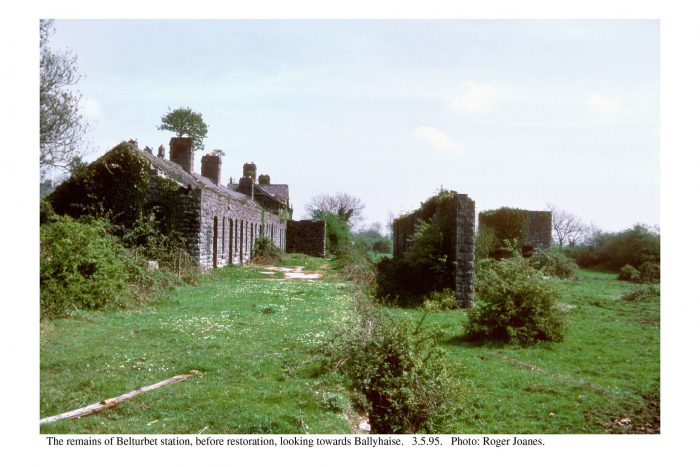
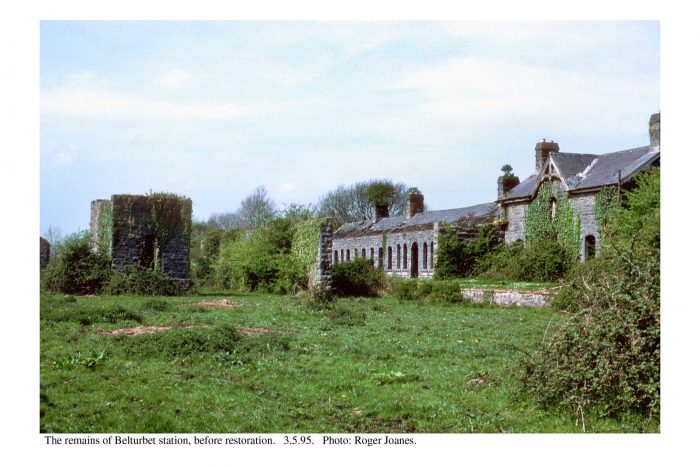
Closure of the Station occurred in 1959. The site remained derelict for 36 years until, in 1995, Belturbet Community Development Association commenced restoration work. That work was completed in 1999. Further development of the site is planned which will see original track being relaid and with the intention of seeing trains running once again in Belturbet.

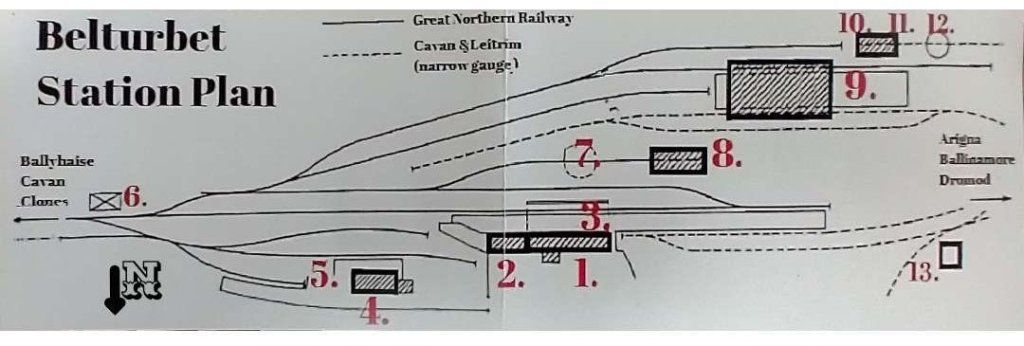
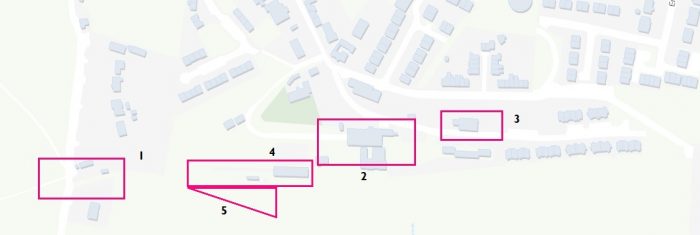
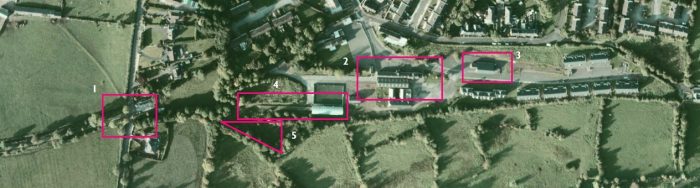
Belturbet Railway Station as shown in publicity material for the Station Museum. A North point has been added to the plan so as to avoid confusion if comparing the plan with maps of the location. [4]

The plan of the Station Site is numbered to allow easy identification of different buildings. The 3ft gauge line enters the schematic plans from the West (the right side of the image), the 5ft 3in gauge line enters from the East (the left side of the image). The buildings are:

  1. The Main Station Building and Museum – the dressed stone buildings were the main reception area, office and waiting rooms for the Great Northern Railway (GNR) at Belturbet. What is now a single reception room was originally two separate rooms, the first being the main concourse for access to the platforms. To the East were two waiting rooms, one for the general public and one (with toilet) for ladies holding first class tickets. To the West of the main reception area (behind the museum reception desk was the ticket office leading to the Station Master’s office, which had a connecting door to his house.
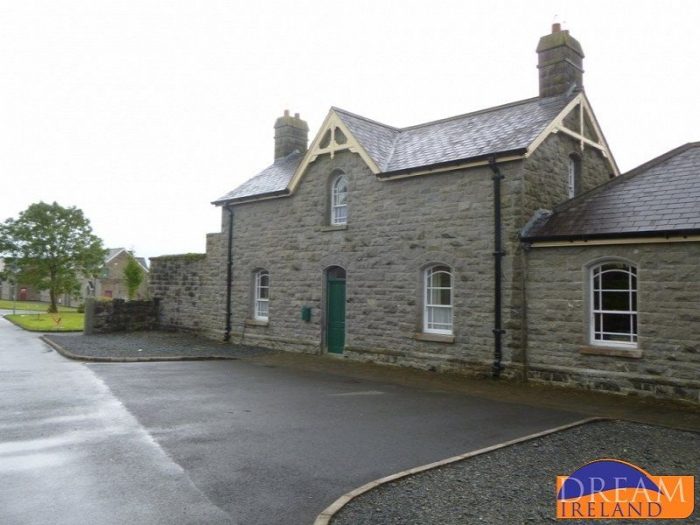
  2. The Station Master’s House – has been restored. It would have originally been a family home but can now be booked for self-catering holidays.
  3. Railway Lines and Platform – Belturbet railway station, which opened in 1885, was built and operated by the Great Northern Railway Company of Ireland (GNR). It was the last station of the GNR broad-gauge railway line – 5ft. 3 in. (1.6 m.). In 1887 the Cavan & Leitrim (C&L) narrow-gauge line – 3 ft. (0.9 m.) was built, Belturbet was the first station on this line. On the newly extended platform, passengers transferred from one line to the other. GNR and C&L trains stopped on opposite sides of the platform. There was a roof over the platform immediately adjacent to the station buildings.
  4. GNR Goods Shed/Store – Goods Wagons were positioned alongside the small platform in front of the Goods Store. Wagon floors were level with the platform which made it easy for the porters with their barrows to move goods on and off the wagons. A crane was used to load and unload heavy items.
  5. Cattle Dock and Ramp – The Cattle Dock was virtually unchanged from its opening in 1885 until its closure on March 31st, 1959. The dock was used to load livestock onto the wagons. This was particularly useful on the first Thursday of every month, when Belturbet Fair took place on the Fair Green.
  6. GNR Signal Box – this building was no longer on site when the preservation work commenced.
  7. GNR Turntable – The circle of stones indicate the position of the turntable. It was so well balanced that one man could single- handedly turn around a 50 ton engine.
  8. GNR Engine Shed – The GNR Engine Shed, refurbished to original specifications, is where an engine was housed at night. The large vent in the roof allowed smoke and steam to escape when the engine was in steam.
  9. Transshipment Shed – For many years GNR coal trains were filled from C&L coal wagons by local men using only shovels, barrows and planks of timber. The demand for Arigna coal ensured that Belturbet Station remained open five or six years longer than many similar stations.
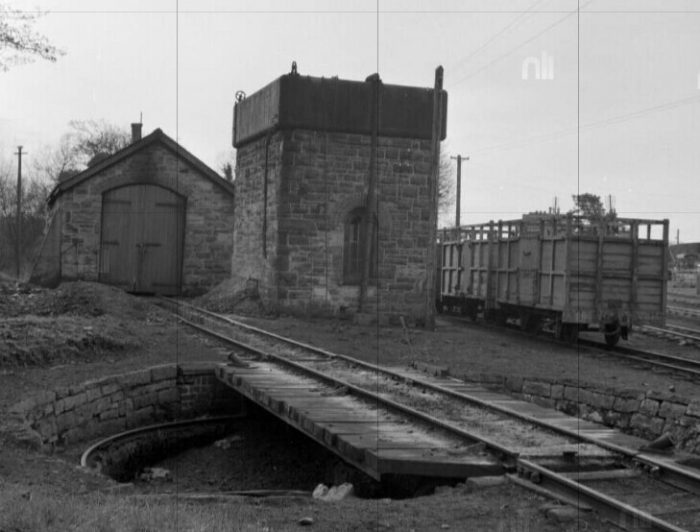
  10. C&L Engine Shed and Water Tower – the C&L shed and water tower were demolished before renovation of the station site commenced.
  11. GNR Water Tower – In 1997 the GNR water tower was dismantled and reassembled on the site of the original C&L Engine Shed and Water Tower, which had been demolished.
  12. C&L Turntable – this had been removed before renovation commenced.
  13. C&L Goods Shed/Store – this was the only building on the station site to have survived the period of dereliction with its original slate roof and wooden doors.

There are a significant number of historic photographs on display cover both the broad gauge line and the narrow gauge line.

The following photos were taken by me on 21st April 2023.

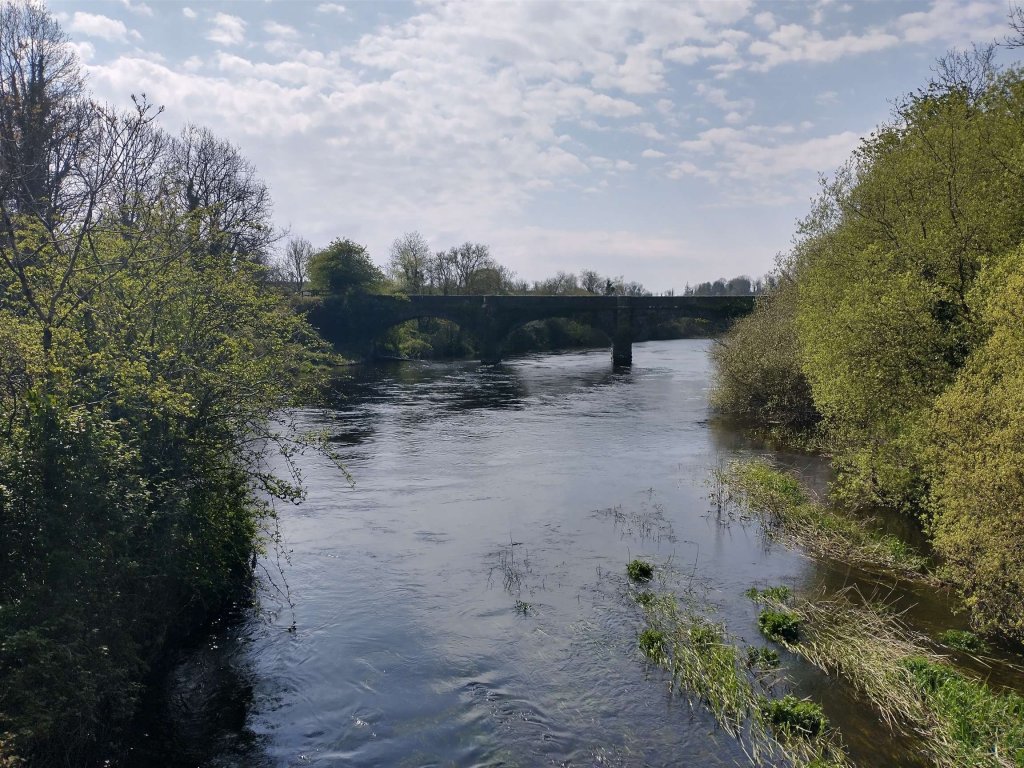
The viaduct which carried the C&L across the River Erne on its approach to Belturbet Railway Station. [My photograph, 21st April 2023]
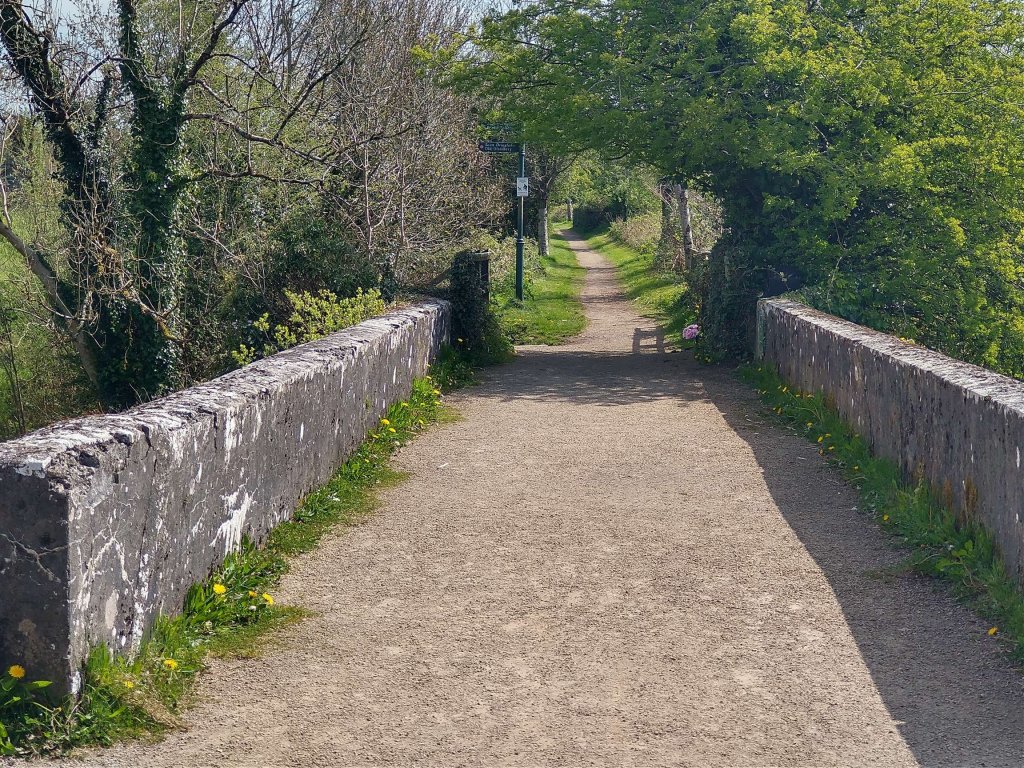
Crossing the viaduct on the C&L on the way to Belturbet Railway Station. [My photograph, 21st April 2023]
Continuing our approach to Belturbet Railway Station. [My photograph, 21st April 2023]
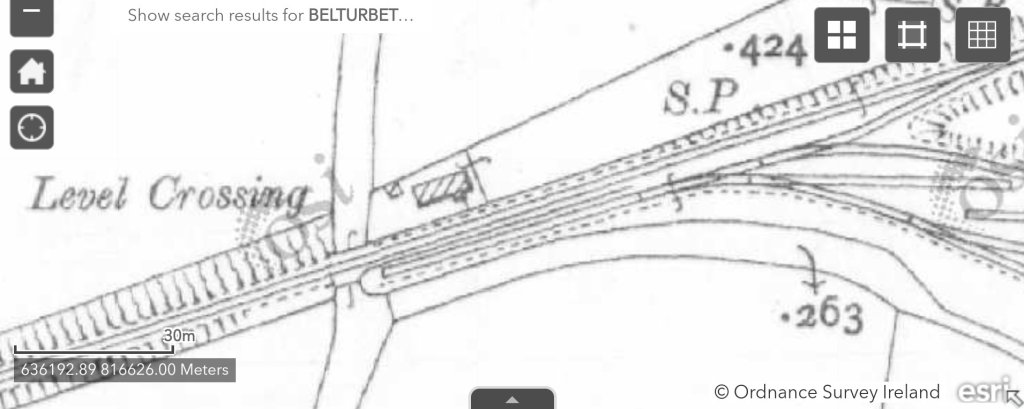
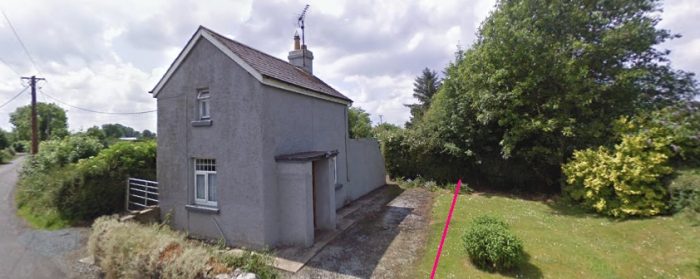
The historic 25″ OSi mapping shows the C&L approach to Belturbet Railway Station across a level crossing which had an associated Crossing Keeper’s Cottage. [8]
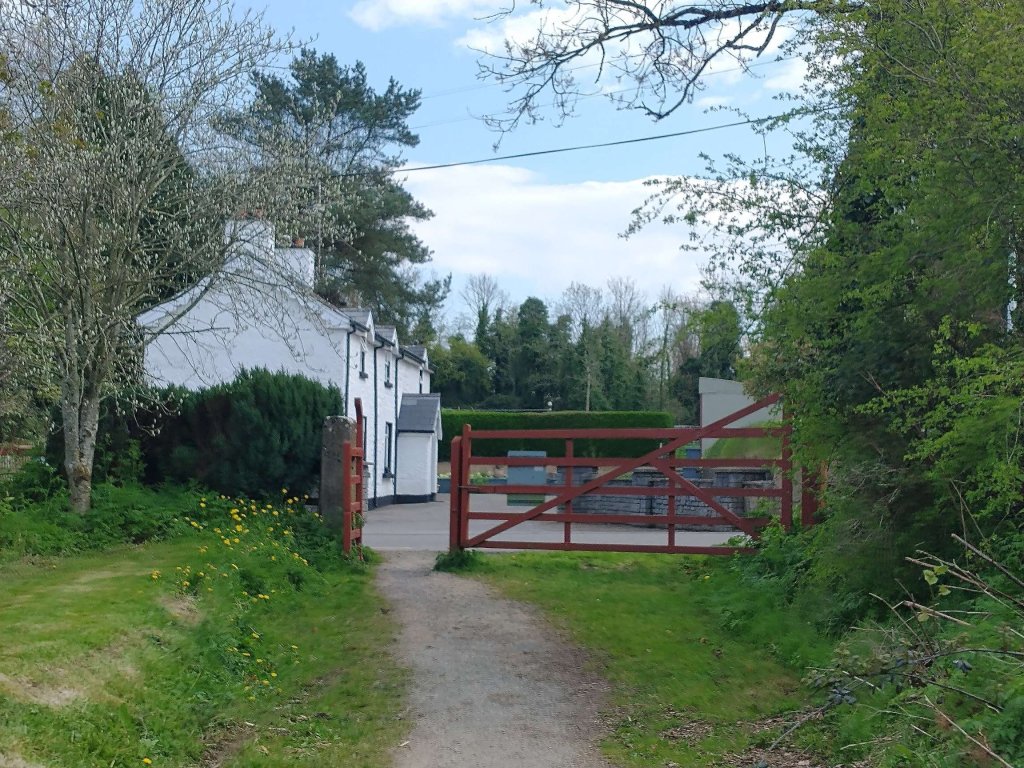
Crossing the road on the C&L’s final approach to the station. The Crossing Keeper’s Cottage still stands in very good condition in the 21st century. [My photograph, 21st April 2023]
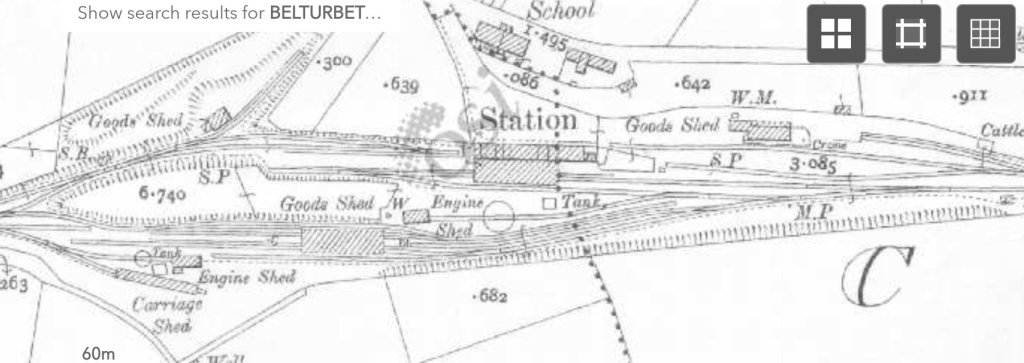
The Station site at Belturbet close to the turn of the 20th century as recorded on 25″ OSi mapping. [8]
The Transshipment Shed viewed from beyond the West end of its platform. It was primarily used for the transfer of Arigna coal from the C&L to the GNR. [My photograph, 21st April 2023]
Just a little closer in. The GNR engine shed is visible just to the left of the roof of the Transshipment Shed. C&L trains from Arigna drew in to the near face of the platform. GNR trains approached the rear of the platform from beyond the Shed. On the right, the water tower base can just be made out. [My photograph, 21st April 2023]
The GNR water tower base was dismantled and reassembled (in 1997) on the site of the original C&L Engine Shed and Water Tower, which had been demolished. [My photograph, 21st April 2023]
The GNR Engine Shed as seen from the Southwest. The stones which mark the location of the GNR turntable can just be seen beyond. [My photograph, 21st April 2021]
The GNR Engine Shed viewed from the East. [My photograph, 21st April 2023]
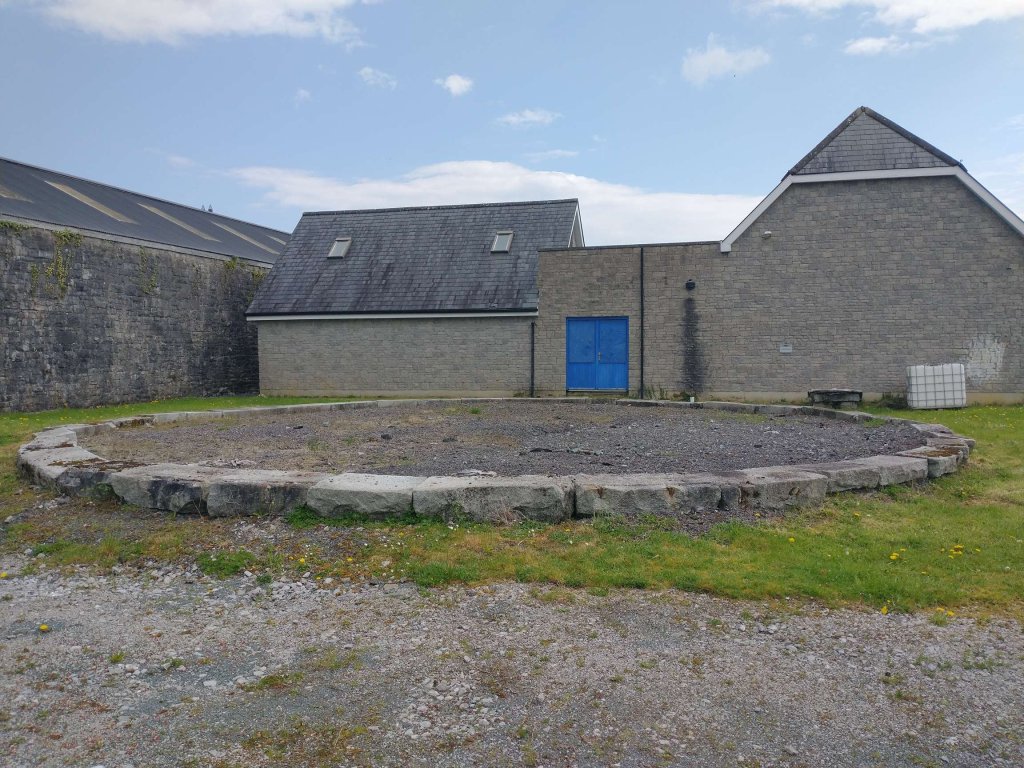
The location of the GNR turntable. The building beyond the turntable to the left is the roof which covered the GNR passenger platform. The buildings directly behind the turntable were built on the site a long time after closure. The house a men’s charity. The GNR water tower was relocated to allow this building to be built. [My photograph, 21st April 2023]
The Transshipment Shed, seen from the East with broad gauge track in evidence to the left of the platform.  [My photograph, 21st April 2023]
The trainshed roof over the GNR platform is on the left of this image with the passenger facilities beyond. The two storey building is the Station Master’s House. [My photograph, 21at April 2023]
The GNR Goods Shed to the East of the main station buildings. [My photograph, 21st April 2023]
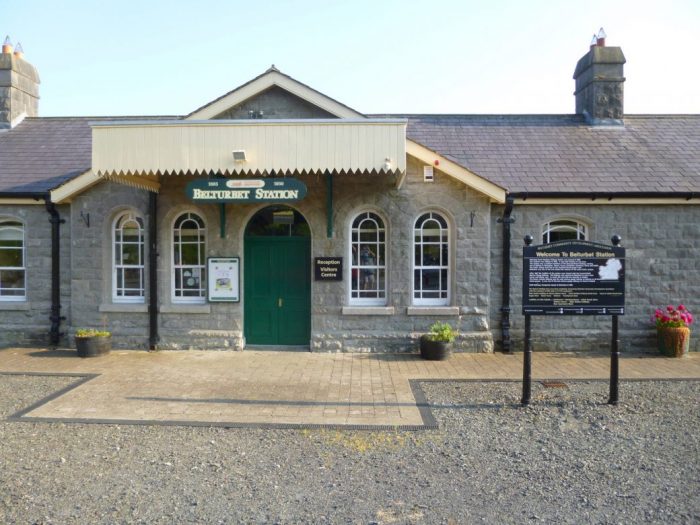
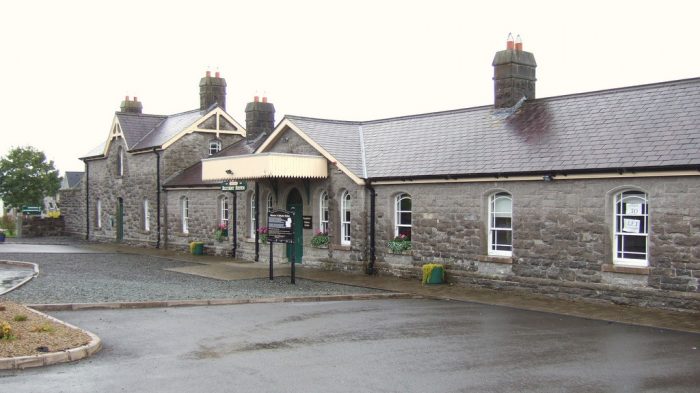
Two views from the station approach roads, both show the main facade of the station. [My photographs, 21st April 2023]

References

  1. https://belturbetheritagerailway.com, accessed on 21st April 2023.
  2. https://www.discoverireland.ie/cavan/belturbet-heritage-railway-museum, accessed on 22nd April 2022.
  3. http://www.discoverbelturbet.ie/about-belturbet/belturbet-railway-station, accessed on 22nd April 2022.
  4. Belturbet Railway Station Museum publicity leaflet, (www.belturbetheritagerailway.com).
  5. https://www.anglocelt.ie/2021/02/13/railway-group-on-track-with-funding-plan, accessed on 23rd April 2023.
  6. https://www.anglocelt.ie/2021/08/08/belturbet-train-crash-in-1879?fbclid=IwAR2o6BJftonlCnh4RvghHx2FvBwFgJvqDN47ucVbmwHKKY-OOUi5zeasd0Q, accessed on 23rd April 2023.
  7. https://bizlocator.ie/listings/belturbet-railway-museum, accessed on 4th June 2019
  8. https://osi.maps.arcgis.com/apps/webappviewer/index.html?id=bc56a1cf08844a2aa2609aa92e89497e, accessed on 28th April 2023.

The Cavan and Leitrim Railway – A Miscellany.

A. ‘The Cavan and Leitrim Railway’ at Dromod:   is the preservation society hoping to create a line between Mohill and Dromod along the C&L’s old route. Over the years, that society has seen some great successes. Most recently, the bringing back to steam of the locomotive ‘Nancy’. The preservation society asked me to include the adjacent pictures in this post.

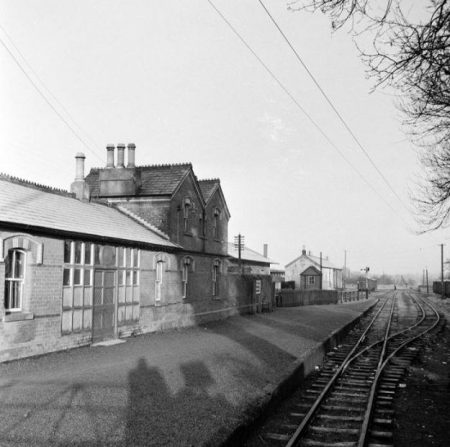
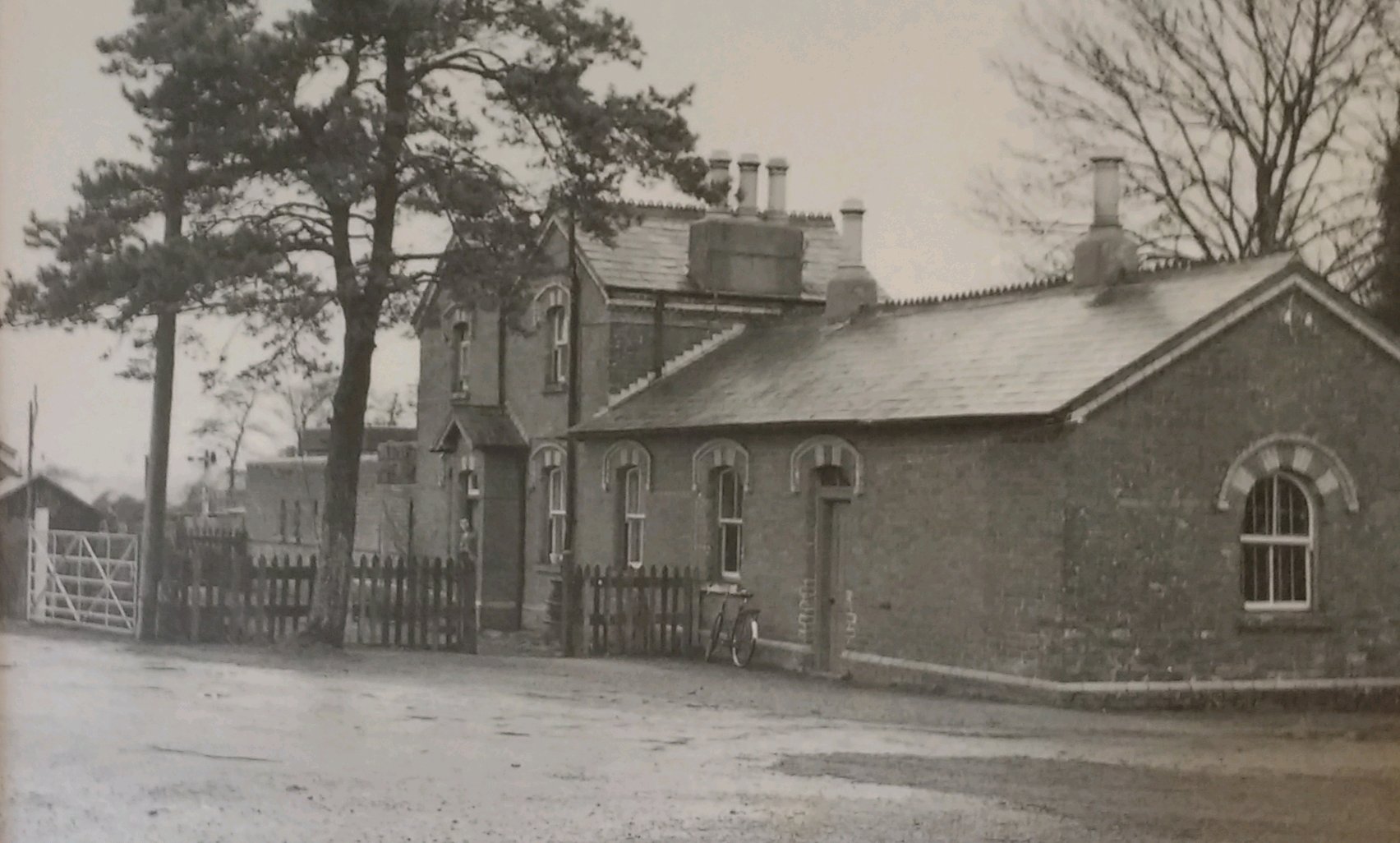
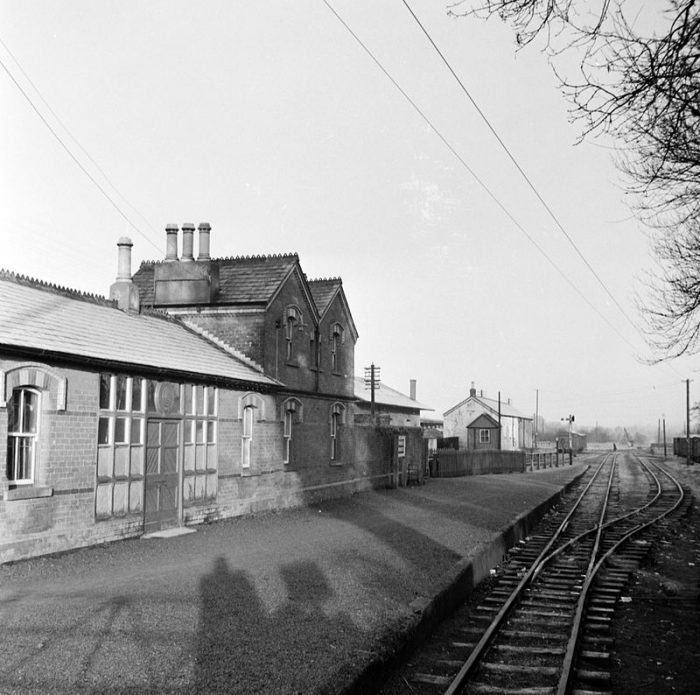
The first view shows the station in the late 1950s, (c) J.P. O’Dea. [4]

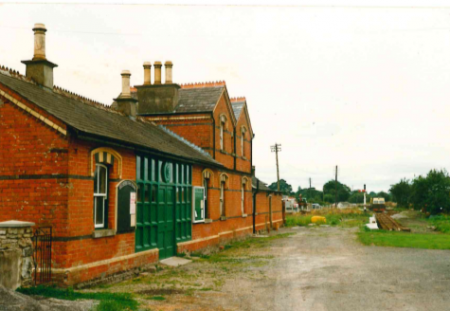
The second is taken  after the station buildings had been renovated in the early 1990s, (c) C&L 1992. [5]

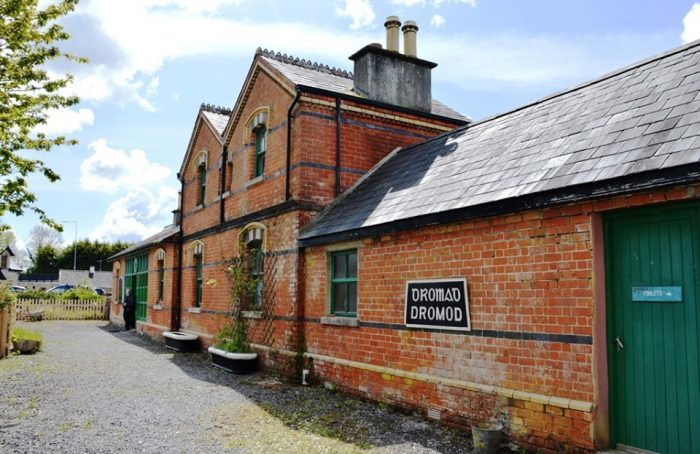
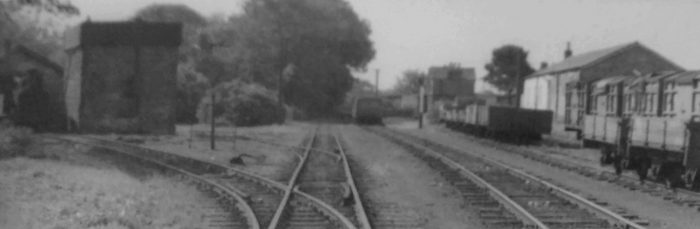
That below shows the station from the West, (c) Jonathon Clinton 2019. [5]One early success, alongside the renovation of the station building, was the rescue of the engine shed and water tower. This picture shows …….. (c) Philip Bedford March 28th 2019. [5]‘Nancy’ beside the water tower, (c) D. Connolly. [5]‘Nancy’ at Dromod Station platform, (c) Jonathon Clinton 2019. [5]

Wikipedia says: “The privately owned Cavan & Leitrim Railway is based in the former Dromod Station, in Co. Leitrim. There is a transport museum, with narrow-gauge trains of several gauges, buses, planes, fire engines and artillery guns from World War I and World War II. …….. With the help of volunteers trains are run on a short section of line. The Avonside steam locomotive “Nancy” was rebuilt at Alan Keef in Wales where it first steamed on 23 March 2019 after twenty years of restoration work. [6] The locomotive was shipped to Dromod where it now resides.” [7]

Best contact details:   

Address:      Clooncolry, Drumod, Co. Leitrim

Tel:                071 963 8599

Website:       https://cavanandleitrim.wixsite.com/home

Facebook:     https://www.facebook.com/cavanandleitrimrailway


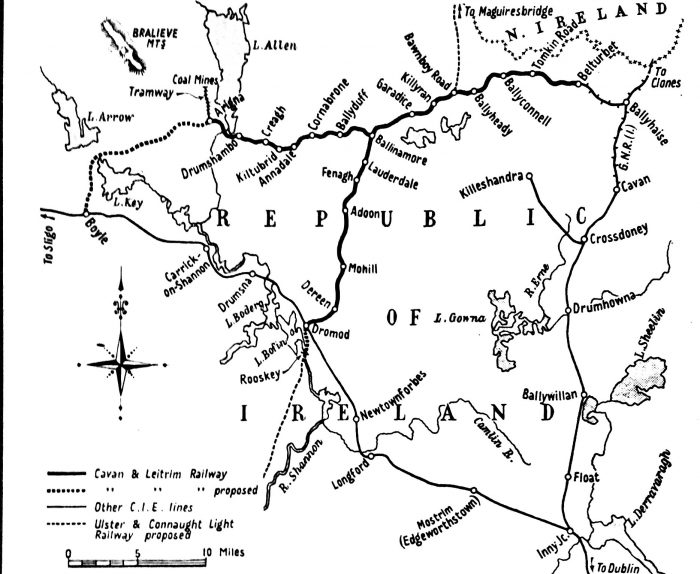
B. Belturbet Heritage Railway:  the heritage centre in Belturbet sits at what was an interchange between the Cavan and Leitrim Narrow Gauge Railway (3ft) and the Great Northern Railway which was Irish standard gauge (5ft 3ins). The Great Northern (GNR) branch connected to Ballyhaise on the Clones to Cavan line. The Cavan and Leitrim (C&L), at Dromod, connected to the Midland Great Western Railway (MGWR) mainline from Dublin to Sligo. The line was extended to Arigna in 1920 in the form of a roadside tramway. [3]

The centre was once Belturbet Station and shared by the C&L and the GNR. It has been significantly refurbished from an overgrown and dilapidated state in the 1990s to a modern well equipped centre in the 2010s.[3]

The station buildings lay derelict for almost 40 years until the Belturbet Community Development Association purchased the entire 10 acre site in 1995. The buildings had during that time served as farmyard buildings and had been subjected to the effects of weather, fire and theft. They were subsequently refurbished to the original state with great attention to detail gained by reference to original plans drawn on silk. [3]

The original/restored Station Buildings include:

  • Main Station Building and Station Master’s House
  • Platform (Roof totally replaced)
  • Great Northern Railway Goods Shed (Extension added to the original building. Attempts had been made to remove part of the original building for safety reasons prior to restoration)
  • Cavan and Leitrim Railway Goods Shed (Effectively no restoration needed)
  • Engine Shed
  • Water Tower
  • Transhipment Shed

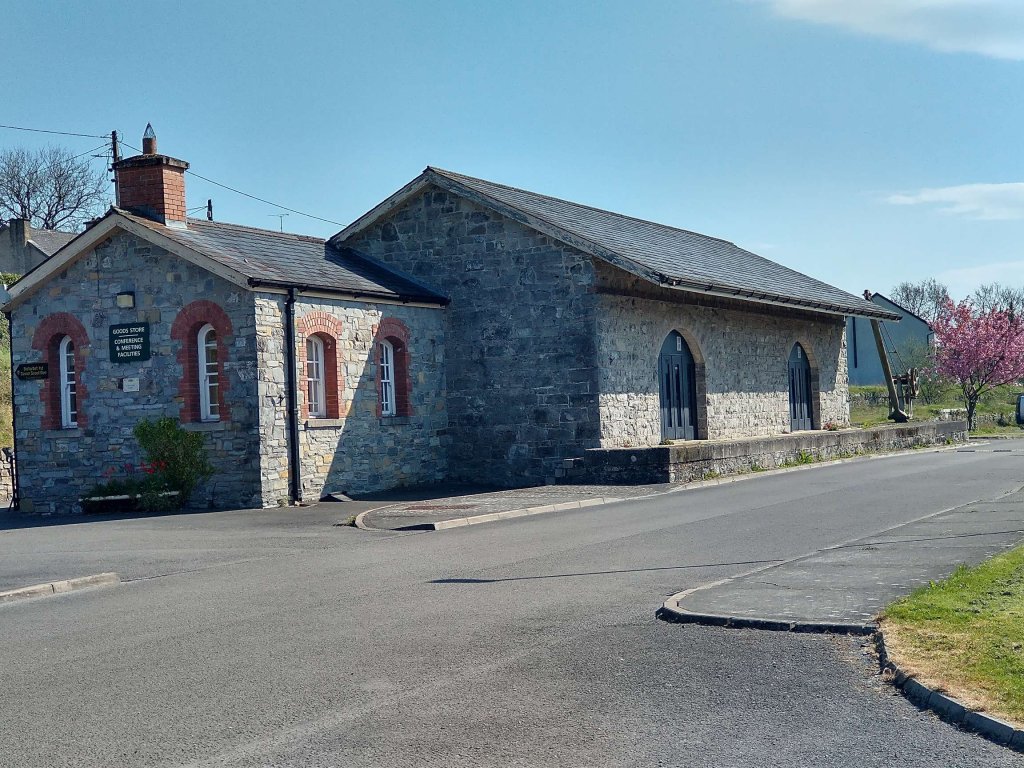
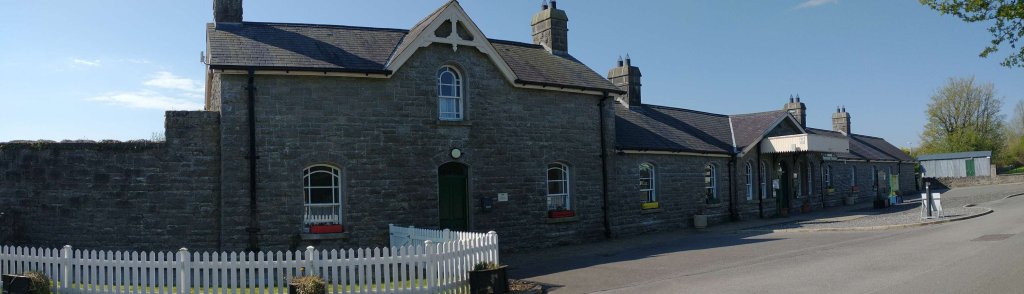
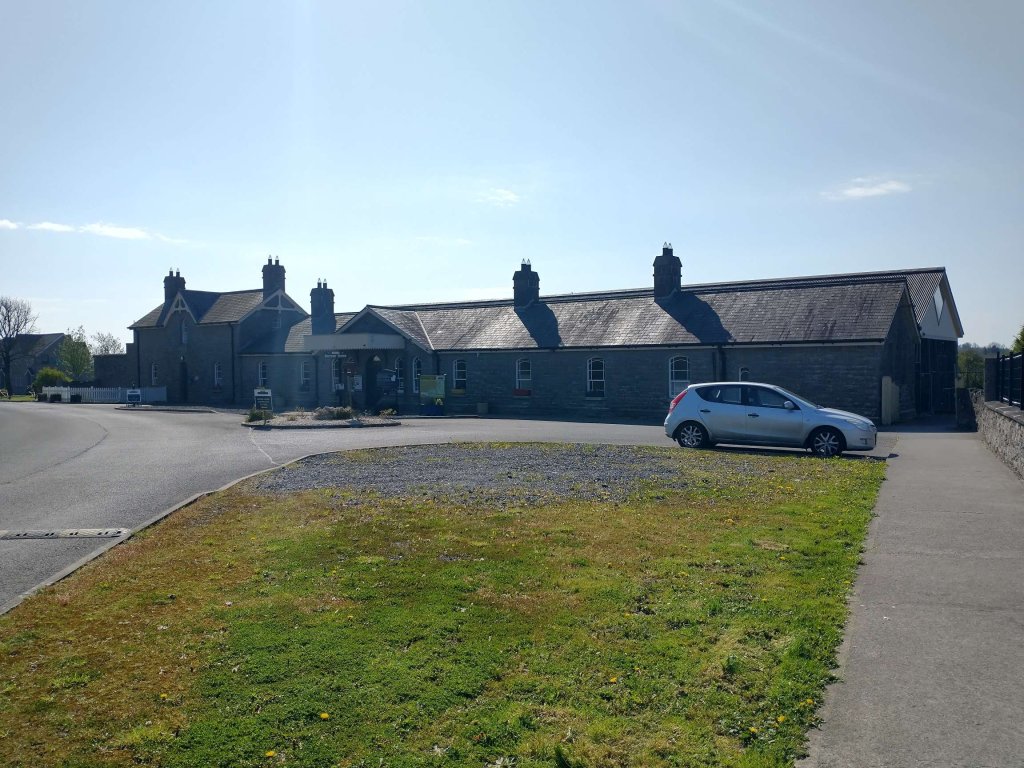
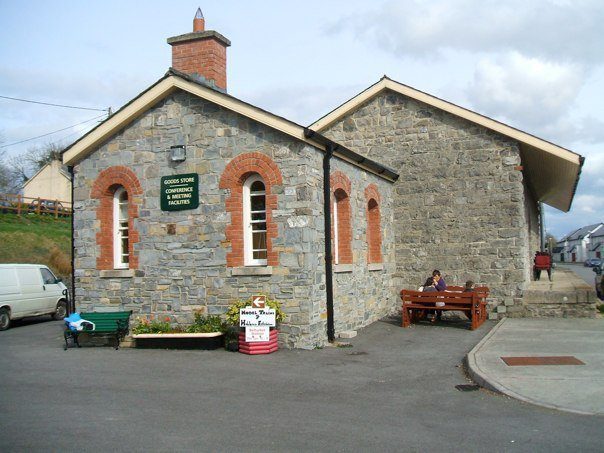
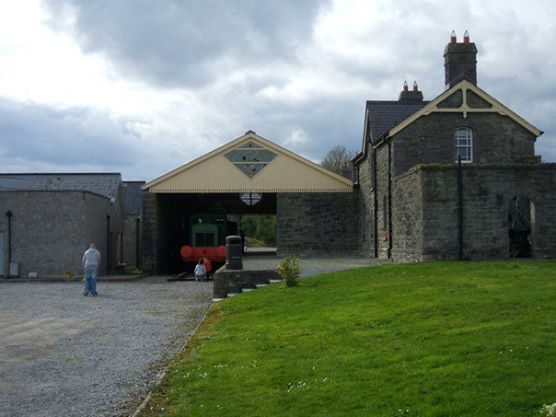
The Main Station Building contains a museum hosting an interesting collection of railway memorabilia and audiovisual footage of the Cavan and Leitrim railway and the restoration of the station itself. [3]The Great Northern Railway Goods Shed serves as a 120 person capacity conference hall and is used for business, social, sport, leisure and educational/training purposes. The Goods Store/Visitor Centre has  meeting & conference room facilities for rent. [3]The refurbished Station-house is on the right. The main GNR station building is directly ahead of the camera. [8]

Contact Details:     

Address:    Railway Road, Belturbet, County Cavan

Tel:      086 069 9749

Web:    https://belturbetheritagerailway.com


C. Locomotives

An order was placed with Robert Stephenson & Sons of Newcastle-upon-Tyne in 1886 for 6 railway engines. The order was later extended to 8 locomotives. Four of these engines were fitted with condensing apparatus and modified for working on the tramway. The original order valued the locos at £1,100 each. The modifications cost £38 per engine. [1: p81]

“The first of the eight was delivered at Belturbet specially early, in May 1887, for the use of the contractor. With the exception of the second engine (which came to Dromod in June) all the engines reached the C&L via the GNR, the deliveries continuing until early in 1888.” [1: p81]

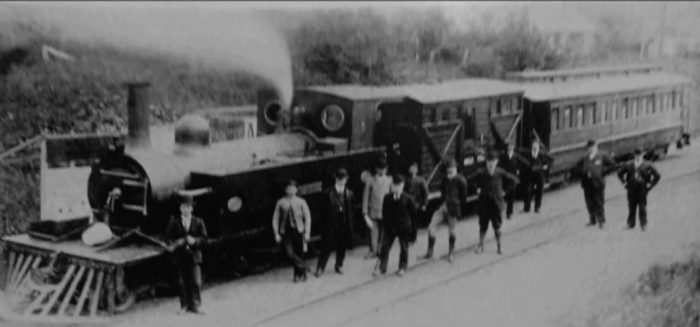
All the engines were 4-4-0Ts with stovepipe chimneys. The firebox crown sloped down towards the back of the engine to avoid the danger of uncovering on steep banks. The cabs had round front spectacles and rectangular ones at the back. The back also had an opening door to a height of 2ft 11ins which was used for coaling. Cowcatchers were provided and each engine carried as large headlamp. Probably all originally had a sloping cover below the smokebox door (as retained by No 3 till 1925) which was removed early on to make room for jacks and tool-boxes. [1: p82-83]

All the engines had the same dimensions. They weighed in excess of 25 tons and had makers’ numbers 2612-2619 in order. The last four were intended for use on the tramway and were externally quite different. Skirts were fitted over the wheels to 4in above rail height and extending the full length oif the frame. The back weather boards on the cxab were cut away arvthge csides and the forward facing spectacles could be opened. [1: p83]

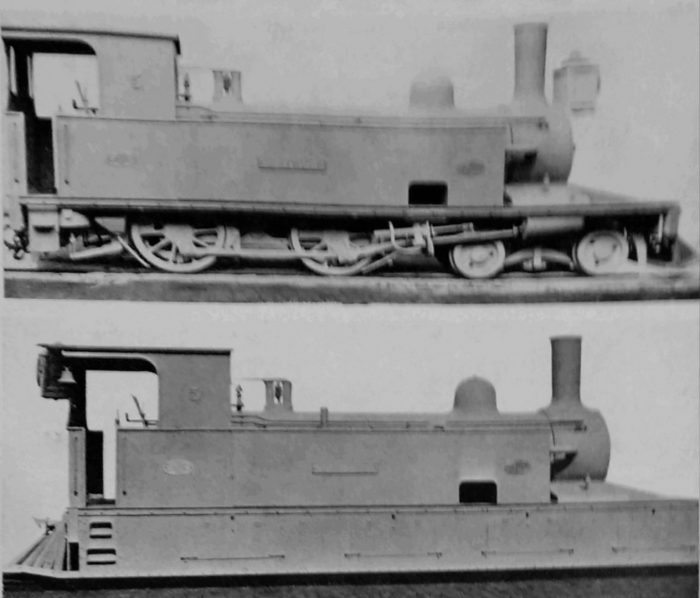
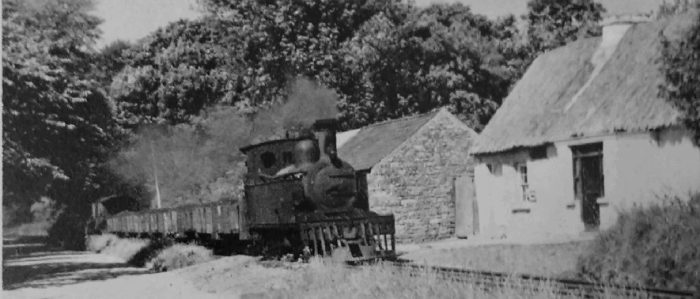
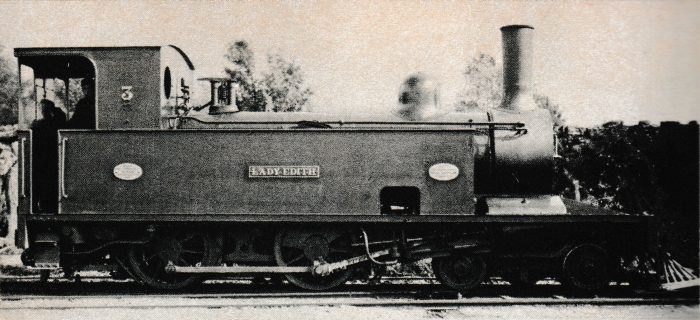
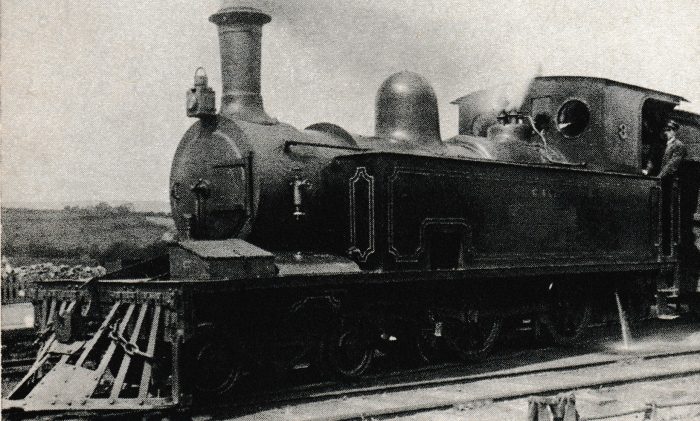
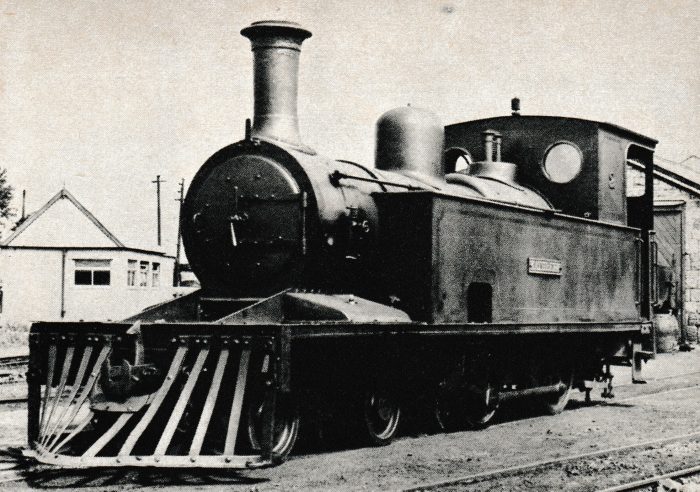
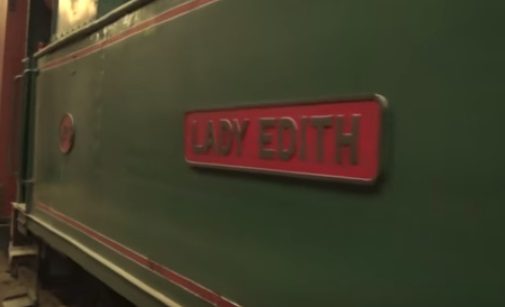
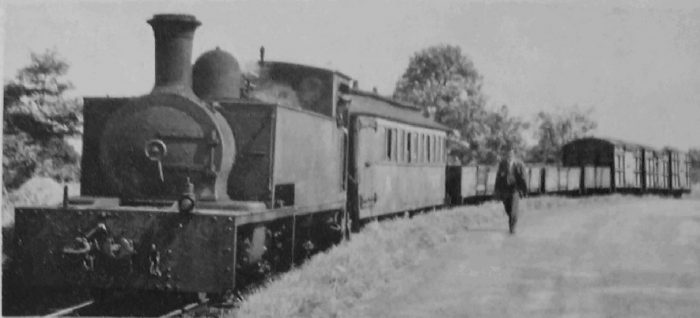
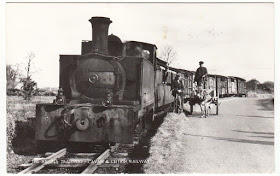
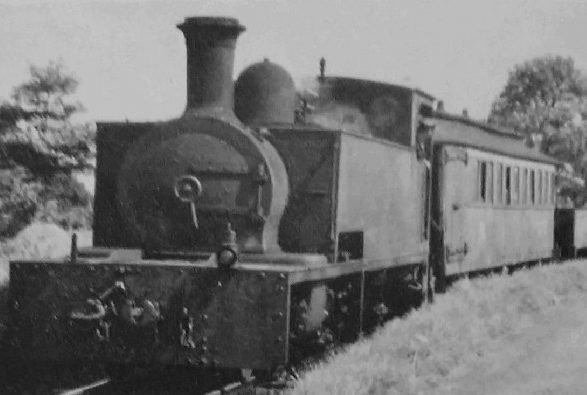
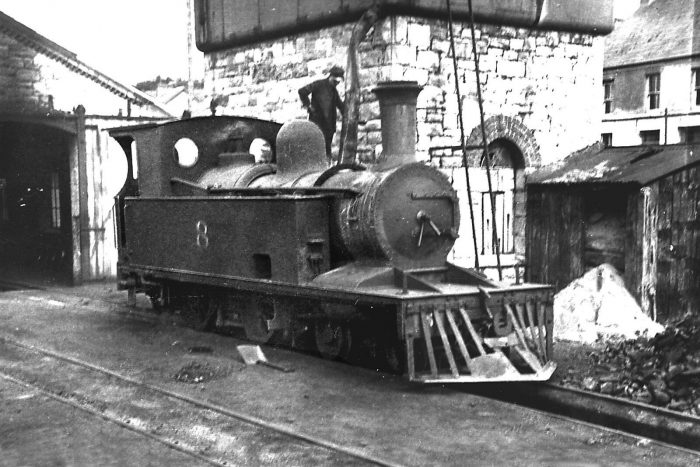
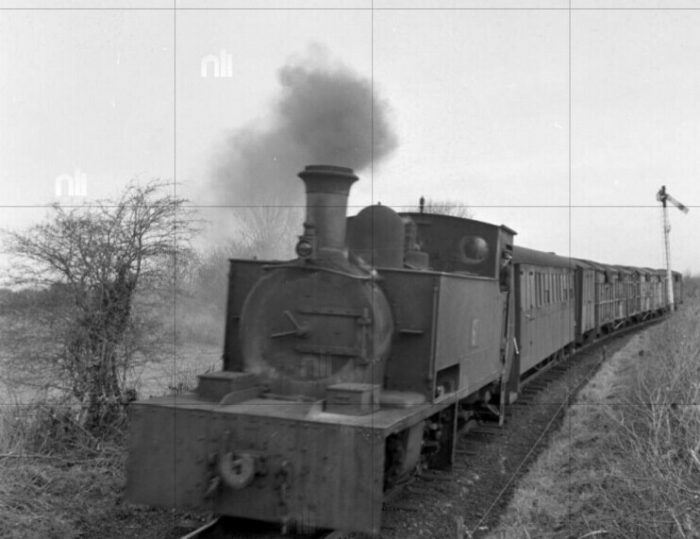
Unusually, the tramway engines had a set of duplicate driving gear. This meantvthat the driver had full control of the engine while always being able to watch the road ahead. Flanagan says that “this provision of two sets of controls was unique, on Irish railways at any rate. As supplied, the tramway engines had the cowcatcher and the head-lamp at the back end and when the makers chose to photograph one of these as a mainline engine the catcher and the lamp were reversed and the U-pipe and exhaust-vent of the condensing gear, as well as the skirts, were removed. All engines ran in conflict with the 1884 Order in Council which specified a maximum axle-loading of eight tons.” [1: p83]The two different incarnations of the tramway engines. In the first picture we see the manufacturers photograph of No. 5, ‘Gertrude’ fitted as a mainline engine in 1887. It was then converted back so as to be supplied to work on the tramway. The tramway version is shown in the second picture above and has the cowcatcher and headlamp fitted behind, or in effect in front of, the cab. These engines were designed to be driven cab first. [1: between p100 & p101]Loco No. 8, Queen Victoria) heads an up coal special past Drumcong Post Office in 1957. A very photogenic location! [1: between p100 & p101]No. 3, Lady Edith in 1903. [1: in between p100 & p101]

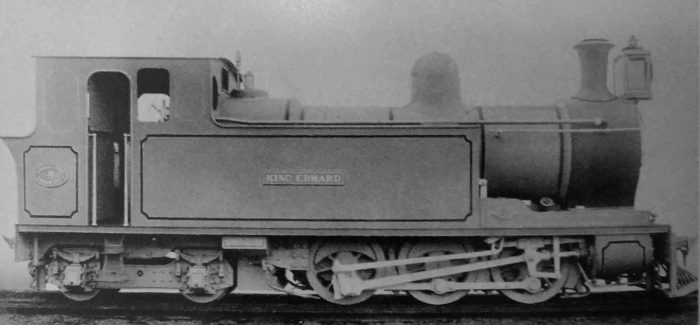
The engines were named after the company directors’ daughters with the exception of one engine which was named for Queen Victoria. A variety of modifications were made to these engines over the years. These are all detailed by Flanagan [1: p84-89] and those details do not need to be repeated here. Nonetheless, despite modification,these engines struggled to cope with the heaviest livestock and excursion traffic of the early 1900s and by January 1904 the C&L was looking for a more powerful loco. The specification called for an 0-6-4T locomotive. Robert Stephenson and Sons tendered the lowest price of £1750 and promised delivery within 18 weeks. They were given the work. The order was placed on 7th July and the engine was tried on the line in steam on 28th October of the same year. [1: p89]

As soon as No. 9,’King Edward’, arrived it became the pride of the C&L fleet. It was considerably more powerful than the rest of the fleet, being able to take 24 wagons of cattle to market. However, it became a ‘white-elephant’ because its long rigid wheel-base tended to spread the running rails. A variety of different things were tried to address this but the ‘King’ continued to spread rails on tight curves. Eventually, it came to only be used in exceptional circumstances. “in December 1922, the board decided to offer it for sale. However, it was reported in 1923 that nobody was interested, and after that the ‘big engine’ spent most of its time at Ballinamore, leaving only for a very occasional jaunt on the main line. ” [1: p91]0-6-4T locomotive No. 9, ‘King Edward’ in ex-shop condition in 1904. [1: between p100 & p101]

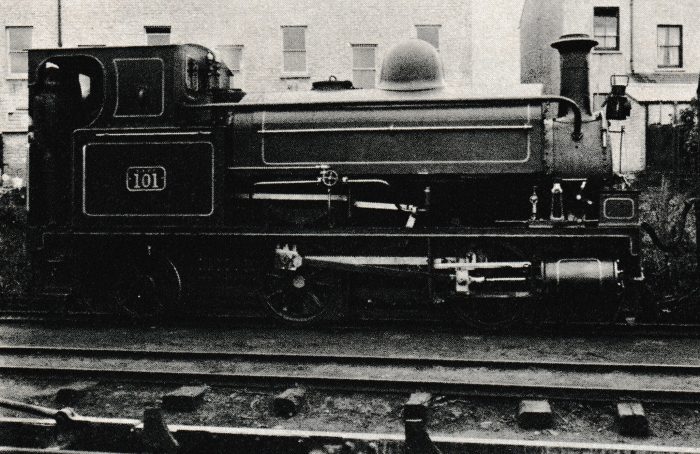
The company considered buying other locos but it was some time before other engines were employed on the network. “The next ones to run on the line were ‘foreigners’ the tow hired by the Ministry of Transport in April 1920 for use in the conrtuction and working of the Arigna Valley Railway. Transferred temporarily to the C&L, they were originally Nos. 1 and 2 of the Ballymena, Cushendall & Red Bay Railway. Built at Black Hawthorn in 1874 and 1875 respectively, they were renumbered on various occasions, becoming 101A and 102A of the Northern Counties Committee in February 1920. … These little engines were very popular on the C&L and were amazingly sturdy machines. Probably as a result of excessive use on the C&L, their condition in June 1921 was poor and it was ordered that they be returned to the NCC at the end of Control. They returned north in November 1921 and were not used again. ” [1: p94-95]One of the two foreigners , No. 101A from the NCC was originally a Ballymena, Cushendall and Red Bay Railway engine. [1: between p100 & p101]

By the summer of 1924, No. 8 was no longer Queen Victoria. The name had become synonymous with colonial rule and after one false start the name plate was removed and destroyed. [1: p97]No. 8, Queen Victoria without her nameplates, pictured in 1924. [1: between p100 & p101]

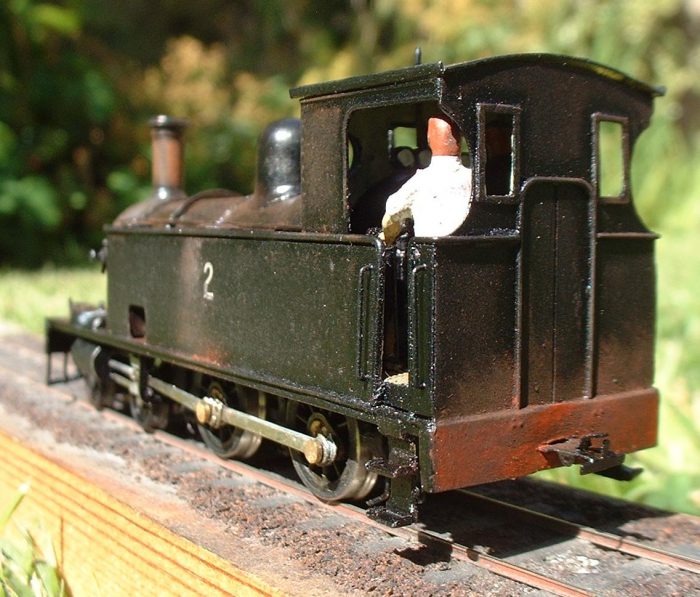
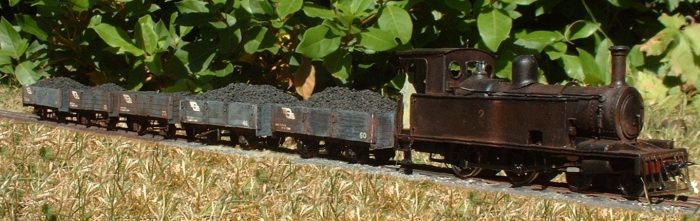
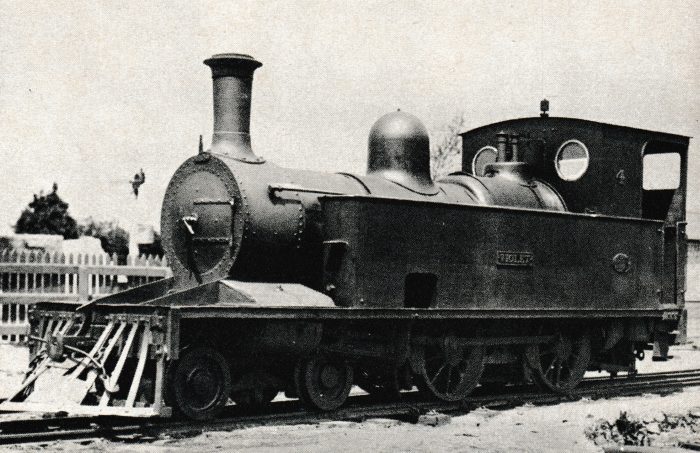
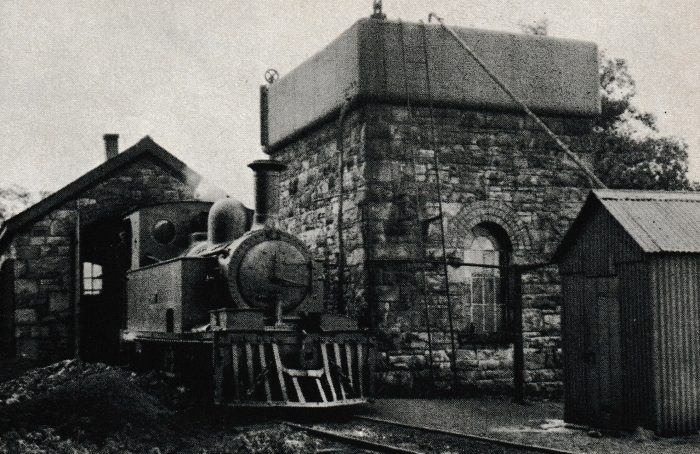
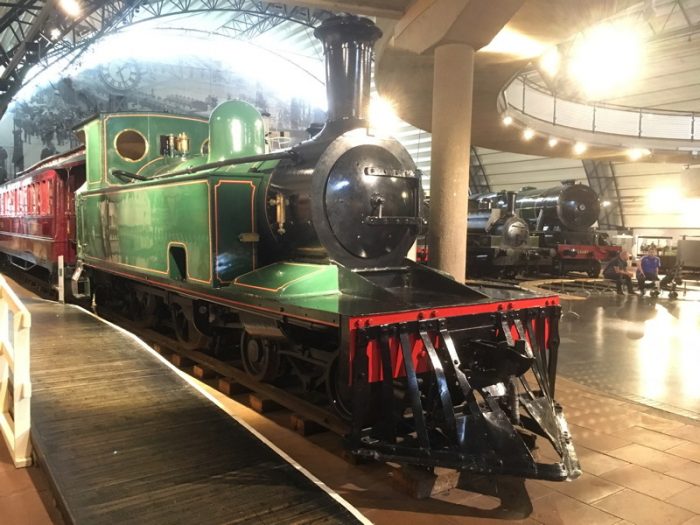
Engine Livery: the basic C&L livery was dark green with lining consisting of “a three-quarter inch band with a much thinner line inside. The band was generally red and the line white but, depending on the taste of the locomotive superintendent or the painter, there were variations. For example, No. 7 had a red band but a black line, while the band on No.8 was yellow and the line light blue. Lined parts of the engine were the front and side of the tanks, the cab panels and back, and the sides of the cylinders. The smoke-box and the cover over the cylinders were in variably black.” [1: p97-98]No. 2, Kathleen in 1933 prior to its regular use on the Arigna Tramway. Flanagan says: “The engine has the flat Hunslett dome cover and is fitted with smoke-box lubricators.” [1: between p100 & p101] Two views of a model of No. 2, Kathleen in 00n3. This model was produced from a kit from Backwoods Miniatures which has been modified including a scratch-built rear cab sheet as the one in the kit was for the era prior to Kathleen being fitted out to run on the Arigna tramway. The original loco still exists at Cultra. These pictures were found on the website of Chester Model Railway Club. [16]A typical Arigna Coal train modelled in 00n3 with Kathleen at the head, also . [16]No. 4, Violet in 1932. Flanagan says: “The step on the [front of] the side tanks was a feature of this engine for a long time.” [1: between p100 & p101]This image of No. 1, Isobel is taken in 1931 at Dromod MPD and mirrors pictures above from the preservation era. [1: between p100 & p101]

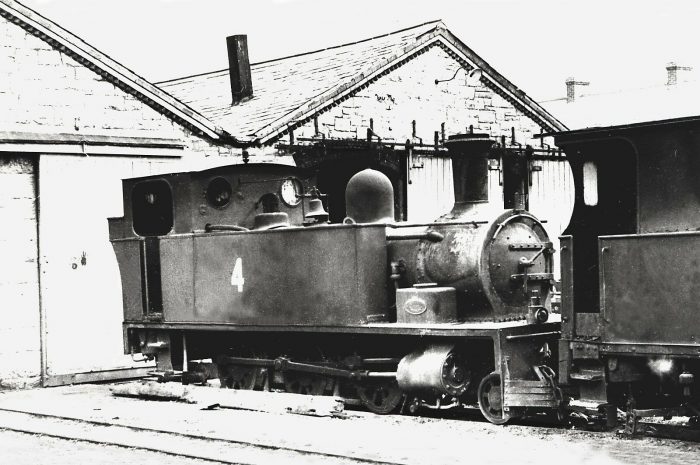
At the amalgamation heavy excursion traffic was a thing of the past and the border between Northern Ireland and Ireland  was depleting the cattle traffic. However, the Arigna Coal traffic was substantial and growing steadily. Modifications were first made to the remaining members of the existing fleet of locomotive (1925). Heavy repairs were undertaken at Ballinamore until around 1932, after which such repairs were undertaken at Inchicore Works. Regular repairs kept 4 of the original 8 locos in use but their overall condition was deteriorating gradually and by 1951 no further havey repairs were undertaken. Flanagan says that “At the closure, the four remaining C&L engines were very run down. As the line was lifted, No. 8 was cut up in the shops in Ballinamore. The lifting of the Dromod line was done with Nos. 2 & 4, and in February 1960, No. 4 was cut up at Dromod. After a long wait, No. 2 was brought by road to the Belfast Transport Museum, where it no rests. The remaining engine, No. 3, was shipped to America by the Lady Edith Society.” [1: p116-117]No. 2, Kathleen at the Ulster Transport Museum, (c) Skimann . [9] Three shots, video stills of Lady Edith on shed at Pine Creek Railroad, New Jersey in 2017. [10]

The Lady Edith Society was a consortium of New York area railroad enthusiasts–Edgar T. Mead, Jr., Oliver Jensen and Roger E.M. “Frimbo” Whitaker. They pooled their money and in 1959 shipped to the U.S. the Lady Edith, a second locomotive, a passenger carriage from the Cavan and Leitrim, and later they were joined by a goods van and a brake van from the West Claire Railway. First displayed at Pleasure Island Amusement Park in Boston, Massachusetts, the equipment was moved to Freehold, NJ, then to Allaire in 1965. Lady Edith first steamed on 16th June 1966. It was serviceable up until around the millenium when it became apparent that the front flue sheet was too thin for safe operation. An $11,000 repair was put on hold when New Jersey adopted new regulations. [11]

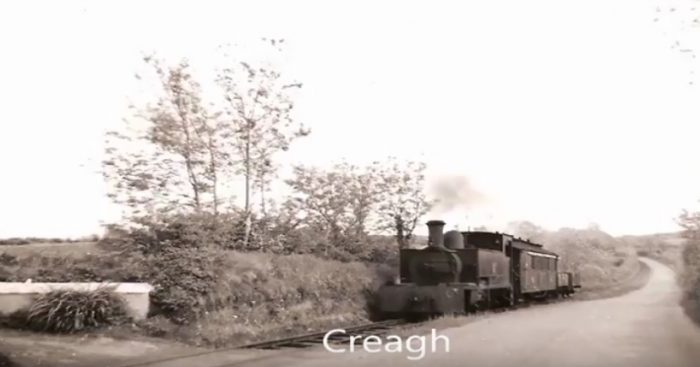
The second locomotive was the former Cavan & Leitrim, ex-Great Southern Railway, nee-Tralee & Dingle 2-6-2T No. 5, which was brought over in 1959 to go to Edaville. Instead, it went to the Steamtown collection in 1961. It remained part of the Steamtown collection until 1986. In that year, it was purchased from the Steamtown Foundation and repatriated to Ireland by the Great Southern Railway Preservation Society, Ltd. It operated for a time on a restored section of the T&D between Tralee and Blennerville. [11] However, that heritage line is currently not operational and No. 5 sits unused on the Tralee & Blennerville Railway. It has not worked for some years now.Above, Loco No. 5T is at Creagh on the afternoon Arigna train. [1: between p100 & p101].

In the adjacent image, which was frequently seen on postcards, No. 3T sits at Creagh on another Arigna bound train. [3]

Locomotives from Down South!

The Cork, Blackrock & Passage Railway (CBPR) closed in 1932. Four of its engines, built in 1900 by Neilson and Company, were 2-4-2T locos. They had maker’s numbers 5561-5564 and CBPR Nos. 4-7. By the middle of 1934 all four engines had been repaired either at Cork or Inchicore. The locos were renumbered Nos. 10L – 13L respectively and  arrived at the C&L in August and September of 1934. No. 11L did not last long and was scrapped in 1939 at Inchicore. After experimentation it was determined that these locos were not suited to the Arigna Extension. No. 13L was laid up at Inchicore in 1951 and scrapped in 1954. The two remaining CBPR locos lasted until the end of the C&L and were cut up in 1959. [1: p117-119]

The GSR considered supplementing C&L motive power with locomotives from  the Tralee & Dingle Line, the West Clare Line and the Schull & Skibbereen Line. All would have been within the loading gauge and turntable lengths. The most suitable proved to be those from the Tralee & Dingle Line. Four engines were sent from the Tralee & Dingle Railway (T&D) to the C&L. They came in numerical order over a period of 16 years.

“The first to come were Nos 3T and 4T in late 1941. The former was a Hunslett 2-6-0T of 1889 (maker’s number 479) and was one of the original T&D engines, having been delivered early to Robert Worthington for use in construction work. … This endine (and all other T&D engines except No. 4) was fitted with Walschaert’s valve gear. … The second engine to come in 1941, No. 4T, was … built by Kerr, Stuart & Company (No. 836) in 1903. it was a 2-6-0T to a standard maker’s design and resembled other engines supplied to various overseas railways. … It was not until 1949 that No. 5T went to Inchicore Works, … en-route to the C&L. On 10th November the following year, it was sent to Ballinamore to begin a nine-year spell of heavy duty. … Generally similar to No. 3T, it was a larger engine – a 2-6-2T – with longer boiler and firebox. Made by Hunslet in 1892, its number was 555. … No. 5T has a cow-catcher but this gradually worked loose and had a tendency to stick on the points. When this … happened one day in Drumshanbo yard the catcher was … removed for good. … The last of the Dingle engines, No. 6T, was identical with No. 3T in everything except age. However, as built (in 1898, Hunslet No. 677) it had no tramway fittings. … No. 6T … came to Inchicore and was condemned in March 1957 but was immediately reprieved  for the C&L coal traffic and went into service shortly afterwards. It ran the greatest mileage of all on coal specials, 1,312 miles in four weeks of April-Mat 1958.” [1: p120-122]

“On closure of the C&L, Nos 3T and 4T (with 10L) were used on the Belturbet lifting and were cut up on completion of the task; 6T (and 12L) went to the Dromod end and were also scrapped. 5T alone survived, being shipped to America.” [1: p122]

6T was the last steam locomotive in steam on the original C&L. 6T went on to haul lifting trains into 1960 and was scrapped in March. It seems as though 5T did operate at Blennerville in the States but is currently in pieces having not steamed in 10 years. [28]

D. Rolling Stock

Carriages: In 1886 the Company instructed the engineer to prepare specifications 8 composite, four third-class carriages and 6 brake vans. The carriages were to be long bogie vehicles. Automatic vacuum brakes were to be used.

In January 1887 the tender from the Metropolitan Carriage & Wagon Company in the sum of £10,554 was accepted and the chosen carriages were 40ft in length by 7ft in width and ran on two four-wheel bogies with 2ft diameter wheels.

The seating arrangement was “longitudinal, slatted, wooden seats in all third-class sections, and similar, black, leather-upholstered seats in the small central smoking first-class sections of the composites. The non-smoking firsts had swivel armchairs on one side and fixed armchairs on the other, dark blue upholstery being used. The accommodation was fifty in the thirds, thirty-four third class and fourteen first-class (six smoking) in the composites. The carriages weighed 7 tons 12cwt.” [1:p148-149]

Externally, “the overall painting was red-brown and there was a fine red line around the windows and panelling. Midway along the waist panel there was a gold transfer of the letters ‘C.L.& R.Ry’ and below was the number. They had open platforms at the ends, though the roof extended the full length of the frame. Protection was afforded by railings. … Lighting was by oil, with four lamps in each third and five in each composite, and the windows were fitted with blinds. No permanent form of heating was provided and in December 1887 two-dozen copper foot warmers were ordered. … In the early days … the foot-warmers were filled from large iron kettles … purchased by the traffic manager in January 1888.” [1: p149]C&L Loco. No. 5 on a board inspection train at Belturbet in the early 1900s. I guess that the bogie coach at the rear of the train would at least have had some first class accommodation! [1: between p100 & p101]

“The first coach, a composite, was delivered in July 1887. … The chief complaint made was that rain had freely found its way inside the coach and the locomotive superintendent was instructed to make a thorough inspection. He reported that the workmanship might have been a bit better in some respects but that, on the whole, the coach was fairly satisfactory. ” [1: p149]

Steam heating of the coaches was considered on a number of occasions but was not fitted. Internal alterations saw the removal of swivel chairs and their replacement with longitudinal bench seating in 1903. It was soon realised that the original coaches had a surfeit of first-class accommodation. It was decided in 1891 to convert two composites to thirds, however the work was not carried out until mid-1899. A third conversion was made in 1907. The possibility of adding a lavatory to No. 11, which was then being modified, was considered and rejected because the cost of £35 6s 6d was considered to be far too high.

“As traffic built up over the years, the carriage stock proved insufficient for the heavy demands made on it. Things came to a head in 1909 and it was then proposed that two new carriages be bought, but the plan had to be withdrawn  in the face of opposition from the council directors.” [1: p150] Further please were made at intervals for an increase in the number of carriages, but to no avail. The C&L made no further additions to is carriage stock.

“Very shortly after the formation of the GSR, plans were drawn up for a standard coach for all the acquired narrow-gauge lines. It would have been 40 ft long and 6ft 11 ins wide with longitudinal seating for 34 third-class passengers. There were to be two four-seater first-class compartments, the central one for smokers. Electric light was planned and entrance would be gained from inward-opening side doors at each end.” [1:p151] These plans came to nothing.

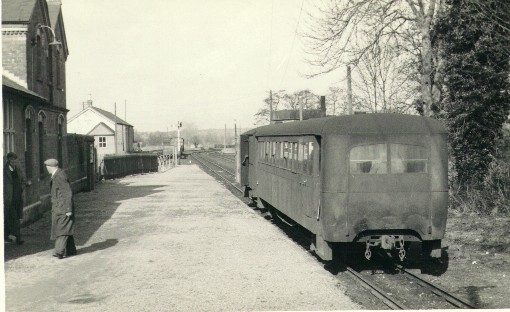
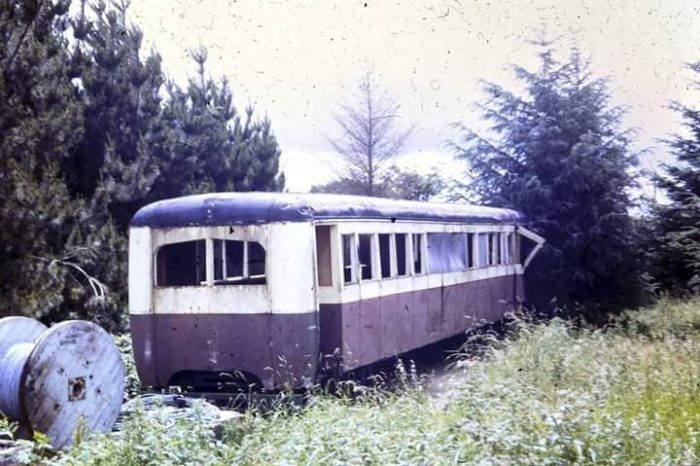
After an attempt at re-panelling of two C&L coaches both deteriorated rapidly, one was scrapped, the other was return with a replacement body made up of “two ‘N’-class single-decker bus bodies joined together in the middle, the original bus entrances being kept and new, similar ones provided opposite. … In appearance, the bus-coach was quite smart at first but it had some very distinct disadvantages. The roof leaked badly, there was no heating, … and although battery lighting was provided it was necessary to send the batteries to the Broadstone to for recharging.” [1: p152]Coach No. 7 of the C&L was re-bodied with a pair of bus bodies shunted together. [14]

Of the remaining two untouched coaches, the first was allowed to rot away until closure, the other, “a composite, was hauled into Ballinamore shops in 1958 and given a completely new body. It was second-class only and extended the full length of the frame, the familiar end platforms disappearing and inward-opening doors being provided instead. The edns were blocked off and there was no access from the next vehicle.” [1: p152]

“In 1954, the CIE made an effort to relieve the situation by giving the line its first ‘foreign’ coaches – two from the West Clare, though originally of Tralee & Dingle origin.” [1: p152]

Flanagan provides a full list of all the C&L carriages: [1:p153-154]

No I Composite: Derelict in GSR livery in Ballinamore to 1958. Then rebuilt in C&L shops as all-second. Transferred to West Clare in June 1959 and used in traffic and later as P.W. sleeping-car on lifting train. Body sold to Bord na Mona in Bellacorick, Co Mayo.

No 2 Composite: Converted to third 1900-07; written off 1950.

No 3 Composite: Converted to third 1900-07; written off 1950.

No 4 Composite: Sent by GSR to Inchicore for repairs; came back with ‘cardboard’ sides. Very little used on return. Frame again sent to Inchicore 1951 but scrapped there.

No 5 Composite: Converted to brake-composite 1945-6 and painted green. Panelling later covered with painted sheet aluminium. On closure sent to Dromod and later brought to Belfast Transport Museum.

No 6 Composite: Converted to brake-composite 1950. Little used at end (No 5 was regular tramway carriage). Body sold to Gaelic Athletic Association 1959 and now in use as changing-room at sports-field in Ballinamore.

No 7 Composite: Sent to Inchicore with No 4 by GSR. Also little used on return. Frame also sent to Inchicore 1951 for new body. Returned December 1953 as `bus-coach’. New body all-second. On closure, sent to Dromod and fittings removed. Sold to Bord na Mona in Lanesboro’, Co Longford.

No 8 Composite: Converted to third 1899; written off 1943.

No 9 Third: Written off 1943.

No 10 Third: Written off 1950.

No 11 Third: Lasted till closure (then scrapped) but, although used in 1949-50 period on tramway, had been derelict for years.

No 12 Third: Written off 1943.

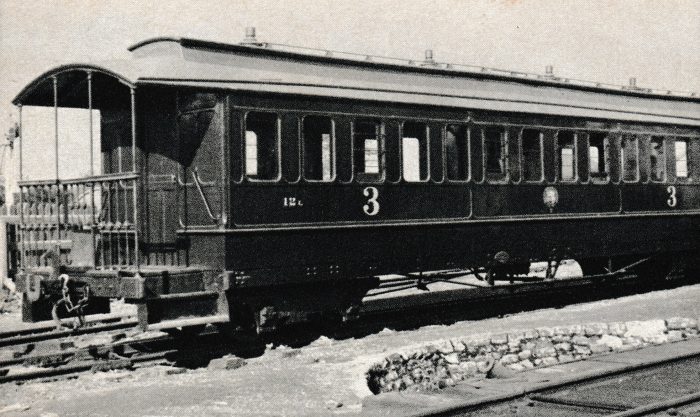
Coach No. 12 was a third class coach. It is shown here newly repainted in 1931. [1: between p100 & p101]

In 2019, Flanagan’s list needs to be reviewed in the light of 50 years of further developments ….

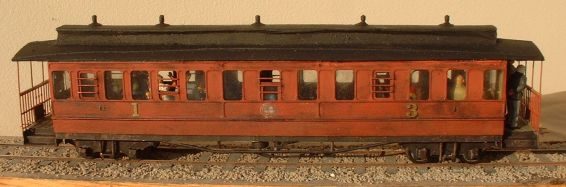
Coach No. 1: Flanagan says that this was on the West Clare Railway for a short while. I have not been able to follow up on the subsequent history and demise of the coach. Worsley Works makes a kit of this coach and carry a picture of it circa 1959 in West Clare colours.Model of Coach No. 1, kit by Worsley Works, built by Simon Starr. [15]

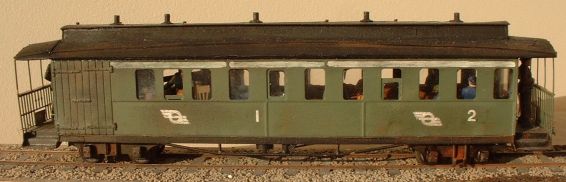
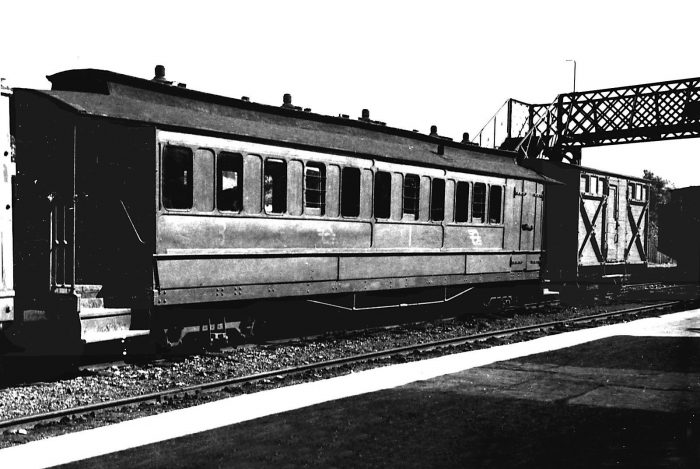
Coach No. 5 (‘6’):  is shown in this early postcard from what was the Belfast Transport Museum. The card was part of a restoration appeal in the early 1960s. Have they got the number wrong? Or did Flanagan?cl-belfast-transport-museum-appeal-pcIn the days before the new Irish Transport Galleries were built at the Ulster Folk & Transport Museum in Cultra, the collection was housed in a cramped old warehouse in Witham Street, Belfast. The carriage featured in this early 1960s card of Witham Street has since been fully restored and is on show at Cultra. [12] Further investigation suggests that the correct designation for the coach under renovation in Belfast was No. ‘5’. The Ulster Folk & Transport Museum now lists it as such. [13]Model of Coach No. 5, kit by Worsley Works, built by Simon Starr. [15]This image shows either Coach No. 5 or Coach No. 6 after conversion to a brake-composite. [1]The image above shows either Coach No. 5 or Coach No. 6 after conversion to a brake-composite, at Ballinamore. [17]

The adjacent image shows Coach No. 5 at the Ulster Folk & Transport Museum and was found on the Chester Model Railway Club website. [18]

Below, there are two images of the interior of Coach No. 5, also sourced from the Chester Model Railway Club website. [18]

The first shows the interior of the 1st Class compartment. The second shows the interior of the 3rd Class compartment. Despite being more plush, the 1st Class compartment was no warmer than the 3rd Class compartment – neither had steam heating! [18]

Coach No. 6:  Was used as a changing room at Ballinamore. I have been unable to verify its life at Ballinamore after the closure of the C&L, nor have I found details of its demise.

Coach No. 7: Flanagan indicates that this coach was passed to the Bord na Mona Railways in Lanesboro’, Co Longford. This picture shows Coach 7L dumped at BnM Mountdillon Works near Lanesborough in 1970, © A. Wilson. [29]The carriage was purchased as a chassis minus it’s body by the Irish Steam Preservation Society in 1972 and moved to Stradbally where it was shortened and the bogie centres relocated to shorted it to 20ft and allow it negotiate the curves of the line, © Ernie Shepherd. [29]7L in 2018 at Stradbally Railway Works it’s 1973 body still going strong and 1887 underframe and bogies with CL&RR axleboxes retained. [29]

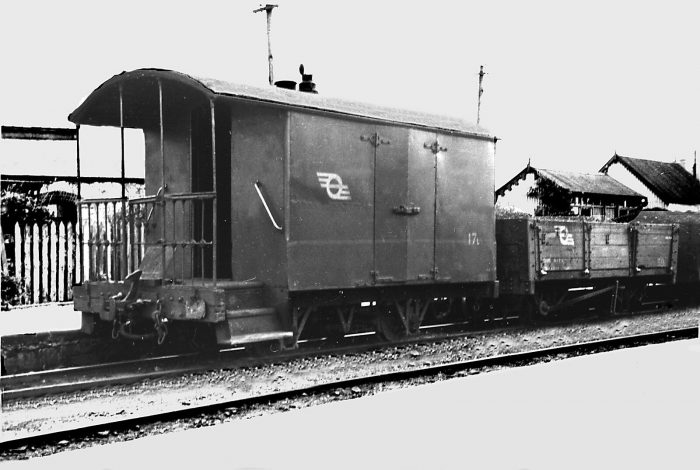
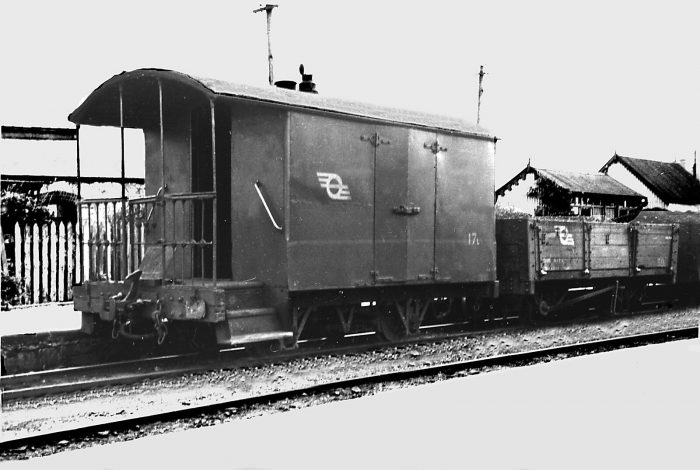
Other Coaching Stock: The C&L had 6 brake vans which measured 15ft 6ins in length and 7ft in width. Panelling on the brake vans originally matched that on the coaching stock. As built they had a birdcage lookout at one side. Once refurbished the birdcage lookout was lost and the sides were panelled in Aluminium.Brake Van no 17L after cladding with aluminium, also at Ballinamore. [17]

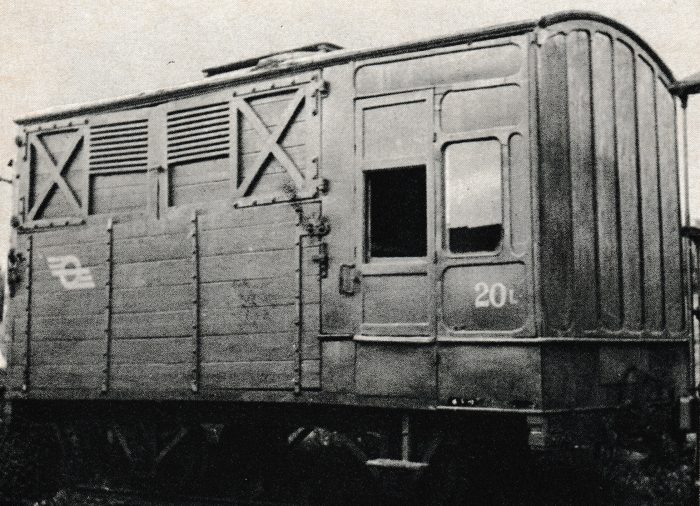
There were just two horse boxes and high were numbered 19 and 20. They carried a dark blue livery with white lettering.The two horse boxes were number 19 and 20. This is No. 20. The picture was taken in 1949. [1: between p100 & p101]

The C&L had two milk vans to cater for creamery traffic. They were also in dark blue livery but we’re also fitted as brake vans and could often be seen acting in that capacity.This image shows a model in 00n3 of one of the milk vans in its later livery with CIE. The image comes from the Chester Model railway Club website. [16]

Timber trucks were provided, just 2, which also were designated as coaching stock.

“At its peak, the C&L coaching stock comprised twenty-five vehicles, if which half were carriages.” [1: p155]

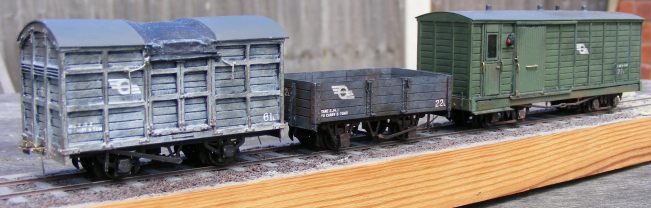
Foreign Coaches: vehicles were transferred from the Tralee & Single. There were two, numbered 21L and 22L. The former was a 30ft. composite coach, the latter was originally a brake third but converted to a van in 1940. 21L was renovated internally on arrival at Ballinamore and again in 1959, when it was sent to the West Clare for further use. [1: p155]This picture comes from the Chester Model Railway Club website [16] and shows, to the right, vehicle 22L referred to above, modelled in 00n3 scale. In addition, the picture includes two wagons used on the C&L which are referred to below.

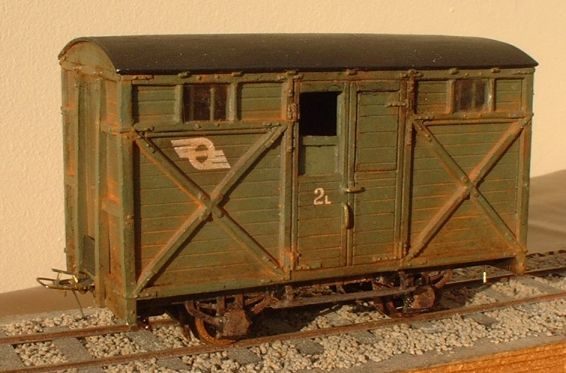
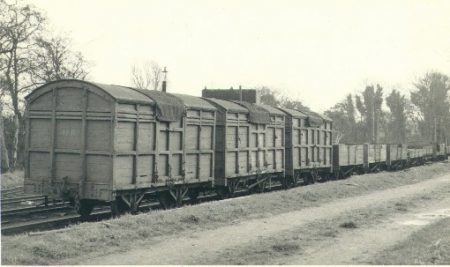
Wagons: The C&L first considered wagons in October 1886. The order which was finally placed with Metropolitan [20] was for “forty open, forty covered and twenty cattle wagons. In addition, two timber trucks were obtained. Of the covered wagons, half were close-roofed and the rest were ‘convertibles’, that is, they had an open centre portion in the roof and could be used for cattle. When used formgoods, tarpaulin covers were employed. The original numbers were  1-40 open; 41-80 goods; 81-100 cattle; 101-102, timber.” [1: p156]Convertible Wagons at Dromod. [19]

Later, in 1888, six ballast wagons were purchased from the Bristol Carriage & Wagon Co. [22] This number was insufficient. The traffic manager asked for 20 more. The board decided on seven, which were purchased in 1889 from Metropolitan. [20] By 1893, the traffic manager was again asking for an increase in allocated stock. The board chose to take no action. It was not until the C&L began building it’s own wagons at Ballinamore that the stock was increased. The first wagon out-shopped from Ballinamore was an open wagon which was in use by 1899. This was followed by two convertibles. [1: p156]

In 1903, an order for a further 20 convertibles was placed with R & Y Pickering of Glasgow. [24] This was followed, in 1911, by a further order for 10 open and 10 covered wagons from the same supplier. (The traffic manager had requested 50 of each type!) This was the last significant sized order to placed outside the company and indeed the only new wagons after this date are listed by Flanagan as: “one open wagon, … built in 1913, a second in 1917, and two timber trucks (to supplement the original pair for the Dromod-Bawnboy timber traffic) in 1918; all were built at Ballinamore.” [1: p157]

Flanagan also provides general details of all of the wagon types and of various re-numberings which took place. The wagon livery was grey with black ironwork. Lettering and numbering were in white. The ballast wagons were the only exceptions, having a special yellow livery of their own; lettering was in black.” [1: p158] All wagons were 15ft 6ins long and 7ft wide. They had a 7ft wheelbase with 2ft diameter wheels.

As the years progressed a series of ‘foreign’ wagons arrived at the C&L. twenty were borrowed from the NCC by the Ministry of Transport, arriving in 1920. In 1934, thirty-eight open wagons were transferred to the C&L, all but six came from the Passage line. The remaining six appear to have been built new at Inchicore, although it is actually more likely that they were new bodies on old Cork & Muskerry wagons. With the wagons came two goods brake vans of Passage origin.

In 1942, a further 12 wagons came to the C&L from the Clogher Valley Railway, 8 open and 4 covered. No further wagons were added until 1953 when the Tralee & Dingle closed and three ballast wagons were transferred to the C&L. Finally, in 1957, a total of 10 wagons (8 Muskerry and 2 Clogher Valley) were sent to Ballinamore from the West Clare. Many of the wagons transferred in the latter years of the C&L saw little use as they had coupling problems and/or were in poor condition. [1: p159-162]

Other Stock: The C&L had two locomotive department service vehicles – a hand operated accident crane (ex Cowan & Sheldon) [25] which arrived in 1887 and a wooden four-wheeled bogie which was used for moving equipment around the Ballinamore yard and for moving coal to Corgar. [1: p163]

References

  1. Patrick J. Flanagan; The Cavan & Leitrim Railway; Pan Books, London, 1972.
  2. https://www.ebay.co.uk/itm/Cavan-Leitrim-NG-Railway-3-different-Sets-of-10-6×4-Black-White-photo-prints-/292954701892, accessed on 5th June 2019.
  3. https://belturbetheritagerailway.com, accessed on 7th June 2019.
  4. http://catalogue.nli.ie, accessed on 8th June 2019.
  5. The series of images was sent to me by Darragh Connolly of the C&L. Those not credited to others are C&L copyright.
  6.  “Industrial Notes and News”. Bulletin. 1031. – Industrial Railway Society. accessed in May 2019. p. 13.
  7. https://en.wikipedia.org/wiki/Cavan_and_Leitrim_Railway, accessed on 5th June 2019.
  8. http://discovertheshannon.com/listings/belturbet-railway-station, accessed on 6th June 2019.
  9. https://commons.wikimedia.org/wiki/File:C%26LR_4-4-0T_2_”KATHLEEN”.jpg, accessed on 22nd June 2019.
  10. https://youtu.be/b3ZsG-4pFWg, accessed on 22nd June 2019 and shown beneath these references.
  11. http://www.rypn.org/forums/viewtopic.php?f=1&t=4246, accessed on 22nd June 2019.
  12. https://irishpostcards.wordpress.com/transport, accessed on 25th June 2019.
  13. https://en.wikipedia.org/wiki/Ulster_Folk_and_Transport_Museum, accessed on 25th June 2019.
  14. http://homepage.eircom.net/~yarpie/clr/archive/11.html, accessed on 25th June 2019.
  15. http://www.worsleyworks.co.uk/Image-Pages/Image_NG_Irish_C&L_4mm.htm, accessed on 25th June 2019.
  16. http://www.chestermodelrailwayclub.com/stock.htm, accessed on 26th June 2019.
  17. https://picclick.co.uk/Cavan-Leitrim-NG-Railway-3-different-292954701892.html, accessed on 26th June 2019.
  18. http://www.chestermodelrailwayclub.com/Cultra.htm, accessed on 26th June 2019.
  19. http://homepage.eircom.net/~yarpie/clr/archive/10.html, accessed on 26th June 2019.
  20. The Metropolitan Railway Carriage and Wagon Co. of Saltley Works, Birmingham was registered in 1862 by Joseph Wright and Sons with a nominal capital of £100,000. In 1864, that share capital was increased to £200,000. In 1902, it was incorporated into the Metropolitan Amalgamated Railway Carriage and Wagon Co. Eventually, in 1929 the next successor company, Metropolitan Carriage, Wagon and Finance Co was merged with the railway business of Cammell, Laird and Co to form Metropolitan Cammell Carriage, Wagon and Finance Co better known as Metro Cammell. [21]
  21. https://www.gracesguide.co.uk/Metropolitan_Railway_Carriage_and_Wagon_Co, accessed on 30th June 2019.
  22. The name “Bristol Wagon & Carriage Company”  was applied to a company on Lawrence Hill, Bristol. Prior to 1889 its name was the Bristol Wagon Works Co. By 1905 the company was also producing road vehicles. It produced a stationary internal combustion engine – ‘The Victoria Engine’ – from 1906 to around 1920. During that time around 3,500 were built. By 1915, it was one of 15 established companies involved in manufacture and hiring-out of railway rolling stock. It was acquired in 1920 by the Leeds Forge Co. [23]
  23. https://www.gracesguide.co.uk/Bristol_Wagon_and_Carriage_Works_Co., accessed on 30th June 2019.
  24. R. Y. Pickering and Co. of Wishaw were manufacturers of railway carriages, wagons and rails and were established in 1864. Around 1900 they produced a few steam railcars but by 1911 they were primarily a manufacturer of Carriages and Wagons for the Railways. Later they diversified and then refocussed so that by 1961 they were general engineers and fabricators, producing welded marine engine fabrications, ship and barge hatch covers, ships welded sternframes and rudders; welded tanks; machine tool fabrications; screening equipment; foundry plant; winches; oil drilling masts and substructures; forgings and drop stampings; sheet metal work and had 600 employees. [26]
  25. Cowans, Sheldon and Co, crane makers, of Carlisle began in a small way at Woodbank near Upperby. John Cowans and Edward Pattinson Sheldon had been apprentices to Robert Stephenson & Co. on Tyneside. There they had been friendly with a William Bouch from Thursby, and it was his younger brother, Thomas, who eventually found the premises at Woodbank, which had been a calico works. In 1866, the company built their first railway recovery crane. They made cranes for the railways, heavy lifting gear which could be used to return locomotives that had gone off the rails to the right track. Cowans Sheldon’s fate was tied to the fate of the railways and the British engineering industry. Britain stopped being the workshop of the world. The postwar years saw increased competition. In 1961, the 450 employees found themselves working for the Glasgow firm of Clyde Crane and Booth and in 1982 the firm became Cowans-Boyd. Five years later, manufacturing ceased and only the design office team was retained in Carlisle. The giant sheds were demolished and beefburgers are now fried where once some of the world’s greatest cranes were made. [27]
  26. https://www.gracesguide.co.uk/R._Y._Pickering_and_Co., accessed on 1st July 2019.
  27. https://www.gracesguide.co.uk/Cowans,_Sheldon_and_Co., accessed on 1st July 2019.
  28. Helpful comments made by Darragh Connolly of the C&L at Dromod on 4th July 2019.
  29. Sean Cain, https://m.facebook.com/groups/2016302075275558?view=permalink&id=2311590155746747, accessed on 5th July 2019.

The Cavan and Leitrim Railway – The Arigna Tramway

Ballinamore to Arigna

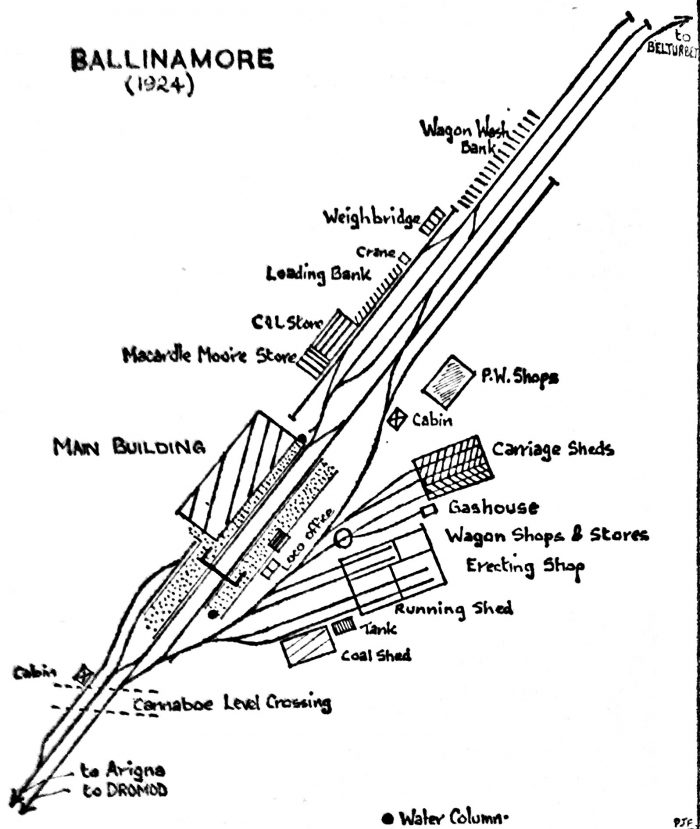
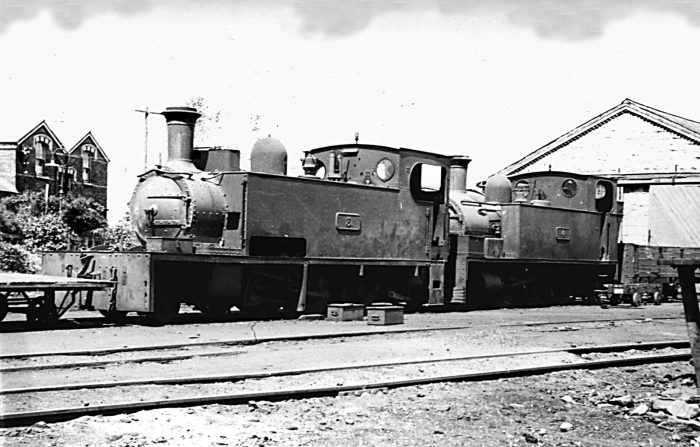
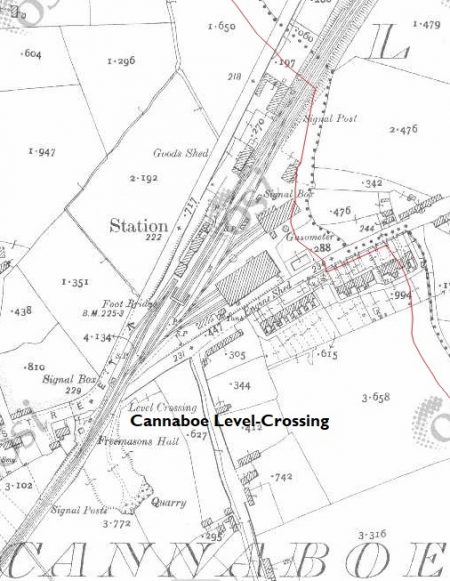
We re-start our journey back at Ballinamore Railway Station again. The plan below is a repeat of one provided in an earlier post. It is helpful in orienting ourselves once again. [1: p132] This first picture looks southwest from the throat of the motive power depot towards Cannaboe level-crossing. [4]The photographer has stepped out into the permanent way to take this picture, it also looks towards Cannaboe level-crossing. [4] Walking Northeast, someway along the platform opposite the station building brings us to this somewhat overexposed view. The footbridge is missing from the image because it is overexposed. [4]This view looks northeast from the footbridge. [4]Two photographs taken at platform level. [4]Three images taken in the MPD at Ballinamore. [4]Cavan & Leitrim 4-4-0T 4L in front of the pair of Cork Blackrock 2-4-2Ts 21st March 1959, (c) Martin Cowgill. [5]An array of filthy motive power on shed at Ballinamore. From left to right: C&L 4-4-0T 4L in front of the pair of Cork Blackrock 2-4-2Ts, 10L & 12L, and Kerr Stuart 2-6-0T 4T by the water tower on 21st March 1959, (c) Martin Cowgill. [5]One of the line’s original locomotives, No 8 in the shed at Ballinamore on 21st March 1959
Formerly named Queen Victoria, No 8 retained it’s original chimney and dome cover. The cutaway cab sheet dates from the locomotive’s time as an Arigna Tramway locomotive, (c) Martin Cowgill. [5]Tucked away out of use was C&L No 2, the former Kathleen, No 2 is the sole survivor of the line’s locomotives in Ireland, being preserved at the Ulster Folk & Transport Museum. Tralee & Dingle No 5 spent time on the line and also survives in working order on it’s original line, 21st March 1959, (c) Martin Cowgill. [5] Ballinamore Station building pictured from Railway Road in 2009 on Google Streetview. Looking Northwest from the approximate location of the station footbridge, also from 2009.Looking Southeast from the location of the station footbridge, again in 2009.

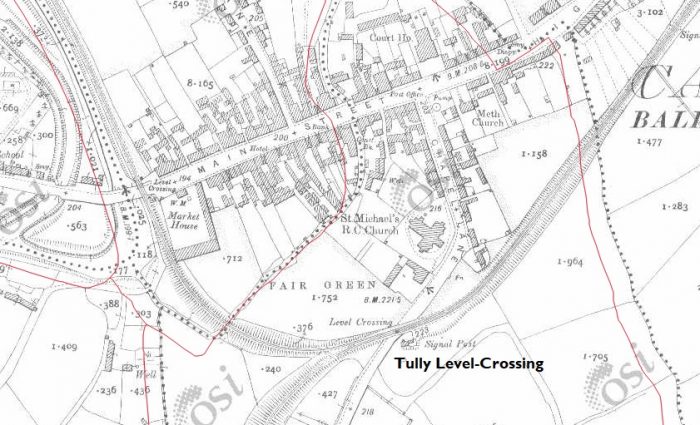
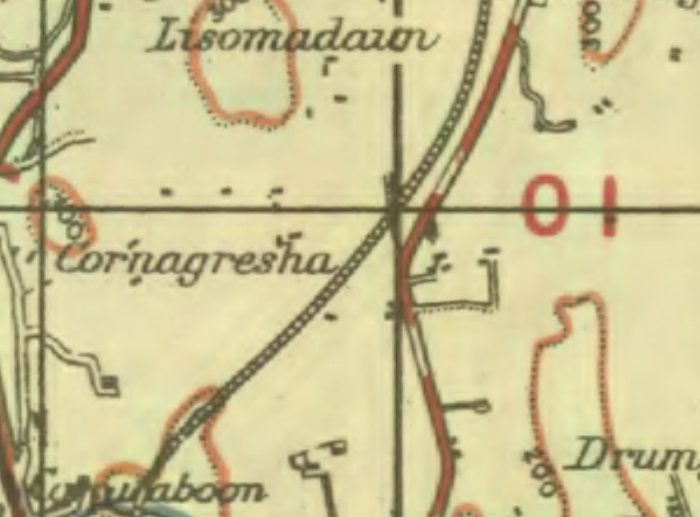
The tramway line to Arigna ran alongside the main line as far as Tully gates and then turned to the right on a five-chain curve and a downgrade of 1:33 to pass the Lower Town gates.

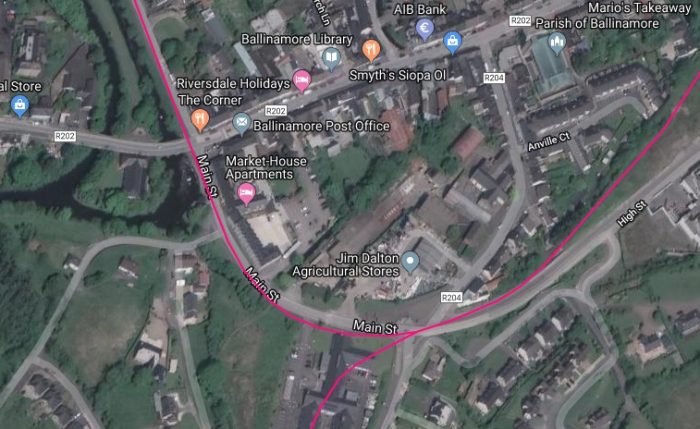
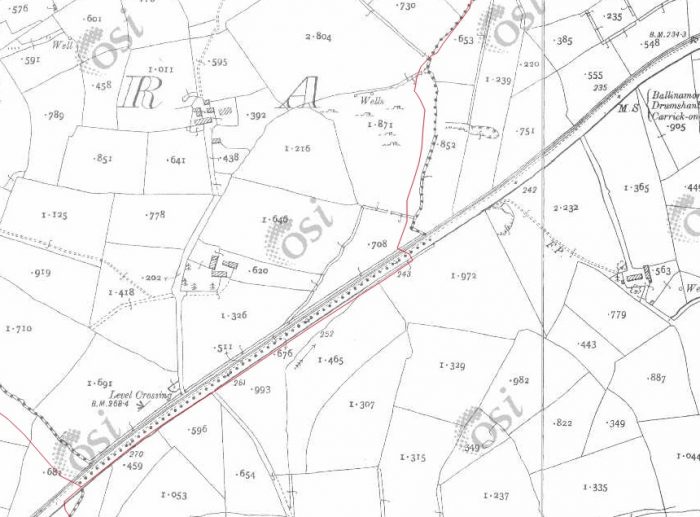
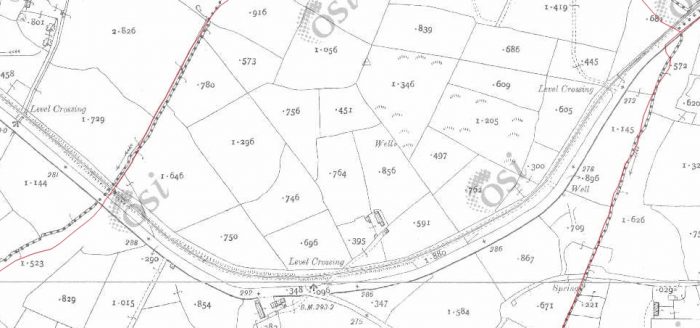
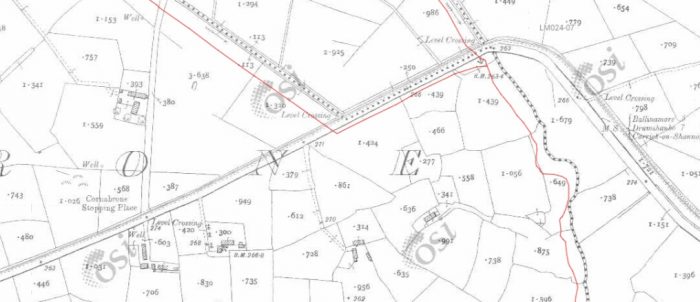
These three images are provided by two different mapping services. The first two are extracts from historical maps held by the OS of Ireland which can be accessed via ‘GeoHive’ [6]

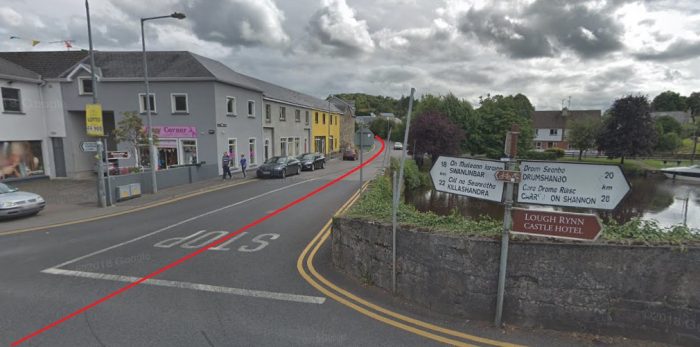
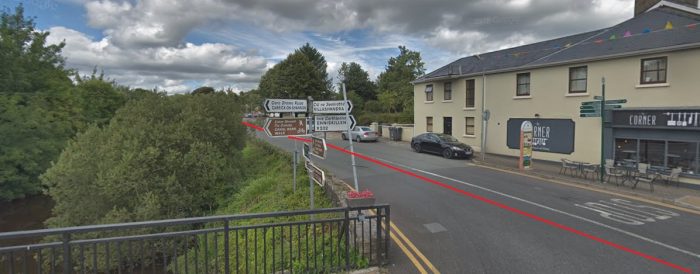
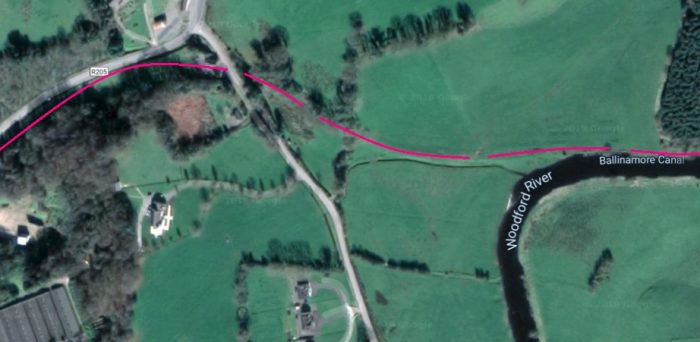
The third is provided by RailMap On-line [7] and is based on the Google satellite mapping service. Lower Main Street level Crossing was adjacent to the Canal and from that point the Tramway levelled and ran alongside the old canal. Two images of the location of Lower Main Street Level-Crossing taken in 2018. Both views are adapted from Google Streetview. The first looks East back towards the Station the second looks Northwest along the line heading for Arigna. The canal can be seen in both pictures.

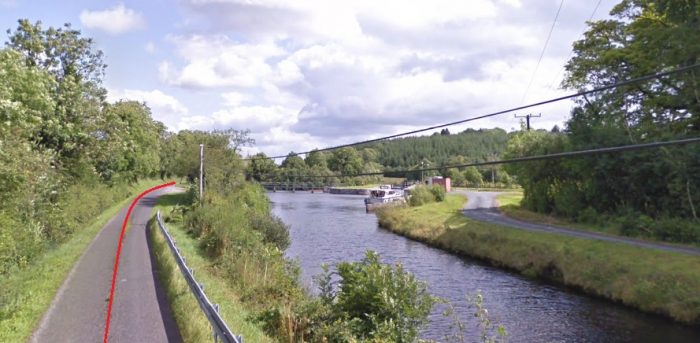
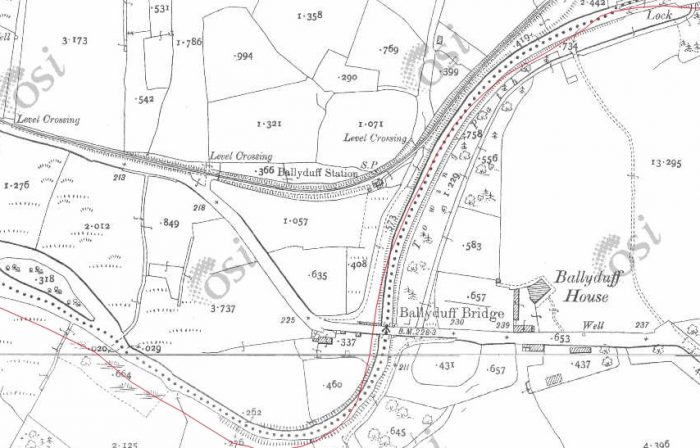
Flanagan says: “About a quarter of a mile past the gates of Lower Main Street Crossing, on the right, was the site of Stradermot Quarry siding. From here on the line wound tortuously right and left through low-lying ground often flooded by the canal and sometimes made impassable to trains. After a fairly level run, the halt at Ballyduff (3 miles) was reached. The cottage and gravelled passenger space were on the left, past the gates which were protected by one of the few signals on the tramway. There was a water tank at the halt up to about 1893 and a replacement, filled by a ram, was erected in 1901, although the site chosen was actually on the Ballinamore side, not far from Lock 7 on the canal. However, the tank’s capacity was insufficient and a second one on the same base was added in 1904. Both were out of use by 1919 and at least one was loaned to the Board of Works for the construction of the extension. No water facilities were provided after 1919. The halt had a telephone and was used as a temporary block post..” [1: p141-142]Looking back along the line of the tramway towards Ballinamore from a point close to Ballyduff.

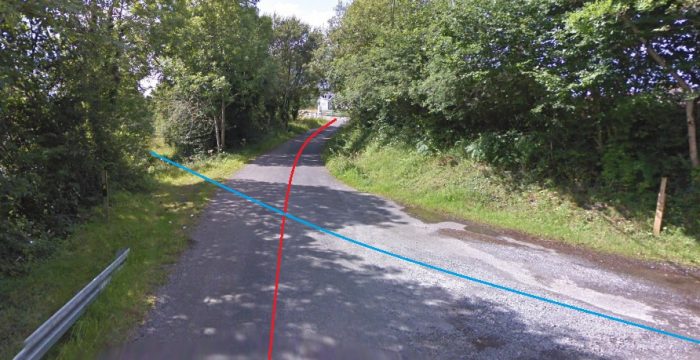
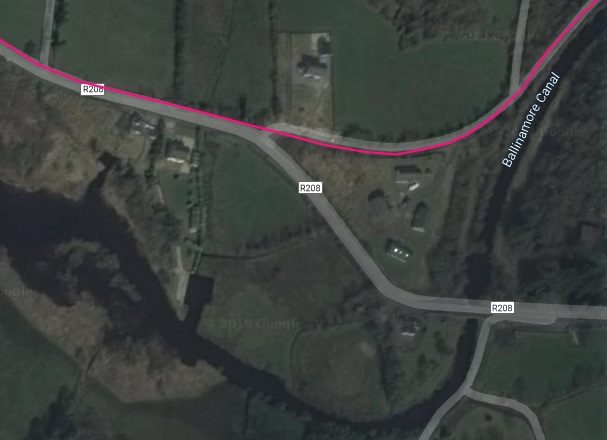
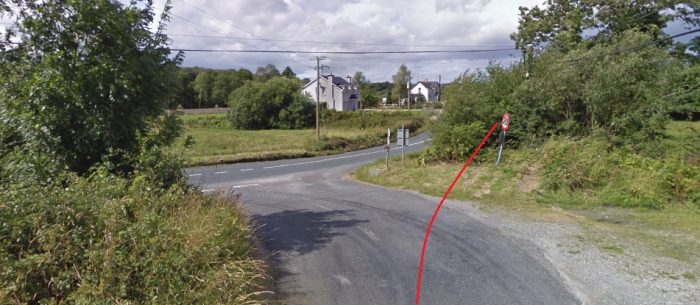
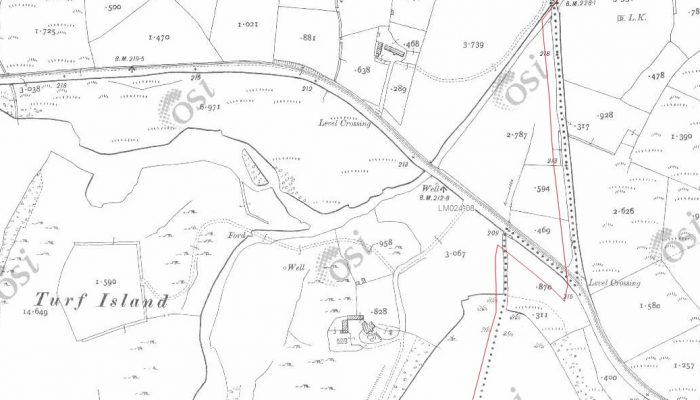
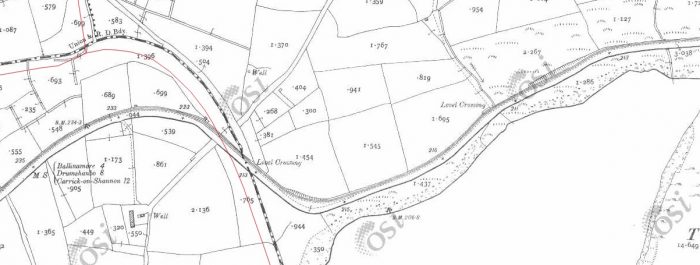
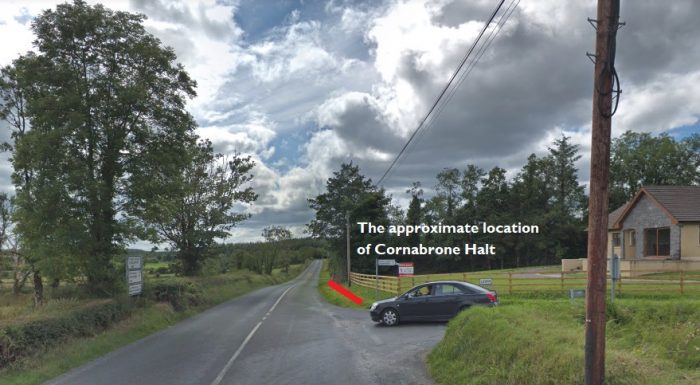
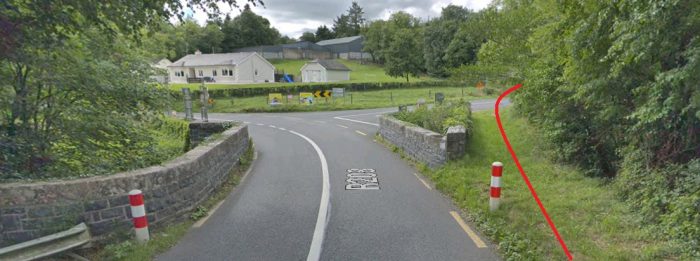
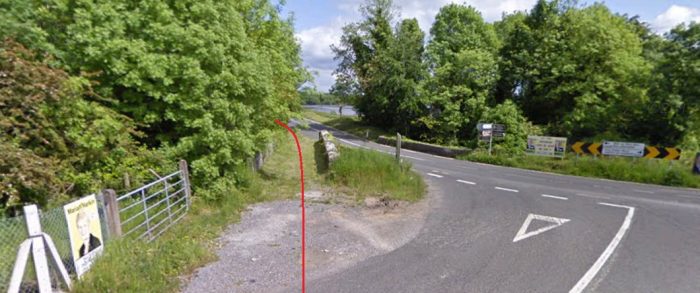
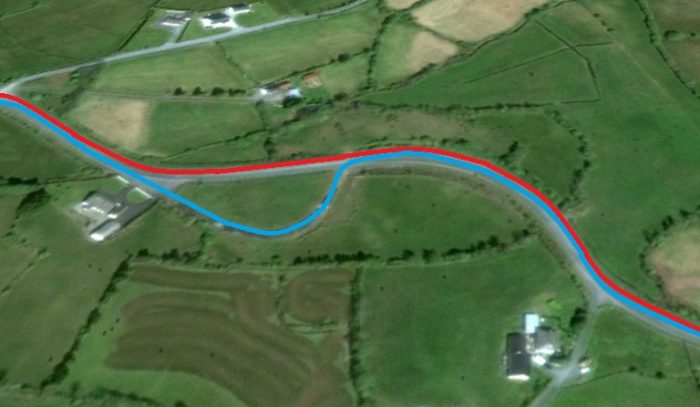
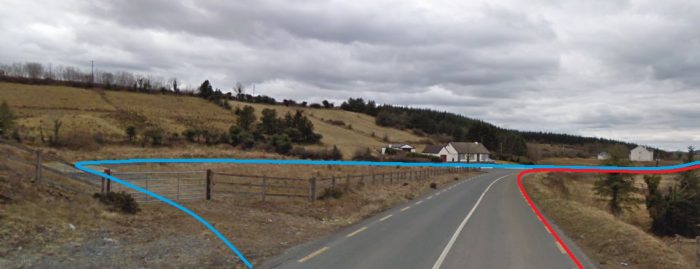
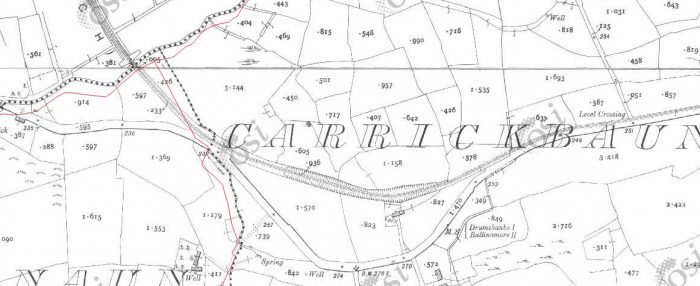
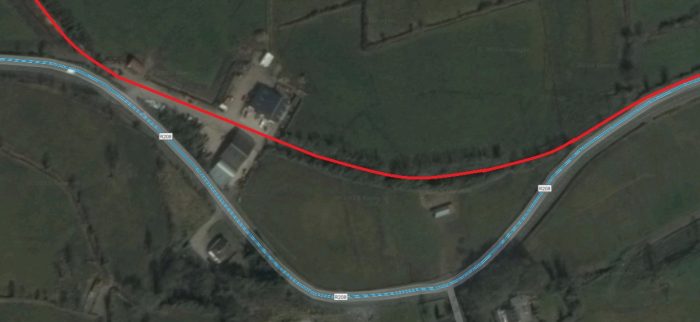
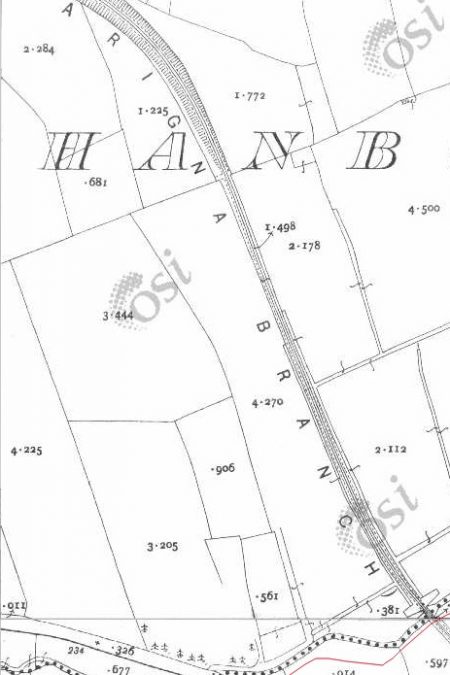
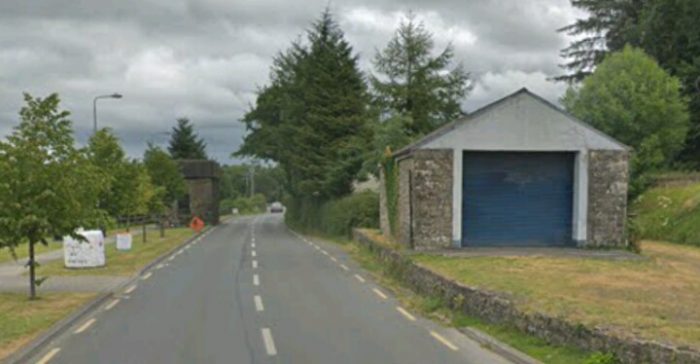
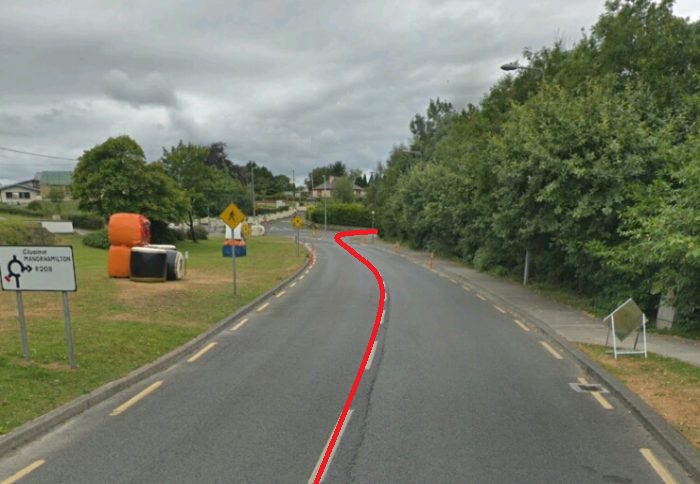
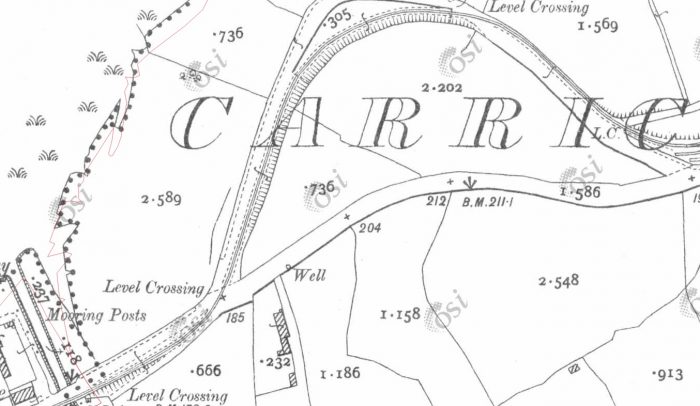
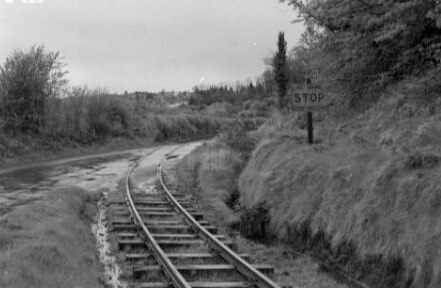
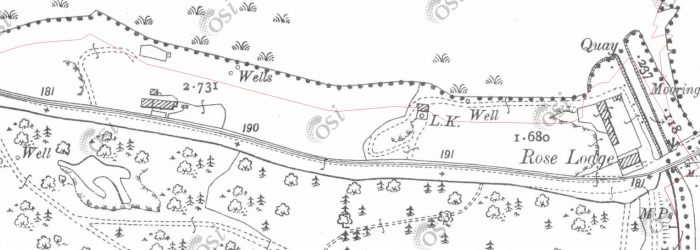
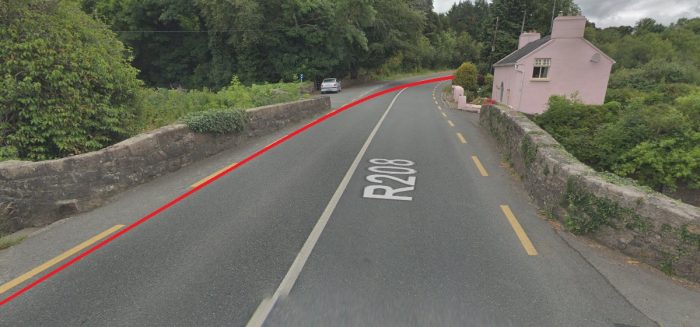
The old road at the level-crossing immediately before Ballyduff Halt used to follow the line shown in blue, as can be seen on the OS Map extract above. That road has now been diverted along the line of the railway in red. Ballyduff Halt was encountered straight after the crossing.Almost immediately beyond Ballyduff there was a four-chain right-hand curve, and then the line met a road coming in on the left. That road is now the R208 on the above satellite image. The tramway followed the north shoulder of what is now the R208. It’s route is shown on the OSI Map extracts below. [6]Flanagan asserts: “The cheap construction of the line was obvious from here on, as it faithfully reflected every hump and dip in the county road. Short, steep gradients followed one another in quick succession, the steepest yet encountered being a drop at 1:28 to the ‘4’ milepost. Just beyond, the road veered briefly to the left and the intervening space was the site of the down, facing Dromkeen Wood siding, at the bottom of the ‘Long Bank’. The siding was the standard six wagon-lengths and lasted from March 1918 to January 1919, being installed for the removal of timber for sleepers.” [1: p142]I believe that this is the place referred to above by Flanagan where the road and tramway separated to allow room for a siding. [6] Within a short distance and a few ungated crossings Cornabrone Halt was reached, it appears towards the left of the map extract above. [6]

Going on towards Cornabrone, the line continued to meander and passed the ‘4.25’ milepost before, Flanagan says, it encountered a  grade of “1:29 on a four-chain left-hand curve. It rose steadily to the ‘5’ mile-post and then descended with another four-chain twist to 5.5 miles, after which it rose slightly to Cornabrone Halt (5.75 miles).” [1: p142]

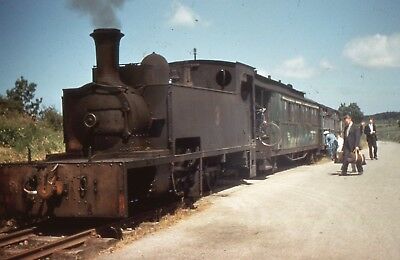
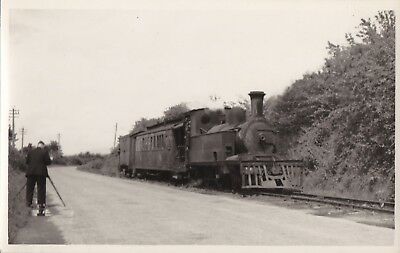
Cornaborne Halt is shown in the adjacent colour image from the 1950s. Cavan & Leitrim 3T (HE479/1889) is at Cornabrone halt with an Arigna-bound mixed train. [8]

The halt was the first of the three well-known roadside stopping-places and, like the others, consisted solely of an enamelled nameboard which nestled in the hedge on the far side of the county road. There were requests for a siding here in 1901 but they were refused, as was an earlier one in 1898. There were never any facilities whatsoever at these halts.” [1: p142]The location of Cornabrone Halt in 2018 (Google Streetview).

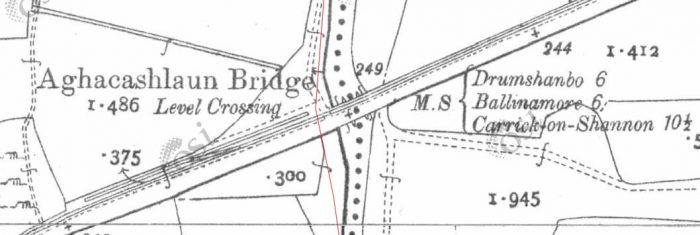
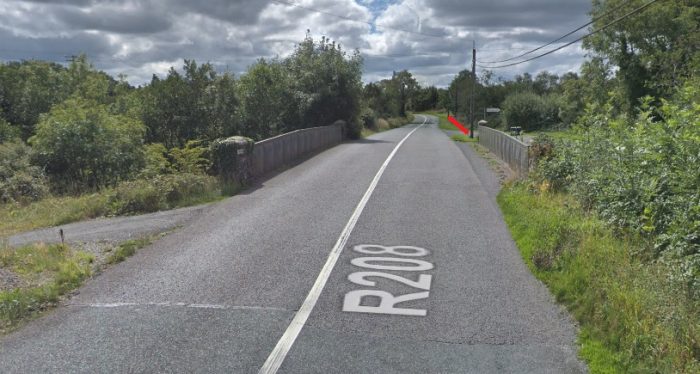
Once past Cornabrone, “the line descended sharply at 1:29 and continued to fall until, after a brief downgrade of 1:32, it crossed the Aughacashlaun River and reached Aughacashlaun ballast siding (6.5 miles). It was an up, trailing siding which had the points in the middle and extended east almost to the river bridge. Although the contractor had a siding here, the C&L one dated from 1896, when the Board of Trade ceased to object, and lasted till 1952. The siding points gave the C&L men a lot of headaches as, although they were protected by an Annett’s lock, the local people had found a way of opening them by interfering with the rodding. In 1926, drivers were warned to proceed with caution and later the points were officially immobilized though the siding was left. It was again brought into use about 1936, when repairs were being carried out to the bridge, and was afterwards left intact; it was infrequently used up to 1946 for sand traffic.” [1: p142-143]Aghacashlaun Siding and Bridge. [6]Looking West this view of the R208 in 2018, shows the location of the siding marked in red just beyond the Aghacahlaun Bridge (Google Streetview).

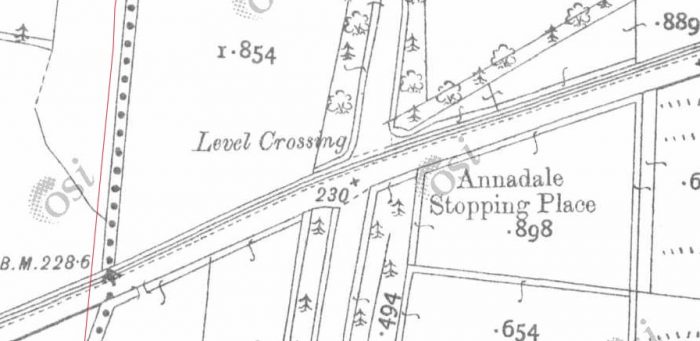
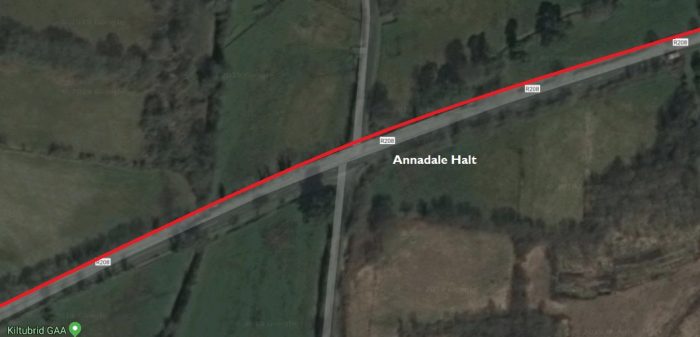
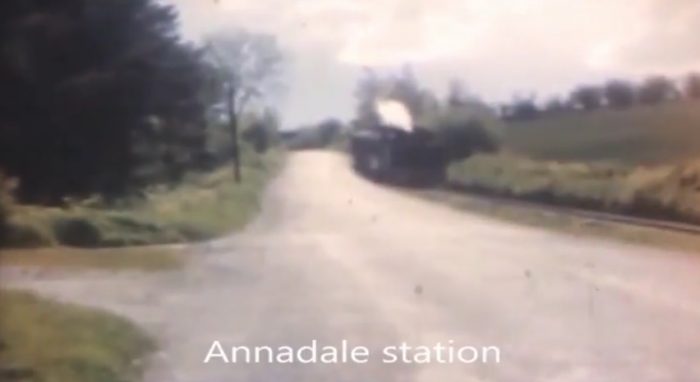
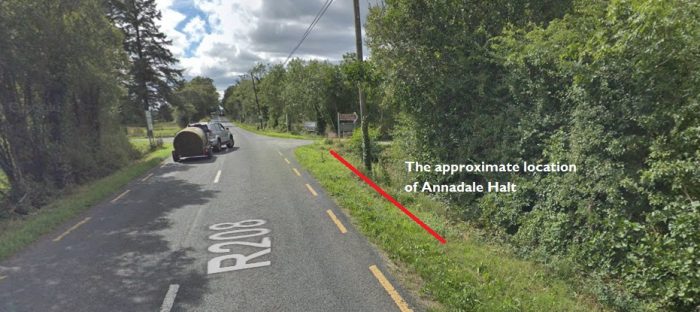
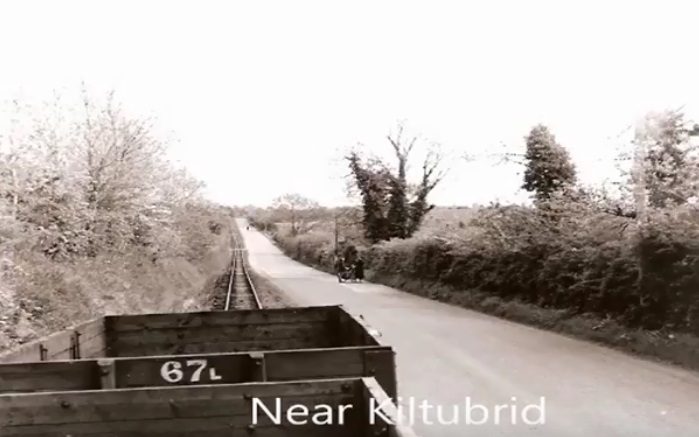
Flanagan continues: “After more humps and curves, though not so sharp as before, the line fell at 1:32 to Annadale (7.5 miles), another roadside halt. A full station was proposed in 1889 and there was also a plan for a refuge siding for heavy trains in 1896. A final idea was for the transfer of Kiltubrid siding to here in 1903 to make the place a crossing point. Annadale was the stop for the historic Lough Scur and for Driney, though special excursionists for the latter place alighted at Driney Curve itself, half a mile farther on.” [1: p143]This indistinct image is a still from a video taken int he late 1950s and shows the location of Annadale Halt. [13]The location of Annadale Halt in 2018.The image above shows the length of tramway between Annadale Halt and Kiltubrid. [13]

Just beyond the ‘8.5’ milepost, the line curved right at 1:37 and made an oblique crossing of a river and the Drumshanbo road as shown in the adjacent image which looks back towards Ballinamore. [9]

The combination of road junction, bridge and level crossing made this place, which was right beside Kiltubrid halt (8.75 miles), very dangerous.

The next image shows a locomotive heading into Kiltubrid Halt from Ballinamore. [3]

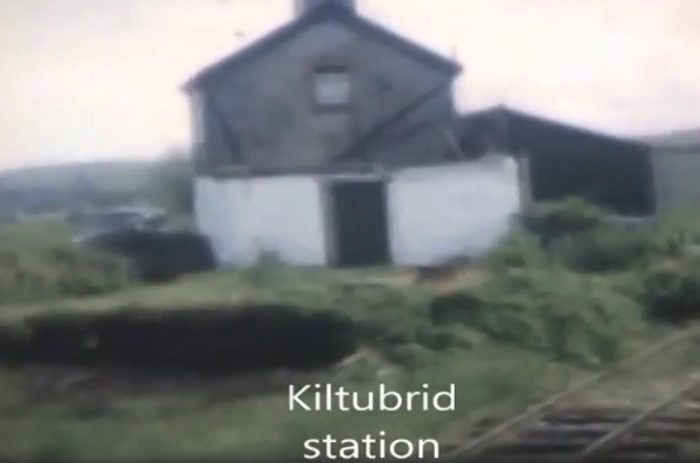
The halt consisted of a house, shelter, and platform on the right-hand side, nicely situated on a four-chain curve. Behind the station-house, and entered from the Drumshanbo end, was the goods siding which dated from the opening of the line. It had its own disc signal, erected in April 1888. As there had been no crossing place on the tramway so far, it was proposed in 1897 that a loop be installed here and some land was bought. However, in December 1901 the engineer stated he was unable to buy all the land he required and put forward a plan for the more economic use of the existing space. This was agreed to in February 1902, but in May of the following year it was decided that Annadale be the crossing point; in the event, no change was made to either place. Kiltubrid also boasted a telephone, being a temporary block post.” [1:p143]

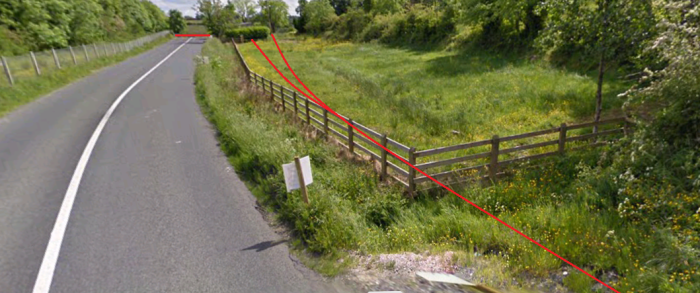
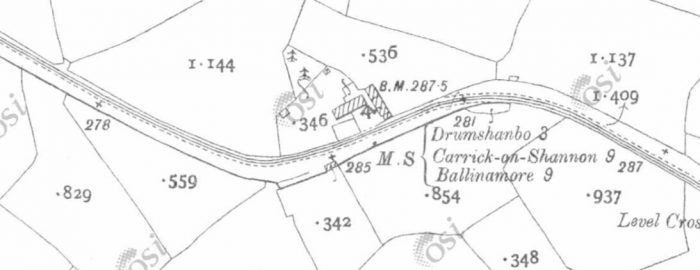
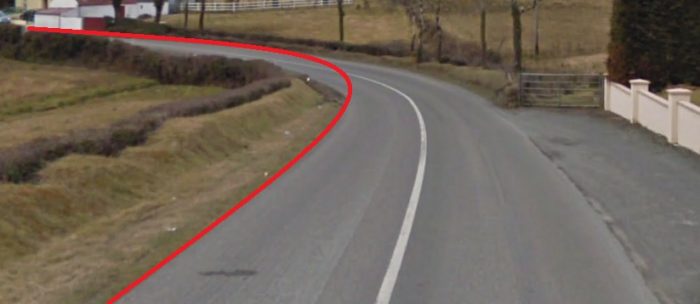
Kiltubrid Halt. [6]Google Earth shows that the alignment of the tramway can still be picked out. The approach from Ballinamore (Google Streetview).Looking back towards Ballinamore – the old tramway bridge is still standing! (Google Streetview)Looking forward from the crossing into the small station site (Google Streetview).In 2018, the small station building still exists and is in use as a private dwelling (Google Streetview).This still from a video shows Kiltubrid Station from an Arigna-bound train. The short siding is visble of the right side of the image. [13]Leaving the Halt at Kiltubrid the line drifted back to run along the verge of the road. The left-hand red line is the siding alignment.

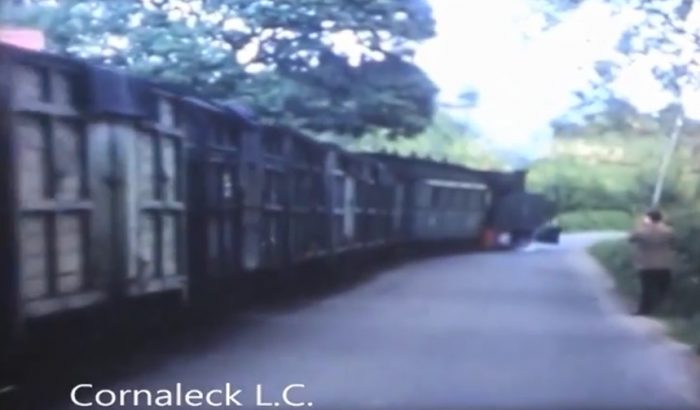
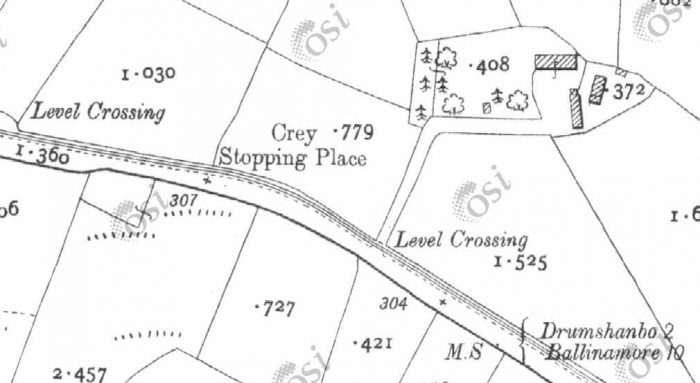
A little past the halt, the line began to climb for a quarter-mile at 1:28.  “Then,” says Flanagan, “it swung sharply across the road by an un-gated crossing and remained to the right of the road for the rest of the way to Drumshanbo. The worst banks of all were in this section, though the steepest were mercifully short. At 9.25 miles there was a short fall and a little farther on a climb at 1:26. The line then undulated until it finally rose at 1:25 to reach the roadside stop at Creagh (10.25 miles).” [1: p143]Cornaleck Crossing was the point at which the tramway crossed back over the Drumshanbo Road. [6]The tramway swung across the road on a curve at an un-gated crossing (Google Streetview). The tramway continued from this point on the north side of the road towards Drumshanbo.This video still is taken looking towards Ballinamore at Cornaleck Crossing. [13]Creagh (Crey) Halt. [6]Approaching Creagh from Ballinamore. [13]

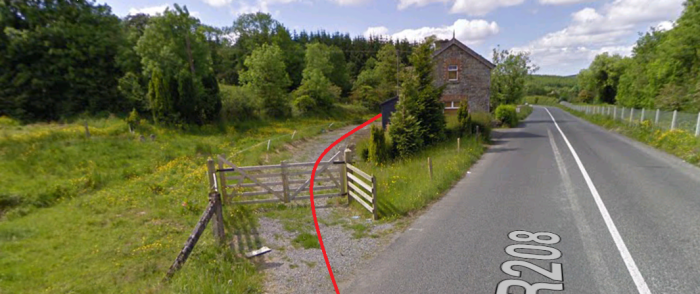
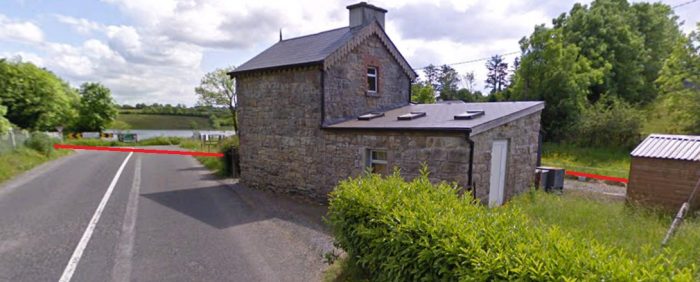
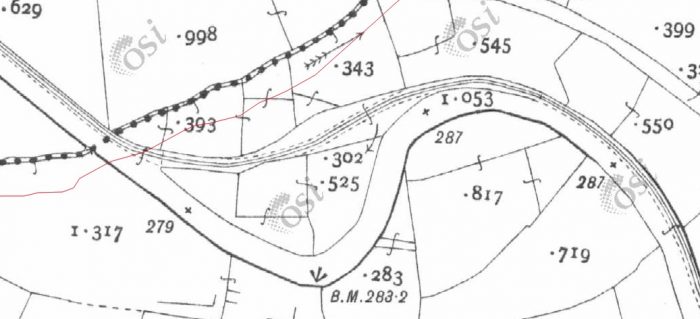
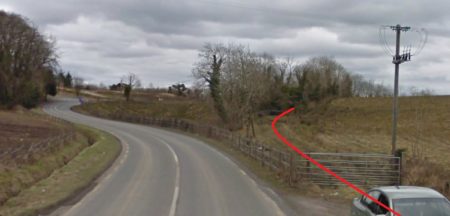
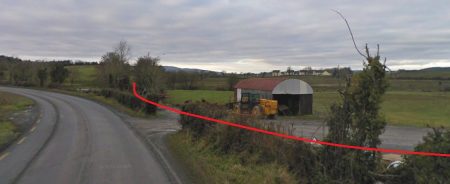
There was a short section of tramway where, in order to make the curvature manageable for trains the road and tramway separated for a few tens of metres as shown below. [6]This 2011 satellite image shows the route of the old road highlighted in blue with the route of the C&L in red. The modern R208 follows the red line and the sharp meander of the old road has been abandoned.The same location looking towards Drumshanbo along the R208 in 2010.

Flanagan says that, “from there to Drumshanbo the run was mostly downhill, the chief point being a hump (1:33) at the ‘11.25’ post. At this point the road veered away to the left and the line had its own right of way through Fallon’s Cutting, over the Priest’s Bog, past the Three Arch Bridge and down the 1:32/1:41 Drumshanbo bank.2 [1: p143-144]To the east of Drumshanbo a train heads for Ballinamore. [10]Fallon’s Cutting. [6]The old railway leaves the line of the new road (above) and heads north, running across the North side of Drumshanbo to the Station. After  Fallon’s cutting road and rail converge and then diverge as shown above.

As the two transport modes diverged, the railway began to cross a bog.

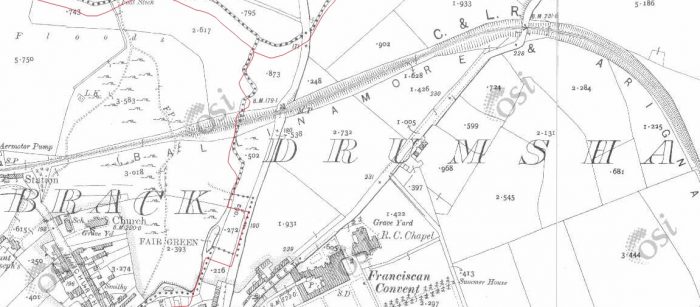
The route across the bog is shown on the next OSI map extract. As the railway curved round from a northerly to a westerly direction it was in cutting once again [6]

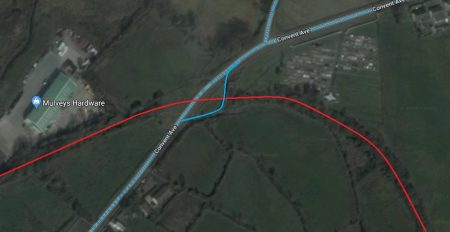
The road from Drunsanbo (Convent Avenue) to the East doglegged in order to cross the cutting roughly on the square.

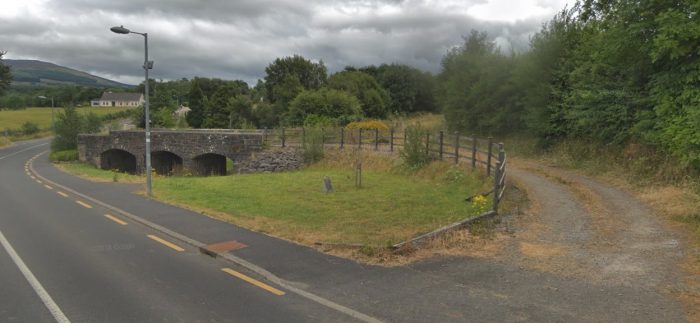
The line ran under ‘Three Arch Bridge’ which is still in place in the early part of the 21st century. The route of the old road can still be picked out as it swings to cross the bridge, both on the satellite image and in the Streetview picture below.

The railway cutting has been infilled to allow the new road (Covent Avenue) to cross its line. This can also be seen easily in the picture of the bridge below.

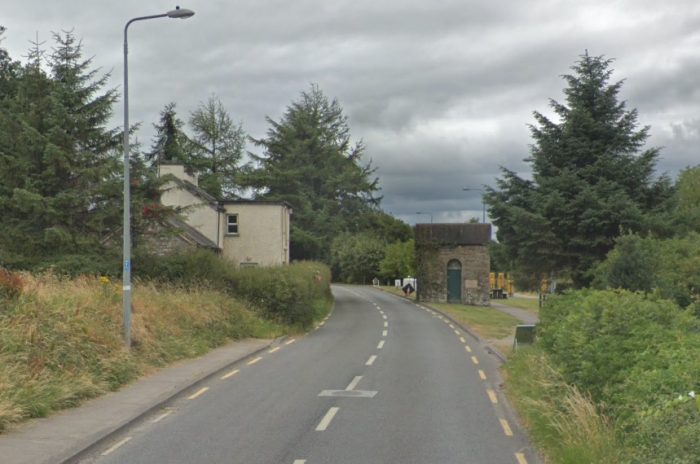
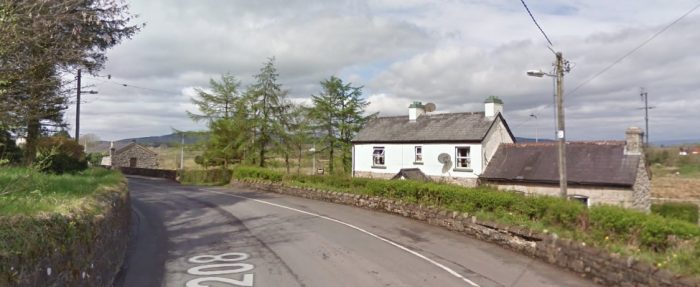
Beyond Three Arch Bridge the C&L descended Drumshanbo Bank and entered the Station which can just be picked out on the left side of the OSI Map extract above. [6]The approach to the site of Drumshanbo Station in 2018. This road is numbered R208.

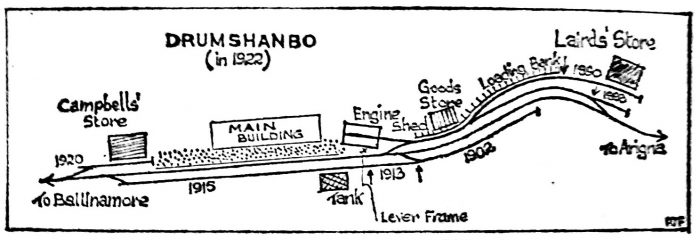
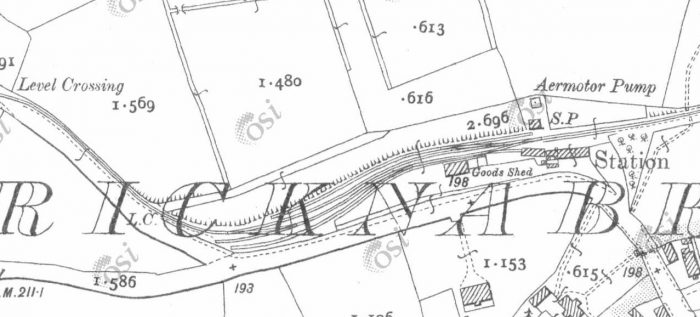
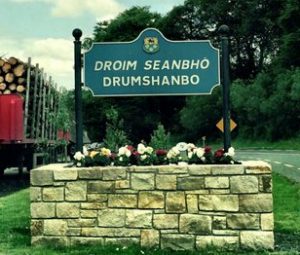
“Drumshanho was yet another place where the C&L got its names wrong and the GSR did not improve matters by introducing an Irish error in the bilingual nameboard. The station (12.25 miles; Class 20 had one platform on the down side. The main buildings originally had one storey but the agent’s house was enlarged in 1914 when another floor was added at a cost of £70 2s 9d. A ground frame at the Arigna end of the platform controlled the yard. Behind the frame was the very short engine shed road. A temporary shed was built in 1888, and lasted until the 1900s. A new one was erected in 1908 at a cost of £77 10s and was a wooden structure which, surprisingly, was not burnt down till about 1923, after which engines were left out overnight, as at Belturbet. For some odd reason no shed ever existed at Arigna and no engine was regularly stabled there, apart from No 6 during the making of the extension.” [1: p144] Flanagan’s sketch map of Drumshanbo Station. I am not too sure why he has chosen to invert the usual practice of the North point being at the top of the image. [1: p144]The OSI Map extract above has north to the north! Sadly the word Carricknabrack sits over the plan of the station area. [6]

The photo above shows the route of the line through the old station.

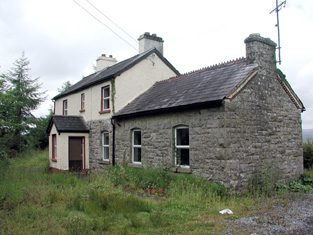
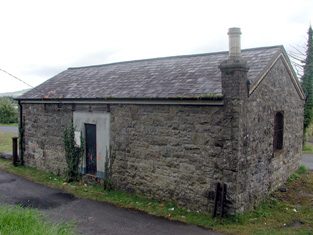
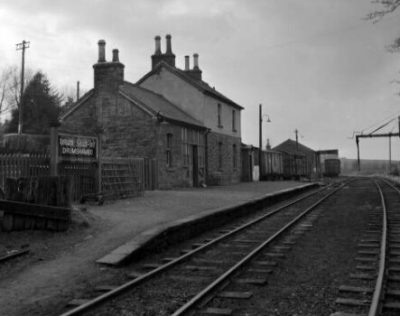
The station building is shown on the adjacent image as it was in the early 21st century. It is a detached five-bay one- and two-storey former railway station, built c.1885. It is now used as a house. Set in its own grounds. Pitched slate and tiled roofs with stone and rendered chimney-stacks. Terracotta ridge cresting and cast-iron rainwater goods. Roughly dressed random coursed limestone and pebble-dashed walls with gable-fronted porch with slated roof. Brick dressings to gable eaves. Replacement uPVC windows with segmental heads and stone sills. Timber door to projecting porch. [12]

This former station building is one of a few structures associated with the railway at Drumshanbo that remain. Its fine stonework and brick detailing are typical of Victorian architecture. Today this house stands as a reminder of the Ballinamore, Arigna and Aughabehy Line, which served the area until 1959. [12]

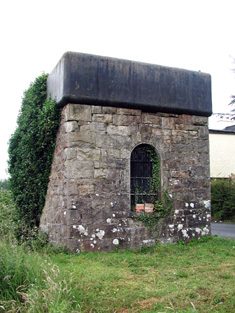
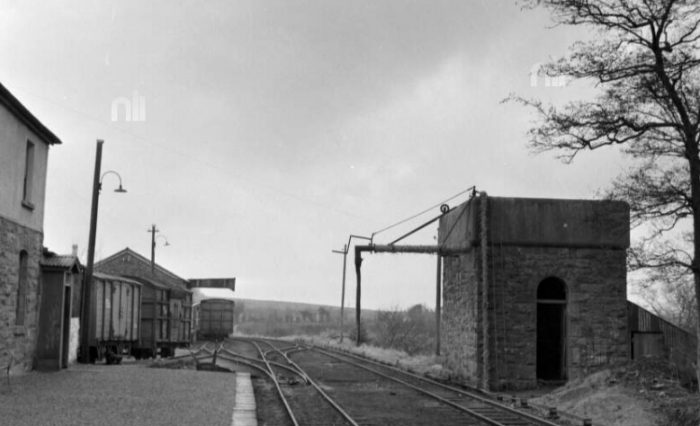
The water tower also remains. It  is now disused. Its construction is of random coursed limestone walls with round-arched openings and surmounted by cast-iron water tank. It has a timber battened door with overlight and window with cast-iron frame. It was built as part of a well-designed complex of structures and is of architectural and technical merit. [14]

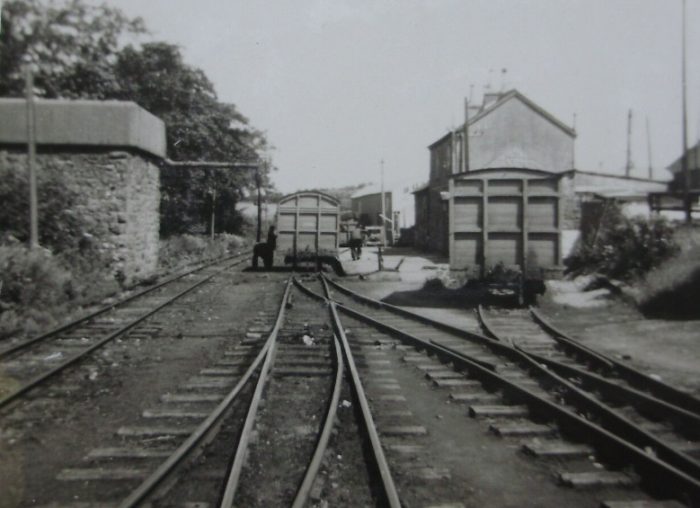
The Goods shed still stands in the early 21st century. It is a detached single-bay single-storey former goods shed, in use for storage. It has a pitched slate roof with brick chimney-stack. It is of roughly dressed random coursed limestone walls with brick dressings to gable eaves. There is a fixed window with stone sill to segmental-headed window opening. A modern opening has been provided to the south gable and blocked square-headed opening to west elevation. There is a limestone former station platform to north with a section of railway track. It has been altered to meet modern day needs. However it has retained much of its original fabric. Brick dressings to the gables enhance the coursed stone elevations, resulting in a structure of architectural merit. The surviving railway platform contributes to the setting of the shed. [15]Drumshanbo Station seen from the West in the 1950s. [21]

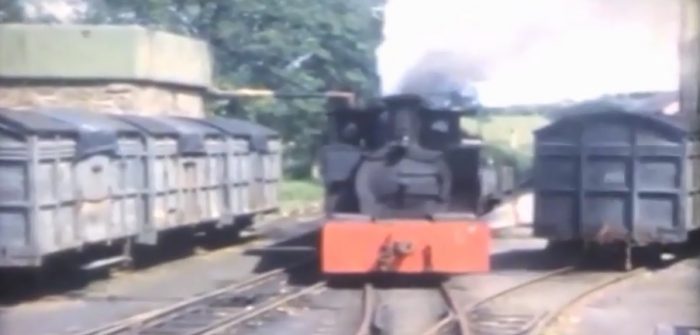
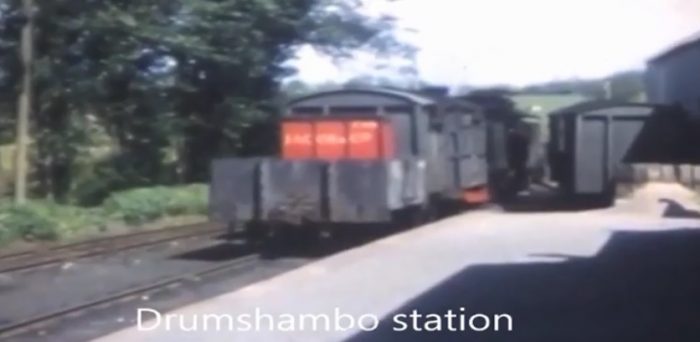
Another picture at almost exactly the same location. This is a video still from the late 1950s. [13]A video still showing shunting in Drumshanbo Station with the Station building in shadow on the right. [13]Drumshanbo Stationhouse to the right and the goods shed, to the left, taken from another arm of the R208. [7]Two 1950s image looking West along the line towards Arigna for the National Library of Ireland. [16]

Flanagan says: “Opposite the station-house, two road-widths from the platform, stood the 5,000-gallon water tank. For many years it was filled by a windmill just to the west of it but the mill was very troublesome and it was often necessary to call on the permanent-way gang to hand-pump the water. To remedy the situation an arrangement was made with Mr Laird, a mill-owner from the town, whereby he supplied the water from his mill. This reputedly cost the company £80 a year and in 1918 it was decided to reduce costs by installing an oil-engined pump. Unfortunately, the pump, which cost £197, was a failure, and the old arrangements were reverted to in 1922. In January 1923 it was ordered that the pump be removed and the hand-pumping gang reduced in number. About this time, too, the windmill was taken down. Later, the town supply was used.” [1: p144-145] The water tower is shown behind the station ground frame in the image adjacent/immediately above. [16]

Originally, Drumshanbo was neither a staff nor a crossing station but from 1892 it became both, although the loop used was near the goods store and not opposite the platform. The line at the latter point was merely a goods loop (being protected by traps) and was not laid till 1915. At the Ballinamore end of the station a short line diverged on the left to serve Campbells’ hardware store; the line was built in 1920 and was worked by hand points before being connected to the ground frame in later years. Other sidings were laid in 1890, 1902 and 1913. The goods store and loading bank were on the left on a curve and the private Lairds’ Store was at the end of the store road. The goods sidings, and the running line in between, curved both left and right in turn, within the station boundaries, and working could be quite complicated, especially if it was necessary to run round via one of the sidings.” [1: p145] Looking East through Drumshanbo Station site in 2018 towards Ballinamore.Looking West from beside the goods shed (Google Streetview).

The adjacent monochrome image shows a view looking back to the station from alongside the sidings shown on the OSI Map extract above. [16]

Flanagan continues: “Outside the station, the line met the un-gated road-crossing at Carrignabrack. It was on a four-chain reverse curve and a few yards beyond it was a second similar crossing. Once more on the right of the road the line crossed the Lough Allen Canal and then passed through a pleasantly-wooded section on a low stone embankment.” [1: p145]This OSI Map extract shows the tramway crossing the road on two occasions, leaving the tramway on the left of the road when it crossed the canal. [6]

The adjacent image shows the level-crossing just prior to the Lough Allen Canal Bridge. [16]Immediately after crossing the canal the tramway crossed the road again and continued on the north side – the right side of the road heading for Arigna. [6]The route to the West (Google Streetview) 2018. The Lough Allen Canal as it appears on the North side of the R208 (Google Streetview) 2018.The OSI Map Extract shows the line curving gradual towards the Northwest and the road (in the bottom right corner heading Southwest. The Mahanagh Crossing and the Shannon Bridge are near the top left of the extract. [6]This satellite image shows the old railway alignment which was on its own right of way and the modern R208 which follows the same alignment until it curves away to give room for a junction with the R280. [7]

“There was a short fall at 1:28 at the ‘12.75’ milepost, where the road swung to the left and made a U-turn to recross the line again at Mahanagh gates (13.25 miles). A little beyond the crossing the line rose slightly to cross the single-span girder Shannon Bridge.” [1: p145]Mahanagh Level Crossing looking back from a train of empty coal wagons towards Drumshanbo. [13]Shannon Bridge looking back from the same train of empty coal wagons towards Drumshanbo. [13]The Map extract shows Mahanagh Crossing to the bottom right. The crossing cottage only just edges into the extract. Shannon bridge is towards the top of the extract with the road bridge (Galley Bridge) alongside. [6]The Crossing keeper’s cottage at Mahanagh has been extended significantly. The line passed on the near side of the cottage not far from the location of the access gates to the cottage in 2018 (Google Streetview). Two images above of the River Shannon looking to the south side of the R208. The location of the railway bridge abutments on each bank can just be seen, (Google Streetview). The adjacent image shows the railway bridge from the southwest with the road bridge behind. [11]

“The tramway was now in Co. Roscommon and just past the river it rejoined the road, remaining on the left of it for most of the run to Arigna. The section rose slightly at 1:193 and was dead straight for over half a mile before leaving the road for good and curving left to run into Arigna station (14.75 miles).” [1: p145]The end of the line at Arigna before the construction of the extension. [6]A closer image. The layout is not the same as below as re-modelling took place as the extension was built. [6]Flanagan’s sketch plan of Arigna Station. [1: p146]

For details of the Extension, please follow this link: https://rogerfarnworth.com/2019/04/26/the-cavan-leitrim-railway-arigna-valley-railway.

The Arigna station, as shown in the adjacent National Library of Ireland image, [18] “was delightfully situated in a glade of tall alder trees, and had a very elongated layout. The station-house was on the one platform on the right, with the ground frame at the west end. The Arigna station-house was always the odd man out on the C&L. In latter days it was of concrete block construction, [adjacent, [19]] the building dating from 1923-4. The original was also non-standard, being a single-storey, red, corrugated-iron structure. A more solid building was not possible as a firm foundation could not be obtained. Light as the original was, there were reports of it sinking in December 1890, though the engineer managed to cure this trouble. The new house was much more solid, and had as foundation 100 wagon-loads of material from the pit at Ballyheady.” [1: p146]

The run-round loop was at first beyond the platform and it curved left, ending some little distance from the station at the 24ft turntable. Off it, to the right, a goods loop diverged, upon which were a loading bank and store. Past the latter, the loop closed into a single line which served another loading bank, authorized in November 1888.” [1: p146]

The Arigna yard seen from close to the passenger station building. the line curving away to the right is the Extension. [20]

“After the opening of the extension, the layout was changed and the run-round loop was ex-tended to the Ballinamore end of the platform. The first line then to diverge right was the extension itself, the other being the lengthened goods loop. The goods store was of corrugated  iron with a high gabled roof, and it survived until about 1940.” [1: p146-147]Arigna Station viewed from the East – 2-6-0T locomotive No.3T sits at the platform. [17]The station building in the early 21st century, also taken from the East, (Google Streetview).

“Arigna station was the only Class 4 one on the C&L but the £45 allowance was augmented by the Arigna Mining Company, which also paid for the 1892 ballasting of the station-yard and used to share the other general expenses of the station. There was a stable for cart-horses in the yard and, for some six years after its opening, a carriage shed, situated opposite the goods store. This was another Rogers building but the smallest on the line, its dimensions of 60ft X 12ft X 10ft being only just enough for the single branch coach; it was transferred to Ballinamore in 1894. A water tank, erected in 1889 and replaced in 1892, was built on a crate of sleepers opposite the station-house. The second tank was also positioned there and, although officially unrecognized, Arigna had water till the end. It was pumped by hand and was used only when drivers were trying to coax leaky engines. A cart weighbridge, for the coal traffic, was provided early on and replacements were installed on two occasions though none survived to the closure. [1:p147]Turning the locomotive at Arigna was a very exacting task as the locomotive turntable was short for the Tralee and Dingle engines. The locomotive had to be properly balanced on the pivot otherwise the fireman would not be able to move the engine. The driver is pushing from the rear. [17]

References

  1. Patrick J. Flanagan; The Cavan & Leitrim Railway; Pan Books, London, 1972.
  2. https://maps.nls.uk, accessed on 22nd May 2019.
  3. http://railthing.blogspot.com/2015/10/?m=1, accessed on 25th May 2019.
  4. https://www.ebay.co.uk/itm/Cavan-Leitrim-NG-Railway-3-different-Sets-of-10-6×4-Black-White-photo-prints-/292954701892, accessed on 11th June 2019
  5. http://www.cowgill.org.uk/CLR/index0001.html
  6. http://geohive.maps.arcgis.com/apps/webappviewer/index.html?id=9def898f708b47f19a8d8b7088a100c4, accessed on 11th June 2019.
  7. http://www.railmaponline.com/UKIEMap.php, accessed on 11th June 2019.
  8. https://picclick.co.uk/Cavan-Leitrim-NG-Railway-3-different-292954701892.html, accessed on 11th June 2019.
  9. https://www.pinterest.co.uk/53Stapleton/ireland-co-leitrim, accessed on 11th June 2019.
  10. https://picclick.co.uk/fg-irish-plain-back-postcard-ireland-leitrim-railway-401505238559.html, accessed on 24th May 2019.
  11. https://www.northernsound.ie/podcast-off-beaten-track-narrow-gauge-railway-belturbet-dromod, accessed on 14th June 2019.
  12. http://www.buildingsofireland.ie/niah/search.jsp?type=record&county=LE&regno=30808003, accessed on 13th June 2019.
  13. https://www.youtube.com/watch?v=Uvg1qAQ9THQ, accessed on 13th June 2019.
  14. http://www.buildingsofireland.ie/niah/search.jsp?type=record&county=LE&regno=30808002, accessed on 13th June 2019.
  15. http://www.buildingsofireland.ie/niah/search.jsp?type=record&county=LE&regno=30808001, accessed on 13th June 2019.
  16. http://catalogue.nli.ie/Search/Results?lookfor=Drumshanbo&type=AllFields&submit=FIND, accessed on 13th June 2019.
  17. https://chasewaterstuff.wordpress.com/2014/06/12/some-early-lines-ireland-arigna-cavan-and-leitrim-railway, accessed on 15th June 2019.
  18. http://catalogue.nli.ie/Record/vtls000304124 ((c) James P. O’Dea), accessed on 15th June 2019.
  19. http://catalogue.nli.ie/Record/vtls000304126 ((c) James P. O’Dea), accessed on 15th June 2019.
  20. http://catalogue.nli.ie/Record/vtls000304127 ((c) James P. O’Dea), accessed on 15th June 2019.
  21. https://www.ebay.ie/itm/EIRE29-1950s-ARIGNA-STEAM-RAILWAY-TRAIN-CARRIAGE-at-STATION-Photo-IRELAND-/122769139155?hash=item1c959c65d3, accessed on 15th June 2019

The Cavan and Leitrim Railway – Ballyconnell to Belturbet

Ballyconnell to Belturbet

NB: A flavour of the Cavan and Leitrim Railway can be obtained by visiting the preservation line and museum at Dromod. The relevant details are as follows:

Facebook: https://www.facebook.com/cavanandleitrimrailway.

Twitter: https://twitter.com/CLrailway.

Website: https://cavanandleitrim.wixsite.com/home.

Cavan and Leitrim Railway, Station House, Station Road, Dromod, Co. Leitrim, N41 R504,
Ireland.     Phone: +353 71 963-8599.


We re-start our journey at Ballyconnell Railway Station, we heard quite a few stories about the location at the end of the previous post in this series, so just a few photos and some architectural information about the remaining station building will suffice before we go on with our journey to Belturbet. ….

The Irish National Inventory of Architectural Heritage carries the adjacent image of the passenger station building at Ballyconnell in the early 21st century and comments as follows: [4]

Description
Detached three-bay single-storey and three-bay two-storey former railway station and station master’s house, built c.1885, having gabled bays and projecting gabled entrance porch to former house, and recent red brick porch to former platform side of station. Recent rendered lean-to extension to front elevation. Now divided into two dwellings. Pitched slate roofs, decorative clay ridge tiles, and decorative brickwork detailing to barges and eaves, recent metal rainwater goods, and rendered chimneystacks. Red brick walls with vitrified brick banding, bevelled brick plinth course. Two-over-two sash windows in segmental-headed openings with yellow and vitrified brick arches, yellow brick hoods, and stone cills. Round-headed window to north-west gable with brick archivolt and single-pane upper sash. Segmental-headed opening to entrance porch with timber sheeted door and overlight. Detached single-storey limestone plinth to former water tank located to south, formerly on other side of railway tracks, having later corrugated-iron roof, rock-faced limestone walls with dressed arrises, round-headed multiple-pane cast-iron window, and segmental-headed doorway, tank no longer in place. Platform and former track replaced by garden.” [4]

Appraisal
The former Ballyconnell Railway Station was part of the narrow-gauge Cavan and Leitrim Railway which opened in October 1887. Serving the Arigna coalmine, the line outlived most of the other Irish narrow-gauge lines and ran on coal until its closure in 1959, giving a further lease of life to redundant engines after the introduction of diesel. The station and adjoining dwelling are elaborately detailed with polychrome brick detail of high aesthetic quality and form a contrasting ensemble with the limestone of the adjacent former goods shed and the well constructed supporting base of a former water tank. The building is an excellent example of the high quality of nineteenth century railway architecture and retains many of its original features, including sash windows and cast-iron rainwater goods.” [4]

We noted, in previous posts about the C&L, that there is a plan to create a Greenway along the full length of the Cavan & Leitrim Railway from Mohill to Belturbet. The notes written about those proposals describe the full length of the line. The plans for the Greenway from Ballyconnell to Belturbet are as follows:

“Beyond Ballyconnell, the Greenway would seek to avoid crossing the N87 national route and would probably join the old track west of Killywilly Lough. The route to Belturbet is very flat with a lot of gentle curves and skirts three large lakes over this 10 km section. There are some metal bridges on stone abutments where the line crossed several small rivers. Tomkin Road was the most significant station on this section partly due to additional traffic associated with the Tomkin Road creamery which had its own railway siding. The Erne Bridge at Turbett Island is at the approach to the refurbished Belturbet railway station site. There would be considerable merit in extending the greenway for approx 4 km along the Erne to the international scouting site at Castle Saunderson.” [2]

As we have noted before, the Greenway description of the route highlights key things on the way but by no means provides the detail that we are looking for! The first part of the route ahead appears on the satellite image below. Ballyconnell is about a quarter of the way into the image from the right and the marked change of direction of the line after having crossed the Woodford River is easy to see. Trains leaving Ballyconnell for Belturbet travelled first in a Southeasterly direction. [5]As we noted in the last post, there was a relatively gentle gradient out of Ballyconnell station which help to provide effective gravity shunting for the goods yard. Flanagan says that: “The 1:76 of the bank soon steepened to 1:36 before reaching the summit at the 28 milepost. The short descent at 1:43 was followed by a one-mile switchback section before the line levelled to reach Killywilly Crossing (29.5 miles).” [1: p139]The OS Map extract shows that after crossing the Woodford River the line crossed two main routes south of Ballyconnell before passing under a minor road near to the Western end of Lough Killywilly. The first of these two routes we have already seen in the last post. The crossing gates at that location provided the Western protection to the station site. The second is the modern N87.[3]The pink line shows the approximate route of the C&L. [5]Looking Northwest along the N87 towards Ballyconnell. The approximate alignment of the old railway is shown in pink again. There is no evidence of the line at the crossing location. Field boundaries in the satellite image indicate the route of the old line.

The line curves through the crossing on the N87 and gradually turns northwards. Close to the Western end of Lough Killywilly, an old highway which used to cross the line on a bridge. It is picked up on the 1940s OS Map extract but it is hardly visible on the modern satellite image and appears no longer to be in use as a road.

From here the C&L curved around once again to wards the East and ran across the top of the Lough before reaching Killywilly Crossing.Killywilly Crossing and Keeper’s cottage as seen in the 21st century. Flanagan tells us that there was a cornmill here and in May 1888 the Belturbet Market train was ordered to stop here as an experiment. However, the stop only lasted five or six weeks, there being only one passenger per train to avail themselves of it. [1: p139]Location ‘1’ is Killywilly Crossing, location ‘2’ is the bridge over Rag River and location ‘3’ is Tomkinroad Station and Crossing. [5] The black and white satellite image below comes from 2010 and show location ‘2’ at that time. Tomkinroad Station (location ‘3’) appears at the right hand side of the colour satellite above and at the right side of the OS Map from the 1940s. Flanagan says that it “too, was wrongly named, the correct form having one word and being a direct anglicization of the Irish name. The platform, gatehouse and shelter were on the down side and there was an up, facing siding opposite the platform. Although suggested by the stationmistress in November 1887, the siding was not laid till January 1899 when the traffic from the adjacent Tomkinroad creamery made it worthwhile.It was lifted about 1940 when the points were in need of renewal.” [1: p139]The Crossing-Keeper’s House and Station building at Tomkinroad still stands today and has been extended across what was the platform. The line ran across the front of the building and across the minor road on which the photographer is standing.The C&L continues towards Belturbet. The field gate is supported on one of the old crossing gate posts.The layout of Tomkinroad station was pretty typical of a number of halts on the C&L. They were usually sited immediately adjacent to a road crossing and had a very simple building which accommodated the crossing-keeper who also acted as station-mistress (or -master). The siding here served a creamery nearby. The sketch above comes from Flanagan’s book [1: p139]The location of Tominkinroad Station is in the top left of this satellite image. The river bridge mentioned below can just be picked out to the East of the station. The next level-crossing was just to the Northwest of Lough Long. [5]This 1940s OS Map excerpt covers almost exactly the same area as the satellite image above. [3]

Just to the East of Tomkinroad Station, the old railway crossed the Rag River again and then meandered eastwards through the crossing on the northwest corner of Lough Long.The crossing-keeper’s cottage has been allowed to deteriorate. This view is taken looking North from the minor road.The same cottage, this time looking from the East near to the location of the level-crossing gates.The line turned to a southeasterly direction and ran close to the shore of Lough Long before turning back to the Northeast. [5]The next level-crossing can more easily be picked out on the OS Map extract. I cannot offer you pictures at the location. [3]The satellite image and the OS Map show the next length of the old line. It crossed another minor access road before turning South-southeast along side what is now the N3. Just in the bottom corner of the OS Map above, a road over-bridge can be picked out. It carried what is now the N87 road over the C&L. [5][3]

Flanagan says that from Tomkinroad Station the remaining 3.5 miles of the journey to Belturbet were “again fairly level. There were two over-bridges, one stone (Stag Hall) and the other timber. [Then] nearer the terminus and after these [bridges] the fine four-span stone viaduct over the River Erne” [1: p139] was encountered. I have not been able to locate pictures of the first two bridges referred to by Flanagan. The stone viaduct over the River Erne remains in place in the 21st century. The River Erne can easily be identified on the images above. The two bridges referred to by Flanagan are obvious on the left side of the OS Map. The modern N3 runs south where no road used to be – between the two bridges on the OS Map. [5][3] Both locations are picked out on the larger scale satellite image below. Neither is visible in the 21st century.The River Erne Bridge in the 21st century. [2]A more recent, closer shot of the same bridge. [6]The location and bridge over the Erne are very attractive. [7]The quality of this image is not high, it is an extract from the Irish GSGS Series 3906, 23-31-SW Belturbet Map It shows the line of both the C&L and the GNR on the South side of Belturbet. The various bridges can again be made out relatively easily. [8]The Erne Bridge and the Belturbet Station site.A view west along the trackbed across the river viaduct.  [17]The view north, above, from the C&L bridge over the River Erne. The adjacent map shows Turbet Island on the north side of the railway bridge. The earthworks on the island are the remains of a motte and bailey castle. [9]

After the bridge the line “passed No 1 Gates, Straheglin [Holborn Hill], and rose sharply at 1:46 to enter Belturbet station (33.75 miles). The C&L designation was Class 2 although the company had no passenger terminal of its own, the GNR platform being used. The C&L line ended on the left-hand side in a bay. All booking and waiting facilities were provided in the GNR buildings and the ‘joint’ platform was devoid of fittings, although there was an overall roof further up on the broad-gauge line. [1: p139-140]Looking back towards the Erne Bridge from the level-crossing on Holborn Hill at the station throat. One of the crossing gateposts remains and supports the wooden gates for the footway/greenway.Looking forward, in 2012 into the station site from Holborn Hill. The crossing-keeper’s cottage remains and has been modernised and extended as a private dwelling.Patrick Flanagan’s sketch plan of the station site at Belturbet in 1929. It is difficult to reconcile Flanagan’s map with what exists on site in 21st Century. However, please see the maps below from GeoHive where the layout is considered further. [1: p140]

Flanagan continues to describe Belturbet Station:

“Off the C&L run-round loop, on the down side, was a small store on a short curved siding which ended in a carriage dock (installed 1890). Just west of the store, at the points, was the station ground frame in a 1901 ‘cabin’. In order to reach the transfer, engine and carriage roads it was necessary to use a head-shunt and operations were quite tricky. The first road back from the head-shunt was the loco and carriage road; the second opened into a goods loop. The latter ran through a tranship shed where the transfer of goods to GNR metals took place and, outside again at the far end, it closed into a single long siding which extended far into the Northern yard. Before the shed was a joint loading bank similar to that at Dromod. So awkward was the layout here that tailrope shunting was the recognized practice from 1888 to 1893, but this was afterwards discontinued and was certainly not done after 1900. The loco siding also resembled that at Dromod, reaching the 24-ft turn-table before entering the single-road shed. Between the table and the shed was the 7,000-gallon water tank which was always filled from the GNR supply under an agreement made at the start; Belturbet was thus the most trouble-free place on the line so far as water was concerned. It was agreed in 1891 to transfer the GNR windmill to C&L land at the Erne Bridge; it was replaced by a pump in 1925. During temporary closures of  the GN Belturbet branch in the 1920-23 period, a GNR fireman was allocated one day a week to pump water for the C&L. From about 1936, only the walls of the engine shed remained intact, the GSR having ordered the removal of the roof after a mishap. One day, Passage Engine No 12L was on the mixed train which was then working from Ballinamore, the shed being out of use. The driver decided to put the engine in the shed to enable him carry out some repairs. Until then, only the C&L engines had been inside and nobody realized that the Passage engine chimneys were higher than the C&L ones. As No 12L moved into the shed it dislodged the keystone from the door arch and weakened the whole roof. Afterwards, when the workings were altered, engines were left out at Belturbet at night.” [1: p140-141]

“At the approach to the turntable a siding diverged to the right; it was the carriage shed road and ran behind the tank. The shed was identical with that at Dromod (100ft X 12ft X 10ft) and was also built by Rogers. It was removed by the GSR in the 1930s. The shed road points were spiked and the line lifted. As at Dromod, a small room for drivers was provided at Belturbet.” [1: p141]

These two images are from GeoHive the national on-line mapping service provided by Ordnance Survey Ireland. Location ‘1’ on both images is the level-crossing at Holborn Hill. Location ‘2’ is the passenger facility for both C&L and GNR lines. Location ‘3’ is the GNR Goods Shed. Location ‘4’ is the goods exchange facility and location ‘5’ the darker triangle of land to the south side of the site was the location of the C&L carriage shed, engine shed and turntable. Flanagan’s sketched arrangement is correct, but the site was much more cramped than his sketch suggests. He ignores the GNR goods shed on the Northeast of the station site. [10]

First, some images of the station area when in use.A train from Dromod leaves Belturbet an approaches the crossing at Holborn Hill. [16]A view looking East from under the overall roof showing a GNR train on the left and a C&L train on the right. [16]1948: the shared platform – GNR/C&L. The passenger station facilities were provided entirely by the GNR. On the left is a Cavan & Leitrim (3 ft. gauge) train for Dromod or Arigna, headed by 2-4-2T No. 12L (ex-Cork, Bandon & South Coast Railway). The other platform face served the Great Northern (Ireland) Railway (5 ft. 3 in. gauge) branch from Clones. [12]

The adjacent image is a view of the station from GNR rails to the East. [13]

The first image below shows a GNR branch-line train at Belturbet viewed from the Southeast. [14]The adjacent image is taken from the East looking along the GNR lines into the station complex at Belturbet. [15]


Locomotive No 1 Isabel on the turntable at Belturbet in 1923. Robert H. Johnstone of Bawnboy House was the longest serving director of the Cavan and Leitrim Railway, serving on the board from 1883 until the amalgamation with the G.S.R. in 1925. This engine, No 1 was named after his daughter, Isabel. The other engines except No 8, (Queen Victoria) were also named after directors’ daughters. It is interesting that between 1887 and 1925 Isabel had worked well over half a million miles between Dromod, Arigna and Belturbet! [19]

And some images of the site after closure but before restoration taken at different times by Roger Joanes. [11][20]Loco No. 3T at Belturbet immediately after closure, 26th August 1959, (c) Roger Joanes. [20] Two pictures of the gradually decomposing station site in the 1990s. [11]

The Station Site has been refurbished and a few images illustrate this.

A heritage centre now operates from the site. The transformation is remarkable. It is interesting to note that at both ends of the C&L Mainline there is a railway heritage centre. One in Cavan and one in Leitrim. The adjacent image shows the visitor centre at Belturbet which was once the passenger station building.The GNR Goods Shed in the 21st century. [18]The station master’s house is now a holiday cottage. [21]The station master’s house and the goods transfer shed. [18]

A bonus at the end of this post! The Railway Roundabout Video of the Cavan & Leitrim Railway. [22]

There are two further posts to follow. ……………………

The first will reflect on the two heritage efforts, particularly the preservation society at the Dromod end of the line. Included with this will be other images from along the line which have not been included in posts so far.

The final post will look at the tramway which ran from Ballinamore to Arigna.


References

  1. Patrick J. Flanagan; The Cavan & Leitrim Railway; Pan Books, London, 1972.
  2. http://candlgreenway.ie, accessed on 24th May 2019.
  3. https://maps.nls.uk, accessed on 22nd May 2019.
  4. http://www.buildingsofireland.ie/niah/search.jsp?type=record&county=CV&regno=40401005, accessed on 31st May 2019.
  5. http://www.railmaponline.com/UKIEMap.php, accessed on 19th May 2019.
  6. https://belturbetheritagerailway.com/history-of-railway/railway-bridges, accessed on 1st June 2019.
  7. https://www.wikiwand.com/en/Belturbet_railway_station, accessed on 1st June 2019.
  8. https://www.lbrowncollection.com, accessed on 1st June 2019.
  9. https://m.facebook.com/macgeopark/posts/geopark-site-of-the-month-january-turbet-island-walking-trail-belturbet-co-cavan/10156836706041112, accessed on 4th June 2019.
  10. http://map.geohive.ie/mapviewer.html, accessed on 4th June 2019.
  11. https://www.flickr.com/photos/110691393@N07/with/11400430783, accessed on 4th June 2019.
  12. https://en.wikipedia.org/wiki/Belturbet_railway_station, accessed on 4th June 2019.
  13. http://www.discoverbelturbet.ie/about-belturbet/belturbet-railway-station, accessed on 1st June 2019.
  14. https://belturbetheritagerailway.com/history-of-railway/historical-railway-images/#jp-carousel-219, accessed on 4th June 2019.
  15. https://bizlocator.ie/listings/belturbet-railway-museum, accessed on 4th June 2019.
  16. https://www.dreamireland.com/site/Station_Masters_House.21843.html, accessed on 4th June 2019.
  17. http://eiretrains.com/Photo_Gallery/Railway%20Stations%20B/Belturbet/IrishRailwayStations.html#, accessed on 5th June 2019.
  18. http://discovertheshannon.com/listings/belturbet-railway-station, accessed on 6th June 2019.
  19. http://www.iol.ie/~bawnboy/page12.html, accessed on 29th May 2019.
  20. https://sites.google.com/site/thecavanandleitrimrailway/history, accessed on 19th May 2019.
  21. https://www.homeaway.co.uk/p1856334, accessed on 7th June 2019.
  22. https://youtu.be/geuu47Rr35U, Railway Roundabout 1958, accessed on 19th May 2019.

The Cavan and Leitrim Railway – Ballinamore to Ballyconnell

Ballinamore to Ballyconnell

NB: A flavour of the Cavan and Leitrim Railway can be obtained by visiting the preservation line and museum at Dromod. The relevant details are as follows:

Facebook: https://www.facebook.com/cavanandleitrimrailway.

Twitter: https://twitter.com/CLrailway.

Website: https://cavanandleitrim.wixsite.com/home.

Cavan and Leitrim Railway, Station House, Station Road, Dromod, Co. Leitrim, N41 R504,
Ireland.     Phone: +353 71 963-8599.


We re-start our journey at Ballinamore Railway Station which warrants a good few pages in Patrick Flanagan’s book. [1: p129-135]

Buildings in the yard included “the slaughterhouse (at the Belturbet end on the down side) and a gashouse. The gashouse equipment lasted until the advent of electricity in the 1920s. Behind the up platform was a green corrugated-iron structure, erected in 1920-22, which housed the loco offices. On the Belturbet side of it stood the permanent-way store, office and shed for the rail cycle; beyond were the permanent-way workshops which existed from 1890 to about 1930. In front of the loco offices were the four roads leading to the works and running shed and, farthest away, the 8,000-gallon water tank, sand store and coaling stage. For many years there was a barn-like coal shed beside the tank but it was removed in the 1930s. Up till that time coaling was carried out by means of 1-cwt baskets which were swung by the coalman up on to the engine foot-plates through the back cab doors, the engine crew completing the delivery into the bunkers.” [1: p131-133]

The station layout from about 1894 onwards. Prior to the major alteration of the station in that year, the only route between the loco-yard and goods-yard was via the Cannaboe level-crossing. Until that work was done the tramway loop was too short as it was entirely within the station site. [1: p 132]

Flanagan continues:

“The works consisted of a two-road carriage and wagon shop (nearer the loco offices) with a similar running shed-cum-fitting shop. However, the former did not run the whole length of the building, the well-stocked stores being accommociated behind. The fitting shops were behind the running shed and thus the complete length was taken up by the locomotive department. Although small, the C&L shops undertook the heaviest jobs and were well equipped. The machinery in independent days included a wheel lathe, a planing machine, drilling machines, another lathe, a punching machine, a shears and a grindstone. Other invaluable facilities were a wheel-drop and a hydraulic pump for testing boilers. The wagon shops had saws, a mortising machine and a timber-boring machine. Power for the works was provided by a vertically-boilered steam engine with 2.25 ins line shafting. The last of many such replacements, a boiler was fitted to this engine in the early 1920s and survived until about 1950, when electric power was introduced.” [1: p133]

As can be seen on Flanagan’s sketch plan above, between the loco-works and the Belrurbet running road was the carriage shed erected by Rogers at a cost of £160. Flanagan says that It was similar to that at Dromod, though extending over two roads. On his skecth it appears to encompass three roads, one of which was accessed via the turntable. This is because it was first decided to lengthen it in 1894 but, instead, the very rarely-used shed from Arigna was transferred and placed alongside the original, a third road being laid which was reached via the turntable. “Both carriage sheds were removed in the late 1930s and the three sidings slowly became part of a wilderness. At the end, the only building down there was an iron shack — ‘The Longford Arms’ — used as a messroom by the permanent-way gangs.” [1: p133]

Also off the turntable was the short gashouse road which was used at rare intervals to bring retorts in or out but otherwise held the accident crane.

Between the gashouse and the back of the shops there was a steel plate mounted on a large stone base. “This was for retyring engine wheels and was in-stalled in 1894, coming from A. J. Taylor of Strabane. Although there was talk of obtaining a special crane for retyring purposes, it was, in fact, the accident crane (so conveniently placed) which was always used.” [1: p 133]

Flanagan continues his description of the station site:

“The main water reservoir was situated at the back of the shops and was known as ‘the dam’. It had a capacity of 35,000 gallons and was supplied originally from a well by a steam pump, Later, the water came from Corgar, and about 1938, when the Ballinamore well had received attention, the pump came into use once more. It was operated from the works’ engine boiler but the town water supply was laid on as an auxiliary source. The pump was used to fill the ‘dam’ as well as the engine-shed tank until 1949 when an electric pump was provided. In earlier days another tank existed at the tramway loop points on the Dromod side of the gates. Near the dam was the works sawmill, a late installation purchased in 1918 at a cost of £10 8s 4d to make sleepers from local timber.

The 24-ft turntable was at the side of the wagon shops. Up to 1894 it had been sited on the loco roads which diverged from the main line just inside the gates, but in that year the layout in Ballinamore was drastically remodelled and assumed the form it had till the closure. The difficulty with the original layout was that if the platform roads were blocked there was no way of getting an engine from the shed to the goods yard. Various suggestions were offered in solution, one calling for a third road between the platforms. The plan finally adopted and approved by the Board of Trade was for the laying of a new loop round past the old site of the turntable and passing between the end of the up platform and the shops to join the running line again. The economical board ordered that the siding points from Adoon be used in the new layout. Until then, too, the tramway loop points had been inside the station gates, making things extremely cramped; now the loop was extended out towards Tully. The big job did much to relieve congestion and from 1894 on there was plenty of room to manoeuvre.

The goods facilities were also improved in 1894. From the beginning there had been a store at the Belturbet end of the down platform and, like all the others, it had a canopy extending over the store road opposite the central doors. Some time after the opening it was extended at the Dromod end by closing up the window and building a corrugated-iron annexe. The new store was specially for the ale and beer traffic of Macardle, Moore & Company of Dundalk, and survived until the end, although for a long time it had been in general use. At the end of the store road were the wagon weighbridge and the weighbridge house. Despite a great fuss made by Mr Lawder in 1906-7 the C&L never had a cart weighbridge at Ballinamore.” [1: p134-135]

Flanagan finishes his description of the station site by highlighting the two earliest sidings beside the store and a third road opposite. He goes on to say:

“Near the store was the cattle bank and in 1894 this was extended to a point near the crane. Shortly afterwards a new line was installed parallel to the store road and, with the others, was later extended for some distance past the store. One, the ‘middle road’, was lengthened in 1902 and had a narrow wooden platform, for washing wagons, built alongside. The final development was in 1919, when a new unloading bank and siding were built at a cost of £176. The crane lasted until the closure, being an 1895 replacement of the original. Opposite the sheds, on the Killeshandra road, were the C&L houses. They were of two types, in two blocks. Numbered and 9-15, the latter group was the larger.” [1: p135]

We noted that there is a plan to create a Greenway along the full length of the Cavan & Leitrim Railway from Mohill to Belturbet. The notes written about those proposals describe the length of the line. The plans for the Greenway from Ballinamore to Ballyconnell are as follows:

The section starts “at the former St Felims College and Railway station at the northern end of the town, now the subject of a discussion regarding its future. Ahead, there are numerous cuttings and embankments to overcome the challenges of the drumlin landscape with cut stone 3 arch masonry bridges at Drumcullion, Aughawillan and Killyran. The alignment has significant merit because it is shorter than the main road between Ballinamore and Ballyconnell and at least 6.5kms shorter than the canal route. The landscape would be charactised by many low lying small fields, woodland, bogland all in the shadow of Sliabh an Iarainn first and then Sliabh Rushen mountain in Co Cavan. At Kildorragh, 2 kms from the town is the site of an old water tank, still in place. Originally, Ballinamore station got its water from a local well which proved unreliable. The station needed about 15,000 gals of water per day and in 1908 a steam operated pumphouse was build at Lake Bolgonard which pumped to a large tank on the high ground at Kildorragh where it then gravity flowed to the tank at Ballinamore station until 1938. The expanded width of the old railway cutting at Kildorragh is a result of quarrying here in the early years to provide ballast for the railway track. Similarly at Ballyheady and Stradermott on the Drumshanbo branch line, a conspicuous open space is all that remains of former track side quarries which were used to providing rail ballast.

The Greenway crosses the river Blackwater just inside the Cavan County boundary on a fine cut stone arch bridge with a second smaller arch presumably to accommodate a local landowner. All of the route (16 kms ) within County Cavan is in the UNESCO recognised Marble Arch Caves Global Geopark. A Geopark is an area with outstanding geological, archaeological, ecological and cultural heritage. Further ahead is approx 1.5km of asphale paved public road which serves as a qwuiet access road approaching the former Templeport Railway station. The former station house is now refurbished and extended serving as a Resource Centre. The adjacent stone build goods store is intact and the outline of a large land take around the station can be observed. This accommodated sidings used primarily for the Ballymagovern Fair. In the early years, livestock and coal destined for Belfast were the main traffic commodities on the line. Ballymagovern Fair, like Mohill was a major event and occurred on May 23rd and Nov 23rd annually. Up to 100 wagon loads of livestock were traded at each fair and a cattle bank for unloading special trains was provided at the station for this purpose. The Fair declined rapidly in the 1920’s following the political division of the state in 1922. Bawnboy village is situated approx 4 kms from Templeport. This is the location of the Bawnboy Workshouse, a large Victorian structure dating from 1852. Recent studies have been undertaken to identify a viable future for this large building as a local amenity.

Leaving Templeport, approx 3 kms ahead is Ballyheady and the Greenway then follows the Shannon Erne Waterway canal bank for approx 5 km into Ballyconnell marina. Ballyconnell is on the border with Co Fermanagh.” [2]

This description of the Greenway route we have just read highlights key things on the way but by no means provides the detail that we are looking for!

Flanagan is a help in the first instance. He introduces us to the next part of the journey: “Leaving Ballinamore, the line fell slightly and then, out by the outer home signal, swept round to the right, passing on the up side a covered concrete water tank at Kildorough (16.75 miles). The tank was fed from a spring and supplied the occupants of the company houses with drinking water (from a tap at the back of the works), being used till after the Amalgamation. From here, the line undulated mostly at 1:45, with a summit at 17.25 miles where, on the down side, was the Corgar water tank. The line then fell and rose at 1:39 to reach Corgar gates, where it began to climb at 1:44 to a summit, one mile past which was Garadice Halt (19.5 miles). This was another place which had its proposed name rejected — it was originally to be called Aughawillin. Garadice had its buildings and platform on the down side. In addition, the halt, for many years, had a short down-facing siding which was installed for the opening and was lengthened from four to six wagon-lengths in 1889. It was rarely used, however, and was removed about 1940 after an incident in which a train nearly came to grief. A resident had found a way of opening the points and he was won’t to use a platelayer’s trolley to take in the hay. This was done in Sunday’s and all went well until one day the points were forgotten and left set for the siding. The first train on Monday morning nearly came off the road, and after investigation it was decided to remove the siding.” [1: p135-136]The C&L continued from Ballinamore station (marked with the green flag) and within a short distance curved round from a Northeasterly trajectory to travel in a predominently more easterly direction.The OS Map extract shows that the line required a number of cuttings in order not to have to take a more meandering path. [3]

From Ballinamore Station site for just over 2 miles to Corgar Crossing, part of the new greenway was given planning permission in February 2017. The next few images are stills from a drone video of the proposed route which follows the line of the C&L. The video was prepared  and uploaded by Desmond Wisley. [4]The old railway rote can be identified roughlynin nthge centre of this image as a dual line of trees head for the piece of land between Lough Bolganard and Lough Corgar. [4]Closer to the two lakes, the line of the railway is much clearer and thge crossing keeper’s cottage can just be picked out. [4]Nearer still but thus time cloise to ground level. [4]A view of the level-crossing location between the two lakes. The line from Ballinamore entered the picture from the right, just above the lake in this image and curved down towards the bottom left where the crossing keeper’s cottage can be seen. [4]Looking back from the crossing at Corgar towards Ballinamore.An overhead view of Corgar Crossing looking ahead towards Ballyconnell. [4]The line ahead. It passes the crossing-keeper’s cottage at Corgar and runs across the North side of Lough Corgar as it heads for Ballyconnell.The line ahead across the north side of Lough Corgar. [4]The old line continued across the north side of Lough Drumlonan and then crossed a minor road before curving to the North. The area where the crossing used to be is heavily wooded and it is impossible to be sure of the actual line of the old railway at that point. [5]The 1940s OS Map suggests that the line was alternatively in cutting and on embankment as it curved its way on. [3]The immediate area around Garadice Station is the next point at which access to the old line is relatively easy. [3]Blue marks the roads and pink the route if the old C&L line. The old Garadice Station building is still visible to the top right of the image.The line of the C&L approaching Garadice Station from the Southwest.The road crossed the C&L close to Garadice Station. The bridge parapets can still be seen either side of the road.The old station access road is on the right of this Google Street view picture. This area is heavily wooded and without entering private property a picture of the old station building is unlikely to be obtained.Along the line to the East of Garadice. This picture shows the team responsible for the lifting of the permanent way in 1959. [7]

The run to the next halt at Killyran was all of two miles. Flanagan says: “The section to Killyran was mostly downhill, although the halt itself was atop a short 1:46 bank at 21.5 miles. It did not date from the opening; a siding was proposed (for `Killerane’) in October 1887 and it was agreed in January 1888 that not more than £2 was to be spent laying down gravel on either side of the line. Trains then stopped and a low platform on the up side of the gatehouse was later provided. A shelter was asked for in 1893 and was erected five years later, but the place was to remain without goods facilities of any form.” [1: p136]

But we are getting a little ahead of ourselves. The next point where the route of the old railway is accessible is the first road to the East of Garadice station which is shown below in a close-up from the wider satellite image above. The location is on the right side of the OS Map extract above.This Google Streetview picture is taken at the apex of the hairpin bend on the road in the above image. The C&L followed the approximate line of the verge/hedge alongside the arm of the road on the right of the photograph, and crossed the road at the hairpin bend.The line continued East-northeast across the border between Co. Leitrim and Co. Cavan. It then swung round to the North and entered Killyran Halt/Station. [5]

Killyran Halt appears on the adjacent closer satellite image just below the lower of the two roads (blue) shown crossing the line (pink). [5] The old line passed through the site of the Halt as shown , just a little to the West of the access road shown on the adjacent satellite image. Its  line is shown approximately in the picture immediately below, which looks from the Crossing location back down the route of the line towards Ballinamore.

The monochrome image here shows the halt building at Killyran. The line itself is not visible in the image.

Bill Gerty includes this image ina  story he tells about the first 17 years or so of his life in this part of the world. [8] He says: “I remember going to Killyran for the very first time when my father took me up there on the crossbar of a cycle which he must have borrowed from someone. He did not stop there with me but left me to play with Ernest who was three years older than me. Apart from Ernest the only other person there at that time was Grandfather Gerty. He was quite old and not very tall with white hair and a white moustache and had a walking stick. The only words he ever spoke to me was “don’t touch that” referring to me fiddling about with a bicycle leaning against the wall. Ernest was digging a big hole in the garden and filling it with water, he tried to get me to help him but I was far more interested in a clockwork engine that he had in the kitchen. Looking back I think now that everyone else had gone off to a 12th July parade. It was while we were playing in the garden that this great monster came along puffing smoke and steam everywhere. It was the first time that I saw a steam train and I stood there frozen to the ground. This was the very first of very many encounters that I was to have with steam trains.” [9]Killyran: the view back towards Ballinamore in the 21st century.

Later Bill Gerty says: “There were now nine of us living in the little railway house, Grannie, Uncle Eddie, Auntie Louie, Ernest and the six of us – Vera, Maisie, John, Muriel, baby George and myself. The station had just three rooms and a kitchen, all the boys slept in one room and the girls in another room upstairs. The small room downstairs next to the kitchen was kept just to put anyone in who might be sick, otherwise it was used as a storage room. There was no gas, electric or running water. A turf or wood fire had to be lit every day in the big grate in the kitchen. All the cooking was done on this including the food for hens, ducks, turkeys and usually one pig. Although Killyran was just a small station it had quite a bit of land all around it. Outside buildings included a turf shed, goat house, chicken and hen house, one pig house and a cow-shed which could house up to three cows.” [10]

After the Crossing at Killyran the line headed a short distance North to a road-over bridge, no more than a couple of hundred yards ahead. The road to the left of this image climbs relatively steeply to a junction where it is joined by another road also climbing relatively steeply over the C&L line.This view looks back down that second road towards the East. The bridge parapets can easily be picked out.This view shows the same road, looking in a westerly direction towards the road junction. Again, the bridge parapets can easily be seen.Bill Gerty’s sketch of the bridge at Killyran which forms the cover picture of his short book. [11]

Bill Gerty comments: “One of the jobs we had to do each evening was to walk down the railway embankment to the railway bridge, which was about two hundred yards from the station. The bridge had three arches and under the left hand arch there was a small well, this was our only drinking water supply. … We carried a white enamel bucket of water each back home which were placed on a couple of stools in the kitchen. Edna used to arrive at the station every evening also to collect water and have a chat with Louie. Most of Grannie’s time was spent looking after John, Maisie, Muriel and George. Aunt Louie done nearly all the baking and cooking. Uncle Eddie worked on W. Goodwins farm, at this time a short journey away. My other uncle John was married to Auntie Sarah who lived in a little cottage, with their daughter Edna, just the other side of the school on the Boley road. Uncle John was a ganger on the railway and was responsible for looking after a section of railway about three miles either side of Killyran Station along with another man called Bertie White.” [11]

Bill Gerty continues to tell his story:

“Trains ran past our station six times each day except on cattle fair days when special trains were put on. The first train ran from Ballinamore to Belturbet around nine each morning and returned at eleven, then one at midday, one at four which returned at seven in the evening. Auntie Louie was the station halt master who issued all the tickets, was responsible for keeping books, stock of tickets, the waiting room, closing and opening the gates across the road. As the station was just a halt, trains had to be flagged down, red flag to stop and green to carry on. There was also a lamp for night work using same colours. The cash for all tickets sold on a daily basis had to be put in a leather bag which had a brass plate on it with the name of the station, Killyran stamped on it. There was a book with all the daily tickets sold recorded in it and this was strapped together with the cash bag and sent daily to head station Ballinamore, it would be returned on the same day. As the trains only stopped when requested, you had to take the cash bag and book out on the platform where the guard would be positioned between the guards van and the carriage, usually hanging on by one arm, you then had to approach the moving train and hand the guard the cash bag. The trains were supposed to slow down at this point but sometimes they forget and this became a hair raising experience, if you were not in the correct position (if there was one) there was a danger of being pulled into the train.” [12]

“Everything revolved around the train and the railway. For this work, Auntie Louie got a rent free house and quite a bit of land about three or four acres in all and three shillings (old money) per week. People arrived for the trains carrying all sorts of things chickens, eggs, horse harness etc.. Some got their tickets and went into the waiting room while others just came in and sat down in our house. We always had to make sure that as far as possible no chickens, ducks, turkeys or any of our goats were near the line when a train approached, for this reason our two goats were tied on long ropes where their grazing area was changed on a daily basis when we milked them.” [12]

“At the back of the station we had a turf shed, goat house, chicken house, cow byre and pigsty. There was a big garden to the right of the house where we grew cabbage, onions, beetroot, strawberries etc., there were two apple trees and various fruit bushes. On the front of the house there were two gardens in one, we grew peas and beans only and in the other one we planted our early potatoes. A piece of land just below the station was called the Blackpiece, I think this was because of the colour of the soil. We used this land for hay making although we did grow wheat on it one season.” [12]

“On the downward side of the station there was some more land near the railway bridge over the Blackwater river this was also used for hay making, in all we could make enough hay to feed all our animals over the winter. As there were no trains on a Sunday we let our animals graze these areas up to the end of April. Ernest and me done all the garden work around the station, until Ernest got a job on the railway, then it was John’s turn to work with me. Eddie helped when he could at that time he was still working on Goodwin’s farm, later on he had a job on the railway but he had to live away from home, he done all the buying and selling of the animals.” [12]

“As the family grew Eddie was spending more and more time at home, the gardens around the house were not able to supply enough food so we had to grow a field of potatoes on Fees land also a field of oats. Our supply of turf also came from his peat bog.” [12]

Beyond Killyran and its road bridge the line crossed the River Blackwater a short distance further North, and as it did so turned once again towards the Northeast and passing Lough Killywillin on its North side.The old line passed to the Southeast side of Lough Templeport and then turned relatively sharply towards the Southeast. As the line turned through a relatively tight curve it approached Bawnboy Road Station which can be picked out just to the East of Lough Temple port on the satellite image below.Bawnboy Road was intended to become a junction station on the C&L. However, partition prevented that happening as the intended branch headed North from the East end of the station to Maguiresbridge. The first two monochrome  images immediately below show Bawnboy Road Station in the 1950s. The train, in both cases, is heading for Belturbet. [13][14]

Flanagan says: “Beyond Killyran the line was again level to Bawnboy Road (23 miles). This was a Class 3 station (allowance £60), and although always a block post it was not at first a crossing place. The idea of making it one was first discussed in November 1887, but it was noted that it would be ‘most difficult though possible’. The original platform with the red-brick building was on the down side and a narrow up platform was added in 1897, when a crossing loop was installed. The naming of the station caused much hard thought at first. In July 1887 it was decided that `Templeport station nameplates (were) to have the words “for Bawnboy and Swanlinbar” in smaller letters’. The following month a letter was received from the clerk of Bawnboy Union stating that the name should be `Bawnboy Road’ and it was agreed that, if not too late, the nameplates should be altered. But too late it was, and the station opened as `Templeport’. The actual name adopted and used till the 1930s (on the nameplates anyway) was ‘Bawnboy Road & Templeport’ and the station did not get its proper name until GSR days. The goods facilities consisted of a store and a loop with a very short loading bank.” [1: p136]

In the monochrome image above a train is seen approaching the station from Ballinamore,  In the adjacent image the station is seen as part of a view looking across the road crossing towards Ballyconnell. [16]After 1897, the layout at Bawnboy Road Station consisted of three loops, one on top of the other; this was somewhat simplified by the removal of one loop about 1950. There was a small water tank beside the store served by a hand-pump, which went out of use when the heavy Ballymagovern Fair traffic died away. The signalling history of the station was complicated, and though at one stage there were no signals at all, in latter days there were two ground frames — at the gates and near the store. [1: p137]

In 1891 Bawnboy, had no signals at all. It was suggested that two should be bought cheaply from the GNR or MGWR and, later, the place was well signalled, including a real oddity in its down starting signal. This was basically a disc on a long rod about four feet from the ground, having a horizontal signal arm fixed just below the lamp. When ‘off’, the arm was not visible to the driver, as it had swung through 90 degrees. [13]I think that this is the best image that I have found of Bawnboy Road Railway Station (c) Phil3105 on the forum ‘Irish Railway Modeller’. [17]Bawnboy Road Station Building in 21st Century. It was in use as a community centre for many years after the closure of the line. The centre has now been extended and the old station building has been refurbished, © Kenneth Allen . [15]Facing West, the extended community centre in the 21st century, (c) Ciaran Cooney. The main platform was directly in front of the camera with the road to Ballinamore extending back beyond the community centre extension. [21]Bawnboy Road Station Good Shed in 2009. As can be seen on the sketch plan of the station above, this sat to the West of the main passenger building.The location of the level-crossing is confirmed by the concrete gate post which now supports the field gate but which once carried the crossing gate on the east side of the road at the end of the station yard.Facing East beyond the level crossing, the road ahead towards Ballyconnell. [20]

Flanagan continues his description of the C&L: “The pleasantly-wooded section beyond Bawnboy was again fairly level and was just short of two miles in length. The next halt, Ballyheady (24.75 miles), was also the subject of a name controversy; but in this case the board made a quick decision between ‘Bellaheady’ and ‘Ballyheady’ and picked the wrong one! Just before the down platform was an up facing siding which ran back into Ballyheady Ballast Pit, which provided the C&L with its ballast at various times. The siding, originally laid in 1891, lasted until the closure, although long out of use. High on a bank behind the platform was the signal for the station gates.” [1: p137]

There appears to be little evidence of the woods referred to by Flanagan. They certainly do not appear on the satellite image above. The next point at which access to the line is easy is at the road-crossing with the modern R205, shown below.Looking back towards Bawnboy Road. The crossing keeper’s cottage at the R205 has been modernised and enlarged. The old railway approached the R205 on the immediate right of the extension.The way ahead is of the right side of the boundary hedge.The satellite image above shows the route of the line passing to the north side of the Woodford Milling plant, following the R205 on its southside for a short distance before switching its allegiance to the Woodford River/Ballinamore Canal.The OS Map extract confirms the route, although what is now a milling plant was, in the 1940s, a small wood close to Bellaheady Bridge. [3]The Station referred to by Flanagan above as Ballyheady is named Smithy Station on the 1940s OS Map. [3]The station cottage sits charmingly alongslde what was the route of the C&L. Turning through 180 degress to look at the route ahead gains nothing as there is a densely wooded area immeidately t then right of this image, through which the old line’s route travels. It can however be picked out easily on the satellite image below.The route of the C&L follows the Canal/River for a distance, turning to the north as the alignment of the canal also does so. The satellite image (5 images above) shows this route and it is picked up once again on the image immediately below. It is the left side of this image which means the most to us now as it shows the old line approaching Ballyconnell. The little town sits at the third point in from the left at th top of the image.Ballyconnell lay just over two and a half miles from Ballyheady. The station was always a block-post and a crossing-place. It was approached on a right-hand curve after the line had crossed the Woodford River, canalized as part of the Ballinamore & Ballyconnell canal. The adjacent image is taken from the Woodford River Bridge looking towards Ballyconnell Station. [24]

Flanagan continues his description: “The main buildings were just east of the station gates; in latter days they were the only ones to retain the large clock over the entrance to the booking-hall. There were no buildings on the timber up platform, which did, however, boast a 7,000-gallon water tank supplied by the Atlas Foundry, Belfast. Beyond this platform, to the east, was the yard ground frame which, from about 1914, was covered by a ramshackle ‘cabin’. There was another ground frame at the station gates. Opposite the cabin was a water column, just past which were the trailing points giving access to the goods yard. The latter was very simply laid out, consisting of one siding which opened out into a second line, parallel to the running road. There was a release crossover near the siding stoppers. The northernmost line served the goods store and cattle bank, the latter having another siding of its own. Immediately in front of the goods yard points was the 1:76 Ballyconnell bank which was very convenient for gravity shunting. The Ballyconnell water supply was originally by windmill and one, the last on the C&L, survived until about 1932, when an engine and chain were used to pull it down. The windmill was at first placed in the goods yard but in 1907, when the supply was poor, a new one was erected 200 yards from the station at the Woodford River bridge. At the same time an oil-engine pump was installed and later became solely responsible for the supply.” [1: p138]
The satellite image below shows the location of the old Woodford River Bridge and the station.The station was just to the south-east of the road.

The Ballyconnell station site in 2009, viewed from just north of the location of the level-crossing. The station buildings can still be seen just left of centre and the goods shed faces them across what was the station yard.Ciaran Cooney showed an adventurous spirit when he took this picture of the railside of the Station building. He says: “Ballyconnell as viewed from the railway side of the station, where the platforms where once sited. The goods yard is beyond the station building, and the former water tower is on the right. This view is looking towards Belturbet,” (c) Ciaran Cooney. [22]

We  read some of Bill Gerty’s words earlier in this post. His personal story continues with his role at Ballyconnell Station:

“Ernest came home one night and said that he had been transferred to Mohill station. He would now have to get lodgings away from home but he could get home on Saturday night as there were no trains running on Sundays, except on special occasions. He told me that there would be a job at Ballyconnell for a lad porter and that I should apply for it, I spoke to Eddie about this and he said that I should take it if I could. He could manage the work at home, there was always neighbours to help if he needed them as he often went out of his way to help them. He was also thinking about the one pound a week he got from Ernest which would no longer be available, it does not seem a lot of money these days but it went a long way in nineteen-forty-four.” [18]

“I went to Ballyconnell and got an interview with Mr Wells the station master and a few days later received a letter to say that I had got the job and that could start work on the following Monday morning. I had an old pair of overalls which I duly washed and although there were a few patches on them at least they were clean it would not be long before I was given a proper uniform. … I arrived at work on the Monday in good time and was introduced to Frank McKiernan who would be over me, I was told by Mr Wells that my hours would be nine until six for six days with Sundays off and the pay would be one pound and ten shillings per week, with this money I would be able to give Uncle Eddie one pound and have ten shillings for myself. The rest of that day was spent with Frank who showed me all the jobs that I would be doing but most of them we would be working together.” [18]

“Bob Wells has a wife who is a school teacher and two young girls, they also have a little dog called Rex. Bob’s mother also lives with them in the station house and I am told by Frank that she is a bit of an old battle axe, I also find out that there are other jobs that I shall be expected to do for the family. They have quite a lot of land around the station enough in fact to be able to keep one cow and also grow some potatoes. My job in the morning, before the first train arrives, is to go and feed the cow in the cowshed and clean her out and the same each evening before I went home, the old battle-axe did the milking. It was just my luck that I arrived there in the Spring so the ground had to be prepared and the potatoes planted in ­between other jobs. We only had four trains each day to look after, one up and one down in the morning and the same each evening. This may not seem a lot but each time a train arrived we had six to eight wagons to take off the train and usually the same number to go out.” [18]

“The line linked the Great Northern on one side and the Dublin line on the other side. Nearly all the goods coming into Ballyconnell and going out again came and went by rail, at that time there were only three lorries in the area, Ennis the milling company had one and he used the railway every day. Richardson’s the biggest store in Ballyconnell also had a lorry and all their goods arrived by rail. The other lorry was owned by the Magee family, they collected eggs and poultry from all around the country and they arrived at the station every morning and we had to have wagons ready for them. The eggs are packed in boxes of one gross and as Magee is usually late and has to rush into the station office to do the paperwork, it is left to Frank and me to load the eggs. One morning he left the lorry too far away from the wagon and I tried to get it a bit nearer which resulted in several cases flying into the wagon, the wagon has a label on it [EGGS HANDLE WITH CARE] I think on that day it should have said [SCRAMBLED EGGS].” [18]

12T (2-4-2T) at Ballyconnell in 1947. [18]

Bill Gerty continues to tell of his time at Ballyconnell Station:

“All the goods that came by rail had to be removed from the wagons and stored in the goods store with the exception of grain and flour, all these sacks had to be counted and checked against the invoice. All spirits and beers had to be weighed carefully because it was not uncommon for some of these to have some of the contents removed on their journey to us. All the wagons that we sent out daily had to be in the correct order for the train to pick them up, in other words a wagon for the next station up the line would have to be the last one on the end of the train.” [18]

“All trains going through our station carried passengers as well as goods. We did not have a shunting engine in our yard so for this Frank and me had to put our backs to the wagons and push them into the correct position. There were six side lines in the yard and Frank showed how all the trap switches and stop blocks worked, as we operated all the signals in the cabin I was also shown how these worked. The phone was not as we know it today, it was a little handle that you turned depending on which station you wanted to call, it could be one, two, two and half, or three turns. When a train was due the station that it left would ring us and it was time for me to go and shut the gates across the main road. I then had to stand on the platform and assist the passengers from their carriages, first class got priority. The engine driver carried a device called a staff, he could not leave the station until I took this from him and took it to the office where Bob would change the brass ticket in it allowing him to proceed to the next station. Wagons coming off the train for us had to be released by Frank and me, we had no such thing as a shunting pole so we had to stand in-between the wagon, which had only one buffer in the middle with a chain either side, release the chains unlock the catches over the buffer and undo the vacuum. This operation was much more dangerous when a wagon had to be coupled up because you had to stand in-between the wagons which were moving in order to drop the catch hook, all this I might add without gloves. Another dangerous operation was when a wagon was released from an engine up a gradient down to our store instead of the engine pushing it down the driver would give it a quick shunt and we had to stand on the side of the wagon with one foot on the brake lever ready to stop it at the store, sometimes this was a bit of guess work depending on how fast the engine pushed it off, too fast and you went flying past the store into the stop blocks to be hurled off the side of the wagon, or sometimes you stood on the brake only to find that this did not work. I often wonder what today’s health and safety department would think about such actions.” [18]

“Cattle fairs were held in most towns once each month and extra trains would be required to take the cattle to various parts of the country. On such occasions there would be a train going to Killyran around the time that I was due to leave work, and as I knew all the engine drivers I used to sling my bicycle up on the tender and ride home on the engine, so I knew how to open the throttle and how to apply the brakes. When it was our fair day we had an engine all day in our yard to shunt the wagons, this was on the eighteenth of each month, on such days the engine driver and fireman would walk into town to have a few drinks at lunchtime so Frank and me took it in turns to have a ride up and down the yard if there were no cattle coming in to be put in wagons.” [18]

“We had a chap who came in daily with a donkey and cart and took small parcels to be delivered into town, the donkey was that used to coming into our yard that he quite often arrived without his owner while he was chatting along the road somewhere. On Friday of each week I was given a list of money to be collected from the bank some in notes and some in silver and pence the list was handed over in the bank and the cashier put the money in a paper bag and handed it back to me.” [18]

“It was my job to look after all the paraffin lamps that were used on the station and this included walking out to the home and outer signals some distance away, filling the lamps up, trimming the wicks and cleaning the glass. The outer signals were quite high up and if it was a windy day you could use a whole box of matches trying to light the lamp. One of my favourite jobs was walking down to the Woodford River where we had a building which housed a pumping engine this had to be started up in order to pump water up to the water tank at the station for the engines.” [18]

“Bob was very keen on having a nice station so flower gardening was given over to a lot of our time in the Spring and Summer months. We got some old lorry tyres which we cut one side off filled them with earth and put them along the platforms, they were planted up and the sides of the tyres were whitewashed they looked a real picture. Apart from these we had some lovely roses, banks of Dahlias, Gladioli and rows of Sweet Peas along the walls, the end result was that we won best kept station on the line which made Bob strut about like a peacock, although he never lifted a finger to do any of the work. It was just the same when Frank and me stopped late in the evenings to make hay to feed his cow he would just stand and watch.” [18]

“My lunch was always the same, two slices of bread and butter nothing else, I had a tin which held tea and sugar enough for two cups per day one lunch time and one in the afternoon I handed this to the old lady who used to make my tea daily. If I had no sugar which often happened she would never put any in for me, inconsiderate I thought for all the work that I did for them, not to worry, what she did not know there was usually a big bag of sugar in the store and with careful manipulation it was possible to get some out without much difficulty.” [18]

“I had been measured up for my uniform and was very pleased when it arrived along with a letter and a ticket for me to go to Dublin for a medical. I had never been to Dublin but Ernest had when he went for his medical. As I was going past Mullingar where he worked I arranged to stop off on the way back, which was on a Saturday, and spend the weekend with him. “You must have some fish and chips when you get to Dublin”, “What the hell is chips!” I said having never had fish and chips.” [18]

We complete this post with a few pictures of Ballyconnell Station when it was in use as a railway station and just after closure in 1959.Above, August 1959 at Ballyconnell Station. The rails and sleepers have already been removed, (c) Roger Joanes. The water tank still sits on its plinth. [23]

The view from the crossing gates some years before. [24]

This is followed by a view from the Belturbet end of the station. [24]


References

  1. Patrick J. Flanagan; The Cavan & Leitrim Railway; Pan Books, London, 1972.
  2. http://candlgreenway.ie, accessed on 24th May 2019.
  3. https://maps.nls.uk, accessed on 22nd May 2019.
  4. https://vimeo.com/297829176, accessed on 27th May 2019.
  5. http://www.railmaponline.com/UKIEMap.php, accessed on 27th May 2019.
  6. https://www.flickr.com/photos/nlireland/6073278117/sizes/l/in/photostream, accessed on 27th May 2019.
  7. John Christopher & Campbell McCutcheon; Bradshaw’s Guide The Railways of Ireland: Volume 8; Amberley Publishing, 2015.
  8. Bill Gerty; Water under the Railway Bridge; http://www.bawnboy.com/water-under-railway-bridge/index.html, accessed on 28th May 2019.
  9. http://www.bawnboy.com/water-under-railway-bridge/pages/5-the-visits.html, accessed on 28th May 2019.
  10. http://www.bawnboy.com/water-under-railway-bridge/pages/8-back-to-killyran.html, accessed on 28th May 2019.
  11. http://www.bawnboy.com/water-under-railway-bridge/pages/9-water-under-railway-bridge.html, accessed on 28th May 2019.
  12. http://www.bawnboy.com/water-under-railway-bridge/pages/14-trains.html, accessed on 28th May 2019.
  13. http://www.iol.ie/~bawnboy, accessed on 29th May 2019.
  14. http://www.swanlinbar-kildallon.kilmore.anglican.org/newsletter/newsletter-71.html, accessed on 29th May 2019.
  15. https://www.geograph.ie/photo/2868649, accessed on 29th May 2019.
  16. http://catalogue.nli.ie/Record/vtls000304139, accessed on 29th May 2019.
  17. https://irishrailwaymodeller.com/profile/144-phil3150/?do=content&type=forums_topic_post&change_section=1, accessed on 29th May 2019.
  18. http://www.bawnboy.com/water-under-railway-bridge/pages/23-ballyconnell-porter.html, accessed on 28th May 2019.
  19. http://catalogue.nli.ie/Record/vtls000304143/MooviewerImg?mobileImage=vtls000304143_001, accessed on 29th May 2019.
  20. http://catalogue.nli.ie/Record/vtls000304141/MooviewerImg?mobileImage=vtls000304141_001, accessed on 29th May 2019.
  21. http://eiretrains.com/Photo_Gallery/Railway%20Stations%20B/Bawnboy%20Road/IrishRailwayStations.html#, accessed on 29th May 2019.
  22. http://eiretrains.com/Photo_Gallery/Railway%20Stations%20B/Ballyconnell/IrishRailwayStations.html, accessed on 29th May 2019.
  23. https://placeandsee.com/s?as=foto&fk=16086886800, accessed on 29th May 2019.
  24. http://catalogue.nli.ie/Record/vtls000304138/Map, accessed on 29th May 2019.

The Cavan and Leitrim Railway – Mohill to Ballinamore

Mohill to Ballinamore

We re-start our journey at Mohill Railway Station which is to the South of the little town. This is the likely long-term terminus of the preservation railway of the Cavan & Leitrim Railway, Station Road, Dromod, Leitrim, Ireland. Email: dromodrailway@gmail.com.  Tel: 00353-71-9638599.

Mohill (Irish: Maothail) or Maothail Manachain, is named for St. Manachan, who founded the Monastery of Mohill-Manchan there c. 500-538AD. Some sources and folklore say the shrine of Manchan was kept at Monastery of Mohill-Manchan, before being moved to Lemanaghan in county Offaly for some unrecorded reason. The Monastery was taken over by Augustinians in the 13th century and was later closed in the 16th century, after the time of King Henry VIII. The site of the church is now occupied by a Church of Ireland church and graveyard. [4]

Ownership of the town passed to the Crofton family during the plantations and areas around the town were owned by the Clements family (Lord Leitrim), who built the nearby Lough Rynn estate and was also the owner of what is now Áras an Uachtaráin. Mohill Poor Law Union was formed 12 September 1839 and covered an area of 215 square miles (560 km2). The population falling within the union at the 1831 census had been 66,858. The new workhouse, built in 1840-42, occupied a 6-acre site and was designed to accommodate 700 inmates. During the great famine, Anthony Trollope wrote a voyeuristic narrative on Mohill in his novel The Macdermots of Ballycloran, an early work. [4][5:p51-52]

Hyde Street is named after Rev Arthur Hyde, grandfather of Douglas Hyde, first President of Ireland, who spent part of his childhood in the town. Through at least the 19th and 20th centuries, an impressive number of annual fairs were held at Mohill (14 each year!).[4][6:(1819: p405] Back in 1925, Mohill town had population of 755 people, and contained 29 houses licensed to sell alcohol. [4][7:p33]

“Mohill railway station opened on 24 October 1887 and finally closed on 1 April 1959. [8] It was a Class 2 station and had two timber platforms, with buildings (similar to those at Dromod) on the down side. Although aways a staff station, it was not a crossing-place as the loop was not long enough. The up platform had a small shelter and, at the Dromod end, a water tank. The first tank dated from the opening but was replaced in 1892 by one from Arigna. In 1920, it was joined by a tank originally placed in Ballyduff but which had been used in the building of the Arigna Valley Railway. A third tank on a concrete base was installed just inside the goods yard in 1927, bringing the total capacity to 1,000 gallons. There were never any water facilities on the down platform and thus engines of down trains had to go across the road for water. Up to 1921, the water was hand-pumped, but an oil-engined pump was then provided; in turn, in the 1930s, it was superseded by the town supply.” [1:p127]

“Goods facilities were poor at first, although a store was built for the opening and a crane, by Manisty of Dundalk, was added in 1890. Originally, there was only the single store road but a short siding was laid at the back of the station-house in 1890 and another parallel to the store road, in 1896. All were considerably lengthened at later dates. The station was signalled from two ground frames, one at the gates and the other at the Dromod end of the loop; both had wooden protective shelters until about 1925.” [1:p127]

Mohill Station in 21st Century, screened from Station Road by trees and undergrowth. There are pictures in the last post in this series of the station as it is in 2019. The building which appears to be a garage in the front of the picture is actually a small corrugated waiting shelter which sat on the platform furthest from the main station building.

https://rogerfarnworth.com/2019/05/19/the-cavan-and-leitrim-railway-dromod-to-mohill.

A Video of the use of the station building in 2017. [11]

Three stations are ahead of us before we reach Ballinamore – Adoon, Fenagh and Lauderdale. The route to Ballinamore is set aside in the Local Development Plan as a Greenway. The Greenway is intended to run from Mohill to Belturbet along the route of the Cavan & Leitrim Railway. [13]

The route is 41 kms (26 miles ) long and consists of three sections:

Section 1. Mohill – Fenagh – Ballinamore, 15 kms
Section 2. Ballinamore – Templeport – Ballyconnell, 16 kms
Section 3. Ballyconnell – Belturbet. 10 kms. [13]

Almost the entire route remains intact and the ground is remarkably level due to a series of cuttings, embankments and bridges. It provides access to a rich variety of local landscapes including bogs, drumlins, woodland, lake and canal side views, working farms and the UN recognised Marble Arch Caves Geopark in Co Cavan. Much of the route is in the foothills of the Sliabh an Iarainn and Sliabh Rushen mountains. [13]

The project is inspired by the significant increase in cycling and walking activity in recent years and the unsuitability of the local roads. Also, the opportunity to become a more attractive tourist destination. Similar initiatives in rural Ireland have transformed local economies by providing significant opportunities for area enterprises and employment. [13]

The first section begins at Mohill close to the former railway station. The Loc Rynn amenity is about 4 km away and has developed a variety of outdoor facilities in activity tourism along with formal gardens and woodland. Mohill station was an important station because in addition to the passenger traffic, the town hosted two great fairs on February 25th and October 19th annually. At its peak in 1945, 106 wagon loads of livestock were handled at Mohill.

After leaving the town at 3.2 km distant is Gortfada Road, the first of eight level crossings before Ballinamore where the former stone built Victorian era station house is still in use. This is the case at almost all the level crossings. Adoon is over 7 km from Mohill, the site of a former ‘Halt’ and served Cloone village approx 4 kms away. The landscape is predominantly flat but the route follows a very slight uphill gradient which continues to Fenagh with several curves along the way to navigate the drumlin landscape. The landscape is very rural with a variety of pastureland, woodland, bogs, streams and lakes.

About 10 kms from Mohill is the former Fenagh station. Fenagh area has some of the most significant ecclesiastical heritage sites in the North West as well as Megalitic and pre-Christian sites. … Fenagh is also a summit point on the Greenway in that the overall gradients start to fall towards Ballinamore. At Lauderdale, the gradient is falling at 1 :47 over almost a kilometre on the approach to the canal bridge, the Dromod bound coal trains would have been working near their limit getting to Fenagh! Lauderdale crossing is approx 1 km from the newly refurbished Glenview Folk museum at Aughoo Bridge. Approaching Ballinamore, the canal bridge is now removed so the Greenway would follow the new canal side walk along the Shannon Erne Waterway for approx 3 kms before entering Ballinamore Marina at the south end of the town. [13]

In the image below we cross Station Road and head North though Mohill.This book is an excellent photographic record of the line in the 1950s. It is published in the series ‘Irish Railway Photographers’. The image on the front cover defines the value of the book. It is a record of a line which wandered its way through a remote rural area. In the cover picture, the postman waits with his bicycle, and the farmer demonstrates as much patience as the donkey pulling his cart, while class FN1 2-4-2T No. 12L departs northwards from Mohill Railway Station. The author says that “This is a vignette of a more leisurely, but long vanished, way of life; postmen now drive vans and farmers have long-since traded-in their donkeys for tractors!” (c) Anthony Burges [2: front cover & p21]Looking North across the level-crossing from Mohill Station in 1950, (c) H.C. Casserley. [12]This view looks North from the station site in Mohill. Ciaran Cooney writes: “The small level crossing at the north end of Mohill Station has been totally obliterated by road widening, and the garage seen here has been extended much since railway days. The former line continued straight ahead between the cream-coloured house on the left and the garage on the right, the latter has since been demolished and replaced by a Centra store.” The store is visible on the satellite image below and in the pohotgraph from Google Streetview, also below. [10]Mohill in 1911. [9]Mohill on the 1940s OS Map (GSGS One-inch). [3]Google Streetview picture looking North across the location of the level-crossing at the North end of Mohill Railway Station site in 2009.The approximate line of the old railway passes under the Centra store ind towards the back of the new property  to its left before continuing on behind the fire-station (just off the picture to the left).

Immediately beyond the crossing, “There was a stiff climb at 1:57 past Hill Street gates and then a reverse curve.” [1:p127]The approximate route of the old line (above) approaching Hill Street level-crossing is shown in pink. The crossing-keeper’s cottage is still present in this 2009 image.

The reverse curve referred to above is visible on the 2009 satellite image adjacent to this text. The old line can easily picked out from above. Just fater the reverse curves were passed the line crossed Water Street which was a minor country lane.

The first picture below looks back from Water Street along the line towards Mohill Station. The second image looks forward along the line towards the North.The planned green-lane follows the route of the old railway. The local development plan protects the route of the line! [13]

The fact that the line is protected gives us a very clear indication of its actual route. The adjacent satellite image shows the length of the old line North of Water Street. For a time it runs parallel to the R202 road running North out of Mohill. It then curves away towards the Northeast.

Thelp line was initially only on a very slight grade along this length but as it turned to the Northeast the grade steepened to 1:36 before the line reached Gortfada Crossing a little over 7 miles from Dromod.

From February 1888 to January 1901, “market trains stopped at Gortfada, although the name Rosharry was always used. Just under half a mile farther on the line reached the actual Rosharry gates, and trains called here from 1901 until December 31st, 1920, by which time it had been decided that receipts did not justify the stop. At both Gortfada and Rosharry trains used simply to stop at the house, as there was no platform at either place.” [1:p128]

Both level-crossings are shown on Google Streetview images below, and appear on the satellite image immediately below these notes. Gortfada appears in the bottom left of the image and Rosharry, close to the top right, as the line begins to curve back towards a northerly alignment. North of Rosharry Crossing the line curved sinously through the landscape. It rose to a peak at the 9 milepost, then dipped and rose sharply to enter Adoon Halt just over 10 miles from Dromod at a gradient of 1:40. [1:p128]

The satellite images and maps below show the alignment of the railway through the landscape.


Gortfada Crossing in 2009. This view looks back towards Mohill.Gortfada Crossing, once again in 2009, looking forward to Rosharry Crossing. The crossing keeper’s cottage is still standing.Rosharry Crossing looking back towards Mohill in 2009. The Keeper’s Cottage still stands and the approximate line of the railway is shown on this Google Streetview image. The keeper’s cottages were of a standard design along the line.Rosharry Crossing, above, also in 2009, but this time looking on towards Ballinamore.

Rosharry Crossing appears at the bottom of the adjacent satellite image.

The line heads north then northeast before crossing the minor road shown on the satellite image below. The subsequent 1940s OS Map shows that road as leading nowhere. It has since become a tarmacked lane, as shown in the image below the OS Map.


A view, above, from the main road to the South, showing the approximate alignment of the railway as it crosses what on the OS Map was a short length of tarmacked road which is now tarmacked for some distance to the North.

The line continued through open country crossing one farm access road at an un-gated crossing (shown on the adjacent satellite image) while singing gentle round from a northeasterly to a northwesterly trajectory and then reversing back towards the North once again.

The route to Adoon was through open countryside and

Adoon had a shelter on the platform on the up side. “The halt-keeper’s house was 135 yards on the Dromod side at the gates, but it was not feasible to have the platform there on account of the gradient. In December 1887, the stationmistress complained about the bad road from the house to the halt and it was reported that her husband declined to let her carry out the traffic work for the small pay proposed. (The C&L invariably referred to the women halt-keepers as stationmistresses. They earnedone shilling a week for issuing tickets and got five per cent commission on receipts, as well as a free house.) In the halts, the booking-office, with its ticket window and drawer, was situated in the house and not the shelter. Receipts were sent to the controlling station in locked leather money-bags, of which there was one for each halt with its name inscribed on a brass plate.” [1: p128]

In the 1940s, a telephone was installed and Adoon was used for a while as a temporary block post (see 1: p172-174); otherwise it was never a staff station, “although there was a proposal at the start to cross trains using the long siding then there. (Construction trains were, in fact, so crossed.) The siding was little used and was removed in 1894. Afterwards, however, the need for a new one grew and an up facing siding was brought into use in July 1902. It ran in behind the passenger shelter and was protected by a trap point; it was comparatively little used in latter days.” [1:p128]

Adoon halt was just to the North of the road junction highlighted on the adjacent satellite image. Two monochrome images are shown below which give a good impression of the spartan nature of the station site.

The crossing-keeper’s cottage is not visible in either of the contemporary black and white images but it still remains a little to the south of the station site. It can just be picked out within the pink oval on the adjacent image.

Pictures showing the cottage in the 21st century are below the monochrome images. It is difficult to relate the modern images to the older 1950s images. It appears that there has been some local regrading of the site.

Adoon Halt in February 1959, (c) James P. O’Dea. [14] Adoon Halt in April 1959, (c) James P. O’Dea. [15]The Crossing Keeper’s Cottage in June 2009. It has been extended across the old railway line, the approximate course of which is shown in pink. The halt is behind the photographer. The view shown looks back towards Mohill.Looking ahead through the site of the station towards Ballinamore. There has been some revision to levels in the vicinity of the level-crossing and the station. The main road, to the left, remains in roughly the position it was during the life of the railway line.At the time that the railway was active the road on the right of the colour picture immediately above this OS Map was merely a farm access road. By 2009, the road had become a through road running East to the North side of Lough Adoon. [3]

Ahead, the railway curved round to the Northeast again and crossed another minor road at a gated crossing where the keeper’s cottage still remains. Unfortunately the camera used for the Google Streetview images had pick up an un-noticed bit of tree branch while running along this narrow lane. The pictures of the keeper’s cottage are not worth including in this post.

After the Crossing the old line curved back round to the North once again as shown in the satellite image below.Short-lived, of course, as the route of the line through the countryside was sinuous. One author attributes this to the glacial drumlins  which covered the area after the last ice age! [2]The OS Map from the 1940 picks up the sinuous nature of the line. There are hardly any straight sections on the run from Adoon to Fenagh Station.

The adjacent OS Maps highlight a number of level-crossings along the route. Two at Dunavinally and one in the run towards Fenagh Station.

The first of these locations is picked out on the satellite image below. The Eastern length of the old lane which resulted in the more southerly of these two crossings is no longer used as a roadway. The farmer has chosen to use the old C&L formation to access the national road network instead.

The road layout is marked in blue on the satellite image, with the old lane marked by a dotted blue line. The railway route is marked in pink. The first picture below the satellite image shows the old rail formation in used as a farm access route.

This picture was taken at Location ‘1’ above, looking back towards Adoon. It shows the diverted farm access track using the C&L formation.The route of the rail line ahead. It is not too far now to Fenagh.The line continues on, past Lough Drumroosk.The crossing closer to Fenagh is shown on the satellite image below. It is in the townland of Cornafostra. The view of that crossing point below was taken in June 2009 and shows the crossing-keeper’s cottage in a rather delapidated state.

The line curved to the Northeast and then swung back towards the North close as it entered Fenagh Station.

Fenagh was nearly 13 miles from Dromod. The route there from Adoon had maximum graidents of 1:39 and 1:47.

“The halt had the agethouse, shelter and platfrom on the up side; there was a short up, trailing siding. At Fenagh (as at Kiltubrid, Ballyheady and Garadice) the shleter was fitted in 1888 as a lock-up good store. The only incident recorded here was the overturning of a covered wagon with four tons of goods in December 1913 by a sudden gust of wind. The C&L had considered the installation of Mr Stott’s anemometers in December 1887 but did not, in fact, do so, and and was never unlucky enough to suffer the storm damage of the Lough Swilly or West Clare lines.” [1:p128-129]

The area was the site of the battle of Fidhnacha in 1094. [16][17]

Fenagh Abbey is one of the oldest monastic sites in Ireland, believed to date back to the earliest period of Celtic monasticism. The founder was St. Caillín, thought to have arrived in Fenagh from Dunmore in County Galway in the 5th century (according to the Book of Fenagh). The Abbey had a monastic school, and was celbrated across Europe for its divinity school. [16][18].

The crossing in Cornafostra. The line ran in the foreground, to the east of the old cottage.Fenagh: the old road layout and the route of the railway are shown in blue and pink respectively. The old crossing keeper’s cottage features in a renovated state on the left of the image. The picture is taken looking just a little to the West of North!The station house at Fenagh while the C&L was still in use. [19] A view of the extended station house/crossing keeper’s cottage in the 21st century. [20]

Looking back (above) through Fenagh Station site South towards Adoon. The approximate alignment of the C&L is shown in pink and the old road alignment in blue.

Those colurs are maintained on the adjacent satellite image which emphasizes just how far Fenagh Station was fro the village

“Leaving Fenagh, the line fell at 1:63 and then, after a rise at 1:60, descended the formidable Lawderdale bank. There was a long half-mile fall at 1:47, and the going was really tough for up trains, especially laden coal specials. Lawderdale Halt was at 14.25 miles and had the usual facilities on the down side. An added attraction of the place was the syringa bush, in a white-washed stone base, which Mr Lawder planted on the platform in 1903. The C&L name for the halt was ‘Lawderdale’, although CIE sometimes used ‘Lauderdale’; in fact, both were incorrect, Drumrane being the proper name. However, the C&L never even considered this and the halt was named ‘Aghoo Bridge’ in the early plans. [1:p129]

“Just at the Dromod end of the platform there was a down, facing siding which lasted until about 1940. It was installed in 1887-8 at a cost of £42 10s at the request of Mr Lawder, who guaranteed 100 tons of traffic a year. In the early days there was a weigh-bridge (jointly paid for by the C&L and James Ormsby) but all traces of it have long since disappeared.” [1:p129]

The first picture below shows a view looking back in a southerly direction from the level-crossing location at Lawderdale Station. The crossing keeper’s cottage it still in place and it has been modernized and extended. The old platform face is also still visible. It is easy to locate the old C&L in the landscape.

Looking North, in the second image below, the line curved away to the Northeast before then swinging back to the North.

Lawderdale Station looking South.The same location, looking North.

Half a mile past Lawderdale, the line crossed the ill-fated Ballinamore & Ballyconnell Canal over a single-span girder bridge. Sadly, I have been unable to find any photographic record of this structure.

The Ballinamore-Ballyconnell Canal was built to link the rivers Shannon and Erne.

Work on the canal began in 1846, after four years of planning. It was a huge project. At one stage, 7,000 men were working on the canal. Construction took sixteen years and the canal finally opened in 1860. However, during the years it took to build the canal, another form of transport had taken over. Railways had become the most popular way to transport goods. This was a blow for the Ballinamore-Ballyconnell Canal. It closed after just nine years. During that time it carried only eight boats – less than one a year! [21]

“In 1887 the Cavan and Leitrim Railway … opened. … This railway system served the same area as the waterway; however, it is clear that by the time the railway was being constructed the waterway was well and truly out of use, as indicated by the construction of very low bridges over the channel, indicating a level of confidence that there would not be a need to raise them. ” [22]

Recently, the canal has had a new lease of life. It re-opened in 1994 and is now a tourist attraction. It was renamed the Shannon-Erne Waterway. These days, cruisers and barges are a regular sight on the canal! [21]The line ran alongside the R204 for a distance north of the canal.

After the C&L crossed the canal there was a “rise of 1:40 followed immediately by a descent at 1:35, after which the line curved right on an embankment and then, in company with the tramway which swung up on the left, passed Tully level-crossing. A left-hand curve brought the line, falling at 1:87 into Ballinamore station.” [1: p129] By this stage we have travelled 16.25 mikes from Dromod.Mainline and tramway (branch-line) ran in parallel into Ballinamore Station. A tramway loop opened out on the left and the three roads together crossed Cannaboe level-crossing and entered the station site which is marked above with a green flag.The 1940s OS Map of Ballinamore. [3]

Patrick Flanagan describes Ballinamore Station as follows:

“As at all the other main stations, the buildings were on the down side. Built at a cost of £11,8001, they were extensive and comprised traffic manager’s, booking and stationmaster’s offices, at well as waiting- and store-rooms and the agent’s accommodation. Outside the waiting-room was the brass station bell (provided in 1897). Immediately on the Dromod side of the building was the tramway bay platform with its own release loop outside. Opposite was the up platform which had a small shelter. The platforms were connected by a footbridge made by Manisty in 1890 and warning notices were attached. The original notices had disappeared by the 1920s but the GSR later affixed standard bi-lingual plates.

Baiiinamore, too, had a refreshment-room. The question of providing one was considered as early as November 1888, and although the board’s reaction was favourable it was ‘very dis-tinctly remarked that neither here nor hereafter (would) a licence be allowed’. A room was opened, the catering being done by a Ballinamore hotelier. It closed in 1891 and the service was not again provided until 1898, when the shelter on the up platform was used. But it, too, had a very short life and closed about 1902, later becoming an oil store.

The station was graded as Class i (allowance £85) and was unusual in boasting two signal cabins, one near the loco yard and the other at Cannaboe gates. They dated from the early 1890s and one lasted until 1956. The station signalling was then completely overhauled and a ground frame at the Dromod end of the tramway platform replaced the cabin at the gates. A second frame was installed on the site of the old yard cabin.

The signalling arrangements were interesting, being by far the most elaborate on the section. But the C&L never had a signalman — the job of making the roads fell to the guards or shunters who, at the end, at any rate, also had to open the gates for trains off the tramway.” [1: p130]

There were suggestions made in the early 20th century that the two cabins/ground frames should be replaced by one elevated central cabin. This, however, never came to pass.Ballinamore Station: the view from the footbridge South towards Dromod and Agrina. [23]Ballinamore Railway Station in the 1920s (above). [24]

The adjacent image shows a busy scene at Ballinamore. [27]

Below, 4-4-0T 4L in front of the pair of Cork Blackrock 2-4-2Ts 21st March 1959. Formerly named ‘Violet’, 4L dated from the opening of the line in 1887. [29]

In this image, the station footbridge just intrudes on the left and the station building at Ballinamore can be seen beyond the loco.Narrow Gauge Loco On Goods Train At Ballinamore In 1951, the shed roads can be seen behind the Loco. [25]Ballinamore Shed. [26]The shed roads at Ballinamore once again. [28]Three locomotives on shed on the Cavan and Leitrim Railway. No 4 is Robert Stephenson and Hawthorn 2615 1887 4-4-0T No 4 VIOLET Withdrawn in 1959 and cut up at Dromond in 1960. No 10L is Neilson, Reid & Co. No. 5561 of 1900;2-4-2 tank. Ex CB&PR. In service till closure 1959. The other cannot easily be identified. [30]C&L locos numbers 1 and 3L, 3L “Lady Edith” like many an Irishman emigrated to America and is now preserved at the Pine Creek Railroad, it hasn’t steamed in some time, (c) John Wiltshire 1955. [32]Ballinamore station after closure. The picture was taken on 25th August 1959, (c) Roger Joanes. [31]

References

  1. Patrick J. Flanagan; The Cavan & Leitrim Railway; Pan Books, London, 1972.
  2. Anthony Burges; Smoke Amidst the Drumlins – The Cavan and Leitrim in the 1950s; Colourpoint, Newtonards, County Down, 2006, 2010. (The picture in the text is of the front cover of the book and is taken from https://www.amazon.com/Smoke-Amidst-Drumlins-Leitrim-Photographers/dp/1904242626, accessed on 21st May 2019.)
  3. https://maps.nls.uk, accessed on 22nd May 2019.
  4. https://en.wikipedia.org/wiki/Mohill, accessed on 22nd May 2019.
  5. Suzanne Keen; Victorian Renovations of the Novel: Narrative Annexes and the Boundaries of Representation. Volume 15 of Cambridge Studies in Nineteenth-Century Literature and Culture (reprint, revised ed.). Cambridge University Press, 2005.
  6. Longman; Traveller’s New Guide Through Ireland, Containing a New and Accurate Description of the Roads (digitized from original in Lyon Public Library ed.); Longman, 2011 (1819).
  7. Irish Free State (1925); Intoxicating Liquor Commission Report (Report); Reports of Committees. The Stationery Office. https://dspace.gipe.ac.in/xmlui/handle/10973/25609, accessed on 22nd May 2019.
  8. https://www.railscot.co.uk/Ireland/Irish_railways.pdf, accessed on 21st May 2019.
  9. http://www.mohill.com, accessed on 22nd May 2019.
  10. http://eiretrains.com/Photo_Gallery/Railway%20Stations%20M/Mohill/IrishRailwayStations.html, accessed on 22nd May 2019.
  11. https://youtu.be/y2qRoLLxrnM, accessed on 22nd May 2019.
  12. http://homepage.eircom.net/~tina/mohill/pics/oldPhotosMohill.htm, accessed on 22nd May 2019.
  13. http://candlgreenway.ie, accessed on 22nd May 2019.
  14. http://catalogue.nli.ie/Record/vtls000303215, accessed on 23rd May 2019.
  15. http://catalogue.nli.ie/Record/vtls000148612, accessed on 23rd May 2019.
  16. https://en.wikipedia.org/wiki/Fenagh,_County_Leitrim, accessed on 24th May 2019.
  17. Dennis Walsh, Dennis; O’Rourke Family Genealogy and History; (1996–2010); https://rootsweb.com, accessed 24th May 2019.
  18. Michael A. Costello; Coleman, Ambrose; Flood, William Henry Grattan; De annatis Hiberniae: a calendar of the first fruits’ fees levied on papal appointments to benefices in Ireland A.D. 1400 to 1535;  Tempest, Dundalk,1909 (PDF); https://ia800206.us.archive.org/1/items/cu31924029335464/cu31924029335464.pdf, accessed on 24th May 2019.
  19. http://catalogue.nli.ie/Record/vtls000303217, accessed on 24th May 2019.
  20. https://www.myhome.ie/residential/brochure/the-old-station-house-ardagh-fenagh-co-leitrim/3272306, accessed on 24th May 2019.
  21. http://www.askaboutireland.ie/learning-zone/primary-students/looking-at-places/leitrim/aspects-of-leitrim/transport/ballinamore-ballyconnell-, accessed on 24th May 2019.
  22. http://staging.waterwaysireland.org/SiteAssets/Corporate/Heritage%20Surveys/Shannon%20Erne%20Main%20Report%202015.pdf, accessed on 24th May 2019.
  23. http://www.leitrimcoco.ie/eng/Community-Culture/Library/Local-Studies, accessed on 24th May 2019.
  24. https://www.traffordbooks.co.uk/lot/ballinamore-railway-station-ireland-1920s/296, accessed on 24th May 2019.
  25. https://picclick.co.uk/Irish-Railways-Photo-Narrow-Gauge-Loco-On-233171715846.html, accessed on 24th May 2019.
  26. https://m.ebay.ie/itm/fg-irish-plain-back-postcard-ireland-leitrim-ballinamore-railway-station-/401499456916?_mwBanner=1&_rdt=1, accessed on 24th May 2019.
  27. https://www.anglocelt.ie/news/roundup/articles/2012/03/07/4009414-how-the-cavan-leitrim-railway-ran-out-of-steam, accessed on 24th May 2019.
  28. https://www.ebay.co.uk/itm/ki-irish-plain-back-postcard-ireland-leitrim-ballinamore-railway-station/372245087113?hash=item56ab894389:g:H3IAAOSwBOlaVWIW, accessed on 24th May 2019.
  29. https://chasewaterstuff.wordpress.com/2012/03/08/some-early-lines-cavan, accessed on 24th May 2019.
  30. https://www.worthpoint.com/worthopedia/cavan-leitrim-railway-slide-robert-427046560, accesssed on 19th May 2019.
  31. https://www.flickr.com/photos/110691393@N07/11387257926, accessed on 19th May 2019.

The Cavan and Leitrim Railway – Dromod to Mohill

Dromod to Mohill

Before we consider starting this armchair journey in this blog, the Huntley Archives have provided a video of the journey out of Dromod station. [3]

Dromod Station was across the yard from the mainline station. That station was off to the left of the sketch plan underneath the satellite image below.The station plan drawn by Patrick Flanagan. [1:p125]A short walk across the station yard from what is now the CIE station building brought potential passengers to the C&L station. This picture shows the station in 1959. When the railway was taken over by the Great Southern in 1925, booking facilities were transferred to the main line station, located behind the photographer. No tickets were sold here from 1925 until the station was restored by preservationists in the mid-1990s, (c) Hamish Stevenson. [7: p7]A view of the station at Dromod in the 1950s. The first road to the left in the foreground led to the engine shed and water tank. The siding beyond this originally served the carriage shed which was removed in the 1930s. The track on which the photographer is standing acted as a run-round loop for the single platform in the centre of the picture beside the main buildings The goods store and cattle-loading bank are on the right of the picture, (c) T.K. Widd. [7:p7]On 28th may 1953, 2-4-2T No. 121 simmers outside Dromod’s single road engine shed. The C&L continually had problems with sourcing water along its route. At Dromod, the problem was that the supply at the station was contaminated by minerals which damaged the locomotives’ boilers. After preservation, water now has to be brought to site in a preserved fire tender, (c) Neil Sprinks. [7:p8]Excellent picture of the Dromod Station building renovated in recent years. [8]

The last post in this series had a number of other photos of the old station.

As the OS Map shows, the Cavan & Leitrim (C&L) set off North out of the station at Dromod and curved away to the East.

It is interesting to note on the adjacent extract from the 6″ OS Map, that there were two abattoirs close to the station. I wonder kind of smells might have been experienced by travellers waiting at the station. The present CIE line is shown in yellow below, the route of the C&L is shown in pink.A train from Ballinamore rounds the curve before entering Dromod station, © O’Dea Collection. [4]Looking back towards Dromod Station from the Level Crossing on the L1600 road in the easel 21st century. The pink line is an approximation to the line of the railway which actually curves round to the left.The crossing keeper’s cottage is now in private hands. This view is taken from the L1600. The approximate route of the line is shown by the pink line. Dromod is away to the right and the line heads on towards Mohill to the left. It runs alongsidea minor road as it travels East.The road and railway run parallel for some distance, turning to the northeast.This Google Streetview image shows the point where road and rail diverge slightly for a relatively short distance as seen on the satellite image above. The satellite images in these posts about the C&L are Google images with the route of the line super-imposed on them by railmaponline.com. [5]The old line continued on the South side of the road and crossed the road between Drumgildra and Bornacoola at level.The crossing keeper’s cottage still stands (above). This view looks back from the road in a westerly direction towards Dromod. The route of the old line is marked in ‘pink’. The view is nothing but undergrowth in the Easterly direction.

The adjacent image shows the location of the first station along the line – Derreen Station. The line has turned to the Northeast and runs straight for some distance before entering the Station complex. Derreen Station was about 2.5 miles from Dromod.Derreen Station: Locomotive No.6T pauses at the station on 24th March 1959 in the last week of the line’s operational existence with the afternoon train from Ballinamore to Dromod. The station building was on the Northwest side of the line. [7: p10]The station building stills stands, reasonably well camouflaged from the road. This view (above) from the North shows both the road and station building in the 21st century, The line ran behind the building in the photograph. Google Earth’s definition at this location is not great but the building can just be picked out among the pixels on the adjacent small satellite image!

The adjacent 1940s OS Map extract (GSGS One-inch) shows the location of the station and the route of the line ahead. In a relatively short distance it turns almost due North.

The photograph below is taken at the point where road and rail use to converge, South of  Drumard Lough on the OS Map and central to the satellite image below. The farm access road travels along the formation of the C&L at this point.

Ahead, road and old rail route diverge. The road heads away towards Rinn Lough to the East, the railway headed North. Flanagan describes the line out of Dromod as far as Mohill like this: “Leaving the station, the line took a long sweep to the north-west [actually the North-east] past Clooncolry gates. The section to Derreen (2.5 miles) undulated through poor boggy land, the only gradients of note being two short stretches of 1:41 and one of 1:60. The halt at Derreen was typical of the ‘flag stations’ in having a halt-keeper’s cottage and small passenger shelter on a low stone-faced (down side) platform. However, the shelter was not erected until about 1900 and, at the start, facilities were very primitive indeed; in August 1888, when passengers complained of the lack of a shelter, the only concession made was to improve the method of access — till then, two planks across a ditch! The halt was at first to be named ‘Lough Rhyn’ as the road which the line crossed there did, in fact, lead to Lough Rinn. Continuing, the line was more or less level all the way to Mohill, although there was a short fall from Derreen at 1:49. On the way, the line crossed Tawnaghmore Bog and passed Clooncahir, where trains stopped on demand for Mr Digges on way to meetings, before entering Mohill (5.75 miles). This is a sizeable town and the only place of importance in the region.” [1: p126-127]Clooncahir appears at the top of the adjacent OS Map extract. The line continues only a short distance further North, sinuously curveing firat towatrds the East and then back towards the North, before entering the village of Mohill.

The station at Mohill was sited on the South side of the village, adjacent to the road which approached the village from Rinn Lough. After curving to the East, the line crossed an access road on the level. No gates were provided at this location. It can be seen north of Clooncahir as the main road and the old railway came a little closer together.

From this point, as we have noted, the line curved North and entered Mohill Station.

Mohill Station still stands. The National Inventory of Architectural Heritage describes it like this: A “detached three-bay two-storey triple-pile former railway station, with five-bay single-storey block to north end and return to rear, built c.1885 by the Cavan and Leitrim Railway. … Pitched slate roofs with brick chimney-stacks, round terracotta chimney pots and ridge cresting. Red brick walls with yellow and blue-grey brick dressings and eaves course. Segmental-headed openings with yellow-brick hood mouldings and timber sash windows. Timber double doors in north block flanked by glazing. Corrugated-iron outbuilding to east with decorative bargeboards and finials. Snecked stone goods shed with pitched slate roof to north, now in use as a builders’ providers premises.” [9]Looking back down the line towards Clooncahir.Looking forward towards Mohill.One of the reasons why Mohill was so important to the network was that it had a reliable and uncontaminated water supply. Rather than risk the water at Dromod, most services were detained at Mohill to enable the locomotives to top up their tanks. 4-4-0T No. 3 pauses for replenishment at Mohill on a train bound for Dromod in 1956, (c) Patrick Flanagan. [7: p12]

The North point on both of the next maps of Mohill Station is to the right of the image. The second image was drawn by Patrick Flanagan. [6]Mohill Railway Station in the years before the closure of the line. [10]Looking South into the station area from the level-crossing at the North end of the station site.From a similar position in the 21st century.A composite ‘then and now’ image produced by Reverb Studios. [11]

These next five pictures were taken of Mohill Station on 15th May 2019 by ‘dannyboy‘ on the N Gauge Forum and are included with permission. [6]This picture shows the platform and station frontage on 15th May 2019. The picture is taekn from the north end of the platform. [6]This picture shows the forecourt side of the station building, taken from the north end as well. [6] Four images of Mohill Good Shed taken a number of years earlier. [6]

References

  1. Patrick J. Flanagan; The Cavan & Leitrim Railway; Pan Books, London, 1972.
  2. The Irish OSM Community Map; http://maps.openstreetmap.ie/oocmaps.html?zoom=15&lat=53.86144972982129&lon=-7.916875406754906&layers=B0000TFFFFF, accessed on 9th May 2019.
  3. http://www.huntleyachives.com; Film 96365, accessed on 10th May 2019.
  4. http://catalogue.nli.ie/Collection/vtls000148612/CollectionList?lookfor=&filter%5B%5D=geographic_facet%3A”Leitrim+(County)”, accessed on 9th May 2019.
  5. http://www.railmaponline.com, accessed on 6th May 2019.
  6. https://www.ngaugeforum.co.uk, accessed on 16th May 2019.
  7. Tom Ferris & Patrick Flanagan; The Cavan & Leitrim Railway – The last Decade – An Irish Railway Pictorial; Midland Publishing Ltd., Leicester, 1997.
  8. https://www.tripadvisor.com.ph/LocationPhotoDirectLink-g1184756-d3570987-i65004244-Cavan_Leitrim_Railway-Dromod_County_Leitrim_Western_Ireland.html, accessed on 19th May 2019.
  9. http://www.buildingsofireland.ie/niah/search.jsp?type=record&county=LE&regno=30816030, accessed on 19th May 2019.
  10. https://www.leitrimobserver.ie/news/home/282178/mohill-s-railway-station-will-be-turned-into-a-cinema-for-a-unique-event-this-sunday.html, accessed on 19th May 2019.
  11. https://blog.reverbstudios.ie/2018/10/05/mohill-railway-station-leitrim-then-and-now, accessed on 19th May.

The Cavan and Leitrim Railway – A Short History, and a look at Dromod Station

The May 1951 edition of The Railway Magazine carried two articles about narrow gauge railways in the Republic of Ireland. This is the second. The Cavan & Leitrim Railway was a 3ft (914 mm) narrow gauge in the counties of Leitrim and Cavan in the northwest of Ireland. It ran from 1887 through until 1959. It survived as a result of carrying coal from the mine at Arigna. [3]

The line was built primarily to draw that coal out of the mountain in Arigna, as previously only horses and carts were available for this job. Thanks to the Cavan and Leitrim Railway, coal from Arigna was brought to homes and businesses all around Ireland, and especially during the war years, it was a vital means of ensuring that Irish homes were able to get fuel. [9]

It outlived most of the other Irish narrow-gauge lines, giving a further lease of life to some of their redundant engines. [3] In fact, it was the only one of the Irish Narrow Gauge lines to be powered by steam throughout its working life. [9]

Originally the Cavan, Leitrim and Roscommon Light Railway and Tramway Co. registered on 3rd February 1883. The first section from Dromod to Belturbet (34 miles) opened on 17th October 1887. The branch from Ballinamore to Arigna was opened on 2nd May 1888 and was often referred to as ‘the tramway’. The Company became the Cavan and Leitrim in 1895. There were 48.5 route miles in 1911. In 1920 it was extended to serve coalmines at Arigna. It was closed on 31st March 1959, the second to last narrow gauge system to go, the last being the West Clare Railway. A section of the line was reopened in 1994. [10]

Patrick Flanagan introduces us to the country through which ths 3ft gauge line was to pass: “Leitrim stretches from the River Shannon at Rooskey to the Atlantic Ocean at Tullaghan on the borders of Donegal. The population of its 600 square miles has de-creased ten per cent in as many years to a record low of 28,000  (in 1966). Lough Allen, the northern-most lake on the Shannon, effectively halves the county, and North Leitrim is both physically and psychologically different from South Leitrim. While barren tracts of mountain are the predominant features north of the lake, the land to the south is marshy and dotted with small lakes. Above all, Leitrim is known as the county of ‘little lakes and little hills’. The area has never been industrially developed and thus the population is scattered about in small agricultural communities. A ‘town’ in Leitrim may well have only 250 inhabitants; the capital, Carrick-on-Shannon, although formerly a Royal Borough, has just over a thousand people. The remaining important towns, Drumshanbo, Ballinamore and Mohill, are all much smaller than Carrick. They are in South Leitrim and there is only one town of any size north of Lough Allen, Manorhamilton.” [1]

One of the most significant things which happened in Irish history commenced in the time of James I, and particularly contined during the regime of Cromwell. During this time, Ireland was systematically ‘planted’. “The area about Leitrim was not excluded and the native tenants found themselves dispossessed by incoming ‘landlords’ of British or Continental origin. Virtually all the land was divided into estates, the best forming the new ‘owners’ demesnes and the rest, often of unspeakably poor quality, being occupied by the native Irish who remained as tenants at will, or for some fixed period.” [1]

In Leitrim (as in west Cavan and north Roscommon) the maiority of the peasant land holdings were under ten and often as low as three acres. The fragmentation was due to sub-letting among, in all probability, the membersof a family. Every inch of land was utilized to the full in order to provide the ever-increasing rents demanded by many of the unreasonable landlords. [1]

In the 1870s the harvests were poor and it is abundantly clearthat the vast majorityof people had no interest in a railway. Their subsistence lifestyles would not have had enough surplus to warrant paying for a train ticket even to the local market.

Time to think about railways was “the prerogative of the landed gentry. It is difficult to assess the reasons for the birth of the idea of a railway. Were the landlords belatedly thinking of the common good or was profit the reason? Although in after-years various treasons for building a railway were advanced, in 1883 the primary one was the existence of the mineral deposits around Lough Allen. Just to the west, in Roscommon, were the coal seams at Arigna, which had been sporadically worked for over a century. On the eastern side of the lake, north of Drumshanbo, was the fabled Slieve an Ierin — the Mountain of Iron. Although very largely unworked, tradition held that the great deposits had been worked in prehistoric times by the mythical smith, Goibniu.” [1]

“This was the ‘chosen land’. Largely undeveloped, it got its first peripheral railway communication in 1862 with the opening of the Longford—Sligo line, followed in 1885 by the construction of the branch line westwards to Belturbet. Now it was hoped that the vast central area would have a railway of its own and that the innumerable hills would echo the sounds of heavy livestock and mineral trains.” [1]

“The earliest form of public transport in Leitrim (apart from the mail coaches) was the canal. In 1817, the Lough Allen Canal had opened joining the vast expanse of the lake to the Shannon Navigation, but after a period of moderate traffic it fell out of use and by the 1850s was choked with weeds. In 1846 construction of the Ballinamore & Ballyconnell Canal began and hopes were high for the improvement of trade in central Leitrim. The final stages of construction were completed in 1859 and the canal opened the following year. Only eight boats are said to have used it and after 1868 it steadily decayed, never carrying further traffic. Meanwhile, the fortunes of the Lough Allen Canal had revived considerably and by 1870 at least two steamboats were in use carrying clay from Spencer Harbour, near Drumkeeran.” [1]

It was 1872 when a railway was first suggested by Leitrim Grand Jury. They wanted a line constructed by the Midland Great Western Railway (MGWR) to Mohill and Ballinamore. The MGWR was just not interested. Then in 1880 a similar tramway was proposed between Dromod and Mohill. That proposal failed to gain traction. The MGWR, in 1882, proposed a line to Ballinamore by Mohill and Fenagh. That failed through lack of landowner support.

Landowners found the MGWR difficult to deal with and so they organised Chen selves. A final tentative approach was made to the MGWR “asking for assistance towards the preliminary expenses and stating that, in the event of a broad-gauge line being built, substantial financing would be expected.” [2] The MGWR refused to cooperate and the local people decided to press on alone. Lord Kingston took the chair at a public meeting in Ballinamore on 14th September 1883. Definite progress was made and it was resolved: 

That a 3ft-gauge “Light Railway to connect Belturbet, Ballyconnell, Ballinamore, Mohill and Dromod with a steam Tramway upon the road from Ballinamore to Drumshanbo and Boyle, will meet the present requirements of this district and will open up the coal and iron districts of Arigna and Lough Allen. That inasmuch as a considerable outlay will be required for the preliminary expenses, a guarantee fund be formed, those subscribing to have 4.5% guaranteed shares of £10 each in the Company for the amount subscribed, and that a subscription list to same be opened.” [2]

A new company was registered on 3rd December 1883 with a capital of £300,000 in £5 sharesshares. The Cavan, Leitrim & Roscommon Light Railway (the C&L) intended to build 5 lines:

A. From Belturbetin Straheglin to Bellaheady Bridge in Crossmakelagher

B. From Bellaheady Bridge to Tully in Ballinamore.

C. From Tully to the Dromod Station of the MGWR.

D. From Tully to the Arigna Iron Works in the townland of Bodorragha in Co. Roscommon.

E. From the Arigna Iron Works to the Boyle Station of the MGWR.

The company was incorporated under the Tramways & Public Companies (Ireland) Act, 1883, and the promoters were thus relying heavily on financial guarantees from the ratepayers (see below). To whip. up enthusiasm for the project, the pro-visional committee issued a ‘Statement’ (the ‘Pamphlet’, as it was later called) in support of the C & L.

On the basis that the working expenses of the line were likely to be 50% of gross receipts, it was reckoned that the guaranteeing ratepayers of Cavan would have to pay 1.5d -2.5d in the £1, with half this burden on Leitrim and none on Roscommon. It was proposed to ask the Grand Juries concerned for a guarantee on £251,000, the capital of the lines concerned. [2]

The pamphlet included significant details of 8ron Ore flows from various parts of Britain as well as from Arigna. It was hoped that No 5 line would carry ‘a large amount of calcined iron-ore’ to Boyle for shipment to Sligo. “As further window-dressing, long lists of subscribers to the preliminary expenses of the company were appended. However, it seems that the promoters were still none too sure of their ‘customers’ and that, at some stage the ratepayers were asked to sign a preliminary guarantee. Many did so, but it was later claimed that quite a few names were forged.” [2]

Plans were lodged with the various Grand Juries and a baronial guarantee was sought at the 1884 Spring Assizes. The three Grand Juries provided the necessary presentments for a guarantee and the Sligo Grand Jury also approved the scheme for the marginal incursion into its territory. However, a year later the Roscommon Jury changed its mind. This resulted in the abandonment of the line from the Arigna Iron Works to the Boyle Station.

The final capital share issue was for £190,585. Of the amount, “£102,000 was subscribed by the Tramways Capital Guarantee Company and as difficulties were experienced in raising the rest of the money, a loan of about £67,000 on the security of the baronially-guaranteed shares was obtained from the Public Works Loan Commissioners in 1886; this money was repaid when the shares were ‘placed’. In 1886, Leitrim Grand Jury urged the speedy completion of the line to relieve ratepayers who were bearing the guarantee, but the C & L, whose organization was good, was already doing its best, though it could not bargain for unheralded difficulties.” [5]

Difficulties occurred throughout the works. “Work on the foundations of the line began in the autumn of 1885 and labour gangs were employed at Belturbet, and also at Dromod, and at the headquarters site, Ballinamore. By April 1886, some bridges were complete at the Belturbet end and a portion of the ground was ready for rails. No such progress was reported at the Dromod end, although some rails were laid in May.” [6]

However, by June, two miles of track were ready and an engine was in use, and by August rails had been laid almost the whole way from Mohill to Dromod. “Altogether, three contractors’ engines were in use on the line, Express, Victor and Deer Hill. The first two belonged to Collens and their origins are unknown. Indeed the only certain thing about them [was] their bad condition; Express, in particular, was for ever in trouble and Collens were forced to use C & L engines, the hiring continuing for some time into 1888. The third engine, Deer Hill, belonged to Lowrys and had an interesting history. It was one of the earliest three-foot-gauge engines, having been turned out by the Hunslet Engine Company of Leeds in 1871 (maker’s number 71). It was first used on construction of the Deer Hill Reservoir for Huddersfield Corporation. Later, it was sold to S. Pearson & Sons, and no more is known of its history up to its arrival on the C & L, or of its subsequent fate. The known dimensions of the engine were: cylinders 8 ins x 14 ins; driving wheels 2 ft 9 ins diameter. The fate of Collens’ engines is also uncertain, al-though it is likely that one (probably Express) remained in Ballinamore until 1902, when it was scrapped.” [6]

“By September 1886 the ballast engine was able to reach Mohill town, completion of the line to there having been de-layed by difficulty in getting a foundation for a bridge at Drumard; it was necessary to go down thirty feet into the bog. On the Belturbet side of the line, the stone cuttings were re-ported finished in August, and shortly afterwards the embankments were nearly ready and rail-laying was continuing.” [6]

In October there were problems with significant subsidence on the Belturbet line at Tomassen Lake which took time to rectify and required a realignment of the route. If the problems with construction were relatively limited others were less so. Various objectors sought to delay progress; MGWR resistance intensified as they refused to create a transshipment siding at Dromod, threatened to inaugurate a competitive cart service in the area of the C & L, at every opportunity they demonstrated the churlish attitude for which they were well-known; labour difficulties occurred regularly; litigation over a major accident caused by the reckless driving of one of the contractors’ engines. [7]

Work was almost complete by the beginning of July 1887. It’s first recorded train was an early morning run from Belturbet to Ballinamore on 26th July with representatives from different contractors. The group held a meeting at Ballinamore. [8]

On 17th October 1887 the line was opened for goods traffic and on 24th October 1887 it opened for passenger traffic. Sadly the inaugural service was much delayed by an engine failure and a slow response from a relief locomotive.Patrick Flanagan’s hand-drawn map of the Cavan & Leitrim network. [4]

Throughout the life of the C & L, it was Arigna coal which provided its major source of income and it was the building of the power station in Arigna in 1958 which sounded the death knell for the Cavan and Leitrim Railway since coal would no longer be brought out from Arigna, the power station needing all the coal the mountain could provide.

Locals were devastated at the loss of their railway whose familiar sight and sound had become synonymous with the landscape from Belturbet all the way across to Arigna. [9]

We start our survey of the line at Dromod. Patrick Flanagan notes that,”Although the official C&L direction was ‘down’ from Belturnet to Dromod, even the oldest employees regarded the line to Belturbet as the ‘down road’.” [11] So it makes sense for to follow that convention just as Flanagan chose to do in writing his book.

Dromod railway station serves the village of Dromod in County Leitrim and nearby Roosky in County Roscommon. It is a station on the Dublin Connolly to Sligo intercity service. The station is shared with the short preserved section of the Cavan and Leitrim Railway. [12] The station opened on 3 December 1862 and remains in operation, despite closing for goods services on 3 November 1975. Dromod was also the terminus of the narrow gauge Cavan and Leitrim Railway. It opened on 24 October 1887 and finally closed on 1 April 1959. A short section of narrow gauge line has been reopened at the station as part of preservation efforts. [12]The Cavan &Leitrim station building in 1959. [12]And again but from the forecourt. [21]

Dromod Main Line Station in 1993, © Ben Brookabank. [13]The Cavan & Leitrim station building, taken in 2007, © Sarah777. [14]The same building from what was rail-side, taken in 2010, © John M. [15]Another photograph of the main line station. [16]

A Cavan & Leitrim Railway museum was established in 1993, and is run entirely by volunteers. The museum is located beside the Irish Rail station in Dromod on the grounds of the old Cavan and Leitrim Railway yard. Contact details are: [29]

                    The Cavan & Leitrim Railway, Station Road, Dromod, Leitrim, Ireland

                    Email: dromodrailway@gmail.com          Tel: 00353-71-9638599

Today 0.4 kilometres of narrow gauge line has been restored and remains preserved after its closure in 1959. Following the closure, all that remained in Dromod was the Station House, the engine shed and water tower. Today they have been restored and are been preserved. One of the original locos (No. 2) and one of the original carriages are preserved and on display at the Ulster Folk Park and Transport Museum, Cultra and No. 3 “Lady Edith” is in the United States at the New Jersey Museum of Transportation. The museum has recently been working to restore ‘Nancy’ to steam. Nancy is their second steam engine. The first is ‘Dromad’, a Kerr Stewart 0-4-2ST.‘Dromad’ at Dromod. [17]

Nancy is now back at the railway after refurbishment. Follow one of these links:

https://m.facebook.com/groups/733162906774904?view=permalink&id=2149453615145819

https://m.facebook.com/story.php?story_fbid=1525796770897305&id=438598052999183&sfnsn=mo

There are moves afoot to extend the preservation line to Mohill. [17]

Before setting off on an armchair journey away from Dromod we look at a few images taken prior to the closure of the narrow gauge line.This loco is ex-CB&PR Loco No.12, shown by the water tank at Dromod in 1959, © Roger Joanes. [18] Two more Roger Joanes photos (above) both very atmospheric. The first was taken 18 months after closure of the line. The second was taken some months earlier. The second image is helpful in that it shows, on the right, the proximity of the two station buildings at Dromod. [18] The image immediately above was taken a Dromod in 1955. [20] The picture below shows Dromod sidings in 1959. [22] Those which follow were all taken in 1959. [23][24][25]The National Library of Ireland holds the O’Dea Photograph Collection which has a lot of pictures of the C&L. These next few pictures come from that collection. [26]Train from Ballinamore arrives at Dromod. [26]Shunting the yard at Dromod. [26]Two views of the yard at Dromod. [26]The transhipment sidings at Dromod. [26]Turning the engine at Dromod. [26]The engine shed, water tank and turntable at Dromod. [26]

Patrick Flanagan introduces us to the station: The station was reached a”the yard from the main-line station it consisted of a solid, red-brick, two-storey house on single down-side platform. In common with the other main C&L buildings, it bore a marked resemblance to those on the Clogher Valley line. There were agent’s quarters, waiting-rooms and offices; and, from 1903 to 1917 (while James Agnew was stationmaster) a refreshment-room. In 1923, Michael Wislev reopened the room, renting it from the C&L. He provided varied reading matter in addition to refreshments and maintained the service till the Amalgamation. At the latter time, too, all booking facilities were transferred to the MGWR building and all Dromod was under the care of one station-master.” [27]

“The station had a 24-foot turntable, near which was the small shed holding one engine. … Near the shed was the 4,750-gallon water tank, mounted on a high solid-stone base. … Near the tank was the carriage shed road, which lasted until the end although the shed itself was removed thirty years earlier. The shed was 100 ft long by 12 ft high by 10 ft wide, with timber sides and a corrugated-iron roof; it was built by Rogers of Belfast. Both the engine and carriage roads were off the run-round loop which terminated in a carriage dock (installed 1890) opposite the station buildings. A second loop served the goods store which was built by the C&L as the MGWR would not cooperate, as had been hoped, by allowing the C&L to use its store.” [28]The station plan drawn by Flanagan. [28]

We are now ready to set off to follow the old railway’s route out of Dromod. The old OS Map shows the main line running from top to bottom with the C&L curving away to the East. [19]

But we will leave following the line to the next post in this series.


References

  1. Patrick J. Flanagan; The Cavan & Leitrim Railway; Pan Books, London, 1972, p1-3.
  2. Ibid., p5-7
  3. https://en.m.wikipedia.org/wiki/Cavan_and_Leitrim_Railway, accessed on 31st March 2019.
  4. Patrick J. Flanagan; op. cit., p4.
  5. Ibid., p9.
  6. Ibid., p10.
  7. Ibid., p11-13.
  8. Ibid., p13-15.
  9. https://www.anglocelt.ie/news/roundup/articles/2012/03/07/4009414-how-the-cavan-leitrim-railway-ran-out-of-steam, accessed on 24th April 2019.
  10. https://www.irishrailwayana.com/pa204.htm, accessed on 24th April 2019.
  11. Patrick J. Flanagan; op. cit., p124.
  12. https://en.m.wikipedia.org/wiki/Dromod_railway_station, accessed on 9th May 2019.
  13. https://www.geograph.ie/photo/2238023, accessed on 9th May 2019.
  14. https://www.geograph.ie/photo/1811144, accessed on 9th May 2019.
  15. https://www.geograph.ie/photo/1945122, accessed on 9th May 2019.
  16. https://en.m.wikipedia.org/wiki/Dromod, accessed on 9th May 2019.
  17. https://www.leitrimobserver.ie/news/home/240167/re-open-narrow-gauge-railway-from-dromod-to-mohill.html, accessed on 9th May 2019.
  18. https://www.flickr.com/photos/110691393@N07, accessed on 1st May 2019.
  19. The Irish OSM Community Map; http://maps.openstreetmap.ie/oocmaps.html?zoom=15&lat=53.86144972982129&lon=-7.916875406754906&layers=B0000TFFFFF, accessed on 9th May 2019.
  20. http://homepage.eircom.net/~yarpie/clr/archive/2.html, accessed on 9th May 2019.
  21. http://homepage.eircom.net/~yarpie/clr/archive/9.html, accessed on 9th May 2019.
  22. http://homepage.eircom.net/~yarpie/clr/archive/10.html, accessed on 9th May 2019.
  23. http://homepage.eircom.net/~yarpie/clr/archive/11.html, accessed on 9th May 2019.
  24. http://homepage.eircom.net/~yarpie/clr/archive/12.html, accessed on 9th May 2019.
  25. http://homepage.eircom.net/~yarpie/clr/archive/13.html, accessed on 9th May 2019.
  26. http://catalogue.nli.ie/Collection/vtls000148612/CollectionList?lookfor=&filter%5B%5D=geographic_facet%3A”Leitrim+(County)”, accessed on 9th May 2019.
  27. Patrick J. Flanagan, op. cit., p124.
  28. Ibid., p124-125.
  29. https://sites.google.com/site/thecavanandleitrimrailway, accessed on 19th May 2019, and https://cavanandleitrim.wixsite.com/hom, accessed on 20th May 2019.

The Cavan & Leitrim Railway – Arigna Valley Railway

The Arigna Valley Extension to the Cavan & Leitrim Railway

If we are to fully understand the circumstances which surrounded a perennial desire by the Cavan & Leitrim Railway to extend through to Sligo, and to accommodate traffic from the Arigna Valley, we need to know more about the Arigna Valley.

Wikipedia tells us that Arigna is situated in Kilronan Parish alongside the picturesque villages of Keadue and Ballyfarnon. It lies close to the shores of Lough Allen. [5]

Mining at Arigna started in the Middle Ages with the mining of iron ore. At the beginning of the 17th century, the iron ore was smelted at Arigna in newly built iron works, using charcoal, which was burnt from the wood of the forests around. But as no organised tree planting took place and the timber eventually ran out, the iron works had to be closed at the end of the 17th century.

More than half a century later, in 1765, the mining of the coal deposits started, and 30 years later smelting was revived using the local coal instead of charcoal. Three brothers, Thomas, Patrick and Andes O’Reilly reopened the smelting operation in 1788. However, the works were forced to close in 1798. Then about 1804, Peter Latouche, a Dublin banker who had previously advanced £10,000 to aid the undertaking, bought the property at a Court of Chancery sale for £25,000. He tried various improvements, including the laying of an iron tramway, about 300 yards long, for the carriage of ironstone, but he too, in time, failed. The works were again silent in 1808 and in the years afterwards became ruinous, all traces of the tramway disappearing. [7]

By 1824, when the ‘Arigna Iron and Coal’ joint-stock company was formed, much rebuilding was necessary. Iron production was restarted in November 1825 and smelting went on for six months. All work then stopped and the company engaged a surveyor to examine the property. This was because of a scandal about the formation of the company, and its after-effects in the form of sabotage at Arigna. The expert, Mr Twigg, submitted a report suggesting the laying of a tramway from the works from the company’s coal drift at Aughabehy and the building of coke ovens on the line near the latter point. It was decided to build the line, and although no smelting was being carried out in the works the men were usefully employed casting the rails required for the line from home-produced iron; later, they were engaged in the construction. [7]

The cost of the tramway was some £1,900—£2,000. It was 5,500 yards long and by April 1831, 5,100 yards had been completed. By the following February the whole line was ready and had been tested. Except for a short section with bar rails, the line was laid with fish-bellied rails, 3 ft long and weighing 35 lb. The sleepers were roughly-cut blocks of granite with an eight-inch hole in the centre to take the spikes. The holes were then filled with molten lead. Close to the Aughabehy terminus, near the coal drift, there was a cable-operated incline section about 200 yards long; a wagon turntable connected it with the short section along the hillside to the mine. [7]

The gauge was 4 ft 2 ins. Apart from the incline, operation was by horse, the fall being calculated to allow a load of nine or ten tons. The earthworks from the coke-yard (at the bottom of the incline) to the works were considerable, there being five or six small bridges and culverts, with embankments of up to 24 feet in height. Trouble with the management of the company prevented the speedy resumption of work and it was not until 1836 that the line was in use. Even then there was trouble and work ceased for good at the Ironworks in 1838. The tramway lay derelict until about 1860 when most of the rails were carted away; the works were also left and gradually became ruinous. Despite hopes in the early 1900s that the industry might be revived, no more iron was made at Arigna and, to finalize the matter, the remaining material of the works was used in the making of the foundations of the Arigna Valley Railway. [7]

Demand for fuel in Dublin drove the industrial and economic development in the region. In 1790s Dublin, years of rising fuel inflation had driven the price of coal to 36-40 shillings per ton, causing “very great distress” to the inhabitants of Dublin. The completion of the Royal Canal allowed for the supply and sale of Arigna coal at 10 shillings per ton. New towns and villages emerged. Drumshanbo has its origin in these industries. [5]

Coal mining continued for many years providing a ready income for the C & L and work for people in the area. In 1958, the Arigna Power Station was opened. It wast the first major power-generating station in Connaught and was designed to burn the Arigna Coal which was semi-bituminous. At its height, the power station burned 55,000 tonnes of coal per year and employed 60 people. [5]

Throughout the life of the C & L, it was Arigna coal which provided its major source of income and it was the building of the power station in Arigna in 1958 which sounded the death knell for the Cavan and Leitrim Railway since coal would no longer be brought out from Arigna, the power station needing all the coal the mountain could provide.

Locals were devastated at the loss of their railway whose familiar sight and sound had become synonymous with the landscape from Belturbet all the way across to Arigna. [12]

Various Extension Plans

Most extension plans associated with the Cavan & Leitrim Railway were concerned with the fairly direct route from Arigna to Collooney and Sligo, via Keadue and Geevagh. [3]

There were extensive plans made as early as the time when the Cavan & Leitrim (C & L) Railway was first mooted to expand its activities. “Despite the effort put into the planning of these extensive schemes in 1884, none came to fruition. … As a result … the C & L had a tendency to take a great interest in any extension plans and sent it received many a deputation over the years.” [1]

Most of these ideas proved unworkable. These included:

  • A scheme called The Ulster and Connaught Light Railway (1888);
  • A scheme to link the C & L and the Clogher Valley Railway (1889);
  • A line from Arigna through Ballyfarnon and Riverstown to Collooney (1895);
  • A line to Rooskey (1898);
  • The Bawnboy & Maguiresbridge Railway
  • Another scheme called The Ulster and Connaught Light Railway (1900-1910);
  • Another Rooskey proposal (1901-1908);
  • An English backed broad-gauge scheme from Arigna to Sligo (1907-1910);
  • A similar scheme (1913-1914).

After this flurry of different proposals the interest in extensions waned. It was not until 1930 that another scheme was proposed. This time it involved converting the entire C & L to broad-gauge removing the worst curves on the line and extending to Arigna. Some exploratory work was undertaken but this scheme also came to nothing. [2]

Patrick Flanagan takes up the story: [4]

“Strangely enough, the C & L did not originally intend to build a line near the Arigna coal-pits. Although the opposite has often been stated, Lawder’s controversial pamphlet of 1884, while eloquently describing the value of the Arigna mineral deposits, made no reference whatsoever to any railway access to the Valley. The only original intention was, according to James Ormsby, ‘to put Arigna station sufficiently near so that the mining companies might make a mineral line of their own down — as they do in Wales’. Anyway, the C & L planned a continuous line to Boyle and this could not have been routed via the mines, owing to the difficult nature of the terrain. The idea of building a separate extension to the mines does not seem to have occurred to the company until February 1894, when a tentative proposal was postponed, pending a reply from the Arigna Mining Company. Nothing came of this.

It was not until 1901 that further steps were taken to get a Valley extension. This time, the matter was investigated in great detail and some interesting proposals emerged. The pro-ceedings began when officials of the Board of Works visited the Valley and then held discussions with the C & L directors. The board men thought the need for a line was a priority matter and in October a scheme was outlined. The proposed line was to be three miles long and, for a considerable part of its length, would pass over the formation of the old Arigna Iron Works tramway. The latter, from Derreenavoggy (the site of the Iron Works) to Aughabehy (the chief mining centre), had been built in 1830-1832 [see above] and boasted substantial earthworks. Though the rails had long since disappeared, the formation was still usable.

The cost of the new line was estimated at about £8,000 and, in addition, it would cost the Mining Company £1,500 to make a connexion with the line by an inclined plane. The C & L directors thought that the Government should grant £5,000 and that the Arigna Mining Company should obtain an Order in Council for the construction of the line and provide £3,000 out of its own capital, which would be the capital of the new rail-way. In return, the Mining Company would receive profits, after payment of working expenses, up to five per cent of the capital expended. Any surplus profit above five per cent would be divided equally between the Treasury, the Mining Company and the C & L, the latter providing rolling stock, and maintaining and working the line at cost price.

On October 15th another meeting was held, and it was reported that the Board of Works had not sufficient money to make a fully-equipped passenger and goods line and that, in any case, the C & L could not legally undertake the contingent liability of a working loss. Mr Digges objected to the suggestion that a private trading concern like the Arigna Mining Company should contribute towards the cost of making the extension and so acquire even a nominal ownership of the line. This, he rightly felt, would operate to the detriment of others who might subsequently start mining operations.

A compromise proposal was that the line be made as a fully-equipped railway as far as the old Iron Works, and that the Mining Company then lay down at its own expense a horse-tramway from the mine to the works. This was rejected after discussion as limiting the usefulness of the extension, and eventually the Board of Works proposed that the line be made exclusively out of public funds and as cheaply as possible, as a mineral siding from Arigna and up the Valley on the site of the old tramway.

The most interesting recommendation of all, however, was that the Arigna Mining Company, and any other mine-owners who wished, might have minerals conveyed over the line in their own wagons and that the Arigna Mining Company should do all the haulage over the siding, under terms to be arranged, with its own light engine.

While this was being digested it was agreed that the Board of Works engineer, T. M. Batchen, with C & L Engineer Maxwell, should visit the site of the old tramway. The inspection was carried out on 5th November 1901, and Batchen returned a detailed report. He was very impressed with the old line, which had been carefully planned and built, and found that the alterations necessary to make the road-bed usable would consist merely of widening cuttings and embankments and purchasing a small amount of land. Although the old form-ation was three and a quarter miles long, Batchen was only interested in the two-mile section from the Iron Works to a point opposite the Arigna Company’s pit, high on the moun-tainside. He estimated the cost of the line from here to the Iron Works at £4,400, using 45-lb rail. One obstacle was that the few people living along the route used it as a road and Batchen was doubtful if it could be acquired without the provision of a new road parallel.

Batchen’s report was overlooked in the course of development of the Ulster & Connaught Light Railway (UCLR) scheme and it was not until 1903 that the question of a Valley line again arose. Leitrim County Council was definite on one point — an extension was necessary and the C & L was asked to promise that it would promote the line as soon as possible. In September 1903, the C & L decided that if a line was built it would work it and finance plans were outlined to the Council. The cost of the line (and another one to Rooskey) was estimated at £20,000 and it was hoped that the Treasury would contribute £10,000, the balance to be raised by the C & L. This the company proposed to do by the reissue of £7,000-worth of cancelled C & L stock at the then premium of £10,000. As this was guaranteed stock, there would be a liability on the ratepayers –five per cent per annum on £7,000 or £350 a year in all — of, which the Treasury would repay £140, 2% of the capital. But the increased profits were reckoned at £1,040, leaving a very comfortable margin. Reasonable as these proposals were, they were rejected by the Council, largely because of the North Leitrim members who wanted an extension of their own (apparently to no particular place). Other factors in the decision were that the line would greatly benefit the much-hated Arigna Mining Company, and would lie wholly in Co. Roscommon. The fact that it would also benefit the Leitrim ratepayers was conveniently overlooked.

Disheartened by this failure, the C & L did nothing more until 1905, when a committee was appointed in April to promote Rooskey and Valley extensions. After a report in May, the C & L, with the support of all directors and the County Council, made a submission to Mr Walter Long, the Chief Secretary for Ireland, seeking a grant of £12,000 for each line. The Council resolution in favour of the move was extremely important, particularly as regards the wording: 

We call on the Chief Secretary for Ireland, the Right Hon W. H. Long, MP, to grant the application of the directors of the Cavan & Leitrim Railway for a subsidy towards the ex-tension of their railway, out of the Development Fund. The extension would materially relieve those unfortunate over-taxed ratepayers who unluckily live in the guaranteeing area.

After the submission had reached Mr Long, a deputation of six directors (three of each kind) visited him in London, where they were assisted in their pleading by three local MPs. Mr Long responded quickly and visited the Valley himself on 6th June 1905. Two months later the C & L received a letter from Dublin Castle notifying it that the Government had arranged with the Treasury for a grant of £24,000, as requested, to be charged on the Irish Development Fund. [4]

The proposed line was as outlined on the sketch map below. However, there were problems. In 1906 a series of meetings were held which resulted in the grant of £24,000 being rejected by the County Council. [8] The consequence was the end of C & L extension plans for quite some time. Others brought forward plans to access the Arigna Valley and these were successfully opposed by the C & L. [8] The C & L tried once more, in 1913-1914, to gain approval for the extension. Once again, it failed. This sketch map shows the location of Arigna Station on the C & L, the first proposed length of the extension to Aughabehy and the finally determined length of 3.5 miles from Arigna Station. This would have saved money on construction costs and would have required no additional length to the required ropeway to connect the mine to the railway. Sadly the government grant for the line was rejected by the County Council. [6]
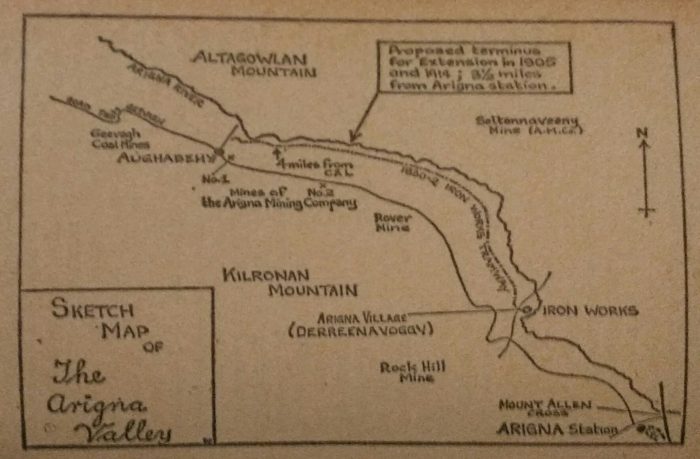
It was the outbreak of the First World War that dramatically altered the political dynamics. All coal and mineral deposits became of vital importance. Arigna’s reserves were not of the same standard as others but nonetheless needed to be developed. The government took time to make up its mind but eventually the decision was taken. Patrick Flanagan explains: [9]

Of primary importance were the Leinster and Connaught coalfields and it was to these that railway access was provided. Under powers conferred by the Defence of the Realm Act, land was obtained and construction was started on railways to serve the Wolfhill collieries of Gracefield and Modubeagh, the Castlecomer-Deerpark mines, and, at Arigna, to make for speedy dispatch of coal from the inaccessible pits of Aughabehy, Derreenavoggy and Rover. The only three-foot gauge line, the Arigna Valley Railway, was the last to be opened — in 1920. The preliminary plans for the line were considered by the Irish Railway Executive Committee in the autumn of 1917, and, this time, no bodies, however august, were going to interfere with matters.

On 28th December 1917, the Executive met and it was agreed that the engineers of the GNR and MGWR be asked to approve the proposals. They reported quickly and a final plan was adopted. It was for a 4.25-mile version of Barton’s 1905 railway, with only the last section to the public road at Aughabehy omitted. The terminus was chosen to suit the Number 1 pit of the Arigna Mining Company. Although the line was Government-sponsored, the GNR was put in charge of construction and the Arigna Mining Company got the job of obtaining the rails and materials and of having them on site ready for the start of construction. The ballast used came from the C & L pit at Aughacashlaun, and much of the foundations were made with the remaining stones of the old Arigna Iron Works.

The section from Arigna station to Derreenavoggy was on unbroken ground and the route chosen followed the winding Arigna River but few earthworks were required. Beyond Derreenavoggy, the more considerable difficulties of the terrain had been ironed out for the old tramway and the main work done was much as Mr Batchen had reckonedin 1901, including widening and strengthening the oid formation and making a rough roadway for the people living nearby.

The materials for the line were ordered on 1st January 1918, and work began in the autumn of that year. The supervising Board of Works wrote to the C & L requesting the use of one of the engines for construction trains and this was agreed to, provided that the C & L could immediately secure return of the engine in an emergency. Engine No 6, May, was chosen for this job and, with Driver Simpson McAdams and Fireman Johnny Gallagher, was based at Arigna station for some time in 1918-1919. The costs were debited entirely to the extension and neither crew nor engine played any part in the normal working of the C & L. Indeed, so completely separate were matters that,. when May needed a boiler wash-out, she did not do the obvious and change places with the regular tramway engine, but was worked in to Ballinamore specially on a Sunday, all necessary servicing being done by her own crew.

This arrangement terminated about mid-1919, when there was a suggestion that another engine be borrowed from the Castlederg & Victoria Bridge Tramway in Co. Tyrone. This plan, however, fell through.

While the extension was being made, planning of its operation was also going on. One of the first topics discussed between the C & L and the Director-General of Transport was that of the extra rolling and locomotive stock the C & L would require to work the new line. Talks began in 1918 and continued for over a year. Also mentioned in 1918 was the question of improved methods of coal transhipment at the  C & L terminal station. From the earliest days this had been done by manual labour and it was felt that some more modern method should now be introduced. In December 1918, the idea of an overhead bunker was rejected and it was decided that information be obtained about the transporter wagons in use on the Leek & Manifold Valley Light Railway in England. These were low narrow-gauge trucks wide enough to carry broad-gauge wagons on rails along the truck sides and were peculiar to that line.

Unfortunately the idea was found impracticable on the C & L, where there was insufficient loading-gauge clearance for MGW wagons, and it was decided, instead, to construct one-ton coal-boxes which could be fitted on a flat wagon frame and unloaded by crane. This was tried, with specially-built equipment. but was not continued with for reasons which apparently included loss of time and inadequate crane power. The matter of transhipment remained unsettled and when, in November 1919, the C & L presented a list of ‘wants’ for the new line (including wagon weighbridges, extra staff, engine facilities and forty wagons) it was stated that nothing could be done until the matter was resolved.

The extension was inspected on 17th February 1920, and in the same month a working agreement was discussed with officials of the newly-formed Ministry of Transport. It was pointed out to the C & L that no formal agreement existed for the working of the other colliery lines by the GSWR. They were, in fact, worked in conformity with the general terms of agreement between the Government and the Irish Railways — expenses being recoverable through a compensation account. The C & L agreed to work the Valley line under similar terms but again had to raise the subject of more engines and wagons, and ask for Government assistance. Once more the matter was shelved as the obstacle of transhipment had still not been settled, In fact, it never was, and although the GSR considered mechanical transfer at Dromod, the antiquated system of shovelling continued to the end. 

Some action was, however, taken about rolling stock. The Ministry of Transport borrowed twenty 4-ton open wagons from the Northern Counties Committee (NCC) and also obtained extra engines. In February 1920, Mr McAdoo asked for three engines on loan and said he thought that the County Donegal Railway engine Alice, which was then on the Cork, Blackrock & Passage Railway, could be immediately withdrawn for use on the Arigna Valley line. But it: was from the NCC that the engines eventually came. They were Nos 101A and 102A of the old Ballymena, Cushendall & Red Bay Railway and they were used in the final construction work on the extension before being temporarily transferred to the C & L, as from 1st June 1920. They were suitable for immediate use, unlike the wagons which required extra fittings on arrival at Ballinamore. The new Arigna Valley Railway opened on 2nd June 1920. [9]

The Arigna Valley Extension had been built at a cost of £60,000. It was approximately 4.25 miles long and was laid with 56lb Bessemer steel rails fastened directly to the sleepers with fang-bolts.Arigna Station was the terminus of the C & L tramway. The extension line curved sharply across the road just beyond the station platform, (1923). [10]Arigna Station at the end of the tramway from Ballinamore. A short train is in the station under the control of 2-6-0T loco. No. 3T originally from the Tralee & Dingle Railway. The e/tension left the station behind the train beypmnd the station building. [14]This satellite image from Google Earth has been adapted to show both the approximate alignment of the tramway from Ballinamore to Arigna (in red) and the line of the extension (in green). The thick blue line shows the approximate location of the station. The light blue lines are modern roads which can be viewed on Google Street view. The old railway lines can still easily be picked out on Google Earth but are obscured somewhat by the red and green lines above. The station site is overgrown and little can be picked out. Immediately to the West of this image the resolution of the satellite images in Google Earth becomes quite poor and picking out the line of the railway is not possible. Bing provides a parallel mapping service and the satellite images of this area are better.The 1940s OS Maps of ireland do a slightly better job of highlighting the route of the extension. This excerpt matches the satellite image above. The resolution is not the best. [16]This picture is taken at the bend in the road at the top of the left-hand edge of the OS Map above. The railway ran through the location of the barn and behind the house in the picture.The green line shows the route of the railway.The old line ran between the Arigna River and the highway up to Derreennavoggy village. [17]
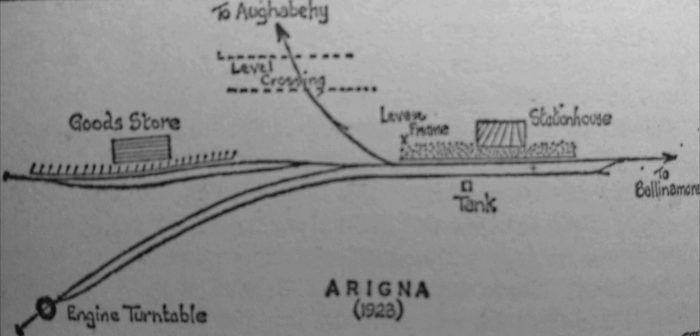
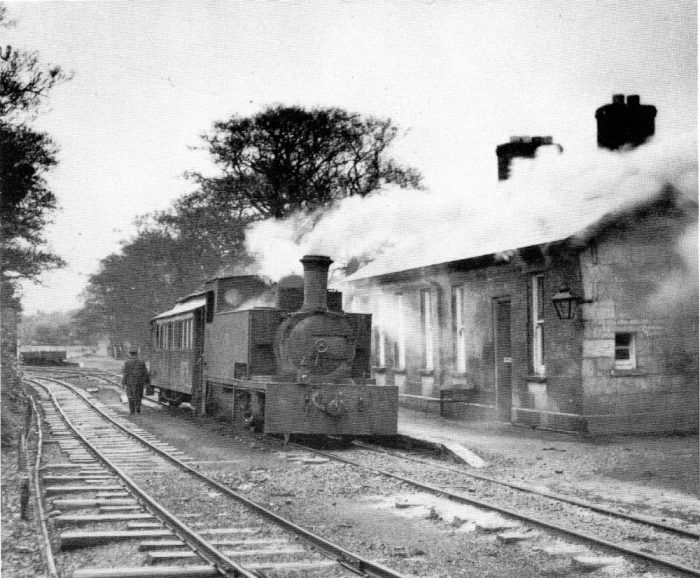
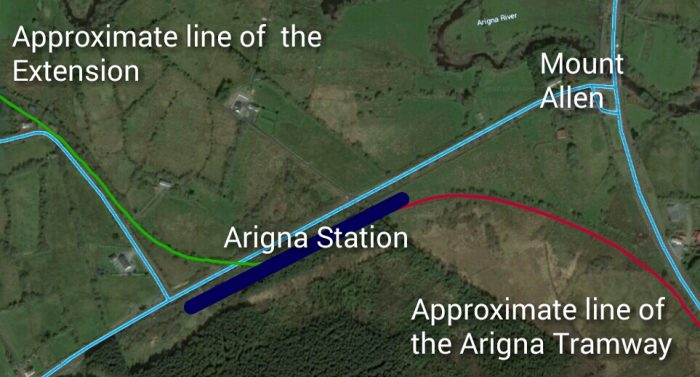
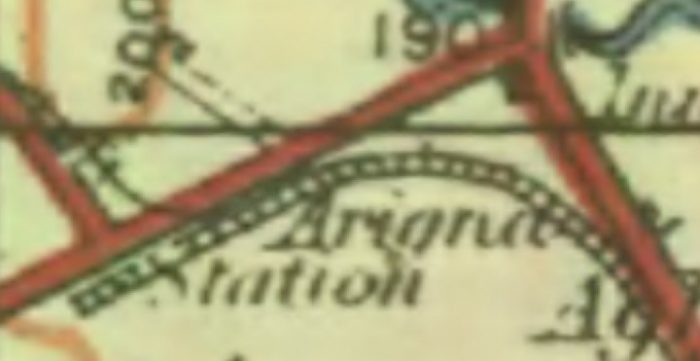
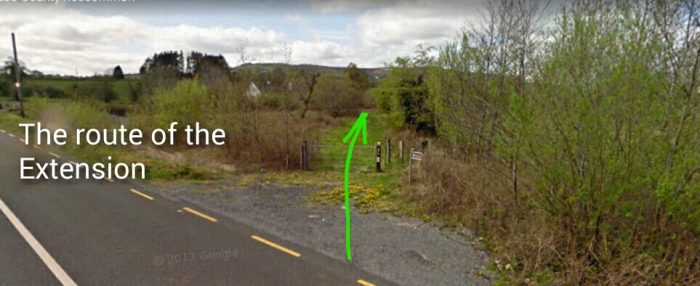
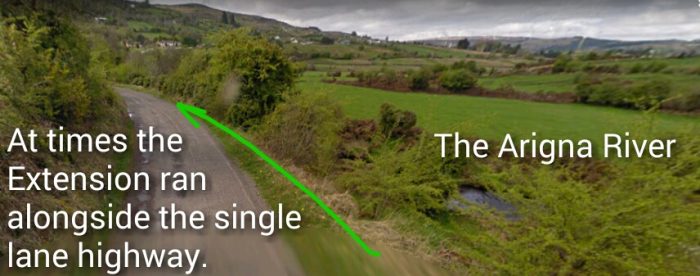
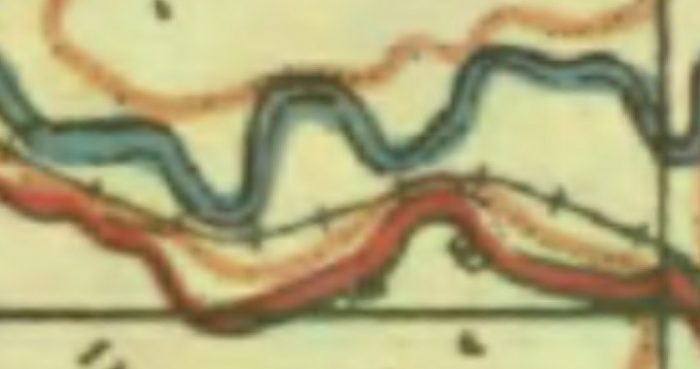
Patrick Flanagan says: “Leaving Arigna station just west of the platform, the extension line curved sharply across the Mount Allen—Keadue road and began to climb at 1:50. It then fell slightly and undulated to just beyond the half-mile point, where it entered a series of reverse curves, climbing again at 1:50. All this time the line was close to the Arigna River and only left it when an almost unbroken mile climbing at 1:50 began.” [11]The line curved to the North following the Arigna River. My approximate line has drifted a little to the East of the actual route which can be picked out just to the left of the green line.The route of the line is once again shown in green. The thick blue line shows the approximate location of Dorreenavoggy Station/Loop and is what became the terminus of the Extension after the closure of the Arigna Mining Company. On many maps this area is referred to as Arigna Village.
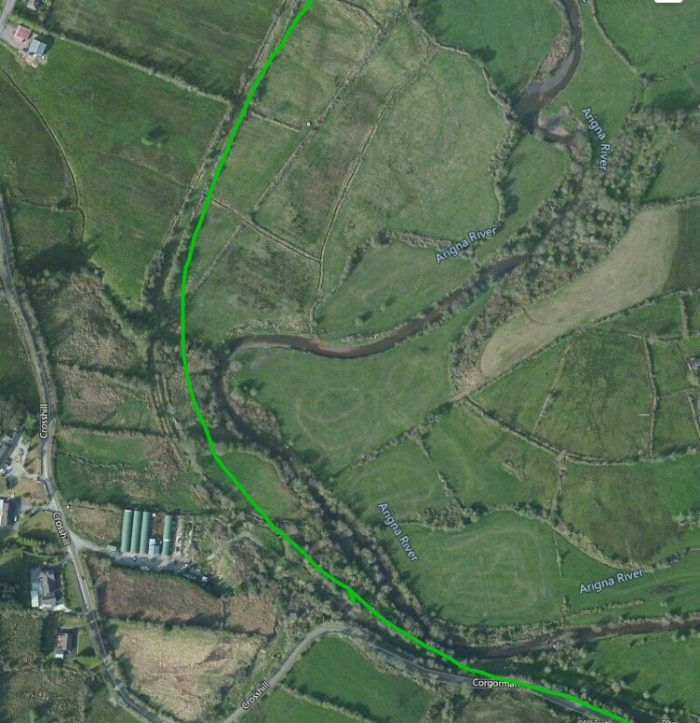
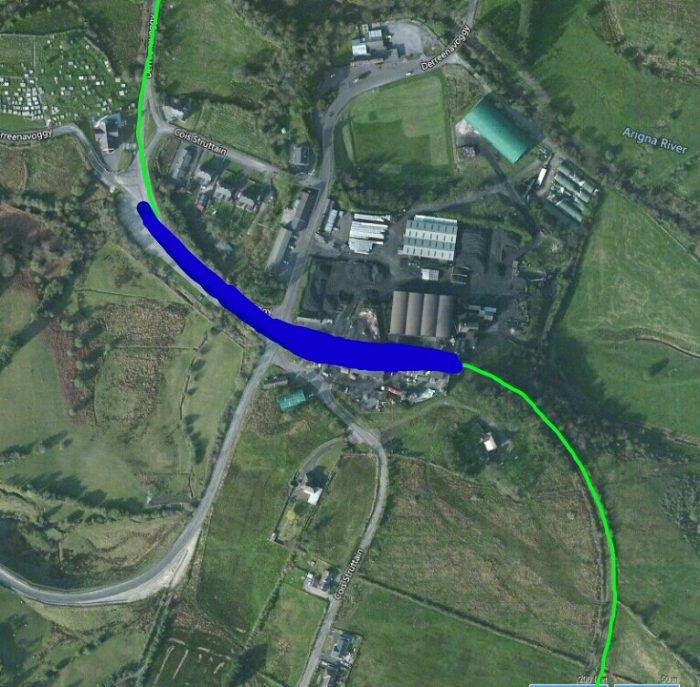
It is difficult to envisage how Flanagan’s description of the line relates to what can be seen in the OS Maps as there is no visual indication of the height being gained by the railway as it travels towards Derreenavoggy on those maps.

The gradient profile in the image below perhaps helps in understanding the steepness of the grade.
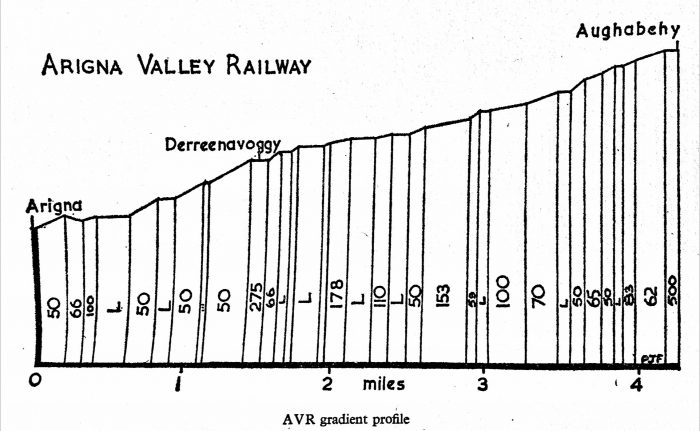
Arigna Valley Railway Gradient Profile. [11] A loaded coal train heading down the line from Derreenavoggy towards Arigna Station. [18]The intermediate point of Derreenavoggy was reached on the same grade but on a nine-chain left-hand curve. At 1 mile 34 chains there was an ungated level crossing with the Arigna village-Keadue road and the facing points for two sidings were situated about thirty yards farther on. [11]
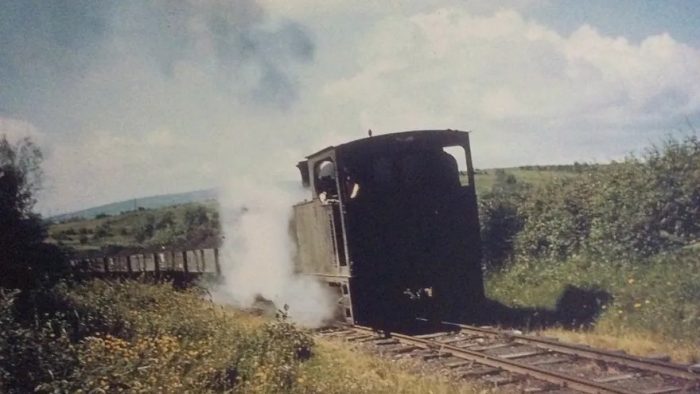
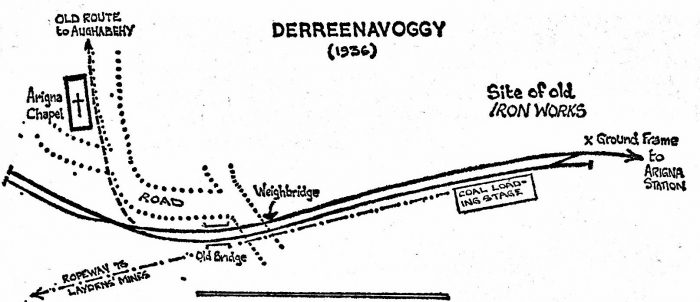
As can be seen above, the line then veered right on an eight-chain curve and crossed the road leading up to the mountain coal pits of Derreenavoggy and Rover. Again the crossing had no gates. The mines were located West of Derreenavoggy higher in the hills in the area now set aside as the Arigna Mining Experience.Passing Arigna Chapel, the line was now fully on the road-bed of the old iron-works tramway and remained there almost without a break the whole way to Aughabehy. [11]The view back down the Extension line from Derreenavoggy towards Arigna Station. [15]From the same position but looking West into Derreenavoggy. [15]Further to the West. Now that the line is closed the coal shutes are being used to load lorries. [15]Still further West through the Derreenavoggy site. Two wagons have been abandoned on one of the roads through the ‘station’. [15]The green arrow shows the approximate line of the two roads through DerreenavoggyArigna which are shown in the monochrome images above. The photographer has turned through 180° before taking the picture below. The buildings in the monochrome images may well be thosetof the Arigna Fuel Company in the picture above or they have disappeared and their place has been taken by a tarmac car park.And finally at this location: a monochrome image looking in a westerly direction. The sidings West of the crossing can be picked out. The abandoned longer Extension climbed the hill behind the excavator alongside the road and passed this side of the church. [15] In the image below, the line of the railway through the village has been replaced by tarmac. The bridge shown on the sketch plan of the site seems to have disappeared. The church seems to have received a lick of paint.Although still parallel to the tortuous course of the river, the earlier abandoned extension line beyond Derreenavoggy was jigger up on the hillside and, after crossing the narrow roadway at 1.75 miles, remained on the right-hand side. Having turned northwards it can be picked out on the adjacent OS Map at around the 300ft contour. However, it is impossible to discern the point at which the line switched from the West side of the road to the East.
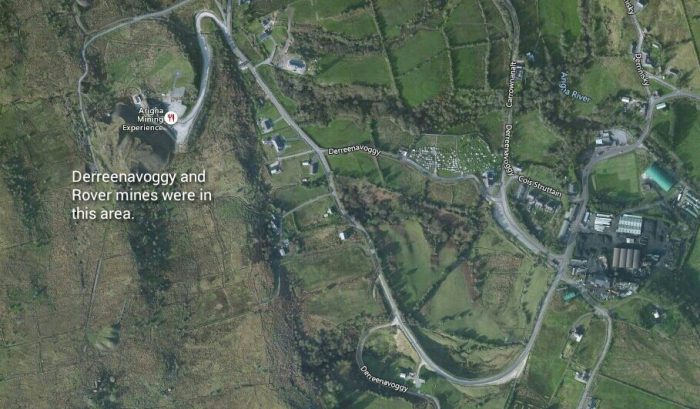
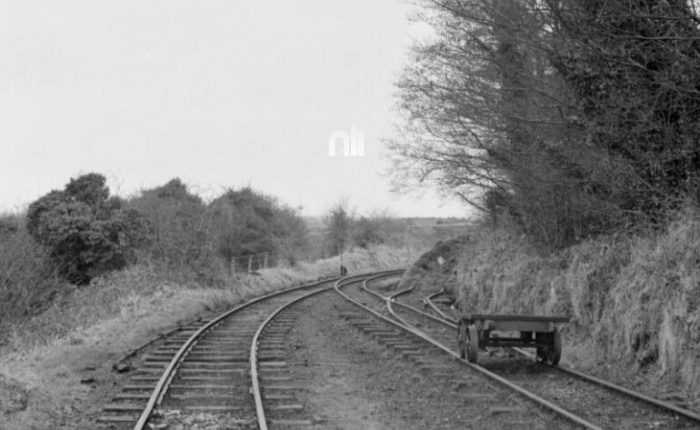
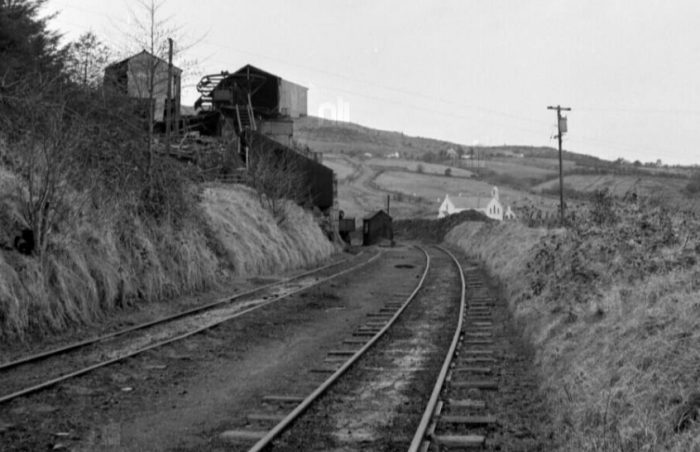
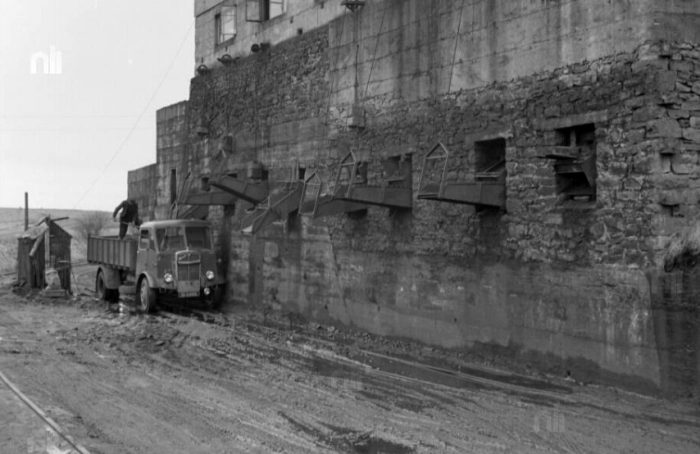
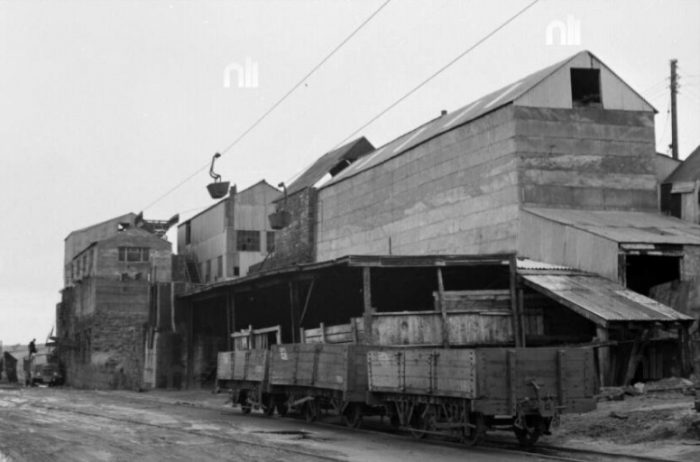
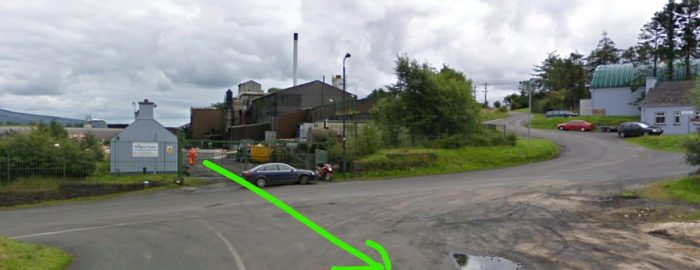
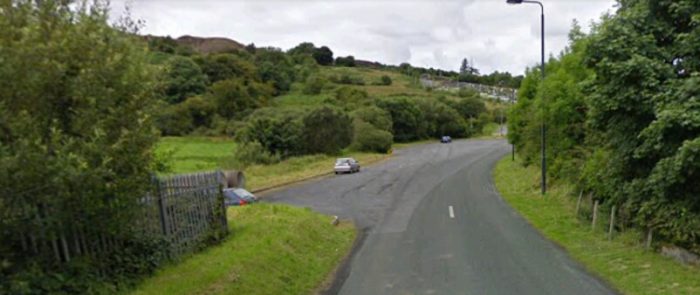
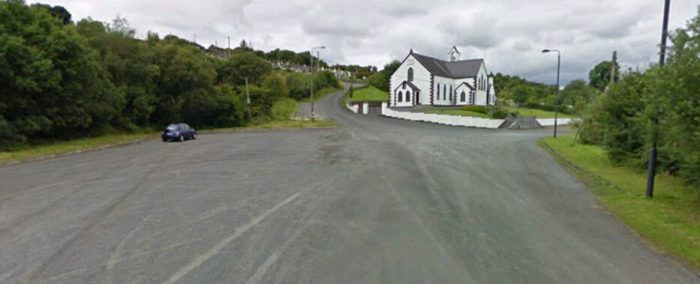
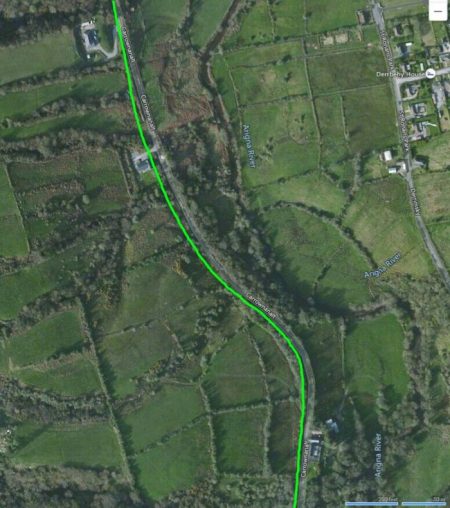
The approximate alignment of the railway shown by green line on the adjacent Bing satellite image does not define a point at which this occurred.
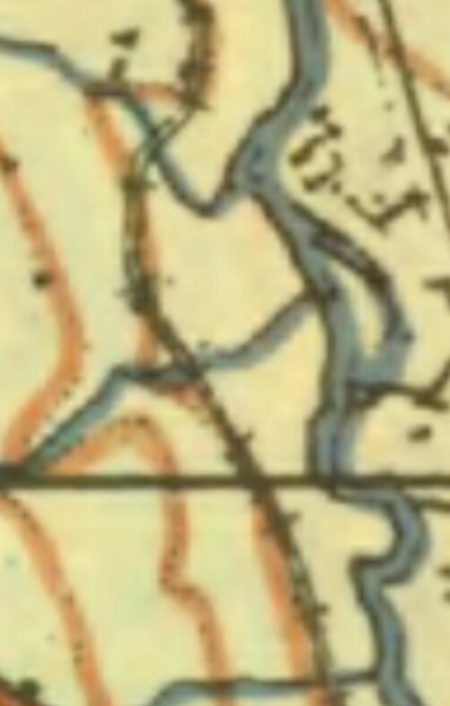
In general, this section of the line was easier than the first, and although there were gradients of 1:50, none was longer than a quarter of a mile. However, for almost the whole distance the line wound right and left, there being very few straights. The railway turned to the West along with the Arigna River Valley. The OS Map chooses at this point to recognise the status of the line as an Extension Railway. The satellite images provided by Bing continue to be used to look at the route of the line in the 21st century. The Google satellite images still being poor in the first part of this length in 2019.
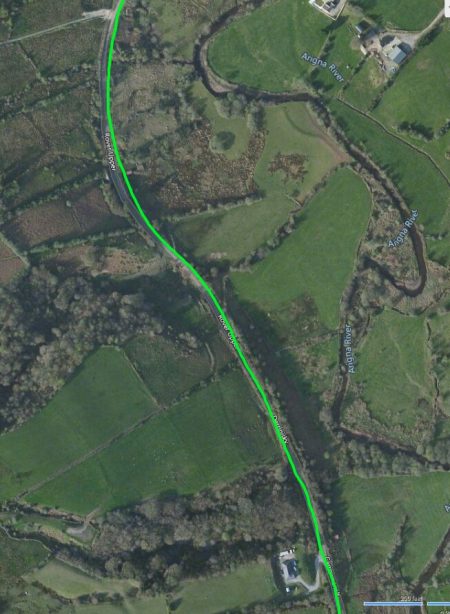
The earlier tramway and the road ran immediately next to each other and the more modern 3ft-gauge Extension line did the same. As we have noted above the reuse of the earthworks from the earlier tramway saved considerable construction costs when the Extension came to be built. This was particularly true in the case of one specific feature on the route. As the line was approaching its terminus at 3.5 miles from Arigna Station there was a long high embankment on right-hand right-hand curve.

Much of the time it is impossible to determine the line of the Extension as vegetation has encroached close to the single-lane minor road. Just occasionally the formation of the old tramway and so that of the Extension line is visible.
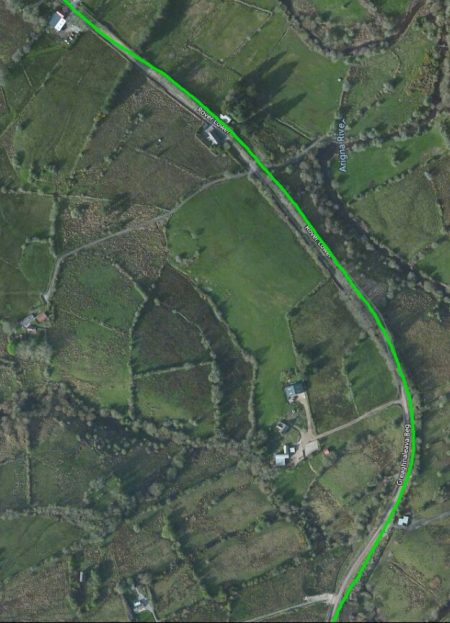
One location where this is true is on the long sweeping curve through which the line changes from a predominantly northerly trajectory to one which heads West. This is visible on the Google Streetview image be!ow the adjacent aerial view.

It seems to be visible as a relatively wide platform alongside and to the right of the narrow lane in the picture.
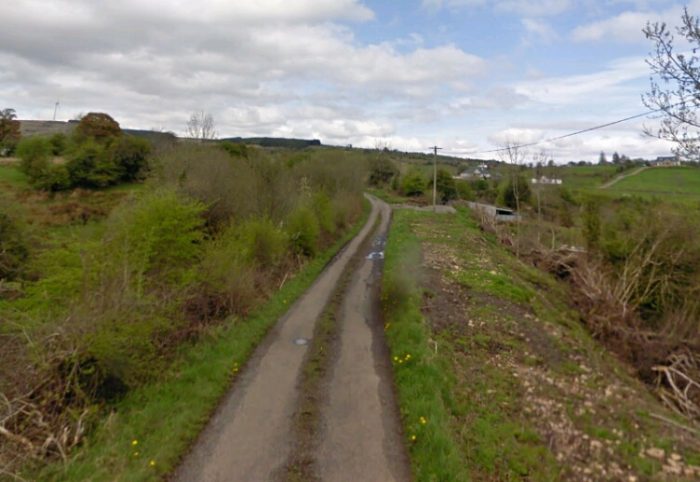
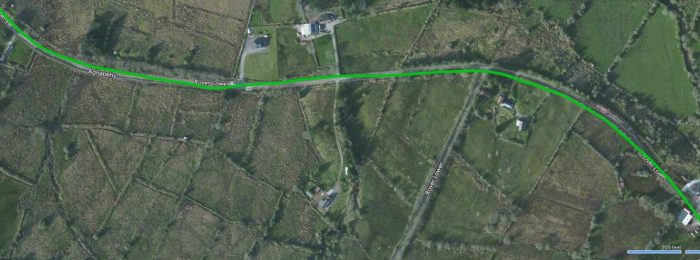
The road and railway swept round to the West following the valley side. The line was by now approaching the 400ft contour line on the 1940s OS Map.A little farther on, the terminus was entered to the left and at a gradient of 1:82. The site apparently in 1972, still bore the name ‘the Coke Yard’, being the place where the old Arigna company had a row of nine coke-ovens, all of which have long since gone. At 4 miles 12 chains a set of facing points gave access to a loop which veered off to the left. It was for engine run-round and at the far end there was a water-tank fed from a stream up the hillside. Meanwhile, the ‘main line’ had opened into a fan of three sidings, the left-hand one of which ran alongside a low stone-faced loading bank. In addition, there was a trailing shunting neck on an embankment which permitted gravity feeding of wagons into the sidings. [11]Aughabehy Station in 1926. [11]
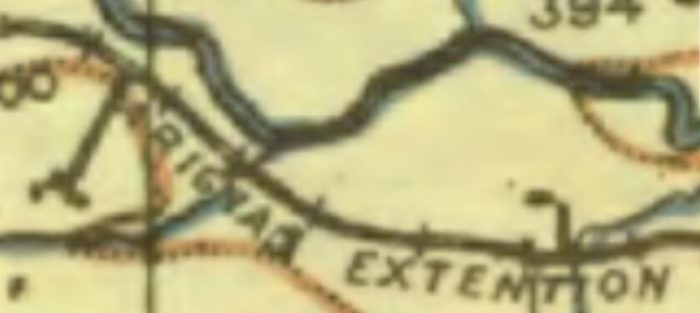
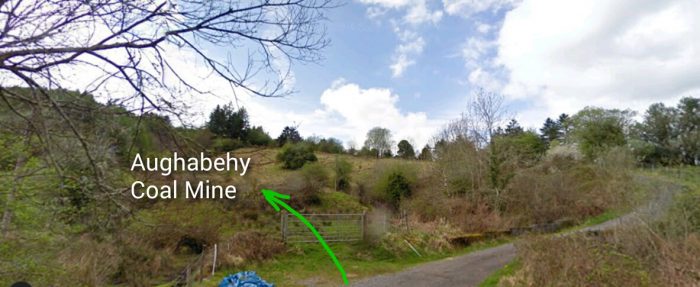
Directly behind the siding stoppers was the long slope of the hillside leading to the pit of the Arigna Mining Company. As the extension was under construction, the Mining Company was engaged in laying a 24-in gauge three-rail incline railway down to the loading bank. This was approximately 600 yds long and opened briefly into a passing loop at the halfway point; it was cable-operated from a winding-house at the mine. The Mining Company’s line ran on to the loading bank and the hutches were emptied on to a screen for delivery of the coal to the waiting C & L wagons. No weighbridge was provided here, although a wagon one was installed in Derreenavoggy in 1922, after two years of correspondence which ended when Laydens (the Arigna Mining Company’s rivals and, later at any rate, the main coal producers) agreed to forward all their coal from there. [11]

Despite the fact that two extra engines had been specially provided for the extension, its working was integrated with that of the tramway and it was standard practice for the tramway engine to make a trip up to clear the laden wagons. When the tramway was temporarily closed for passengers by the military in 1920, the extension traffic continued, special arrangements being made. An engine used to run out to Aughabehy in the evening to clear the wagons loaded earlier in the day. This arrangement suited the Mining Company so well that it asked the C & L to continue the working, but when the tramway services were restored the old practice was reverted to. The two NCC engines, in fact, were incorporated in the general C & L stock and were used all over the system on trains, regular and special. [11]

Patrick Flanagan says: “Traffic on the extension never came up to expectations and there were never more than five wagons a day from Aughabehy. The financial returns reflected this, showing a loss of £382 up to December 1921. This was repaid to the C & L by the Board of Works, which also had to make good losses on the Wolfhill and Castlecomer lines. The unsatisfactory figures no doubt gave pleasure to a few county councillors, though it can hardly be said that their objections to the line were based on even the flimsiest of economic grounds. In fact, a major contributory factor was the state of the Arigna Mining Company at the time. As far as it was concerned, the extension had been too late in coming — the rot had already set in. The Aughabehy coal-seams were proving erratic and another pit on the opposite side of the valley at Seltannaveeny now produced most of the coal, and this was carted to Arigna station.” [11]

It seems that once the Aughabehy pit had begun to give trouble “things were never again the same. Labour also proved a big problem. While hard facts are difficult to come by, it would seem that very little was done after the early 1920s; the company’s coal-sheds at the C & L stations were removed as early as 1921 — a bad sign. However, Aughabehy was worked in 1926-7, even if it was only for a short time.” [11]

As the months passed after the opening of the line, more and more coal was sent by Laydens from Derreenavoggy. So much so, that with the death of the Arigna Mining Company and its takeover by Laydens, even though the old mine was worked until 1930, the line was shortened to serve Derreenavoggy and not Aughabehy. [13]

The shortage of engines and wagons proved a great drawback to smooth operation, and though the C & L did its best with the borrowed stock, it was not enough. The inadequate arrangements were hotly criticised both in the evidence before the 1922 Railway Commission and in a 1921 Memoir on the Coalfields of Ireland. When the end of government control became imminent the C & L informed the Ministry of Transport that it could only work the line if it was indemnified against any losses. This indemnity was provided and from August 1921 the Board of Works became responsible for the line. The Amalgamation of 1925 did not affect the line and it was not until 1st January 1929, that the Board of Works relinquished responsibility for it. The Great Southern Railways (GSR) then leased it at shilling a year and from then on it was simply part of the C & L. [11]

The remaining segment of the extension really came into its own from about 1934 onwards and was, indeed, responsible for the  continued existence of the C & L until 1959. In 1934, Laydens reorganized their mines about Derreenavoggy and installed a ropeway network which connected three mines (Rock Hill, Rover and Derreenavoggy) with the extension sidings. Traffic revived considerably and the GSR dispatched  four engines to Bailinamore to cope with it. In addition, a total of forty wagons and two brake vans, mostly from the defunct Cork, Blackrock & Passage line, were sent to the C & L. They were a very welcome. The engines released the remaining C & L locos from other duties to handle the coal traffic. [13]

Despite the fact that traffic was increasing, the GSR included, in its submission to the 1939 Transport Tribunal, a proposal to close the entire section. However, the outbreak of war considerably altered things and again Arigna coal became of vital importance to the whole country. [13] The truncated Arigna Valley line remained open until the closure of the C & L in 1959.

References

  1. Patrick J. Flanagan; The Cavan & Leitrim Railway; Pan Books, London, 1972, p57.
  2. Ibid., p57-61.
  3. Ibid., p60.
  4. Ibid., p61-64.
  5. https://en.m.wikipedia.org/wiki/Arigna, accessed on 23rd April 2019.
  6. Patrick J. Flanagan; op. cit., p65-66.
  7. Ibid., p198-199.
  8. Ibid., p69-70.
  9. Ibid., p72-75.
  10. Ibid., p146.
  11. Ibid., p75-80.
  12. https://www.anglocelt.ie/news/roundup/articles/2012/03/07/4009414-how-the-cavan-leitrim-railway-ran-out-of-steam, accessed on 24th April 2019.
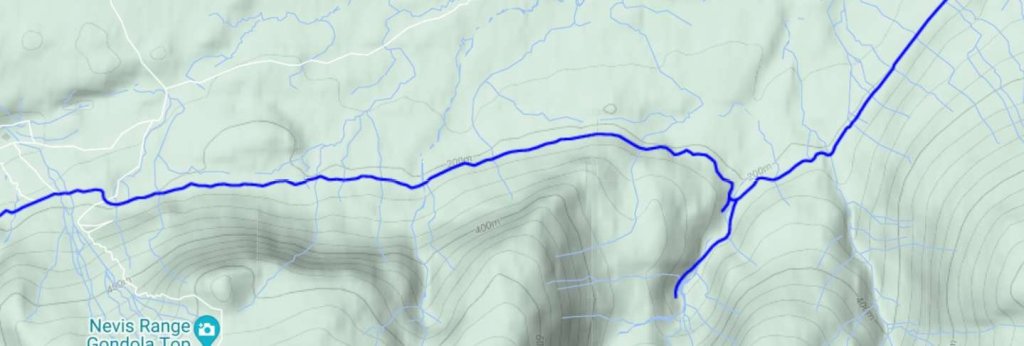
  13. Patrick J. Flanagan; op. cit., p102-103.
  14. https://chasewaterstuff.wordpress.com/2014/06/12/some-early-lines-ireland-arigna-cavan-and-leitrim-railway, accessed on 24th April 2019.
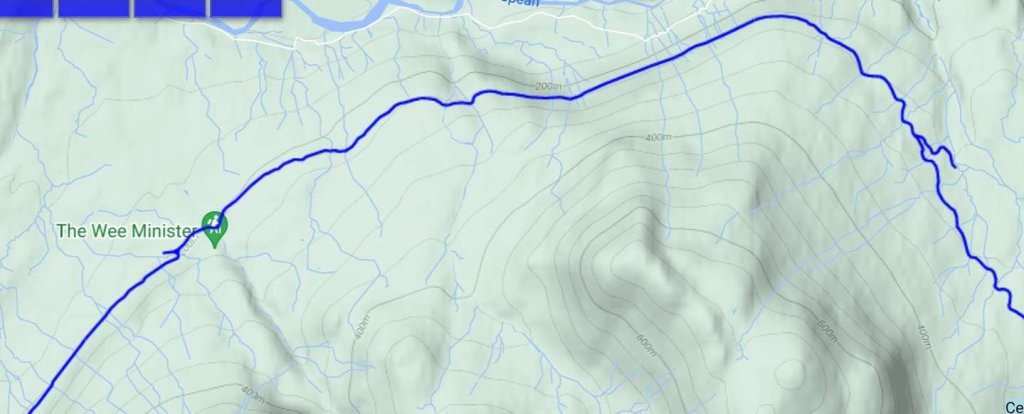
  15. http://catalogue.nli.ie/Search/Results?lookfor=Derreenavoggy&type=AllFields&submit=FIND, accessed on 25th April 2019.
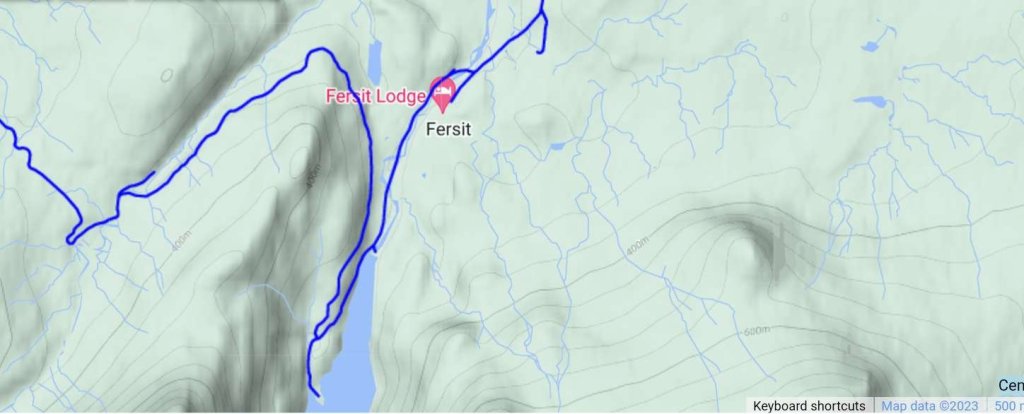
  16. https://maps.nls.uk/geo/explore/#zoom=15.161775414176985&lat=54.0652&lon=-8.0873&layers=14&b=1, accessed on 24th April 2019.
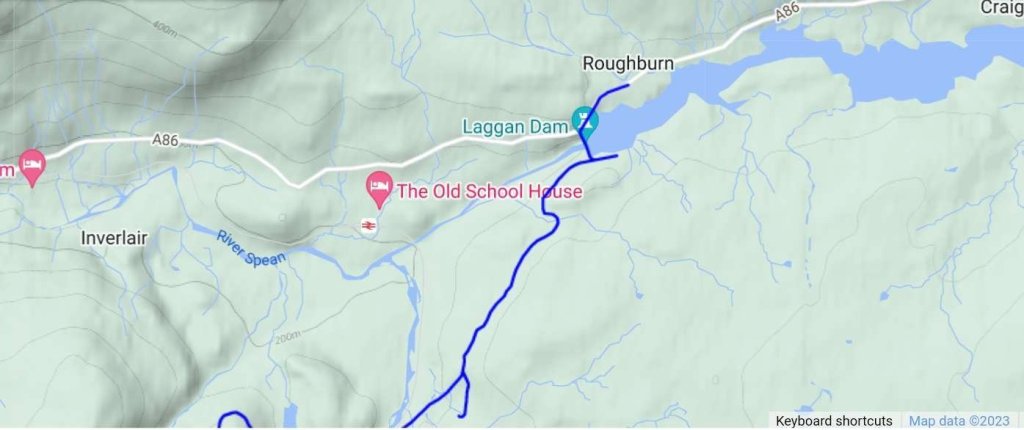
  17. https://maps.nls.uk/geo/explore/#zoom=15.161775414176985&lat=54.0671&lon=-8.0998&layers=14&b=1, accessed on 24th April 2019.
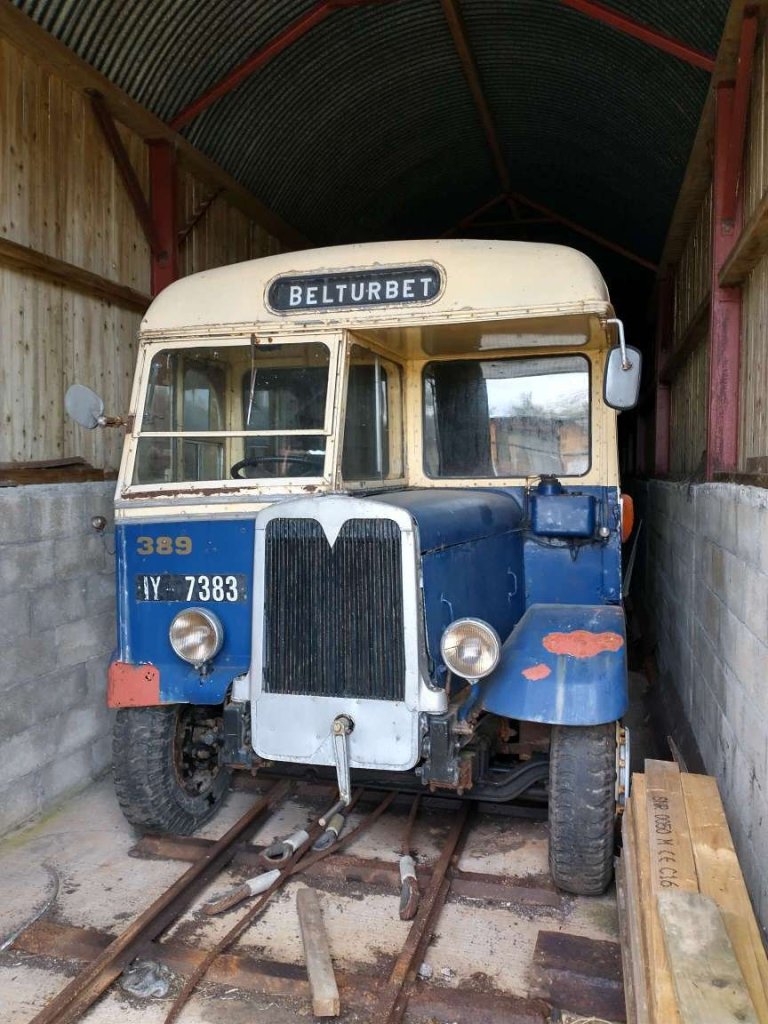
  18. https://leitrimmedia.com/the-narrow-gauge, accessed on 26th April 2019.