
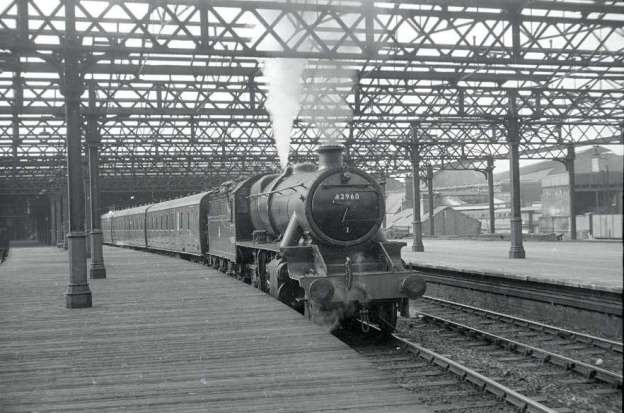
The featured image shows Longsight’s Stanier 2-6-0 Locomotive No. 42960 at Manchester Mayfield on 3rd September 1955 about to depart with a suburban service. This image was shared on the British Railways Steam 1948 – 1968 Facebook Group by Alex Lawson on 20th July 2022, © H. C. Casserley. [30]
Manchester Mayfield 3rd September 1955. Longsight’s Stanier 2-6-0 42960 is ready to depart with a suburban service.
Photo H C Casserley.
A short note about extensive alterations at Manchester London Road Station appeared in the December 1958 issue of The Railway Magazine. The major alterations were designed to accommodate the electrification of the line between Manchester and Crewe. [1]
The Railway Magazine reported that “The improvements include[d] the construction of three new platforms, the lengthening of the existing platforms, to accommodate 16-coach electric trains, and the widening of the concourse. The station [would] thus have 14 platforms, of which ten [would be devoted to main-line and local traffic on the former London & North Western line, and the remainder to trains on the Great Central route. When the alterations [were] completed, the adjoining terminus at Mayfield [would] cease to deal with passenger traffic. A new power signalbox [would] control the area extending to East Didsbury and Heaton Chapel, and will replace 13 manual boxes. Electric trains [would] not be an innovation at London Road, because the Altrincham line was electrified in 1931, and the Sheffield line in 1954.” [1]
The text in bold highlights the closure of Mayfield Station to passenger traffic. This article focuses on Mayfield Railway Station. ….
Mayfield Station had only ever been something of which I was vaguely aware despite having lived in the Manchester area for large parts of my life.
Manchester Mayfield Station was, “on the south side of Fairfield Street next to Manchester Piccadilly station, [Manchester London Road station, as it was in 1958]. Opened in 1910, Mayfield was constructed as a four-platform relief station adjacent to Piccadilly to alleviate overcrowding. In 1960, the station was closed to passengers and, in 1986, it was permanently closed to all services having seen further use as a parcels depot.” [2]
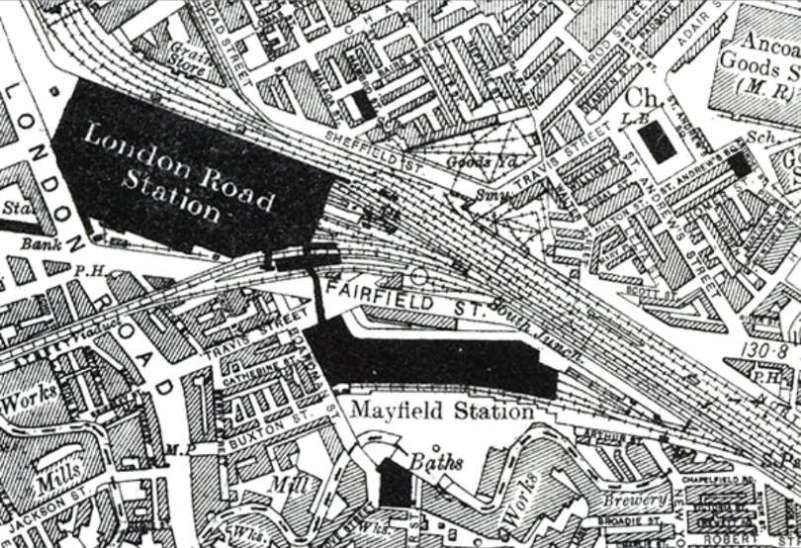
“Opened on 8th August 1910 by the London and North Western Railway, Manchester Mayfield was built alongside Manchester London Road station (later Piccadilly) to handle the increased number of trains and passengers following the opening of the Styal Line in 1909. [4][5: p7] The LNWR had considered constructing a new platform at London Road between the [Manchester, South Junction and Altrincham Railway’s] MSJAR’s platforms 1 and 2, which were renumbered 1 and 3 in anticipation, but this was abandoned in favour of the construction of Mayfield; the platforms nevertheless remained renumbered. [6: p167] Four platforms were provided and passengers could reach London Road via a high-level footbridge. [6: p167][7: p43] Mayfield suffered the effects of bombing during World War II, when it was hit by a parachute mine on 22nd December 1940.” [8: illustration 40] [2]
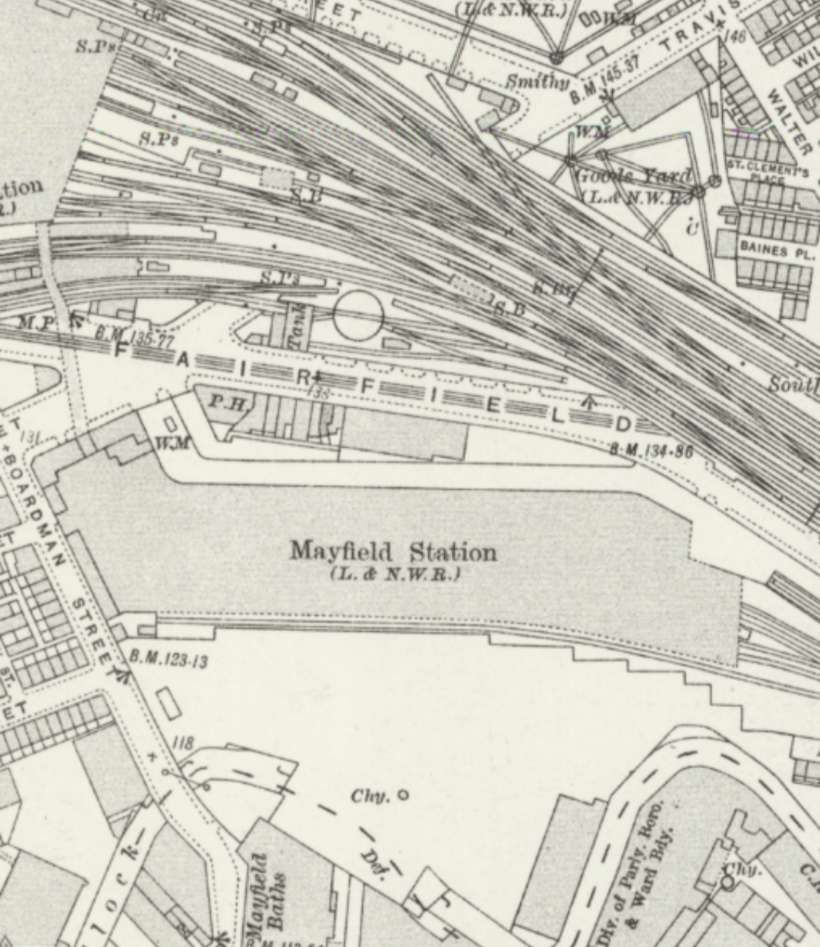
Mayfield was a relief station, mainly used by extra trains and suburban services to the south of Manchester [6: p167] – places such as Cheadle Hulme, Buxton, Alderley Edge, Chelford and Stockport. [9: table 97] “In the London Midland timetable of September 1951, the Pines Express from Bournemouth West is shown as arriving at Mayfield at 4.30pm (16.30) on Mondays to Fridays. On Saturdays, this train used Piccadilly station, then known as London Road. [10: table 17] In the 1957-8 timetable, the Pines Express still arrived at Mayfield on Mondays to Fridays, now at the time of 4.45pm (16.45).” [11: table 21][2]
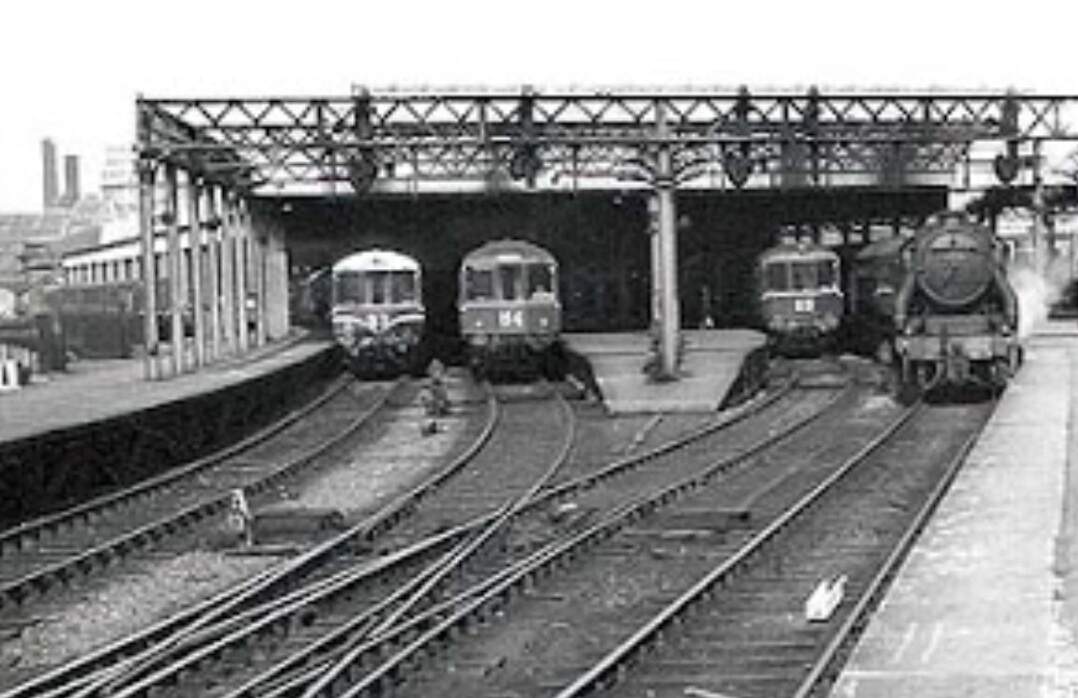
Further photographs, maps and information can be found on the Disused Stations Webpage, [22] and here, [29]
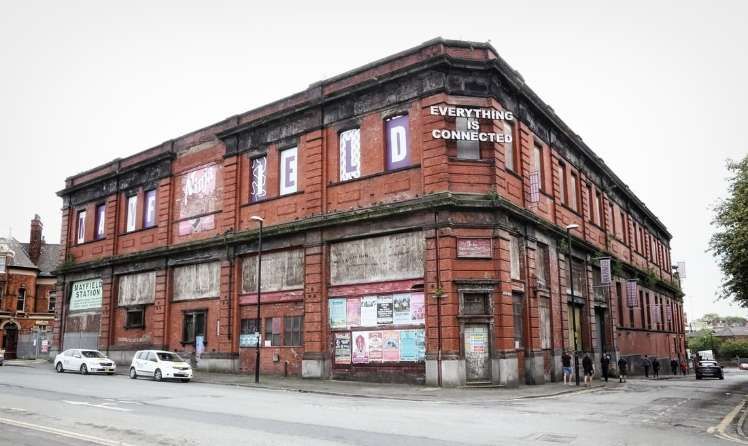
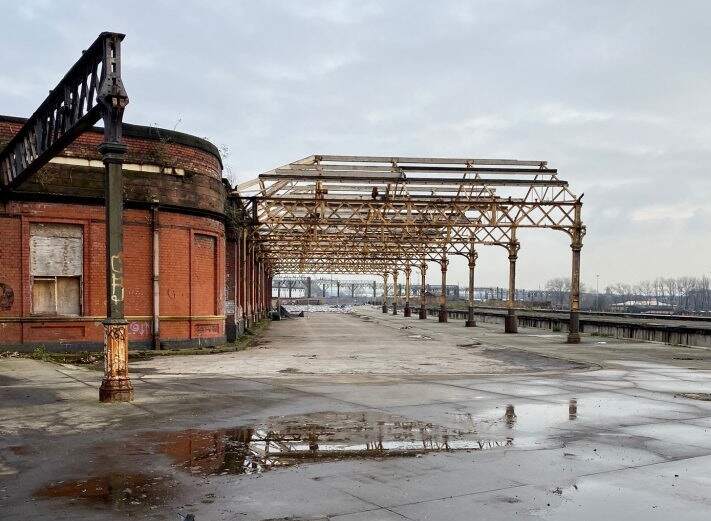
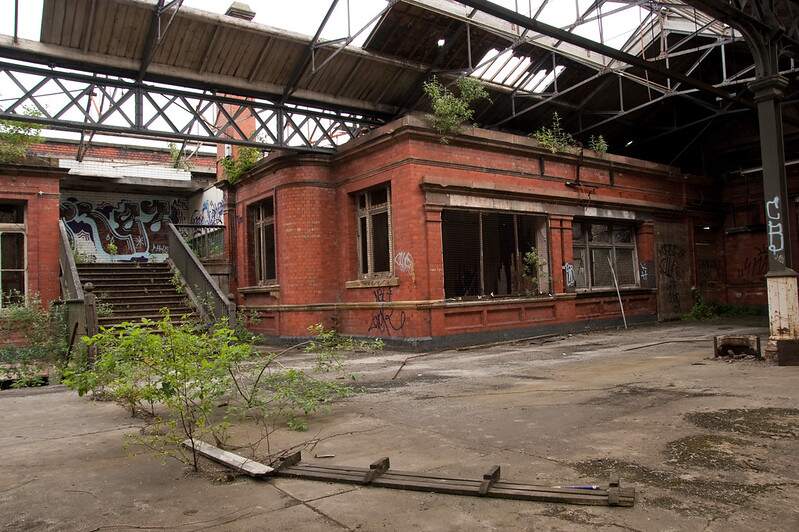
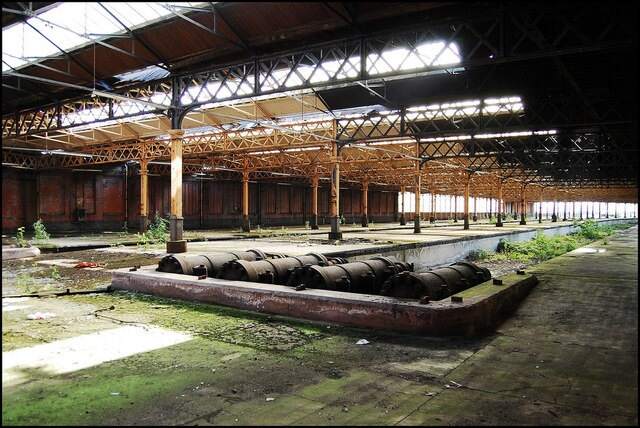
For a brief period during the electrification and modernisation of London Road station, Mayfield Station was the Manchester terminus for many diverted services. [12: p86-87] It was closed to passengers on 28th August 1960 with the completion of the electrification and modernisation works at Manchester London Road station. [13: p92]
“The site was converted into a parcels depot, which opened on 6th July 1970. [4] Royal Mail constructed a sorting office on the opposite side of the main line and connected it to Mayfield with an overhead conveyor bridge, which crossed the throat of Piccadilly station.” [2]
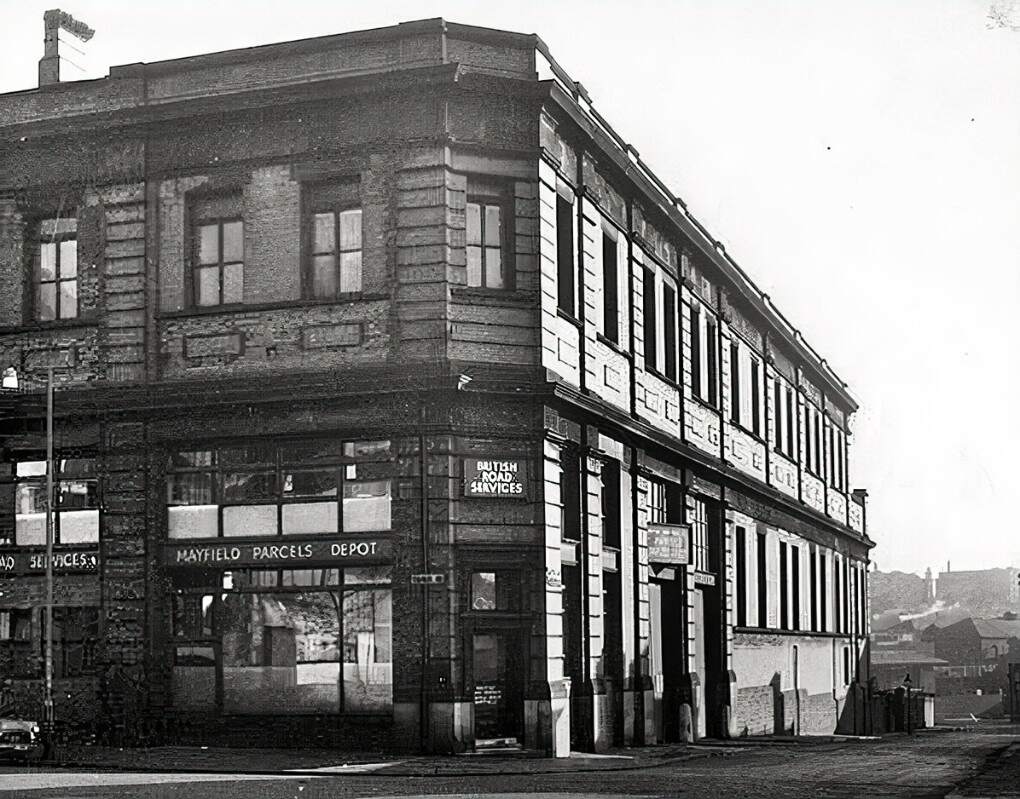
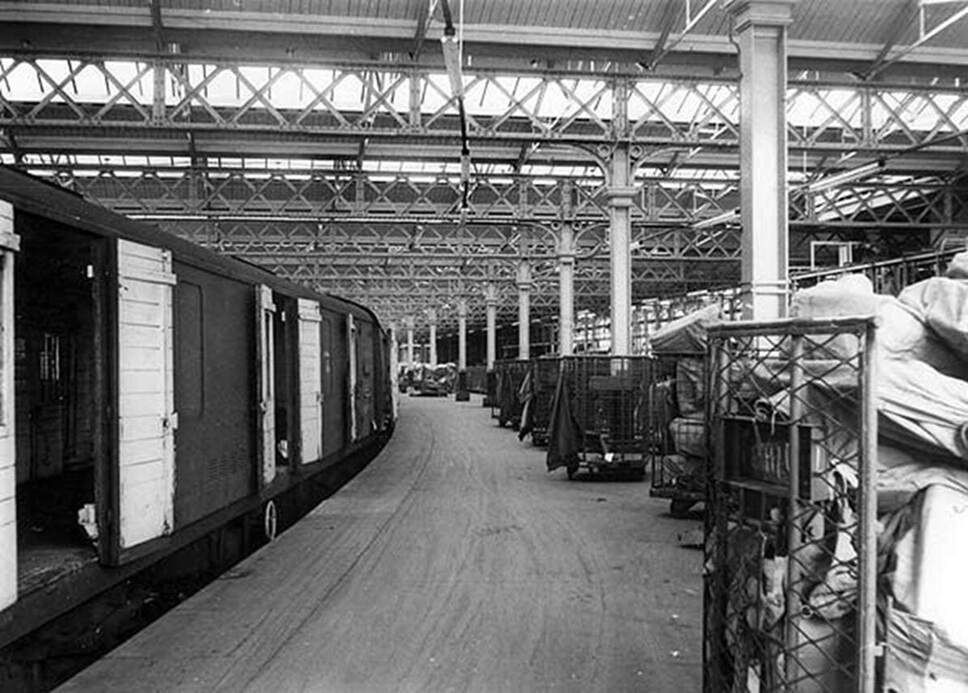
The depot closed in 1986, following the decision by Parcelforce, Royal Mail’s parcels division, to abandon rail transport in favour of road haulage. The tracks into Mayfield were removed in 1989, as part of the remodelling of the Piccadilly station layout. The parcels conveyor bridge was removed in 2003 with the Sorting Office being rebuilt as the Square One development, prestige offices used by Network Rail. [2]
The site of Mayfield station is the property of London and Continental Railways. [2] The interior of the station was used in Prime Suspect as a drug dealer’s haunt. [4] It was also used as a double for Sheffield railway station in The Last Train. The roadside building was gutted by a fire in 2005. [4]
Further photographs, maps and information can be found on the Disused Stations Webpage. [22]
There are, or have been, various plans for the use of the site of Mayfield station. These include:
Reopening as a station
“A study was carried out by Mott MacDonald in 2000, which looked at possibilities of increasing capacity at the Piccadilly station. One solution put forward would see the track quadrupled between Slade Lane Junction and Piccadilly, with a pair of through platforms in the Mayfield goods yard to the south of Piccadilly’s platforms 13 and 14 linked to additional running lines to Ashburys station. This proposal was supported by the Greater Manchester Passenger Transport Executive as it would increase usable train paths through Piccadilly by between 33% and 50%; the extra track would, however, require an expensive extension to the Piccadilly – Deansgate viaduct carrying the track from Slade Lane. The location of the proposed platforms was also criticised, as it would entail ‘a long walk for passengers wishing to interchange with other terminating rail services at Manchester Piccadilly or access the city centre’.” [2]
Other options would have the station used again as a terminus, providing a rail link to Manchester Airport or, alternatively, the lines might be extended through Mayfield and connected to the existing line to Manchester Oxford Road railway station. [2][4]
“Further proposals were put forward in 2009 by the Greater Manchester Integrated Transport Authority for reinstating Mayfield as an operational station, to alleviate capacity problems at Piccadilly Station. [14] However, as part of the Northern Hub railway development scheme across Northern England, Network Rail now plans to increase capacity on the existing Oxford Road-Piccadilly route by widening the viaducts and adding two additional platforms (15 and 16) to the south side of Piccadilly station. [15] There are no plans to re-open Mayfield station for public transport.” [2]
Commercial redevelopment –
In 2008, an alternative scheme involving Manchester Mayfield was put forward. This proposal would see the station as part of a new 30-acre (120,000 m2) city centre district immediately adjacent to Piccadilly Station. That project would have created more than 6,000,000 square feet (560,000 m2) of offices contained in office blocks up to 12 storeys high, and would be completed over a period of 15 years. The scheme was led by “Mayfield Manchester”, a joint venture company between Ringset, part of the Wrather Group, and Panamint; the company owns around 90% of the land around the station as of 2008, but do not own the station itself. In April 2008,Manchester Mayfield were said in talks with its owners of the station site, BRB Residuary. [2]
Other schemes were also under consideration:
- Conversion into a Coach station by National Express to replace their Charlton Street facility [2]
- Government Offices – in May 2009, the site was earmarked for a development which would have housed 5,000 civil servants. It would have required the demolition of Mayfield station. This did not go ahead at the time but the idea was revived in 2015 as one of a number options for the site. [16] one of those options was for a very significant redevelopment of the area around Piccadilly station and the Mayfield area, involving the demolition of both Mayfield station and Gateway House. [28][29] However the status of this is now unknown due to the cancellation of the HS2 Manchester leg. [2]
- Entertainment Venue – in 2019, some of the site was converted into Depot Mayfield, a 10,000 capacity venue for culture located at Manchester’s historic former railway Mayfield as part of a £1 billion regeneration project. [17] It regularly hosts The Warehouse Project, a series of club nights. [2]
There is continued interest in the site as an urban regeneration area and it is proposed to replace the station with offices, residential developments and a significant urban green space.
The new green space, ‘Mayfield Park’ opened in 2022. [18]
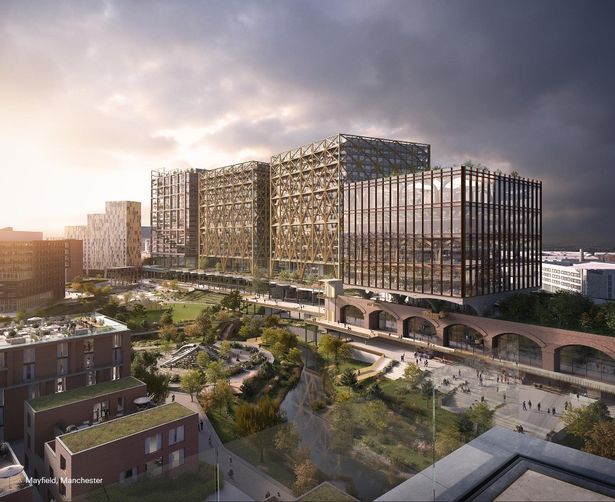
“Mayfield will facilitate transformational change at the eastern gateway of the city centre close to Piccadilly Station. The 20 acre site provides the opportunity to create a distinctive and unique city centre district. The vision for Mayfield is for a distinctive, world class development delivering significant new commercial space, and up to 1500 new homes alongside a mix of retail and leisure facilities all centred on a new 6.5 acre city centre park.” [19]
Mayfield Strategic Redevelopment Framework (2016-2018) covers the work done and the work to be done on the site. [20]
References
- London Road Station, Manchester; in The Railway Magazine volume 104 No. 692, December 1958, p811.
- https://en.m.wikipedia.org/wiki/Manchester_Mayfield_railway_station, accessed on 7th July 2025.
- https://commons.m.wikimedia.org/wiki/File:Manchester_London_Road_and_Mayfield_map_1915_6inch.gif, accessed on 7th July 2025.
- http://www.disused-stations.org.uk/m/manchester_mayfield/index.shtml, accessed on 7th July 2025.
- C.R. Clinker; LNWR Chronology 1900-1960; David and Charles, Newton Abbot, 1961.
- Sydney Richards; Manchester and its Railways; in Railways: The Pictorial Railway Journal, Volume 8 No. 91, Railway World Ltd., London, November 1947.
- S. Hall; Rail Centres: Manchester; Ian Allan Publishing, 1995.
- E. M. Johnson; Scenes from the Past: No. 3, Manchester Railway Termini; Foxline, 1987.
- British Railways London Midland Region Passenger Services Timetable 16th September 1957 to 8th June 1958.
- British Railways London Midland Region Passenger Services Timetable, September 10th 1951 until further notice.
- British Railways London Midland Region Passenger Services Timetable 16th September 1957 to 8th June 1958.
- Oswald S. Nock; Britain’s New Railway; Ian Allan Publishing, 1966.
- C. R. Clinker; Clinker’s Register of Closed Passenger Stations and Goods Depots in England, Scotland and Wales 1830–1977; Avon-AngliA Publications & Services, Bristol, October 1978.
- https://web.archive.org/web/20150322202743/http://www.manchestereveningnews.co.uk/news/greater-manchester-news/forgotten-station-may-return-914371, accessed on 7th July 2025.
- Our plans: Manchester Piccadilly; Network Rail, London; via https://web.archive.org/web/20140812210305/https://www.networkrail.co.uk/improvements/northern-hub/projects/manchester-oxford-road-piccadilly/manchester-piccadilly-station-proposals/?cd=1, accessed on 7th July 2025.
- https://www.manchestereveningnews.co.uk/business/whitehall-north-back-track-city-8638504, accessed on 7th July 2025.
- https://depotmayfield.com/about-us, accessed on 7th July 2025.
- https://www.burohappold.com/projects/mayfield-regeneration, accessed on 7th July 2025.
- https://www.manchester.gov.uk/info/500113/city_centre_growth_and_infrastructure/7900/city_centre_regeneration_areas/11, accessed on 7th July 2025.
- https://studioegretwest.com/places/mayfield, accessed on 9th July 2025.
- https://maps.nls.uk/geo/explore/#zoom=17.4&lat=53.47615&lon=-2.22646&layers=168&b=ESRIWorld&o=100, accessed on 9th July 2025.
- http://www.disused-stations.org.uk/m/manchester_mayfield, accessed on 9th July 2025.
- https://www.facebook.com/TheTouristHistorian/posts/pfbid0JxatgmDM5JonoS8pt3xpRAvZXXoCLdv8f8vt8wag23vtupQoRvfzu54QDzKpTJWKl, accessed on 10th July 2025.
- https://www.phaus.co.uk/mayfield-railway-station, accessed on 10th July 2025.
- https://www.flickr.com/photos/truebritishmetal, accessed on 10th July 2025.w
- https://www.geograph.org.uk/photo/1439304, accessed on 10th July 2025.
- https://www.facebook.com/photo?fbid=10157763618693716&set=pcb.5164305560250093, accessed on 10th July 2025.
- https://www.facebook.com/photo/?fbid=282698811318217&set=pcb.282719321316166, accessed on 10th July 2025.
- https://www.flickr.com/photos/26690797@N02/32466777506, accessed on 10th July 2025.
- https://www.facebook.com/share/p/15JeoHAF7S, accessed on 11th July 2025.
 Roger Farnworth
