There was a 19th century proposal for a public railway to Dunvegan and Portree which never came to fruition. A later proposal was the Hebridean Light Railway which was promulgated by the Hebridean Light Railway Company. It intended to operate on the Scottish islands of Skye and Lewis. [8] The Skye line was to have connected the port of Isleornsay (for ferries from Mallaig on the Scottish mainland) and the port of Uig on the north-west coast of the island, from where ferries would have sailed to Stornoway on Lewis. Another line was then proposed to link Stornoway to Carloway, the second settlement of Lewis. Branch lines were also proposed to Breasclete [9] and Dunvegan. [10]
The line was proposed in 1898, but was never completed. Records of the proposals are held in the National Archives at Kew. [11]
Although these schemes never came to fruition, at least six industrial railways have existed on Skye and adjacent islands at one time or another. These include:
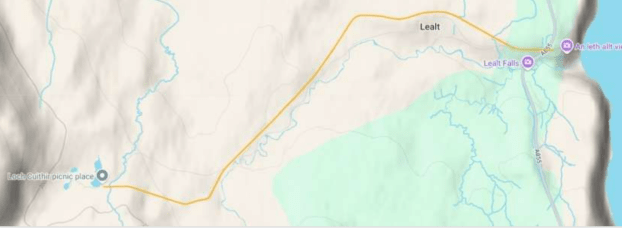
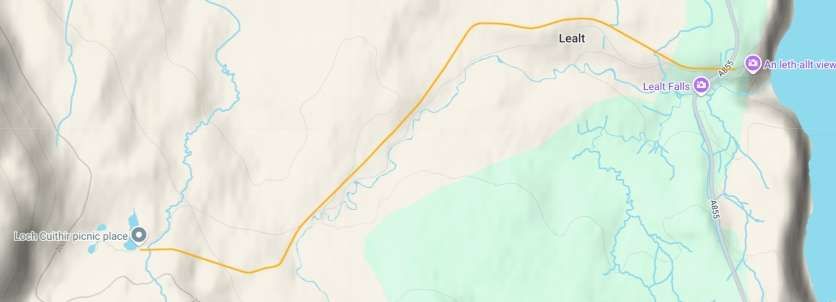
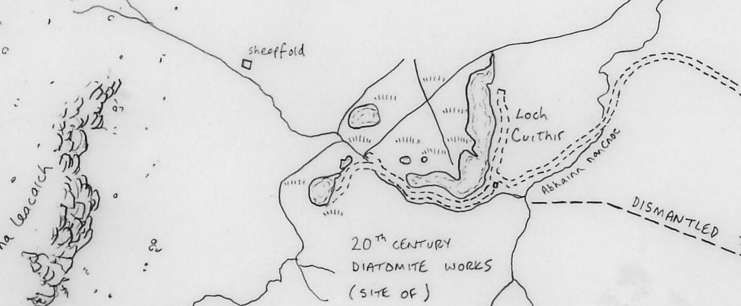
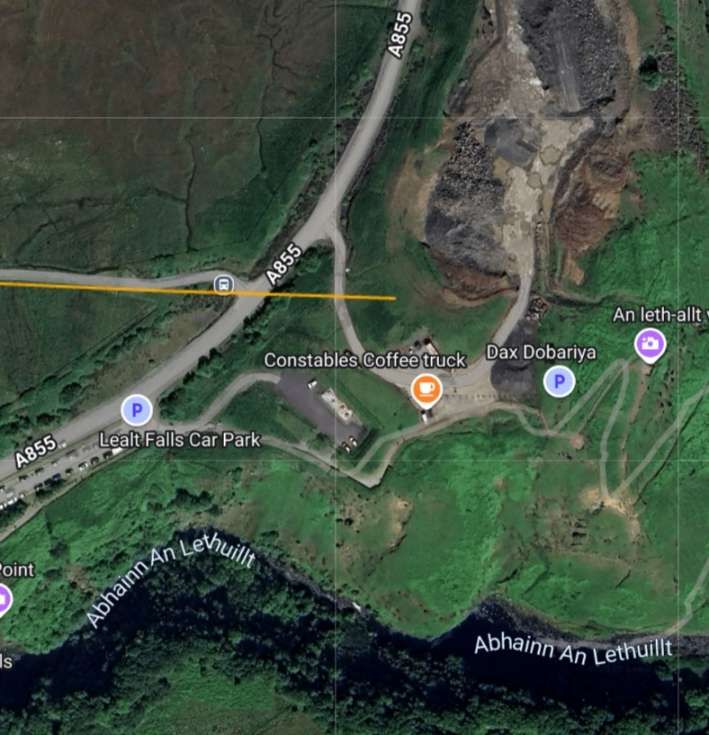
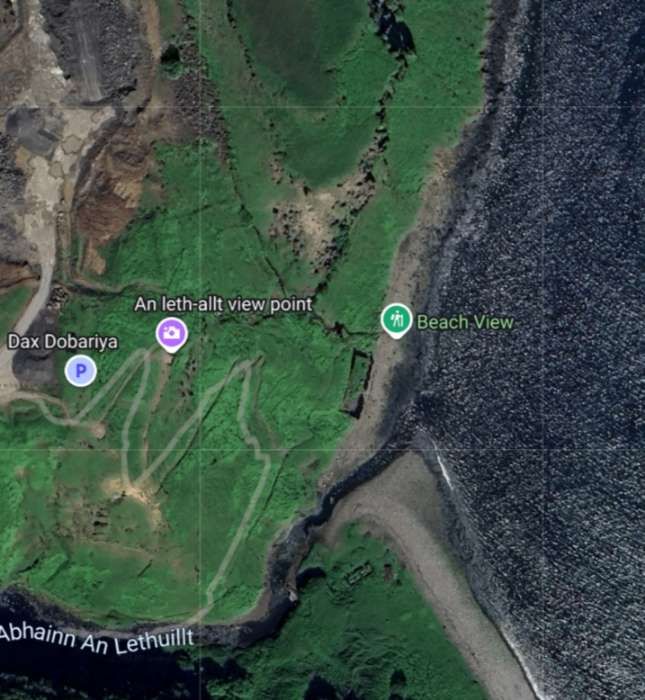
TheLoch Cuithir to LealtDiatomite Railway – Details of this line can be found here. [5]
The Talisker Distillery Tramway – This short 23″-gauge tramway opened in 1900 and closed in 1948. Details can be found here. [6]
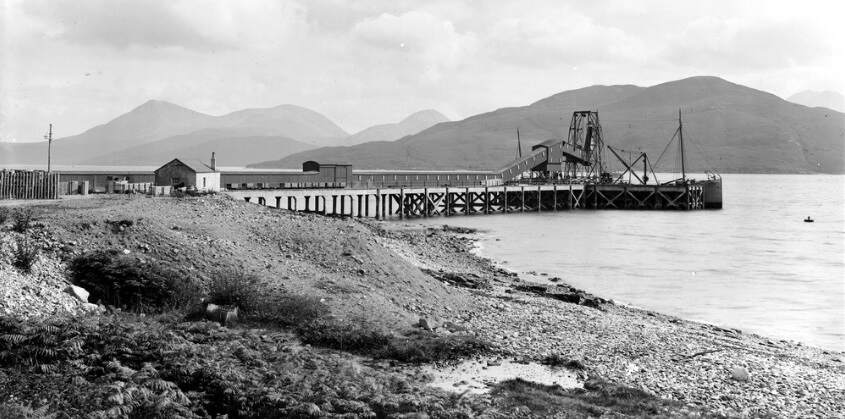
The Skye Marble Railway – Soon after the turn of the 20th century a line was opened between the Kichrist Quarries in Strath Suardal and Broadford Pier/Quay. Different sources say that this was initially either and aerial ropeway or a horse-worked tramway. Whatever form the initial arrangements took, by the end of the first decade of the 20th century, it was operating as a steam-hauled 3ft-gauge railway which for a short while (certainly no more than 4 years) employed a Hunslet 0-4-0ST, originally built in 1892 and previously used on the construction of the County Donegal Railway and various other contractors projects. This line is covered in more detail in the article which can be found here. [7]
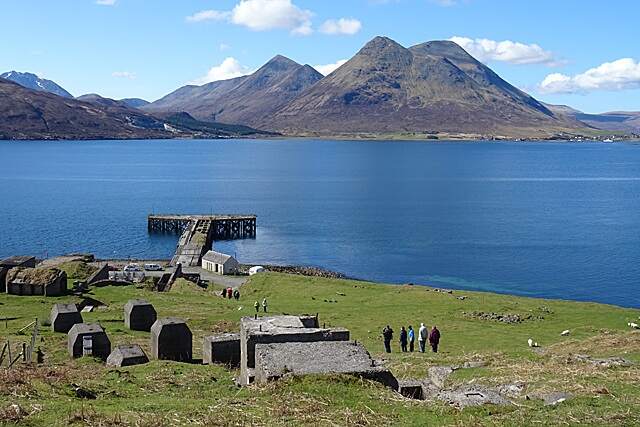
The Raasay Iron Ore Mines and Their Railway – the railway operated from 1913 to 1919. [1][2]
More can be discovered about Raasay’s railway here. [12]
The Quartzite Quarry at Ord (opened in 1945) was equipped with a 3ft-gauge railway along which wagons were pushed by hand to a loading embankment. A short article can be found here. [13]
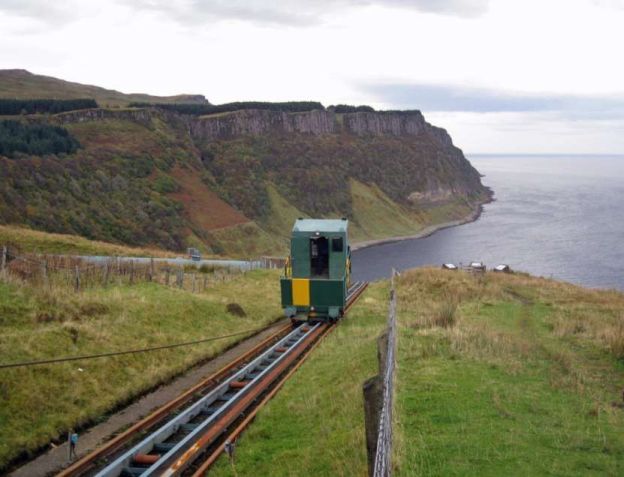
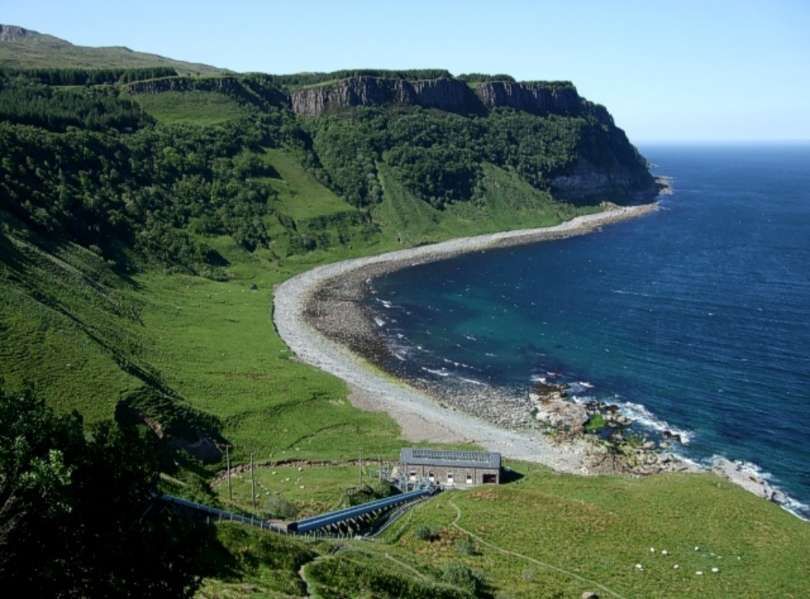
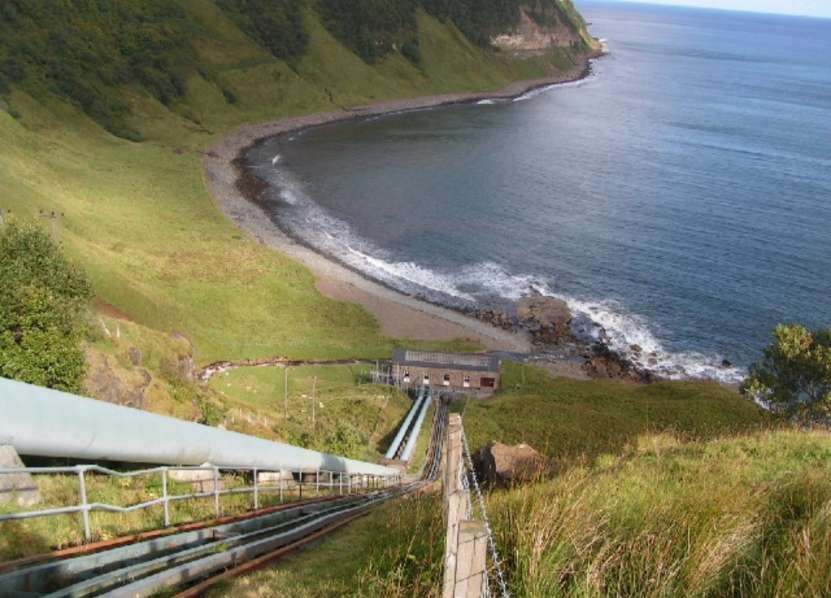
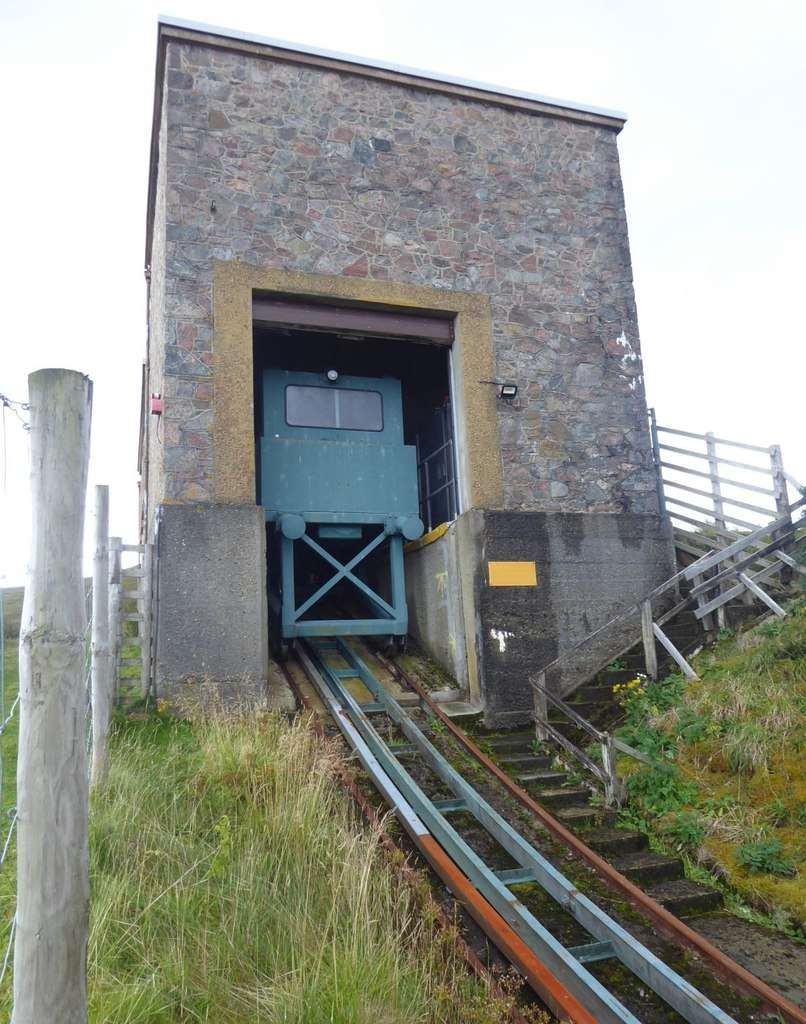
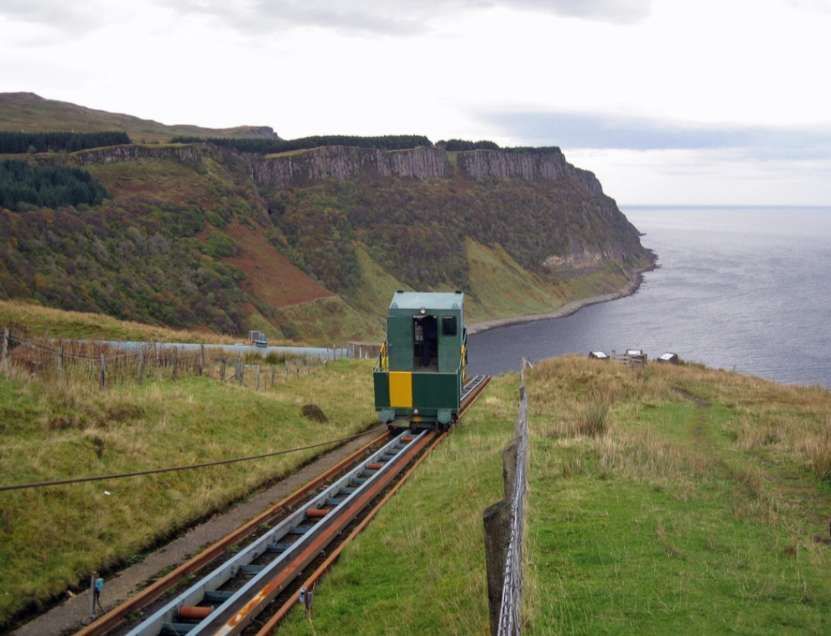
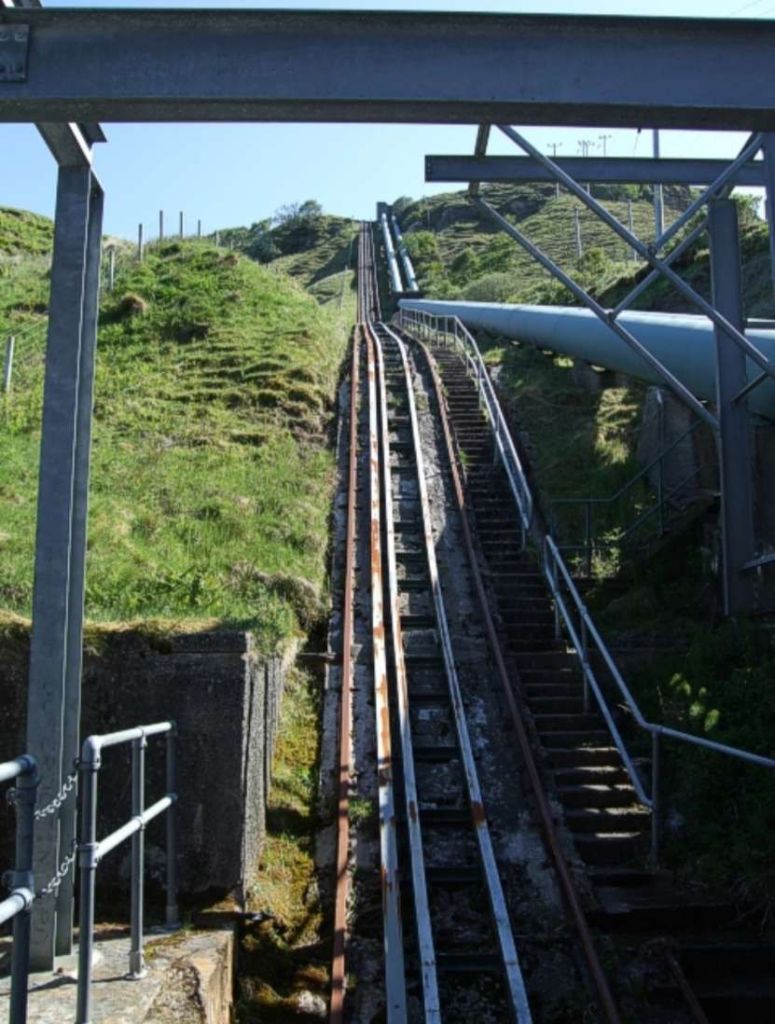
Storr Lochs Hydroelectric Power Station (opened in 1952) which included a standard gauge electric cable railway which still routinely carries spares and supplies down a 1 in 2 gradient. Another short article can be found here. [14]
Other railways on Skye or on adjacent islands? One source commented that Skye had thirteen different railways/tramways open at one time or another. I have only been able, so far, to identify the ones listed here. Should others be aware of more historic rail sites on Skye, I would be interested to hear. Maybe that source intended their list to include the abortive schemes mentioned at the head of this article? One particular proposal, which never came to fruition, has imaginatively been taken as the basis for the story of the fictitious Highland Light Railway Company. [15]
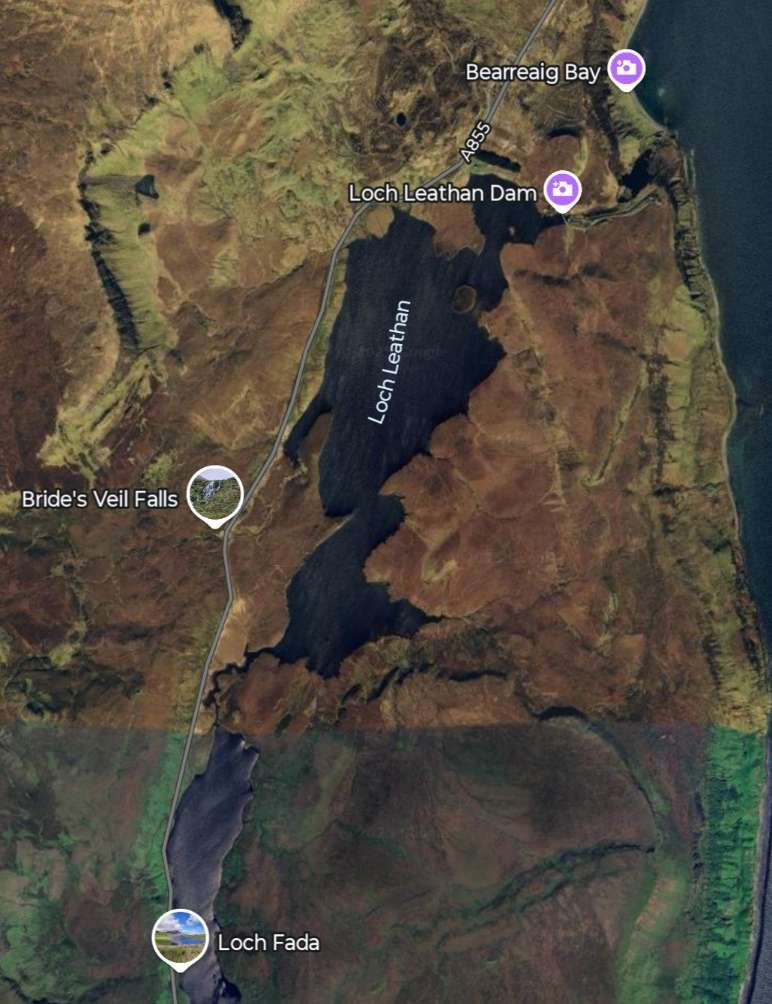
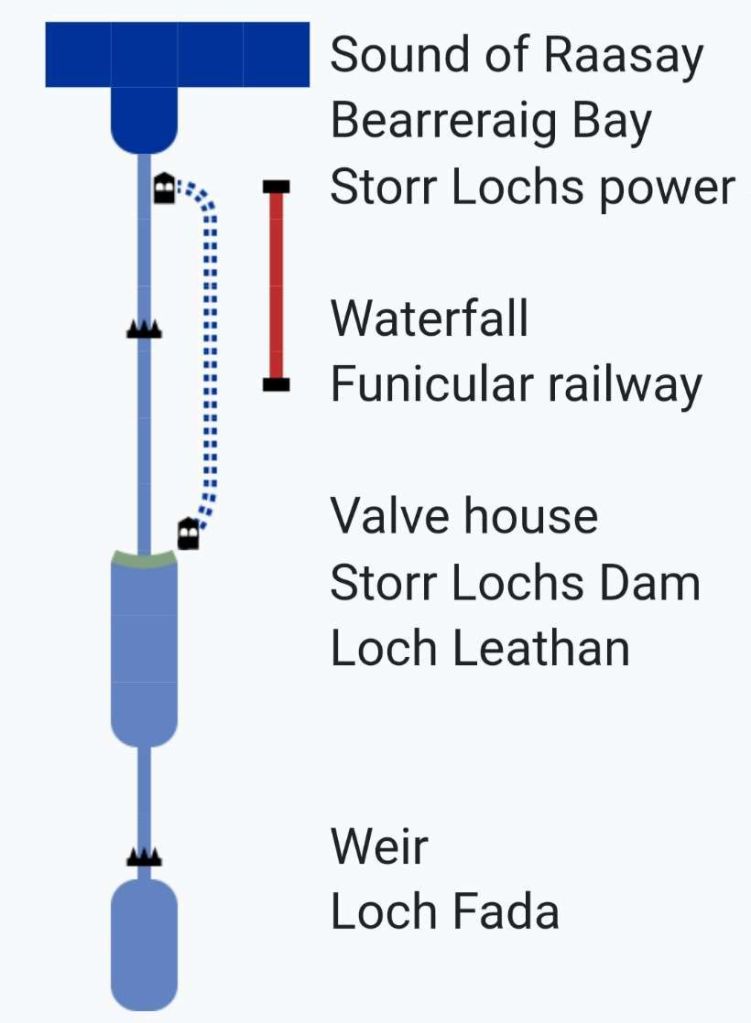
Storr Lochs hydro-electric power station was commissioned in 1952. It was built by the North of Scotland Hydro-Electric Board, and used water from Lochs Leathan and Fada, to provide the first general supply of electricity to the island. The power station has a total output of 2.40 MW. Because the location of the turbine house was not easily accessible, it was (and continues to be) served by a standard-gauge electric funicular railway. [1]
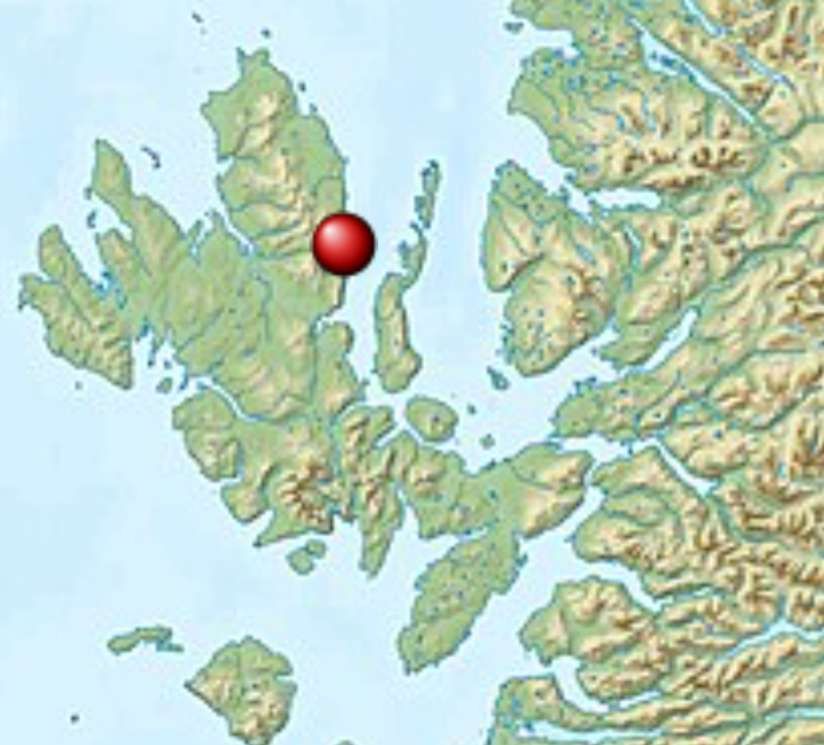
The location of Storr Lochs Hydroelectric Power Station in the Northeast of the Isle of Skye. [1]
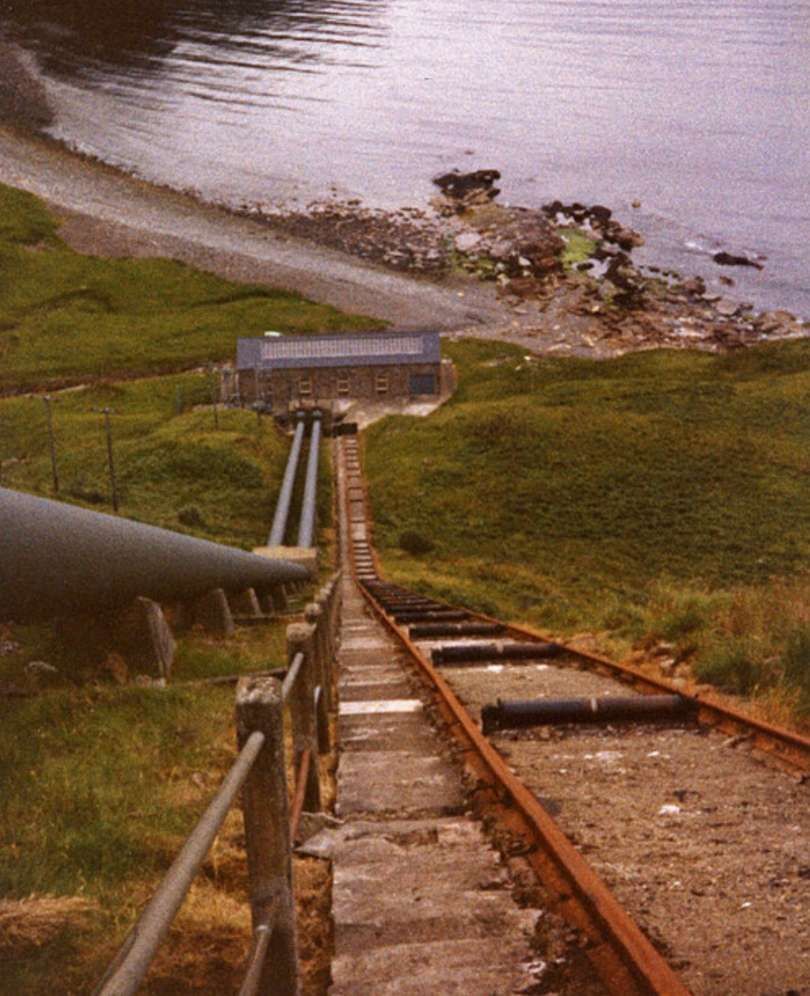
The funicular is the only working railway on the Isle of Skye. It is below the spectacular stacks and landslips of The Storr on the Trotternish Peninsula, a few kilometres north of Portree.
The cable railway was built early in construction of the power scheme, and used to carry materials and equipment to the shores of Loch Bearreraig. In the concrete foundation of the railway over 600 rough steps were built. The first pipeline was constructed for the 1952 opening, and the second pipeline, running parallel added in 1956. [7] The maximum gradient on the railway is 1 in 2. [9]
Photographs of the construction of the scheme can be found here. [10]
Other pictures of this site can be seen here. [11]
Derived from the remains of microscopic fossilized sea or freshwater algaes, diatomite is a naturally occurring, versatile mineral used in an array of applications from cosmetics to filtration. [4] It was harvested by drag line from Loch Cuithir in the late 19th century and the first half of the 20th century.
“This unique form of silica has an elaborate honeycomb structure, peppered with thousands of tiny holes ranging from a few microns to submicron diameters. No other silica source, be it mined or artificially produced, presents such a structure. Some diatomite deposits are saltwater but most are from freshwater sources. … When ground, this profusion of shapes results in an extremely low-density powder known as ‘diatomaceous earth’ (DE) which has excellent absorption properties that are highly prized for filtration, agriculture, paints, plastics, cosmetics, and pharmaceuticals application.” [4]
Diatomite was also used in the production of dynamite. [2][3]
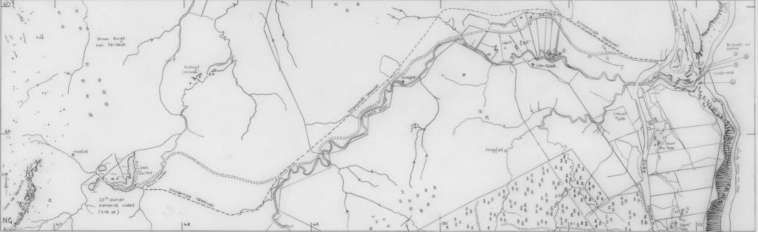
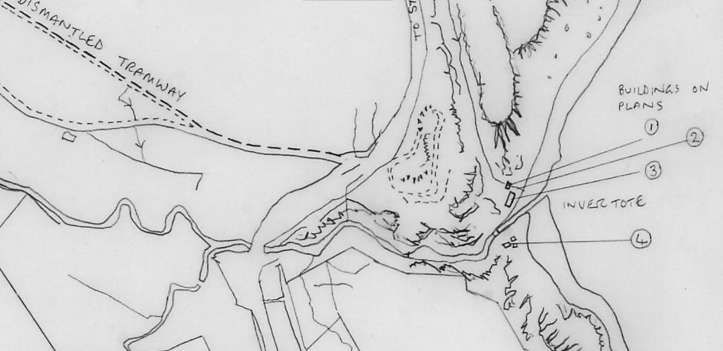
Possibly as early as 1885 [1] but certainly by 1889, [2][3] work was underway at this site. A 2ft [2][3] or 2ft 6in [1] gauge tramway was being constructed in 1889 from the drag-line at Loch Cuithir to Lealt. The tramway followed the River Lealt down to its mouth at Invertote. When first opened the line was worked by gravity and manpower. Apparently, later in the life of the line a small steam locomotive was in use. [2][3]
At the “Western end of the line … at Loch Cuithir, … diatomite – known locally as Cailc (Scottish Gaelic for chalk) – was taken out from the loch bed and dried on wire nets. The seaward terminus had warehouses on the cliff-top at Invertote. At the base of the cliff was a factory where the diatomite was kiln dried, ground and calcined. [A] line … extended from the factory onto a pier into the Sound of Raasay.” [2][3]
Diatomite was also gotten from Loch Valerain and transported by aerial ropeway to Staffin Bay and on along the coast to Invertote Apparently, “during its existence, the Skye Diatomite Company extracted 2000 tons of diatomite. … From Invertote, the diatomite was transferred by skiff, onto puffer boats, waiting in the bay, and shipped across to the mainland. The diatomite was turned into kieselguhr which was mixed with nitroglycerine by Nobel Industries, at Ardeer, to make dynamite.” [2][3]
Stornoway Gazette described the operation as follows:
“Over the years, the mine saw periods of inactivity, but when up and running operations made use of the large industrial works at the area – a large factory building, a railway with embankment cuttings, and a rolling stock traversing three miles of landscape, including an aerial ropeway. The light railway was used to transport the Loch Culthir Diatomite to the shores at Invertote for a final drying and grinding, and a large building containing a furnace, grinding machine and storage space was constructed there for this purpose. Such modernised business works were quite remarkable for this part of the world at the time. In those days there was no road between Staffin and Portree, so a puffer boat would anchor in the bay at Lealt, and local skiffs were used to transport the finished Diatomite from shore to boat, ready for shipping to the mainland. There were around 40 to 50 people steadily employed at Lealt, yet on days that the boat came in this total rose to as many as 80 workers.” [7]
“Perhaps one of the most intriguing aspects of the mine’s history comes from the ownership of the drying factory at Invertote by Germans. Although closed during the period of the Great War, surprisingly the now enemy foreign residents were allowed to stay on. Shortly afterwards a rumour began to circulate that the area was haunted and that the ghost of a recent tragic death at the Lealt falls had appeared at the factory. As the local story goes, (the rumour was actually started by the Germans) with the intent of keeping locals away. It turned out that the resident Germans were spies and that, almost unbelievable to the community, the area was being used as a German base with submarines surfacing in the sea bay!” [7]
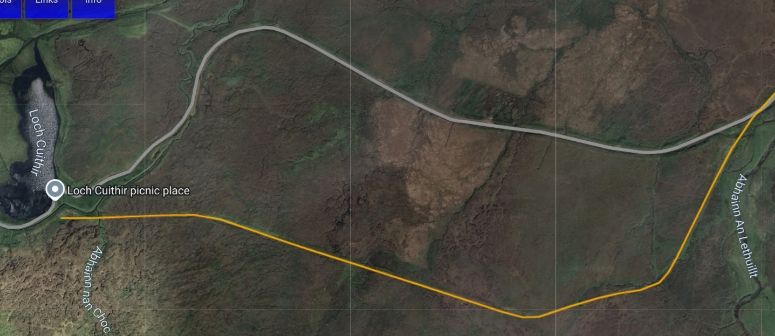
“Moving on, the year 1950 saw the next development in the mining of Diatomite from Loch Cuithir. As the loch was one and a half miles up the moor, through peat bogs and rivers, the Department of Agriculture and Fisheries for Scotland (DAFS) decided that a road should be built, with the intention of extracting the Diatomite by digger, and then taking it to the Lealt road end above Invertote. The road took around a year and a half to build, during which the mine was put out of operation. Yet, when production started again, the new method of extraction did not reach the high standard of quality which was achieved when extracted manually by spades. The mechanical extraction resulted in the Diatomite being less pure, and full of unwanted dirt. Drying the substance is, in fact, the problem of the process, for it is obvious that in a damp climate like Skye, the diatomite does not lose its moisture quickly. The problems which began after the construction of the 1950s road were further highlighted and compounded six years later. A new factory was built at Uig (the site where the Cal Mac offices are now situated), far from the mining site at Loch Cuithir, and it may be said that this move was the ruining of the entire Diatomite industry upon Skye. As Diatomite was no longer dried at Invertote it now had to be transported by road, wet, for the much-needed drying process to Uig, 23 miles away. A vehicle may have left Loch Cuithir carrying five tonnes of Diatomite, yet only producing one tonne of the finished product after drying had taken place – a finished product which was also not as pure as it ought to be for the specialised work it had to do in various products. A lot of money was wasted on travelling, and within the factory itself, inefficiency was also present, with machinery often breaking down due to the damp state of the Diatomite. Outside the factory, the scenic communities of Trotternish also began to suffer. When the factory was working, it poured out a fine white dust which covered every house in the area. Grass became chalky in colour and after dry spells in the weather, the road-sides from Staffin to Uig would turn white with Diatomite – Uig was constantly under a cloud of dust. With complaints of insubstantial profits and bad management, the factory was finally closed to production for the last time in 1960. Yet, although the Diatomite mining industry on Skye came to an abrupt ending, it was still regarded by many locals as a blessing at the time. Following from World War One, the industrial works provided employment for many returning men who could not find work elsewhere in the island. And at peak production, around 1955/56, 50 to 60 men were paid good wages to work at the factory.” [7]
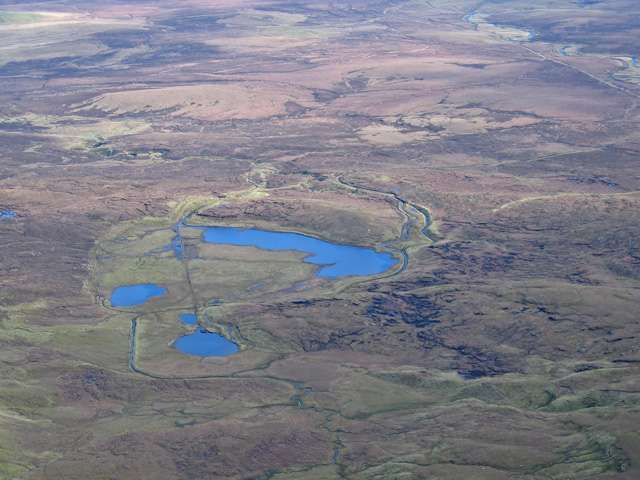
Bell & Harris tell us that “Loch Cuithir is located upon landslipped material, which overlies Upper Jurassic strata. Only parts of these diatomite workings remain. Some of the brick buildings, together with the line of the tramway used to transport the diatomite to the coast, are still obvious. The diatomite occurred as a 3–6m-thick horizon below a 1m covering of peat. The loch had an original area of 60 hectares (24 acres) and was drained in order to extract the diatomite. Ditches, around the perimeter of the loch, were excavated and the water was drained through a man-made outlet at the northern end of the loch, thus allowing removal of the peat and extraction of the diatomite. East of the drainage outlet are spoil-heaps, mostly of plateau lava boulders, presumably removed from the workings during excavation. The diatomite from this deposit was very pure, with little or no interlayered silt or mud. Macadam (1920) notes that the calcined (heat treated) diatomite contains over 96% [Silicon Dioxide](reported in Anderson and Dunham 1966), whilst Strahan et al. (1917) gave a value of 98.78%. According to Macadam (1920), the absorptive value of the material from Loch Cuithir was over 3.56 (a good diatomite would have an absorptive value in excess of 4.0).“
Some excellent photographs of the derelict factory at Invertote can be seen here. [8]
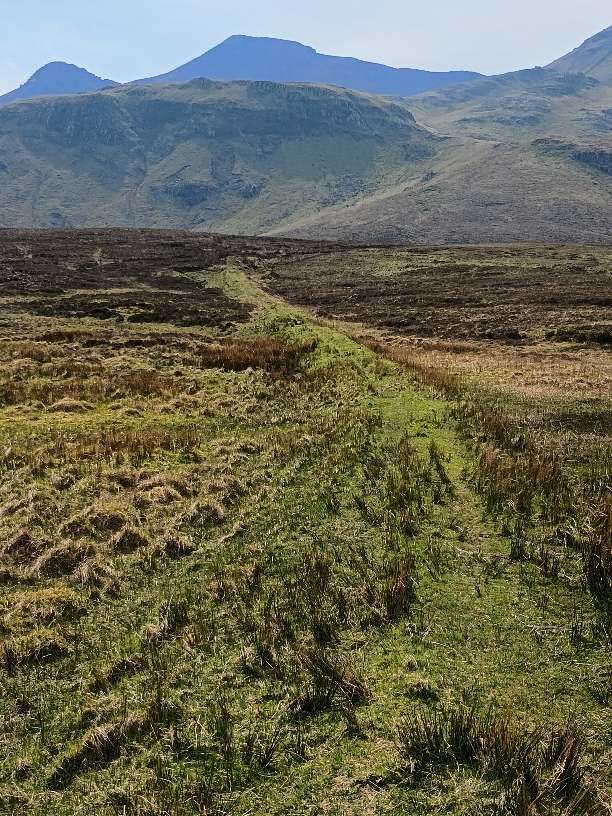
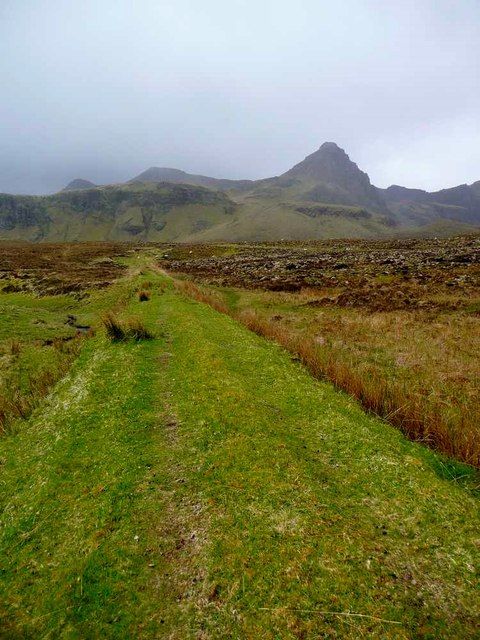
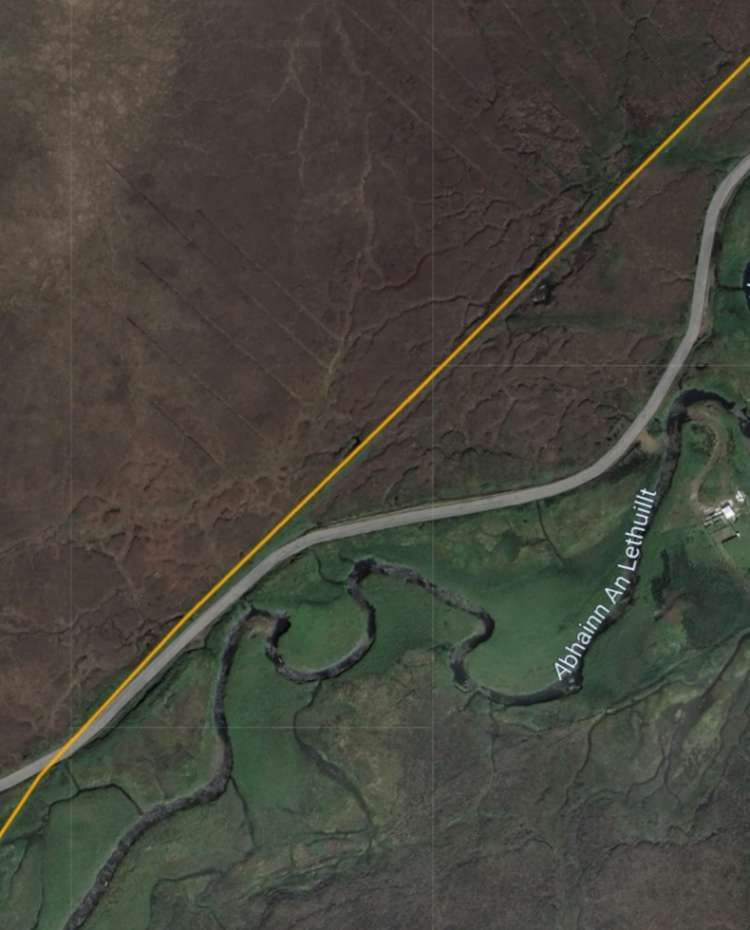
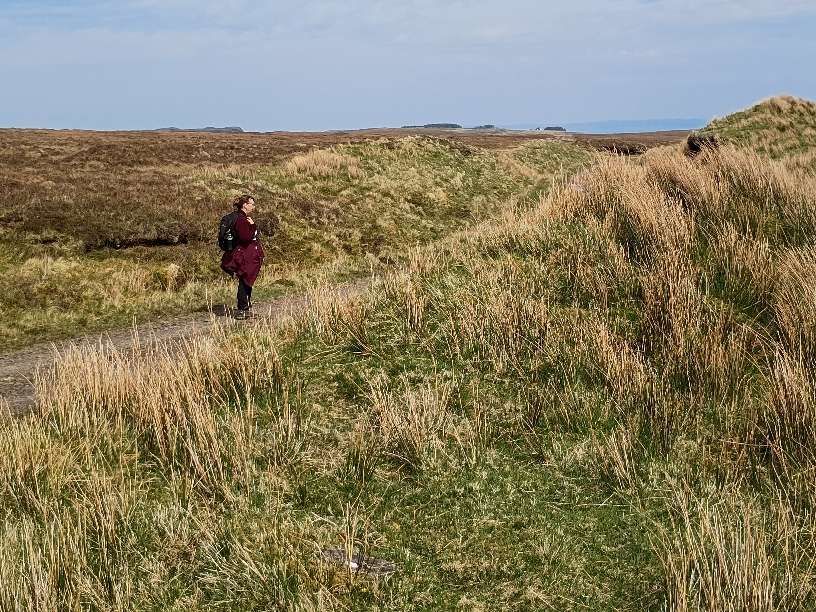
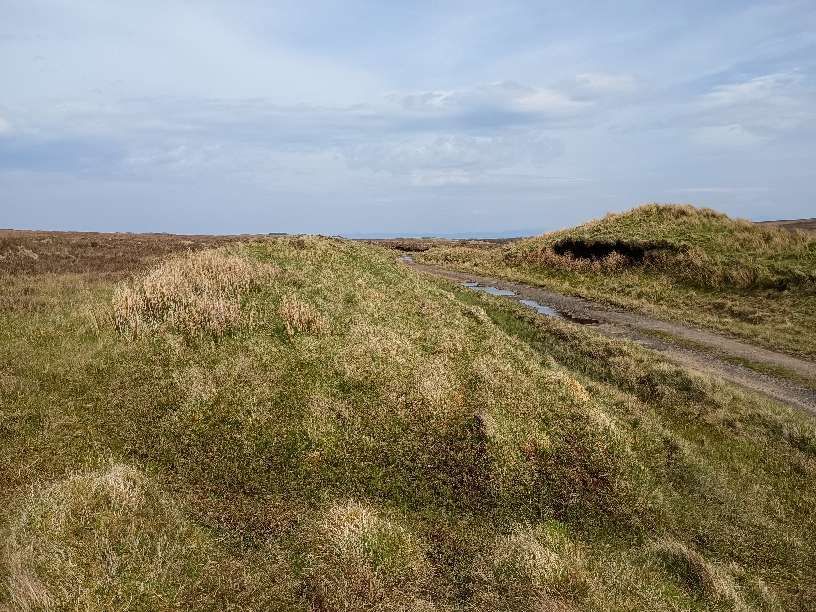
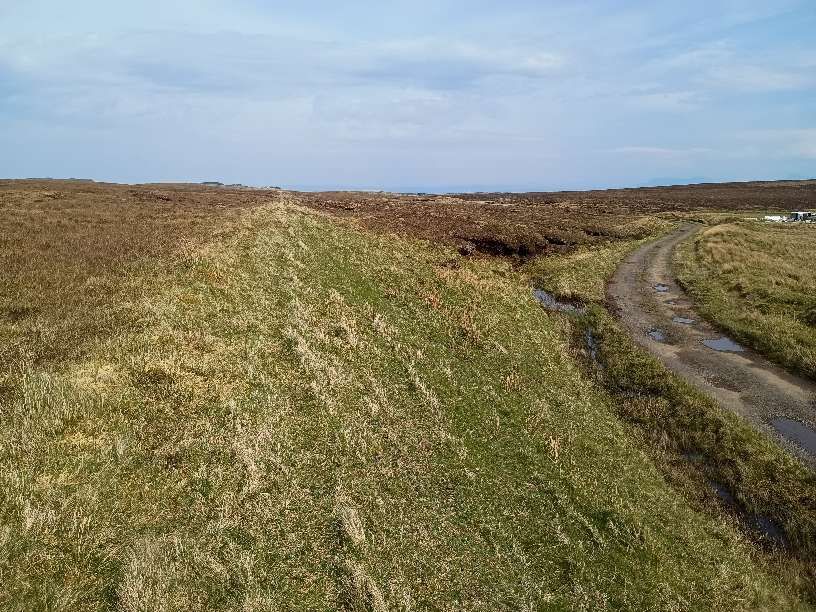
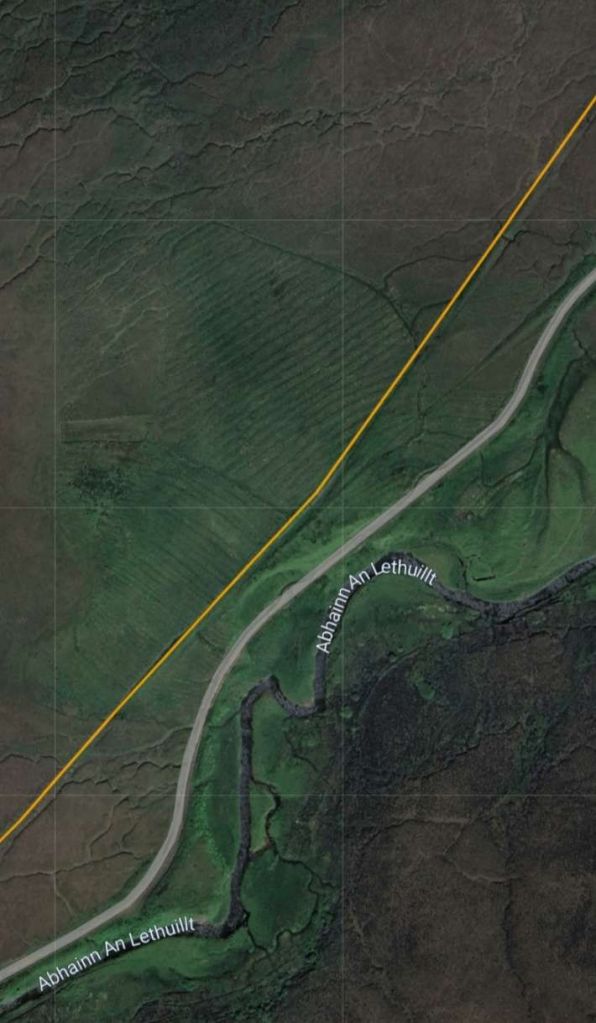
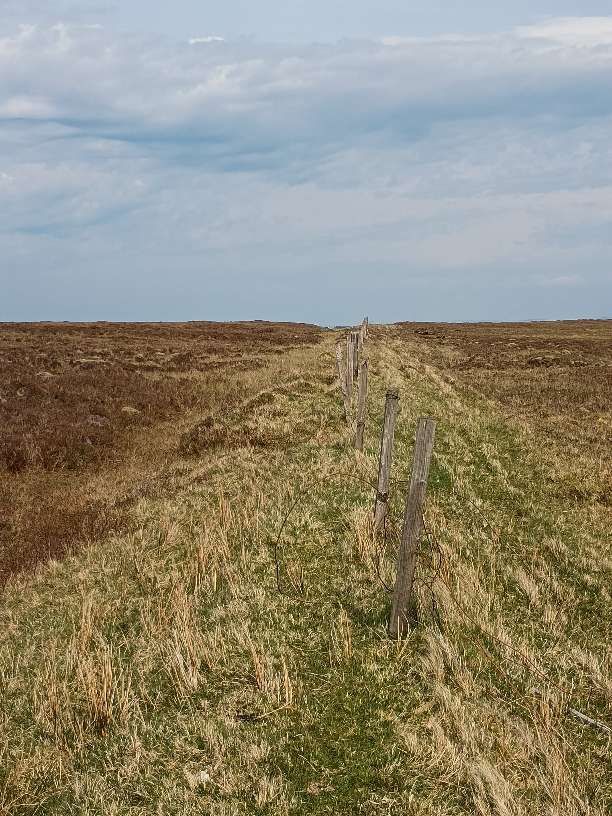
The Route of the Tramway/Railway
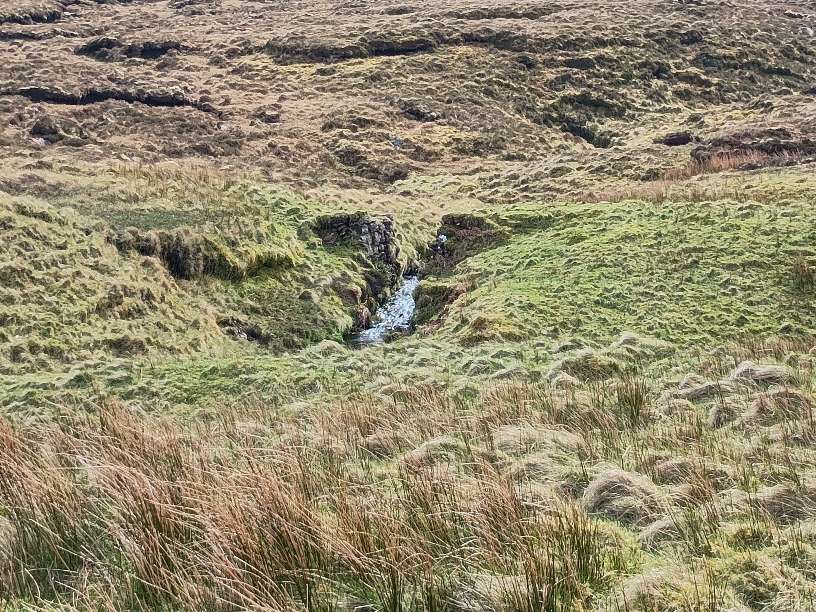
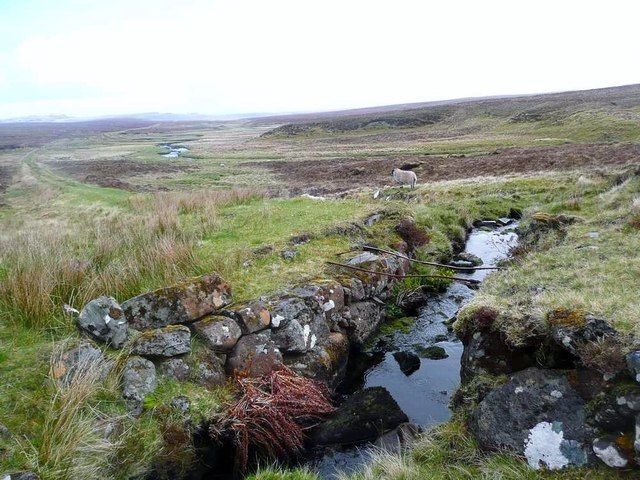
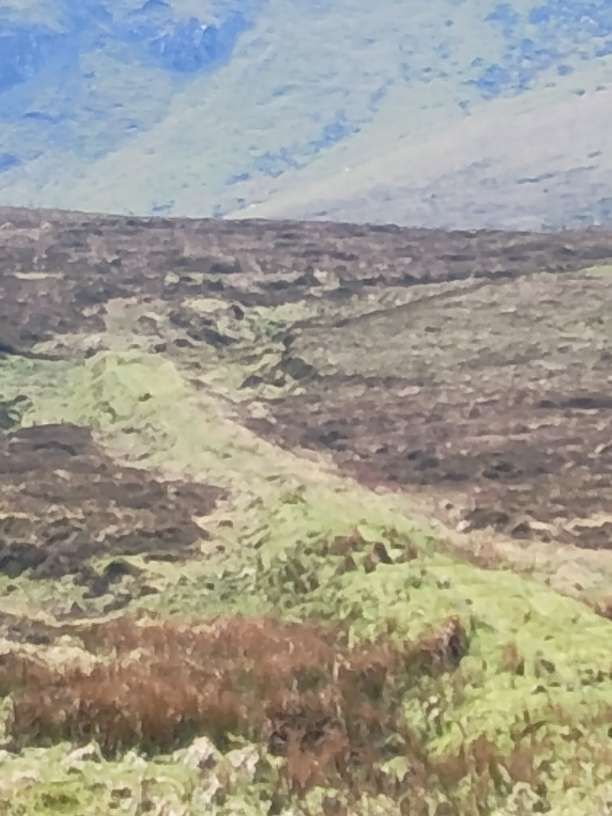
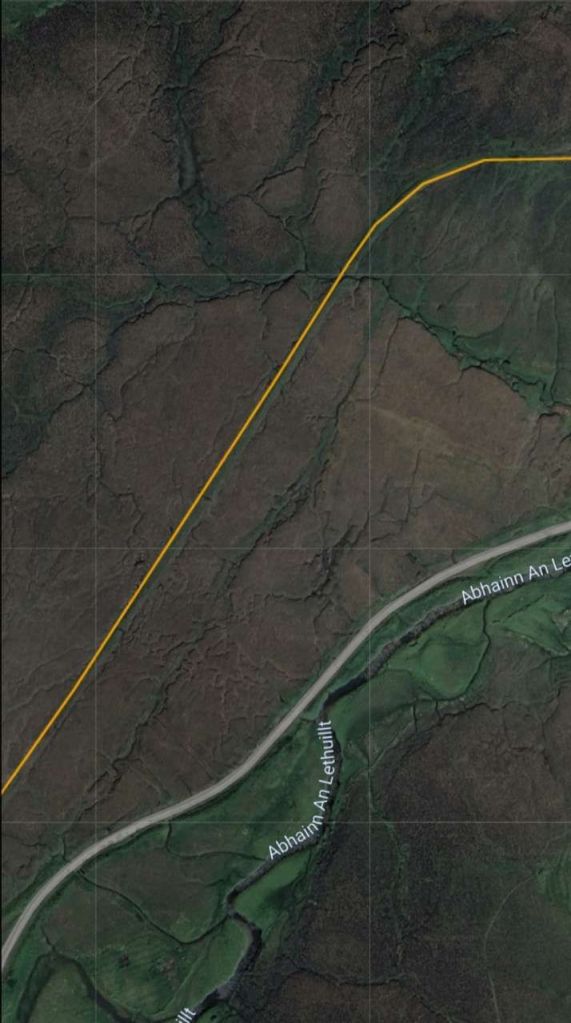
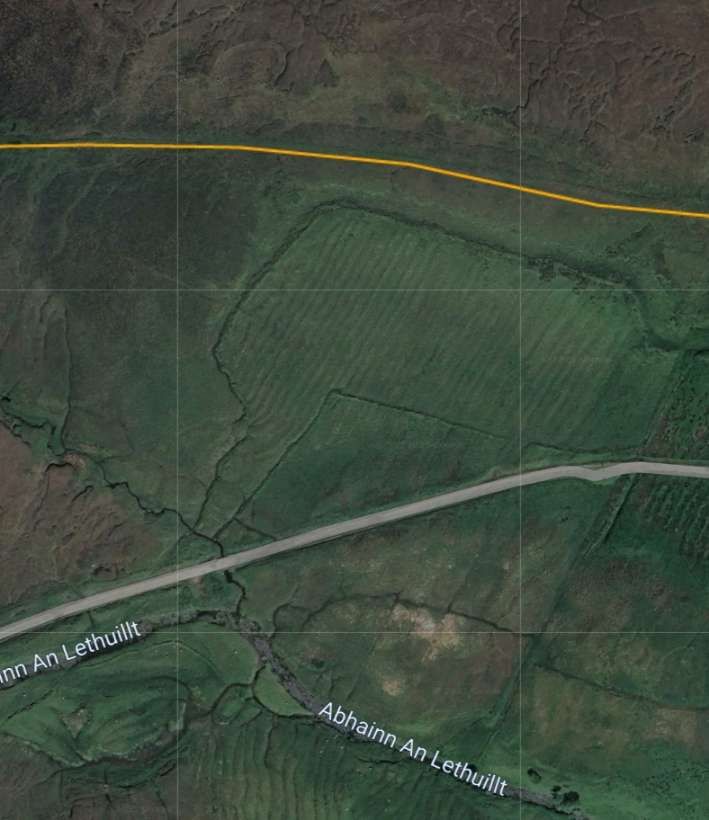
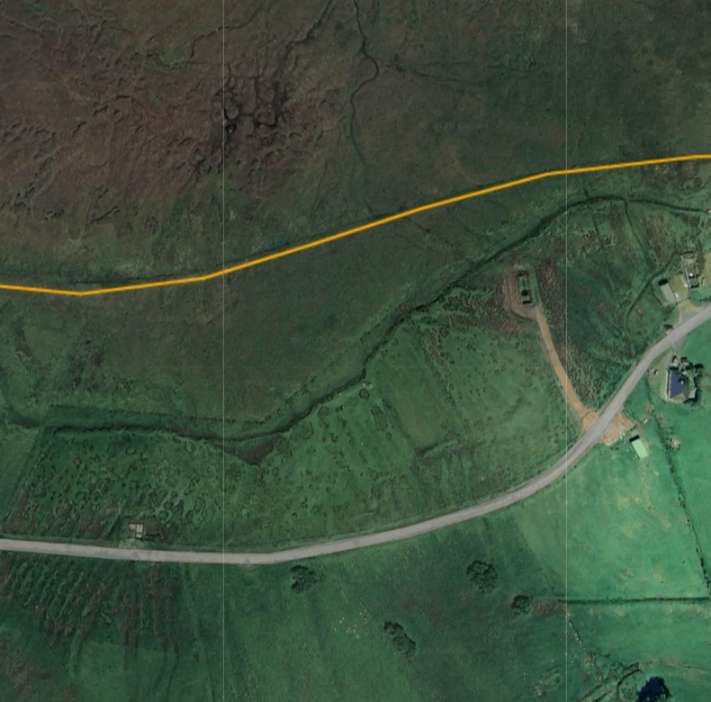
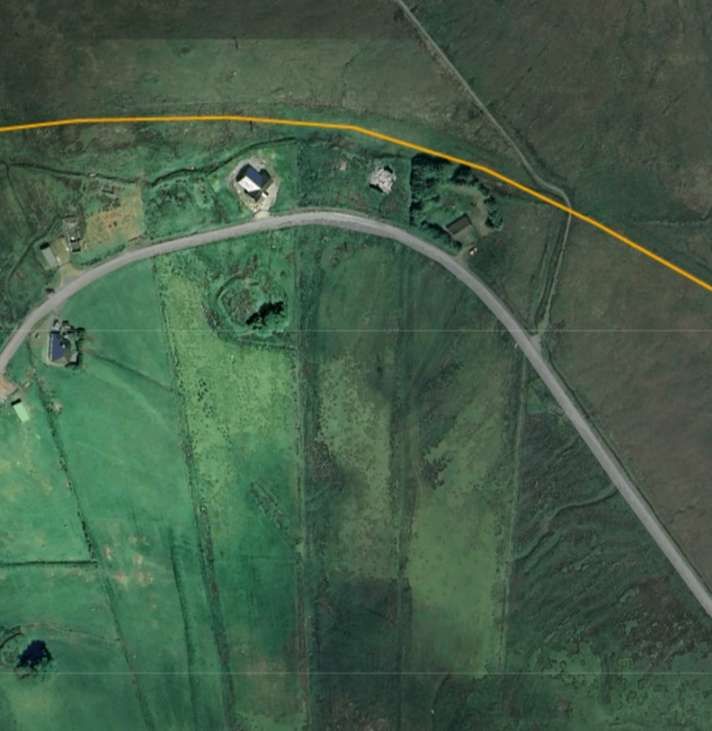
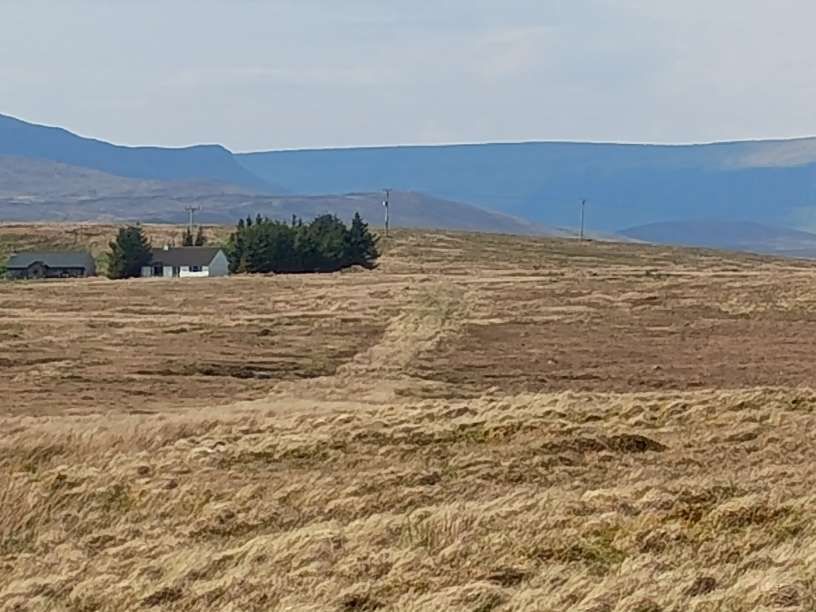
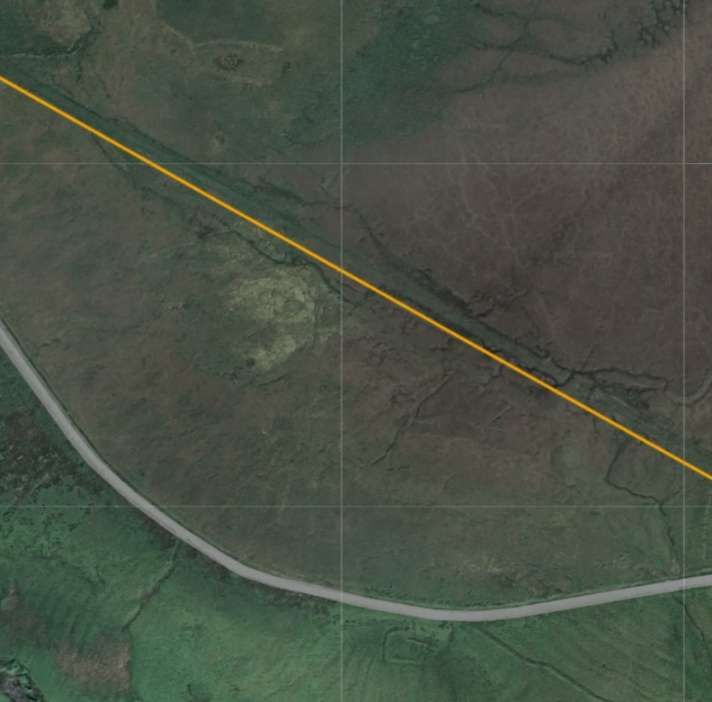
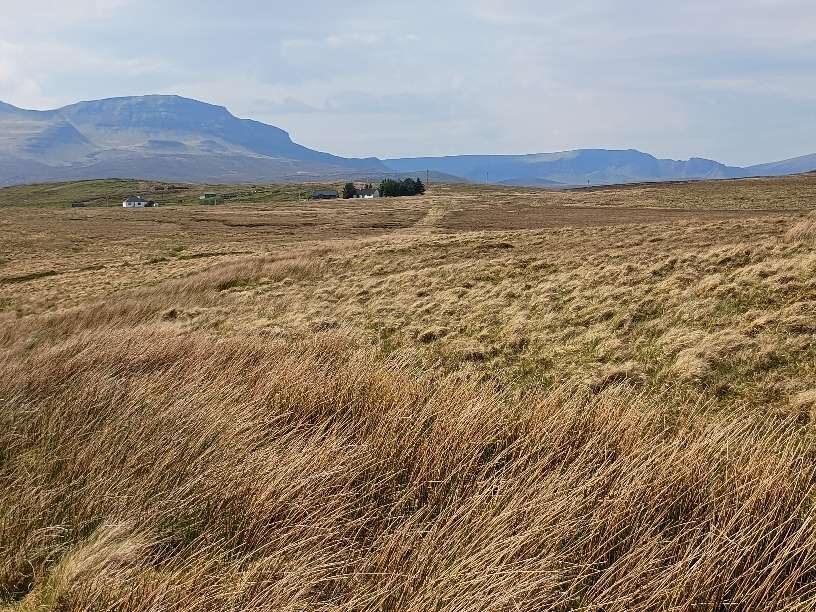
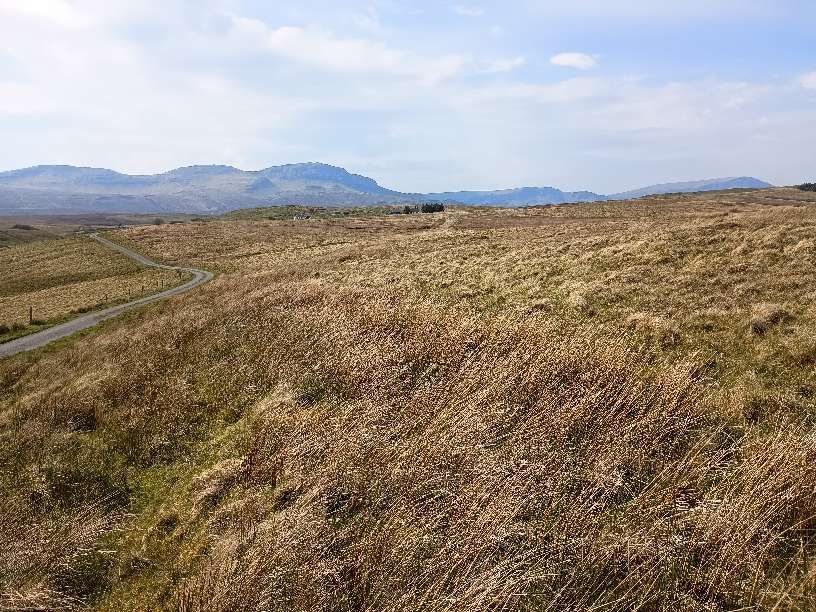
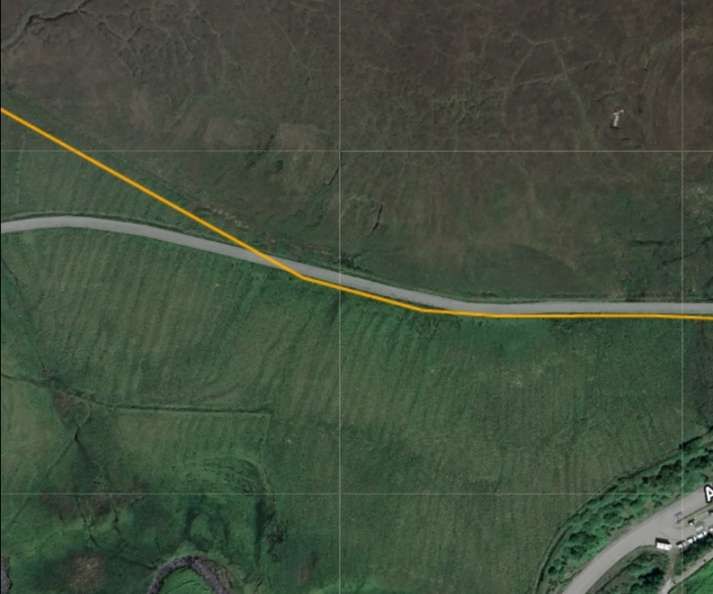
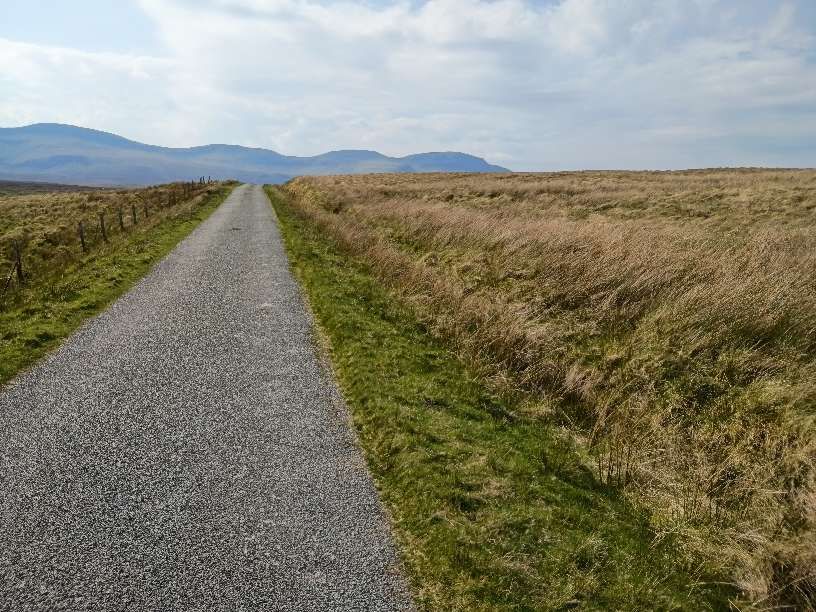
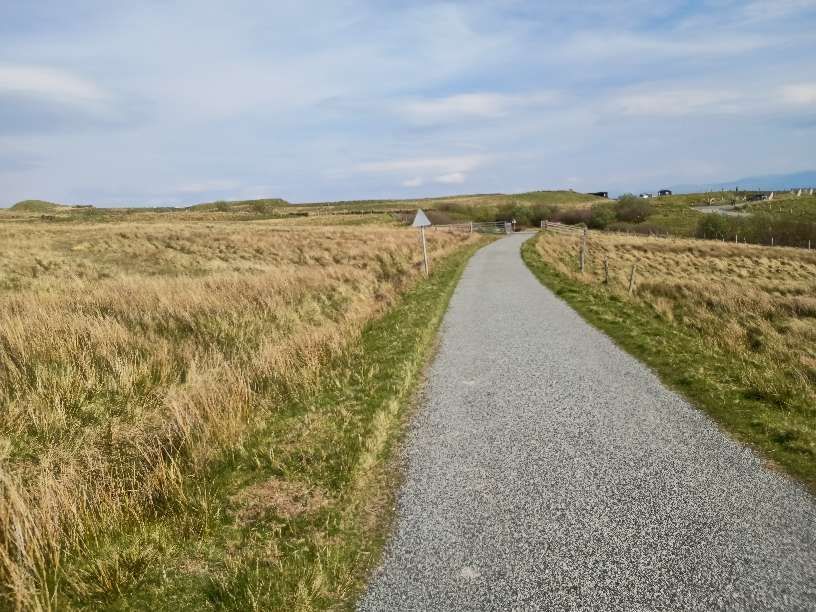
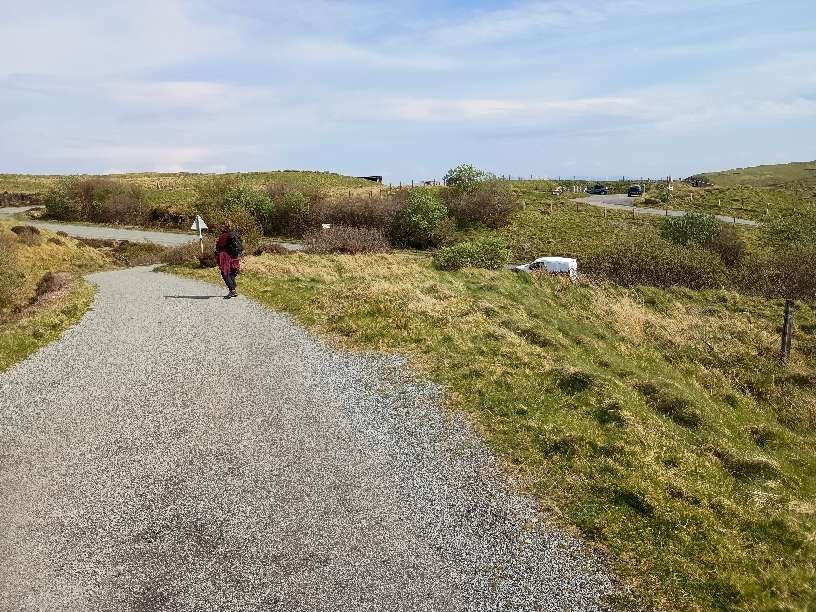
From Loch Cuithir, the railway ran in a Southeasterly direction over boggy ground. Minimal earthworks were undertaken placing the railway at a level just above surrounding ground.
The Canmore National Record of the Historic Environment profiles these notes:
“One of the greatest causes of interest in Skye Diatomite was its potential use as a substitute for Kieselghur by Alfred Nobel in the production of Dynamite in Nobel’s new Scottish factory at Ardeer in Ayrshire during the 1880s. Nobel eventually found a better source of material, but the Extraction of Diatomite nevertheless began in Skye at Loch Cuithir in 1886. The Diatomite was transported by tramway to be processed at Invertote, production continuing until 1913. The industry was briefly revived between 1950 and 1961, using road transport.” [13]
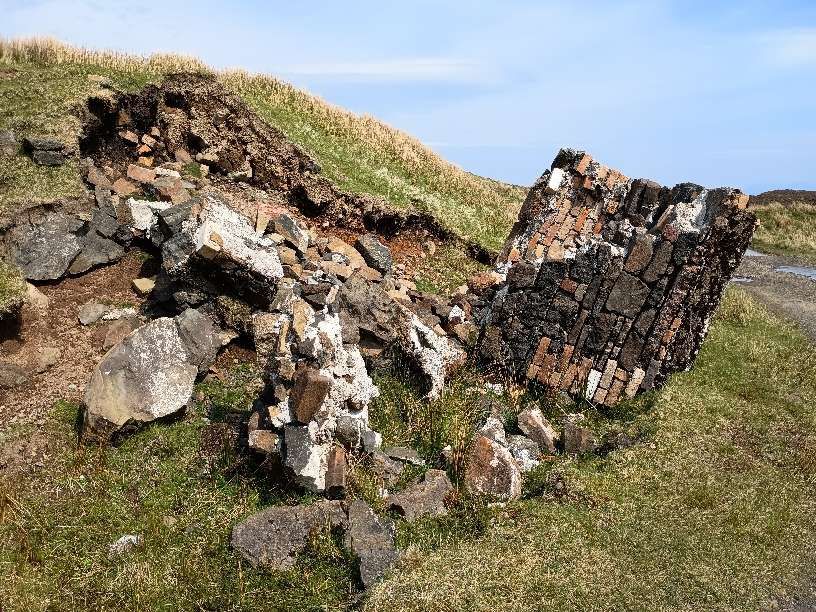
“The principal remains of the Invertote works are a large, rubble-built, rectangular-plan roofless building (NG5201 6049). It has been entirely gutted, but fragmentary remains include a large cast-iron flywheel from a steam engine, and a cast-iron wall-mounted bearing box. The other surviving structure is a kiln (NG5201 6052), comprising a lower chanber or firebox built from Scottish firebricks (produced at the Star Works, Glenboig, Lanarkshire, and Etna Works, Armadale, West Lothian), onto which has been constructed a circular-section fireclay-brick column encased by an outer layer of sheet steel. The exact functions of the processing building and the kiln are uncertain, but it is likely that the latter was used for drying purposes.” [13]


 Roger Farnworth