
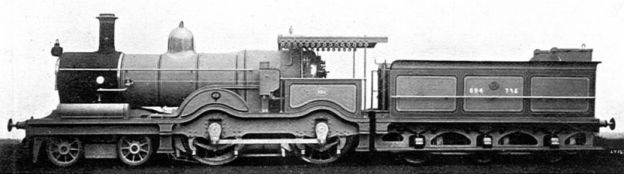
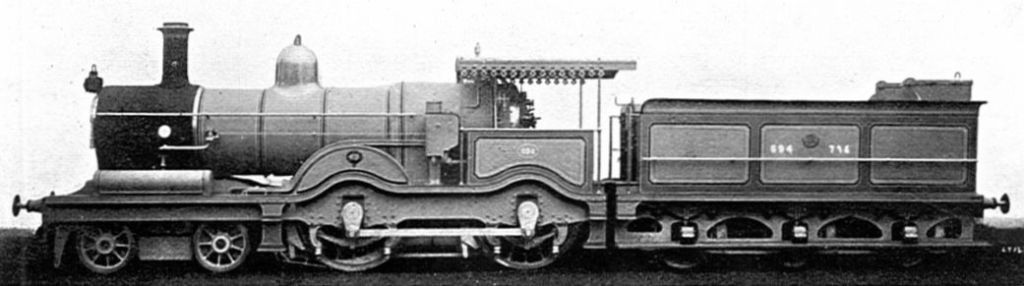
The featured image for this article is a 4-4-0 Locomotive No. 694 – one of a class of 15 built by the North British Locomotive Company in Scotland for Egyptian State Railways in 1905-06, © Public Domain. [1]
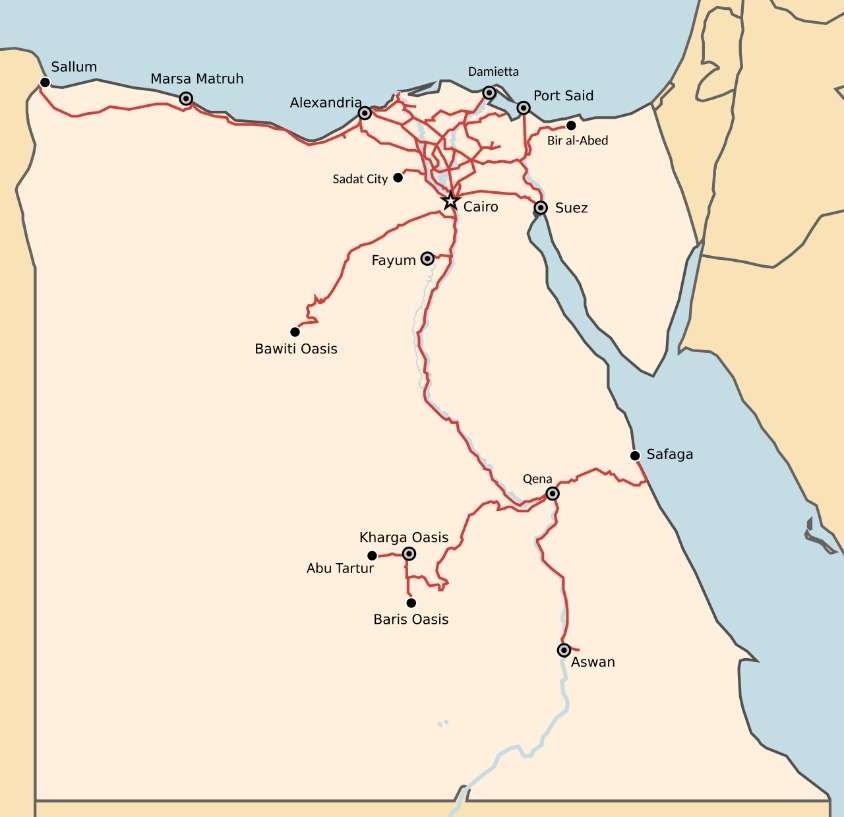
Egyptian National Railways (Al-Sikak al-Ḥadīdiyyah al-Miṣriyyah) is the national railway network of Egypt. Founded in 1854, it is the oldest railway system in Africa and the Middle East. [1] Much of what follows comes from the Wikipedia article about Egypt’s national railway network [1] and from Hugh Hughes book, ‘Middle East Railways’, published by the Continental Railway Circle. [3] Other sources include Grace’s Guide, [6] the Egyptian Government [7] and the Institute of Developing Economies. [8]
1833-1877
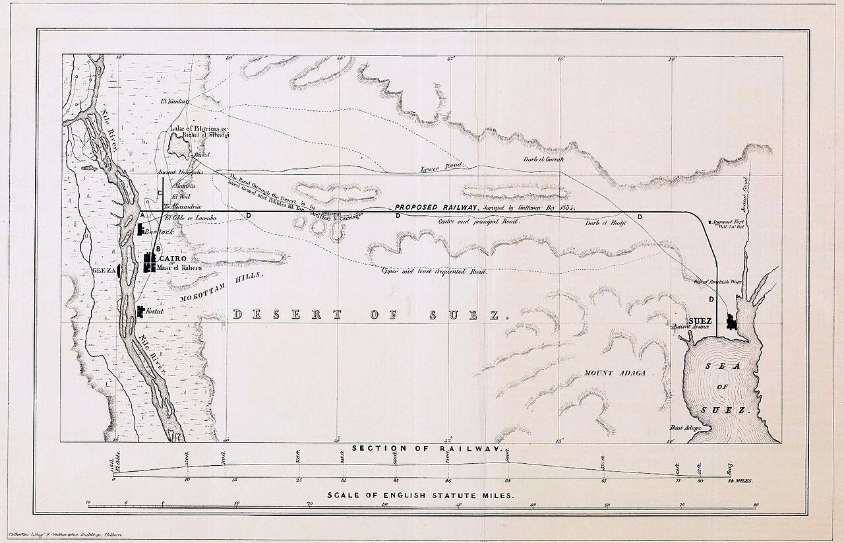
Wikipedia tells us that, “In 1833, Muhammad Ali Pasha considered building a railway between Suez and Cairo to improve transit between Europe and India. Muhammad Ali had proceeded to buy the rail when the project was abandoned due to pressure by the French who had an interest in building a canal instead.” [1] The route of the planned railway is shown in the first image below.
“Muhammad Ali died in 1848, and in 1851 his successor Abbas I contracted Robert Stephenson to build Egypt’s first standard gauge railway. The first section, between Alexandria on the Mediterranean coast and Kafr el-Zayyat on the Rosetta branch of the Nile was opened in 1854. [3: p12] This was the first railway in the Ottoman Empire as well as Africa and the Middle East. [4] In the same year, Abbas died and was succeeded by Sa’id Pasha, in whose reign the section between Kafr el-Zayyat and Cairo was completed in 1856 followed by an extension from Cairo to Suez in 1858. [3: p12] This completed the first modern transport link between the Mediterranean and the Indian Ocean, as Ferdinand de Lesseps did not complete the Suez Canal until 1869. [1]
“At Kafr el-Zayyat the line between Cairo and Alexandria originally crossed the Nile with an 80 feet (24 m) car float. [3: p17] However, on 15th May 1858 a special train conveying Sa’id’s heir presumptive Ahmad Rifaat Pasha fell off the float into the river and the prince drowned. [3: p17] Stephenson therefore replaced the car float with a swing bridge nearly 500 metres (1,600 ft) long. [3: p17] By the end of Sa’id’s reign branches had been completed from Banha to Zagazig on the Damietta branch of the Nile in 1860, to Mit Bera in 1861 and from Tanta to Talkha further down the Damietta Nile in 1863.” [1][3: p12]
“Sa’id’s successor Isma’il Pasha strove to modernise Egypt and added momentum to railway development. In 1865 a new branch reached Desouk on the Rosetta Nile and a second route between Cairo and Talkha was opened, giving a more direct link between Cairo and Zagazig. [3: p12] The following year a branch southwards from Tanta reached Shibin El Kom. [3: p12] The network started to push southwards along the west side of the Nile with the opening of the line between Imbaba near Cairo and Minya in 1867. [3: p15] A short branch to Faiyum was added in 1868. [3: p15] A line between Zagazig and Suez via Nifisha was completed in the same year. [3: p12] The following year the line to Talkha was extended to Damietta on the Mediterranean coast and a branch opened to Salhiya and Sama’ana.” [3: p12]
“Imbaba had no rail bridge across the Nile to Cairo until 1891. [3: p17] However, a long line between there and a junction west of Kafr el-Zayyat opened in 1872, linking Imbaba with the national network. [3: p12] From Minya the line southwards made slower progress, reaching Mallawi in 1870 and Assiut in 1874.[3: p15] On the west bank [as far as] Najee Hammady, [then] on east bank of the Nile till Aswan. A shorter line southwards linked Cairo with Tura in 1872 and was extended to Helwan in 1875. [3: p12] In the Nile Delta the same year, a short branch reached Kafr el-Sheikh and in 1876 a line along the Mediterranean coast linking the termini at Alexandra and Rosetta was completed.” [3: p12]
1877-1888
“By 1877, Egypt had a network of key main lines and the Nile Delta had quite a network, but with this and other development investments, Isma’il had gotten the country deeply into debt. For its first 25 years of operation Egypt’s national railway had never even produced an annual report. [3: p13] A Council of Administration with Egyptian, British and French members was appointed in 1877 to put the railway’s affairs in order. They published its first annual report in 1879, [3: p13] and in the same year, the British Government had Isma’il Pasha deposed, exiled and replaced with his son Tewfik Pasha. In 1882, the British essentially invaded and occupied Egypt.” [1]
With these developments, the Egyptian Railway Administration’s (ERA’s) rail network stagnated until 1888, but it also put its management in much better order. [3: p13] “In 1883 the ERA appointed Frederick Harvey Trevithick, nephew of Francis Trevithick, as Chief Mechanical Engineer. [3: p32][5] Trevithick found a heterogeneous fleet of up to 246 steam locomotives of many different designs from very different builders in England, Scotland, France and the USA. [3: p32] This lack of standardisation of locomotives or components complicated both locomotive maintenance and general railway operation.” [1][3: p32]
“From 1877 to 1888, the ERA struggled to keep up with even basic maintenance, [3: p13] but by 1887 Trevithick managed to start a programme to renew 85 of the very mixed fleet of locomotives with new boilers, cylinders and motion. [3: 32] He started to replace the others with four standard locomotive types introduced from 1889 onwards: one class of 0-6-0 for freight, one class of 2-4-0 for mixed traffic, one 0-6-0T tank locomotive for shunting and one class of only ten 2-2-2 locomotives for express passenger trains. [3: p32] Trevithick ensured that these four classes shared as many common components as possible, which simplified maintenance and reduced costs still further.” [1][3: p32]
1888-1914
“By 1888, the ERA was in better order and could resume expanding its network. In 1890, a second line between Cairo and Tura opened. [3: p12] On 15th May 1892, the Imbaba Bridge was built across the Nile, linking Cairo with the line south following the west bank of the river.” [3: p17] Grace’s Guide has the opening taking place in 1891. [6] “The civil engineer for the bridge was Gustave Eiffel. (It was reformed and renewed in 1924 which is still the only railway bridge across the Nile in Cairo.) Cairo’s main Misr Station was rebuilt in 1892. The line south was extended further upriver from Assiut reaching Girga in 1892, Nag Hammadi in 1896, Qena in 1897 and Luxor and Aswan in 1898. [3: p15] With the railroad’s completion, construction began the same year on the first Aswan Dam and the Assiut Barrage, main elements of a plan initiated in 1890 by the government [9] to modernize and more fully develop Egypt’s existing irrigated agriculture, export potential, and ability to repay debts to European creditors.” [10][1]
“In the north in 1891, a link line was opened between Damanhur and Desouk. [3: p12] The line to Shibin El Kom was extended south to Menouf in the same year and reached Ashmoun in 1896. [3: p12] By then a line across the Nile Delta from a junction north of Talkha on the line to Damietta had reached Biyala. [3: p12] By 1898 this reached Kafr el-Sheikh, completing a more direct route between Damietta and Alexandria.” [3: p12][1]
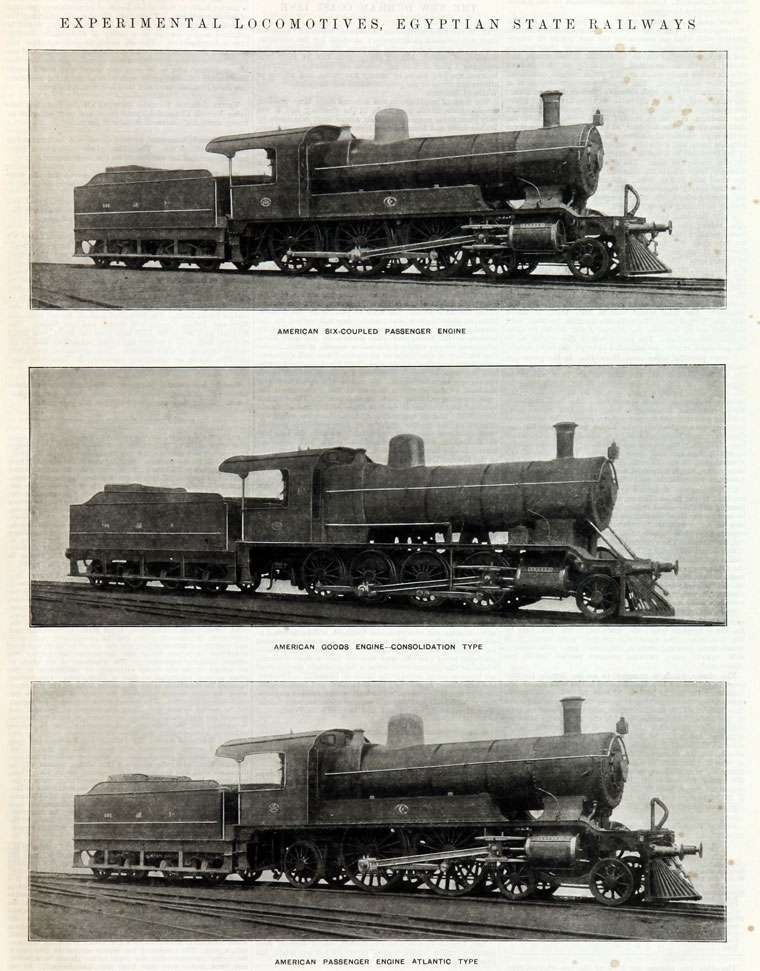
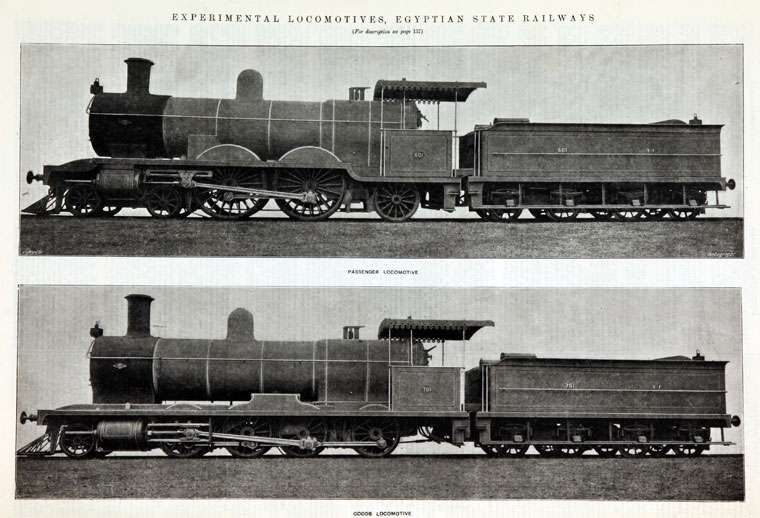
“An important extension along the west bank of the Suez Canal linking Nifisha with Ismaïlia, Al Qantarah West and Port Said was completed in 1904.” [3: p12][1]
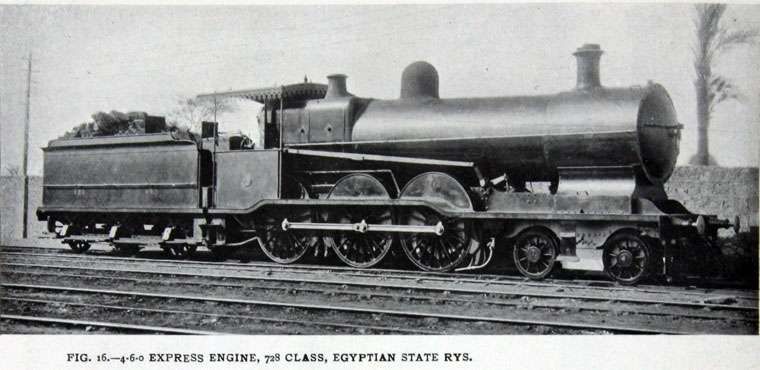
“Thereafter network expansion was slower but two short link lines north of Cairo were completed in 1911 followed by a link between Zagazig and Zifta in 1914.” [1][3: p12]
“The first El Ferdan Railway Bridge over the Suez Canal was completed in April 1918 for the Palestine Military Railway. [3: p17] It was considered a hindrance to shipping so after the First World War it was removed. [3: p17] During the Second World War a steel swing bridge was built in 1942 but this was damaged by a steamship and removed in 1947. [1][3: p17]
The First World War (1914-1918) saw an increase in the importance of the railway network to the British Colonial Powers. The outbreak of the Second World War (1939-1945), saw the British increasingly relying on the Egyptian rail network for the transport of equipment, ammunition and soldiers After the war, the next significant moment was the revolution of 23rd July 1952. The new government saw the value of the network for the transport of its citizens and programmed the provision of passenger rolling stock as a priority. The building the High Dam led to a reliance on the railways to transport the necessary construction tools, materials and workers for what was a huge project. [15]
“A double swing bridge [over the Suez Canal][was completed in 1954 but the 1956 Israeli invasion of Sinai severed rail traffic across the canal for a third time. [3: p17] A replacement bridge was completed in 1963 [11] but destroyed in the Six-Day War in 1967. A new double swing bridge was completed in 2001 and is the largest swing bridge in the world. [11] However, the construction of the New Suez Canal has since disconnected the Sinai from the rest of Egypt’s rail network again. Instead of the bridge, two rail tunnels are planned under the canal, one near Ismailia and one in Port Said.” [1]
“Historically, the Palestine Railways main line linked Al Qantarah East with Palestine and Lebanon. It was built in three phases during the First and Second World Wars. Commenced in 1916, it was extended to Rafah on the border with Palestine as part of the Egyptian Expeditionary Force’s Sinai and Palestine Campaign against the Ottoman Empire. The route was extended through to Haifa in Mandate Palestine after World War I, to Tripoli, Lebanon in 1942 and became a vital part of the wartime supply route for Egypt.” [1]
“As a result of the 1947–1949 Palestine war, the Palestine Railways main line was severed at the 1949 Armistice Line. The 1956 Israeli invasion severed Sinai’s rail link with the rest of Egypt was reconnected its rail link with Israel. Israel captured a 4211 class 0-6-0 diesel shunting locomotive and five 545 class 2-6-0 steam locomotives. [12: p137] Israel also captured rolling stock including a six-wheel coach dating from 1893 and a 30-ton steam crane built in 1950, both of which Israel Railways then appropriated into its breakdown fleet. Before being forced to withdraw from Sinai in March 1957, Israel systematically destroyed infrastructure including the railway. [13: p194] By 1963 the railway in Sinai was reconnected to the rest of Egypt but remained disconnected from Israel.” [1]
“In the 1967 Six-Day War, Israel captured more Egyptian railway equipment including one EMD G8, four EMD G12 and three EMD G16 diesel locomotives [12: p136] all of which were appropriated into Israel Railways stock. After 1967, Israel again destroyed the railway across occupied Sinai and this time used the materials in the construction of the Bar Lev Line of fortifications along the Suez Canal.” [1]
“After long service on Israel Railways, the 30-ton crane, 1893 Belgian 6-wheel coach and one of the EMD G16 diesels are all [now] preserved in the Israel Railway Museum in Haifa.” [1]
Egypt’s Railway Museum
“Egypt’s railway museum was built in 1932 next to Misr Station (now Ramses Station) in Cairo.[3: p15] The museum opened in January 1933 to mark the city’s hosting of the International Railway Congress. [3: p15] Its stock of over 700 items includes models, historic drawings and photographs. [3: p15] Among its most prominent exhibits are three preserved steam locomotives: [1]
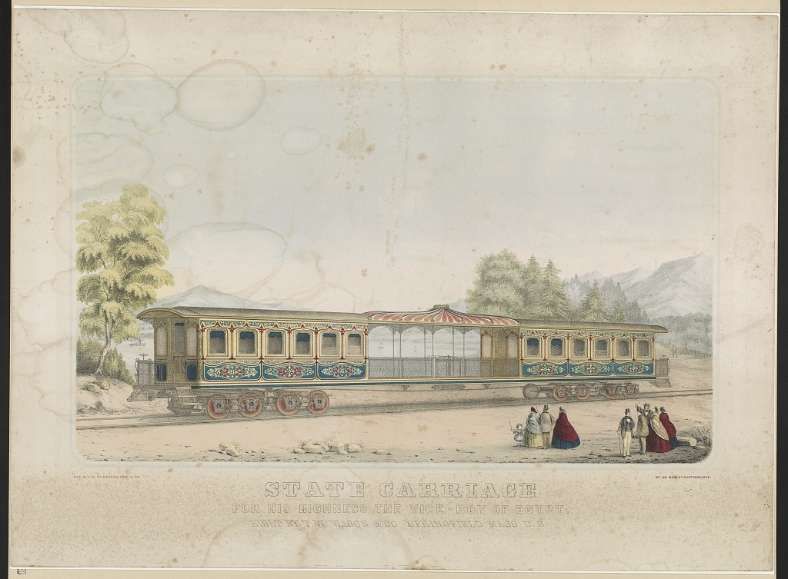
- 2-2-4 No. 30, built by Robert Stephenson and Company in 1862. Wikipedia says, “The Egyptian connections to Robert Stephenson were very considerable and a wealth of consequential artefacts are in Cairo Railway Museum. This includes what could well be the single most extravagant piece built by the Robert Stephenson Works. This is works number 1295 of 1862 whose artistic design was by Matthew Digby Wyatt. This 2-2-4T for the Egyptian Railways survives with all its fantastical marquetry in the Egyptian Railway Museum at Cairo. It is called the Khedive’s Train;” [14: p7]
- 0-6-0 No. 986 (originally 189, then 142), built by Robert Stephenson and Company in 1861; [14: p7]
- 4-4-2 No. 194 (originally 678) built by the North British Locomotive Company in 1905. [14: p7]
References
- https://en.wikipedia.org/wiki/Egyptian_National_Railways, accessed on 22nd March 2026.
- Derek Strahan; Lost Springfield, Massachusetts; Arcadia Publishing, 2017; via https://books.google.com/books/about/Lost_Springfield_Massachusetts.html?id=YpOPDQAAQBAJ#v=onepage&q&f=false, accessed on 22nd March 2026.
- Hugh Hughes; Middle East Railways; Continental Railway Circle, Harrow, 1981.
- Jordan Raafat; (5 March 1998). Desert Train Heralds Train Tourism In Egypt; Jordan Star, archived from the original on 7th December 2006; https://web.archive.org/web/20061207064829/http://www.egy.com/community/98-03-05.shtml, accessed on 22nd March 2026.
- Frederick Harvey Trevithick, was the nephew of Francis Trevithick (1812—1877) who was the son of Richard Trevithick. Francis Trevithick was, in 1840, appointed resident engineer on Grand Junction Railway (GJR) between Birmingham and Crewe. He was then appointed, in 1841, as Locomotive Superintendent. In 1843, he was transferred to the new works at Crewe as Locomotive Superintendent of the Northern Division of the LNWR. In 1857, having lost the confidence of certain directors, Trevithick was forced to resign (although given a handsome ‘Golden Handshake’).
- https://www.gracesguide.co.uk/Egyptian_State_Railways, accessed on 25th March 2026.
- https://www.enr.gov.eg, accessed on 25th March 2026.
- https://www.ide.go.jp/English/Data/Africa_file/Company/egypt03.html, accessed on 25th March 2026.
- Sidney Peel; The Binding of the Nile and the New Soudan; Oxford, 1904, via: https://www.gutenberg.org/ebooks/71808, accessed on 25th March 2026.
- Ewald Bloche; Constructing Modern Egypt: Modernization and Development Discourses in the Context of British and Egyptian Water Engineering; p.6-7 (Broken link to a German text – so cannot verify the source.)
- https://structurae.net/en/structures/el-ferdan-swing-bridge, accessed on 25th March 2026.
- Paul Cotterell; The Railways of Palestine and Israel; Tourret Publishing, 1984.
- Noam Chomsky; The Fateful Triangle; South End Press, New York, 1983.
- Peter Proud & C. Smith eds.; The Standard Gauge Locomotives of the Egyptian State Railways and The Palestine Railways 1942-1945; Railway Correspondence and Travel Society, London, 1946.
- https://forum.mrhmag.com/post/egypts-railways-a-long-history-and-successive-achievements-12217053, accessed on 25th March 2026.
 Roger Farnworth