Tag Archives: African railway

Mallet Locomotives in East Africa

Ethiopia/Eritrea

The 950mm-gauge line from Massawa on the coast, inland to Agordot, was built during colonial occupation by the Italians with some steep gradients which meant that Mallets were considered to be suitable motive power.

The line should not be confused with the metre-gauge line running from Djibouti to Addis Ababa. A metre-gauge railway that was originally built by the French from 1894 to 1917 which has since been replaced by a Chinese built standard-gauge line. [5]

In 1907, Maffei built three 0-4-4-0T locomotives for the Massawa to Agerdot line.

Ansaldo the “supplied twenty five further engines of the same class between 1911 and 1915, and in 1931 and 1939 Asmara shops assembled a nominal three new engines from d components of earlier withdrawn engines. All these were standard European narrow-gauge Mallet tanks, saturated, slide-valved and with inside frames.” [1: p64]

In the mid-1930s, a series of fifteen larger 0-4-4-0T locomotives were built. These were “built to a superheated, simple expansion design, of which ten had piston valves and Walschearts gear and the other five, Caprotti poppet valves driven from outside cardan shafts.” [1: p65] A later series of “eight engines built by Analdo in 1938 reverted to compound expansion, retaining the superheater and piston valve features.” [1: p65]

The last of the Eritrean Mallets was built in their own shops in 1963, making it the last Mallet built in the world. [6]

The line closed in 1975. Eritrea was occupied by Ethiopia for many years. After gaining independence in 1993, some of the former railway staff started to rebuild their totally destroyed railway. Some of the Mallets, built by Ansaldo (Italy) in 1938, were brought back to life. Also one of the small Breda built shunters, two diesel locos and two diesel railcars (one from 1935) were put back into working order. [7]

A section of the line, between Massawa, on the coast, and Asmara, was reopened in 2003 and has offered an opportunity for Mallet locomotives to be seen in operation in East Africa. Indeed, an internet search using Google brings to light a list of videos of locomotives heading tourist trains in the Eritrean landscape.

Wikipedia notes that the line has a track-gauge of 950mm and that locomotives operate over a 118 km section of the old line. Italian law from 1879 officially determined track gauges, specifying the use of 1,500 mm (4 ft 11 1⁄16 in) and 1,000 mm (3 ft 3 3⁄8 in) gauge track measured from the centre of the rails, or 1,445 mm (4 ft 8 7⁄8 in) and 950 mm (3 ft 1 3⁄8 in), respectively, on the inside faces. [4]
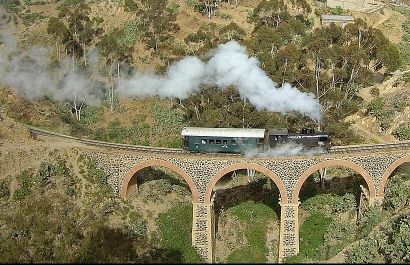
Between Arbaroba and Asmara in November 2008, a single coach is headed by one of the surviving Mallet locomotives. This is an extract from an image on Wikimedia Commons (public domain). [13]

Steam operation on the line is over, no regular services are provided but occasional tours still take place with plenty of caveats about the availability of any form of propulsion. An example is a German-speaking tour planned (as of 24th March 2024) for November 2024. [8]

Tanzania (Tanganyika)

The metre-gauge line inland from Dar-es-Salaam was built by the Ost Afrika Eisenbahn Gesellschaft (East African Railway Co.). A.E. Durrant tells us that its first main line power “was a class of typical German lokalbahn 0-4-4-0T Mallets, built by Henschel in 1905-7. These were supplemented in 1908 by four larger 2-4-4-0Ts from the same builder, after which the railway turned to straight eight-coupled tank and tender engines.” [1: p67]

R. Ramaer notes that the first locomotives used by the Usambara Eissenbahn (UE) on the Tanga Line were five 0-4-2 locos which arrived on the line in 1893. Rising traffic loads led the UE “To look for something more substantial and in 1900, Jung supplied five compound Mallet 0-4-4-0T’s as numbers 1-5, later renumbered 6-10. … To provide enough space for the firebox and ashpan, the rigid high-pressure part, comprising the third and fourth axles, had outside frames, whereas the low-pressure part had inside frames.” [9: p19]

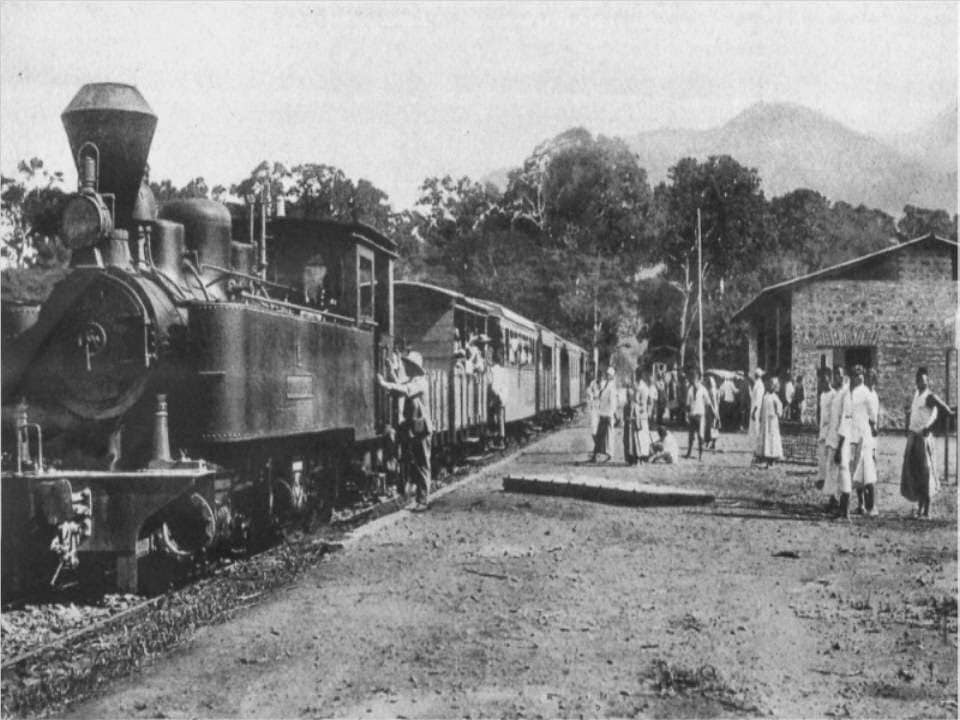
UE engine No. 1 (0-4-4-0T – supplied by Jung) with an early passenger train ready for departure at Tanga station in 1890. This image was posted on the Urithi Tanga Museum Facebook Page [10] and is also reproduced in R. Ramaer’s book. [9: p19]
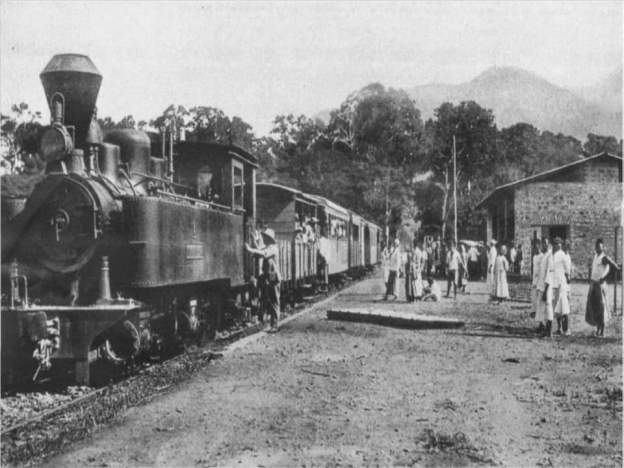
UE Mallet 0-4-4-0T No. 8 heading a passenger train at Mombo. This image was shared in error on the Old Asmara Eritrea Facebook Page.  [11] It also appears in R. Ramaer’s book. [9: p20]

On the Central Line (Ost Afrikanische Eisenbahn Gesellschaft – or OAEG) which ran inland from Dar-es-Salaam, construction work started in 1905 and the first locomotives used by the OAEG were four 0-4-0T engines built by Henschel, a further four of these locomotives were supplied in 1909. These small engines had a surprisingly long life. Mallets were first supplied in 1905 by Henschel and were suitable for both coal and oil firing. These were 0-4-4-0T locos (four supplied in 1905 and one supplied in 1907). “The problem with this type of engine was the restricted tractive effort and running was not satisfactory because of the lack of a leading pony truck. … Therefore Henschel supplied a second batch of four locomotives in 1908 as 2-4-4-0Ts with larger boilers and cylinders. They also had a higher working pressure of 14 atmospheres (200lb/sq in) in comparison to 12 atmospheres (170lb/sq in)  for the earlier engines, while the bunker capacity had been increased from 1.2 to 2.2 tonnes of coal. (Oil fuel had been discarded).” [9: p21-23]

OAEG 2-4-4-0T No. 27, in the last Mallet class to be built for German East Africa. This locomotive appears in the Wikipedia list of Henschel steam locomotives. [12] It also appears in R. Ramaer’s book [9: p23] and A.E. Durrant’s book. [1: p66]

Kenya-Uganda

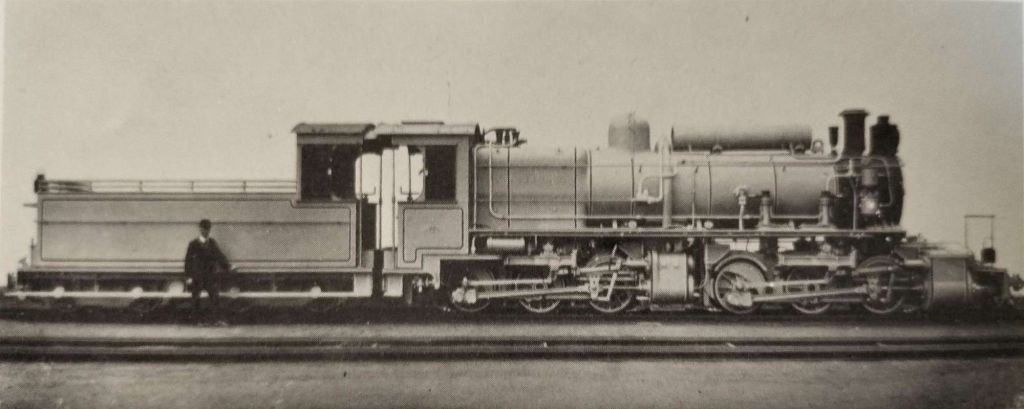
An ‘MT’ class locomotive in ex-Works condition at the Queen’s Park works of the North British Locomotive Co. [1: p66]

Mallets were the first articulated locomotives to operate in East Africa. Mallets were introduced on the Uganda Railway in 1913. A.E. Durrant notes that they consisted of “a batch of eighteen 0-6-6-0 compound Mallets to what was the North British Locomotive Co’s standard metre-gauge design, as supplied also to India, Burma, and Spain. They had wide Belpaire fireboxes, inside frames and piston valves for the high pressure cylinders only. Built at Queens Park works in 1912-1913, these locomotives entered service in 1913-14 and remained at work until 1929-30, when they were replaced by the EC2 and EC2 Garratts.” [1: p66]

North British Class ‘MT’ Mallets arrived in Kenya just before the start of WW1. [2]

These locomotives were given the classification ‘MT’ within the Uganda Railway fleet. Disappointing performance and high maintenance costs led to them being relegated to secondary duties and eventually being scrapped in the late 1920s as the Beyer Garratt locomotives began to arrive. [2] Their presence on the system was heralded by, “Railway Wonders of the World,” with the picture shown below. [3]
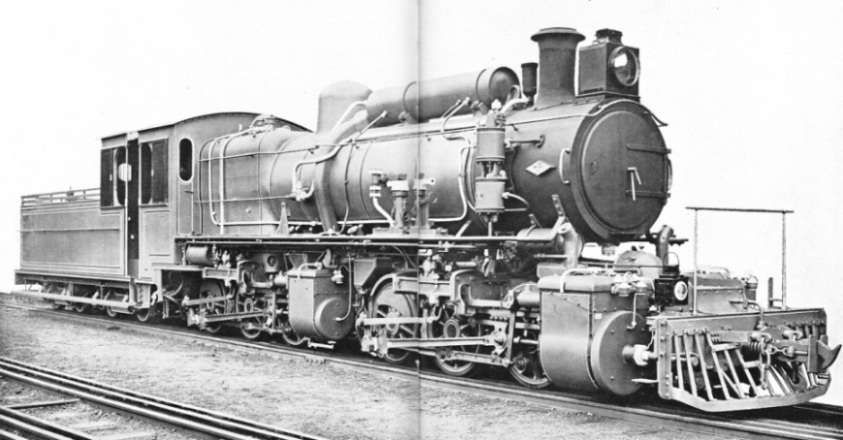
An ‘MT’ class Uganda Railway locomotive as illustrated in ‘Railway Wonders of the World’. [3]

References

  1. A.E. Durrant; The Mallet Locomotive; David & Charles, Newton Abbot, Devon, 1974.
  2. Kevin Patience; Steam in East Africa; Heinemann Educational Books (E.A.) Ltd., Nairobi, 1976.
  3. http://www.railwaywondersoftheworld.com/uganda_railway2.html, accessed on 1st June 2018.
  4. https://en.m.wikipedia.org/wiki/Eritrean_Railway, accessed on 22nd March 2024.
  5. https://en.m.wikipedia.org/wiki/Addis_Ababa%E2%80%93Djibouti_Railway, accessed on 22nd March 2024.
  6. https://en.m.wikipedia.org/wiki/0-4-4-0, accessed on 22nd March 2024.
  7. https://www.farrail.net/pages/touren-engl/eritrea-mallets-asmara-2010.php, accessed on 24th March 2024.
  8. https://ecc–studienreisen-de.translate.goog/historische-eisenbahn-und-strassenbahnreisen-mit-peter-1/8-tage-eritrea-mallets-in-den-bergen-afrikas?_x_tr_sl=de&_x_tr_tl=en&_x_tr_hl=en&_x_tr_pto=sc, accessed on 24th March 2024.
  9. R. Ramaer; Steam Locomotives of the East African Railways; David & Charles, Newton Abbot, 1974.
  10. https://www.facebook.com/urithitanga.museum/photos/pb.100063540805743.-2207520000/2336640756358366/?type=3, accessed on 24th March 2024.
  11. https://www.facebook.com/photo/?fbid=2169593963301193&set=pcb.2169594269967829, accessed on 24th March 2024.
  12. https://de.m.wikipedia.org/wiki/Liste_schmalspuriger_Lokomotiven_von_Henschel, accessed on 24th March 2024.
  13. https://commons.m.wikimedia.org/wiki/File:Eritrean_Railway_-_2008-11-04-edit1.jpg, accessed on 24th March 2024.
The Uganda Railway – Part 1

From late April to mid May 2018 my wife and I were in Uganda. This was my 6th visit to the country. On the first, in 1994, I travelled to Kampala from Mombasa on the railway. It was a fantastic journey in a slow moving train with silver service in the dining car and with beds made up for us by staff each night. There were two separate trains, a njght train from Mkmbasa to Nairobi run by the then Kenya Railways and a train from Nairobi to Kampala run by Uganda Railways.

The track is metre-gauge.

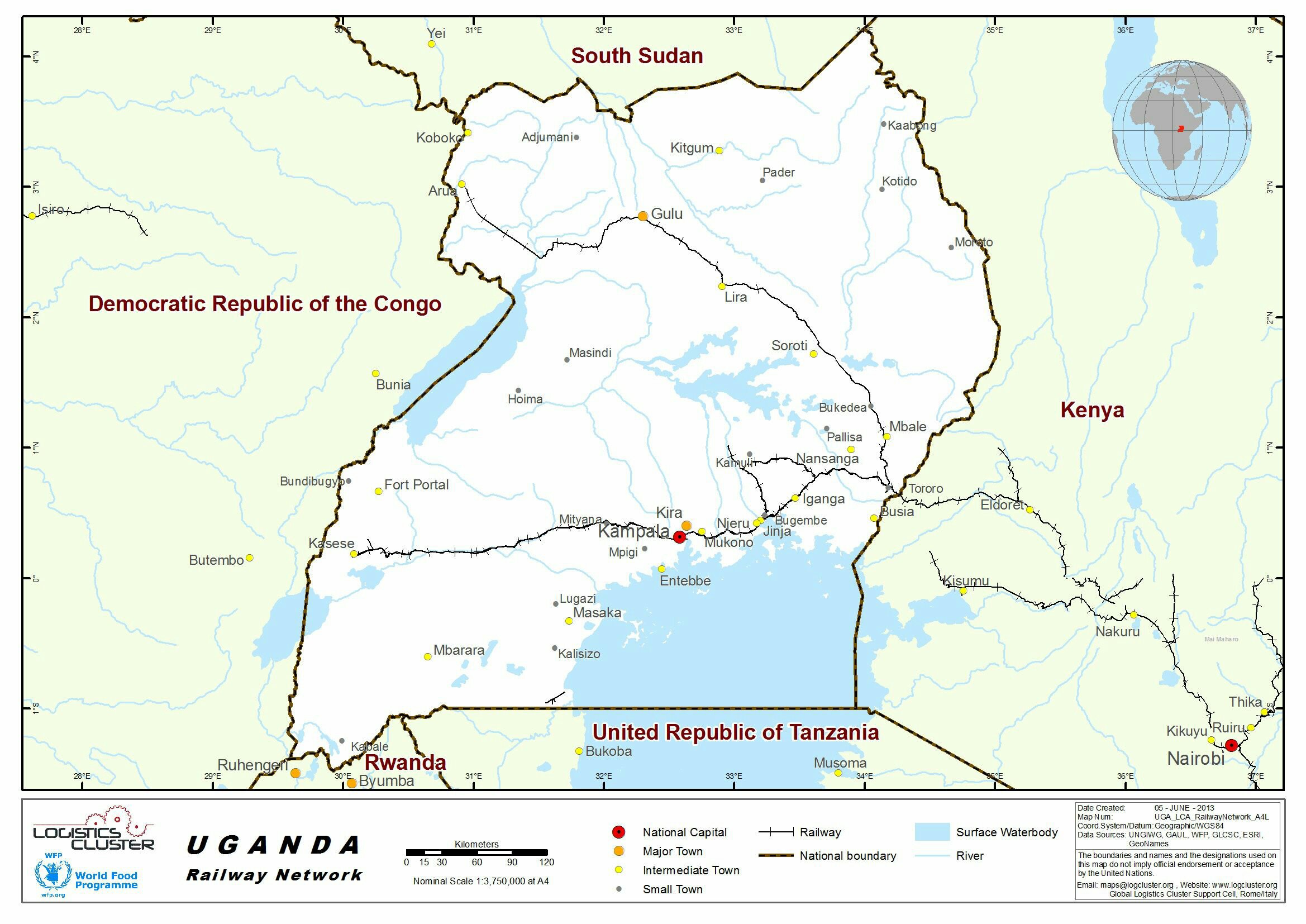
This short series of posts tells the story of the line to 2018 and then looks forward from that year into the future. In recent times the railway system in Uganda has had a chequered history and had been relatively badly managed, as you will see. The present network is in a dilapidated state. The network is shown in the image below.


The country of Uganda has about 1,350 kms of railway lines and most of it has not been operational for over 25 years. Repairs had been completed on the Tororo-Gulu line and were still ongoing on the Gulu-Pakwach Line in early 2014. [1]

The railway originating at Mombasa on the Indian Ocean connects to Tororo in Uganda, where it branches westward to Jinja, Kampala, and Kasese and northward to Mbale, Soroti, Lira, Gulu, and Pakwach (to the south-east of Arua and on the northern edge of the Murchison Falls National Park – the Pakwach Bridge crosses the White Nile close to the town).

There was no chance, in 2018, for me to check out the railway system. After a very short stay in Kampala we spent the rest of our time in the south-west of the country in Kyegegwa, Rukungiri and Kisoro.

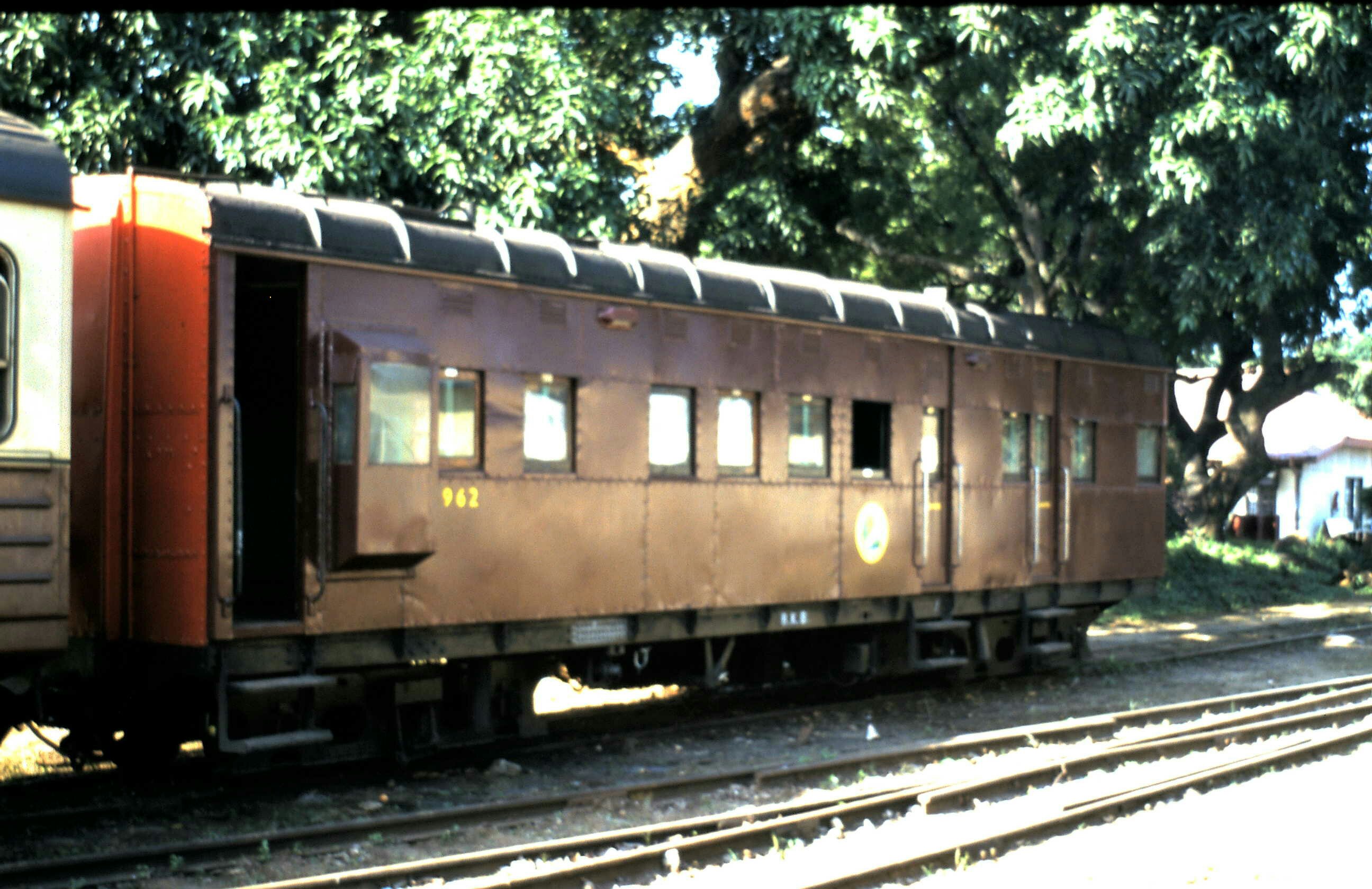
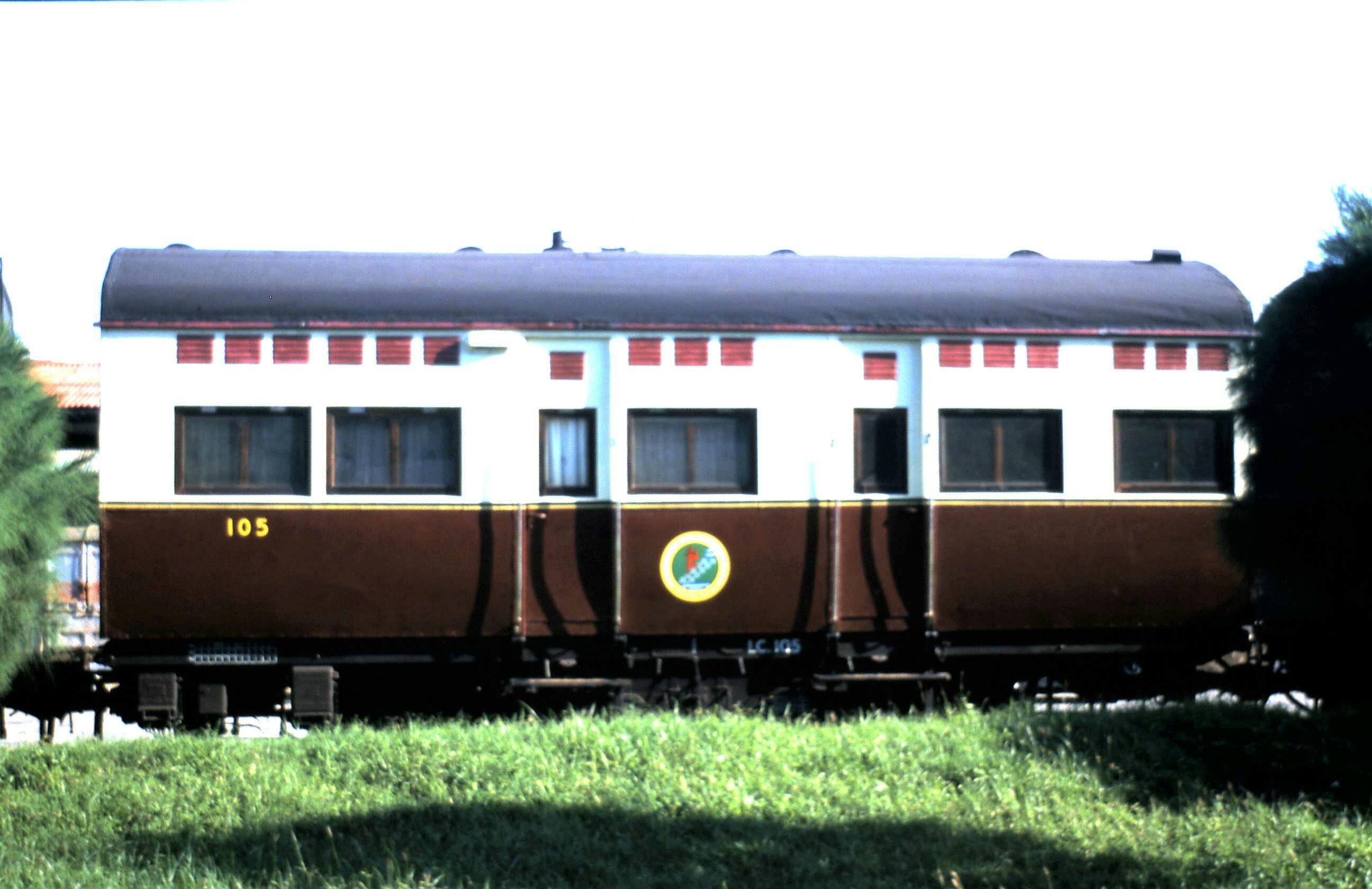
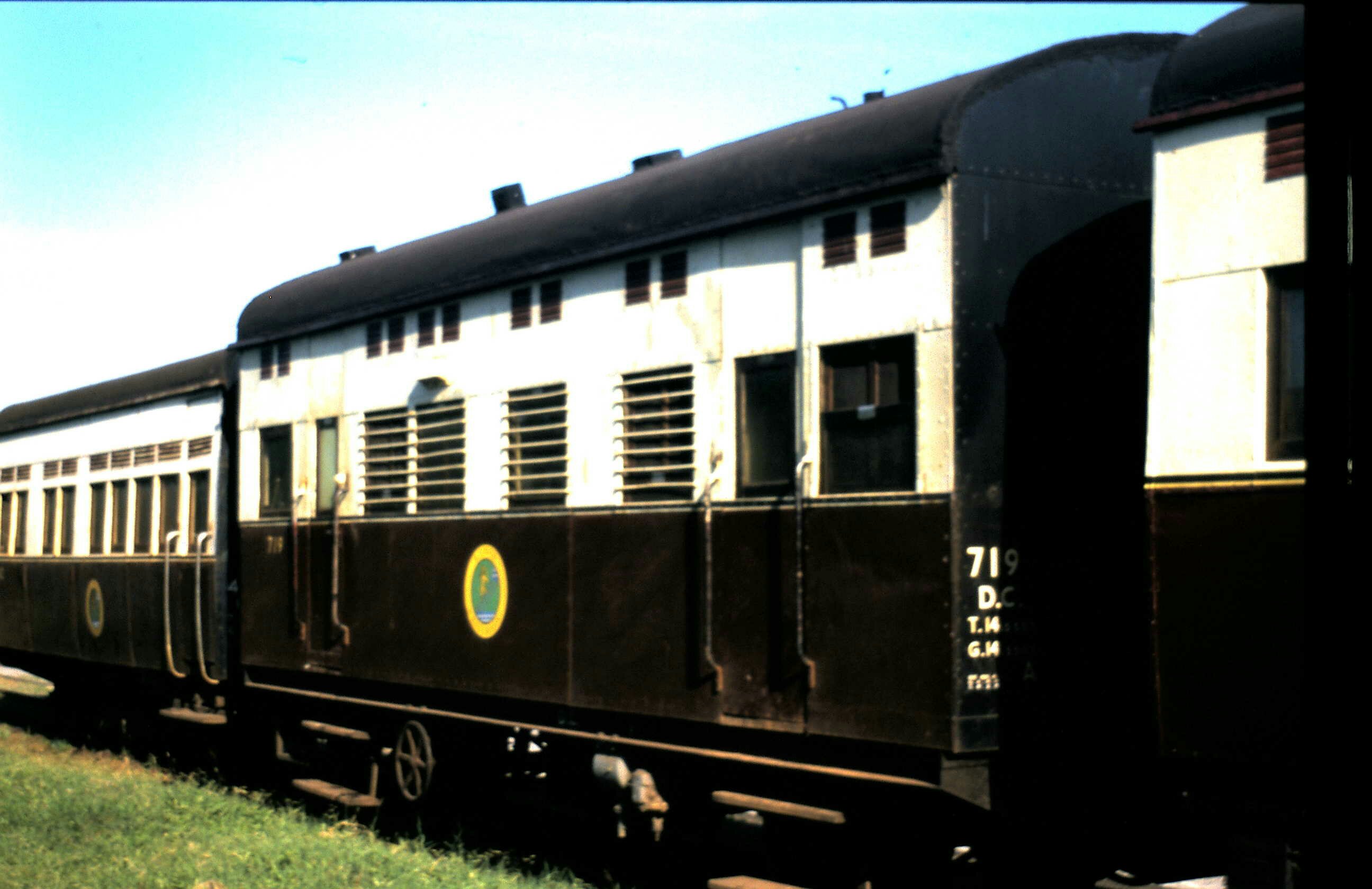
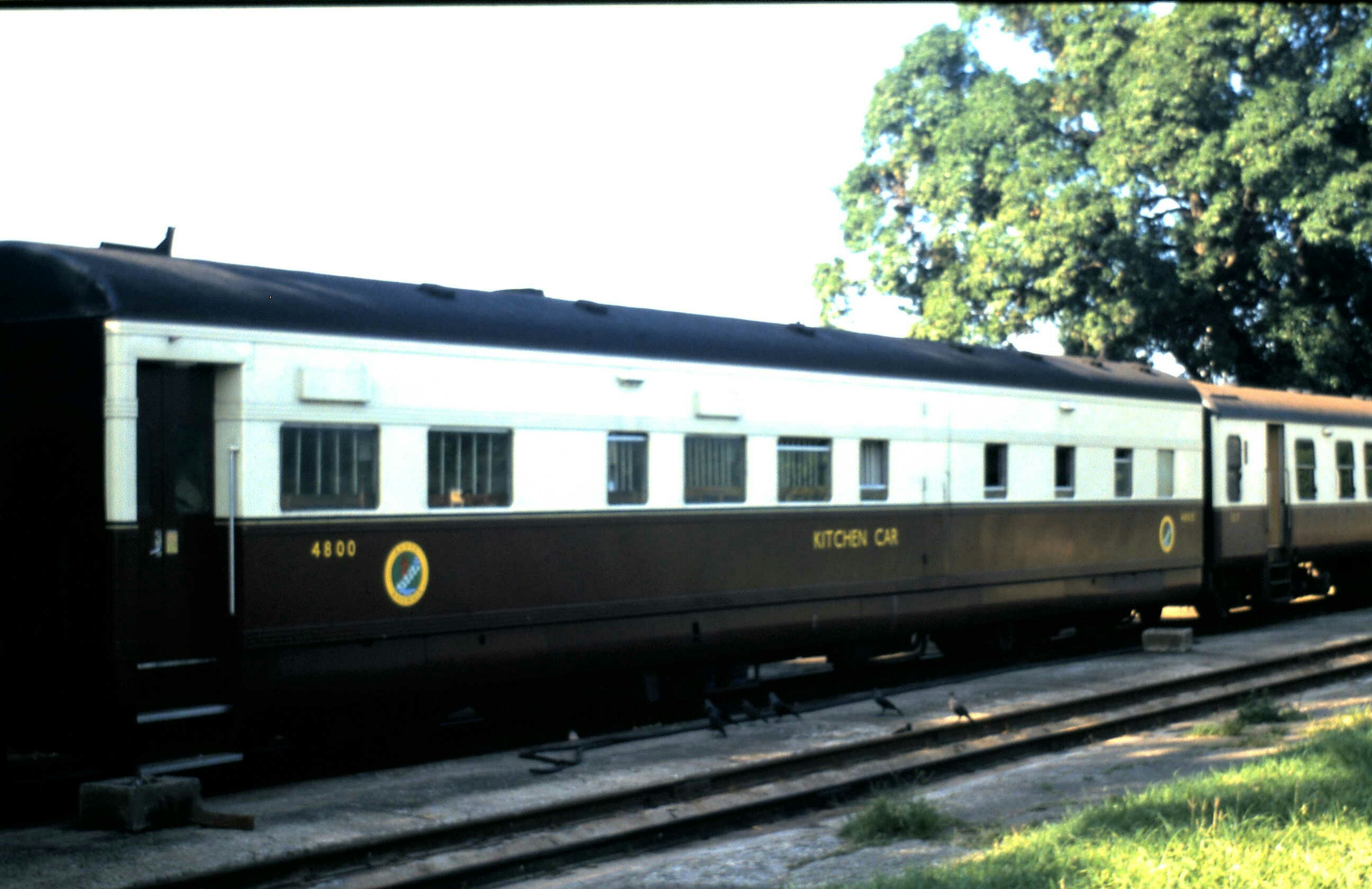
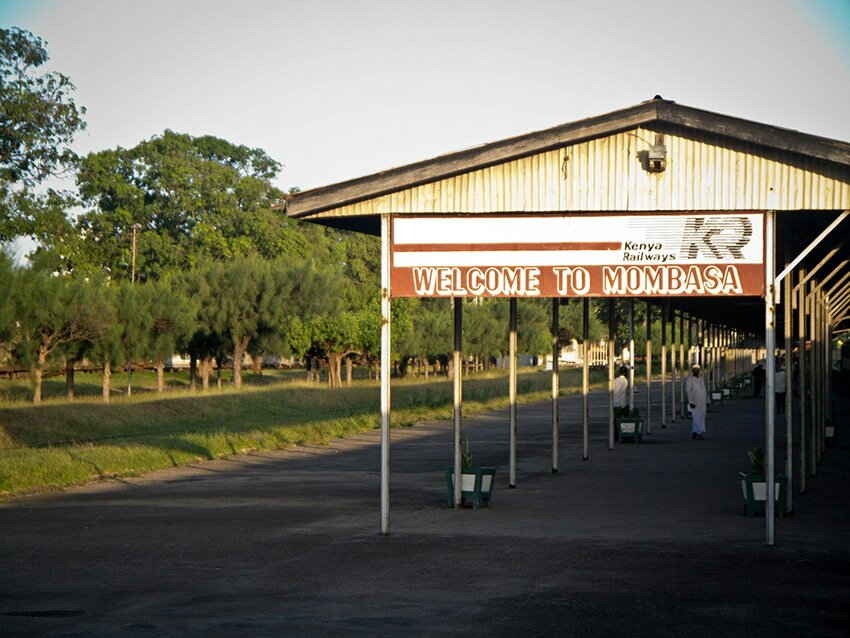
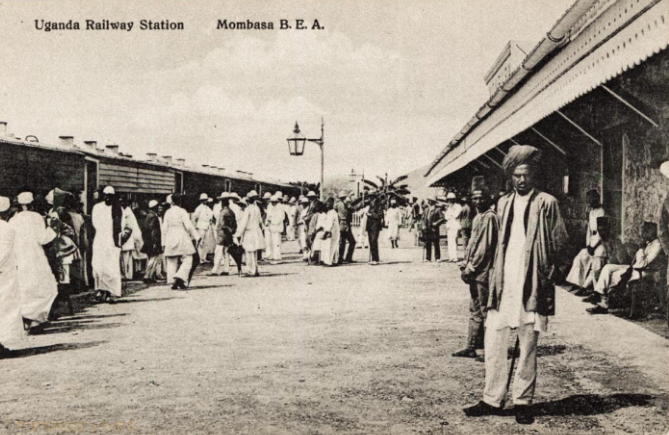
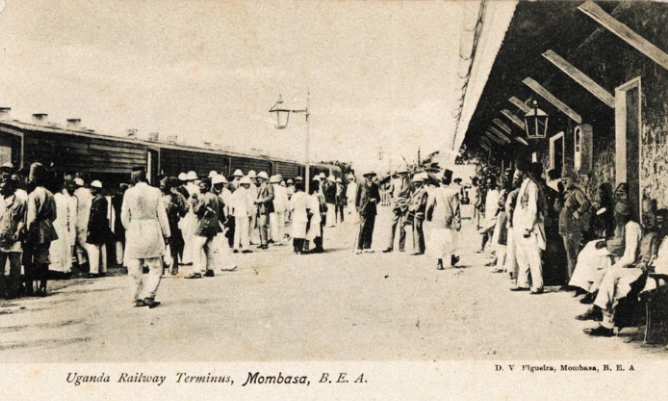
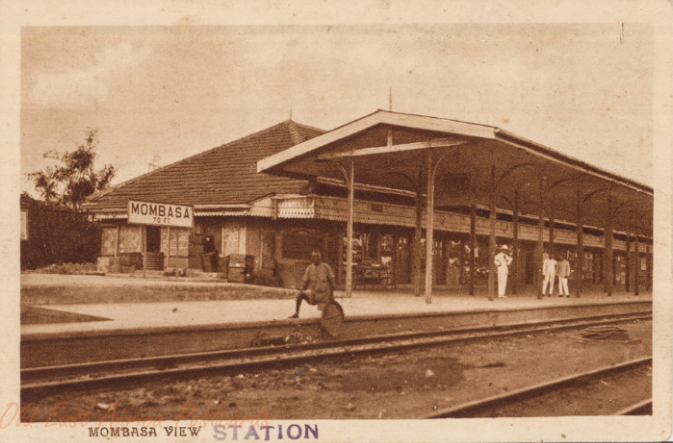
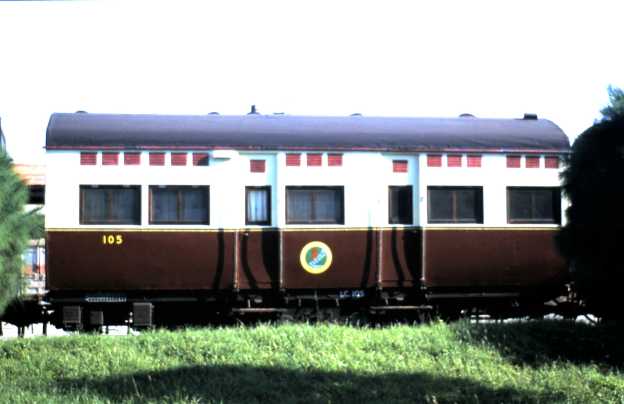
Back in 1994, I was taking slides and being very careful not to exhaust my supply of film. How much things have changed! I do have four pictures, taken at Mombasa railway station, of coaches from the early to mid 20th Century which were stored among slightly more modern stock, at least three seemed still to be in use. …..

The last photo above is courtesy of Jennifer Wu (https://www.flickr.com/photos/wippetywu/8333244855), those below are some early postcards of the station in Mombasa.

The Early History of the Line

The Uganda Railway was built during what became known as the Scramble for Africa, (the struggle between European powers for dominance in Africa). It provided a strategic link between the coast at Mombasa and the Great Lakes region. In doing so, it effectively secured British domination of the region.[2],[3]

The Uganda Railway was named for its ultimate destination. Its original length of 660 miles (or 1056 kilometres) lay entirely in what we now call Kenya.

Work on the railway began at the port of Mombasa, in what was then called British East Africa, in 1896. The intended terminus at Kisumu on the shores of Lake Victoria was reached in 1901.[2],[4]

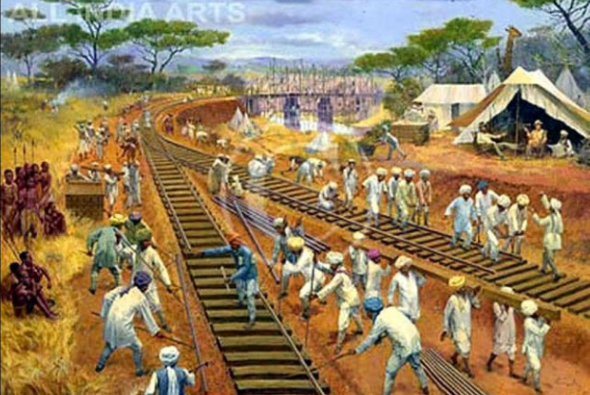
Construction was carried out principally by labourers from the Indian subcontinent, 32,000 of whom were brought in because of a lack of local labour in very sparcely populated areas of East Africa. The horrendous truth is that the line was built on the lives of those labourers. 2,498 workers died during the construction of the railway.[2],[5] An artists impression of the work is shown in the image below (courtesy of Charan Kundi).

Many of the labourers returned to India but 6,724 decided to remain after the line’s completion, creating a community of Indian East Africans.

The railway is, almost in its entirety, single-track. A massive logistical exercise was put in place to import from India a very significant amount of steelwork – rails; fishplates and bolts; keys; and girders. Over 1.2 million sleepers were also required. To secure the necessary throughput of materials, Kilindini Harbour ws created in Mombasa. “The railway was a huge logistical achievement and became strategically and economically vital for both Uganda and Kenya. It helped to suppress slavery, by removing the need for humans in the transport of goods.” [2],[6]

The railway line had a significant impact. It effectively created Uganda and Kenya as the countries that they became. As we have already noted, the railway defeated the slave trade in British East Africa. It allowed heavy equipment to be transported with relative ease.

The use of indian sub-continent labour resulted in a very significant minority of Asians in East Africa. These Indians worked as “dukawallas” (shopkeepers), artisans, traders, clerks, and, finally, lower-level administrators. Excluded from the middle and senior ranks of the colonial government and from farming, they became a commercial middleman and professional community.[7] The British administration encouraged European settlement and farms were set up for coffee and tea production with the railway available to ensure easy shipping to Europe for processing. As the numbers of settlers and farms increased native populations became alienated from their land and seeds were sown for the later struggle for independence. At the same time, inceeases in white settlement made demands on the railway. New small stations were required to allow transportation of agricultural produce. These stations included: Nakuru, Naivasha, Tigoni, Kijabe and Sigona.

In addition, the railway contributed to increased urbanisation. Many of today’s towns in Kenya, and some in Uganda, have reulted from the presence of the railway. Mombasa urbanisation can be traced to the start of the construction of the line. Nairobi was a rail depot placed in the middle of a swamp, and is now the capital of Kenya. Other towns for which this is true are … Kikuyu, Naivasha, Nakuru (where the main line splits, one branch going to Kisumu and the other to Uganda), Nanyuki, Eldoret (originally called “64″ its distance, in miles, from the railhead at the time), Kitale (a small farming community in the foothills of Mount Elgon), Kisumu (then called port Florence, a city and port on Lake Victoria allowing ferry transport between Kenya, Tanganyika (modern Tanzania) and Uganda), Port Bell (a rail-linked port, near to Kampala, on Lake Victoria allowing ferry transport between Kenya, Tanganyika and Uganda), and Jinja.

Tourism also began to develop. “The railway provided a ‘modern’ means of transport from the East African coast to the higher plateaus of the interior. US president Theodore Roosevelt is one of the notable people who had safari adventures aboard a train in the early days of the use of the Kenya-Uganda railway.”[7]

The railway also opened up the interior to systematic government programmes to attack slavery, witchcraft, disease and famine. [7]

We have already heard that close to 2,500 of the 32,000 workers on the line died during its construction. There are two particular causes worthy of significant note.

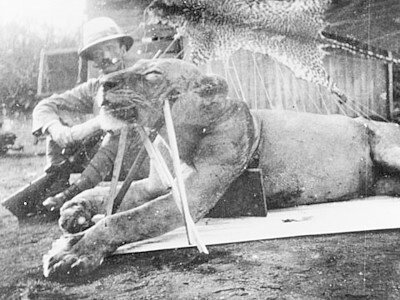
The first concerns the death of a number of conctruction workers in 1898 during the building of a bridge across the Tsavo River. Hunting mainly at night, a pair of maneless male lions stalked and killed at least 28 Indian and African workers – although some accounts put the number of victims as high as 135.[2],[8] The picture above shows one of the two lions and Lieutenant-Colonel John H Petterson who killed it.

The second concerns resistance from locals. Building the railway met local resistance on various occasions. A major incident was the Kedong Massacre, when the Maasai attacked a railway worker’s caravan killing around 500 people because two Maasai girls had been raped. An Englishman unconnected to the railway, Andrew Dick, led a counter-attack against them, but ran out of ammunition and was speared to death by the Maasai.[2],[9] At the turn of the 20th century, the railway construction was disturbed by the resistance of the Nandi people led by Koitalel Arap Samoei. He was killed in 1905 by Richard Meinertzhagen, finally ending the Nandi resistance.[2],[9]

Some of the socio-economic background to the construction of the Uganda Railway will be considered in later articles in this series.

References

1. Lucy Styles, Uganda Railway Assessment, January 2014 (updated to June 2015); http://dlca.logcluster.org/plugins/servlet/mobile#content/view/3375402, accessedon 8th May 2018.

2. Wikipedia, Uganda Railway; https://en.m.wikipedia.org/wiki/Uganda_Railway, accessed on 6th May 2018.

3. Richard T. Ogonda & George M. Onyango; Development of Transport and Communication. In William Robert Ochieng’; Historical Studies and Social Change in Western Kenya. Nairobi: East African Educational Publishers, 2002. p219–231.

4. Richard T. Ogonda; Transport and Communications in the Colonial Economy. In William Robert Ochieng’ & R. M. Maxon; An Economic History of Kenya. Nairobi: East African Educational Publishers, 1992. p129–146.

5. Christian Wolmar; Blood, Iron & Gold: How the Railways Transformed the World. London: Atlantic Books, 2009.

6. Frank Richardson Cana; British East Africa. In Hugh Chisholm. Encyclopædia Britannica. 4 (11th ed.). Cambridge University Press, 1911. p601–606.

7. The Enzi Museum, Construction of the Kenya-Uganda Railway;
http://www.enzimuseum.org/archives/275, accessed on 8th May 2018.

8. Man eating lions – not (as) many dead; Railway Gazette International. 27 November 2009. http://www.railwaygazette.com/news/single-view/view/man-eating-lions-not-as-many-dead.html, accessed on 8th May 2018.

9. David Kaiza; End of Lunatic Express; The East African. 21 September 2009. http://www.theeastafrican.co.ke/magazine/-/434746/660876/-/view/printVersion/-/32dc3d/-/index.html, accessed on 8th May 2018.