A Beautiful raiway being overtaken by progress! A slow train being overtaken by fast cars? I wonder whether the journey is more important than the destination?
BBC News – The Himalayan tea train that’s running out of steam http://t.co/HipFYXEdxo


A Beautiful raiway being overtaken by progress! A slow train being overtaken by fast cars? I wonder whether the journey is more important than the destination?
BBC News – The Himalayan tea train that’s running out of steam http://t.co/HipFYXEdxo

Written on the flight home, early on 23rd April – St. George’s Day.
My first visit to Uganda in 1994 started with a train journey from Mombasa. So it is perhaps fitting to end with a short piece about what is happening to the railways of Uganda now. The first line from Mombasa through Nairobi and on to Kampala and then Kasese was built well over a hundred years ago and is of a narrow gauge construction. There is to be a new line from Mombasa through to Kampala provided a current dispute between the Chinese contractors and the Ugandan government can be resolved.
I read this piece in the Railway Magazine on the flight home ….
“Uganda set for rail revival? …. Freight traffic in Uganda is slowly increasing, although long-term prospects probably depend on the completion of the proposed standard gauge line from Mombasa, in Kenya, to Kampala, in Uganda. The line is being built by Chinese contractors and is now the subject of disputes between the Ugandan government and the contractors.”
This new line will be to standard gauge and there will be transhipment issues between different parts of the network.


The passenger service I enjoyed in the 1990s is long gone. New Vision in Uganda carried a story about the decline of the railways.
http://www.newvision.co.ug/news/629156-How-Uganda-Railway-collapsed.html
I did a little bit of research on the way home.
The government is considering developing commuter services for Kampala:
www.railwaygazette.com/news/…/kampala-passenger–service-planned.html
Two wikipedia articles are interesting, giving some good background information:
en.wikipedia.org/wiki/Uganda_Railway
en.wikipedia.org/wiki/Uganda_Railways_Corporation

RVR (Rift Valley Railways) is the new franchise holder for the railways and is beginning to undertake some development work.
http://www.raillynews.com/2013/gulu-railway-re-opens-20-years
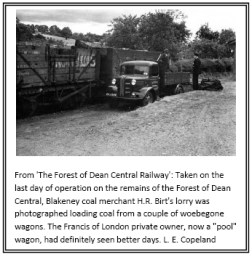
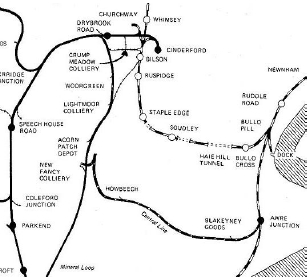 The Forest of Dean Central Railway
This short railway line was operated by the Great Western Railway (GWR) to serve collieries in the heart of the Forest of Dean in Gloucestershire. From its opening in 1868, the line was operated by the GWR and run by the Central Company until 1923. The GWR took over the line in 1923 and ran it until its closure in 1949. It ran from Awre Junction through Blakeney and on into the forest with the intention of reaching Foxes Bridge Colliery. In fact the line only travelled as far as the New Fancy colliery. It served several mines and quarries along its route as well as the corn mills in Blakeney.
Opening
Plans for a railway in the heart of the forest were first drawn up in 1826, but it took until 1868 for the Forest of Dean Central Line to open. A branch line to the New Fancy Colliery followed in 1869. A junction with the main Gloucester to Newport Line was formed at Awre, although the original plan was to open the line to a new dock at Brimspill on the River Severn. The railway never reached the river. It was built initially to serve the Howbeach Collieryt and then ultimately to reach the Foxes Bridge Colliery and in anticipation of its arrival, the formation there was fenced and a bridge built for the Severn & Wye Railway’s Mineral Loop, but in the end, no track was laid north of the link to the New Fancy Colliery.
Decline and closure
The long delay from 1826 to 1868 was probably the ultimate cause of the railway’s failure to achieve success. The opening of the Severn & Wye Railway in the 1870s resulted in much of the coal traffic for which the Forest of Dean Central Railway was built being lost to the new company. By 1875 the section to the central mines and the New Fancy Colliery was first neglected and then abandoned. In 1921 virtually all of the traffic north of Blakeney ceased. Although for a time the GWR continued to run some services north of Blakeney, those ceased in 1932.
Today
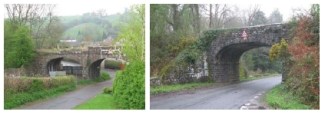 Some lengths of the formation remain, as do some of the structures. Part of the Blakeney Viaduct is still extant as is the Blackpool Bridge.
 The following are links to information about the line which became part of the Manchester, Sheffield and Lincolnshire Railway in 1847:
http://en.wikipedia.org/wiki/Sheffield,_Ashton-under-Lyne_and_Manchester_Railway
http://www.railbrit.co.uk/Sheffield_Ashton-under-Lyne_and_Manchester_Railway/index.php
 I am reading a book by Bill Laws: “Fifty Railways that Changed the Course of
History” published by David & Charles, Newton Abbot, UK, 2013 ISBN-13:978-1-4463-0290-3.
The Sheffield, Ashton-under-Lyne and Manchester Railway features as the 17th of these and particularly for the construction of the Woodhead Tunnel. This was a project that exposed one particular company’s shocking attitude to the safety of its workers and it provided some significant impetus to campaigns for better working conditions for navvies.
“When the early transport ships bearing British miscreants to New South Wales landed in Australia, hundreds had perished during the voyage. The prisoners, including a few of those disreputable railway labourers, notorious for their hard drinking and fighting, were so crammed into the ships’ holds that they died. The British government ordered that, in future, the charterers be held responsible for the convicts’ well-being. It produced immediate results. The transporters, paid a bonus for every prisoner safely landed, now took care of their cargo,” (p72).
 However, this principle of responsibility for one’s workers was usually ignore by Victorian entrepreneurs and business leaders: “What use had a mill owner for some eight-year-old girl who, through her own carelessness, lost her hand in a machine? Why should a railway company be responsible for a navvy’s family, when the man died, dead drunk, in a tunnel collapse? And why should the shareholder, risking his capital on such a brave enterprise as the Sheffield, Ashton-under-Lyne and Manchester Railway Company’s plan to tunnel under the Pennines, have to mollycoddle workers who were being paid to do their job?” (p72/73).
Wellington Purdon, who was assistant engineer on the tunnel, was asked by a government enquiry if it was not wiser to use safety fuses while blasting rock He replied, “Perhaps it is: but it is attended with such a loss of time, and the difference is so very small, I would not recommend the loss of time for the sake of all the extra lives it would save, ” (p73).
Purdon’s comments revealed how little the railway companies valued their workers. The enquiry and Purdon’s comments should have changed the course of industrial history. Instead, Parliament shelved the enquiry’s report.

Edwin Chadwick
In 1845 the first train through the completed Woodhead Tunnel was met by a celebration. However, the social reformer Edwin Chadwick did not celebrate for he had calculated that the rate of attrition on the contract to build the tunnel was the equivalent of losses incurred in war. “With 32 killed and 140 injured, the casualty rate was higher than in the Battles of Waterloo” (p73).
The navvies on the Woodhead Tunnel paid to keep their own doctor on hand, Henry Pomfret. “The chief engineer, Wellington Purdon’s boss was Charles B. Vignoles who was also a shareholder in the railway company. When the contract ran over time and over budget, the job bankrupted him. The pioneering engineer Joseph Locke took over as more than a thousand labourers hewed away at the muck and mud from seven different shafts, one at each end and five vertical shafts from above, with pick, shovel and explosives. It was obvious to Locke that the only way to complete the project was to drive the men like animals and, if questioned, lie” (p73/74).
The job took six years to complete. When it came to an end Dr. Pomfret talked to his friend Dr. Roberton, who, inturn talked to Edwin Chadwick. “In January 1846 Chadwick delivered a paper to the Manchester Statistical Society: The Demoralization and Injuries Occasioned by Want of Proper Regulations of Labourers Engaged in the Construction and Works of Railways. Despite the exhausting title, the contents were as volatile as navvies’ explosives. They revealed how injured men were forced to fend for themselves, how most workers lived in homemade hovels (occasioning an outbreak of cholera) through the worst of the Pennine winters. Chadwick exposed the practice of not paying wages for several weeks and then paying them in public bars. The pubs encouraged the navvies to drink their wages, while delayed payments forced them onto the truck system, a version of the company store principle that kept the men and their families in hock to the railway company. (The truck was already outlawed in Britain, but the statute, laid down before the railway rush, had not specified railway workers.) Chadwick showed how the reputation of the average navvy as a feckless, reckless drunk was a direct result of the industry plying him with booze instead of providing him with proper food and housing” (p75).
“The rail company and the engineers denied the charges against them. Nevertheless, the government inquiry in July 1846 recommended extending the Truck Act to the railways, making the companies responsible for the health, welfare and accommodation of their navvies and, most important of all, putting the liability for deaths or injuries on the company. The Members of Parliament also insisted that men should be paid weekly, and in cash, not in tokens for the truck. The inquiry report was never even debated” (p75).
 However, “although no railway man was censured over the Wood-head Tunnel scandal, Chadwick’s efforts were not in vain. His correlation between losses on the battlefield and those on the railways caught the public imagination and in future, when navvies were killed, the press was quick to take up the story” (p75).
Woodhead Tunnel is infamous for the loss of life during its construction, but it is nothing compared to the massive loss of life associated with many colonial railways in Asia, Africa and South America.
My father-in-law, David Cambridge, has been taking us on a tour of the work he did to produce an N Gauge model of Hereford Station for me. In this final post on this subject he makes some comments about the construction work and shows us a picture of a 7mm model alongside the 2 mm model of Hereford Barrs Court Station:
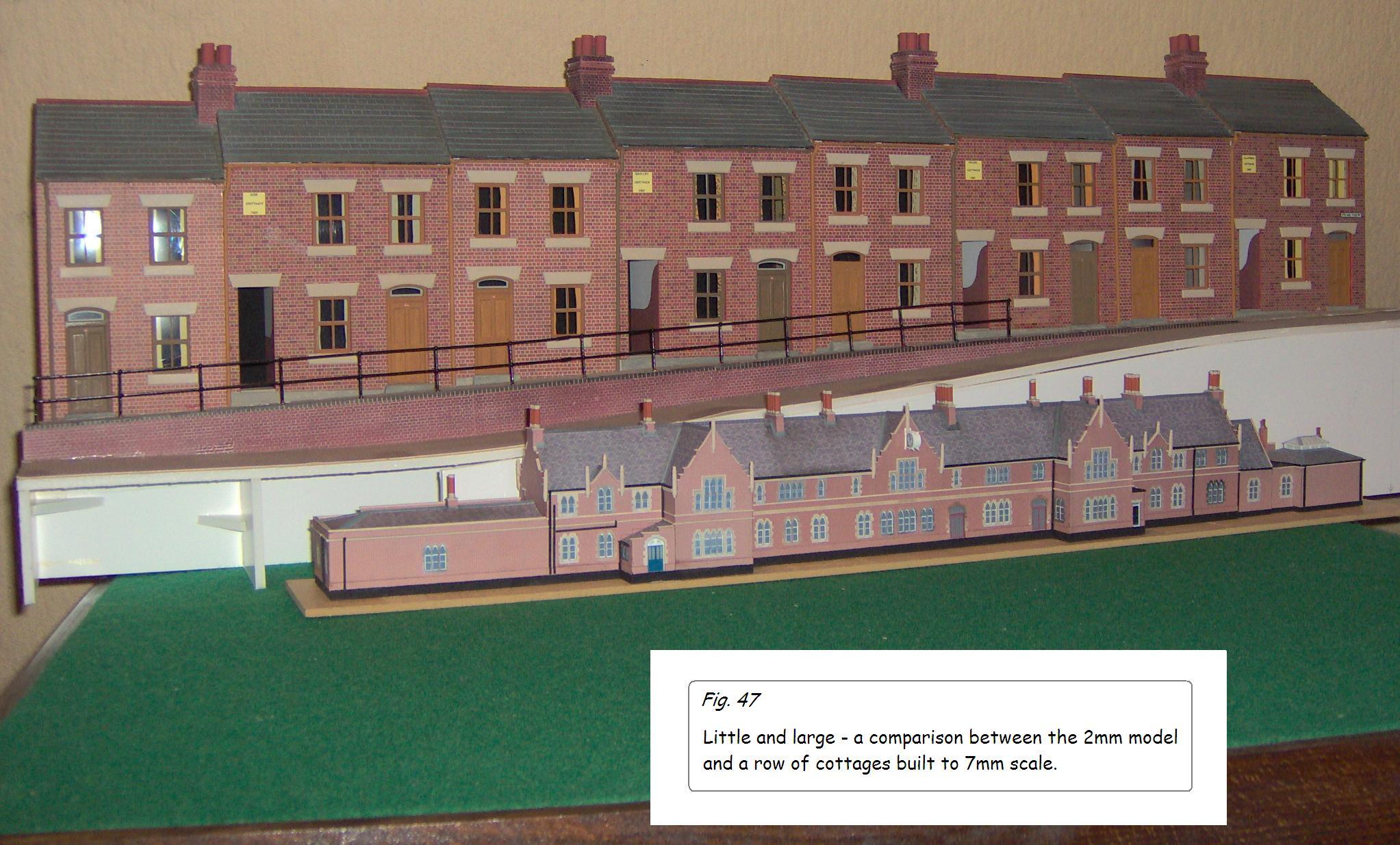 In 7mm scale the usual rule of thumb for adding detail is that if you can’t see it on the model from a distance of two feet, omit or simplify it. Since the human eye looks for detail from about the same distance regardless of scale then much of the detail on a model of this size would have to be omitted. As I mentioned at the start, compromises would be necessary. For example, it proved impossible to find a solution to the brickwork and stonework on the octagonal chimney stacks. Application of brick paper would destroy the octagonal shape unless a separate piece was applied to each face. The solution was to paint them brick colour and apply a stone colour base and cap. I don’t feel that viewed from two feet away this is that noticeable. Other features over which compromise was necessary were the finials. These are quite a complex shape so a much simpler one was evolved as turning plastic on this scale was impracticable. I’m less happy about these, and probably the only real solution would be to turn one up from brass and have lost-wax castings made. This might also be a possible solution for the chimneys.
On the other hand, since the clock on the centre of the front elevation is such a noticeable feature it seemed worth making the effort to produce this in as much detail as possible. The iron tracery was obviously out of the question but a really detailed clock face was not, and this was computer produced and printed on glossy photo-paper, and I feel is quite effective.
The canopy over the central frontage has not yet been constructed. The only photograph so far traced does not yield sufficient information to make even an approximation so this is, one hopes, a temporary omission.
… and a final thought.
Having looked so long and hard at this station I have grown to appreciate and enjoy its overall design and though I have only seen it once in the flesh I feel as though I know it quite well.
My grandparents lived in Hereford and my father was born there; they must have travelled through this station a number of times.
The Victorian architects knew what they were doing in designing such an impressive station appropriate in size and style for a cathedral and county city. Detailed study of the exterior leads one to wonder what the interior must have been like. Many stations of the period had just as fine interiors as exteriors. I don’t know of any existing photographs of the inside, so this remains an intriguing and unanswered question.
David Cambridge
Here are some photos of the completed Barrs Court Station model.
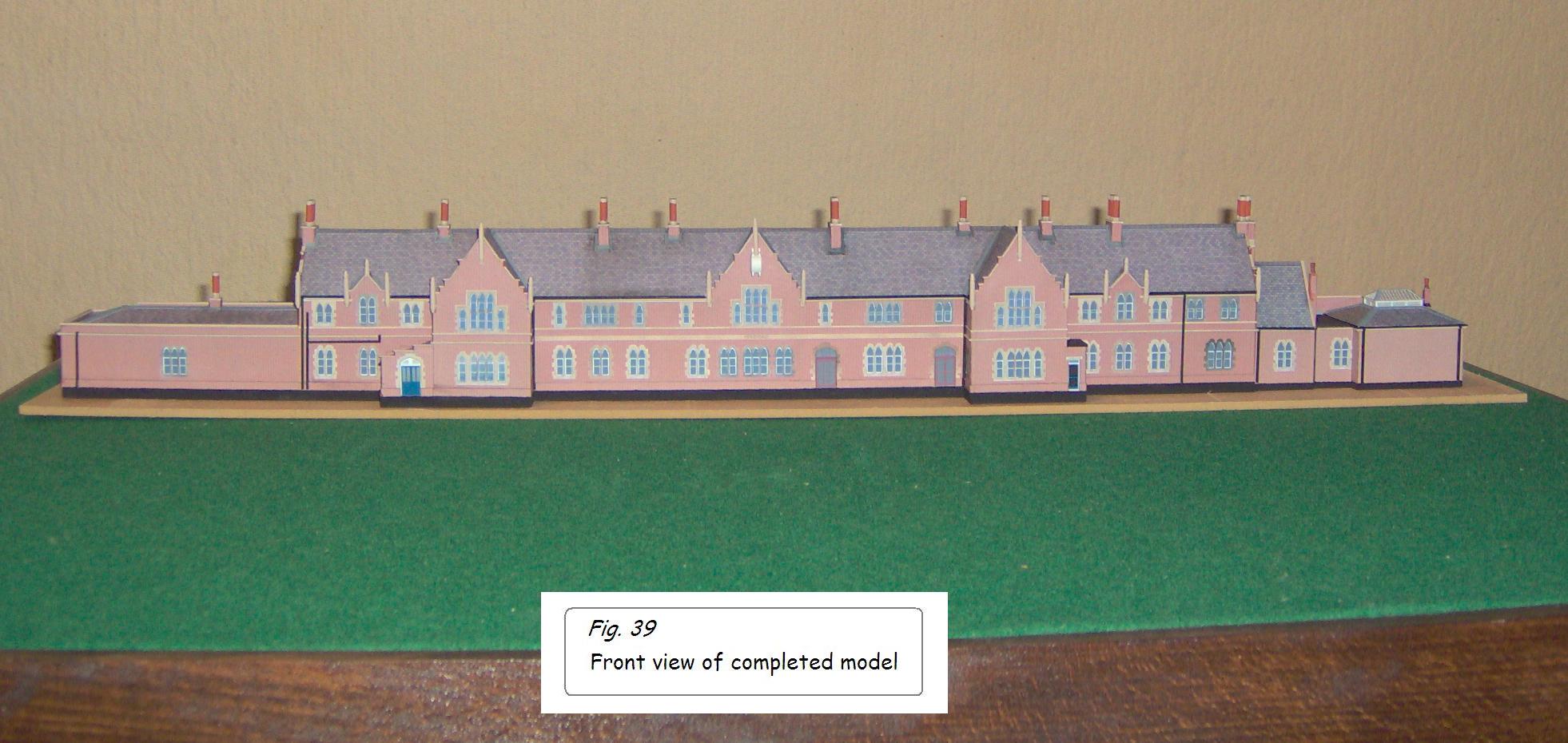
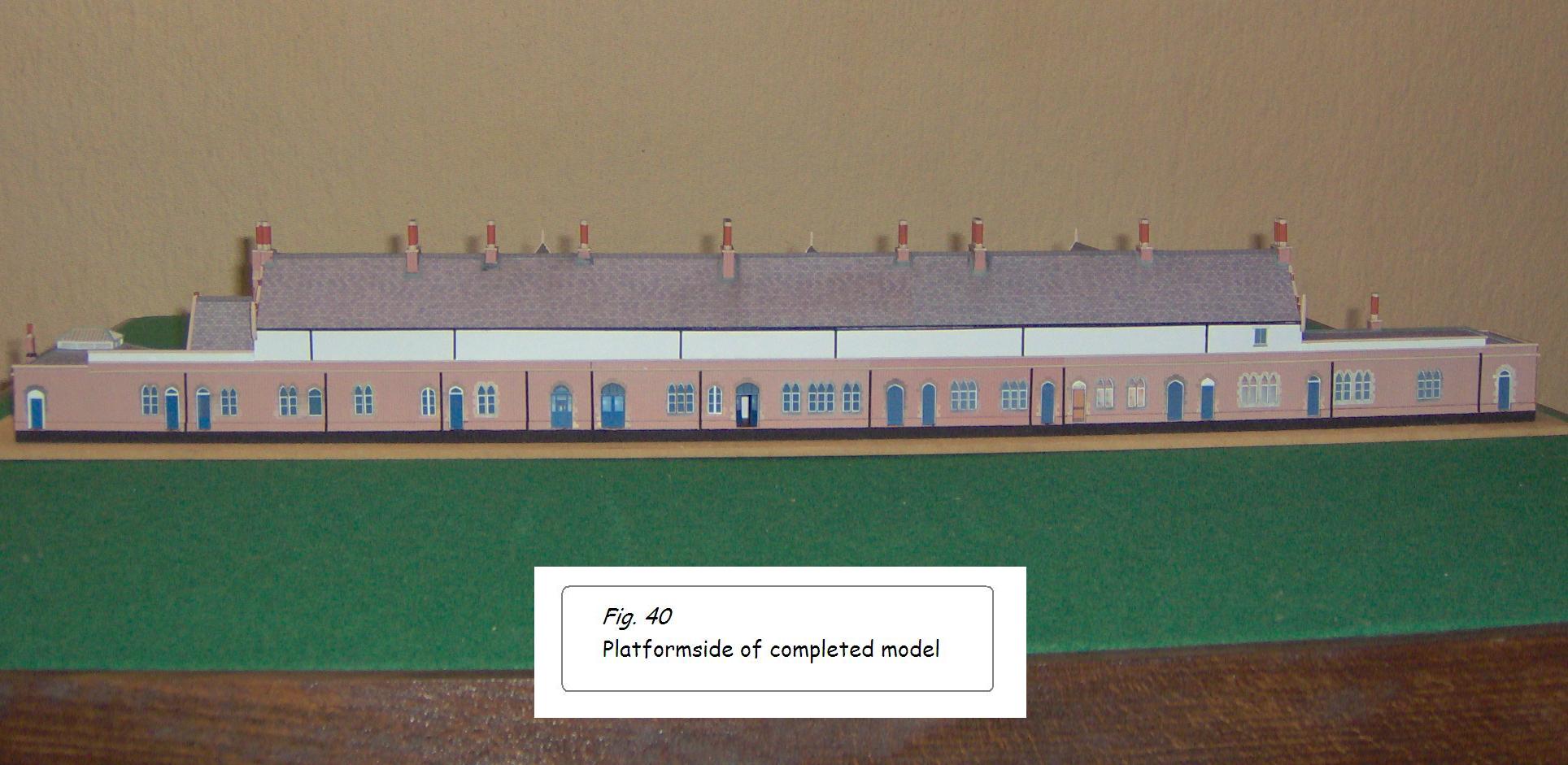
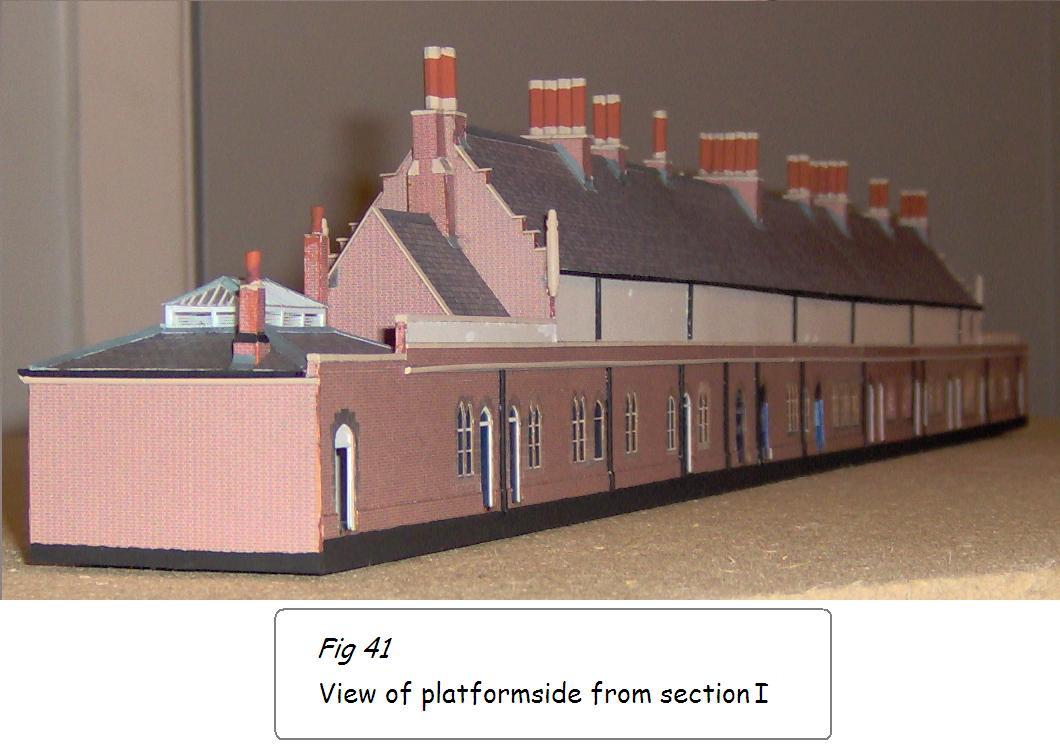
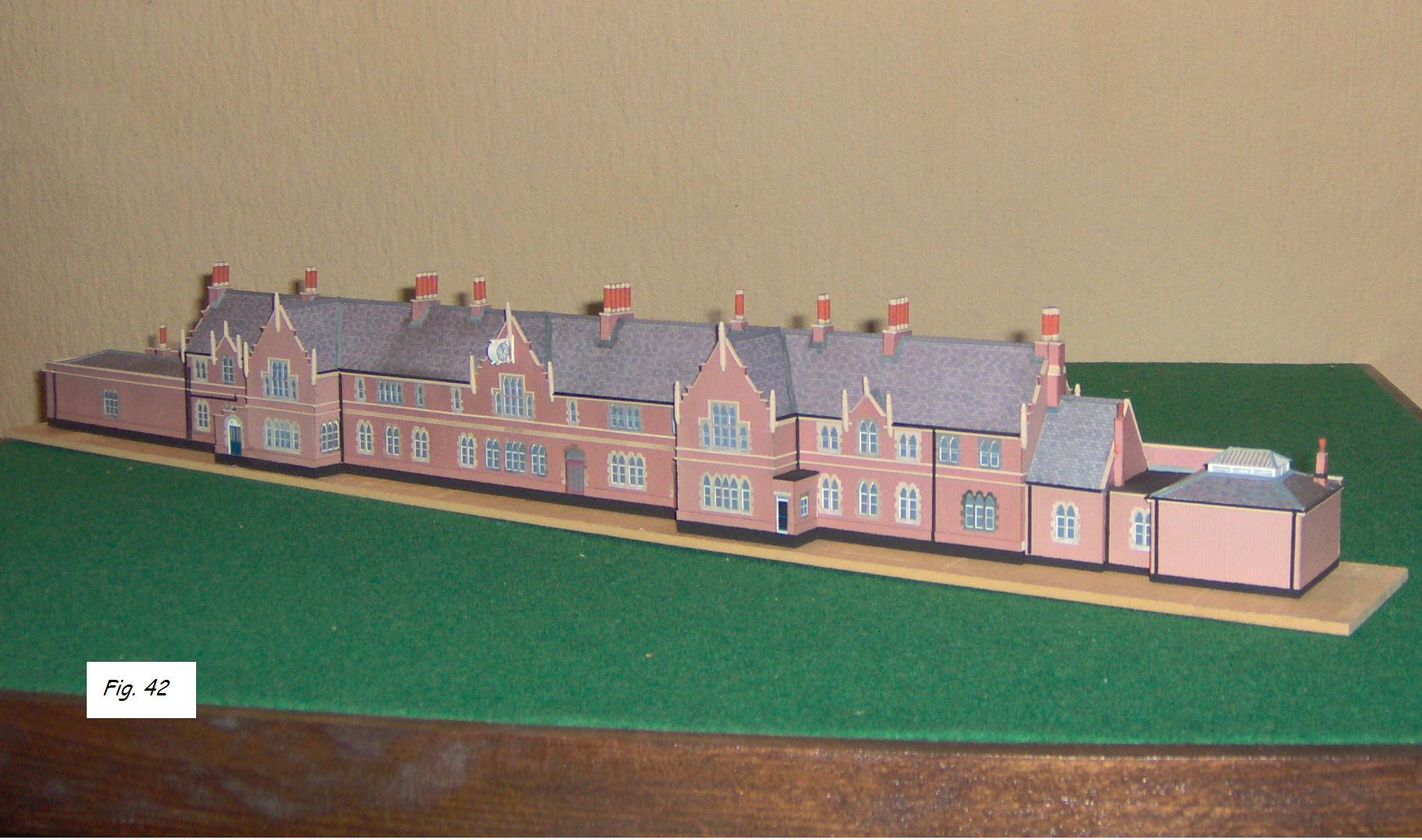
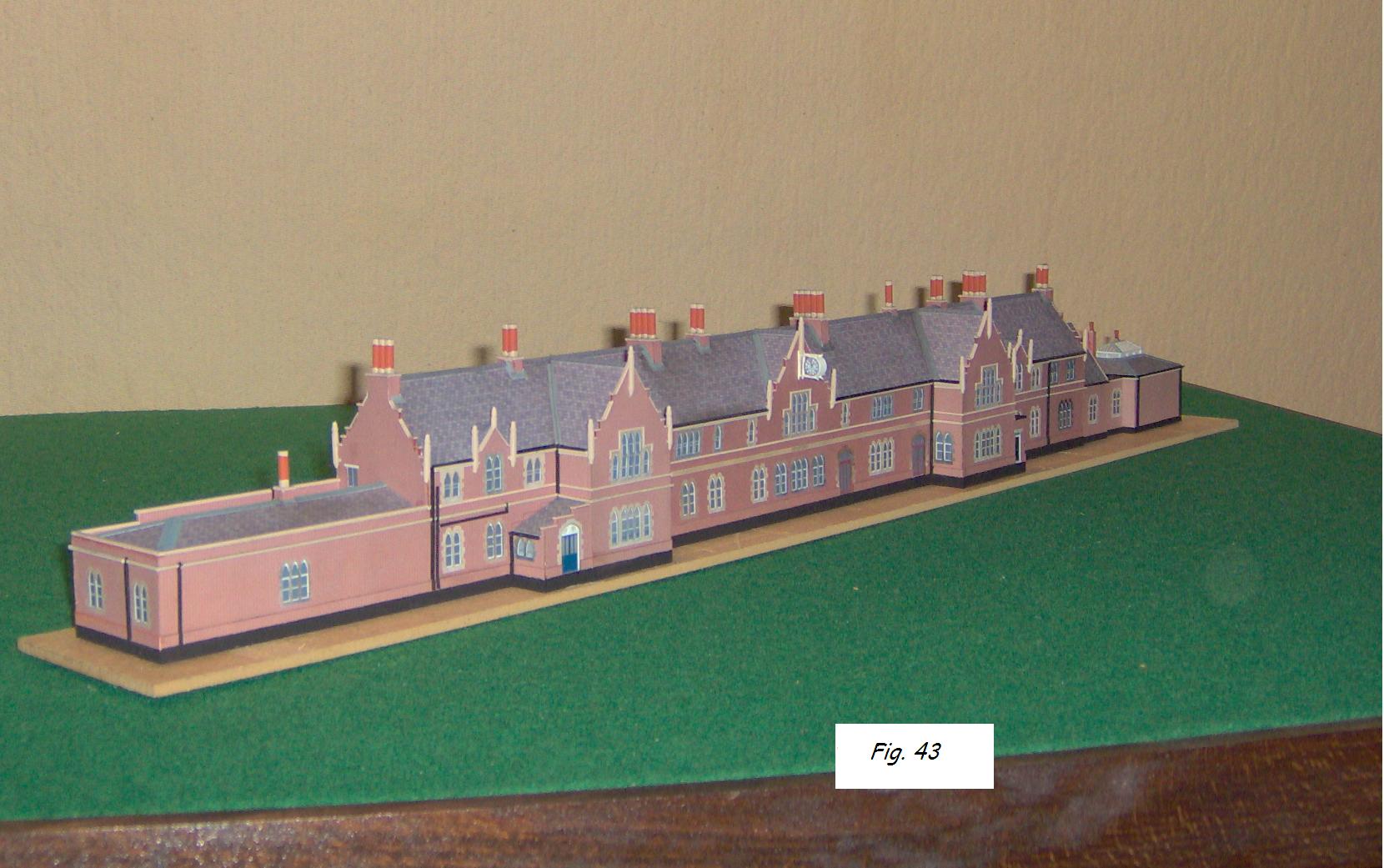
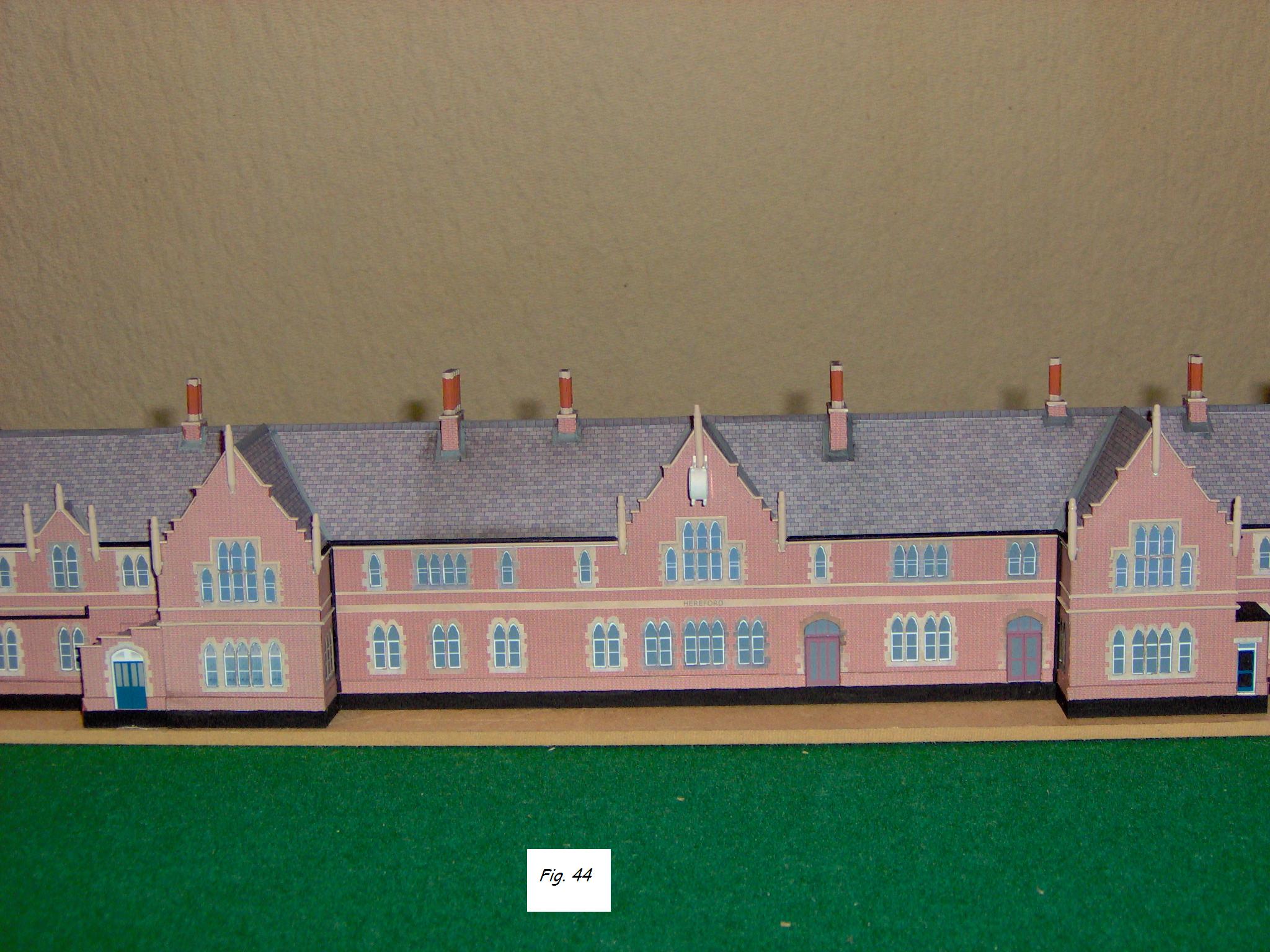
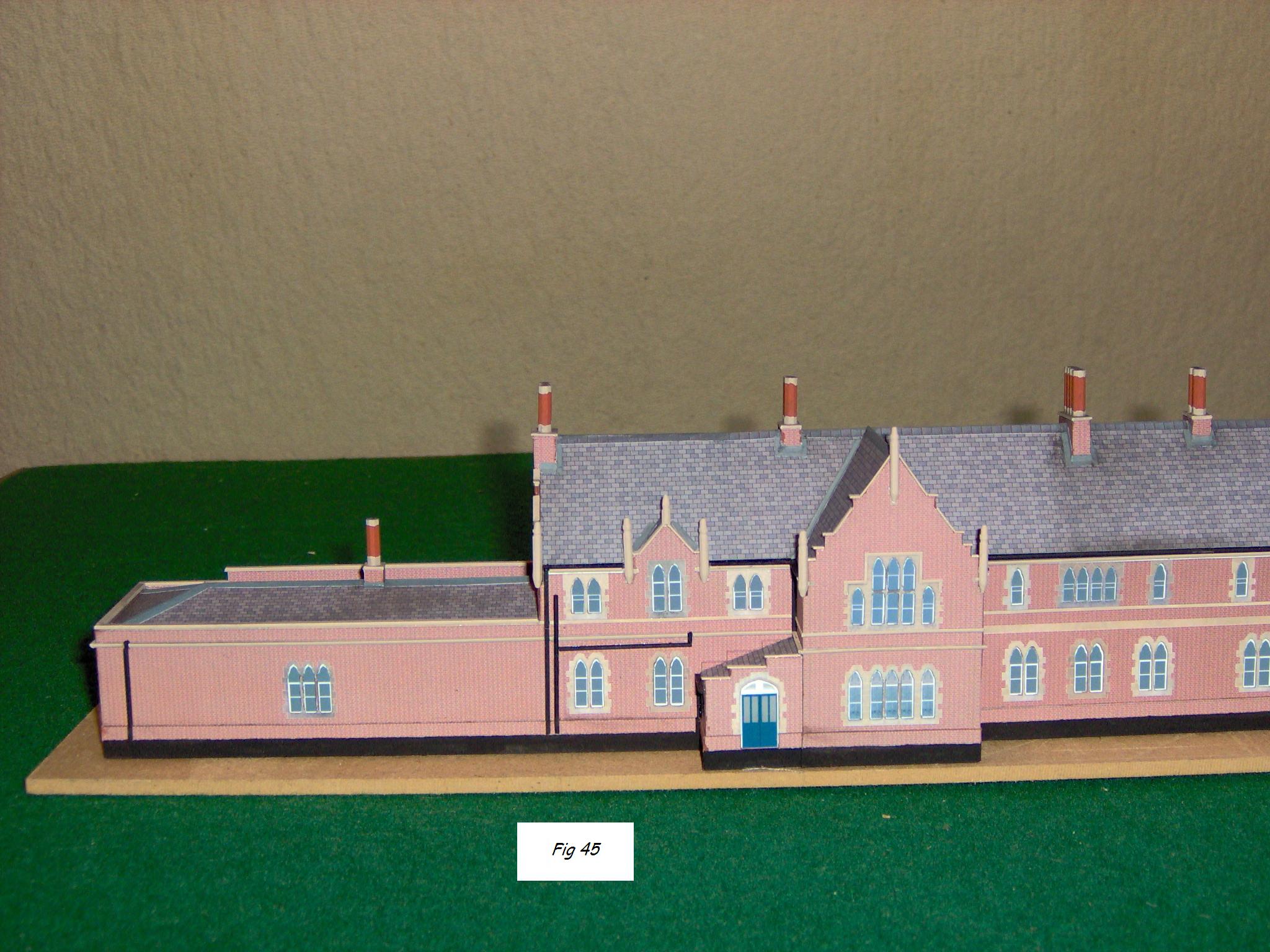
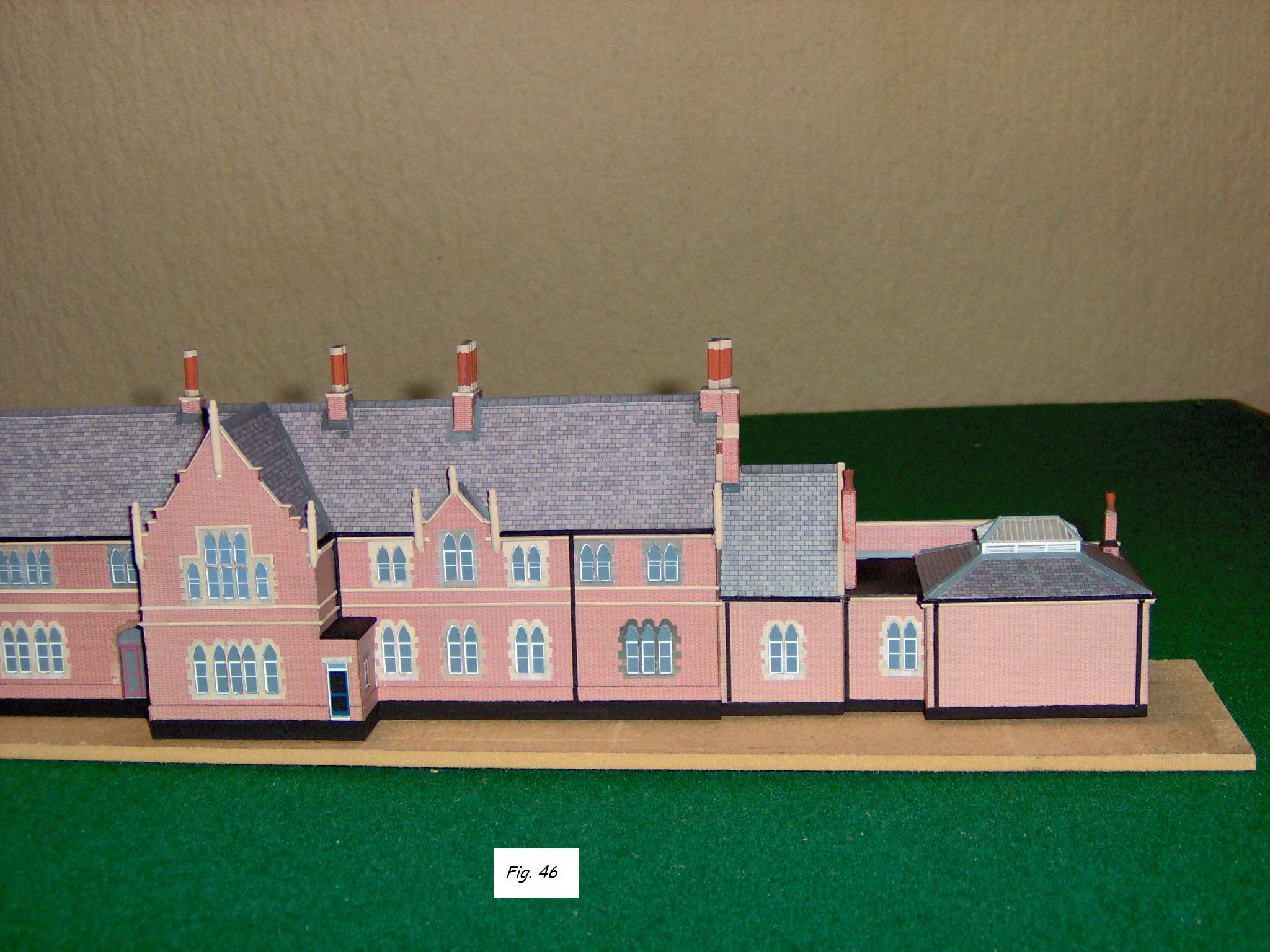
David continues:
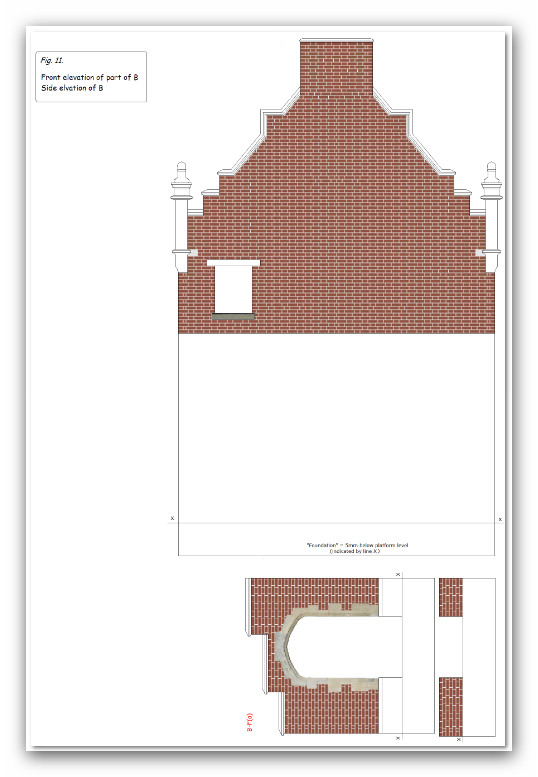
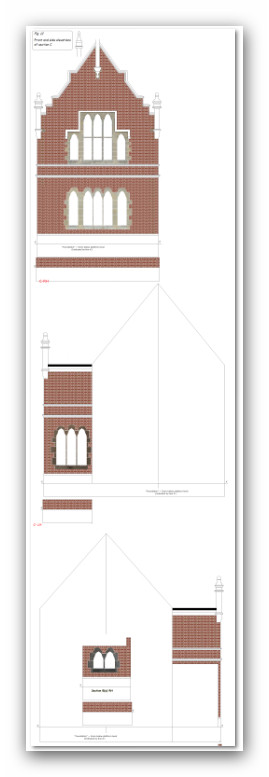
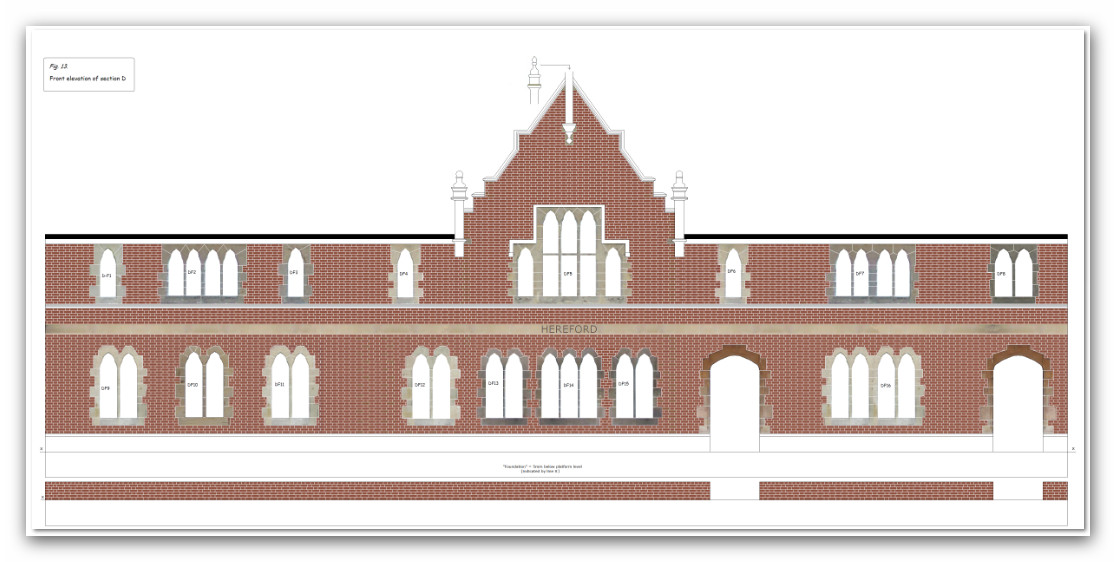
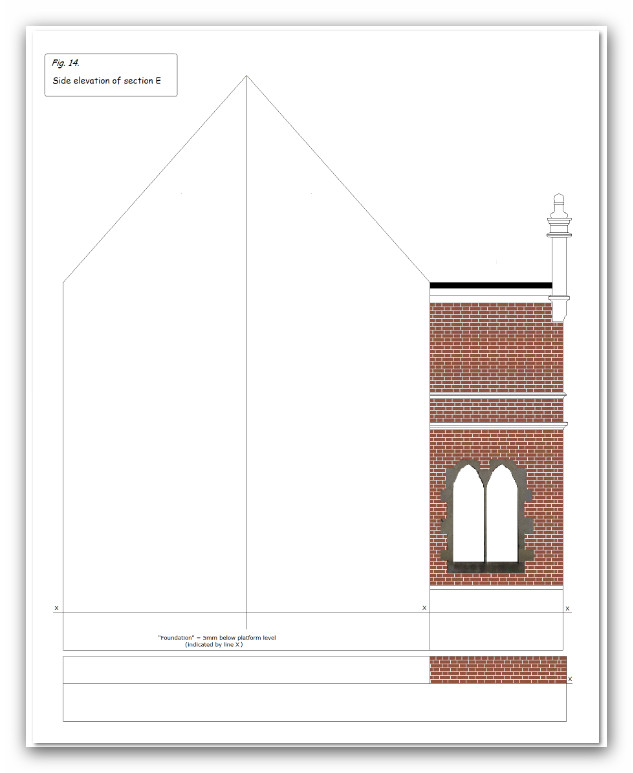
Once the fixative has dried the various door and window spaces can be carefully removed and the elevations cut out. This process and the various stages in construction are shown in figs. 26-39, below.
Doors and windows were printed onto glossy photo-paper, cut out and glued behind the appropriate apertures. It was not possible to produce transparent windows, so the glass was coloured navy-black, and in some cases, notably the platform and front elevations of the buffet where illuminated from within, these were copied straight from the photographs.
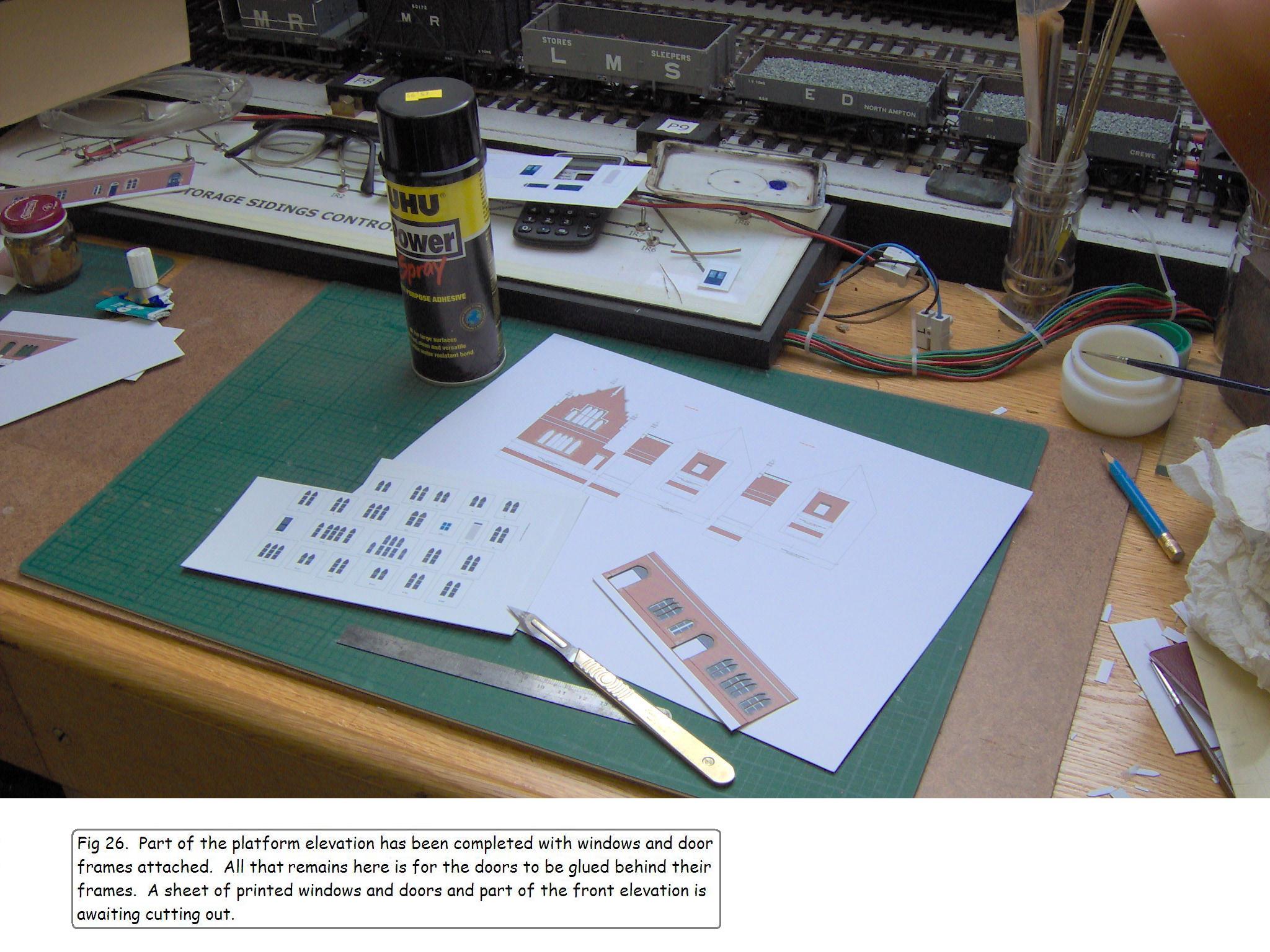
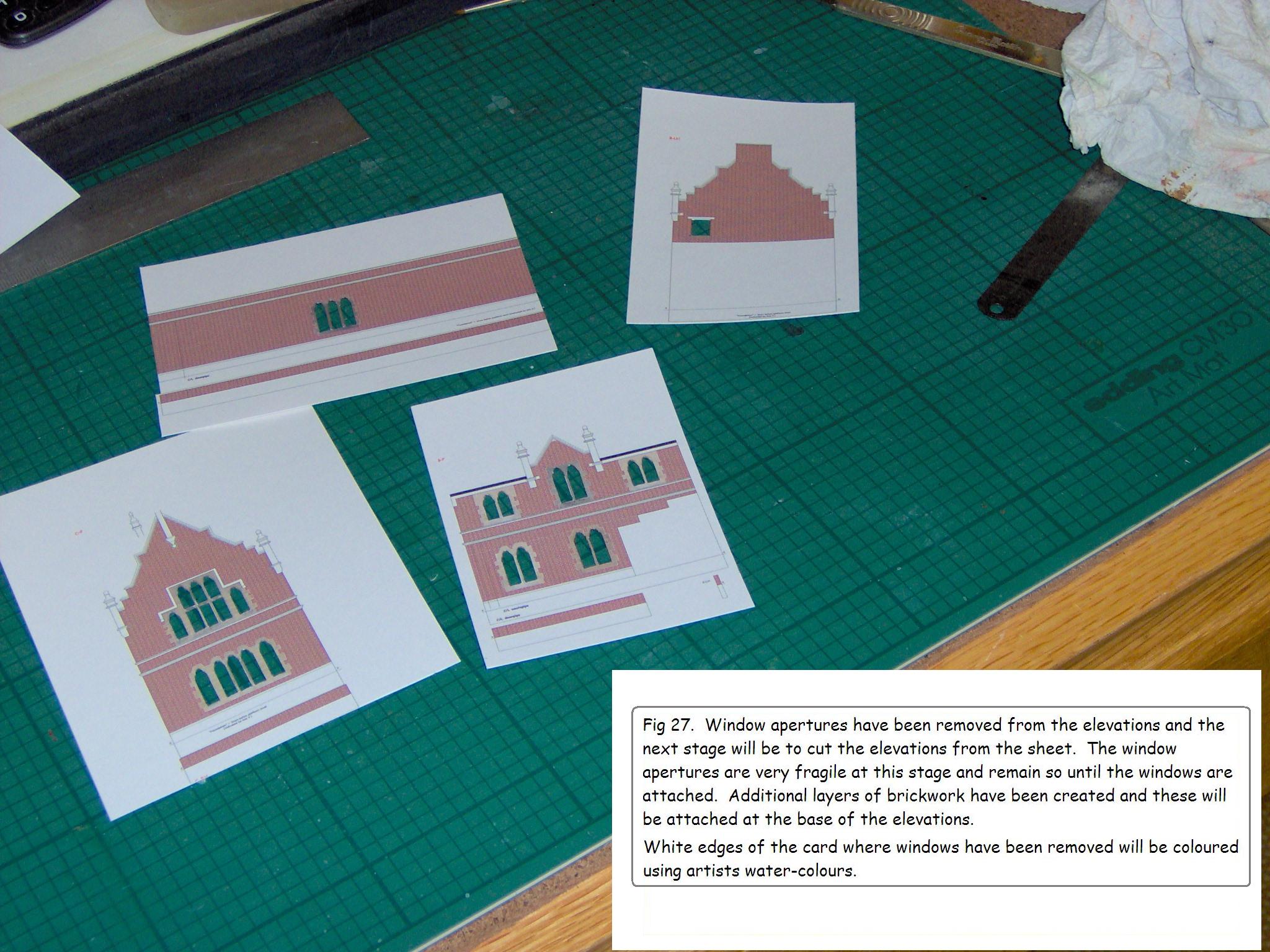
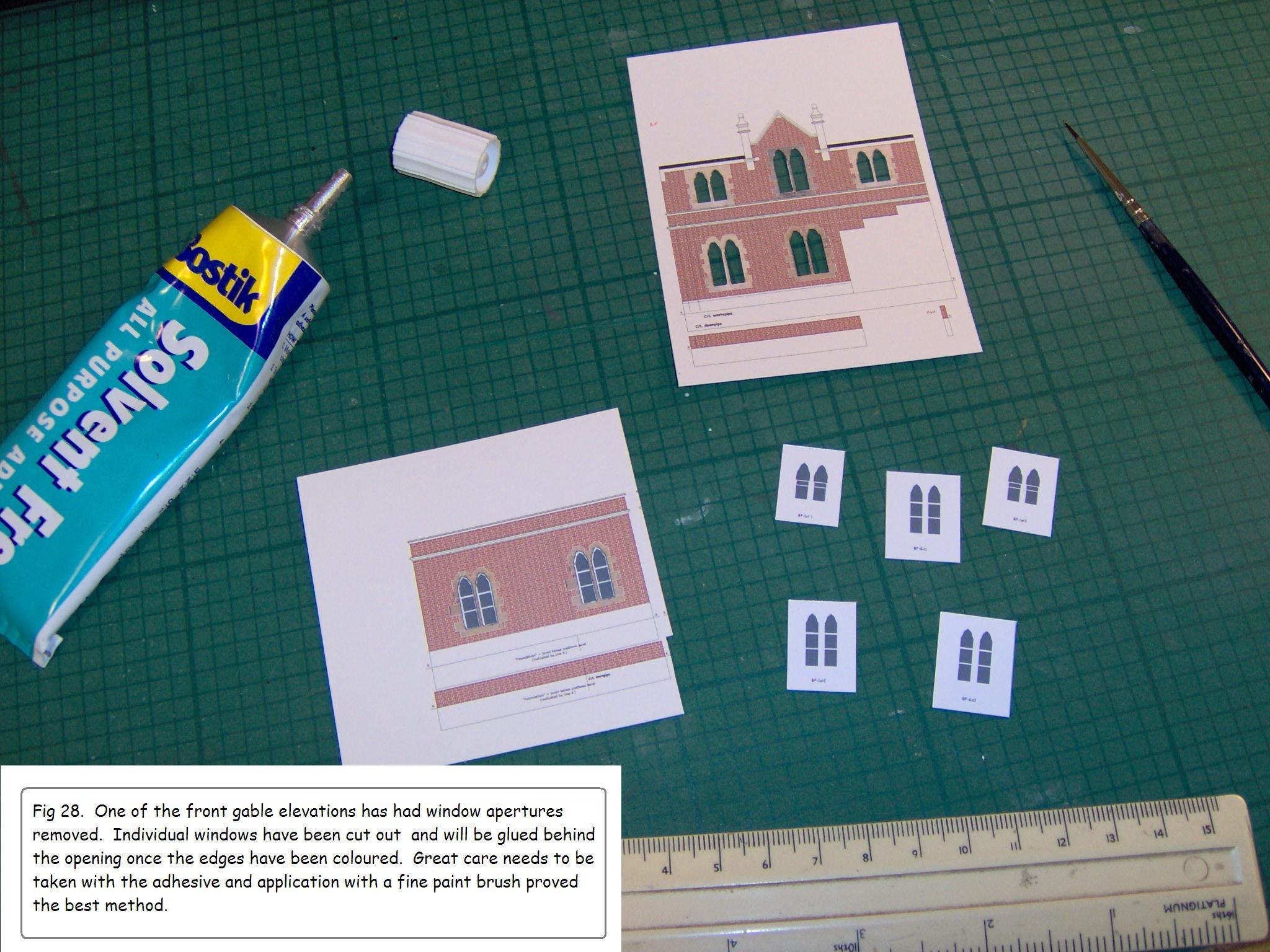
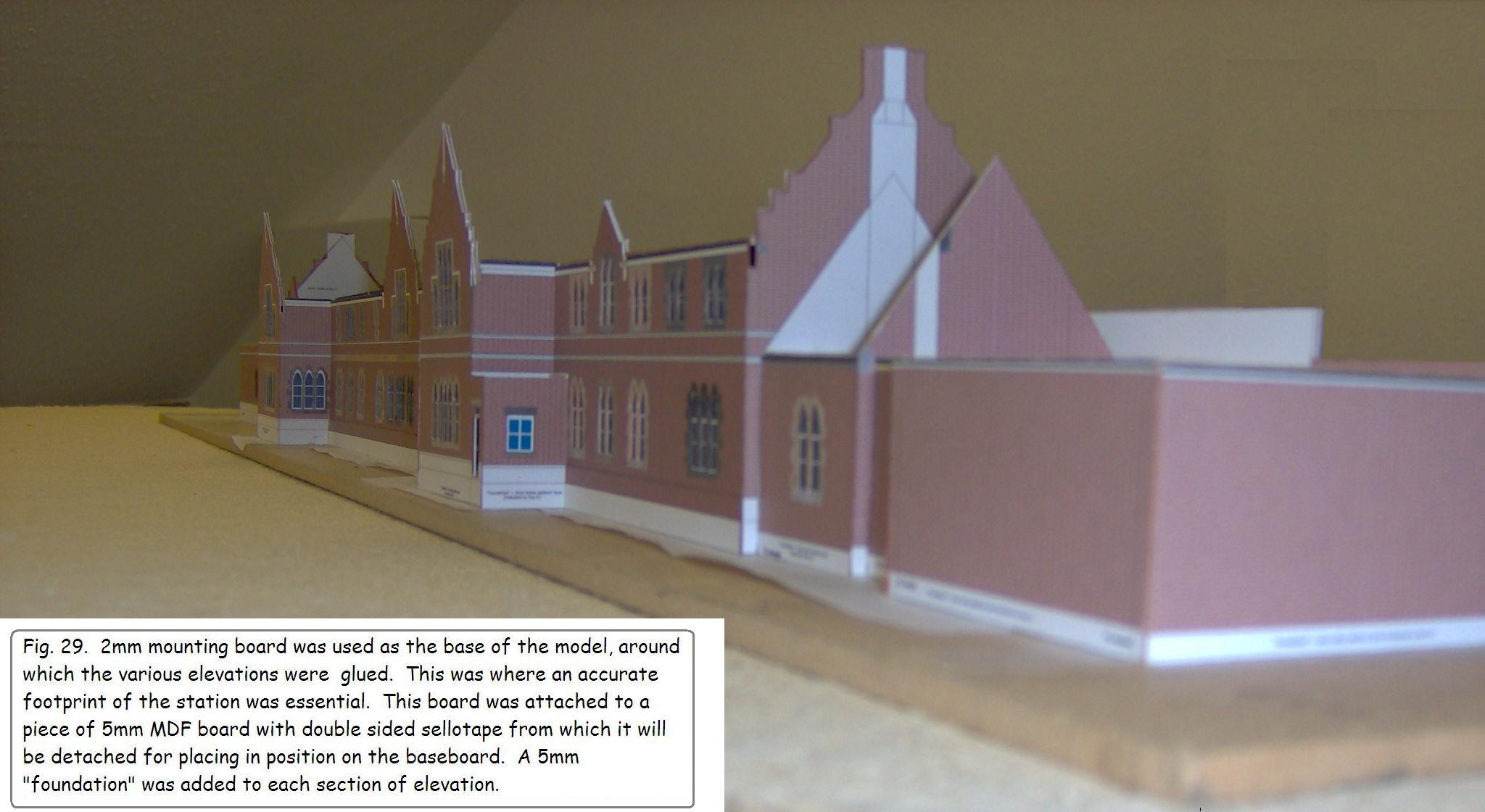
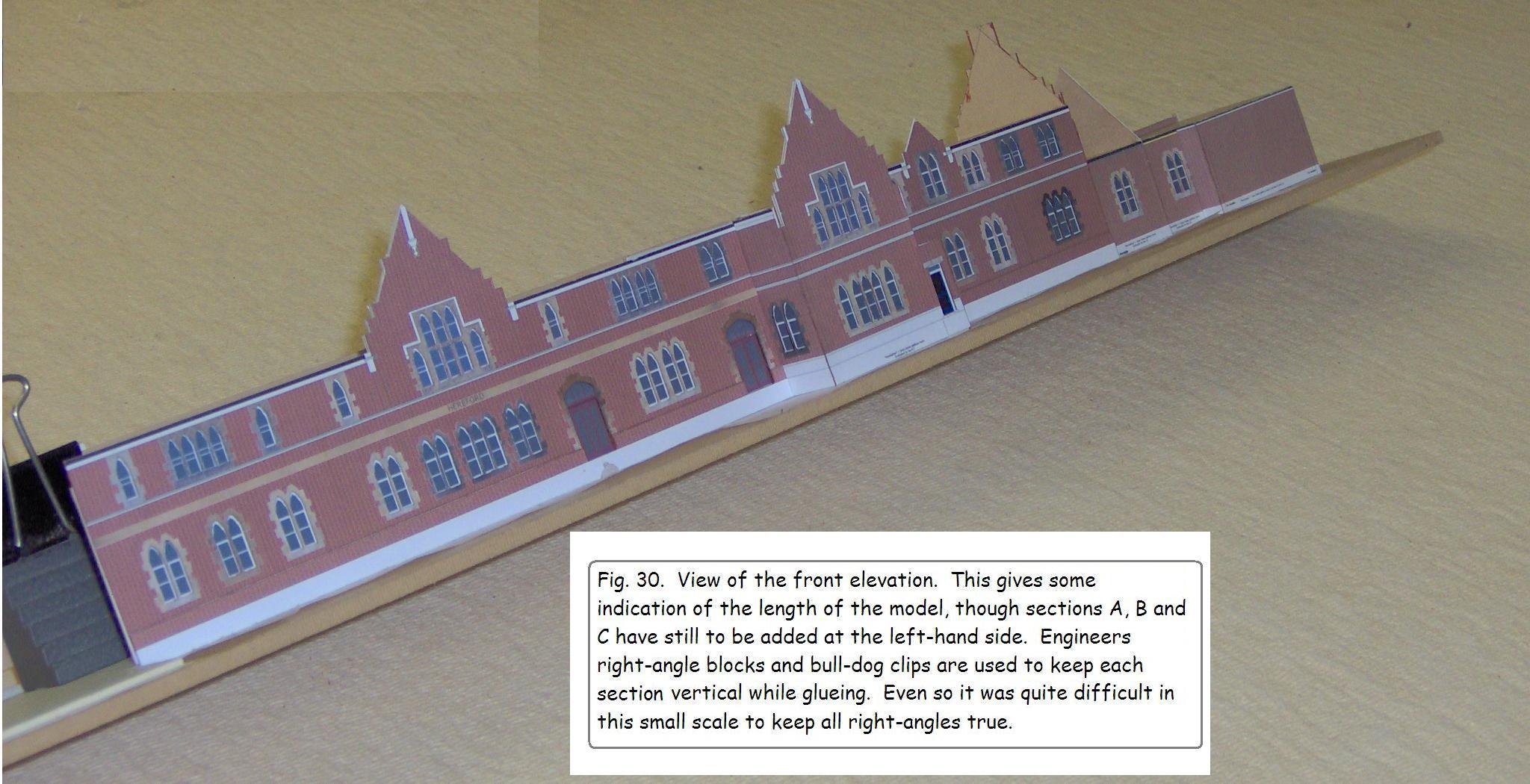
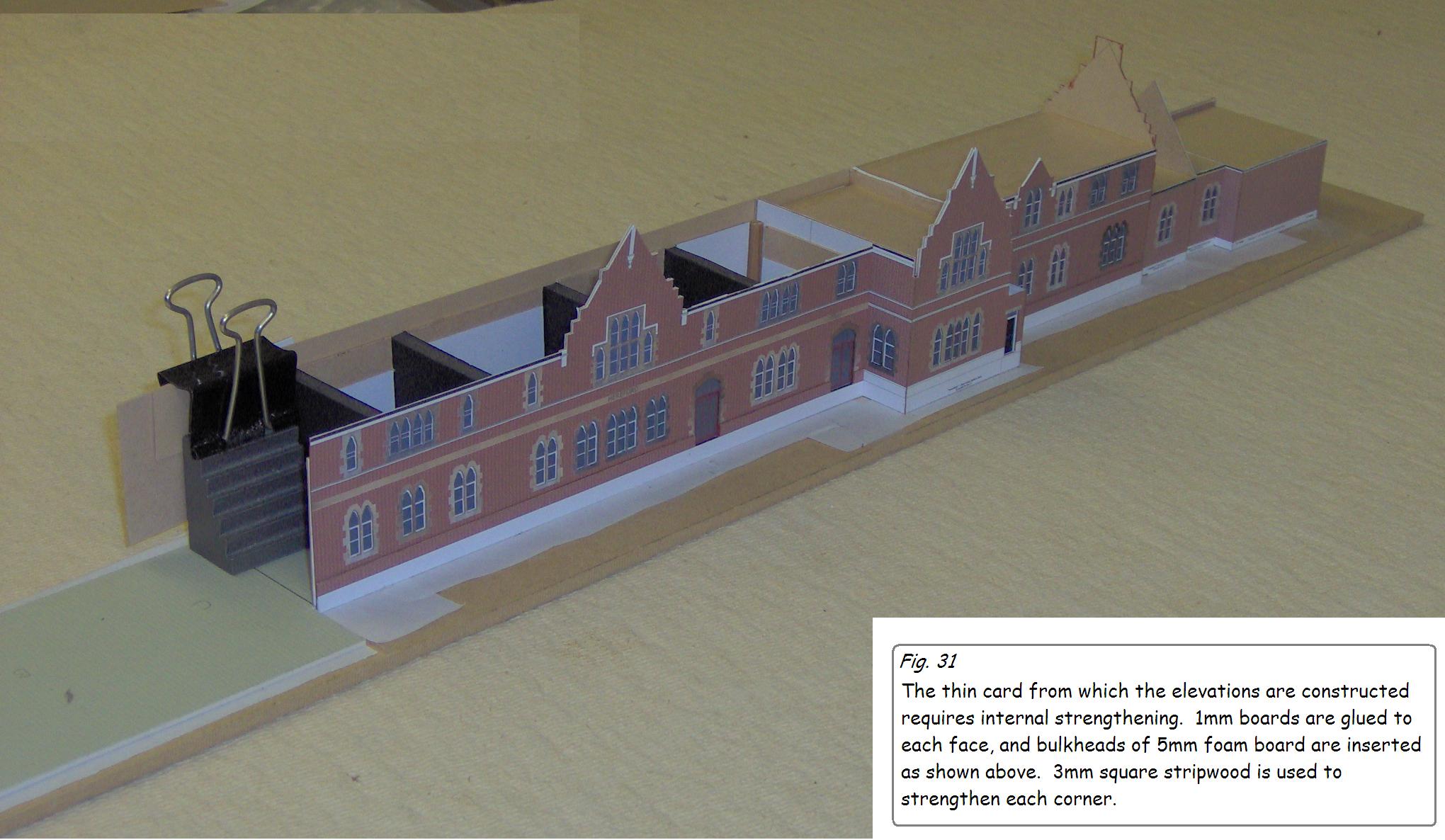
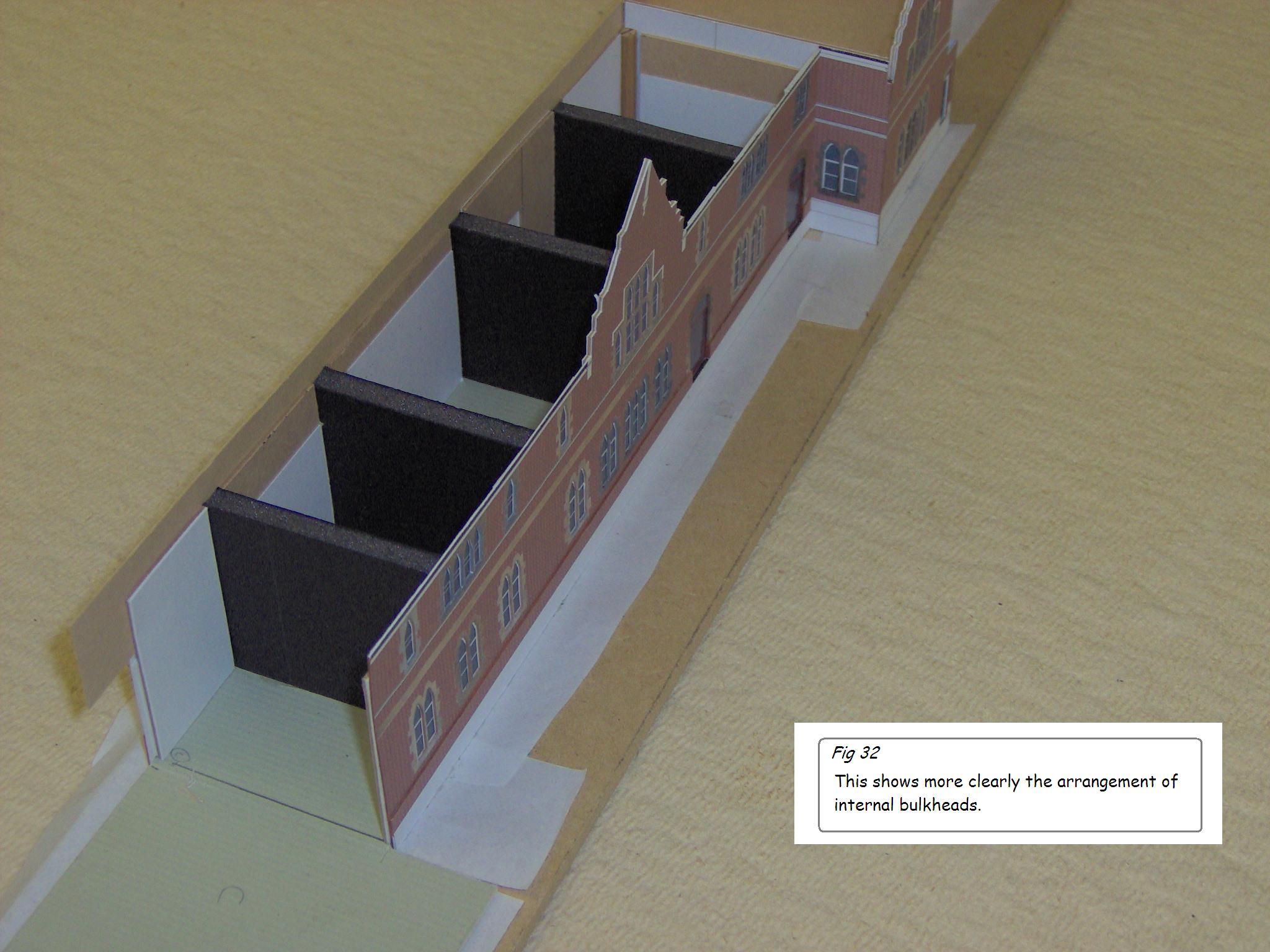
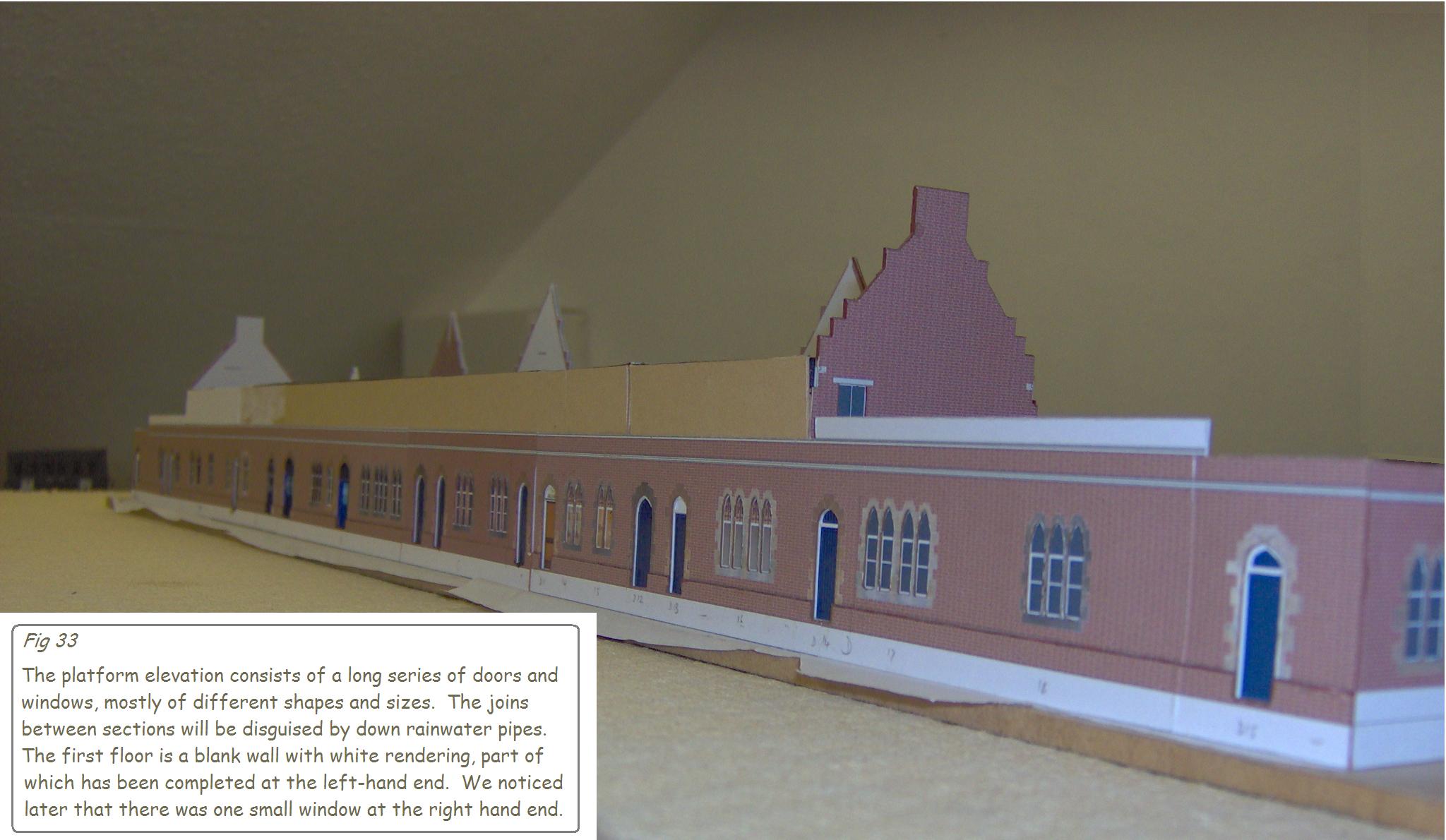
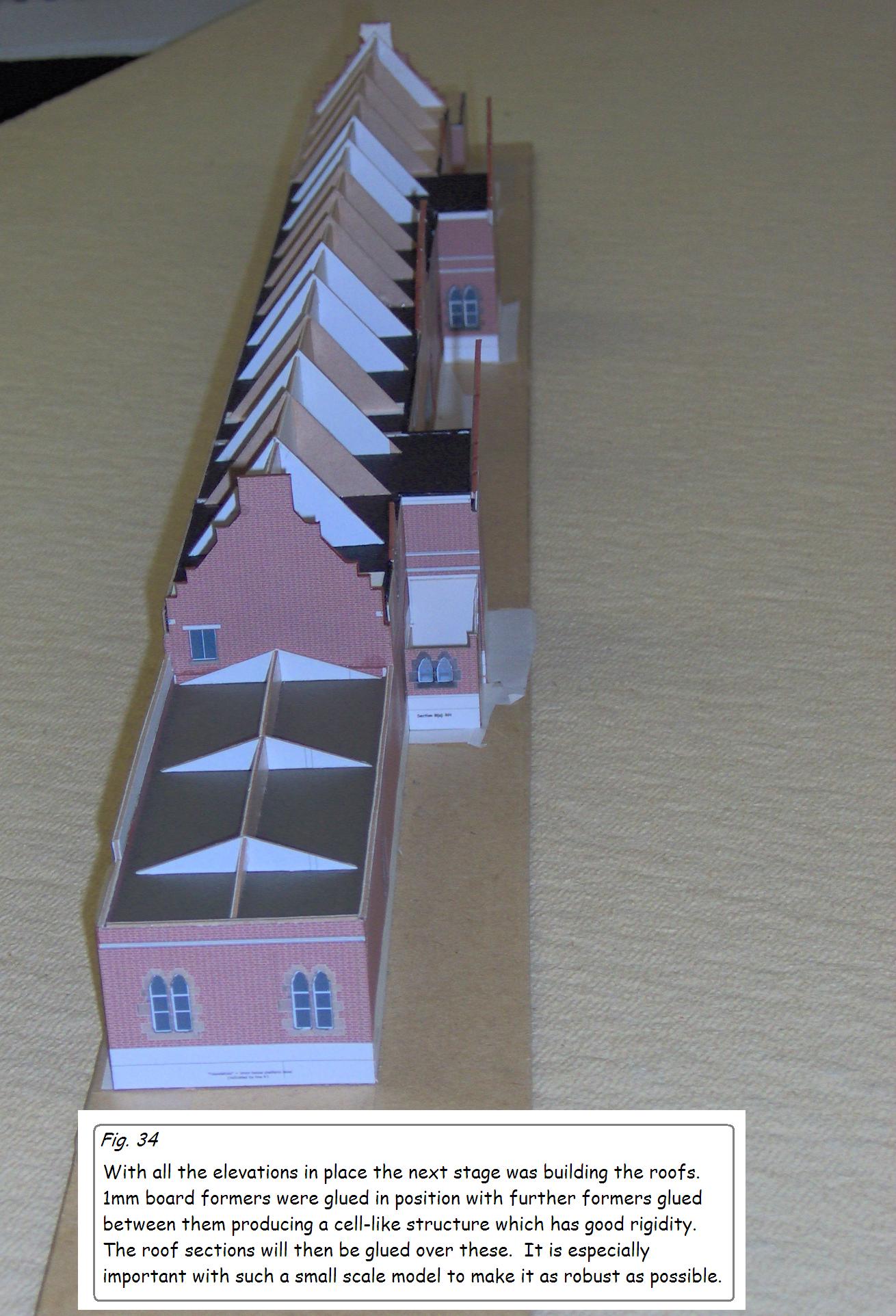
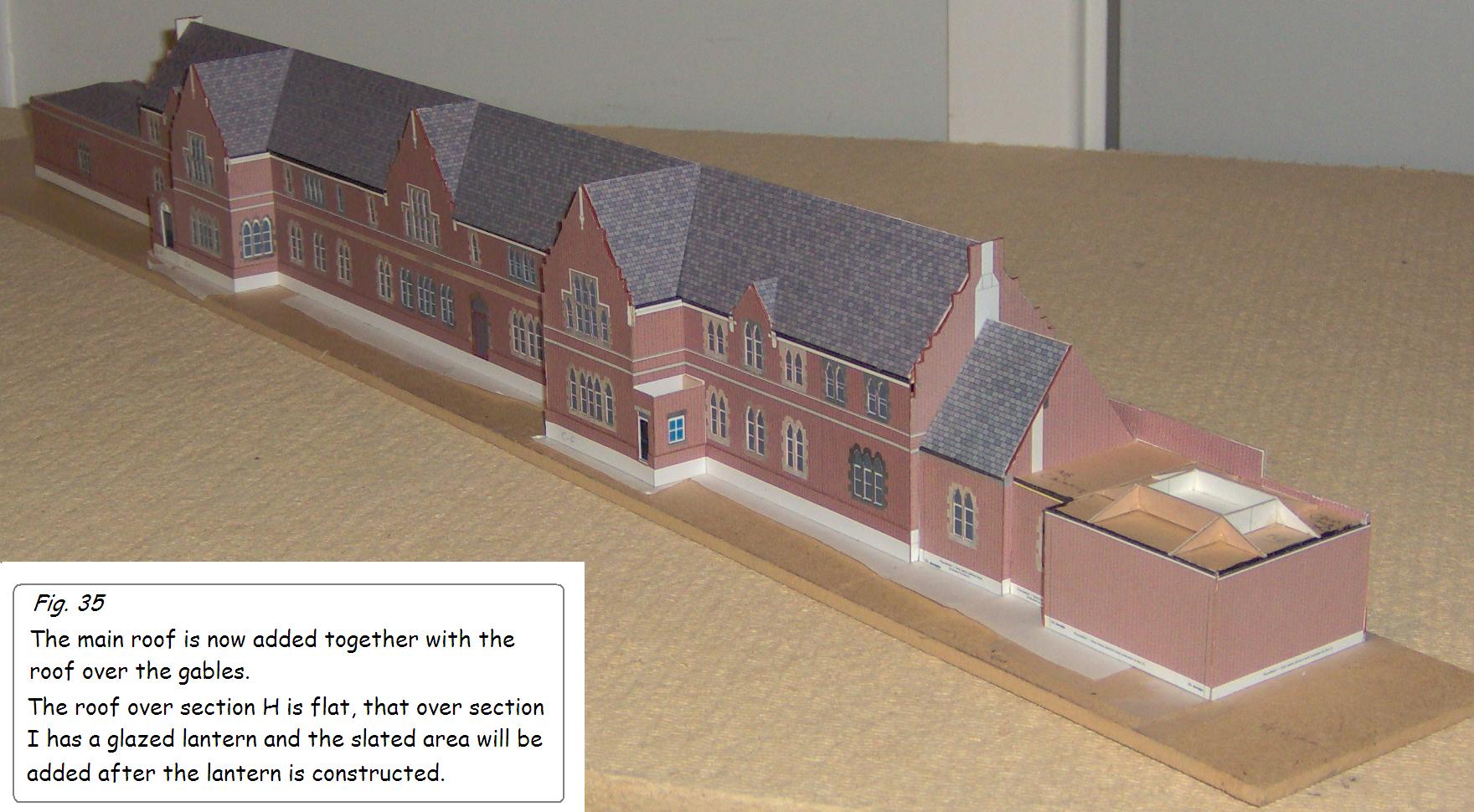
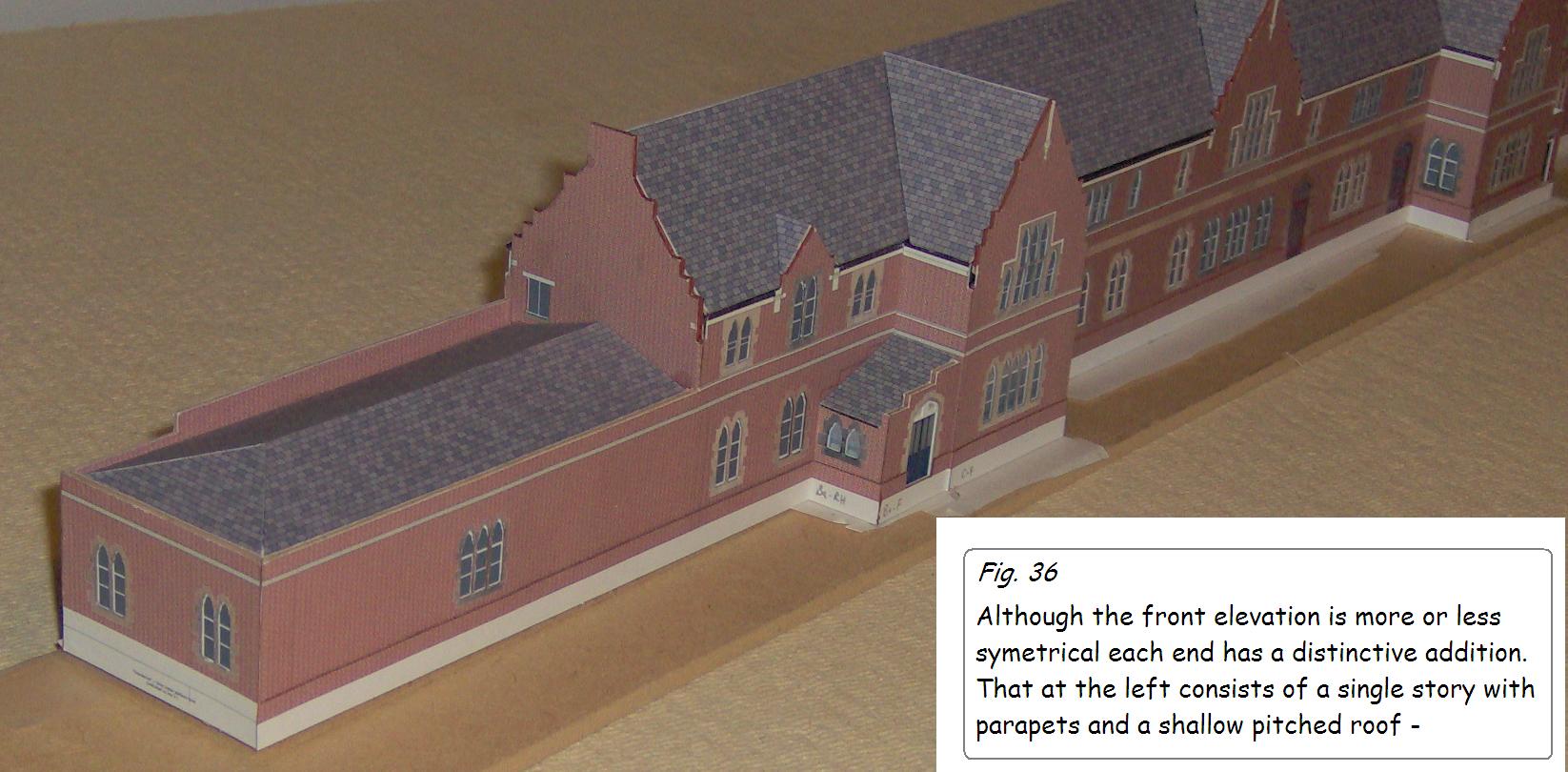
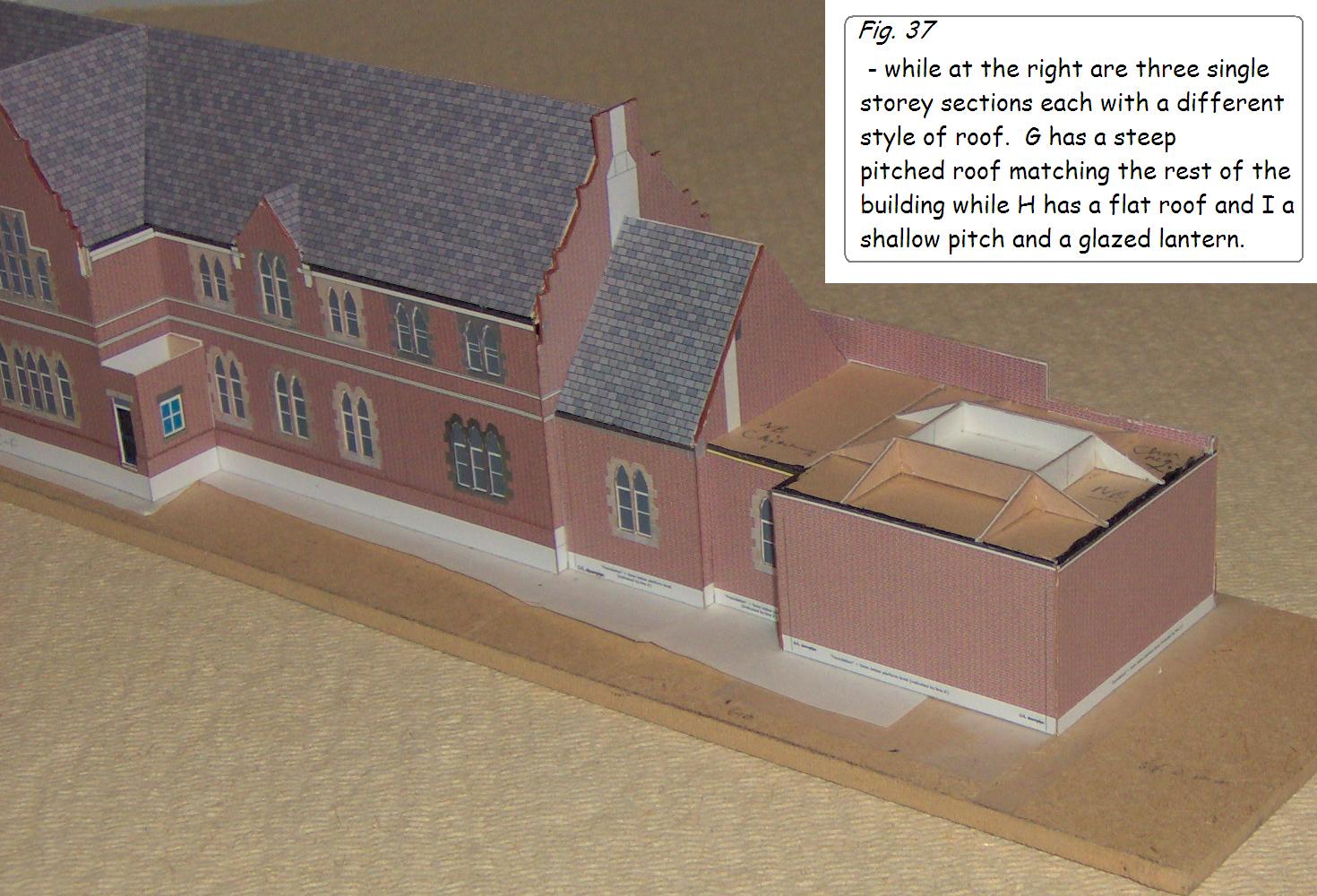
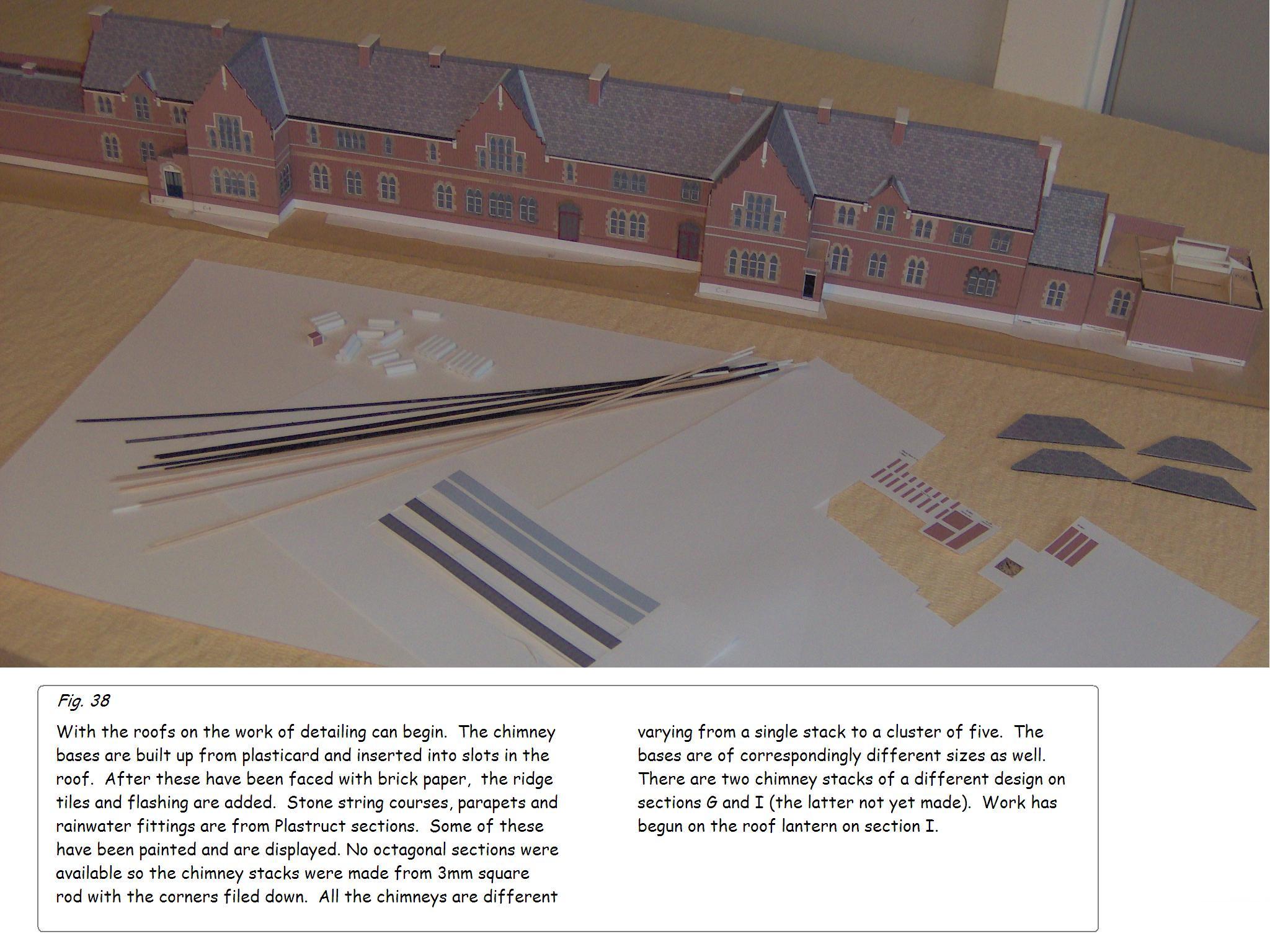
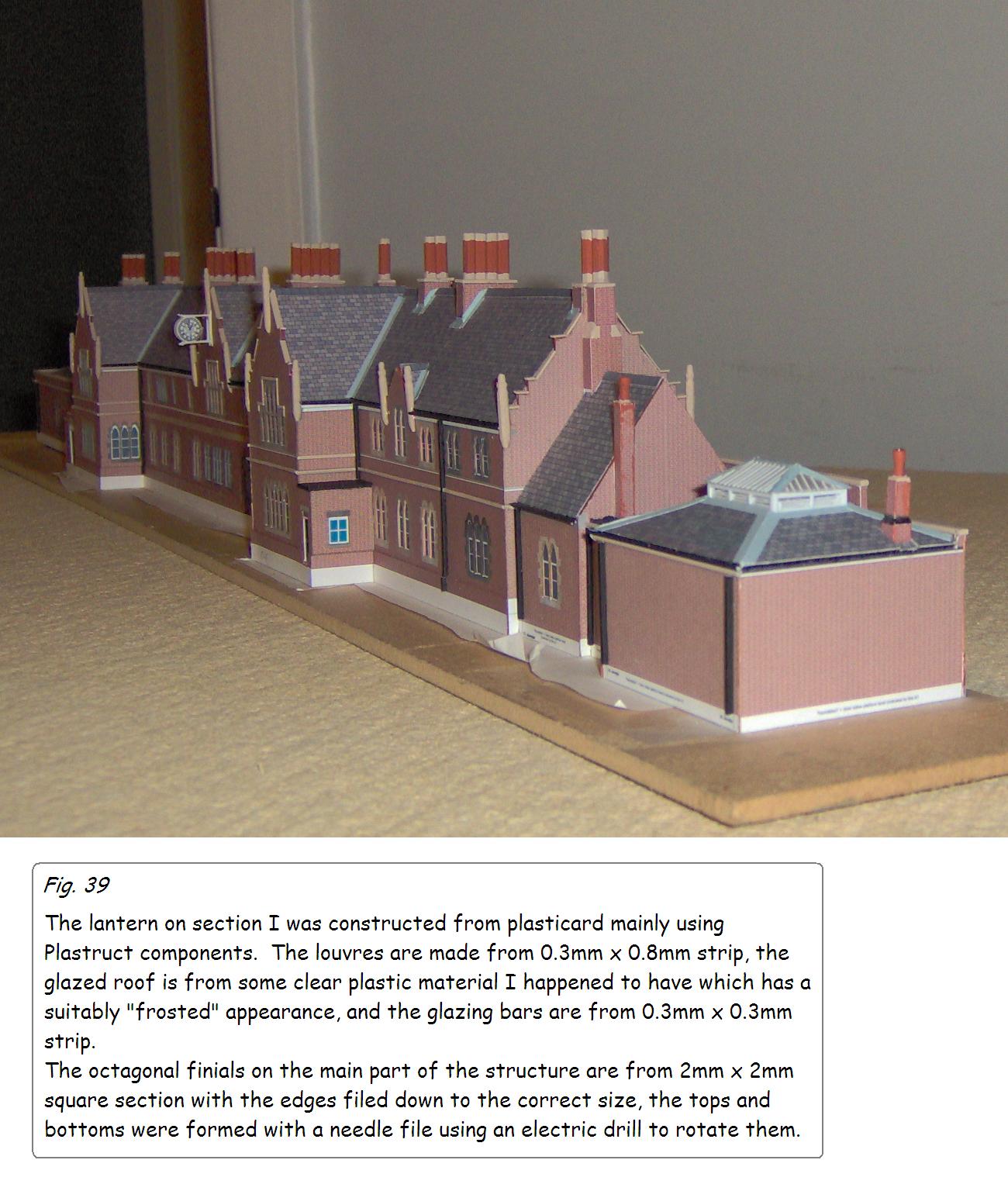
David goes on to describe the method of construction:
Method of Construction
The first step was to make a line drawing of the front elevation of section C just to make sure that my estimated dimensions were on the right lines and that printing would be of the necessary accuracy (see fig. 6).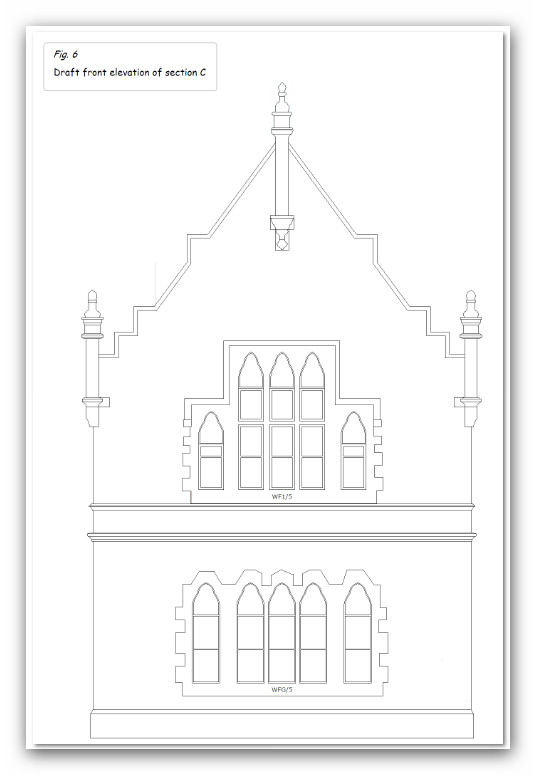
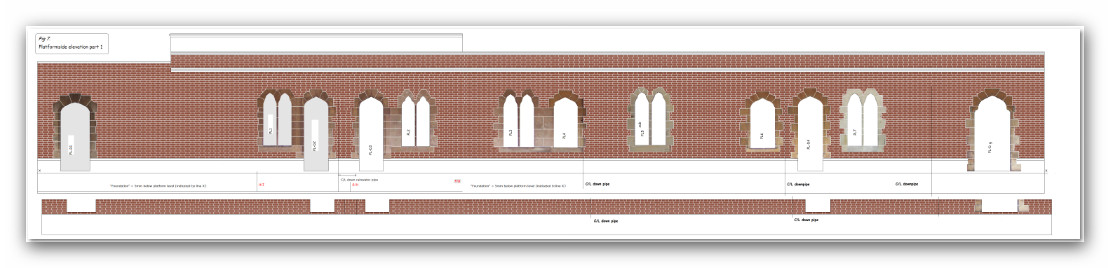
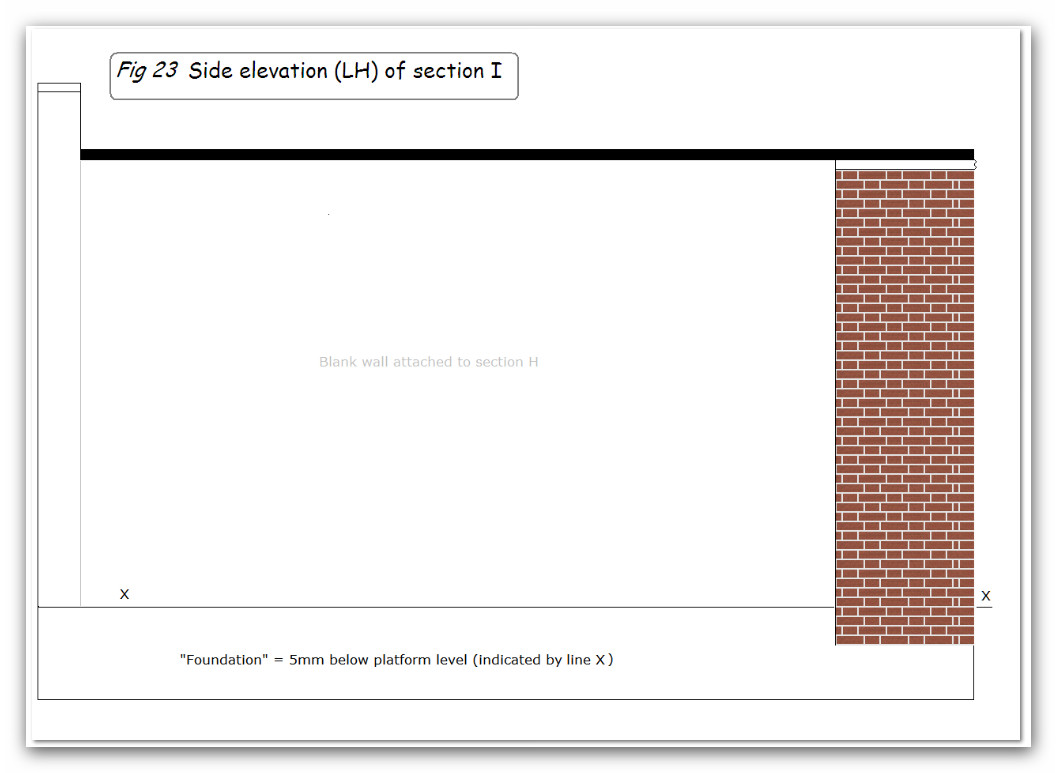
Next followed the detailed drawing of all the elevations -front, side and platform. Wherever possible, actual door and window surrounds were copied from the photographs and resized in situ (see figs. 7- 23, below).
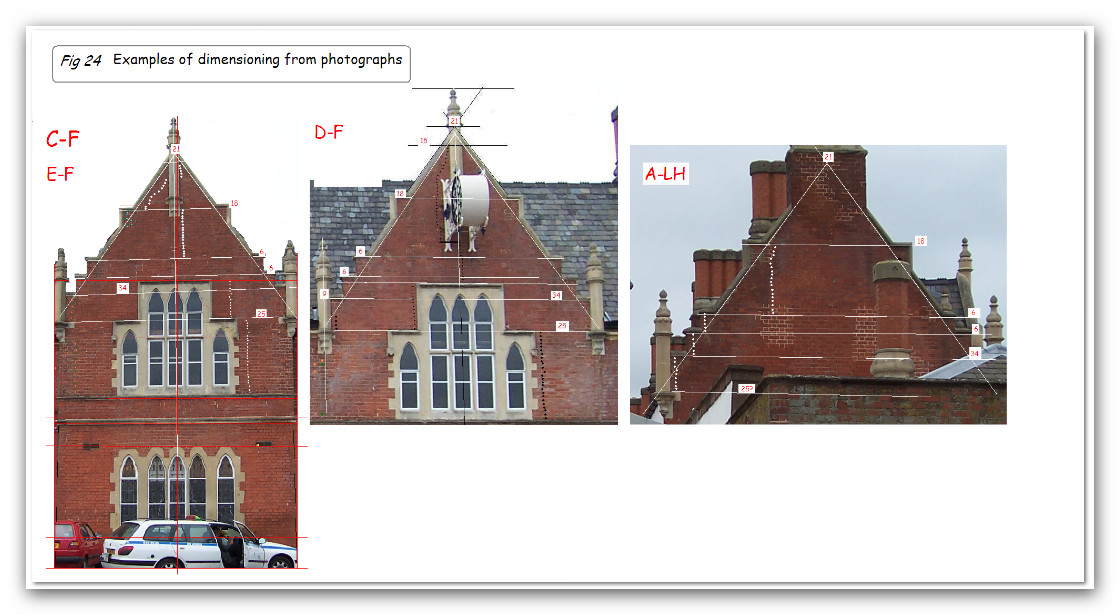
The process of determining dimensions was carried out from the photographs, and some examples of this are shown in fig. 24, below.
These images were then printed onto A4 sheets of white card. The ink used in inkjet printers appears to be soluble in water and white spirit so each sheet was sprayed with artist’s fixative. This seems to give some protection but care has to be taken to protect the parts from contact with these. I’m also not too sure about the colour permanence of the ink so it may be a good idea to shield models made this way from direct sunlight.
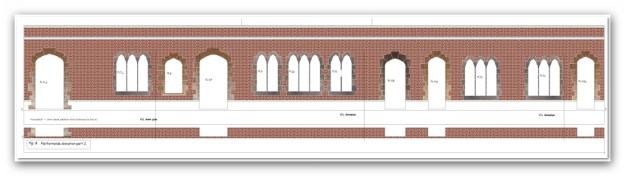
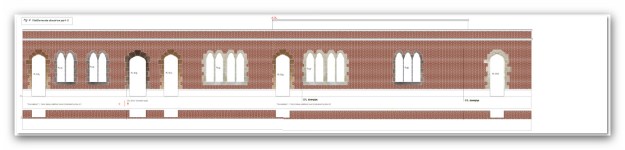
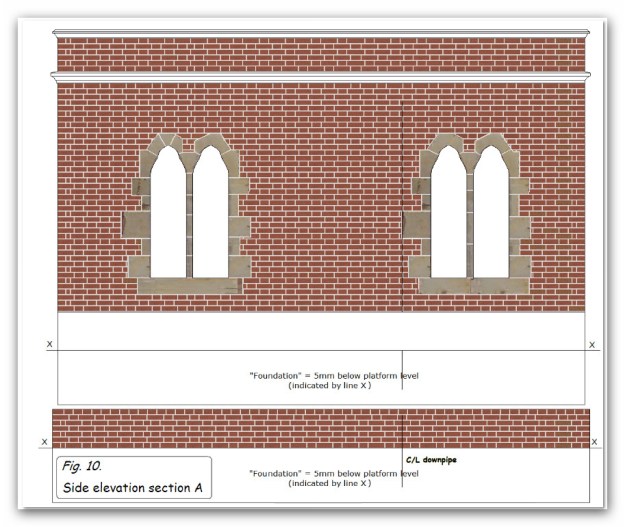
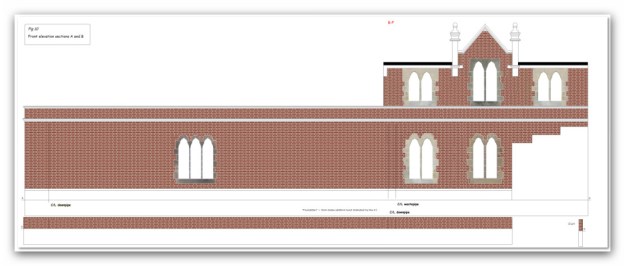
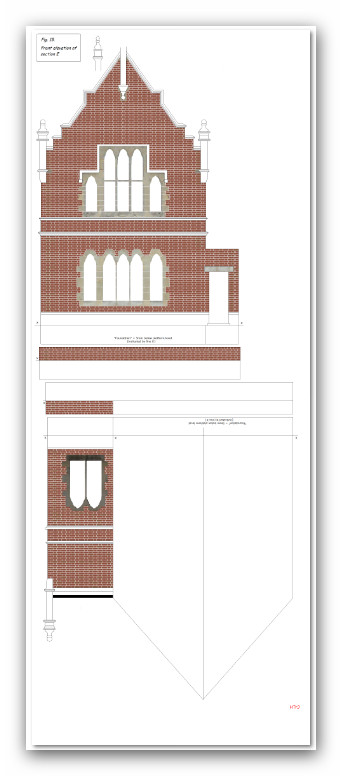
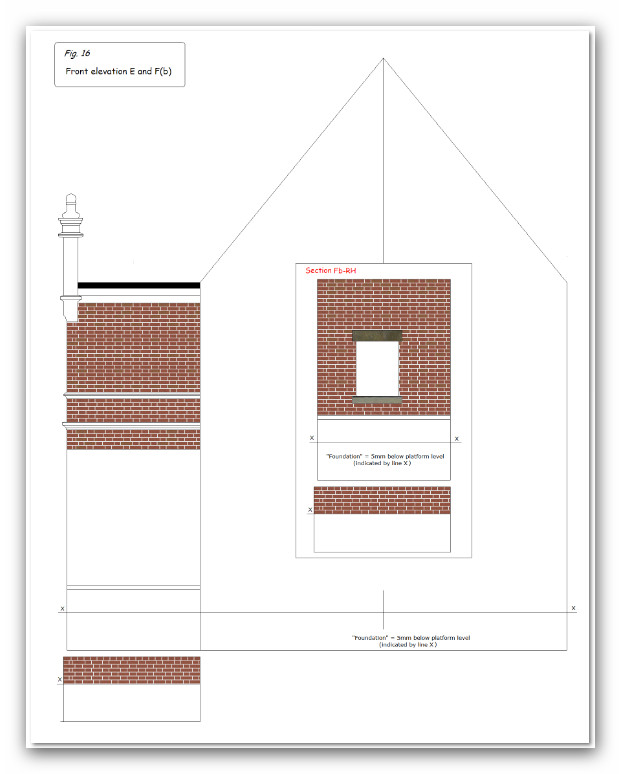
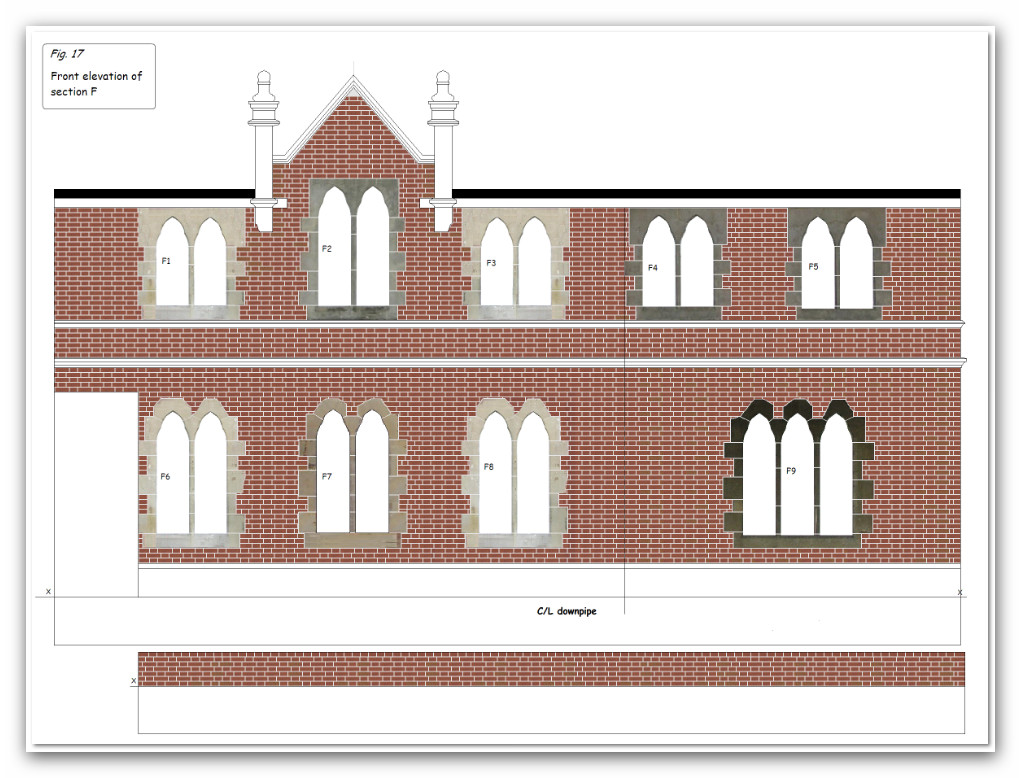
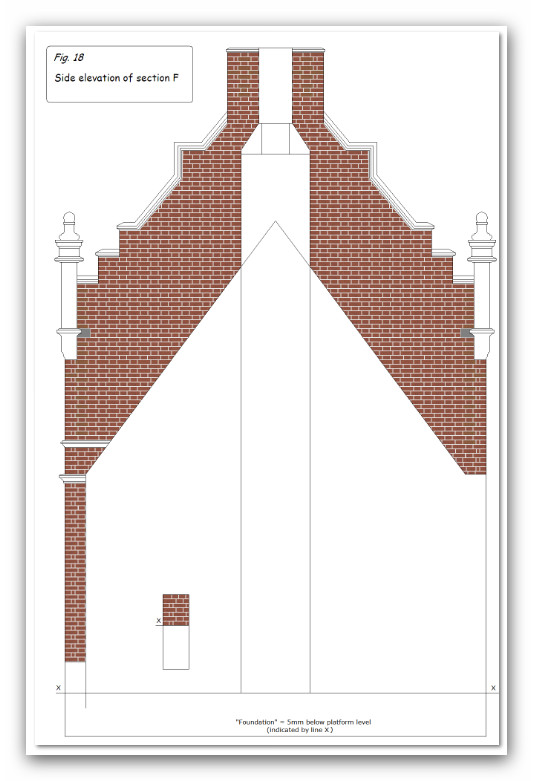
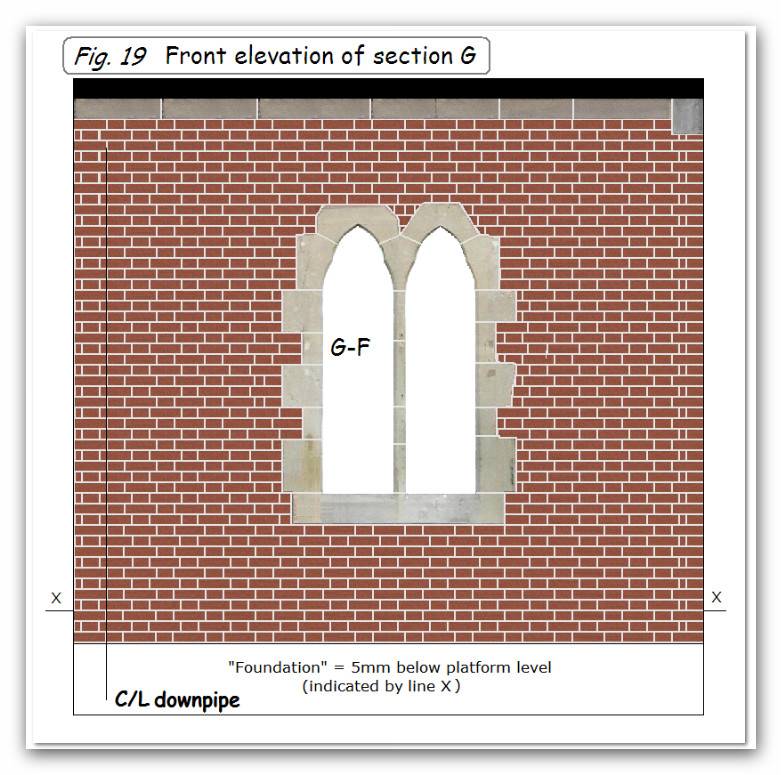
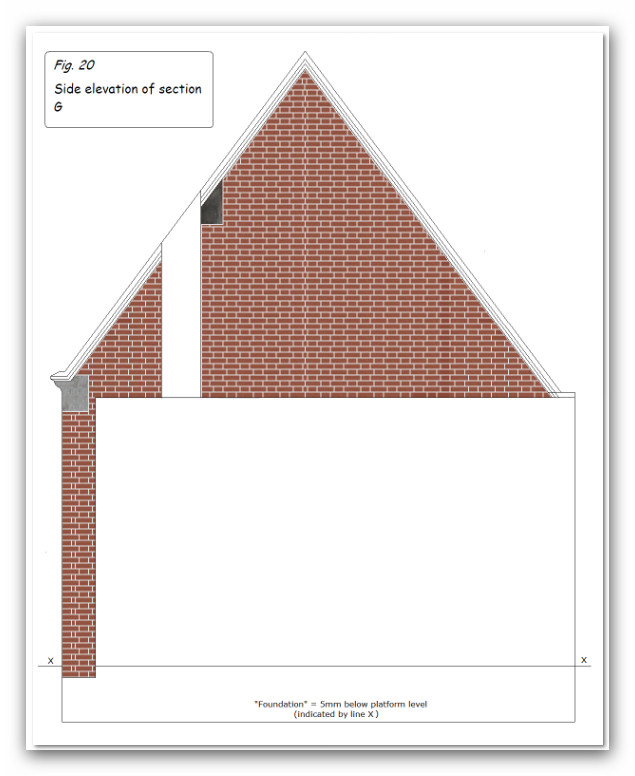
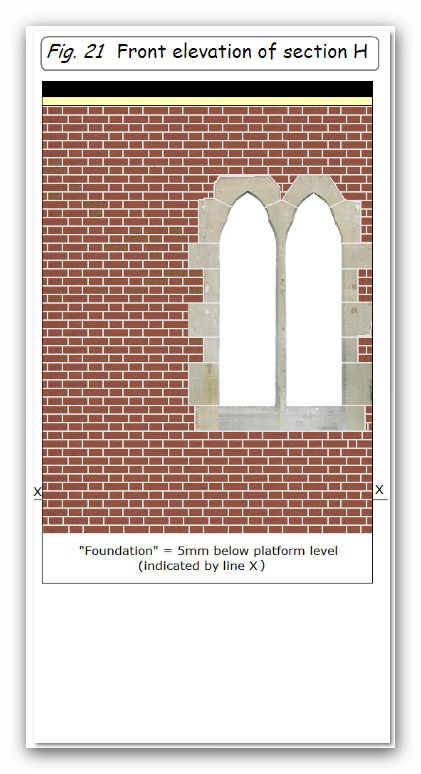
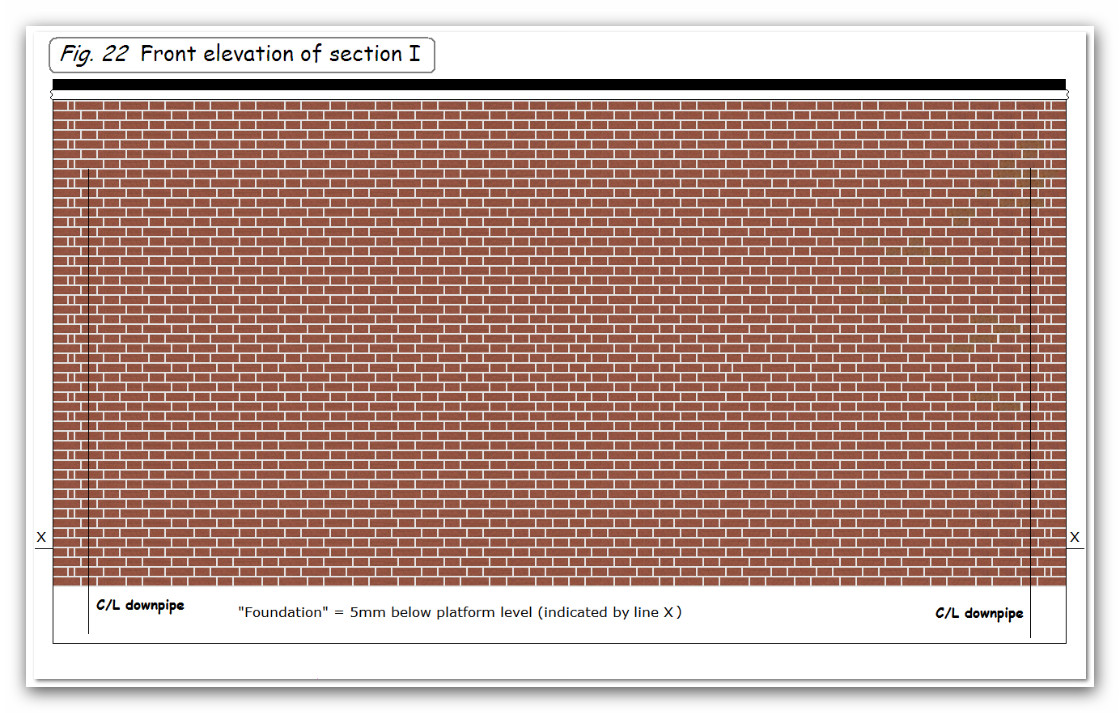
David continues:
Roger’s layout is based in the 1950s – 1960s. One photograph has been traced for that period (see fig 3), and another from the 1970s (see fig 4) These show a number of differences from the 2004 view (see fig 5).
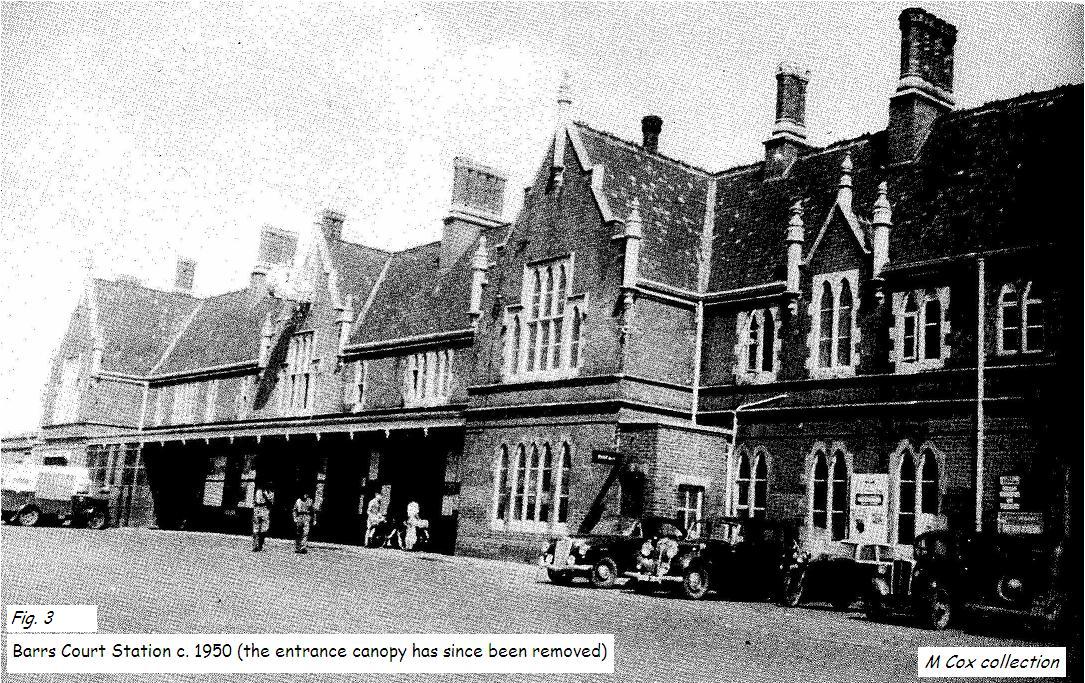
The lack of any detailed images from the period required meant that some intelligent guesswork would be needed with particular regard to doors and windows. The main change from the present day would have to be the re-instatement of the canopy over the main frontage (section B).
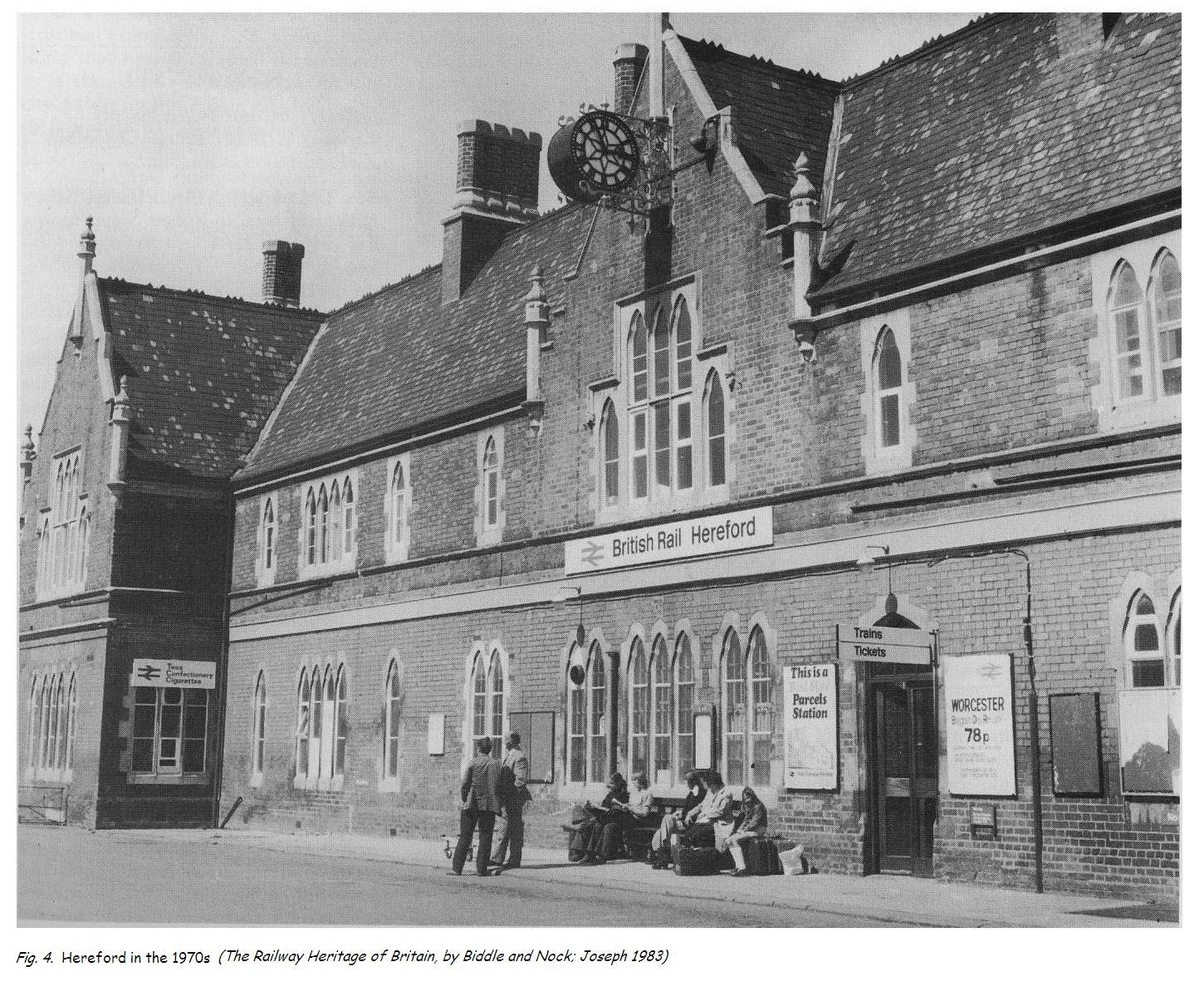
The canopy over section F would need to be omitted, as would the industrial-type steel doors in this section and the corresponding section of the platform side. These were replaced by windows as it was presumed that the later canopy and doors were provided for parcels and mail access.
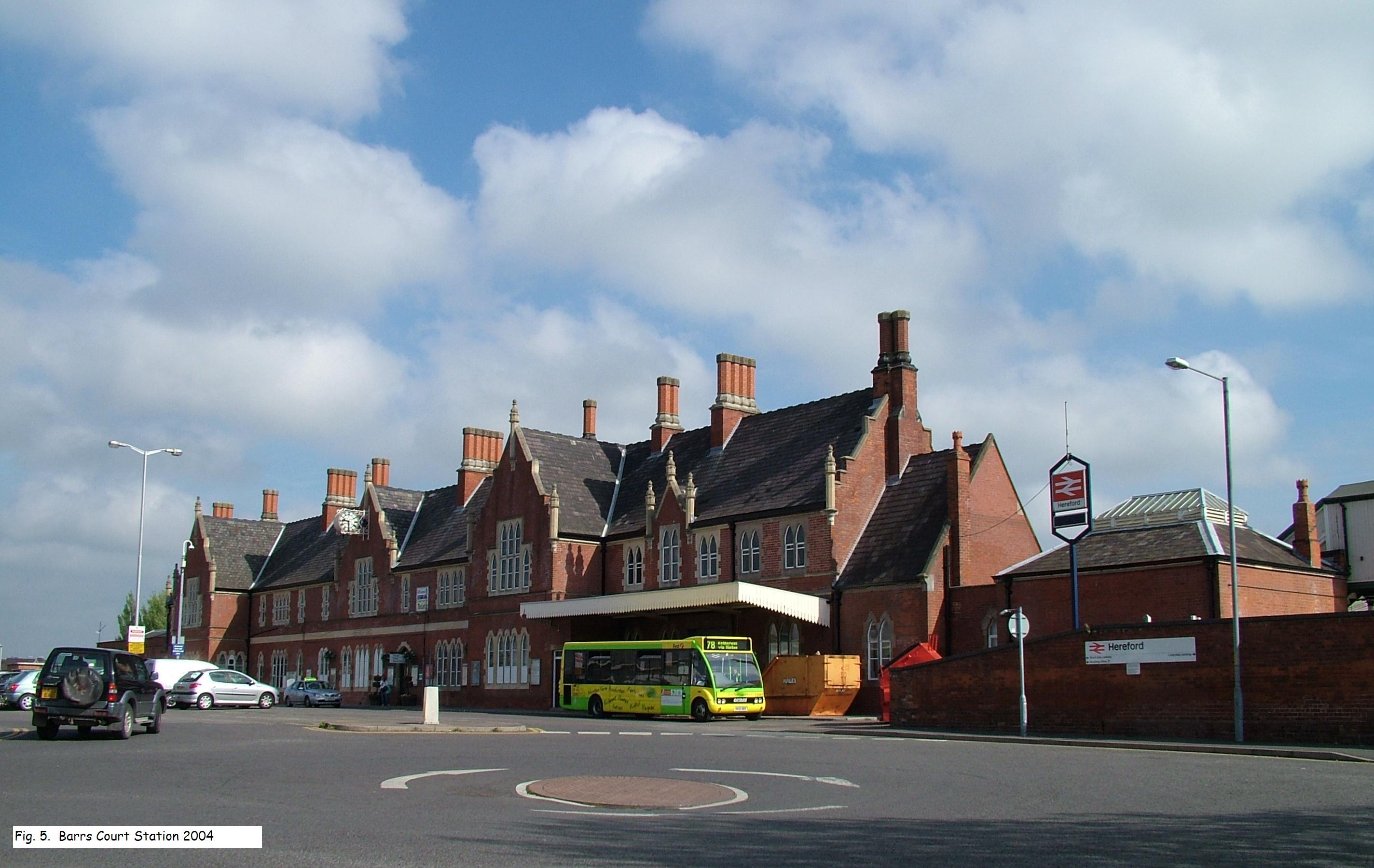
The two doors in section B are different to other doors, but they could be 1950s so have been left. The doors in section A and the side of section I look to be more recent and have been omitted.
Figure 5

 Roger Farnworth