Category Archives: Locomotives and Rolling Stock

‘Modern Tramway’ – Blackpool: The Marton Experiment …

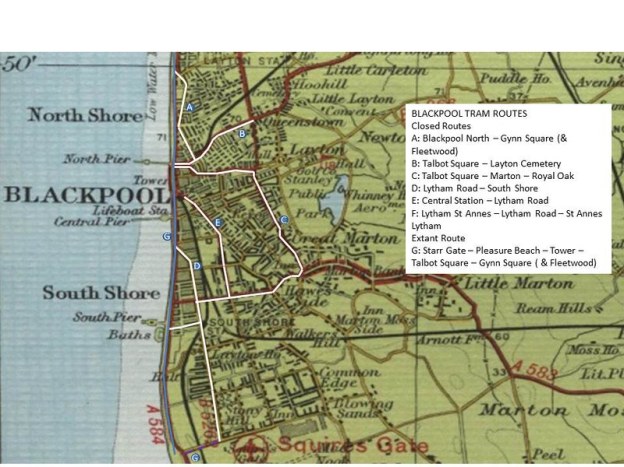
The ‘Modern Tramway’ reported in January & February 1963 on a relatively short lived experiment on Blackpool’s trams. The Marton route was an inland route through Blackpool which complemented the promenade route. It is route ‘C’ on the featured image above. [11]

The two articles were written by F.K. Pearson who suggested that his articles could perhaps have been entitled, ‘The Experiment That Didn’t Quite …‘ [1]

The Marton Route opened in 1901 but by 1938 it was approaching the end of it’s useful life, needing relaying and requiring a new fleet of 15 trams. A decision to undertake the work was deferred by Blackpool Town Council. War intervened and the existing trackwork was patched up to last a few more years.”By the time relaying could be considered again, technical progress had rendered the 1938 plan out of date, and the Marton route was chosen for one of Britain’s most interesting public transport experiments, the only attempt ever made to provide a tram service which by its sheer frequency, comfort and riding qualities could compete not just with the bus but with its future competitor, the private car.” [1: p14] Pearson’s article reports on that experiment, how near it came to success. and where it eventually failed.

Pearson continues:

“The story begins with the acquisition in 1945 by Crompton Parkinson Ltd. of a licence to manufacture in Britain certain equipment similar to that in the American PCC-car, the patents of which were held by the Transit Research Corporation in the USA. The experiments which followed were aimed at producing a vehicle which in silence, comfort, performance and soothness of riding would outshine any existing public service vehicle and rival that of the best private car. Blackpool already had modern trams, plenty of them, designed for the straight, open, track on the Promenade where even orthodox cars could give a smooth and quiet ride, but what was promised now was a tram with silent ‘glideaway’ performance even on grooved street track with frequent curves These route conditions, frequently met with in other towns, existed in Blackpool only on the Marton line, and Mr. Walter Luff the Transport Manager, made no secret of the fact that he hoped to persuade the Town Council to let him use the Marton route for a large-scale experiment that might have considerable repercussions on the future of tramways elsewhere in Britain; in short, to make it a show-piece.

The question of relaying the route was reopened as soon as the war ended, and the Town Council asked for comparative estimates for trams, buses and trolleybuses. Mr. Luff reported that to keep trams would cost £136,380 (£61,360 for new track £75,000 for 15 new cars), buses would cost £56,940 including road reinstatement and depot conversion, and trolleybuses would cost £87,360. He made no secret of his belief that the experiments then in progress would result in a vehicle superior to be existing tram, bus or trolleybus, and the Town Council, wishing to await the outcome of the trials, postponed a decision and asked that the track be patched up for a few more months.

The first objective of the new equipment was silent running on grooved street track. This was achieved by using resilient wheels with rubber sandwiches loaded in shear between the tyre and the wheel hub, which would absorb small-amplitude vibrations arising from irregularities in the track instead of transmitting them through the springing to the rest of the car, and in the process would achieve virtual silence. Furthermore, the resilient wheel allows slight lateral flexibility and reduced side friction between flange and rail, eliminating the usual scrub on curves and incidentally reducing flange wear to an extent which eliminated the need for re-turning the tyre profile between successive re-tyrings. These rubber-sandwich wheels could be unbolted and changed like those of a bus, necessitating a newly-designed inside-frame truck (type H.S. 44) produced by Maley & Taunton, Ltd., who also designed and supplied a “silent” air-compressor to eliminate another source of noise. The experimental trucks were placed under car No. 303, and on 26th April 1946, the B.B.C. took sound-recordings on street track on this and an older car, with the microphone only three feet from the wheels.

With the old-type car the noise was considerable but with No. 393 it was practically nil.

Another traditional source of tramcar noise is the straight spur-gear drive, and this was replaced in the new truck by a right-angle spiral bevel drive, completely silent in operation, and requiring the two motors to be placed fore-and-aft in the truck. In many towns this alone would have led to a remarkable reduction in noise level, but Blackpool also knows how to keep spur gears quiet, and one wonders whether a right-angle drive (less efficient mechanically) can be justified by noise reduction alone. However, these and similar gears had been developed to such a pitch of efficiency for motor vehicles by their manufacturers (David Brown, Ltd.) that their use in a tram presented little difficulty. The technical and metallurgical problems had long since been overcome, and the only question was that of expense.

The other main objective was complete smoothness of acceleration and braking with private-car performance, and for this experiments were carried out by Crompton Parkinson, Ltd., using Blackpool car No. 208 to which the experimental trucks were transferred from No. 303 later in 1946. All four axles were motored, giving a possible initial acceleration rate of 3.5 mph. per second, and a smooth rate of change was achieved by arranging the motors in permanent series-parallel pairs and feeding them through a resistance having 94 steps instead of the usual eight. This resistance, mounted on the roof for ease of ventilation, was built around a circular steel frame with contacts on a rotating arm, turned by a small pilot motor, and the master control was by a joystick control by which the driver could select the rate of acceleration or braking required. Acceleration was automatic, for if the lever were left in a constant position the traction motors would accelerate or decelerate at constant current, yet it could also be varied by moving the stick, which explains the trade-name “Vambac” (Variable Automatic Multi-notch Braking and Acceleration Control) used for this equipment. Although inspired by that of the American PCC-car, it differed in several important respects, notably in that it enabled the car to coast. A car with this equipment, operating at the limit of its potential, was expected to consume about 4.5 units per car per mile (about 2.5 times the Blackpool average), but provision was also made to give a lower performance comparable to that of older trams if the two had to provide a mixed service on the same route. This reduced performance later became the Blackpool standard.” [1: p14-15]
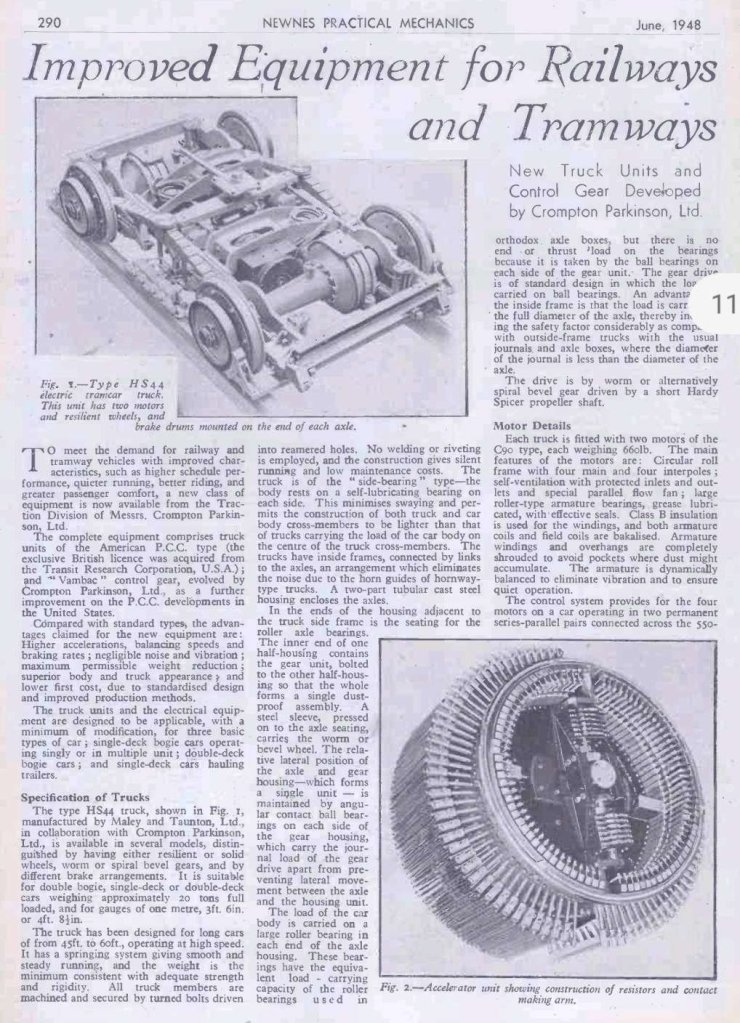
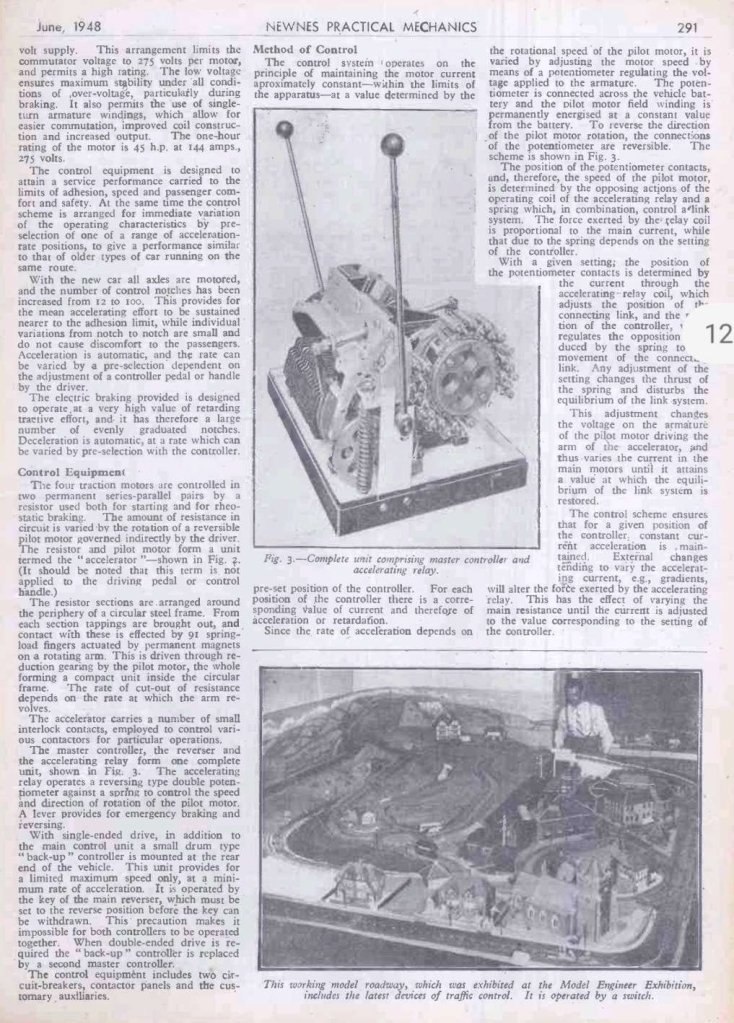
Two pages from Newnes Practical Mechanics which give details of the type H.S. 44 bogies produced by Crompton Parkinson Ltd. and Maley & Taunton, Ltd. [4]

It transpired that the complete car was ready to begin trials in December 1946, and the Town Council were very soon invited for a demonstration. The track was now in an awful condition requiring a relay or abandon decision.

“After considerable debate, the Transport Committee recommended that it be relaid, and the Town Council on 8th January, 1947, decided by the narrow margin of 25 votes to 21 to instruct the Borough Surveyor to proceed with the reconstruction of the track. Blackpool Town Council, then as now, included some shrewd business-men, and the fact that they were prepared to spend twice as much on keeping trams than would have been needed for buses is the most eloquent testimonial to car No. 208 and the impression which its revolutionary equipment and performance had made. For the first time, they realised, it was possible for a public service vehicle to offer a performance as good as the private car, and it was bound to be popular.

Work began straight away, using rail already in stock, followed by 600 tons of new rail and Edgar Allen pointwork to complete the job. Other traffic was diverted, with single-line working for the trams, and by the autumn of 1948 new Thermit-welded asphalt-paved track extended throughout the 3-mile route, save only for a short section held back until 1950 because of an anticipated new road layout. …

Meanwhile, the experiments with prototype car No. 208 continued, and by mid-1947 the car (specially equipped with fluorescent lighting) was ready for regular service, though frequently in demand for demonstration runs with visitors from other undertakings. The car was not used on Marton, for the Marton schedules were based on 78-seat instead of 48-seat cars, and for its first three years the new Marton track was traversed by the same cars that had worked the service since the mid-twenties, the gaunt, upright standard-type double-deckers, some of them with open balconies. These had no part in the Marton Experiment, and were due to disappear as soon as the heralded 15 new cars made their appearance.

At this point, compromises were made. Inflation meant that the planned new cars could no longer be obtained at anything like the estimated figure. Blackpool decided, for the sake of economy, to fit the new equipment to existing trams. Twelve surplus modern single-deckers were seen as suitable.
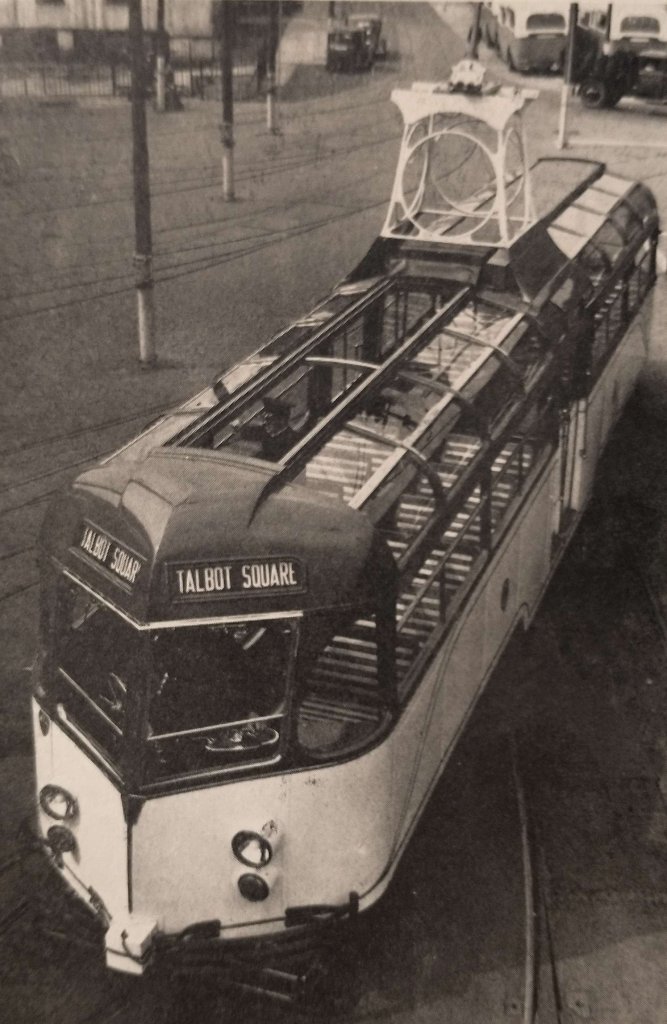
One of the twelve cars that were. Built cheaply in 1939 for use during the holiday season. It had a sunshine roof, secondhand electrical equipment, wooden seats, no partition between driver and passengers, the minimum of interior lighting, waste-high sliding doors, and the upper half of the windows permanently open. The twelve cars were originally built by English Electric. This photograph, which was included with Pearson’s article, shows the tram on 30th August 1939. It shows both the sunshine roof and the wooden seats to good advantage, © Fox Photos Ltd. [1: p17] The copyright of the photograph is now held by ‘Getty Images’ and a link to the original photograph can be found here.

“These cars (10 to 21) had been built cheaply in 1939 for use during the holiday season only, with second-hand electrical equipment, wooden seats, no partition between driver and passengers, the minimum of interior lighting, waist-high sliding doors, and the upper half of the windows permanently open. … Scarcely had they entered service than war intervened and they were put in store, emerging in 1942 with full-length windows, doors and cabs for use on extra workings such as troop specials.

Late in 1947, the Corporation ordered 18 sets of H.S. 44 trucks and Vambac equipment, to enable them to equip sufficient cars to work the entire Marton service, including spares. Rigby Road Works set to work rebuilding the 10-21 series into a new silent-running fleet, soon to become known as the ‘Marton Vambacs’. … Internally, the cars were given soft fluorescent lights, comfortable seats upholstered in brown moquette, new floor-coverings, and tuneful bells. The first car, No. 21, appeared in December, 1949, and its lack of noise when running was quite uncanny, the only remaining sounds being the soft buzz of the “silent” compressor, the hissing of the motor brushes, the clicking of the accelerator contacts, and the sound of the trolley wheel. Even this latter was to have been eliminated in due course, for when the Marton overhead next needed renewal the round wire was to be replaced by grooved wire suitable for use with silent-running carbon skids, of the type used on trolleybuses.” [1: p17-18]

Pearson tells us that, “Conversion of the 12 cars, took just over two years, and during this period the “new” cars could be seen side by side with the older double-deckers. In the eyes of the tramway enthusiast, the “vintage” year of the Marton route was undoubtedly 1951, when about half the service was still in the hands of the venerable but never decrepit standard cars, and mingled with these like gazelles among heavier quadrupeds (a purist might say ‘octopeds’) were the first half dozen Marton Vambacs’.” [1: p18-19]
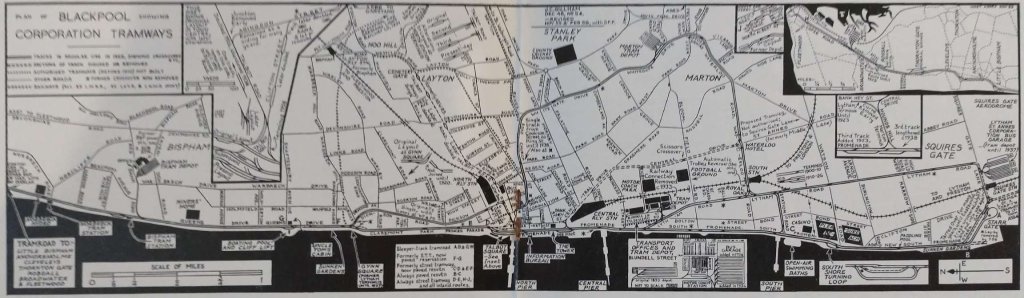
The map of Blackpool’s trams included in Pearson’s article. [2: p54-55]

In the second installment of the story, Pearson moves on from the Autumn of 1951 to the early months of 1952, when conversion of trams No.10-21 was complete. With No. 208, this meant that there were 13 tram cars serving the Marton route which had to be supplemented at times by older double-deckers. The Council’s resources were by this time dedicated to introducing Charles Roberts cars on the Promenade.
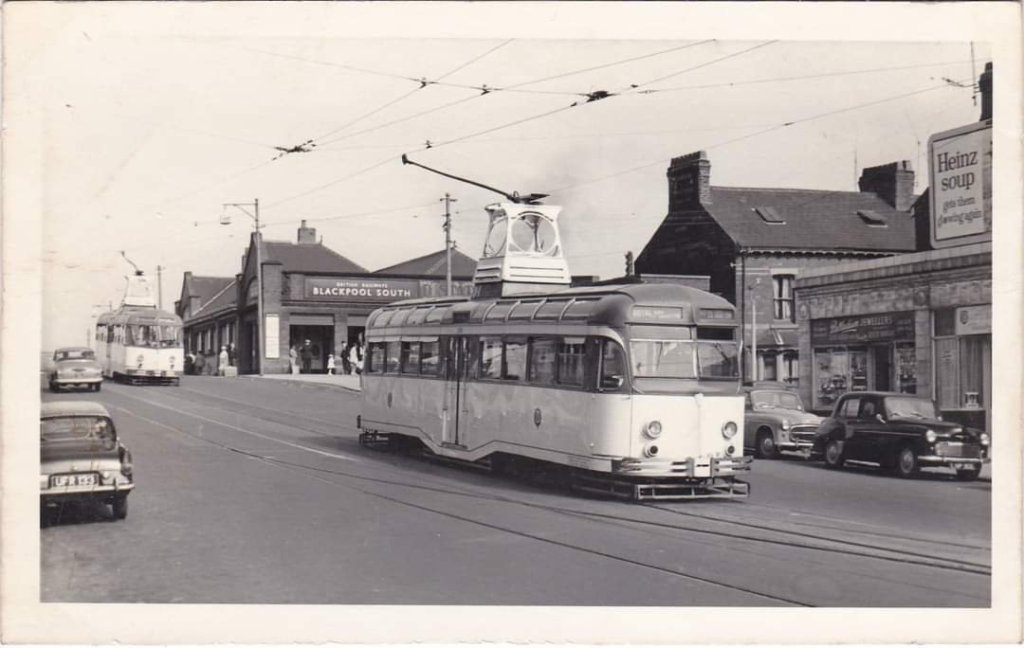
Two of the Marton Vambac trams in Blackpool South. The nearest Vambac Railcoach No. 208 was prototype test bed for the new type of controller & inside frame bogies. Behind is one of the twelve Marton Vambac’s, rebuilt from 1939-built sun saloons. This image was shared on the History of Blackpool Facebook Group on 6th February 2021 by Pete Dumville. [5]

From 1954, when the double-deckers had been withdrawn from service. The Marton route was worked by the 13 Vambac cars and, usually, three pre-war English Electric rail coaches.

It was unfortunate that rising crew costs began to become a significant issue for the Council.

“It may perhaps have been overlooked that the success of the PCC-cars on the street routes in the USA was nearly always coupled with one-man operation. … If passengers were satisfied with the new equipment, so we’re the platform staff.

The manufacturer’s claims were fully borne out, for the automatic acceleration and the provision of simple joystick and pedal control made the cars delightfully simple to drive, reducing fatigue to a minimum and eliminating some of the finer points of instructional training, since “notching up” no longer depended on the driver’s skill. However, it was rather curious to observe the use which different drivers made of the two braking systems, due, perhaps, to the admixture of pre-war and Vambac cars. The Vambac equipment provided a smooth and reliable brake effective down to a speed of less than two miles per hour, and was intended as the main service brake, the air brake being used only for the final stop, brake-shoe life being increased accordingly. This theory can be seen in everyday application on the Promenade, with the post-war cars, yet on the Marton Vambacs many drivers seemed to prefer the familiar air brake for service use, leaving what they termed the “stick brake” in reserve for emergencies. The smoothness of braking was thus dependent once again on the skill of the driver, and the smooth automatic deceleration purchased at such expense was wasted. Other drivers would use the Vambac brake to commence deceleration but would then change to air at a speed higher than intended by the designers for the final stop, and at least one journey made by the writer was marred by the Vambac deceleration being “interrupted” each time while the driver remembered to “put on the air.” One wonders why they were so fond of the air brake, but a possible reason lies in the fact that both terminal approaches were on slight gradients, where the air brake had in any case to be applied to hold the car on the grade, unlike the flat expanses of the Promenade.” [2: p51-52]

Another factor associated with the trial was that of maintenance of the tram cars.

On the one hand, the provision of automatic acceleration and electric braking with minimum and controlled current peaks certainly eliminated the possibility of mishandling the electrical equipment, and must have reduced routine maintenance on the control gear, while the use of cardan shafts and totally-enclosed spiral bevel drives eliminated the troubles associated with the servicing of motor-suspension bearings and reduced the shopping periods. The service availability of the Vambac cars, judging from their daily appearances has been quite as high as that of the orthodox cars, and from this one can safely say that the new equipment must have been fully adequate in avoiding excessive servicing requirements. Moreover, while new and somewhat revolutionary equipment in any field has to cope with the burden of tradition on the part of older generation staff (human nature being what it is), this hurdle seems to have been surmounted with conspicuous success. On the other hand, obtaining spare parts must have been very awkward quite apart from the cost aspect for apart from Blackpool’s own 304-class cars no one else used the same equipment, despite all the hopes that were placed in it. In 1947 the potential British market for modern tramway equipment still included Leeds, Sheffield, Glasgow and Aberdeen, and anyone who had sampled the new equipment could be forgiven for seeing in it a germ of resurgence for tramways and a hope of further orders; but this was not to be. From this aspect, one begins to understand why the five extra sets of trucks and equipments were used as a source of spares rather than to equip further cars.” [2: p52, 54]

An interesting claim made for the new resilient-wheeled trucks was a saving in track costs. Although the track was abandoned before claims of a 30-year life could be tested, the track, “certainly stood up very well to 15 years’ life, and even at the end much of the track and paving was still of exhibition standard, Some of the sharper curves had been renewed, but this was only to be expected, for grooved rail generally lasts four times as long on straight track as on curves. On the sections with non-welded joints (usually) curves), there has been none of the usual deterioration of joints through hammer-blow … [found in] towns using heavy double-deck cars. The one unexpected phenomenon [was] the appearance of a few patches of corrugation.” [2: p54]

Pearson spent a short while alongside a corrugated stretch in Whitegate Drive, listening to sounds made by different types of car. He comments: “The passage of a Vambac car, even on the corrugations, was a process of exemplary quiet, but the occasional pre-war solid-wheeled car produced a roaring noise that told its own story.” [2: p54]

In his opinion, it was the “periodic traverse of the Marton tracks by these few pre-war solid-wheeled railcoaches (and by cars going to and from the Marton depot) that ha[d] given rise to the corrugations, and Whitegate. Drive residents who wrote to the papers in complaining terms can only have had these cars in mind. From the track aspect, it is therefore a pity that the original plan to equip 18 cars was not carried out, for the pre-war Blackpool cars, lacking track brakes, beget corrugations wherever they encounter solid foundations.” [2: p54-55]

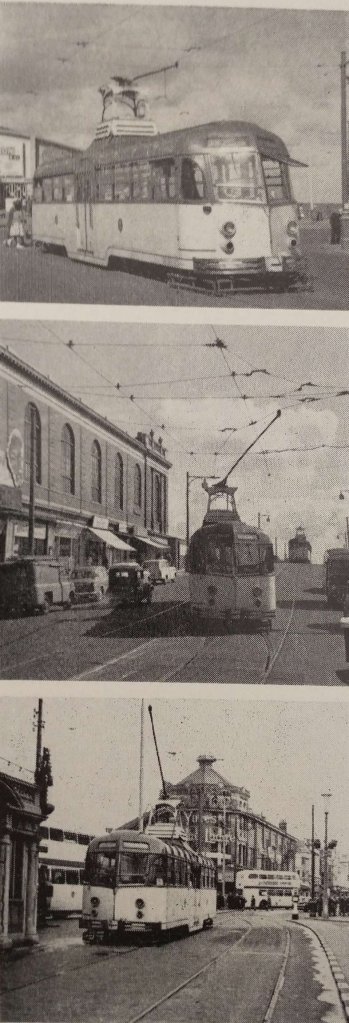
A sequence of monochrome photos which were published as part of Pearson’s articles are shown below. The first four show something of the lifespan of the experiment. The following three show Marton Vambac trams at the various termini of the Marton Route.
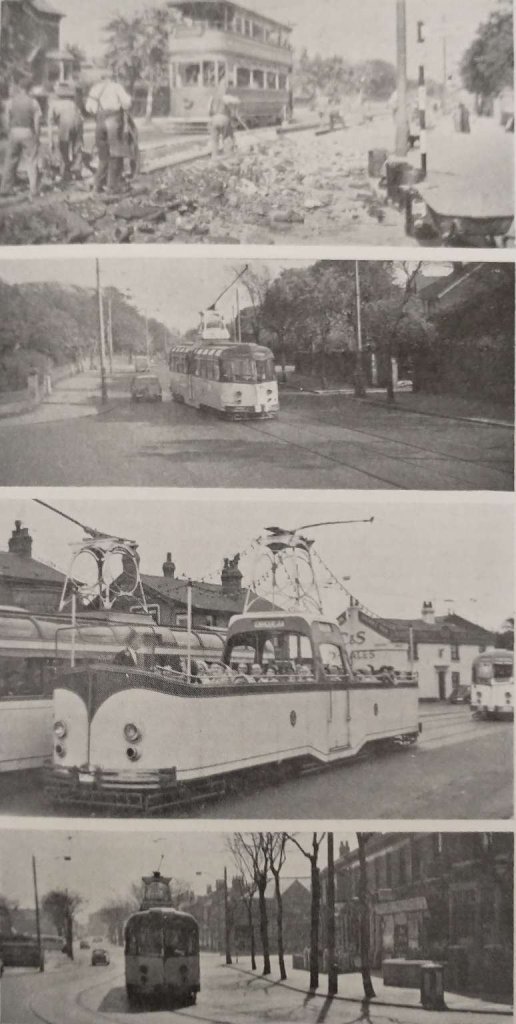
The four pictures above span the life of the experiment (1947-1962). The top photograph, taken in 1947, shows the new outward track being laid in Whitegate Drive, with balcony car No. 144 passing on the wrong track. The second photograph shows the finished job some years later, with a Vambac car not far from the same spot, and the third shows one of the pre-war solid-wheeled cars which Pearson blamed for the Whitegate Drive corrugations – 1934 open “boat” car No. 227 on the Circular Tour duty at Marton Depot in 1959, one of the two post-war seasons in which the Department ran a genuine “Circular Tour” via Squires Gate Lane and Marton, loading in Talbot Square. The fourth view, taken only a few weeks before abandonment, shows the track and paving at Devonshire Square, still in good-as-new condition. © C. G. Stevens, R. P. Fergusson, C. E. Macleod. [2: p53]
The three pictures above show the three termini of Blackpool’s Marton route, showing 10-21 series Vambac cars. Top, No. 16 at South Pier, the point to which the service was extended in summer (until 1961). Centre, a car reverses on the crossover at Royal Oak in 1960. Bottom, the town-centre terminus at Talbot Square, © K. M. Chadbourne. [2: p52]

Pearson states that:

“From the various engineering aspects – performance, silent running, case of control, routine maintenance, track wear, and availability – the Marton Experiment was therefore a success, even though it did not induce any other tramways to invest in similar equipment. The new equipment did all that the manufacturers claimed for it, and once the teething troubles were overcome ha[d] continued to function smoothly and efficiently for more than 10 years, with no further modifications of any importance. The Crompton Parkinson/Maley & Taunton Vambac/H.S.44 combination represented the ultimate development of street tramway practice in this country.” [2: p55]

Pearson considered that the VAMBAC trams had infinitely superior qualities both in riding and silence, so far as solid track was concerned. They were popular with the public – when abandonment was first proposed there was a significant outcry from customers who said that the VAMBAC trams were the finest transport service they had known. “Marton residents organised a massive petition to the Town Council for its retention, without any prompting from tramway-enthusiasts, in fact without their even knowing of it. The campaign was headed by Alderman J. S. Richardson, now the Mayor of Blackpool, and it is a sad coincidence that in his mayoral capacity Alderman Richardson himself had to preside at the closing on 28th October, 1962.” [2: p55]

It is Pearson’s view that the main reason for the failure of the experiment and the closure of the Marton tram route was the economic impossibility of two-man operation with only 48 seats per tram. While this was the main reason, there were at least three subsidiary factors: the cost of spare parts; the high energy cost of starting from rest; awkward relationships with other road users as visiting road users were no longer used to mixing with trams in their own communities.

He notes that crew costs in the 1960s accounted for an average of about 75% of a transport budget. Tram costs were higher than buses, the only way to offset that difference was to maximise the customer load-factor (this was effective on the Promenade) or to use tramway units of higher capacity than the largest available bus, so as to bring the cost per seat-mile down to a competitive figure. Had articulated cars been available that would have addressed the issue. “The 48-seat Marton Vambacs were below the minimum economic size … and throughout the experiment the route … had to be increasingly subsidised from the receipts of others. The Marton residents … enjoyed a superb service at considerably less than cost, and were naturally loth to lose it, but any suggestion of passing on the cost by raising the fares to a scale above that of the inland bus routes (as is done in summer on the Promenade) would clearly have been politically out of the question.” [2: p56]

Pearson’s own opinion, expressed in his article, is that the 12 year experiment proved that “revolutionary new concepts in tramway engineering [could] be applied to a normal street route as well as on the special field of the Blackpool Promenade, and Marton’s disappearance [was] a sad occasion for all who [saw] in the tramcar a still only partially-exploited form of transport. Looking back, it seems a repeat of a sadly familiar pattern; the engineering profession has delivered the goods, but the confused pattern of public transport in this country has never made full use of the potential made available by the engineers, electrical and mechanical, who gave practical expression to what [was], for most of us, still a composite dream.” [2: p56]

The Blackpool Trams website tells us that, “the first VAMBAC was withdrawn in 1960 as car 10 suffered accident damage and was scrapped soon after. The second VAMBAC withdrawn was 21 in 1961, which was withdrawn as a source of spare parts for the remaining trams, while 14 was also withdrawn for use as a driver training car. The writing was on the wall for the Marton Route, which had been isolated and lost it’s summer services to South Pier following the closure of the Lytham Road route in 1961, however, the remaining VAMBACS remained in use until October 1962 when the Marton route closed, with 11, 13, 15, 17 and 18 operating on the last day. The VAMBACS remained in Marton Depot and were joined by other surplus trams for scrapping in 1963. … One VAMBAC did manage to survive however, VAMBAC 11 was requested for a tour of the remaining parts of the tramway early in 1963 and was extracted from Marton Depot and made it’s way to Rigby Road. Following the tour, 11 was eventually preserved and found its way into preservation and is now at the East Anglia transport museum, where it still sees regular use today.” [3]
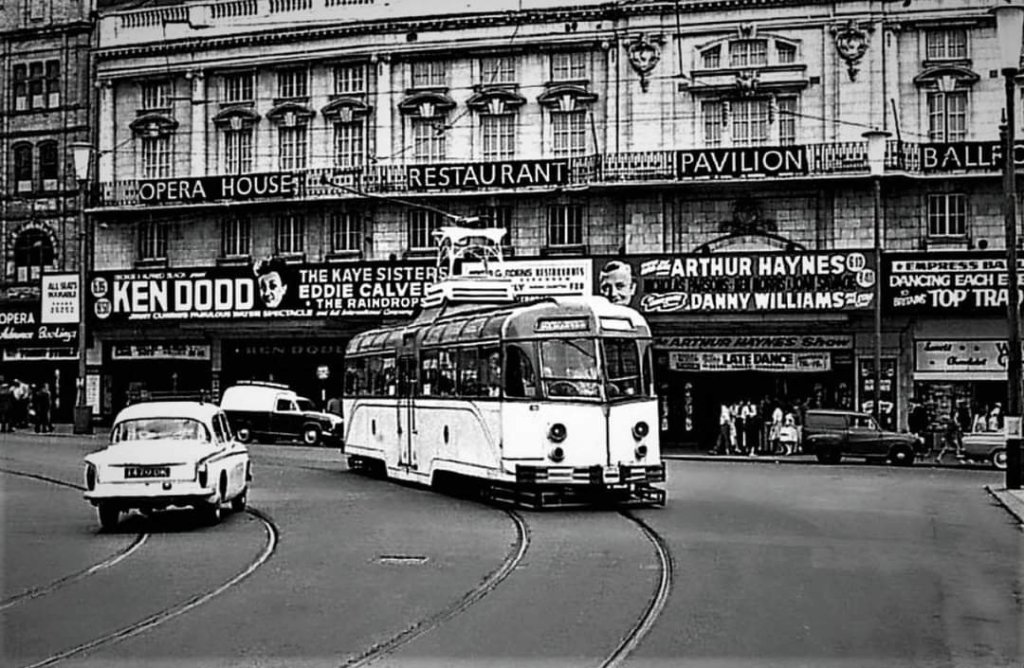
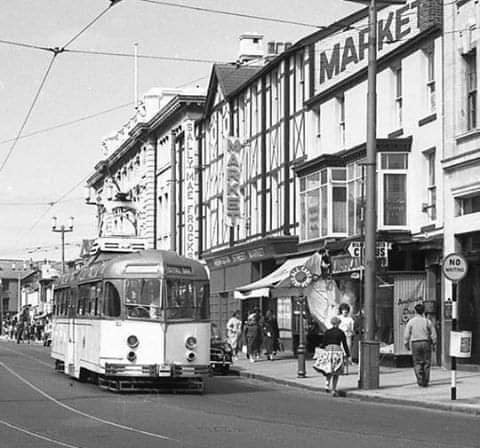
One of the Martin Vambacs in service in Blackpool in the late 1950s or early 1960s. This image was shared on the History of Blackpool Facebook Group on 7th April 2017 by Tony Latham. [6]
Another Marton Vambac outside Abingdon Street Market. This photograph was shared on the History of Blackpool Facebook Group on 18th May 2023 by Jess Tulloch. [8]
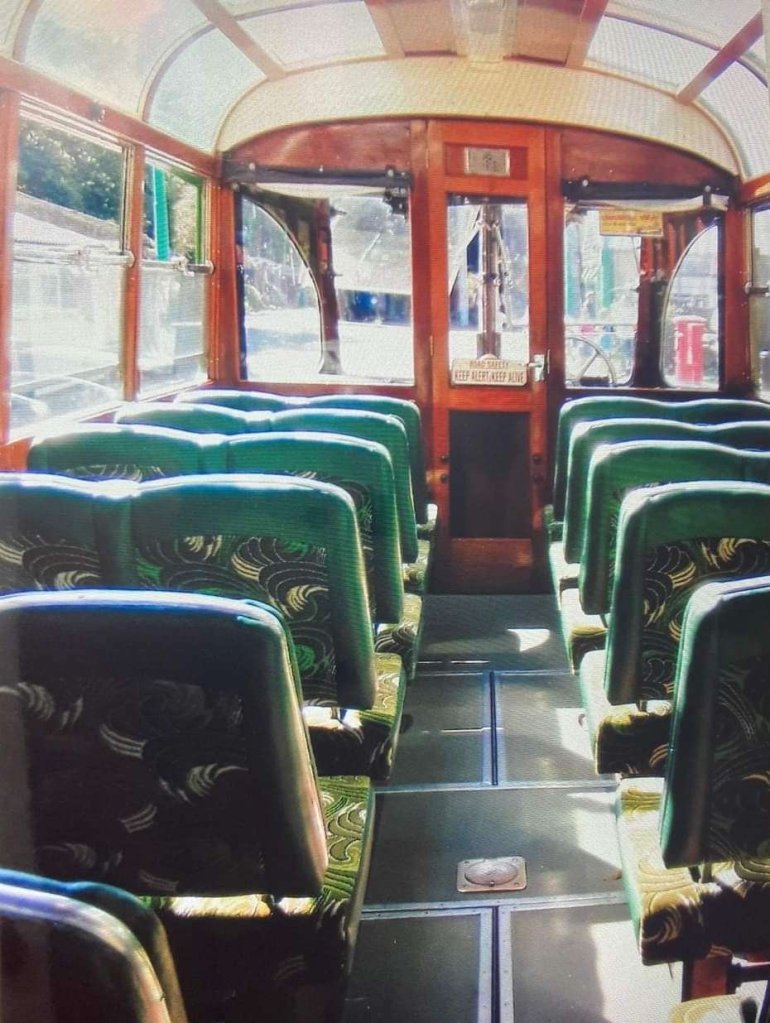
The interior of Marton Vambac No. 11 in its preserved condition at the East Anglia Transport Museum near Lowestoft. This image was shared on the History of Blackpool Facebook Group on 23rd February 2023 by Col Macloud. [7]
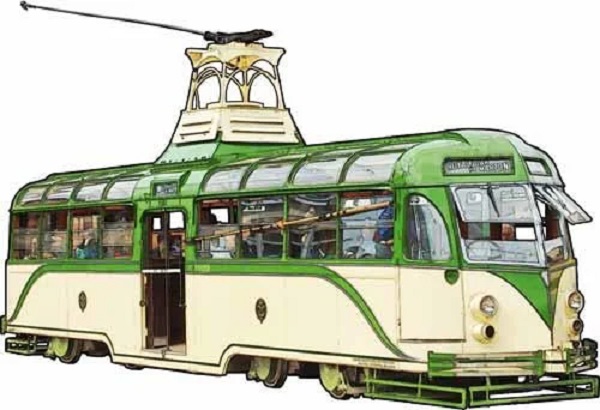
A composite image of Marton Vambac No. 11 as used by ‘Videoscene’ in their range of transfers applied to mugs. [9]
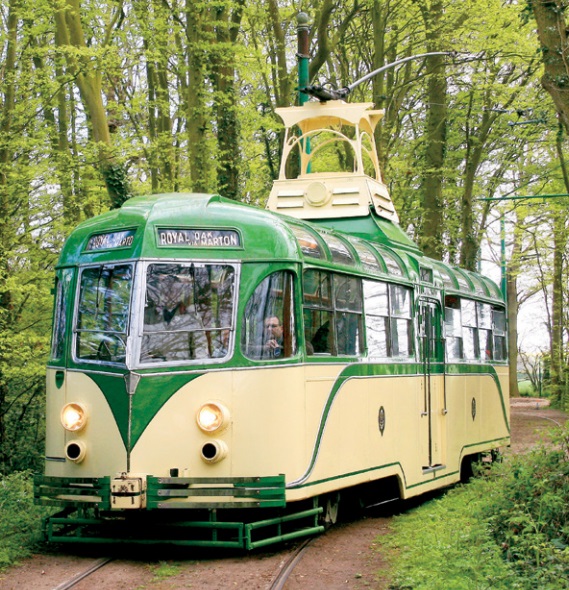
Marton Vambac No. 11 at its present home – the East Anglia Transport Museum. [10]

References

  1. F.K. Pearson; The Marston Experiment; in Modern Tramway, Volume 26 No.301; Light Railway Transport League & Ian Allan, Hampton Court, Surrey, January 1963, p14-19.
  2. F.K. Pearson; The Marston Experiment …. ; in Modern Tramway, Volume 26 No.302; Light Railway Transport League & Ian Allan, Hampton Court, Surrey, February 1963, p51-56.
  3. https://blackpool-trams.yolasite.com/vambac-trams.php, accessed on 28th July 2023.
  4. Newnes Practical Mechanics June 1948, p290-291; via., https://www.google.com/url?sa=t&source=web&rct=j&opi=89978449&url=https://worldradiohistory.com/UK/Practical-Mechanics/40s/Practical-Mechanics-1948-06-S-OCR.pdf&ved=2ahUKEwiRjbjumbKAAxVUmFwKHYifAcUQFnoECB0QAQ&usg=AOvVaw24PI5xxITo516frkIf-ZsM, accessed on 28th July 2023.
  5. https://m.facebook.com/groups/blackpoolhistory/permalink/1632707573581243, accessed on 29th July 2023.
  6. https://m.facebook.com/groups/blackpoolhistory/permalink/691364481048895, accessed on 29th July 2023.
  7. https://m.facebook.com/groups/blackpoolhistory/permalink/2196698053848856, accessed on 29th July 2023.
  8. https://m.facebook.com/groups/2251377838346012/permalink/2713552708795187, accessed on 29th July 2023.
  9. https://www.videoscene.co.uk/blackpool-tram-mug-collection-2011-vambac-11, accessed on 29th July 2023.
  10. https://www.eatransportmuseum.co.uk/wp-content/uploads/2021/04/Leaflet2021Web.pdf, accessed on 29th July 2023.
  11. https://www.skyscrapercity.com/threads/blackpool-tram-system-u-c.572141/page-33, accessed on 29th July 2023.
‘Modern Tramway’ in the early- to mid-1960s – February 1963 – The Strange Tale of No. 2

As part of a batch of magazines from the 1950s and 1960s I picked up a number of editions of ‘Modern Tramway’ from 1963 into 1964. ‘The Modern Tramway’ was the journal of the Light Railway Transport League (LRTL). By 1963 it had dropped the ‘The’ and was published jointly by Ian Allan and the LRTL. Its formal title was ‘Modern Tramway and Light Railway Review’.

The February 1963 edition of the journal was priced at 2s 6d.

Among a number of articles in the journal was a piece by G. Hyde, The Strange Tale of No. 2.

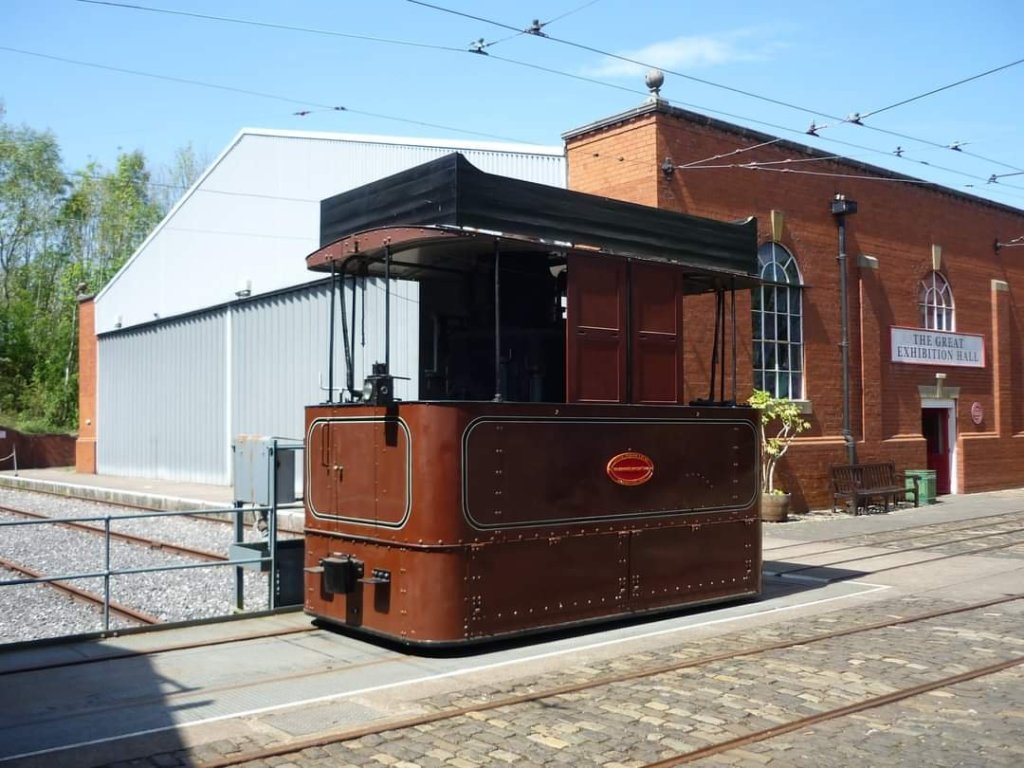
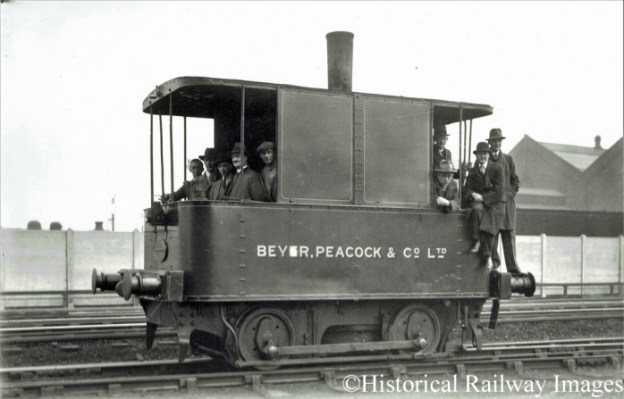
This No. 2 was Beyer Peacock steam tram engine No. 2. It is shown in the featured image above in which it is seen at Beyer Peacock’s works in Gorton, Manchester. [2]

It was originally built to a Wilkinson patent for the New South Wales Government tramways in 1885 and shipped to Australia in April of that year. It made several trial runs on the Redfern Station line of the Sydney steam tramways, but it evidently did not compare favourably with the Baldwin locomotives then in use there. Hyde says that, “It was reputed to have a heavy fuel consumption. and Beyer Peacock’s received complaints about the difficulties in maintaining a sufficient head of steam, but the engine hardly had a fair trial as only short runs were made with it, and the drivers’ inexperience may have contributed to its shortcomings. The trials were invariably carried out after midnight so no photographs were taken of the engine in service; neither was it ever incorporated into the Sydney tramway stock, consequently it never had a fleet number. Whilst in Australia it was referred to as ‘John Bull’.” [1: p48]

After its short unsuccessful trials in Sydney, John Bull was shipped to the small port of Wollongong and worked the isolated Wollongong-Clifton section of the New South Wales Government railways. It stayed there until the section was connected to the main coastal line in 1886.

Hyde commented that at this point “John Bull” disappeared. “Nothing further is known about it until it turned up again at Manchester in 1890, when it featured in Beyer Peacock’s stock list as yard engine No. 2. The mystery of this missing four years is heightened by the fact that Beyer Peacock’s records refer to the engine as having been salvaged, and returned to their works. This led to the rumour which persists in the Gorton works that No. 2 fell into the sea at one point during its travels round the world.” [1: p48]

In 1890 the loco was modified, the duplicate controls were removed, as also were the wheel curtains, then railway type buffers and drawgear were fitted.

In 1915 a steam brake was fitted, then in 1930 a new boiler was installed and in 1958 a new steam dryer was fitted. It was ultimately withdrawn from service in early 1959.

Hyde asserted that No. 2 was “certainly the biggest tramway engine ever built to Wilkinson’s patent, and was one of the most powerful steam tramway engines ever to be built in this country Its gross working weight of 16 tons compares with the 12 tons of the heavy 83-86 class Wilkinson engines of the Manchester, Bury, Rochdale & Oldham tramway, one of which is being kept by the British Transport Commission.” [1: p49]

Hyde provided detailed information about No. 2. … It had two simple cylinders, 9.5 in. diameter by 12 in. stroke. The crank axle had a pinion in the centre with 20 teeth geared to a spur wheel on the driving axle having 33 teeth, thus having a ratio of 1.65 to 1. It was fitted with a Stephenson type link motion. The four coupled driving wheels were of 30 in. diameter, with a wheelbase of 6 ft. 8 in. The water capacity was 225 gallons and there was a fuel space of 11 cubic feet. The vertical boiler was of the Field type, and had 121 tubes, each with an outside diameter of 2.13 in. The tubes, which project down into the firebox, were between 19 and 27 inches long, and had fitted concentric open-ended internal tubes known as circulating tubes. The working pressure is 150 lb. per sq. in., and the total heating area was about 184 sq. ft. with a total fire grate area of 10.8 sq. ft. The engine has an overall length of 13 ft 6 in. and an overall width of 7 ft.

“For close on 70 years, No. 2 trundled round the Gorton works of Beyer Peacock’s being affectionately known there as Old Coffeepot,” and it is hoped that it will now see many more years of active life at the Crich Tramway Museum. In the erecting shops at Beyer Peacock’s the wheels were re-tyred and the new tyres turned down to tramway standards. Then, after boiler inspection and insurance formalities had been completed, it was despatched to join the T.M.S. fleet at Crich as the only working British steam tram engine.” [1: p49]

Hyde noted that “Project Steam Tram” would involve the Tramway Museum Society in some heavy capital outlay, and that the Society was appealing to tramway enthusiasts to take an interest in the project and support it with donations. [1: p49-50]

More recent research has filled in some of the unknowns which Hyde commented on in 1963. It was Beyer Peacock Works No. 2464 and carried an operational number of 47 in Australia. In the missing years the locomotive is thought to have spent time working in Illawarra between 1887 and 1888 prior to returning to the UK in 1889. That it was at Illawarra may be a reference to its work on the Wollongong-Clifton section of the New South Wales Government railways. If so then it remained in New South Wales longer than the article in ‘Modern Tramway‘ suggested. [2][3]

As a works shunter, the tram operated in the firm’s large works complex towing huge Beyer-Garrett locomotives from one shed to another.

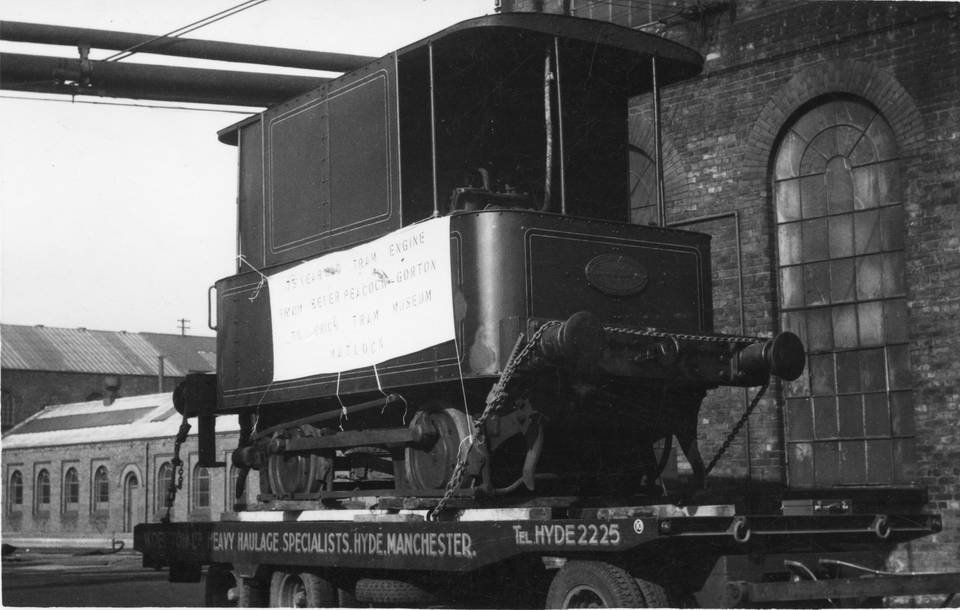
No. 2 in 1962 at Gorton Works just prior to its journey to the Crich Tramway Museum, © Crich TMS Archives. [3]

After arriving at Crich in 1962, No. 2 “was operated under steam for some years from 1966. A period of off-site storage between 1971 and 1978 was followed by a return to steam in the 1980s, during which it even performed on the Santa specials. However, the work involved in firing it up, supplying it with coal and clearing away the ash helped to explain why steam traction gave way to electricity on Britain’s tramways in the early years of the twentieth century.” [3]

Beyer Peacock steam tram No. 2, New South Wales Government Steam Tram No. 47 at the Crich Tramway Village, © John Huddlestone and shared by him on The Tramway and Light Railway Society Facebook Group on 15th May 2022. [4]

Crich Tramway Museum’s website tells us that, “because it was destined for export and as it was expected to be pulling much heavier loads it was much larger than those built for the home market. With 30 inch driving wheels and weighing almost 16 tons it was a true giant of a tram engine, though it did boast a number of features in common with other road-going locomotives including the fully enclosed wheels and a mechanism – in this case a “Wilkinson Patent” exhaust superheater – that was designed to reduce the amount of smoke emitted.” [3]

References

  1. G. Hyde; The Strange Tale of No. 2; in Modern Tramway Volume 26 No. 302, LRTL  and Ian Allan, Hampton Court, Surrey; February 1963, p48-50.
  2. https://preservedbritishsteamlocomotives.com/beyer-peacock-company-works-no-2464-no-47-john-bull-0-4-0vb-tram, accessed on 26th July 2023.
  3. https://www.tramway.co.uk/trams/new-south-wales-47, accessed on 26th July 2023.
  4. https://m.facebook.com/groups/www.tlrs.info/permalink/557174155756970, accessed on 26th July 2023.

Glasgow Tramcar No. 1005

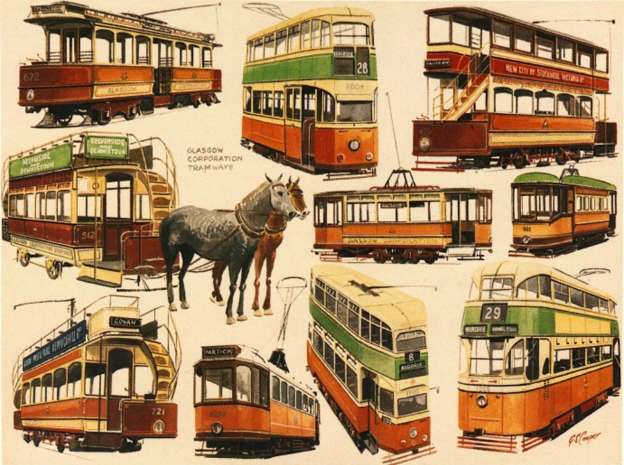
In the 1950s, a tram Glasgow purchased some years before, a ‘one-off’, unidirectional double decker car which it numbered 1005 and which was sometimes known as the ‘Blue Devil’ for its unconventional three tone blue colour scheme, was put forward by the LIght Railway Transport League as an option for trails that the League hoped might happen in London. The tramcar sat on PCC type trucks [1] and was sleek and streamlined. It can be seen in its later standard colour scheme in the bottom-right of the featured image above (Public Domain). [6]

The link to Flickr below takes us directly to Frederick McLean’s page on Flickr which focusses on this tram. Frederick McLean’s notes say that the reverse of the photograph was stamped with the photographer and/or negative owner name C. W. Routh and with the date 25 May 1955. He notes too that, in the photograph, the tram was heading South-east at St. George’s Cross.

https://www.flickr.com/photos/fred_bear/51714105647

The next link to Frederick McLean’s Flickr feed shows Tram No. 1005 on, probably, a tram enthusiast tour, so showing a ‘Reserved’ destination blind.

https://flic.kr/p/2jCYDsr

In Washington DC a conduit system was in use, like that in London, and PCC cars were in use. The Light Railway Transport League (LRTL) proposed a trial on London’s streets of a modern PCC tram. They were even prepared to pay for the exercise.

Glasgow’s No 1005 was one of two cars considered a suitable vehicle for the trial by the LRTL. It was “equipped with up-to-date VAMBAC [3] electronic control, which promised smoother starting and braking, thus allowing higher schedule speeds with safety and comfort for passengers. In addition the trucks were fitted with improved motors, and more importantly, resilient wheels which gave a much quieter ride.” [2: p45]

Sadly the obstacles to the trial in London were too great. Harley lists these: [2: p46]

  • Single-ended cars needed turning loops. There was only one route (between Beresford Square and Well Hall Roundabout on Route No. 44) which might accommodate the trial.
  • Glasgow trams used bow collectors rather than trolley poles and we’re not fitted out for conduit working.
  • The Glasgow network was in fact a narrow-gauge network, three quarters of an inch (19mm) narrower than the standard-gauge in use in London. [5]

With a will to do so, these obstacles might have been overcome at LRTL expense, but ultimately there was no desire among the authorities in London to countenance the trial. Harley quotes the letter sent by the Operating Manager (Trams and Trolleybuses), dated 23rd March 1950: “Work on the replacement of the remaining trams is proceeding rapidly, and it is expected that the first stage of the conversion scheme will be completed before the end of the year, and that the scheme as a whole will be finished within a period of three years. You will see, therefore, that the Executive are committed to a policy of substituting oil-engined buses for the tramway system, a policy which they consider to be right and proper. In these circumstances the Executive regret that they cannot avail themselves of the offer you have made.” [2: p46]

The parallel offer of a similar trial using a, then, modern single deck Blackpool tram was also rejected by the authorities in London. Their minds were fully made up.

In Glasgow, Car No. 1005, foundered in use. Trams Today tells us that “when initially built in 1947 it featured Vambac controllers, a unique livery of three tone blue and was single ended but progressively both the livery and the control equipment had been standardised with the rest of the fleet. This still left the unusual loading arrangements which made 1005 unpopular with the general public amongst a fleet of more than a thousand more orthodox trams. Consequently it had for several years been restricted operation to use only at peak times whilst much older trams bore the brunt of all day service.” [4]

In an attempt to rectify this situation and make better use of 1005 it entered the workshops during 1955 for rebuild that dispensed with the single ended arrangement. A drivers cab and full controls were provided in the rear. …. The work was carried out on a strict budget and, although successful in making 1005 more standardised, it still saw only infrequent use when it tram, generally appearing only during rush hour period until 1962 when it was finally withdrawn and disposed of for scrap.” [4]

References

  1. PCC type bogies were first used on PCC cars in New York. The PCC car was “a revolutionary vehicle – a streamlined, single deck Tramcar which ride on superbly engineered trucks, giving a quiet and comfortable ride. When, on 1st October 1936, Mayor Fiorello H. La Guardia of New York, inaugurated service of Brooklyn and Queens Transit Car 1009, a new era in rail transportation opened. Orders followed from American and Canadian cities and eventually almost 5,000 cars rolled off the production line. This figure was augmented by the 15,000 PCC cars or vehicles built under PCC patents which appeared in Europe and Asia. The concession for England was snapped up by Crompton-Parkinson. They produced an advanced VAMBAC system (Variable Automatic Multinotch Braking and Acceleration Control), compatible with PCC technology, and 42 sets of equipment were used by London Under- ground in the late 1930s. In 1937, W Vane Morland, the Leeds manager, visited Boston to see the new design. He then returned home with the blueprints of the PCC, but the outbreak of war put paid to any more progress.” [2: p45]
  2. Robert J. Harley; London Tramway Twilight: 1949-1952; Capital Transport Publishing, Harrow Weald, Middlesex, 2000.
  3. VAMBAC was the acronym used to refer to Variable Automatic Multinotch Braking and Acceleration Control. It was in use in the UK as early as the late 1930s on London Underground. [2: p45]
  4. Trams Today Facebook Page on 9th January 2016: https://m.facebook.com/144002195699684/photos/a.733720253394539/736060386493859/?type=3, accessed on 8th July 2023.
  5. Glasgow Corporation Tramways; Wikipedia; https://en.m.wikipedia.org/wiki/Glasgow_Corporation_Tramways: “Glasgow’s tramlines had a highly unusual track gauge of 4 ft 7+3⁄4 in (1,416 mm). This was to permit 4 ft 8+1⁄2 in (1,435 mm) standard gauge railway wagons to be operated over parts of the tram system (particularly in the Govan area) using their wheel flanges running in the slots of the tram tracks. This allowed the railway wagons to be drawn along tramway streets to access some shipyards. The shipyards provided their own small electric locomotives, running on the tramway power, to pull these wagons, principally loaded with steel for shipbuilding, from local railway freight yards.”
  6. http://parkheadhistory.com/heritage-transport/images-transport-3, accessed on 8th July 2023.
  7. https://www.flickr.com/photos/fred_bear/51714105647, accessed on 8th July 2023.
  8. https://flic.kr/p/2jCYDsr, accessed on 9th July 2023.

The Modern Tramway – Part 6 – Modern Articulated Cars for Stuttgart

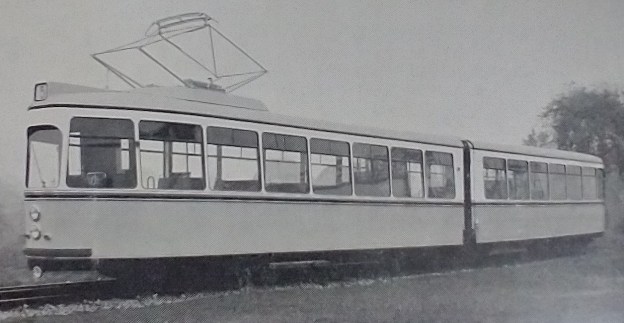
The featured image shows one of the 220-passenger articulated tramcar sets in an ex-works condition, © H. Fuchs Wagonfabrik. [1: p70]

The April 1954 edition of ‘The Modern Tramway’ included an article about the introduction of new articulated tramcars in Stuttgart. It is interesting to listen to the discussion about the relative merits of articulated cars and trains of two or three cars coupled together. …..

In April 1954, the first of these new cars were going into service, supplied by H. Fuchs Wagonfabrik A.G. of Heidelberg. As far as I can ascertain, Stuttgart sourced later articulated tramcar sets from manufacturer Maschinenfabrik Esslingen. [2]

“The decision of the Stuttgart authorities to order articulated cars rather than the standard German grossraumwagen was reached after careful consideration of local conditions. The city is very hilly and of 116 route Km.

20 Km. have gradients of from 3-5%.

21 Km. have gradients of from 5-8%.

5 Km. have gradients more than 8%.

and only a very few routes (15 Km. in length), are so slightly graded that they can be considered level. In overcoming the differences of gradient the tramways are very sharply curved and there are many curves with a radius of 20 metres. The city centre is narrow and congested and high speed running is impossible. In order to raise average speeds, the uphill speeds of the trams must be increased.

The articulated design was partly chosen as it gave increased adhesive weight (69% of the available weight is carried on driving axles with forward and rear bogies motored). The new cars are slightly wider than the older types and some realignment of curves was necessary.

Each unit has 60 seats and room for 160 standing passengers. To obtain the greatest advantage from the extra width, sliding doors are fitted, with folding stops. Whilst the capacity is roughly that of a two-car car grossraumwagen set, the total length Is about 5 metres shorter and actually 6.8 metres shorter than a standard Stuttgart three car four-wheeler set. This represents a 20% saving. The reduced length is also an asset in traffic.

Passengers enter through the centre pair of doors and alight from either front or rear. Waiting passengers can therefore concentrate at one point on the loading island and British type queue barriers are being erected to guide passengers to the point where the centre doors will be; alighting passengers are not discharged into the waiting queue. The two conductor’s desks face the entrance doors and passengers can either pass forward or rearward according to the accommodation available.

The new cars will not entirely replace the existing three-car tram-trains of four wheel cars-at least not for some years. The capacity of these sets can be matched to traffic demands, using one, two or three units as required. The articulated cars have not this adaptability and will, there- fore, be used on routes where traffic remains fairly constant through the day; on these routes they will replace 3 car sets (used intact all day), thus representing a saving of one conductor per unit.”

Modern Articulated Cars for Stuttgart; The Modern Tramway, Volume 17, No. 196, April 1954, p70-71. [1]

It is interesting to note that each articulated set was to be staffed by 3 people, a driver and two conductors. Modern UK articulated sets only have a driver and if two articulated sets are paired there would still only be one driver.

The article in The Modern Tramway goes on to provide technical descriptions which came from the manufacturer of the tramcars, starting with leading dimensions:

“Overall length of car, 25 metres (82 ft.); Distance between bogie cen- tres, 18 metres (59 ft. 1 in.); Wheel base, 1.750 metres (5 ft. 9 in.): Overall height from rail level, 3.115 metres (10 ft. 3 in.); Height of floor, 0.82 metres (32.25 in.); Overall width of car, 2.2 metres (7 ft. 2.625 in.); Weight of car including electrical equipment 26,000 kg. (25 tons 11 cwt.); 4 motors having each 58 kW. …

The whole car body including the underframe is built up of edged columns and girders welded together, so that the supporting structure is formed by side wall, underframe, and car roof.

The car roof, which is of the arched type, is fitted with an all-around rain gutter drained by means of outlet pipes located in various columns.

The windows are embedded in rubber, so no draught and rain water can enter. The windows are fixed at the bottom, and sliding at the top.

The car is single-ended. There are four sliding doors arranged on the outside, of identical size and operated from the conductors’ seats through an electro-pneumatic door valve. The door opening or closing operation simultaneously operates the folding footsteps through air cylinders, thus preventing any person from hopping on the car whilst in motion. Should the door remote control fail, the doors can be opened by hand, by reversing an emergency cock.

The two car sections are separated from each other, in the centre, by a “corridor connection.” This was necessary to enable the car to nego- tiate narrow curves, and to compensate for the various movements.

Each of the two car sections includes a conductor’s place of the stationary type, where all necessary controlling apparatus and push- buttons are arranged to operate the doors, loud-speakers, heating systems, etc.

The space available between the two conductors’ places serves as a collecting point for passenger flow. The arrangement of the hand-rails guide the passengers past the conductor to the inside. Since the conductor’s seat is elevated, he has a good view over the passengers entering or leaving the car.

The driver’s cab is separated from the passengers’ compartment by a partition. This partition has been so formed that the electrical controllers are at its upper part, leaving some space for a cupboard below to store lost property. The access is by means of a hinged door.

The controllers and levers to be operated by the driver are arranged so as to be easily accessible.

The lighting equipment of the car consists of fluorescent type tubes running through lengthwise. There is an illuminated number plate on the roof, and an illuminated direction board in the upper part of one side window.

The whole of the cable wiring is arranged in the underframe, and this in suitable conduits adequately protected from splash water. Separate cable tubes lead to the various electrical appliances. The entire Bosch type pneumatic equipment is also located in the underframe. The brake equipment consists of the following:-

Service brake: Electrical braking through the motors;

Additional brake: Electro-pneumatic, hand-operated air brake having at all times at its disposal a brake force supply from bent springs (so- called spring storage brake);

Emergency brake: 6 electro-magnetic rail brakes being fed from a separate battery and directly opera- ting on the rails with a 24,000 kg. force.”

Modern Articulated Cars for Stuttgart; The Modern Tramway, Volume 17, No. 196, April 1954, p71-72.

The article concludes with details  of suspension and bogie centre pins:

Suspension of axles: Through helical springs with no damping at all. There are intermediate rubber layers for silencing, in conjunction with the helical springs.

Steering of axles is through a suspended and continuous spring leaf transmitting the longitudinal and transverse forces to the bogie frame. There are auxiliary axle guards to protect from spring breakage.

Bolster suspension: Undamped helical springs located far on the out- side, with built-in hydraulic shock absorber, serve to quickly eliminate any lateral up-and-down movement. In addition, to cushion the lateral bolster movement and to transmit the force longitudinally from the bolster to the bogie frame, there are rubber pieces arranged on each bolster end, and these pieces are vulcanized on metal plates. The bolster springs are housed in cross-bars suspended on the frame by means of a pendulum. The bolster is led through small stop plates, eliminating wear and tear.

Bogie centre pins: There is an entirely rigid pivot pin transmitting all forces to the bolster. Thus, no lateral sliding pieces subject to wear and tear are necessary. The torsional friction moment is practically non-existent compared with that obtained by use of sliding pieces, resulting in minimum wear and tear of tyres and rail, and insignificant impact effect when curves are being negotiated.”

Modern Articulated Cars for Stuttgart; The Modern Tramway, Volume 17, No. 196, April 1954, p73.

References

  1. Modern Articulated Cars for Stuttgart; The Modern Tramway, Volume 17, No. 196, April 1954, p70-73.
  2. For example, https://en.sporvognsrejser.dk/tram/stuttgart-articulated-tram-416, and subsequent sets, accessed on 15th June 2023.

‘The Modern Tramway’ – Part 2

The Modern Tramway‘ was the title of the journal of the Light Railway Transport League.

I picked up a small batch of copies of The Modern Tramway Journal which included volumes from the 1950s, 1960s and 1980s and have begun reading through them. The first Journal that I have is dated 15th July 1953. At the time of writing it is 70 years old. This is the second article about its contents. The first can be found here. [1]

Volume 16 No. 187 of July 1953 includes an article about Tramways and Traffic Planning in Munich which reflects on decisions taken by leaders in the Munich municipality which were implemented by the Munich Municipality Roads Department in the years,it appears from the article, following the First World War (1925) [2: p136-138] The article is dated 1925 in the introduction in The Modern Tramway but, as we will see later, considers action undertaken in Munich in the 1930s, in Rome at the beginning of that decade, and in Cologne and Lübeck in 1945. It is likely, therefore, that in giving the date as 1925, two digits got transposed and that the article actual came from the German language press in 1952, after the Second World War. [2: p136, 137, 138]

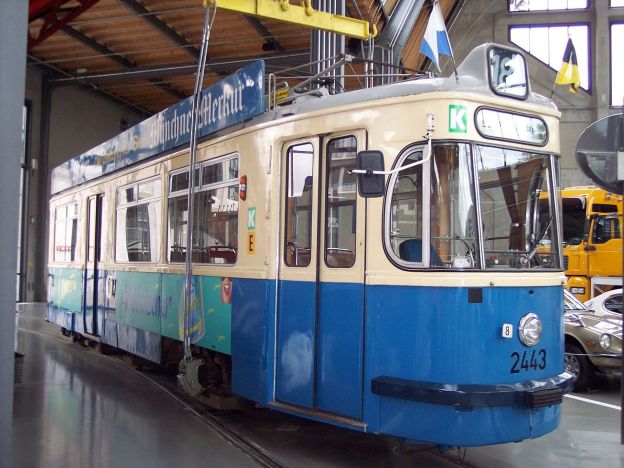
The featured image above shows Munich tram car series M 4.65 in the traffic exhibition of the Deutsches Museum, Munich, Germany © MaxM and shared here under a Creative Commons Licence (Creative Commons Attribution-Share Alike 2.5 Generic, 2.0 Generic and 1.0 Generic licences). [4]

A tram (Car No. 510) on route 29 in Munich in 1920. The tram is standing at the Ostbahnhof stop, © Sebastian Winkler, published by Verlag und Bildarchiv. [5]

“In Munich, some extremely costly plans to replace the trams in the central area by motor buses and three underground railway lines have been discarded. It has been decided that all the main local passenger traffic will continue to be carried by tramways; the construction of sub-surface tramways as in Boston, Philadelphia and as projected in Toronto, has been considered but rejected on the grounds of cost. It has been stated that a modern and well-planned tramway system with a 50% increase in speed, supplemented by an extensive and well-planned network of trolley and motor bus services in the suburbs could provide the Munich of the future with transport services which would be far cheaper to build and maintain and almost as fast as the services enjoyed in cities which have installed expensive and unprofitable underground railways.

The objections to the present Munich tramway system and the way in which these objections will be overcome are summarised below:-

1. That present 50-year old trams moving in the overtaking lane of the carriageway constitute an obstacle to fast traffic flow even when they are moving, owing to their slow speed. This disadvantage will be eliminated by the use of fast modern tramcars.

2. Double track tramways in one-way streets. It is desirable that tramways should obey the one-way regulations but this is only practicable in fairly long streets or where broad parallel streets are available. Unlike the American cities with their regular street patterns, European cities rarely have such parallel streets and one-way working for tramcars is not often possible. Where it can be done, tramways in one-way streets should be laid so as to allow for two traffic lanes to the right of the track used by trams running in the same direction as the other traffic, thereby allowing the use of three lanes in one direction and only one lane, occupied by the trams, running the other way, against the stream. It may also be possible in some streets to leave a parking lane between the track of the “against the stream” trams and the kerb.

3. Alleged congestion caused by tram-trailer trains. In America single tramcars 15 to 17 mtres (49ft. 24in. to 55ft. 9 in.) in length and 2.5 to 2.6 metres (8ft. 2in. to 8ft. 6in.) wide have a capacity equal to that of an old fashioned European two-car tram train but single cars of such dimensions are not generally possible in Europe and in many cases it is impossible to dispense with the two or three-car sets. It is however possible to build cars which will clear junctions and curves more rapidly. An old type Munich three-car set requires 15 to 20 seconds to clear a 40 metre (131ft) crossing with its acceleration of 2 to 36 metres (7in. to 1ft. 2in.) per second. High speed cars of modern design will reduce this time by half. It should not be forgotten that three of the most modern oil buses require more time over a crossing than an old type three-car tram set. It is interesting to note that Stockholm and Zurich, which have adopted high capacity tramcars, have re-introduced trailers, Four large Italian cities use articulated cars.

4. No loading can be provided in a carriagway only 12 metres (39ft. 4 in.) wide. This can be overcome by making use of every opportunity available to build loading islands and by eliminating stops at points where no loading island can at present be built. In the main streets loading islands will be provided at all stops; they create better traffic conditions than would be available if oil buses were used. Oil buses, apart from being uneconomical, require twice as much road space in spite of the fact that they have a smaller capacity than a tram. Loading islands in broad streets where the tramways are not on reservation force road users to keep to their own traffic lanes and impose driving discipline on motorists. Overtaking on the wrong side of the street becomes almost impossible and pedestrians are provided with a welcome resting place enabling them to cross the road in two stages. The oil bus, by continually turning out of the traffic stream and also across the cyclist stream, to reach the curb and repeating the movement as it restarts, hinders traffic flow.”

Tramways and Traffic Planning in Munich; The Modern Tramway, Vol. 16 No. 187, [2: p136-137]

After this careful explanation of the municipality’s plans. The author, Dr. Ing F Flugel, Chief Officer, Munich Municipality Roads Department, considers the relative merits of trolleybuses, buses and trams. It is worth noting that trolleybuses were introduced on Munich’s streets in 1948 and that the last trolleybus services ceased in 1966. [3] He said:

“When the removal of tramways from city centres is advocated by the oil and trolley bus patisans as a pancea for traffic congestion it is always forgotten that buses require nearly twice as much road space as a tram, leaving less space for other traffic; also that fares would be doubled and many passengers would no longer enjoy direct services as they would have to change vehicles and endure longer journeys. In 1933, Christian Weber wanted to remove the tramways from the Theatiner Strasse and Sendlinger Strasse and accordingly introduced a bus service from Sendlinger Tor-Platz to Odeonsplatz: tram services 6 and 26 were diverted via Karlsplatz. As a result, trams on these services emptied at the Odeonsplatz. and Sendling Tor-Platz and even at rush hours travelled empty via Karlspatz The number of passengers leaving the trams at the Sendlinger Tor and Odeonsplatz in rush hours was so large that the buses could not cope with the traffic in spite of a 90 second headway. The trams were very quickly restored for the rush hours and the buses only ran at slack hours; this entirely unnecessary bus service cost the undertaking several hundred thousand marks yearly. The section between Theatiner Strasse and Sendlinger Strasse was very badly damaged during the war and owing to traffic congestion on this badly damaged route tramway service has not been restored since the war; consequently there is at present no north-south tramway through the heart of the city. This is a great improvement for fast motor traffic but quite the reverse for 80% of the population who rely on public transport. These unfortunates are obliged to travel via the Karlsplats and so to lose 5 or 10 minutes on every journey.

A suggestion has also been made that the tramway across the city in the east-west direction be replaced by buses in the city centre and the trams diverted round the city centre. At rush hours trams on the east-west route work a one minute headway and at each change of the traffic lights at Marienplatz (about every 2 minutes) tram sets pass through in each direction – eight buses would be required to replace them. The 9.5 to 11 metre (31 ft. to 36 ft.) wide street traversed only just allows four traffic lanes when trams are in service. If the trams were replaced by buses, traffic lanes would be reduced to two owing to the width of the buses and their inability to operate with such small clearances as the trams.

In the street concerned (Kaufingerstrasse) there are 2,000 private cars, passing through to every 120 tram sets (16:1) in London one out of every four vehicles is a bus; this comparision demonstrates that buses leave much less space available for other traffic in streets. Apart from the chaos, loss of time and general inconvenience this project would cause if it were put into effect, the idea of penalising the majority in order to appease the car owning minority is anti-social; the diverting of motor car traffic round the edge of the city would cause much less inconvenience,

In Rome, Mussolini ordered the closing of the city centre tramways in 1930 and passengers had thereafter to transfer to inadequate motor and trolley bus services if they wished to travel within the area bounded by the Inner Circle tramway: fares had to be raised considerably. In contrast, in Milan only one or two tramways in very narrow streets have been abandoned, the tramway remaining the backbone of public transport in the city centre, There are three 6 metre (19 ft. 6 in.) wide streets where trams only are allowed, to the exclusion of all other traffic. As a consequence of the retention of her central tramways, Milan enjoys extremely efficient and cheap passenger transport. In Cologne and Lübeck tramways inside the “Ring” Avenues were mostly abandoned in 1945 but contrary to the plans of the bus advocates, many tramways have been and will be re-opened in these city centres. Public transport, whether buses or trams, should always run to the town centre; congestion can always be eased by diverting through traffic, banning it from the central streets. Replacement of trams in the centre of Munich would be extremely unwise economically and operationally and would be a reactionary step socially. The Munich Roads Department is endeavouring, with the limited means at its disposal, to carry out as many street improvements as possible, always taking into account the needs of all road users and always with a view to making a sound basis for the future high speed tramways system.”

Tramways and Traffic Planning in Munich; The Modern Tramway, Vol. 16 No. 187, [2: p137-138]

Once again, given recent experience in cities in the UK, it is worth noting the highlighted text above. …

Public transport, whether buses or trams, should always run to the town centre; congestion can always be eased by diverting through traffic, banning it from the central streets. Replacement of trams in the centre of Munich would be extremely unwise economically and operationally and would be a reactionary step socially.” [2: p138]

It does seem as though we may have been better advised to heed these words in the mid-20th century. The recent revival of the LRT networks in major cities in the UK suggest that greater heed should have been taken of these voices in the way tramways were considered in the late 1940s and early 1950s in the UK.

A number of different Munich trams … From left to right these trams are Class P, Class R and Class S trams, © Deltastrahlung. The photo was taken on 14th April 2014 and is shared here under a Creative Commons Licence (CC BY-SA 3.0). [6]

References

  1. https://rogerfarnworth.com/2023/06/07/the-modern-tramway-part-1/
  2. The Modern Tramway, Volume 16 No. 187, July 1953, p136-138.
  3. https://en.m.wikipedia.org/wiki/List_of_trolleybus_systems_in_Germany, accessed on 8th June 2023.
  4. https://commons.m.wikimedia.org/wiki/File:Munichtramm4.jpg#mw-jump-to-license, accessed on 8th June 2023.
  5. https://en.sporvognsrejser.dk/foto/postcard-munich-extra-line-29-with-railcar-510-at-ostbahnhof-1920, accessed on 8th June 2023.
  6. https://en.m.wikipedia.org/wiki/Trams_in_Munich#/media/File%3ATram_M%C3%BCnchen_-_Baureihen_P%2C_R_und_S_-_Betriebshof_Einsteinstra%C3%9Fe_-_April_2014.jpg, accessed on 8th June 2023.

Aberporth Railway Carriage Conversions

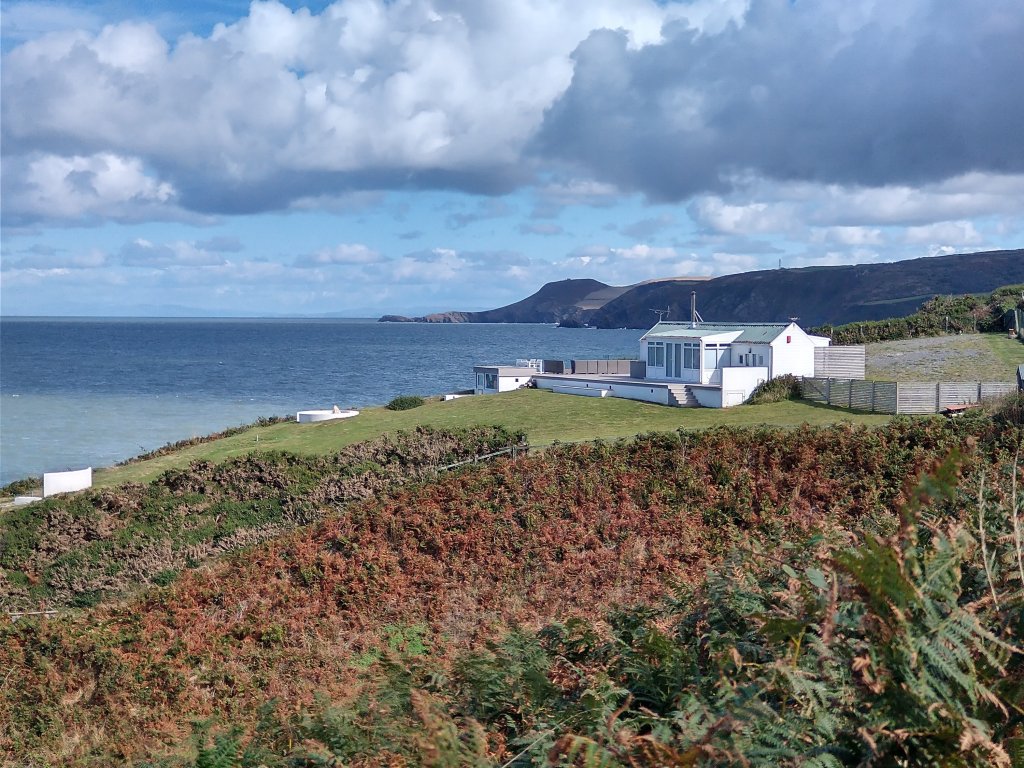
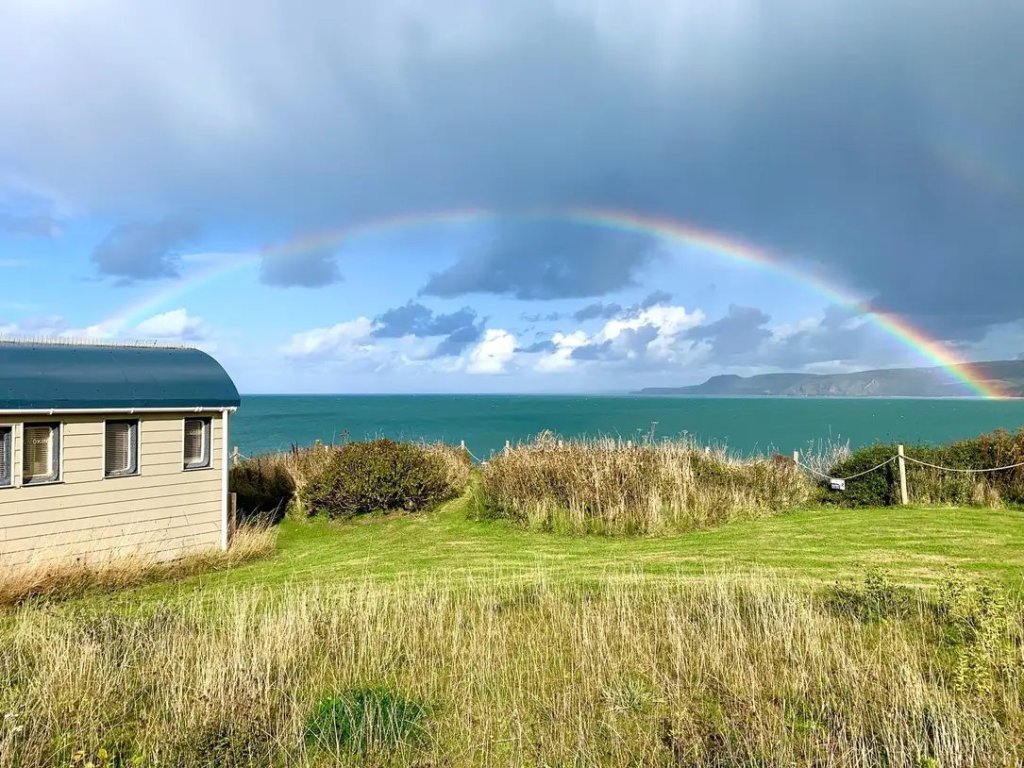
Between Aberporth and Tresaith the Ceredigion Coastal Path has, for the majority of its length, been upgraded as a path accessible to all. Fantastic views across Cardigan Bay are now available to us all.
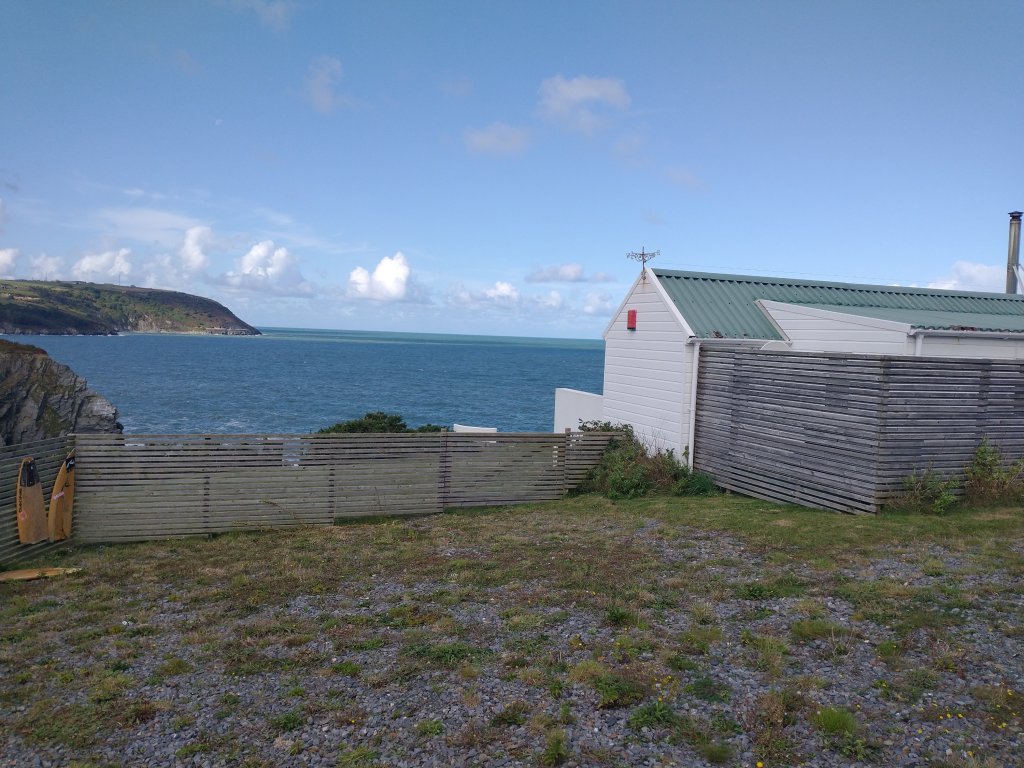
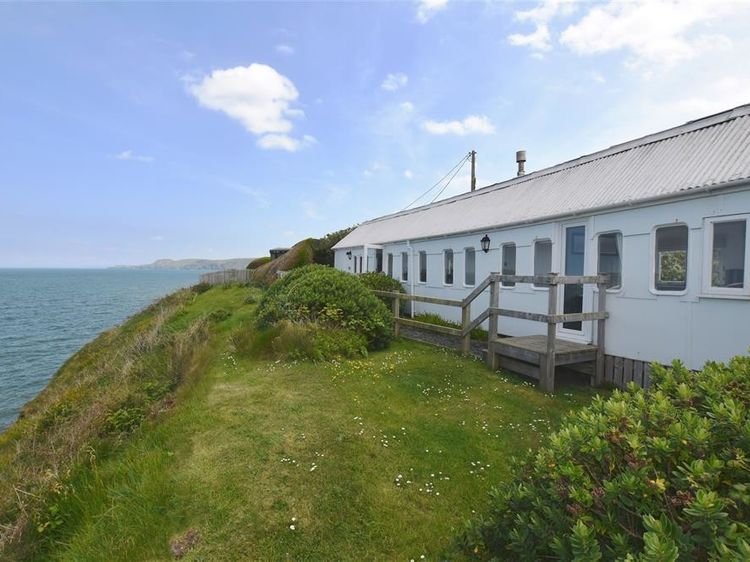
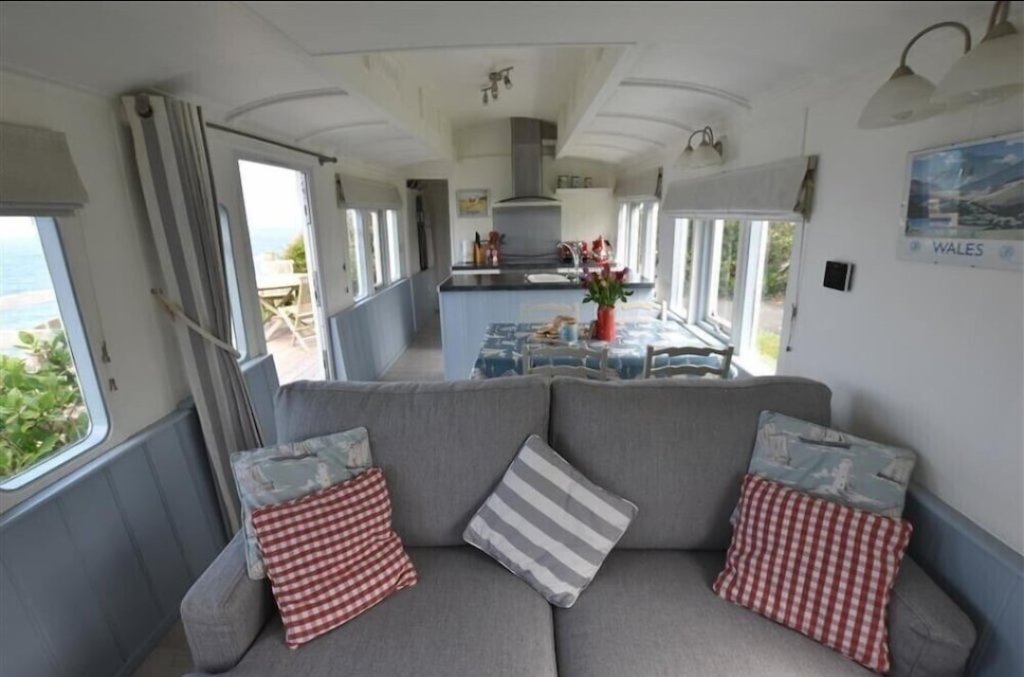
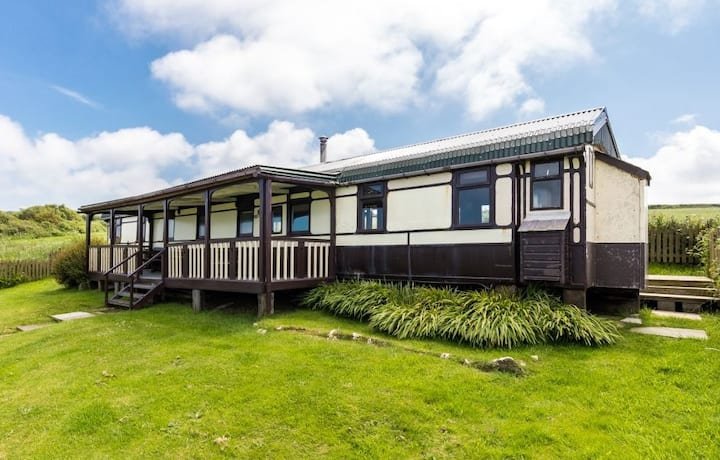
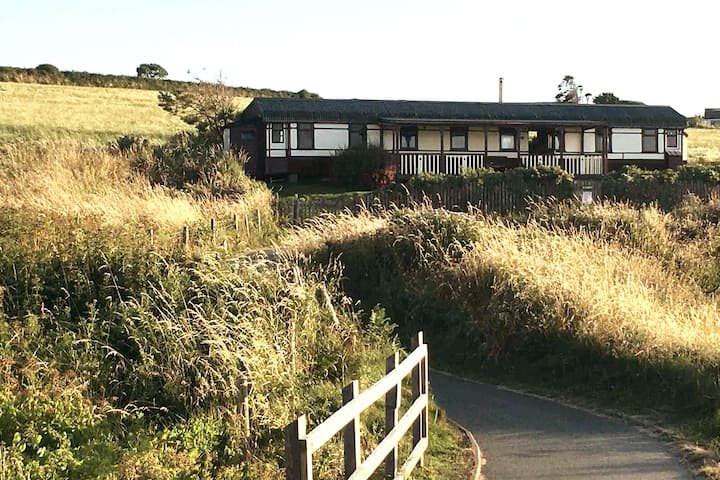
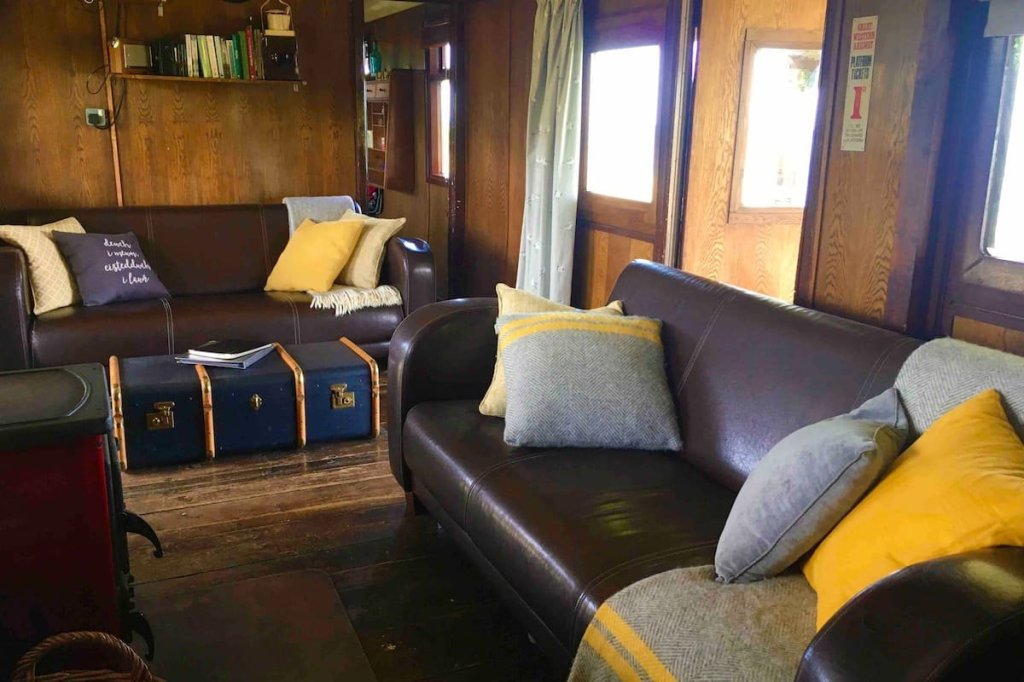
Amid the great scenery there are a series of Edwardian railway carriages which have been converted to holiday homes.

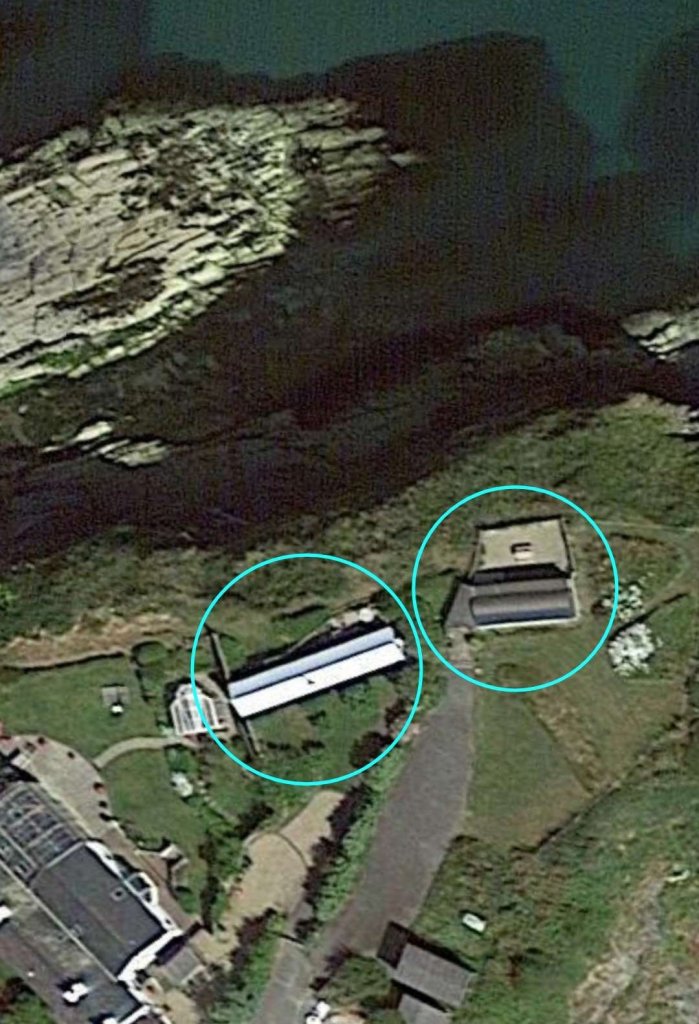
Two railway carriage cottages close to Aberporth. The beach is off to the left of the image by a few hundred yards. [Google Earth]
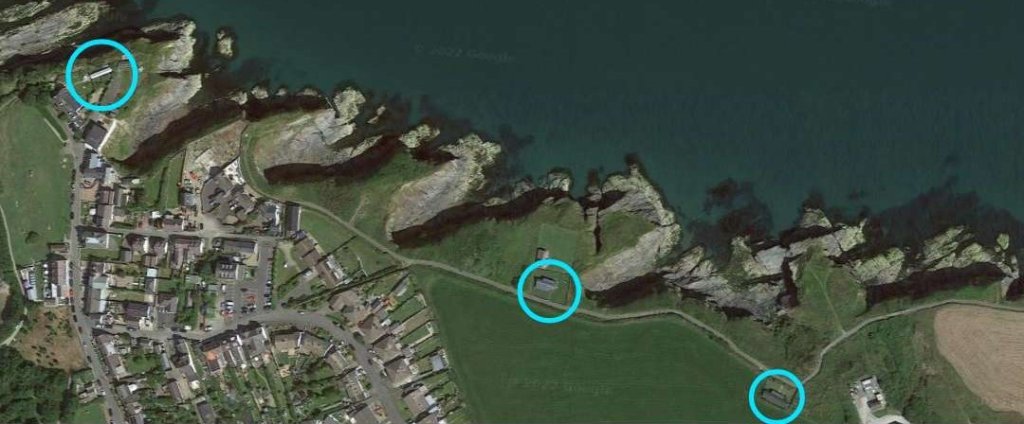
Two more of the carriages are highlighted on this Google Earth satellite image. The two highlighted in the image immediately above are identified by the circle furthest to the left of the image. The centre of Aberporth is further off to the left. Tresaith is some distance to the right of the image beyond a couple more railway carriage cottages. [Google Earth]
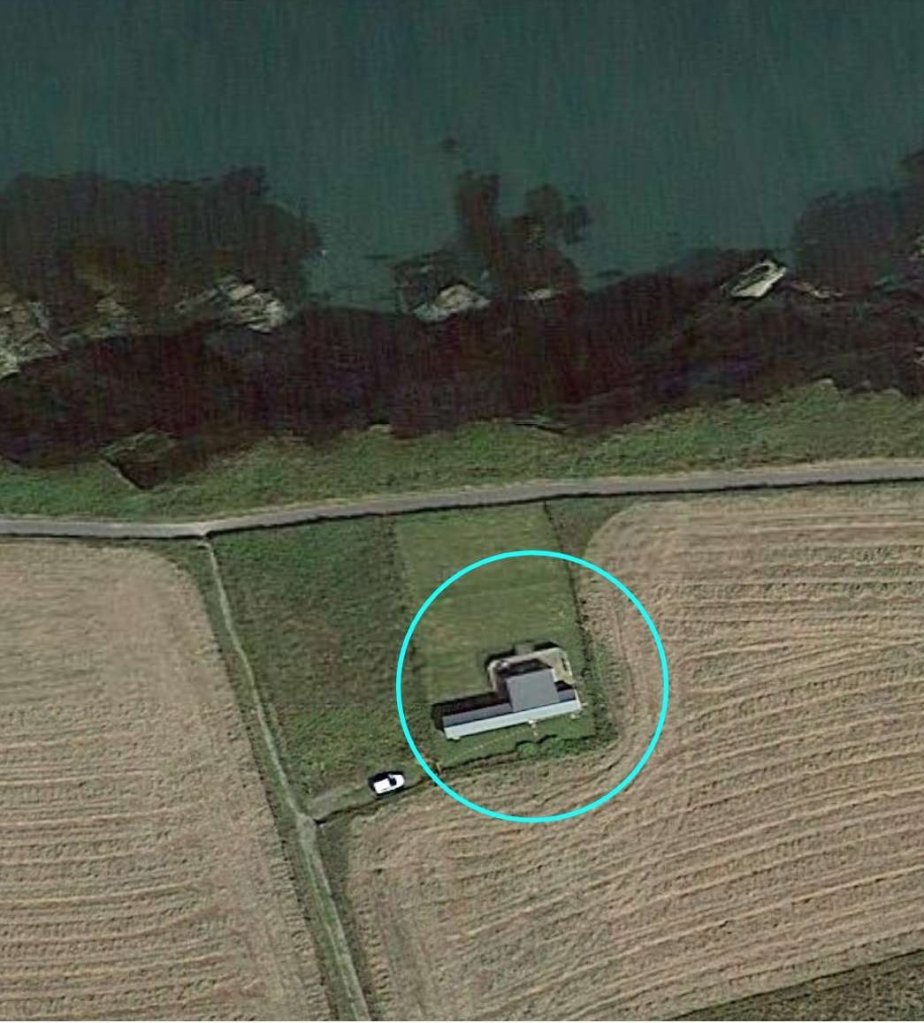
Eryl-y-Don was once one of three railway carriage holiday homes on what was Helyg Fach Farm. [Google Earth]
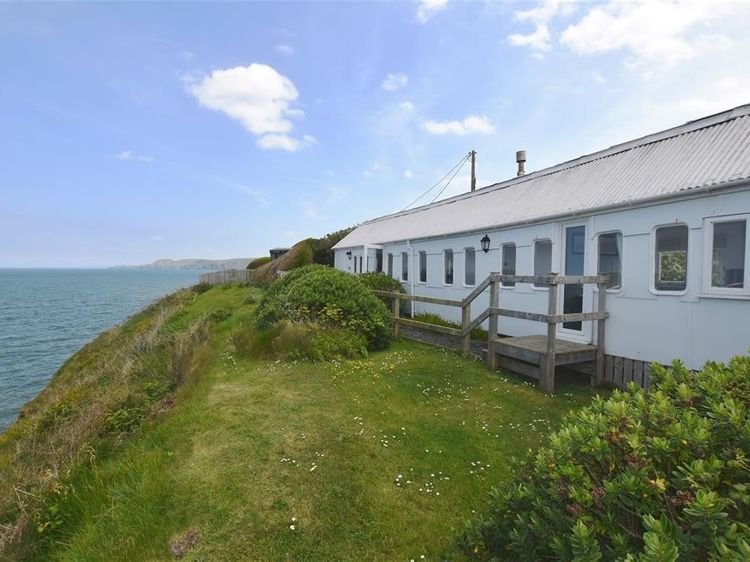
Another converted railway carriage which is in use as a holiday home. Tresaith is just off this picture to the right. [Google Earth]

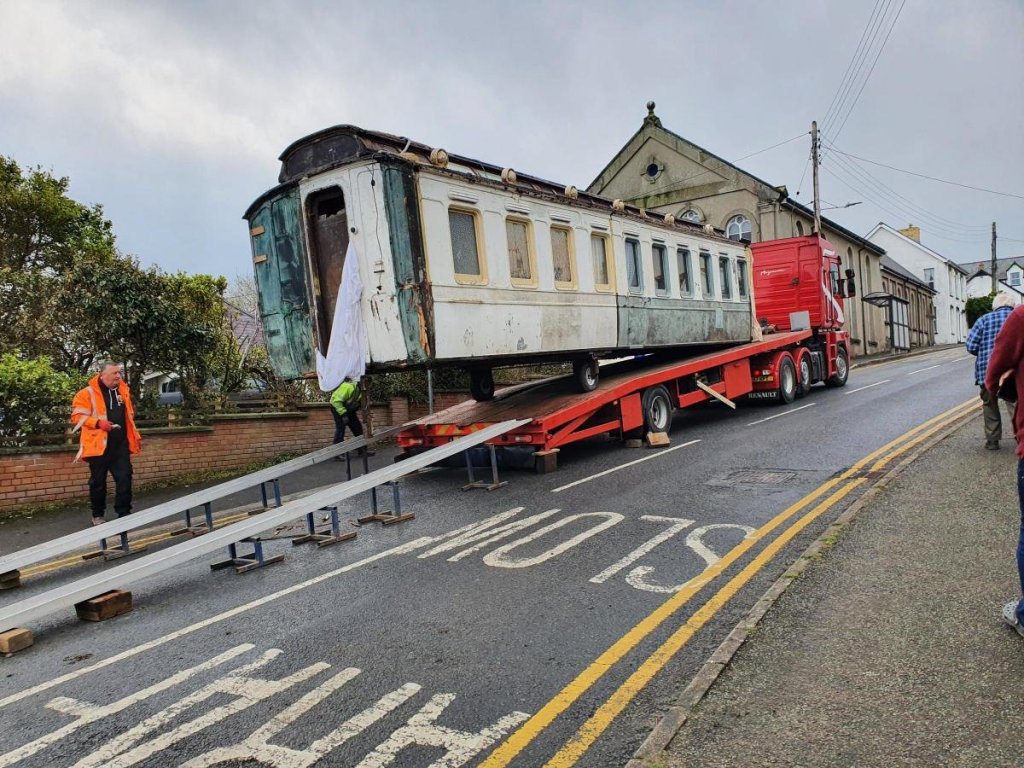
Early in 2022, another of the carriages which had for many years graced the clifftop near Aberporth was removed and sent to a new home. [3]

One of the longtime railway carriage holiday homes is removed from the clifftop near Aberporth in April 2022. It was moved to Llanfyrnach, near Crymych where it will be used as a holiday let.  [3]

It seems that a number of railway carriages, which had reached the end of their useful life on the railways, were brought to Aberporth in the 1920s and 1930s.

The website demery.org [1] lists some as:

  • Eryl-y-Don – a 58-foot, seven-compartment, tri-composite brake coach (one of thirty coaches of this type) which was built on 3rd May 1902. The original number of the railway coach was 1115. (When the Great Western Railway reorganised its passenger coaching stock into a single unified numbering series in 1907, it was renumbered 7115.)  … When built the carriage had: 2 no. 1st-class compartments, 2 no. 2nd-class and 2 no. 3rd-class compartments; 4 no. lavatories; and a Guard/Luggage compartment. [1]
  • At one time Eryl-y-Don was flanked by two other carriages. “Eryl-y-Don was in the centre of three coaches. The one on the Tresaith side was built in Swindon for Queen Victoria’s Diamond Jubilee celebrations in 1897. It was moved from Helyg Fach in 1982 for display at a Madame Tussaud’s  exhibition entitled ‘Royalty and Railways’ at the Windsor and Eton Railway Station. Extensively renovated, it is now on display at the Steam Museum in Swindon. The carriage on the Aberporth side of Eryl-y-Don was destroyed by fire.” [1]
  • Min-y-Mor – on the clifftop side of the coastal path, was an eight-wheel family saloon built in 1892. It was used in a Royal train on at least one occasion: at Welshpool, carrying the Prince and Princess of Wales on a three-day tour of Wales in 1896. According to the Railway Heritage Register [4], it was put ‘out of service in May 1936’. [1]
  • Wendy – was built in 1905 as a London & South Western Railway sleeping car for the Plymouth-Waterloo boat train. When constructed, it had seven single and two double compartments, a lavatory and an attendant compartment. Taken over by the GWR in 1911, it was converted in 1919 to eight singles and only one double and was condemned in 1931. Wendy is the only known surviving example of its type [4]. According to the website[5] advertising Wendy, ‘in 1936 she was purchased from GWR Swindon and delivered by rail to the (then) Newcastle Emlyn railway station. She was then delivered by lorry and bogey to Aberporth where she has rested ever since.’[1]
  • A holiday-home railway carriage belonging to Alan and Joyce Bailey of Sutton Coldfield which they sold in 1983 ” to the Great Western Society at Didcot for restoration. [7]. The Tivyside Advertiser (18th March 1983) reported that the coach had been in Aberporth since the early 1920s, ‘having been brought there with others for use as offices by a Captain L. Davies who used to ship slate into Aberporth’. The article continued: ‘It has more of a history than that however having been built as only one of two such sleeping cars for the Great Western Railway in 1874.’” [1]

There are others – specifically Clifftop Carriage and Ar-Lan-y-Mor.

It seems that all the remaining coaches have had significant modifications made to them both internally and externally.

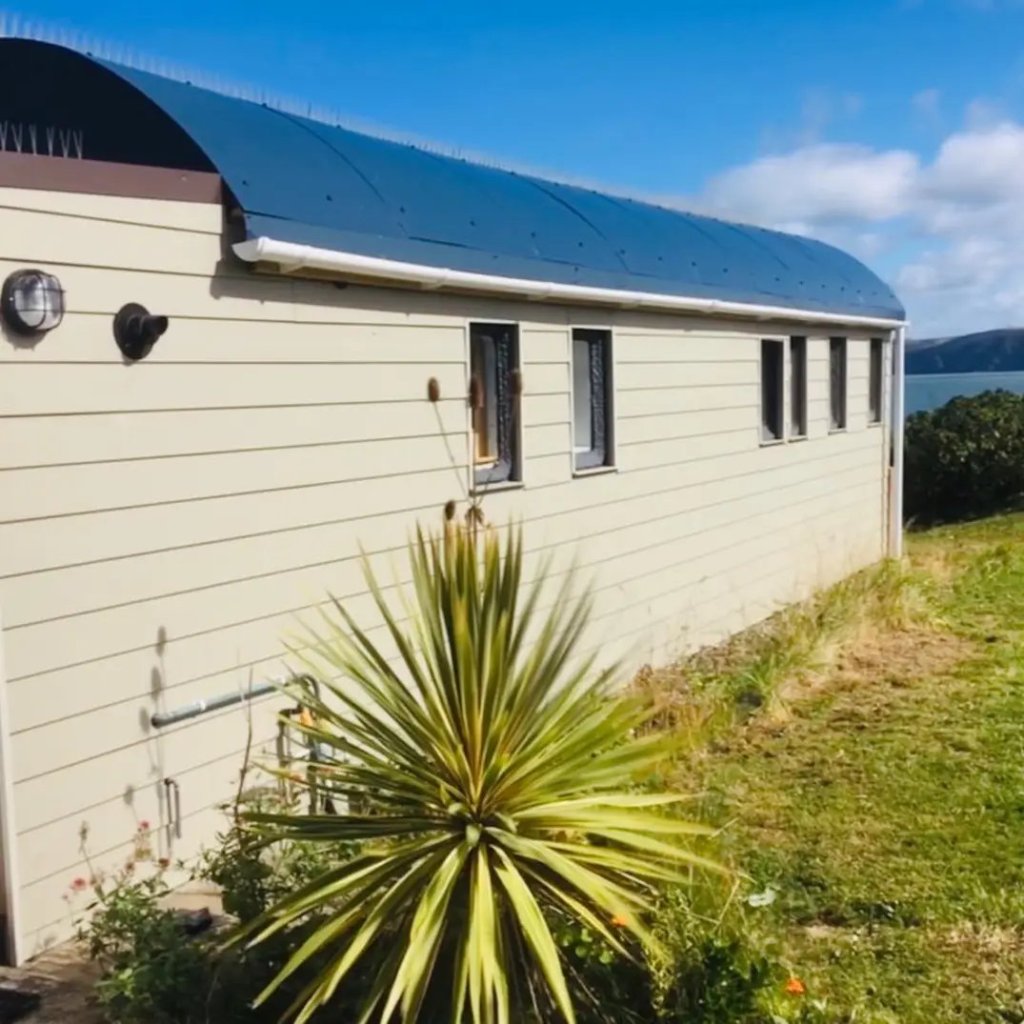
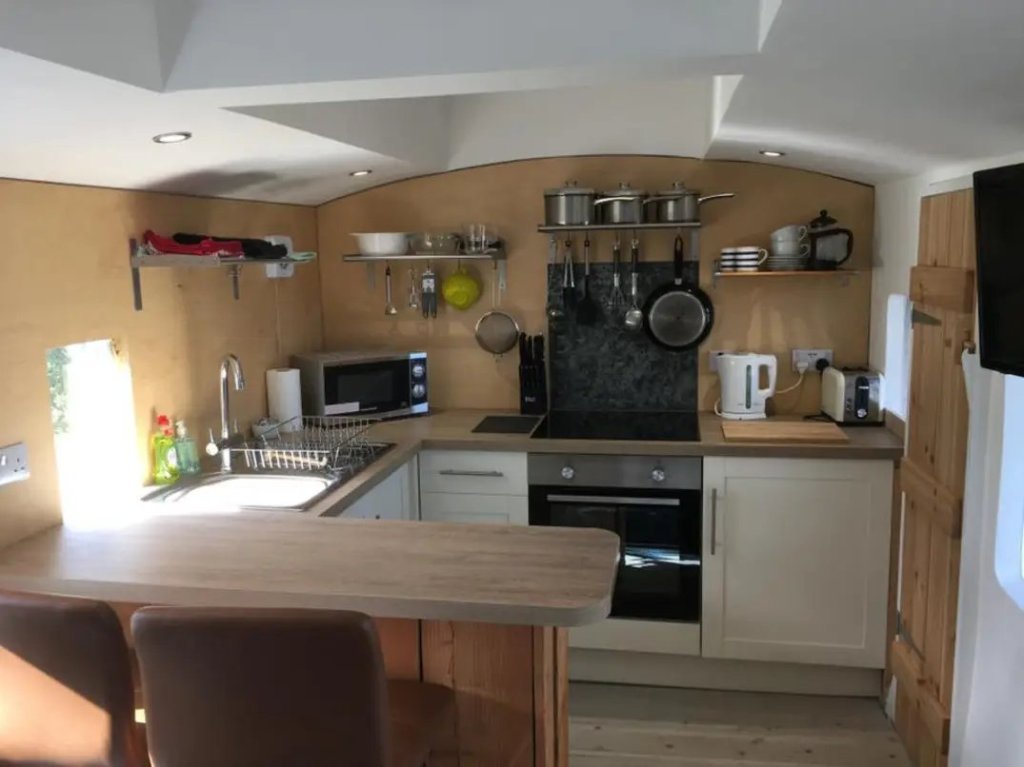
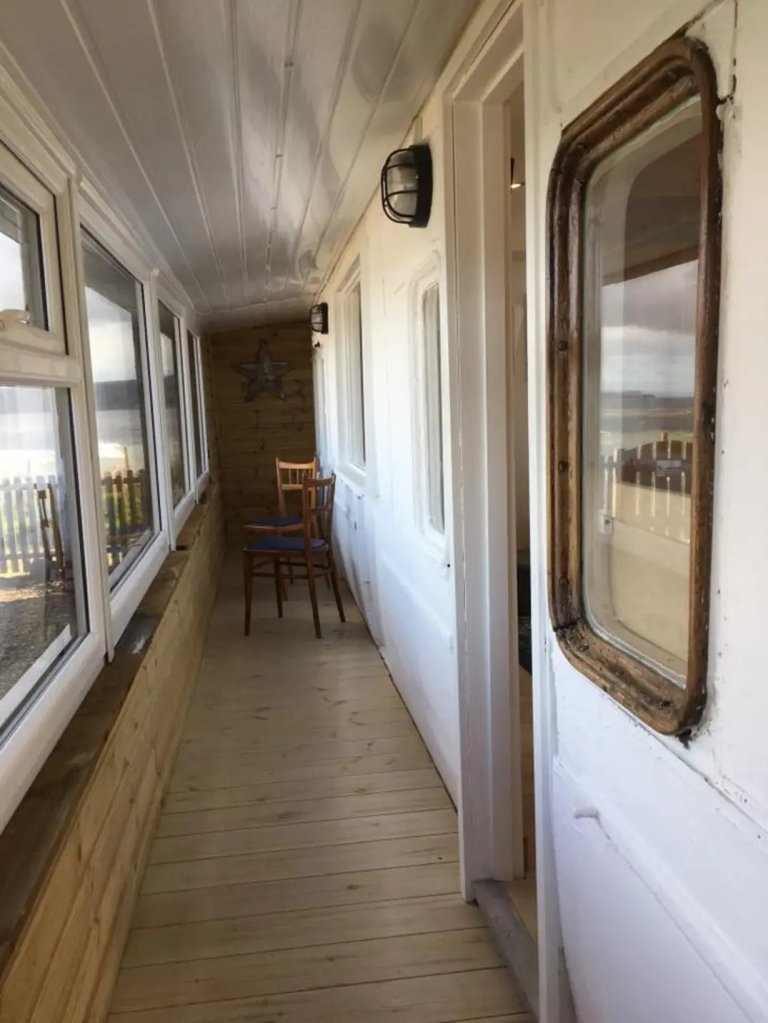
Clifftop Carriage – is internally significantly modified as a temporary home for two people. [8]

Wendy – sits alongside the coastal path on the landward side. It has featured in a number of national publications. The pictures below come from the cottage’s website. [6]

Ar-Lan-y-Mor – is placed next to Clifftop Carriage. The pictures below come from the cottage’s Facebook page. [9]

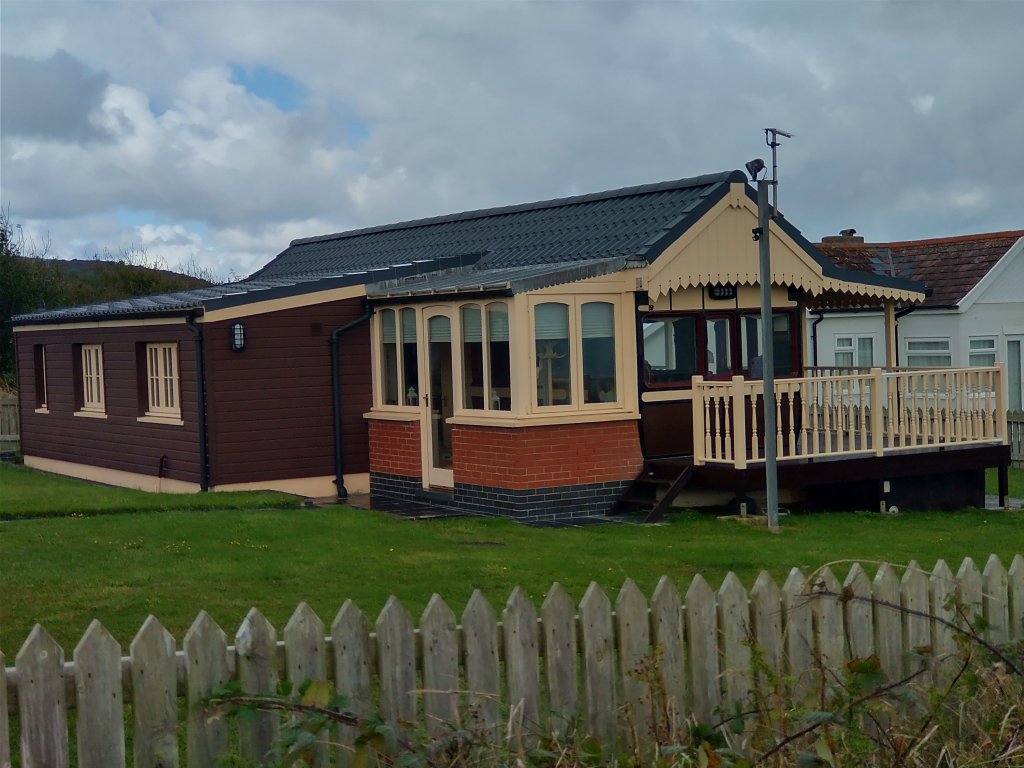
Min-y-Mor – has been delightfully restored and expanded. The pictures below are mine, taken on 16th September 2022.

Eryl -y-Don – the owners have put some effort into establishing the provenance of the railway carriage which makes up the significant part of this cottage. [1] The pictures below are mine, taken from the coastal path on 16th September 2022.

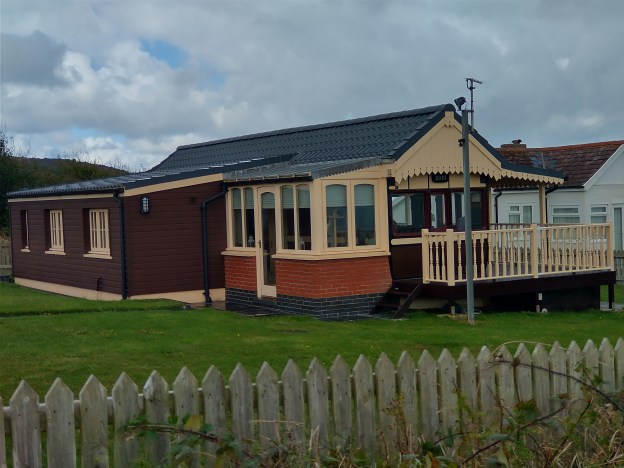
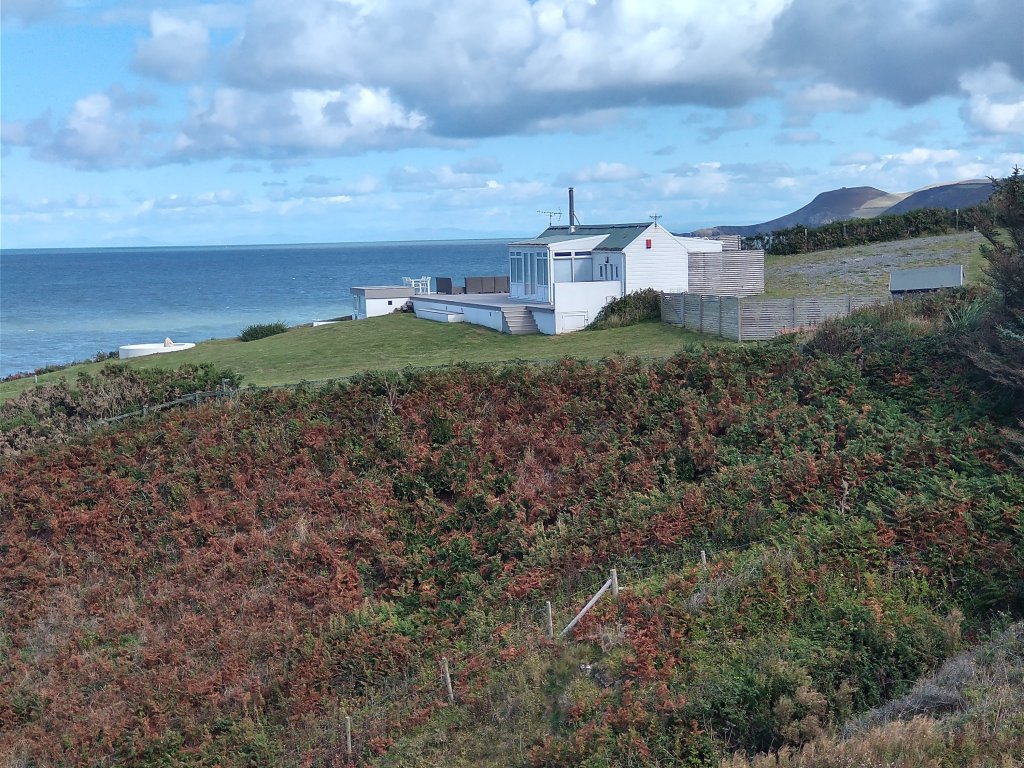
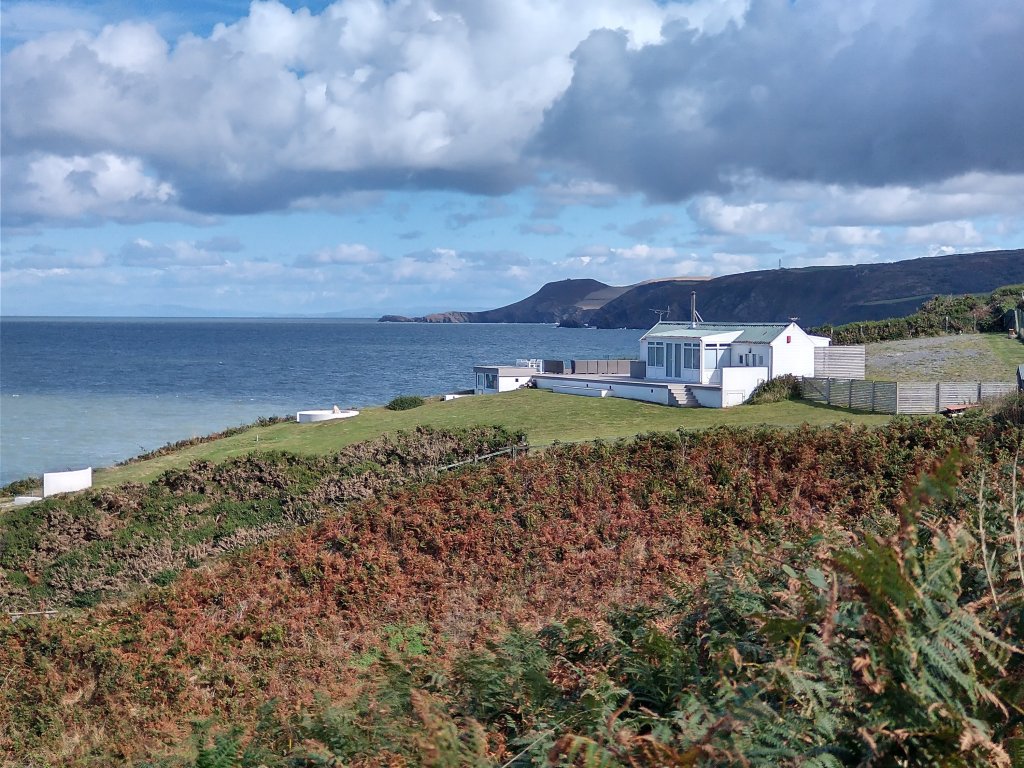
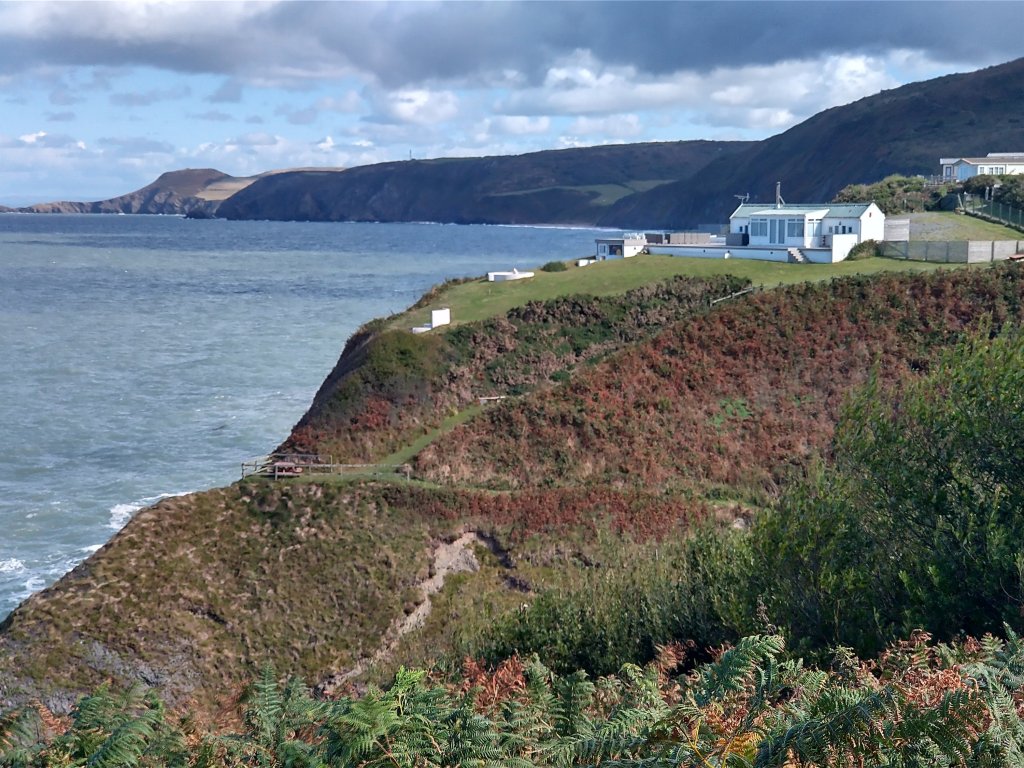
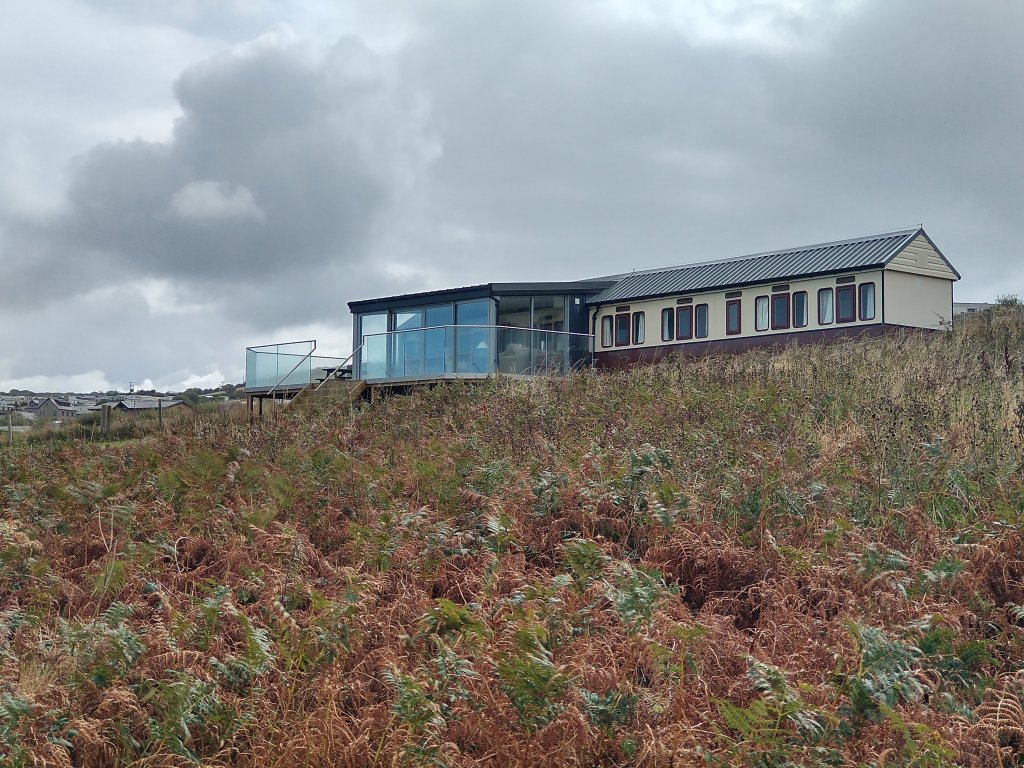
Much closer to Tresaith is one more property, right on the clifftop and placed in a significant amount of its own land. access to it is through the adjacent caravan site, Llety Caravan Park. I have not been able to find out any more about this property. My pictures below (taken in 16th September 2022) are complemented by a satellite image from Google Earth. The cottage clearly has an old railway carriage at its heart

This article gives a flavour of all these carriages and some idea of what they look like today. It would be good to learn more about their history.

It is known that a number, at least, were brought along the Carmarthen and Cardigan Railway to Newcastle Emlyn and then we’re manoeuvred down the narrow lanes of the 1920s and 1930s from Newcastle Emlyn to Aberporth by steam tractors/lorries. It is hard to imagine the effort needed to get them to Aberporth and then into position across the fields to the cliffs.

References

1. http://www.demery.org, accessed on 16th September 2022.

2. https://www.cottage-choice.co.uk/holiday-cottages/cottages-Clifftop-Carriage-1035508.asp, accessed on 16th September 2022.

3. https://www.tivysideadvertiser.co.uk/news/20065409.aberporths-last-carriage-disappears-track, accessed on 16th September 2022. [NB: the title for this article is misleading, as a number of carriages remain in use near or in Aberporth as holiday homes.]

4. http://www.cs.rhrp.org.uk/se/CarriageInfo.asp?Ref=5508, accessed on 16th September 2022.

5. http://www.cs.rhrp.org.uk/se/CarriageInfo.asp?Ref=5510, accessed on 16th September 2022.

6. https://www.underthethatch.co.uk/wendy, accessed on 16th September 2022.

7. Apparently the coach was beyond restoration and was given to the West Somerset Railway (WSR) who had a similar sleeping car ‘which also came from Aberporth’. They broke up the Bailey’s coach for parts. [1]

8. https://t.vrbo.io/YT6fhlmontb, accessed on 16th September 2022.

9. https://m.facebook.com/100030981652262, accessed on 16th September 2022.