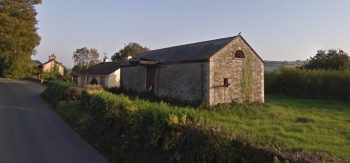
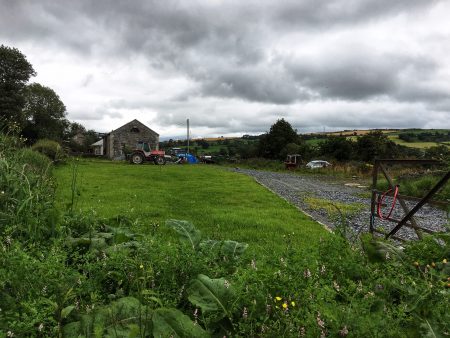
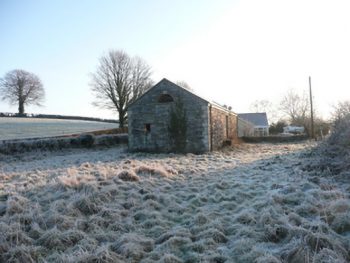
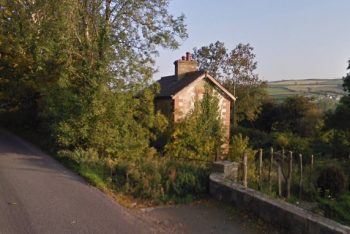
Category Archives: Co. Donegal

The Owencarrow Viaduct Accident in 1925. ….

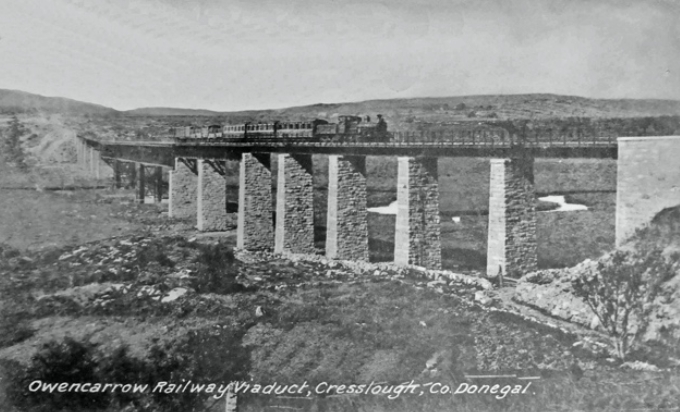
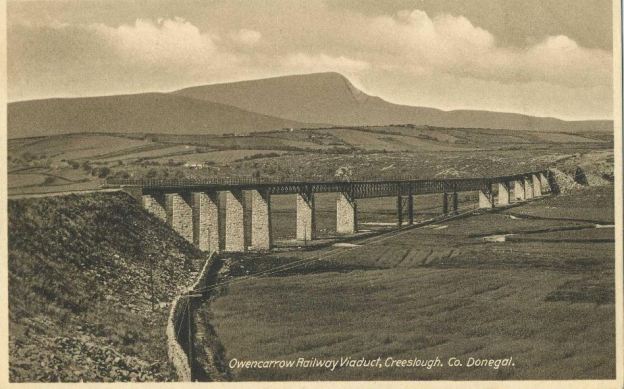
The featured image above shows the Viaduct in good condition. [7]

In the February 1963 edition of The Railway Magazine there was a letter from L. Hudlass which said: “The accident on the Owencarrow Viaduct, on the Letterkenny & Burtonport line, Ireland, of January 30, 1925, involved a westbound train running from Londonderry to Burtonport, on the Burtonport extension of the Londonderry and Lough Swilly Railway. The 380 yd.-long viaduct, sited between Kilmacrenan and Creeslough in County Tirconaill is in wild and open country and, on the day in question, a gale of 100mph caught the train broadside on and one carriage plunged through the parapet, pulling another with it. The couplings held and neither of the vehicles fell into the valley, but roof destruction caused several passengers to be thrown out, three people being killed outright, a fourth dying later in hospital. Being situated on a north-south section of the line, the 30ft.-high viaduct, across Glen Lough and over the Owencarrow River, caught the full force of the westerly gales. When the line was in operation a wind velocity of 60mph meant the exclusion of open wagons from the train, while a wind speed of 80mph caused the suspension of all traffic. The breach in the viaduct parapet was still visible in 1949. Other derailments due to gales gave been recorded on the west coast of Ireland.” [1]

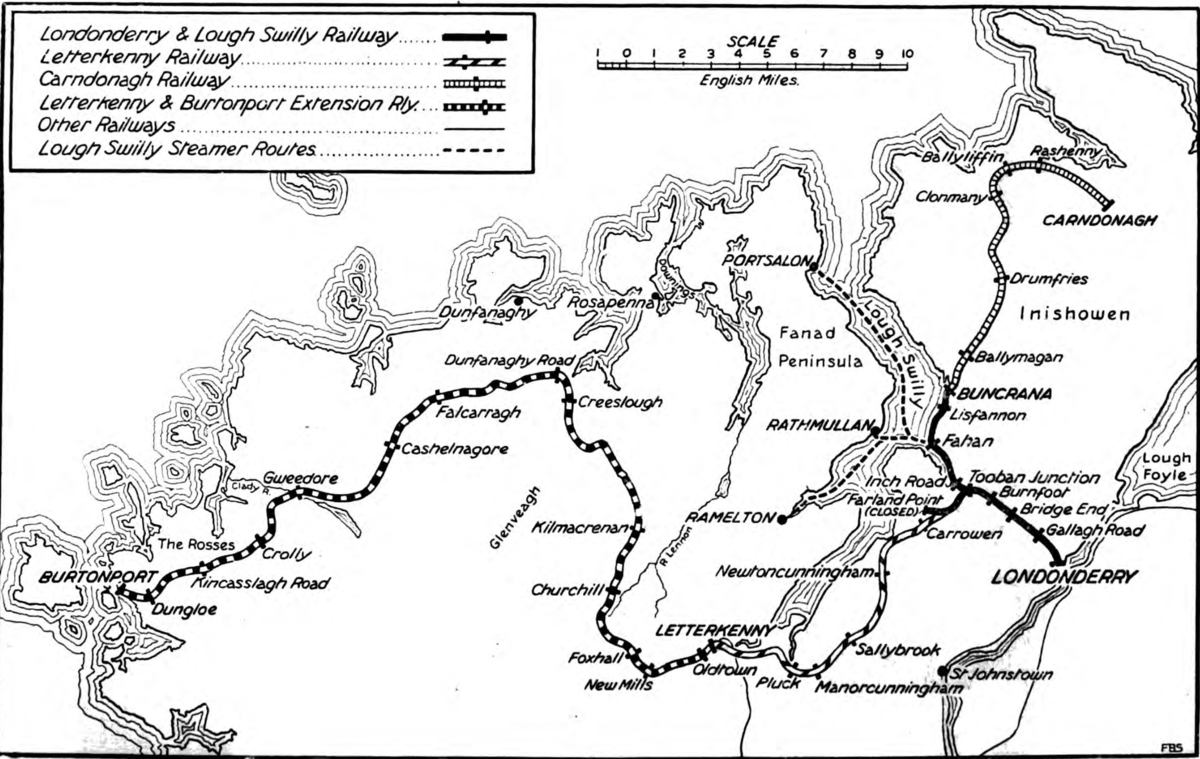
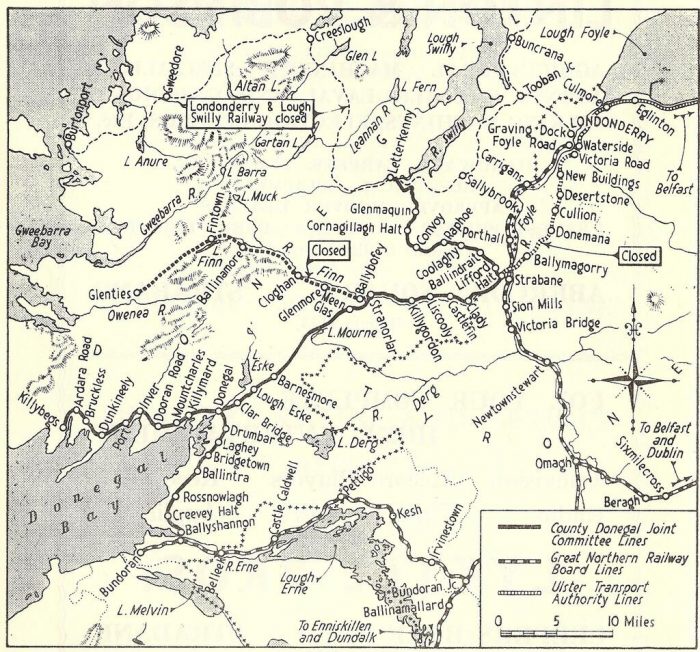
One day, I will get round to covering the route of the Londonderry and Lough Swilly Railway (L&LSR) which ran from Derry to Burtonport through some of the wildest of Co. Donegal scenery.

This article is by way of a taster and focusses on an incident at Owencarrow Viaduct in the 1920s.

The Londonderry and Lough Swilly Railway ran from Derry to Burtonport via Letterkenny. [2]

The Owencarrow Viaduct was sited between Barnes Gap and Creeslough and was, other than earthworks, the major civil engineering structure on the L&LSR.

The Owencarrow Viaduct with a Burtonport train crossing. From an old postcard. The photographer is not known. [8]
 

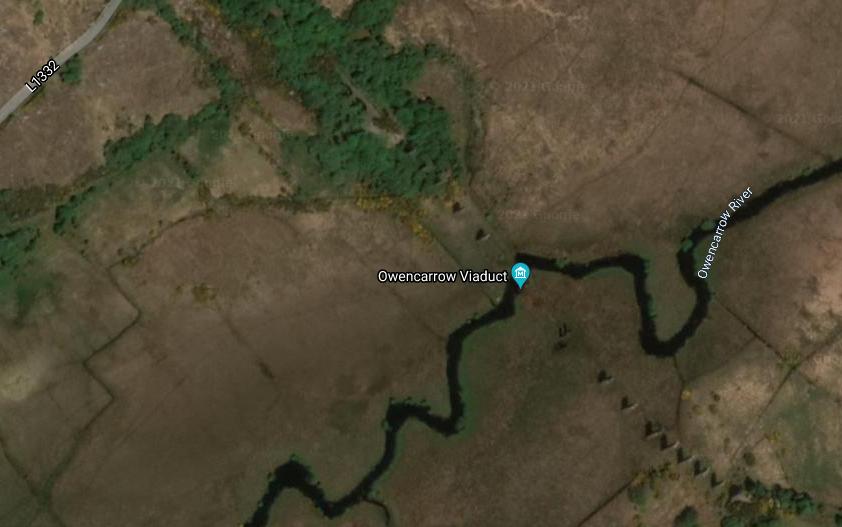
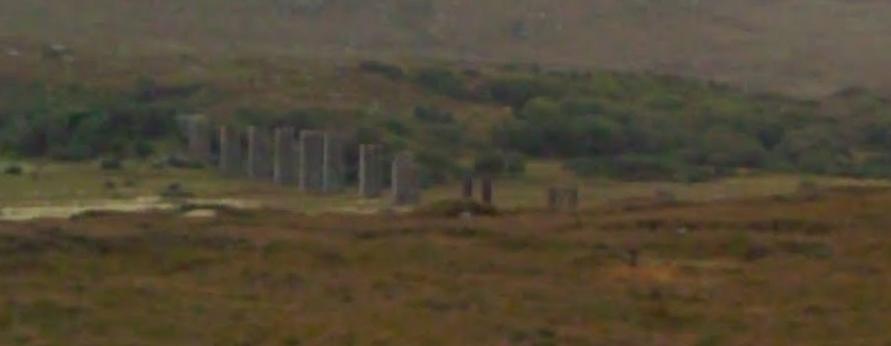
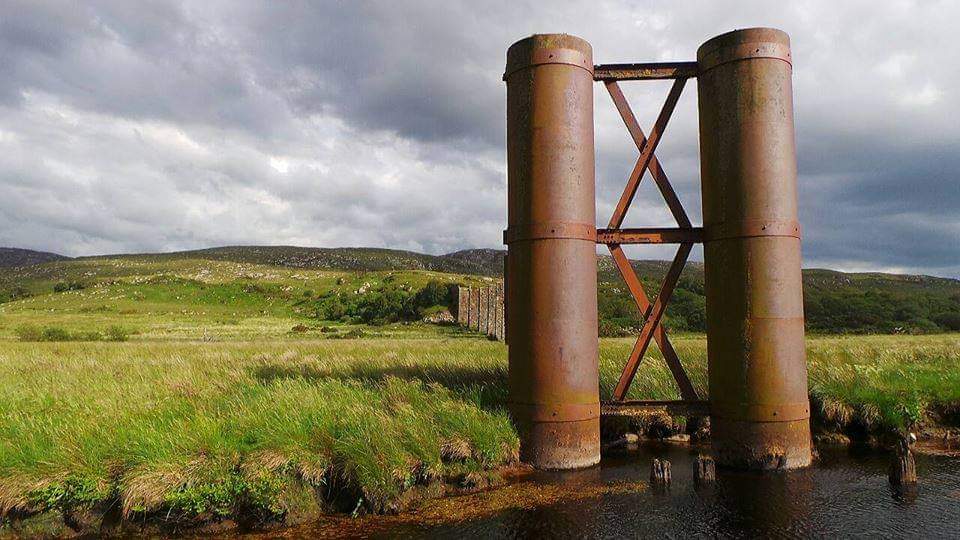
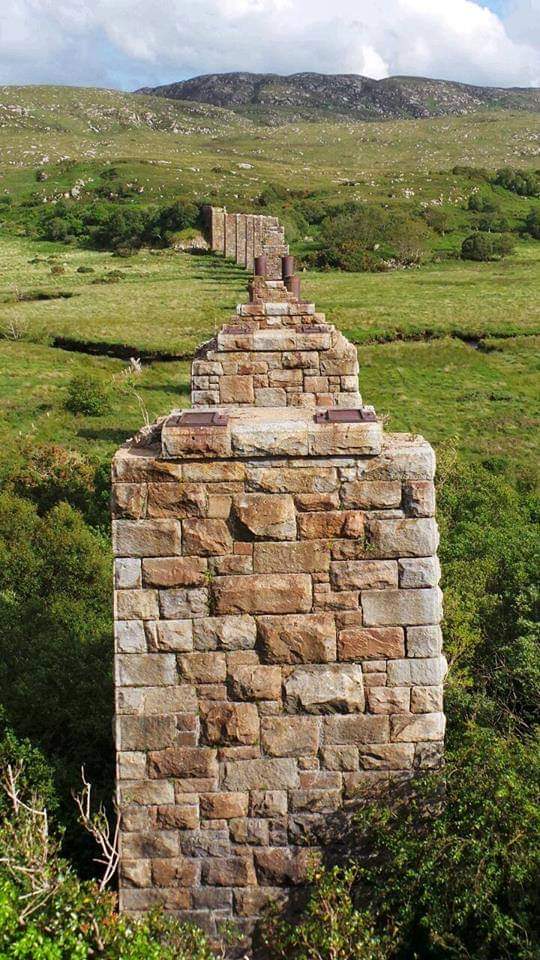
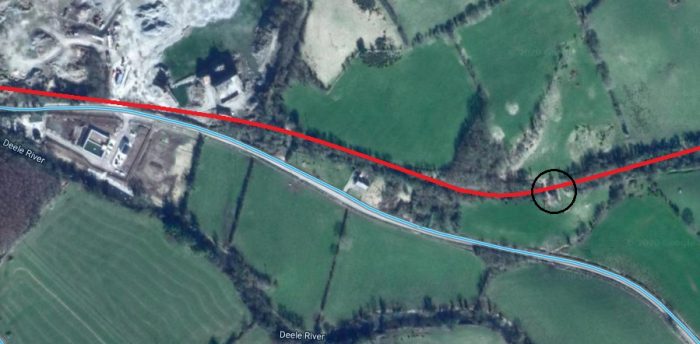
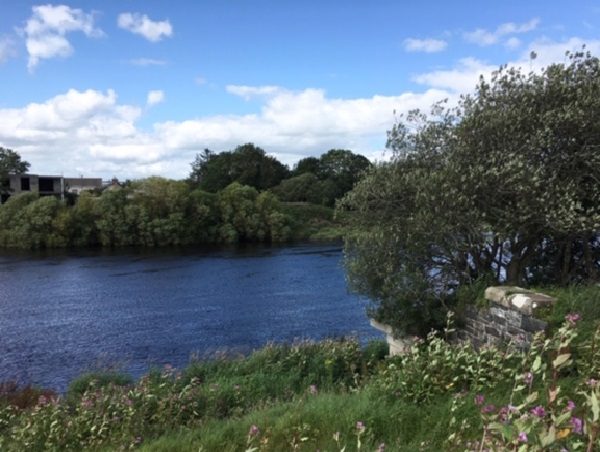
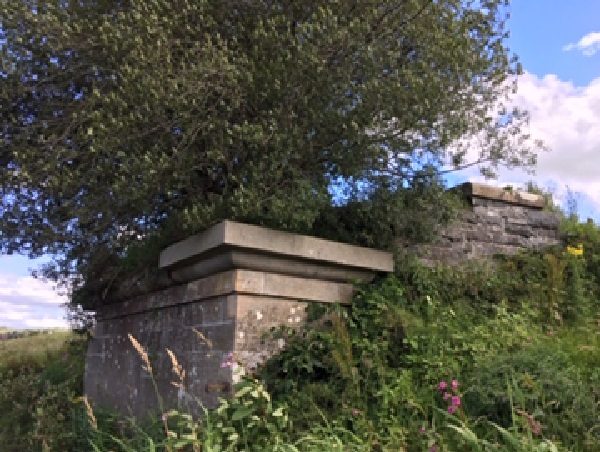
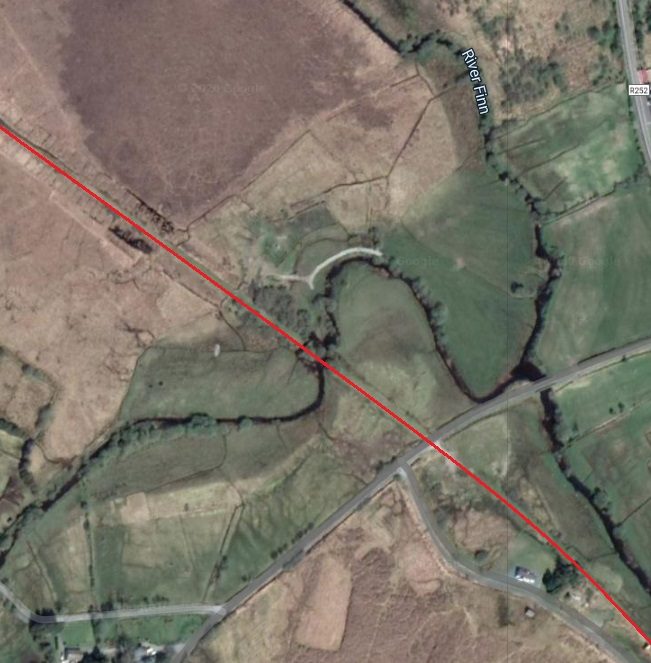
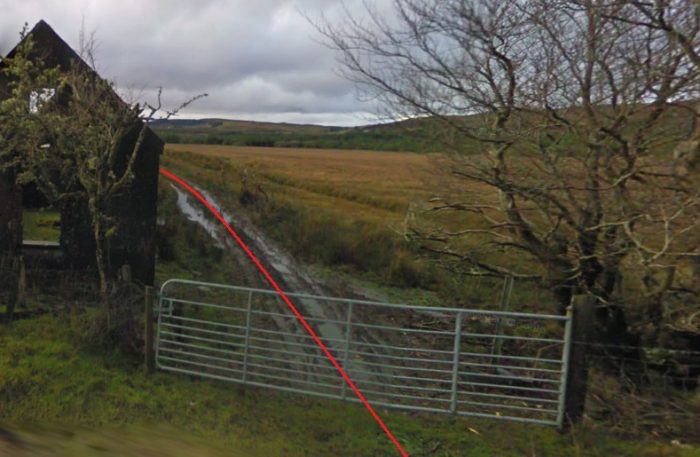
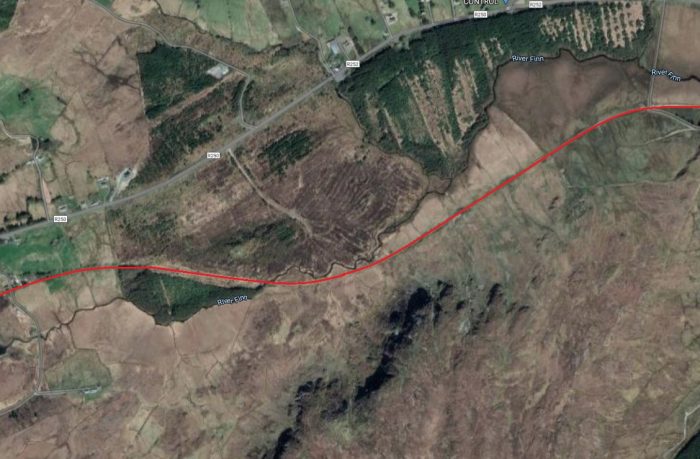
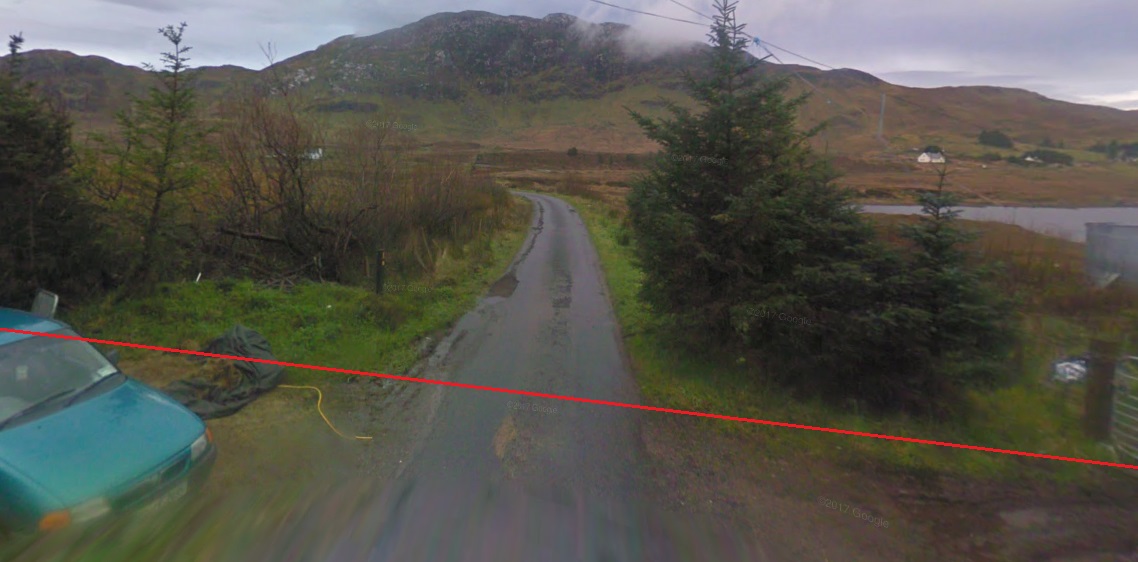
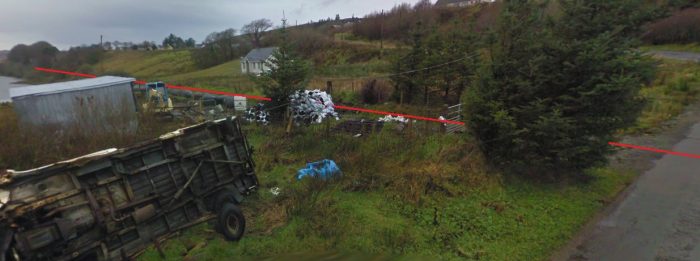
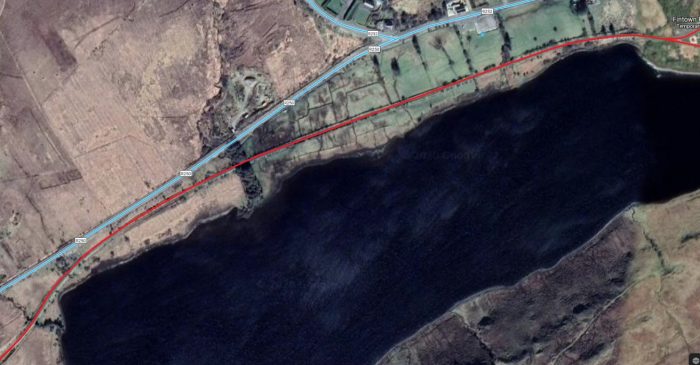
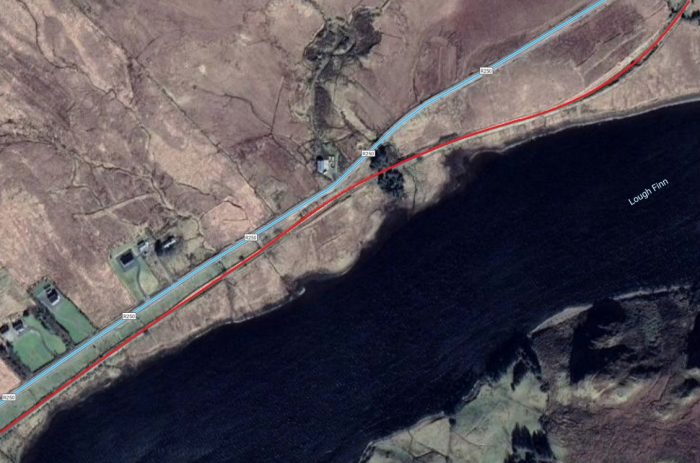
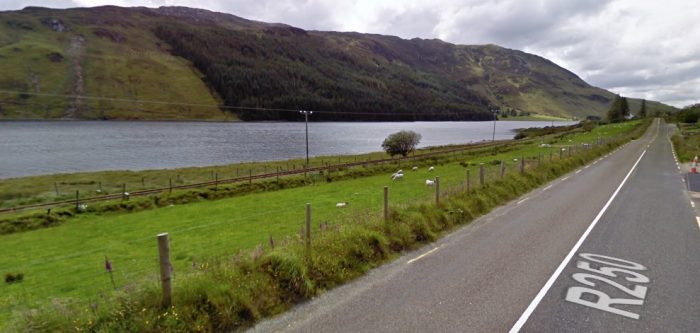
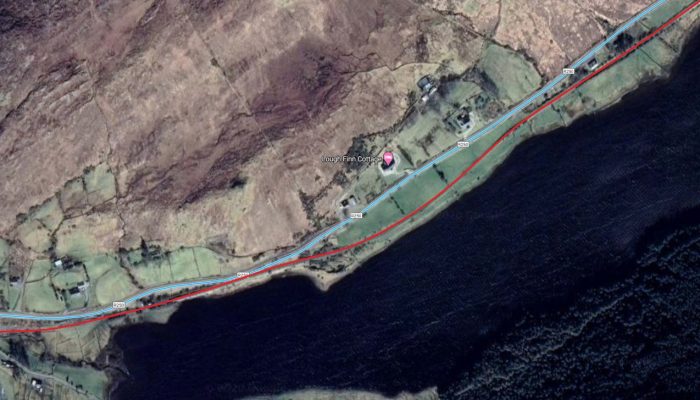
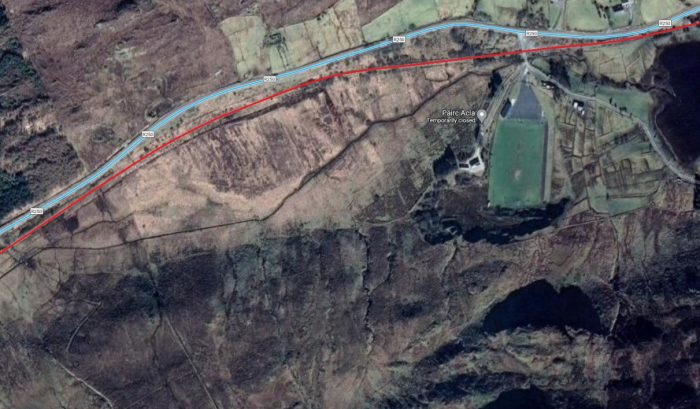
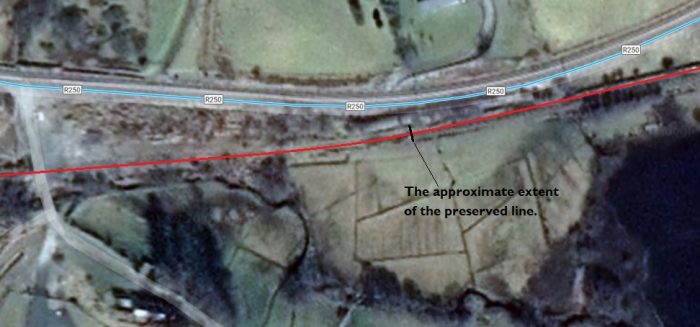
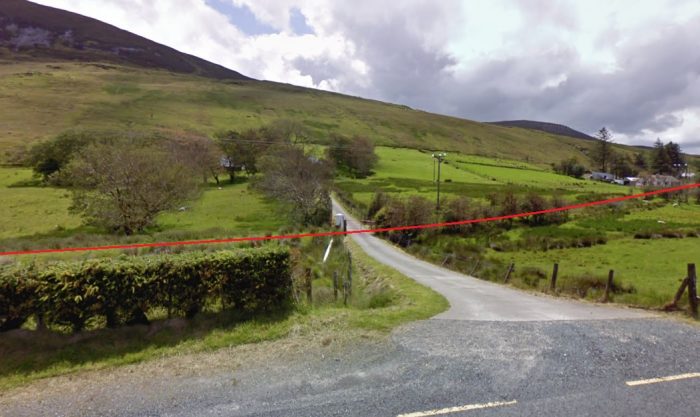
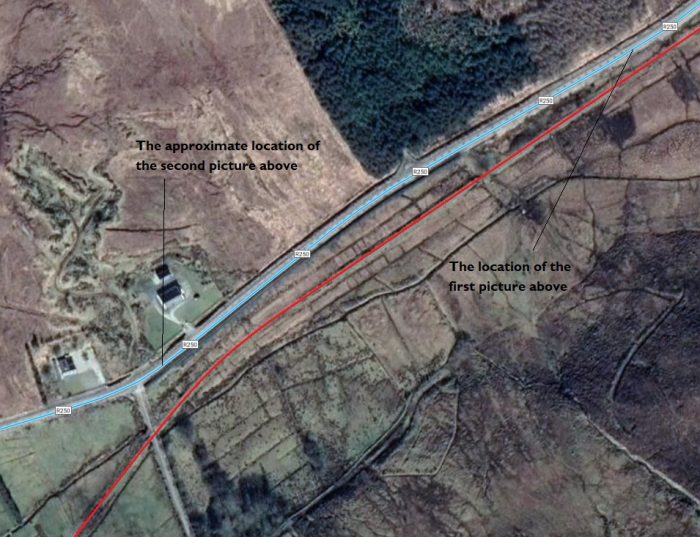
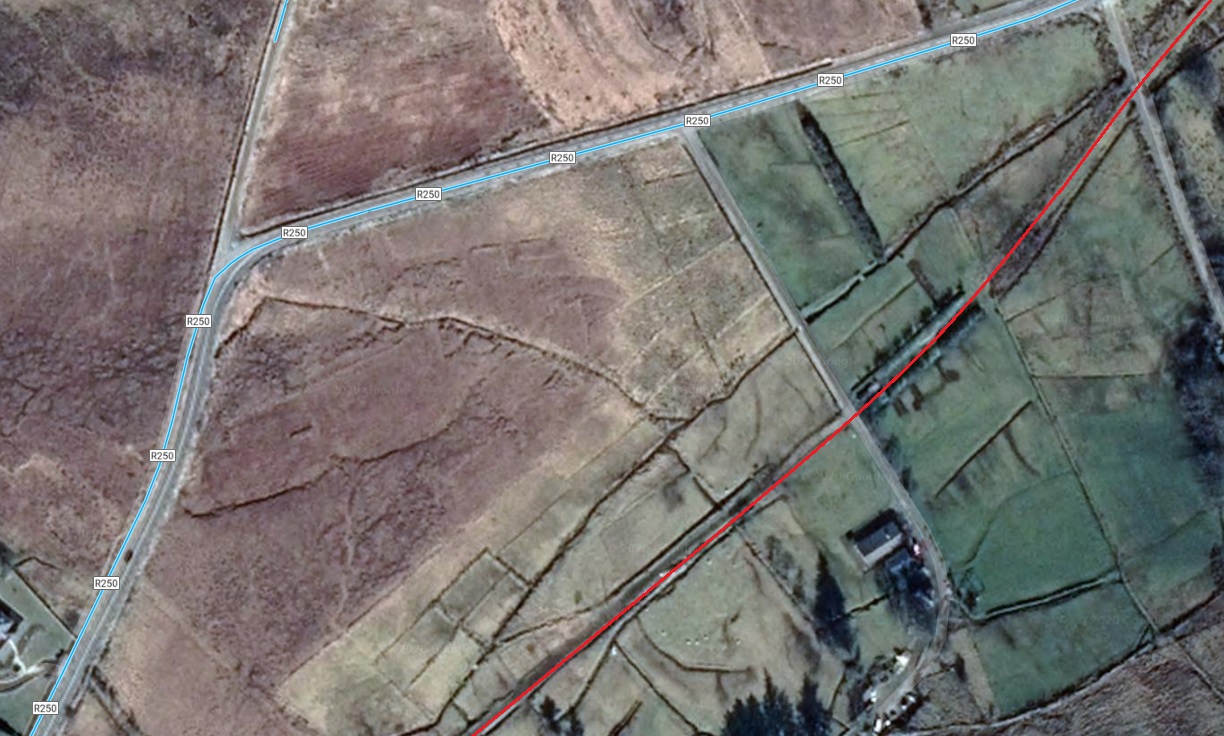
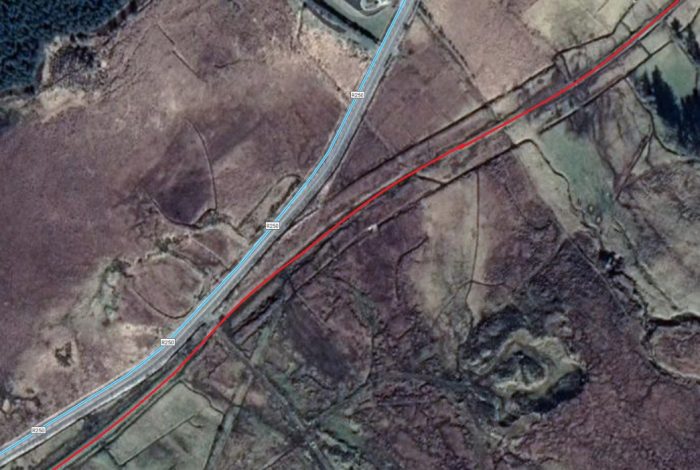
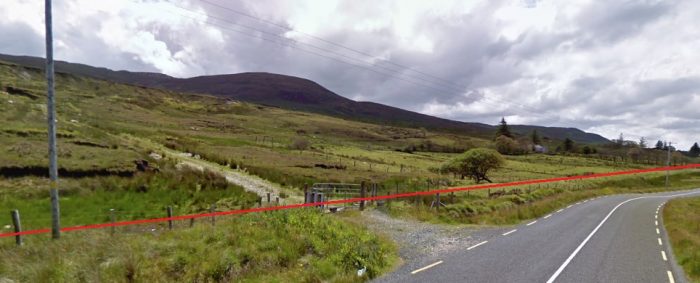
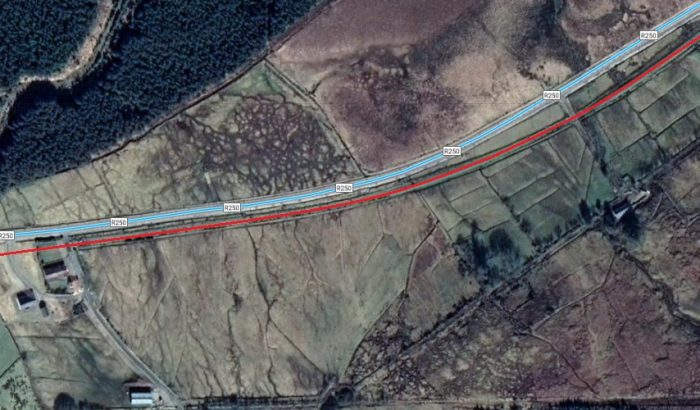
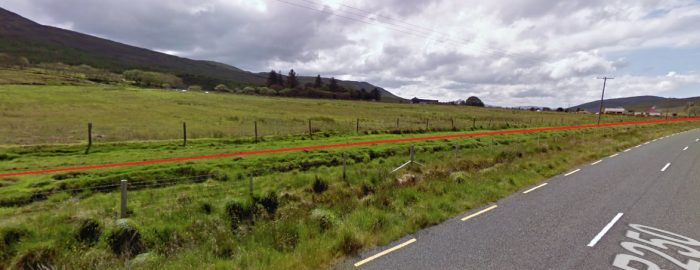
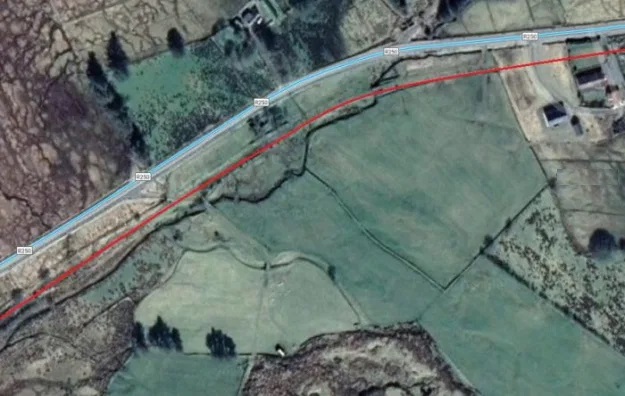
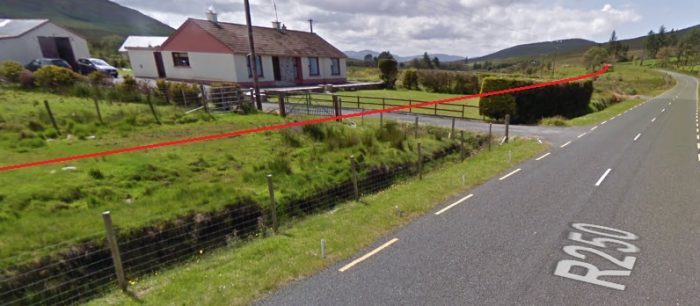
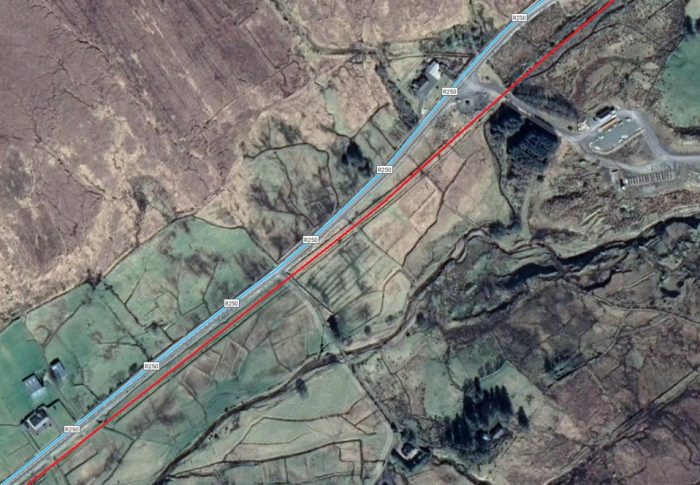
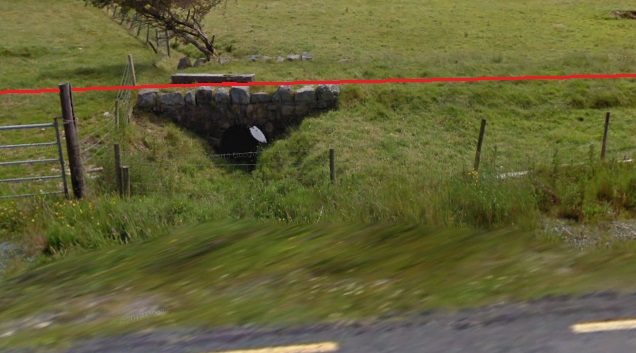
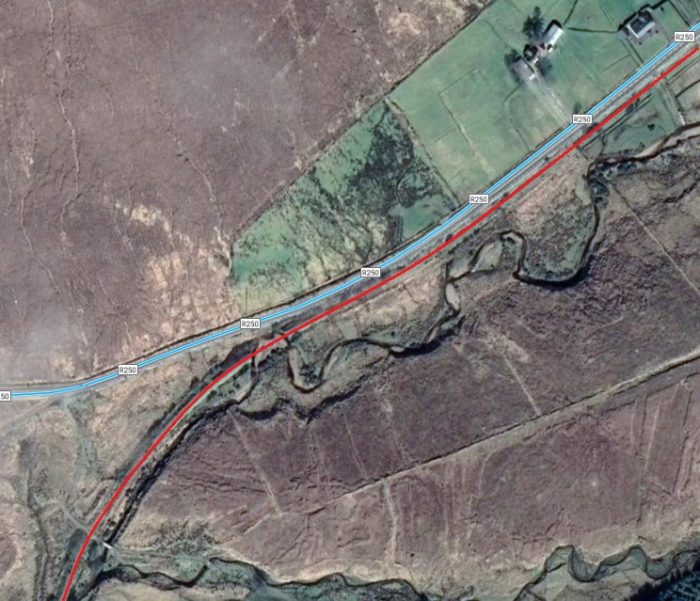
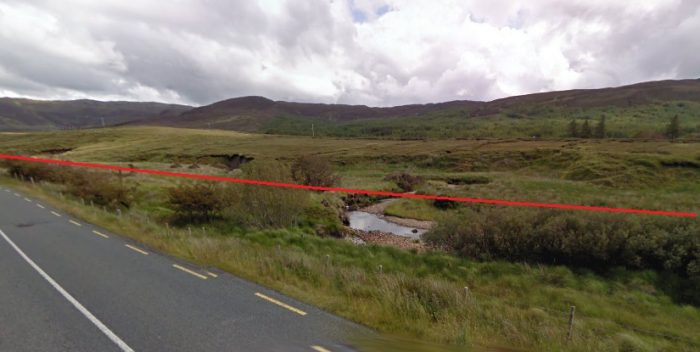
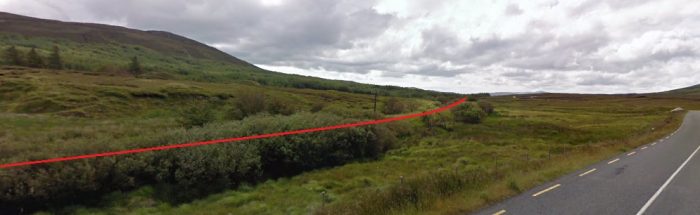
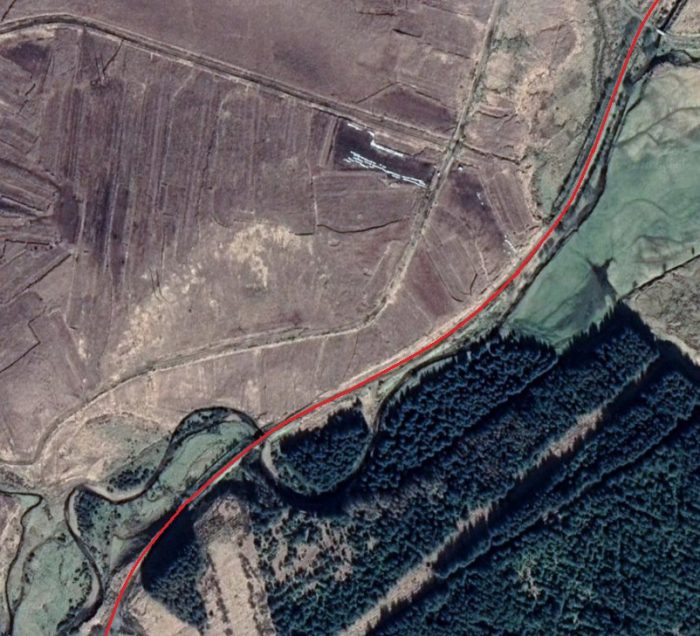
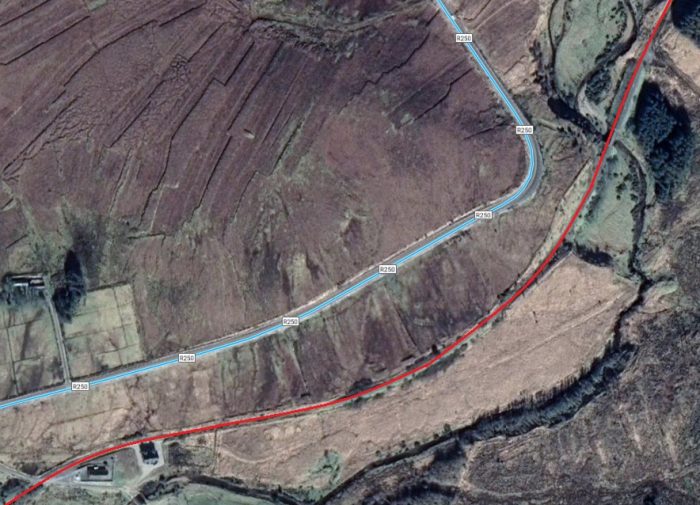
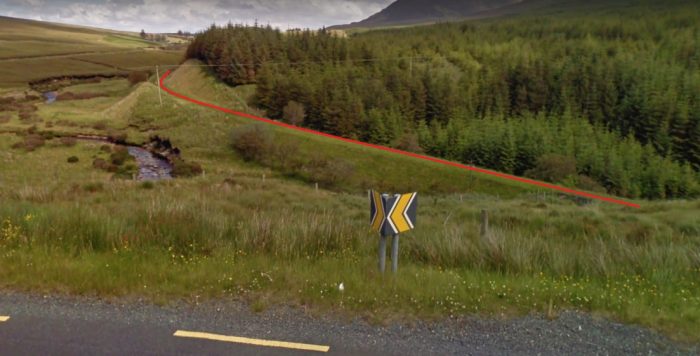
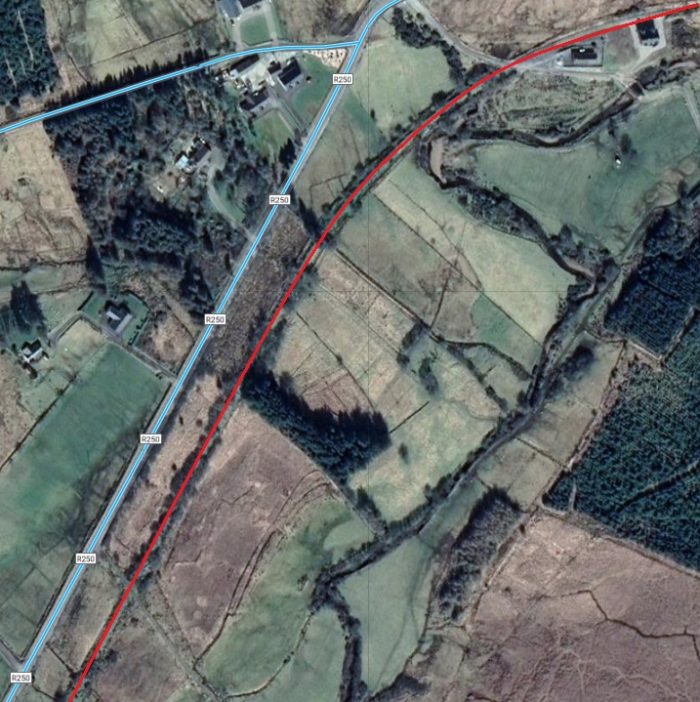
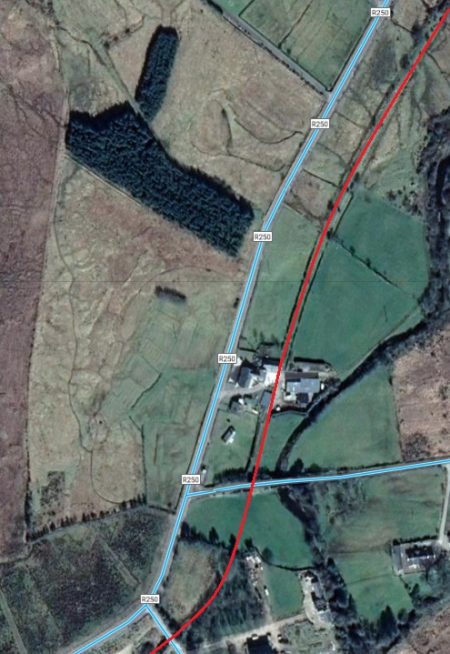
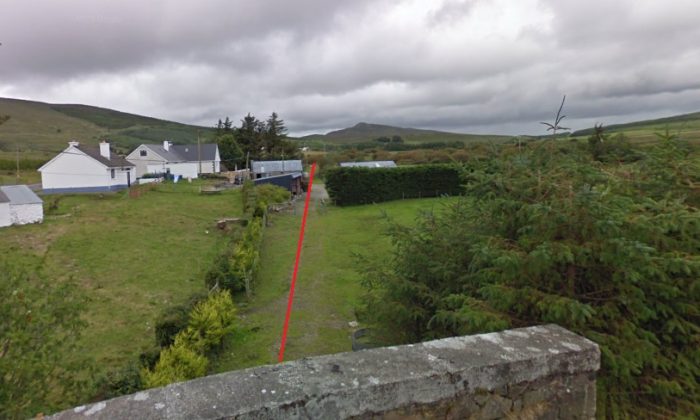
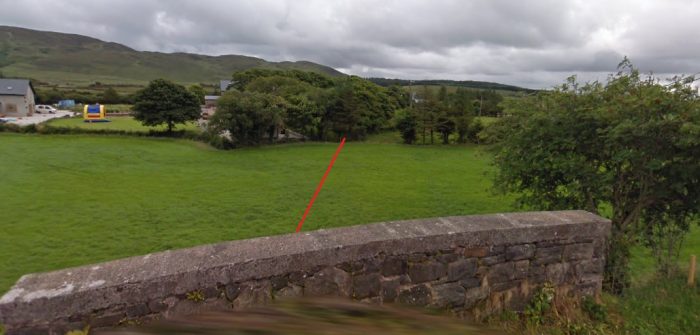
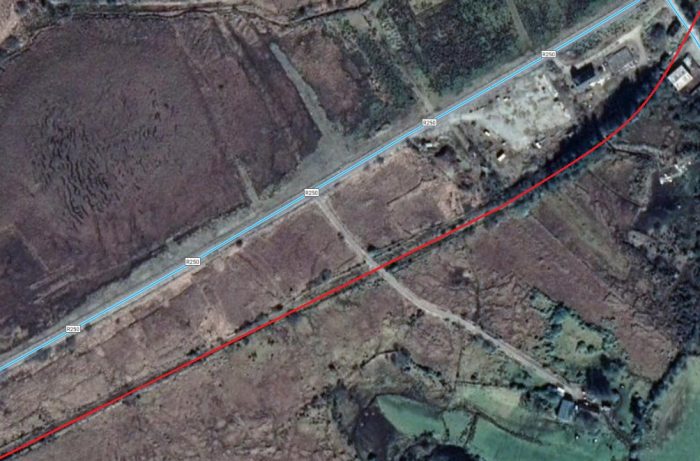
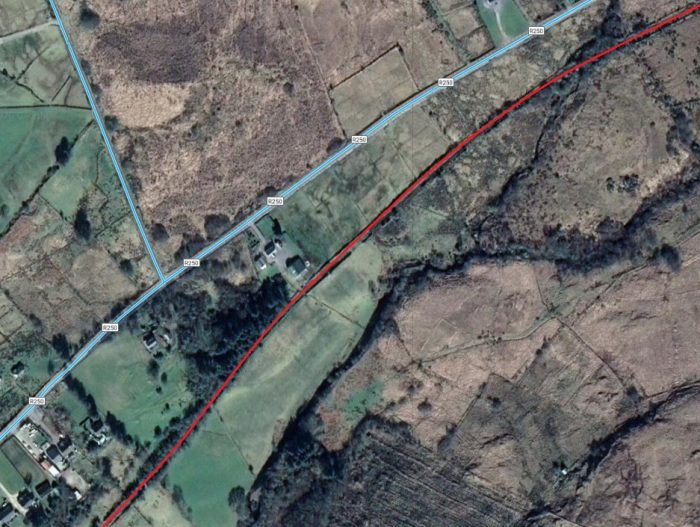
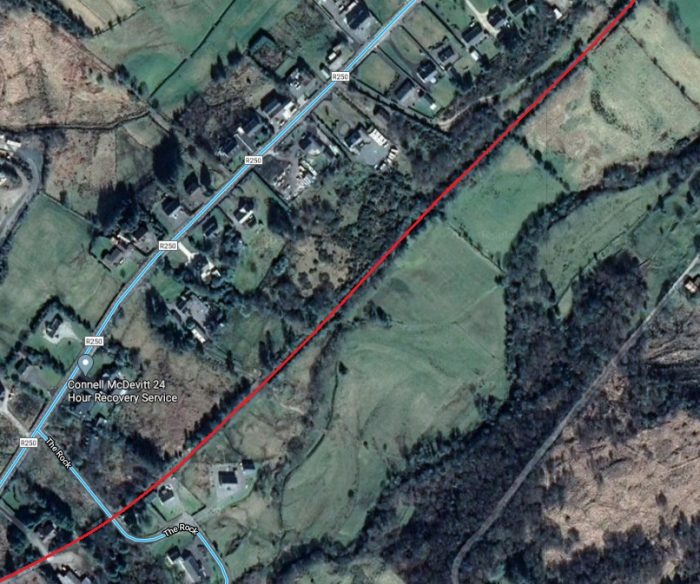
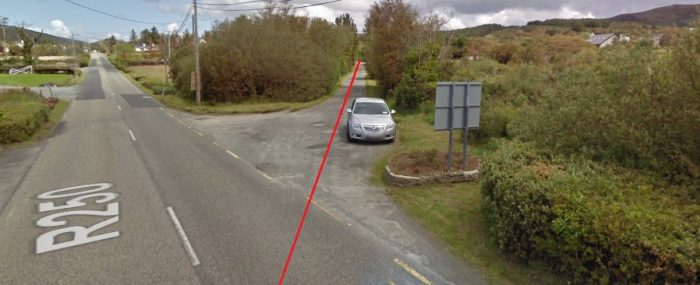
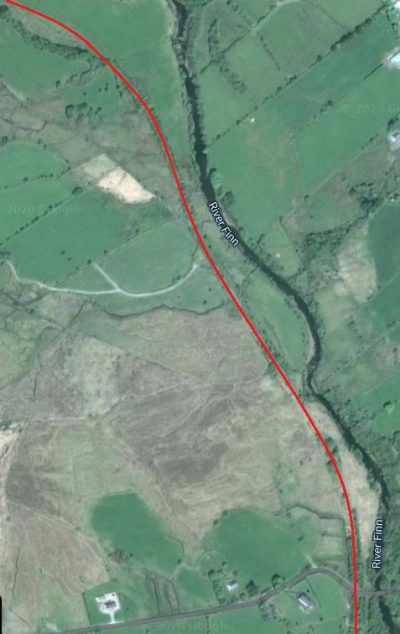
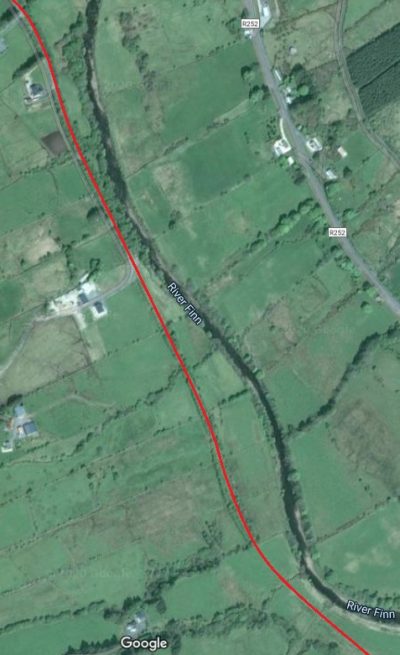
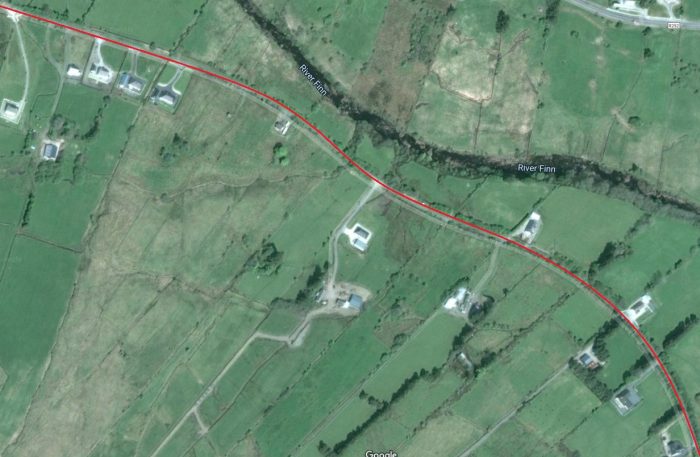
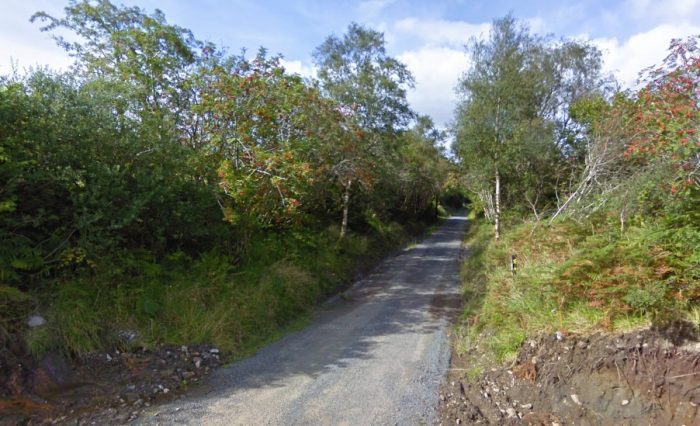
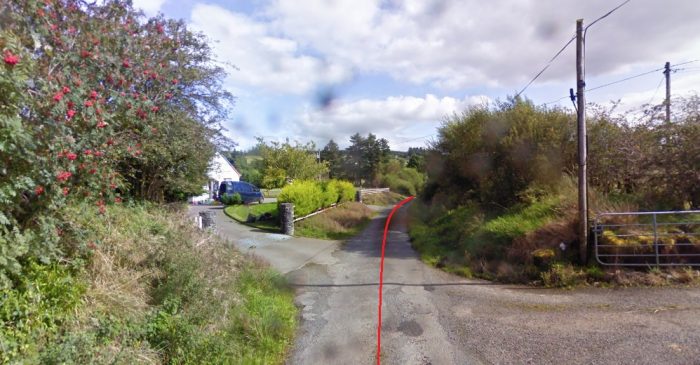
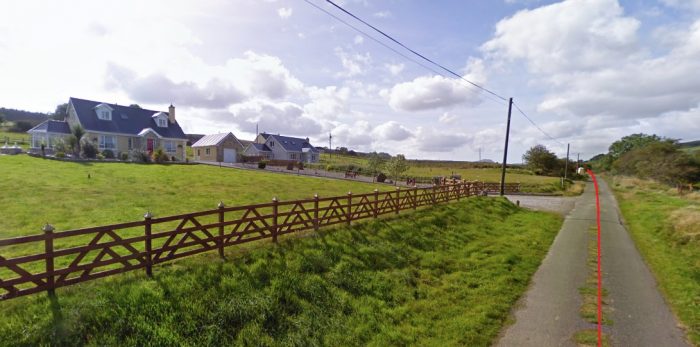
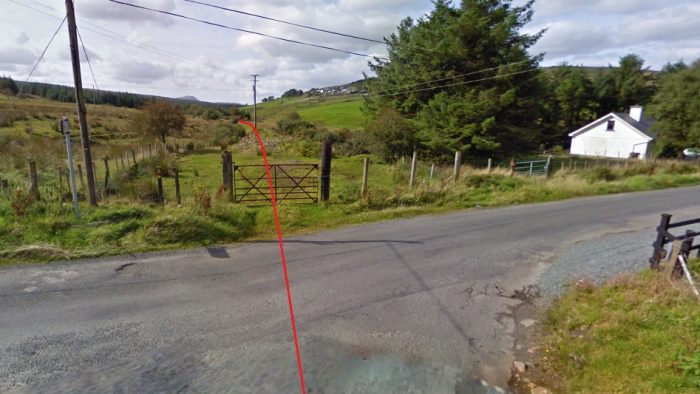
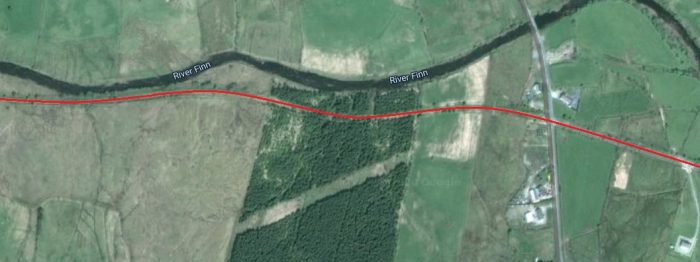
The Google Maps satellite image and Google Street view images below show what remains of the structure in the 21st century.

The Owencarrow Viaduct in Co. Donegal. [Google Maps]
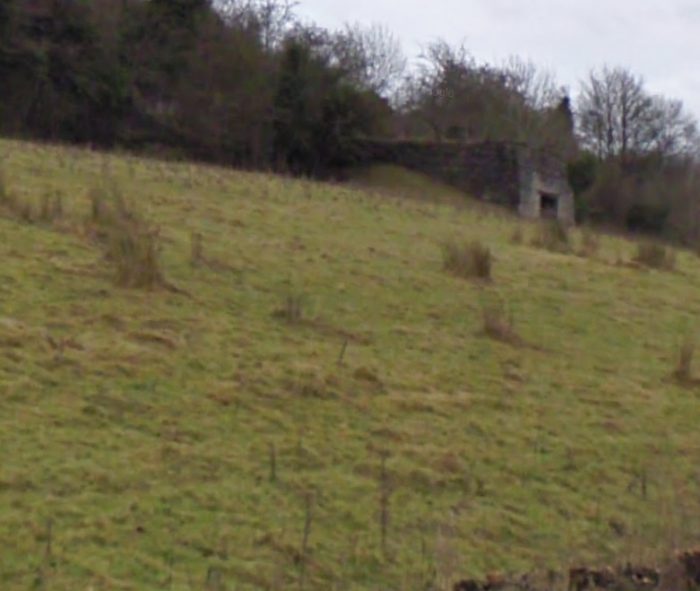
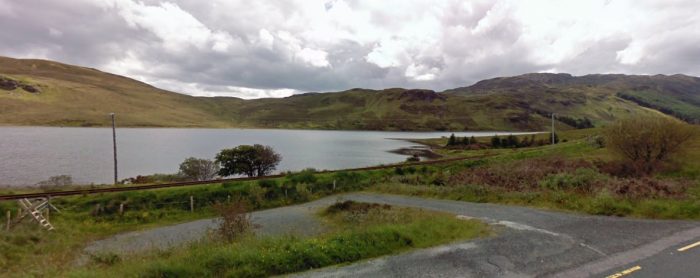
The remains of the Owencarrow Viaduct, seen from the Northwest on the L1332. [Google Streetview]
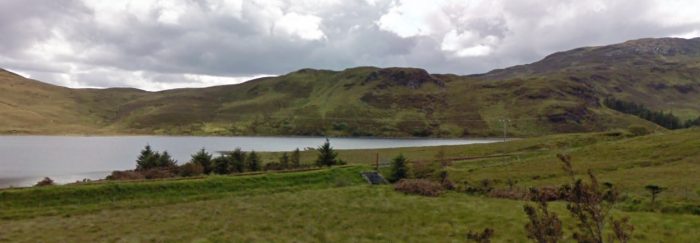
The remains of the Owencarrow Viaduct seen from the West on the L1332. [Google Streetview]

Wikipedia/Wikiwand covers the accident in a single paragraph: “Disaster occurred on the night of 30 January 1925 at around 8pm at the Owencarrow Viaduct, County Donegal. Winds of up to 120 mph derailed carriages of the train off the viaduct causing it to partially collapse. The roof of a carriage was ripped off throwing four people to their deaths. The four killed were: Philip Boyle and his wife Sarah from Arranmore Island, Una Mulligan from Falcarragh and Neil Duggan from Meenbunowen, Creeslough. Five people were seriously injured. The remains of the viaduct can today be seen from the road (N56) which carries on from the Barnes Gap on the road to Creeslough.” [2]

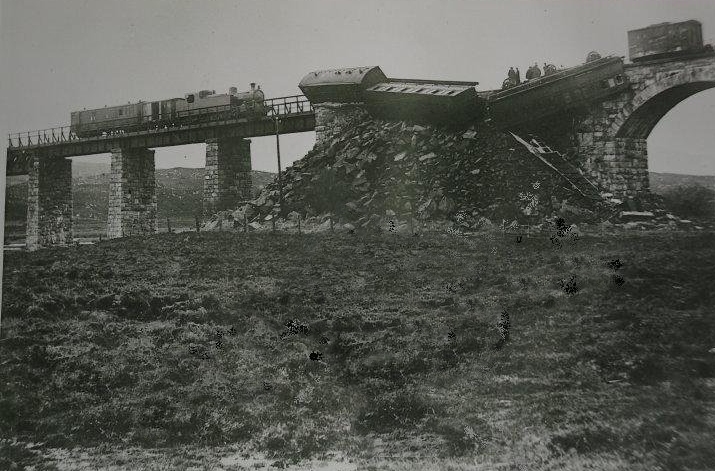
The scene of the accident. This picture was taken on 31st January 1925, the day after the disaster. The photographer is not known. [3]

There are a number of accounts of the accident available online which provide a bit more detail of the tragic events of 30th January 1925.

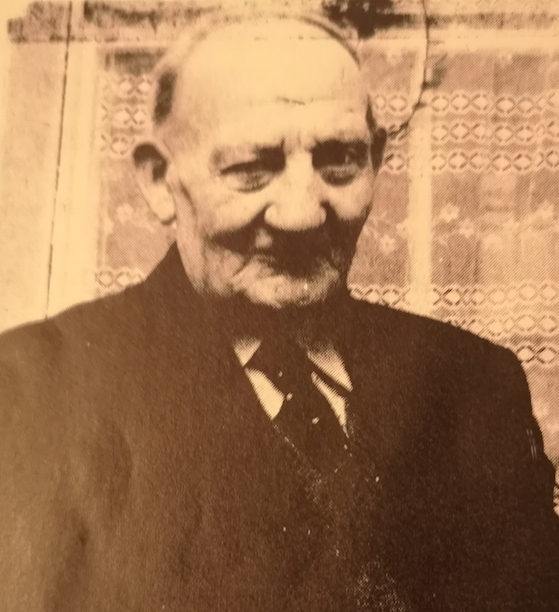
Walking Donegal looks at the event through the eyes of fireman John Hannigan who was on the footplate that day. [4] Long after that day Hannigan recalled “vividly the events of the night, the passing years ha[d] not erased the memory of the harrowing scenes or stilled the sound of the screams of agony. He still relive[d] the feeling of hopelessness he endured as he surveyed the scene of desolation in the fleeting moments, oblivious to his own danger, he scrambled over the wreck-strewn terrain to run the two odd miles to Creeslough to raise the alarm.” [4]

Hannigan was interviewed in 1984. [5] He was 85 when he gave that interview, a few years before he died in 1987 at the age of 88. Much of the text of the interview was reproduced in a Donegal Daily news item on 14th November 2019 and was extracted from a Christmas Annual published by Letterkenny Community Centre in the 1980s.

Hannigan spoke eloquently of his experience of working on the railway, first joining the staff of the L&LSR when he was just 15 years old, he was just 26 the night the train left the rails in the storm. After years of efficient service on the footplate, he realised his youthful ambition and was promoted to the position of driver the following year.

John Hannigan. [5]

Speaking of the first part of the journey from Derry, Hannigan said, “We left Derry that evening around 5.15pm, we had two wagons of bread next to the engine. They were sent out from Derry by Stevensons and Brewsters Bakeries. After that was three carriages, a first, a second and a third class, behind that were six wagons of general merchandise and the guards’ van at the end. Neilly Boyle was in charge as guardsmen who was from Burtonport, who later was a conductor on the buses.” [5]

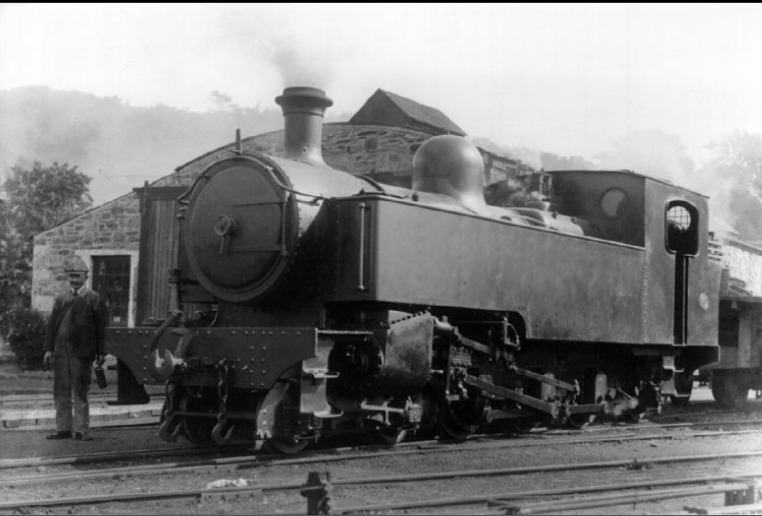
When the train reached Letterkenny a bit of shunting was required to remove the six wagons and replace them with others. Hannigan remembered that they were using locomotive No. 14 which was a 4-6-2T and is shown below.

Locomotive 4-6-2T No 14 seen here at Pennyburn, Derry, 1931. Donegal Railway Heritage Centre (DRHC) Collection. [8]

By the time that they reached Kilmacrennan Station the wind was starting to blow hard and Hannigan and the train driver, Bob McGuinness, consulted about the state of the weather, wondering about whether it would be safe to go ahead.  Hannigan commented: “I had often gone over the viaduct in a smaller engine. We decided to proceed. Bob slowed down to a snails pace and as we crossed the bridge we did not think that the storm was all that bad.”

From Hannigan’s recollection of the evening it seems as though a freak gust of wind hit the train close to the end of the viaduct. He said:  “The carriage behind the two bread wagons was raised up on the line, it was like a hump on its back. It then fell against the parapet and the roof was smashed, two passengers were thrown out, Phil Boyle was killed, his wife was injured and died afterwards.” [5]

“A Mrs Mulligan also lost her life, they had fallen through the roof and into the river below. Another man, Andy Doogan, was found dead near the viaduct, he must have also been on the train.” [5]

As the minutes ticked by, the wind continued increasing in strength, the hostility of the gale made it hard for voices to be heard. Hannigan remembered managing to stumble across the bridge to the end of the train to free Neilly Boyle jammed against the bridge railing. He then trekked the two miles to Cresslough Station for help. “Between running, walking and falling I finally made it. On the way, I called at the homes of the two-level crossing men and brought them with me. We told John Gallagher the Station Master what had happened. Next we alerted the local guards and doctors. I got a lift back to the scene. It was about quarter to eight. A young priest, Fr. Gallagher was attending to the dead and injured.” [5]

The ‘Why Donegal?’ Facebook page carries a less personal account of events. [6] The train apparently left Letterkenny at 7:05PM. The journey to Kilmacrennan was uneventful, but “by the time they reached Barnes Gap, the driver remarked that the wind was bad. As the train approached the Owencarrow viaduct a strong gale was blowing. He slowed down to 10m.p.h. and was a few dozen yards from the Creeslough side of the viaduct and almost clear of it, when a sudden gust came so strong that it blew the carriage nearest to the engine off the rails. Two were derailed in all. One somersaulted and the roof was smashed. The four occupants of the coach were thrown through the roof into the rocky ravine forty feet below. The victims were Philip and Sarah Boyle from Arranmore Inland, Una Mulligan from Falcarragh and Neil Duggan from Meenbunowen, Creeslough. Duggan’s home was only a stones throw from the crash.” [6]

“Six of the injured were taken to Letterkenny General Hospital. Of the 14 passengers, just one was unhurt, a young woman who was flung from the upturned carriage and landed on the soft boggy soil.” [6]

The ‘Why Donegal’ Facebook page includes a few photographs of the viaduct as it remains today which were taken by Jacqui Reed.

The Owencarrow Viaduct in the 21st century (c) Jacqui Reed. [6]

References

  1. L. Hudlass; Owencarrow Viaduct Accident; a letter in The Railway Magazine, February 1963, p148-149.
  2. https://www.wikiwand.com/en/Londonderry_and_Lough_Swilly_Railway, accessed on 30th May 2021.
  3. https://www.monreaghulsterscotscentre.com/owencarrow-viaduct, accessed on 30th May 2021.
  4. http://www.walkingdonegal.net/owencarrow-viaduct-disaster-by-john-hannigan
  5. https://www.donegaldaily.com/2019/11/14/dd-motoring-brian-mcdaid-recalls-the-owencarrow-viaduct-disaster, accessed on 30th May 2021.
  6. https://m.facebook.com/story.php?story_fbid=416203555247099&id=358197231047732, accessed on 30th May 2021.
  7. https://twitter.com/Donegalcomuseum/status/956480040069488640?s=09, accessed on 30th May 2021.
  8. https://donegalheritage.wordpress.com/2020/01/31/the-owencarrow-viaduct-disaster, accessed on 30th May 2021.

Co. Donegal Railways, Ireland – Part 6 – Strabane to Letterkenny (Part C – Convoy to Letterkenny)

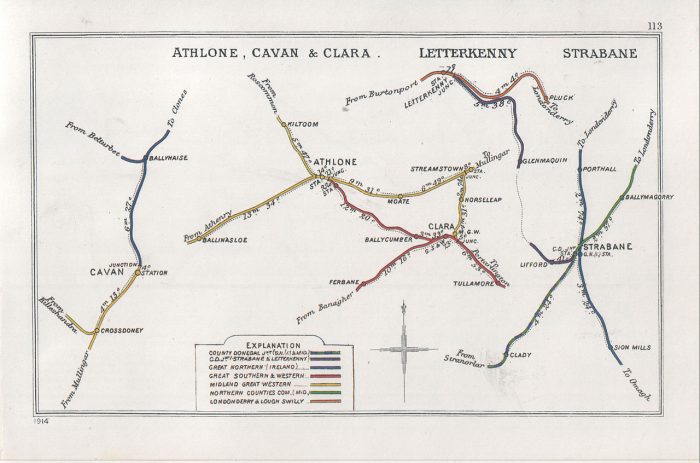
As we noted at the start of the two previous articles about this line, Wikipedia gives us a very short history of the line from Strabane to Letterkenny and provides a single image – the Railway Clearing House map with stations in Strabane and Letterkenny:

The Railway Clearing House map with stations in Strabane and Letterkenny. [3]

This series of articles seeks to expand our understanding of the route of the various Co. Donegal Railways through combining old images and modern views. Satellite images also give us a good understanding of what remains of the infrastructure of these lines.

The previous articles about this line which cover the length from Strabane to Convoy can be found by following these links:

Co. Donegal Railways, Ireland – Part 4 – Strabane to Letterkenny (Part A – Strabane to Raphoe)

Co. Donegal Railways, Ireland – Part 5 – Strabane to Letterkenny (Part B – Raphoe to Convoy)

A Journey Along the Line – Strabane to Letterkenny – Part C – Convoy to Letterkenny

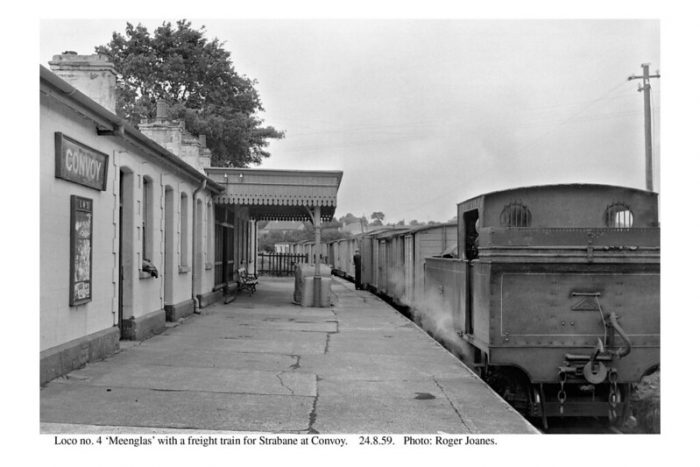
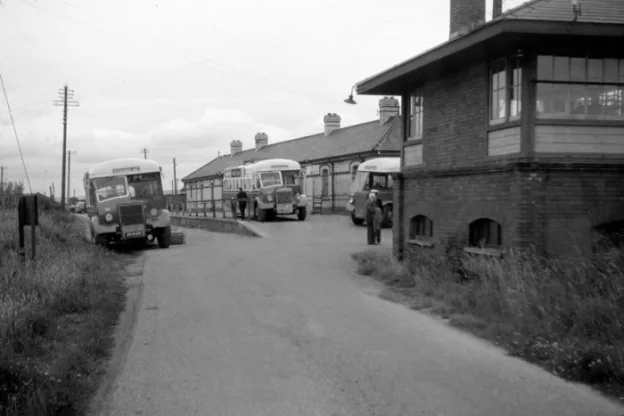
We return to Convoy Railway Station which sits to the East of the Village. While we are waiting for our train, a railcar from Letterkenny stops at the station.
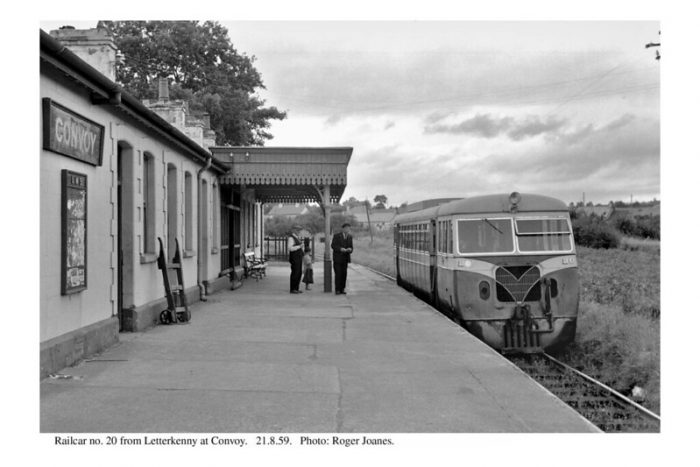
Convoy Railway Station in 1959 (c) Roger Joanes, (CC BY-NC-ND 2.0) Railcar No. 20 from Letterkenny stops at Convoy. [14]

I have found two further pictures of Convoy Railway Station and its site in Anthony Burges’ book, ‘The Swilly and The Wee Donegal’. Both of these photos were taken in 1957 and were either taken by the author or are from his collection. [8: p34 and 35]

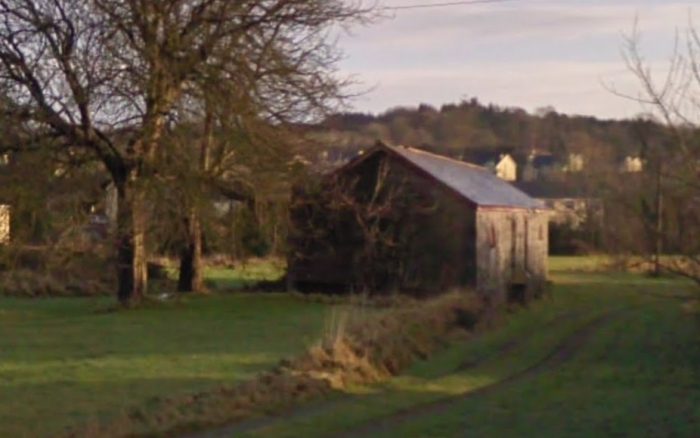
The second photograph [8: p35] shows the goods shed, water tower and a number of sidings, but only the goods shed was standing in 2010 when Google Streetview cameras visited the site.
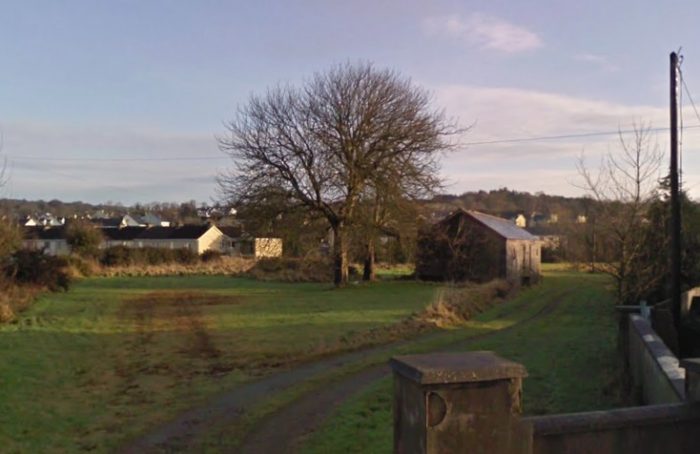
Convoy Railway Station Goods Shed is shown to the right of center in this image taken in 2010 (Google Streetview).

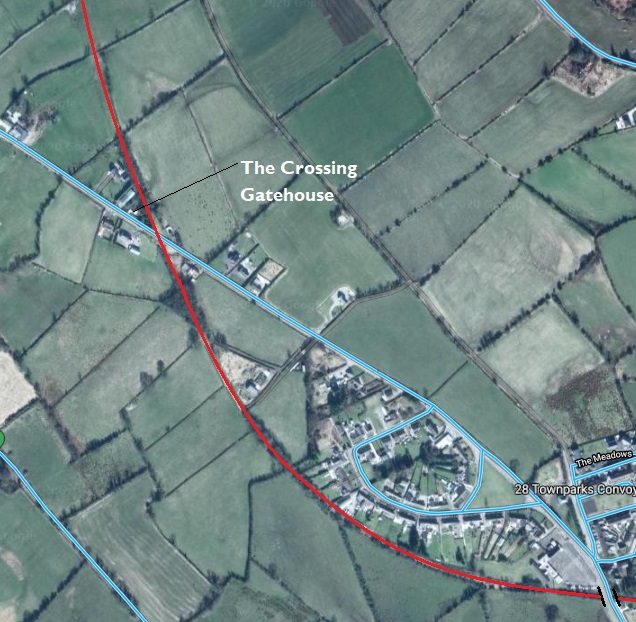
The line out of Convoy Railway station travelling to the West crossed the R236 at a shallow angle protected by Crossing Gates. The Crossing keeper’s cottage (or Gatehouse) is still standing. It has been extended to better be used as a modern family home.
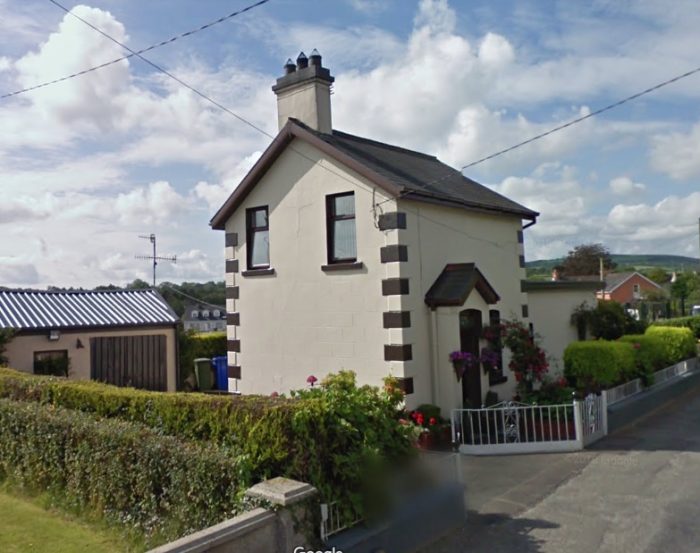
The Gatehouse and the road crossing to the West of Convoy Railway Station. The photograph looks from the Northeast, (Google Streetview).
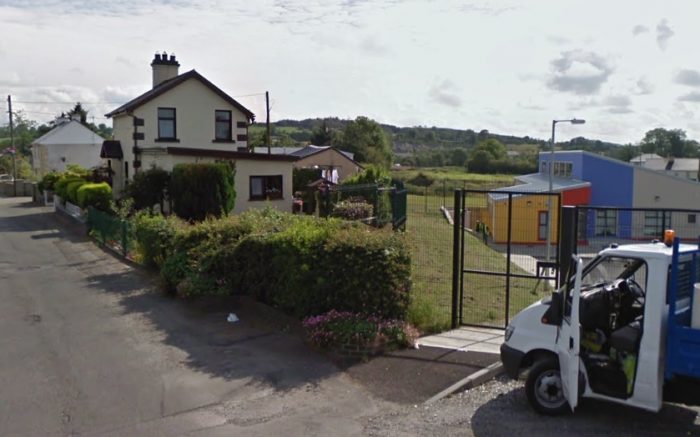
The Gatehouse guards the route of the old railway which ran just to the right of it in this picture. The image looks from the West back along the old line. (Google Streetview).

The next image shows the centre of Convoy on a Google Maps satellite image. The approximate route of the old railway is shown as a red line running across the image.
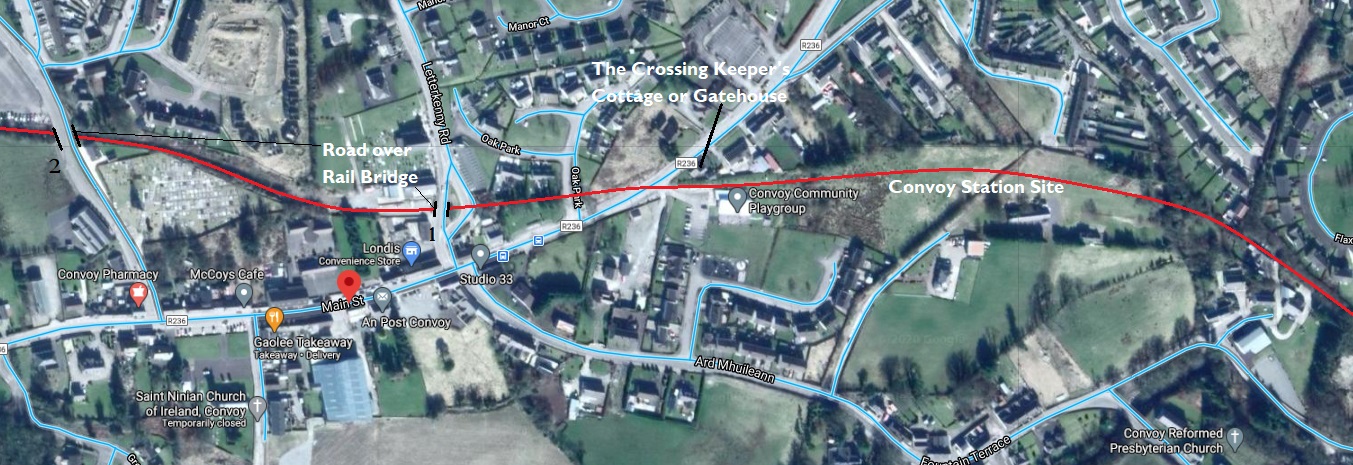
The approximate route of the old line through Convoy (Google Maps) The location of the Gatehouse is marked close to the centre of the image. To the West, the line passed under the two bridges which I have numbered 1 and 2 in black type. Clicking on the image will enlarge it sufficiently to allow these locations to be identified easily.

Shortly after crossing the R236, trains passed under the first of two road-over-rail bridges in Convoy. This bridge carried the Letterkenny Road. The railway cutting has been filled-in and there is no evidence of the bridge in the early 21st century.
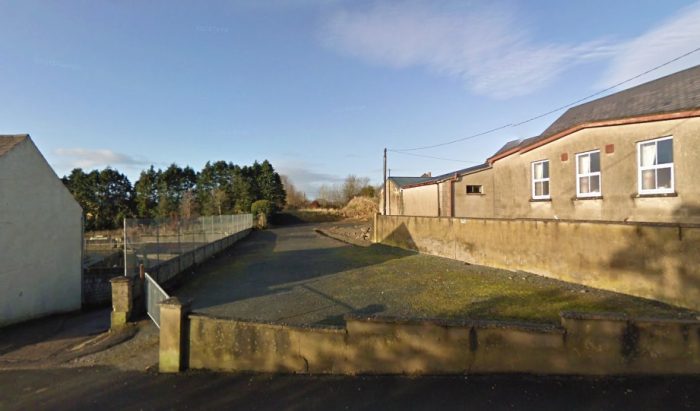
The old railway cutting has been infilled and to the West of the location of the bridge it is now used as a car park for one of the local churches. It is shown here in 2010, (Google Streetview).
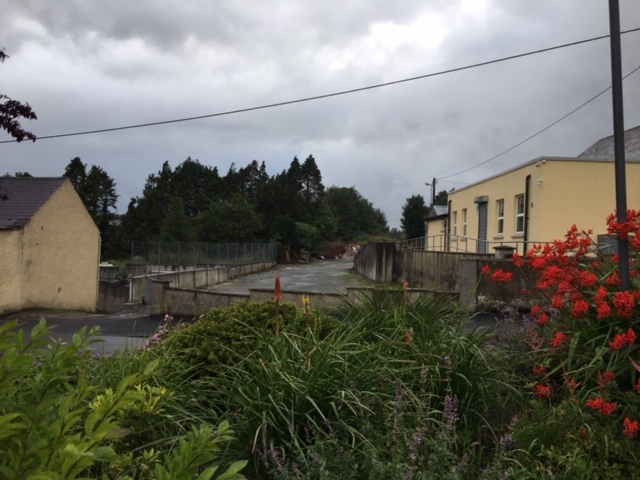
This image is one taken by Kerry Doherty and kindly sent by him to me by email. It shows the same location in the years following the Google Streetview image. [6]

A short distance further along the line a bridge carried a lane heading Northwest from Convoy towards Falmore.
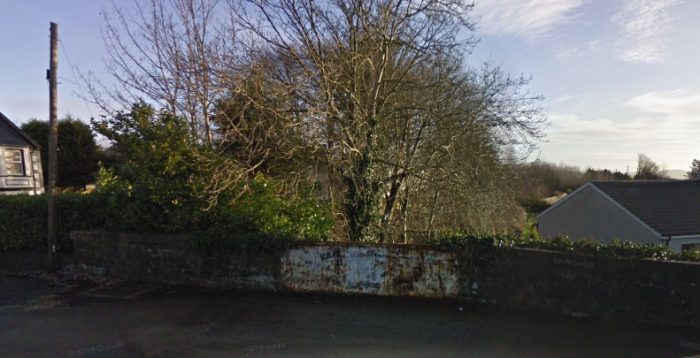
This first view shows the bridge parapet on the East side of the bridge in January 2010 (Google Streetview). The parapet is in a very poor condition.
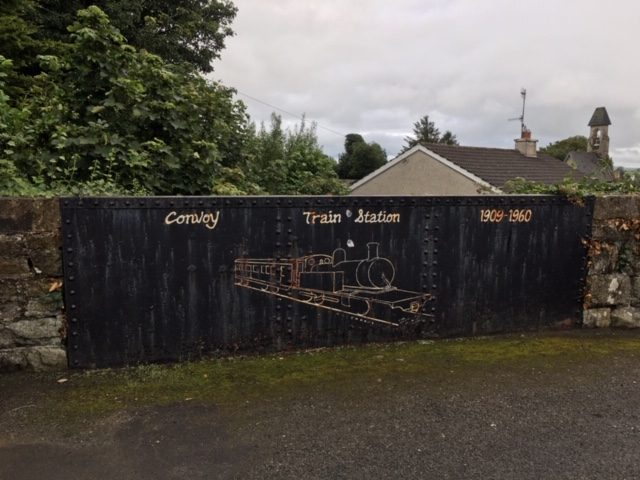
This later view, a picture taken by Kerry Doherty, shows that some local pride has resulted, more recently in a cosmetic refurbishment of the old parapet. [6]

To the West of the old bridge the cutting is still infilled and no sign of a bridge parapet can be found.
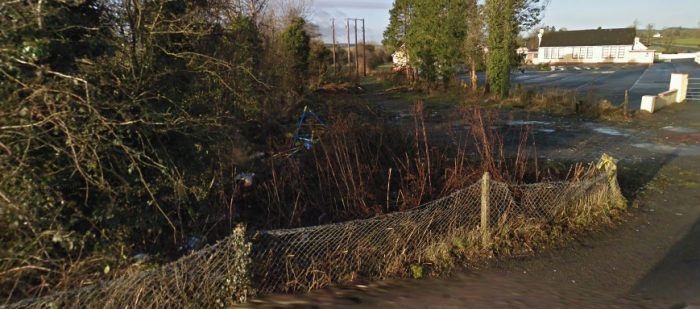
Looking West along the line of the old railway from the road to Falmore in 2010, (Google Streetview).

Heading away from Convoy the line quickly turned to the North as shown on the next satellite image. It soon crossed the road to Falmore once again, this time at level. The Gatehouse for this road-crossing is indicated on the satellite image and can be seen in the Google Streetview image which follows.
The old line to the West of Convoy, (Google Maps).
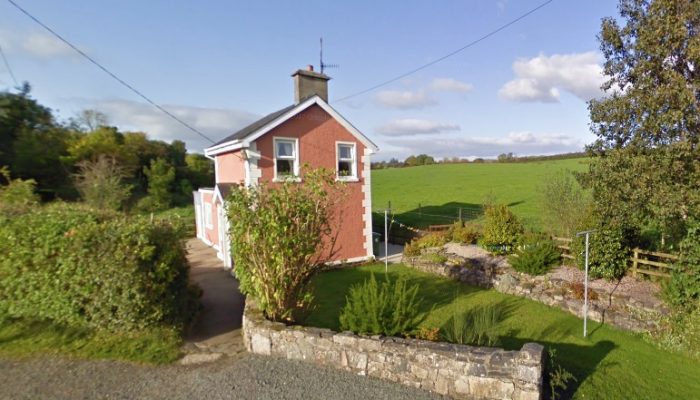
Kelly’s Gatehouse on the road to Falmore. The line ran to the right of the cottage in this image, (Google Streetview).

The line now heads in a northerly direction as the satellite images show.
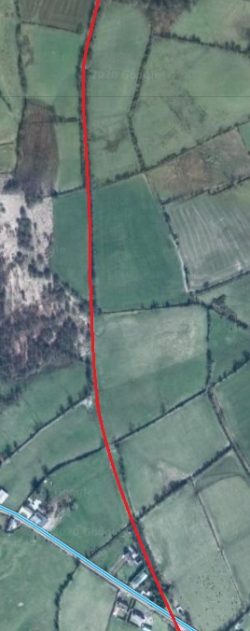
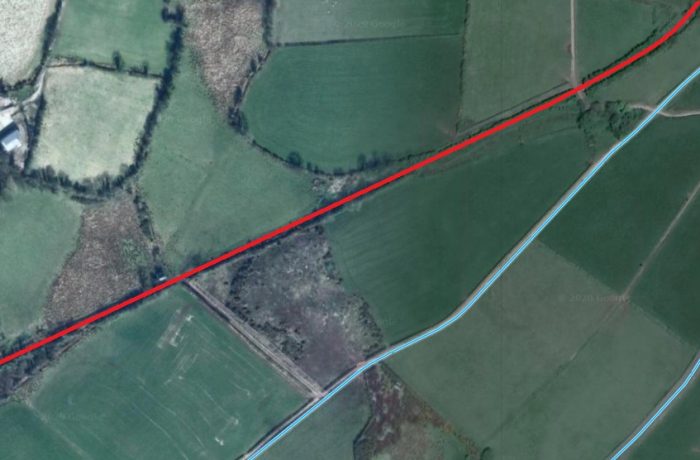
The first length to the North of the Gatehouse on the road between Convoy and Falmore, (Google Maps).
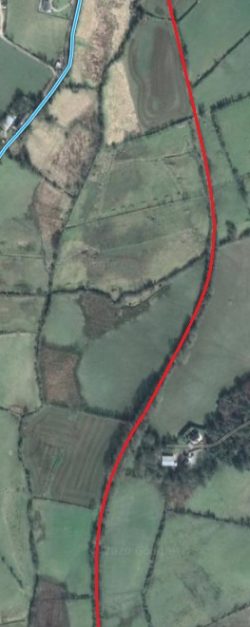
The second length north of the road, (Google Maps).
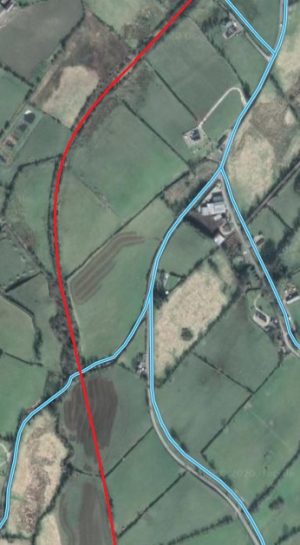


The line continued in a northerly direction passing over the Cloghcore to Cornagilagh road, (Google Maps).


Further North, the line crossed the road from Cloghcore to Cornagilagh. Either side of this road, the line was on an embankment which has now been removed but the bridge which carried it over the road is still in place – an elegant small stone arch bridge bears excellent testimony to the route of the old railway. The location of the old bridge is at the point where the line (red) crossed the road (light blue) in the bottom left of the adjacent satellite image.

Photographs of this bridge follow below. Two of which are taken from Google Streetview and one sent to me in an email by Kerry Doherty. The light in his photograph shows the bridge at its best.

Very soon after crossing this bridge, trains entered Cornagillagh Halt which was only a short distance from the hamlet/village which bears the same name.
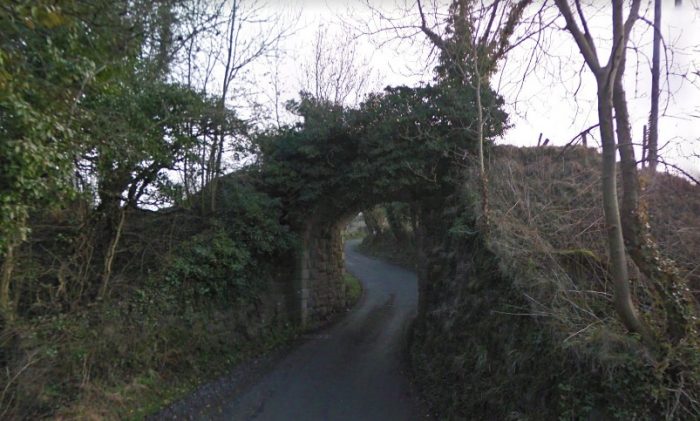
The rail-over-road bridge on the …. road. This image shows the bridge from the Southwest in March 2011, (Google Streetview).
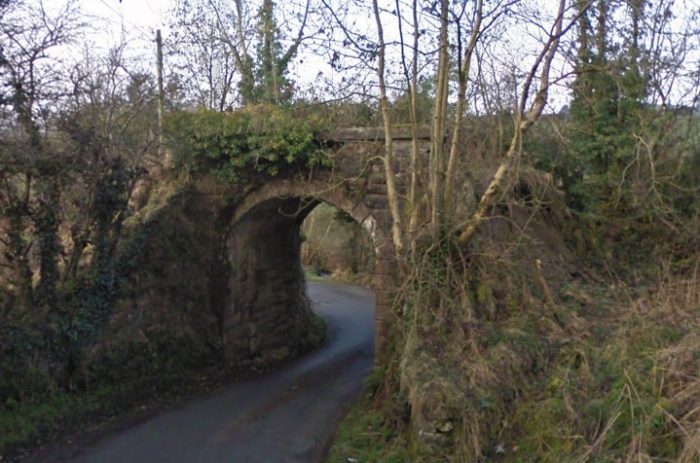
The same bridge also viewed in March 2011 from the Northeast (Google Streetview).
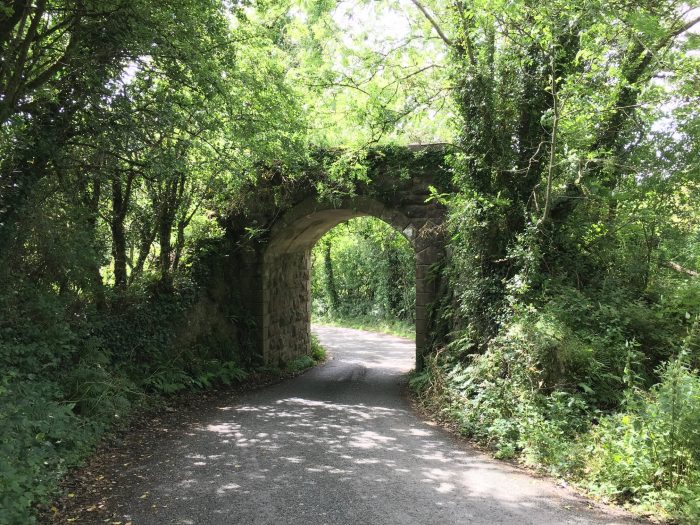
A much more recent picture taken of the same bridge by Kerry Doherty. [6] Kerry comments: ‘The over bridge just before Cornagillagh halt. The embankment at either side has been taken away but the bridge has been kept..’
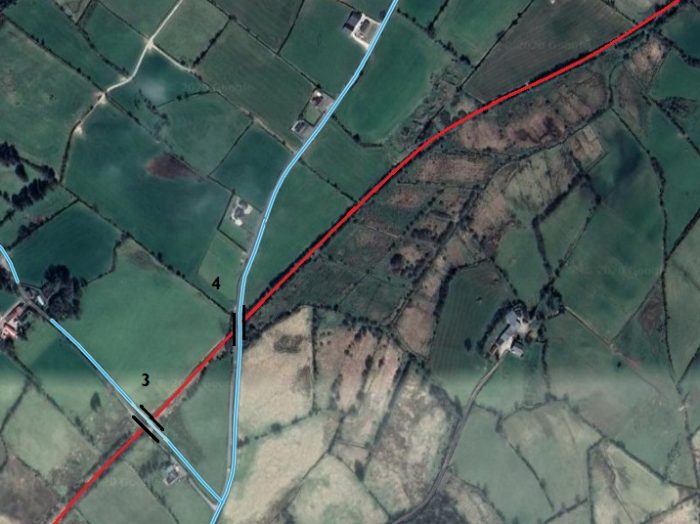
The next length of the old line is featured in this satellite image which shows it passing in cutting under two road bridges marked ‘3’ and ‘4’ either side of and close to Cornagillagh Halt, (Google Maps).
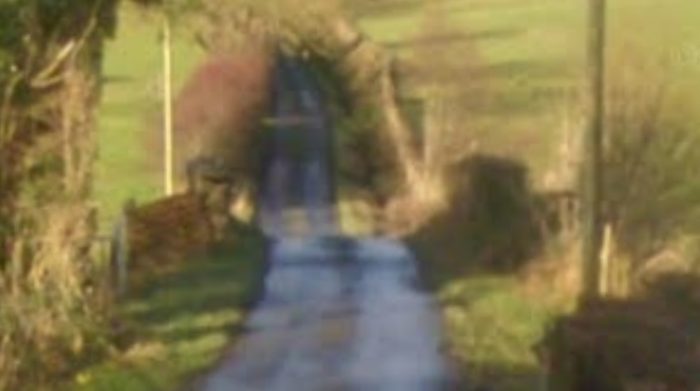
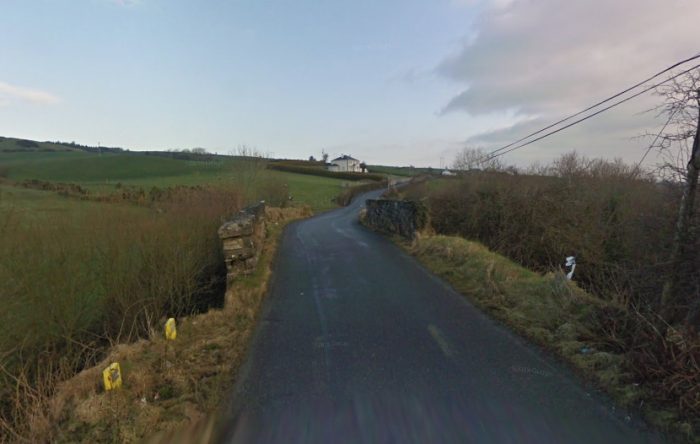
The road-over-rail bridge close to Cornagillagh Halt is marked on the Google Maps image as No. ‘3’. The vertical alignment of the road gives away the bridge location. The image is a telephoto lens view because of a slight glitch in the Google Streetview image sequence close to the bridge location. This picture was taken from the Southeast in December 2009 in what looks like late afternoon sunshine, (Google Streetview). This image shows the same bridge (No. ‘3’) from the Northwest just a few weeks after the image which precedes it. The road alignment changes at the bridge and on this image it is easier to see the bridge parapets,(Google Streetview).
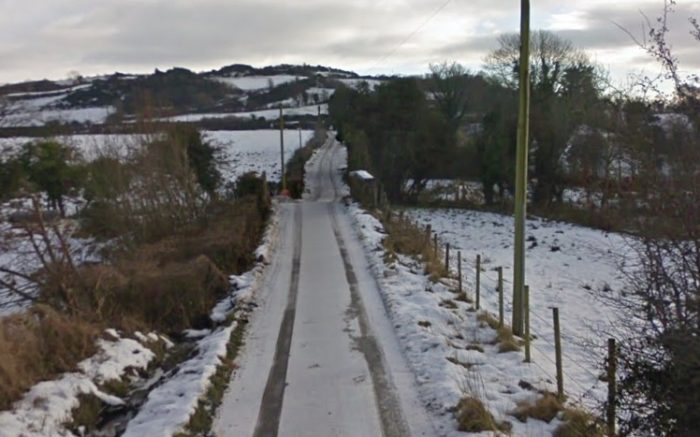
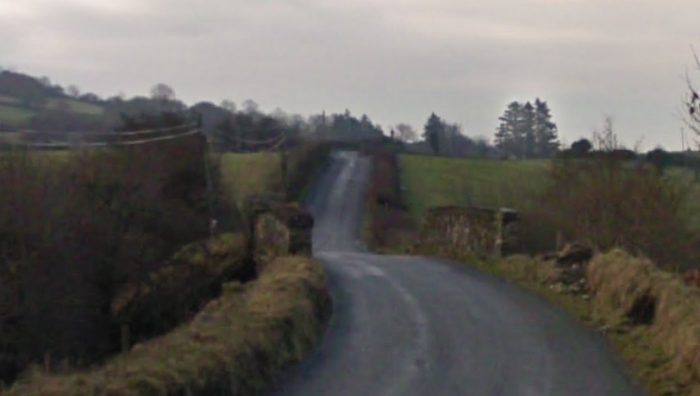
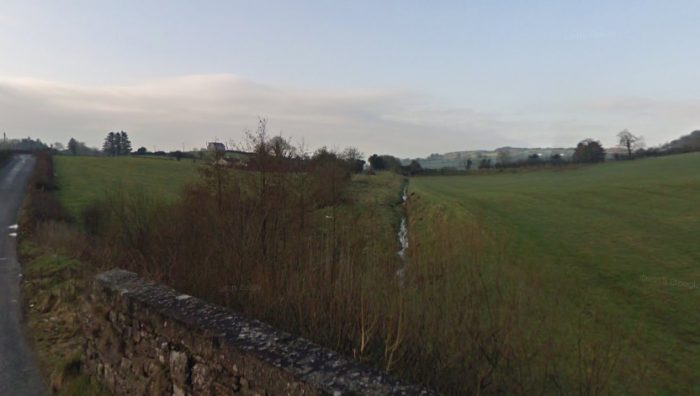
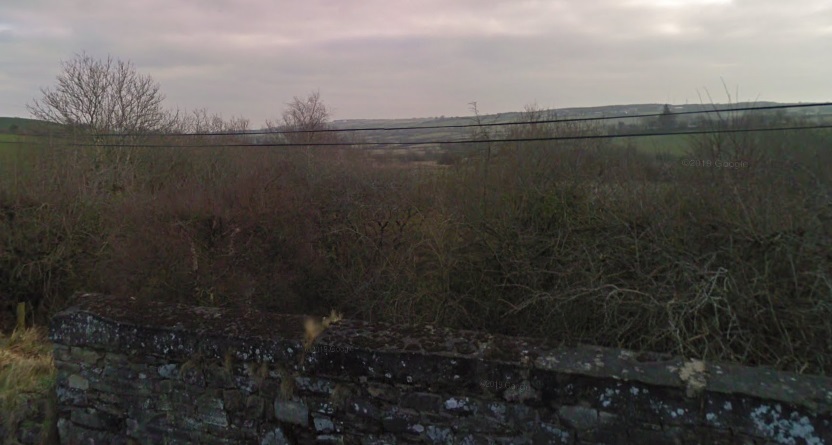
The next few photographs come from the location of the road-over-rail bridge that I have marked ‘4’ on the satellite image. All of them were taken as part of Google’s survey in March 2011.
Bridge numbered ‘4’ viewed looking North along the road, (Google Streetview)
Then same bridge but viewed from the North on the same day, (Google Streetview).
This picture shows the formation of the old railway between the bridge numbered ‘3’ by me and bridge ‘4’, (Google Streetview).
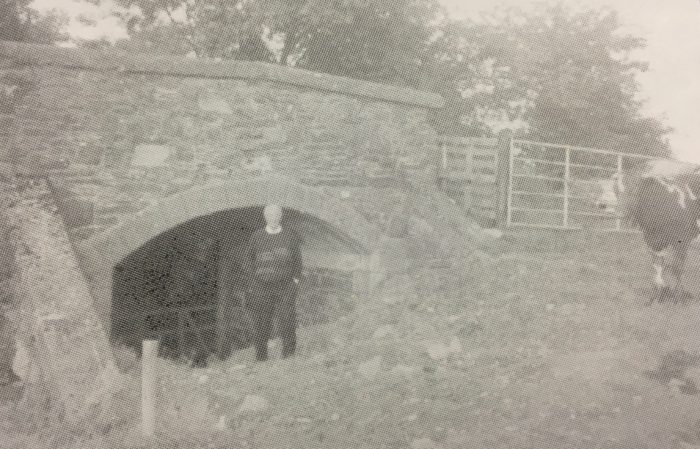
Looking to the Northeast, the formation of the Strabane and Letterkenny Railway has been overtaken by small trees and shrubs. (Google Streetview).
Kerry Doherty comments that this is a view of the bridge close to the site of Cornagillagh Halt (now impossible to photograph as its so overgrown). Pictured is former railcar driver Michael Gallen (recently dec’d, and one of the very last railcar drivers). The picture comes was taken by Dave Bell and comes from the CDR visitors guide book. [6][4]

The old railway route begins to turn North again soon after passing under the road-bridge and heads for Glenmaquin (Glerundorum) station.
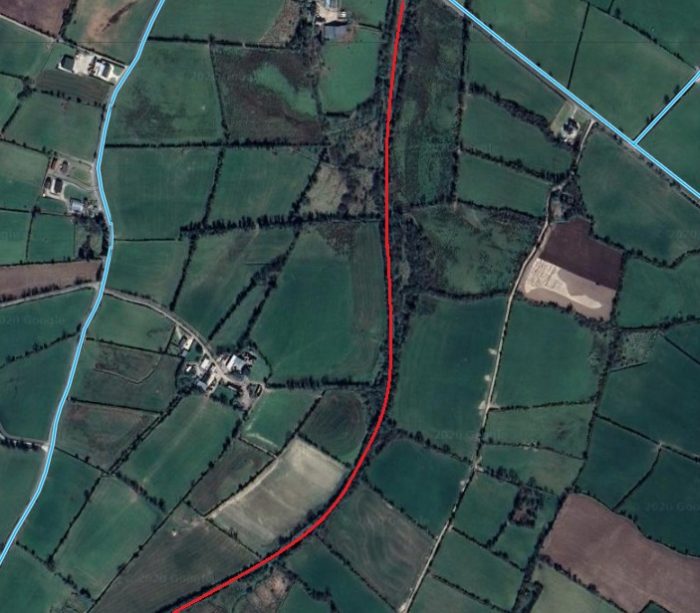
Beyond the road-bridge the old formation turns to the North once again, (Google Maps).
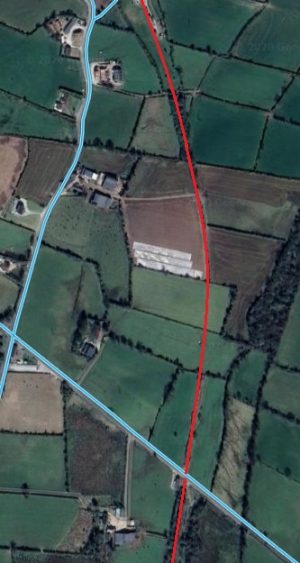
The line South of Gerundoram Railway Station. The location of the station can still be picked out at the top of this satellite image, (Google Maps).

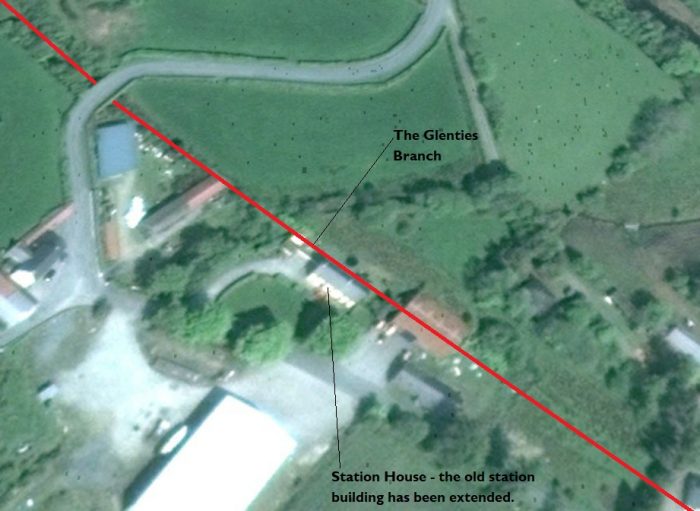
The adjacent satellite image shows the route of the old line to the South of Glenmaquin (Glerundorum) Station. The first location to note is the at-level crossing of a local road towards the bottom of the image. The gatehouse can be picked out just to the West of the route of the old line.

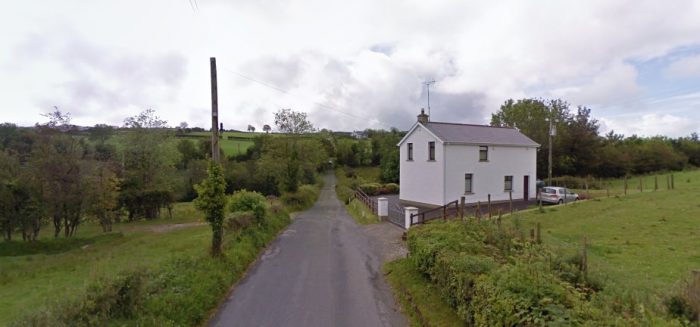
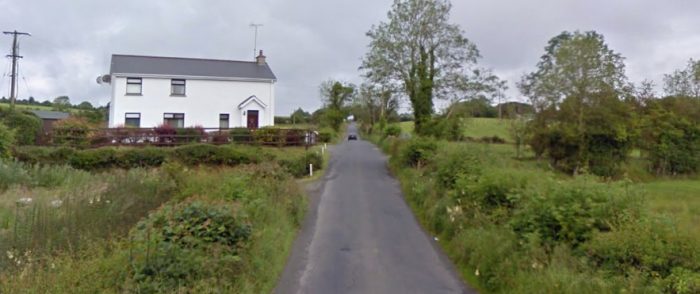
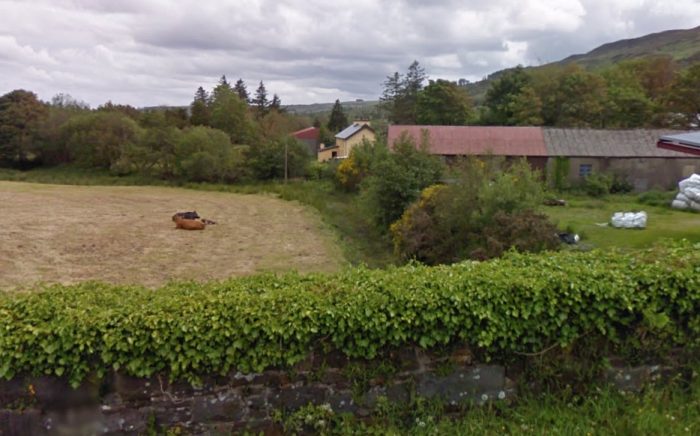
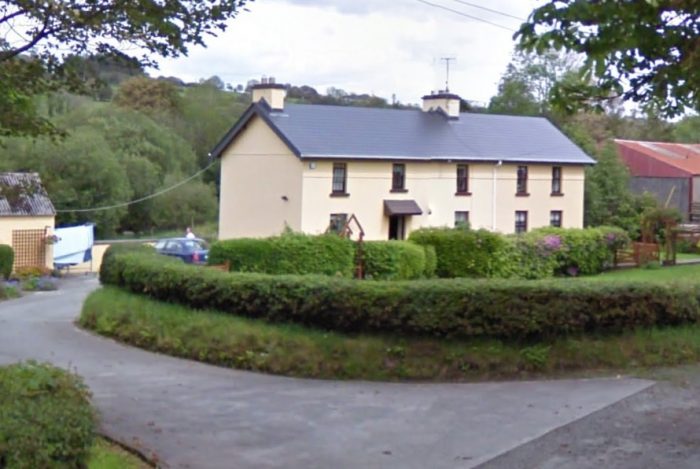
The Gatehouse (N0. 57) has been extended to make it suitable as a small modern dwelling. and pictures from Google Streetview show it in really good condition with well-tended gardens.

The line shows up as a tree-lined track crossing the road at this point. The third image below is the closest that Google Streetview gets to providing a view along the length of the line North of the Level-Crossing towards Glenmaquin Railway Station.


The old line passes to the East of the old crossing cottage (No. 57) which has been refurbished and extended, (Google Streetview). This view is taken looking from the Northwest across the line of the old railway which ran on the far side of the crossing cottage.This view shows the same location but from the road to the Southeast of the Railway Crossing. The line ran in front of the cottage in this view, (Google Streetview).Looking North along the old railway from the Crossing-keepers cottage, (Google Streetview).

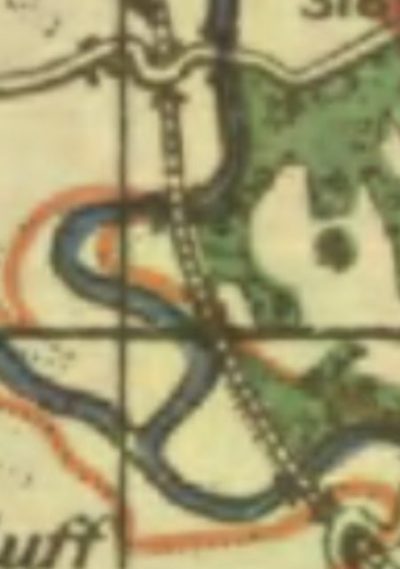
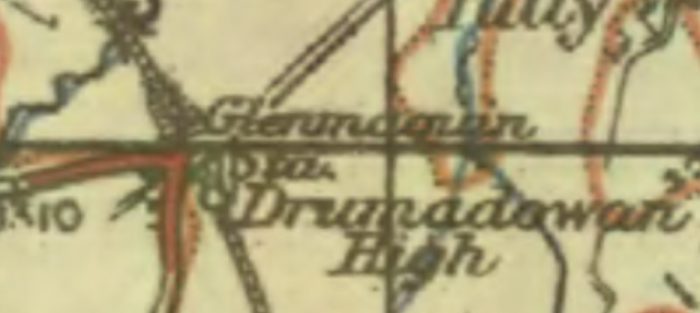
A short distance further North trains entered Glenmaquin (Glerundorum) Station, shown here on the old GSGS mapping from the 1940s. …Glenmaquin (Glerundorum) Station was location close to a road junction and was framed by a road-over-rail bridge to its Northwest. [2]
Kerry Doherty has kindly provided a view across the old station site which was taken in the early 21st century.
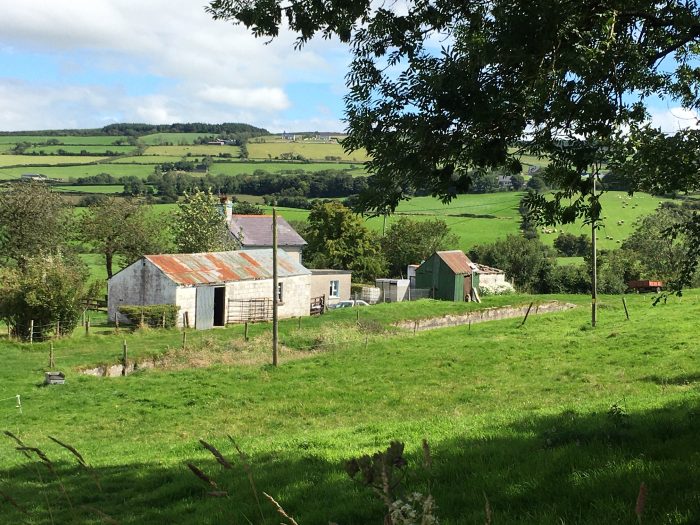
The old station site taken from the fields to the Northwest, (c) Kerry Doherty. [6] The old platform is still clearly visible in this photograph.

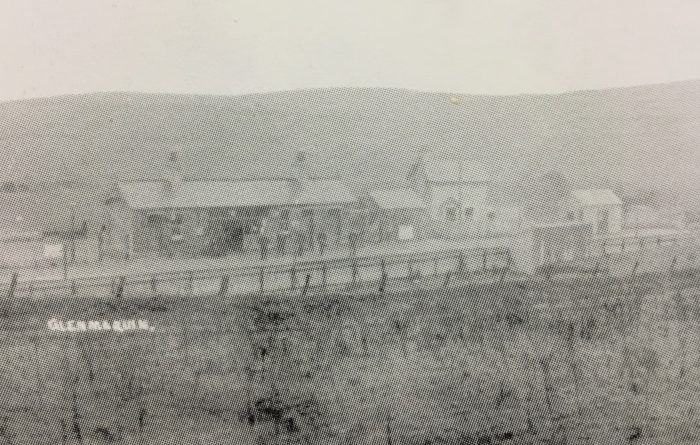
Google Streetview shows that the space between the railway station and the road-over bridge is, in the 21st century, filled by a modern home. That property sits just out of view to the left of Kerry Doherty’s picture above.Glenmaquin Station, (Google Streetview).The road bridge just North of the Station, (Google Streetview).A much earlier view of Glenmaquin Railway Station which comes from the Dave Bell collection, taken from the CDR visitors guide book. Kerry Doherty’. [6]
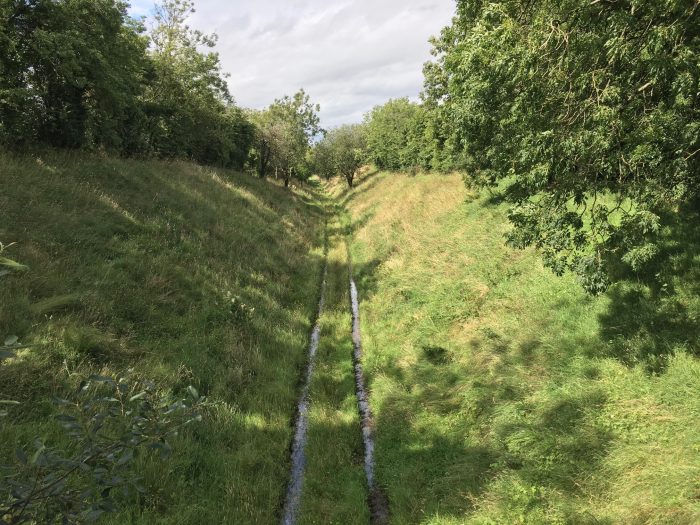
The continues in cutting North of the road bridge at Glenmaquin Station.Cutting to the North of Glenmaquin Station. This photograph was taken from the road bridge, (c) Kerry Doherty. [6] Just out of sight the railway bridged a small river.
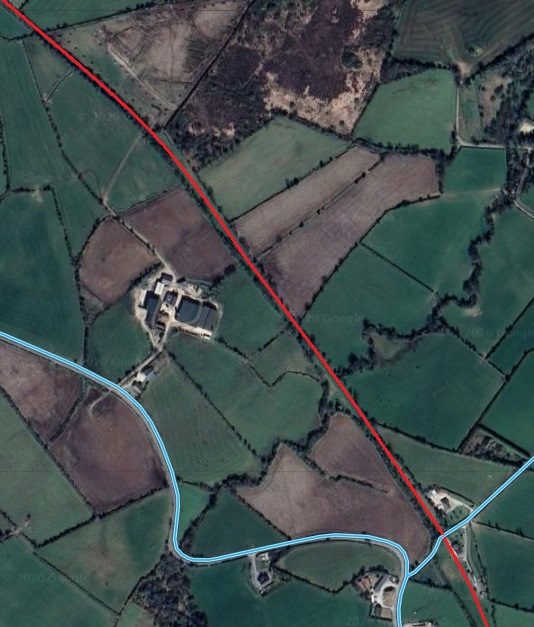
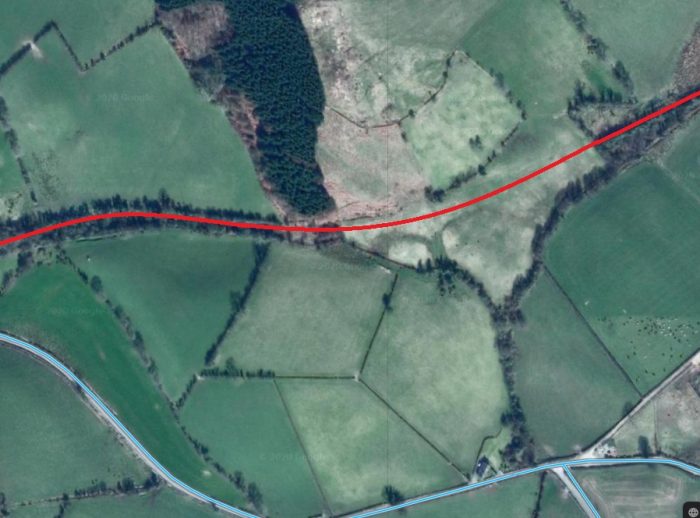
Beyond Glemaquin Station, the old line continued heading Northwest, (Google Maps).
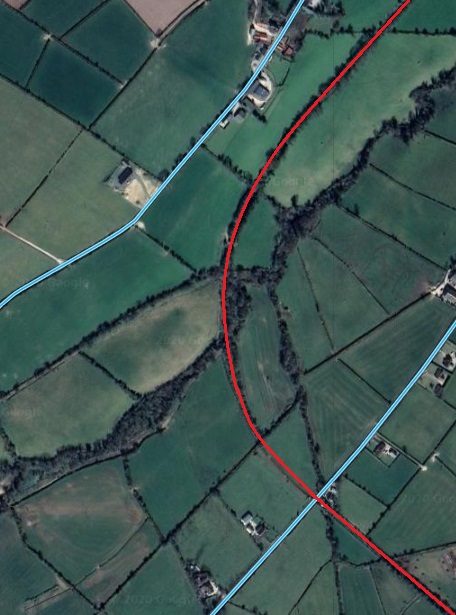
After crossing another minor road the old track-bed curved round towards the Northeast, (Google Maps).

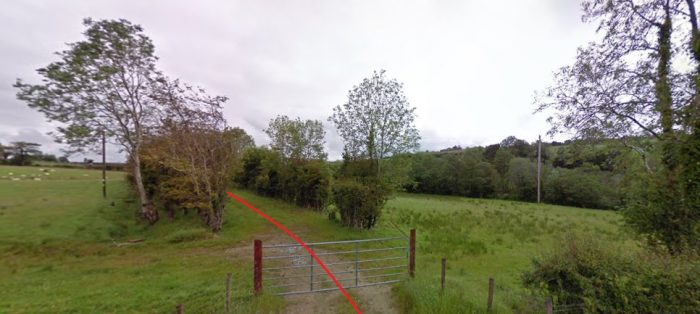
The road crossing visible at the bottom right of the satellite image immediately above was un-gated. A closer image o the crossing location is provided immediately below this text. The Google Streetview images here show an extended property based on a typical Gate-keeper’s Cottage. This location is not recorded in the Visitor’s Guide {4} as a Crossing with Gatehouse. Interestingly the cottage is sited out of alignment with the railway as the satellite image below shows.Un-gated Crossing Northwest of Glenmaquin Railway Station, (Google Maps)
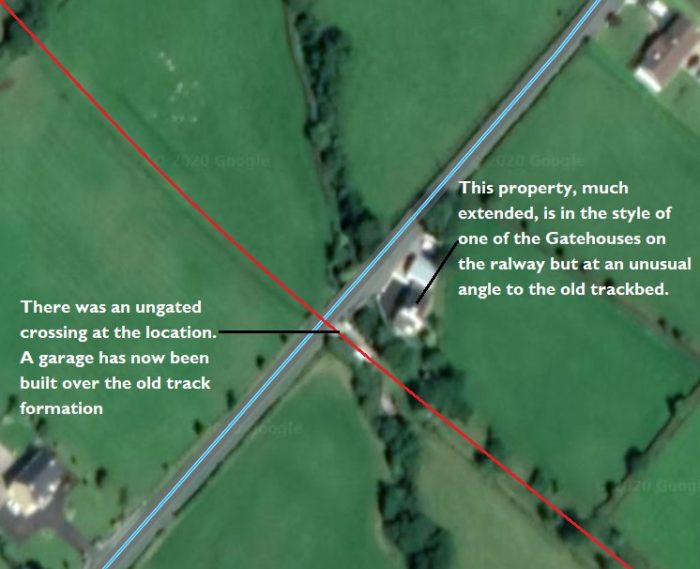
These next few images are taken at the location above – all are from Google Streetview. This may well be the location of Gatehouse No. 58.

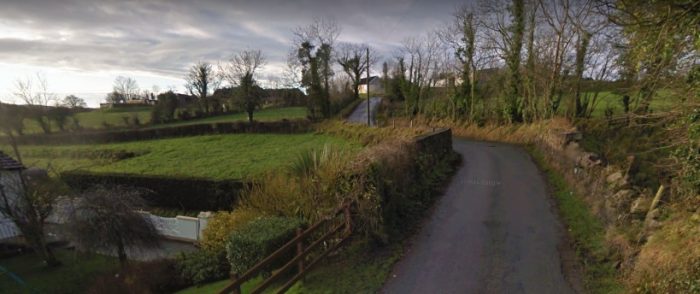
The distinctive form of a Gatehouse is visible in this photograph which is taken looking from the North, (Google Streetview).Still looking from the North, this view shows the line of the old railway. The garage to the left of the road is built over the old formation, (Google Streetview).This view shows the old formation beyond the road-crossing and is taken from close to the property in the earlier images above, (Google Streetview).

We noted in the satellite images above that, to the Northwest of the road crossing, the old line turn round to the Northeast.The next length of the line as shown on the GSGS mapping from the 1940s. [7]
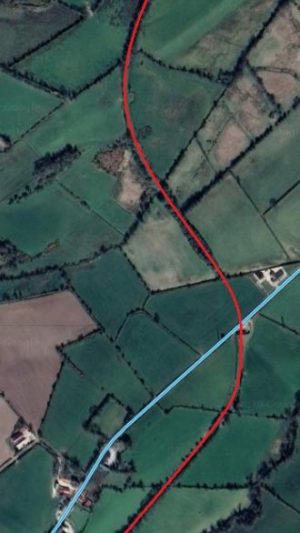
We pick it up again in the next satellite image on the left. The track follows a sinuous course over the next kilometre or so, as can be seen on the next satellite image below.
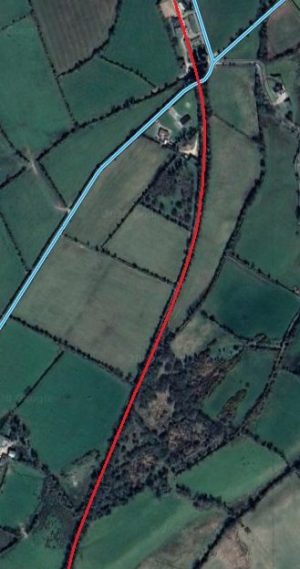


These two image show the line passing under the road from Listillion to Lyons Court and then crossing the road between Listillion and Drumerdagh at Gatehouse No. 59. Kerry Doherty comments that the first of these two locations is a “bridge now filled in and the road re-aligned.”

Doherty provides two photographs from that location:
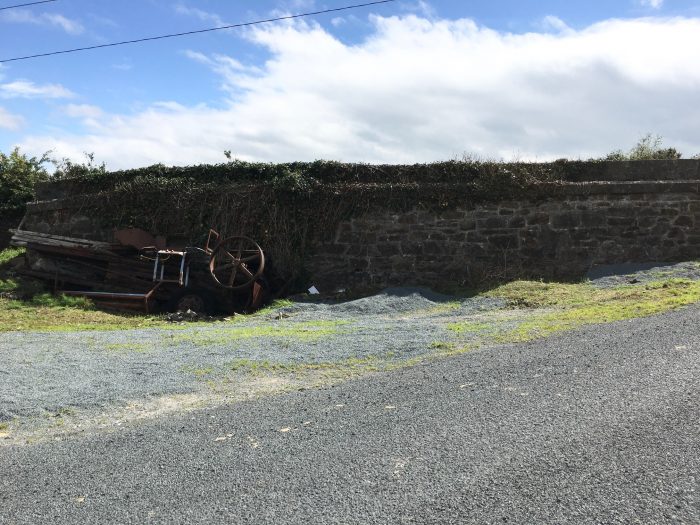
At this location the old road has been realigned when the bridge over the railway cutting was filled in. Both photographs were taken by Kerry Doherty, (c) Kerry Doherty [6]
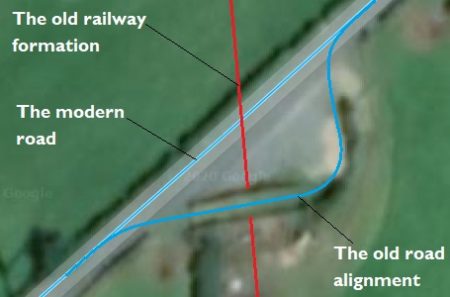
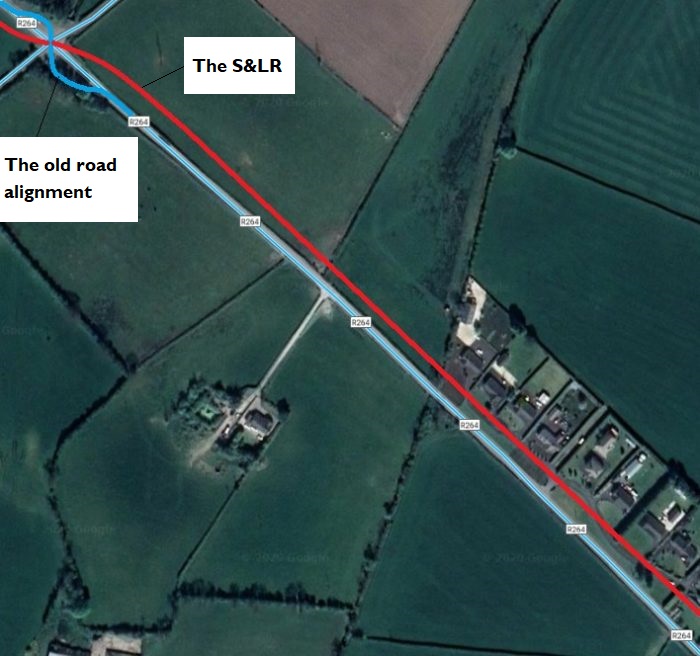
A close-up Satellite image shows the old road alignment across the bridge. ….

The next feature along the line is Gatehouse No. 59 which is shown on the second of the two adjacent satellite images above.
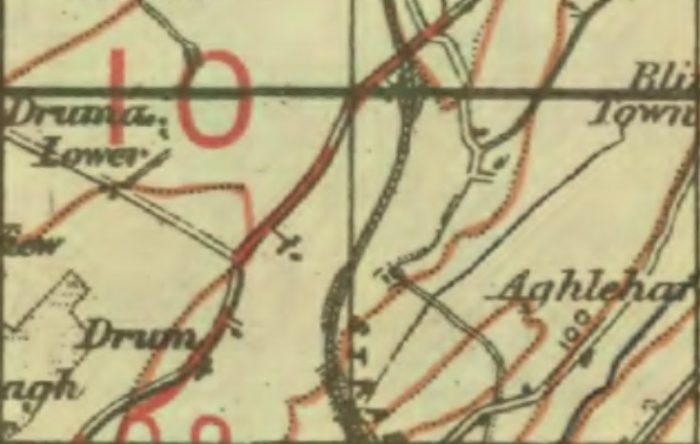
Another extract from the GSGS Maps of the 1940s shows the length of the old line to the South of Gatehouse 59. [9]
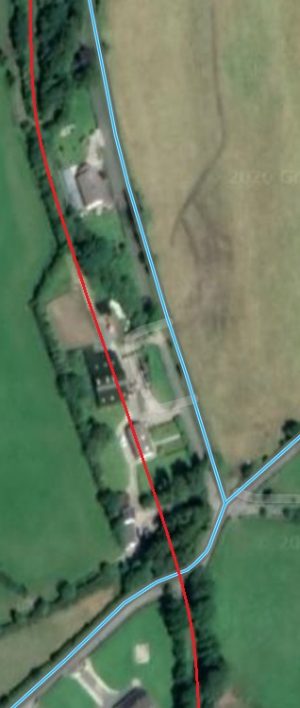
Gatehouse 59 is at the bottom of this enlarged extract from Google’s satellite imagery, (Google Maps).

Beyond the infilled road bridge, the formation of the old line snaked northwards before reaching Gatehouse 59. Both the GSGS map and the satellite image above show that route. Gatehouse 59. The adjacent enlarged satellite image shows the location of Gatehouse 59 just to the North of the road at the bottom of the image.

The first Streetview image below shows the Gatehouse from the South. It is followed by a short series of views mainly from Google Streetview of the same Gatehouse. One image was generously provided by Kerry Doherty.

As the adjacent satellite image shows the old railway continued North from the location of Gatehouse No. 59. A modern bungalow and farm building straddles the old line and before it runs at the back of the gardens of a further two properties.

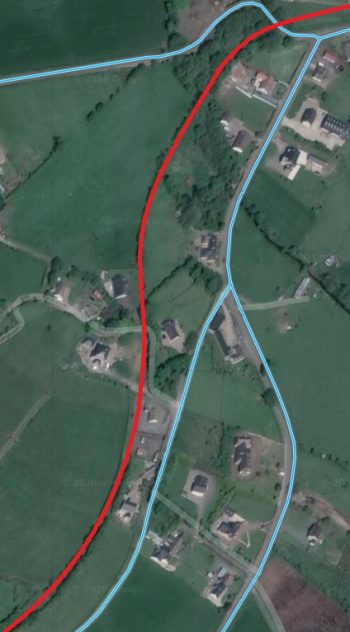
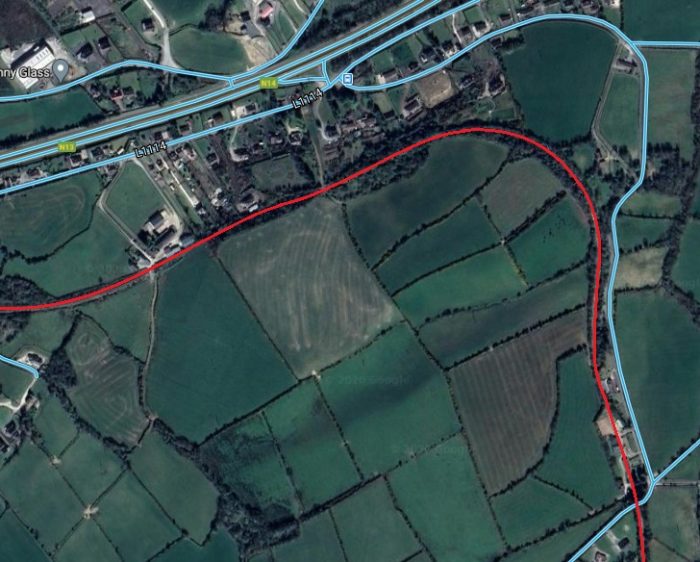
The first satellite image below show the route of the old railway as it begins to approach Letterkenny. After continuing North for a short distance the line turned sharply to the West running to the South side of what is today the N13/N14 dual carriageway and the L1114 local road.
Gatehouse 59 seen from the road immediately to the South, (Google Streetview).Gatehouse 59 seen from the road junction to the East of the location in 2011, (Google Streetview).A telephoto view of the Gatehouse taken more recently from the same position, (c) Kerry Doherty. [6]Gatehouse No. 59 seen from the Northeast, (Google Streetview).

The Strabane and Letterkenny Railway turned sharply to the left a short distance beyond Gatehouse No. 59, (Google Maps). The route is highlighted by a linear woodland which appears once the buildings close to the Gatehouse have been passed.

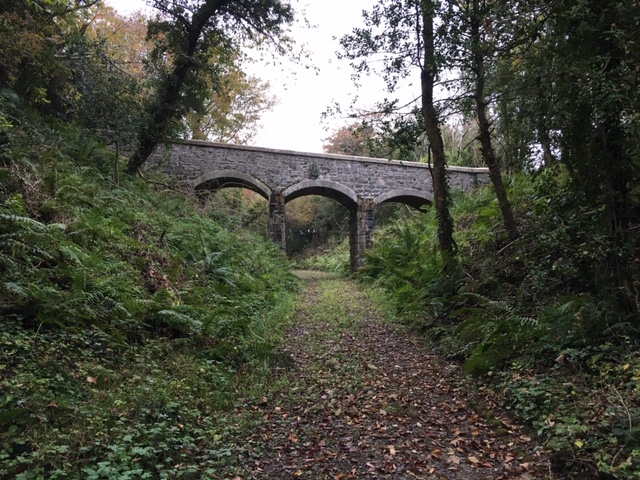
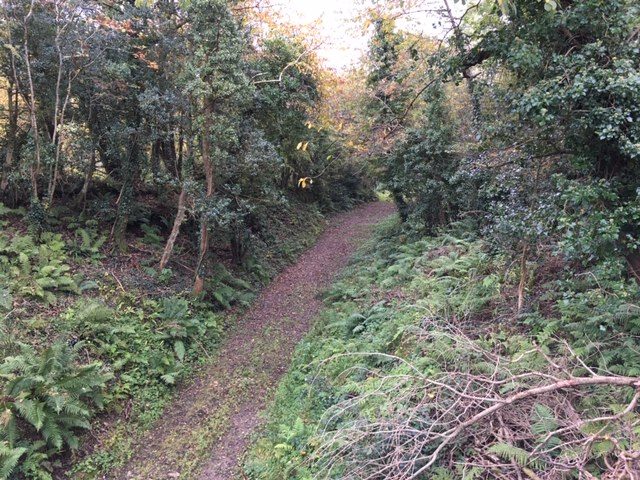
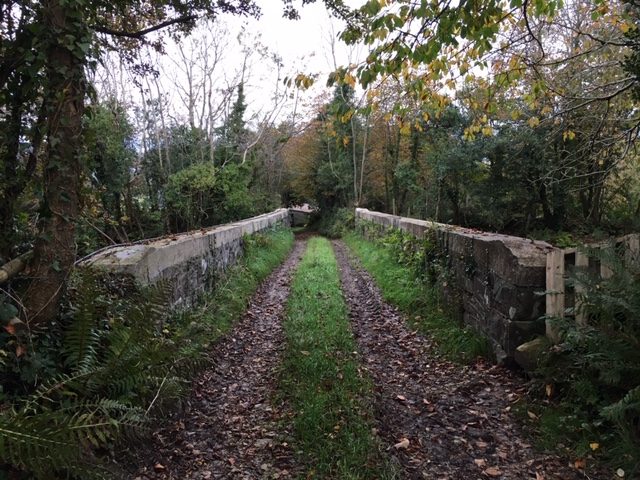
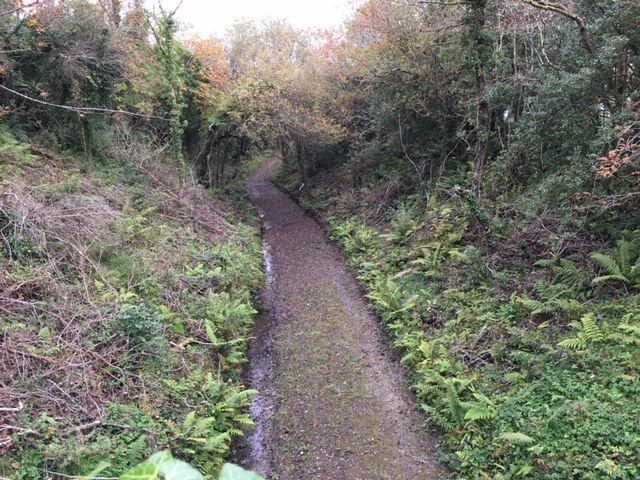
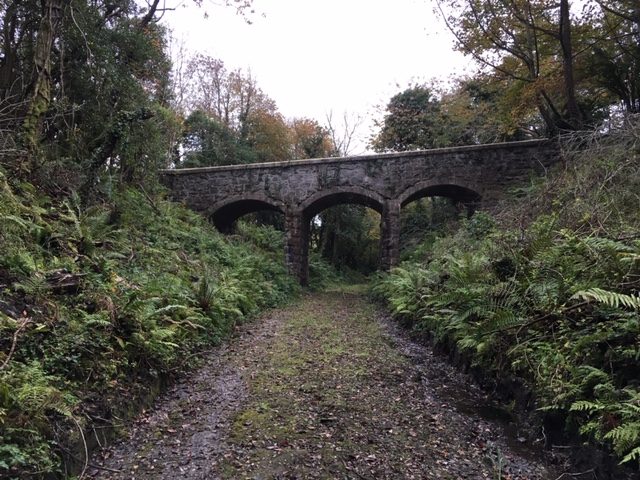
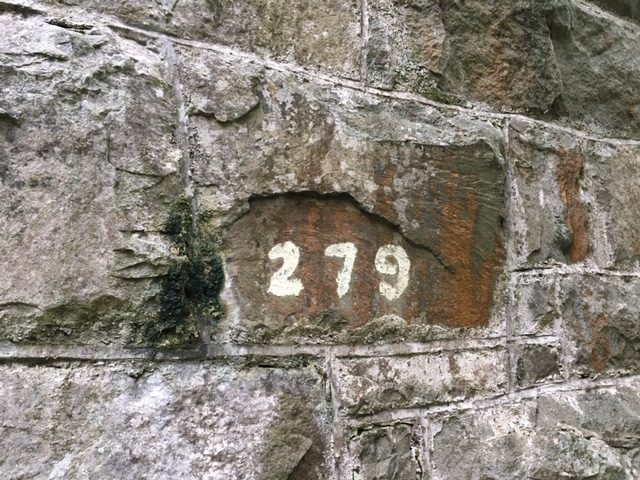
The old line was initially on a small embankment to the North of Gatehouse No. 59, but by the time it stared to curve to the West is was in cutting. Its route is now a linear woodland, as the satellite image above shows. I am really grateful to Kerry Doherty who visited this location on my behalf in October 2020. The next few images are taken by him.This picture is taken from the old track-bed looking towards the bridge, (c) Kerry Doherty. [6] The old formation can be seen curving to the left in this image. This is one of the more substantial structures along the length of the Strabane to Letterkenny Railway.Looking back to the South from the 3-arch Bridge, (c) Kerry Doherty. [6]The substantial stone parapets belie the use of the over bridge which carries no more thana local track, (c) Kerry Doherty. [6]Looking ahead towards Letterkenny from the track carried by the old bridge, (c) Kerry Doherty. [6]Looking back towards the bridge from the old railway formation, (c) Kerry Doherty. [6]The structure still retains its old number – 279! (c) Kerry Doherty. [6]
Beyond structure No. 279 the old railway continued to curve round to a westerly direction and still in cutting encountered another road over rail bridge. The location of that bridge is to the right of the satellite image below.The Eastern outskirts of Letterkenny with the route of the Strabane & Letterkenny Railway highlighted in red, (Google Maps). 
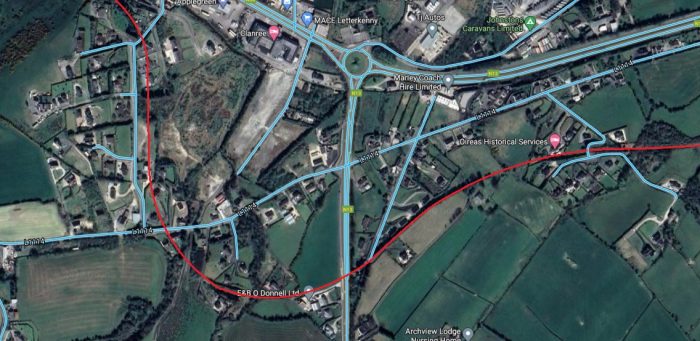
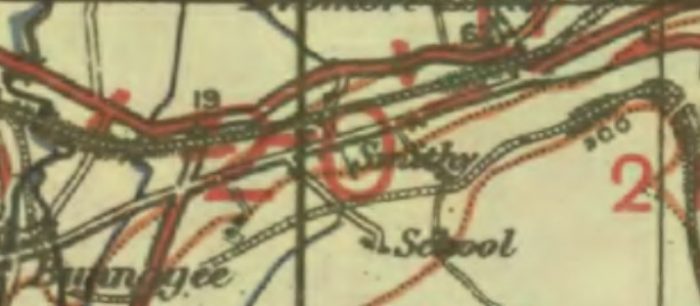
The cutting at the Eastern side of the satellite image above has been partially infilled but the old bridge still has a void underneath it. Although the bridge is clearly of an age commensurate with having been built at the same time as the line, it does not appear on the 1940s GSGS map below.GSGS 1940s Map of the Strabane and Letterkenny Railway on its early approaches to Letterkenny. At the western extremity of the map extract the point where the line begins to run immediately parallel to the Londonderry & Lough Swilly Railway can just be seen. [10]
Kerry Doherty commented that the filling of the cutting seems to have cut off drainage runs and as a result there is a small body of water in the cutting. This does not show up on the pictures below.
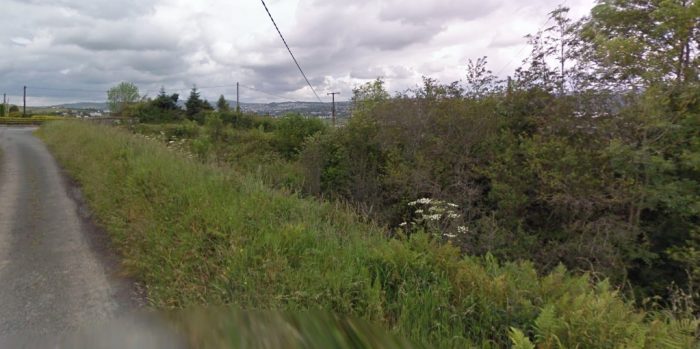
 

The old railway cutting with the bridge just visible in the distance (Google Streetview)The bridge. This Google image shows the void underneath the structure. It is taken from the road which runs alongside the cutting (on its North side) for a short distance, (Google Streetview)This is Kerry Doherty’s photo of the bridge taken from the South side of the railway cutting in October 2020, (c) Kerry Doherty. [6]This view shows the overgrown cutting looking back towards Strabane from the bridge above, (c) Kerry Doherty. [6]Finally at this location, another of Kerry Doherty’s photographs. This shows the route of the old railway taken from over the bridge parapet and looks towards Gatehouse 60 and Letterkenny, (c) Kerry Doherty. [6]Looking back along the route of the old line towards the two bridges shown above, (Google Streetview).A View from the old main road South showing the route of the old line as it crossed the road and a much extended Gatehouse 60 which appears to make an excellent private home, (Google Streetview). There is little sign here of the main N13 road which runs behind the trees which are just beyond property.Google Maps shows how close the Gatehouse No. 60 is to the new N13 road,(Google Maps).This view is taken from the N13 looking back along the old railway alignment towards Strabane. Gatehouse No. 60 can just be made out among the trees, (Google Streetview).Looking across the N13 and on along the route of the old line towards Gatehouse 61 and Letterkenny, (Google Streetview).
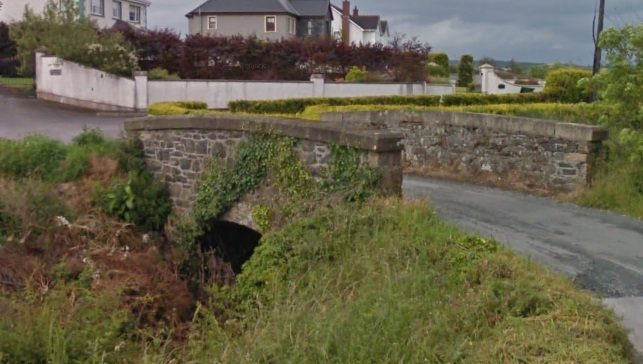
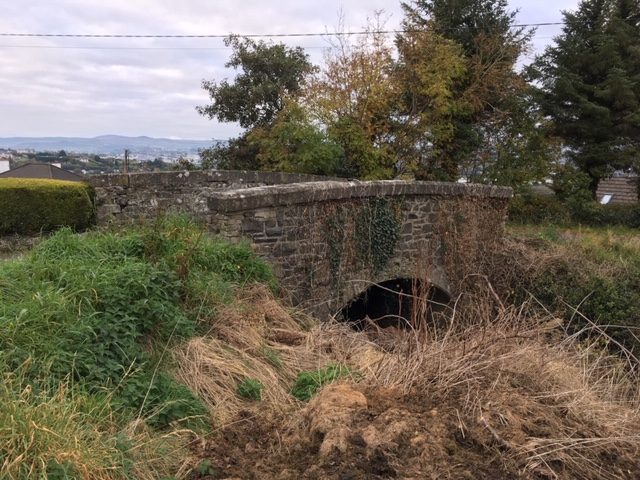
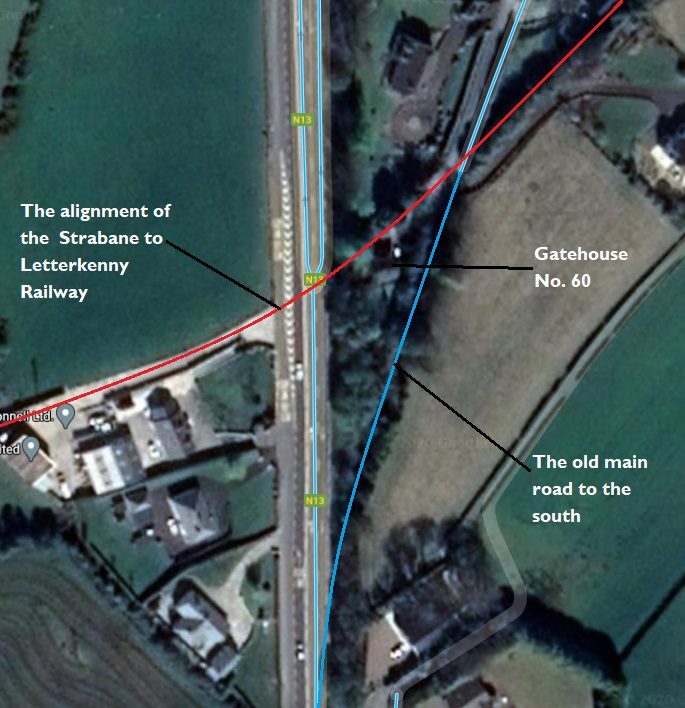
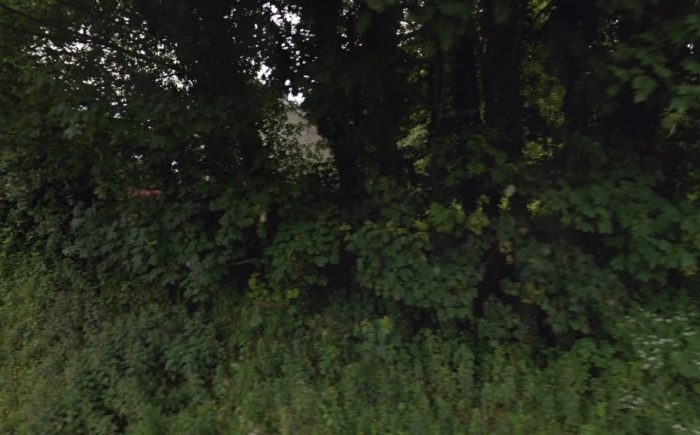
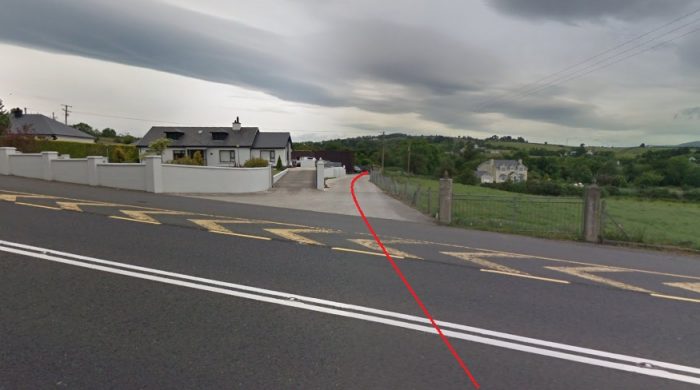
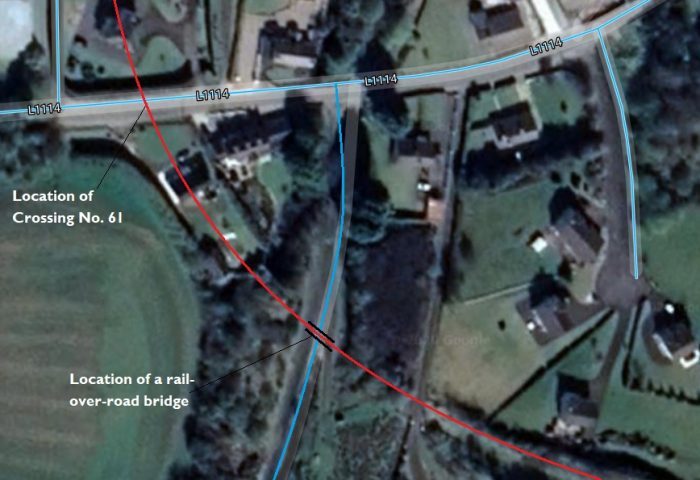
Beyond Gatehouse No. 60, the railway curved round from a Southwesterly trajectory towards the North before crossing the modern day L1114. On the way it crossed a single track lane by means of a bridge.The locations of a bridge and Crossing No. 61, (Google Maps)

Reaching the L1114 (at Bonagee Lane) the old railway was now running roughly North/South. The picture below shows the approximate alignment of the old railway where it crossed the L1114. A bungalow has now been built over the line of the old railway. The line was still on embankment at this point and a bridge took it over the L1114.The approximate route of the old railway where it crossed the L1114. A bungalow has now been built on the route of the old line, (Google Streetview).The 6″ OS Map of the location of the bridges and Gatehouse No. 61. [16]
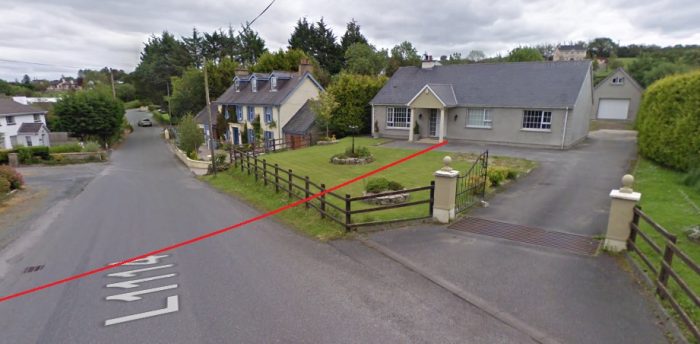
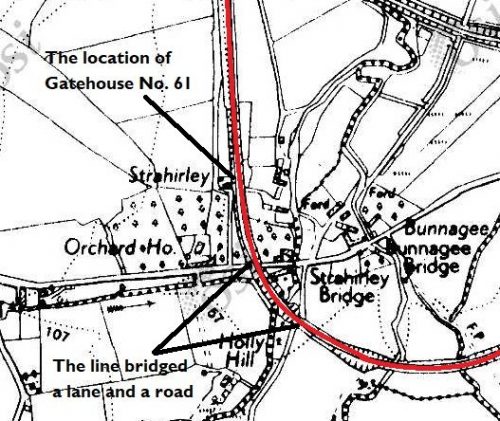
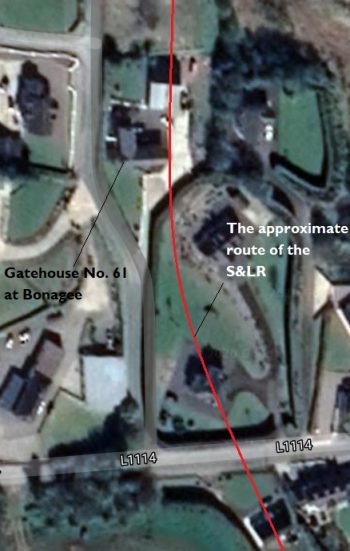
Gatehouse No. 61 sits some distance North of the Bridge which carried the old railway over the L1114, (Google Maps).

North of the L1114 the railway alignment is not obvious. It ran 50 metres or perhaps less to the East of Bonagee Lane. Travelling North along Bonagee Lane leads to the discovery of what was Gatehouse No. 61. An accommodation lane crossed the railway at this point.

Kerry Doherty very kindly pointed out the location of the Gatehouse, without that help, I doubt that I would have located it. The building has been much extended as the Google Streetview image below shows.

Kerry missed the location himself, despite driving along Bonagee Lane from the North a few days ago. The clue is in the property name on the gatepost which can only be seen from the South and which appears in the image below.
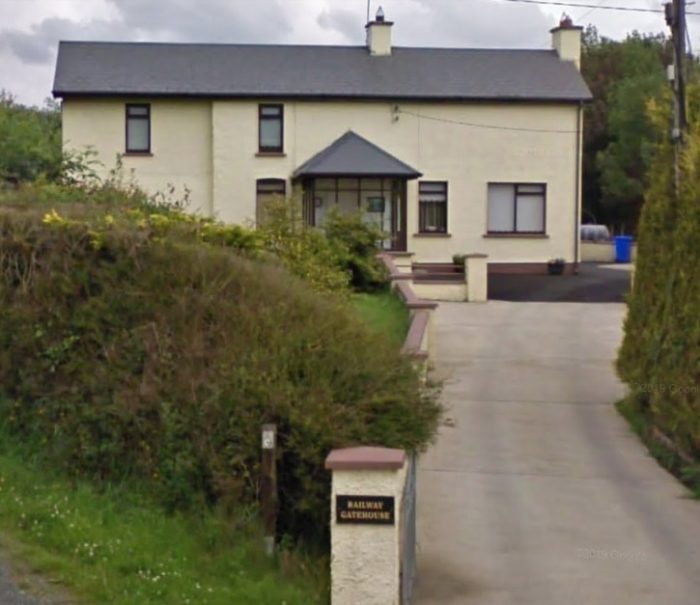
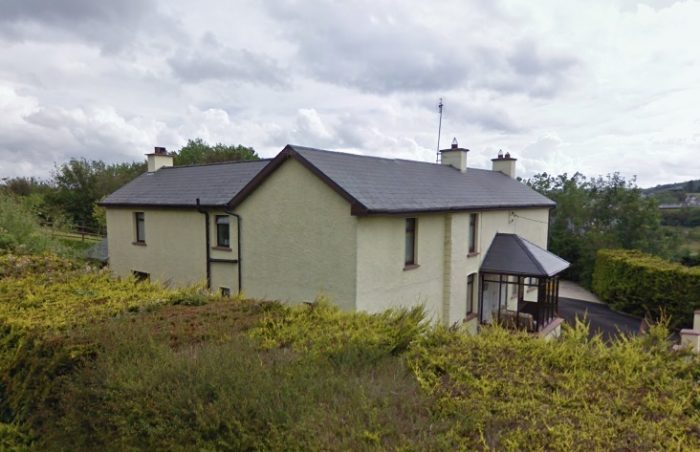
An extended and refurbished Gatehouse No. 61 seen from the South, (Google Streetview).Gatehouse No. 61 is much extended. This photo is a 2011 view from the West on Bonagee Lane, (Google Streetview).
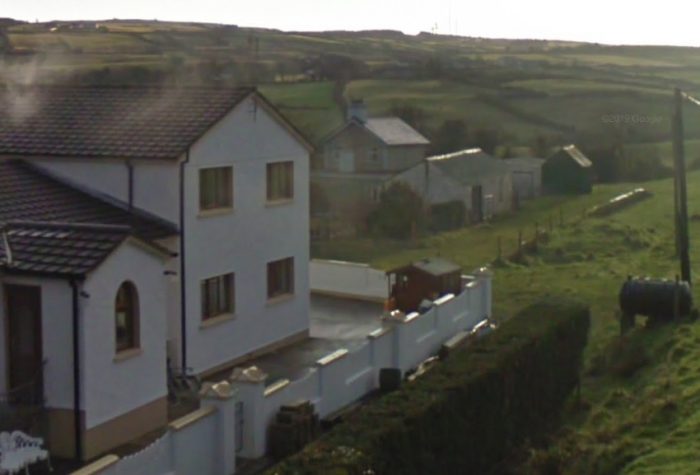
Kerry Doherty provided this link to the location in the archives of the National Library of Ireland – http://catalogue.nli.ie/Record/vtls000731777/MooviewerImg?mobileImage=vtls000731777_001 – on which at the top centre of the image Gatehouse No. 60 is visible. The two arched bridges mentioned above can also be picked out and, in the centre foreground, Gatehouse No. 61 can be seen in its original form. [17]

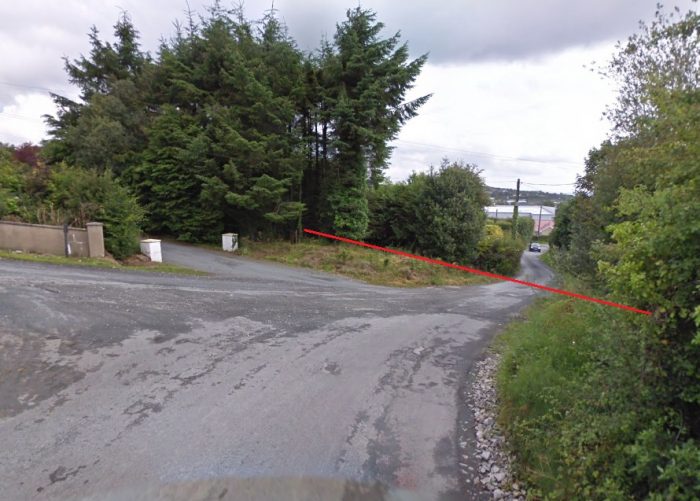
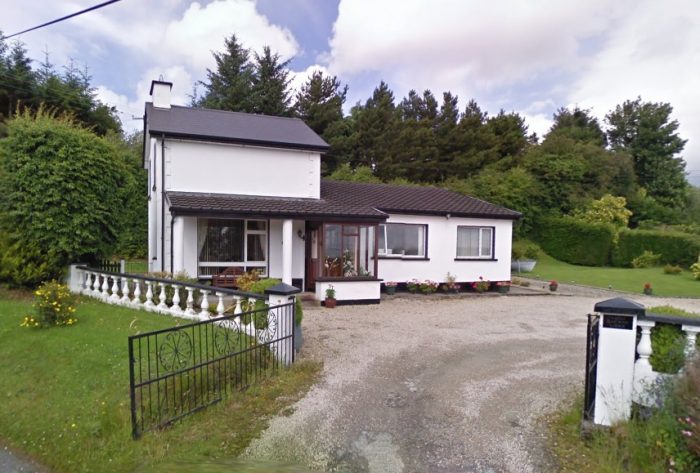
After Gatehouse No. 61 the old line continued North a short distance to the East of Bonagee Lane, until that lane turned from the North to the Northeast in Bonagee where Gatehouse No. 62 was sited. The crossing was known as Baird’s Crossing and the Keeper’s house can still be seen beyond the railway. It is heavily screened by trees and shrubs but can be seen from the Northeast, as the second image immediately below this text shows.The location of Gatehouse No. 62. the red line is a very approximate representation of the route of the old railway at this point, (Google Streetview).Baird’s Crossing Cottage (Gatehouse No. 62) seen from the Northeast in 2011. The original cottage has been extended at ground level. The railway ran behind the cottage in this view. Its route is over grown by trees and shrubs, (Google Streetview).
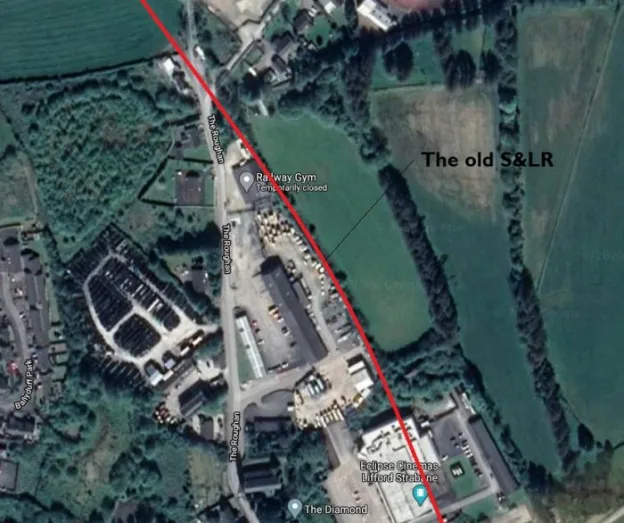
The Strabane and Letterkenny Railway crossed the Londonderry and Lough Swilly Railway by means of an over-bridge, (Google Maps).

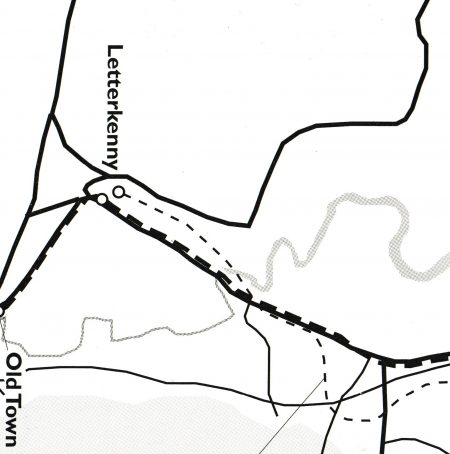
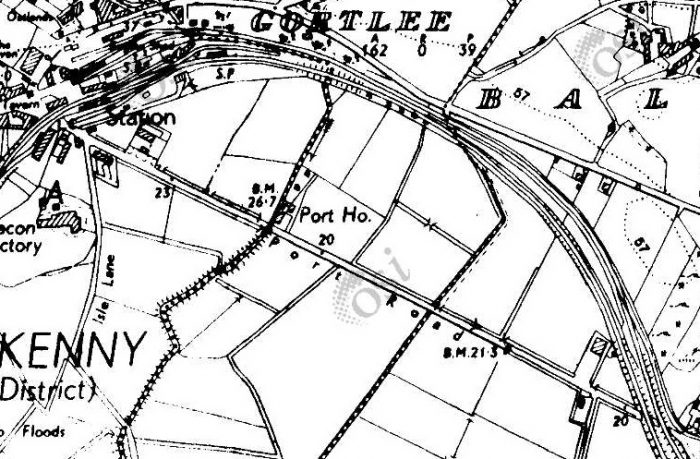
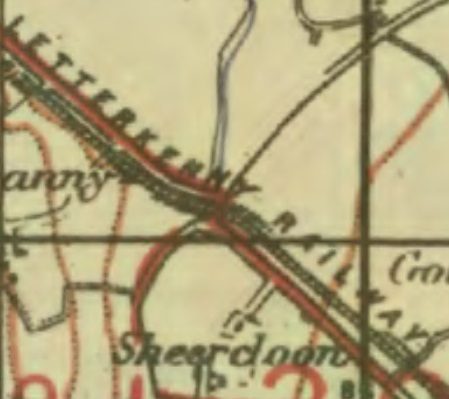
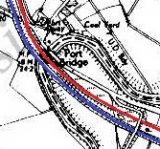
Close to the final approach to Letterkenny, the Strabane and Letterkenny line ran parallel to the Londonderry & Lough Swilly Railway. The point where they meet is illustrated on this GSGS 1940s map extract in the bottom right corner. [11]The two lines are shown entering the sketch plan from the right. The lighter dashes represent the Strabane and Letterkenny Railway and the heavier dashes, the L&LSR. (the North Point is at the top of the sketch map) (c) John Baird, Dave Bell, Steve Flanders & Blanche Pay. [12]A later OS Ireland Map showing the routes of the two railways. [13]

The Strabane and Letterkenny Railway approached the Londonderry and Lough Swilly Railway from the South at a point which appears in the bottom right of the adjacent map extract from the 1940s. The scale of the map is such that it is impossible to distinguish any indication of the track arrangement at this location and beyond towards Letterkenny.

The Visitor’s Guide to the Londonderry and Lough Swilly Railway [12] shows the Strabane and Letterkenny Railway running for a short distance on the South side of the Londonderry and Lough Swilly Railway (L&LSR), the Strabane and Letterkenny Railway is then shown crossing the route of the Lough Swilly line by means of an over-bridge and then running parallel to it into Letterkenny on the North side of the L&LSR.

That route is illustrated on the adjacent sketch Map. [12]

Other mapping suggests that the point at which the Strabane and Letterkenny Railway crossed the Lough Swilly line was further to the East, close to the point where the former met the L&LSR . This is illustrated on the adjacent later OS Ireland Map. [13]

The location of the rail over rail bridge is shown on Google Maps Satellite imagery of 2020 in the next image below.

From this point on the two lines converged gradually in both vertical and horizontal directions.
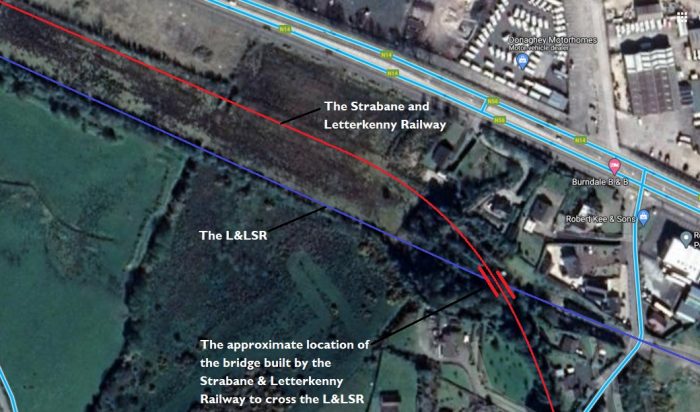
The Strabane and Letterkenny Railway crossed the Londonderry and Lough Swilly Railway by means of an over-bridge, (Google Maps).

I have only been able to find a couple of pictorial records of the rail-over-rail bridge myself. both of these are of a relatively poor print quality. They both appear in the same publication: The Londonderry and Lough Swilly Railway: A Visitor’s Guide. [12: p46]. The first shows the bridge as it was in the 1980s, the second in the years when it was still in use.

Kerry Doherty very kindly sent me a colour copy of a photograph of a S&LR train crossing the bridge in May 1959 with No. 5 Drumboe in charge of a goods train.This picture kindly supplied for use in this article by Kerry Doherty. It shows No. 5 Drumboe crossing the rail-over-rail bridge in 1959. By this time the Swilly line was already closed, (c) J.G. Dewing, Color-rail. [6]

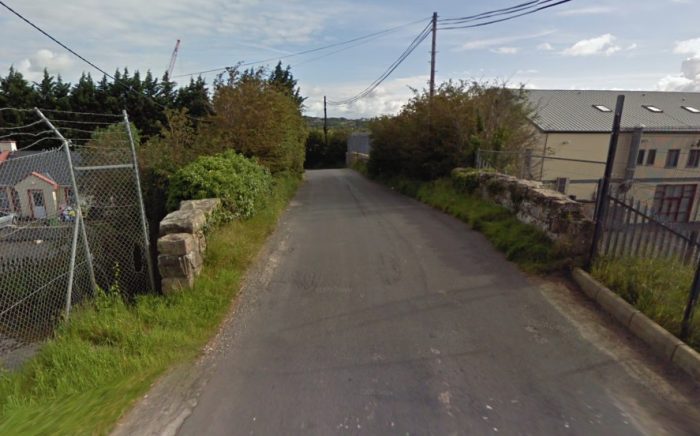
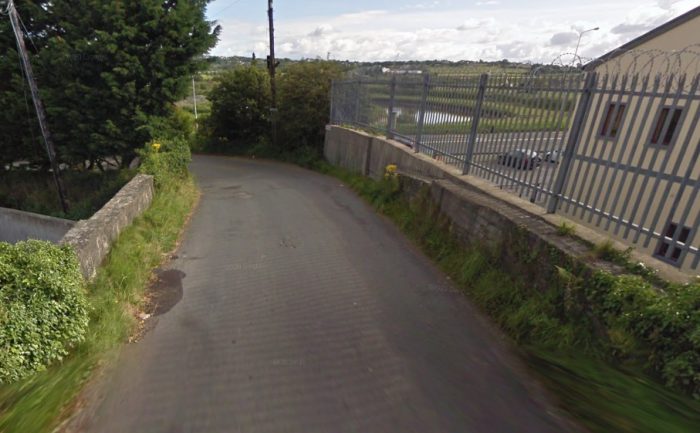
To the West of this point the two railways passed under an accommodation road. The next photo shows the remains of the bridges at that location. The Swilly railway bridge parapets are close to the camera. The S&LR parapets can be seen in the distance with the metal fencing on the top.
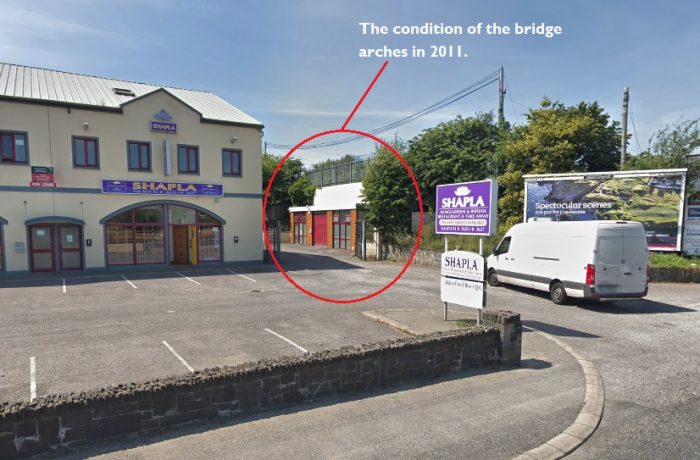
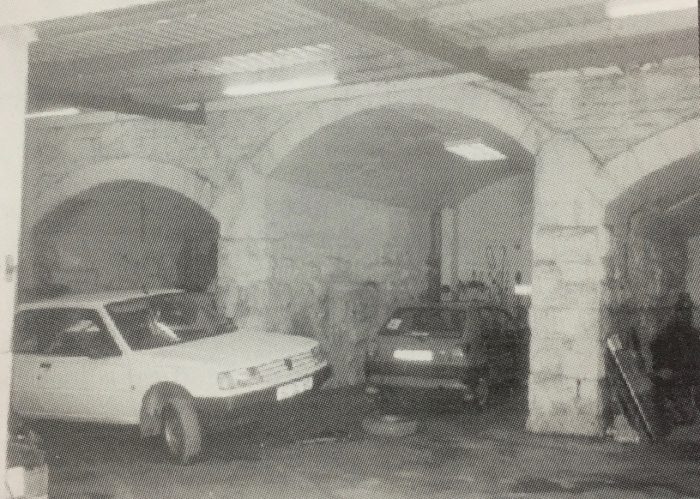
The old road-over bridges on the eastern approaches to the River Swilly, looking North, (Google Streetview).  Dave Bell and Steve Flanders describe the location in the 1980s: “There is a small side road behind the filling station which runs over two bridges, carrying the road over both railway lines. The Swilly used a single arch overbridge here while, conversely, the CDR used a three-arched bridge: two smaller arches either side of the main arch.” [12:p46] The filling station is long-gone, replaced by more modern buildings alongside the N56.The S&LR railway bridge parapets can still be seen. Concrete with metal fencing is on the East face of the old bridge, Google (Streetview)Dave Bell and Steve Flanders describe the use of the bridge arches in the 1980s like this: “The present owner of the filling station has made good use of the CDR bridge by bricking up one side and building a garage against the other. In effect he now has a garage with three bays, the roof of which is actually the side road.” [12: p47] There are two pictures of the arched bays in Bell and Flanders book.Kerry Doherty also very kindly supplied this photograph which shows the arches of the old S&LR bridge inside the garage facility, (c) Dave Bell. [6]

The two railways then encountered the River Swilly and the main road into Letterkenny from the East. Twin structures carried the two railways over the river and the main road. The modern N56 main road and a large roundabout have obliterated almost all of the railway infrastructure at this location. There are some clues as to what it was like in Bell and Flanders book which was written before much of the infrastructure here had been removed. [12:p47]The modern N56 bridge over the River Swilly sits on the line of the two old railways, (Google Streetview). The roundabout ahead has almost entirely obliterated the rail-over-road bridges which carried the two railway lines over the Port Road. The only remnant appears in the next image.The North abutment of the S&LR bridge over the old road is all that remains of the two railway bridges at this location, (c) Kerry Doherty. [6]Looking back along the old railway with the remaining bridge abutment to our right, (c) Kerry Doherty. [6] 

The plaque which is visible in both these two photographs carries a drawing of what the old bridge(s) looked like.

The plaque in the images above, (c) Kerry Doherty. [6]The historic OS Ireland Map extract show both of the two lines on the approach to the two Letterkenny Railway Stations which sat right next to each other at the Eastern edge of Letterkenny.. [13]The routes of the L&LSR and the S&LR shown on a 21st century satellite image, (Google Maps). The S&LR terminated in Letterkenny. The L&LSR continued further to the West and North.The Letterkenny Railway Stations. [13]

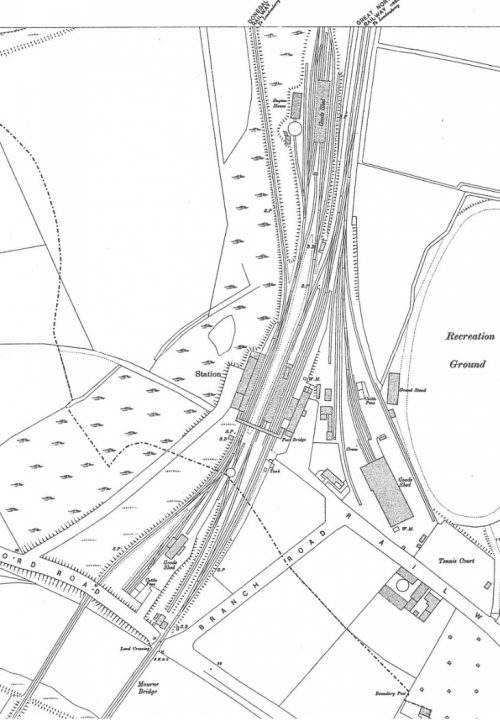
The two railway stations sat next to each other just to the East of the centre of Letterkenny. The two lines approached the stations on the South side of the R940. Their approximate route is highlighted on the Google Streetview image below.
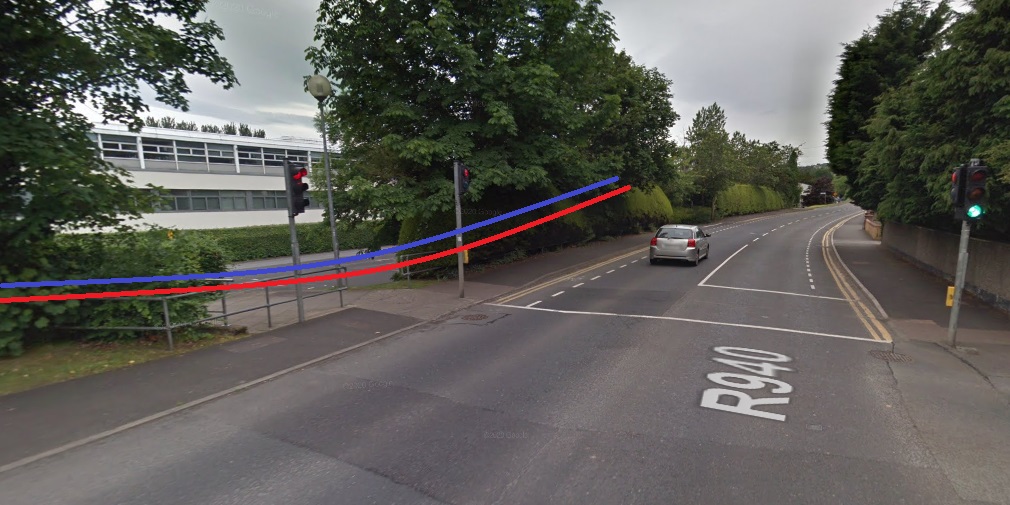
Close to the junction between the R940 and Ashlawn the two railways ran very close to the road. Their route is now covered by the tarmac surface of the car parks of the Letterkenny Institute of Technology, (Google Streetview). The blue/mauve and red lines show the approximate alignment of the railways.

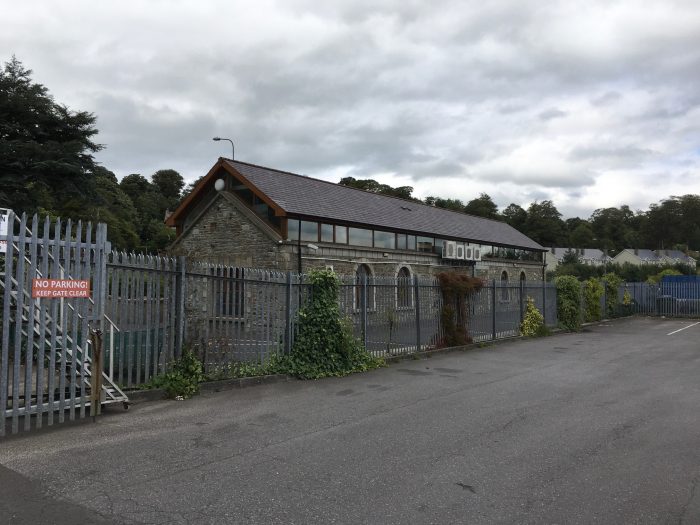
The location of the two railway stations includes the car parks of Letterkenny Shopping Centre and the bus station. Two building from the railway ear remain on the site. The old S&LR goods shed is one of these, it has been refurbished and is now called Railway House.The old S&LR goods shed has been refurbished and is now known as Railway House. This image was taken in 2017 from the R940, (Google Streetview).The same building as seen from the car park of the Letterkenny Shopping Centre, (c) Kerry Doherty. [6]
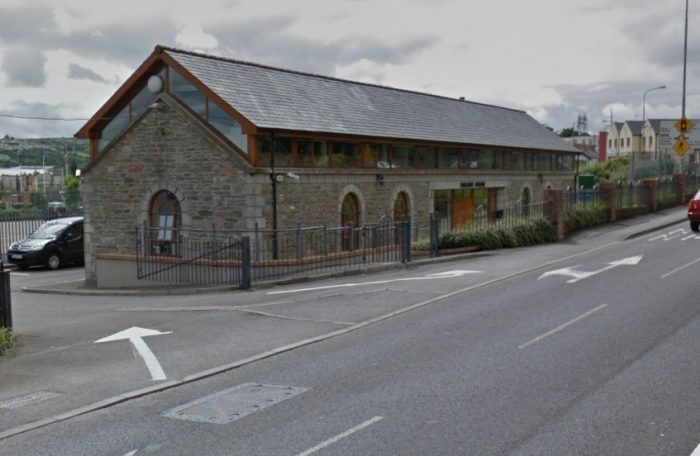
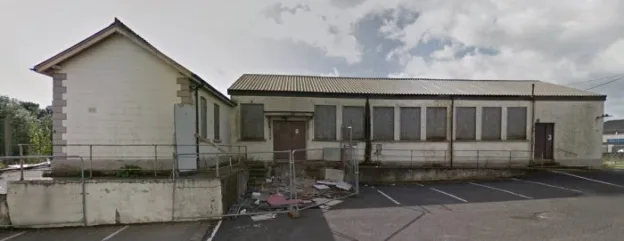
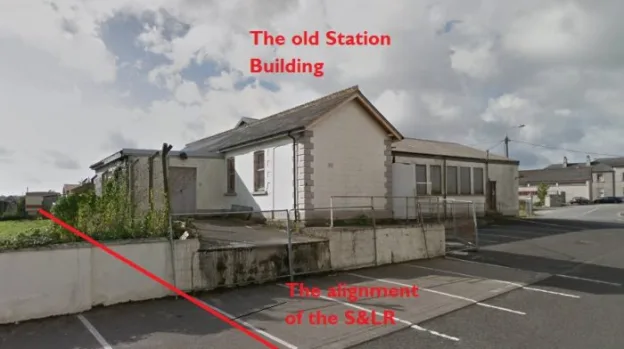
The old passenger facilities at the station have been converted in recent years into the town’s Bus Station. This required an extension to the building on what was the track-facing side. Kerry Doherty has generously provided three photographs of the modern building. [6]The front facade of the old Station Building, looking from the Southwest in 2020, (c) Kerry Doherty. [6]Inside the extension. The picture shows the old building’s Northeast facing aspect form roughly the position of the buffers stops on the old line. The platform canopy columns have been retained in the new building. The filigree detail has been retained, (c) Kerry Doherty. [6]Looking along the line of the old platform towards the Passenger Station Building. This facade is modern, (c) Kerry Doherty. [6]This final present-day image was again provided by Kerry Doherty and shows the station yard crane almost swamped by vegetation, (c) Kerry Doherty. [6]
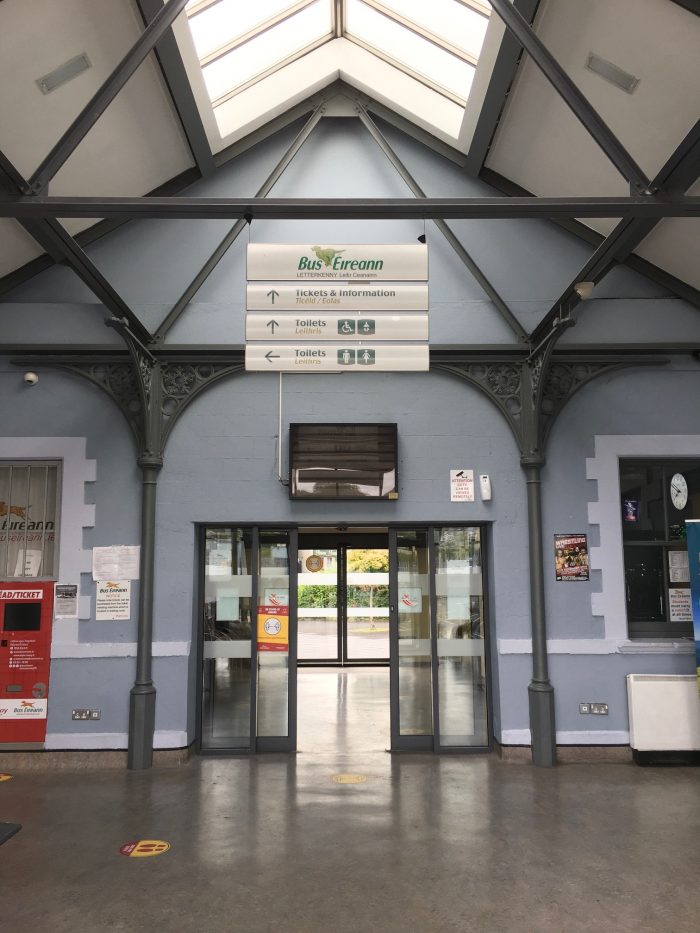
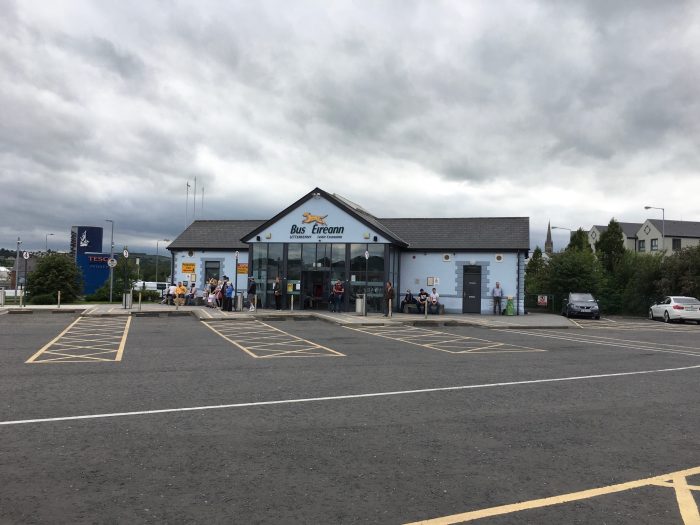
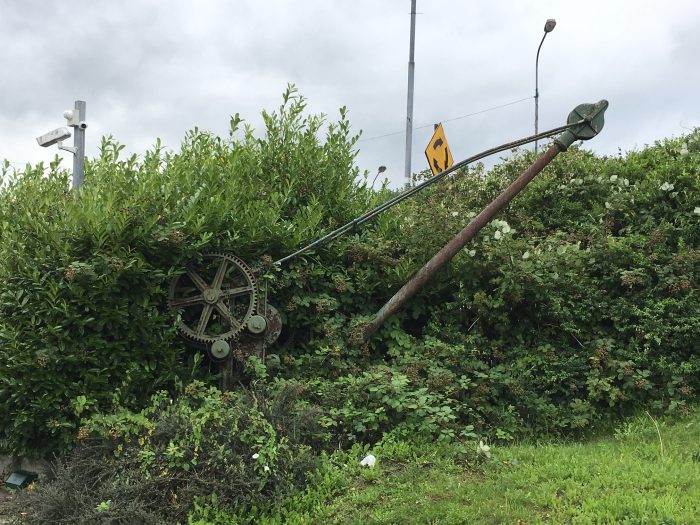
We finish this article with a series of pictures of the old S&LR facilities at Letterkenny.

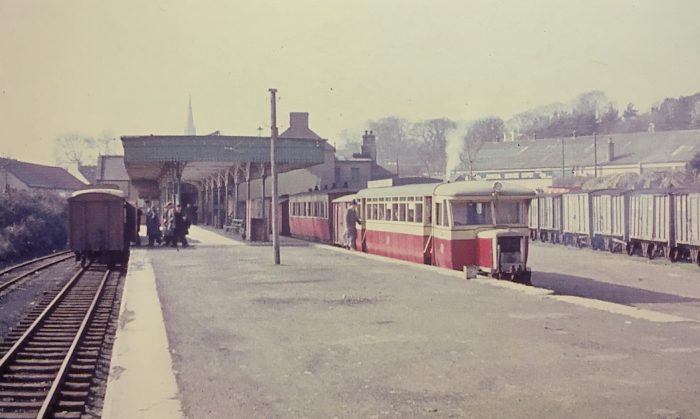
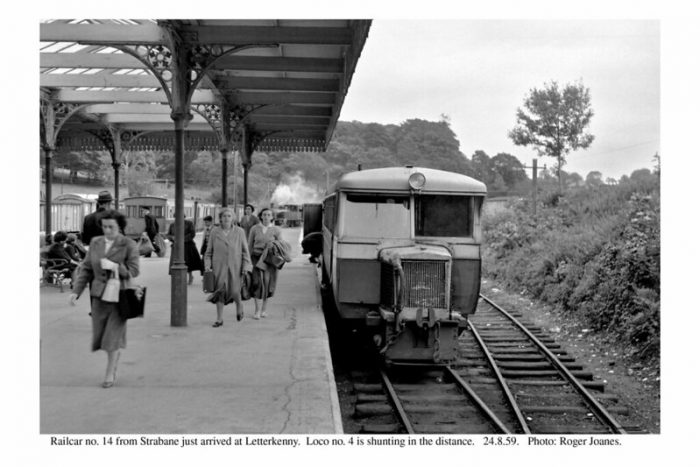
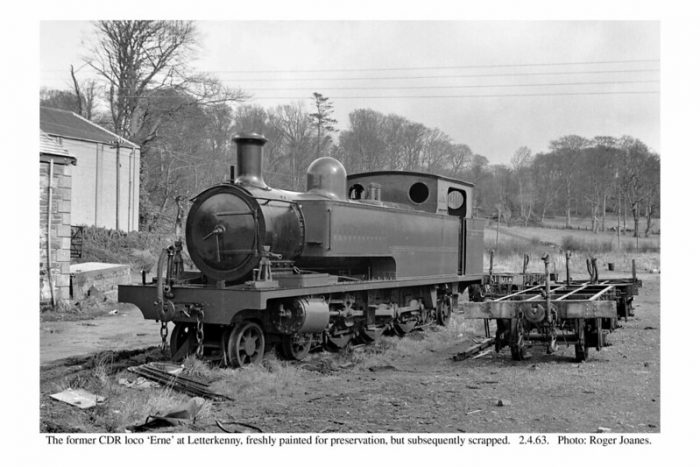
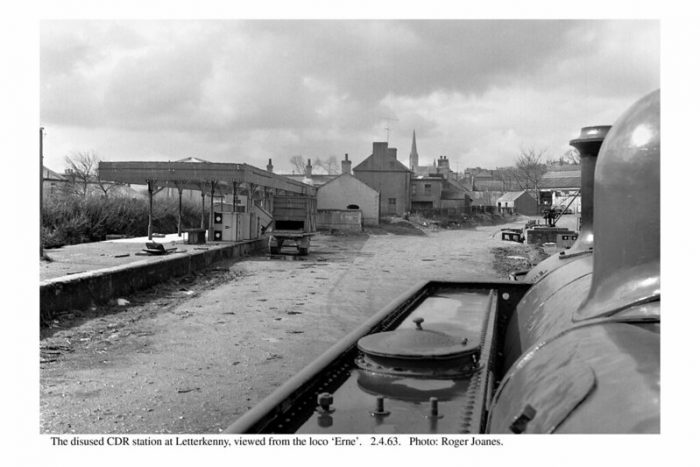
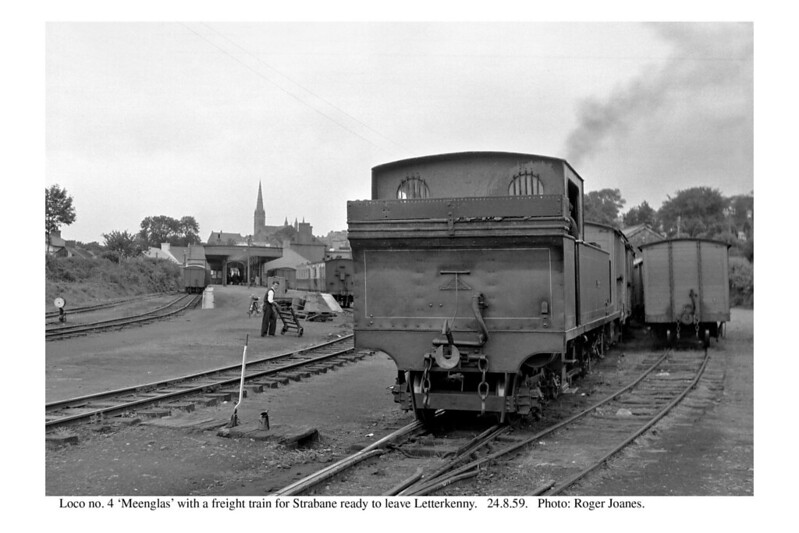
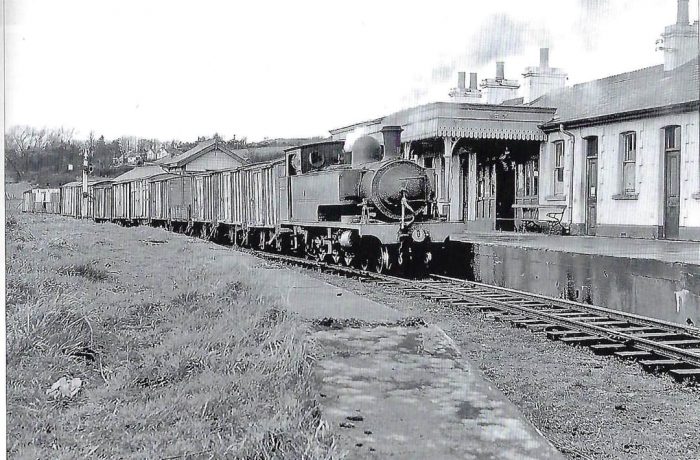
This first image was provided by Kerry Doherty and shows the length of the station platform at Letterkenny in 1959, (c) B. Hilton, Colorrail. [6]This monochrome photograph was taken by Roger Joanes in 1959. The photo was taken from close to the Station building. The railcar is No. 14 and in the distance, under a plume of steam, No. 4 can be seen shunting the yard, (c) Roger Joanes (CC BY-NC-ND 2.0). [14]Also by Roger Joanes, the inscription states: “The former CDR loco ‘Erne’ at Letterkenny, freshly painted for preservation but subsequently scrapped. 2.4.63.” (c) Roger Joanes (CC BY-NC-ND 2.0). [14]The disused S&LR station at Letterkenny in 1963 seen from the location of ‘Erne’ (c) Roger Joanes (CC BY-NC-ND 2.0). [14]An overall shot of the Station and Goods Yard in 1959. Loco No. 4, ‘Meenglas’ is preparing to set off for Strabane in charge of a goods train, (c) Roger Joanes (CC BY-NC-ND 2.0). [14]

Donegal Railway Heritage Centre posted this next photograph on their Facebook page. In this series of articles about the Co. Donegal Railways, photographs from the Donegal Railway Heritage Centre’s Facebook page are ‘linked-to’ after discussion with and kind permission from Jim McBride.

References

  1. Edward M Patterson (original author), Joe Begley & Steve Flanders (authors of additional material in the Revised Edition); The County Donegal Railways; Colourpoint Books, Newtownards, Co. Down 2014. As noted in my first article about the Co. Donegal Railways this was to have been my holiday reading while walking different parts of the network, but 2020 has been a strange year!
  2. https://maps.nls.uk/geo/explore/#zoom=16&lat=54.91092&lon=-7.65886&layers=14&b=1, accessed on 11th October 2020.
  3. https://commons.wikimedia.org/wiki/File:Athlone,_Cavan_%26_Clara._LetterKenny_Strabane_RJD_113.jpg#/media/File:Athlone,_Cavan_&_Clara._LetterKenny_Strabane_RJD_113.jpg, accessed on 14th July 2020.
  4. The County Donegal Railways Visitor Guide to the Strabane and Letterkenny Railway is now out of print and i have not been able to find a copy.
  5. Edward M Patterson (original author), Joe Begley & Steve Flanders (authors of additional material in the Revised Edition); The Lough Swilly Railway; Colourpoint Books, Newtownards, Co. Down 2017. This was also to have been part of my holiday reading, but 2020 has been a strange year!
  6. Kerry Doherty of Ballindrait very kindly sent me a series of pictures of the Strabane and Letterkenny Railway route. Each of these, in this article, bears the reference number [6]
  7. https://maps.nls.uk/geo/explore/#zoom=15&lat=54.92484&lon=-7.66844&layers=14&b=1, accessed on 12th October 2020.
  8. Anthony Burges; The Swilly and the Wee Donegal; Colourpoint Books, Newtownards, Co. Down, Second Impression, 2010.
  9. https://maps.nls.uk/geo/explore/#zoom=15&lat=54.93626&lon=-7.67260&layers=14&b=1, accessed on 12th October 2020.
  10. https://maps.nls.uk/geo/explore/#zoom=15&lat=54.94389&lon=-7.68287&layers=14&b=1, accessed on 14th October 2020.
  11. https://maps.nls.uk/geo/explore/#zoom=15&lat=54.94758&lon=-7.70755&layers=14&b=1, accessed on 27th October 2020.
  12. Dave Bell and Steve Flanders; The Londonderry and Lough Swilly Railway: A Visitor’s Guide; County Donegal Railway Restoration Society; an small extract from the sketch plan on p42, rotated through 90 degrees.
  13. http://geohive.maps.arcgis.com/apps/webappviewer/index.html?id=9def898f708b47f19a8d8b7088a100c4, accessed on 27th and 28th October 2020.
  14. https://www.flickr.com/photos/110691393@N07, accessed on 27th October 2020.
  15. https://www.facebook.com/DonegalRailwayHeritageCentre/photos, accessed on 28th October 2020.
  16. http://geohive.maps.arcgis.com/apps/webappviewer/index.html?id=9def898f708b47f19a8d8b7088a100c4, accessed on 10th November 2020.
  17. http://catalogue.nli.ie/Record/vtls000731777/MooviewerImg?mobileImage=vtls000731777_001, accessed on 10th November 2020 – a thumbnail is provided here , the full size image can be viewed by clicking on the link

Co. Donegal Railways, Ireland – Part 5 – Strabane to Letterkenny (Part B – Raphoe to Convoy)

As we noted at the start of the previous article about this line, Wikipedia gives us a very short history of the line from Strabane to Letterkenny and provides a single image – the Railway Clearing House map with stations in Strabane and Letterkenny:

The Railway Clearing House map with stations in Strabane and Letterkenny. [3]

This series of articles seeks to expand our understanding of the route of the various Co. Donegal Railways through combining old images and modern views. Satellite images also give us a good understanding of what remains of the infrastructure of these lines.

A Journey Along the Line – Strabane to Letterkenny – Part B – Raphoe to Convoy

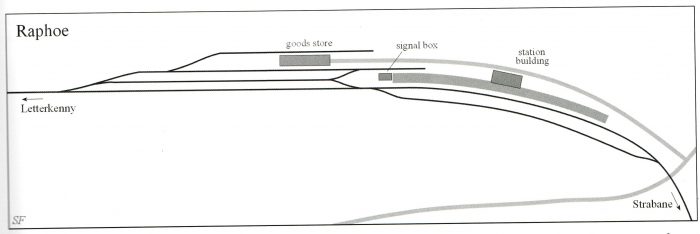
A sketch plan of Raphoe Railway Station by Steve Flanders from the book ‘The County Donegal Railways’ [1: p43] This drawing is included by kind permission of Steve Flanders.


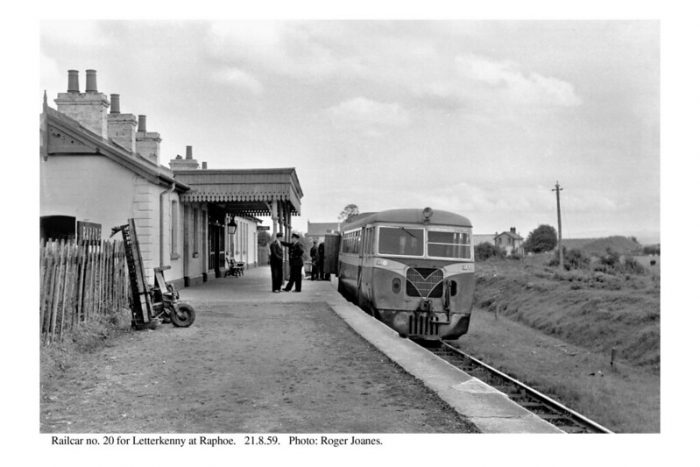
Railcar No. 20 at Raphoe Station, heading for Letterkenny in 1959 (c) Roger Joanes (CC BY-NC-ND 2.0) The Crossing-keepers cottage at the level-crossing to the East of the Station can be picked out to the right of the railcar. By this time, the passing loop shown in Steve Flanders sketch plan above had been lifted. [7]

Having enjoyed a stopover in Raphoe, we start the next stage of this journey back at the Railway Station at Raphoe and pick up the last image (above) from the previous article about the line:

Co. Donegal Railways, Ireland – Part 4 – Strabane to Letterkenny (Part A – Strabane to Raphoe)

Before we climb aboard Railcar No. 20 as it sets off for Letterkenny we look at the condition of the station site in the 21st century. The two pictures immediately below were taken relatively recently by Kerry Doherty. The first shows the location of the old station platform, the second looks from the West through the station site.

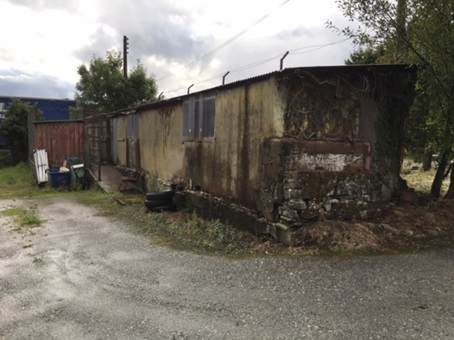
All that remains of the platform of Raphoe station. You can clearly see this shed is built on top of it (c) Kerry Doherty. [6]


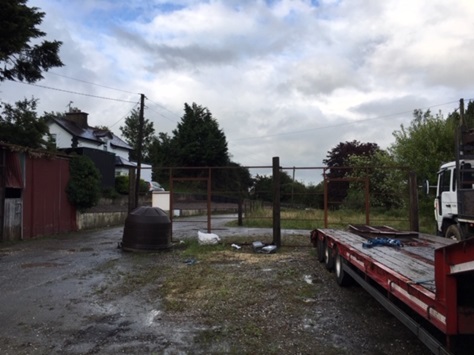
This picture appeared at the end of the last article about this line. It shows the site of Raphoe Station in 21st century taken from a similar position to the Roger Joanes image above. The Station Master’s House on the left is the only building remaining on the site. Kerry Doherty comments that ‘it was difficult to get a photo of the site as many lorries now occupy the yard’, (c) Kerry Doherty. [6]

There are also two excellent photographs of Raphoe in Anthony Burges Album of the line. [8: p32-33]

Now we set off towards Convoy from Raphoe Railway Station. …….


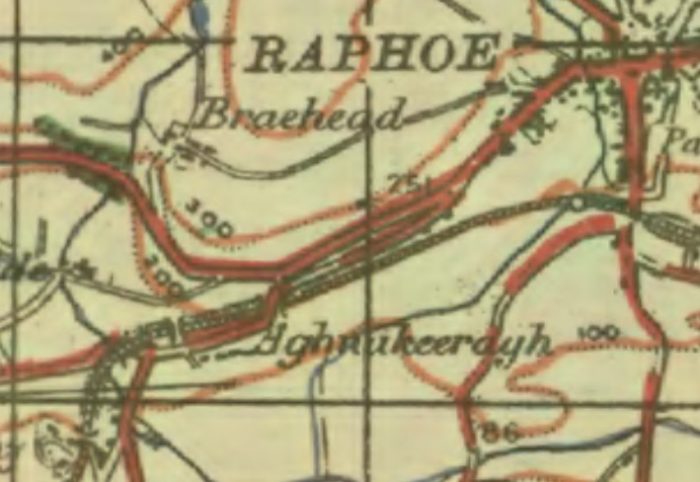
GSGS 1940s Map of Raphoe and its Southwestern approaches. [2]


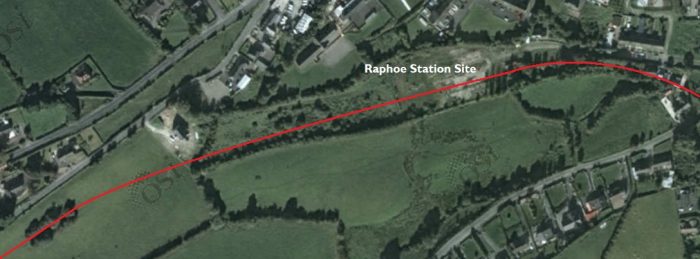
The site of Raphoe Railway Station in the 21st century. [4]


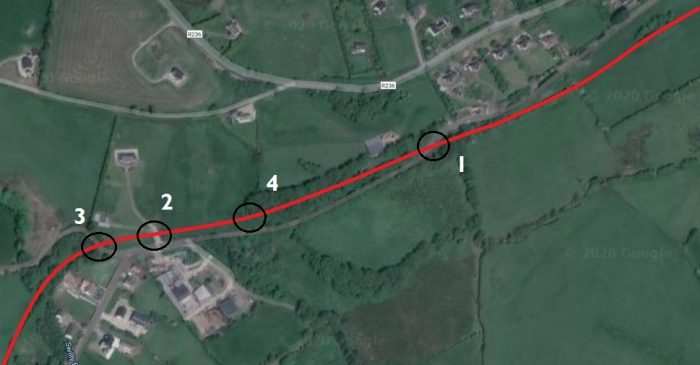
The route continues through Aughnakeeragh (Google Maps).
The three images immediately above show that the line began, gradually, to curve round to a Southwesterly direction as it left Raphoe Railway Station, before turning almost directly South at Aughnakeeragh.
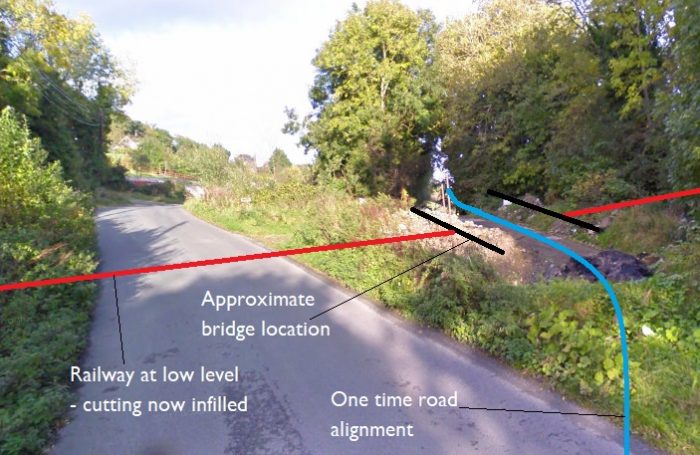
At location ‘1’ on the map immediately above, the road turned sharply to the south so as to cross the railway on a bridge.


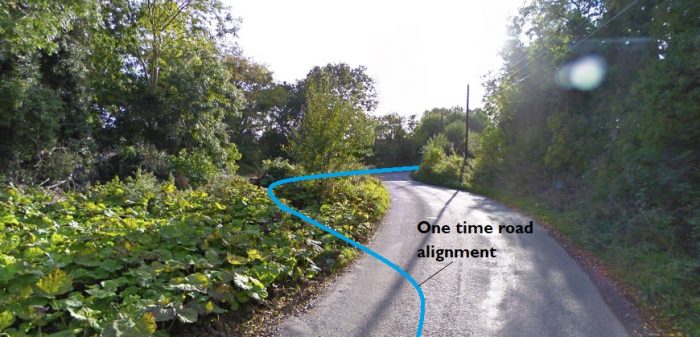
The narrow road crossed the old railway on a stone arch bridge. The railway cutting has now been infilled and the road alignment marginally improved (Google Streetview). This view shows the approach from Raphoe.


Crossing the bridge location and turning to look back towards Raphoe, this is the view (Google Streetview)

At location ‘4’, an accommodation bridge provided access across the old line.

The location of the old bridge is difficult to pick out on this image from Google Streetview.

This image, taken by Kerry Doherty from the top of the bridge at location ‘3’ above gives a better impression of the remains of the old bridge. The S&LR was in cutting at the bridge but the land drops away towards the foreground and at the point of the modern access road in the middle of the picture, the line went from being in cutting to being on an embankment, (c) Kerry Doherty [6]

As noted under the picture above, at location ‘2’, the old railway was almost at the same level as the surrounding land with cutting to the East and embankment developing to the West.


A modern farm access road crosses the old line at the approximate location when natural land levels and the formation of the S&LR matched (Google Streetview).

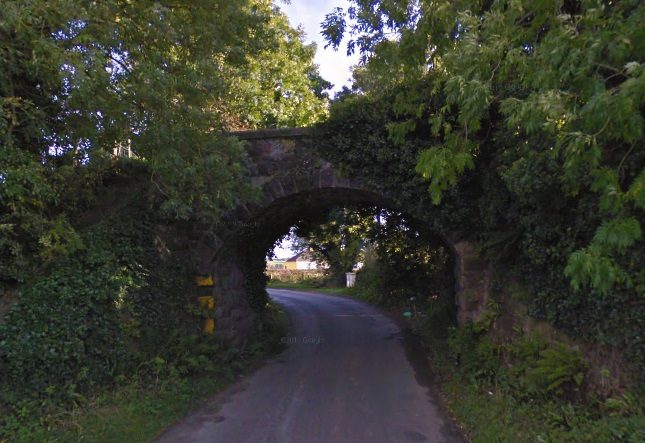
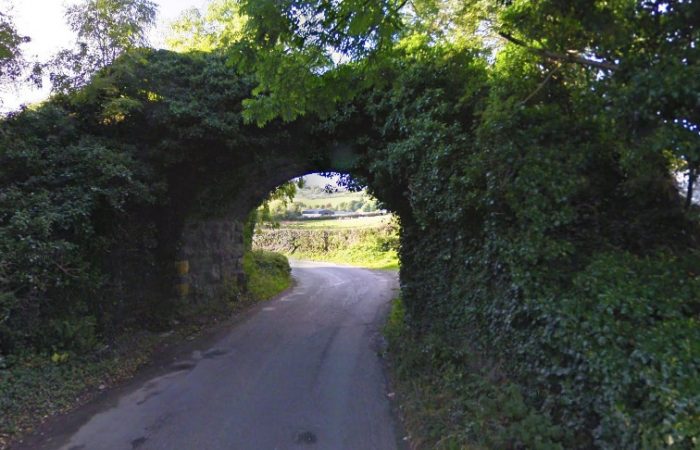
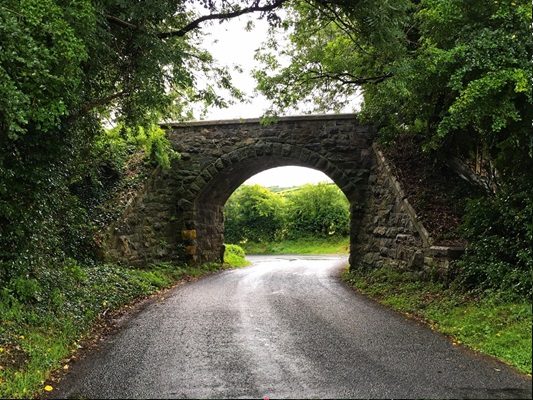
At location ‘3’, close to Aughnakeeragh, the railway was carried over a road on a stone arch bridge.


This Google Streetview image shows the bridge viewed from the Southeast.

\n Convoy Railway Station


The Google Streetview image of the bridge taken from the Northwest shows it heavily overgrown by ivy.


In this recent photograph, the bridge has been stripped of vegetation and is much more clearly visible, (c) Kerry Doherty. [6]


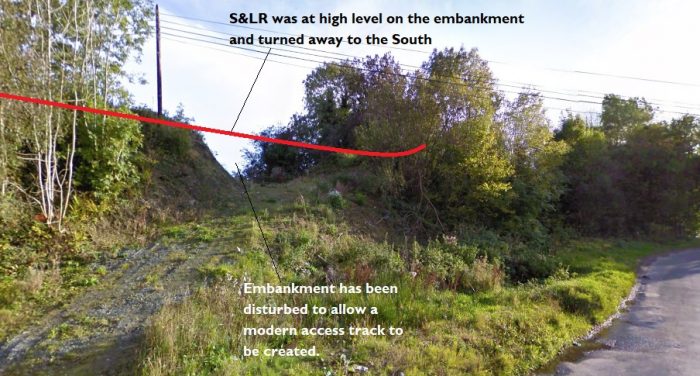
This Google Streetview image is taken from the road on the North side of the line, immediately to the West of the above bridge and shows the Railway embankment disturbed to allow vehicles to access land to the South.


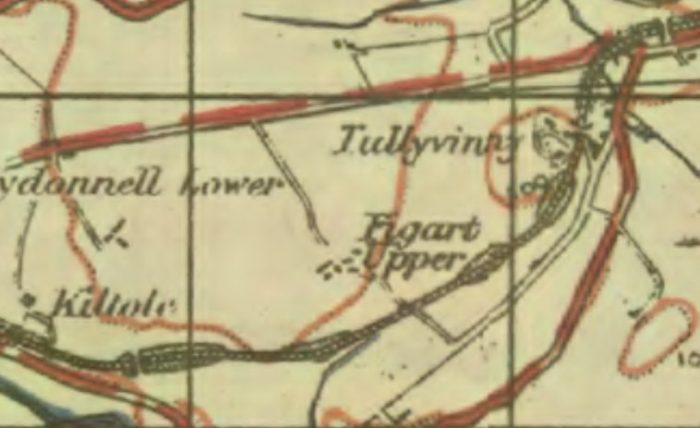
The next extract from the GSGS 1940s series of Maps shows the line to the West of Aughnakeeragh. [9]

After passing immediately to the West of Aughnakeeragh the line headed South for a Short distance before curving to the West once again.

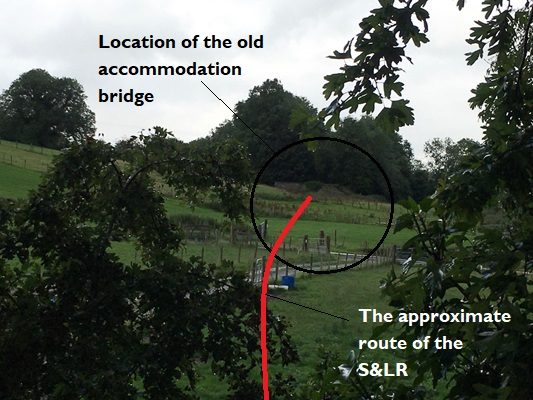
There was an accommodation bridge which carried a lane across the S&LR at Tullyvinny. The location appears on the adjacent Google Maps extract to the Southwest of the road junction at the centre of the satellite image. The lane ran parallel to the S&LR for a short distance on the East side of the railway cutting before turning West across the line. The closest we can get on Google Streetview is shown in the first image below.

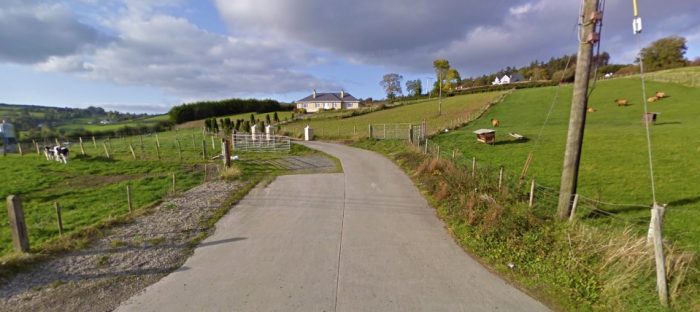
The next track to cross the line was that leading to Figart Upper Farm. The Lane appears in the bottom third, on the left-hand side of the next Google Maps satellite image below. The farm is on the left-hand side of the image close to the top.

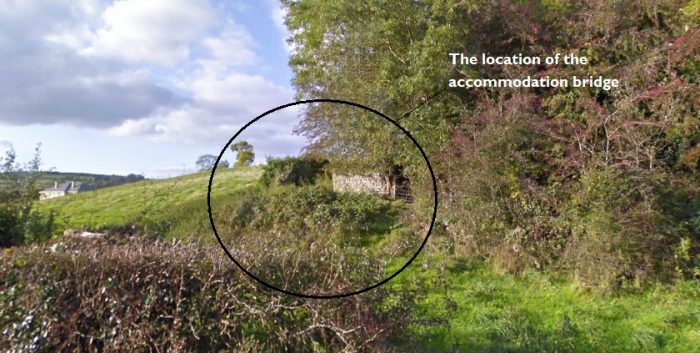
From Figart Upper Farm to Kiltole the old line was alternately in cutting and at the same level as the surrounding land but on the hill above the road which ran parallel to it to the South. An accommodate bridge over the line is marked by the black circle on the above plan and appears to relate to another structure which can be seen on the Goggle Streetview photograph below and which is taken from the road a little to the West of the accommodation bridge.


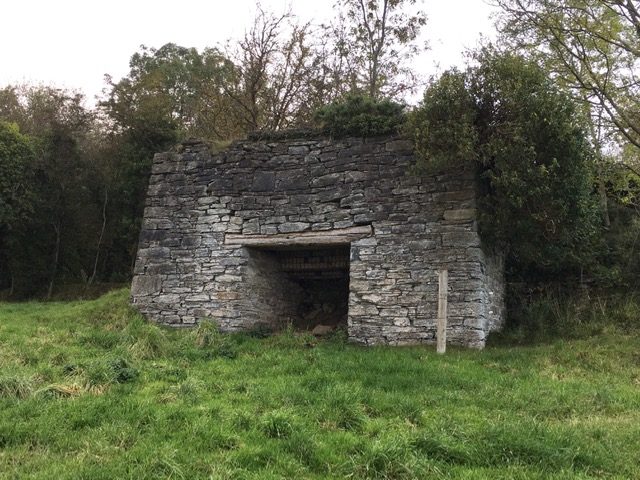
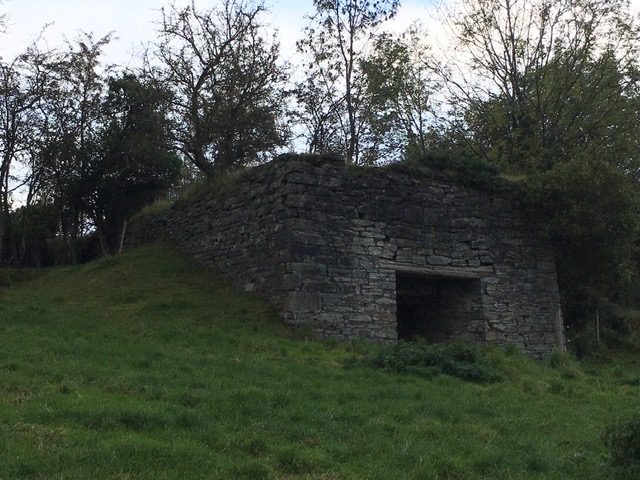
A lime kiln adjacent to the accommodation bridge referred to above. It seems as though the bridge permitted access to the lime kiln. (Google Streetview).

Very kindly, when I first asked about this structure in very early October 2020, Kerry Doherty offered to investigate. He took his camera with him as he endeavoured to walk the line from the West. He gained access to the old line through a field adjacent to the Kiltole Quarry . His first photograph shows the formation to the East of the quarry.

The formation of the Strabane and Letterkenny Railway to the East of Kiltole Quarry, (c) Kerry Doherty [6]

Kerry’s trek along the line increasingly required him to struggle through bushes, small trees and thick under growth. The next picture is taken looking West from close to the lime-kiln and its bridge.

Looking West towards Convoy close to the Limekiln, (c) Kerry Doherty. [6]


Kerry Doherty says: “It got almost impassable approaching the bridge beside the lime kiln. The bridge pillars can just be seen through the trees,” (c) Kerry Doherty. [6]


Kerry says: “I climbed the cutting to get a better shot of the bridge,” (c) Kerry Doherty. [6]


Some original boundary fencing adjacent to the bridge parapet, (c) Kerry Doherty. [6]


Looking across the accommodation bridge and then across the Lime Kiln to the South, (c) Kerry Doherty. [6]


Adjacent to the Lime Kiln the two approach walls to the bridge parapet railing can be seen. That to the East is curved in plan, (c) Kerry Doherty. [6]

Three pictures of the Lime Kiln follow. All again taken by Kerry Doherty:


The Lime Kiln from the South, (c) Kerry Doherty. [6]


The view from the Southwest, (c) Kerry Doherty. [6]


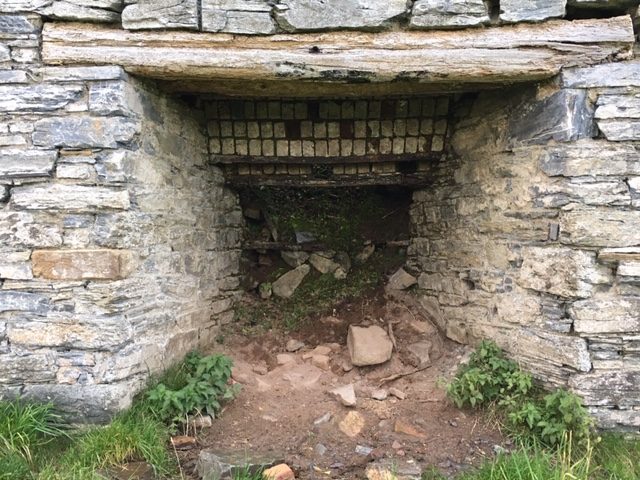
A close-up shot of the mouth of the Kiln, (c) Kerry Doherty. [6]

Immediately to the west, the road and old railway ran close together. This can be seen in this next Google Streetview image.


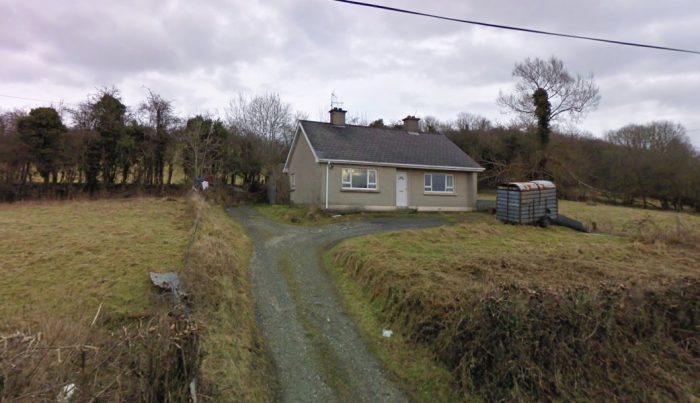
In this picture the formation of the S&LR can be seen in the trees immediately at the back of the land belonging to this bungalow (Google Streetview).

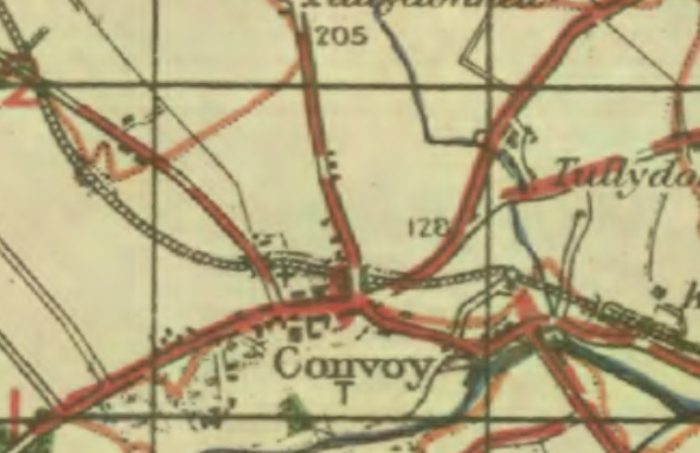
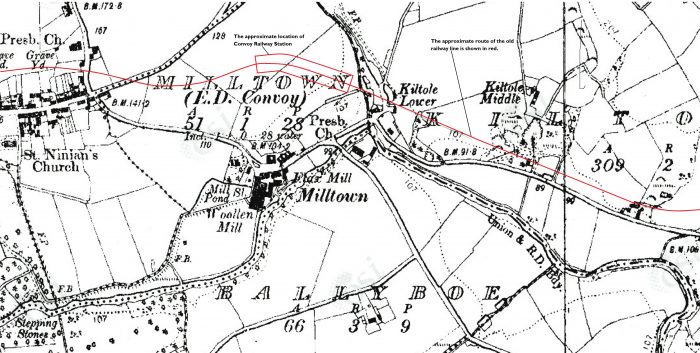
The line ahead now approaches Convoy. Although the formation is completely lost as it crossed the site of the now defunct Kiltole Quarry. The railway station was in the part of Convoy referred to as Milltown (to the East of Convoy itself), sited just to the North of the old mills.


The Village/Town of Convoy (Milltown) on the GSGS 1940s Series of Maps. [10]

Convoy on the Header National Townland and Historical Map Viewer. The route of the old railway has been imposed on the map as a thin red line. [11]


The approximate route of the old line through Convoy (Google Maps). The locations of the Gatehouse and the two road over rail bridges are marked.

The closest view of the Railway Station site at Convey that is available on Google Streetview. The last remaining structure on the site is the goods shed.

Convoy Railway Station 1959 (c) Roger Joanes, (CC BY-NC-ND 2.0).

This second length of the Strabane to Letterkenny line finishes here at Convoy, the remainder of the line to Letterkenny will follow in another post.

References

  1. Edward M Patterson (original author), Joe Begley & Steve Flanders (authors of additional material in the Revised Edition); The County Donegal Railways; Colourpoint Books, Newtownards, Co. Down 2014. As noted in my first article about the Co. Donegal Railways this was to have been my holiday reading while walking different parts of the network, but 2020 has been a strange year!
  2. https://maps.nls.uk/geo/explore/#zoom=15&lat=54.87036&lon=-7.61772&layers=14&b=1, accessed on 25th July 2020.
  3. https://commons.wikimedia.org/wiki/File:Athlone,_Cavan_%26_Clara._LetterKenny_Strabane_RJD_113.jpg#/media/File:Athlone,_Cavan_&_Clara._LetterKenny_Strabane_RJD_113.jpg, accessed on 14th July 2020.
  4. http://geohive.maps.arcgis.com/apps/webappviewer/index.html?id=9def898f708b47f19a8d8b7088a100c4, accessed on 25th July 2020.
  5. Edward M Patterson (original author), Joe Begley & Steve Flanders (authors of additional material in the Revised Edition); The Lough Swilly Railway; Colourpoint Books, Newtownards, Co. Down 2017. This was also to have been part of my holiday reading, but 2020 has been a strange year!
  6. Kerry Doherty of Ballindrait very kindly sent me a series of pictures of the Strabane and Letterkenny Railway route. Each of these, in this article, bears the reference number [6] Later, and also referenced [6] Kerry scrambled through the undergrowth along the old line to find evidence of the accommodation bridge and the rear of the lime kiln.
  7. https://www.flickr.com/photos/110691393@N07/11364546546/in/photolist-ijfgKG-ijfnbj, accessed on 22nd July 2020.
  8. Anthony Burges; The Swilly and the Wee Donegal; Colourpoint Books, Newtownards, Co. Down, Second Impression, 2010.
  9. https://maps.nls.uk/geo/explore/#zoom=15&lat=54.86372&lon=-7.63776&layers=14&b=1, accessed on 8th August 2020.
  10. https://maps.nls.uk/geo/explore/#zoom=15&lat=54.86396&lon=-7.65969&layers=14&b=1, accessed on 9th August 2020.
  11. https://www.flickr.com/photos/110691393@N07/11371005014/in/photolist-ijf23V-ijPnCA, accessed on 5th October 2020.

Co. Donegal Railways, Ireland – Part 4 – Strabane to Letterkenny (Part A – Strabane to Raphoe)

Wikipedia gives us a very short history of the line from Strabane to Letterkenny and provides a single image – the Railway Clearing House map with stations in Strabane and Letterkenny:

The Railway Clearing House map with stations in Strabane and Letterkenny. [3]

“The County Donegal Railways Joint Committee (CDRJC) constructed the Strabane and Letterkenny Railway. It opened for public service on 1 January 1909 with a route length of 19.25 miles. It was the last railway constructed by the CDRJC bringing the network operated by this company to 121 miles. The company pioneered the use of diesel operated railcars, but despite this innovation, closure came at the end of 1959, and the railway was shut on 1 January 1960.” [2]

 This history must be worth expanding! It gives so little detail!

Wikipedia tells us that Letterkenny was already rail-served in 1909. “‘The Londonderry and Lough Swilly Railway Company’ (The L&LSR, the Swilly) was an Irish public transport and freight company that operated in parts of County Londonderry and County Donegal between 1853 and 2014.” [4] Incorporated in June 1853, [5] “it once operated 99 miles of railways. … It closed its last railway line in July 1953 but continued to operate bus services under the name Lough Swilly Bus Company until April 2014, becoming the oldest railway company established in the Victorian era to continue trading as a commercial concern into the 21st century. Following a High Court petition by HM Revenue and Customs, the company went into liquidation and operated its final bus services on 19 April 2014.” [4][7][8]

The first railway station in Letterkenny opened on 30th June 1883. The line out of Derry started out as the “Londonderry and Buncrana Railway” and was absorbed into the L&LSR in 1887. [9] That line is not the subject of this article but it is important to note that Letterkenny had been rail-served for many years before the branch from Strabane arrived in the town.

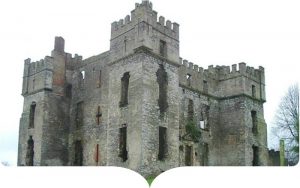
Raphoe Bishop’s Palace. [10]
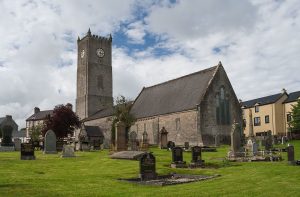
Raphoe Cathedral. [11]
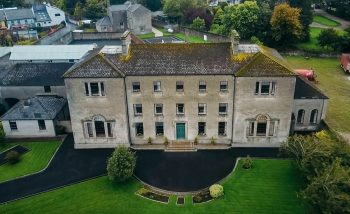
Raphoe Royal and Prior School in 21st century. [12]

Patterson et al [1: p41] explain that the Co. Donegal Railways from Strabane to Stranolar – which were accessed from Londonderry over either the Great Northern Railway (along the valley of the River Foyle) to Strabane or the more tortuous route owned by the Co. Donegal Railways which passed over the higher ground to the East of the River Foyle, through New Buildings, Collion, Donemana, Ballyheather and Ballymagorry and on to Strabane – ran to the South of an area which included the small towns of Raphoe and Convoy. The L&LSR ran to the North of this area. “At the end of the 19th century, Raphoe had a population of around 700, …. centred around a cathedral, a ruined bishop’s palace and a Royal School. Convoy, only about a third he size of Raphoe, was a manufacturing village with a reputation for woolen textile manufacture. By Donegal standards, the people living there felt they ought to have a railway.” [1: p41]

That sense of entitlement built on endeavours which began as early as 1860 but which foundered on more powerful interests. It wasn’t until around 25 years later that a light railway/tramway was planned between Strabane and Drumcairn and it became more likely that the area would be rail served. However, that scheme also foundered for lack of money. [1: p41]

It was 1902 when a new version of the scheme was proposed at an estimated cost of £100,000 which ran between Strabane and Letterkenny via Lifford, Ballindrait, Convoy and Raphoe. The scheme was the subject of a bill submitted to Parliament in the winter of 1902-3. [1: p41-42] That application failed to achieve its key objective of reaching Letterkenny. The Act only allowed a line from Strabane to Convoy. A further submission was made in 1904 and was successful. The promoters called the line the Strabane and Letterkenny Railway (S&LR)  and within no more than a year it had effectively been taken over by the Great Northern Railway in advance of their takeover of the Co. Donegal Railway. [1: p42-43]. Work started on building the line in 1906. Robert McAlpine and Sons were the principal contractor. The line was eventually opened to traffic on New Year’s Day 1909. [1: p43-44]

Patterson et al comment that “since much of the share capital of the S&L had been provided by the Midland and the Great Northern, owners of the CDRJC since 1906, it was natural that the Joint Committee should take over the operation of the line and work it as a branch. ” {1: p44-45]

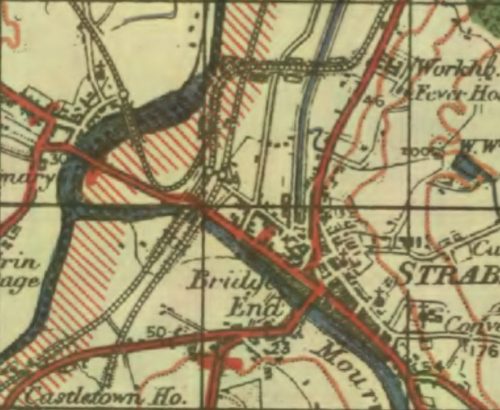
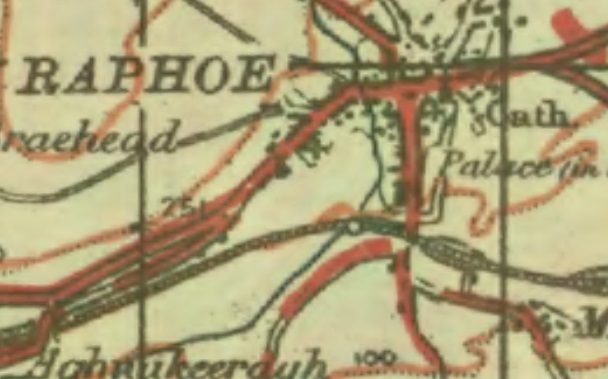
1905 Ordnance Survey Map. [14]

Strabane Railway Station was first opened in 1847 on the Great Northern Irish standard-gauge line. It expanded to include the narrow-gauge Co. Donegal lines in 1894 when the new narrow gauge crossed the river into the southern end of the station.

Prior to the narrow-gauge, the Finn Valley railway shared the southern approach to the railway station with the Irish North Western Railway – the predecessor of the GNR. The Finn Valley Railway was held to ransom for access into Strabane Railway Station. The advent in Ireland of the new 3ft gauge railways encouraged the directors of the West Donegal Railway  (WDR) to choose that gauge for their new railway in the late 1870s. After a period of mixed gauge use of Stranorlar Railway Station, Parliament sanctioned the amalgamation of the  Finn Valley  with the WDR in 1892 and in 1893 powers were obtained for a change of gauge between Stranorlar and Strabane and for the construction of a new narrow-gauge link from the old Finn Valley junction with the GNR into Strabane Railway Station. [1: p19-28] That link appears on the 1905 Ordnance Survey Map above. The map was drawn only a few years before the construction of the S&LR.

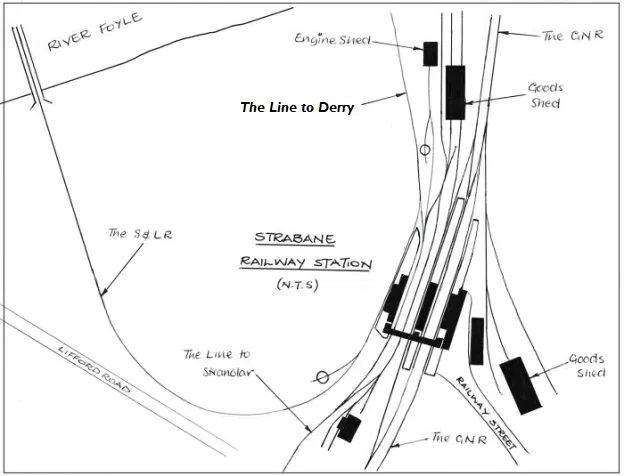
My sketch below shows the layout of Strabane Railway Station in the years following the construction of the S&LR. Strabane Railway Station in the 1930s (c) Roger Farnworth

A Journey Along the Line – Strabane to Letterkenny – Part A – Strabane to Raphoe

Strabane on the GSGS Map from the 1940s. The GNR runs roughly North-South the Co. Donegal runs from the top right to the bottom left with the branch to Letterkenny returning to the North edge of the map having passed through the Railway Station at Lifford. The station at Strabane is marked by the linked roundels near to the centre of the map. [13]

On the GSGS 1940s OS Map, the Strabane to Letterkenny branch is shown leaving the  Co. Donegal mainline just to the North of Strabane Railway Station.  My sketch above shows the actual arrangement. It was difficult to fairly represent the track arrangement at the station at the scale the GSGS Maps were drfated. Letterkenny trains left Strabane Railway Station at the station platforms and then turned sharply round to the Northwest before crossing the River Foyle and entering Lifford Railway Station.

Recently, I have been consulting with Chris Amundson. The link immediately below shows what is known about the layout of Strabane Railway Station in different eras:

https://www.flickr.com/gp/spw45/mFAX44

The next few pictures show the footbridge at Strabane Station. The first three  are relatively low resolution images posted on the BBC Northern Ireland Your Place and Mine website. [15]

These first three images are taken looking North through the Station. The first is taken from just South of the Western station platform. On the far left of the image the S&LR platform can be glimpsed. The second shows the main station buildings with the footbridge steps to the right of the image. The third looks Northeast under the footbridge towards the main station buildings.

The fourth picture was found on both Sepiatown [16] and OldStrabane webpages [17] It shows the station footbridge, again looking North, from the GNR side of the station. (I have been unable to contact both of the two sites to get permission to share photographs, postcard images, etc., here. Email links, where they exist, no longer function. Should the site owners wish me to remove the images credited to those sites then I will do so and replace them with the links referred to in the references at the end of this article.)

The first colour image shows the station footbridge again, also looking Northeast, this time from close to the Co. Donegal lines turntable. County Donegal Railway No 11 “ERNE” is moving vans in May 1957. [17][18]

The second colour image shows the same engine (No. 11 ERNE Class 4, 4-6-4 ‘Baltic’ tank), heading away, light engine, from Strabane Railway Station on the Letterkenny line in March 1958. The CDR signal box, and station footbridge are shown in the background. [17][19]

The following image shows a Goods Train approaching Strabane from Lifford, presumably having travelled from Letterkenny. The photographer is looking Southwest from a point near the Signal Box at Strabane. [17][20]

As noted above, these superb images can be found on two sites, http://www.sepiatown.com and oldstrabane.blogspot.com. Each image is individually referenced on the http://www.sepiatown.com website. I have only been able to provide a general reference for the same images on the  oldstrabane.blogspot.com website.

Those on the http://www.sepiatown.com website are geographically referenced for their location around the station site.

A train prepares to depart for Letterkenny. Platform 5 at Strabane Railway Station. [17][24]
Diesel Shunter Phoenix at Strabane Station looking Southwest from Platform 5 – the platform used by the Strabane to Letterkenny services The signal box can be made out beyond the end of the platform. [17][22]
Railcar  No. 14 at Strabane Railway Station on 20th August 1959, preparing to leave Platform 5 for Letterkenny. [17][23]
he Strabane & Letterkenny Railway closed on 1st January 1960. This photograph was taken sometime after the closure (probably in 1965). The rail track has been removed and replaced by a road. The building on the right nearest to the camera is the Co. Donegal Railways signal box. [17][21]
he route of the old S&LR is marked by the double row of trees heading North from the modern A38 (Google Maps).
Kerry Doherty supplied this photograph for comparison with the one above. It shows Strabane Railway Station and is taken from the “camels hump” bridge. He comments that ‘This site has been much filled in and raised quite a bit.’ Photograph supplied by Kerry Doherty. [45]
Kerry Doherty supplied this photograph for comparison with the one above. It shows Strabane Railway Station and is taken from the “camels hump” bridge. He comments that ‘This site has been much filled in and raised quite a bit.’  The line in the centre foreground is the S&LR. Photograph supplied by Kerry Doherty. [45]
Turning through 180 degrees, we are now looking in the direction of Lifford, the Letterkenny line trackbed would have been where the grass is on the far side of the road. Curving off sharply to the right (c) Kenny Doherty. [45]

Trains for Letterkenny used the most westerly platform at Strabane Railway Station – Platform No. 5. Trains traversed a very tight curve round to the Northwest, followed a short straight-alignment before crossing the River Foyle.

As we have noted, there was a sharp curve in the line out of out of Strabane. THis image shows the trackbed after the curve, looking towards Lifford. Kerry Doherty comments: ‘It’s interesting to note that when the line was lifted in January 1960, this was tarred and the railway bridge used for buses and lorries and the road bridge was being replaced. The tar is still under the moss underfoot,’ (c) Kerry Doherty. [45]
Looking across the River Foyle at the location of Lifford Station which is in the trees, (c) Kerry Doherty [45]
The magnificent stone abutment of the bridge. This is the southern bridge abutment, (c) Kerry Doherty. [45]
The location of Lifford Bridge, (c) Kerry Doherty. [45]
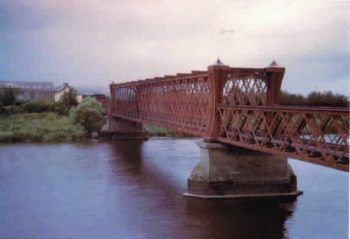
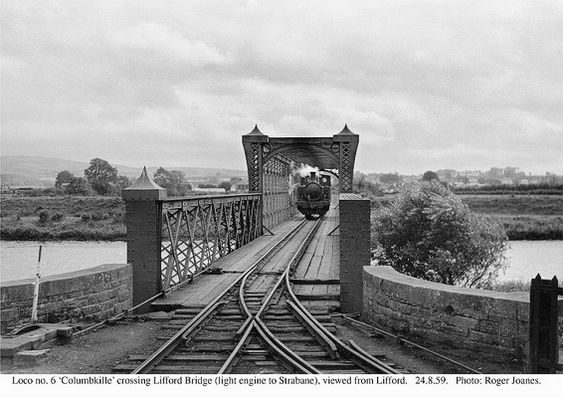
Lifford Bridge. Photo by John Langford, supplied for inclusion here by Kerry Doherty. The picture is taken from approximately the same angle as the more modern image above. Lifford Station Halt can be seen on the right side of this image. Kerry Doherty Collection. [45]
The location of the old Strabane/Liffor Railway Bridge across the River Foyle. (Google Maps)
he Construction of Lifford Railway Bridge. The photographer is on the West side of the River Foyle, looking SE towards Strabane Station on the Strabane-Letterkenny line. The picture was taken in 1908. [17][25]
A much later image of the Strabane/Lifford Railway Bridge (c) Margaret (Blee) Fisher. [26]

The Strabane/Lifford Railway Bridge over the River Foyle is shown during construction above and much later, probably not long before demolition, in the adjacent photograph.

All that remained in the latter 20th century was the bridge foundations. By the early 21st century, these also were gone.

The same bridge in 1959. This photograph is taken from the end of the platform at Lifford Halt (c) Roger Joanes (CC BY-NC-ND 2.0). [29]

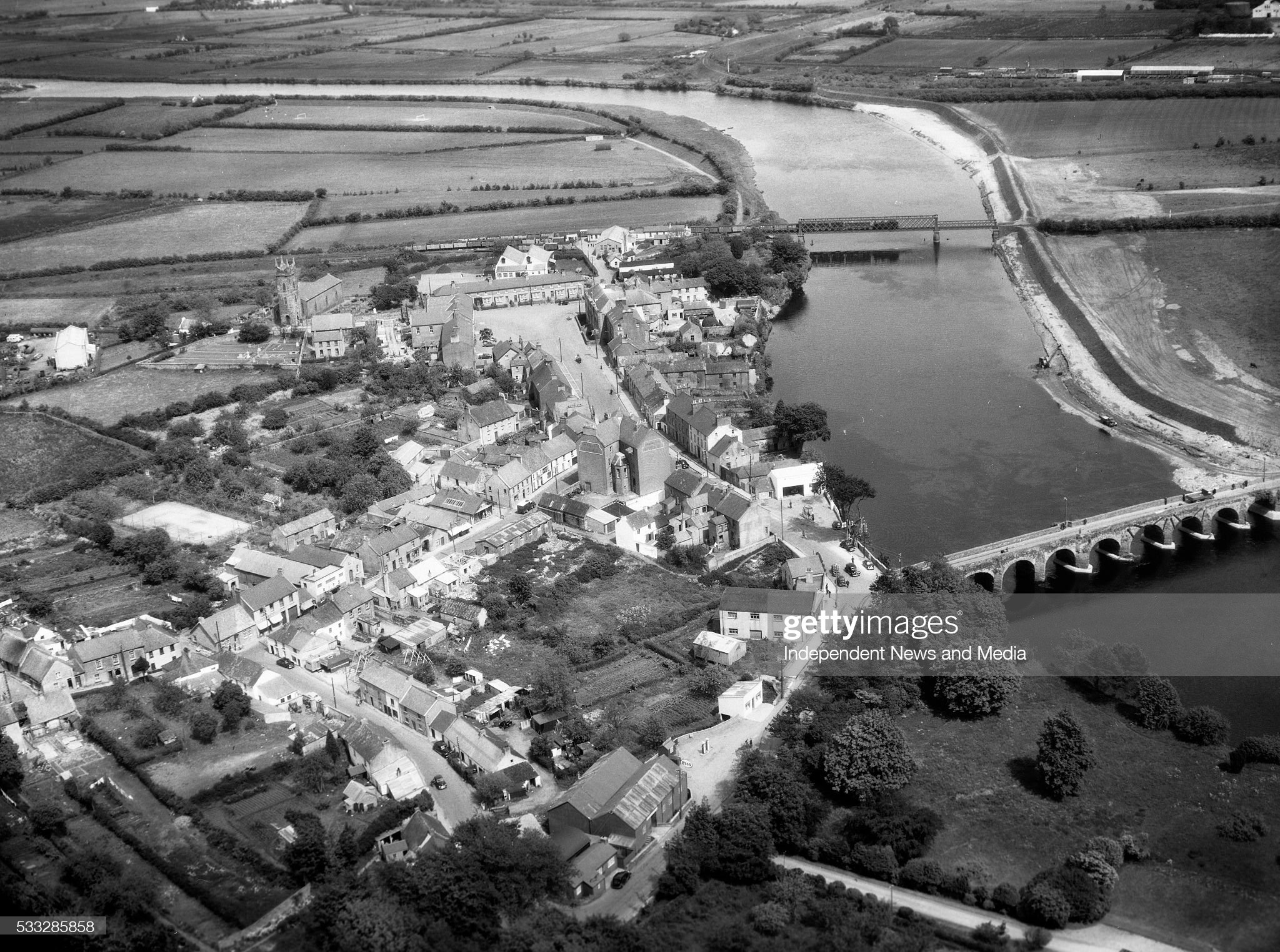
The S&LR bridge can be seen towards the top of this image. Lifford Halt Station is just to the left pf the bridge. This image is embedded with permission from http://www.gettyimages.co.uk. An unidentified Co. Donegal steam locomotive is crossing the bridge in charge of a long goods from Letterkenny. [30]

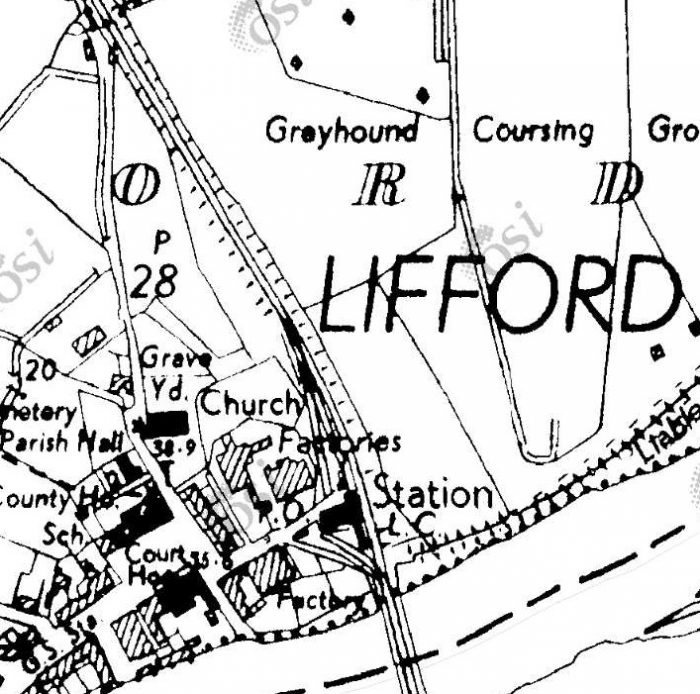
Lifford Station and Railway on the S&LR. [27]
Lifford Halt Station Builing, a colourised monochrome image. The photograph was taken by William Lawrence included here courtesy of Kerry Doherty. [43]
Lifford Station (from behind), the platform was on the other side of the building. This picture was taken some years ago as the building has been modified and is now surrounded, as can be seen below, by a high fence. The images below show the building as it is now, owned by two different people. The track-side elevation is much better kept and in recent years was the post office, (c) Kerry Doherty. [45]
Lifford Halt Station Building (Google Streetview).
Lifford Halt Station (Google Streetview).

The photo above appears on the Donegal Heritage Centre Facebook page and is embedded here with permission. [31] There is also  an excellent photograph of the station and platform in Anthony Burges book, The Swilly and the Wee Donegal. [44: p30] The satellite image below shows the S&LR just North of the location of the old station.

The S&LR (Google Maps)
The S&LR [31]
The S&LR [31]
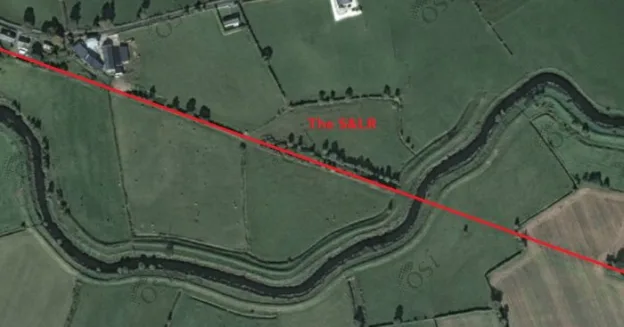
The approximate alignment of the S&LR approaching Ballindrait Station which is just off the satellite image to the West. [31]
The approximate line of the S&LR in the 21st century. [27]
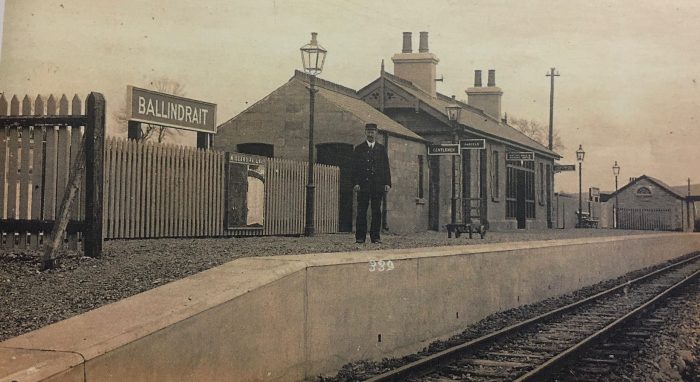
Ballindrait Railway Station as first built. This picture is an old postcard view taken by William Lawrence and provided courtesy of Kerry Docherty. [43]
Ballindrait Station in 21st century viewed from the West along the access road from the village (Google Streetview). The building on the right is the old passenger building with the platform beyond.

Ballindrait Railway Station was to the Northeast of the village on the North side of the Deele River.

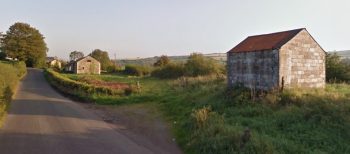
The Goods Shed (Google Streetview).
Ballindrait Goods Shed, looking towards Lifford (c) Kerry Doherty. [43]

There is a bungalow on the site of the old station, close to the old station house, but many of the buildings associated with the station are also still present. A sequence of views are adjacent to this text, three of which are views on Google Streetview.

The two wintry views are from the Irish National Inventory of Architectural Heritage. [32]

Ballindrait Goods Shed from the Southwest. [32]
The Station Master’s House (Google Streetview)

There are also some pictures taken recently by Kerry Doherty which show the site from the alignment of the old railway (these make an excellent comparison with one of the images in the book, The Swilly and the Wee Donegal, by Anthony Burges . [44: p31])

Kerry Doherty’s photos include one of the old goods shed looking towards Lifford.

The Station Master’s House from the Southeast. [32]

The station buildings are in a surprisingly good condition having seen little or no maintenance over the years since the closure of the S&LR.

Ballindrait platform shelter and platform remains, looking towards Coolaghy (c) Kerry Doherty. [43]

I am particularly grateful to Kerry Doherty for the modern images which appear to be more up-to-date than the Google Streetview images.

Leaving the station, the railway travelled only a short distance due West before crossing the station access road leading up from Ballindrait village on a steel girder bridge.

Ballindrait platform shelter and platform remains, looking towards Coolaghy (c) Kerry Doherty. [43]

The bridge deck has been removed and the abutments, if they still exist, are completely obscured by vegetation.

Beyond Ballindrait the S&LR followed the route of the R264 closely. The picture below looks back towards Ballindrait railway station in the year before closure of the line.

Leaving Ballindrait the line followed a relatively straight course for a short distance. This view looks back towards the station from just beyond the road under bridge which took the station access road into Ballindrait. [45]

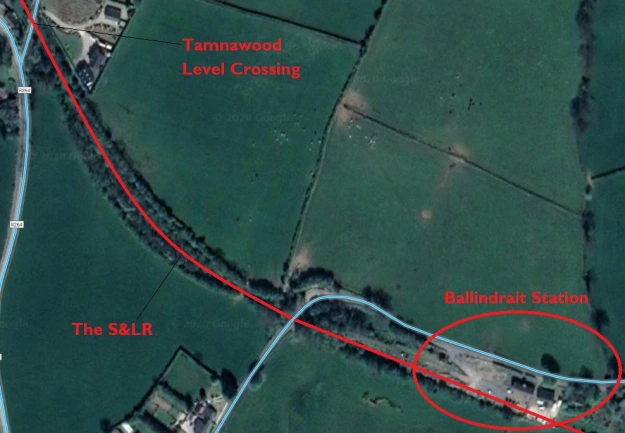
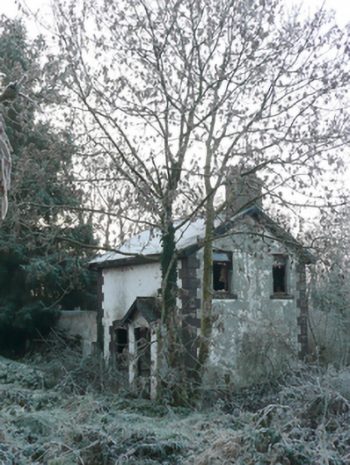
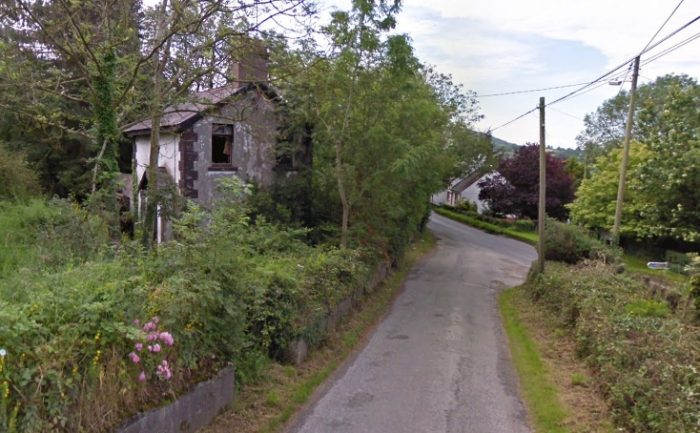
Initially crossing a side road on the level at Tamnawood Crossing. The crossing keeper’s cottage still stands in the early 21st century and is shown below in two images, the first comes from the Irish National Inventory of Architectural Heritage. [33] The second from Google Streetview.

Tamnawood Crossing-keeper’s Cottage [33]
Tamnawood Crossing-keeper’s Cottage (Google Streetview)
The S&LR [Google Maps]

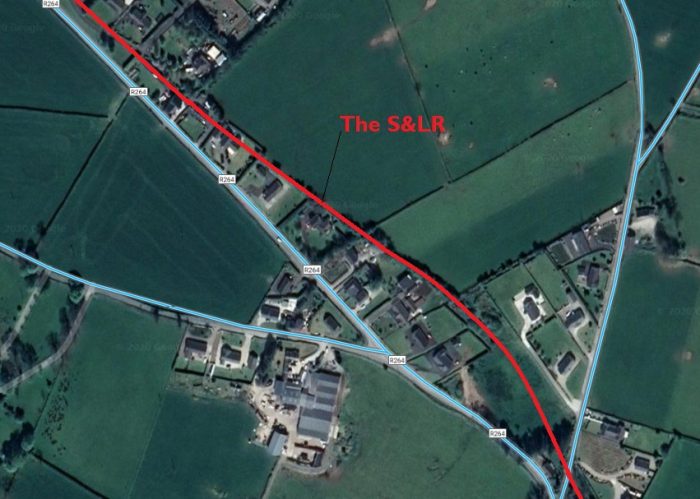
At first it ran along the North side of the road. Modern develop obscures its route. The first two Google Satellite images below show that modern development.

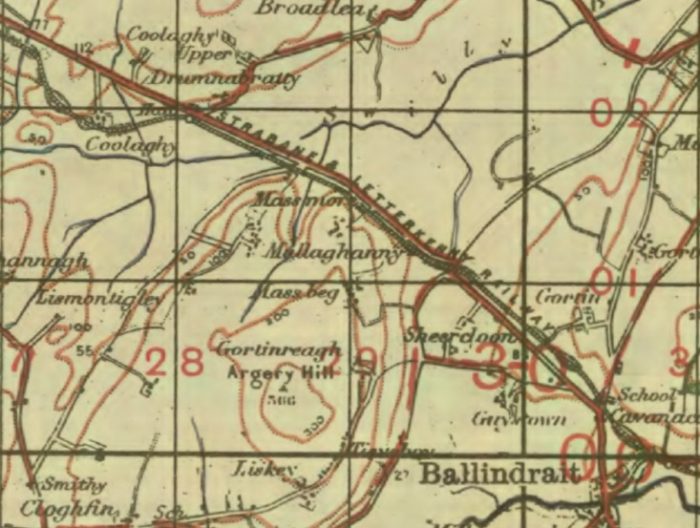
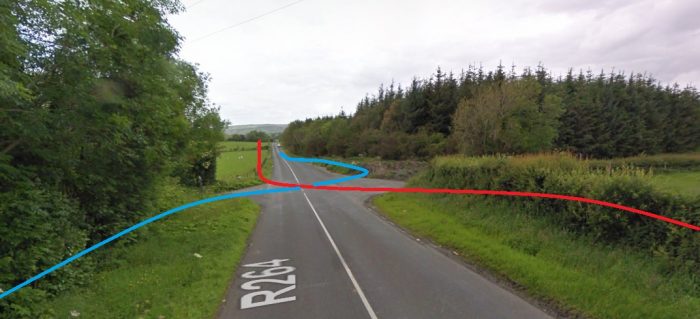
After a few more hundreds of metres, line crossed the R264 on the level. The old road has been realigned at this point. The location can be picked out on the GSGS Map below but is more easily picked out on the larger scale extract provided after the two satellite images.

The approximate alignment of road and rail is illustrated on the Google Streetview photograph below the larger scale map extract.

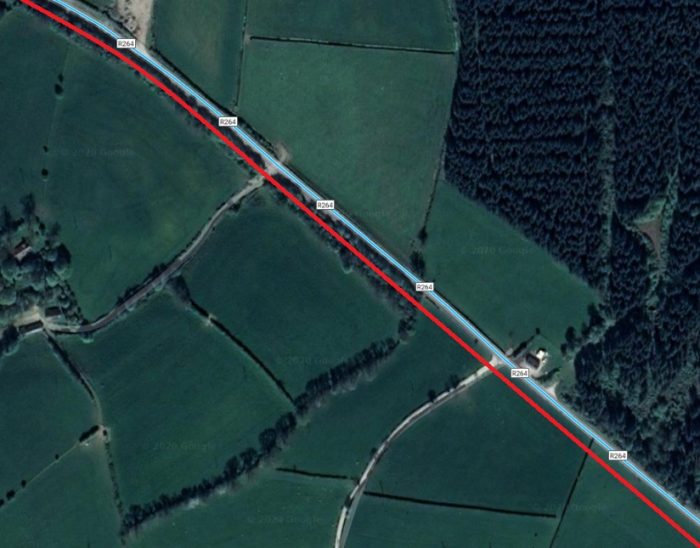
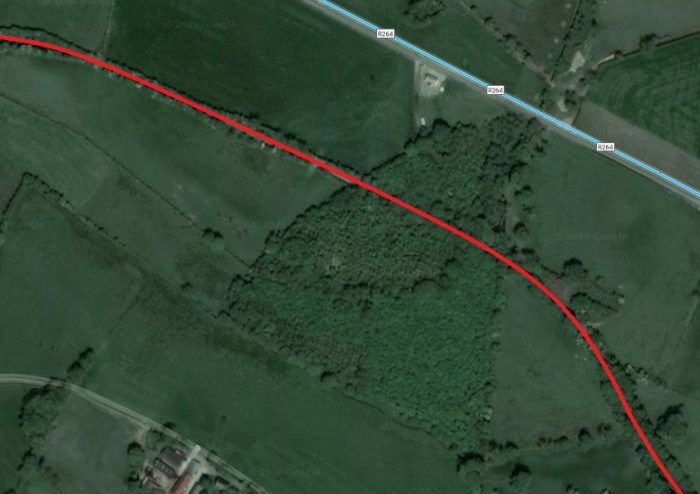
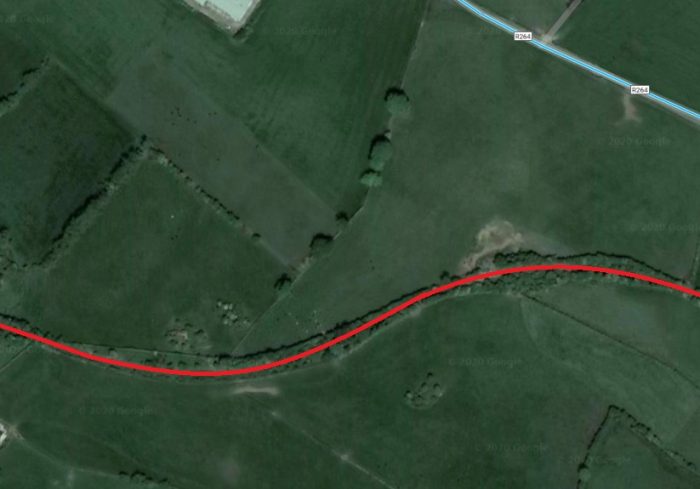
Beyond the road crossing the S&LR followed the South side of the R264, only a few metres away from the carriageway, until it reach Coolaghy Halt where it turned away Southwest from the road.

The route as far as Coolaghy Halt is illustrated on the Google Sateliite images below.GSGS Map from 1941 shows the route of the Strabane to Letterkenny Railway following the route of the Ballindrait to Raphoe Raod (R264). [34]GSGS Map from 1941 shows the point at which the S&LR crossed the R264. [34]The R264 looking Northwest towards Raphoe showing the approximate alignments of the old road and the S&LR (Google Streetview).

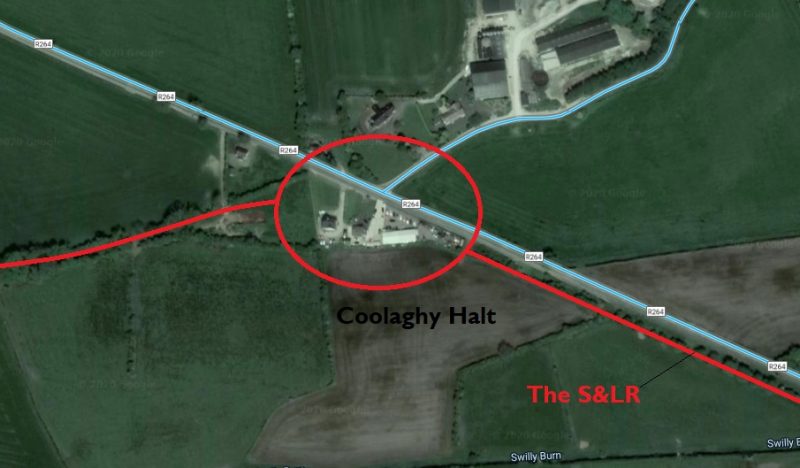
The location of Coolaghy Halt (Google Maps)

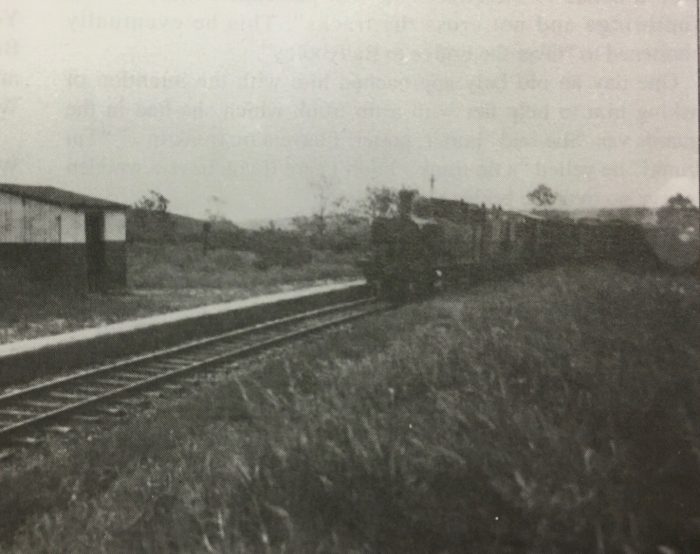
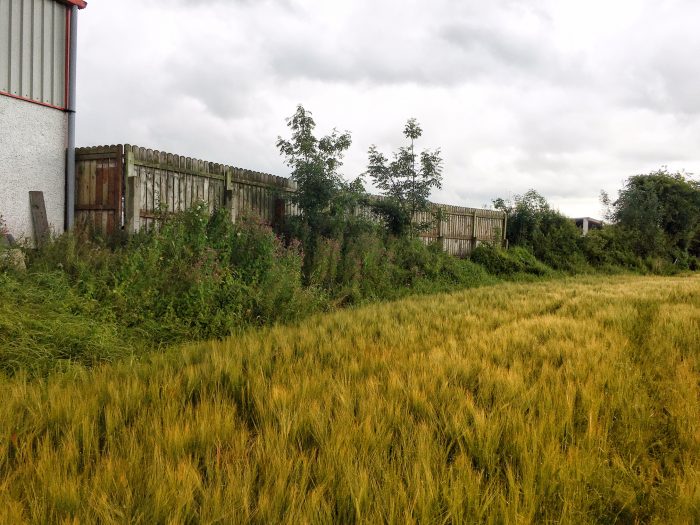
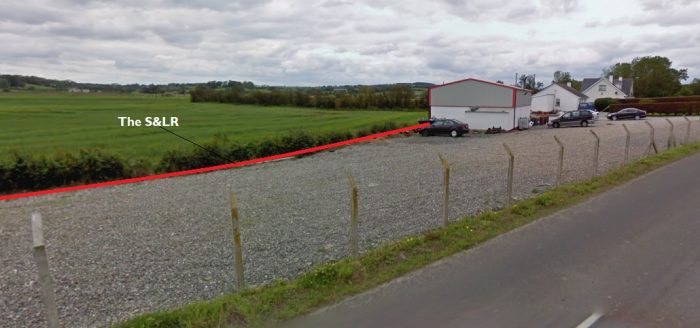
Coolaghy Halt was the first point for some distance that the railway left the side of the old road. The route of the S&LR is still easily picked out as a line of trees and shrubs running West-southwest away from the R264.Coolaghy Halt in 1942 from the Tom P. McDevitte Collection courtesy of Kerry Doherty, the image is also reproduced in ‘Railway Days in Strabane’. [43]Coolaghy Halt’s location in the 21st century. The platform was where the fence sits today. Photograph by Kerry Doherty. [43]The location of Coolaghy Halt (Google Streetview)A side road from the Northeast met the R264 at the location of the Halt which was on the South side of the road. The red line on these two Google Streetview images shows the approximate alignment of the old S&LR at this point (Google Streetview).

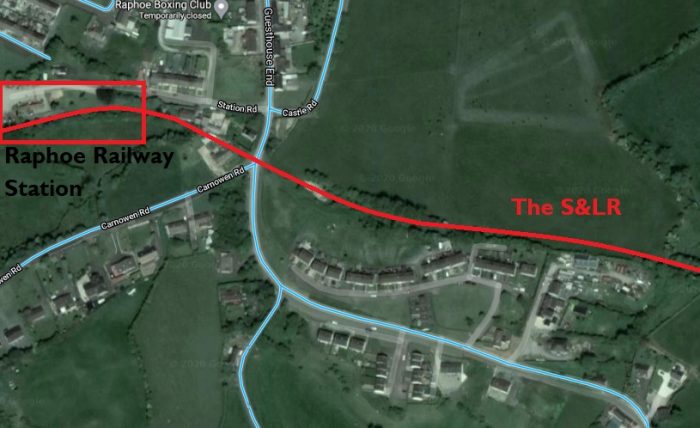
Onward from Coolaghy Halt, the S&LR was only away from the R264 for a few hundred metres, running behind what is now P Connolly Car Sales and Repairs before drifting back towards the road and roughly following its alignment for a few hundred metres before turning away to the Southwest again en-route to what was Raphoe Railway Station.Raphoe Railway Station sat on the South side of the town. [35]

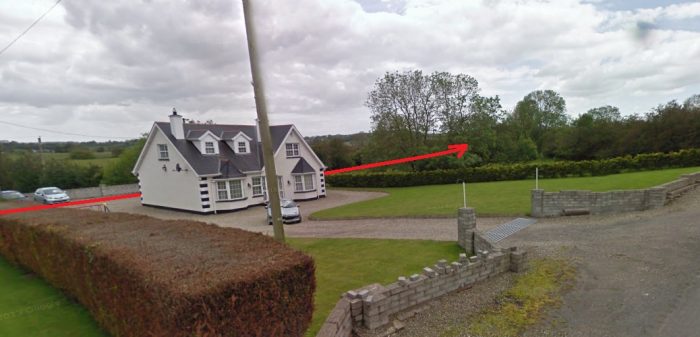
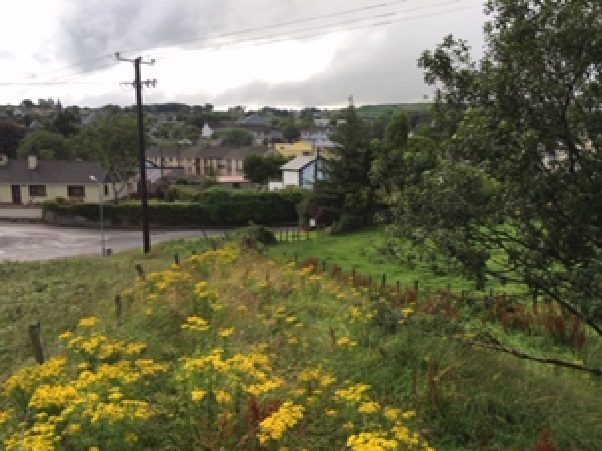
A view from above the cutting just before crossing the road into the Raphoe Station site, you can see the gap where it crossed the road, (c) Kerry Doherty. [45].

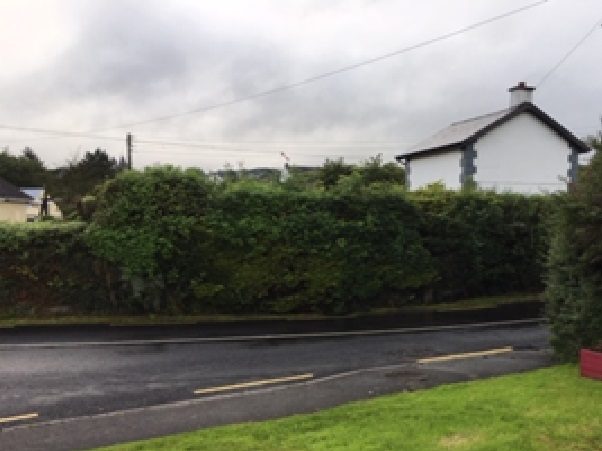
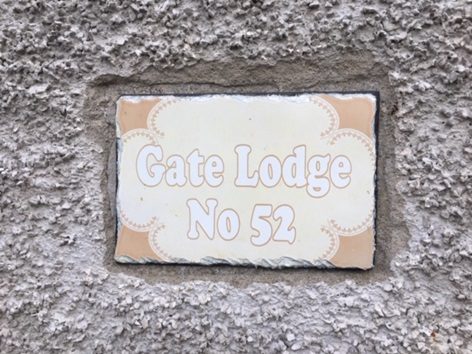
The Crossing-keeper’s cottage, Gate House 52, in the early 21st century, The photographer is standing on the track-bed, (c) Kerry Doherty. [45]A nice acknowledgement to the railway past, (c) Kerry Doherty. [45]
The approach from the East to the level-crossing at Raphoe. This picture matches the more modern one above and is also taken from above the cutting on the route from Strabane and looks toward Raphoe station, © Copyright James Chambers, the gate-keeper at Raphoe crossing. He developed his own images. This image is included here by kind permission of his grandson Nigel Simon. [37]
Raphoe Crossing-keeper’s Cottage just after closure of the line, © Copyright James Chambers, the gate-keeper at Raphoe crossing. He developed his own images. This image is included here by kind permission of his grandson Nigel Simon. [38]
The Level-crossing location in the 21st century. The Crossing-keeper’s cottage remains (Google Streetview)
Looking forward from Raphoe gates into the station site, © Copyright James Chambers, the gate-keeper at Raphoe crossing. He developed his own images. This image is included here by kind permission of his grandson Nigel Simon. [42]

There is an excellent view of the station complex available in Ernie’s Railway Archive on Flickr … https://flic.kr/p/2iRSdWW … That image is best seen as part of that album of photographs on Flickr. [40] The next few pictures show the station while the line was in operation.

Erne at Raphoe Railway Station in 1959 (c) Douglas Robinson, used with permission from the Co. Donegal Railway Heritage Centre. [36]
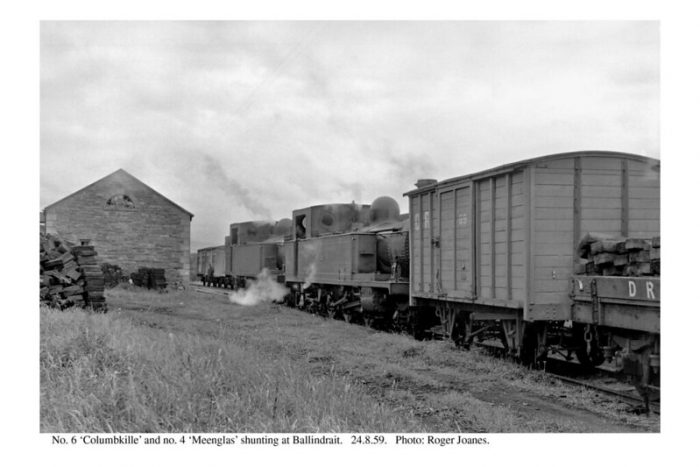
Shunting at Ballindrait in 1959 (c) Roger Joanes (CC BY-NC-ND 2.0) [41]
Railcar No. at Rahoe Station (c) Roger Joanes (CC BY-NC-ND 2.0) [39]
A view of Raphoe Station from the West (c) Roger Joanes (CC BY-NC-ND 2.0) [38]
The site of Raphoe Station in 21st century taken from a similar position to the last Roger Joanes image above. The Station Master’s House on the left is the only building remaining on the site. Kerry Doherty comments that ‘it was difficult to get a photo of the site as many lorries now occupy the yard’, (c) Kerry Doherty. [45]

We complete the first stage of the journey along the Strabane to Letterkenny Railway at Raphoe. As we noted at the start of this article, this is a place with a long history and it is worth the stopover to see the town!! There are two superb pictures of the station in Anthony Burges book, The Swilly and the Wee Donegal. [44: p32 &33]

References

  1. Edward M Patterson (original author), Joe Begley & Steve Flanders (authors of additional material in the Revised Edition); The County Donegal Railways; Colourpoint Books, Newtownards, Co. Down 2014. As noted in my first article about the Co. Donegal Railways this was to have been my holiday reading while walking different parts of the network, but 2020 has been a strange year!
  2. https://en.wikipedia.org/wiki/Strabane_and_Letterkenny_Railway#:~:text=The%20County%20Donegal%20Railways%20Joint,this%20company%20to%20121%20miles., accessed on 14th July 2020.
  3. https://commons.wikimedia.org/wiki/File:Athlone,_Cavan_%26_Clara._LetterKenny_Strabane_RJD_113.jpg#/media/File:Athlone,_Cavan_&_Clara._LetterKenny_Strabane_RJD_113.jpg, accessed on 14th July 2020.
  4. https://en.wikipedia.org/wiki/Londonderry_and_Lough_Swilly_Railway, accessed on 14th July 2020.
  5. Steve Flanders & Hugh Dougherty, The Londonderry and Lough Swilly Railway; Midland Publishing, 1997.
  6. Edward M Patterson (original author), Joe Begley & Steve Flanders (authors of additional material in the Revised Edition); The Lough Swilly Railway; Colourpoint Books, Newtownards, Co. Down 2017. This was to have been part of my holiday reading, but 2020 has been a strange year!
  7. https://donegalnews.com/2014/04/famous-lough-swilly-bus-company-to-close-within-days, accessed on 14th July 2020.
  8. https://www.independent.ie/irish-news/bus-company-closes-30190034.html, accessed on 14th July 2020.
  9. https://www.stationhouseletterkenny.com/things-to-do-letterkenny/history-letterkenny-donegal, accessed on 14th July 2020.
  10. https://www.antaisce.org/buildingsatrisk/bishops-palace-raphoe, accessed on 14th July 2020.
  11. https://en.wikipedia.org/wiki/St_Eunan%27s_Cathedral,_Raphoe, accessed on 14th July 2020.
  12. https://twitter.com/rsh_raphoe/status/928058579046883330, accessed on 14th July 2020.
  13. https://maps.nls.uk/geo/explore/#zoom=15&lat=54.83082&lon=-7.47324&layers=14&b=1, accessed on 14th July 2020.
  14. http://oldstrabane.blogspot.com/2010/09/1905-ordnance-survey.html, accessed on 14th July 2020.
  15. https://www.bbc.co.uk/northernireland/yourplaceandmine/tyrone/A716690.shtml, accessed on 18th July 2020.
  16. http://www.sepiatown.com/812264-Strabane-Railway-Station, accessed on 18th July 2020.
  17. http://oldstrabane.blogspot.com/2010/10/strabane-railway-station-1930-1959.html, accessed on 18th July 2020.
  18. http://www.sepiatown.com/813662-Strabane-Railway-Station, accessed on 18th July 2020.
  19. http://www.sepiatown.com/813665-Strabane-Railway-Station, accessed on 18th July 2020.
  20. http://www.sepiatown.com/814730-Strabane-Railway-Station, accessed on 19th July 2020.
  21. http://www.sepiatown.com/814448-Strabane-Railway-Station, accessed on 19th July 2020.
  22. http://www.sepiatown.com/814729-Strabane-Railway-Station, accessed on 19th July 2020.
  23. http://www.sepiatown.com/813674-Strabane-Railway-Station, accessed on 19th July 2020.
  24. http://www.sepiatown.com/814723-Strabane-Railway-Station, accessed on 19th July 2020.
  25. http://www.sepiatown.com/814657-Strabane-Railway-Station, accessed on 19th July 2020.
  26. https://cotyrone.com/towns/index.html, accessed on 19th July 2020 and used on a not-for-profit basis as per the copyright notice on the website.
  27. http://geohive.maps.arcgis.com/apps/webappviewer/index.html?id=9def898f708b47f19a8d8b7088a100c4, accessed on 19th July 2020.
  28. https://www.buildingsofireland.ie/buildings-search/building/40835005/station-road-lifford-lifford-co-donegal, accessed on 19th July 2020.
  29. https://www.flickr.com/photos/110691393@N07/11370970966, accessed on 19th July 2020.
  30. https://www.gettyimages.co.uk/detail/news-photo/lifford-the-centre-of-co-donegal-with-tyrone-on-the-other-news-photo/533285858, accessed on 19th July 2020.
  31. https://www.facebook.com/DonegalRailwayHeritageCentre/photos/a.1230417866994452/2723764270993130/?type=3&theater, accessed on 19th July 2020 – embedded here with permission..
  32. https://www.buildingsofireland.ie/buildings-search/building/40834011/ballindrait-railway-station-ballindrait-ballindrait-county-donegal, accessed on 19th July 2020.
  33. https://www.buildingsofireland.ie/buildings-search/building/40834014/tamnawood-ballindrait-county-donegal, accessed on 20th July 2020.
  34. https://maps.nls.uk/geo/explore/#zoom=14&lat=54.85980&lon=-7.56551&layers=14&b=1, accessed on 20th July 2020.
  35. https://maps.nls.uk/geo/explore/#zoom=15&lat=54.87162&lon=-7.60309&layers=14&b=1, accessed on 22nd July 2020.
  36. https://m.facebook.com/story.php?story_fbid=3010690898967131&id=1223882780981294, accessed on 22nd July 2020.
  37. http://www.incony.org/History/StartPage.html, accessed on 22nd July 2020 – embedded directly from the website.
  38. http://www.incony.org/History/StartPage.html, accessed on 20th July 2020 – embedded directly from the website.
  39. https://www.flickr.com/photos/110691393@N07/11364546546/in/photolist-ijfgKG-ijfnbj, accessed on 22nd July 2020 – permission to use here has been sought and a response is awaited.
  40. https://flic.kr/p/2iRSdWW, accessed on 23rd July 2020.
  41. https://www.flickr.com/photos/110691393@N07/11370944925/in/photolist-ijP4Lz, accessed on 23rd July 2020.
  42. http://www.incony.org/History/StartPage.html, accessed on 22nd July 2020 – embedded directly from the website.
  43. Kerry Doherty of Ballindrait, Co. Donegal. provided a series of images from his collection of photographs for use in this article.
  44. Anthony Burges; The Swilly and the Wee Donegal; Colourpoint, Newtownards, Second Impression, 2010.
  45. After first publishing this article, Kerry Doherty of Ballindrait very kindly sent me a series of pictures which needed to be included in the article. Each of these bears the reference number [45].

Co. Donegal Railways, Ireland – Part 2 – The Glenties Branch – Ballinamore to Glenties

This article covers the Western length of the Glenties Branch of the Co. Donegal Railways. The Eastern length of the branch is covered in the first article in this series about the Co. Donegal Railways which can be found at:

Co. Donegal Railways, Ireland – Part 1 – The Glenties Branch – Stranorlar to Ballinamore

An extract from a larger picture (Scanned slide) (c) G Sludge (Attribution-ShareAlike 2.0 Generic (CC BY-SA 2.0)). [2]

At the end of the first article we got off the train at Ballinamore station (which serves the village community of Bellanamore) and were surprised to see how spartan the accommodation in the passenger facilities was. We were even more surprised to discover that the main station building, such as it was, managed to survive into the 21st century.

We return to Ballinamore station to catch the next train looking forward to visiting the next station on the line at Fintown!

A photograph of the ‘lifting’ train at Ballinamore. After closure the line was ‘lifted’ and removed leaving in most places no more than the formation. [32]An extract from the GSGS Map from the early 1940s showing the route of the Glenties Branch from Ballinamore to Fintown. Ballinamore Station is in the second map sqaure form the right at the top of the image, to the southeast of the bridge over the River Finn. [1]

A larger scale view of the station location at Ballinamore. [1]

We can imagine hopping onto Railcar No. 6 heading for Fintown. … As we leave the ‘station’ behind we look to our left and see the station master’s house. Not large, but certainly bigger than the station facilities we have just enjoyed!

On the adjacent map extract the location of the station house can be picked out as a very slight bump on the side of the road just Northwest of the Station.

The Station House has survived and is now a holiday rental property which in 2020 has recently been refurbished.

The first picture below shows the Station House in 2020 with the old railway formation marked in red behind it. The second image is the Google Earth satellite image of the site.

The Station House at Ballinamore. [4]

Ballinamore Station House ( Google Maps).

The line continued Northwest across the road from the station to the R252 and Bellanamore Village. The image below shows that the crossing was at grade. Traffic flows were so small that it is very likely that this was an un-gated crossing.

The next satellite image shows the line heading way towards Fintown. It is followed by a Google Streetview image of the line leaving the level-crossing behind. Earthworks were minimal and its embankment was no more than a couple of feet above the surrounding land!Bellanamore Village from the South West looking across the line of the Glenties Branch which is marked in red (Google Streetview).The Glenties Branch heading Northwest from Ballinamore Station Halt (Google Maps).The line northwest of the level-crossing was on a very shallow embankment which lifted it above the boggy ground (Google Streetview). The trees in the distance mark the location of the Stranagoppoge River.

Road (R250), Rail (The Glenties Branch) and Lough Finn’s North shore rune roughly parallel (Google Streetview).

Just a short distance further along the line, trains crossed the Stranagoppoge River, a tributary of the River Finn is perhaps one of the lesser known of its tributaries and is part of the Cloghan Lodge Estate. I have been unable to ascertain what the structure of the bridge was like. The line then passed close to the South West shore of Lough Sluvnagh before beginning to turn towards the West, heading for Fintown.The Glenties Branch as it passed Lough Sluvnagh (Google Maps).Lough Sluvnagh and the route of the old railway (Google Streetview). This photograph is taken from the road South of the line.The view across Lough Sluvnagh from the R252 showing the line of the old railway (Google Streetview). I have shown the line of the railway using a very narrow red line.The location of the next road crossing to the West of Lough Sluvnagh (Google Streetview).The Glenties Line to the West of Lough Sluvnagh shown on the GSGS Map of the early 1940s. The crossing in the image above is shown just to the left of the grid line on the map. [5]Looking back along the old Glenties Branch towards Lough Sluvnagh from the road crossing (Google Streetview).Looking West along the line of the Branch. The shell of a building which was probably the crossing-keepers cottage is in the left foreground (Google Streetview).A satellite image of the approach to Fintown and its Lake (Google Maps).The road-crossing on the approach to Fintown. It appears at the extreme left of the satelite image above. This view is taken facing South across what was the old crossing (Google Streetview).The line ahead towards Fintown. This view looks from the road to the south of the crossing in a westerly direction (Google Streetview).A short distance further West the line approached Fintown and its station. This extract from the GSGS Maps of the early 1940s shows both the Lake and the town with the station sitting alongside the lake. [6]The Approach to Fintown Station. [25]The Fintown Railway. [7]Fintown Station (Google Maps).Fintown Railway Station House (c) Kenneth Allen (CC BY-SA 2.0). [13]The Eastern end of the preserved Fintown Railway in 2010 (c) Kenneth Allen (CC BY-SA 2.0) [8]The Water Tower at Fintown Station in 2010, a reminder that once the station was served by steam locomotive power (c) Kenneth Allen (CC BY-SA 2.0). [9]Fintown Station in 2007 (c) Kenneth Allen (CC BY-SA 2.0) [10]The old Goods shed and workshop at Fintown Station in 2010, viewed from the platform (c) Kenneth Allen (CC BY-SA 2.0). [11]Another view of the workshops at Fintown Station (c) Kenneth Allen (CC BY-SA 2.0). [12]Railcar No. 18 at Fintown Station Platform. [14]Fintown Railway’s Railcar approaches the station throat at Fintown Station, heading East into the station [14]The old line followed the Northern shore of the Lough along its full length. The preserved line follows the same route (Google Maps)The journey along the lakeside begins. [15]The ‘modern’ service runs between the road and Lough Finn along the full length of the Lough. This picture was taken in 2012 (c) Kenneth Allen (CC BY-SA 2.0). [16]A view of the line towards the Western end of Lough Finn taken from the R250. Just visible in this photograph is the style which appears in the following photograph (Google Streetview).Railcar No. 18 again in 2012 (c) Kenneth Allen (CC BY-SA 2.0). [17]Another view of the line from the R250. The style is now in the left foreground (Google Streetview).The R250 and the railway run parallel for quitea while alongside the Lough (Google Streetview).Road and Rail closely followed the Lough shore (Google Maps)Over halfway along the Lough now, also in 2012 (c) Kenneth Allen (CC BY-SA 2.0). [18]Another view of the line and the Lough from the R250 (Google Streetview).The end of the Lough approaches (Google Maps).With the West end of the Lough in view the R250, the railway and the Lough seem to get compressed together (Google Streetview).The Glenties Branch West-Southwest of Lough Finn (Google Maps).A larger scale extract from the above satellite image showing the end of the Lough and the approximate extent of the Fintown Railway in 2020 (Google Maps).This view is taken a little to the West of the end of the Lough and the end of the Fintown Railway. The side road visible here is the road to the right-hand side of the satellite image aboveOne the satellite image above. It is taken looking South from the R250 across the route of the old line towards a modern Multi-Use Games Area. The route of the line was in cutting and the parapets of a bridge remain into the 21st century. A couple of track panels have been stored here. (Google Streetview).

West of Lough Finn, the Glenties Branch continued in a Southwesterly direction to wards Shallogan. The route of the old line is shown on the next extract from the GSGS Maps of the early 1940s which is reproduced below. The whole of the Fintown to Sahallogan length of the line is shown on the first image below. The Glenties Branch between Fintown and Shallogan. [19]The second of the two map extracts above shows the length of the line from the West end of Lough Finn to Shallogan. [20] As can be seen the line remained on the South side of the R250 along this full length. Along the length from a point a few hundred metes West of Lough Finn to Shallogan the line was on a downward grade. As the next image shows, the line was raised on a very shallow embankment in places. At other places there were shallow cuttings. Both cutting and embankments were no more than a few feet in depth or height.. and ran close to the road for much of the distance.The Glenties Branch Southwest of Lough Finn (Google Streetview).The Glenties Branch a little further Southwest (Google Streetview).The length of the Glenties Branch covered in the pictures above (Google Maps).The Glenties Branch continues in a Southwesterly direction (Google Maps)In a very short distance the R250 rejoins the route of the old railway, running just to the North (Google Maps).The Glenties Branch ran on a shallow embankment as indicated by the red line above (Google Streetview).At times road and rail were immediately next to each other (Google Maps).The fence-posts delineating the line of the railway still remain in places (Google Streetview).The final approaches to the hamlet of Shallogan (Google Maps).The first property in Shallogan viewed from the R250 (Google Streetview).Shallogan: there was a halt here which was the last formal stop before Glenties. That did not mean that you could not wave down the railcar passing you and get one anywhere along the line (Google Maps).Railway Culvert at Shallogan (Googl;e Streetview).South West of Shallogan road and rail separated once again (Google Maps).Looking East back along the line of the branch at the point where the line began to diverge from the route of the R250 and where the line crossed the River Shallogan twice in very short succession (Google Streetview).Looking Southwest from the same location. The old line can be seen curving away to the Southwest while the R250 urn further to the West (Google Streetview).The GSGS Map of the length of the line between Shallogan and GlentiesThe route of the Glenties Branch continues Southwest and will soon be met once again by the R250 (Google Maps). Just above the wooded area the first of two remaining bridges over the River Shallogan can be seen on the satellite image.The second of these two bridges is visible in the top-right of this next satellite image (Google Maps).Looking back to the Northeast along the old railway line. At this locaTion the formation is most clearly visible with significant cutting and embankments (Google Streetview).The line continues towards Glenties (Google Maps). Along this length the formation of the old railway is hidden from the road by  bushes and scrubland.

We are now on the final approach to Glenties and the old railway was travelling South-Southwest alongside the R250. The adjacent satellite image shows its course cut by a farmyard and then a road. The road crossed the line of the railway on a bridge. The first image below shows the view Northeast from the bridge looking through the farmyard back towards Fintown and Shallogan.

The second image looks forward towards Glenties. It is less easy to establish the route of the railway in this image, but it runs to the  western edge of the copse of trees.

A view Northeast along the old railway formation from a road overbridge (Google Streetview).Looking towards Glenties (Google Streetview).

Flickr has two images of this bridge taken from the fields either side of the road. [28][29]

After this the old line began to curve round to the towards the Southwest again. It encountered another road which is crossed at ground level.Looking North by Northeast along the old line towards Shallogan (Google Streetview).Looking towards Glenties at the road-crossing. The crossing-keepers house is still standing (Google Streetview).On towards Glenties (Google Maps). The formation of the old line is lost in scrub land to the South side of the R250 and cannot easily be picked out on Google Streetview.The outskirts of Glenties (Google Maps).The final few hundred metres to the railway station are covered on this satellite image and the next (Google Maps).

Level crossing with the R250 on the approach to Glenties Station. This view looks Northeast along the line (Google Streetview).Glenties Station is just ahead beyond the tree-line. This view is taken at the level-crossing location on the R250.Glenties Railway Station Building viewed from the R250 (Google Streetview).

Glenties Railway Station in 1966, (c) Roger Joanes (CC BY-NC-ND 2.0). [26]Glenties Railway Station looking towards the buffer-stops in 1966, (c) Roger Joanes (CC BY-NC-ND 2.0). [27]Locomotive “Foyle” at Glenties Station with Engine Driver B. McMenamin and Fireman J. O’Donnell. Photograph “From the Wilds of Donegal”, used with permission from the Donegal Railway Heritage Centre and found on their Facebook page. [31]A very grainy image showing one of the Co. Donegal Railcars on shed at Glenties, with thanks to Kerry Doherty. [32]Co. Donegal Railways Railcar 6 at Glenties, with thanks to Kerry Doherty. [32]

The location of Glenties railway Station. The station building is a B&B in the 21st century (Google Maps).

The adjacent satellite image brings our journey along the Glenties Branch to an end.

There are a few pictures of the station to follow below and a note too about an attempt to take the line on the Ardara.

The Fintown Railway has ambitions to bring its preservation line along the old trackbed to Glenties. I imagine that the events of 2020 may well have made that a more remote possibility than it was.

Glenties Railway Station Building in the 21st century. The property is now a B&B. This view is from the track-side of the station building. [21]

Glenties Station Building in the 21st century. [22]

A view along the line of the platform in 2020. [22]

The extension of the Glenties Branch to Ardara

There was once a plan to extend the line. It was a sensible plan as it would have taken the line close to the coast and to a basic harbour. It might have given the line a new lease of life. But it failed to get off the ground. [23: p38-41][24]

Ardara was 6 miles West of Glenties and had a small population of around 500 people. There had been government funding for a number of railway extensions around the turn of the 20th century. These included extensions to Burtonport and to Cardonagh. The people of Ardara felt encouraged to try to gain their own railway extension.

A vpetition was sent to the directors of the railway in 1903, which was acknowledge but then left on a shelf. After the 1906 takeover of the Company, Ardara renewed their pressure for their own extension. The reaction was lukewarm. The directors did say that if funding could be found through Parliament they would consent to run the line. After some vacillation and some minor successes in seeking funding. A grand total of £2,000 was raised!

Henry Forbes reviewed the possible extension and suggested that it might be built for around £5,000 per mile – around £30,000 overall. This meant that the promoters would need to raise around £28,000 which was far beyond their means.

Glenties to Ardara on the GSGS Map of the early 1940s. []

Nonetheless the promoters continued to pursue their goal. Patterson et al. intimate that negotiations were reopened in 1919 and again in 1922, but to no avail. The matter was raised again in 1936 when there was a possibility of peat extraction taking place using the extension for transport. This also failed to materialise. And finally, amid the post war fuel crisis. an extension was once more considered but the imminent closure of the whole branch put paid to this and any further efforts to open an extension to Ardara. [23: p40-41]

References

  1. https://maps.nls.uk/geo/explore/#zoom=14&lat=54.86691&lon=-8.06504&layers=14&b=1, accessed on 29th May 2020.
  2. https://www.flickr.com/photos/sludgeulper/3611611930, accessed on 29th May 2020.
  3. https://www.myhome.ie/holiday-homes/brochure/1840-station-cottage-ballinamore-co-donegal/4362606, accessed on 13th June 2020.
  4. https://www.myhome.ie/holiday-homes/brochure/1840-station-cottage-ballinamore-co-donegal/4362606, accessed on 12th June 2020.
  5. https://maps.nls.uk/geo/explore/#zoom=16&lat=54.87258&lon=-8.08333&layers=14&b=1, accessed on 29th May 2020.
  6. https://maps.nls.uk/geo/explore/#zoom=16&lat=54.87233&lon=-8.10876&layers=14&b=1, accessed on 29th May 2020.
  7. https://www.openstreetmap.org/#map=14/54.8556/-8.1584, accessed on 14th June 2020.
  8. https://www.geograph.ie/photo/2108929, accessed on 14th June 2020.
  9. https://www.geograph.ie/photo/2108924, accessed on 14th June 2020.
  10. https://www.geograph.ie/photo/500483, accessed on 14th June 2020.
  11. https://www.geograph.ie/photo/2108932, accessed on 14th June 2020.
  12. https://www.geograph.ie/photo/2108939, accessed on 14th June 2020.
  13. https://www.geograph.ie/photo/2108930, accessed on 14th June 2020.
  14. https://www.tripadvisor.co.za/LocationPhotoDirectLink-g315868-d2534086-i328548871-Fintown_Railway-Dungloe_County_Donegal.html, accessed on 14th June 2020.
  15. https://www.donegal.ie/venue-and-organization/fintown-railway-mhuc-dhubh, accessed on 14th June 2020.
  16. https://www.geograph.ie/photo/3024750, accessed on 14th June 2020.
  17. https://www.geograph.ie/photo/3024752, accessed on 14th June 2020.
  18. https://www.geograph.ie/photo/3025114, accessed on 14th June 2020.
  19. https://maps.nls.uk/geo/explore/#zoom=13&lat=54.85843&lon=-8.17073&layers=14&b=1, accessed on 29th May 2020.
  20. https://maps.nls.uk/geo/explore/#zoom=14&lat=54.84582&lon=-8.18676&layers=14&b=1, accessed on 15th June 2020.
  21. https://www.chambres-hotes.fr/chambres-hotes_station-house-glenties_glenties_h3551007_en.htm, accessed on 21st June 2020.
  22. https://www.tripadvisor.co.uk/Hotel_Review-g551498-d1123597-Reviews-Station_House_B_B-Glenties_County_Donegal.html, accessed on 22nd June 2020.
  23. Edward M Patterson (original author), Joe Begley & Steve Flanders (authors of additional material in the Revised Edition); The County Donegal Railways; Colourpoint Books, Newtownards, Co. Down 2014. As noted in my first article about the Co. Donegal Railways this was to have been my holiday reading while walking different parts of the network, but 2020 has been a strange year!
  24. https://www.cotyroneireland.com/misc/forbes.html, accessed on 22nd June 2020.
  25. https://picclick.co.uk/Ireland-Loughfin-Fintown-Glenties-CoDonegal-Postcard-392799311859.html, accessed on 22nd June 2020.
  26. https://www.flickr.com/photos/110691393@N07/14073602795/in/photolist-nrCTN4-nrmxoe-2fLCaHg-BreD5t-hP4yK, accessed on 22nd June 2020.
  27. https://www.flickr.com/photos/110691393@N07/14070412341/in/photolist-nrCTN4-nrmxoe-2fLCaHg-BreD5t-hP4yK, accessed on 22nd June 2020.
  28. https://www.flickr.com/photos/salmix_ie/45425127672/in/photolist-9vw2zP-98hSXt-BreD5t-fFRsP7-b5fzTX-b5fyxp-xAiiVm-b3Mn9e-fKj8Va-wW6FtZ-7PQzGV-aqbePh-hP4yK-2eAeb55-nrCTN4-7ACBjM-6v9spd-nrmxoe-98m2VS-oeABN1-ovSLNG-b5fxbB-b5fEZ4-b5fDBP-7yNQh2-n9rxTD-fFRsMm-2aTR4fT-NwqqjH-b5fCAV-xWUWxx-oxQDEe-2cd4DSq-9MQt9S-2aTR4tP-4A9shm-7ySAMW-oxQxyX-oxR58x-ow5Pvn-7ySB1U-dwfarN-dwfbef-oezMFE-U3xnLw-7ySBo5-7yNQw4-2iniuW4-ow5NZc-oeA2we, accessed on 22nd June 2020.
  29. https://www.flickr.com/photos/salmix_ie/44562616945/in/photolist-9vw2zP-98hSXt-BreD5t-fFRsP7-b5fzTX-b5fyxp-xAiiVm-b3Mn9e-fKj8Va-wW6FtZ-7PQzGV-aqbePh-hP4yK-2eAeb55-nrCTN4-7ACBjM-6v9spd-nrmxoe-98m2VS-oeABN1-ovSLNG-b5fxbB-b5fEZ4-b5fDBP-7yNQh2-n9rxTD-fFRsMm-2aTR4fT-NwqqjH-b5fCAV-xWUWxx-oxQDEe-2cd4DSq-9MQt9S-2aTR4tP-4A9shm-7ySAMW-oxQxyX-oxR58x-ow5Pvn-7ySB1U-dwfarN-dwfbef-oezMFE-U3xnLw-7ySBo5-7yNQw4-2iniuW4-ow5NZc-oeA2we, accessed on 22nd June 2020.
  30. https://maps.nls.uk/geo/explore/#zoom=12&lat=54.79727&lon=-8.33694&layers=14&b=1, accessed on 29th May 2020.
  31. https://www.facebook.com/DonegalRailwayHeritageCentre/photos/a.1230417866994452/2946661428703412/?type=3&theater, accessed on 24th June 2020.
  32. After completing the first version of this article I was offered three images by Kerry Doherty of Ballindrait, Co. Donegal.

Co. Donegal Railways, Ireland – Part 3 – Petrol Railmotors

The Co. Donegal Railways were early adopters of modern technology, First, in the early 1900s, it was petrol railmotors with which they flirted. Later, they were the quickest narrow-gauge lines in the British Isles to adopt diesel railcars. This post looks at the Co. Donegal’s use of petrol railmotors! I have generally called the petrol-powered vehicles ‘railmotors’ and when I get round to looking at the later vehicles starting with No. 7, I will call them ‘railcars’!

When W.R. Lawson retired in 1910, Henry Forbes was appointed as Secretary and Traffic Manager. Forbes was an innovator. He realised very quickly that an increase in the number of stopping places would result in increased usage of the network. He introduced a number of new halts. He also introduced a number of improvements in many of the more established stations. And in a very short time he started to allow the railmotors and railcars he bought to stop anywhere on the network, not just at stations and halts. [1: p61-62]

A few years prior to his appointment, a tiny 4-wheeled railmotor had been purchased. It was just 6ft high and originally had a 10hp petrol engine. Its capacity was only 10 passengers. Because of its diminutive size, it was only infrequently used to cover passenger duties. Its main functions were the carriage of post and serving as a maintenance vehicle. [1: p60] There is an excellent study of this railmotor sitting in Stranorlar Station which was taken by H.C. Casserley. Peterson et al reproduce it in their book. [1: p114]

The Donegal Railway Heritage Centre posted a picture of the railmotor on Facebook,a long with the description beneath. [3]

”Even if this original … Railmotor … was used spasmodically, it had yielded valuable experience. In 1926, with the balance sheet insisting on lowered operating costs, Forbes decided that the time was ripe to show that his railway could give as flexible a service as the road omnibuses and a faster one withal.” [1: p60, cf. p114] It was preserved in its final version and is now housed at the Ulster Transport Museum. [4]Co. Donegal Railways Railmotor No. 1, (c) Ulster Transport Museum, used under a Creative Commons Attribution-Share Alike 4.0 International. [5] The YouTube video below shows pictures of this railmotor in the museum at Cultra and a computer simulation of the railmotor in action on the Trainz simulation software produced by ‘ing4trainz’. [21]

Railmotors Nos. 2 & 3 which came from the DVLR. [22]

Railmotor No. 1 – A simulation by ING4Trainz. [22]

Given his experiences with the diminutive Railmotor No. 1, Forbes took a chance on a pair of Ford petrol-engined railcars. They came from the standard-gauge Derwent Valley Light Railway (DVLR) near York. They had been purchased by the DVLR in May 1924 at a total cost of £1070 with the intention of keeping the costs of transporting passengers to a minimum. “Each was built on a Ford 1‑ton truck chassis with bodywork by C.H. Roe Ltd of Leeds. Rated at 22hp, they weighed 2 tons 7 cwts, and were fitted with 17 seats.” [2] They were not popular with passengers on DVLR and were soon up for sale. Forbes bought them in June 1926 for a total of £480. By August 1926 the pair of railmotors were in Londonderry being converted to 3ft-gauge! [2]

There were a number of these railmotors, from a number of different manufacturers, in use on Light Railways around England at the time. A review of their use on the Colonel Stephens’ family of Light Railways can be found on the following link:

Ford Railmotors on Colonel Stephens’ lines in general and on the S&MLR

It is worth noting that Colonel Stephens took an interest in the two DVLR railmotors when they were put on the market. It seems likely that his expressed interest prevented Forbes negotiating a lower price for the vehicles. [1: p115]

These railmotors were usually used in pairs, back-to-back, but on the Co. Donegal Lines they were often used singly. (Although initially on the DVLR, they had been used as a pair, small turntables were installed at Layerthorpe and Skipwith in order to allow the units to be used singly.) Once available on the Co. Donegal Railways, these vehicles were “reasonably successful and lasted until 1934 when they were withdrawn from service.” [2]

Patterson et al. comment: “On the DVLR they had run in tandem, … but on the Donegal lines they were run separately. From the start, they operated regular passenger services: by modern standards they were noisy and subjected the passengers to considerable vibration, but their ability to stop anywhere was deservedly popular in a country of small farms and isolated cottages. Futhermore, the operating costs were only a fraction of those of orthodox steam trains:” [1: p60]  3.25d per mile rather than 11.25d per mile. It appears that Patterson et al were unaware of the use of small turntables on the DVLR.

I have managed to find one old photograph of this par of railmotors while in use on the DVLR at York – Layerthorpe Station. They look to be in as new condition. It has beenn impossible to establish the provenance of this photograph. [6]DVLR Railmotors in use at Layertorpe Sation near York. [6] These railmotors became Railmotors No. 2 and 3 on the County  Donegal railways.It is interesting that this photograph of one of the two railmotors (No. 2) after conversion for the Co. Donegal Railways is shown on the IRS website in an article from 1973 and it is credited to Dr. E.M. Patterson, [2] but the picture does not appear in the Book about the Co. Donegal Railways from Patterson et al. [1] … The changes are self-evident. The re-gauging to 3ft-gauge would have left the centre of gravity of the vehicle too high and as a result the body was lowered on the chassis which created a very different look. The rear wheels were almost hidden inside the bodywork.

Petrol Railmotors No. 2 and 3 were a success. Not an unqualified one, but nonetheless they resulted in a significant change of direction for the management of the Co. Donegal Railways. The future would be in the use of railcars rather than in the continued development of steam traction.

Patterson et al. comment that the alterations to the railmotors before they saw service on the Co. Donegal Railways took place at Dundalk rather than in the Northwest. They were ready for use in the Autumn of 1926. They did have some axle problems and during their lifetime saw their axles strengthened to be more in line with usual railway practice. [1: p117] But they served well until 1933 when they were beginning to be rather tired.Railcar/Railmotor No. 4 with the loco shed, water tower and carriage shed in Donegal Town, 1931. This picture was found on the Facebook group associated with the Donegal Railway Heritage Centre. (c) Sam Carse and held in the collection of the Donegal Railway Heritage Centre. [20]

Railmotor/Railcar No. 4 – a simulation produced by ING4Trainz. [22]

County Donegal Railcar/Railmotor No. 4, 16mm scale model for use on 45mm-gauge track, recently for sale on an internet-based sales platform. [18]

Co. Donegal Railmotor No. 4 – Model of the body shell which was for sale relatively recently on a internet-based sales platform. [15]

In 1928 they were joined by Railcar/Railmotor No. 4 which was also fueled by petrol. It was a significantly larger beast, based on a 30-cwt Ford chassis. Its size meant that it could not operate with a rigid chassis if it was to negotiate the tight curves on the network. It was therefore given a pony truck for the from axle. The vehicle was fully assembled by October 1928. Apart from some problems with its axles, the vehicle was again a success and lasted in service throughout the Second World War only being scrapped in 1947 after 19 years service. [1: p118]. There is a small scale drawing of this railmotor in Appendix 11 E.M. Patterson et al. [1: p173]

Appendix 8 of ‘The County Donegal Railways’ tells us that the petrol powered railmotors gradually gave way to diesel powered units but petrol continued to be a power source until the late 1940s. [1: p165]

We have already noted that Railmotor No. 1 was not scrapped but was eventually preserved at Cultra. Railmotors No. 2 and 3 were scrapped in 1934. They were replaced by two other units which were given the same designation. The new No. 2 was of a similar power to the one’s scrapped and arrived in 1934. It had a 22-hp engine but carried 30 rather than 17 people. It  came second-hand from the Castlederg & Victoria Bridge Tramway and remained in service until 1944 when it was converted to a trailer. It was not sold until 1961 when it was removed to Mountcharles in the South of Co. Donegal. The new No. 2 was a 24-seat railcar with a Fordson paraffin engine built in 1925 at Castlederg and referred to in the Wikipedia article about that line. [7] Although basic in design, that vehicle was capable of being driven from either end and the driver also sold the tickets.

I have not been able to find the drawings for the new No. 2, although I believe that they are included in E.M. Patterson’s book about the Castlederg and Victoria Bridge Tramway (C&VBT). [8] ING4Trainz do not appear to have produced a simulation for this railcar/railmotor either in its C&VBT guise or its CDR livery days. There is however a model of the railcar running on a layout which depicts the Castlederg terminus of the old Tramway which closed in 1933. It is a kit-built model from a Worsley Works kit, built by  Andy Cundick. [9],[10] The scale is OOn3.

Railmotor/Railcar No. 3 (new) which came from the D&BST – a simulation by ING4Trainz [22]

The new No. 3 came from the Dublin & Blessington Steam Tramway (D&BST) in 1934. It was also a larger vehicle than the old No. 3 with a passenger capacity of 40 and a 35-hp engine. The vehicle was built by the Drewry Car Co. Ltd. It arrived on the Dublin and Blessington Steam Tramway in 1926. It had two driving axles and two pony axles, and could be driven from either end. On that tramway it ran on a track gauge of 5ft 3in and so had to be converted to 3ft gauge. It operated successful on the Co. Donegal until 19….. when it was converted into a trailer and continued in active use until 19…….. “It is now the sole surviving vehicle from the old Dublin & Blessington Steam Tramway, residing at the transport museum at Cultra.” [11]

Shapways 3D-printed model of Drewry Railcar No. 3 [12]

A number of other pictures are available across the internet. There is an excellent study at https://transportsofdelight.smugmug.com. [13] Some discussion about detailing of models of this vehicle can be found on the Irish Railway Modellers Forum. [14]

Railcar/Railmotor Trailer No. 5 ( and No. 2). A simulation by ING4Trainz. [22]

No. 5 in the series is a slight anomaly. The designation was given to the railmotor/railcar trailer which was purpose-built for that role. it had a 9ft wheelbase and was designed by the drawing office in Dundalk. A software simulation of the trailer has been produced by ING4Trainz. [22] The chassis was constructed by Knutsford Motors Ltd and the body by O’Doherty at Strabane. It weighed 3 ton 4.5-cwt and had sufficient room for 28 passengers. E.M. Patterson et al. say that the “trailer survived until the end of service on the CDR and was sold at auction in 1961 to Donegal Town football club, where its body was used as a cash-office. It was subsequently photographed in use as a holiday chalet in Rossnowlagh in 1965.” [1: p118] After an interesting ‘life’ out in the country it was brought down to Donegal Town Station and restored during the mid 1990s as part of exhibits at the Donegal Railway Heritage Centre. It was discovered by the local photographer, the late Conor Sinclair at Doochary, near Fintown. [16]

Trailer No. 5 in the garden of the Donegal Railway Heritage Centre. [17]

It was originally believed that Trailer No. 5 had been scrapped in the mid seventies but it had actually been towed to Doochary for use as a holiday home. It received a full body restoration at the Railway Preservation Society of Ireland premises in Whitehead, Antrim. This included new roof timbers and felting to make it watertight. The doors have been remade using the original patterns. The restoration effort was financed with the help of an Interreg IIIA European cross-border grant. [17]Trailer No. 5 in the process of being prepared to travel through the streets of Donegal on the St. Patrick’s Day Parade in 2019. [19]

Railmotor/Railcar no. 6. [23]

No. 6 was also a petrol railmotor, although exactly which vehicles were railmotors and which were railcars is difficult to determine as often all of them were referred to as railcars. No. 6 was built  by Great Northern and O’Doherty and came into use in 1930. It had a 32hp petrol engine and weighed 5-ton 11-cwt.  It cost £900 when new and carried a maximum of 32 seated passengers. It was rebuilt as a 4-wheeled trailer in 1945 and then sold into private owenrship in 1958 and removed to Inver. [1: p165]

Patterson et al., say that “it ran on a front radial truck, arranged for side-play of 4.5 in. to take the worst curves on the system and on a rear driving bogie. … It mainly served on the Glenties and Ballyshannon lines.” [1: p119]

Railmotors/Railcars No. 9 and 10. [23]

No. 6 was the last purpose built petrol-powered railmotor/ railcar. After it, only two further petrol powered vehicles were commissioned for the network. They were No. 9 and No.10, both were converted road vehicles. They had seen service for 3 years on the demanding roads of West Donegal and were converted at Stranolarto run on the 3ft rails of the Co. Donegal railways. They were similar in appearance to No. 4 and were powered by 36hp  Ford petrol engines. Both had a seating capacity of 20. [1: p121] No. p lasted 16 years in service and was scrapped in 1949. No. 10 was destroyed in a fire at Ballshannon shed in 1939. [1: p165] They were distinguished from No.4 by having a short body panel in front of the access doors. This can be seen on the ING4Trainz simulation above and in the picture immediately below.Railcar No 9 in the shops at Stranorlar. In 1930 the CDR acquired four Reo buses second hand from the GNR. A few years on the Donegal’s poor roads reduced them to wreaks but Henry Forbes had the two in the best condition converted to Railcars. They had 20-seat bodies and were powered by 36hp petrol engines. No.10 was destroyed in an accidental fire in 1939 but No. 9 seen here lasted until 1949. This picture was found on the Facebook group associated with the Donegal Railway Heritage Centre. (c) Sam Carse and held in the collection of the Donegal Railway Heritage Centre. [24]

References

  1. Edward M Patterson (original author), Joe Begley & Steve Flanders (authors of additional material in the Revised Edition); The County Donegal Railways; Colourpoint Books, Newtownards, Co. Down 2014. As noted in my first article about the Co. Donegal Railways this was to have been my holiday reading while walking different parts of the network, but 2020 has been a strange year!
  2. R.R. Darsley; The Derwent Valley Railway 60 Years On; The Industrial Railway Record No. 51, p129-146;  https//www.irsociety.co.uk/Archives/51/Derwent.htm, accessed on 28th May 2020.
  3. https://www.facebook.com/DonegalRailwayHeritageCentre/photos/a.1230417866994452/1832504963452403/?type=3&eid=ARBj6M4J6PfuqfYLVcSJZ5ufR_YqF2sXMHfcMcOjpq-f5tf8ZGMBueJQkt-VyBaN9mGz88PfJRCNOpz9&__xts__%5B0%5D=68.ARAKlX23JjRvdKk7EUdXx3eF6aPtBWzsYqhPy15b7oEg5gX2uGc6ejt_ear_e9A4wooDnJiwOc38LCp6my7VW1SslaIFGrnG2DjrQk07K9AzfXFobC-Lx3Y0s0uHUCKOri18xqNUr1zftJNQYwGJ2YOc70li-jigqFkqBVKMd5j4pUaSuZ10WunvIBDoVCb2jA69bgxMjZ6TvCsuP_9E8_N2zT0aXMRBrfFm8G_uUry-n4ZSRKb22rdeyNNbGk9YPCx8A1PDDHl-yG-SBZ-g2rV6iaCnVavfP2z5pK4YfeZ7Pg6_jayE1uTs2D5rKB_TyZshJkbS7vzYJPwAOGqAj6hoB4S-&__tn__=EHH-R, accessed on 29th May 2020.
  4. https://www.nmni.com/our-museums/Ulster-Transport-Museum/Home.aspx, accessed on 29th May 2020.
  5. https://commons.wikimedia.org/wiki/File:Ulster_Transport_Museum,_Cultra,_County_Donega_Railways_Joint_Committee_Railcar_No_1_(03).jpg, accessd on 29th May 2020.
  6. http://www.mtfca.com/discus/messages/179374/185052.html?1296125299, accessed on 1st June 2020. I have tied to establish copyright ownership of the image but have not be successful. The source of the image on the forum is Peter Kable, Kiama, Australia. He is no longer active on the forum. The image was posted on 26th January 2011.
  7. https://en.wikipedia.org/wiki/Castlederg_and_Victoria_Bridge_Tramway, accessed on 2nd June 2020.
  8. E.M. Patterson; The Castlederg and Victoria Bridge Tramway;  Colourpoint, 1998.
  9. https://glostransporthistory.visit-gloucestershire.co.uk/gloucester-model-railway-exhibition-2016, accessed on 2nd June 2020.
  10. http://www.worsleyworks.co.uk/NG/NG_Irish_CVBT.htm, accessed on 2nd June 2020.
  11. http://gofree.indigo.ie/~nigelo/rollingstock.htm, accessed on 3rd June 2020.
  12. https://www.shapeways.com/product/MSG4MEWNL/o-152fs-dublin-blessington-drewry-railcar?optionId=99464677&li=marketplace
  13. https://transportsofdelight.smugmug.com/RAILWAYS/IRISH-RAILWAYS/COUNTY-DONEGAL-RAILWAYS-JOINT-COMMITTEE/i-29Hdbpq/A, accessed on 3rd June 2020.
  14. https://irishrailwaymodeller.com/topic/5699-dampbcounty-donegal-drewry-railcar-interior-query/page/2, accessed on 3rd June 2020.
  15. https://picclick.co.uk/County-Donegal-Railway-Railcar-No-4-45mm-162936012780.html, 3rd June 2020.
  16. http://donegalrailway.com, accessed on 4th June 2020.
  17. https://m.facebook.com/DonegalRailwayHeritageCentre/photos/a.1230417866994452/1249883518381220/?type=3, accessed on 4th June 2020.
  18. https://www.worthpoint.com/worthopedia/county-donegal-narrow-gauge-railcar-539348090, accessed on 4th June 2020.
  19. https://www.facebook.com/DonegalRailwayHeritageCentre/photos/a.1224552917580947/2035019939867570/?type=3&theater, accessed on 4th June 2020.
  20. https://youtu.be/3XrG6X9q52Q, accessed on 5th June 2020. cf. https://www.jatws.org/ing4trainz/cdr.htm.
  21. https://www.jatws.org/ing4trainz/cdr.htm, accessed on 12th June 2020.
  22. https://www.facebook.com/DonegalRailwayHeritageCentre/photos/a.1224552917580947/2144853775550852/?type=3&theater, accessed on 5th June 2020.


Co. Donegal Railways, Ireland – Part 1 – The Glenties Branch – Stranorlar to Ballinamore

My wife and I were due to take our annual holidays in 2020 in April and May. We would have been staying in Co. Donegal in Ireland and would, among other things, have explored some parts of the old 3ft gauge railways which served Co. Donegal.

Map of the Co. Donegal 3ft-gauge railway network. [25]

I have been reading through the 1948 editions of The Railway Magazine and on 16th May 2020, I found this short paragraph in the ‘Notes and News’ section of the May and June 1948 edition. Volume 94 No. 575. …

Closing of the Glenties Branch, County Donegal Railways Joint Committee

Passenger services were withdrawn on 13th December 1947, from the Stranorlar-Glenties branch of the County Donegal Railways Joint Committee in Ireland. The stations affected were Glenmore, Cloghan, Ballinamore, Fintown, Shallogans and Glenties. The branch of 3ft-gauge and 24.5 miles in length was constructed under the Light Railways (Ireland) Act of 1889, and opened on 23rd June 1894.

This seems to be far too short an obituary to the Glenties Branch. So, it seemed to me that I should start looking at the Co. Donegal Railways by looking at the Glenties Branch.

As part of my holiday reading, I had set aside the updated version of E.M. Patterson’s book about the Co. Donegal railways (which I first read as a teenager). That 2014 book has been a companion over a couple of weeks of lockdown in 2020. [3]

The Glenties Branch ran through a very rural part of Co. Donegal and seemingly stopped short of what could be considered a ‘sensible’ destination – the Atlantic Coast. Indeed it seems as though there were quite a few people in Ardara on the coast who thought that way. There was a concerted campaign over many years to get a short extension built between Glenties and Ardara. [3] But more of that later!

Grace’s Guide tells us that the line between Stranorlar and Glenties was 24 miles (38 km) long and that It opened in 1895. [2] Stranorlar and Ballybofey (located on the other side of the River Finn) together, form the “Twin Towns.” [5] It might interest you to know that there are no schools or churches in the town of Ballybofey itself, all these amenities were governed by laws during plantation times when certain Catholic buildings were not allowed within a specified range of Protestant towns. Times have changed a little now as Stranorlar has both a Roman Catholic and a Church of Ireland church. Both of the Twin Towns have their own railway station.

Stranorlar Railway Station was a junction Station with the line to Glenties branching off the Donegal to Strabane line. Ballybofey Railway Station was on the other side of the River Finn. Ballybofey Railway Station opened on 3rd June 1895 and closed on 15th December 1947 along with the rest of the Glenties branch.

Wikipedia tells us that Stranorlar Railway Station was built by the Finn Valley Railway and opened on 7th September 1863 and finally closed on 6th February 1960. “The old railway station was demolished to make way for a new bus garage owned and run by Bus Éireann. To celebrate the millennium, the old clock from the railway station was restored and installed in a new clock tower which sits at the old pedestrian entrance to the railway station yard. The town remains the main depot for Bus Éireann within County Donegal.” [5]

When first built, the station was the terminus of an Irish standard-gauge (5ft 3in – 1600mm) line which ran from Strabane to Stranorlar. It served in this form for a number of years.In 1880 work commenced on the West Donegal Railway which was built to 3ft-gauge and for a time Stranolar served in this new mixed-gauge era.In 1892, the Finn Valley Railway merged with the West Donegal Railway to form a new company, the Donegal Railway Company. The line from Stranorlar to Strabane was then reconstructed to (3 ft – 914mm) gauge. [6] Conversion took very little time as it only required the moving of a single rail and respiking of the railchairs on the smae sleepers that had been used for the 5ft 3in gauge line. As we have already noted the branch to Glenties opened in 1895.

The story of all machinations which eventually brought all these lines into the same fold is told well by Patterson, Begley and Flanders and does not need repeating here. [3]

An extract from the Ireland GSGS one inch OS Map Series of the early 1940s [4]

The station building in Stranorlar taken from the station forecourt. This image is shared with the kind permission of David Parks. It appears on his blog: Irish Postcards: irishpostcards.wordpress.com. [8]

Stranorlar Railway Station in 1948 (c) Wlater Dendy CC BY-SA 2.0. [7]

There are a number of excellent monochrome photographs of Stranorlar Railway Station available on Flickr on the Photostream “Ernies Railway Archive” [9] You might want to check out the links to a sample of the different images available which are included in the notes. [10-24]

The image above looks into the site of Stranorlar Railway Station from the direction of Strabane. I found it on the Irish Railway Modeller’s Forum. [27] The contributor had found it on Facebook.Railcar No 8 arrives at Stanorlar from Glenties sometime in the 1930’s. These railcars had a single front axle and a chain-driven rear bogie, and did not provide the most comfortable rides, (c) John Langford. This image was found on the Donegal Railway Heritage Centre’s Facebook page and is used by kind permission. [40]

I have recently been given access to some station plans from the Co. Donegal Railways produced by Chris Amundson. The link immediately below shows what is known about the layout of Stranorlar Railway Station in different eras.
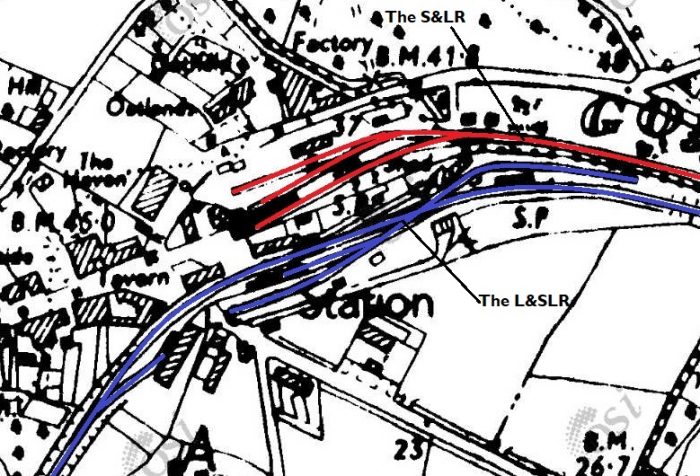
https://www.flickr.com/gp/spw45/J3354A

Stranorlar, based on Ordnance Survey and numerous photographs, (c) Chris Amundson (CC BY-SA 2.0), included by kind permission . [41]

The next two images show Stranorlar in the mid-1950s and come from the blog, “Hyde Park Now!” and are, in turn, sourced by that site from elsewhere. [25] In giving permission to use these two images, londonblogger expresses concern that it is easy for the historic content of blogs to be lost or dissipated in the sharing of images. The two blogs from ” Hyde Park Now! are very much worth a visit and give a great overall context to this post which focuses on one part of the whole network. These are the relevant links:

https://hydeparknow.uk/2019/12/31/the-county-donegal-railways [25]

https://hydeparknow.uk/2020/01/14/the-county-donegal-railways-2 [26]

Stranolar was effectively the headquarters of the Co. Donegal Railways. ‘londonblogger’ on the blog ‘Hyde Park Now!’ notes that it had “an extensive works for the maintenance of rolling stock.” [25] In the first of the two pictures above the maintenance facility is shown to really good advantage. Railcars were serviced in the buildings to the left of the image and steam locomotives to the right.The site of Stranorlar Railway Station as it appeared in 2009 – it functions as Bus Eireann’s Stranorlar Depot. None of the railway infrastructure and buildings remain. (Google Streetview).

Stranorlar to Clohan, GSGS Map of the early 1940s. [30]

The Glenties Branch set off West from Stranorlar Station with the line to Donegal bearing away to the Southwest. In a very short distance the branch crossed the River Finn.This image shows just how short the distance was from the end of the station platform, used by the Glenties Branch trains, to the bridge over the River Finn at Stanorlar. The village of Ballybofey can be seen at the top of this image. It had its own station. The image is used by kind permission from of David Parks. It appears on his blog: Irish Postcards: irishpostcards.wordpress.com. It was first published by ‘Aero-Views’, Dublin.  [28]

The Glenties branch can be seen crossing the bridge over the River Finn and then cuvidn around the North side of Ballybofey after having been crossed by the main road (N15) on a single-span stone-arch bridge. [28]

The Glenties Brach crossed the River Finn on a large-span truss girder bridge which sat on stone abutments.

Those abutments remain in the 21st century and can be glimpsed from the N15 as it approaches and then crosses the River Finn on its stone-arch viaduct. On the Stranorlar bank of the river, the line first passed over a narrow lane serving the river side on a girder-bridge before crossing the river. The remains of that bridge and the East abutment of the bridge can be seen on the first colour image below. You can just pick out the River Finn in the greenery to the right of the image. The stonework to the bottom right is a length of coping from the road-bridge parapet.

The Glenties Branch Bridge over the River Finn, east abutment. The picture was taken in June 2018 (Google Streetview).It is impossible to pick out the stone abutment to the West of the River Finn among the greenery on the river banks. This picture was also taken in June 2018. (Google Streetview).The view back into Stranorlar across the River Finn from Ballyfoley. The Glenties Branch Railway Bridge over the River Finn can be seen on the right of this picture [33]A postcard view of the Bridge over the River Finn (The Linen Hall Library Collection – available for sharing) [35]

The River Finn Railway bridge at Stranorlar/Ballybofey during construction of the line. The superstructure sits alongside the railway awaiting being moved into position across the river. The image is from the geocache webpage for this location. [36]


A postcard view looking back across the River Finn from Ballybofey towards Stranorlar Railway Station. Both of the river bridges are in the photograph, as is the bridge wingwall of the stone arch bridge which carried the road over the Glenties Branch. [37]

The adjacent small image shows the two River Finn Bridges (road and rail) in use. Sadly the rail bridge is only partially visible on the right of the photograph. The image is from the Facebook page ‘Ballybofey Stranorlar’. [34]

The route of the old branch-line to the Northwest of the N15 is now hidden by redevelopment. The early 1940s GSGS One-inch Map shows the railway crossing Back Road on an overbridge and then running alongside the river into Ballybofey Railway Station. [29]The approximate line of the old railway which ran across the North side of the village of Ballybofey, lifted from the GSGS Map of the early 1940s. [29]The site of Ballybofey Railway Station. This picture was taken in 2010 (Google Streetview)

At the West end of Ballybofey Station the line crossed what is now Railway Road/Beechwood Avenue on the level and then ran between Beechwood Avenue and Glenfin Street/Road (R252) parallel to the River Finn. The first length is now buried under domestic dwellings.

After a short distance the R252 (Glenfin Road) crossed the old line on an over-bridge. With the closure of the line, it became possible for a small road improvement scheme to straighten out the line of the roadas shown below.

The Glenties Branch West of Ballybofey. [31]After passing under an accommodation bridge the line continued in a westerly direction with the R252 once agin dog-legging to cross it close to the River Finn (Google Earth).

Glenmore Railway Station opened on 3rd June 1895. [32] There is no evidence of its existence in the early 21st century. The church which is marked on the GSGS Map of the early 1940s is still standing to the West of the old road junction. The railway passed to the South of the Church between it and the R253. I have shown the location ringed in red on the satellite image immediately above. The R252 curves through what would have been the station site. there would have been a level-crossing and the point above where the line crossed the old road (marked with a break in the red line).Looking East from the R253 adjacent to the churchyard at Glenmore in July 2011 (Google Streetview).The line of the old railway is so much easier to determine when the boundary walls still remain in place. This view looks to the West from the old road junction, again in July 2011. Glenmore Church can be seen on the right (Google Streetview).Cloghan Railway Station was a couple of kilometres South of the Village with the same name. The old railway turned gradually to the Northwest as it approached the station, still following the River Finn. The old station building retains the designation Station House although it is in the Townland of Gortiness. It has been extended along the line of the old platform tp the Southeast.This postcard view of Cloghan Station is a colourised monochrome image. It is taken from the Southeast. The station building can be seen on the left of the image and the road bridge can be seen beyond the platform. Permission to include this image was very kindly given by David Parks. It appears on his blog: Irish Postcards: irishpostcards.wordpress.com. [8]This view shows the old Station House which is in cream at the centre of the picture. It is taken from the road bridge shown in the postcard view, looking Southeast along the route of the old railway line. The line is marked by the line of bushes running towards the Station House (Google Streetview).The old Station House at Cloghan Railway Station. The image comes from June 2011. The first three windows from the left on the 1st floor were part of the original building. The extension is on the right (Google Streetview).

From Cloghan Railway Station the Glenties Branch turned North, crossing the River Finn twice as shown on the adjacent extract from the GSGS 1940s Map and continued up the Finn Valley. The next three photographs show the route of the line at the road bridge marked at the top of the map extract which was about a kilometre South of the village of Cloghan.

The first is a view on Google Streetview which is taken from just to the West of the the River Finn road bridge at the top of the adjacent map extract. The road alignment on the extract needs verifying. It seems as though the position of the railway was a little closer to the river.

The second image is a close up satellite view from Google Maps which has had the old railway route at its centre.The old road alignment is marked by the cartographers who have provided the road overlay to the satellite images associated with Google Maps. Teh road used to turn sharply to the South after crossing the river to a point where crossing the line was possible. It is not clear whether this was a bridge or a level-crossing.

I have been unable to find photographs of the two bridges over the River Finn. Nor are there any photos of the road crossing point near the top of the satellite image.

The next image shows the Glenties Branch alignment through this area. The red line, again, show the route of the railway.

The next map extract is at a smaller scale and shows the route of the old line to Ballinamore. The valley of the River Finn turns once again to the West after passing Cloghan village and the railway remained on the West and then South side of the river.

These next two satellite images follow the old railway route along the West side of the River Finn before it turns to the West again.

The first runs across open fields alongside the River Finn. The second continues in the same vein. At around the half-point of the satellite image extract a farm access track now uses the old railway formation as it travels North.

The first landscape image below is another satellite image which shows the gradual change of direction of the old line as it swung round towards the West. The next, illustrates the condition of the railway formation in 2009, At that time the gravel surface had newly been relaid. Further to the North the track shows up as having been tarmacked in 2009.

A sequence of photographs from Google Streetview covers the next few kilometres of the old railway. Various dwellings have been built since the closure of the line which have the old railway formation as their only access route.

A good number of these homes appear to have been constructed since the turn of the 21st century.

Eventually the tarmacked length of the old formation ends where the old railway crossed another road. A satellite image follows the Google Streetview photographs and again picks up the line close to that road crossing.The last Streetview photograph above shows the point at which the old railway formation meets what is now a local road. If the road had been present during the life of the Glenties Branch, this would have been a level crossing probably without gates. However the GSGS map (see below) does not show a road at this location in the early 1940s. The Glenties Branch continued westward on the South side of the River Finn. There was a need for a significant number of culverts to allow land drainage to reach the river. They show up particularly well of the extract from the GSGS map above.Ballinamore Station Building in 2010 seen from the R252. It is difficult to imagine a more remote location for a Station Halt nor a more run-down, but still standing, corrugated iron building. As we can see in the last picture of this article, the platform face still remains! (Google Streetview)Ballinamore Station Building! It was still standing in 2020 as can be seen on the Satellite image above. This picture was taken in 2009 (Google Streetview).

Ballinamore Railway Station opened in June 1895 and closed in December 1947. [38]

Former Ballinamore County Donegal Railway Station, June 1990 – The photographer says, “Miles from anywhere, not a house or tree in sight. Once the haunt of snub-nosed diesel railbuses. Ballinamore station, opened in 1895 was about half way between Glenties and Stranorlar on the CDR County Donegal Railway.” (Scanned slide) (c) G Sludge (Attribution-ShareAlike 2.0 Generic (CC BY-SA 2.0)). [39]

The location appears for a few seconds in “Off The Beaten Track – Stranorlar to Glenties in Donegal.” www.youtube.com/watch?v=7wclzaSSzWQ&t=13m20s

We have reached the end of this first part of the journey from Stranorlar to Glenties. It is hard to think of a worse place to stop and we only do so because it is roughly at the half-way point on the journey to Glenties.

References

  1. The Railway Magazine: ‘Notes and News’; May & June 1948 edition. Volume 94 No. 575, p202.
  2. https://www.gracesguide.co.uk/County_Donegal_Railways_Joint_Committee, accessed on 21st May 2020.
  3. Edward M Patterson (original author), Joe Begley & Steve Flanders (authors of additional material in the Revised Edition); The County Donegal Railways; Colourpoint Books, Newtownards, Co. Down 2014.
  4. https://maps.nls.uk/geo/explore/#zoom=15&lat=54.80218&lon=-7.77993&layers=14&b=1, accessed on 21st May 2020.
  5. https://en.wikipedia.org/wiki/Stranorlar, accessed on 21st May 2020.
  6. https://en.wikipedia.org/wiki/Finn_Valley_Railway, accessed on 21st May 2020.
  7. https://en.wikipedia.org/wiki/Stranorlar_railway_station#/media/File:Stranorlar_station,_County_Donegal_Railways_Joint_Committee,_1948_(geograph_5307210).jpg, accessed on 21st May 2020.
  8. https://irishpostcards.wordpress.com/transport, accessed on 23rd May 2020.
  9. https://www.flickr.com/photos/irishswissernie, accessed on 23rd May 2020.
  10. https://www.flickr.com/photos/irishswissernie/23589146660/in/album-72157662649694575 – CDRJC Stranorlar, goods entering from Strabane 1958 (c) Henry Emeleus/ARPT, accessed on 23rd May 2020.
  11. https://www.flickr.com/photos/irishswissernie/16492159115 – Stranorlar 1957, accessed on 23rd May 2020.
  12. https://www.flickr.com/photos/irishswissernie/23256677994 – CDRJC Stranorlar Railcar No. 19, 1958 (c) Henry Emeleus/ARPT, accessed on 23rd May 2020.
  13. https://www.flickr.com/photos/irishswissernie/6180278429/in/album-72157662649694575 – CDRJC Stranorlar just after closure 1960, taken from the Eastern approach from Strabane, accessed on 23rd May 2020.
  14. https://www.flickr.com/photos/irishswissernie/23858764346/in/album-72157662649694575 – CDRJC ‘Erne’ on shed at Stranorlar in 1958 (c) Henry Emeleus/ARPT, accessed on 23rd May 2020.
  15. https://www.flickr.com/photos/irishswissernie/41879605651/in/album-72157662649694575 – Class 5 on shed at Stranorlar in 1958, accessed on 23rd May 2020.
  16. https://www.flickr.com/photos/irishswissernie/23258058353/in/album-72157662649694575 – CDRJC Stranorlar in 1958 (c) Henry Emeleus/ARPT, accessed on 23rd May 2020.
  17. https://www.flickr.com/photos/irishswissernie/23539544992/in/album-72157662649694575 –  0956-3 Railcar Stranolar station (c) J W Armstrong/ARPT, accessed on 23rd May 2020.
  18. https://www.flickr.com/photos/irishswissernie/23258060463/in/album-72157662649694575 – CDRJC Stranorlar station, Railcar No. 19 arrives from Donegal in 1958. The former Glenties platform is in foreground (c) Henry Emeleus/ARPT, accessed on 23rd May 2020.
  19. https://www.flickr.com/photos/irishswissernie/15872003843/in/album-72157662649694575 – goods wagons outside the General Store at Stranorlar Railway Station in 1957, accessed on 23rd May 2020.
  20. https://www.flickr.com/photos/irishswissernie/16304711660/in/album-72157662649694575 – close-up of the plaform canopy columns at Stranorlar Railway Station in 1957, accessed on 23rd May 2020.
  21. https://www.flickr.com/photos/irishswissernie/6180266037/in/album-72157662649694575 –  CDRJC Stanorlar Railcar No. 19 on Killybegs service on 8th July 1956 (b726), accessed on 23rd May 2020.
  22. https://www.flickr.com/photos/irishswissernie/6180279023/in/album-72157662649694575 – colour image of Stranorlar Railway Station in 1958, taken from the Southwest, accessed on 23rd May 2020.
  23. https://www.flickr.com/photos/irishswissernie/6180277183/in/album-72157662649694575 – CDRJC_Stranorlar: Railcar No. 18 on the turntable in 1958, accessed on 23rd May 2020.
  24. https://www.flickr.com/photos/irishswissernie/6180272243/in/album-72157662649694575 – Stranorlar Railway Station Footbridge. Picture taken in May 1963 after closure of the line, accessed on 23rd May 2020.
  25. https://hydeparknow.uk/2019/12/31/the-county-donegal-railways, accessed on 23rd May 2020. The map of the network was in turn sourced from Twitter: https://twitter.com/velvetninja1/status/1188118651536314369
  26. https://hydeparknow.uk/2020/01/14/the-county-donegal-railways-2, accessed on 23rd May 2020.
  27. https://irishrailwaymodeller.com/topic/7262-donegal-railway/page/2, accessed on 23rd May 2020.
  28. https://irishpostcards.wordpress.com/aerial-cards, accessed on 24th May 2020.
  29. https://maps.nls.uk/geo/explore/side-by-side/#zoom=17&lat=54.80016&lon=-7.78155&layers=14&right=BingHyb, accessed on 24th May 2020.
  30. https://maps.nls.uk/geo/explore/#zoom=13&lat=54.81900&lon=-7.84274&layers=14&b=1, accessed on 21st May 2020.
  31. https://maps.nls.uk/geo/explore/side-by-side/#zoom=16&lat=54.79994&lon=-7.79374&layers=14&right=BingHyb, accessed on 26th May 2020.
  32. https://en.wikipedia.org/wiki/Glenmore_railway_station, accessed on 26th May 2020.
  33. https://www.heritageweek.ie/whats-on/event/past-times-photograph-exhibition, accessed on 26th May 2020.
  34. https://m.facebook.com/TheTwinTownsDonegal, accessed on 26th May 2020.
  35. https://www.postcardsireland.com/postcard/roman-catholic-church-and-road-and-rail-bridges-ballybofey, accessed on 24th May 2020.
  36. https://www.geocaching.com/geocache/GC27NQG_finn-valley-bridges-ballybofey-bridge?guid=0e6f9849-1b77-432e-bc57-a34712885176, accessed on 26th May 2020.
  37. http://ballybofeyandstranorlar.com, accessed on 26th May 2020. (A subsequent internet search to find this image only produced a similar but watermarked version of the photograph.)
  38. https://en.wikipedia.org/wiki/Ballinamore_railway_station, accessed on 28th May 2020.
  39. https://www.flickr.com/photos/sludgeulper/3611611930, accessed on 29th May 2020.
  40. https://www.facebook.com/DonegalRailwayHeritageCentre/photos/a.1230417866994452/2944521065584115/?type=3&theater, accessed on 15th July 2020.
  41. Chris Amundson has been working on a series of large scale map plans of the Co. Donegal Railway Stations. He has very kindly allowed me to link to that work. (https://www.flickr.com/gp/spw45/y49162)