Category Archives: Funiculars

San Sebastian’s Urban Tramway, Funicular and Aerocar, and the ‘Spanish Aerocar’ at Niagara Falls.

Trams

The first tramway in San Sebastian (Donostia in Basque), owned by La Compañía del Tranvía de San Sebastián (TSS), opened on 18th July 1887 as a metre-gauge horse-powered line. “It provided a service from the eastern suburb of Ategorrieta to and from the town centre and beach. The tramway was then extended beyond Ategorrieta to the town of Herrera, including 2.1 km of reserved track and a 100-metre tunnel, avoiding the severe gradients of the Miracruz hill. The single-track-and-loop line eventually reached Rentería in 1890.” [1: p185]
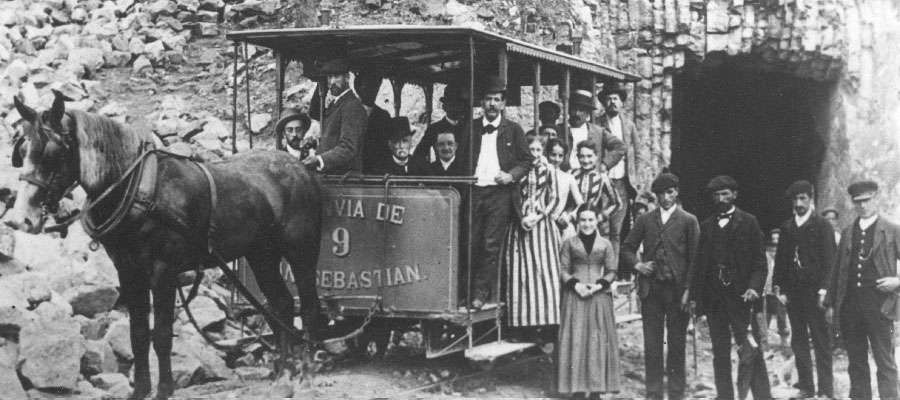
The Compañía del Tranvía de San Sebastián (CTSS) was founded on 28th August 1886 and is one of the oldest businesses in Gipuzkoa. At first, it provided Horse-powered services in the city. [2]

The horse trams, known as ‘motor de sangre’ (literally blood engines), soon showed their limitations and for this reason the heads of the Company studied ways to modernise the transport system.” [2] It hoped to upgrade services by using steam trams but environmental concerns resulted in the local authority refusing the Company’s application. Instead, the Genèva-based Compagnie de l’Industrie Electrique et Mécanique was awarded the contract to build a line across the city. “A partial electric service was inaugurated on 22nd August 1887, and through running between San Sebastián and Rentería became a reality on 30th October. The rolling stock was built in Zaragoza using Thury (later Sécheron) electrical equipment, and consisted originally of motor trams 1-10 capable of hauling two trailers at 24 km/h. Several extensions were added to the tramway system until there were nine numbered services (1-9) all of which started from Alameda in the centre of San Sebastian.” [1: p185]

San Sebastian’s tramways were built to metre-gauge.
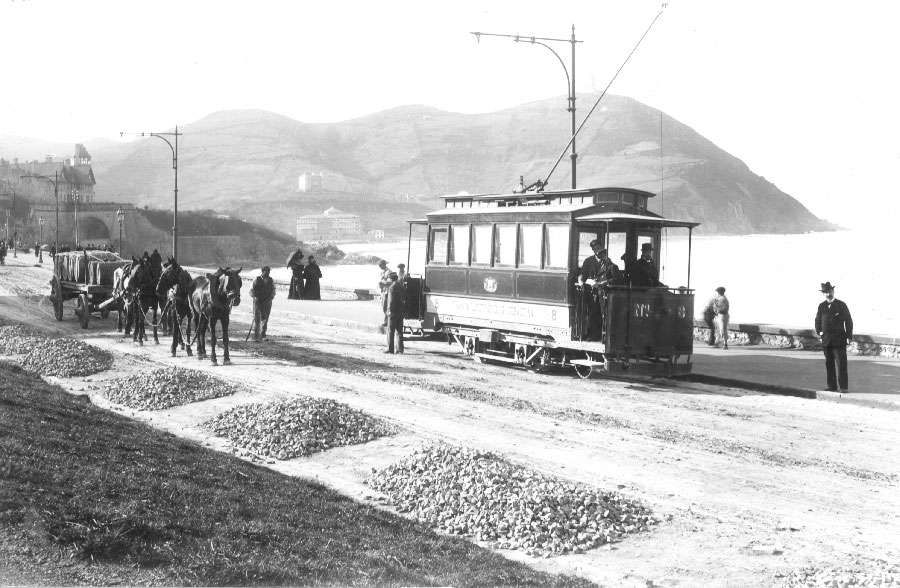
On 22nd August 1897, the first electric trams began to circulate between Rentería and Ategorrieta and the electrification of the city was completed on 22nd October of that same year. Donostia became the second city in Spain to have electrical trams (after Bilbao whose first line was up and running in 1896) and the first to electrify all its services (the Basque capital still had horse trams on some lines until 1909). [2]
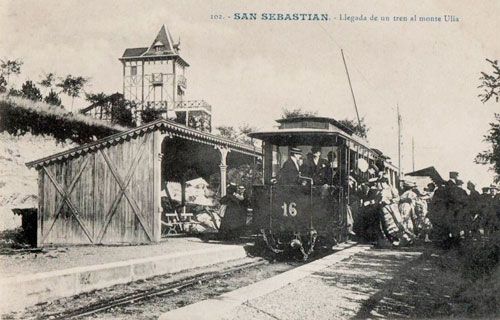
A tram at the Monte Ulia tramway terminus. [3]
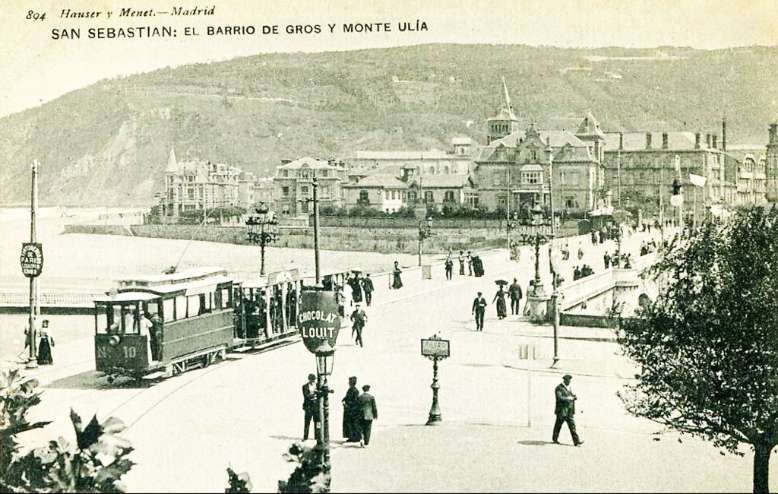
San Sebastian, Gros district and Mount Ulia, circa 1919. [3]

Barry Cross says: “Given the success of the urban tramways, it came as no surprise when the local entrepreneur, Vicente Machimbarena y Gorgoza, applied for the concession to build a 3.09-km ‘railway’ up the side of Monte Ulía, in 1893. The relevant legislation came into effect in 1895 and specified electric traction with overhead supply and the use of a rack to surmount a maximum gradient of 6%. However, when the engineer, Narciso Puig de la Bellacasa, was asked to undertake the initial surveys in 1896, they were for an adhesion line only. It was not until 1900 that sufficient money (ESP 530 000) had been raised to form the company, ‘Ferrocarril de Ulía’. Work on its construction began the same year, and the line opened on 9th July 1902. Although conceived as a railway, the completed metre-gauge line was merely an extension of the town tramways, with which it connected at Ategorrieta. As built, the continuous gradient varied between 4.5 and 5.5%, the only flat section being the mid-point passing loop.” [1: p185]

Cross continues: “The composition of the initial tramcar fleet accurately reflected the line’s tourist nature, since both the three two-axle motor trams and six trailers were of an open crossbench design known as ‘jardineras’. All cars were built in Zaragoza by Carde y Escoriaza, which equipped the motor cars with 2 x 52-kW motors and both rheostatic braking and electromagnetic track brakes. The early success of the line prompted the company to buy a further three motors and six trailers of the same design in 1907.” [1: p185]

The original tram service ran every 30 minutes. This was improved to 15 minutes from 1907. There were no intermediate stops on the climb up Monte Ulia. The tourist tram’s main purpose was to reach the summit.

Aerocar

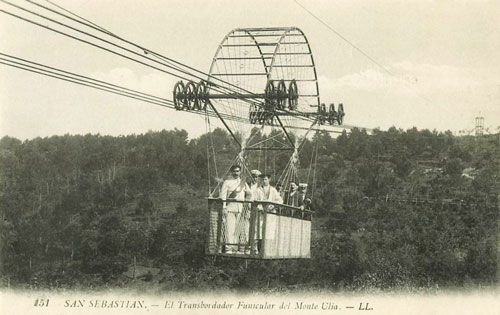
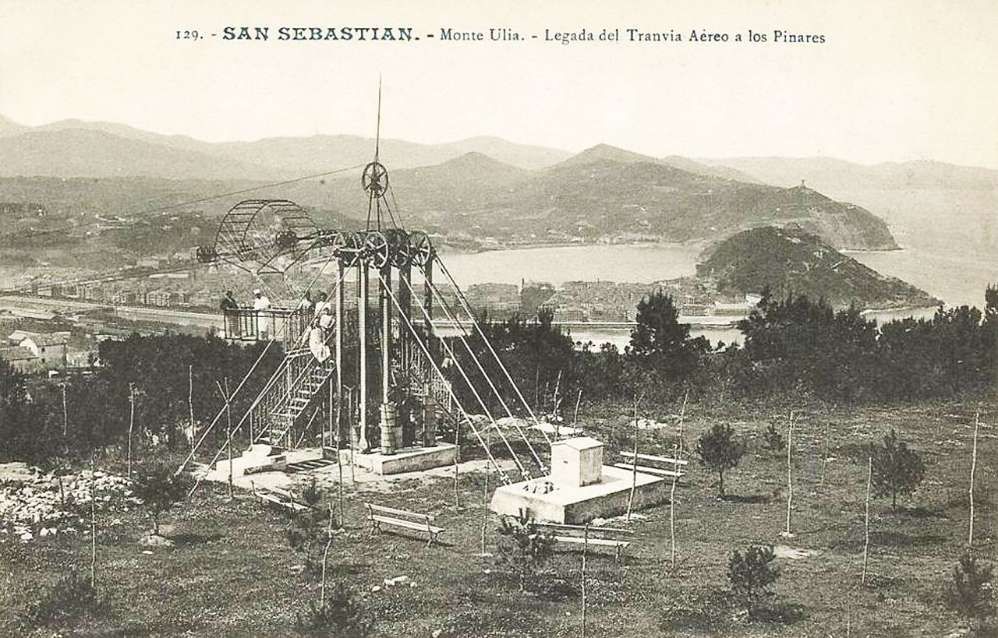
The ‘Ferrocarril de Ulía’ Company, while paying a 2% dividend in 1904 also increased its capital to ESP 1 million with a view to building “something variously described as a ‘Tranvía Aereo’ and as a ‘Transbordador Funicular’. It opened on 30th September 1907 and proved to be one of the world’s first passenger suspension cableways, similar in concept although not in design to the aerial cableway across the Devil’s Dyke near Brighton, which had been built 13 years earlier. It began near the Monte Ulía tram terminus and rose gently just above the tree-tops to the Peña de las Aguilas, from where visitors could obtain impressive views along the Cantabrican coast.” [1: p186]
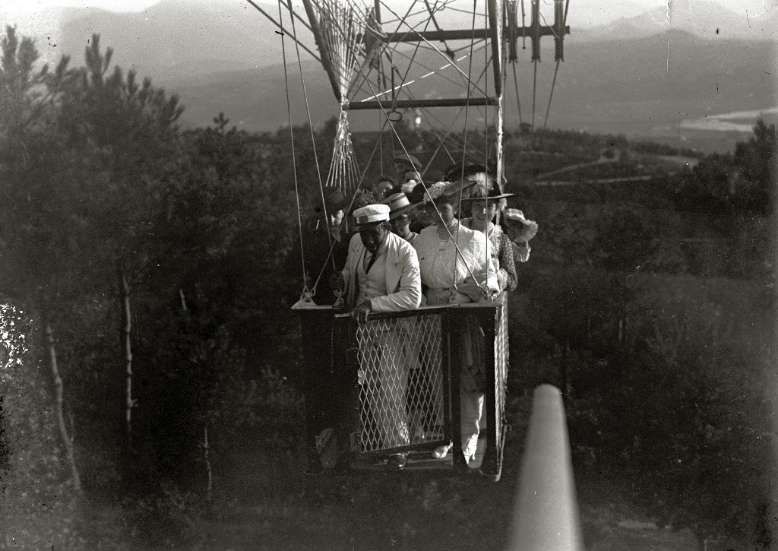
A close view of the fragile-looking passenger car of the Tranvia Aereo’. [4]

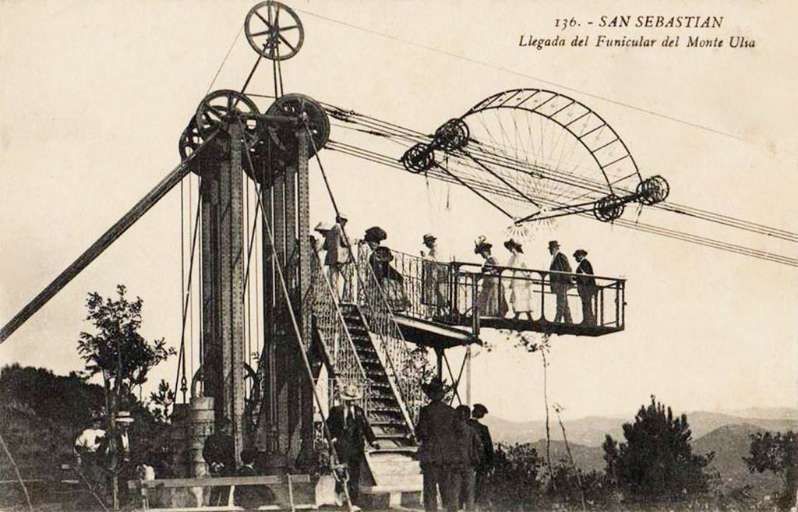
The next four images are postcard views of the Monte Ulia Aerocar. ….
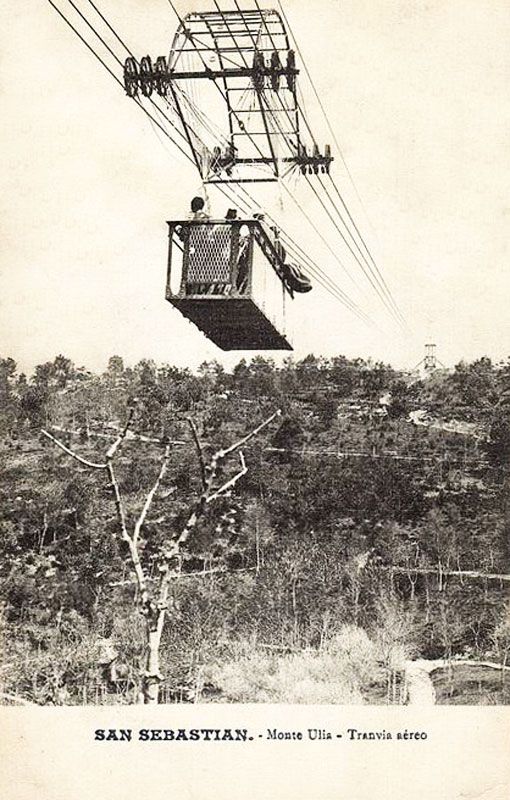
“The world’s first aerial tram was probably the one built in 1644 by Adam Wiebe. It was used to move soil to build defences. Other mining systems were developed in the 1860s by Hodgson, and Andrew Smith Hallidie. Hallidie went on to perfect a line of mining and people tramways after 1867 in California and Nevada. Leonardo Torres Quevedo built his first aerial cableway in 1887. His first for passengers was this one at San Sebastian Donostia in 1907.” [3] Wikipedia’s Spanish site suggests that the cableway closed in 1912. [4] certainly, “Monte Ulia’s tramway and cableway were to be seriously threatened from 1912 onwards by the creation of rival attractions on Monte Igueldo, the mountain across the bay. Earlier but unrealised schemes had envisaged running a tramway around the base of this impressive mountain on a sort of Marine Drive, and taking it out to sea on a jetty to the island of Santa Clara, where a casino was to be built. However, so ambitious a project never materialised, and it was later decided to build a funicular instead. This would run from Ondarreta to the top of Monte Igueldo and be provided with a connecting tram service via a short branch line from the Venta-Berri Alameda tramway operated by the TSS.” [1: p186]

After 1912, the Monte Ulia line became progressively more unprofitable and closed down in 1916. However the ‘Aerocar’ story does not end in 1916 in San Sebastian. For a little more, please head through this article beyond the next section about a funicular railway. …

The Funicular de Igueldo

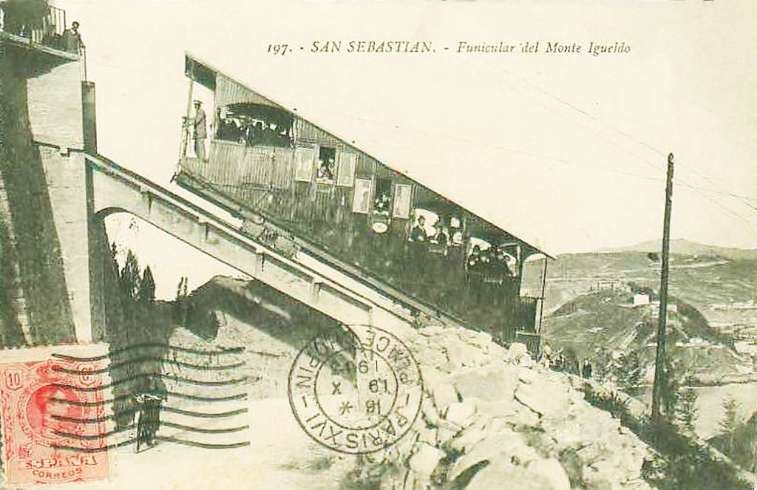
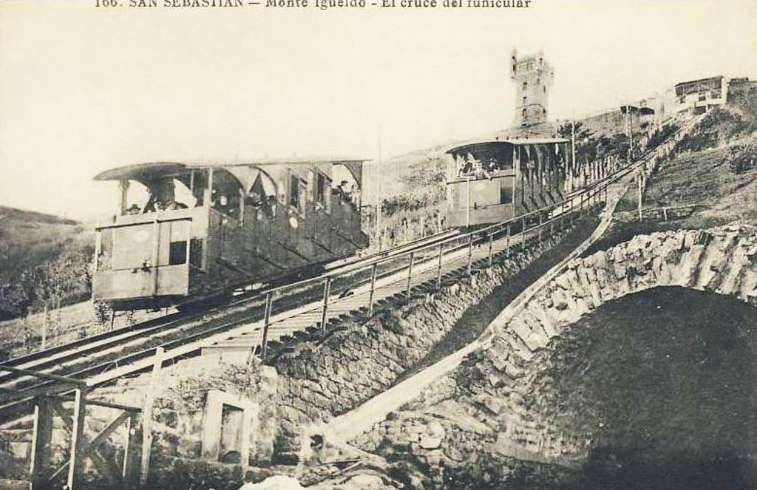
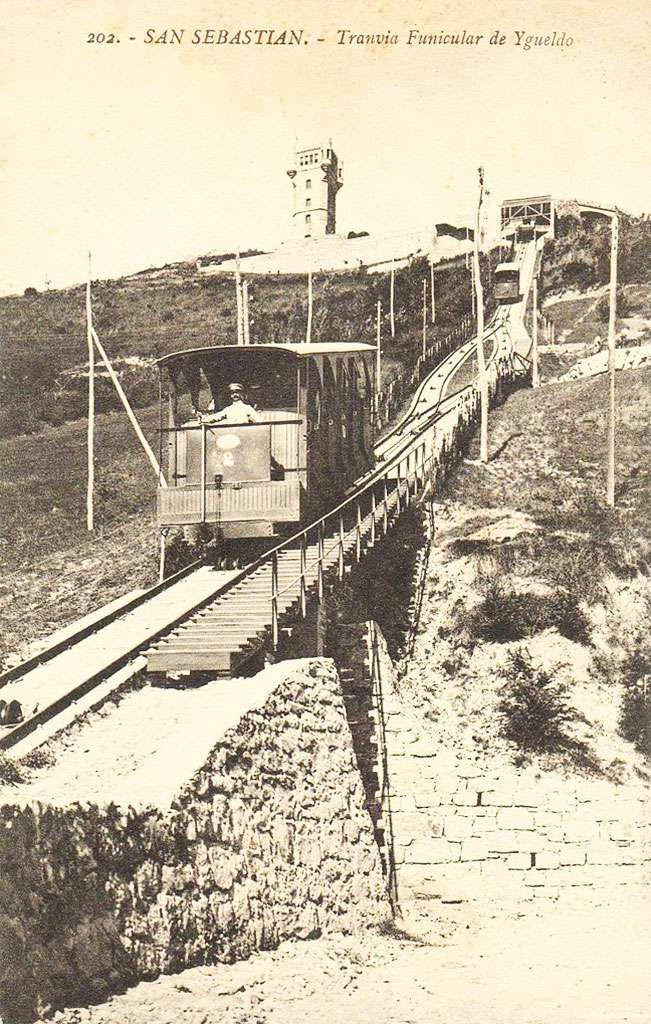
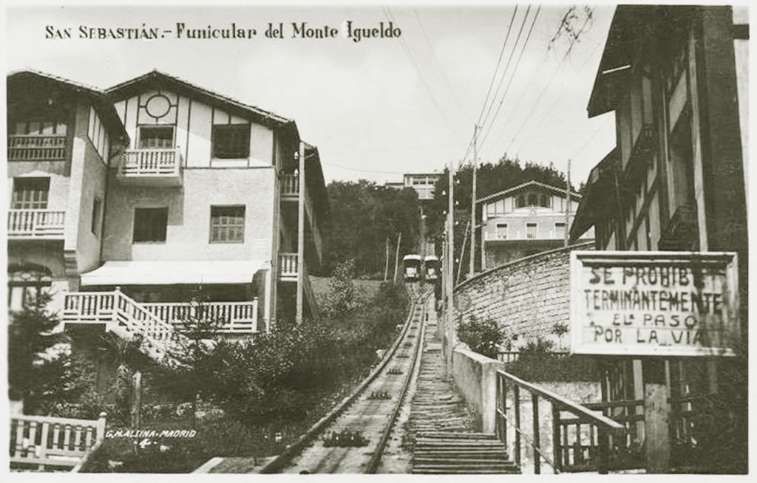
Cross tells us that “The main promoter of this new scheme was Emilio Huici, and the engineer in charge of the funicular project was Severiano Goni, who later built the Artxanda funicular in Bilbao. The Swiss firm of Von Roll supplied the electrical and mechanical equipment, leaving it to a local workshop to manufacture the funicular car bodies. Each car had five compartments with 30 seats and room for 20 standing. The line was 312 metres long and climbed 151 metres at gradients between 32 and 58%, making it the steepest of its kind in Spain.” [1: p186]

The funicular opened for business on 25th August 1912, offering visitors to the summit the chance to dine at its restaurant until midnight, or to take “five o’clock tea” on a terrace overlooking San Sebastián. A return trip to the summit cost ESP 0.50, while from 5th September 1912 onwards the mountain enjoyed a through tram service from Alameda to the lower station of the funicular.” [1: p186]

The travelling distance of 320 metres connected Ondarreta Beach at the bottom, with the popular Monte Igueldo Amusement Park at the top, offering spectacular coastal views of La Concha Bay along the way. [3]

The next four images are postcard views of the funicular railway. …
The Spanish Aerocar in North America!

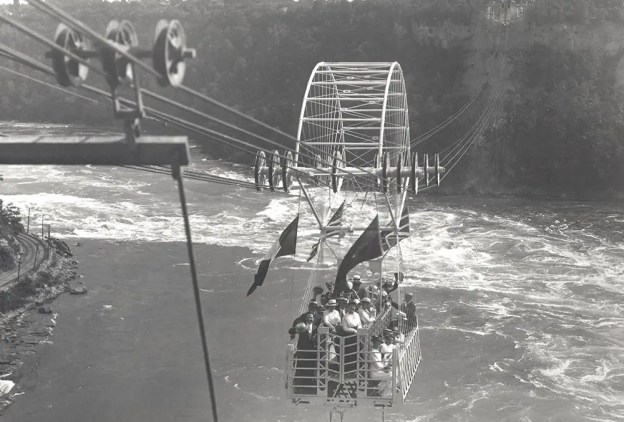
Cross points us to a similar but larger ‘Aerocar’ which was opened in 1915 in North America. It crossed the Whirlpool Rapids on the Canadian side of Niagara Falls. “It was built by the Spanish engineer, Leonardo Torres Quevedo, who, undaunted by the financial failure of his first cableway on Monte Ulía, had been persuaded to build a second. Its success can be measured by the fact that it survives to this very day.” [1: p186]The Canadian has been upgraded several times since 1916 (in 1961, 1967 and 1984).[1] The system uses one car that carries 35 standing passengers over a one-kilometre trip.[2]

The Canadian has been upgraded several times since 1916 (in 1961, 1967 and 1984). The system uses one car that carries 35 standing passengers over a one-kilometre trip. [5]

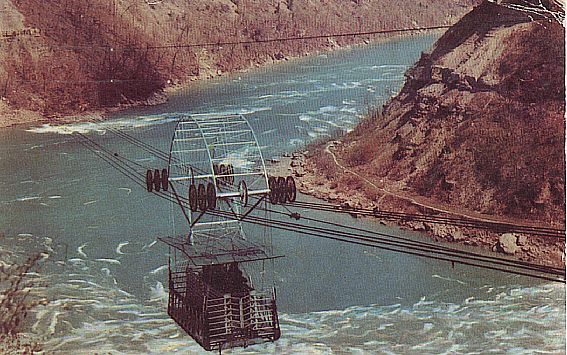
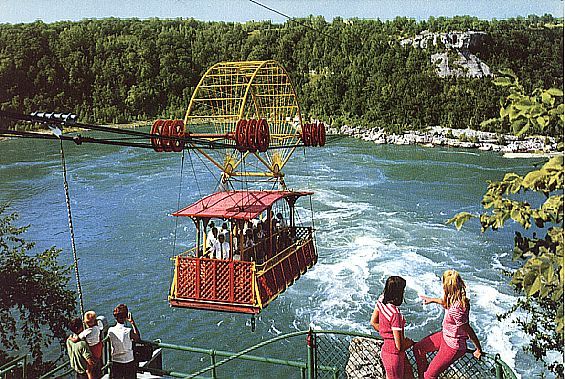
Three images of the Canadian ‘Spanish Aerocar’ follow below. …
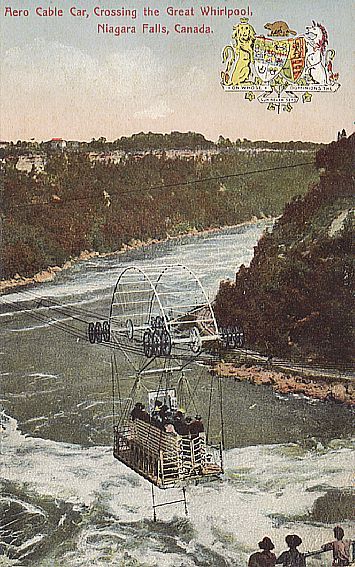
Three images of the Aerocar’. [6]

The ride on the ‘Aerocar’ is featured on the Niagara Parks website. [7]

References

  1. Barry Cross; The Spanish Aerocar; in Light Railway and Modern Tramway, July 1992, p185-186.
  2. https://dbus.eus/en/the-company/background, accessed on 22nd March 2025.
  3. https://www.simplonpc.co.uk/SanSebastian.html#trams, accessed on 22nd March 2025.
  4. https://es.m.wikipedia.org/wiki/Tranv%C3%ADa_a%C3%A9reo_del_Monte_Ul%C3%ADa, accessed on 22nd March 2025.
  5. https://en.m.wikipedia.org/wiki/Whirlpool_Aero_Car, accessed on 22nd March 2025.
  6. http://www.ebpm.com/niag/regpix/glry_niag_aero.html, accessed on 22nd March 2025.
  7. https://www.niagaraparks.com/visit/attractions/whirlpool-aero-car, accessed on 22nd March 2025.
Genoa – Funicular Railways

A. Zecca–Righi Funicular

The Zecca–Righi funicular (Funicolare Zecca–Righi) connects Largo della Zecca, on the edge of the historic city centre, with several stations on the slopes of the hill called del Righi , in the Castellaccio area, on the slopes of Mount Peralto. [1][4]

The line consists of a single metre-gauge track with a single crossing point. It rises 279 metres over1,428 metres and has an average gradient of just over 19%. The 42mm traction cable moves at 6 metres/second which means that the route can be covered in 12 minutes. The two articulated cars have 33 seats with a total capacity of 150 people. The ballast cable in 24mm in diameter. [4][10]

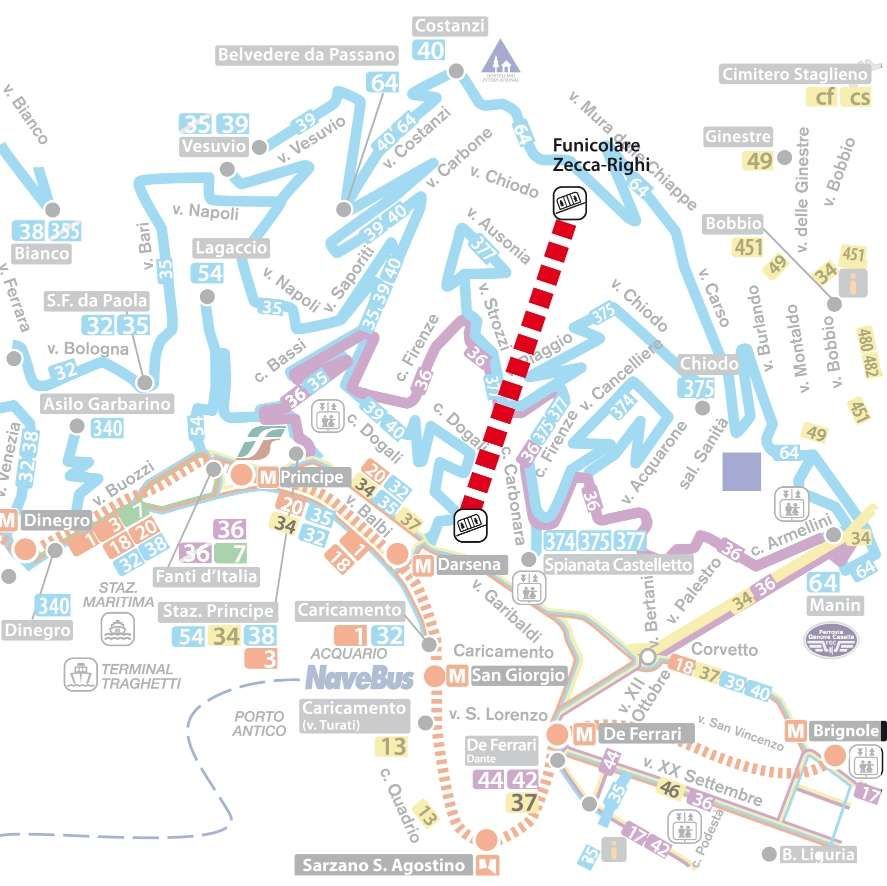
Schematic Map showing the Funicolare Zecca-Righi, superimposed on the AMT Genova transport map of Genoa. [3]
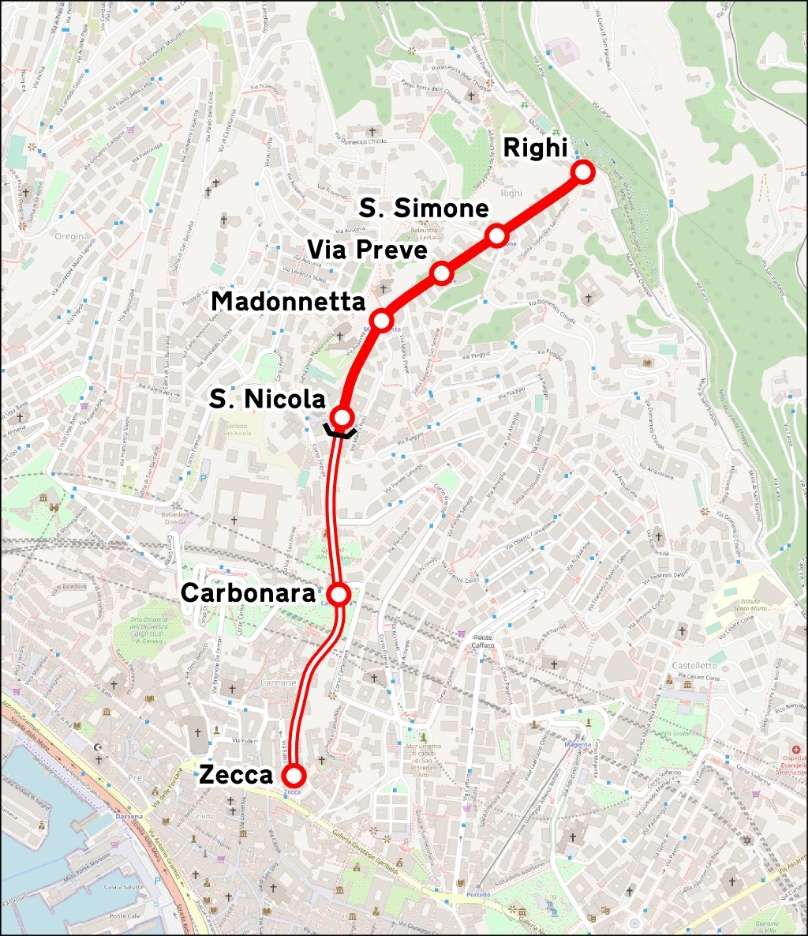
The route, superimposed on more traditional mapping. The line from Zecca to San Nicola is in tunnel, © Arbalete and authorised for reuse under a Creative Commons Licence (CC BY-SA 2.0). [1]

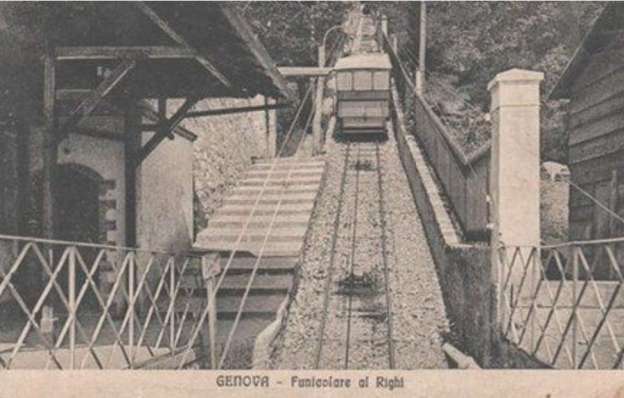
In 1890 the city of Genoa was convinced by Franz Joseph Butcher and his son Teodoro (Swiss citizens) to invest in a funicular railway which ran North from Largo Zeccan in tunnel as far as the church of San Nicola and then in the open, Northeast to Castellaccio. On 25th August 1890 the city offered the concession for this project to the Buchers. [5: p53]

Bücher himself decided to give the line the name “Funicolare del Righi” borrowed from the Swiss rack railways of Mount Rigi (pronounced Righi in German), which Bucher had already built in his homeland, and whose tourist success inspired him to design the one in Genoa. [6] The hilly area near the final station in the Castellaccio area has since then been commonly called the Righi, or simply Righi. [4]

On 28th February 1891 the Società di Ferrovie Elettriche e Funicolari (SFEF) was established in Kerns , with a share capital of 1,500 Lire. On 29th October 1892 a preliminary project was drawn up by the engineers Luigi Mignacco and Carlo Pfaltz; the latter, an Austrian, had already worked on the Gotthard tunnel and the Giovi branch. By 1894, when the work was nearing completion, the company capital was taken over by AEG. [4][5: p55]

The northern half of the project, which was simpler to build, was inaugurated on 28th September 1895. The tunnelled section was completed in February 1897.  (It seems, however, that a final completion certificate and testing was not formally provided until January 1912). [5: p57]

The Station at San Nicola which is now the crossing point for the two units running on the funicular railway, © Andrea Puggioni and licenced for reuse under a Creative Commons Licence (CC BY 2.0). [4]

For some time the two sections effectively ran as independent systems sharing the San Nicola station where passengers had to transfer between cabins. AEG eventually brought these and other concerns together in the Unione Italiana Tranvie Elettriche (UITE) company in September 1901. [5: p62]

A postcard view of the funicular in operation in 1919, © Public Domain. [4]

In 1906, the driving positions in the cars were enclosed to protect the operators from the elements. After the First World War and until the Second World War, the lower terminus was called Piazza Corridoni, in due course this became known as Largo della Zecca. [4][5: p69]

The 1920s saw the replacement of the cars and the improvement of the traction system which permitted the establishment of a new intermediate stop under Corso Carbonara, (opened on 1st January 1930). [4][5: p70-72]

In 1937, at the San Nicola crossing station, an original level crossing was replaced by a walkway that allowed people to step over the tracks and the cable. Between the wars both passenger and freight traffic increased significantly. During the Second World War, the bombings of 7th November 1942 caused heavy damage to the upper system, forcing its closure, while the tunnels of the lower one were converted into an air raid shelter. [4][5: p75]

After the Second World War the funicular was opened in two stages. The section above San Nicola  in 1945, the remaining length in 1946. The San Simone stop was reactivated in July 1958 and the Madonnetta stop in September 1959. [4][5: p75]

After the War, the funicular was reopened in two phases. The length above San Nicola in 1945, the remainder in 1946. The stop at San Simone was reopened in July 1958 and that at Madonnetta in September  1959. [5: p78-79]

The Italian Wikipedia site tells us that the two parts of the system were not unified until the 1960s. The San Nicola Station became a crossing point rather than X double terminus. The Righi Station was moved 34 metres and built with viewing platforms above the terminus. The old wooden chalet with housed the terminus was dismantled. In addition to the total reconstruction of the route, the rolling stock was replaced. The Bell company of Lucerne completed the works in November 1964 but, due to a dispute with the ministerial commission that should have inspected the works, the funicular only entered service on 28th February 1966. [4][5: p81-89]

A colour postcard showing the newly refurbished funicular in the late 1960s, © Public Domain. [4]

Changes in regulations meant that at the end of the 1980s, it was necessary to install an additional braking system; that and other work was undertaken between 1987 and 1990. The works involved the reconstruction of the track and the platforms of the stations, (lengthened to allow the use of new carriages that were longer than the previous ones), and of the mechanical parts as well as an increase in automation. The funicular returned to service in March 1990. [4][7][8]

After 20 years of service, on 1st April 2010 the Zecca-Righi funicular closed again for a 20 year overhaul. It was closed untill 27th November 2010. During this closure, significant changes were made to the system, which was equipped with two new 458 kW engines. The carriages were repainted and their interiors were completely redone: real glass was fitted to the windows, the seats were no longer made of plastic but of fabric, the doors were no longer opened by compressed air but electrically. The ticket machines were removed from inside the carriages to be positioned at the various stations and a video surveillance system was installed both at the stations and inside the cabins. Numerous rollers along the tracks and the pulleys were changed. [4][5: p89-91][9]

We travelled on this funicular on 12th November 2024. The photographs of this funicular in the galleries below were all taken by me on 12th November. Hopefully they give a reasonable impression of the journey up and back on the line.

B. Sant’Anna Funicular

The Sant’Anna funicular (Funicolare Sant’Anna) connects Piazza Portello, on the edge of the historic city centre, to the Corso Magenta. [2]

The funicular was opened in 1891, and was initially water-driven, with water filling a ballast tank under the carriage at the top station, and emptying at the bottom. The line was converted to electric operation in 1980, and was again modernized in 1991 following a fire that destroyed the top station. [2]

From 1st December 2021 it has been free to use courtesy of the Municipality of Genoa and AMT.[2]

We travelled on the Sant’Anna Funicular in both directions on Monday 11th November 2024.

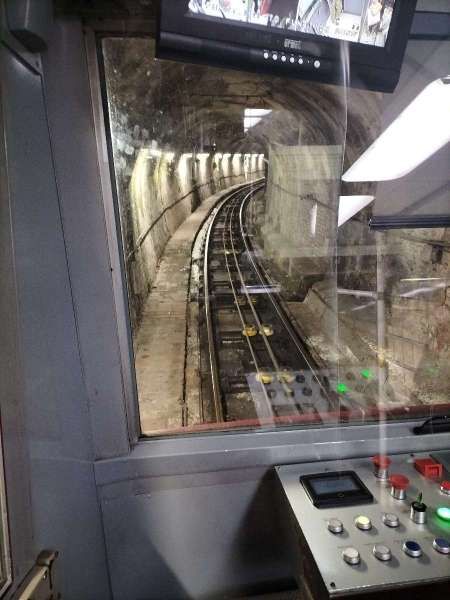
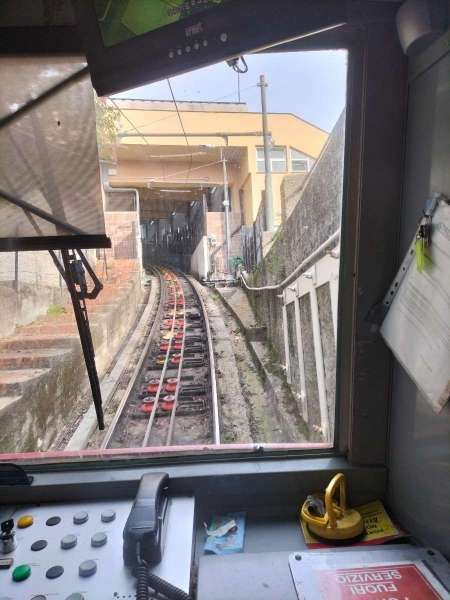
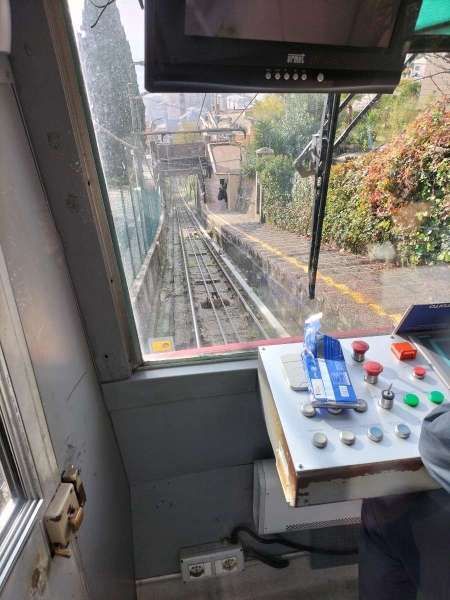
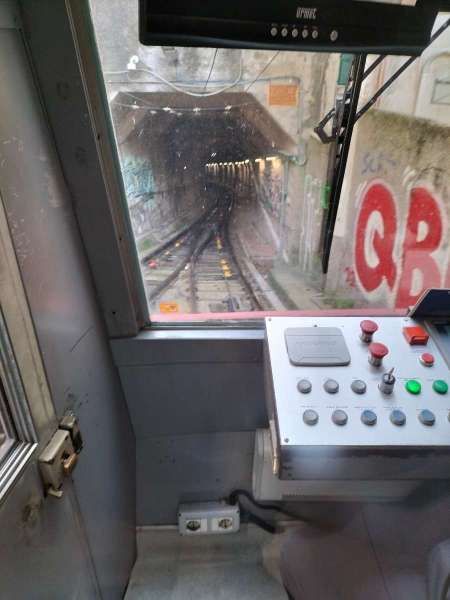
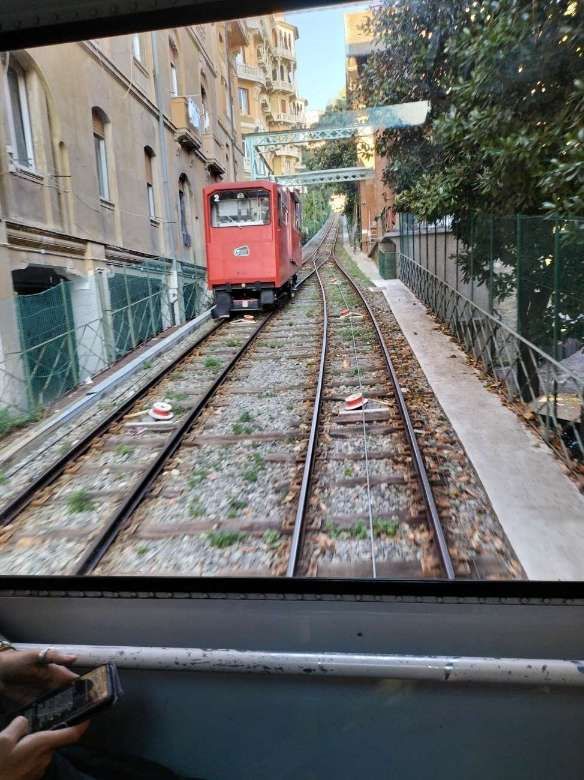
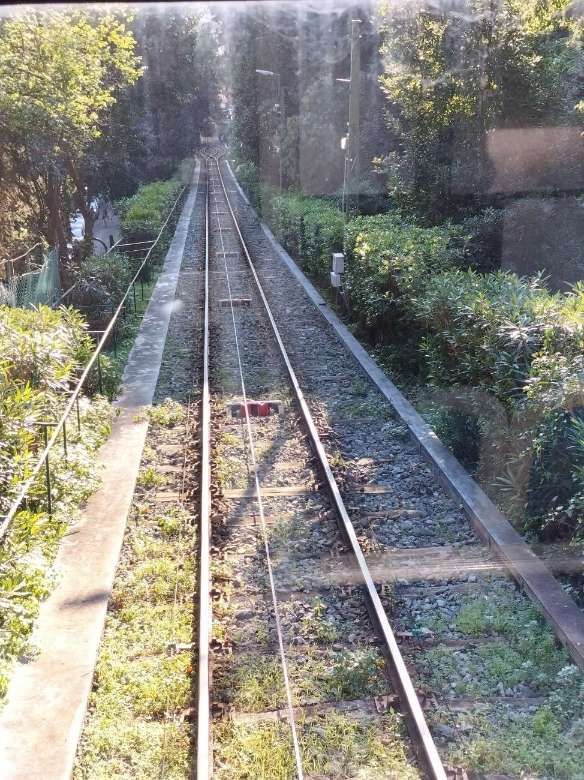
The view North up the Sant’Anna Funicular from inside the passenger car. [My photograph, 11th November 2024]
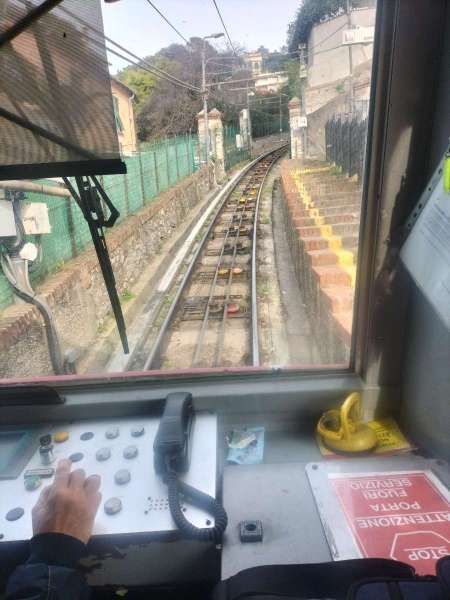
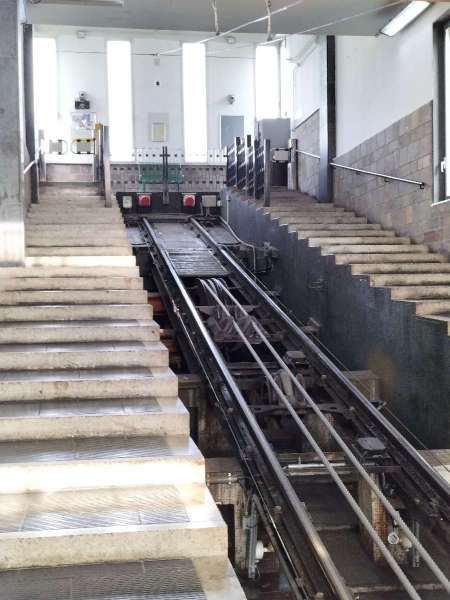
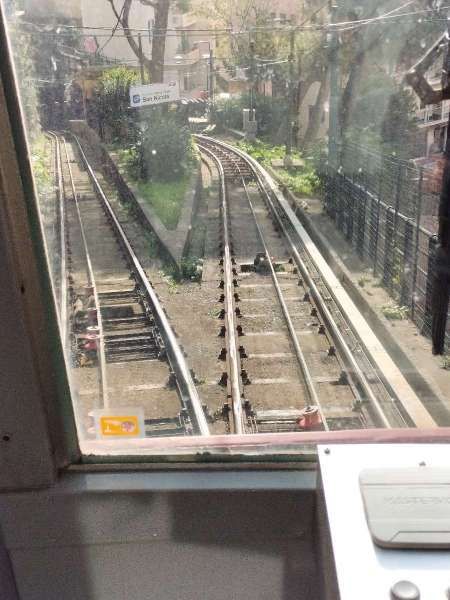
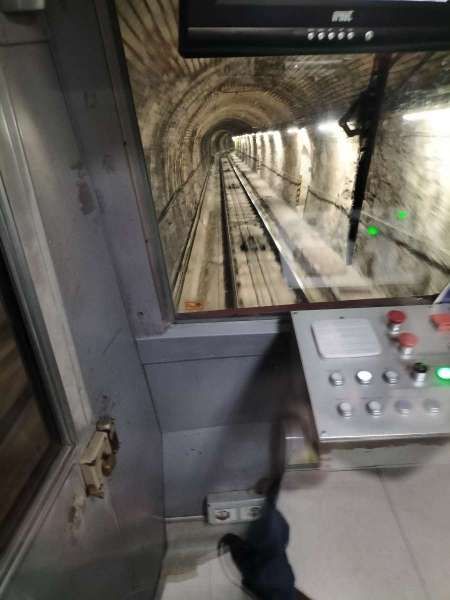
The passing loop at the halfway point on the Funicular with the second car travelling down the line. [My photograph, 11th November 2024]
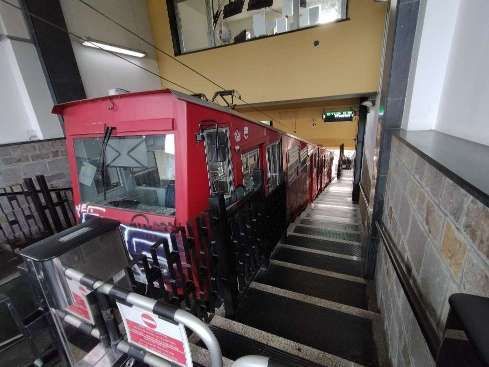
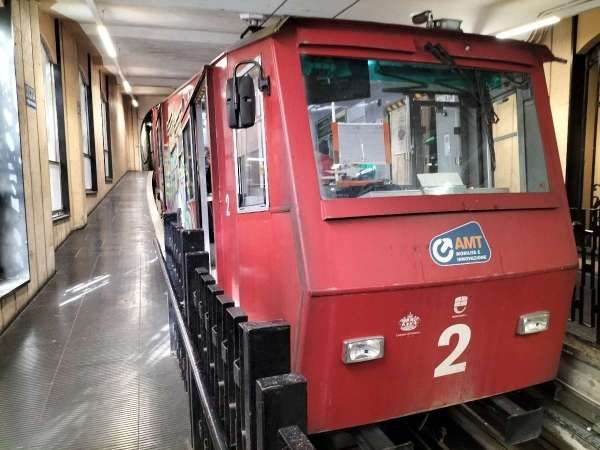
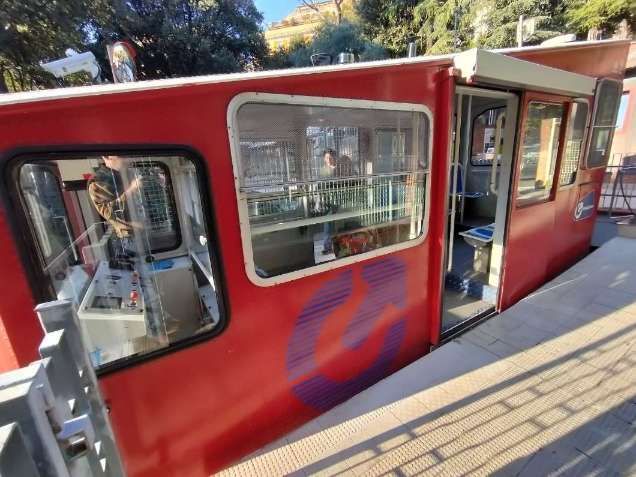
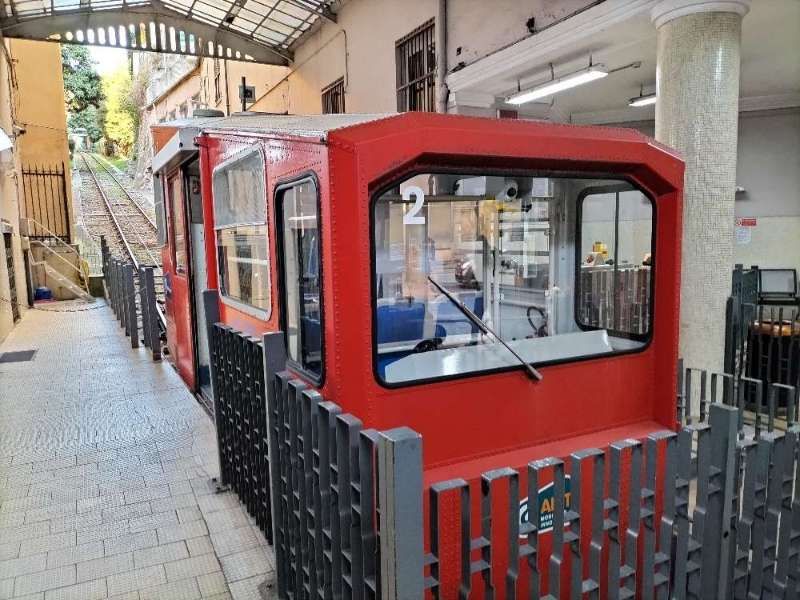
A side elevation (wide-angle) of the funicular car at the top of the journey. [My photograph, 11th November 2024]
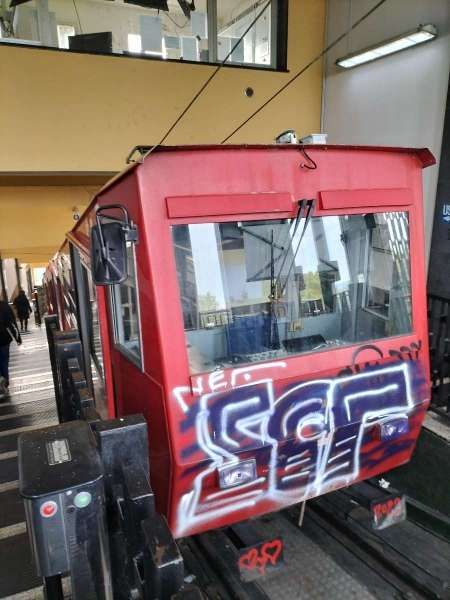
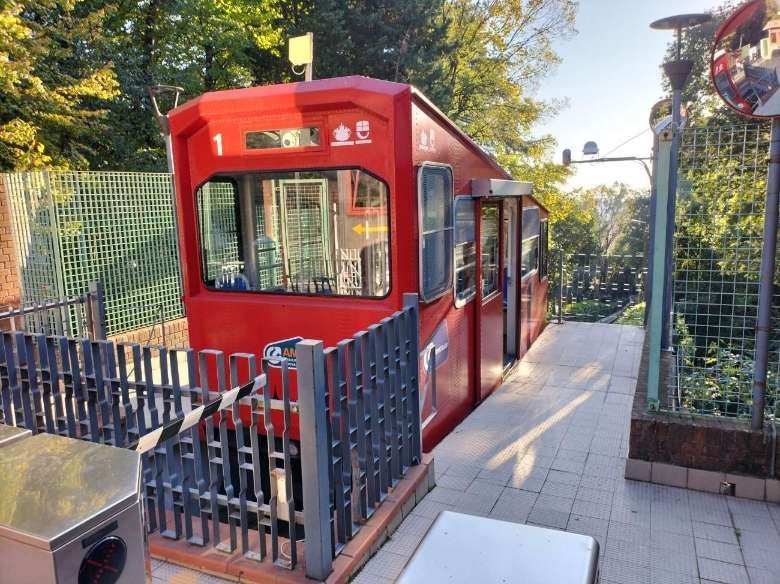
The same car shown in a three-quarter view. [My photograph, 11th November 2024]
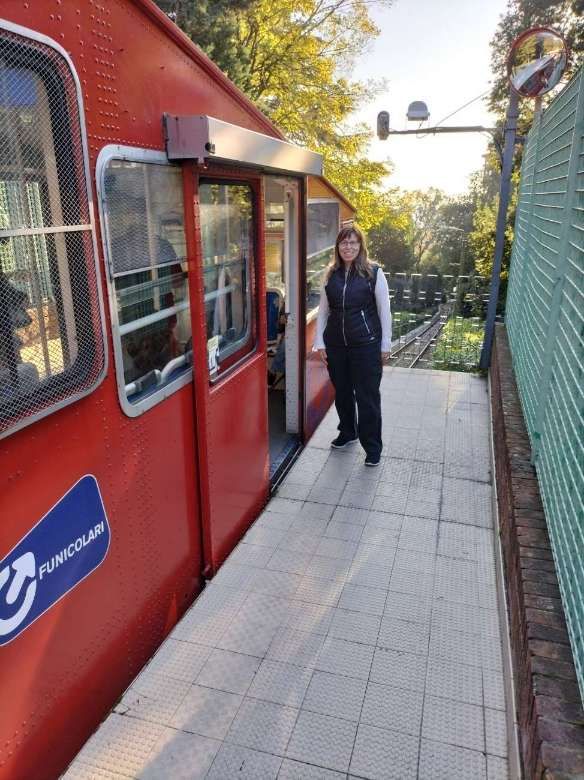
Just prior to the return journey down the funicular to the old city. [My photograph, 11th November 2024]
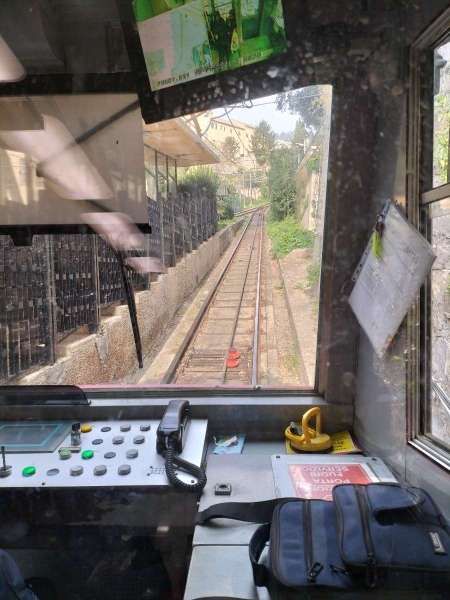
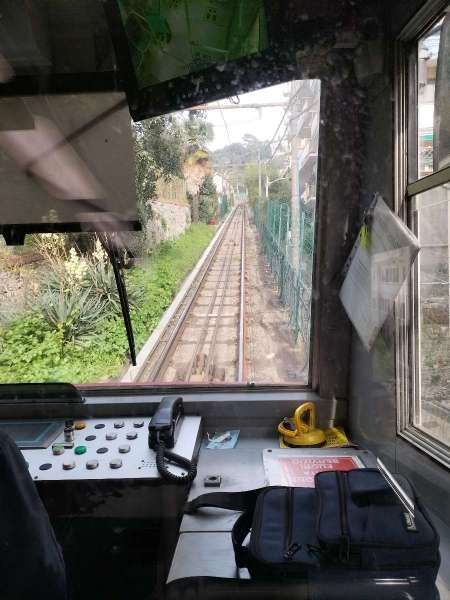
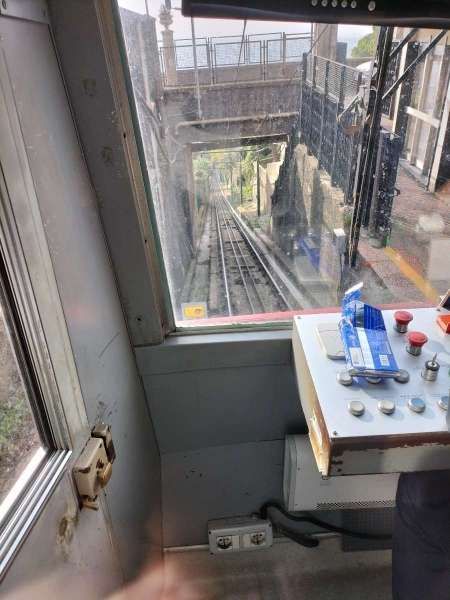
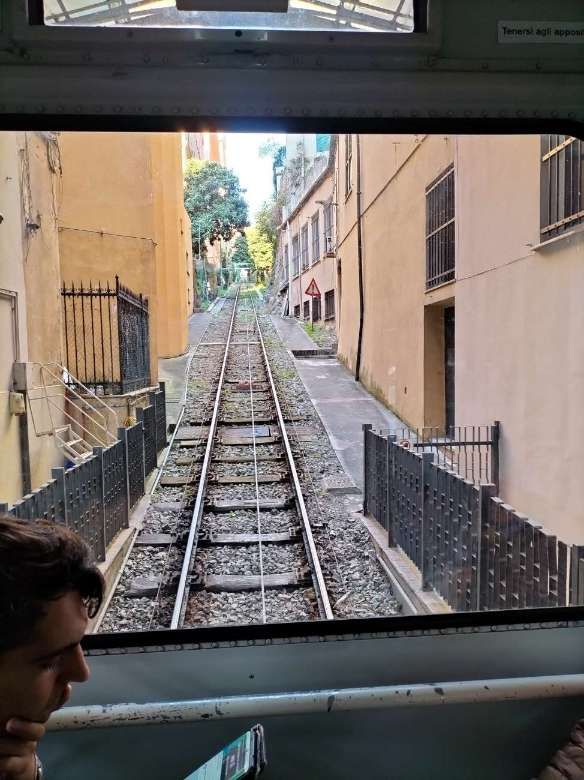
The view South down the Sant’Anna Funicular from inside the passenger car. [My photograph, 11th November 2024]
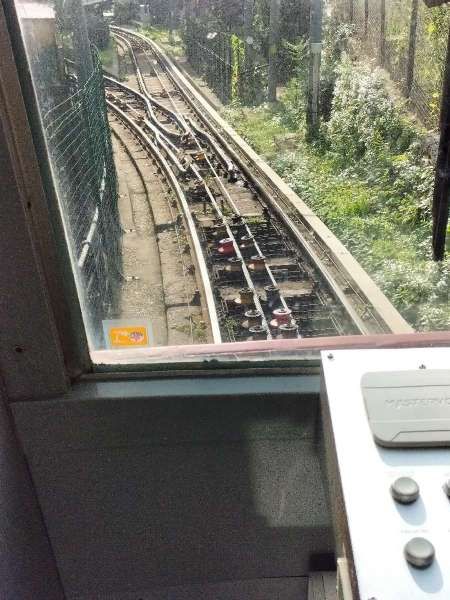
This closer view shows the cable, guide rollers and the 1.2 metre-gauge track. [My photograph, 11th November 2024]
The funicular car at the bottom terminus of the line. [My photograph, 11th November 2024]

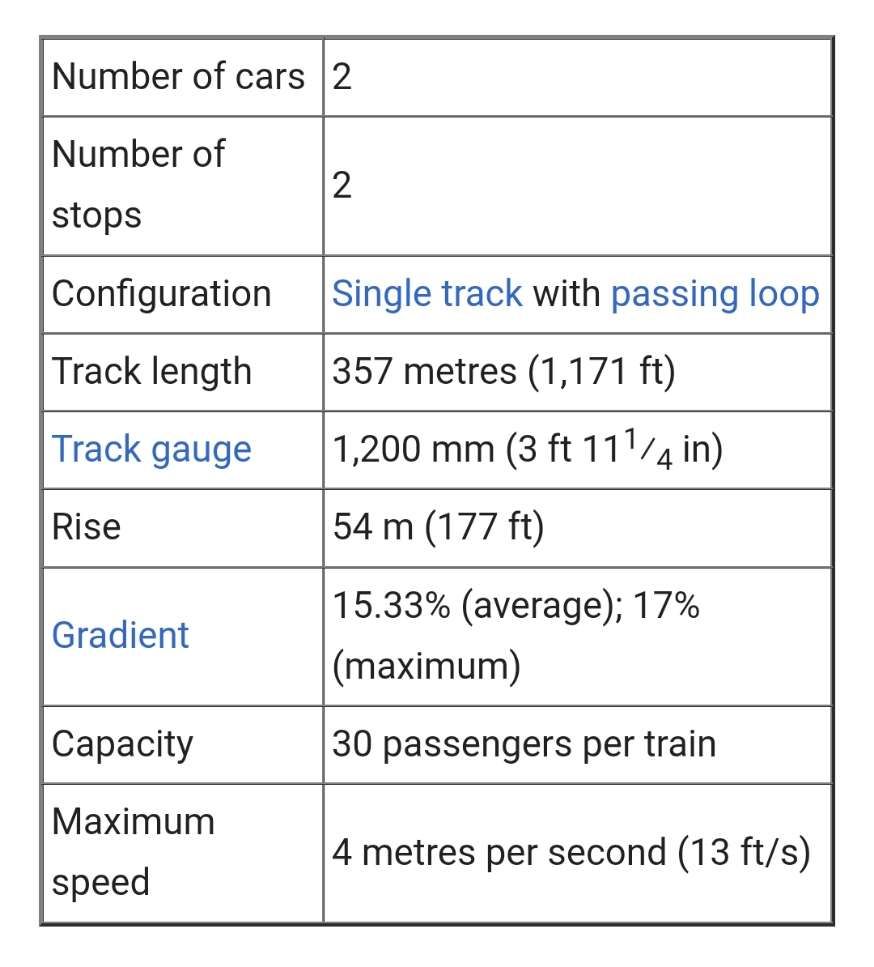
The line is currently (2024) managed by AMT Genova. These are its operational details:

These operational details are provided by AMT Genova. [2]

C. Quezzi Funicular

The Quezzi Funicular/Elevator (Ascensore inclinato di Quezzi) is a public inclined elevator with variable slope in the Quezzi quarter of Genoa which sits North of the heart of the city. It opened in May 2015 and connects the lower terminus at Via Pinetti to the terminus at Via Fontanarossa, with an intermediate stop at Portazza. [11]

We were unable to visit this funicular during our visit to Genoa in November 2024. There is some uncertainty in my mind as to whether it is actually a funicular.

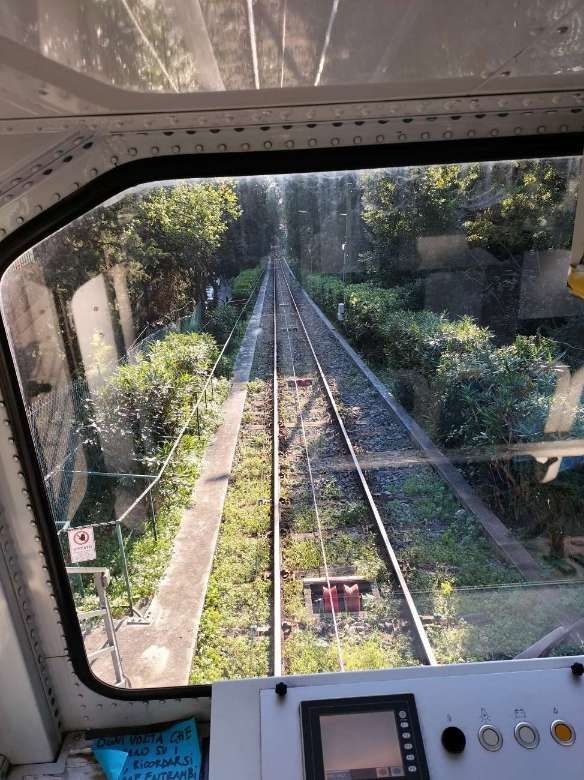
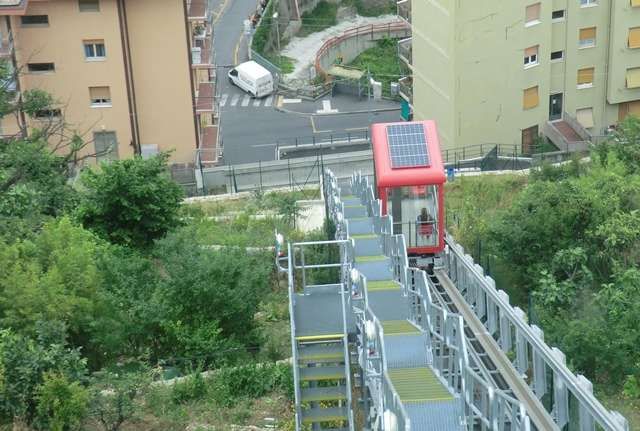
A view down the Ascensore inclinato di Quezzi, © Ale Sasso and licenced for reuse under a Creative Commons Licence (CC BY-SA 4.0). [11]

The elevator/funicular is managed by AMT Genova. It has a total length of 131 metres (430 ft), of which the lower 27 metres (89 ft) are in a tunnel, the middle 23 metres (75 ft) in a cutting, and the remainder on an elevated rail. The lower section has a gradient of 44%, transitioning to a gradient of 30% in the upper section. The single car is designed to tilt, in order to maintain the floor leveled, despite the change in gradient. [11][12][13]

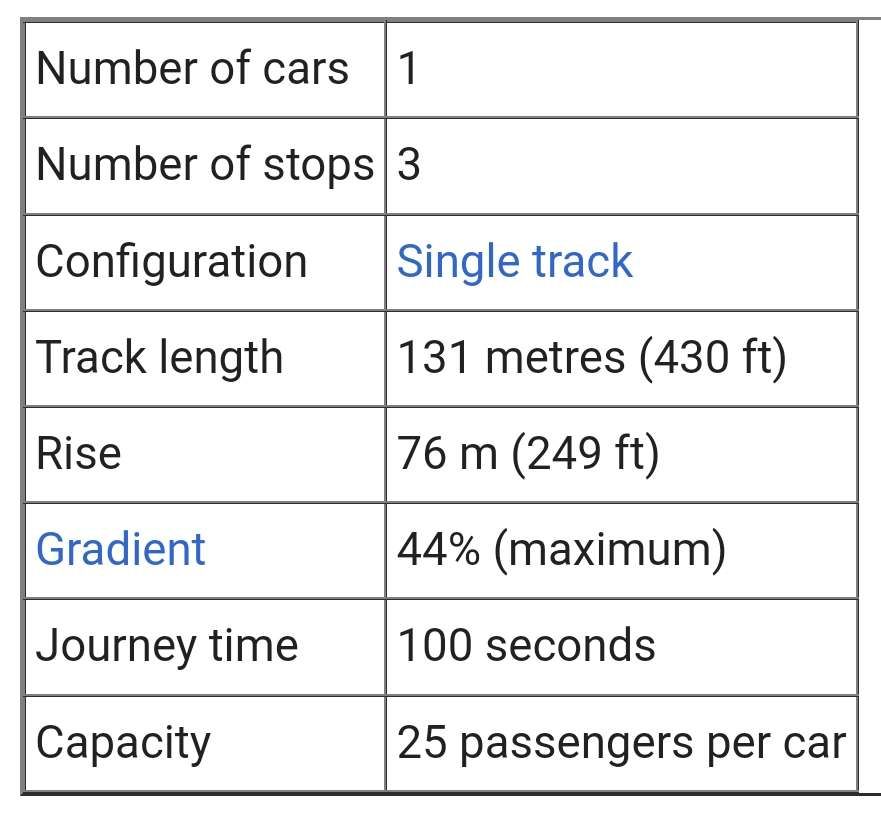
These are the details of the line: [11][12][13]

The details of the line provided by Wikipedia. [11]
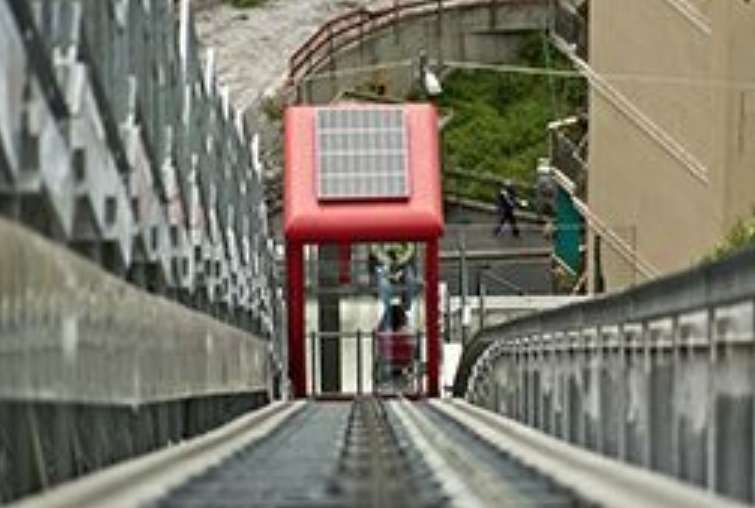
The Ascensore inclinato di Quezzi. [14],

AMT Genova describes the system as an ‘elevator’ that consists of a single cabin that moves along two parallel steel beams that act as a runway; the cabin is tilting to adapt to the variable slope track while maintaining the horizontal position. … The runway is characterized by two different inclinations of 44.13º and 30.33º and by a connecting section. The use of different gradients is a national innovation for inclined elevators for public use. It limits the amount of excavation and causes less impact on the immediate environment. They believe that the system is truly sustainable as it:

  • is equipped with solar panels to power the cabin lighting and ventilation.
  • has low-energy LED cabin lighting.
  • has a high-performance cabin air conditioning system.
  • it runs on load-bearing wheels in Vulkosoft, a special high-tech material, resistant to abrasion and specifically designed to minimize noise emissions and the transmission of vibrations.
  • has three stations, each equipped with sound diffusion systems and variable message panels for public information.
  • incorporates pedactyl paths and tactile maps for the blind and visually impaired.
  • complies with current legislation on the removal of architectural barriers.

The three stations are: Pinetti, Portazza and Fontanarossa. 1 cabin is used which is accessible to disabled people. [14]

References

  1. https://en.m.wikipedia.org/wiki/Zecca%E2%80%93Righi_funicular, accessed on 10th November.
  2. https://en.m.wikipedia.org/wiki/Sant%27Anna_funicular, accessed on 11th November 2024.
  3. https://www.amt.genova.it/amt/trasporto-multimodale/funicolari/funicolare-zecca-righi, accessed on 12th November 2024.
  4. https://it.m.wikipedia.org/wiki/Funicolare_Zecca-Righi, (translated from the Italian), accessed on 12th November 2024.
  5. Corrado Bozzano, Roberto Pastore and Claudio Serra; Genoa on the Rise; Nuova Editrice Genovese, Genoa, 2014.
  6. https://gazzettasvizzera.org/ricordati-a-genova-i-120-anni-della-storica-funicolare-del-righi, accessed on 12th November 2024.
  7. News , in Strade Ferrate, No. 40, July 1989, p. 91.
  8. Alessandro Sasso; New funicular for Genoa, in Mondo Ferroviario, No. 46, April 1990, p20-21.
  9. Giuseppe Viscardi, News , in I Treni, No. 346, March 2012, p6.
  10. Michel Azima; The funiculars of Genoa, in FuniMag , September 1996; https://www.funimag.com/funimag07/GENOVA02.HTM, accessed on 12th November 2024.
  11. https://en.m.wikipedia.org/wiki/Quezzi_inclined_elevator, accessed on 12th November 2024.
  12. Marco Cacozza; New funicular in Genova; in Today’s Railways Europe, No. 244, Platform 5 Publishing Ltd., April 2916, p18.
  13. Ascensore inclinato di Quezzi; (in Italian). AMT. 21st January 2015; https://www.amt.genova.it/amt/mobilita-sostenibile-prolungata-fino-al-31-luglio-la-gratuita-di-metro-e-impianti-verticali, accessed on 12th November 2024.
  14. https://www.amt.genova.it/amt/trasporto-multimodale/ascensori/ascensore-di-quezzi, accessed on 12th November 2024.

The Funicular Railway in Cannes

The Super Cannes Funicular

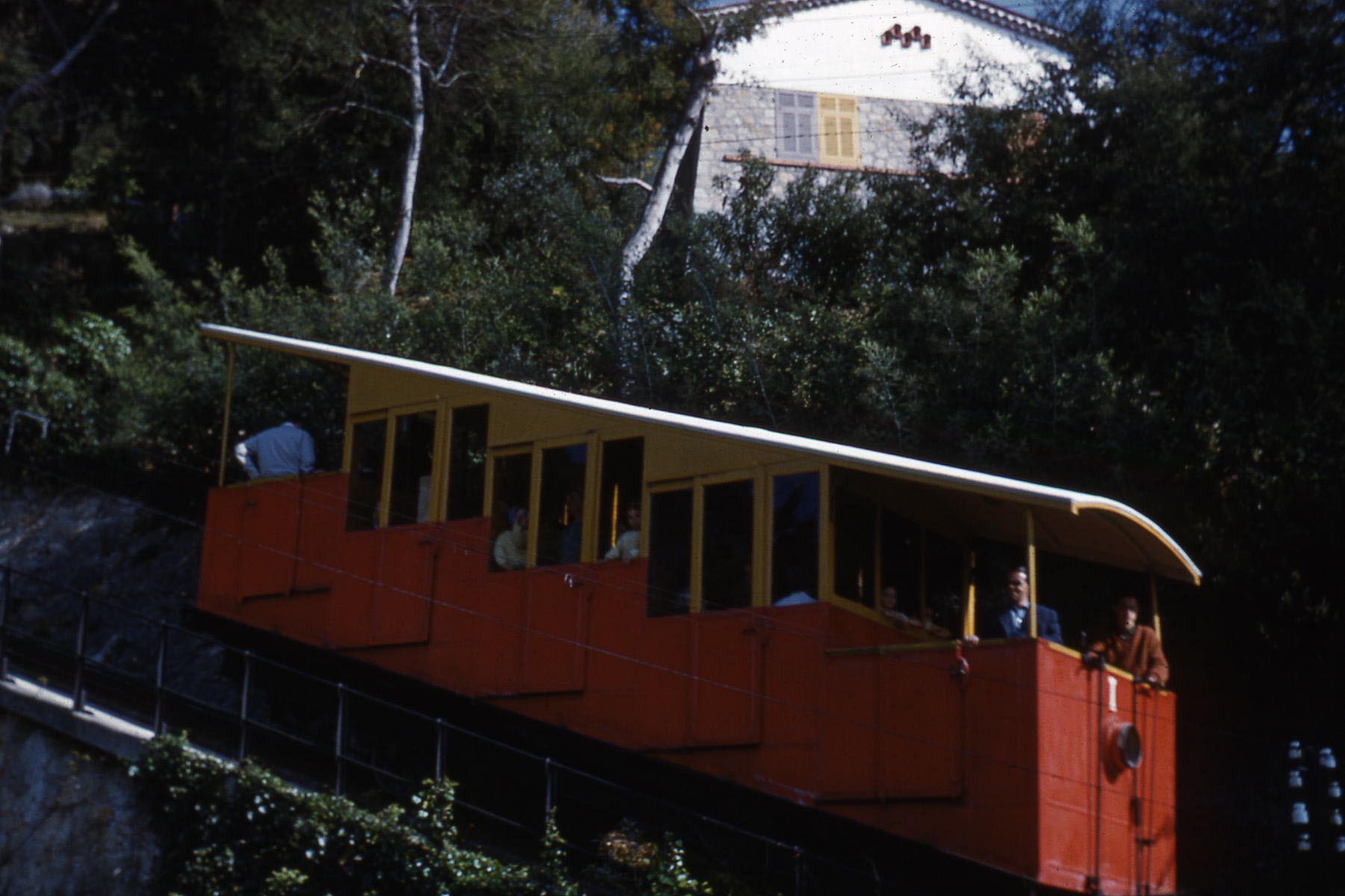
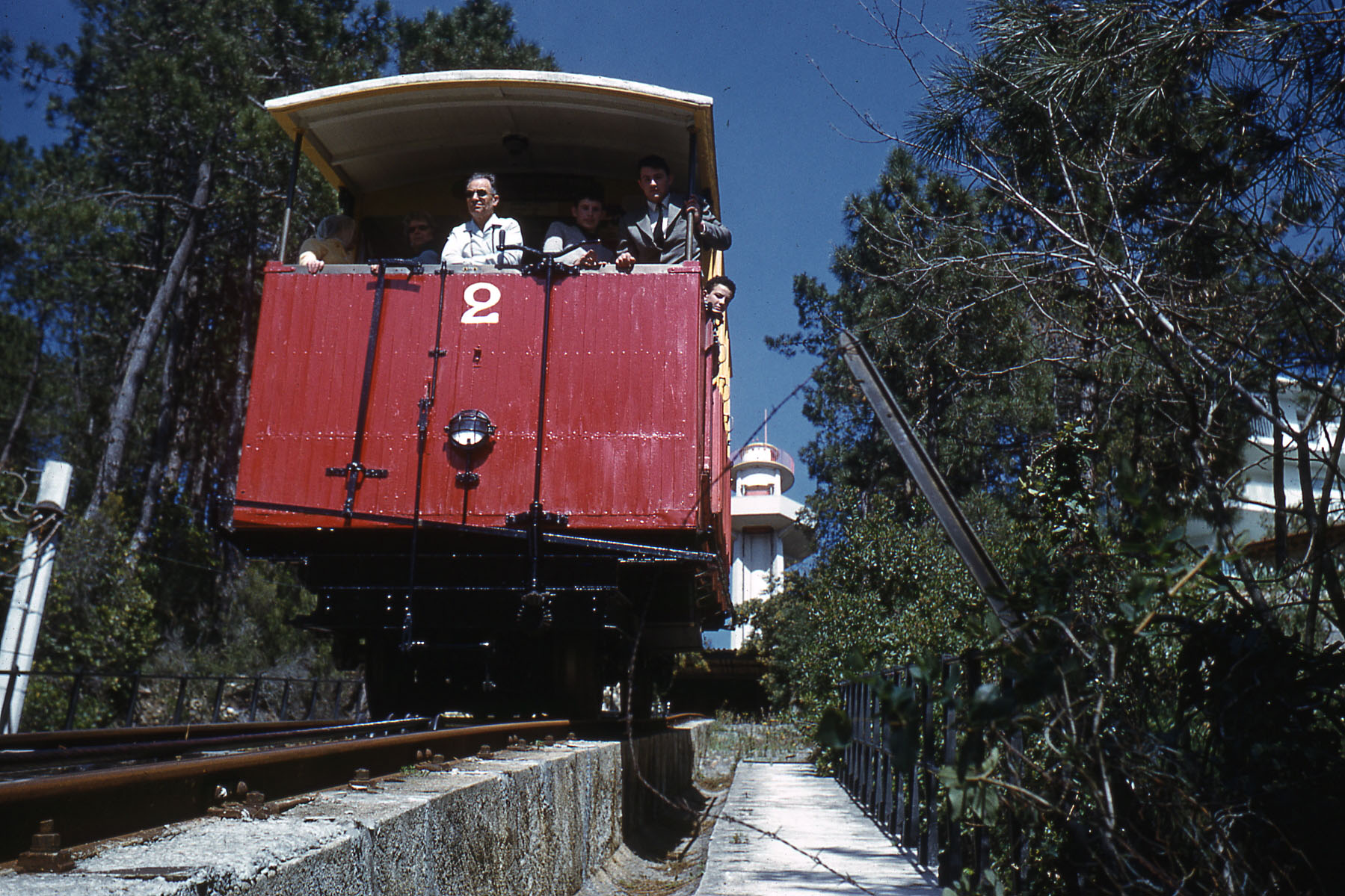
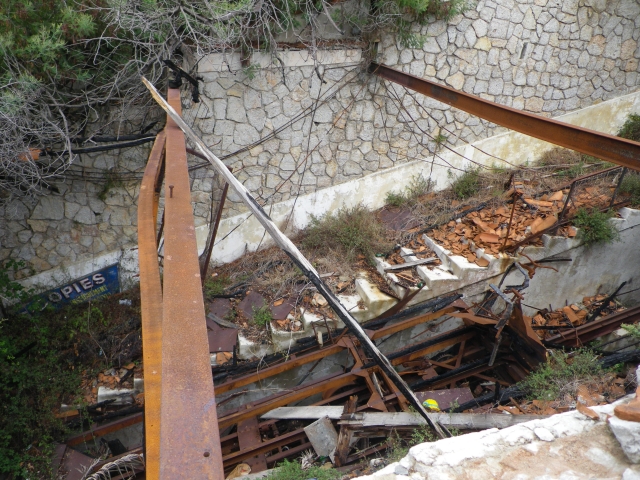
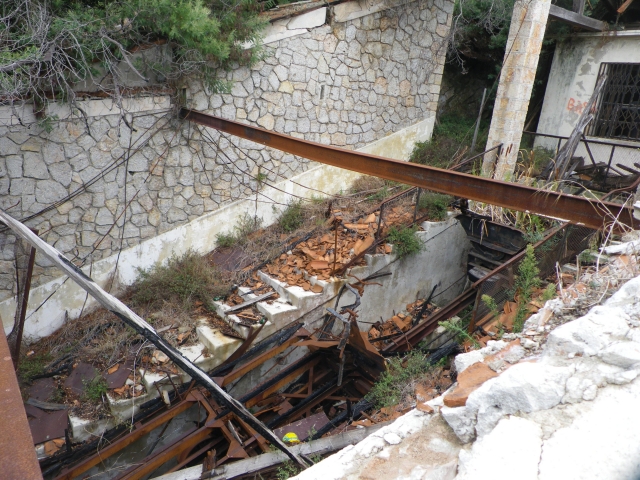
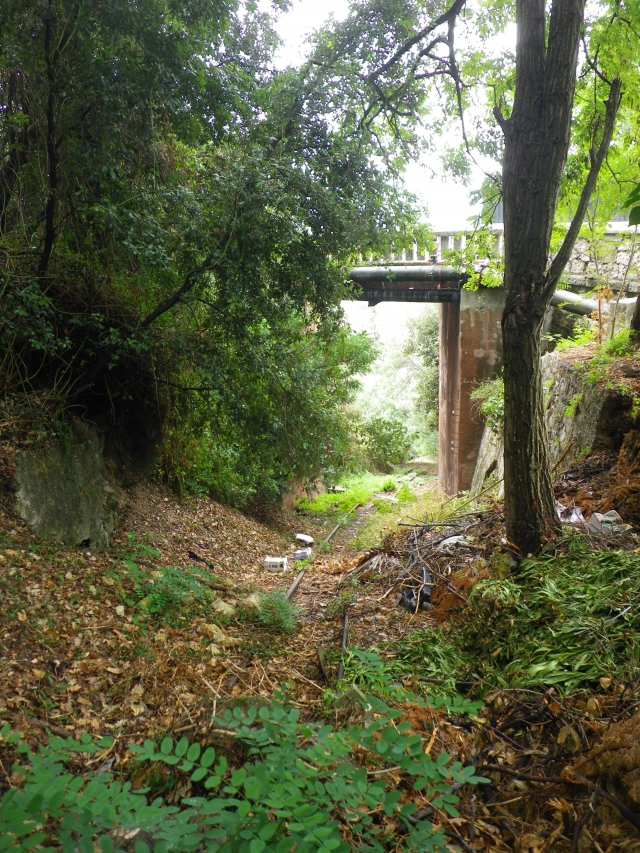
This was an 850 metre-long funicular providing access to ‘Super-Cannes’ from the town of Cannes. It was opened in 1928 and closed in 1966. Much of the infrastructure is still in place in the early 21st Century.

Super-Cannes is within the district of La Californie. It is a residential area of Cannes.

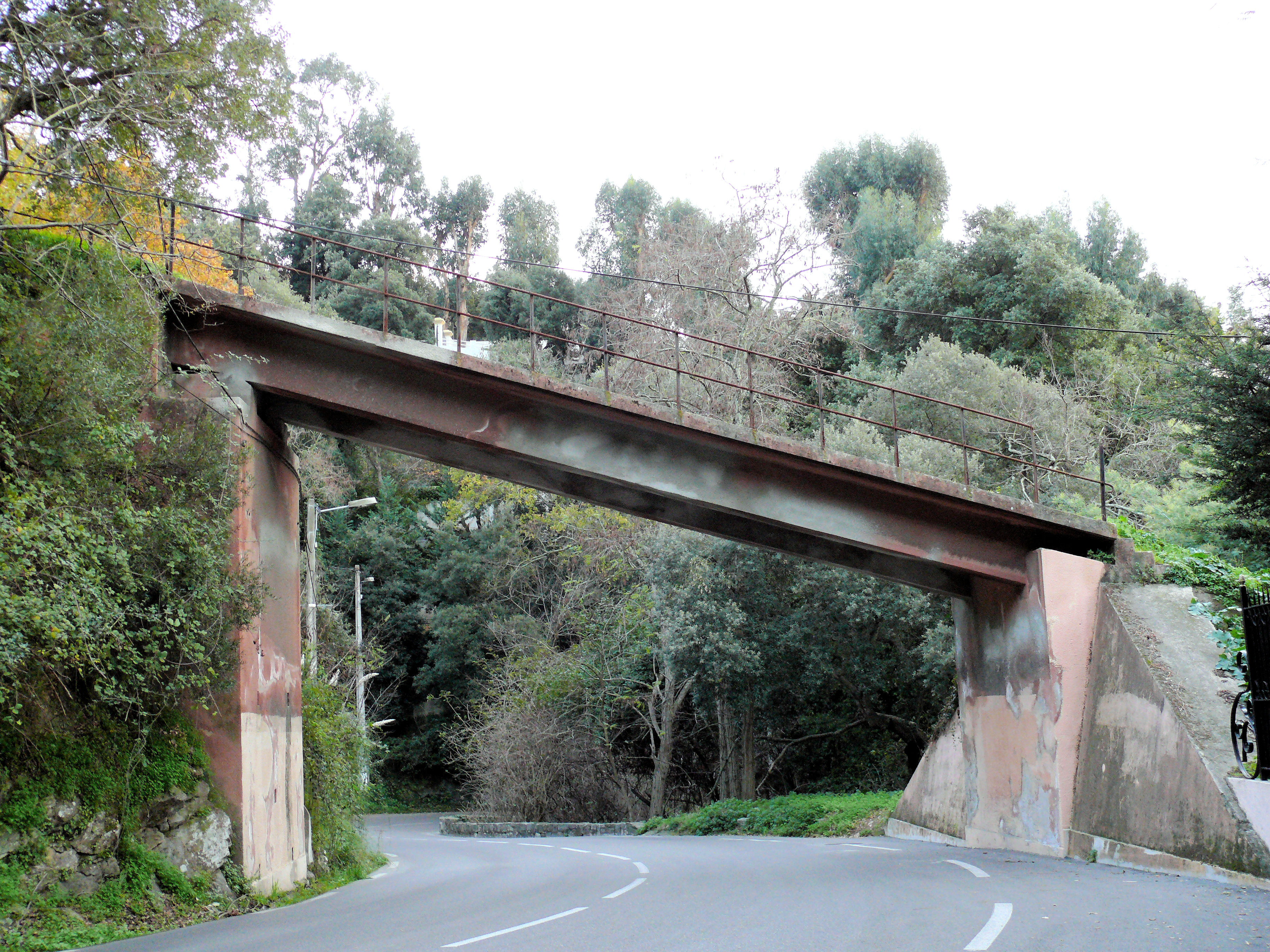
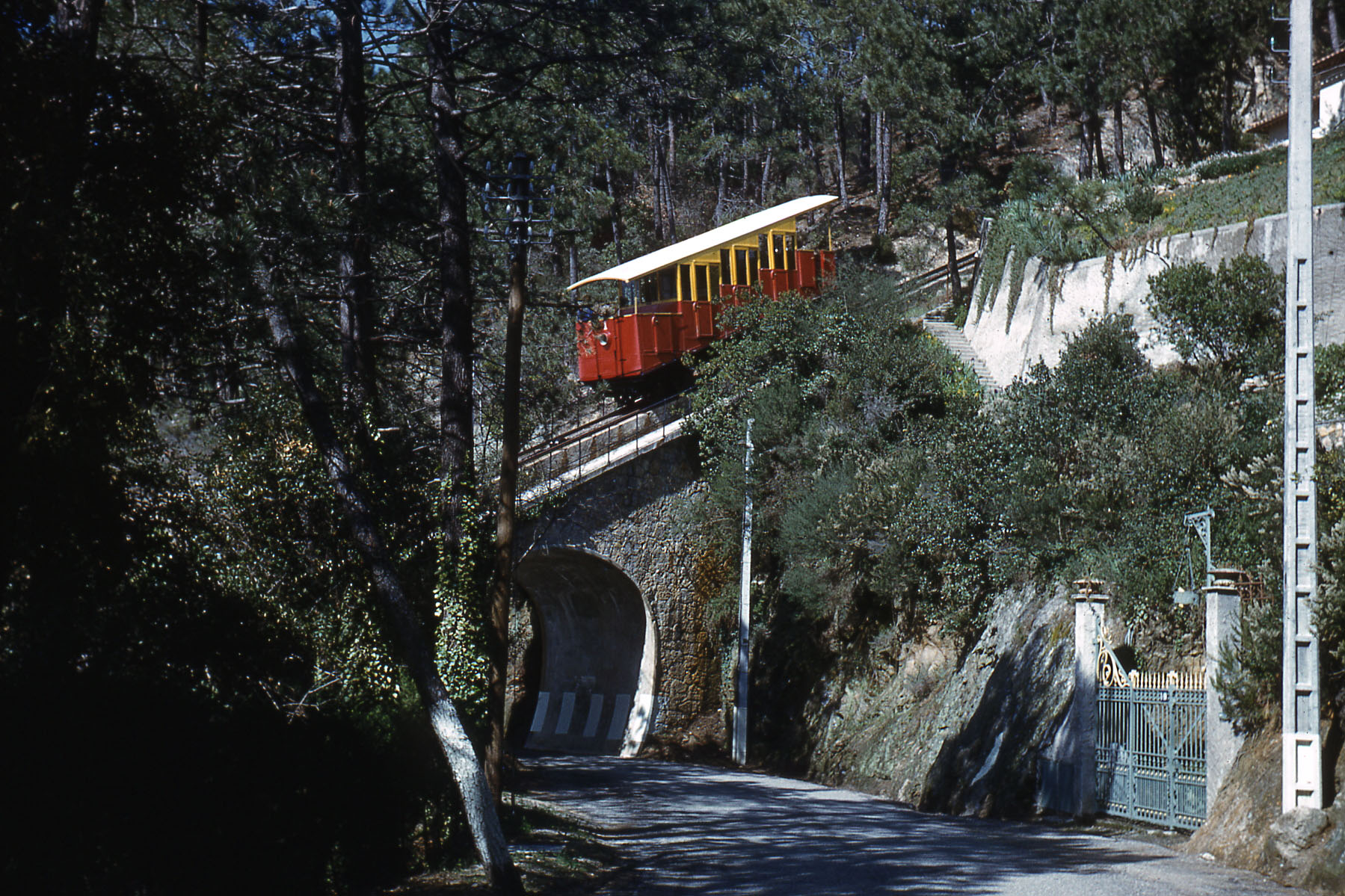
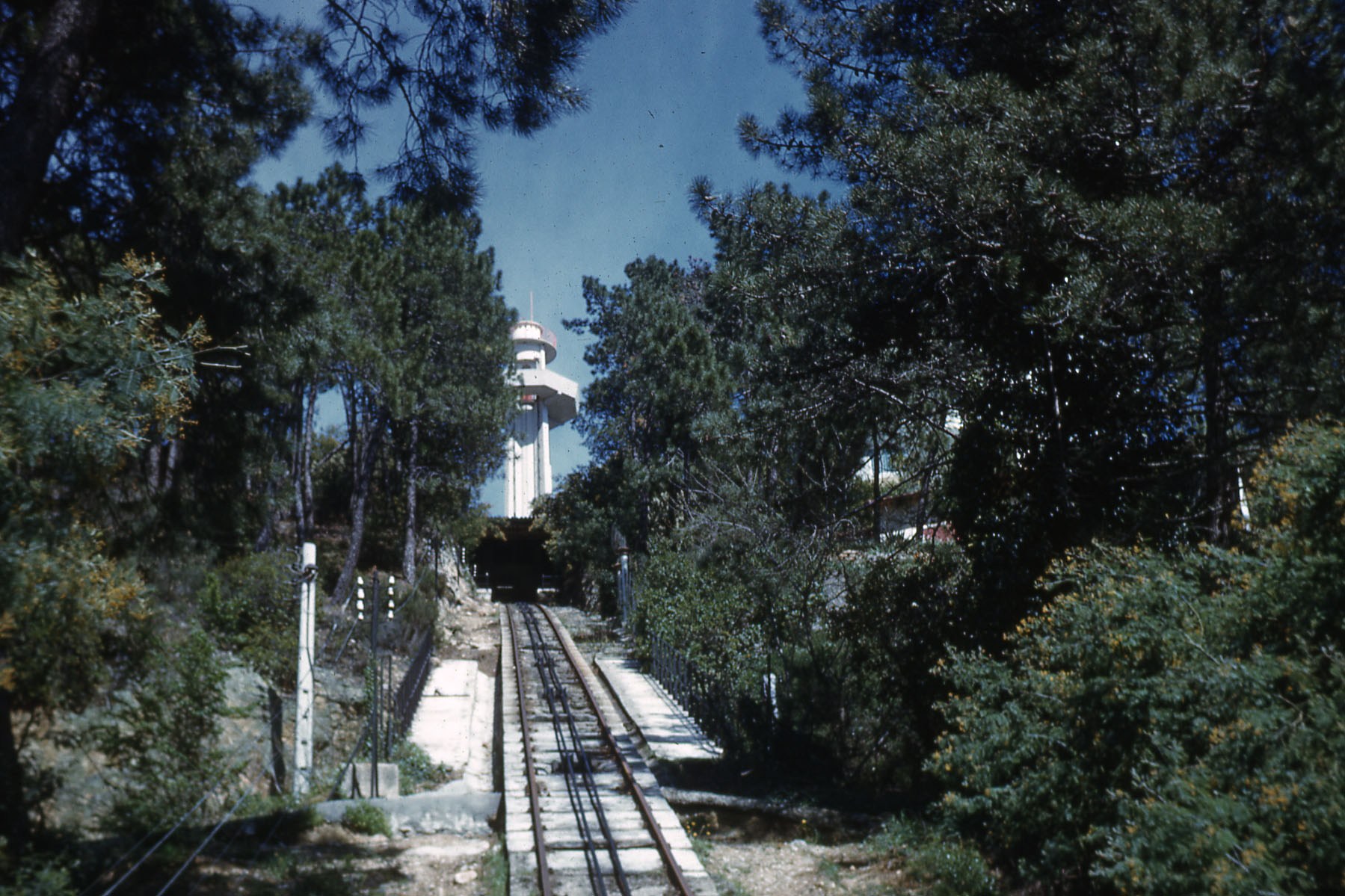
The construction of a funicular was initiated by Société immobilière de Paris et du Littoral. It was designed by the Italian company ‘Societe Ceretti et Tanfani’ and the construction engineer was E. Jaulin. [1] The contractor for the work was Dyle and Bacalan. Construction work took place between 1925 and 1928. The funicular line rose 850m from its lower station on Avenue Val Vert, through the Valley of Les Gabres. It crossed a series of roads on sloping bridges before reaching the higher station adjacent to the Observation Tower in Super Cannes on Avenue de la Gare-du-Funiculaire. The funicular was completed in January 1928 and opened by André Capron , Mayor of Cannes and Yves Le Trocquer , Minister of Transport on 27th January 1928.

As a result of the construction of the funicular there was a rapid development of properties on the hill. The view across the Baie de Cannes was, and is, spectacular.

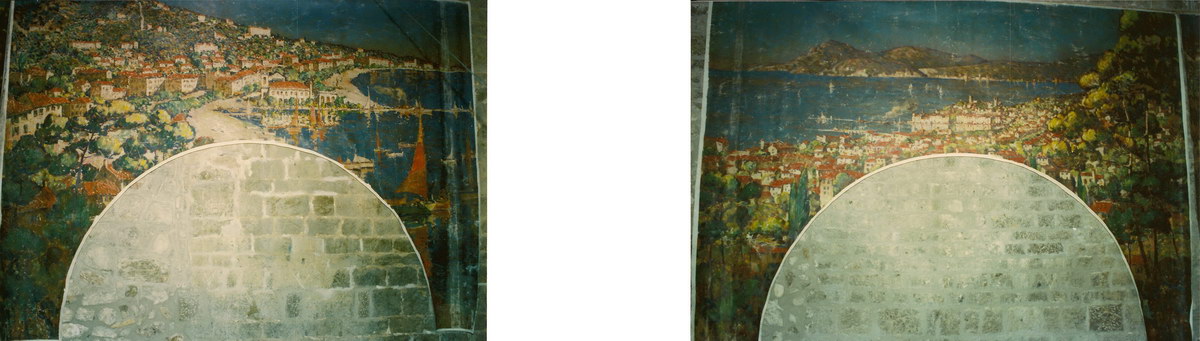
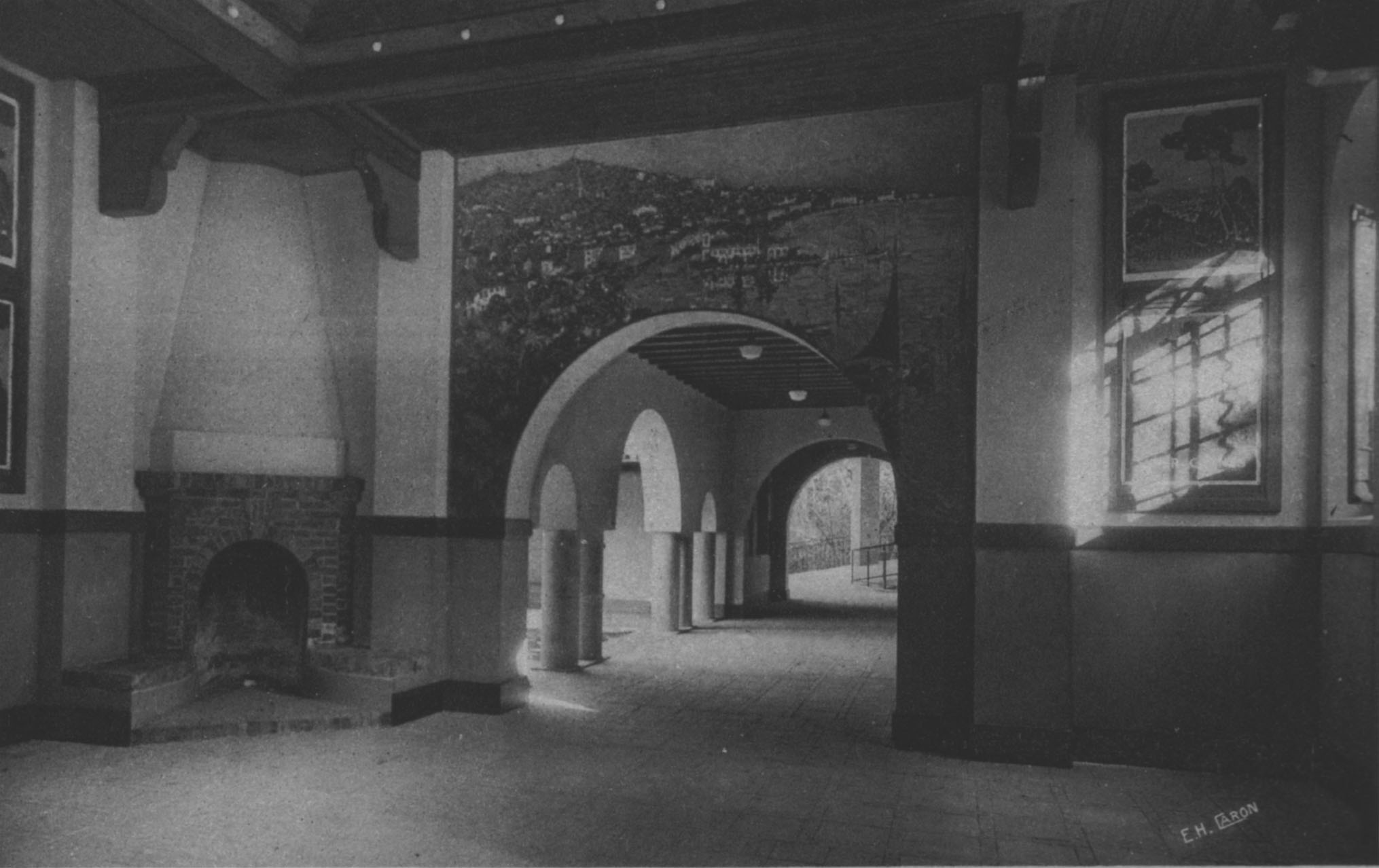
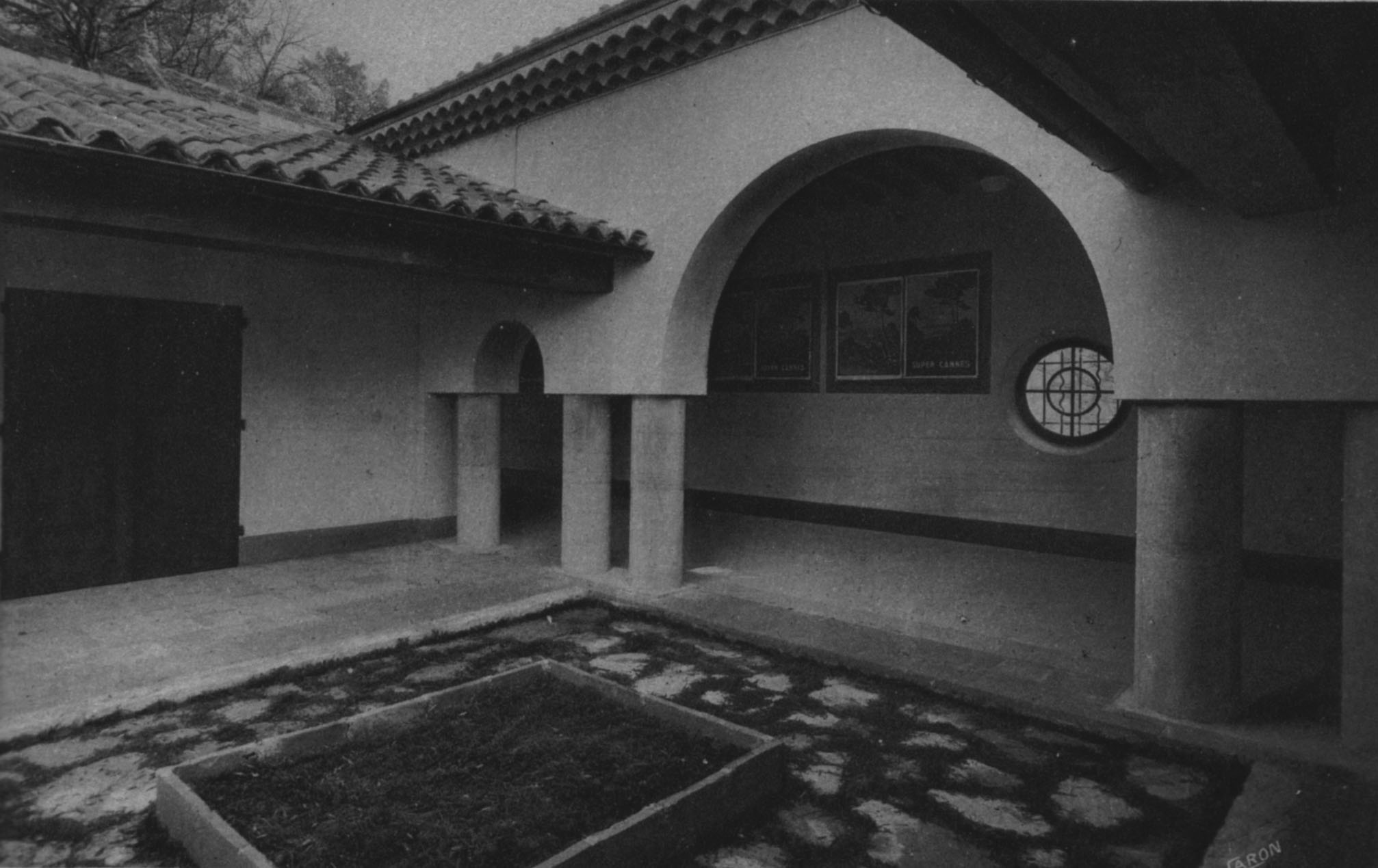
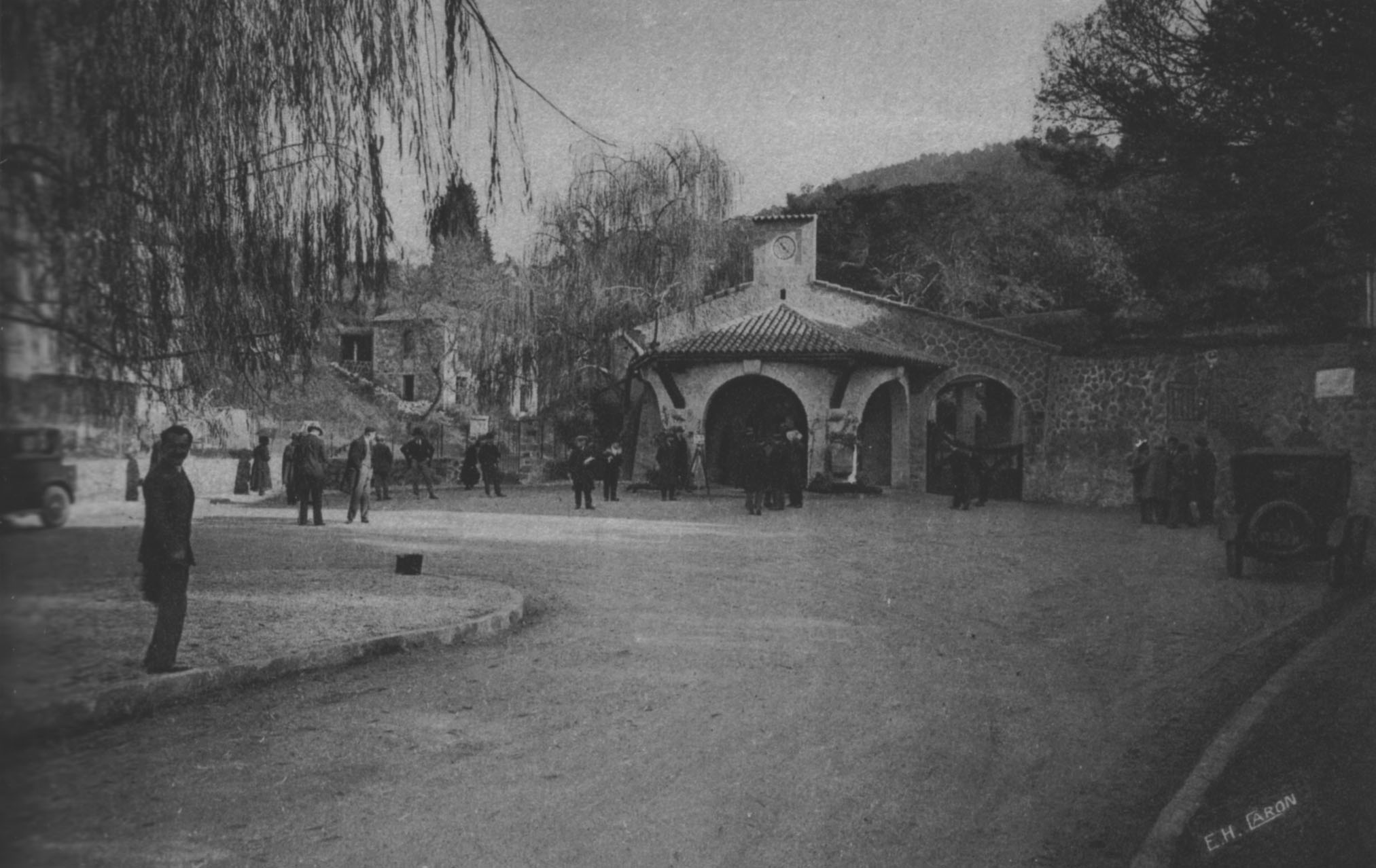
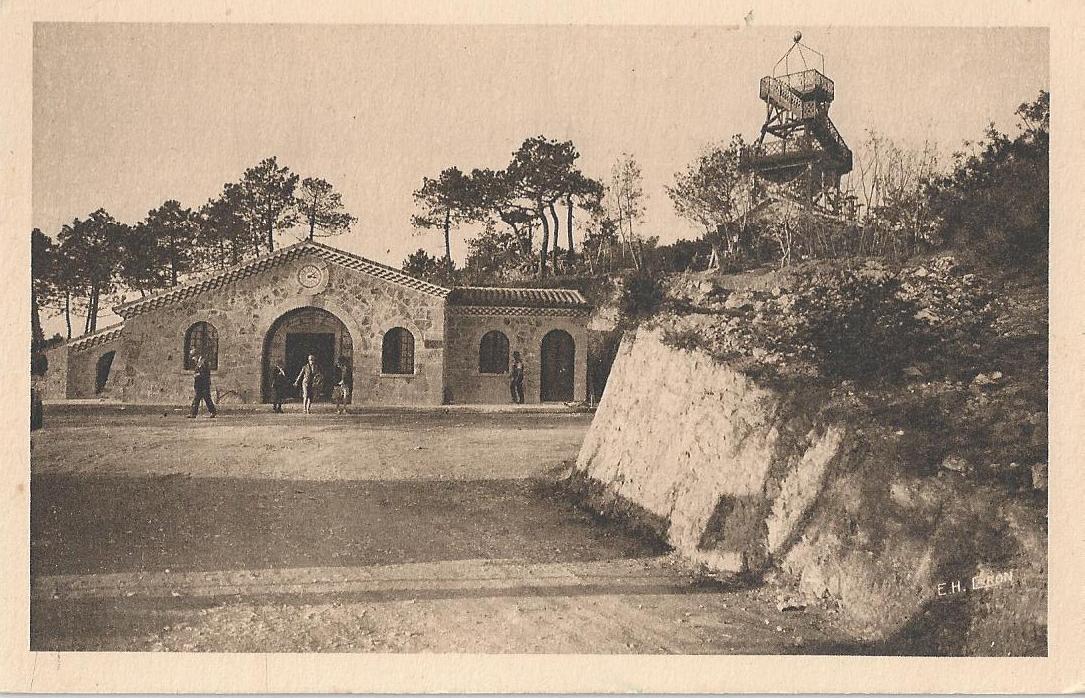
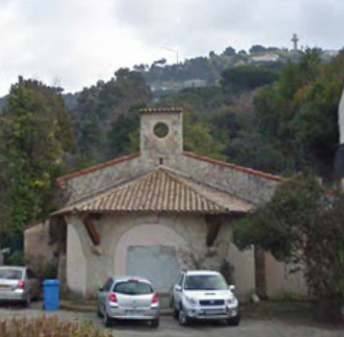
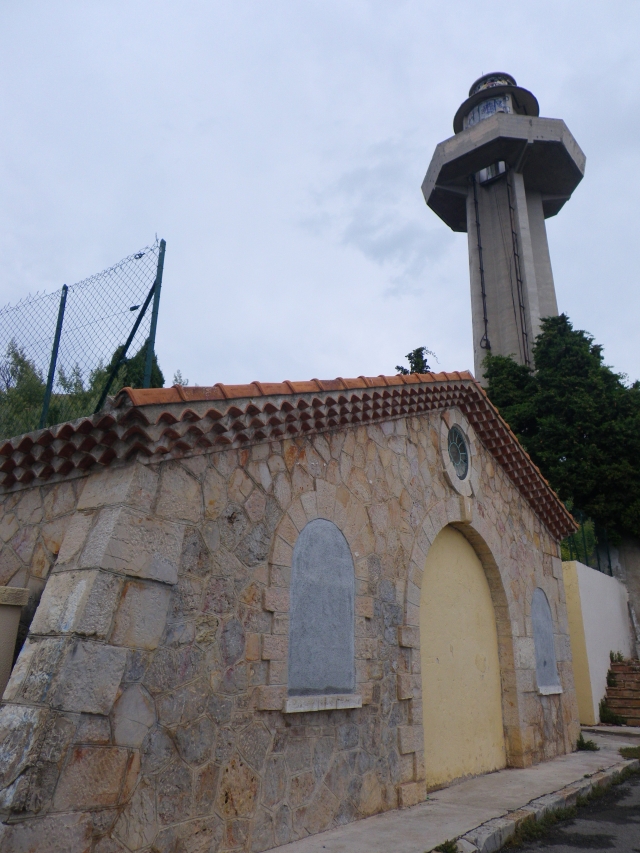
The lower station was designed to look like a chapel and was in the Neo-Provencal style. Wikipedia explains that this was, and remains, ‘a contemporary architectural and decorative style originating in Provence which extends along the French Mediterranean Coast and onto Corsica. … It replaces the traditional stone houses of the villages of the South of the country’.[2] It was decorated with a series of paintings by Louis Pastor.[3] A few images of the station and the paintings follow. Included among these pictures is a very early image of the funicular:

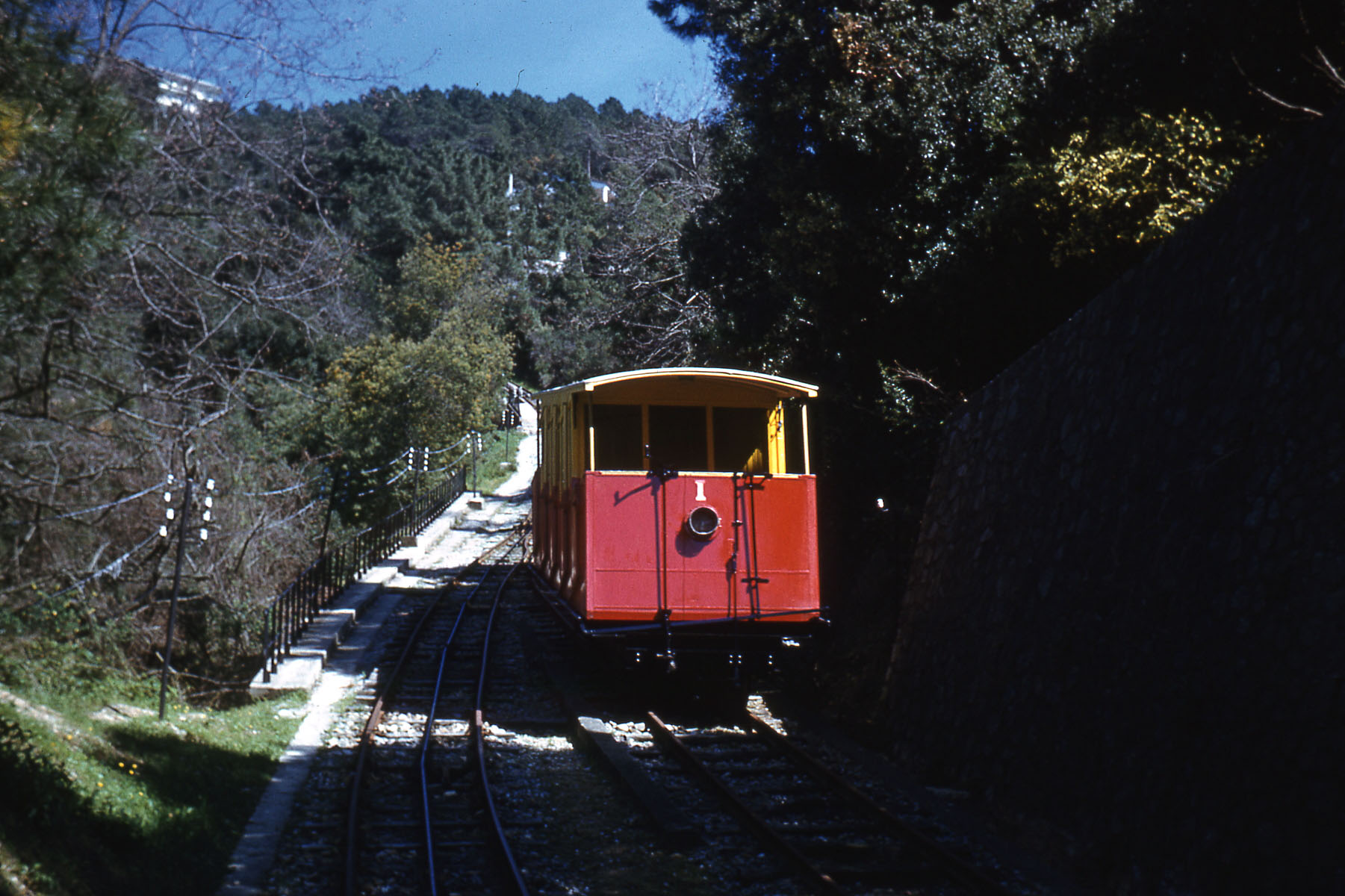
The funicular was on a steep grade, in a length of just 850m the funicular climbed to an altitude of 233m. There was one passing point at midpoint on the climb. The top station is shown below along with the wooden observatory refered to below.

At the top of the funicular there was a planned housing estate which initially was predominantly reliant on the funicular for access. 156 hectares were set aside for the project and the developers provided roads and other infrastructure as well as constructing the funicular railway.  The infrastructure to be provided included a 9 metre wide road of approximately 4km in length;  7km of secondary roads; a tea room, hotel and gazebo along with luxury shops. The picture below shows the view point at the top of the funicular before major development had taken place.

Super-Cannes funicular

A first square wooden observatory as erected in 1925.  The project, however, hit financial difficulties, the large hotel was never built. The planned road works were interrupted and the land was sold on in 1931.  1939 saw the construction of a panoramic restaurant on the site of the planned hotel and a cylindrical reinforced concrete tower replaced the wooden observatory in 1953.
With developing road transport, the funicular began to loose money. Passenger numbers decreased and essential safety work could not be afforded. The funicular eventually had to close in 1966. The restaurant and observatory finally closed in 1986.

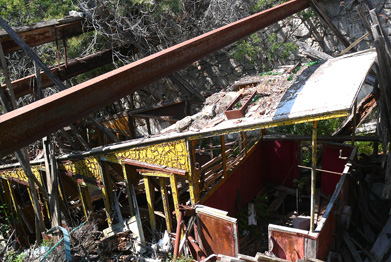
In 1989, the family of the Emir of Abu Dhabi bought much of the land at the top of the funicular. In 1993, they gained a building permit which included access to the funicular railway station by a private road. However, in 1994, the administrative court rescinded the approval. Since then, the whole site has remained in a derelict and abandoned state. The site gained heritage protection in 2001 and in 2009, some repairs were undertaken to the facade of the lower station to improve the visual amenity in its immediate locality.[5]

This picture shows the lower station as it is in the early 21st Century. The Observation Tower can be seen on the distant horizon at the top right of the image.

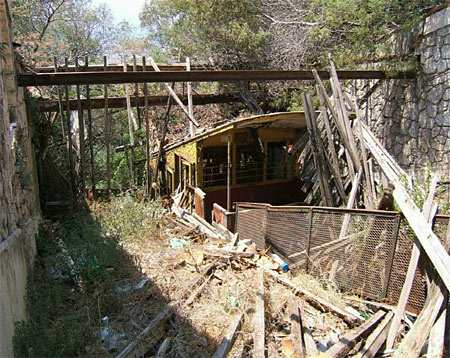
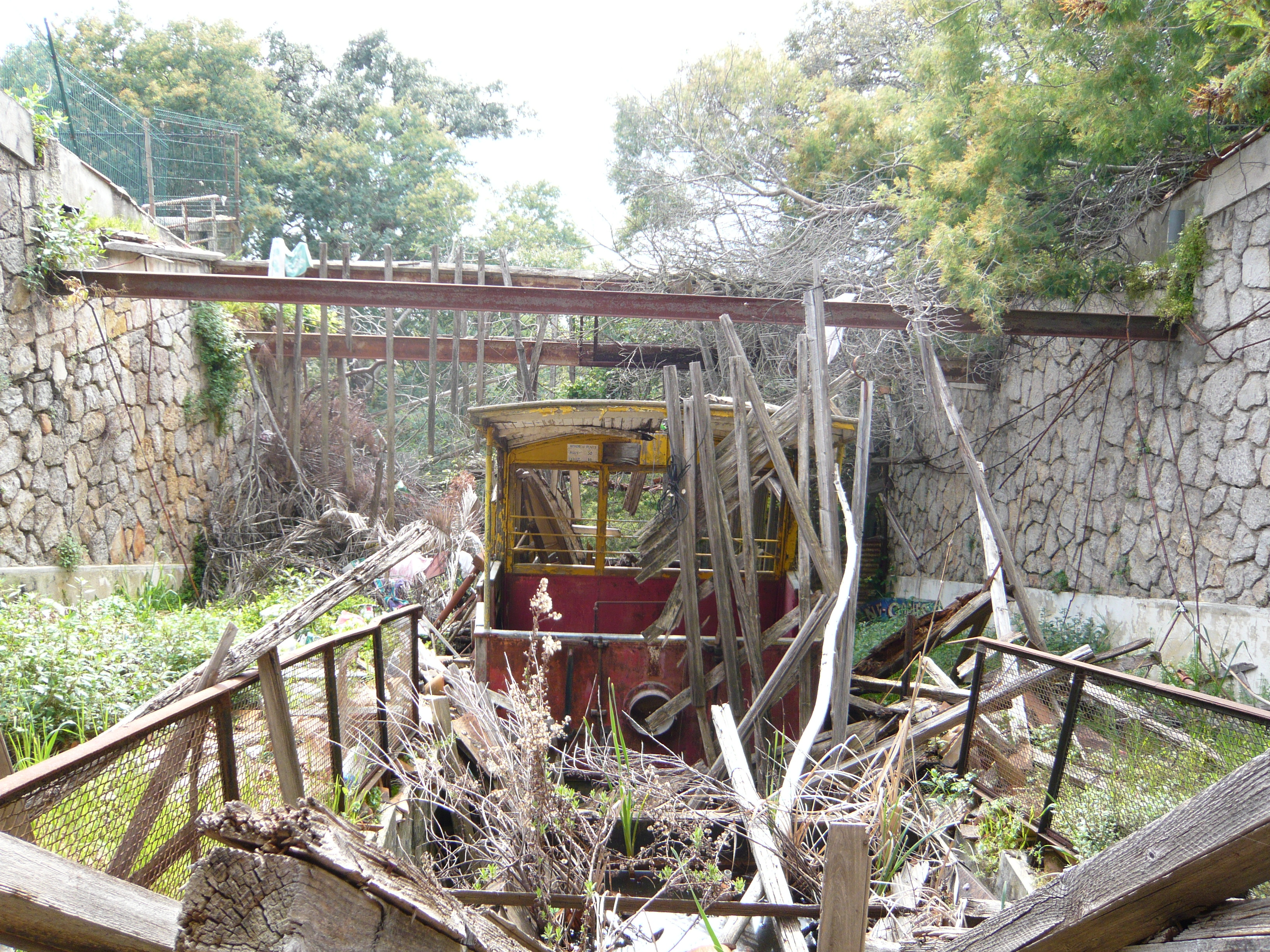
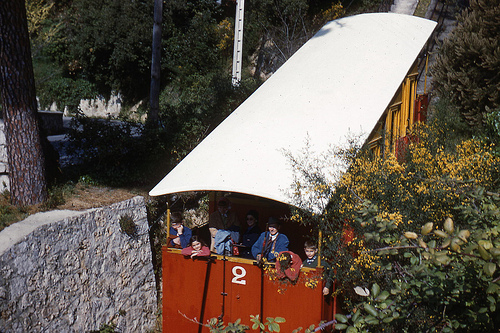
The images below show both pictures of the funicular in operation in the 1960s and its condition in the early part of the 21st Century. Included towards the end of the photographs are a series taken by RER C – Photographs on Passions Metrique et Etroite Forum in 2011. Below the photographs taken by RER C are a series of videos.

The following photos were taken in 2011.[8]

This post finishes with a series of links to YouTube.[9] They include 6 videos taken of the condition of the Super-Cannes funicular railway in the early 21st Century. The videos were uploaded onto YouTube in 2009 by Pierre l’ Antibois.

The first shows the lower station:

The second shows the rolling stock.

The  third shows the drive mechanisms

The fourth shows the condition of the route of the funicular

The fifth shows the top station, the observatory and the resaurant

And finally, the 6th video shows the engine room.

References

  1.  Structurae, Super-Cannes Funicular; https://structurae.net/structures/super-cannes-funicular, accessed 1st April 2018.
  2. Wikipedia, Neo-Provencal Style; https://fr.m.wikipedia.org/wiki/Style_néo-provençal, accessed 1st April 2018.
  3. The Funicular Station of Super-Cannes – Louis Pastour; https://sites.google.com/site/louispastourenglish/home/funiculaire-de-cannes accessed 1st April 2018.
  4. Funimag Photoblog; http://www.funimag.com/photoblog/index.php/tag/cannes, accessed 18th March 2018.
  5. Funiculaire-de-Super-Cannes; Wikipedia; https://fr.wikipedia.org/wiki/Funiculaire_de_Super-Cannes, accessed 18th March 2018.
  6. Picture; Flickr; https://www.flickr.com/photos/76580860@N02/20674392730, accessed 18th March 2018.
  7. Super-Cannes funicular, French Heritage monument to Cannes; http://en.patrimoine-de-france.com/alpes-maritimes/cannes/funiculaire-de-super-cannes-57.php, accessed 24th March 2018.
  8. RER C – Photographs on Passions Metrique et Etroite Forum; http://www.passion-metrique.net/forums/viewtopic.php?f=2&t=4295, accessed 18th March 2018.
  9. Pierre l’Antibois, Cannes – Super Cannes, le retour des diaporamas sur YouTube!; http://www.funimag.com/photoblog/index.php/page/45, accessed 2nd April 2018.