Category Archives: French Railways and Tramways

Tramways de l’Aude – Belpech to Castelnaudary – Part B


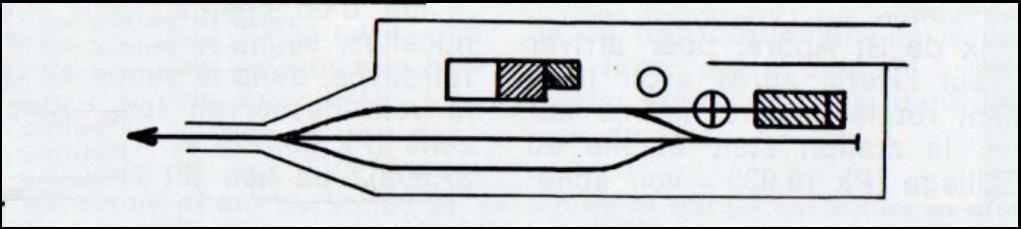
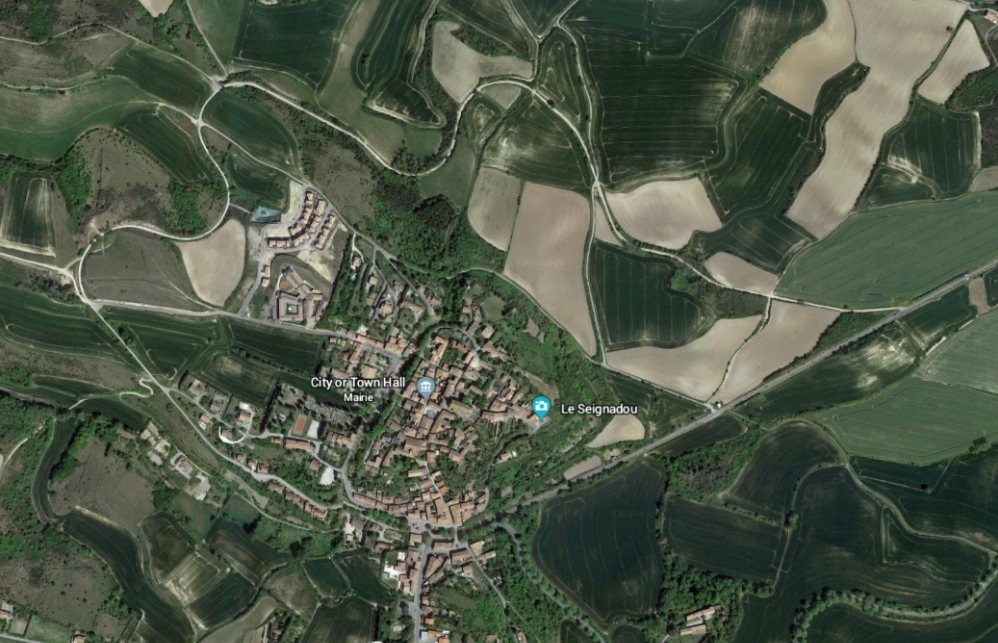
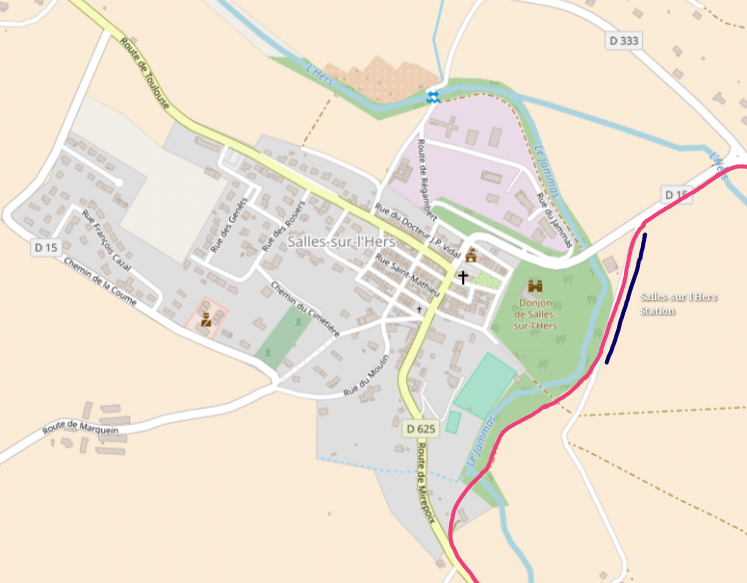
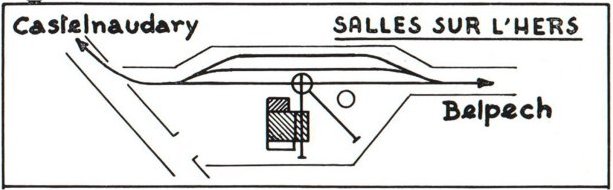
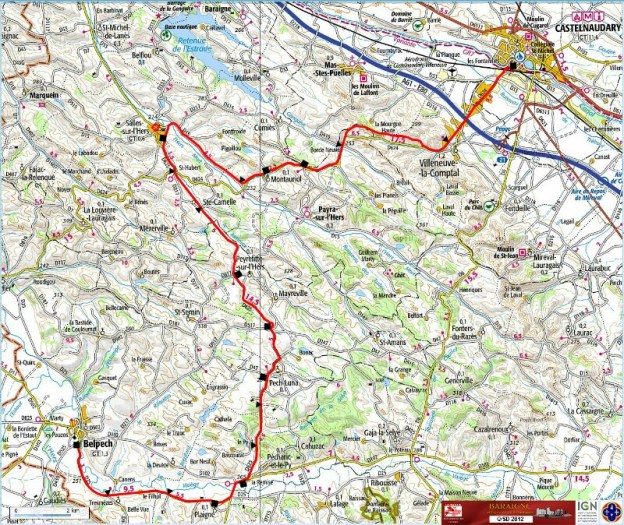
We continue our journey from Belpech to Castelnaudary, having taken a rest at Salles-sur-l’Hers. The first few pictures are of the area of the station site at Salles-sur-l’Hers. The OpenStreetMap above shows the approximate line of the tramway (pink) and the location of the station (dark blue). The sketch plan shows a station of similar significant to that at Belpech which is covered in the previous post about this line:

Tramways de l’Aude – Belpech to Castelnaudary – Part A

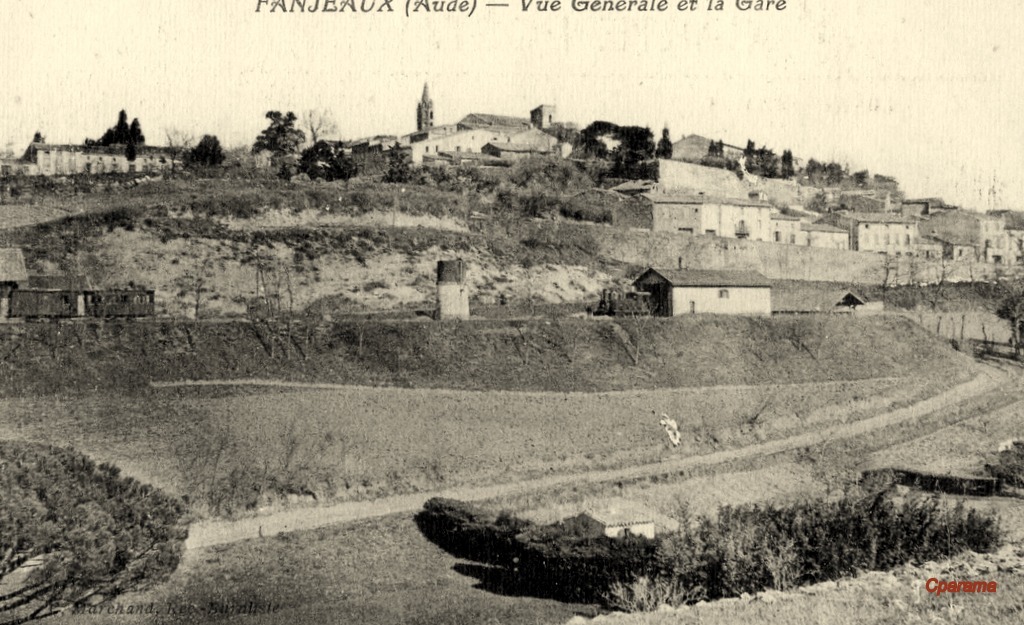
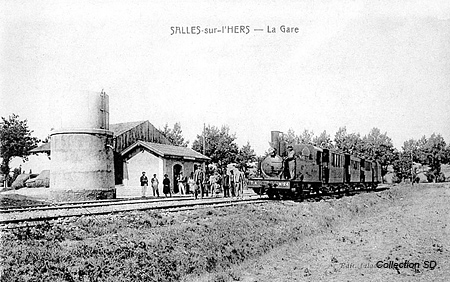
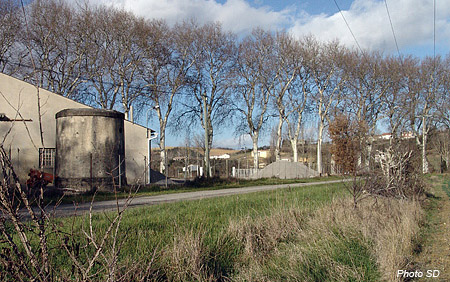
The Station site, shown in the immediately adjacent older postcard view, is still accessible and the lower part of the water tower remains in place. The site ius now in use by the municipal authorities as a technical training centre.

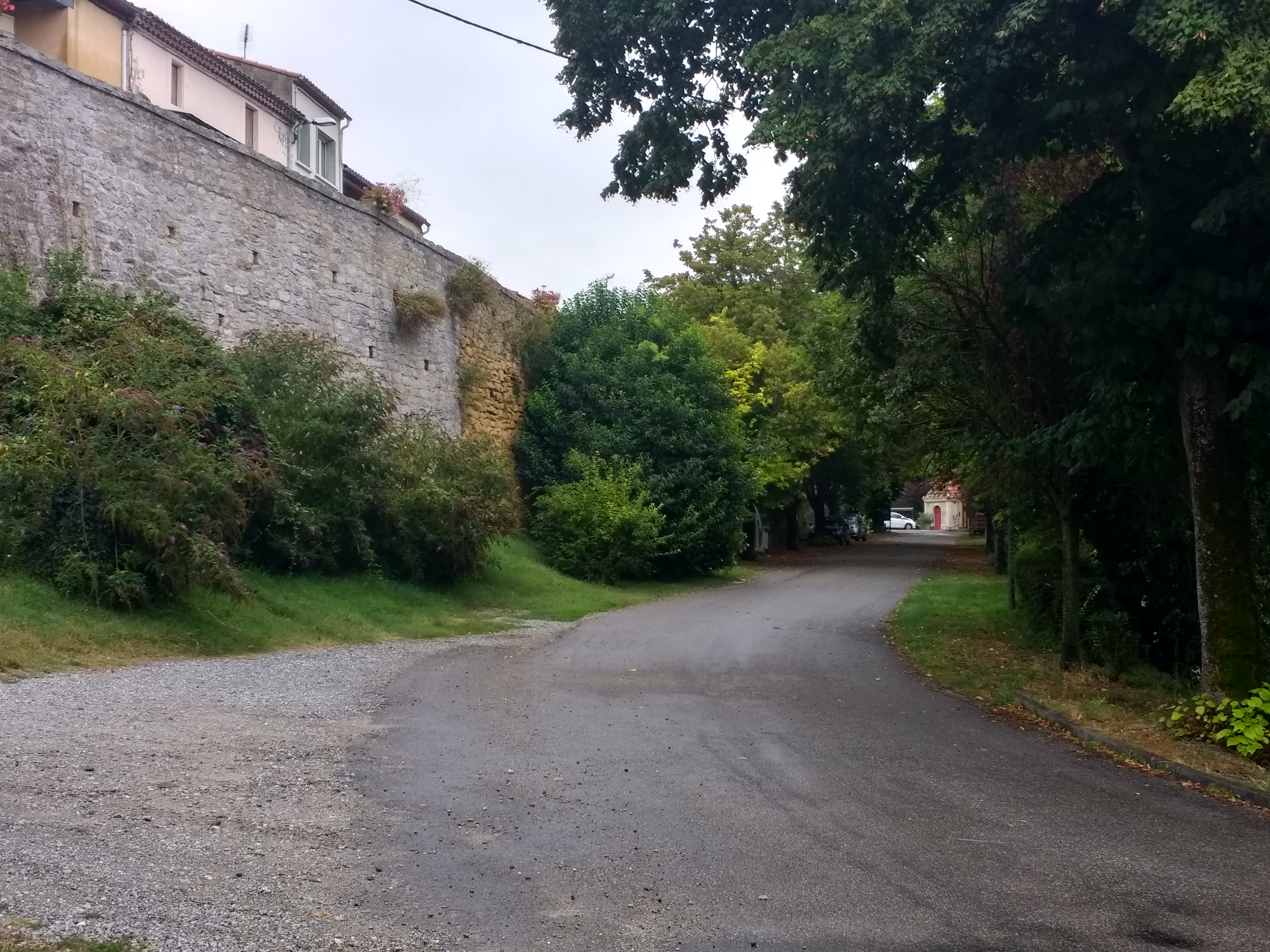
These two pictures are taken from the French language website referenced below. The second attempts to mimic the position of the photographer in the first. The footpath in this second image appears to be in the same location as the railway tracks in the first image. [1]

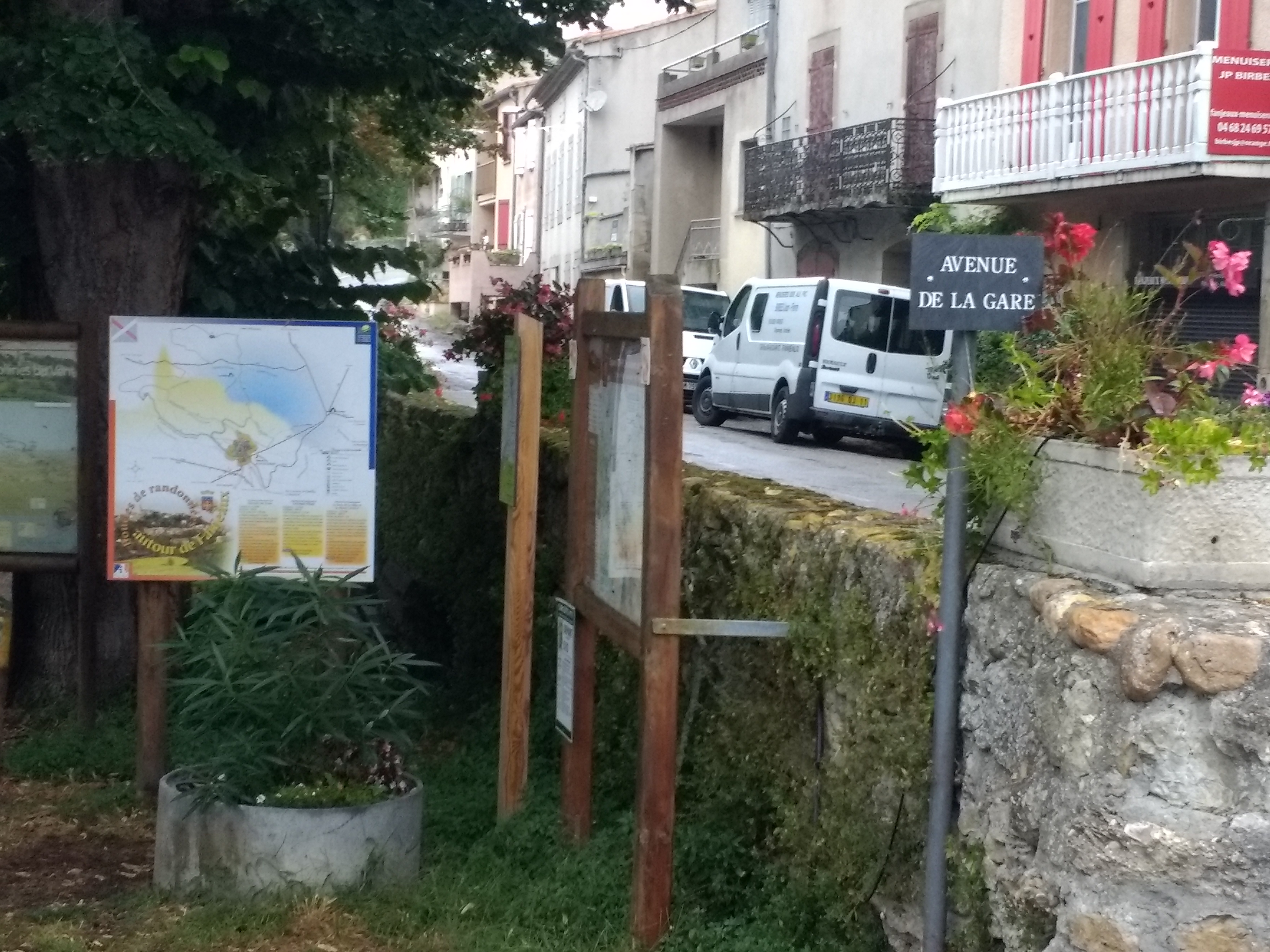
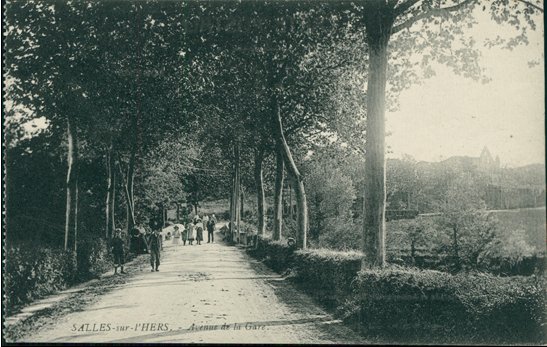
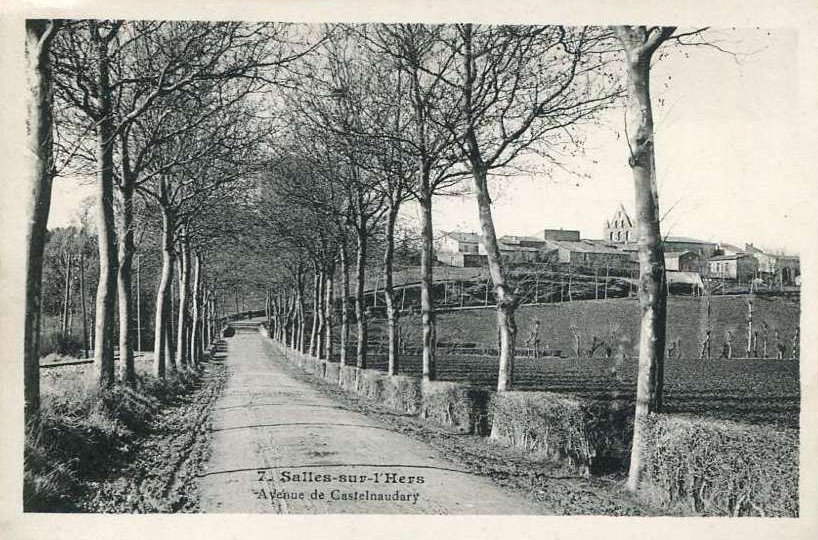
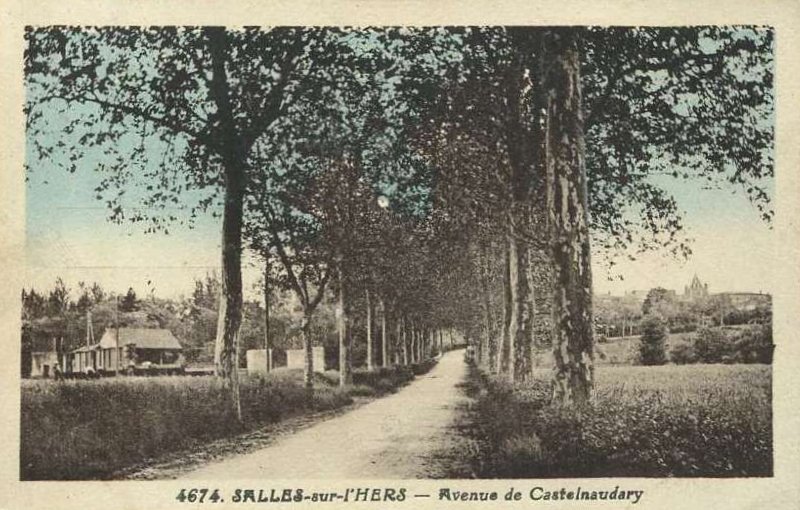
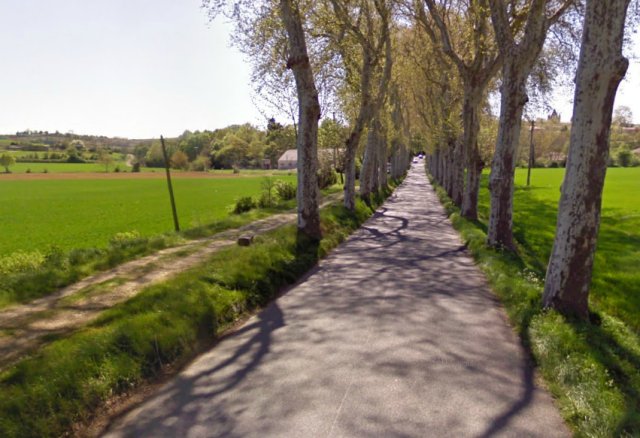
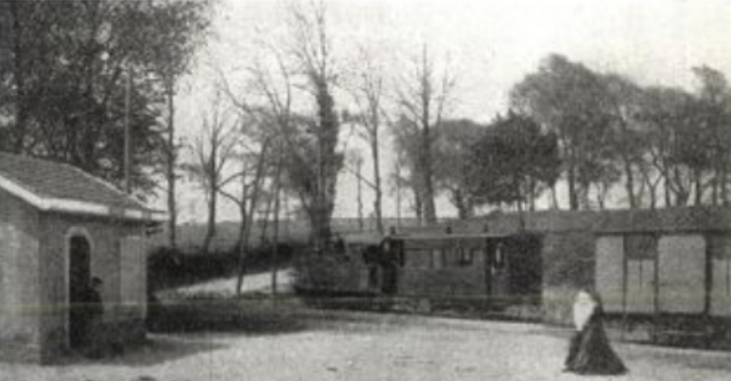
Tramway patrons would leave Salles village and head towards Castelnaudary on what is now the D15. The first length of the road was known as Avenue de la Gare.The station was immediately to the left of this picture with the photographer standing at the junction of the station access and the main road. [2]Slightly further to the northeast along the road which led to the station. The station entrance is just visible, and the line from Castelnaudary can be seen on the very left of the picture. The distinctive bell wall/tower in the village can easily be picked out on the right of the image. [2]In this old postcard view, the tramway station buildings can easily be picked out on the left. Only the water tower base remains in the early 21st Century. [2]The photographer has attempted to mirror the location of the last shot above. It must have been really difficult to do so. The water-tower base is visible on careful close inspection of the image. The tramway ran just to the left of the trees and it is possible to imagine that, because the verge is high above the adjacent field, we are looking at the tramway formation. [2]

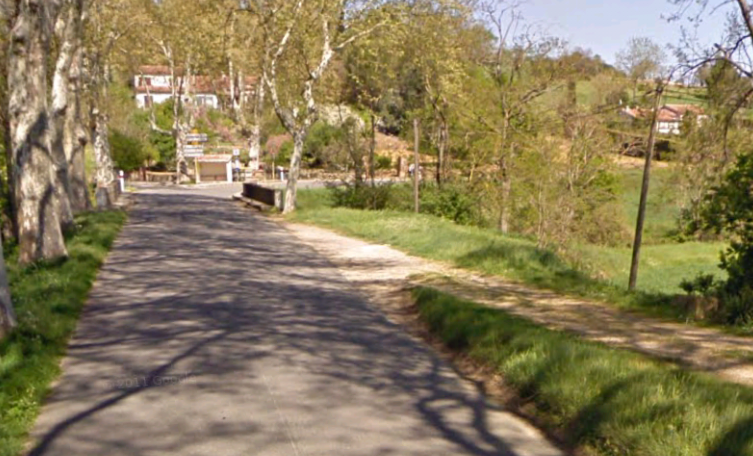
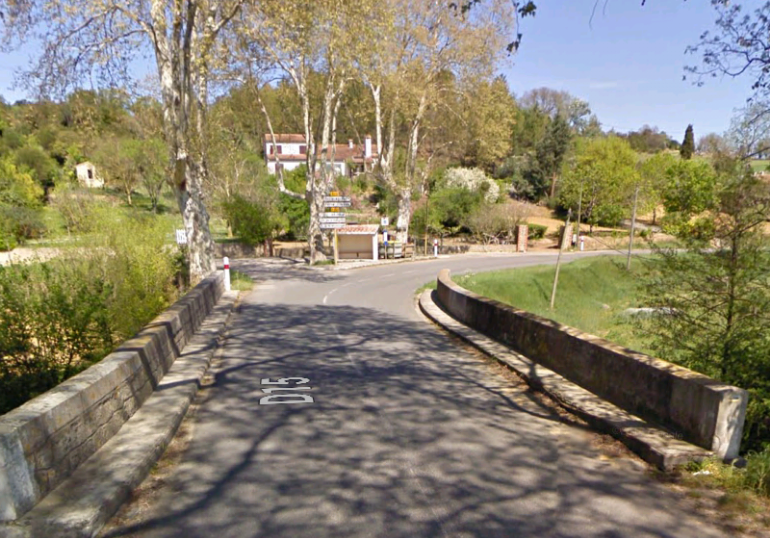
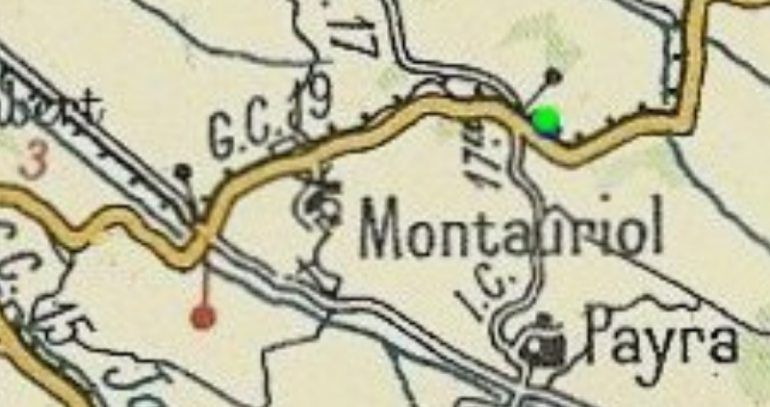
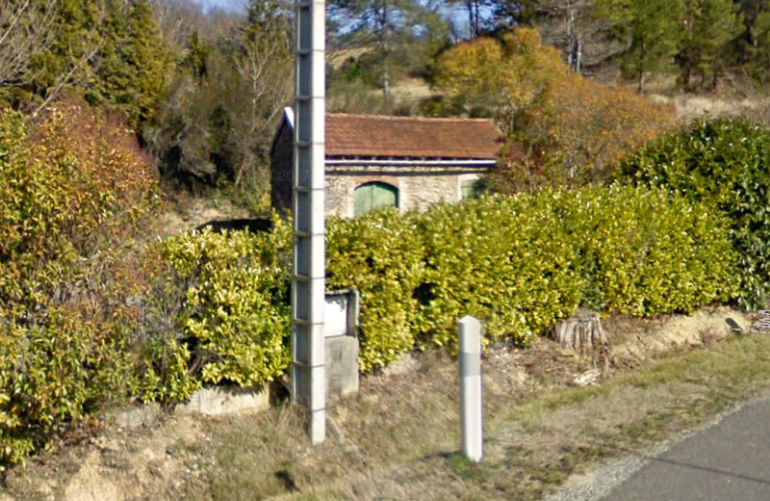
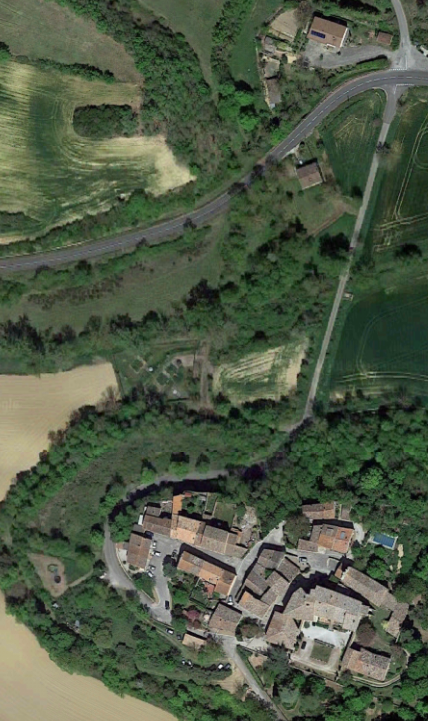
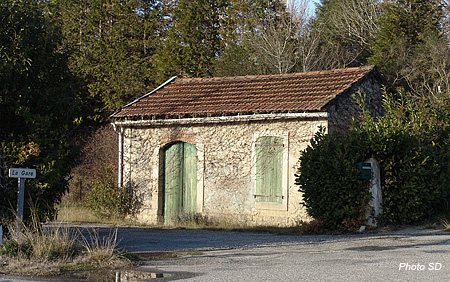
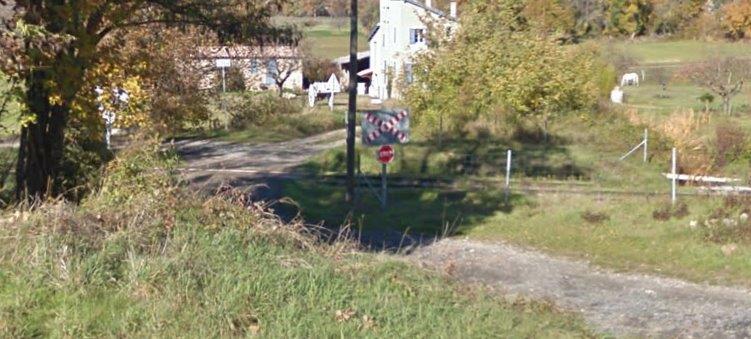
Turning to face northeast, the tramway formation can be seen on the right of the road dropping down to join the road as it crosses the bridge over the River l’Hers Mort and then bearing away to the right to head for Castelnaudary. Both these next two images are taken from Google Street view.After the bridge the D15 follows the bank of the river for about 2.5 kilometres. The old tramway route was to the southwest of the road, between it and the river. The formation of the modern road has swallowed up any remnants of the tramway. A halt at Saint-Andre was followed by another at Nadal close to the crossroads with the D624. Here the tramway turned left to follow the D624 into Montauriol. Theree was a level-crossing across what is now the IC15 (D15) before the tramway followed the north side of the GC19 (D624) towards Montauriol.There is no sign of the tramway in evidence until the cross-roads at Montauriol are reached. At this point, hiding behind a modern hedge, the station building can still be found.The village of Mantauriol is to the south of the road and tramway. The old station building can be seen tight in the top right corner of the satellite image with the village son way south down the D17.

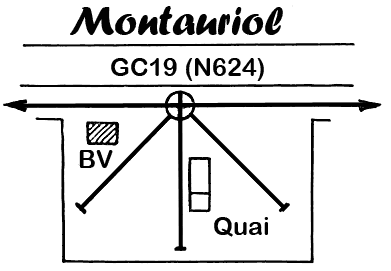
The station at Montauriol was small and the goods facilities were accessed as elsewhere on the line by using a turntable. Passenger facilities were space.

Nothing remains of the station except the small booking office. The building is in such good condition nestled at the foot of the hillside and at the entrance to a private drive, that you might imagine that it is ready to sell your ticket …

The sketch plan has north at the bottom. The facilities were separated from the building that remains,  sited in what is now a private yard. In the picture below, the yard is to the left of the  building. We have been kindly provided with av small sign to make sure that we notice the building. [1]


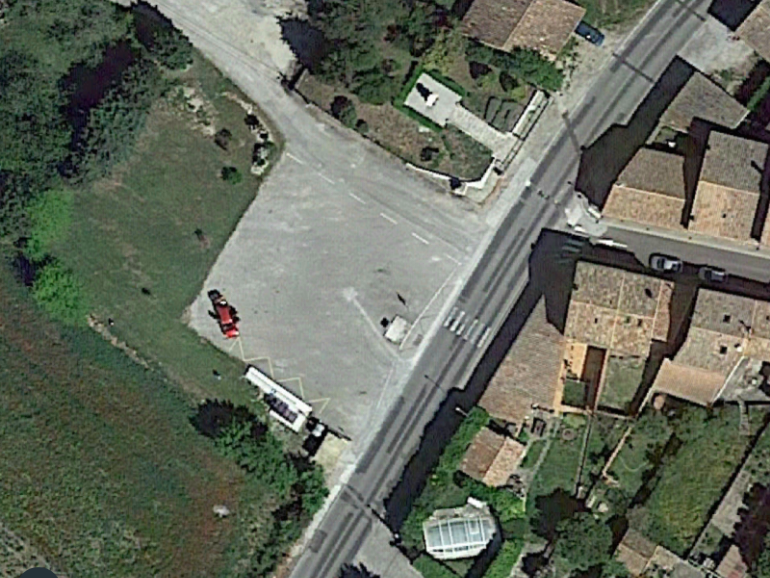
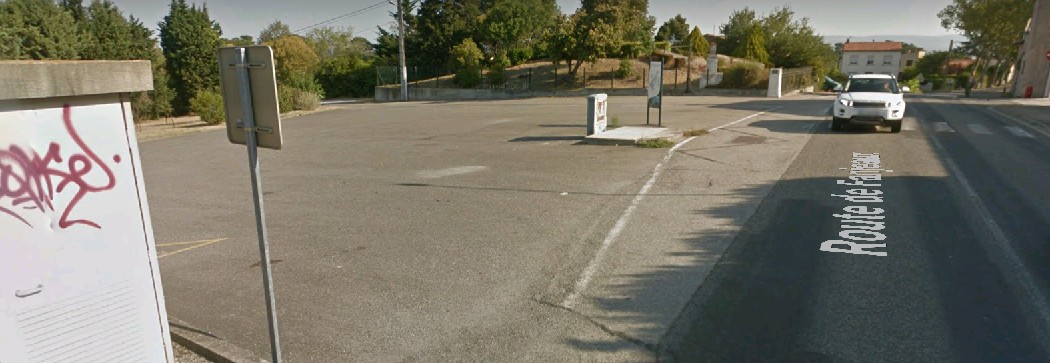
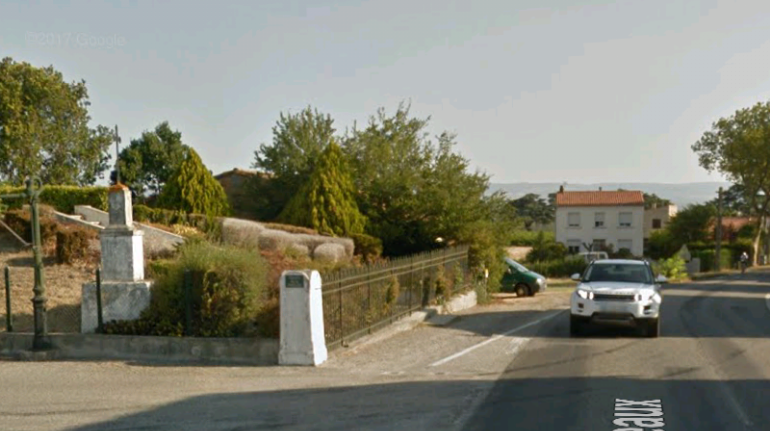
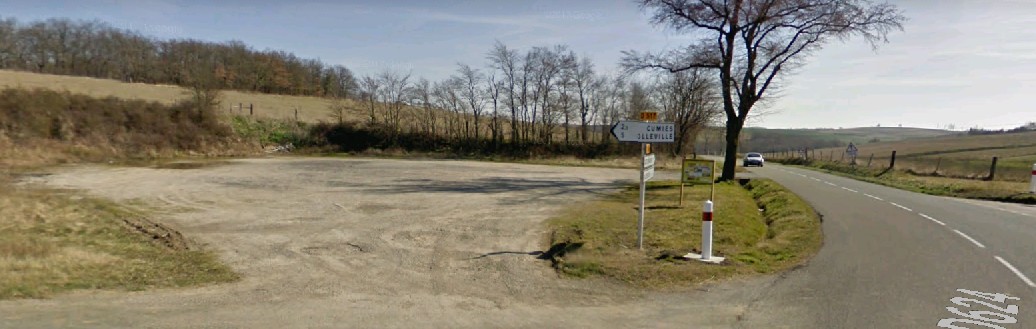
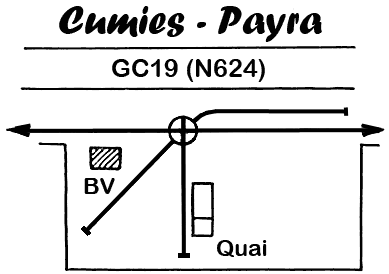
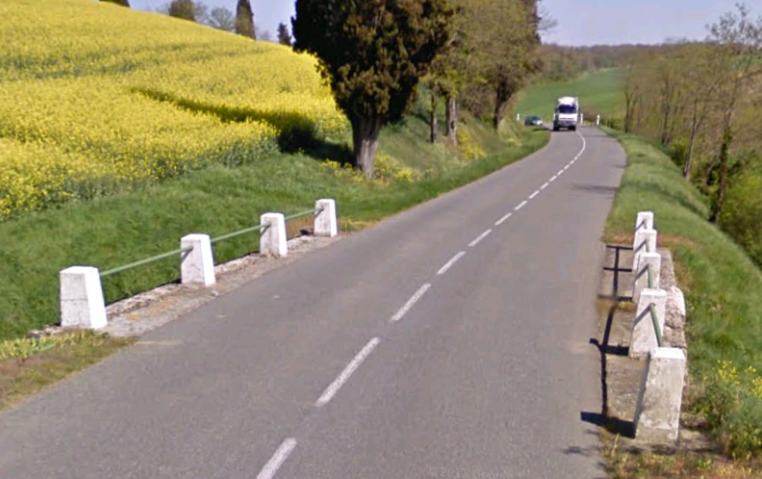
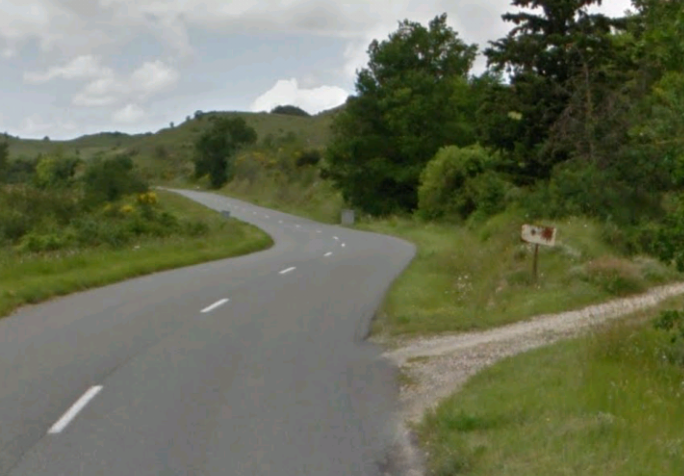
The next halt/station on the route was Cumies-Payra, again there is no sign of the tramway on the ground between Montauriol and Cumies-Payra. The next limited evidence is at Cumies-Payra where the station location remains but as an open bus/lorry/car park. The Google Street view image below shows the location.The adjacent sketch plan needs rotating through 90° to match the above picture. The through line ran roadside with the ticket office towards the rear of the image.

A turntable provided access from the mainline to two sidings, one of which was provided with a raised unloading platform.

The station at Cumies-Payra is situated midway between the two villages. Payra-sur-l’Hers has a population of around 150 in the early years of the 21st Century. Cumies has a population of around 35 now-a-days. Payra-sur-l’Hers was to the south of the tramway and Cumies to the north. In the 21st Century, they are linked by the D517 which crosses the D624 (the old GC19) and the tramway next to the station site.

Trams continued from Cumies-Payra towards Castelnaudary and arrived at Villeneuve-la-Comptal via Borde-Neuve and Fontcontar.

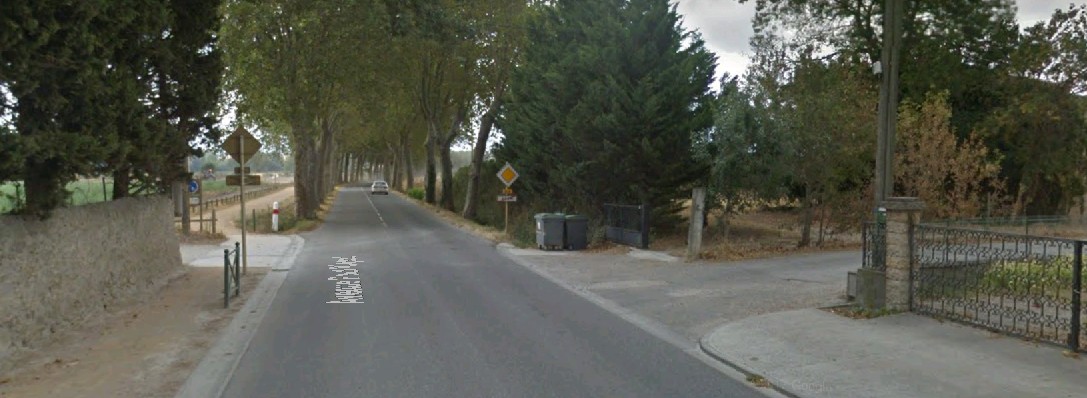
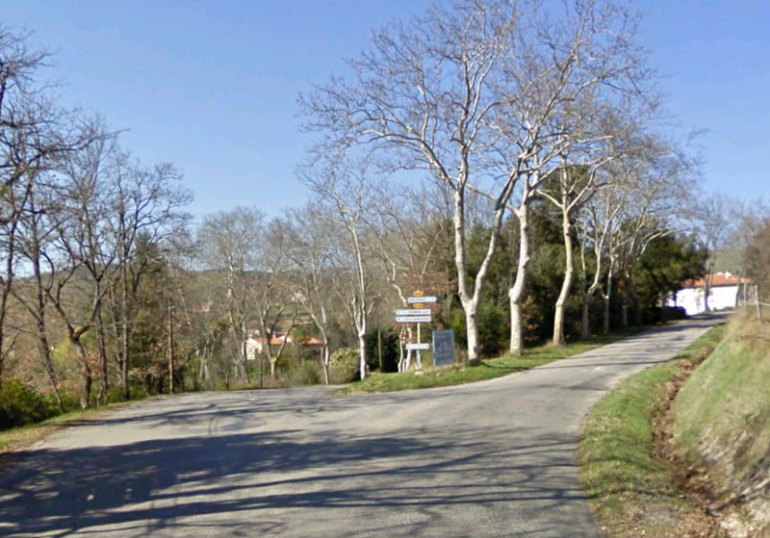
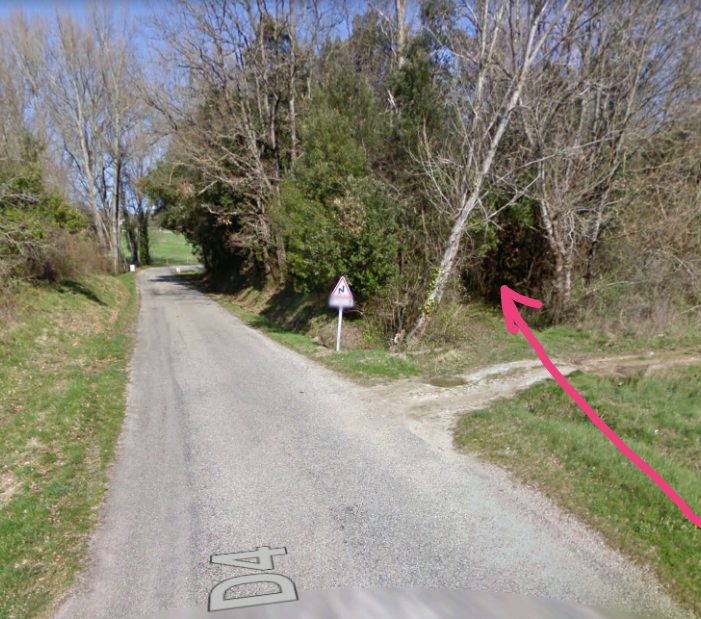
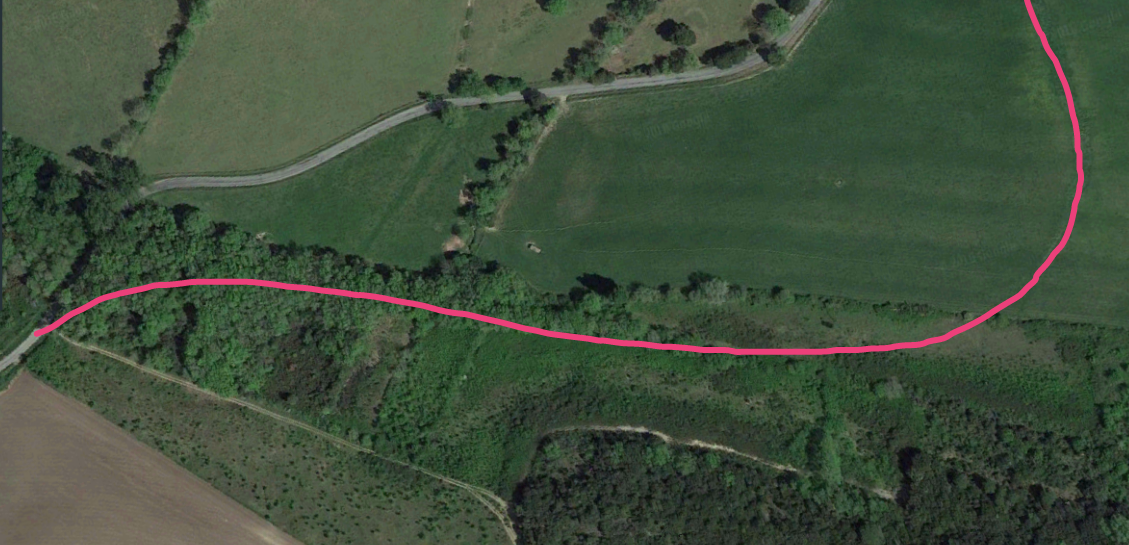
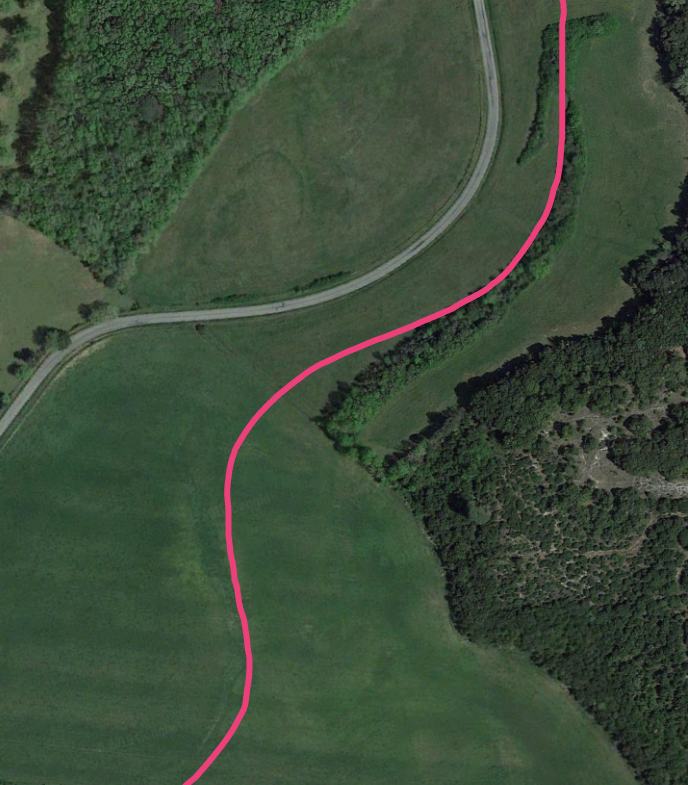
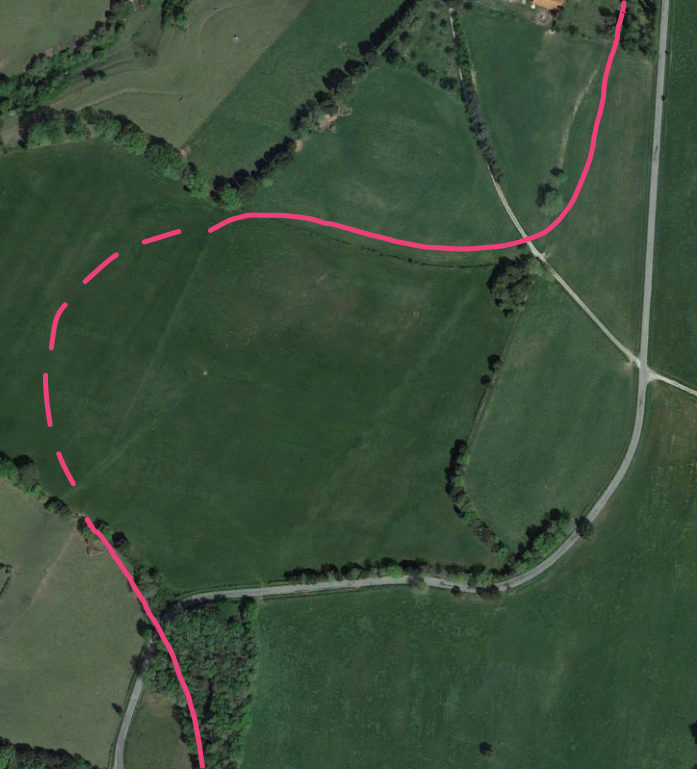
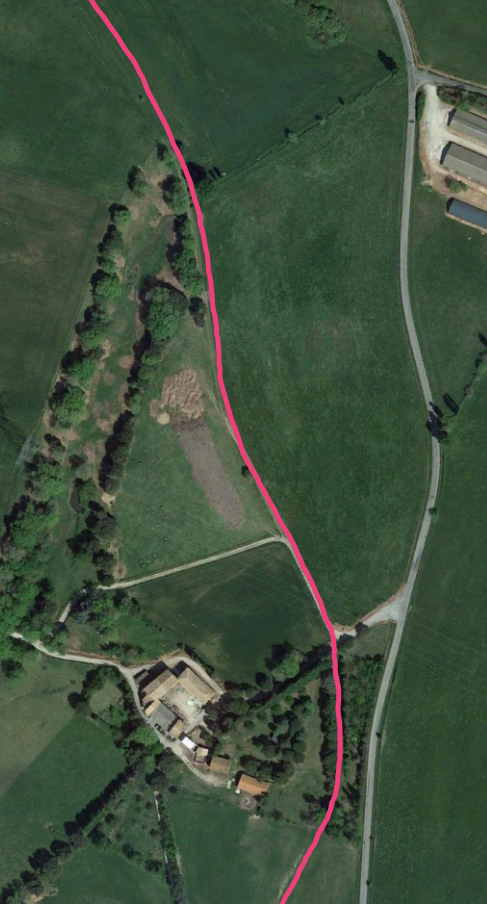
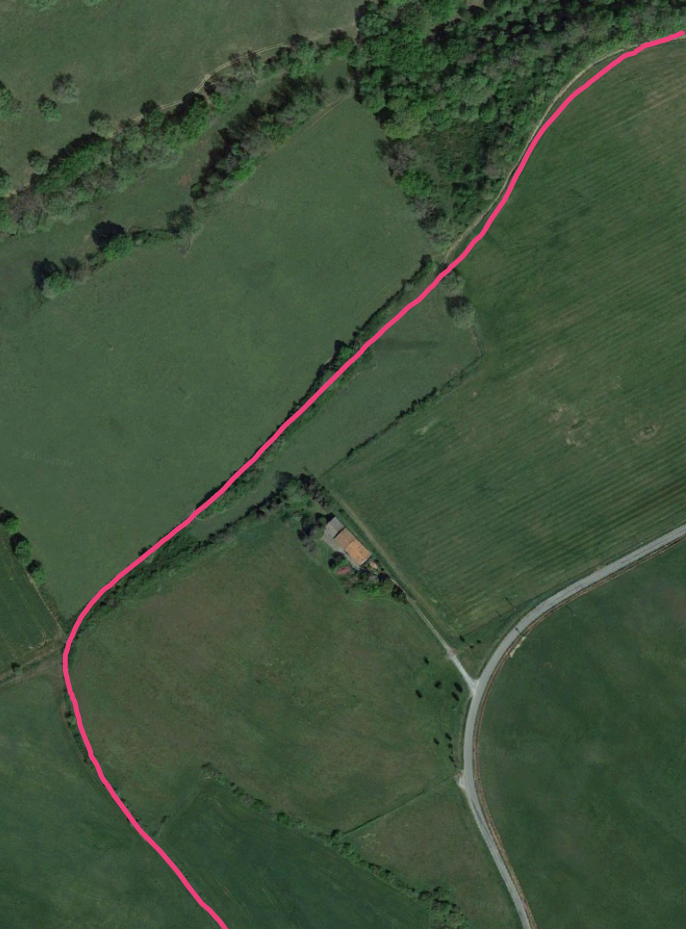
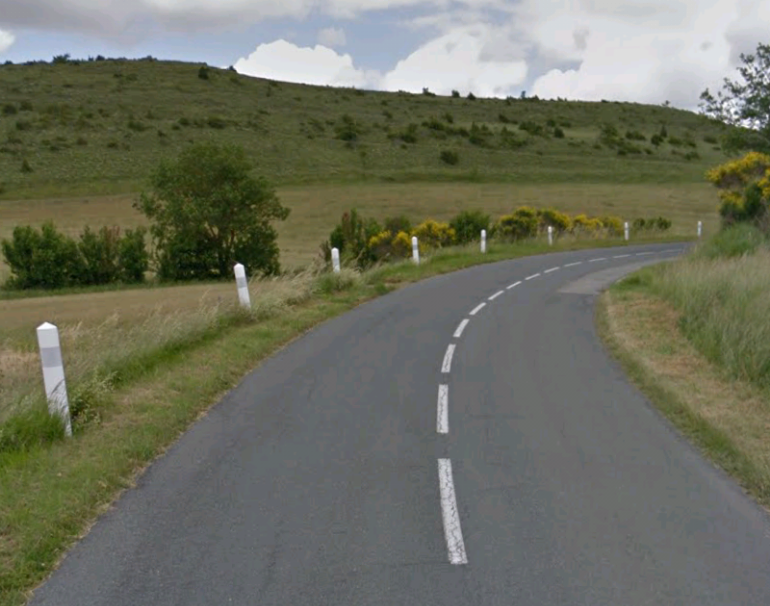
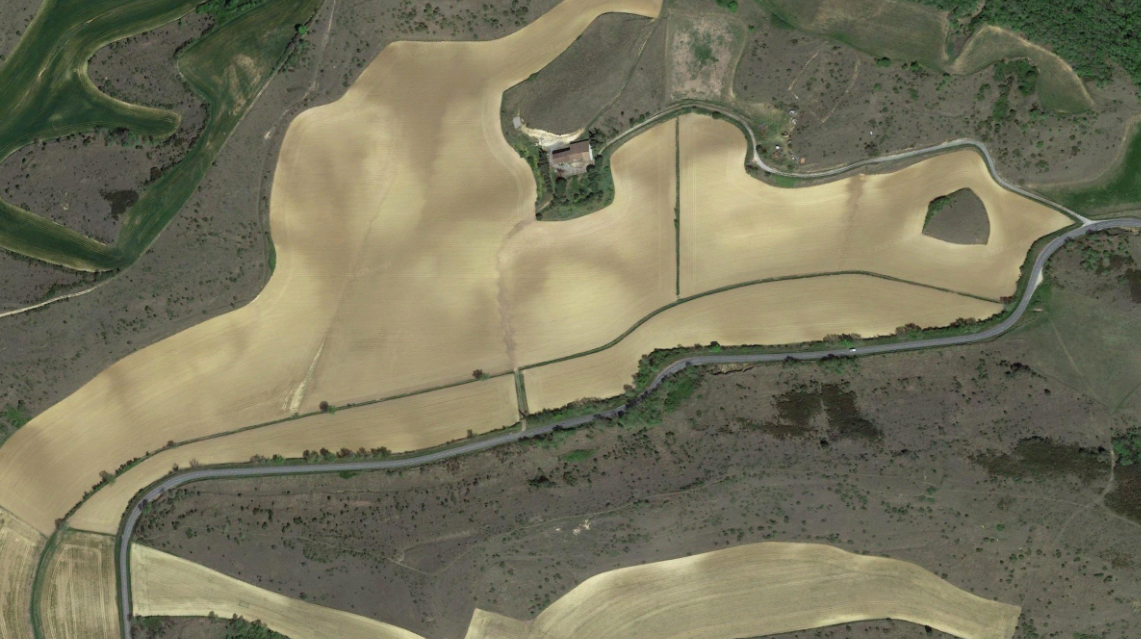
There are no signs along the road of the presence of the old tramway. The old formation will have been subsumed under the present wider road carriageway. Even the bridges show no sign of the tranway’s existence.North of Borde-Neuve the tramway route separated from the road to give it a better, gentler gradient. One website suggests that the line of then deviation was as marked below. [1]There is no evidence at the bend in the D624 of the divergence of the tramway, as can be seen in the image below.Nor is it possible to pick out the tramway route in the satellite image over the first field north of the D624. Itbis, however possible that the tramway could have followed the farmtrack shown to the east of the satellite image below.If this were to have been the case, the building(s) at the centre-top of the image would have marked the point at which the tramway route could be identified on the ground. Trams would have followed the first part of the farm track back towards the present D624 and then travelled north of that farm track on the hillside. That route is, however, once again, very difficult to pick out.

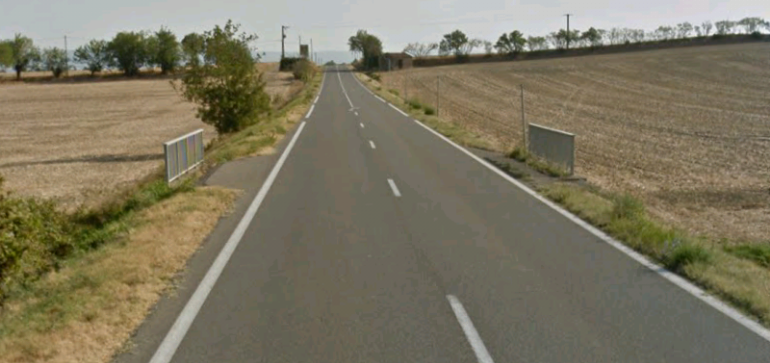
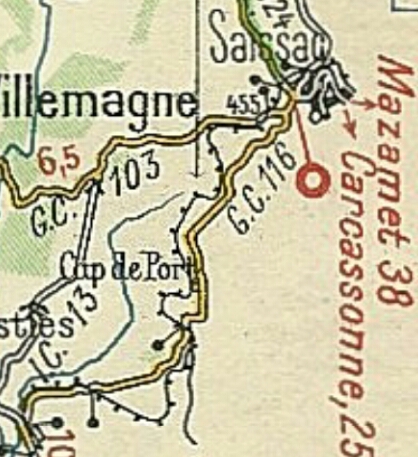
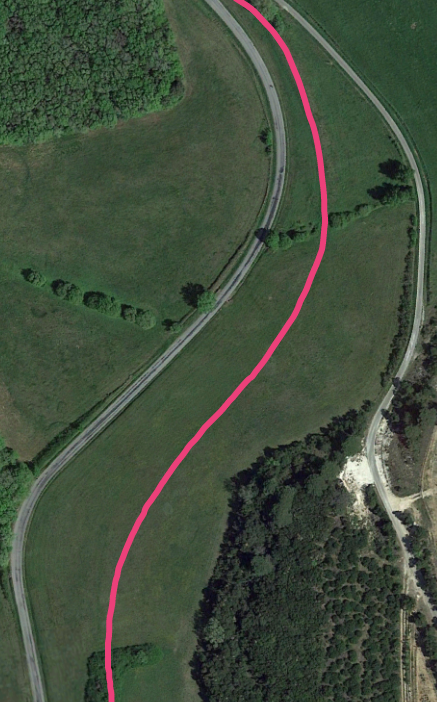
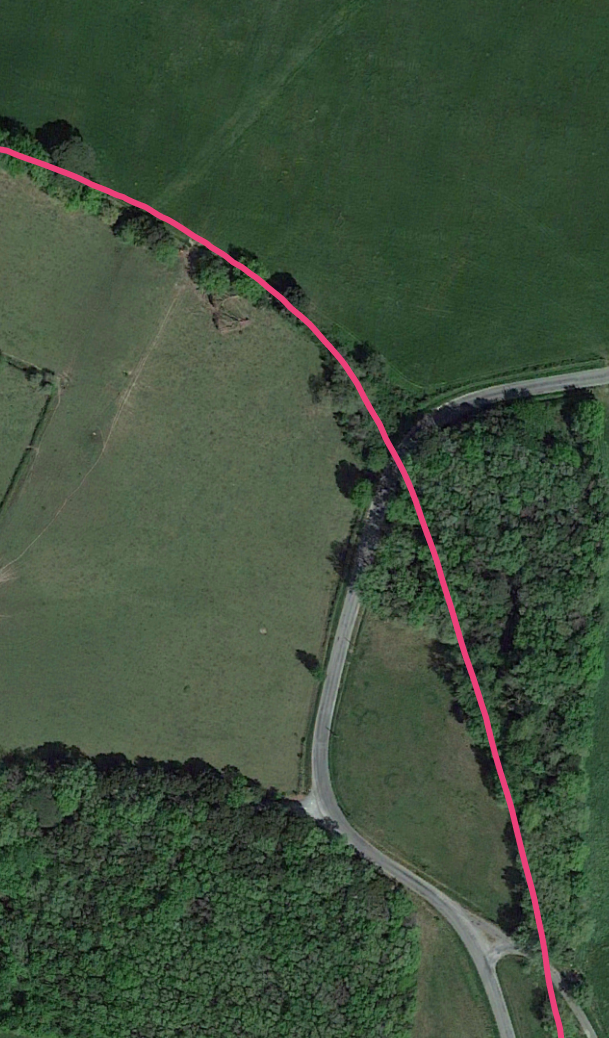
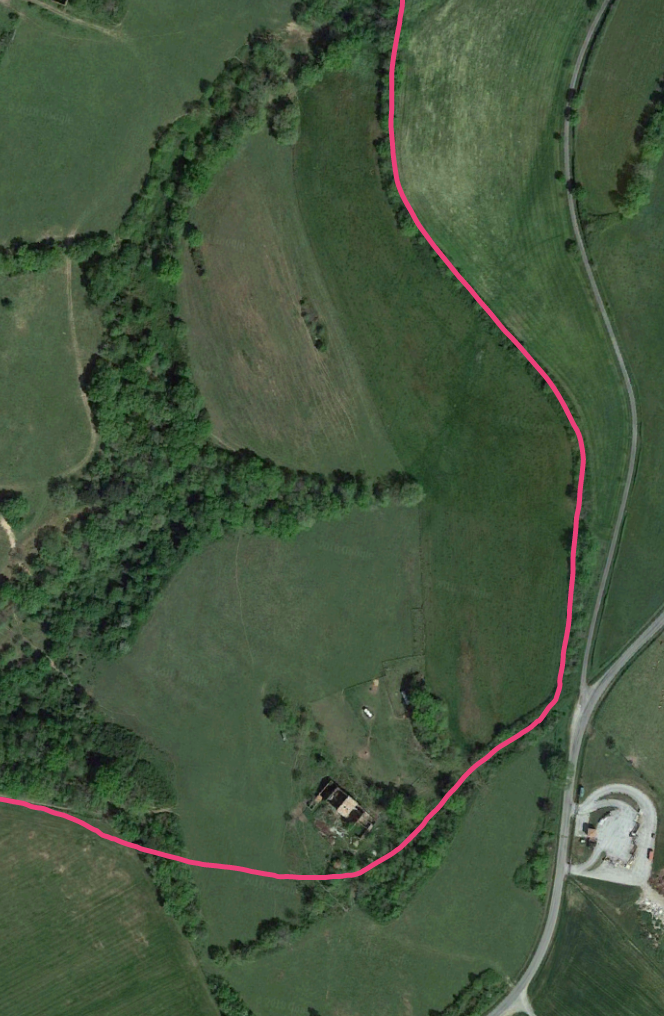
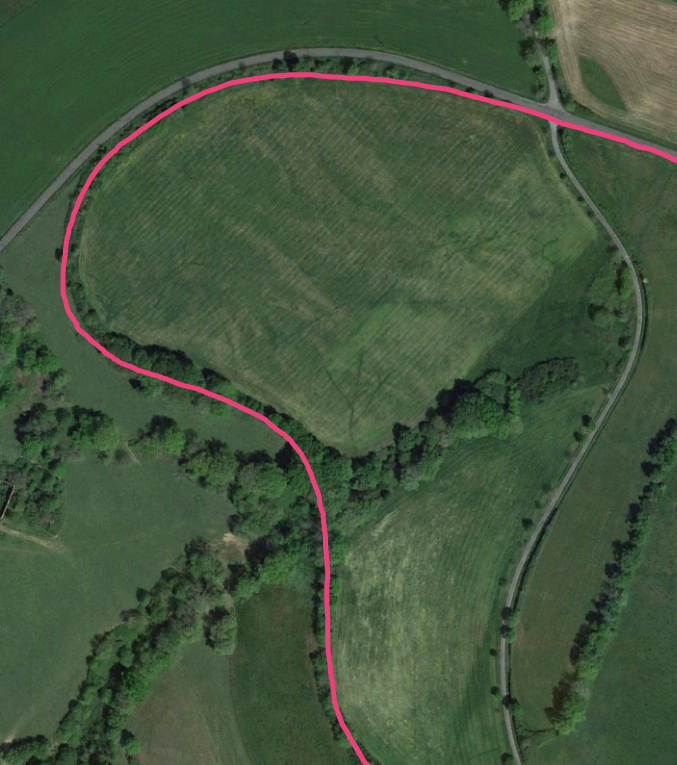
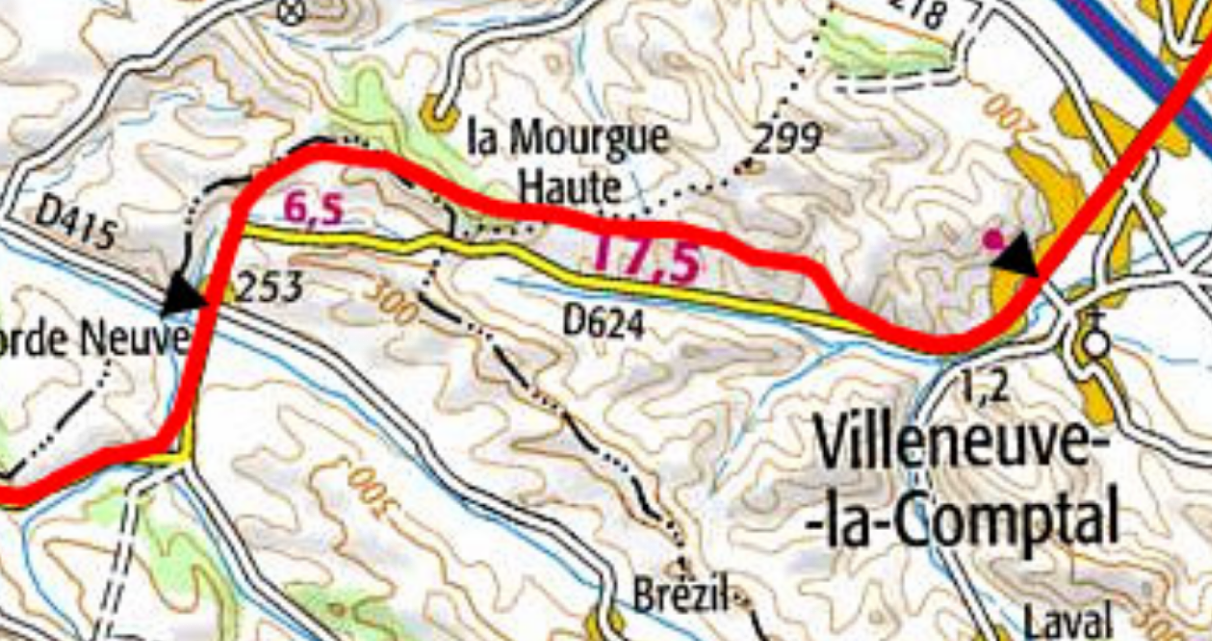
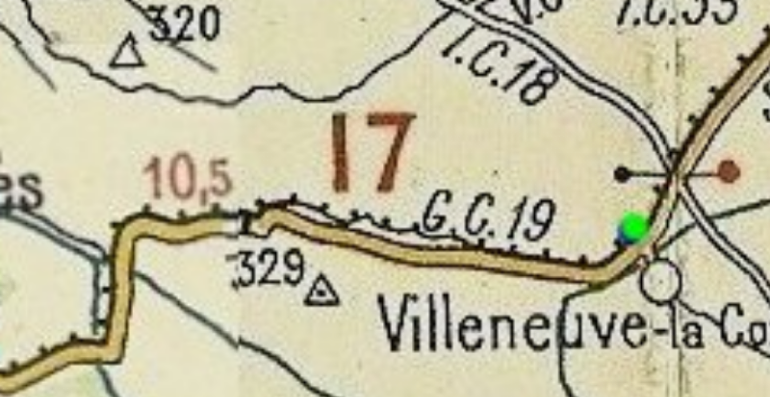
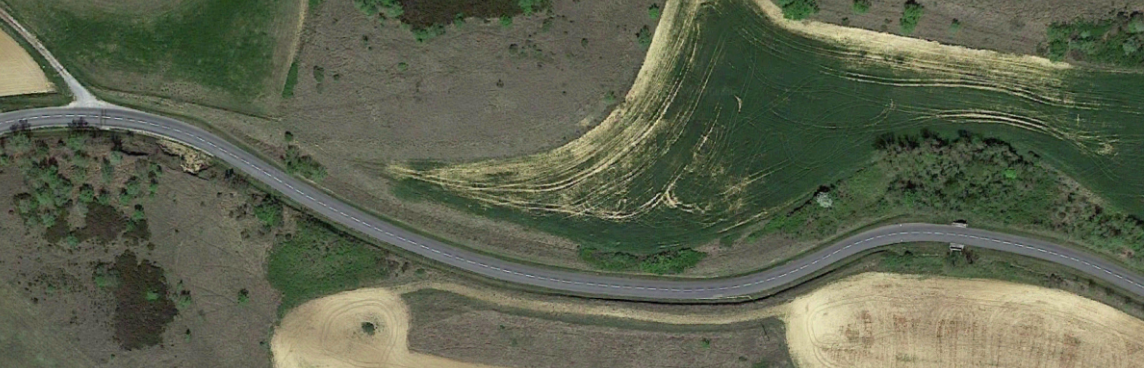
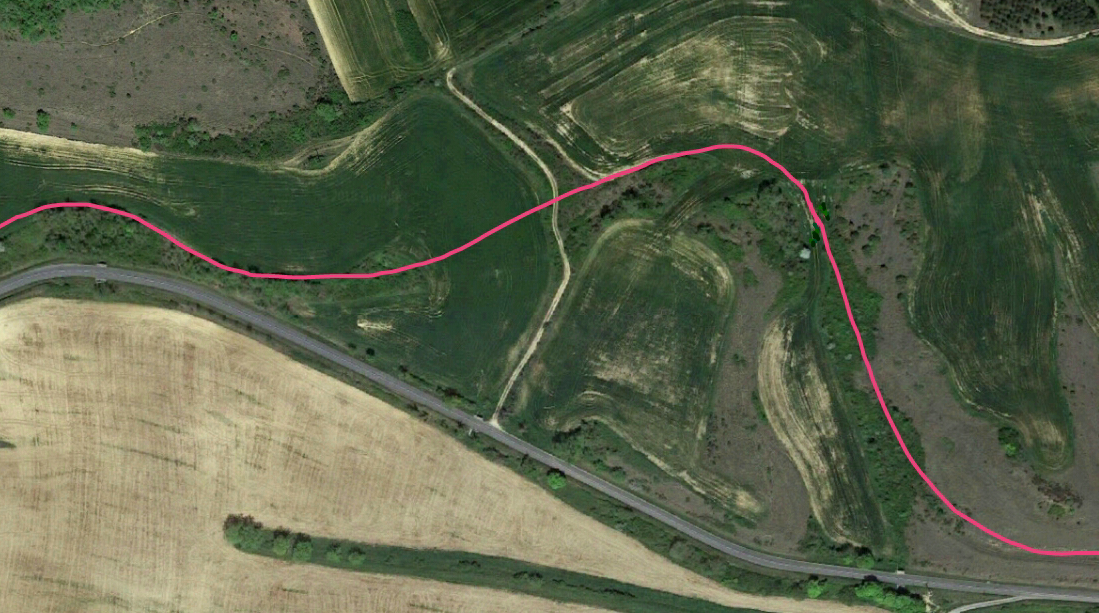
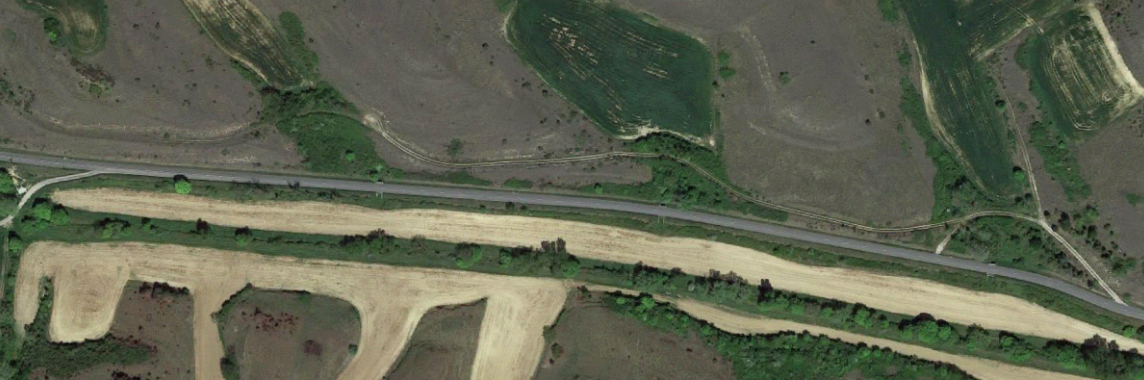
An alternative much shorter derivation is shown on the Michelin map of the time. I am much more inclined to credit this shorter deviation as being the actual route of the tramway. The extract from the Michelin map shiws the tramway on the north side of the GC19 for some distance from Borde-neuve until the point just above the ‘3’ of the height marker, 329 m. The road and tramway alignments are then close but separate for a distance.The deviation from the route of the road was designed to avoid one steep section of gradient on the road. At its height, the tramway reached 293m above sea-level, at Villeneuve it had dropped to 164m above sea-level. This shorter deviation has much more to support it and there is evidence available in satellite images which support the Michelin mapping.Careful examination of the above image will show remnants of the tramway alignment running from the present-day track on the left, just a few metres to the north of the road and then running to the north of the copse of trees at the right hand side of the picture.This next section of the deviation is more difficult to pick out. I have provided an approximate alignment which is suggested both by contours and topography.This final length of the deviation does not need marking, the tramway route wanders sinuously around on the north side of the modern road.

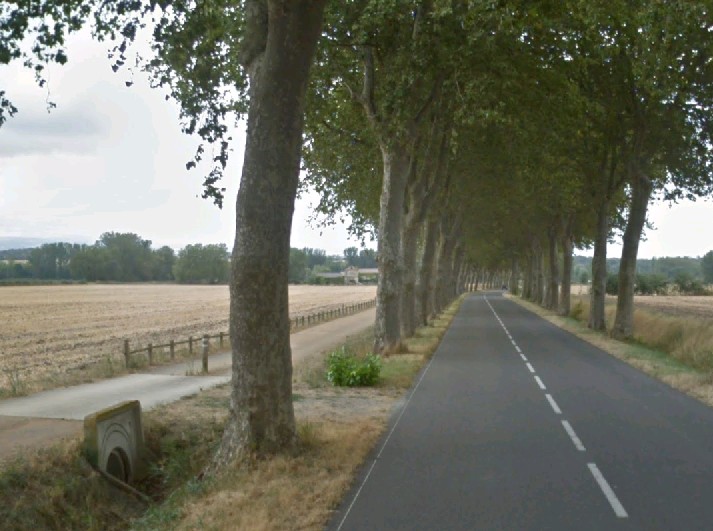
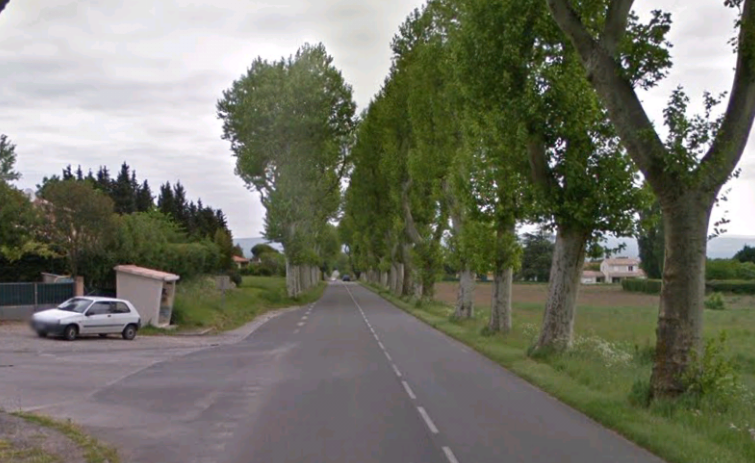
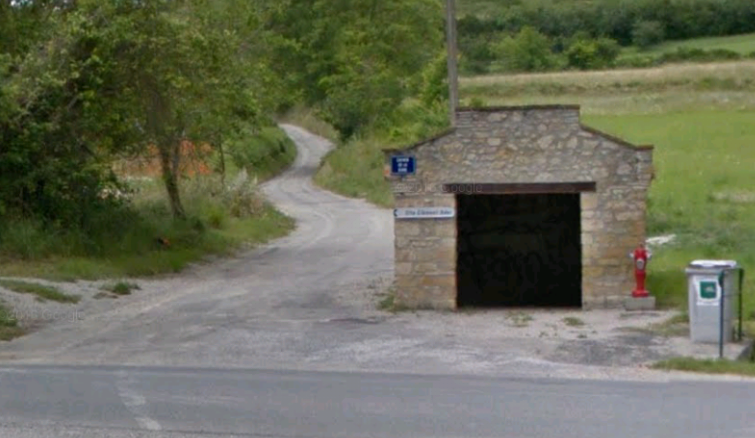
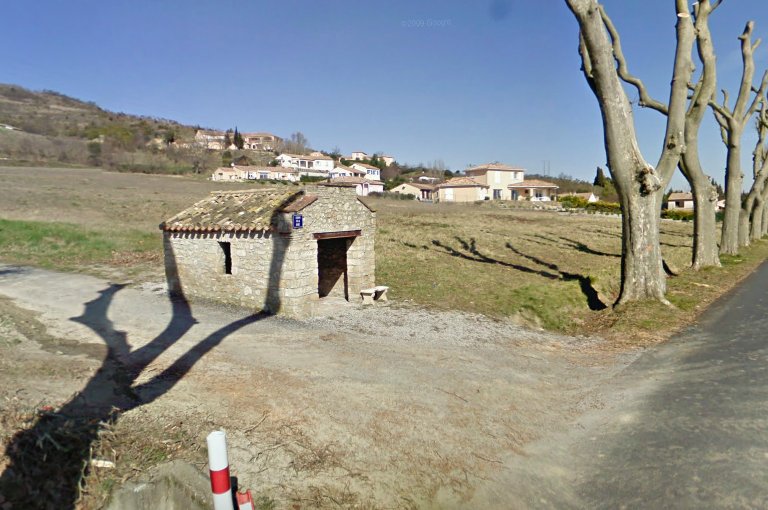
The image below shows the point at which the road and tramway return to the same alignment.The approach to Villeneuve-la-Comptal with no evidence of the old tramway in sight. The alignment was to the left of the road, probably to the left of the avenue of trees. The small station was at the next riasd junction ahead.The road to the left of the shelter is the Chemin de la Gare.Was this modest building all that was provided for passengers on the tramway? [5]

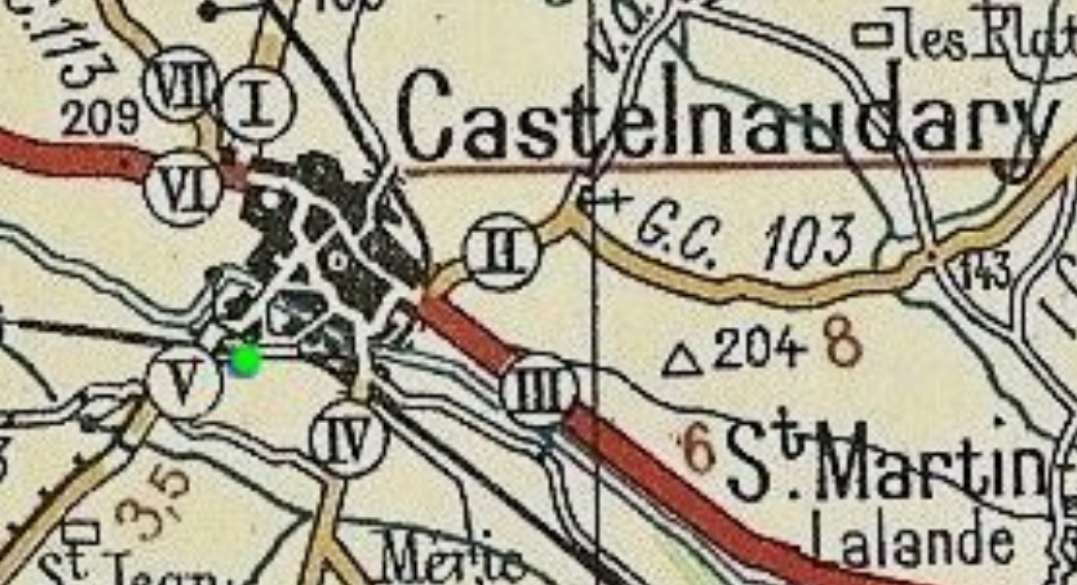
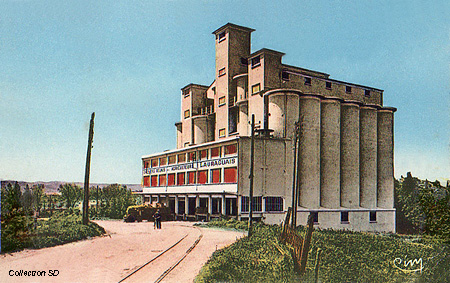
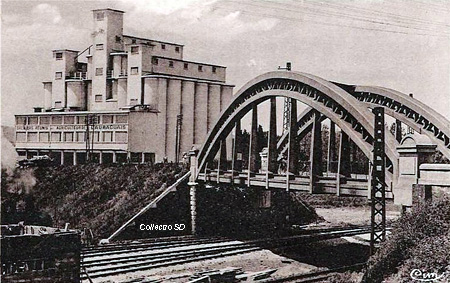
The tramway continued to follow the northwest side of the GC19 (D624) into Castelnaudary, through what are now the suburbs of the town which reach all the way to Villeneuve. The old Michelin map shows the station on the south side of the town and is additionally marked by a green dot.Before reaching the station the trams passed a large complex of grain silos. These are now owned by Arterris, a large Agricultural Co-operative. [2][8] The buildings dominate the southern half of the town – a veritable cathedral of the agricultural industry which dominated the region. Immediately beyond the silos the tramway crossed the Compagnie du Midi main railway line between Bordeaux and Were.

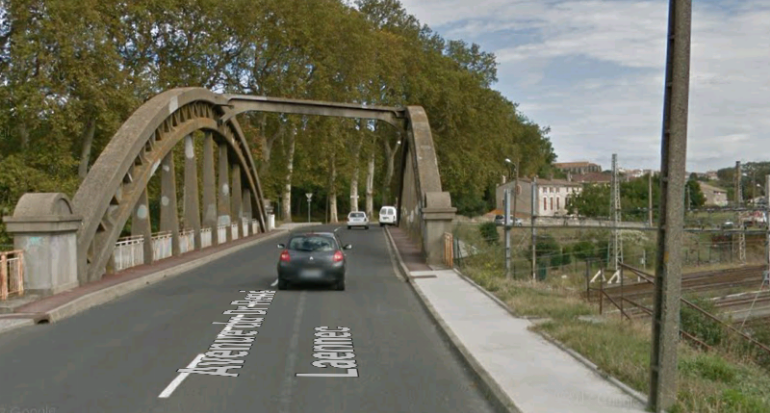
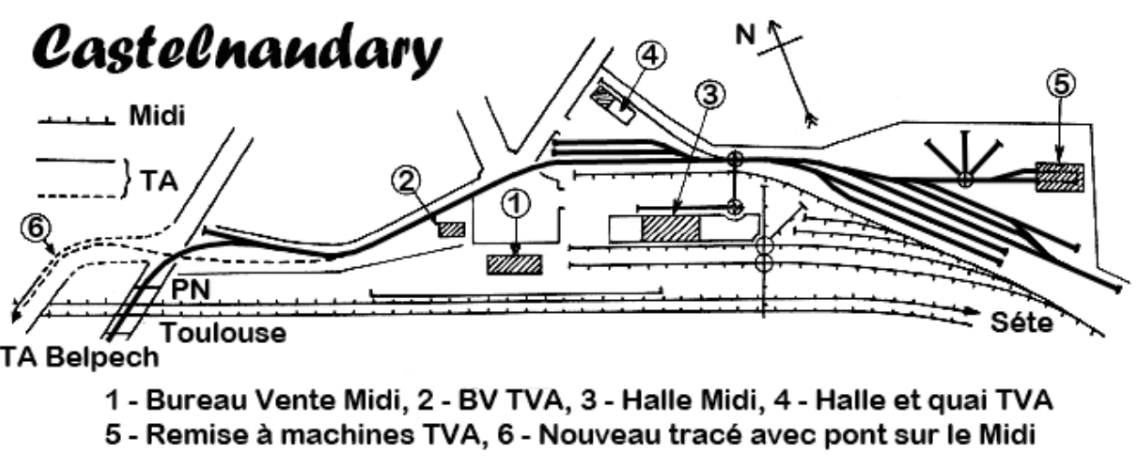
The Tramways de l’Aude Station shared a location with the Compagnie de Midi Mainline Station. The original approach for trams took them at level across the mainline, but with time this clearly became unsatisfactory. The tramway and road were diverted and a bridge was provided across the mainline of the Compagnie de Midi. The approach to Castelnaudary was across this bridge. This Google Street view image is taken from a point adjacent to the grain silos above.

The sketch plan below shows the two road/tramway alignments with the earlier one in bold. The booking halls for the Tramway and the Midi are numbered ‘2’ and ‘1’ on the plan, respectively. [6]

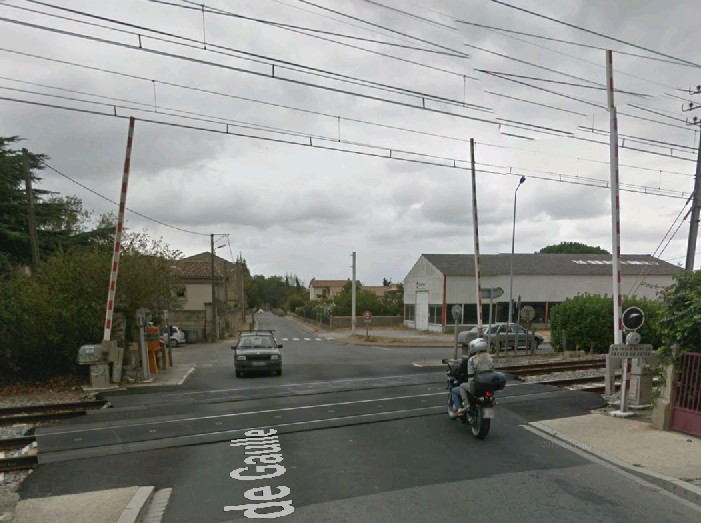
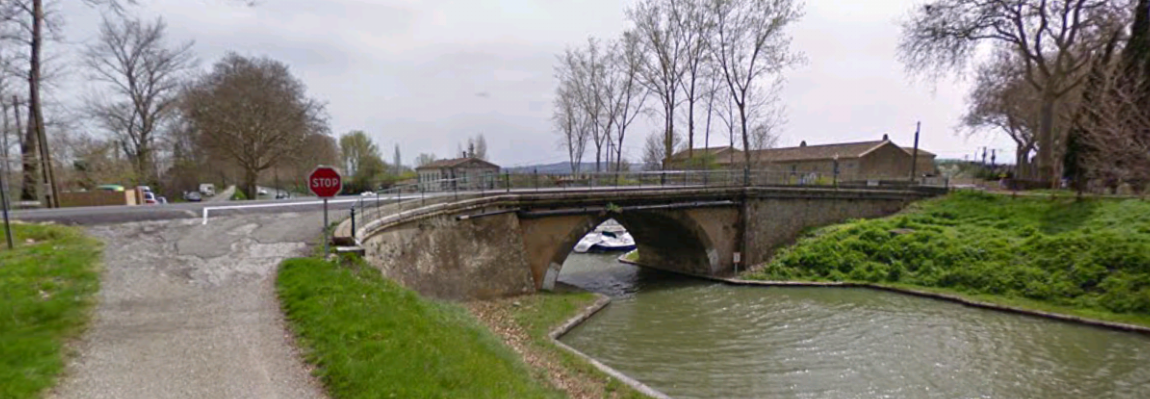
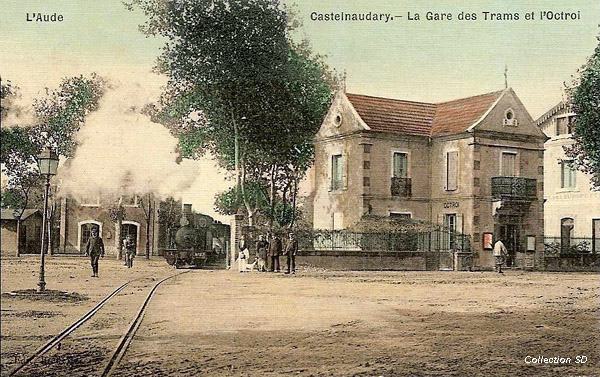
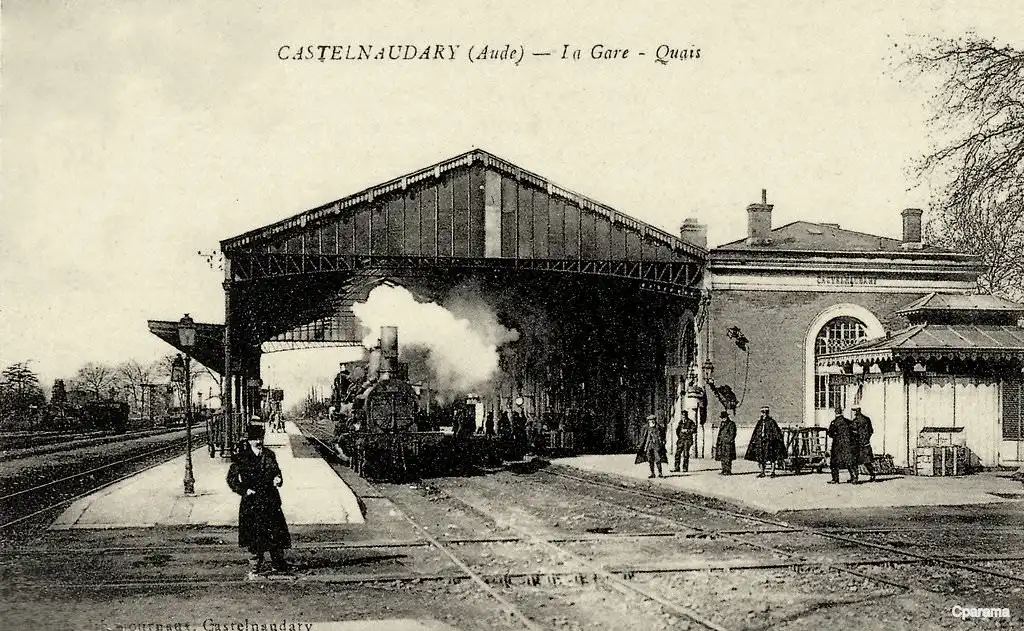
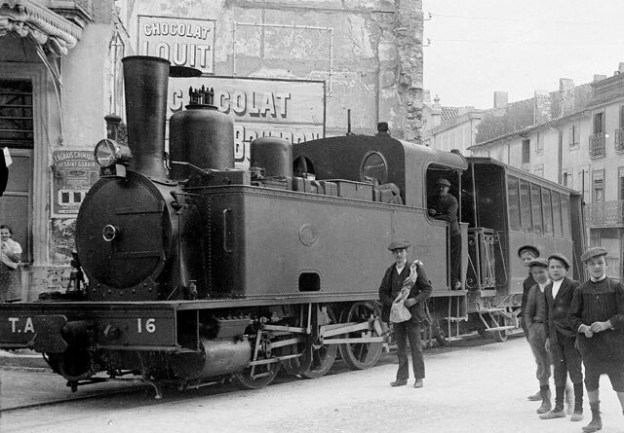
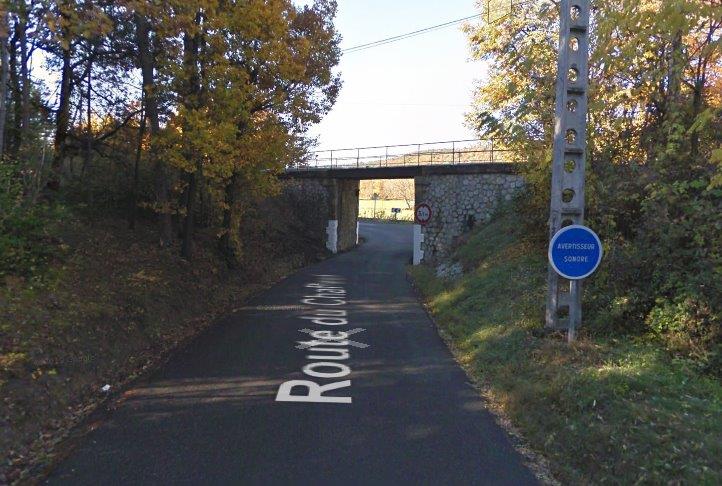
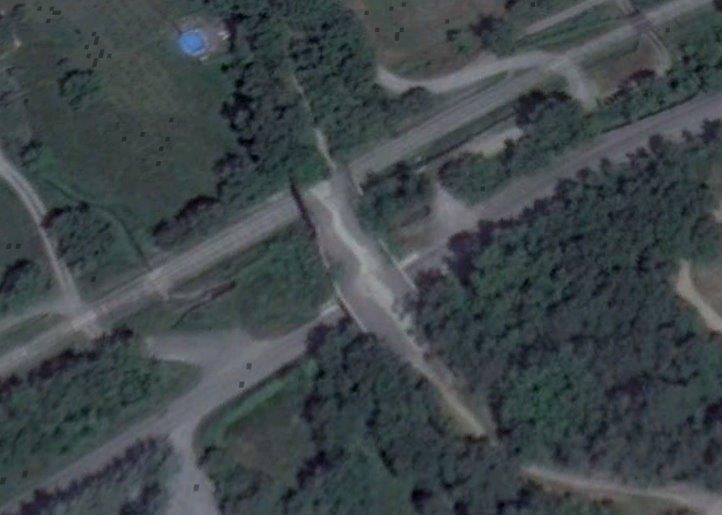
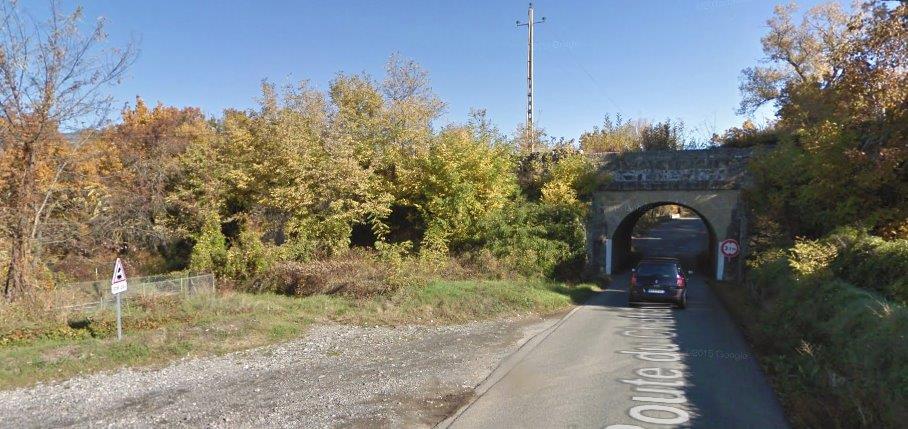
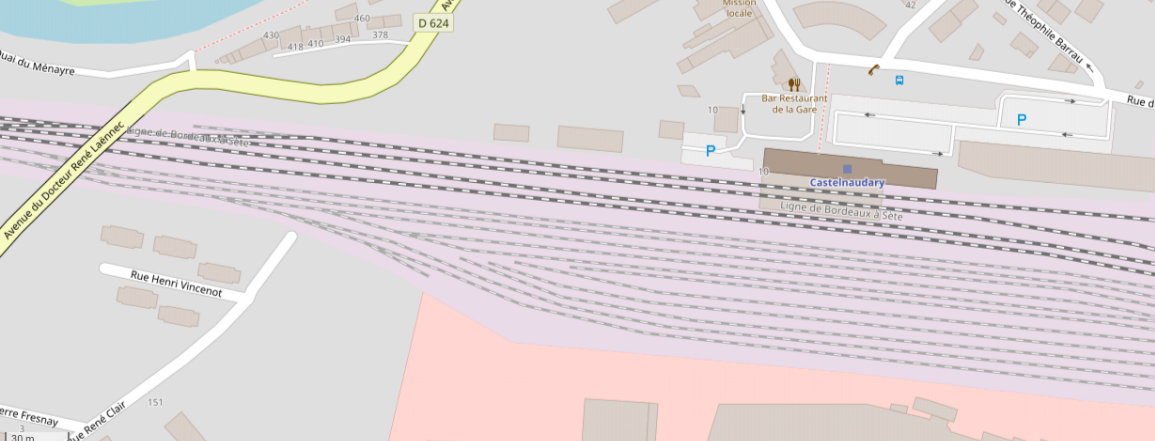
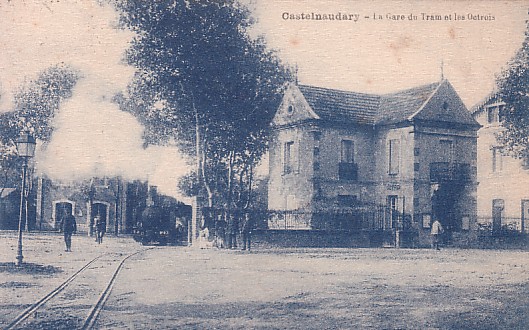
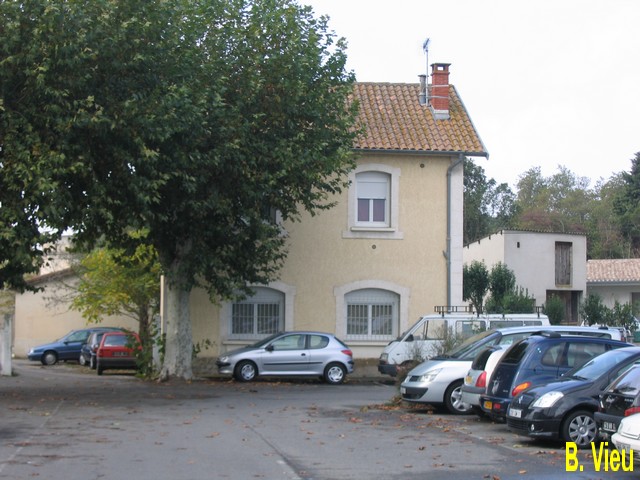
This bowstring arch bridge was built by March 1922 to carry the road and the tramway over the mainline. The view is taken from the East, on the north side of the Compagnie du Midi mainline. [6]. An early 21st century view of the bridge is below.The OpenStreetMap plan of the modern station site no longer shows any evidence of the Tramways de l’Aude, with the exception of the main station building/ticket office of the TVA which is numbered ’10’ on the plan. The bowstring arch bridge is the bridge at the left of this plan.This monochrome version of the feature image shows Corpet-Louvet No. 27 at the head of a train arriving in Castelnaudary from Belpech. The picture is taken from the station concourse which was shared with the Compagnie du Midi. The ticket office for the TVA is at the left of the picture shrouded in smoke. The building to the right is now the station restaurant! The picture comes from the collection of Gilles Lapasset. [7]A closer view of the TVA Station building taken in 2004 © Bernard Vieu. [7]

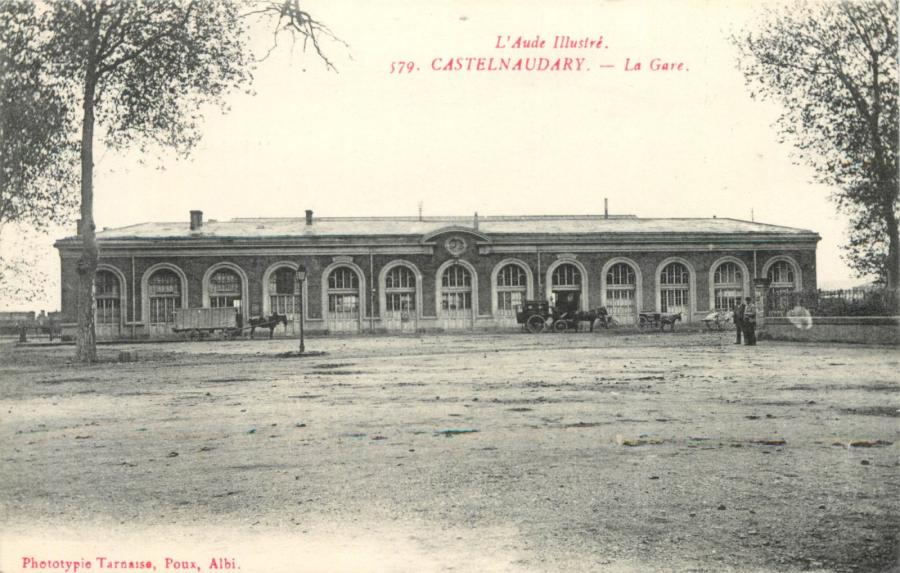
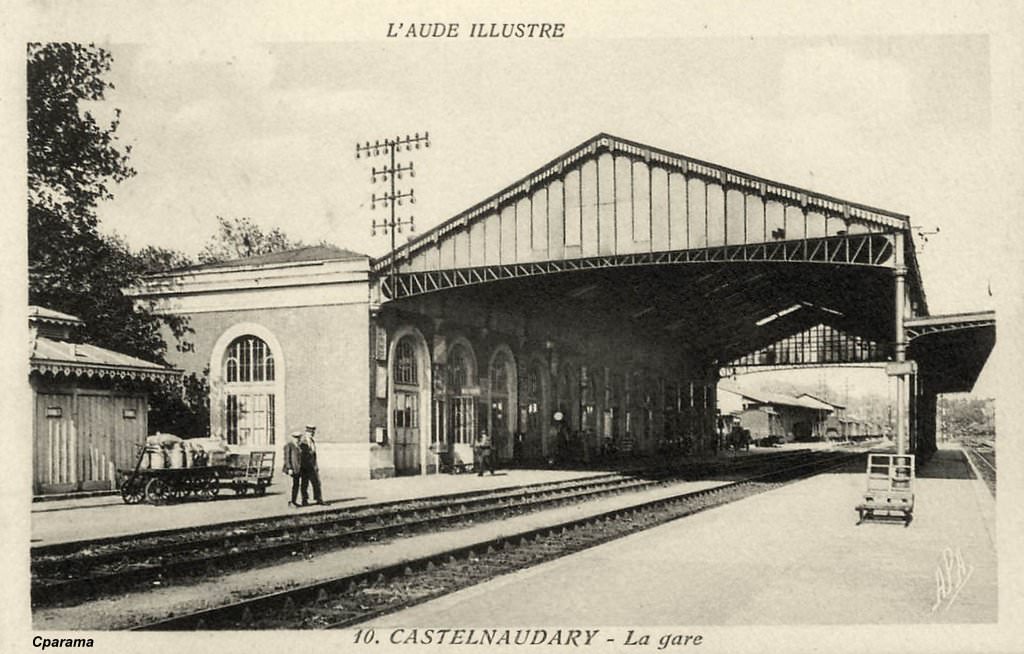
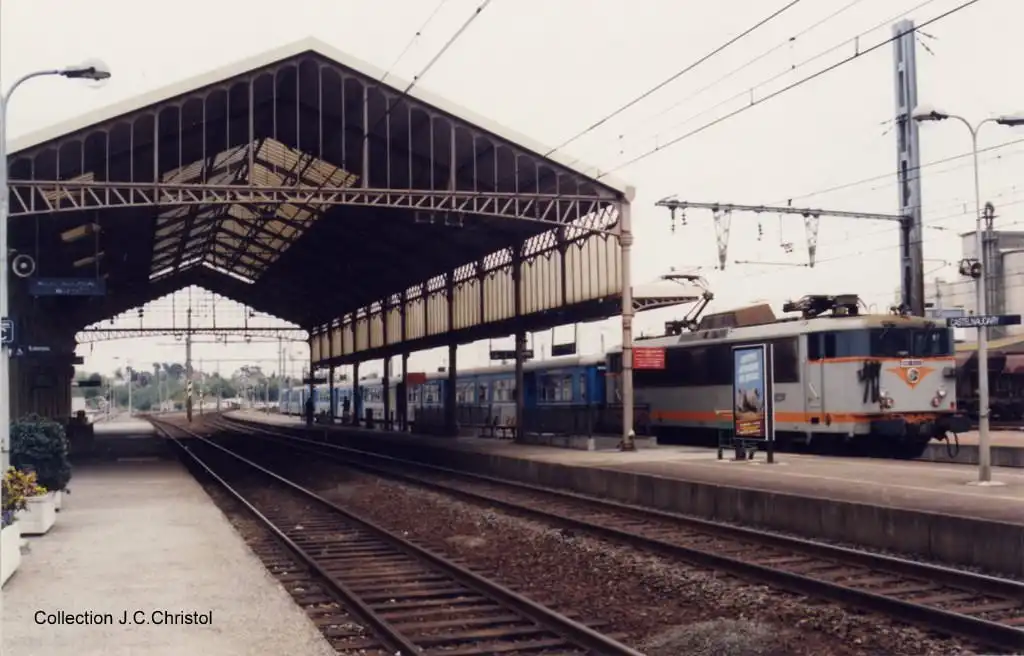
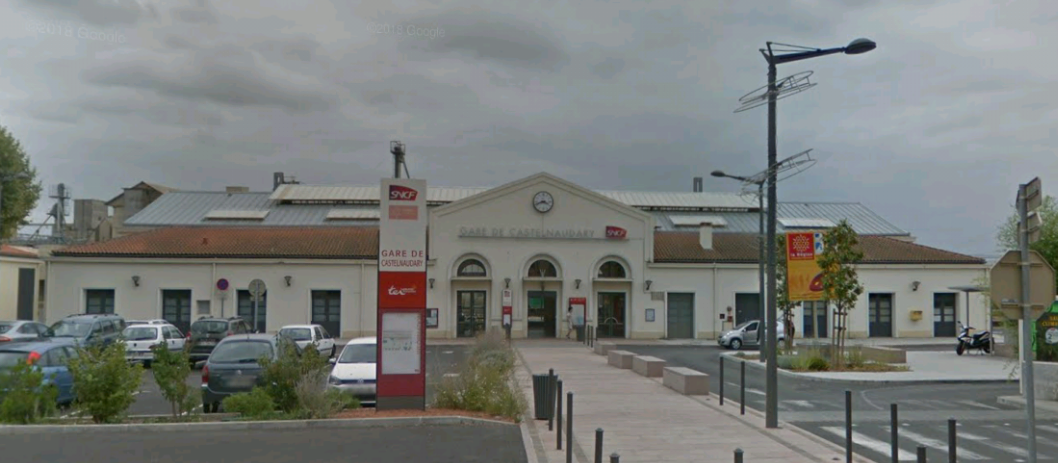
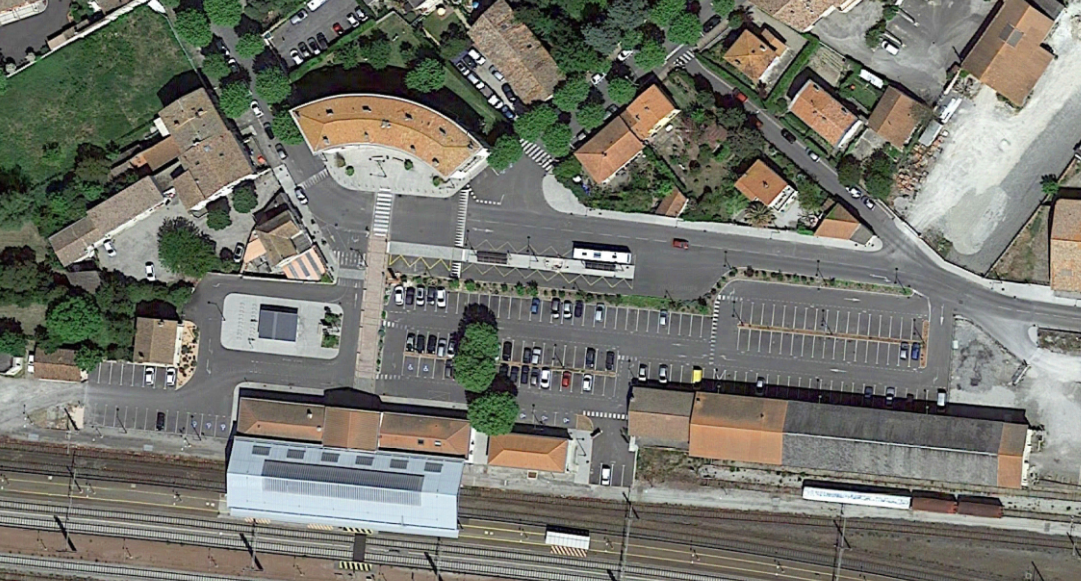
The Tramways de l’Aude shared the station forecourt with the Compagnie du Midi and a few photographs of their station follow before the post concludes with some timetables for the tramway.The original station frontage of La Gare due Midi. [9]Two views of the trainshed at Castelnaudary in the early years. [10]Castelnaudary Station in 1997, © J.C. Christol. [10]Castelnaudary Station forecourt in the 21st Century.Castelnaudary Station forecourt in the 21st Century. The train-shed of La Gare due Midi is easily seen at the bottom of the image. The station building for the Tramways de l’Aude is the square building to the bottom left of the picture.

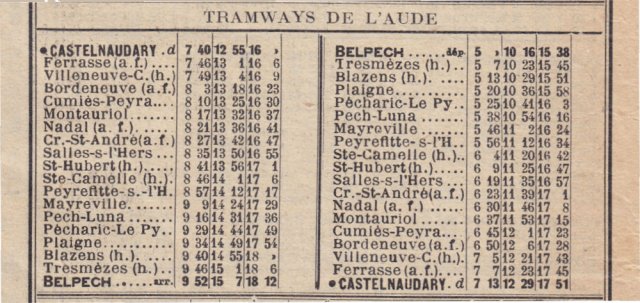
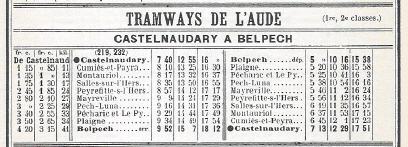
Two timetables for the line, dating from the early years of the 20th Century.From 1913. [3]From 1914. [4]

References

1. http://sgdelestaing.pagesperso-orange.fr/Francais/Tramway4.htm#Epilogue, accessed on 27th August 2018.

2. http://chemins.de.traverses.free.fr/Tramway_Aude/Gare_Salles_Hers.htm, accessed on 29th August 2018.

3. http://chemins.de.traverses.free.fr/Tramway_Aude/Index.htm, accessed on 1st September 2018.

4. http://chemins.de.traverses.free.fr/04533299f60f7f819/0453329a010d0be29.html, accessed on 1st September 2018.

5. http://chemins.de.traverses.free.fr/Tramway_Aude/Gare%20Villeneuve.htm, accessed on 2nd September 2018.

6. http://sgdelestaing.pagesperso-orange.fr/Francais/Tramway.htm, accessed on 29th August 2018.

7. http://chemins.de.traverses.free.fr/Tramway_Aude/Gare_Castelnaudary.htm, accessed on 2nd September 2018.

8. https://www.arterris.fr, accessed on 2nd September 2018.

9. https://fr.m.wikipedia.org/wiki/Gare_de_Castelnaudary, accessed on 2nd September 2018.

10. https://www.cparama.com/forum/castelnaudaey-aude-t24642.html, accessed on 1st September 2018.

Tramways de l’Aude – Overview – Part 3

This third part of the overview of Les Tramways de l’Aude is based on the second and third of a series of three articles provided by Loco-Revue in its magazine in late 1961, written in French by C. Lacombe. It is not a direct translation, and it seeks not to repeat information already provided in the first post in this series. [1]

Traffic: Train lengths on the network were limited to 8 carriages or wagons and a maximum length of 50m. A short section of the network, the line from La Nouvelle to Port La Nouvelle carried a significant summer passenger traffic. Otherwise, the network carried the usual range of customers for a line of local interest: farmers, winemakers, commercial travelers, etc.

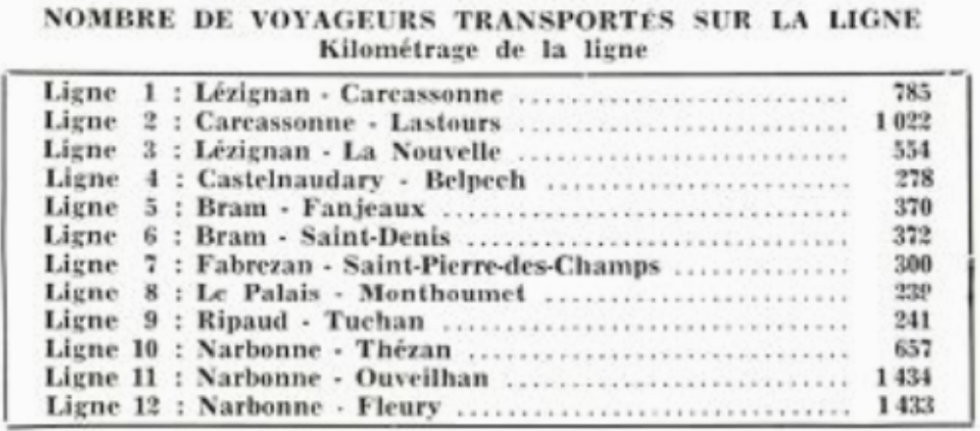
From its opening, the network was well patronised. However from 1920, some lines began to see a drop in traffic. Those which continued to see a good level of traffic were those considered to be the ‘main’ lines of the network. Then following table shows these differences and is based on a period of 4 months in 1926.

The main arteries (Lines 1 and 3) have good traffic. The lines in the “suburbs” of Narbonne and Carcassonne (Lines 2, 10, 11 and 12), had high traffic levels, the remainder struggled. The commissioning of railcars, however, brought a marked improvement in the number of passenger trains and passengers. This improvement, was spectacular – a 26.5% on the figures of the previous year!

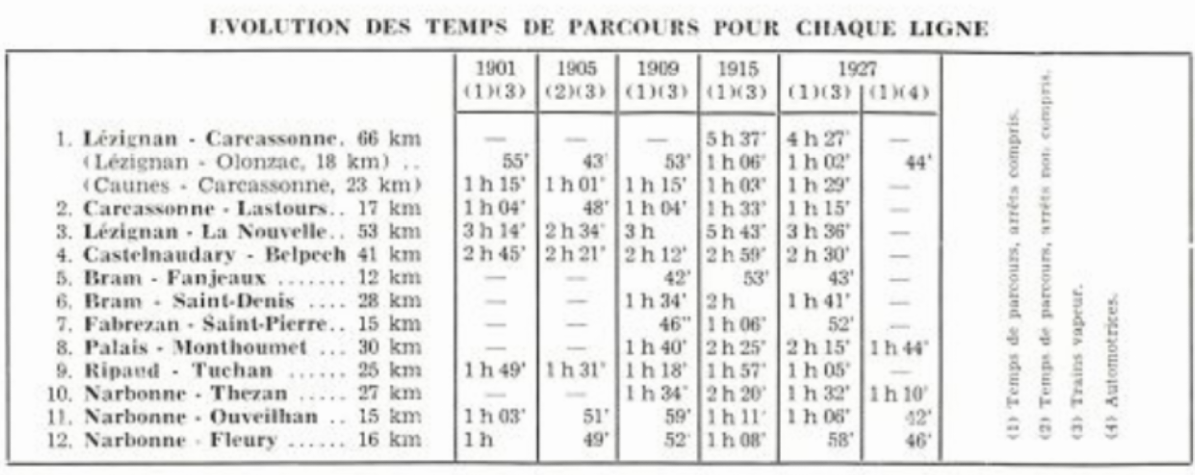
Passenger services: From their opening, the service on each line was provided by means of three daily return trips, except on the Lézignan to Olonzac section (line 1) where there were four round trips. The overall average speed was between 14 and 20 km/hour which equated to a line speed (stops deducted) of between 16 and 25km/hour. The maximum line speed was intended to be 20km/hour.

From 1909, surveys showed that the average commercial traveller found an improvement in travel times of between 2 and 33 minutes, as can be seen in the table below:

During the Great War, the staff was partly mobilized for the war effort and the company was obliged to reduce the frequency of services to a daily return, except on the Narbonne-Ouveilhan line (Line 11), and on some sections of the Lézignan-Carcassonne Line (Line 1) and Lézignan-La Nouvelle Line (Line 3) where two round trips were maintained daily. Due to the poor condition of the equipment and track, travel times increased considerably on each line.

After the war, the service improved quickly. From 20th March 1920, three daily round trips were secured on Lézignan-Félines section of Line 1, and Lézignan-Fabrezan section of Line 3, while on the rest of the network, two round trips daily allowed a good passenger service. In 1924, the commissioning of a Berliet railcar gave the opportunity to appreciate the flexibility and advantages of these vehicles. In July and September 1926, Dion-Bouton railcars were put into service on Lines 1, 3, 8, 9, 10, 11, 12, allowing the lowering of travel times on these lines.

Subsequently, there were three key dates for travel on the network:

    • 14th June 1930 saw the inauguration of the mixed rail/road service (at which time we see twelve buses and three motor trucks appearing to ensure certain services);
    • 23rd July 1932 saw the reduction of the service to two daily round trips, except on the Lézignan-Olonzac section, which remained at three;
    • 1st January 1933 saw the end of all services.

Goods services: The network carried a large quantity of straw, fodder, wine in casks. From Felines to Termenes, complete trains expedited the transfer of minerals from the mines of Villerouge and dAlbas. On the Carcassonne-Lastours Line, other ore trains came from the Caunette mines.

A number of short branch-lines facilitated shipments of heavy goods, specifically:

    • Off Line 2 – a branch to Société des Mines de la Caunette.
    • Off Line 3 – branches to Société des Mines de Villerouge and Albas.
    • Off Line 3 – various small businesses.
    • Off Line 6 – a branch to a company owned by M. Estrade.
    • Off Line 6 – a line to a Ballast quarry.
    • Off Line 9 – a line to the Ballastiere de Ripaud.

Very few trains were exclusively ‘goods’ trains. Most traffic was provided by ‘mixed’ trains.

At the Gare des Palais (Line 3) a specially arranged set of tracks served as a marshalling yard for freight services for the “Corbiéres Group” of lines. The presence of a yard of this nature on a secondary network is rare.

The Tramways de l’Aude had transfer facilities with the Compagnie du Midi, in Carcassonne, Lézignan, Narbonne, Castelnaudary, Bram, and La Nouvelle. The network also had connections to the Canal du Midi, the largest of which, La Gare de Estagnoi was located in Carcassonne.

Finally, on the Mediterranean, the network had a port which put the network in contact with cargo ships loading at Port-La Nouvelle.

Personnel: The network employed 439 staff in 1912 and 453 in 1913. In May 1924, before the network started to downsize, it had 510 staff. That number had dropped to 476 in July 1924. In 1910, each train included: a conductor, a mechanic, a driver and a brakeman.

Buildings: The central operating department, the depot and the main workshops of the network were located in Narbonne, in an area bounded by the streets of Colbert, Medoc, Cuxac and la Paix. Auxiliary depots existed in Bram, Castelnaudary, Carcassonne, Lézignan and La Nouvelle. Station buildings, except those situated in the major cities (Carcassonne, Lézignan, Narbonne, etc.), were built in a simple manner. There were no facilites. [2]

Equipment: The loading gauge was 2.20m wide, 3.50m high. The rolling stock had a single central buffer, coupling used 2-screw couplings.

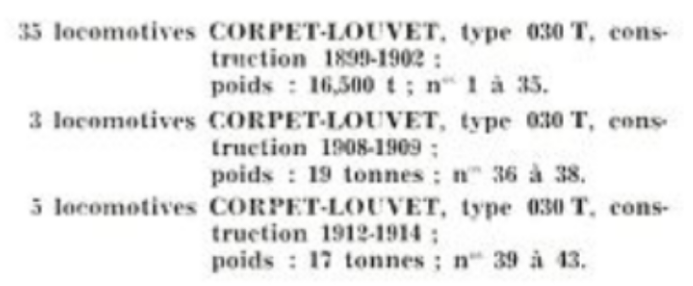
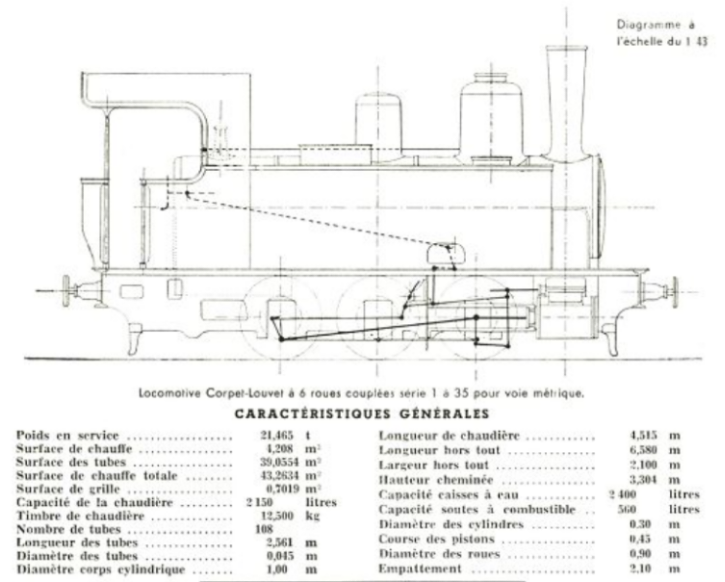
Locomotives: the network initially ordered 35 traction units: 0-6-0T steam locomotives, tare 17 tonnes, load capacity 21 tonnes;  steam railcars, Rowan type, combined passenger-goods. The company, however, abandoned the idea of railcars and purchased 35 Corpet-Louvet 0-6-0T 16.5 tonne locomotives. This number rapidly became insufficient. Three further Corpet-Louvet, 0-6-0T, 19 tonne locomotives were purchased in 1908 and a further 3 Corpet-Louvet, 0-6-0T, 17 tonne locomotives were purchased in 1914. This completed the provision on the network.

During the war of 1914-1918, the locomotives were not maintained, and one after another they failed. A team of German prisoners was assigned to the network’s workshops  and undertook repairs.  But locomotive condition deteriorated quickly and by December 1918, only 21 out of 43 locomotives were in working order. These types of locomotives were widely used throughout France.

Coaches and wagons: Passenger cars are of the classic type CFIL: two axles, two end platforms. Numbering 76, they are divided into cars of first class (APf and APo) and second class cars (BPf and BPo); tare: 4,500t. These cars come out of the workshops of the ‘SA of Carrosserie Industrielle’. A first series is recognized by enclosed end platforms, while the second series has the classic open platforms. The goods equipment is also built by the ‘SA of Carrosserie Industrielle’. From its inception, the network had 298 wagons distributed as shown below but, as with the locomotives, this allocation quickly became inadequate and in 1908 a further 100 wagons were delivered to the network.

The towed equipment also suffered from very poor or non-existent maintenance during the war. Also, between 3rd May 1921 and 31st December 1923, it underwent a total revision.

Goods Wagons:

29 vans, two axles, series Dfs, 1 to 29 (these vans have a window in end).

145 flat wagons of two axles, series Hfr and H, Nos. 1 to 145, payload 10 tonnes (these flat cars have a gallery at one end).

65 open wagons of two axles, series Ifm and l, Nos. 1 to 65, payload 10 tonnes (these do not have a ridge cross-member).

53 covered wagons of two axles, Ki and K series, n ° 1 to 53, payload 10 tonnes (these covers have a sliding door on each side)

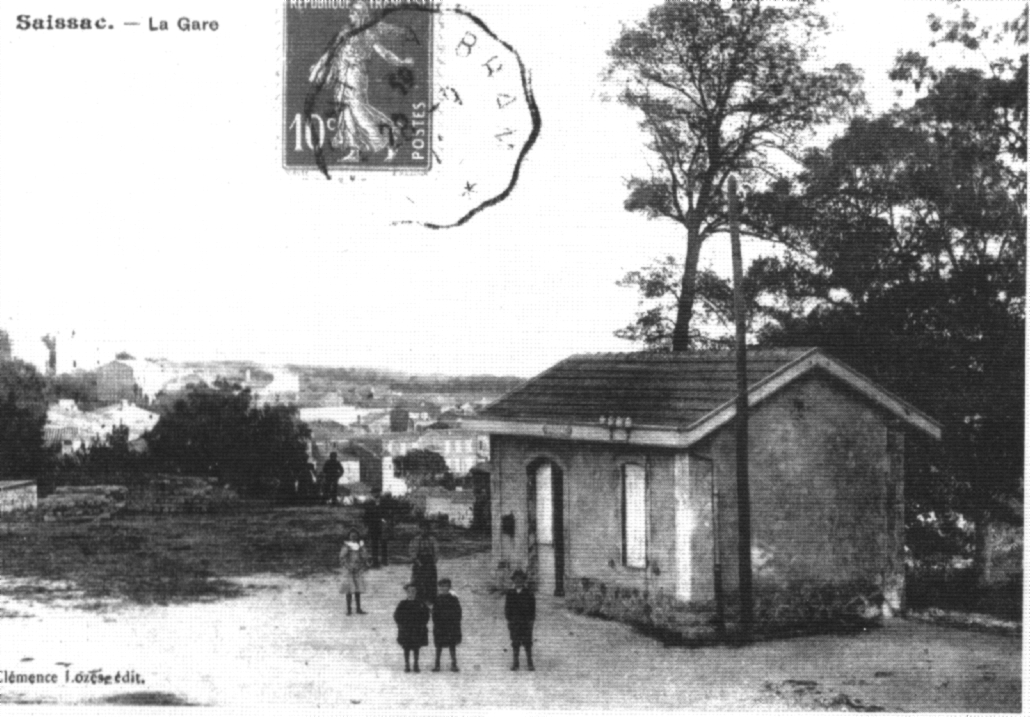
6 flat wagons of two axles, series L, 1 to 6, payload 10 tons (specially designed to circulate in pairs and so allow the transport of loads up to 12-13 m in length).This image was taken at Saissac. It shows three rail vehicles. The one on the right is a covered, windowed wagon, series K1to K53. The two coaches are difficult to make out properly but one at least appears to have closed end platforms which suggest it came from the first batch of coaches bought by the network.

Railcars: On 1st July 1923 Les Tramways de l’Aude ordered a petrol powered self-propelled car from Ets Berliet in Vénissieux. This 40 hp, 30-seater self-propelled vehicle came into service as soon as it was delivered at the end of 1924.

Lacombe says that he would have liked to be able to provide complete details of the vehicle but, sadly, despite long and patient research, he could not find them. It would seem, however, according to the power, the capacity, the descriptions available, that the first Berlet railcar was of the Berliet RBA 5 type. This type, with a front bogie and a rear-axle engine, had the following characteristics:

1 Engine ……………………… type Z of 40hp

Length over buffers ……………… 11.165m

Wheelbase …………….……..………..…5.00m

Total width ……….………………….……2.20m

Total height ……………………………….3.30m

Length of body ………………………10.075m

Number of seats ……………………………..30

Empty weight …………………………8 tonnes

Satished with the service provided by the railcar, the Company ordered from Ets of Dion-Bouton, on 3rd July 1925, a series of five similar railcars and on 3rd February 1926 a sixth unit. The first five entered service on  4th July 1926; the sixth, in 5eptember1926. These railcars were mounted on the De Dion-Bouton JB type 2 chassis. They had a front bogie and a rear axle engine. The 4 cylinder engine provided 65 hp.

The Dion-Bouton Autorails were of an overall length of 9.78m, body length of 8.88m. The passenger compartment was 3.99m long, the luggage compartment, 2.90m. The capacity was 16 seated and 14 standing.

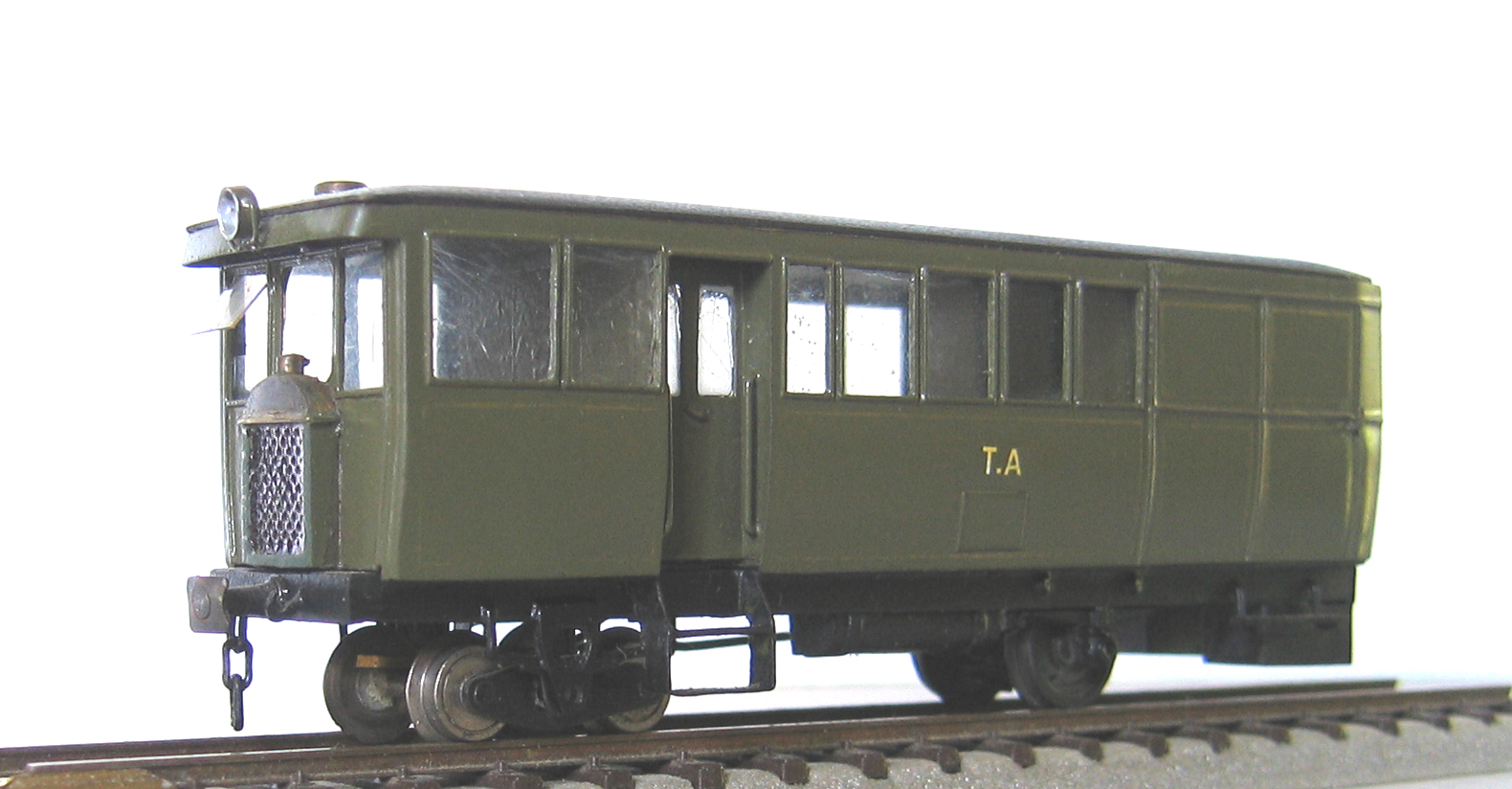
Often, the railcars pulled and additional coach but circulating alone, these railcars easily handled the steeper gradients on the network.The De Dion-Bouton self-propelled vehicles were a great success, popular with the company and its patrons. This excellent model was made by Michel Viers and the image bears his copyright © Michel Viers. [4]

Lacombe finishes his series of three articles with a few words about conditions on the network. Apparently, Les Tramways de l’Aude had a violent enemy. This was not the road company or the constraints placed on the system but Le Vent d’Autan (the wind of Autan). The wind was of course a hazard for the skirts of the ladies and the hats of the gentlemen, but found the tram an altogether different opponent. …

So, Lacombe says, Judge for yourself: On 28th December 1910, the train for Olonzac painfully climbed the coast of Felines, with a strong head-wind in the storm. But the Corpet-Louvert 0-6-0T reached the top of the gradient despite the strength of the wind. However, on the last curve before the pass which separates the departments of Aude and Herault, and 50 m from the summit, the train suddenly exposed its flank to the enemy and the three passenger cars and the van overturned against the embankment.

Three years later, on 28th November 1913, Train  No. 144, towed by Corpet-Louvert No. 40, consisting of three freight cars, two passenger coaches and a van, left Narbonne at 9:55am for Thézan. The wind blew violently and the locomotive struggled against it. Even so, the trip seemed to be going relatively well. However, just 6 km from its destination after the train had passed Saint-Andre Station, the wind redoubled in violence. The locomotive swayed heavily but remained on the track, so did the three freight cars, but the two coaches and the van were lifted bodily and thrown into the vineyard alongside the track. [3]

References

  1. https://rogerfarnworth.com/2018/08/27/tramways-de-laude-overview-part-1.
  2. C. Lacombe; Les Tramways de l’Aude; Loco-Revue No. 212 – LRPresse, November 1961.
  3. C. Lacombe; Les Tramways de l’Aude; Loco-Revue No. 213 – LRPresse, December 1961.
  4. http://forum.e-train.fr/viewtopic.php?p=71314&sid=719c2f2983cde0e9d38a1b8414d130c2, accessed on 31st August 2018.

Tramways de l’Aude – Overview – Part 2

This second part of the overview of Les Tramways de l’Aude is based on the first of a series of three articles provided by Loco-Revue in its magazine in late 1961, written in French by C. Lacombe. It is not a direct translation, and it seeks not to repeat information already provided in the first post in this series. [1] In addition a short set of notes are provided about the Compagnie du Midi which also served the department de l’Aude. Another post will look at the remaining articles by C. Lacombe. ….

Lacombe said, in 1961, that network of the Tramways de l’Aude was not remembered well. By 1961, it had disappeared from the public consciousness.

In his first artic!e, published in October 1961, he covers the history of the network and some basic network details. [2]

History: The Department de l’Aude was not well-served by standard gauge lines (and the network of general interest). It was crossed at its widest point by the Bordeaux-Sete line. The Department provided an overabundance of agricultural produce and its vineyards were prolific but transport difficulties were almost insurmountable.

Transport by road was at a premium, capacity was low and tariffs were high. A series of different tramway/railway projects were considered and by 1895 the Department set up a study group to look at the creation of a network of line ‘of local interest’. This work culminated in a public utility inquiry sanctioned on 8th January 1898. The result was the adoption of a planned departmental network of over 300km in total.

We outlined the lines involved in the first post in this series:

Tramways de l’Aude – Overview – Part 1

The network linked the chief towns of the canton which were not served by the Compagnie du Midi. It also extended outside the Department de l’Aude to allow important connection to the Bordeaux to Sets railway line. This is particularly true for the line to Olonzac in Hérault.

The proposed network was declared as being of public utility in a decree dated 25th March 1898. A limited company was very quickly constituted in Paris (56, Rue de Provence) with a capital of 4,500,000 francs. It was named as the “Compagnie des Tramways a Vapeur du Department de l’Aude” (TVA or TA). Mr Hely d’Oissel was the Chairman of the Board of Directors. A decree dated 8th March 1899 replaced a company owned by Mr. Hugues Bardol  by this new company. The line located in the Hérault, and the connection to Caunes were separately added to the concession in June 1900 and declared to be of public utility in October 1900.

Construction work started on 1st May 1898. Completion/opening dates were provided in the first post in this series. [1]

The first line to open to the public was that between Carcassonne, Caunes and Conques, on Sunday, 10th March 1901. Routinely, three daily round trips took place on this line. As a result of the popularity of this line, the Compagnie des Tramways de l’Aude was authorized, by decree of 1st July 1901, to raise its capital to 12,850,000 francs, which provided sufficient funds for the completion of the network.

Various changes were made to the planned works during construction. Some lines were extended, some shortened. Particular lengths were clearly unlikely to be profitable and were abandoned. These lengths included sections between: Saint-Pierre-des-Champs and Pierredroite; St~Martin~le~Viel and Alzonne; Ferrals, Corbieres and Villerouge; Bizanet and Villedaigne. A decree made on 6th September 1904 regularised these changes and a second decree on 2nd February 1905 confirmed the final table of lines.

Ultimately, 12 years after work commenced in 1898, the last line was completedcompleted in 1910. This, says Lacombe, is worthy of note as there were many unfinished networks of this type in France. However the war of 1914-1918 brought significant disturbance to the network, as it did to many French networks then in service. Until the Great War, the permanent way was well-maintained. Then. during hostilities, no maintenance work was undertaken, and by 1919, the permanent way was in a deplorable states. The company discovered that it needed to change at least 180,000 sleepers to stabilise the line, in the end, the number of sleepers replaced came to 208,000. The work was not completed until 31st December 1923.

Apart from the need to undertake significant maintenance, the post-war period seems to have been a period of relative prosperity, despite the improving road conditions meaning that competition from private cars was developing rapidly. The commissioning, in 1926, of petrol railcars retained passengers who seemed to appreciate what was an innovative form of transport. However, low railway tariffs for passengers and goods resulted in increasing deficits as the years passed.

Mixed-mode train/bus services were tried from 1930 with little success. The bankrupt company sought the support of the Department. The Department took control of the network and maintained services without alteration until 23rd July 1932 when it offered the whole network to La Société générale des transports départementaux (SGTD) for va period of 8 years. The rail service did not last. The mixed rail-road service lasted only until 1st January 1933. The railway operation was closed on this date and buses took over the service. Decommissioning was authorised by decree on 7th August 1934. 

The Network: All the lines of the network were designed with steep gradients and tight curves, with a view to keeping costs of construction to an absolute minimum. Gradients could be as steep as 1 in 20 and curve radii as tight as 40 metres. The metre-gauge track was made with Vignole rail weighing 20kg per metre laid on sleepers spaced at 0.85m. In stations, tracks were separated by 1.7m. For much of the network, rails were laid within the road construction. There were no signals and train safety was secured by phone calls.

There were no major structures on the network, although the trams crossed some relatively significant road bridges. An example being the 3-span masonry arch viaduct over the River Vixiege on the present D625 north of Plaigne. There were a number of smaller bridges built specifically for the network:

  • Small girder bridge over the River Jammas at Salles-sur-l’Hers.
  • The track crosses the “canal due Midi” on a 15 metre span metal bridge at Homps.
  • The railway crosses the River Aude on a metal bridge at Cuxac.

At certain points the Tramways de l’Aude cross the lines of other companies, particularly the Compagnle du Midi. At Castelnaudary, the tramway and GC 19, crossed the Midi tracks at PN 226. An overpass, adopted by ministerial decision of October 20, 1916, replaced this NP and was completed in March 1922. In Bram, the Fanjeaux line cuts the Bordeaux-Séte railway line. In Lézignan-Corbieres, the link between freight and passenger stations crosses the Midi tracks by means of a skew-bridge (74°) of 11.71m span. Incidentally, this bridge was opened to traffic in 1910, too soon after its completion: the recently laid masonry reveals disturbing cracks! 

Compagnle du Midi: The Compagnie des chemins de fer du Midi (CF du Midi), was an early French railway company which operated a network of routes in the southwest of the country, chiefly in the area between its main line – which ran from Bordeaux, close to the Atlantic coast, to Sète on the Mediterranean – and the Pyrenees. [3]

The company was established by the Pereire brothers, who thus broke the virtual monopoly held in France by James Rothschild on the slow-paced railway projects taking place in the area of Paris during the 1840s and 1850s. Rothschild responded by strengthening his grip on the sector with an alliance to the industrialist Talabot. The Pereires in turn founded their financial company Crédit Mobilier. [4]

In 1934 the company was merged with the Chemin de fer de Paris à Orléans to become part of the Chemins de fer de Paris à Orléans et du Midi (PO-Midi).

In 1856, the Midi completed its rail line from Bordeaux to Toulouse. [5][6] In 1857, it continued on from Toulouse through Narbonne to Sète. [5] This put it in competition with the Canal du Midi, and on 28 May 1858 the railway took over the lease of the canal. [5][7]

The Compagnie du Midi’s interests spread across the whole area north of the Pyrenees. Its interests in the Department de l’Aude were limited to a few key lines. This left significant space for a company such as Les Tramways de l’Aude to provide local services.

The creatures image at the top of this blog shows the lines of Le Compagnie du Midi marked in red, those of the Tramways de l’Aude marked in blue. It also shows the lines referred to in the text above which eventually were not constructed by the Tramways de l’Aude. These are shown as dotted lines.


References:

  1. https://rogerfarnworth.com/2018/08/27/tramways-de-laude-overview-part-1
  2. C. Lacombe; Les Tramways de l’Aude; Loco-Revue No. 211 – LRPresse, October 1961.
  3. https://en.m.wikipedia.org/wiki/Chemins_de_fer_du_Midi, accessed on 31st August 2018.
  4. Migule A López-Morell; Rothschild; Una historia de poder e influencia en España. Madrid: MARCIAL PONS, EDICIONES DE HISTORIA, S.A. p. 141, 2015.
  5. L.T.C. Rolt; From Sea to Sea. Ohio University, 1973.
  6. Chandra Mukerji; Impossible Engineering. Princeton University Press, 2009. 
  7. http://fr.structurae.de/projects/data/index.cfm?id=p0000077https://structurae.info/ouvrages/canal-du-midi, accessed on 31st August 2018.

Bibliography:

Henri Domengie; Les Petits Trains de Jadis/Sud-Ouest de la France; Editions de Cabri, 1986, p226-233.

C. Lacombe; Les Tramways de l’Aude; Loco-Revue No. 211 – LRPresse, October 1961, p338ff & p361.

C. Lacombe; Les Tramways de l’Aude; Loco-Revue No. 212 – LRPresse, November 1961, p

C. Lacombe; Les Tramways de l’Aude; Loco-Revue No. 213 – LRPresse, December 1961, p

Michel Vieux (ed: Roger Latour); Tramways à Vapeur de l’Aude – Le petit train des vignes.

Les tramways à vapeur de l’Aude; Fédération des Amis des Chemins de Fer Secondaires – Patrimoine Ferroviaire (https://www.facs-patrimoine-ferroviaire.fr), No. 171, 1982.

Tramways de l’Aude – Belpech to Castelnaudary – Part A

The tramway from Belpech to Castelnaudary was about 40.5 km long and for much of its length followed the shoulders of the different roads that it shadowed! It was known as the Tramway de la Piege.

The village of Belpech is an old medieval village located at the foot of the slopes of the Lauragais in the Piège, it is adjacent to the department of Ariege. [1]. It has a population, in the early 21st Century, of about 1300 people.

Castlenaudary is a larger town on the main railway line between Bordeaux and Sete, and on the Northeast side of the A61 motorway. Castelnaudary is a market town, and the capital of the territory of Lauragais. The town is located 50 kilometres (31 miles) southeast of Toulouse, about midway along the route from that city to the Mediterranean. This route has been used since at least Roman times, and today carries road, motorway (A61), rail and canal links. Castelnaudary is the main port of the Canal du Midi to which it owed a period of prosperity in the 17th century when agricultural and manufactured produce became easier to export. The Grand Bassin in the town is the largest open area of water along the length of the canal, and is today its major pleasure port. Castelnaudary’s population early in the 21st Century is between 11,000 and 12,000. [2]

The old tramway took a circuitous route between Belpech and Castelnaudary, partly because of the landscape through which it travelled but also because of the need to connect to various centres of population, the largest of which, on the route, is Salles sur l’Hers.

Salles sur l’Hers is a small population centre of around 500 persons. [3]

There were halts or stations at Belpech, Tresmezes, Blazens, Plaigne, Pecharic-le-Py,  le-Py, Pesquiès, Pech-Luna, Mayreville, Peyrefitte-sur-l’Hers, Sainte-Camelle, Saint-Hubert on the way from Belpech to Salles-sur-l’Hers.

We start the journey at Belpech Station. A schematic drawing of the station is adjacent to these notes. [4]

The station was located on the south side of the village. The line was not primarily designed for passenger transport and the facilities at Belpech Station bear this out. The platform was provided for the unloading of wagons rather than for pedestrian access to carriages.

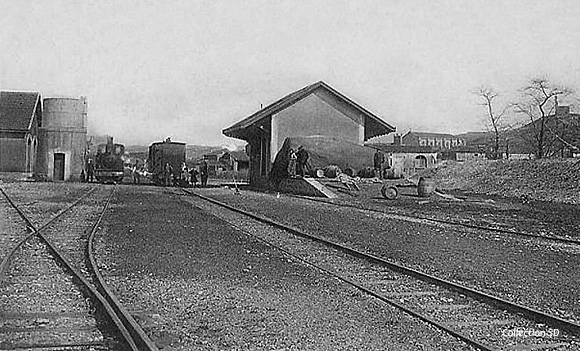
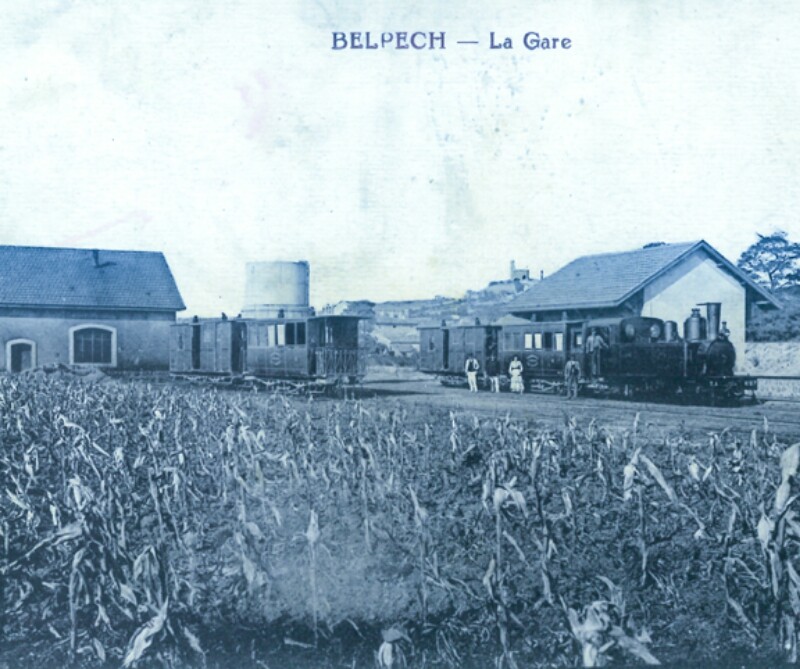
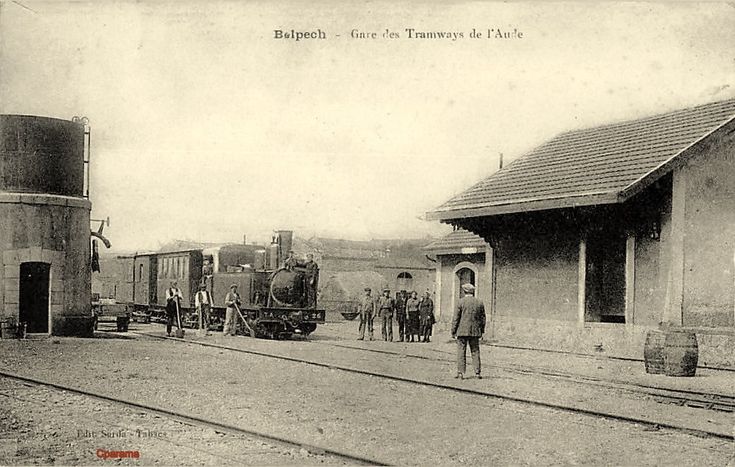
In the image below, the goods facilities are centre stage, with the water tower appearing to the left and with the engine-shed beyond. The station site was compact and necessitated small turn-tables to permit access for locomotives to the shed roads.

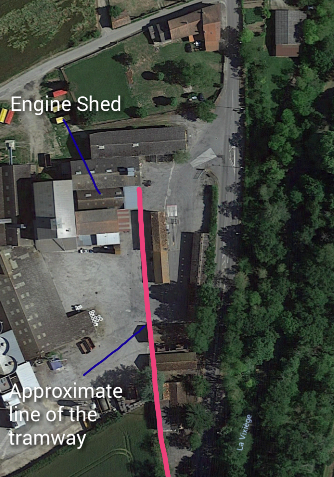
The station has almost entirely disappeared and its site was occupied in 1934 by “La coopérative de Hers, Vixiège et Razes” which is now the “Société Coopérative Agricole Arterris”. The engine-shed apparently still exists but has been incorporated into a complex of other buildings and only the gable-end can be picked out. [6]The Belpech station is located at 40.5 kilometer point. The waiting train is consisting of the No. 26 locomotive, a coach and a van. The train is located on one of the two tracks equipped with turntables which allowed access to the engine shed which is located behind the water tower. The water tower on the left, the station in the centre, and the hall on the right offer a complete picture of Belpech railway facilities. [12]

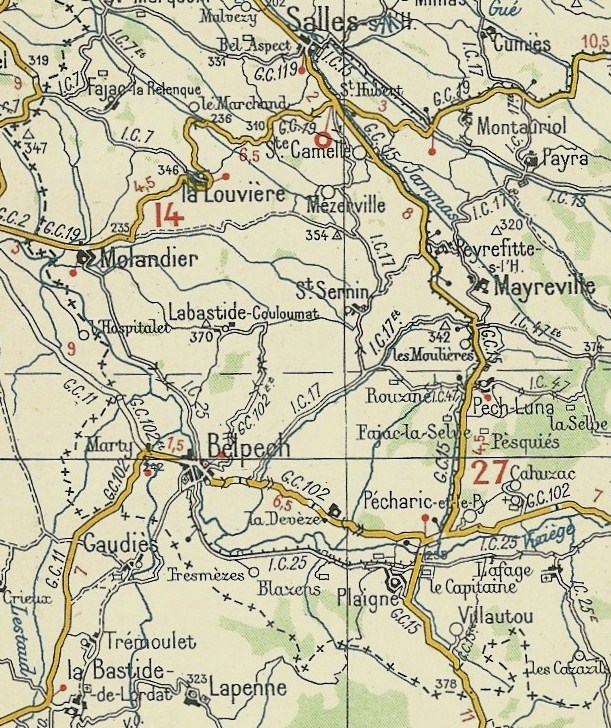
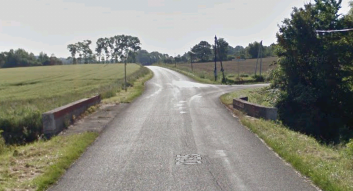
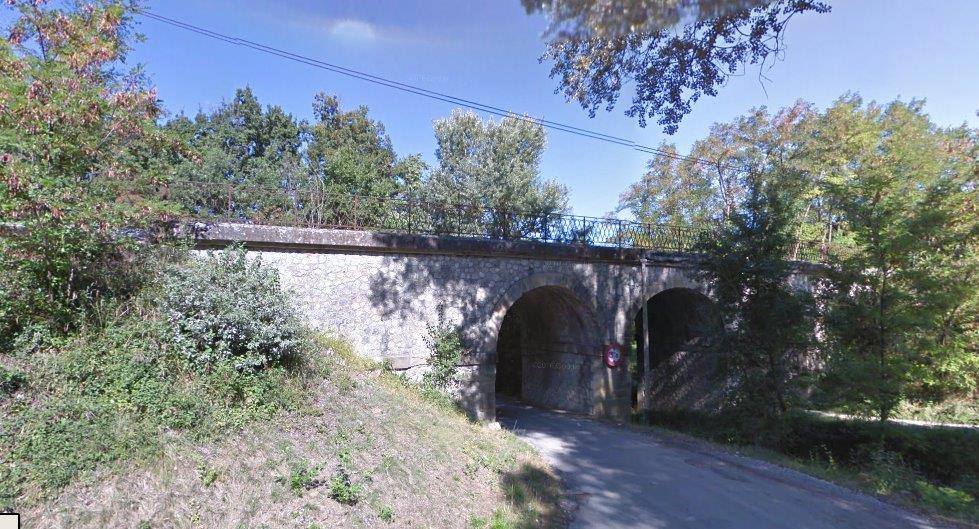
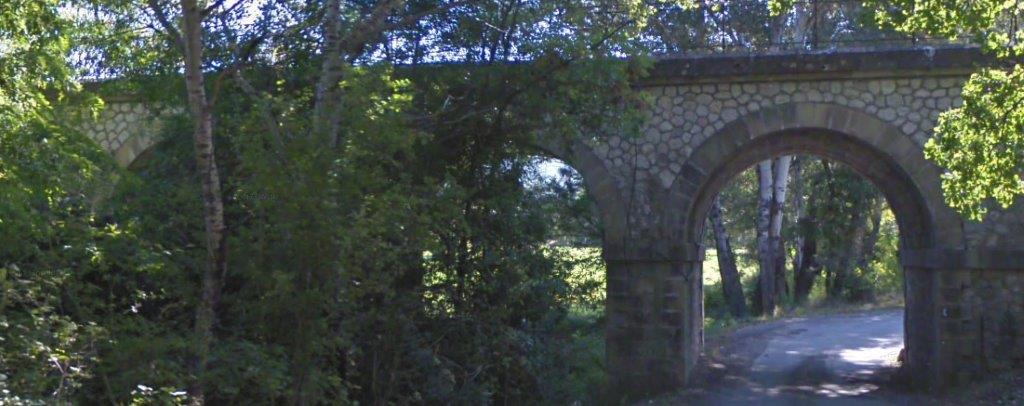
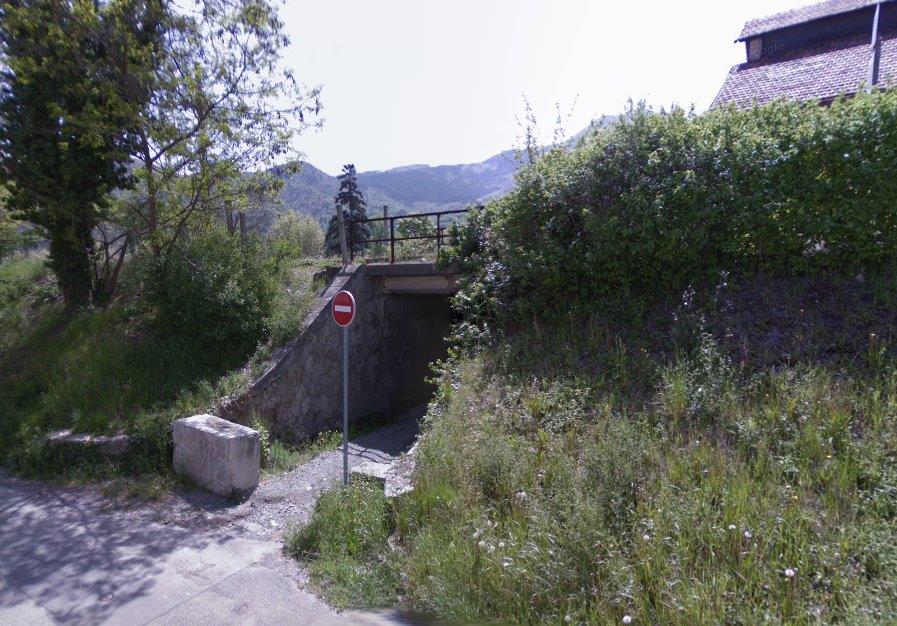
The 1930s Michelin map below shows the tramway marked as a castellated black line alongside the IC25 (now D25) south of Belpech and on the south side of the River Vixiege. Careful study of the map allows the station site in the village to be picked out. [5] Leaving the station the tramway ran on the west side of the IC25 for a short distance before crossing to the opposite side of the road just before it turned eastward. The trams then ran on the north shoulder of the road until it met the GC15 at Plaigne. On the way they passed through the halts at Tresmezes and Blazens.Evidence of the existence of the tramway between Belpach and Plaigne is sparce. This image may be the best evidence we can find. At this point on the road we know that the tramway was on the north (left) side of the road. The culvert is wider on the left than on the right which suggests room left for the tramway. 

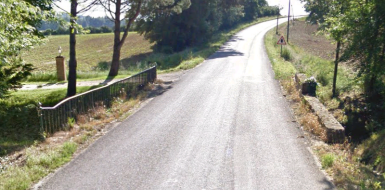
Further evidence is visible at another bridge closer to Plaigne where the parapet next to the old tramway line is completely different to that on the south side of the road – more ornate and more fragile!

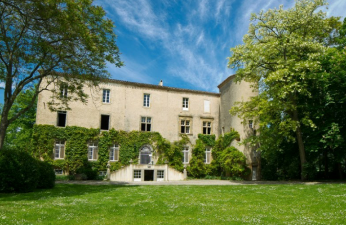
The bridge above is immediately adjacent to the Chateaux de Commanderie which is now a hotel and conference facility.

Plaigne is a small village of a little more than 100 people. It is situated to the south of what is now the D25.

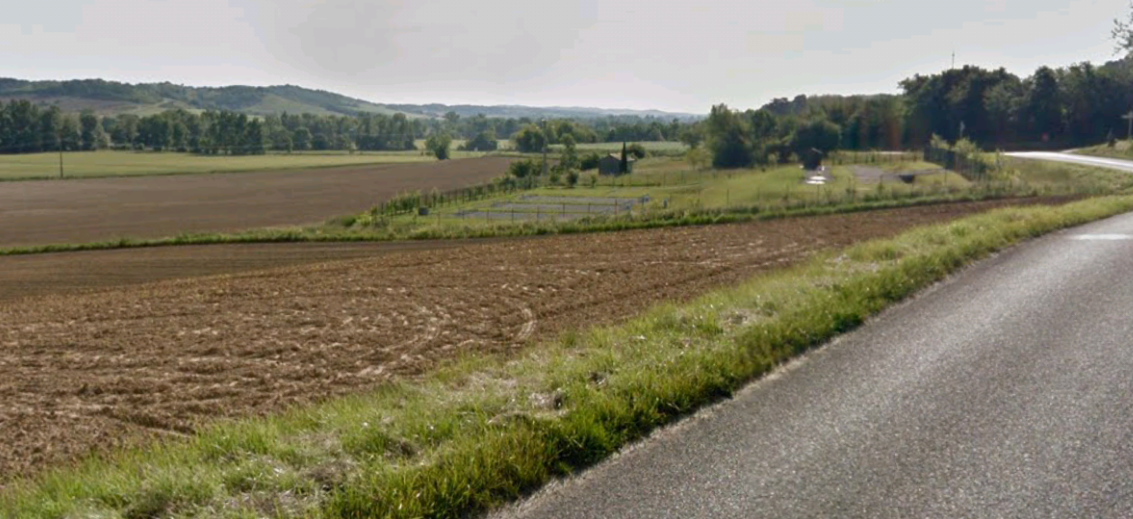
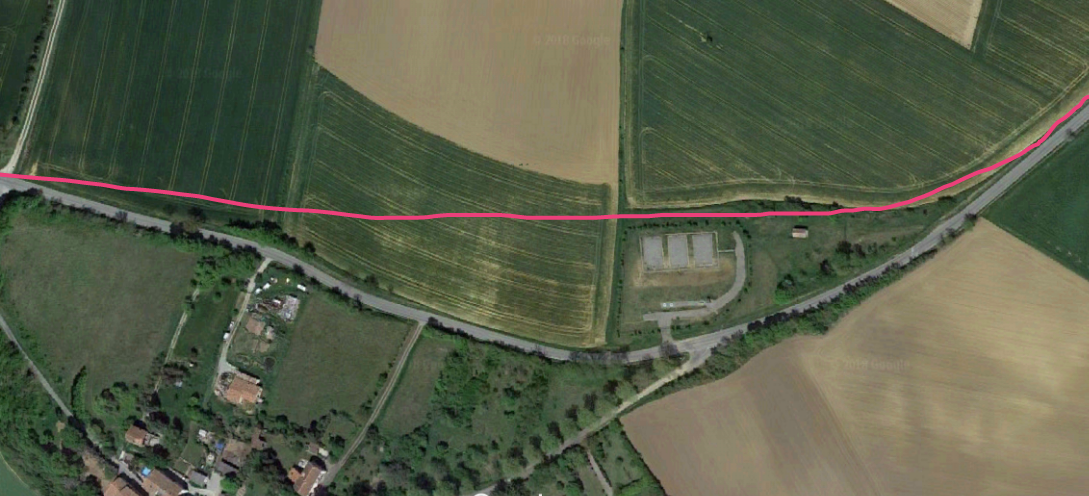
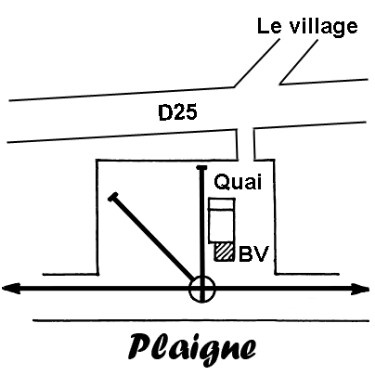
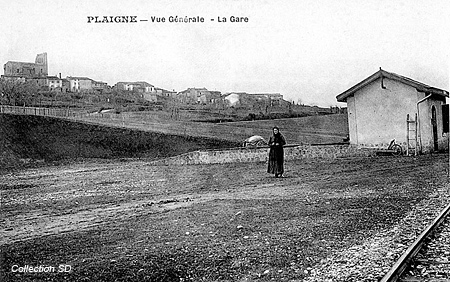
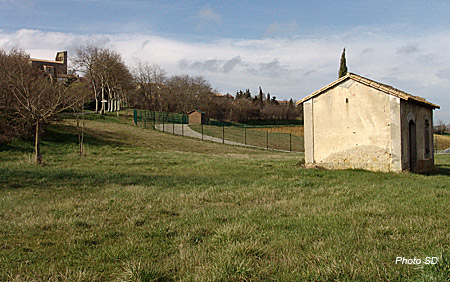
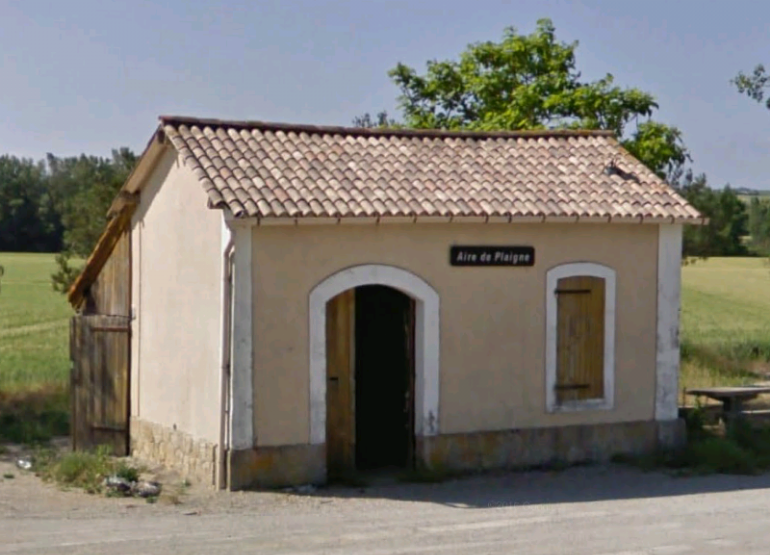
Close to Plaigne, the tramway formation and the IC25 (D25) diverge for about 700 metres. The small station building remains in the middle of a field to the north side of the D25. The line of the Tramway runs to the left of the fence in the centre of the image below. The station building can be picked out at the centre top of the picture with the Cyprus conifer adjacent to it. The image comes from Google Streetview.The pink line above shows the tramway route. The village of Plaigne is immediately to the south of the satellite image. The station building stands isolated just to the south of the tramway alignment. The adjacent sketch plan shows the limited facilities at the station. [4] The plan is inverted with North at the bottom.

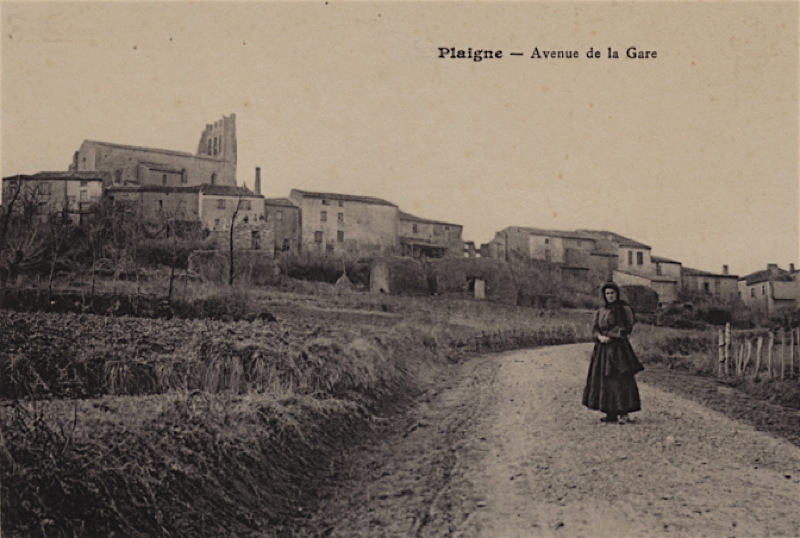
A turntable was used rather than points to ensure that the facilities remained compact. Here as at Belpech, no passenger facilities were provided.In this modern view of the station building the view mirrors the older monochrome image immediately above. The D25 runs across the picture in front of the silver birches. [6]

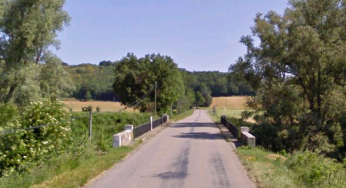
Just beyond Plaigne the D25 meets the D625, the erstwhile GC15. The tramways allegiance to the D25 is shattered by the opportunity to cross the River Vixiege and head north along what is now the D625. The tramway and road cross the river on a three-span masonry arch viaduct and head north. My wife and I were able to travel the length of the tramway from Plaigne to Salles sur l’Hers on 10th September 2018. The material that follows has been confirmed first hand.
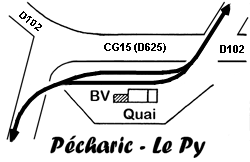
Not so far north of the river the tramway reached Pecharic et le Py. This time the sketch map in oriented as one would expect with North at the top. [6]

The station layout allows for two trams to pass, although, once again the provision for passenger traffic is minimal.

The village is tiny, the population in 2008 was 29! [7]The station building at Pecharic et le Py taken from a vehicle approaching from Paigne.Pecharic et le Py Station facilities in the early years of the 21st Century.

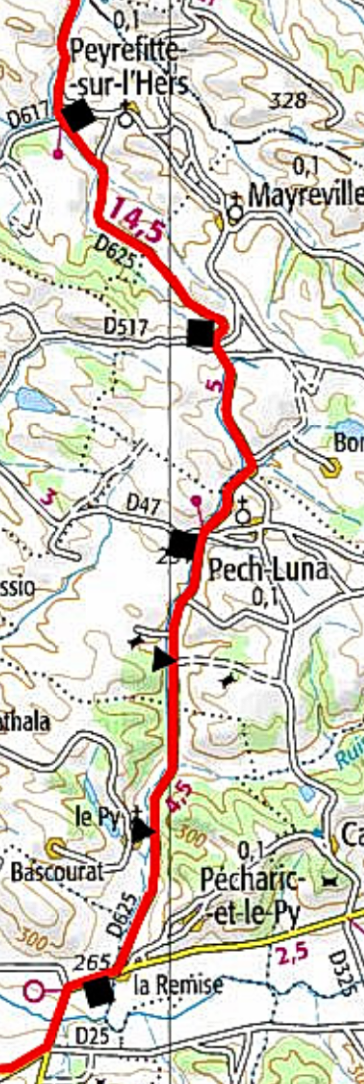
At the East end of the passing loop, the tramway crossed the GC15  (D25) so as to be on the West side travelling North. From Pecharic et le Py, the tramway and road travelled in a generally northerly direction through a series of halts and stations which included, le Py (halt), Pech-Luna, Mayreville and Peyrefitte-sur-l’Hers.

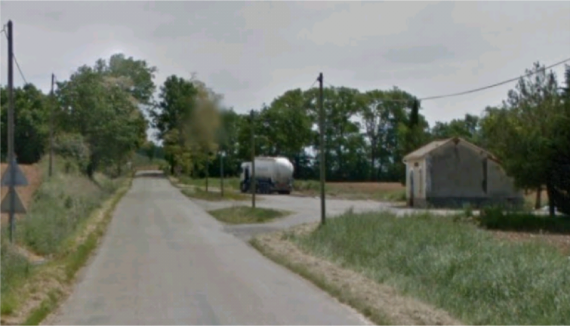
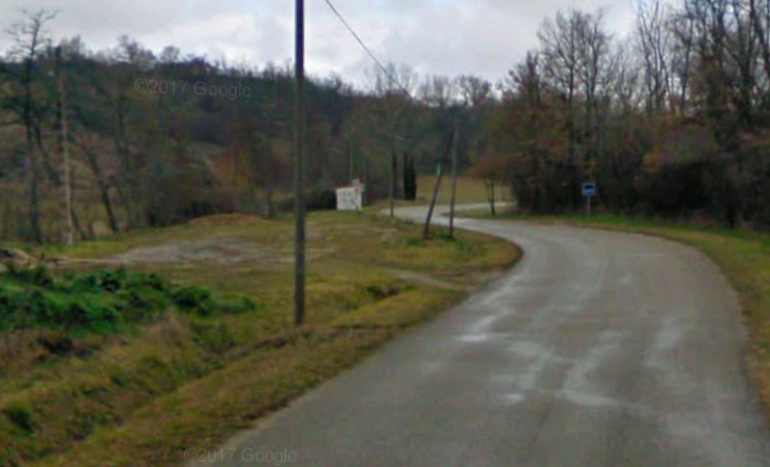
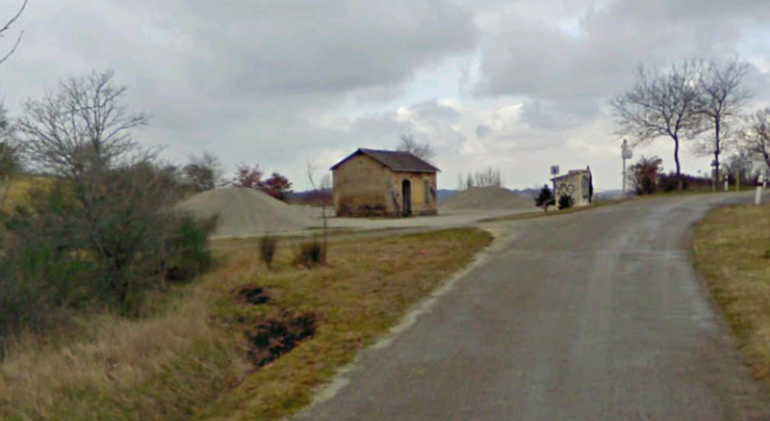
The images below show the stations, starting with that at Pech-Luna. The first photograph shows the approach to the station site. The tramway was on the left (west) side of the road and the tiny hamlet off the picture to the right. The open areas in the picture was the station area. All structural evidence of the tramway has been removed and a bus shelter sits forlornly awaiting the next service.

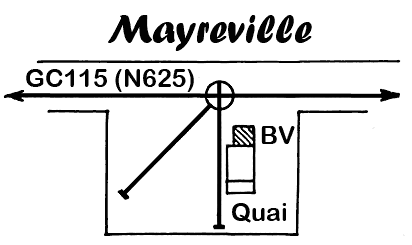
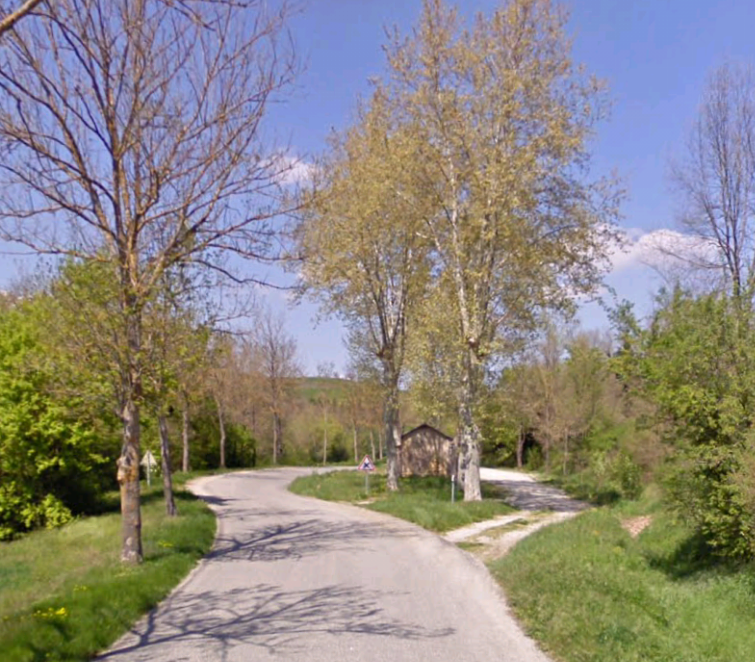
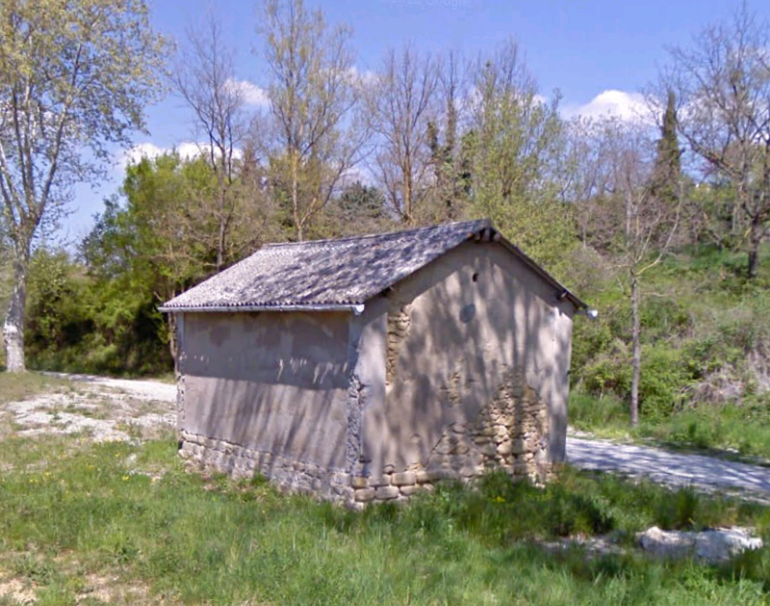
The next stop at Mayreville served a similarly small hamlet which, like Pech-Luna, was situated to the east of the road. Pech-Luna is a hamlet of  around 100 persons, Mayrevellie, of around 70. [9] Peyrefitte-sur-l’Hers is a hamlet of about 75 people. [10]

He remains of Peyrefitte-sur-l’Hers Station are on the East side of the D625, so by this stage, the tramway has switched from the western shoulder of the road to that on the eastern side. The facilities at Peyrefitte-sur-l’Hers included a loop which allowed trains to pass easily.The approach to the station at Pech-Luna from the South.

The sketch plan of Pech-Luna Station shows similar facilities to other stations on the route. North is approximately to the left of the sketch.

The remains of the station at Mayreville.

The station facilities at Mayreville were at right-angles to the line. North is once again to the left of the sketch. Passengers were not provided with a platform. The two images immediately above show Peyrefitte-sur-l’Hers Station site in the early 21st Century. The trams ran on the east (right) side of the road as shown in the first image which is taken from a moving vehicle approaching the site from the South.

Routinely the stations on the line were built to a standard design, either at right-angles to the tramway or parallel to it. There was a small ticket office and and a goods platform. Unless provision was made for a passing loop the station buildings were usually at right-angles to thee tramway and consisted of a single track, with turntable that supplied a 6m x 9m goods platform and a shelter/ticket office of 6.59m x 4.08 m. [4]

Beyond Peyrefitte-sur-l’Hers, the tramway and road turn westward towards Salles-sur-l’Hers. On the way to Salles, two halts were offered to travellers at Sainte-Camelle and Saint-Hubert.

What might be of significant interest is that the original plans for the tramway bypassed the village of Salles-sur-l’Hers. The dotted line, following the D624, on the map above was the originally proposed route. The station for the village would have been at Saint-Hubert, a distance of some 1.8km from the village. Salles’ residents and the village council protested the proposals.

The initial response of the powers-that-be was that plans were too far advanced to be changed. The evolution found was for the villages of Salles to fund the deviation by purchasing the necessary land. In the light of this the route of the line was revised in 1898 to include Salles-sur-l’Hers. [4]

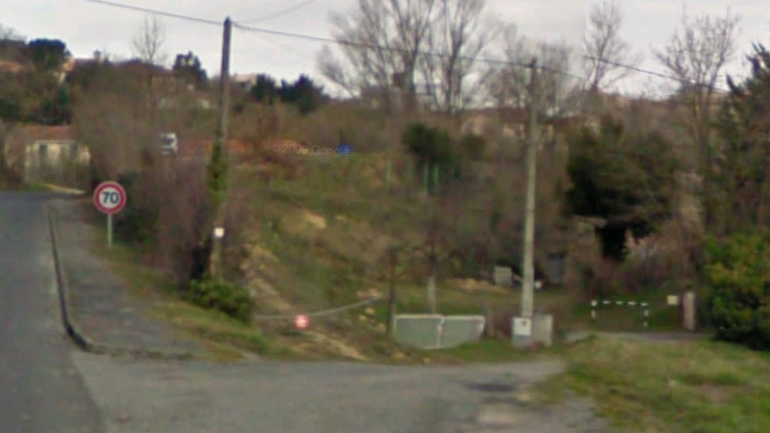
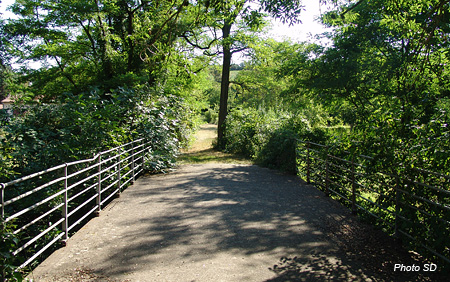
The tramway from Peyrefitte-sur-l’Hers followed the northeastern shoulder of the GC15 (D625) towards the village before deviating to the right down what is now a green-lane. In the Google Street view image below the rout can be seen on the right with a yellow and black painted metal hurdle preventing vehicular access.Trams crossed the River Jammas on a bridge which is still in use by the footpath and then headed across the south side of the village to reach the station site.

The bridge over the River Jammas and the green-lane beyond. [6]


The site of the Station as it appears in the early 21st Century. [6]


An early view of the station site taken from approximately the same position as the modern image above. [6]

The sketch plan below has been oriented to best suit its position on the webpage from which it is taken. [6]

The village of Salles-sur-l’Hers is to the North and West of the station. On the sketch plan, this means that it is to be found off the bottom side of the image! It has a population of around 600 persons and  is the largest village on the old tramway between Belpech and Castelnaudary. It made little sense for the original tramway plans to bypass the village.

We take a rest here before travelling on along the line.


References

1. https://fr.m.wikipedia.org/wiki/Belpech, accessed on 28th August 2018.
2. https://en.m.wikipedia.org/wiki/Castelnaudary, accessed on 28th August 2018.
3. https://en.m.wikipedia.org/wiki/Salles-sur-l%27Hers, accessed on 28th August 2018.

4. http://sgdelestaing.pagesperso-orange.fr/English/ETram1.htm, accessed on 27th August 2018.
5. http://forum.e-train.fr/viewtopic.php?f=4&t=40082&start=15, accessed on 26th August 2018.
6. http://sgdelestaing.pagesperso-orange.fr/Francais/Tramway4.htm#Epilogue, accessed on 28th August 2018.
7. https://en.m.wikipedia.org/wiki/Pécharic-et-le-Py, accessed on 29th August 2018.
8. https://en.m.wikipedia.org/wiki/Pech-Luna, accessed on 29th August 2018.
9. https://en.m.wikipedia.org/wiki/Mayreville, accessed on 29th August 2018.
10. https://en.m.wikipedia.org/wiki/Peyrefitte-sur-l%27Hers, accessed on 29th August 2018.
11. https://en.m.wikipedia.org/wiki/Salles-sur-l%27Hers, accessed on 29th August 2018.
12. Michel Vieux (ed: Roger Latour); Tramways à vapeur de l’Aude – Le petit train des vignes.

TNL Tramways during the First World War (Chemins de Fer de Provence 80)

A very large part of the information contained in this blog is translated from the French.

Jose Banaudo is the author of the book written in French about the tramways of Nice and the Cote d’Azur. [1] I have translated the part of that book which refers to the Great War with the help of internet-based translation software and report on it here, supplemented with additional information where available.

World War 1

In the fifteen years prior to the Great War, the growth of the population of Nice and the surrounding towns and villages necessitated a rapid development of the tram network. The advent of the Great War prevented any further significant development of the network and by the end of the war, the network was in need of an in-depth modernization programme. However, it was not until 1924 that the authorities granted the TNL the authorization to increase tariffs.

During the War, a number of small schemes were undertaken with military needs in mind. Among other things, the network managed to obtain a connection to the PLM at the Saint Roch station and a connection with the Cannes tramways in the streets of Antibes. [2]

Traffic decreased during the War, especially that of tourists. The condition of the tracks deteriorated, especially on the Monte Carlo line. Plans were made to modify some curves in order to admit bogie engines on the line, with the restoration of a few sections of track. This work was completed on 3rd September 1918.

Trams Serving the War Economy

The TNL was called upon to undertake a very important role in the national war effort and in supplying the region. As Nice was in a border zone, the arrangements for making tramways available to the military authority “in the event of a mobilisation, alert or unexpected attack” were established on 14 January 1910 by an agreement between the authorities in Nice, the TNL and the EELM company which was in charge of ensuring the electricity supply to the network.

From the date of the mobilisation, all the rolling stock assigned to the transport of goods (i.e. twelve tractors and one hundred and forty wagons) was made available to military. Within three days. 2110m of tracks were laid to connect the military establishments in the Riquier, St. Roch and Bon-Voyage districts, east of Nice, to the tramway network, to barracks, handling yards, subsistence shops and forage yards. Stables were set up at the Var racecourse in St. Augustin, and a military training camp was created in the St. Véran district at the exit of Cagnes.

The tramways transported nearly a thousand tons of food, military equipment and materials, ammunition and medicines, horses, mules, straw and fodder. Some of the supplies were unloaded at the port, often from the colonies. Other supplies arrived in Nice by the PLM, whose wagons were transferred along a street connection to a transhipment platform in La Gare du Sud where a company of territorials, relieved every three hours, ensured day and night the transhipment onto the wagons of the TNL.

In the months following mobilisation, military demands gave way in part to the needs of civil life: coal for the gas plant, wheat for the flour mills, goods  for other French regions and even for Switzerland, etc.

La Gare du Sud was heavily congested. In order to relieve that pressure and accelerate the transshipment of goods, the TNL, the PLM and the Chamber of Commerce concluded an agreement in March 1915, to establish a connection between the tramway to Contes and the new station at Nice-St. Roch, where a series of sidings were created to facilitate transshipment. This installation, had a capacity of a thousand tonnes per day, was made operational in July.

The tramway workshop at boulevard Sainte-Agathe was one of the best industrial establishments of the city of Nice, and the military authorities took it over in January 1915  and conferred on the TNL the responsibilty for machining 75 mm shell blanks and training some 30 small businesses in the region to do this type of work. Manufacturing subsequently extended to 120 mm shells and small bombs. These small bombs were intended to be dropped by hand from aeroplanes. The raw materials were transported by railway from the Toulon arsenal to Nice, and the finished items were transferred in the opposite direction. Congestion on the PLM coastal line eventually led to these exchanges being undertaken by sea.

The depot of Sainte-Agathe also converted wagons required on the other networks for by the military field railway.

The year 1917 saw tramway traffic increase in several areas. On 26th March 1917, a daily coal train was put into operation from the port of Nice to the gas plant of Cannes, located near Mandelieu.  From 17th November 1917 an additional service transporting cement from Contes to Mandelieu for the construction of the new military camp at Fréjus was commissioned. When the cement arrived at the end of the Cannes network, cement was transshipped by trucks.

Transport of the wounded. 

From the first months of the conflict, most of the large hotels in the towns and cities of the Côte d’Azur had been requisitioned to house wounded and convalescing soldiers, war orphans and civilian refugees from the evacuated areas. The lines of the urban network of Nice as well as those of the coast which served these establishments experienced an intense traffic, increased from 1917 by contingents of Americans.

The most seriously injured soldiers had to travel lying down. During the summer months, sixteen modified open trailers were used to carry 10 stretchers. During the cold season, a tractor and eight vans were fitted out to accommodate 12 stretchers on three levels. If necessary, eight conventional urban power cars could each carry 8 stretchers. 

There were twenty-eight hospitals in the city of Nice and its surroundings, these included the two mixed civilian and military hospitals of St. Roch and Villefranche, six auxiliary hospitals, ten additional hospitals, seven hospitals managed by volunteer staff and three convalescent centres, most of which were set up in requisitioned villas, residences and hotels.

There are some excellent images showing the hospital trams in Banaudo’s book.


References

  1. Jose Banuado, Nice au fil du Tram, Volume 1; Les Editions du Cabri, 2004.
  2. http://transporturbain.canalblog.com/pages/les-tramways-de-nice—de-l-apogee-au-declin/31975780.html, accessed on 24rh August 2018.


Tramways de l’Aude – Overview – Part 1

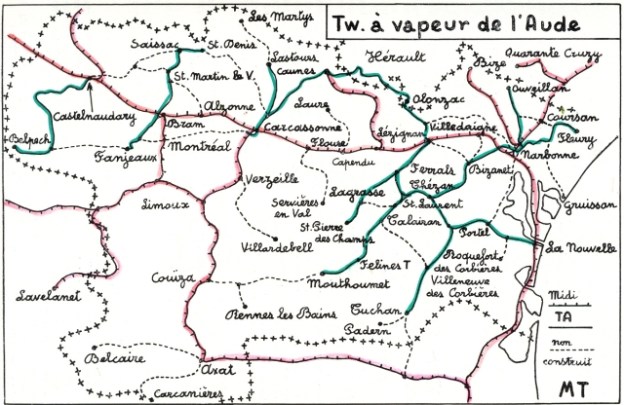
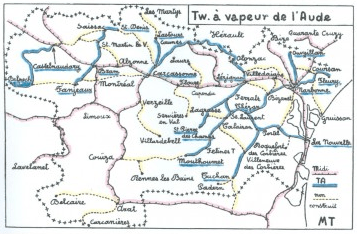
Les Tramways de l’Aude operated a departmental network in the department of Aude between 1901 and 1934. [4] A series of metre-gauge lines existed around Narbonne and Carcassonne. The lines were predominantly alongside roads with the exception of short sections where alignments required a deviation from the side of the carriageway.  [1] Gradients could be steep, almost as steep as 1in 20 and the horizontal alignment often had to accommodate tight curves. [4] The extent of this metre-gauge network is shown above. The sketch map is taken from the back cover of the definitive French text about ‘Les Tramways de l’Aude’ by Michel Vieux. [5]

Essentially, trains were steam-hauled throughout the life of the line.   Apparently some use was made of Autorails from 1924 onwards but resulting improvements were only mediocre. [4] Wikipedia [1] suggests that lines were closed by 1933. I have seen one article which talks of final closure on 7th August 1934. [4]

One short section of the network from Carcassonne to Lézignan was built on the territory of the department of Hérault , between the communes of Félines and Olonzac.

La compagnie des tramways à vapeur de l’Aude (TVA), was formed on 7th November 1898 . Its headquarters were in Carcassonne. The new company replaced Mr. Hugues Bardol, contractor and concession holder for a tramway network in the department of Aude. This company adopted a ‘TVA’ logo, although on rolling stock only the letters TA were used. [3] Stations were well equipped and laid out but income and traffic were essentially seasonal and labour costs were relatively high because of the bulk of the transported goods and large numbers of barrels. [4] L’Aude’s economy in the late 19th century was heavily dependent on vineyards and problems with transport were increasingly occurring. La Piege, to the east of the department, fed it with seeds and fodder. An example of the problems being experienced is quoted on the Baraigne village website:

Transport by carts are currently so expensive, so long and difficult, that in the canton of Belpech, instead of sending the goods on Castelnaudary, we prefer to transport them directly to Mazères and Saverdun, in the department of Ariège , to ship them to Narbonne.” [3]

So, to avoid poor quality roads, goods were transported over a route that was 140 kilometres long! It became imperative to find a suitable solution which mm in I mixed transport costs. As we will see in a later post, the solution in this case was a meandering tramway between Belpech, Salles sur l’Hers and Castelnaudary. [3]

La Société générale des transports départementaux (SGTD) operated several networks (Railways of the Suburbs of Reims , Tramways of Eure-et-Loir , Tramways of the Côte d’Or). In 1928, it began negotiations to take over the network in l’Aude using a mixed rail-road operation. After redemption of the company’s assets trams steam Aude, their service commenced on  1st August 1930.

The network had a total length of 342 kilometres and served much department. The lines can be divided into four groupings: [1]

Connections to other networks (junction stations), particularly with the network of the Compagnie des Chemins de Fer included:Castelnaudaryline Bordeaux-Saint-Jean – Sète-VilleBram, line Bordeaux-Saint-Jean – Sète-Ville; Carcassonne, line Bordeaux-Saint-Jean – Sète-Ville, line Carcassonne – RivesaltesCaunesline Moux – Caunes-Minervois; Lezignan, line Bordeaux-Saint-Jean – Sète-Ville; Narbonne, line Bordeaux-Saint-Jean – Sète-Ville, line Narbonne – Port-BouLa Nouvelle , line Narbonne – Port-Bou. [1]

Most of the lines of the network opened between 1901 and 1905: Carcassonne – Caunes: 10th March 1901;  Homps – Lézignan: 16th December 1901; Carcassonne – Caunes: 5th February 1902; Olonzac – Homps: 5th February 1902; Thézan – La Nouvelle: 5th June 5, 1902; Luzignan – Thézan: 22nd June 1902; Ripaud – Tuchan: 10th October 1902; Castelnaudary – Halls: 1st January 1903; Halls – Belpech: 14th June1903; Conques – Lastours: 15th June 1903; La Nouvelle – La Nouvelle Plage: 14th July 1904; Narbonne – Ouveillan: 12th February 1905; Narbonne – Fleury: 12th February 1905; Fabrezan – Saint Peter: 1st April 1905; Bram – Prouille  : 10th May 1905; Bram – Saint Denis: 10th May 1905; Les Palais – Mouthoumet: 10th May 1905; Narbonne – Thézan: 10th May 1905. [1]

Three opened at a later date: Bram – Fanjeaux: November 20, 1906; Felines – Olonzac: October 1, 1908; and Caunes – Felines: June 15, 1910. The last two openings were sections of the Carcassone-Lézignan line and required major construction work. [1]

Rolling stock and Locomotives

Locomotives: there were 45 locomotives in all. They were all 0-6-0 locomotives built by Corpet-Louvet and delivered between 1899 and 1914. [2] They were as follows:

No. 1 to 3 Corpet-Louvet n ° 776-778 in 1899;
No. 4 to 5 Corpet-Louvet n ° 785-786 in 1899;
No. 6 to 26 Corpet-Louvet n ° 789-807 in 1900 and 1901;
No. 27 Corpet-Louvet No. 932 in 1902;
No. 28 to 35 Corpet-Louvet n ° 809-816 in 1903;
No. 36 to 37 Corpet-Louvet n ° 1164-65 in 1908;
No. 38 Corpet-Louvet n ° 1229 in 1908;
No. 39 to 41 Corpet-Louvet n ° 1370-72 in 1912;
No. 42 to 43 Corpet-Louvet n ° 1495-1496 in 1914;
No. 55 to 56 Corpet-Louvet n ° 1054-55 in 1905.
No. 55-56 came from the Mining Company of Villerouge and Albas, in Félines-Terménès. [1]

Autorails: There is evidence of the use of small railcars from around 1924 onwards. [4]

Passenger Cars:  72 2-axle cars [1]

Baggage vans:     27 vans with postal compartment [1]

Freight wagons:  86 covered wagons, 81 open wagons, 186 flat wagons and 10 flat wagons with pivoting sleepers. [1]

References

  1. https://fr.m.wikipedia.org/wiki/Tramways_de_l%27Aude, accessed on 24th August 2018.
  2. Taken from a list of Corpet-Louvet locomotives established by Sébastien Jarne, http://demophile1.free.fr/Corpet&Louvet.doc, accessed on 25th August 2018.
  3. http://sgdelestaing.pagesperso-orange.fr/Francais/Tramway.htm, accessed on 24th August 2018.
  4. http://ruedupetittrain.free.fr/lignes/sudest/tramway-aude.htm, accessed on 27th August 2018.
  5. Michel Vieux (ed: Roger Latour); Tramways à vapeur de l’Aude – Le petit train des vignes.

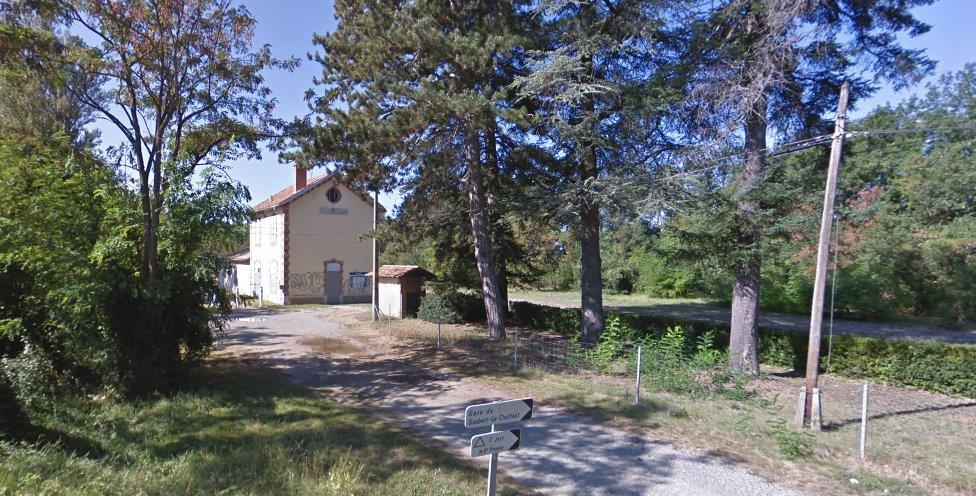
Nice to Digne-les-Bains Part 14 – Mezel to Digne (Chemins de Fer de Provence 78)

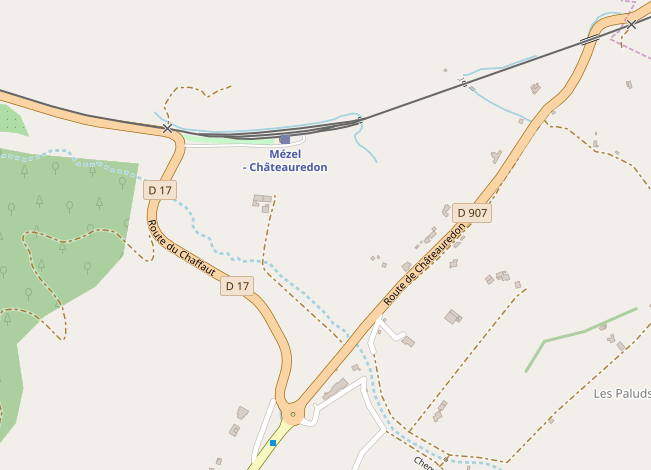
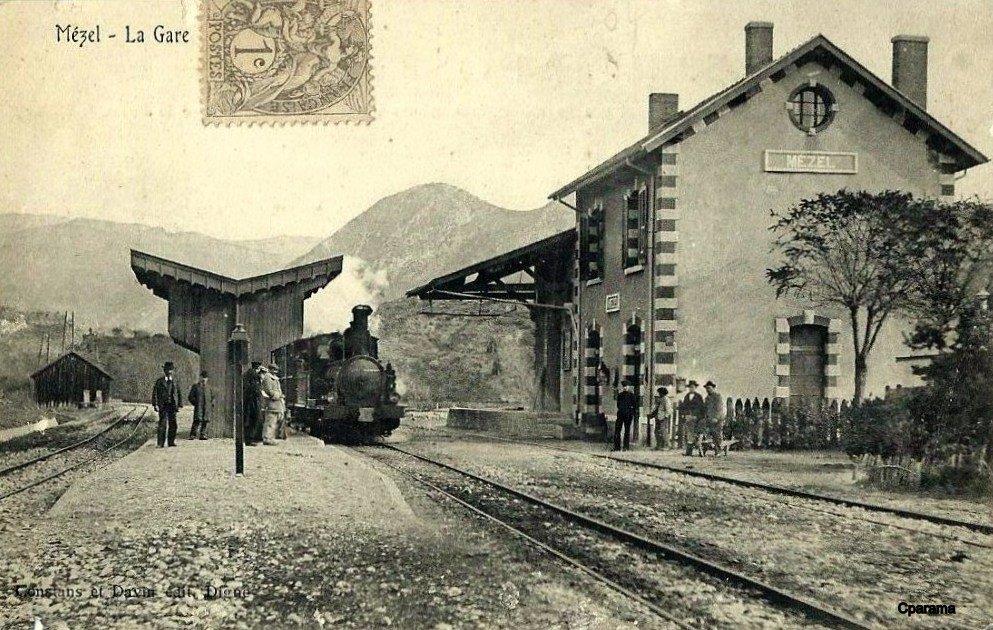
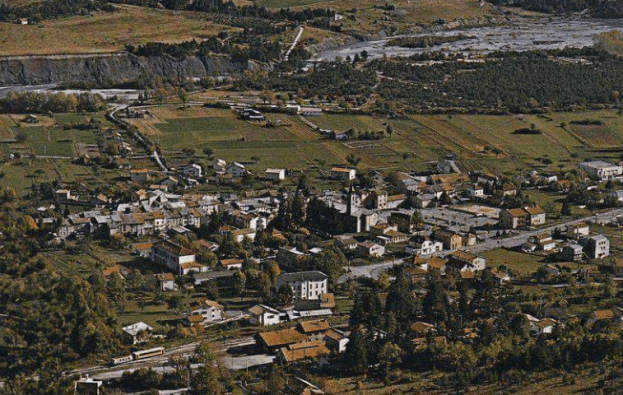
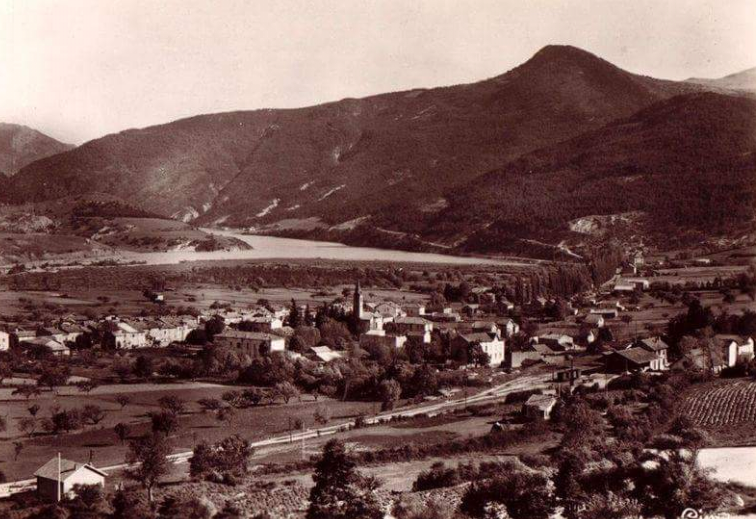
Mezel and Châteauredon are two villages in the valley of l’Asse. Mézel is a small village, 15 km south of Digne-les-Bains. It’s a long, narrow village, with one long main street, the Rue Grande, set back from the D907 road that passes by on the East side of the village. Mezel is just under 1.5km south of the railway station. Châteauredon is also a small village. It is less than 1.5km to the Northeast of the railway station. The l’Asse flows to the Southeast of both villages.

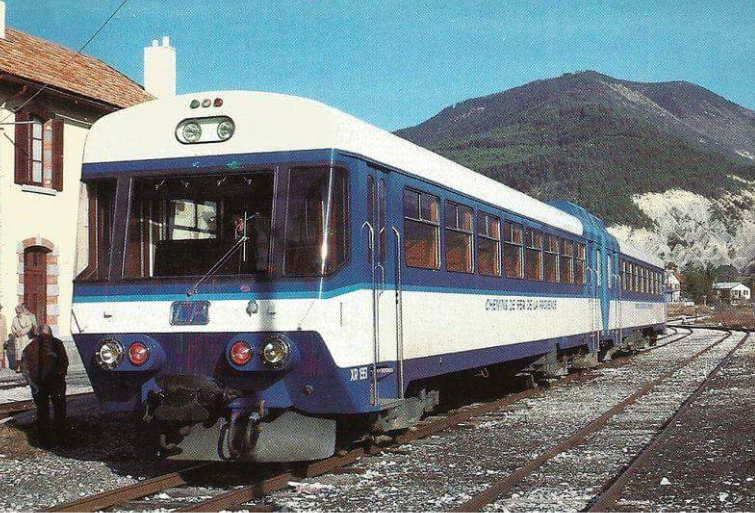
Mezel/Châteauredon Station is roughly midway between the two villages and is sited between the ‘D907’ and the ‘D17’.Mézel/Châteauredon Station, (c) Kjell Strandberg. [1]

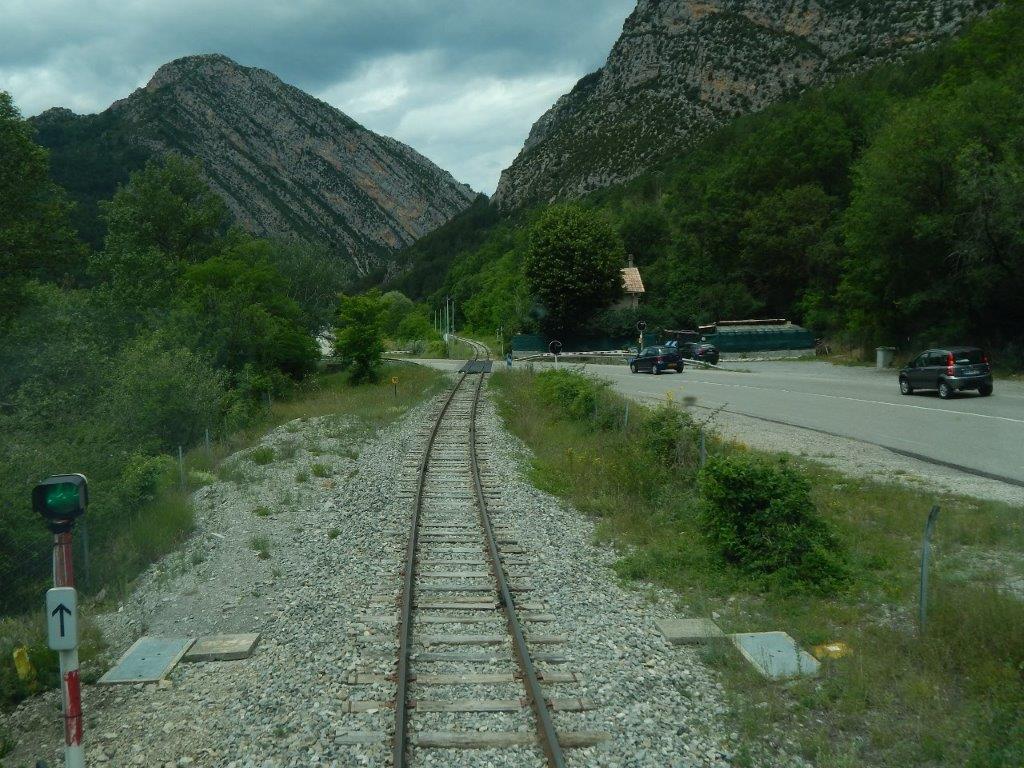
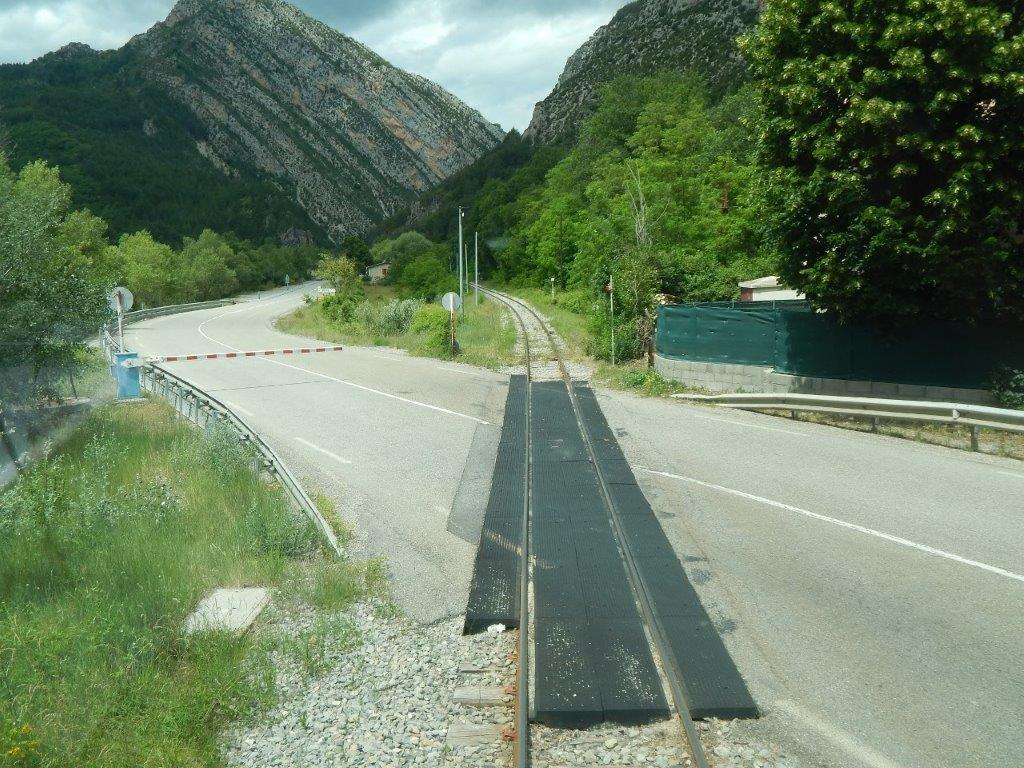
We set off from the station, initially in a westerly direction and the line runs on the north side of the ‘D17’ which can be seen to the left of the line in the first image below.Just under a kilometre from the station, the ‘D17’ crosses the line by means of a level crossing. The two images above are taken from the cab of an autorail approaching the level crossing. [2]

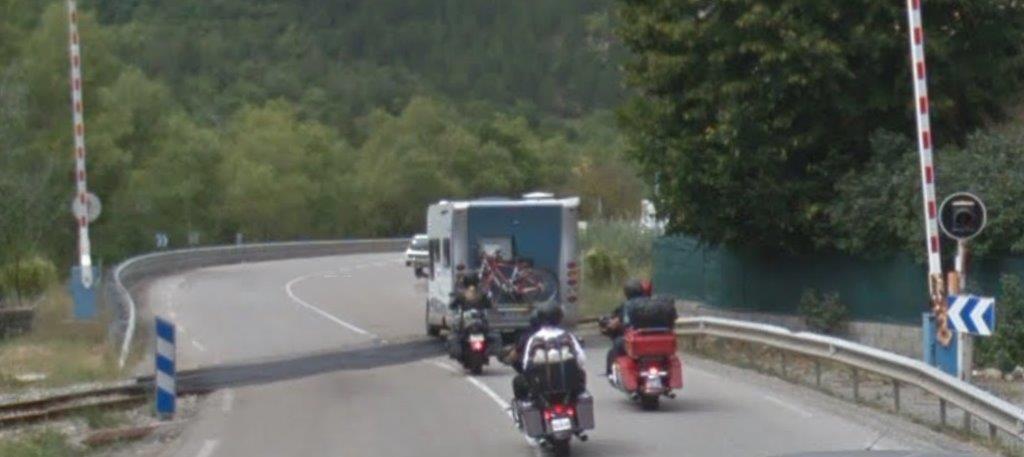
The two views below come from Google Streetview. The first is taken of the crossing looking northwest, the second is taken looking back to the Southeast.The crossing keeper’s cottage remains!

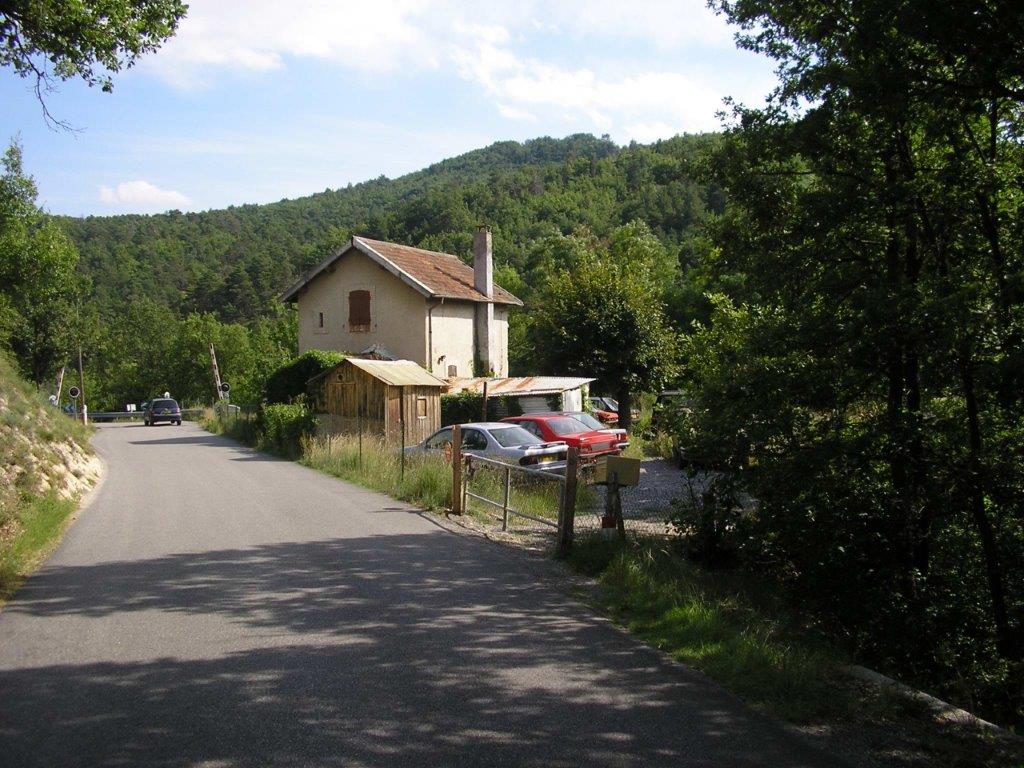
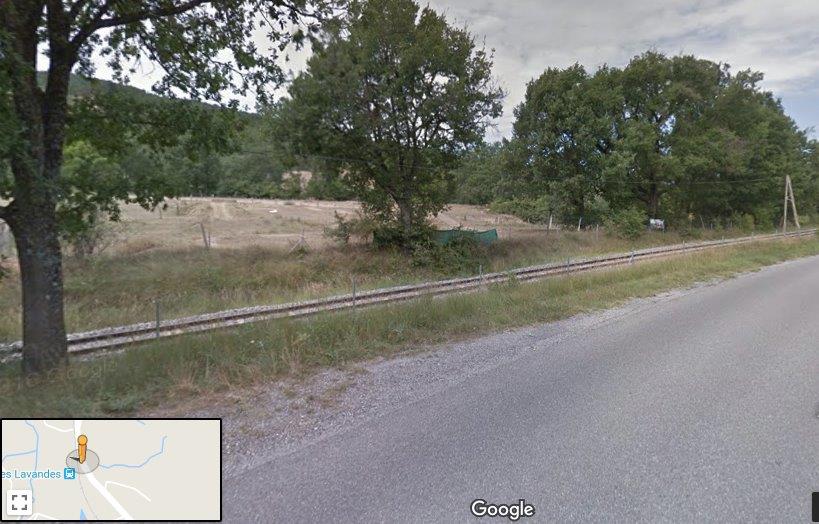
The road continues to follow the railway but now on its northeast side. They are immediately adjacent to one another once again by the time the railway reaches l’Arrêt des Lavandes.

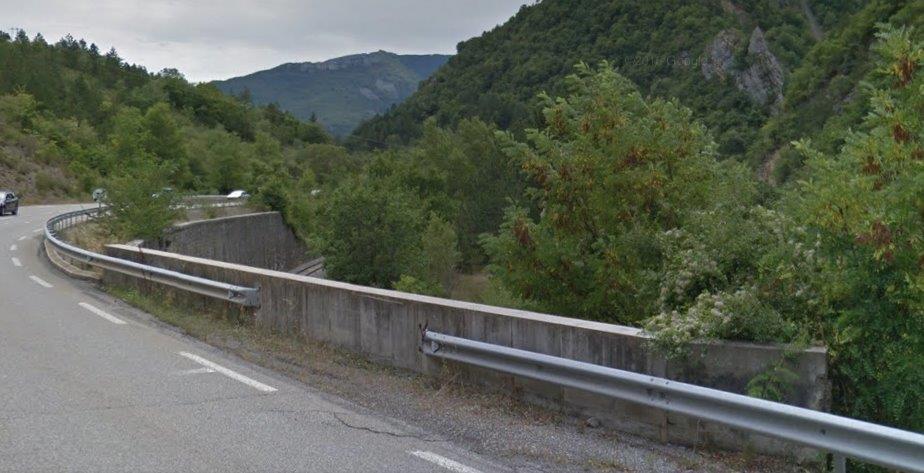
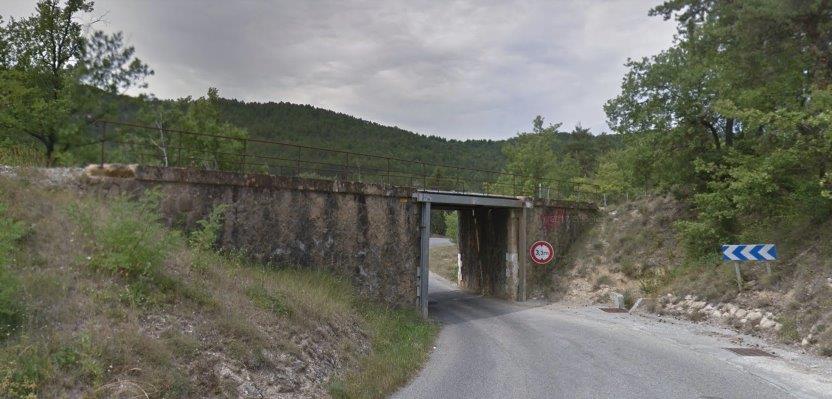
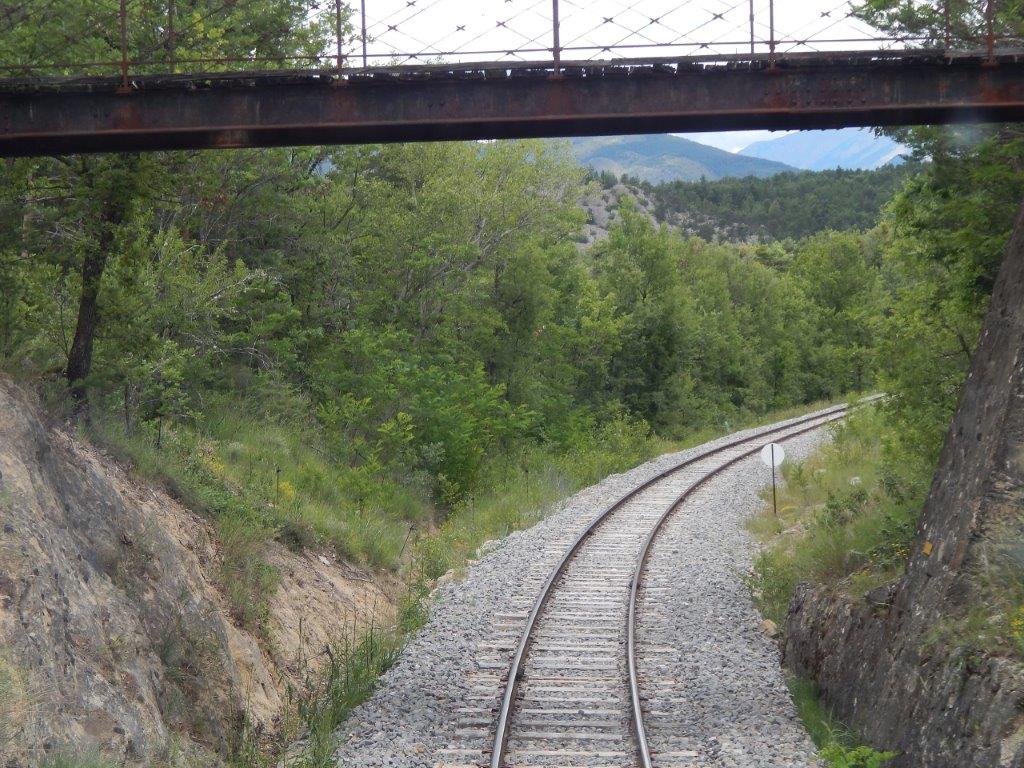
Road and rail remain close for a further kilometre or so before the road turns sharply under the railway through a low single lane bridge. Immediately after the bridge (below) the railway turns through 90 degrees from a northwesterly trajectory to a northeasterly alignment and gradually pulls away from the ‘D17’.The railway curves away to the north. [2]

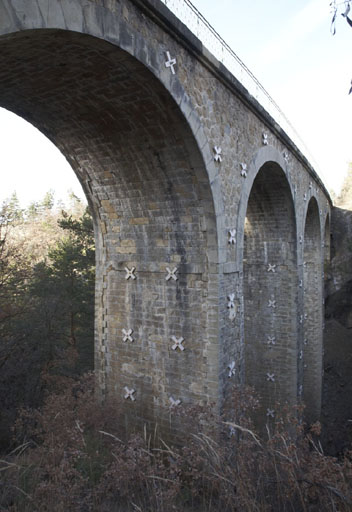
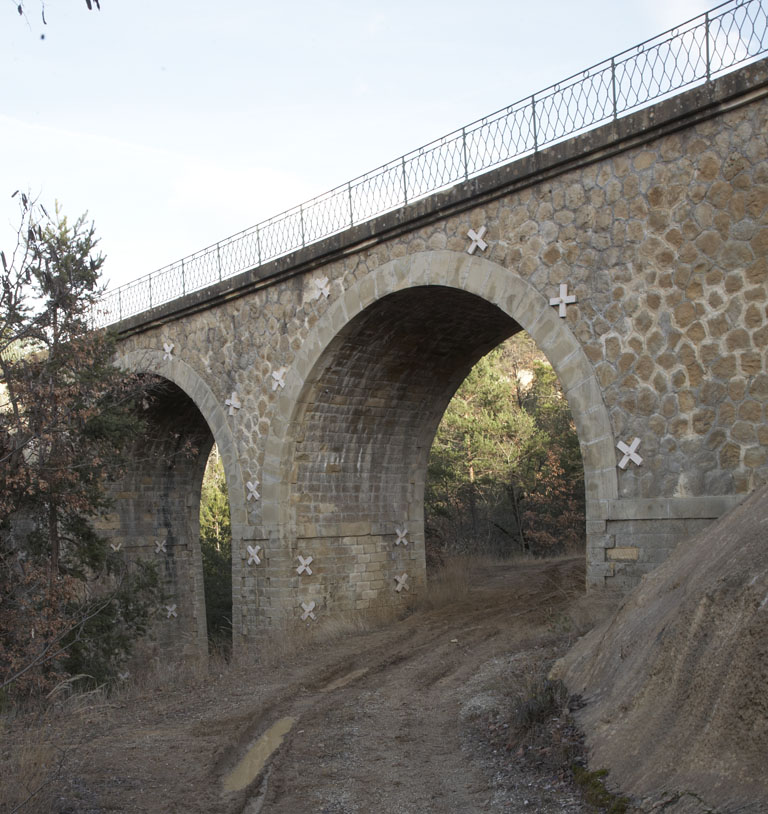
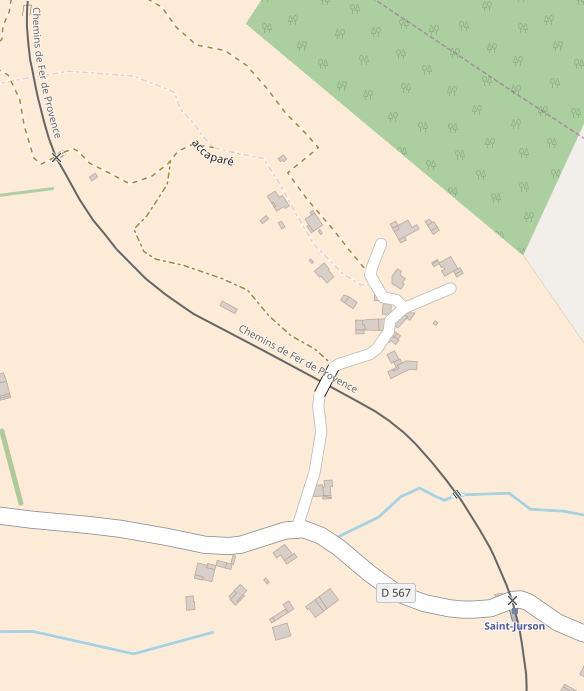
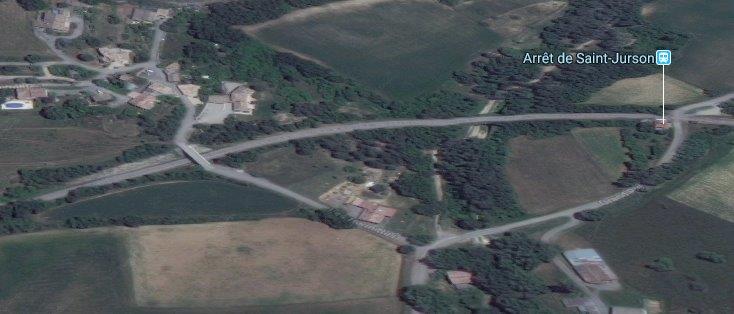
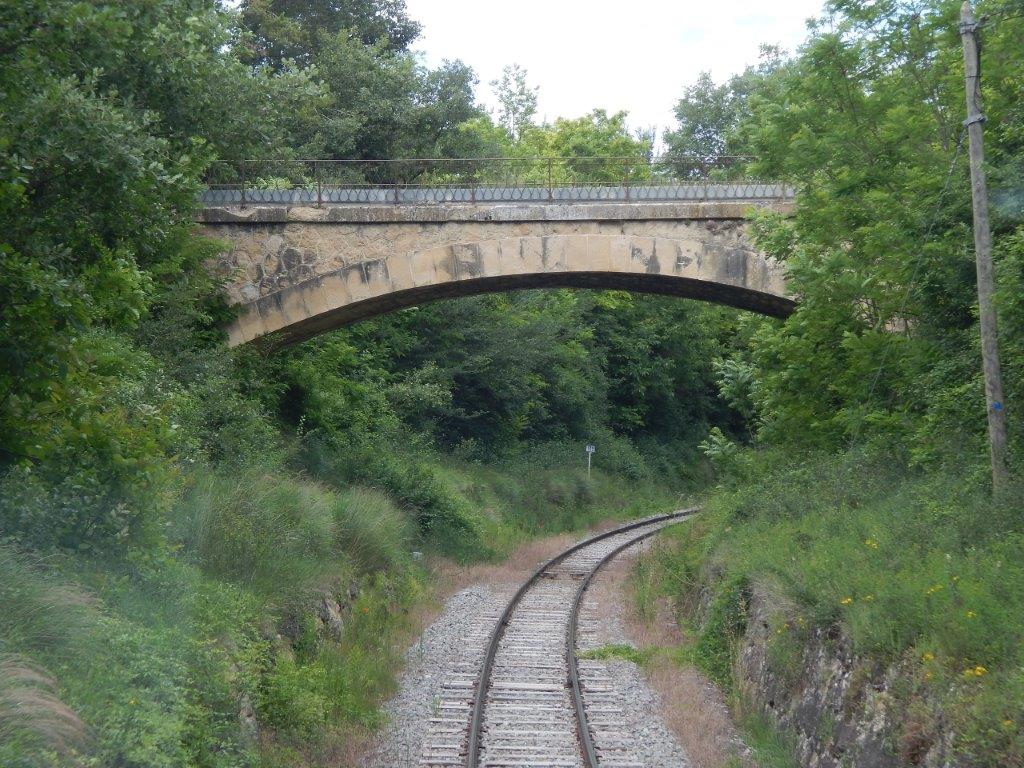
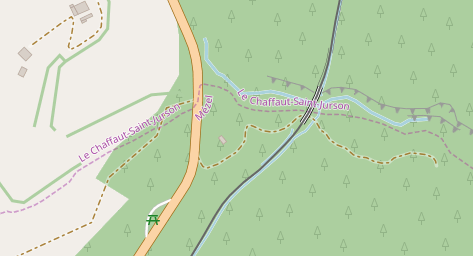
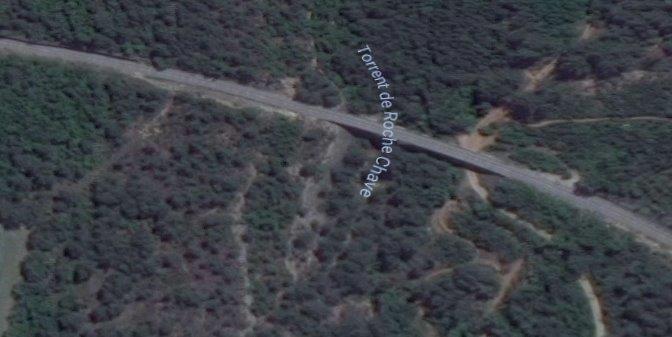
The next structure on the line is the bridge of Le Chaffaut de Saint-Jurson over the Torrent de Roche Chave as shown on the adjacent map and the staellite image below.The bridge is a fine masonry arched viaduct, seen first from the upstream side. [3]And then from the downstream side. [3]

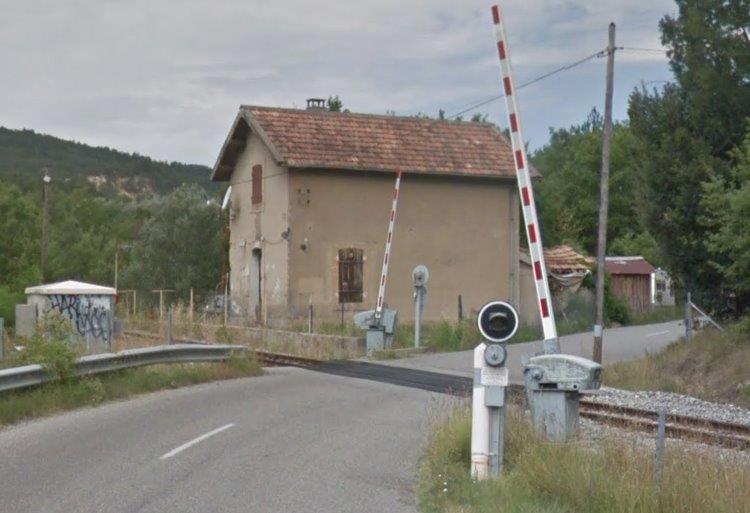
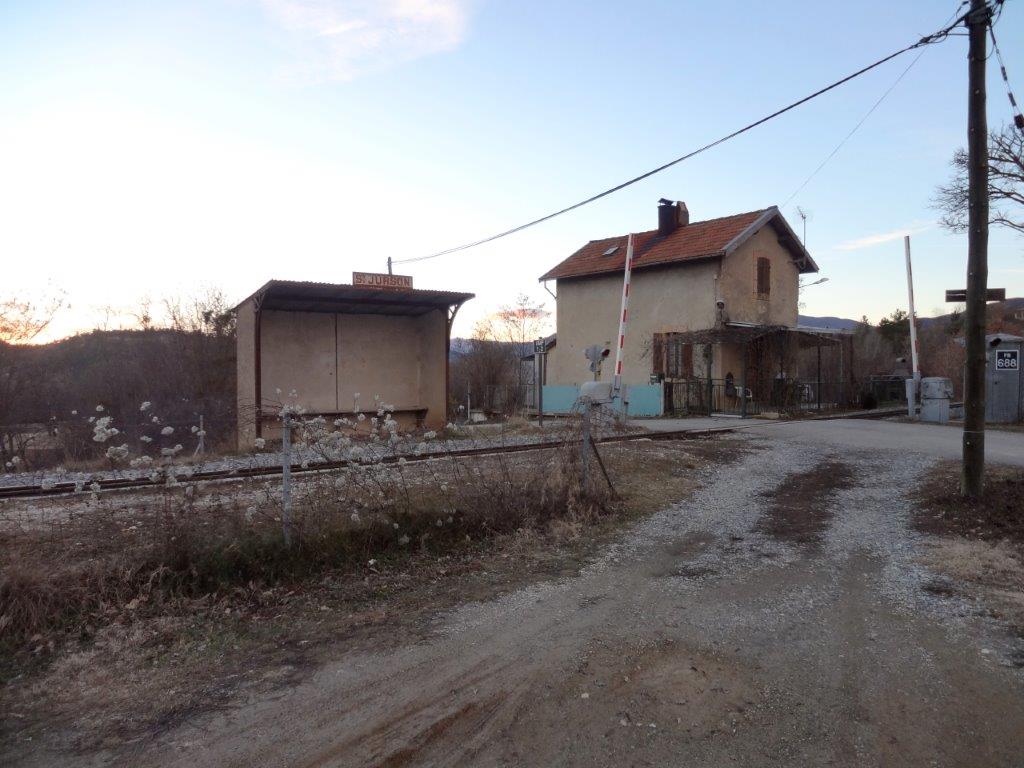
About a kilometre further north is the Arrêt de Saint-Jurson, immediately adjacent to a level crossing for the village road.L’Arrêt de Saint-Jurson, immediately adjacent the level crossing and so very close to what was the crossing keepers cottage. [4]

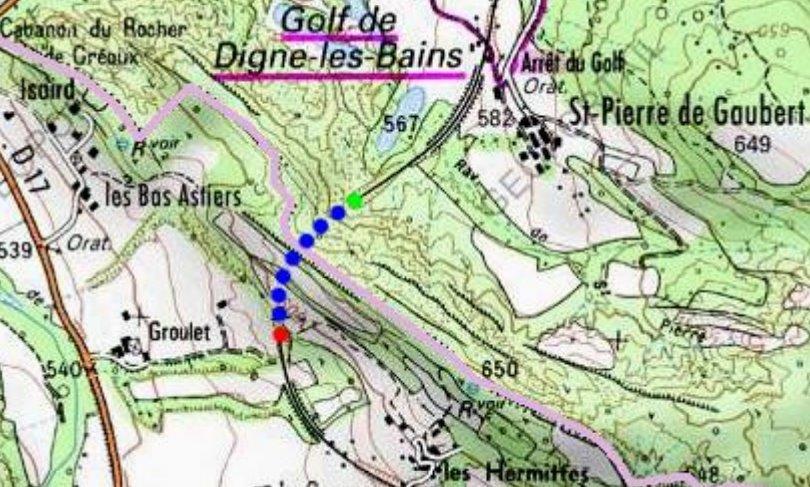
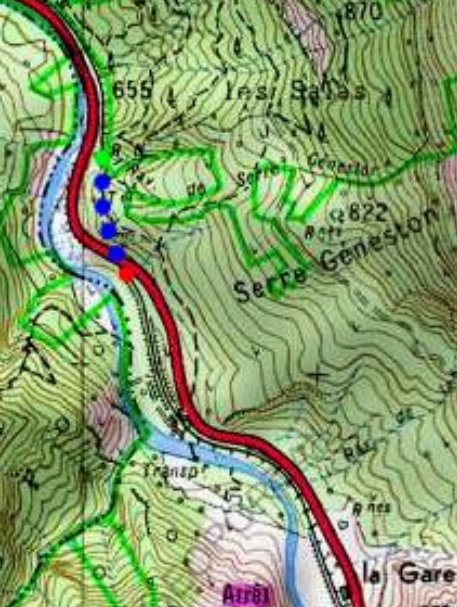
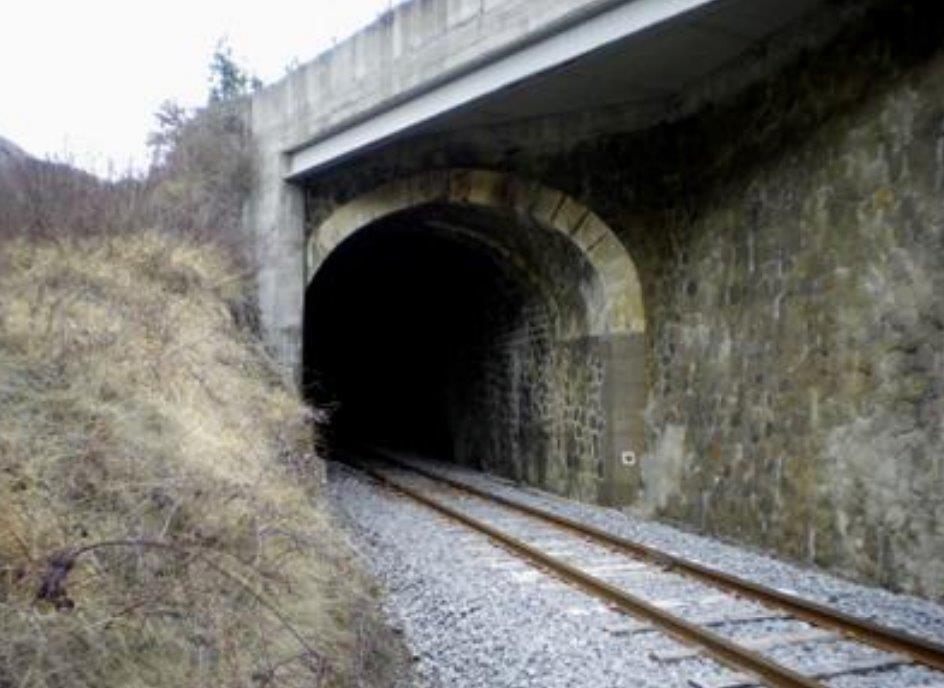
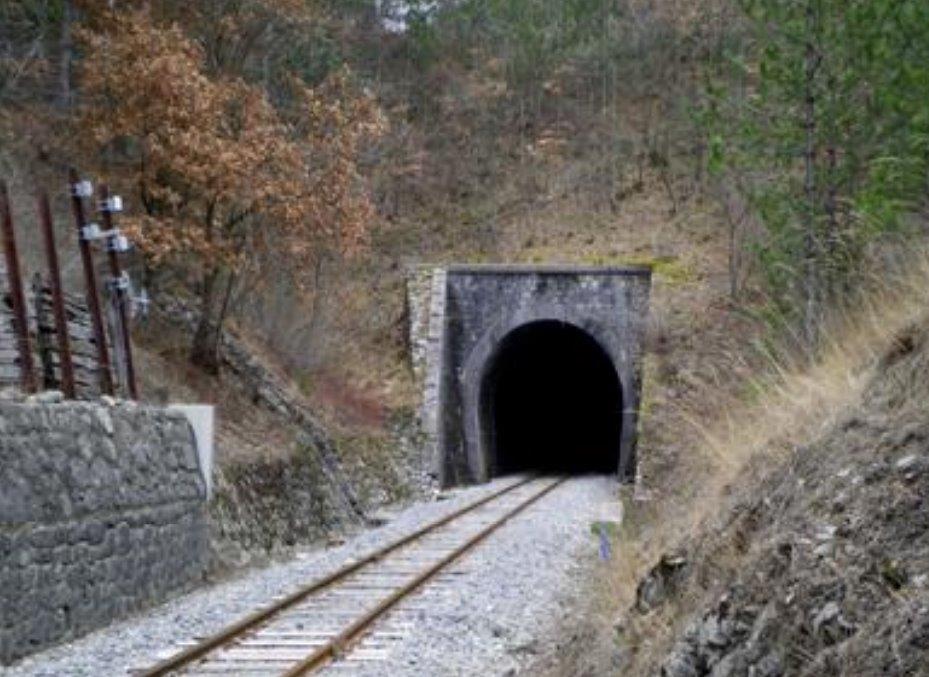
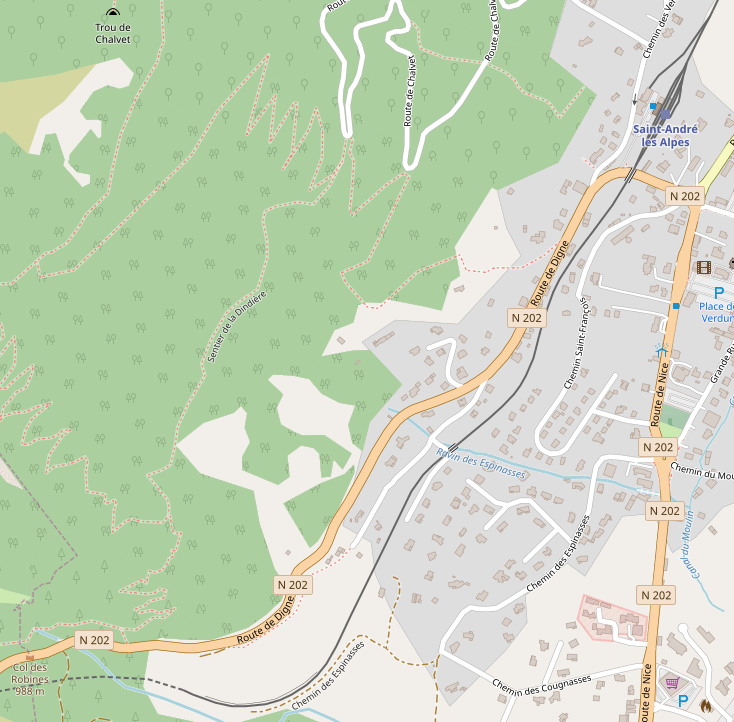
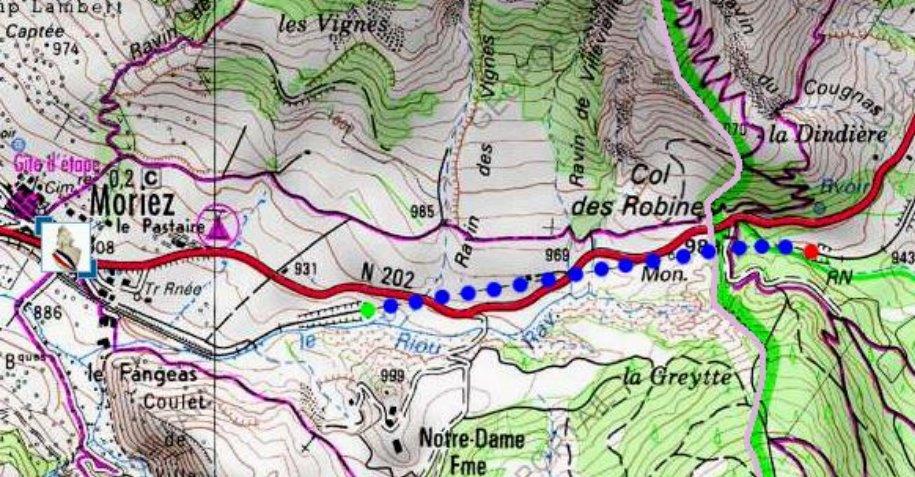
After the Halt for Saint-Jurson, the railway curves gently round towards a Westerly direction, crossing the Torrent du Bat de l’Anesse and then passing under and accommodation bridge which carries part of the road called Les Hermittes over the line. After travelling under the overbridge, trains then sweep round to a more Northerly direction before entering the Tunnel des Hermittes. The tunnel is 300 metres long and sits about 580 metres above sea-level. Once again the tunnel is marked on the plan below with red, blue and green dots. [5]

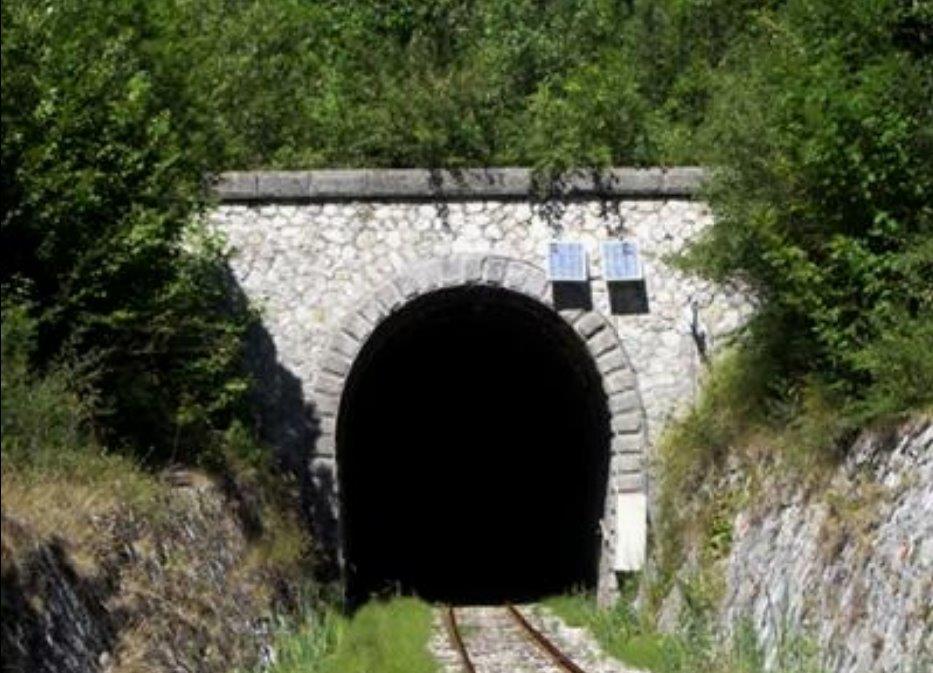
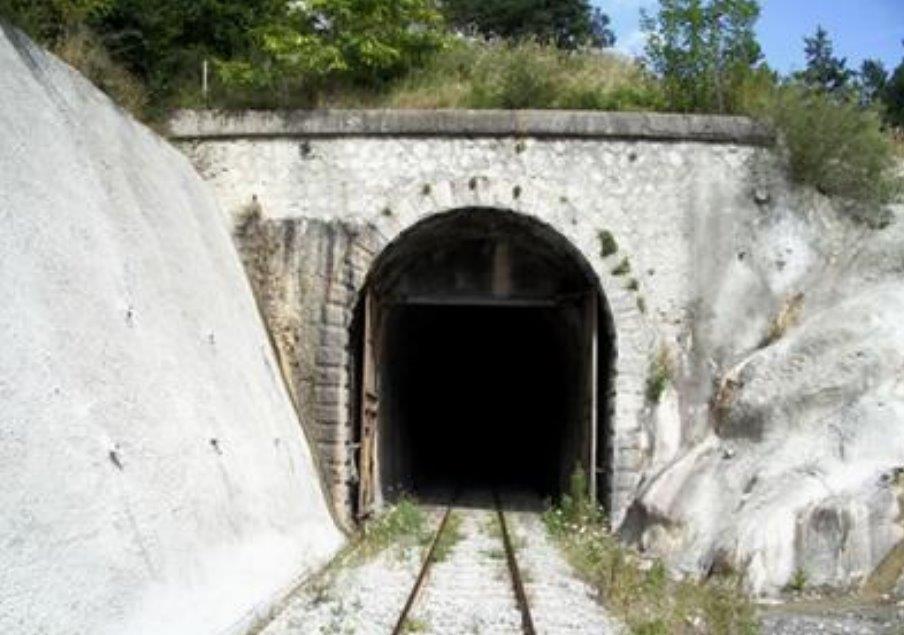
The southern portal. [6]Two images (above) of the northeastern portal. [5][6]

After leaving the northeastern portal of the Tunnel des Hermittes, trains crossed the Ravin de Saint-Pierre and entered the small halt which serves the Golf Course at Digne-les-Bains. L’Arret on the rail-simulator. [7] I have not been able to find any photographs of the halt.

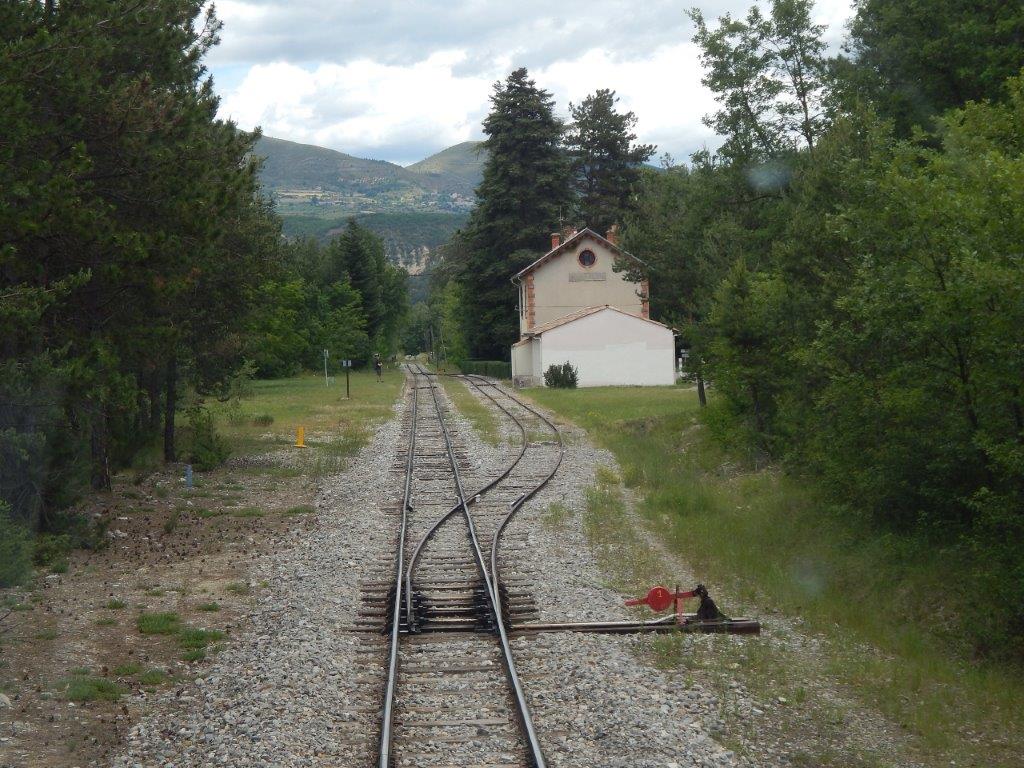
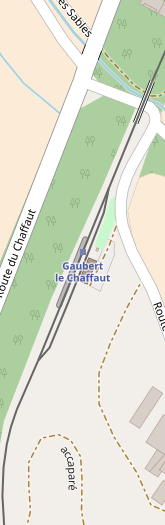
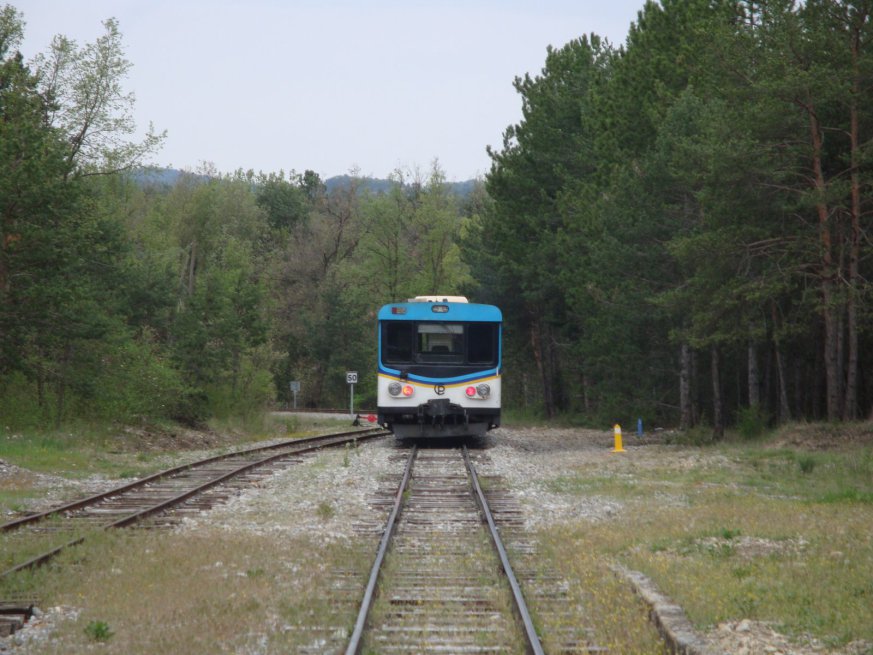
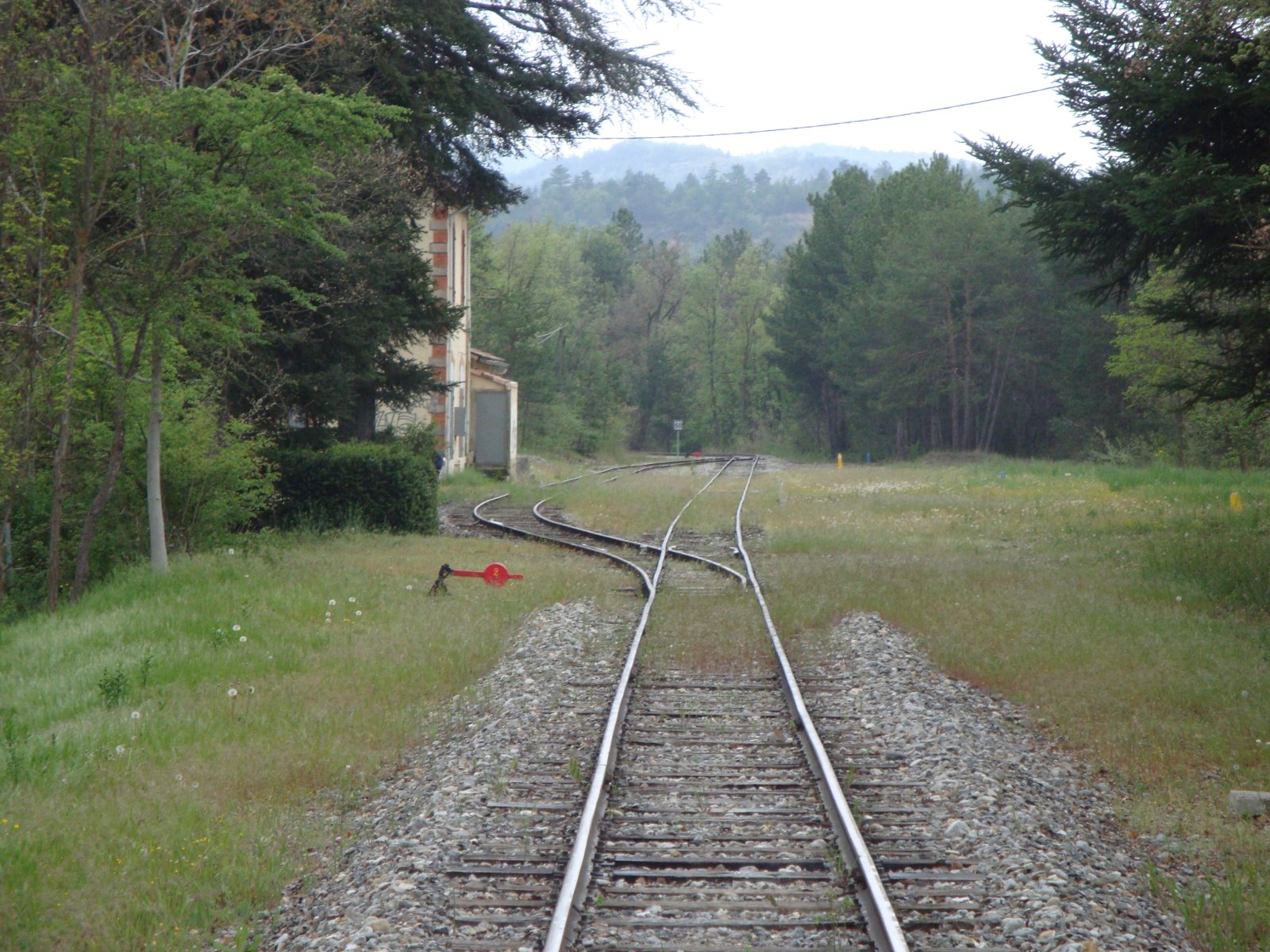
North of the Golf Course, the line begins to run alongside the Route de Chaffaut and then enters another Station – La Gare de Gaubert-Le Chaffaut. A driver’s eye view (above) approaching the Gare de Gaubert-Le Chaffaut from Nice. [2]

The adjacent map shows the station site and the viaduct to the north.

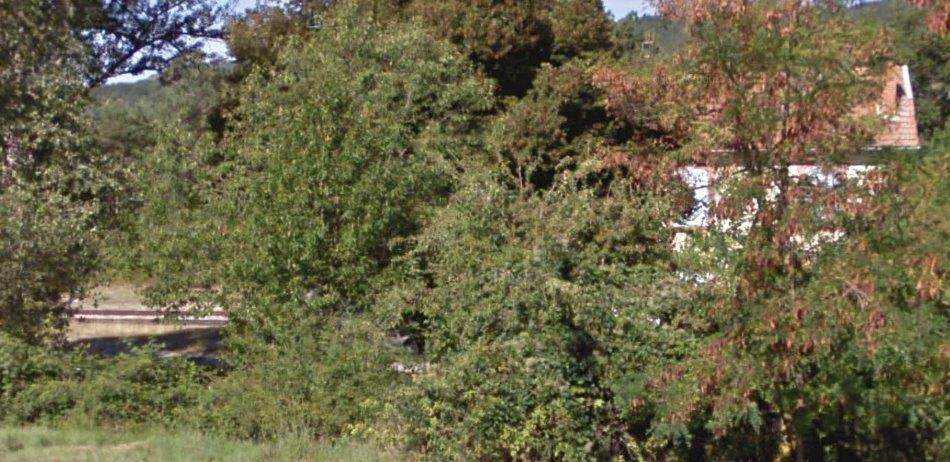
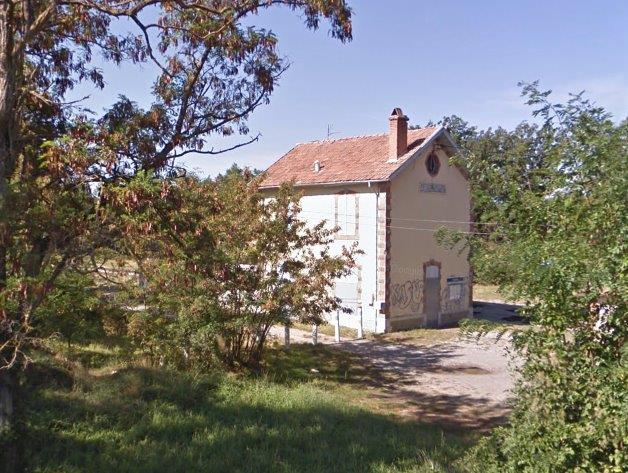
The first image below is taken from the narrow lane to the East of the station.

The next two are taken from the same lane, the first just north of the station building the next a little further to the north of the station buildings.

The fourth image below is a rail-simulator image of the station. A rail-simulator image of la Gare de Gaubert-Le Chaffaut. [7]Looking toward Nice with an Autorail leaving the station. [8]Looking back through the station site after the train sets off for Digne. [8]An Autorail arrives from Digne. [8]

Immediately after leaving the station heading for Digne trains pass over a small viaduct which takes the line across a single lane road and the Ravin des Beaumes. The Viaduct over the Ravin des Beaumes, viewed from the East.The Viaduct over the Ravin des Beaumes, viewed from the West. On the D12 looking Northeast, the line crosses the road on a low-headroom bridge. Looking back along the D12 to the railway over-bridge.

A little further along the line it encounters an aqueduct. As can be seen below the aqueduct is dry at the surface. The first image below show an accommodation road-crossing on the left of the satellite image above, which is immediately followed by two views of the aqueduct. One showing its bridge of the D12 and the other over the railway. The last of the four images immediately below shows the line beyond the aqueduct and is taken from the D12. A driver’s eye view of the Aqueduc de Gaubert. [2]

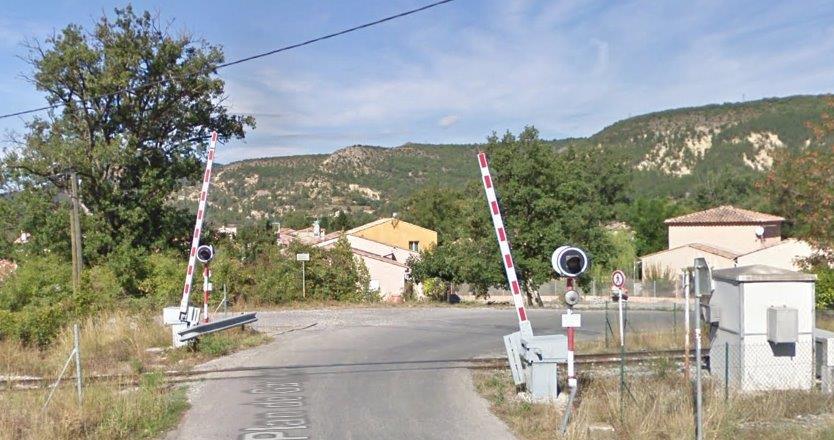
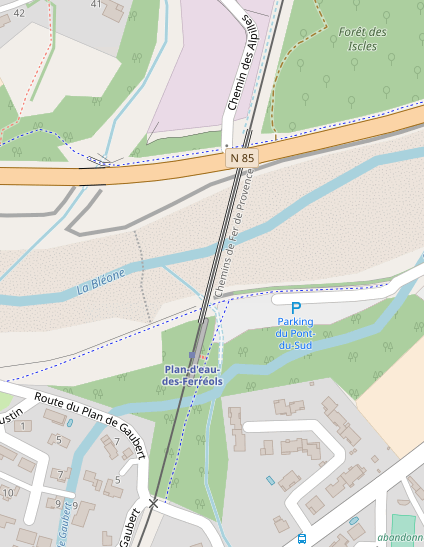
The next point of reference on the line is the level-crossing at Route du Plan de Gaubert. The fist image below looks back along the line towards Mezel, the second looks forward to Digne, and the third shows the level-crossing viewed from the East.The level-crossing appears at the bottom of the adjacent map.

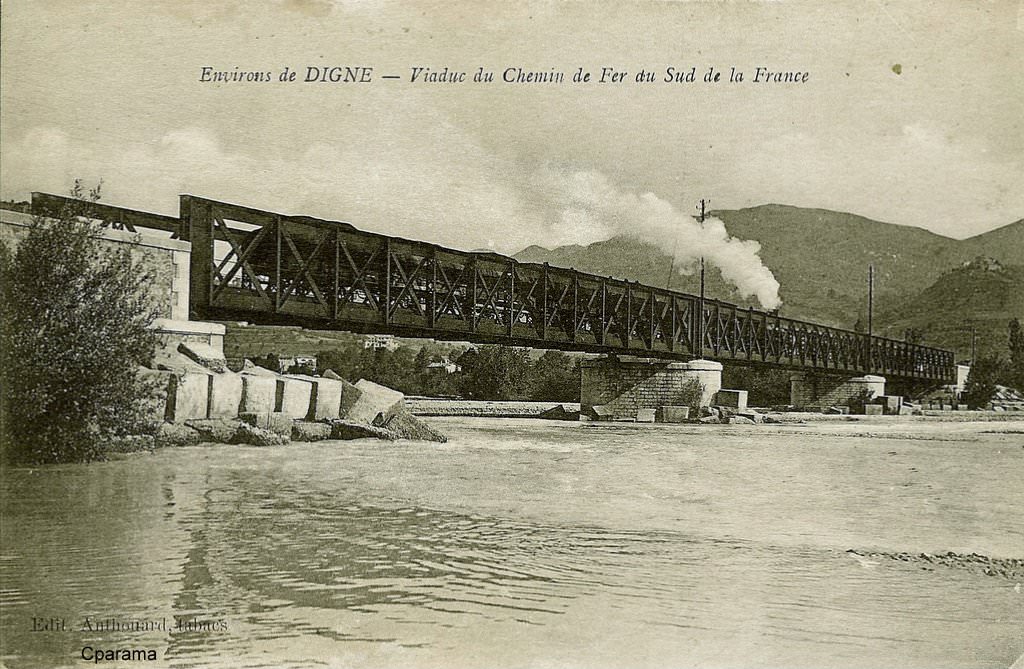
There is another halt just to the south of the river – L’Arret du Plan d’eau des Ferreols and then the line crosses La Bleone  and the N85 on its way into Digne-les-Bains.

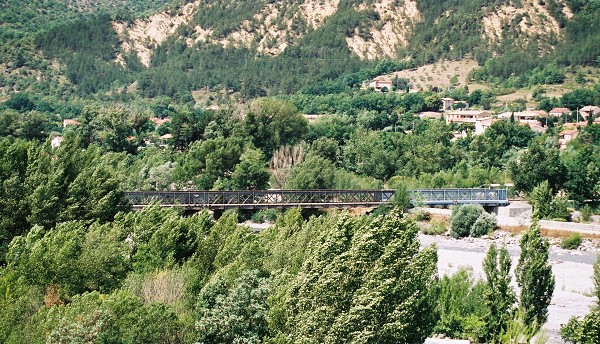
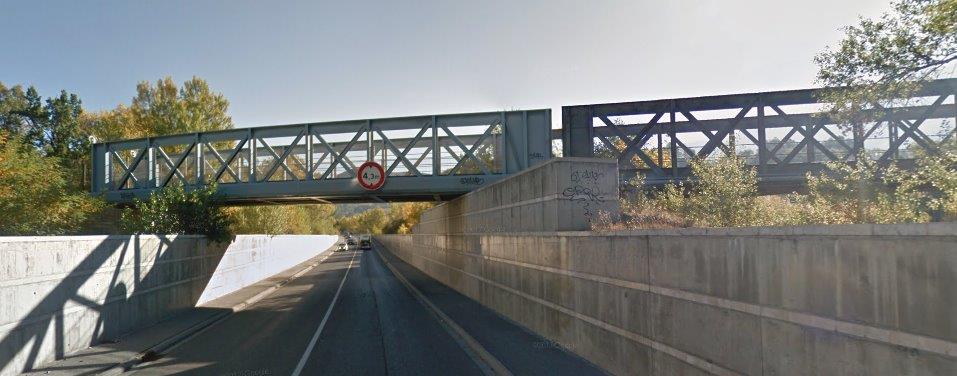
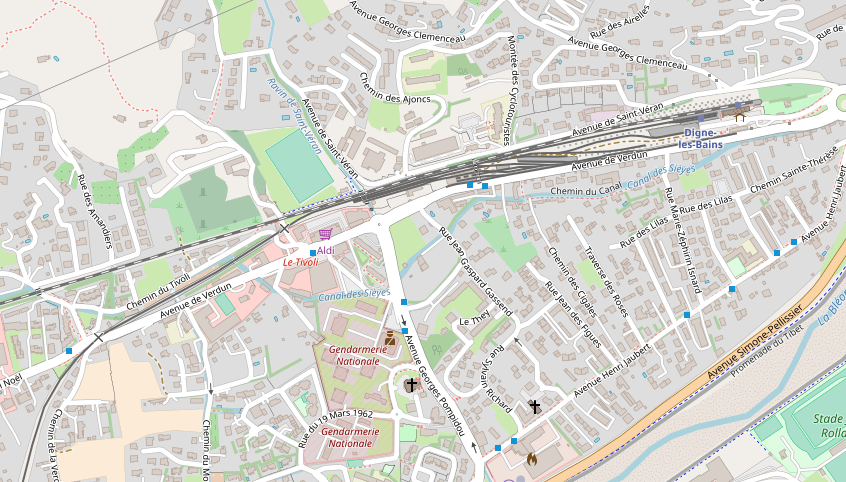
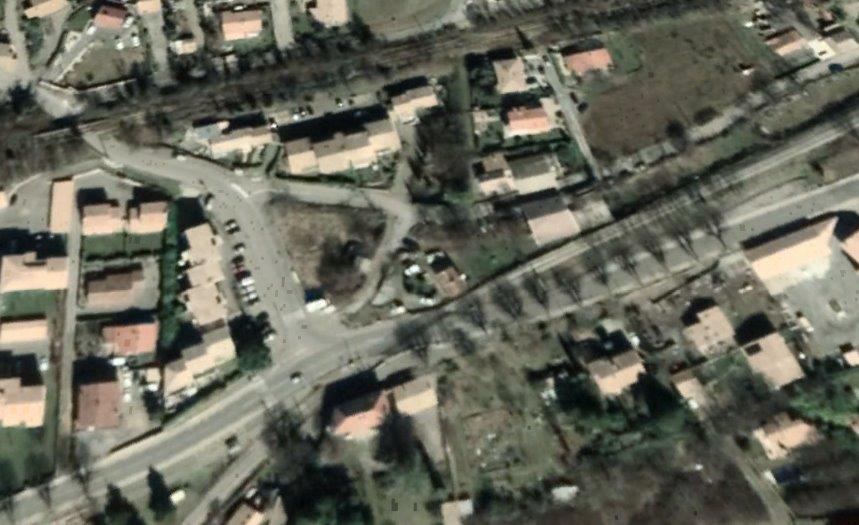
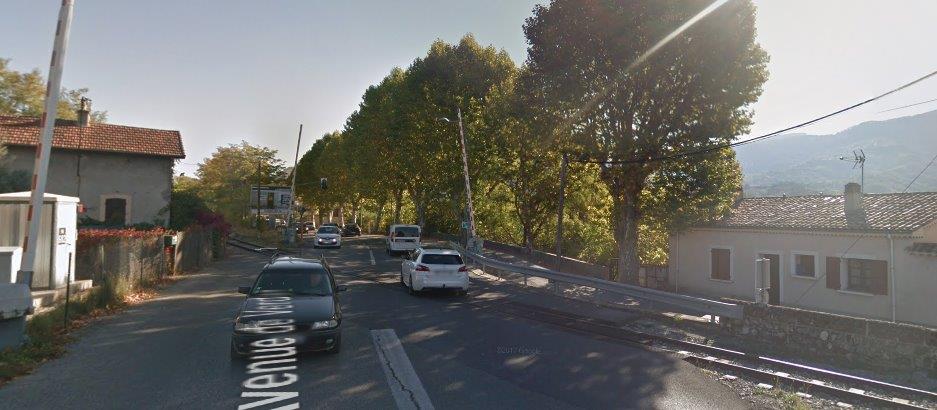
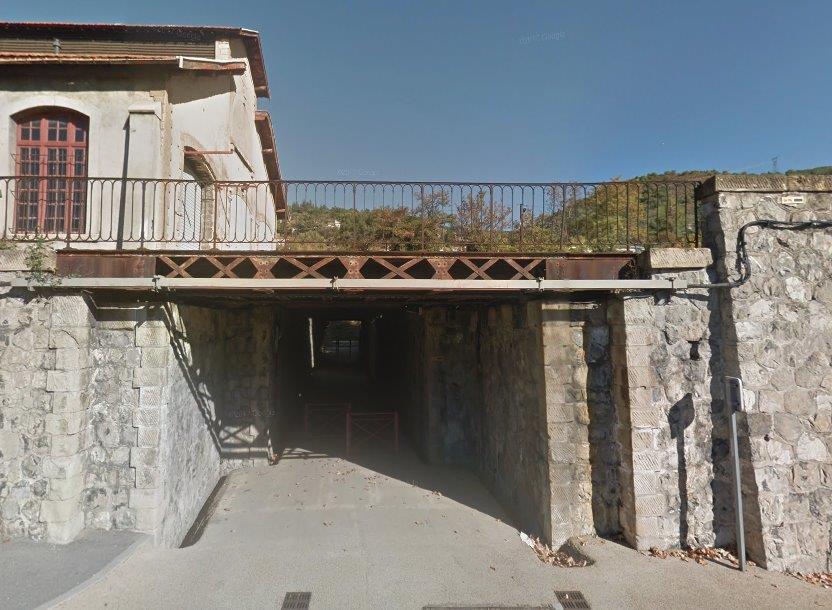
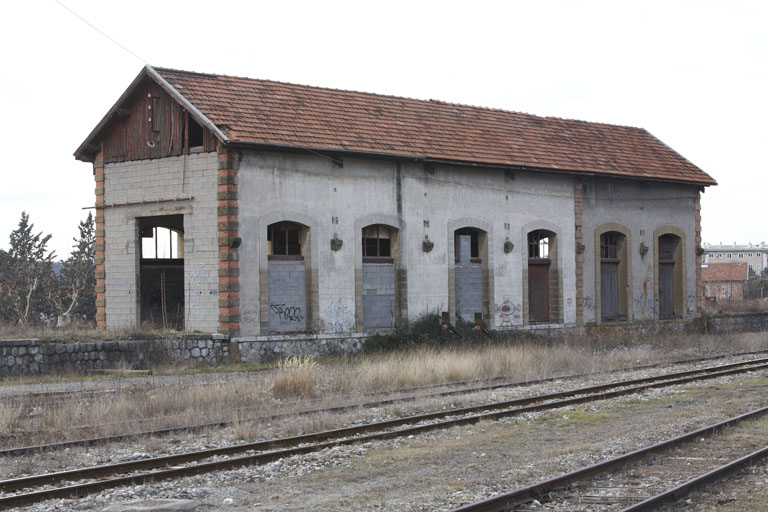
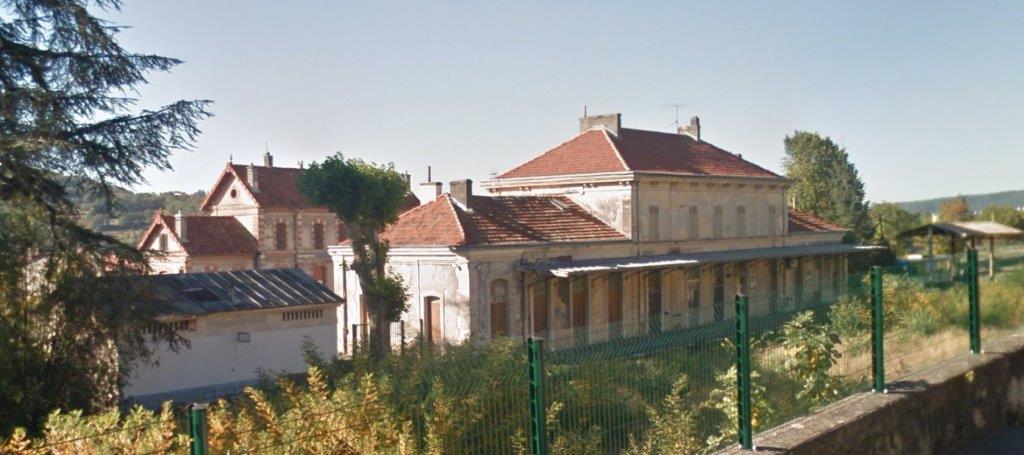
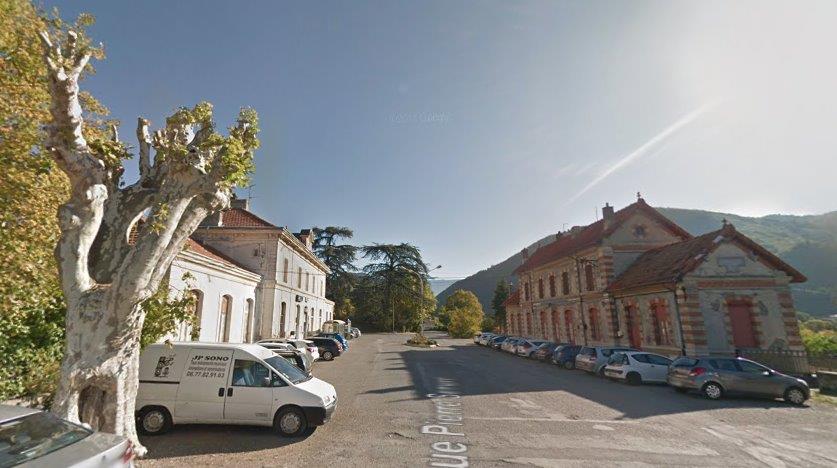
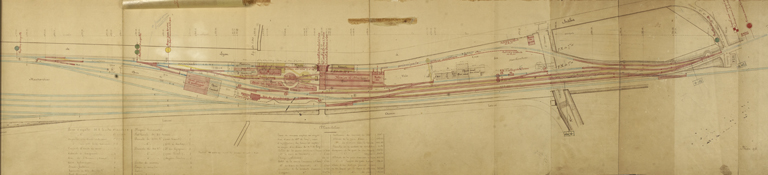
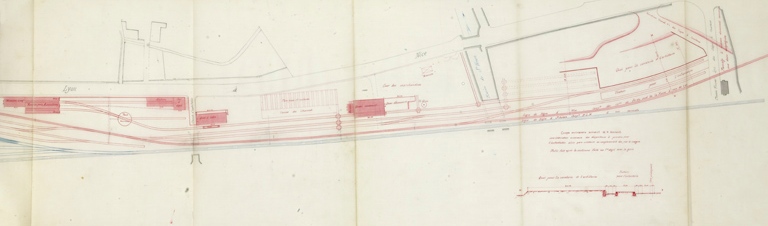
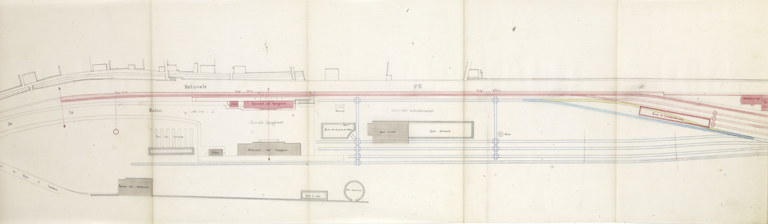
An early postcard image showing the bridge over La Bleone. [10]Railway bridge over La Bleone and the N85 with the span over the road appearing to be much newer than the spans over the river! [9]The railway bridge over the river and N85 viewed from the West on the N85.A plan of the whole station site.The level crossing on Route Napoléon, Avenue de Verdon.The level crossing on Route Napoléon, Avenue de Verdon.The crossing keeper’s cottage, looking towards the terminus at Digne.Looking ahead towards Digne Station from the level-crossing on  Chemin du Hameau des Hautes Sieyès.The water tower at the mouth of the station yard in Digne – the railway stations are off to the left by a few hundred yards. Then picture is taken from the north side of the tracks.A view of the same water tower from the south.A line side view of the water tower and the station yard beyond. [15]Two images of the goods shed, the second is from the cab of an Autorail.  [2]A drawing of the good shed. [15]The Engine Shed seen from the cab of an Autorail travelling towards the passenger station buildings. [2]A line side view of the Engine shed looking East towards the passenger facilities at the station. [15]The Engine Shed from the south side of the station complex.A driver’s eye view of the line from the engine shed looking east towards the station platforms. [2]The turntable and Engine shed looking West. [15]Two drawings (above) of the Engine Shed. [15]Two images (above) of the pedestrian underpass just to the east of the Engine Shed. The first shows the north entrance and the second, the with entrance.Looking ahead from the cab of an Autorail. This gives a good idea of the length of the station site. The passenger facilities seem to be a very long way distant. [2]A larger scale map of the station complex.

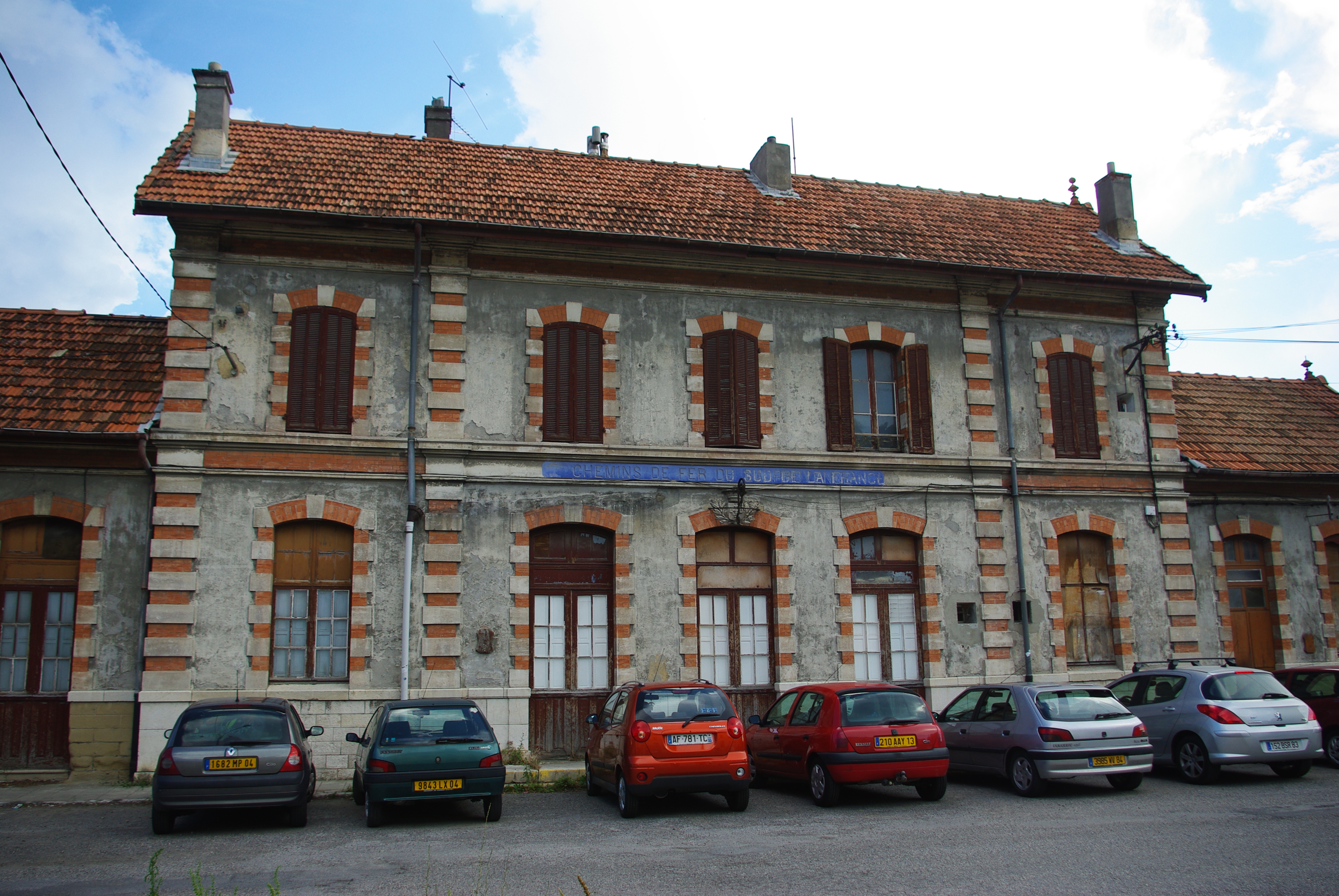
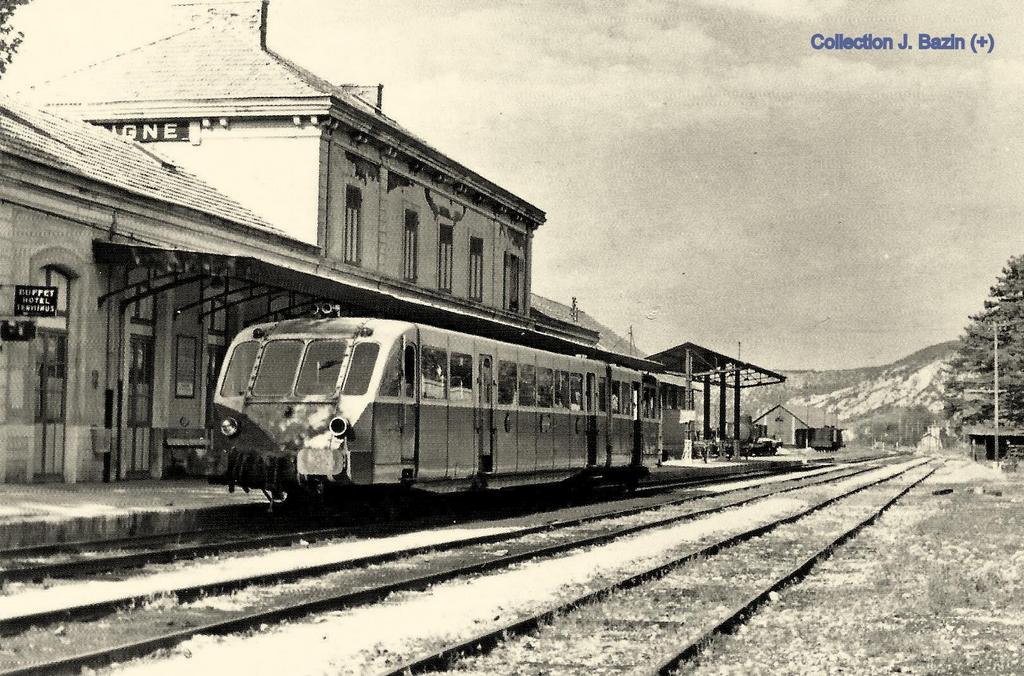
The transfer building and platform set aside for the transshipment of goods from the metre-gauge line from Nice to the standard-gauge branch which fed Digne from the mainline to the West. [15]The original passenger station building for the metre-gauge line. [15]The station courtyard looking East, with the metre-gauge station building to the right and the original standard gauge facilities on the left. [15]Modern traction stabled on the line to the old station building. [13]A view across the passenger facilities of the station complex taken from the northwest.A view of the shared station platform at Digne in the 1980s. [12]Three images (above) in monochrome showing the shared passenger facilities at Digne. [16]A later image of the station after the removal of the standard-gauge lines. [13]A closer view showing the platform in use in the early 21st Century and the old station building for the Nice to Digne line. [13]The early 21st Century station! [13]The early 21st Century station. [13]Images of the standard gauge station from the North side of the complex.A closer view of the station forecourt highlighting the proximity of the two station buildings and their different architecture.The immediate station plan in the early 21st Century.These three images (above) show different iterations in the planning of the station with the bottom image best reflecting what was built on the site. [15] In the 20th Century the facilities for the metre-gauge line were altered to provide a shared platform with the standard-gauge branch.

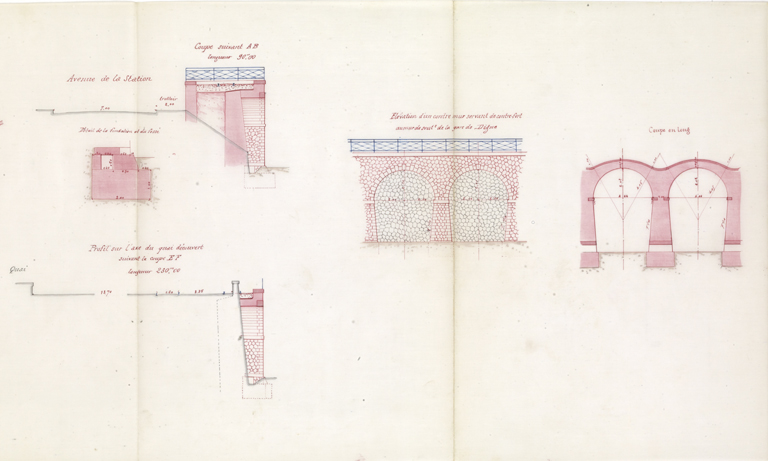
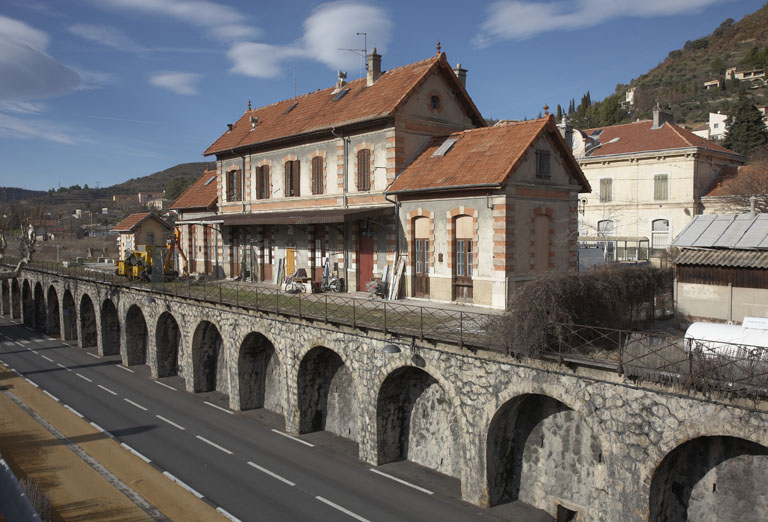
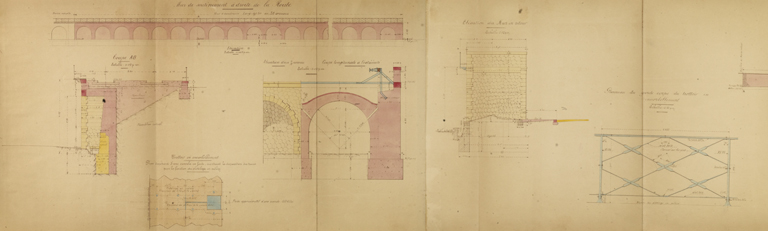
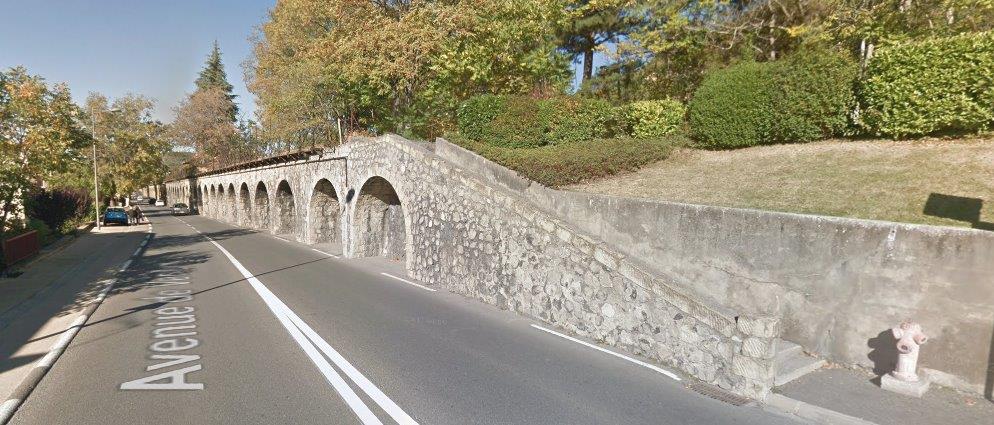
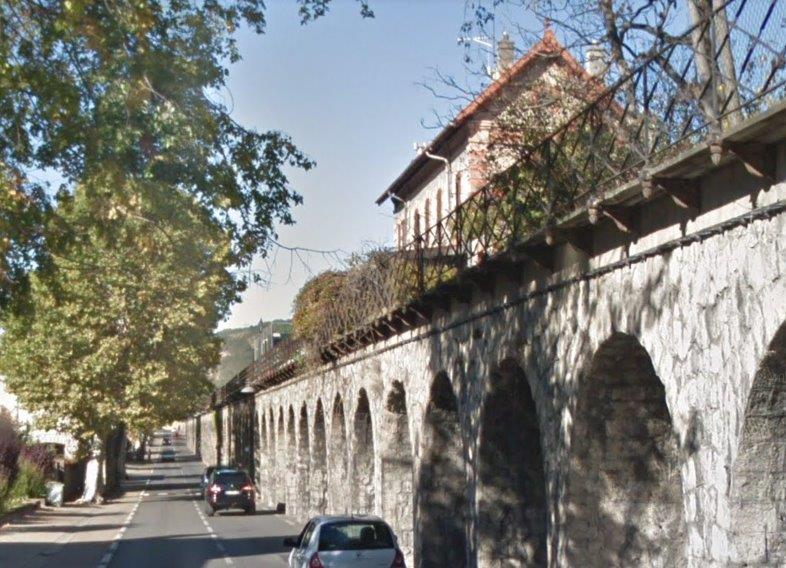
On the south side of the site the land drops away from the station and in order to maximise the space on the site a significant retaining wall had to be built on the south boundary of the site.One plan showing the construction of the retaining wall. [11]An impressive shot of the Nice-Digne Line Station building and the retaining wall supporting it above the Avenue de Verdun.  [13]A further diagram of the retaining wall. [15]The retaining wall in the early 21st Century, two views (above) taken from Google Streetview.The Chemins de Fer de Provence Station Hall. [13]Three drawings of the Chemins de Fer de Provence Station Building. [15]

Two videos are included below which give a good idea of the condition of the station site. [14]

To finish this blog post I will include some postcard images of the station site from earlier year and then reflect a little on what might be happening in the future.

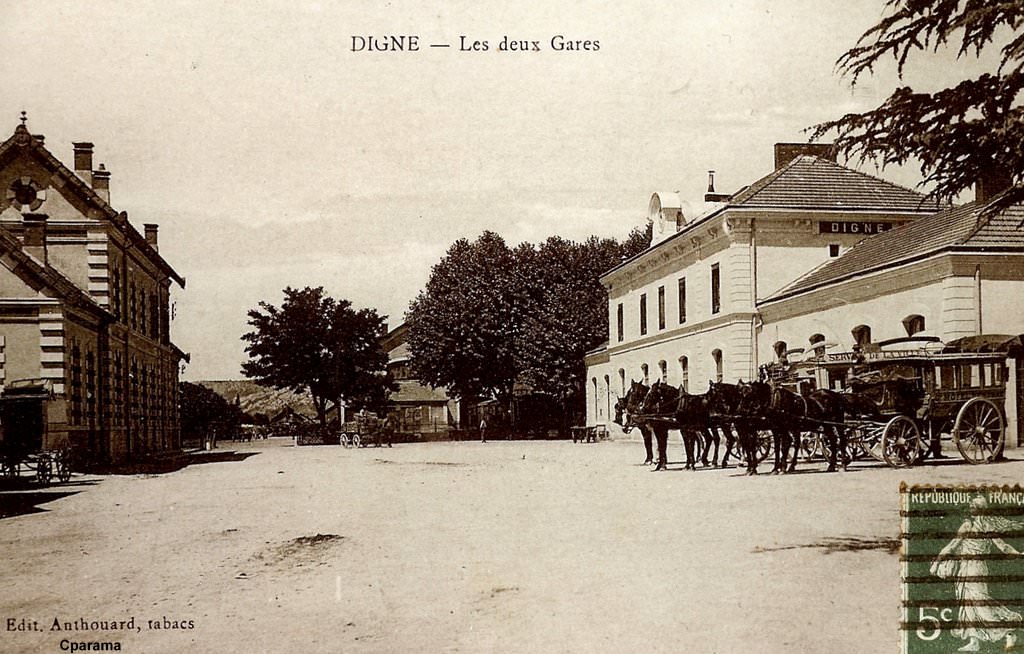
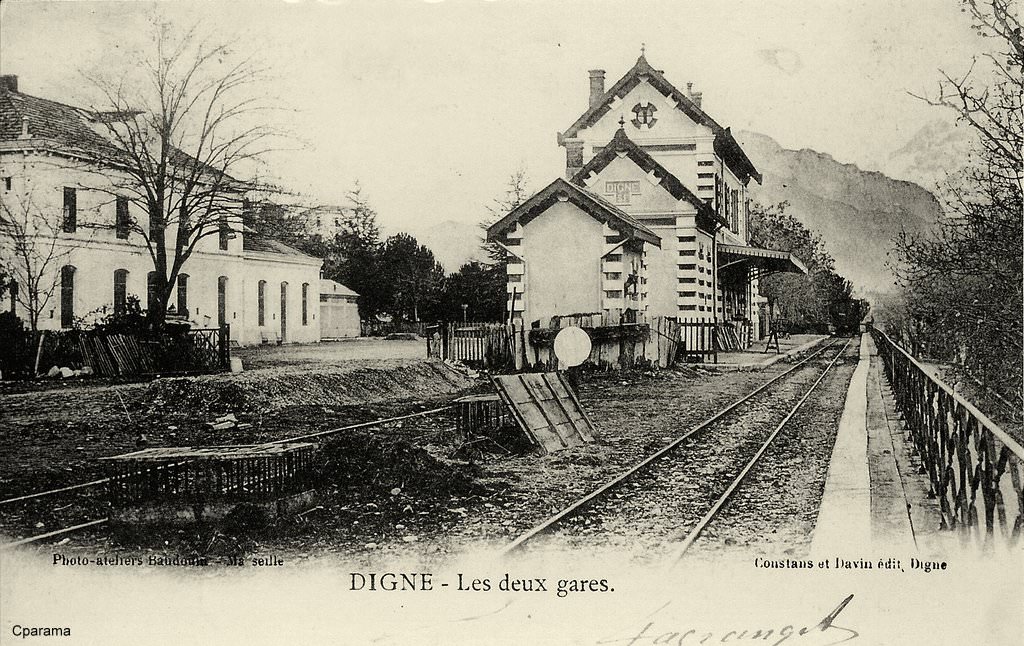
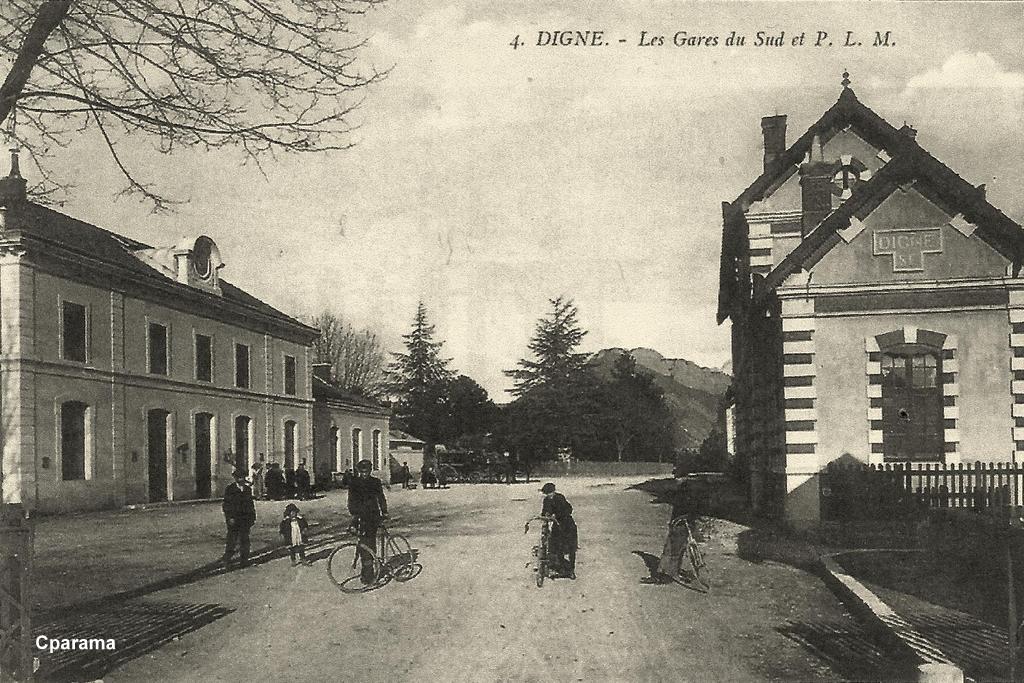
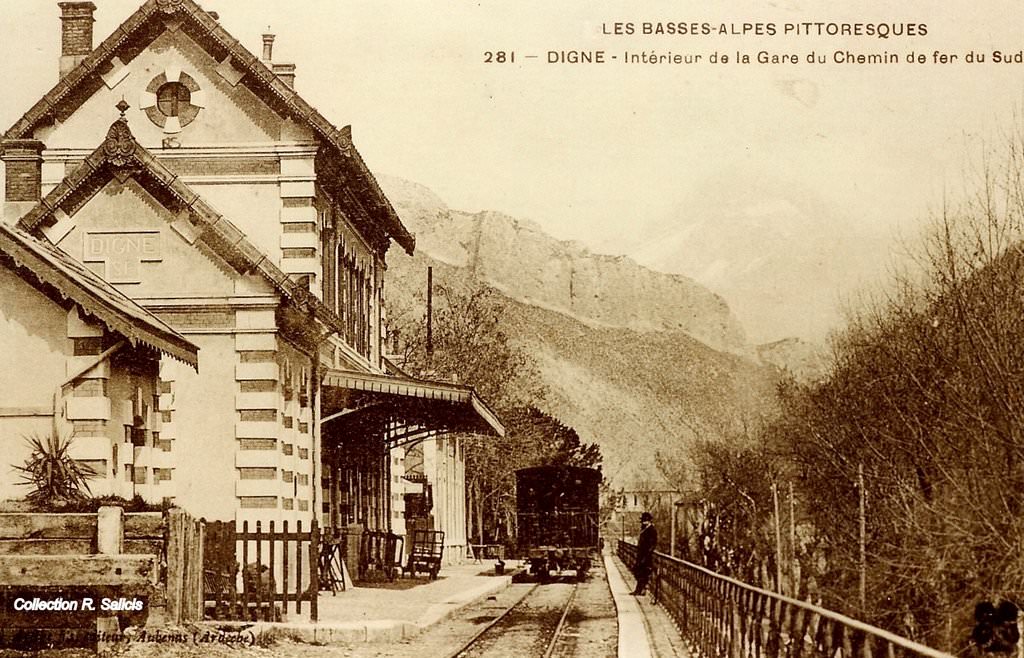
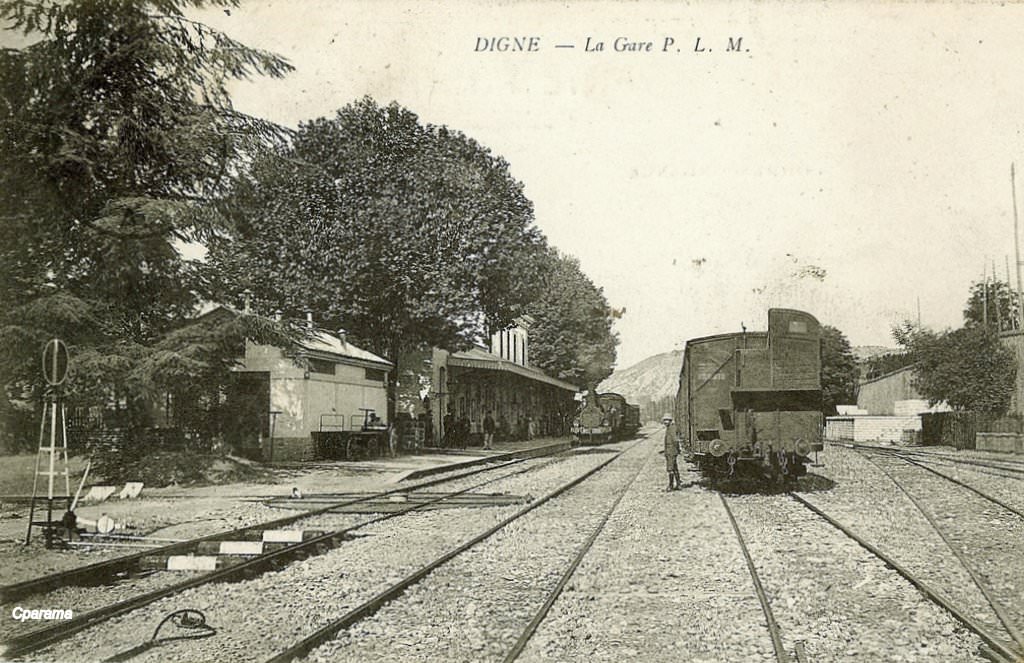
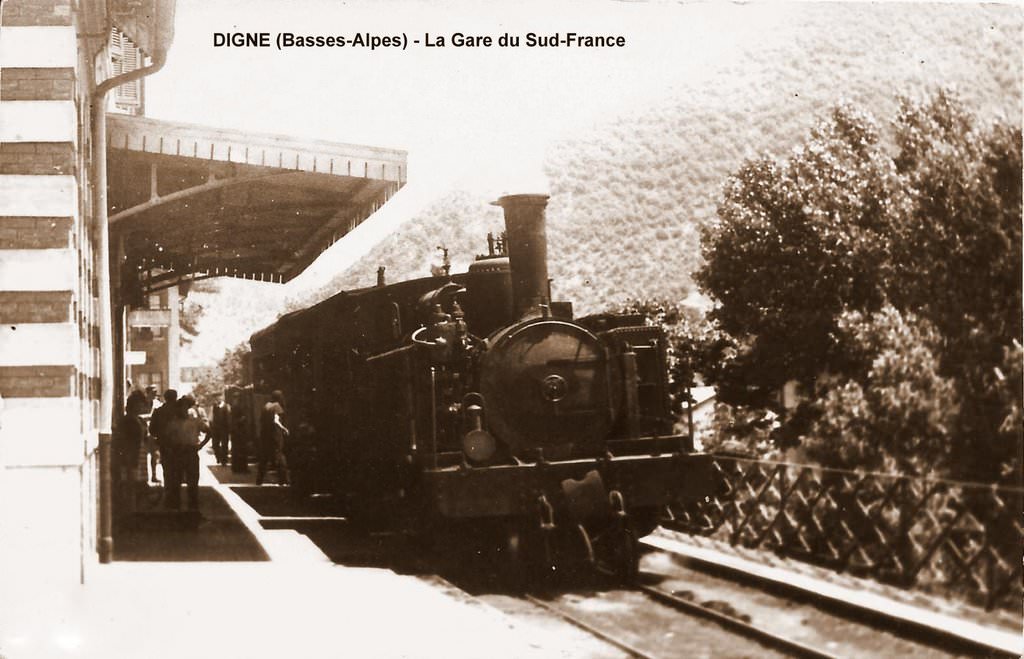
First the postcards from the CPArama website …..The standard-gauge PLM station and engine shed. [10]The station courtyard. [10]The two stations taken from the top of the retaining wall at the south side of the site. [10]The station courtyard from the West. [10]The PLM station looking West. [10]The Chemins de Fer de Provence Station Building. [10]The PLM Station taken from alongside the standard-gauge Engine Shed. [10]An early steam-hauled service is about to set off on the journey towards Nice. [10]

And finally, what about the future. ….

Traffic on the metre-gauge line is hampered by that fact that the standard-gauge connection to Digne has been cut. Christopher James has mentioned that there has been talk of a possible metre-gauge line extension to meet the SNCF mainline at Château-Arnoux Saint-Auban, however, this is probably beyond the resources of the Chemins de Fer de Provence.

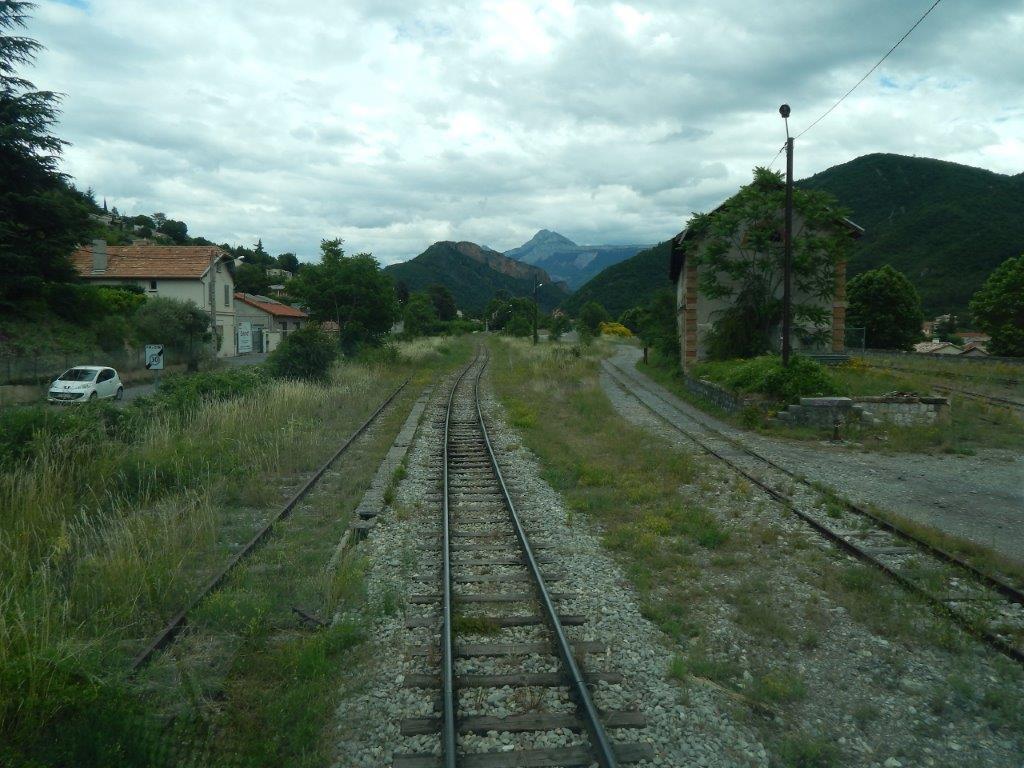
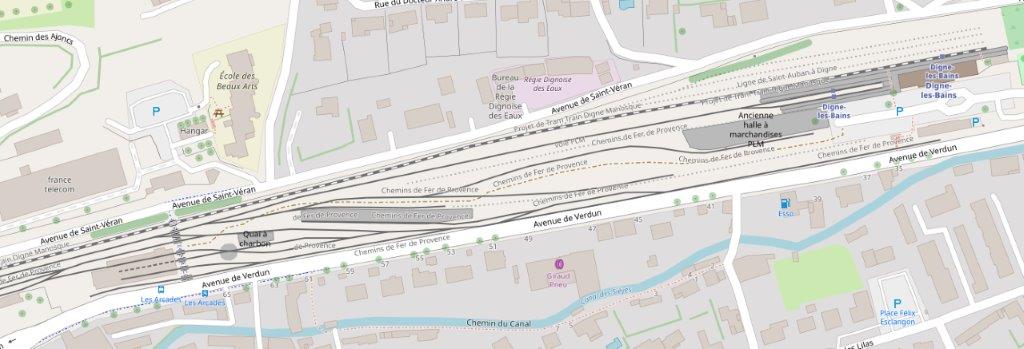
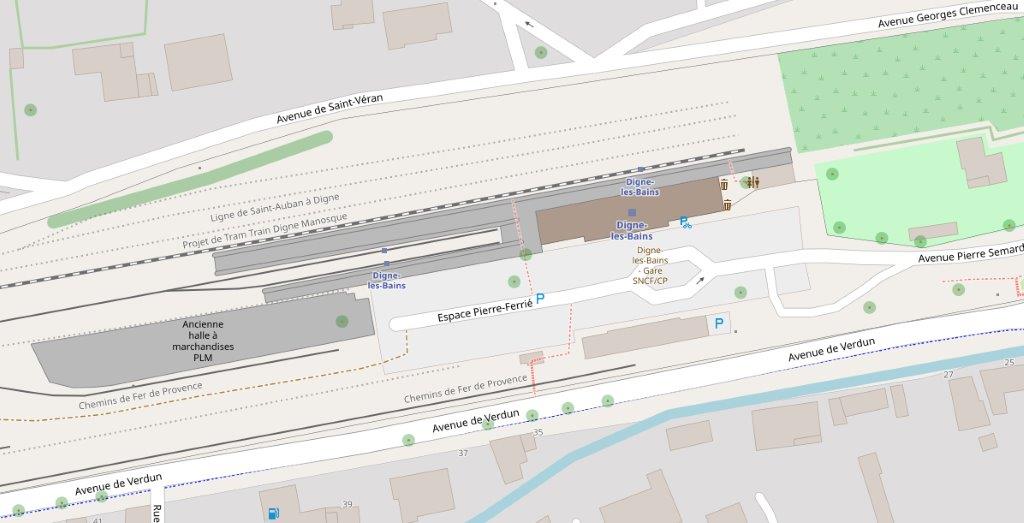
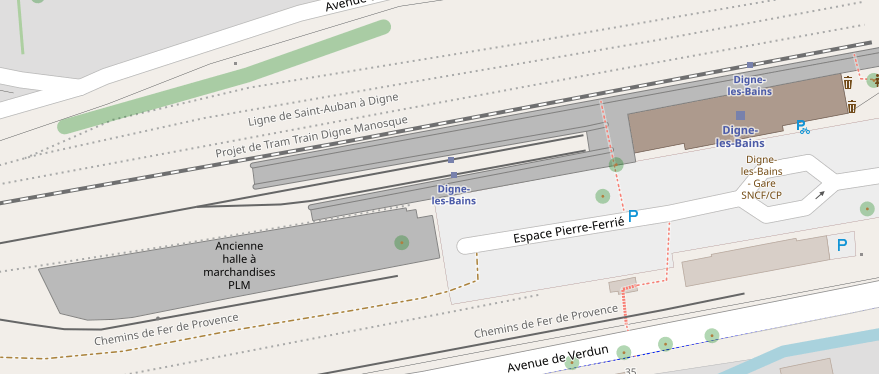
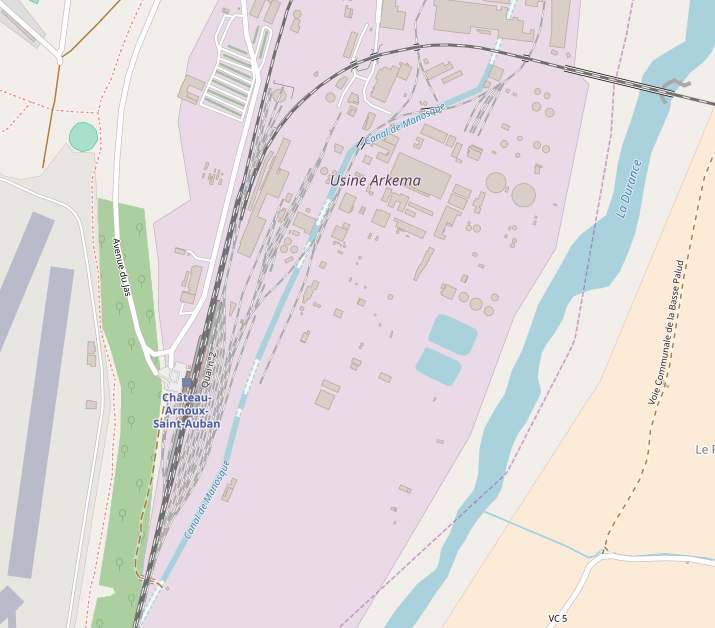
In looking for plans of the Station Site at Digne les Bains, I noticed reference to a ‘Project de Tram Train Digne Manosque’. It can bee seen on the Openstreetmap plan below and is shown as a dotted line which runs from Digne (immediately below) to Château-Arnoux Saint-Auban.The project is intended to use the old standard-gauge formation and its line into Château-Arnoux Saint-Auban is shown above. The project now has a website: http://transport-provence-alpes.centerblog.net/12-projet-multimodal-digne-sisteron-manosque. Is the scheme feasible? There are some questions about this which appear in the comments on the website.

How likely is this scheme, does anyone know?

References

  1. https://www.google.co.uk/maps/place/M%C3%A9zel%2FCh%C3%A2teauredon/@44.010038,6.201066,3a,75y,90t/data=!3m8!1e2!3m6!1sAF1QipMAOPyxuAbfSVVUTAyfZOew2a0G07LK1iGfYxyI!2e10!3e12!6shttps:%2F%2Flh5.googleusercontent.com%2Fp%2FAF1QipMAOPyxuAbfSVVUTAyfZOew2a0G07LK1iGfYxyI%3Dw129-h86-k-no!7i1500!8i1000!4m5!3m4!1s0x12cb91840c767ed3:0xa02521aa30f35bdd!8m2!3d44.0097448!4d6.2007228, accessed on 19th August 2018.
  2. http://www.rd-rail.fr/1-PHOTOS/PH43/index-ph43.html, accessed on 12th August 2018.
  3. https://dossiersinventaire.maregionsud.fr/gertrude-diffusion/dossier/ponts-des-chemins-de-fer-de-provence/6db00f0d-4794-4fb9-8d66-a7675e5c748b, accessed on 12th August 2018.
  4. https://fr.wikipedia.org/wiki/Le_Chaffaut-Saint-Jurson, accessed on 20th August 2018.
  5. http://www.tunnels-ferroviaires.org/tu04/04070.2.pdf, accessed on 20th August 2018.
  6. https://dossiersinventaire.maregionsud.fr//gertrude-diffusion/dossier/tunnel-ferroviaire-des-hermittes/77ea863f-d328-4776-b1ec-90bb186ff2aa/illustration/0, accessed on 20th August 2018.
  7. http://www.railsim-fr.com/forum/index.php?/topic/10163-le-train-des-pignes/&page=2, accessed on 15th August 2018.
  8. https://leonardetsesamis.com/1er-mai-2010-a-la-gare-de-gaubert-le-chaffaut, accessed on 20th August 2018.
  9. https://structurae.net/structures/digne-railroad-bridge, accessed on 21st August 2018.
  10. https://www.cparama.com/forum/digne-les-bains-t8.html, accessed on 21st August 2018.
  11. https://dossiersinventaire.maregionsud.fr//gertrude-diffusion/illustrations/info?id=89daf5fe-9604-4fba-8755-6a48acf5a242&slug=ivr9320110400342nuc2a, accessed on 21st August 2018.
  12. https://fr.wikipedia.org/wiki/Ligne_de_Saint-Auban_%C3%A0_Digne, accessed on 1st August 2018.
  13. https://mapio.net/place/16814242, accessed on 21st August 2018.
  14. These two videos are available on YouTube.
  15. https://dossiersinventaire.maregionsud.fr/gertrude-diffusion/dossier/gare-de-digne-les-bains/704d17b3-45a1-4cec-bd88-9dc73d3724af, accessed on 21st August 2018.
  16. http://cccp.trainprovence.free.fr/cccp/article-alpazur2007.html, accessed on 21st August 2018.

Nice to Digne-les-Bains Part 13 – Barrême to Mezel (Chemins de Fer de Provence 77)

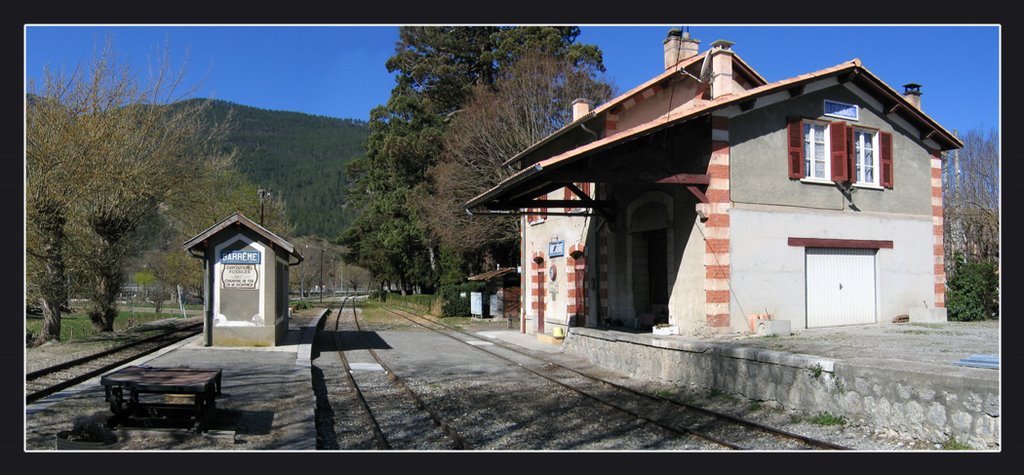
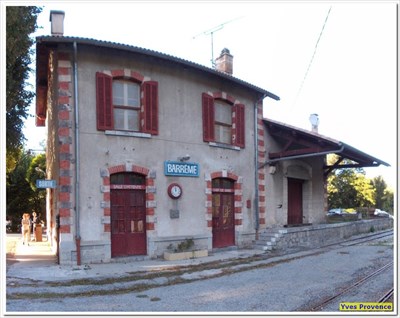
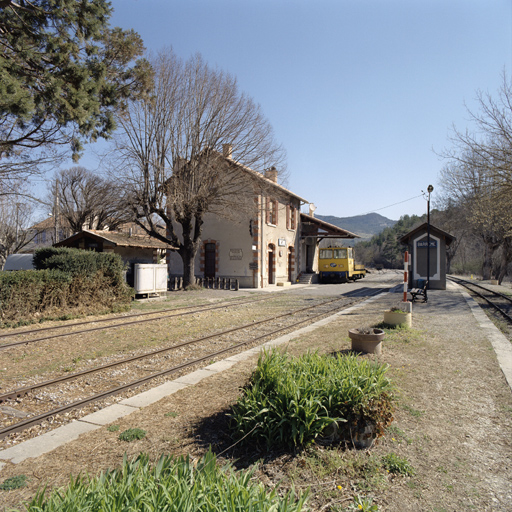
We resume our journey at the Station in Barrême. The first picture shows it on a glorious day and in its best light!

The station at Barrême. [4]

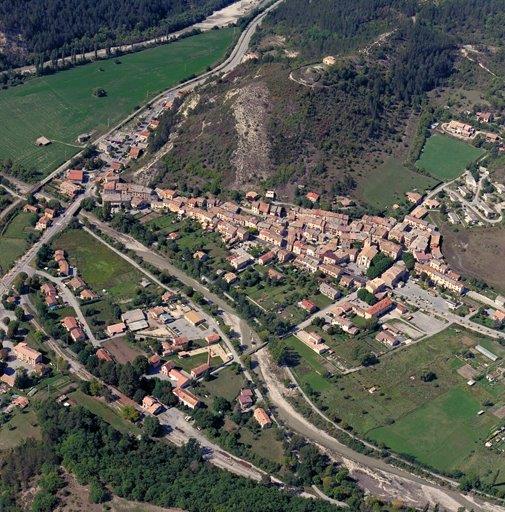
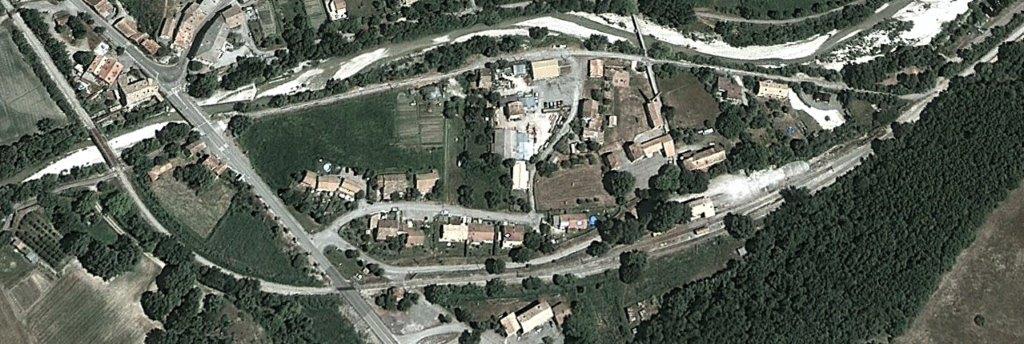
An aerial overview of Barreme with the Station visible to the bottom left of the image, (c) Marc Heller. [12]

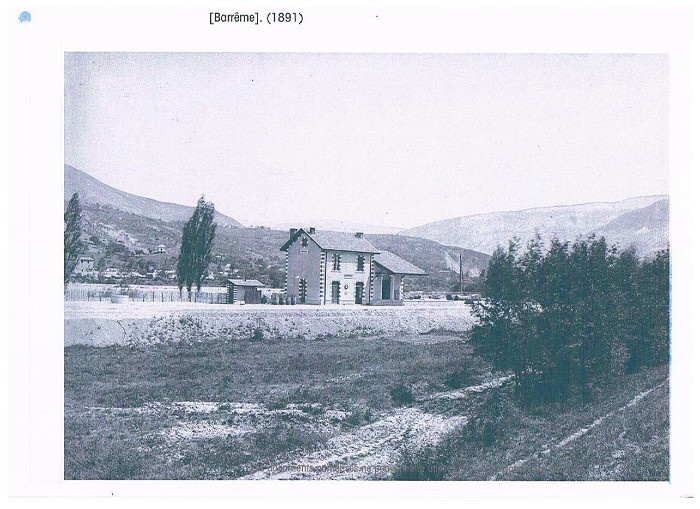
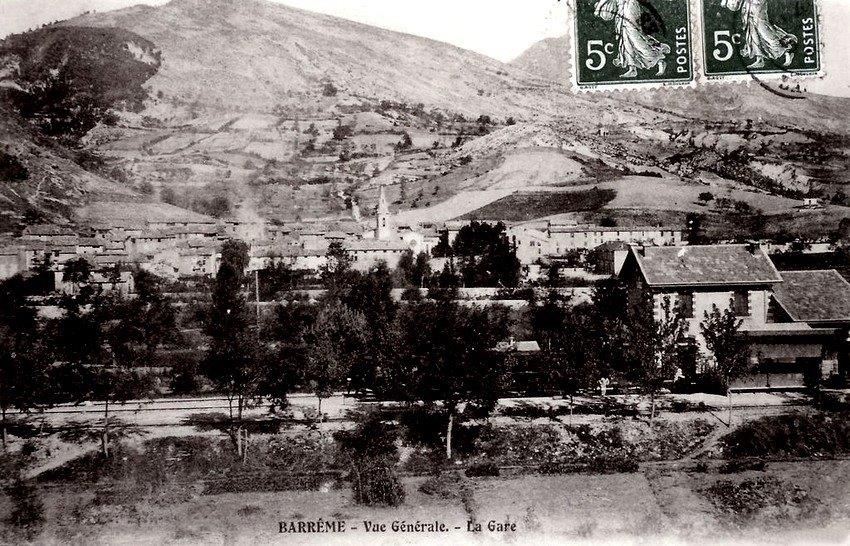
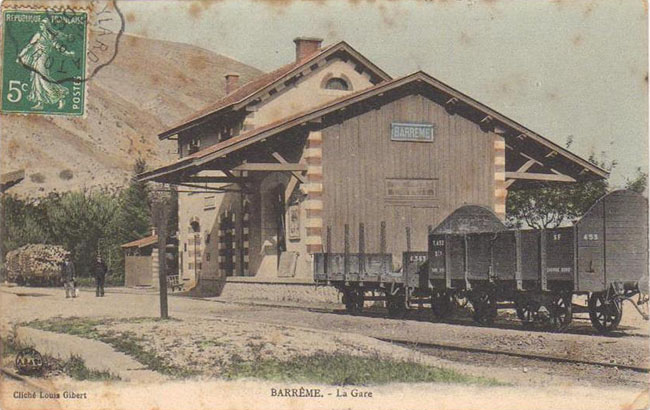
The Station appears quite lonely in 1891! [7]

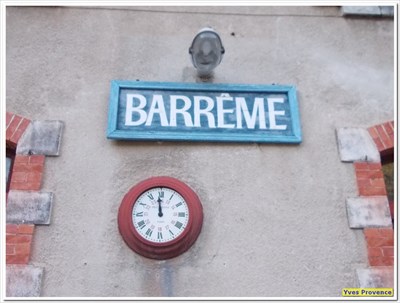
Two views of the station clock. [1][8]

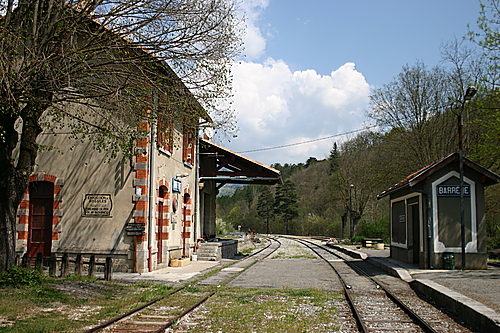
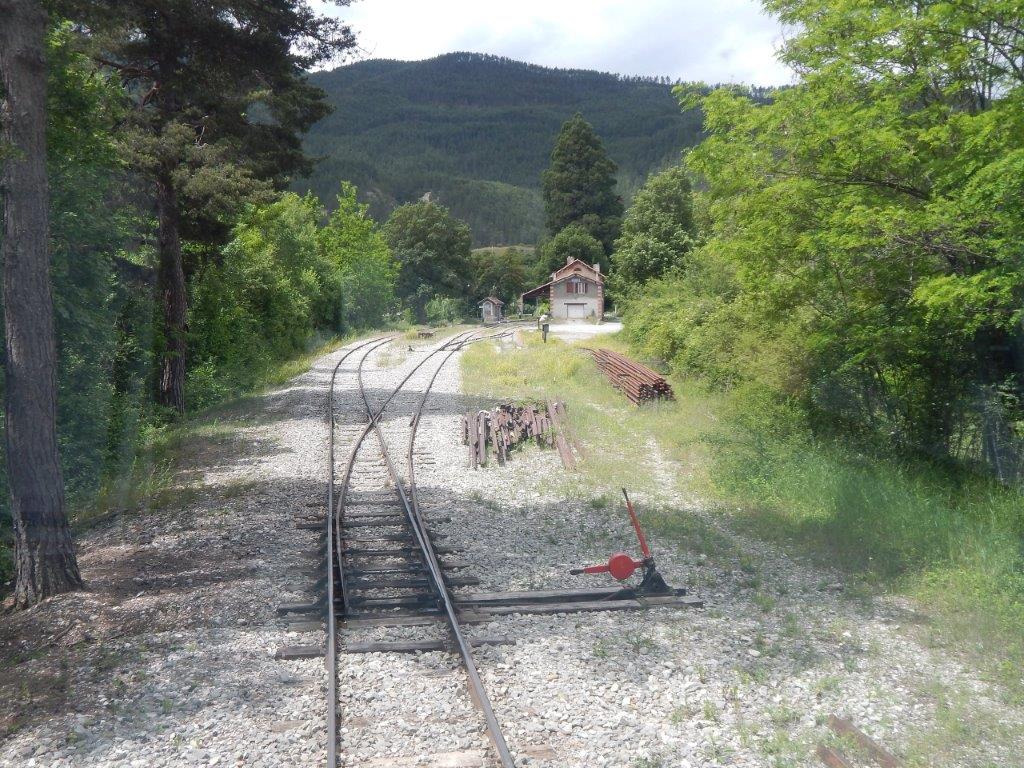
The Station as approached from Digne. [2]

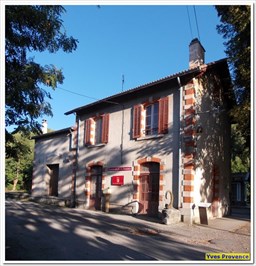
La gare de Barrême, (c) Yves Provence. [1]

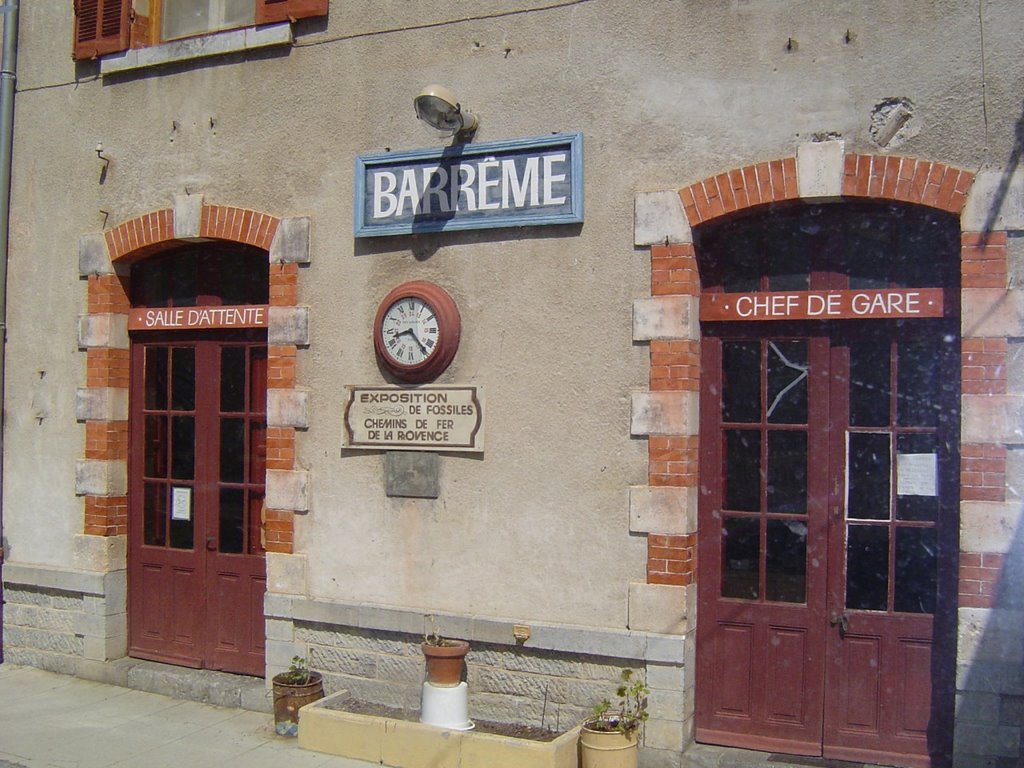
La gare de Barrême, (c) Yves Provence. [1]

La gare de Barrême, (c) Yves Provence. [1]

General View of the Station. [3]

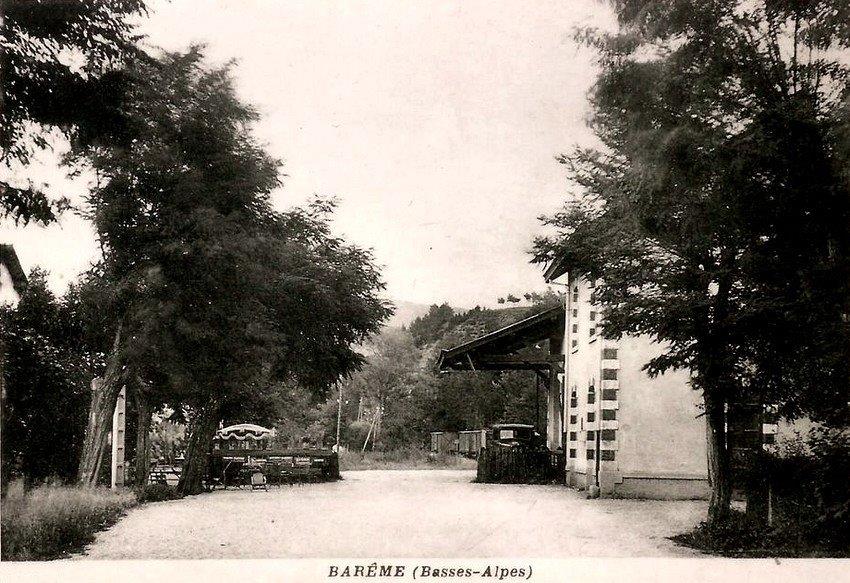
The station courtyard. [3]

The station courtyard in 21st Century. [5]

Barreme Station with Autorail travelling towards Nice and a construction train brought by the DU-102 draisine, (c) La bête de Calvi. [6]

A very similar view without the trains! [10]

Modern traction at Barrême. [9]

A view from the South, (c) Marc Heller. [11]

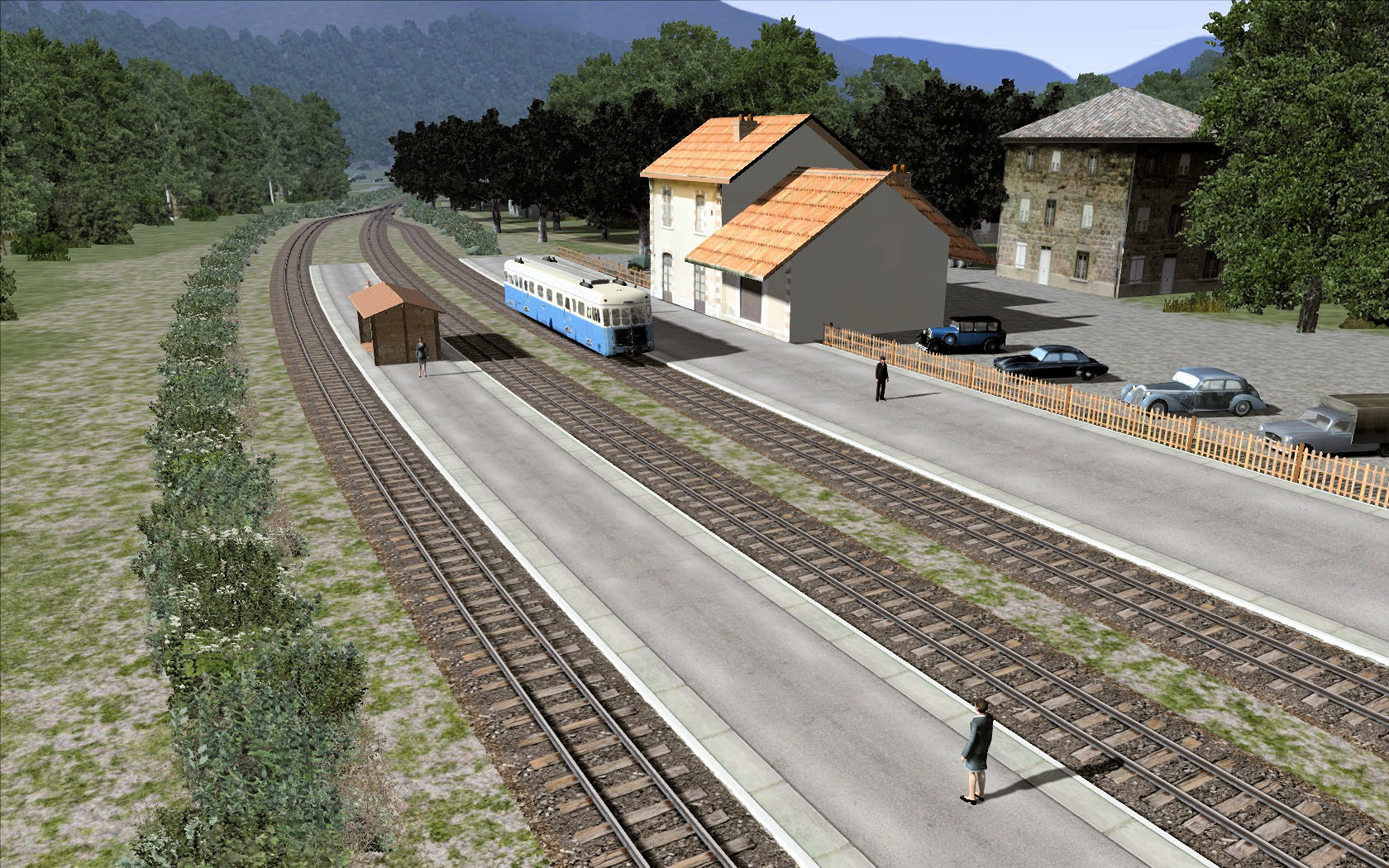
The station on the rail-simulator. [31]

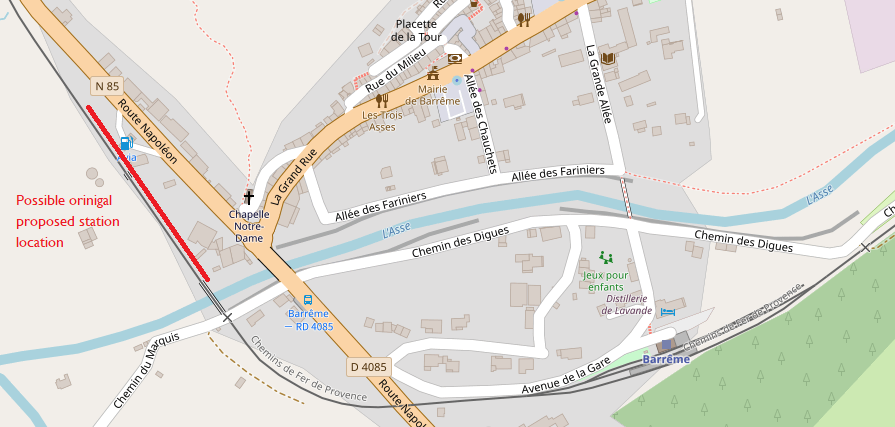
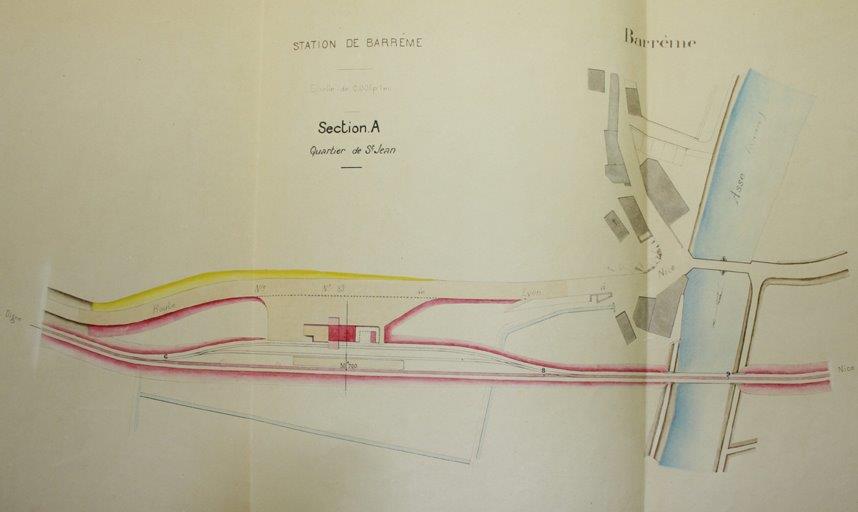
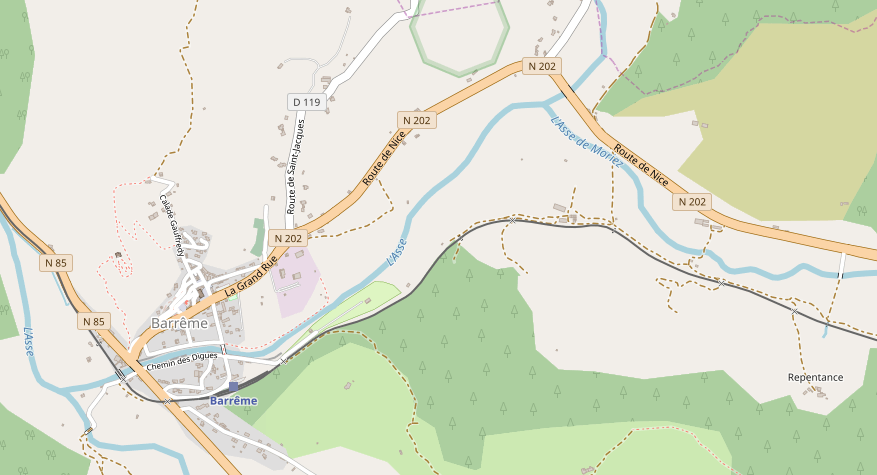
As an interesting aside, research on line suggests that the final location of Barreme station was not the location originally intended. I have found a sequence of drawings which seem to locate the station to the north-west of the present location further along the Nice -Digne line, beyond the bridge in the village centre. It is possible that I have misunderstood the drawings, but it seems that there was another location planned and that the station would have had larger facilities if the original plans went ahead. That location is shown in red on the plan below.

Plan of originally proposed railway station. [12]

Three images (immediately above] showing the plans for the originally proposed station buildings on the first planned site of the station. [12]

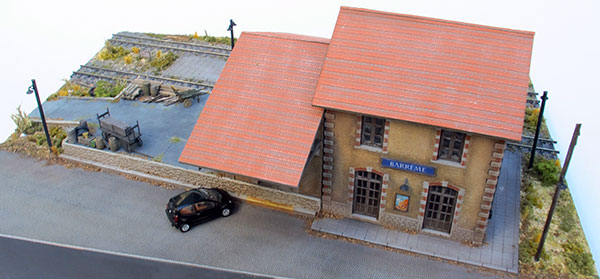
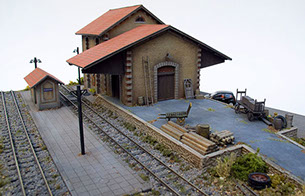
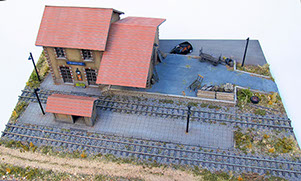
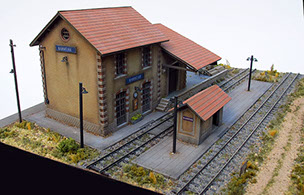
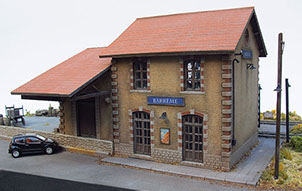
A further interesting aside is the fact that Barreme Station has been used as the source for a model by Aubertrain (http://aubertrain.com/modules.html). These next few pictures give a sense of the quality of the model. [16] The diorama is 602 x 400 x 250 mm in size.

These last two pictures can be found on the site, “http://dignois.fr/Barreme-vieux” and purport to show an early steam engine at Barreme Station. If this is correct, then the station shelter was rebuilt some time after the pictures were taken. [13]

We leave Barreme Station on the train an immediately cross the L’Asse de Moriez just before its confluence with L’Asse de Blieux.

Barreme Bridge [15]

Barreme Bridge [14]

Beyond the village limits, road, rail and river once again run in very close proximity. The road is now the N85 and the river is now l’Asse. In the photograph below the road and river are immediately next to each other and the river can just be picked out beyond the first line of trees and vegetation.

A driver’s eye view of the next Halt on the line – l’Arret de Saut de Loup. [15]

At times the River Asse runs through some relatively steep sided Gorges and road, rail and river squeeze through the narrow space available, as Google Streetview shows below.

The next Halt is Arrêt du Poil-Majastres which can be seen in the image below.

Road, rail and river continue in close proximity. The next image shows the bridge crossing L’Asse for the route,”Lu Buis Noire East.” It is followed by a driver’s eye view of the same location.

Le Buis Noire East seen from the cab of an Autorail. [15]

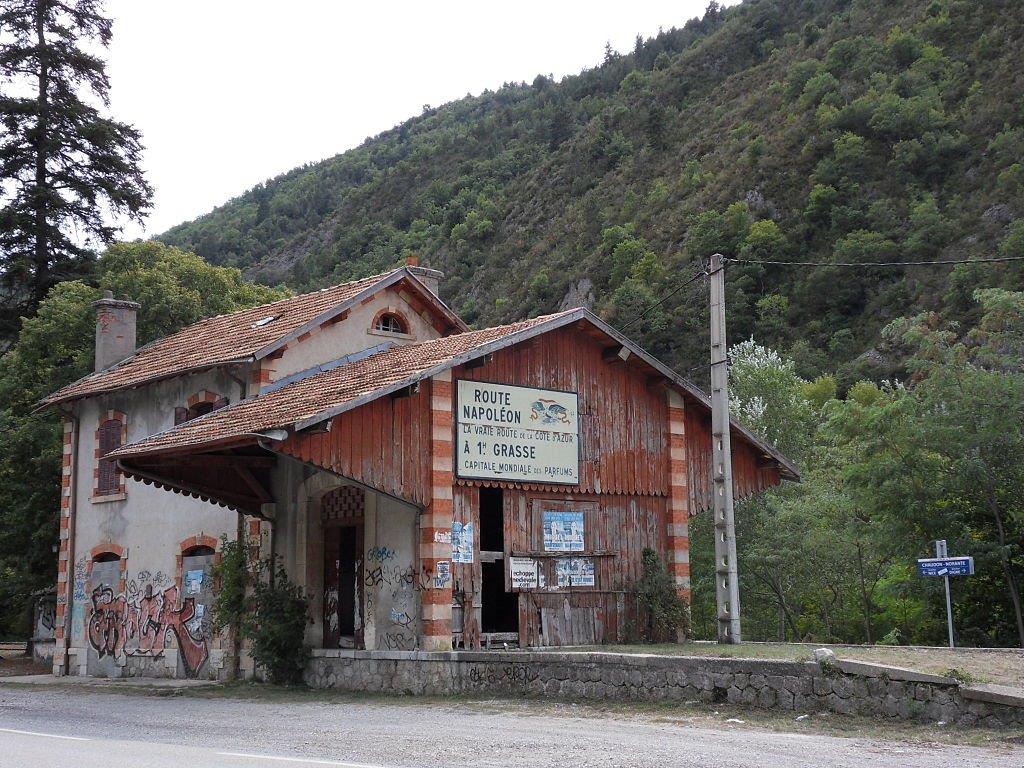
The line drops steadily down the valley of l’Asse towards Norante. Its route favours the river rather than the road until, close to Chaudon-Norante, it enters another tunnel – the Tunnel de Norante. By this time the line has dropped to an altitude of about 650 metres above sea-level. The tunnel is 137 metres long and is marked on the map below by the red, blue and green dots. [17] The next station is Chaudon-Norante and can be seen in the top left of the map.

The southern portal of the Tunnel de Norante. [15]

The Northern portal of the tunnel. [17]

Immediately after trains emerge from the Tunnel de Norante they cross another simple girder bridge. [15]

And then quickly arrive at Chaudon-Norante Railway Station. A driver’s eye view from the cab of an Autorail shows the approach to the station. [15]

The station at Chaudon-Norante in 2013. [18]

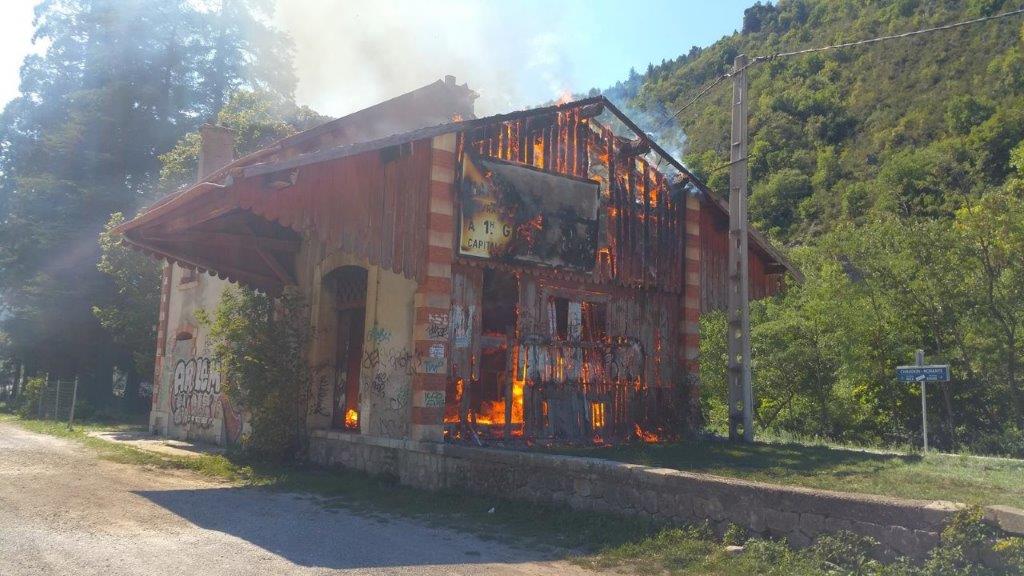
The station on fire in the winter of 2015/2016. [19]

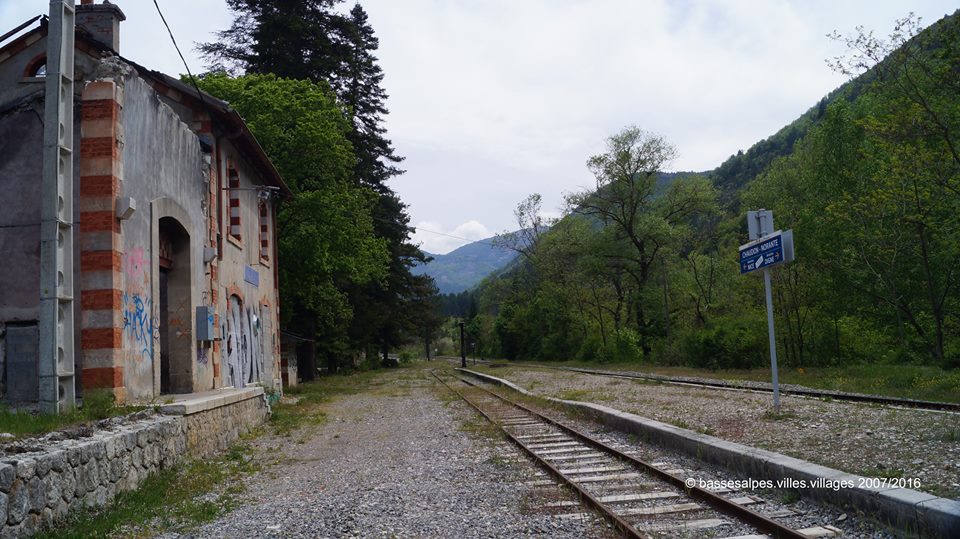
The station after the fire, taken from the passenger platform in 2016, (c) Jean-Pierre Alpes. [20]

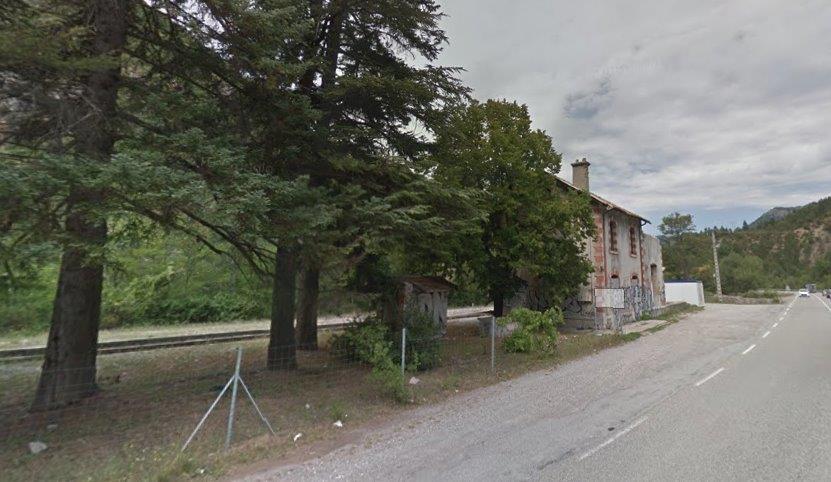
The two images above show the station viewed from the road in 2018, they are taken from Google Streetview and clearly show the damage to the building resulting from the fire a couple of years earlier.

The station on the rail-simulator. [31]

The line ahead to Digne. [18]

Road rail and river continue in close proximity down the valley from Chaudon-Norente, until the railway passes under the road and into a tunnel.

Looking back up the valley of l’Asse (above) from over the portal of the tunnel.

The Tunnel de Serre Geneston is at an altitude of 655 metres above sea-level and is 213 metres long. [21] The N85 has been realigned over the southern portal of the tunnel to remove a sharp bend in its alignment. This means that the original portal is shrouded by a concrete span.

This can been seen in the first image below.

The southern portal of the Tunnel de Serre Geneston. [21]

Northern portal of the Tunnel de Serre Geneston. [21]

After the Tunnel de Serre Geneston the railway , road and river are once again close together, this time, however, the railway is considerably higher than both road and river and its formation is supported by a lengthy retaining wall.

Arched masonry culverts permit drainage.

After quite a length of masonry retaining wall, the next significant structure on the railway is the bridge which carries it over the N85 at …………………………… The images below show the view of the structure from the south and then from the north. It probably constitutes the least attractive bridge on the Nice to Digne Railway line!

In a short distance the railway drops to be at a similar level to the river and while running in very close proximity once again, this time is is the road held up above the railway on a significant retaining wall.

Within a couple of kilometres the road and railway are back at the same level and the railway is immediately alongside the road. The pictures below of the girder bridge over Ravin de Couinier show how closely road and rail are aligned. The first is from Google Streetview, the next three are from https://dossiersinventaire.maregionsud.fr. [22]

In Chabrières, Entrages, road and rail cross each other again, this time at a level-crossing which is shown in the three images below.

A train driver’s eye view approaching the crossing. [15]

A van driver’s eye view approaching the level-crossing.

A view from the cab of a Autorail as it crosses the N85 at the level-crossing. [15]

The approach to the Halt at Chabrieres. [15]

The Halt at Chabrieres. [15]

The halt at Chabrieres. [32]

The Halt and crossing at Chabrieres seen from the N85.

Chabrières Halt. [23]

The station on the rail-simulator. [31]

The line West of Chabrières. [15]

To the West of Chabieres, the line turns northwards and then enters the Tunnel de la Clue-de-Chabrières. We are now about 600 metres above sea-level and the tunnel is nearly 600 metres long! It is marked by the usual red, blue and green dots on the map below. [24]

The South Portal from some distance upstream on the other bank of the river. [32]

The South Portal of the tunnel. [15]

The North Portal of the Tunnel is shown in the two images above [24] and below, (c) Nicolas Janberg. [25]

A short distance after the train passed through the tunnel it went through another request halt – l’Arret de de Saint-Michel-de-Cousson. I have not been able to find pictures of this halt. It then, once again crossed the main road at a level-crossing.

Road, rail and river all once again in close proximity and a typical small span bridge carrying the railway over a minor tributary of l’Asse.

The line continues alongside the road for about a kilometre before swinging away to the south following the north bank of the l’Asse. A further kilometer West and the road rail and river are once again close for a short distance as the valley narrows. The N85 road then turns away north into the village of Chateauredon, and the river turns away south leaving the railway on its own to cross the valley of the Saint-Jean a tributary of l’Asse!

As we approach Mézel/Châteauredon station the ‘D907’ road approaches the railway and an accommodation level-crossing takes a very minor access road to the south of the line, see immediately below. In the second image below, the ‘D907’ has dropped below the level of the railway and passes under it via a small girder bridge.

The approach to the station from the east as seen from the cab of an approaching Autorail. [15]

The same Autorail enters the station. [15]

Mézel/Châteauredon Station [26]

Mézel/Châteauredon Station [27]

Mézel/Châteauredon Station Courtyard [28]

Mézel/Châteauredon Station [29]

The station on the rail-simulator. [31]

Mézel/Châteauredon Station in an old postcard. [30]

It is here at this station – Mézel/Châteauredon – that we take our next break.

References

  1. http://www.waymarking.com/waymarks/WMW8ER_La_gare_de_Barrme_Barrme_Paca_France, accessed on 17th August 2018.
  2. http://trip-suggest.com/france/provence-alpes-cote-d-azur/barreme, accessed on 17th August 2018.
  3. http://www.en-noir-et-blanc.com/barreme-p1-701.html, accessed on 17th August 2018.
  4. https://mapio.net/s/43790270, accessed on 17th August 2018.
  5. http://cccp.traindespignes.free.fr/gare-barreme.html, accessed on 17th August 2018.
  6. http://www.passion-metrique.net/forums/viewtopic.php?f=2&t=4143&start=765, accessed on 17th August 2018.
  7. http://www.verdon-info.net/2016/08/barreme-le-sequoia-le-plus-grand-de-paca.html, accessed on 17th August 2018.
  8. https://mapio.net/a/57410889/?lang=nl, accessed on 17th August 2018.
  9. https://www.delcampe.it/it/collections/item/373607900.html, accessed on 17th August 2018.
  10. https://www.facebook.com/289910237832039/photos/a.289916164498113/1051891281633927/?type=3&theater, accessed on 17th August 2018.
  11. https://dossiersinventaire.maregionsud.fr/gertrude-diffusion/dossier/gare-de-barreme/7ee076c7-a125-4622-b1a3-41f475e0f8ef/illustration/5, accessed on 17th August 2018.
  12. https://dossiersinventaire.maregionsud.fr/gertrude-diffusion/dossier/gare-de-barreme/7ee076c7-a125-4622-b1a3-41f475e0f8ef, accessed on 17th August 2018.
  13. http://dignois.fr/Barreme-vieux, accessed on 17th August 2018.
  14. https://dossiersinventaire.maregionsud.fr/gertrude-diffusion/dossier/ponts-des-chemins-de-fer-de-provence/6db00f0d-4794-4fb9-8d66-a7675e5c748b, accessed on 17th August 2018.
  15. http://www.rd-rail.fr/1-PHOTOS/PH43/index-ph43.html, accessed on 10th August 2018.
  16. http://aubertrain.com/modules.html, accessed on 17th August 2018. When the website was viewed in August 2018 the price of the completed model of the station buildings was 875 euros!
  17. http://www.tunnels-ferroviaires.org/tu04/04055.2.pdf, accessed on 18th August 2018.
  18. https://fr.wikipedia.org/wiki/Gare_de_Chaudon-Norante, accessed on 18th August 2018.
  19. https://www.google.co.uk/url?sa=i&source=images&cd=&ved=2ahUKEwiFqcumuvbcAhVQhRoKHbBrBnkQjhx6BAgBEAM&url=https%3A%2F%2Fwww.pinterest.co.uk%2Fbluebird_492000%2Flocomotives-%25C3%25A0-vapeur%2F&psig=AOvVaw0HSlDauOM5V4uBMFKql98x&ust=1534676352265699, accessed on 18th August 2018.
  20. https://www.facebook.com/photo.php?fbid=477991545741335&set=pcb.1058518700888525&type=3&theater, accessed on 18th August 2018.
  21. http://www.tunnels-ferroviaires.org/tu04/04055.1.pdf, accessed on 18th August 2018.
  22. https://dossiersinventaire.maregionsud.fr/gertrude-diffusion/recherche/globale?texte=couinier, accessed on 18th August 2018.
  23. https://fr.wikipedia.org/wiki/Gare_de_Chabri%C3%A8res, accessed on 18th August 2018.
  24. http://www.tunnels-ferroviaires.org/tu04/04074.1.pdf, accessed on 18th August 2018.
  25. https://structurae.net/structures/clue-de-chabrieres-tunnel, accessed on 18th August 2018.
  26. https://commons.wikimedia.org/wiki/File:Gare_de_M%C3%A9zel-Ch%C3%A2teauredon,_hangar_et_quai_%C3%A0_marchandises.JPG
  27. https://de.wikipedia.org/wiki/Ch%C3%A2teauredon
  28. https://mapio.net/a/56352403/?lang=sk
  29. http://gecp.asso.fr/mezel.html
  30. http://www.cparama.com/forum/mezel-t28158.html
  31. http://www.railsim-fr.com/forum/index.php?/topic/10163-le-train-des-pignes/&page=2, accessed on 20th August 2018.
  32. https://www.cparama.com/forum/entrages-t24780.html

Nice to Digne-les-Bains Part 12 – Saint-Andre-les-Alpes to Barrême. (Chemins de Fer de Provence 76)

Our journey recommences in Saint-Andre-les-Alpes. The feature image shows the village with the station in the foreground. The image immediately below gives a panoramic view of the village from the north, showing the first of the lakes in the Verdon valley behind the village, as well as the railway station in the bottom-right. [4]The advantage of travelling in a DMU or an Autorail is that views along the line ahead are possible. This DMU is preparing to leave Saint-Andre. [4]

Recently, the engine shed at Saint-Andre was fully refurbished by Chemins de Fer de Provence with fincance from the PACA region. The two images immediately below show this work underway. [5]The shed was falling into disrepair. It dates from the opening of the line in 1911. Without prior warning, work started in 2014 on the restoration work. http://www.verdon-info.net reported on the work in September 2014. They established through talking to a railway employee, Stéphane, that: “This is a building for the office of the district chief between Thorame and Digne les Bains, the premises for the employees of the canton of Saint André les Alpes, and the storage of the Praisine and other maintenance machines. At the moment we are restoring the building and then will start the works of tracks to join the building.” [5]  The four images immediately above show that the roof of the engine shed was fully restored to an as built condition, (c) Christopher James.[16]The two images above show wagons at Saint-Andre-les-Alpes Station, (c) Triede. [6]The driver’s view as the train sets off from Saint-Andre-les-Alpes. [1]A rear view of an Autorail heading for Digne, or is it an Autorail travelling from Digne? Quite probably as the headlights are on! (c) © JMi 2. There is quite a bit of foreshortening in the image as the bridge on the station side of the Autorail is over a road.  [2] Two views of the modern bridge just to the south of the station in Saint-Andre-les-Alpes. 

Saint-Andre sits to the north of the stretch of the River Verdon which includes its famous Gorges. My wife and I spent a day in these Gorges in November 2017.

The railway turns away to the West following the N202 road, rather than following the River through the Gorges du Verdon. The OpenStreetMap below shows the station at Saint-Andre in the top right and, after the bridge over the N202, the next major structure on the route, the Tunnel de Moriez in the bottom left as a dotted line.The Tunnel de Moriez passes under the Col des Robines. It is 1195 metres long and at an altitude of approximately 940 metres above sea-level. It is roughly on an east-west alignment, as shown below. It is marked by  red, blue and green dots. [7]To the East, the railway lines swings sharply into the tunnel mouth. The line leaving the tunnel to the West passes through a deep cutting before meandering its way across a small accommodation bridge into Moriez. The East Portal. [7] Two images of the West Portal. [7]The railway is now in the Ravin de le Riou and follows the river into the village of Moriez.A driver’s eye view of our arrival at Moriez. [1]Moriez Station taken from just to the East along the N202.Moriez Station from along the N202 to the West.Moreiz Satation (c) Kjell Strandberg. [8]Chemins de Fer de Provence unit No. X304 arrives at Moriez with the 09:27 from St. Andre
les Alpes to Digne les Bains on 13th June 2018, (c) Jeff Nicholls. [16]Looking west from Moriez Station (c) Grüni sen. [11]After Moriez, the line follows Le Riou and then L’Asse de Moriez down its valley. It crosses Moriez Viaduct just to the west of the village and then runs parallel to both the road N202 and the river. Two images of Moriez Viaduct. [9]An early image of the viaduct, (c) Frédéric Pauvarel. [10]Moriez Viaduct from railside. [13]

As the map above shows, road, rail and river run in parallel travelling west down the valley of Le Riou. The bridge at Hyeges spans a tributary of L’Asse de Moriez – the Torrent d’Hyeges.The bridge at Hyeges.A driver’s eye view of the bridge at Hyeges. [14]The bridge at Hyeges from the North West (c) Marc Heller [12]The Bridge at Hyeges from the South West, (c) Géraud Buffa. [14]Chemin de Fer de Provence railcar X304 crosses Hyeges viaduct near Moriez with the 09:27 from St. Andre les Alpes to Digne les Bains on 13th June 2018, (c) Jeff Nicholls. [16]

Immediately beyond the bridge the railway enters the Tunnel de Hyeges. This tunnel is only 72 metres in length. The red, blue and green dots fix its location on the adjacent map. [15] The bridge can also be picked out on the north side of the N202 just to the east of the tunnel. The portals of the tunnel are shown below. The East Portal. [15]The West Portal. [15]

The road N202, L’Asse de Moriez and the railway continue to run in parallel. A view looking East towards Moriez along the valley with L’Asse de Moriez below the road to the right.

Although the road and rail switch sides at a level crossing at Baumeniere. Some Google Streetview images of the crossing and crossing keeper’s house follow.The railway now continues  between road and river, crossing a tributary of l’Asse de Moriez just down the valley from the level crossing – Ravin de BouquetRoad rail and river are still together at the next level-crossing, below, at Clôt de Moune.We continue southwest down the valley of l’Asse de Moriez.The bridge over the Ravin de la Gourre.

A series of other culverts and small bridges carry the line over a relatively broad flat area in the valley before the valley narrows once again. In the image below, taken from Google Streetview the river is below the railway to the left and the road has recently been widened requiring removal of part of the rock face on the right.Old road, new road railway and river are all visible in the satellite image below. Just under 1 kilometre to the east of l’Arret de la Tuilière the railway crosses l’Asse de Moriez on a relatively small girder bridge.A driver’s eye view of the bridge over L’Asse de Moriez, (c) Marc Heller. [14]Railcars Nos. X304 and X306 of the Chemin de Fer de Provence metre gauge Nice – Digne
line chug along between Moriez and Barreme with the 15:23 service from St. Andre les Alpes
to Digne les Bains on 8th June 2018. During the summer of 2018, this was the only northern section of the Nice – Digne metre gauge line in operation due to heavy engineering work taking place over several months between St Andre and Plan du Var, (c) Jeff Nicholls. [16]The bridge on the image above appears to the right side of the map immediately above. Arrêt de la Tuilière is shown marked in red. Interestingly to the south of the station there is a small hamlet called ‘Repentance’.

Beyond ‘Repentance the railway has only a short distance to travel before entering the village of Barrême. The map below shows this length of the journey. The satellite image focusses on the village of Barrême.A driver’s eye view of our arrival at Barrême. [1]Old postcards showing the station at Barrême. [3]

It is at Barrême that we take the next break in our journey towards Digne-les-Bains.

References

  1. http://www.rd-rail.fr/1-PHOTOS/PH43/index-ph43.html, accessed on 12th August 2018.
  2. http://www.proxiti.info/photoscommune.php?o=04136&n=La%20Mure-Argens, accessed on 9th August 2018.
  3. http://ubaye-en-cartes.e-monsite.com/pages/catalogues-des-editeurs/louis-gibert-photographe-editeur-a-saint-andre-les-alpes.html, accessed on 11th August 2018.
  4. https://m.facebook.com/Viroulada-en-Tren-dei-Pigna-289910237832039/?modal=admin_todo_tour&ref=page_creation_announcement&notif_t=page_invite&notif_id=1534228488097465, accessed on 14th August 2018.
  5. http://www.verdon-info.net/2014/09/saint-andre-les-alpes-les-travaux-des-annexes-de-la-gare-sont-en-bonne-voie.html, accessed on 16th August 2018.
  6. http://trip-suggest.com/france/provence-alpes-cote-d-azur/la-mure-argens, accessed on 16th August 2018.
  7. http://www.tunnels-ferroviaires.org/tu04/04133.2.pdf, accessed on 16th August 2018.
  8. https://www.google.co.uk/maps/@43.96093,6.468418,3a,75y,90t/data=!3m8!1e2!3m6!1sAF1QipMRYN0KdwYWFrzmemE0420CdG6aTnfUWmawsPjn!2e10!3e12!6shttps:%2F%2Flh5.googleusercontent.com%2Fp%2FAF1QipMRYN0KdwYWFrzmemE0420CdG6aTnfUWmawsPjn%3Dw203-h135-k-no!7i1500!8i1000, accessed on 16th August 2018.
  9. https://structurae.net/structures/moriez-viaduct, accessed on 16th August 2018.
  10. https://dossiersinventaire.maregionsud.fr//gertrude-diffusion/illustration/ivr9320110400179nuc2a/fcb49e2e-e534-4a6e-89a8-03a3653fadd0, accessed on 16th August 2018.
  11. http://www.map-france.com/Moriez-04170/photos-Moriez.html, accessed on 17th August 2018.
  12. https://dossiersinventaire.maregionsud.fr/gertrude-diffusion/dossier/ponts-des-chemins-de-fer-de-provence/6db00f0d-4794-4fb9-8d66-a7675e5c748b, accessed on 17th August 2018.
  13. https://www.google.co.uk/url?sa=i&source=images&cd=&ved=2ahUKEwisqfi6zfPcAhUFyIUKHaUTBfkQjhx6BAgBEAI&url=https%3A%2F%2Fdossiersinventaire.regionpaca.fr%2Fgertrude-diffusion%2Fdossier%2Fpdf%2F1c12de06-0c5a-45db-869f-ffa51aeba1e8%2Fviaduc-ferroviaire-de-moriez.pdf%3Fvignette%3DCompletSansLiens&psig=AOvVaw2RsidYGG5Vx-jGHZ36w8GY&ust=1534578739888539, accessed on 17th August 2018.
  14. https://dossiersinventaire.maregionsud.fr/gertrude-diffusion/dossier/ponts-des-chemins-de-fer-de-provence/6db00f0d-4794-4fb9-8d66-a7675e5c748b, accessed on 17th August 2018.
  15. http://www.tunnels-ferroviaires.org/tu04/04133.1.pdf, accessed on 17th August 2018.
  16. http://www.railtalk.org/product/issue-142-xtra, accessed on 19th August 2018.
  17. These pictures have very kindly been supplied by Christopher James on 21st August 2018.

Nice to Digne-les-Bains Part 11 – Thorame-Haute to Saint-Andre-les-Alpes (Chemins de Fer de Provence 75)

We will be resuming our journey from Thorame-Haute in just a few minutes, but as we wait for the train on to Digne, there are a few things to take in.

The first is the large chapel which has been built close to the station and which does not appear in the earliest postcard views of the station, nor in pictures which predate the railway’s arrival in Thorame-Haute. The site of the station was, and still is, the location of a special celebration in the Roman Catholic Church’s year in Provence. ….

The second, is the station itself.

1. Notre Dame de la Fleur

Thorame-Haute hosts an annual celebration in Pentecost each year, and also seems to be popular for other celebrations during the year. The first two postcard images show a celebration in honour of Joan of Arc which took place in the open air on 26th September 1909.

Large crowds gathered on 26th September 1909 before the railway had been extended through the mountain to the valley of La Vaire. [1]

This second postcard view was taken on the same date and shows the small chapel which existed at Thorame-Haute at that time. The festival celebrations were taking place in the open air. [2]

But … these are not pictures of the major annual celebration. A little research into local customs provided more information on the Pentecost season celebration associated with Notre Dame de la Fleur. I also want to acknowledge Christopher James’s help it identifying the reason for the chapel at the location of the station.

In the fifteenth century, a peasant farmer lived in Thorame, possessor of a modest herd which he led himself to pasture. He was a Christian with patriarchal customs. One day, he appeared before the municipal magistrates claiming the appearance of angels who marked a location, eight kilometers from Thorame, for the site of a chapel to be built in honour of the Virgin Mary. He had led his flock to the abandoned area and while he was praying, an angel appeared to him and as his vision ended he saw a single rose which came from the garden of heaven – a sign left for the shepherd to authenticate his vision, which earned the Virgin Mary the title of “Our Lady of the Flower. [3][10]

Fr. Juvenal Pélissier was born in Allos on 1st January 1879. In 1920, he was entrusted with the spiritual education of the parishioners of Méailles and Peiresc, in 1925 he moved to the parish of Thorame Haute. For many years he made every effort to create a new chapel at the site of the vision and visitation. His parish newsletters continually and consistently focus on the legend of Our Lady of the Flower. Eventually the foundations were started in 1936. [10]

The present chapel building dates from the 1930s. It is the work of Abbot Juvenal Pélissier who worked alone for more than a decade to raise money for a new chapel. It stained-glass windows represent different species of flowers which grow in the valley of the Verdon. [3]

A postcard view of the interior of the chapel. [6]

The Chapel’s Rose Window. [7]

The day of the Festival. [7]

The day of the Festival, (c) Christopher James. [33]

The pilgrimage. [11]

The pilgrimage, (c) Christopher James. [33]

The pilgrimage, (c) Christopher James. Christopher James says that the Crucifer is known locally as ‘Cocoa’. [33]

The pilgrimage. [12]

The pilgrimage, (c) Christopher James. [33]

Notre Dame de la Fleur. [7]

The tradition of the pilgrimage of Our Lady of the flower is still an integral part of the annual life of the inhabitants of Upper Verdon. The event is organised by volunteers. They prepare for the procession which starts in the main village of Thorame-Haute and ends at the railway station. In 2016, Marc LIboa and a team of volunteers provided a “reward meal” for all who participated in the procession.

The images immediately above show the participants in the festival eating in the shadow of the station close to the chapel. [5]

A similar scene (c) Christopher James. [33]

After this the religious ceremony took place, “orchestrated by Father Benedict of Colmars the Alps, Father Jean Boudoux Canon of Barrême and Jean-Louis Colombano who assisted them. Pilgrims were numerous and everyone was able to leave with a bouquet of blessed flowers, beautiful flowers prepared … by volunteers.” [7]

Inside the chapel, (c) Christopher James. [33]

Another view of the Chapel. [8]

2. Thorame-Haute Station

We noted towards the end of the last but one post that the site of the station at Thorame-Haute was inundated in the period immediately prior to it being due to be opened. A major rock fall delayed the opening of the line and required a significant retaining wall to be built in 1909 to 1911 to hold the land above the station.

The station site, the picture is taken from the D955 with the River Verdon behind the photographer. The retaining wall referred to in the text can just be seen to the left of the goods shed.

The same retaining wall is visible behind the stored carriages above. The station can just be picked out to the left of the image. This picture is also taken from the D955.

It can be seen more clearly in this picture. [13]

It is also evident on the right hand side of this postcard view.

A few photographs of the station show that a siding to the south of the station has been used for storage of redundant stock. It is clear that the metal surfaces of the carriages are ideal for graffiti paint! [9]

This panorama shot shows the three main parts of the station buildings, from left to right – the goods shed, the passenger facilities and the station buffet or restaurant. [4]

There is a rail simulator version of this line and I thought it might be of interest to see some stills from http://www.railsim-fr.com which show how this station has been treated. three pictures follow below. [14]

The overall impression is excellent, there are some detailed issues – such as the roof of the goods shed and the detail of the waiting shelter on the central platform in one of the images. Overall, these computer generated images give a good idea of the railway as it passes through the landscape. Tanguy has posted three images on the http://www.railsim-fr.com/forum for comparison … copies are provided below. [14]

This last image is taken from the top of the retaining wall referred to in the text. [14]

The onward journey

We climb about our train to head away south down the Verdon valley.The first two images below show a driver’s eye view as we leave the station. First we pass stored rolling stock and then head off down the single-track line. [15]

The D955 follows alongside the line at a lower level until it swings across the Verdon on the arch bridge above. A retaining wall is shown on the left of the picture which hods the railway above the road. The hillside above and below the line is very steep and retaining walls are needed along the length to secure the rock face above the railway formation.

The first image above is taken from the D955 on the west side of the valley of the Verdon. The second is taken from the driver’s cab in an Autorail on the line. [15] Both show the size of the retaining walls along this section of the line.

The next station is Allons-Argens. This next view is also taken from the cab of an Autorail, it shows the approach to the station. [15]


The station building from across the valley on the D955.


The D52 crosses the Verdon from the D955 and provides access to the station and on up the valley of L’Ivoire to Allons.

Allons Argens Station drawn by Phillips Vernet. [17]

Allons Argens Station from the river bank. [16]

Allons Argens Station from its access road. [18]

The old station buildings are fenced off. [19]

The station is a request stop and no facilities are provided for trains to pass. [19]

Immediately after Allons Argens Halt the railway crossed the River Ivoire on a single span stone arch bridge.

The line, which has been travelling in a generally southerly direction, curves first to the west and then to the south as it follows the east bank of the River Verdon. In about five kilometres, it crosses the river to the west bank and arrives at the village of La Mure-Argens.

Google Earth image of the bridge across the river. The view is taken looking North.

Driver’s view across the Bridge. [15]

Two images (above) of the rail bridge over the Verdon near La Mure Argens. [22]
A constriction plan for the same bridge, for a footway extension to the side of the bridge. [22]


A series of smaller photos, show aspects of the bridge and include two of the design drawings! [22] And then we move on the the village of La Mure Argens.


The two images immediately above were sent to me in August 2018 by Christopher James and show GECP ‘The Portuguese’ cross the bridge across the Verdon, (c) Christopher James.

The station at La Mure Argens (above) as depicted on a rail simulator. [15]

The station was no more than a halt with no facility for trains to pass. The village was around 1 kilometre northwest of the station which was set in open fields. The first image looks southwest along the short platform. The second image shows the station building elevation and is taken from the fields opposite. Both are from the CCCP website. [20]


Two level crossings which retain their crossing keeper’s houses take the railway across roads to the south of the town. The first shows the cottage in a copse of trees next to the line. The second covers a more major road.

The first road crossing taken from the southeast, (c) Paul Garnier. [21]

The second road crossing. The picture is taken from the north and is taken from Google Streetview.

Leaving La Mure Argens the railway crossed the valley of the River Issole on another graceful single span arch bridge of the same design as that crossing the Verdon north of La Mure Argens.

The Bridge over the River Issole. [23]

Driver’s view across the Bridge. [15]

Beyond the bridge over the River Issole (visible in the top right corner of the map above), the railway gradually drifts from a south-westerly course to a south-southwesterly course as it approaches Saint-Andre-les-Alpes railway station (in the bottom left above). there was a bridge over Route de Lambruisse (top right of the satellite image below) and the line then fed into the station.


The station approach. [15]

Closing in on the station. [15]

An Autorail at Saint Andre les Alpes. [24]

Looking north. [25]

The three images above are all stills taken from a rail-sumulator. [14]

An old postcard. [2]

Another old postcard. [2]

Looking South into the station site. [26]

Modern traction at Saint-Andre-les-Alpes. [27]

Saint-Andre-les-Alpes. [28]

Saint-Andre-les-Alpes. [29]

Saint-Andre-les-Alpes. [29]

Saint-Andre-les-Alpes. [30]

Modern transport at Saint-Andre. [31]

Steam at Saint-Andre. [31]
Renault Autorails at Saint-Andre. [32]

The station yard and old engine shed. [34]

We take another break here at Saint-Andre-les-Alpes and continue the journey on another day.

References

  1. https://www.cparama.com/forum/notre-dame-de-la-fleur-cne-thorame-haute-t28159.html, accessed on 11th August 2018.
  2. http://ubaye-en-cartes.e-monsite.com/pages/catalogues-des-editeurs/louis-gibert-photographe-editeur-a-saint-andre-les-alpes.html, accessed on 11th August 2018.
  3. https://lalumierededieu.blogspot.com/2016/04/thorame-haute-notre-dame-de-la-fleur.html, accessed on 11th August 2018.
  4. http://www.verdon-info.net/article-33961258.html, accessed on 11th August 2018.
  5. http://www.verdon-info.net/article-le-pelerinage-religieux-de-notre-dame-de-la-fleur-thorame-gare-51092687.html, accessed on 11th August 2018.
  6. https://collection-jfm.fr/p/cpsm-france-04-thorame-haute-sanctuaire-notre-dame-de-la-fleur-19144, accessed on 11th August 2018.
  7. http://www.verdon-info.net/2016/05/thorame-gare-le-pelerinage-de-la-pentecote-toujours-actif.html, accessed on 11th August 2018.
  8. http://photos-provence.fr/dpt04/thorame-haute.html, accessed on 11th August 2018.
  9. https://twitter.com/EricFranceschi/status/998605228814557185, accessed on 11th August 2018.
  10. http://www.verdon-info.net/article-33961258.html, accessed on 11th August 2018.
  11. https://thorame-haute.fr/photorama2.php?lng=fr&pg=1166&mnuid=1122&tconfig=1, accessed on 11th August 2018.
  12. https://www.sociview.com/tag/ruralité, accessed on 11th August 2018.
  13. http://www.wikiwand.com/fr/Gare_de_Thorame-Haute, acessed on 10th August 2018.
  14. http://www.railsim-fr.com/forum/index.php?/topic/10163-le-train-des-pignes/&, accessed on 10th August 2018.
  15. http://www.rd-rail.fr/1-PHOTOS/PH43/index-ph43.html, accessed on 1st August 2018.
  16. http://trip-suggest.com/france/provence-alpes-cote-d-azur/allons, accessed on 11th August 2018.
  17. http://allons-alpes-haute-provence.fr/gare-allons-argens, accessed on 11th August 2018.
  18. http://www.photos-provence.fr/dpt04/allons.html, accessed on 11th August 2018.
  19. http://cccp.traindespignes.free.fr/gare-allons.html, accessed on 11th August 2018.
  20. http://cccp.traindespignes.free.fr/gare-mure.html, accessed on 11th August 2018.
  21. http://www.map-france.com/La%20Mure-Argens-04170, accessed on 12th August 2018.
  22. https://dossiersinventaire.maregionsud.fr/gertrude-diffusion/dossier/pont-ferroviaire-dit-pont-de-quarante-metres/68bd7352-799d-467a-bcec-27700681b4e8, accessed on 12th August 2018.
  23. https://dossiersinventaire.maregionsud.fr/gertrude-diffusion/illustration/ivr9320170400773nuc1a/f07ecd9a-9aff-4a7a-8546-f24732dd804b, accessed on 12th August 2018.
  24. https://mapio.net/s/43943227, accessed on 12th August 2018.
  25. http://www.map-france.com/Saint-Andre-les-Alpes-04170/photos-Saint-Andre-les-Alpes.html, accessed on 12th August 2018.
  26. https://www.delcampe.net/fr/collections, accessed on 12th August 2018.
  27. http://www.ferro-lyon.net/actualites/2014/570-Non-a-la-fermeture-de-la-ligne-de-Nice-a-Digne, accessed on 12th August 2018.
  28. https://dossiersinventaire.maregionsud.fr/gertrude-diffusion/dossier/gare-de-saint-andre-les-alpes/84aee6d8-fcb5-47e6-8d33-e777faaa44d7, accessed on 12th August 2018.
  29. http://cccp.traindespignes.free.fr/gare-standre.html, accessed on 12th August 2018.
  30. https://collection-jfm.fr/p/cpsm-france-04-la-gare-de-saint-andre-les-alpes-train-19531, accessed on 12th August 2018.
  31. http://www.saintandrelesalpes-verdontourisme.com/uk/discovering-a-region/our-‘best-of’/the-train-des-pignes, accessed on 12th August 2018.
  32. https://picclick.fr/Collections/Cartes-postales/Thèmes/Train, accessed on 12th August 2018.
  33. I have been corresponding with Christopher James about the various posts on my blog. He has very kindly sent me a number of pictures. These of the festival at Thorame-Haute were supplied as large size files (10MB+) which I have downsized for the blog.
  34. https://dossiersinventaire.maregionsud.fr/gertrude-diffusion/dossier/gare-de-saint-andre-les-alpes/84aee6d8-fcb5-47e6-8d33-e777faaa44d7, accessed on 13th August 2018.