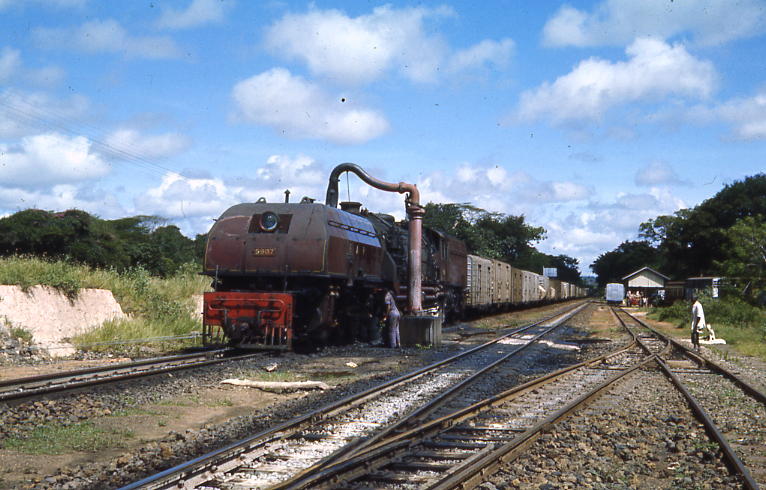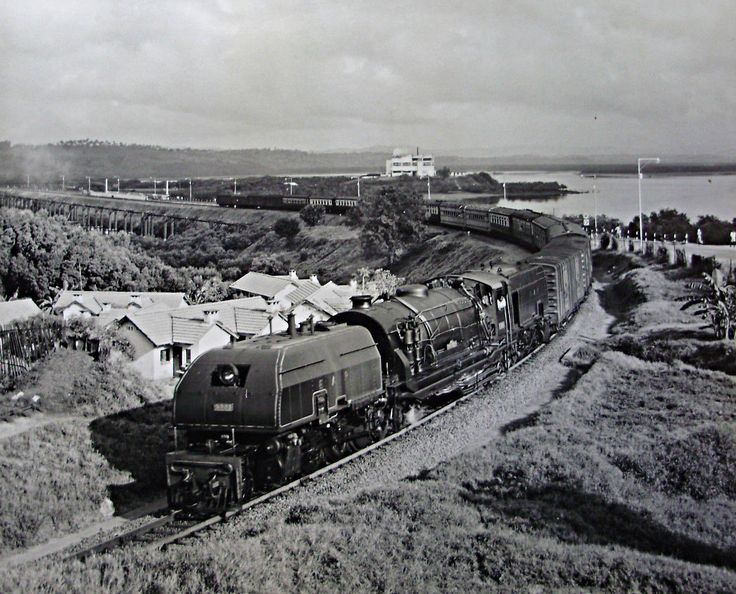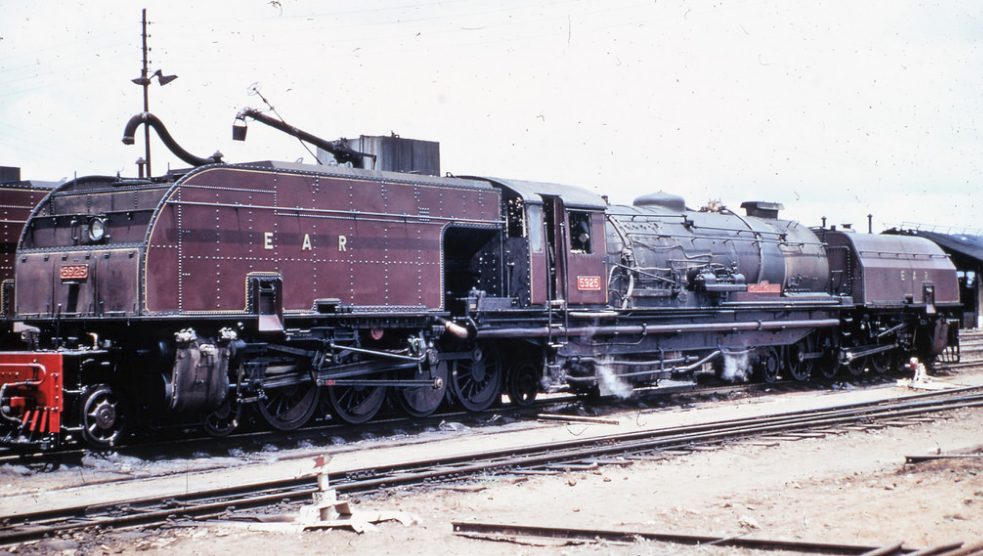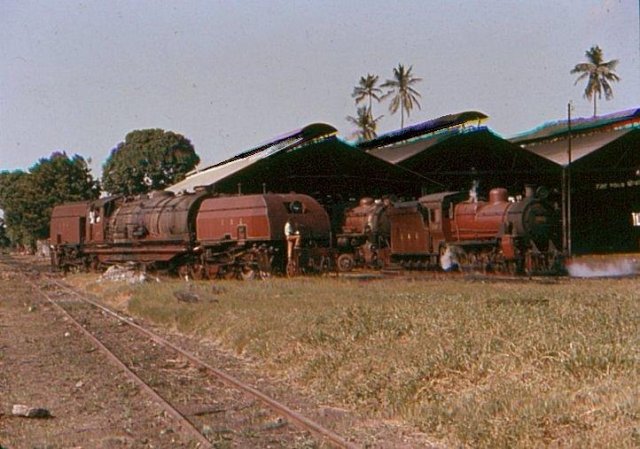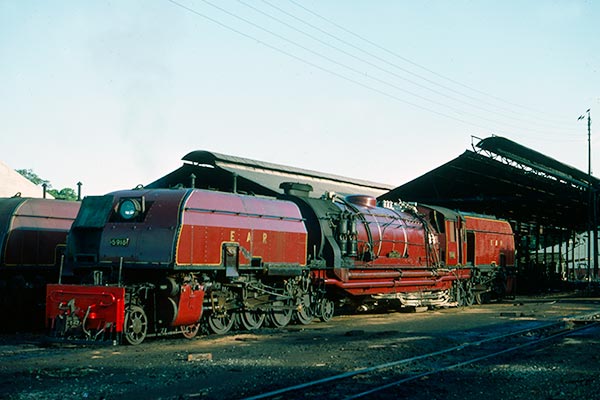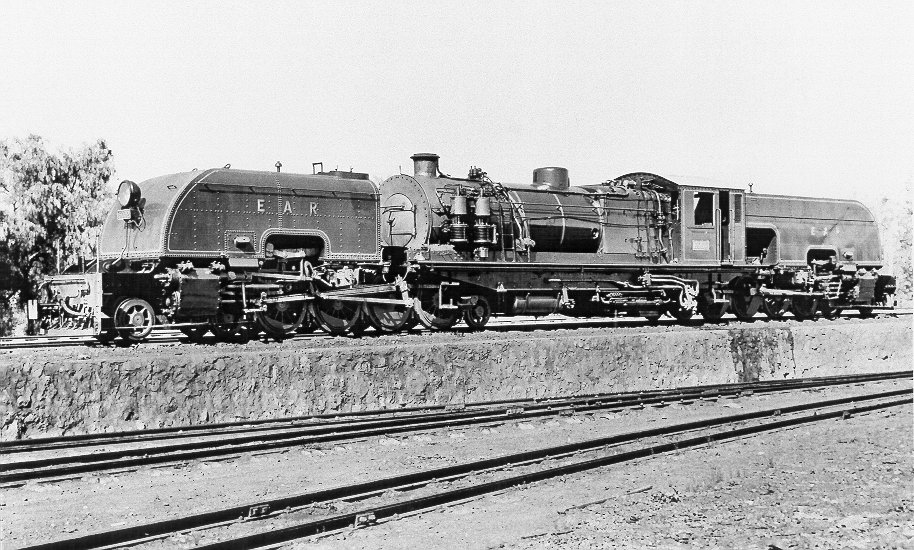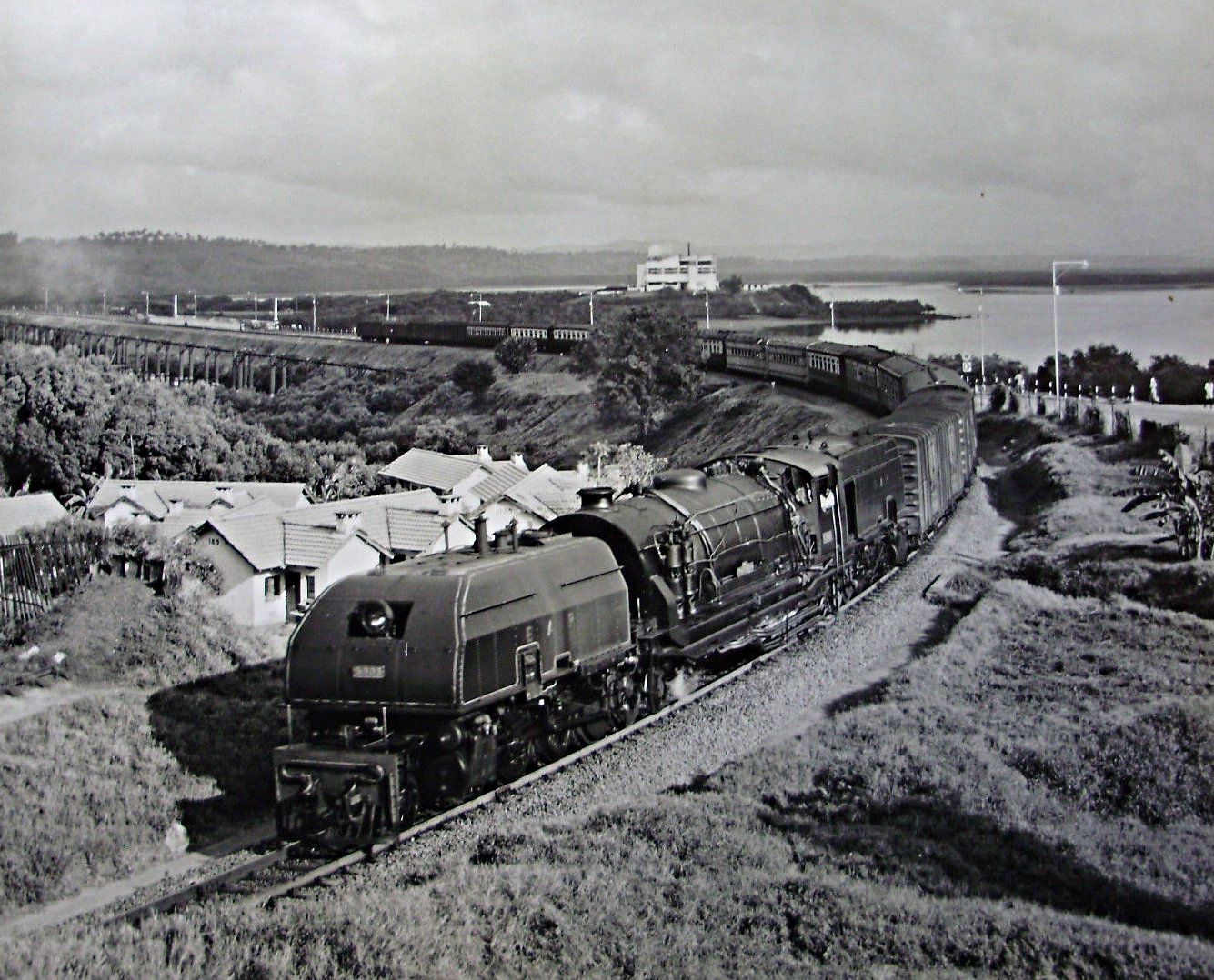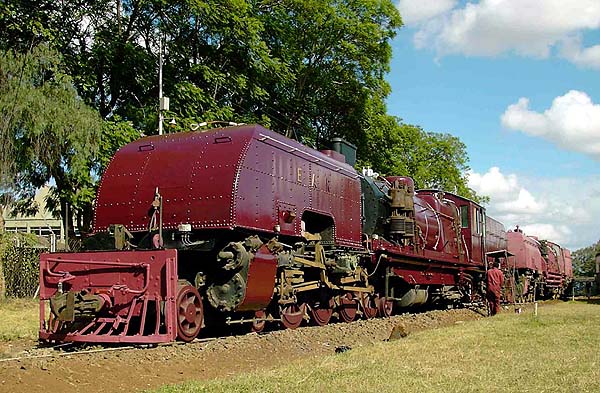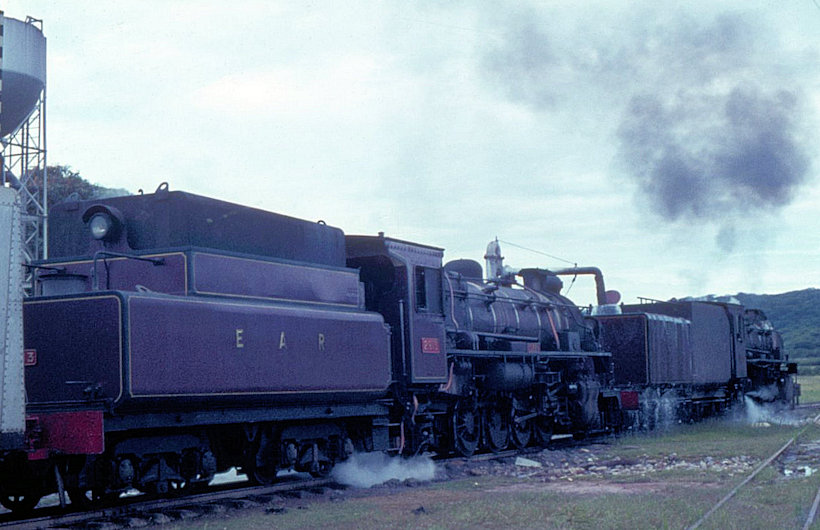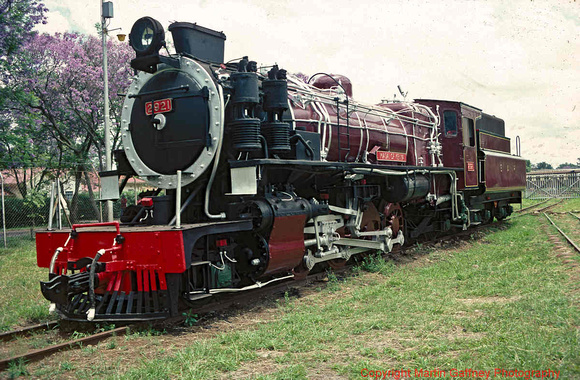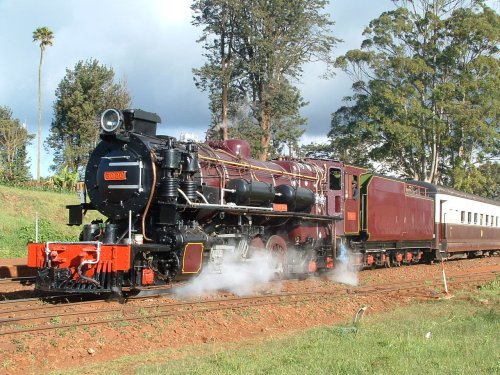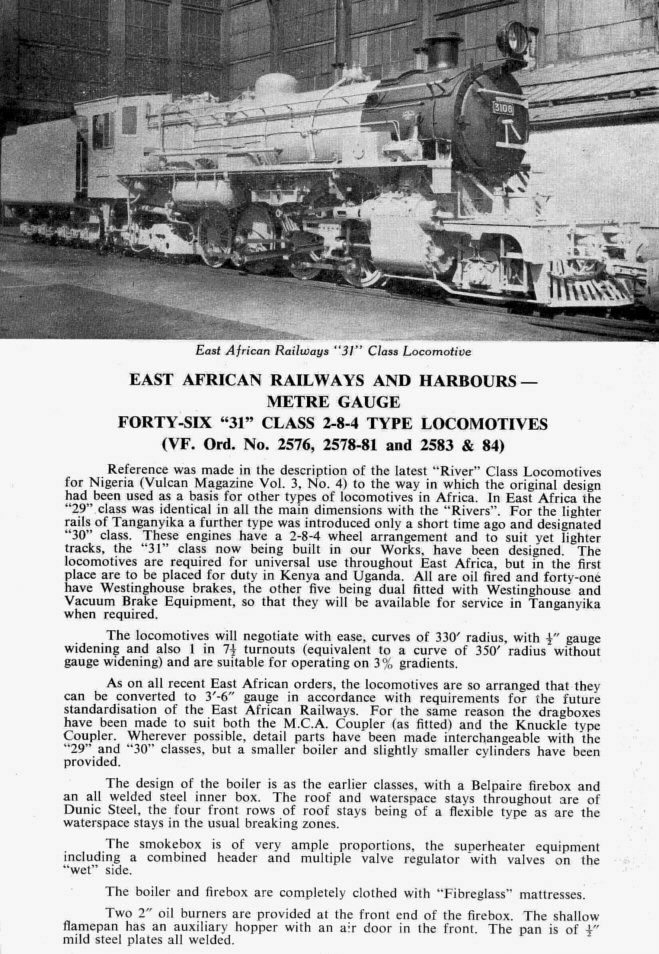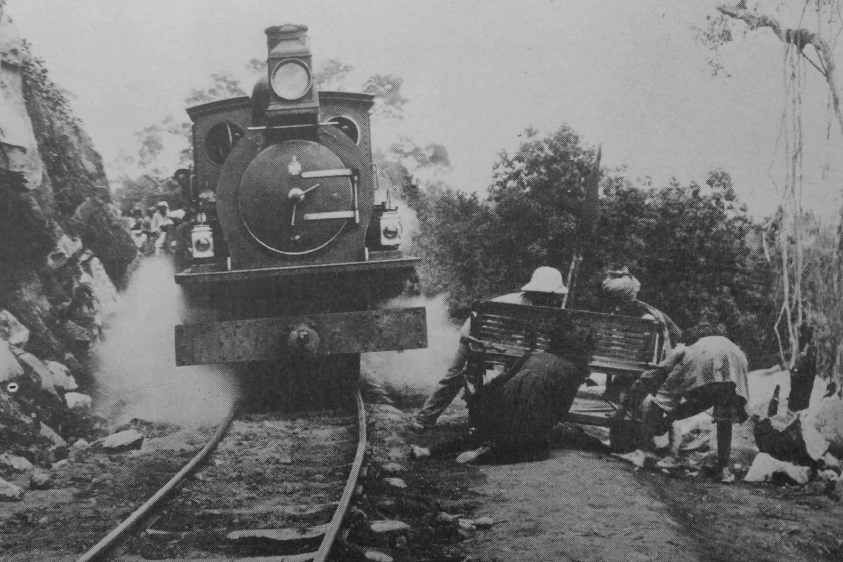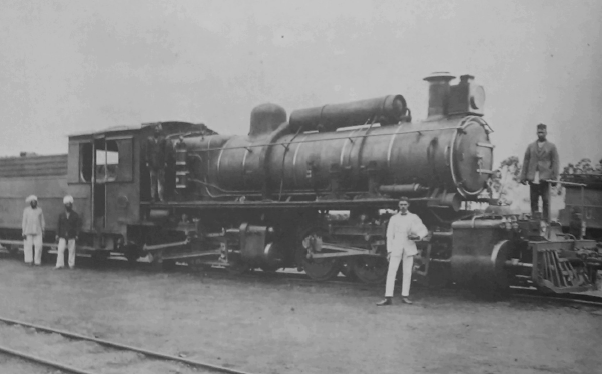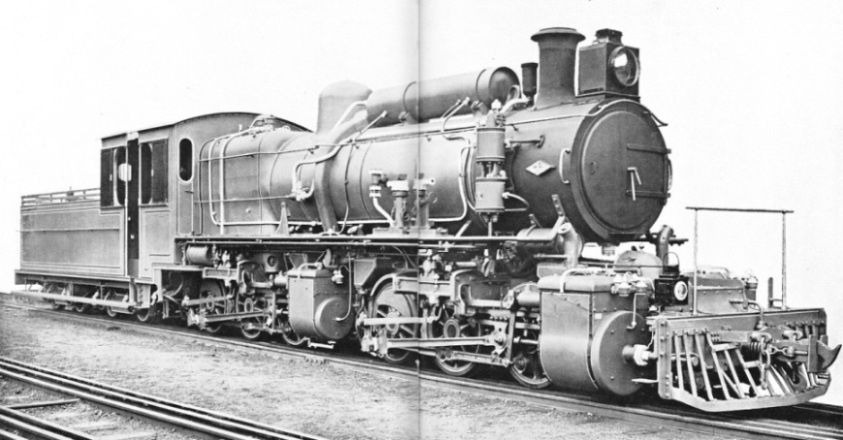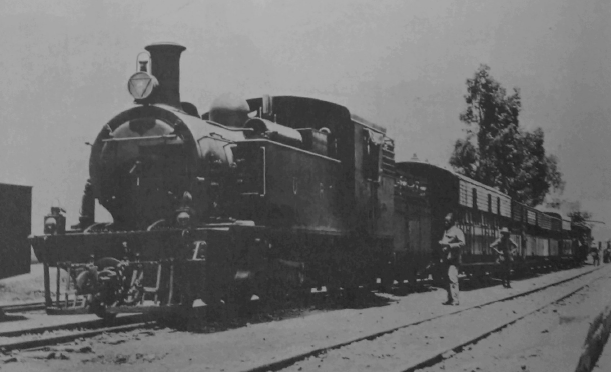
Category Archives: Uganda, Kenya and Tanzania Railways

Various posts about railways in East Africa

The Uganda Railway – Part 21 – Kampala to Kasese

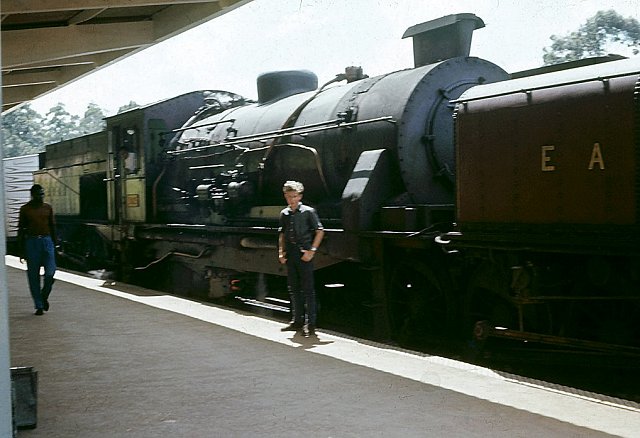
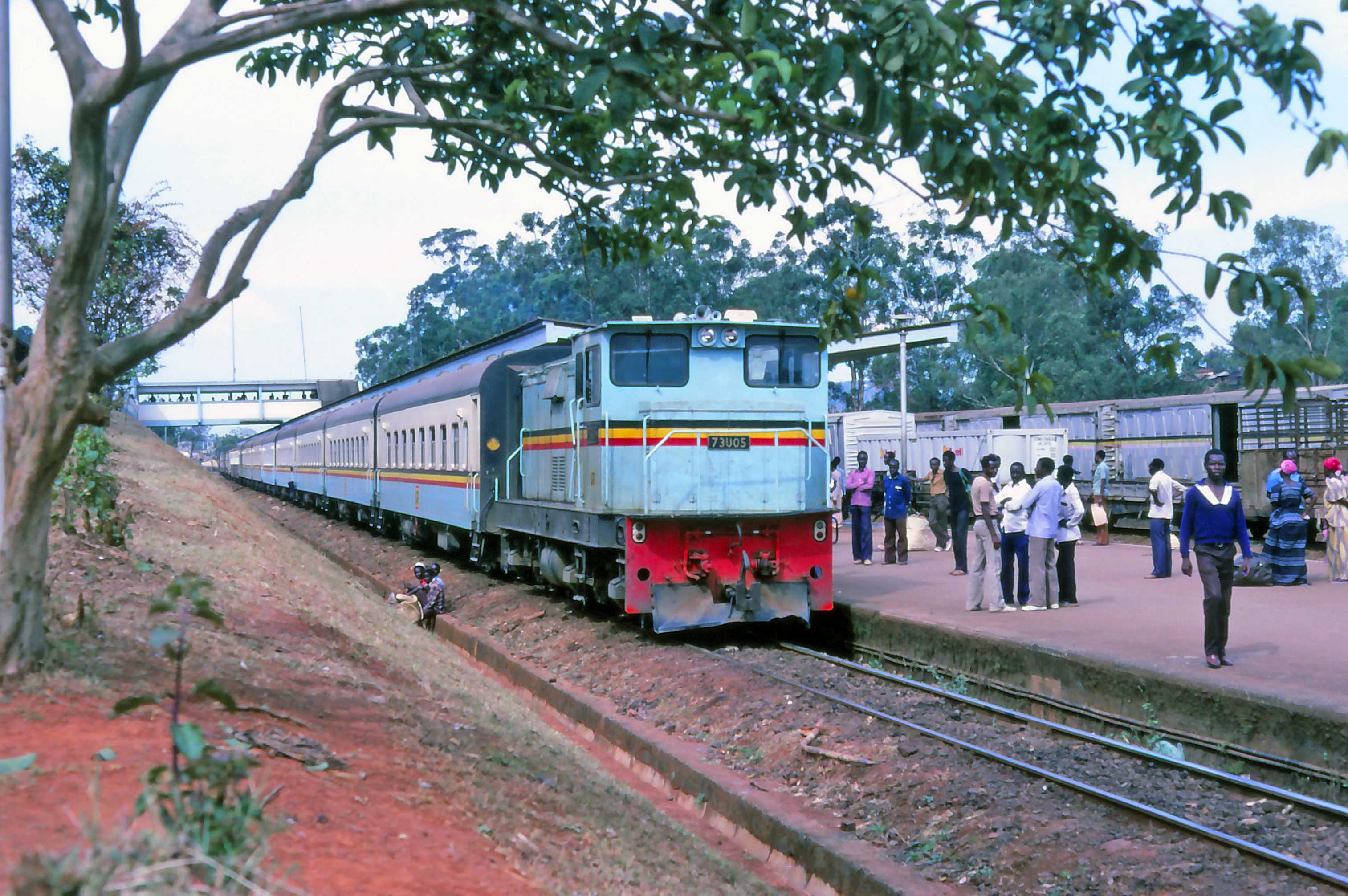
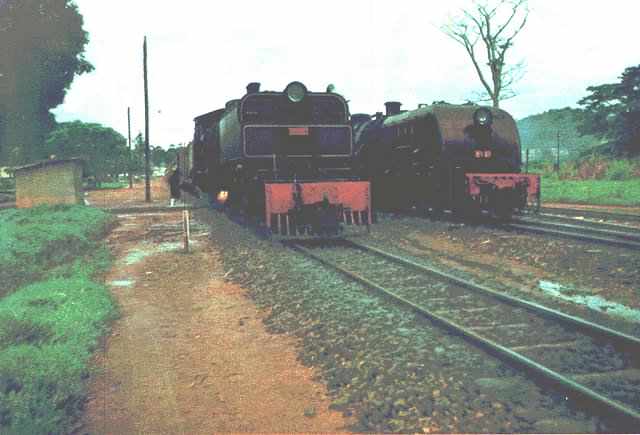
This final length of our journey takes us along what is now the defunct line to Kasese. The first part of this line in the Kampala suburbs still exists but further west there are only remnants of the line. In 1994, I attempted to travel to Kasese and I might have been able to do so if I was prepared to wait in Kampala for the possibility that a train might run. In the end my trip to the South West of Uganda was much better served by a road journey via Masaka, Mbarara and Kabale.

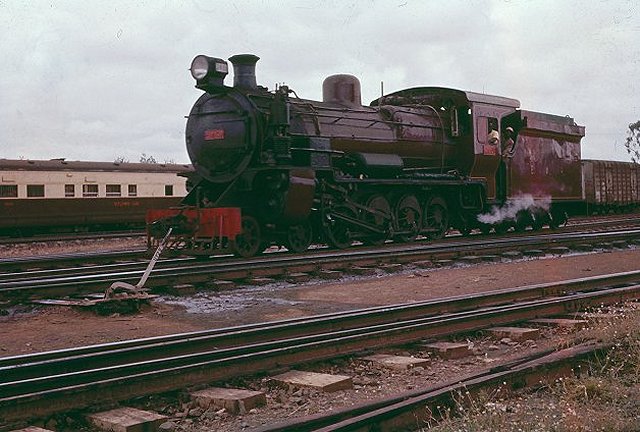
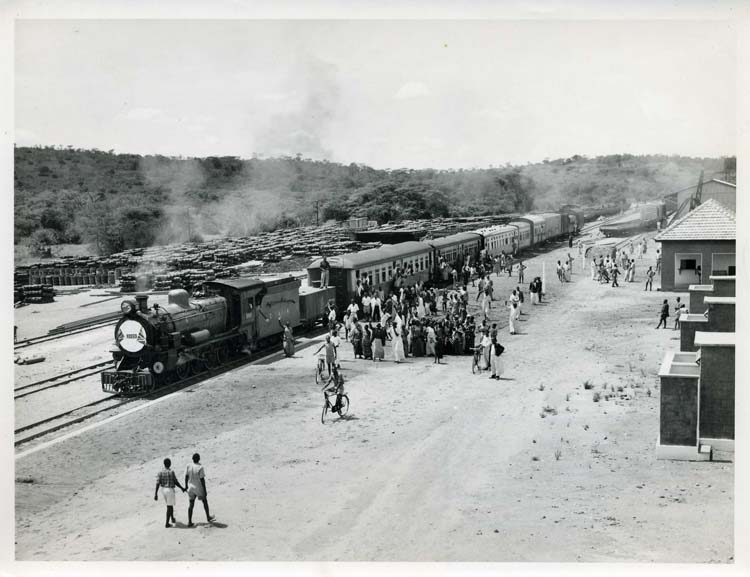
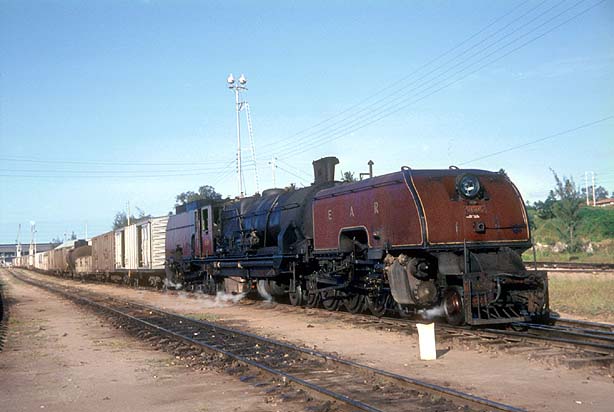
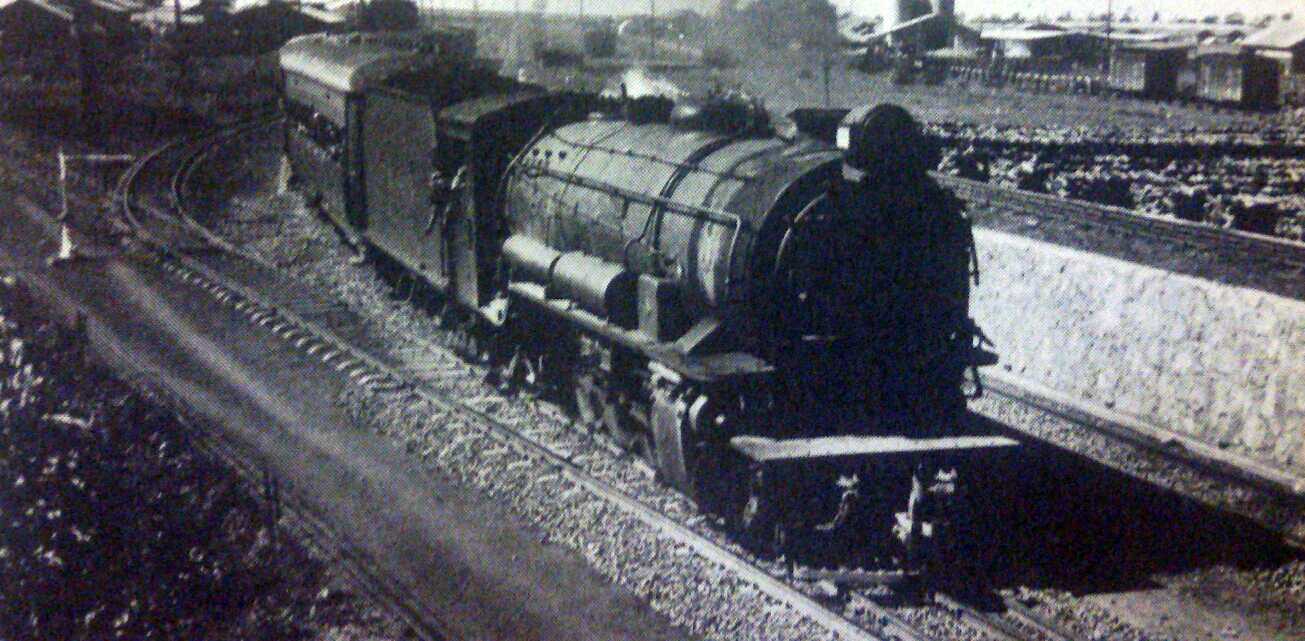
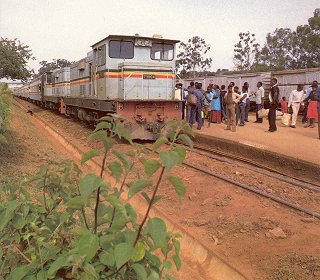
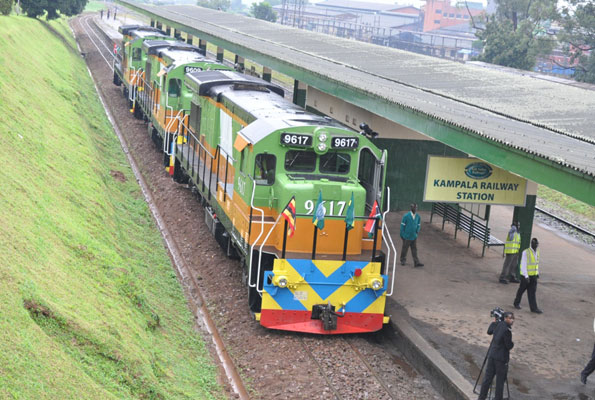
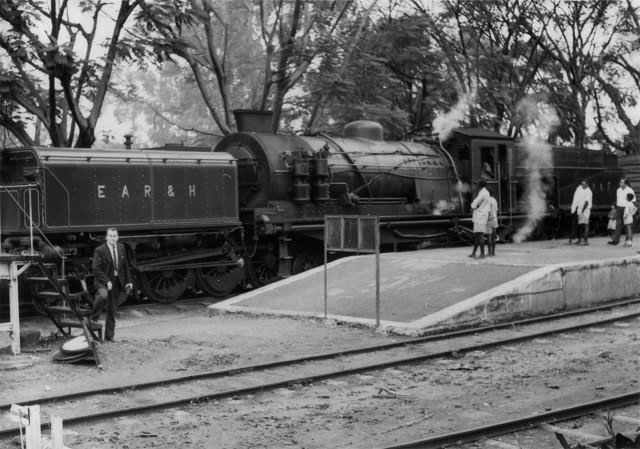
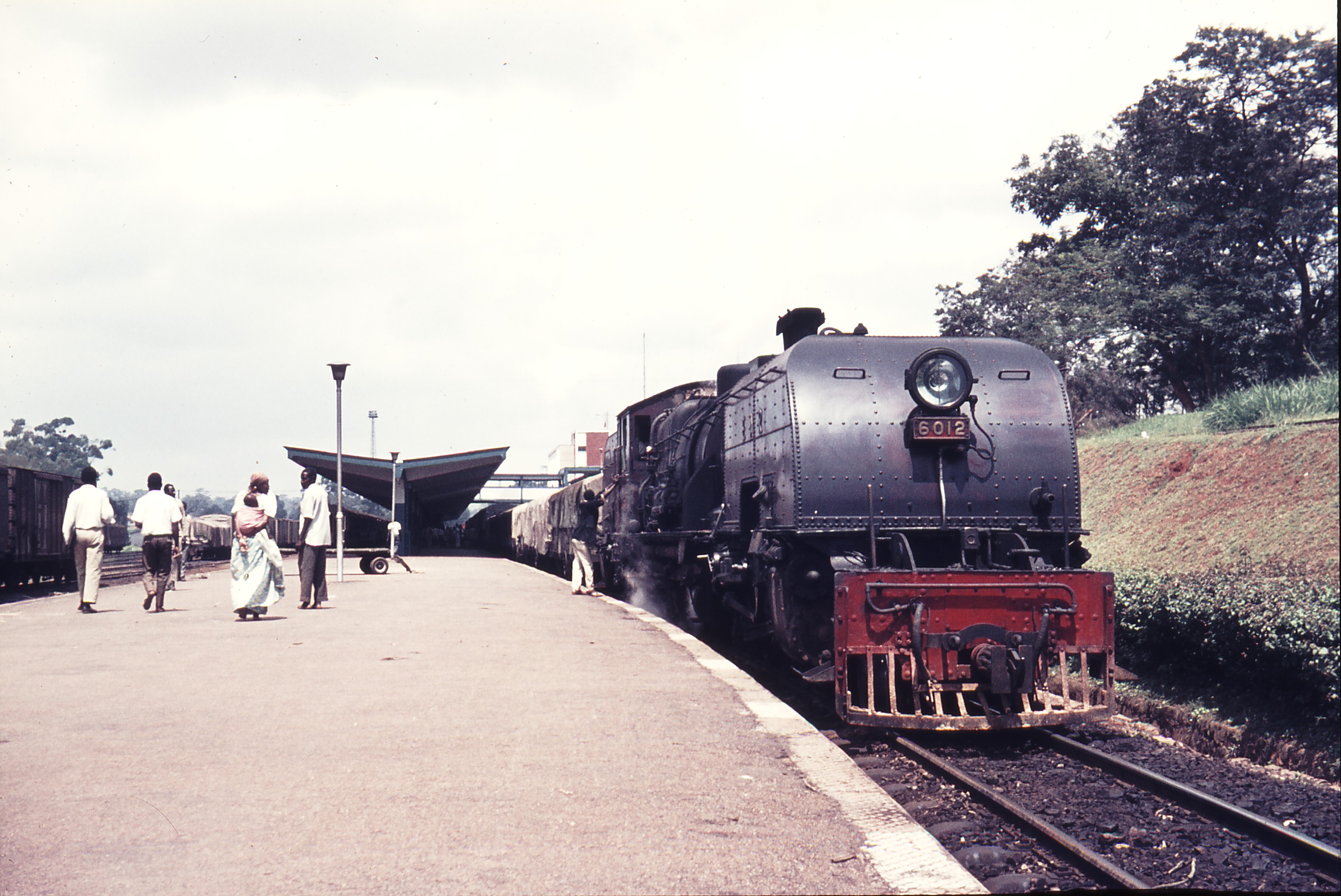
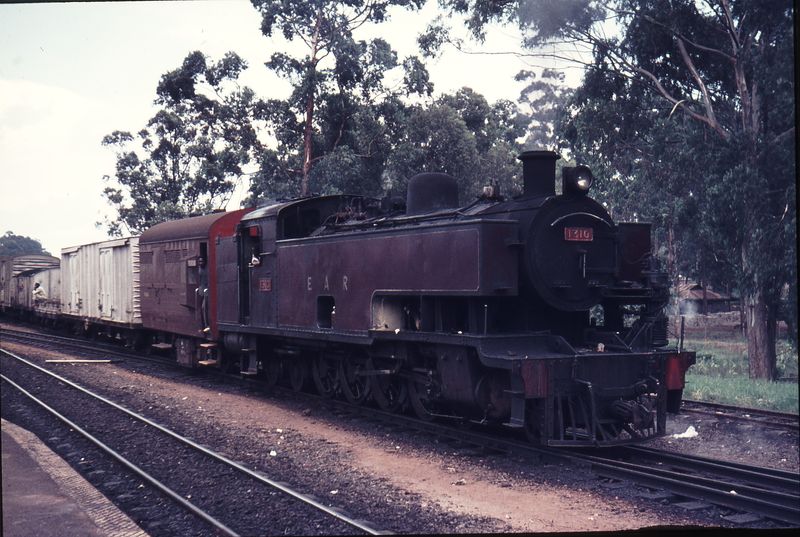
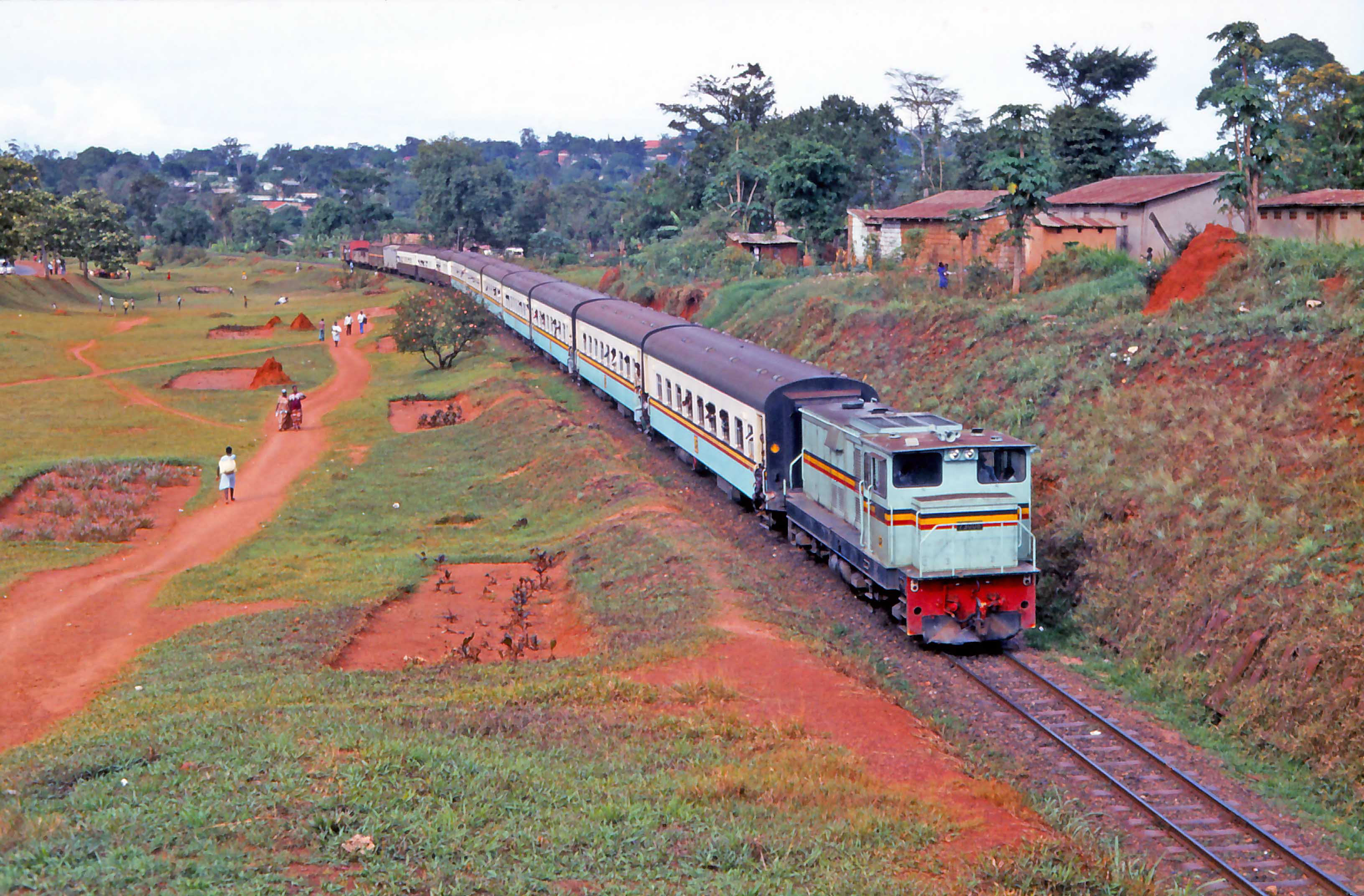
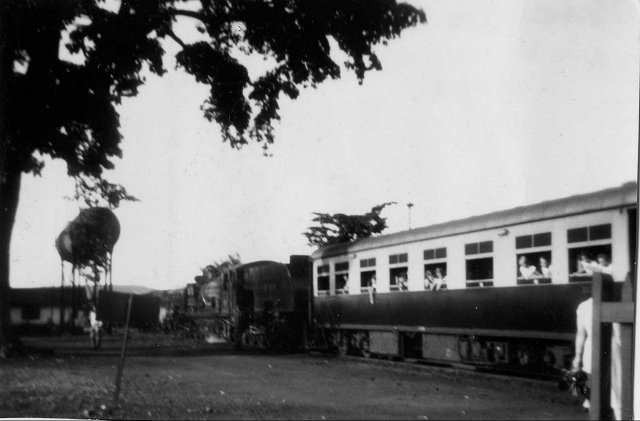
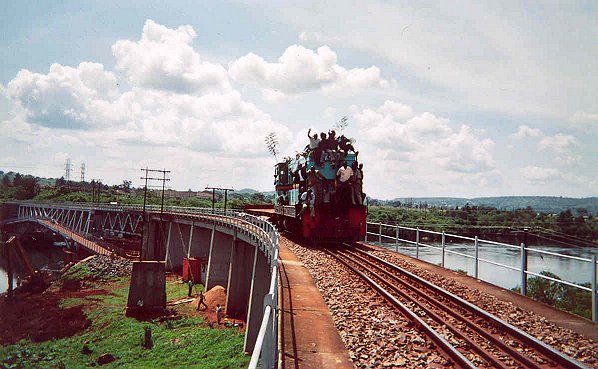
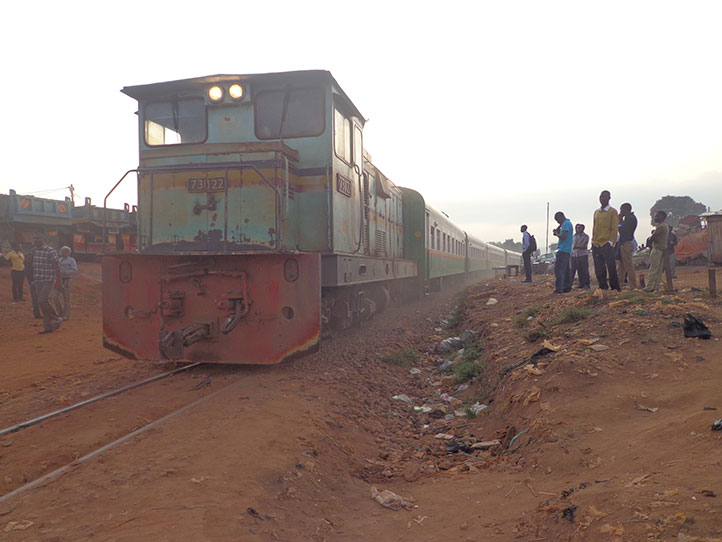
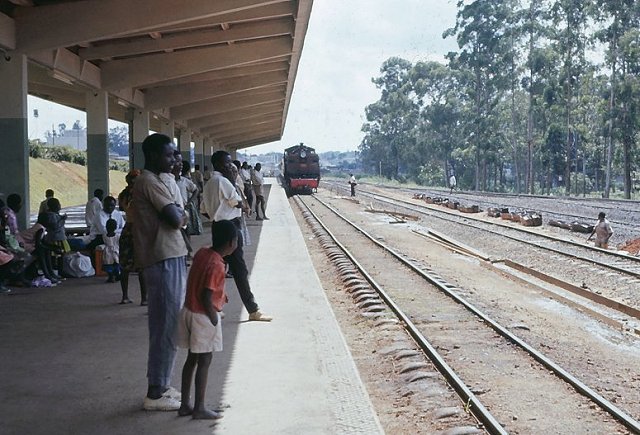
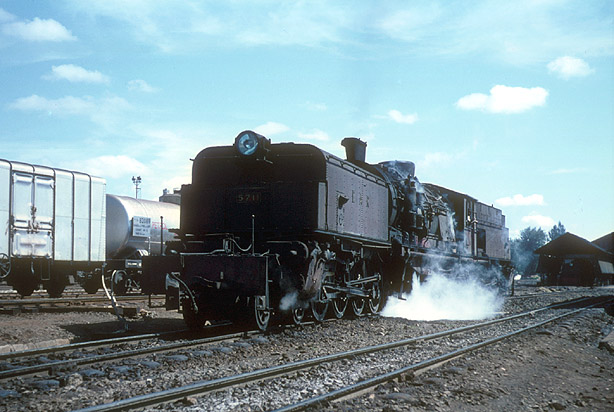
The picture above shows one of those sporadic passenger trains to Kasese which in the end I missed! [1]

The Western Extension, as it was known, was built and opened in the mid-1950s, its main target was to reach the Kilembe Copper Mines in the west of Uganda. Kasese was built alongside the Mines and has grown since then into a reasonable size town with industry and tourism building its economy.

Official sanction for building the railway to Mityana was given in 1951, and for the continuation to Kasese in 1952. The decision rested upon a guaranteed source of traffic at Kilembe, and was prompted by the fact that mining development was dependent on some positive step to improve communications. There seemed little doubt that the line would attract some Congo traffic, which would provide new revenue for E.A.R. & H., while the Uganda Government was much encouraged by the very favourable report of an Economic Survey Committee. The concluding sentence of the report reflects the tone of the whole: ‘The committee desires to record its firm conviction that this project will prove eminently successful. and contribute materially to the welfare and prosperity of the people of Uganda”. The capital cost of the extension was £5.25 million, and the Uganda Government provided the Railway Administration with a loan to cover this. The government also guaranteed to meet any operating losses incurred on the line, although the chances of such losses were reduced by the policy of crediting to the line any profits on traffic also passing over the Kampala-Mombasa section. [9]

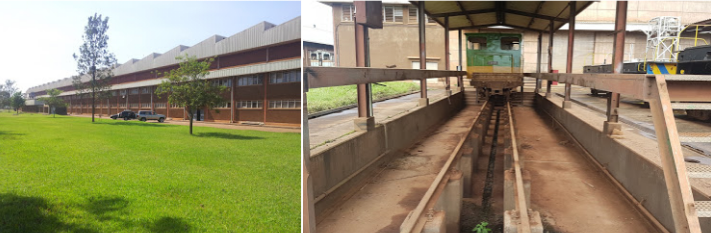
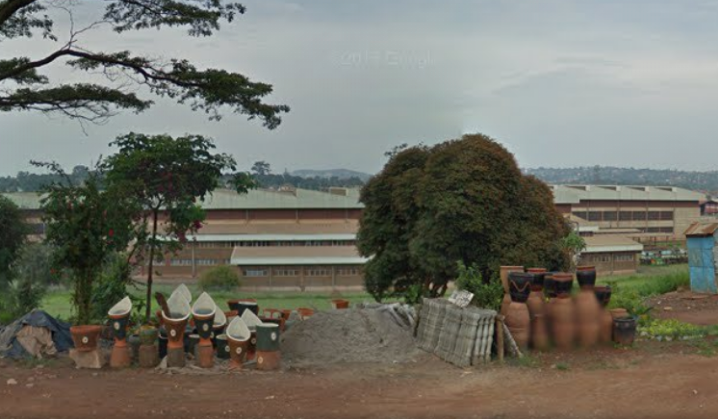
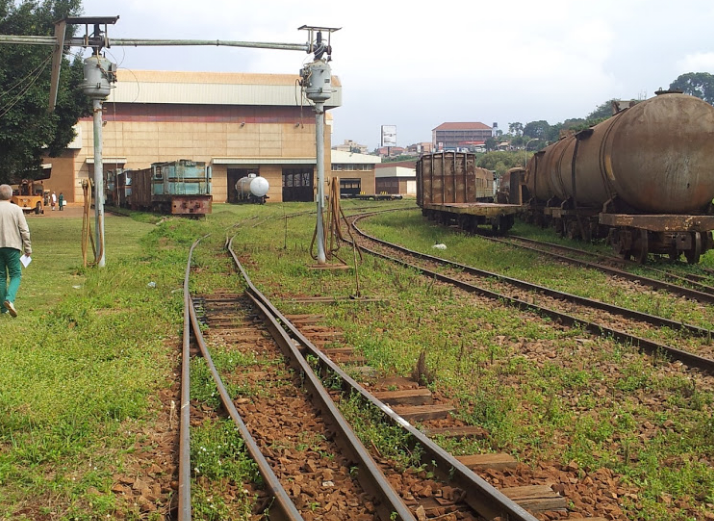
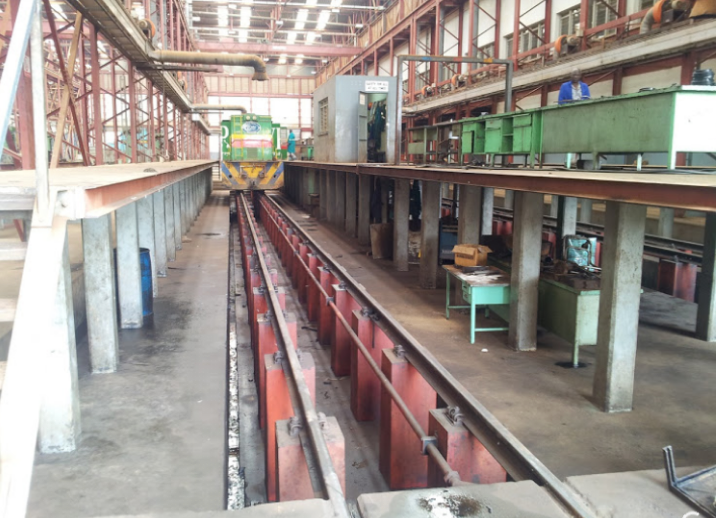
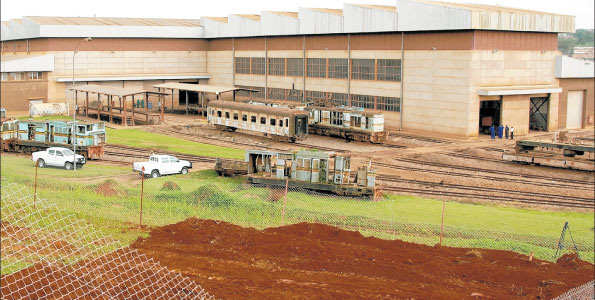
In the last post we left Kampala Railway Station and travelled the very short distance into the suburbs to Nalukolongo, the main workshops for the Railway system in Uganda. To be reasonably sure of getting a passenger train towards Kasese we would probably need to go back to the mid 1990s, and even then we probably need to be ready to leave within a week of our intended journey date and expect to take at least 36 hours on the journey. Back in the heyday of the line the journey to Kasese could be achieved overnight with an evening departure from Kampala and a morning arrival in Kasese.

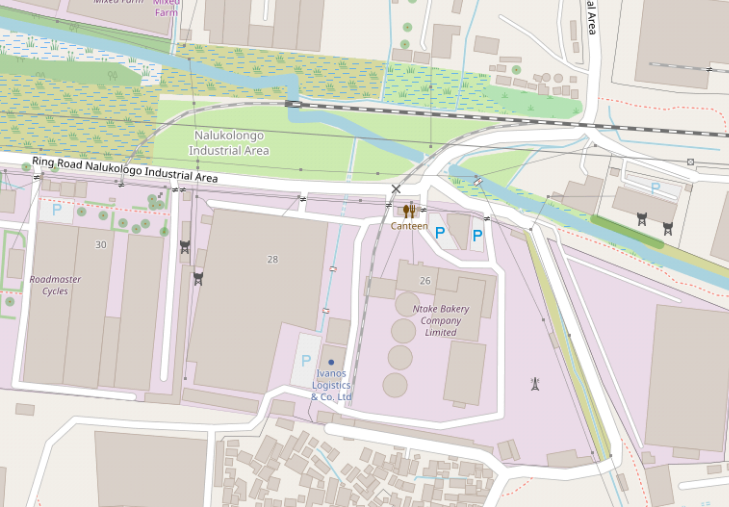
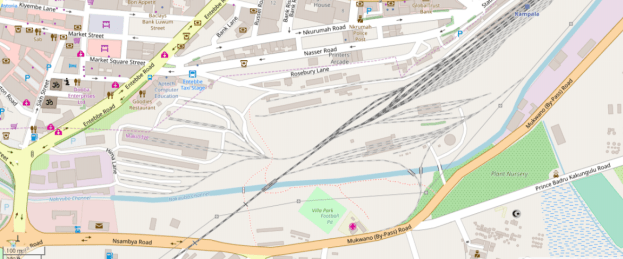
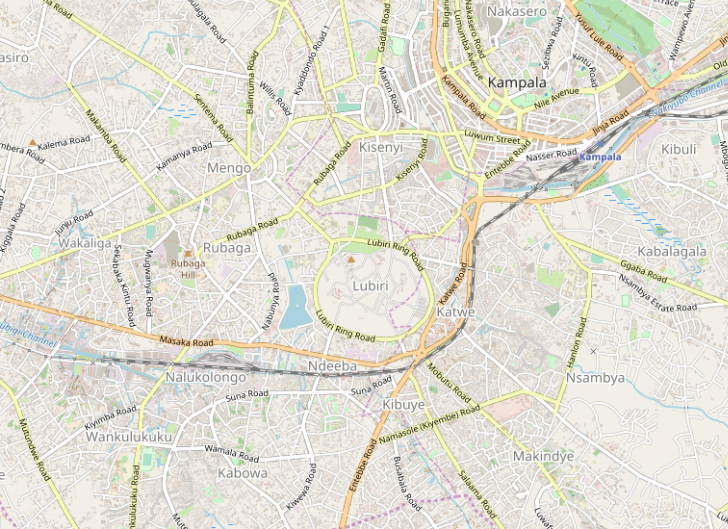
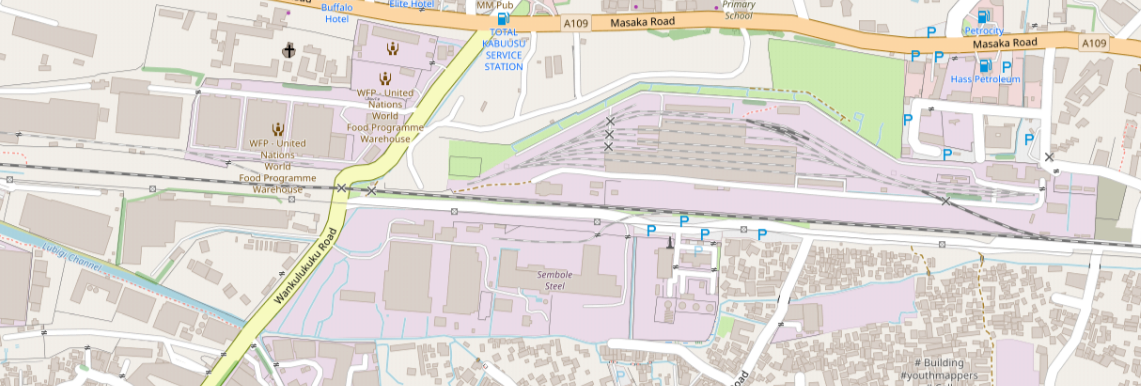
OpenStreetMap when accessed in 2018 showed the railway extending only to Nalukolongo. Later we will see that the approximate route through to Kasese often appears as a dotted line on OpenStreetMap.

Beyond Nalukolongo, the line is shown on OpenStreetMap as a short stub serving industrial premises to the West of the Lubigi Channel. The mainline bridges the channel before becoming disused. A spur enters the premises of Ntake Bakery Co. Ltd. and a further short spur serves Roadmaster Cycles premises.

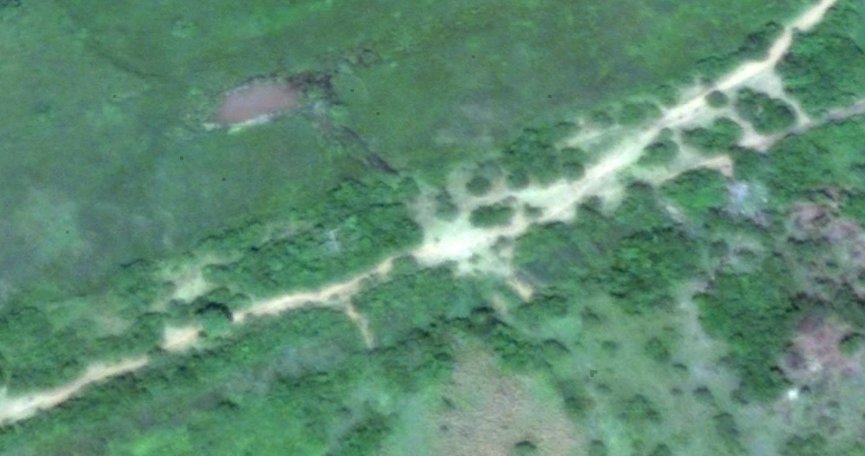
Google Maps shows the route of the old line to Kasese. The route runs to the south of the Lubigi Channel past the Kabawo Market and on through the Kampala suburbs, until it crosses the Masaka Road southwest of Busega. Continuing in a westerly direction, the line passes to the south of Buloba and then turns North-west before reaching the halt at Bujuko, 28 kilometres from Kampala Railway Station. The probable location of the halt is on the right of the satellite image below, adjacent to the Kakiri-Bujuko Road.

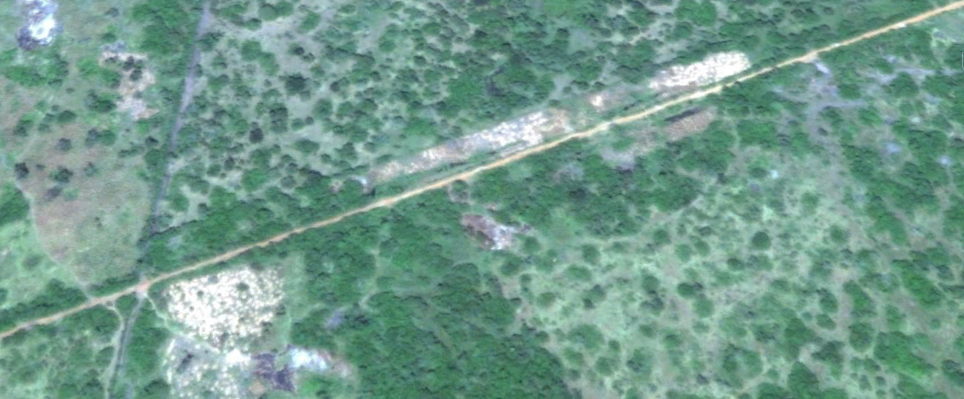
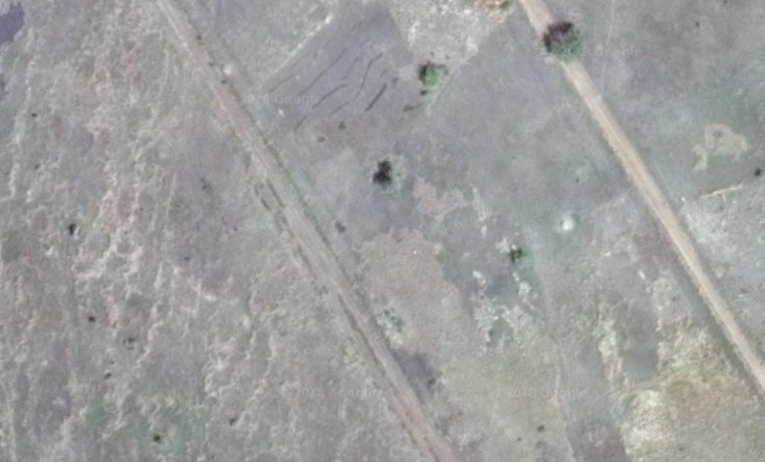
The next halt is at Kawolongojo, according to the adjacent map. There is a primary school of this name close to the route of the railway and it seems most likely that the satellite image below shows the location of the station.

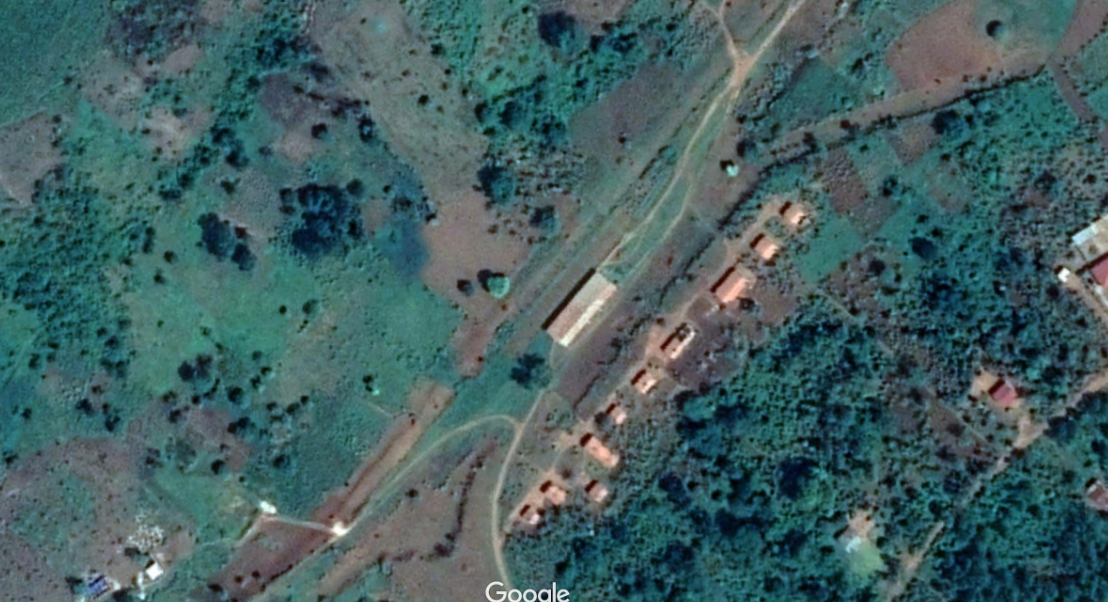
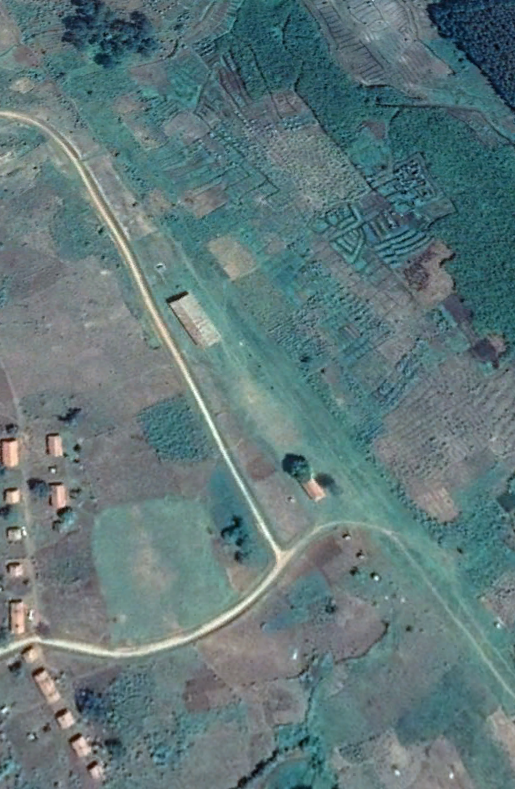
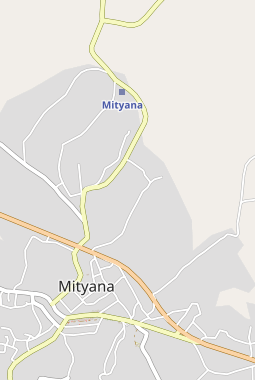
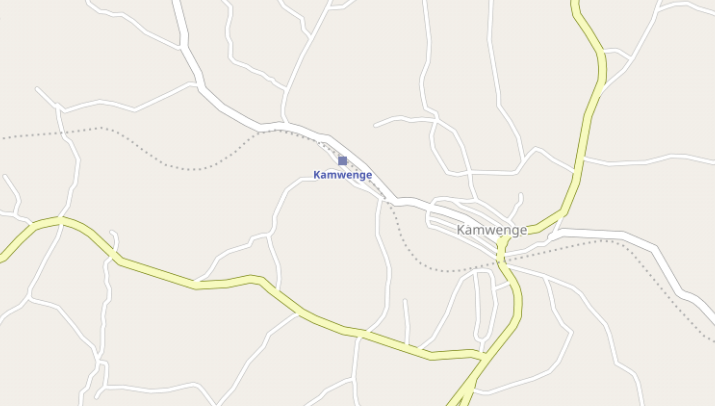
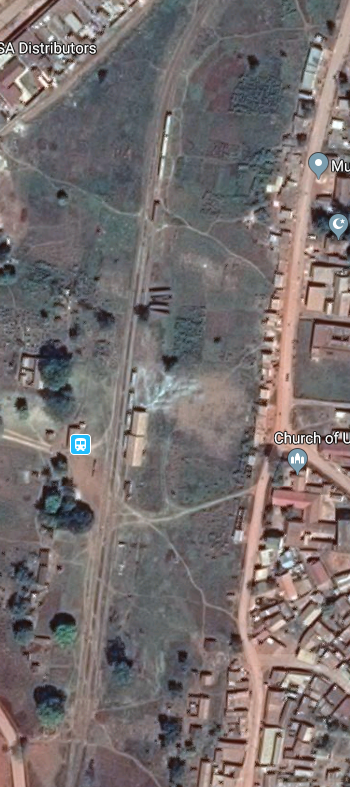
The next stop is at Mityana. The station is shown on the adjacent satellite image, the railway route is just about visible running from bottom right to top left of the image. On the map below, the station location is marked by the blue square.

When the route of the line was planned in the 1950s a full survey had already been undertaken of the route from Kampala to Mityana some years before. The route beyond Mityana was a matter for debate. The railway could either follow the Katonga valley or pass further north through Mubende. The exact terminus was also a matter of debate, although the line obviously had to pass as close as possible to Kilembe. The 1930 survey committee had recommended a route via Mubende in order to serve that District most effectively, but in the 1951 report this was rejected as being unduly costly, and approval was given to the Katonga route. This provided the most direct link between Kampala and Kilembe. and was expected to provide a service for Ankole as well as Mubende. After reaching Mityana in 1953, the line was therefore extended to Musozi in 1954 and Nkonge in 1955. Four possible termini were considered, out of which Kasese, that involving least expenditure, was finally chosen. The rejected proposals were for extensions beyond Kasese 8 miles to the western arm of Lake George, 22 miles to the Kazinga Channel or 31 miles to Lake Katwe. The country offered few problems for construction, yet the cost of each proposal (£0.1, £0.4, and £0.55 million respectively) was considered too high in relation to the probable benefits. The Congo authorities agreed that for transit traffic a road haul to Kasese would be as satisfactory as one to Lake Katwe, and preferable to lake transport, which had been considered in relation to the other possible termini. [9]

For the first fifty miles from Kampala the line passed through country with very fertile soils and a rainfall of 40 to 50 inches evenly spread through the year. The land was originally under forest, but although patches survived in the 1950s, most was used for the perennial crops, bananas and coffee, or for a rotation of annual crops and short fallow periods. A population of 200 to 250 per square mile was supported almost entirely by agriculture. Conditions become progressively less suitable for cultivation as the Lake Victoria zone was left behind. Rainfall became much less rekiable and only ossasionally exceeded 30 inches in a year, while the soils were among the least fertile in Uganda. Over large areas the density of population was below 25 per square mile, and most of the country was occupied by the natural savanna woodland vegetation and by numerous buffalo, antelope and other types of game. Much land was suitable only for extensive grazing, and west of Nkonge even this form of land use was precluded by tsetse-fly infestation. [9]

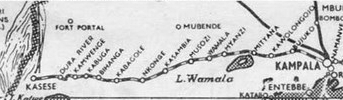
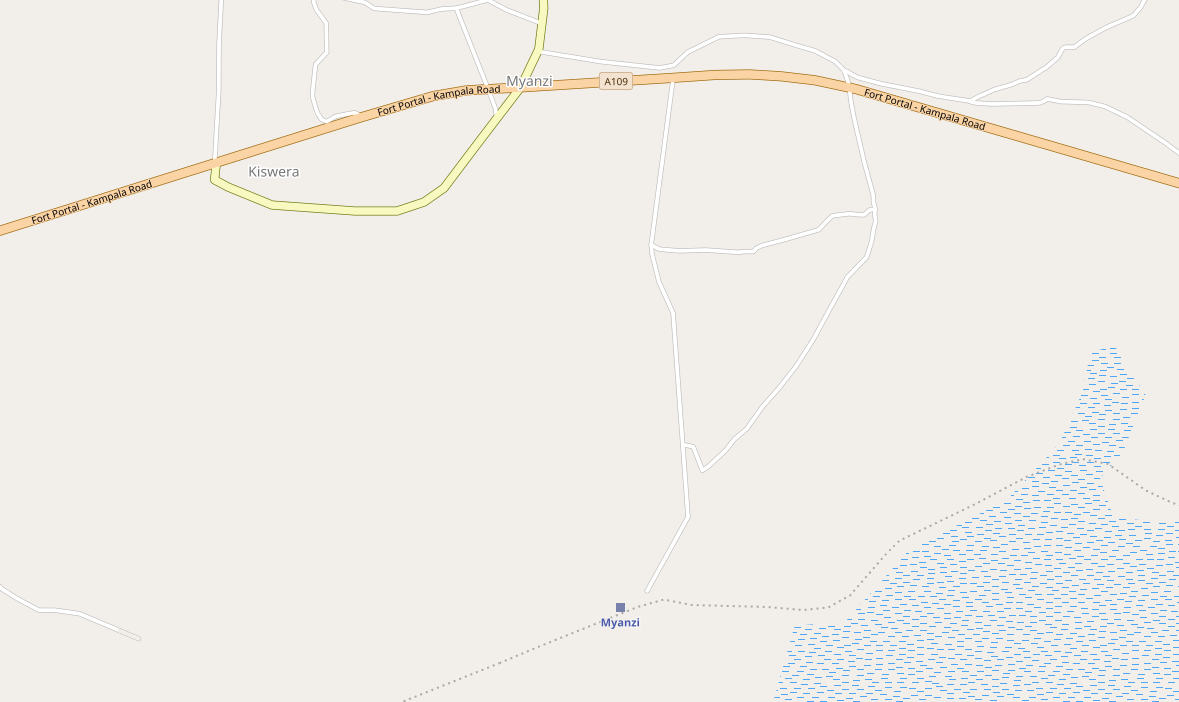
After Mityana, the next halt is at Myanzi. The station was a distance south of the town close to the shores of Lake Wamala. The station is again marked with a blue square on the map below and the line of the Kampala to Kasese railway is shown dotted. While the route of the line is clearly visible on the satellite image, the only evidence of the station is the access road which runs south from the town and then turns west-southwest close to the railway line.


On down the line, our next stop is at a station named for Lake Wamala. Wamala Railway Station is not evident on Google Maps or OpenStreetMap although the line itself continues to be visible on both running in a west-southwesterly direction. The most likely station location is shown below.
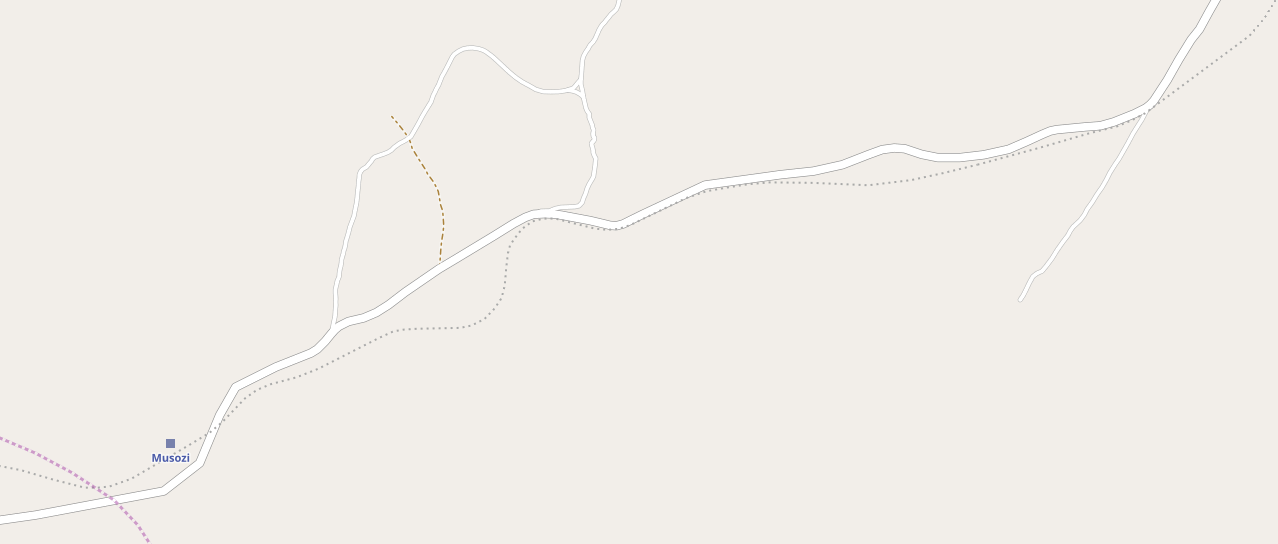
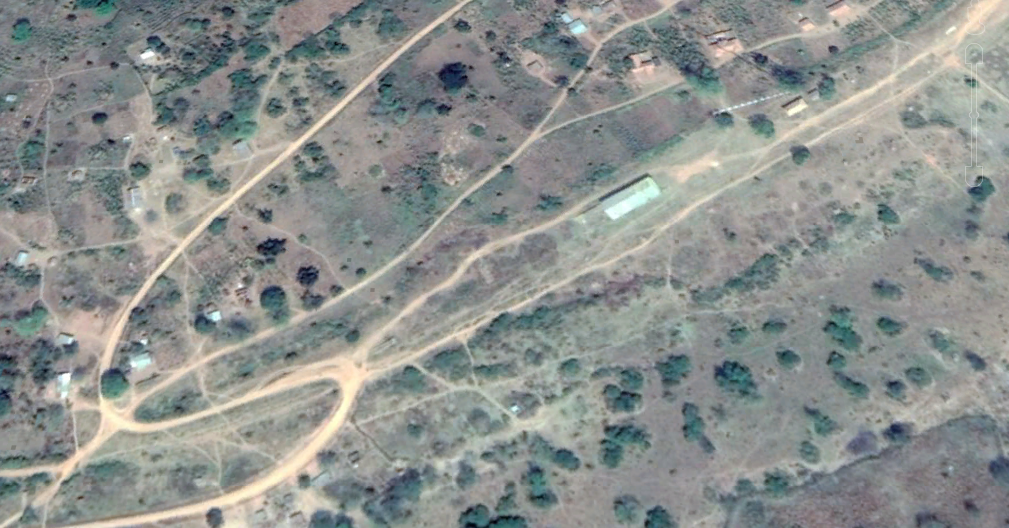
Further along the line we come to Musozi. The line continues to appear on OpenStreetMap as a dotted line and the station location is shown as a blue square. The town of Musozi is some distance to the Northwest of the station.

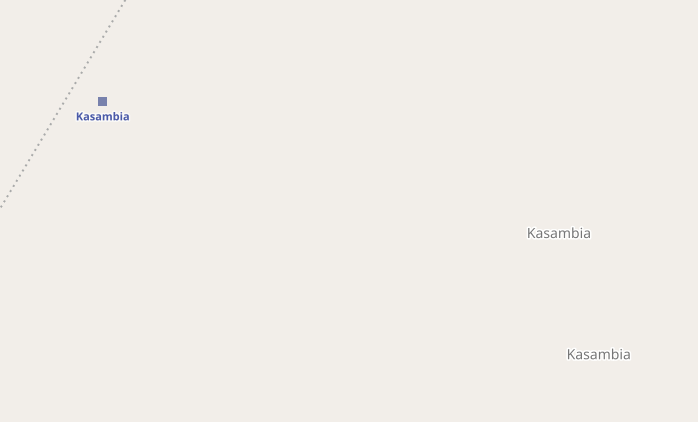
Kasambia comes next! It is south-west of Musozi. The railway station is some 2 kilometres or so to the northwest of the village of Kasambia. The exact location of the station or halt is not visible on Google Earth but is marked by a blue square on OpenStreetMap. The route of the railway is still marked by a dotted line.

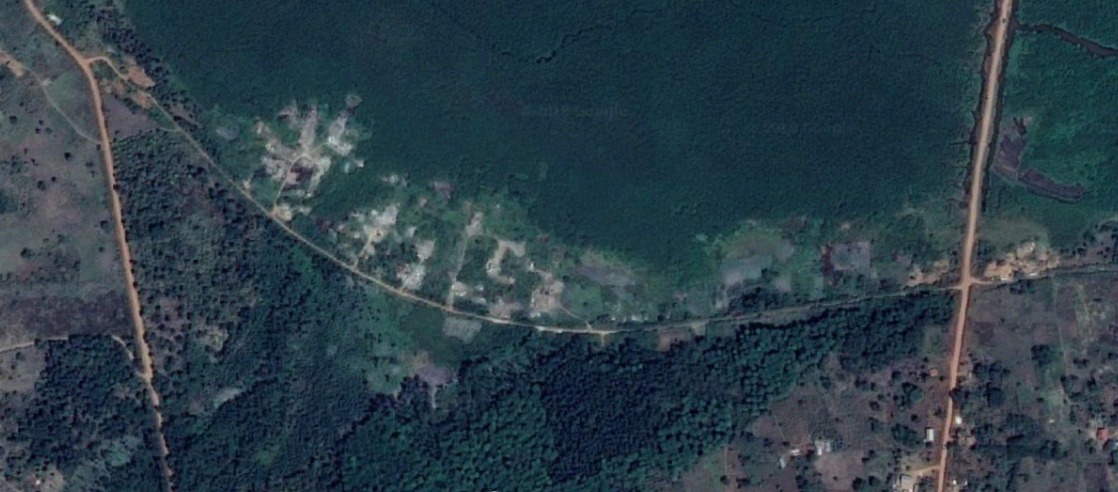
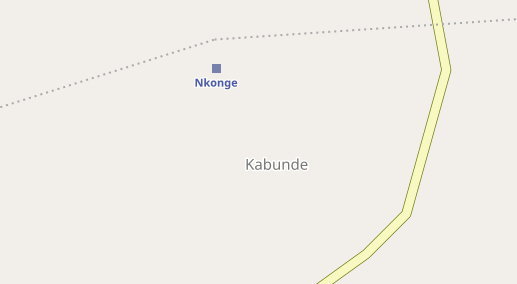
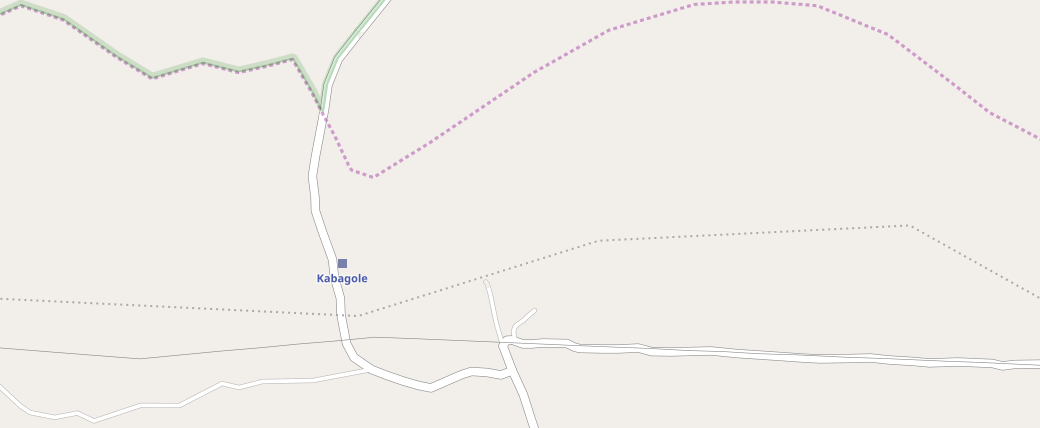
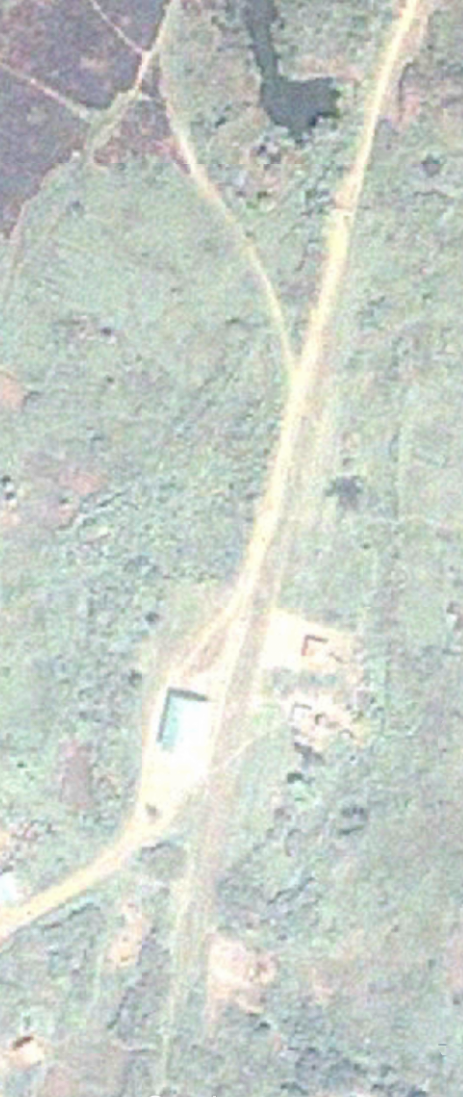
Nkonge and Kabagole are noted on the adjacent route map as the next halts on the line. Nkonge appears only on the most close up map view on OpenStreetMap, otherwise it appears as Kabunde. The railway line appears as a dotted line on OpenStreetMap but, while it is possible to identify the line on Google Earth, it is impossible to find the location of the station at the place marked on OpenStreetMap. In fact the most likely location is some kilometres to the west and I have chosen to show a satellite image of that location as the most likely location of the station.

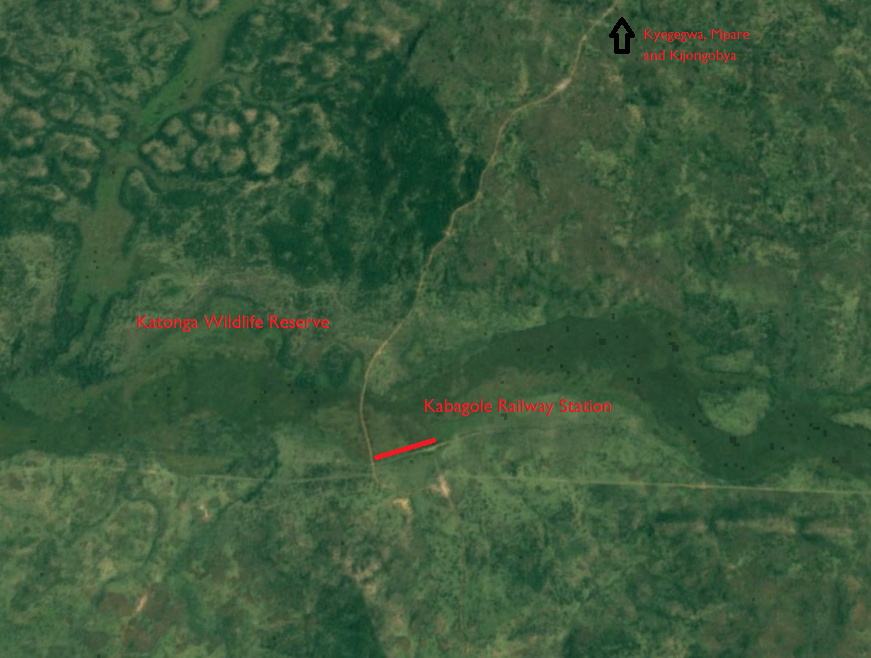
The railway route followed the swamp-filled channel of the Katonga River beyond Nkonge. Kabagole is also marked on OpenStreetMap close to the Katonga River.

The quality of satellite images in this part of Uganda is poor. However, in our recent visit to Uganda (April/May 2018) we stayed for 10 days very close to the location of the station in a village called Kijongobya. We drove past the station location as we were leaving the location and had an evening close to the location in the Katonga Wildlife Reserve. Sadly, there is little evidence of the station on the ground and the line of the railway is difficult to identify. The story of those 10 days can be found elsewhere on this blog, along with pictures of the location as well, (rogerfarnworth.wordpress.com/category/uganda). [2]

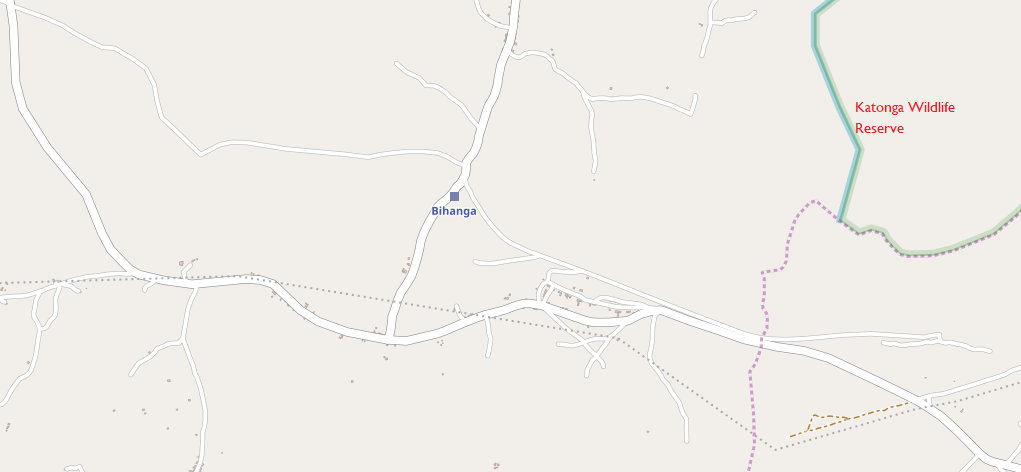
Next on the line comes Bihanga Station, at the Western end of the Katonga Wildlife Reserve and some 2 or 3 kilometres from the village with the same name. The satellite imagery at this end of the park is of very low quality and roads and railway lines are not distinguishable from the green of the countryside.

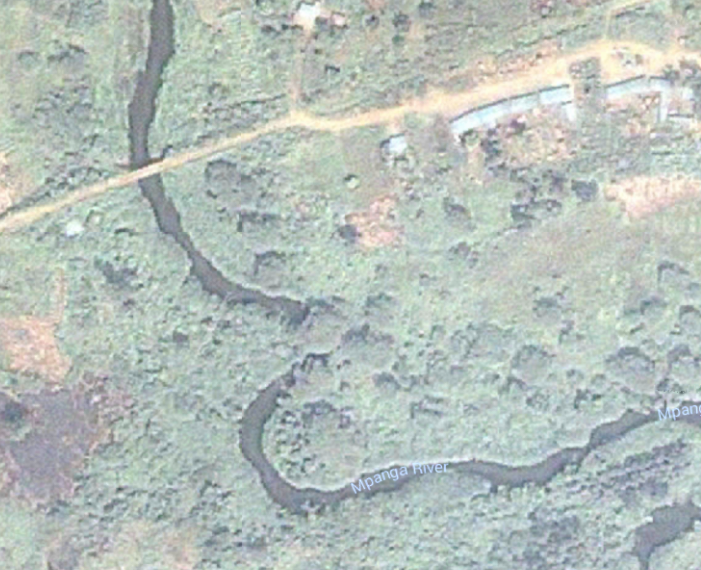
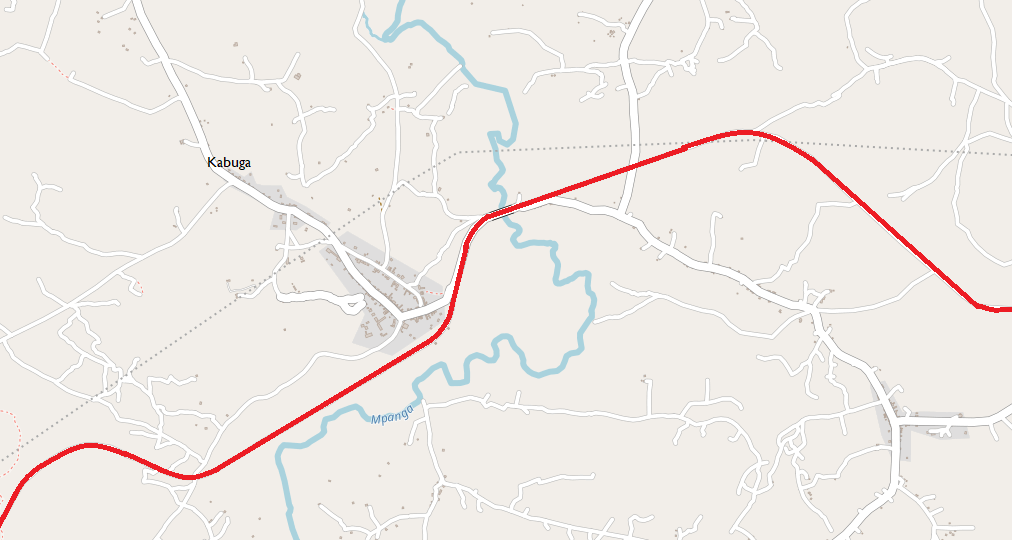
The line reached Kabuga – the railway line is shown in red. The station was probably to the west of the bridge over the Mpanga River. The road and the railway shared the bridge and the causeway to it.

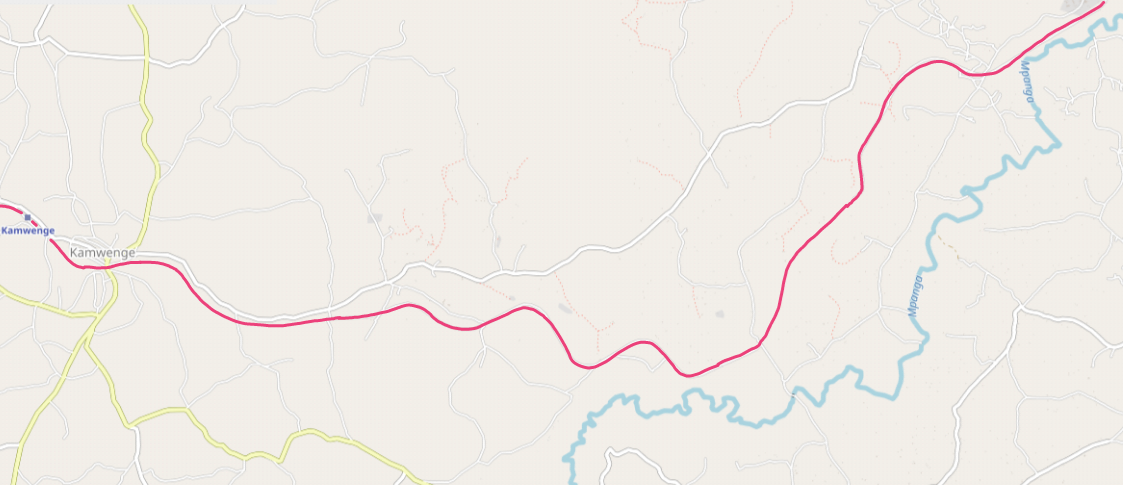
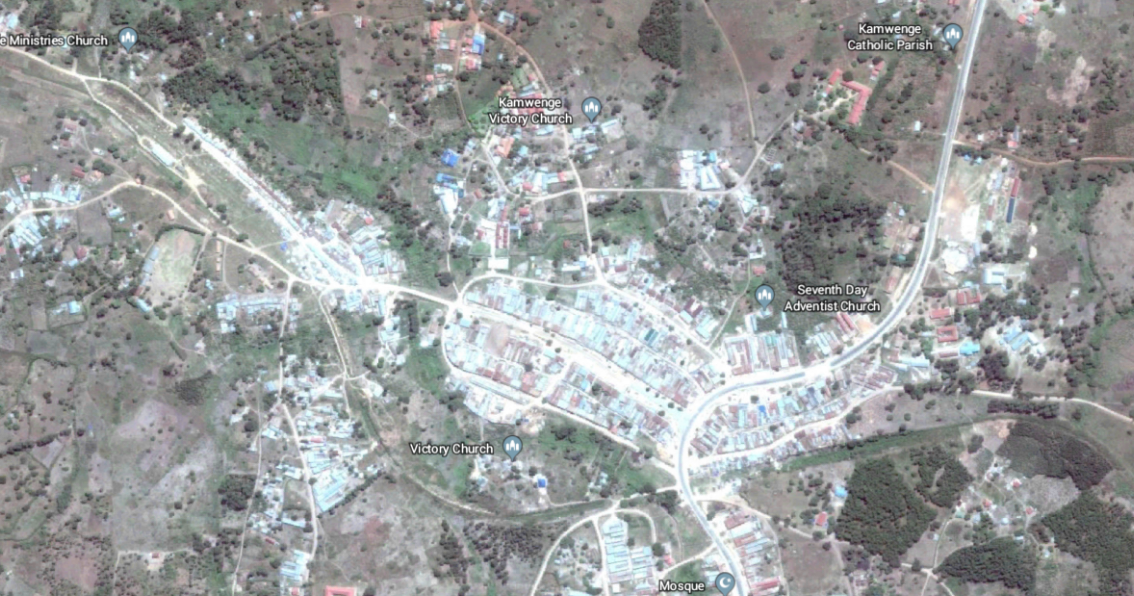
From Kabuga the railway continued to Kamwenge. As elsewhere on the line from Kampala to Kasese, the line of the railway has sometimes been taken over by a road. This has sometimes happened by default and at other times as a result of planning by the immediate local authority.
The formation of the railway often provided a suitable ready formation for a road and usually for a road that would sustain heavier demands than other murram roads in the vicinity of the old railway.

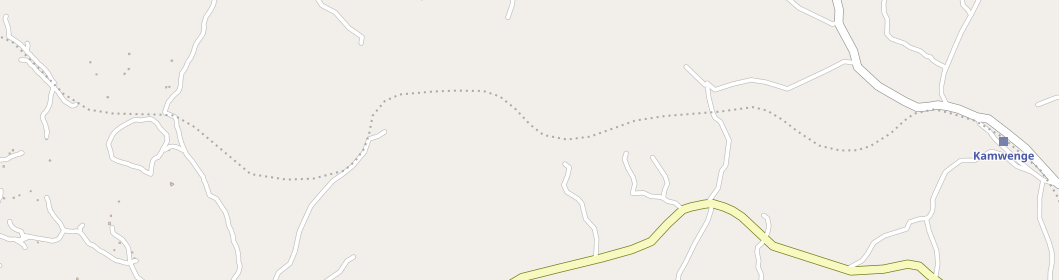
The dotted line shown on some of the OpenStreetMap plans is an approximation to the route of the line rather than a detailed following of the route. This is evident on the plan of the area around Kabuga and continues to be the case between Kabuga and Kamwenge.

The actual route of the line is shown in red on the first map below. Travelling west, towards Kamwenge, the country becomes more hilly, the rainfall rises to 50 inches and the soils are of rather greater fertility. The land is of higher potential productivity than that the line has just travelled through, and around lbanda, twenty miles to the south, there is some relatively dense agricultural settlement: but the land near the railway was, in the mid-1950s, as yet almost entirely undeveloped, and very sparsely populated. [9]

Kamwenge Railway Station was just to the northwest of the village.

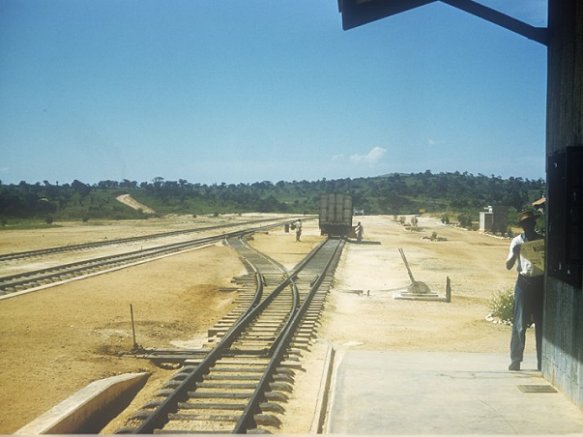
Recently laid track at Kamwenge, 172 miles from Kampala and the second last station before Kasese at Mile 208. Dura River at Mile 190 was the last station before Kasese, (c) James Lang Brown. [3]

From Kamwenge westwards the dotted line fairly represents the route of the railway which snakes around seeking to provide the shallowest possible grade through the topography of the West of Uganda.

The construction costs of the whole line from Kampala were very greatly affected by the difficult nature of the country in the final forty miles before Kasese. Severe problems were presented by the descent of the escarpment, which involves a spiral at one point, while from the foot there is an 18-mile crossing of papyrus swamp through which a causeway had to be built, entailing a vast amount of labour‘.

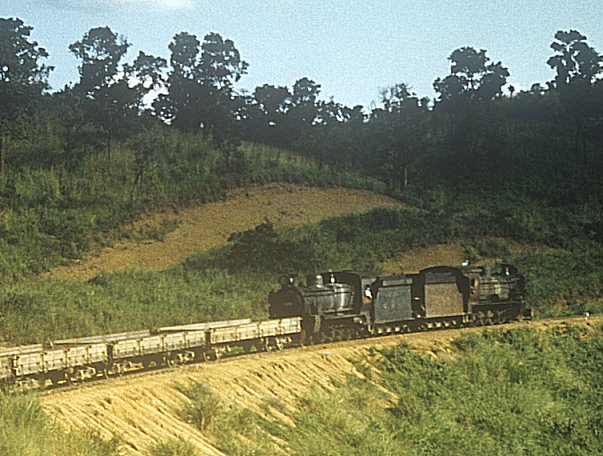
Some of the EB1s ran in black and were duly converted to oil burners is shown here as a 22 and 24 Class haul empty ballast wagons along the extension, (c) James Lang Brown. [3]

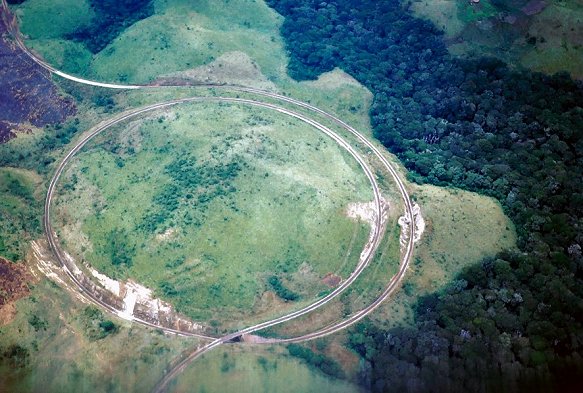
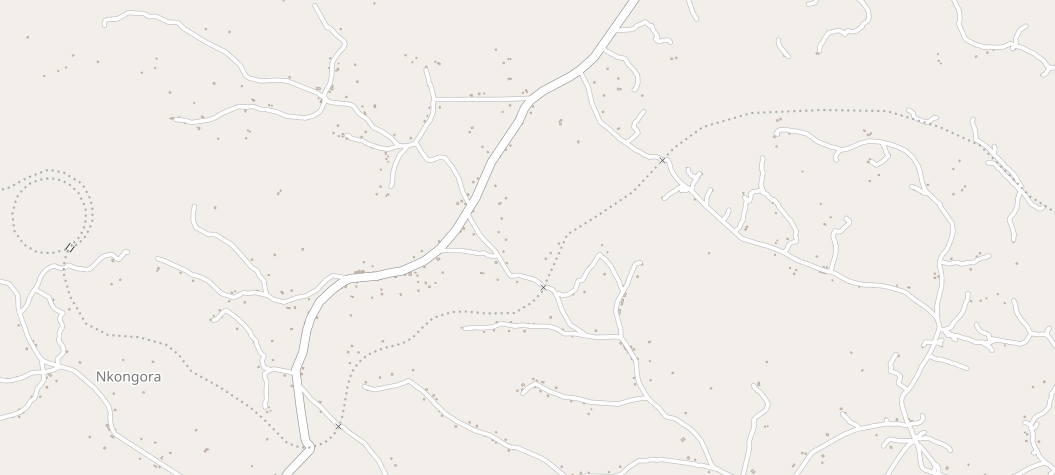
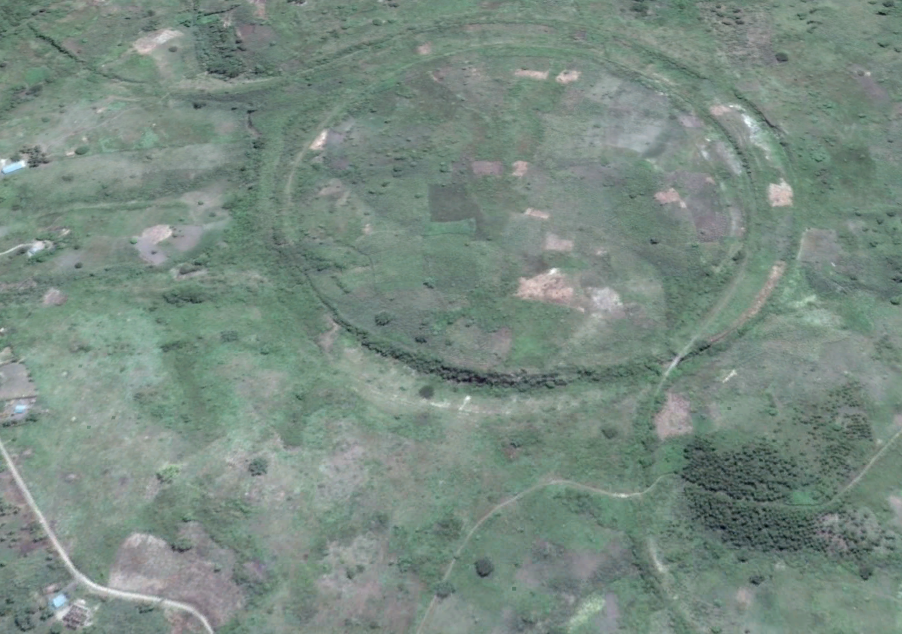
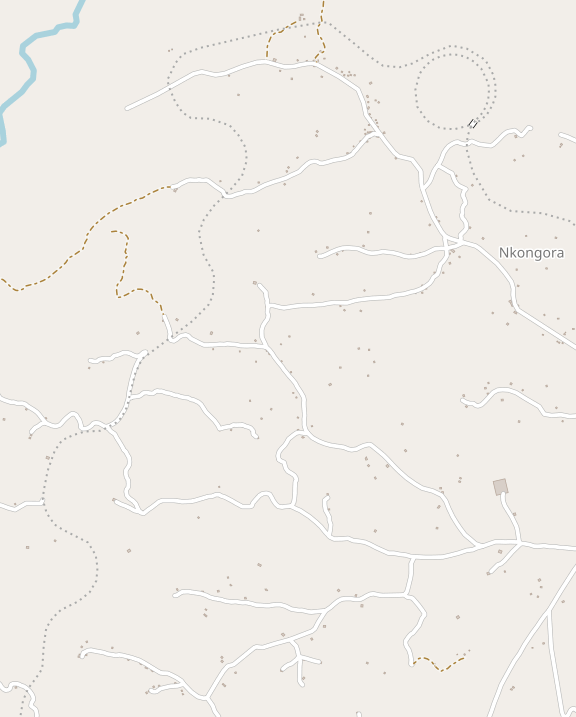
Near Nkongora the topography necessitated that the line should gain height relatively quickly and to achieve this the engineers designed a spiral, the fourth on the line from Mombasa. It can be seen to the left of the map immediately above and in the image below.

Aerial view of the 1.18% (1 in 84 approx) spiral which was cut round a hill between the Mpanga and Dura Rivers, (c) Brian Kingston. [3]

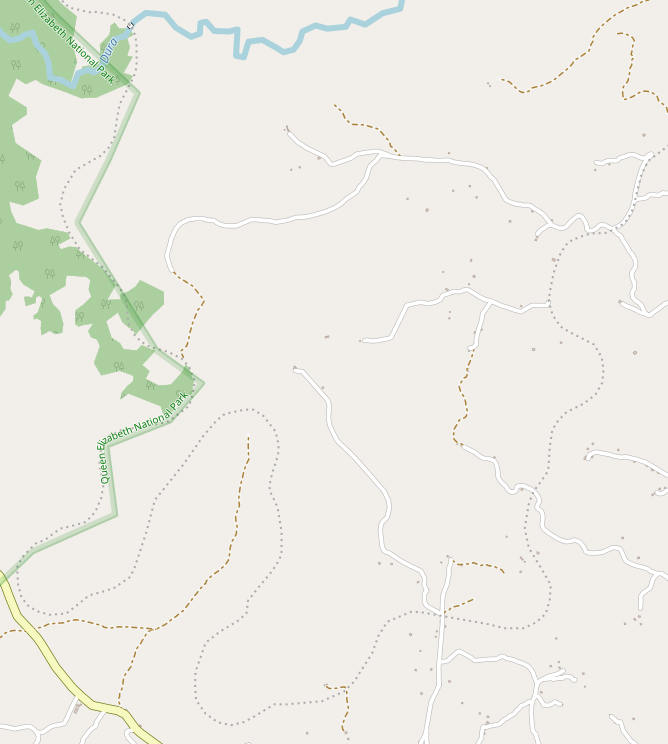
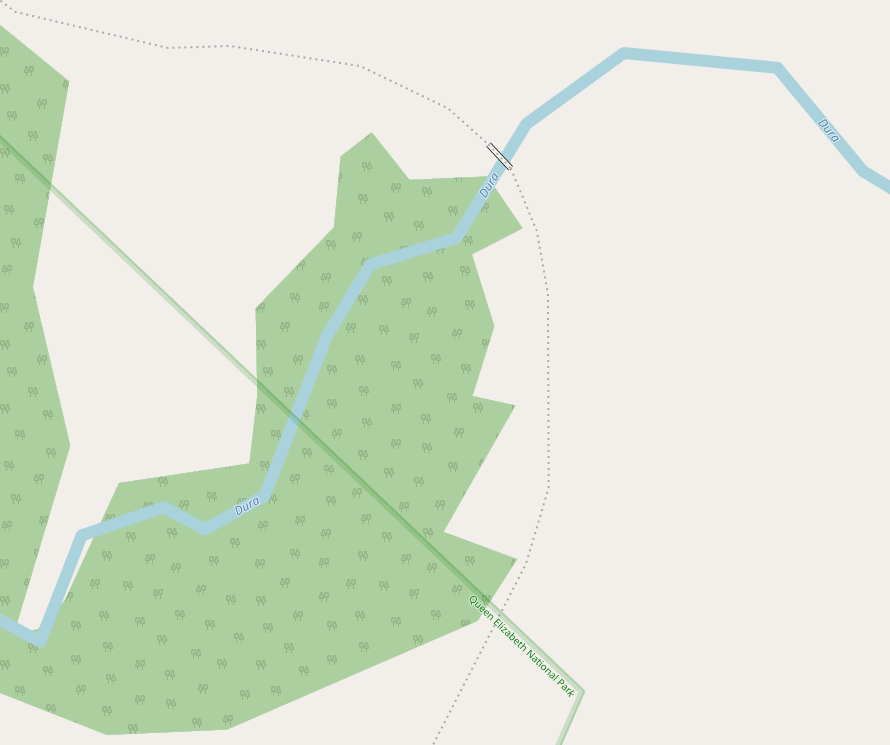
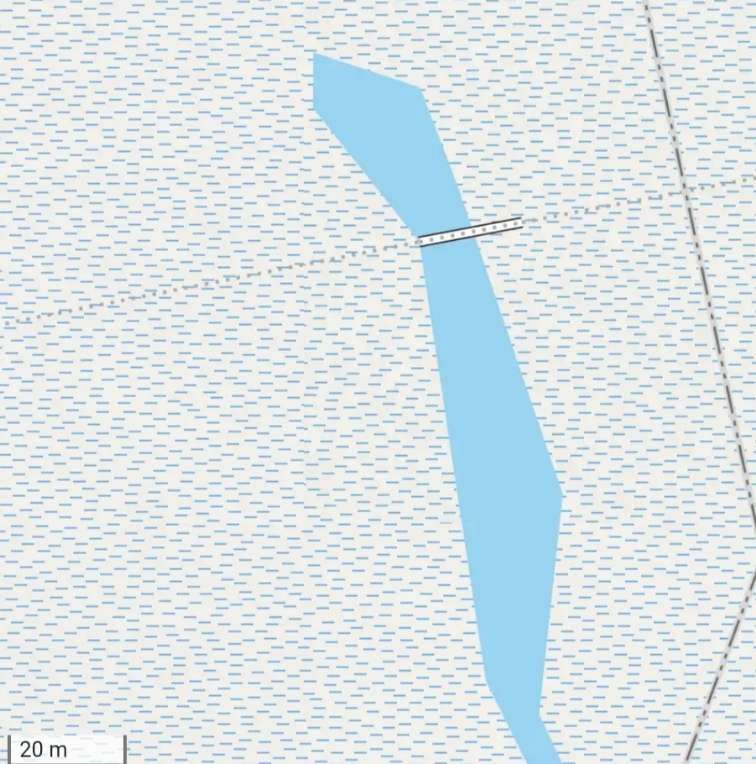
The line wound its way westwards through the landscape to the edge of what is now called the Queen Elizabeth National Park and the bridge across the Dura River on the East side of the park. These images show a bridge over a tributary to the Dura River.

The Dura River flowed through Queen Elizabeth National Park into Lake George and then to Lake Edward before becoming part of the Nile.

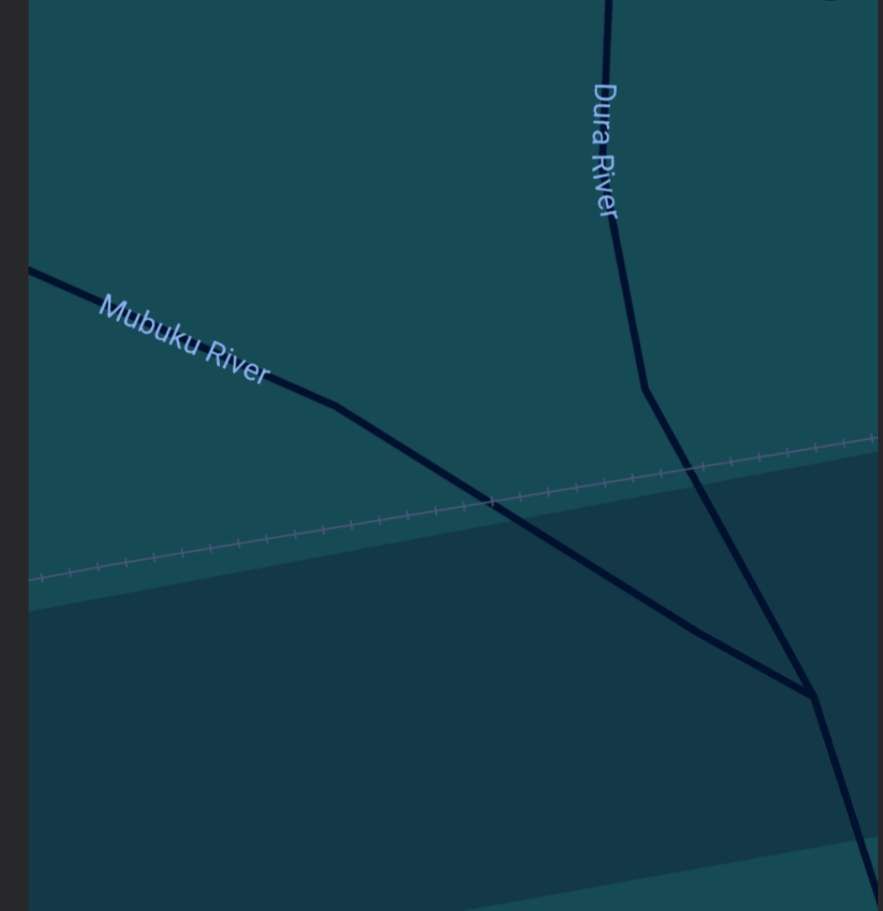
A little further to the North West of the area covered by the Maps above the line crossed the Dura River close to its confluence with the Mubuku River. The three Maps below show the location.

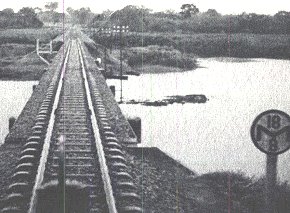
Crossing the Dura River Swamp (adjacent), (c) Geoffrey Parsons. The sign is a Momentum Board, which refers to the opposing gradient being steeper than the ruling gradient. The figures mean that the driver should achieve a speed of 18 mph at a distance of 4 furlongs (8 half furlongs) from the sign. The train’s maximum speed was 25 mph. [4]

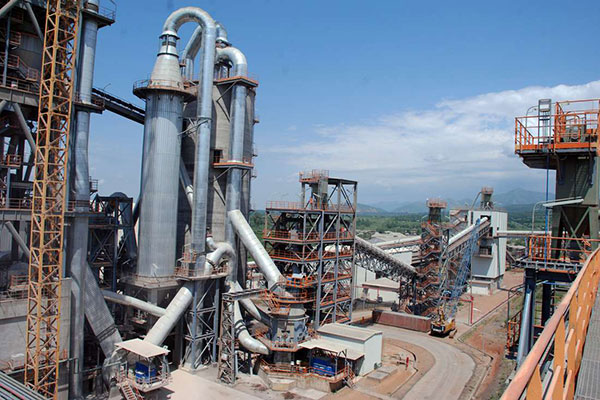
After crossing the Dura River, the railway headed northwards until it reached Kitogo and then turned west following the northern border of the Game Reserve to cross 18 miles of swampland before encountering a branch line which served the Hima Cement works north-east of Kasese.

Hima Cement Works near Kasese. [6]

The mainline continued to follow the northern border of the Game Reserve all the way to Kasese Railway Station.

Kasese Station was not the end of the line, but we will look round the station before heading on.

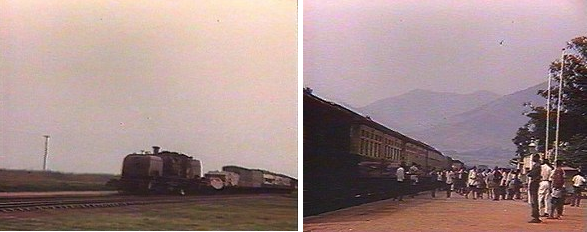
The arrival of the all classes all stations mixed goods train arriving at Kasese in the morning after leaving Kampala the previous evening. The main purpose of the line was to facilitate the export of copper from the mine at Kilembe There were great plans for Kasese and a grid of tarmac surfaced roads was laid out. But the roads, like the great plans led to nowhere, (c) Harry Dodge. [4]

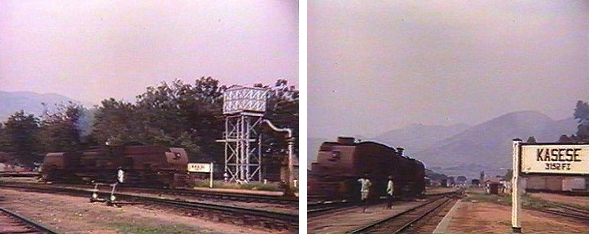
The Ruwenzori Range form a backdrop to the Class 60 Garratt as it leaves the train to take on water and head for the small motive power depot where a second Garratt has been stabled, (c) Harry Dodge. [4]

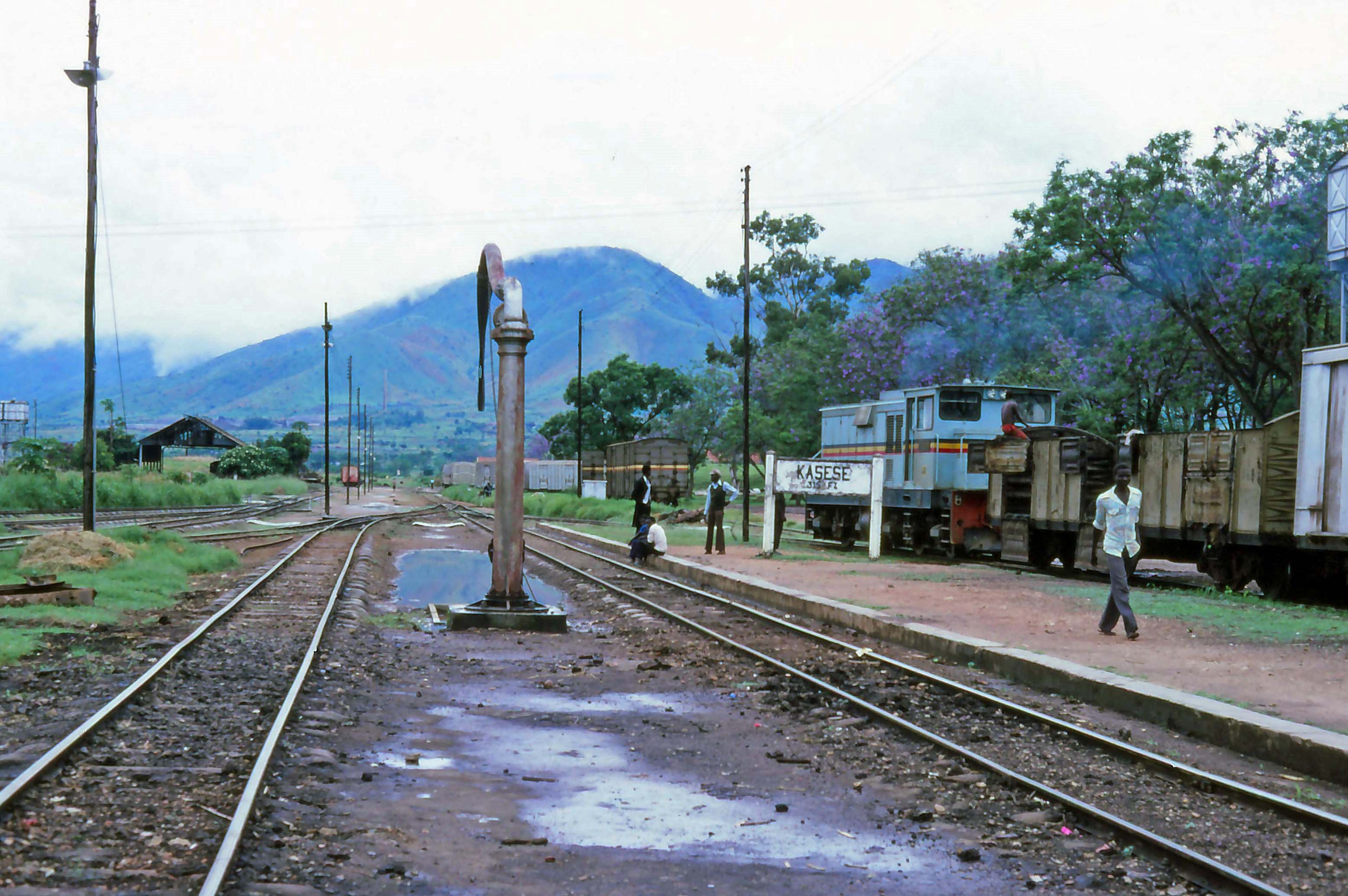
Kasese station looking west towards the old loco shed and Ruwenzori Mountains beyond. It is midday and the pilot loco, 73u08, waits for the arrival of the overnight train from Kampala, which was due several hours earlier, 30th March 1984, (c) torgormaig on the National Preservation Forum. [16]

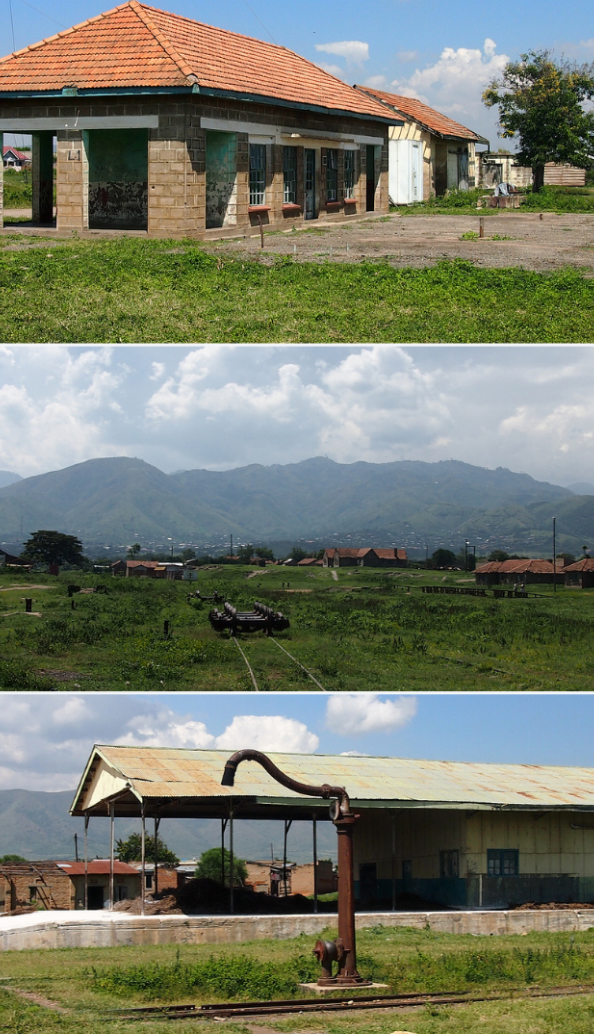
The picture immediately above shows the station at Kasese in relatively good condition. The photos that follow tell a very different story!

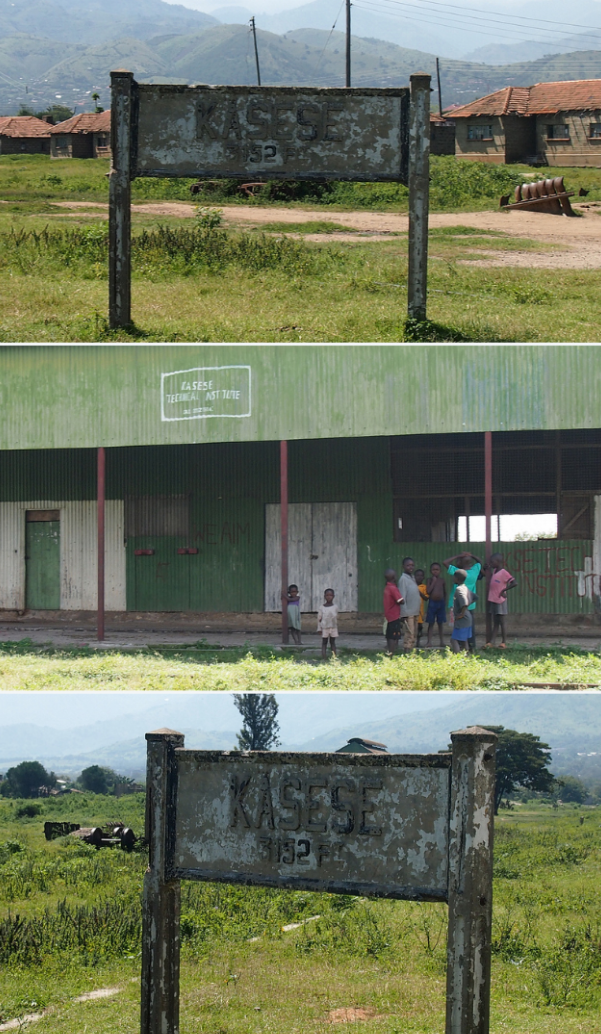
Tracks laid in 1955 when the Western Extension was laid from Kampala to Kasese to service the copper mine at Kilembe and a few buildings are all that is left of Kasese station in the early 21st Century, (c) Roger Steedman. [5]

Above, Kasese Humanist School taken across the tracks at Kasese MPD. [7].
Right, those same tracks being removed by the railway company. [12]

A view from the station platforms towards the MPD with the Humanist School visible in the left background. [8] Various Station images follow. [15]

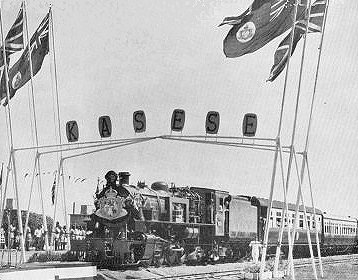
The opening of what was officially termed the Western Uganda Extension. A special train conveying the Governor, Sir Andrew Cohen, and HH the Kabaka of Buganda travelled overnight from Kampala behind a 30 Class locomotive which was named Batoro by the Omukama of Toro on its arrival at Kasese . The train is seen arriving at Kasese – the “defaced” blue ensigns are the official flags of the East African Railways and Harbours. The second coach back from the locomotive is a special vehicle which may have formed part of the “royal” train stock used by visiting royals and colonial governors of the time, © EAR&H Magazine, December 1956. [4]
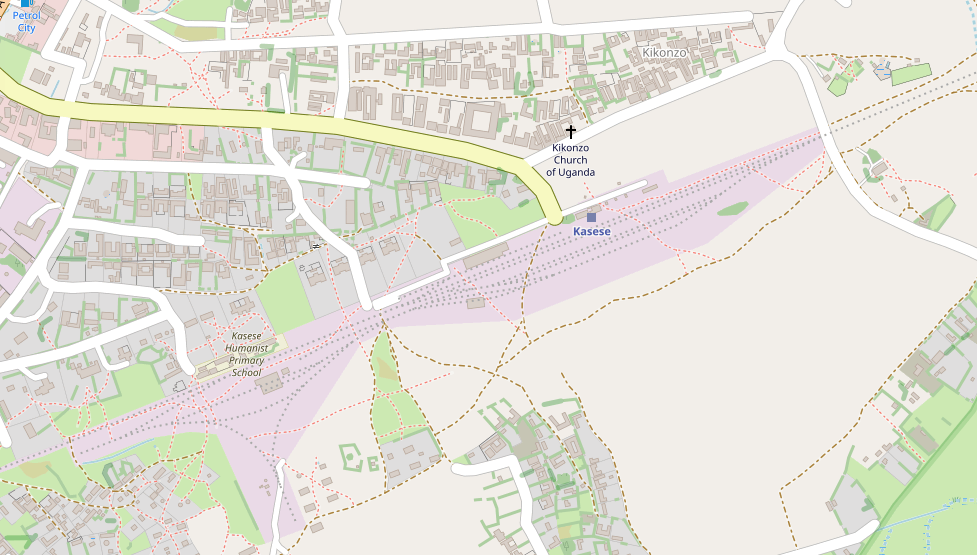
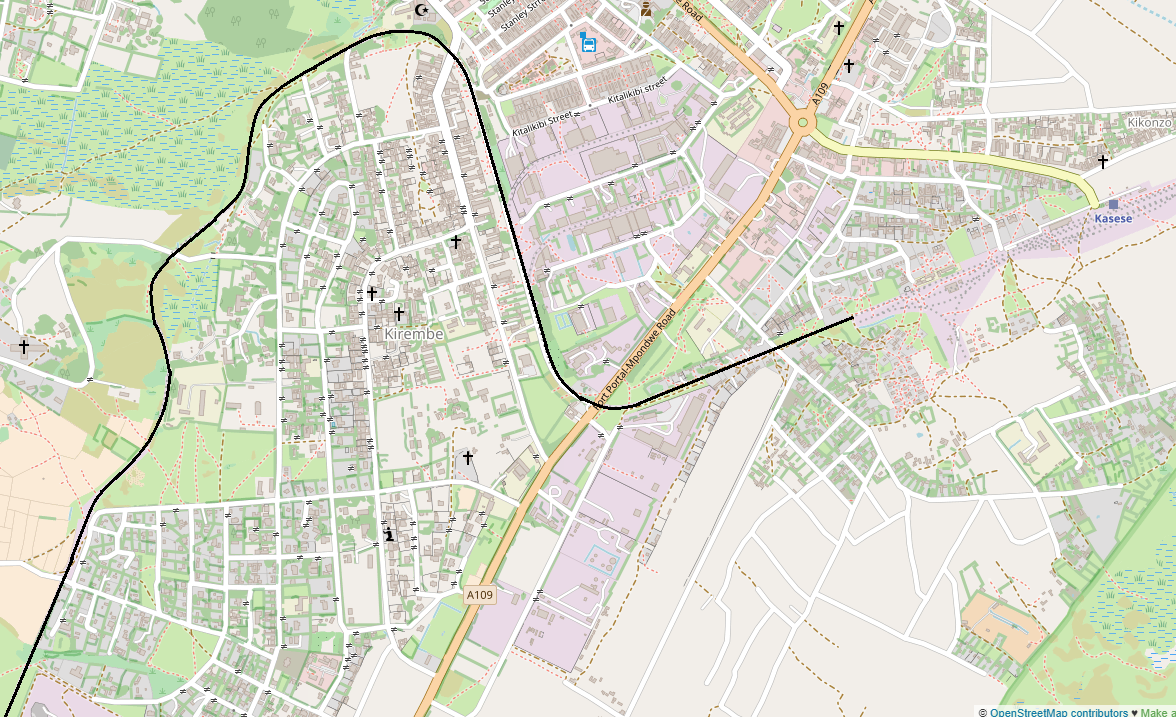
The route of the line beyond Kasese Station is shown as a black line on the map below. The line first turned north and provided access to sidings for industry on streets to the north-wet of the railway station. It then turned sharply back on itself and travelled in a generally south-southwest direction. Immediately off the southwest corner of the map is the location of the Kilembe mines. The site is shown on the second map below.

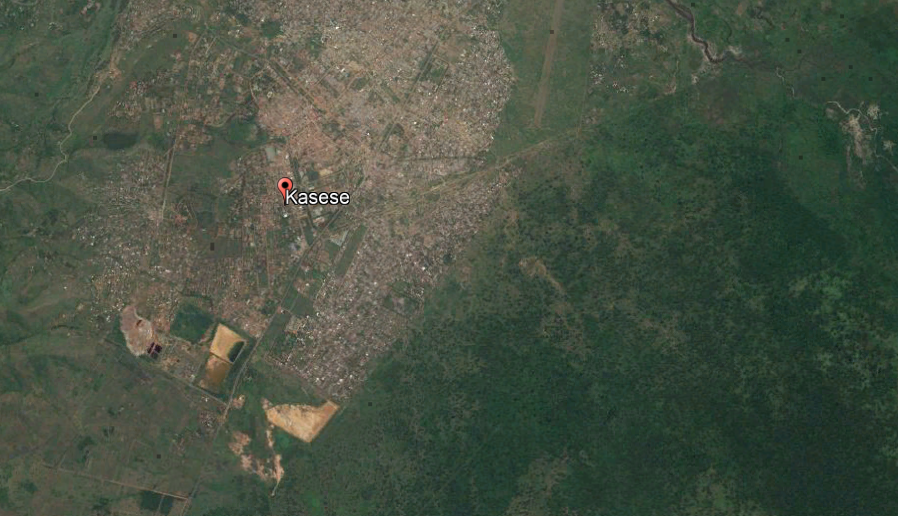
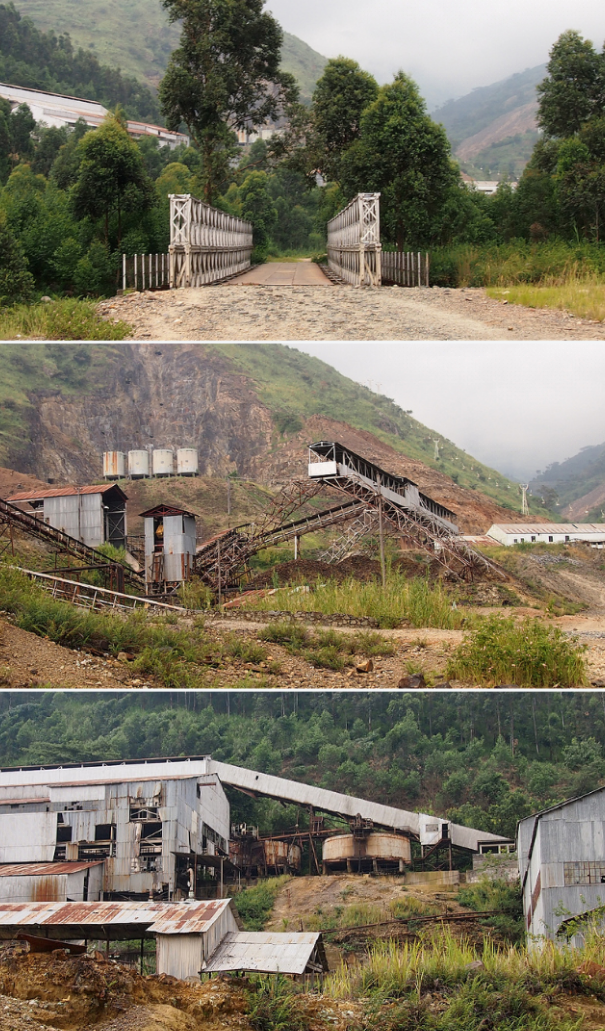
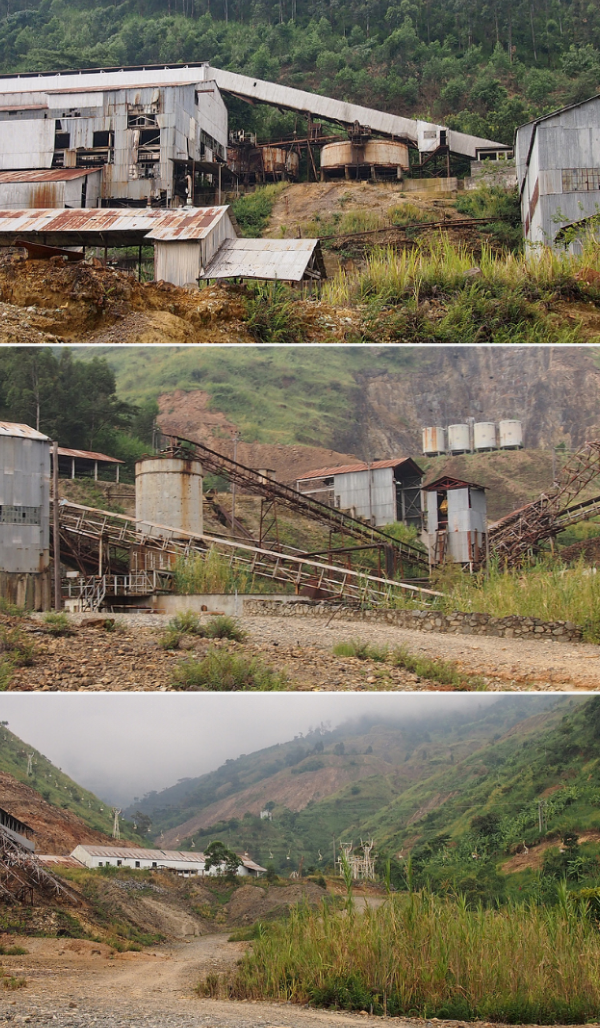
The immediate area around Kasese is shown on the satellite image below. The line of the railway can just be picked out entering the image in the top right-hand corner and running to Kasese. Kilembe Mine is shown towards the bottom left of the image close to the town of Kasese.

Kilembe Mines: In July 1950, two Canadian mining companies, Frosbisher Limited and Ventures Limited, formed a joint venture, named Kilembe Mines Limited (KML), whose objective was to mine copper from under the Rwenzori Mountains near Kasese. [10] KML built and operated a copper smelter in Jinja and maintained offices in Kampala, the country’s capital.

In 1962, KML was acquired by Falconbridge of Africa, who sold it to the Government of Uganda in 1975. Copper extraction ceased in 1982 due to dilapidated equipment, high inflation and insecurity. [10]

In 2013, after nearly 30 years of dormancy and after several failed attempts to privatize the mine, a consortium led by Tibet-Hima Mining Company Limited, won the competitive bid to manage, rehabilitate and operate Kilembe Mines Limited for 25 years from 2013 until 2038. In exchange for those rights, the consortium paid a cash down payment of US$4.3 million and is expected to make an annual payment of US$1 million until the end of the concession.

The consortium agreed to invest US$135 million into rehabilitating and improving the mine and to increase the capacity of Mubuku I Power Station to 12MW. In addition to the cash payments above, royalties were promised to the Ugandan government as were taxes on Kilembe Mines Limited business operations.[10]

Sadly, little or nothing of this had materialised by July 2017. [11] And by the end of the year, the concession had been withdrawn by the Ugandan Government.

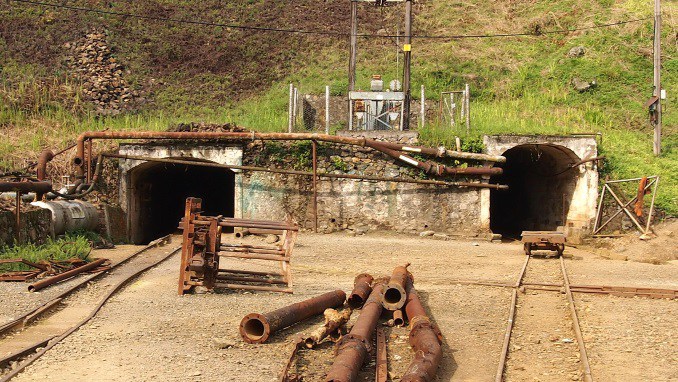
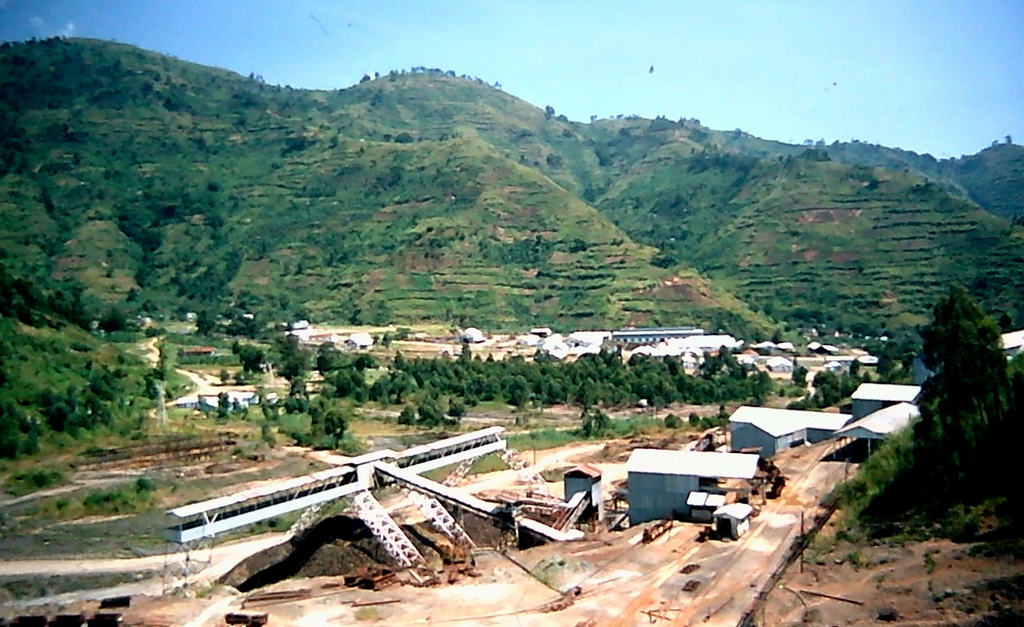
Above, Kilembe Mines access tunnels, [13] and below, a view across the mine complex. [14]

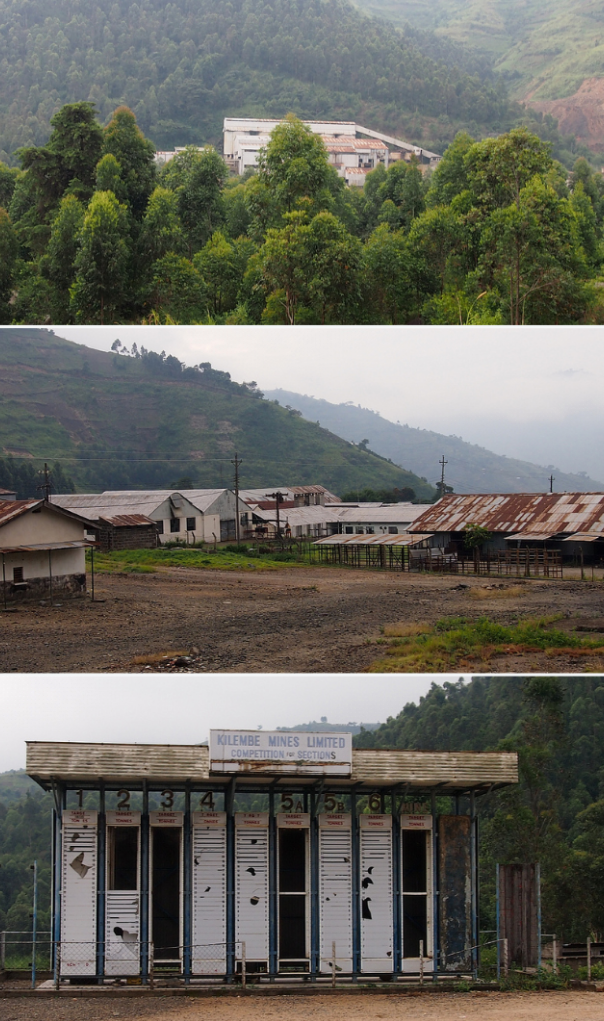
The following are a range of views of the Kilembe Mines site. [15]

References

  1. http://www.mccrow.org.uk/EastAfrica/EastAfricanRailways/EARIainMulligan/UgandaRailways2004.htm, accessed on 1st June 2018.
  2. https://rogerfarnworth.wordpress.com/category/uganda (26th April to 4th May 2018).
  3. http://www.mccrow.org.uk/EastAfrica/EastAfricanRailways/WesternExtension.htm, accessed on 9th June 2018.
  4. http://mccrow.org.uk/EastAfrica/EastAfricanRailways/UgandaBranches.htm, accessed on 1st June 2018.
  5. http://www.mccrow.org.uk/EastAfrica/Uganda/FortPortal/FortPortal.htm, accessed on 10th June 2018.
  6. http://www.theeastafrican.co.ke/business/Uganda-large-infrastructure-projects/2560-4033776-12y0h8yz/index.html, accessed on 10th June 2018.
  7. https://www.globalhand.org/en/search/451/request/6522, accessed on 10th June 2018.
  8. https://minbane.wordpress.com/2016/03/14/httpwp-mep1xtjg-1or, accessed on 8th June 2018.
  9. A. M. O’Connor; East African Studies No. 18; East African Institute of Social Research, Oxford University Press, 1965 p51ff, accessed via OpenDocs (https://opendocs.ids.ac.uk/opendocs) on 9th June 2018.
  10. https://www.newvision.co.ug/new_vision/news/1325495/chinese-kilembe-mines, accessed on 11th June 2018.
  11. http://allafrica.com/stories/201707030587.html, accessed on 11th June 2018.
  12. http://www.mysecretatheistblog.com/2013/07/the-rails-come-off-ugandan-humanist.html, accessed on 11th June 2018.
  13. http://ugandatourismcenter.com/place/kilembe-mines, accessed on 11th June 2018.
  14. http://allafrica.com/stories/201701100036.html, accessed on 11th June 2018.
  15. https://www.flickr.com/photos/caligula01/albums/72157633876140626, accessed on 11th June 2018.
  16. https://www.national-preservation.com/threads/uganda-railways.1150502, accessed on 12th June 2018.

The Uganda Railway – Part 20 – Kampala

The final posts of our journey take us along what is now the defunct line to Kasese. The first part of this line in the Kampala suburbs still exists but further west there are only remnants of the line. This post focusses on what remains in Kampala.

In 1994, I attempted to travel to Kasese and I might have been able to do so if I was prepared to wait in Kampala for the possiblity that a train migth run. In the end my trip to the South West of Uganda was much better served by a road journey via Masaka, Mbarara and Kabale.

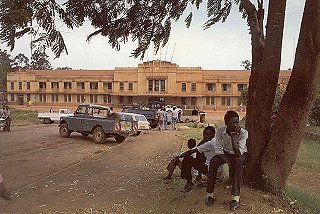
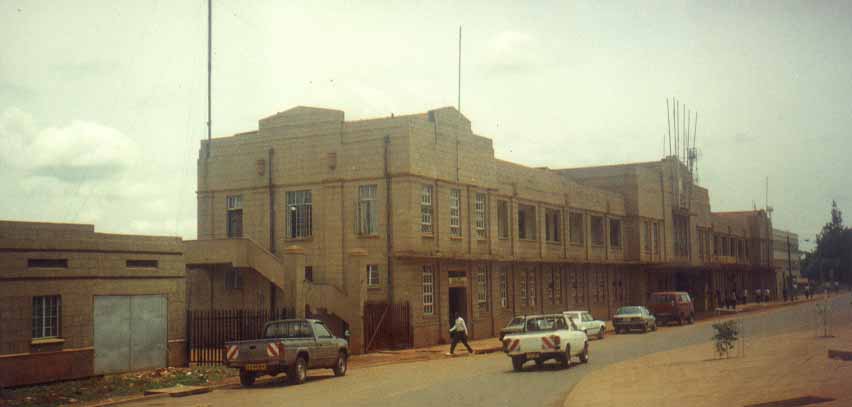
The picture above shows the facade of Kampala Station in the late 1980s. [1] The adjacent picture shows one of those sporadic passenger trains to Kasese which in the end I missed! [1]

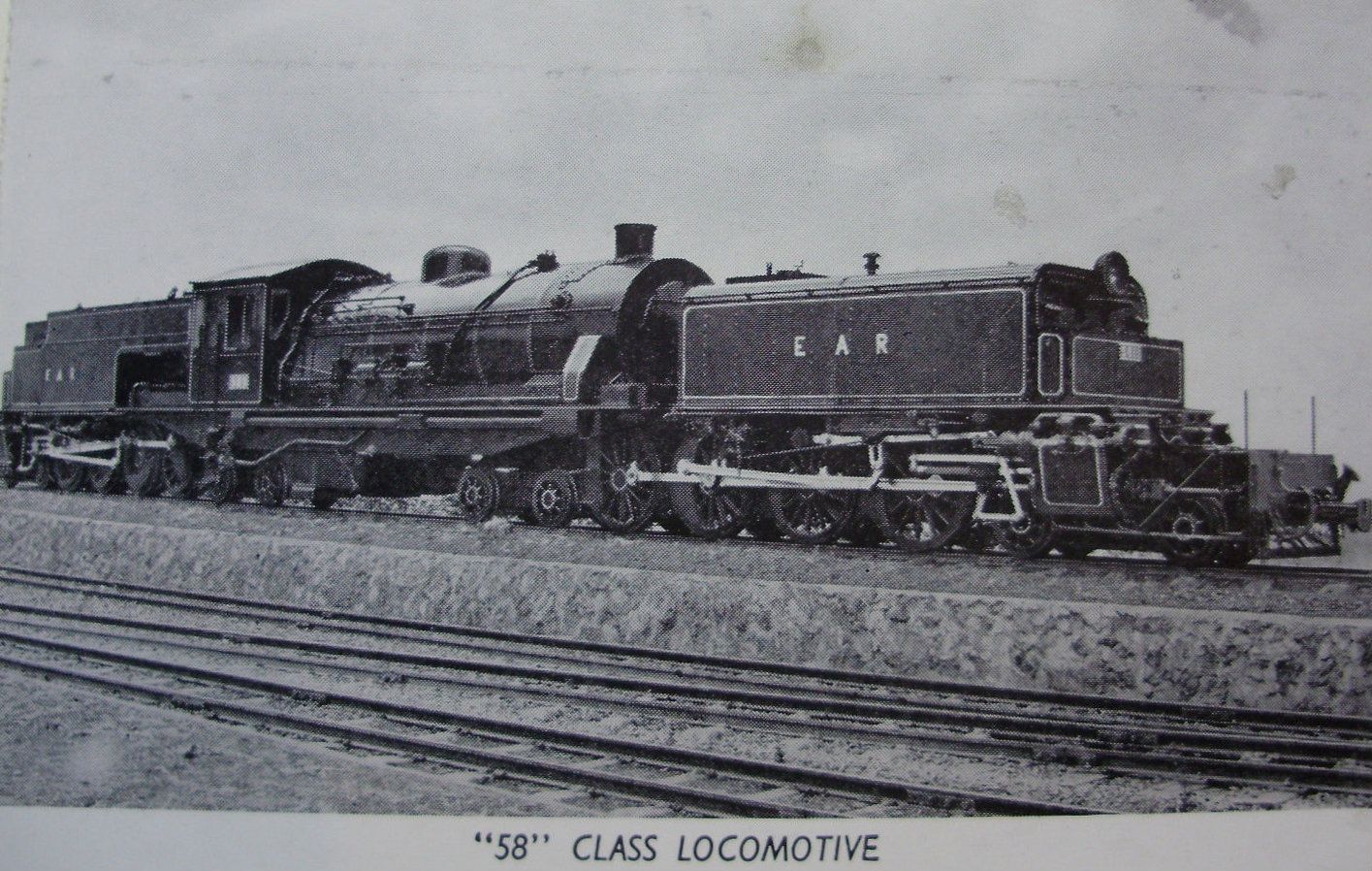
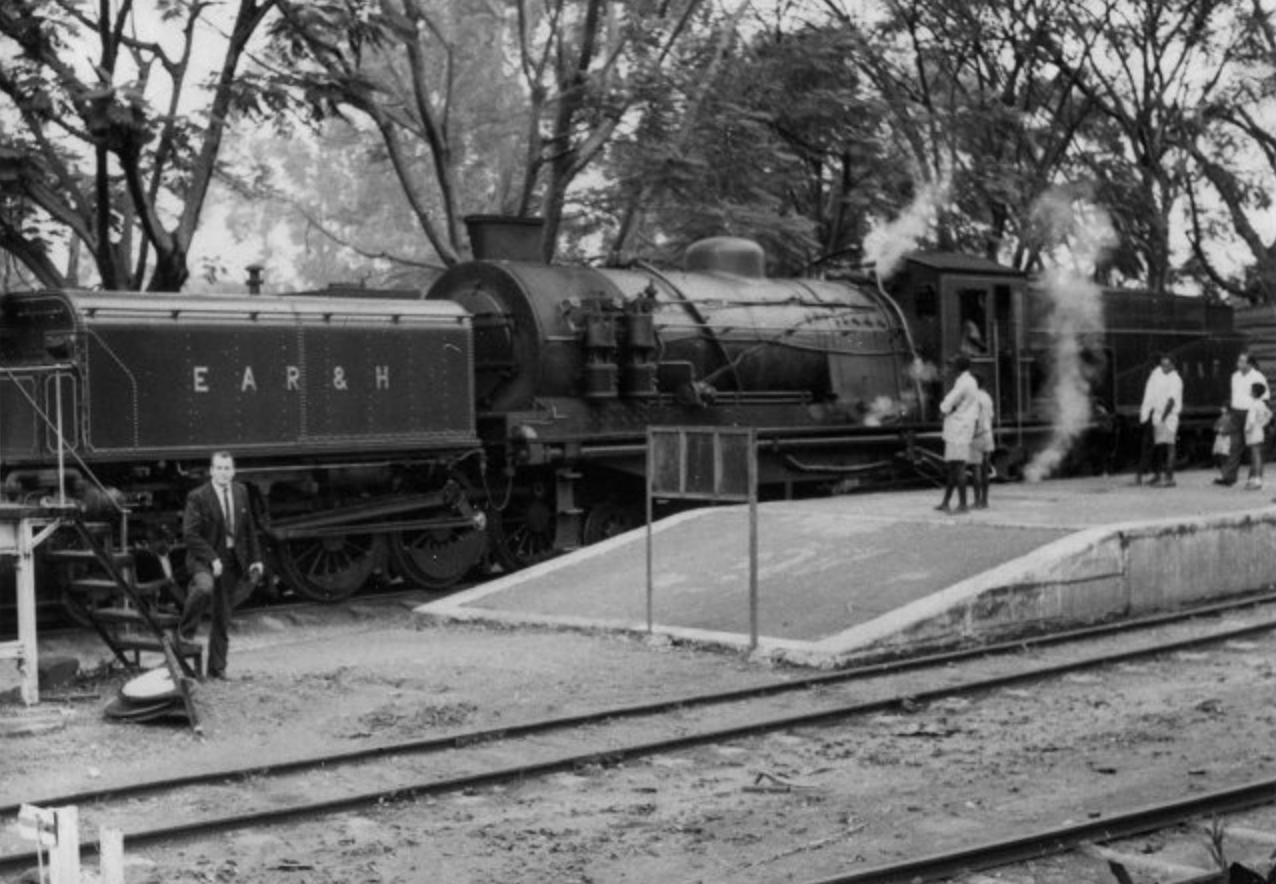
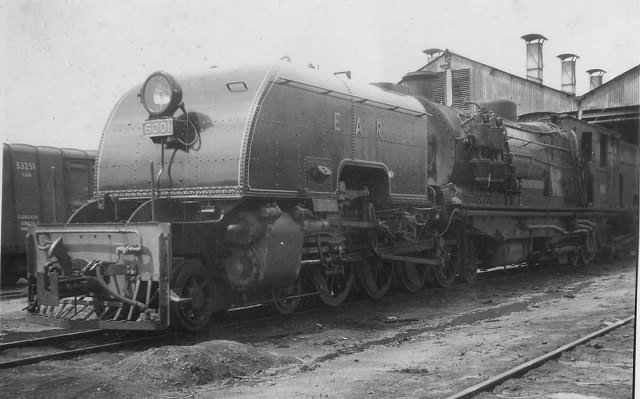
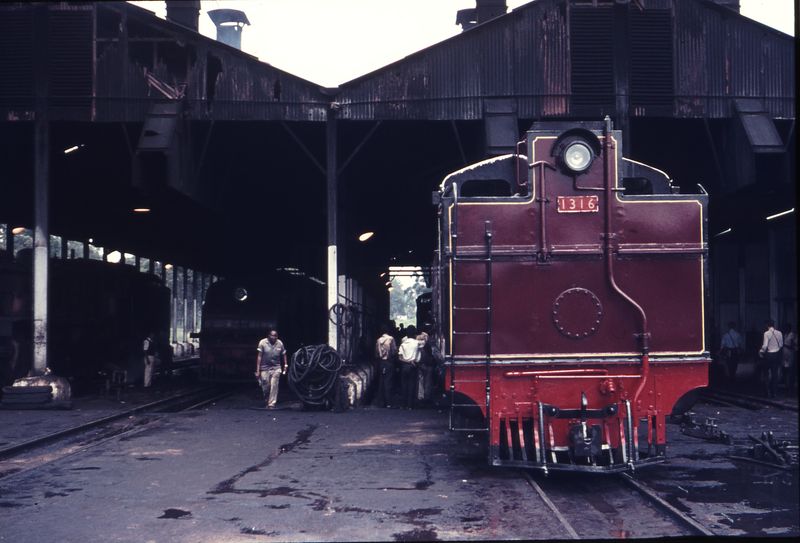
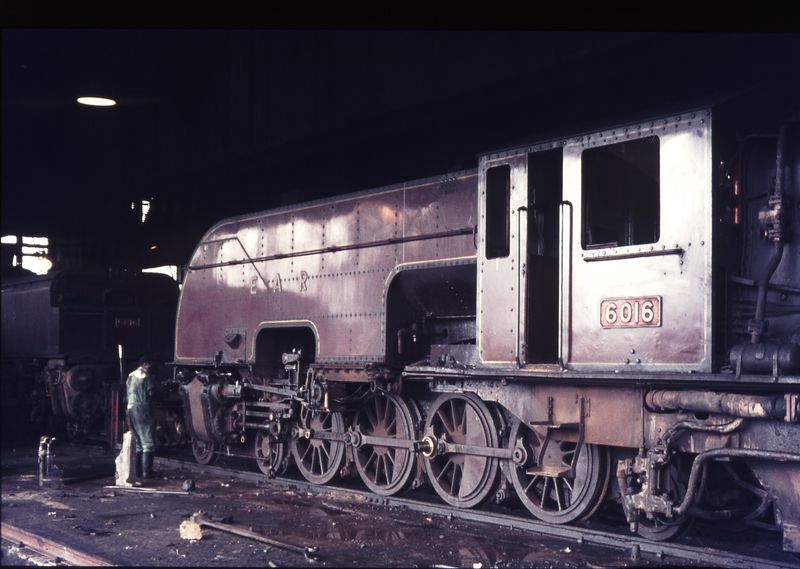
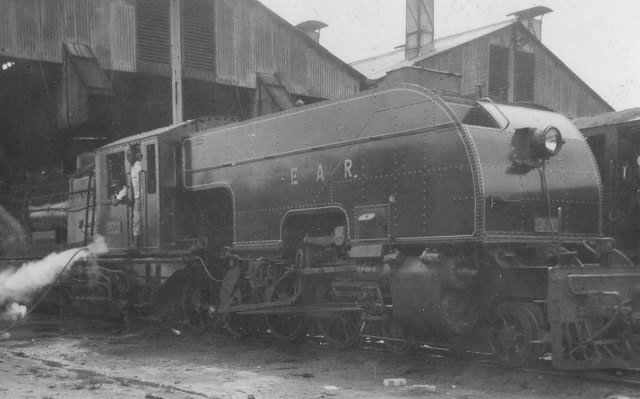
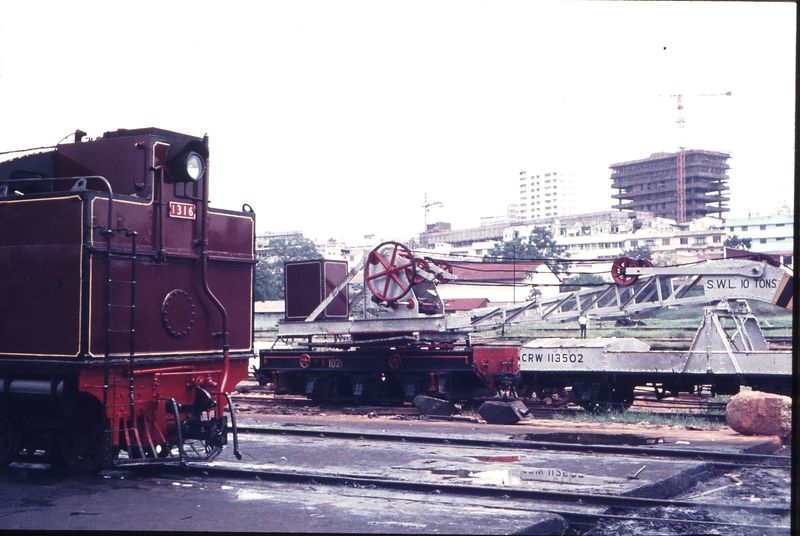
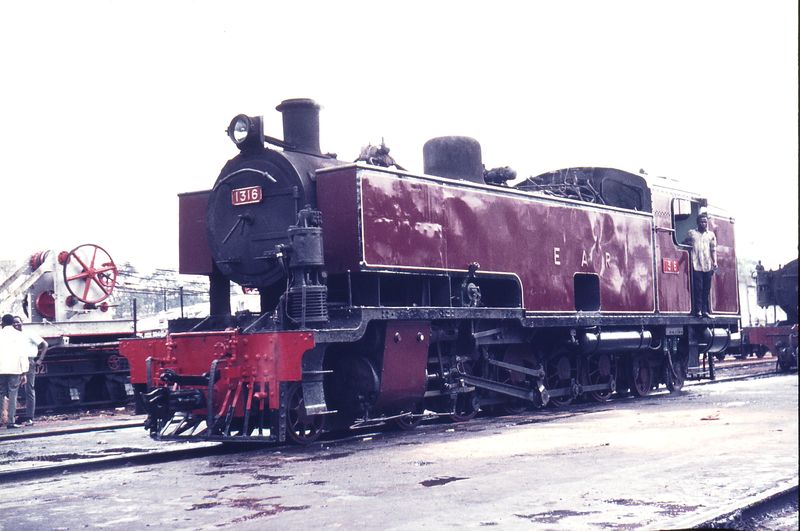
Before we take one of those intermittent passenger services from the last century, we take a good look round Kampala Railway Station. The pictures below show the station buildings, the low level and high level platforms, the loco shed and some of the goods sidings. Where possible, images are credited.A Class 58 Giesel equipped Garratt sits at the Low Level platform at Kampala. The locomotive has just arrived from Nairobi, © Geoff Pollard.[2]Shunting and unloading in the Ministry of Works sidings at Kampala Station. The locomotive is EB3 No. 2458, © Geoff Pollard. [2]Unique in that it was the only locomotive to have  “EAR&H” on the tenders, No. 5804 prepares to depart Kampala with the Mail Train in October 1962, just after Uganda gained independence, © Jim Fowler. [2]With a water column still standing sentinel, the engine sheds at Kampala with abandoned KR derelict diesel locomotives, (c) Iain Mulligan. [1]111528: Kampala Uganda Locomotive Depot No. 3114 Banyala (c) Weston Langford. [3]111517: Kampala Uganda Locomotive Depot No. 3114 Banyala, © Weston Langford. [3]There was never a problem wandering around the shed at Kampala in the late 50s.  This picture shows Class 60 Barratt No. 6001 Sir Geoffrey Archer.  This locomotive was renamed Umoja [Unity] in 1962 and after independence in Uganda was the only Class 60 still to be named. Until 1960 both Mail Trains and School Trains were invariably headed by Class 60 locomotives between Kampala and Nakuru.  Class 60s were also used between Kampala and Kasese on the daily overnight service.  However it was only on Tuesdays, Fridays and Sundays that first and second class was carried – this working connecting with the first and second class only Mail Trains.  The return working for all these passenger trains left Kasese at 1640hrs, © Malcolm McCrow. [2]111516: Kampala Uganda Locomotive Depot No. 1316, (c) Weston Langford. [3]111520: Kampala Uganda Locomotive Depot Class 60 Garratt No. 6016, (c) Weston Langford. [3]An unidentified Class 60 Garratt on shed at Kampala, © Malcolm McCrow. [2]111526: Kampala Uganda Locomotive Depot No. 1316 with breakdown crane and Kampala City Skyline in background, (c) Weston Langford. [3]111522: Kampala Uganda Locomotive Depot Loco. No. 1316, (c) Weston Langford. [3]The Mail Train for Nairobi departed at 1715 on alternate weekdays. Here the train is standing at the single high level platform used until the early 60s, © Malcolm McCrow. [2]Mail Trains and passenger trains to and from Kasese often also used the single track high level platform, by 2004 this had become a car park. Goods wagons occupy the low level covered platforms, (c) Iain Mulligan. [1]111534: Kampala Uganda Mixed from Kasese No. 6012 © Weston Langford. [3]111532: Kampala Uganda Mixed from Kasese No. 6012, (c) Weston Langford. [3]111530: Kampala Uganda Mail from Nairobi, Diesel No. 8706, (c) Weston Langford. [3]111512: Kampala Uganda Shunter No. 2417, (c) Weston Langford. [3]111514: Kampala Uganda Shunter No. 3131 ‘Kenyi’, (c) Weston Langford. [3]111536: Kampala Uganda Shunter No. 1310, (c) Weston Langford. [3]111535: Kampala Uganda Mail to Nairobi Diesel No. 8706, (c) Weston Langford. [3]The then daily 16.00 train to Kasese stands ready in Kampala station for its overnight journey west with loco 73u05 on 26th March 1984, (c) torgormaig on the National Preservation Forum. [4]

After what is a significant collection of photographs of Kampala Railway Station and its immediate environment we set our sights on getting to Kasese. It is 2018 when this blog is being written. To be reasonably sure of getting a passenger train towards Kasese we probably need to go back to the mid 1990s, and even then we probably need to be ready to leave within a week of our intended journey date and expect to take at least 36 hours on the journey.

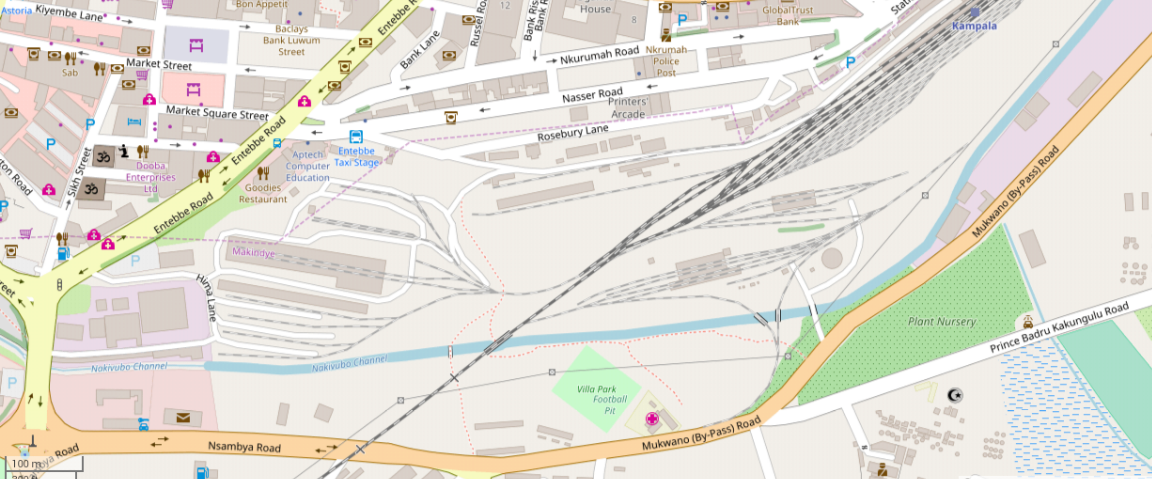
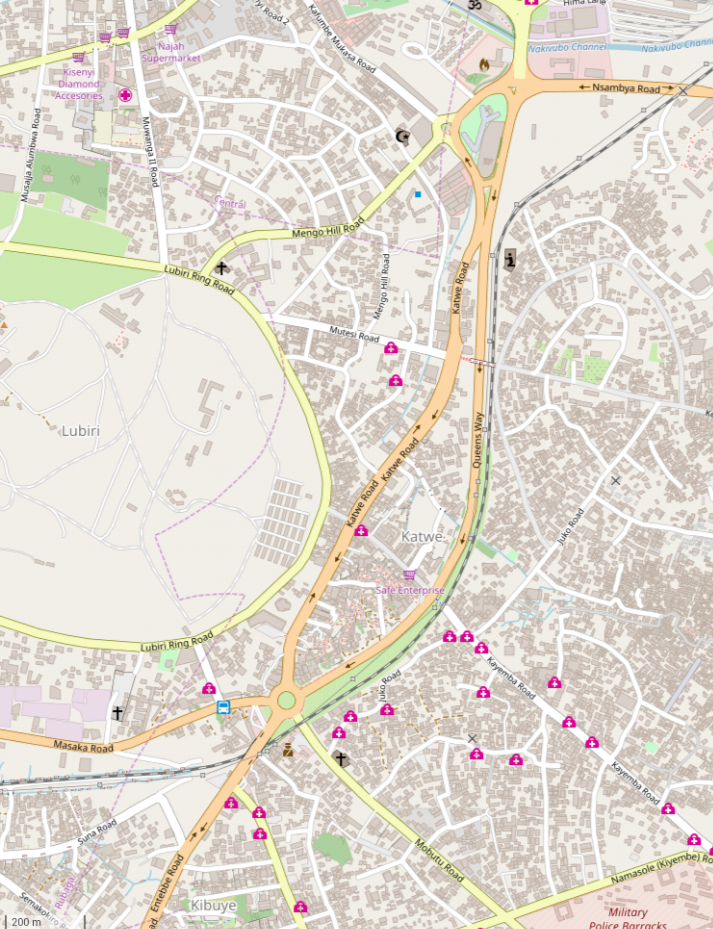
OpenStreetMap in 2018 shows the railway extending only to Nalukolongo in Kampala’s Western Suburbs. This is the location of the main railway workshops.But let’s not get ahead of ourselves. As the train leaves Kampala Railway Station heading west, it is noticeable that the ride is more uncomfortable as the track alignment has deteriorated over the years. We pass the locomotive depot on our left to the south side of the line, and, if we are reasonably observant we see the triangle used for turning the large Garratt locomotives. On our right, to the north of the line are a series of freight sidings which supplement the marshalling yard alongside the passenger station.The train crosses the Nakivubo Channel and the Nsambiya Road and then runs alongside the Entebbe Road, which at this point is only for traffic flowing out of the city and has been given the name Queens Way. Our regular lodgings when in Kampala these days are at the Whitecrest Guesthouse on Lebowa Hill, some kilometres out down the Entebbe Road.Passing under the beginning of the Entebbe Road proper, the line then heads west on the south side of the Masaka Road to Nalukolongo and the end of the line (in 2018).On 5th April 1984, the 16.00hrs overnight train to Kasese sets out from Kampala behind 73u08. Taken from the Entebbe Road bridge (c) torgormaig on the National Preservation Forum. [4]Nalukolongo Railway Workshops are a modern facility serving the whole of the railway system in Uganda, they were rebuilt by Rift Valley Railways duringvtheir tenure of the network from Mombasa to Kampala.

Beyond Nalukolongo, the line is shown on OpenStreetMap as a short stub serving industrial premises to the West of the Lubigi Channel. The mainline bridges the channel before becoming disused. A spur enters the premises of Ntake Bakery Co. Ltd. and a further short spur serves Roadmaster Cycles premises.

References

  1. http://www.mccrow.org.uk/EastAfrica/EastAfricanRailways/EARIainMulligan/UgandaRailways2004.htm, accessed on 1st June 2018.
  2. http://www.mccrow.org.uk/EastAfrica/EastAfricanRailways/EAR_GeoffPollard.htm, accessed on 6th June 2018.
  3. http://www.westonlangford.com/images/gallery/four-days-in-uganda, accessed on 1st June 2018.
  4. https://www.national-preservation.com/threads/uganda-railways.1150502, accessed on 12th June 2018.
The Uganda Railway – Part 19 – Jinja to Kampala

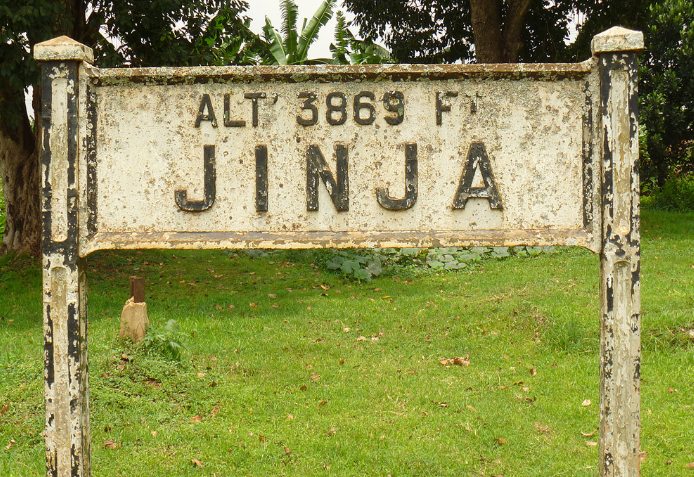
We start this next portion of the journey at Jinja Railway Station, Jinja sits on the northern shore of Lake Victoria, near the source of the White Nile.[1] Lonely Planet says that Jinja is “famous as the historic source of the Nile River, Jinja is now the adrenaline capital of East Africa. Get your fix of white-water rafting, kayaking, quad biking, mountain biking and horse riding in a gorgeous natural setting with crumbling colonial architecture. The Nile River’s world-famous rapids are under threat, however. In 2011 the Bujagali Hydroelectric Project buried around half of the rapids under a giant reservoir. Although the government has pledged to not further dam the river, Uganda still needs energy and so a new hydroelectric plant is planned for Kalagala Falls. Though worker strikes and faulty construction have it behind schedule for now, it’s expected that the Isimba Dam will flood some key rapids and even an island lodging as early as October 2018. It’s not the end of rafting though. Meanwhile locals keep pushing to keep Jinja’s tourism industry alive with offerings that have wisely begun to diversify.” [2]Before 1906, Jinja was a fishing village that benefited from being located on long-distance trade routes. The origin of the name “Jinja” comes from the language of the two peoples (the Baganda and the Basoga) that lived on either side of the River Nile in the area. In both languages “Jinja” means “Rock”. In most of Africa, rivers like the Nile hindered migration, this explains the ethnic boundaries along the Nile as one moves north from the river’s source on the northern shores of Lake Victoria.

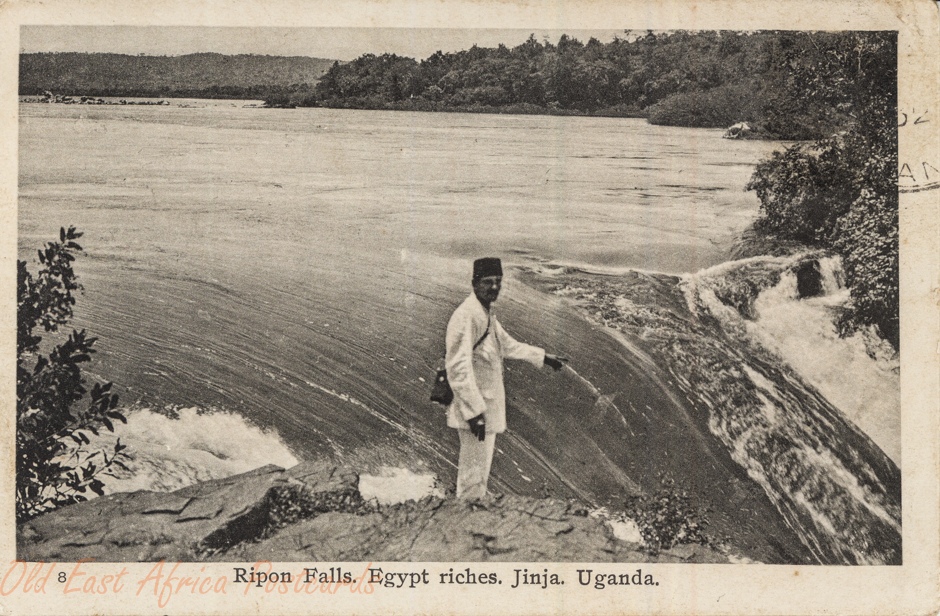
However the area around Jinja was one place where the river could be breached due to the large rocks near the Ripon Falls. Here, on either bank of the river, were large flat rocks where small boats could be launched to cross the river. These rock formations were also accredited with providing a natural moderator for the water flow out of Lake Victoria. For the original local inhabitants, the location was a crossing point, for trade, migration and as a fishing post.

This might explain why, despite this barrier, the two tribes have very similar languages, and the more powerful Baganda had an enormous influence on the Basoga. The area was called the ‘Place of Rocks’ or ‘The Place of Flat Rocks’. The word for stones or rocks in the language of the Baganda is ‘Ejjinja (Plural Amayinja), and in the Basoga dialect this became Edinda. The British used this reference to name the town they established – “Jinja”

In 1954,with the building of the Owen Falls Dam, (later renamed Nalubaale Power Station, the Ripon Falls were submerged. Most of the ‘Flat Rocks’ that gave the area its name disappeared under water as well. However a description of what the area looked like can be found in the notes of John Hanning Speke, the first European to lay eyes on the Source of the Nile:

“Though beautiful, the scene was not exactly what I expected, for the broad surface of the lake was shut out from view by a spur of hill, and the falls, about twelve feet deep and four to five hundred feet broad, were broken by rocks; still it was a sight that attracted one to it for hours. The roar of the waters, the thousands of passenger fish leaping at the falls with all their might, the fishermen coming out in boats, and taking post on all the rocks with rod and hook, hippopotami and crocodiles lying sleepily on the water, the ferry at work above the falls, and cattle driven down to drink at the margin of the lake, made in all, with the pretty nature of the country—small grassy-topped hills, with trees in the intervening valleys and on the lower slopes—as interesting a picture as one could wish to see.”

Cotton-packing, nearby sugar estates, and railway access all enabled Jinja to grow in size. By 1906 a street pattern had been laid out, and Indian traders moved in starting around 1910. The Indians were Catholic Christians and English-speaking, and originated in the former Portuguese colony of Goa on the west coast of India.

The town was founded in 1907 by the British, as an administrative centre for the Provincial Government Headquarters for Busoga region. This was around the time that Lake Victoria’s importance in transport rose due to the Uganda Railway linking Kisumu, a Kenyan town on the lake, with Mombasa on the Indian Ocean, 900 miles (1,400 km) away. British-American Tobacco Uganda (BATU) established a tobacco processing factory in Jinja in 1928. [3]

Jinja is a major station on the Uganda Railway and a port for Lake Victoria ferries since the early 1900s, when access to the railway was by ferry to the railhead at Kisumu. [4]

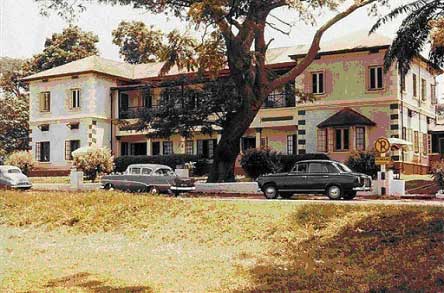
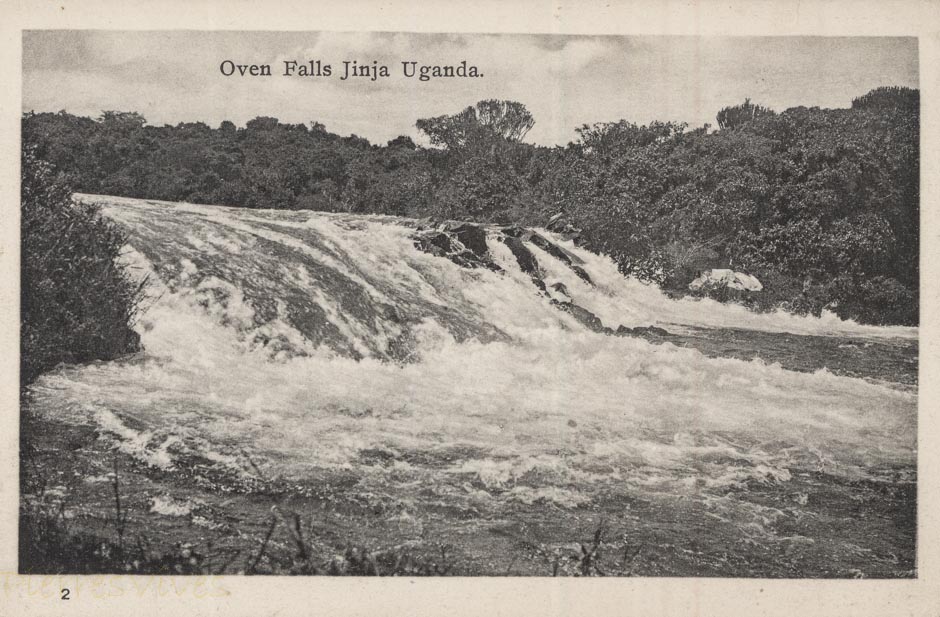
Before we get on our train, here are a few pictures from Jinja, taken in different eras and culled from a variety of different websites.Ripon FallsRipon Falls HotelOwen FallsOwen Falls Dam in the early 1960s.

Enough of the City of Jinja. [5] ….. We return to the railway station and get ready to depart for Kampala.In this picture, it is January 1956 and a School Train for Eldoret has just arrived at Jinja – still in daylight. Until 1961, trains departed Kampala at 1500, as opposed to 1715, and thus arrived in Jinja just before sunset. The Class 60 Garratt is taking on water, (c) Malcolm McCrow. [6]

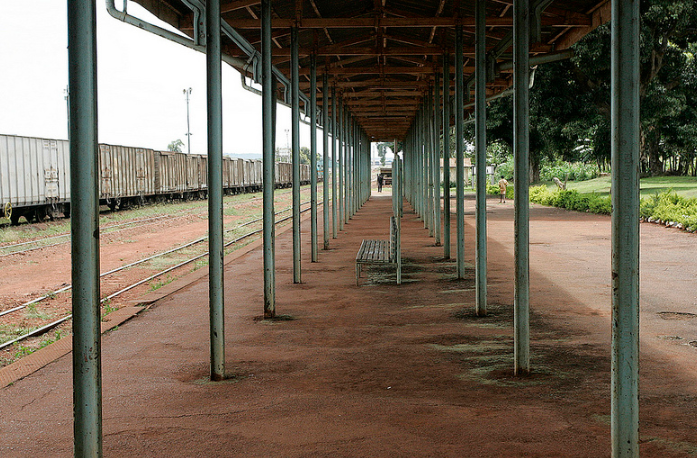
And below, a series of photos around the station site. [10][11]

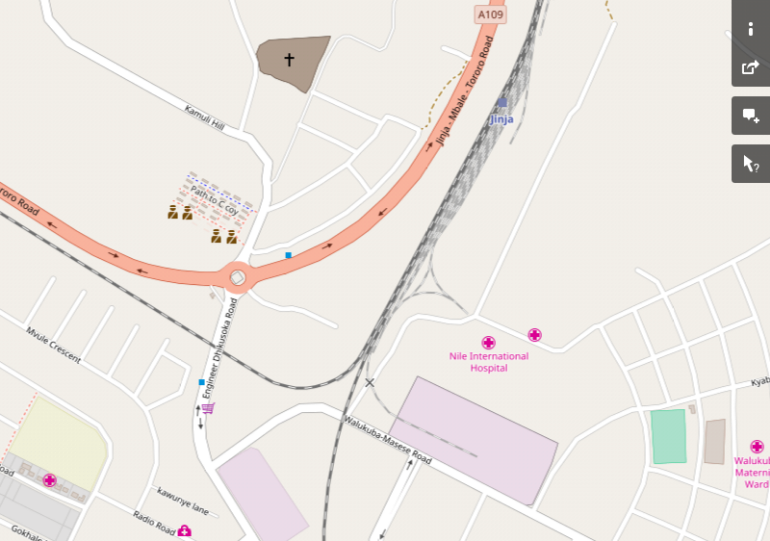
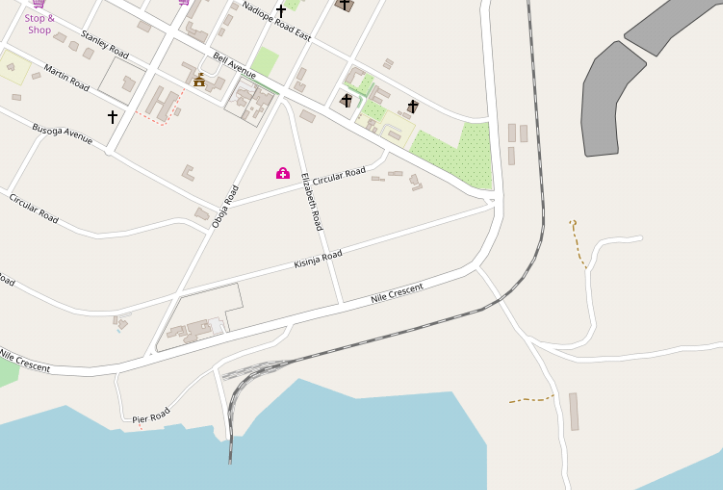
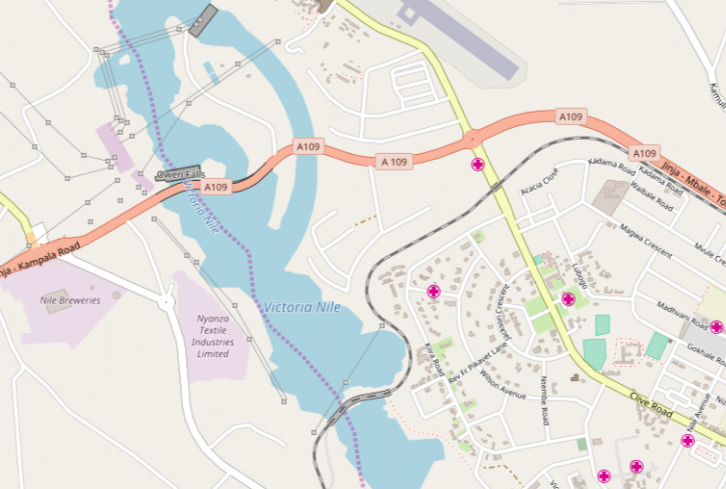
As we leave Jinja Railway Station, we cross unmetalled roads and head on towards the Victoria Nile. On the way, close to the Station throat, we pass two branch-lines, the first travels east and is no more than a factory access to the railway system. The second travels south alongside Nile Crescent to sidings and a pier on Lake Victoria. On the map immediately below, the main line turns to the west. In a very short distance the line switches to the south and heads directly for the Nile Bridge.A sharply curving alignment of the railway approaching the bridge from the east shows it in good light.

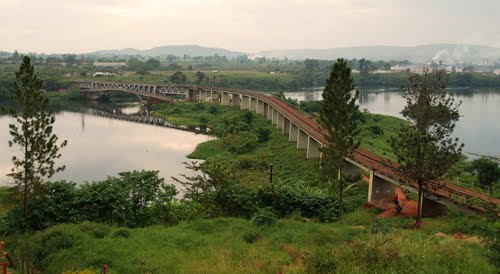
The Nile River Bridge at Jinja was built in the late 1920s. It is perhaps the iconic structure for the whole of the metre-gauge railway system from Mombasa to Kasese.

The first railway in Uganda ran from Jinja to Namasagali on the Victoria Nile where a steamer service ran on to Masindi Port.  From there passengers travelled by road through Masindi to Butiaba on Lake Albert. From there they could travel on by steamer to the Belgian Congo or north to Juba in the Sudan.

Train passengers from Kenya reached Uganda by steamer from the railhead at Kisumu and across Lake Victoria to Entebbe or Port Bell.  In the mid 1920s the main line in Kenya was extended from Nakuru through Eldoret, and Tororo to Mbulamuti where it met up with the original Jinja to Namasagali line.  The new line to Kampala then crossed the Nile at Jinja by a bridge carrying both the railway and a roadway underneath.

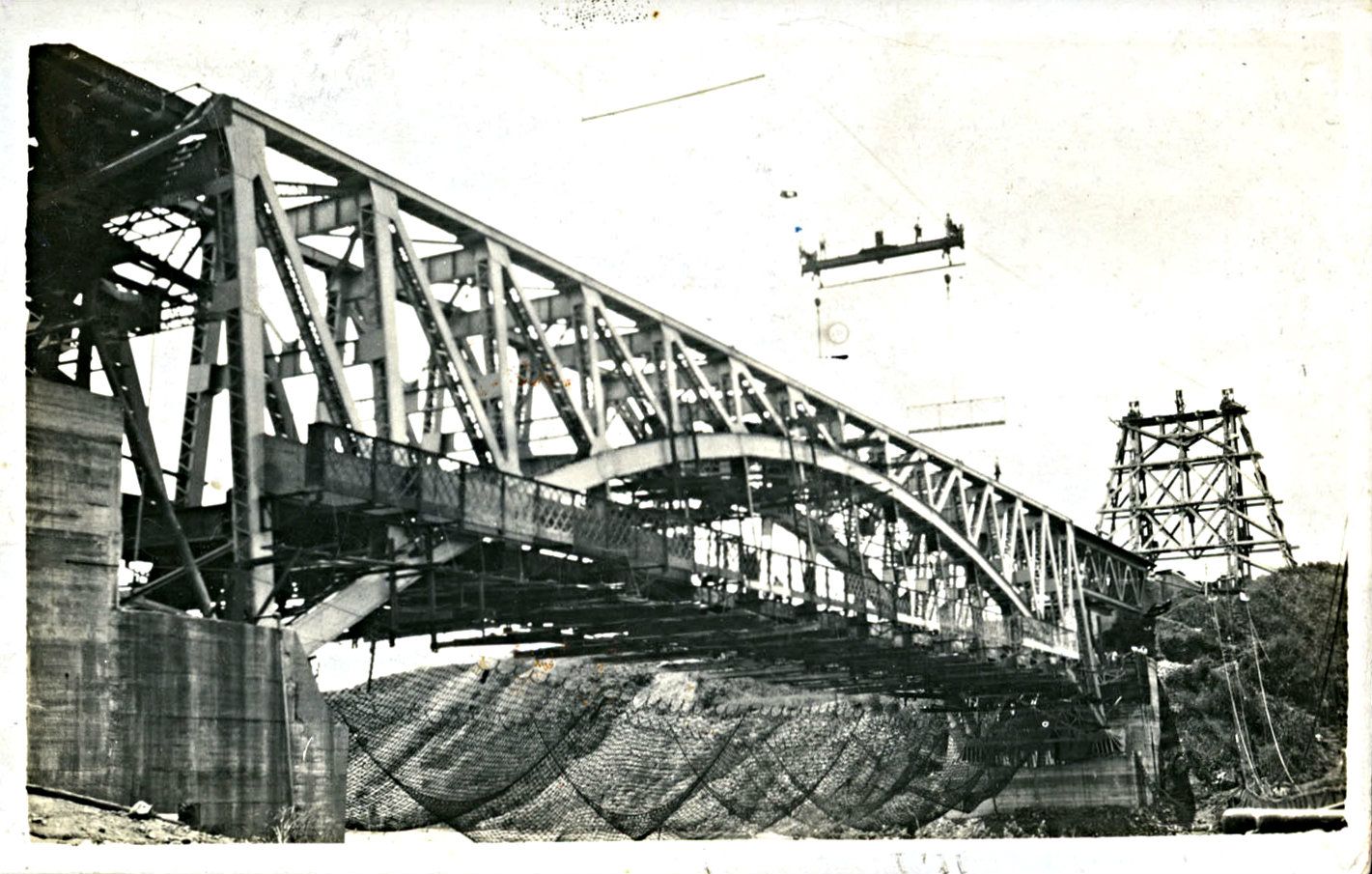
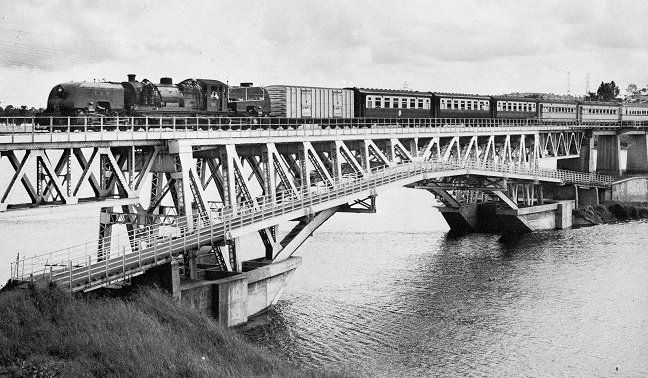
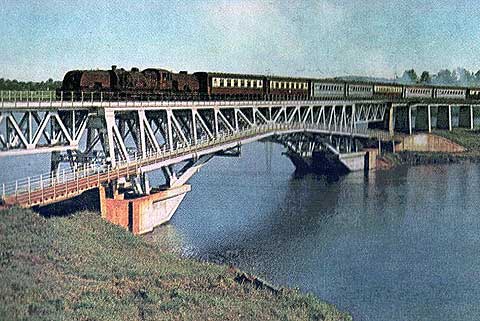
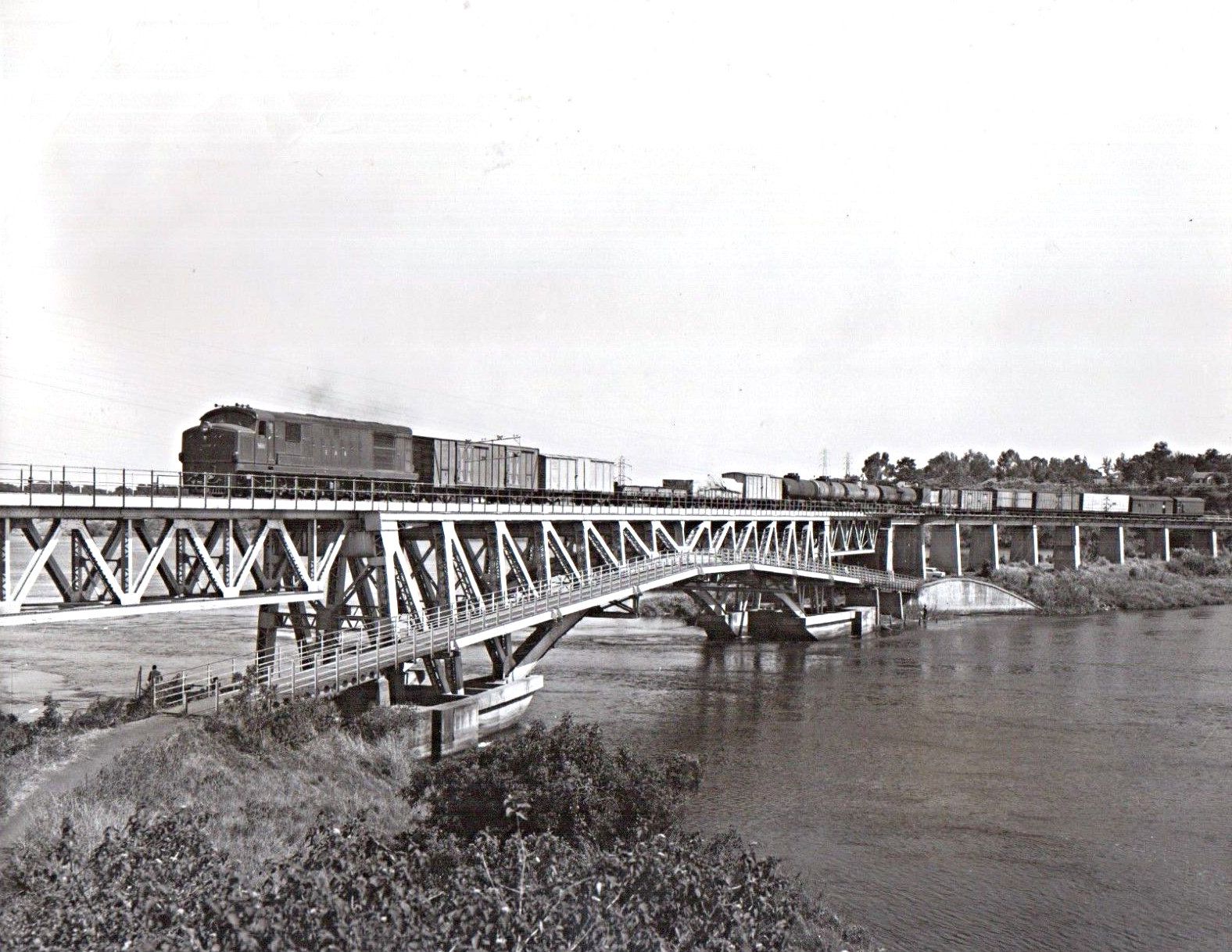
Ramsay Nicholson with the assistance of his younger brother Pearce Nicholson was responsible for supervising the construction of the bridge in 1926 and the following historic photographs were copied from their family’s photograph album in 2010. There are more in the album. [13] Both above and below (in colour) – looking east:  Classic scene with Class 60 Garratt heading a Mail Train bound for Kampala over Jinja Bridge. The photograph was taken after 1958 as the dining car (last vehicle in photograph) has acquired the all cream livery which was introduced after the Queen Mother’s visit that year when several of the the aluminium coaches were painted cream to give a uniformity to the royal train consist. By 1961 all passenger coaches had acquired the dark maroon and cream livery which had previously only appeared on 2nd and 3rd class stock, (c) East African Railways & Harbours. [6]Again looking east, A diesel in charge of a train on Jinja Bridge. [8] The Nile Bridge at Jinja looking west. Jinja is still a very important railway centre with wagons being mustered for despatch by to Kenya – by rail via Tororo, or by rail ferry to Kisumu. Another possible destination for the wagons is Mwanza in Tanzania. Vague about what decides a wagon to go by rail via TRO or by Lake via KSM or MWZ, but thought to be customer who decides, (c) Iain Mulligan. [9]Again looking west, the photographer climbed up on to the Bridge and then walked back eastwards along the tracks. Once past the bridge itself, but still on the elevated approach, joy of joys, a “train” came over behind him. Not a real train, but the works train, and what that meant was a Class 62 decorated with palm leaves pulling a LSB, with a crowd of workers on their way from the stations to the west to a union meeting at Jinja. To the photographer’s horror the sides of the LSB were open flat, and there was only just room for him between them and the railings. Anyway, a great cheer from the passengers as they went past. (c) Iain Mulligan. [9]Happy days and homeward bound, the train is travelling toward Kampala. Most school pupils tended to get to a window for the crossing of the White Nile just after the train left Jinja. At primary school, many boys would carve “propellers” which they held out the window as the train went along at around 25 to 30 miles per hour, (c) Malcolm McCrow. [6]The Nile Bridge looking West in 1994. Our train has just moved on after a 6 hour delay at Jinja Railway Station.The Nile Bridge in 1994 looking east, on my return journey to Nairobi from Kampala.View from the Jinja Bridge at dusk in 1994.From a distance! [12]River Nile Bridge at Jinja looking west. [7].

There is (June 2018) a new road bridge being constructed across the Nile between the railway bridge and the old road bridge which should be open in 2018. It is a strikingly modern cable-stayed bridge! [14]

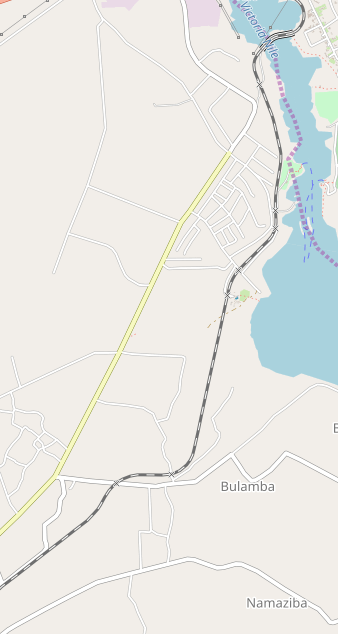
Once the railway has crossed the Nile it travels on in a southerly direction towards Bulamba and then swings gradually round to the south-west. On its way to Kampala the railway passes through the following Stations:

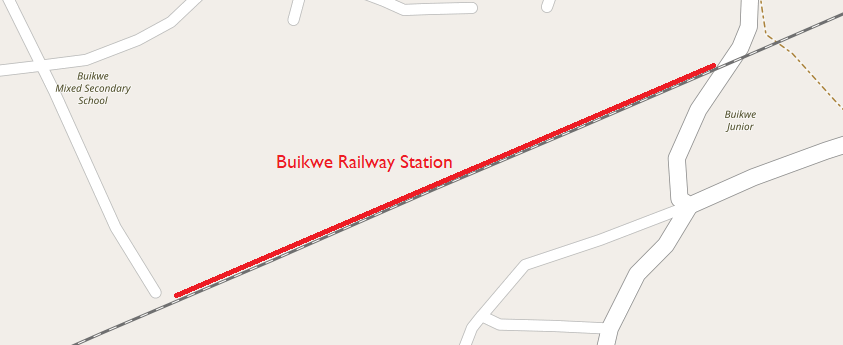
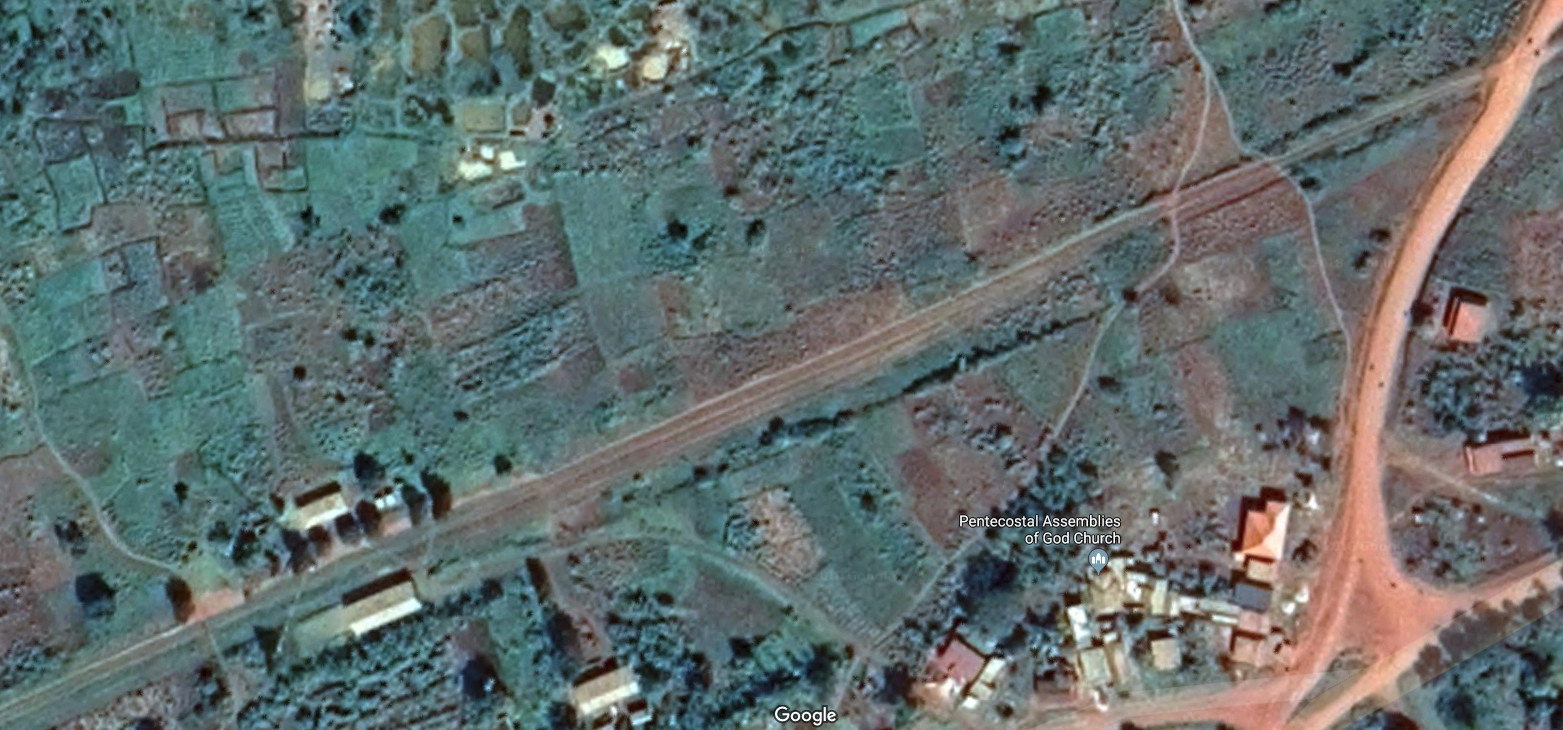
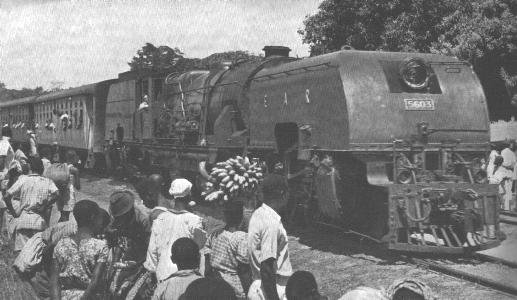
Buikwe (Buyikwe): as far as I can tell, this is the first station/halt beyond Jinja Railway Bridge when travelling towards Kampala. The first map and satellite image below show its location and I believe that it is likely that the monochrome picture which follows was taken at the Station in the early 1950s.

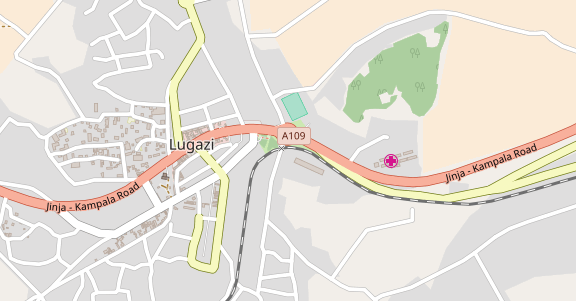
Lugazi/Kawolo: is 45 kilometres (28 miles) east of Kampala by road. There is a Station close to the centre of the town as shown on the map and satellite image below. The Station also served the hospital at Kawolo which is shown on the map of Lugazi just to the east of the town.

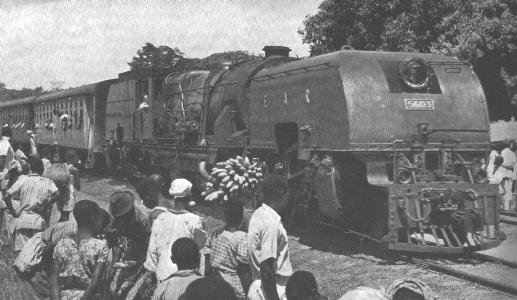
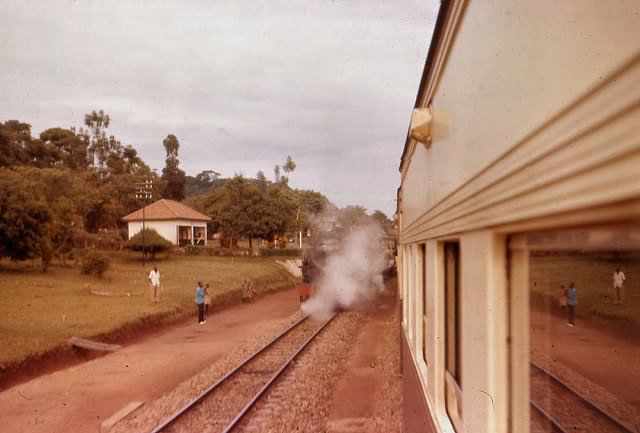
A Guide To Uganda” (Crown Agents, Curwin Press 1954) shows a Class 56 Garratt No. 5603, at a station between Kampala and Jinja. The 56s were replaced by the 60s in 1954-5, (c) East African Railways and Harbours. [6]School Trains ran to the same schedule as the Mail Trains, but on days when the Mail did not run.  The consist was virtually the same, although there was often only one, or no first class coach at all, on many of the School Trains.  Here a Giesel ejector fitted Class 58 Garratt heads a Kampala bound Mail Train through Kawolo, 226 miles from Eldoret and 31 miles from Kampala.  The oil fired furnace is clearly visible.  A Kampala bound freight is headed by a Class 60 Garratt still to be fitted with its Giesel ejector, © A J Hudson.[21]

Lugazi Railway Station runs north-south near to the centre of the map above.

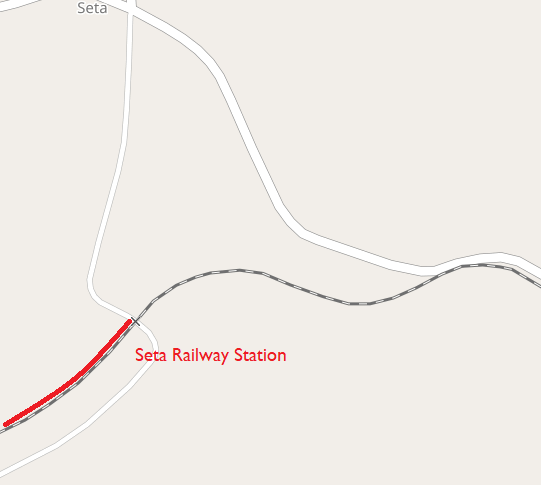
Seta: The next Station is at Seta. It was on the south side of the small village bearing the same name.


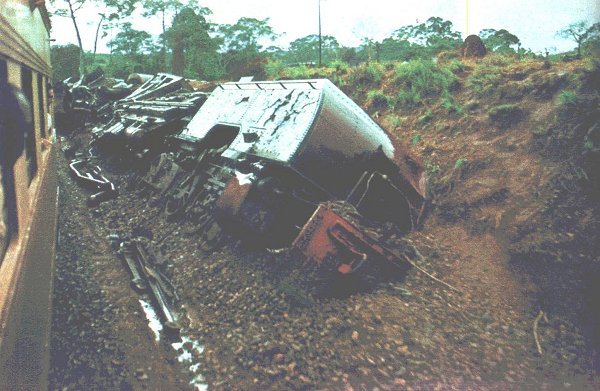
The EAR&H had few serious accidents, but on 3 January 1963, just 23 miles from Kampala and not far from Seta, a freight train with a caboose and 6 tank cars of high octane aviation fuel for Entebbe Airport stalled on the gradient. After setting back, the driver made a run at the gradient which the engine cleared with ease and tore off down the other side where it derailed. The escaping fuel was ignited by the Garratt’s oil furnace and the driver and firemen were killed. After three days of continuous round-the-clock working the single track line to Nairobi was re-opened, (c) A J Hudson. [6]Kampala bound Mail passing a Tribal headed freight at Seta, 21 miles from Kampala, © Malcolm McCrow. [21]

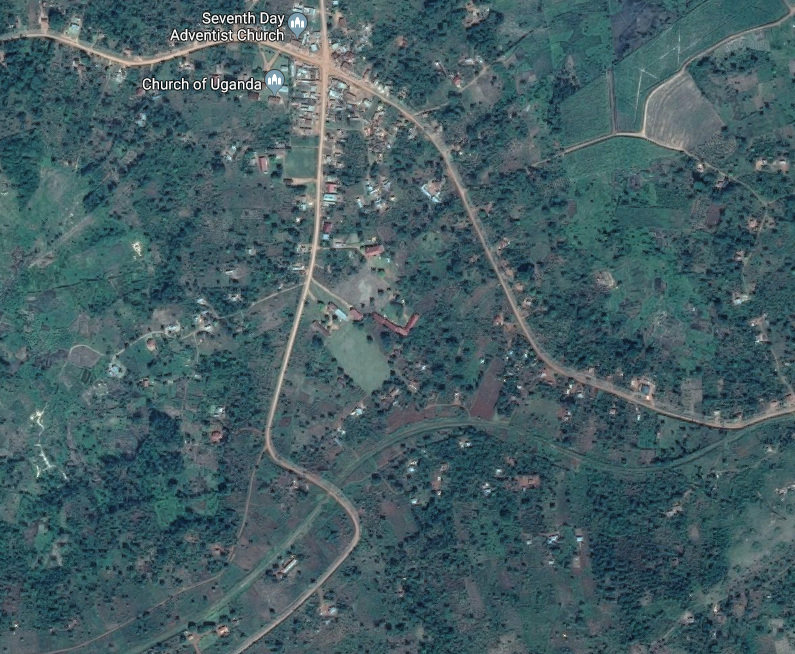
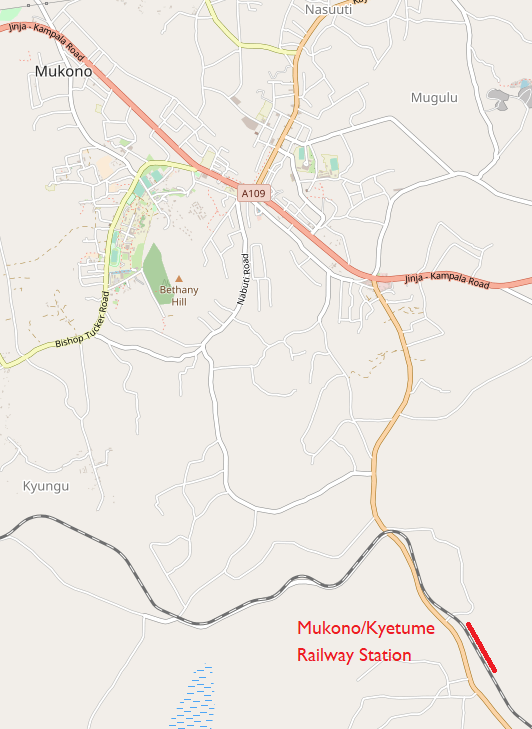
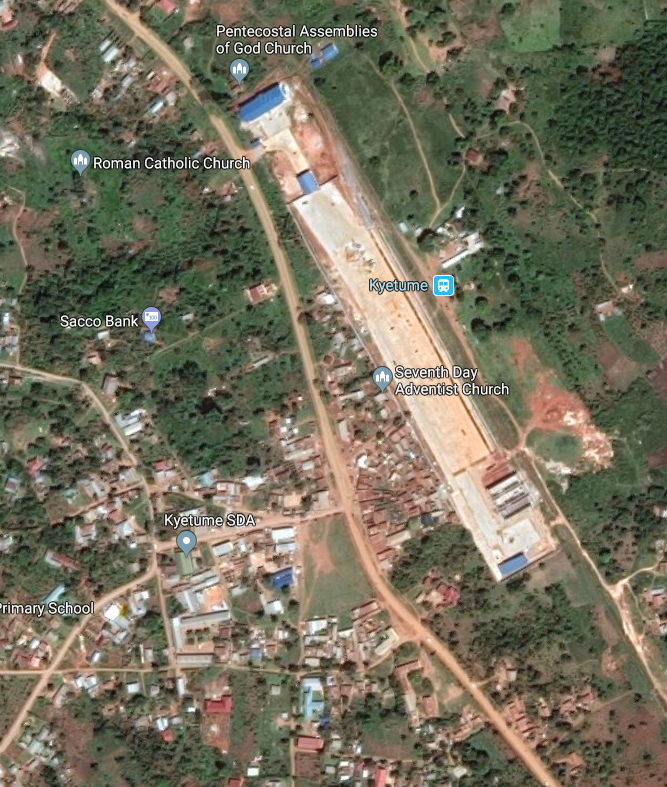
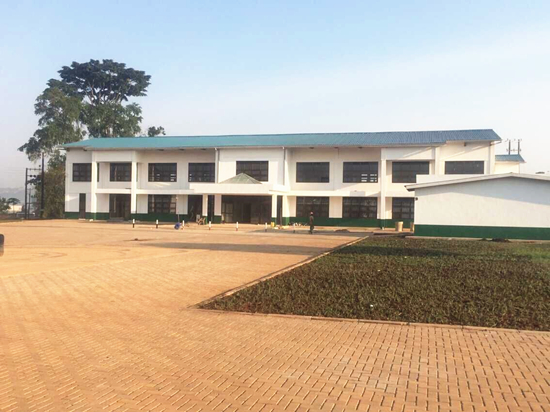
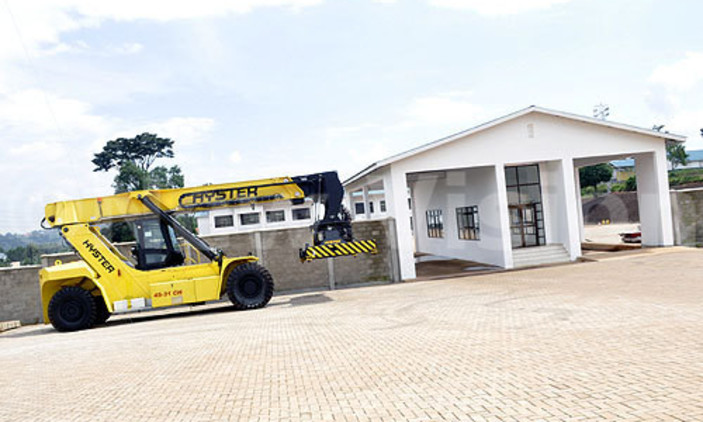
Mukono/Kyetume: The next Station is close to Mukono at  Kyetume as shown on the adjacent map. Work on a new railway station [15] and a Railway Inland Container Depot (ICD) was completed in 2015. [16]

The ICD project was funded by World Bank and managed by the Ugandan ministry of works and transport in line with the East African trade facilitation program.

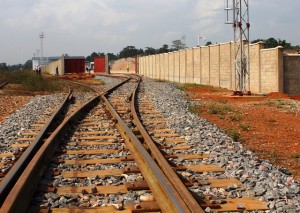
Its current capacity is 1,644 containers with an average of 6,500 annually, with enough parking space for container trucks. Construction of the depot was undertaken by Chinese company China Jiangxi International. [16]The Mukono railway station contracted by CJIC has significantly alleviated the traffic pressure in the capital Kampala and greatly cuts down the cost of local transportation of goods in Mukono, which, in turn, boosts the local economy. [15]Mukono Railway Station Building completed in 2015. [15]Mukono Railway Inland Container Depot was also completed in 2015. [16] The associated siding is shown in the adjacent image. [17]

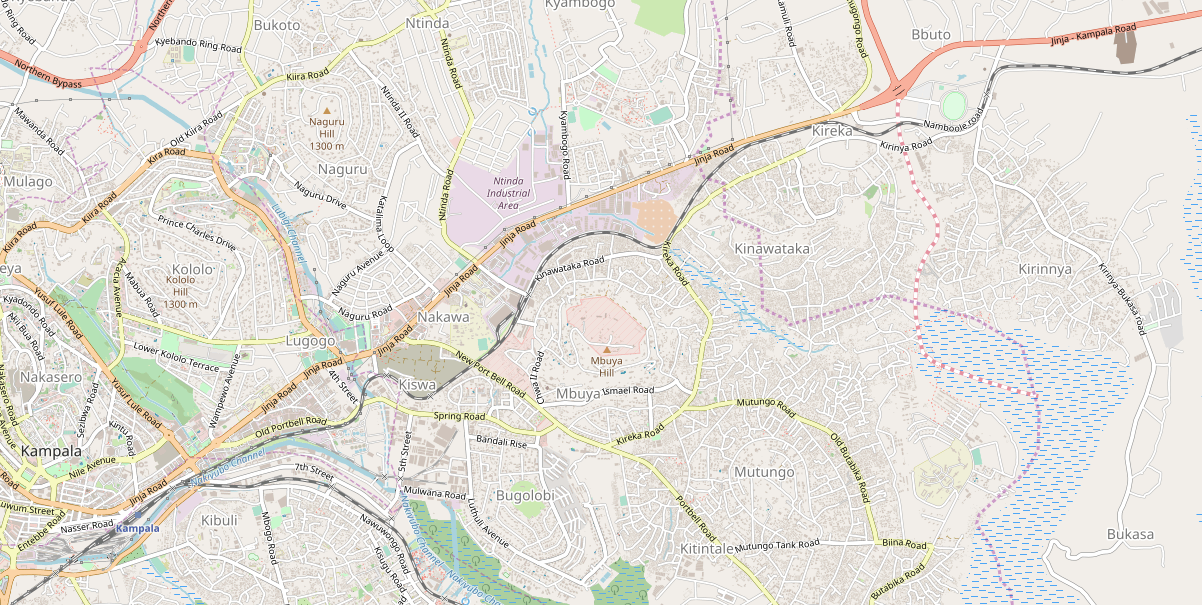
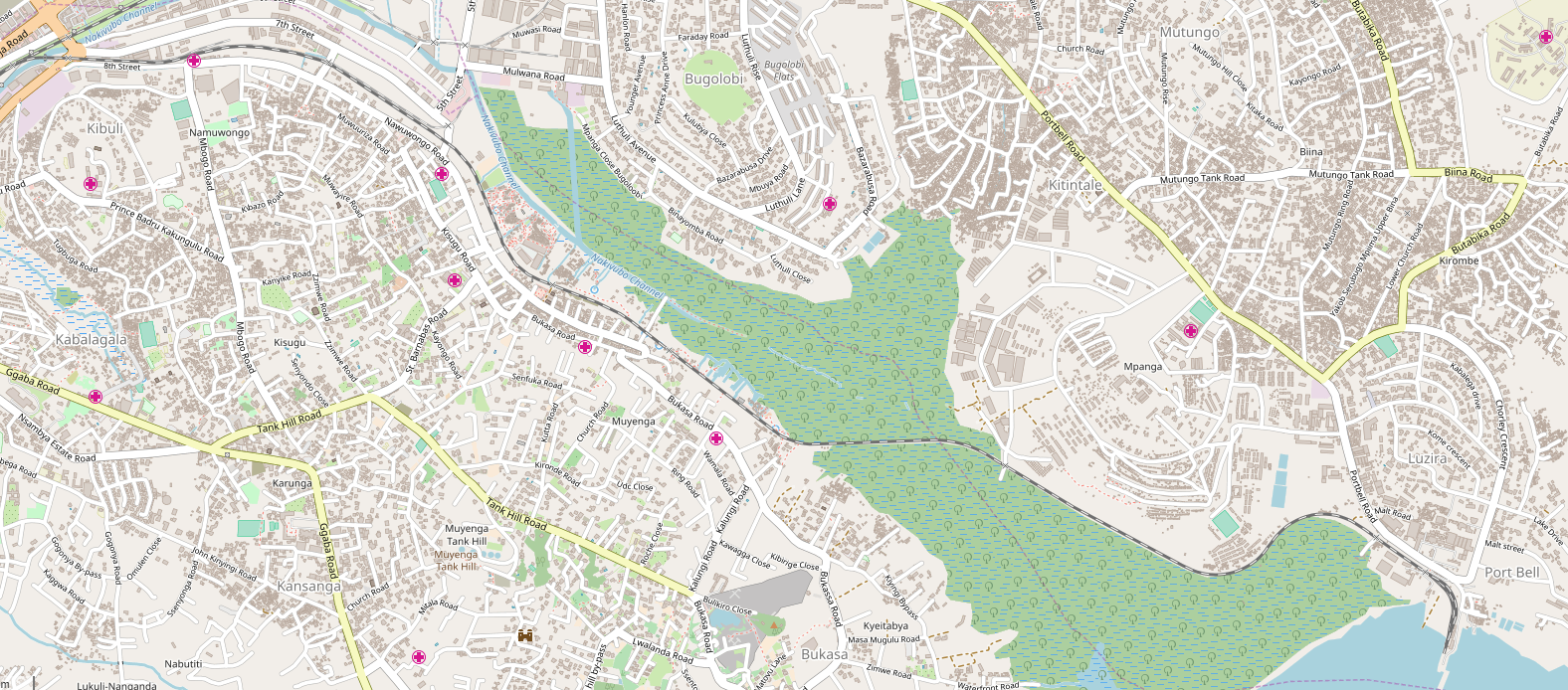
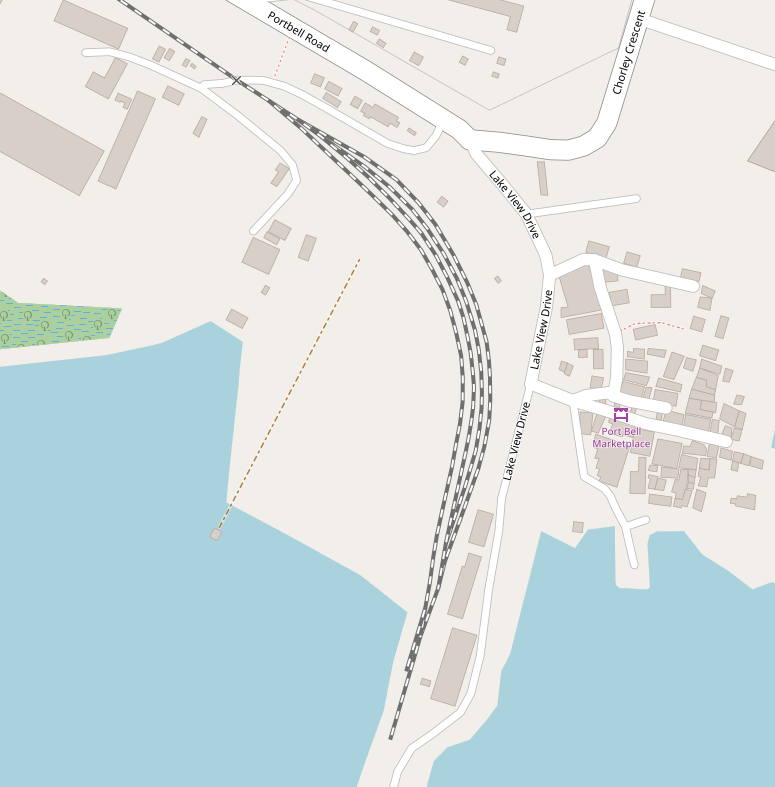
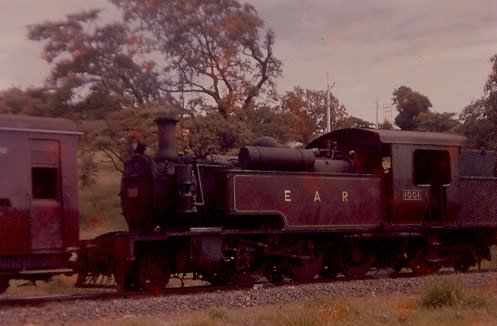
From Mukono, the railway travels North-west towards the Kampala-Jinja Road and then westwards into Kampala and its railway station which can be seen to the bottom left of the map below. before reaching Kampala Station the railway passes through Kireka close to the point that the Northern By-Pass leaves the Jinja-Kampala Road. Sporadic communter services are provided. Four pictures below show the railway at Kireka. [22][23] The map also shows the old railway from Port Bell joining the mainline just before it reaches Kampala Station. The line to an from Port Bell was constructed to provide access from the Lake Victoria Steamers which brought passengers to Uganda from Kisumu. The full length of that line is shown on the next map.The track arrangement at Port Bell is shown on the next map and satellite image.An 11 Class tank engine on the  Kampala to Port Bell branch, © Iain Mulligan

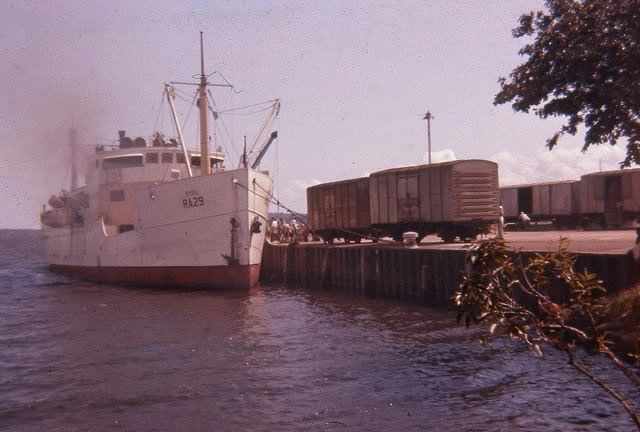
The motor vessel SYBIL unloading at Port Bell which was at the end of the six mile branch line from Kampala.  Mixed passenger and freight trains ran three times a week to and from Kampala to meet the round the Lake service which by 1962 was operated by the motor vessel VICTORIA.  The train journey between Kampala and Port Bell took 20 minutes and only 2nd and 3rd class was provided  © Malcolm McCrow

The station at Kampala is the end of this part of the journey. A Class 58 Barratt arrives at Kampala Station (Low Level) with a train from Kenya © Geoff Pollard. [20]

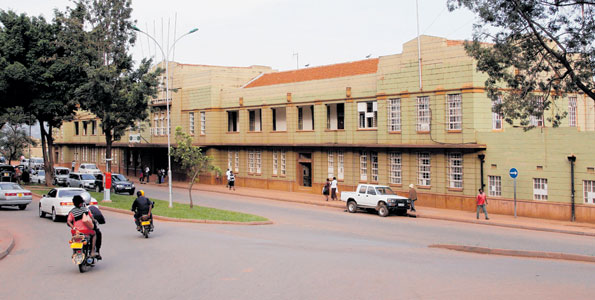
Kampala Railway Station in the 1980s. [18]Kampala Railway Station was built by 1940. It is shown here in the 2010s, © Morgan Mbabazi. [19]

References

  1. The Editors of Encyclopædia Britannica (13 January 2014). “Profile of Lake Victoria, East Africa”, https://www.britannica.com/place/Lake-Victoria, accessed on 5th June 2018.
  2. https://www.lonelyplanet.com/uganda/eastern-uganda/jinja, accessed on 5th June 2018.
  3. http://jinja.go.ug/about-us/history-location-size, accessed on 5th June 2018.
  4. http://www.jinjatours.com/guide/about-jinja.html, accessed on 5th June 2018.
  5. https://bigeye.ug/photos-top-five-prominent-buildings-in-jinja, accessed on 5th June 2018.
  6. http://www.mccrow.org.uk/eastafrica/eastafricanrailways/KampalaNairobi.htm, accessed on 1st June 2018.
  7. https://www.pinterest.co.uk/pin/269793833897649501/?lp=true, accessed on 5th June 2018.
  8. https://www.pinterest.co.uk/pin/262334747022488313/?lp=true, accessed on 5th June 2018.
  9. http://www.mccrow.org.uk/EastAfrica/EastAfricanRailways/EARIainMulligan/UgandaRailways2004.htm, accessed on 5th June 2018.
  10. https://www.flickr.com/photos/kibogroup, accessed on 5th June 2018.
  11. https://www.flickr.com/photos/usarmyafrica, accessed on 6th June 2018.
  12. https://www.flickr.com/photos/tattoodjay/3665215232/in/photolist-8MRSUk-8NcJGa-58QCkB-7WskKS-6Nb4iz-6zTbN5-6NfeEy-6Nfv75-7kW7Bn-6NbgBx-6PikUT-jZMK7-8NcJNn-8NfTXm-8NcNan-8NfSxN-8NfUeG-8NfSN7-8NfQvw-8NfQcs-8MRSbe-8MRTvg-8MRTXF-8NcPan-8NcNoH-8MUWHh-8NfRHG-8MUWkw-8MRUr6-8MUXxE-8MUX3h-8MRSGi-8MRSAr-8NcK9x-8MRSQB-8NcKra-8MUXTU-8MRS3R-oeQAKP-6NfBME-5wabK1-qvh1r1-F9UCe5-4iVME4-4BrXVg-4iVRBc-4iVMrH-4iZQP9-4iVMgx-me7Mrr, accessed on 5th June 2018.
  13. http://www.mccrow.org.uk/EastAfrica/EastAfricanRailways/KURJinjaBridge.htm, accessed on 6th June 2018.
  14. https://en.wikipedia.org/wiki/New_Jinja_Bridge, accessed on 6th June 2018.
  15. http://english.cjic.cn/news/2015928/n5409763.html, accessed on 6th June 2018.
  16. https://www.newvision.co.ug/new_vision/news/1331101/construction-usd86m-rail-icd-mukono-completed, accessed on 6th June 2018.
  17. http://www.sakisizwe.co.za/services.html, accessed on 6th June 2018.
  18. http://www.ugandaforum.org/Africa/Photos/Country/PicCountrypg3.htm, accessed on 6th June 2018.
  19. http://www.theeastafrican.co.ke/magazine/Kampala-now-mapping-its-historical-buildings/434746-3053984-e1i9pz/index.html, accessed on 6th June 2018.
  20. http://www.mccrow.org.uk/EastAfrica/EastAfricanRailways/EAR_GeoffPollard.htm, accessed on 6th June 2018.
  21. http://www.mccrow.org.uk/EastAfrica/EastAfricanRailways/KampalaNairobi.htm, accessed on 31st May 2018.
  22. http://observer.ug/news-headlines/44973-survival-for-the-fittest-as-kampala-train-gathers-pace, accessed on 8th June 2018.
  23. https://www.redpepper.co.ug/govt-railway-line-evictions-to-continue, accessed on 8th June 2018.

The Uganda Railway – Part 18 – Tororo to Jinja

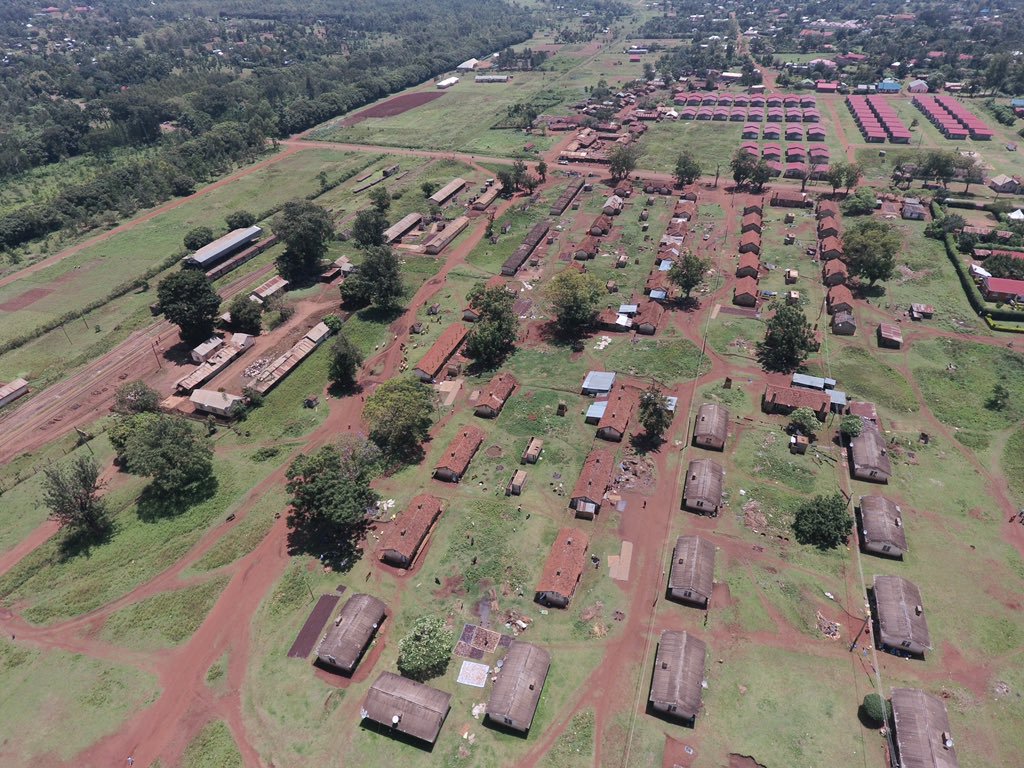
We have returned to Tororo and we are nearly ready to set off for Kampala! Before we do, it is worth a quick look round. Tororo Rock sits close to the middle of the town with the town-centre and the station to its north and suburbs to its east, west and south and flanked by the town golf-course. The view above is taken from the south side of the rock.An aerial view of Tororo Railway Village on the north side of the town. The picture is taken facing South-East with the town-centre off the picture to the right. On the left of the photograph, Tororo Station and Station Yard can be seen devoid of traffic. The line to Kenya heads off towards the horizon, barely distinguishable from the grass which has overgrown it. [1]Tororo Town looking in a generally northerly direction from the Rock. The Railway Station is in the extreme top right corner of the picture in front of the trees. [2]A picture of Tororo Station taken in 2014. A Uganda Railways Locomotive is in the bay platform possibly prearing to levae for Kampala or in the process of shunting the yard. [3]

Before we set off for Kampala, there is one more thing we need to notice. On the map above there are two sidings leaving the station at its western end. One is short – it provides a rail link for a World Food Programme Warehouse (below). The second is a little more significant. It can be seen heading south in both of the maps immediately above. And can be seen continuing south past Tororo Airport, crossing Airfield Road, running about 300 metres to the west side of Busia Road (A104).

It then turns westward immediately alongside the Jinja-Tororo Raod (A109) to provide the rail link for Tororo Cement Works. This can be seen on the map immediately below.

Tororo Cement Limited (TCL) is the largest manufacturer of cement in Uganda,[4] producing an estimated 1.8 million metric tonnes annually.[5]  In July 2015, TCL began an 86 billion UgSh expansion to increase annual production to 3.0 million metric tonnes.[6][7] Production on the newly completed production line began in March 2018. [8]

On 4th June 2018, Umeme upgrades Tororo Cement Industries power, plant doubles production. [9] An image, from 2009/2010, of the plant, taken from the south-west with Tororo Rock in the background, is shown below. [10]

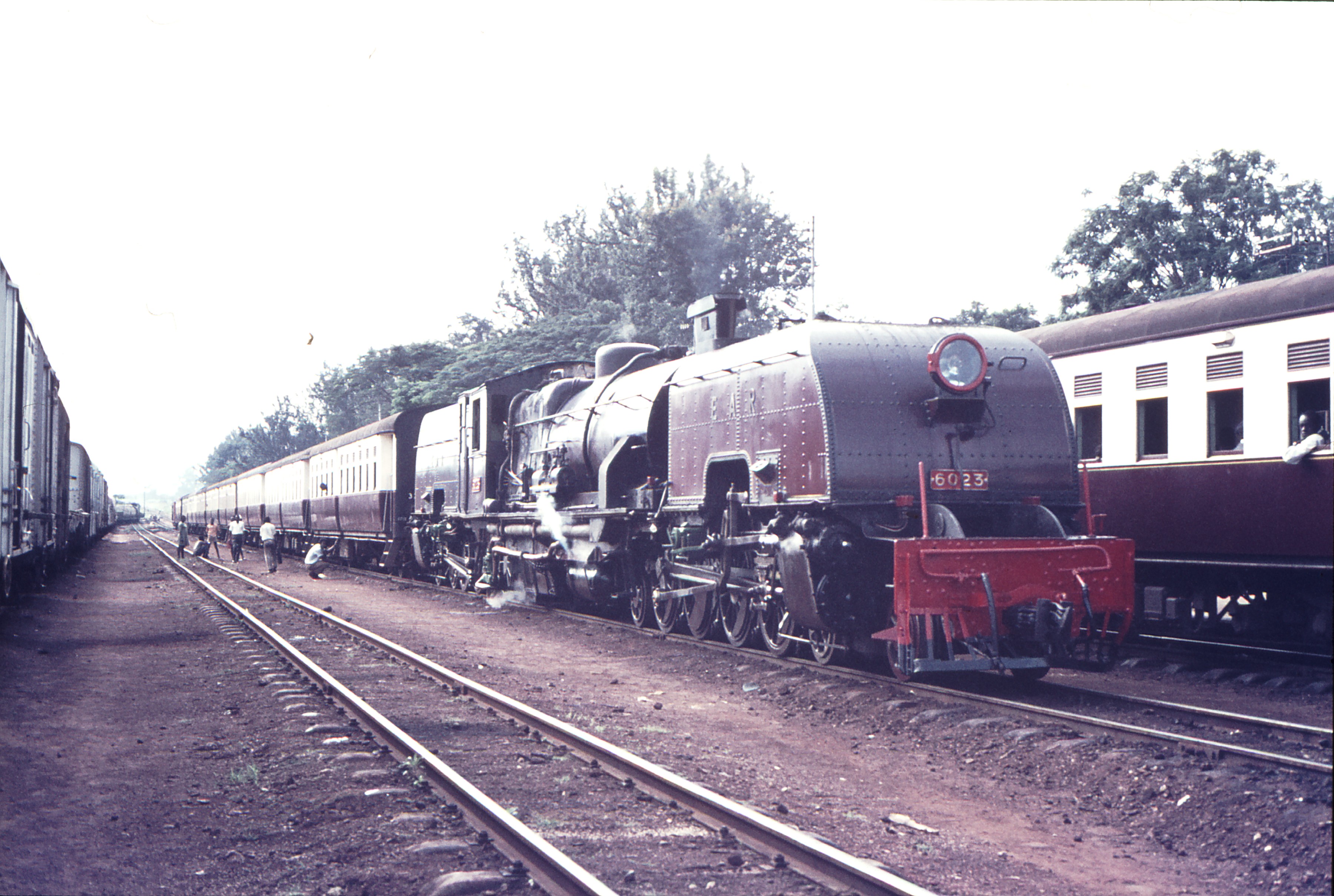
After having had a good look round Tororo, we set off for Kampala.Class 60 Garratt No. 6023 in Tororo in 1971. [11]The line to Kampala is on the left. The line to Pakwach is on the right!

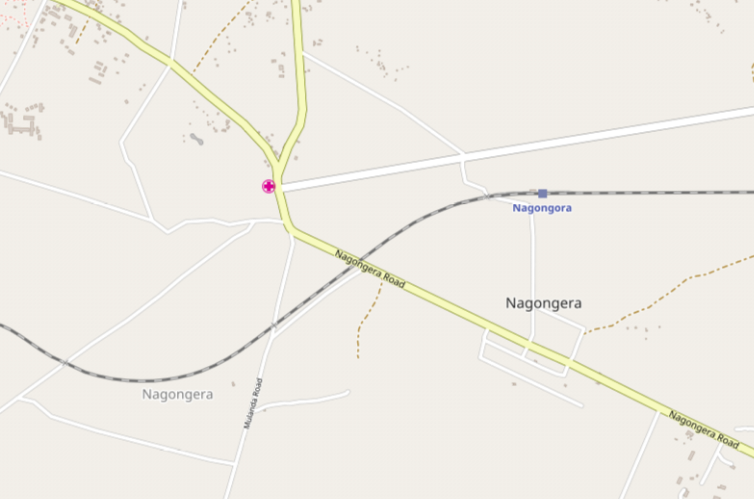
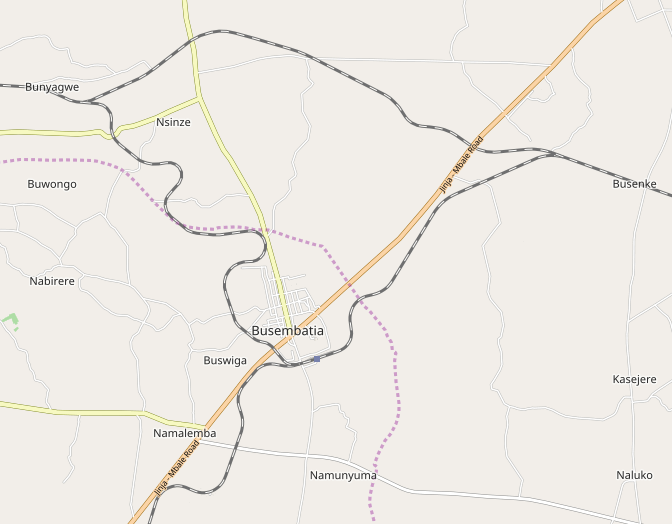
We leave Tororo is a north-westerly direction following the contours on the north side of the Nagongera Road as far as Achilet (about 5 kilometres outside of Tororo). For the next 10 kilometres the railway stays north of the road until reaching Nagongera, or Nagongora, as the Station is named on the maps below.After Nagongera, the line passed through Budumba.Budumba Station.After Budumba, road and rail combine to cross the bridge over the Mpologoma River.The line then splits with the northerly line crossing the Jinja-Mbale Road. The shorter route to Jinja goes via Busembatia and along the Jinja-Mbale Road.After Busembatia (where a link headed off to meet the more northerly line) the shorter more southerly line continues to Iganga (top right, below), Magamaga (bottom left, below) along the Jinja-Mbale-Totoro Road (A109) and then into Jinja.

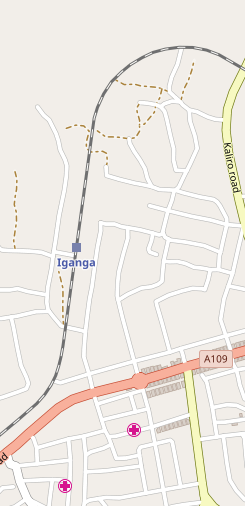
The line through the station at Iganga runs North-South on the West side of the town-centre as shown in the adjacent satellite image and map.

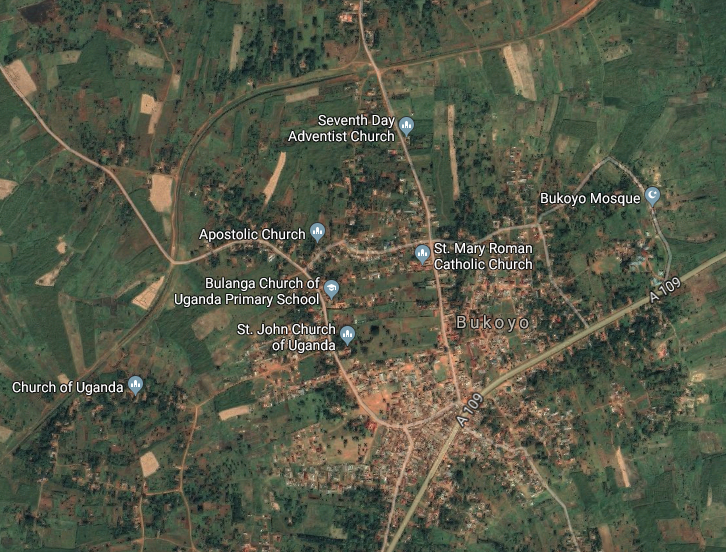
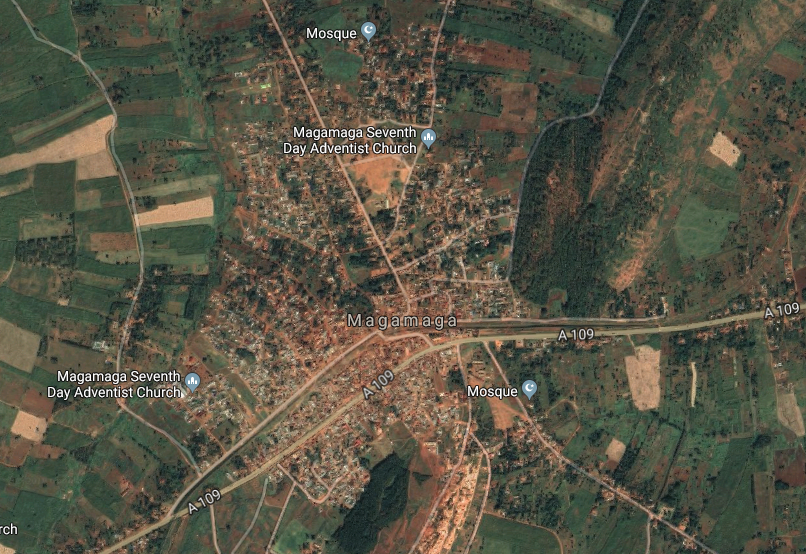
It then runs roughly parallel to the A109 before passing north of Bukoyo. Which is a reasonable size town, for some reason not marked on the route map roughly where Namasoga and Bulanga are shown above.Magamaga is another decent sized town on the route of the line, indeed the railway passes right through the middle of the settlement, but there is no evidence of a station. It seems highly unlikely to me that there would not have been a halt somewhere at Magamaga given the size of the town, even if it is no longer in use.Just to the west of Magamaga, the line crosses the main Jinja-Mabale-Tororo highway (A109) by means of a bridge and then travels on the south side of the road and close to Lake Victoria before reaching Jinja.On its final approach to Jinja, the line travels alongside a branch-line which fed industry on the shores of Lake Victoria in Masese and Walukuba, before joining the more northerly route once again as it enters Jinja Station.

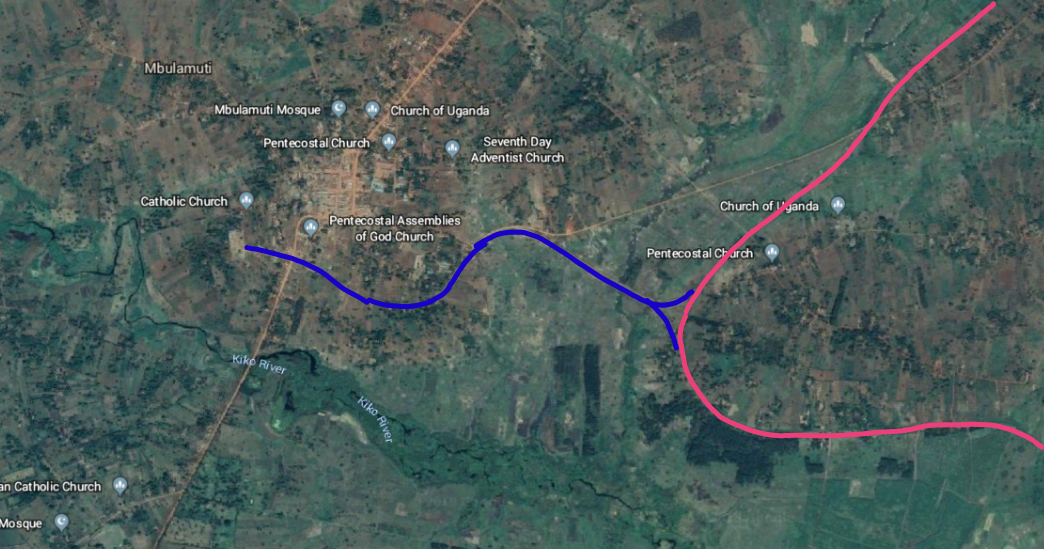
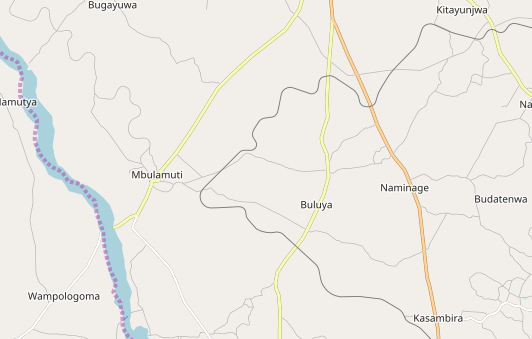
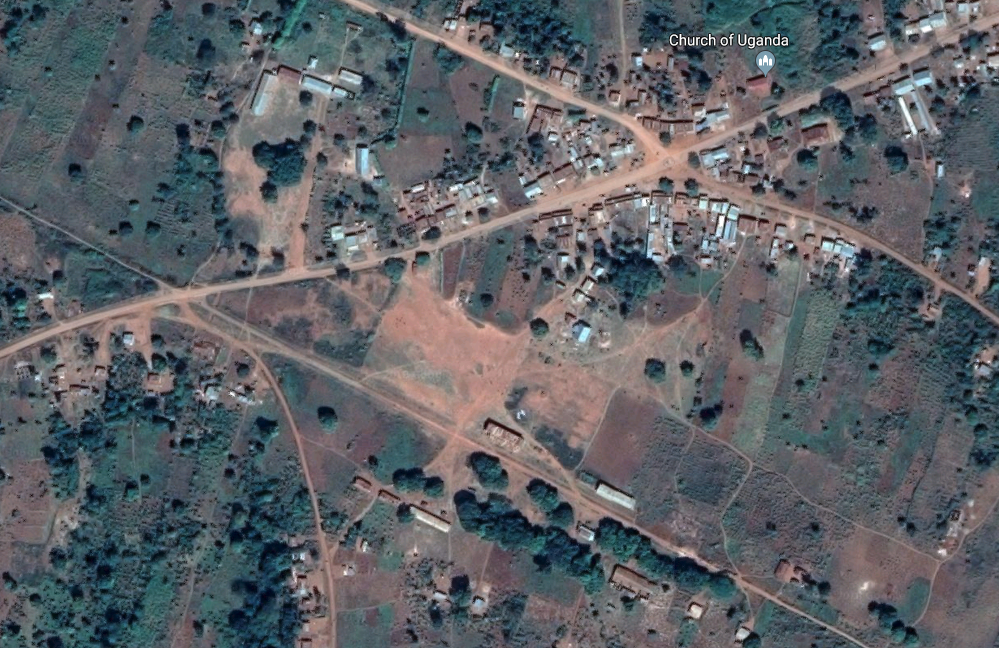
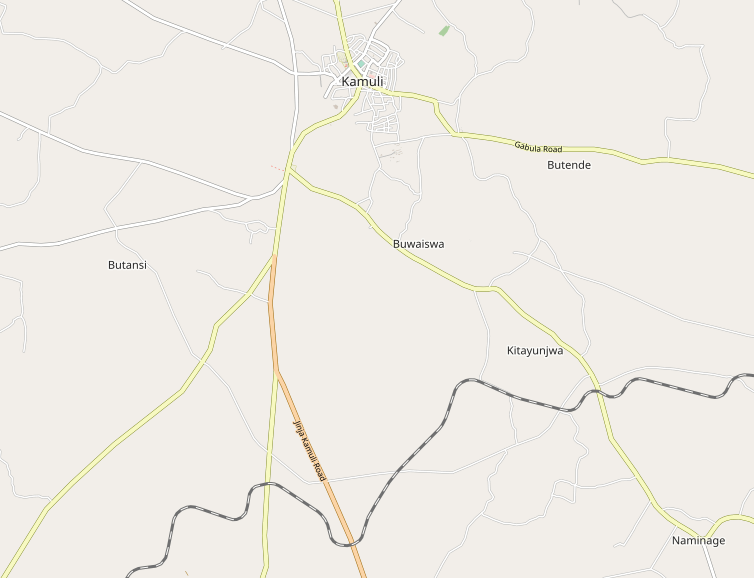
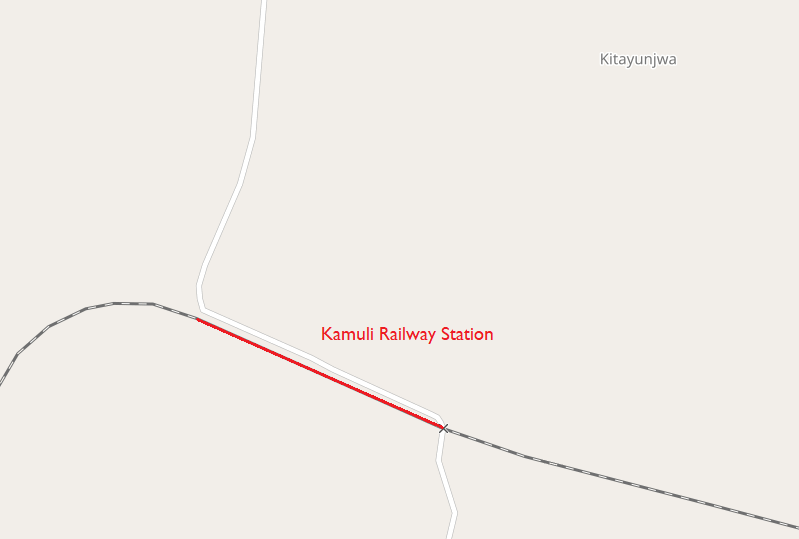
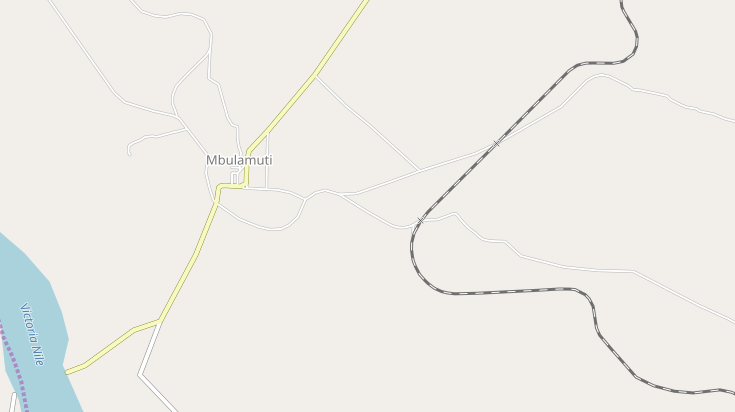
The more northerly route of the mainline passed through only one named Railway Station which appears on OpenStreetMap, that of Namaganda (Namabuga) – which is about a third in from the left on the map below, near the top of the image. There was also a station close to Kamuli and at one time a branch-line which left the northerly route at Mbulamuti.The northerly route is considerably more torturous. As it seeks to maintain a steady grade the contours mean that is snakes down to Jinja and travels considerably further all told. The locations of Namaganda (Namabuga) and Mbulamuti are shown on the maps and satellite images below.Namaganda (Namabuga).Kamuli was some distance from the route of the northern line (over 10 kilometres along the Jinja-Kamuli Road). The station was reached by trains coming from Tororo after crossing the Kamuli-Iganga Road near Kitayunjwa. The first picture below is a satellite image of Kamuli Station site. The second image shows Kamuli Railway Station in 1969. The third image is a map of the station site from OpenStreetmap.Tribal Class 31, No. 3139, ‘Pokomo’ was built by the Vulcan Foundry in 1956 and was allocated to the Uganda Railways in 1977. It is seen heading its train at Kamuli in 1969. Kamuli, the first station eastbound after Mbulamuti, was by-passed by first and second class Mail Trains after the Tororo-Namaga deviation was completed in 1962 but the all stations Nairobi/Kampala second and third class passenger trains were still routed over the original main line via Mbulamuti which was the junction for Namasagali (c) Glyn Constantine. [10]The railway travels on to cross the the Kamuli-Jinja Road as shown below and heads for Mbulamuti.Mbulamuti.It is not at all clear, to me, where the station for the junction at Mbulamuti was, from the satellite images at least. The location of the junction can be seen on the satellite image. The mainline enters the image at the top right, it is only vaguely visible. It drifts down in a south-westerly direction through the middle of the word ‘Pentecostal’ to some trees and then curves away to the east, leaving the image bottom right. The road, which leaves the route of the mainline at the trees runs along the route of the branch-line.

The branch from Mbulamunti travelled north on the east side of the Victoria Nile. First it curved around the south side of Mbulamuti, and then sinuously followed the contours north. We will make this branch the subject of another post in this series.

Both lines enter Jinja Railway Station from the North, as can be seen on the adjacent map.

I had the joy of sitting for over 6 hours in Jinja Railway Station in 1994. The passenger train I was on was held up by the derailement of a goods train between Jinja and Kampala.

Our journey, in this post, ends here at Jinja Railway Station with a series of photographs of the location which can be seen below.

In our next post we will set off from Jinja, cross the Nile and head on towards Kampala.

References

  1. https://mobile.twitter.com/sgr_uganda/status/786565833401180164, accessed on 3rd June 2018.
  2. http://ug.geoview.info/tororo_town,44672213p, accessed on 4th June 2018.
  3. https://ekitibwakyabuganda.wordpress.com/category/history; & https://en.wikipedia.org/wiki/Tororo#/media/File:Uganda_railways_assessment_2010-14.jpg, accessed on 4th June 2018.
  4. https://en.wikipedia.org/wiki/Tororo_Cement_Limited, accessed on 4th June 2018
  5. https://www.newvision.co.ug/new_vision/news/1309352/cma-discuss-funding-options-oil-minerals-meet, accessed on 4th June 2018.
  6. https://www.newvision.co.ug/new_vision/news/1331523/tororo-cement-sh86b-expansion, accessed on 4th June 2018.
  7. http://www.theeastafrican.co.ke/business/Hima-Cement-to-invest-USD40m-in-new-Tororo-plant-/2560-3393614-12oln7c/index.html, accessed on 4th June 2018.
  8. http://www.monitor.co.ug/News/National/Cement-prices-shoot-up-amidst-scarcity/688334-4314252-q95be6/index.html, accessed on 4th June 2018.
  9. https://thelocal.ug/umeme-upgrades-tororo-cement-industries-power-plant-doubles-production/, accessed on 4th June 2018.
  10. http://www.mccrow.org.uk/eastafrica/eastafricanrailways/KampalaNairobi.htm, accessed on 1st June 2018.
  11. https://www.westonlangford.com, accessed on 1st June 2018.

The Uganda Railway – Part 17 – Gulu to Arua

The featured image above shows one of the construction trains used for the extension from Gulu to Pakwach,© M. Hardy-Randall. [8]

Our journey in this post begins at Gulu and when we leave the town we head west towards Pakwach. We start this post with a couple of photographs taken in Gulu.

111510: Gulu, Uganda. An Officers Inspection Car No 116, taken in August 1971, (c) Weston Langford. [1]

Level Crossing tarmacked over at Gulu, taken around 2010. [2]

Leaving Gulu Station we head for Pakwach. Thanks to Thomas Kautzor, I now know that the stations between Gulu and Pakwach were: Paliri, Bwobo, Aparanga, Pai Halt, Lolim and Pakwach East. Finding evidence of these stations has been difficult. Part of the problem with identifying locations is that the station names seem not to relate easily to the named locations on maps.

Out of Gulu, the line heads initially in a generally westerly direction and the image below is typical of the countryside through which the line travels.

The trajectory of the line changes when it reaches Alelele. It heads in a south-westerly direction towards Alero.

After Alero, the line travels in a south-southwesterly direction through Nwoya and on through Patit and Patera to Aparanga where reports indicate that there is a railway station of sorts. [3] It can be just picked out centre-left on the satellite image below. I have found no photographs of the station/halt.

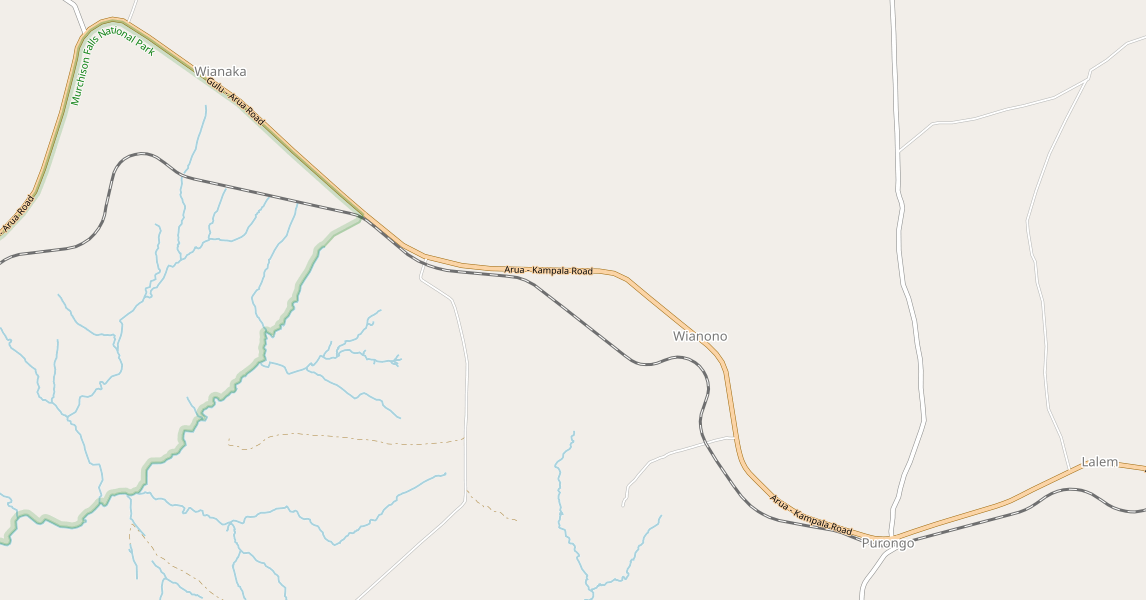
The next station I can find any possible location for along the line was some distance further to the West at Lolim. On the way to Lolim, the railway and the Gulu-Arua Road followed almost the same course through, or close to, Lalem, Purongo, Wianomo and Wianaka.

Near Wianaka, the road skirts the northern edge of the Murchison Falls National Park. The railway predates the formation of the National Park and so transgresses its boundaries, (see the left hand side of the map above).

Going on to Lolim, while the railway snakes around, the road from Wianaka follows the Park boundary, (as above). The most likely location of the Railway Station at Lolim is shown in the satellite image below, which is just off the left of the map above. Again, there are no photos of the station and there is little evidence on the satellite image to confirm its location.

From Lolim, the railway and road continued on a relatively similar alignment. The railway follows the contours to minimise gradients, the road takes a more direct route. Both meet short of the bridge over the Albert Nile near Pakwach.

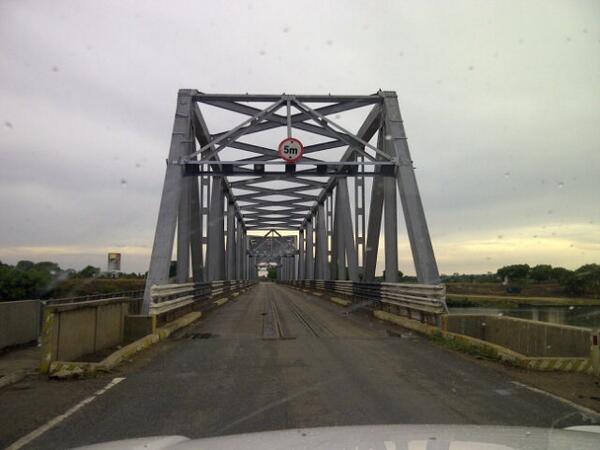
By the time the bridge is reached the railway and the road are on exactly the same alignment with the rails let into the surface of the road. In the first set of images below, the rails are clearly visible in the tarmac surface of the road over the bridge. [4][5][6]

The second couple of photographs show the bridge from along the banks of the Albert Nile. [7][2]

Arriving at Pakwach the railway turned to the West off the bridge. At present, the line stops at the end of the road/rail bridge. The line passed through the centre of Pakwach and was extended, in 1969, to Arua.

All evidence of that extension has possibly disappeared under the formation of the Pakwach-Arua Road. There are short sections where the road alignment does not seem to have covered the old railway formation. One example is shown in the adjacent satellite image. In the Mbaro area, where, over a short length, the road travels north-south before reaching Oryang, the railway alignment can just be picked out to the east-side of the road.

However, this route has some questions attached to it. … When the Pakwach-Arua Road reaches Nebbi it turns through an sharp, acute angle at a roundabout. The alignment of the road in Nebbi is vary unlikely to be the alignment of the original metre-gauge line. There is a possible cut-off route for the line which avoids Nebbi. Its alignment can be picked out on the satellite image below. It starts on the eastern edge of the image close to the village of Namrwodo and runs just north of west across the image before turning north-west and then meeting the Gulu-Arua Road once again.

We know that the railway reached Arua in 1969. It may have taken this route or another route and I cannot find enough evidence to establish the actual route at present Nor can I identify the site of the Station in Arua. This is an unsatisfactory end to the story of this line. Perhaps in due course I will find more information, or possibly someone who has more information will come forward.

In the next Uganda Railways post we return to Tororo, and begin to focus once again on the mainline to Kampala.

References

  1. http://www.westonlangford.com/images/gallery/four-days-in-uganda, accessed on 29th May 2018.
  2. http://www.works.go.ug/wp-content/uploads/2017/02/1604-Tororo-Pakwach_Consultancy_of_feasibility_Final%20Report_2016-10-18.pdf, accessed on 1st June 2018.
  3. http://ug.geoview.info/aparanga_station,8200502, accessed 3rd June 2018.
  4. http://www.celebritypix.us/celebrities/pakwach-bridge-celebrities-88877.html, accessed on 3rd June 2018.
  5. http://trip-suggest.com/uganda/northern-region/pakwach, accessed on 3rd June 2018.
  6. http://justasurferdude.blogspot.com/2012/05/we-all-are-one.html, accessed on 3rd June 2018.
  7. https://www.westnileweb.com/special-features/features/our-regions-have-too-much-potential-how-are-you-developing-them, accessed on 3rd June 2018.
  8. https://friendsoftherail.com/forum/download/file.php?id=4524&mode=view, accessed on 22nd July 2022.

The Uganda Railway – Part 16 – Soroti to Gulu

The first picture in this post is a monochrome image taken at Soroti. a Class 60 Garratt arrives with its passenger train from Tororo. The second image captures a busy moment in Soroti Station Yard as another Class 60 musters goods wagons for its northwesterly travelling mixed passenger and goods train.

The third picture claims to show a busy time on the platform at Soroti. The station building is typical of many on the route but does not match that at Soroti, so, take your pick. Any of the stations shown in the last post or some below could be the location of this photograph! The caption on the original image says … “This photograph shows Soroti Railway Station 1956. It was a bustling and important railway cargo terminus for hauling of exports from Uganda to Mombasa Port, © Tahir Mirza.” [2]111487: Soroti Station, Uganda Westbound Passenger service behind a Class 60 Garratt, © Weston Langford. [3]A typical rural scene in Uganda. [4]

We set off from Soroti Station and the line swings immediately first to the Northeast and then back to the Northwest and then crosses the Soroti to Moroto Road. As we travel on we pass through or close to Ajikidaki, Nyalai, Okunguru, Obule, Omgariama, Mwogo, Aloi and Bar before arriving at Lira. The named stations on the route are Achuna and Aloi. First Achuna:111489: Achuna Uganda Westbound Passenger 2431, © Weston Langford. [3]111493: Achuna Station 1971, © Weston Langford. [3]

Then comes Aloi:

"disabled rail link to northren uganda"Above: 111497: Aloi Railway Station, Uganda Westbound Passenger Service with No. 2431, © Weston Langford. [3]

Adjacent: Typical of the condition of the line close to Aloi before renovation, © John Otim. [5]

After the small village stop at Aloi the line heads in a West-northwest direction, and then a westerly direction to Lira.Level Crossing near Lira.[6]Lira Railway Station.The city of Lira (above) and the location of the railway Station (below).I could find no photographs of Lira Station to put on this blog. There are a few pictures on the line from immediately around the city of Lira: These three pictures (above) were taken on the first journey for a train along the line on 20 years – in 2013. [7] The third picture shows the condition of the line at that time between Lira and Gulu.

North of Lira Station the line crosses the Lira-Kitgum Road and then travels through or near Alito and Kole, Otwal and Ayomlony, Lamin-Lyeka and Lokwir. At Lokwir the line allies itself for a time with what is now known as the Jomo Kenyatta Road, following it until it reaches Lakwatomer. It then heads west-northwest to Gulu.Kole (above and below).There are no signs of a formal station at Kole, however, the build up of a community at the road rail crossing which is some distance from the town of Kole (which is away to the East) suggests that trains must have stopped here in the past.There is a station at Otwal. It is shown in the satellite image below and location on the map above in the bottom right-hand corner.Lamin Lyeka – a village predominantly of traditional hut homes. The railway is in the bottom left of the satellite image.As the railway leaves Lamin-Lyeka and passes close to Opit (before reaching Lokwir) it runs through another village of traditional homes. In fact, the countryside in this area of Uganda is littered with  traditional round dwellings, whereas in the south-west of the country traditional homes are usually rectangular in shape.

The railway line enters Gulu from the south-east and turns to a north-westerly direction as it runs through the station site (below).The tracks approaching Gulu Railway Station. [10]111504: Gulu, Uganda No. 2305 in August 1971 © Weston Langford. [3]111506: Gulu, Uganda Nos. 2431 and 2301 in August 1971 © Weston Langford. [3]111507: Gulu, Uganda Nos. 2431 and 2301 in August 1971 © Weston Langford. [3]A survey by the US Army showed Gulu Station in use for growing maize in 2014. [11]Wagon abandoned at Gulu railway station. [12]Museveni opens Gulu railway linePresident Museveni (in hat) in the cab of a lcoc at the commencement of the Rift Valley Railway operations at the weekend in Gulu District (October 2013), (c) Cissy Makumbi. [8]

President Museveni flags off a train in Gulu, Uganda. The government is accused of awarding the tender to a Chinese firm after signing MoUs with another. FILE PHOTOPresident Museveni flags off a train in Gulu, Uganda. [9]

Our survey of the line will continue from Gulu with the next post.

References

  1. http://www.mccrow.org.uk/EastAfrica/EastAfricanRailways/UgandaBranches.htm, accessed on 2nd June 2018.
  2. https://www.britishempire.co.uk/article/sorotirailwaystation.htm, accessed on 2nd June 2018.
  3. http://www.westonlangford.com/images/gallery/four-days-in-uganda, accessed on 1st June 2018.
  4. https://www.flickr.com/photos/usarmyafrica/5117351511/in/photostream, accessed on 1st June 2018.
  5. https://suncolor.wordpress.com/tag/northern-uganda, accessed on 2nd June 2018.
  6. http://www.works.go.ug/wp-content/uploads/2017/02/1604-Tororo-Pakwach_Consultancy_of_feasibility_Final%20Report_2016-10-18.pdf, accessed on 1st June 2018.
  7. https://skyworksafrica.wordpress.com/2013/09/15/train-spotting-in-uganda, accessed on 31st May 2018.
  8. http://www.monitor.co.ug/News/National/Museveni-opens-Gulu-railway-line/688334-2049554-vr9xhk/index.html, accessed on 3rd June 2018.
  9. http://www.theeastafrican.co.ke/news/Chinese-firm-goes-to-court-over-Uganda-s-railway-project-/2558-2413758-format-sitemap-11v50d0z/index.html, accessed on 3rd June 2018.
  10. https://markandmaryinuganda.wordpress.com/tag/rift-valley-railway, accessed on 3rd June 2018.
  11. http://www.globalconstructionreview.com/news/uganda-seeks-8bn-rail-funding-china272807615431122, accessed on 3rd June 2018.
  12. https://ugandaradionetwork.com/story/rvr-why-uganda-kenya-shouldnt-have-signed-concession-deal, accessed on 3rd June 2018.

The Uganda Railway – Part 15 – Malaba to Soroti Railway Station

We are at the border between Uganda and Kenya. The railways have been in a reasonable condition over much of our journey to Malaba. A few of the branch-lines have deteriorated badly and the ride along the main-line has not been all that smooth. Sadly, as we travel into Uganda, things get a lot worse.

First a map of the railway system. The system is entirely focussed on transporting, primarily, goods to the coast at Mombasa. Little thought has been given to providing a network of feeder railways for Uganda’s capital. All railways lead to Tororo rather than to Kampala.The map below shows the first length of the journey from the Kenyan border at Malaba to Tororo. At Tororo there is a major junction where the line to Kampala and Kasese diverged from the line to Arua.The first picture below  is taken from a Tororo-bound train in August 1971 and shows an Eastbound service waiting for the line out of Malaba into Kenya.[1]111466: Malaba Kenya Eastbound Goods 3144 Tharaka Taken from Westbound Mail, © Weston Langford. [1]401461: near Tororo Uganda Mountain outcrop viewed from train, © Weston Langford. [1]111469: Tororo Station in Uganda, a passenger train for Pakwach behings a Class 60 Garratt No. 6023, © Weston Langford. [1] Tororo is the junction from the main line for the line to Arua and Pakwach East on the Upper Nile. Weston Langford had booked himself onto a tour train in August 1971 not long after the coup led by Idi Amin. He comments: “The tour party rode in carriages transferred from the Mail to the branch train. There was no sign of any immigration presence so the tour party repaired to the local police station where we were breezily told to report to the police at our first overnight stop. On the wall of the police station was a magazine page of a photo of the Queen and Commonwealth Heads of Government. It was stuck to the wall with sticky tape. The rest of that first day was a pleasant train ride through the African countryside. As far as Soroti the engine was a 60 class Garratt. The 60 class bore a striking resemblance to the South Australian 400 Class. From Soroti onwards the engine was a 24 Class 4-8-0.” [1]

Given that the first pictures I’ve found relate to a journey from Malaba to the North of Uganda, we will follow the branch-line first  and return to the route of my own, 1994, journey later. Suffice to say that , in 1994, we arrived at Tororo in the early hours, between 3am and 4am. I was awoken from my sleep at Malaba, supposedly for a passport and visa check which did not happen, and I was just beginning to settle again when we passed through Tororo in the dark on our way to Kampala.111470: Tororo Uganda Passenger for Pakwach 6023 and Shunter 1106, © Weston Langford. [1]The branch-line to the north of Uganda was closed for a very long time. In the 1970s, Idi Amin was influential in the break up of the east Afrian community and the transfer of the railway from the East African Railways and Harbours to the control of Uganda Railways. In subsequent years, tacks were stolen for steel, engines broke down and no spare parts were available, and the railways became so unreliable that they were effectively useless. [2] There was a brief period in the 1990s when some semblance of proper services were restored but ultimately to no avail.

The picture above shows the first train for many years to run along the route we are about to take. The image shows the train in Tororo preparing to run along the branch through Soroti. The journey took place on 14th September 2013. [3] Rift Valley Railways were responsible for the network at that time. As well as improving transport links to northern Uganda, the line provides a regional railhead for South Sudan and eastern DR Congo. The study of the feasibility of undertaking the refurbishment was undertaken at the behest of the Delegation of the European Union to Uganda [9]

Tororo Railway Station. [4]

This is a short video about the opening of the branch-line. The work was done before considering the work necessary on the mainline.

The three images of Tororo Station above come from a report by Dr R Choudhuri. [7]Tororo Yard in 2014. [8]The northern branch (above) left the mainline immediately to the west of Tororo. The western end of Tororo Station Yard, the right-hand track heads off up the branch we are following. [10]Level Crossing close to Tororo.

The branch travelled through or close to Mukuju, Apokori and Muliri before the halt at Mogades. close to Molo. [10]It then travelled via Lwaboba, Bumasikye, and Naukuma Village before passing through the second halt on the line at Manafwa, [10] before crossing the Manafura River about 2/3rds of the way to Mbale.After crossing the river the line travelled near or through Mudodo Village, Bungokho, Bugema and Mukanga Centers before arriving at Mbale. It appears from a survey of the line that no station facilites were provided between Tororo and Mbale, a distance of about 50 kilometres. A map of Mbale, showing the location of the station is followed by a satellite image of the station site.A recently repainted Mbale Station sign in 2004, © Iain Mulligan. [6]111474: Mbale, Uganda a Northwest-bound Passenger Service behind Class 60 Garratt No. 6023, © Weston Langford. [1]

Immediately after Mbale Station, the railway turns north and crosses the Namatala River. En-route to Soroti the line passed through Kachumbala, Bukedea, Kumi and Okungulu. The locations of these stations are shown in satellite views and map below.Kachumbala

Bukedea

A 60 Class with a passenger train at Bukedea, The train was booked to take four and a half hours from Tororo to Soroti where it was scheduled to arrive at 1205 before continuing on to Lira at 1400.  The booked time to Lira was  4 hours 40 minutes.No first class accommodation was available and the trains were scheduled to connect with the daily 2nd and 3rd Class only train between Eldoret and Kampala and vice versa, (c) EAR&H.

Kumi111480 and 111481: Two pictures taken at Kumi Station, Uganda of a Northwest-bound Passenger Train taken in August 1971 behind Class 60 Garratt No. 6023, © Weston Langford. [1]Okungulu (or Okunguru).

After Okungulu the railway crossed a swamp. The swamp sat alongside the Omunyari River which was bridges by a substantial girder bridge … In fact, a series of such bridges.[9][11] Bridges over the Omunyari River and Kapiri Swamp, [11] as seen in the satellite images below. The second image is a close up of the south side of the swamp shown in the first image.Just beyond the swamp we encounter Soroti Station, some distance from the town which gives it its name. The map below shows Soroti and the Kapiri Swamp but the rialway station is off the north of the map.111483: This picture was taken in August 1971 at Soroti Station, Uganda of a Northwest-bound Passenger Train taken in August 1971 behind Class 60 Garratt No. 6023. The train was taken over by No. 2431 in image 11484, below. Both pictures © Weston Langford. [1]

We finish this leg of our journey at Soroti Railway Station.

References

  1. http://www.westonlangford.com/images/gallery/four-days-in-uganda, accessed on 1st June 2018.
  2. https://theeye.co.ug/lunatic-express-potted-history-uganda-railway, accessed on 1st June 2018.
  3. http://www.railwaygazette.com/news/news/africa/single-view/view/ugandas-northern-line-reopens.html, accessed on 1st June 2018.
  4. https://en.wikipedia.org/wiki/Tororo, accessed 21st May 2018.
  5. Not used.
  6. http://www.mccrow.org.uk/EastAfrica/EastAfricanRailways/EARIainMulligan/UgandaRailways2004.htm, accessed on 1st June 2018.
  7. http://pratclif.com/RC/ranjit-visit.html, accessed on 1st June 2018.
  8. https://commons.wikimedia.org/wiki/File:Uganda_railways_assessment_2010-2.jpg, accessed on 1st June 2018.
  9. https://commons.wikimedia.org/wiki/File:Uganda_railways_assessment_2010_-_Flickr_-_US_Army_Africa_(6).jpg, accessed 11th May 2018.
  10. http://www.works.go.ug/wp-content/uploads/2017/02/1604-Tororo-Pakwach_Consultancy_of_feasibility_Final%20Report_2016-10-18.pdf, accessed on 1st June 2018.
  11. https://commons.wikimedia.org/wiki/File:Uganda_railways_assessment_2010_-_Flickr_-_US_Army_Africa_(8).jpg, accessed 11th May 2018.

The Uganda Railway – Part 14 – Eldoret to Malaba

Back at Eldoret Railway Station, we get ready to travel on. First some bits and pieces about the town we are about to leave [1] …. Eldoret as a town, founded as it was by Afrikaners is almost unique in the British-dominated Kenya of the early 20th century. The first of the Afrikaners, the Van Breda brothers arrived in 1903 and were joined two years later by Franz Arnoldi and his family. The big influx followed shortly thereafter.[2]
In August 1908, fifty-eight families of displaced Afrikaners left Nakuru for the Uasin Gishu plateau after a journey from South Africa by sea and by rail from Mombasa. Led by Jan van Rensburg, they endured an arduous trek laden as they were with wagons that would often get bogged in mud, finally arriving at Sergoit Hill on 22 October of that year. Jan Ernest Kruger would later own the 5,000 Sergio farm, now owned by Sergoit Golf and Wildlife resort.

The land had earlier been surveyed by a the van Breda families and the new arrivals took up leaseholds of between 800 and 5,000 acres (320 and 2,020 ha) on condition that they would develop it within five years. Each family built a shack, put up fences, in-spanned oxen to simple ploughs and turned the first furrows. They sowed wheat, maize and vegetables laying the foundation for the transformation of the Plateau into a prosperous agricultural region.

The farms were later officially registered and each was given a number.[3]

Eldoret’s official town site started in 1910 with the development of a Post Office at “Sisibo”. This was followed shortly after by the arrival of sixty more Afrikaner families in 1911.[4] The governor decided to establish an administrative centre in the area 1912 and thus the Post Office was renamed to a new official town name: “Eldoret” . Becoming an administrative centre caused an enormous increase in trade within the prospective city. A bank and several shops were built.

In the 1950s the town was literally divided into two, along the main street (now Uganda Road), with the Afrikaans on the north and the British on the south. The former took their children to Highland School, (now Moi Girls High School)[5] and the latter, to Hill School.[6] Recreation was also along the divide – ‘Brits’ used the Lincoln Hotel and the Race-Course near the now “Chinese Area” while the Afrikaans converged at the Wagon Wheel for recreation.

Daniel Arap Moi was born nearby and developed the town establishing a second kenyan university, Moi University, and a third international airport. By 1987, only two Afrikaner households remained in Eldoret, with the rest having moved back to South Africa in the late 1950s and early 1960s, in the aftermath of the Mau Mau rebellion[7] and in anticipation of independence.

The city was significantly impacted by the 2007–2008 Kenyan crisis when violence gripped Kenya in the aftermath of controversial presidential elections. The athlete Lucas Sang was murdered about ten kilometres away from the town while on his way home to Chepkoilel. On 1st January 2008 a mob attacked and set fire to a church in the town, where hundreds of people had taken refuge during Kenyan massacres. As a result, about forty to eighty people,[8] mostly Kikuyus, were burnt to death.

Eldoret has been manly peaceful since the 2007-2008 Crisis.

In an earlier post, we showed a picture of the royal train circumnavigating a spiral close to Equator Station on the Nakuru to Eldoret line. This is that Royal train just after it had arrived in Eldoret in 1958. [9]

A recent video filmed at Eldoret Railway Station. [11]

Another video filed close to Eldoret Railway Station. [12]

West of Eldoret trains for Kitale and those for Kampala shared the same railway tracks. Just before the branch-line to Kitale separated from the mainline trains passed through Leseru Station. The station site and the branch-line can clearly be seen in the satellite image below. Leseru Station was some distance east of Leseru village (3 to 4 kilometres) and was probably sited to allow the Kitale branch trains to serve Leseru.Beyond Lesuru, trains passed through Turbo, Kipkarren, Lugari, Webuye, Mulukbu, Bungoma,  Mateka, Myanga and Kimaeti before reaching the border with Uganda at Malaba. This post will take us to the border with Uganda.

En-rote to Turbo the line at first followed the A104 but then looped away to the south only coming back close to the road at the river bridge just to the east of Turbo. The location of the station is marked on the map with a blue square.Diesel in charge of a train somewhere to the west of Eldoret?

The next station was at Kipkarren. To reach the station the railway followed the contours, which predominantly meant following the river valley, whilst the A104 road took a more direct route.Kipkarren Station was close to the Eldoret-Malaba road but perpendicular to it and with the passing loop carried over the A104 on a bridge.

The railway continued to follow the Nazoia River valley, albeit at a higher level than the water course, in a generally north-westerly direction to Lugari. The Market at Lugari is visible at the top of the following satellite image, as is the road/rail crossing at the top right of the image and the river bridge, centre-left.

The next station is Webuye, which is to the south-west of Lugari, both villages can be seen on the map below. and are linked both by the railway and the River Nazoia. The stations are marked by blue squares.Webuye Railway Station.The railway passes under the A104 to the immediate west of Webuye.

Travelling further west, the railway passes close to Webuye Airport and sankes around seeking the most advantageous route on the south-side of the A104, through Mulukbu (Sudi) and on to Bungoma.Mulukbu (Sudi) Railway Station.

Bungoma Railway Station is shown on the adjacent map. The images below are both taken from the South looking back north along the line. The first shows the station platform on the left and the Silos on the right.

The second shows the railway line south of the station and the silos can just be seen at the back right of the image.

The railway west of Bungoma.

The station is shown in plan in the adjacent Satellite image.

Trains for Uganda depart southwards from the station. The railway then turns west and north circling round the south side of the town, before breaking way to the south-west. The map below shows Mateka in the bottom left. I have not been able to pin-point the location of the Railway Station.After Mateka, the line travelled on to the West to Myanga, where it crossed the Sio River and turned north for a short distance running along the East side of the C34, Musokoto-Khwirale road and then heading in a westerly direction once again to Malaba.Myanga Railway Station is marked with a red flag. The bridge over the Sio River is towards the left of the satellite image.

Malaba straddles the border between Kenya and Uganda. I can remember queuing here in 1994 for an hour or so after having been shepherded off the train at 3.00am, before it became clear that the border officials and customs officers on the Uganda side of the border would not be meeting the train and that we would need to go to the customs office in Kampala when the train arrived so as to get passports stamped with an entry visa.

Once the border is crossed there is only a short journey on the train into Tororo. We will pick up the journey again at the border in the next post.

References

  1. https://en.wikipedia.org/wiki/Eldoret, accessed on 27th May 2018.
  2. https://afrikanerway.wordpress.com/2013/07/15/eldoret-a-boer-settlement, accessed on 28th May 2018.
  3. Ronaldo Retief; . Afrikaners trek to East Africa, Old Africa: Stories from East Africa’s Past; Issue 55, 2014, p14-15.
  4. Red strangers: the white tribe of Kenya, ISBN 1-85725-206-3, by Christine Stephanie Nicholls.
  5. http://moigirlseldoret.ac.ke, accessed on 28th May 2018.
  6. http://www.mccrow.org.uk/EastAfrica/Hill_School_now/Hill%20School%20Eldoret%20Kenya.htm, accessed on 28th May 2018.
  7. Remnants of Boer Colony Glad They Stayed in Kenya. 1 April 1987,  http://www.philly.com/philly/archives, accessed on 16th September 2013.
  8. Steve Bloomfield; 80 Children Massacred in Kenyan Church; https://www.independent.co.uk/news/world/africa/80-children-massacred-in-kenyan-church-767602.html, accessed on 28th May 2018.
  9. https://www.pinterest.com/pin/559361216211036993, accessed on 28th May 2018.
  10. Not used.
  11. https://youtu.be/EgkZJncP_Dc, accessed on 7th June 2021.
  12. https://youtu.be/hutty3aL7Y8, accessed on 7th June 2021.

The Uganda Railway – Part 13 – Eldoret to Kitale (A Branch Line)

We begin the next stage of our journey in Eldoret Station. The first picture shows Charan Singh Kundi aboard his train (Class 58 Garratt No. 5817) bound for Kampala from Eldoret. [1]Shunting Eldoret Yard. [2]
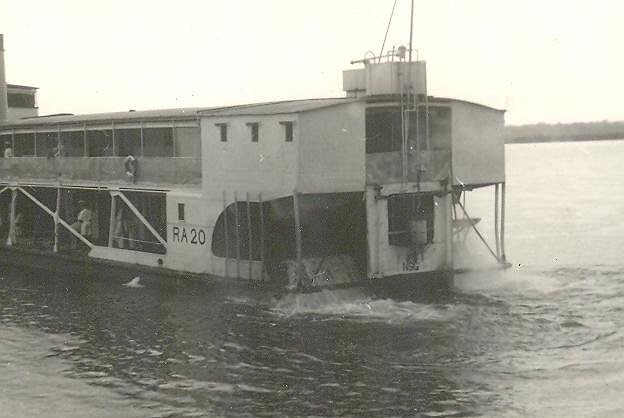
Rather than taking the main line towards Kampala, we are first going to take the branch-line to Kitale. Some 20 kilometres to the West of Eldoret the branch to Kitale diverges north from the main line. It’s route is shown on Open Street Map as a dotted line as can be seen below. [7] Its route can be just as easily picked out on the Google Earth satellite image as well.En-route to Kitale the railway passed through 3 stations … Soy, Springfield Halt and Moi’s Bridge. for much of its route it is followed by an unnamed and unnumbered secondary road. Soy Railway Station was perhaps 3 kilometres from the village with which it shared its name.

The satellite image is the best we can do to show the station, which appears to have a passing loop and some simple buildings but nothing more. From Soy the branch-line ran some 8 kilometres in a northerly direction before swinging round to the west.

It joined the line of the B2 road and swung north-west and then north once again. As the railway approached Moi’s Bridge it swung sharply through 180 degrees and then back again to the north. I have carefully checked the line of the railway and the B2 road but cannot find any evidence of Springfield Halt. Perhaps someone wiser than me can say where it is (or was).

Over some significant distance the railway has followed a relative straight path alongside the B2. The need to snake around will have been dictated by the contours of the land. The map below shows the route taken.We are still some kilometres south of Moy’s Bridge, so it is possible that Springfield Halt is/was close to this settlement, although it is not visible on Google Earth. On its way to Moy’s bridge the railway now meanders around before entering Moi’s Bridge Railway Station travelling in a easterly direction. The blue dot on the map below gives the location of the railway station and the bridge over the River Nzoia can be found adjacent to the ‘B2 road-marker.In the satellite image above, Moi’s Bridge Station is in the bottom left and the bridge is just off the top of the picture. The satellite image below is the best overhead image of the bridge available.

However, I have been able to find a video from which I have obtained this photograph. It is not the most stunning shot of the bridge but it does help to understand it construction. It seems to be a three span simply-supported girder bridge with the largest span to the south-east and spanning the river.

After Moi’s Bridge the railway follows the B2 in a generally north-westerly direction until it reaches the suburbs of Kitale. In the centre of the town the railway finishes its journey adjacent to the C45 road – the Mumia Highway.

These next few pictures are taken on the approach to the branch terminus at Kitale. They can mainly be found on the Railway Ramblers website. [3] These pictures were taken in 2009. In 1983, Kitale station was still in use as a goods terminus but passenger services had long-gone. In 1983, a significant amount of the supplies, including food, for a major famine relief project in the Turkana district to the north of Kitale came in by rail and was forwarded by road. There was a Barclay 0-8-0 class 46 shunter stationed there and the regular branch engines were EE 1Bo-Bo1 of class 71 or 72. [4]A close-up of the permanent way, viewed about a kilometre south-east of Kitale station. As can be seen, there is no ballast, although the country’s operational lines are ballasted. This makes it possible that any ballast here has simply settled into the clay. The sleepers are made from neither wood nor concrete but metal, designed so as to grip the clay effectively and (presumably) prevent the whole structure from sinking into the ground when wet. A rail joint with fishplates can be seen in the foreground, while the keys holding the rail to the sleeper are of a fairly modern spring type, used in the UK during the mid 1970s. The tracks of bicycle tyres can be made out between the rails. The demand for Sustrans-style rail-to-trail conversions would be very limited in Kenya, since the locals just help themselves. The empty railway is a far more pleasant way of getting into Kitale than the noisy main road, where vehicles emit amounts of exhaust that would send British clean-air campaigners into a frenzy. The stench of diesel fumes on Kenya’s roads is not a pleasant experience, (c) Jeff Vinter. [3]A typical view along the trackbed, looking north west towards Kitale. The W signs, one facing each way, instruct the driver of oncoming trains to sound his whistle – not for the footpath crossing seen in the foreground, but for the level crossings in front of and behind the photographer, (c) Jeff Vinter. [3]The home starter signal for entering Kitale station yard. The signal is an unusual combination of British styles, using the lattice structure common on the LSWR but the lower quadrant board common on the GWR, (c) Jeff Vinter. [3]The level crossing seen in the background of the photograph above is still protected by this substantial sign, although its neighbour on the far side has begun to topple over (look for the white-painted ends of its arms). Signs like this abound all over the Kenyan railway system, on lines both open and closed. Unusually, this road is made of tarmac and is not full of potholes! (c) Jeff Vinter. [3]The points (turnouts) to Kitale goods yard. As can be seen, the point lever is still in place, as are all of its counterparts throughout this large yard, (c) Jeff Vinter. [3]The crane in the old goods yard survives. Presumably, it is still capable of working, since all the cables and pulleys remain in place – albeit somewhat rusty and in need of lubrication, (c) Jeff Vinter. [3]A view looking south eastwards along the departure platform of Kitale station. The massive building on the left is the extensive goods shed, The crane in the picture above can just be made out in the distance, silhouetted against the sky, (c) Jeff Vinter. [3]A picture of Kitale Station building taken in 1929. [5]Kitale station, viewed from the goods yard, was equipped with only a single platform, although it was very long. The station’s design is what one would expect of a colonial structure built in the early 20th century with its elegant arches and colonnades. The departure road is covered in grass but the rails can just be made out, while the rails in the foreground belong to the main running line within the goods yard. The small stone building behind the telegraph pole was the station master’s office, (c) Jeff Vinter. [3]The picture above was taken in 1930 at Kitale. It shows a small family waiting to take the train which will eventually lead to them returning to the United Kingdom. [6]The running-in board at Kitale station is set some way back from the platform at an angle to approaching trains, presumably so that drivers and passengers could see it better. It declares the station to be 1,895.86 metres above sea level. The original height would probably have been shown in feet, (c) Jeff Vinter. [3]The exit from the platform at Kitale station was suitably grand and still proclaims ‘Kitale Railway Station’, perhaps over 30 years after the last train ran. The door visible behind the colonnade on the right indicates that the railway’s livery was similar to the GWR’s famous ‘chocolate and cream’. After years of neglect, the platform surface is beginning to break up, but it is still in better condition than many of the country’s roads, (c) Jeff Vinter. [3]Kitale station, viewed from the street, has the same colonial styling as on the platform side. The building still, in part at least, serves a public transport purpose, since the banner hung from the guttering on the left advertises the booking office of Matunda Buses. Often, one of Matunda’s vehicles will be seen parked outside, (c) Jeff Vinter. [3]

We finish this post on the concourse outside Kitale Station and prepare to return to Eldoret for the onward journey to Kampala.

References

  1. http://www.sikh-heritage.co.uk/heritage/sikhhert%20EAfrica/sikhsEAfrica.htm, accessed on 27th May 2018.
  2. https://www.google.co.uk/search?q=eldoret+railway&client=tablet-android-lenovo&prmd=mniv&source=lnms&tbm=isch&sa=X&ved=0ahUKEwjXivnk3abbAhUIXMAKHfuPAl8Q_AUIEygD&biw=800&bih=1280#imgrc=4F4p_HGkxIV9gMHGkxIV9gM, accessed on 27th May 2018.
  3. http://www.railwayramblers.org.uk/photo/35photo.htm and http://www.railwayramblers.org.uk/photo/36photo.htm, accessed on 27th May 2018.
  4. Paul Taylor; http://www.railwayramblers.org.uk/photo/35photo.htm, accessed on 27th May 2018.
  5. https://www.theeagora.com/the-lunatic-express-a-photo-essay-on-the-uganda-railway, accessed on 21st May 2018.
  6. http://www.hilarymunro.com/?p=736, accessed on 28th May 2018.
  7. https://www.openstreetmap.org/#map=15/0.5927/35.1861, accessed on 28th May 2018.

The Uganda Railway – Part 12 – Nakuru to Eldoret

We return to Nakuru to pick up again on what is now the main line. In 1929 the Uganda Railway became Kenya and Uganda Railways and Harbours (KURH), which in 1931 completed a branch line to Mount Kenya and extended the main line from Nakuru to Kampala in Uganda.

In 1948 KURH became part of the East African Railways Corporation, which added the line from Kampala to Kasese in western Uganda in 1956.[1] and extended to it to Arua near the border with Zaïre in 1964.[2]We start the next part of the journey at Nakuru Station. The map above shows the length of the line to the junction with the line to Kisumu. The MPD can be picked out adjacent to the triangle for turning locos. The passenger station is t the right of the map extract. The Goods Yard is the are to the right of the triangle.

There is good coverage of the station on the earlier post about the line from Nakuru to Kisumu …..

https://wordpress.com/post/rogerfarnworth.com/8058

The images immediately below show the Passenger Railway Station at Nakuru in the 21st century – they are sourced as follows – the first from Google Maps and the following three from Google Streetview. ….

Screenshot_20210406-184235

Nakuru Passenger Station – to the Northwest of the station, the line passed immediately over the Nakuru ring-road before swinging round to the West, (Google Maps).

Screenshot_20210406-181709

View from the Road to the East of the Station, (Google Streetview).

Screenshot_20210406-182240

View from the Town Centre roads to the South of the Station, (Google Streetview).

Screenshot_20210406-181422

View of the main Station Building from the West, (Google Streetview).

There are a number of sites on the web which have pictures of locomotives at Nakuru Railway Station. These include: …

  • Christopher Yapp took a photograph of Class 30 No. 3020 ‘Nyaturu’ 2-8-4 on a charter in 2005. [5]
  • An earlier photograph of a Class 60 Garratt (still bearing its Governor’s name plate and without Giesl ejector) waiting to take the Uganda Mail forward from Nakuru was taken by Geoff Pollard. [6]
  • By 1962, Class 58 Garratt locomotives had replaced the Class 60s between Nakuru and Kampala.

And, between Nairobi and Nakuru, the Class 58 had in turn been replaced by Class 90 1-Co-Co-1 diesels built by English Electric. Malcolm McCrow has a number of pictures of these locos on his website. [6]

Malcolm’s website has photographs of Class 90 diesels at Nakuru. These include Class 90 No. 9010 waiting to take over from the Class 58 above which brought the train from Kampala. Then waiting for the right of way for Nairobi. [6]

The website also has a photograph of No. 9008 at Nakuru at the head of a Kampala to Nairobi/Mombasa courtesy of James Lang Brown. [6]

There are also two pictures of Class 87s at Nakuru on Flickr: …

  • Class 87 No 8723 at the head of a train at Nakuru, © Youth With. [7]
  • Class 87 No. 8739 at Nakuru shunting empty stock, © Christopher Yapp. [8]

Other locos at Nakuru can be seen at Nakuru:. …

  • On Flickr, Robert Mason has an early morning shot of Tribal Class 29 2-8-2 No. 2905 ‘Digo, in 1967. [9]
  • Malcolm McCrow has a picture of Kampala bound in 1961,  Class 58 Garratt No. 5804 – lettered EAR&H which has just handed over its train to a Class 60 Garratt which will run through to Kampala. No. 5804 has run round its train and is on its way to the MPD. [6]
  • Kampala bound in 1961,  Class 58 Garratt No. 5804 – the uniquely lettered EAR&H – has just handed over its train to a Class 60 Garratt which will run through to Kampala. No. 5804 has run round its train and is about to go on shed, © Malcolm McCrow. [6]
  • Pinterest carries a photograph by Neil Rossenrode of a Class 54 Garratt in Nakuru Goods Yard in 1962. [4]

A few pictures of locos at rest in the MPD.Nakuru Shed, © Archie Morrow.[3]Nakuru Shed and Marshalling Yard.[10]

The satellite image below show both the MPD and the Nakuru Sidings.

After leaving Nakuru marshalling yard, trains travelled east to the junction with the Kisumu line. After that junction the line turned north through Kiamunyi and then west to Menengai Railway Station which is close to Barclays Airport and some distance from the volcanic crater of the same name which is actually due north of Nakuru. The adjacent image is a very early picture of Menengai Railway Station building.Menengai Crater is a massive shield volcano with one of the biggest calderas in the world. ?It is located in the Great Rift Valley, Kenya and is also the largest volcano caldera in Kenya as well as the second largest volcano caldera in Africa. Farmland occupies its flanks.

The Menengai Crater is located on the floor of the Rift Valley. The volcano formed about 200,000 years ago and the prominent 12 x 8 km caldera formed about 8000 years ago. The caldera floor is covered with numerous post caldera lava flows. The Menengai volcano is considered one of the best-preserved Krakatau-style calderas in the world.

Menengai has very little sediment in the caldera which is a thick mass of lava boulders and inaccessible ridges. Volcanic activity continues and is used for geothermal power generation. The Menengai Creater is located 10 km (6 mi) north of Nakuru. [11]Satellite image showing Menengai Railway Station

After Menengai, the railway continued in an approximately westerly direction to Rongai which lies 30 km west of Nakuru. It is about 10 kilometres north of Elburgon and 15 kilometres east of Molo, names recognisable as stations on the Kisumu line. The town lies 1912 m (6272 ft) above sea level and has a population of 20878.[12]Satellite image showing Rongai Railway Station

Initially travelling in a west-northwest direction, the railway swings round to the north as it reaches the next station/halt on the route, Visoi, just before leaving Nakuru County and entering Baringo County.

The line then heads to Esageri, meandering around to follow the contours, and on to Sabatia.Sabatia Railway Station.The line snakes around from Sabatia to Maji Mazuri, circling the north side of Koibatek Forest.Koibatek Forest.

Maji Mazuri is a settlement in Kenya’s Baringo County along the Makutano-Ravine-Kampi Ya Moto highway. This is the most southerly tip of the greater Baringo area. It neighbors Kericho’s Londiani and Nakuru’s Kamara areas. The settlement was formed by migrants who used to work in the Koibatek Forest but were either retrenched or retired at one time. As such Maji Mazuri is home to people from different ethnic groups of Kenya.[13]

After Maji Mazuri come Makutano and Equator.

The line reaches Makutano  in a meandering route close to the B53 (D314) road. By now the line is,for a very short distance, back in Nakuru County. The map below shows the route of the line and the County boundary. It also shows, to the north of Makutano township (and back in Baringo County), the second spiral on the line from Mombasa to Kampala. The third is just a short distance beyond the next station, Equator.A Kampala bound School Train somewhere in the Highlands – possibly west of Maji Mzuri. The dining car is the fourth coach from the front of the train; the third coach is probably a kitchen car, (c) Malcolm McCrow. [6]

The spiral is also shown on the adjacent satellite image – at the top of the picture next to A104 road to Eldoret. Sadly, in 1994, I think I missed this and the next spiral because day had turned to night at this point on the journey.

Pictures of the spiral seem to be in short supply. The one immediately below is of the royal train negotiating the spiral. It was carrying the Queen Mother to Eldoret. We will discover the remaining spiral on the line when we look at the length between Kampala and Kasese in due course. [6]

The spiral at the Equator north of Makutano. [14]Despite the legend under this picture (taken through glass) which says that this is an image of the spiral between Equator an Timboroa, careful examination of the layout of the two spirals indicates that this is the spiral between Equator and Makutano. [15]

Embed from Getty Images

The station at Equator is shown in the embedded Getty Images picture above. It is better documented, in photographs, than others we have already passed, particularly on Malcolm McCrow’s website. [6] He includes at least three photographs – one shows the platform sign for the station and the unique Equator marker. Malcolm McCrow says: “The equator runs across the platform at Equator Railway Station. A “Whistle” diamond sign is just visible at the end of the platform. Generally the Mail Train and School Trains did not stop at Equator, but a first class ticket holder on a Mail Train could request a halt at any station where a run through would be the norm. School Trains would stop if booked in advance.”

Alongside a further picture, this time showing the special marker sign and the line of the Equator in white paint, McCrow comments: “Observant passengers would have noticed different equator signs along the trackside as the train wound its way over the equator at least three times. It has been suggested that the train crossed the equator 5 times, but only three points seem to be marked by signs.”

The station building can be seen in the background in the next embedded image from Getty images: ….

Embed from Getty Images

There is a better image of the Station building on Malcolm McCrow’s website  which has been provided by James Lang Brown. [6].

The map and satellite image below show the station at Equator and the second spiral, of which I can find no photographs.The adjacent satellite image is a closer view of Equator Railway Station, and the image blow is a closer view of the spiral. I’d be really interested in seeing any photographs of the two spirals in this post, but particularly of the one to the west of Equator Railway Station.

As the railway leaves Equator Railway Station in a Westerly direction it is close to the summit of the line. Equator Railway Station is 8716ft (2492 metres) above sea-level. The summit of the line reaches a height of 9136ft (2785 metres) above sea-level.

The picture below is a Kenya-Uganda Railway (KUR) Postcard showing KUR Class EC1 still in grey but sporting East African railways and Harbours (EAR&H) Class 50  number board as it heads a Nairobi bound freight over the summit (c) EAR&H. [6]Malcolm McCrow’s website also provides a shot of the summit marker board viewed from a “Nairobi-bound School Train taken from a second class coach behind the only first class one in the consist.” [6]

The railway ran parallel to the Nakuru-Eldoret (A104) road, north from the spiral, over the summit, to arrive at Timboroa. Timboroa is just within Baringo County, very close to the border with Uasin Gishu County.At an altitude of 9001ft (2744 metres), Timboroa Railway Station is the 11 highest (non-cable) railway station in the world, and the highest railway station in the Commonwealth. [16]Timboroa Railway Station. [17]111539: Timboroa Kenya Looking East, (c) Weston Langford. [18]

From Timboroa, the railway travelled north through Ainakboi, Tumeiyo, Kipkabus and Kaptagat Stations. Norman and Irene Campbel provide a picture of a school train stopped at Kaptagat in 1961 on Flickr. [24]

Alongside his own photograph of Kaptagat Station, Malcolm McCrow comments: “Trains travelling East would leave Eldoret in the dark, and arrive at Kaptagat just after dawn.” [6]

The adjacent satellite image shows Kaptagat Station which is in a loop in the line which belies the direction of travel. The railway is now travelling in a Northwesterly direction and continues from Kaptagat to Cheploske and Plateau.

The satellite image below shows Plateau Station. The next photograph shows Plateau Station building.

After Plateau, one station remained, Sosian, before trains reached Eldoret. Eldoret is the fifth largest city in Kenya, second only to Kisumu in Western Kenya and the end of this stage of our journey!

The first train picture below is a very early image from colonial times. The map below shows the track layout at the Station.Class 60 no. 6008 at Eldoret in 1958.Derailment Eldoret Yard, 1963 (photo by Neil Rossenrode)Derailment, Eldoret Yard, 1963 (c) Neil Rossenrode. [21]Derailment in Eldoret Yard in 1964, (c) Neil Rossenrode. [20]Class 60 in Eldoret Yard, (c) Peter Davis. [22]
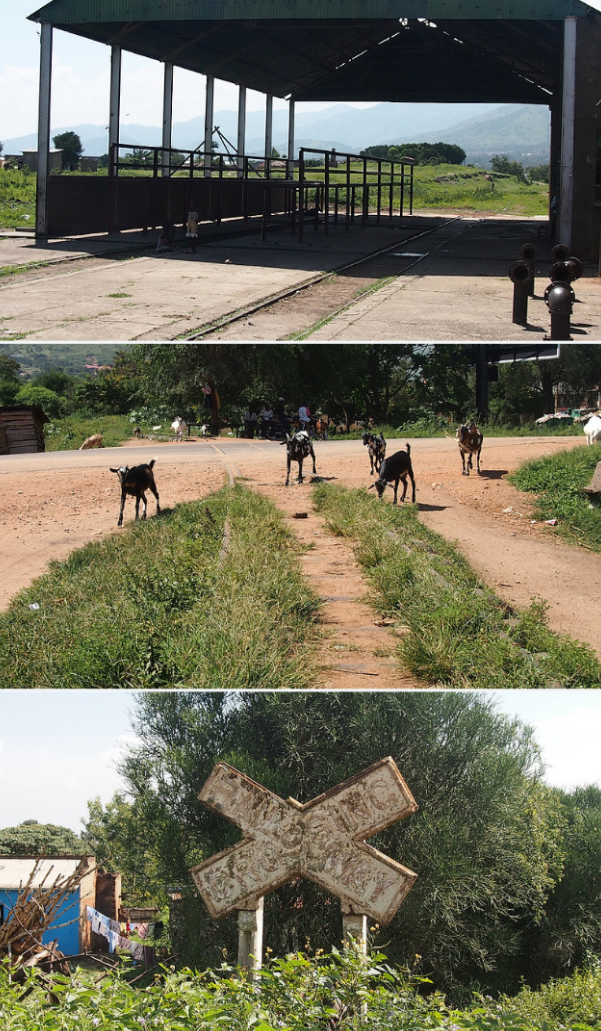
References

  1.  “Investing in Uganda’s Mineral Sector” (PDF). http://ugandainvest.com/mining.pdf, accessed on 20th June 2010 – no longer available.
  2. Wikipedia, Uganda Railway; https://en.wikipedia.org/wiki/Uganda_Railway, accessed 15th May 2018.
  3. http://www.oldcambrians.com/Train4.html, accessed 24th May 2018.
  4. https://www.pinterest.co.uk/pin/462463455483881646, accessed 26th May 2018.
  5. https://www.flickr.com/photos/128839707@N03/17430623451/in/photolist-21LmYUY-fN1DNS-dcEEiS-eEjGME-e6J3D7-hGTeBd-RWxLwQ-aeKxoR-F78ngU-RAuADh-dE1BLJ-RWy87C-syhv5x-iWKDzQ-nBk4b-21SDq8g-S7wXDq-sgJGAW-sy9Psw, accessed on 26th May 2018.
  6. http://www.mccrow.org.uk/eastafrica/eastafricanrailways/KampalaNairobi.htm, accessed 24th May 2018.
  7. https://www.flickr.com/photos/youthwith/6775572039/in/photolist-bjJzvz-syhv5x-kb1L9-ijpMZS-5U44mD-bn2NzC-bojoXR-6PHLzC-dxyBy5-ec8xiY-G1SxDj-sgJGAW-6n7s4y-sy9ipf-6riFRd-6riAgq-Xpopdx-4gWSYU-48Eko1-GYcSmb-9RLhA8-F8vFZm-hbYVxX-6SrGXC-mRCD5j-bAnDhS-ab8ZBs-6SrJbQ-cVYkNW-nrEveJ-aeNdcs-dcEEiS-88qc2u-bW6xBx-anC4UM-9phTE9-dhLWA6-9yrcd2-ndUWcA-ow7q5Q-omunYR-5fi4HZ-dhMkh3-9PQA1K-ahCmqV-dhMj1M-9yJt2y-dhMpvT-ejtLxL-dhMpMz, accessed on 26th May 2018.
  8. https://www.flickr.com/photos/128839707@N03/17429023272/in/photolist-sy9ipf-6riFRd-6riAgq-Xpopdx-4gWSYU-48Eko1-GYcSmb-9RLhA8-F8vFZm-hbYVxX-6SrGXC-bAnDhS-ab8ZBs-6SrJbQ-cVYkNW-nrEveJ-aeNdcs-dcEEiS-88qc2u-bW6xBx-anC4UM-9phTE9-dhLWA6-9yrcd2-ndUWcA-ow7q5Q-omunYR-5fi4HZ-dhMkh3-9PQA1K-ahCmqV-dhMj1M-9yJt2y-dhMpvT-ejtLxL-dhMpMz-7Va4eP-cghReq-dhM7nf-dhMhsp-CVvK3Z-ejtLMG-ej6uDv-cghR8s-chyaZb-9XjosD-dhMtx2-ejo3Di-dhMcg8-aeKpAn, accessed on 26th May 2018.
  9. https://www.flickr.com/photos/31312468@N00/6816119855/in/photolist-bojoXR-6PHLzC-dxyBy5-ec8xiY-G1SxDj-sgJGAW-mRCD5j-6n7s4y-sy9ipf-6riFRd-6riAgq-Xpopdx-4gWSYU-48Eko1-GYcSmb-9RLhA8-F8vFZm-hbYVxX-6SrGXC-bAnDhS-ab8ZBs-6SrJbQ-cVYkNW-nrEveJ-aeNdcs-dcEEiS-88qc2u-bW6xBx-anC4UM-9phTE9-dhLWA6-9yrcd2-ndUWcA-ow7q5Q-omunYR-5fi4HZ-dhMkh3-9PQA1K-ahCmqV-dhMj1M-9yJt2y-dhMpvT-ejtLxL-dhMpMz-7Va4eP-cghReq-dhM7nf-dhMhsp-CVvK3Z-ejtLMG, accessed on 26th May 2018.
  10. https://www.theeagora.com, accessed on 21st May 2018.
  11. https://en.m.wikipedia.org/wiki/Menengai, accessed on 26th May 2018.
  12. https://en.m.wikipedia.org/wiki/Rongai, accessed on 26th May 2018.
  13. https://en.m.wikipedia.org/wiki/Maji_Mazuri, accessed on 27th May 2018.
  14. http://www.friendsofmombasa.com, accessed on 15th May 2018.
  15. https://www.flickr.com/photos/bvohra/8223072164/in/photolist-dwDoSh, accessed on 26th May 2018.
  16. https://twitter.com/kresearcher/status/560091036849287168, accessed on 27th May 2018.
  17. https://www.pinterest.co.uk/pin/90986854943791222/?lp=true, accessed on 27th May 2018.
  18. http://www.westonlangford.com, accessed 24th May 2018.
  19. https://www.pinterest.co.uk/pin/559361216210820409, accessed on 27th May 2018.
  20. https://www.pinterest.co.uk/pin/462463455481301933/?lp=true, accessed on 27th May 2018.
  21. https://www.pinterest.co.uk/pin/482377810082083293/?lp=true, accessed on 27th May 2018.
  22. https://www.pinterest.co.uk/pin/559361216210820386/?lp=true, accessed on 27th May 2018.
  23. Not used
  24. https://www.flickr.com/photos/128756940@N02/15602334132/in/photostream, accessed on 27th May 2018.