Category Archives: Comments and Reflections

The Fox and the Hen – Luke 13: 31-35

(The 2nd Sunday of Lent)

Images of animals are common in fables and fairy stories. They’re not so common in the New Testament. Sheep and Shepherd’s appear now and then, but in today’s Gospel we have two in the space of a few short verses. Two very contrasting images – Herod the fox and Jesus, the mother hen.

Fox and hen are ancient foes, as many a tale tells us.

They often start like this…. “Once upon a time there was a little Red Hen, who lived on a farm all by herself. An old Fox, crafty and sly, had a den in the rocks, on a hill near her house. …” – You may have told tha kind of story to your own children – certainly many parents have.

Are you familiar with the story? If not, there is a version of it at the end of this article…

Fox and hen – cunning evil fox, gentle little clever hen. That’s the pattern. It must ever have been so! For Luke cleverly juxtaposes the two images. Herod, the fox, the creature who eats chicken for supper. Jesus, the mother hen, who desperately loves her silly chicks and does everything she can to protect them.

First the fox: this Herod is not the same Herod who massacred the innocents. This Herod is his son. This Herod only makes a few short appearances in Luke’s gospel, yet he has a pivotal place in it. Luke’s purpose in writing his Gospel is to answer just one question. And it is Herod the fox who asks the question in Luke Chapter 9 – “Who is this man about whom I hear such things?” And, says Luke, … Herod tried to see Jesus.

Luke the evangelist reminds us of the aim and purpose of evangelism -to invite just that question and to encourage that quest.

And Herod is still wondering who Jesus is when towards the end of the Gospel of Luke, Jesus is brought before him at his trial.

We used to give our ancient Kings interesting and descriptive names Edward the Confessor, Ethelred the Unready. This Herod could be given a similar name. Herod the ambivalent, or Herod the undecided. For although he wanted to know more about Jesus he was never ready to act one way or the other. And in Luke 23, he sends Jesus back to Pilate for a final life or death decision.

Luke compares Herod, the cunning fox who stayed in power by careful political manoeuvring, with Jesus. Herod used Jerusalem as his power base, Jesus wept over Jerusalem. Jesus says that he longs for Jerusalem as a mother hen gathers her chicks under her wings in times of trouble.

This is not an image that we focus on so often…. Christ as lamb of God, or as the lion of Judah, resonate with our faith. Jesus the mother hen seems faintly ridiculous – why is that?

We know that God is neither masculine nor feminine – but God cannot be called “it” for the Bible reminds us time and again that God has a personality. Most often male imagery is used to speak about God, but by no means every time. … In our short Gospel reading, God is compared to a mother hen and the feminine image is important. God broods over Jerusalem with a depth of self-sacrificial love. He longs for their safety and eternal security and will do anything to give life to his children.

Perhaps this image of God, of Jesus, as the mother hen seems ridiculous because hens are seemingly brainless, clucking birds They are angular funny birds. It does seem … just ridiculous to compare God to a hen! But perhaps that is the point after all. For the hen destined for the pot is no more or no less helpless than the lamb led to slaughter.

The prophet Isaiah reminds us that the “man of sorrows” had no form or comeliness that we should admire him. Isaiah suggested that if we had seen him suffering we would have hid our faces in embarrassment – “we hid as it were our faces from him.”

Yes, hens are silly little things. But there is a story told of a fast moving grass fire and of a hen caught out in the open with her chicks. As the flames approached the hen could see that she and her brood would never out run the danger and so she gathered her chicks under her wings and settles down as tight to the ground as she can. The flames rapidly passed over the place where she sat and moved on across the grassland. As the ground cooled around her roasted body there was movement under her wings and the young chicks pushed their way out into the open and began to forage for scraps in the scarred landscape.

Luke compares Jesus, the mother hen who would die to protect her chicks, with the political authority of the day, Herod, the Fox, who held onto power by ruthless cunning.

We worship a God who describes himself to us in the person of Jesus, who broods over us, longing for good for us, longing for our security and peace. In our prayers, and as we say the creed together we express our confident trust in that ‘mother-hen’ kind of love that God has for us.

_____________________________________________

The Fox and the Little Red Hen

Once upon a time there was a little Red Hen, who lived on a farm all by herself. An old Fox, crafty and sly, had a den in the rocks, on a hill near her house. Many and many a night this old Fox used to lie awake and think to himself how good that little Red Hen would taste if he could once get her in his big kettle and boil her for dinner. But he couldn’t catch the little Red Hen, because she was too wise for him. Every time she went out to market she locked the door of the house behind her, and as soon as she came in again she locked the door behind her and put the key in her apron pocket, where she kept her scissors and a sugar cookie.

Once upon a time there was a little Red Hen, who lived on a farm all by herself. An old Fox, crafty and sly, had a den in the rocks, on a hill near her house. Many and many a night this old Fox used to lie awake and think to himself how good that little Red Hen would taste if he could once get her in his big kettle and boil her for dinner. But he couldn’t catch the little Red Hen, because she was too wise for him. Every time she went out to market she locked the door of the house behind her, and as soon as she came in again she locked the door behind her and put the key in her apron pocket, where she kept her scissors and a sugar cookie.

At last the old Fox thought up a way to catch the little Red Hen. Early in the morning he said to his old mother, “Have the kettle boiling when I come home tonight, for I’ll be bringing the little Red Hen for supper.” Then he took a big bag and slung it over his shoulder, and walked till he came to the little Red Hen’s house. The little Red Hen was just coming out of her door to pick up a few sticks for kindling wood. So the old Fox hid behind the wood-pile, and as soon as she bent down to get a stick, into the house he slipped, and scurried behind the door. In a minute the little Red Hen came quickly in, and shut the door and locked it. “I’m glad I’m safely in,” she said.

Just as she said it, she turned round, and there stood the ugly old Fox, with his big bag over his shoulder. Whiff! how scared the little Red Hen was! She dropped her apronful of sticks, and flew up to the big beam across the ceiling. There she perched, and she said to the old Fox, down below, “You may as well go home, for you can’t get me.”

“Can’t I, though!” said the Fox. And what do you think he did? He stood on the floor underneath the little Red Hen and twirled round in a circle after his own tail. And as he spun, and spun, and spun, faster, and faster, and faster, the poor little Red Hen got so dizzy watching him that she couldn’t hold on to the perch. She dropped off, and the old Fox picked her up and put her in his bag, slung the bag over his shoulder, and started for home, where the kettle was boiling.

He had a very long way to go, up hill, and the little Red Hen was still so dizzy that she didn’t know where she was. But when the dizziness began to go off, she whisked her little scissors out of her apron pocket, and snip! she cut a little hole in the bag; then she poked her head out and saw where she was, and as soon as they came to a good spot she cut the hole bigger and jumped out herself. There was a great big stone lying there, and the little Red Hen picked it up and put it in the bag as quick as a wink.

Then she ran as fast as she could till she came to her own little farm-house, and she went in and locked the door with the big key. The old Fox went on carrying the stone and never knew the difference. My, but it bumped him well! He was pretty tired when he got home. But he was so pleased to think of the supper he was going to have that he did not mind that at all. As soon as his mother opened the door he said, “Is the kettle boiling?”

“Yes,” said his mother; “have you got the little Red Hen?”

“I have,” said the old Fox. “When I open the bag you hold the cover off the kettle and I’ll shake the bag so that the Hen will fall in, and then you pop the cover on, before she can jump out.”

“All right,” said his mean old mother; and she stood close by the boiling kettle, ready to put the cover on.

The Fox lifted the big, heavy bag up till it was over the open kettle, and gave it a shake. Splash! thump! splash! In went the stone and out came the boiling water, all over the old Fox and the old Fox’s mother! And they were scalded to death. But the little Red Hen lived happily ever after, in her own little farmhouse.

Temptation (Luke 4:1-13)

I want to invite you to think back with me, first, to the years 2000 and 2005. Two significant events occurred in the life of two different sports people which hit the headlines.

25 years ago in April 2000, South Africans were stunned by allegations that Hansie Cronje, captain of the national cricket team, had taken bribes to fix matches. The very idea that this national hero and role model would contemplate doing something dishonest and corrupt seemed incomprehensible.

When some allegations were confirmed there was a real sense of national mourning. People asked: ‘If someone like Hansie Cronje can do this what hope is there for the rest of us?’ [1]

Cronje’s response on TV, when allegations were confirmed, was to blame the devil for making him accept bribes to fix results.

South Africans saw this as an attempt by Cronje to evade responsibility for his actions. And they were right.

To say, ‘The devil made me do it,’ is to attempt to avoid facing our own internal demons. We are responsible for our own actions … even if we feel that there might be mitigating circumstances.

Around 4 years later, in the winter of 2004/5, Ellen MacArthur came to prominence as one of our most outstanding sports-people. It surprised me, as I was thinking about this article, that it was as long ago as March 2005 that the TV programme about her was shown. Do you remember it? … It was the story of her amazing journey round the Antarctic as part of the Vendée Globe Race. [2]

It was filmed by her using just a few cameras on her yacht. I can still vividly remember my sense of disbelief at the stamina and commitment she showed, the difficulties that she faced and the obstacles that she overcame. You may well not remember the TV programme. … I was bowled over. I saw the speed of the yacht, the height of the waves. I saw her, in one sequence,  hanging by one arm from the mast, 60 ft about the deck in the middle of a storm, trying to mend wind-measuring equipment. The camera showed just how much the yacht was rolling from side to side and at the top of the mast Ellen was alternatively far out over the swell on the port side of the yacht before being thrown across to the starboard side and again far out over the mountainous waves.

At one point in the programme, talking about her early life, Ellen said that she had a dream which she didn’t believe would ever become a reality. Yet, she said, with persistence she had realised that dream. For Ellen, the chance to pit herself against the ultimate sailing challenge was the dream.

Fulfilling the dream required wholehearted commitment to see it through, remaining true to herself and to the values she had embraced.

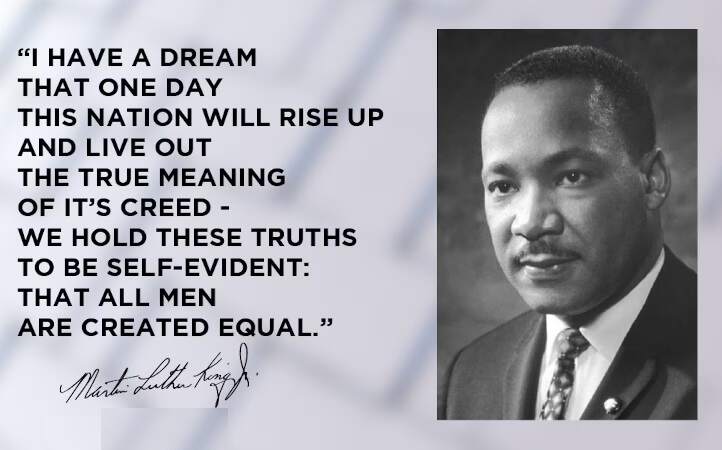
Martin Luther King Jr. is famous for his sermon on the 28th August 1963 from the steps of the Lincoln memorial in Washington DC. “I have a dream,” he said, “that my four little children will one day live in a nation where they will not be judged by the color of their skin but by the content of their character.” [3]

Just under 5 years later on 4th April 1968 he was assassinated in Memphis, Tennessee.  Martin Luther King Jr. had a dream that became the focus of his whole life, and he was martyred for that dream.

Successful people the world-over will tell you that pursuing a dream, to be the best, requires commitment, application and stamina. They will tell you of the sheer slog of hard work involved, the guts and determination that it takes to be the best. And they will tell you too that the feeling which comes after success, like the joy of holding that gold medal, the status that they achieve – makes all the hard work worthwhile. Their dream, their mission achieved, they have every right to feel proud.

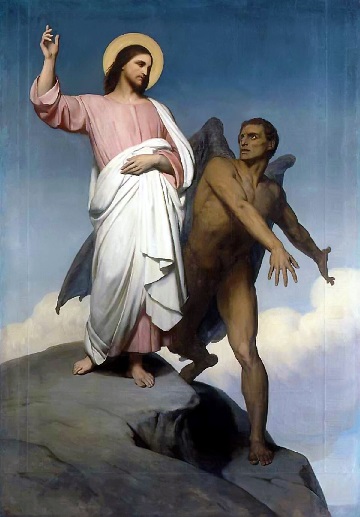
On the first Sunday in Lent, we remember that Jesus was tempted. In the Gospel stories, he is engaged in the sternest of tests of his commitment to his mission. The account in Mark is short. In Matthew and Luke we get a much fuller account of the battle he fought. Satan tries, and fails, to turn Jesus away from God’s plan. Satan offers Jesus the easy way out. Both Matthew and Luke talk of three different temptations.

Actually, it is effectively the same temptation in three different forms. … The temptation to set aside God’s plan for his life – to put the dream on hold. This was a temptation which Hansie Cronje could not handle, … it was a temptation that Ellen MacArthur faced and overcame.

Jesus is first tempted to put himself first – to change stones into bread. Then he is tempted to grasp power for himself rather than bring in God’s kingdom. And Satan also tempts Jesus to look for the easy route to draw people to himself, to seek fame rather than suffering and death. To look for the instant, short-term solution, rather than face real and necessary struggles ahead. All of these are temptations to destroy the dream, his mission. Temptations to turn aside from God’s plan.

In each case, it’s God’s plan that Jesus chooses to follow  – a path of self-denial that will lead through the cross to eventual resurrection. God’s plan, God’s dream, is the defeat of the power of death and evil. Unlike Hansie Cronje, Jesus remains committed to the dream, no matter the cost. Much as Ellen MacArthur did, much at Martin Luther King Jr and many Christian martyrs did, Jesus remains focussed on the dream, on God’s dream, God’s plan.

So what is God’s dream? … What are we called to commit to wholeheartedly? … Perhaps the simplest expression of that dream is God’s desire to see the growth of the Kingdom of God on earth. Only you can answer the question about what part in God’s dream, God’s plan for the coming of God’s kingdom is for you. You might, though, have other people’s help in identifying your part in the plan in the coming of the Kingdom. But ultimately remaining true to God’s plan for you and refusing to be drawn away into other things, is what overcoming temptation is all about.

Here, though, are four clear challenges from Luke’s story of the temptations of Jesus. …………..

Priorities: Jesus was tempted to place physical need above spiritual, to live without trusting God, …… to turn stones into bread. ….… We so easily base our security in our jobs, our homes and families, and our money rather than in God. … We need to begin again to experience God’s provision for us, rather than just living off our own resources. … So, here’s a first challenge – to be prepared to make sacrifices in our lifestyle, to make serving God our priority. …. Perhaps as a sign of our commitment to God’s Kingdom this Lent, rather than giving up chocolate we could do something different? … Something positive? …

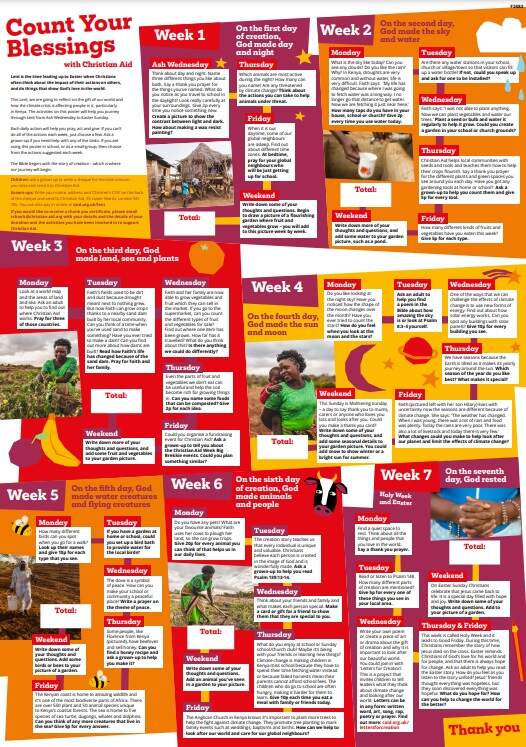
One option for families might be to use “Count Your Blessings,” a Lent initiative by Action for Children and Christian Aid [2] that encourages people to be grateful for what they have. Their websites have details. Or perhaps we could join with the Stewardship organisation in its 40 Acts of Kindness 2025, ‘Do Lent Generously’ [3] – a movement of thousands of people on a mission to impact their communities by creating moments of radical generosity.

Prayer and Worship: In being tempted to turn stones into bread, Jesus was tempted to turn away from his relationship with God and to become self-reliant. …. How can we together, begin to show our reliance on God? …. By praying and worshipping, together and alone, by expressing together, our need of God’s help. God can & does provide the resources we need to follow the dream. We need both to rely on God, & to be seen to do so. This is a challenge to spend more of ourselves in worship and prayer.

Persistence: In Satan’s encouragement to throw himself off the temple, Jesus was tempted to look for the instant, the short-term solution. To wow people into the kingdom, to impress with magic and illusion. … We can so easily fall into the trap of looking for the stop-gap solution, the one that will only require a little effort now, not a long-term commitment. The easy option. … God’s call is to persistence, to commitment, to seeing things through. This is exemplified in the bible’s word which we translate ‘faith’ – the Greek ‘pisteo’ and is derivatives is a word that means ‘faithfulness’ – it is a word about consistently being true to what we believe, no matter what happens. If we are not careful we read it as being something about screwing ourselves up to believe just a bit more. So we say to ourselves, ‘Strong faith now can move mountains’ when the perspective of the original Greek is that ‘ongoing faithful commitment will move mountains.’ Faithful persistent commitment to God’s call even when it is hard.

Place God’s kingdom above personal advancement: Satan tempted Jesus to worship him. To gain a position of power and influence. God wanted Jesus to walk the way of the cross. … It is so easy, isn’t it to want others to see our commitment, our diligence. To want others to praise us. To want to take the lead. Whereas God, in the example of Jesus, is calling us to a path of humility and possibly even suffering, and if we are to be leaders, then it will be a great cost to ourselves. …..

Ellen MacArthur had a dream – she gave it her wholehearted, persistent commitment, she risked everything to achieve it.  Martin Luther King Jr. was faithful; to God’s call, working for racial justice in America. His commitment to God’s call led to his death. Jesus remained faithful in the midst of temptation. That faithful commitment, even unto death on a Cross, brought about salvation for us and for our world.

Hansie Cronje gave in to the temptations around him. The contrast could not be more sharp. …

We need a dream, God’s dream. We need to listen for his word, watch out for what God is doing and make that our dream. And if we really commit ourselves to that dream, we will grow closer to God, and the dream, through God’s power and strength, can become a reality.

References

  1. https://www.indiatoday.in/sports/cricket/story/2000-ind-vs-sa-series-court-says-some-matches-fixed-attempts-made-to-fix-others-2566577-2024-07-14, accessed on 4th March 2025.
  2. Ellen MacArthur: Sailing through Hell; BBC TV; via https://genome.ch.bbc.co.uk/b58e550e1e4540af9433fde579834d47, accessed on 4th March 2025.
  3. https://www.npr.org/2010/01/18/122701268/i-have-a-dream-speech-in-its-entirety, accessed on 5th March 2025.
  4. https://www.christianaid.org.uk/sites/default/files/2022-07/count-your-blessings.pdf, accessed on 5th March 2025.
  5. https://www.stewardship.org.uk/40acts, accessed on 5th March 2025.

What can we do?

How can we respond to the events which took place on Friday 28th February 2025 at the White House? How can we respond to the aggressive behaviour of Trump and Vance? It seems impossible to think of something we could do that will make any difference. Geopolitical events are so far beyond our control. It is so easy to feel depressed and powerless.

Perhaps we could donate to a charity working for the relief of suffering in Ukraine. Perhaps we could look for opportunities to support Ukrainians now living in our own areas. Perhaps there is something more we could do in our own relationships in response to what happened in the Oval Office.

First, let’s think about what happened in the White House on Friday 28th February 2025. …..

An intriguing analysis has been circulating online regarding the psychological aspects of Zelenskyy’s meeting with Trump and Vance. It seems that we witnessed a masterclass in gaslighting, manipulation, and coercion on the part of Trump and his entourage.  This analysis was shared on Facebook by Yuliia Vyshnevska a Ukrainian lawyer living in Oxford (UK). [1]

These are the key points made by Yuliia:

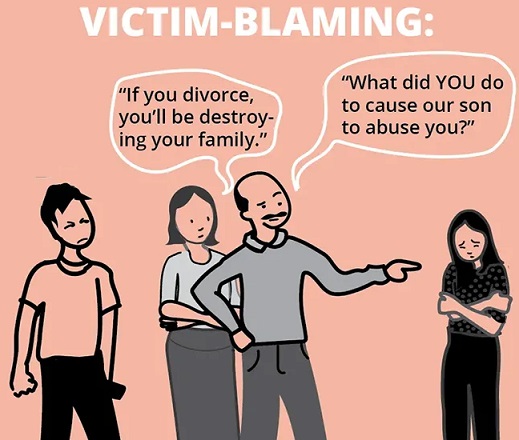
Blaming the victim for their own situation – Trump explicitly tells Zelensky: “You have allowed yourself to be in a very bad position.” This is classic abuser rhetoric—blaming the victim for their suffering. The implication is that Ukraine itself is responsible for being occupied by Russia and for the deaths of its people.

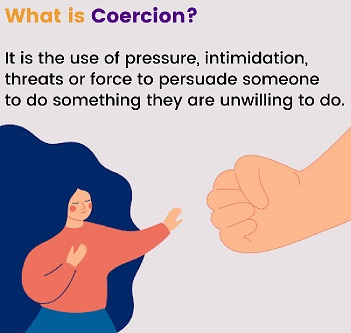
Pressure and coercion into ‘gratitude’ – Vance demands that Zelensky say “thank you.” This is an extremely toxic tactic—forcing the victim to express gratitude for the help they desperately need, only to later accuse them of ingratitude if they attempt to assert their rights.

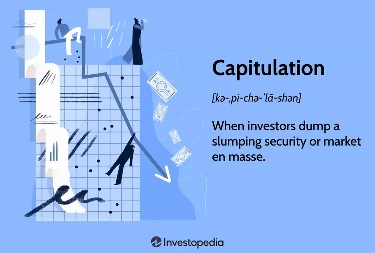
Manipulating the concept of ‘peace’ – Trump claims that Zelensky is “not ready for peace.” However, what he actually means is Ukraine’s capitulation. This is a classic manipulation technique—substituting the idea of a just peace with the notion of surrender.

Refusing to acknowledge the reality of war – Trump repeatedly insists that Zelensky has “no cards to play” and that “without us, you have nothing.” This is yet another abusive tactic—undermining the victim’s efforts by asserting that they are powerless without the mercy of their ‘saviour.’

Devaluing the victims of war – “If you get a ceasefire, you must accept it so that bullets stop flying and your people stop dying,” Trump says. Yet, he ignores the fact that a ceasefire without guarantees is merely an opportunity for Russia to regroup and strike again.

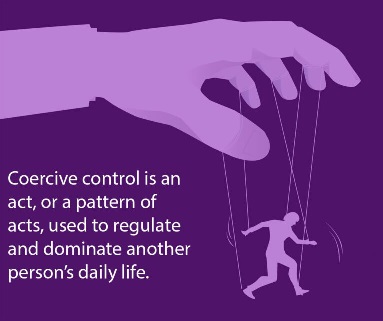
Dominance tactics – Trump constantly interrupts Zelensky, cutting him off: “No, no, you’ve already said enough,” and “You’re not in a position to dictate to us.” This is deliberate psychological pressure designed to establish a hierarchy in which Zelensky is the subordinate.

Forcing capitulation under the guise of ‘diplomacy’ – Vance asserts that “the path to peace lies through diplomacy.” This is a classic strategy where the aggressor is given the opportunity to continue their aggression unchallenged.

Projection and distortion of reality – Trump declares: “You are playing with the lives of millions of people.” Yet, in reality, it is he who is doing exactly that—shifting responsibility onto Zelensky.

Creating the illusion that Ukraine ‘owes’ the US – Yes, the US is assisting Ukraine, but presenting this aid as “you must obey, or you will receive nothing” is not a partnership—it is financial and military coercion.

Undermining Ukraine’s resistance – Trump states that “if it weren’t for our weapons, this war would have ended in two weeks.” This is an attempt to erase Ukraine’s achievements and portray its efforts as entirely dependent on US support.

Yuliia’s Conclusion …. Trump and his team employed the full spectrum of abusive tactics: gaslighting, victim-blaming, coercion into gratitude, and manipulation of the concepts of peace and diplomacy. This was not a negotiation—it was an attempt to force Zelensky into accepting terms beneficial to the US but potentially fatal for Ukraine.

Our Response?

While we cannot influence relationships in international politics, however, we can choose our own actions and behaviours. Bullying and abusive behaviour can be part of many relationships. This has been brought into high relief by the events in the Oval Office, but we might recognise some of these behaviours either in ourselves or in others that we know. If so, we should seek help to change/overcome those behaviours.

There are already people working in our local communities supporting those suffering abuse or who support those who are regaining their dignity after experiencing shaming or abuse. Others are working to help abusers address their own behaviour. All these are worthy of our support. Some are shown below.

Support for charities working in Ukraine, and for Ukrainians in our local community is a priority. In itself, it is a firm and particular response to what we saw happening in the Oval Office. Some of these charities appear toward the end of this article.

Charities Seeking to End Abuse – Working with Abusers (to change behaviour) and with Those Who Have Been Abused

These charities include:

NAPAC: The National Association for People Abused in Childhood supports adults who have experienced childhood abuse;

Refuge: Supporting those who have experienced abuse;

Karma Nirvana: A specialist charity for victims and survivors of honour-based abuse;

Survivors UK: runs the National Male Survivors Online Helpline – a webchat and SMS service for men, boys and non-binary people who have experienced sexual abuse at any time in their lives;

NSPCC: has been protecting children for over 140 years;

Children 1st: offers a range of services for children, young people and their families who have been affected by physical, sexual or emotional abuse in Scotland. There is a network of local support groups across the country;

The Lucy Faithful Foundation: offers a number of programmes to help people move towards real change and understand their own, or their friend or family member’s, illegal behaviour.

And local charities, such as LEAP which works with Children and Families in the Tameside area of Greater Manchester.

Charities Proving Support to Ukraine and Ukrainians

Among others, these charities and other organisations include:

British Ukrainian Aid: A grassroots charity that believes in the power of civil society and volunteers united by a single goal: to see Ukrainians overcome the hardships of the war and live in dignity and prosperity in independent Ukraine;

United Help Ukraine: Provides humanitarian aid, including clothing, medical supplies, and rehabilitation for wounded soldiers;

UNICEF: Funds non-governmental and volunteer organizations that help civilians, including children, young people, and vulnerable people;

CARE International: Provides emergency food and water to Ukrainian refugees; 

Sunflower of Peace: A non-profit organization that supports the people of Ukraine affected by the Russian military invasion; 

Barnardo’s: Provides a free helpline to support Ukrainian families arriving in the UK; 

British Red Cross: Provides practical and psychosocial support to people displaced from Ukraine who have arrived in the UK;

UNHCR (United Nations High Commissioner for Refugees): Works in Ukraine and neighbouring refugee-hosting countries, providing access to clean water, health care services, cash transfers and other critical support;

UN Central Emergency Response Fund (CERF): CERF enables humanitarian responders to deliver life-saving assistance whenever and wherever crises strike.

World Food Programme: The world’s largest humanitarian agency – provide life-saving support to the most vulnerable families;

IOM – International Organization for Migration: Aims to Aid Two Million People in Ukraine in 2025 as War and Displacement Continue ;

UN Women: Works with Women and Girls in Ukraine;

The International Rescue Committee: seeks to respond where needed most;

Humanity & Inclusion Ukraine Emergency Appeal — an emergency fund to support disabled and vulnerable people in Ukraine;

Ukraine Charity humanitarian appeal — raising funds to procure medicine and medical equipment. Ukraine Charity is a UK registered charity;

PLAST — Donate to the Ukrainian scouts association to help provide humanitarian, medical and rehabilitation support to scouts and their families during Russia’s invasion;

for PEACE — The forPEACE Ukraine Relief Project works with Ukrainians to deliver targeted medical and humanitarian aid, connecting international financial support with Ukrainian networks, medical professionals, and trusted community organisers on the ground;

Voices of Children Charitable Foundation — since 2015, has provided free psychological assistance to children and their families affected by the war. From the full-scale invasion, the foundation has supported more than 64,000 children and adults. All donations go to individual and group, and online psychological sessions, activities (camps, art therapy, excursions), rehabilitation, and humanitarian aid for children and parents.

Leleka — focusing on the urgent supply of critical medical supplies and protective gear to Ukraine’s defenders and civilians

Razom for Ukraine and Nova Ukraine — US-based emergency appeals;

Rescue Now — this Ukrainian charity evacuates people from war zones and supports the elderly in eastern Ukraine. The Rescue Now team is supporting people in the Kherson region affected by mass flooding following Russia’s destruction of the Kakhovka dam.

References/Notes

  1. https://www.facebook.com/share/p/18YrnqBkNM, accessed on 2nd March 2025.

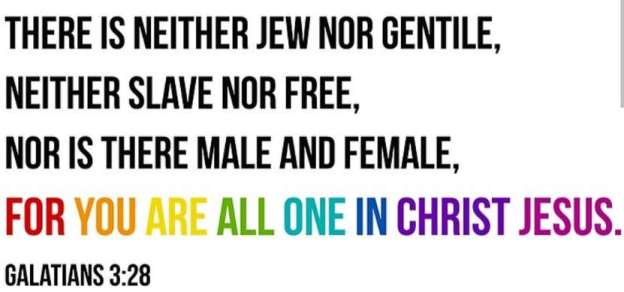
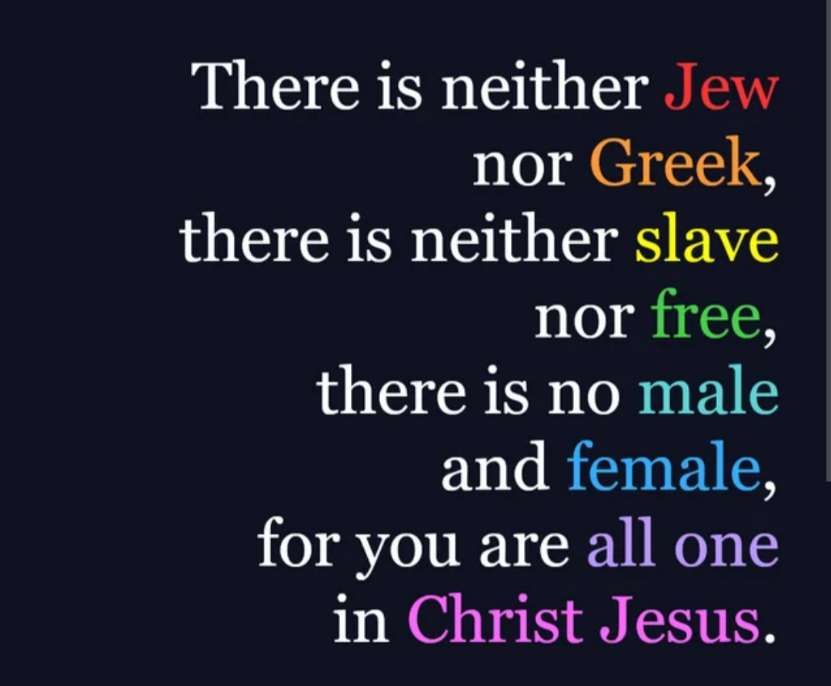
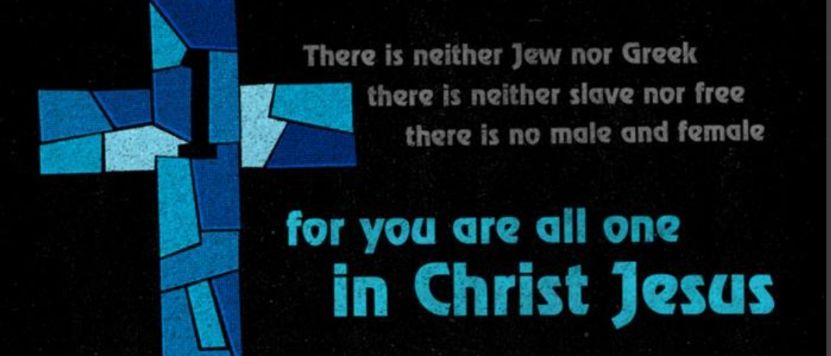
Galatians 3: 23-29 & 4: 1-7 – All One in Christ Jesus

Most biblical scholars agree that the author of the Letter to the Galatians was very probably St. Paul. The main arguments in favour of the authenticity of Galatians include its style and themes, which are common to the core letters of the Pauline corpus. Back in the 1930s, George S. Duncan described its authenticity as “unquestioned. In every line it betrays its origin as a genuine letter of Paul.” [3]

Some scholars “have cast doubts upon its authorship due to stylistic and vocabulary discrepancies with other letters uncontestedly attributed to Paul. These disparities have caused speculations that someone other than Paul may have composed it, yet most biblical scholars uphold Paul as its true author due to strong autobiographical elements in its content and thematic consistency with other Pauline works as evidence of Paul’s authentic authorship of Ephesians.” [4]

It seems reasonable for us to ascribe the authorship of the letter to St. Paul. Although ultimately this is not critical. What matters most of all is the text that we have received.

Paul constructs an argument in Galatians which seems to culminate in the idea that a new covenant, which is built on the foundations of earlier understandings of God’s relationship with his people, has now arrived. A covenant in which we are all included in God’s kingdom by faith through God’s grace alone.

Galatians 3:23 to 4:7 sits at the culmination of this letter.

A couple of things to note:

A. ‘Children’ or ‘Heirs’.

In ancient Rome ‘heirs’ were named in a will. Other children were not named. Heirs received everything from the bequest – both debts and benefits. “In the case of intestacy, Roman inheritance law had no concept of primogeniture and treated male and female children equally. However, in most cases intestacy was avoided by means of a will. Roman law recognised very broad freedom of testation, but wills had to strictly follow correct formulae and phrases in order to be valid. The will had to name an heir. In addition to this, it could name a legal guardian (tutor) for underage children, manumit slaves, and leave legacies to third parties. Over time a separate system of ‘fideicommissa’ (‘trusts’), which allowed greater flexibility, developed alongside the system of wills.” [5]

If a man died intestate, “property went first to ‘sui heredes’ (‘his own heirs’), who were any children of the deceased that had remained under his ‘patria potestas, (‘paternal power’) until his death. [6: p200] There was no assumption of ‘primogeniture’ – all children, male and female, received an equal share of the estate. [6: p201] If there were no children, then agnate relatives in the male line would inherit (i.e. other children of the deceased’s father, paternal grandfather, and so on). [6: p200] If there were none of these, then the ‘Twelve Tables’ [6: p199][7: p505] provided for the property to be inherited by the wider gens, but as the social role of the gens declined after the Early Republican period, this ceased to occur.[6: p200] There was no concept that an intestate property might pass to the state. [6: p200] Children of the deceased who had been emancipated before the deceased’s death or who had passed into the ‘potestas’ of another (through certain kinds of marriage or through adoption by another) were excluded from the succession, as were relatives in the female line (i.e. relatives of the deceased’s mother), and the deceased’s spouse.” [6: p200-201][7: p505]

Most Roman inheritances were, however, not intestate. “Instead, they were governed by a will (‘testamentum’). [7: p500] Some Roman writers speak of producing a will as a duty (‘officium’). [6: p201] Henry Maine in 1861 characterised the Roman approach as a ‘horror of intestacy.’ [6: p201][7: p499] Only a ‘pater familias: (male head of household) could make a will that disposed of a whole estate. [7: p502] But any Roman citizen who had reached the age of majority could make a will for property that they possessed in their own right. Women could make wills through a process of fictional sale (coemptio), until the reign of Hadrian, when they were given the ability to make a will through their tutor (legal guardian). [6: p202][7: p502] Non-Romans (peregrini) and people with intellectual disabilities could not make wills under Roman law. [7: p502] Exiles were not allowed to make wills either and this ban was retrospective; being sent into exile voided any will that the exile had already made. [7: p502] … The will had to name an heir. [6: p202] In addition to this, it could name a legal guardian (tutor) for underage children, manumit slaves, and leave legacies to third parties.” [6: p204]

Failure to name an heir could render a will void. [6: p204] An heir did not have to be a natural child of the deceased. An adopted heir was acceptable. This was often the practice in higher-ranking household as couples were often infertile.

An heir inherited both the deceased’s debts and his possessions. Being a child did not guarantee being an heir.

In verse 26 of Galatians chapter 3, the NIV and NRSV choose to translate a Greek word which means ‘sons’ as ‘children’. A word which carried great weight in the ancient world, ‘the son and heir’, the one who receives everything, is replaced in the NIV and NRSV by one which is about us all being ‘children’. In modern thinking, being one of many children of the father does confer status. But the word ‘children’ fails to carry the great sense of particularity intended by the author of the epistle. The status of ‘son and heir’ was more significant than being a ‘child’. In our thinking about this passage we must give weight to this distinction. Paul intends us to understand that we all (female and male) have the same status as the ‘son and heir’.

The distinction in ancient Rome between ‘son and heir’ and ‘child’ will also have been important to those reading the passage in many eras of civilisation and the history of the church. Particularly so, once the concept of primogeniture  became established in the medieval world. A concept which kept land and estates whole as they were passed from father to eldest son. The eldest son was ‘the heir’, the other children, while usually loved, had a demonstrably secondary status.

Paul intends us to understand that we are all (female and male) co-heirs with Christ, we have the same status, the same entitlements. We have been chosen as ‘heirs’. We are more than ‘children’. In verse 29, Paul uses the word κληρονόμοι (klēronomoi) ‘heirs’ emphasising the point that ‘son’ is different from ‘child’.

Our status ‘in Christ’ is that of heirs to the promise, not just children.

B. Verse 28 – ‘Or’ and ‘And’

In the context that we are all inheritors of everything God has to offer, it may be worth us noting what Paul writes in verse 28. There is a small but perhaps significant change from ‘or’ (οὐδὲ) to ‘and’ (καὶ) in Galatians 3:28. The Greek reads like this:

οὐκ ἔνι Ἰουδαῖος οὐδὲ Ἕλλην, οὐκ ἔνι δοῦλος οὐδὲ ἐλεύθερος, οὐκ ἔνι ἄρσεν καὶ θῆλυπάντες γὰρ ὑμεῖς εἷς ἐστε ἐν Χριστῷ Ἰησοῦ. [1]

The direct translation is shown in interlinear form below:

οὐκ                     ἔνι.        Ἰουδαῖος   οὐδὲ Ἕλλην,   οὐκ           ἔνι      δοῦλος οὐδὲ

Not/neither    there is     Jew        or    Greek not/neither there is    slave     or

ἐλεύθερος,          οὐκ           ἔνι         ἄρσεν  καὶ     θῆλυ       πάντες γὰρ

    free          not/neither    there is   male  and   female       all       for

ὑμεῖς    εἷς   ἐστε   ἐν  Χριστῷ Ἰησοῦ.

  you    one    are     in   Christ   Jesus.

The direct translation does not read easily in English. As is usual, this means that the translators have had to decide how best to make the text readable in English. Almost inevitably they have chosen to give greater continuity in their translations. The variety of different translations can be found here. [2]

Many of the translators choose not to recognise the change from ‘or’ (οὐδὲ) to ‘and’ (καὶ). I guess the question must be whether or not Paul meant the change to be significant. Many of the translators think not, and in doing so they prevent most modern readers having the opportunity to engage with the possibility that the difference is significant. Effectively, the translators narrow down the possible interpretation of the text in favour of their own interpretation.

But is that difference significant? Perhaps it is sufficient for us to read that there is no distinction in Christ, that we are all one in Christ. Whether we are Jew or Greek, slave or free, male or female, there is no distinction between us. We are one in Christ, all of us ‘heirs’ of the promise, much more than just children. If that were the case, I would happily go on to argue that these pairings are intended to demonstrate the breadth of God’s inclusive love for everyone.

But, that single καὶ (and) may add to the argument. Two couplets are ‘neither/nor’ but for one couplet Paul choses to use καὶ, why? … This part of our passage, (i.e. οὐκ ἔνι ἄρσεν καὶ θῆλυ), seems to allude to Genesis 1:27 (ἄρσεν καὶ θῆλυ ἐποίησεν αὐτούς, in the Septuagint) where God first creates a being, Adam, seemingly both male and female, if verse 27 of Genesis chapter 1 is taken literally.

Daniel W. Roberts comments that “Galatians 3:28 is a rare case of a direct quote going relatively unnoticed by scholarship, which is then followed by a one-word allusion to further solidify Paul’s claims concerning unity.” [8: p1] “Paul in Galatians 3:27–28 quotes Genesis 1:27, … this purposeful quotation of Gen 1:27 is meant to couple with an allusion to Genesis 2:24 to articulate further the unity found in Christ.” [8:p3][9]

Roberts goes on to argue for the unity which comes from marriage and which mirrors the unity between Christ and his Church. But there are other interpretations which include feminist, intersex, or queer, etc. perspectives.

If there is a significance to the use of the word καὶ, and there may not be, but if there is, it must delineate a difference between the male/female couplet and the Jew/Greek and slave/free couplets. In Christ there is no longer Jew or Gentile, no longer slave or free, no longer male and female. It must, as Roberts suggests, refer to something else. Particularly, probably, the passage in Genesis.

Are the first two couplets a case of ‘either/or’ while the third is a case of ‘both/and’? Is ‘male and female’ just, for Paul, one category rather than two categories? Just one thing? Perhaps he sees us as being included in God’s blessings because we are human rather than because we are male or female? Perhaps gender/sex is insignificant? I am not sure where this leads us, but perhaps it places our disputes about what it is to be a male or a female in a wider context. Perhaps it is about freedom to be who God has made us to be, rather than having to conform to the either/or of the other categories in Galatians 3: 28. Paul sums this all up with the fact that, whatever he means earlier in the verse, we are all one in Christ Jesus.

References

  1. Galatians 3:28 in Greek, via https://www.biblegateway.com/passage/?search=Galatians%203%3A28&version=SBLGNT, accessed on 23rd February 2025.
  2. https://www.biblegateway.com/verse/en/Galatians%203%3A28, accessed on 23rd February 2025.
  3. George S. Duncan; The Epistle of Paul to the Galatians; Hodder & Stoughton, London, 1934, p xviii.
  4. https://www.ministryvoice.com/who-wrote-galatians, accessed on 23rd February 2025.
  5. https://en.m.wikipedia.org/wiki/Inheritance_law_in_ancient_Rome, accessed on 26th February 2025.
  6. David Johnston; Succession; in David Johnston, (ed.); The Cambridge Companion to Roman Law; Cambridge University Press, 2015, p199–212.
  7. Eva Jakab; Inheritance; in Paul J. du Plessis (ed.); The Oxford handbook of Roman law and society; Oxford University Press, 2016, p498–510.
  8. Daniel W. Roberts; Male and Female in Galatians 3:28: A Short Biblical Theology of Unity; in Southeastern Theological Review 13.1 (Spring 2022), p1–23; via https://www.sebts.edu/wp-content/uploads/2023/12/STRIssue13.1_BenMerkle.pdf , accessed on 26th February 2025.
  9. Roberts comments that Richard Hays’s study is especially significant for the study of Paul’s more subtle uses of the OT, what he calls echoes and allusions. This specific example, not discussed by Hays, arguably passes all seven of his tests for Pauline echoes. (Richard Hays, Echoes of Scripture in the Letters of Paul; Yale University Press, New Haven, p29–32.)

What You See is Not What You Are Going to Get! (Luke 5:1-11)

What do the images below have in common?

What do a tadpole, a caterpillar, eggs and a hyacinth bulb have in common? …..

Ultimately – something like, … What you can see now is not what you are going to get. … A tadpole will become a frog, toad or perhaps a newt. An egg will become a bird or a reptile. These eggs if they had been incubated would have become chickens.

A caterpillar might become either a butterfly or a moth, and a hyacinth bulb will become a beautiful flower.

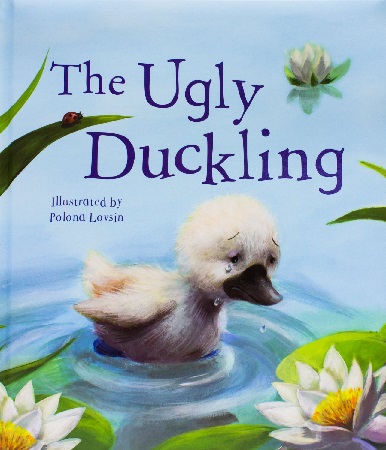
And our final image – a book cover for the story of the Ugly Duckling, a young chick ostracised for being different but who becomes a beautiful swan.

What you see is not what you are going to get!

How do these things change? Either by metamorphosis or by growth they become what they were always meant to be. In each case, the change does not just occur by magic. The potential is already there inside of them.

In Luke 5: 1-11, Simon Peter was someone with a great deal of potential.

From our Gospel reading, we know that Simon Peter was a Fisherman. Other stories in the Bible help us to get to know Simon Peter a little better. As we read the Gospel and later stories in the Acts of the Apostles we get to know Simon Peter relatively well. He was a typical country fisherman. He lived a hard life, with a hand-to-mouth existence. He was hot-tempered and impetuous, he often made mistakes. You might say that ‘he wore his heart on his sleeve’, and you might describe him as a ‘rough diamond’. He was not one to suffer fools gladly. He spoke his mind even when doing so got him a rebuke.

He challenged Jesus when Jesus talked about his death. ‘Lord, you cannot be serious, nothing like that will happen to you.’ And Jesus rebukes him; ‘Get behind me Satan.’

We know that, at least once, Simon Peter allowed circumstances to overwhelm him to the point where he denied Jesus three times.

But that is not all that we know about Simon Peter. … We know that he met Jesus and that something in this person Jesus changes Simon Peter for ever. … It didn’t all happen in an instant, but it started to happen in the Gospel story that we read today. It began to happen as Simon Peter listened to Jesus speak while sitting in his boat, it began to happen when he saw one of Jesus miracles.

Both Jesus’ words and what Jesus did pointed to him being someone very special. In the presence of this special person, Simon Peter couldn’t ignore his own weaknesses and failings. Simon Peter felt small and useless and wanted these feelings to go away. So he kneels in front of Jesus and asks Jesus to go away: ‘Jesus, depart from me because I am a sinful man’.

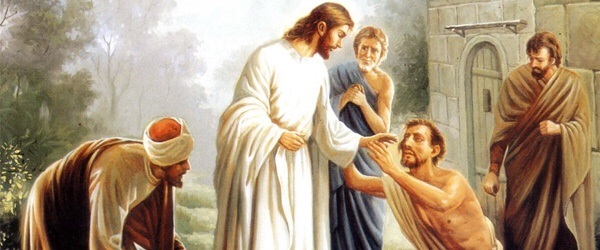
But Jesus does not do what Simon Peter asks. Jesus takes Simon Peter by the hand and lifts him up off his knees, and he says, ‘Simon Peter, I have a job for you.’ … I can see the potential in you, I can see who you will become. Peter I want you to be my fisherman now – only you’ll be catching not fish but women and men to be my followers.

And we know how the story ends – this Ugly Duckling of a man becomes a Swan – he becomes one of Jesus most faithful followers and eventually becomes the leader of the church.

Simon Peter’s story speaks to our hearts. … Many of us can find something of ourselves in him. … We make mistakes, we ‘put our foot in it’, we can be impetuous we hold negative feelings in our hearts and occasionally they surface to damage our friendships and relationships. We too can find ourselves failing to stand up for what is right or to stand up for our friends. We, like Simon Peter, are only human.

But you know, the same potential for change that Jesus saw in Simon Peter, is there in each of us. Jesus can and does take me, he can take you, and he can transform us. We no longer need to feel that we are no good – just like Simon Peter we can admit to God our weakness and our failings and then God takes us as we are, lifts us up off our knees, and makes something special. We become a better version of ourselves and our God given potential can be fulfilled.

We no longer need to feel like the Ugly Ducking or the Caterpillar, for God in Jesus sees the Swan and the Butterfly that we really are – and as we give ourselves to God – he draws out all the good that is in us.

Mark 10: 46-52 (Jeremiah 31: 7-9 and Hebrews 7: 23-28) – Sunday 27th October 2024
What is the most important thing in your life? …. The children? The grandkids? The football team? The husband? The wife? The bingo? Bowling? Work?

What is the most important thing in your life?

What’s so important that you put it above everything else?

We have been reading though Mark’s Gospel for most of the year. We know by now what Jesus has been saying about himself and God’s kingdom. He has spoken of his own death, he has talked of God’s kingdom as a place of radically different values. And while all that has been happening, various people around Jesus have been making it very clear where their priorities lie.

Two Sundays ago, if we read the set Gospel in the lectionary, we would have read of a rich young man whose riches were the most important thing in his life. He was unable to give them up to follow Jesus.

Last Sunday, the lectionary pointed us to the verses immediately preceding today’s Gospel reading. We read of James and John asking for special privileges – wanting to sit at Jesus’ right and left hand when Jesus came in his glory. They were interested primarily in power, wealth and influence.

Previously, in the Gospel, the disciples had been caught arguing like little boys in the school playground about who was the greatest among them and Jesus had to bring a child into their midst to help them see what greatness was really all about.

These are all stories about people fixated on riches, wealth and power, rather than on following Jesus. And at the end of all this, Mark chooses to tell us the story of Bartimaeus.

Here too is someone who is really focussed on what he wants, someone who will not let anything get in his way, not his disability, not the jibes of the crowd, not the scorn of the disciples. Nothing. … ‘All want my sight’, says Bartimaeus when Jesus asks him what he wants. He believes that Jesus can give him his sight. He might not really understand who Jesus is, he only sees him as Son of David, not Son of God. But he is desperate and determined, he believes.

Jesus sees Bartimaeus’ faith and heals him. And Bartimaeus follows Jesus.

Perhaps when you go home you might like to read through Mark Chapter 10. Or borrow a bible from church and have a read together over coffee this morning. … Mark is being very clever in his Gospel.

People believed then, and still believe now, that wealth is a blessing from God – surely the Rich Young Man was blessed, surely wealth was no barrier to being a follower of Jesus. … But Jesus makes it clear that his wealth did stand in the way between him and the possibility of knowing God.

James and John, and the other disciples had been with Jesus for 3 years. Surely, by now, they would have understood just a little bit of what Jesus ministry was about. Hadn’t he talked with them repeatedly about suffering and death. But no, they’ve failed to catch on, and they make fools of themselves.

The privilege of wealth, the desire for preference and the privilege of being a companion of Jesus. Are both are compared by Mark with a blind man.

People in Jesus day saw sickness as a consequence of Sin. When you looked at a blind beggar – your first question would be, ‘What has he or his parents done wrong, that he is here begging like this?’ … We still make similar assumptions. How many times, when you’ve been going through hard times have you said something like, ‘What have I done to deserve this?’ … We still think in terms of consequences.

It is the person regarded by society as the sinner and the outcast, the blind man, who gets his priorities right.

The Rich Man walks away saddened, Bartimaeus is healed and follows Jesus on the Way. The disciples bicker as they surround Jesus, they even try to prevent Bartimaeus from reaching Jesus. Bartimaeus, even with his limited understanding of Jesus, knows that Jesus is the answer to his problems. He’s not interested in bickering, he pursues Jesus tenaciously, and then follows him enthusiastically.

Mark is making a very significant point … that those we see as outsiders, those on the margin of society, those who seem to be outside of the community of faith, those whom we might even feel tempted to condemn. They may just have something to teach us about faith and about an appropriate focus for our lives.

It would be so easy for us to lose our focus, to get so bound up, like the disciples, in the politics or the business of being Church, that we no longer focus on following Jesus. It would be so easy for us, like the rich man, to let other things become more important than our relationship with Jesus. And before we know it our faith will have ceased to be about love for God and will have become no more than meaningless ritual.

At times we need the Bartimaeus, the outsider who discovers for themselves the love of God, that new church member who cannot stop talking about what God has done for them, perhaps even a person whose morals, or lifestyle, or position in society that we abhor.

At times we need the outsider, the newcomer to remind us of the reality of our faith, the depth of God’s love for us, to challenge us about where our priorities lie.

What is most important to you? What’s most important to me?

Bartimaeus reminds us that focussed, committed pursuit of our faith, ‘following Jesus on the way’, has be our highest priority.

Prophets in Israel in the 8th Century BCE

Introduction

It had been many years since Yahweh had spoken in a new way to the people of lsrael People continued to look back with an element of nostalgia to those early days. Yahweh’s involvement with Israel seemed to have been so immediate at that time. He had chosen lsrael from among the nations bringing them miraculously out of Egypt. They were his elect people and their history was one of salvation.

Yahweh had been involved in more recent times through chosen kings and different prophete, but it wasn’t quite the same as in the days when he dealt with the whole people of Israel

In the 8th century BCE, suddenly prophets of a somewhat different nature burst upon the stage of history. These prophets had something new to say. No longer were they essential parts of the establishment, nor purely thorns in the side of wayward monarchs. These prophets announced that Yahweh was going to be involved with his people again and in a big way!

This essay draws together some of the common characteristics of those 8th century prophets and highlights some of the features that make each prophet distinctive. The prophets Amos and Hosea spoke to the northern kingdom and lsaiah and Micah to the southern. It is difficult to place lsaiah’s sayings into a chronological framework with certainty. Isaiah chapters 1 to 39 are assumed to belong to the 8th century.

What did the Prophets have in Common?

The prophets were not so much visionaries and mystics as God’s messengers; not so much poets as speakers; not theologians; not social reformers or radicals but conservative, calling lsrael back to the old ways, not seers predicting the future so much as those who announced divine intervention in history, not preachers of repentance, because such calls to repentance were rare and they had no real programme for reform or change (Tucker, p165-170).

It is important when considering the prophets’ message to remember that the material we have received is generally in the form of relatively short speeches intended for specific audiences. We are, therefore, looking for basic underlying themes rather than systematic theology. Nevertheless it is clear that the prophets call Israel and Judah back to the old ways – they have strong words of indictment for their contemporaries. They announce something new – the Day of Yahweh. They re-emphasise Israel’s status as God’s chosen people and talk in new ways of God’s salvation.

1. Words of Indictment

It seems that the two nations of Israel and Judah have gradually left behind their erstwhile reliance on Yahweh. The Mosaic traditions have almost been forgotten. The northern kingdom has established its own patterns of worship, representing Yahweh with golden images of calves at Bethel and Dan, their two main places of worship (1 Kings 12:26-30). The worship of the Canaanite Baalim and Asherah had become a normal part of the worship of Israel (1 Kings 16:32-33). The southern kingdom has replaced the Mosaic tradition with temple worship and kings in the line of David – developments which are seen in the Old Testament to be part of God’s plan. Judah has, however, allowed its worship to become legalistic and gradually idols have begun to be important.

There has been a window in world history between the zeniths of two large civilisations. It has been possible for a number of the smaller nations to have periods of significance. David and Solomon ruled over a united Israel at the zenith of its power in the late 11th, and for much of the 10th, century. First the northern kingdom under Omri and later Syria had periods of strength. Prior to, and during, the 8th century both of the two Israelite kingdoms have seen an increase in their influence in Palestine and its surroundings. Jeroboam II had recaptured

Damascus and Hamath for Israel (2 Kings 14:28) Amaziah deflated Edom (2 Kings 14:7), his son Uzziah/Azariah captured Philistia and subjugated the whole region down to the borders of Egypt (2 Chronicles 26:6-15). In the early 8th century Israel and Judah are riding the crest of a wave.

The prophets speak into this situation of complacency and arrogance in commercial and social life, in politics and in worship (Wolff, p22-24)

a) Commercial and Social Life – the evidence from the prophets is quite clear. Oppression is rife and social injustice is the norm (Amos 2:6-7; 3:10; 4:1; 5:11; 8:4), false testimony in encouraged by corrupt judges (Isaiah 5:23; Amos 5:7,10,12; Micah 3:9-11), the rich live in luxury at the expense of the poor (Amos 4:1; 5:11; 6:4-6; Micah 3:2) and wealth is only in the hands of a few (Isaiah 5:8-12; Amos 3:9-10; Micah 2:1-2), cheating in business predominates (Hosea 12:7; Amos 8:4-6; Micah 6:11), conceit and complacency are common (Isaiah 3:16-23; 32:9-11; Аmos 6:1; 9:10). The two nations are corrupt and overly self-confident.

b) Politics – Amos focuses specifically on the internal life of the northern kingdom and its corrupt life and leadership. Micah similarly, riles against the unjust leaders of the southern kingdom (Micah 3:1-4). The other prophets have strong words to say about lsrael’s and Judah’s relationships with surrounding nations; external alliances are condemned because they reflect a turning away from reliance on Yahweh (Isaiah 31:1-3; Hosea 5:13; 12:1-2; 14:1-4). Both kingdoms make expedient political alliances without consulting Yahweh. The prophets proclaim Yahweh’s anger at internal injustice and unnecessary external alliances

c) Worship – Amos seems to suggest that the northern kingdom had exalted their king and their idols above Yahweh (Amos 5:26; 8:14). He talks of worship at Bethel and Gilgal as pious acts of which the people love to boast (Amos 4:4-5) and brings Yahweh’s condemnation on this worship (Amos 5:21-24) Amos also highlights that this not just a problem in Israel. Judah is just as guilty (Amos 2:4). Isaiah echoes the words of Amos in his condemnation of Judah (Isaiah 1:10-17). Hosea rebukes Israel’s priests for flagrantly abandoning true worship of Yahweh and introducing prostitution and idol worship (Hoses 4:7-14) Micah has words for the false prophets (Micah 3:5-7) and he suggests that the temple worship in Jerusalem is no better than that in the high places in israel (Micah 1:5).

The prophets proclaimed that worship of Yahweh was false because of on-going social injustice, and that it was corrupted by the influence of the worship of surrounding cultures.

2. The Day of Yahweh

There are two themes relating to the future. The first is the announcement of the Day of Yahweh. The second is the sense of a future salvation. We will first consider ‘the Day of Yahweh’.

Gerhard von Rad says that the new feature in the preaching of these prophets “was the message that Yahweh was summoning larael before his judgement seat, and that he had in fact already pronounced sentence upon her” (G. von Rad, p147). This theme is something completely new. Amos 8:2 explicitly states that “the time is now ripe for my people lsrael; I will spare them no longer“, (see also: Amos 5:2; 9:1-4). There are a number of references in the 8th century prophets to this phenomenon. The popular perception was of a Day when Yahweh would majestically reverse all of the misfortunes experienced by the lsraelites. The prophets will have nothing of this. It will be a day of devastation for Israel and Judah, a reversal of all of their hopes. It will be a day of darkness rather than light (Amos 5:18-20), a day when the proud will be humbled (Isaiah 2:9-11). Even when the Day of Yahweh is focused away from Israel, it is the whole world that will be punished (Isaiah 13:9-13, 34:2).

The Day of Yahweh is the end for Israel. Hans Walter Wolff describes this as the end of *salvation-election-history” (Wolff; p20) and he comments that Yahweh is to be seen as advancing against Israel (Isaiah 28:21-22), those who had been given the land of Israel will be deported (Amos 2:10-16, 7:11,17), the elect will be judged (Amos 3:2); the ‘exodus’ people will have no greater standing than the rest of the nations (Amos 9:7); the covenant relationship will end (Hosea 1:9); and Jerusalem will be destroyed (Micah 3:12).

Yahweh has never before stated so explicitly that he will destroy Israel and Judah. Some of the references quoted above have a strong sense of finality. However, this is not the whole story.

3. A New Concept of Salvation

For 8th century Israelites the idea of salvation was a glorious one, but one associated with their history. God had saved them from Egypt.

Wolff refers to the Day of Yahweh as a turning point (Wolff, p20). This is a clear element in the books of the 8th century prophets. There is some doubt as to whether this theme is original to these prophets or an editorial addition to reinterpret the prophets for a later period. This is particularly so in the case of Micah.

If, however, we take the books as they have been passed on to us the theme is strong – the end is only another beginning! Wolff highlights passages where the prophets speak of compassion after judgement (Amos 5:14-15; 9:11-15), the possibility that Israel will come to repentance (Hosea 2:19-23; 3:5) following God’s initiative (Hosea 2:14-18); the purification that will result from punishment (Isaiah 1:21-26); the final destruction of Assyria which will allow a change in the fortunes of the Israelites (Isaiah 10:5-25).

Micah perhaps contains the most positive statements regarding the long term future of Jerusalem (Micah 4:1-13). The destruction of Jerusalem and the exile of the inhabitants are seen as the means by which Yahweh will rescue and redeem his people (Micah 4:10).

Salvation was, however, never seen as a spiritual  in New Testament terms. It was about return to Israel (Isaiah 10:21; Amos 9:14; Micah 2.:12), about freedom and peace (Micah 4:3), about pre-eminence in the world (Micah 4:1,13), about having shelter (Amos 9:14) and fod to eat (Amos 9:13, Micah 4:4), and about control over one’s own destiny (Tucker, p165-166).

We have considered a number of issues which show that the books of the 8th century prophets are united around Yahweh’s message of indictment, judgement and mercy. Gerhard von Rad sees this “common conviction” as “so novel and revolutionary when compared with their inherited beliefs that it makes [their] differences, considerable as they are, seem almost trivial and peripheral” (G von Rad, p146). Each prophet, however, has a distinctive message which we must now consider.

The Prophets

1. Amos

Amos was from Judah but called by Yahweh to speak in Israel. It seems that his ministry was short but sufficiently intrusive to warrant action by the priests in Bethel in an attempt to have him deported (Amos 7:10-15). The language of the book is harsh and direct. He has no concern for his own status in the community of the northern kingdom. He emphasises social injustice as the most significant reason that Yahweh is about to punish Israel (e.g. Amos 2:6-8, 5:7-13) and he calls strongly for justice and righteousness. “But let justice roll on like a river, righteousness like a never- failing stream” (Amos 5:24). The book contains little that is positive, except in the last five verses which suddenly talk of restoration. It is questionable whether these five verses were part of Amos’s original message.

2. Hosea

Hosea was a northerner and his message was for his own people. His ministry was born out of his own failed relationships. It is at times difficult to judge whether he was a godly saint, a poor judge of character or a bad husband. Nevertheless, Yahweh uses Hosea’s relationships as a graphic picture for Israel of its own spiritual state. This is a much softer message of judgement, if that is possible. Yahweh’s grace, mercy and forgiveness (Hosea 2:14-23; 3:1-5; 6:6) are emphasised as much as Israel’s spiritual prostitution (Hosea 2:2-13; 4:7-19). Yahweh’s desire is for a relationship of love with his people (Hosea 2:19; 6:6; 10:12; 11:1-11; 12:6) but he does not force this on them, he stays with them calling them back to himself. Yahweh’s judgement is rigorously pronounced (Нова 2:9-13; 5:1-14; 9:1-3,15-17) yet he aches to have Israel back, and his judgement is designed (Hosea 5:15) to make them pursue him!

3. Isaiah

The first 39 chapters of Isaiah come from the 8th or early 7th centuries although much of the material may have been adjusted by later editors to make it relevant to the times of Josiah, the exile, and the post-exilic period. Isaiah’s language is vigorous and dramatic (e.g. Isaiah 14:11-17) and his poetry is excellent.

The book of Isaiah is best understood from the perspective of Isaiah’s vision in chapter 6 and the apparent summary of the message in the first chapter. The strongest theme in the book is ‘the holy one of Israel’ which occurs 26 times in the book as a whole. A sense of Yahweh’s holiness propelled Isaiah into his ministry (Isaiah 6:1-8) which he understood would involve him repeating Yahweh’s call of repentance to an uninterested and unheeding people over a long period of time (Isaiah 6:9-13).

Isaiah’s message is that persistent rebellion makes no sense (Isaiah 1:2-9), that Judah’s worship has no meaning and is abhorrent to Yahweh because of the social injustice endemic in the nation (Isaiah 1:10-17); that Yahweh wants to reason with Judah before punishment is applied (Isaiah 1:18-20); that punishment will come with the intent of purging the nation (Isaiah 1:21-25) so that Jerusalem can again be called “a City of Righteousness, the Faithful City” (Isaiah 1:26). Thermes of Yahweh’s justice and righteousness, and of judgement intermingle with visions of hope for the future (e.g. Isaiah 32).

4. Micah

Micah is a strange mixture of doom and hope. This is usually explained by suggesting that later editors felt the need to tone down Micah’s devastating message of judgement to make it more palatable for their readers. On one hand there is a message of condemnation for exploitation, absence of justice and corrupt religious practice (Micah 1:10-16; 2:1-5,8-9; 3:8-12; 5:9-14; 6:9-15) for which punishment will be severe. On the other hand there are passages which seem to target punishment on other nations, and look more for changes in attitude in Judah with worship of Yahweh becoming central again (Micah 2:12-13; 4:1-2,5-13; 5:7-8; 7:8-20).

It is possible that these two elements represent two different theological streams, that of the ‘exodus’ and that of ‘city’. Micah seems to hold in very uneasy tension the need for justice, liberation, equality and simplicity with the need for institution, structure and stability. While both of these are necessary in a balanced society it is almost impossible to reconcile their differing demands. Micah cannot. The value of his message probably depends on the reader recognising his/her own innate perspective and endeavouring to read and apply the text with rigorous honesty.

Conclusion

We have surveyed the work of four 8th century prophets and seen that, although their communication was primarily verbal, there is a striking series of common convictions underlying their individual messages. We have also illustrated their distinctive features. Yahweh took a number of very different people and used them to pass on a clear, new message to his people; one which they were unable, or unwilling, to hear. Their inclusion in our Old Testament illustrates the recognition given to these prophets in later generations. They stand as ‘the word of Yahweh’ not just because of their importance to their original hearers but because they have continued to have something significant to say in each subsequent generation.

We must let Yahweh have the last word

“… so is my word that goes out from my mouth:

It will not return to me empty,

but will accomplish what I desire

and achieve the purpose for which I sent it.”

(Isaiah 55:11)

Bibliography

  1. Gene M. Tucker, “The Role of the Prophets and the Role of the Church”; in David L. Petersen (ed.); “Prophecy in Israel”; SPCK, London, 1987.
  2. Hans Walter Wolff, “Prophecy from the Eighth Through the Fifth Century”; in James Luther Mays and Paul J. Achtemeier, “Interpreting the Prophets”; Fortress Press, Philadelphia, 1987.
  3. Gerhard von Rad; “The Message of the Prophets”; SCM, London, 1968.
  4. David F. Hinson; “History of Israel”; SPCK, London, 1990.
  5. David F. Hinson; “The Books of the Old Testament”; SPCK, London, 1992.

Ruth: “Carry On Gleaning” – A Comedy with a Deeper Meaning?

This article was originally written as an essay as part of Old Testament Studies for my MA.

Scholars have suggested a number of motives behind the writing of Ruth. [1] Whatever the merits of the different proposals, it seems to me that Ruth was just as likely to have been written as a bawdy adult comedy/pantomime. It could perhaps be subtitled ‘Carry On Gleaning’. It might have been the ‘Up Pompeii’ of ancient Israel. However, within the clever plot [2] and camouflaged by sexual innuendo, there are robust and intriguing characters that the reader can identify with. [3]

It was ‘Harvest Festival’ (‘Pentecost’ or the ‘Feast of Weeks’) [4] everyone had been drinking – the whole village was ‘happy’. Dinner had been followed by all the usual speeches. Old jokes had been told (and retold), particularly those about sheaves, grain and seed – full of the usual sexual innuendo. [5] Village dignitaries had pompously promised gifts to the poor, some had made commitments that they would rue, come the morning.

It was now time for the reading of Ruth; or rather, for the second, ‘real’ reading. Ruth was read in the morning in the Synagogue a beautiful story of loyalty, conversion, hope [6] and of the ancestry of King David, or so it always seemed in the morning light. In the Synagogue the village elders had pontificated about the importance of caring for the stranger, [7] about the possibility of redemption for the worst of aliens (even Moabites); [8] and about duty and honour They talked of Boaz, fulfilling his responsibilities; [9] of Naomi the godly mother-in-law (struggling to accept the consequences of her husband’s folly); [10] of a beautiful, modest, dutiful, Moabite daughter-in-law. [11] Characters full of loyalty and faithfulness. [12] A sickly-sweet story – the ‘Mills and Boon’ of the five scrolls. [13]

I don’t think Ruth was written for the Synagogue. Those pious interpreters probably missed the point. [14] It was written for the evening, for the party! It was, first and foremost (and still is), a ripping good yam! A really well written ‘comedy’, [15] full of innuendo, with real 3-D but ambiguous characters. Characters that you could easily read yourself into. You couldn’t but be drawn into the plot – especially if you’d had a little too much to drink!

The evening reading of Ruth was the highlight of the Festival!

So, how did people engage with the main characters?

Naomi

Naomi enters the story through pain, suffering and complaint, [16] but her experience and response are full of ambiguity. Was she sinned against or sinning, party to the decision to go to Moab, or just following her husband, being punished for her husband’s sin, or the innocent victim? [17] Does she enter the story engulfed in bitterness trapped in her own prejudices, and remain so? Or is she, perhaps a model for working through grief? The narrative does not answer these questions directly – this is part of its strength. [18] No one is excluded, ancient/modem readers are invited into the plot, invited to see themselves in Naomi. Her experience and expression of suffering parallel theirs – they can feel their own pain worked out in Naomi’s character.

Naomi decides to return to Bethlehem. [79]

It would be natural also to question Yahweh’s role? Given prevailing theology, early audiences would see ’cause and effect Elimelech flirted with ‘Moabite foreigners’ and reaped the reward. [19] It seemed that his sons did too ‘sins of the fathers’ and all that! [20] How many generations would reap the rewards of Elimelech’s sin? None! Unless that is, Naomi, or one of her daughters-in-law, remarried! If that happened, would the curse remain?

Given all the possibilities, what is going on in Naomi’s mind? Perhaps this:

Elimelech’s decision was wrong. I knew that right from the start. Moab, of all places! Whatever possessed him?”

“It’s an evil place’, I warned him. ‘Yahweh warned us against Moabites’, [21] I said. And I was right!”

“Losing Elimelech left me all alone in Moab! I couldn’t face the shame of returning to Bethlehem. I just had my two boys – I focused on them, but couldn’t really forgive Elimelech. I worked hard to secure wives for the boys and began to hope for grandchildren.”

“In ten years there were no children. How I wished that I’d chosen better wives. I’d decided to suggest that the boys should look for second wives, when both boys upped and died – Yahweh’s curse, [22] I’m sure.”

“Elimelech, what have you done? I am all alone, I have no one! I’m left with two barren Moabite women to care for! What is to become of me? I’d be better off dead.”

Naomi identifies herself with the dead rather than the living. [23] Her depression is self-reinforcing. She wants nothing more to do with these Moabite women they embody her distress. [24] The dialogue in Ruth 1.8-17 might suggest concern for her daughters-in-law [25] but actually depicts her as bitter and self-focused. Her subsequent silence on the journey speaks volumes. [26] Her ‘poem’ in Ruth 1:20-21 is melodramatic. [27] Her failure to mention Ruth reflects ambivalence toward Ruth: [28] “This Moabite woman is an embarrassment, she highlights my folly and disgrace, I do not want her here.” Yet Ruth is all Naomi has.

Naorm remains self-focused throughout the story, showing no concern for Ruth as she leaves for the fields to glean. [29] Apparently concerned for Ruth’s future happiness, she is, however, Gontent to risk Ruth’s honour at night at the threshing floor. [30] Her silence once she has her grandchild and the women extol Ruth’s virtue, is telling: “Calamity from the god of the patriarchy she has been quick to proclaim. Generosity from a wealthy man she is quick to praise. Grace from a foreign woman is perhaps beyond her comprehension. Little wonder that to the message, ‘your daughter-in-law who loves you is better than seven sons’, her response is silence“. [31]

Boaz

If Naomi is bitter and twisted, Boaz is ‘a pillar of the community’. [32] He greets everyone according to the proper religious formulae; [33] he speaks in a ponderous/pompous form of Hebrew; [34] his initial dealings with Ruth are very correct. [35] The listeners will recognise, in him, the leading men in their village – very proper, yet in the context of this yarn, possible to ridicule.

His pomposity is the appropriate foil for his growing infatuation with Ruth. [36] We cannot be sure what about Ruth attracts him – possibly beauty. [37] However, a slightly plump, country-girl Ruth might best fit a ‘Carry-On’ story. If this was a play we would see an exaggerated turning of the head as Boaz first notices Ruth, we might hear a quiet exclamation of delight before he draws himself together to ask his overseer, “Whose maiden is this?” [38] Boaz behaves properly toward Ruth, but the audience know that he’s hooked.

Boaz and Ruth’s conversations are laced with double meaning. He talks of ‘staying close’ [39] She talks of him ‘noticing’ [40] her, a foreigner. [41] He covers his confusion with a wordy statement but can’t quite avoid sexual overtones. [42] Her reply gives room for that little giggle, or raised eyebrow, that might accompany one meaning of ‘your maidservant’. [43] Boaz is hooked, his mild generosity of the morning gives way to profligacy [44] everyone listening ‘knows’ [45] where things are leading.

The tension, for the audience, is enhanced by the reputation of Moabite women. [46] Boaz is entering dangerous territory – what will happen to him?

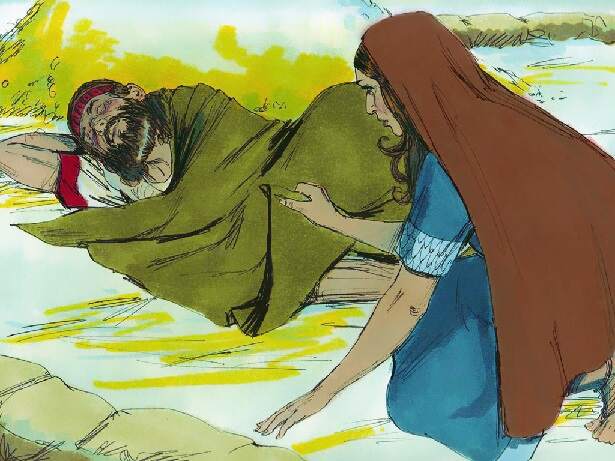
We next meet Boaz at night on the threshing floor, in a slightly pickled state, asleep after celebrating the end of the harvest. Any Israelite would know that the fields were a dangerous place for an eligible man to sleep at night. Boaz’s alarm when woken was understandable – the Lilith, the demon maiden, could have been about, searching for a mate! [47]

The audience is prepared for sexual encounter by the activities of Naomi and Ruth. They are clearly preparing for marriage. [48] Sexual innuendo continues with references to ‘feet’ [49] and ‘lying down’. [50] Boaz wakes, perhaps because of the cold on his legs, in his alarm he is undone/uncovered in more ways than one. Perhaps Ruth wakes him and he sees her uncovered before him. [51] Which is it? The audience is left to wonder.

Which of these two images gives the better impression of what was happening that night in the field? [77]
Boaz and Ruth. [78]

What does happen between Boaz and Ruth that night? We can’t be sure. We’re not sure that Boaz is really sure what happened. [52] – there was plenty of drink around that evening! We can, however, be sure that the ambiguity is intended by the author. [53] The audience cannot but see the similarities with other biblical stories. [54] They’re left to read almost anything into the situation.

Ruth seems to offer herself to him – Boaz recognises the sexual connotation in her reference to his cloak, but also that she is challenging him to fulfil his earlier blessing. [55] The audience is torn between titillation, at the possibility of sexual gratification, and jeering at pompous Boaz for being trapped by two women, [56] one a Moabite woman!

The latter part of the story has Boaz cunningly manoeuvring the anonymous relative [57] into a corner from which there is no retreat. He manages to buy [58] a Moabite woman without losing the respect of the community – he is the honourable redeemer. [59] In the story he’s definitely the winner. [60] The audience is left considering the motives of the village elders who sit at the gate of their village. What is happening as they make decisions? Is everything just as it appears, or are these ‘pompous’, ostensibly magnanimous/gracious, elders only really working for their own ends? Could that also be true of the elders teaching in the Synagogue?

Ruth

Ruth, a Moabite! The audience titters when she first enters the narrative. Moabites, and particularly their women are not good news. [61] The first possible signs of Ruth and Orpah’s loyalty [62] surprise them. Orpah’s decision to leave Naomi draws the audience’s boos: “We told you so, Moabites are no good! Go on Ruth, leave too!”

They hear her profession of loyalty [63] – its difficult to believe – they can’t credit good motives to Ruth: “She’s after something. Let’s wait and see!” Ruth’s loyalty to Naomi [64] continues to perplex the audience throughout the story. They are surprised at her willingness to glean in the field, but quickly they suspect that she will seduce the young Israelite men. Eventually they see her tangled with Boaz in a complicated romance, perhaps this is where she will show her true Moabite colours. The sly comparison with the Lilith tickles their fancy, [65] and they certainly have some fun at Boaz and Ruth’s expense.

But which side should they take? They have to decide. Prejudice says Ruth is evil, to be avonded Yet Rath shows faithfulness and loyalty, to Naomi and Boaz. [66] Yes, the author has allowed some titillation, but did anything wrong actually happen at the threshing Door Re can they believe that a Moabite woman is good? Yet if they don’t what does that say at the ancestry of their great King, David?

What does Ruth herself feel? Her husband is dead. Hier mother-in-lapse doesn’t want to know her. Chances of another husband in Moab are low. Who would want to marry second-hand goods? Israelite second-hand goods at that? [67]

Are Ruth’s motives as pure as they first seem? She has little choice. She cannot bring herself to follow Orpah who walks out of the narrative, probably into poverty and spinsterhood. [68] Ruth knows she’s committed to Naomi, no matter how bitter the wild woman is. Loyalty is her only option and she goes for it.

The journey to Bethlehem is hard – Naomi ignores her. [69] The entry into Bethlehem, harder still – for everyone ignores her. [70] She is determined not to be defeated. It is harvest-time and she heads for the fields – she’s heard Naomi mumbling about Boaz. [71] and determines that she will find his area of the field, she’s surprised to find it at the first attempt. This will be her way of helping both herself and Naomi. Her encounter with Boaz goes well – she can see that he’s interested in her. He’s clearly a respected man a bit ponderous/pompous but widowed Moabite women in Israel cannot be too choosy, can they?

Her triumph is hard to hide when see returns home – she tells Naomi of her work in the field, holding the name of Boaz for the last final flourish of her statement [72] (incidentally, holding the audience’s interest – they know something Naomi doesn’t know). She plays a small word game with Naomi, about men/maid-servants [73] which gently reminds Naomi of her earlier lack of care for Ruth.

Seven weeks she works in Boaz’s fields – she becomes quite fond of the old blighter. She isn’t surprised when Naomi suggests that marriage should be pursued, she listens to the plan and works out her own variation of it. [74] The risk is great, Boaz may just use her. In the event she has him trapped, just as on the following day he would trap the anonymous relative.

Conclusion

This is a very clever story, one that draws the audience in through an excellent plot and bawdy humour. The characters and the message contained within the story are such that the original audience could not have been left unmoved or challenged. It really does rate as “a ‘good yam’, superbly written”. [75] We can see God’s providence at work – and that seems to be the point. The story asks whether we can really see God at work in the lives of ordinary people. [76] The answer it provides is ‘Yes!’.

Notes

  1. 1:p25ff; 2:p259; 7:p201.
  2. A well devised plot – intrigue draws us into each scene. A classic pattern of exposition/conflict/resolution (12:102ff). This “story has power to draw us in almost against our will” (11:p63f). Part of its allure is its honest embrace of pain (6:p25ff) see also note 15 below.
  3. The interaction of the narrator and characters (12:p68-71) and the quality/depth of the characters (19:p37-40; 20:p71ff) is what makes this story.
  4. 17:p78; 21:p12f
  5. 8:p126 (note 29).
  6. 5:p146-165; 7:p197; 20:p71ff
  7. cf. Exodus 23:9; Numbers p9:14.
  8. Ruth 1:16f: cf. 15:p37,42 – re: conversion.
  9. 17:p102.
  10. 15:p36f.
  11. 5:p148-161.
  12. Hesed, (חֶסֶד) Ruth 1:8 occurs frequently in the book, and carries the idea of covenant loyalty, cf. 5:p148; 7:p206; 21 p23.
  13. 21:p12 cf. 17:(whole book)
  14. Although they would receive Rabbinic support (cf. 5:p148-165, 15:p37-47)
  15. ‘Comedy’ is also the literary term for ‘the story of the happy ending’ (19:p82; cf. 20:p72) – Ruth fits this traditional pattern.
  16. 17.p98
  17. 7 p208; 8:p72; 10:p197; 15 p36f.
  18. Our response to narrative gaps affects our understanding of the story cf. 4 p12: 22:p20-25.
  19. 15:p36f
  20. cf. e.g., Exodus 20:5; 34:7.
  21. cf. Deuteronomy .23:3.
  22. Ruth 1:13: cf. 21:p27; Exodus 20:5; 34:7.
  23. 8:p70f cf. 1:p46.
  24. 15:p 34.
  25. 15:p35f
  26. Ruth 1:18, 8:p74.
  27. 15:p34f
  28. Ruth 1:19-22, 8:p74f.
  29. Ruth 2:2, 8:p76f
  30. Ruth 3:2-4, 15:p36.
  31. 8:p82; Ruth 4:14-16.
  32. ba’an (בעז) was one of the columns in the temple the name could mean ‘quickness/strength’ (1:p55), ‘powerful/potent’ (3:p51); he is introduced as a man of substance/worth/wealth (1:p56; 8:p83).
  33. Ruth 2:4, 10:p205
  34. Ruth 2:8-9,11-12; 15:p43.
  35. Ruth 2:8-9, 15:p43.
  36. 8:p85: 15:p44
  37. 5:p161-163
  38. Ruth 2:5 (RSV) – he is already thinking, ‘Who does she belong to?”
  39. Ruth 2:8, of. Ruth 1:14 – root (דָבֵק) – cleave – cf. Genesis 2:24; 34:3.
  40. Ruth 2:10 cf. 21:p51
  41. Ruth 2:10: Ruth is a נָכְרִיָה – a ‘temporary foreigner’ – emphasising her alienness (14:p147), or ‘one not recognised as part of the family (21:p51).
  42. Ruth 2:12: of. Ezekiel 16:8 – which is using sexual imagery.
  43. Ruth 2:13 – שִׁפְחַת – may be ‘concubine’, but Ruth 3:9 – אַמַתִי  – does mean ‘concubine’ (21:p53).
  44. Ruth 2:14-17, 21:p54
  45. Ruth 3:4 – ידע – there is double meaning when this word is used (7:p218).
  46. Numbers 25:1-5; cf. Genesis 19:31-38.
  47. 21:p76-80
  48. Ruth 3:3; cf. Ezek. 16:8-13.
  49. Ruth 3:4,7,14; בול  – feet/legs/genitals (7:p217; 9:p156,193, 18:p37f, 21:p70)
  50. Ruth 3:4,7,8,13,14 root שָׁכַב – ‘to lie with/down’ (7:p218; 18:p39).
  51. Ruth 3:4 – נליח – the Hebrew works both ways.
  52. 8:p87.
  53. 2:p272; 7:p217; 15:p46f
  54. Ruth 4:11f; Jacob/Leah/Rachel – Genesis 29; Judah/Tamar – Genesis 38 (3:p62ff, 8:p72f, 9:p104f).
  55. Ruth 3:9 cf. Ruth 2:12.
  56. 7:p212; 10:p207
  57. The Hebrew (בְּלֹנִי אַלְמני) – 7:p222f, 8:p91; 15:p45 and specifically p127-129
  58. Ruth 4:10: cf. 13:p140, note 140 – they would not question the ‘purchase’, just her Moabite status!
  59. 2:p275f, 15:p45f; 21:p107ff, 115ff, 136ff.
  60. 8:p91f
  61. Genesis 19:31-38, Numbers 25:1-5; Deuteronomy 23:3f, Judges 3:12-30, 1:p33; 8:p69f, 15:p38.
  62. Ruth 1:6,10.
  63. Ruth 1:16f
  64. 16:p97
  65. Ruth 3:8-9 cf. 21:p76-80.
  66. Hesed, (חֶסֶד)
  67. 8:p97f.
  68. 8:p97f.
  69. Ruth 1:18; 8:p74.
  70. Ruth 1:19-21.
  71. Ruth 2:1.
  72. Ruth 2:19.
  73. Ruth 2:21f; 8:p98f; 21:p58.
  74. Ruth 3:9 cf. Ruth 3:4; 8:p99ff; 17:p101f.
  75. 4:p9: quoting Goitein; Iyyunim ba-miqra; Yavneh, Tel Aviv, 1957; p49.
  76. 2:p280; 7:p197.
  77. https://emilysmucker.com/2020/04/27/five-actual-romantic-lessons-from-the-life-of-ruth, accessed on 14th October 2024.
  78. https://www.radstockwestfieldmethodists.co.uk/book-of-ruth-chapter-3-.php, accessed on 14th October 2024.
  79. https://www.bookbaker.com/ko/v/Genesis-A-Visual-Exploration-Ruth-and-Naomi/8a99ff0b-37ca-4dc0-8e51-09a03b1a14e3/13, accessed on 14th October 2024.

References

  1. David Atkinson; The Message of Ruth;, IVP, Leicester, 1983,
  2. A. Graeme Auld; Joshua, Judges and Ruth; St. Andrew Press, Edinburgh, 1984
  3. Mieke Bal; Heroism and Proper Names, or the Fruits of Analogy; in Atalaya Brenner ed.; A Feminist Companion to Ruth; Sheffield Academic Press and Ruth St. Andrew Press, Sheffield, 1993.
  4. Athalaya Brenner; Introduction; in Atalaya Brenner ed.; A Feminist Companion to Ruth; Sheffield Academic Press and Ruth St. Andrew Press, Sheffield, 1993.
  5. Leila Leah Bronner; A Thematic Approach to Ruth in Rabbinic Literature; in Athalaya Brenner ed.; A Feminist Companion to Ruth; Sheffield Academic Press, Sheffield, 1993.
  6. Walter Bruggemann; Old Testament Theology: in Patrick D. Miller ed., Fortress Press, Philadelphia. 1992.
  7. John Craghan, C.SS.R.; Esther, Judith, Tobit, Jonah, Ruth; Michael Glazier, Wilmington, Delaware, 1982.
  8. Danna Nolan Fewell & David M. Gunn; Compromising Redemption; Westminster/John Knox Press, Louisville, Kentucky, 1990.
  9. Danna Nolan Fewell & David M. Gunn; Gender, Power, and Promise; Abingdon Press, Nashville, Tennessee, 1993.
  10. John Goldingay; After Eating the Apricot; Paternoster, Carlisle, 1996.
  11. John Goldingay: Models for Scripture; Paternoster, Carlisle, 1987.
  12. David M. Gunn & Danna Nolan Fewell; Narrative in the Hebrew Bible; Oxford University Press, Oxford, 1993.
  13. Paula S. Hiebert; Whence Shall Help Come to Me: The Biblical Widow; in Peggy L. Day (ed.); Gender and Difference in Ancient Israel; Fortress Press, Minneapolis, 1989.
  14. Jonathan Magonet; A Rabbi’s Bible; SCM, London, 1991.
  15. Jonathan Magonet; Bible Lives; SCM, London, 1992.
  16. John H. Otwell; And Sarah Laughed; Westminster Press, Philadelphia, 1977.
  17. Eugene H. Peterson; Five Smooth Stones for Pastoral Work; Eerdmans, Grand Rapids, Michigan, 1992
  18. Ilona Rashkow, Ruth: The Discourse of Power and the Power of Discourse; in Athalaya Brenner ed.; A Feminist Companion to Ruth; Sheffield Academic Press, Sheffield, 1993.
  19. Leland Ryken, How to Read the Bible As Literature; Zondervan, Grand Rapids, Michigan, 1984.
  20. Leland Ryken; The Literature of the Bible; Zondervan, Grand Rapids, Michigan, 1974.
  21. Jack M. Sasson; Ruth; 2nd Ed., reprinted, Sheffield Academic Press, Sheffield, 1995.
  22. Elizabeth Cady Stanton, The Book of Ruth; in Athalaya Brenner ed.; A Feminist Companion to Ruth; Sheffield Academic Press, Sheffield, 1993.

Mark 10: 2-16 – A Warm Welcome – St. Andrew, Ryton – 6th October 2024 (19th Sunday after Trinity)

A series of clipart images are included in this article/sermon which I believe are free to download and royalty free. The first, at the head of this article is a picture of a welcome mat.


People place welcome mats outside the front door of their houses. Do you have one? ….. I think they carry a mixed message, something like this: “It is nice to see you but please do wipe your feet before you come into my house!”

It conveys a sense that visitors are welcome if they …..?

A true welcome is really about greeting someone in a warm and friendly way. A few pictures to illustrate what we do to welcome people into our homes. …..

What things do we do when someone comes to our house to make them feel welcome?

Pretty much naturally, when we do welcome someone into our home we offer a warm drink, some biscuits, a comfy chair, a warm room, a welcoming smile and an invitation to return.

But, has anyone ever come to your house who you don’t want to welcome in? … Sometimes we get people selling us stuff we don’t want, or someone we find it difficult to likecomes to the door. I remember letting a bathroom salesman into my house and then spending the whole time he was there wishing I hadn’t.

Or what above a Jehovah’s Witness or a Mormon missionary….. Perhaps we keep them standing on the doorstep rather than let them in.

A challenging question for clergy might be what constitutes a true welcome be for the awkward and abusive homeless person on the vicarage doorstep?

How do you feel when someone you don’t want around is on your doorstep? Perhaps you feel a bit aggressive and defensive, or maybe mean, awkward, uncomfortable or even guilty, as you turn them away?

It’s not always easy welcoming some people into our homes, our places of work, our schools, or even our churches – is it?

Towards the end of our Gospel reading today, we heard about some people who were not made to feel welcome by Jesus’ disciples.

Jesus was teaching and people were bringing little children to have Jesus touch them. The disciples criticized the parents and told them to stop bringing their children to Jesus. When Jesus heard what his disciples were saying, he was very upset. “Let the children come to me and don’t stop them!” Jesus said. “The Kingdom of God belongs to those who are like these children. Anyone who doesn’t come like a little child will never enter.” And the Gospel tells us, that Jesus took the children in his arms and blessed them.

Jesus really knew how to make a child feel welcome. Perhaps you might be able to imagine how those children must have felt when Jesus took them up in his arms and blessed them? That image – that we often see in stained glass windows in churches – of Jesus with the children in his arms is one that should reminds us to make everyone feel welcome like Jesus did!

The kind of welcome we offer to others is critical. It says so much about us. When we welcome people into our homes or into our churches, we are sharing something of ourselves with them, and in doing so we make ourselves vulnerable. Because, at times, our guests can ride rough-shod over our hospitality.

The temptation is to respond like the disciples – to try to exclude those who don’t understand our ways of doing things – and there are plenty of churches that do just that. To come to the main service in the church that I grew up in, you were expected to have a letter of introduction from another similar church before you could be part of the worship!

Some churches refuse to have baptisms in their main services – because the wider baptism party may disrupt their quiet worship. Some churches refuse to even make their building available to the community – a great sadness when those churches are the only large indoor community space available.

In our Gospel, Jesus models a response of loving welcome – an acceptance of the mess and the noise that goes with children being around, but a true acknowledgement that they have so much to offer us. This is the response that we are called on the make in our churches, not only to children, but to all who need the love of our Saviour – open, loving, vulnerable welcome!

Back to our welcome mat and that gallery of welcome pictures. …

What does our figurative welcome mat say to those who cross the threshold of the church for the first time? Is our welcome warm, open and true? Or is it grudging and perhaps motivated by fear that we will have to be different, to change, if we truly welcome them?

Do we do our best to extend that welcome – perhaps with a warm drink, something to eat, comfortable seating, a warm space, a welcoming smile and a heartfelt invitation to come again?

What does our figurative welcome mat say to people? Wipe your feet, clean yourself up, sort yourself out and come in – or does it really say that people are welcome as they are?

The God we worship worship week after week offers an open, inclusive welcome to all. God includes everyone without exception and God calls on us to do the same.

Romans 1: 26-27 – ‘Against Nature’ (παρὰ φύσιν)

The featured image above is one person’s attempt to reflect the angst associated with ‘dishonorable passions’ and ‘natural relations versus those contrary to nature’. [22]

In a previous article about Romans 1: 16-32, (https://rogerfarnworth.com/2024/06/15/romans-1-16-32-pauls-discussion-considered), [2] I think we demonstrated that we cannot, with any integrity, assert that the first chapter of the epistle to the Romans makes an unequivocal negative statement about lifelong, loving, covenantal same-gender relationships.

It is possible that Paul is quoting what many a Jewish Christian might be thinking and then countering it with his ‘you therefore’ in Romans 2: 1. That interpretation, if correct, would mean that, rather than expressing his own understanding of God’s position in Romans 1: 16-32. He is, in fact, quoting Jewish Christians and then going on to challenge their sense of superiority over their Gentile siblings. Indeed, “some biblical scholars have long suspected that these verses were borrowed, with some reworking and paraphrasing, from some other source, as the language and word choices are atypical of the rest of the book of Romans.These verses resemble a rhetorical tool used by contemporaries of Paul to contrast the Jews and Gentiles, the basic argument being that idolatry, as practiced by the pagan Gentiles, leads to all manner of sinful behaviour.” [10]

In the midst of the passage is an assertion about particular same-sex sexual activities being ‘against nature‘ (παρὰ φύσιν). [Romans 1:26-27]

If we think that Paul is quoting others, then these words are tangential to Paul’s argument in Romans 1, and are of little importance. But, if these are Paul’s own words, then we need to give our attention to them. The meaning of those two words is particularly important if we remain unsure as to who is speaking. Is it Paul? Or is he quoting others, specifically Jewish Christians? This particular question is discussed in the article mentioned above (which can be found here).

Let’s work on the assumption that these words are indeed important. in that case, we need to consider two things if we are to understand the phrase ‘against nature‘ (παρὰ φύσιν):

  • We need to ask what particular activities are being referred to as being, ‘against nature’ (παρὰ φύσιν: para physin); and
  • We need to question what is meant by something being ‘against nature‘ (παρὰ φύσιν: para physin).

The intention in this article is to address these two concerns. In passing, we will also note a couple of other Greek words used in the two verses: ἀτιμίας (atimias) and ἀσχημοσύνη (aschēmosynē).

First, here are the words in the relevant verses translated into English in the NIV and the NRSV.

Romans 1: 24-27 in the NIV reads:

Therefore God gave them over in the sinful desires of their hearts to sexual impurity for the degrading of their bodies with one another. They exchanged the truth about God for a lie, and worshipped and served created things rather than the Creator—who is forever praised. Amen.Because of this, God gave them over to shameful lusts. Even their women exchanged natural sexual relations for unnatural ones. In the same way the men also abandoned natural relations with women and were inflamed with lust for one another. Men committed shameful acts with other men, and received in themselves the due penalty for their error.” [Romans 1: 24-27 (NIV)]

Romans 1: 24-27 in the NRSV reads:

Therefore God gave them up in the lusts of their hearts to impurity, to the degrading of their bodies among themselves, because they exchanged the truth about God for a lie and worshipped and served the creature rather than the Creator, who is blessed for ever! Amen. …  For this reason God gave them up to degrading passions. Their women exchanged natural intercourse for unnatural, and in the same way also the men, giving up natural intercourse with women, were consumed with passion for one another. Men committed shameless acts with men and received in their own persons the due penalty for their error.” [Romans 1: 24-27 (NRSV)]

Without wanting to chase back all the way through Romans 1, we can note that the ‘Therefore‘ of verse 24 refers back to the way in which people, probably particularly Gentiles, “exchanged the glory of the immortal God for images made to look like a mortal human being and birds and animals and reptiles.” [Romans 1: 23 (NIV)]

So, the argument in these verses goes like this: ‘because of their idolatry, God has given Gentiles over to the sinful desires of their hearts and to their idolatry (v24-25). And because of this (v26) God gave them over to shameful lusts/degrading passions. Women exchanged natural sexual desires for unnatural ones. Men abandoned natural relations with women and were inflamed with lust for one another committing shameful/shameless acts with other men.’

The Greek text is included in the references to this article below, at reference [8]. The key words are highlighted in italics above and in the Greek in the references. These are:

Shameful lusts/degrading passions: πάθη ἀτιμίας (‘passions of dishonour‘)

Unnatural: παρὰ φύσιν (‘against nature‘)

Shameless/shameful acts: ἀσχημοσύνην κατεργαζόμενοι (‘shame working out‘)

Having already considered the question whether this is Paul speaking, or whether he is quoting others, I guess our next question must be whether the acts being described are explicitly sinful or are to be seen in another category. The text sees these actions as shameful/shameless, degrading and against nature. Is that the same as being ‘sinful’? Is being ‘against nature‘ the same as being ‘sinful’?

A parallel question which we must consider is what exactly the text is saying is shameful/shameless and ‘against nature‘.

To be clear, traditional arguments appear to misread Romans 1. Those traditional arguments refer back to the creation stories, deriving from them what is seen to be the only form of marriage allowed in Scripture, that between a man and a woman. Those arguments go on to point to Matthew 19 and Mark 10 in which Jesus appears to say that that issues related to marriage hinge on how God created humanity. so, the traditional arguments say: “the sin of homosexuality is the giving up of natural desires and engaging in unnatural acts, which are defined as any same gender sexual activity.” [3]

But is that what the text says? Careful consideration of the text suggests that a different argument is being made. First, in Romans 1: 18-23, the argument is being made that the wrath of God is revealed from heaven “against all ungodliness and wickedness of those who by their wickedness supress the truth.” [NRSV: Romans 1: 18] … “Claiming to be wise, they became fools; and they exchanged the glory of the immortal God for images resembling a mortal human being or birds or four-footed animals or reptiles.” {NRSV: Romans 1: 22-23] This is, first and foremost, a concern about idolatry. “People have stopped worshipping God, who should be obviously known to them through the creation they live in. They turn to idol worship instead, and God allows them to experience life without Him.” [3]

So, God gives idol worshippers over to “impurity for the degrading of their bodies among themselves, because they exchanged the truth about God for a lie and worshipped and served the creature rather then the Creator, who is blessed for ever! Amen.” [NRSV: Romans 1:24-25] This is then developed by the next two verses: “God gave them up to degrading passions. Their women exchanged natural intercourse for unnatural, and in the same way also the men, giving up natural intercourse with women, were consumed with passion for one another. Men committed shameless acts with men and received in their own persons the due penalty for their error.” [NRSV: Romans 1:26-27]

We have already noted that degrading passions/shameful lusts: as the NSRV and the NIV translate πάθη ἀτιμίας actually mean something different, perhaps ‘passions of dishonour‘, something dishonourable, not highly valued, not held in honour or not respected. A translation closer to the meaning of the original words would not be ‘degrading passions‘ or ‘shameful lusts‘ but ‘of ill repute’ or ‘socially unacceptable’. It seems, perhaps, that the translators of the NRSV and NIV have allowed preconceptions of the meaning of πάθη ἀτιμίας to dictate their translation. πάθη ἀτιμίας actually “refers to something that is culturally unacceptable, rather than something that is morally wrong.” [3]

In judging whether it is reasonable to differentiate between ‘culturally unacceptable’ and ‘morally wrong’, it might be helpful to look back to Romans 1:18. In that verse, the text does refer to ‘wickedness‘ (NRSV/NIV), ἀδικίαν. In that verse, the wickedness referred to is the supressing of the truth of the Godhead, replacing it with idols. The same word (ἀδικίᾳ) appears in Romans 1:29. It heads a list of “every kind of wickedness, evil, covetousness, malice. Full of envy, murder, strife, deceit, craftiness, they are gossips, slanderers, God-haters, insolent, haughty, boastful, inventors of evil, rebellious toward parents, foolish, faithless, heartless, ruthless. They know God’s decree, that those who practice such things deserve to die, yet they not only do them but even applaud others who practice them.” [Romans 1:29-32]

The two occurrences of the word ἀδικίαν/ἀδικίᾳ appear either side of Romans 1:26-27 but the text uses a different word, ἀτιμίας when dealing with the specific sexual matters covered in those two verses. In those two verses, there is a different dynamic to the ‘wickedness’ (sinfulness/guiltiness) of the surrounding verses. Romans 1:26-27 appear to operate on the basis of a ‘shame’/’honour’ spectrum. Honour/dishonour in the eyes of society seem to be at stake. The text uses ἀτιμίας to describe those things mentioned in verses 26 and 27 of Romans 1. “The plain meaning of [ἀτιμίας] is something culturally unacceptable, and does not carry a moral connotation.” [3]

Codrington says that there is a “clear progression in [the text’s] description of a descent into moral decay, from idolatry to culturally unacceptable behaviour to sinful actions to moral decay to the complete destruction of humanity. ” [3]

Codrington asks us to consider other examples of the use of ἀτιμίας to which I have added one:

  • Romans 9:21 – ἀτιμίας “refers to a potter making a pot ‘for common use’. This is a euphemism for a chamber pot – not morally unclean, but culturally unacceptable to talk about in public … the same usage is found in 2 Timothy 2:20.” [3]
  • 2 Corinthians 6:8 the writer talks of being ‘shamed’ (ἀτιμίας) for the Gospel.
  • 2 Corinthians 11:21 – the writer refers to themselves as ἀτιμίαν, (NRSV: ‘To my shame…’.
  • 1 Corinthians 11:14 – it is ‘shameful’ (ἀτιμία) for a man to wear long hair – not a moral issue, nor a creation ordinance, just a societal norm being contravened.
  • 1 Corinthians 15:43 (ἐν ἀτιμία) – in a state of disgrace, used of the unseemliness and offensiveness of a dead body).

There is no New Testament occurrence of ἀτιμίας which expresses a moral judgment – it is used to refer to ‘unseemingliness‘, to cultural preferences and societal norms. “So when Paul calls certain passions ‘shameful’ in Romans 1:26, he is not saying they are wrong; he is merely saying they do not enjoy social approval and are culturally unacceptable.” [3]

There is a further word which we need to look at – ἀσχημοσύνη – it, or an associated word, appears only three times in the New Testament, in Romans 1:27, 1 Corinthians 12:23 and Revelation 16:15. In the book of Revelation, ἀσχημοσύνην is used to denote being seen naked as shameful. Literally, ‘without form’, not nice, unseemly, inappropriate. In 1 Corinthians it appears alongside ἀτιμότερα (less honourable). In that context, ἀσχήμονα seems to mean unpresentable [parts], less honourable parts. [9] It was socially unacceptable in Jewish Christian culture at the time to even name private body parts. “These references have no moral judgment in them.” [3]

In Romans 1:27 ἀσχημοσύνη appears to have the connotation of ‘lewdness’, of shameless behaviour. This seems to be the only location when the word is used in this way. Why, if it was intended to convey deep moral outrage, did the writer not use more unambiguous words? Does the use of ἀσχημοσύνη suggest that the actions to which it refers fall into a category of being unacceptable in Jewish Christian culture rather than morally wrong?

We have something else to consider before thinking about the meaning of the phrase παρὰ φύσιν. We need to try to determine exactly what it was that men and women were doing that was παρὰ φύσιν.

Women in Romans 1:26

Their women exchanged natural intercourse for unnatural, …” [Romans 1:26 (NRSV)]

This verse does not explicitly say that women were having sex with women. “It simply says that women were doing something unnatural with their bodies.” [3] Careful consideration of the context both in society and in the biblical text is critically important. What was it that Paul saw as unnatural?

The traditional argument relies of verse 27 and considers that Paul was paralleling the two matters – verse 27 refers to men having sex with men, so the reference in verse 26 must be about women having sex with women. But was that what Paul was saying?

Codrington reminds us that the “Old Testament never mentions, nor prohibits, lesbian sexual activity. In fact, there is almost no acknowledgement of female sexuality at all – the focus of all sexual prohibitions and instructions is the male. This is in line with Jewish – and ancient cultural – views on both gender and procreation. … Ancient cultures believed that all life was in the sperm, with the woman providing nothing more than an incubator for the foetus. That women would enjoy sex, or take an active role in it, was almost unthinkable. And for women to take a dominant role in sexual activity was considered, … ‘unnatural’.” [3]

The word that the NRSV translates as ‘intercourse’ is χρῆσιν (chrēsin). Apart from Romans 1:26-27 the word is absent from the New Testament but it is “used frequently in other literature of the time, and meant ‘use, relations, function, especially of sexual intercourse’ The emphasis of this word is on the functionality of the sex … insemination and procreation. Any sex that could not result in insemination is ‘unnatural’. [3] Verse 26 does not indicate the sex of the woman’s partner. Culturally, “the prohibitions on women having sex that was considered inappropriate include having sex during menstruation, oral or anal sex (these would involve non-procreative ejaculation), or mutual masturbation. Paul could also have been referring to having sex with an uncircumcised man.” [3]

It is, of course, possible that Paul is talking, in Romans 1:26, of lesbian sexual activity, but this is not certain and perhaps, in the light of the absence of references in the Old Testament and in the structure of Paul’s argument, unlikely. [15]

What Paul is probably saying is that “any sexual activity that is not aimed at insemination is considered socially unacceptable to the Jews.” [3] and as the letter to the Romans unfolds, Paul goes on in Romans 2 to tell his Jewish Christian readers that they should not judge others in this way and ultimately, in Romans 14:13-14 to say, “Let us therefore no longer pass judgment on one another. … I know and am persuaded in the Lord Jesus, that nothing is unclean in itself. …” [Romans 14:13-14]

Men in Romans 1:27

What does Paul condemn when he says, “Men, giving up natural intercourse with women, were consumed with passion for one another. Men committed shameless acts with men and received in their own persons the due penalty for their error.”? [Romans 1:27 (NRSV)]

We have noted that Paul’s argument focusses primarily on cultural rather than moral issues, societal norms rather than absolute morality, but what does Paul have on his mind as he writes Romans 1:27?

Paul could not help but be thinking here of Leviticus 18 and 20,” [17:p74] and the Holiness Code. Paul’s concern is to discourage his readers from involvement in Roman temple worship but also not to judge those involved. So in this verse, Paul could have been referring to pederasty. In Rome, “it was very common for young boys to give themselves to older men as a way of gaining social advantage. Mark Anthony had famously done this when he was a teenager, but was by no means an isolated case. This kind of mutuality in pederasty was considered “unnatural” (as in socially unacceptable) by Jews and most Gentiles as well.” [3][18]

Male same-sex sexual activity was normal in Roman and Greek culture. If Paul’s intention was to condemn all “homosexual activity in Rome, his words actually don’t go far enough. Paul is concerned here with men who’s sexuality is out of control.” [3] We must also note Paul’s use of the word χρῆσιν (chrēsin) which we have just seen relates to the ‘misuse’ of someone “upon whom a sexual act has been performed, and could apply to pederasty or temple prostitution. Both of these issues would make sense in the context of the passage, and be consistent with … Scripture … It definitely has the tone of abuse, excess and being out of control. The men are ‘inflamed with lust’.” [3]

So, is Paul condemning same-sex sexual practice, per se? Or is he more concerned about what is being done and for what reason? If same-sex sexual activity is occurring and neither partner is ‘inflamed by lust’ would he see that as wrong?

And what about the last phrase of verse 27 – ‘received in their own persons the due penalty for their error.’ We do not know what Paul was referring to here, but what is clear is that the word he uses to describe the behaviour to which he has been referring – ‘error’ (πλάνης (planēs)) – is a less judgemental word than ‘sin’, ‘evil’ or ‘wickedness’. When used elsewhere in the New Testament this word (it appears a total of six times) has been translated: ‘error’ (Romans 1:27); ‘deceit’, ‘deceitful’ (Ephesians 4:14); error, deceit (1 Thessalonians 2:3); ‘deluding’, delusion, ‘departure’, (2 Thessalonians 2:11); ‘error’, ‘wandering’ (James 5:20); ‘error’ (1 John 4:6). [19 + NRSV] The meaning of πλάνης appears to be around having been deceived, having wandered off. This meaning is far more neutral than other possible words such as ‘sin’ or ‘evil’. It is illuminating also to note that in each of the references to ‘deceit’ above, the sense is that of ‘having been deceived’ or ‘refusing to deceive others’ rather than ‘having been the deceiver’. So:

  • We must no longer be children, tossed to and fro and blown about by every wind of doctrine, by people’s trickery, by their craftiness in deceitful scheming.” [Ephesians 4:14]
  • Our appeal does not spring from deceit or impure motives or trickery.” [1 Thessalonians 2:3]
  • God sends them a powerful delusion, leading them to believe what is false.” [2 Thessalonians 2:11]
  • Whoever brings back a sinner from wandering will save the sinner’s soul from death and will cover a multitude of sins.” [James 5: 20] This is the closest link between πλάνης and ‘sin’, but sin here is regarded as a ‘wandering’ (πλάνης) not a wilful act.
  • From this we know the spirit of truth and the spirit of error.” [1 John 4:6] here the dynamic involved is truth/error, rather than right/wrong.

This begs the question of how certain we can be, that here in Romans 1:27, we find God’s final definitive statement against male same gender sexual activity?

Codrington asks: “If today’s LGBT people express their sexual activity without being “inflamed with lust”, and do not receive “the due penalty” in their bodies, can we say that God is not against their activity? … These verses … [are] not as clear as they may first appear.” [3]

We reached this conclusion without directly focussing on another important question of whether the same-sex sexual acts to which Paul refers are the same as loving faithful, committed, same-sex relationships which include sexual intimacy. As Michael Younis says: In Paul’s thinking, “the conception of sex and the roles of the respective partners differs drastically from today’s world.” [16] While there is undoubtedly still abuse in today’s world, for many gay couples, “Sexuality … is used not as a means for domination, but rather as a means of mutual love and respect. The use of sex as a means for domination constitutes rape or domestic abuse, both of which are criminal offences where the victim has the right to prosecute to perpetrator.” [16]

Against Nature (παρὰ φύσιν)

We focus now on the phrase that formed the tile of this article – παρὰ φύσιν.

Codrington tells us that in παρὰ φύσιν, παρὰ is a word that is familiar to modern ears because we have uses of the word derived from the Greek. παρὰ usually means ‘besides’, ‘more than’, ‘over and above’ or ‘beyond’. In English, we use this word to indicate similar things, “for example a paralegal is someone not totally qualified to be a lawyer, but who assists a real lawyer; and paranormal is something other than normal (rather than ‘opposed to normal’).” [3]

Codrington continues: In the Romans 1 context, the phrase παρὰ φύσιν “could mean ‘more than nature’ or ‘beyond nature’, but is probably better rendered ‘contrary to nature’ as most modern translations have it. But the sense of the phrase is not ‘in opposition to the laws of nature’ but rather ‘unexpected’ or ‘in an unusual way’. We might say, for example: ‘Contrary to his nature, John woke up early and went for a run’. This is not a moral issue, but refers to the character of something or someone.” [3]

In attempting to better understand the phrase παρὰ φύσιν,it is perhaps important that we look at other occurrences of its use, or of the use of φύσιν (or its derivatives). And here we have our first problem, The words φυσικός and φύσις, which are both translated as some form of the words ‘nature’, ‘natural’, or ‘instinctive’, present a considerable challenge. Paul only uses the phrase sparingly in his epistles. In fact, as Ness tells us, the word “is never used in the canonical books of the Septuagint, Paul’s source for Old Testament material. … The only other text in the [New Testament] that uses φυσικός is 1 Peter 2:12: ‘But these people blaspheme in matters they do not understand. They are like unreasoning animals, creatures of instinct (φυσικα), born only to be caught and destroyed, and like animals they too will perish.” [3]

So, perhaps Paul is speaking of something deeply engrained in human beings. Perhaps Paul is claiming that same-sex relations are unnatural, contrary to God’s plan for humanity, making all same-sex sexual relations a sin, regardless the context. If Paul was using παρὰ φύσιν in one particular way then that becomes a reasonable assumption.

However, we have already noted that the English phrase ‘contrary to nature’ does not necessarily refer to a moral issue.

To be sure of what Paul is talking about, we cannot just take our own understanding of one possible meaning, nor can we necessarily rely on our own instincts, our own cultural assumptions and apply them to the culture of Paul’s day. We have first to accept that in choosing to interpret the phrase ‘contrary to nature‘ as being about something utterly abnormal or abhorrent, we are making a choice to do so. We are perhaps, taking a cultural norm and making it a moral issue.

Here, starting with the example above, are ways in which the phrase, similar phrases or similar thinking might be used which imply no clear moral judgement, or which require considerable additional thinking to determine their ethics:

  • Contrary to his nature, John woke up early and went for a run;
  • Human beings cannot fly, if God had intended them to do so, he would have given them wings. Flight is ‘contrary to our nature‘, but we subvert that reality each time we fly to go on holiday;
  • Aldous Huxley: ‘Consistency is contrary to nature, contrary to life. The only completely consistent people are the dead.’ No moral judgement is implied by Huxley;
  • St. Augustine: ‘Miracles are not contrary to nature but only contrary to what we know about nature’;
  • Roger is naturally longsighted, so he wears glasses to correct his sight;
  • Is cosmetic surgery, or any surgery, contrary to nature?
  • Is genetic modification, or cloning, contrary to nature?
  • The choices made by different cultures about what it is appropriate to eat could also fall into this category – things that make me cringe, like the idea of eating dogs or horses, frogs legs or locusts.
  • Human beings cannot breath under water, yet, contrary to our nature we have found ways to over come this.

Perhaps we might want to argue that some of those things require significant ethical consideration before we agree that they are right or wrong, but simply describing them as contrary to nature does not get close to resolving the debate. Perhaps some of these things cause an emotional response in me either of fear or dislike.

Throughout history cultures have made similar judgements about a variety of things, men having long hair, the wearing of beards, women speaking/leading in church, what constitutes male or female clothing. Some of these things carry a lot of stigma in particular cultures but they are not, ultimately, moral issues even when they might be enforced as such.

Codrington encourages us to think carefully about this within the context of the Roman world: “This concept of ‘according to nature’ or ‘contrary to nature’ needs to be understood properly in context. It is only since the Renaissance that the concept of ‘natural law’ has embedded itself in Western philosophy. In Paul’s world, the concept of ‘natural law’ was something linked with Stoicism, and referred mainly to socially unacceptable behaviour. It was a commonly used concept, and was not typically associated with moral rights and wrongs built into the fabric of reality as we perceive it today. For example, the Greek Stoic philosopher Epictetus criticised men who shaved their body hair in order to look more like women, saying that such men act ‘against [their] nature’ (physis) (Discourses 3.1.27–37). [11] Philo of Alexandria, a Jewish contemporary of Paul living in Alexandria, used para physin three times in his ‘On the Special Laws’ (3.7-82), [12] where he applies it to: (1) intercourse between a man and women during her menstrual period, (2) intercourse between a man and a boy (pederasty), and (3) intercourse between a person and an animal (bestiality). He also calls men who have sex with barren women (instead of divorcing them and remarrying) ‘enemies of nature’. While we might find pederasty and bestiality vile and evil, what do we make of the other issues? The defining characteristic of these sexual activities is not consent, or mutuality or love. The defining characteristic that groups them together is that there is no possibility of having children. This is what is defined as ‘unnatural sex’ in classical literature.” [3]

Codrington quotes Marilyn Riedel who writes: “The concept of ‘natural law’ was not fully developed until more than a millennium after Paul’s death. He thought ‘nature’ was not a question of universal law or truth but, rather, a matter of the character of some person or group of persons, character which was largely ethnic and entirely human: Jews are Jews ‘by nature’, just as Gentiles are Gentiles ‘by nature’. ‘Nature’ is not a moral force for Paul: humankind may be evil or good ‘by nature’, depending on their own disposition. Paul uses ‘nature’ in the possessive, that is, not in the abstract ‘nature’ but as someone’s nature. Paul is therefore writing about the personal nature of the pagans in question.” [3][20]

Bryan Ness quotes James Brownson: “When we seek to bring ancient discussions into our modern context, we run into some problems. In the ancient world we see almost no interest at all in the question of sexual orientation, particularly among critics of same-sex behaviour. Rather, we see the kinds of discussion found in Romans 1 focusing on two problems: the subjective problem of excessive lust and the objective problem of behavior that is regarded as ‘contrary to nature’. Yet when these discussions are translated into a modern context, the question of lust tends to recede into the background, because, as we have seen, it seems irrelevant to the question of committed gay unions. Instead, the focus falls on the objective problem that same-sex eroticism is ‘contrary to nature’. Traditionalists generally are far more comfortable talking about sexuality ‘objectively’ than in dealing with the inner and subjective aspects of sexual orientation. This is true in no small part because the Bible does not envision the category of sexual orientation; it only addresses the problem of excessive desire.” [10][13: p170]

Returning to early Christian, and parallel Jewish, thought: “For early Jews in particular, the Alexandrian school had a great influence in what was considered ‘natural’. In the third century, Clement of Alexandria asserted that ‘to have sex for any purpose other than to produce children is to violate nature’. This concept was also taught by Philo (to a Jewish audience). For him, any use of human sexuality which did not produce children ‘violated nature’. For some early Christians, celibacy was as unnatural as homosexuality, and so was masturbation. Failure to divorce a barren wife was ‘unnatural’ as well. Jewish thinking … believed that ‘unnatural sex’ is any sexual activity which is not capable of inseminating a woman. This is not a moral category, but a cultural one. For example, Maimonides, an early Jewish scholar within the Rabbinic tradition (and hostile to [same-sex sexual] activity as well) … addressed the issue of ‘unnatural sex’ between a husband and wife: ‘A man’s wife is permitted to him. Therefore he may do whatever he wishes with his wife. He may have intercourse with her at any time he wishes and kiss her on whatever limb of her body he wants. He may have natural or unnatural sex, as long as he does not bring forth seed in vain’.” [3][14]

It is perhaps the last sentence of the quote from Maimonides that is the most instructive – the moral issue for him was about ‘bring[ing] forth seed in vain’. The natural/unnatural question was not a moral issue, it was neutral in any moral sense.

Codrington also reminds us that the letter to the Romans uses the phrase παρὰ φύσιν sparingly – in Romans 1:26-27, and Romans 11:24. It is used also in 1 Corinthians: “the word φύσις appears elsewhere in Romans and in 1 Corinthians.” [3] this is picked up in our next few paragraphs.

A biblical understanding of ‘Nature’

We have already looked at a number of biblical references with the hope of understanding what Paul and other authors understand by the use of the word φύσιν and the phrase παρὰ φύσιν.

There are more to consider:

  • Romans 2:27: Paul talks of Gentiles being ‘uncircumcised ‘by nature’ (ἐκ φύσεως);
  • Galatians 2:15: Paul talks of Jews being circumcised ‘by nature’ (φύσει) – often translated ‘by birth’ rather than ‘by nature’, but the same Greek word is used. Paul effectively argues that circumcision is a cultural practice, a social norm, rather than a moral requirement or an eternal command.
  • 1 Corinthians 11:14: Paul says: “Does not nature itself tell you that it is shameful for a man to have long hair.” (οὐδὲ ἡ φύσις αὐτὴ διδάσκει ὑμᾶς ὅτι ἀνὴρ μὲν ἐὰν κομᾷ ἀτιμία αὐτῷ ἐστιν). both φύσις and ἀτιμία are used here. Paul uses the same language when speaking of the length of men’s hair as he does when speaking about same-sex sexual activity.
  • Romans 11:24: Paul uses ‘nature’ (φύσιν), and ‘contrary to nature’ (παρά φύσιν) to describe Gentile conversion to Christian faith. “After all, if you were cut out of an olive tree that is wild by nature (φύσιν), and ‘contrary to nature’ (παρά φύσιν) were grafted into a cultivated olive tree, how much more readily will these, the natural (φύσιν) branches, be grafted into their own olive tree.” [Romans 11:24] Codrington comments: “Paul is saying, ‘you Jews might think that some of the actions of Gentiles are socially unacceptable, but God has done something even more culturally unacceptable to you as Jews: he’s included these Gentiles in His Kingdom, alongside you’. The key point here is simple: if God Himself can do something παρά φύσιν it clearly cannot be something inherently evil or immoral.” [3]

Alongside the fact that the idea of ‘natural law’ did not fully enter Western thought until the Middle Ages at the earliest (cf. Riedel, [20]) we can be relatively sure that ‘nature’ was not a moral force for Paul but rather a cultural/social norm or something personal to a particular person (according to ‘her nature’).

The evidence, here, is as clear as it can be. That something is ‘contrary to nature’ or ‘against nature’ does not make it “morally wrong, but rather indicates something that is against what the writer – and/or reader – would see as normal, expected and usual.” [3] The statement that specific sexual acts were ‘against nature’ does not necessarily mean “they were perceived to be morally wrong, but just [that] they were unusual, socially unacceptable or not normal.” [3]

In summary then:

In Romans 1 and 2 , it seems as though Paul holds his readers to account for judging others. He sees his readers’ position as being based on their own cultural mores and dislikes (their own ‘nature’). As the letter unfolds, it seems as though Paul is attempting to “encourage unity between Jewish and Gentile Christians, and to help them overcome the way they each saw each others’ cultural practices. Gentiles despised circumcision, and did not like the dietary laws of the Jews; and the Jews were disgusted by a whole range of Gentile practices, especially the way they flaunted their bodies in public at their bath houses, and their sexual habits.” [3] 

Paul wants his readers to recognise their own cultural prejudices. He chooses, when he is unambiguously speaking of same-sex sexual acts, not to use words which denote moral or ethical wrong. He is perfectly capable doing so as we have seen in parts of Romans 1. Where we might easily describe pederasty as heinous sin, the closest Paul gets to this is when talking of what he sees Gentiles doing more as ‘falling into error’ than ‘heinous evil’. He is cautious in his words and he is surprisingly unwilling to condemn. However, when talking of other things he is perfectly capable of condemnation: “They were filled with every kind of injustice, evil, covetousness, malice. Full of envy, murder, strife, deceit, craftiness, they are gossips, slanderers, God-haters, insolent, haughty, boastful, inventors of evil, rebellious toward parents, foolish, faithless, heartless, ruthless. They know God’s decree, that those who practice such things deserve to die.” [Romans 1: 29-32]

Romans 1: 26-27 is written in the midst of Paul’s comments about idolatry, cultic temple practices and Roman pagan activities in which same-gender sexual activity played a major part. It has to be stretched significantly beyond any ‘elastic limit’ to be seen as applying to faithful, loving, lifelong homosexual relationships today. And, even if this argument were to be pursued to its limit, it can only apply to sexual activity itself not to any ‘orientation’, feelings of love, or lifelong commitments of companionship and fidelity.

Even if everything is still remains less clear that this, Romans 1, for me at least, is not a passage which contains sufficient certainty of meaning to be used as a definitive statement of condemnation of those who as part of a loving, long-term, committed relationship engage in same-sex sexual activity.

Romans 1 is not a passage that can safely carry that burden. It must as a result be subject to a wider theological, ethical and biblical thinking and to the paramount understanding of God as a God of love who reaches out to his creatures in gracious, merciful love, making no distinction between male and female, Gentile and Jew, slave or free, [Galatians 3: 28] and not making a distinction between people on the basis of “disability, economic power, ethnicity, gender, gender identity, learning disability, mental health, neurodiversity, or sexuality.” [21]

References

  1. N.T. Wright: https://ntwrightpage.com/2016/05/07/romans-and-the-theology-of-paul, accessed on 7th June 2024.
  2. https://rogerfarnworth.com/2024/06/15/romans-1-16-32-pauls-discussion-considered
  3. Graeme Codrington: https://www.futurechurchnow.com/2015/10/15/the-bible-and-same-sex-relationships-part-11-shameful-acts-and-going-against-nature, accessed on 8th June 2024.
  4. Graeme Codrington: https://www.futurechurchnow.com/2015/11/12/the-bible-and-same-sex-relationships-part-12-what-romans-1-is-really-all-about, accessed on 8th June 2024.
  5. https://en.wikipedia.org/wiki/Epistle_to_the_Romans, accessed on 9th June 2024.
  6. Daniel Castello; Introduction to the Epistle to the Romans; https://spu.edu/lectio/introduction-to-the-epistle-to-the-romans, accessed on 9th June 2024.
  7. Gary Shogren; Romans Commentary, Romans 1:18-3:20; https://openoureyeslord.com/2018/02/27/romans-commentary-romans-118-320, accessed on 10th June 2024.
  8. Διὸ παρέδωκεν αὐτοὺς ὁ θεὸς ἐν ταῖς ἐπιθυμίαις τῶν καρδιῶν αὐτῶν εἰς ἀκαθαρσίαν τοῦ ἀτιμάζεσθαι τὰ σώματα αὐτῶν ἐν αὐτοῖς, οἵτινες μετήλλαξαν τὴν ἀλήθειαν τοῦ θεοῦ ἐν τῶ ψεύδει, καὶ ἐσεβάσθησαν καὶ ἐλάτρευσαν τῇ κτίσει παρὰ τὸν κτίσαντα, ὅς ἐστιν εὐλογητὸς εἰς τοὺς αἰῶνας· ἀμήν. … Διὰ τοῦτο παρέδωκεν αὐτοὺς ὁ θεὸς εἰς πάθη ἀτιμίας· αἵ τε γὰρ θήλειαι αὐτῶν μετήλλαξαν τὴν φυσικὴν χρῆσιν εἰς τὴν παρὰ φύσιν, ὁμοίως τε καὶ οἱ ἄρσενες ἀφέντες τὴν φυσικὴν χρῆσιν τῆς θηλείας ἐξεκαύθησαν ἐν τῇ ὀρέξει αὐτῶν εἰς ἀλλήλους, ἄρσενες ἐν ἄρσεσιν τὴν ἀσχημοσύνην κατεργαζόμενοι καὶ τὴν ἀντιμισθίαν ἣν ἔδει τῆς πλάνης αὐτῶν ἐν ἑαυτοῖς ἀπολαμβάνοντες.
  9. https://biblehub.com/text/1_corinthians/12-23.htm, accessed on 26th September 2024.
  10. Bryan Ness; Paul on Same-Sex Sexual Relations in Romans; in Spectrum, 4th May 2021; via, https://spectrummagazine.org/views/paul-same-sex-sexual-relationships-romans/, accessed on 30th September 2024.
  11. https://classics.mit.edu/Epictetus/discourses.3.three.html, accessed on 1st October 2024.
  12. Philo; De Specialibus Legibus, III; via https://scaife.perseus.org/reader/urn:cts:greekLit:tlg0018.tlg024.1st1K-grc1:3.7, cf.; https://summerstudy.yale.edu/sites/default/files/chapter_3._gender.pdf, https://www.earlychristianwritings.com/yonge/book29.html, https://www.loebclassics.com/view/philo_judaeus-special_laws/1937/pb_LCL320.473.xml, all accessed on 1st October 2024.
  13. James V. Brownson; Bible, gender, sexuality: Reframing the church’s debate on same-sex relationships; Wm. B. Eerdmans Publishing, Grand Rapids, Michigan, 2013.
  14. cf., the Mishneh Torah Issurei B’iah 21:9 (https://www.myjewishlearning.com/article/judaism-and-sexuality), https://prism.ucalgary.ca/server/api/core/bitstreams/770995b3-cc5b-4ed2-90be-7d0cb53e46a8/content, all accessed on 1st October 2024.
  15. Codrington asserts that “In classical literature … lesbianism is never discussed in this way. … Male homosexuality was discussed a lot in classical literature. When female homosexuality was discussed, it was always preceded by discussions of male homosexuality, which was itself typically preceded by discussions on unnatural heterosexual sexual activity. This is a very typical progression when dealing with sexual issues in ancient literature. It’s very unlikely that Paul would break with this literary form, unless he was trying to make a different point. To say that Romans 1:26 forbids lesbian sexual activity is to read much more into the verse than is actually there.” [3]
  16. Michael Younes; Engaging Romans: An Exegetical Analysis of Romans 1:26-27; John Carroll University, Summer 2017, via https://collected.jcu.edu/cgi/viewcontent.cgi?article=1077&context=mastersessays#:~:text=Romans%201:26%E2%80%9327%20offers,over%20against%20the%20LGBTQ+%20community, accessed on 1st October 2024.
  17. James D.G. Dunn; 38A Word Biblical Commentary Romans 1-8; Word Books, Dallas, Texas, 1988.
  18. This is what Martti Nissinen believes to be the case, Martti Nissinen; Homoeroticism in the Biblical World: A Historical Perspective; Fortress Press, 2004.
  19. https://biblehub.com/greek/plane_s_4106.htm, accessed on 2nd October 2024.
  20. Marilyn Riedel; Hermeneutics of Homosexuality; [broken link: http://users.wi.net/~maracon/lesson1.html, attempted access on 2nd October 2024.]
  21. https://www.inclusive-church.org/the-ic-statement, accessed on 2nd October 2024.
  22. https://bible.art/p/cslrdLTqR4obex8ipiFo/romans-1:26-27-for-this-reason-god, accessed on 2nd October 2024.