Category Archives: Comments and Reflections

Uganda April 2015

On Monday I’ll be in Uganda for 10 days visiting friends and hopefully making a valuable contribution in a few different ways.10447622_10204586288887820_7962076033077622007_n

I fly to Kigali in Rwanda on 13th and hopefully cross the border that evening into Uganda to stay at Kisoro for 3 nights. I hope that I’ll get a chance to visit two projects that churches in Ashton Deanery have funded at Nyakimanga, a village near the Rwandan border and at Sesame Girl’s School near the Cathedral in Kisoro. I’ll be staying with Rt. Revd. Cranmer Mugisha, Bishop of Muhabura and his wife Hope.

Stephen and Brenda 1

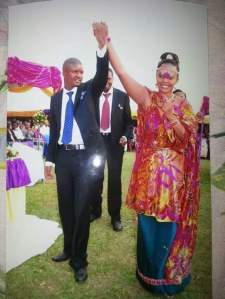
I then find my way to Kampala where I have been asked to take the wedding of Stephen and Brenda. Steve was a teenager the second time I went to Uganda in 1997 and it is a real privilege to be asked to take their wedding service. The picture is from their giving away ceremony earlier this year.

This will be my 5th visit to Uganda! People in Ashton may remember visits from Uganda to Ashton by a number of friends: SimonPeter Kansiime, Revd. John and Alice Tumusiime, Bp. Cranmer and Hope Mugisha. It has been good to establish a partnership in the Gospel with friends from Uganda!

Bake for them two

I have just read this post from Jessica Kantrowitz. It is worth the attention it has been getting. It is challenging and helpful!

Jessica Kantrowitz's avatarTen Thousand Places

gay weddingIn Jesus’ time, the nation of Israel was under Roman rule. The Israelites were allowed to live there and practice their faith for the most part, but they had to pay taxes to Caesar and obey the Roman laws.

To the Israelites, the Romans were evil and ungodly. They had no place ruling over God’s chosen people in God’s chosen nation. That land had been promised to Moses and his descendants when God brought them out of Egypt. Their very presence in the land was blasphemous.

One of the Roman laws stated that any man could be required to drop what he was doing and carry a Roman soldier’s equipment for him for up to a mile. In the sermon on the mount, with his followers gathered around him, Jesus referenced that law and told his followers what they should do in that case:

“If anyone forces you to go…

View original post 1,047 more words

Times Educational Supplement – School Chaplaincy

Back in September 2013 TES carried an article which reported on an Edinburgh Secular Society (ESS) report decrying the influence of chapliancy posts in schools:

http://www.tes.co.uk/article.aspx?storycode=6352780

ESS conducted countrywide research with help from the National Secular Society, and said that large chaplaincy teams – rather than individual chaplains – were becoming more common in schools, and claimed that these teams include members with “more fundamentalist views”, such as creationism and faith healing.

The group, which scrutinised religious groups’ websites and other publicly available information, said that chaplaincy teams regularly had six to eight members in both primary and secondary schools. One secondary – Larbert High, in Falkirk – had 10 members on its chaplaincy team.

The report carried responses from the Church of Scotand and Scripture Union Scotland …. The Rev Sandy Fraser, convener of the Church of Scotland’s education committee, hit back at the criticism. “The Church of Scotland is increasingly disappointed in the nature of these comments by the Edinburgh Secular Society,” he said. “It is extremely inaccurate to suggest chaplains inveigle their way into schools. Chaplains and other community figures are in schools by invitation of the headteacher to assist in whatever way the headteacher feels is helpful to the school. Chaplains are very clear that their job is not to impose their views on the school community.”

A Scripture Union Scotland spokeswoman said that her organisation agreed with ESS that “pupils have a right to hear about different faith perspectives, and that proselytising within a school context is wholly inappropriate”. She stressed that Scripture Union Scotland work took place at the invitation of schools, across all denominations, and was supported by Scottish government guidance.

A Scottish government spokeswoman said that it was “for a headteacher to decide, in conjunction with the local authority and wishes of parents, what links a school should have with its local faith communities”.

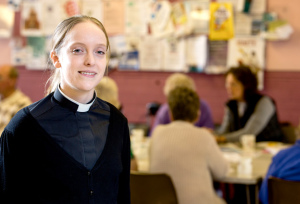
This week TES carried a very different article abour chaplaincy in schools. The number of school and college chaplains has more than doubled in the past decade, with support for stressed teachers becoming an important part of their role. Church of England figures show that the number of school chaplains has grown from 200 to more than 400 in the past 10 years.

The role of chaplain “varies hugely, from comforting students in the aftermath of a tragedy or helping to celebrate their successes to quietly listening to a tutor who is facing redundancy or exploring what it means to believe in God at all”, according to the Reverend Garry Neave, the CofE’s lead on chaplaincy.

In an article for TES, he writes that a chaplain “may be the one person the principal can unburden themself to.”

The Reverend John Seymour, chaplain of Twyford CofE High School in Acton, West London, said that he made a point of speaking to teachers who seem troubled.

“You can see on their faces when they’re stressed, whether it’s about work or their personal life,” he said. “I go into their classroom at a quiet time and say, ‘How are you at the moment?’

“I think the fact that they can articulate what’s going on helps them to make decisions about what they want to do, rather than feeling trapped by it.”

The full article in TES on 3rd April is well worth a read.


Listen to the Women!

LISTEN TO THE WOMEN!?!Empty-Tomb-759395

Have you noticed? Perhaps you have.

In the four gospels we have differing accounts of what happened on that first ‘Easter’ morning. I’m pretty sure that you will have noticed that … but have you noticed one of the things that they have in common? All of them concur that it was the women who remained with Jesus to the end and who were first privy to the wonder of the empty tomb. The men seem to have a secondary role in the story. Why does this matter?

In the Jewish culture of the time a woman’s witness was not deemed admissible evidence in a court of law. Women could not to be counted as members of the obligatory ten persons necessary to begin prayer or to set up a Synagogue. The prevailing culture did not trust women. Yet it is women that Jesus trusts to be the first witnesses of the resurrection and it is predominantly the women who remain faithful to Jesus through the story of the crucifixion.”

St. Bede explained, many years ago, that the festival of ‘Easter’ was derived from the name of a goddess whose festival was held on the spring equinox, ‘Eostre’. Interestingly the name ‘Eostre’ is at the root of the word ‘oestrogen’ a female sex hormone. So should we be surprised that those who physically bear new life into the world should also be the first witnesses of the New Life of the Resurrection, and that the English language both preserves and reflects that truth.

Was there something special about these women?

Perhaps the reason these women were privileged to be the first witnesses on this earth of Christ’s resurrection was because they were amongst the few disciples who didn’t leave Christ during His great trial, and were with Him at the cross when some of His other disciples had betrayed or deserted Him.

Not only did these women never desert Jesus, but also they never stopped serving Him – even after he had died. We are told that on the morning after the Sabbath, Mary Magdalene, and other women who had followed Jesus out of Galilee, came with spices to anoint and prepare His body for burial. One of many ‘woman’s tasks’ – like cooking, cleaning, washing and sewing – that these women were accustomed to doing, and which they’d done for Jesus many times before.

Christ acknowledged the faithful and loving service that these women had given Him throughout His mortal life, and realised that what women do to sustain and provide physical life is important and valued in the eyes of God. He knew that their willingness to take care of His physical body, even after He was dead, was a sign of their great love and devotion, and so He blessed and rewarded them for it.

The last century has seen great changes in what is considered ‘women’s work’. The traditional role of a woman staying at home and running the household has virtually disappeared. Women are increasingly free to find fulfilment in the work place as well as, or instead of, the home. However, surveys show that women still do the majority of housework, and there are areas of work where women still find it hard to be accepted. There are places where gender stereotypes still prevail!

The Venerable Rachel Treweek the new Bishop of Gloucester

Under God, our church (the Church of England) now recognises that gender is not a barrier to serving Christ in any role. The recent ordinations of Libby Lane as Bishop of Stockport,  Alison White as Bishop of Hull and Rachel Treweek as Bishop of Gloucester are testimony to the truth that in God there is neither male nor female. That, ultimately, there is no longer something which we can call ’women’s work’ (or for that matter, ‘men’s work’).

The resurrection stories highlight the truth that God entrusts important messages to those who faithfully serve him. When we argue about who does what; when we become too focussed on gender roles; or when we become too concerned about our status and about power and influence we miss out. For while we are arguing our case, Jesus turns to someone else who has been faithful in service and entrusts his message of love to them.

What matters most of all is our relationship with God, with Jesus and with each other. It is relationships that are central to the Christian faith, and it is love that matters more than power, or rights, or influence. It is relationships that matter more than codes of conduct, or fulfilling what is expected of us. Yes, during Jesus’ life on earth, women had traditional roles; they ministered to Jesus’ physical needs and remained faithful to him. As a result they were among the most privileged of all Christ’s disciples: they never deserted the Saviour; their testimonies of Him never faltered; they never stopped bearing witness of His divinity.

So, it was the women who were entrusted first with the Good News, ‘Christ is Risen!’

It was the women who first were told to ‘Go and tell’.

We have heard their message down the ages. A quick glance around almost any congregation will of course confirm that it is women who constitute the numerical majority of the Christian faithful. But this is not just a message for women to share. Christ calls on all his faithful ones to shout, ‘Christ is Risen!’ and to find ways to ‘Go and tell’ others of all that we have received from him – men, women and children!

The message is alive in both men and women, and we both have a mandate to share the message this Easter. Christ is alive and well; He dwells within us, and calls us (all, whoever we are) to share in the work of the Kingdom. Ashampoo_Snap_2015.04.06_07h20m56s_045_

HAPPY EASTER


Penny and Tracy – Attracting priests to the North?

Living and working in the North West of the Country has many benefits!

stchrysostoms's avatarSt Chrysostom's Church News and Views

We are proud at St C’s to see two women priests (Tracy Charnock, former curate and Penny King, former parish assistant) with a Chrysostom’s connection featured on a Church of England website seeking to attract clergy to the north. In today’s edition of ‘The Times’ the story is taken up. Here is the article from The Times (28 Feb 15)

The Church of England has launched a campaign to attract young vicars to take up long-unfilled posts in the north

Penny Penny – a poster girl?

When Penny King told her university friends in Canterbury that she was moving to Manchester, they were horrified. “They said ‘you’ll get shot! You’ll get mugged! It’s depressing. It’s all grey and the weather’s awful’. ”

The perception that life is “grim up north” has greatly damaged the Church of England’s attempts to fill posts in the north, where some jobs for vicars…

View original post 1,011 more words

Addressing Poverty and Injustice

In order to have a voice in the public sphere, the Church of England needs to be seen to speak with integrity. The Gospels and the wider scriptures have an inherent bias towards the poor. What is the Church doing to reflect this scriptural imperative?

Here is the evidence:

http://www.cuf.org.uk/research/church-action-0?dm_i=5DF,37LJO,19R1N0,BHWY1,1

Social action is not an optional side project for the Church; it is core to its heart and mission. The commitment to this calling can be clearly seen in the scale and diversity of activities offered by local churches, ranging from food banks and debt advice, to lunch imgresclubs and fitness classes. Not only do churches offer services that meet specific needs, they also create spaces for people to connect with and get to know others, helping to build stronger and more resilient communities.

The Transfiguration – Mark 9:2-9; Colossians 1:15-20; 2 Corinthians 4:3-6.

In Colossians 1:15-20, Paul struggles to impress on us the nature and importance of  Jesus as God’s Son.

Christ is the image of the invisible God, the firstborn of all creation; for in him all things in heaven and on earth were created, things visible and invisible, whether thrones or dominions or rulers or powers – all things have been created through him and for him. He himself is before all things, and in him all things hold together. He is the head of the body, the church; he is the beginning, the firstborn from the dead, so that he might come to have first place in everything. For in him all the fullness of God was pleased to dwell, and through him God was pleased to reconcile to himself all things, whether on earth or in heaven, by making peace through the blood of his cross.

Paul and others like him were doing their theology for the first time. They had met with the risen Jesus, some had lived alongside him for at least three years, and they were all struggling to put into words and ideas the reality of what they had encountered.

Paul talks in Colossians of Jesus as the image of the invisible God, as someone in whom the whole Godhead dwells bodily. He has begun to realise just exactly who Jesus was and is, and it excites him. And in that passage from Colossians it’s as though, words tumble out as Paul realises just what it all means. We can almost feel his longing that his readers will understand too.

The Transfiguration (Mark 9:2-9) was part of the same kind of process going on for Peter. Up to now, he has seen Jesus healing, he has felt his own poverty and sinfulness alongside the richness of Jesus character, he has listened to Jesus speaking, he has seen his wisdom and listened to his parables and gradually it has become clearer to him that Jesus is more than just a special person, but try as he might he can’t get his head round it all. In the verses immediately preceding our Gospel reading he has hesitantly voiced what is inside his head. “You are the Messiah, the Holy one of God,” he says to Jesus.

But ultimately he still isn’t sure what he means … and then comes the Transfiguration. He sees Jesus and Moses and Elijah together and he believes he’s worked it out. He places Jesus on the highest pedestal that his mind can comprehend. Jesus is the equal of Moses and Elijah, perhaps the greatest prophet ever. And for a Jew, that was saying something!

And Peter wants to build booths, small shrines, little churches. He leader, his master is in his mind the equal of Moses, the equal of Elijah. This needs to be marked. And then God speaks: … “This is my Son, my Chosen, listen to him.” Listen only to him.

Peter discovers that he has not gone far enough. His own mind just was not big enough to comprehend who Jesus was, who Jesus is. The truth was just so much bigger than he ever thought.

And we are left facing the same truth – Jesus is bigger than our own ideas of him. God is beyond our comprehension and we will only begin to understand God, to relate to God if we relate to Jesus. And we will only do that if we allow ourselves to see God=s revelation of him. The lesson of the Transfiguration is that creating our own image of Jesus, of God, achieves little. All it does is bring God down to our own level. And depending on our own perspective we create a Christ who is meek and mild, or a Christ who is white rather than a Jew, a red-haired handsome specimen of humanity; or perhaps we might create Christ as the freedom fighter, the revolutionary, the liberator, or we see him as the social reformer.

“No,” says God, “Jesus is bigger than all of this – he is my Son. You can’t pin him down. You can’t domesticate him. He is there to challenge you, to save you, to draw the best out of you. Listen to him.”

We are intended to be dazzled by the light of Jesus face. To be drawn to him, and to see the world fade into dimness. And in that encounter, God expects us to be changed, to be renewed, to be challenged, to be shaken out of our present categories, our concepts of the way things are.

By meeting with Christ, we begin to understand God as Father, Son and Holy Spirit – but more than that – we are challenged to move out with hope into our world, believing that God’s kingdom in Jesus is all that other’s really need, looking to bring that kingdom into being, looking for the signs of God’s presence in the world around us. Longing to serve our Lord, longing to be changed still more. Longing to be Transfigured in our encounter with Jesus.

For as Paul says in the reading from 2 Corinthians:

It is the God who in creation said “Let there be Light!” “Let light shine out of darkness,” who has also shone into our own hearts to give the light of the knowledge of the Glory of God in the face of Jesus Christ.

LEAP – A Reader’s Story!

One of the privileges of being Team Rector of the Parish of the good Shepherd in Ashton-under-Lyne is the access that this gives to some of the charities in the town that are doing such good work. I am delighted to be able to say that I’ve been involved in LEAP (St. Peter’s Partnerships) for a number of years. The charity is active throughout Tameside and particularly in St. peter’s Ward in the West End of Ashton seeking to address the significant disadvantage faced by many.

Here is one story to warm the heart which is typical of the work LEAP is involved with.

http://www.thebuildingfuturesgroup.com/members-news/reading-is-on-the-menu-for-tony/


Charlie Hebdo, France, Islam and Islamism

Events in France and throughout Europe are straining relations across the world. A couple of recent articles have been of help to me in gauging my own response (links to those articles are at the end of this post). I have been disturbed by the eurocentric view of the media which has until very recently all but ignored atrocities in Nigeria in favour of reporting on the terrible atrocities which have taken place in Europe.

I feel deeply concerned that defending free speech seems to extend, at the moment, to defending a right to say absolutely anything that we want to say and seemingly has little respect for those who might be offended. Yet we know that this does not work, that this does not build a fair and good society. We already understand that certain actions incite hatred and we have developed laws intended to prevent that kind of behaviour. There seems to be a lack of consistency in our approach to free speech. Provoking ridicule and hatred cannot be right, even in the name of free speech.

Events and actions leave me unsure of the ground on which I stand. I want to belong to a tolerant society which mirrors the love God has for all of the world and for all human beings. I don’t want to be part of a world, or a country, that sees point-scoring against others, or ridicule as a primary way of relating.

I understand the instinct which means that people are offended and hurt by words and actions of others. I guess that I still have prejudices which need to be exposed and dealt with, but I want to live in a world where all are respected and valued and not a world where people’s faith is ridiculed but I also want to say the strongest things about atrocious actions which take place in our world. Nothing can justify them. Nothing.

We cannot, and we will not, build a good society if we seek to do so on the basis of defining ourselves by what we hate. A good society will be built by defining good values which we share and seeking to uphold them in all we do. A good society will be built through seeking understanding of our differences, respecting those who are different from ourselves and learning from each other. None among us can claim the high ground – all of our societies have committed atrocities in the name of sustaining our way of life. Throughout history this has been our pattern of relating as human beings and a better world will only be built when we accept that own instincts for self-preservation and the instincts of our society  are defensive rather than generous, and that we all, instinctively, seek to blame the someone else rather than engage with our own inadequacies.

I have found two articles helpful recently. They are:

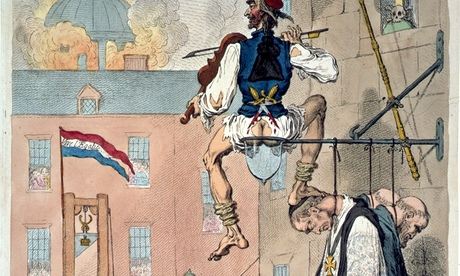
1. An article by Giles Fraser in the Guardian that helps us Zenith of French Glory cartoon by Gillrayunderstand that there is no neutral territory in these matters, a secular society is just as dogmatic as a society based on other values  and just as likely to commit atrocities in defence of its own values.

http://www.theguardian.com/commentisfree/belief/2015/jan/16/france-much-vaunted-secularism-not-neutral-space-claims-to-be

2. An article by Quanta Ahmed in the Spectator – a Muslim cover_170115_issuereflecting on the actions of Islamists and clearly helping us to understand that the sense of revulsion at atrocious actions is shared by Muslim, Christian, humanist.

http://www.spectator.co.uk/features/9416462/how-to-save-islam-from-the-islamists


Honour Killings and Forced Marriage

‘Britain’s Lost Women’ campaign to create an annual day of remembrance for victims came to fruition after fashion bible Cosmopolitan teamed up with Karma Nirvana – a charity that works to end forced marriage and honour killings. The date chosen is July 14th. You can read more at:

http://www.lapidomedia.com/london-police-repeatedly-rebuffed-honour-killing-victim

THis announcement was made at the same time as the House of Lords was considering a report on Honour Killings from the Henry Jackson Society and authored by Emily Dyer:

Click to access Honour-Killings-in-the-UK.pdf

These are the first few paragraphs of the  executive summary of the report:

Thousands of people living in the United Kingdom are at risk of losing their lives to an unwritten code of conduct known as ‘honour’. Girls across the UK are raised to believe that their purpose in life is to uphold the ‘honour’ of the family. If they bring dishonour, they will pay the price with their lives. Women have come to the UK in order to escape violent cultural practises abroad – from female genital mutilation to the threat of ‘honour’ killings – yet have been met with the same brutality and dangers here.

Successful efforts by campaigners to raise awareness of these issues, as well as provide victim support, are not being matched by those whose responsibility it is to protect British citizens: the government. Many victims are still being let down by a government that is failing, not only to deal with crises, but to prevent them from happening in the first place.

Scale of the Problem
– The exact number of ‘honour’ killings each year in the UK is unknown. While, in 2003, the police estimated that 12 ‘honour’ killings took place in the UK in 2002, the numbers are likely to be much higher;
– According to our database of killings or attempted killings, 29 cases have been reported in the media to have taken place within the UK in the last five years (11 in 2010, five in 2011, nine in 2013 and four cases in 2014);
– Of all reported cases since 2010, 11 were attempted killings, and 18 were actual killings.

Nature of the Problem
Why do ‘Honour’ Killings Occur?
– While the reasons can vary broadly, the majority of reported cases since 2010 have occurred due to the victim bringing ‘dishonour’ to the family as a result of an issue relating to marriage or the victims’ choice in partner. An ‘honour’ killing, therefore, takes place in order to erase the ‘dishonour’ of the family within the wider community.

Who is Involved in ‘Honour’ Killings?
– The majority of victims of ‘honour’ killings and Honour Based Violence (HBV) are girls and women. Of all reported UK cases in the past five years, the majority of victims were females. However, men are also victims of ‘honour’ killings. In the cases of male victims reported in the media over the past five years, the perpetrators usually included the families of a current or ex- partner;

– Young people are those at most risk of HBV. Where the ages of the victims of reported ‘honour’ killings are known, just less than half were 25 or under – all but three of whom were female. The ages of victims in reported cases ranged from 16 to 56 years old. While the total number of perpetrators of reported ‘honour’ killings and attempted killings throughout the past five years remains unspecified within open source material, the ages (of those whose age was known) ranged from 17 to 59 years old.

Relationships between Victims and Perpetrators
– The majority of reported killings have been carried out by close family members. In a little over half (15) of all cases of UK ‘honour’ killings reported in the media over the past five years, the perpetrators were current or former partners and/or that partner’s family. In another nine cases, the victims’ parents were involved (of which two cases also included the victims’ male siblings) in the killing.

Roles of Women in ‘Honour’ Killings
– While men commit the majority of ‘honour’ killings, there are cases in which women have played both active and passive roles. While these women share the belief that a woman can bring shame and dishonour, there is also immense pressure put on all family members to guard the ‘honour’ of the family. 

Please go to the link above to read the full Executive Summary.