Category Archives: Ashton-under-Lyne Blog

Matthew 10:24-39 – Mordechai Vanunu

Do you remember the story of Mordechai Vanunu, the Israeli whistle‑blower? In 1986 Vanunu, an Israeli nuclear scientist, publicly exposed Israel’s possession of nuclear weapons. He was arrested, tried in secret and sentenced to eighteen years in prison, eleven of which were spent in solitary confinement. He was released in April 2004, but lived under virtual house arrest in St George’s Cathedral in Jerusalem, having earlier converted to Christianity.

Israel insists Vanunu still poses a security threat and he is banned from leaving Israel – including visiting the West Bank and Gaza Strip – or talking to foreigners without permission. He is also banned from using the internet or mobile phones, and may not approach embassies or borders.

In 2010 he was jailed again for three months for breaching restrictions imposed on him, which included speaking to foreigners and attempting to attend Christmas Mass in Bethlehem.

He was asked to address an Amnesty International Conference in the UK on Tuesday (17th June 2014) and the UK Parliament on Wednesday, (18th June 2014) but Israel decided to uphold the travel ban it imposed on him years ago.

Mordechai Vanunu is regarded throughout Israel as a heinous and dangerous traitor, a criminal who has revealed Israeli secrets to the rest of the world. Yet a woman who befriended him in prison said this about him, “After 18 years that were so difficult, this man has not even a drop of bitterness, he has no desire for revenge. I do not know if I could behave like that after so many years of continuous suffering. He is a wonderful man.”

Whatever the rights or wrongs of the case, Vanunu has already paid a huge price for his conscience. He lost his life, or, at least, many years of it, languishing in prison. Yet it seems from the words of his friend that through being prepared to risk all for that in which he believed, he has found himself. He has discovered the depths of his being and has become “a wonderful man”.

The same is true of others, like Nelson Mandela, in prison for years for fighting against an evil system. Instead of becoming bitter, Mandela and others decided to keep working for truth and justice whatever the cost.  People making tough decisions, costly decisions to ensure that God’s kingdom is being built.

In our Gospel reading, Jesus says what can seem a very strange thing to our ears:  “Do not think that I have come to bring peace to the earth.”

Jesus said to his twelve selected followers, “I have not come to bring peace, but a sword. For I have come to set a man against his father, and a daughter against her mother …”

Harsh words, which at first glance seem to be the very reverse of Christian love. But then Jesus explains what he means. “Whoever loves father or mother more than me is not worthy of me; and whoever loves son or daughter more than me is not worthy of me; and whoever does not take up the cross and follow me is not worthy of me. Those who find their life will lose it, and those who lose their life for my sake will find it.”

Christian love is tough. Christian love holds justice, integrity and truth in high regard. Other considerations pale into insignificance beside it. Christian love places a premium on justice and integrity even when it is very likely to alienate nearest and dearest to us. For some people, like Jesus, truth will alienate the entire nation and send the truthful person to the gallows.

Jesus tells his disciples that Christians are called to integrity, to being truthful, even when it seems that being truthful will result in their own destruction, will harm, not someone else but themselves. But, as Jesus’ own story shows, death leads to resurrection. Those who lose their lives for his sake will find them.

Most of us are not called to be a Mordechai Vanunu. But Jesus does call us to honesty and integrity, even at the cost of upsetting those we love or losing our own status or reputation.

Christian love is at times about bearing the pain of rejection and facing up to the need to stand against what is wrong. For some people – that might mean a long, hard look at their job or the way they do their job. Because a job which requires someone to lie or to exploit others cannot compatible with Christian faith. Such workers might lose their jobs or their reputations for the sake of the gospel, but gain their life.

For some of us, it might be about having the courage to say the difficult thing to those whom we like and respect. It is so much more comfortable to be of one mind with those around us than to stand alone and to be at odds with them. But by being prepared to risk our own comfort for the sake of what is right, we gain our life.

Love which fails to speak out when it is right for fear of hurting or upsetting the other person is not real love, but is self‑indulgence. Love which really has the genuine needs of the other person at its heart is tough and painful for the one who loves, and may lead to crucifixion. But the other side of crucifixion is an unexpected and magnificent resurrection, a new and different kind of life.

Eternal life is life lived with God in glorious freedom, because the truth really does set us free. If we really want to enjoy the rewards of Christianity, then we too must take up our cross and follow Jesus.
 

St. James’ Ashton-under-Lyne, Art Exhibition

IMAG0342

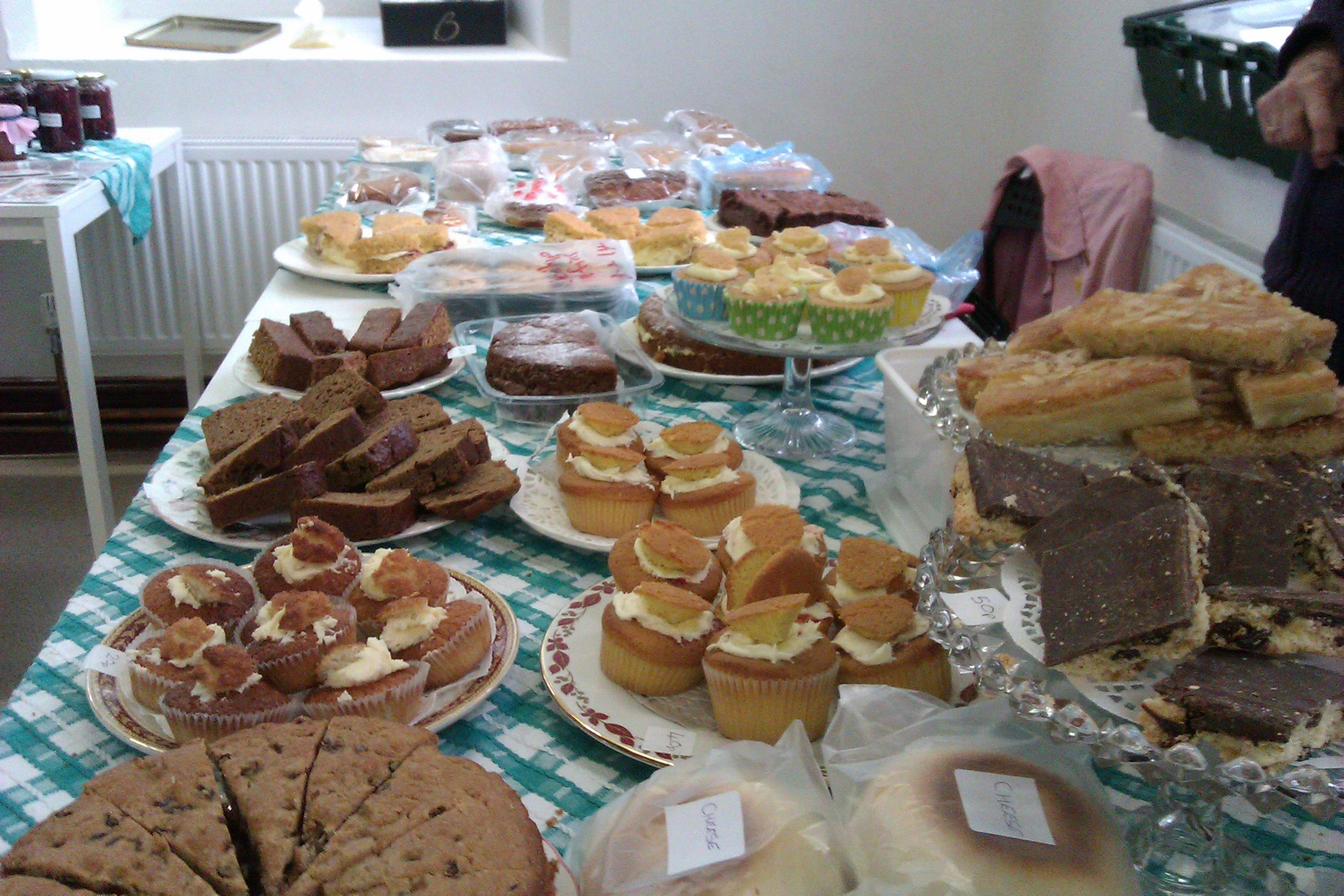
Those florentines at the bottom right were fantastic!

IMAG0337

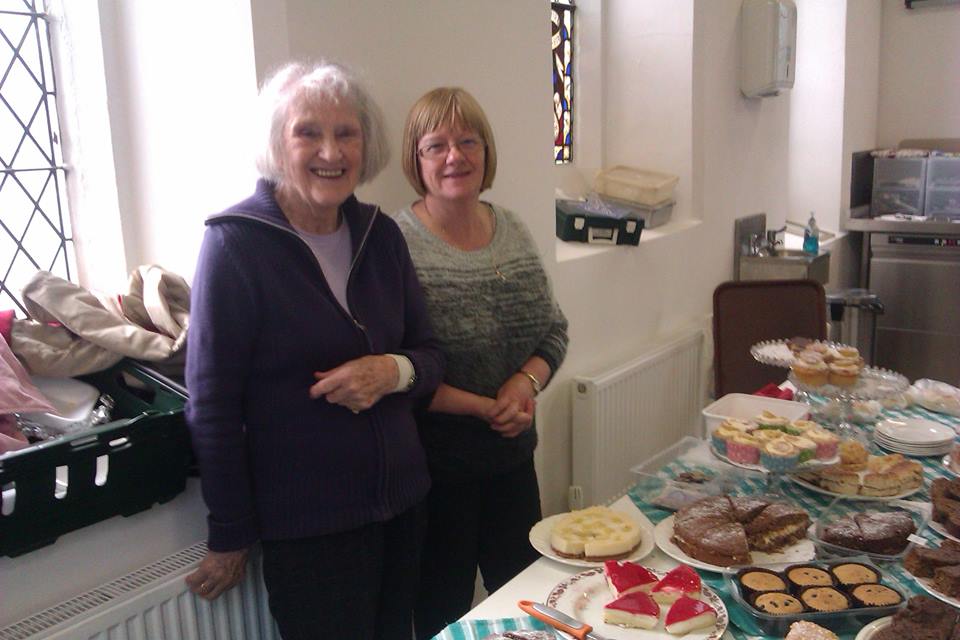
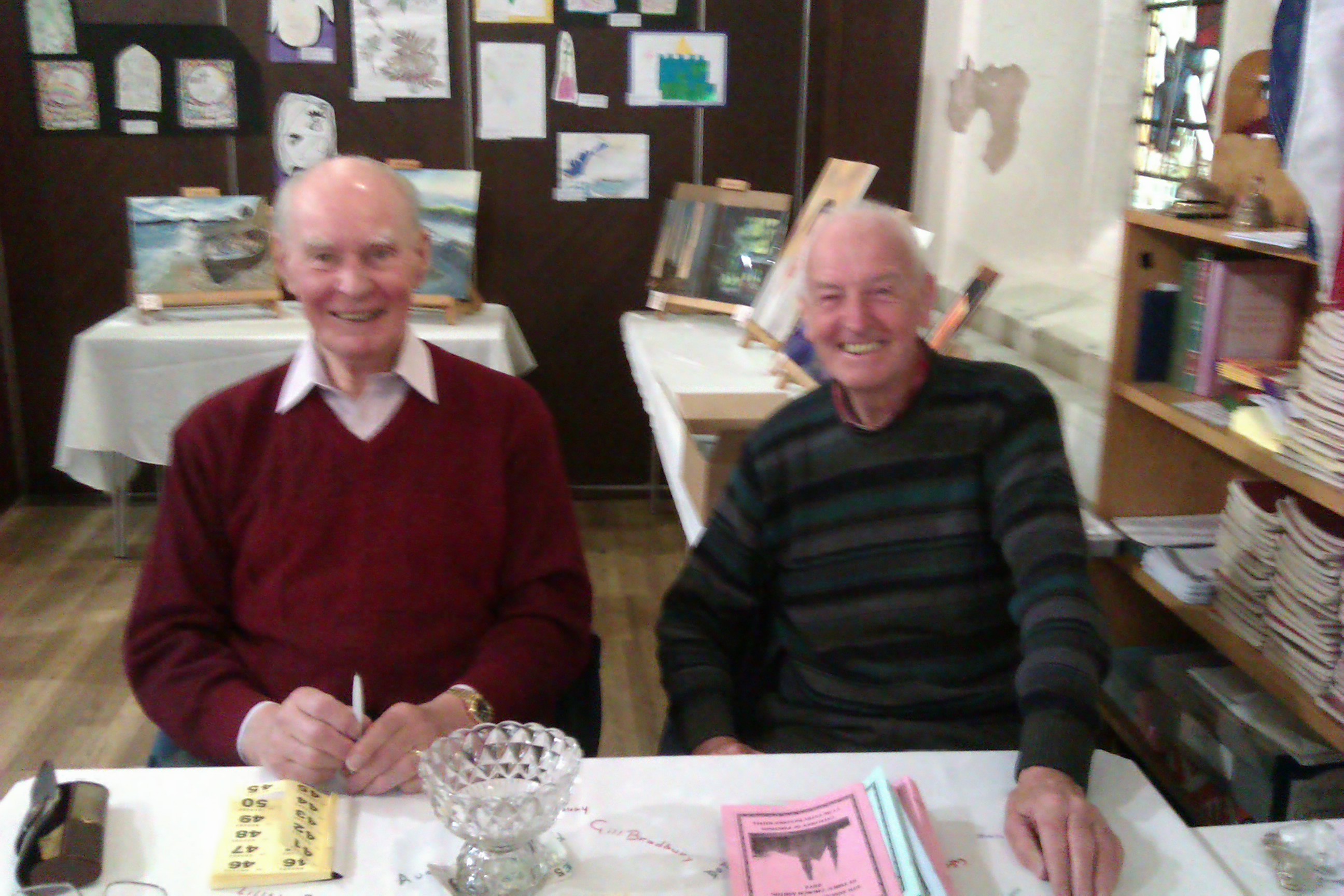
Ron and Jack

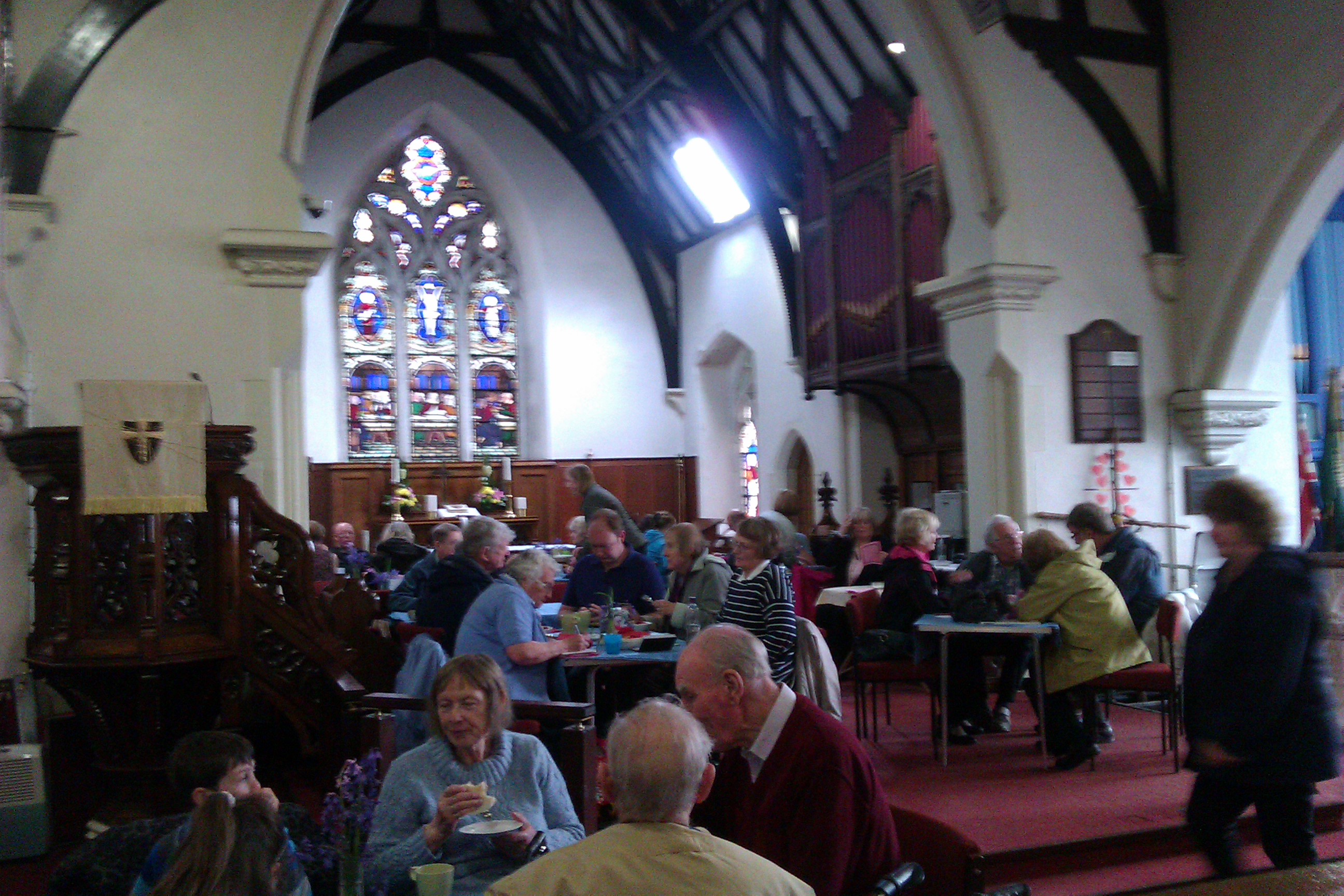
IMAG0352St. James’ Church held its 6th Annual Art Exhibition on Saturday 10th May. WEA Art Classes meet at St. James’ Church on Tuesdays and Thursdays through much of the year and once a year the Church and the Art Classes put on an excellent single day exhibition, with plenty of good food to eat for those who attended. If you missed it, you missed a treat!

IMAG0339

Kath and Janet

All of the food on offer was home cooked or prepared, all the art work was done in classes in the church.IMAG0367

1625637_10152078392489599_6429521706719988446_n

Olive and Beryl

IMAG0341

Barbara and Olive

We had a great day on Saturday!

John 20:19-31 – 27th April 2014

How often have you sat in a room with a group of friends and realised that you’ve no real idea what they’re talking about? Like you’ve dozed off for a bit and the conversation has dramatically changed direction. How did you feel? It can be a quite lonely or confusing experience.

Sadly for some, Manchester UTD have not had the best of seasons. Others might be quite pleased! I don’t have many UTD memories, being an Arsenal supporter, how could I! But there is one that sticks in the mind. Nearly 15 years ago, on Wednesday 26th May 1999  – I’d been watching the United/Bayern Munich Champions League Final on TV. I had to go out to do a Baptism visit, there was perhaps only minute or two to go and United were losing, they were on the rack and going nowhere. The result was a foregone conclusion – Bayern Munich had obviously won the cup.

I wasn’t out that long, but I missed the key last minutes of the match. When I got back, I couldn’t believe what people were saying. United had scored twice in the last minute – they’d won. I wasn’t there – and if there hadn’t been independent accreditation of the victory, I would not have believed what people were telling me!

Whether we wake after having dozed off in a crowded room, or we were just not there when a key event happened – we easily feel ostracised and left out. No matter what anyone says, it still feels that way.

We’re not told why Thomas wasn’t in the upper room that first Easter evening when Jesus visited his disciples. We could spend time trying to imagine where he was – but we won’t! Suffice to say, he missed the key event, the turning point, the moment that changed defeat into victory. And how did he respond? In exactly the same way as most of us would have done. … Thomas couldn’t believe what the others told him. I doubt any of us would have done under those same circumstances.

Seeing is believing – but so is sharing in an experience with others. Thomas not only didn’t see what happened, he was left out of the experience that everyone else shared. He was in a lonely place, wanting to believe, wanting to share in everyone else’s happiness, but unable to do so. He hadn’t been there, he hadn’t seen Jesus.

Thomas’ reactions and feelings are understandable, and as we read the story we can see that Jesus thought so too. He provided a repeat of the same encounter – one in which Thomas could share; he gently reminded Thomas of his outburst – no indignant rebuke, just words which drew Thomas back to faith. Thomas’ response is one of the clearest statements of Jesus’ divinity in the Bible. Having seen the truth of the resurrection he cannot but exclaim, “My Lord and my God!”

The next 3 verses are important, and they are pivotal to John’s message:

Jesus said to Thomas, “Have you believed because you have seen me? Blessed are those who have not seen and yet have come to believe.” ….  Now Jesus did many other signs in the presence of his disciples, which are not written in this book. But these are written so that you may come to believe that Jesus is the Messiah, the Son of God, and that through believing you may have life in his name.

John has led his readers through a story – a story which allows those readers to meet Jesus and begin to understand who he is. It’s a journey of discovery, one in which we can identify with the different characters, feel their emotions, struggle with them to understand what Jesus is doing and saying. Thomas’ words are the culmination, the pinnacle of the story – the point where even the strongest of doubters expresses faith. Jesus response is not just for Thomas’ ears, not just for the disciples, but for all who read John’s Gospel in coming generations. “Don=t think,” says Jesus, “that the disciples were in some way special because they saw all these events first hand. Rather, blessed are those who read the stories and encounter Christ through the work of his Spirit in their lives and the lives of those around them.”

“Blessed,” says Jesus, “are all who read this Gospel, who struggle with doubts and come to believe that he is the Son of God.” We’ve not missed out on the party, we can still be part of the events which changed defeat into victory. We too can own the risen Jesus as our Lord.

This is good news – particularly for those of us who struggle with doubt; for those of us who’d like to believe more strongly than we do; for those of us who see other people’s faith, or the joy they seem to experience in their Christian life, and feel that we are somehow missing out.

The story of Thomas is important because it embraces doubt.

The story is also important because it embraces change. Everything is different, Jesus was dead and is now alive. This changes everything – nothing can now be the same. Thomas struggles to accept the new situation. For so many of us change is difficult to handle, yet it is happening all the time. We need to continue to engage with the communities around our churches, looking for new ways to serve, new ways to make Christ known and to bring hope where there is despair. We need to accept that the future for the Church of England is one with significantly less stipendiary clergy – perhaps one third less in numbers in ten years time – and we need to imagine new forms of ministry both lay and ordained, new ways of being church. Nothing is the same as it was, nothing will be the same as it was, and we want to shout out the loudest “No!” that we can manage.

There are two key things we can take away from this passage.

First – it’s OK to be honest – don’t pretend that everything is OK when it isn’t, don’t manufacture faith if it isn’t there. We can express our fears and we can express our doubts. In fact expressing our fear and our doubt is often, like it was for Thomas, the first step to faith.

Second – this story of doubt and faith is made the crowning moment of John’s Gospel – the pinnacle – Jesus reaching out to his loyal but doubting and fearful follower, not in anger but in love. Thomas’ exclamation, “My Lord and my God!” is the point at which John chooses to rest his case. … Honest struggling with change, honest struggling through doubt towards faith is given the highest honour in John’s Gospel.

So, don’t be discouraged if the pace of change or the circumstances we face are a struggle. Don’t be discouraged if believing is a struggle. For many football fans winning or losing is a life or death issue. But here we go beyond issues of life or death, we’re concerned with eternity. Be encouraged as you struggle to be faithful in an ever changing context, when at times everything you hold dear seems threatened. Be encouraged as you struggle to believe, for the story of Thomas makes it very clear that God loves the open and honest doubter.

Good Friday

Most of us want to succeed, none of us likes to be seen as a failure.

How do you measure success? Climbing to the top of the social ladder? Keeping up with the Jones’s? Getting promotion at work? Moving to live in the better area of town? Being liked by everyone?

And once you’ve decided what success means – how do you achieve it?

Isaiah, a couple of chapters before the Old Testament reading set for today in the Revised Common Lectionary – in chapter 50 – says these words, words which are often thought, like our reading from Isaiah 53, to point forward to Christ as the suffering servant:

I gave my back to those who struck me, and my cheeks to those who pulled out the beard; I did not hide my face from insult and spitting. The Lord God helps me; therefore I have not been disgraced; therefore I have set my face like flint, and I know that I shall not be put to shame; he who vindicates me is near. (Isaiah 50:6-8)

Isaiah uses the phrase: “I have set my face like a flint.” How might we rephrase that in today’s language if we want to talk about being successful?

“Go for it, no matter the cost.”

“Climbing over dead men’s bodies.”

“The end justifies the means?”

Or what about a picture that I find quite vivid – that  of the powerboat moving at such speed towards its destination that its wash overturns everything in its wake.

Ambition, determination, whole-hearted commitment to our goals. Quite good things in themselves. Often, however, when our hopes for ourselves conflict with the interests of others we can produce all sorts of justifications for less than generous attitudes and actions.

Isaiah in that reading talks of whole-hearted commitment, of being determined, even when shamed, made fun of, disgraced. A determination to see things through.

We start Holy Week by marking the events of Palm Sunday as Jesus rides into Jerusalem on the donkey. Jesus on Palm Sunday sets his face like a flint towards Jerusalem, nothing is going to stop him fulfilling God’s will – nothing will deflect him from the path of the cross.

The adulation of the crowd – could easily go to his head, but it doesn’t. On that first Palm Sunday, Jesus is lonely, he is alone in the midst of the crowd. No one else understands, no one really knows what is happening. The clues are all there, the donkey ridden through the gates of Jerusalem is one of the biggest. Jesus is no ordinary king, yet people ignore the signs, they want him to be their King, a King in their mould, a real King!

But success for Jesus as King is not measured by the standards of the crowd. Success for Jesus is measured in terms of apparent personal failure. In his weakness, God’s purposes will be fulfilled.

In Isaiah, the Suffering Servant, sets his face like a flint into the suffering that is coming his way – confident of God’s help to endure. There’s no disgrace, no shame, in the torture he faces because he knows that he can trust God for his future, for his ultimate vindication.

How different these attitudes are to our own? We struggle and strive to protect ourselves. We’ve taught ourselves to be self-reliant. “Look after number one – no one else will!”

We’ve learnt to see failure and weakness as shameful. Success in the world’s terms is important to our sense of self-worth. We cannot be seen to fail, even if that means that we need to put others down.

Isn’t this all being a little harsh. …. Perhaps I’m being unfair?

Am I? … I don’t think so. I only need to ask myself a few questions to see how true it is of me. How willing would I be to embrace apparent failure, like Jesus did, for the sake of people I don’t know? … Would I be prepared for you to think bad of me, to reject me – if I only knew that I was doing what God wanted?

In the end, though, it is hardly ever as obvious an issue as that. Things are never that clear-cut. It’s in the smaller things that I need to learn to place the needs of others above my own, in the smaller things that I need to learn to set aside self-protection and look to the interests of others.

It was because Christ was open to others, vulnerably sharing himself with them listening to their needs, that he set his face like a flint to the cross. Because he was aware of others – he chose suffering and death.

Jesus’ actions and his words call us to set aside our well-being, our comfort, so as to meet the needs of others. So, how do we succeed? Jesus answer would be, “By becoming vulnerable. By being willing to die, by being willing to embrace failure.”

By accepting the Palm Sunday’s adulation needs to give way to Good Friday’s rejection. A very different measure of success!

Jesus sought his own honour not in the eyes of those around him but in the eyes of God. Success was measured by faithfulness to God’s plan for him. What seemed to the world to be shameful became his greatest success. Jesus greatest shame in the eyes of his society became his greatest honour in the eyes of God. The shameful cross became the place of glory, the place of salvation.

Take time to think about how we measure success, what is honourable and what is shameful for us. How can we … ? How can I serve God most faithfully?

A Poem by Shashikant Nishant Sharma (an Indian poet)

Success lies in being happy
After losing the game
Success lies in giving credit
And taking the blame
Success lies in doing good
Without thinking for name and fame
Success lies in winning friends
Sharing goods and claim
Success lies in the fair means
Not in anyhow achieving the aim
Success lies in team spirit
Making efforts jointly for the same
Success lies in enjoying the journey
Not in reaching the hall of fame.

These are lovely words. We could aspire to this kind of measure of success. ‘Very Christian,’ we could say. And perhaps they are. Perhaps they are the most pragmatic way we can find to emulate Christ in today’s world.

It is, however, Christ’s shameful death that is meant to be the measure of success for us. We are called to take up our Cross and to follow him. We are called to follow Christ through shameful death to resurrection. And, even if we find that following too difficult, we are called to accept that it is only through that shameful death that salvation is possible.

Salvation can only be won for us by a God who is prepared to take onto himself all that separates us and our world from God, all that divides us as God’s people, all of the pain and hurt that we impose on each other. It is at the cross that God in Christ succeeds, he triumphs, he is enthroned as King, he is glorified, but his triumph, his success, is not a battle won but relationship restored. His success is measured in the depth of his identification with us and in the strength and reality of his divinity. His success comes in the midst of apparent failure.

The cross is the centre of our salvation, the resurrection God’s seal of approval. It is not after his resurrection, but on the cross that Jesus says in triumph, ‘It is finished!’

Almighty Father, look with mercy on this your family for which our Lord Jesus Christ was content to be betrayed and given up into the hands of sinners and to suffer death upon the cross; who is alive and glorified with you and the Holy Spirit, one God, now and for ever. Amen.

John 4: 5-42 and Romans 5:1-11

Lent-3-2014Our worship is central to our lives as Christians, and perhaps because it is so very important it is often something that fuels heated discussion and even division. I’m sure you’re familiar with many of the arguments.

We’ve special societies ‘protecting’ ways of worshipping. One, The Prayer Book Society seeks to defend and uphold the BCP. There was for a short while, an ASB Society fighting to hold on to the ASB (do you remember that). On one hand we have people arguing for BCP or Hymns Ancient and Modern and on the other, those who can’t imagine how anyone can worship without singing choruses more than 3 or 4 times – those who sometimes argue that everything old has to go – only the new is of value.

Now I know these are parodies, but unfortunately they are so very close to reality, for if it isn’t the forms of service we use, it’s the version of the bible they use or their churchmanship that seems to matter so much and make it impossible for us to share fellowship with them.

It is natural that we’ll have our own commitments to styles, forms and the substance of worship. But it isn’t styles or patterns that matter to God. ‘What matters,’ says Jesus, ‘is that those who worship God, worship in spirit and truth’. That worship is from our hearts and has integrity.

It was these kinds of arguments that separated Jews and Samaritans. Oh, there were a few age old grudges as well, but it was the arguments about worship that were most often used to maintain their divisions.

The Samaritan woman brings up the debate to change the subject. The conversation with Jesus has got too personal and she tries to deflect Jesus’ attention away from herself. Jesus generously accepts that change of direction, and, as they talk, he makes it clear that place and practice will soon no longer matter. ‘What’s important,’ says Jesus, ‘about worship is the heart of those who worship.’

How I wish that down the centuries we’d listened to Jesus. Many awful acts have been done in the name of the Church. We’ve even burnt people at the stake to protect our ways of doing things. We’ve refused burial rights in our cemeteries, we have ostracised and vilified those different from ourselves. I have seen the speck in their eye and ignored the plank in my own. We have been so concerned with the peripheral and the unimportant that we Christians have separated into thousands of denominations the world over – and we continue to condemn each other over the outward forms of our religion.

So, what does it mean to worship in spirit and in truth? Is there a particular way of worshipping that we can latch onto, that will ensure that we don’t worship in error and without the spirit rather than with the Spirit and in truth? …… Clearly the answer is, ‘No!’ Each generation, each community has to explore for itself what it means for that generation or that community to worship in spirit and in truth.

The world is constantly changing and our understanding of God is always developing. God may not change, but in every generation people have had to find new ways of expressing themselves to one another and to God … new forms of expression – in order to remain faithful to the revelation of God that we have received.

So, please let’s not allow the peripheral, the ultimately less important, to become the central and most important things. Let’s begin to believe that others are at least as sincere as we ourselves are, in our efforts to honour God in our worship.

Let’s focus with Paul in Romans on what is important and what we all share – the death and resurrection of Jesus – through which we have peace with God – through which, and through whom, we live by faith in the grace and love of God. No longer enemies of God but friends, no longer at odds with each other but reconciled as friends.

Do outward forms of worship matter? Are they important? Of course they are, for they’re the framework, the place where we are set free to worship in Spirit and in truth. They’re also the space where the other person is set free to worship. But worship itself is not about those different ways of doing things. Worship in spirit and in truth is about our hearts and wills focussed on the grace of God.

Worship in spirit and in truth brings us face to face with the love and grace of God in Jesus, our hearts focussed on God, drawn to him through the love shown to each of us in Jesus. Worship in spirit and in truth brings reconciliation and not division because ultimately our focus is not on ourselves but on the love which shines out from the face of Jesus.

Bishop Mark at St. Peter’s School

On Tuesday 11th March 2014 – the Bishop of Middleton, Rt. Revd. Mark Davies visited St. Peter’s School in Ashton, one of our 5 church schools. The school has recently been confirmed as one of the top 1% improving schools in the country!

After arriving at the school, Bishop Mark met with the school council – they asked him loads of questions!

Bishop Mark visited every classroom in the school and the children shared with him what they were working on.

After the morning’s lessons, the children assembled in the school hall for collective worship which was led by Bishop Mark.

Bishop Mark explained the role and function of his ‘bishop gear’.

St Peter’s visitor book:

‘I cannot begin to say how much I have enjoyed my visit….it goes beyonds words.
St Peter’s is enormously inspirational. I’m going home feeling so blessed and so thankful for your work.
May God continue to truly bless you all.’

Bishop Mark

Matthew 6:24-34 – Don’t Worry

Matt. 6:24-34: 23rd February 2014

If you were to find a group of friends all of whom have jobs, places to live, and a family car and you were to read today’s gospel to them, how might they respond? What would be their concerns? How might they hear the message – don’t worry about what you will eat or drink or wear, because God will take care of you?

Perhaps they’re struggling to pay the mortgage, perhaps there’s some uncertainty about their employment, perhaps a child is having trouble at school. These are all important things, and they need to hear Jesus= words. They can trust God to be there for them. And perhaps they will hear the Gospel as an encouragement to focus on the things that really matter, rather than just material wants. … Strive first for God’s kingdom and all these things will be added to you as well!

Now try (at least in your imagination) to read this gospel to the millions of people who have fled Syria, or who have been displaced from their homes in South Sudan and the Central African Republic. People who’ve been living in refugee camps, some for considerably more than a year. Or try, to read this gospel, as one of those in our own community who have been sanctioned under the new benefit rules, and who have lost all of their housing benefit at a stroke.

What might be heard by the well-off audience as an admonishment to focus on the things that matter, rather than material wants, is not an option for these people.

If you’ve spent the last year or more worrying every minute about feeding your children, giving them shelter at night, and perhaps someday being able to get them some shoes, Jesus’ message cannot be easy to hear. What does he mean, don’t worry? Life is nothing but worry.

Now we know that Jesus is not saying that the basic necessities of human life don’t matter. We know that he is not saying that these necessities will magically appear if we believe in him in the right way. So perhaps, he=s talking to people who actually have enough to live on. If not, doesn’t his encouragement not to worry seem rather cruel?

But what about those who truly don’t have enough? Where is the good news for them in today’s gospel?

Jesus says: Don’t spend your time and energy fretting about all this stuff. If you have enough, be thankful. And beware of making an idol of having what you want, rather than merely what you need. If you don’t have enough, it’s not because God doesn’t love you.

There is no simple equation to apply. You cannot say: those who please God have plenty; those who have displeased God will suffer.

If only it were that easy! It would simplify matters greatly, to be able to draw a straight line between a list of dos and don’ts and the corresponding benefits or punishments. We would know where we stood! For example, if you steal, the crack in your lounge wall will get longer; how much longer will depend on the value of what was stolen. Or if you cheat on your taxes, wham, you’ll be hit by a bus.

It just is not like that! We cannot justifiably say that those trapped in camps in Lebanon or Northern Uganda deserve their misfortune. We cannot, without gross generalisation,  say that those sanctioned under the new benefit rules, all deserve to have no rent money, and thus no food or fuel. Jesus is encouraging his followers to look beyond the kind of inflexible thinking that attaches virtue to success and vice to failure.

God’s desire for us is that we all have enough; rather than we use some complex method to determine precisely how blessed or cursed we will be. “No one can serve two masters,” he says. We’ve got to decide what our priorities and values are, and if we’re going to follow Jesus, then those priorities and values will not be focussed on ourselves but on the needs of others.

The situation in Syria, the Sudan, the Central African Republic, of the Gaza strip will not magically get better. Many of the deserving poor in our own country will continue to be badly treated. The person in desperate circumstances will not necessarily see Jesus words as Good News. The effects of an earthquake in Pakistan, or floods in the UK cannot conveniently be sidestepped by those who are Christians. … While we have ample evidence that God doesn’t prevent disaster or save good Christians from it, Jesus assures us that God will not leave us alone, no matter how bad things seem. God’s love is there for all of us.

The Sermon on the Mount, of which today’s gospel is a part, is subversive. It’s values are not the values of the world. Things were just as bad in Jesus= day as they are today. And Jesus’ teaching in the face of all that is wrong with the world is consistent: have faith, and do something about the bad things by doing all the good you can.

Today’s gospel is part of a larger message, part of Jesus’ challenge to to us: Life in the kingdom of God has different values from the world. Life in the kingdom of God includes the poor, the merciful, those who mourn. Life in the kingdom of God is about bearing light to the darkest parts of the world, it is about salting the world with mercy and justice. Today’s gospel, taken outside this context, sounds unrealistic to someone who is suffering. In the larger context of Sermon on the Mount, Jesus is reminding us of God’s profound love for everything and everyone God has created. And encouraging us to focus on the kingdom of God.

For all human beings it is very easy to worry about the basics, about how we’ll pay the electric bill or what we are going to do about the heating system. Being good stewards of what we’re given is important. But there is at least one other thing of equal, if not greater, priority. We must ask: “How are we serving the kingdom of God? What are we doing that meets the needs of others? How are we being Good News to the poor?”

What Jesus proclaims, to refugees around the world, to the poor in the UK, and to comfortable British citizens alike, is that the kingdom of God is at hand. Grace and mercy are available to all. …And, for those us who already have much, which is the majority of us; perhaps we are meant to be the instruments of God=s grace and mercy. Perhaps it is through us that God intends to reach out to those in the deepest need. Perhaps God’s kingdom will only be real in Syria, the Gaza strip, in the Sudan of the Central African Republic, to those in need in our own community, if it comes to them through us. As we seek the kingdom of God, perhaps we will be God’s answer to the painful worries of others.

We have the responsibility, and at times the joy, of being the conduit through which the love of God reaches out into God’s world. “And,” says Jesus, “Even Solomon in all his glory didn’t shine as brightly as those who share and give and work for the kingdom of God.”

Candlemas – 2nd February – Turning Towards the Cross

Luke 2:22-40

Lord, now lettest thou thy servant depart in peace
according to thy word.
For mine eyes have seen thy salvation,
Which thou hast prepared before the face of all people;
To be a light to lighten the Gentiles,
and to be the glory of thy people Israel.

This is one of the lasting legacies of the story of the Presentation of Christ in the Temple, the Song of Simeon, the Nunc Dimitis. Countless Christians over the centuries have felt a great deal of comfort when the Nunc Dimitis has been said or sung. It forms the central canticle of Vespers or Compline and is an integral part of Evensong.

The ‘Feast of the Presentation of Christ at the Temple’, or ‘Candlemas’, falls on 2 February, at the very beginning of this month. It celebrates a very early time in the life of Jesus – when his parents brought him to the temple in line with their customs to present Jesus to God as their first born.

John Pridmore, who used to write regularly for the Church Times suggested in an article some years ago that the Song of Simeon, the Nunc Dimitis, is almost the equivalent of a mug of Ovaltine. A nightcap guaranteeing a good night’s sleep. So he said, “When it is sung at Evensong or said at Compline – its familiar cadences are like gentle lullabies, easing us into dreamless slumber!”

“Lord, now lettest thou thy servant depart in peace.” Simeon is satisfied that all he has longed for is fulfilled in the child that he takes into his arms. And the Nunc Dimitis over the centuries has signalled the end of the day, the fulfilment of our activity; the time for rest and sleep.

As wonderful as this is, we miss something absolutely crucial, if this story only provides us with the equivalent of a beautiful lullaby.

For Simeon, this is a time of change, everything he longs for is being fulfilled. Something new is happening. Simeon no longer needs to look back at God’s promises, for the Messiah is now in his arms. The future begins at this point and Simeon looks forward, perhaps to his imminent death, but crucially to the fulfilment of God’s promises.

Candlemas is a time of change for us too. Up to now, as we have been reading from the Gospels each week we have been looking back towards Christmas. Epiphany is the time in which we hold onto the story of Chris’s birth, savour the truth of it, grasp once again that this is the Messiah not just for the Jews but for the whole of creation. Candlemas is the moment when we turn our gaze away from Christ’s birth and begin to contemplate what is ahead. The fulfilment of all that Christ’s birth means, happens in the coming weeks of our Christian year.

At Candlemas, we are at a turning point. Christ’s ultimate destiny intrudes now on our celebration of Christmas and Epiphany and we are called to turn our backs on Christ’s birth and begin the long journey to the cross.

How does Mary feel hearing the words of Simeon that follow the Nunc Dimitis spoken directly to her: “This child is destined for the falling and rising of many in Israel, and to be a sign that will be opposed, so that the inner thoughts of many will be revealed – and a sword will pierce you own soul too.”

What does it feel like for Mary to hear her Son’s death sentence? How hard is it to live with that knowledge for 30 years or more? How much harder is it to stand watching as it is carried out? How did she feel? Was her faith sorely tested? How did she cope? At times, we face pain that is beyond consolation. Nothing can deaden the overwhelming pain. C.S. Lewis is his book ‘A Grief Observed’. Tries to convey his own grief at the death of his wife and in the midst of his grief he writes:

“Talk to me about the truth of religion and I’ll listen gladly. Talk to me about the duty of religion and I’ll listen submissively. But don’t come talking to me about the consolation of religion or I shall suspect that you don’t understand.”

The pain of the Cross for Mary could well be like this. Pain and grief can overwhelm everything – and pain and grief do overwhelm us.

Candlemas, calls us to turn our eyes away from Christ’s birth and to begin a long walk towards the Cross. In the next few weeks we will begin to prepare for Lent. The story of the Presentation of Christ in the Temple reminds us of the pain of the cross and asks us take the first steps down a road that leads through Lent to Holy Week and Easter.

I guess that the Nunc Dimitis in its context in Luke’s Gospel is a lot more than a gentle night time canticle, for it hides within it the truth of the Cross, the place of our salvation. It calls on us to prepare for the coming of Easter.


John 1:29-42 – 19th January 2014

Over the last few weeks, the lectionary readings have contained a series of revelations about Jesus.

Over Christmas, we heard John’s revelation of Jesus as “the Word, who from the very beginning was with God and was God but also the Word made flesh living among us.” At Epiphany, we heard of the three wise men and their gifts, showing Jesus to be a king, worthy of worship and one destined to die. Last week, at Christ’s Baptism we heard God’s revelation: “This is my Son, my beloved, with whom I am well pleased.”

These revelations actually took place over a period of thirty years. But for us, heard in the space of four weeks, they are rather more intense.  Each week, learn more of Jesus’ being and purpose. Today’s passage is no different. Today John announces to the crowd gathered around him at the Jordan “Here is the Lamb of God who takes away the sin of the world.”  A few sentences later he says that Jesus is “the one who baptises with the Holy Spirit.”   And he goes on to remind everyone that Jesus is God’s son.   Then Andrew tells his brother that the “Messiah,” the Anointed has been found.

These revelations and Jesus’ appearances seem to come thick and fast, quicker and quicker. Chapters 1 and 2 of John’s Gospel seem to emphasise this. So, in today’s reading: v29: the next day John saw Jesus coming; v35: the next day John watched Jesus walk by; then v43: the next day Jesus decided to go to Galilee; and Chapter 2v1: On the next day there was a wedding in Cana of Galilee!

It is almost as though John, the writer of the Gospel is feeling a great deal of intensity as he writes. “I must get this across,” he says to himself, “I must.” He seems desperate to make sure that his readers know Jesus’ credentials as fully and as quickly as he can relay them.

Indeed, after the opening of the gospel, it seems to markedly slow down, the intensity drops and the reader has more time to reflect on who Jesus is – through stories and accounts of Jesus’ conversations with people like Nicodemus and the Woman at the Well.

Next week, we return to Matthew’s gospel for a number of weeks and get chance to see how Jesus’ ministry progresses. It’s also an opportunity to see whether he actually lives up to the titles that have been revealed to us over the last few weeks.  So it is almost as though our Gospel reading is asking us to take stock of the names, and roles, that have been showered on Jesus.  We are invited to take all this information that we have been given about Jesus, make sure we understand what it means and then use this in the coming weeks to help us understand the unfolding story of the next three years of Jesus’ life.

In this blog, we can only scratch the surface of what John, the Gospel writer, hopes we will understand about Jesus.

Lamb of God.”  John the Baptist expected his listeners to recall pictures from the Old Testament; the lamb provided by God for Abraham to slaughter, the lamb of Isaiah 53, led to the slaughter for the sins of God’s people; the Passover Lamb from Exodus.  The word “lamb,” for John’s listeners connected strongly with words like “sin” or “atonement” – the way in which we can be reconciled with God despite our wrongdoing.

This Lamb is given by God – a gift from him. We can’t provide for our own atonement, instead God reaches out to us to draw us back to him.

The Lamb of God, who takes away the sin of the whole world.” says John the Baptist. Jesus will take away all sin, everyone’s sin. There is nothing exclusive or limited. Nothing narrow. No sin too heinous, no wickedness too terrible! Listen to the words of Isaac Watts’ hymn:

Not all the blood of beasts, on Jewish altars slain, Could give the guilty conscience peace. Or wash away its stain.

But Christ the heavenly Lamb, Takes all our sin away; A sacrifice of nobler name, And richer blood than they

Believing, we rejoice, To see the curse remove; We bless the Lamb with cheerful voice, And sing his wondrous love.

Baptiser with the Spirit.”   John the Baptist baptised people into a readiness for the coming of the Messiah. In the early church, baptism initiated people into the family of God.  Jesus, however, welcomes us into God’s kingdom by giving the Holy Spirit.  Jesus gives us the same gift as he received at his baptism – God’s spirit to guide us and lead us.

Son of God.” Jesus’ relationship with God was made explicit at his Baptism. He is loved by God – he is “the beloved.”   At Jesus baptism we are shown something of the closeness and intimacy between God and Jesus. It is only the one loved by God. The one who was with God, who was God. Only that one can secure our salvation – no other.

Messiah.” At the beginning of the first century, there was intense speculation about the Messiah, the “anointed one.”  In the Old Testament, anointing was used to describe the way in which people were appointed for special tasks, and given God’s spirit to enable them to carry out this task.   People were waiting for a Messiah – a kingly figure embodying God’s rule.  Andrew calls Jesus, Messiah. He recognises Jesus as the long awaited king who would fulfil the Old Testament prophecies and bring about God’s reign on earth.

Lamb of God, Baptiser with the Spirit, Son of God, Messiah – John, the Gospel writer’s names for Jesus. John wants us to carry these names with us as we read his Gospel. It is as though he says to us, “You will only understand my message fully if you realise that this is what I want to show you. Here is the one who by his life and death fulfils these roles and in doing so brings hope.” As we read the Gospels let’s use these names to inform our reading and to help us understand for ourselves just who Jesus is: Lamb of God, Baptiser with the Spirit, Son of God, Messiah.

Matthew 1:18-25

You’d never find me reading a newspaper problem page, but my wife Jo tells me that even in the Guardian newspaper they have one. But this isn’t your usual agony aunt column, it’s a problem page with a difference.  Each week the Guardian publishes a letter that someone has sent in and they invite everyone to send in their answers to the problem.  The following week they publish people’s advice.

We might perhaps try this in our Parish Magazine – what do you think? Each month we could publish a reader’s letter and the following month publish advice from our readers. So, here is our first letter. It is from a Mr. Joe Davidson:

I really love my girlfriend and we have been planning our wedding together for some time now.  But I’ve just found out she’s pregnant and I’m not the father.  What should I do?

What might your answers be? Perhaps one of the following:

Get rid of her – she’s clearly not to be trusted

Tell her to get rid of the baby if she really loves you

But what about this one?

Don’t jump to conclusions – it might not be what you think. Go ahead and marry her and bring the baby up as your own.

Joseph, in Matthew 1, faces the same dilemma. The woman he loves is pregnant and he’s not the father.  What should he do?

Get rid of Mary on the quiet? That’s his first thought. 

But then he is challenged to change his mind: “It’s not what you think – Mary’s not been with another man – this baby is from God. Marry her, love her and bring up this special baby as your own.”

My wife Jo tells me that if you’re an East Enders fan with a good memory you’ll know of a similar storyline being played out 10 years ago between Little Mo and Billy Mitchell.  Little Mo was raped and became pregnant.  She was adamant that she’d keep the baby and so she and Billy split up because Billy couldn’t handle the idea of bringing up another man’s child.  Little Mo disappears from Albert Square for a while and has the baby.  In time, the rape charge comes to court and she and Billy have to meet up.  They realise that they still love each other.  Billy talks to other men on the Square who’ve faced similar problems and begins to change his thinking.  Perhaps, because he loves Little Mo so much, he can be a dad to someone else’s child.  And so they get back together and try to make a go of being a family.  But it doesn’t work – at first there’s just Billy’s worries that he doesn’t feel like a dad and his fear of what it will be like in the future. In the end he cannot accept Freddie as his own.

I guess Joseph, too, must have struggled bringing up Jesus.  How did he cope with the knowing looks of others? He must, also, have wondered what he was taking on being a dad to God’s child.  How would he feel as the child grew up?  What would he say when the child asked questions about his real dad?  And what would happen when Mary had more children with Joseph as the real dad? 

Not easy!

We don’t hear much more about Joseph in the Bible – we know he was still around when Jesus was twelve and that Jesus learned the family trade of carpentry.  This would suggest that Joseph did stick around and do as God had asked him to do.

Taking responsibility for something that’s not of our own making is hard.  But God asked Joseph to do it – to love and nurture Jesus. God asked him to stay with Mary however tough things got. God wanted Joseph to look for God’s way through the mess and the pain of the situation he found himself in.

Life, for us, can get messy, painful and confusing.  Walking away, turning our back on such situations, is not an option that God wants us to take.  Instead he wants us to get involved, to put aside our fears and worries and listen for his guidance.

There was a lot of mess around that first Christmas. A heavily pregnant woman; a dirty stable to give birth in; noisy smelly animals and visiting shepherds; Gentile visitors from the East; evil intentions of Herod and his murder of innocent children.

In the mess of that situation, Mary, Joseph, the shepherds and the wisemen all saw God’s glory in the form of a baby.

In our churches each Sunday we celebrate Holy Communion, the memorial of  the messy, shameful and disgusting death which ended Jesus’ earthly life. The breaking of his body and the shedding of his blood – which was God’s saving act.

In fact, all through Jesus’ life we are asked to see God’s power and love not in clinical and awesome isolation, not in some abstract way, but in the mess and muddle of everyday life. And, Jesus himself promises that when we get involved in the lives of others, when we go where God calls us to go, then we will experience his power in just the same kind of way – in the midst of everyday life. And later in Matthew’s Gospel, Jesus promises to be with us in just these situations. He also makes it clear that when we walk away from difficult situations, …. we turn our back on God.

Back to our problem page? What would you do presented with Joseph’s dilemma?

Joseph swallowed his pride, set aside that decision to abandon Mary and instead to took on the challenge that God set him.  He could have walked away, but he didn’t.  Instead of taking the easy course, he got involved in the mess that life presented to him and in doing so he experienced, he encountered first-hand, the power and love of God.

Joseph challenges us to chose to stick with life at it really is. In doing so, we will find that through the struggle, through both difficulties and joys, God will draw closer to us.