The Dishonest Steward – Luke 16:1-13

I find it almost impossible to talk to people when the TV is on. Somehow the television just grabs my attention. Perhaps more amusing is what happens to me at the cinema. I’m one of those people who get completely engrossed in the film, so completely drawn into the story that I’m oblivious to anything else.

I once went with some friends to watch Braveheart (Mel Gibson) – if you’ve seen it you’ll remember that there were lots of graphic battle scenes. I’m told that every time anyone got hit by an axe or a spear my body convulsed in sympathy. After one particularly gruesome bit I glanced along the row and was embarrassed to find all my friends watching me rather than the screen. … As we were leaving the cinema a friend grabbed my arm and said that it was almost as entertaining watching me as watching the film itself.

Films are meant to take a hold of us. Good films draw us into the plot. The skill of a film director is measured by how well s/he is able to draw us into the story. Gifted preachers and story tellers are just the same; they draw us into the plot of their sermon or story.

Do you remember the story in the Old Testament of the prophet Nathan confronting King David after he had committed adultery with Bathsheba. He told him a story about a poor man with only one lamb whose rich neighbour took the lamb to feed a guest. David was indignant when he heard the story and shouted, “The man who did this deserves to die”. … And after a long pause, Nathan replied, “You are that man”. … He had trapped David. His skilled storytelling brought David to the point where he couldn’t but admit his guilt.

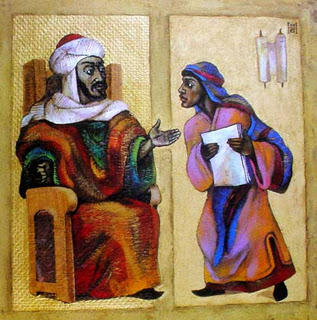
Jesus was the best story teller of all. His stories interested, gripped and intrigued people. People were drawn to listen and to make judgements on what he said. In our Gospel reading today Jesus tells one of these stories. A story which seems to condone dishonesty. Perhaps you can imagine the possible responses of those who heard the story:

Some might have said, “There you are, I told you there was nothing wrong with the way that I am running the business. If Jesus says its alright that’s good enough for me”.

Others might have sat in the corner shaking their heads and tutting.

Perhaps others wanted to write in and complain about standards. “This Jesus is teaching things that will corrupt our children”.

Some might just have been confused, … “Why is Jesus condoning something that we know is wrong?”

Others, who were well aware of the moral complexities of life might have felt something of the strength of the dilemma the steward in the story faced. For decisions that many people face in their working lives are not black and white issues but are made up of many shades of grey. Perhaps Jesus is letting us know that he understands the difficulty of such decisions.

Whatever response it provoked, J esus’ story would have had everyone gripped and intrigued. Wondering what to make of it.

We are told, specifically, of two groups of people listening to the parable:

• his disciples – who seemed to be the main audience;

• and in the verse immediately after our reading we are told that the Pharisees, who loved money, heard all this and were sneering at Jesus. The response of the two groups and the message they heard was completely different:

Τhe disciples may have been confused by the story but they listened to the lessons that Jesus had for them.

In the Gospel reading, we heard Jesus challenging his first disciples about their attitude to wealth and responsibility. The same challenges apply to us! ……

First, Jesus challenges us to use what God gives us here on earth (wealth, gifts & time) for his eternal purposes, for the work of his kingdom.

Secondly, Jesus says that God gives us smaller responsibilities through which we can learn faithfulness to him, before he places heavier or bigger burdens on us (at church or in the world).

Thirdly, (in v13), he reminds us that if money & material things become too important to us we’ll lose sight of the God that we worship. In fact we’ll become worshippers of money and possessions.

Τhe Pharisees, on the other hand, sneered at Jesus. They heard the same as the disciples but they chose not to listen. We know from the rest of the NT that the disciples continued to struggle to follow Jesus but that the Pharisees saw themselves as superior to him. They rejected him and his teaching.

These questions or lessons about money and responsibilities are important ones. Many people in business struggle with just the same kind of issues as the steward or manager in the parable. It is so hard to decide where the narrow dividing line falls between dishonesty or sharp practice and a healthy competition for work. It is sometimes difficult to know when we have crossed that fine line. Ultimately, Jesus seems to be making it clear that money and wealth, jobs and security are all intended to be our servants and not our masters.

Don’t worry if you struggle to understand what Jesus is saying. Keep struggling, for in many ways that is the point of the parable. Let the parable worry away at you. For honest doubt, tentative faith and belief are all part of growing as a Christian.

14042-12697-man_fog_walking_edited-1200w-tn-1-1200w-tnWhen God speaks we always have a choice – we can respond with faith (struggling faith) like the disciples, honesty admitting our doubts, or we can sneer at what Jesus is saying to us, like the Pharisees did. We can turn away from Jesus. There is always a choice. God draws us into the story and brings us to the point of decision, but the choice is always ours. As disciples, we can trust him, struggling to work out our faith in the midst of a confusing world, or like the Pharisees we can reject him, turn our back on him and walk away.

The Tanat Valley Light Railway and the Nantmawr Branch – Part 1

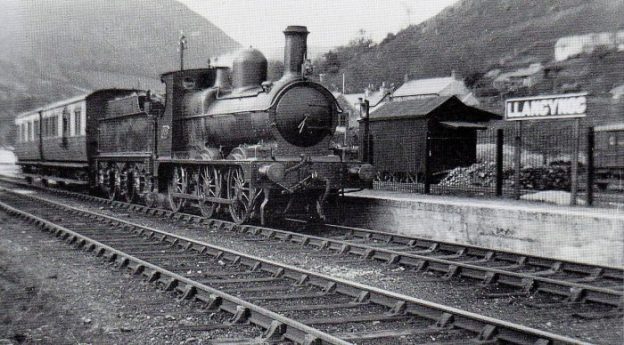
Llangynog Railway Station in 1930.

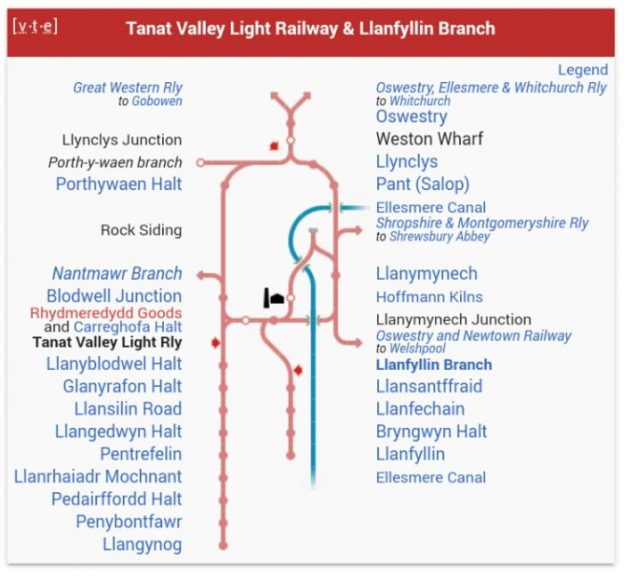
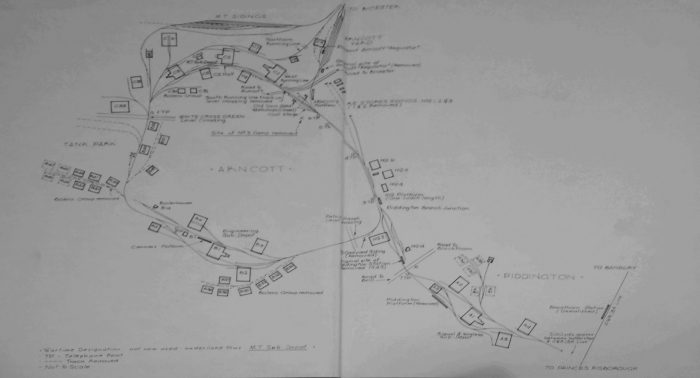
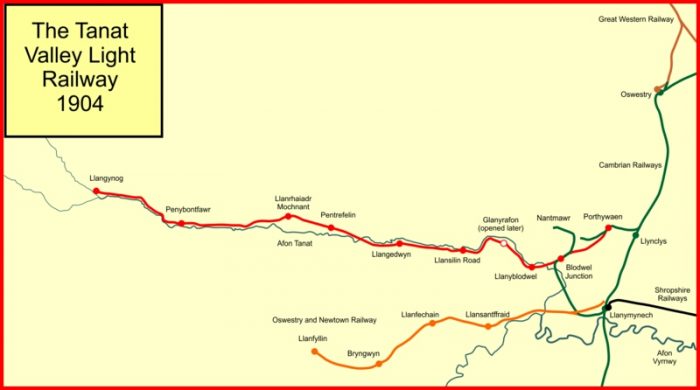
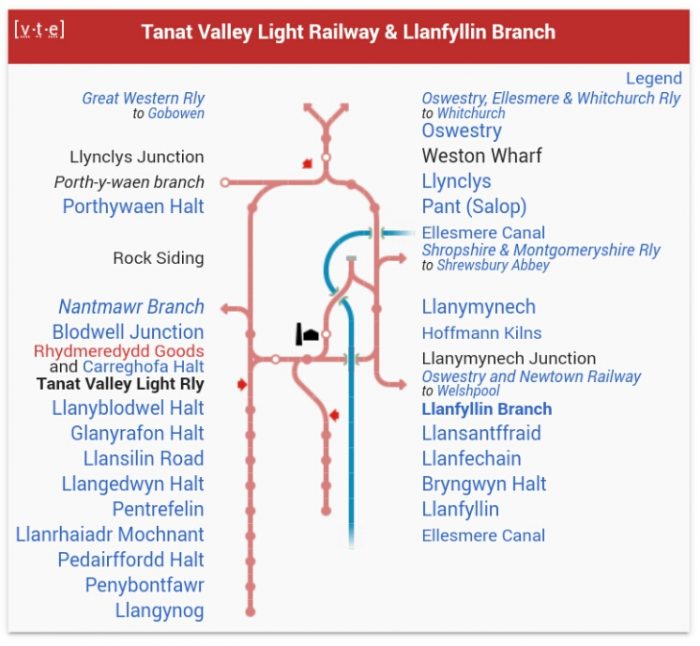
The Tanat Valley Light Railway (TVLR) was a 15-mile (24 km) long standard gauge light railway. It ran westwards from Llanyblodwel in Shropshire, about 5 miles (8 kilometres) south-west of Oswestry. It crossed the Wales–England border and continued up the Tanat valley, terminating at Llangynog in Powys. It opened in 1904, providing access to a fairly remote area, and transport facilities for slate production and agriculture. Its promoters were unable to raise the capital to construct the line, but a number of government grants and generosity by the Cambrian Railways company enabled the building of the line. The company was always in debt and in 1921 was obliged to sell the line to the Cambrian Railways. [1] But, in confirming these things, we are getting ahead of ourselves. … Suffice to say, this post looks at the history of the line and the Nantmawr Branch. A subsequent post will look in more detail at the length of the line and its infrastructure.These two plans show the route of the Tanat Valley Light Railway and its place within the local railway infrastructure. [1]
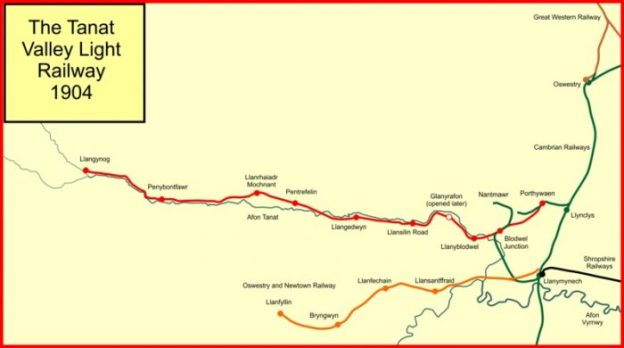
There were several schemes put forward over the years for the construction of a line in the Tanast Valley, but they failed due to lack of interest from subscribers. One ambitious scheme was to extend the West Midland Railway [7] through the region, passing through Montgomery and Bala penetrating the Berwyns by a long tunnel. If this scheme had been successful, it would perhaps have given the Great Western Railway a trunk line to Holyhead; as it was, the Chester and Holyhead Railway was adopted instead. [1]

In 1866 the Potteries, Shrewsbury and North Wales Railway [8] opened from Shrewsbury to the quarries and Nantmawr. That railway was intended to continue through the Tanat Valley to Porthmadog, but it failed to raise the necessary capital. [9]

In 1882 an Oswestry and Llangynog Railway had been authorised by Act of Parliament, but it failed to raise the necessary capital and was formally abandoned in 1889. [10]

The Light Railways Act [11] was passed in 1896, enabling the construction of low-cost railways. This encouraged renewed consideration of a railway in the Tanat Valley, and two alternative schemes were developed. One was for a narrow gauge line from the Llanfyllin terminus of the Cambrian Railways branch. The other was for a standard gauge line from Porthywaen, four miles south of Oswestry. After deliberation, the latter was adopted. [12]

Two months after the passing the of Act, the Oswestry and Llangynog Railway Company met and formed the Tanat Valley Light Railway Company (TVLR). On 5th August 1897 the Company presented its grant bid to the Earl of Jersey who was presiding at the enquiry on behalf of the Light Railway Commission and a grant was awarded. [20]

Wikipedia asserts that, “the Cambrian Railways agreed to work the line for 60% of gross receipts, and a Treasury grant of £22,000 was agreed, as well as an interest-free loan of £6,000. Financial assistance was also made available from local councils; the share capital of the Company was £15,000. The General Manager of the Cambrian Railways, Mr C. S. Denniss, estimated the capital cost of the line at £46,000. Receipts would be £2,950 per annum. After interest and fixed charges, this would enable a dividend of 4% to be paid.” [1] It was noted that the margin for dividends was small.

Wikipedia points out, however, that others saw things differently: alternative figures were “provided by the Town Clerk of Oswestry, Mr J. Parry-Jones. The total capital of the Company was to be £65,500. Local authorities had promised £18,500 in loans or share subscriptions; £18,000 had been promised as a free grant (though with conditions) by the Treasury; £20,000 had been promised by the Trustees of the Llangedwyn Estate, probably as a share subscription; £1,500 in shares by the Earl of Powis, and about £4,000 by other local investors. “The company’s borrowing powers are £12,000, so that towards the £65,500 capital required, they are sure of over £55,900.” [13][1]

The Light Railway Order was granted on 12 September 1899, [14] although modifying Orders were needed in 1904 and 1908 to assist in raising capital.[1]
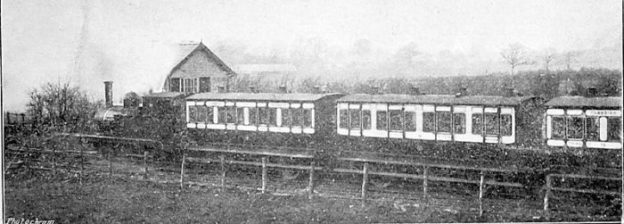
Cambrian Railways Train operating on the Tanat Valley Light Railway in 1904. [1]

Construction started until July 1901. [14]. The line was inspected by the Board of Trade Inspecting Officer on 21 December 1903; [10] the line was formally opened on 5 January 1904, and the public passenger service started the following day. [9][14]

Industry in the Tanat Valley

The Berwyn Hills are part of the range that begin in Llangollen and end at Cader Idris near Dolgellau. The Western and Northern sides of this range drop steeply into the Dee Valley, but the Eastern side is broken into steep sided channels which form the routes for a number of streams and rivers that begin in the Berwyns. One of these rivers is the Afon Tanat which arises about 5 miles to the West of the small village of Llangynog, flowing eastward past the Llangynog for 12 miles until forced by Llanymynech Hill to flow South to a confluence with the Afon Vyrnwy. [2]

Slate and stone have been quarried across the Berwyn Hills for many years and mining has taken place since prehistoric times. The first documented evidence of mining comes from the latter part of the 17th century. A mine at Craig-y-Mwn was providing considerable amounts of lead but early miners found transporting goods to smelters at Pool Quay by the River Severn, difficult. [2]

Although there is no evidence to show that the South Llangynog Lead Mine was closed because of the inadequacy of the transport system, most authors imply this to be the case for other mines in the area. In 1870, the Craig-y-men Lead Mine closed despite having an annual turnover of £30,000 – a significant sum at the time. [20]

The lead mine at Cwm Maengwynedd and the phosphate mines at Cwm Hirnant and Cwm Gwenen were in a similar situation. Raw materials and supplies sent to Llangynog cost 20s a ton more than at Portywaen. Timber sold at Llangynog raised 7d a foot whereas, at Oswestry, it would sell for 1s a foot. The lack of a railway had limited the industries and was threatening their future. [20]

Joseph Parry, the Liverpool water engineer, reported in 1897 that, without the railway, the Vymwy aqueduct could not be completed. Damage to infrastructe would be too great and repair costs would mean that the venture would have been unprofitable. Industry needed a more sophisticated transport system. The railway was needed for the survival of the industrial life of the valley. [20]

The delay in the coming of the railway meant that the slate mines at Llangynog also found that they could not compete with other areas and gradually declined in importance. The arrival of the Tanat Valley Light Railway came too late to rescue the slate mines as by then the slate industry was in general decline. [2] Only line slate Maine remained open until 1936 (the Rhiwarth Slate Mine). [20]

However, the arrival of the Tanat Valley Light Railway gave new life to other mines in the area. Improved transport made it viable to quarry the granite chippings that abounded and which were being used as surface dressing for roads needed by increased popularity of the car. [2]

At the opposite end of the Tanat Valley there were a number of Limestone quarries which had been enjoying good transport links via the Ellesmere Canal and the associated tramway links for over 100 years. Considering the mineral and ore potential of the Tanat Valley it seems odd that a narrow gauge railway was not considered. [2]

Permission to build the railway had been granted in 1897, yet it was 7 more years before it was completed in 1904. The railway brought a renewed sense of hope to the Tanat Valley which had long been in decline. By 1900, only one of the 19 mines and quarries which had been operating in the valley was still in use. This was the Craig-y-Mwn Mine, 3.5 miles to the north-east of Llangynog. The mine survived because it was closer to the Rhaeadr Valley which had a better road than the Tanat Valley. [20]

By 1913, six mines or quarries had been re-opened. All of them were sited at the western (Llangynog) end of the line and all of them used the TVLR. All were stimulated into new life by the arrival of the railway. Prior to the opening of the line, all of the mines which opened in 1904 had, between 1898 and 1900, been worked by the Belgian Vieille Montage Company. This was one of the most prestigious mining companies of the time but it had been, in every case, unsuccessful in the Llangynog area. [20]

The mines were not workable until the arrival of the railway and the railway, in turn, was the stimulus for the re-opening of the mines. Three of these mines, Craig-y-men, Cwm Orog and Cwm Glenhofen, had closed by 1911, but the others all remained open until at least 1936.  These mines included the Rhiwarth Slate Mine, the West Llangynog Granite Quarry, the Makers Granite Quarry and the Craig Rhiwarth Granite Quarry. [20]

Noticeable remnants of the industrial activity in the valley still remain. Most noticeable are the spoil heaps at Llangynog whilst at the other end of  the valley the limestone quarry remains have mostly been reclaimed by nature. [2]

Agriculture in the Tanat Valley

While the Tanat Valley contained at least 19 mines or quarries, the maiority of its inhabitants worked on the land. A survey carried out on 28th July 1897 showed that 296 vehicles, 777 people and 793 travelled down the valley. Most of this traffic was agricultural in nature. The modes of transport used were old-fashioned and inefficient. [20]

Mark R. Lucas comments: “Many farmers could not afford the time to make these Journeys and were forced to sell the animals at their farms for £2 or £3 less per head than if they had been sold in the open market. The absence of a railway was causing a population decline because farmers could not afford to pay their labourers. [20]

The conditions of the grant that the TVIR applied for stated that the railway must “be profitable to Agriculture.”  As the grant was awarded, we can assume that the Earl of Jersey thought that the railway would “be profitable to Agriculture” [20]

The Tanat Valley Line

Perkins and Fox-Davies described the line in The Railway Magazine of May 1904.

“Passenger trains ran from Oswestry, southwards over the Cambrian Railways line as far as Llynclys, then turning west on the Cambrian Railways Porthywaen branch, leaving that at Porthywaen passenger station, a very small building, and now entering on the Tanat Valley line itself. The track was of much lighter construction now, consisting of Vignoles pattern (flat-bottom) rails [15] dogged direct to the sleepers. The Nantmawr branch of the Cambrian Railways converged from the north. The first TVR station was Blodwel Junction, a single platform station. Blodwel station had been opened in 1866, the terminus of the Potteries line, and known then as Llanyblodwel, part of the mineral branch crossing the path of the TVR. A road crosses the railway by a bridge at Blodwel; this is the only place where there is a bridge crossing of a road.

The next station stop was at Llanyblodwel; a short distance after the station the train stopped for the engine to take water. Glanyrafon was next geographically, but was not yet open when Perkins and Fox-Davies visited, and it was not referred to by them. This section was followed by a crossing into Wales, climbing at 1 in 64. Llansilin Road is the next station, serving Penybont. Llangedwyn station is next, where there was provision for crossing trains on the single line, followed by the small station of Pentrefelin, and then Llanrhaiadr Mochnant, also built as a passing station. A reservoir for Liverpool Corporation Waterworks was built at a location five miles away, and the railway was used for importing some construction materials. The line continues, calling at Pedair Ffordd and terminates at Llangynog. The journey time from Oswestry was 70 to 75 minutes.

The gradients on the line generally rose to Llangynog. It fell with a short section at 1 in 72 to Blodwel Junction, and then rose with a half mile at 1 in 64 but generally more moderate gradients all the way to the terminus. Porthywaen was at 132 feet above Ordnance Datum and Llangynog at 320 feet.” [9]

It seems as though passenger carriages ran with the mineral trains from 1904, but this ended on the first day of 1917. [4] Mineral revenue was about twenty times the value of passenger receipts, and the latter declined further in the 1920s and 1930s as reliable road transport was developed. [1]

From its opening in 1904, the Tanat Valley Light Railway Company was continuously in the hands of the receiver,[17][18] as its income did not enable it to pay the interest on loans. The Cambrian Railways subsidised it, but by 1921 it was obvious that improvements to the track and bridges were required, and this was beyond the financial resources of the bankrupt company. Takeover by the Cambrian was the only way out, and this was authorised by Order of the Light Railway Commissioners. [19]

The Cambrian Railways were themselves taken over by the Great Western Railway the following year. [1]

The passenger train service in 1922 consisted of three trains each way between Oswestry and Llangynog, with an extra train on the first Wednesday of the month. [1] By July 1938 the service was more complicated: successive trains ran from Oswestry to Llangynog respectively on Wednesdays; daily except Wednesday and Sunday; Monday, Tuesday and Friday; Wednesday Thursday and Saturday; daily except Saturday and Sunday; on Saturday only; and on the first Wednesday of every month, but also on 30 July. The return service was a little simpler, running respectively on Wednesday; weekdays only; weekdays only; Monday to Friday; and Saturdays only. [16]

While railways had an inherent advantage in transporting heavy minerals, the line’s viability was dependent on the commercial success of local quarries, and when local quarries output declined the finances of the line became irretrievable. [4]

Passenger services were discontinued on 15 January 1951. The line west of Llanrhaiadr was closed completely in July 1952, a residual goods service continuing as far as that point for the time being. The line closed completely in December 1960. [4]

In the short time that it had served the Tanat Valley, the TVLR had been efficient. regular and useful, but it was no longer needed as the area lapsed back into an agrarian lifestyle The industrial potential of the valley had declined so significantly that the railway could not be sustained. [20]

The seeds of the railway’s failure were sown right at the start of its existence. We have already noted the convoluted arrangements made to finance the line. The opening of the railway was an optimistic and joyous occasion and the then Chairman even announced that a second line between LLanrhaedr and Cwm Maengwynedd would be buikt. This was notbto see the light of day as the TVLR never managed to deal with it own financial difficulties. [20]

In March 1904, the Treasury withdrew all furthwer funding. This left the TVLR with an overdraft of £2,460 and an outstanding contractors bill of close to £14,000. By June 1905, the company owed £20,000 and went into receivership. By 1917, a writ for £40.676 18s 8d issued and six years later the TVLR had to sell its land to the GWR in order to make the repayment. [20] The TVLR was not able to invest in it future. It was in a desperate cycle of financial loss which eventually caused its downfall.

There appears to have been a very significant reduction in all forms of traffic on the line. Agricultural traffic, for some inexplicable reason declined between 1923 and 1938 from 732 wagons per annum to less than 450 wagons per annum. Passenger traffic leached away to the roads. The advent of the motor car and of  parallel bus service were the major factors here, although it is also possible that the condition of the passenger carriages was deteriorating. The close of moist of the mines meant that mineral traffic fell drastically as well as the table below highlights. [20]
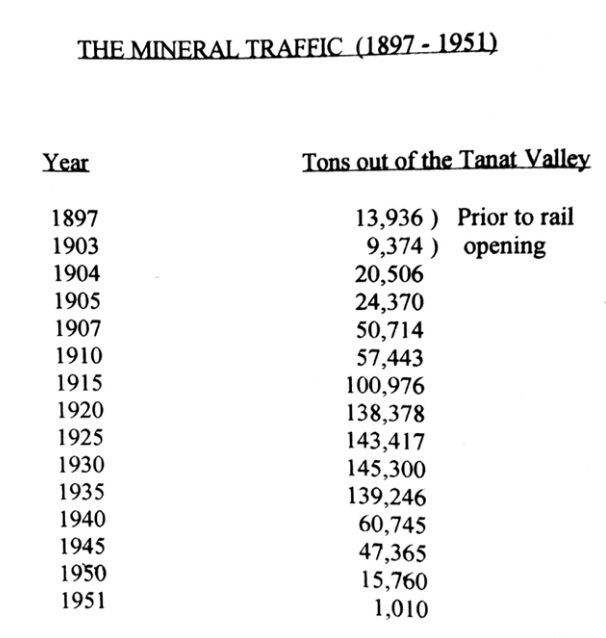
Crippling debts and no forecastable traffic inevitably brought about the closure of the line. The Coal Crisis of 1951 was the final straw and after closure because of a lack of coal the line never reopened. [20]

The Nantmawr Branch Line

The Nant Mawr Branch of the Potteries, Shrewsbury and North Wales Railway (The Potts) was opened in 1872 to supply Limestone primarily for road-building and for the manufacturing of Lime. This was a primary incentive for the construction of what became eventually the Shropshire and Montgomeryshire Light Railway.

Access to the Nant Mawr branch was gained using ‘Cambrian’ lines (which the Potteries, Shrewsbury and North Wales Railway had running powers over for this part) these met South of Llanyblodwel station at a twin junction where Nant Mawr traffic then turned northwards onto the actual branch then slowly travelled north-west underneath the Llanfyllin Branch then across the River Tanat by means of a wooden viaduct, underneath the main road bridge and finally across the river once more using a second wooden viaduct and so into Llanyblodwel itself. [3]

The junction was known as Nantmawr Junction until the first world war after which it became the Llanfyllin Branch Junction.

The Nant Mawr branch was on a rising gradient all the way to Nant Mawr, starting from Llanddu it passed under the A495 road-bridge and then across Whitegates crossing which has recently been refurbished. The branch then curved gently to the left, crossing a small stream and finally entered the Nant Mawr quarry complex.

In the early 21st century, only the line from Llanddu to Nant Mawr with a run round loop at each end still exists, there is undoubtedly signs of the former workings buried under the made up land at Nant Mawr, some of which have already been uncovered.

The industrial heritage of the area is to reasonably well documented and like the railway which served it, has a slightly checkered past, in 1860 the Nant Mawr quarry was owned by Mr R France who as main contractor for both the Potts and the Mawddwy railways enjoyed similar interests to Thomas Savin.

Around the same time the Lilleshall Company based at Donnington in Shropshire was finding it difficult to source enough supplies of lime to ensure continuity at its iron furnaces (Lime was used in the fluxing process) and they took a lease on Nant Mawr quarry, after almost 60 years they surrendered the lease sometime in the late 1920’s early 1930’s for by 1938 the quarry was being worked by the Chirk Castle Lime and Stone Company who continued until Amey Roadstone took over in the late 1960’s before the quarry finally closed in about 1977. [3]

Rural passenger use collapsed and the railway closed to passengers in 1951, and completely in 1964. [4]

A new Tanat Valley Light Railway Company was established, and in 2009 opened a heritage railway centre at Nantmawr Lime Kilns, close to the earlier Tanat Valley line. [5][6]

The Nantmawr Lime Kilns

The imposing structure, reputed to be the tallest Lime Kilns in the country, provides a fantastic backdrop alongside the original (now excavated) kiln sidings and the first section of the railway to be restored.

Built in 1870 by a Mr France to service his quarry located further up the valley, the colourful and fractured history of the kilns, the quarry and the railway is only matched by that of Mr France himself who was a Victorian Visionary with a roguish side to his life.

Further work is being carried out in the vicinity of the kilns in order to create a static exhibition of how they would have been worked in their early years. The kilns provided the perfect setting for the return of steam to Nant Mawr in November 2009. [6]

References

  1. https://en.wikipedia.org/wiki/Tanat_Valley_Light_Railway, accessed on 7th September 2019.
  2. http://www.nantmawrvisitorcentre.co.uk/tanat-valley-light-railway/industry-in-the-tanat-valley, accessed on 7th September 2019
  3. http://www.nantmawrvisitorcentre.co.uk/tanat-valley-light-railway/the-nant-mawr-branch, accessed on 7th September 2019.
  4. Peter E. Baughan; A Regional History of the Railways of Great Britain: Volume 11: North and Mid Wales; David & Charles, Newton Abbot, 1980.
  5. Tanat Valley Light Railway; Nant Mawr Visitor Centre; http://www.nantmawrvisitorcentre.co.uk/tanat-valley-light-railway, accessed on 7th September 2019.
  6. Nant Mawr Lime Kilns; Nant Mawr Visitor Centre;  http://www.nantmawrvisitorcentre.co.uk/nant-mawr-lime-kilns, accessed on 7th September 2019.
  7. https://en.m.wikipedia.org/wiki/West_Midland_Railway, accessed on 16th September 2019.
  8. https://en.m.wikipedia.org/wiki/Potteries,_Shrewsbury_and_North_Wales_Railway, accessed on 16th September 2019.
  9. T. R. Perkins and F. E. Fox-Davies, The Tanat Valley Light Railway, in the Railway Magazine, May 1904.
  10. E. F. Carter, An Historical Geography of the Railways of the British Isles, Cassell, London, 1959.
  11. https://en.m.wikipedia.org/wiki/Light_Railways_Act_1896, accessed on 16th September 2019.
  12. C. P. Gasquoine, The Story of the Cambrian: Biography of a Railway, Woodhall, Minshall, Thomas and Co., Oswestry, 1922.
  13. The Wrexham Advertiser: 16 September 1899.
  14. Peter E. Baughan, A Regional History of the Railways of Great Britain: Volume 11: North and Mid Wales, David & Charles, Newton Abbot, 1980.
  15. https://en.m.wikipedia.org/wiki/Rail_profile#Vignoles_rail, accessed on 17th September 2019.
  16. Bradshaws July 1938 Railway Guide, David and Charles Reprints, Newton Abbot, 1969.
  17. C. P. Gasquoine, The Story of the Cambrian: Biography of a Railway, Woodhall, Minshall, Thomas and Co., Oswestry, 1922.
  18. Preamble to the Cambrian Railways (Tanat Valley Light Railway Transfer) Order, 1921.
  19. Cambrian Railways (Tanat Valley Light Railway Transfer) Order, 1921.
  20. Mark R. Lucas; The Industrial History of Llangynog, North Wales; GCE Project, 1986. I came across this paper in the small museum in St Melangell’s Church at Pennant Melangell in August 2019.

Different Railway Gauges in operation the Forest of Dean

In September 2019, my wife and I spent a week in the Forest of Dean. On one day, we visited the Dean Forest Railway at Norchard. [1] Around the site at Norchard are a number of permanent outdoor displays.

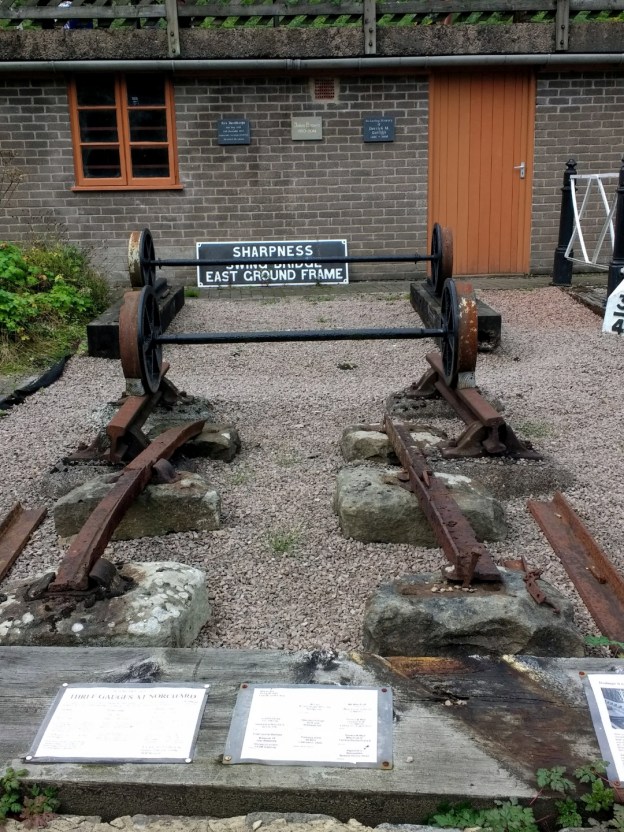
The featured image in this post shows three gauges that for a very short time were all in use on the trackbed of the Severn and Wye Railway through the Forest.

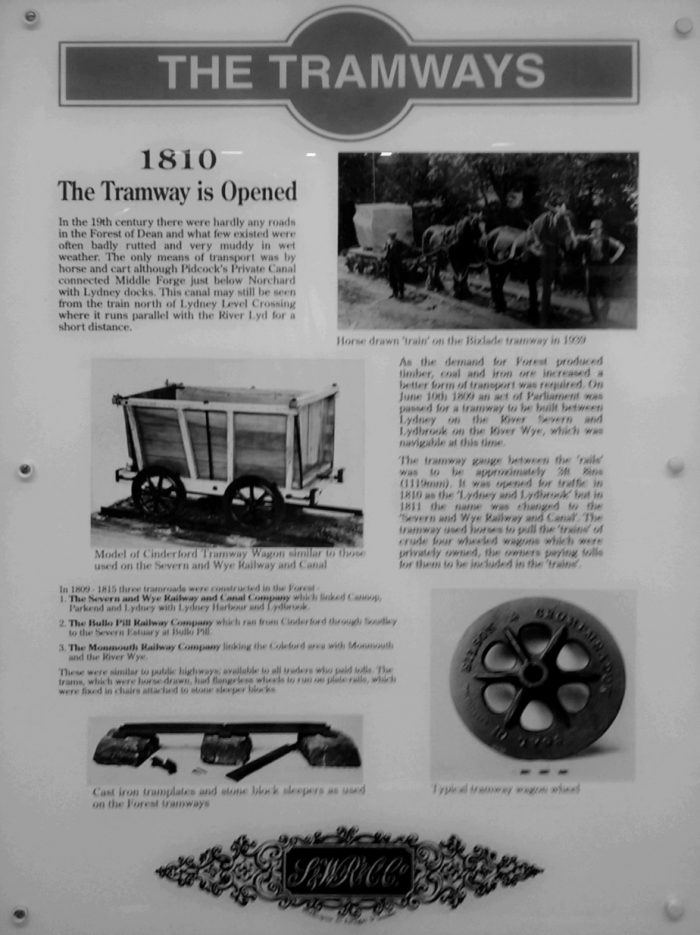
The original gauge was the track-gauge used by the Severn and Wye Tramroad. Rails were cast iron and each section was around 1 metre in length. They were held in place not by timber sleepers but by stone blocks placed on the line of the rails. The gauge (or spacing between the two rails) was 3ft 6ins. This gauge was used by many of the branch tramways in the forest.

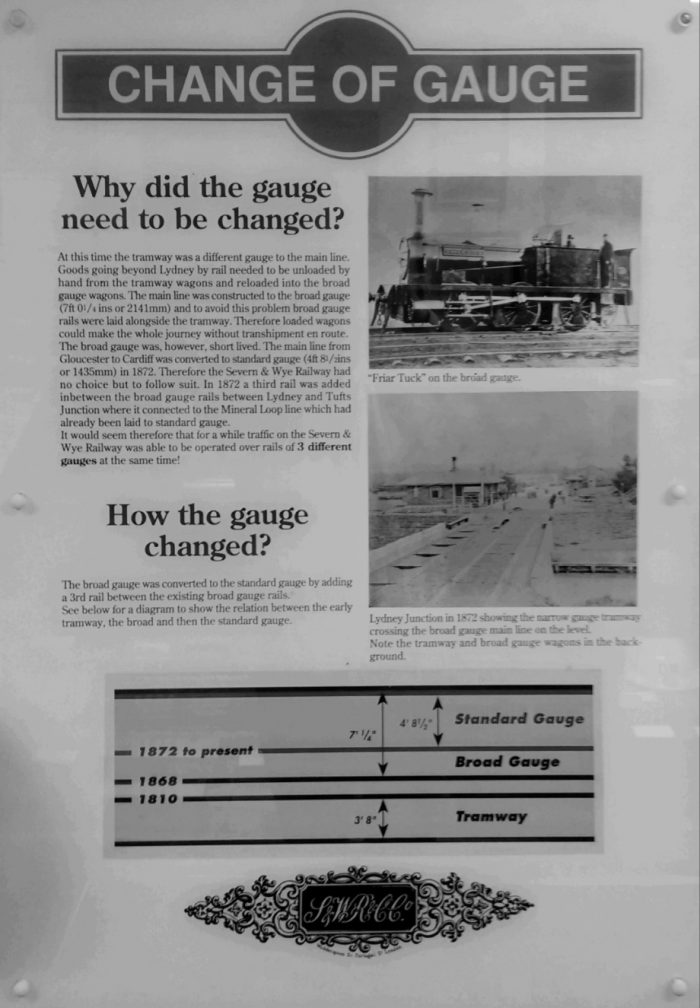
When the Severn and Wye became a Railway rather than a Tramroad the standard gauge for the Great Western Railway was what we now call ‘broad-gauge’ – 7 ft 14 in (2,140 mm). The Severn and Wye was constructed to the same standards as the Great Western, so avoiding the need for transhipment facilities at railheads such as Lydney Junction.

The Great Western Railway lost the ‘gauge war’  in the UK. Standard-gauge became the gauge first used by George Stephenson – 4 ft ​8 12 in (1,435 mm) gauge. After the decision was made that all future lines in the UK would be built to the standard-gauge, there was period of mixed-gauge operation (tracks were laid with three rails), the Great Western Railway did not complete the conversion of its network to standard gauge until 1892. [2]

All three of these gauges could be found on the formation of the Severn and Wye Railway until 1892.

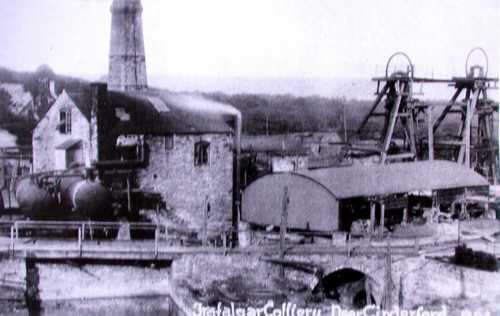
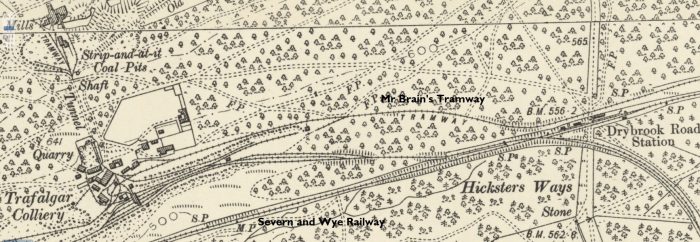
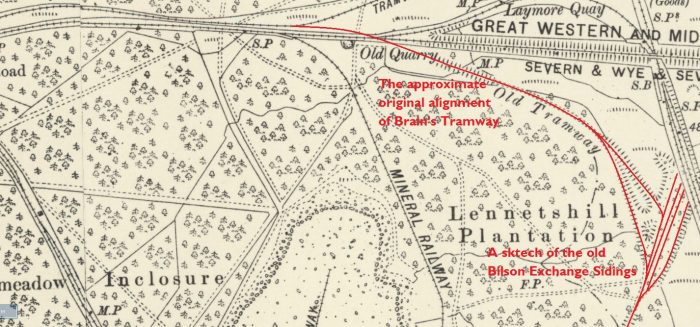
However, these were not the only track gauges in use in the Forest.  An example of a different gauge in use us provided by Mr Brain’s Tramway which linked Trafalgar Colliery and Drybrook to Bilson Sidings and Transhipment Wharfs. It had a gauge of 2 ft ​7 12 in (800 mm). Brain chose this gauge for his tramway because it matched the gauge used underground within his collieries and so saved an additional transhipment cost at the pithead. [3]The display outlining the use of tramways which is on show in the Dean Forest Railway Museum at Norchard.The display outlining the change of gauge which is on show in the Dean Forest Railway Museum at Norchard.


References

1. https://www.deanforestrailway.co.uk, accessed on 14th September 2019.

2. https://en.m.wikipedia.org/wiki/Standard-gauge_railway, accessed on 15th September 2019.

3. Ian Pope; Mr Brain’s Tramway; Archive No. 84, Lightmoor Press, Lydney, p2-32.


Just telling a joke! – Luke 15:1-10

How do you recognize a joke? What are the signals you look out for?

There’s: ‘Did you hear the one about…’ or ‘A man goes into a pub …’ or ‘A man goes to see his doctor …’

The introduction tells you that there is a funny story coming and you set yourself up for it, you’re ready to laugh!

Have you noticed as well that often when we tell jokes, even though we’re telling a story about the past we use the present tense.

Someone once told me that much as English comedians tell jokes about Irish people. (Although, of course, we don’t do it so often now because we have recognized that it causes offence.) Much as we tell jokes about the Irish, people in Jesus day used to tell jokes about shepherds. They were considered to be country bumpkins of relatively low intelligence. Now I really don’t know how true that statement was. But there is one story in the Bible that really does seem to me to be a case of Jesus telling a joke, or at least a funny story to make a point. And that is the first half of our Gospel reading this morning.

I can almost imagine Jesus starting his parable with the words. ‘Did you hear the one about the shepherd who had a hundred sheep …’ And how does the story run? ‘Did you hear the one about the shepherd who had a hundred sheep – he left 99 out in the open field and went searching for the one that had gone missing.’

And I can imagine the sniggers, the knowing looks, perhaps even the ribald laughter. ‘How foolish, how stupid, typical of a shepherd,’ some of Jesus listeners might say.

And can you imagine the increased laughter when Jesus goes on to say that the shepherd goes home when he finds the lost sheep and has a party. Not a thought anymore for the 99!! As far as this shepherd is concerned they can look after themselves.

It is manifestly stupid. It is a silly story. No sensible shepherd would do anything like this. The loss would be too great. Better to leave the one who is lost and look after the 99 that are still fine. That makes economic sense. And Jesus audience fall around laughing, all their prejudices confirmed.

But laughter has softened them up for the punch-line. … Says Jesus, ‘This is what God is like, this is what it is like in heaven. God is more concerned for the lost than those who are OK.’

God is more concerned for the sinner who needs to repent than he is for the Pharisee who believes that he is righteous. God is more concerned for the backslider than for the good upstanding Christian. God seeks out the lost and rejoices when they are found again – even if in the doing of it, he seems foolish and ludicrous – even if everyone else thinks that God is on a wild goose chase. God chases after the lost, longing to show them his love, longing to draw them back into relationship with him.

This means that if we, in our wisdom, feel sure enough of ourselves to say what is right and what is wrong; if we, in our wisdom, define someone as a sinner. Then, rather than putting them beyond the reach of God’s love, we place them at the centre of God’s love. … Our parable suggests that God is happy to leave us to fend for ourselves as God focusses on them, as he turns his love towards them. The joke is on us!

And if we were to go on to read the story of the Prodigal Son later in this chapter 15 of Luke, it would be little different. In that story the Father is prepared to make a mockery of himself, all for the sake of a worthless good for nothing son. A fine upstanding Jewish father is prepared to suffer the shame of his village seeing him running through the streets to greet his wayward Son. And the story tells us that the Father places the lost Son ahead of the faithful but self-righteous Son! … We’ve got to be fools to miss the point of these parables. God cares nothing for what people think of him. God’s eyes are focussed on those who are lost, spiritually and physically. God’s eyes are fixed on those in need.

This is what God is like. God seeks out those who are lost, who feel unloved and abandoned. God doesn’t mind looking foolish, if only God manages to draw one lost human being back from the brink, back into his arms. And God is so taken up with joy when one of us hears of his love and responds to that love, that everything else for that moment fades completely into insignificance.

God’s love centres on the cross where Jesus died. It is consummated as Jesus rises from the dead. Just like the sheep that was lost allowed the shepherd to pick it up and take it in his arms, so God encourages us all to have that kind of trusting faith. To allow God to throw his arms around us in love. ‘Yes, Lord, I want that kind of love, please be my shepherd, now and always.’

And God calls us to have this same self-negating, self-deprecating, foolish, silly love, that goes after the lost with complete abandon. Nothing sensible, nothing thought out. Just a headlong rush to share God’s love with those who need him. To love and not to count the cost. To seek out those in need and commit ourselves to their welfare.

imagesJohn in one of his epistles says, ‘This is love – not that we loved God, but that God loved us and gave his Son to die for us.’ This is the measure by which we judge our love for our partners, for our family for our friends, for our neighbours and for others who are in need. Love that reaches out unconditionally, foolishly, ridiculously without thought for the cost. That is love like God’s love. This is no joke, it’s the gist of Jesus parable set for today!

Speech House (Hill) Colliery and Railway

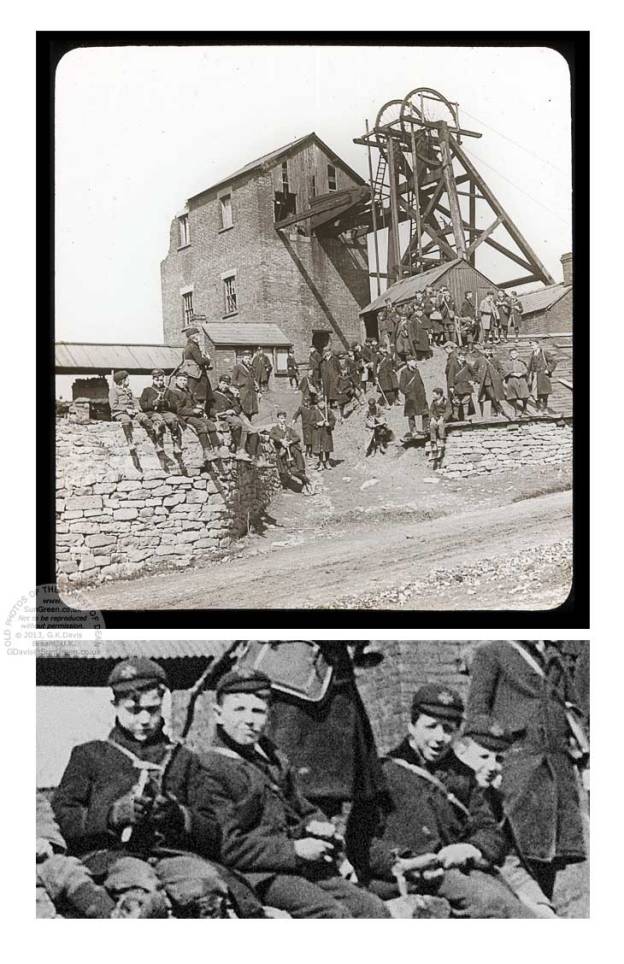
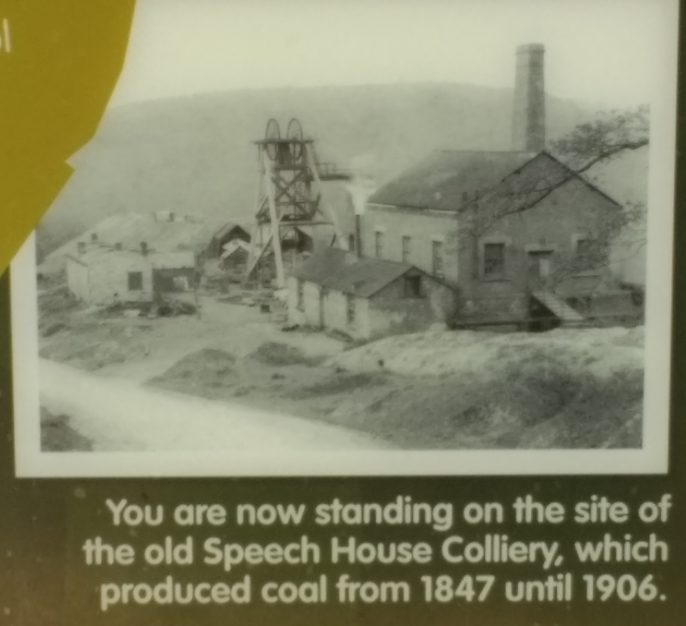
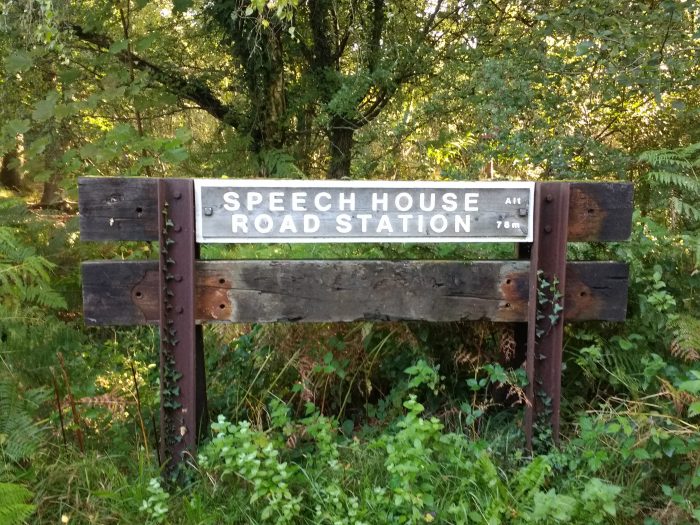
Speech House Hill Colliery was located at OS Grid Reference: SO614119. The featured image above comes from the Sungreen website © Mark Ward. He comments: “This lantern slide shows the Speech House Hill Colliery in c1908; I believe coal winning had ceased some years earlier and it looks as though dismantlement of the engine house had begun.” [2] Elsewhere the colliery is referred to as “Speech House Colliery.”The signboard on the site of the old Speech House Colliery sits close to the climbing wall in the Beechenhurst Lodge area which is maintained by the Forestry Commission in the 21st century.

The Royal Forester Gale was first recorded as being worked in the 1830s and 40s by Richard James [1] of Whitecroft. In April 1832, he applied to the Crown for the gale but it was not granted to him.  Undeterred he erected buildings and commenced work ‘at considerable cost’ and his right to work the gale was confirmed by the Awards of 1841. [3]

It was later bought by the Brain brothers, who had the adjoining Rose-in-Hand gale. [1] It was in January 1847, that Cornelius and Francis Brain, as lessees of the adjoining Rose-in-Hand gale, were applying for an extension of time for beginning work and it was stated that they had bought Royal Forester in order to drive a level through it to drain Rose-in-Hand. [3]

In July 1856 an application was made to the Crown by the registered owners of Rose-in-Hand, Ephraim Brain and John Holingsworth, to make a tramroad connection to the Severn & Wye by means of an incline parallel to the Coleford-Cinderford road.  It would appear, however, that this was not costructed until 1869. [3] The Speech House Hill Colliery Co. had, by this time, taken over the Royal Forester gale. [1]

The Rose-in-Hand gale became part of Trafalgar Colliery and remained in the ownership of the Brain family. [3]

The Speech House Hill Colliery Co. was turn bought out by the Great Western (Forest of Dean) Coal Consumers Co. Ltd (a Crawshay company) in 1873. [1]

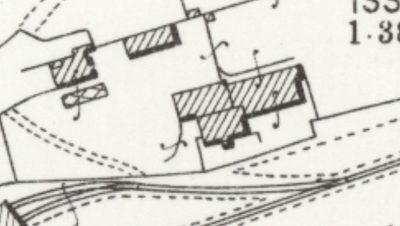
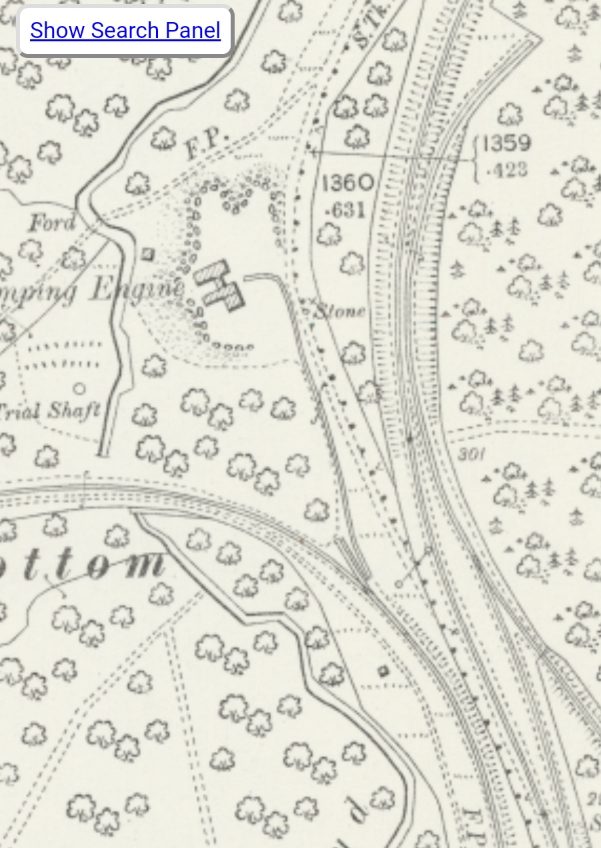
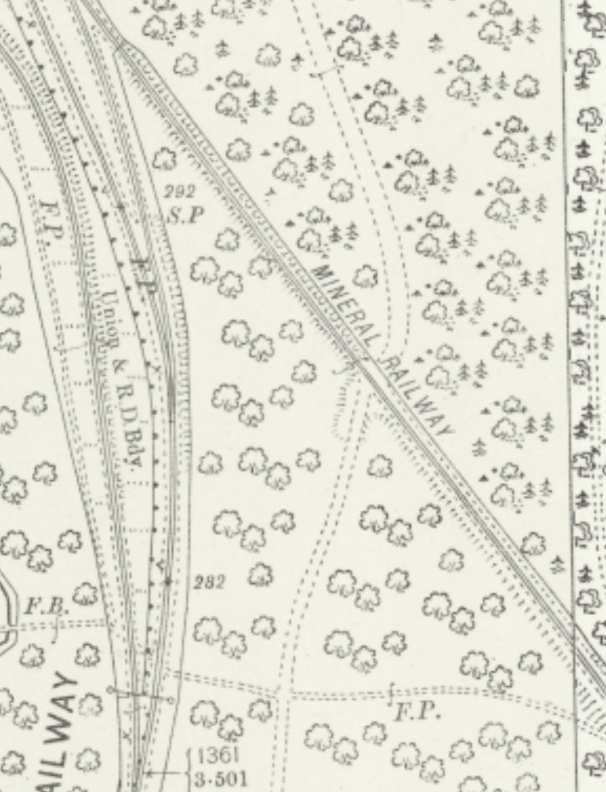
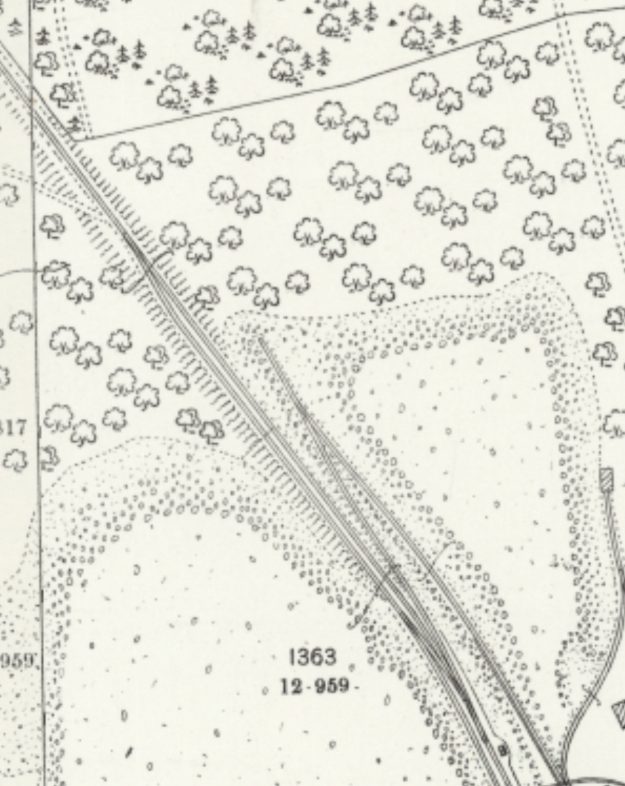
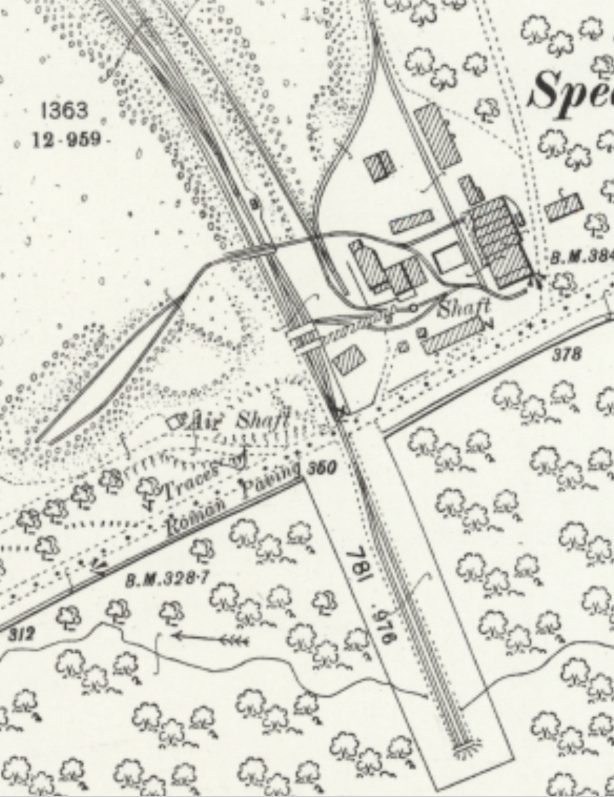
Although the tramroad connection was only completed in 1869, it was superseded by a railway connection  to  the Severn and Wye Railway in 1874. [3] The sidings in place in the early 20th century are shown below in the extracts from the OS Maps of the time. [4]This extract shows what was to become the access to the Cannop Colliery heading West from the Severn and Wye Railway. The Severn and Wye runs north-south in the extract. The Speech House Colliery head-shunt is on the right. [4]Rail access to Speech House Colliery involved leaving the Severn and Wye Railway in a Northerly direction and then setting back into the colliery. [4]The approach to Speech House Colliery sidings. [4]The track arrangement at the Colliery. [4]

The organising of the link to the colliery from the Severn and Wye was a matter for serous negotiation. “Crawshay offered the prospect of 100,000 tons of coal traffic per year, but laid heavy emphasis on the expenses to be incurred by the colliery in laying sidings, and intimated that they were considering sinking two pits near the Forest of Dean Central line at Foxes Bridge to avoid a steep underground pitching betwen the coal face and the existing pit bottom.  Concerned at the possible loss of such a lucrative traffic to the Great Western, the S & W agreed to loan rails, sleepers etc. if the necessary earthworks were done by the colliery company.  Following further discussions, it was decided to let the construction of the branch, and by July 1874 J. E. Billups was appointed contractor.  Part of the estimated cost of £3,300 was met by the Severn & Wye whose committee, on 5th April 1875, were conveyed to the colliery where they ‘had the satisfaction to find the Branch Line leading thereto as well as the Colliery Works in good order.  This colliery is now delivering excellent coal upon our line.'” [3]

Yields were not necessarily as good as Crawshay had intimated, 56,976 tons of coal were produced in 1880 from the Supra-Pennant Group (the top part of the Upper Coal Measures). The winding shaft (eventually 420 ft deep) reached the Churchway High Delf Seam (3 ft 3 in. thick) at 393 ft. [1]

The website, http://www.archive-images.co.uk has a series of images of the colliery, one of which is an underground view. These can be viewed, with watermark on their site or purchased for a relatively significant sum for each image. [5]

The colliery had a rather chequered history, passing through a succession of owners, until it was finally bought by Henry Crawshay & Co. Ltd, owners of the adjacent Lightmoor Colliery, in 1903. [1]

The barrier to the latter colliery was opened up and most of the surface works at Speech House Hill, no longer being required, were closed by 1906. [1] Crawshay’s prediction of traffic finding its way to other lines bore fruit some years after it was first intimated.

The main shaft at Speech House was maintained as an emergency exit for Lightmoor until the gale was surrendered in 1937. [1]

The area has been landscaped and now forms the Forestry Commission’s Beechenhurst Picnic Site which is a very popular Forest location. [1]

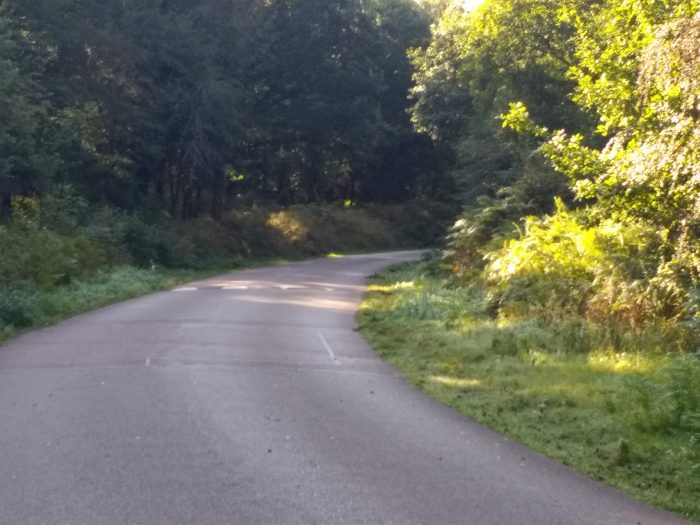
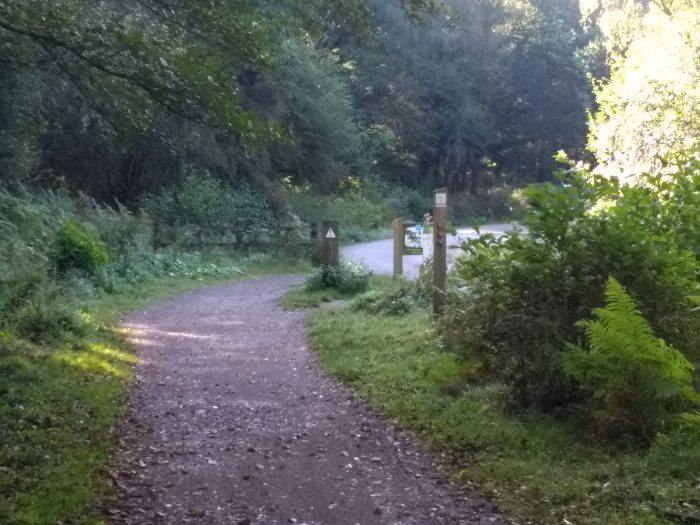
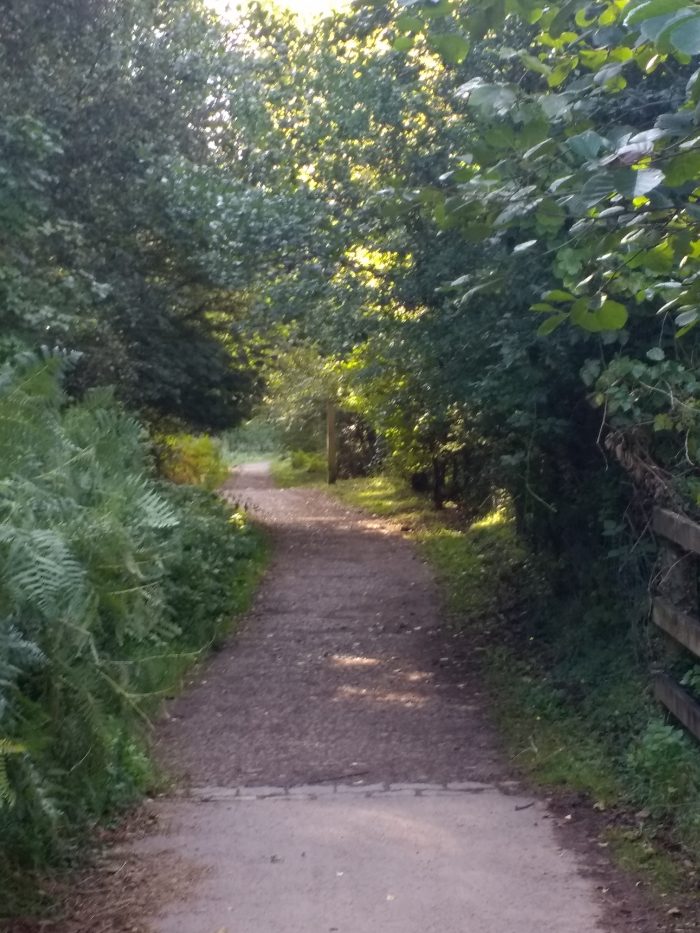
The pictures below were taken on 20th September 2019 and show the line of the branch off the Severn and Wye Railway which is now a cycle path, the the route of the sidings leading to the colliery screens. Finally some pictures of the location of Speech House Road Station on the Severn and Wye Railway and it’s small goods yard.

Looking South along the old Severn and Wye Railway along what is now the visitor access road for parking at Cannop Ponds.

The view South from what would have been the end of the station platform at Speech House Road Station on the Severn and Wye Railway.

At the midpoint of the old station, the Forestry Commission have provided a station name board.

The view South from a point close to north end of the Station facilities.

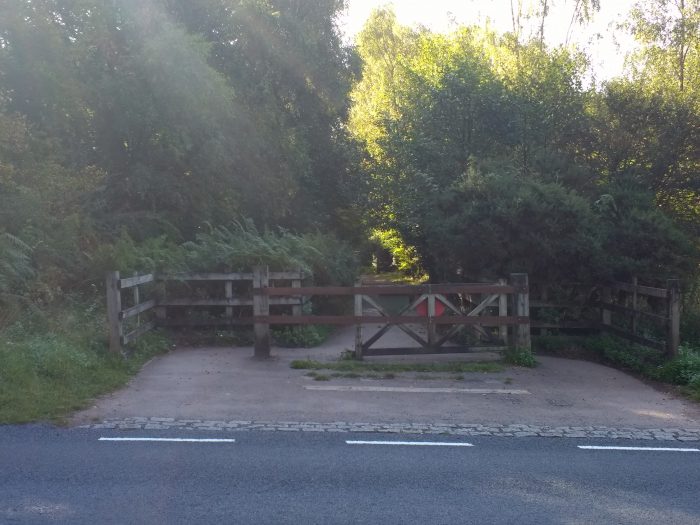
The view from the modern highway into the old station site. In taking this picture, I am standing at the location of the old railway crossing.

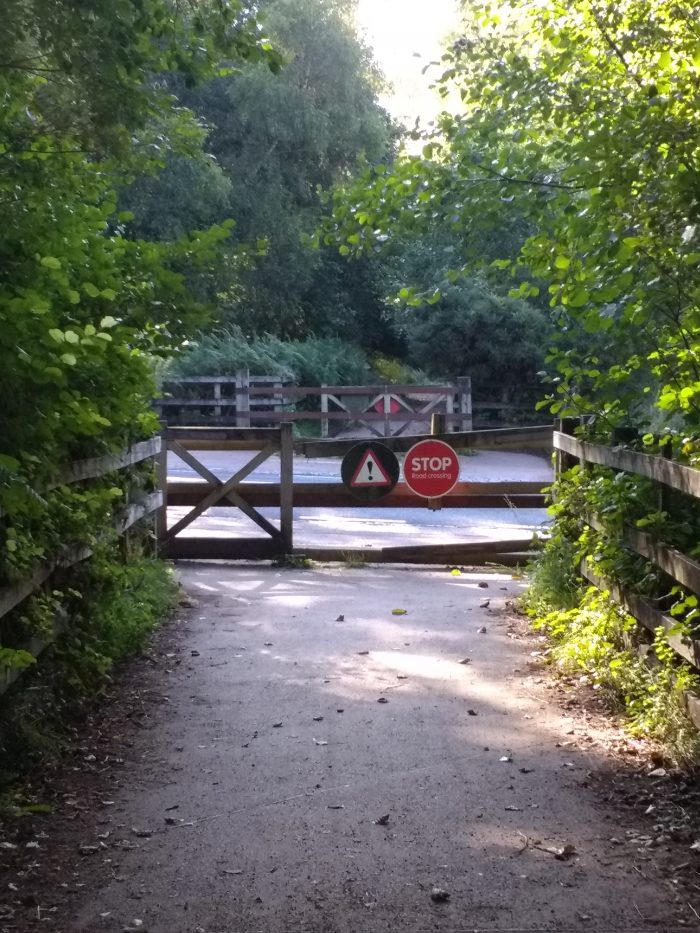
Looking across the old railway crossing from the North.

Looking North from the same point.

The area of the station goods yard is seen here from the South. The access road to Cannop Ponds runs through the site.

References

  1. https://www.forestofdeanhistory.org.uk/resources/sites-in-the-forest/speech-house-hill-colliery, accessed on 30th August 2019.
  2. https://www.sungreen.co.uk/Beechenhurst/speech_house_colliery.html, accessed on 14th September 2019.
  3. http://lightmoor.co.uk/forestcoal/CoalRoyalForester.html, accessed on 14th September 2019.
  4. https://maps.nls.uk/geo/explore/#zoom=17.072932776256412&lat=51.8093&lon=-2.5670&layers=168&b=1, accessed on 15th September 2019.
  5. http://www.archive-images.co.uk/gallery/Archive-Images-of-the-Forest-of-Dean-Coalfield/pages/4, accessed on 15th September 2019.

Railways and Cycleways No. 1 – A Top Ten?

The headline article in the Guardian Travel supplement on Saturday 31st August 2019 was entitled “Railway Lines Recycled.”

It highlighted 10 former railway routes in different parts of the UK which offer the opportunity for off-road cycling:

1. The Camel Trail, Cornwall: the Guardian asserts that this is the nation’s best-known former railway cyclepath. It is the best part of 20 miles long. It starts at the south-western edge of Bodmin Moor and follows the River Camel through Wadebridge to the coast at Padstow, and us almost entirely off-road.

2. The Callander to Killin Cycle Route, The Trossachs: a challenging route through the Loch Lomond and Trossachs national park following the path of the Callander and Oban Railway through the narrow valley of the River Garbh Uisge, the East bank of the River Balvaig and over the summit before setting down towards Killin.

3. The Bristol and Bath Railway Path, Somerset: A delightful route between Bristol and Bath with splendid views of rural Somerset and Gloucestershire.

4. The Cinder Track, Yorkshire: This route needs a mountain bike. The track is, as it claims, a cinder path.

5. Marriott’s Way, Norfolk: This trail runs between Norwich and Aylsham. It is named for the innovative railway engineer, William Marriot.

William Marriott built and went on to run the Midland & Great Northern Joint Railway (M&GN) for 40 years. Marriott has often been called the “Father of the M&GN”, with just cause, and the Railway gained the title of “Marriott’s Tramway” in some quarters. [2]

6. The Deeside Way, Aberdeenshire: does not always follow an abandoned railway. The old Royal Deeside Railway takes cyclists out of Aberdeen to Banchory. After a section away from old railway, the route returns to railway formation once again for the journey to Ballater in the Cairngorms national park.

7. The Ystwyth Trail, Ceredigion: once upon a time there was a desire among the ‘great and the good’ to promote a railway from Manchester to Milford Haven – the M&MR. It was to link the Cotton Mills of North West England with the Welsh Port. The ambitious scheme failed and only managed to link Milford Haven to Aberystwyth.

Despite its title, the railway planned to connect to other railways at Llanidloes and Pencader, near Carmarthen, and so to achieve the object in its name by connections with other lines, most of which were only planned.

The M&MR had continuous difficulty in raising capital and also in operating profitably, but thanks to a wealthy supporter it opened from Pencader to Lampeter in 1866. Realising that its originally intended route to Llanidloes would be unprofitable, it diverted the course at the north end to Aberystwyth, which it reached in 1867.[3]

The trail links Aberystwyth and Tregaron. It does not always follow the route of the old railway. [4] The cycle path leaves Aberystwyth following the banks of the Afon Ystwyth before dropping south along the Teifi to Tregaron.

8. The High Peak Trail, Derbyshire: follows the line of the old Cromford and High Peak Railway. [5] which linked the Cromford Canal with the Peak Forest Canal at Whalley Bridge

9. The Lanchester Valley Railway Path, Co. Durham: provides fantastic views over rural Co. Durham and the River Browney.

10. The Forest Way, West/East Sussex: is a designated linear country park as well as a cycleway. Leaving East Grinstead, the trail passes through Forest Row, Hartfield and Withyham to reach Groombridge.

The Guardian’s method of selection of these 10 trails is not outlined. There is no doubt that these are beautiful trails with much to be said in their favour. But, are they the best 10 old railway cyclepaths? Or are others better?

Countryfile provided a similar list in 2017. [6] A number of the same routes feature in the Countryfile list. The order is different and there are alternative suggestions for routes to explore. Countryfile’s list includes the following trails in the order shown (using the names from the more recent Guardian article where appropriate):

1. The Camel Trail

2. The Cinder Track

3. The Ystwyth Trail

4. Marriott’s Way

5. The Hornsea Rail Trail, East Riding of Yorkshire: starts in Hull and us mostly flat and is traffic free. [9]

6. The Downs Link, Surrey/ West Sussex: is over 36 miles long, and runs between St. Martha’s Hill, near Guildford, to the coast at Shoreham-by-Sea. The route largely follows the course of the Cranleigh and Steyning Lines, which, like many others on this list, were closed due to the infamous Beeching cuts of the 1960s. A small part of the route includes a main road. [11]

7. The Deeside Way, Aberdeenshire

8. The Formantine & Buchan Way, Aberdeenshire: Like the Deeside Way, The Formartine & Buchan Way starts from Aberdeen. [10] It connects Dyce, in the north of the city, to the coastal fishing ports of Fraserburgh and Peterhead, the latter via a branch line from the village of Maud. The trail was opened in the early 1990s after the railway closed in 1979, and takes in a patchwork of farmland and countryside. It’s very easy to follow, but isn’t completely tarmacked so some sections tend to get very muddy. Horse riders may need a permit for some parts of the trail.

9. The Devon Coast to Coast: At just over half the length of the Tarka Trail, the Devon Coast to Coast route sounds easy. It is still nigh on 100 miles long, and squiggles across Devon from Ilfracombe in the north, to Plymouth in the south. 70% of the route is traffic free, and the trail includes the 31-mile section of the Tarka Trail listed below. The Coast-to-Coast trail takes in the beautiful beaches and estuaries of the north of the county, and passes through luscious green valleys and the western edge of Dartmoor. [12]

10. The Tarka Trail, Devon: At nearly two hundred miles long, the Tarka Trail [8] is by far and away the longest rail-to-trail path in the UK. It is made up of quite a few sections of dismantled railway, and winds its way around Barnstaple and North Devon. One of the sections is an unbroken stretch of 31 miles between Braunton and Meeth, which is free of vehicles, mostly tarmacked and a lovely smooth, flat ride. The trail name comes from the route taken in the ‘Tarka the Otter’ book, and there are a number of audio posts along the trail giving information.
Many of these, and other, routes are owned or maintained by local authorities, Railway Paths Ltd.[13] or Sustrans. [14]

Interestingly, Edinburgh boasts a huge range of continuous, traffic-free cycle paths, many following old railway lines. These are all outlined on the Bike Station’s Innertube map.[15]

Neither of the lists above includes the Forest of Dean, an area that I love. The offer to cyclists and walkers in that Forest of Dean is superb. Most of the designated cycleways are on the formation of the extensive network of former railway lines which served the various former heavy industries of the Forest. A number of website highlight what is available. [16][17][18]

Cycling or walking along abandoned railways is a wonderful way to access the countryside in the UK. There are also usually elements of the old railway infrastructure and industrial archeology from areas served by the railways which provide additional interest.

I have provided introductions to both railway and industrial archeology in the Forest in a series of posts on this blog. [19]

References

1. https://www.theguardian.com/travel/2019/aug/31/top-10-former-railway-cycle-tracks-uk, accessed on 13th September 2019.

2. https://www.visitnorfolk.co.uk/Holt-William-Marriott-Museum/details/?dms=3&venue=0727364, accessed on 13th September 2019.

3. https://en.m.wikipedia.org/wiki/Manchester_and_Milford_Railway, accessed on 13th September 2019.

4. http://www.discoverceredigion.co.uk/English/what/cycling/Pages/Ystwyth-Trail.aspx, accessed on 13th September 2019.

5. http://www.pittdixon.go-plus.net/c+hpr/c+hpr.htm, accessed on 13th September 2019.

6. https://www.countryfile.com/go-outdoors/days-out/britains-best-rail-to-trail-cycling-and-hiking-routes, accessed on 13th September 2019

7. http://www.sustrans.org.uk/ncn/map/route/devon-coast-to-coast, accessed on 13th September 2013.

8. http://www.devon.gov.uk/tarkatrail, accessed on 13th September 2019.

9. http://www.sustrans.org.uk/ncn/map/route/hornsea-rail-trail, accessed on 13th September 2019.

10. http://www.walkhighlands.co.uk/aberdeenshire/formartine-buchan-way.shtml, accessed on 13th September 2019.

11. https://www.westsussex.gov.uk/leisure-recreation-and-community/walking-horse-riding-and-cycling-routes/downs-link, accessed on 13th September 2019.

12. http://www.sustrans.org.uk/ncn/map/route/devon-coast-to-coast, accessed on 13th September 2019.

13. http://www.railwaypaths.org.uk, accessed on 13th September 2019.

14. https://www.sustrans.org.uk/find-a-route-on-the-national-cycle-network, accessed o 13th September 2019.

15. https://thebikestation.org.uk/about/projects/innertube-map, accessed on 13th September 2019.

16. https://www.routeyou.com/en-gb/location/bike/47411951/cycling-in-forest-of-dean-overview-of-all-cycle-routes, accessed on 13th September 2019.

17. http://www.wyedeantourism.co.uk/fct, accessed on 13th September 2019.

18. https://pedalabikeaway.co.uk/trails/familyleisure-cycling,accessed on 13th September 2019.

19. A series of detailed introductions to both railway and industrial archeology in the Forest can be found by following this link: https://rogerfarnworth.wordpress.com/wp-admin/edit.php?s&post_status=all&post_type=post&action=-1&m=0&cat=3177062&filter_action=Filter&paged=1&action2=-1

Time to Choose – Deuteronomy 30:15-20 and Luke 14:25-35

options-260x185How do you make decisions? A friend of mine makes decision-making into a hobby. I remember him buying a camera – over a couple of months, he bought all the relevant magazines, he spent hours reading through all the available information; gradually building his expertise – what he didn’t know about cameras wasn’t worth knowing. And finally he came to a decision. The process of deciding was as important as the final decision.

Some of us are spontaneous when we make decisions – a bit like me and clothes – I=ll decide one day that I need a new pair of trousers and within half-an-hour they=re bought. Others like to be careful. Jo seems to go round countless clothes shops, possibly over a number of days, before she’ll decide on what she wants – and it could quite easily be the first thing that she saw right at the start of the process.

Others find making choices just too hard – they waver over the point of decision, feeling confused, getting depressed. Some wait for circumstances to dictate their options, or try to make others make the decision. If I’m honest I can do that – I’ll often say to Jo, ‘What would you like to do?’ – telling myself that I’m being magnanimous, when actually I’m placing the responsibility on her shoulders.

However we do it – we all have to make choices. And in the end a refusal to choose is in itself a decision. … All choices have consequences – if we chose not to have an operation we must live with the problem it might have solved. If we chose not to have children we have to cope with the consequences of the decision later in life. And conversely, if we chose to have children, we have to face the risk of rebellion. All our choices have consequences.

Moses put a choice and its consequences to the people of Israel. ‘Serve God and live,’ he says, ‘turn away and die.’ He makes it seem quite clear cut.

But was it ever like that? Life is never as clear cut as Moses made it sound. Making the choice to live God’s way, making the right choice, doesn’t bring automatic blessing, wealth and freedom from illness. Jesus highlights this dilemma in our Gospel reading. Holding true to what is good, making right choices will bring us into situations of conflict, people will oppose us. As Jesus says here, being his disciple is about taking up our cross and following him.

At the beginning of our reading, we heard that Jesus was travelling somewhere – he was, in fact, on the way to Jerusalem. He had made a choice, in the relative safety of Galilee, to travel to Jerusalem – a place where, he knew he would face persecution and death. Jesus choices led to his death, a death which through seeming defeat won victory; a death which however we struggle to understand it, brought healing, wholeness and reconciliation with God; a death which was finally defeated by resurrection and new life.

I cannot help thinking that many people have had choices to make that have had the same kind of consequences, choices which have put their lives on the line or choices borne from the fact that their lives are already at risk. Others have had choices made for them, they have been forced to move and to go to new places without their consent. We have a history as a nation of failing to properly support those who face such choices and we have at times forced others to fit in with our choices.

We built our wealth on the back of the transatlantic slave trade – forcing people out of their homes, dehumanising them, devaluing them, making them work, not for a good wage, but as animals at our beck and control. … When, in the period after the war, we found we did not have enough people to work in menial and manual jobs we invited people from the West Indies to move to Britain – yes we gave them jobs, but we treated them too as less than human – you may well remember the signs that were placed in boarding house windows, the anger people expressed when someone different from them moved onto their street.

We, in the West, have a history of supporting and encouraging dictators, particularly in Africa, without thought to the consequences and so, as a nation, along with many others in the West, we bear on our hands the results of those choices – the genocide in Rwanda, the expulsion of Asians from Uganda. And we have shown ourselves less than welcoming to people who have been affected by our actions.

In these times, we face one of the biggest movements of people brought about by that same need to choose. The need to choose between life in a war zone like Syria and the possible safety of our family. The need to choose between our homeland and our lives, martyrdom or an ongoing life of faith in a new country. The need to choose is at the root of almost every refugee or asylum seeker’s story. … Our choices, their choices – all impinge on us all.

mte1oda0otcxnzq5mzc3ntq5Choices like these were made by people like Rosa Parks who refused, on 1st December 1955, to surrender her bus seat to a white passenger, spurring the Montgomery, Alabama boycott and other efforts to end segregation. She was arrested, imprisoned, lost her job, but spawned, galvanised, a civil rights movement which spread across the USA.

Jesus asks each of us to choose … to choose to follow him to the cross. To choose to do what we know to be right, but to do so fully aware of the consequences. Following Jesus is about making a choice, a choice to live, to the best of our ability, in the way he lived. The choice is costly, it will mean changes in our lives. It will mean welcoming the stranger, reaching out to those who are different from us. It may mean sacrifices. It may mean acknowledging the shame of our corporate responsibility for the mistreatment of those different from us.

Jesus calls us to follow him to the cross. But not just through the pain of the cross and self sacrifice, but on into resurrection, to new life. Living in the light of God’s love. He calls us to be part of a new world order, to be part of his Kingdom. A kingdom or peace and of justice where we choose to live for the good of all, where all are welcomed and loved.

In the end we all have to choose, just like those listening to Moses did. Our way? Or God’s Way? Moses advice is ‘Choose life, choose life lived with God?’ Life with the risk of conflict with those who will think us odd, who may at times persecute us. Life, lived for God and for others. A topsy-turvy life of death and resurrection. But abundant life, secure in the knowledge of God’s love.

New Archbishop for the Province of Uganda

https://churchofuganda.org/info/the-rt-rev-dr-stephen-samuel-kaziimba-elected-9th-archbishop

Archbishop-Elect Kaziimba [8]
With the retirement of Archbishop Stanley Ntagali on 1st March 2020, the Bishops of Uganda have elected his successor, The Rt. Rev. Dr. Stephen Samuel Kaziimba. The election took place on 28th August 2019. We look forward to seeing the direction that the Archbishop-elect will lead his Province in coming years.

Bishop Edison Irigei, Dean of the Church of Uganda, said, “We thank God for His clear voice and direction among us for who shall be our next leader. We also ask all Christians to pray for this season of transition, especially for the Archbishop and Archbishop-elect who are bidding farewell in their dioceses, and for the Archbishop-elect to be prepared to receive the mantle of spiritual authority as Archbishop.” [1]
The Rt. Rev. Dr. Stephen Samuel Kaziimba has served as the Bishop of Mityana Diocese for almost eleven years. “In addition to his responsibilities as a diocesan Bishop, Bishop Kaziimba also currently serves as the Chairman of the Provincial Board of Household and Community Transformation, as well as the Chair of the Board of Trustees for Ndejje University, Chair of the Committee for HIV and Public Health for the Inter-religious Council of Uganda, and Chair of Words of Hope Uganda Radio Ministry.” [1]

Perhaps his most famous predecessor, the 3rd Archbishop Janani Luwum (1974 – 1977), served as Archbishop during the political tenure of Idi Amin. He was martyred in 1977 for standing up against the misrule of Uganda by Idi Amin.

Archbishop Janani Luwum [9]

In 1977, Archbishop Luwum delivered a note of protest to dictator Idi Amin against the policies of arbitrary killings and unexplained disappearances. Shortly afterwards the archbishop and other leading churchmen were accused of treason.
Wikipedia says that: [7]

On 16 February 1977, Luwum was arrested together with two cabinet ministers. The same day Idi Amin convened a rally in Kampala with the three accused present. A few other “suspects” were paraded forth to read out “confessions” implicating the three men. The archbishop was accused of being an agent of the exiled former president Milton Obote, and for planning to stage a coup. The next day, Radio Uganda announced that the three had been killed when the car transporting them to an interrogation centre had collided with another vehicle. The accident, Radio Uganda reported, had occurred when the victims had tried to overpower the driver in an attempt to escape. [2] However, when Luwum’s body was released to his relatives, it was riddled with bullets. Henry Kyemba, minister of health in Amin’s government, later wrote in his book A State of Blood, that “The bodies were bullet-riddled. The archbishop had been shot through the mouth and at least three bullets in the chest. The ministers had been shot in a similar way but one only in the chest and not through the mouth. Oryema had a bullet wound through the leg.” [3]

According to the later testimony of witnesses, the victims had been taken to an army barracks, where they were bullied, beaten and finally shot. Time magazine said, “Some reports even had it that Amin himself had pulled the trigger, but Amin angrily denied the charge, and there were no first-hand witnesses.” [4] According to Vice President of Uganda Mustafa Adrisi [5] and a Human rights commission, Amin’s right-hand man Isaac Maliyamungu carried out the murder of Luwum and his colleagues. [6]

Janani Luwum is recognised as a martyr by the Church of England and the Anglican Communion and his death is commemorated on 17th February as a Lesser Festival. His statue is among the Twentieth Century Martyrs on the front of Westminster Abbey in London. [7]

References

  1. https://churchofuganda.org/info/the-rt-rev-dr-stephen-samuel-kaziimba-elected-9th-archbishop, accessed on 31st August 2019.
  2. “Death of an Archbishop”, Time Magazine, 28 February 1977
  3. A state of blood: The inside story of Idi Amin (1977) Henry Kyemba
  4. Amin:The Wild Man of Africa, Time Magazine, 7 March 1977
  5. Moses Walubiri; Richard Drasimaku (14 May 2014). “Mustafa Adrisi: Life during and after exile”. New Vision. Retrieved 18 December 2018.
  6. Watuwa Timbiti (12 February 2015). “Luwum murder: What witnesses said”. New Vision. Retrieved 18 December 2018.
  7. https://en.wikipedia.org/wiki/Janani_Luwum, accessed on 31st August 2019.
  8. https://www.independent.co.ug/bishop-kaziimba-from-mityana-is-new-church-of-uganda-archbishop, accessed on 31st August 2019.
  9. https://churchofuganda.org/info/archbishop-stanley-ntagali-says-janani-luwum-laid-down-his-life-for-god-and-his-country, accessed on 31st August 2019.

The Fourth Mark of Mission – 25th August 2019 (Isaiah 61:1-9; James 2:1-26; Luke 6:20-26)

This is the fifth Sunday in our series about the five Marks of Mission. … Just to remind ourselves once again, these are the 5 Marks of Mission espoused by the Church of England:

  1. To proclaim the Good News of the Kingdom.
  2. To teach, baptise and nurture believers.
  3. To respond to human need by loving service.
  4. To transform unjust structures of society, to challenge violence of every kind and pursue peace and reconciliation.
  5. To strive to safeguard the integrity of creation, and sustain and renew the life of the earth.

We have not been able to follow them in order. We started with the first but then jumped to the third and then the fifth. Returning first to the second mark of mission, we are now going to consider the fourth Mark of Mission. Over recent weeks, we have heard how interdependent these Marks are, we cannot pick and choose between them. Together they describe God’s Mission in our world and we are called to see what God is doing and to join in.

The fourth mark is: To transform unjust structures of society, to challenge violence of every kind and pursue peace and reconciliation.

Luke 6: 20-26 contain Luke’s version of the Beatitudes. The Beatitudes are a part of Jesus Sermon on the Mount (or on the plain). I have paired up the blessings and woes below:

Then Jesus looked up at his disciples and said:

‘Blessed are you who are poor, for yours is the kingdom of God. But woe to you who are rich, for you have received your consolation.

‘Blessed are you who are hungry now, for you will be filled. Woe to you who are full now, for you will be hungry.

‘Blessed are you who weep now, for you will laugh. Woe to you who are laughing now, for you will mourn and weep.

‘Blessed are you when people hate you, and when they exclude you, revile you, and defame you on account of the Son of Man. Woe to you when all speak well of you, for that is what their ancestors did to the false prophets.

These beatitudes in Luke are so different from those in Matthew. Matthew separates his blessings and woes by a few chapters. And his message seems spiritual rather than physical. “Blessed are the poor in spirit for theirs in the kingdom of heaven.”

We might ask ourselves questions like: Why do we have two versions of the Sermon in our Gospels? Which is the right one? Surely they cannot both be correct?

Indeed, it is likely that the Luke passage is the earlier of the two. It is more likely that Jesus words have been expanded by Matthew to emphasise their spiritual meaning, rather than contracted by Luke to focus on the physical meaning.

What is most important for us, is that we have both. They speak to each other and they remind us that we cannot just listen to one without the other. The fact that they both exist reminds us that Luke meant what he wrote. He was not being essentially spiritual but speaking about our world and our values.

When Luke says: “Blessed are you who are poor, for yours is the kingdom of God. But woe to you who are rich, for you have received your consolation.” … He means it. He paints a picture of God’s ‘upside down’ world in which the poor and hungry are exalted over the rich and powerful.

The question he expects us to ask is: Where am I in these different pairs? Am I hungry or poor. Am I one who mourns and weeps. Am I someone who is persecuted. Or am I actually rich, filled, happy and thought well of?

Who am I?

It can be easy to think we know what words like ‘poor’, ‘hungry’ and ‘rich’ mean. Likewise it can sometimes seem clear who is the victim and who is the persecutor. But it is rarely this simple. What one person calls a terrorist, another calls a freedom fighter.

What does this tell us about drawing conclusions, and how might we become better informed regarding conflict situations? Or even about the realities experienced by many in our own country.

Are they wastrels? Or are they downtrodden? Do they play the system? Or are they overwhelmed by the system and unable to change their circumstances for the better?

Society has always worked on these kinds of polarities. In UK history, the poor usually received the great judgement. White collar crime, such as embezzlement or fraud of significant sums of money, attracted punishment but was usually seen as excusable. Worthy of punishment, yes. But easily put behind you and of little ultimate significance as you pursued your next, perhaps shady, business opportunity. However, the theft of a bag of potatoes because your family was starving resulted in a harsh prison sentence or transportation to the colonies.Convicts transported to Australia at work outside Sydney 1843. [1]

Are we the poor, or are we the rich? I guess it depends on our perspective.

For the majority of our world, all of us here today are rich. Yet in our society are those who are really poor. People who have, for whatever reason, found themselves as outsiders. The numbers are increasing, the need is increasing, even here in our own town. And we have people of courage who are prepared to work for change. Pauline Town’s work with “We Shall Overcome”, [4] Greystones, [5] Infinity Initiatives, [6] Emmaus. [7] All of these have a prophetic witness. They have recognised that our society has failed significant numbers of people. They seek to do something about this reality.

What might Luke’s Beatitudes teach us about our mission priorities?

We are focussing on the 4th Mark of Mission. It calls on us to “Transform unjust structures of society, to challenge violence of every kind and pursue peace and reconciliation.”

As just one example, let’s stay with our own town.

Try to imagine yourself now living the life of someone who has, for whatever reason, found themselves on the street here in Ashton-under-Lyne, with no money, no credit cards and no friends to turn to.

What does it feel like in the first few days? Do you still have a sense of hope that things will change?

How does it feel after a couple of months with no income, no friends, and no roof over your head? ………….

Someone kindly helps you to attend the Housing Advice Centre on Old Street [3] and finds a way to get you some food through a Food Bank. Do you feel grateful? Or do you feel an overwhelming sense of shame?

When you find yourself in dormitory accommodation under the “A Bed for a Night Scheme.” Do you feel grateful or scared about those you will be sharing with?

These are the realities for a good number of people each day in Tameside. [2]

What should the church’s response be? ………….. What about action? What could we do?

What could be changed – locally or nationally – to transform the issue?

What about campaigning for change? What about Universal Credit? Is it good or bad? Are there ways to change its implementation that might help? …………………. What is the role of the church in politics (with a small ‘p’)?

Matters of justice – whether justice for children, women, animals, refugees – can provoke strong emotions. What comes up for you when you consider the idea of tackling injustice? How could the church support you in this?

What could we do this year to make a change? What organisations could we work with?

And a final question before I go on the make a few short comments:

Looking at the last beatitude in Luke: What is the difference between anger and hate? How can we help ensure that our ‘fire’ or ‘passion’ is an asset rather than a hindrance in a quest for justice? How can anger at injustice be directed towards real change so that it does not develop into bitterness and hatred but makes a real difference?

So what to do?

First of all, lets talk about these things over coffee today. Is there a challenge we need to take up locally? If not the one I have suggested, are there other injustices that we should address?

Our shared giving is one way in which we make a difference. Our Church Wardens have agreed that homelessness should be the theme of our Harvest in October this year. And while our tins and produce will go the places agreed by each of our churches, our monetary giving will be shared by “We Shall Overcome” and “Infinity Initiatives.” Might you be able to give sacrificially at Harvest this year?

Lets believe too that when we work together with others we can make a real difference. I like the adjacent picture. We might feel small but we can have a big impact. We need to believe in what God can do through us.

What about the many other organisations fighting for justice across many areas of need in our borough. We have already mentioned a number. I had been hoping that Action Together would be here today but it is the bank holiday weekend and that has proved impossible. At the moment I have an impact on our behalf in that organisation. I Chair the Board of Action Together and on your behalf, I work with others to bring about change through a dedicated group of staff who seek to allocate grants, work for political change and address specific needs. What more should I or we do?

What about other faith communities? I recently attended an event at Central Mosque which was raising money for Water Aid in specific communities in the developing world. There are others around us who see charitable giving as an essential part of the outworking of their own faith. How can we work together with them? I Chair Faiths United in Tameside and we recently held a conference to address loneliness. We plan others about homelessness and possibly too about asylum seekers. I do this on your behalf as part of our mission in this place. What else might I do? What more should we do?

We need to take all aspects of God’s mission seriously and we need to remember that this 4th Mark of Mission is one of five. All are important, all interrelated. ……

We are all called to:

To proclaim the Good News of the Kingdom

To teach, baptise and nurture believers

To respond to human need by loving service

To seek to transform unjust structures of society, to challenge violence of every kind and to pursue peace and reconciliation

To strive to safeguard the integrity of creation and sustain and renew the life of the earth

Prayer

God, grant us the serenity to accept the things we cannot change. The courage to change the things we can. And the wisdom to know the difference.

Reinhold Niebhur


References

  1. https://www.nla.gov.au/research-guides/convicts, accessed on 29th August 2019.
  2. https://www.tameside.gov.uk/Housing/Housing-and-Homelessness, accessed on 25th August 2019.
  3. https://www.tameside.gov.uk/SafetyandHygiene/Rough-Sleeping, accessed on 29th August 2019.
  4. https://www.thetamesidehangout.co.uk/we-shall-overcome-2, accessed on 24th August 2019.
  5. https://www.homeless.org.uk/homeless-england/service/greystones, accessed on 29th August 2019.
  6. http://www.infinitycic.uk, accessed on 29th August 2019.
  7. https://www.emmaus.org.uk/mossley, accessed on 29th August 2019.


The Second Mark of Mission – 18th August 2019

This is the fourth Sunday in our series about the five Marks of Mission. … Just to remind ourselves once again, these are the 5 Marks of Mission espoused by the Church of England:

  1. To proclaim the Good News of the Kingdom.
  2. To teach, baptise and nurture believers.
  3. To respond to human need by loving service.
  4. To transform unjust structures of society, to challenge violence of every kind and pursue peace and reconciliation.
  5. To strive to safeguard the integrity of creation, and sustain and renew the life of the earth.

We have not been able to follow them in order. We started with the first but then jumped to the third and then the fifth. We are now going back to fill in the second and the fourth Marks of Mission. Over recent weeks, we have heard how interdependent these Marks are, we cannot pick and choose between them. Together they describe God’s Mission in our world and we are called to see what God is doing and to join in.

The second mark is: To teach, baptise and nurture believers.

Our call is to be a learning community. We are called to be people who continue to learn and grow throughout their journey as followers of Jesus. To be so, we need teachers. The call to be a teacher is not just for the clergy. We need many people who are able to lead discussion groups, able to preach, able to nurture new believers. It is possible that you might be being called to be such a teacher in God’s Church. If so, what are the qualifications? …………….

I guess that the first thing I want to know about someone who is going to teach me, is whether I can trust them. What is it that makes someone a good teacher? What should we expect from those who teach us?

Recently, I have been on retreat, reading various parts of the Bible.  I’d like us to think about a few of those passages this morning.

  1. James 3
  2. Jeremiah 31
  3. Isaiah 50 and Psalm 45
  4. Proverbs 8

1. James 3 

Firstly, listen to what James says in Chapter 3 of his epistle. …..

Not many of you should become teachers, my brothers and sisters, for you know that we who teach will be judged with greater strictness. For all of us make many mistakes.

He goes on to talk about the kind of wisdom that a teacher should show:

Who is wise and understanding among you? Show by your good life that your works are done with gentleness born of wisdom. The wisdom from above is first pure, then peaceable, gentle, willing to yield, full of mercy and good fruits, without a trace of partiality or hypocrisy. And a harvest of righteousness is sown in peace for those who make peace.

The call of a teacher is not to be strident or contentious. A teacher who does God’s work will be one who brings peace, who is gentle, willing to yield, full of goodness. Someone who is inclusive, someone who draws people together in faith rather than someone who is dogmatic and divisive. That is the first test of a teacher of the Christian faith.

2. Jeremiah 31

Secondly, let’s listen to Jeremiah. ……………..

The days are surely coming, says the Lord, when I will make a new covenant with the house of Israel and the house of Judah. It will not be like the covenant that I made with their ancestors when I took them by the hand to bring them out of the land of Egypt—a covenant that they broke, though I was their husband, says the Lord. But this is the covenant that I will make with the house of Israel after those days, says the Lord: I will put my law within them, and I will write it on their hearts; and I will be their God, and they shall be my people. No longer shall they teach one another, or say to each other, ‘Know the Lord’, for they shall all know me, from the least of them to the greatest, says the Lord; for I will forgive their iniquity, and remember their sin no more.

It might seem at first as though Jeremiah is saying that God’s plan is that we should all go our own way, just listen to the inner voice of our conscience and everything will be wonderful. And Jeremiah is in the wider passage talking about taking individual responsibility for our lives. He is also talking about the rebuilding of community.

I wonder whether your experience of school was a little like my experience of learning Latin or my times tables. In each case I had to be able to sing out what I had learnt in a form of chant. Do you remember? ………………………..

Education was primarily about learning facts. Which is very important. However, very little effort went into giving me the skills to think for myself. Very little was done to help me evaluate what I was being told. I suppose I picked up a few of those skills in some of my science subjects but they were still primarily about learning facts. What I most needed as part of my education was to be helped to develop learning skills that would mean that as I grew older I would be able to check evidence for myself and make good decisions. I think that is what Jeremiah is talking about. Our faith is not to be based on what we learn by rote, nor just one what we are told, we have our own faith and our own responsibility to learn and be disciples of Jesus. So Jeremiah says on God’s behalf: I will put my law within them, and I will write it on their hearts; and I will be their God, and they shall be my people. No longer shall they teach one another, or say to each other, ‘Know the Lord’, for they shall all know me, from the least of them to the greatest, says the Lord.

What does a Church teacher look like in these circumstances? What role do they have? ………….

I think that, while there are some important facts to learn and there needs to be a shared understanding of faith, effective teachers of the gospel will be facilitators rather than autocrats. They will learn, themselves, how to draw truth out from those they teach and they will help us learners to learn from each other what God has for us in Scripture. Learning will be inclusive and exciting, it will build our understanding rather than just our knowledge. It will take seriously those words of God spoken through Jeremiah: I will put my law within them, and I will write it on their hearts; and I will be their God, and they shall be my people. 

So a teacher will show great humility and draw people together in faith and they will respect those they teach. What else will be true of them?

3. Isaiah 50 and Psalm 45

One of our well-known phrases about knowledge is that ‘knowledge is power’. Let’s listen to what Isaiah has to say about this – just one verse this time from Isaiah 50 v 4:

The Lord God has given me the tongue of a teacher,
that I may know how to sustain the weary with a word.
Morning by morning he wakens — wakens my ear
to listen as those who are taught.

The best teachers are those who themselves are willing to learn. The best teachers believe that we need to go on learning as disciples of Jesus. The best teachers expect that God will challenge and change them  as they pursue their own journey of faith. Good teachers don’t sparingly share their knowledge but willingly share with others – seeking to bring hope to the weary. There is a similar short passage in Psalm 45 v 1:

And that verse gives rise to the song that we sang as our gradual hymn and its chorus:

My tongue will be the pen of a ready writer,
And what the Father gives to me I’ll sing;
I only want to be His breath,
I only want to glorify the King.

The best teachers continue to learn, and “only want to glorify the King.”

So a teacher will show great humility and draw people together in faith and they will respect those they teach. A teacher will be someone who is always ready to learn. ……….

4. Proverbs 8

And one more thing. …… For this we turn to the book of Proverbs, which has a lot to say about Wisdom. The wise one, the teacher is set alongside God in God’s work in the world. In Chapter 8 v 1-4 we read these words:

Does not wisdom call, and does not understanding raise her voice? 
On the heights, beside the way, at the crossroads she takes her stand;
beside the gates in front of the town,
at the entrance of the portals she cries out:
‘To you, O people, I call, and my cry is to all that live. 

The wise one, the teacher, will share their wisdom not just in the safe confines of the home nor in the church. God’s wisdom is for the public space. God’s wisdom applies to all things which we, as God’s people, encounter. “The heights” refers to places of worship which were always found on the high points in Israel. But wisdom speaks elsewhere as well. “Beside the way” and “at the crossroads” – on the journey and at the place of decision, God’s wisdom will guide us. “The gates in front of the town” were the place of decision and judgement in the public sphere. The leaders of the people gathered at the town gates to make decision s and to dispense justice for the community.

Teachers of God’s wisdom are called to inhabit those spaces, to be community leaders and to bring the wisdom of God to bear on the matters of civil society. Our faith is not just for the private sphere.

So, we have four important things to bear in mind if we think God might be calling us to be a teacher. ……

  1. A teacher will show humility and draw people together in faith.
  2. A teacher will respect those they teach and listen to them as they learn.
  3. A teacher will be someone who is always ready to learn themselves.
  4. A teacher will have courage and will speak in the secular and public sphere and will help us to apply our faith in the world.

Do you think God might be calling you to be a teacher? I hope so. We sure need people of integrity who will help us to grow in faith and take a place of leadership in the world.