

The realm of faith is a world of symbolism, metaphor and simile. It is almost impossible to speak of God without recourse to pictures and story. Our western world likes to be systematic and propositional but when we try to speak of God in these terms we so often struggle.
In a future post I want to make use of ideas about metaphor, symbol and simile, so I thought it would be good to set out some ideas about what they are first ….
As Westerners one of our most used questions when we read the bible and particularly the stories and parables it contains is: “What does it mean?” We think parables are like fables: “there has to be a moral or a meaning that can be defined so that we all know what it is about.”
Other cultures can sit a little looser to meaning and read the text for what it is worth. This general difference between the Western cultures, to which we belong, and many other cultures in the world is important to grasp! Why? Because the text of scripture was written down in cultures that focussed more on story than on specific meaning. Perhaps this is why the Bible is a little resistant our attempts at Systematic Theology!
When Jesus tells us a parable he is not trying to convey a single meaning – if he were, why tell us a parable. What Jesus wants, I think, is that those listening to him hear the story and go away to ponder what it might mean. In their pondering the Holy Spirit is able to guide their thinking and develop a meaning for them. The story permits a range of applications or meanings and by doing so becomes the Word of God to each individual or group that listens to it.
This, very simplistically, is the theory behind Liberation Theology, which encourages groups of people, often the marginalised and the poor, to read the text of Scripture in their own context and expect it to speak directly into that context.
So, faith and religion cannot be distilled into a series of propositions which can be ‘proved’, they are about an alternate form of knowing. What is then really surprising is that, while we are often quite comfortable with the use of metaphors, similes and symbols in our daily lives, we can be uncomfortable with them in the context of faith.
We use metaphors in our speech without pause for thought: her home was like a prison; life is like a journey; the snow was a white blanket over everything; her voice was music to his ears; all the world is a stage; the cast on his broken leg felt like a plaster shackle; her ambitions are as fragile as a house of cards; he is a night owl; the lake was like a mirror; he was like a pig at dinner-time; thank you, you are an angel; the clouds are balls of cotton …..
A metaphor is a figure of speech in which a term/phrase is applied to something to which it is not literally applicable so as to suggest a resemblance, as in “A mighty fortress is our God.” However, when we read metaphors in scripture we risk seeking to turn them into factual statements. Perhaps the most significant metaphor is that “God is our Father”. This is, of course, a metaphor. God is not human, God has no gender, God is not male, God is not physically a father; however the best attributes of fatherhood and the best of fathers help us to understand something of the relationship God has with us, and also God becomes an exemplar for fathers. Fathers who seek to love their families with the depth of love God shows to us are seeking to be the best of fathers. The metaphor is powerful, dynamic and effective in our language. So powerful, that we perceive it as fact.
Many parables function like metaphors, they provide a story which helps us to engage with deep realities. The story of ‘The Prodigal’ in Luke’s Gospel, perhaps better titled ‘The Loving Father’, or even ‘The Grumpy Brother’, is a metaphor for our relationship with God.
Symbols can 
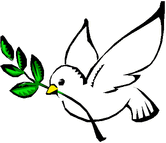 help us engage with deeper meanings as well. They can be as simple as pictures which represent things beyond themselves and which carry a weight of meaning that can be difficult to express in a few words. So … a set of scales is a symbol for justice, a dove and olive branch is a symbol of peace. Other examples of effective and accepted symbols include the logos of particular organisations, coats of arms.

 Every religion has symbols of some nature, in Christianity the cross or a crucifix carry significant meaning and point to the importance of Jesus death.
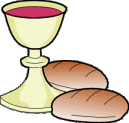
The bread and wine which Christians share are also symbols which carry significant meaning. In a way that we find difficult to articulate and with different shades of meaning for each Christian community, they feed our faith, emphasise our unity, and identify us with the death of Christ. Baptism expresses a connection with death and resurrection. Symbols can express the invisible or intangible in ways that words fail to do.
A simile is usually a figure of speech which pairs two things which are different to make a description more emphatic or vivid (e.g. as brave as a lion). Similes add depth to our language and are very similar to metaphors. Other examples include: ‘cute as a kitten’, ‘as busy as a bee’, ‘snug as a bug in a rug’ ‘blind as a bat’. Similies are used to enrich the text of scripture as well, to help us imagine what is meant. Examples include:
Proverbs 25:11 ‘A word fitly spoken is like apples of gold in pictures of silver’;
Matthew 10:16 ‘Behold, I send you forth as sheep in the midst of wolves: be ye therefore wise as serpents, and harmless as doves’;
Matthew 13:44 ‘The kingdom of heaven is like treasure hidden in a field’;
Matthew 23:27 ‘Woe to you, teachers of the law and Pharisees, you hypocrites! You are like whitewashed tombs, which look beautiful on the outside but on the inside are full of dead men’s bones and everything unclean’;
1 Thessalonians 5:2 ‘The day of the Lord will come just like a thief in the night’.
By using simile, the bible authors add depth to their statements and anchor abstract ideas with comparisons that provide a reference point for our senses. Similes draw us into the text in a way that a bald statement would not.
 How are you doing with the presents? Got them all wrapped yet?
 And when you have wrapped everything, you sit back a look at your endeavours and it’s still pretty obvious what most things are – it isn’t easy to disguise the shirt with the collar which sticks up above the rest of the pack, a tennis racket is a tennis racket even inside Christmas wrapping, a bottle of wine is a bottle of wine however you try to wrap it – and a
 through those days, weeks and months of Jesus’ ministry and the week surrounding his death, they were full of shocks and surprises.
 like the article below.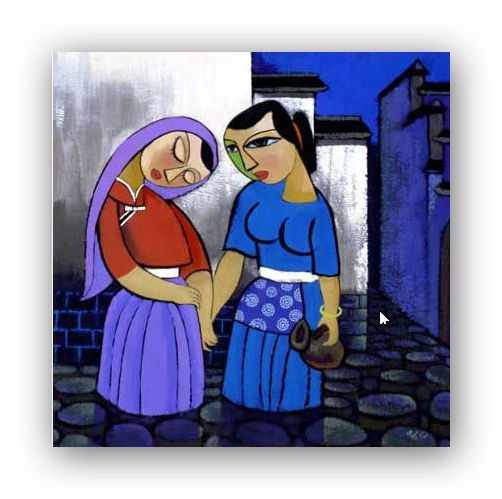
 Mary’s Journey
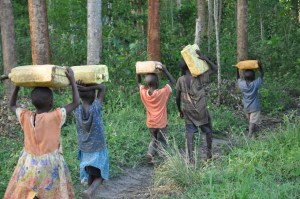 nder-Lyne, we’ve been able to be part of a continuing process of making this a thing of the past, but there are still today children and adults that make that kind of journey each day to collect water. It is still shocking!
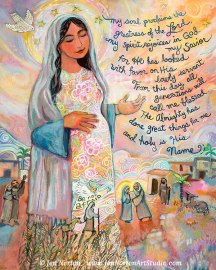 Is it surprising that she bursts into song? One of the most enduring songs of worship.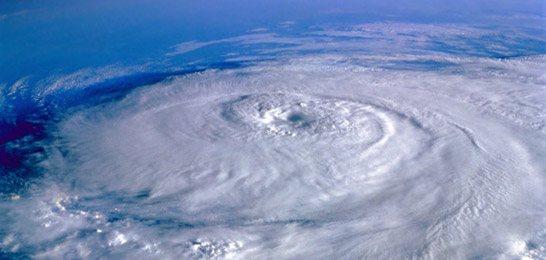

 When Paul talks of God’s peace, he is not suggesting something like the beautiful stillness of a lake on a summer evening. He’s thinking much more of something like the eye of the hurricane. That elusive place in the middle of the storm where the sea is calm. Paul has learnt in the middle of the storms and difficulties of life to rejoice because he has found God’s peace. He longs that those who read this letter will experience the same peace.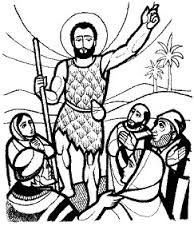
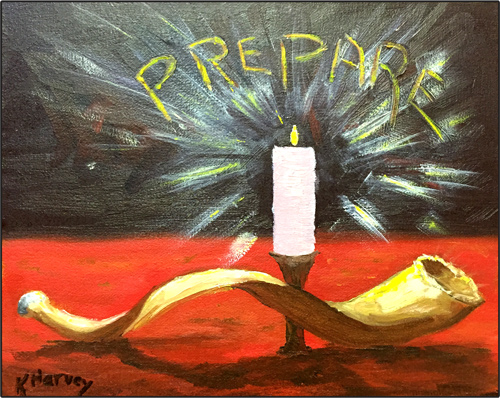
 LUKE 3:1-6
 As we seek to understand how Christ atones for our shame, listening to the voices of those for whom this is so much a part of their own faith journey is important. Here is a blog by Mako A. Nagasawa who is a campus minister at Harvard and Boston College with the New Humanity Institute, and founding director of
 Roger Farnworth