
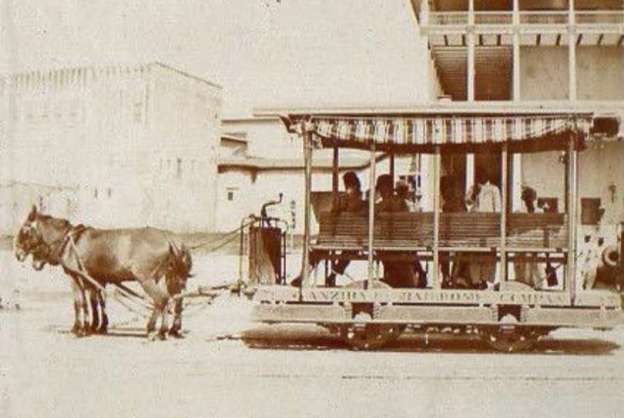
The featured image shows a horse-drawn/mule-drawn tram in Zanzibar before the turn of the 20th century. [1]
Zanzibar hosted two early rail systems, with a mule-drawn tramway operating from 1879 to 1888 between Stone Town and Chukwani, which later used a steam locomotive. A second, more notable 7-mile line known as the Bububu Railway ran from 1905 to 1930, connecting Stone Town to Bububu, featuring passenger service and, briefly, electric street lighting. [4]
The First Line (1879–1888): Built by Sultan Barghash bin Said, this, one of the first, tracks in sub-Saharan Africa. The 2ft-gauge line ran from the Sultan’s palace at Stone Town [2] to Chukwani. Initially the two coaches were hauled by mules but in 1881 the Sultan ordered an 0-4-0T locomotive from the English locomotive builders Bagnall, this was named ‘Sultanee’. The railway saw service until the Sultan died in 1888 when the track and locomotive were scrapped. [4][11]
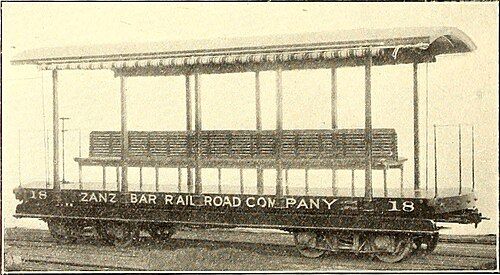
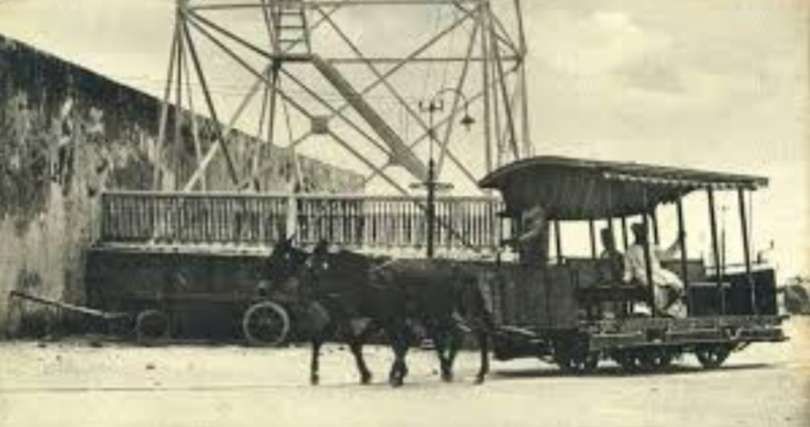
The Bububu Railway – a.k.a. the Zanzibar Railroad Co. (1905–1930) – In 1905, the American company Arnold Cheyney built a seven-mile, 3ft-gauge line from Zanzibar Town to the village of Bububu. It originated near the Arab Fort in Zanzibar Town, ran along the seafront, passed through the city’s narrow streets, and traveled north along the coast to Bububu. It was notorious for its ability to set fire to property and the surrounding countryside, but it ran for 25 years until it closed in 1930. Within the town, the railway operated on some of the narrowest streets. [4][5]
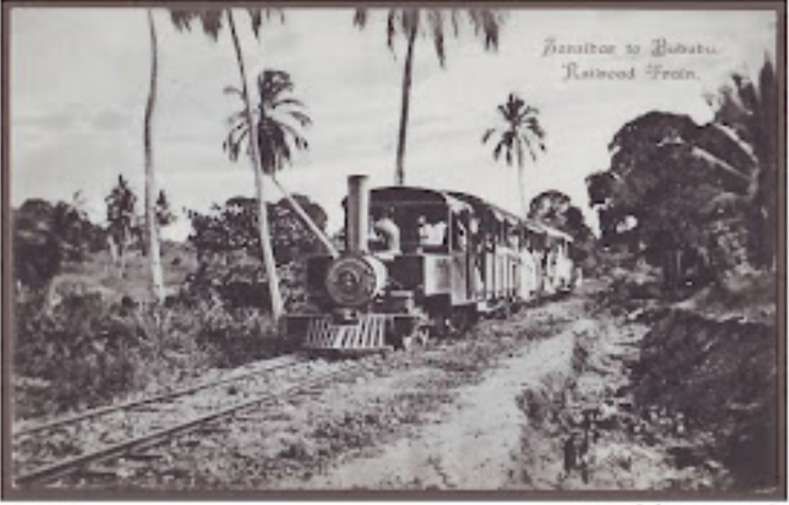
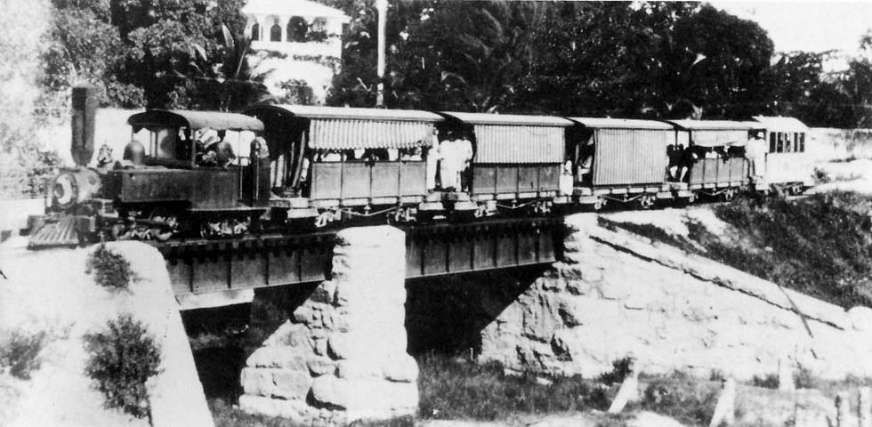
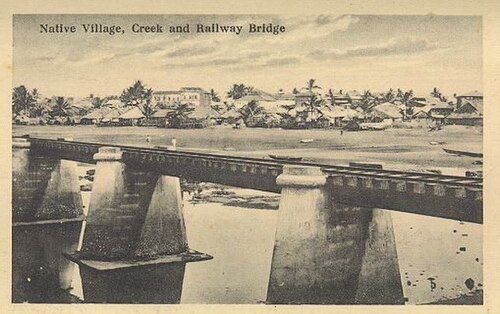
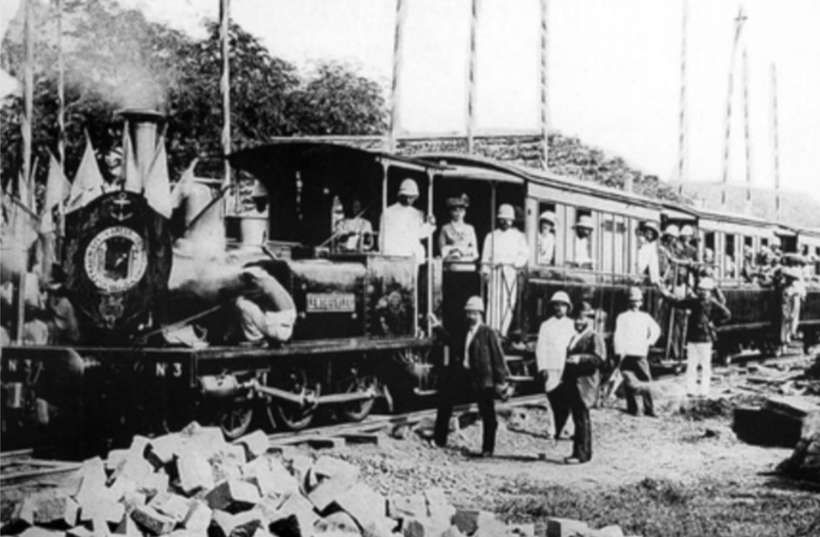
In the 1920s, the trains ran 6 or 7 times daily. The train was popular among the locals, but a special first class coach was available for the benefit of sightseeing tourists. [4]
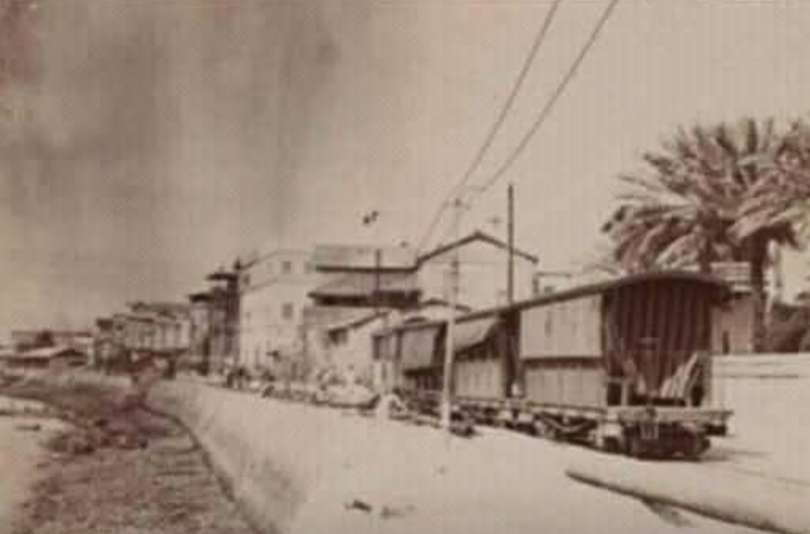
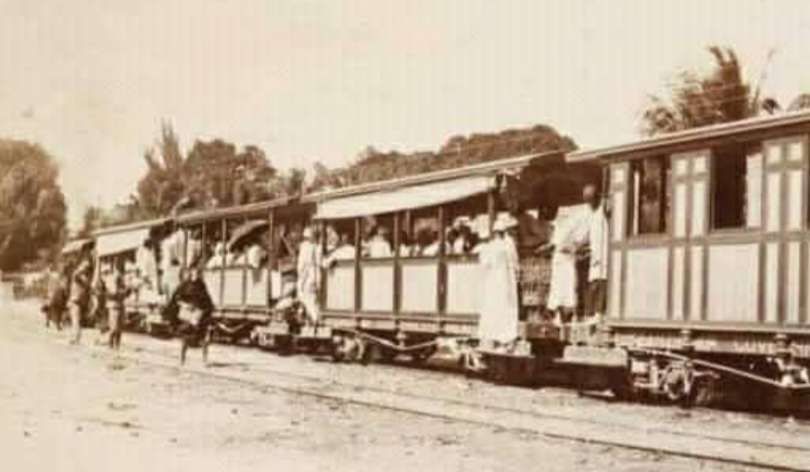
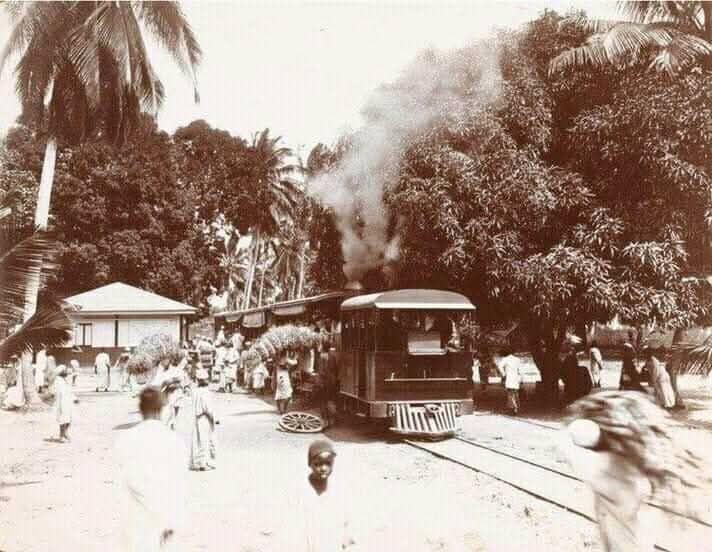
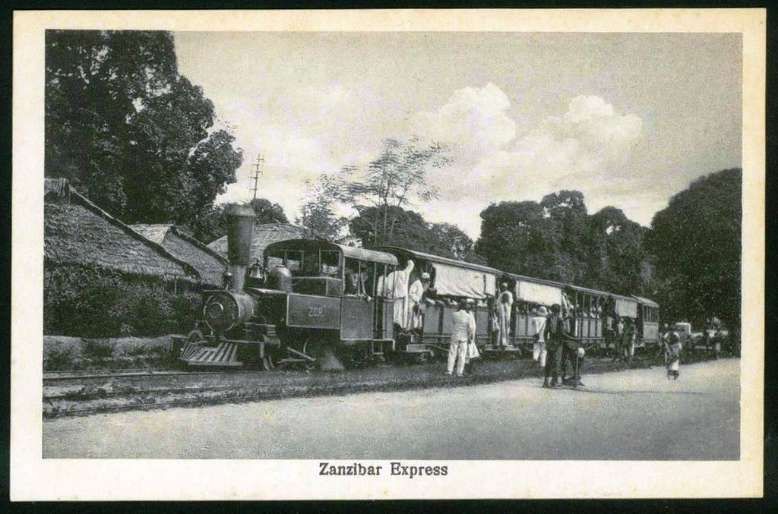
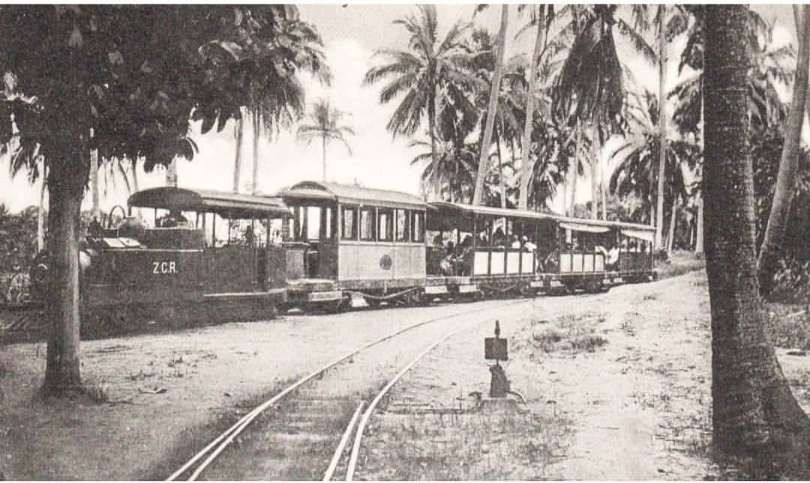
During the railway construction the Americans undertook the task of installing electrical power lines along the track. Wherever the rails were placed, metal poles were installed and power lines strung overhead. By 1906, Stone Town had electric street lights. In 1911, the railway was sold to the government, and by 1922 the passenger service ceased. As roads improved and motor vehicles on the island increased, its popularity diminished. [4]
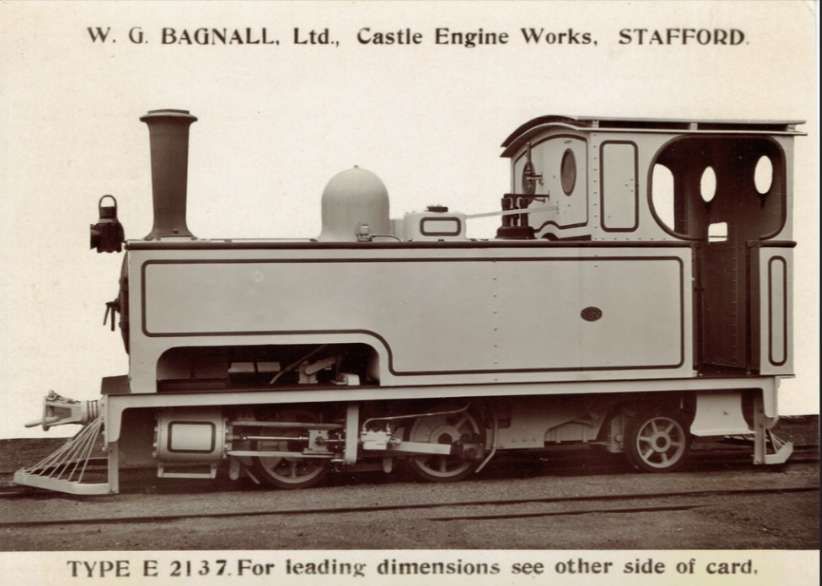
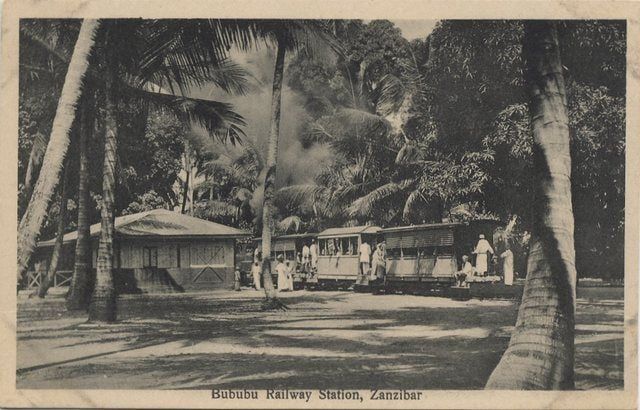
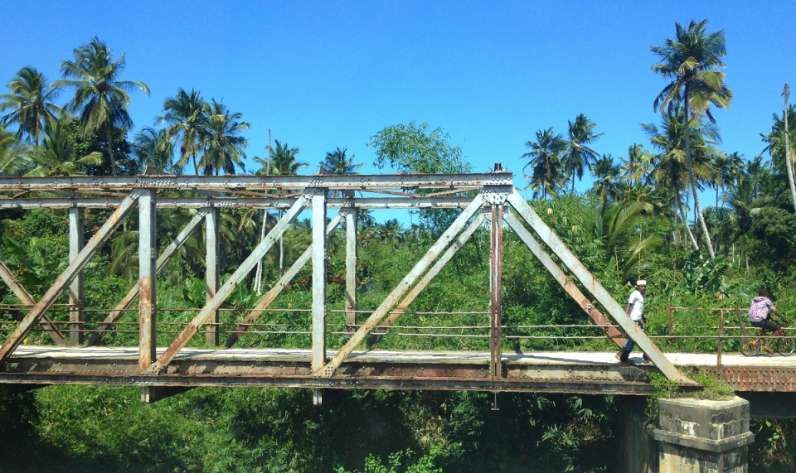
With the improvement works to the port, the railway was used for the haulage of stone which was used to build the port and reclaim the seafront. Today much of the old track bed has been built on however some of the railway’s bridges and embankments remain close to the main road to Bububu. [4]
I have struggled to identify the route of the old railway despite a number of websites/blogs suggesting that remnants of the railway can be seen from the main road to Bububu. The most significant structures may perhaps now be in use by the road or replaced by newer structures carrying the road. I have been unable to locate the structure below, which appears to be seen from the highway:
References
- https://www.instagram.com/p/DU0B_7zE6cb, accessed on 22nd February 2026.
- Stone Town (also known as Mji Mkongwe (Swahili for ‘old town’), is the old part of Zanzibar City. The newer portion of the city is known as Ng’ambo, Swahili for ‘the other side’. Stone Town is located on the western coast of Unguja, the main island of the Zanzibar Archipelago. Former capital of the Zanzibar Sultanate, and flourishing centre of the spice trade as well as the Indian Ocean slave trade in the 19th century, it retained its importance as the main city of Zanzibar during the period of the British protectorate. When Tanganyika and Zanzibar joined each other to form the United Republic of Tanzania, Zanzibar kept a semi-autonomous status, with Stone Town as its local government seat. [3]
- https://en.wikipedia.org/w/index.php?title=Stone_Town&wprov=rarw1, accessed on 22nd February 2026.
- https://en.wikipedia.org/wiki/History_of_rail_transport_in_Zanzibar, accessed on 22nd February 2026.
- http://www.zanzibar-travel-guide.com/bradt_guide.asp?bradt=1912, accessed on 22nd February 2026.
- https://zanzibarutalii.blogspot.com/2015_06_18_archive.html, accessed on 22nd February 2026.
- https://www.thecitizen.co.tz/tanzania/zanzibar/zanzibar-s-forgotten-railway-east-africa-s-first-steam-line-that-vanished-too-soon-5209080, accessed on 23rd February 2026.
- https://www.facebook.com/share/p/17vj5JHtuL, accessed on 23rd February 2026.
- https://www.flickr.com/photos/124446949@N06/18311347309, accessed on 23rd February 2026.
- https://omanzanzibar.blogspot.com/2017/03/zanzibar-railway-in-1879.html?m=1, accessed on 23rd February 2026.
- https://www.flickr.com/photos/124446949@N06/32763584738?fbclid=IwY2xjawQJO5NleHRuA2FlbQIxMQBzcnRjBmFwcF9pZA80MDk5NjI2MjMwODU2MDkAAR7Aj-9Aimm9cDPSYK0Fi00tSxkV2RmHVyjURtd5hwvDsFt8Zao-wFb69l-KkQ_aem_NmwnCIcYLO5fHZCd629ACA, accessed on 23rd February 2026.
- https://www.blipfoto.com/entry/3498612, accessed on 23rd February 2026.
- https://www.facebook.com/share/p/18GBKn6gjc, accessed on 23rd February 2026.
 Roger Farnworth