
An article in the magazine Railway Bylines, in the September 2002 edition written by Orson Carter prompted a look at the railway system in Dereham Norfolk. [1]
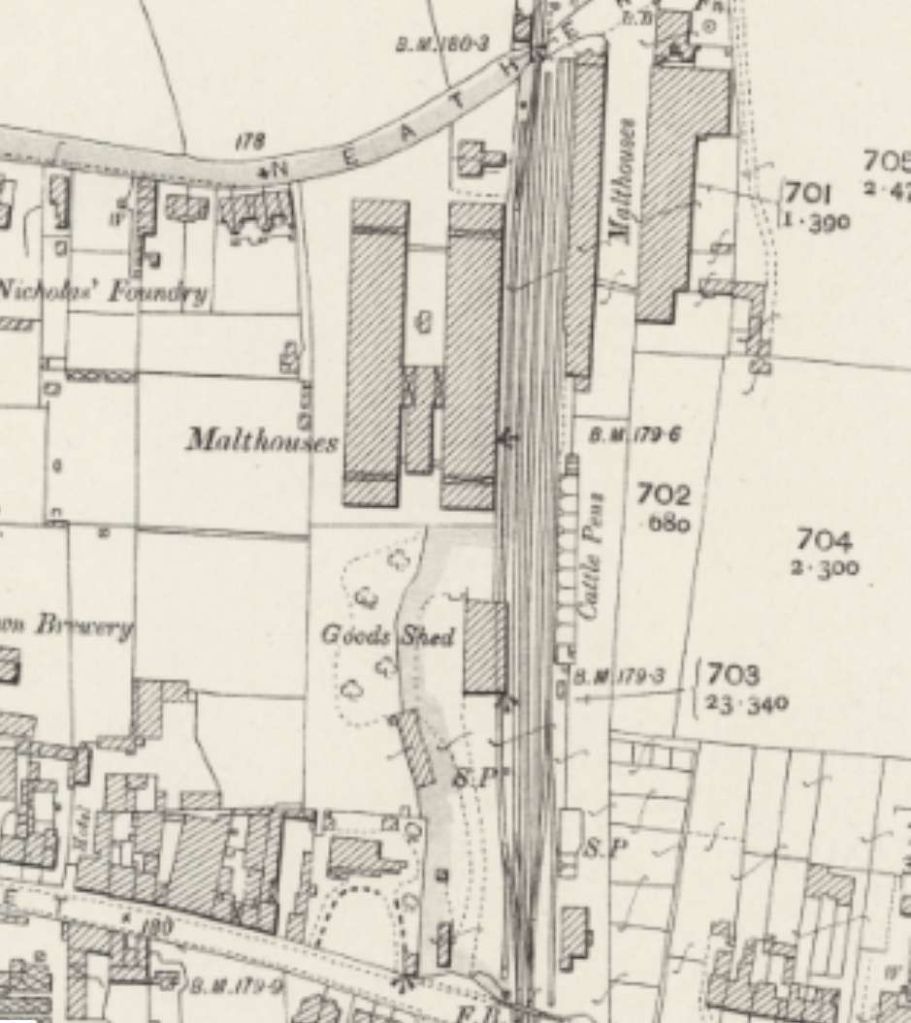
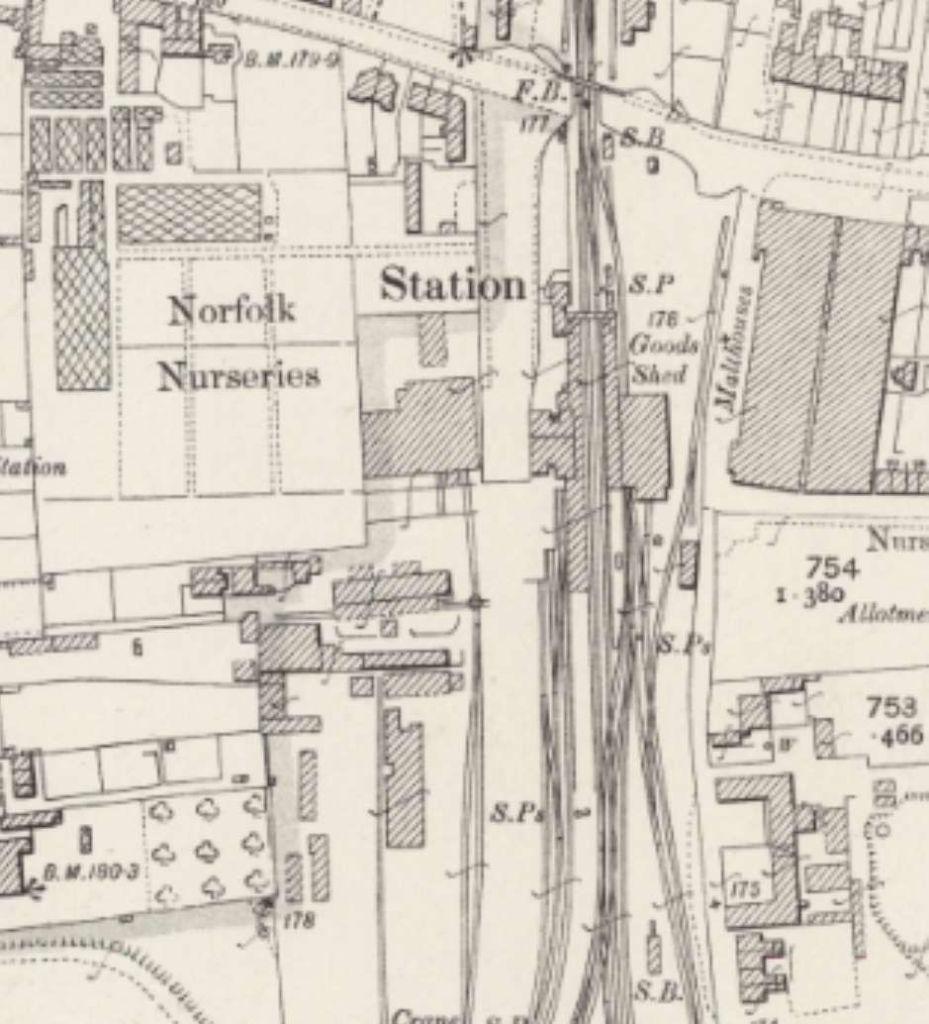
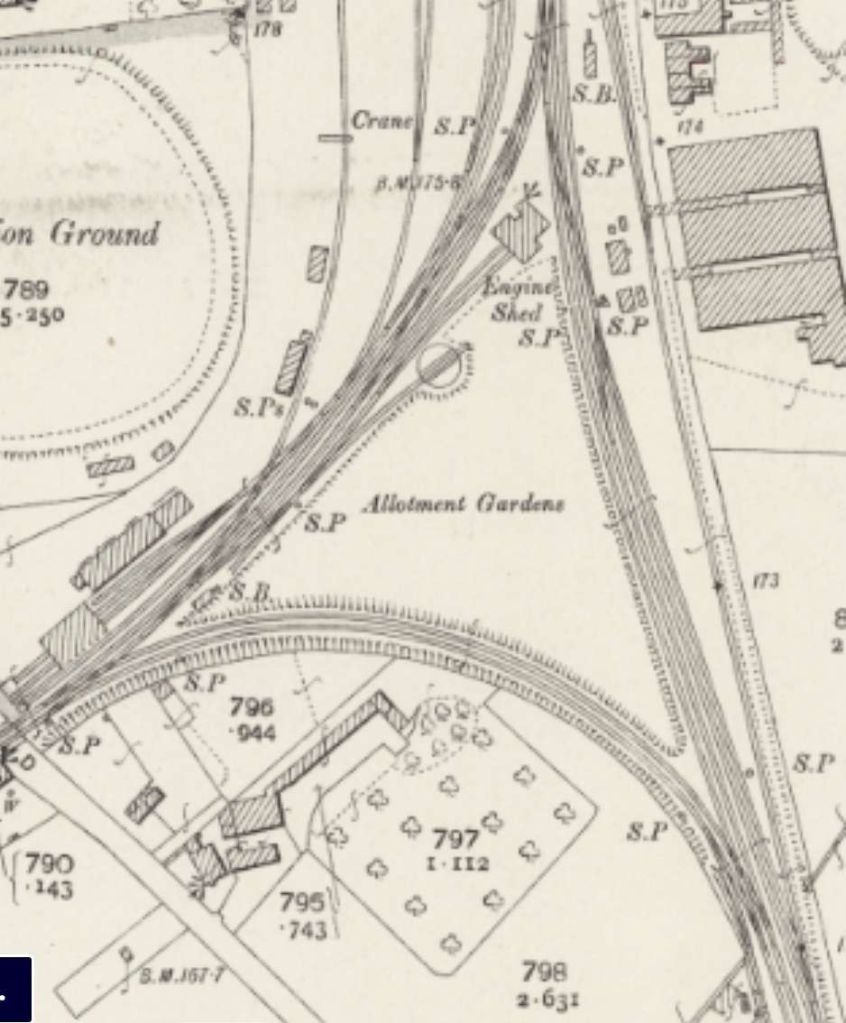
Carter’s article primarily reflected on the changes experienced in Dereham as the 1950s and 1960s developed. The line through Dereham remained open as a goods only line into the later part of the 20th century. This made it a prime candidate for preservation. The Mid-Norfolk Railway was formed in 1974 as preservation efforts began. The line re-opened in the mid-1990s. The MNR owns and operates most of the former Wymondham-Fakenham branch line of the Norfolk Railway! [3]
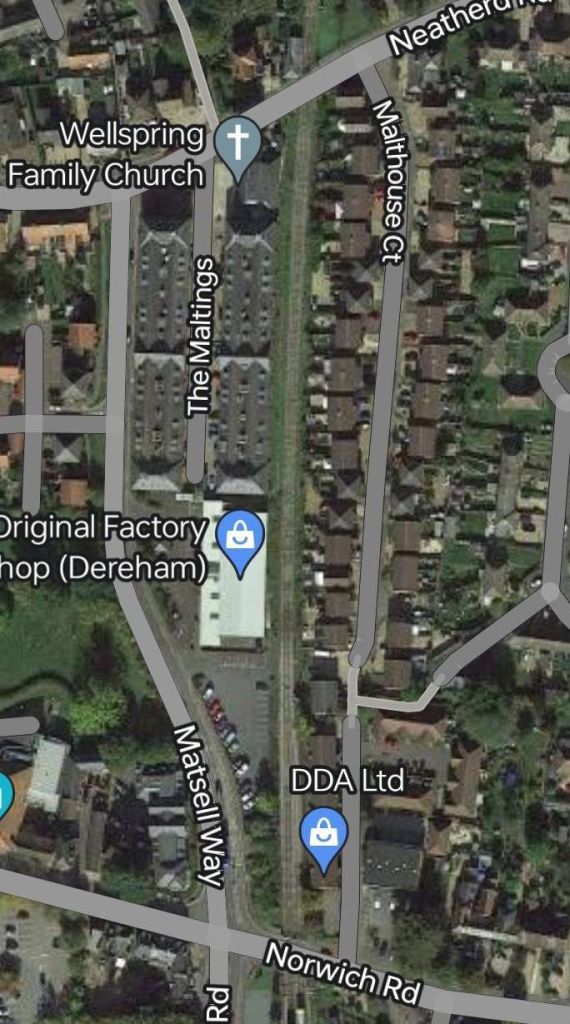
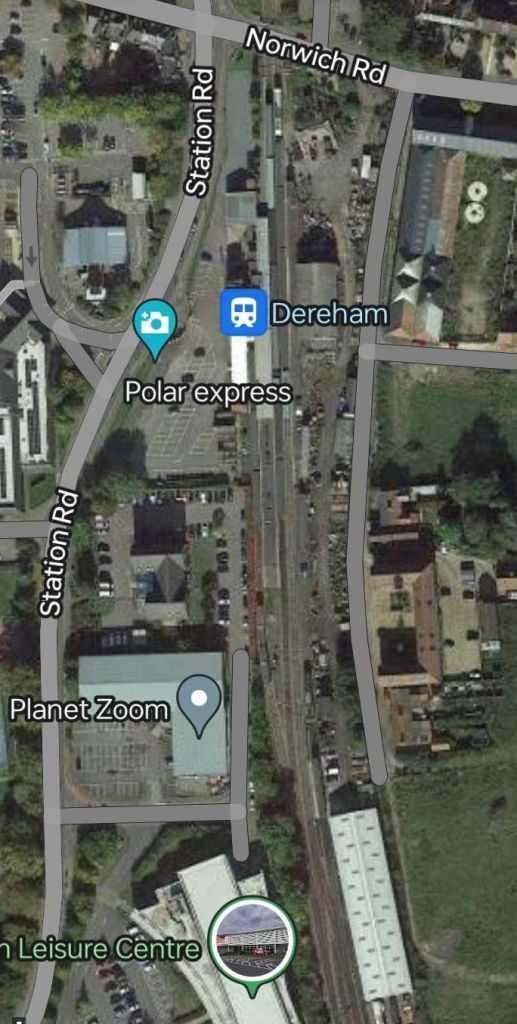
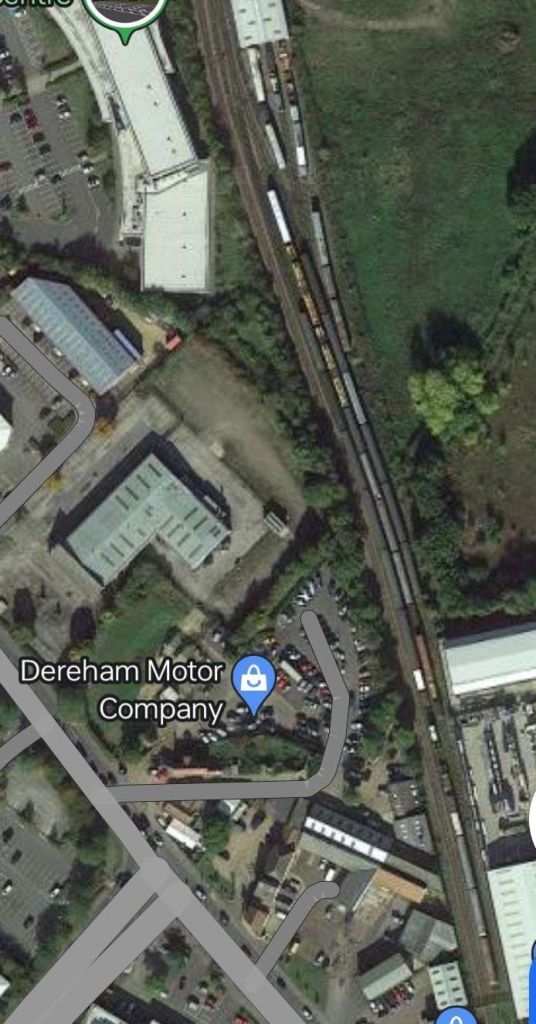
Carter’s article gives only a limited account of the railway history of East Dereham’s rail network: ” In railway terms the small town of East Dereham in Norfolk belied its size as until the early 1950s it was, in effect, a three-way railway junction which enjoyed a status lofty enough to warrant a ‘Class 1’ grade station master. The ‘main line’ though the term is comparative – was used by trains between Norwich and Wymondham and Wells-next-the-Sea; there was also a branch from East Dereham to Kings Lynn, and until September 1952 the trains on the semi-circular route to/from Norwich via Wroxham and County School also started and terminated at East Dereham. But if one looked in the public timetables for this apparently important junction station, one would not have found an East Dereham the station was invariably listed simply as Dereham.” [1: p522]
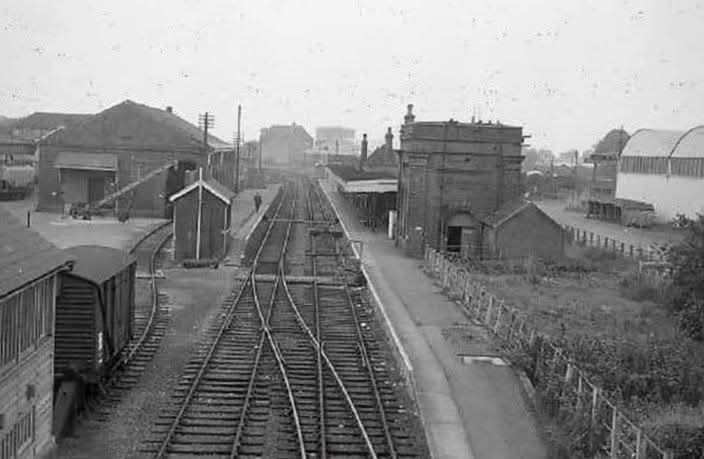
Dereham Station was built by The Norfolk Railway. “The Norfolk Railway was an early railway company that controlled a network of 94 miles around Norwich, England. It was formed in 1845 by the amalgamation of the Yarmouth and Norwich Railway opened in 1844, and the Norwich and Brandon Railway, not yet opened. These lines were built out of frustration that the Eastern Counties Railway line that was expected to connect Norwich to London failed to be completed. The Norfolk Railway also leased the Lowestoft Railway and Harbour Company, and built a branch to Dereham and Fakenham, opened in 1846 and 1849 respectively.” [5]
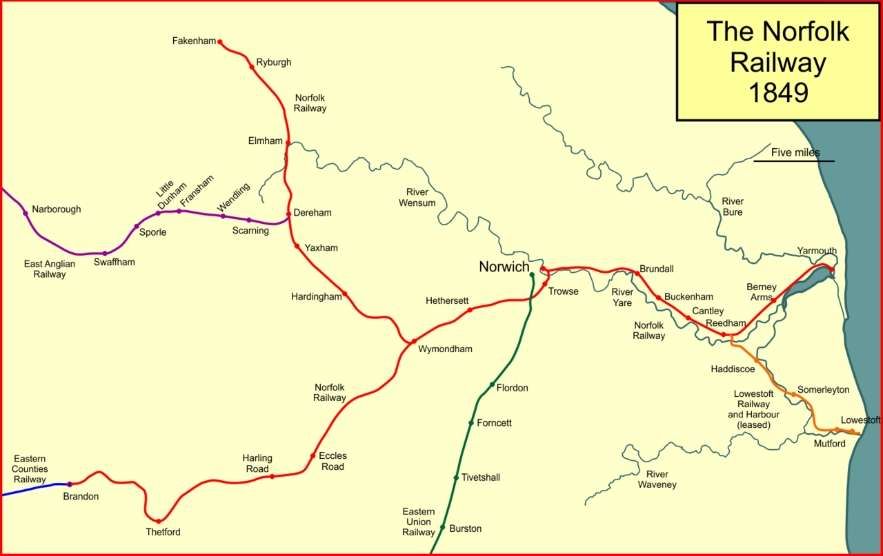
The Mid-Norfolk Railway dates the opening of the station to 1847: “Three years later an agreement was made to allow the Lynn & Dereham Railway to start to use the Norfolk Railway’s station, meaning that they could close their own terminus in the town. In 1857, the line northwards to Well-next-the-Sea was completed – with all the lines becoming part of the Great Eastern Railway in 1862. The station grew and evolved over the decades, with the Great Eastern Railway expanding the original Norfolk Railway ‘Tudoresque’ buildings as traffic grew, and the platforms being raised and extended to accommodate longer and more modern trains. Eventually, the station boasted a licensed buffet and four platforms with extensive canopies. Platform 1 is on the up line, with platforms 2 and 3 being set back to back (making one long platform face) and platform 4 being a short bay originally connected only to the King’s Lynn line.” [6]
The uncertainty over the date of opening of Dereham Station is resolved by Wikipedia quoting D. I. Gordon: A branch from Wymondham to Dereham “opened from Wymondham to Dereham on 7th December 1846 for goods trains and on 15th February 1847 for passengers. [7] … During construction, the Norfolk Railway sought an Act of Parliament to extend the Dereham line to Wells and Blakeney. … The Wells and Blakeney extensions were not built, and the new work was confined to building to Fakenham only. The construction contract [for the Fakenham line] was let to Peto in the Spring of 1847.” [5]
Soon, “The Eastern Counties Railway (ECR) … engaged in talks and … agreement for acquisition of the Norfolk Railway was finalised on 2nd May 1848, and the ECR took over the entire Norfolk Railway system, rolling stock included, on 8th May 1848. It sacked the Norfolk Railway staff and substituted its own. [7] Gordon says that the ECR ‘took the Norfolk on lease, so saving it from financial ‘perdition’.” [7: p164][5]
The Lynn and Dereham Railway also obtained an Act of Parliament to build a line to Dereham in 1845. It did not open its station (Lynn Hill) until 11th September 1848. [8: p41] [13] very close to The Norfolk Railway and formed a junction with it. This station was closed in 1850, when trains were extended to The Norfolk’s Railway station.
The King’s Lynn line was originally operated by the Lynn & Dereham Railway but, in 1848, the ECR leased The Norfolk Railway and absorbed the line to King’s Lynn.
In 1857, the line between Dereham and Wells opened. The Railways in this area became part of the Great Eastern Railway (GER) in 1862.
“In addition to the passenger facilities, Dereham had extensive goods facilities. Three goods sheds were provided (the surviving shed, one north of Norwich Road and another on the Lynn line), a large cattle yard, a coal yard, sidings for the town’s maltings trade, the Hobbies’ works, gas works and, during the Second World War, additional War Department sidings were provided on a new site to the east of the line. A triangle was provided for the Lynn line, allowing some trains (including the Royal Train) to avoid having to reverse in the station and a locomotive depot was built inside this triangle – where the town swimming pool now stands. This complex site was controlled by four signal boxes and stables were provided to house the horses used to operate delivery carts and shunt the yards.” [6]
“With an 1841 population of 3,837, Dereham already had several brewers and maltsters, two iron foundries and various small industries geared to the needs and produce of what was described as the ‘Garden of Norfolk’. But by 1855 it had grown to nearly 4,500 and had added a steam saw-mill, two further foundries, and a greatly expanded interest in the making of agricultural implements. In that year White recorded how the town trade had ‘considerably increased’ since the opening of the railways, and described the extensive granaries which had been built near the station and through which extremely large quantities of corn were despatched by rail. East Dereham in fact well illustrated the power of the nineteenth century railways to develop a small town when not too near a major centre and when conditions, in this instance the high fertility of the local soil, were right.” [7]
Derehamhistory.co.uk tells us that, “Along with the railways came the electric telegraph. The Norfolk Railway was a pioneer in the use of this instrument in railway operating and its spare capacity was made available to the public. It provided a nationwide accurate time check, replacing the often erratic local time with ‘Railway Time’. It gave the latest Stock Exchange prices and racing results in advance of the arrival of the newspapers.” [10]
“In the early 1880s, the railway line between Dereham and Wymondham was expanded to a double-tracked line, which was completed shortly after 1882. Yakham, Thuxton, Hardingham, and Kimberley Park all had new platforms constructed on the new up line, while the down line platforms underwent alterations, including the addition of new canopies. In 1886, an avoiding double track line was constructed to the south of the Dereham station. This allowed the Wymondham to King’s Lynn line to be used as a cross-country route. The avoiding line was utilised by freight, excursion, and diverted main-line trains.” [11]
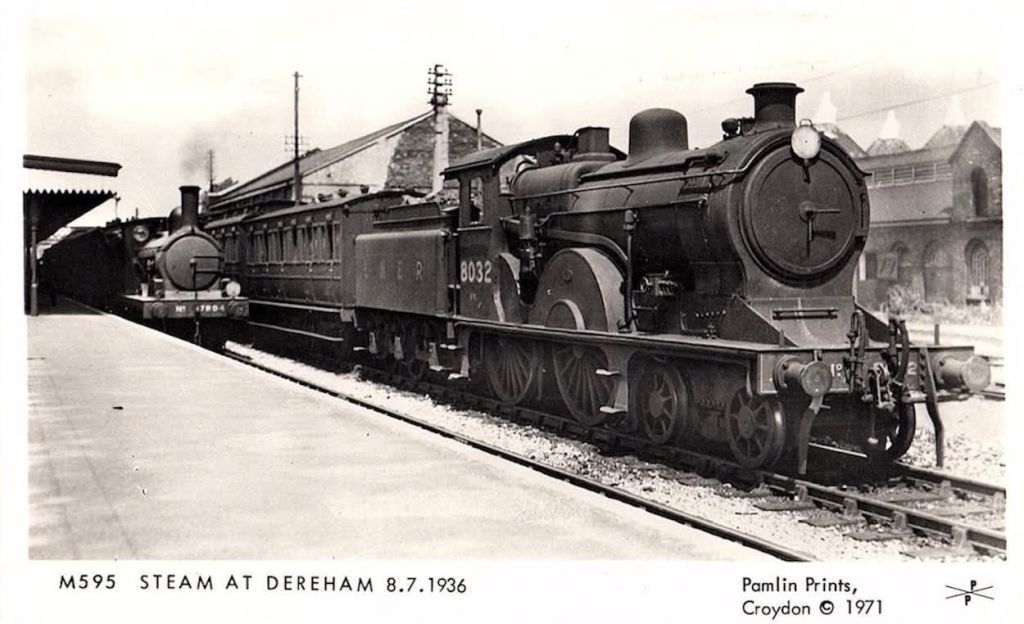
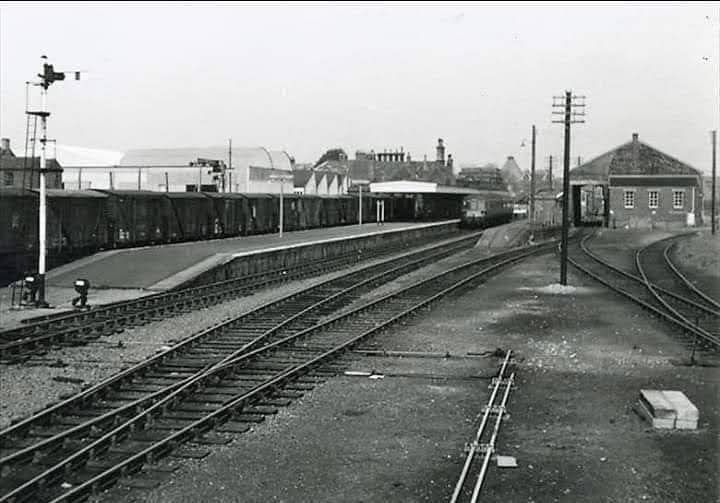
Diesels were introduced in the mid-1950s but rapidly increasing road transport competition meant that rain services in rural Norfolk became increasingly uneconomic. “In 1963, Richard Beeching recommended that the line from Dereham to Fakenham and Wells be closed and, in 1964, the last passenger train ran over this section. He also recommended that the railway from Norwich to Dereham and then to King’s Lynn be retained for express trains and freight. However, in 1968, the connection to King’s Lynn was cut, as part of the formation was wanted for improvements to the A47, and the remaining passenger services between Dereham and Norwich ended in 1969. Concerns had been [raised] in Parliament about the local roads being inadequate for local business needs, specifically the large maltings at Great Ryburgh, so tracks through the station remained in regular use as a goods-only line until the 1980s.” [6]
The line closed to goods in 1989.
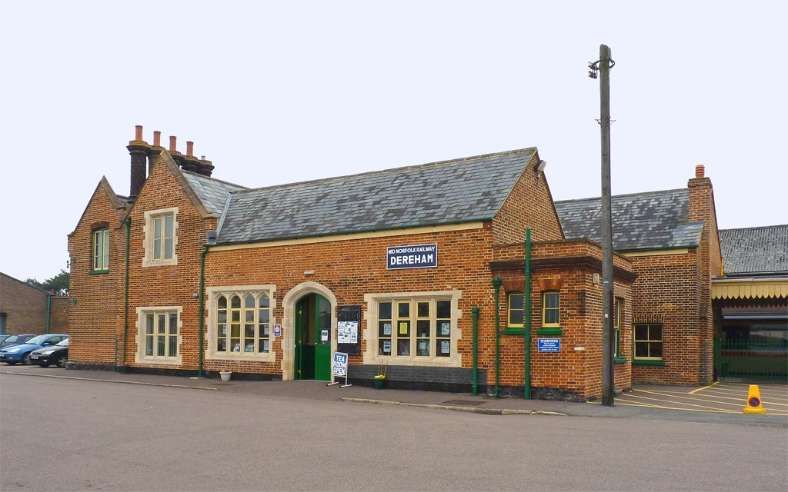
Sadly the main station building at Dereham suffered a significant fire in 1988. The interior and roof were lost. The station master’s house survived in a near derelict condition. After the line was purchased by the Mid-Norfolk Railway it was carefully restored and it re-opened to passengers in 1997. [6]
The Mid-Norfolk Railway also reports that “two of the station’s signal boxes have been replaced. The original Dereham Central site is occupied by the former Stratford Southern box, which controls the station site and the line southwards. Dereham North is occupied by the former Laundry Lane box from Lowestoft, and controls the level crossing and line northwards. The original Dereham North box also survives, as holiday accommodation near Melton Constable. With the original locomotive depot site being lost, [their] new maintenance shed has been built in the former goods yard.” [6]
The surviving goods shed, stables and one of the station’s original LNER yard cranes feature in future plans for a heritage attraction at Dereham Station.
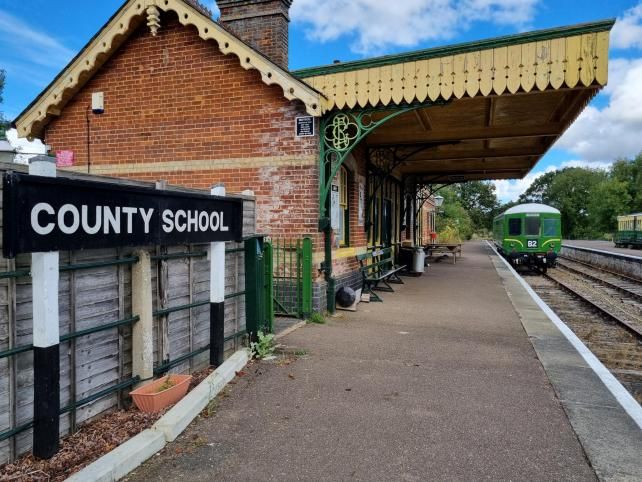
The Mid-Norfolk Railway Preservation Trust also plans to restore another section of track. It intends to bring back into use another mile and a half of the line from North Elmham, near Dereham, up to the former County School station. The Trust will restore the station to an operational standard and make it the line’s northern terminal. “County School once served a nearby boarding school set up in the 19th century, which later became a naval training school and a Dr Barnardo’s home until its closure in 1953.” [12]
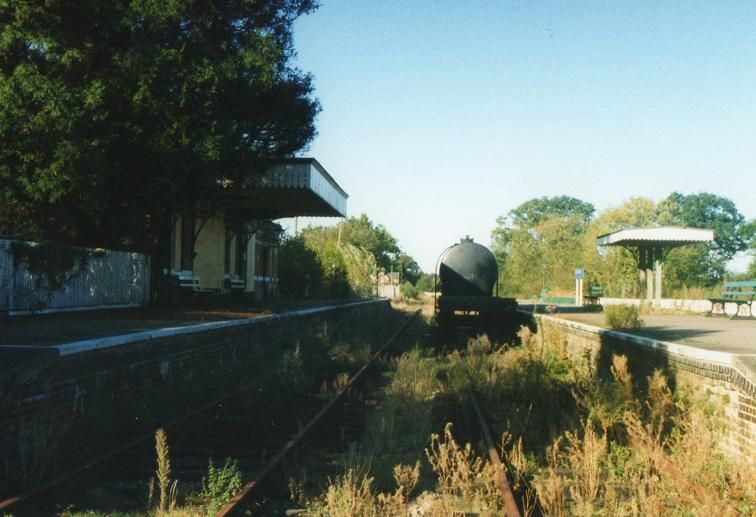
Currently, The Mid-Norfolk Railway, at 17.5 miles, is already one of the UK’s longest heritage railways. Once the latest extension is completed, it would be the third longest. [12]
References
- Orson Carter; Dereham – a Time of Transition; in Railway Bylines, Volume 7, Issue 10; Irwell Press, Clophill, Bedfordshire, September 2022, p522-527.
- https://maps.nls.uk/view/120850328, accessed on 14th February 2024.
- https://en.m.wikipedia.org/wiki/Mid-Norfolk_Railway, accessed on 18th February 2024.
- https://www.facebook.com/share/p/15pGLytCUQ, 31st January 2025.
- https://en.m.wikipedia.org/wiki/Norfolk_Railway, accessed on 31st May 2025.
- https://www.midnorfolkrailway.co.uk/eastdereham, accessed on 31st May 2025.
- D. I. Gordon; A Regional History of the Railways of Great Britain: Volume 5: the Eastern Counties; David & Charles, Newton Abbot, 1977.
- Leslie Oppitz; East Anglia Railways Remembered; Countryside Books, Newbury, Berkshire, 1989.
- https://en.m.wikipedia.org/wiki/Dereham_railway_station#reghist, accessed on 31st May 2025.
- https://www.derehamhistory.co.uk/the-railways.html, accessed on 31st May 2025.
- https://www.norfolksdisusedrailways.com/derehamnorwich, accessed on 31st May 2025?
- https://www.fakenhamtimes.co.uk/news/24580692.mid-norfolk-railway-unveils-track-extension-project, accessed on 31st May 2025.
- http://www.disused-stations.org.uk/d/dereham/index.shtml, accessed on the 31st May 2025.
- https://www.geograph.org.uk/photo/2893207, accessed on 31st May 2025.
- https://www.facebook.com/share/1Bzhw96Nyh, accessed on 31st May 2025.
- https://commons.m.wikimedia.org/wiki/File:County_School_station_1996.jpg, accessed on 31st May 2025.
- https://www.facebook.com/share/p/1A9vURm6fh, accessed on 31st May 2025.
 Roger Farnworth
