There seems to be a growing feeling within the Church of England that it is time for change. There is increasing evidence that many, both clergy and laity, see a need for change over the Church’s position on human sexuality. [13]
Three Church of England Bishops now say that Church of England clergy should be able to conduct and bless gay marriages. The Bishop of Oxford, The Right Reverend Dr. Steven Croft, wrote an essay in the late Autumn where he apologised for his views being “slow to change” and any hurt he had caused. [14] He was joined by the Bishops of Worcester and Dudley, the Right Reverend Dr. John Inge, and Right Reverend Martin Gorick respectively.
In his essay, titled Together in Love and Faith, Croft writes that gay clergy should also be able to marry partners. He identifies the debate around same-sex marriage as “what seems to me to be the most pressing question requiring resolution”. [20]
The increasing sense that change is needed is a cause of much angst for those arguing for the traditional position on human sexuality to remain the Church’s commitment and doctrine.
Over the winter of 2022/2023, the Bishops in the UK continued their discussions which have followed on from the latest listening exercise ‘Living in Love and Faith’. But the structures of the Church of England mean that decisions over this kind of issue are made by the General Synod advised by the Bishops, not, ultimately, by the Bishops themselves. In February 2023, the Bishops plan to bring the discussion back to the General Synod for debate.
It seems somewhat invidious to try to talk about the issues involved in an objective, theological way. As, ultimately, this is a discussion about people’s lived experience and about their very being.
I have, however, recently been drawn into discussion about human sexuality. I am all too aware of the strength of feeling among those who are committed to the traditional position and I have been seeking to revisit the debate in the light of ‘Living in Love and Faith‘, which is the current relevant discussion material produced by the Church of England. This has been a time for reconsidering the conclusions I have reached, in a less structured way, in the past.
‘Inclusion’ or ‘Exclusion’? ‘Affirmation’ or ‘Rejection’? These are the essential dynamics of the debate, at least as I understand they are perceived by those who are members of LGBTQI+ communities. Within the Church of England and the Anglican Communion, the issues generally revolve around fealty to the Bible and the inherited traditions of the Church. The ‘orthodox’ position and whether it is reasonable to revisit it.
In February 2017, the Archbishops of Canterbury and York announced a decision to begin a project that would become Living in Love and Faith, they coined a powerful and controversial phrase. “The work that they were proposing on sexuality and marriage would, they said, reflect a radical new Christian inclusion in the Church. This must be founded in Scripture, in reason, in tradition, in theology and the Christian faith as the Church of England has received it; it must be based on good, healthy, flourishing relationships, and in a proper 21st century understanding of being human and of being sexual.” [11]
That proposal begs the question of what ‘radical new Christian inclusion’ might mean. The call to a ‘holy life’ could lead to forms of exclusion. A tension between inclusion and exclusion is evident in the pages of the Old Testament. Moabites, for instance are unambiguously excluded from God’s people (Deuteronomy 23:3-6), yet Ruth, the Moabite, is included and becomes the great-grandmother of King David. Two distinct voices exist in the Old Testament and it is no stretch to argue that the story “of Ruth stands closer to the overall moral and spiritual heart of the Old Testament, and of the faith rooted in it, than does the paragraph in Deuteronomy 23.3-6. It lines up, for instance, with the prophecy in Isaiah, in which God promises to bring foreign peoples ‘to my holy mountain, and make them joyful in my house of prayer …. for my house shall be called a house of prayer for all peoples’ (Isaiah 56.7). The judgement that Christians should privilege Ruth over the paragraph in Deuteronomy looks to be in line with the priorities of the Old Testament itself, quite apart from that of the New Testament.” [12: p225]
“The question then perhaps arises whether, if the law in Deuteronomy 23 is relativized in the book of Ruth, there might be a similar relativizing or deprivileging of the Levitical prohibition of same-sex intercourse? Or does the absence of any texts commending what Leviticus condemns challenge such relativization?” [12: p225]
It is worth noting that “Exclusion in the New Testament is not about policing the boundary around a community that consistently achieves and maintains some standard of excellence. Rather, exclusion is reserved for those who reject and work against the Church’s calling, and who persist in that despite all attempts to win them round (Matthew 18.15-18; 1 Corinthians 5.3-6,11-13; 2 Thessalonians 3.6; Titus 3.9-11). The Church is a community called to stand against those forces in the wider world that reject and betray the love of God. It is called to recognize those forces and tendencies, to speak out against them, and to call its neighbours away from them. It is called to keep itself from falling into them – and to ask God’s forgiveness and help whenever it fails. … There is therefore, an unavoidable negotiation of inclusion and exclusion in the life of the Church of England which has often handled this negotiation very badly. It has all too often taken to policing its boundaries – refusing people welcome unless they measure up. It has often practised exclusion in ways that line up all too well with the forms of marginalization and oppression that mar the wider world.” [12: p226]
“The church has sometimes made those whose marriages end in divorce feel unwelcome, and has often made LGBTI+ people feel that they don’t and can’t belong, simply because of who they are. We have, all too often, defined inclusion and exclusion by some standard other than the holiness, glory and love of God.” [12: p226]
Some believe that “the Church has failed to live up to its calling to inclusion, that it is being challenged to do much better by voices both from within and from wider society, and that it needs to rethink the images of sin and holiness that it proclaims, recognizing the ways in which they have been used to exclude. They believe that the Church needs to be much more inclusive, to better reflect the loving holiness of God. Others, while agreeing that there are undoubtedly issues of injustice and wrongful discrimination that call for repentance and redress, believe that the Church is called to uphold a distinctive way of life in the areas of sexuality and gender. They believe the Church is called to uphold forms of holy living that cut across many of our society’s understandings of what is permissible or desirable – and that might well conflict with understandings of inclusion widespread in our society. They believe that this distinctive way of life is profoundly good for human beings, and that upholding it is itself a way of displaying the love of God.” [12: p227]
“Christians … agree that the Church ought to be a community where everyone is welcome. No one should be made to feel excluded simply because of who they are. The Church is meant to be a community that welcomes the poor, the marginalized, the excluded and the deprecated. We agree that the Church often fails in this calling and needs to repent of those failings. The Church is a community of people all of whom fail to follow God’s way consistently. We misunderstand. We harm ourselves and one another. We don’t live up to the standards that we proclaim. The Church should be a community of mercy. It should be a place where the weakness of our wills and the failures of our understanding can be acknowledged. It should be a community where we can face up to the harm that we have done and are doing, as well as recognizing the harm that has been done to us. The Church should be a community of grace. It should enable us to confess our sins to God, in confidence of forgiveness. It should help us to repent – to turn, and to keep on turning, towards the life God has called us into. It should be a community in which every person is enabled to follow this pattern of acknowledgement, confession and repentance, and to keep on following it.” [12: p228]
“In the areas of identity, sexuality, relationships and marriage, however, we disagree about the patterns of behaviour that are consistent with this community’s calling. We disagree, therefore, about the kinds of change called for from the people who are welcomed into this community. We disagree about what it would look like for someone to work persistently against the life to which this community is called.” [12: p228]
‘Identity’ complicates matters. When we say to people whose very identity is that of a trans man or who have experience great liberation when they transitioned or a lesbian in a long and faithful relationship, ‘You are welcome, but we think that the way that you describe yourself is seriously mistaken, while you continue to live this way your involvement will be limited and you certainly will not be able to exercise leadership in this community’ How can we really expect them to agree that the Church is actually willing to welcome them as the person they believe themselves to be. Our welcome is very likely to be experienced as rejection and exclusion, “especially if [they] notice that no such questions about sexual activity are asked of [their] straight friends, and that nobody criticizes those friends when they say how central those relationships are to their identity and their well-being.” [12: p229]
“Yet for those of us who do believe sexual relationships between people of the same sex are sinful, or that transitioning gender is a rejection of God’s good intention for us, the making of distinctions like this is unavoidable. It is a normal and necessary feature of the welcome that the Church extends to all. If the Church is understood as the community of those who follow the way of Christ, and if that way truly is incompatible with these behaviours, then it is necessary at some point to communicate that such ways of life are sinful and subject to God’s judgement. That means communicating God’s call to repentance as the means of being fully included in the life and ministry of the Church.” [12: p229]
“Others of us disagree. We believe that there is nothing about same-sex sexual relationships, or about transitioning, that is incompatible with the life of Christ’s body. We therefore believe that placing limits on people’s full involvement in the life of the Church because of these things is a betrayal of the Church’s calling and identity. If the Church is the community of those who follow the way of Christ, and if that way truly is incompatible with this kind of exclusion, then people need to be challenged to leave behind behaviour that perpetuates these exclusions.” [12: p229]
“How are Christians to discern what is compatible, and what is incompatible, with the life of Christ’s body? How are we to discern what is holy – what embodies and communicates the loving kindness of God?” [12: p229]
“How is the Church of England to handle deep disagreements about these matters – disagreements about which forms of life are to be commended as holy and fitting for those in Christ, and which named as sins from which one needs to seek God’s grace and power to turn away?” [12: p229]
As part of the debate the Church of England has sought to listen to those for whom the matters being discussed are their lived experience and to those who seek to follow Christ as people in same-sex relationships, or who have transitioned from one gender identity to another.
I have discovered an illuminating book, written by Marcus Green and published by Kevin Mathew, entitled, “The Possibility of Difference: A biblical affirmation of inclusivity.” He is gay and I am not, but his words give me a sense of hope. I pray that there might be more who express similar views from both a traditionalist and a progressive perspective in the Anglican Communion as the months and years unfold. His position, it seems to me, is at one with the history of the Anglican Communion when it has been at its very best – a place where difference is acknowledged and talked about and where every effort is made to remain united as one family.
Green says: “As an evangelical and as a gay man, I want to be able to open my Bible and talk to others with open Bibles without there being no-go areas. I want to be able to disagree with traditionalist, conservative takes on sexuality without calling other people homophobes and without them doubting my commitment to Christ. I don’t want or need everyone to agree with me; though that would be nice for them… And I really don’t want the Church I belong to and love to split because people who are actually my friends think I’m worth splitting the Church over. … Seriously, I’m not worth splitting the Church over. … So I want to find a way of looking at the Scriptures that is fair and biblical, and which lets those who disagree with me understand that we have the same heart and follow the same Lord. We just disagree. Sometimes quite strongly. But hope we’re trying (in Archbishop Justin Welby’s wonderful phrase) to disagree well.” [5: p65]
Green’s expressed hope remains out of reach. Our disagreements are probably just not amenable to that kind of discussion, however much we want them to be. Some disagreements are just too divisive. Living in Love and Faith is helpful in enabling us to understand more about the those disagreements. [12: p230-234] It suggests that it is helpful to think in terms of there being three broad types of disagreement:
- “First, there are disagreements in which each group believes the other to be advocating something simply incompatible with the good news of Jesus. They think the other group is teaching something that amounts to a rejection of Jesus’ call on one’s life. Some will say that the people involved are no longer serious about living as Jesus’ disciples, and that they cannot be considered Christians in any meaningful sense. Others will say that the people involved might still be Christians, but that their teaching is not- and perhaps that they are putting their own and others’ eternal salvation at risk.” [12: p231]
- “Second, there are disagreements that don’t cut right to the heart of our understanding of the gospel In this way, but that do undermine our ability to live and work together as one church. They make it hard to worship together, to share sacraments, to have a single structure of ministry, oversight and governance. A lot of ecumenical disagreements take this form. We recognize one another’s communities as Christian churches, teaching the gospel, but we disagree about matters that impair our ability to live and work together as one church.” [12: p231]
- “Third, there are disagreements that don’t make us think that those who disagree with us are rejecting the gospel, and that don’t prevent us working together as one church, even though we do think them wrong about something that matters.” [12: p231]
It seems that in the arguments over homosexuality, different parties understand their differences in very different ways. If I am to be honest, I probably want to place this issue in the third category above. I know, however, that for many others, these issues fall in the first category.
“For some of us, the Church of England’s received teaching that the only proper place for intimate sexual activity is marriage between a man and woman is an integral part of Christian discipleship. Those who not only doubt that teaching but encourage other people in the name of the church to disregard it are advocating a path that leads away from following Christ.” [12: p232]
“For others of us, a refusal to include LGBTI+ people in the life and ministry of a because of their sexual activity is itself incompatible with the way of Jesus Christ. Those who not only. persist in thinking this way themselves, but who are determined to perpetuate this exclusion in the authoritative actions of a church, cannot be recognized any longer as teachers of Christ’s gospel. They have betrayed the bonds of love and put themselves out of Christ’s company.” [12: p232]
Change?
A preliminary question might be: What constitutes ‘legitimate’ change in the Church?
“Why should one kind of change not represent a fundamental betrayal of the gospel, when another kind does? Some people have tried to outline explicit criteria to evaluate legitimate developments – Cardinal Newman … was one – but the problem with most attempts to do so is that they depend on a prior discussion of arguments that have already taken place in the Church. It is much more difficult to stretch them to accommodate a completely unforeseen development in knowledge or understanding. That problem is particularly acute in questions of sexual morality, because the rapidity with which our knowledge of human physiology and psychology has developed in the last hundred years or so has completely outpaced many of the traditional lines of Christian moral reflection. But it is important, nevertheless, to hold on to a base distinction between what we regard as the essence of the gospel, and more secondary or derivative questions.” [7: p56]
Logically, this would seem to be a sensible way through this debate, but, sadly, it is also something which, in the context of this debate, is of limited assistance. The debate actually takes us directly into questions about what issues are central to the Gospel. One side of the debate, in all integrity, is convinced that the the issues in this debate are about the essence of the Gospel and cannot be treated as ‘secondary or derivative’. If this were not the case, there would be considerable room for what we call “reconciled diversity” below.
It seems to me that four questions must be considered as part of a debate on any matter of substance. These are:
- The interpretation of key Bible passages and the wider emphasis of scripture;
- The place of experience (and modern knowledge);
- The guidance of the Holy Spirit; and
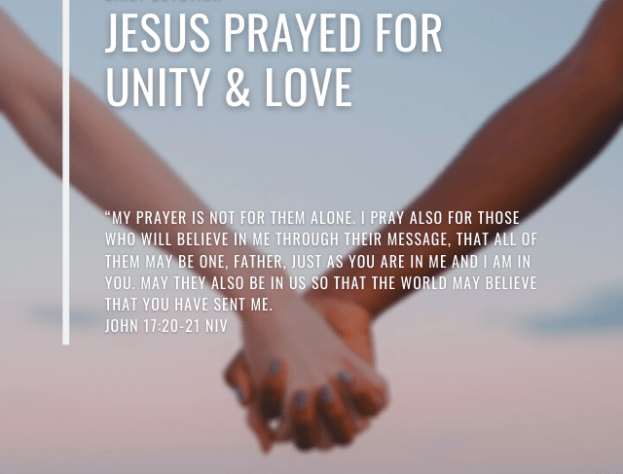
- Jesus prayer for unity in John 17 that we ‘will be one as he and the father are one’.
The first of the matters listed above is a hermeneutical question and is answered with great integrity by different groups of people in the UK, the Church of England and the wider Anglican Communion in very different ways.
The answer to the second depends on our understanding of the role of the Holy Spirit in the world today and the hermeneutical process. There have been examples throughout history of increasing knowledge and experience challenging traditional understandings of issues and ultimately being accepted by the church. The one highlighted most clearly in the New Testament is the controversy over Gentiles being accepted into the church family without first being circumcised as Jews. [Acts 10 – 15] Peter calls into question what was an accepted position, primarily though his own encounter with the Holy Spirit and the Holy Spirit then falling on Cornelius’ household. Paul later brings the issue to the Council of Jerusalem. God is seen to be at work among the Gentiles and the then commonly accepted understanding of God’s will is challenged, renewed and, thankfully for us in the Gentile world, changed significantly.
The third depends on what we believe Jesus meant when he talked in John’s Gospel of ‘the Spirit leading us into all truth’. Is he talking of the Spirit as a guardian of historic truths, or as a creative improviser who takes what has been revealed and reinterprets it anew in each generation?
The fourth factor is, I believe, pivotal. It is the nature of Jesus’ prayer in John 17 that we ‘will be one as he and the father are one’. I have already written about this. The article can be found here. [1]
Jesus’ prayer suggests that the unity of the Church is of supreme importance. It is not “a merely practical arrangement. It is not just a question of finding mechanisms or rules that will enable us to hold together – though those things are often important in themselves. The unity of the Church is a moral unity, a unity that calls us out of our particular preoccupations, our tendencies to assume egoistically that we are entirely correct, and invites us to recognize our fellowship in Christ with all those who also seek to follow him.” [7: p57]
Because of Jesus’ prayer, we cannot rest in our own inner certainty that we are right, whether we hold a traditional position, or are convinced that we have discovered a new perspective on the implications of Christian faith. “We are bidden – if we take Christ’s call to unity seriously – to interpret the unity of the Church as a unity of charity, a unity that holds on as much as it can to the respect and love of our fellow Christians even when we are convinced that they are profoundly wrong.” [7: p57]
1. The interpretation of key Bible passages and the wider emphasis of scripture.
In a speech at the 2022 Lambeth Conference, Archbishop Justin Welby encouraged those on all sides of the debate about human sexuality to recognise the integrity and fidelity to Scripture of the other participants in the discussion.
He spoke of “profoundly different perspectives within the Anglican Communion about equal marriage, each the fruit of patient and faithful wrestling with scripture: ‘For the large majority of the Anglican Communion the traditional understanding of marriage is something that is understood, accepted and without question, not only by Bishops but their entire Church, and the societies in which they live. For them, to question this teaching is unthinkable, and in many countries would make the church a victim of derision, contempt and even attack. For many churches to change traditional teaching challenges their very existence. …….. For a minority, we can say almost the same. They have not arrived lightly at their ideas that traditional teaching needs to change. They are not careless about scripture. They do not reject Christ. But they have come to a different view on sexuality after long prayer, deep study and reflection on understandings of human nature. For them, to question this different teaching is unthinkable, and in many countries is making the church a victim of derision, contempt and even attack. For these churches not to change traditional teaching challenges their very existence.'” [3]
Justin Welby was recognising that both a traditional approach to the issue of human sexuality and thinking which challenges and questions the traditional position have strong claims to fidelity to Scripture. The critical question is hermeneutical, it is about interpretation, about how we approach the Scriptures with integrity, valuing them for what they are, the Word of God.
Ted Grimsrud, in an essay devoted to reviewing different perspectives on the debate about ‘Homosexuality’, makes a similar, very valid, point. In the conclusion to that essay, he asserts that, “to the extent that the controversy over sexuality lends itself to rational resolution, we would do well to devote more energy to trying to find common ground in relation to biblical interpretation. I do not believe the differences are so much based on different understandings of biblical authority as they are simply on different people finding different meanings in the texts. Hence, in theory we should be able to progress toward some common ground.” [4]
He goes on to say that, “to do so, we need to take each other’s good faith attempts to grapple with the Bible seriously. Perhaps our biggest challenge is to make the effort to understand one another before launching into our critique. Rather than treating this controversy as an argument to win or lose, we would do much better to think more in terms of a puzzle to solve – and that we all have a contribution to make to such a solution. No one is benefiting from the acrimony of the current impasses in which the churches find themselves.” [4]
The difficulty with both Justin Welby’s statement and the suggestion made by Ted Grimsrud is, it seems to me, that those who have the strongest commitment to the views that they espouse are apparently not happy with seeking common ground. Ultimately, they believe, with great integrity, as Justin Welby suggests, that they are being faithful to Scripture and to the God of the Bible and that anyone holding a different position cannot be being faithful to Scripture or to God’s intentions for his people.
Having read through a number of different arguments, I can see the case for both readings of the texts concerned and for both approaches to the wider biblical resource. This leaves me feeling that both sets of arguments are culturally conditioned in some way. The problem is not the text of Scripture itself, but our fallible efforts at interpretation.
There is a strong case for a literal reading of the text of the Scriptures. It rests on the eternal applicability of the words written under the guidance of the Holy Spirit. That case, however, demands something significant from those who argue it. It requires a consistent approach to the text of the Scriptures. Unless that approach is consistent then what is accepted as having eternal applicability becomes culturally determined. Essentially it becomes a matter for the interpreter to determine which texts have eternal applicability as written and which, while still being God’s Word, spoke primarily to the culture of the day and which need interpretation before seeking to apply them to new situations.
It seems to me that the stronger hermeneutic is one which accepts, first of all, that all scripture was written in a particular culture and that its application within that culture needs first to be understood. This requires the greatest possible attention to the cultures within which the bible was written. It then requires us to understand the message to that culture and only then to apply that message to our own. That same hermeneutic asks us to look first at the major themes of the Scriptures and then to place individual texts within those themes.
I have sought elsewhere to consider both what are considered the important proof texts for a traditional view on same-sex sex and what is said in Scripture as a whole that might also relate to this matter. You can find some discussion of the biblical material here. [6]
If we all accept that our interpretation of the text of the Bible is just that, an interpretation, then we are on better grounds to consider the meaning of the text and it’s interpretation for today. Our discussion and our arguments are then about different interpretations of the text, rather than being about loyalty to the revealed Word of God or the rejection of its message.
This brings me back to the Archbishop of Canterbury’s statement at the Lambeth Conference in 2022 which calls on us to accept the good faith of all parties in the debate. And it leaves me asking whether there are possibly other approaches which might enable us to grapple with these matters.
The discussion below highlights one way to consider these matters which is faithful to Scripture. It relies on the events which are portrayed for us in the middle chapters of the Acts of the Apostles. ….
2. The place of experience (and modern knowledge).
The use of this title probably seems, at least at first, to be a step away from the Scriptural debate. But I don’t believe that it is. I believe that it is about taking seriously the story brought to us in the middle of the Acts of the Apostles a story which is about the Gospel being set free to speak clearly in the Gentile world.
Perhaps first we should set the scene. …..
In the early chapters of Acts we see a new movement within Judaism developing rapidly. It clearly begins to include Hellenic Jews within its scope and we become aware of tensions which existed within this new community. It becomes necessary for the Apostles to appoint deacons to ensure a fair distribution of the community’s resources.
We also see the Holy Spirit at work in including Jews from the diaspora within this new community of faith. Philip’s encounter with the Ethiopian Eunuch leads to the Gospel reaching far beyond the immediate confines of the Eastern end of the Mediterranean. (Incidentally, it is the first introduction into the New Testament story of someone who had an uncertain sexual status and who was welcomed into the new community of faith.)
These things seem gently to push at accepted boundaries. The more significant changes are still to come.
The Holy Spirit intervenes once again. This time in the story of Peter’s stay in Joppa. This is, first of all, a personal encounter for Peter in the form of a dream/vision which encourages him to think beyond the confines of his inherited beliefs and the traditional guidance of his Jewish scriptures. He wakes with these words ringing in his ears, “Do not call anything impure that God has made clean.” [Acts 10:15] and as he does so there is a shout from the front door of the house where emissaries from Cornelius (a Roman centurion) stand waiting to take him to Caesarea, to Cornelius’ home.
As Peter speaks at Cornelius’ house, the Holy Spirit preempts any possible appeal by Peter and falls on all those present. We are told that, “While Peter was still speaking these words, the Holy Spirit came on all who heard the message. The circumcised believers who had come with Peter were astonished that the gift of the Holy Spirit had been poured out even on Gentiles. For they heard them speaking in tongues and praising God.” [Acts 10:44-46]
Peter, and those with him, were taken beyond the provisions of their own traditional understanding of their scriptures. They saw God at work among people that they thought God would not accept without them first becoming Jews.
In Acts 11, Peter explains to the gathered church in Jerusalem and we then read these words: “When they heard this, they had no further objections and praised God, saying, ‘So then, even to Gentiles God has granted repentance that leads to life.’” [Acts 11:18]
Apparently, this was not enough to resolve the matter, because in Acts 15 we read that, “Certain people came down from Judea to Antioch and were teaching the believers: ‘Unless you are circumcised, according to the custom taught by Moses, you cannot be saved.’ [Acts 15:1]
Paul and Barnabas challenge this teaching and a Council is convened in Jerusalem to consider the case. The result is a confirmation that Gentile believers do not need first to become Jews before they can encounter the grace and love of God in their lives. [Acts 15:1-35]
The result of a Council set up in Jerusalem was a recognition that traditional understandings needed to be set aside when challenged by the work of the Holy Spirit in the lives of people who came to faith through the witness of those who loved Jesus.
Peter, Paul and Barnabas are named, but others too, experienced God at work and as a result changed their inherited theological position and their understanding of the way God worked in the world.
The convincing factor was not a detailed treatise on the words of their scriptures, known to us as the Old Testament. The convincing factor was the work of the Holy Spirit in the lives of others who once were outside of the community of faith but who were now members of that community.
This process in Acts seems to offer us a biblical model for the resolution of major issues, a model which relies on the experience of God’s work in the world.
I have suggested elsewhere that this is, in fact, essentially the way the church makes decisions of this nature. Light is shed on a significant issue which seems to call into question cherished thinking and the Church then has to return to the Scriptures and review its theology. You can find some further discussion of this here. [6]
3. The guidance of the Holy Spirit.
Part of change and continuity is the way in which the Church has to rely on the Holy Spirit as its guide in all things. The Spirit will lead us into all truth:
“When the Spirit of truth comes, he will guide you into all the truth, for he will not speak on his own but will speak whatever he hears, and he will declare to you the things that are to come.” [John 16:13]
One of the ways in which we allow the Holy Spirit to speak to us is through listening to the stories of others: “Listening in this way also allows us to begin to perceive where the Spirit is at work in those different from us, much as the early church listened to Peter and others in the controversies at the heart of the stories in the Acts of the Apostles.” [12: p49]
Part of any process of discernment must include listening to the stories of those whose lived experience is being discussed. This involves both to listening to their stories and allowing them to participate in any debate. Stories help us to “to step out of ourselves, out of our own world and concerns into those of another. They invite us to listen actively and attentively, laying down for a moment our own anxieties and fears in order to be present to another. In so doing we create a space for the work of God’s Spirit in us. We are exercising faith in the reality of Christ in each person, and in the possibility of Christ addressing us through the life of another. By paying attention to the stories of people who have different, and even opposing, understandings of abundant life, we are taking a first step towards something that we do not yet see and cannot perhaps even imagine: a community of believers whose love for one another testifies to the living Christ.” [12: p48]
This kind of attentive listening is an act of holy love through which the Holy Spirit can speak. It requires of us a willingness to examine ourselves to understand how and why we react to what we hear. Pastoral Principles of Living Well Together gives some guidance “which will help us to discern together what the Spirit is saying to the churches (Rev. 2.11,17,29; 3.6,13,22).” [10: p4] Examining ourselves will help us to: address areas of our own ignorance; acknowledge prejudice (by welcoming people as they are, loving them unconditionally, seeking to see Christ in them and nurturing respect between people who disagree); admit hypocrisy (by not condemning certain behaviours and attitudes while turning a blind eye to others, remembering that we are all fallible, broken and equally in need of God’s grace are all are weak); cast out fear (by consciously demonstrating and living out what it means for perfect love to cast out fear even in situations of disagreement and by modelling openness and vulnerability as each of us wrestles prayerfully with the costliness of Christian discipleship); speak into silence (by remembering that we are the Body of Christ, called to relate deeply and openly with one another, sharing what is on our hearts as well as in our minds, and by practising deep listening, without a hidden agenda, that encourages conversations about questions of human identity, sexuality, relationships and marriage); pay attention to power (by being alert to attempts to control others, remembering that God’s Spirit alone can bring transformation into our lives and the lives of others, and through following Christ’s example of service and compassion as we accompany one another in following the way of the cross). [12: p4-5][cf. 10]
This kind of listening is Spirit-filled and, through it, each of one of us can be changed by God’s Holy Spirit.
4. Jesus prayer for unity in John 17.
This fourth matter is of paramount significance for the Church. It is part of our primary calling. It is something that the Church of England and the wider Anglican Communion has always sought to honour. It has been a ‘cultural’ position within the Church of England, part of its DNA, and seems to have governed our discussions on many issues throughout the centuries. It was deliberate policy in the production of the King James Bible. A translation which was deliberately placed in the hands of a range of scholars representing a range of positions within the Church of England and which was intended to provide a ‘scriptural umbrella’ under which all could shelter. [8] Most recently it has given rise to the ‘mutual flourishing’ intended by steps forward first to the ordination of women to the priesthood and then again to their ordination to the episcopate.
However, that innate intention to remain as one seems now to be threatened. “The question of homosexuality does seem to strike at the very foundation of church unity. There’s something asymmetrical about the arguments within the Church. The problem is that homosexuality seems to overturn the moral witness of the whole of scripture. On the traditional view, homosexual behaviour is a sin, and the Church cannot compromise with sin. In effect it is a renunciation of the gospel. On that basis there can be no compromise on the question, because any admission that Christians could afford to disagree on this matter (or rather could afford to diverge in moral practice) would be to cancel out the Church itself, to abolish the Church.” [7: p57] This view, to some, seems narrow, but it is being loyal to centuries of practice and belief.
Those who favour change do not accept that homosexual behaviour is in itself sinful. They do accept “that there can be many sinful forms of homosexual behaviour, just as there can be of heterosexual behaviour. They do not on the whole deny their opponents their moral legitimacy, though of course they presuppose that their own understanding is the superior one. They do plead for a broader, more generous and inclusive interpretation of scripture. But generally they presume that the argument can be sustained at a reasoned, moderate level in the Church. One side cannot compromise with a sin; the other side assumes sin is not the issue.” [7: p58]
Given these asymmetric positions, the hope that we can all agree to differ within a kind of “reconciled diversity” [7: p58] is seemingly unsustainable.
Change?
So what can we say about a way forward, in this particular case, that accepts that unity is Christ’s prayer for us?
We have to accept that the question of the Church’s acceptance of everyone as a fundamental issue for the Gospel. Both sides in the debate are actually saying that this is the fundamental issue, even if they try to ameliorate their stance with generous words about each other’s attempts to be faithful to the Gospel. Traditionalists see inclusion/exclusion of sexually active same-sex partners as fundamental to the Gospel, a Communion-breaking issue. But so too do those with more liberal views, they might want to talk about a broad church but this is also for them an issue which is fundamental to the Gospel. Both can argue their positions from Scripture.
This will mean that the two sides are essentially arguing over the same thing – a fundamental understanding about the Gospel of Christ.
Although attempting to be pragmatic will be very unlikely, at least in this case, to provide a way for those who most strongly argue their positions to be drawn together sufficiently to accept ‘reconciled diversity’ in the generous, Christ-like way that would be a sign of God’s grace and love to our world.
The unity that Christ prays for, ultimately, cannot be sacrificed because all who follow Christ are actually (ontologically, if you like) united. We believe that the word’s spoken by God achieve the purpose for which they were spoken. So we are united. Despite everything that the Church has done down the years to try to negate this, despite appalling battles between denominations and integrities, despite us burning each other at the stake, despite one side’s belief that its doctrines are superior to the other. We are still one. We share the same DNA as followers of Christ, no matter how ugly our difference get, no matter how much we shun or exclude each other. We are still one. No matter how little we love each other. We are still one.
This is true within our denominations and Communions, and it is true across those denominations. We are one. Our behaviour might not look as though this is the case, and to all intents and purposes we may be completely estranged and so appear disunited, but we are still one. Jesus prayer for us is that the unity for which he prays will become evident in our shared lives and the lives of our denominations. He prays that we will live the truth of our ‘oneness’ and that people will be amazed by how much we love each other even when the divisions we face are so great.
I would like us to be able to say, as the statement from ‘Integrity‘ says: “We believe in a Church which welcomes and serves all people in the name of Jesus Christ; which is scripturally faithful; which seeks to proclaim the Gospel afresh for each generation; and which, in the power of the Holy Spirit, allows all people to grasp how wide and long and high and deep is the love of Jesus Christ.” [9] I’d like us not to have to qualify this in any way. But I know that this is extremely unlikely to happen.
We are just not there yet. We are in a very different place. We are still at loggerheads and are unable to generously recognise that those who most strongly argue against us have integrity and are, like us, seeking God’s best for us all.
I suspect that the only thing that could possibly, hopefully, happen across the whole Anglican Communion in the medium-term is for there to be a grace-filled acceptance that different provinces must be free to make their own decisions which apply the Gospel as faithfully as they can within their own cultures. This will probably mean that there are dramatic differences between different parts of the Anglican Communion. There would need to be a way of regularising the intrusions of episcopal oversight into other provinces. There would need to be a generous willingness on the part of those travelling between different provinces to accept the oversight of the relevant Archbishop and Bishops. There would also need to be a generous willingness to accept the ministry of those who journey to be with us. It might be necessary in conservative provinces to provide some form of alternative oversight for churches/Christians who struggle with the prevailing position of the province just as there may need to be provision for alternative oversight for more conservative churches/Christians in more liberal provinces.
This will, however, require very significant change for both those who most strongly affirm inclusion, and for those who argue the traditional position. In the short-term its seems unlikely, if not impossible.
If it were to occur, there would continue to need to be an international forum (or forums) where these substantive issues are debated in depth, sometimes in anger, but at all times accepting that in God’s eyes we are one. This will need to be a place (or will need to be places) which is/are seen to be able to hold our disagreements in tension and where our common status as loved and fallen children of God is strenuously affirmed. Because to deny our unity is, in itself, to deny our Lord.
That same level of active listening and debate would probably also need to be held, honoured as a safe place, in every province of the Anglican Communion. Living in Love and Faith provides a model for that ongoing listening and discussion
In Living in Love and Faith, The Archbishops of Canterbury and York say that: “Our vision must be that which Jesus prays for in John 17.21, ‘that they may all be one. As you, Father, are in me and I am in you, may they also be in us, so that the world may believe that you have sent me!’ Being one is not in the sense of being the same, but being one in love and obedience and holiness, so that the world may find the knowledge of Christ as Saviour and the peace of God in the experience of God’s Kingdom. There will probably never be a time when we all agree exactly what that looks like, but our prayer for the Church through this work is that collectively we demonstrate the same love to one another that we have experienced from God; the grace that includes everyone whom Jesus Christ is calling to follow him; the holiness that changes the world and the unity that calls others to faith in Christ. The gift of that kind of love for God, for each other, and even for those who oppose us, is, in the words of 1 Peter, a love that covers a multitude of sins and thus leads us to be holy as God is holy (1 Peter 4.8 and 1.16).” [2: pX]
It seems that all of us will need to be willing to accept that the core arguments will not be solved in the short or medium term. We will need to pray continually that the Holy Spirit will increase a generous sense of love, unity and trust in us as time goes by, leading us into all truth. [John 16:13]
But, and this is a big ‘but’, this is not a matter that can be parked for as long as it takes. This is about people’s lives. The Church of England has made some very significant pragmatic and pastoral moves. Essentially it has accepted that, while it currently continues to hold an orthodox position on sexuality and same-sex marriage, it can be pastorally more sensitive.
In February 2014, in their letter introducing the House of Bishops’ Pastoral Guidance on Same Sex Marriage, the Archbishops of Canterbury and York wrote that “the gospel demands that we all listen, speak and act with integrity, self discipline and grace, acknowledging that as yet our knowledge and understanding are partial.” [15]
They went on to say that the Bishops were all, “conscious that within both Church and society there are men and women seeking to live faithfully in covenanted same sex relationships. … The proposition that same sex relationships can embody crucial social virtues is not in dispute. Same sex relationships often embody genuine mutuality and fidelity…., two of the virtues which the Book of Common Prayer uses to commend marriage. The Church of England seeks to see those virtues maximised in society.” [15]
In the House of Bishops’ Guidance reference was made to Issues in Human Sexuality where the House of Bishops’ “affirmed that, while the same standards of conduct applied to all, the Church of England should not exclude from its fellowship those lay people of gay or lesbian orientation who, in conscience, were unable to accept that a life of sexual abstinence was required of them and who, instead, chose to enter into a faithful, committed sexually active relationship.” [16]
Consistent with that, the House of Bishops’ said in their “2005 pastoral statement that lay people who had registered civil partnerships ought not to be asked to give assurances about the nature of their relationship before being admitted to baptism, confirmation and holy communion, or being welcomed into the life of the local worshipping community more generally.” [17]
They also reinforced guidance that “the clergy could not lawfully refuse to baptize children on account of the family structure or lifestyle of those caring for them, so long as they and the godparents were willing to make the requisite baptismal promises following a period of instruction. [an recognised] many reasons why couples wish their relationships to have a formal status: … the joys of exclusive commitment and … the importance of legal recognition of the relationship. To that end, civil partnership continues to be available for same sex couples. Those same sex couples who choose to marry should be welcomed into the life of the worshipping community and not be subjected to questioning about their lifestyle. Neither they nor any children they care for should be denied access to the sacraments.” [17]
More recently, the House of Bishops’ has issued guidance on ‘Pastoral Principles of Living Well Together‘ [10] which encourages careful thought about how we relate when we disagree and how we acknowledge our own prejudices, ignorance, fear, hypocrisy and abuse of power.
None of this addresses the underlying and, for some, overwhelming sense of rejection, that the formal position of the Church continues to engender.
One of the books that I have been reading is a collection of essays entitled, ‘An Acceptable Sacrifice? Homosexuality and the Church‘. [18] It raises the question of whether it is fair and reasonable that doctrinal development and a reconsideration of the issues should be allowed to continue without some clear sense of a real horizon ahead. “As things stand at the moment, the Church if England is asking of gay men and women an immense sacrifice. Is it an acceptable sacrifice?” [19: p7]
References
- https://rogerfarnworth.com/2022/11/19/john-17-a-pivotal-passage-in-scripture-and-its-implications-for-current-debates-in-the-church.
- Archbishop of Canterbury, Justin Welby and Archbishop of York, Stephen Cottrell; Forward; in House of Bishops of the Church of England; Living in Love and Faith; Church House Publishing, 2020, pvii-x.
- Quoted by Revd Dr William Lamb, Vicar of the University Church of St Mary the Virgin, Oxford, an Associate Member of the Faculty of Theology and Religion, University of Oxford, and a Fellow of Harris Manchester College; A Serious Call to a Devout and Holy Life: A Reprise; https://viamedia.news, accessed on 30th October 2022.
- Ted Grimsrud; The “Homosexuality” Debate: Two Streams of Biblical Interpretation; https://peacetheology.net/homosexuality/the-homosexuality-debate-two-streams-of-biblical-interpretation, accessed on 31st October 2022. Versions of this essay were published in C. Norman Kraus, To Continue the Dialogue (Cascadia Publishing House), and in Ted Grimsrud and Mark Thiessen Nation, Reasoning Together: A Conversation on Homosexuality (Herald Press).
- Marcus Green; The Possibility of Difference: A biblical affirmation of inclusivity; Kevin Mathew, Stowmarket, Suffolk, 2018.
- https://rogerfarnworth.com/2023/01/06/can-we-be-faithful-to-scripture-and-affirm-faithful-monogamous-same-sex-relationships.
- Jeremy Morris; The church and change: tradition and development; in Duncan Dormor & Jeremy Morris .eds; An Acceptable Sacrifice? Homosexuality and the Church; SPCK, London, 2007, p46-61.
- Adam Nicolson; Power and Glory: Jacobean England and the Making of the King James Bible; HarperCollins, London, 2003.
- https://www.inclusive-church.org/the-ic-statement, accessed on 21st December 2022.
- Church of England; Pastoral Principles of Living Well Together; Church House Publishing, London, 2019 and available at https://www.churchofengland.org/about/leadership-and-governance/general-synod/bishops/pastoral-advisory-group/pastoral-principle, accessed on 20th December 2022.
- Justin Welby and John Sentamu; Letter from the Archbishops of Canterbury and York following General Synod (Church of England, 2017); available at https://www.churchofengland.org/news-and-media/news-and-statements/letter-archbishops-canterbury-and-york-following-general-synod, accessed on 24th December 2022.
- House of Bishops of the Church of England; Living in Love and Faith; Church House Publishing, 2020.
- https://www.attitude.co.uk/news/church-of-england-bishops-support-gay-marriage-417523, accessed on 5th January 2023.
- https://oxford.anglican.org/news/same-sex-marriage-in-cofe.php, accessed on 5th January 2023.
- https://www.churchofengland.org/news-and-media/news-and-statements/house-bishops-pastoral-guidance-same-sex-marriage, accessed on 5th January 2023.
- House of Bishops of the Church of England; Issues in Human Sexuality; Church House Publishing, 1991.
- House of Bishops of the Church of England; Civil Partnerships: A Pastoral Statement; Church House Publishing, 2005.
- Duncan Dormor & Jeremy Morris .eds; An Acceptable Sacrifice? Homosexuality and the Church; SPCK, London, 2007.
- Duncan Dormor & Jeremy Morris; Introduction; in Duncan Dormor & Jeremy Morris .eds; An Acceptable Sacrifice? Homosexuality and the Church; SPCK, London, 2007.
- https://anglican.ink/2022/11/03/together-in-love-and-faith-the-bishop-of-oxfords-case-for-gay-marriage, accessed on 5th January 2023.











 Roger Farnworth