Whenever I hear today’s Gospel reading, I can feel myself cringing in embarrassment at the situation that the wedding guest creates for themselves.
I can just imagine all the other guests muttering to one another: Did you see that? The cheek of it ‑ thinking that they should sit in the best place! Surely, no‑one in their right mind would do such a thing? After all, we all know our place and we’d never put ourselves in such a situation, would we?
I can also imagine the shame that the guest must have felt having been moved from their chosen seat to the worst place ‑ in full view of all the other guests. I guess they wished that the ground would swallow them up, as they went red in the face and started to stammer.
This parable ‑ seemingly about the etiquette of dinner invitations ‑ turns into a story about shame and honour. Luke draws us into the story by choosing a scenario that we can identify with ‑ we’ve all been to wedding feasts and we all know the social rules that go with them. Bridal party on the top table ‑ everyone else in the rest of the room, carefully placed so all possible conflicts are avoided and no‑one is left on their own. We know the rules and we are expected to stick by them ‑ so how could anyone be so foolish, do such a shameful thing as sit in the wrong place?
Shame is a very powerful emotion ‑ accompanied by often visible signs ‑ and it is one that we seek to avoid. It can bring very real distress and pain. Shame can also be a healthy reminder to us that we’ve transgressed, that we’ve done something wrong. To avoid being shamed, we have to think about doing the right thing, about being honourable.
And this is where Luke takes his parable ‑ by describing the honourable way to behave when you have a wedding invitation. Start off by assuming that you have been allocated the worst place and you might just find that you are rewarded with a better seat. And Luke wraps up the tale with these words of wisdom: “If you put yourselves above others, you will be put down. But if you humble yourself, you will be honoured.”
This story is worldly-wise ‑ perhaps it echoes advice in Proverbs: “Do not take a place among the great; better to be invited ‘come up here,’ than be humiliated in the presence of the prince.” The parable is a neat and slightly crafty lesson on how to get on in the world. And yet……. As with all of Jesus’ parables it has a meaning on many other levels.
There are several lessons here for Christians about knowing one’s place as a Christian disciple. But first a few words which come from a different direction. A true story. A friend of mine had not been to church in a very long time. The first time she came to church with her family she chose to sit near the front of the church – it was a little odd, for no one came to sit with them until just as the service was starting … She enjoyed her first service in church – the singing was wonderful and the family decided to come again. The next Sunday they took the same seats, the same people came to sit with them and again they enjoyed the worship. They started going to church regularly. It was only after they had been there a couple of months that one of the congregation came to them and asked why they were sitting in the choir stalls …
So many who come to church no longer know the right things to do, don’t understand why in Anglican churches we don’t use the front pews. Often I have seen new people sitting right at the front (in the best seats) then not able to work out what to do with their service sheets and hymn books and clearly feeling ill-at-ease, feeling shamed. How do we help these people to feel at home? It is so important. …
Having seen that the parable can be turned on its head. What are the other lessons here for Christians about knowing one’s place as a Christian disciple?
There’s a message for those in leadership. Jesus was speaking to the lawyers and Pharisees when he told this tale and he wanted them to heed the warning about pushing themselves forward in the sight of God. In Jesus’ day it was all too easy for the well‑off and the legally trained to imagine that they were superior in God’s sight to the poor and to those without the opportunity to study, let alone practice the law. So he spoke to the powerful people in the Jewish faith ‑ wanting them to think about the way they related to other Jews. This, of course, is also important for powerful Christians, such as church leaders (ordained or lay), to remember when they relate to other Christians. Power and learning make no difference to the way that God relates to his children.
But Jesus spoke not just to the powerful and learned ‑ he also spoke to his disciples. Perhaps you remember the story of James and John who were eager to take the top two places at Jesus’ right and left hand ‑ above everyone else. They didn’t know what they we asking, because Jesus’ came in his glory not on a throne but on a cross and the places on either side of him were reserved for thieves.
James and John were rebuffed and reminded that this was not the aim of discipleship ‑ it was not for them to seek the highest places. So to for us ‑ there is no hierarchy in our church, our parish, our Deanery, our Diocese ‑ we are all brothers and sisters in Christ. Yes, we have different roles and some of these roles mean that some people are more visible than others. But as disciples, we all occupy the same place ‑ as God’s children, all equal in his eyes. So this parable reminds us that we need to act with humility in the church.
There is however a wider message delivered by this parable and this would have been obvious for those in the world for which Luke was writing. Within Luke’s lifetime, thousands of non‑Jews had become Christians. They had entered, as it were, into the dinner party prepared by the God of Abraham, Isaac and Jacob. Many Jewish Christians found this difficult, if not impossible to understand or approve. They were so eager to maintain their own places at the top table that they could not grasp God’s great design to stand the world on its head. They couldn’t see that their pride, their belief that they were favoured, blotted out God’s generosity to others and ultimately denied their own place as Jews in God’s plan for the world.
Because, in the end, if anyone reckons that they deserve to be favoured by God, not only do they declare that they don’t need God’s grace, mercy and love, but they also imply that those who don’t deserve it shouldn’t have it. And perhaps this is the most challenging aspect of this parable ‑ a message for all Christians. Whenever we act without humility and see ourselves as better than others, not only do we shame ourselves but we act dishonourably towards other people by seeking to limit their access to God’s love and God’s grace. And where does that leave us in relation to God? For each of us needs the grace of God as much as anyone else.
So lets keep our eyes open for those who are new and who struggle with knowing the social rules of our church, let’s give them every help and support that we can.
May this parable also prompt us to be aware of those times when we bring shame on ourselves because of our lack of humility. May it also cause us to rejoice that God’s love is so forgiving that at the end we will all be invited to feast at God’s banquet.
Sabbath. … The very idea feels Victorian! It smacks of rules to be kept and of restriction of freedom. If your experience is anything like mine growing up in the 1960s and 1970s, you’ll remember a Sabbath, or a Sunday, which meant being in Church three times (yes, three times each Sunday), no television, only Christian books, no playing out. Supposedly the ‘Sabbath’ was day of rest, but really it was a day of restrictions and rules. Nowadays, if we have any idea at all what Sabbath is about then I suspect that we honour it more in the breach than in the keeping. The idea of a day when we can’t play, can’t work – a day that has to be all about Church and God. That is not our idea of fun! ….
But, we need space, we need time to recuperate. We need time for ourselves and our families. Even if we don’t find that space on a Sunday, we’ve learnt just how important it is to make space in the week for those we love and for ourselves. We honour the Sabbath in a way that fits our lifestyle. Jo and I make sure that we keep her day off as special. We both used to take Tuesdays as our day off (in Manchester) Now, usually, Jo does not work on a Friday.
One way or another though, we’re hampered by our culture when we come to think about what the Bible calls ‘the Sabbath’. We have a history of keeping Sunday special that we need to acknowledge – which some will argue is essentially biblical and therefore very important. While others will see the idea of ‘the Sabbath’ as yet another example of the irrelevance of the Bible and Christianity to the modern world. For in today’s world just doesn’t seem to allow people the space to rest! Certainly such times are at a premium!
But, look again at our passages this morning. How do our ideas of Sabbath fit with the biblical evidence? Who is right? Do you remember the ‘Keep Sunday Special Campaign’ Were they right? Or are those who see ‘Sabbath’ as an anachronism right?
For sure, we mustn’t be like the leader of the synagogue – Jesus clearly has no time for his attitudes! Yes the bible does command us to keep the Sabbath – but Jesus also makes it clear elsewhere that the Sabbath is made for humanity, not humanity for the Sabbath. So perhaps then, we can ignore any idea of keeping Sundays special and do our own thing!
But wait, Isaiah clearly has something else in mind. He calls the idea of ‘Sabbath’ a delight!!
So … What is the Sabbath about? How can we keep it?
Look first at our gospel reading, Luke 13: 10-17 – clearly Jesus sees the Sabbath as a time for healing, but what kind of healing? Physical healing? Yes, a woman is set free from a debilitating condition. But the gospel writers seem to have more in mind. … This woman has spent eighteen years doubled up, face to the ground, unable to see more that a footstep or two in front of her – she was trapped – her physical condition speaks so clearly of the spiritual condition of so many people – certainly of the synagogue leaders, but also of many people in our world today.
Figuratively, we spend so much of our time looking at the ground just in front of our feet – bound up in our work, our homes, our fears and worries – they loom so large that we can see nothing else.
Figuratively, we spend so much of our time looking at the ground just in front of our feet – bound up in our work, our homes, our fears and worries – they loom so large that we can see nothing else.
The Sabbath, says Jesus, is about being set free from this bondage. It is about being enabled once again to see the whole picture. The Sabbath is intended to allow us to regain a correct perspective, to affirm again that our concerns, our limited vision of the world around us, are not actually the way things are. As we observe the Sabbath, we can begin to replace our narrow perspective with God’s wider perspective As we observe the Sabbath, we affirm again that our God is Lord – despite what our immediate circumstances might suggest. … Sabbath is about making room for a realignment of our perspectives, and this happens most effectively in worship.
Our Old Testament reading from Isaiah 58: 9b-14, has something to add. …
While the Gospel speaks about removing the negative, of release from wrong perspectives, Isaiah calls us to consider the positive. The Sabbath fast, or any other fast, is intended to refocus our minds on what matters most. Isaiah helps us to focus on what are God’s priorities.
‘Delight in the Lord’ he says, because, when you do, you will begin to see with God’s eyes – the removal of gossip, the feeding of the hungry, meeting the needs of others, bringing light into darkness, rebuilding lives and communities.
So Sabbath is about rest, about time for each other, about time for our families – but primarily it is about giving time to the reordering and refocusing of our lives. It is about God’s perspective becoming our perspective. It is about picking-up God’s concerns and letting them become our priorities.
So we need to make our own ‘Sabbath’, whether it is on a Sunday, or perhaps when our shift pattern, or working week allow. And the Bible’s claim is that if we fail to do so, we will lose perspective on life and our living will become directionless. …
The Bible has still more to say …
On top of the principle of Sabbath, a weekly day enshrined in the ten commandments, there was also a principle of every 7 years letting the land rest for a whole year and people were to stop working in the fields, and then every 49th year (7 lots of 7 years) there was the year of jubilee, of celebration – a sacred time of freedom and celebration when land was returned to its original owners and slaves returned to their homes, freed from bondage. These yearly periods were a time of sabbatical, a time of resting and refreshing and preparation for the next cycle of 7 years, or 49 years.
If you listened to the BBC Sunday Worship on Radio 4 last week you will have been reminded that the Roman Catholic church is, this year (2025), observing a Year of Jubilee.
The BBC’s Sunday Worship [1] focussed on young people on pilgrimage to Rome.
Pilgrimage is itself a form of Sabbath a time for refocussing on what God wants for our lives.
That principle of a ‘Sabbath’, a sabbatical, is something which the Church of England sees as important for all its clergy and lay ministers. It makes allowance for clergy to have what Lichfield Diocese calls ‘extended study leave’ and often it is just that, a time when reading and ideas have space to refresh and strengthen, reinvigorate ministry.
We all need these times of Sabbath: times of refreshment, renewal and reorientation. I’d like to finish this reflection with a prayer attributed to St. Patrick, which I am sure you will know well, a prayer which is all about refocussing our lives around God who is Father, Son and Holy Spirit. Let us pray:
Be thou my vision, O Lord of my heart, be all else but naught to me, save that thou art; be thou my best thought in the day and the night, both waking and sleeping, thy presence my light.
Be thou my wisdom, be thou my true word, be thou ever with me, and I with thee Lord; be thou my great Father, and I thy true son; be thou in me dwelling, and I with thee one.
Be thou my breastplate, my sword for the fight; be thou my whole armour, be thou my true might; be thou my soul’s shelter, be thou my strong tower: O raise thou me heavenward, great Power of my power.
Riches I heed not, nor man’s empty praise: be thou mine inheritance now and always; be thou and thou only the first in my heart; O Sovereign of heaven, my treasure thou art.
High King of heaven, thou heaven’s bright sun, O grant me its joys after victory is won; great Heart of my own heart, whatever befall, still be thou my vision, O Ruler of all.
Last week’s Gospel reading from Luke 12: 13-31, had Jesus telling the story of a rich man who had done well for himself and decided to enjoy the fruit of his labours – he built bigger barns to store his wealth and got ready for a long retirement. Jesus called him a fool, for he had given no thought to his eternal welfare. We could imagine him hoarding everything for himself and giving nothing, or very little, to God; hoarding everything for himself and giving no thought to the poor. And we saw him condemned as a fool.
Jesus ended his talk with his disciples after the story of the rich man with very similar words to those used by Matthew in his record of the Sermon on the Mount. “Don’t worry about material things,” Jesus says, “Instead strive for God’s kingdom and all these things will be given to you as well.”
Our Gospel reading today follows directly on from those words. … Immediately after, Jesus says, “Do not be afraid, little flock, for it is your Father’s good pleasure to give you the kingdom.”
The Gospel reading expands these thoughts: “Do not be afraid little flock. … Sell your possessions, and give alms. Make purses for yourselves that do not wear out, an unfailing treasure in heaven, where no thief comes near and no moth destroys. For where your treasure is, there your heart will be also.”
How do we feel when we hear Jesus’ exhortation to sell our possessions and give to the poor? … If you’re anything like me you’re likely to respond in one of two ways: either you will feel guilty, then perhaps remember the appeal from the Aid Agencies for the latest part of the world in trouble, get out your credit card and make a telephone donation. Or you will try to justify yourself. Don’t I already give enough? How can I possibly give more? And, like me, if you’re not careful, there’s a danger that you’ll dismiss the Gospel reading from your mind with a sense that it no longer applies to you.
These challenging words of Jesus are hard to handle! And if we’re not careful we become just like the rich young ruler in Matthew’s Gospel who asked Jesus, “What must I do to gain eternal life?” … He heard Jesus say ““If you want to be perfect, go, sell your possessions and give to the poor, and you will have treasure in heaven. Then come, follow me.” He found Jesus’ words too hard, and walked sadly away from Jesus because his riches were too great.
Is a sense of guilt or self-justification the right way to respond to today’s Gospel reading? … How should we respond? … After all, we are all relatively rich when compared with the income of everyone in the world, even if we are pensioners or clergy! Perhaps I should sell all my theological books. My model railway. The nice furniture that we have in the vicarage. Perhaps I should cash in my savings and give them to Oxfam. Perhaps this is what Jesus wants? … And maybe I need to allow this passage to challenge me about my acquistorial nature – I love to collect things! … But would this help me to really learn to trust my heavenly Father? … For with all this wealth, with insurance, with an effective health service and social services, with the safety net that this society provides it is very difficult for us to know what it means to trust God for our daily needs. …
So how does God expect us to respond to the challenge?
Greater generosity is clearly part of our calling. And if the regular giving of many to the Church of England is any measure of our generosity, then we still have a lot to learn about giving and trusting God. But that is not the main challenge of our Gospel reading. …
Jesus’ challenge is actually far deeper, much harder to handle. For just as in the first part of Luke 12, with the story of the rich farmer, just as with Jesus’ sayings about the kingdom and the wealth of this world, in our passage this morning, Jesus is challenging us not to give more, but to let go of everything we think we own. “It is not yours, it is God’s,” says Jesus. “Everything is God’s.”
The challenge is to let go of all of our securities – our wealth, our status – and to trust God. “And,” says Jesus, “when you do so, you will begin to lay up treasure for yourselves in heaven. You will begin to experience the kingdom of God at work in your life. You will have no problem with giving, for you will be glad to return to God what is his already.”
Our Gospel reading this morning is not so much a challenge to us to be more generous. Although it is definitely that. It is more pertinently a challenge to see everything we have as not ours but God’s, held on trust to be used to bring in the kingdom of God
One of the regular parts of the liturgy in the Church of England expresses this so well. In many Anglican churches these words follow the Offertory: ‘Yours Lord, is the greatness, the power, the glory, the splendour, and the majesty, for everything in heaven and on earth is yours. All things come from you and of your own do we give you.’
All things come from you, and of your own do we give you.
These are words taken from the Old Testament, from 1 Chronicles 29: 11-14. And I will finish this short reflection with those words: …
“Yours, LORD, is the greatness and the power and the glory and the majesty and the splendour, for everything in heaven and earth is yours. Yours, LORD, is the kingdom; you are exalted as head over all. … Everything comes from you and we have given you only what comes from your hand.” (1 Chronicles 29: 11 & 14b)
And our response to the love of God for us, has to be: … “All things come from you, and of your own do we give you.”
During this week the church celebrated Ascension Day. The day when Jesus returned to heaven after his death and resurrection. The Ascension begs a question:
What exactly is happening as Jesus goes into heaven?
Is this the triumphant finale, the final victory parade? When at last Jesus goes home to the Father, to be paraded through the streets of heaven in victory – much like a Roman general would be feted after a battlefield victory, or a triumphant football team parades through its home town or city.
Is the Ascension the final triumphant seal on Christ’s work on earth? Or is it the time when Jesus is welcomed into that indescribable unity which is the Trinity of the Godhead – back home at last?
Or is it a moment of desertion. The disciples have only just received Christ back among them after his death and now cruelly he is taken from them into heaven. A renewed relationship is abruptly ended!!
A commission is given and then the bombshell is dropped. “Listen!” says Jesus, “I have a job for you to do – to be my witnesses throughout the known world.” … “Great, Lord, when do we get down to business, when do we work out the strategy, when do you provide the plan of action?” … “Not us, not me!” says Jesus, “You! I’m going away and you’ll never see me again this side of heaven!”
Or is this, actually, rather than desertion, the point at which followers become leaders, children become adults? Is this primarily the point where Jesus followers can no longer hide behind a leader and have to begin to make choices themselves?
For all the participants in the Ascension story, this must have been a confusing moment. A time which carried so much emotion – parting from friends, losing a friend and leader, going home … All sorts of mixed emotions.
Ultimately this is all true. … Christ goes home in victory. A job well done. … He leaves behind a ragged group of followers who must have felt deserted. … And perhaps most crucially for the church today, Jesus is asking this ragged group to stand up for themselves. To be what he knows that they can be with the Spirit’s strength – a missionary band that will turn the known world upside down within a century.
You may well recognise this prayer of St. Teresa of Avila. … In summary:
Christ has no body now but yours. No hands, no feet on earth but yours. Yours are the eyes through which He looks compassion on this world. Christ has no body now on earth but yours.
The Ascension story reminds us that we are the ones that count – between now and eternity God has left his concerns, his mission in our hands. And as a result of Ascension Day, it behoves us to commit ourselves again to serving to God – to discovering his way and walking in it, to being his hands, eyes and feet in our local communities.
Our Gospel reading reminds us that in this endeavour, we need to give the highest priority to just one thing …. Working together with a common purpose – being united.
Jesus makes one thing his priority in his final long prayer in John 17 – God’s call to his church to be ‘one’, to be united. ….. We have not done so well with this! Have we?! It is, I believe, our greatest failure.
Rather than unity being the high priority that Jesus makes it in our gospel reading. The church down the ages has always set Jesus’ prayer for unity aside in favour of other things. … Often these other things have been so very important to us. Doctrinal purity comes high up the list, perhaps the role of women in ministry, perhaps issues of human sexuality, perhaps inclusive church, perhaps ….. the list could go on. One of the most significant lessons from church history is that the Church has played fast and loose with Jesus’ call to be one.
‘Being one’ does not mean that we all agree about everything. ‘Being one’ is about recognising just one thing and one thing alone. ‘Being one’ is about recognising that we are family, God’s family. However much we wish it was not true, however much we wish we could choose our Christin sisters and brothers we must not. Our failure to be one, gives the lie to all that we claim as Christians. We cannot claim to love others if we don’t love each other, in our churches, in our communities, in the national church and in the international church.
God’s call is that we work together for a common aim. For the church that aim, that purpose, is the Good News, the Gospel of Jesus.
Just as Jesus, at his Ascension, leaves his disciples to do his work, so God gives us the freedom to choose to build hope, joy and peace in our world and in our church. Each of us, each one of us, sits in the midst of a stream of the overflowing love of God. … We have a choice, over whether we share that love with each other. And so very often we have chosen not to do so.
The national church makes this period between Ascension and Pentecost a time of prayer, it calls it a “Novena” (that just means 9 days – 9 days of prayer). Our prayer needs to be that we will be one just as Jesus desires that we be one. Nothing for God, for Jesus, has a higher priority, not getting things doctrinally correct, not our own priorities, not the state of our buildings, not even the future of our churches. One thing matters above all else to Jesus, that we are united. We are one family under God.
This is Jesus’ prayer for us. Listen again to what he prays:
(John 17:20-23) “I do not ask for these only, but also for those who will believe in me through their word, that they may all be one, just as you, Father, are in me, and I in you, that they also may be in us, so that the world may believe that you have sent me. The glory that you have given me I have given to them, that they may be one even as we are one, I in them and you in me, that they may become perfectly one, so that the world may know that you sent me and loved them even as you loved me.”
Dolly Parton first sang, ‘Love is like a butterfly’, in the Summer of 1974:
“Love is like a butterfly, as soft and gentle as a sigh,
The multi-coloured moods of love are like its satin wings,
Love makes your heart feel strange inside, it flutters like soft wings in flight,
Love is like a butterfly, a rare and gentle thing.”
Jesus said: “I give you a new commandment, that you love one another.” His words seem to be at odds with our culture. In our society, love isn’t something you can command, love is something that you feel. Love is something that you fall into and fall out of. Love is as much about sexual attraction and desire as it is about anything else. When we say, ‘I love you’, to the love of our life – we are talking about deep feelings not about something that we feel we have much control over.
And yet Jesus says: ‘I command you to love one another’.
We know that love is so much more than sexual desire. We feel love for our parents, our children – we even feel some kind of love for the football team we support, for our friends and our work colleagues. But even in these relationships love can be so temporary or dependent on events and our emotions.
Love is just like a butterfly, made up of multicoloured moods, flitting here and there, dependent on circumstance and passion.
The love Jesus commands, the love that Jesus often talks about, is just not like that. Love, as Jesus sees it. Love modelled on the love of God, is constant and committed love, unwavering in its strength and focus, determined to be there for the one who is loved no matter what they do. Determined to love, even when it seems as though that love is rejected.
In English we have one word for love. The New Testament uses four different words for love.
Eros – for romantic and sexual love
Storge – genuine affection for someone
Philio – for brotherly love or fellowship
Agape – the love God has for us and the depth of love he calls on us to have for each other. A committed, divine, unconditional, self-sacrificing, active love, generously and freely given with no thought for the self, only for the other. It is this word ‘Agape’ that is used in our Gospel reading.
The King James bible translated ‘agape’ as ‘charity’. In today’s world ‘charity’ means something different. It has lost the emphasis on God’s self-sacrificial love for humankind. It has become something that often people do not want to receive, demeaning to their sense of honour. Or, it is the name of a kind of organisation that has some sort of good purposes. We need hold onto the word ‘love’ rather than the word ‘charity’ in today’s world if we are to begin to understand the meaning of the Greek word ‘agape’
C. S. Lewis, in his book The Four Loves, uses ‘agape’ to describe what he believed was the highest level of love known to humanity – a selfless love, a love that was passionately committed to the well-being of the other. It is ‘agape’. It is this kind of love that Jesus commands us to show, not erotic love, not even brotherly or sisterly love, not affection.
In last week’s Gospel (Easter 4), Jesus talked about a love that will not let us go.
“My sheep listen to my voice; I know them,and they follow me.I give them eternal life, and they shall never perish,no one can snatch them out of my hand.My Father who has given them to me, is greater than all;no one can snatch them out of my Father’s hand.”
“No one,” says Jesus, “will ever snatch you out of my hands.” It is not a sense of charity that God feels towards each of us, not a sense of charity that he feels for humankind. It is a love that give its all. No holds barred. A love that throws itself away in order to rescue those who are lost. A love that celebrates over every single person who returns to be enfolded by that love. It is that kind of love which we are commanded to show. Christ calls on us to decide to love others in the same way as God loves us.
Please, allow yourself to hear again that God loves and cares for you. And remind yourself again that God calls you not to love that is flighty or buffeted by circumstance, but to a love which is self-giving, committed and strong.
An essay written in 1998 as part of training to become an Anglican Priest.
INTRODUCTION
Susan Hill tells the story of a young woman, Ruth, whose husband dies suddenly. As Ruth works through her grief she is supported daily by Jo, the 14 year old brother of her dead husband. In the early months after the accident he is the only one who can reach into her grief (Hill: p9-116). Jo’s care of Ruth is effective care. He has no training but be deeply loves her
Christ has enjoined us to love our neighbour as ourselves. All questions of pastoral care, and particularly bereavement care, must start from the premise that all Christians, at the appropriate time and place, have something to offer, presumably love, in the first instance. This essay outlines the key issues in bereavement care and explores the different levels of care that a church congregation can provide to those working through the pain of loss.
1. THEORIES OF LOSS
Arnold van Gennep proposed a theory of loss in his book “Rites de passage” which has become generally accepted. He envisaged three main ‘stages’. A person experiencing loss starts in a ‘Prelminal’ stage caused by the separation, which is characterised by detachment, pain and anxiety; passes through a ‘Liminal’ stage of transition, characterised by ambivalence, distortion, chaos and loneliness; and gradually reaches a ‘Post-liminal’ stage of reincorporation back into the community, a time of new beginnings and moving on (from lecture by A. Chatfield). Much has subsequently been written about bereavement. William Worden talks of four tasks of mourning: accepting the reality of loss, working through the pain of grief, adjusting to an environment in which the deceased is missing, and emotionally locating the deceased and moving on with life (Worden p10ff) Ainsworth-Smith and Speck speak of three main phases: shock and disbelief, awareness, and resolution (Ainsworth-Smith: p5ff). Elizabeth Kubler-Ross suggests that dying patients and their families go through similar grief processes (Kubler-Ross: p150ff). She identifies five different stages: denial and isolation, anger, bargaining (more obvious in the terminally ill than in the bereaved), depression, and acceptance (ibid. p35-101). Colin Murray Parkes identifies a series of different behaviour patterns common among the bereaved, from broken hearts (and increased attendance at doctor’s surgeries) through alarm and stress, searching, mitigation, anger and guilt, to the gaining of a new identity. (Parkes p36-112)
These different theories all suggest a process which takes some considerable time. It would be possible to describe each individual stage in each theory but this is not necessary within the scope of this essay, the diversity of description of these stages serves to illustrate the fact that each individual responds to the loss associated with bereavement in different ways. Each author emphasises the need to recognise the way in which the individual is responding to their loss. Strath and Speck talk in a number of places of the way in which the various feelings tend to flow back and forth during the grief process like the tide coming in and out each day. Each time the tide comes in it can leave behind a different ‘response’ (eg. Ainsworth-Smith: p30-31). It must be appreciated that these theories are models to assist understanding rather than timetables for grief or routes through the grief process.
2. ATYPICAL GRIEF
Parkes points out that for some people the grief process can become distorted. He highlights two specific reactions “one was a tendency for grief to be prolonged, the other a tendency for the reaction to bereavement to be delayed.” (Parkes: p125). His work suggested that persistent panic attacks, persisting and intense guilt, intense separation anxiety, strong but only partially successful attempts to avoid grieving, and development by the patient of symptoms mirroring those of the deceased, were all associated with abnormal grief (ibid: p128). Worden outlines a number of factors which contribute to a falure to grieve. These fall into relational, circumstantial, historical, personality, and social categories. He considers abnormal grief under a series of headings: chronic grief reactions, delayed grief reactions, exaggerated grief reactions; and masked grief reactions (Worden: p73-74) Ainsworth-Smith and Speck identify the main distortions of the proces of grieving as delay, denial, prolongation and clinical depression (Amsworth-Smith p106-112).
Those caring for the bereaved need to be able to identify atypical grief if they are to be able to reassure those whose grieving is ‘normal” and be able recognise the need for greater help for others “Grief may be strong or weak, brief or prolonged, immediate or delayed, particular aspects of it may be distorted and symptoms that usually cause little trouble may become major sources of distress In some cases it may seem that a particular response is the consequence of a number of circumstances cach of which contributes to the outcome, in others, one factor may appear to be the chief determinant” (Parkes p136).
The texts refer to ‘determinants of grief’. Parkes suggests that there are a number of factors (determinants) which will influence the way people respond to loss – previous experience of loss, current issues (personality, sex, age, socio-economic status, nationality, religion and culture); and issues subsequent to the loss (support or isolation, other stresses, new opportunities).
3. SPECIAL CIRCUMSTANCES
Most of the authors referred to above write of the need to give special consideration to those grieving different kinds of death. Each loss will have its own unique issues but it is possible to group losses into some broad categories that enable the development of understanding. For example, Worden provides details of anticipated grief responses to suicide, sudden death, sudden infant death, miscarriages, still births, abortion, long term illness and AIDS (Worden: p93ff). He helpfully suggests appropriate caring responses for each case as part of his discussion.
4. WHAT DOES ALL THIS MEAN?
We have undertaken a rapid review of current thinking in relation to grief and the process of grieving. It illustrates the need for those involved in caring to have a thorough understanding of bereavement. It seems to indicate that care of the bereaved is something for experts or specialists. I want to suggest that, although there are clearly circumstances when only an expert will do, this is not just an area for the specialist. There is much that a caring Christian community can give to those experiencing bereavement. The remainder of this essay discusses such ministry and highlights gifts and qualities necessary for those involved in it.
5. A HIERARCHY OF CARE
All of us live within a complex network of social relationships, friends, immediate family, work, church and other acquaintances which is supplemented at different times by contact with specific professionals. Bereavement, at least temporarily, extends that social network as we are visited by funeral directors, clergy, extended family and, dependent on our need, by counsellors and therapists.
Society has its own pattern of care and there are now many organisations specialising in bereavement care. The church should not set itself up in competition with those who provide specialist support and counselling but may be able to offer some of these services if they are not available locally and may well be able to provide support for its own members without competing with others. In any locality, the church needs to work out a specific caring response to those who have been bereaved.
Care for the bereaved may involve prayer, practical support, listening, counselling and therapy. Members of the church will be involved in all levels of care either in a professional capacity or as members of the body of Christ. It is possible to think in terms of a hierarchy of care with professionals providing specialist care and other equally valid ministries being undertaken by ordinary people, such as church members, for which the primary qualifications are love, sensitivity and time. The church should encourage members of its congregations to enter the fields of counselling, and psychotherapy Church leaders should also be aware of Christians in their vicinity with these skills. There is, however, much more that a congregation can do than just referring those grieving to specialists. We will consider later the nature and development of appropriate qualifications for involvement in this ministry. Firstly we must consider the unique position and role of the clergy.
Public Health Palliative Care: developing a community response to Covid-19 pandemic; written evidence submitted by the Royal College of General Practitioners (DEL0327)
6. THE CLERGY
Those outside the church will often not meet a member of the clergy except in connection with one of the occasional offices baptisms, weddings and funerals. Wesley Carr calls these occasions ‘brief encounters’ (Carr: p11) Many funerals in the UK are still conducted by a religious figure, usually Christian. The minister has to become accustomed to ministering to those with no obvious belief. She or he seems to represent something significant. But most people would not be able to articulate what! He or she is probably believed to be able to manage everything that surrounds this final boundary to life. She or “he looked to as a man [or woman] of professed faith, who is believed to be able to face the spectre of death and, as it were, to defeat it. Whereas ordinary people are afraid of death and dying, the minister is supposed not to be. [She or] he is expected to be competent. His [or her] believed strength in the face of death and … ability to handle it produce a curious amalgam in people’s minds, whereby he [or she] may almost become the purveyor of death. As such, [she or]he is both needed and shunned” (ibid. p106-107). Because the minister has [her or] his own struggles, “the pressure upon him [or her] is to respond by acting a part, so that [she or] he may meet the expectations of [their] audience and not be hurt [themselves]” (ibid: p107).
The funeral is a very significant part of the bereavement process and is therefore a major pastoral ministry that the church is able to offer to the community. Early in the bereavement process, it serves to crystallise the immediate realities, that a person has died and that the living have to do something about this. It provides a fixed reference point to which people can relate as they work through the bereavement process. It becomes crucial to the way that the family remembers the dead relative.
The clergyperson, therefore, has a vital role of directing the funeral service (as a kind of choreographer of grief), articulating in the service things that the bereaved may not be able to articulate themselves, and allowing the appropriate expression of feeling “People under stress surrender to him [or her] an alarming amount of power, which [she or] he has to hold with astuteness. As a Christian he [or she] may be tempted to respond with almost glib talk of life after death, rather than profound exploration of the gospel emphasis that life is in the midst of death” (ibid. p117).
“A considerable investment may be held even by those who have no formal religious belief m the representative role of the muruster in terms of unchangingness and security. But her [or his] ability to behave, and sometimes say things, which may sensitively challenge the established expectations may also be crucial” (Ainsworth-Smith: p116)
It is important that members of the clergy are able to engage with their own issues of loss, their own fears of death, and their own mortality, so that they grow in self understanding, Failure to do so will prevent effective involvement in the losses of others. The clergy also need to be aware of the processes of grieving, being able to judge when the grieving process has become distorted. They need to be able to counsel and to listen but must be able to judge their own limitations for caring (through lack of time, interaction with their own issues, or where care requires more professional involvement).
7. THE BODY OF CHRIST
The local church, or the body of Christ, has much to offer to the bereaved. Firstly, through its corporate nature, it is a living and theological resource for the community (Gal 6:2,10). The church should be the one place above all others where people are welcomed into a loving community which cares for its members and for outsiders (Rom. 12:4-5; 1 Cor. 12:12-27, Eph 4:1-6); a place where we carry each other’s burdens. It is a place where death and loss can be faced in a community that is centred on the suffering and death of Christ. It is a place where Christ’s death is regularly ‘made real’ in Holy Communion. It can offer services for the bereaved, such as funerals, requiems, thanksgiving services, services for loss of babies, and anniversary services. Each of these meets specific needs and is surrounded by opportunities for care. The church has various fellowship and support groups (home-groups. Mothers Union, youth groups, men’s groups) which have been learning to care for each other at a deeper level than much of the rest of the community. There is a sense in which, at times, care which comes from a community seems much stronger and mere effective than that from a few individuals.
Secondly, the individual members of the body of Christ have different gifts to offer. We considered possible areas of ministry earlier in this essay. It is important that those involved in the care of the bereaved are personally prepared for their ministry through engagement with their own experiences of loss, fears of death and mortality. It is important that they understand the process of grieving and that it will essentially be unique to each person that they care for. The level of training appropriate for ministry will vary dependent on the person’s involvement, those offering a listening or immediate prayer ministry will need more training than those who see their ministry as limited practical care or more remote prayer. Likewise the natural capabilities required of those ministering will depend on their role. Qualities necessary for ministry to the bereaved would to a greater or lesser degree include listening skills, transparency, durability, adaptability, time and commitment, approachability, experience of loss or bereavement; honesty before death, and a lack of their own agenda. it is also important that this ministry is clearly ‘other focused’ and that people are not trying to work out their own grief through caring for others.
8. DEVELOPMENT OF CARING CONGREGATIONS
We have discussed many of the specific areas of care that a congregation can offer. We have noted that, as its pastoral care structures develop, there will be a natural sense in which care for all people and also, therefore, for the bereaved will develop. Specific training in specialist skills will be appropriate for some members of the congregation; particularly in counselling, listening skills, and bereavement visiting. A congregation should be encouraged to engage with individual and corporate loss at all levels – the teaching of the church should touch this area regularly; home-groups should work together on recognising their own sense of loss and consider what ministry they, as a group, might have in this area, at times of change in the church, the element of loss should be acknowledged and faced; individuals should be helped to face their own fears of death and their own mortality.
CONCLUSION
Towards the end of Susan Hill’s novel Ruth visits Potter who had been present when her husband died. They share together the events of that day:
“Without any warning, the tears rose up and broke out of her, and Potter sat on his chair saying nothing, and yet being a comfort to her, taking some of her grief on to himself. She wept as she had never wept before in front of another human being, and it was a good thing to do; it was more value than all the months of sobtary mourning. It brought something to an end” (Hill: p135).
The local church is in a unique position to provide both community and individual care to those experiencing bereavement. The aim of all of its ministry in this area must be to provide space to allow each individual to grieve in the sure knowledge that they are, and will always be, accepted and loved, both by special friends and the whole church community.
BIBLIOGRAPHY
Susan Hill; In the Springtime of the Year; Penguin, London, 1977, (International Edition, 5th April 2012).
Wesley Carr; Brief Encounters: Pastoral Ministry through the Occasional Offices; SPCK, London, 1985.
Elizabeth Kubler-Ross; On Death and Dying; Tavistock, London, 1970.
Colin Murray Parkes; Bereavement: Studies of Grief in Adult Life; Penguin, London, 1986.
J. William Worden; Grief Counselling and Grief Therapy: A Handbook for the Mental Health Practitioner; Routledge, London, 1991.
Ainsworth-Smith & P Speck; Letting Go: Caring for the Dying and Bereaved; SPCK, London, 1982.
Public Health Palliative Care: developing a community response to Covid-19 pandemic; written evidence submitted by the Royal College of General Practitioners (DEL0327); via https://committees.parliament.uk/writtenevidence/9415/html, accessed on 14th April 2025.
Now, here is a thing. We have got used to the idea that church is becoming increasingly irrelevant in the modern world. We have come to believe that the Christian faith, in particular, is declining rapidly. Recent work by YouGov and the Bible Society calls these assumptions into question. Their work suggests that the opposite is in fact true!
“For decades,” says Paul Williams, Chief Executive Officer of the Bible Society, “Church attendance and nominal adherence to Christianity has been declining, and it has been assumed that this decline would continue and was in some sense an inevitable product of modernity. While the decline has certainly been real, we now know that the trend has been reversed. The tide of faith, whose ‘melancholy, long-withdrawing roar’ was described by Matthew Arnold, has now turned.” [1:p4]
He goes on to say that the results of a thorough and robust study “demonstrate that over the space of only six years, there has been a significant growth in the numbers of people going to church; Christians are practising their religion more intentionally; more young people are finding faith; more people are reading the Bible. … Large numbers of young adults, male and female, have started going to church, reading the Bible regularly, practising prayer and worshipping Jesus Christ as God. A new generation is finding hope in the Christian message and in established Christian communities. This hope is both personal and social. It appears to meet a hunger for connection, belonging and purpose but it also helps frame meaningful engagement in the world to address some of the intractable problems that we all face – injustice, inequality, climate change – and to form an alternative to the individualistic, competitive, materialistic worldview that has come to dominate western societies in recent decades.” [1: p4]
Paul Williams goes on to say: “There will be an instinct to use these results to support one or other of the various narratives that mark our contested cultural moment. But I urge the reader to pay attention to the detail of this study to understand what is happening. A remarkable new and life-giving phenomenon seems to be under way in Britain. The past few decades have witnessed a widespread empirical falsification of the secularisation thesis, mainly because in all parts of the world except Western Europe the world has become more, not less religious. This report suggests that even this outlier may not remain so for much longer.”
Background
McAleer & Barward-Symmons comment:
“For many decades now, the general assumption has been that Christianity, and in particular churchgoing, in England and Wales is in a state of permanent decline. Survey data, media headlines and prominent thinkers all seemed to point in one direction, with published attendance and membership figures from major denominations appearing to confirm this. From the sociological insistence in the 1960s that secularisation was inevitable and the new atheism of the 2000s, through to the more recent findings from the 2021 census showing the perilous collapse of Christian identity and headlines from last year proclaiming we were entering Britain’s first ‘atheist age’, the story seems clear – Christianity, particularly active Christianity, is on the way out.
Yet over the past few years, a different story has been emerging from the peripheries. In the United States, young men are heading to church in remarkable numbers, [2] transforming the landscape of the Church. Recent data even shows that young adults in the UK are more spiritual and less atheistic than older generations. [3] Prominent public atheists have been questioning their beliefs, while key public figures – from intellectuals such as Jordan Peterson and Tom Holland through to popular culture figures and athletes – have been open about their engagement with Christianity. More significantly, stories are emerging from the ground, including those collected by people such as Justin Brierley and Lamorna Ash, showing that young people in particular are exploring Christianity in a new way, suggesting that the previous assumptions may need to be shifted. But firm numbers have been hard to come by – until now.
Using nationally representative data through a prestigious polling agency, The Quiet Revival demonstrates that far from declining, the Church has grown. In particular we see that ‘Gen Z’ young adults are more likely to attend church regularly than any generation ahead of them bar the over-65s, and in particular we see that young men are attending in remarkable numbers. The Church is transforming before our eyes, and the figures presented in this report show the proof. As outlined throughout, this fact has implications both for civil society and for Christian denominations, networks and congregations. It is hard to overstate its importance both for our national self-understanding and for the Church’s understanding of itself.” [1: p12]
The Key Findings of the Report
Having a Christian faith is again being normalised and is arguably even culturally attractive. 12% of adults in England and Wales are attending church monthly. … “Church attendance in England and Wales is on the rise. This represents a startling change to decades-long trends and presumptions, with the most dramatic increase seen among young people, particularly young men. In 2018, just 4% of 18–24-year-olds said they attended church at least monthly. Today this has risen to 16%, with young men increasing from 4% to 21%, and young women from 3% to 12%. This is now the second most likely age group to attend church regularly. Overall, churchgoing Christians now make up 12% of the population, up from 8% in 2018. In numerical terms, that’s growth from 3.7m in 2018 to 5.8m in 2024 – an increase of 56%.” [1: p6]
Young adults are finding their way into church in remarkable numbers. 32% of churchgoers aged 18–54 are from an ethnic minority. … In addition to absolute growth in churchgoing, including among the white population, the Church in England and Wales is also becoming more diverse. Just under 1 in 5 churchgoers (19%) are from an ethnic minority, but among 18–54-year-olds this rises to 1 in 3 (32%). At the same time Catholicism has risen sharply and Pentecostalism has become the third biggest Christian tradition, with the share of churchgoers identifying as Anglicans dropping steadily. [1: p6]
This is a growing Church interested in belonging, believing and practising. 67% of churchgoing Christians read the Bible at least weekly outside of church. … Alongside this significant demographic change within churches, we see evidence of an active and vibrant Church. Rates of belief in God remain high, while both Bible reading and rates of confidence in the Bible have increased among churchgoers compared to 2018, indicating that new attenders are just as engaged in Christian belief and practice. [1: p7]
The idea that Britons are to some extent Christian ‘by default’ is rapidly diminishing. 27% of adults say they are Christian but don’t regularly go to church, compared to 32% in 2018. … At the same time, those who don’t engage in practices such as churchgoing or Bible reading are less likely than ever to identify themselves as Christian. Christianity increasingly involves an active commitment rather than a passive cultural label, and there is a clear difference between churchgoing and non-churchgoing Christians. [1: p7]
Our youngest group is showing above average engagement in spiritual practice. 35% of 18–24-year olds say there is ‘definitely a God/gods or higher power’. … The young people in our sample don’t just go to church more, they show above-average levels of warmth to spirituality, the Church and spiritual practice. This group of 18–24-year-olds are the most likely to pray regularly, with 40% saying they pray at least monthly. More than half of them (51%) have engaged with a spiritual practice over the past six months, compared to 42% of those older than them. They are also the group most interested in learning more about the Bible, with 37% of 18–24s saying they are curious to discover more about it. [1: p8]
Churchgoers show the lowest reports of feeling frequently anxious and depressed. 63% of 18–34-year-old churchgoers say they feel close to people in their local area, compared to 25% of non-churchgoers their age. … With much of the population, in particular young people, struggling with mental health, loneliness and a loss of meaning in life, Church appears to be offering an answer. We found that churchgoers are more likely than non-churchgoers to report higher life satisfaction and a greater feeling of connection to their community than non-churchgoers. They are also less likely to report frequently feeling anxious or depressed – particularly young women. [1: p8]
Churchgoers are more likely to desire social change and to engage in social activism activities. 79% of churchgoers agree it’s important to them to try to make a difference in the world. … This is not solely about personal development, however, and we also see that churchgoers are more likely to actively participate in activities aimed at benefitting the community around them. Churchgoers are more likely to volunteer, donate to foodbanks and give to charitable causes, demonstrating the positive effect of Christian faith on their lives – and the impact that a rise in churchgoing can have on society as a whole. [1: p9]
Young Christians report finding the Bible more challenging than older Christians. 35% of 18–34-year-old churchgoers agree that their faith is undermined when they think/read about some parts of the Bible. … There is clear need for more discipleship around Scripture. Approximately one-third of churchgoers say they lack confidence in navigating or understanding the Bible and speaking about it with others. Among young Christians, rates of Bible reading, Bible confidence, and interest in learning more are high. However, we also see that compared to older churchgoers, they are more likely to say the media and British culture often shake their faith in the Bible and report they have less confidence in the Bible than they used to. They are also the age group to report they find learning about the Bible to be challenging. This poses a challenge to the Church but also an opportunity to tap into and learn from their energy and enthusiasm while enabling them to go deeper into Scripture. [1: p9]
We see openness even among non-churchgoers towards Christianity and the Bible. 34% of 18–24-year-old non-churchgoers would attend church if invited by a friend. … The astonishing growth in churchgoing is matched by an openness to Christianity and the Bible: 31% of non-churchgoers say they would attend church if invited by a friend or family member, rising to 34% among 18–24-year-olds. Over half of non-churchgoers (56%) would be happy for a Christian friend to pray for them, while 18% say they would be interested in learning more about the Bible. Relationships are key here: over a fifth (22%) of non-churchgoing 18–34s say they would read the Bible if recommended by a family member or friend they trust, compared to 13% who would if a trusted celebrity or public thinker recommended it. [1: p10]
The tide of faith is coming in again, and the Church needs to adjust to a new and strangely hopeful reality. … We have four recommendations in response to this data. First, we urge policy-makers and opinion-formers to take more account of the existence of churchgoing Christians in society. Second, the Church should work on increasing Bible discipleship to grow Bible confidence and through this tap into the increased openness and cultural opportunity. Third, the Church should engage in intergenerational conversations within congregations and more widely, to enable churchgoers to learn from one another’s wisdom. Finally, it should recognise the importance and impact of authentic personal relationships.[1: p10]
About the Research
The report’s authors provide the following commentary on the report:
“The report references two data sets commissioned by Bible Society to track attitudes to the Bible and Christianity and related religious behaviours in the adult population of England and Wales. Both surveys were conducted by YouGov on large, nationally representative samples.
The 2018 sample surveyed 19,101 adults in England and Wales, while the 2024 sample surveyed 13,146 adults. Both samples therefore give a 1% margin of error at a 99% confidence level, meaning they are highly reliable. The surveys were conducted through YouGov’s online panel to population targets, and further refined with post stratification weighting. It is worth noting that because we surveyed adults, we are not able to comment in depth on the portion of the population, or the Church, which is under 18.
All figures, unless otherwise stated, are from YouGov Plc. In 2018: total sample size was 19,101 adults. Fieldwork was undertaken between 11th October and 13th November 2018. The survey was carried out online. The figures have been weighted and are representative of all England/Wales adults (aged 18+). Ethnicity targets are based on 2011 census data.
In 2024: total sample size was 13,146 adults. Fieldwork was undertaken between 4th November and 2nd December 2024. The survey was carried out online. The figures have been weighted and are representative of all England/Wales adults (aged 18+). Ethnicity targets are based on 2021 census data. Throughout the report, we refer to ‘churchgoers’. By this we mean people who both describe themselves as Christian and go to church at least once a month – around 30% of all those who identify as Christian. At times we also mention trends seen among other faiths. As the primary focus of this report is on exploring Christians (both practising and nonchurchgoers) and those with no religion, we have not explored non-Christian faiths by religion; rather, they are grouped together. There are obvious limits to this approach, and therefore all our observations on non-Christian faiths could be nuanced further in future studies.
Due to GDPR sensitivities, questions pertaining to religious practice like church attendance and Bible reading were optional. On these questions a small percentage of the sample refused to answer – circa 3%. This is in line with the standard dropout rate. Where we make population claims, such as the number of adults who say they go to church regularly, we have recoded refusals as ‘prefer not to say’ to keep the full base in the sample. However, as we do not know the churchgoing status of these participants, when we compare churchgoers to non-churchgoers in Chapters 2–4, participants who did not answer have been removed from analysis, rather than categorised as non-churchgoers. Including or removing them has little or no effect on the overall figures.
We know the results of this report will be surprising to some and will naturally raise further questions about the methodology behind it. To help answer some of these we’ve included an FAQ section at the end of the report.” [1: p11] That FAQ section appears below.
FAQs
Is this just down to immigration? – In short, no. The Church in England and Wales in undeniably changing shape and becoming more diverse, just as Britain as a whole is becoming more diverse. However, the growth in churchgoing among young people is seen at scale among young White people. While these could all be migrants, at the scale we’re seeing it seems highly unlikely.
It is worth noting that in between the surveys new census data was made available, which means the sampling targets were changed between the waves to ensure the sample reflects the most up-to-date view of what England and Wales looks like. This has primarily impacted how many people of Black, Asian, and other Minority Ethnicities are in the sample. As people in these ethnic groups are more likely to be Christian, this has naturally had an effect on the shape of the data, particularly when it comes to averages, and some of the trends we observe reflect this. This is not problematic, and indeed, gives us a better picture of the Church today, but we have exercised caution in drawing comparisons between the 2018 and 2024 waves when it comes to ethnicity trends outside of the white population.
Is the methodology sound? – Yes, both surveys we draw from are based on large, representative samples from one of the country’s leading research companies. Both sample sizes give a 1% margin of error at a 99% confidence level, meaning they are highly reliable. While minor changes were made to the questionnaire between the 2018 and 2024 waves, all questions used for comparison have remained the same, and the surveys were conducted under the same conditions at the same time of year. For more information see https://yougov.co.uk/about/panel-methodology
Could there be something about the sample? – In polling research we are always reliant on trusting that what participants say is a true reflection of what they think and how they act. While it is possible participants may not be answering truthfully, or have misunderstood our questions, we would need to question in turn why these effects have only become observed in 2024, and not previous survey waves. All research panels have bias, and non-probability sampling is always at risk of producing a non-representative sample. It is also theoretically possible the sample has polled a disproportionate number of young Christians. At this sample size, and the way the YouGov panel is built and maintained, this is again highly unlikely.
If you are interested in reading the report, please click on the link below and you’ll be taken to a page where you can download the report and a PowerPoint presentation.
Isaiah 43:16-21, Philippians 3:4b-14 & John 12:1-8
Passion Sunday – 6th April 2025
I don’t know whether anyone has ever told you to just “Go with the flow!” To sit back, accept that you’re not in control of circumstances and see what happens. The idea of doing this is for many of us quite scary. Like being on the big-dipper or the Pepsi-Max (The Big One) at Blackpool. Or like those who participate in Comic Relief, doing something funny for money.
On ‘The Big One’, riders are trapped. In for the ride … no escape. Perhaps that’s one of the reasons that I don’t like going on rides like ‘The Big One’ – I’m not in control and, partly because of that, I’m scared stiff.
Anyone who agrees to take part in Comic Relief probably must feel that they just have to ‘go with the flow’.
The bible readings set for Passion Sunday this year seem suggest that we should see the Christian life this way. ….
Listen to Isaiah speaking on God’s behalf: “God is doing a New Thing. Don’t remember the former things, or consider the things of old – the way it has always been. I am about to do a new thing, now it springs forth, do you not perceive it?”
“I’m setting aside all your normal terms of reference,” says God. “I am going to do something completely new, completely different. It will be scary, but I want you to trust me! It’ll be just as though the desert has become a fertile river valley – you won’t know what to make of it.”
Can you imagine the response of Isaiah’s listeners – looking sideways at each other. “Phew, what are we letting ourselves in for?”
Now listen to Paul speaking in Philippians: “I regard everything as loss because of the surpassing value of knowing Christ Jesus my Lord. … I want to know Christ and the power of his resurrection and the sharing of his sufferings by becoming like him in his death, if somehow I may attain the resurrection from the dead.”
If Isaiah was talking about a New Thing, Paul is talking about an Overwhelming Thing. He has been so bowled over by his encounter with Jesus that he is prepared for anything to happen to him, willing to do anything for the sake of the Gospel. He has been overwhelmed by the love of God and that is now at the centre of who he is. Nothing else matters compared to knowing Christ. And how do we respond when we hear Paul talking like this? How do you respond?
“Well, if that is what being a Christian is all about it’s not for me!”
“Don’t get too enthusiastic about this Roger, just remember that we are British, we don’t go overboard about anything.”
And hey, you’re right we are not all like St. Paul! We must be ourselves.
But Paul isn’t asking us to be like him. … He is, though, suggesting that we should be ‘overwhelmed’ by the Gospel. Paul longs that God’s love will overwhelm us to the point that we place relationship with God first in our lives – not because nothing else matters, but because we will only have a right perspective, on the other things that matter so much to us, if we engage with them knowing that we are fully loved and accepted by God.
A New Thing. An Overwhelming Thing. And then we come to look at out Gospel reading.
Mary does something so completely over the top. An Extravagant Thing. She blows ten months wages’ worth of perfume in one extravagant act of worship. In a poignant act of love which reflects on Jesus suffering and death. Not only does she blow her wealth on Jesus, but she’s just not worried what others will think of her actions. She did something a prostitute might do (we know that this because of the way the story is reported in other Gospels). An extravagant, overwhelming response to the love of God shown to Mary in Jesus.
Our readings call on us to “Go with the Flow” – to abandon ourselves to God’s love – to let him do a new thing in us and with us. To be overwhelmed by his love and then to respond extravagantly in love to God – just like Mary did.
What might this mean for us now?
These are challenging passages – just three reflections.
Firstly, Church of England churches (perhaps other denominations too) are in the Annual Meetings season. A time when we think both about the past and what the future might hold. Perhaps we need at this time to commit ourselves to watch out for what God is doing. To expect that it will be different from the past. Something completely new – just like the passage in Isaiah suggested. Perhaps we need to agree at our Annual General Meetings that we won’t just insist on things being the way that they always have been. That we will welcome whatever the new thing is that God is doing.
Secondly: perhaps we need to give time to our faith, to listening to what God says in his Word. To hearing and feeling the depth of his love for us. To allowing ourselves to be overwhelmed by his love. There is an opportunity to do this in Holy Week and Easter Services. But perhaps this needs to be something that is on-going in our lives.
And finally, Mary’s extravagant response, gives us real cause for reflection. How generous are we as churches or as individuals. Could the way we give to God ever be described as extravagant, risky or overwhelming? …. If the answer is, ‘No!’ Then we have to allow Mary’s extravagant actions to challenge us.
How much does God’s love for us mean to us? What might we risk for it? Our reputations? Our savings? People’s approval? Mary seems to risk everything. Might we consider giving a little more of ourselves, our time, our energy, our resources. Might we do a little more than we think we can, might we slip just outside our comfort zone, might we give only just a little more than we can afford?
It might feel as though we are out of control. We may be afraid that it will be like The Big One (Pepsi-max), or it might feel like we have just committed ourselves to do something outrageous for Comic Relief.
What we actually discover is that, as we release ourselves to follow Jesus, we are swept up in the arms of God. For as we give of ourselves to God, God gives so much more of himself to us.
Images of animals are common in fables and fairy stories. They’re not so common in the New Testament. Sheep and Shepherd’s appear now and then, but in today’s Gospel we have two in the space of a few short verses. Two very contrasting images – Herod the fox and Jesus, the mother hen.
Fox and hen are ancient foes, as many a tale tells us.
They often start like this…. “Once upon a time there was a little Red Hen, who lived on a farm all by herself. An old Fox, crafty and sly, had a den in the rocks, on a hill near her house. …” – You may have told tha kind of story to your own children – certainly many parents have.
Are you familiar with the story? If not, there is a version of it at the end of this article…
Fox and hen – cunning evil fox, gentle little clever hen. That’s the pattern. It must ever have been so! For Luke cleverly juxtaposes the two images. Herod, the fox, the creature who eats chicken for supper. Jesus, the mother hen, who desperately loves her silly chicks and does everything she can to protect them.
First the fox: this Herod is not the same Herod who massacred the innocents. This Herod is his son. This Herod only makes a few short appearances in Luke’s gospel, yet he has a pivotal place in it. Luke’s purpose in writing his Gospel is to answer just one question. And it is Herod the fox who asks the question in Luke Chapter 9 – “Who is this man about whom I hear such things?” And, says Luke, … Herod tried to see Jesus.
Luke the evangelist reminds us of the aim and purpose of evangelism -to invite just that question and to encourage that quest.
And Herod is still wondering who Jesus is when towards the end of the Gospel of Luke, Jesus is brought before him at his trial.
We used to give our ancient Kings interesting and descriptive names Edward the Confessor, Ethelred the Unready. This Herod could be given a similar name. Herod the ambivalent, or Herod the undecided. For although he wanted to know more about Jesus he was never ready to act one way or the other. And in Luke 23, he sends Jesus back to Pilate for a final life or death decision.
Luke compares Herod, the cunning fox who stayed in power by careful political manoeuvring, with Jesus. Herod used Jerusalem as his power base, Jesus wept over Jerusalem. Jesus says that he longs for Jerusalem as a mother hen gathers her chicks under her wings in times of trouble.
This is not an image that we focus on so often…. Christ as lamb of God, or as the lion of Judah, resonate with our faith. Jesus the mother hen seems faintly ridiculous – why is that?
We know that God is neither masculine nor feminine – but God cannot be called “it” for the Bible reminds us time and again that God has a personality. Most often male imagery is used to speak about God, but by no means every time. … In our short Gospel reading, God is compared to a mother hen and the feminine image is important. God broods over Jerusalem with a depth of self-sacrificial love. He longs for their safety and eternal security and will do anything to give life to his children.
Perhaps this image of God, of Jesus, as the mother hen seems ridiculous because hens are seemingly brainless, clucking birds They are angular funny birds. It does seem … just ridiculous to compare God to a hen! But perhaps that is the point after all. For the hen destined for the pot is no more or no less helpless than the lamb led to slaughter.
The prophet Isaiah reminds us that the “man of sorrows” had no form or comeliness that we should admire him. Isaiah suggested that if we had seen him suffering we would have hid our faces in embarrassment – “we hid as it were our faces from him.”
Yes, hens are silly little things. But there is a story told of a fast moving grass fire and of a hen caught out in the open with her chicks. As the flames approached the hen could see that she and her brood would never out run the danger and so she gathered her chicks under her wings and settles down as tight to the ground as she can. The flames rapidly passed over the place where she sat and moved on across the grassland. As the ground cooled around her roasted body there was movement under her wings and the young chicks pushed their way out into the open and began to forage for scraps in the scarred landscape.
Luke compares Jesus, the mother hen who would die to protect her chicks, with the political authority of the day, Herod, the Fox, who held onto power by ruthless cunning.
We worship a God who describes himself to us in the person of Jesus, who broods over us, longing for good for us, longing for our security and peace. In our prayers, and as we say the creed together we express our confident trust in that ‘mother-hen’ kind of love that God has for us.
_____________________________________________
The Fox and the Little Red Hen
Once upon a time there was a little Red Hen, who lived on a farm all by herself. An old Fox, crafty and sly, had a den in the rocks, on a hill near her house. Many and many a night this old Fox used to lie awake and think to himself how good that little Red Hen would taste if he could once get her in his big kettle and boil her for dinner. But he couldn’t catch the little Red Hen, because she was too wise for him. Every time she went out to market she locked the door of the house behind her, and as soon as she came in again she locked the door behind her and put the key in her apron pocket, where she kept her scissors and a sugar cookie.
Once upon a time there was a little Red Hen, who lived on a farm all by herself. An old Fox, crafty and sly, had a den in the rocks, on a hill near her house. Many and many a night this old Fox used to lie awake and think to himself how good that little Red Hen would taste if he could once get her in his big kettle and boil her for dinner. But he couldn’t catch the little Red Hen, because she was too wise for him. Every time she went out to market she locked the door of the house behind her, and as soon as she came in again she locked the door behind her and put the key in her apron pocket, where she kept her scissors and a sugar cookie.
At last the old Fox thought up a way to catch the little Red Hen. Early in the morning he said to his old mother, “Have the kettle boiling when I come home tonight, for I’ll be bringing the little Red Hen for supper.” Then he took a big bag and slung it over his shoulder, and walked till he came to the little Red Hen’s house. The little Red Hen was just coming out of her door to pick up a few sticks for kindling wood. So the old Fox hid behind the wood-pile, and as soon as she bent down to get a stick, into the house he slipped, and scurried behind the door. In a minute the little Red Hen came quickly in, and shut the door and locked it. “I’m glad I’m safely in,” she said.
Just as she said it, she turned round, and there stood the ugly old Fox, with his big bag over his shoulder. Whiff! how scared the little Red Hen was! She dropped her apronful of sticks, and flew up to the big beam across the ceiling. There she perched, and she said to the old Fox, down below, “You may as well go home, for you can’t get me.”
“Can’t I, though!” said the Fox. And what do you think he did? He stood on the floor underneath the little Red Hen and twirled round in a circle after his own tail. And as he spun, and spun, and spun, faster, and faster, and faster, the poor little Red Hen got so dizzy watching him that she couldn’t hold on to the perch. She dropped off, and the old Fox picked her up and put her in his bag, slung the bag over his shoulder, and started for home, where the kettle was boiling.
He had a very long way to go, up hill, and the little Red Hen was still so dizzy that she didn’t know where she was. But when the dizziness began to go off, she whisked her little scissors out of her apron pocket, and snip! she cut a little hole in the bag; then she poked her head out and saw where she was, and as soon as they came to a good spot she cut the hole bigger and jumped out herself. There was a great big stone lying there, and the little Red Hen picked it up and put it in the bag as quick as a wink.
Then she ran as fast as she could till she came to her own little farm-house, and she went in and locked the door with the big key. The old Fox went on carrying the stone and never knew the difference. My, but it bumped him well! He was pretty tired when he got home. But he was so pleased to think of the supper he was going to have that he did not mind that at all. As soon as his mother opened the door he said, “Is the kettle boiling?”
“Yes,” said his mother; “have you got the little Red Hen?”
“I have,” said the old Fox. “When I open the bag you hold the cover off the kettle and I’ll shake the bag so that the Hen will fall in, and then you pop the cover on, before she can jump out.”
“All right,” said his mean old mother; and she stood close by the boiling kettle, ready to put the cover on.
The Fox lifted the big, heavy bag up till it was over the open kettle, and gave it a shake. Splash! thump! splash! In went the stone and out came the boiling water, all over the old Fox and the old Fox’s mother! And they were scalded to death. But the little Red Hen lived happily ever after, in her own little farmhouse.
I want to invite you to think back with me, first, to the years 2000 and 2005. Two significant events occurred in the life of two different sports people which hit the headlines.
25 years ago in April 2000, South Africans were stunned by allegations that Hansie Cronje, captain of the national cricket team, had taken bribes to fix matches. The very idea that this national hero and role model would contemplate doing something dishonest and corrupt seemed incomprehensible.
When some allegations were confirmed there was a real sense of national mourning. People asked: ‘If someone like Hansie Cronje can do this what hope is there for the rest of us?’ [1]
Cronje’s response on TV, when allegations were confirmed, was to blame the devil for making him accept bribes to fix results.
South Africans saw this as an attempt by Cronje to evade responsibility for his actions. And they were right.
To say, ‘The devil made me do it,’ is to attempt to avoid facing our own internal demons. We are responsible for our own actions … even if we feel that there might be mitigating circumstances.
Around 4 years later, in the winter of 2004/5, Ellen MacArthur came to prominence as one of our most outstanding sports-people. It surprised me, as I was thinking about this article, that it was as long ago as March 2005 that the TV programme about her was shown. Do you remember it? … It was the story of her amazing journey round the Antarctic as part of the Vendée Globe Race. [2]
It was filmed by her using just a few cameras on her yacht. I can still vividly remember my sense of disbelief at the stamina and commitment she showed, the difficulties that she faced and the obstacles that she overcame. You may well not remember the TV programme. … I was bowled over. I saw the speed of the yacht, the height of the waves. I saw her, in one sequence, hanging by one arm from the mast, 60 ft about the deck in the middle of a storm, trying to mend wind-measuring equipment. The camera showed just how much the yacht was rolling from side to side and at the top of the mast Ellen was alternatively far out over the swell on the port side of the yacht before being thrown across to the starboard side and again far out over the mountainous waves.
At one point in the programme, talking about her early life, Ellen said that she had a dream which she didn’t believe would ever become a reality. Yet, she said, with persistence she had realised that dream. For Ellen, the chance to pit herself against the ultimate sailing challenge was the dream.
Fulfilling the dream required wholehearted commitment to see it through, remaining true to herself and to the values she had embraced.
Martin Luther King Jr. is famous for his sermon on the 28th August 1963 from the steps of the Lincoln memorial in Washington DC. “I have a dream,” he said, “that my four little children will one day live in a nation where they will not be judged by the color of their skin but by the content of their character.” [3]
Just under 5 years later on 4th April 1968 he was assassinated in Memphis, Tennessee. Martin Luther King Jr. had a dream that became the focus of his whole life, and he was martyred for that dream.
Successful people the world-over will tell you that pursuing a dream, to be the best, requires commitment, application and stamina. They will tell you of the sheer slog of hard work involved, the guts and determination that it takes to be the best. And they will tell you too that the feeling which comes after success, like the joy of holding that gold medal, the status that they achieve – makes all the hard work worthwhile. Their dream, their mission achieved, they have every right to feel proud.
On the first Sunday in Lent, we remember that Jesus was tempted. In the Gospel stories, he is engaged in the sternest of tests of his commitment to his mission. The account in Mark is short. In Matthew and Luke we get a much fuller account of the battle he fought. Satan tries, and fails, to turn Jesus away from God’s plan. Satan offers Jesus the easy way out. Both Matthew and Luke talk of three different temptations.
Actually, it is effectively the same temptation in three different forms. … The temptation to set aside God’s plan for his life – to put the dream on hold. This was a temptation which Hansie Cronje could not handle, … it was a temptation that Ellen MacArthur faced and overcame.
Jesus is first tempted to put himself first – to change stones into bread. Then he is tempted to grasp power for himself rather than bring in God’s kingdom. And Satan also tempts Jesus to look for the easy route to draw people to himself, to seek fame rather than suffering and death. To look for the instant, short-term solution, rather than face real and necessary struggles ahead. All of these are temptations to destroy the dream, his mission. Temptations to turn aside from God’s plan.
In each case, it’s God’s plan that Jesus chooses to follow – a path of self-denial that will lead through the cross to eventual resurrection. God’s plan, God’s dream, is the defeat of the power of death and evil. Unlike Hansie Cronje, Jesus remains committed to the dream, no matter the cost. Much as Ellen MacArthur did, much at Martin Luther King Jr and many Christian martyrs did, Jesus remains focussed on the dream, on God’s dream, God’s plan.
So what is God’s dream? … What are we called to commit to wholeheartedly? … Perhaps the simplest expression of that dream is God’s desire to see the growth of the Kingdom of God on earth. Only you can answer the question about what part in God’s dream, God’s plan for the coming of God’s kingdom is for you. You might, though, have other people’s help in identifying your part in the plan in the coming of the Kingdom. But ultimately remaining true to God’s plan for you and refusing to be drawn away into other things, is what overcoming temptation is all about.
Here, though, are four clear challenges from Luke’s story of the temptations of Jesus. …………..
Priorities: Jesus was tempted to place physical need above spiritual, to live without trusting God, …… to turn stones into bread. ….… We so easily base our security in our jobs, our homes and families, and our money rather than in God. … We need to begin again to experience God’s provision for us, rather than just living off our own resources. … So, here’s a first challenge – to be prepared to make sacrifices in our lifestyle, to make serving God our priority. …. Perhaps as a sign of our commitment to God’s Kingdom this Lent, rather than giving up chocolate we could do something different? … Something positive? …
One option for families might be to use “Count Your Blessings,” a Lent initiative by Action for Children and Christian Aid [2] that encourages people to be grateful for what they have. Their websites have details. Or perhaps we could join with the Stewardship organisation in its 40 Acts of Kindness 2025, ‘Do Lent Generously’ [3] – a movement of thousands of people on a mission to impact their communities by creating moments of radical generosity.
Prayer and Worship: In being tempted to turn stones into bread, Jesus was tempted to turn away from his relationship with God and to become self-reliant. …. How can we together, begin to show our reliance on God? …. By praying and worshipping, together and alone, by expressing together, our need of God’s help. God can & does provide the resources we need to follow the dream. We need both to rely on God, & to be seen to do so. This is a challenge to spend more of ourselves in worship and prayer.
Persistence: In Satan’s encouragement to throw himself off the temple, Jesus was tempted to look for the instant, the short-term solution. To wow people into the kingdom, to impress with magic and illusion. … We can so easily fall into the trap of looking for the stop-gap solution, the one that will only require a little effort now, not a long-term commitment. The easy option. … God’s call is to persistence, to commitment, to seeing things through. This is exemplified in the bible’s word which we translate ‘faith’ – the Greek ‘pisteo’ and is derivatives is a word that means ‘faithfulness’ – it is a word about consistently being true to what we believe, no matter what happens. If we are not careful we read it as being something about screwing ourselves up to believe just a bit more. So we say to ourselves, ‘Strong faith now can move mountains’ when the perspective of the original Greek is that ‘ongoing faithful commitment will move mountains.’ Faithful persistent commitment to God’s call even when it is hard.
Place God’s kingdom above personal advancement: Satan tempted Jesus to worship him. To gain a position of power and influence. God wanted Jesus to walk the way of the cross. … It is so easy, isn’t it to want others to see our commitment, our diligence. To want others to praise us. To want to take the lead. Whereas God, in the example of Jesus, is calling us to a path of humility and possibly even suffering, and if we are to be leaders, then it will be a great cost to ourselves. …..
Ellen MacArthur had a dream – she gave it her wholehearted, persistent commitment, she risked everything to achieve it. Martin Luther King Jr. was faithful; to God’s call, working for racial justice in America. His commitment to God’s call led to his death. Jesus remained faithful in the midst of temptation. That faithful commitment, even unto death on a Cross, brought about salvation for us and for our world.
Hansie Cronje gave in to the temptations around him. The contrast could not be more sharp. …
We need a dream, God’s dream. We need to listen for his word, watch out for what God is doing and make that our dream. And if we really commit ourselves to that dream, we will grow closer to God, and the dream, through God’s power and strength, can become a reality.

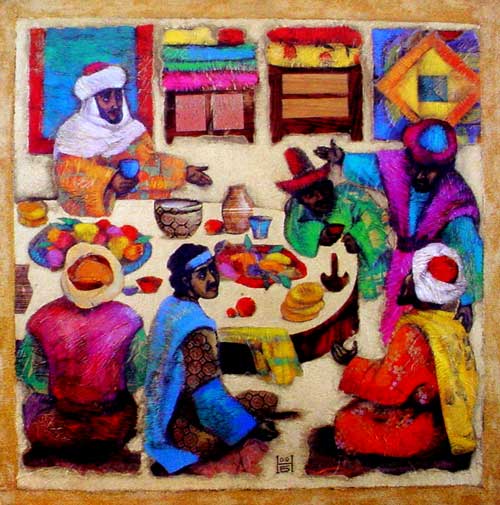
 Whenever I hear today’s Gospel reading, I can feel myself cringing in embarrassment at the situation that the wedding guest creates for themselves.
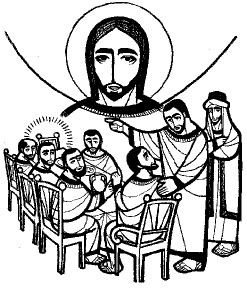 And this is where Luke takes his parable ‑ by describing the honourable way to behave when you have a wedding invitation. Start off by assuming that you have been allocated the worst place and you might just find that you are rewarded with a better seat. And Luke wraps up the tale with these words of wisdom: “If you put yourselves above others, you will be put down. But if you humble yourself, you will be honoured.”

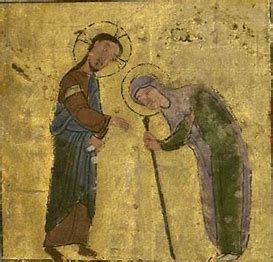
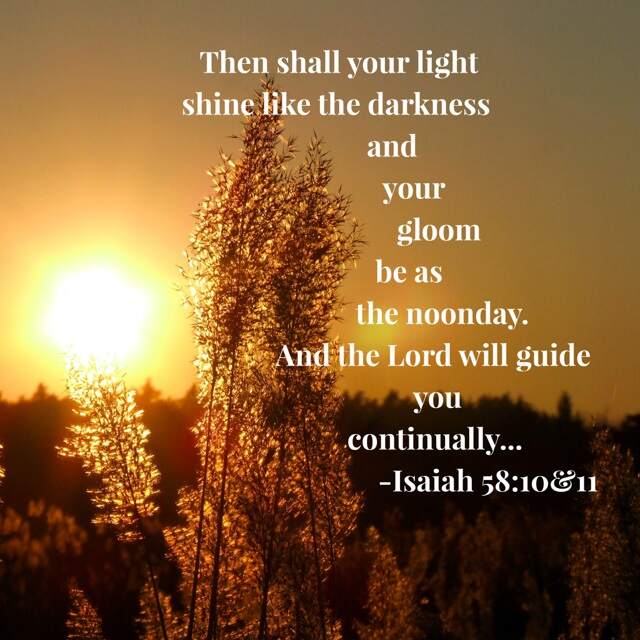


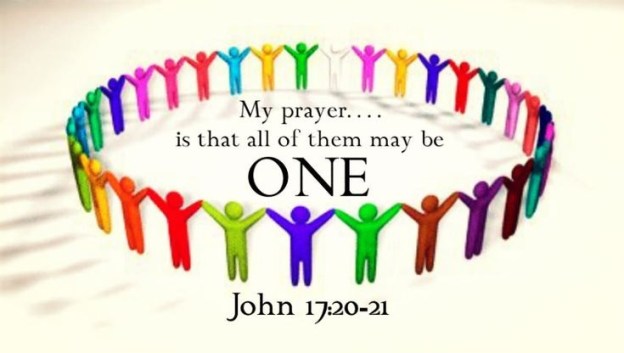





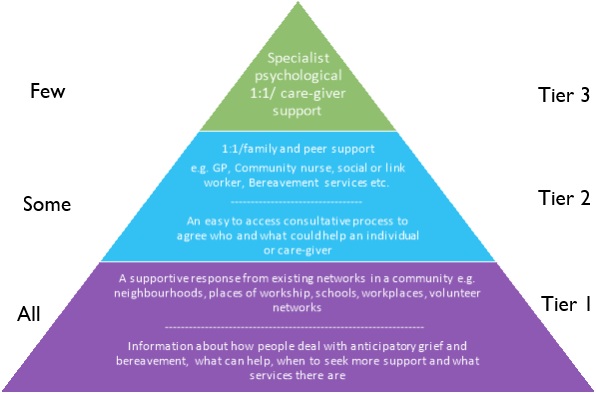
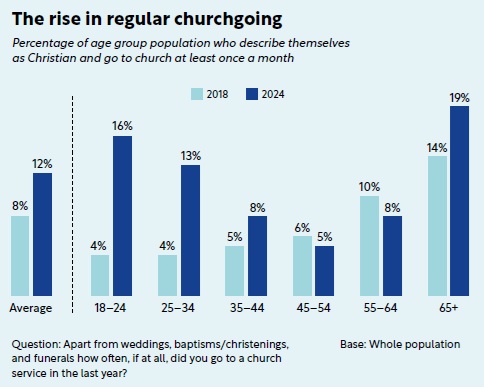
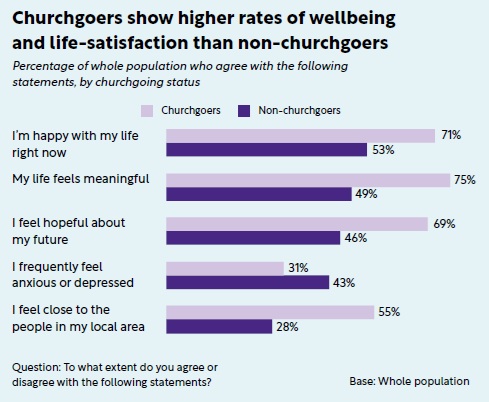
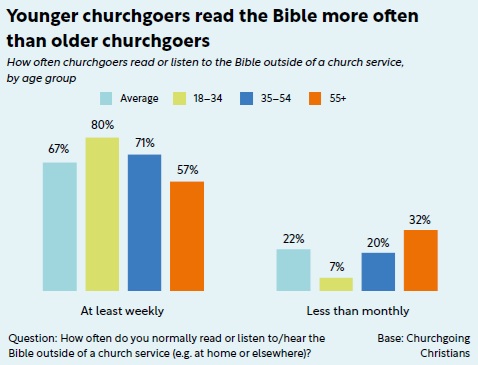
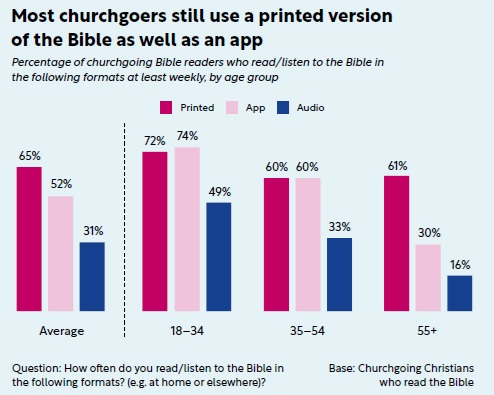
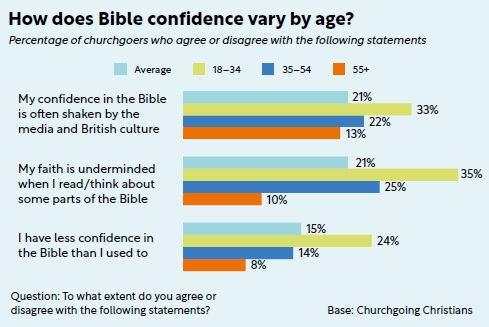
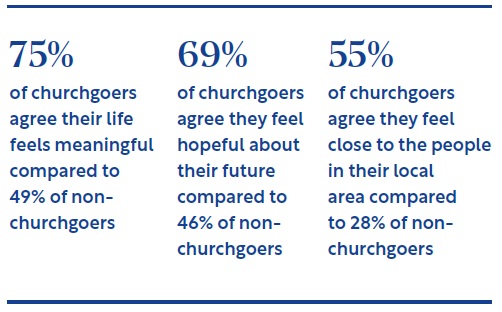
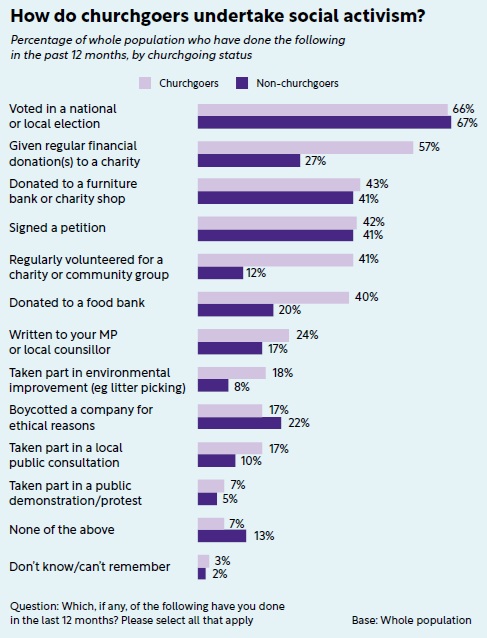
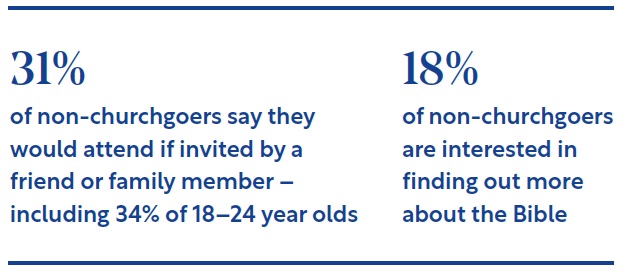






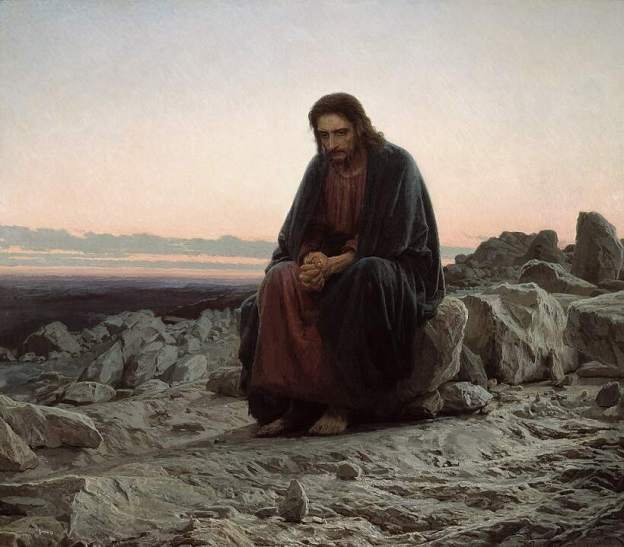


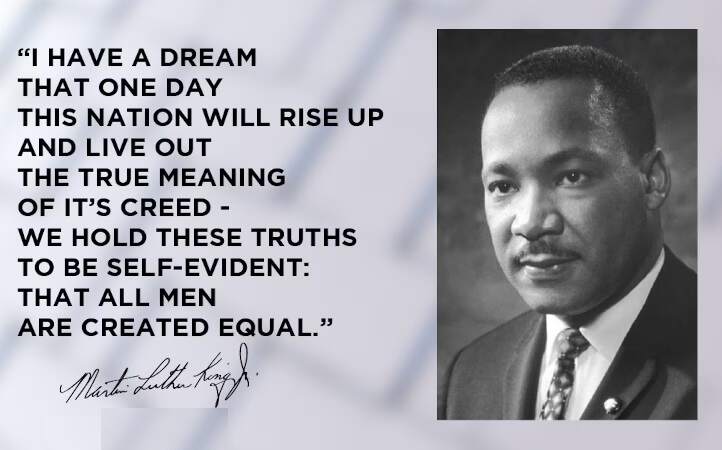
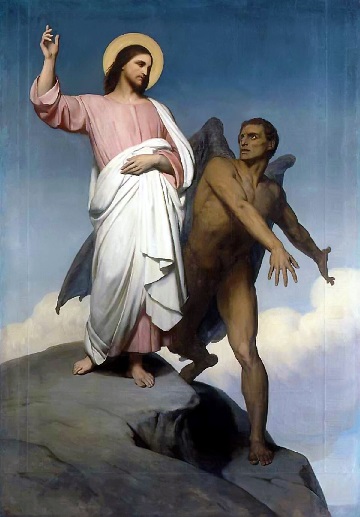

 Roger Farnworth