Category Archives: Comments and Reflections

Uganda 2018 – 30th April

Monday 30th April 2018

Humid morning. Flies all over the surfaces in the dining room. Food needing, more than ever, to be covered! Breakfast of egg-on-toast was disturbed by a chicken determined to lay its egg in its favourite place. Turns out that this was the settee in the seat next to Jo.

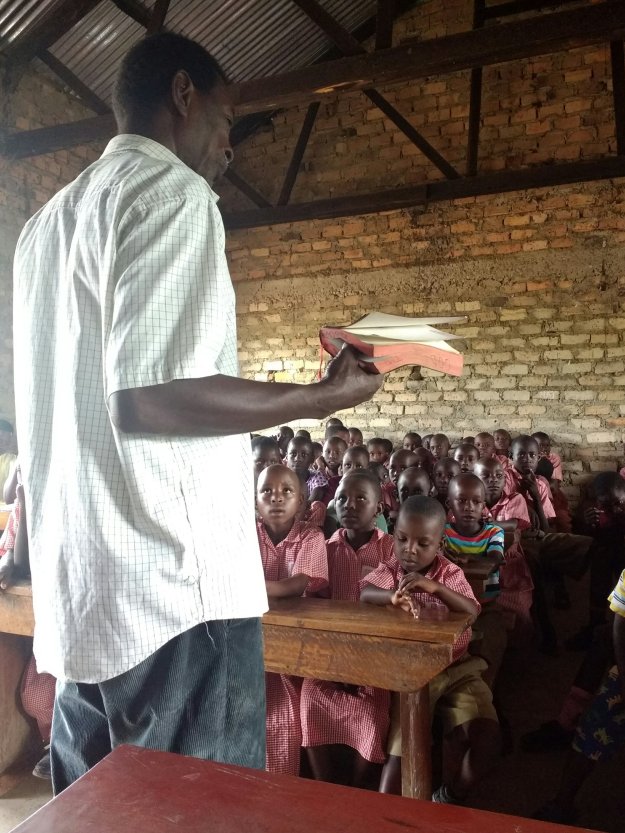
In the morning we had a visit to Kijongobya Modern Primary School for their end of term prize-giving and service.

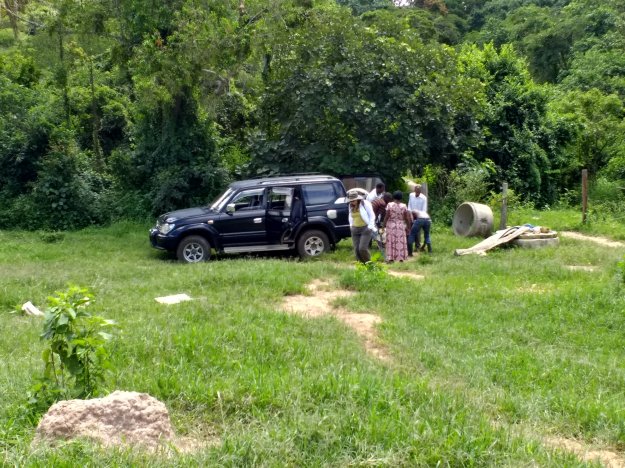
We also dropped down behind the school to find one of the boreholes that we have helped to fund. This one goes to quite a depth ……… 250ft. The borehole was dug by Nile Drilling with a professional report provided at the end of the work.

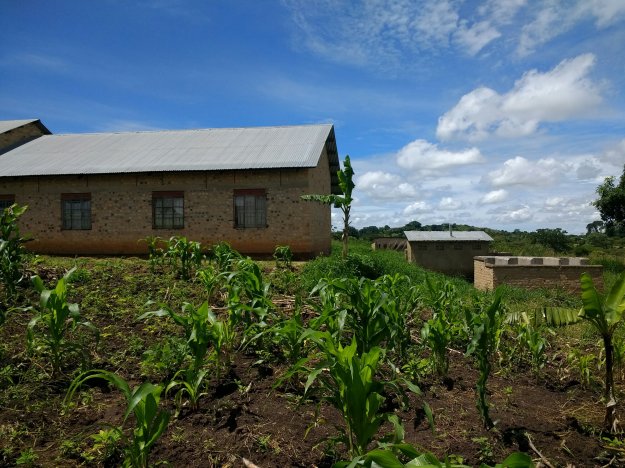
The water tank on the metal frame will serve the village of Kijongobya and the lower tank will serve the school. The low level buildings to the left of the raised tank are the teachers’ accommodation. Teacher’s pay is 250,000 shillings, or thereabouts, per month. This works out as about £50!!

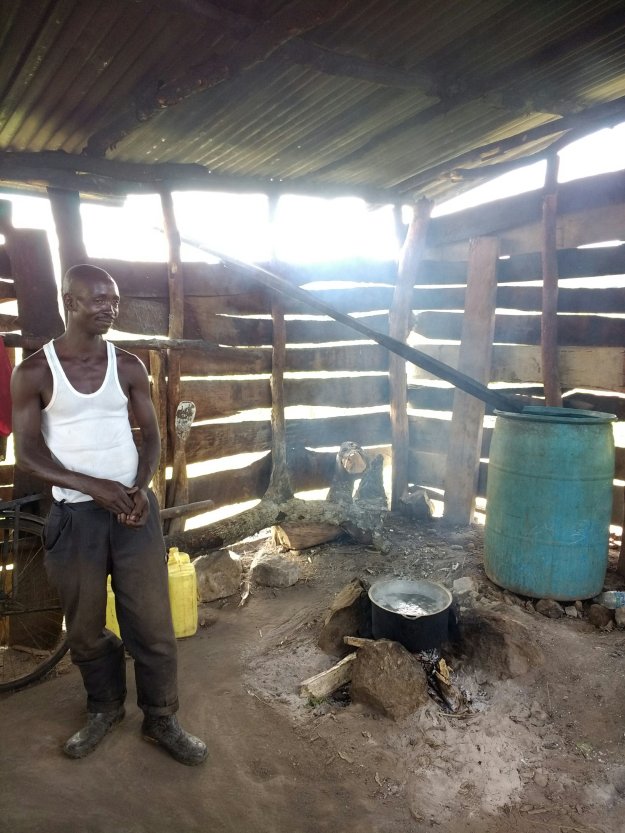
After this we visited the new borehole on the farmland before seeing water being pumped from the older shallower borehole which was installed early in the life of the farm but which only reaches a depth of 50ft and can run dry later in the dry season.

Vertical electrical sounding was first undertaken to establish most likely water-bearing strata at each new borehole location. A borehole was then drilled in each location to levels suggested by interpretation of the survey results. At the determined best level for supply in each borehole, both a constant discharge test and a recovery test were undertaken. Elias, our ‘godson’ is a trained water-engineer and supervised the work.

Pumps still need to be bought and installed, the Nile Drilling’s report specifies these as needing to be electrical submersible pumps …. Electrical supply: 1.5kW; maximum flow rate: 2.5 metres cubed; required head: 100 metres maximum.

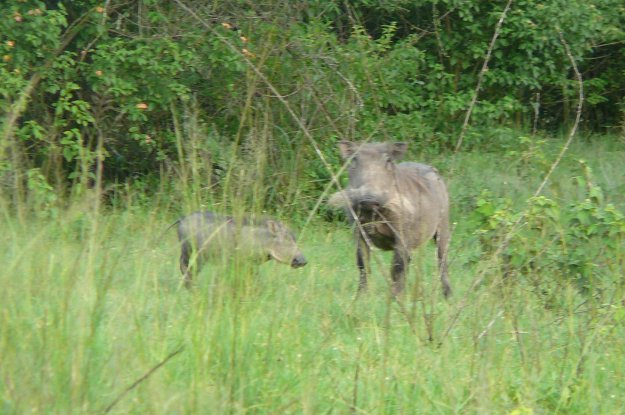
Late afternoon and evening were spent at Katonga Wildlife Reserve.

Uganda 2018 – 29th April

Sunday 29th April 2018

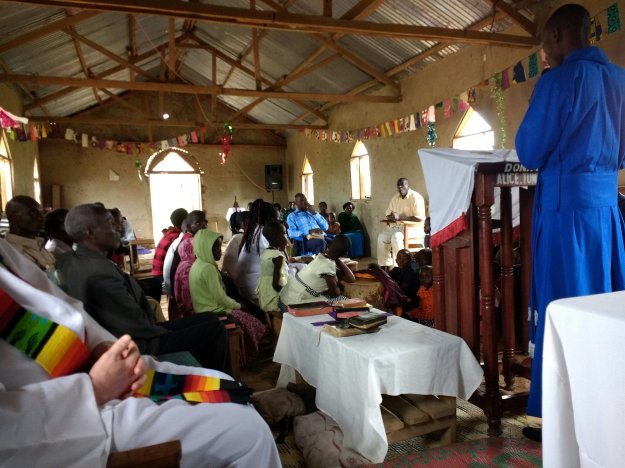
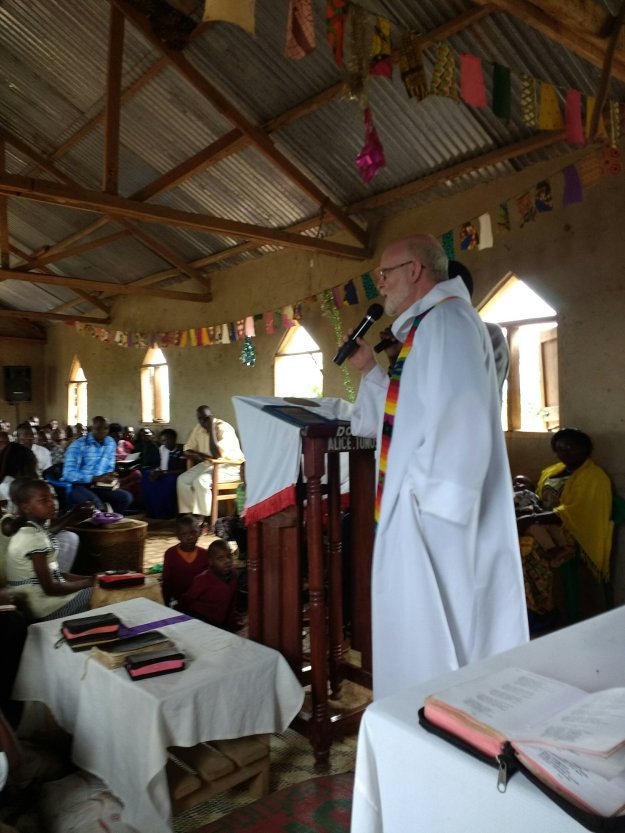
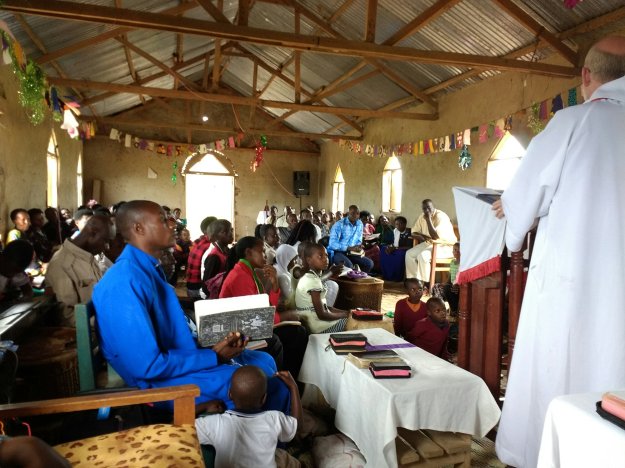
Kijongobya Church Sunday service is usually at 10.00am, at least that is the advertised time. Revised to 10.30am. Actually started at 11.00am. There have been heavy rains in the parish and getting to church was hard work for many.

We were told late yesterday that we would both be preaching at the service. On their monthly mission Sunday the church always has two preachers, each expected to preach for at least 30 to 40 mins, preferably longer!

Always thankful that we need to be translated, ….. it cuts the length of the sermon we need to prepare!

Sunday lunch at about 2.30pm followed by a siesta which lasted a while …. not up again until about 6.45pm! Evening meal of plantains, tomatoes and avocados, and good conversation before bed at 10.00pm.

Uganda 2018 – 28th April

Saturday 28th April 2018

Intended an early start for the journey to Kyegegwa and Kijongobya and our visit to John and Alice’s farmland. Set off about an hour later than intended and found ourselves waiting for a SIM at the MTN offices for not far off 3 hours.

On the Fort Portal road by about 1.00pm. The first couple of miles is now dual carriageway.

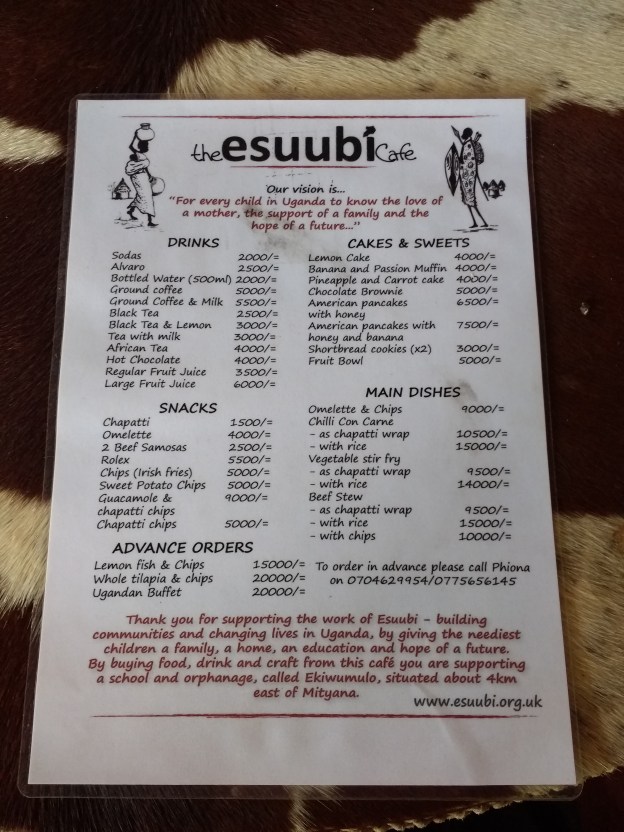
Stopped at the Esuubi Cafe for a coffee and cake at about 4.00pm.

http://www.esuubi.org.uk/esuubi-cafe

Arrived at the farmland at about 6.30pm. The last 22km from Kyegegwa were on murram road.

This is probably as remote as it gets in a heavy populated country like Uganda. Land in this part of Uganda is cheap. There is no electricity or other services. Before John and Alice bought land here there was no effective school in the most local village.

They are developing the farmland and local area with boreholes but as yet no permanent way of pumping the water around. Solar panels provide just enough power for charging phones and lights.

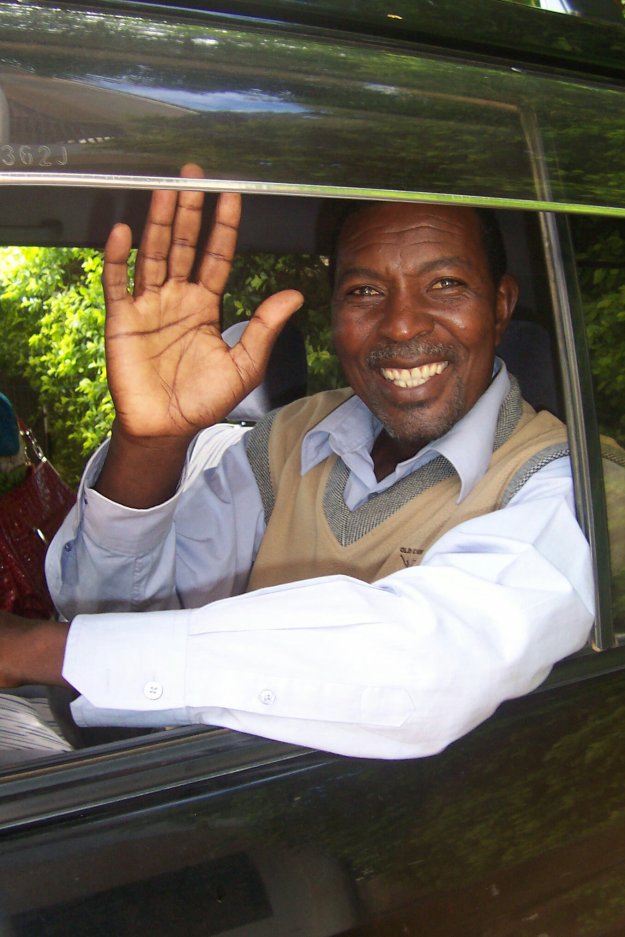
Greetings from Revd. John Tumusiime!😇😃😃.

Uganda 2018 – 27th April

Friday 27th April 2018

One day to acclimatise! Spent the morning with SimonPeter, walking down to the local supermarket and trying to get local SIMs for our phones. No success. Need to go to the MTN main office close to the Sheraton Hotel in the centre of Kampala. We’ll do that tomorrow.

Afternoon and evening spent reading at Whitecrest. Had a lovely beef curry prepared for us by Isaiah.

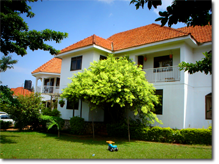
The view from the balcony at Whitecrest Guesthouse.

Uganda 2018 – 26th April

Thursday 26th April 2018

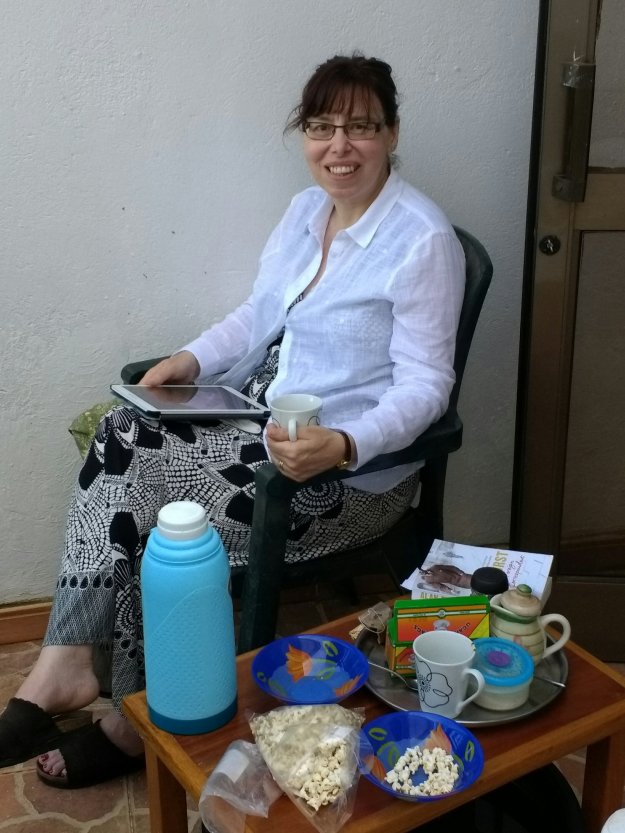
Arrived in Kampala late today. Picked up from Entebbe and arrived at Whitecrest by about 10.45pm. A cup of tea with Lisa Kansiime before going off to bed. Despite this being the rainy season and so cooler it feels hot and humid to us!

On the flight from Amsterdam to Kigezi before the second leg to Kampala.

Our guest house in Kampala is owned by one of John and Alice Tumusiime’s sons, SimonPeter Kansiime and his wife Lisa ….

Word and Wisdom – John 1:1-14, Proverbs 8, 1-11, Colossians 1:15-20

The first Christians were Jews. They came from a small back water in the Roman Empire. A seemingly irrelevant outpost in a bustling and cosmopolitan world. They faced a big question. How could they help people throughout the Greek speaking Roman world engage with Christian faith? How could a faith which was initially expressed in the framework of the Jewish culture be understood by people of very different cultures? Throughout the book of Acts we see people like Paul, Peter, Silas, Barnabas, Timothy, James and others struggling with these questions – they knew what Christian faith looked like for a Jew living in Palestine, but what should it be like for a Greek intellectual in Athens?

Their situation is much like our own. Just like they did, we wonder how we can make what we believe intelligible to people in today’s world who have little or no experience of Church and who see Christian faith as irrelevant, if not ridiculous.

Our readings today relate to struggle the early church faced: How could they convey the Gospel to the Roman and Greek world – the good news which was so bound up with Jesus’ divinity and humanity. … They had experienced Jesus as both divine and human. They could talk of him as the image of the invisible God, the first born of all creation. How could they explain that a divine being became human? How could they help people understand? As they reflected on this they realised that their scriptures – the Old Testament had at least a couple of ideas that would help them.

We meet the first idea in Genesis – in the story of Creation – God spoke and something happened. God only needed to say a few words and a whole world and universe came into being. Words for God were not just things to say, concepts to express or write down. Words were effective, they achieved something. God’s Word was God at work in the world.

The second idea comes in other parts of the Old Testament. There they found passages about Wisdom. Today’s reading is an example. Wisdom is spoken of as a personality, a person, who existed before the worlds were created. Wisdom at God’s side as he created. Wisdom as the crafts-person moulding creation and delighting in what was made.

As Jewish Christians were asked about Jesus by their Greek neighbours. As the first Christian theologians tried to explain how God was born as a baby in Bethlehem. They saw something in the Greek culture that would help them to explain better to Greek and Roman people, just what they meant by Jesus being the Word and Wisdom of God, both divine and human.

The word for ‘word’ in Greek is ‘logos’. Greek philosophers used that word ‘logos’ in a special way – by the time of Christ – they used it to refer to a kind of ordering principle of the universe. Sometimes they used ‘nature’ and ‘logos’ interchangeably. What they meant was that there was an something behind all of nature – giving it a purpose and meaning. The principle by which life held together – perhaps ‘wisdom’. And as Greek philosophers talked of the ‘logos’ it was as though they almost gave it a personality.

Christians realised that here was a way of explaining to Greek and Roman people just who Jesus was – and the first verses of John’s Gospel were born. John gives the ‘Word’, the ‘Logos’, a central place. He describes the ‘Logos’ as God, the Creative Word, who took on flesh as the man Jesus Christ. … ‘God active in the created world’ = ‘Logos’. … God’s Word expressed as a human being. It might sound strange to us, but those early Christians had successfully managed to translate the concept of the incarnation into a form that Greek and Roman people might understand

The challenge to us is similar. To find ways of expressing what we believe in terms and in ways that people in today’s world will understand. We cannot say, it worked in the past so it will work again. We cannot just do the things we have always done. We cannot continue to use only the words that we understand. We cannot continue to be just the church we have always been. Words and customs move on. Meanings change, hopes and fears change. The world is shrinking and ideas from the four corners of the world now influence the values of every society.

You only need to think of the way that the meanings of words have changed over the centuries. I have mentioned this before: The word,‘Comfort’ – what does that mean now? On the Bayeux Tapestry it means something completely different. Look out for Bishop Odo comforting his troops …….

‘Organic’ – until very recently that was a group of chemicals which contained Carbon – a mixture of different substances both noxious and benign. Now we use it to mean wholesome food, untainted by many of the chemicals which would naturally have fallen into the ‘organic’ grouping.

You’ll know many other words which have changed their meaning over the years. Those changes are like small snapshots on what has been happening in society – a process of change which is accelerating not slowing. And if we don’t change in at least some measure, we will be increasingly misunderstood and become increasingly less and less relevant – having little or nothing intelligible to say to people who need to know the love of God.

As we participate in a process of change we do just what Jesus did ….. The Word, Jesus, became flesh and dwelt among us full of grace and truth. God changed, God became human, God learnt new things, expressed himself in different ways, felt tired for the first time, experienced limitations for the first time. God changed so as to bring his love to his creation. The early church changed its rules, expressed itself in new and different ways, so that its mission to the Roman world might be effective. And we are called to do the same to look for new ways to communicate the Gospel to those who live around us but who have none of the history of Church involvement that we have.

Timing is Everything – Luke 1:26-38

Today, Sunday 24th December 2017, is the 4th Sunday of Advent and it just so happens that this year it is also Christmas Eve. This evening and tonight we will be listening once again to parts of the Christmas story, but this morning, along with every church that follows the lectionary, we are remembering Mary and her role as a precursor, a witness, to the coming of the King and her role as mother of Jesus. Our fourth candle on the Advent wreath represents Mary.

Timing is everything.

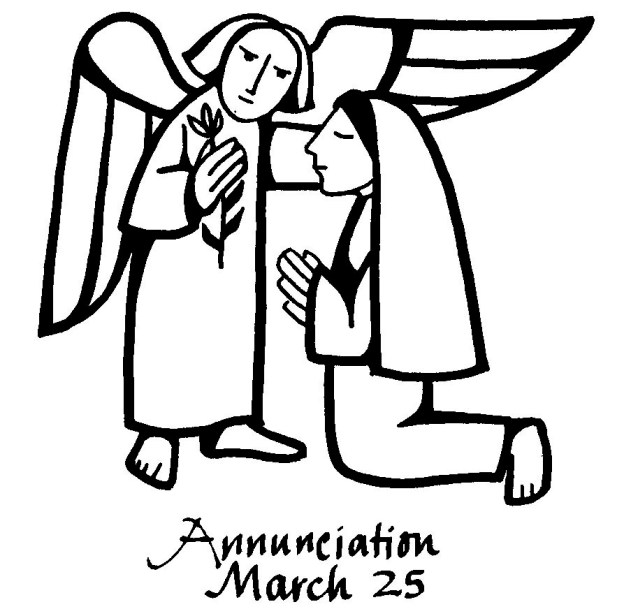
The Gospel reading set for this morning is usually read every year on one particular date, the Feast of the Annunciation which falls on 25th March each year – unless its date clashes with Easter or a Sunday.

Timing is everything.

The liturgical and calendar scholars among us will have noticed that 25th March, is exactly 9 months before Christmas Day. Our gospel reading makes a lot of sense as part of the Christmas story, but seemingly less so in March at or around Easter time. However, most of us will recognise that when we are talking about pregnancy, 9 months is a very important time period. The feast of the Annunciation is very carefully placed exactly 9 months before the birth of Jesus – which suggests that Jesus was neither a premature nor a late baby!

I was born on 11th May 1960, 9 months was a very important period for me – for my parents were married on 1st August 1959 (9 months and 10 days before I was born). I count as a honeymoon baby – but if pregnancies were usually 10 months then there would be something different to say about my status!

Timing is everything.

So, around Easter time each year, just as we are today, we are reminded of Mary’s call to be the Mother of God. Mary hears words from the Angel Gabriel which cause her heart to miss at least one beat – called to be the God bearer, the Theotokos, called to co-operate with God in creating his Saviour, called to bear the stigma of being with child out of wedlock. Both gift and burden, both grace and shame.

As we move on through our liturgical year, through Christmas and on to the Feast of the Presentation, or Candlemas, we will be starkly reminded of Simeon’s words to Mary. For her, not only would the pregnancy be a long a difficult time of waiting – but the whole of her life was to be spent waiting for a painful end.

And as we travel towards Easter, we will be reminded even more starkly of Mary’s encounters with joy and suffering. On Good Friday, we will appreciate again that Mary understood pain – she bore in her body the pain of the cross – she felt the nails being hammered into the wrists of her son, she agonised as she watched him die the most painful of deaths. She had to release her child into God’s eternal care long before his time. And, as those things happened, she felt a mixture of all the emotions a mother can feel – anger, guilt, shame, and deep aching loss. Like any mother, her grief was to be unbearable.

Mary also understood the joy of motherhood – she watched her precocious child grow to be a wonderful man. She felt the joy of being part of the making of this special son. And on the first Easter Sunday she had her son returned to her alive – wonderful, exciting, tremendous … but then she too, along with all those who knew Jesus, had to realise that she could not cling on to her Son. He was returning to his Father in heaven.

Timing is everything.

Here today we are called, by our Gospel reading, to see the Christmas events and those events which follow in the spring-time of our church year through the eyes of a mother – the eyes of Mary. We are called today to encounter Mary’s confusion at the words of the Angel. We are called too, to encounter Mary’s pain alongside the suffering of Christ, and as we do so, the pain will be just that bit more tangible.

We are called to feel the despair and the loss of Good Friday as we sit with Mary at the foot of the cross weeping for the loss of her beautiful son. And, if we are prepared to weep those deep tears of loss; if, in just a little way, we endeavour to identify with all mothers who have lost those they love; if, at least for a few days at Easter, we refuse to rush on to the joy of resurrection, because we have learnt patience like a pregnant mother waiting for the birth of her child; if we stay with the pain. If we struggle to understand the overwhelming and crushing burden of the grandmothers who because of HIV/AIDs now are sole carers for many of the grandchildren. Our encounter with the joy of Christmas in the services on Christmas Eve and Christmas Day, will be all the more intense.

For we will have understood the burden of pain carried by Mary and we will encounter something of the release she felt from the pains of labour as she welcomed her son into the world as a helpless child at Christmas. We might even feel something of the unbelievable joy of holding God in our own hands and arms, just as Mary did on that first Christmas Day. We might even feel some of the pride that she felt at the birth of her child and something too of her overwheming desire to tell everyone about the wonder of the Christ-child and that faith that was born with him.

Timing is everything – not 9 months but less than a day before the birth – this is a very important day in our preparation for Christmas. Now is our chance to listen, … to focus on the Christmas story. Let’s not let it slip by.

Great is the Darkness …..

There is a song which is sung relatively often at St. Peter’s Church in Ashton-under-Lyne. It starts like this:

‘Deep is the darkness that covers the earth, oppression, injustice and pain. Nations are slipping in hopeless despair. ………’

While the song goes on to call on Jesus to: ‘Pour out [his] spirit on us today’, the first words of the song have always seemed to me to be a very negative beginning.

The song is based on the words of Isaiah 60:2 …… ‘See, darkness covers the earth and thick darkness is over the peoples, but the LORD rises upon you and his glory appears over you.’

Our experience of life over the end of May and beginning of June seems to be very appropriately summed up in the first words of the song. ‘Deep is the darkness‘ ….. This has been a very difficult time. The bomb in Manchester Arena killed 22 and maimed many more. Two attacks in Kabul, Afghanistan have killed over 100 people and left so very many injured. The attack on a church in Egypt was devastating for the Christian community there. Then came the van and knife attack in Central London. ….

Deep is the darkness that covers the earth, oppression, injustice and pain.

We feel unable to make sense of all that is going on, we feel anger and despair, we grieve for the loss of innocent young lives. Why does God allow these things to happen?

‘Why’ and ‘How could’ questions are important, often they challenge our faith. How could a God of love permit such atrocities to take place? Ultimately, however these questions don’t take us very far, especially when the darkness we encounter is the result of human actions.

We are sentient beings who make our own choices. It is only when we are free to make our choices that love can thrive. It is because we are not automatons that we are free to make mistakes, free to make wrong choices, but also free to love. Freedom allows us to place others ahead of ourselves.

Love, peace and joy are offered to us as we faithfully follow Jesus. It is when we look elsewhere for meaning, that we open ourselves up to the darkness.  It is when we think that we know best that we lose sight of the light and allow the darkness in.

The song goes on to say: ‘Come Lord Jesus, … pour out Your spirit on us today. May now Your church rise with power and love, [your] glorious gospel proclaim. In every nation salvation will come to those who believe in Your name. Help us bring light to this world. ….’

No doubt you watched some of the concert held at Old Trafford Cricket Ground on Sunday 4th June. The call from so many of the artists at that event was for love to triumph over darkness and hatred.

Just as darkness only thrives where there is no light, so hatred only wins where love is absent. Perhaps it was no coincidence that the 4th June was Pentecost, the day when we celebrate the gift of the Holy Spirit to the first disciples. It is the Holy Spirit at work in each of us that enables us to love others, to place their needs first. It is the Holy Spirit who enables us to be those who bring light into the darkest places. It is the Holy Spirit that reassures us that we are loved, that we are safe in God’s loving embrace. It is the Holy Spirit who sets us free to love others because we are sure that we are loved.

The better questions are not, ‘Why’ or ‘How could …’ questions. The better questions are ‘What next’ questions: What can we do to overcome hatred with love in our own communities? What can we do to shed light into the darkest places of our own lives and communities? What can I do to ensure that I do not act out of envy or hatred, but rather act out of love?

“Do not be dismayed by the brokenness of the world. All things break. And all things can be mended. Not with time, as they say, but with intention. So go. Love intentionally, extravagantly, unconditionally. The broken world waits in darkness for the light that is you.

L.R. Knost

Matthew 17:1-9 – The Transfiguration

transfiguration-2I have two brothers and a sister – all younger than me. Academically, three of us did pretty well: we could read well before we went to school, we passed the 11 plus and got into the local grammar schools where we lived in King’s Lynn in Norfolk.

One of my brothers was different (and I hope he does not  mind me talking about him here). He struggled with his reading, only really getting going when he was about 8 years old – he went to the local secondary modern, and for the first 4 years there achieved little more, academically, than propping up the class with his results. Nothing academic seemed to interest him.

At least that was true until he decided what he wanted to do with his life. He set his heart on being a policeman. He was told that he needed some basic CSEs to get into training college and he began to work, he worked his socks off. He scraped the CSEs he needed and got into Hendon Police Training College in London. He had found something he loved and he was transformed – when he graduated from Hendon he came top of his intake.

Dare I say that he was transfigured by his desire to be a policeman? You may know a similar story of someone you know being changed in quite a dramatic way.

Late in his life, the Cellist and Conductor Pablo Casals was full of arthritis, but even at the age of 90 whenever he picked up his bow and began to play his Cello he was transformed. He became agile and supple – the artist that he had always been – consumed by what he was playing.

Illness and incapacity have been part the experience of many great people – Charles Darwin, Sigmund Freud, Florence Nightingale (she did most of her campaigning from her sick bed) – to mention just a few. For them, like Pablo Casals, when they were engaged in their most brilliant work, the limits which bound them just seemed to fall away.

You see, people can be transfigured in their experience of life. In some cases, out of pain, … beauty, humanity and ingenuity can be born.

And the more mundane of us – you and me?

Our lives too can be transfigured by finding our vocation, the thing that we do well. This is something that many people who have been called to be priests say, it is almost as though they have found themselves in a way that they had not done before. If you are interested, try asking one of us clergy, or perhaps someone else in one of the caring professions, perhaps even try reflecting on your own experience of discovering what you were going to do with your own life.

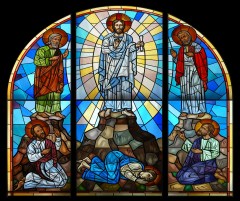
We’ve read today of Jesus’ transfiguration. … At the transfiguration, Jesus is revealed, as more than a carpenter turned Rabbi; more than a man whose legs ached as he walked round Israel; more than a preacher whose voice could fail after hours of speaking to crowds. More even, than one who could bruise and bleed when tortured and crucified. He’s revealed as God’s Son in human form, truly God and truly human.

We don’t know how Jesus= transfiguration relates to our perhaps lesser experiences of transfiguration. He was, after all, divine as well as human. But through his resurrection, and through our own baptism, we have been promised some share in his divinity. And simply by being human we have a capacity for being more … for being different. When our attention is held, much that’s negative in our lives, seems to get set aside.

It is possible to change, to be different.

Don’t let anyone tell you it isn’t. It is God’s work, and it is an essential part of the Gospel which we believe; that we are not trapped, not held captive by our past or by our present. This is a theme of our Gospel reading as we approach Lent. Transformation, transfiguration, is possible for us who follow Jesus. Not just momentary transfiguration, but transformation that will affect and change our future.

We know that this happened to Peter, James and John – cowering, frightened men became powerful proponents of the Gospel, fearlessly facing danger and death because they had been transfigured, transformed by the love of God. Jesus momentary experience became their permanent experience. The Gospels ask us to believe that the same can happen for us, as we let God work in our lives.

Salt and Light – Isaiah 58:1-12 and Matthew 5:13-20

During this past week we have celebrated Candlemas, the Feast of the Presentation. It is a point of change int he church’s year. Mary and Joseph take Jesus to the Temple to receive God’s blessing.  There they meet Simeon and Anna, two old people who had been faithfully waiting for God to break into their world.  When they saw Jesus they realised that this was who they had been waiting for – in Simeon’s words; “my eyes have seen your salvation, which you have prepared in the presence of all peoples, a light for revelation to the Gentiles and for glory to your people Israel.” But Simeon also says to Mary, “and a sword will pierce your own soul too.”

Just as Mary’s thoughts are disturbed by Simeon’s words, so at Candlemas, we mark the end of the season of Epiphany and start our journey towards the Cross and Good Friday, through Lent and Holy Week and on to Easter.  Candlemas is often celebrated surrounded by candles, the theme of light is important The reading set for the 4th Sunday Before Lent continue this theme.

In the Old Testment reading, Isaiah talked about what God looks for in his faithful people – let me remind you of his words…..

“When you share your food with the hungry
    and provide the poor wanderer with shelter—
when you see the naked and clothe them,
    and do not to turn away from your own flesh and blood?
Then your light will break forth like the dawn,
    and your healing will quickly appear;
then your righteousness will go before you,
    and the glory of the Lord will be your rear guard.
Then you will call, and the Lord will answer;
    you will cry for help, and he will say: Here am I.”

“If you do away with the yoke of oppression,
    with the pointing finger and malicious talk,
and if you spend yourselves in behalf of the hungry
    and satisfy the needs of the oppressed,
then your light will rise in the darkness,”

Isaiah reminds us that shining with the light of God’s love in the word around us is about caring for those who lack food, shelter and things to wear and caring for those who are oppressed.  He also reminds us to take care with the way we communicate – that if we point our finger and indulge in malicious talk then we are not letting our light shine.   The challenge is clear … “let your light rise in the darkness,” says Isaiah. Challenging stuff indeed!

Matthew uses two images to help us understand what it means for us to draw people closer to God.  “As Christians,” he says, you are called to be salt and light to the world.  To be ‘the light of the world…… letting our light shine before others, so that they may see the good we do and praise God.’  To be the ‘salt of the earth’.

Both salt and light make a great difference.  Salt not only preserves and disinfects but it brings out the full flavour of other ingredients.  Light allows everyone to see clearly what’s around them.  So, we are called to do those things that let God’s light shine out from us, we are called to make a difference in the lives of those we meet.  In all we say, think and do, God asks us to reflect his values, his love, his life, his light.

However, if light and salt are not used carefully they can destroy rather than enhance. When you are cooking, adding the right amount of salt is critical to producing a dish that has a good flavour.  Too much and you’ve ruined the dish, all you will taste is salt and no-one will want to eat it.  Just the right amount, and you won’t actually taste the salt but the dish will be delicious – all the other flavours will be enhanced.  Used well, salt is helpful, used in a way that dominates, it is overpowering and destroys!discerned_saltandlight
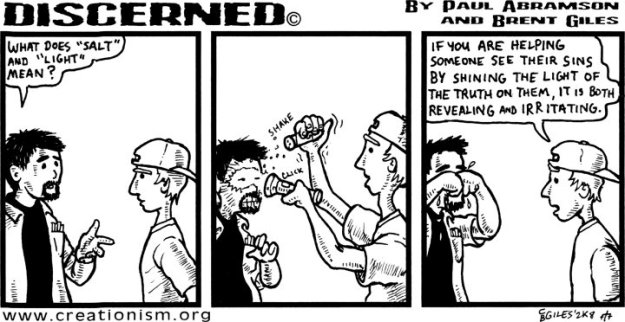
We also have to be careful with light.  … Have you noticed how when people drive towards you in the dark, often your eyes get pulled towards their headlights and you get distracted from the road in front of you. … or if someone has shone a bright light straight at you, you’ll know how you are blinded and can’t see anything.  For light to be useful, it has to be carefully directed and its level balanced.  Too bright and in the wrong direction and no-one can see anything.  But just the right level of brightness and shining at what we want people to see, then it makes all the difference in the world.

Matthew prompts us to think about whether we are salt and light, but he also prompts us to consider how we are salt and light.

Things had gone wrong for the people Isaiah was talking to.  They had made their adherence to their religion a show – something to boast about. They were being heavy handed with the salt and shining the light too brightly into the eyes of others, so that all anyone could see was them carefully following religious practices. Their behaviour hid the reality of God’s love.  They didn’t make a difference in the lives of others and so were not working with God but against him.
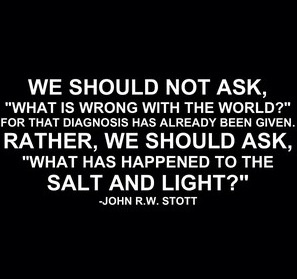
1d5e83e00422b659f2c4a4a8dddb2678What about us?  What do people see when they look at us? Do we obscure the light? Or do others see people who are different, who are making a difference?  Do they see people who reveal God’s love, God’s peace, God’s joy and God’s hope?  Do they see people who are salt and light to the world?

What might we do to ensure that we are both salt and light in our world? I think Isaiah is very clear, and we could do a lot worse than listening to his agenda for mission:

“When you share your food with the hungry
    and provide the poor wanderer with shelter—
when you see the naked and clothe them,
    and do not to turn away from your own flesh and blood?
Then your light will break forth like the dawn,
    and your healing will quickly appear;
then your righteousness will go before you,
    and the glory of the Lord will be your rear guard.
Then you will call, and the Lord will answer;
    you will cry for help, and he will say: Here am I.”

“If you do away with the yoke of oppression,
    with the pointing finger and malicious talk,
and if you spend yourselves in behalf of the hungry
    and satisfy the needs of the oppressed,
then your light will rise in the darkness.”

Amen.


matthew5-13-15-scripturephoto_lg