Category Archives: Ashton-under-Lyne Blog

Just telling a joke! – Luke 15:1-10

How do you recognize a joke? What are the signals you look out for?

There’s: ‘Did you hear the one about…’ or ‘A man goes into a pub …’ or ‘A man goes to see his doctor …’

The introduction tells you that there is a funny story coming and you set yourself up for it, you’re ready to laugh!

Have you noticed as well that often when we tell jokes, even though we’re telling a story about the past we use the present tense.

Someone once told me that much as English comedians tell jokes about Irish people. (Although, of course, we don’t do it so often now because we have recognized that it causes offence.) Much as we tell jokes about the Irish, people in Jesus day used to tell jokes about shepherds. They were considered to be country bumpkins of relatively low intelligence. Now I really don’t know how true that statement was. But there is one story in the Bible that really does seem to me to be a case of Jesus telling a joke, or at least a funny story to make a point. And that is the first half of our Gospel reading this morning.

I can almost imagine Jesus starting his parable with the words. ‘Did you hear the one about the shepherd who had a hundred sheep …’ And how does the story run? ‘Did you hear the one about the shepherd who had a hundred sheep – he left 99 out in the open field and went searching for the one that had gone missing.’

And I can imagine the sniggers, the knowing looks, perhaps even the ribald laughter. ‘How foolish, how stupid, typical of a shepherd,’ some of Jesus listeners might say.

And can you imagine the increased laughter when Jesus goes on to say that the shepherd goes home when he finds the lost sheep and has a party. Not a thought anymore for the 99!! As far as this shepherd is concerned they can look after themselves.

It is manifestly stupid. It is a silly story. No sensible shepherd would do anything like this. The loss would be too great. Better to leave the one who is lost and look after the 99 that are still fine. That makes economic sense. And Jesus audience fall around laughing, all their prejudices confirmed.

But laughter has softened them up for the punch-line. … Says Jesus, ‘This is what God is like, this is what it is like in heaven. God is more concerned for the lost than those who are OK.’

God is more concerned for the sinner who needs to repent than he is for the Pharisee who believes that he is righteous. God is more concerned for the backslider than for the good upstanding Christian. God seeks out the lost and rejoices when they are found again – even if in the doing of it, he seems foolish and ludicrous – even if everyone else thinks that God is on a wild goose chase. God chases after the lost, longing to show them his love, longing to draw them back into relationship with him.

This means that if we, in our wisdom, feel sure enough of ourselves to say what is right and what is wrong; if we, in our wisdom, define someone as a sinner. Then, rather than putting them beyond the reach of God’s love, we place them at the centre of God’s love. … Our parable suggests that God is happy to leave us to fend for ourselves as God focusses on them, as he turns his love towards them. The joke is on us!

And if we were to go on to read the story of the Prodigal Son later in this chapter 15 of Luke, it would be little different. In that story the Father is prepared to make a mockery of himself, all for the sake of a worthless good for nothing son. A fine upstanding Jewish father is prepared to suffer the shame of his village seeing him running through the streets to greet his wayward Son. And the story tells us that the Father places the lost Son ahead of the faithful but self-righteous Son! … We’ve got to be fools to miss the point of these parables. God cares nothing for what people think of him. God’s eyes are focussed on those who are lost, spiritually and physically. God’s eyes are fixed on those in need.

This is what God is like. God seeks out those who are lost, who feel unloved and abandoned. God doesn’t mind looking foolish, if only God manages to draw one lost human being back from the brink, back into his arms. And God is so taken up with joy when one of us hears of his love and responds to that love, that everything else for that moment fades completely into insignificance.

God’s love centres on the cross where Jesus died. It is consummated as Jesus rises from the dead. Just like the sheep that was lost allowed the shepherd to pick it up and take it in his arms, so God encourages us all to have that kind of trusting faith. To allow God to throw his arms around us in love. ‘Yes, Lord, I want that kind of love, please be my shepherd, now and always.’

And God calls us to have this same self-negating, self-deprecating, foolish, silly love, that goes after the lost with complete abandon. Nothing sensible, nothing thought out. Just a headlong rush to share God’s love with those who need him. To love and not to count the cost. To seek out those in need and commit ourselves to their welfare.

imagesJohn in one of his epistles says, ‘This is love – not that we loved God, but that God loved us and gave his Son to die for us.’ This is the measure by which we judge our love for our partners, for our family for our friends, for our neighbours and for others who are in need. Love that reaches out unconditionally, foolishly, ridiculously without thought for the cost. That is love like God’s love. This is no joke, it’s the gist of Jesus parable set for today!

Time to Choose – Deuteronomy 30:15-20 and Luke 14:25-35

options-260x185How do you make decisions? A friend of mine makes decision-making into a hobby. I remember him buying a camera – over a couple of months, he bought all the relevant magazines, he spent hours reading through all the available information; gradually building his expertise – what he didn’t know about cameras wasn’t worth knowing. And finally he came to a decision. The process of deciding was as important as the final decision.

Some of us are spontaneous when we make decisions – a bit like me and clothes – I=ll decide one day that I need a new pair of trousers and within half-an-hour they=re bought. Others like to be careful. Jo seems to go round countless clothes shops, possibly over a number of days, before she’ll decide on what she wants – and it could quite easily be the first thing that she saw right at the start of the process.

Others find making choices just too hard – they waver over the point of decision, feeling confused, getting depressed. Some wait for circumstances to dictate their options, or try to make others make the decision. If I’m honest I can do that – I’ll often say to Jo, ‘What would you like to do?’ – telling myself that I’m being magnanimous, when actually I’m placing the responsibility on her shoulders.

However we do it – we all have to make choices. And in the end a refusal to choose is in itself a decision. … All choices have consequences – if we chose not to have an operation we must live with the problem it might have solved. If we chose not to have children we have to cope with the consequences of the decision later in life. And conversely, if we chose to have children, we have to face the risk of rebellion. All our choices have consequences.

Moses put a choice and its consequences to the people of Israel. ‘Serve God and live,’ he says, ‘turn away and die.’ He makes it seem quite clear cut.

But was it ever like that? Life is never as clear cut as Moses made it sound. Making the choice to live God’s way, making the right choice, doesn’t bring automatic blessing, wealth and freedom from illness. Jesus highlights this dilemma in our Gospel reading. Holding true to what is good, making right choices will bring us into situations of conflict, people will oppose us. As Jesus says here, being his disciple is about taking up our cross and following him.

At the beginning of our reading, we heard that Jesus was travelling somewhere – he was, in fact, on the way to Jerusalem. He had made a choice, in the relative safety of Galilee, to travel to Jerusalem – a place where, he knew he would face persecution and death. Jesus choices led to his death, a death which through seeming defeat won victory; a death which however we struggle to understand it, brought healing, wholeness and reconciliation with God; a death which was finally defeated by resurrection and new life.

I cannot help thinking that many people have had choices to make that have had the same kind of consequences, choices which have put their lives on the line or choices borne from the fact that their lives are already at risk. Others have had choices made for them, they have been forced to move and to go to new places without their consent. We have a history as a nation of failing to properly support those who face such choices and we have at times forced others to fit in with our choices.

We built our wealth on the back of the transatlantic slave trade – forcing people out of their homes, dehumanising them, devaluing them, making them work, not for a good wage, but as animals at our beck and control. … When, in the period after the war, we found we did not have enough people to work in menial and manual jobs we invited people from the West Indies to move to Britain – yes we gave them jobs, but we treated them too as less than human – you may well remember the signs that were placed in boarding house windows, the anger people expressed when someone different from them moved onto their street.

We, in the West, have a history of supporting and encouraging dictators, particularly in Africa, without thought to the consequences and so, as a nation, along with many others in the West, we bear on our hands the results of those choices – the genocide in Rwanda, the expulsion of Asians from Uganda. And we have shown ourselves less than welcoming to people who have been affected by our actions.

In these times, we face one of the biggest movements of people brought about by that same need to choose. The need to choose between life in a war zone like Syria and the possible safety of our family. The need to choose between our homeland and our lives, martyrdom or an ongoing life of faith in a new country. The need to choose is at the root of almost every refugee or asylum seeker’s story. … Our choices, their choices – all impinge on us all.

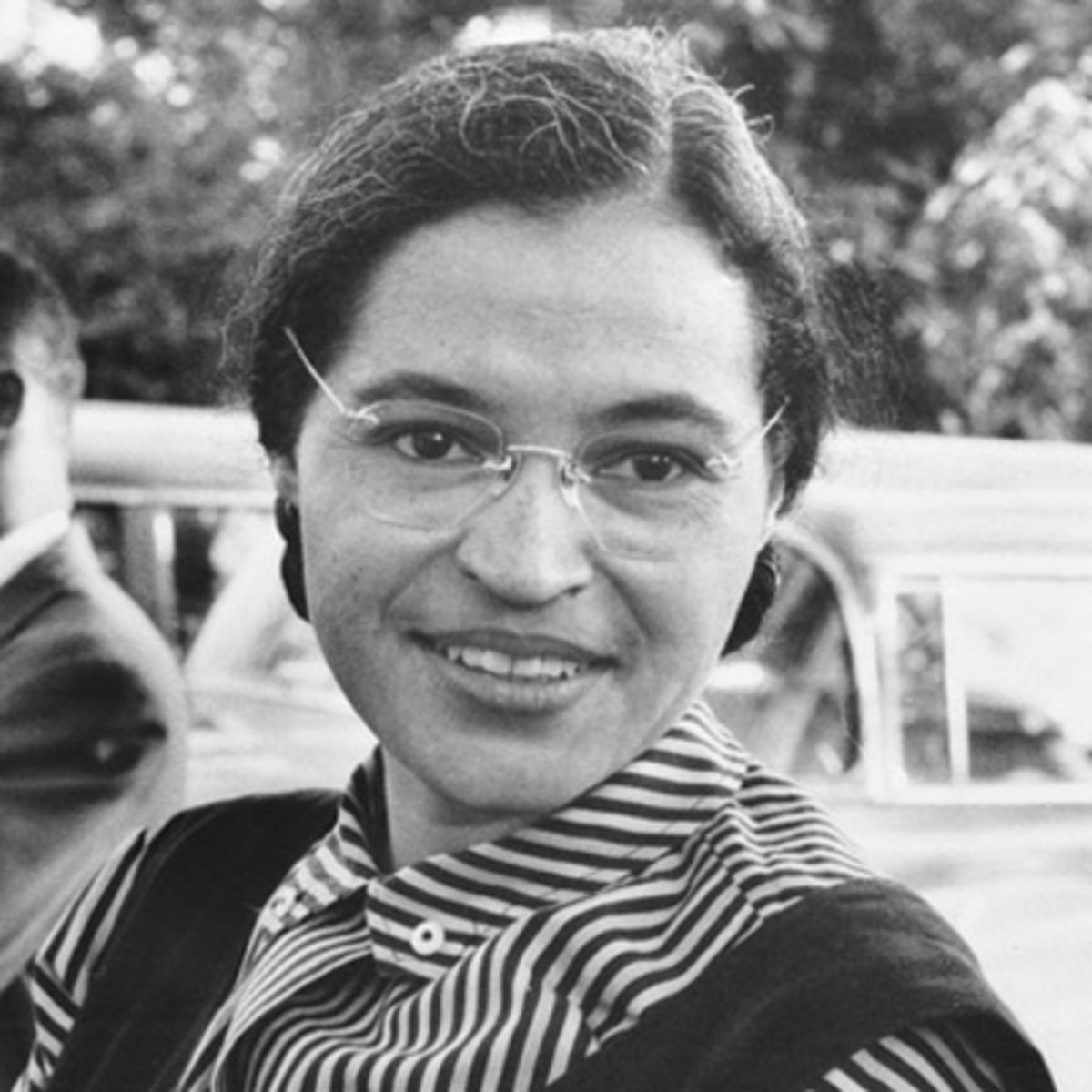
mte1oda0otcxnzq5mzc3ntq5Choices like these were made by people like Rosa Parks who refused, on 1st December 1955, to surrender her bus seat to a white passenger, spurring the Montgomery, Alabama boycott and other efforts to end segregation. She was arrested, imprisoned, lost her job, but spawned, galvanised, a civil rights movement which spread across the USA.

Jesus asks each of us to choose … to choose to follow him to the cross. To choose to do what we know to be right, but to do so fully aware of the consequences. Following Jesus is about making a choice, a choice to live, to the best of our ability, in the way he lived. The choice is costly, it will mean changes in our lives. It will mean welcoming the stranger, reaching out to those who are different from us. It may mean sacrifices. It may mean acknowledging the shame of our corporate responsibility for the mistreatment of those different from us.

Jesus calls us to follow him to the cross. But not just through the pain of the cross and self sacrifice, but on into resurrection, to new life. Living in the light of God’s love. He calls us to be part of a new world order, to be part of his Kingdom. A kingdom or peace and of justice where we choose to live for the good of all, where all are welcomed and loved.

In the end we all have to choose, just like those listening to Moses did. Our way? Or God’s Way? Moses advice is ‘Choose life, choose life lived with God?’ Life with the risk of conflict with those who will think us odd, who may at times persecute us. Life, lived for God and for others. A topsy-turvy life of death and resurrection. But abundant life, secure in the knowledge of God’s love.

The Fourth Mark of Mission – 25th August 2019 (Isaiah 61:1-9; James 2:1-26; Luke 6:20-26)

This is the fifth Sunday in our series about the five Marks of Mission. … Just to remind ourselves once again, these are the 5 Marks of Mission espoused by the Church of England:

  1. To proclaim the Good News of the Kingdom.
  2. To teach, baptise and nurture believers.
  3. To respond to human need by loving service.
  4. To transform unjust structures of society, to challenge violence of every kind and pursue peace and reconciliation.
  5. To strive to safeguard the integrity of creation, and sustain and renew the life of the earth.

We have not been able to follow them in order. We started with the first but then jumped to the third and then the fifth. Returning first to the second mark of mission, we are now going to consider the fourth Mark of Mission. Over recent weeks, we have heard how interdependent these Marks are, we cannot pick and choose between them. Together they describe God’s Mission in our world and we are called to see what God is doing and to join in.

The fourth mark is: To transform unjust structures of society, to challenge violence of every kind and pursue peace and reconciliation.

Luke 6: 20-26 contain Luke’s version of the Beatitudes. The Beatitudes are a part of Jesus Sermon on the Mount (or on the plain). I have paired up the blessings and woes below:

Then Jesus looked up at his disciples and said:

‘Blessed are you who are poor, for yours is the kingdom of God. But woe to you who are rich, for you have received your consolation.

‘Blessed are you who are hungry now, for you will be filled. Woe to you who are full now, for you will be hungry.

‘Blessed are you who weep now, for you will laugh. Woe to you who are laughing now, for you will mourn and weep.

‘Blessed are you when people hate you, and when they exclude you, revile you, and defame you on account of the Son of Man. Woe to you when all speak well of you, for that is what their ancestors did to the false prophets.

These beatitudes in Luke are so different from those in Matthew. Matthew separates his blessings and woes by a few chapters. And his message seems spiritual rather than physical. “Blessed are the poor in spirit for theirs in the kingdom of heaven.”

We might ask ourselves questions like: Why do we have two versions of the Sermon in our Gospels? Which is the right one? Surely they cannot both be correct?

Indeed, it is likely that the Luke passage is the earlier of the two. It is more likely that Jesus words have been expanded by Matthew to emphasise their spiritual meaning, rather than contracted by Luke to focus on the physical meaning.

What is most important for us, is that we have both. They speak to each other and they remind us that we cannot just listen to one without the other. The fact that they both exist reminds us that Luke meant what he wrote. He was not being essentially spiritual but speaking about our world and our values.

When Luke says: “Blessed are you who are poor, for yours is the kingdom of God. But woe to you who are rich, for you have received your consolation.” … He means it. He paints a picture of God’s ‘upside down’ world in which the poor and hungry are exalted over the rich and powerful.

The question he expects us to ask is: Where am I in these different pairs? Am I hungry or poor. Am I one who mourns and weeps. Am I someone who is persecuted. Or am I actually rich, filled, happy and thought well of?

Who am I?

It can be easy to think we know what words like ‘poor’, ‘hungry’ and ‘rich’ mean. Likewise it can sometimes seem clear who is the victim and who is the persecutor. But it is rarely this simple. What one person calls a terrorist, another calls a freedom fighter.

What does this tell us about drawing conclusions, and how might we become better informed regarding conflict situations? Or even about the realities experienced by many in our own country.

Are they wastrels? Or are they downtrodden? Do they play the system? Or are they overwhelmed by the system and unable to change their circumstances for the better?

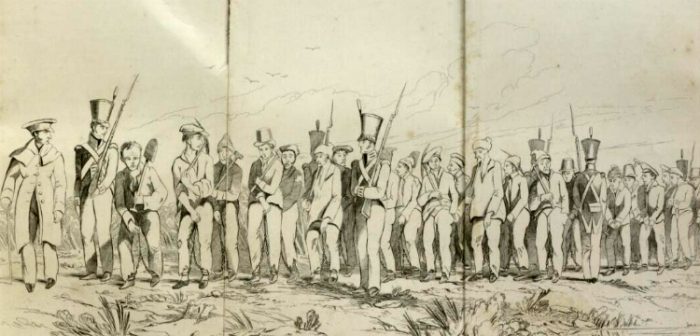
Society has always worked on these kinds of polarities. In UK history, the poor usually received the great judgement. White collar crime, such as embezzlement or fraud of significant sums of money, attracted punishment but was usually seen as excusable. Worthy of punishment, yes. But easily put behind you and of little ultimate significance as you pursued your next, perhaps shady, business opportunity. However, the theft of a bag of potatoes because your family was starving resulted in a harsh prison sentence or transportation to the colonies.Convicts transported to Australia at work outside Sydney 1843. [1]

Are we the poor, or are we the rich? I guess it depends on our perspective.

For the majority of our world, all of us here today are rich. Yet in our society are those who are really poor. People who have, for whatever reason, found themselves as outsiders. The numbers are increasing, the need is increasing, even here in our own town. And we have people of courage who are prepared to work for change. Pauline Town’s work with “We Shall Overcome”, [4] Greystones, [5] Infinity Initiatives, [6] Emmaus. [7] All of these have a prophetic witness. They have recognised that our society has failed significant numbers of people. They seek to do something about this reality.

What might Luke’s Beatitudes teach us about our mission priorities?

We are focussing on the 4th Mark of Mission. It calls on us to “Transform unjust structures of society, to challenge violence of every kind and pursue peace and reconciliation.”

As just one example, let’s stay with our own town.

Try to imagine yourself now living the life of someone who has, for whatever reason, found themselves on the street here in Ashton-under-Lyne, with no money, no credit cards and no friends to turn to.

What does it feel like in the first few days? Do you still have a sense of hope that things will change?

How does it feel after a couple of months with no income, no friends, and no roof over your head? ………….

Someone kindly helps you to attend the Housing Advice Centre on Old Street [3] and finds a way to get you some food through a Food Bank. Do you feel grateful? Or do you feel an overwhelming sense of shame?

When you find yourself in dormitory accommodation under the “A Bed for a Night Scheme.” Do you feel grateful or scared about those you will be sharing with?

These are the realities for a good number of people each day in Tameside. [2]

What should the church’s response be? ………….. What about action? What could we do?

What could be changed – locally or nationally – to transform the issue?

What about campaigning for change? What about Universal Credit? Is it good or bad? Are there ways to change its implementation that might help? …………………. What is the role of the church in politics (with a small ‘p’)?

Matters of justice – whether justice for children, women, animals, refugees – can provoke strong emotions. What comes up for you when you consider the idea of tackling injustice? How could the church support you in this?

What could we do this year to make a change? What organisations could we work with?

And a final question before I go on the make a few short comments:

Looking at the last beatitude in Luke: What is the difference between anger and hate? How can we help ensure that our ‘fire’ or ‘passion’ is an asset rather than a hindrance in a quest for justice? How can anger at injustice be directed towards real change so that it does not develop into bitterness and hatred but makes a real difference?

So what to do?

First of all, lets talk about these things over coffee today. Is there a challenge we need to take up locally? If not the one I have suggested, are there other injustices that we should address?

Our shared giving is one way in which we make a difference. Our Church Wardens have agreed that homelessness should be the theme of our Harvest in October this year. And while our tins and produce will go the places agreed by each of our churches, our monetary giving will be shared by “We Shall Overcome” and “Infinity Initiatives.” Might you be able to give sacrificially at Harvest this year?

Lets believe too that when we work together with others we can make a real difference. I like the adjacent picture. We might feel small but we can have a big impact. We need to believe in what God can do through us.

What about the many other organisations fighting for justice across many areas of need in our borough. We have already mentioned a number. I had been hoping that Action Together would be here today but it is the bank holiday weekend and that has proved impossible. At the moment I have an impact on our behalf in that organisation. I Chair the Board of Action Together and on your behalf, I work with others to bring about change through a dedicated group of staff who seek to allocate grants, work for political change and address specific needs. What more should I or we do?

What about other faith communities? I recently attended an event at Central Mosque which was raising money for Water Aid in specific communities in the developing world. There are others around us who see charitable giving as an essential part of the outworking of their own faith. How can we work together with them? I Chair Faiths United in Tameside and we recently held a conference to address loneliness. We plan others about homelessness and possibly too about asylum seekers. I do this on your behalf as part of our mission in this place. What else might I do? What more should we do?

We need to take all aspects of God’s mission seriously and we need to remember that this 4th Mark of Mission is one of five. All are important, all interrelated. ……

We are all called to:

To proclaim the Good News of the Kingdom

To teach, baptise and nurture believers

To respond to human need by loving service

To seek to transform unjust structures of society, to challenge violence of every kind and to pursue peace and reconciliation

To strive to safeguard the integrity of creation and sustain and renew the life of the earth

Prayer

God, grant us the serenity to accept the things we cannot change. The courage to change the things we can. And the wisdom to know the difference.

Reinhold Niebhur


References

  1. https://www.nla.gov.au/research-guides/convicts, accessed on 29th August 2019.
  2. https://www.tameside.gov.uk/Housing/Housing-and-Homelessness, accessed on 25th August 2019.
  3. https://www.tameside.gov.uk/SafetyandHygiene/Rough-Sleeping, accessed on 29th August 2019.
  4. https://www.thetamesidehangout.co.uk/we-shall-overcome-2, accessed on 24th August 2019.
  5. https://www.homeless.org.uk/homeless-england/service/greystones, accessed on 29th August 2019.
  6. http://www.infinitycic.uk, accessed on 29th August 2019.
  7. https://www.emmaus.org.uk/mossley, accessed on 29th August 2019.


The Second Mark of Mission – 18th August 2019

This is the fourth Sunday in our series about the five Marks of Mission. … Just to remind ourselves once again, these are the 5 Marks of Mission espoused by the Church of England:

  1. To proclaim the Good News of the Kingdom.
  2. To teach, baptise and nurture believers.
  3. To respond to human need by loving service.
  4. To transform unjust structures of society, to challenge violence of every kind and pursue peace and reconciliation.
  5. To strive to safeguard the integrity of creation, and sustain and renew the life of the earth.

We have not been able to follow them in order. We started with the first but then jumped to the third and then the fifth. We are now going back to fill in the second and the fourth Marks of Mission. Over recent weeks, we have heard how interdependent these Marks are, we cannot pick and choose between them. Together they describe God’s Mission in our world and we are called to see what God is doing and to join in.

The second mark is: To teach, baptise and nurture believers.

Our call is to be a learning community. We are called to be people who continue to learn and grow throughout their journey as followers of Jesus. To be so, we need teachers. The call to be a teacher is not just for the clergy. We need many people who are able to lead discussion groups, able to preach, able to nurture new believers. It is possible that you might be being called to be such a teacher in God’s Church. If so, what are the qualifications? …………….

I guess that the first thing I want to know about someone who is going to teach me, is whether I can trust them. What is it that makes someone a good teacher? What should we expect from those who teach us?

Recently, I have been on retreat, reading various parts of the Bible.  I’d like us to think about a few of those passages this morning.

  1. James 3
  2. Jeremiah 31
  3. Isaiah 50 and Psalm 45
  4. Proverbs 8

1. James 3 

Firstly, listen to what James says in Chapter 3 of his epistle. …..

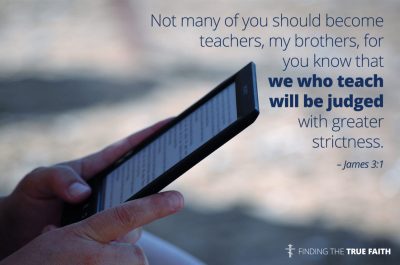
Not many of you should become teachers, my brothers and sisters, for you know that we who teach will be judged with greater strictness. For all of us make many mistakes.

He goes on to talk about the kind of wisdom that a teacher should show:

Who is wise and understanding among you? Show by your good life that your works are done with gentleness born of wisdom. The wisdom from above is first pure, then peaceable, gentle, willing to yield, full of mercy and good fruits, without a trace of partiality or hypocrisy. And a harvest of righteousness is sown in peace for those who make peace.

The call of a teacher is not to be strident or contentious. A teacher who does God’s work will be one who brings peace, who is gentle, willing to yield, full of goodness. Someone who is inclusive, someone who draws people together in faith rather than someone who is dogmatic and divisive. That is the first test of a teacher of the Christian faith.

2. Jeremiah 31

Secondly, let’s listen to Jeremiah. ……………..

The days are surely coming, says the Lord, when I will make a new covenant with the house of Israel and the house of Judah. It will not be like the covenant that I made with their ancestors when I took them by the hand to bring them out of the land of Egypt—a covenant that they broke, though I was their husband, says the Lord. But this is the covenant that I will make with the house of Israel after those days, says the Lord: I will put my law within them, and I will write it on their hearts; and I will be their God, and they shall be my people. No longer shall they teach one another, or say to each other, ‘Know the Lord’, for they shall all know me, from the least of them to the greatest, says the Lord; for I will forgive their iniquity, and remember their sin no more.

It might seem at first as though Jeremiah is saying that God’s plan is that we should all go our own way, just listen to the inner voice of our conscience and everything will be wonderful. And Jeremiah is in the wider passage talking about taking individual responsibility for our lives. He is also talking about the rebuilding of community.

I wonder whether your experience of school was a little like my experience of learning Latin or my times tables. In each case I had to be able to sing out what I had learnt in a form of chant. Do you remember? ………………………..

Education was primarily about learning facts. Which is very important. However, very little effort went into giving me the skills to think for myself. Very little was done to help me evaluate what I was being told. I suppose I picked up a few of those skills in some of my science subjects but they were still primarily about learning facts. What I most needed as part of my education was to be helped to develop learning skills that would mean that as I grew older I would be able to check evidence for myself and make good decisions. I think that is what Jeremiah is talking about. Our faith is not to be based on what we learn by rote, nor just one what we are told, we have our own faith and our own responsibility to learn and be disciples of Jesus. So Jeremiah says on God’s behalf: I will put my law within them, and I will write it on their hearts; and I will be their God, and they shall be my people. No longer shall they teach one another, or say to each other, ‘Know the Lord’, for they shall all know me, from the least of them to the greatest, says the Lord.

What does a Church teacher look like in these circumstances? What role do they have? ………….

I think that, while there are some important facts to learn and there needs to be a shared understanding of faith, effective teachers of the gospel will be facilitators rather than autocrats. They will learn, themselves, how to draw truth out from those they teach and they will help us learners to learn from each other what God has for us in Scripture. Learning will be inclusive and exciting, it will build our understanding rather than just our knowledge. It will take seriously those words of God spoken through Jeremiah: I will put my law within them, and I will write it on their hearts; and I will be their God, and they shall be my people. 

So a teacher will show great humility and draw people together in faith and they will respect those they teach. What else will be true of them?

3. Isaiah 50 and Psalm 45

One of our well-known phrases about knowledge is that ‘knowledge is power’. Let’s listen to what Isaiah has to say about this – just one verse this time from Isaiah 50 v 4:

The Lord God has given me the tongue of a teacher,
that I may know how to sustain the weary with a word.
Morning by morning he wakens — wakens my ear
to listen as those who are taught.

The best teachers are those who themselves are willing to learn. The best teachers believe that we need to go on learning as disciples of Jesus. The best teachers expect that God will challenge and change them  as they pursue their own journey of faith. Good teachers don’t sparingly share their knowledge but willingly share with others – seeking to bring hope to the weary. There is a similar short passage in Psalm 45 v 1:

And that verse gives rise to the song that we sang as our gradual hymn and its chorus:

My tongue will be the pen of a ready writer,
And what the Father gives to me I’ll sing;
I only want to be His breath,
I only want to glorify the King.

The best teachers continue to learn, and “only want to glorify the King.”

So a teacher will show great humility and draw people together in faith and they will respect those they teach. A teacher will be someone who is always ready to learn. ……….

4. Proverbs 8

And one more thing. …… For this we turn to the book of Proverbs, which has a lot to say about Wisdom. The wise one, the teacher is set alongside God in God’s work in the world. In Chapter 8 v 1-4 we read these words:

Does not wisdom call, and does not understanding raise her voice? 
On the heights, beside the way, at the crossroads she takes her stand;
beside the gates in front of the town,
at the entrance of the portals she cries out:
‘To you, O people, I call, and my cry is to all that live. 

The wise one, the teacher, will share their wisdom not just in the safe confines of the home nor in the church. God’s wisdom is for the public space. God’s wisdom applies to all things which we, as God’s people, encounter. “The heights” refers to places of worship which were always found on the high points in Israel. But wisdom speaks elsewhere as well. “Beside the way” and “at the crossroads” – on the journey and at the place of decision, God’s wisdom will guide us. “The gates in front of the town” were the place of decision and judgement in the public sphere. The leaders of the people gathered at the town gates to make decision s and to dispense justice for the community.

Teachers of God’s wisdom are called to inhabit those spaces, to be community leaders and to bring the wisdom of God to bear on the matters of civil society. Our faith is not just for the private sphere.

So, we have four important things to bear in mind if we think God might be calling us to be a teacher. ……

  1. A teacher will show humility and draw people together in faith.
  2. A teacher will respect those they teach and listen to them as they learn.
  3. A teacher will be someone who is always ready to learn themselves.
  4. A teacher will have courage and will speak in the secular and public sphere and will help us to apply our faith in the world.

Do you think God might be calling you to be a teacher? I hope so. We sure need people of integrity who will help us to grow in faith and take a place of leadership in the world.


The 5 Marks of Mission

Over the Summer in 2019, the Parish of the Good Shepherd has been thinking together in Sunday services about the Anglican Communion’s 5 Marks of Mission. [1] The Church believes that we have an important role to play as part of God’s Mission in the world. The church is to be a signpost to the reality of God’s Kingdom and God’s Kingdom Values. We are:

  1. To proclaim the Good News of the Kingdom
  2. To teach, baptise and nurture believers
  3. To respond to human need by loving service
  4. To transform unjust structures of society, to challenge violence of every kind and pursue peace and reconciliation
  5. To strive to safeguard the integrity of creation, and sustain and renew the life of the earth

The five marks of mission were first developed by the Anglican Consultative Council in 1984. Since then, they have been widely adopted as an understanding of what contemporary mission is about. The marks were adopted by the General Synod of the Church of England in 1996 and many dioceses and other denominations used them as the basis of action plans and creative mission ideas.

Some churches abbreviate the five marks to five words: TELL – TEACH – TEND – TRANSFORM – TREASURE. [2]

These Marks underlie much of what the Parish of the Good Shepherd has been doing over the last 10 years and we felt that, this Summer, it would be good to be explicit about them. Our work at Holy Trinity Church and Community Centre in a predominantly Muslim area of the town of Ashton-under-Lyne has sought to place a high priority on the last three of the Marks of Mission. Elsewhere in our parish we have given priority to all 5 of these Marks of Mission.

In subsequent posts, I hope to allow these 5 Marks of Mission to speak into our circumstances in Ashton-under-Lyne.

References

  1. https://www.anglicancommunion.org/mission/marks-of-mission.aspx, accessed on 29th August 2019.
  2. https://www.churchofengland.org/sites/default/files/2017-11/MTAG%20The%205%20Marks%20Of%20Mission.pdf, accessed on 18th August 2019.

Loneliness – the Response of Faith

Faiths Tackling Loneliness – 13th July 2019

A Faiths United Tameside Conference – Keynote Address

Our society increasingly recognises that loneliness is a big issue, and can have terrible effects. 2018 saw the publication of a Government strategy. [1] In June this year we had the first annual, national ‘Loneliness Awareness Week’. But this is nothing new for faith groups. Faith groups have, often for decades or considerably more, worked to create places where people can feel they belong.

Over recent years, the issue of loneliness (particularly amongst older people) has increasingly been described in the media as an “epidemic.” The Office for National Statistics and Age UK report that: over half (51%) of all people aged 75 and over live alone, [2] and 10 per cent of the general population aged over 65 in the UK is lonely all or most of the time. [3] The Campaign to End Loneliness emphasises that “as our population ages, the risk of social isolation for people aged 65 and over is increasingly becoming a major public health issue. There will be two million more single person households by 2019.” [4]

The UK Government accepts this definition of loneliness: “Loneliness is a subjective, unwelcome feeling of lack or loss of companionship. It happens when we have a mismatch between the quantity and quality of social relationships that we have, and those that we want. [5]

FaithAction and the Church Urban Fund highlight all the work that Faith Groups are already doing. From supporting wider community initiatives such as Men’s Sheds [6] to specific activities undertaken by faith groups: Street Pastors, {7] Street Angels, [8] Neighbourhood Pastors, [9] local volunteering, forod offered at Gurdwaras and temples to all comers, specific actions relating to Mitzvah Day [10] and Sewa Day, [11] programmes of befriending and visiting.

Although the new Government strategy for tackling loneliness contains a recognition of the “fantastic role” that faith groups play, it remains true that, “there is a lack of awareness of the activities that churches and other faith groups offer that can benefit people experiencing loneliness.” [12]

A Case Study from the Church Urban Fund: [13]

“Nick had given up work to care for his wife, and after she died he became isolated: ‘In January I barely left the house — if you don’t go out you don’t have to come back to an empty house’, he said. He got involved in helping out with Together Middlesbrough and Cleveland’s Feast of Fun holiday club and found that this helped distract him from his grief: ‘Being with other people, especially the kids, just takes your mind off everything. I’m getting more out of it than the kids I think.’ He was able to use the skills he had to help the children and this boosted his confidence and self-esteem, to the point of being able to lead a session himself. Being involved with Feast of Fun has led to Nick volunteering with various groups and he is now looking for work as well.”

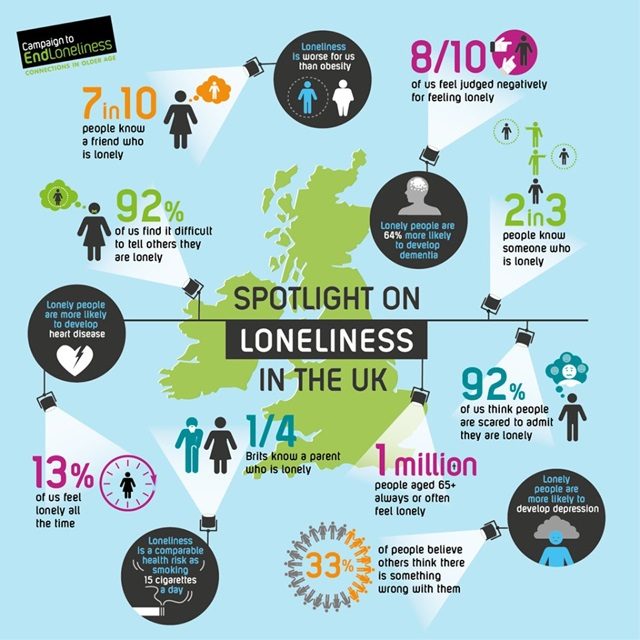
The problem. …… FaithAction has pulled together some statistics which help us understand the scale of the problem:

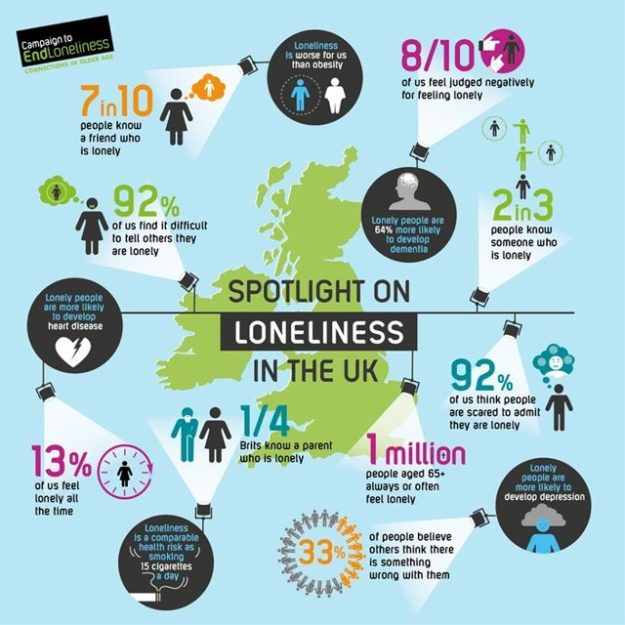
  1. One in Ten of us say that we have no close friends! [14]
  2. One in Five people say that in the preceding two weeks, they have never or rarely felt loved. [15]
  3. 14% of children aged 10 to 12 and 10% of young people aged 16-25 say that they are ‘often’ lonely. [16]
  4. 36% (over a third) of people aged 18-34 say they worry about feeling lonely. [17]
  5. 17% of older people see family, friends and neighbours less than once a week. 11% are in contact less than once a month! [18]
  6. About half of people of 75 and over live alone. [19]
  7. About one quarter of us live alone and do not speak to someone everyday. [20]
  8. About half of people aged 65 and over say that television or pets are their main form of company. [21]
  9. Loneliness increases the likelihood of developing conditions such as heart disease and stroke. [22]
  10. One study found the lonely people have a 64% (almost two-thirds) increased chance of developing clinical dementia. [23]
  11. The effect of a lack of social relationships on mortality is similar to that of smoking 15 cigarettes a day. [24]
  12. Lonely people are more prone to develop depression. [25]
  13. Three quarters of family doctors report that between one and five patients a day attend their surgery primarily because they are lonely! [26]

Those are the statistics. …What does it feel like?Two in three of us know someone who is lonely, 33% of people believe that other think there is something wrong with them, 13% of us feel lonely all of the time, 25% of us have a parent who is lonely, 92% find it really difficult to tell others that we are lonely, 80% of us feel judged negatively for feeling lonely. And remember, this is a subjective not objective issue. It matters most what an individual feels or thinks about themselves, not what is objectively the truth! [27]
I cannot speak for other faiths than my own. I can quote what their leaders have to say:

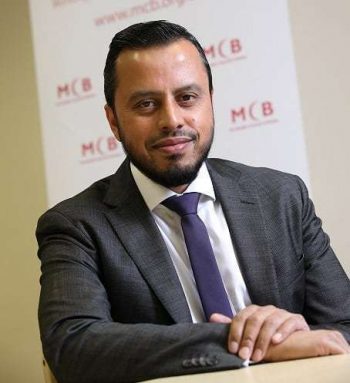
These are the words of Harun Rashid Khan, Secretary General of the Muslim Council of Great Britain:

“It is but natural to smile at a new face and exchange a greeting of peace – a small, spontaneous gesture in the Muslim tradition but perhaps a balm for the lonely and depressed. Mosques and Muslim led community centres are also a hub for more formal projects with the elderly, such as the park outings organised by Bradford’s Khidmat Centre and the trips on the River Thames by a faith-based residents association in Whitechapel. Social isolation affects all ages and the MCB is keen to join hands to tackle this social blight.” [28]

These are the words of David Lazarus, Chairman of the Jewish Volunteering Network:

“Volunteering is a key way of combating loneliness for both the volunteer and the beneficiary. The Jewish Volunteering Network… through a series of interfaith volunteering opportunities, such as helping the homeless at Christmas, as well as partnership with other leading faith organisations such as Caritas, we aim to show the immense contribution that Jewish people in this country make not only to those in our community, but also to those of other faiths and society as a whole.” [29]

Or prominent Sikh, Bhai Sahib, Bhai (Dr) Mohinder Singh OBE KSG, of the Guru Nanak Nishkam Sewak Jatha and Nishkam Civic Association, says:

“There is an increasing recognition that faith communities constitute a vital part of our vibrant communities and help us navigate the challenges of the secular world. The family of faiths, the backbone of civil society, must seriously reflect on their own traditions and collaborate with others to jointly harness spirituality and empower the mortal individual to achieve success in attaining a greater understanding of ‘the other’ and be prepared to serve humanity.” [30]

Christian commentators agree with these sentiments and these next quotes express a confidence that faith groups really do have something to offer in this field.

The Rt Rev. James Newcome, Bishop of Carlisle:

“Working as I do in a county where there is much rural isolation, I am conscious of the many ways in which faith groups are engaging with this vital issue – as of course, they have been for centuries.” [31]

Professor Jim MacManus, Vice-President of the Association of Directors of Public Health and President of the Guild of Health and St. Raphael; Vice-Chair of the Healthcare Executive Group of the Catholic Bishops’ Conference of England and Wales, says:

“We know that the effects of loneliness can be devastating for physical and mental health. We also know that many of the things science tells us that can prevent and remedy loneliness have been the core offer of many faith communities for years. We have something important and practical to offer.” [32]

Faith itself is part of the solution. …..

Evidence from over 1,200 studies and 400 reviews has shown an association between faith and a number of positive health benefits, including protection from illness, coping with illness, and faster recovery from it. Of the studies reviewed in the definitive analysis, [33] 81% showed benefit and only 4% harm. [34] Studies, [35][36] have shown that being a believer is great for your health. Here are some ways that being an observer of any religion or spirituality has been shown to benefit your mind and body.:

a) Lower blood pressure: a 1998 study found that religiously active older adults are 40% less likely to have high blood pressure than those who are less active. The researchers from Duke University Medical Center measured the blood pressure of almost 4,000 participants, and surveyed them on their religious participation, and while the results were positive for spiritual people, the researchers couldn’t figure out why.

b) A healthier lifestyle: the effect of behavioral change due to religion literally reduces your chances of dying. Your faith community may not encourage you to eat organic, non-GMO, plant-based, local and slow foods, but it probably still exercises some healthy influence on the habits you form and the activities you undertake. [37] For example, there is significant evidence that HIV is much less of a problem in areas of the world where Islam is the dominant religion. [37]

c) More life satisfaction: religious people report more happiness and score higher in terms of life-satisfaction than non-believers. According to a 2010 study in the American Sociological Review, this is likely because regular church attendance leads to strong social bonds within congregations. In other words, believers tend to have more friends!

d) Less stress: studies have shown that religion reduces stress in a number of ways. Prayer, in particular, can reduce high blood pressure that is due to stress. The anxieties and stresses of modern life tend to encourage the body’s fight or flight response. Prayer, worship and other spiritual activities can balance out this stress response by enhancing the body’s relaxation response.

e) Coping with severe or terminal disease: palliative care takes spirituality very seriously, and has expanded the concept of pain to include ‘total pain’ in the terminally ill: physical pain, mental anguish, social alienation and spiritual distress. [38] Spiritual wellbeing has been shown to reduce hopelessness and suicidal ideation at the end of life, [39] whereas spiritual distress (for instance, fear of death or lack of purpose in life) is linked to sleeplessness, anxiety and despair. [40]

f) A healthier immune system: those who attend religious services at least once a week may have a stronger immune system. The 1997 study, also from Duke University Medical Center looked at 1,718 older adults, and found that the highly spiritual participants were about half as likely as those who don’t attend religious services to have high levels of an inflammatory protein in the immune system linked to certain cancers, autoimmune diseases, and some viral infections. [41]

g) A longer life: attending religious services more than once a week has been linked to an additional seven years of life, compared to those who never go. A 1999 study found that skipping religious services translates into a 1.87 times greater risk of death versus those who (religiously) show up. The researchers theorize the many social benefits of a religious community may help keep people healthier for longer.

FaithAction provides evidence that simply belonging to a faith group brings benefits when it comes to loneliness. [42] At its simplest, this happens merely by virtue of community involvement. Age UK notes that involvement in a faith community is one facet of civic engagement and social participation which guards against loneliness. [43] This participation gives older people a sense of place and belonging. [44] Faith Action go on to affirm that research conducted with migrants in Europe suggests that being religious and going to church can protect from feelings of loneliness and help migrants cope with their experiences. [45] Spirituality can also prevent loneliness becoming depression, with spiritual resources potentially improving older people’s mental health and quality of life. [46]

Just this last week I was talking to Zulf Ali who leads a GP practice in York which serves 45,000 people. He pointed me to a YouTube presentation by an eminent Muslim scholar, Abdal Hakim Murad which talks of the medical benefits of the Sunnah. I understand that the Sunnah is the body of literature which discusses and prescribes the traditional customs and practices of the Islamic community, both social and legal. Abdal Hakim Murad says that the Sunnah combines both rigour and beauty in balance and the person who lives the Sunnah, lives their lives in balance with the natural world, which has significant benefits for health. He emphasizes also the value of dedication to liturgy, meditation and the natural order. [47]

Faith Organisations and Loneliness. …….

Faith organisations seek by their very nature to address issues of isolation and loneliness. They have been proven to be places where lonely and isolated people find solace even if they do not accept the precepts of the particular faith.

Over a quarter (27%) of charities registered in Great Britain are faith-based. Faith-based charities in the UK are responsible for around 47 million interactions with beneficiaries each year, offering support equivalent to an estimated £3 billion in terms of hours worked and volunteered. [48][49]

As I have already said, I cannot speak authoritatively for all faith groups, but I can speak for the Christian Denomination to which I belong. The Church of England’s Church Urban Fund has undertaken significant research around the issues facing lonely people. Its research found that, in 2015, 64% (two-thirds) of Anglican church leaders reported loneliness and isolation to be the most significant problem in their parishes. [50]

The Church Urban Fund’s briefing on loneliness concludes: “Churches are uniquely well placed to carry out the types of activities that have been proven to be most effective in reducing loneliness.” [51]

The activities the Church Urban Fund identifies apply equally across all faith traditions:

“They welcome people of all ages; they provide group activities around shared interests – thought to be more effective than one-to-one interventions, or groups whose primary offer is social contact; they provide opportunities to develop lasting friendships; and they offer people opportunities to give as well as receive – to volunteer and take ownership of the groups, thereby giving people a sense of purpose.” [52]

We have been accustomed almost to be apologetic about what we have to offer as faith groups. To correct that, we need to remind ourselves of a few truths: the Church Urban Fund found that 69% of churches run lunch clubs and other social activities for older people, 59% run parent-toddler groups, 32% run community cafes, and 30%, youthwork. [53]

In 34% of parishes, churches provide volunteers offering pastoral support to the community beyond the congregation. Churches in the most deprived areas are the most active in terms of the number of activities they run. [54]

There is nothing to suggest that these things are not replicated across the whole faith sector.

I have already mentioned my conversation with Zulf Ali. In York, he has recognised the value of the faith and voluntary sector. He has seen a need to shift care from acute services in hospitals to primary care and the need to shift some primary care functions into the community. He is particularly concerned to see savings made within General Practice passed to the voluntary and faith sectors. Zulf successfully argued with the Clinical Commissioning Group and Senior Healthcare professionals that 50% of any savings in prescription costs made by his practice should be retained by the practice with the express purpose of grant funding voluntary and faith groups. In the few years that this scheme as been operating he has saved the health service £1 million in prescription costs and has been allowed to keep £500,000 to be distributed within the voluntary and faith sector in York.

Faiths United Tameside held a day conference on 13th July 2019  at which this paper was the keynote address. At the end of the keynote address, I outlined my concerns/hopes for the day. They were fivefold:

So, why this day conference?

  1. While we do so much as faith groups, we do not have either the widespread recognition of what we do, nor the self-confidence or capacity to engage with the statutory sector. I hope this day will increase our sense of self-worth. We do have something significant to offer.
  2. I hope this day will help others understand that, particularly when we talk about what the statutory sector calls ‘below threshold needs’, they need look no further than the existing voluntary sector and particularly the faith sector to meet those needs.
  3. In the light of the amazing impact our work, as faith groups, can have, I hope that locally, we will have increased confidence to ask for funding from statutory and grant providers for what we do to address loneliness. Our actions are already saving money for the statutory sector in the areas of Primary and Secondary care. That process needs to be allowed to develop and grow. Funding needs to follow actions that actually make a difference.
  4. This is a chance for you and I to gain from each-others experiences. I hope that you will make use of the opportunity to find out what others are doing, perhaps to see the overlaps, possibly even to think about working together to bring in the resources that we need to help people who are lonely. This is one of the most significant problems of our age.
  5. I hope that we will chose not to be satisfied with what we are already doing but that we will look beyond and look outward, and see the potential that we have to make an even bigger difference to the communities that we serve.

References

  1. A connected society: a strategy for tackling loneliness: Laying the foundations for change; Department for Digital, Culture, Media & Sport, Office for Civil Society, Prime Minister’s Office, 10 Downing Street, Tracey Crouch MP, and The Rt Hon Jeremy Wright MP; 15th October 2018.
  2. Office for National Statistics, 2010
  3. Safeguarding the Convoy A call to action from the Campaign to End Loneliness, Oxfordshire, Age UK, 2011.
  4. Ibid.
  5. D. Perlman and L.A. Peplau; Loneliness Research: A Survey of Empirical Findings, in L.A. Peplau & S. Goldston (Eds.), Preventing the harmful consequences of severe and loneliness; US Government Printing Office, 1984; p13-46.
  6. https://menssheds.org.uk, accessed on 8th July 2019.
  7. https://www.streetpastors.org, accessed on 8th July 2019.
  8. http://www.cninetwork.org/streetangels.html, accessed on 8th July 2019.
  9. For instance: http://www.countiesuk.org/neighbourhood-chaplains, accessed on 8th July 2019.
  10. https://mitzvahday.org.uk, accessed on 8th July 2019.
  11. https://sewaday.org, accessed on 8th July 2019.
  12. H. Buckingham; Church Urban Fund; Loneliness Strategy: Consultation Response; https://www.cuf.org.uk/learn-about/publications/loneliness-strategy-consultation-response, accessed on 7th July 2019, p14.
  13. Ibid., p3.
  14. C. Sherwood, D. Neale and B. Bloomfoeld; The Way We Are Now: The State of the UK’s Relationships; Doncaster Relate; 2014.
  15. Ibid.
  16. Office for National Statistics; 2018.
  17. J. Griffin; The lonely Society? Mental Health Foundation, London; 2010.
  18. C. Victor, S. Scrambler, A. Bowling and J. Bond; The prevalence of and Risk Factors for Loneliness in Later Life: A Survey of Older People in Great Britain; Aging & Society No. 25; 2005; p357-376.
  19. S. Dunstan (ed.); GeneralLifestyle Survey Overview: A Report on the 2010 General Lifestyle Survey; Office for National Statistics, Newport; 2012.
  20. B. Williams, C. Bhaumik and E. Brickell; Lifecourse Tracker: Wave Two report – Final, Public Health England, London, 2013.
  21. S. Davidson and P. Rossall; Evidence Review: Loneliness in Later Life, Age UK, London; 2015.
  22. https://www.campaigntoendloneliness.org/threat-to-health; accessed on 7th July 2019.
  23. T. Holwerda, D. Deeg, A. Beekman, T. van Tilburg, M. Stek, C. Jonker and R. Shroevers; Feelings of Loneliness, but not Social Isolation, Predict Dementia Onset: Results from the Amsterdam Study of the Elderly (AMSTEL). Journal of Neurology, Neurosurgery & Psychiatry No. 85(2), 2014; p135-142.
  24. J. Holt-Lunstad, T. Smith, J. Layton; Social Relationships and Mortality Risk: A Meta-analytic Review; PLoS Medicine No. 7(7), 2010.
  25. J. Cacioppo, M. Hughes, L. Waite, L. Hawley, R. Thisted; Loneliness as a Specific Risk Factor for Depressive Symptoms: Cross-sectional and Longitudinal Analyses; Psychology and Aging No. 21(1);2006; p140-151 and B. Green, J. Copeland, M. Dewey, V. Sharma, P. Sauders, I. Davidson, c. Sullivan and C. McWilliam; Risk Factors for Depression in Elderly People: A Prospective Study; Acta Psychiatrica Scandinavica, No. 86(3), 1992; p213-217.
  26. https://www.campaigntoendloneliness.org/blog/lonely-visits-to-the-gp ; accessed on 7th July 2019.
  27. https://linkinglives.uk/loneliness, accessed on 13th July 2019.
  28. R. Garland, J. Simmons and J. Hadgraft; Right Up Your Street: How Faith Organisations are Tackling Loneliness; Faith Action, London, 2019, p12.
  29. Ibid., p14.
  30. Ibid., p16.
  31. Ibid., p17.
  32. Ibid., p18.
  33. H.G.Koenig, M.E. McCullough, D.B. Larson. Handbook of Religion and Health. Oxford University Press, 2001
  34. https://www.cmf.org.uk/resources/publications/content/?context=article&id=25627, written in 2011, accessed on 7th July 2019 and https://www.telegraph.co.uk/news/health/news/8480505/Faith-good-for-your-health.html, written 28th April 2011, accessed on 7th July 2019.
  35. https://www.health.com/mind-body/5-surprising-health-benefits-of-religion, written on 30th January 2017, accessed on 7th July 2019.
  36. https://relevantmagazine.com/life5/surprising-links-between-faith-and-health, written on 3rd November 2014, accessed on 7thy July 2019.
  37. Religious involvement is associated with a reduction in risky health behaviours, (J. Mellor, & B. Freeborn; Religious participation and risky health behaviors among adolescents. Health Econ 29th September 2010) for instance problem drinking, (T. Borders et al.; Religiousness among at-risk drinkers: is it prospectively associated with the development or maintenance of an alcohol-use disorder? J Stud Alcohol Drugs. January 2010; No. 71(1): p136-42) smoking (M. Whooley et al.; Religious involvement and cigarette smoking in young adults: the CARDIA study (Coronary Artery Risk Development in Young Adults study). Arch Intern Med. 22nd July 2002; No. 162(14): p1604-10) and permissive sexual behaviour. This can have dramatic benefits. One study even found that religious attendance was associated with a more than 90% reduction in meningococcal disease (meningitis and septicaemia), in teenagers, a protection at least as good as meningococcal vaccination. (J. Tully et al.; Risk and protective factors for meningococcal disease in adolescents: matched cohort study. BMJ 2006; No. 332(7539): p445-50) Furthermore, religious involvement has been associated with improved adherence to medication. (T. McCann et al.; A comparative study of antipsychotic medication taking in people with schizophrenia. Int J Ment Health Nursing, December 2008; No. 17(6): p428-38)(J. Park & S. Nachman; The link between religion and HAART adherence in pediatric HIV patients. AIDS Care 15th April 2010: p1-6 [Epub ahead of print])(W. Stewart et al.; Association of strength of religious adherence with attitudes regarding glaucoma or ocular hypertension. Ophthalmic Research 2011; No. 45(1): p53-6. Epub 11th August 2010)
  38. World Health Organization. WHO definition of palliative care.
  39. C. McClain et al.; Effect of spiritual well-being on end-of-life despair in terminally-ill cancer patients. Lancet 10th May 2003; No.361(9369): p1603-7
  40. E. Grant et al.; Spiritual issues and needs: perspectives from patients with advanced cancer and nonmalignant disease. A qualitative study. Palliative Support Care. December 2004; No. 2(4): p371-8
  41. Psychoneuroimmunology is an advancing field of research exploring the complex interactions between a person’s mental state, their brain and their immune system, mediated by a range of mechanisms including stress hormones such as cortisol. Studies have linked emotional stress to development of the common cold (S. Cohen et al.; Psychological stress and susceptibility to the common cold. NEJM 1991; No. 325(9): p606-12) and to rates of infectious disease more generally. Others have linked religious involvement to lower levels of inflammatory cytokines and markers of immune dysregulation. (H. Koenig et al.; Attendance at religious services, interleukin-6, and other biological parameters of immune function in older adults. Int J Psychiatry Med. 1997; No. 27(3): p233-50) In one robust study of people living with HIV, those who grew in appreciation of spirituality or religious coping after diagnosis suffered significantly less decline in their CD4 counts and slower disease progression over a four-year follow-up. (G. Ironson et al.; An increase in religiousness/spirituality occurs after HIV diagnosis and predicts slower disease progression over 4 years in people with HIV. J Gen Intern Med December 2006; No. 21 Suppl 5: pS62-8)
  42. R. Garland, J. Simmons and J. Hadgraft; op.cit., p13.
  43. Jivraj, Nazaroo and Barnes in S. Davidson and P. Rossall; Evidence Review: Loneliness in Later Life, Age UK, London; 2015.
  44. Phillipson, Bernard,Phillips and Ogg in S. Davidson and P. Rossall; Evidence Review: Loneliness in Later Life, Age UK, London; 2015.
  45. R. Ciobanu and T. Fokkema; The Role of Religion in Protecting Older Romanian Migrants from Loneliness; Jornal of Ethnic and Migration Studies, No. 43(2), 2017; p199-217.
  46. J. Han and V. Richardson; The Relationship Between Depression and Loneliness Among Housebound Older Persons; Journal of Religion and Spirituality in Social Work, No 29(3), 2010; p218-236.
  47. https://youtu.be/Skf49GvfpP4, published on 26th May 2017, accessed on 7th July 2019.
  48. R. Garland, J. Simmons and J. Hadgraft; op.cit., p12.
  49. Cinnamon Network; Cinnamon Faith Action Audit, Hemel Hempstead; 2016.
    Church Urban Fund; Church in Action: A National Survey of Church-based Social Action, London, 2015.
  50. Church Urban Fund; Connecting Communities: The Impact of Loneliness and Opportunities for Churches to Respond, London, 2016.
  51. R. Garland, J. Simmons and J. Hadgraft; op.cit., p12.
  52. Church Urban Fund; Church in Action; op.cit.
  53. Ibid.

The Sheffield, Ashton-under-Lyne and Manchester Railway – 4

How a long defunct, relatively small local railway company aimed high and ultimately was responsible for the poor financial state of the Great Central Railway!

I was prompted to look again at the Sheffield Ashton-under-Lyne and Manchester Railway by reading a copy of BackTrack Magazine from May 1996 (Volume 10 No. 5) [2] which included an article about the Great Central Railway which is now, sadly, long-gone. That article was itself a response to an earlier article in BackTrack Volume 9 No. 3 (March 1995) by Messrs. Emblin, Longbone and Jackson. [1]

It brought to mind the connections between Ashton-under-Lyne and the Manchester, Sheffield and Lincolnshire Railway (MS&L) evidenced by the name of its predecessor, the Sheffield, Ashton-under-Lyne and Manchester Railway (SA&M). I am wary of providing links to these posts, but they do pull together quite a bit of information about that railway …… these are the links:

The Sheffield, Ashton-under-Lyne and Manchester Railway – 1

The Sheffield, Ashton-under-Lyne and Manchester Railway – 2

The Sheffield, Ashton-under-Lyne and Manchester Railway – 3

With the benefit of hindsight, the second of the above posts was not really necessary. An appendix to the third post would probably have covered the two links mentioned in the second post.

I lived in Ashton-under-Lyne at the time. The article which grabbed my attention in the old BackTrack Magazine did so because it seems to root the significant problems of the Great Central Railway (GCR) in my, then, local railway company’s own history. Hence the sub-title of this post!

The significant challenges faced by the SA&M Railway in being ahead of the game in providing rails across the northern backbone of the country led to a financial structure which seems to have dictated the future of its successors, both the MS&L and, ultimately, the GCR. Heavily reliant, leveraged, on debentures and preferential stock is was difficult for the successive companies to attract ordinary investors.

The whole history of the GCR seems to have been dictated by the way in which the heavy capital expenditure necessary to cross the Pennines/Peaks was financed.

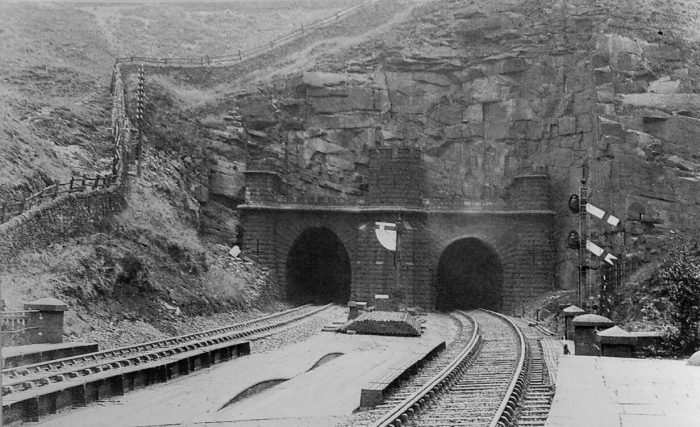
The SA&M Railway was one of the first railways to tackle truly formidable and desolate terrain. Nowhere was the challenge more evident than at the West end of the Woodhead tunnels, seen here at the turn of the 20th century. The SA&M and its successors were encumbered with the twin problems of high construction costs and low receipts from intermediate stations over a long section of line. [2]

It should be noted that Emblin reserved a right of reply and that he chose to do so in a later edition of the BackTrack Magazine. [5]

His principal argument in that article appears to be that things were really not that bad and that the GCR managed its way out of trouble in a very effective fashion. I am not sure that this negates the reasoning of the articles referred to above, and I am sure that it does not address the particular point that the GCR faced ongoing financial problems which had their birth in the companies it succeeded.

Emblin argues strongly that Sir Alexander Henderson managed his way out of trouble by expansion. [5: p711] That seems to have been that practice of his predecessors as well. The result being that the company was highly leveraged and still not the best investment for ordinary shareholders.

It also does not alter my opinion that my, then, local railway company had a great part to play in the issues which has to be managed by the GCR throughout its life.

References

1. Emblin, Longbone & Jackson; Money Sunk & Lost; BackTrack Magazine Vol. 9 No. 3, p129-136, notes on this article are reproduced below at Appendix 2. [3]

2. Blossom & Hendry; Great Central – The Real Problem; BackTrack Magazine Vol. 10 No. 5, p266-271. Notes on this article are provided at [4].

3. http://www.steamindex.com/backtrak/bt9.htm#1995-3, accessed on 4th May 2019. See below, Appendix 1.

4. http://www.steamindex.com/backtrak/bt10.htm#1996-5, accessed on 4th May 2019. See below, Appendix 2.

5. Emblin; An Edwardian Ozymandias; BackTrack Volume 15 No.12, p707-713. (see http://www.steamindex.com/backtrak/bt22.htm#654)

Appendix 1:

Money sunk and lost – The great central myth of the Great Central Railway. Robert Emblin, Bryan Longbone and David Jackson. p129-36.

The extension of the MSLR from Annesley to London created what the authors describe as a myth, namely that the Great Central Railway was financially crippled by the cost of building it. Many authors have subscribed to that myth: Langley Aldrich’s “The late GCR never paid any dividend on its Ordinary shares”; Hamilton Ellis’s ‘The London Extension was viewed with pessimism at the time of its inception; if MS&L stood for Money Sunk and Lost, GC clearly meant Gone Completely”. Jack Simmons “Great Central never paid an ordinary dividend” and “was financially ramshackle”. Harold Pollins “There were clearly some absurd schemes [including] the building of the last main line, the Great Central, in the 1890s” Michael Bonavia, referring to the grouping criteria used in defining the proto-LNER, adumbrated a poverty-stricken Great Central being carried financially on the back of the prosperous North Eastern.

The perception of GCR penury is a component in another received wisdom; that the LNER’s largest constituent, the NER, had been intended as the financial dynamo for the entire network but that because of the financial weaknesses of the other constituents the LNER finances sank when the virtual collapse of the north-east regional economy in the depressions of the 1920s and 1930s prevented the NER from bankrolling its poverty-stricken fellow constituents. These two orthodoxies provide neat and simple mutually-supporting explanations that agree with what we all know; but “what everyone knows” may not necessarily be true, or it may not be the whole story and half-truths are most effective as mis-information.

The construction costs of the London Extension had certainly been high £11.5 million, almost twice the original estimate and after it opened the GCR did not pay any dividends on its Ordinary shares nor, until 1915, on some of its Preference shares. But not only were these non-paying shares a minority of the total, the opening of the London Extension was followed by thirteen years of considerable expansion. A leading article in the Financial Times of 20th September 1913, analysing the ‘Great Central Position’ and the performance of its shares, referred to the GCR as one of the leading UK railway companies, stating that “the position of the company . . . promises well in the near future . . . traffic returns have shown continued healthy expansion” and praised ‘the exceptional prospects of this undertaking”. There is a wide discrepancy between the modern view and contemporaneous informed assessment. The £10 million for the GCR’s post-1900 expansion programmes (more than was being invested by most of its contemporaries) had to come from somewhere and the debt serviced somehow. Further, the price paid for the GCR at Grouping was marginally greater than that paid for any of the other LNER constituent companies except the NER; there is also the small and hitherto overlooked matter of the evidence on the London Extension profitability that was given by Sir Ralph Lewis Wedgwood, the LNER Chief General Manager, to the Railway Rates Tribunal in 1924/5 when he stated that it was expected that a nominal fifteen years was required for new works to fructify (that is produce a 5% return on investment and when questioned that “that new trunk lines [are] exceptionally slow to mature”. The authors forcefully state that Henderson/Faringdon had been regarded as one of the leading railway financiers.

After the London Extension opened, the GCR started a programme of widespread expansion taking over the LDECR and several small railways in North Wales and Lancashire, building a joint line with the GWR to provide a second route to Marylebone.By providing rail access into the Chilterns, the GW/GC and Met /GC joint lines opened the area for property development and generated much commuter traffic. The Wath concentration (or marshalling) yard was built to increase the handling efficiency of the South Yorkshire coal traffic, a new deep-water port was developed on a green-field site at Immingham to compete with the NER’s facilities at Hull and to complement the GCR installations at Grimsby, main line capacities were doubled in some places and new signalling systems were installed. Powerful engines of all types were designed and built to meet the ever-increasing demand for heavier and faster trains.

Most of the capital to pay for those investments was obtained by debenture issues. These are fixed interest loans with guaranteed dividends but without any voting rights. As a method of funding expansion, such issues have the advantage of raising new capital without affecting boardroom control but they incur the cost of mortgaging future earnings. Such a predominant reliance on debenture issues is nowadays considered to be a source of financial weakness, not only because it worsens the asset/debt ratio but also because the mortgage effect increases the need to maintain growth merely to service the increasing debt, thereby reducing the ability to make provision for debt repayment and/or increase dividends. There is some evidence in the share offer details that most of the contingent shares were held by non- contingent shareholders, so it may be that from 1899 on they were taking the long view, cushioned by their non-contingent dividends, in the expectation that the capital investments which the GCR was making would eventually be reflected in higher dividends.
Those were the days when investors were accustomed to financing long term projects that were not likely to return a dividend in the short term. Sir Ralph Wedgwood was quite sanguine about a 20 or 30 year period before a major new work would be expected to have ‘fructified’.
In summary, the GCR’s reputation as poverty-stricken and financially ramshackle is a modern fiction, started in error by popular writers who apparently ignored the public record and compounded by academics who discounted the distorting effect of anachronism’s parallax. The facts are that in transforming itself from a mediocre provincial cross-country goods line into a strategically- important mixed traffic main line, the GCR’s effectiveness in seeking and developing new business was such that by 1913 its revenue and profitability was comparable with that of its proto-LNER peers; the profitability of the London Extension was increasing in line with the expectations of the period; the money market was investing large sums in the GCR; its passenger trains were fast, prompt, clean and reliable; and withal industry and the general public received and positively enjoyed a comprehensive rail transport service that had dash, imagination and style. All this was constructed by Sir Alexander Henderson, Sir Sam Fay, John George Robinson and the rest of the workforce on the foundations of Sir Edward Watkin’s vision. Instead of its post-World War II reputation of Money Sunk and Lost, in the annals of British railway development and financial management the twenty-five year history of the GCR was a Glorious Catalogue of Renaissance!

This article is further illustrated by the series of articles on the construction of the London Extension Volume 10 page 424 and 617, and Volume 11 page 190. Reference should also be made to summarizing letter by Bloxsom Volume 16 page 174, and feature by Bloxsom and Hendry in Volume 10 page 266. Emblin returned to the theme of the financial status of the Great Central in Volume 22 page 654 et seq.
illus.: John George Robinson CME Chief Engineer of the Great Central from 1900 to 1922 at Marylebone; A high capacity steel wagon introduced in 1902; The Dukinfield Carriage and Wagon works near Manchester; page 131 Great Central train headed by 4-6-2T in Metroland see letter by M.J. Smith (page 278) which states that Metro-Land was created by Metropolitan Railway; Fig 1 The profitability of the LNER constituents; Fig 2 Take-over price at grouping; Keadby Bridge; An aerial view of Immingham docks basically as the Great Central built it; Consolidated London Extension accounts data; Fig 3 Expectations of revenue after grouping; Fig 4 Expectations of profit after grouping; Express Atlantic No. 362 on a London Express; Fish vans on an express passenger train at Ashby Magna; Great Central class 1 No. 425 at Nottingham Victoria not long after; Robinson’s grand finale a 9Q being built at Gorton Works.

Appendix 2:

Great Central – the real problem. Martin Bloxsom and Robert Hendry. 266-71.

Between 1900 and 1914 the GNR, GER and GWR were paying 3 to 4% dividends. The LNWR, MR and NER were paying 6% or above. The GCR was paying 0%. The costly original route and the long time to opening were deep-seated problems. In 1846 the fusion of SA&MR with three Lincolnshire companies attempted to remedy this problem, but there were very poor returns between 1848 and 1851, and it could not even pay any dividend on its Preference Shares. The Company was in serious financial difficulty by 1855. See also correspondence by Steve Banks and Keith Horne. (page 387); and on page 634 which mis-spells both of original authors, which re-questions the probable actions to have been taken by Henderson if Grouping had not taken place. KPJ: is it not possible to equate the particular dire financial state with the “misfortune” of it incorporating the GCR?. Emblin & Longbone response on page 698. Martin Bloxsom returns to this theme in a summarizing letter in Volume 16 page 174, which contrasts this approach (the harsh financial realities) with what might be termed a more optimistic line of thought espoused by Emblin (Volume 9 page 129). illus.: No 105 class 11B near Harrow; The Woodhead tunnels at the turn of the century; Manchester, Sheffield and Lincolnshire £10 preference share; Immingham Docks; No 6323 an LNER O4/3 at Rugby. Emblin returned to the theme of the financial status of the Great Central in Volume 22 page 654 et seq.

Jesus in the Temple (Luke 2: 41-52 & 1 Samuel 2: 18-20, 26)

I’ve discovered that as I’ve got older it has become easier to forget where I’ve put things. It’s actually quite worring.

Keys – losing my house keys would be a nightmare. But some of you will know that I have left church keys in all sorts of places in the last few years, fortunately without dire consequences as yet.

Notes for my sermon – imagine getting to church just before the service and discovering you’ve left your notes at home. I have managed it at least once recently and had to adlib the sermon. Some might say, why, couldn’t we have just got on with the service without a sermon?

Jo – I do know my wife’s name, I promise you but I have caught myself calling her Gill on a number of occasions recently. Gill is my sister’s name.

I hope you can sympathise with me!

I wonder, have you ever searched for something only to find that it wasn’t really lost? You ransack the house looking for spectacles, only to find that they’re on your head. You turn out the drawer looking for the tin-opener, only to find that it was already on the work-top. You search down the sides of the cushions on the sofa for your car-keys, only to find them in your pocket.

Embarrassing, isn’t it! You want to hide! If you’re like me you’re tempted to make up a good story about how you found them, especially if you’ve involved other people in an unnecessary search!

Mary and Joseph search Jerusalem for three days thinking that Jesus is lost. When they finally track him down in the temple they find that he isn=t lost at all. Jesus says very calmly, “Why were you searching for me?”

Jesus has recognised his identity as God’s son: “Did you not know that I must be in my Father’s house?” Just like Samuel in the Old Testament reading above, Jesus was at home, most at home in God’s house. He was not lost at all.

This visit of Jesus to the temple at twelve years of age – perhaps his bar-mitzfer – is like a homecoming. He’s in his Father’s house. For him, a theological principle has become an intimate, personal experience. The Jews believed in the divine fatherhood of God. For Jesus this was not just theory, it was a lived out experience – time and again throughout the Gospels we are reminded that he knew God as his Father. In the Temple, Jesus was at home.

You might know this quotation from a prayer of St. Augustine: “Lord, you have made us and our hearts are restless until they find their resting place in you.”

Jesus experienced a homecoming in his visit to the temple. We can similarly experience a homecoming – finding our resting place in Christ. Jesus says: “Come to me, all you that are weary and are carrying heavy burdens, and I will give you rest. Take my yoke upon you and learn from me; for I am gentle and humble in heart, and you will find rest for your souls.”

Many people spend their lives searching for something – not sure exactly what it is they’re looking for. It is the Bible’s claim, not just St. Augustine’s, that we find ourselves when we find God – that our searching ceases when we find our rest in God.

For Christians that sense of belonging, of being at home, is embodied in the Eucharist. At God’s table, we are welcomed without condemnation, without question. As we take the bread and as we take the wine, we are at home, sharing in fellowship with the God who made us, is with us, and thinks the world of us. We’re not lost – we’re at home.

New Year – New Beginnings

NEW YEAR – NEW BEGINNINGS?

As the New Year arrives I often find myself looking back – pondering what has happened over the last 12 months – and looking forward, wondering what is ahead.

The past year has included for me, most recently, the death of my mother. In the past 18 months I have lost both of my parents. They both had good long lives and strong faith and they were both looking forward to being at home with their Lord in heaven. Some of Dad’s last words to Mum were, “I go to a better, better place.” We reflected on the truth of that hope as part of Dad’s funeral. More recently at Mums’ funeral, we again reminded ourselves of the depth of love with which we are surrounded as followers of Jesus. We can let go of our loved ones confident that ‘they rest in him, our shield and our defender’, that they are surrounded and held in the loving arms of our Father God.

Jo, my wife, has been appointed Chair of the House of Clergy for Diocesan Synod and as result is now, for three years, one of the senior women priests in our Diocese. She holds this new role in tandem with her other roles in Parish life and as Ecumenical Officer for Manchester Diocese. Jo thrives in these roles and we look forward for God’s guidance for her for the future.

This has been a year when I have become more aware of both my gifts/strengths and of my weaknesses. It was hard to let go of the role of Area Dean for the Deanery of Ashton and a delight to be asked to be Borough Dean of Tameside, a role to which I was licenced in February 2018. This role recognises the work that I have been doing over many years to create space in the public sphere in Tameside for faith communities and some of the roles that I have played in more recent years in the wider charitable sector in Tameside.

Our personal circumstances are not the only things to reflect on. The war in Yemen, the ongoing saga of Brexit, the continuing sense that we have of being ‘at risk’ in a world where terrorism is a serious threat, all crowd in on our thinking. The uncertainty in national politics and the reducing value of the pound suggest that change in coming months is not going to be easy, whatever political negotiations bring about. Many things can leave us leave us with a real sense of worry and concern.

What was 2018 like for you? What were the ‘highlights’ and the ‘lowlights’? What seemed to leave you in the dark? What seemed to leave you basking in the light, in the sunshine of God’s love? What things excite you or worry you about the year ahead?

Things of the past as well as our present experiences and our anticipation of what the future holds, make us into the people that we are today. Each of our experiences over the past year are like ‘holy ground’, they are places where God was present, even if we couldn’t feel him there. They may have been places where faith was tested, sometimes to the limit, or even beyond. They may have been places of illumination where God’s grace and love for us became almost tangible. They may have felt mundane and ordinary. There may well be things which it is impossible to make sense of at the moment, storms which will not die down, emotions and fears which overwhelm us. All of these are ‘holy ground’.

In a beautiful passage in Isaiah, God speaks to his people:

“Do not fear for I have redeemed you; I have called you by name, you are mine.
When you pass through the waters, I will be with you; and through rivers they shall not overwhelm you; when you walk through the fire you shall not be burned, and the flame shall not consume you. For I am the lord your God, the Holy One of Israel, your Saviour.” (Isaiah 43:1-3. NRSV)

A New Year brings opportunities for new beginnings, a chance to start over. It can be a time when we take a significant step forward in faith, or in our life circumstances. It can be a time when we hear again God’s promises to us, when hope is renewed, when we determine again to commit ourselves to serve others. A New Year can be a time when we break with the past, when we leave behind the old and move on to the new. A time to ‘wipe the slate clean’. And rightly so!

However, let me encourage you to remember that we are not just people who look forward to the future with hope. We are people who live in the present, and whose identities are shaped by the past. We are who we are because we have our own story to tell. We belong to a particular community and share in its joys and sorrows; we have a specific family background which has shaped who we are; we went to a particular school or schools; we have lived alone or with a partner; we have had children, or we have not had children, either by choice or because of force of circumstance. We have each faced the reality of loss in our own way. We have been able to delight in good news, and have shared in the joys of others. And we can all be encouraged by the words of St. Paul in Romans:

“I am convinced that neither death, nor life, nor angels, nor rulers, nor things present, nor things to come, nor powers, nor height, nor depth, nor anything else in all creation, will be able to separate us from the love of God in Christ Jesus our Lord.” (Romans 8:38-39, NRSV)

God does want to break into our lives, if we let him, to bring healing and hope, just as he burst into the world on that first Christmas morning. Healing and hope for our past, for our present and for our future.

This New Year, like every New Year, brings the promise of new hope, new chances, new life. God also wants to build on the foundations of the past, helping us to become the people we long to be. People who are confident of God’s love through all the experiences of our lives. People whose faith is built on strong foundations, people who have found security in his love, even in the most difficult of times. People whose relationship with God is real. People whose lives, past, present and future, can be, and are being, redeemed by God’s love.

We don’t just have hope for the future. God is at work in all of us, none of us is the finished article. God is redeeming each of us, our past, our present and our future.

Peace Babies

← Back

Thank you for your response. ✨

Jelly Babies and Peace in the World!

In August 2014, I wrote a post about the history of Jelly Babies and their first being produced at the end of the 1st World War in 1918. This is the link. …

https://rogerfarnworth.com/2014/08/03/jelly-babies-and-the-peace-of-the-world

Recently, Maynard Bassett’s have produced a special edition pack of Jelly Babies which have them renamed as “Peace Babies.”

This gives another really good excuse to buy and eat Jelly Babies which while high in sugar content are fat-free!

“In celebration of the end of the First World War in 1918, George Bassett & Co. produced Peace Babies – what would later become the confectionery classic we all know as Jelly Babies.

Now, to commemorate the centenary of the end of World War One, Maynards Bassetts has designed a special limited-edition pack of Peace Babies available at Tesco. Aiming to raise over £25,000 for Help for Heroes*, the money raised will help us support those who put their lives on the line for us to have a second chance at life for them and their families.

Archivists at Mondelez trawled through records and found a rare surviving copy of an export list mentioning the sweet treat. Thought to be from the 1920s or 30s, this shows a ‘hundred-weight’ (100lb or 45kg) of Peace Babies listed for sale in ‘4lb wood boxes’, for the grand total of 68 shillings. This would be the equivalent of £139.60 in today’s money!

It is thought that these were on sale until a shortage of raw materials put a stop to production during World War Two. In 1953, they were relaunched as Jelly Babies – the rest, as they say, is history!

(Available at selected Tesco stores and http://www.tesco.com while stocks last ….. A A5p donation from the sale of each product sold in Tesco and http://www.tesco.com between 05/09/2018 and 06/11/2018 will go to Help for Heroes Trading Ltd, which gifts all its taxable profits to Help for Heroes (a charity registered in England and Wales , number 1120920 , and in Scotland SCO44984).”

It seems as though the jelly baby first appeared by mistake! Legend has it that it was an Australian immigrant in 1864 that made the first Jelly Baby, although he chose to call them “unclaimed babies.” He was meant to create a mould for jelly bears, however, (for reasons which may be forever lost in time) it seems the jelly baby was born instead – pun wholly intended. [2]

And thus, jelly babies became a firm favourite in the UK.

After a short hiatus, classic sweet manufacturer Basset’s took up the style of the rather darker original name ‘unclaimed babies’ and rebranded them ‘Peace Babies’ to mark the end of World War I. These new sweets had a more realistic baby look , closer to the sweets we know today.[2]

References

1. https://www.helpforheroes.org.uk/news/2018/september/peace-babies

2. https://www.sweetsinthecity.co.uk/news/post/jelly-babies-facts