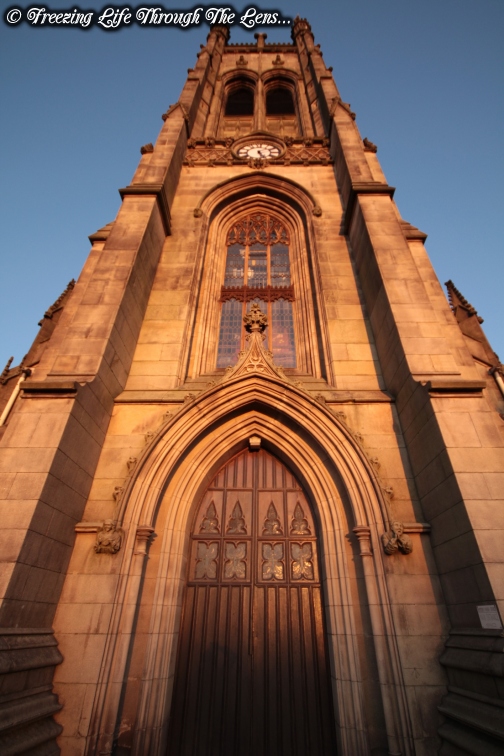
Category Archives: Ashton-under-Lyne Blog

Matthew 22:15-22

Clever questions can catch people out. There’s the old chestnut: “Have you stopped cheating on your wife?” To answer “Yes” implies that you were and you have stopped, to answer “No” implies that you have been and you still are. The is apparently no answer that does not leave you in a bad light, unless you step outside the confines of the question and answer it in your own way – just as politicians do in a radio or TV interview: “I have never cheated on my wife and never will.”

Trick questions that put people on the spot have been around for a long time. So it’s not surprising that Jesus faced some in his time.  There’s one in Matthew 22:15-22, the Pharisees question has a very definite double edge.   The issue of paying tax to the Roman emperor was one of the hottest topics in the Middle East in Jesus’ day.

unnamedIsrael was an occupied land.  There were taxes on agricultural yield and a personal ‘poll tax’.  That’s why the Romans took a census to count how much tax they could levy.  Paying tax in Roman coin was a threefold burden to the people of Israel: no-one liked paying taxes, Israel hated foreign rule and this tax reminded them of their invaders, and the image of Caesar on the coin was regarded as idolatry, breaking the command about graven images in Exodus.

Jesus appears to be in a ‘lose-lose’ situation when he is asked whether people should pay taxes to the Emperor or not.  If he supported paying tax he would be accused of being unpatriotic.  If he opposed tax-paying, he could be reported as a trouble-maker and rebel.  The question has no right answer.  Either reply is wrong.  ‘Yes’ is religiously offensive. ‘No’ is politically dangerous.

Incidentally, this is all part of an honour/shame conflict being played out between Jesus and the religious leaders – please read some of my other posts to find out more.

Jesus asks whose head is on the coin he is given.  Caesar’s, of course. So Jesus responds, the coin is Caesar’s property, it bears his image, so people should give to him what is his.  It is all right to give back to Caesar what belongs to him.  It is his money – so pay your taxes in the normal way.  That is half of Jesus’ answer.

The other side of the matter is that God should receive his due.  Israel must offer God the worship and service he deserves.  In this case there is no limited tax bill, but a completely open account.  There is only one proper way of responding to God’s generosity – with the worship, love and service of our whole lives.  That’s the other half of Jesus’ answer.

So Jesus neatly turns the question back on his questioners.  What are they giving to God of themselves, their devotion and their obedience?  But his response raises a bigger question – and that is ‘how does one’s civic duty weigh up against one’s duty to God?’

Where do we stand in this?  Should we as Christians be obedient citizens and pay our taxes with an honest and ready heart?  ‘In general, yes, we should’ comes the answer from this passage – unless and until it clashes with our commitment to God.  We’ve seen Christians throughout history who’ve put their commitment to God before their civic duty, and we remember some of those people as saints and martyrs.

There are Christians who openly confess Christ in lands where that is a crime, who defy unjust public policies, who support human rights, and who resist tyranny.  They do it because they believe that Caesar’s rights are limited and that God’s are not.

There are times too when we will have to examine our conscience about issues where our society’s ways and God’s ways diverge. The financial crisis in the banking system is a case in point.  Even if we didn’t really understand the details, it affected us all.

And what might God have to say about the part that society has played in building up the now failing financial systems, or about the actions that bankers have taken on our behalf.  It’s easy to say that it’s the fault of ‘the City’, but maybe we have to look a little closer to home for some of the reasons.

Might people – or even we ourselves – have become too greedy? Might people – or even we ourselves – have become too caught up in wanting to improve our own financial situation without thinking about the impact on others? Might people – or even we ourselves – have become too impatient, wanting everything now even if we can’t afford it – and becoming too used to being in debt?

Perhaps we need to reassess our duty to God. Perhaps we need to continue to say that banks need to be fairer, that they need to be modelled on God’s values. Perhaps we have to be wise where we invest – looking for ethical banking practices; maybe we have to think twice before taking out loans; making investments that serve the good of all not just a few; maybe we have to remember that God is present in all aspects of our lives including our money and that our decisions over money need to be bound up in our desire to live his ways.

Jesus used a single coin to help people think about their relationship with the state and with God.  As we handle the coins in our pockets or our purses, may they be a constant reminder that God is present in all parts of our lives – and that definitely includes our finances.


Karma Nirvana – Jasvinder Sanghera – 2

I have been reading books by Jasvinder Sanghera.

Firstly, her autobiography, “Shame” and her later book, “Daughters of Shame” – both published by Hodder & Stoughton.

I have found reading these both eye-opening and shocking. I have been aware for some time of the power of ‘izzat’ or ‘namus’ – the overwhelming power of ‘honour’ in some communities. Hearing people’s stories in some depth and engaging with the reality that for some people, some families, ‘honour’ is significantly more important that the life of family members.

It causes me to wonder just how significant these issues are here in Ashton-under-Lyne. It is good to know that there is an organisation to whom we can refer those who are trapped by these problems. Al;though, it is clear that as a white clergyperson, I am very unlikely to ever see behind the closed doors where these issues are a major problem.

In “Daughters of Shame”, Jasvinder says that “trying to explain the concept of honour is one of the hardest things … Asian people don’t question it: they’re swaddled in it from the moment they are born, it’s as though the absorb it along with their mother’s milk. Honour – izzat – is the cornerstone of the Asian community and since the beginning of time it’s been the job of girls and women to keep it polished. And that’s really hard because so many things can tarnish it.”[1] The stories that Jasvinder Sanghera relates are deeply disturbing, ultimately quite horrifying. She goes on to say that “wearing lipstick, owning a mobile phone, cutting your hair; any of those things could be said to bring dishonour on a family because those are all signs that a girl is getting westernised, which is what Asian families fight so hard against. They’d lock up their daughters for months on end rather than let that happen.”[2]

Would it be possible to get a better picture of the extent of these problems in a place like Ashton-under-Lyne?

(please also see my earlier post about Karma Nirvana – on 8th September 2014 and the website: http://www.karmanirvana.org.uk)

[1] Jasvinder Sanghera; “Daughters of Shame” Hodder & Stoughton, London: 2009, p27.

[2] ibid.

Ashton-under-Lyne Market – Another Award!

Congratulations to the Market Staff in Ashton-under-Lyne!

Another fantastic plus for our town!

http://www.manchestereveningnews.co.uk/news/tameside-markets-top-shops-after-7870169

Tameside markets are top of the shops after winning a hatrick of national awards!

Borough is home to Britain’s favourite and greenest market as well as the most dedicated team of staff, according to industry bosses.

Tameside’s marvellous markets are celebrating a hatrick of three top industry awards. Staff have been named ‘market team of the year’ by the National Association of British Market Authorities (NABMA) after impressing judges with their enthusiasm and the range and quality of services.

Following a public vote earlier this year NABMA crowned Ashton as Britain’s favourite market. It was also named the country’s greenest market by the National Market Traders’ Federation.

NABMA chief executive Graham Wilson said: “We’re delighted to make this award to Tameside as market team of the year.

“The competition was open to nominations from around the UK. The Tameside markets team are committed, enthusiastic and share a vision that centres itself on a proud local market tradition supported by professional management.”

Deputy council leader, Coun John Taylor added: “The success and recognition in all three national awards is a testament to the enthusiasm, innovation and hard work being ploughed into Tameside’s markets to ensure they are vibrant, attractive and sustainable for the future. I would like to take this opportunity to thank traders and staff for their drive and commitment and – importantly – shoppers for their ongoing, loyal support.”

Ashton-under-Lyne – Heritage Weekend

imgresAshton-under-Lyne held a successful heritage weekend – an attempt on a world record, a Victorian seaside event, some amazing buildings open to the public. A great community event!

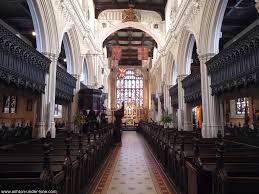
I hope you didn’t miss out on the fun!

Some videos.

http://youtu.be/s2SltKggm7Y

http://www.youtube.com/watch?v=Hf9d9s-pQYE

And photos of some buildings open over the weekend!

The Market.

imgres


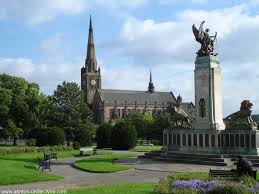
St. Michael’s, (Ashton Parish Church)

images


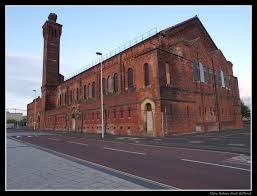
The Old Baths

images

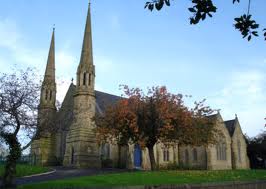
St. Peter’s Church

20121004001426-8d1db3a9-la

Albion Church

imgres

St. James Church held a British night in competition with the Last Night of the Proms.imgres

Just as an addendum. If you smoke cigars – here is a way to remember the weekend!

imgres


Matthew 18:21-35 – Forgiveness

The last thing we want to do when we have been hurt, is to forgive!

When Peter comes to Jesus to ask how often he should forgive someone – he believes that he is setting a high standard: “How often should I forgive? 7 times?” And Jesus response leaves him reeling – not seven times but seventy-seven times – or in some translations seventy times seven – 490 times. “As often as is necessary,” is Jesus’ response. ‘Keep forgiving until you completely lose count!’

Jesus then tells a story to help us understand that it is because we have been loved so much, forgiven so much ourselves by God, that we should forgive others. Jesus’ story is about a servant who has a wife and children and has overspent on all his credit cards, someone who has maxed out. He has stacked up a huge amount of debt with his boss.

The Boss calls for his servant and demands repayment of what is owed. The servant falls on his knees and begs to be given more time to pay. The master, the boss, feels sorry for his servant and lets him off the whole debt! Just like that! The debt is cancelled. How does the servant feel?

So, here is this happy, free servant. He’s wandering back from the house of his master, his boss, to tell his family the good news. He’s over the moon, he’s delighted, it is wonderful. And he meets a fellow servant of his boss, his master. This fellow servant owes him a few quid.

And the same thing happens; this other servant falls on his knees and begs to be given more time to pay. But what does the first servant do? He grabs him by the neck and shakes him and has him thrown into prison until he can pay the debt.

I think Jesus wants us to ask ourselves this question: Is it reasonable for the first servant to behave this way with the second? Is it fair and right? What do we think?

No, it isn’t. Yet forgiveness remains something we find difficult – often impossible. Not just in our personal circumstances … As we think back over the last 100 years we can remember many seemingly unforgivable acts. The Holocaust, South African Apatheid, The Rwandan Genocide, ethnic cleansing in the Balkans, the troubles in Northern Ireland, the Moors Murders, the Shipman affair, 9/11 and 7/7. And as we dwell on those atrocities we feel the pain of those who took the greatest hurt, we feel something of their anger and we feel justified in refusing to allow the possibility of forgiveness to the perpetrators. They are unforgiveable – forgiveness is surely not possible for the Hitlers, the Hutu Interahamwe, Myra Hindley and Ian Brady, Harold Shipman, for the terrorists who bombed the twin towers in New York or the bus and tube in London, for those who behead their enemies …………

And yet … there is another perspective we have to hear. We have to hear the voices of people like Desmond Tutu who suffered under the injustice of Apartheid, who became Archbishop of Cape Town, who organised the Truth and Reconciliation Commission in South Africa, who also had a part to play in the aftermath of the Rwandan Genocide.

In his book, “No Future Without Forgiveness” about the work of reconciliation in South Africa, he talks of visiting Rwanda in 1995 and of speaking in a stadium rally: … “I told them that the cycle of reprisal and counter-reprisal that had characterized their national history had to be broken, and that the only way to do this was to go beyond retributive justice to restorative justice, to move on to forgiveness, because without it there was no future.”

In the 1990s, I remember watching the mother of one of the Moors Murders victims talking about her feelings for Myra Hindley. Her anger was fully justified. No one can rightly argue that she should feel anything else towards those who destroyed her family. However what was just as obvious was that her anger and her ongoing inability to let go, if not to forgive, had a deep effect on her own life, it was evident that over many years she had carried her bitterness and anger. Not a waking moment had gone by without the desire for revenge. And in this sense she was trapped, she was unable to move on. We might reflect that in such circumstances it would be impossible to move on and certainly we have no right to judge, for her life was destroyed when her child was taken from her. But the fact remains, that she was not only devastated by the murder of her child, she was also held trapped by subsequent feelings which would not let her go.

A striking example, in 2011, of a different response, was that demonstrated by Tariq Jahan in Birmingham after the death of his son – killed by a car driven directly at him in what was perceived to be a racist and hate motivated crime. Tariq’s own ability to see beyond his own grief, and his courageous comments to the media, started a very long, and no doubt extremely painful, process for himself, of being able to let go of the anger and bitterness he must feel. But not only did he begin to set himself free, his timely comments set his own community free from a desperate cycle of revenge

These matters are not easy to engage with.

When we think of forgiveness as letting the other person off the hook, of setting them free, then perhaps we can understand and sympathize with a refusal to forgive. But when we realize that a failure to forgive doesn’t so much imprison the one who has harmed us, but rather imprisons us in bitterness and hatred, in a constant desire for revenge – then we have to forgive, we have to let go – for without doing so we cannot move on, we are trapped, we are imprisoned by our own choice. And as a result we continue to give the person who harmed us in the past, on-going power over us. We get hurt again and again.

Put like this, it seems that for our own sanity, forgiveness is ultimately our only option. We have to begin, however hard it is to do so, to find a way to forgive.

Jesus suggests in his story that we’ll only begin to be able to forgive, if we can comprehend how much we ourselves are loved, how much we been forgiven. Jesus says that it is when we know that we are loved without conditions, that we can begin to show that kind of love to others.  The love God has for us is that kind of love.

Every time we have a baptism I am reminded of that love. Baptism is a sign of God’s forgiving, generous love, offered to a child before he or she can possibly have done enough to deserve that love. Our baptism and the repeated occasions when we see a child or an adult baptized are our personal sign of God’s love.

Baptism reminds all of us that we are loved by God – no matter what. It’s a sign that if we give our lives to God, then we’ll begin to understand that we have been loved and accepted from the beginning.

We need to hold onto this truth – that real forgiveness is ours. Baptism is a sign of this.

Our regular Sunday services also allow time for confession and for us to hear God’s words of forgiveness for us. Reminders of just how crucial forgiveness is.

It is in the security and strength of God’s forgiving love that we can be free to love, and that we can begin to forgive others generously in return. Yes, for their sake and for God’s sake, but also perhaps most crucially for the sake of our own health and well-being as well.

Romans 13: 8-14 and Matthew 18: 15-20

Have you noticed how when you tell a child not to do something, they seem to become more determined than ever to do that one thing?  When you tell a child not to play with matches, you seem to put the idea into their head that matches are extremely exciting to play with!


And it’s not just children, there is something fascinating about anything forbidden that seems to entice us to do things we know we shouldn’t; Just to be awkward, or to find out what will happen, to satisfy our curiosity.  The classic Biblical example is the story of Adam and Eve in the Garden of Eden.  God says “Don’t eat the fruit on that tree,” so what do they do?  They eat it and only then do they find that the consequences were just as bad as was promised. They’d have been better off obeying God.

Schools are now advised that negative rules are not helpful – it’s been discovered that children continually told not to do things don’t flourish well.  So rules in schools are now positive. Instead of, “Don’t treat other people badly,” it’s, “Treat other people well.” Instead of  “Don’t run in the corridor,” it’s “Walk in the corridor.”

It’s actually much easier to learn to do things sensibly than remember a list of things that you mustn’t do!   But this idea of replacing negative rules with positive ones isn’t new. It’s something Jesus did.

The Old Testament tells us that Moses received Ten Commandments, ten rules that God gave for life – and Paul reminds us of some our reading from Romans: AYou shall not commit adultery; You shall not murder; You shall not steal; You shall not covet@. Can you remember all ten? Where would you find them now if asked?

The rules Paul quotes are negative rules – as most of the ten commandments are. If we can’t remember them and if we don’t react well to being told not to do something, then maybe these rules are no longer the best way of governing our lives.

Paul reminds us that Jesus told people to rethink the way they lived their lives – and instead of giving a list of “don’t” rules, he said, “There’s only one rule to remember – love your neighbour, love other people as you love yourself.” Perhaps Jesus knew that people don’t remember lists of rules, perhaps he knew that we’re often curious to find out what happens when we do the things we’re told not to.

Whatever his reason, Jesus said that life is simple really – love other people, treat them the way you would want to treat yourself.  And of course, by living like this, we naturally won’t steal, be unfaithful in our relationships or harm other people.

Christianity and the church are often seen to be unattractive – only interested in telling people what they shouldn’t do. But this is so wrong – being a Christian, coming to church is about enjoying life to the full – but in a way that shows love and respect to those around us.

And this, I think, is what Jesus is talking about in Matthew 18. He is asking us to think about how we deal with disputes. What we should do when we feel that someone else in church has wronged us, or done something with which we disagree.

We might be straight-talking, here in Ashton-under-Lyne, but most of us are still not very receptive to that straight-talking, and more often than not straight-talking in public leads to offence being taken by someone. So Jesus says, give respect to the one with whom who disagree – speak with them in private about your disagreement, or the offence that they have caused.

At work, the boss who balls someone out in public gains not respect but fear. The boss who talks quietly with someone when things have gone wrong garners respect.

Go to someone who has upset you in private to work things out, says Jesus, often this will be enough, but if not, then take witnesses with you and try again. And only then, if the person cannot see sense, bring the problem out into the open. It seems to me that this is all about respect – giving the respect to someone who has offended me, that I wish they had given to me in the first place.

Jesus and Paul agree – Our love is the first, the primary, measure of our commitment to God and to our faith, not our ability to follow the rules!

Ashton-under-Lyne Town Centre – Progress 6

Ashton-under-Lyne Market Square is due for major redevelopment in the next few years. This is the latest news from Tameside MBC.

Photo: Green light for Ashton Market Square transformation</p><br />
<p>PLANS to transform Ashton’s market square into a modern and vibrant area have been given the go ahead by Tameside Council.</p><br />
<p>The redevelopment – which follows extensive consultation with traders, shoppers and residents – will see the introduction of new stalls and kiosks, high quality landscaping and trees, performance and seating areas, as well as new street furniture and lighting.</p><br />
<p>Not only will this project provide a new, modern market for traders and shoppers but will also complement the ambitious multi-million pound Vision Tameside masterplan, which will see a major influx of students and teaching staff to the town centre at the end of 2015.</p><br />
<p>Trader Kim Wright, from Mr Spuds and the children’s rides, said: “We are very excited about the plans. Throughout our 20-plus years of trading on Ashton Market it has always been a great place to shop. </p><br />
<p>“It is the heart of the town and the redevelopment it will give it a huge boost. We are really looking forward to moving into our new kiosk.”</p><br />
<p>Malcolm Marsden, who sells bedding, added: “As someone whose family have been trading here since the 1950s, I am pleased that Tameside Council has approved plans for the redevelopment.</p><br />
<p>“I am looking forward to a bright future and many more years trading on Ashton Market”.</p><br />
<p>This dramatic increase in the number of people working and studying in the heart of Ashton will provide a major boost to the market, shops and retailers, and will help to attract new investment and businesses to the town and the wider Tameside area. </p><br />
<p>Despite Ashton having one of the busiest town centres in Greater Manchester,  it is important that the market square is developed and modernised to make sure it meets everybody’s needs.</p><br />
<p>Recent reports have highlighted that Ashton is under threat in terms of online retailing and changing consumer habits, so it is essential investment takes place to ensure it can continue to compete with neighbouring towns, and securing its position as one of the busiest and most popular markets in the North West.</p><br />
<p>The redevelopment plans are about than the way the square looks. Taking on board feedback from the Ashton Market consultation, the markets team is developing a range of initiatives to help attract new traders. The aim is to ensure there is a greater choice of goods on offer which will appeal to more shoppers.</p><br />
<p>Cllr Bill Fairfoull, chair of Ashton Town Team, said: “Ashton Market Square holds a special place in the hearts of the public and traders alike. Both the indoor and outdoor markets offer great choice, high quality and value for money, but we are also looking to improve the area for the future while ensuring we retain its charm and appeal.</p><br />
<p>“The plans have been developed following extensive consultation to ensure the space is attractive yet functional and provides an appealing and inviting place to shop, socialise and do business.”</p><br />
<p>Work will start early in the new year and be complete before Christmas, 2015.  It will be done in phases to ensure the market remains open for business.

Green light for Ashton Market Square transformation


PLANS to transform Ashton’s market square into a modern and vibrant area have been given the go ahead by Tameside Council.

The redevelopment – which follows extensive consultation with traders, shoppers and residents – will see the introduction of new stalls and kiosks, high quality landscaping and trees, performance and seating areas, as well as new street furniture and lighting.

Not only will this project provide a new, modern market for traders and shoppers but will also complement the ambitious multi-million pound Vision Tameside masterplan, which will see a major influx of students and teaching staff to the town centre at the end of 2015.

Trader Kim Wright, from Mr Spuds and the children’s rides, said: “We are very excited about the plans. Throughout our 20-plus years of trading on Ashton Market it has always been a great place to shop.

“It is the heart of the town and the redevelopment it will give it a huge boost. We are really looking forward to moving into our new kiosk.”

Malcolm Marsden, who sells bedding, added: “As someone whose family have been trading here since the 1950s, I am pleased that Tameside Council has approved plans for the redevelopment.

“I am looking forward to a bright future and many more years trading on Ashton Market”.

This dramatic increase in the number of people working and studying in the heart of Ashton will provide a major boost to the market, shops and retailers, and will help to attract new investment and businesses to the town and the wider Tameside area.

Despite Ashton having one of the busiest town centres in Greater Manchester, it is important that the market square is developed and modernised to make sure it meets everybody’s needs.

Recent reports have highlighted that Ashton is under threat in terms of online retailing and changing consumer habits, so it is essential investment takes place to ensure it can continue to compete with neighbouring towns, and securing its position as one of the busiest and most popular markets in the North West.

The redevelopment plans are about than the way the square looks. Taking on board feedback from the Ashton Market consultation, the markets team is developing a range of initiatives to help attract new traders. The aim is to ensure there is a greater choice of goods on offer which will appeal to more shoppers.

Cllr Bill Fairfoull, chair of Ashton Town Team, said: “Ashton Market Square holds a special place in the hearts of the public and traders alike. Both the indoor and outdoor markets offer great choice, high quality and value for money, but we are also looking to improve the area for the future while ensuring we retain its charm and appeal.

“The plans have been developed following extensive consultation to ensure the space is attractive yet functional and provides an appealing and inviting place to shop, socialise and do business.”

Work will start early in the new year and be complete before Christmas, 2015. It will be done in phases to ensure the market remains open for business.

Ashton-under-Lyne Town Centre – Progress 5

Projects!

There is a lot going on in and around Ashton Town Centre!Untitled 1

1.      Road Improvements – Park Parade and the BT and ASDA roundabouts

The two projects are now moving forward. Work at the BT roundabout has progressed significantly. Work at the ASDA roundabout is in its preliminary stages. Updates can be found on this link and come out approximately weekly. The page also includes links to .pdf files showing the plans in some details – see the two links towards the bottom of the web page.

http://www.tameside.gov.uk/tbc/environment/pinchpointUntitled

2.     VisionTameside – Tameside College in Town

Phase 1 – Advanced Learning Centre

Preliminary works are now underway on Camp Street Car Park and the Main contractor will start work in September. The College needs to be in and using the building by September 2015.

The project is a joint venture with Tameside Metropolitan Borough Council and has recently (24th July) received further financial backing through the Greater Manchester Growth Deal. The Growth Deal is worth almost £7m towards the College’s three-phase development plan. The funding supports the development of the Advanced Skills Centre in Ashton Town Centre, in partnership with Tameside Metropolitan Borough Council, and phase 3, the redevelopment of the Beaufort Road campus. It will provide funding for specialist advanced equipment for the new Advanced Engineering Centre which completes in September 2015.

Alongside the Town Centre building, Tameside College will be building an Advanced Technologies Centre on the Beaufort Road campus.

Phase 2 – Advanced Skills Centre and Joint Service Centre

The second phase will see the opening of the Advanced Skills Centre and Joint Service Centre (below), which will be shared with Tameside College, Wilkinson and Tameside MBC, on the site of the present TAC building (Tameside Council Offices). Originally, Tameside MBC had plans to move to a newly built cheaper building off Old Cross Street. Spending £13 million on the present proposal creates an integrated plan for the redevelopment of the town centre and will save approximately £1.5 million/annum in running costs.


Phase 3 – Beaufort Road

As part of Tameside College’s VisionTameside, Phase 3, the Beaufort Road campus will be refurbished and upgraded.


3.     Transport Interchange

Transport for Greater Manchester will be building a new Transport Interchange on the north side of the Arcades Shopping Centre. Design work will start at the beginning of the new financial year. Could it look like the new interchange in Rochdale?


St. Bartholomew 24th August 2014

St. Bartholomew  24th August 2014

The church asks us today to remember St. Bartholomew.

What do we know about him? We’re not even sure of his name – either Bartholomew or Nathaniel. Various sources have him working as a missionary in India, and Armenia and that he died a martyr in Armenia. But perhaps the most outstanding thing about Bartholomew is that we really know very little about him. He was a regular guy, a normal bloke, not one of the outstanding well-known disciples. Just like one of us. Yet he was still faithful to God’s call.

Perhaps that is why the Anglican lectionary asks us to read Luke 22: 24-30 as the Gospel passage on the feast of St. Bartholomew. … The disciples squabble among themselves about who is the greatest and Jesus in exasperation says to them: “The greatest among you must become like the youngest, and the leader like one who serves. For who is greater, the one who is at table or the one who serves? Is it not the one at the table? But I am among you as one who serves.”

If Jesus is to be our pattern for life, then his call is to serving and not to power, to faithfulness rather than to success, and to giving God’s call first place in our lives. It is a call to being ordinary people at God’s disposal, part of a greater cause – the coming of God’s kingdom.

Jo (my wife) and I follow the Northumbrian office when we pray together in a morning. The reflections that are provided for August focus on Iona. This was Friday’ 22nd August’s reflection:

“Back in 561 AD St. Columba arrived on Iona with 12 disciples (13 ordinary men who set up a small community on Iona) and to their great surprise that faithful action began one of the great missionary movements in history.george-macleod-t.jpg

Many years later in 1938, George Macleod also arrived on Iona with 12 other people – half were craftsmen without jobs and them other half were students training for the ministry. Together, they began the rebuilding of the abbey and monastery which had been derelict since 1561. A group of ordinary men.

George Macleod recounts that the group needed money to start the restoration. He says:

“I wrote to the richest man I knew. He replied that I should immediately visit a psychiatrist. Then I tried Sir James Lithgow – now I’m a pacifist – Sir James built warships on the Clyde at his Govan shipyard. He was interested but asked me to give up my pacifism in return for a donation of £5000 (a very large sum in 1938). I said ‘Not on your life.’ Then,’ said Lithgow, ‘I’ll give you your £5,000.’ I’m glad I held to my principles.”

“We were working during WW2 and materials were very hard to obtain: the government commandeered all timber for the war effort. But a ship coming from Canada struck a storm and jettisoned its cargo of lumber in the Atlantic. The timber floated 80 miles and finally landed on the coast of Mull just opposite Iona. And it was all exactly the right length. It roofs the library today.”

George Macleod’s ordinary men trusted in our extraordinary God and their faith bore fruit.

St. Bartholomew’s life – the person who we remember today – suggests that ordinary people can achieve important things by being faithful to what God wants, by being faithful to God’s call. The amazing story from George Macleod of Iona is a clear example of circumstances and God’s intervention coming together to allow ordinary men and women on Iona to create something beautiful.

What might be the ordinary thing be that God is calling you, or us, to do? What might turn out to be our ‘Iona’? What might be the place where the ordinary people that we are, see God providing for us and for our community?
Is God calling you to be his ordinary faithful disciple? I hope so and I pray so.


Field of Poppies – St. James’, Ashton-under-Lyne


JS43218390

Manchester Evening News carried this story about St. James’ on Monday August 4th:

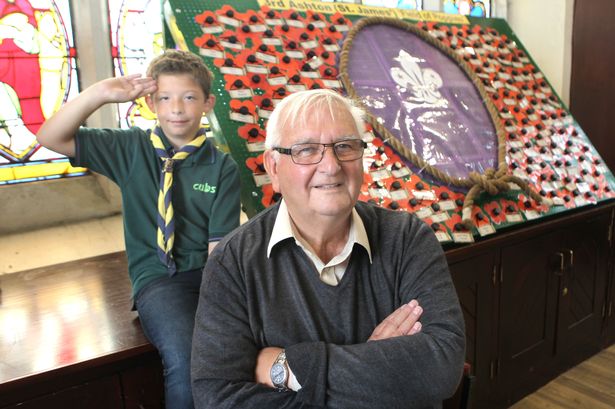
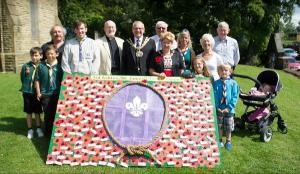
Scouts in Tameside have paid touching tribute to fallen soldiers from their parish including a former leader who was killed in the Great War. The 3rd Ashton St James’ group created their own ‘field of poppies’ with a flower to represent each of the men who didn’t make it back.

The floral display to 129 soldiers who died between 1914 and 1945 was unveiled at St James’ Church, on Cowhill Lane, to coincide with the centenary of the start of the First World War. They included former scout leader Herman Hodge who was just a teenager when he was killed although his body was never found.

Derek Casey, 77, is now chairman of the group which he first joined as a child in 1945. He said: “The idea came about for Scout Community Week where we come together to improve the lives of our local community. A lot of men went, not just from our church but from churches across the land. This year with it being very much in people’s thoughts, we thought it would be nice to remember the part that the community of St James’ played.”BuTW22HIYAAWu-m

He added: “Every name that’s shown on the memorial window in the church will be put on an individual poppy. We had a scout leader who was killed called Herman Hodge and we have a copy of the letter that was sent from the war office to his parents.

“In those days, you can imagine it was a very close-knit community. I think the important thing is not glorifying the war, it’s commemorating it and remembering the people who left St James’ and didn’t return.”

Inside Tameside provided this story:

scoutpoppies2A special ‘Field of Poppies’ will go on display in Ashton this weekend.
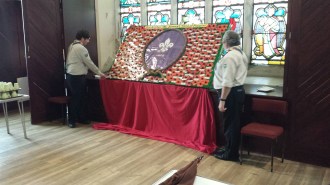
The 3rd Ashton St James scout group have created the ‘field’ in remembrance of those who gave their lives for the parish. In this year’s scout community week, the cubs, beavers and scouts took inspiration from the Window of Remembrance memorial in the church that bears the names of those who died in both world wars.

They  have been busy making their own poppies and to each one is attached the name of one of the soldiers. Altogether, the group have made 150 poppies that will be put together to create their Field of Poppies. Some of the names on the poppies are family members of the scouts in the group and one former scout form the group, Stephen Crane, is now serving in Afghanistan.

The Field of Poppies will be unveiled at the Remembrance Day service at the church on Sunday and will be on public display at the church from Monday between 12 noon and 4pm. The group cordially invites the Community of St. James’ Parish, the wider community of Tameside, members of local voluntary organisations, local clergy and councillors to come and view their work but also remember the men who went forth, did their duty and didn’t return to their loved ones.

20140803_111015There is also a further opportunity to add more poppies to the “Field” if any person would like to add a poppy in remembrance of someone they know who fell. Refreshments will be available throughout the viewing period.

The group thank Atlas Trading and JLS Designs for their donations and help with the project.