Author Archives: Roger Farnworth

Unknown's avatar

About Roger Farnworth

A retired Civil Engineer and Priest

Chemins de Fer de Provence 3

I’ve been doing a little research on the history of the lines in the area around Nice.

The first rails were planned alongside the River Var in 1845. At that time Nice and its surroundings were part of the kingdom of Piedmont-Sardinia. The rails were laid on a 12 kilometre length between La Rochette Sur Var and Aspremont. The line began working with a single flat wagon drawn by a mule.

In 1860, Nice was annexed by France. This annexation created various upheavals. Amongst the changes was the generation of a new railway line from Marseilles to Nice which did not pass through major centres of population in the Var – Brignoles, Draguignan and Grasse. Local dignitaries began a process to develop a central line through the Var. This process wass given some impetus when on January 24th, 1872, a collapse between Antibes and Cagnes highlighted the brittleness of the single railway link.

The recent annexation of Nice generated a desire for a direct line to Paris. The valley of the Var was considered for this route even though there is no road in the valley. Puget-Théniers was connected to the coast only by one mule track.

The arrival of Charles de Freycinet at the Public Ministry of Labour resulted in a large number of railway projects. For the area of Provence-Alpes Martime-Côte d’Azur, six lines were planned, linking:

A) Savines with Barcelonnette
B) Digne with Draguignan, via St-Andre and Castellane
C) Digne with the line to Barcelonnette, via Seyne
D) Draguignan with Cagnes or Nice via Grasse
E) Draguignan with Mirabeau, via Barjols
F) Nice with Puget-Théniers.

Single track lines were proposed of standard gauge. Nice’s officials were unhappy and proposed a million franc subsidy to ensure that Nice was included on the main routes of the system – to Digne and the ‘Central Var’.

image

Work commenced on two lines: in 1881: Digne to Castellane; and in 1882: Grasse to Draguignan. The original intention was to use standard gauge but the costs of standard gauge became prohibitive. Initially thought to be in the region of 200,000 francs per kilometre rose to a likely, 300,000 francs/km for Digne-Castellane and even 600,000 francs for Draguignan-Grasse. The decision was made in 1883 and 1884 to redesign the lines to a metre gauge, the routes became more sinous and less expensive and a new railway company was formed – La Compagnie des Chemins de Fer du Sud de la France – to run the concessions.

Work on the Central Var line started, along its full length in 1886 and 1887. For the first time in France, a narrow gauge line attained a length greater than 100 km. The first section Draguignan-Salernes was officially opened on April 23rd, 1888. On August 27th, the line reached Barjols, and then on January 28th, 1889 the terminus of Meyrargues.
The building of the section from Draguignan to Grasse, faced greater geological obstacles and required the building of remarkable civil engineering structures, like the viaduct of Siagne (a metallic bridge of 72 metres high) and the viaduct of Rayol.

image

For a time there was great tension between France and Italy and the standard gauage coastal line was thought to be under threat. An alternative standard gauge route was prosed by putting a third rail alongside the metre gauge line between Nice and Draguignan.

The decision was also taken to construct a coastal line to link towns not served by the standard gauge. The first section St-Raphaël-St-Tropez was inaugurated on August 25th, 1889, then the line was extended to Hyères August 4th, 1890. On the July 1st, 1894, a branchline Cogolin-St-Tropez was opened. The unveiling of the last length of main line, Hyères-Toulon was opened on August 6th 1905.

image

By 1892, La Compagnie des Chemins de Fer du Sud de la France had a 300km network with over 135km in difficult terrain, crossing the boundaries of four departments. The map shows the full extent of the network which was finally completed in 1911 when the Digne to Nice line finally was fully opened. By then the network had 349km of lines. Sadly, the only line left now is that from Nice to Digne.

References:

http://cccp.traindespignes.free.fr/infos-historique-creation.html

Psalm 22; Lamentations 5; Isaiah 49; Isaiah 54

These four passages are all expressions of abandonment. Brueggemann places them in the context of the exile. He notes that, for many interpreters, Isaiah 40-55 is an “intentional, salvific response to the complaint from the Abyss in the book of Lamentations.” (Brueggemann: p101; cf., Linafelt: pp62-79.)

This connection is exemplified by Isaiah 49:14-15 and Lamentations 5:20: “The complaint … in Lamentations 5:20 as well as in Psalm 22:1 is that YHWH is unfaithful and neglectful. It is YHWH’s failure to be faithfully present in Israel that results in the suffering and shame of the exile.” (Brueggemann: p101 – my emphasis.)

In Lamentations, there is no response to the assertion of abandonment, in Isaiah a response or challenge to the assertion is forthcoming. However, “in these texts, Israel’s claim of divine abandonment is taken at face value, without the characteristic hedges often proposed in the rationality of the church.” (Brueggemann: p103.)

In each of the first three of these passages we might be tempted to argue that the abandonment was perceived by Israel but not real, because God woud never abandon his own. In the fourth passage (Isaiah 54) we cannot escape the reality of the abandonment, at least fidelity to the text will not allow us to do so: “For a brief moment I abandonned you … in overflowing wrath, for a moment, I hid my face from you …” says YHWH (Isaiah 54:7-8). “No justification for divine abandonment is offered. The poetry leaves us with only the brute fact of divine abandonment,” (Brueggemann: p103) on the lips of God, no less.

It is true that these “two admissions whereby YHWH concedes that Israel has ben abandoned are promptly countered by two assurances: ‘… with great compassion … I will gather you; … with everlasting love (hesed olam) I will have compassion on you,’ (Isaiah 54:7-8). It is profoundly important that the two positives do not nullify the two previous negatives.” (Brueggemann: pp103-104.)

It is also important from my perspective to note the broader passage in which verses 7 and 8 have been included. The promise of YHWH is the removal of shame: “Do not be afraid; you will not suffer shame. Do not fear disgrace; you will not be humiliated. Younwill forget the shame of youyr youth and remember no more the reproach of your widowhood.” (Isaiah 54:4.) However, in Isaiah 54, “there is no way around it. YHWH does, from time to time, ‘exit’ the drama of Israel’s life.” (Brueggemann: p104.)

We stay with Brueggemann a little longer. He asks us to abandon usual responses to these passages and others like them in Scripture. These responses include five different strategies for dealing with  passages that talk of Israel’s abandonment by God: (1) disregard – we have ignored them; (2) justification – clearly Israel’s sin was grievous and provoked this response; (3) judgement that it only seems to Israel as though she has been abandoned, when she has not; (4) philosophical subtlety – presence in absence, or the idea that speculating on God’s absence is evidence of belief in God’s background presence; (5) evolution – the idea that the evolution of Israel’s religion also includes God becoming a better God. (Brueggemann: p105-109.)

Instead, Brueggemann asks us to consider the text as a drama. He suggests that usually we Christians approach any text with some preconceived notions about God, with a particular understanding of God’s nature. “Such a view may be plausible from some other perspective, but it is of little help in taking the specificity of the biblical text seriously.” (Brueggemann: p109.) Brueggemann proposes, rather, that we posit a ‘rhetorical man’ as opposed to a ‘serious man’. He draws on Richard Lanham’s ideas here:

The serious man possesses a central self, an irreducable identity. These selves combine into single, homogeneously real society which constitutes a referent reality … This referent society is in turn contained in a physical nature itself referential, standing ‘out there’, independent of man.”(Lanham: p1.)

By contrast,

Rhetorical man is an actor; his reality public, dramatic. His sense of identity, his self, depends on the reassurance of daily histrionic reenactment. He is thus centered in time and concrete local event. The lowest common denominator of his life is a social situation. And his motivations must be characteristically lucid, agonistic … He is thus committed to no single construction of the world; much rather to prevailing in the game in hand.” (Lanham: p4.)

These ideas are of great signifcance for us as we consider these texts, and particularly so in the light of anthropological work by Bruce J. Malina and others which identifies: (a) the pivotal values of Old Testament cultures as honour and shame; (b) people in those cultures as being dyadic personalities – concerned how they were seen by others and living up to or through those perceptions; (c) group as more important then the individual; and (d) social life as being a game of competing for the ‘limited good’ of honour, and endeavouring to avoid being shamed. Lanham’s ‘rhetorical man’ seems to fit this cultural understanding very well.

Brueggemann further points out that “the world of rhetorical man is ‘teeming with roles, situations, interventions, but … no master role, no situation of situations, no strategy for outflanking all strategies … no neutral point of rationality from the vantage point of which the ‘merely rhetorical’ can be identified and held in check’.” (Brueggemann: p112, quoting Fish: p215.)

Brueggemann is not arguing for a particular understanding of the culture of the day. He is, rather, asking us to take the text seriously at face value. However, his proposal of the ‘rhetorical man’ looks and feels suspiciouly like the ‘man’ or ‘woman’ of the culture of the time. He or she was someone who would have read or heard the text in the way that Brueggemann suggests. The anthropological work of Malina and others supports Brueggemann’s proposal that we read the text dramatically. Or we could argue that Lanham/Brueggemann’s ‘rhetorical man’ is no mere hypothesis but rather the ‘man’, or ‘woman of the street’ in Old Testament times. Or we might go even further and say that the ‘rhetorical man’ demonstrates the model that anthropologists have proposed for understanding the cultures of the Scriptures, specifically that those cultures were dominated by the values of honour and shame, has validity!

References:
Walter Brueggemann; “Redescribing Reality: What We Do When We Read the Bible;” SCM, London, 2009
Stanley Fish; “Rhetoric.” In Critical Terms for Literary Study, edited by Frank Lentricchia and Thomas McLaughlin, pp203-222. Univ. Chicago Press, Chicago, 1990.
Richard A. Lanham; “The Motives of Eloquence: Literary Rhetoric in the Renaissance;” Yale Univ. Press’ New Haven, 1976.
Tod Linafelt; “Surviving Lamentations: Catastrophe, Lament, and Protest in the Afterlife of a Biblical Book;” Univ. Chicago Press, Chicago, 2000.
Bruce J. Malina; “The New Testament World – Insights from Cultural Anthropology;” Westminster John Knox, 1993. See also the work of other members of the Context Group of which Malina is a part.

1 Samuel 5

A reminder: as we look at different passages in the Old Testament we are looking for signals of the significance of shame, often the significance of honour and shame.

1 Samuel 5 is in the context of a war lost by Israel against thr Philistines. The army had taken the Ark of the Covenant into battle with them as a kind of talisman. When the ark of the covenant was captured by the Philistines and brought into the temple of Dagon, it was a deliberate act intending to shame and humiliate Yahweh and all Israel.

In reply, Yahweh shamed Dagon by causing him to lie prostrate and face down, bowing before Yahweh. The Philistines set Dagon back in his place, but the next morning they discovered Dagon “fallen on his face on the ground before the ark of the LORD! His head and hands had been broken off and were lying on the threshold” (1 Sam. 5:3-4). Dagon’s head and hands were cut off because “the head was a symbol of superiority and the palms of the hands a symbol of physical power.” (Tennent: p85, quoting Bechtel: p92.) “To lose one’s head is the ultimate humiliation and shame, and to lose one’s hands is a sign of the loss of power. (Tennent: p86.)

For the Philistine army, victory and hounour had tuned to shame.

References:

Timothy Tennent; “Theology in the Context of World Christianity: How the Global Church is Influencing the Way We Think About and Discuss Theology;” Zondervan, Grand Rapids, Michigan, 2007.

Lyn M. Bechtel; “The Perception of Shame Within the Divine Human Relationship in Biblical Israel;” in Lewis M. Hopfe ed.“Uncovering Ancient Stones;” Fisenbrauns, Winona Lake, IN, 1994; p79-92.

Chemins de Fer de Provence 2

image

A network of 1 metre railways was built in the South of France at the end of the 19th century, run by the Chemins de Fer du Sud de la France (S.F.), later to become the Compagnie des chemins de fer de la Provence (C.P.).

600 km of rail lines were built in three areas:

(1) La Littoral. A coastal section ran from Toulon, via Hyeres and Ste Maxime to Fréjus and St Raphaël.
(2) Nice-Meyrargues. A central section ran across the departments of the Var and the Alpes Maritimes, from Meyragues, via Draguignan and Grasse, to Colomars at the Var river, where it connected with the Nice-Digne section. This line ran from the end of the 19th century until it was closed in 1950.
(3) Nice-Digne This section ran from Nice, up the Var river valley to Dignes-les-Bains. Thankfully this line is still in service today.

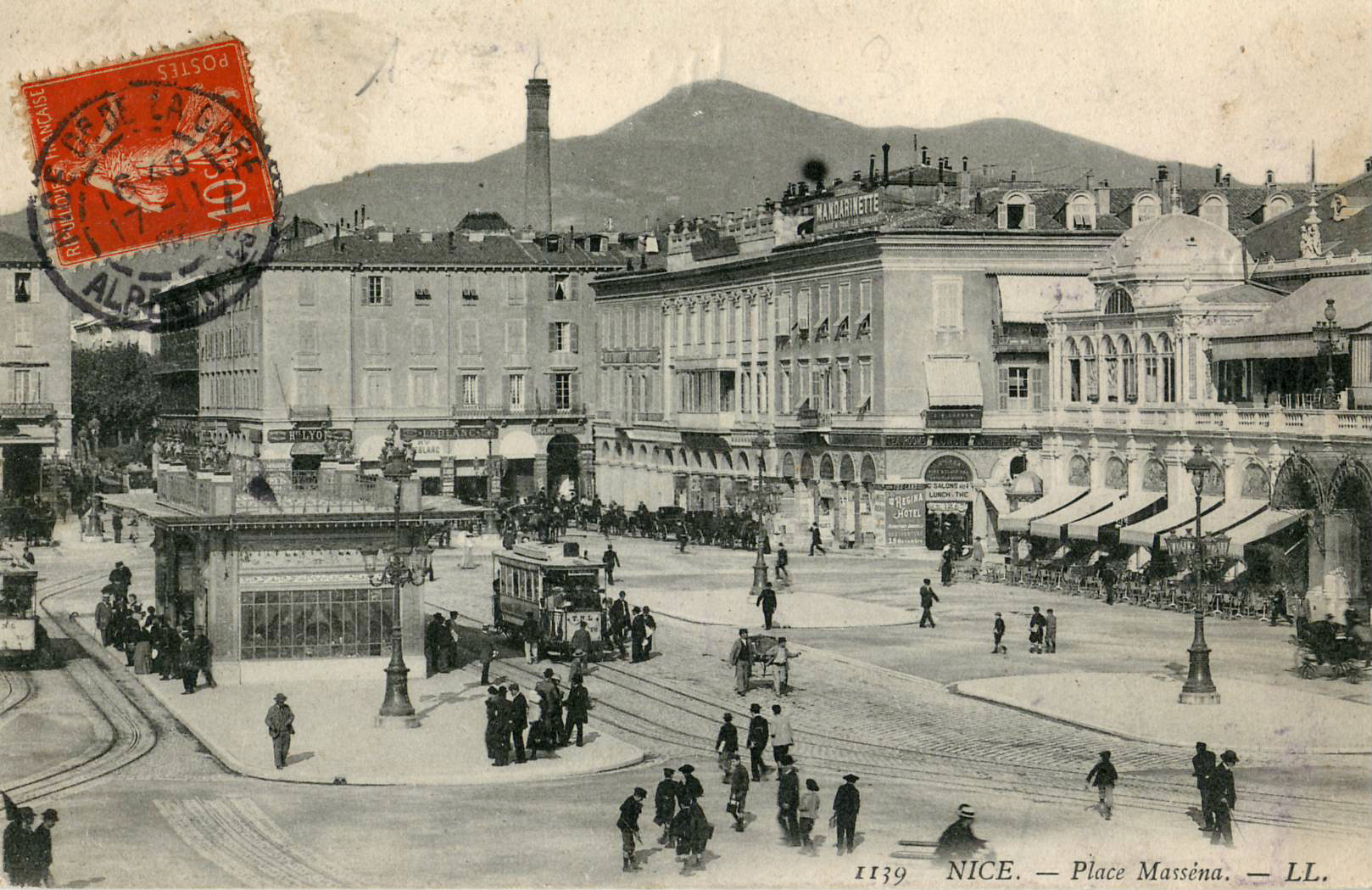
Tramways were also built in the Alpes-Maritimes. These tramways reached into some of the remotest areas of the Alpes-Maritimes. One example is that from Menton to Sospel.

The “Train des Pignes” is a name that was used locally for the old train on the Meyrargues-Nice and the Nice-Digne lines. Villagers used to collect pine cones (pommes de pignes) in the hills, usually the large cones from a pine called the pigne noir. They would collect the pine cones in large bags and leave the bags beside the railway tracks. The train moved through the hills very slowly — so slowly that passengers could get on and off the train while it was moving at it’s “normal” speed. It was a common sight for these bags of pine cones to be put onto the train as it passed, to be transported to the remote houses and farms for fuel.

A number of branch lines linked the longer lines to places nearby, mostly in the Alpes-Maritimes.

Grasse-Cannes: 1871-1938 for passengers, although the southern part of the line remained open for limited freight operations. The Cannes-Grasse line was reopened in 2005.

Grasse – Cagnes-sur-Mer: left the Grasse-Vence route at Pré-de-Lac and followed the valleys down past Roquefort-les-Pins and Villeneuve-Loubet to Cagnes-sur-Mer.

Vence-Cagnes-sur-Mer: went past Saint Paul-de-Vence and La Colle-sur-Loup. Some of viaducts and tunnel openings are still visible here, from along the road.

Roquestéron: from the Var river, at the Pont Charles-Albert (between St Martin-du-Var and Plan-de-Var), this spur line followed the Esteron valley west to Roquestéron, passing just south of Gilette and Pierrefeu.

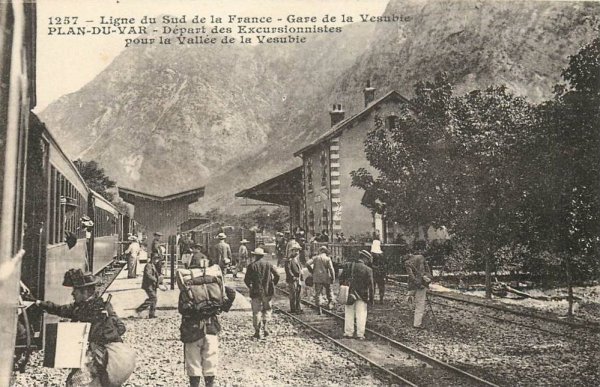
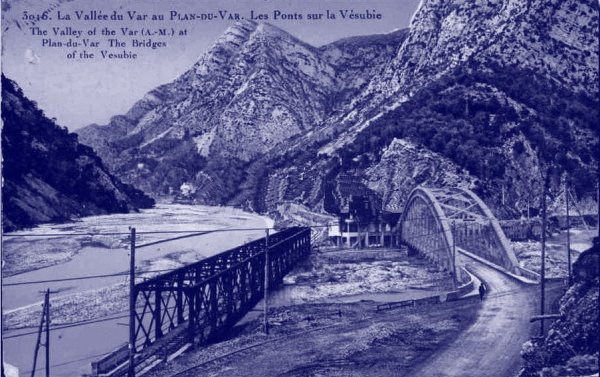
Vésubie Valley: from Plan-du-Var, via St Jean-la-Rivière, Lantosque and Roquebillière to St Martin-Vésubie.

Tinée Valley: this branch-line went up the Tinée valley from a narrow gorge at the Pont de la Mescala to St Sauveur-sur-Tinée, providing access to:La Tour, Bariols, Clans, Illonse, Marie and Rimplas.

Dalius Valley: this line followed the Dalius valley up beyond the Gorges de Dalius. It branched off from the main line at the Pont de Gueydan and went to the small town of Guillaumes.

References:

http://www.beyond.fr/themes/lostrailways.html – this page gives a much fuller account of these lost lines and is worth a visit.

Genesis 3 – The Fall

The story of the Fall is set in the context of the second creation story. This passage is traditionally cited as being the place to look if we want to understand original sin and guilt. But let’s set that aside for a moment and endeavour to look at the passage through the lens of shame, with our eyes open to what the passage might say about the shame that sits at the core of our being.

Adam and Eve are living in a garden, a beautiful garden, full of all they need for food. It is a delightful place. They are at peace with each other, with God and with everything else in this garden. James Fowler cites Erik Erikson who, in his work on child development in the middle of the last century, noticed an amazing parallel between this story of the Fall and his work. Erikson found “in the account of Eden echoes of our personal and collective body memories of the time of flowing milk, loving and understanding eyes, responsive care, and un-conflicted cherishing that mark our utopias of pre-weaning infantile experience. He suggested that the biting of the fruit, represented as the occasion for expulsions from paradisal gardens in myths from many cultures, likely symbolizes the species’ collective memory of being separated from the provision of maternal breasts, which comes simultaneously – and seemingly punitively – with the exploding pain of emerging teeth. It can also represent the species memory of the loving, benign gaze of caretakers becoming “strange” with the imposition of necessary limits upon children and the responses they make to the violation of limits and the failure to meet expectations and standards.” (Fowler: p133, summarising Erikson’s discussion of this passage in “Childhood and Society.”)

Others have also pointed to this passage in this way and talk of it as the first introduction of shame to the scriptures. Timothy Tennent says that “the account emphasises guilt, shame, and fear as three of the consequences of the entrance of sin into the world, and all three can be traced throughout the scriptures.” (Tennent: p83.)

Following the traditional interpretation, Tennent is firm in his contention that the passge speaks of guilt and sin  and also introduces shame. I find it hard to see the traditional emphasis on guilt as I read the passage anew. If it is there it is as a concomitant to shame rather than being the dominant focus of the passage and appears as a state of having dome wrong rather than as a feeling.

Rather than guilt being present, we are presented with evidence of shame, and shame seems to be the main concern of the story. Before the fall “the man and his wife were both naked, and they felt no shame.” (Gen. 2:25). After the fall, they realised that “they were naked … and made coverings for themselves” (Gen. 3:7) and hid from God (Gen. 3:8). Adam and Eve’s overwhelming concern was their nakedness, not their sin (Gen. 3:10). These things are the dynamics of shame rather than guilt. It seems to me to be at least possible, that we see what we want to see in passages like this, and it may be that the traditional interpretation has as much to do with the prior assumptions made by early interpreters which were then strengthened by Reformation Theology.

As we noted above, Erikson suggested that the biting of the fruit relates well to our own experiences of development and their consequences. We like Adam and Eve are expelled from the comfort and safety of our mother’s breast and life, in many ways, mirrors the experience of Adam and Eve as we strive for our independence and find that there is then no going back to former securities. Could we see the story of the Fall as one of “our forebears … coming to first self-consciousness in the garden: They experienced ‘standing on their own two feet,’ accompanied with its first hints of autonomy and anxiety. They experienced seeing themselves mirrored in their mutual gazes of admiration and enjoyment. They are deeply curious about not only the forbidden and enticing fruit, but also their previously unreflective relation to their mysterious and powerful companion and limit-setting source of taboos, the one called God in the story. They felt rising interest-excitement in the new possibilities of god-like (adult) authority and power. Little wonder they found irresistible the promises and rationalizations that the tempter-serpent offered them as symbolized in the forbidden fruit.” (Fowler: p134.)

Fowler, to whom I am indebted for his discussion on the story of the Fall, continues: “In disobedience, they ate the fruit … [and] reflexively, shame turned their awareness from each other and their mutual bliss back upon their individual selves. In their strained faces, downcast eyes, lowered heads, and hunched necks and shoulders, they each felt separately the flood of shame. Framed in their separate experiences of diminishment and the involuntary covering of their genitals, their mutual mirroring now disclosed them, each to each, and to themselves, as ‘strange’, as pitiable, as vulnerable, and as exposed in their disobedience – to each other and the Other.” (Fowler: pp134-135.)

Robin Stockitt refers to Genesis 2:25 (naked and yet no shame) and Genesis 3:10 (the desire to hide because of the sense of shame). He says that Adam and Eve’s shame “produced a turning in upon themselves, a hiding from the face of God. … The desire to hide, to withdraw and to obscure one’s true self is part of the experience of shame. The fear is that if one’s true nature is transparently clear for all to see, then one runs the risk of being scorned, humiliated and ultimately rejected.” (Stockitt: p116.)

Fowler goes on to say: “The hiding, the covering, the confusion, the blaming – all these features bear the marks of shame. Theirs is an experience that includes at least the following consequences of coming to shameful self-awareness: (1) painful self-consciousness; (2) the experience of self and others as separate and as ‘strangers’; (3) alienation from a former non-reflective bond of interpersonal harmony; (4) a disturbing sense of their otherness and estrangement from God; (5) darkened shadows across their world, suggesting dangers and restricted abundance; and (6) introverted self-consciousness, coupled with a sense of personal stain or fault, in relation to the now more distant and remote authority.” (Fowler: p 135.)

Shame is clearly a very important element in the story of the Fall. It seems to be considerably more evident than the theme of guilt. Adam and Eve show the classic symptoms of shame, their whole being is encompassed by their shame. It is not the biting of the fruit and the disobedience that entailed, that is their primary concern, rather it is their nakedness. However, what matters most is not to deny that the story is about guilt and original sin, the story may well be so. Rather what matters is that we recover the significant place in the story that shame plays in its own right and not as a concomitant to guilt.

And, if we are prepared to give shame the prime place in the narrative. If we are willing to “bring insights on the dynamics of shame into the interpretation of the Genesis 3 story of Eve, Adam, and ‘the Fall’ [we will] see our kinship with our forebears in new ways. To couch the story in terms of the issues of “autonomy versus shame and doubt” rather than those of “initiative versus guilt” (Erikson) places the encounter with the serpent, the forbidden fruit, and the awakening to nakedness and shame in a different frame. It [seems to alter] the meaning of disobedience.” (Fowler: p138.)

Fowler continues: “We are given [in Genesis 3] a story that recalls the first era of a person’s (or our species’) consciousness and awareness of being seen and evaluated by others. We are invited to recall the emergence of a division in us between … our living up to standards of which we are becoming aware and a resistance to the standards coupled with the experience of being exposed before we are ready. In short, the Genesis 3 narrative recalls for us our earliest months of consciousness and self-awareness brought about by the loss of an innocence that could not last – an innocence born of lack of reflective self-consciousness, limited mobility, inability to articulate our meanings and experiences, and a mutuality of dependence. Coming to stand on our own two feet … means to encounter the clash of our wills with others’. It means coming to terms with expectations and limits imposed by others. It means taking on the burdens of self-consciousness , … [and] embracing the risk of alienation from those we love most . … The story depicts the irreversible step toward self-responsibility and an elemental sense of costly liberation from the provisional paradise of our experience before language and before accountability.” (Fowler: pp138-139.)

I find Fowler and Erikson’s reading of Genesis 3 intriguing and enlightening. It seems an entirely fair reading of the text, particularly if we listen to Walter Brueggemann’s advice to allow the text to speak for itself. However, whether or not we accept Fowler’s understanding of the Fall, is not relevant for our purposes here. If we are willing engage with the text as it is written, if we allow ourselves to recover the place of shame in the story of the Fall, then our understanding of the text is broadened and strengthened. And, if this is true for this passage, then it is also true for the rest of the Old Testament.

People who lived in a culture with pivotal concerns for honour and shame will have brought those same concerns to the writing and reading of their scriptures.

References:

Walter Brueggemann; “Redescribing Reality: What We Do When We Read the Bible;” SCM, London, 2009.

Erik Erikson; “Childhood and Society;” Collins, London, 1977 (originally Norton, New York, 1950).

James Fowler; “Faithful Change;” Abingdon Press, Nashville, Tennessee, 1996.

Robin Stockitt; “‘Love Bade Me Welcome; But My Soul Drew Back’ – Towards an Understanding of Shame“; in Anvil, Vol. 15, No. 2, 1998.

Timothy Tennent; “Theology in the Context of World Christianity: How the Global Church is Influencing the Way We Think About and Discuss Theology;” Zondervan, Grand Rapids, Michigan, 2007.

Chemins de Fer de Provence

image

Usually when we come to Nice in the late Autumn we travel somewhere on the Chemins de Fer de Provence which runs from Nice to Digne in Provence – about 151 km.

Last year we travelled to Entreveux. This year we did not travel on the train, but walked alongside the line at St. Martin du Var. We also visited the renovated buiding that used to be the Nice terminus of the line. Renovation was only just completed. Here are two photos which show the change – the first from 2007 the second taken this week.

image

image

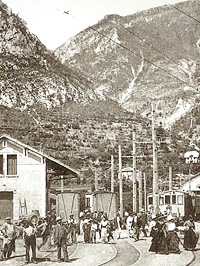
There was a display of some historic photos some of which you can find below.

image

Since late 2011 the trackwork on the line has been being renewed and they have bought four new DMUs for use on the line.

image

image

image

image

image

image

Sospel to Menton Tramway

image

We visited Sospel in The Alpes Martime today and took the bus from there to Menton.

image

As we travelled down on the bus on the D2566 we saw a number of derelict viaducts.

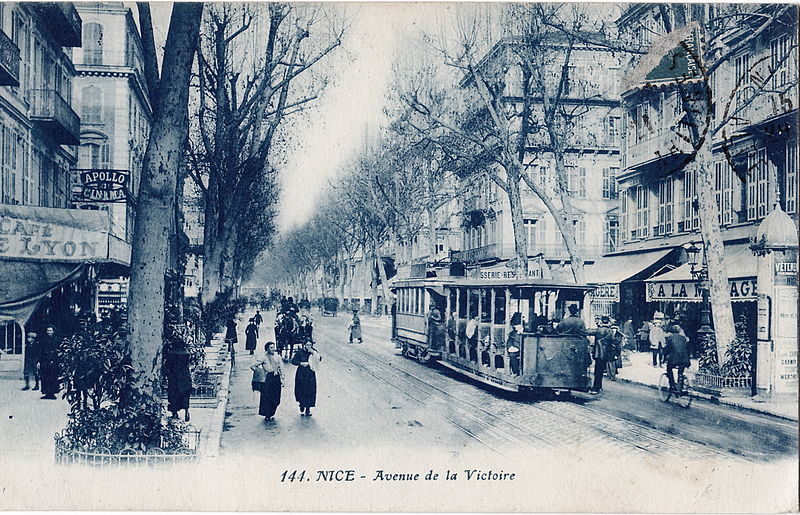
After a little investigation on the Internet we were able to establish that a tramway was opened from Menton to Sospel in 1912/13 which at first was very well patronised with 1st and 2nd Class accommodation. Often freight wagons we attached to trams as they traversed the line.

When the main line from Nice to Tende was being built, the tramway provided an easy means for transport of materials from the coast. Sadly once the main line was opened usage of the tramway declined and it closed in the 1930s. The route of the tramway very closely followed the line of what is now the D2566. It passed through or close to two villages en-route from Sospel to Menton: Castillon and Monti.

image

image

image

image

image

image

References:

http://transpressnz.blogspot.fr/2012/02/one-time-tramway-from-menton-to-sospel.html

http://www.cparama.com/forum/ligne-du-tramway-menton-sospel-t4789.html

http://www.notrefamille.com/cartes-postales-photos/cartes-postales-photos-Ligne-du-Tram-de-MENTON-a-SOSPEL-A.-M-.–Le-Viaduc-du-Carei.-06500-MENTON-06-alpes-maritimes-553903-67098-detail.html

http://www.delcampe.net/page/item/id,80276116,var,Tramway-line-from-Menton-to-Sospel-the-Viaduct-du-Caramel-Sospel-Alpes-Maritimes-France-postcard,language,E.html

http://www.lafoireauxaffaires.fr/cartespostales/page1.html

Deuteronomy 25

Deuteronomy 25: 5-10

In this passage, if a man refuses to marry the widow of his brother, she can  remove one of his sandals, in the presence of the elders, and spit in his face and say, “‘This is what is done to the man who will not build up his brother’s family line’. That man shall be known in Israel as the family of the Unsandalled” (Deuteronomy 25:9-10). Robin Stockitt says: “The surviving brother had brought shame on the widow and therefore on his own brother by refusing to perform his expected duty. The consequence was that he, in turn, would be shamed by the community. In the act of spiting, a bodily substance leaves the body, which in Hebrew thought was understood to be a bounded system, symbolic of the whole community. Once fluids leave the body they become unclean (cf. Lev.15:8). The removing of the sandal may have symbolised the loss of property to the brother-in-law if the widow subsequently married outside the family, or it may have had a more sexual connotation as in Ruth 3:4-7.” (Stockitt: p113.)

The brother has to live with a shamed reputation “for the rest of his life with the likelihood of exclusion from the community. The shaming sanction could have threatened his very survival.” (Stockitt: p113.)

Here, as elsewhere there is a sense, even if wrongdoing is involved, of shame being all enveloping, affecting not just an individual but a whole community or family. It goes far beyond an individual act of wrongdoing and the need for restitution, it is about the whole person, and the remainder of his existence – his whole being.

While we are considering a passage from Deuteronomy it is worth noting that Lyn Bechtel sees and emphasis in Deuteronomy, “not so much on the fearfulness of a crime, but on the fearfulness of the resulting appearances in the eyes of the beholders. The problem was more the inadequacy that was revealed, rather than the crime itself.” (Bechtel: p56.) This is  a concern with appearances, with shame. Bechtel provides these examples: (1) Deut. 22:1-4 – the temptation to avoid a shameful sight; (2) Deut. 22:13ff – the bringing of a shameful reputation on a bride and her family; (3) Deut. 23:12ff – the spot outside the camp in which the army was to relieve itself; (4) Deut. 25:11-12 – the shame of a woman grabbing a man’s genitals in a fight; (5) Deut. 27:16 – people who were publicly cursed for shaming their father and mother.

As elsewhere in the Old Testament, shame is a significant concern in Deuteronomy.

References:

Robin Stockitt; “‘Love Bade Me Welcome; But My Soul Drew Back’ – Towards an Understanding of Shame”; in Anvil, Vol. 15, No. 2, 1998.
L. M. Bechtel; “Shame as a Sanction of Social Control in Biblical Israel: Judicial, Political, and Social Shaming”; in Journal for the Study of the Old Testament; Issue 49, 1991.

Psalm 44

Of this Psalm, Walter Brueggemann says: “This psalm is a complaint about some public crisis wherein the community of Israel has suffered and has been reduced to helpless shame,” (Brueggemann: pp 85-86).

It is worth reminding ourselves that we are only considering one strand in any possible range of interpretations of the different passages of Scripture on which we are reflecting. Nonetheless the theme of ‘shame’ can be signifcant. In this Psalm it is explicit. Verses 9 to 16 make it abundantly clear that Israel believes that she has been shamed by YHWH.

Verses 9 to 14 “[indict] YHWH for infidelity” (Brueggemann: p86). These verses repeat strong accusations against YHWH: “you have rejected; you have abased; you turned back; you made us; you scattered us; you sold your people; you made us; you made us. YHWH has acted as Israel’s enemy. Verses 15 and 16 are a reflection on the outome of YHWH’s savge action: disgrace; shame; taunt; revile; avenge.” (Brueggemann: pp86-87.) The ‘shame’, vocabulary in verses 13 to 16 is strong, and so are the images invoked: we are a byword among the nations; people shake their heads at us; my face is covered with shame.

The psalm forms a petition that YHWH will act. Brueggemann asserts that “the extended repetition of phrases in accusation and innocence [in the psalm as a whole] is in order that the sorry situation of Israel and the sorry failure of YHWH should be given full and in-depth coverage. The purpose of such reiteration is to make the petition all the more demanding. For the community that listened to the entire poem, the imperatives must have come as a surprise. For YHWH who hears the prayer, the verses that precede the petition put YHWH in a poature wherein YHWH musr, if YHWH cares at all, make a new saving initiative. The prayer, in its fullness, forces YHWH’s hand.” (Brueggemann: p88 – his emphasis.)

So, here in this psalm, we see evidence of the writer calling on God in a way that places an obligation on God to act. God’s honour is at stake, if nothing else. God’s reputation as a faithful God requires action if that reputation is not to be lost. Here in this psalm, God is the patron who has failed to meet up to his obligations in the covenant made between God and Israel. Israel believes she has been faithful, but God hass not been faithful. As a result Israel’s shame is God’s shame. God must act.

This is one response to a sense that God has failed to respond to petitions. It is an honest, open and truthful response. It expresses faithful trust, and the deep shame felt when that trust appears not to haavr been honoured. The final petition is trong and clear. God must act: “Awake, O Lord! Why do you sleep? Rouse yourself! Do not reject us for ever. Why do you hide your face and forget our misery snd oppression. We are brought down to the dust; our bodies cling to the ground. Rise up and help us; redeem us because of your unfailing love.” (Psalm 44: 23-26).

References:

Walter Brueggemann; “Redescribing Reality: What We Do When We Read the Bible;” SCM, London, 2009.

1 Samuel 1 and Psalm 6

Here we listen to three different witnesses, two of whom attest to the presence and power and shame within the text of Scripture – Walter Brueggemann, Patrick D. Miller and Judith Herman. Brueggemann invites us to consider 1 Samuel 1 as a story in four scenes. It is in the first of these scenes that we come across Hannah who is to be the mother of Samuel. In verses 3 to 8 we hear of Hannah’s shame. Brueggemann says: “The narrator … focuses attention on Hannah who ‘wept and would not eat” shamed, angry, depressed about her barren status.” (Brueggemann: p66.)

Hannah is barren and, for an Israelite woman, this is a state of shame. The resolution to her shame follows as the scenes of the story unfold. Eventually Hannah has her first born son and she dedicates him to the Lord.

Brueggemann then asks us to listen to the testimony of Patrick Miller who in They Cried to the Lord (Miller: pp233-243) has considered the prayers of different women in the Old Testament. Miller suggests that Psalm 6 could appropriately be understood as Hannah’s prayer, or if not Hannah, someone just like her. Psalm 6 is a call for God’s deliverance: “My soul is in anguish. How long, O Lord, how long?” (Psalm 6:3.) “I am worn out from groaning; all night long I flood my bed with weeping and drench my couch with tears.” (Psalm 6:6.).

The psalmist (or perhaps Hannah) completes her prayer either with thanksgving for what God has done, or by anticipating God’s rescue: “YHWH has heard my supplication; YHWH accepts my prayer. All my enemies shall be ashamed and struck with terror; they shall turn back, and in a moment be put to shame.” (Psalm 6:9-10.)

Those who have despised Hannah have been shamed themselves. They are the disgrace, not Hannah. She has been vindicated by the Lord!

Brueggemann goes on to point to the work of Judith Herman. In Trauma and Recovery she writes: “Survivors who grew up in abusive families have often cooperated for years with a family rule of silence. In preserving the family secret, they carry the weight of a burden that does not belong to them. … In their recovery, survivors may choose to declare to their families that the rule of silence has been irrevocably broken. In so doing they renounce the burden of shame, …” (Herman: p200, my emphasis).

Abuse is part of Hannah’s problem, she has been abused by her ‘sister-wife’, and no doubt also by her community, for her barrenness. In the four scenes of the story in 1 Samuel 1, Hannah finds her voice and she asserts her “existence and legitimacy,” (Brueggemann: p75), just as those shamed by abuse and a conspiracy of silence need to do. In those same four scenes we see God at work removing her shame, her barrenness.

Miller compares Hannah to Mary: “When Mary bears the child and witnesses the human impossibility become possible with God, she sings a song of praise and thanksgiving that is derivative of an earlier song of thanksgiving prayed under similar circumstances, the song of Hannah. In these two songs of thanksgiving by two women of lowly estate … we discover through their experience of God’s marvellous deliverance what those things are that are too wonderful for us, but not for God: lifting up the lowly and putting down the mighty, feeding the hungry and giving sight to the blind, making the barren woman a joyous mother of children, God’s power and intention to reverse those structures and realities of human existence that seem impossible to break.” (Miller: pp242-243.)

The power of shame is broken and those who would shame others are themselves shamed!

References:

Walter Brueggemann; “Redescribing Reality: What We Do When We Read the Bible;” SCM, London, 2009.
Judith Herman; “Trauma and Recovery: The Aftermath of Violence – from Domestic Abuse to Political Terror;” Basic Books, New York, 1992.
Patrick D. Miller; “They Cried to the Lord: The Form and Theology of Biblical Prayer;” Fortress, Minneapolis, 1994.