Author Archives: Roger Farnworth

Unknown's avatar

About Roger Farnworth

A retired Civil Engineer and Priest

Christmas – Religion-Lite?

I222239-A-Virgin-Birth- like the article below.

I guess it reflects the approach that many of us have to Christmas and to the Anglican Church (C of E). Tim Lott seems to have caught something of our British psyche in a very short article.

However, just to be clear about what I am saying: I believe in the Virgin birth, and in miracles, … the Christian faith is everything to me and I do believe that Jesus really is God’s Son, both divine and human. So, I am like the Vicar in Tim’s article.

Yes, I am a Vicar, so I should believe!?! But as Tim Lott points out, one of the endearing realities of the C of E is that while I and many others really do believe these things, we don’t feel constrained to force our beliefs on others. We really do believe that it is possible for God to do the talking.

It really is great when we see people in church at Christmas time!!!!

It is good that there remains a strong sense of goodwill towards all this stuff among the wider population, even if people are a little circumspect about whether they really believe it or not.

I hope that, in encountering a story once again –  a story that is so tied up with our national identity – our hearts are warmed, our desire to be at peace and to work with others is increased, and that, just possibly, there is room for God to meet with us and speak to us in a way which each of us can hear, and to which we might just respond!!!!

Great article Tim!

http://gu.com/p/4f3q8?CMP=Share_AndroidApp_Facebook

Mary’s Journey – Luke 1:39-55

Mary’s Journey

I have spent time living in South West Uganda and I have returned there on a few occasions. Since 1994 when I first travelled to Uganda, I have been to Kisoro, right on the border with Rwanda and the Democratic Republic of Congo 5 times. and I am delighted to name their current Bishop as an important personal friend.

The Christmas story seems to be full of journeys – starting, seemingly with Joseph and Mary travelling to Bethlehem with a donkey, the journeys of shepherd and wise men follow before the Holy Family travel as Syrian refugees to Egypt to avoid persecution.

Today’s gospel focuses on another journey that is perhaps often overlooked … but more of that later. ….

People in Kisoro and the districts around spend a lot of their waking hours travelling. Here, below, are two of the journeys they make on a regular basis. ….

The first is to get to church.

Most of us rely on clocks or watches to sort out when to leave for church – in the past we relied on bells to tell us that the service was due to start. And in those days most of us would have walked to church – perhaps a few hundred yards at the most.  …… In Kisoro, 10 minutes before the service starts drums begin to play under a tree outside the cathedral.

In 1994 virtually no one had a watch and people would start walking to the cathedral when they heard the drums.
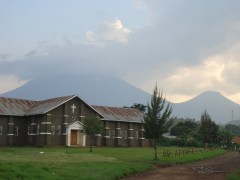
At the start of the service there would be perhaps 30 or 40 people in church – the services would last perhaps 2 to 22 hours and by the time the sermon was well underway (usually something that lasted at least 3/4 hour) the congregation would have swelled to over 700. Most people had heard the drums and then had a 45 minute to an hour walk to get to church.

That is quite a journey for a Sunday morning. ……….. However, it is nothign compared with the journey that many children and women still have to make in the territory around Kisoro.  …… A journey to fulfil a more basic need – the need for water.

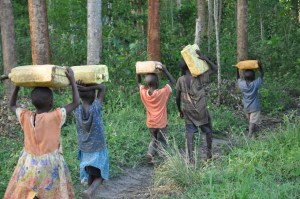
In 1994, for the first time, I met children who had to walk a 12km round trip each day before going to school – the outward 6km was relatively easy for the jerry cans were empty – the return journey was more arduous – up hill with full 5 gallon jerry cans. As churches in Ashton-ucarrying-waternder-Lyne, we’ve been able to be part of a continuing process of making this a thing of the past, but there are still today children and adults that make that kind of journey each day to collect water. It is still shocking!
What’s the worst journey you’ve ever experienced?

Was it a long car journey and did you get stuck in traffic? Was it a train journey that seemed never ending. Since being in Uganda my attitude to what counts as inconvenient in my travel arrangements has changed. But I still manage to get impatient. Many of us will be travelling this Christmas to see friends and family. Some of us, long distances.

Luke reminds us that Mary travelled with haste to spend time with her relatives. She’d just been visited by the Angel Gabriel. She’d accepted a role which could only mean that she would be ostracised by her community, a role which might mean the loss of her fiancée – being pregnant when Joseph knew that the baby was not his.

Was she afraid? You bet she was. Where did she turn? To someone she thought might understand. Someone who was also having a child in strange circumstances.

Can you imagine how she was feeling? This journey she took from Nazareth to the hill country of Judaea would have been a long one. 50 to 60 miles – a pregnant woman travelling alone – not even a railway system to take the strain. Can you imagine what it was like, walking all that way? How long would the journey have taken on foot? What dangers would she have faced? Why did she leave Nazareth in haste? Had people found out? Was she at risk of being stoned (for that was the punishment for women who had sex outside wedlock)? What would she have been thinking during the days that she was travelling?

How will I be received? Will they understand? Will they too condemn me? … So much time to think!

What must it have felt like to hear Elizabeth’s welcome: “Blessed are you among women, and blessed is the fruit of your womb?”

The immense sense of relief – someone understands.

We know the story so well that we can easily miss the strength of the different emotions that Mary must have felt – fear of what others might say and do, joy at Elizabeth’s acceptance and love.
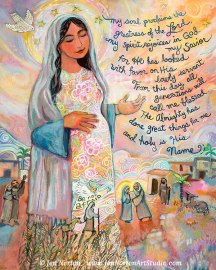
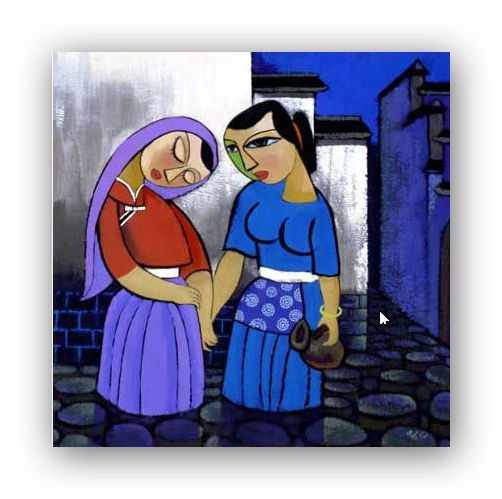
Acrylic on canvas, 24 x 30"Is it surprising that she bursts into song? One of the most enduring songs of worship.

My soul proclaims the greatness of the Lord, my spirit rejoices in God my
Saviour; he has looked with favour on his lowly servant.

From this day all generations will call me blessed; the Almighty has done great things for me, and holy is his name.

There are many journeys in the Bible – many have this element of fear attached to them, with questions in the mind of the traveller about how they will be received.

Do you remember Jacob wrestling with God because he does not want to face his brother who is ahead of him on the road?

Or what about the Prodigal Son – wandering home wondering how he would be received?

In both cases the welcome they received far exceeded their expectations.

We’re often told that we can look on our lives as a journey. Its particularly true at Christmas time – whether in reality when we visit friends and relatives, or in our minds and hearts as we revisit significant events in our lives.

For some, Christmas holds out the promise of joy or the promise of renewal; for others, the journey through our memories is long and arduous, and like those Ugandan children we carry heavy loads. The journey brings back feelings of loneliness, of loved ones who have died, relationships which have gone sour. The journey through this Christmas period can be both light and dark, a mixture of joy and sorrow.

As Mary travelled the difficult road south to Judaea, she discovered not the blackness of despair but the joy of acceptance. Elizabeth shared her experiences and rejoiced with her in God’s involvement in her life.

Both Elizabeth and Mary can be models for us this Christmas – Elizabeth offering love and acceptance, offering hospitality, challenges us to make our homes ones of welcome – places were the weary and heavy laden traveller – the one struggling with life or the burden of unwanted memories – can find a resting place of love and care.

Mary encourages those of us struggling with this season to take risks in sharing our fears, our hurts, the loneliness of our journey, with others who will understand. Mary encourages us, perhaps above all, to know that however long or tortuous our journey, just like those Ugandan Christians at the cathedral in Kisoro, when we approach

the communion table we receive God’s loving welcome – we are at home.

Advent 3 – Luke 3:7-18; Zephaniah 3:14-20; Philippians 4:4-7

ESSC Topper OpenI tried learning to sail once. 4 lessons in tiny topper dinghies at Gorton Reservoirs, in the evenings after work.

One of those evenings there was no wind. As you might be able to imagine, it was a frustrating experience. A lovely location, bright evening sunshine, blue sky and no clouds. But we could do nothing – the sails were limp and the boats would not move. …. It was a beautiful evening, but so deeply frustrating.

The truth is that – beautiful calm seas and lakes only exist when there is no wind! Ultimately calm seas mean no sailing, no progress.

Zephaniah’s prophecies in the 3 chapters of his book include images of a storm wind sweeping away everything in its path. Just like a tornado lays everything waste. … The storm is raging around God’s people. And at the end of a series of verses of vivid and dark imagery comes the passage we read this morning. Zephaniah is lifting the hearts of his people:

Rejoice and exult with all your heart, O daughter Jerusalem!
The Lord has taken away the judgements against you,
he has turned away your enemies. The Lord is in your midst.
Do not fear, O Zion; the Lord God is in your midst.

‘Do not be afraid. Be encouraged’, says Zephaniah, ‘God is with us. The storm is over, the dark times are coming to an end’.

We read similar upbraiding words from Paul in Philippians. ‘Rejoice, don’t worry’, he says. These might seem to be unrealistic, unreasonable words for Paul to say – how can we rejoice when times are hard? Paul cannot seriously expect us to rejoice when we are worried about our health, or about our families.

Yet Paul himself was in prison as he wrote Philippians. He is able to say later in the chapter we have just read, that he has learnt to be content in all situations – whether hungry or well-fed; in both difficult and good times.

That’s as it maybe, but how do you feel when you’re struggling and someone says to you, “Just rejoice, don’t worry! Pray about it – it’ll be OK!” ……….. If it wasn’t for the fact that we know Paul was in prison, we’d think he’s saying that Christian life should be about sailing through troubles as though on a calm sea – life should be wonderful!

But as I discovered on Gorton Reservoir, calm water does not allow progress or learning or growth. And in life, even those of us fortunate enough to live relatively peaceful and stable lives know that progress, or growth occur only through facing the challenges that life brings our way. It’s great at times to experience calm waters but we know that choppy waters will come whenever we experience the wind in our sails.

Perhaps we can take the analogy about sailing a little further?

eye_of_the_storm,_hurricane_elena,_september_1,_1985When Paul talks of God’s peace, he is not suggesting something like the beautiful stillness of a lake on a summer evening. He’s thinking much more of something like the eye of the hurricane. That elusive place in the middle of the storm where the sea is calm. Paul has learnt in the middle of the storms and difficulties of life to rejoice because he has found God’s peace. He longs that those who read this letter will experience the same peace.
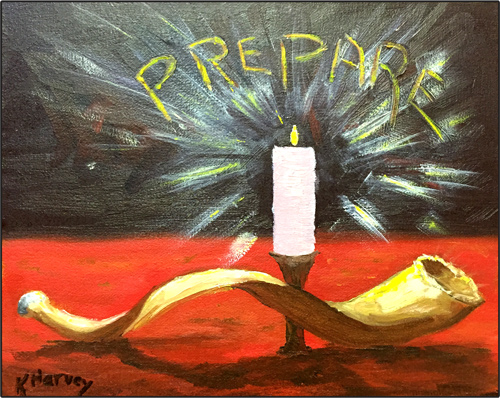
Zephaniah has a similar image in mind – that in the midst of all the turmoil surrounding Israel, they can be confident because God is with them.

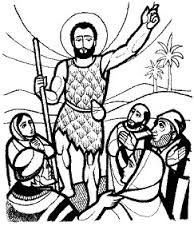
urlHowever, in our Gospel reading, John the Baptist seems almost as though he is the hurricane, ripping through the sin and hypocrisy of his day and pointing forward to Jesus who will strip away the chaff and gather those faithful to himself, just like a farmer will gather wheat into the safety of the barn.

It would be nice to be able to say, as we approach Christmas, that we are filled with God’s peace, but the truth may well be far from this. Worry and fear, darkness and depression sit so close to us at times, and Christmas can for some of us be the most difficult of times. Some of us have lost those dear to us at or around Christmas time in previous years. Christmas is promoted as family time, yet so many of us are lonely and will be lonely over Christmas. The circumstances that surround us and the emotions that we feel can be like a storm raging around us. Our emotions feel out of control. And circumstances feel as though they will destroy us.

Zephaniah’s promise is that God is with his people, ‘with us’. … At Christmas we celebrate ‘God with us’, Emmanuel.

John the Baptist tells us that when Jesus comes he will gather his own and keep them safe like wheat stored in a barn. ……  However we are feeling, God is with us, at the eye of the storm, longing to reach out to us with his love and peace. Promising that he will never leave us alone.

And what some of us need to hear more than anything else are God’s words of comfort as we struggle through difficult times.

Others of us, however, need to hear the challenge that these words of comfort can bring. We need to reach out to the lonely, those struggling with fear and worry, those who feel their loss most deeply. Because as we do so we begin to make God’s promises tangible, we give them a human form.

So if the challenge is appropriate for you, what can you do? What can we do this Christmas? It might mean helping in one of the hostels for the homeless over the Christmas period. It might mean giving sacrificially to a caring charity. It may be as little as inviting someone to share your Christmas meal.

The challenge is to be part of God’s mission. For some, to receive the gift of God’s love and peace through friends. For others to heed the challenge: to get into the boat with those caught in the storm.

Luke 3:1-6 – 2nd Sunday in Advent

LUKE 3:1-6

Why was Luke so precise? …….. In the 15th year of Tiberius, when Pontius Pilate was governor of Judea, Herod ruler of Galilee, Philip ruler of Ituraea and Trachonitis, Lysanias ruler of Abilene, in the high priesthood of Annas and Caiphas. ……. Why was Luke so precise?

We know that he was a doctor, an ordered man, who at the beginning of his Gospel says that he’d decided to write a careful, orderly account for a friend Theophilus – so that he may know the truth concerning the things about which he had been instructed.

In the early chapters of his Gospel he is at pains to root the story of Jesus in the historical events of the day – its as if he=s saying, “This is not just a story – it’s the truth! I’m not just telling stories to encourage you – I’m telling it like it is! It’s true, God did really become human – I can date the story pretty exactly.”

There’s a danger that when we read the Bible we see it as a mixture of nice stories and good quotes. A kind of moral almanac which we can dip into when we feel the need. A spiritual help – keeping us in touch with God. And in one way the Bible is like this – but it is so much more.

The Bible is a historical document – not only telling stories, but interpreting them. It is the story of human history told from God’s perspective. One Hindu teacher said that it was not so much a religious book as “a unique interpretation of human history and God at work in it.”

So, Luke wants us to grasp that this is a historical story. But it seems to me that he has more than this in mind: it’s like the whole world is lined up at the start of our gospel reading – ugly and foreboding.

Tiberius – the head of the Roman Empire – who’d brought peace to the world – but peace at great cost in human life. No one dared challenge the power of Rome, & those who did … were crushed.

Pilate – manipulating governor – concerned to protect his own skin.

Herod and his family – half jews – not really concerned for the people they governed.

Annas and Caiaphas – high priests who should’ve been guarding their flock, but who were more concerned for their own status.

urlIn the midst of all this power, and abuse of power, what is God’s solution? A mad man crying in the wilderness – John the Baptist clothed in animal skins. Not the solution we would have chosen – but perhaps this is Luke’s point. First, God is born as a baby in a stable, then he chooses as his herald an unrespected mad-man, then he comes healing and talking of a Kingdom that is not of this world, a finally he achieves his victory not in terms of political power, but by stretching out his arms on the cross.

God’s purposes are achieved not through physical or political power, but through the mad-man crying in the wilderness, through humility and suffering.

Luke wants us to know that it is through people like us. Those with no power, those with difficulties and problems, those even who feel that if people knew what we were really like they would think us mad! That God chooses to work. Here in the reality of our lives God will work – not just to make us feel good – but to reach out to others around us. It is us who are called to be prophets. It is us who are called to prepare the way, to clear the way so that Christ can come to others.

Restorative Justice

The post below was posted on the HonorShame blog. I’ve read it through a couple of times and wanted to make the link to it. I cannot now find it on that blog. I presume it has been taken down. It seems to me to be a very helpful contribution to an understanding of the value of restorative justice and its impact on those involved and provides an excellent example of the way in which shame and guilt have different effects/consequences in our lives …

Restorative Justice

by HonorShame

In my experience, the practice of restorative justice is one of the best ways to tangibly embody God’s honor and overcome shame. Unfortunately, people in
Western culture rarely practice (or value) restorative justice.

One afternoon we got a phone call from the local Department of Family Services (DFS). They wanted to notify us that they interviewed our 3rd-grader as a witness, but declined to answer any questions about what happened.

It turned out, one teacher grabbed a school kid by the wrist. The parent threatened to sue the school if the teacher was not fired by Monday morning. So, the principle notified DFS to limit future liability. DFS intervened according to the established legal protocol: children were interviewed separately, the teacher was dismissed, and everybody moved on.

Though the situation “followed the book,” something here seemed totally amiss—there was absolutely zero restoration of relationships. The various parties were never brought together, but were in fact separated out so as to avoid interaction. The focus was on ensuring rights and following the law, not proactively repairing the broken social bonds. This incident exposes significant shortcomings in Western notions of justice and responses to wrongdoing.

Retributive Justice vs. Restorative Justice

The common approach to problems in the Western legal system is defined as “criminal justice,” or “retributive justice.” In such a system, crime and wrongdoing is viewed as a breaking of the law and an offense against the state. These violations create guilt that must be punished. The focus is making sure offenders get what they deserve. Then, “justice is served.”

“Restorative” justice, on the other hand, views transgressions as harming people and relationships. Damaged relationships are both a cause and effect of wrongdoing. Doing wrong creates a sense of obligation to the victim, so justice is served when the situation is put back to right. This approach studies the wrong in the context of the broader community, and examines the obligations all parties have to make amends. Instead of focusing on what people deserve, restorative justice addresses what people need to repair the damage or wound in the community. Justice is viewed as a restored relationship.

Screen Shot 2015-11-03 at 2.17.28 PM

Click here to learn more: “Traditional Approach vs. Restorative Approach

How does “restorative justice” relate to honor and shame?

Though retributive views of justice may address the problem of guilt (because it defines the problem primarily in terms of legal culpability/guilt), it ignores the problem of shame. In fact, some point out that retributive justice actually compounds and increases shame. Shame is often a cause in violent crime, but then punitive approaches exacerbate such shame. By placing secondary representatives (i.e., judges, lawyers, and state officials) in charge of justice process, the system separates the involved parties. In the name of “serving justice,” the consequences of wrongdoing disintegrate people from relationships and community, and such alienation is a core source of shame. Furthermore, legal punishment often makes an example out of violators to deter others, without regarding the shaming consequences of such legally sanctioned “justice.” Various occasions certainly do necessitate retribution, but lets remain aware of how a one-sided view of justice may compound brokenness and shame.

Recall, shame is the painful emotion of unworthiness resulting from isolation and rejection. Isolation causes shame; making amends banishes shame. Punishment does not erase shame, but welcoming and acceptance can. An offender or sinner must be reintegrated into relationships to overcome shame. Only when community is restored can shame be effaced.

The practice of “restorative justice” is a tangible way to untangle people from shame. This applies not just to the criminal system, but to every day conflicts and slights. Westerners respond to issues with a retributive sense of justice, then wonder why others feel shamed and abandon the relationship.

Limited Good

One of the concepts postulated about societies that focus more on shame than guilt is that they are ‘limited good’ societies. This idea suggests that people in those societies regard social capital as finite. This concept suggests that if my own lot improves it automatically means that someone else’s lot gets worse. That’s probably simplistic but the blog below challenges that assumption about those cultures and provokes a great deal of discussion in the follow-up comments on the post page

“Limited Good” has limited good

One of the responses references another blog:

http://blog.zebrapost.net/2015/11/the-issue-of-limited-good.html

It seems to me that these discussions are vitally important in understanding other cultures but also have an impact on how we understand and approach the bible as Christians. We have to get hold of the truth that, unless we are very careful, we misinterpret scripture by reading it through our own cultural spectacles. That isn’t just true for Western Christians but also for others from Africa, South American and Asia. The shame-honour and guilt- forgiveness paradigms are significant factors in understanding cultures and in understanding scripture. To the extent that we uncritically fall into one or the other paradigm then we set ourselves up to misunderstand and misinterpret scripture.

Le Train de Merveilles – Nice to Tende – Part B – A Link with the Mediterranean

http://railwaywondersoftheworld.com/link-mediterranean.html

This magazine Railway Wonders of the World was produced in the 1930s when the Nice to Cuneo railway was relatively new. Most copies of the magazine now survive as two bound volumes. I am fortunate enough to own both. This article is a great insight into the line in the 1930s.

Le Train de Merveilles – Nice to Tende – Part A – An Introduction

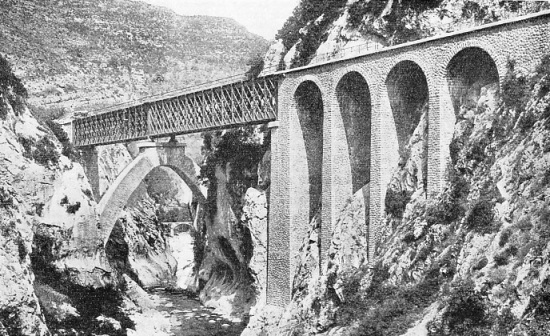
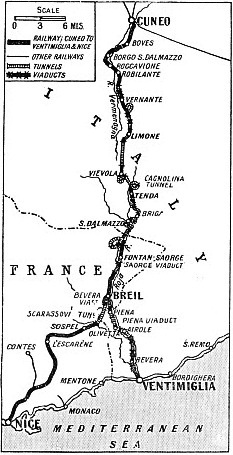
Starting from the sea level, the Nice-Tende railway line rises to over 1000 metres in height as it travels towards Le Col de Tende.wpd85d76c3_05_06torre-saorge
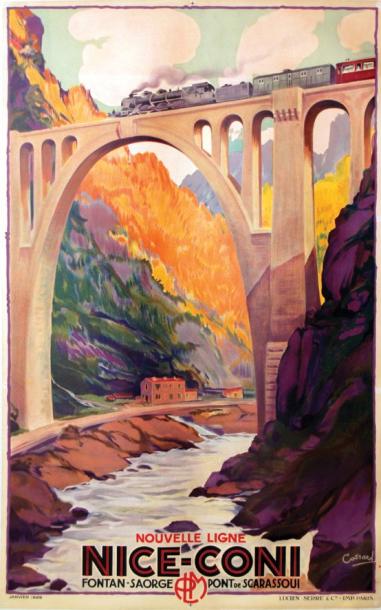
The line was an amazing feat of engineering, a real achievement in a dense, hilly region. It is distinguished by an impressive succession of structures (over 200 In all): viaducts erected overlooking deep canyons and countless tunnels in the mountains (including 4 helical structures!).
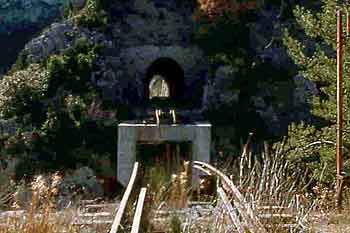
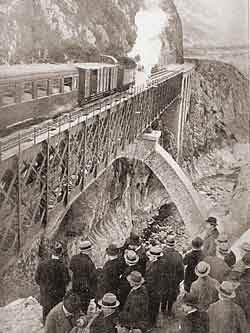
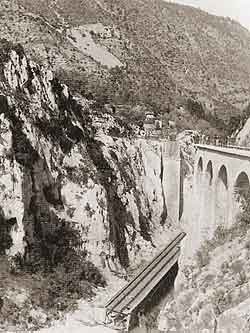
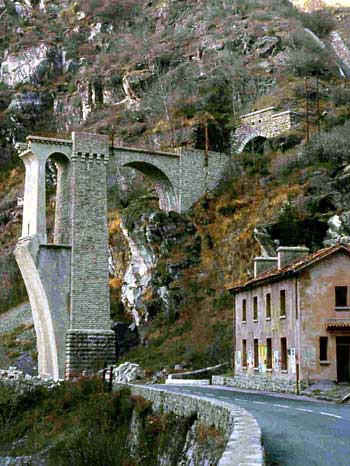
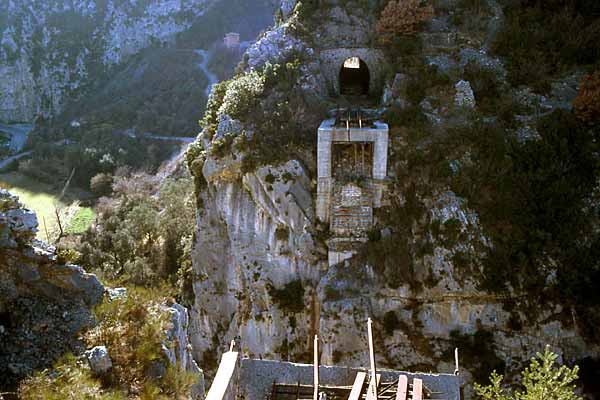
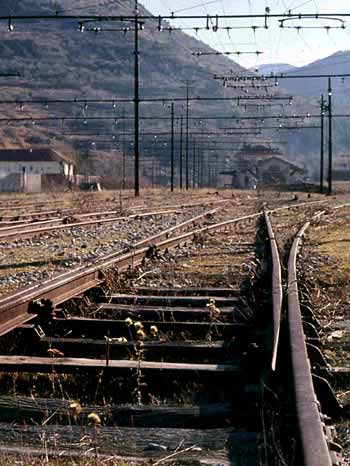
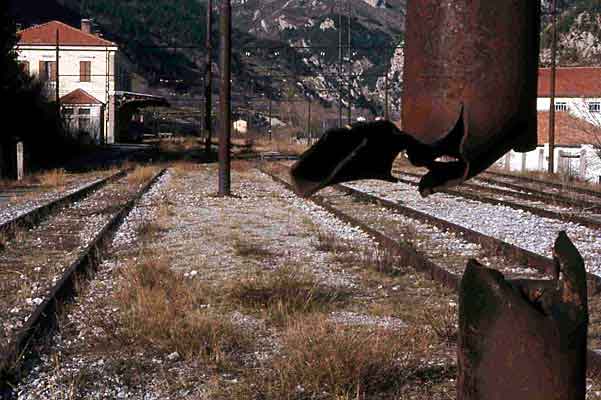
In the immediate post war era the line was closed as many of the major structures had been destroyed. It wasn’t until the mid to late 1970s that those structures were replaced. Some of the following pictures illustrate the condition of the line before renovation.hautpays51-cai1

hautpays51-cai2
08
07m
15

02

01

The project to undertake the rebuilding of the structures on the line and to re-lay the standard gauge track was costly and was undertaken by the regional authorities in France and Italy. Many of the structures were rebuilt by the end of 1978.

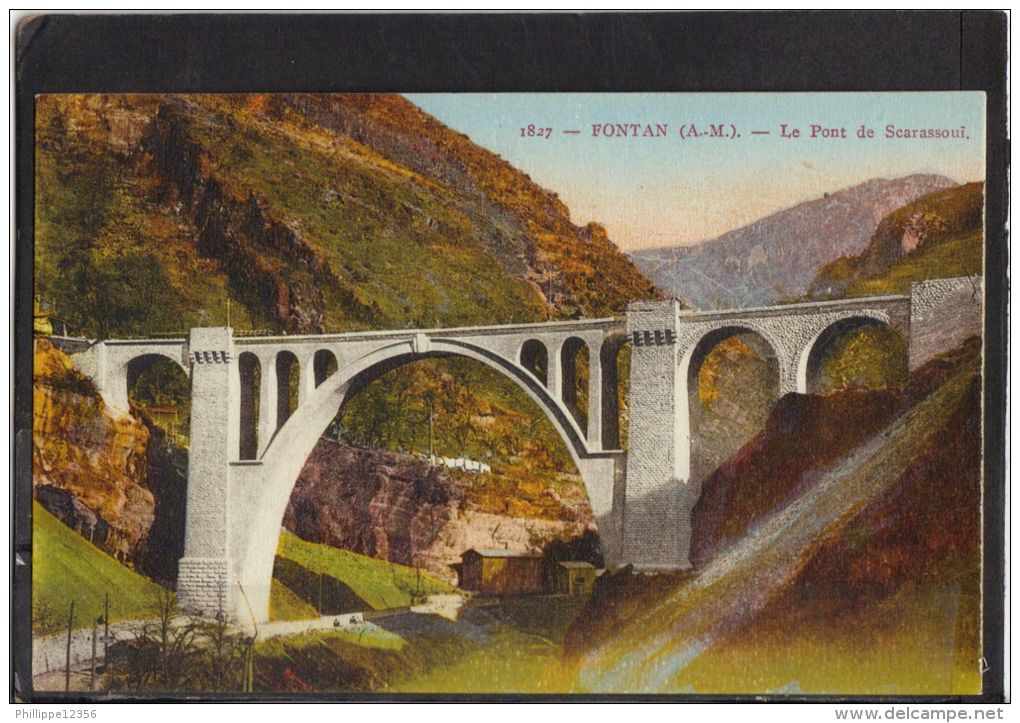
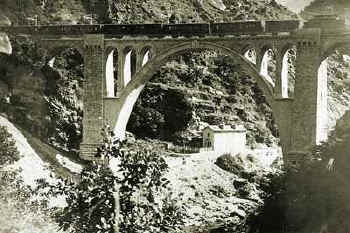
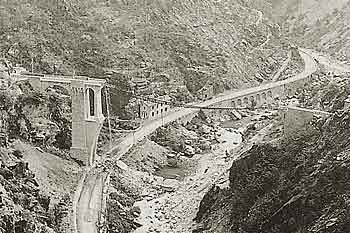
Le Viaduc de Scarassoui

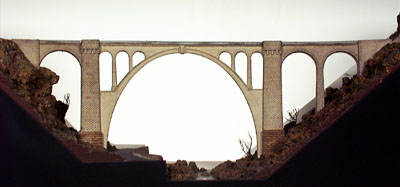
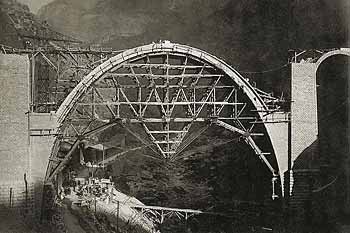
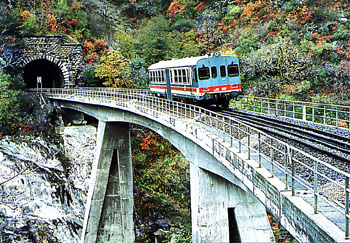
This viaduct was built across the valley of the Roya between two tunnels close to Fontan. It was commissioned in 1923. Its designer was Paul Séjourné, the engineer was André Martinet and the contractor was Mercier, Limousin et Cie. It was a graceful, elegant structure.

viaduc_scarassoui_cle222b3d-e72ablivre-cdt-scara1

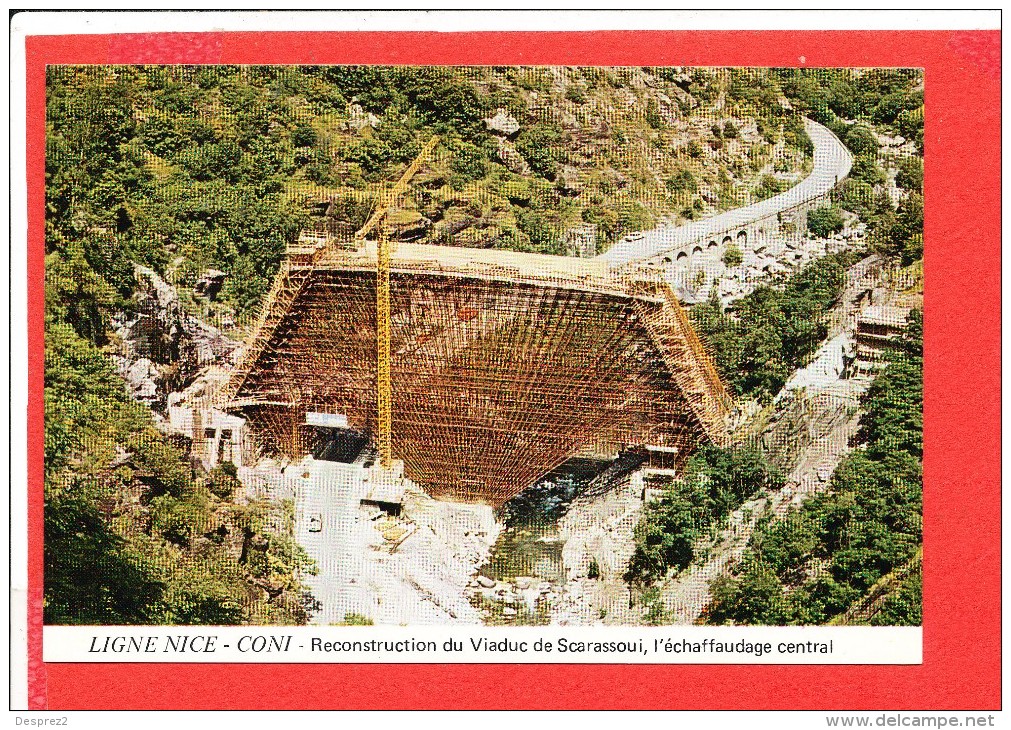
399_001livre-cdt-scara2It survived for little more than 20 years before it became a casualty of the Nazi withdrawal from southern Europe in 1945. When the bridge was blown the tracks where left hanging over the river.hautpays32-scara36

Once the tracks were removed the bridge lay derelict until 1977 when a replacement structure was started. It was simpler and more functional but none-the-less a dramatic structure in its own right.387_001viaduc_scarassoui-situ01_cle5d5215TDM-sur-viaduc-article-272X194_tcm65-49743_tcm65-32994_272x194

Remembrance Sunday – Mark 1:14-20

Sunday November 8th 2015 – Remembrance Sunday

The Gospel reading set for today in the church’s lectionary is Mark 1:14-20, where Jesus calls James and John to follow him.

There are many things in the world that change dramatically during their life cycle – caterpillars, tadpoles eggs, acorns, flower bulbs – all of them change into something else. One of Hans Christian Andersen stories also focusses on that
process of change – The Ugly Duckling.

A caterpillar changes into a butterfly or a moth, and acorn into an oak tree, eggs into birds, tadpoles into frogs or toads, a plain amaryllis bulb into a striking flower, and an Ugly Ducking into a Swan

Each grows to be very different. But their ability to change and grow doesn=t just appear from nowhere. The Potential is already inside of them.

Jesus choses James and John to follow him. They encounter Jesus and follow him and in doing so are changed for ever.

We don’t know that much about Jesus disciples. We do know that James and John were fishermen. We know that they were relatively slow learners and that on one occasion that asked Jesus to let them sit on either side of him when he came into his kingdom, that they were interested in power and places of honour more than they were in listening to Jesus. As Jesus says in that Gospel passage the places either side of him when he came into his kingdom were reserved for two thieves at the Cross.

James and John may not have been quick learners or good listeners but something about being with Jesus, something in this person, Jesus, changes James and John for ever. It doesn’t all happen in an instant, but it starts to happen as James and John listen to Jesus speak and when they see Jesus’ miracles. They are changed as he follows Jesus.

“James, John, I have a job for you, follow me,” Jesus says. “I can see the potential in you, I can see who you will become. I want you to be my fishermen now – only you’ll be catching not fish but men and women to be my followers.”

And we know how the story ends – these ugly ducklings of men become Swans, they become the most faithful of Jesus followers, one is martyred not long after Jesus dies, the other lives to a ripe old age and becomes bishop of Ephesus and writes letters which remind people that it is not power and influence that matter but love and service.

Jesus does not just call James and John. He calls each of us to follow him. Rough diamonds that we are, self-deprecating or over confident, strong or weak. All of us called to be his followers.

And, just like James and John, there is potential for change in each of us. Jesus can take us and transform us. We no longer need to feel that we are no good, we can admit to God our weakness and our failings and then God takes us as we are and makes something special. We no longer need to feel like the Ugly Ducking or the Caterpillar, for God in Jesus sees the Swan and the Butterfly that we really are – and as we give ourselves to God – he draws out all the good that is in us.

Perhaps this is a very important message for today. James died a martyrs death, John lived on into old age, and lived for Jesus, no doubt honouring his brother’s memory and calling on others to live lives of love and forgiveness. Perhaps it is no accident that John’s epistles major on these two themes. And so I’ll leave the last word with John – word that he remembers as being on Jesus’ own lips:

“This is my commandment, that you love one another as I have loved you. No one has greater love than this, to lay down one’s life for one’s friends. You are my friends if you do what I command you.” (John 15:17)