
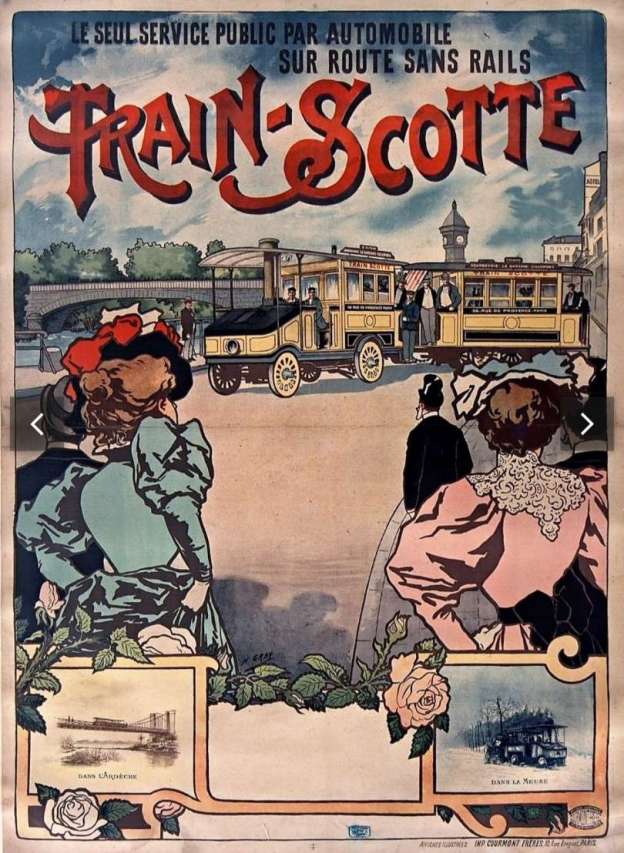
Société des Chaudières et Voitures à Vapeur système Scotte was a French manufacturer of steam-powered trucks, tractors, and omnibuses in Paris from 1893 to circa. 1914. The company also built the Train Scotte, an early road train for passenger or freight transport. [1]
I first encountered the Train Scotte when reading about the Cuneo-Ventimiglia-Nice international railway line in a book by Jose Banaudo, Michel Braun and Gerard de Santos; Les Trains du Col de Tende Volume 1: 1858-1928. [2] The partial opening of the that railway from Cuneo to Vievola in October 1900 left travellers heading for the Mediterranean in the middle of nowhere!
An experimental steam road train was trialled on the roads from Vievola to Ventimiglia. It was supplied by Société des Chaudières et Voitures à Vapeur système Scotte.
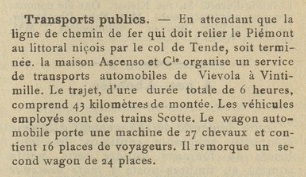
At this time, Vievola was a railway terminal for traffic to and from Piedmont and a hub for road connections onwards to Nice and Liguria. Banaudo et al point us to a magazine published in 1899, which mentions a trial of a steam-powered road vehicle which it was hoped would provide a service to Nice and the coast until such time as a railway was built. [1: p40][37] The service was a trial organised by the House of Ascenso et Cie, and ran from Vievola to Ventimiglia. The journey, lasted a total of six hours, including a 43-kilometre climb. The vehicles used were Scotte trains. The car wagon carried a 27-horsepower engine and seated 16 passengers; it also towed a second 24-seater wagon. [2: p40]
La Locomotion Automobile, 1899, p467, included the paragraph below, quoted/translated above, © Public Domain. [3]
Industrialist Joanny Scotte, [10] originally from Epernay in the Marne department, began his business in the mid-1880s producing steam-powered cars. From 1897, he offered road trains consisting of a tractor or a steam-powered car, pulling one or more trailers designed for the transport of passengers or goods. These vehicles travelled on roads using solid tires. They never really went beyond the experimental stage due to their slowness, the difficulties of driving the vehicles on the narrow roads of the time and the damage caused to the cobbled and cylindered roads. [2: p40] Scotte road train services were reported in the last decade of the 19th century in the Île-de-France region (Fontainebleau, Pont-de-Neuilly, Courbevoie), in the Aube region (Arcis-sur-Aube – Brienne-le-Château), in the Manche region (Pont-l’Abbé-Picauville – Chef-du-Pont), in the Drôme region (Valence – Crest), and for military use. Scotte partnered with the Lyon-based car manufacturers Buire and Audibert-Lavirotte to produce some of its vehicles. [2: p41]

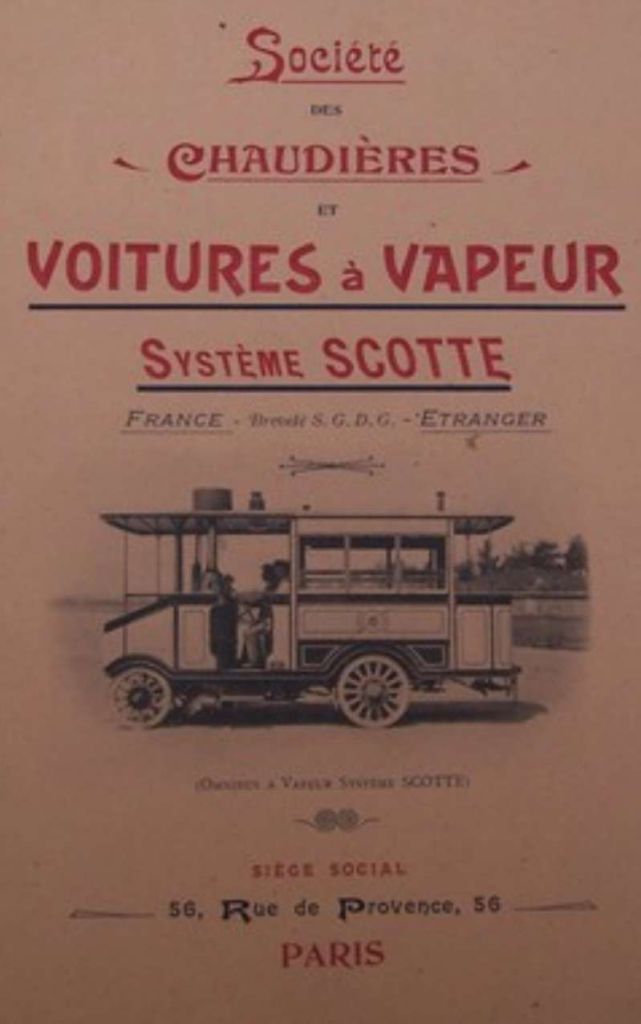
1. A power car (steam omnibus) capable of carrying fourteen passengers and the two engine crew;
Weight of the empty car with all equipment: Motor: approximately 3,500 kg; Total length: 5m 20 cm; Width at the waist: 1 m 80 cm; and
2. An unpowered car capable of holding 24 passengers. Weight of the empty car: 1,500 kg; Total length: 4m 65 cm; Width at the waist: 1,080 cm, © Public Domain. [5]
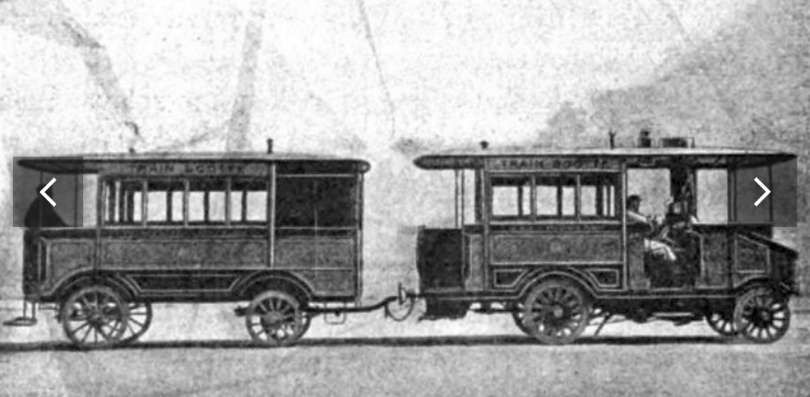
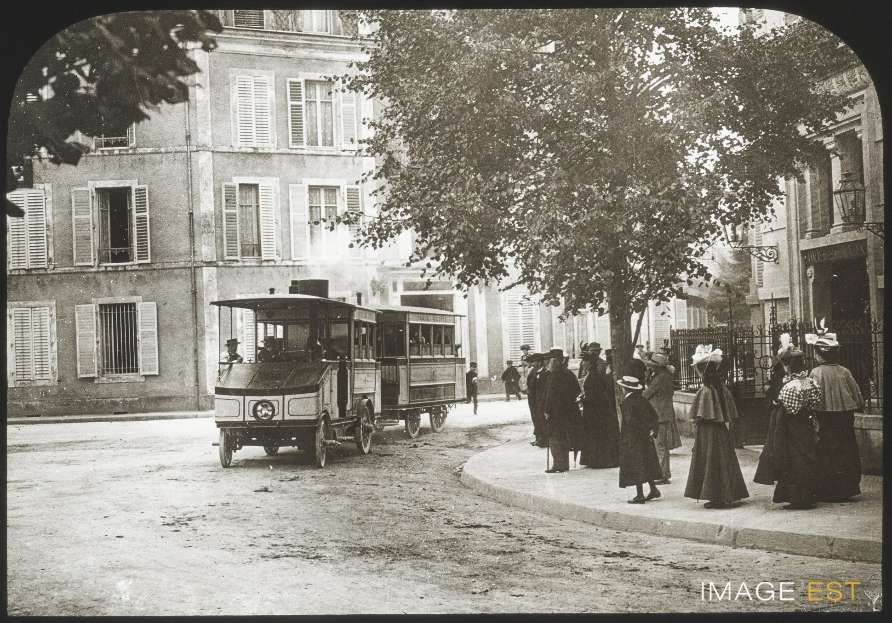
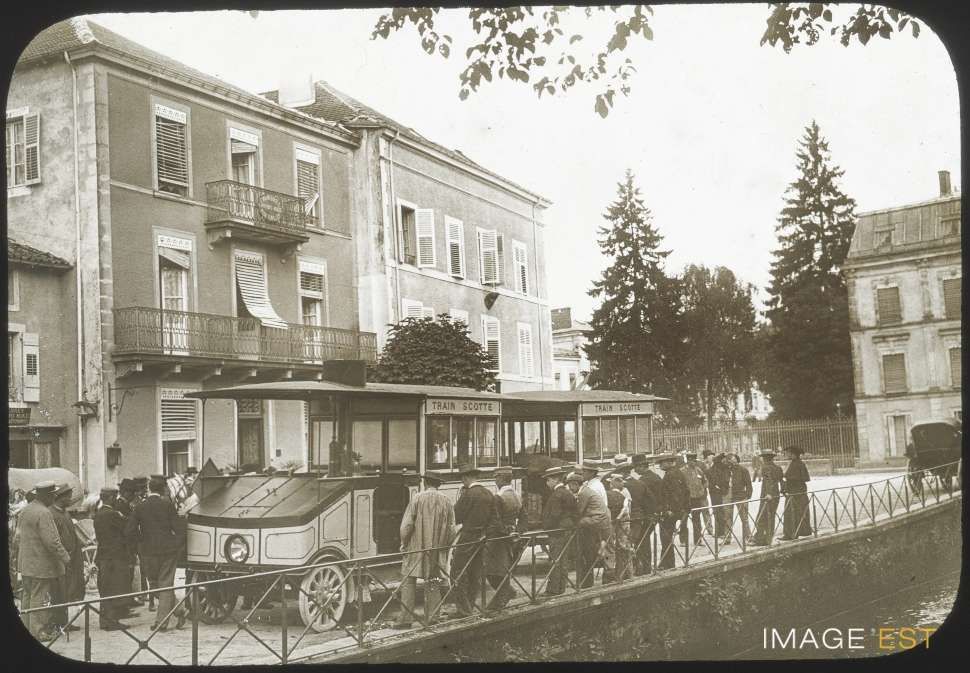
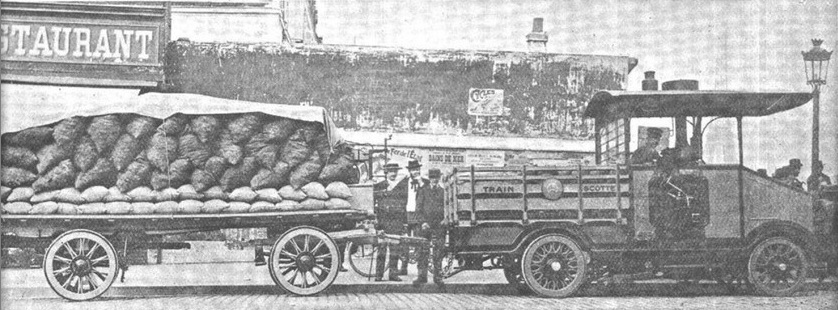
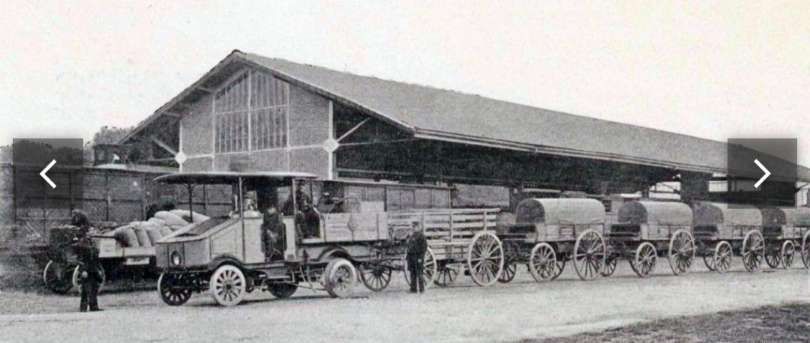
The wikipedia webpage relating to the ‘Train Scotte’ provides a series of photographs and drawings of the company’s products, including one advertising poster. All are in the public domain and are shown below:
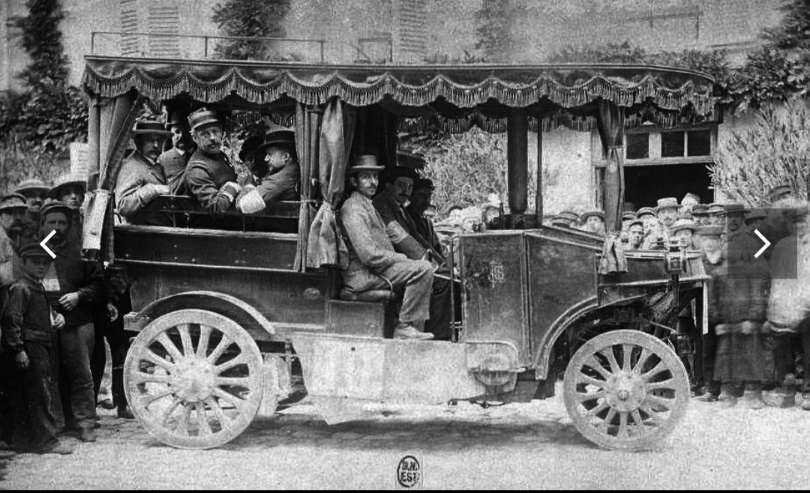
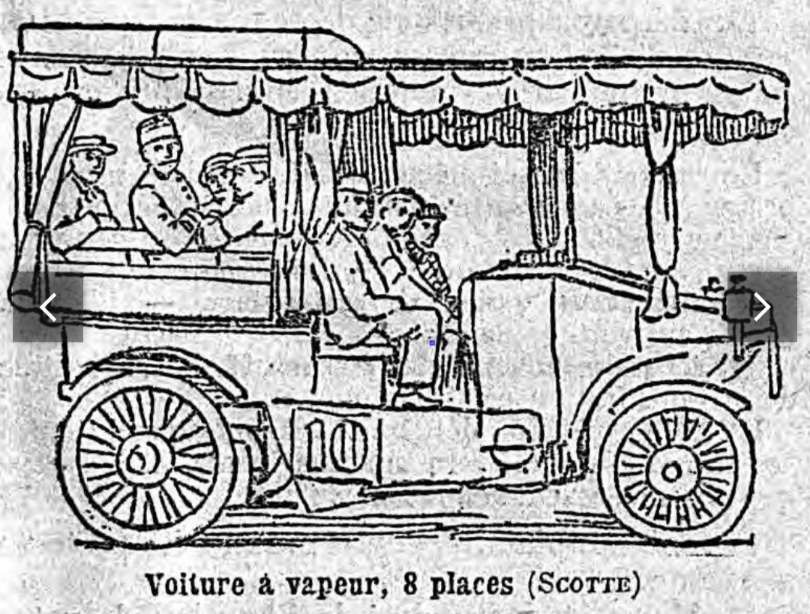
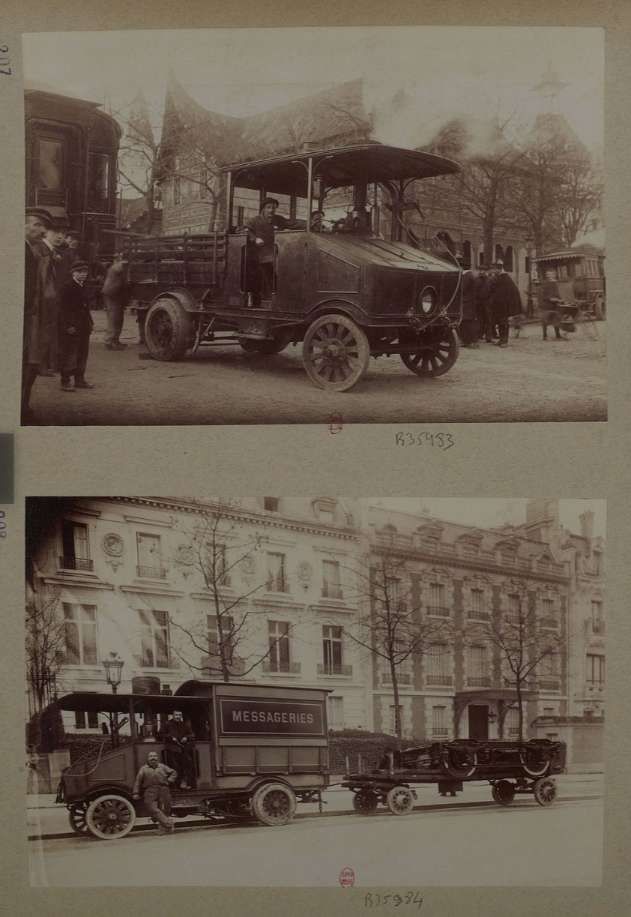
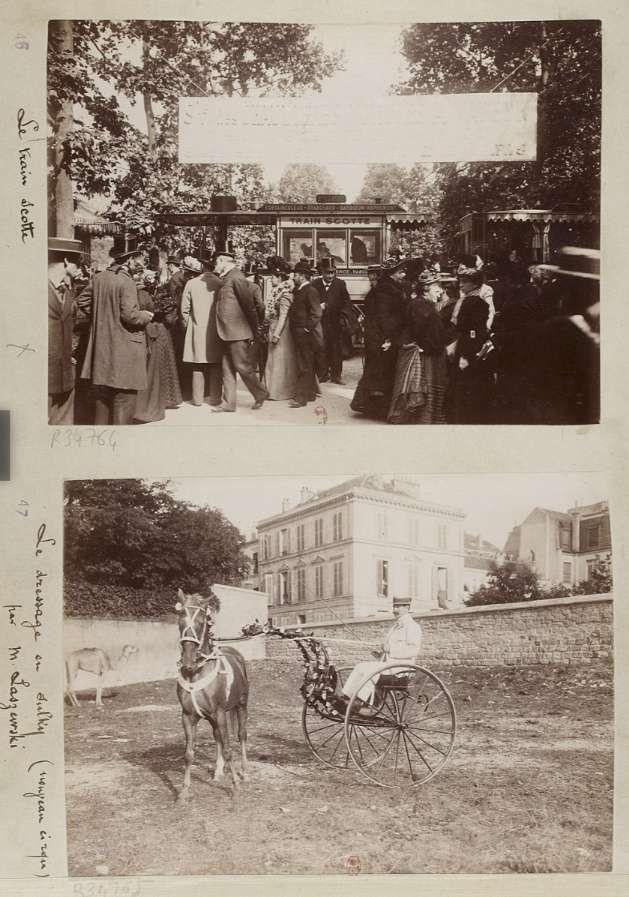
[Collection Jules Beau. Photographie sportive] : T. 7. Année 1898 / Jules Beau : F. 14v. Train Scotte ; Laszewski; 1898. ……………………………. An English Translation: [Jules Beau Collection. Sports Photography]: Vol. 7. Year 1898 / Jules Beau: F. 14v. Scotte Train; Laszewski; Date 1898, © Public Domain. [1]
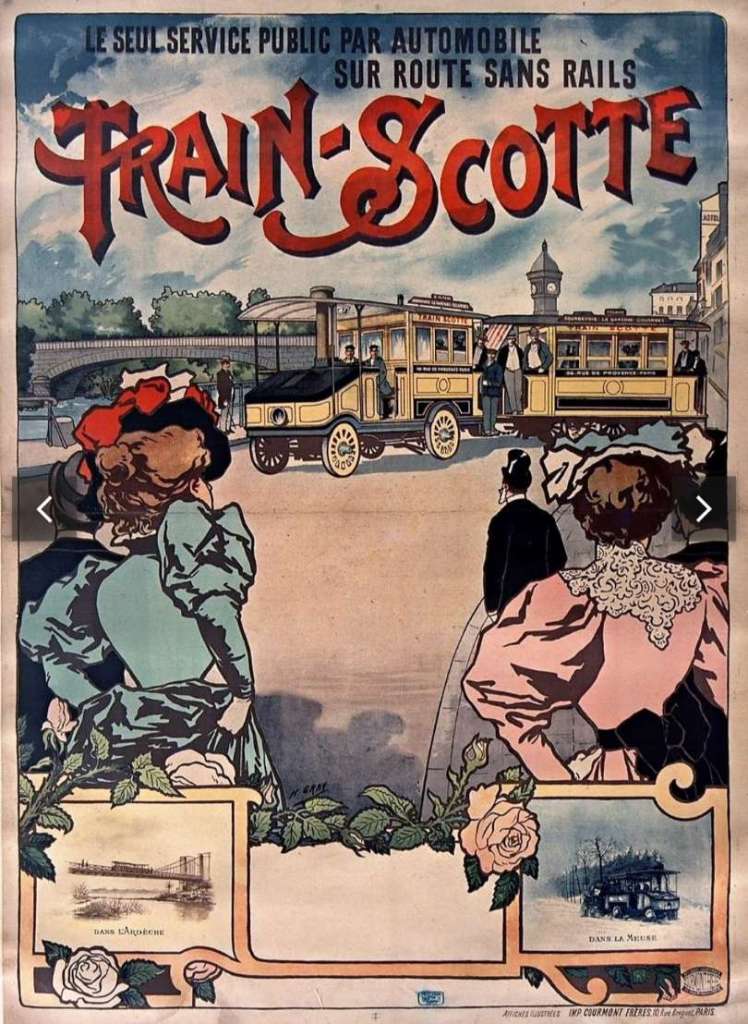
Source gallica.bnf.fr/Bibliothèque nationale de France. An English Translation: Poster by Henri Gray (1858-1924) for steam-powered public transport: the Scotte Train [1897]. Source: gallica.bnf.fr/Bibliothèque nationale de France, © Public Domain. [1]
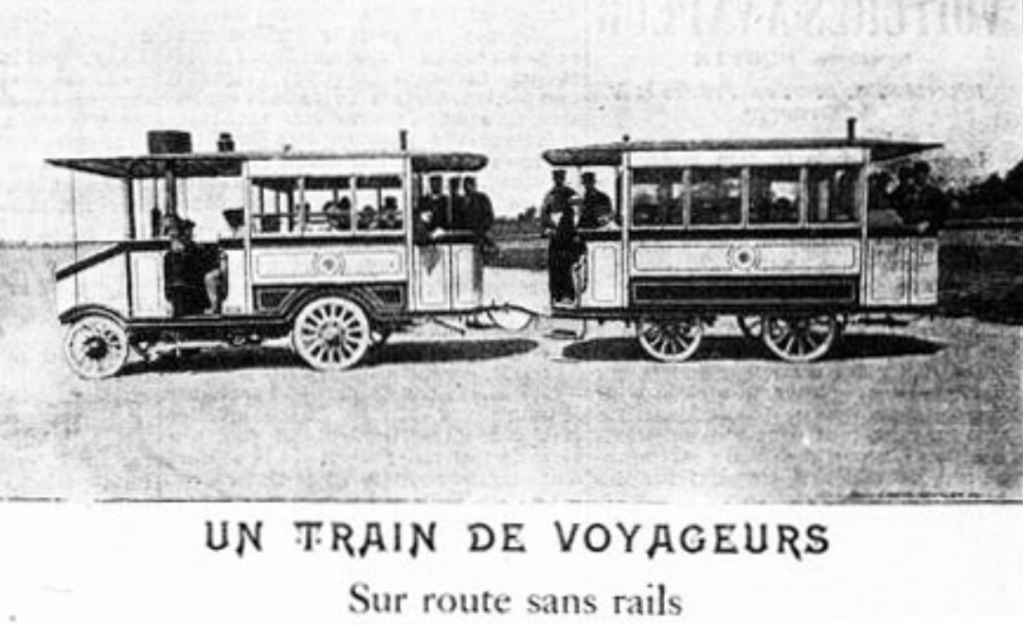
The tractor was equipped with a vertical Field system boiler, 600 litres of water for which were stored under the passenger seats, and a 14 horsepower, 2-cylinder engine. Coke or coal was its fuel (200 kg for 4 hours of operation). The movement was transmitted to the rear axle by a chain. The trailer was coupled to the tractor by a pivoting front axle. To stop, the steam omnibus had a quick brake operated by a pedal, a screw brake operated by a flywheel and, in an emergency, could work on the gear change. Steering was provided by a steering wheel. [9]
The Train Scotte train ran on wooden spoked wheels with iron tires. The seats were also made of wood, passengers needed to bring a cushion. The machine was quite noisy. It could be heard coming from afar and some houses shook as it passed. Its speed wasn’t very high, 12 to 15 km/h, so there was time to admire the scenery.
When carrying only goods, up to 5 to 6 tons, its speed was reduced to 6 to 7 km/h.
The experiment failed. The attempt to use the ‘Train Scotte’ between Vievola and Ventimiglia was abandoned quite quickly, probably no more than a few weeks after it commenced: driving was difficult, damage to road surfaces occurred, the road gradients were steep. [2: p41]
Elsewhere, experimental journeys had mixed success. Steam road vehicles were slow and they faced serious competition from similar vehicles with internal combustion engines. For a very short time around the turn of the 20th century, these vehicles seemed to have a future but ultimately the experiment failed!
References
- https://commons.m.wikimedia.org/wiki/Category:Scotte_vehicles, accessed on 25th July 2025.
- Jose Banaudo, Michel Braun and Gerard de Santos; Les Trains du Col de Tende Volume 1: 1858-1928; FACS Patrimoine Ferroviaire, Les Editions du Cabri, 2018.
- La Locomotion Automobile, 1899, p467; via https://gallica.bnf.fr/ark:/12148/bd6t53333638/f5.item, accessed on 25th July 2025.
- What is France Doing: Fully Illustrated Account of Trails Now in Progress; in Commercial Motor; August 1905, p8-15. The report seems to relate, at least in part, to trials in 1897.
- https://www.livre-rare-book.com/book/5472786/AUTO477, accessed on 26th July 2025.
- https://ebay.us/m/d270lw, accessed on 26th July 2025.
- https://www.image-est.fr/fiche-documentaire-train-scotte-contrexeville-1284-15027-2-0.html, accessed on 26th July 2025.
- https://www.image-est.fr/fiche-documentaire-train-scotte-contrexeville-1442-15028-2-0.html, accessed on 26th July 2025.
- https://www.archigny.net/spip.php?article=617, accessed on 26th July 2025.
- Contrary to what one might think, the name Scotte is not of English origin, but entirely French. Mr. Scotte was previously called Mr. Crotte. Tired of the dubious jokes, he had an S added before the C, then removed the R from the patronymic spelling of his name. [9]
 Roger Farnworth