
Sabbath. … The very idea feels Victorian! It smacks of rules to be kept and of restriction of freedom. If your experience is anything like mine growing up in the 1960s and 1970s, you’ll remember a Sabbath, or a Sunday, which meant being in Church three times (yes, three times each Sunday), no television, only Christian books, no playing out. Supposedly the ‘Sabbath’ was day of rest, but really it was a day of restrictions and rules. Nowadays, if we have any idea at all what Sabbath is about then I suspect that we honour it more in the breach than in the keeping. The idea of a day when we can’t play, can’t work – a day that has to be all about Church and God. That is not our idea of fun! ….
But, we need space, we need time to recuperate. We need time for ourselves and our families. Even if we don’t find that space on a Sunday, we’ve learnt just how important it is to make space in the week for those we love and for ourselves. We honour the Sabbath in a way that fits our lifestyle. Jo and I make sure that we keep her day off as special. We both used to take Tuesdays as our day off (in Manchester) Now, usually, Jo does not work on a Friday.
One way or another though, we’re hampered by our culture when we come to think about what the Bible calls ‘the Sabbath’. We have a history of keeping Sunday special that we need to acknowledge – which some will argue is essentially biblical and therefore very important. While others will see the idea of ‘the Sabbath’ as yet another example of the irrelevance of the Bible and Christianity to the modern world. For in today’s world just doesn’t seem to allow people the space to rest! Certainly such times are at a premium!
But, look again at our passages this morning. How do our ideas of Sabbath fit with the biblical evidence? Who is right? Do you remember the ‘Keep Sunday Special Campaign’ Were they right? Or are those who see ‘Sabbath’ as an anachronism right?
For sure, we mustn’t be like the leader of the synagogue – Jesus clearly has no time for his attitudes! Yes the bible does command us to keep the Sabbath – but Jesus also makes it clear elsewhere that the Sabbath is made for humanity, not humanity for the Sabbath. So perhaps then, we can ignore any idea of keeping Sundays special and do our own thing!
But wait, Isaiah clearly has something else in mind. He calls the idea of ‘Sabbath’ a delight!!
So … What is the Sabbath about? How can we keep it?
Look first at our gospel reading, Luke 13: 10-17 – clearly Jesus sees the Sabbath as a time for healing, but what kind of healing? Physical healing? Yes, a woman is set free from a debilitating condition. But the gospel writers seem to have more in mind. … This woman has spent eighteen years doubled up, face to the ground, unable to see more that a footstep or two in front of her – she was trapped – her physical condition speaks so clearly of the spiritual condition of so many people – certainly of the synagogue leaders, but also of many people in our world today.
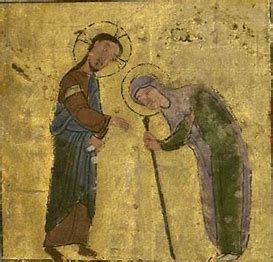
Figuratively, we spend so much of our time looking at the ground just in front of our feet – bound up in our work, our homes, our fears and worries – they loom so large that we can see nothing else.
Figuratively, we spend so much of our time looking at the ground just in front of our feet – bound up in our work, our homes, our fears and worries – they loom so large that we can see nothing else.
The Sabbath, says Jesus, is about being set free from this bondage. It is about being enabled once again to see the whole picture. The Sabbath is intended to allow us to regain a correct perspective, to affirm again that our concerns, our limited vision of the world around us, are not actually the way things are. As we observe the Sabbath, we can begin to replace our narrow perspective with God’s wider perspective As we observe the Sabbath, we affirm again that our God is Lord – despite what our immediate circumstances might suggest. … Sabbath is about making room for a realignment of our perspectives, and this happens most effectively in worship.
Our Old Testament reading from Isaiah 58: 9b-14, has something to add. …
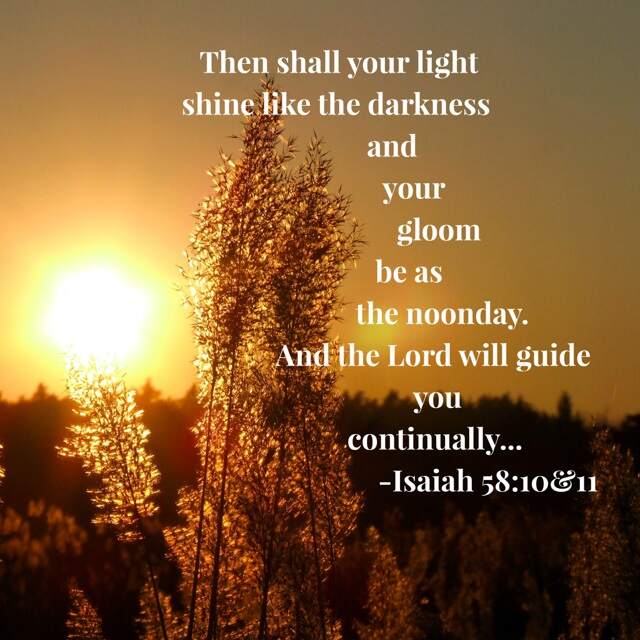
While the Gospel speaks about removing the negative, of release from wrong perspectives, Isaiah calls us to consider the positive. The Sabbath fast, or any other fast, is intended to refocus our minds on what matters most. Isaiah helps us to focus on what are God’s priorities.
‘Delight in the Lord’ he says, because, when you do, you will begin to see with God’s eyes – the removal of gossip, the feeding of the hungry, meeting the needs of others, bringing light into darkness, rebuilding lives and communities.
So Sabbath is about rest, about time for each other, about time for our families – but primarily it is about giving time to the reordering and refocusing of our lives. It is about God’s perspective becoming our perspective. It is about picking-up God’s concerns and letting them become our priorities.
So we need to make our own ‘Sabbath’, whether it is on a Sunday, or perhaps when our shift pattern, or working week allow. And the Bible’s claim is that if we fail to do so, we will lose perspective on life and our living will become directionless. …
The Bible has still more to say …
On top of the principle of Sabbath, a weekly day enshrined in the ten commandments, there was also a principle of every 7 years letting the land rest for a whole year and people were to stop working in the fields, and then every 49th year (7 lots of 7 years) there was the year of jubilee, of celebration – a sacred time of freedom and celebration when land was returned to its original owners and slaves returned to their homes, freed from bondage. These yearly periods were a time of sabbatical, a time of resting and refreshing and preparation for the next cycle of 7 years, or 49 years.

If you listened to the BBC Sunday Worship on Radio 4 last week you will have been reminded that the Roman Catholic church is, this year (2025), observing a Year of Jubilee.
The BBC’s Sunday Worship [1] focussed on young people on pilgrimage to Rome.
Pilgrimage is itself a form of Sabbath a time for refocussing on what God wants for our lives.
That principle of a ‘Sabbath’, a sabbatical, is something which the Church of England sees as important for all its clergy and lay ministers. It makes allowance for clergy to have what Lichfield Diocese calls ‘extended study leave’ and often it is just that, a time when reading and ideas have space to refresh and strengthen, reinvigorate ministry.
We all need these times of Sabbath: times of refreshment, renewal and reorientation. I’d like to finish this reflection with a prayer attributed to St. Patrick, which I am sure you will know well, a prayer which is all about refocussing our lives around God who is Father, Son and Holy Spirit. Let us pray:
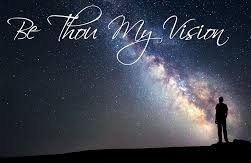
Be thou my vision, O Lord of my heart,
be all else but naught to me, save that thou art;
be thou my best thought in the day and the night,
both waking and sleeping, thy presence my light.
Be thou my wisdom, be thou my true word,
be thou ever with me, and I with thee Lord;
be thou my great Father, and I thy true son;
be thou in me dwelling, and I with thee one.
Be thou my breastplate, my sword for the fight;
be thou my whole armour, be thou my true might;
be thou my soul’s shelter, be thou my strong tower:
O raise thou me heavenward, great Power of my power.
Riches I heed not, nor man’s empty praise:
be thou mine inheritance now and always;
be thou and thou only the first in my heart;
O Sovereign of heaven, my treasure thou art.
High King of heaven, thou heaven’s bright sun,
O grant me its joys after victory is won;
great Heart of my own heart, whatever befall,
still be thou my vision, O Ruler of all.
References
- https://www.bbc.co.uk/programmes/m002h9mr, accessed on 20th August 2025.
 Roger Farnworth