
Tag Archives: Matthew’s Gospel

25th January 2026 – Matthew 4:12-23

There is a saying about leopards – I guess you know the one I mean … “Leopards never change their spots”. We use it to talk about someone who has been in prison, or someone who we have caught lying, or someone who has offended us. We can’t believe it when they seem to have changed. And we are convinced that their motives must be odd or that eventually their true base character will show through.

There are other similar phrases:

“Truth will out:” I guess this means that the truth will become known eventually, you can’t hide who you really are for ever. The phrase comes from Shakespeare’s The Merchant of Venice – Launcelot says:

“it is a wise father that knows his own child. Well, old man, I will tell you news of your son: give me your blessing: truth will come to light; murder cannot be hid long; a man’s son may, but at the length truth will out.”

The hidden things we have done and the parts of who we are that we want to hide will always eventually come to the surface and become known.

“Once a thief, always a thief:” … or  Once a cheat, always a cheat. These suggest that once you have learned to behave in a particular way you will always revert to type!

I have heard the same formula used in a different way. … “Once a priest, always a priest,” and: “Once a bishop, always a bishop.” … I’ll leave you to decide whether those are positive or negative! … However, what they share is a conviction that a person who’s done a certain kind of job will always have the characteristics of people who do that job, even after he or she no longer does that kind of work.

Is this right? Are we defined by our past?
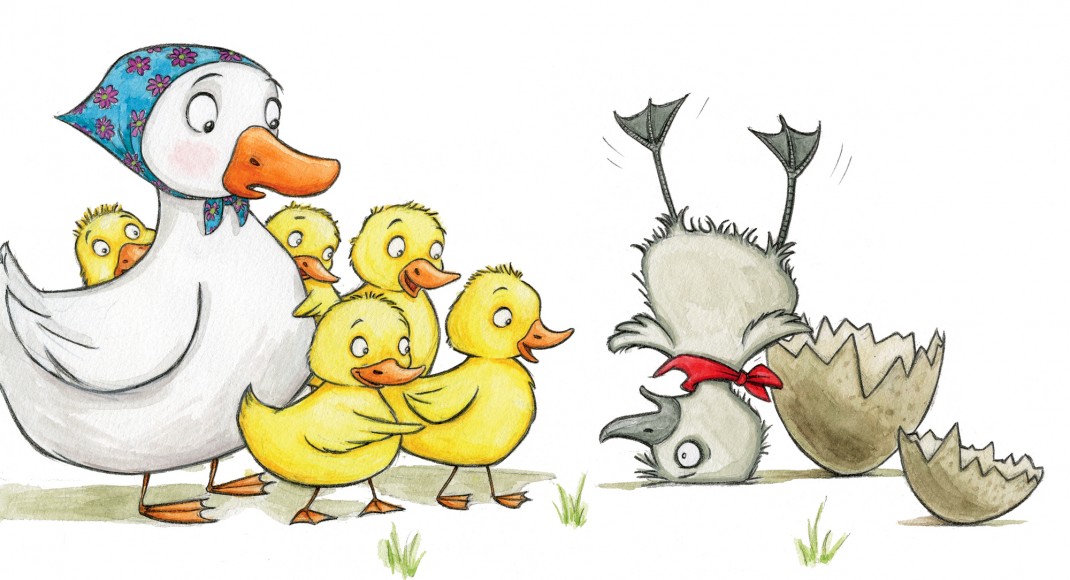
the-ugly-duckling-storyHans Christian Anderson tells a very familiar story whose main point is  that ugly ducklings can become beautiful swans. We know that ugly caterpillars can become amazing butterflies, tadpoles do become frogs and toads. Things do change.

In our Gospel reading today we hear the story of people being called by Jesus. He chooses them to follow him. James and John, Andrew and Simon Peter.

They encounter Jesus and in so doing are changed for ever.

We don’t know that much about Jesus disciples. We do know quite a bit about Peter. We know that, like James, John and Andrew, he was a fisherman. But we know more than that. What was Peter like?

… Hot-tempered, always making mistakes, a rough diamond, not someone to suffer fools gladly, someone who lived a hard life, a no-nonsense kind of guy. … Perhaps a typical country fisherman.

And then Peter meets Jesus. Something in this person, Jesus, changes Peter for ever. It doesn’t all happen in an instant, but it starts to happen as Peter listens to Jesus speak and when he sees Jesus’ miracles. He is changed as he follows Jesus.

“Peter, I have a job for you, follow me,” Jesus says. Peter I can see the potential in you, I can see who you will become. Peter I want you to be my fisherman now – only you’ll be catching not fish but men and women to be my followers.

And we know how the story ends – this ugly ducking of a man becomes a Swan – he becomes one of Jesus most faithful followers and eventual becomes the leader of the church.

In our Gospel, Jesus does not just call Peter – he calls Andrew, James and John to be his followers. And in just the same way he calls each of us to follow him. Rough diamonds that we are, self-deprecating or over confident, angry or depressed, rude and negative, fearful or fearless, strong or weak, trapped in difficult relationships. All of us called to be his followers, his ambassadors.

url

And you know, just like Peter, there is potential for change in each of us. Jesus can take me, he can take you, and he can transform us. We no longer need to feel that we are no good – just like Peter we can admit to God our weakness and our failings and then God takes us as we are and makes something special.

Please forgive all the mixed metaphors. … We no longer need to feel like the Ugly Ducking, for God in Jesus sees the Swan that we really are – and as we give ourselves to God – God draws out all the good that is in us. It really is a case for us that a leopard’s spots can change!

Matthew 2:1-12 – Epiphany 2026

Collect

O God, by the leading of a star you manifested your only Son to the peoples of the earth: Lead us, who know you now by faith, to your presence, where we may see your glory face to face; through Jesus Christ our Lord, who lives and reigns with you and the Holy Spirit, one God, now and for ever. Amen.

Sermon

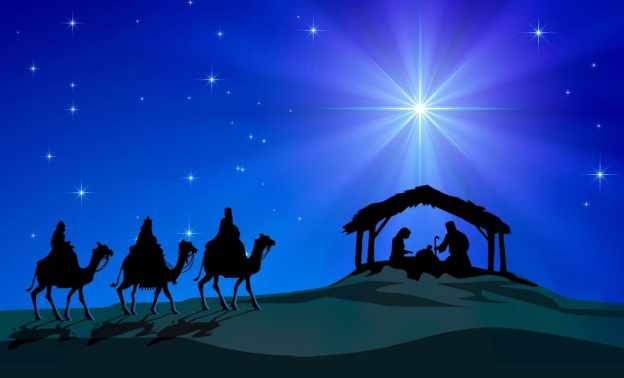
Today we celebrate the Epiphany. The visit of the Wise Men bringing gifts to the baby Jesus. I’d like us to think about two different aspects of the story this morning.

Firstly, we are told that the Wise Men who came to Jesus were guided by a star.

Second, The Epiphany and the arrival of the Wise Men is the moment when the wider Gentile, non-Jewish, world first engages with the story of Christmas. It is the point at which the birth becomes good news for the whole world, Good news to be shared.

We are told that the Wise Men who came to Jesus were guided by a star throughout their long journey. We use maps to guide us – or at least we used to. Many of us now use some form of satellite navigation to help us find our destination when we are in the car. Jo and I tend to use the directions provided by Google Maps. If you do not have a satnav or a hands-free mobile phone, then you will still rely on a map when you are driving. And a map of some sort is still useful to those of us who enjoy walking. When walking you might also follow a guided route for a country walk – either one on paper or one that has signs, way-markers along the route.

What matters most is that the guide we use is reliable. … We’ve all heard stories of lorries using satellite navigation getting stuck in country lanes or under bridges. … I’ve followed guided walks where either the written description is not good enough, or where someone has maliciously changed the waymarks and I have got lost. …

In life just as in driving or walking we need a reliable guide. A guide that we can trust. We have guides to follow in our Christian lives. The bibles that many of us own, are perhaps our clearest guide for the journey.  How familiar are we with our bibles. Do we keep them on the bookshelf and only take them out sporadically? Some of us are overwhelmed by the amazing language of the King James’ Bible and celebrate it as a wonderful work of literature. However, this was not quite God’s intention, when he gave us his word. The beauty of the language, or the excellence of the binding, while of great value, are not what really matters. … It is no good having a map, or guidebook or satellite navigation system and then putting them in view on the mantelpiece or on the dashboard of the car and never using them, never switching them on. They are only valuable if they are used as they were intended to be.

The Wise Men saw the star and chose to follow it. We don’t really know what it was, perhaps a comet that moved gradually across the night sky, night by night. The wise men studied the heavens and when they saw this particular star they knew what it spoke of. But knowing what it was about was not enough. They had to follow where it led. Otherwise, the Star would have been of little value. … So it is, with all that God promises in his word. We need to hear what the bible has to say to us about who we are and how we should relate to others. We need to make God’s word and promises our own. God is with us, and will be with us in the year ahead.

The poem “The Gate of the Year” by Minnie Louise Haskins, was famously quoted by King George VI in his 1939 Christmas broadcast in the early months of World War II: “I said to the man who stood at the gate of the year. “Give me a light that I may tread safely into the unknown.” And he replied. “Go out into the darkness and put your hand into the hand of God. That shall be to you better than light and safer than a known way.” May that Almighty hand guide and uphold us all in uncertain times, enabling us to trust in divine guidance as 2026 unfolds.

So, the Epiphany speaks of God’s guidance.

But it is also so much more! It is the moment when the curtain is drawn aside and the whole world looks in on the birth of the Jewish Messiah. The Epiphany is the point when the Christmas story makes it clear that the Christ-child is not just the Jewish Messiah, but is Saviour of the World. What was once known only to the Holy Family and shepherds at Christmas is made known to a greater and a wider audience in the group of wisemen who visit sometime after Jesus’ birth.

In this season of Epiphany, Jesus is ‘revealed’ as Son of God to the Wise Men who come to worship and give their tribute. Jesus’ Epiphany as Son of God reaches out to all the nations on earth. … So today we celebrate Jesus as our Saviour. As well as him being the Jewish Messiah.

“Come and see,” say the shepherds and the wise men. “Come and follow.” But perhaps most importantly of all; “Go and tell.” ……..

The season of Epiphany is all about mission.

Epiphany is our special season of being sent out as God’s people, guided by the grace and love of God. This season of the Epiphany gives direction to our lives as God’s missionary people. The scriptures call us on to follow Christ, in the way we choose to relate to each other, in living the lives God calls us to, in witnessing to the love of God which conquers all adversity. Epiphany reminds us that people should be able to see in us the life and love of the Christ-child.

Epiphany reminds us that if we follow God’s guidance, in seeking to welcome all. If we endeavour to offer God’s inclusive welcome – welcoming the stranger, welcoming those different from us, welcoming those we find challenging, and those we fundamentally disagree with. If we truly are a welcoming and loving community, quietly and faithfully getting on with the business of being God’s welcoming people, we will become so attractive that we will draw others to faith in Christ.