Tag Archives: Harton

The Wenlock Branch from Harton Road Station to Marsh Farm Junction and Craven Arms

This article follows on from seven other articles which covered the Wellington to Severn Junction Railway and this line from Buildwas to Harton Road Station. The first three articles can be found by clicking on these links:

Wellington to Horsehay [8]

Horsehay to Lightmoor Junction [9]

Lightmoor Junction to Buildwas [10]

The most recent articles cover this line between Buildwas and Harton Road Station and can be found on these links:

Buildwas to Much Wenlock [11]

Much Wenlock to Presthope [12]

Presthope to Longville-in-the-Dale [13]

Longville Railway Station to Harton Road Railway Station [14]

We noted in the last three articles that from the commencement of the building of the line between Buildwas and Much Wenlock, the directors hoped that the line could be extended to Craven Arms via Presthope on Wenlock Edge (linking with the limestone quarries/works at that location).

The directors of the Wellington & Severn Junction Railway were, however, fully occupied with the line from Wellington to Buildwas. Another company was set up to build the ‘Wenlock & Craven Arms and Coalbrookdale Extension Railway‘. The bill went through the parliamentary process unopposed and authorised the ‘Wenlock Railway Company‘ to construct the line. Work started on 23rd October 1861.

By 5th December 1864, the line was open from Much Wenlock to Presthope. (That length is covered in the last but one online article listed above.) At this time, because it was a freight-only line, the Board of Trade saw no need for an inspection of the line. It had already been agreed at a meeting held on 4th December 1863 not to proceed with the line from Presthope to Craven Arms for the time being. It was to be three years after the line reached Presthope before the connection to the Shrewsbury & Hereford Railway close to Craven Arms was completed. It was finally opened on 16th December 1867.

Harton Road Station to Craven Arms

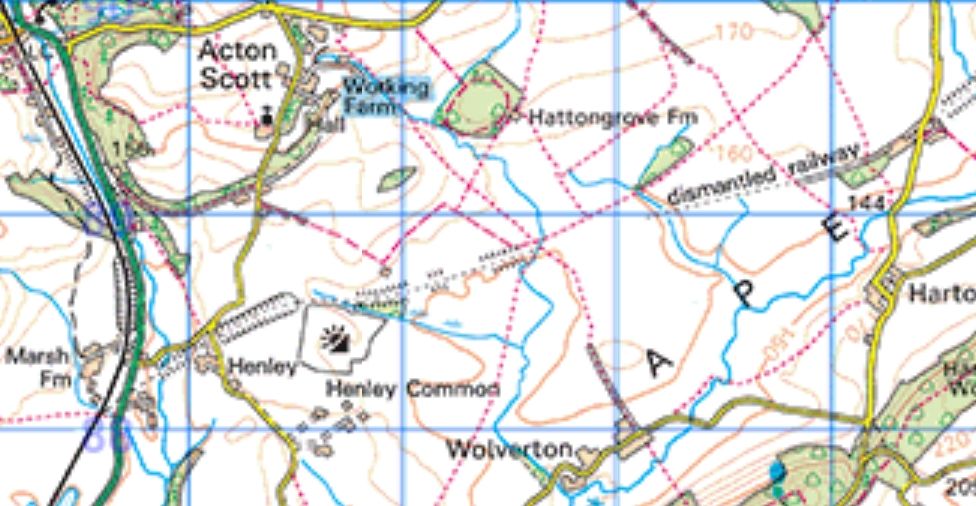
Harton Road Station to Marsh Farm Junction as shown on the Ordnance Survey Landranger Series mapping. [20]

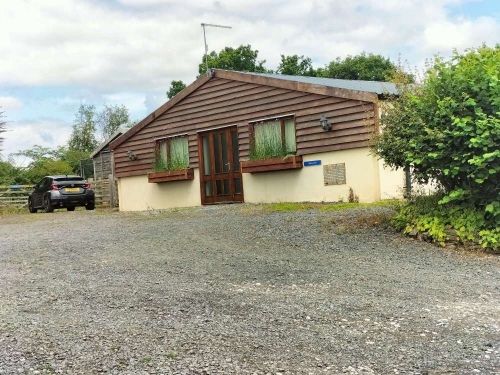
We start our onward journey at Harton Road Station which is now a private dwelling. The station building and platform were on the North side of the line. There was a loop to the West of the passenger facilities which could act as an unloading/loading point for goods or even, possibly, as a passing loop if required.

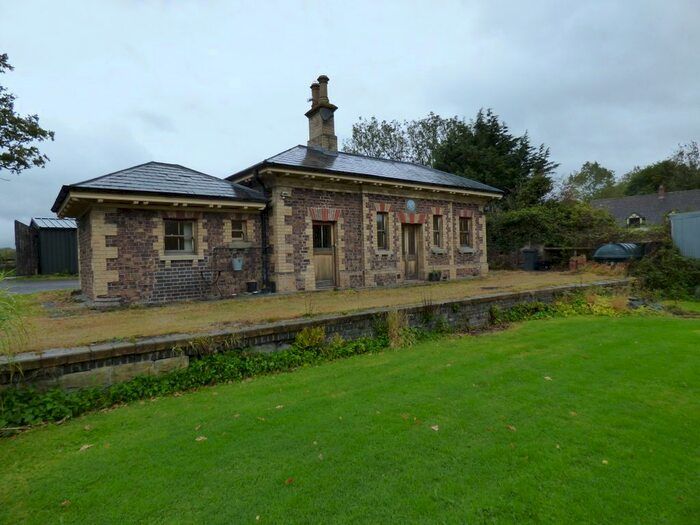
Harton Road station building and platform. [6]
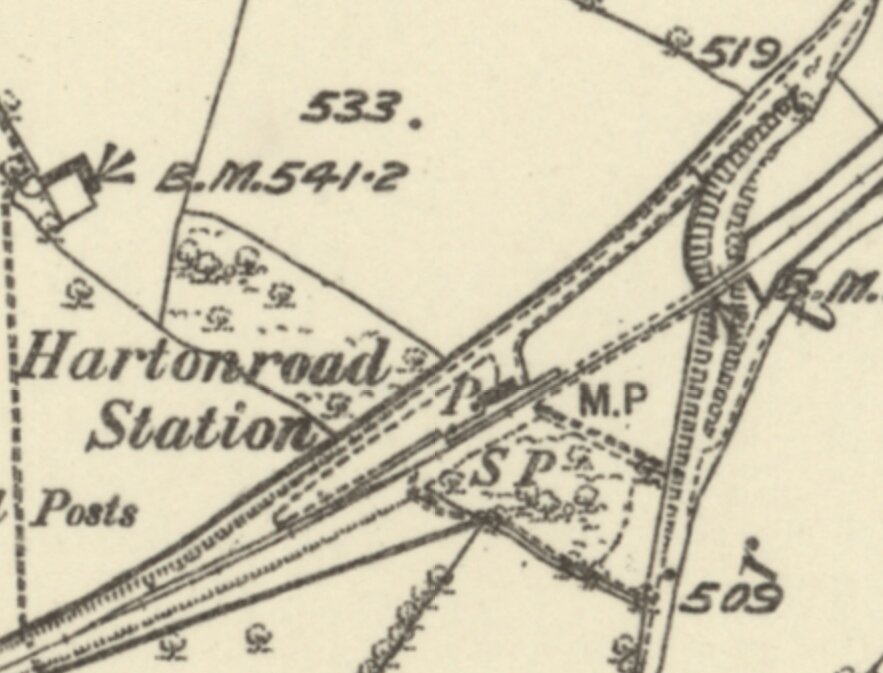
An enlarged extract from the 6″ Ordnance Survey of 1882 9published 1883. [15]
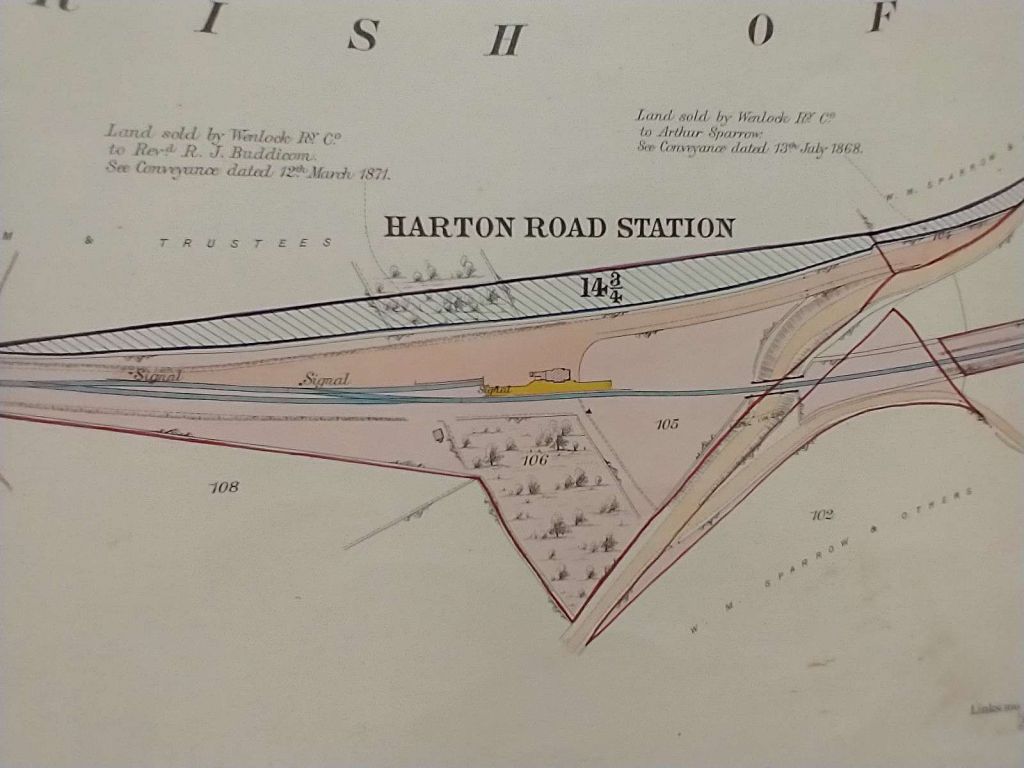
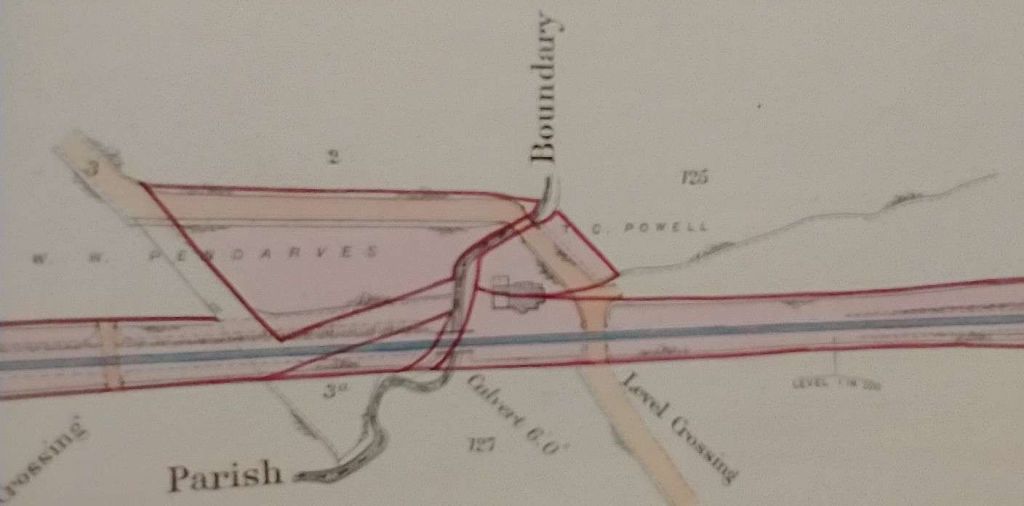
An extract from the precontract plans held at the Shrewsbury Archive shows the original road alignment at this location, lined in red, before the advent of the railway and its necessary diversion to accommodate the railway. These precontract plans were orientated in respect to the North point so as to get the greatest possible length of the proposed railway onto each sheet, © Shropshire Archives Ref. No. 6008/26 copyright reserved, used by kind permission. [5][My photograph of the plan, 5th August 2022]

Ken Jones deals with much of the length towards Marsh Farm Junction by telling us that, “Shortly after leaving Harton Road there [was] a long straight stretch across Henley Common, this was once part of the common field system attached to the small hamlet of Henley. Across the common and into a tree-lined deep cutting; as the train weaves in and out of the trees and cuttings between Harton Road and Marsh Farm Junction brief glimpses can be seen of a tower rising well above the trees to the left of the line; this is the well known Shropshire landmark Flounders Folly, a mid-19th century folly. After negotiating its stone staircase tourists would be rewarded with commanding views of the surrounding Shropshire and Border countryside.” [1: p109]

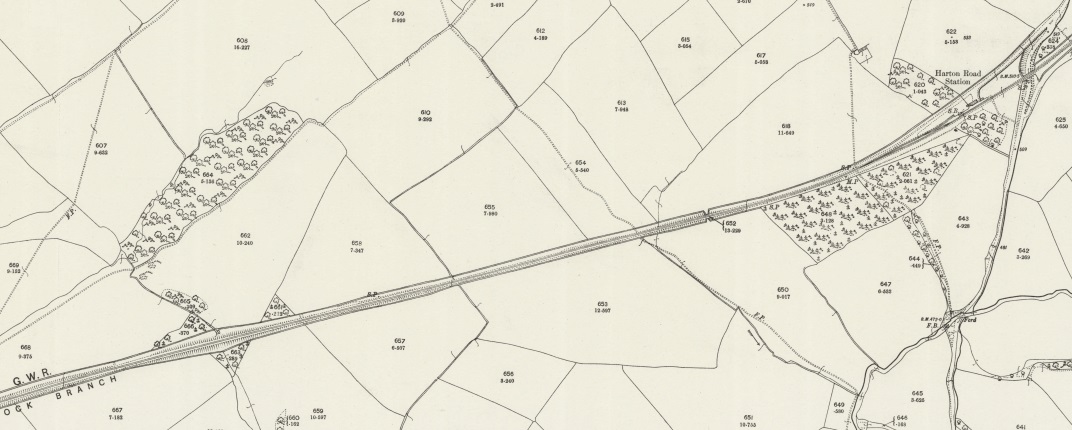
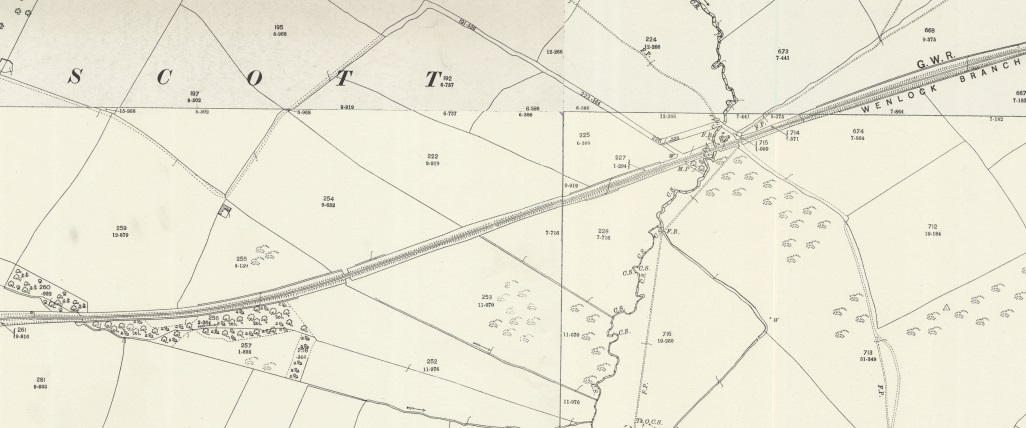
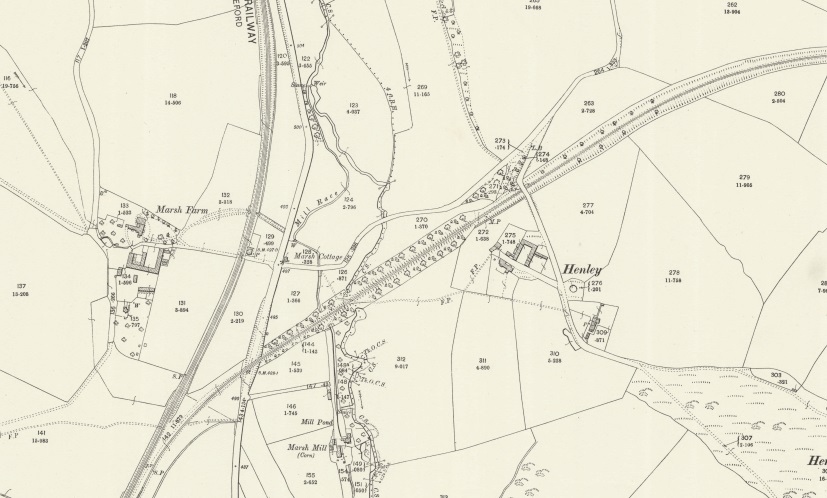
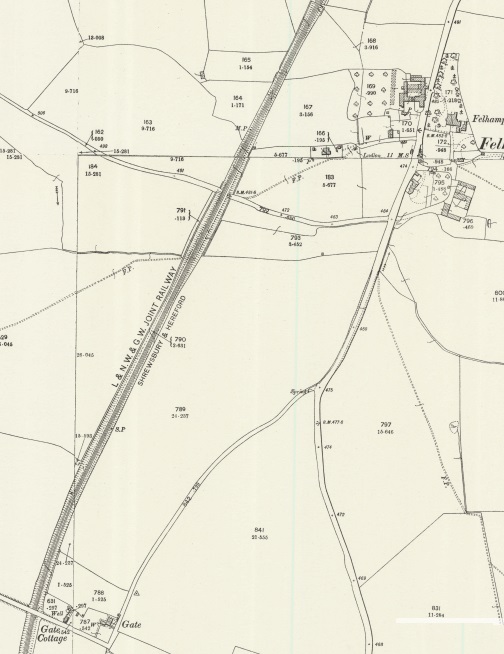
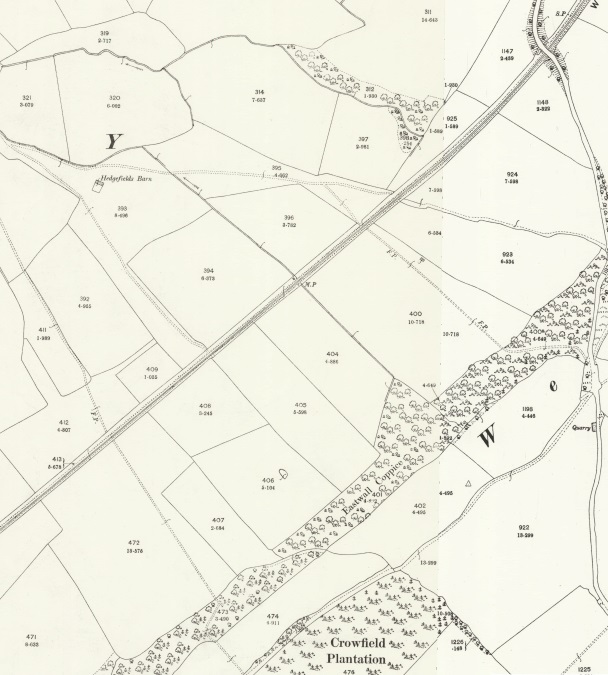
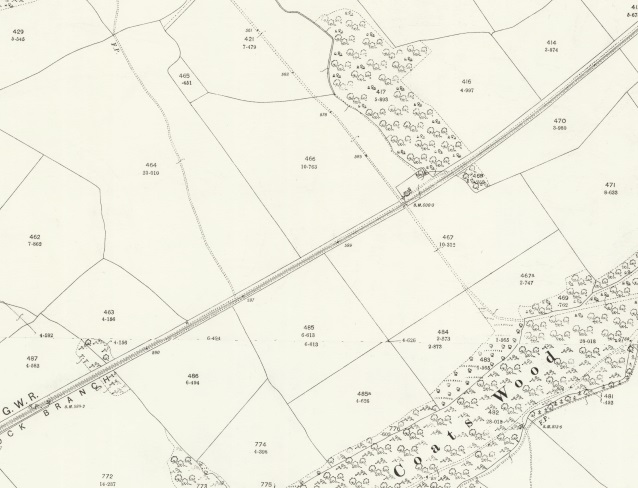
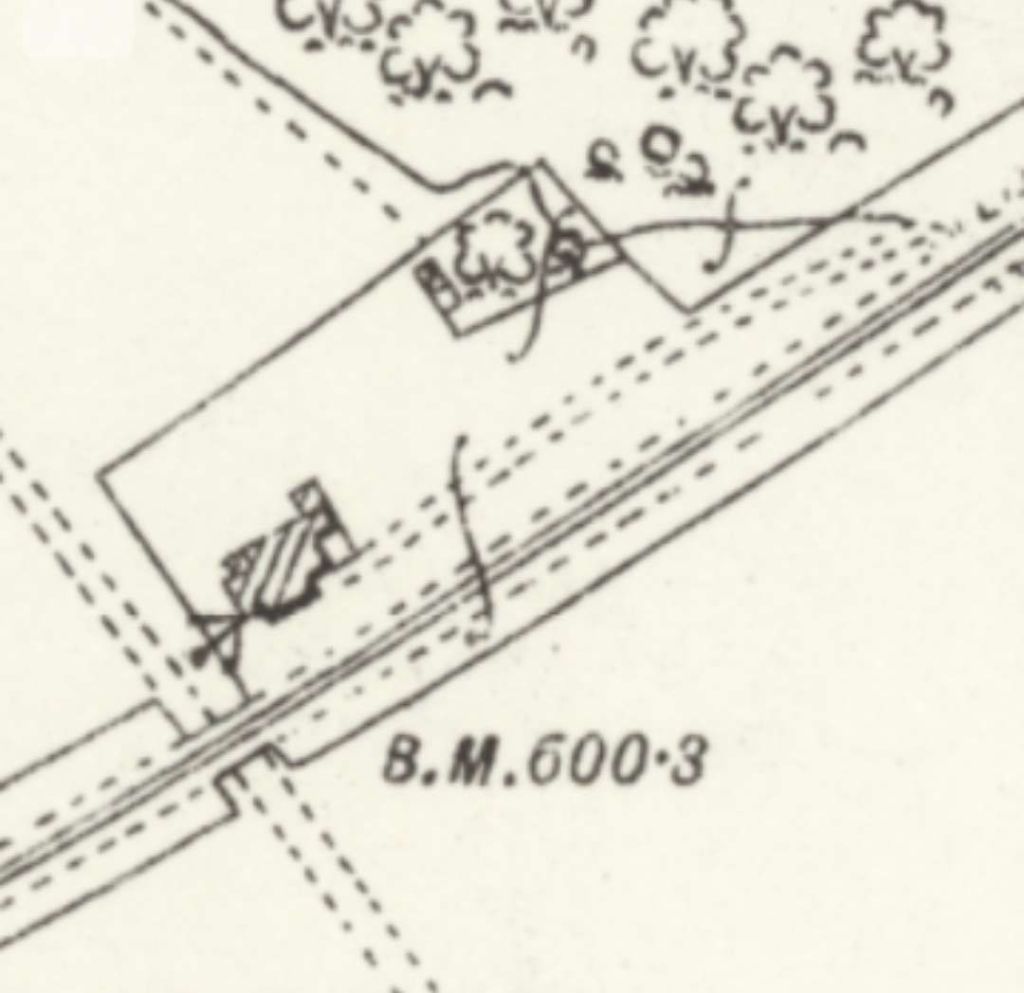
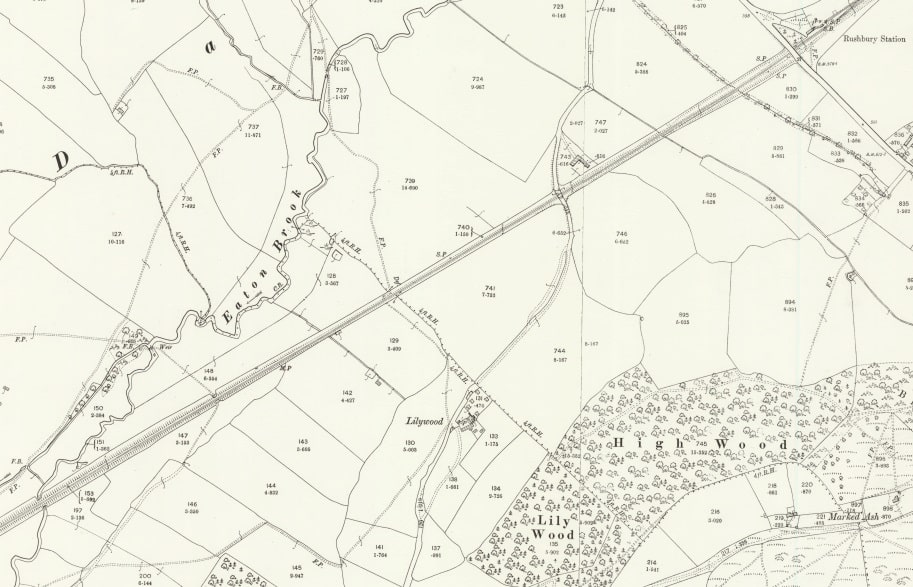
After leaving Harton Road Station trains for Craven Arms ran West towards Marsh Farm Junction across Henley Common. This extract comes from the 25″ Ordnance Survey of 1901. [16]
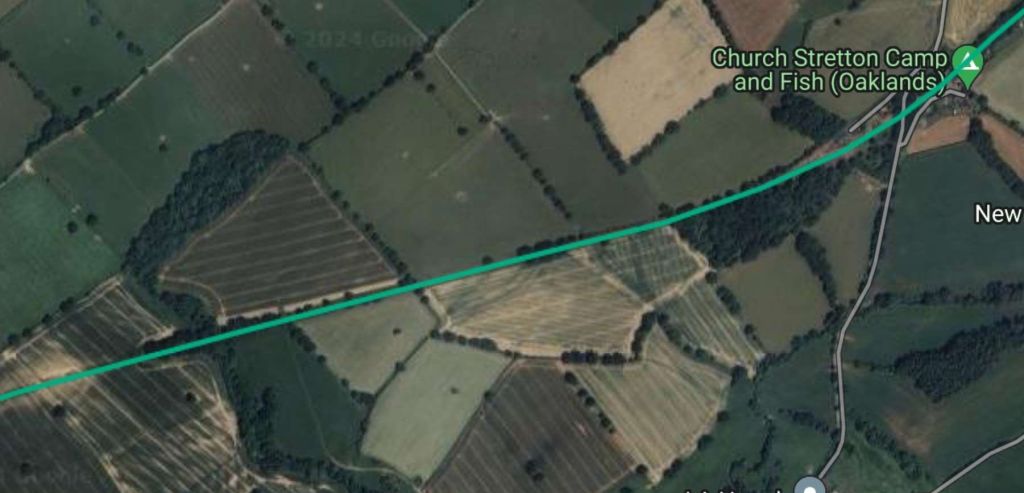
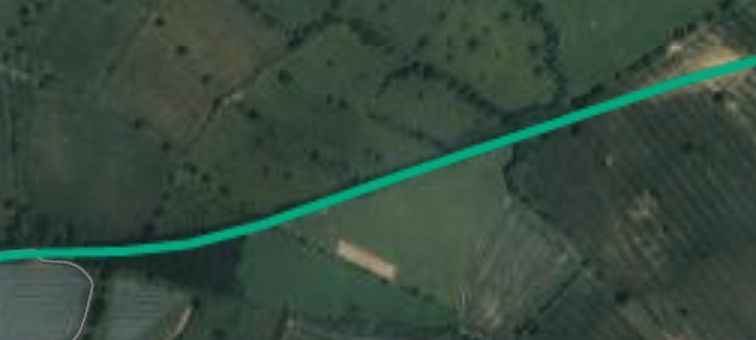
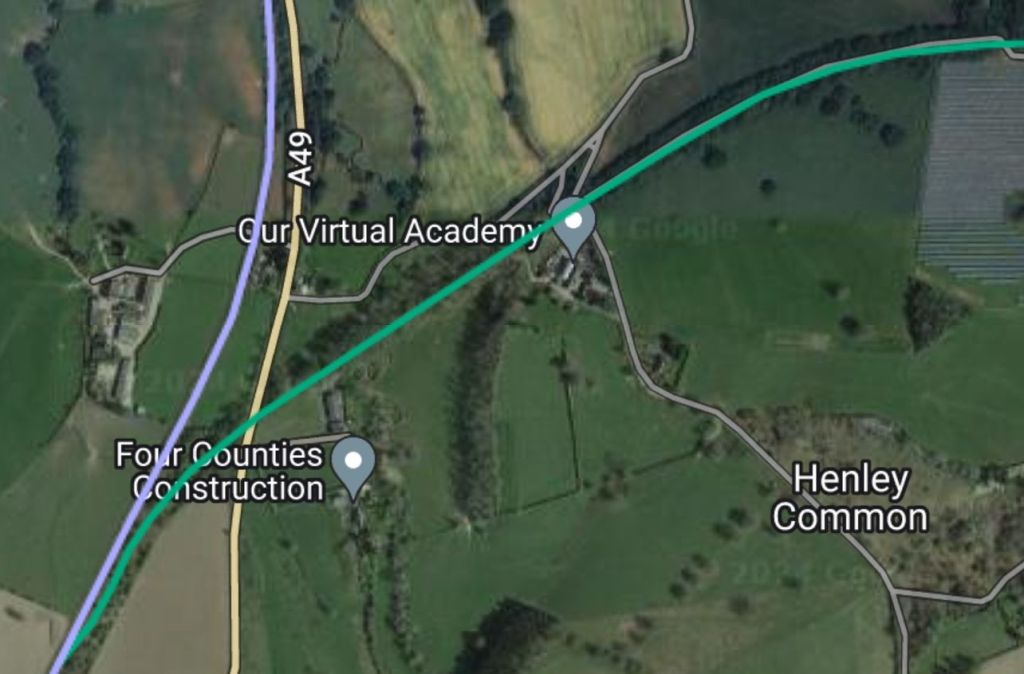
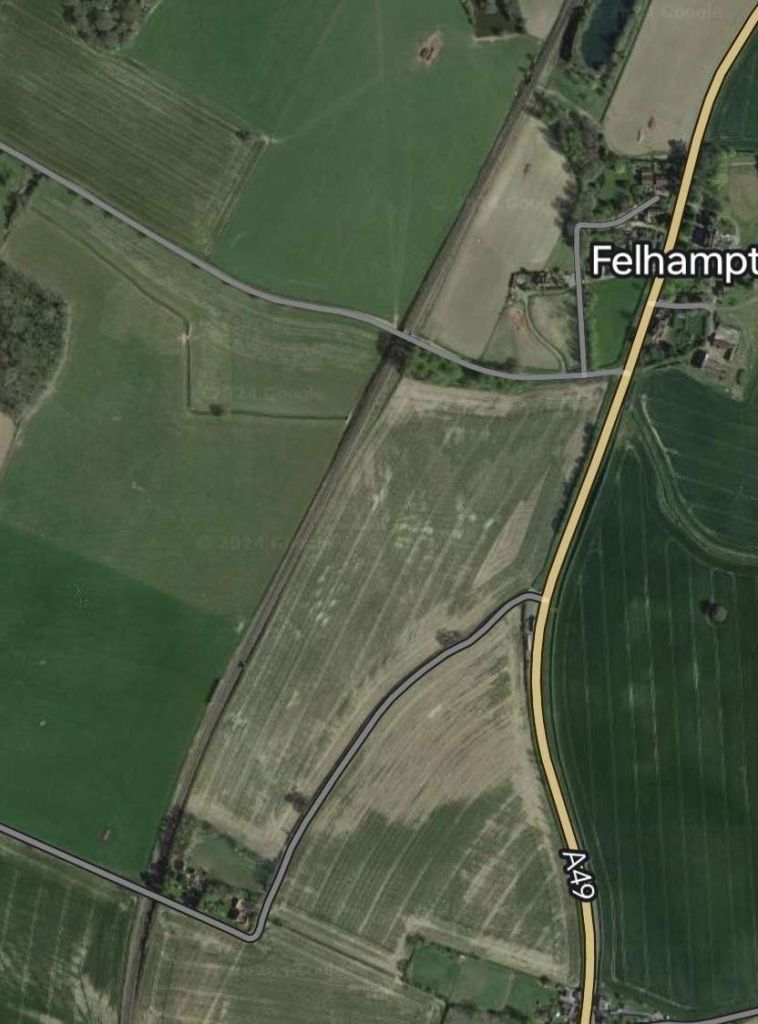
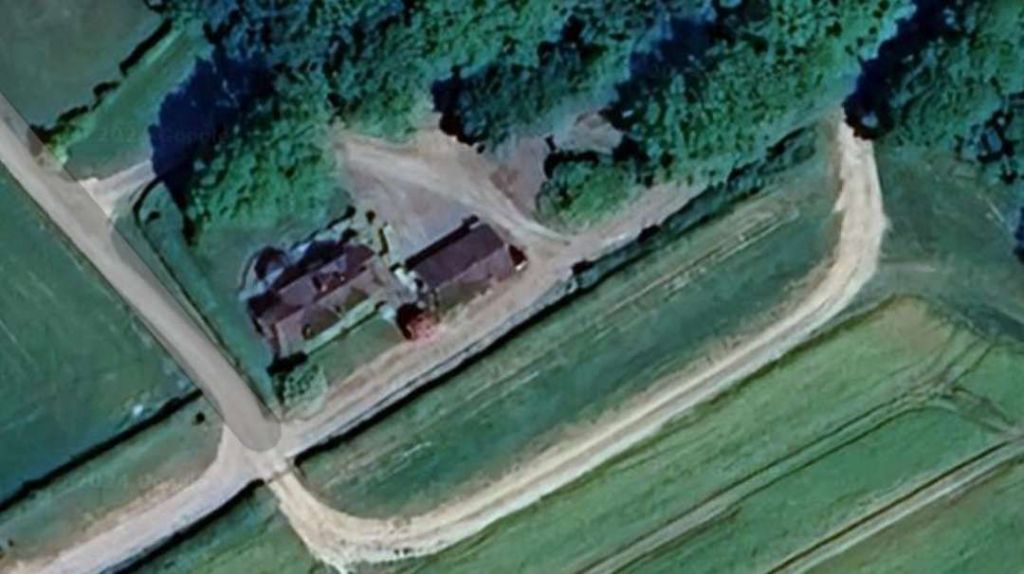
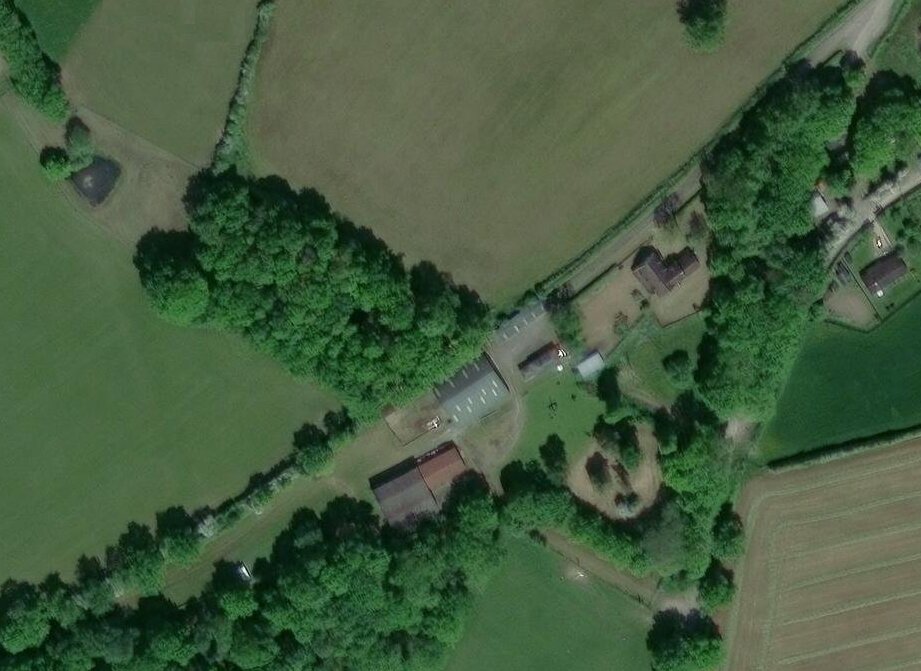
A very similar area as it appears on the railmaponline.com satellite imagery. [3]
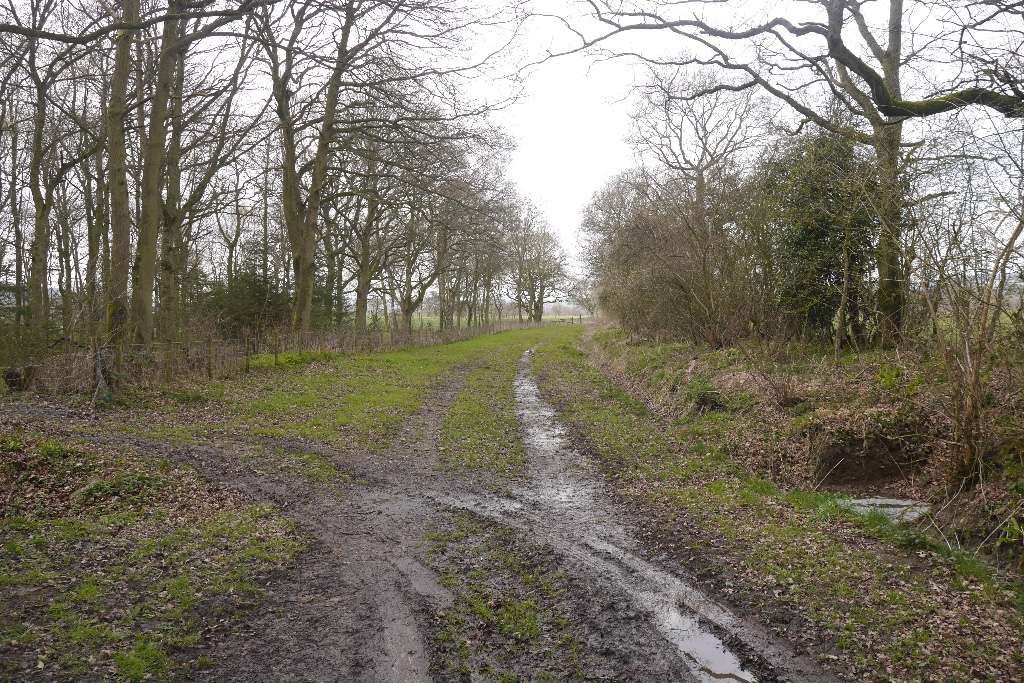
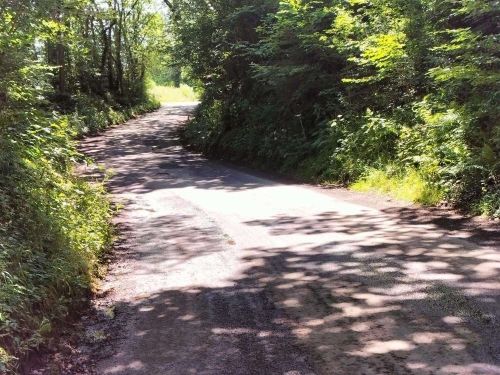
Just a short distance West along the line from Harton Road Station and looking West on 12th April 2016, © Richard Webb and licensed for reuse under a Creative Commons Licence (CC BY-SA 2.0). [7]
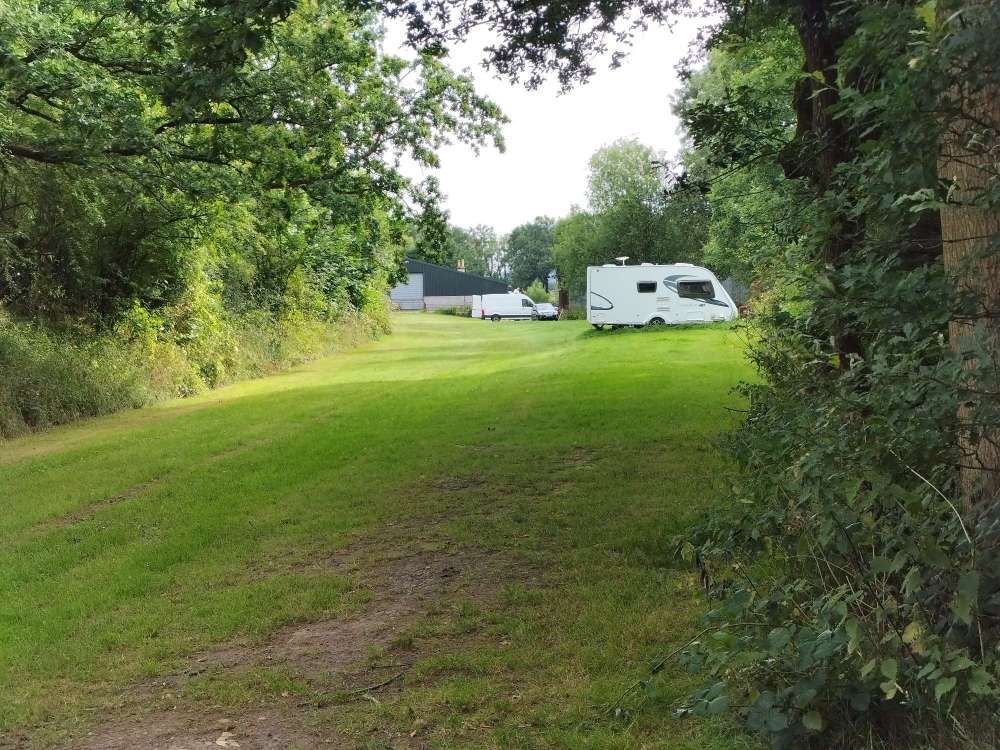
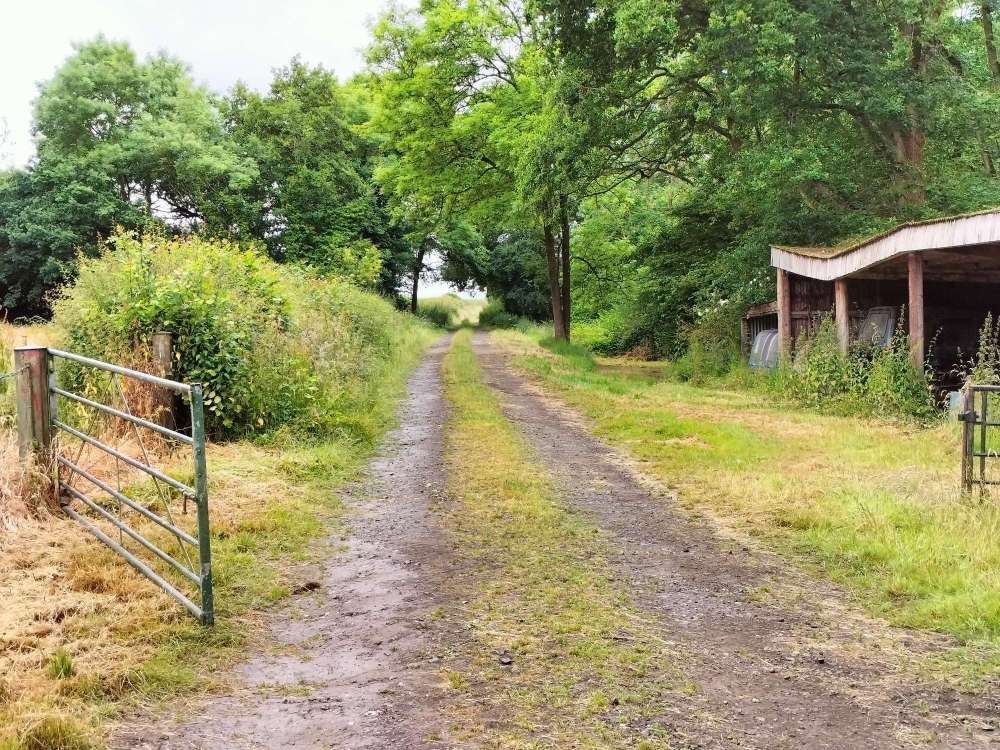
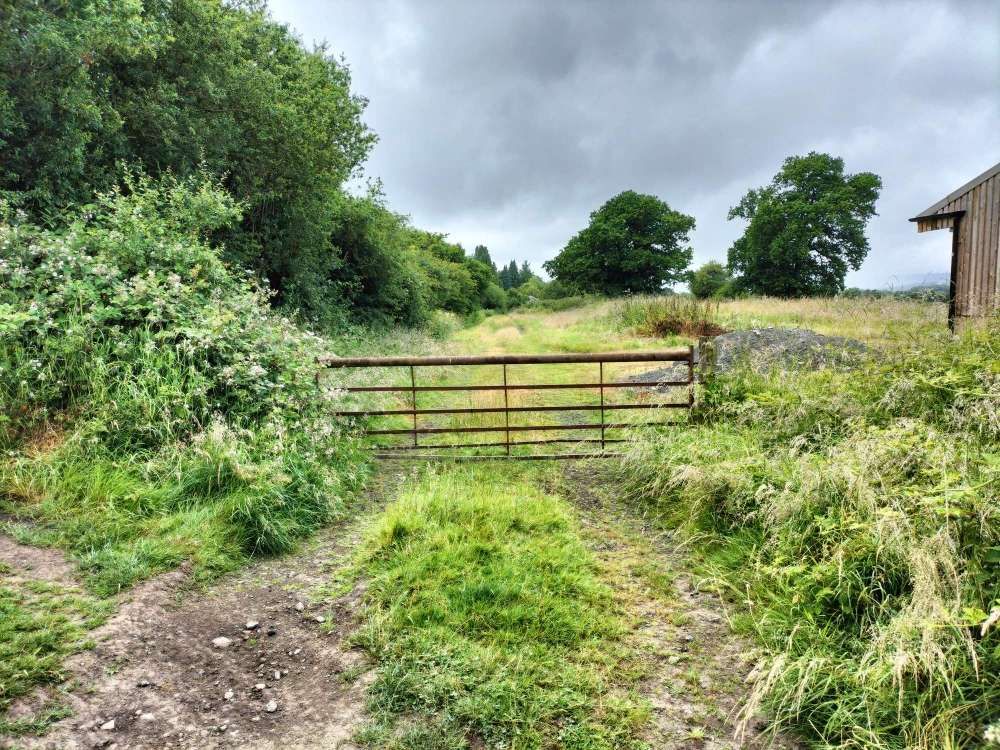
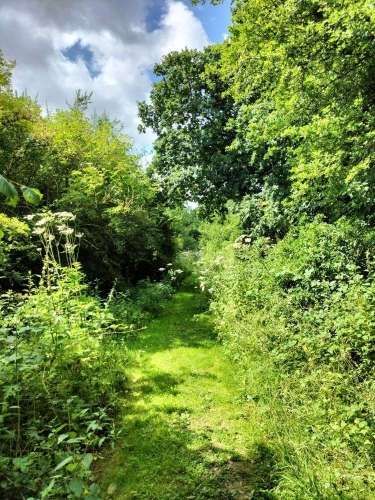
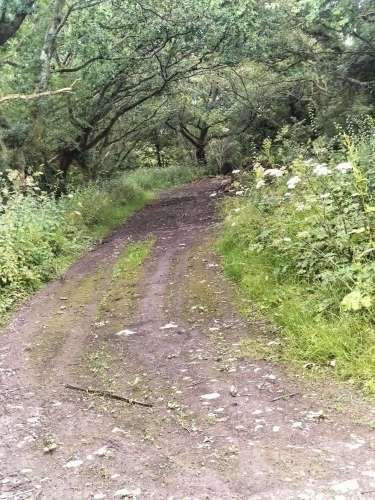
Looking back towards Harton Road Station from a couple of hundred metres East along the route of the old railway where a public footpath crosses the line of the Wenlock Branch. The chimney of the station building can just be seen beyond the barn in the distance. [My photograph, 13th August 2024]
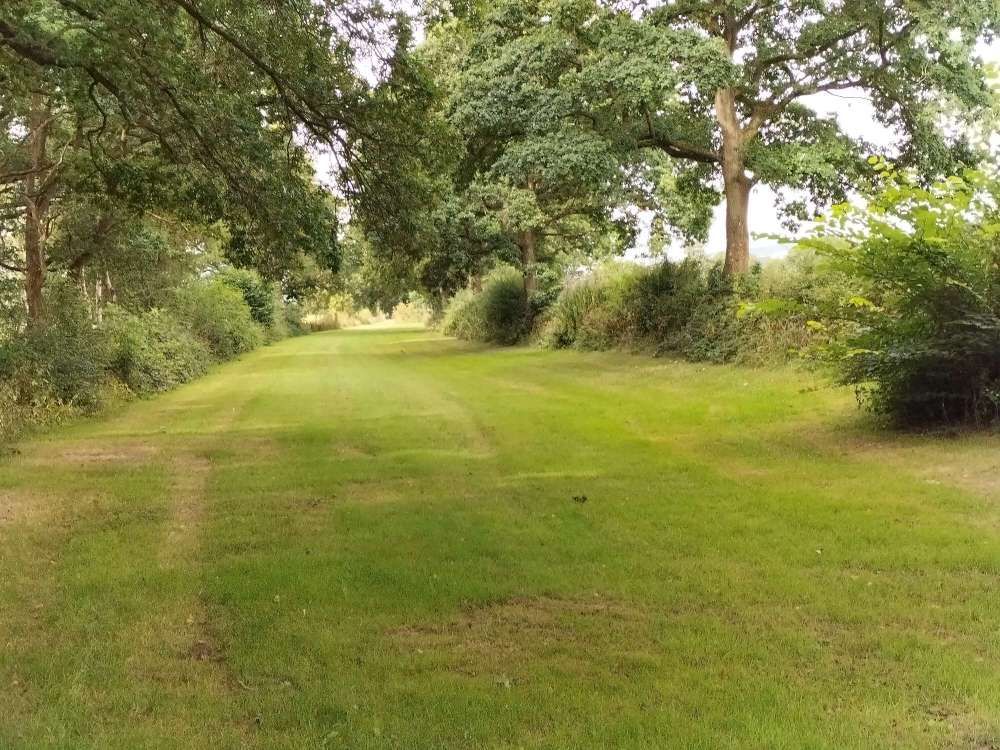
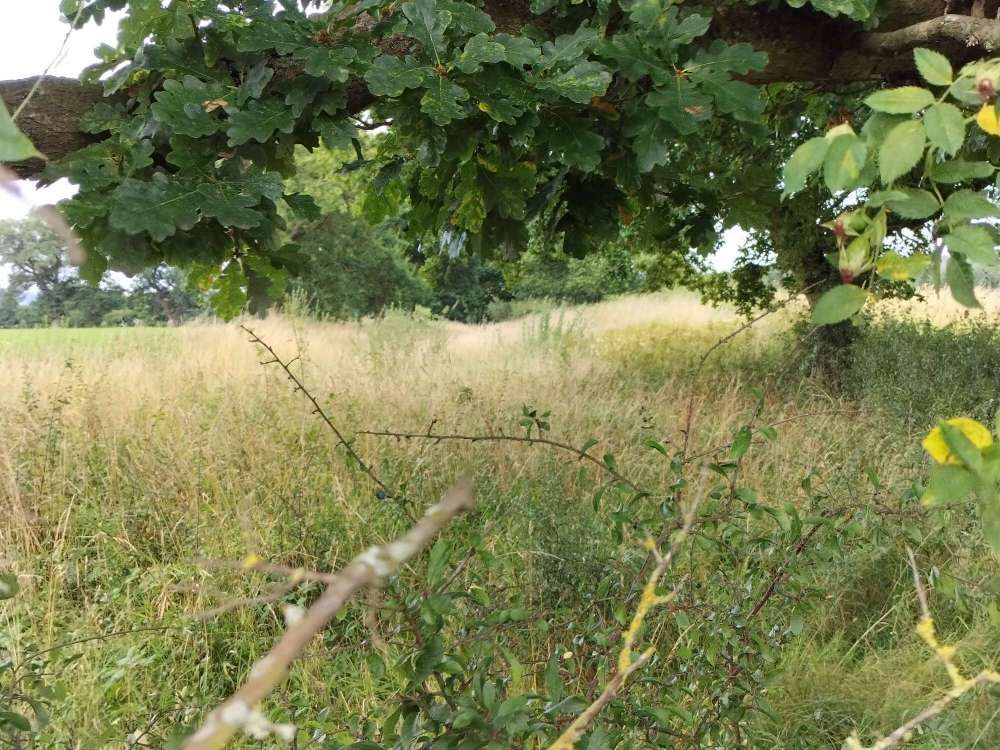
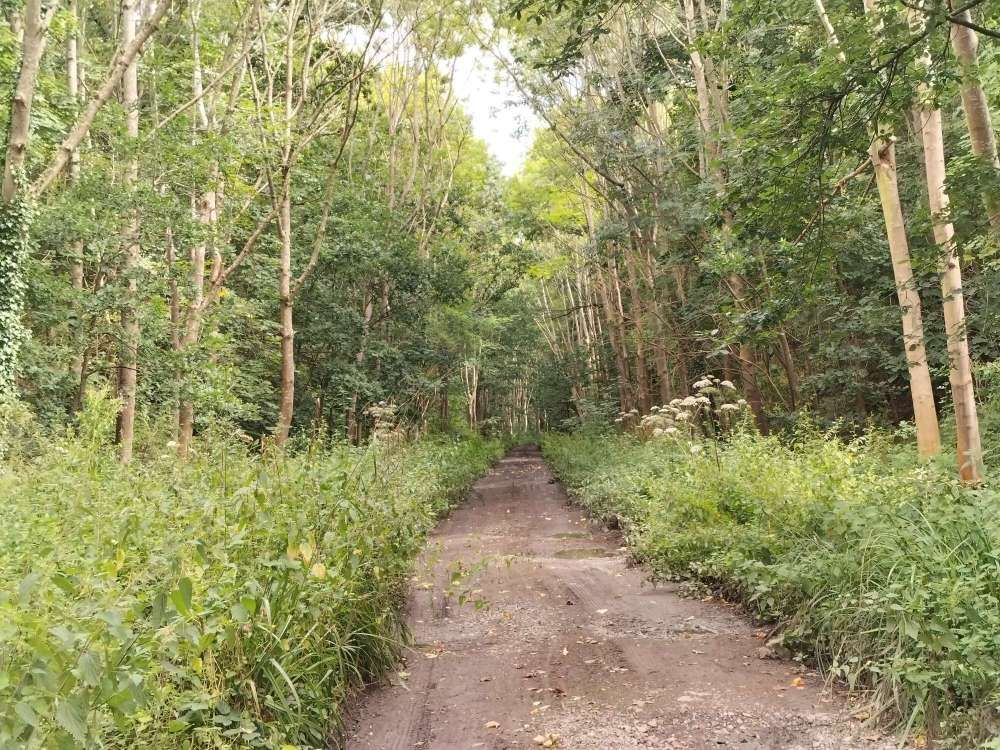
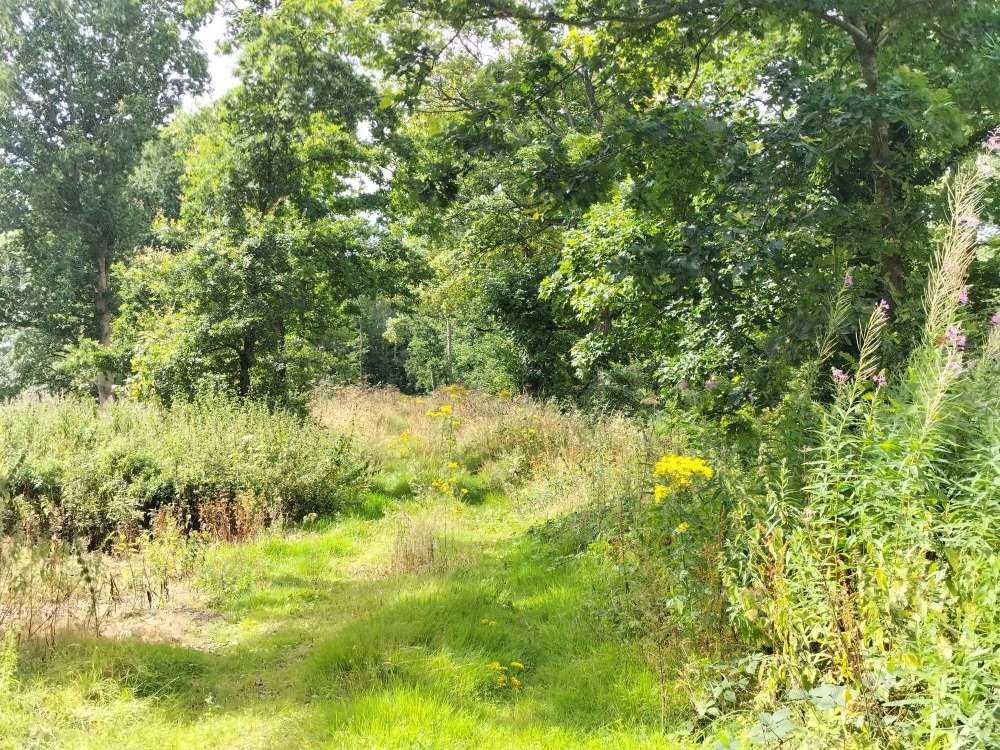
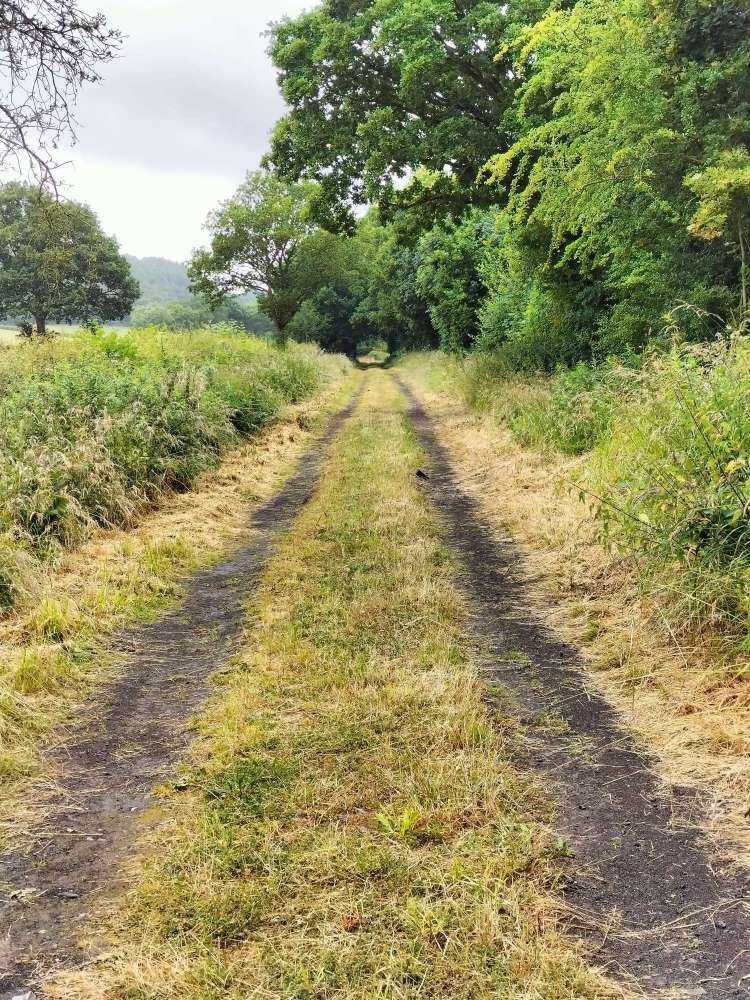
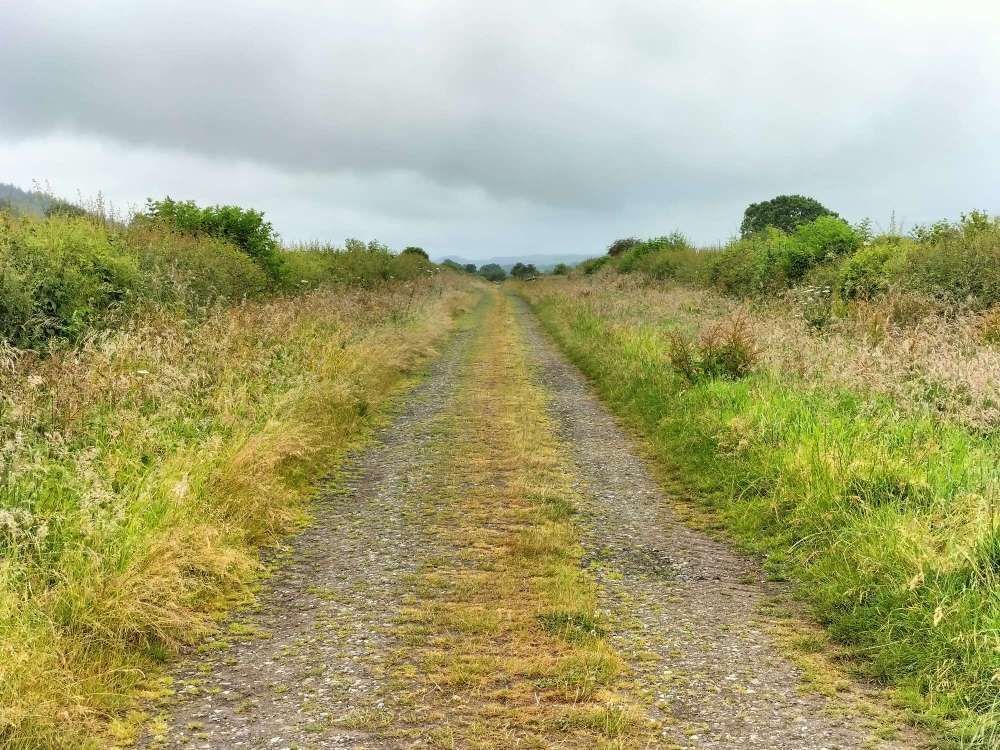
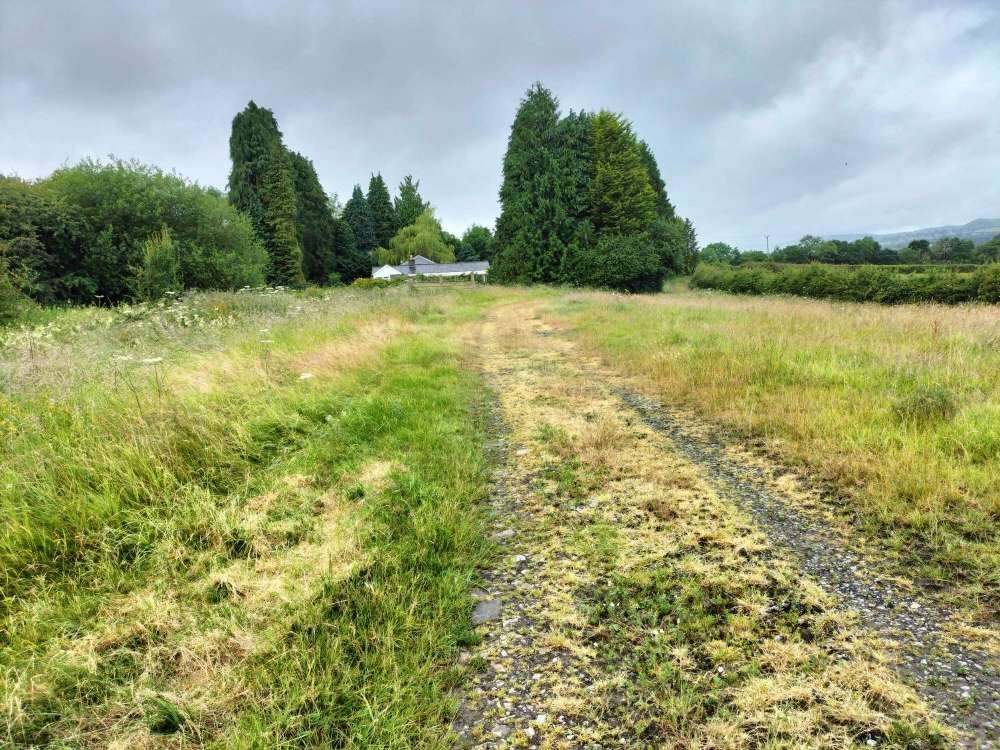
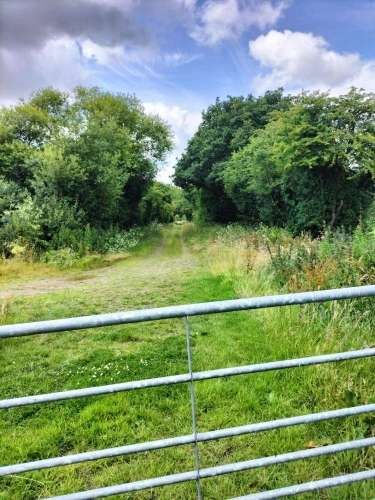
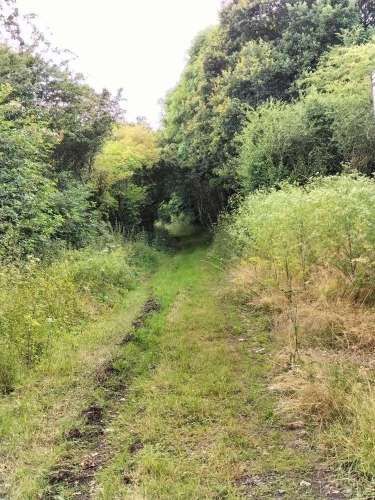
Some distance further West along the line of the old railway and looking West. [My photograph, 13th August 2024]
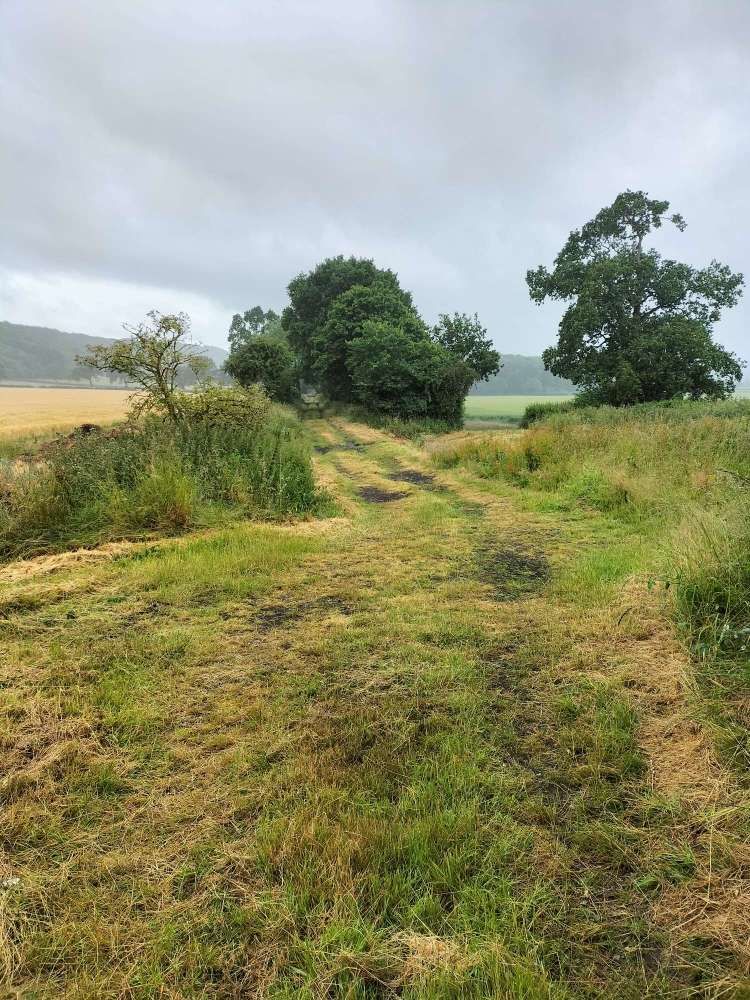
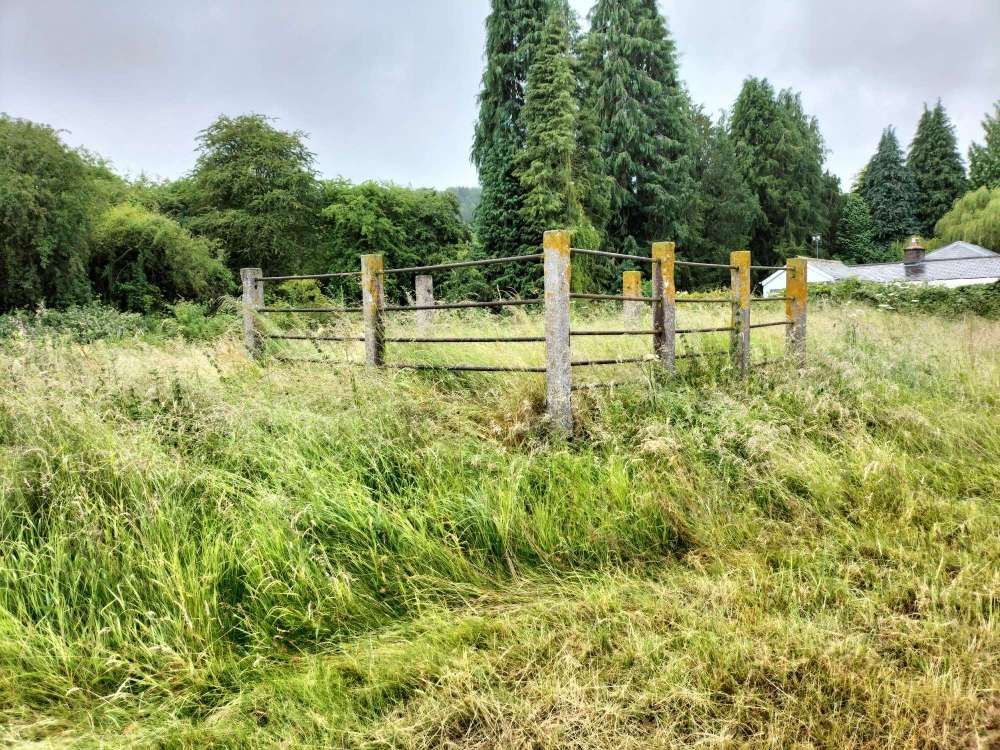
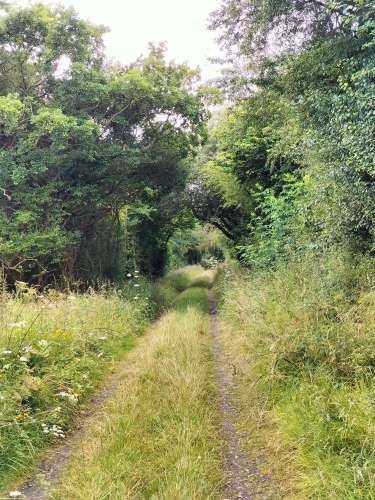
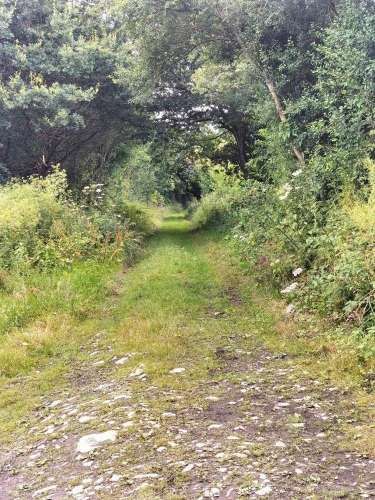
Looking West from the point a second footpath crosses the old railway. [My photograph, 13th August 2024]
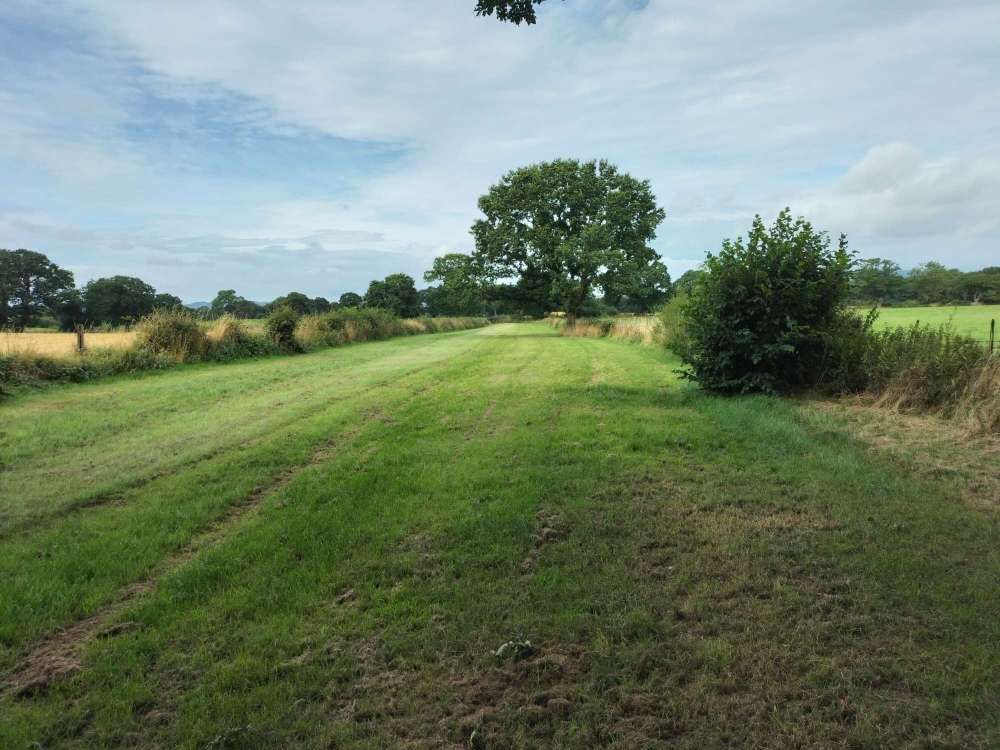
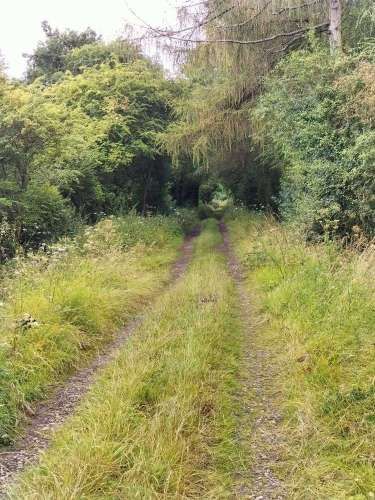
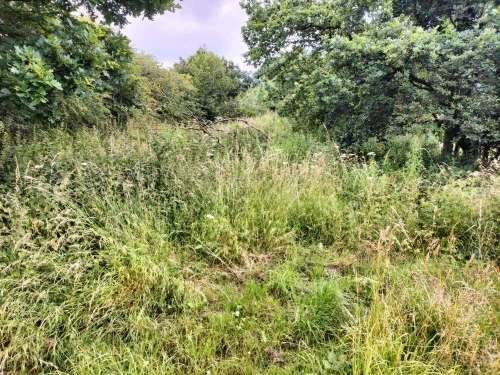
At the location of the tree in the centre of the image above a permanent fence crosses the line. This is the view West from that fence line. [My photograph, 13th August 2024]

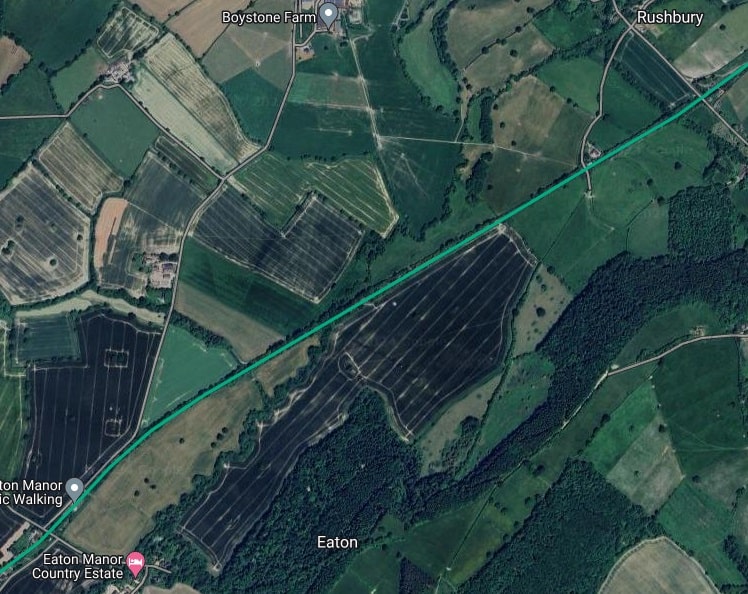
From this point on, the line crosses private land and for some distance the formation has been ploughed into the fields. After some distance, to the South side of the line there is a large Solar Farm. The access track to the solar farm runs West from the farm towards the A49.

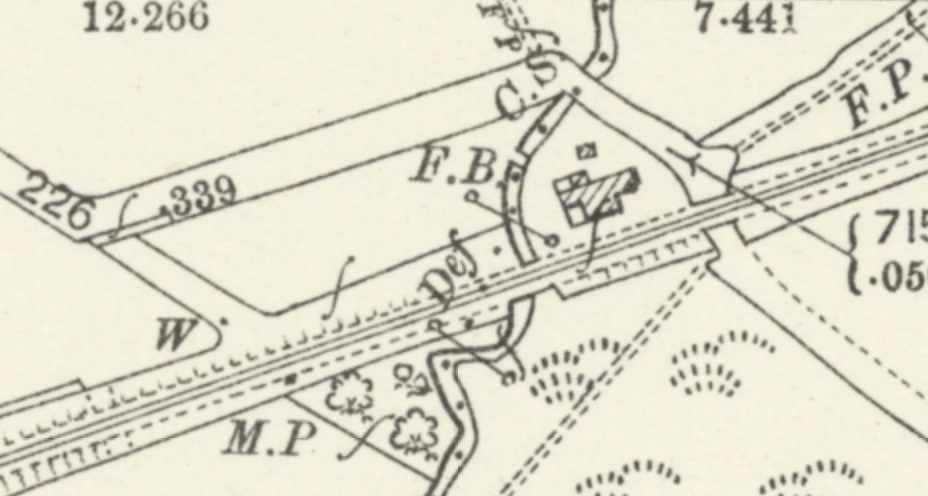
Continuing West the line crossed a farm access track and stream in close proximity. An enlarged extract from this 25″ Ordnance Survey is shown below. [17]
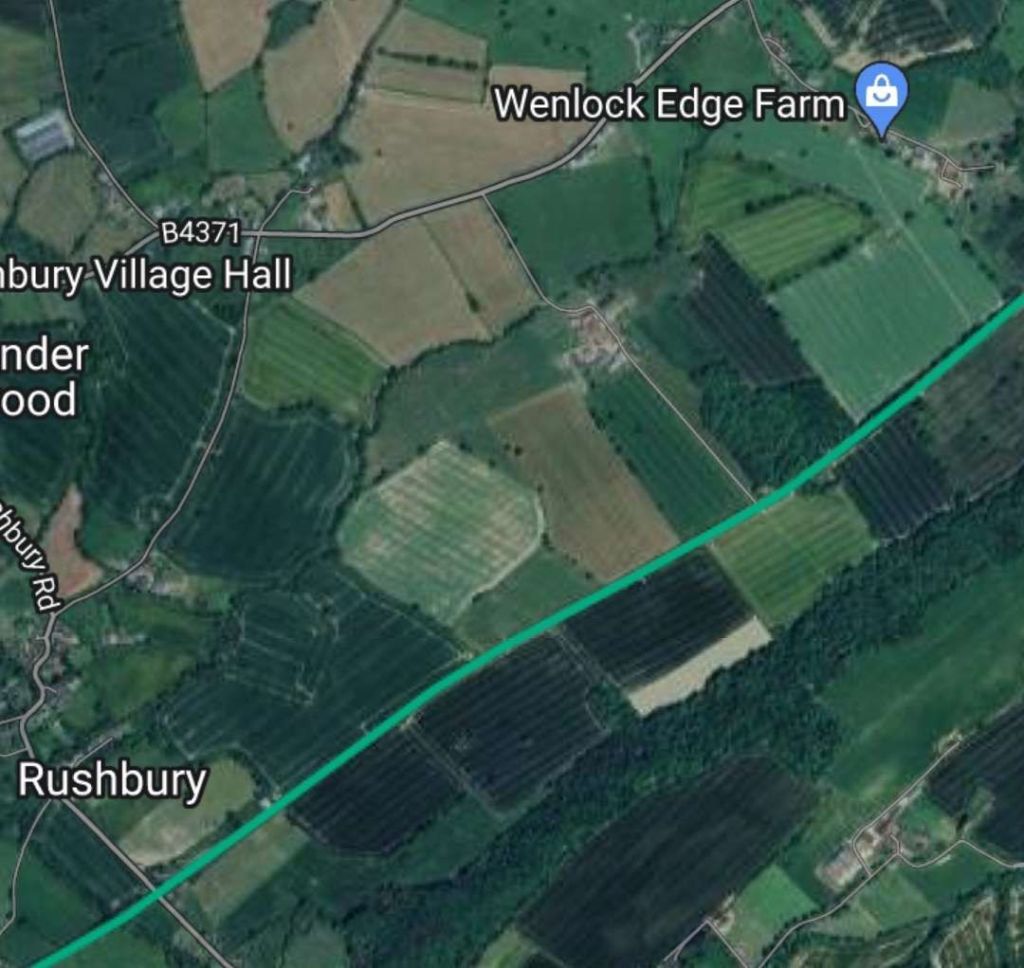
A similar length of the line as shown on railmaponline.com satellite imagery. Note the solar farm at the bottom left of this image. East of the solar farm the route of the old railway runs over private land. West of the solar farm its access track follows the route of the old railway. [3]
The old line crossing a stream and an access track! This enlarged extract shows an area about the third point in from the right side of the Ordnance Survey above. [17]
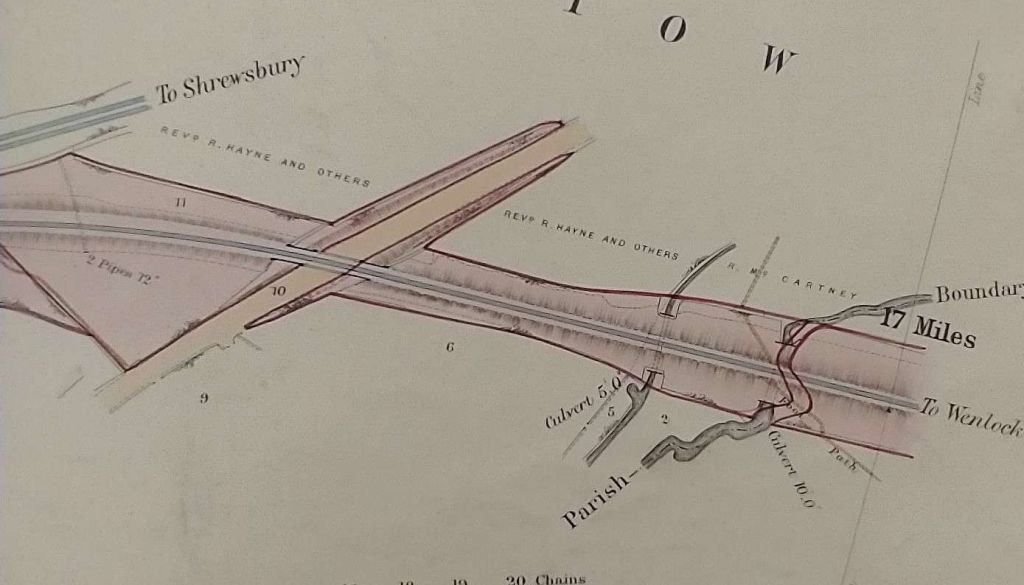
The same location as shown on the pre-contract drawings, © Shropshire Archives Ref. No. 6008/26 copyright reserved, used by kind permission. [5][My photograph of the plan, 5th August 2022]
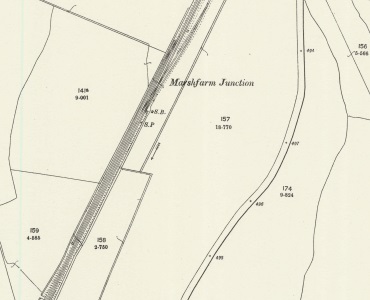
The remaining length of the line to Marsh Farm Junction. 25″ Ordnance Survey of 1901. [18]
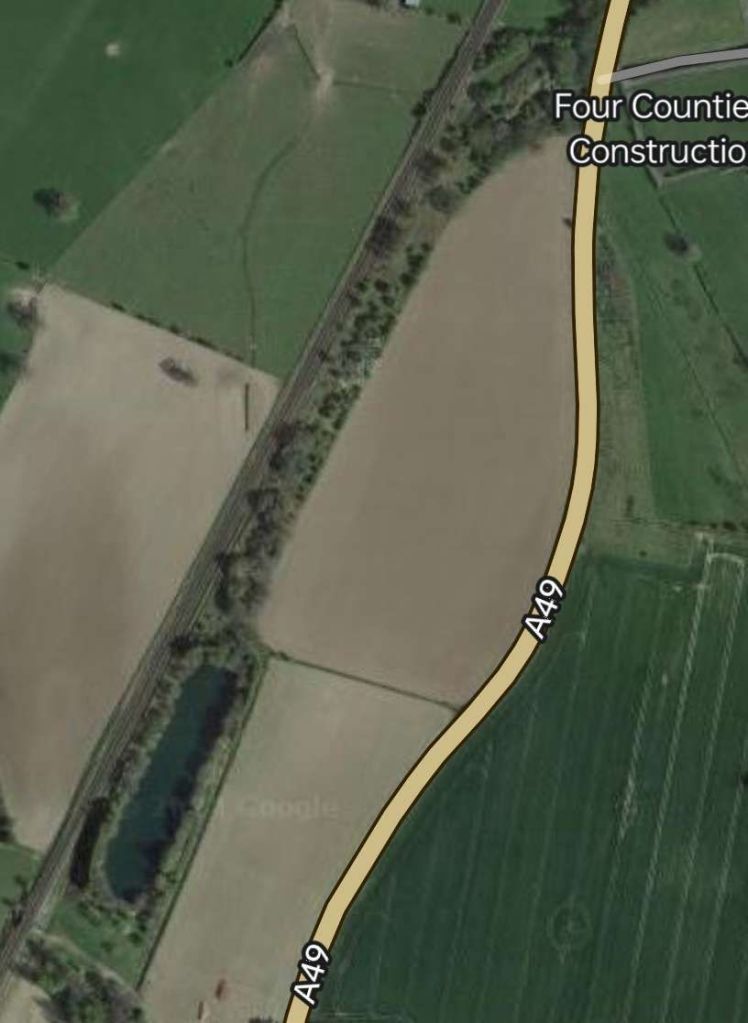
A similar area to that shown on the 25″ OS map extract above, as it appears on the railmaponline.com satellite imagery. [3]
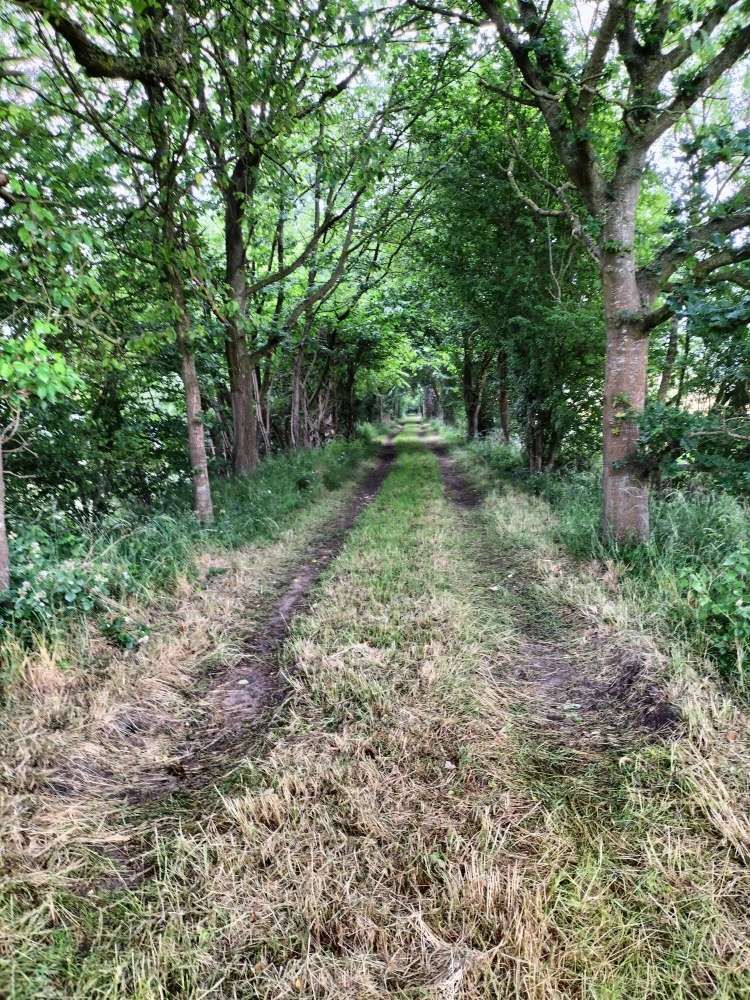
The access track to the solar farm follows the old railway line seen from close to its western end. [My photograph, 13th August 2024]
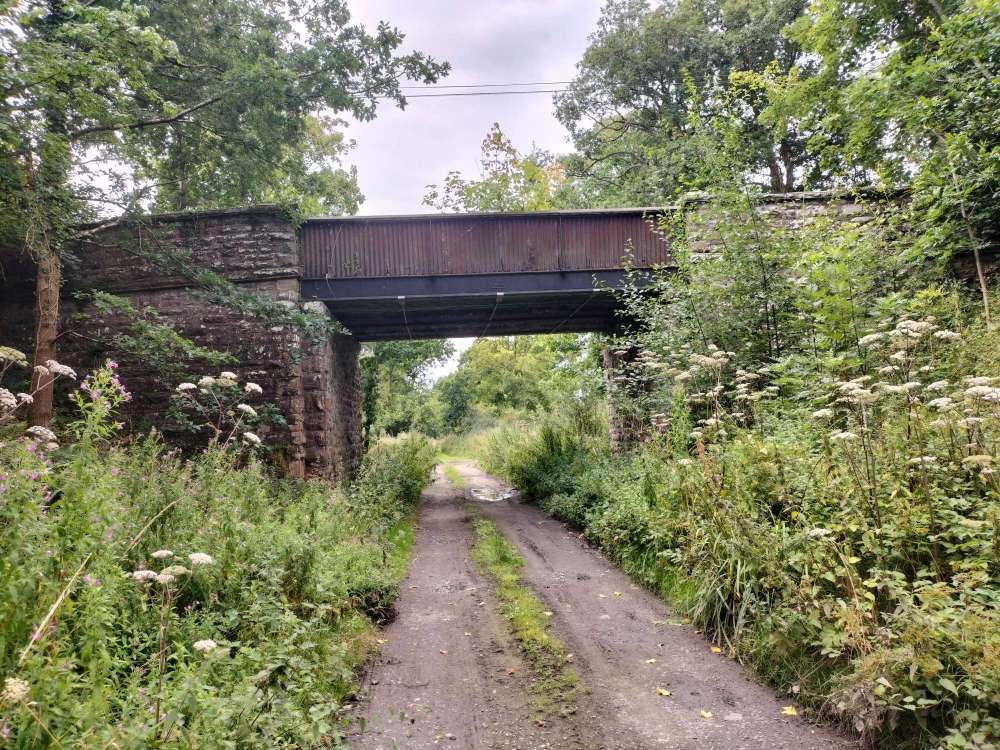
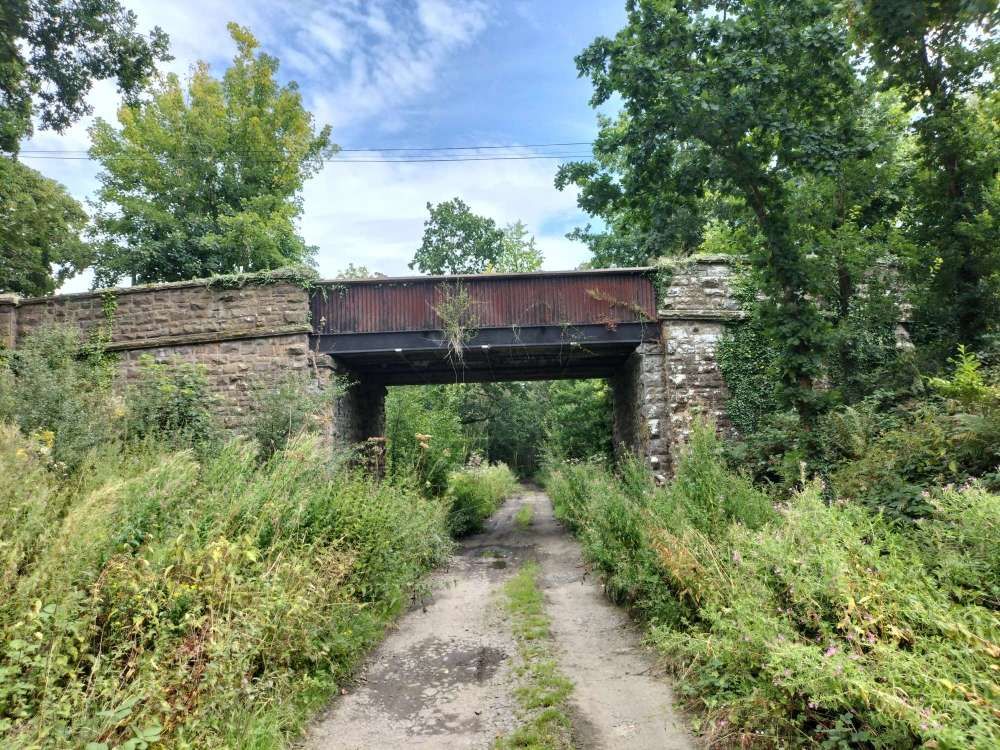
Looking West towards the bridge carrying Henley Lane over the Wenlock Branch. [My photograph, 13th August 2024]
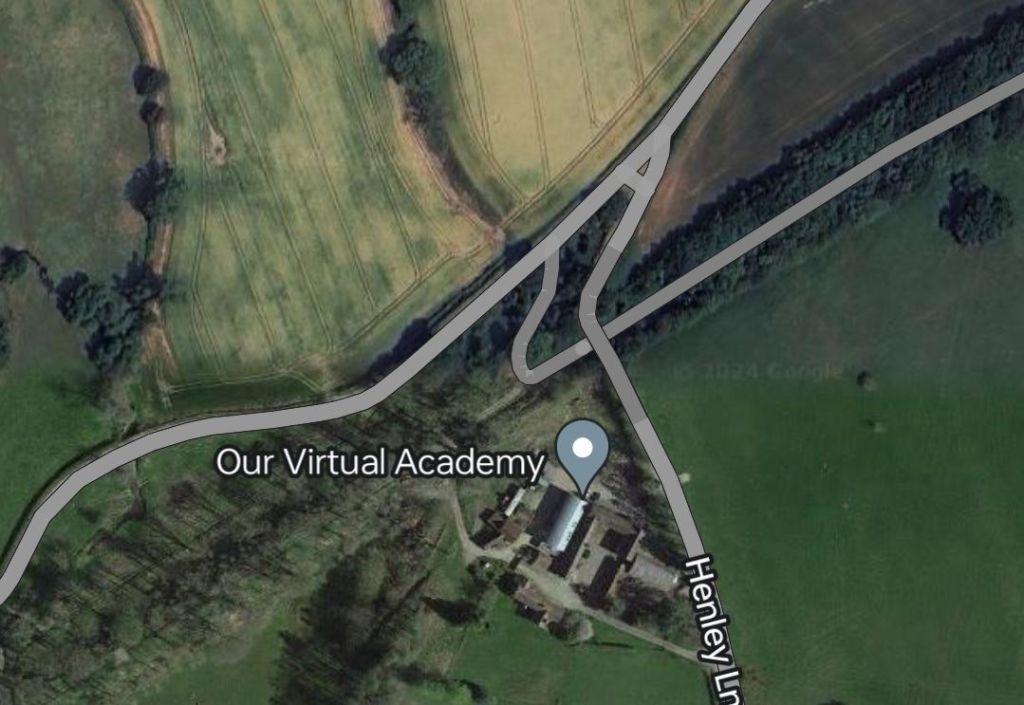
The route of the old line continues to be marked by the lines of trees, nearing March Farm Junction. [Google Maps, August 2024]
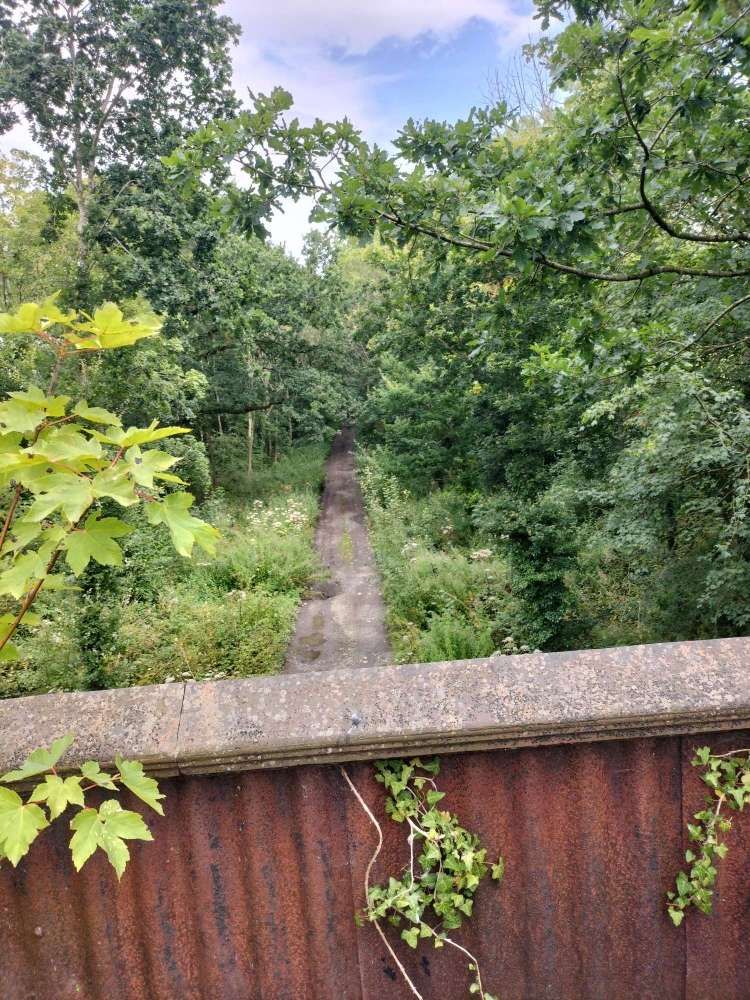
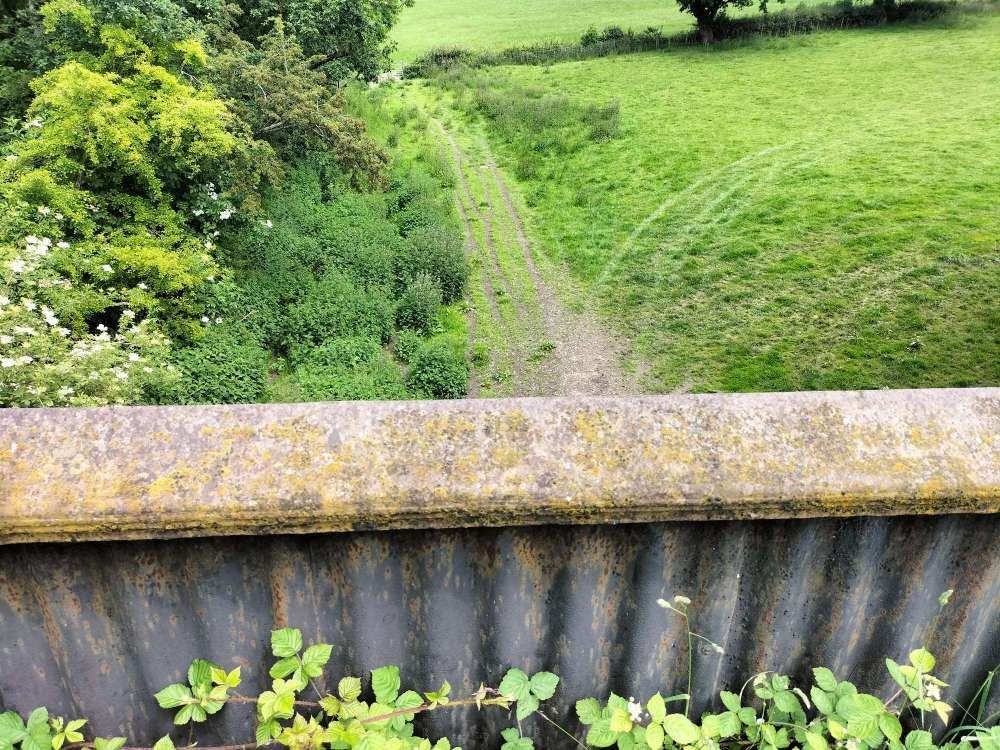
The view East from Henley Lane Bridge, back along the old line towards Harton Road Station. [My photograph, 13th August 2024]
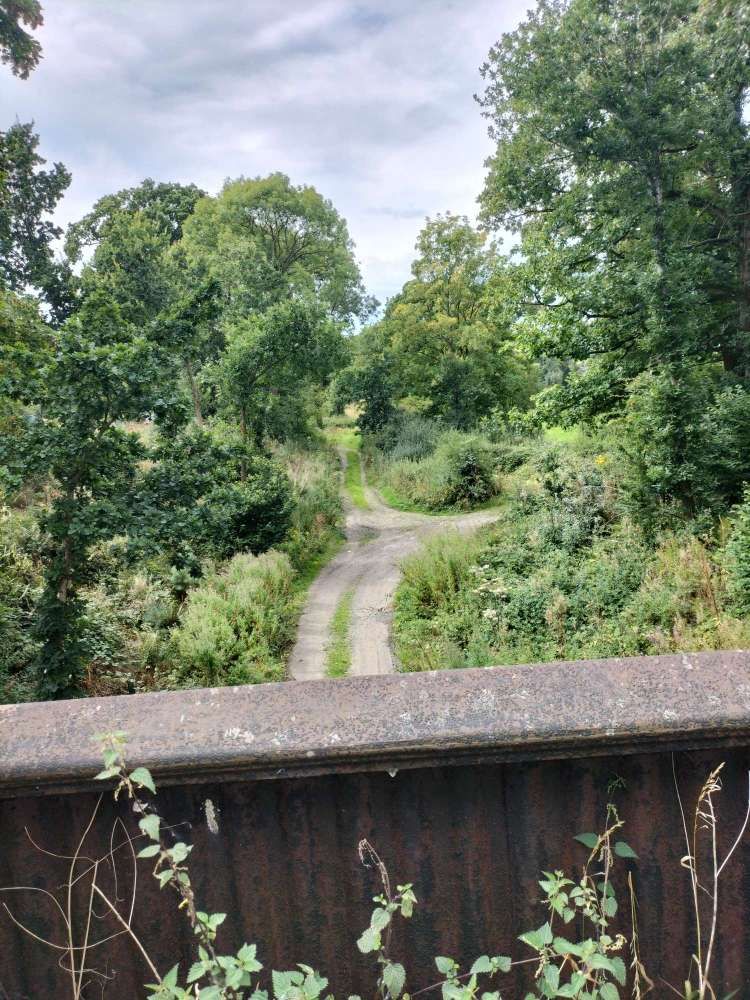
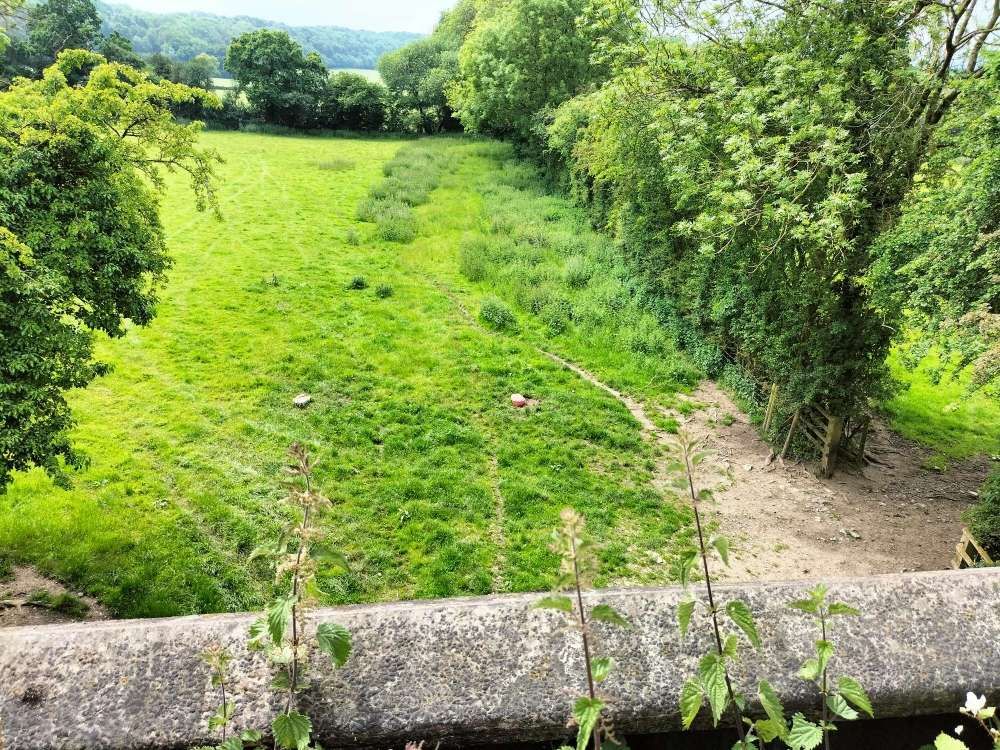
Looking West from Henley Lane Bridge along the old line to Marsh Farm Junction. [My photograph, 13th August 2024]
Looking East towards Henley Lane Bridge. [My photograph, 13th August 2024]
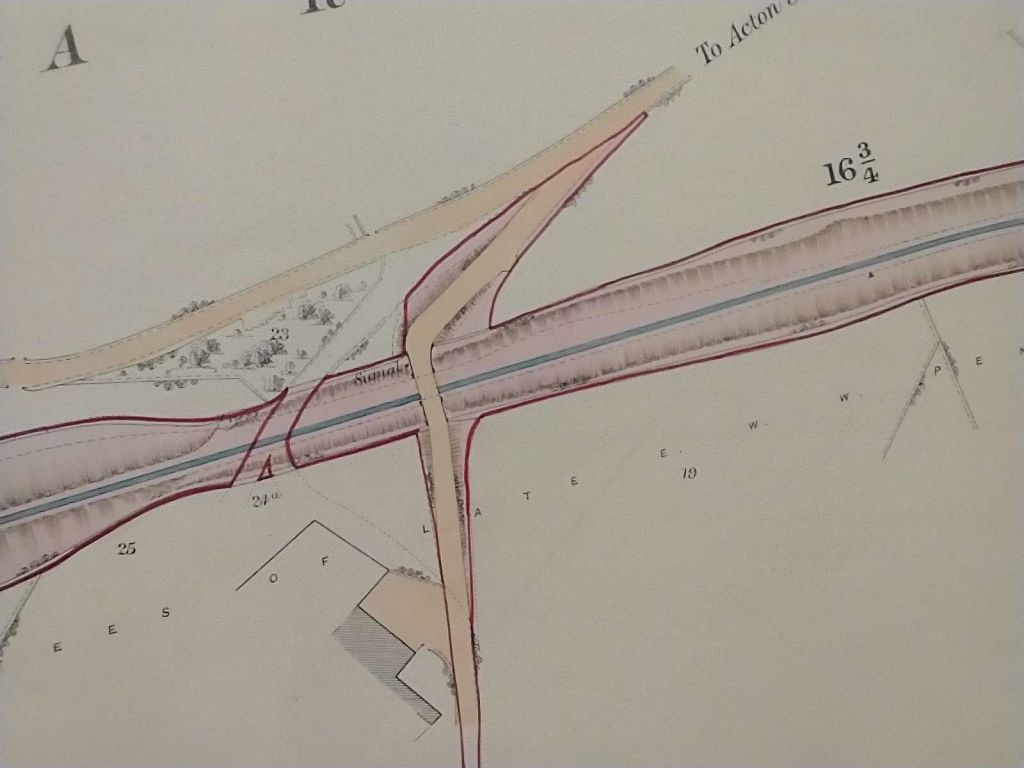
Henley Lane Bridge as shown on the pre-contract drawings, © Shropshire Archives Ref. No. 6008/26 copyright reserved, used by kind permission. [5][My photograph of the plan, 5th August 2022]
The next length of the line which crossed the main Shrewsbury to Hereford road as shown on the pre-contract drawings, © Shropshire Archives Ref. No. 6008/26 copyright reserved, used by kind permission. [5][My photograph of the plan, 5th August 2022]
Looking West towards the A49 along the line. [My photograph, 13th August 2024]
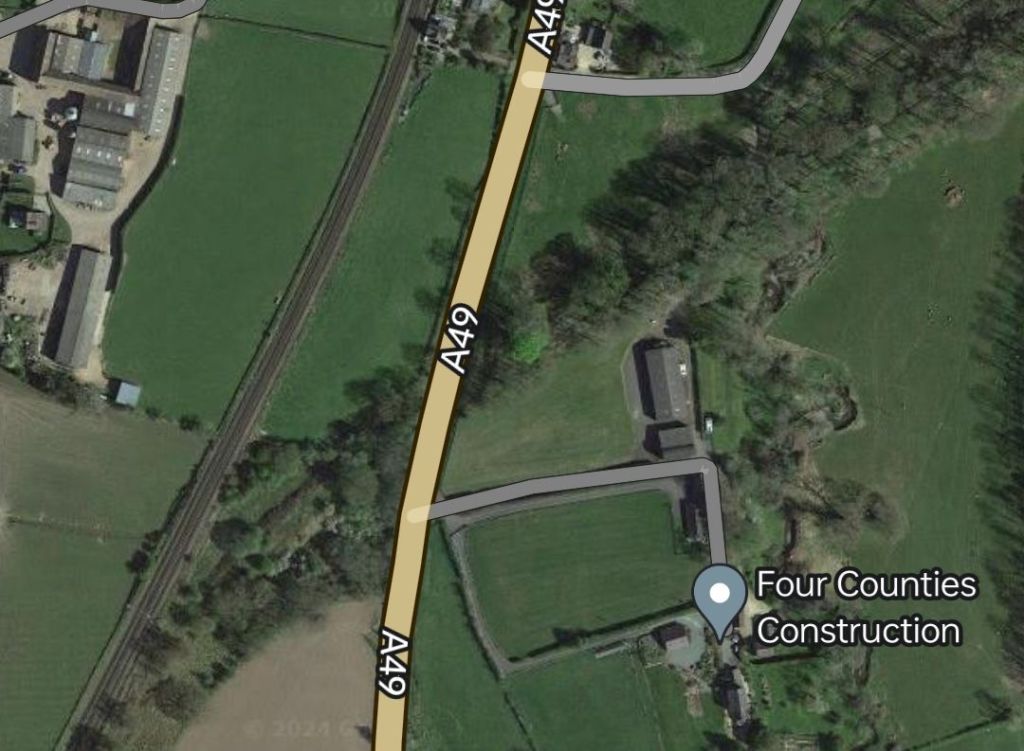
The approach to the Shrewsbury to Hereford main line at what was Marsh Farm Junction. The Wenlock Branch is again marked by the line of trees which enters top right. The line brushed the Shrewsbury to Hereford road as it approached Marsh Farm Junction. [Google Maps, August 2024]
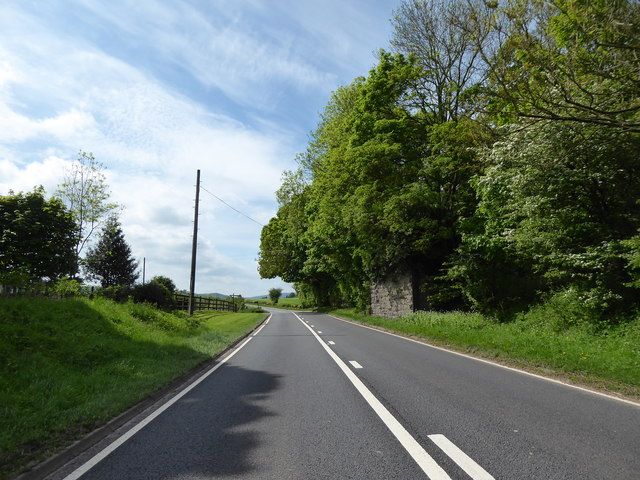
The view South along the A49 close to Marsh Farm at the point where the Wenlock Branch bridged the road. An abutment remains on the East side of the road. The Shrewsbury to Hereford main line is just off to the right, © Jeremy Bolwell and licensed for reuse under a Creative Commons Licence (CC BY-SA 2.0) [23]
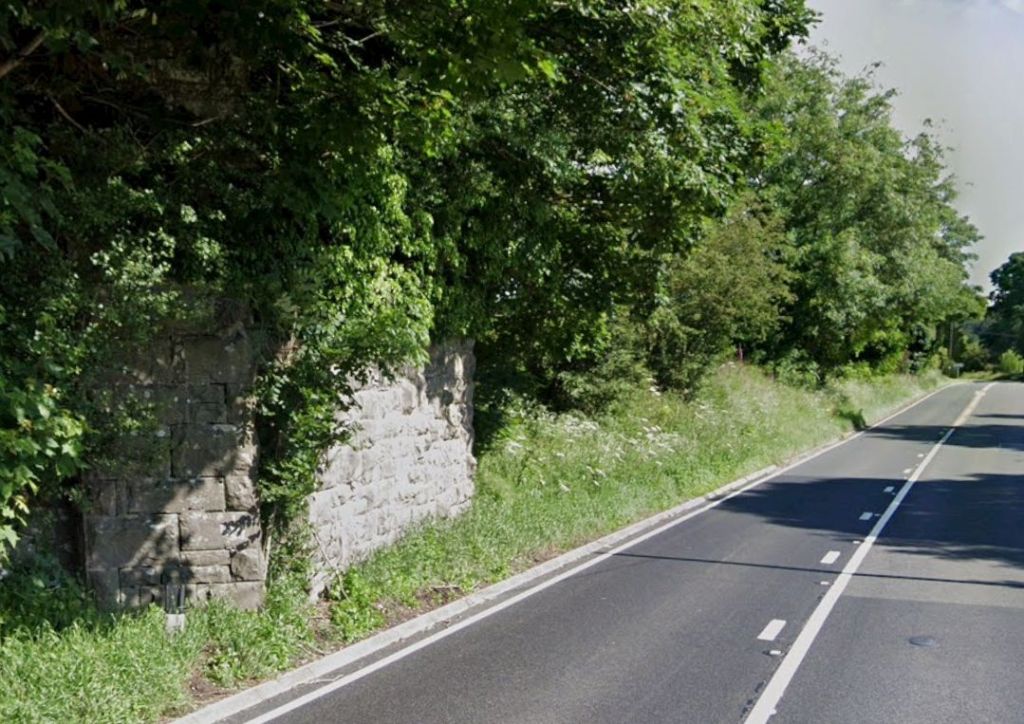
The view North along the A49 showing the same abutment. [Google Streetview, June 2024]
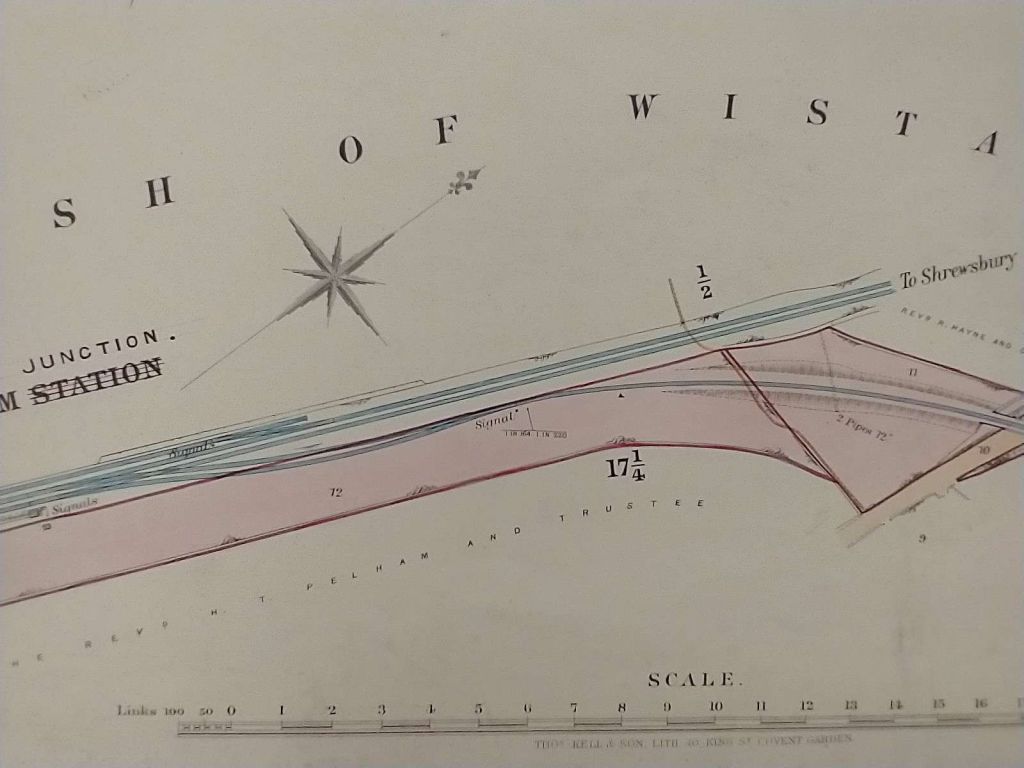
The length of the line between the Shrewsbury to Hereford road an the junction with the Shrewsbury to Hereford main line, as shown on the pre-contract drawings, © Shropshire Archives Ref. No. 6008/26 copyright reserved, used by kind permission. [5][My photograph of the plan, 5th August 2022]
Marsh Farm Junction as shown on the 25″ Ordnance Survey of 1901. [19]
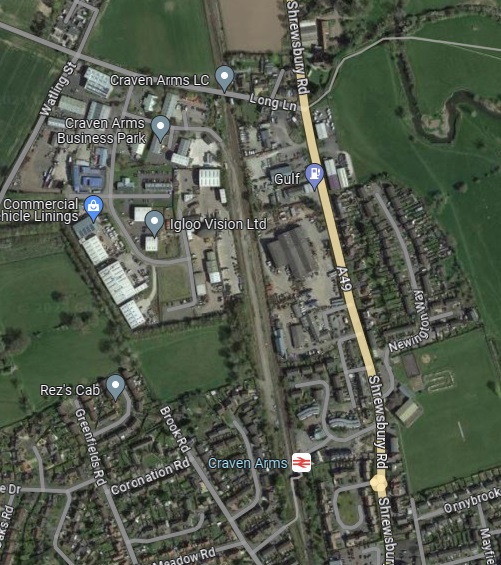
A modern satellite image showing the main line over the length of the junction and to the South.  [Google Maps, August 2024]
The next length of the main line as shown on the 25″ OD map of 1901. [21]
The next length of the main line as it appears on modern satellite imagery. [Google Maps, August 2024]
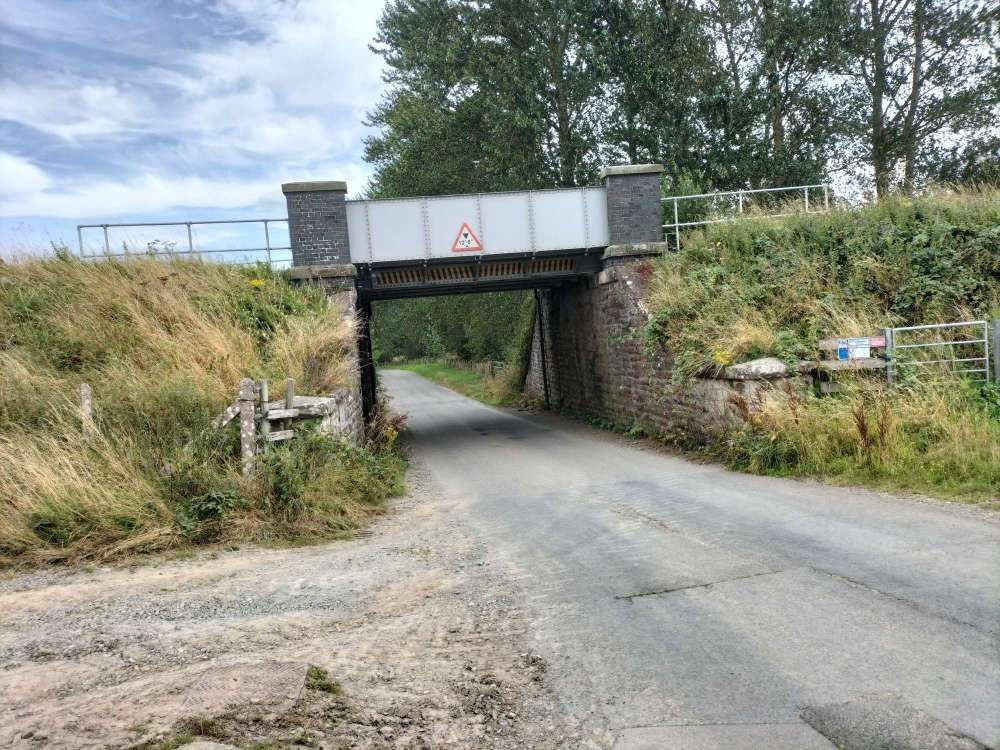
The first significant structure South of March Farm Junction. This girder bridge carries the main line over the road between the A49 and Bushmoor. This photo shows the West elevation of the structure with the A49 beyond. [My photograph, 13th August 2024]
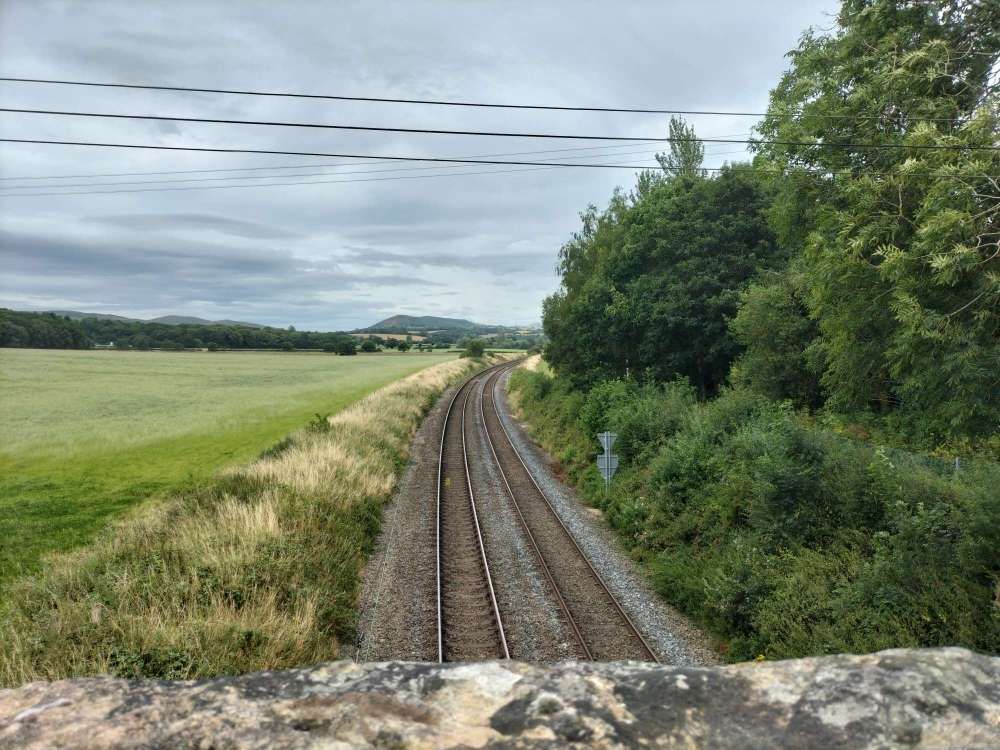
The view North from Gates Lane Bridge. [My photograph, 13th August 2024]
The view South from Gates Lane Bridge. [My photograph, 13th August 2024]
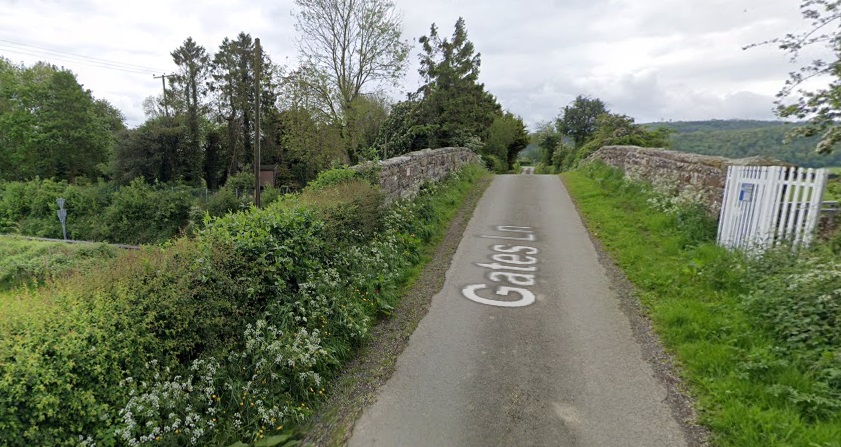
Gates Lane crossing the Shrewsbury to Hereford main line. [Google Streetview, May 2024]
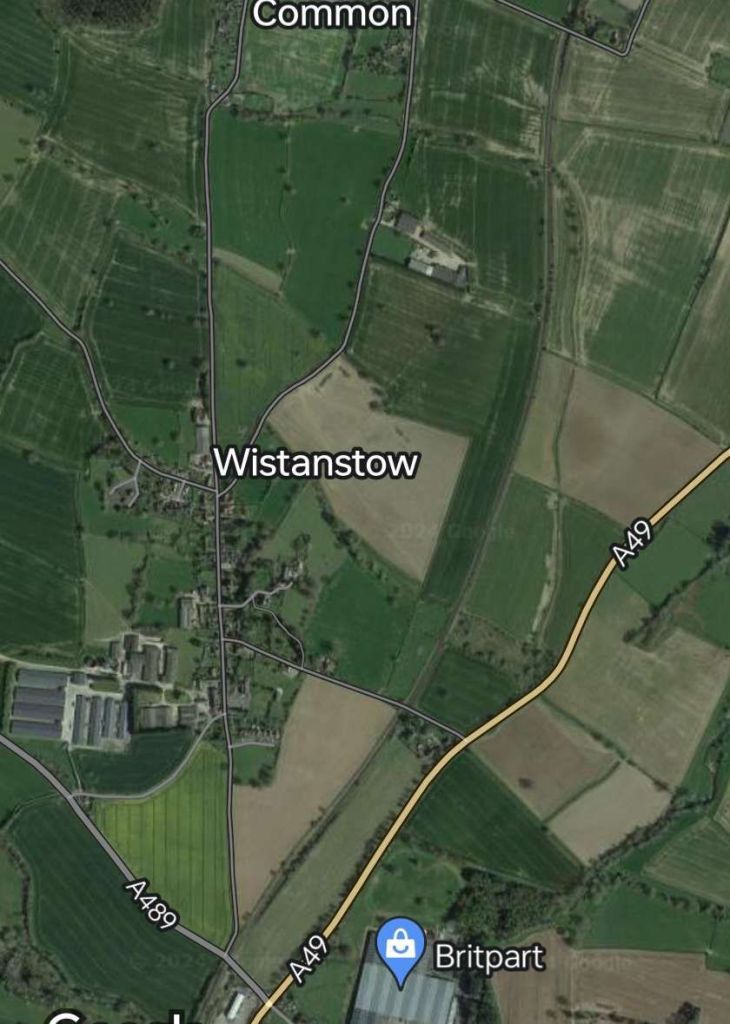
The next length of the main line running past Wistanstow. [22]

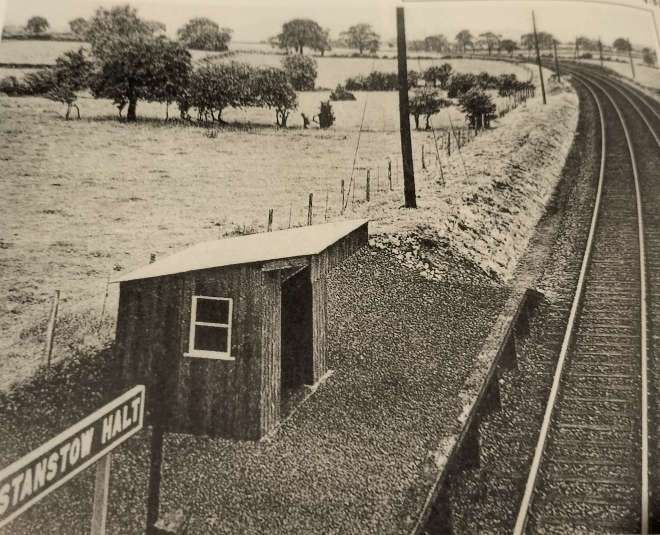
 Not long after joining the main line branch trains stopped at Wistanstow Halt, the village being to the West of the Halt.

In 1901, there is no sign of Wistanstow Halt. The Halt opened in 1934 and closed in 1956. [26]
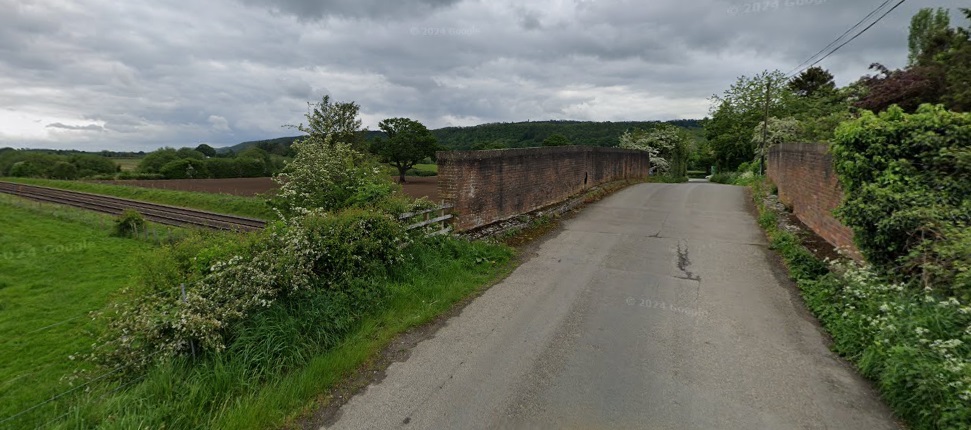
The bridge over the main line on the minor road between the A49 and Wistanstow, seen from the West. The Halt was on the Northside of the bridge on the length of track visible to the left of this image. [Google Streetview, September 2021]
This is the only picture of the halt that I have been able to find. It is unattributed in John Hodge’s second volume about the North & West Route. [27: p66]
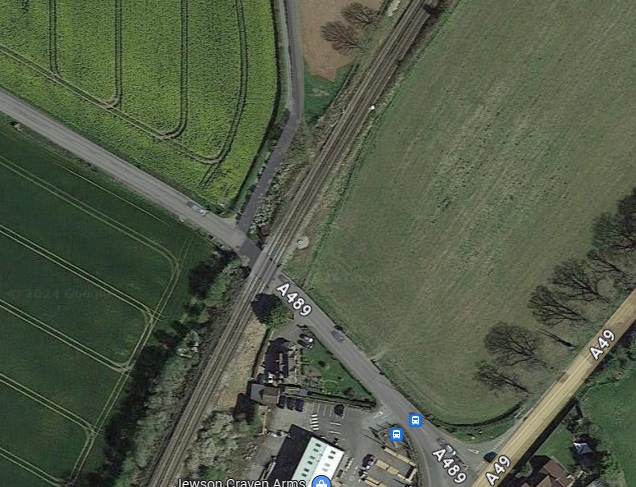
Just South of Wistanstow the line crosses the A489 very close to its junction with the A49. [Google Maps, August 2024]
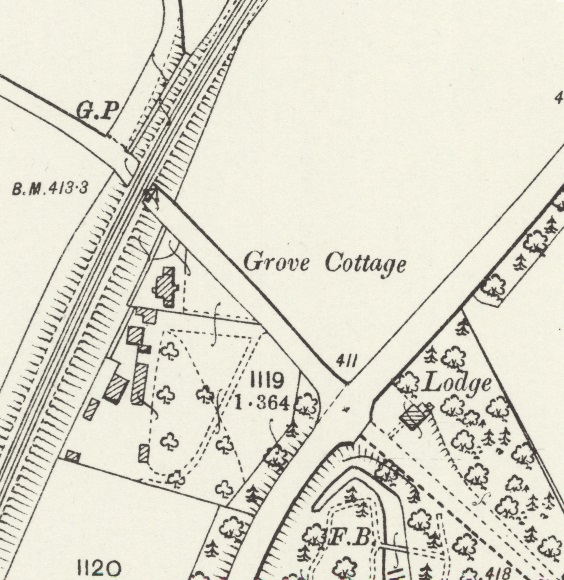
The same location as it appeared on the 25″ Ordnance Survey of 1901. [28]
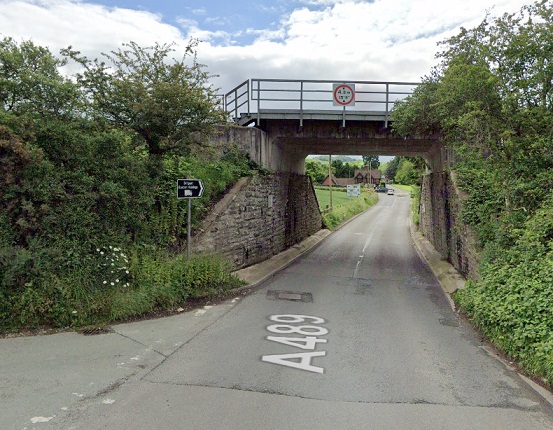
The A489 passes under the line from Shrewsbury to Hereford close to Craven Arms. [Google Streetview, May 2024]

Before entering Craven Arms station, on the right was Stretford Bridge Junction, for the Bishop’s Castle Railway. In the early 1930s the Wenlock branch train could be brought to a stand here, whilst a Bishop’s Castle Railway mixed train was allowed to pass, with its former GWR ‘517’ class engine and its chain-braked ex-LNWR four-wheeled coaching stock, an open-planked wagon, a cattle truck and a Bishop’s Castle brake van.

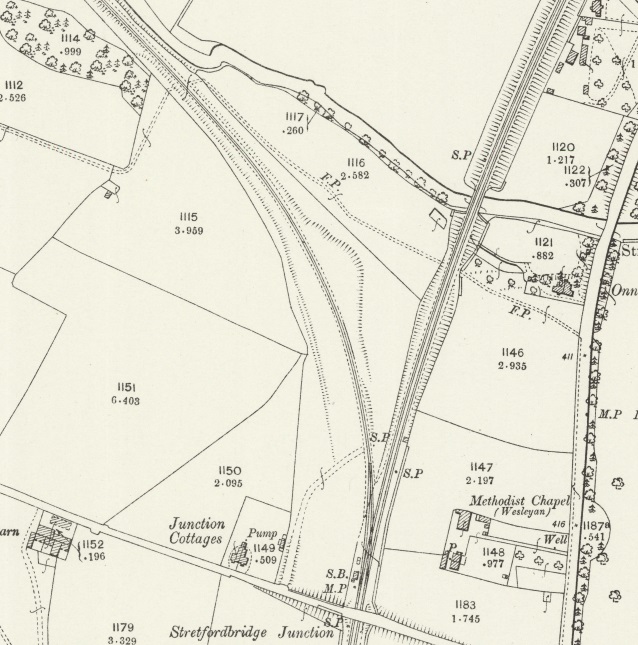
Within a very short distance the line crosses the River Onny, ran on through what was once the junction for the Bishop’s Castle Railway (Stretfordbridge Junction and under and [29]
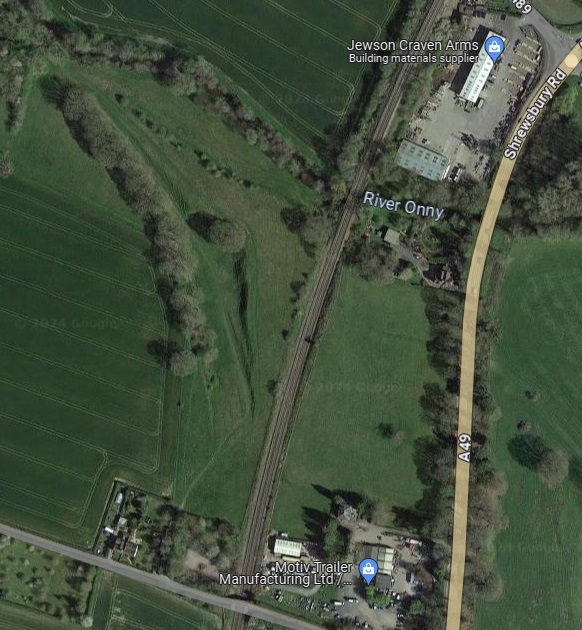
The same area on Google Maps. Earthworks associated with the Bishop’s Castle Railway are visible at the West side of the line. [Google Maps, August 2024]
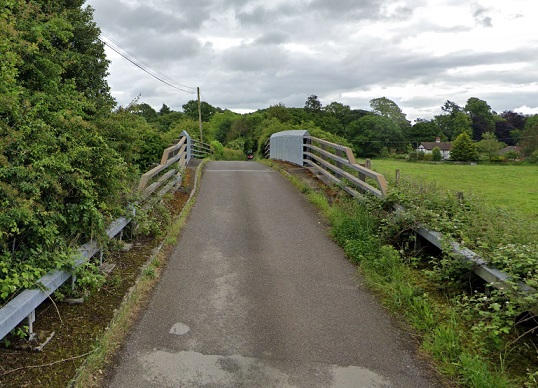
The view from the West along the minor road which crosses the railway at the bottom of the extract from Google Maps above. {Google Streetview. May 2024]

After passing Stretford Junction, the line crossed Watling Street, the old roman road at an oblique angle.

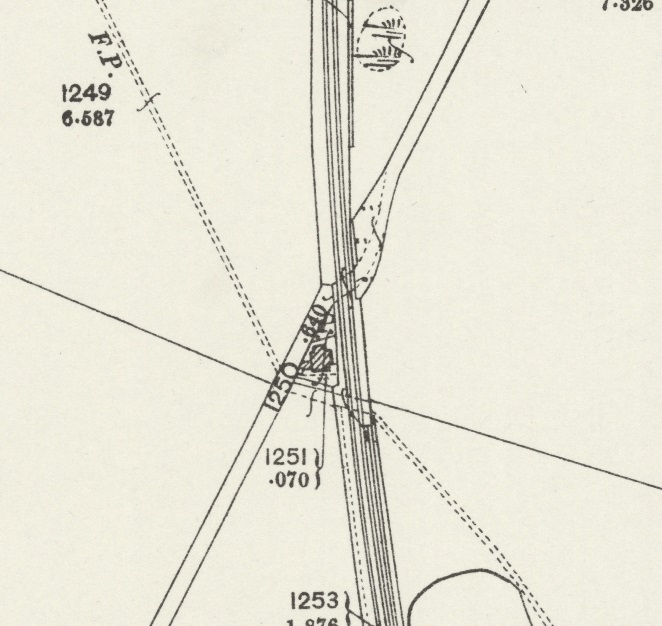
The railway crosses Watling Street. The 25″ Ordnance Survey of 1901. [30]
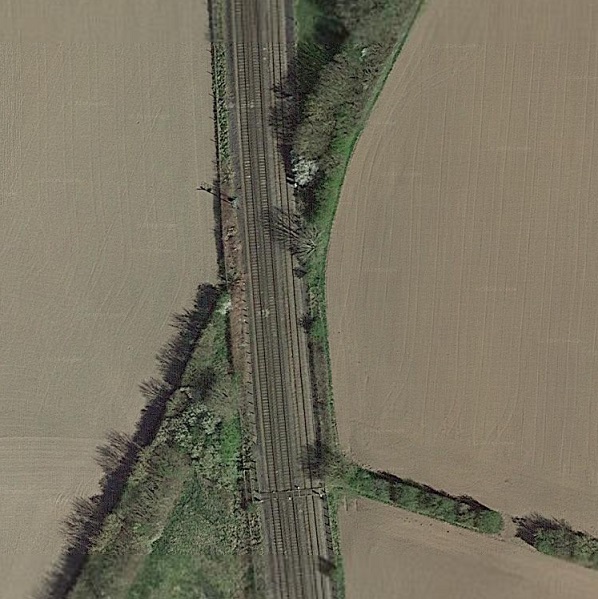
The railway crosses Watling Street. [Google Maps, August 2024]
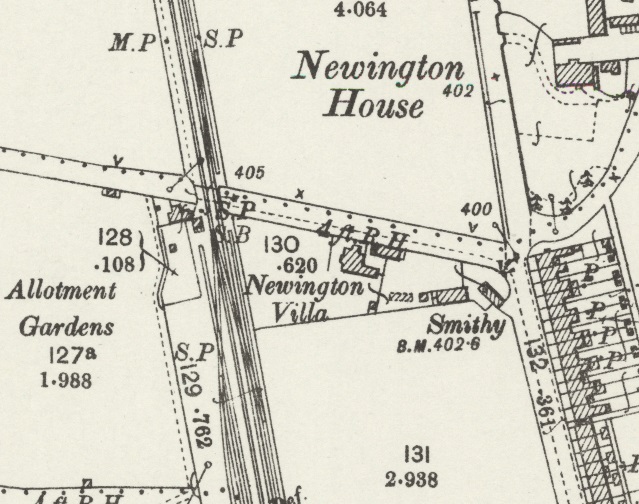
Long Lane Crossing. 25″ Ordnance Survey of 1901. [31]
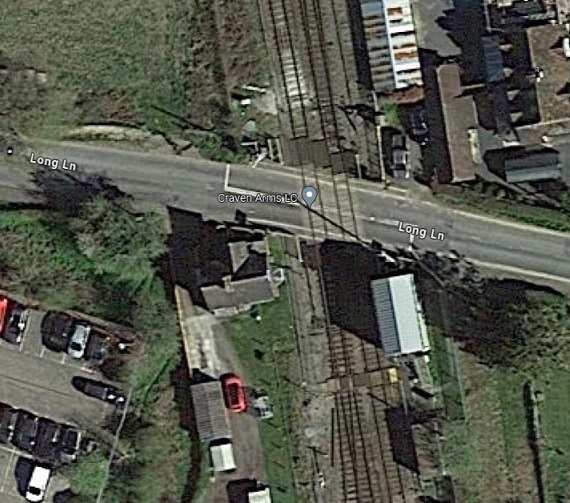
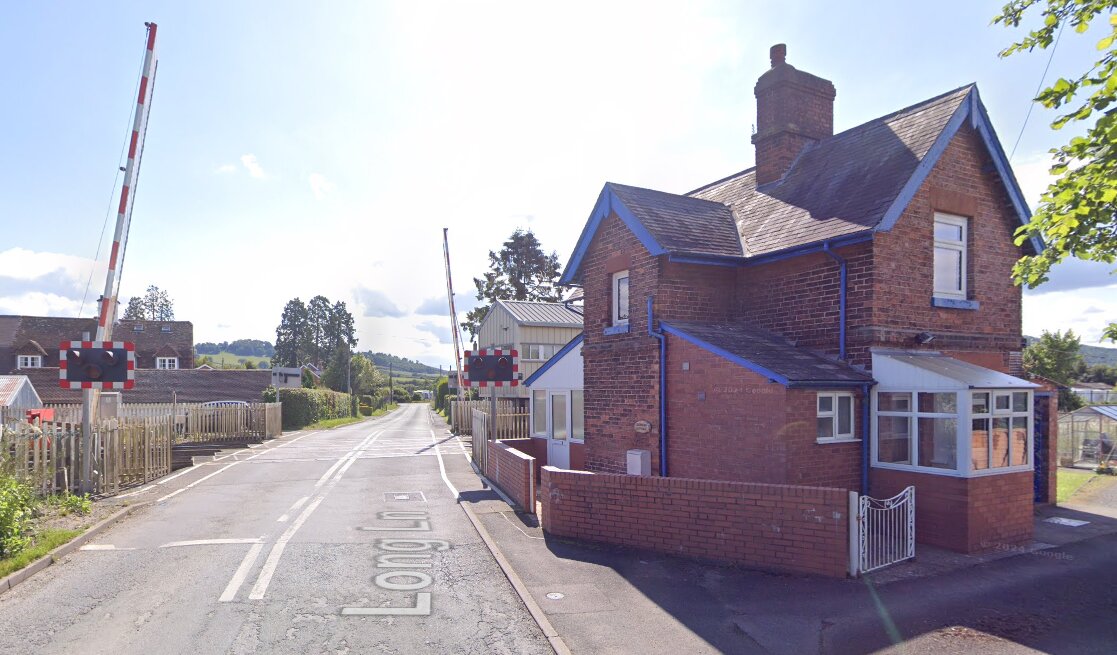
Long Lane Crossing in 2024. [Google Maps, August 2024]
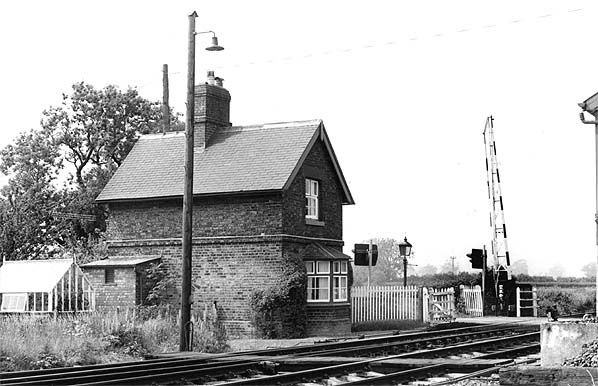
The crossing-keeper’s cottage at Long Lane Crossing just North of Craven Arms Railway Station in 1979, © John Mann Collection, used by kind permission of Nick Catford. [33]
Long Lane Crossing seen from the West [Google Streetview, June 2024]

After passing Stretford Junction, Watling Street and Long Lane Crossing, to the right was the carriage and engine shed, and to the left the goods shed and yard.

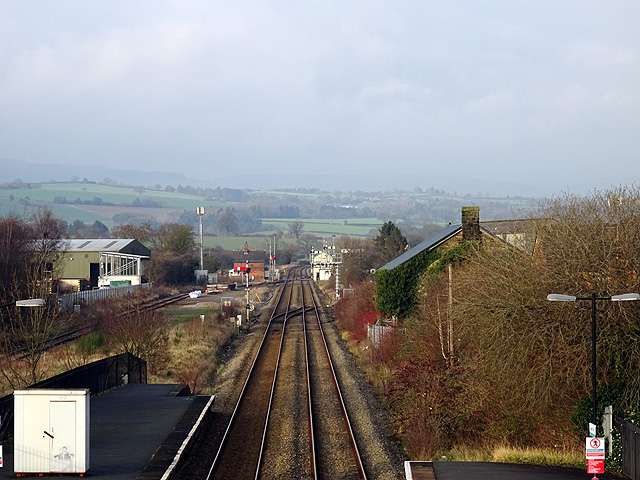
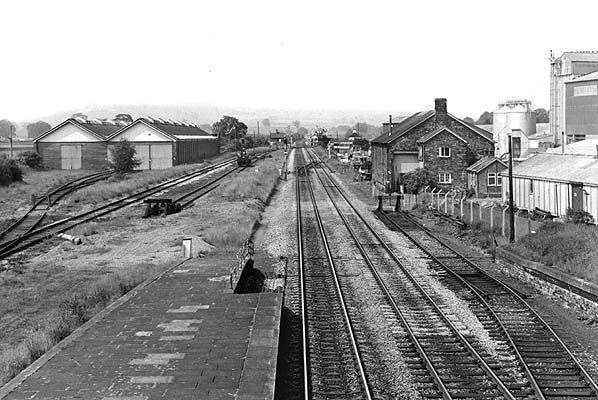
Looking North from the footbridge at Craven Arms. The crossover which allows access to the Heart of Wales Line is seen in the centre of the view. The much reduced station yard is on the left and Long Lane Crossing is in the distance before the line can be seen curving to the East, © John Lucas and licensed for reuse under a Creative Commons Licence, (CC BY-SA 2.0). [24]

The train pulled in on the down platform at Craven Arms, and after taking water the engine ran round the two coaches, and backed into the bay at the north end of the platform, this also being used by the Bishop’s Castle trains.

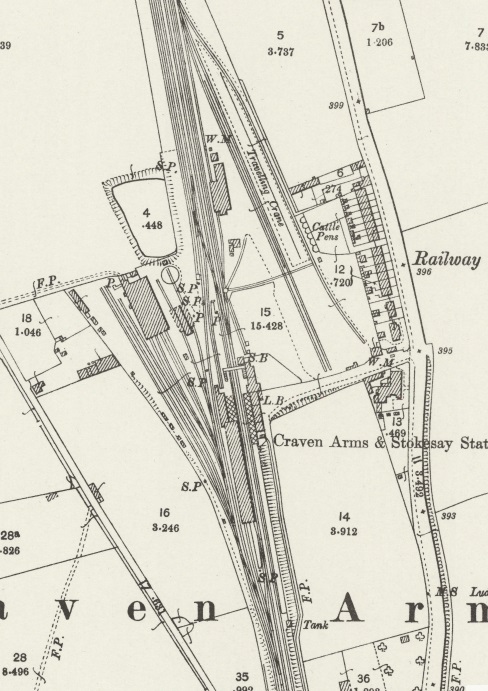
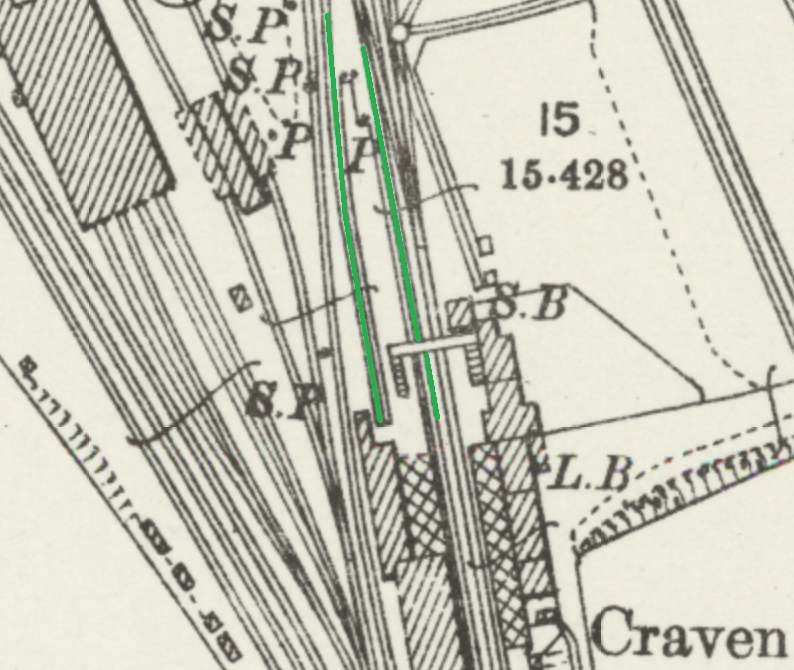
Craven Arms and Stokesay Station in 1901 as shown on the 25″ Ordnance Survey. [32]
Craven Arms Railway Station. [Google Maps, August 2024]
The bay and the down platform road are marked on this enlarged extract from the 25″Ordnance Survey. [32]
The view North from the station footbridge at Craven Arms Station in June 1979. Much of the station track work had been removed by 1979. The platform on the left is the down platform with the bay to its left, © John Mann Collection, used by kind permission of Nick Catford. [33]
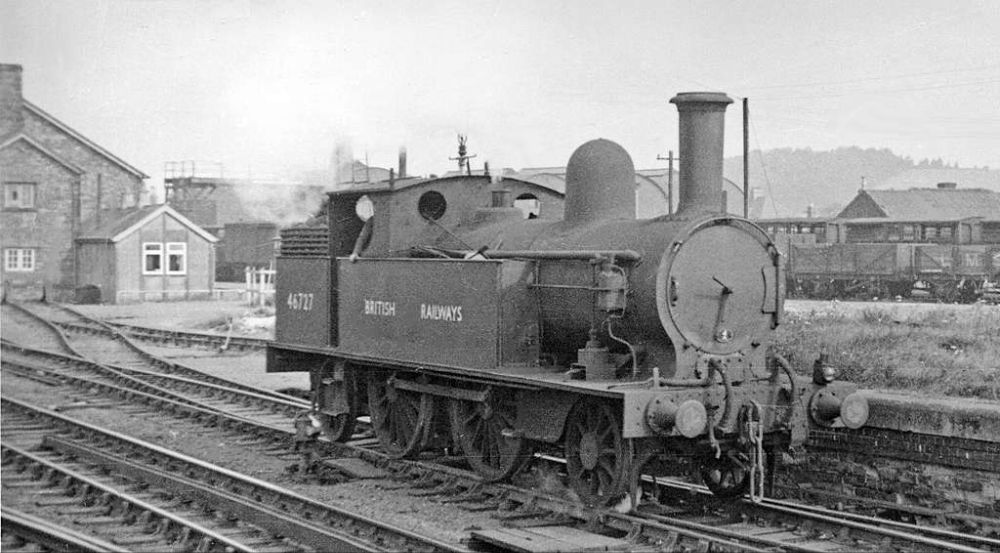
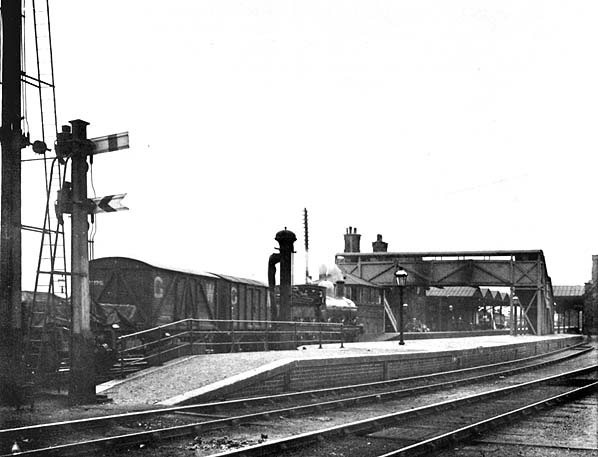
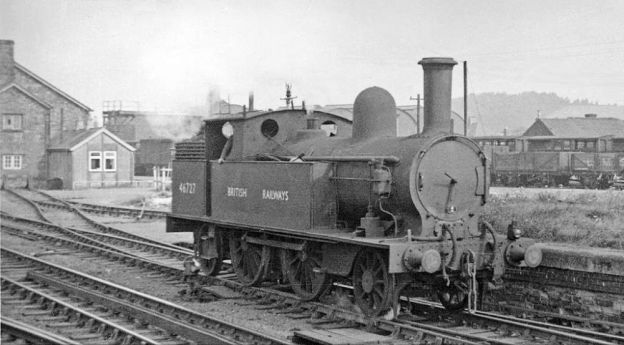
Craven Arms & Stokesay Station in August 1949: ex-LNWR 1P 2-4-2T No.46727 used for local work sits in the goods yard. View Southwest, towards Hereford, Knighton and the Central Wales Line, © Copyright Ben Brooksbank and licensed for reuse under a Creative Commons Licence, (CC BY-SA 2.0). [35]
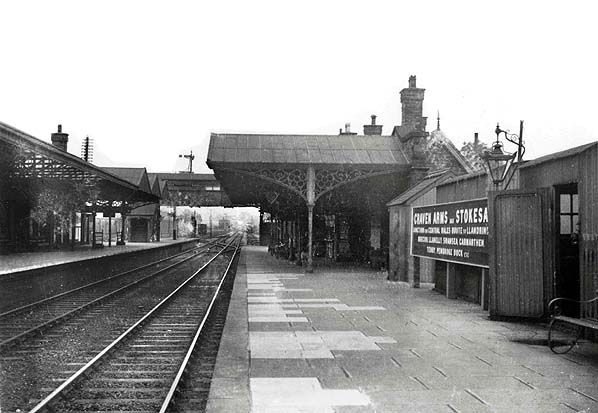
The bay platform used by Much Wenlock and Bishop’s Castle trains in 1910. A goods train can be seen travelling South on the main line, © John Mann collection, used by kind permission of Nick Catford. [33]
Craven Arms station looking north from the up platform c. 1950s. The bay platform is on the left beyond the footbridge, protected by a short section of ridge-and-furrow canopy at its south end. Note the lengthy running-in board, © John Mann collection, used by kind permission of Nick Catford. [33]

Craven Arms owes its existence to the coming of the Shrewsbury and Hereford Railway in 1852. It is truly a railway town created out of the hamlet of Newton. The S&H line passed through the Onny Valley, its route taking it past Shropshire’s famous beauty spot Stokesay Castle, and past a coaching inn named after the Lord of Manor the Earl of Craven, prompting the S&H to give the station the name of Craven Arms. The station was opened for traffic on 20th April, 1852. The parish name of Stokesay was added to the station’s name a little later.

The importance of Craven Arms as a railway centre was given added impetus by the opening of the Knighton Railway in 1861. Although only a branch it was in reality to be the embryo of the LNWR’s march upon Swansea. Various small companies were involved in the construction of the line between Craven Arms and Swansea, these later being absorbed into the LNWR or operated jointly by the LNWR and GWR.

On 1st July, 1862 Craven Arms station came under the joint ownership of the LNWR, GWR and West Midland Railway. The station consisted of up and down main line platforms, with booking office, general and ladies waiting room, together with refreshment rooms on the down side. Also on the downside was the station master’s house. The up side consisted of general and ladies’ waiting rooms only. The north and south end bays were on the down side. The North [1: p109] end bay was utilised by the Bishop’s Castle and Wenlock branch trains. [1: p114]

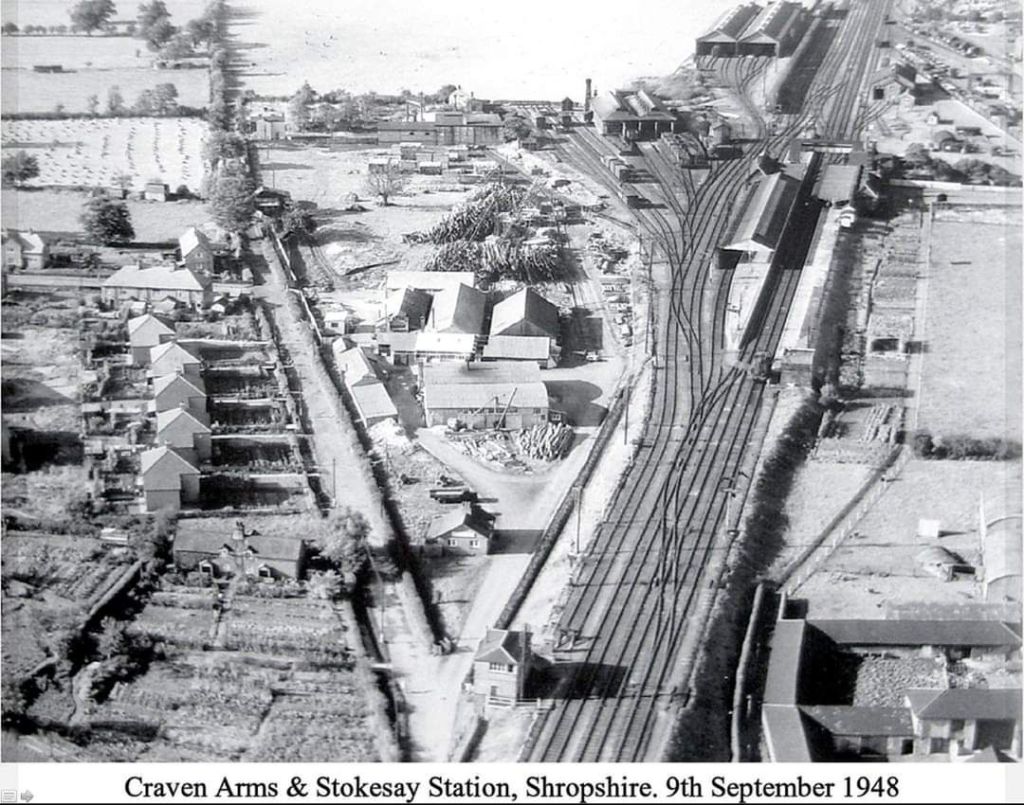
An aerial photograph from the South of Craven Arms and Stokesay Railway Station in 1948. Found on eBay on 12th August 2024. [25]
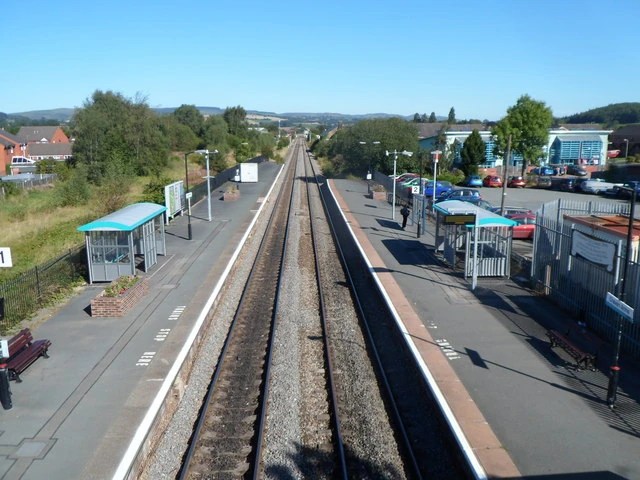
Craven Arms in the 21st century is much reduced. [34]

This brings us to the end of our journey from Wellington to Craven Arms along the Wenlock Branch.

References

  1. Ken Jones; The Wenlock Branch; The Oakwood Press, Usk, Monmouthshire, 1998.
  2. The photographs of the pre-contract drawings for the line were taken by myself and show extracts from the construction plans held in the Shropshire Archive. There is a standard charge of £10 per visit for taking photographs of their records.

  3. https://railmaponline.com/UKIEMap.php, 2nd July 2024
  4. Adrian Knowles; The Wellington, Much Wenlock & Craven Arms Railway; Lightmoor Press, Lydney, Gloucestershire, 2022.
  5. The photographs of the pre-contract drawings for the line were taken by myself and show extracts from the construction plans held in the Shropshire Archive. There is a standard charge of £10 per visit for taking photographs of their records.
  6. https://housesforsaletorent.co.uk/houses/to-rent/shropshire/harton.html, accessed on 17th July 2024.
  7. https://www.geograph.org.uk/photo/5209903, accessed on 17th July 2024.
  8. https://rogerfarnworth.com/2022/07/07/the-railways-of-telford-the-wellington-to-severn-junction-railway-wsjr-part-1-wellington-to-horsehay
  9. https://rogerfarnworth.com/2022/07/12/the-railways-of-telford-the-wellington-to-severn-junction-railway-wsjr-part-2-horsehay-to-lightmoor-junction
  10. https://rogerfarnworth.com/2022/07/18/the-railways-of-telford-the-wellington-to-severn-junction-railway-wsjr-part-3-lightmoor-junction-to-buildwas
  11. https://rogerfarnworth.com/2023/10/19/the-railways-of-east-shropshire-and-telford-the-much-wenlock-and-severn-junction-railway-buildwas-to-much-wenlock
  12. https://rogerfarnworth.com/2024/01/13/the-wenlock-branch-from-much-wenlock-to-presthope/
  13. https://rogerfarnworth.com/2024/06/27/the-wenlock-branch-from-presthope-to-craven-arms/
  14. https://rogerfarnworth.com/2024/07/25/the-wenlock-branch-from-longville-in-the-dale-to-marsh-farm-junction-and-craven-arms/
  15. https://maps.nls.uk/geo/explore/#zoom=16.0&lat=52.49958&lon=-2.76636&layers=257&b=1&o=100, accessed on 25th July 2024.
  16. https://maps.nls.uk/geo/explore/#zoom=16.0&lat=52.49768&lon=-2.77032&layers=168&b=1&o=100, accessed on 25th July 2024.
  17. https://maps.nls.uk/geo/explore/#zoom=16.0&lat=52.49402&lon=-2.79190&layers=168&b=1&o=100, accessed on 25th July 2024.
  18. https://maps.nls.uk/geo/explore/#zoom=16.0&lat=52.49025&lon=-2.81301&layers=168&b=1&o=100, accessed on 26th July 2024.
  19. https://maps.nls.uk/geo/explore/#zoom=16.0&lat=52.48445&lon=-2.81728&layers=168&b=1&o=100, accessed on 14th August 2024.
  20. https://www.geograph.org.uk/showmap.php?gridref=SO4386, accessed on 12th August 2024.
  21. https://maps.nls.uk/geo/explore/#zoom=16.0&lat=52.47950&lon=-2.82157&layers=168&b=1&o=100, accessed on 14th August 2024.
  22. https://maps.nls.uk/geo/explore/#zoom=15.0&lat=52.47054&lon=-2.82915&layers=168&b=1&o=100, accessed on 12th August 2024.
  23. https://www.geograph.org.uk/photo/6466763, accessed of 12th August 2024.
  24. https://www.geograph.org.uk/photo/4787720, accessed on 12th August 2024.
  25. https://www.ebay.co.uk/itm/195647213680?mkcid=16&mkevt=1&mkrid=711-127632-2357-0&ssspo=xRk1_MAMSum&sssrc=4429486&ssuid=afQhrar7TGK&var=&widget_ver=artemis&media=COPY, accessed on 12th August 2024.
  26. https://maps.nls.uk/geo/explore/#zoom=16.0&lat=52.46474&lon=-2.83404&layers=168&b=1&o=100, accessed on 14th August 2024.
  27. John Hodge; The North and West Route, Volume 2 – Shrewsbury and Hereford; Wild Swan Publications, Didcot, 2008.
  28. https://maps.nls.uk/geo/explore/#zoom=18.0&lat=52.45831&lon=-2.83692&layers=168&b=1&o=100, accessed on 14th August 2024.
  29. https://maps.nls.uk/geo/explore/#zoom=17.0&lat=52.45628&lon=-2.83934&layers=168&b=1&o=100, accessed on 14th August 2024.
  30. https://maps.nls.uk/geo/explore/#zoom=18.0&lat=52.45053&lon=-2.84005&layers=168&b=1&o=100, accessed on 14th August 2024.
  31. https://maps.nls.uk/geo/explore/#zoom=17.0&lat=52.44778&lon=-2.83949&layers=168&b=1&o=100, accessed on 14th August 2024.
  32. https://maps.nls.uk/geo/explore/#zoom=17.0&lat=52.44313&lon=-2.83870&layers=168&b=1&o=100, accessed on 14th August 2024.
  33. http://www.disused-stations.org.uk/c/craven_arms, accessed on 14th August 2024.
  34. https://railways-of-britain.fandom.com/wiki/Craven_Arms_railway_station?file=Craven_Arms.jpg, accessed on 15th August 2024.
  35. https://www.geograph.org.uk/photo/2211737, accessed on 29th September 2024.

The Wenlock Branch from Longville-in-the-Dale to Harton Road Station

This article follows on from six other articles which covered the Wellington to Severn Junction Railway and this line from Buildwas to Longville-in-the-Dale. The first three articles can be found on these links:

https://rogerfarnworth.com/2022/07/07/the-railways-of-telford-the-wellington-to-severn-junction-railway-wsjr-part-1-wellington-to-horsehay

https://rogerfarnworth.com/2022/07/12/the-railways-of-telford-the-wellington-to-severn-junction-railway-wsjr-part-2-horsehay-to-lightmoor-junction

https://rogerfarnworth.com/2022/07/18/the-railways-of-telford-the-wellington-to-severn-junction-railway-wsjr-part-3-lightmoor-junction-to-buildwas

The most recent articles cover this line between Buildwas and Longville and can be found on these links:

The Railways of East Shropshire (and Telford) – the Much Wenlock and Severn Junction Railway, Buildwas to Much Wenlock.

The Wenlock Branch from Much Wenlock to Presthope

The Wenlock Branch from Presthope to Longville

As we noted in the last two articles, from the commencement of the building of the line between Buildwas and Much Wenlock, the directors hoped that the line could be extended to Craven Arms via Presthope on Wenlock Edge (linking with the limestone quarries/works at that location).

The directors of the Wellington & Severn Junction Railway were, however, fully occupied with the line from Wellington to Buildwas. Another company was set up to build the ‘Wenlock & Craven Arms and Coalbrookdale Extension Railway‘. The bill went through the parliamentary process unopposed and authorised the ‘Wenlock Railway Company‘ to construct the line. Work started on 23rd October 1861.

By 5th December 1864, the line was open from Much Wenlock to Presthope. (That length is covered in the last but one online article listed above.) At this time, because it was a freight-only line, the Board of Trade saw no need for an inspection of the line. It had already been agreed at a meeting held on 4th December 1863 not to proceed with the line from Presthope to Craven Arms for the time being. It was to be three years after the line reached Presthope before the connection to the Shrewsbury & Hereford Railway close to Craven Arms was completed. It was finally opened on 16th December 1867.

Longville in the Dale to Harton Road Station

We begin this article at Longville Railway Station and travel towards Craven Arms, we complete this part of the journey at Harton Road Station.

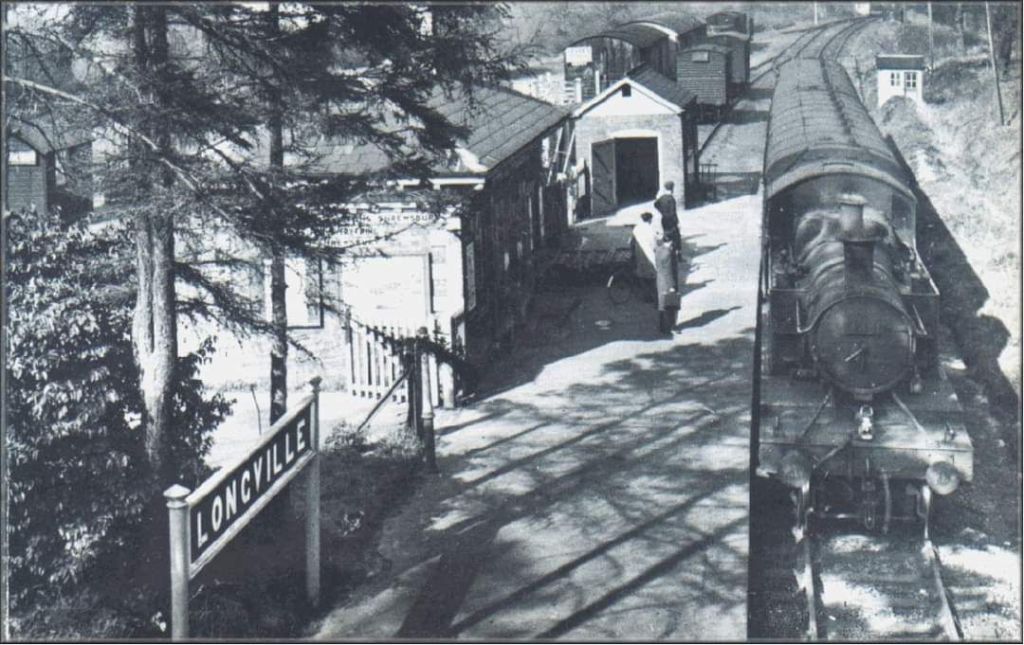
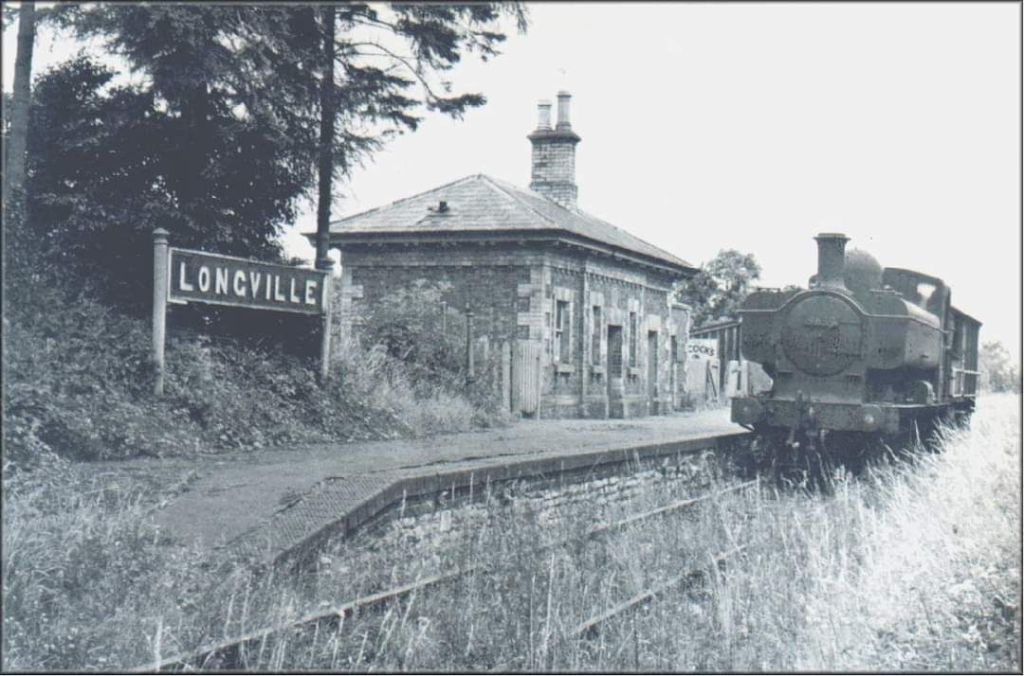
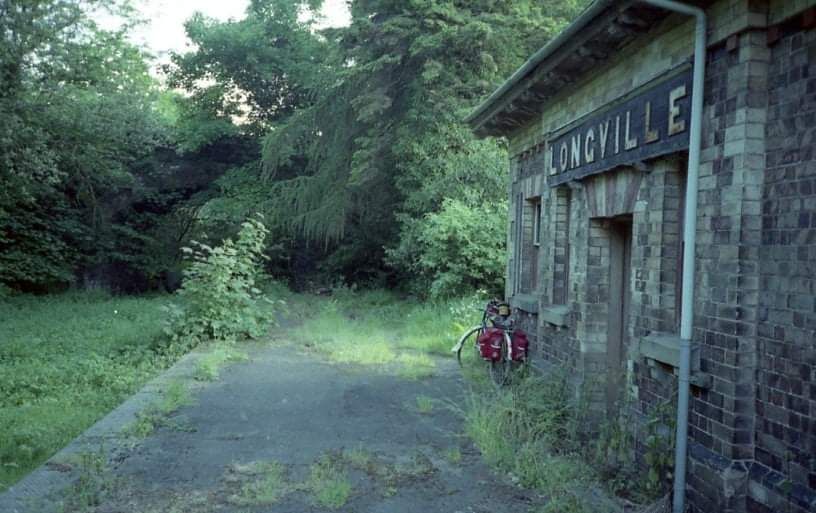
Longville Station had a single platform with a red and yellow brick booking office and waiting room. Ken Jones tells us that it “served a few cottages, a farm, an Inn, and the nearby Lutwyche Hall, the home of the Benson family, who did so much to promote the building of the line between Much Wenlock and Craven Arms. The station also served the villages of Cardington, Holdgate, Shipton and Stanton Long. The platform was on the up side, and the station buildings consisted of a general waiting room, ladies’ waiting room of brick and goods warehouse lock-up. There were two sidings, and a horse landing for two horse boxes, and a cattle landing for two wagons. There was no signal box, Longville being an intermediate station on the Presthope to Rushbury staff section. There were east and west ground frames, access to both being obtained by a key on the Presthope-Rushbury staff.” [1: p105]

Two photographs of Longville Station when still in use. The second is probably closer to closure than the first, when Longville was only used as a goods terminus. These two photographs were shared on the Memories of Shropshire Facebook Group by Ronnie Honeywell on 5th July 2014 and are used here by kind permission. [11]
The view from the road bridge at the Southwestern end of Longville station in 1991, © David Harris. This photograph was shared by David Harris on the Disused Stations Facebook Group on 8th March 2022 and is included here by kind permission. [10]
This view, looking Southwest from the platform at Longville station shows the arched bridge which carries the B4371 over the old railway, © David Harris. This photograph was shared by David Harris on the Disused Stations Facebook Group on 8th March 2022 and is included here by kind permission. [10]
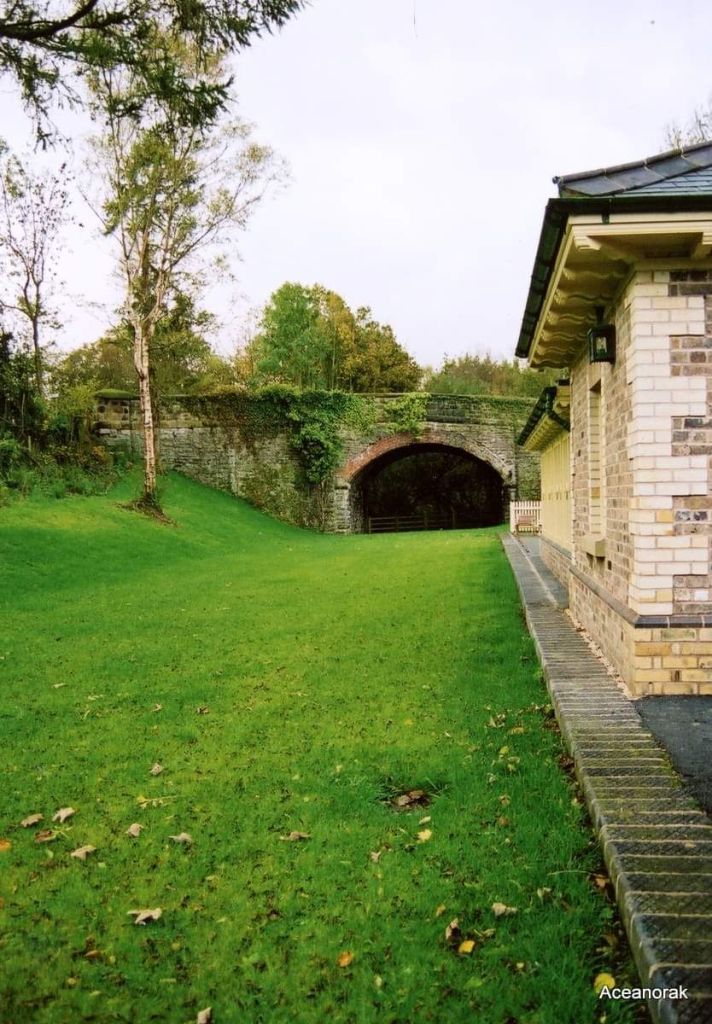
The road bridge at the Southwest end of the station site shows up well in this photograph taken from the location of the old platform at Longville station. The bridge comprises a brick arch with stone spandrels and parapets. This photograph was taken by Colin Pickett and shared by him on the Memories of Shropshire Facebook Group on 19th July 2019. It is shared here by kind permission. [11]
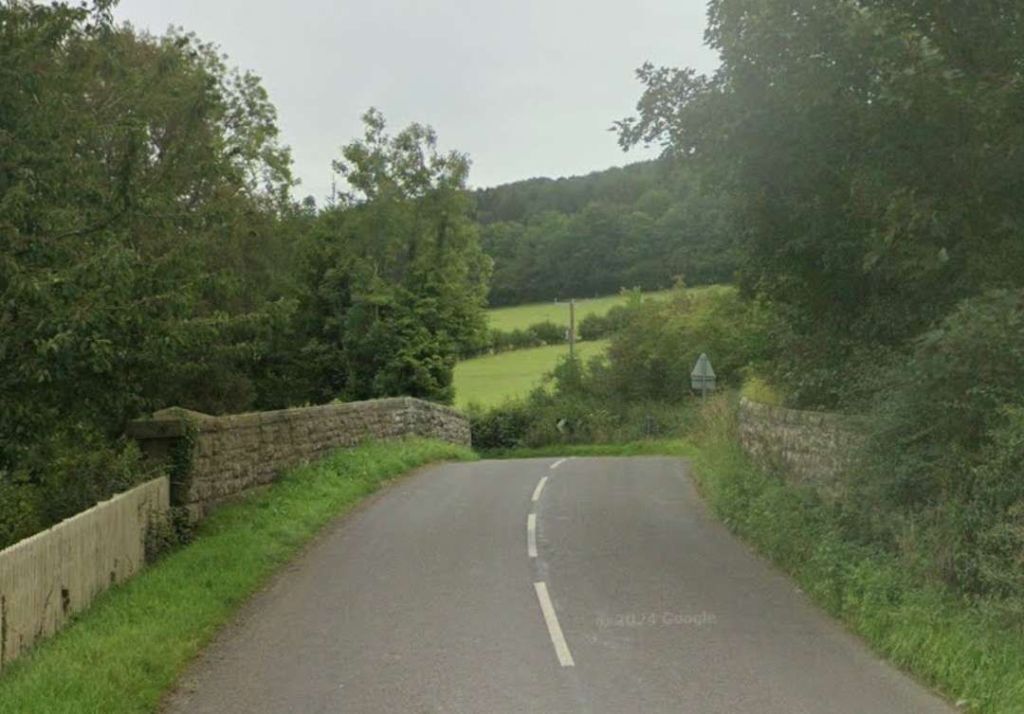
Looking East along the B4371 across the road bridge at the Southern end of the Longville station site. [Google Streetview, August 2023]
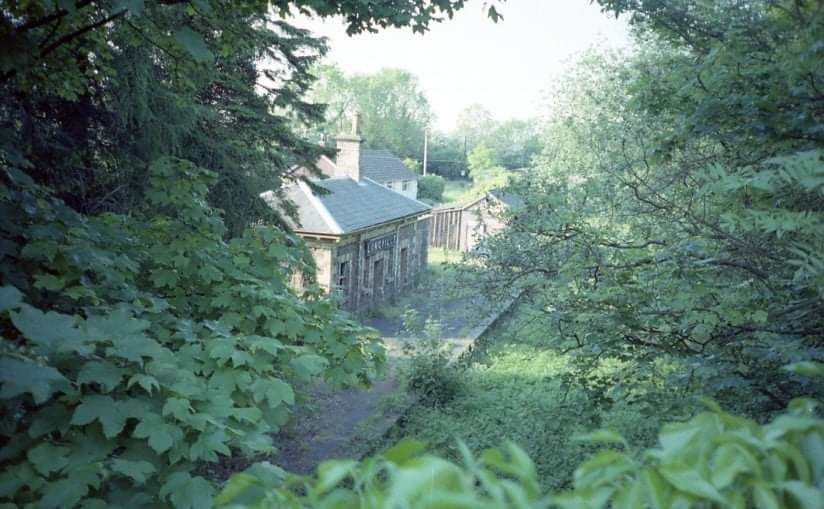
Longville railway station building in 2012, seen from the road bridge which once spanned the old railway. It closed to passengers in 1951 and finally in 1963. It was a private house when this image was taken.
View northeast towards Presthope and Buildwas. The local settlement is “Longville-in-the-Dale” but the station name was shorter, © Copyright Nigel Thompson and licensed for reuse under a Creative Commons Licence (CC BY-SA 2.0). [15]
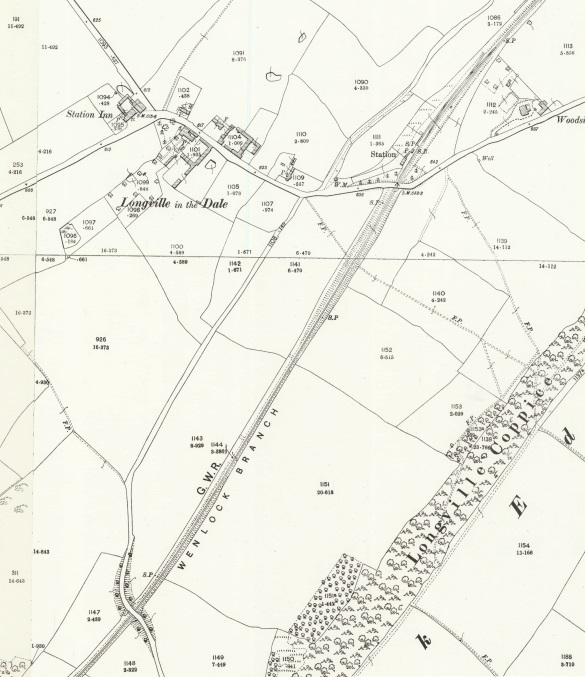
The length of the Wenlock Branch from Longville Station to the next road over-bridge, as it appears on the 1901 25″ Ordnance Survey. Initially, close to Longville the railway was in cutting. By the time the next bridge was reached, the road had to be lifted to cross the line. [5]
The next length of the line on the 25″ Ordnance Survey. The formation of the railway was either level with its surroundings or on a slight embankment for much of the way to the next station at Rushbury. [6]
The same length of the line as shown on the two map extracts above. This image comes from the satellite imagery of railmaponline.com and represents the route of the line as it runs through the 21st century landscape around Wenlock Edge. The Farm marked with a blue flag is Wenlock Edge Farm which has a farm shop. Very kindly, the owners allowed me to park in the shop car park and generously phoned land owners in the area to get permission for me to walk the line to Rushbury Station. The footpath from Wenlock Edge Farm to the line of the old railway can be made out crossing the fields to the South of the farm. [3]
The first significant location to the Southwest of Longville Station is shown here. The girder bridge which carries a minor road over the Wenlock Branch is at the centre of this extract from the Ordnance Survey Explorer series map No. 217, under the green diamond. © Crown copyright. Access to the track bed between Longville Station as this location was not possible. The area around the bridge could only be viewed from road level. [9]
The road approach from the South to the girder bridge over the old railway. [Google Streetview, August 2021]
Looking back along the line of the old railway in 2024. Access to the land beneath the bridge was not feasible. [My photograph, 1st June 2024]
Looking forward, to the Southwest, along the line of the old railway in 2024. Beyond the distant hedge the boundaries of what was railway land are still delineated by hedges and trees. [My photograph, 1st June 2024]

After passing under the minor road the line ran Southwest towards Coates Crossing.

I was able to access the line from Northeast of Coates Crossing (via a footpath from Wenlock Edge Farm) to Rushbury Station with permission from local landowners. From here to Rushbury Station the original railway boundaries are predominantly fenced and gated with significant hedgerows and trees.

Looking Northeast along the line of the Wenlock Branch toward the minor road bridge above. [My photograph, 3rd July 2024]
Looking Southwest along the line of the old railway towards Rushbury Station, for a distance of around 100 metres the route of the line is not protected by hedging. [My photograph, 3rd July 2024]
A couple of hundred metres to the Southwest, another view looking Southwest along the line of the old railway. [My photograph, 3rd July 2024]
This extract from the 25″ Ordinance Survey, together with the extract immediately below, cover the length of the line to Rushbury Station. [7]
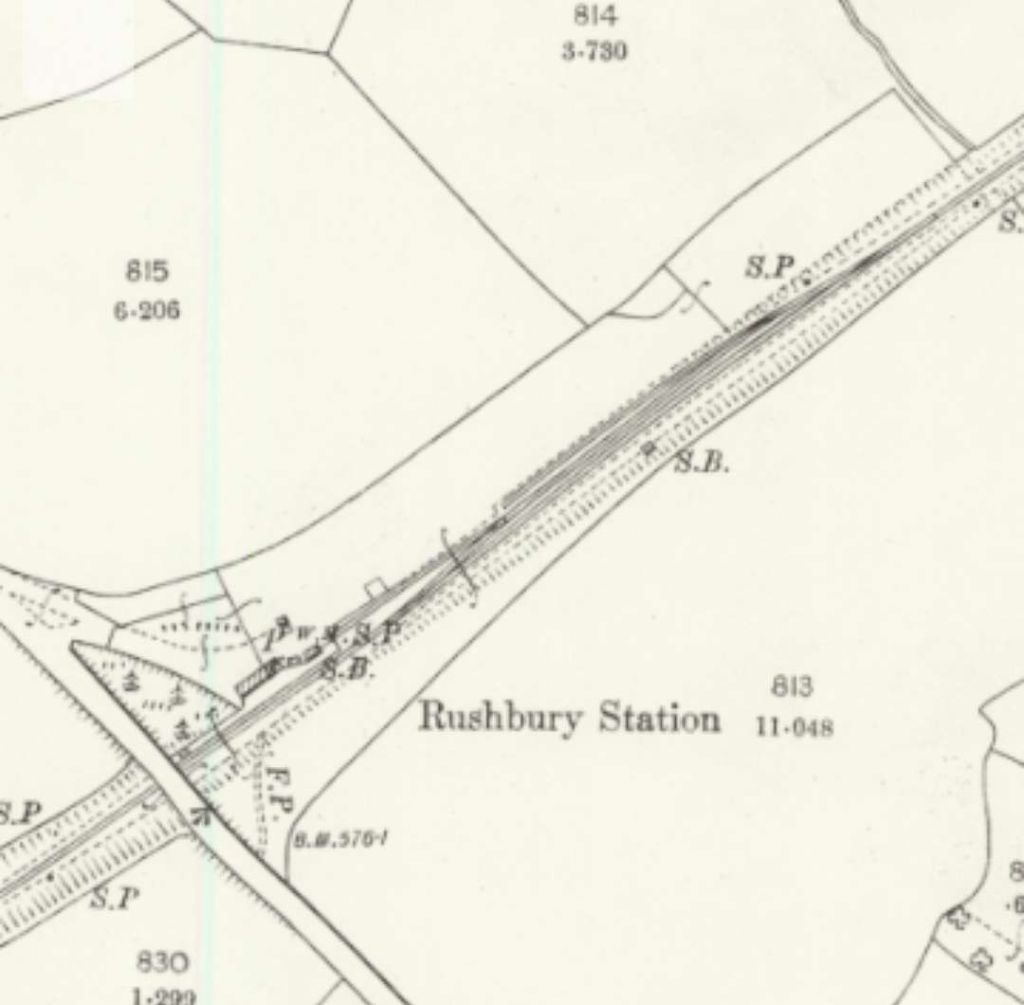
Rushbury Station appears in the bottom-left of this extract from the 25″Ordnance Survey. [8]
This next railmaponline.com satellite image covers the same length of the line as the two map extracts above. Wenlock Edge Farm appears in the top-right, Rushbury Station in the bottom-left. [3]
Approaching, and looking towards, the location of Coates Crossing which is about 200 metres ahead. [My photograph, 3rd July 2024]

Coates Crossing’s keeper’s cottage was from its construction “occupied by the Rushbury station master, and it was the duty of the station master’s wife to operate the crossing gates as and when a farm cart from the nearby Coates Farm required to go into the fields under Coates Wood. Later, after the abolition of the Rushbury SM’s post, it became the duty of the Longville station master’s wife.” [1: p105]

An enlarged extract from the 25″ Ordnance Survey shows Coates Crossing. [7]
The location of Coates Crossing. The building shown is larger than the original crossing-keepers cottage which for a good while doubled up as the Rushbury Stationmaster’s house. [Google Maps, July 2024]
250 metres or so to the Southwest of the location of Coates Crossing, looking Southwest. [My photograph, 3rd July 2024]
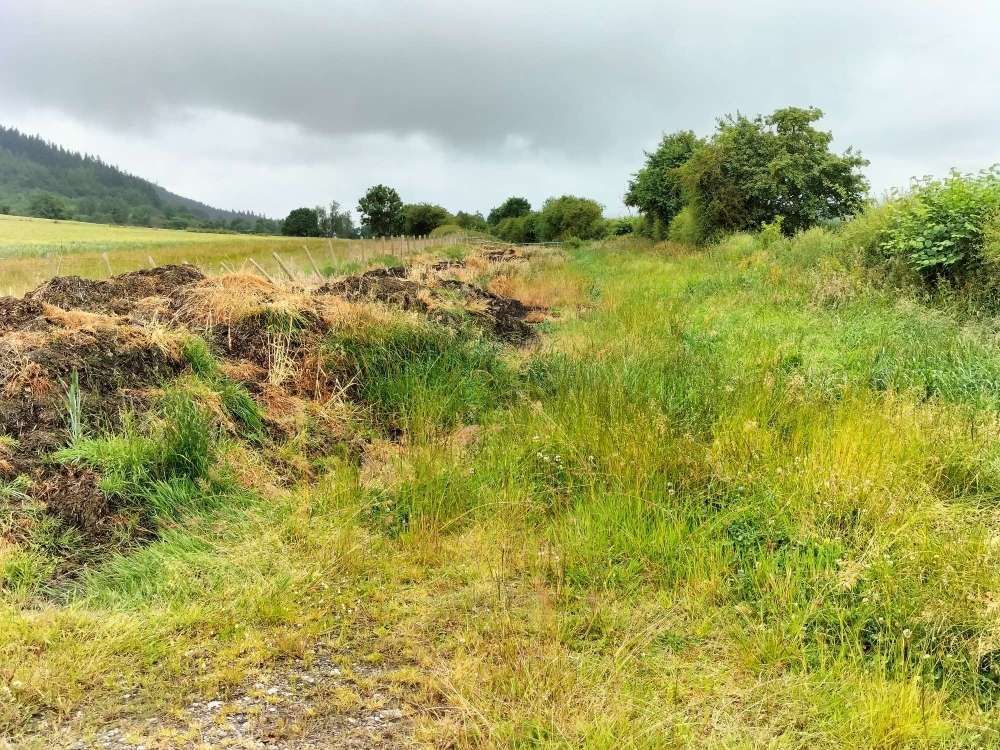
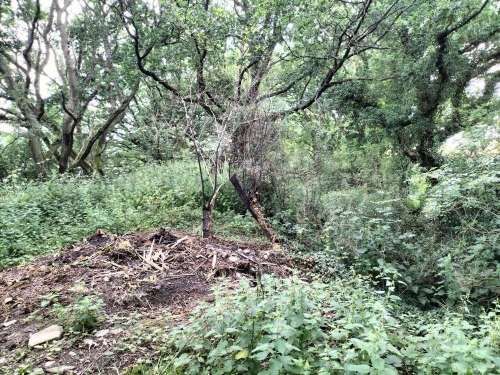
Just under halfway from Coates Crossing to Rushbury Station the old formation becomes overgrown and is being used by the landowner for muck storage. [My photograph, 3rd July 2024]
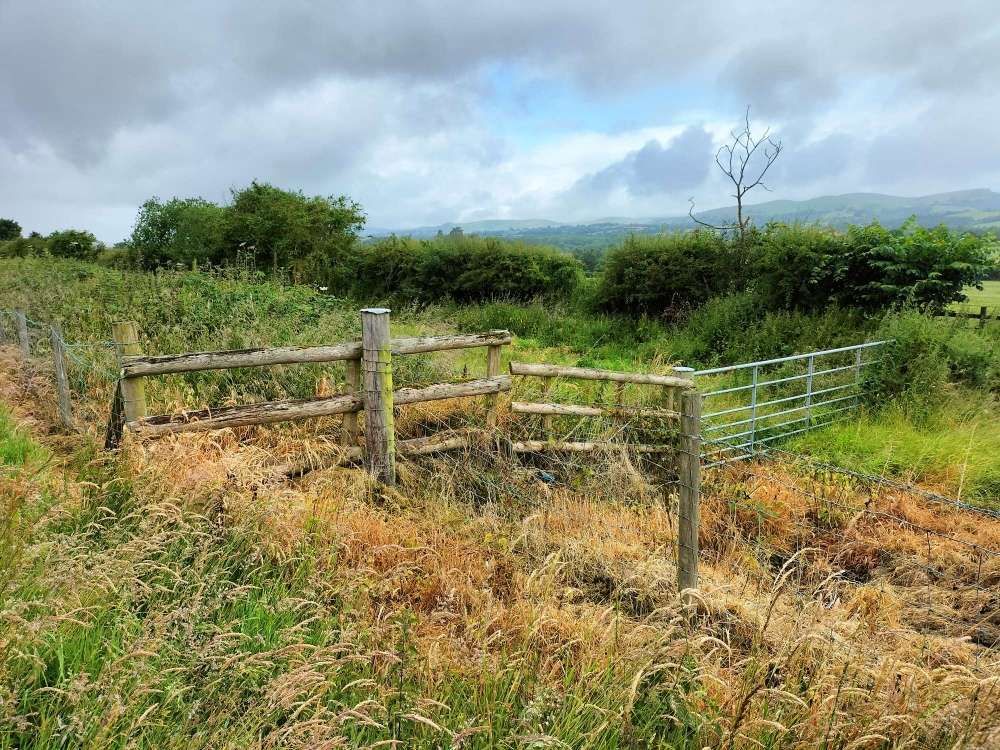
Beyond the piles of muck a gate is closed across the line of the old railway. Access along the line required turning to the last and walking through the field immediately alongside the line until it was possible to get back onto the line 100metres or so ahead. [My photograph, 3rd July 2024]
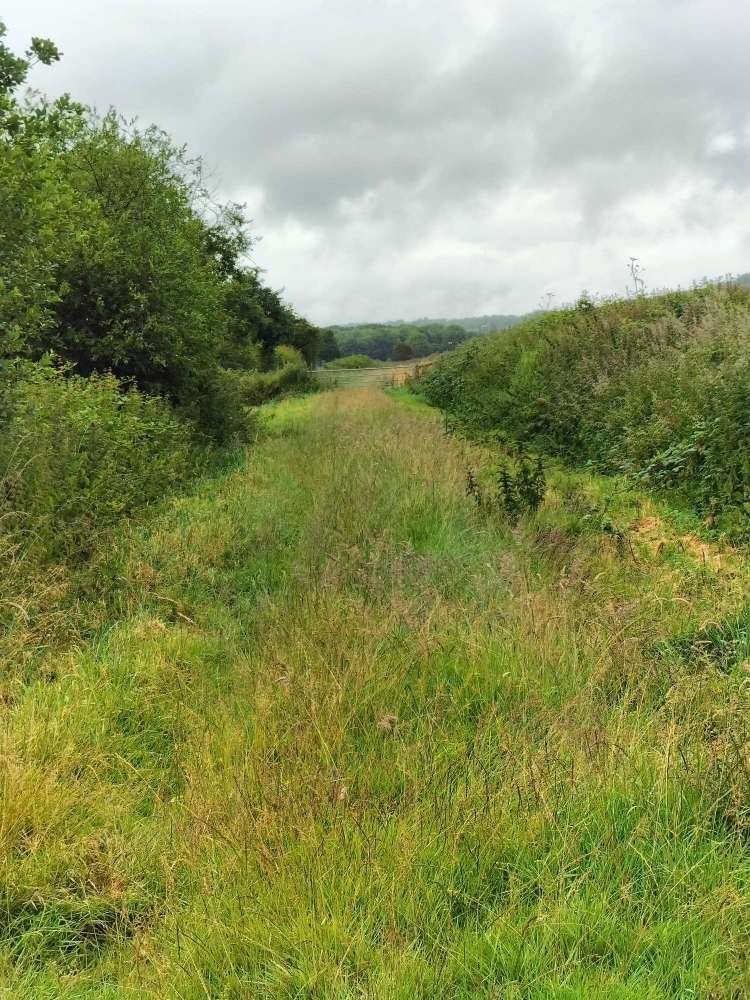
Having regained the line of the old railway it is noticeable that the route is not as heavily used in the 21st century as the length already covered. [My photograph, 3rd July 2024]
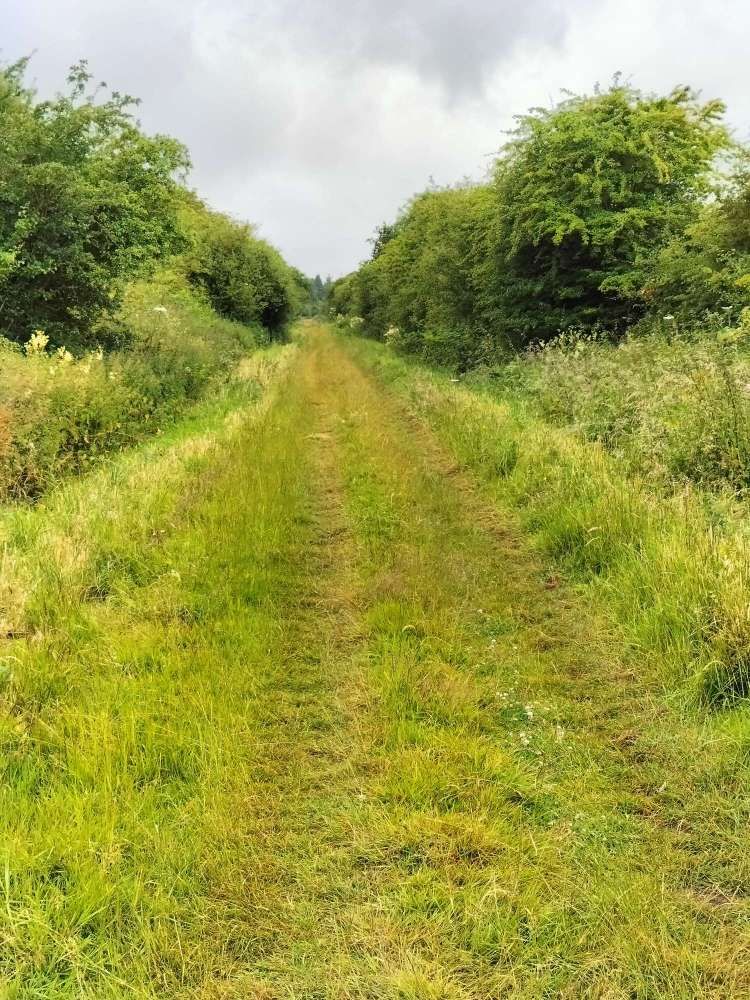
The ‘green lane’ continues. [My photograph, 3rd July 2024]
Much closer now to the site of Rushbury Station a gate marks a change in ownership. [My photograph, 3rd July 2024]
The modern complex of buildings on the Rushbury station site appears on the horizon, flanked by various fir trees. [My photograph, 3rd July 2024]
The occasional railway sleeper can be seen. This photo was taken towards the Eastern end of the Rushbury Station site. [My photograph, 3rd July 2024]
The modern track diverts away from the line of the old railway once within the boundaries of the station site. The trees to the left run alongside the route taken by the line through the station. The roof of the old station building can just be made out at the centre-top of this image. The concrete post and railings are what remains of the cattle loading pens. [My photograph, 3rd July 2024]
Rushbury Station: the remains of the cattle loading pens. [My photograph, 3rd July 2024]
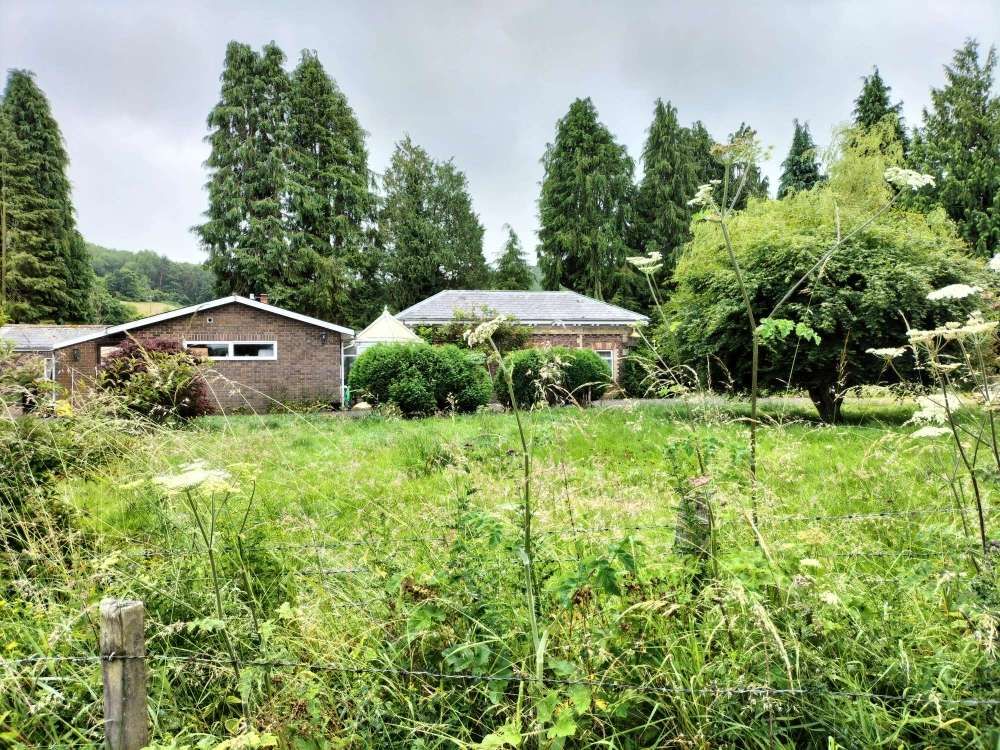
The site of the old station, viewed from the North. [My photograph, 3rd July 2024]
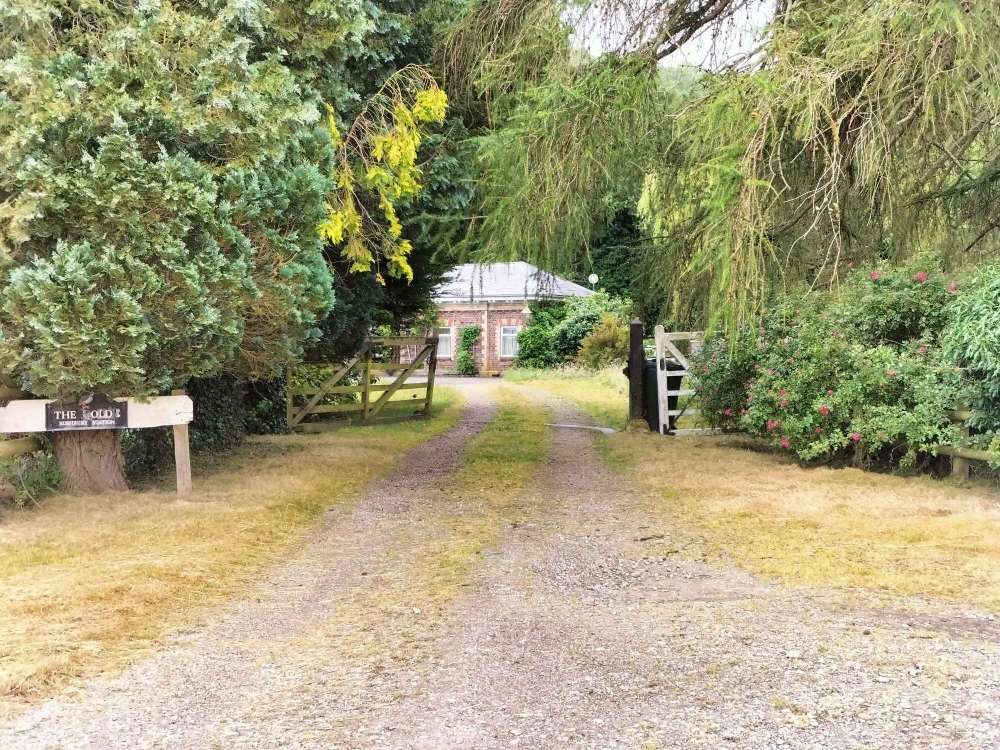
The road approach to Rushbury Station, seen from the Northeast. [My photograph, 3rd July 2024]

About the length just walked and about Rushbury and its station, Ken Jones writes: “The line has now levelled out into Ape Dale, and soon enters Rushbury station with its avenue of fir trees on either side, the station in every respect being similar to that of Longville. … The station served the villages of Rushbury and Munslow. The signal box was at the north end of the platform, the box containing the locking frame only, the electric train staff instruments being situated in the booking office. The station was not a crossing place. The station buildings consisted of a booking office, general and ladies’ waiting room, and a lamp room. The staff were just the station master and a signalman, the latter being required to assist with station duties.” [1: p105]

A further ground frame was situated at the Northeast end of the station, “and gave access to two sidings, a horse landing and cattle pens. In the station yard there was a cart weighbridge. At the Craven Arms end of the platform there was a water column.” [1: p105]

An enlarged extract from the 25″ Ordnance Survey showing Rushbury Station at the turn of the 20th century. The village was less than a kilometre to the North of the Station. [8]
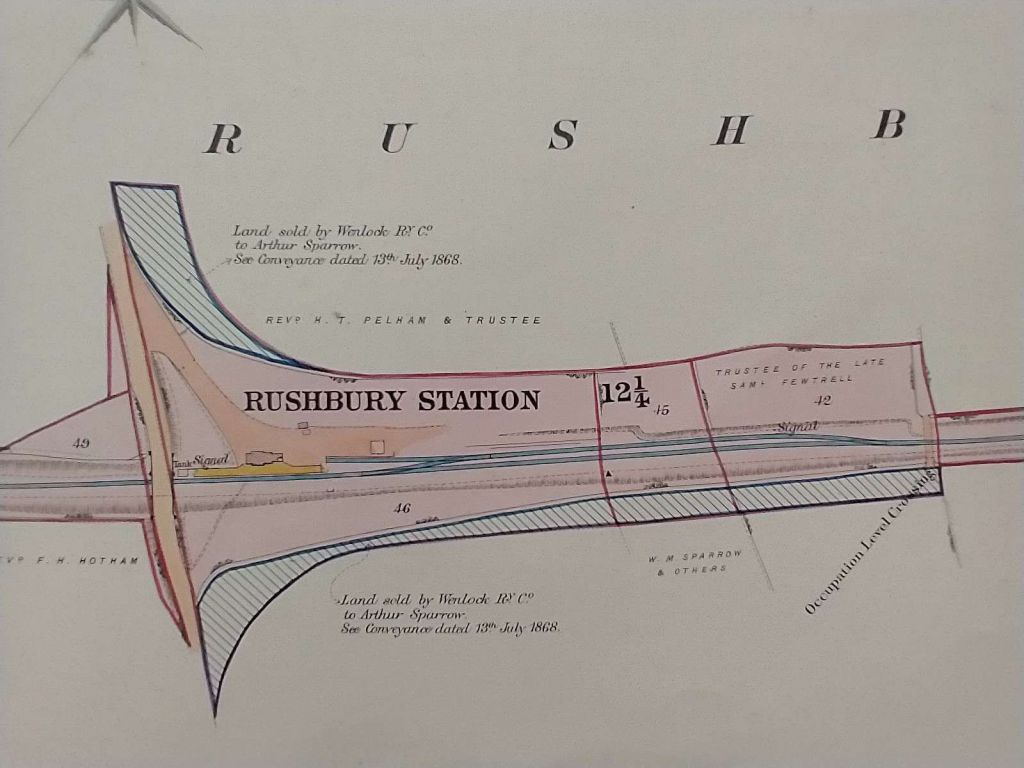
Another extract from the precontract plans held at the Shrewsbury Archive. These precontract plans were orientated in respect to the North point so as to get the greatest possible length of the proposed railway onto each sheet, © Shropshire Archives Ref. No. 6008/26 copyright reserved, used by kind permission. [16][My photograph of the plan, 5th August 2022]
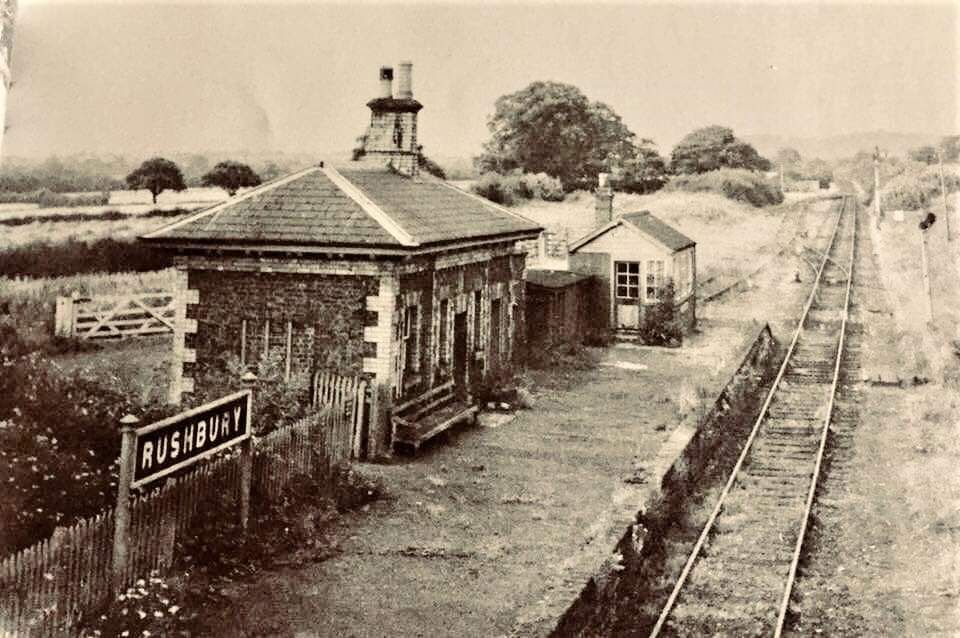
The view looking Southwest through Rushbury Station in the years after the closure of this length of the Wenlock Branch, with the road bridge marking the limit of the station site. By the time this photo was taken the rails had been lifted. Colin Middleton shared this newspaper cutting on the Memories of Shropshire Facebook Group on 30th September 2021. The station building remains as a private dwelling. The modern equivalent of this view could only be obtained by intruding on private space. [12]
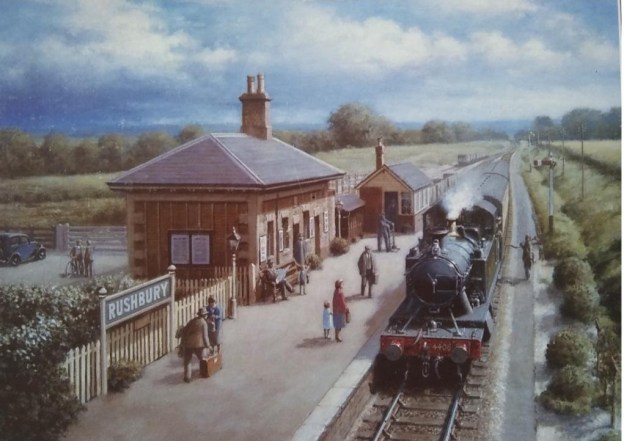
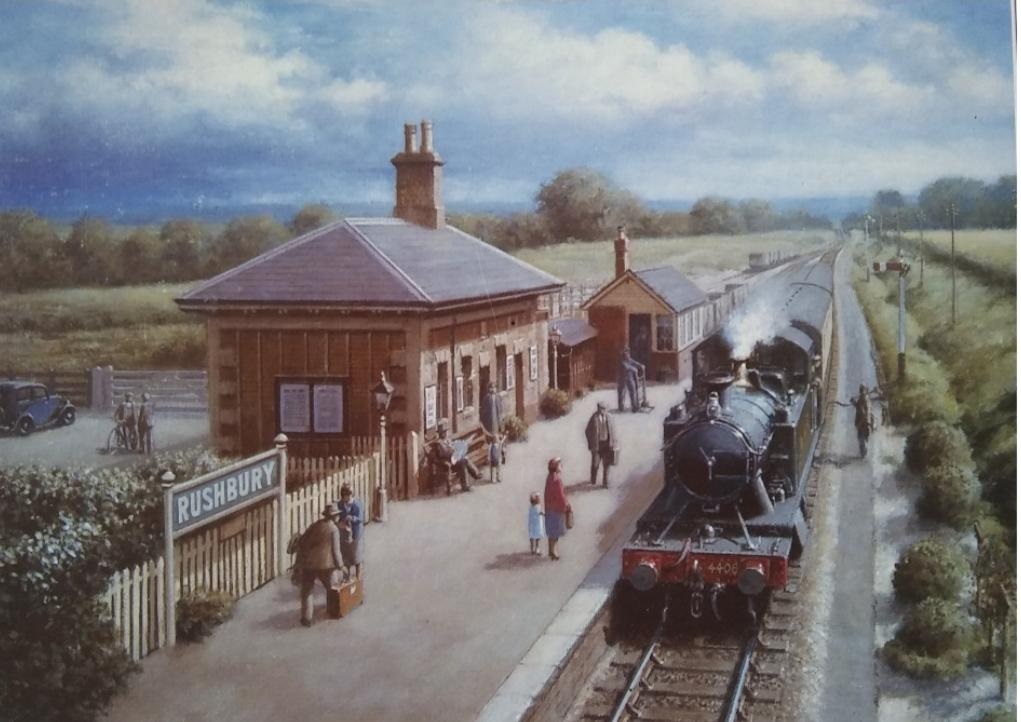
Jigsaw painting by Don Breckon of Rushbury Station when the passenger service was still operating. Locomotive No. 4406, a 2-6-2T Small Prairie, is just arriving at the station with a two-coach train for Craven Arms. [26]
The view from the road bridge at the Southwest end of the station site, looking Northeast towards Longville. The station building is not the only part of the site which remains. Look carefully between the station building and the small signal cabin and you will be able to see the cattle pen which sat on the cattle dock. The cattle pen can still be seen on site in the 21st century. This image was shared on the Memories of Shropshire Facebook Group on 18th June 2020. It is used here with his kind permission. The modern equivalent of this view is shown below. [13]
In the 21st century, the view from the road bridge onto the station site is blocked by trees. [My photograph, 3rd July 2024]
Looking Southeast across the road bridge. [My photograph, 3rd July 2024]
Looking Northwest across the road bridge. [My photograph, 3rd July 2024]
The view Southwest along the formation of the old railway. [My photograph, 3rd July 2024]
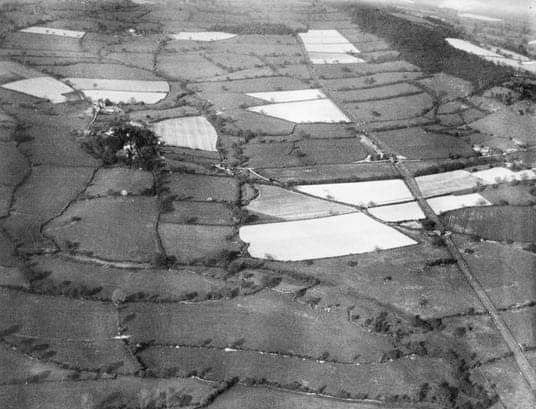
Rushbury Station can be seen in the right half of this aerial image which looks Eastward across the station site. The Wenlock Branch runs from centre-top to bottom-right. Rushbury village is shown in the left half of the photo. A short distance West of the station another overbridge can be seen crossing the old railway. Kevin McLean shared this image, alongside other aerial images of the area around Rushbury, on the Memories of Shropshire Facebook Group on 12th September 2015. [14]
The 25″ Ordnance Survey again. This extract covers the length of the Wenlock Branch immediately to the Southwest of Rushbury Station. [17]
This next extract takes the Wenlock Branch as far as the gates of Eaton Manor. The railway crossed the Ticklerton to Eaton Manor road by means of a bridge. [18]
This satellite image from railmaponline.com shows the same length of the old railway as the two map extracts above. The location of Rushbury Station is top-right and that of the bridge near Eaton Manor, bottom-left. [3]
Looking East along the line of the branch from the accommodation bridge which spanned the line about 300 metres West of Rushbury Station. [My photograph, 17th July 2024]
The road approach to the over-bridge from the North. [My photograph, 17th July 2024]
The view from the South across the over-bridge. [My photograph, 17th July 2024]
The view to the West from the same bridge. [17th July 2024]
The view from the trackbed to the East of the overbridge. [My photograph, 17th July 2024]
The view from the trackbed to the West of the overbridge. [My photograph, 17th July 2024]
Another extract from the precontract plans held at the Shrewsbury Archive. This extract shows the location of the bridge in the images immediately above. These precontract plans were orientated in respect to the North point so as to get the greatest possible length of the proposed railway onto each sheet, © Shropshire Archives Ref. No. 6008/26 copyright reserved, used by kind permission. [16][My photograph of the plan, 5th August 2022]
Around 100 metres West of the over-bridge, a view West along the trackbed. [My photograph, 17th July 2024]
A further 200 metres to the West, the track bed is gated, presumably at a change in land ownership. [My photograph, 17th July 2024]
The length of the railway formation beyond the gate in the last image has seen greater use as a farm access road. [My photograph, 17th July 2024]
A further 200 metres to the West of the last image. [My photograph, 17th July 2024]
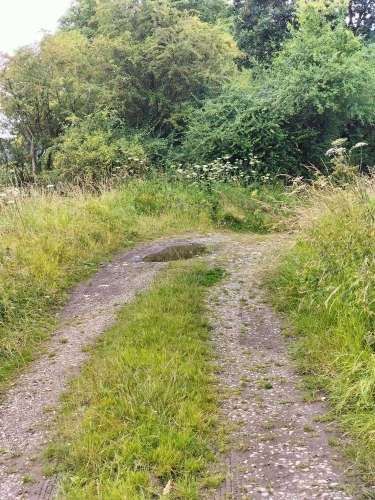
A short distance further along the old railway the farm accessed road slips off the old railway embankment to the North. For a distance of around 300 metres the railway formation becomes overgrown and inaccessible. [My photograph, 17th July 2024]
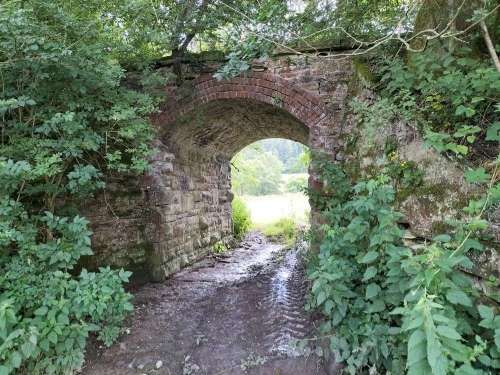
A ‘cattle-creep’ just a short distance ahead provides access between fields on either side of the old railway. This view looks through the stone and brick-arched structure from the North. [My photograph, 17th July 2024]
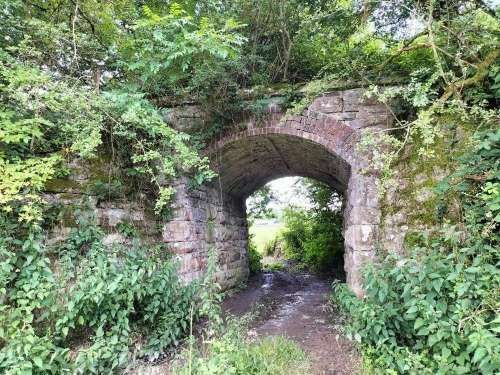
The same structure viewed from the South. [My photograph, 17th July 2024]

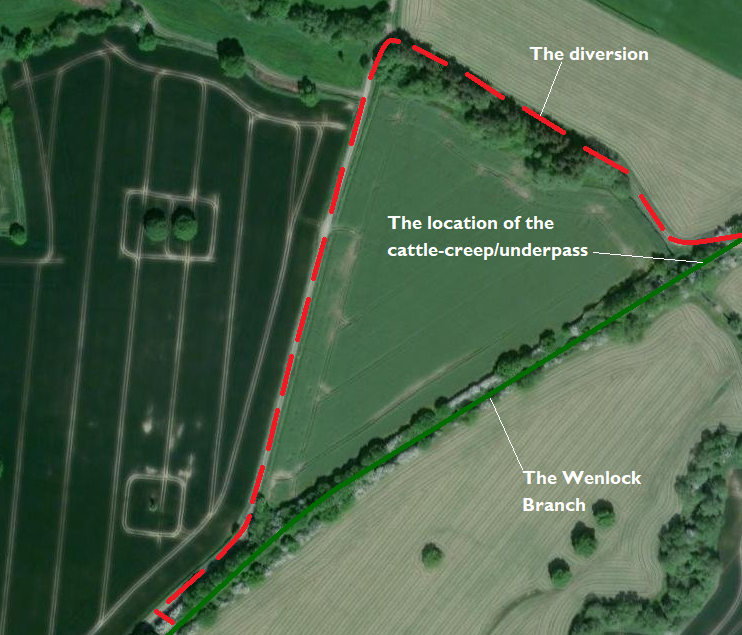
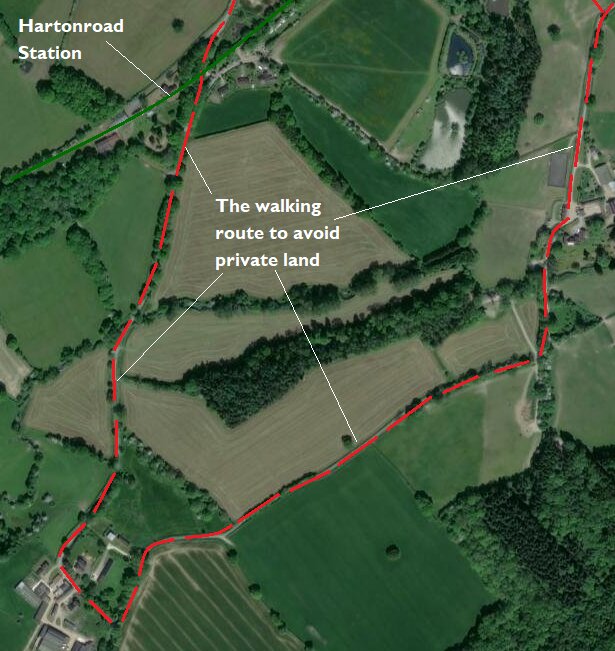
At this point on the Wenlock Branch it was necessary to leave the line of the old railway. A short detour along a field boundary and then along Darby Lane led to another access point to the old railway line.

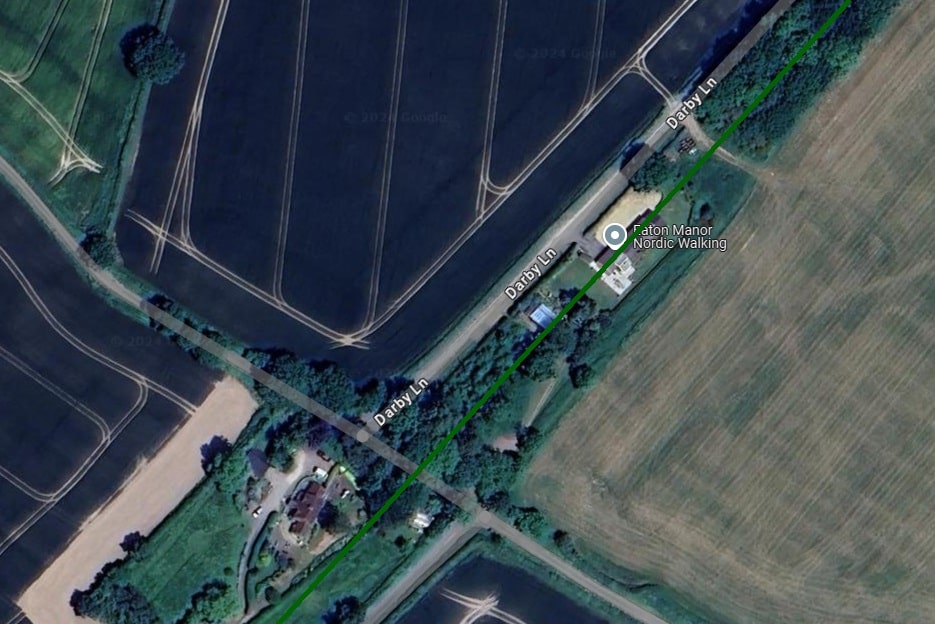
The diversion necessary from the line of the railway is shown on this satellite image as a red-dashed line. The route followed a farm track heading Northwest before joining Darby Lane as it converged on the boundary of railway land close to the bottom of this image. An open gateway permitted access back onto the line and it was then possible to walk back along the line to the Northeast. [19]
Looking back East along the old railway formation towards the cattle-creep/underpass. [My photograph, 17th July 2024]
Looking West at the same location. [My photograph, 17th July 2024]
200 metres further to the West looking West again. [My photograph, 17th July 2024]
Again looking West, close to the gate providing access to the old railway formation. [My photograph, 17th July 2024]
Just a short distance to the West of the picture above, the line of the railway is obstructed once more, requiring a return to Darby Lane. [My photograph, 17th July 2024]
The next field gate was open as well and was possible to look ahead, West, along the line towards a private dwelling built over the route of the old railway line. That building can be seen from above in the first satellite image below.  [My photograph, 17th July 2024]
An enlarged extract from the 25″ Ordnance Survey showing the bridge near Eaton Manor. [18]
Approximately the same area as shown on the enlarged map extract above. The line of the old railway has been built over to the Northeast of the bridge location shown below. [Google Maps, July 2024]
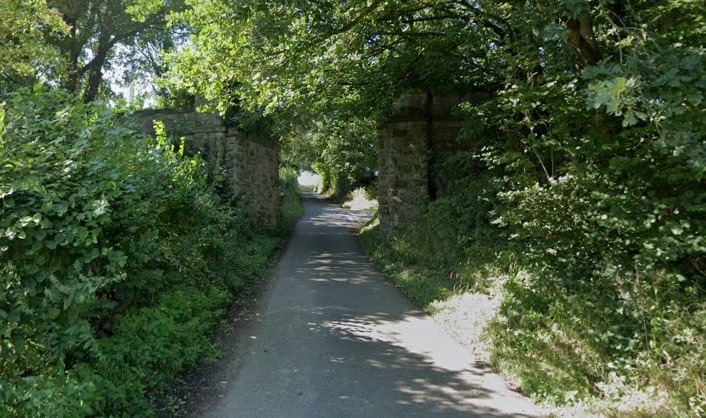
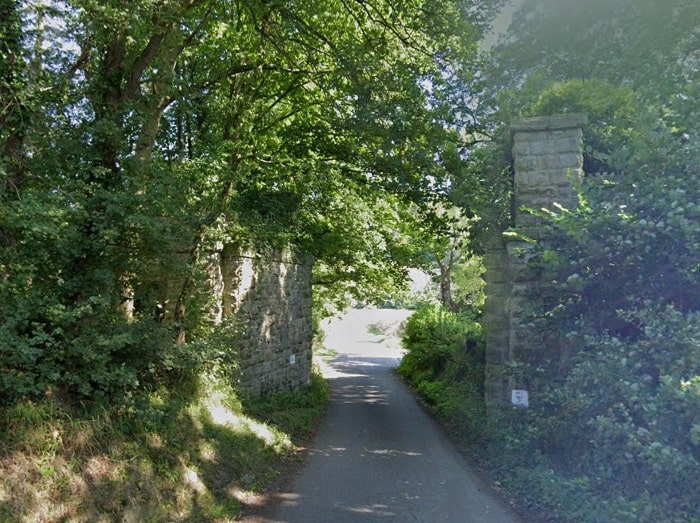
The view from the southeast along the road from Eaton Manor in August 2021. The stone bridge abutments and pilasters remain but the bridge deck has been removed. [Google Streetview, August 2021]
The view from the Northwest. [Google Streetview, August 2021]
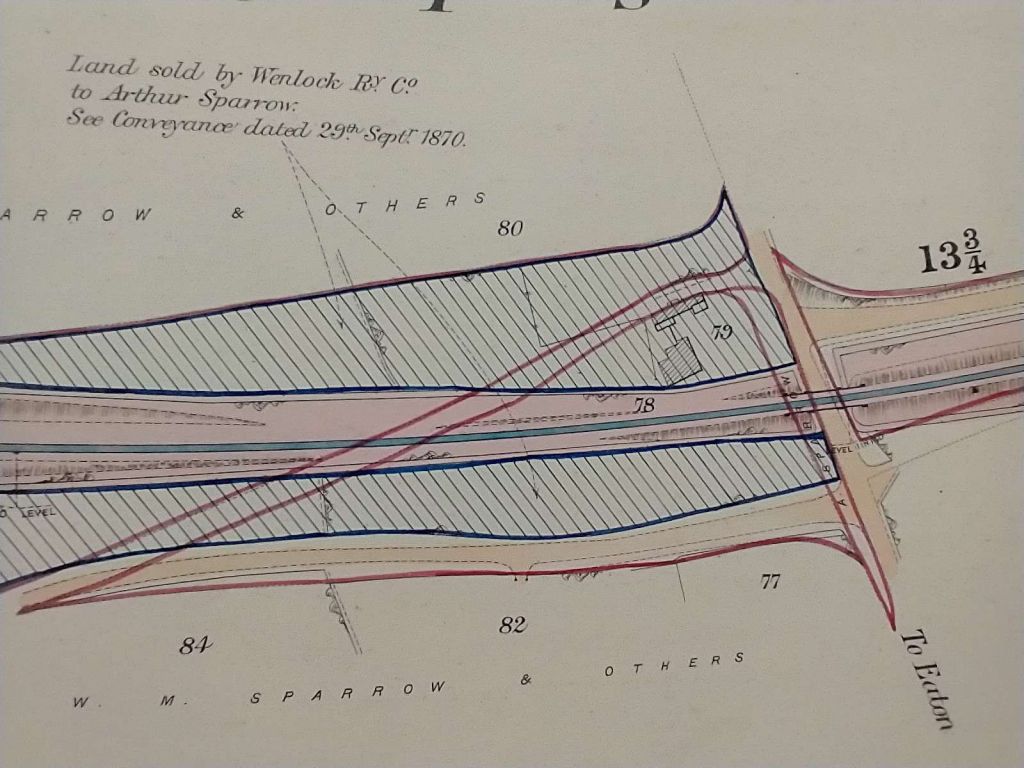
Another extract from the precontract plans held at the Shrewsbury Archive. This shows the original road alignment at this location before the advent of the railway and its necessary diversion to accommodate  the railway. These precontract plans were orientated in respect to the North point so as to get the greatest possible length of the proposed railway onto each sheet, © Shropshire Archives Ref. No. 6008/26 copyright reserved, used by kind permission. [16][My photograph of the plan, 5th August 2022]

To the West of this location the line of the old railway is now in private hands. Access to the line is limited to that possible on public footpaths/roads which cross the line. A diversion to the South of the line was necessary to reach the first point of access.

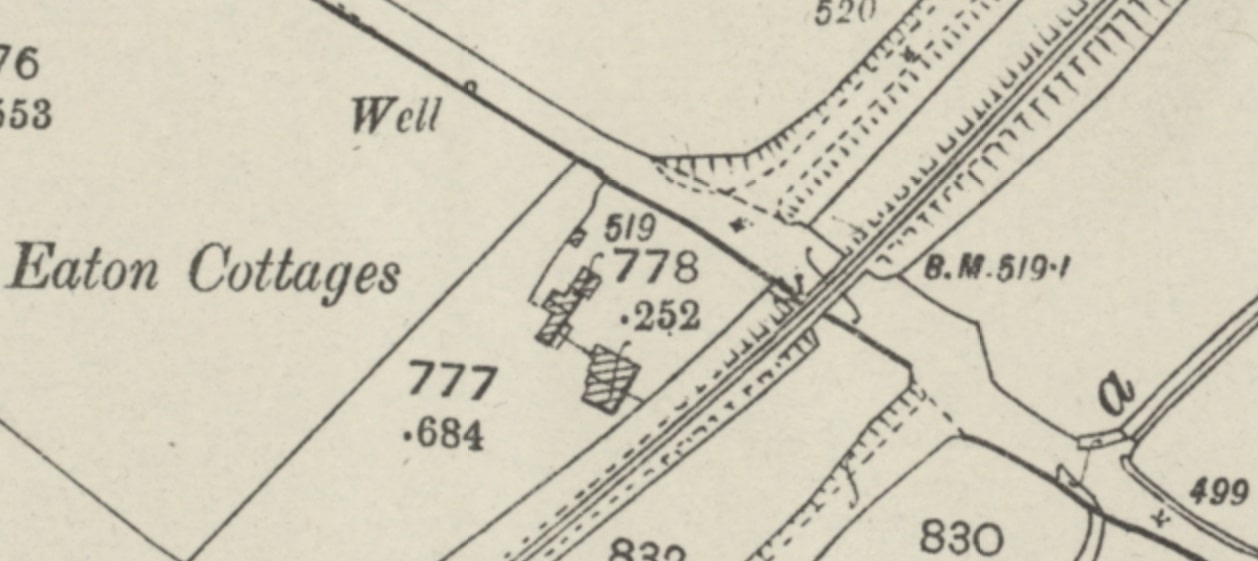
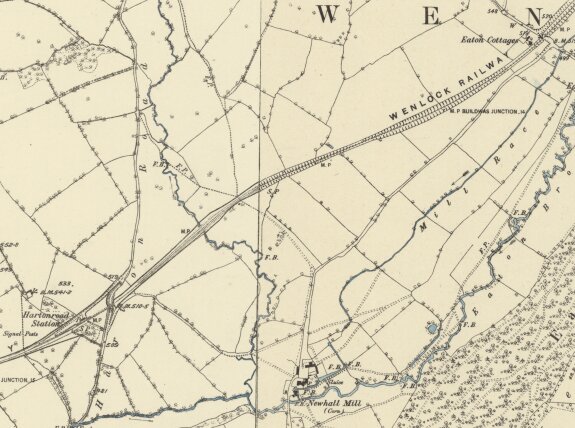
The next length of line from close to Eaton Cottage to Hartonroad Station. An extract from the 25″ Ordnance Survey mapping of 1882/1883. [21]
The same area as that shown on the OS map extract above. [21]
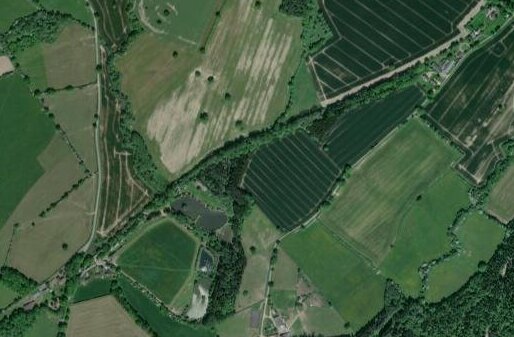
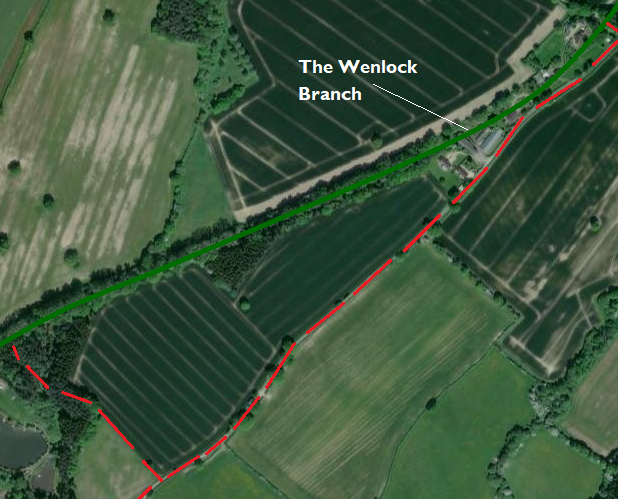
The route of the old railway is again shown in green, the necessary diversion by a red-dashed line. At the East edge of this image there are a series of private properties built over the line of the old railway. These are shown immediately below.

At the West edge of this image the footpath marked by the red-dashed line crossed the line of the old railway. In both directions from the footpath the old line is now in private ownership. [20]
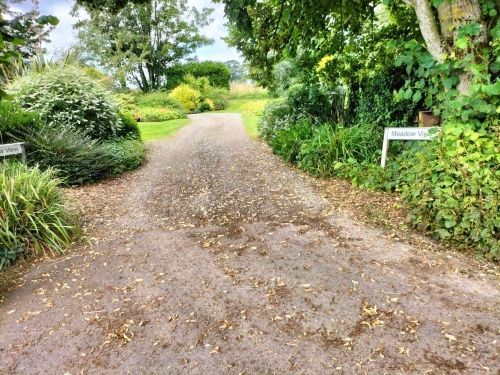
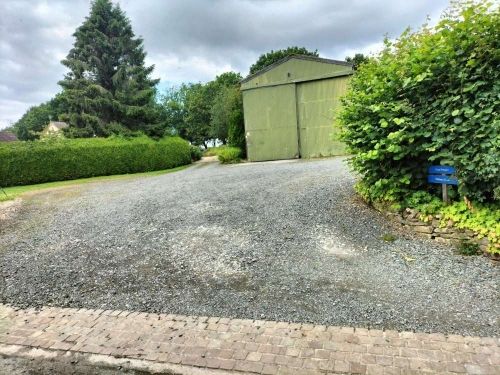
A series of four photographs look North from the public highway into the properties built over the line of the old railway. [My photographs, 17th July 2024]
A further 200 metres to the Southwest on the road to the hamlet of Harton, this photo shows an open field between the road and the treeline which marks the line of the Wenlock Branch. [My photograph, 17th July 2023]
Looking East at the point where the footpath crossed the old railway. [17th July 2024]
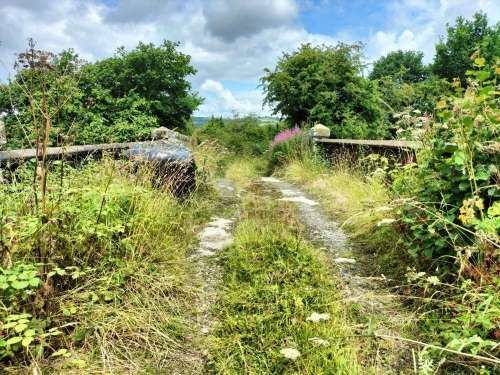
Looking West at the same location. [My photograph, 17th July 2024]
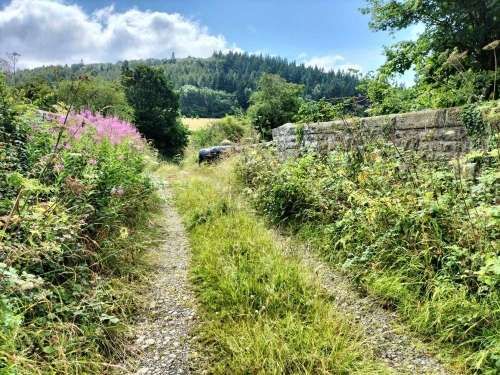
Using a telephoto lens, this is the line of the old railway heading West. [My photograph, 17th July 2024]
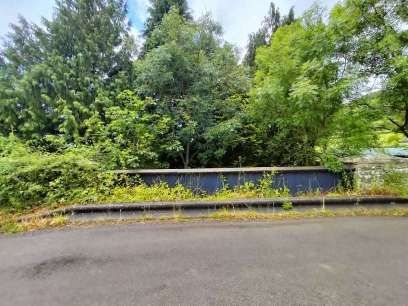
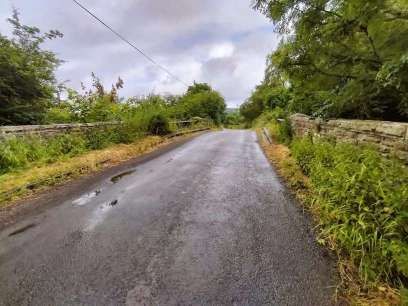
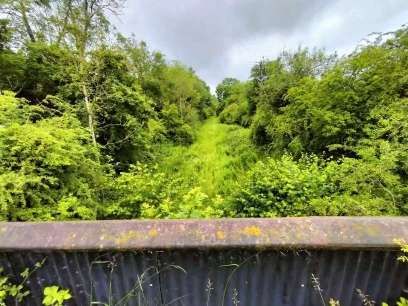
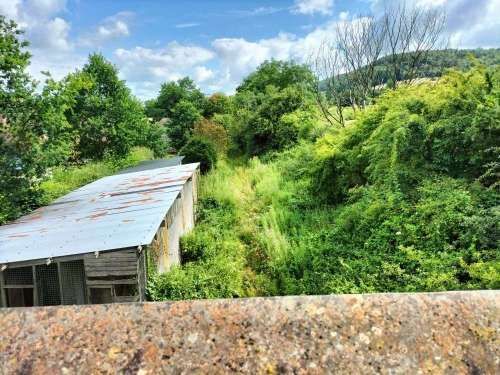
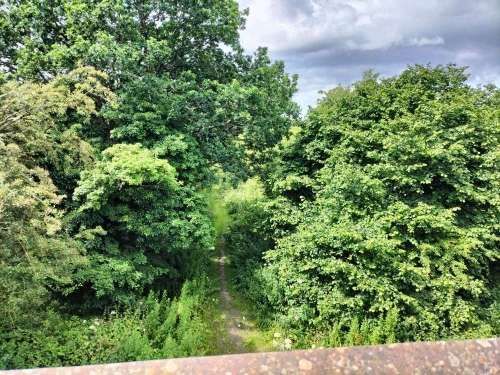
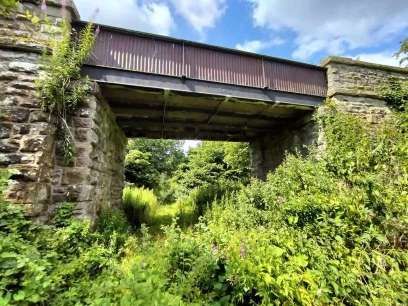
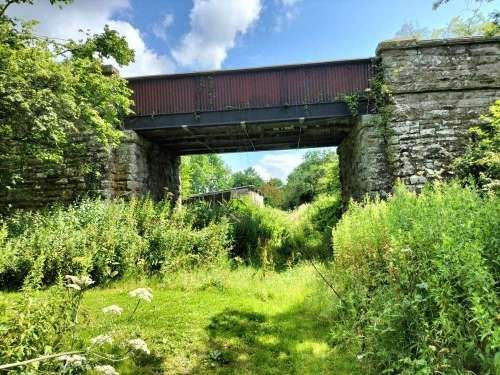
A view from the South through the location of the bridge carrying the Wenlock Branch over the road adjacent to Hartonroad Railway Station. [My photograph, 17th July 2024]
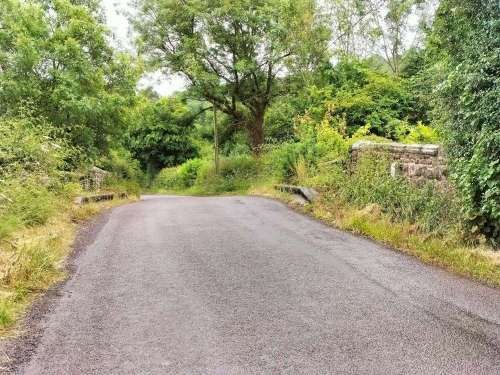
A view from the North through the location of the bridge carrying the Wenlock Branch over the road adjacent to Hartonroad Railway Station. [My photograph, 17th July 2024]

Writing of the length of the line between Rushbury and Harton Road stations, Ken Jones says: “On leaving [Rushbury] station the train passes under the roadway which formed part of the Roman road, with a steep rise from the station leading on to Roman Bank and over Wenlock Edge into the Corve Dale. Still passing under the densely wooded Edge Wood, to the left, and nestling under the wood, can be seen the small hamlet of Eaton-under-Heywood, and the embattled tower of the 12th century church of St Edith; the hamlet consists of one farm, the rectory and one cottage. Soon the train enters Harton Road station, the last on the branch. The station is as isolated as the hamlet of Eaton, all that can be seen from the train is a farm, and the station master’s house. Harton Road served the hamlets of Ticklerton, Halton, Soudley, Eaton, Westhope and Burwood, most of these (in 1922) each having a population of 50 people, Eaton and Burwood having only 40. The station consisted of the usual buildings: booking office, general and ladies’ waiting room and a lamp room. The staff consisted of the station master and one gate woman, she being employed at Wolverton Crossing, which was situated between Harton Road and Marsh Farm [Junction]. There was one double-ended siding which held 10 wagons, access to which was from either the east or west ground frames. The ground frames were controlled by the key on the Rushbury to Marsh Farm [Junction] staff. Also in the sidings was a cattle pen, which held one wagon and a horse landing for three horse boxes. One scene of activity that could be witnessed at the station was when the local estate farmers conveyed coal from the yard to the home of the local Lord of the Manor, as part of their statutory estate duty.” [1: p105 & 109]

An enlarged extract from the 25″ Ordnance Survey of 1881/1882 centred on Hartonroad Station. The bridge location shown in the images above is at the right-hand side of this extract. [22]
An enlarged extract from the ESRI satellite imagery provided by the National Library of Scotland centred on the location of Hartonroad Station [22]
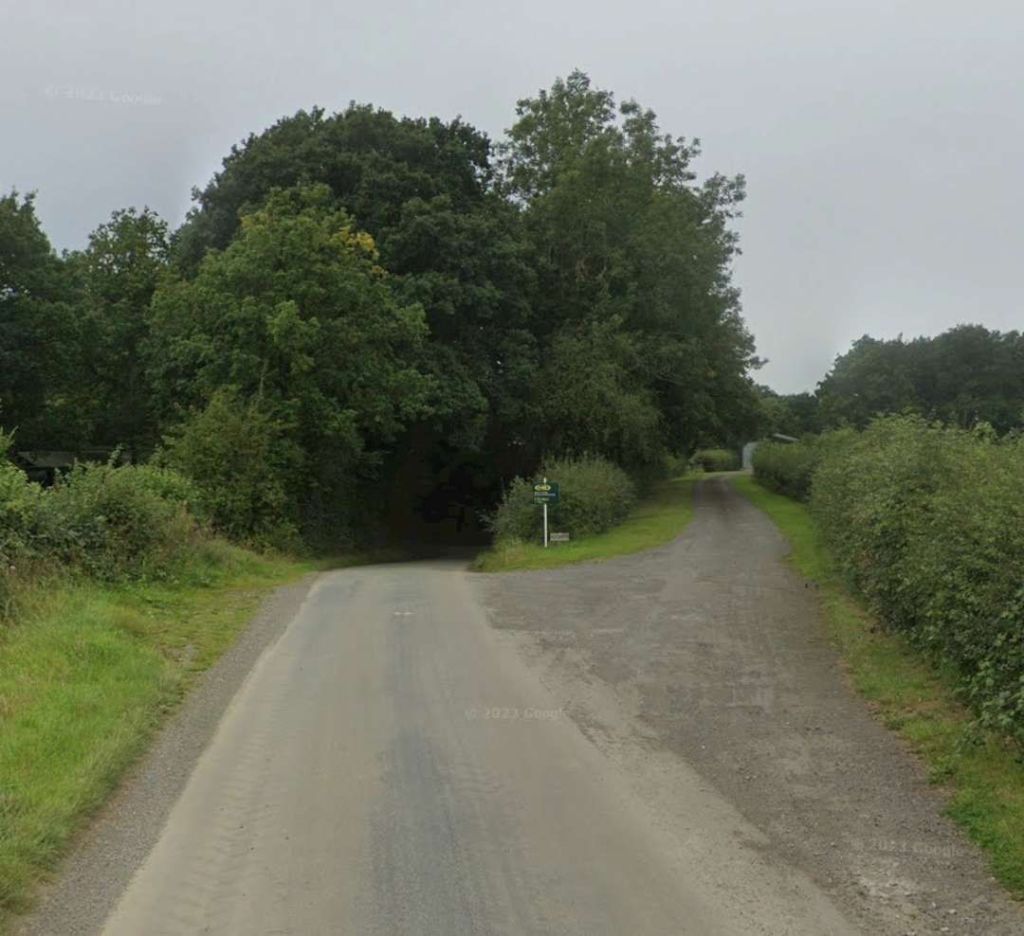
Looking from the Northeast towards the Wenlock Branch. The track to the right is the Hartonroad Station approach road. The tarmac road drops down to pass under a now demolished railway bridge. [Google Streetview, August 2023]
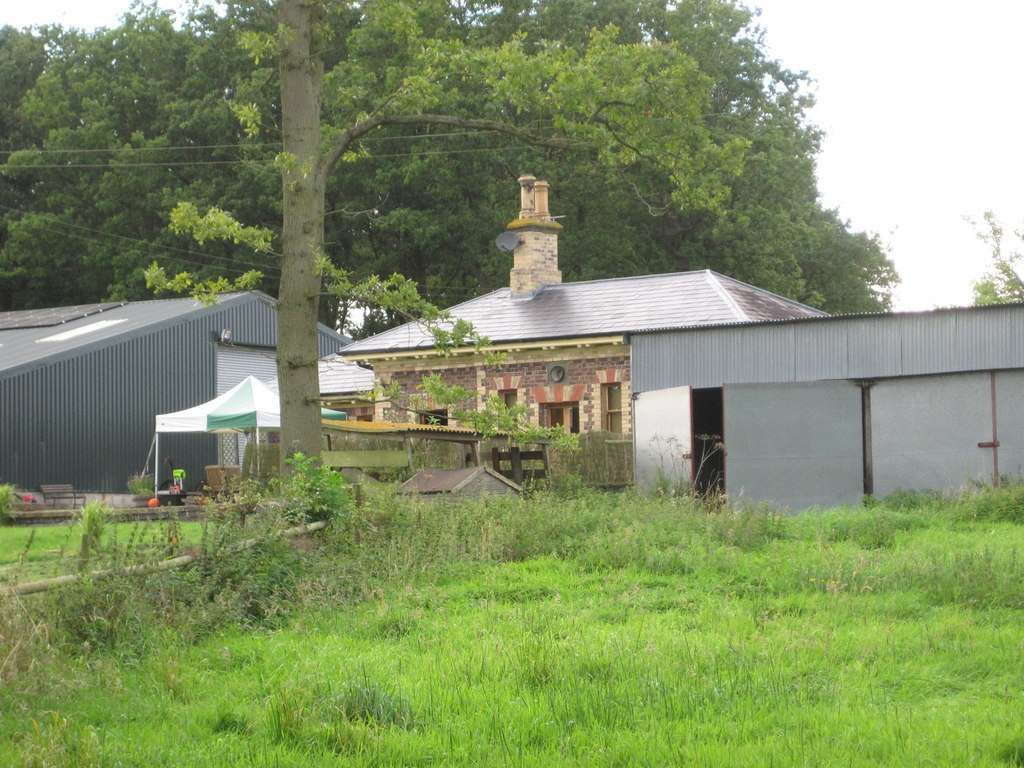
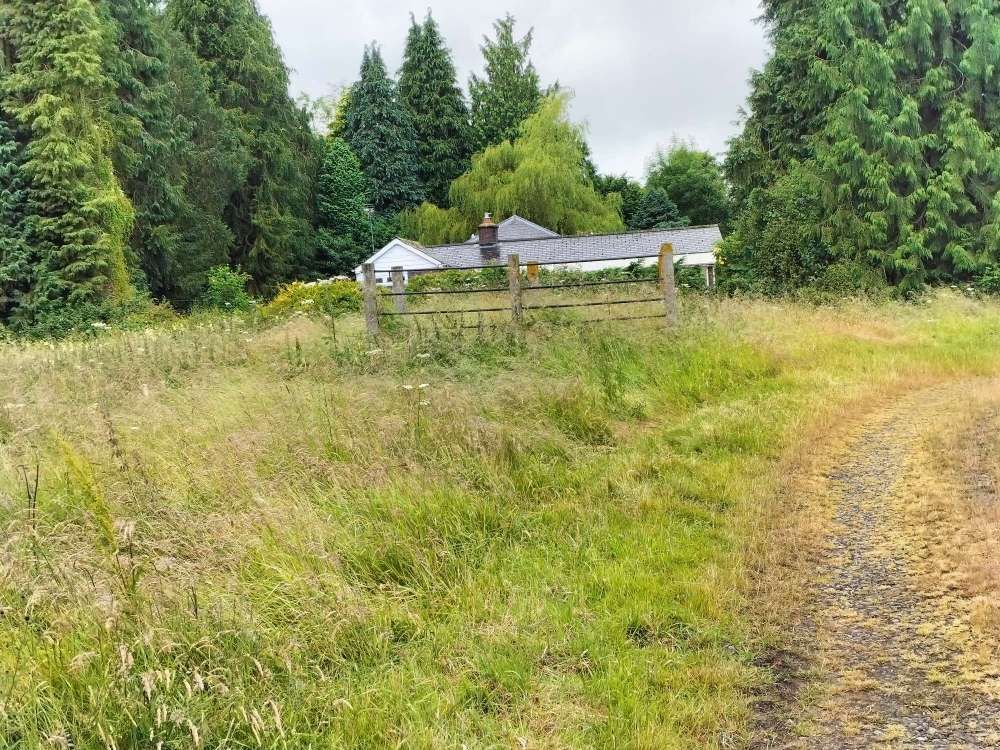
A short distance along the station approach, this view shows the original station building which is in private hands. This picture was posted on the Geograph website, © Copyright Nigel Thompson and licensed for reuse under a Creative Commons Licence (CC BY-SA 2.0). [23]
A better view of the station building and platform. [24]
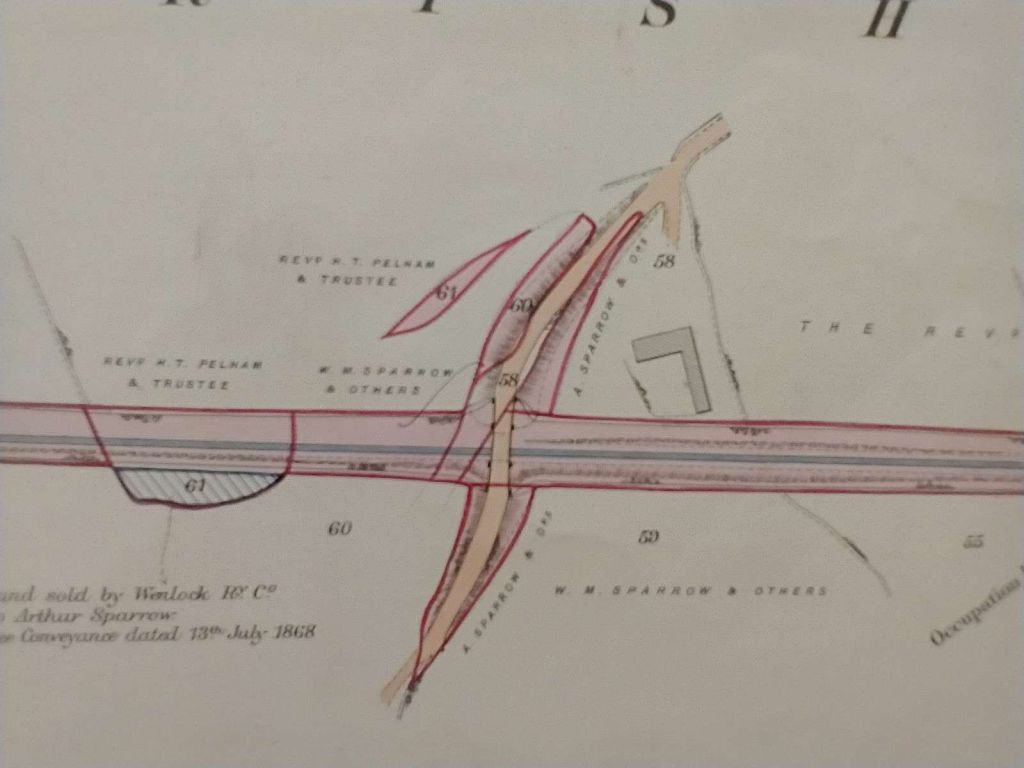
Another extract from the precontract plans held at the Shrewsbury Archive shows the original road alignment at this location, lined in red, before the advent of the railway and its necessary diversion to accommodate the railway. These precontract plans were orientated in respect to the North point so as to get the greatest possible length of the proposed railway onto each sheet, © Shropshire Archives Ref. No. 6008/26 copyright reserved, used by kind permission. [16][My photograph of the plan, 5th August 2022]

References

  1. Ken Jones; The Wenlock Branch; The Oakwood Press, Usk, Monmouthshire, 1998.
  2. The photographs of the pre-contract drawings for the line were taken by myself and show extracts from the construction plans held in the Shropshire Archive. There is a standard charge of £10 per visit for taking photographs of their records.
  3. https://railmaponline.com/UKIEMap.php, 2nd July 2024
  4. Adrian Knowles; The Wellington, Much Wenlock & Craven Arms Railway; Lightmoor Press, Lydney, Gloucestershire, 2022.
  5. https://maps.nls.uk/geo/explore/#zoom=16.0&lat=52.53723&lon=-2.67934&layers=168&b=1&o=100, accessed on 2nd July 2024.
  6. https://maps.nls.uk/geo/explore/#zoom=16.0&lat=52.52989&lon=-2.68767&layers=168&b=1&o=100, accessed on 2nd July 2024.
  7. https://maps.nls.uk/geo/explore/#zoom=16.0&lat=52.52396&lon=-2.70003&layers=168&b=1&o=100, accessed on 2nd July 2024.
  8. https://maps.nls.uk/geo/explore/#zoom=16.0&lat=52.51967&lon=-2.71281&layers=168&b=1&o=100, accessed on 2nd July 2024.
  9. OS Explorer No. 217, revised August 2018.
  10. https://www.facebook.com/share/p/S5PDjUKFJmP7GhAd, accessed on 3rd July 2024.
  11. https://www.facebook.com/share/p/29GLutDqQZ6MSK4F, accessed on 3rd July 2024.
  12. https://www.facebook.com/share/p/vKmokDfTDtHmqD6W, accessed on 3rd July 2024.
  13. https://www.facebook.com/share/p/JNoYPmh5bcKK3KjK, accessed on 3rd July 2024.
  14. https://www.facebook.com/share/p/HhWT6tfX13QFEKn7, accessed on 3rd July 2024.
  15. https://www.geograph.org.uk/photo/4354492, accessed on 24th June 2024.
  16. The photographs of the pre-contract drawings for the line were taken by myself and show extracts from the construction plans held in the Shropshire Archive. There is a standard charge of £10 per visit for taking photographs of their records.
  17. https://maps.nls.uk/geo/explore/#zoom=16.0&lat=52.51562&lon=-2.72436&layers=168&b=1&o=100, accessed on 9th July 2024.
  18. https://maps.nls.uk/geo/explore/#zoom=16.0&lat=52.50904&lon=-2.74275&layers=168&b=1&o=100, accessed on 9th July 2024.
  19. https://maps.nls.uk/geo/explore/#zoom=16.0&lat=52.51139&lon=-2.73946&layers=257&b=1&o=8, accessed on 17th July 2024.
  20. https://maps.nls.uk/geo/explore/#zoom=16.0&lat=52.50448&lon=-2.74994&layers=257&b=1&o=8, accessed on 17th July 2024.
  21. https://maps.nls.uk/geo/explore/#zoom=15.0&lat=52.50294&lon=-2.75844&layers=257&b=1&o=100, accessed on 17th July 2024.
  22. https://maps.nls.uk/geo/explore/#zoom=18.0&lat=52.49969&lon=-2.76300&layers=257&b=1&o=100, accessed on 17th July 2024.
  23. https://www.geograph.org.uk/photo/4354526, accessed on 17th July 2024.
  24. https://housesforsaletorent.co.uk/houses/to-rent/shropshire/harton.html, accessed on 17th July 2024.
  25. https://www.geograph.org.uk/photo/5209903, accessed on 17th July 2024.
  26. https://dabhandpuzzles.uk/product/calling-at-rushbury-jigsaw-1000-piece-used-2, accessed on 14th August 2024.