
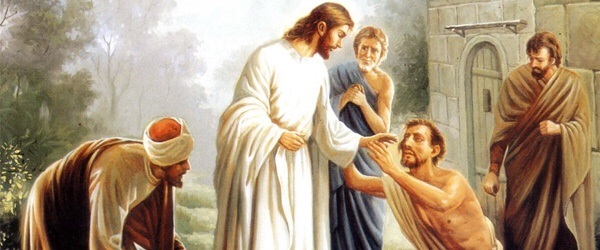

What is the most important thing in your life? …. The children? The grandkids? The football team? The husband? The wife? The bingo? Bowling? Work?
What is the most important thing in your life?
What’s so important that you put it above everything else?
We have been reading though Mark’s Gospel for most of the year. We know by now what Jesus has been saying about himself and God’s kingdom. He has spoken of his own death, he has talked of God’s kingdom as a place of radically different values. And while all that has been happening, various people around Jesus have been making it very clear where their priorities lie.
Two Sundays ago, if we read the set Gospel in the lectionary, we would have read of a rich young man whose riches were the most important thing in his life. He was unable to give them up to follow Jesus.
Last Sunday, the lectionary pointed us to the verses immediately preceding today’s Gospel reading. We read of James and John asking for special privileges – wanting to sit at Jesus’ right and left hand when Jesus came in his glory. They were interested primarily in power, wealth and influence.
Previously, in the Gospel, the disciples had been caught arguing like little boys in the school playground about who was the greatest among them and Jesus had to bring a child into their midst to help them see what greatness was really all about.
These are all stories about people fixated on riches, wealth and power, rather than on following Jesus. And at the end of all this, Mark chooses to tell us the story of Bartimaeus.
Here too is someone who is really focussed on what he wants, someone who will not let anything get in his way, not his disability, not the jibes of the crowd, not the scorn of the disciples. Nothing. … ‘All want my sight’, says Bartimaeus when Jesus asks him what he wants. He believes that Jesus can give him his sight. He might not really understand who Jesus is, he only sees him as Son of David, not Son of God. But he is desperate and determined, he believes.
Jesus sees Bartimaeus’ faith and heals him. And Bartimaeus follows Jesus.
Perhaps when you go home you might like to read through Mark Chapter 10. Or borrow a bible from church and have a read together over coffee this morning. … Mark is being very clever in his Gospel.
People believed then, and still believe now, that wealth is a blessing from God – surely the Rich Young Man was blessed, surely wealth was no barrier to being a follower of Jesus. … But Jesus makes it clear that his wealth did stand in the way between him and the possibility of knowing God.
James and John, and the other disciples had been with Jesus for 3 years. Surely, by now, they would have understood just a little bit of what Jesus ministry was about. Hadn’t he talked with them repeatedly about suffering and death. But no, they’ve failed to catch on, and they make fools of themselves.
The privilege of wealth, the desire for preference and the privilege of being a companion of Jesus. Are both are compared by Mark with a blind man.
People in Jesus day saw sickness as a consequence of Sin. When you looked at a blind beggar – your first question would be, ‘What has he or his parents done wrong, that he is here begging like this?’ … We still make similar assumptions. How many times, when you’ve been going through hard times have you said something like, ‘What have I done to deserve this?’ … We still think in terms of consequences.
It is the person regarded by society as the sinner and the outcast, the blind man, who gets his priorities right.
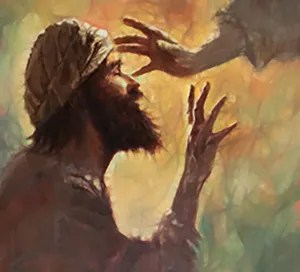
The Rich Man walks away saddened, Bartimaeus is healed and follows Jesus on the Way. The disciples bicker as they surround Jesus, they even try to prevent Bartimaeus from reaching Jesus. Bartimaeus, even with his limited understanding of Jesus, knows that Jesus is the answer to his problems. He’s not interested in bickering, he pursues Jesus tenaciously, and then follows him enthusiastically.
Mark is making a very significant point … that those we see as outsiders, those on the margin of society, those who seem to be outside of the community of faith, those whom we might even feel tempted to condemn. They may just have something to teach us about faith and about an appropriate focus for our lives.
It would be so easy for us to lose our focus, to get so bound up, like the disciples, in the politics or the business of being Church, that we no longer focus on following Jesus. It would be so easy for us, like the rich man, to let other things become more important than our relationship with Jesus. And before we know it our faith will have ceased to be about love for God and will have become no more than meaningless ritual.
At times we need the Bartimaeus, the outsider who discovers for themselves the love of God, that new church member who cannot stop talking about what God has done for them, perhaps even a person whose morals, or lifestyle, or position in society that we abhor.
At times we need the outsider, the newcomer to remind us of the reality of our faith, the depth of God’s love for us, to challenge us about where our priorities lie.
What is most important to you? What’s most important to me?
Bartimaeus reminds us that focussed, committed pursuit of our faith, ‘following Jesus on the way’, has be our highest priority.
 Roger Farnworth