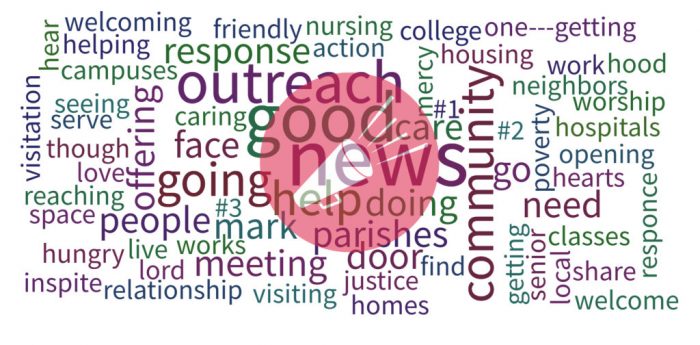
Category Archives: Various

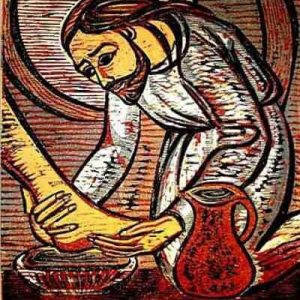
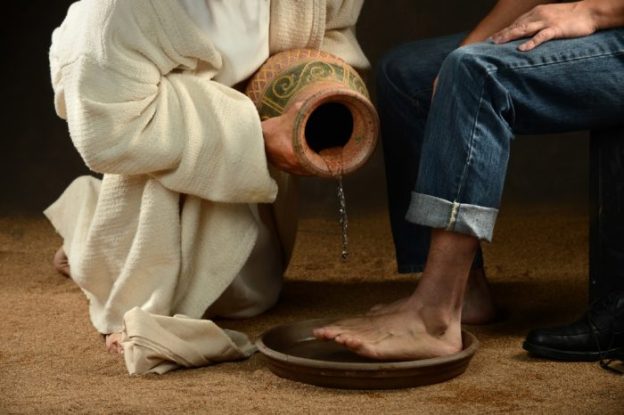
Maundy Thursday – John 13

Headline news on Huffington Post (an internet news site) in 2014:

On April 17, 2014, Pope Francis will visit the Centro Santa Maria della Provvidenza Fondazione Don Carlo Gnocchi home and wash the feet of the residents, many of whom are elderly and have disabilities. The ritual will happen on Maundy Thursday, which remembers the Last Supper of Jesus Christ with his disciples, when Jesus humbles himself and washes the feet of his apostles prior to their Passover meal.

Shortly after being elected, Pope Francis made headlines when he washed the feet of two women at a Rome youth prison, a sharp departure from the foot-washing of 12 priests in Rome’s St. John Lateran Basilica. [1]

Wikipedia says that : “In a notable break from the 1955 norms, Pope Francis washed the feet of two women and Muslims at a juvenile detention center in Rome 2013. In 2016, it was announced that the Roman Missal had been revised to permit women to have their feet washed on Maundy Thursday; previously it permitted only males to do so.” [2]

Over many years, the usual papal ritual has been for the Pope to wash the feet of 12 selected priests in an endeavour to mirror Jesus’ action at the last supper. Pope Francis sought to move away from this careful and beautiful choreography towards something more meaningful.

As Pope Francis did this, he symbolically took the place of Jesus and his message was the same. Jesus said, “If I, your Lord and Master, have washed your feet, you also ought to wash one another’s feet.” Pope Francis was saying the same to those who accept his leadership: “If I, you spiritual leader, have washed the feet of the elderly and infirm, the least you can do is treat them as human beings and honour them by serving them as you would serve your Lord.”

This is the most obvious challenge in the passage from John 13 for those of us who want to faithfully follow Jesus. If we were to stop with that thought, we’d have something worthwhile to think about on Maundy Thursday.

However, this is not the only challenge that faces us in the passage from John 13.

Let’s think about Peter’s response to Jesus. He says, “You will never wash my feet.” In these words is another challenge, which for many of us might be more significant?

So often our focus in the evening service on Maundy Thursday is on Jesus, and rightly so. His humility and servant love call for a response. And so, perhaps, we make a mental note to be a little more generous in the way we deal with other people. Or we feel something as the service progresses – our emotions are affected and we feel like behaving differently.

But what does the story feel like, if instead of identifying with Jesus, we take Peter’s place. … What was it that provoked Peter to say: “You will never wash my feet.”

Was it a sense that it wasn’t right? Perhaps Peter felt that a leader should not do something usually done by the lowest of slaves.

Was it embarrassment? My feet are so dirty, they’ve got corns and bunyons, my toes are mis-shapen. I don’t want you to see.

Or, was it embarrassment for another reason? Did none of the disciples want the job? Were they looking round at each other wondering who would crack first? And then shock, horror – it is Jesus who picks up the slave’s towel.

Or, was it pride? Under no circumstances am I going to be so demeaned as to have you touch my feet.

What do you think it was that provoked Peter’s response? .Take a few moments to think about this. …….

Then I’d like to ask you a few other questions.

In a moment or two, in this article, we will move on to think about the particularly unique circumstances which face us in Holy Week in 2020, but let’s for a moment stick with the story in John 13 and with our attempt to identify with Peter.

What is it that has governed your decision on Maundy Thursday in the past. When you have been presented with the opportunity in church to have your feet washed. What has it been that has kept you in your seat? Or come to that, what is it that propels you out of your seat to come forward to have a foot washed?

Let’s translate the same question into more general circumstances. … When someone offers to serve you in another context, or seeks to help you, what is your response? Would it be one of these?

‘I am not prepared to accept charity.’

‘Go away, I don’t want your help.’

‘What is in it for you?’ ‘There must be a catch!’

What governs/governed your decision? Is it, or was it, a sense of propriety? Is it, or was it, embarrassment? Was it pride? … Is (or was) your response like that of Peter: “You will never wash my feet.”

There is a phrase we sometimes quote: “It is better to give than to receive.” There are times, however, when the giving is easy and the receiving is so much harder. It is actually often easier to serve than be served; often easier to serve than to take praise for our service; it is sometimes easier to give than to receive. The real challenge for us can be the need to be willing to receive the love shown to us by others.

Perhaps you could take a few moments to think about how you respond to love shown to you before you go on to read the rest of this reflection. …………………………….

We are in very strange circumstances in 2020. It feels as though Holy Week and Easter has been cancelled. Not that they have, of course. Our additional challenge is to find a way to engage over the next few days with the most important stories of the Christian faith and to do so in a way that unites us as members of the body of Christ.

We have been told that Archbishop Justin Welby, “will not be conducting the annual Maundy Thursday public ceremony of foot washing this year.” [3] That statement was made before a decision had finally been taken to close our Churches to protect us from the COVID-19 pandemic. But it is true. No clergy will this year be washing the feet of members of our congregations. It seems as though many things now serve only to emphasise our isolation – the inability to share in the physical Eucharist, the loss of our regular services, the need to communicate only by phone, email, text, face-time and letter, the loss of physical contact with people from other generations in our families. All these things, and more leave us alone or even lonely – isolated from what means most to us.

Yet, the spirit of service, that essential commitment to caring for others, which is so dramatically played out in the story of John 13 is with us in the most purposeful of ways. There are those today who are choosing to touch what is untouchable, who are choosing to place themselves in harm’s way. There are those who, without the benefit of suitable PPE are touching and washing not just the dirty feet of others, but whole bodies as well, bodies that are infected and so are dangerous to touch. What seems to have brought isolation to so many, is also demanding so much from others.

The idea of foot-washing seems to be somewhat irrelevant in the context of all that is going on. The loss of the ceremony seems almost to be an unimportant footnote in the current crisis.

But the loss of this ceremony is significant. The loss of this, specific, personal contact is relevant. This loss is symbolic not only of all our other losses, but symbolic too of the selfless giving of others. I hope that in future years we will be able to see this ceremony as a focus for our gratitude that physical contact is once again possible for all of us, and as an act of gratitude for the love and care of others. I hope that we will all see having our feet washed as one essential part of the flow of the seasons of the church’s year.

References

  1. https://www.huffingtonpost.co.uk/entry/pope-francis-foot-washing-maundy-thursday_n_5166531?ri18n=true&guccounter=1&guce_referrer=aHR0cHM6Ly93d3cuZ29vZ2xlLmNvLnVrLw&guce_referrer_sig=AQAAANEBjpyhkw1W-xYGm1dtHzvRW7NgD0A-lpDCNny11KZrixpVUQWfGBzUaxQCSMVBxn3UgeJQ6nCaYDvUufx6jZgAN3OfMF2900mqmw1qRyMNRo7VKbaCWJbCMfoeDTSxCM6TQihtitpRUt4sXcYnBHguAAtM3C7JZJVoNKrjBBJl, accessed on 5th April 2020.
  2. https://en.wikipedia.org/wiki/Foot_washing, accessed on 5th April 2020.
  3. https://premierchristian.news/en/news/article/welby-won-t-be-foot-washing-this-maundy-thursday, accessed on 5th April 2020.

Palm Sunday – 5th April 2020: Isaiah 50: 4-9a and Matthew 21: 1-11

Our Old Testament reading used the phrase, “I have set my face like a flint.” How might we phrase that today? “Go for it, no matter the cost.” “Climbing over dead men’s bodies.” “The end justifies the means?”

The phrase conjures up a sense of dedication and a refusal to be deflected no matter what happens. Determined, committed, purposeful.

It could be like a powerboat moving so fast towards its destination that its wash overturns everything in its wake. Real winners don’t put time limits on their commitments! They are committed with no conditions, and when they begin, they’ve made up their minds to finish!

Martin Luther King, Jr. said something a bit different: “If a man is called to be a streetsweeper, he should sweep streets even as Michael Angelo painted, or Beethoven composed music, or Shakespeare wrote poetry. He should sweep streets so well that all the host of heaven and earth will pause to say, here lived a great streetsweeper who did his job well.”

Ambition, determination, whole-hearted commitment to our goals are quite good things in themselves. Often, however, when our hopes conflict with the interests of others we can produce all sorts of justifications for less than generous attitudes and actions. Our readings speak of whole-hearted commitment. Jesus, on Palm Sunday, sets his face like a flint towards Jerusalem, nothing will stop him fulfilling God’s will – nothing will deflect him from the path of the cross.

Success for Jesus is, however, measured in terms of apparent personal failure. In Jesus’ weakness, God’s purposes are fulfilled. For Jesus to meet his goals he has to die.

In Isaiah, the Suffering Servant, sets his face like a flint into the suffering that is coming his way – confident of God’s help to endure. There’s no disgrace, no shame, in the torture he faces because he knows that he can trust God for his future, for his ultimate vindication.

How different these attitudes are to our own? We struggle and strive to protect ourselves. We’ve learnt to be self-reliant. “Look after number one – no one else will!”

We’ve learnt to see failure and weakness is shameful. Success in the world=s terms is important to our sense of self-worth. We cannot be seen to fail, even if that means that we need to put others down.

Is that a fair assessment? Is that what I am like?

Perhaps I need to ask my self a few questions. …. How willing would I be to embrace apparent failure, like Jesus did, for the sake of others? … Would I be prepared for you to think bad of me, to reject me – if I only knew that I was doing what God wanted?

But things are never quite as stark as this. Things are never that clear-cut. It=s in the smaller things that I need to learn to place the needs of others above my own, in the smaller things that I need to learn to set aside self-protection and look to the interests of others. So, what does Christ-like determination and commitment look like?

Our reading from Isaiah gives us a clue:

The Lord God has given me the tongue of a teacher that I may know how to sustain the weary with a word. Morning by morning he wakens  – wakens my ear to listen as those who are taught.”

Says Isaiah – we need the “tongue of a teacher” – the openness that doesn’t hoard knowledge (because knowledge is power) but shares it with others. Openness that shares ourselves with others. Openness which allows us to share the glory and praise with others. Openness that makes ourselves vulnerable so as to lift others from their weariness.

And, says Isaiah, it is not only a willingness to share but a willingness to listen. … We must not close our minds in some sort of self-righteous crusade. (We know what is best and we’ll do it. Blow everyone else!)

No. It was because Christ was open to others, vulnerably sharing himself with them listening to their needs, that he set his face like a flint to the cross. Because he loved of others – he chose suffering a death.

The challenge for us is to be so open with others that we are prepared, if necessary, to set aside our well-being, our comfort, so as to meet their needs. So, how do we succeed?

Jesus answer: “By becoming vulnerable, willing to die, willing to embracing failure.”

By accepting that Palm Sunday’s adulation will give way to Good Friday’s rejection.”  A very different measure of success!

Collect

Loving Father, whose Son Jesus Christ set his face like a flint toward the cross. Give us, your people, such love and compassion for others that we, like Christ, may be prepared to place others needs above our own. Through Jesus Christ our Lord. Amen.

Prayers

Let us pray for the world and the Church and let us thank God for his goodness. ….. Almighty God, our heavenly Father, you promised through your Son Jesus Christ to hear us when we pray in faith.

We bring before you the needs of our nation: we pray for those living below the poverty line, for the unemployed, the homeless, the dispossessed, those unjustly accused, those longing for justice.

We pray for all who govern and lead us. The Queen and her minsters of government, the opposition, civil servants and other government employees. Our Councillors and local authority workers. All who make decisions which affect our daily lives. We pray for the rule of law and that we will be justly and peaceably governed.

Lord in your mercy, hear our prayer.

We pray for nations around the world, for regions of conflict. Bring peace to our world, bring to power those who seek not only for their own good but for the good of others.

Lord in your mercy, hear our prayer.

We pray for your Church throughout the world, across all our denominations. Bring unity and a sense of common purpose in serving you. Help us to see Christ in one another and be alive to each others needs. Strengthen our bishops, church leaders and all your church in the service of Christ. May we, and they, place serving you above party spirit and narrow ambition.

Lord in your mercy, hear our prayer.

Merciful God, in silence we lift to you the names of those we love, our families, friends and neighbours. … Break down the barriers that we so easily erect, and open us up to sharing with each other in love

Lord in your mercy, hear our prayer.

Comfort and heal all those who suffer in body, mind or spirit – those whose names rest heavily on our hearts, …. those in our street, our parish, our community and further afield, who we don’t know, … those known only to you – all of whom need your healing touch. Gather them into the warmth of your embrace, give them courage and hope in their troubles, and bring them the joy of your salvation.

Lord in your mercy, hear our prayer.

Hear us as we remember those who have died, those whose funerals have taken place this week. May we, and they, share in your eternal kingdom.

Merciful Father accept these prayers for the sake of your Son our Saviour Jesus Christ. Amen.

A prayer over your Palm Cross

If you have been sent a Palm Cross, or if you have one from last year, please use this prayer and give the Cross pride of place in your home over Holy Week and Easter. ….

God our Saviour, whose Son Jesus Christ entered Jerusalem as Messiah to suffer and to die, let these palms be for us signs of his victory; and grant that we who bear them in his name may ever hail him as our King, and follow him in the way that leads to eternal life; who lives and reigns with you and the Holy Spirit, now and forever. Amen.

John 11: 1-45; Ezekiel 37: 1-14; Romans 8: 6-11. Love

How do you feel about the future? Optimistic? Pessimistic? What fills you mind as you think about the next few years?

Can you look forward with hope at this most difficult time for the whole human race? Does Coronavirus fill you heart with fear?

What about the future of the Church?

It is easy to feel despondent. We’ve been told time and again that numbers attending churches are dropping, that the church is no longer relevant. The evidence seems to support a general air of despondency. And at times many of us will have wondered whether there is any point carrying on coming to church.

I’ve heard people saying things like: “It’s dry and musty, it’s not my kind of thing, it’s just like a bag of old bones – no life there at all. Why would I want to come to church?”

And yet for others of us, Church does not feel that way at all. Somehow God has reached out and touched us through the worship. Sometimes there is a tingling inside us when we think about coming to worship – and we say that coming to church seems to give our life a sense of purpose. We have hope for the future again.

For others, the presence of the church in the midst of life is so very important. It is the bastion against all that threatens to pull us down. It is the one constant in a shifting world, a place we can always turn to in an hour of need. And this current time, with the threat of disease hanging over us, is just such a time.

The readings set for Passion Sunday are long. But they clearly have one theme in common. New life breathed into dead bodies. It was obvious in Ezekiel, just as obvious in the raising of Lazarus. Both these readings have a sense of hope and life.

Both in Ezekiel and in the story of Lazarus the seemingly impossible happens. In Ezekiel’s case it is in a vision, in Lazarus’ case the story asks us to accept that he was raised by Jesus. Both are saying to us in their own way that the seemingly impossible is possible with God. God can even raise the dead! Ezekiel wants his hearers to believe again that defeated, hopeless Old Testament Israel can again be a living, dynamic force.

And Ezekiel’s vision was taken up as a primary rallying point for black slaves in America. “…Dem bones, dem bones, dem dry bones … hear the word of the Lord.”

And as generations past, hopelessness was transformed into belief and action. The slave trade was abolished and later, the sporting success of a person like Jesse Owen brought dignity and hope to black people. And people like Dr. Martin Luther King took on the establishment and brought an end to official discrimination.

Hope rose from the ashes of despair.

There have been other instances in the history of the world where darkness is defeated. The fall of communism and the downfall of the Berlin Wall in 1989, the end of apartheid in South Africa in the 1990s.

And in our Gospel reading Jesus speaks into a tomb and raises Lazarus, prefiguring his own resurrection which was to take place only a few months later. Martha clearly believed in the resurrection, but for her it was something remote, something which would only happen come judgement day. …  Jesus wanted her to have hope now, hope for the present and the immediate future – and so he raises Lazarus.

It would be so easy for us to relegate hope and hopefulness to the hereafter. So easy for us to think that our faith only really works as we look beyond death and pray that God will accept us home to heaven. But ‘life to mortal bodies’ isn’t just for heaven. Life and hope are for now as well as for the future.

Just as in Ashton-under-Lyne we saw, 12 years ago, a new market rise from the ashes of the old – like a Phoenix. Jesus wants us to believe that he can through his Spirit breath new life into us as individuals and new life into our churches. We might feel small and insignificant, we might feel hopeless. But our bible readings talk of God’s Spirit energising and strengthening us.

All Lazarus had to do was respond – he could have stayed in the tomb, but he chose to come out into the light. Ultimately, all we have to do is to respond to what we see God doing in our churches and in our wider communities.

No doubt the signs of new growth will be fragile. They will need tending and caring for, they might even seem small and insignificant. But God’s Spirit is at work, we need to feel his breath inside us and respond, like Lazarus walking out into the light.

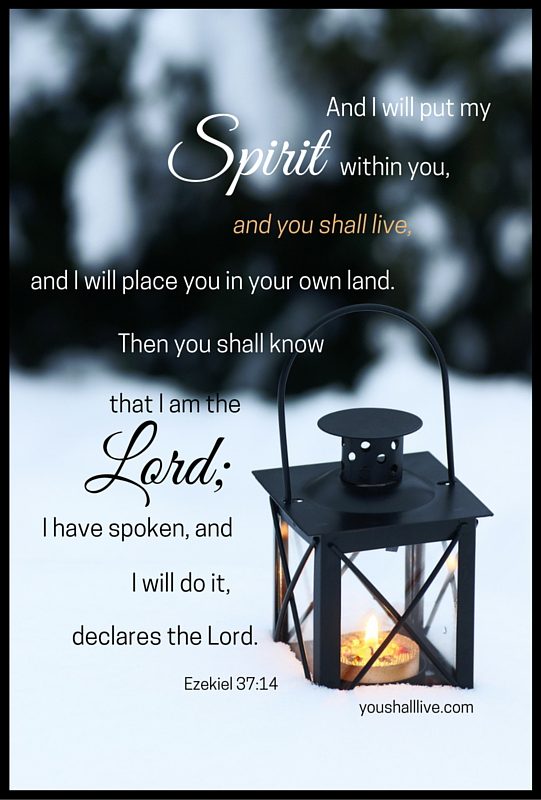
“If the Spirit of him who raised Jesus from the dead dwells in you,” says Paul in Romans, “he who raised Christ from the dead will give life to your mortal bodies also through his Spirit that dwells in you.” (Romans 8: 11)

This is the theme of all of the lectionary readings set for this Sunday. … God’s life can and does reinvigorate our lives.

Sunday 29th December 2019 – Matthew 2: 13-23

Matthew 2:13-23

If I’m honest with you, I hate this Gospel passage, I wish it had not been written. I wish I could conveniently ignore it, suggest it is untrue and set it aside. … I’d keep the bit about Jesus being a refugee. … Now that is a helpful image .. and it has been used down the centuries to infer that God understands the plight of the refugee and the homeless. And rightly so, for I am sure that God does place the needs of the underdog, the dispossessed, the homeless, very high on his list of priorities.

Yes, I like the bit about Jesus being a refugee – I could write about that now. I could use some material from Christian Aid, Oxfam, Save the Children, Tear Fund or CAFOD, perhaps write about the plight of those who are still unable to go home – like the millions of Palestinians trapped in what is one big refugee camp called the Gaza Strip. I could continue to talk about the refugees from the conflict in Syria, starving, this winter, in the Beqaa Valley, or I could talk of the many people who seek asylum in this country in fear of their lives who are not believed by the authorities.

But that is not what horrifies me about this passage. No, what leaves me floundering is the murder of those innocent children and God’s intervention to save his Son, while leaving others to die – at least that’s what the story seems to say. … What kind of God can save one and leave perhaps 30 or 40 (or maybe many more) to die!

Yet God does seem to intervene in favour of one & not the other…. That is the way the story of the Bible unfolds, and it is also the experience of many people around our world. So, if God is able to intervene, and if God sometimes does intervene, why doesn’t God always intervene?

I really do not like this story of the massacre of the innocents, for it holds me to account. I cannot, without discarding the story altogether, talk of a God who does not intervene at all. But if I have any integrity, I must be left with difficult questions about a God that I believe is a God of love and whose love at times seems arbitrary.

I do not like the story. And I’m not sure that I want to try to ‘justify’ it. What I want to do, in just a few short words, is at least to help us reflect on it.

There are two questions that many people ask about faith: Firstly, “Why does God treat some differently to others?” And secondly, “If God could do something, why didn’t he?” … Honestly facing these kind of questions, has to be part of living by faith. … At times, being a Christian is about ‘Arguing with God’. It is about tenaciously holding him to account for what we see as wrong. It has, at times, to be about ‘wrestling with God’ like Jacob did at the Brook Jabbok. Sometimes we argue for ourselves: “Lord, you are treating me like dirt. How can I continue to believe in you, when you allow me to face such injustice?” Sometimes on behalf of others: “Lord, I watch the injustice persistently meted out on the Palestinian people and other refugees – why do you not intervene?”

There is injustice in our world. While human beings exist there will always be injustice. Lust for power, greed, fear & insecurity are all motivators to self-protection. We protect ourselves and our own even at cost to others. And evil is magnified as it is played out on a world stage between aggressive, powerful men (And it is most often men!). Powerful tyrants, who are also insecure & afraid of being deposed. … Herod was just one of these. So insecure that he saw a baby as a threat. So numbed by previous acts of evil that he saw no problem in killing a few young children to extinguish the threat.

One child escapes Herod, and goes on to be God’s answer to the actions of tyrants throughout history, God’s answer to the ugly evil which invades all our hearts. Not an immediate answer. Not a rescue mission to protect the innocents. Not even a political solution that restricted the action of evil people and evil forces. Not much of a solution at all, if you were to judge it by the standards of the world.

God’s answer, to the massacre of the innocents, to all the injustices in life, was to allow the child, that escaped the massacre, … to die. The Bible suggests all history points to this moment – to the death of Christ. “I’ve heard all your questions,” God seems to say, “here is my answer. The death of my Son.”

It’s almost as though God draws a line under the discussion. “This is my answer,” God says. “No ifs, no buts, it’s my last word. I’m happy for you to judge me on this basis – it’s my final word.”

And we shout out, “but it isn’t enough, I still don’t understand.” And God uses no more words, but continues silently to point to the cross. He draws our attention to a shattered, tortured, broken body which has taken the worst that humanity can throw at it. … Even that seems inadequate – just one death among so many. Yet God invites us to question him only in the full knowledge of the suffering of Christ, and on the basis of that suffering. Whatever else we may accuse God of, we cannot accuse him of not caring. We may not want his answer. We may not like his answer. But it is the one he gives us to ponder on.

There is a debate throughout the Old Testament about why God chose Israel – with different authors struggling to understand that they were chosen not for their own benefit, but so that God could use them for the benefit of the whole world. That they were chosen to serve. That they were special because they were chosen, not chosen because they were of themselves special. The New Testament places Jesus at the centre of the story, and he himself says, “The Son of Man came not to be served but to serve, and to give his life as a ransom for many.” … We are left with our questions, even with our anger, staring at the cross and pondering the love which meant that God had to die, pondering the love which meant the break-up of the relationship at the heart of the Trinity.

The Christ-child was chosen, was rescued, in the story of our Gospel this morning, not ultimately for his own benefit, but for ours. The events of the first Christmas are just as messy as the events which ended Jesus earthly life. They are just as messy as the world has ever been, just as messy as our world today.

God calls us to continue struggling with the realities of life in our world, and to do so in the context he provides for us. The death and resurrection of Christ. That is God’s invitation to each of us as Christains, to place the reality, the mess of our world in context, as we come to Holy Communion and as we encounter once again the self-giving love which is at the heart of our faith.

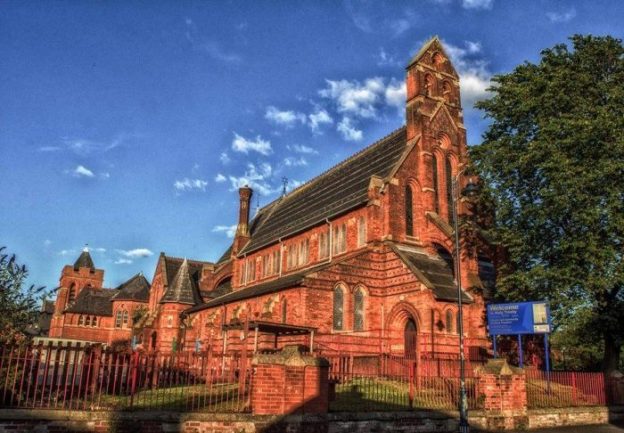
Holy Trinity, Ashton-under-Lyne

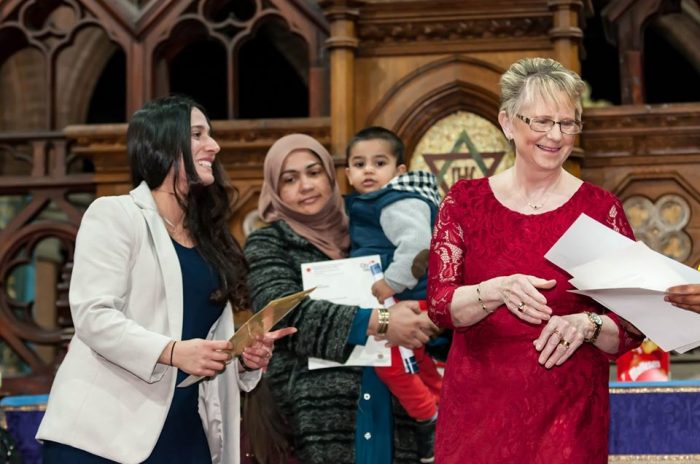
A very small congregation in a Church of England Church in Ashton-under-Lyne has been having a dramatic impact in its local community.

Holy Trinity Church in the West End of Ashton-under-Lyne meets for worship on Thursday afternoons. Its regular congregation is less that 10 people.

Visionary leadership resulted in the completion of a Community Centre in the church nave, and has resulted in the Centre being used extensively by the local community.

St. Peter’s Ward, in which Holy Trinity Church is situated, is in the 2.5% most deprived wards in the UK. The area immediately around Holy Trinity Church has a history stretching back to early Victorian times. Throughout much of its history the neighbourhood has been a diverse place to live.

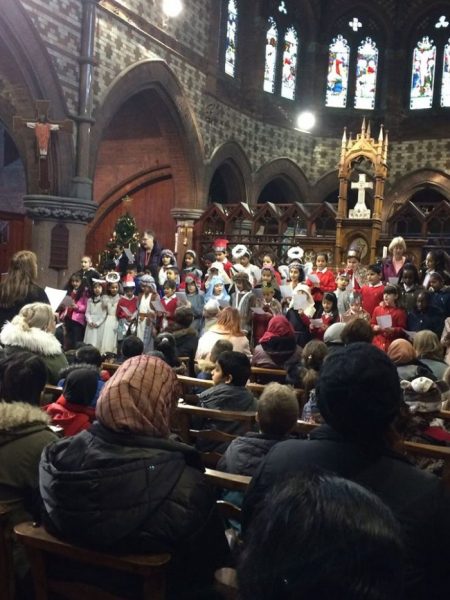
After the Second World War the local community had a high proportion of Ukrainian and Polish Immigrants. More recently the area has hosted a cosmopolitan mix of different nationalities. The local Church of England Primary School has a delightful mix of children for many of whom English is not their first language. Predominantly children come from families that have their roots in Asia.

Church members in the later part of the 20th century became aware of the changing demographics and decided that the building needed to be a place for the whole community.

A series of grants were obtained to allow major work inside the building. Since the millennium, the very small congregation has first enabled significant projects funded by others to use the building and then more recently has sought grants and employed its own staff to address some of the needs identified by the local community.

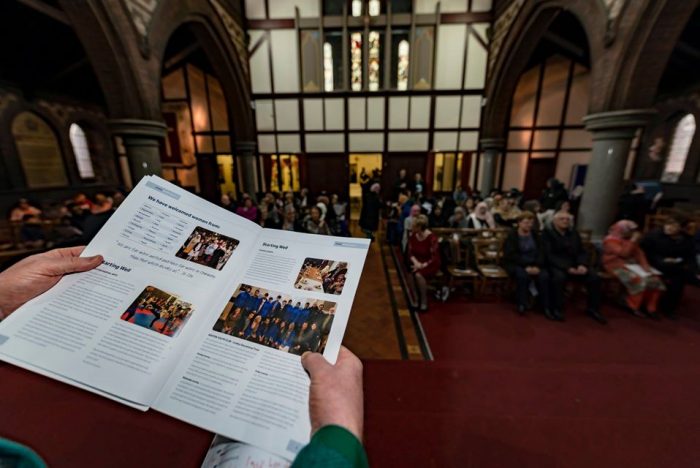
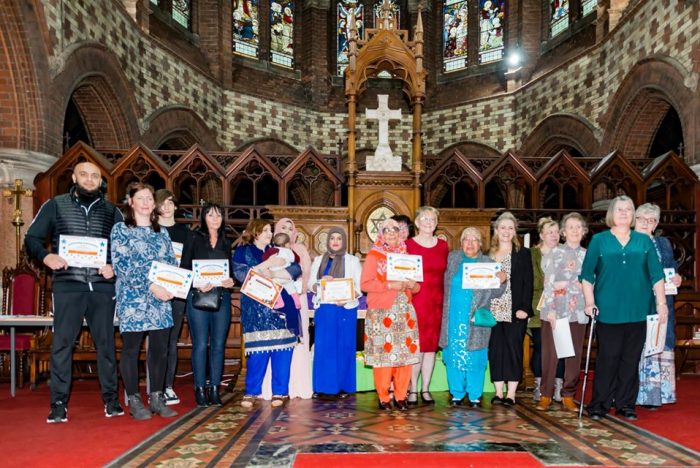
Holy Trinity Church and Community Centre was awarded its first ‘Reaching Communities’ grant from the Big Lottery in late 2016 for a project to enhance prospects for women in the immediate community. That project has been running since April 2017 and has just received the news from the Community Fund of the Big Lottery that it will receive a further 3 years of grant funding.

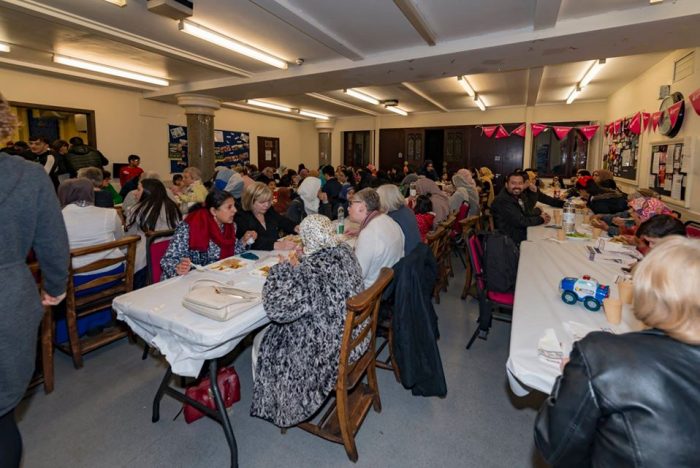
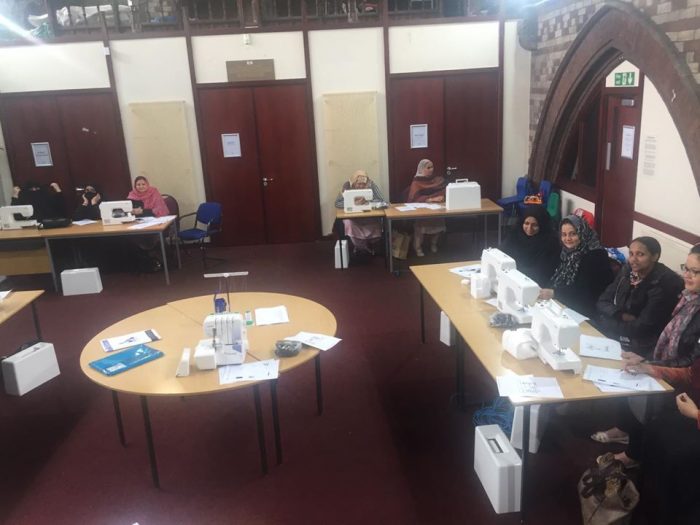
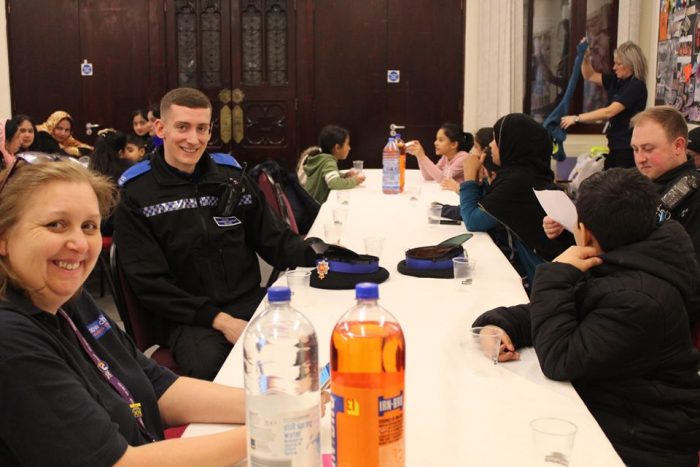
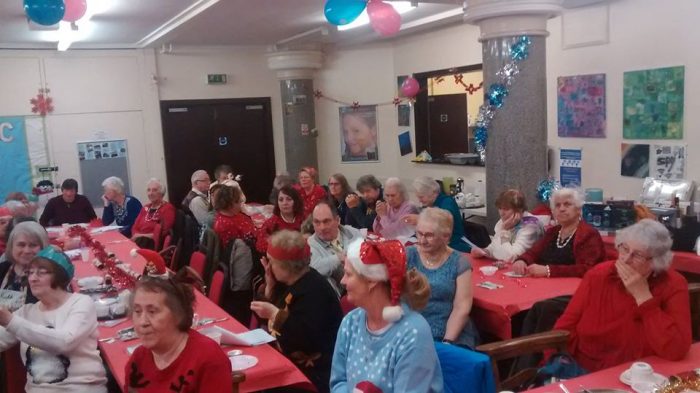
Outreach workers employed by the church have been making a significant difference within the local community. Tameside College is now partnering with the Centre to provide much needed education at a level below usual college entry requirements. The local social housing provider, New Charter (Jigsaw), is funding a number of different projects with the aim of empowering local people and developing skills. Other partners provide, or fund, youth-work, martial arts, sewing classes and slimming classes. One group knits to support the work of neonatal units is a number of local hospitals, another provides much needed community space for older Asian women. The centre provided essential advice and guidance, in a number of languages, for those navigating the increasingly complex, often on-line, world of benefits and asylum claims.

The work at Holy Trinity is visionary by its very nature, as no attempt  is made to dictate to the local community. The work is founded on the understanding that a local community has all the skills needed to make its own decisions. Provided wider society, particularly local and national government and the National Health Service, is willing to provide sufficient resources without dictating to the local community then real change is possible. For many people this seems counter-intuitive, but this (asset based community development) approach has a proven record of success.

Dynamic project leadership is resulting in local people effecting real change.  Community members are growing in self-confidence, local people are developing their skills through being at the Centre and through volunteering. For some, moving on through a process we call ‘Grow Our Own’ into employment with the Centre or in the wider local community.

There is real hope and joy in the faces of many involved with this project.

This is Christian Mission at its best! The Kingdom of God is growing. Christians, those of other faiths, and others who profess no faith, working together to bring hope to one local community.

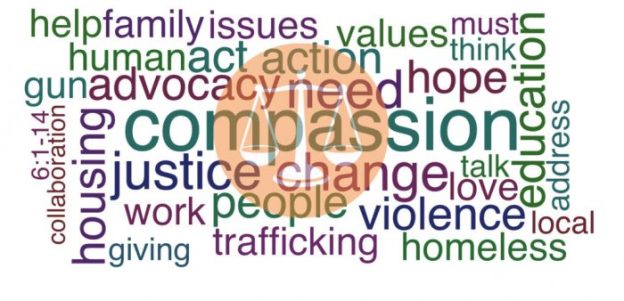

The grant award  secures this work for a further three years, until April 2023.

Copyright

Copyright on Internet Images and Text

The situation relating to copyright on the internet is confusing. The detail of laws in different parts of the world is different and as a result the issue is confusing to most people.

So, for example, the ‘socialmediaexaminer.com’, [1] which is an American page, says the following:

Copyright laws were established not to give the author the right to deny their work to other people, but instead to encourage its creation.

Article I, Section 8, clause 8, of the United States Constitution states the purpose of copyright laws is “to promote the Progress of Science and useful Arts, by securing for limited times to Authors and Inventors the exclusive Right to their respective Writings and Discoveries.”

It’s a delicate balance between the rights of the creator and the public’s interest. When in conflict, the balance tips more heavily toward the public’s interest, which is often contrary to what the creator believes to be fair or just. [1]

However, The UK government [2] says:

Sometimes permission is not required from the copyright-holder to copy an image, such as if the copyright has expired. Permission is also not required if the image is used for specific acts permitted by law (“permitted acts”, or sometimes referred to as “exceptions to copyright”).

People can use copyright works without permission from the copyright owner, such as for private study or non-commercial research, although some exceptions are not available for photographs. Further details are available here:

http://www.gov.uk/guidance/exceptions-to-copyright

If permission is required to use an image, permission will need to be obtained from all the copyright owners, whether it is a single image with numerous creators, a licensed image, or an image with embedded copyright works. Sometimes there will be one person or organisation that can authorise permission for all the rights in that image; in other cases separate permission may be needed from several individual rights owners.
The creator of a copyright work such as an image will usually have right to be acknowledged when their work has been used, provided they have asserted this right. If you are unsure whether or not the creator has asserted this right, then it is recommended that you provide a sufficient acknowledgement when using their work. [2]

The key question for many of us who write blogs and who both quote from other sources and make use of pictures from those sources, is what is meant by the words in bold italics above.

1. Text on the Internet and in other primary sources

The first question to address is what is meant by ‘fair dealing’. Another government website [3] talks about ‘fair dealing’:

Certain exceptions only apply if the use of the work is a ‘fair dealing’. For example, the exceptions relating to research and private study, criticism or review, or news reporting.

‘Fair dealing’ is a legal term used to establish whether a use of copyright material is lawful or whether it infringes copyright. There is no statutory definition of fair dealing – it will always be a matter of fact, degree and impression in each case. The question to be asked is: how would a fair-minded and honest person have dealt with the work?

Factors that have been identified by the courts as relevant in determining whether a particular dealing with a work is fair include:

  • does using the work affect the market for the original work? If a use of a work acts as a substitute for it, causing the owner to lose revenue, then it is not likely to be fair
  • is the amount of the work taken reasonable and appropriate? Was it necessary to use the amount that was taken? Usually only part of a work may be used.

The relative importance of any one factor will vary according to the case in hand and the type of dealing in question. [3]

‘Fair dealing’ is one element of this issue.  A more critical question is: What is meant by ‘Non-commercial research‘? One place to look for answers is with Wikipedia (Creative Commons) and specifically their comments relating to this matter. [4]

Non-Commercial (NC) “means not primarily intended for or directed towards commercial advantage or monetary compensation. The definition is intent-based and intentionally flexible in recognition of the many possible factual situations and business models that may exist now or develop later. Clear-cut rules exist even though there may be gray areas, and debates have ensued over its interpretation. In practice, the number of actual conflicts between licensors and licensees over its meaning appear to be few.” [5]

However, this site, which makes images widely available on the internet and specifies the licence on each item, is an American website and so governed by US Law rather than EU law. A while back I joined the ‘Copyright Aid’ forum so as to be able to check whether particular activity on my blog met the requirements of the law. My usual practice in relation to images is to ask the photographer or copyright-holder for permission to use the image. There are however circumstances when this is unnecessary or it is impossible. Under these circumstances two matters are important, first, a commitment to ‘fair-dealing’ as discussed above. And second, the status of any blog as a non-commercial activity.

Before turning to the advice provided Copyright Aid, here are the comments about these issues carried by the Jisc in the UK (formerly the Joint Information Systems Committee) whose role is to support post-16 and higher education, and research, by providing relevant and useful advice, digital resources and network and technology services. [6] Their website comments as follows (the emphasis is mine):

However, in addition, an image may appear on a blog even if no specific authorisation is provided by the copyright-holder provided a hyperlink is used rather than ‘copy and paste’.

References

  1. https://www.socialmediaexaminer.com/copyright-fair-use-and-how-it-works-for-online-images, accessed on 15th December 2019.
  2. https://assets.publishing.service.gov.uk/government/uploads/system/uploads/attachment_data/file/481194/c-notice-201401.pdf, accessed on 15th December 2019.
  3. http://www.gov.uk/guidance/exceptions-to-copyright, accessed on 15th December 2019
  4. https://wiki.creativecommons.org/wiki/NonCommercial_interpretation, accessed on 15th December 2019.
  5. This conclusion is borne out by the “Defining Noncommercial Study,” https://wiki.creativecommons.org/wiki/Defining_Noncommercial, accessed on 15th December 2019.
  6. https://www.jisc.ac.uk/guides/copyright-law/exceptions-to-infringement-of-copyright, accessed on 15th December 2019.
  7. https://artuk.org/about/copyright-exceptions#, accessed on 15th December 2019.
  8. https://www.copyrightaid.co.uk/forum/viewtopic.php?f=2&t=2788&p=8043#p8043, accessed on 15th and 16th December 2019.
  9. https://artuk.org/about/what-is-non-commercial-use-vs-commercial-use, accessed on 15th December 2019.

The Fourth Mark of Mission – 25th August 2019 (Isaiah 61:1-9; James 2:1-26; Luke 6:20-26)

This is the fifth Sunday in our series about the five Marks of Mission. … Just to remind ourselves once again, these are the 5 Marks of Mission espoused by the Church of England:

  1. To proclaim the Good News of the Kingdom.
  2. To teach, baptise and nurture believers.
  3. To respond to human need by loving service.
  4. To transform unjust structures of society, to challenge violence of every kind and pursue peace and reconciliation.
  5. To strive to safeguard the integrity of creation, and sustain and renew the life of the earth.

We have not been able to follow them in order. We started with the first but then jumped to the third and then the fifth. Returning first to the second mark of mission, we are now going to consider the fourth Mark of Mission. Over recent weeks, we have heard how interdependent these Marks are, we cannot pick and choose between them. Together they describe God’s Mission in our world and we are called to see what God is doing and to join in.

The fourth mark is: To transform unjust structures of society, to challenge violence of every kind and pursue peace and reconciliation.

Luke 6: 20-26 contain Luke’s version of the Beatitudes. The Beatitudes are a part of Jesus Sermon on the Mount (or on the plain). I have paired up the blessings and woes below:

Then Jesus looked up at his disciples and said:

‘Blessed are you who are poor, for yours is the kingdom of God. But woe to you who are rich, for you have received your consolation.

‘Blessed are you who are hungry now, for you will be filled. Woe to you who are full now, for you will be hungry.

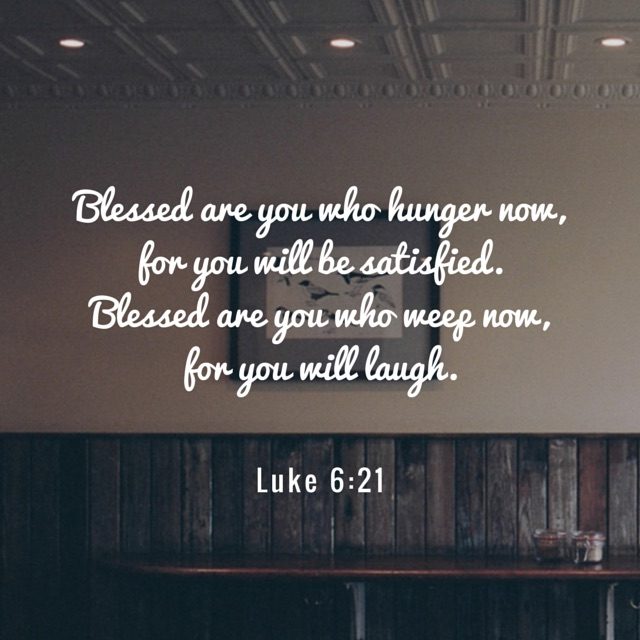
‘Blessed are you who weep now, for you will laugh. Woe to you who are laughing now, for you will mourn and weep.

‘Blessed are you when people hate you, and when they exclude you, revile you, and defame you on account of the Son of Man. Woe to you when all speak well of you, for that is what their ancestors did to the false prophets.

These beatitudes in Luke are so different from those in Matthew. Matthew separates his blessings and woes by a few chapters. And his message seems spiritual rather than physical. “Blessed are the poor in spirit for theirs in the kingdom of heaven.”

We might ask ourselves questions like: Why do we have two versions of the Sermon in our Gospels? Which is the right one? Surely they cannot both be correct?

Indeed, it is likely that the Luke passage is the earlier of the two. It is more likely that Jesus words have been expanded by Matthew to emphasise their spiritual meaning, rather than contracted by Luke to focus on the physical meaning.

What is most important for us, is that we have both. They speak to each other and they remind us that we cannot just listen to one without the other. The fact that they both exist reminds us that Luke meant what he wrote. He was not being essentially spiritual but speaking about our world and our values.

When Luke says: “Blessed are you who are poor, for yours is the kingdom of God. But woe to you who are rich, for you have received your consolation.” … He means it. He paints a picture of God’s ‘upside down’ world in which the poor and hungry are exalted over the rich and powerful.

The question he expects us to ask is: Where am I in these different pairs? Am I hungry or poor. Am I one who mourns and weeps. Am I someone who is persecuted. Or am I actually rich, filled, happy and thought well of?

Who am I?

It can be easy to think we know what words like ‘poor’, ‘hungry’ and ‘rich’ mean. Likewise it can sometimes seem clear who is the victim and who is the persecutor. But it is rarely this simple. What one person calls a terrorist, another calls a freedom fighter.

What does this tell us about drawing conclusions, and how might we become better informed regarding conflict situations? Or even about the realities experienced by many in our own country.

Are they wastrels? Or are they downtrodden? Do they play the system? Or are they overwhelmed by the system and unable to change their circumstances for the better?

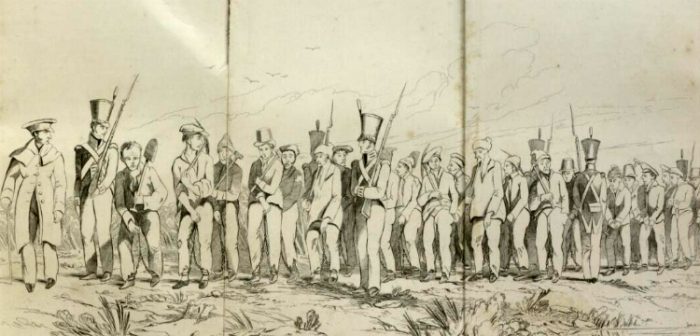
Society has always worked on these kinds of polarities. In UK history, the poor usually received the great judgement. White collar crime, such as embezzlement or fraud of significant sums of money, attracted punishment but was usually seen as excusable. Worthy of punishment, yes. But easily put behind you and of little ultimate significance as you pursued your next, perhaps shady, business opportunity. However, the theft of a bag of potatoes because your family was starving resulted in a harsh prison sentence or transportation to the colonies.Convicts transported to Australia at work outside Sydney 1843. [1]

Are we the poor, or are we the rich? I guess it depends on our perspective.

For the majority of our world, all of us here today are rich. Yet in our society are those who are really poor. People who have, for whatever reason, found themselves as outsiders. The numbers are increasing, the need is increasing, even here in our own town. And we have people of courage who are prepared to work for change. Pauline Town’s work with “We Shall Overcome”, [4] Greystones, [5] Infinity Initiatives, [6] Emmaus. [7] All of these have a prophetic witness. They have recognised that our society has failed significant numbers of people. They seek to do something about this reality.

What might Luke’s Beatitudes teach us about our mission priorities?

We are focussing on the 4th Mark of Mission. It calls on us to “Transform unjust structures of society, to challenge violence of every kind and pursue peace and reconciliation.”

As just one example, let’s stay with our own town.

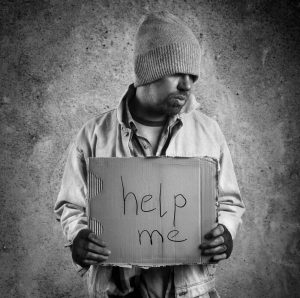
Try to imagine yourself now living the life of someone who has, for whatever reason, found themselves on the street here in Ashton-under-Lyne, with no money, no credit cards and no friends to turn to.

What does it feel like in the first few days? Do you still have a sense of hope that things will change?

How does it feel after a couple of months with no income, no friends, and no roof over your head? ………….

Someone kindly helps you to attend the Housing Advice Centre on Old Street [3] and finds a way to get you some food through a Food Bank. Do you feel grateful? Or do you feel an overwhelming sense of shame?

When you find yourself in dormitory accommodation under the “A Bed for a Night Scheme.” Do you feel grateful or scared about those you will be sharing with?

These are the realities for a good number of people each day in Tameside. [2]

What should the church’s response be? ………….. What about action? What could we do?

What could be changed – locally or nationally – to transform the issue?

What about campaigning for change? What about Universal Credit? Is it good or bad? Are there ways to change its implementation that might help? …………………. What is the role of the church in politics (with a small ‘p’)?

Matters of justice – whether justice for children, women, animals, refugees – can provoke strong emotions. What comes up for you when you consider the idea of tackling injustice? How could the church support you in this?

What could we do this year to make a change? What organisations could we work with?

And a final question before I go on the make a few short comments:

Looking at the last beatitude in Luke: What is the difference between anger and hate? How can we help ensure that our ‘fire’ or ‘passion’ is an asset rather than a hindrance in a quest for justice? How can anger at injustice be directed towards real change so that it does not develop into bitterness and hatred but makes a real difference?

So what to do?

First of all, lets talk about these things over coffee today. Is there a challenge we need to take up locally? If not the one I have suggested, are there other injustices that we should address?

Our shared giving is one way in which we make a difference. Our Church Wardens have agreed that homelessness should be the theme of our Harvest in October this year. And while our tins and produce will go the places agreed by each of our churches, our monetary giving will be shared by “We Shall Overcome” and “Infinity Initiatives.” Might you be able to give sacrificially at Harvest this year?



Lets believe too that when we work together with others we can make a real difference. I like the adjacent picture. We might feel small but we can have a big impact. We need to believe in what God can do through us.

What about the many other organisations fighting for justice across many areas of need in our borough. We have already mentioned a number. I had been hoping that Action Together would be here today but it is the bank holiday weekend and that has proved impossible. At the moment I have an impact on our behalf in that organisation. I Chair the Board of Action Together and on your behalf, I work with others to bring about change through a dedicated group of staff who seek to allocate grants, work for political change and address specific needs. What more should I or we do?

What about other faith communities? I recently attended an event at Central Mosque which was raising money for Water Aid in specific communities in the developing world. There are others around us who see charitable giving as an essential part of the outworking of their own faith. How can we work together with them? I Chair Faiths United in Tameside and we recently held a conference to address loneliness. We plan others about homelessness and possibly too about asylum seekers. I do this on your behalf as part of our mission in this place. What else might I do? What more should we do?

We need to take all aspects of God’s mission seriously and we need to remember that this 4th Mark of Mission is one of five. All are important, all interrelated. ……

We are all called to:

To proclaim the Good News of the Kingdom

To teach, baptise and nurture believers

To respond to human need by loving service

To seek to transform unjust structures of society, to challenge violence of every kind and to pursue peace and reconciliation

To strive to safeguard the integrity of creation and sustain and renew the life of the earth

Prayer

God, grant us the serenity to accept the things we cannot change. The courage to change the things we can. And the wisdom to know the difference.

Reinhold Niebhur


References

  1. https://www.nla.gov.au/research-guides/convicts, accessed on 29th August 2019.
  2. https://www.tameside.gov.uk/Housing/Housing-and-Homelessness, accessed on 25th August 2019.
  3. https://www.tameside.gov.uk/SafetyandHygiene/Rough-Sleeping, accessed on 29th August 2019.
  4. https://www.thetamesidehangout.co.uk/we-shall-overcome-2, accessed on 24th August 2019.
  5. https://www.homeless.org.uk/homeless-england/service/greystones, accessed on 29th August 2019.
  6. http://www.infinitycic.uk, accessed on 29th August 2019.
  7. https://www.emmaus.org.uk/mossley, accessed on 29th August 2019.


The Second Mark of Mission – 18th August 2019

This is the fourth Sunday in our series about the five Marks of Mission. … Just to remind ourselves once again, these are the 5 Marks of Mission espoused by the Church of England:

  1. To proclaim the Good News of the Kingdom.
  2. To teach, baptise and nurture believers.
  3. To respond to human need by loving service.
  4. To transform unjust structures of society, to challenge violence of every kind and pursue peace and reconciliation.
  5. To strive to safeguard the integrity of creation, and sustain and renew the life of the earth.

We have not been able to follow them in order. We started with the first but then jumped to the third and then the fifth. We are now going back to fill in the second and the fourth Marks of Mission. Over recent weeks, we have heard how interdependent these Marks are, we cannot pick and choose between them. Together they describe God’s Mission in our world and we are called to see what God is doing and to join in.

The second mark is: To teach, baptise and nurture believers.

Our call is to be a learning community. We are called to be people who continue to learn and grow throughout their journey as followers of Jesus. To be so, we need teachers. The call to be a teacher is not just for the clergy. We need many people who are able to lead discussion groups, able to preach, able to nurture new believers. It is possible that you might be being called to be such a teacher in God’s Church. If so, what are the qualifications? …………….

I guess that the first thing I want to know about someone who is going to teach me, is whether I can trust them. What is it that makes someone a good teacher? What should we expect from those who teach us?

Recently, I have been on retreat, reading various parts of the Bible.  I’d like us to think about a few of those passages this morning.

  1. James 3
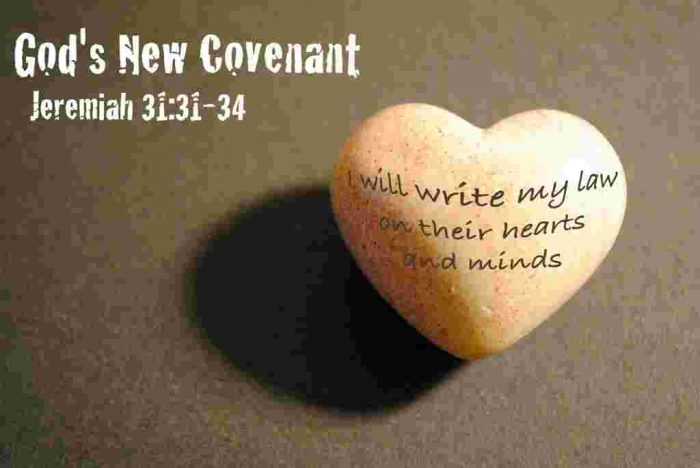
  2. Jeremiah 31
  3. Isaiah 50 and Psalm 45
  4. Proverbs 8

1. James 3 

Firstly, listen to what James says in Chapter 3 of his epistle. …..

Not many of you should become teachers, my brothers and sisters, for you know that we who teach will be judged with greater strictness. For all of us make many mistakes.

He goes on to talk about the kind of wisdom that a teacher should show:

Who is wise and understanding among you? Show by your good life that your works are done with gentleness born of wisdom. The wisdom from above is first pure, then peaceable, gentle, willing to yield, full of mercy and good fruits, without a trace of partiality or hypocrisy. And a harvest of righteousness is sown in peace for those who make peace.

The call of a teacher is not to be strident or contentious. A teacher who does God’s work will be one who brings peace, who is gentle, willing to yield, full of goodness. Someone who is inclusive, someone who draws people together in faith rather than someone who is dogmatic and divisive. That is the first test of a teacher of the Christian faith.

2. Jeremiah 31

Secondly, let’s listen to Jeremiah. ……………..

The days are surely coming, says the Lord, when I will make a new covenant with the house of Israel and the house of Judah. It will not be like the covenant that I made with their ancestors when I took them by the hand to bring them out of the land of Egypt—a covenant that they broke, though I was their husband, says the Lord. But this is the covenant that I will make with the house of Israel after those days, says the Lord: I will put my law within them, and I will write it on their hearts; and I will be their God, and they shall be my people. No longer shall they teach one another, or say to each other, ‘Know the Lord’, for they shall all know me, from the least of them to the greatest, says the Lord; for I will forgive their iniquity, and remember their sin no more.

It might seem at first as though Jeremiah is saying that God’s plan is that we should all go our own way, just listen to the inner voice of our conscience and everything will be wonderful. And Jeremiah is in the wider passage talking about taking individual responsibility for our lives. He is also talking about the rebuilding of community.

I wonder whether your experience of school was a little like my experience of learning Latin or my times tables. In each case I had to be able to sing out what I had learnt in a form of chant. Do you remember? ………………………..

Education was primarily about learning facts. Which is very important. However, very little effort went into giving me the skills to think for myself. Very little was done to help me evaluate what I was being told. I suppose I picked up a few of those skills in some of my science subjects but they were still primarily about learning facts. What I most needed as part of my education was to be helped to develop learning skills that would mean that as I grew older I would be able to check evidence for myself and make good decisions. I think that is what Jeremiah is talking about. Our faith is not to be based on what we learn by rote, nor just one what we are told, we have our own faith and our own responsibility to learn and be disciples of Jesus. So Jeremiah says on God’s behalf: I will put my law within them, and I will write it on their hearts; and I will be their God, and they shall be my people. No longer shall they teach one another, or say to each other, ‘Know the Lord’, for they shall all know me, from the least of them to the greatest, says the Lord.

What does a Church teacher look like in these circumstances? What role do they have? ………….

I think that, while there are some important facts to learn and there needs to be a shared understanding of faith, effective teachers of the gospel will be facilitators rather than autocrats. They will learn, themselves, how to draw truth out from those they teach and they will help us learners to learn from each other what God has for us in Scripture. Learning will be inclusive and exciting, it will build our understanding rather than just our knowledge. It will take seriously those words of God spoken through Jeremiah: I will put my law within them, and I will write it on their hearts; and I will be their God, and they shall be my people. 

So a teacher will show great humility and draw people together in faith and they will respect those they teach. What else will be true of them?

3. Isaiah 50 and Psalm 45

One of our well-known phrases about knowledge is that ‘knowledge is power’. Let’s listen to what Isaiah has to say about this – just one verse this time from Isaiah 50 v 4:

The Lord God has given me the tongue of a teacher,
that I may know how to sustain the weary with a word.
Morning by morning he wakens — wakens my ear
to listen as those who are taught.

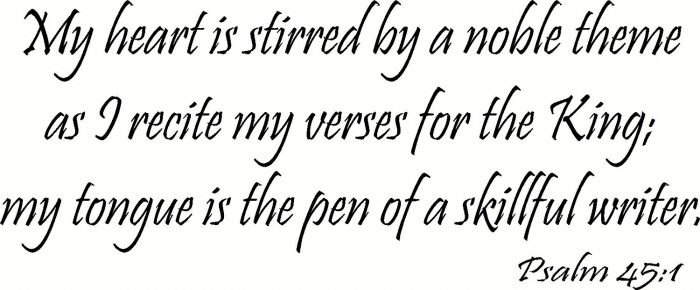
The best teachers are those who themselves are willing to learn. The best teachers believe that we need to go on learning as disciples of Jesus. The best teachers expect that God will challenge and change them  as they pursue their own journey of faith. Good teachers don’t sparingly share their knowledge but willingly share with others – seeking to bring hope to the weary. There is a similar short passage in Psalm 45 v 1:

And that verse gives rise to the song that we sang as our gradual hymn and its chorus:

My tongue will be the pen of a ready writer,
And what the Father gives to me I’ll sing;
I only want to be His breath,
I only want to glorify the King.

The best teachers continue to learn, and “only want to glorify the King.”

So a teacher will show great humility and draw people together in faith and they will respect those they teach. A teacher will be someone who is always ready to learn. ……….

4. Proverbs 8

And one more thing. …… For this we turn to the book of Proverbs, which has a lot to say about Wisdom. The wise one, the teacher is set alongside God in God’s work in the world. In Chapter 8 v 1-4 we read these words:

Does not wisdom call, and does not understanding raise her voice? 
On the heights, beside the way, at the crossroads she takes her stand;
beside the gates in front of the town,
at the entrance of the portals she cries out:
‘To you, O people, I call, and my cry is to all that live. 

The wise one, the teacher, will share their wisdom not just in the safe confines of the home nor in the church. God’s wisdom is for the public space. God’s wisdom applies to all things which we, as God’s people, encounter. “The heights” refers to places of worship which were always found on the high points in Israel. But wisdom speaks elsewhere as well. “Beside the way” and “at the crossroads” – on the journey and at the place of decision, God’s wisdom will guide us. “The gates in front of the town” were the place of decision and judgement in the public sphere. The leaders of the people gathered at the town gates to make decision s and to dispense justice for the community.

Teachers of God’s wisdom are called to inhabit those spaces, to be community leaders and to bring the wisdom of God to bear on the matters of civil society. Our faith is not just for the private sphere.

So, we have four important things to bear in mind if we think God might be calling us to be a teacher. ……

  1. A teacher will show humility and draw people together in faith.
  2. A teacher will respect those they teach and listen to them as they learn.
  3. A teacher will be someone who is always ready to learn themselves.
  4. A teacher will have courage and will speak in the secular and public sphere and will help us to apply our faith in the world.

Do you think God might be calling you to be a teacher? I hope so. We sure need people of integrity who will help us to grow in faith and take a place of leadership in the world.


The 5 Marks of Mission

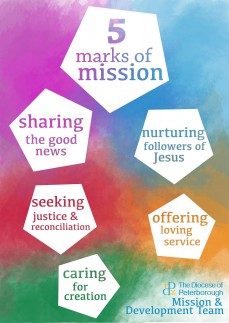
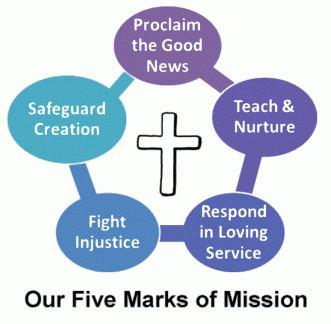
Over the Summer in 2019, the Parish of the Good Shepherd has been thinking together in Sunday services about the Anglican Communion’s 5 Marks of Mission. [1] The Church believes that we have an important role to play as part of God’s Mission in the world. The church is to be a signpost to the reality of God’s Kingdom and God’s Kingdom Values. We are:

  1. To proclaim the Good News of the Kingdom
  2. To teach, baptise and nurture believers
  3. To respond to human need by loving service
  4. To transform unjust structures of society, to challenge violence of every kind and pursue peace and reconciliation
  5. To strive to safeguard the integrity of creation, and sustain and renew the life of the earth

The five marks of mission were first developed by the Anglican Consultative Council in 1984. Since then, they have been widely adopted as an understanding of what contemporary mission is about. The marks were adopted by the General Synod of the Church of England in 1996 and many dioceses and other denominations used them as the basis of action plans and creative mission ideas.

Some churches abbreviate the five marks to five words: TELL – TEACH – TEND – TRANSFORM – TREASURE. [2]

These Marks underlie much of what the Parish of the Good Shepherd has been doing over the last 10 years and we felt that, this Summer, it would be good to be explicit about them. Our work at Holy Trinity Church and Community Centre in a predominantly Muslim area of the town of Ashton-under-Lyne has sought to place a high priority on the last three of the Marks of Mission. Elsewhere in our parish we have given priority to all 5 of these Marks of Mission.

In subsequent posts, I hope to allow these 5 Marks of Mission to speak into our circumstances in Ashton-under-Lyne.

References

  1. https://www.anglicancommunion.org/mission/marks-of-mission.aspx, accessed on 29th August 2019.
  2. https://www.churchofengland.org/sites/default/files/2017-11/MTAG%20The%205%20Marks%20Of%20Mission.pdf, accessed on 18th August 2019.