Category Archives: Various

John 2:13-22 – Jesus in the Temple.

Have you ever experienced what it is like to be an outsider? The first time I went to Uganda in 1994, I had people’s warnings ringing in my ears. “Be careful travelling on the buses.” … “Everyone’ll be out to get what they can from you.” “Don’t walk around on your own at night.” I also had had my own fears about going to a different culture. And, yes, I did feel like an outsider. I was white, everyone else was black. I was treated like an oddity because I was different. A reversal of what many black and Asian people felt in coming here.

You may have experienced something like this – perhaps joining a new club, going to a new job, or a new town/city, going to the hospital for the first time. Unease in unfamiliar surroundings is something many of us experience. Often it isn’t helped by the way that those in the know, those who already belong, behave.

What would it have felt like as a Gentile coming into the temple in Jerusalem for the first time? An unfamiliar place with strange customs. It can’t be too hard to imagine some of the confusion and uncertainty that any Gentile must have felt.

The temple had its barriers even at the best of times – there was the Holy of Holies at the centre – where only God and the occasional male priest could go, next, separated by a richly embroidered curtain was the Holy Place where offerings to God were left by the priests (all of whom were male), next was the court where the altar sat – Jewish men were welcome here – then there was an outer court where Jewish women were allowed, and out beyond this – in the outermost court of the temple Gentiles were permitted. The temple system reinforced these divides, both gender and nationality. A place that was intended to proclaim God’s welcome had become a place where barriers obstructed access to God.

No doubt the Temple was a place of familiarity and comfort for those who attended regularly, particularly Jewish men. Everything had a structure and a place – it was somewhere safe and secure. But those very structures created barriers for others and a hierarchy of access to God. Rather than seeing the different outer courts as places of welcome for the outsider, Jews began to see those courts of lesser significance – and the Gentile Court, rather than being a place for worship, had become a place of business. The place where Gentiles could worship had become a market place.

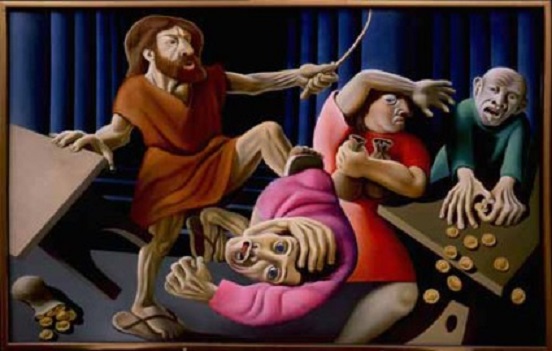
In our reading, Jesus erupts into this outer court, turning over tables and setting animals and birds free. And his comment in Mark’s version of the story reinforces his concern for the outsider; “It is written,” he says “God’s house will be called a house of prayer for all nations.” The temple, says Jesus, is not to be a barrier to worship but a place of worship. The way the temple is run, the way things are done, needs to draw in the outsider.

Later, Matthew’s Gospel tells us that, at the moment of Jesus death, the curtain in the Temple was torn in two from top to bottom – opening the path for everyone directly into God’s presence. No longer could anyone justify barriers which restricted access to God.

The Jews had allowed their place of worship to become a place that created barriers between God and those who came seeking him.

These short verses In John’s Gospel seem like a window into what it was like in the temple in Jesus’ day. But they are not a window, they are a mirror allowing us to see what we are like, they are a direct challenge to us:

How open are we to welcoming the outsider? Are we as welcoming as we think? What barriers do we place between God and those who seek him? Are we no better than the temple authorities?

How hard is it for new people to get their heads around our liturgy? How keen are we to have people in our services who don’t know what to do? What do we do to help those who are new? In a lot of our churches you can tell who is new … the regulars pick the seats at the back of church. I’m not sure why we see those as the best, but we hardly ever sit on the front row, do we. Often a guest will come into church and see the front seats clear and chose to sit there – anywhere else they’d be the best seats! It is only once the service starts that they realise their mistake – which bit of paper am I supposed to look at now, which book, do I stand or sit at this point in the service? Our guests end up feeling embarrassed. …. Is it any surprise that they choose not to return?

What happens after our services? Who talks to whom? Who seeks to include the outsider? One of our previous suffragan bishops, told a story about his wife Early in his ministry in the Diocese of Manchester he attended one church to preach and his wife went with him. At the end of the service she went to get her coffee and was very politely served and then she stood to one side, quietly drinking her coffee, and no one spoke to her.

When the Bishop introduced her to a few people, one woman said, “If only I’d known you were the Bishop’s wife, I’d have come over to talk to you.”

I wonder whether she had any real idea what she had just said about her own, and her church’s, attitude to the outsider.

How do we respond when children are noisy? How do we cope if someone sits in our regular seat? Do you have baptisms in your main church service? If so, what do you feel about Baptism families? Are we quicker to comment that they are bound not to return – rather than to welcome them, understanding just how alien the service must feel to them? How welcome do we make people feel? Are we really as helpful and welcoming as we=d like to think we are? We need to try to imagine what a newcomer sees and feels as they enter our buildings.

These short verses in our reading challenge each of us to take a step back to look at we do in God’s church, God’s temple. To try to look at what we do through the eyes of the outsider.

Jesus gave priority to the Gentile, to the outsider. He explodes in anger over the ugly barriers that religious people had created almost without thinking.

If nothing else, these short verses in our reading demonstrate that Jesus longs that we and all his followers will give priority, not to our own hopes and desires, but to those of our community and the wider world. Priority to drawing them into relationship with God.

The Transfiguration – 2 Kings 2:1-12; Mark 9:2-9; 2 Corinthians 4:3-6 (and Colossians 1:15-20)

The Transfiguration.

Our Lectionary ensures that we encounter the Transfiguration twice this year. On the Sunday Next Before Lent (14th February 2021) and on the Feast of the Transfiguration (6th August 2021).

The lectionary readings set for 14th February 2021 are:

2 Kings 2: 1-12, 2 Corinthians 4: 3-6; and Mark 9: 2-9.

The first of these readings is the story of Elijah’s transfiguration in the moments before his death. In 2 Corinthians, Paul talks of a kind of transfiguration in our hearts as we see Christ revealed in his glory. Mark’s short account of the Transfiguration, places Jesus, Moses and Elijah together at the top of a mountain.

Not in 2 Corinthians but elsewhere in the letters attributed to him, Paul struggles to impress on us the nature and importance of  Jesus as God’s Son. In Colossians 1:15-20, Paul writes:

Christ is the image of the invisible God, the firstborn of all creation; for in him all things in heaven and on earth were created, things visible and invisible, whether thrones or dominions or rulers or powers – all things have been created through him and for him. He himself is before all things, and in him all things hold together. He is the head of the body, the church; he is the beginning, the firstborn from the dead, so that he might come to have first place in everything. For in him all the fullness of God was pleased to dwell, and through him God was pleased to reconcile to himself all things, whether on earth or in heaven, by making peace through the blood of his cross.

Paul and others like him were doing Christ-centered theology for the first time. They had met with the risen Jesus, some had lived alongside him for at least three years, and they were all struggling to put into words and ideas the reality of what they had encountered.

Paul talks, in that letter to the Colossians, of Jesus as the image of the invisible God, as someone in whom the whole Godhead dwells bodily. … He has begun to realise just exactly who Jesus was and is, and it excites him. And in that passage from Colossians it’s as though, words tumble out as Paul realises just what it all means. We can almost feel his longing that his readers will understand too.

The story of the Transfiguration (Mark 9:2-9) is part of the same kind of process going on for Peter. Up to this point, he has seen Jesus healing, he has felt his own poverty and sinfulness alongside the richness of Jesus character, he has listened to Jesus speaking, he has seen his wisdom and listened to his parables and gradually it has become clearer to him that Jesus is more than just a special person, but try as he might he can’t get his head around it all. In the verses immediately preceding our Gospel reading he has hesitantly voiced what is inside his head. “You are the Messiah, the Holy one of God,” he says to Jesus.

But ultimately he still isn’t sure what he means … and then comes the Transfiguration. He sees Jesus and Moses and Elijah together and he believes he’s worked it out. He places Jesus on the highest pedestal that his mind can comprehend. Jesus is the equal of Moses and Elijah, perhaps the greatest prophet ever. And for a Jew, that was saying something!

And Peter wants to build booths, small shrines, little churches. His leader, his master, is in his mind the equal of Moses, the equal of Elijah. This needs to be marked.

And then he hears God speak: … “This is my Son, my Chosen, listen to him.” Listen only to him.

Peter discovers that he has not gone far enough. His own mind just was not big enough to comprehend who Jesus was, who Jesus is. The truth was just so much bigger than he ever thought.

And we are left with the same revelation – Jesus is bigger than our own ideas of him. God is beyond our comprehension and we will only begin to understand God, to relate to God if we relate to Jesus. And we will only do that if we allow ourselves to see God’s revelation of Jesus. The lesson of the Transfiguration is that creating our own image of Jesus, of God, achieves little. All it does is bring God down to our own level. And depending on our own perspective we create a Christ who is meek and mild, or a Christ who is white rather than a Jew, a red-haired handsome specimen of humanity; or perhaps we might create Christ as the freedom fighter, the revolutionary, the liberator, or we see him as the social reformer.

“No,” says God, “Jesus is bigger than all of this – he is my Son. You can’t pin him down. You can’t domesticate him. He is there to challenge you, to save you, to draw the best out of you. Listen to him.”

We are intended to be dazzled by the light of Jesus face. To be drawn to him, and to see the world fade into dimness. And in that encounter, God expects us to be changed, to be renewed, to be challenged, to be shaken out of our present categories, our concepts of the way things are.

By meeting with Christ, we begin to understand God as Father, Son and Holy Spirit – but more than that – we are challenged to move out with hope into our world, believing that God’s kingdom in Jesus is all that other’s really need, looking to bring that kingdom into being, looking for the signs of God’s presence in the world around us. Longing to serve our Lord, longing to be changed still more. Longing to be Transfigured in our encounter with Jesus.

For as Paul says in our reading from 2 Corinthians:

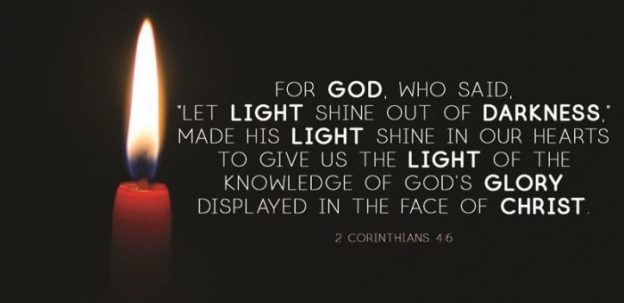
It is the God who in creation said “Let there be Light!” “Let light shine out of darkness,” who has also shone into our own hearts to give the light of the knowledge of the Glory of God in the face of Jesus Christ.

Into 2021 with God! – Genesis 1:1-5 and Mark 1:4-11 – 10th January 2021

The authors of our lectionary placed the Old Testament reading alongside the Gospel reading for  10th January 2021 for a reason. They wanted us to see them in parallel.

In both cases God is doing something new.

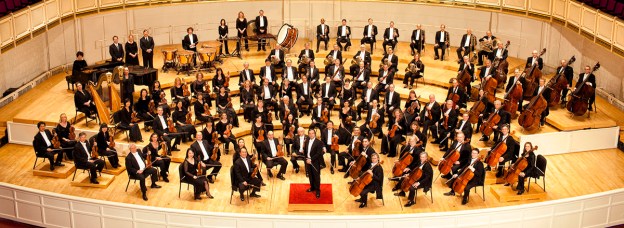
I am not an expert in classical music, a bit of a Philistine really, but as I thought about these two readings from Genesis and Mark it seemed to me that they could be described as two different movements from the same symphony. I’m told that the classical composers used variations on the same theme to develop their composition and that if you listen carefully to the music you can hear the main theme being repeated. …..

Perhaps you can imagine a heavenly orchestra playing the first 5 verses of Genesis. Dark, brooding music portrays an overwhelming sense of chaos and darkness. I imagine that the composer would use discordant modern themes to convey a sense of disorder. Then over this music comes the main theme of the symphony – quietly at first, starting with flute and piccolo, and gradually engaging the whole orchestra. Like a wind gradually rising from a gentle breeze to a violent gale. God’s mighty wind (his Holy Spirit) sweeps across the universe. God is speaking, and his very words change the universe for ever. “Let there be light” and light appears. God saw that it was good, and Night and Day were born.

God breaks into the history of the universe with a powerful word of creation.

Our second reading comes much later in the same symphony. The main musical themes are now well developed – we=ve heard them over and again throughout the symphony. When John the Baptist appears we return to that same discordant, abrupt and harsh theme that we heard right at the beginning of the symphony. His harsh manner, his odd clothing, his strange habits all seem to echo the chaos and darkness of Genesis. The sound from the orchestra builds and noise of the crowds coming to John for baptism shake the concert hall and then John’s voice can be heard as a sharp solo, perhaps, by the oboe cutting through the surrounding noise.

Then quietly at first the main theme appears again. The theme that represented God at work as Creator gradually supersedes the chaos of the early part of this movement. Jesus has come for baptism. The Word of God, from the beginning of John’s Gospel, is beginning his work. And as Jesus comes up out of the waters of baptism the whole orchestra joins the theme – the heavens are rent open, the Holy Spirit descends on Jesus and God speaks, a strong solo voice: “You are my Son, the Beloved; with you I am well pleased”.

Can you see the common themes in the two passages?

  • The milling crowd, longing for God to act in their lives; and the universe awaiting God’s creative action.
  • The wind of God, and the Spirit of God hovering over the waters of the deep and the waters of baptism.
  • The word of God bringing creation, “Let there be light”; and the Word of God, Jesus, God’s Son, whose ministry brings redemption.

God’s delight is obvious in both passages. Looking at creation, ‘God saw that it was good’. Looking down on his Son, God said, “You are my beloved Son, with you I am well pleased”.

The theme from each movement of our symphony is the same. God creating his world and God redeeming that same world. All part of the same plan. In our symphony, both represented by the same theme.

And now, early in 2021, we are participating in what the Bible calls the end times, the days between Jesus’ first and second coming. We are participating in what we might call the final movement of the symphony.

In the first movement, God saw that everything was good. What does he see now, at the start of this new year, in Ashton, in our churches, in our families and personal lives? Where are the signs of new creation? Where are the dark, formless voids that still await God’s creative action?

In the later movement God expressed overwhelming pleasure at the baptism of his Son. What things in our world, our town, our churches or in our lives today, give God pleasure?

Where might we begin to hear that same musical theme of God’s intervention here in Ashton-under-Lyne? What do we long that God would do in our town and in our world?

At this moment the pandemic looms increasingly large and we can feel the discordant notes of fear and anger. The discordant music seems to dominate our lives, yet quietly, almost unheard in the chaos of noise that theme of hope is still present quietly picked out again by flute and piccolo bringing a measure of calm in the midst of the noise.

How might the final movement of our symphony be being played out? What should I do? What should we do to participate in God’s work here? Now, in these difficult times? Which of the musical voices are we contributing to? The discordant chaos or the still, small, haunting voice of calm and hope?

Epiphany 2021

Matthew 2: 1-12

In the bleak midwinter  by Christina Rossetti

In the bleak midwinter, frosty wind made moan,
Earth stood hard as iron, water like a stone;
Snow had fallen, snow on snow, snow on snow,
In the bleak midwinter, long ago.

Our God, Heaven cannot hold Him, nor earth sustain;
Heaven and earth shall flee away when He comes to reign.
In the bleak midwinter a stable place sufficed
The Lord God Almighty, Jesus Christ.

Enough for Him, whom cherubim, worship night and day,
A breastful of milk, and a mangerful of hay;
Enough for Him, whom angels fall before,
The ox and ass and camel which adore.

Angels and archangels may have gathered there,
Cherubim and seraphim thronged the air;
But His mother only, in her maiden bliss,
Worshipped the beloved with a kiss.

What can I give Him, poor as I am?
If I were a shepherd, I would bring a lamb;
If I were a Wise Man, I would do my part;
Yet what I can I give Him: give my heart.

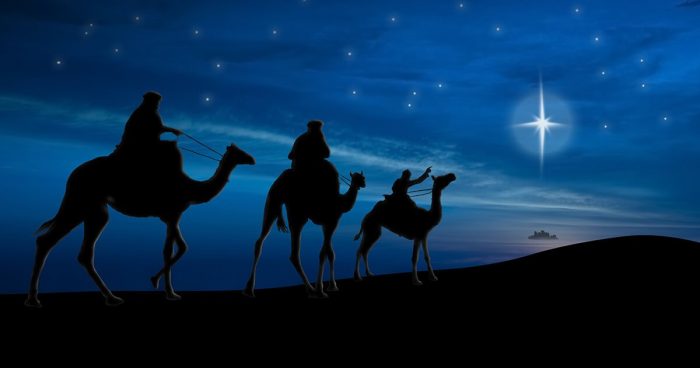
The Feast of the Epiphany celebrates the moment when the story of Christ’s birth first becomes a matter for the whole world. Up until the appearance of the Wise Men, the Magi, the story is exclusive. All the main characters are from Palestine. All of them are Jews.

In Matthew 2: 1-12, we hear the story of how, after Jesus was born, some wise men from the East, from beyond the borders of what we now call Palestine and Israel, even from beyond the boundaries of the Roman Empire, heard that a King had been born. The Gentiles are at this point included in the story.

These wise men wanted to find the King so that they could worship him. They followed a star to Jerusalem and asked some priests there if they knew where to find the King. The priests knew where Jesus was to be born, because they had been told by the prophet Micah, so they told the wise men that they would find the new King in Bethlehem.

The Wise Men saw the star and chose to follow it, otherwise the Star would have been useless. …

So it is with all that God promises us in his Word. We need to respond to the gifts God gives us. We need to continue to grow in faith and commit to following God – and in doing so we make God’s promises our own. We find God to be trustworthy – God is there for us when we need him. This is the journey that each of us is on!

Wise men and women today are still seeking for Jesus. We don’t look for him in Bethlehem, because he is no longer there. He is on his throne in heaven. We don’t need a star to help us find him. We can find him by reading about him in the Bible, by sharing together in the bread and wine of communion, by talking together with others who know him well.

Just as the Wise Men brought gifts to the Christ-child, so Christina Rossetti reminds us that Christian faith is not just about how we receive the gifts and love which God gives, nor is it just about following the best path to the right place. The words of the last verse of her carol remind us that our faith is also about what we bring, about the offering of ourselves, the core of who we are, as a gift to the Christ-child.

What can I give Him, poor as I am?
If I were a shepherd, I would bring a lamb;
If I were a Wise Man, I would do my part;
Yet what I can I give Him: give my heart.

The Feast of St. John the Apostle and Evangelist – 27th December 2020

John 20:19-31

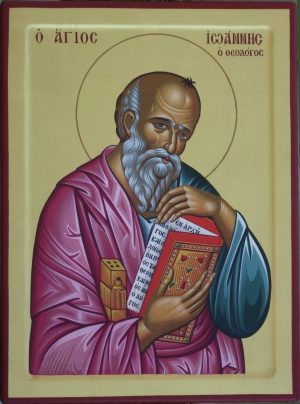
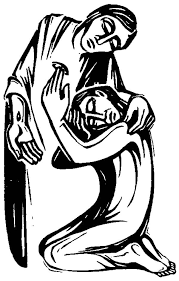
On 27th December, the Church celebrates the Feast of St. John, Apostle and Evangelist. Born in Bethsaida, he was called while mending his nets to follow Jesus. He became the beloved disciple of Jesus. He wrote the fourth Gospel, three Epistles and the Apocalypse. The first chapter of his Gospel which focuses of the Word made flesh is one of the most read Gospel reading at Christmas time. In his Gospel and in his epistles, he speaks of the divinity of Christ and of the primacy of love. With James, his brother, and Simon Peter, he was one of the witnesses of the Transfiguration. At the Last Supper, he leans on the Master’s breast. At the foot of the cross, Jesus entrusts His Mother to his care. John was close to both Jesus and Mary. Towards the end of his life, we know that John was exiled to the island of Patmos under Emperor Domitian.

I have chosen to reflect on a passage from close to the end of John’s Gospel. It might seem strange to be reading an Easter story just after Christmas. It isn’t the passage set for the Feast of St. John. But it is the point at which John’s Gospel reaches its climax.

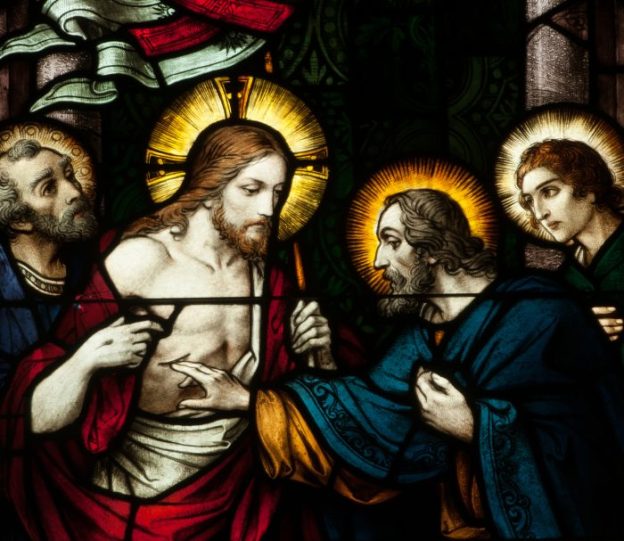
We’re not told why Thomas wasn’t in the upper room that first Easter evening when Jesus visited his disciples. We could spend time trying to imagine where he was – but we won’t! Suffice to say, he missed the key event, the turning point, the moment that changed defeat into victory. And how did he respond? … In exactly the same way as most of us would have done. … Thomas just could not believe what the others told him.

I doubt any of us would have done under those same circumstances. We say that ‘Seeing is believing’ – but so is sharing in an experience with others. Thomas not only didn’t see what happened, he was left out of the experience that everyone else shared. He was in a lonely place, wanting to believe, wanting to share in everyone else’s happiness, but unable to do so. He’d not been there, he had not seen Jesus.

Thomas’ reactions and feelings are understandable, and as we read the story we can see that Jesus thought so too. He provided a repeat of the same encounter – one in which Thomas could share. He then gently reminded Thomas of his outburst – no indignant rebuke, just words which drew Thomas back to faith. Thomas’ response is one of the clearest statements of Jesus’ divinity in the Bible. Having seen the truth of the resurrection he cannot but exclaim, “My Lord and my God!”

The next 3 verses are important, and they are pivotal to St. John’s message:

Jesus said to Thomas: “Have you believed because you have seen me? Blessed are those who have not seen and yet have come to believe.” ….  Now Jesus did many other signs in the presence of his disciples, which are not written in this book. But these are written so that you may come to believe that Jesus is the Messiah, the Son of God, and that through believing you may have life in his name.

St. John has led his readers through a story – a story which allows those readers to meet Jesus and begin to understand who he is. It’s a journey of discovery, one in which we can identify with the different characters, feel their emotions, struggle with them to understand what Jesus is doing and saying. Thomas’ words are the culmination, the pinnacle of the story – the point where even the strongest of doubters expresses faith. Jesus response is not just for Thomas’ ears, not just for the disciples, but for all who read John’s Gospel in coming generations. “Don’t think,” says Jesus, “that the disciples were in some way special because they saw all these events first hand. Rather, blessed are those who read the stories and encounter Christ through the work of his Spirit in their lives and the lives of those around them.”

“Blessed,” says Jesus, “are all who read this Gospel, who struggle with doubts & come to believe that I am the Son of God.”

St. John’s message for us is that we have not missed out on the party, we can still be part of the events which changed defeat into victory. We too can own the risen Jesus as our Lord.

This is good news – particularly for those of us who struggle with doubt; for those of us who’d like to believe more strongly than we do; for those of us who see other people’s faith, or the joy they seem to experience in their Christian life, and feel that we are somehow missing out.

I think this passage is not just important as the culmination, the climax of St. John’s Gospel. It is important because St. John chooses, at this climactic moment of change, to embrace doubt. He places the strongest words of faith in the mouth of Thomas the doubter.

Everything is different, Jesus was dead and is now alive. Nothing can now be the same. In the story, Thomas struggles to accept this new reality. For so many of us change is difficult to handle, yet it is happening all the time. It is happening right now as we struggle towards a possible post-Covid reality.

We need to continue to engage with the communities around our churches, looking for new ways to serve, new ways to make Christ known and to bring hope where there is despair. We need to accept that the future for the Church of England is one with significantly less stipendiary clergy – perhaps one third less in numbers in only a few years’ time – and we need to imagine new forms of ministry both lay and ordained, new ways of being church. Nothing is the same as it was, nothing will be the same as it was, and we want to shout out the loudest “No! Not now, not ever!”

I think that there are two key things to take away from this passage.

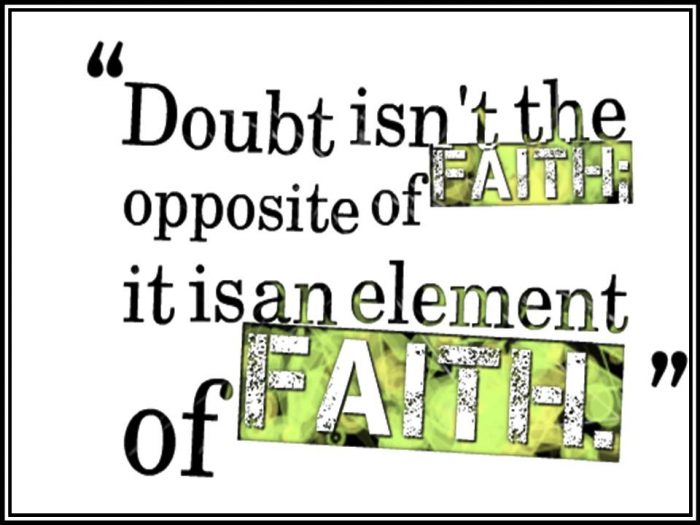
First – it’s OK to be honest – don’t pretend that everything is OK when it isn’t, don’t manufacture faith if it isn’t there. We can express our fears and we can express our doubts. In fact expressing our fear and our doubt is often, like it was for Thomas, the first step to faith.

Second – this story of doubt and faith is made the crowning moment of John’s Gospel – the pinnacle – Jesus reaching out to his loyal but doubting and fearful follower, not in anger but in love. Thomas’ exclamation, “My Lord and my God!” is the point at which John choses to rest his case. He has asked his readers to understand who Jesus is and this story of doubt and faith is the crucial last part of his argument. Honest struggling with change, honest struggling through doubt towards faith is given the highest honour in John’s Gospel.

So, don’t be discouraged if the pace of change or the circumstances we face are a struggle. Don’t be discouraged if believing is a struggle. Be encouraged as you struggle to be faithful in an ever-changing context, when at times everything you hold dear seems threatened. Be encouraged as you struggle to believe, for the story of Thomas makes clear that God loves the open and honest doubter.

Sunday 6th December – Mark 1:1-8 and Isaiah 40:1-11

The first Candle on our advent wreath in church spoke of the Patriarchs. The second candle speaks of the Prophets. Both groups witnesses, ahead of time in the Old Testament, to the coming of Jesus. The remaining two outer candles on the wreath represent John and Baptist and Mary.

Our gospel this week and that next week focus on John the Baptist, the last of a long line of Old Testament prophets.

I used to work in the centre of Manchester, and during lunch breaks I’d often wander around Piccadilly Gardens. Frequently I’d be approached by one of the men who lived rough – sleeping on the benches in the Bus Station or in the sunken gardens which were once the basement of a hospital bombed out in the Second World War. Usually I’d be asked for a coin or two to help purchase a meal. Money which, I was near certain, would be spent on alcohol. … Jo, my wife, once told me that when she worked in London and shopped on Oxford Street there was one character that she could rely on meeting. … Trudging up and down, eyes downcast, with a sad look on his face, a rather dishevelled looking man with a scruffy brown overcoat carried a sign “Repent, the end is nigh”. It wasn’t surprising that no one ever stopped him to ask about his message. He seemed rather strange, a person to avoid. Of no relevance to their lives.

This is how I imagine the Old Testament prophets and John the Baptist – very similar to this dishevelled tramp, although perhaps with a little more fire in their bellies! . John the Baptist was an unconventional man, living in the desert, with clothes made of camels hair, living on a diet of locusts and wild honey – proclaiming a message of repentance. A seemingly unattractive person – someone to be ignored. Yet John was attracting large crowds and his message was credible. People listened and acted on what he said.

‘Repent’, said John, and people did, in large numbers. He was a success. …

So, what can we learn from John? How come he was so successful?

In John’s day, Israel was a weary people, living under occupation. They’d been so for 400 years – first the Greeks and Persians, and now the Romans. They were right at the bottom, depressed and desperate for any sign of hope. God had promised a Messiah, and in 400 years there had been only imposters claiming the title. God seemed to have gone silent. They lived under pagan occupying forces; they lived in a secular, world with a corrupt king and hypocritical religious leaders.

Yet among the people were those prepared and willing to hear John’s message. People longing for renewal and change, people who knew that there was more to life than the grind of daily living under the burden of an occupying power. People who perhaps were desperate enough to respond to anything – they’d tried everything else, and here was their last hope. Perhaps people, who when they heard John, recognised God’s voice calling to them. Or perhaps they were people who were just dissatisfied with the world around them and wanted something more.

This sounds very familiar? A secular world, full of unbelief? A lack of confidence in authority? Religion on the back foot? Church attendance dropping? Values of society changing – no longer so easily identified with our Christian heritage? God seemingly absent? … Just like today? Well, almost. …. Perhaps the pandemic makes our circumstances different, but the people in Palestine at the time of John the Baptist would have had significant concerns about their health. There were none of the amazing drugs which we can rely on today!

How should we respond? Pack up and go home? That seems to be the easiest option. Let’s retreat back into our churches, do the things we enjoy doing and let the world get on with its own agenda. Unfortunately, in churches across our land that seems to be the temptation. It’s so much easier to stick with what we know than to contemplate radical change.

John the Baptist chose differently, and so did those who listened him. John spoke words that the people needed to hear. Not, perhaps, what they might have wanted to hear. …… “Repent.” Why? Because God’s kingdom is near! There, in John’s message are the first seeds of hope. God seems to be speaking again, just like he did to the prophets of old, speaking with authority once again. Hope was being born again in the hearts and minds of all who listened to John. John was preparing the way for something significant to happen. Something new, something different.

John brought hope, and with it renewed energy and life. Hope that God would act. Hope that, in the words of the placard carried by the tramp in London, hope that the end was nigh. The end, not of the world, but of waiting for God to act. Now, soon, God will act. The people who went out to John in the desert became a people of hope, people with a renewed vision for the coming of the Messiah.

Advent is a season for preparation, for anticipation, for longing; a season of hope; a season to allow ourselves to yearn for things to be right. A season when we can express even our anger to God – anger that the world is not the way it should be, longing that God will do something about it. Advent is a season when we can start to recognise that God has given us his first response to that longing, to that hope; a down-payment, a deposit that we can trust. In the incarnation of Jesus, we have God’s “Yes!” to our cries for help. “Yes, I am with you. … Yes, I have heard you.” … But it is also the season when we acknowledge that we wait for his final answer. We wait in hope for God’s final solution, when everything will be made right.

Advent hope, Christian hope. Hope that is not just ‘pie-in-the-sky’, but hope based on the firm commitment of a deposit made 2000 years ago in the birth of Jesus. Hope that doesn’t just pretend that everything is going to be all right, despite the evidence. But hope which has seen everything and endured everything and still has not despaired, because it trusts God and his promises. Hope which continues to bear fruit in reality, as people’s lives are changed through meeting with God in Jesus; as they encounter Christians who clearly aren’t perfect but whose lives have something deeply attractive about them.

John calls his hears, calls us to renewal, to repentance – to ‘turn round’, to change direction. Not just to tinkering with the edges of our lives, those little personal things that need to change, it’s a call to a complete reorientation of our lives, a call to begin to believe again in God’s love, to turn away from selfish values and to love again as God has loved us – only this kind of all-embracing repentance will begin to demonstrate that hope is more than wishful thinking, that lives can be and are being changed by God’s love. Only through this kind of repentance will we prepare our hearts and the hearts of those around us for the coming of Jesus.

John’s life witnessed to the truth of what he believed. He was sold out to what he proclaimed. He lived his message. Nothing in the way John behaved, not his words nor his actions, left any doubt about where his priorities lay. However strange found him, the one thing that you could not do was accuse John of duplicity. He was whole-heartedly committed to his message. John’s words and actions belonged together. John’s challenge to us is a challenge to integrity – to live day by day the way that we talk at Church on Sunday. To be united with each other, caring for each other, to be seen to be growing in understanding of our faith, to be seen to be loving each other, and to be reaching out with the love of Christ to everyone that we meet in our daily lives. And by so doing, to emulate John who, as our Gospel reading tells us, pointed beyond himself to another, to the one on whom people’s hope can justifiably rest, to Jesus.

How will we make Advent hope more of a reality in our world today? Certainly not by carrying a placard which speaks of impending judgement, nor by mouthing words of faith which are not clearly supported by the lives that we live. Advent hope, real hope, will be seen as a reality by those around us only when they see lives that are sold out to the Gospel.

Advent Sunday 2020

Mark 13: 24-37 – 29th November 2020

It is over 30 years since the fall of many of the Soviet states in Europe.

31 years since the Berlin Wall was torn down!

My brothers-in-law travelled there at the end of 1989 and picked up a souvenir piece of the wall. Pieces of the Berlin wall are still on sale today.

Over the New Year Holiday, the Berlin Wall was being dismantled. … The end of the Berlin Wall was the end of probably the most potent symbol of oppression in Europe in the 20th Century.

It’s disturbing to realise that it all happened over 30 years ago now. Maybe, at that time, you shared my sense of unbelief – ‘Is this really happening?’ It was hard to believe that the world order that I had grown up in – that of a Cold War, stand-off between two superpowers – was seemingly coming to an end. Something that even just months before those amazing events at the end of 1989 seemed impossible.

This same seeming impossibility surrounded the Jewish people in the centuries before Christ. They had been longing for a Messiah – someone who would change the course of history for ever. They were so often disappointed, different men came promising what they could not deliver. No doubt Israel felt the mocking eyes of others as they clung onto this seemingly vain hope of a glorious Messiah. Someone who would bring in Israel’s golden age. Everything pointed against it. Israel was a pawn, a minor league nation caught in the ebb and flow of the politics of the real powers.

In Advent, as Christians, we do at least two things – firstly, we remember, we enter into something of the feelings of the people of Israel as they waited for the coming of their Messiah. We wait with them. … They had to wait 500 years from the first promises made to them. We allow ourselves the month of December – but we wait for the coming of the Christ-child. Unlike them we know for sure that he will come – for we’ve read the story before.

But we are in other ways just like them. For we impose our expectations on him – we know what the Christmas story is all about – we’ve got the story neatly packaged. … We need the story to be constant, unchanging because life is too busy, too pressurised at this time of year. ‘Let’s stick to the routine,’ we say, ‘enjoy the celebrations, and hopefully have time to relax in January!’ Although what those Christmas celebrations will be like in 2020 is still a matter of uncertainty.

If we are not careful – if we don’t make the time to reflect, to listen, to wait – we’ll miss the Christ-child. We’ll not see the miracle of God in human form. Just as most of Israel missed its Messiah, so God’s grace will pass us by. Advent is our time to centre ourselves before Christmas, to focus on the true meaning of the Christmas story, to grasp that God’s Son, the Christ, God incarnate, Emmanuel, God with us – Jesus, is coming and he is coming for us, for me.

But we also wait in other ways … for many of us, life is not the way we want it to be and we pray for God’s intervention. It feels at times as though nothing is happening. Times like this are hard. We wait for God to come, and he seems absent. We are a little like the people of Israel awaiting their Messiah.

Advent is not just preparing for Christmas, but about looking forward to Christ’s Second Coming. Jesus spoke about this our Gospel reading. A difficult passage, because this Second Coming seems for Jesus to be so immediate. And so we, the Church, have our questions – raised at different times with different intensity. Why has it been so long? Has God forgotten us? Is Jesus never coming back? Were we intended to take it literally? Was Jesus mistaken? Is it important to believe in the Second Coming?

And these questions are often mirrored in our experience of daily life as at times God seems to be absent. And our experience of waiting in some way matches that of those nations waiting year after year under the tyranny of Communism. Seemingly without hope – yet in 1989 there was that dramatic change. What was unbelievable, happened. The wall came down, Communist regimes toppled.

Similar but different.

In our daily lives, we hold onto a promise – a promise to be taken on trust. Jesus’ promise to be there for us in the midst of all that life brings our way – Christ will come again.

But, as Christians, we also have something of the reality on deposit. In the meal of Holy Communion we look back to the realities of Christ=s first coming – his death and resurrection. And we also look forward to that heavenly banquet in which we will all share – a meal that Jesus promised to eat with us in his Kingdom.

We can believe that God is with us in our suffering. We can believe that Christ will return. Things that people dream about, do happen, God’s, presence with us is real, and Christ Second Coming is no more impossible than the collapse of the Berlin Wall felt to a divided Europe, a divided Germany. The seemingly impossible is possible with God.

Christ has died, Christ is risen, Christ will come again.

Remembrance Sunday 2020

Remembrance Sunday

On Sunday 8th November, Remembrance Sunday, all our churches would usually have been full of people remembering, along with millions around our world, the many women and men who have given their lives in the different conflicts of the past 110 and more years.  People who either by choice, or through compulsion, risked their lives in the pursuit of peace and justice.  We owe our freedom to many such people who have stood up against tyranny and oppression – to people who risked everything, laying themselves on the line.

Things are very different this year! We enter another national lockdown because of Coronavirus on Thursday 5th November and our churches will now only be open for private prayer for the next few weeks.

But we will all remember. …. Some will be able to attend church on 8th November, others will want to remain at home. We have sent out Remembrance Sunday prayer cards to people who usually attend our churches or who receive mailings. The prayers included here are specifically for Remembrance Sunday and Armistice Day. As you use them, you might want to have a poppy to hand.

As I said in our Parish magazine this month:

Our remembering will … include the memories of those who have served on the battlefield or in conflict zones around our world will no doubt justifiably tell and re-tell stories of valour and bravery. For those who served, >remembering= will also bring to the front of the mind stories of those who did not return. Remembering brings to the surface the naked fear of conflict, the pain of loss and a real sense of comradeship.

 But remembering is so very important to us all, not just on Remembrance Sunday or Armistice Day, but in all areas of our lives. Remembering leads to us telling our stories. Both as individuals and communities. And as we tell our story, we reaffirm our roots, and we define who we are. We put our own lives in context. For today=s world, where we define ourselves not so much by where we come from as by our networks of friends and acquaintances can so easily become a rootless place where we do not know who we really are.

Our shared memories are our key to understanding ourselves. And our collective memory needs to be sustained by hearing the stories of our past. By hearing from those who went out from us here to serve in different arenas in our world. These stories, these people are so much a part of who we are here … today. They contribute to our history, they strengthen our community spirit.

Our stories are important. Remembering is vital. Nowhere is this more true than in relation to the conflicts with which we have been involved as a nation. Failure to engage with and learn from our past is the height of modern arrogance. We have to hear again the stories of conflict, of bravery, of pain and loss. And we need to allow those stories, … that remembering, to change us now. It must inform our thinking about the future, it must be allowed to change our wills and our actions.

 For in today’s world, we are all called to take new & different risks. To act for justice, for peace in society, in the world around us. To work for racial justice, to fight discrimination, to engage with injustice in whatever form it might arise.”

We have the promise of God in Christ: “Work,” says Jesus, “for the coming of God’s kingdom and I will be with you always.” God does not leave us alone to face new challenges, to risk our lives in the cause of his Kingdom. He promises always to be with us. So let us covenant again, as people of different races, ages, interests, appearances, and with different views, choose to live together in harmony, to work within our own communities, groups and congregations, for peace, justice and understanding.

Prayers

A prayer of commemoration for the fallen

Father of all, remember your holy promise, and look with love on all your people, living and departed.

On this day we especially ask that you would hold forever all who have suffered during war, those who returned scarred by warfare, those who waited anxiously at home, and those who returned wounded, and disillusioned; those who mourned, and those communities that were diminished and suffered loss.

Remember too those who acted with kindly compassion, those who bravely risked their own lives for their comrades, and those who in the aftermath of war, worked tirelessly for a more peaceful world.

And as you remember them, remember us, O Lord; grant us peace in our time and a longing for the day when people of every language, race, and nation will be brought into the unity of Christ’s kingdom. This we ask in the name of the same Jesus Christ our Lord. Amen.

A prayer for World peace
O God of the nations,
as we look to that day when you will gather people
from north and south, east and west,
into the unity of your peaceable Kingdom,
guide with your just and gentle wisdom all who take counsel
for the nations of the world,
that all your people may spend their days in security, freedom, and peace, through Jesus Christ, our Lord. Amen.

Prayers with poppies – suitable for children, as well as adults!

All you need for this simple prayer is a poppy.

Look at your poppy. Poppies are bright and cheerful flowers: give thanks to God for the lives of those who have died in war, remembering all the joy they brought to families and friends, and all the good things they did for their home and their country.

Then look at the red petals: red reminds us of danger and harm. Ask God to be close to those who are still facing danger each day, to give courage to the armed forces, and compassion to all who help others.

Place your whole hand over the poppy: poppies are also fragile and need to be handled gently. God cares for those who are hurting and those who are sad. Ask God to comfort all who are grieving the loss of someone they love.

Finally place a finger on the centre of the poppy: ask God to help you play your part in working for peace in the world.


All Saints’ Day – Matthew 5:1-12 & Revelation 7: 9-17

The reading from Revelation set for All Saints’ Day paints a vivid picture of the future – looking forward, imagining an ultimate destination for all of the saints, for all of us.

The technical term for the book of Revelation is that it is ‘eschatological.’ Eschatology is the study of the last things. Under its umbrella in Christian thinking we could place the coming of God’s Kingdom, the return of Christ, immortality and eternal life, judgement, heaven and hell – perhaps too, what we might understand by ‘Christian hope’. The passage in Revelation is a vision of what the future might hold.

The book of Revelation is written to a church suffering persecution. That church found the imagery of Revelation dramatic and hope-giving. Words of hope spoken to people in the midst of suffering.

The author is encouraging their first hearers to believe that there is something more than the difficult things they are currently experiencing. That ultimately, the faithful will have a place in a new heaven and a new earth. The author hopes that such knowledge will change their listeners understanding of the present.

We are now entering the time in the Christian year when our eyes are turned to look forward. Where the Gospel and our other readings look ahead – not just to the Incarnation – the first coming of Christ – but to Christ’s return. We will hear words on Jesus’ lips that promise his return, parables that encourage us to be ready for that return. A return that has not taken place and which, at times, it seems might never take place.

It is true that all that the Gospels promise us has not yet been fulfilled. The death and resurrection of Christ are at the heart of our faith. Jesus has inaugurated his Kingdom here on earth. But we know that everything that the Kingdom stands for seems as far away today as it must have done in Jesus’ day.

As we listen to Jesus words over the coming weeks, we will hear him emphasising that we are living in what we might call ‘in-between times’. As Jesus speaks, he seems to say, “My death and resurrection will inaugurate the Kingdom, but its final fruition is dependent on my return.”

He wants his listeners to know that their lives are lived within an on-going flow of history which reflects the purposes of God, a history which will come to an end in God’s good time. He wants them, and us, to realise that while we cannot know the time and place – God will bring all things to a final conclusion.

We live in the ‘now and not yet’ of God’s salvation history; looking forward with real hope to a time when history will finally be resolved, when Christ will come again. But living now with the reality of a world of complications, of joy and sadness, of hope and disappointment; a world where God is seen most clearly in the lives of those who love and serve him – even when serving God brings persecution and trouble. And so, John, in his epistle, says:

“Beloved, we are God’s children now; what we will be has not yet been revealed. What we do know is this: when Christ is revealed, we will be like him, for we will see him as he is.”

We are being transformed, made new, through our experiences in this life. Day by day, God is working that transformation in us. Our Gospel reading gives a shape to the transformed lives we are to live as God’s saints here in the present:

“Blessed,” says Jesus, “are those who are aware of the poverty of their own spirit – who realise just how easily good motives turn to bad. Blessed are those who mourn over their own weakness. Blessed are those who choose a path of meekness rather than power and self-aggrandisement. Blessed are those who hunger and thirst after righteousness. Blessed are all these because in doing so they will be changed, they will be renewed. The very characteristics that they long for, they will have. Blessed they will be, as they are merciful to others, as the purity of their motives and their heart becomes clear. Blessed they will be as they become courageous peacemakers.”

“Most blessed will they be,” says Jesus, “when they share something of my sufferings.” For through those sufferings they will be transformed and truly be the salt of the earth, lights in the darkness of a world which is longing for the acceptance and the love of God.

Matthew 21: 23-32 – True obedience.

You’ll have noticed two different parts to the Gospel reading set in the lectionary for 27th September 2020. ……

The first, a challenge to Jesus’ authority coming from Jesus’ religious enemies – the chief priests and elders. Jesus confronts some of the highest-ranking, most powerful authorities within Judaism. These chief priests and elders, members of a “scribal elite” class, played important, visible roles in the life of their community and in particular within their religion. Jesus’ catches them out in their duplicity. They are more worried about how they look in front of the crowd than they are about what was true and just and right.

The second, a story about two sons who vacillate between obedience and disobedience to their father. Listening to this second story about the two sons — one who verbally refuses his father’s command to work in a vineyard but later changes his mind and obeys, and another who agrees to toil in the vineyard but does not keep his promise — we might be tempted to moralize it. We may assume its message is simply “Actions speak louder than words!” or “Don’t be such a hypocrite!” or “Obey your father!”

In Jesus’ day, it probably was seen differently. For to refuse your father’s demand made in public would be to shame him and yourself, so you’d say ‘Yes’ even if you had no intention of obeying him. Public face was everything. Jesus challenges this assumption and his listeners pick up on the challenge. Of course, say the chief priests and elders, the one who initially said ‘No’ was the one who did the will of his father. The culturally appropriate behaviour of the son who said ‘Yes’ did not produce obedience to the father. It was the son who started off behaving in a way that shamed him and his father who was ultimately obedient.

So, says Jesus, to the chief priests and elders who have joined the crowd listening to him. You’re the ones who talk publicly about faith and about obedience to God’s will, but you fail to follow through on those public statements when it comes to the crunch.

John the Baptist came preaching and teaching, his message was from God, but it wasn’t you, the religious people, who listened to him, it was the tax collectors, the prostitutes, the outcasts. It was the ones whom you condemn, who listened and who acted on John’s words and whose lives were changed through their obedience.

Being religious gives you a standing, a place of honour, in your community but when it comes to the crunch, that place of honour matters more to you than obedience to God’s will!

So, if John the Baptist was the focus of debate in our Gospel reading; if John provided the catalyst to challenge religious dogma and to bring about change; if John’s message drew new people to faith, but left the religious people standing watching on the side lines. What might be this Gospel’s challenge to us, the religious people of our day?

Where might God be at work in ways that we who are religious struggle to comprehend?

Because, if God is active or discoverable in the efforts of someone like John, a wild-eyed long-haired prophet who sets up camp in the wilderness calling for a new world to come into being, a world marked by justice, changed lives, and a recognition that God intends for more than just things staying as they are …… then perhaps people who care about religious language, symbols, practices, and truth should be curious people, bent on keeping their eyes open for new ways in which God might be made known, or ways in which the God’s purposes might be expressed.

We have that responsibility to our wider world – to work for justice, fairness and peace, and to meet human need. … But where might God be asking us to be at work in our own towns, communities and parishes, and in what ways might we act obediently to the Father here?  How might those of us who have said ‘Yes’ to God, be people who come through on our commitment.

Many Churches have Mission Action Plans or equivalents which highlight many things that local parish communities see as the way in which they can make  that ‘Yes’ become real. Does your church have one? If so, are you familiar with what it says? Perhaps, if not, you could ask your church leaders for a copy, explore what it says and perhaps offer to assist with the implementation of the Plan,

Alternatively, you might read the Plan and feel that it needs to change to reflect the circumstances of your own local community at the time you read it.If so, you might want to offer to participate in a review of the Plan.

Or, if your Church has not thought about these issues in the past and as a result has no Plan, You might even want to help to develop one.

But it is not just what our parishes/churches do that constitutes our ‘Yes’ to God. There will be more than this, there will also be things outside the activities of our parish where you see God at work and where a ‘Yes’ to following God will need to become real for you in obedience to God’s will. There may be a community activity which you can participate in, or a gap in necessary provision within your community which you might seek to fulfil as part of your discipleship as a follower of Jesus.

What is God asking of you/us today?