Category Archives: Comments and Reflections

The Good Shepherd

The Good ShepherdEaster 4

Belonging is important. We want to feel that we belong. Even those of us who are introverts still want to feel that we have a place in society. And so many of us join different clubs and societies. So, we belong to things like Soroptimists, Rotary, Round Table, the Bowling Club, the Needlework Group, a Fan Club, a Football Team, we engage in other sports, and nowadays we join on-line groups – we have a Facebook page, a Twitter feed, some of us even have a blog. Even on-line, we belong!

Yet, as adults we like to believe that we a strong enough to make our own decisions, to be our own people. For some of us acknowledging that we need others, that we need to belong can be quite difficult. But we have to accept that it is true when we look at teenage culture over the past 50 years – the need to belong to the ‘in-crowd’, to wear the ‘right’ clothes, to listen to the ‘right’ music, to have the ‘right’ attitudes. All so very obvious and never more so that during the 1970s when I was a teenager. And those of us who are now in our 30s, 40s, 50s ….etc…. have to admit that when we were young we felt the possibility of rejection quite keenly. Indeed it is one of the main causes of serious teenage problems – eating disorders, drug/solvent abuse, delinquency. The need to belong often overcomes all other priorities – it can become more critical than right/wrong. And if we’re honest we’ll admit that it is true for all of us, whatever age we claim to be. The need to belong is so very important.

It’s not just peer groups/clubs/societies – we’re part of families – I’m a Farnworth – I couldn’t be anything else – I’ve habits that I recognise in my father, I’ve got the same concern for neatness and detail that my mother has. I inherit my baldness from my mother’s father. No matter how much I might have wanted to rebel against it in the past, I’m a Farnworth. I belong.

Then there’s our work. Before I went to college to train for the ministry I was a Civil Engineer, a member of the Institution of Civil Engineers, something that I’d worked hard to achieve. I was a manager in Stockport Council – with 120 staff. I had a definite place in society – I belonged. Leaving all that and going back to college was surprisingly disorientating. The way I defined myself, and the sense of place and belonging had suddenly been taken away. Who was I now? How was I going to make my mark? Would I be accepted in this new world? If you’ve changed jobs, or perhaps left work to raise children, or gone back to work after raising children you’ll perhaps know what I mean. Not the end of the world by any means – actually a really positive challenge – but still a need to establish a new identity, a new sense of belonging.

This month the Parish of the Good Shepherd, Ashton-under-Lyne celebrates its Patronal Festival on the 4th Sunday of Easter (3rd May 2020). Each year, on the 4th Sunday of Easter our lectionary has us reading something from the 10th chapter of John’s Gospel, a chapter where Jesus talks of himself as the Good Shepherd.  In that chapter of John’s Gospel, Jesus talks of belonging. “You do not belong to my sheep,” he says to his adversaries in the temple. “You do not belong to my sheep. My sheep hear my voice, I know them, and they follow me. I give them eternal life, and they will never perish. No one will snatch them out of my hand.”

There are at least three things that Jesus is saying about those who belong to him:

Firstly – “My sheep hear my voice, I know them and they follow me.” Those who belong to Jesus have been ‘called’ by him – they’ve heard his call and have answered that call. We’ve been chosen – we’ve not just muscled our way into the club, we’ve been selected to play on the team. We have been called by Jesus and we follow his call. But not only are we called, we are known – nothing is hidden from him, he knows us inside out – and even knowing all the things we like to keep hidden, he has still chosen us! …  And why are we chosen? … To follow him – to live differently, to try to be like him, his attitudes/actions – to follow him.

Secondly – ‘I give them eternal life.’ Those who belong to Jesus have been given eternal life. All equal, all loved, all given the greatest of gifts – eternal life. Life lived now in friendship with God, life which is no longer purely part of a world which passes away. We often say that it is quality not quantity which counts – but here in Jesus gift of eternal life we get both – life to be enjoyed beyond our imagining, life which continues beyond the grave, both quality and quantity!

Thirdly – ‘No one will snatch them out of my hand.’ The best news of all. Those who belong to Jesus are safe, secure. Jesus is committed to them, no matter how tentative their commitment to him. Belonging depends on his love, not our faithfulness! No matter how black things seem, no matter how rebellious we are. He has hold of us with a grip that he will not release. If we wander away he will draw us back, if we stumble he will pick us up and set us back on our feet.

Belonging to Jesus is real belonging – its for keeps. It gives us the strength we need to cope when all other certainties have gone. We are at home, we’re safe. But don’t just take my word for it, listen to Jesus:

“My sheep hear my voice, I know them, and they follow me. I give them eternal life, and they will never perish. No one will snatch them out of my hand.”

(John 10:27-28)

References:

  1. The featured image for this article comes from the website ‘Catholic Exchange’ https://catholicexchange.com/scripture-speaks-good-shepherd, accessed on 30th April 2020.

Sunday 3rd May 2020 – The Good Shepherd – John 10:1-10 & 11!

Sunday 3rd May 2020 is the Patronal Festival for the Parish of the Good Shepherd, Ashton-under-Lyne. My colleague Revd. Ben Brady prepared our Parish’s Reflection for the 3rd May. He writes:

Jesus the Good Shepherd

How many times have you heard your name? I only have to think back to being in school and hearing it every registration time. There were also times when teachers didn’t appreciate my stellar performances in Maths, English and Science (to name just a few) – But they all blur into an innumerable mass in my memory.

However, there is one voice that I remember very clearly and even fear…”Benjamin!” My mum. She could always stop me in my tracks (still can). No matter how loud the room or how far out of sight I thought I was getting my cousin into a headlock, over it all I would hear my mum’s voice. For each of us, there are those special voices that we know, trust and immediately listen to.

The passage from John’s Gospel speaks about recognising the voice of Jesus. The calling and promptings we have daily to live by his example, knowing that he draws close to us. Our Gospel reading this week comes after Jesus healed a man of blindness and yet, despite this, the Pharisees still did not believe Jesus was the Messiah. I find it amusing that this Sunday is ‘Good Shepherd Sunday’ but the reading stops short before verse 11 where Jesus actually says ‘I am the good shepherd’. I will sneakily push the set reading forward by a verse to include Jesus as The Good Shepherd because I believe this can help us explore what John is saying to us about Jesus as The Gate.

The Gospel reading has some characters that need unpacking. There are thieves and bandits, strangers, a gate keeper, sheep and Jesus. The back drop to the story is a sheep pen. It has walls and one way in and out through a gate. We can think of ourselves as the sheep and the pantomime villains (who deserve boo’s and hisses) are the thieves and bandits – those things trying to undermine and wreak havoc in our lives. They try to climb in over the wall. They deliberately avoid the gate. The job of the gatekeeper is to protect the sheep by knowing who to let in or out. I think it is interesting to reflect on what the gatekeeper is doing in this story. We are not told what he gets out of doing his job or how much he cares about the sheep. Perhaps this character is only mentioned by Jesus to highlight the fact that Jesus is not just another gatekeeper, he is The Gate! He is the thing that the thieves and bandits can’t tackle. This is where Jesus takes it to another level. Jesus describes Himself as the physical gate that seals and holds secure the sheep within the pen. He was built to do this, his purpose is to guard and protect.

Now the sheep pen is not only used by one shepherd. We are told the shepherd enters, calls his sheep and they follow him. The pen is crowded with other sheep belonging to other shepherds, but we are told that they recognise their shepherd’s voice and ignore that of the stranger. I find it interesting that the sheep follow the shepherd. They trust him as their leader. He does not try to herd them from behind.

Jesus is both The Gate that holds us secure and The Good Shepherd that leads us. We are to follow because we recognise his voice and can feel sure in His guidance. I love this image of being led by someone we can know and trust. Even though I know that Jesus is always with me, I sometimes need to remember that He also goes ahead of me. I find it grounding to think of the future as somewhere with a familiar face ready to meet me. Jesus goes first, we follow. Jesus is not a hired hand letting people in and out who will leave at the first whiff of danger. Jesus the Good Shepherd will listen when we cry out to him. No matter how far we feel we stray or wander, He is already ahead of us and will always call us home and meet us with an embrace that spans all heights, depths, shame and fear.

Reverend Ben

Prayers for Sunday 3rd May with Psalm 23

Also provided by Ben.

Carrying on with our Shepherd theme, here is a reflective prayer using a version of Psalm 23 written by Scotty Smith from The Gospel Coalition.

1 The Lord is my shepherd; I have all that I need.
Dear Lord Jesus, you are my shepherd, my Good Shepherd. You give me everything I need and more than I want. All I need in life is you, plus what you choose to give me.

2 He lets me rest in green meadows; he leads me beside peaceful streams.
Even the most difficult places in life are like green meadows as long as you are there; and in the desert seasons of my journey and the drought like conditions of my heart, you quench my thirst with living water and give me a peace that passes all understanding.

3 He renews my strength. He guides me along right paths, bringing honour to his name.
By your grace I’ve learned to boast in my weakness, and pose and pretend less. For when I come to the end of my strength, you faithfully meet me there—granting me rest in my weariness and strength for my tired heart and body. I am so grateful that you have both marked the path for me, and that you yourself are my Way, Truth and Life. I want to honour your name much more than I want to go my way and get my way.

4 Even when I walk through the darkest valley, I will not be afraid, for you are close beside me. Your rod and your staff protect and comfort me.
Jesus, you never promised me that the journey towards the new heaven and new earth would be easy, quick, or without seasons and circumstances that are overwhelming; but you have promised never to leave or forsake me, even in the darkest valley. That’s all I really need to know—that you are close and that you love me, and that you won’t let anything happen to me outside of your perfect plan for my life. Even when you have to discipline me, the goal is my comfort and always your glory.

5 You prepare a feast for me in the presence of my enemies. You honour me by anointing my head with oil. My cup overflows with blessings.
Jesus, you are taking me to the feast of all feasts—the wedding feast of the Lamb; but long before that Day, you, yourself are my portion, banquet and feast—Bread from Heaven, my nourishment and satisfaction. Though enemies threaten, you feed me, anoint my life with your grace and Spirit, and cause my cup to spill over with blessings, for the benefit of others.

6 Surely your goodness and unfailing love will pursue me all the days of my life, and I will live in the house of the Lord forever.
Absolutely nothing will keep me out of the new heaven and new earth; and, just as certainly, nothing can possibly separate me from your goodness and unfailing love—at any time or in any place. Until the Day I long for more than any other arrives, I rest in your love and trust in your grace. Jesus, thank you for your promise to never stop pursing me.

So very Amen I pray, in your glorious and powerful name.

Luke 24:13-35 – The Emmaus Road – Again

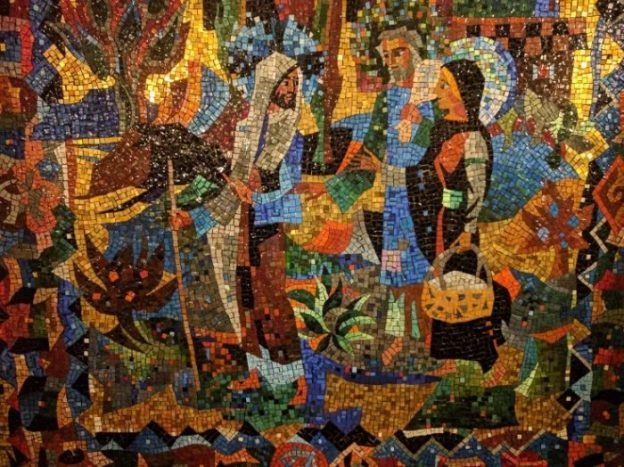
The featured image above  was the work of Rowan LeCompte (American, 1925–2014) and Irene Matz LeCompte (American, 1926–1970), Third Station of the Resurrection: The Walk to Emmaus (detail), 1970. Mosaic, Resurrection Chapel, National Cathedral, Washington, DC. Photo by Victoria Emily Jones. [1]

But we had hoped ……………

The BBC Radio 4 Sunday Service on 26th April was led by Revd. Prof. Jennifer Strawbridge and the Revd. Dr Steve Nolan. [2]. The theme was: “But We Had Hoped ……

I have been reflecting on that short phrase over the past few days. I don’t think I have ever really noticed that little phrase before Sunday.

“But we had hoped …” is an expression of lament. As Professor Strawbridge explained, these are among “the most heart-breaking and realistic words in all of Scripture: … ‘But we had hoped’.”

But we had hoped. …

Everthing has changed for these two people on the road to Emmaus. As Professor Strawbridge explained in the service on Sunday, “Jesus, who they thought was their Lord, was crucified and with his death, their hope for redemption and restoration has died as well. Moreover, the tomb of this hoped-for saviour is empty, his body is gone, and while rumours are flying around that he is alive, they have seen nothing to suggest this is true and they are going home.”

These two friends have lost hope. Hope has withered and died and they are bereft, sad and confused. Going home is all they have left to do.

Professor Strawbridge went on to say that “the words, ‘but we had hoped’, linger in the air. … So much is contained in those four words which speak of a future that is now irrelevant. And pain stems, not only from the tragedy of what has happened, but the empty space of all that could have happened but won’t.”

She continues,” ‘But we had hoped’ are words that speak to each of us still. Not because we enjoy wallowing in dark and sentimental emotions, but because they are true. …

  • But we hoped to celebrate Easter with our communities in person.
  • But we had hoped not to get ill.
  • But we had hoped to be so productive in our isolation.
  • But we had hoped not to feel lonely.
  • But we had hoped we could do more to help.
  • But we had hoped for one final hug.

‘But we had hoped’ infuses our days and our lives in ways big and small.”

‘But we had hoped ….’ is an expression of lament which must for many, if not all of us, say something, at least, about what we feel at this time. It may become a growing and significant element of our feelings as the next month or two unfolds.

“But we had hoped ……”

What we longed for is no longer going to happen! What we longed for has already gone! We cannot get it back! What does life hold for us now? ……

Professor Strawbridge went on to say that, “with this story on the road to Emmaus, more often than not we jump over these first bits to the recognition of resurrection and the burning hearts in the disciples, without recognizing that the same hearts that are burning within them have also been broken.”

It seems to me the most important part of this story of the “Road to Emmaus” is not so much an amazing truth of resurrection breaking into the lives of Jesus’ friends but the darkest of statement of loss which is expressed by the two friends to the stranger who meets them on the road. “But we had hoped ….,” and all that we had hoped for has gone for ever. Deep, dark depression. All hope is gone.

The distance from Jerusalem to Emmaus was about 7 miles. ….

How long does it take to walk 7 miles?

I guess it depends on our age and state of health. The most able of us might walk it in under two hours, for some of us 7 miles is an impossibly long distance to walk, for most of us it will probably take us around 3 to 3.5 hours.

The darkest times for all of us, when we experience them, do last a long time. But how long? The time will vary, it will be different for each of us. Throughout these darkest times, expressing our lost hopes will be so very important. Whether in anger or grief, sorrow or sighing, throughout the darkest times are these … “But Lord, we had hoped ……….”

Jesus himself draws near to us. His Spirit lives with us and in us. But we probably cannot recognise the Lord’s presence in the middle of what we face. Walking this road, for us, will take a while. As we walk this road, we will have to take our own time. And throughout the journey, our faith will probably only be expressed in the reality of loss, “But we had hoped ……”

Our faith somehow keeps us engaging with God, even when what we say to God cannot possibly be expressed to others but it is so full of doubt, anger, hatred and lament. …

“But we had hoped ….”

“We had really hoped, Lord. We had believed in you for the future and you seem to have taken it all away and left us with nothing. How can we possibly continue to believe in you? How?” ….

Professor Strawbridge said in that broadcast, that if we fail to recognise in the story of the Emmaus Road, “that the people filled with overwhelming joy are the same ones who were filled with fear and despair.” If we do not grasp, “that throughout their fear and despair, whether those disciples recognized it or not, they were not alone.” Then, in our rush to get to the news of the resurrection, we miss the crucial reality, “that even in the place of confusion and despair, the Risen Lord walked alongside the disciples.”

We can see that Jesus’ presence with those friends on the Road to Emmaus is robust and challenging.  But the challenges come from someone who is walking with them on the road. And he continues to walk with them, whatever the length of the journey, until they reach their place of safety, their home. It is also a presence which does not impose on them. It does not, ultimately, intrude. For Jesus would have continued on the road had they not invited him into their home.

And it is in their home, in the middle of all that is normal, in the simplest of ways, as they share that evening meal together, that finally they recognise their Lord.

Jesus walks with each of us: ahead of us, behind us, but most definitely with us, into all that we fear, into the unknown daily present, into a shrouded, frightening, confusing and uncertain future.

References

  1. https://artandtheology.org/2017/04/28/the-unnamed-emmaus-disciple-mary-wife-of-cleopas, accessed on 30th April 2020.
  2. https://www.bbc.co.uk/sounds/play/m000hmx2, available to listen to until the 25th May 2020, although the transcript should be available via the hyperlink for some time, accessed on 26th April 2020.

Luke 24:13-35 – The Emmaus Road

How has Easter left you feeling? First looking into the blackness of Good Friday – then the celebrations of Easter Sunday and the resurrection. All of which has felt so very strange in these weeks of lockdown. ……………

Children off school for so long. Trying to find things for them to do, encouraging them to learn. The lack of clarity over what the future holds, the fear that everything will be different but without any idea what that might really mean. The concern for loved ones and the fear for one’s own health. Living together with family and finding that it is not easy to stay together is a relatively small space for such a long time. Wishing that rather than irritability and lack of sleep we were on good form for those we love.

On top of all that, are the regular things that have to be sustained, work for some, volunteering for others, dealing with chronic conditions which we’ve had for a long-time before Coronavirus came along. It’s been a chaotic time. There’s been enough of a cocktail of different things to leave us all exhausted, or confused.

In our Gospel reading two people are struggling to get on with their lives amid the confusion of that first few days after the first Easter. Good Friday’s sense of despair isolation and loneliness has been turned on its head by strange rumours of resurrection. People running backwards and forwards, rumour and counter-rumour, no one sure just what to believe.

And as they walk on the road to Emmaus, weary, sad and confused,  perhaps we can feel some sympathy for them. As they trudge along they are trying between them to make some sense of what has happened. … And then we read these words. “While they were talking Jesus himself came near and went with them.”

And as the story unfolds and as their journey progresses we read that their hearts begin to burn within them as they listen to him talk. At first he is a stranger to them, they don’t recognise him, but then, just before he leaves them, they see him break bread and in an instant their eyes are opened and they see the risen Lord Jesus for who he is.

Some of us might recognise something of the story reflected in our own lives. We feel drawn to faith but at the same time it all seems a bit of a mystery. Then we are on the road with these two people. … Others of us might see the confusion and depression of the two travellers as part of our story, we too are on the road with them. … Some of us know the story of faith quite well, but the journey we’re on has become long and tedious and it is so hard to see the destination. We too are on the road with those two disciples.

Others of us are struggling with what is happening around us, the pace of change, Covid-19, the seeming lack of real direction, trouble in our relationships, vandalism on our estates, our fear which at times threatens to overwhelm us. Yes, we too are on that same road with those two people.

We can, if we choose to, bring everything that we experience, and with which we honestly struggle, to that journey, to that walk. Whether because we are in this together or because it is true for us as an individual – all of us in some way are on this journey with the two friends going to Emmaus.

In the midst of everything – before we are even sure who it is, there is someone walking along the road with us – a seeming stranger – if we knew the end of our story we’d know who it was – but now we cannot recognise him. As we talk together online, as we use social media or as we sit alone and quiet; as we pray with faith or as we struggle to believe. Jesus himself comes near and goes with us.

And as we continue on our journey of life, unsure what the future holds, even if we don’t recognise him, Jesus himself walks with us. And we have the opportunity to encounter Jesus not only as the unknown friend on the road – but as the one who welcomes us with nail torn hands into the warm embrace of God’s love. And in our shared faith, we take him in some mysterious unfathomable way into our lives and he becomes one with us in soul and body.

Take a few moments now in silence to imagine yourself walking on a journey. … See the stranger approach you and walk quietly alongside you on the road. … Walk with him, enjoy in your imagination talking to him as you walk. …

And as you go on with your life today say these words to him. “Lord, make yourself known to me in the mundane and the ordinary, speak to me and help me to listen to you.”

John 20:19-31 – Thoughts for the Second Sunday of Easter

Doubting Thomas

How often have you sat in a room with a group of friends and realised that you’ve lost track of what they’re talking about? Like you’ve dozed off for a bit and the conversation has dramatically changed direction. How did you feel? It can be a quite lonely or confusing experience.

I don’t have many Manchester United memories, except perhaps the famous cup final in 1979. Being an Arsenal supporter, I remember the excitement of Arsenal’s 3-2 win in the FA Cup that year.

However, there is one United memory that sticks in the mind. An episode which I was reminded of recently on facebook when someone posted a clip about times not to leave the room to put the kettle on. Nearly 21 years ago, Wednesday 26th May 1999 – I’d been watching the Manchester United/Bayern Munich UEFA Champions League Final on TV. The match took place in the Nou Camp Stadium.
I had to go out to do a Baptism visit, there was perhaps only a minute or two to go and United were losing 1-0, they were on the rack and going nowhere. The result was a foregone conclusion – Bayern Munich had obviously won the cup.

I wasn’t out that long, but I missed the key last minutes of the match. When I got back, I couldn’t believe what people were saying. United had scored twice in the last minute – they’d won. I wasn’t there – and if there hadn’t been independent accreditation of the victory, I would not have believed what people were telling me!!!

Whether we wake after having dozed off in a crowded room, or we were just not there when a key event happened – we easily feel ostracized and left out. No matter what anyone says, it still feels that way.

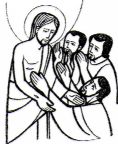
We’re not told why Thomas wasn’t in the upper room that first Easter evening when Jesus visited his disciples. We could spend time trying to imagine where he was – but we won’t! Suffice to say, he missed the key event, the turning point, the moment that changed defeat into victory. And how did he respond? In exactly the same way as most of us would have done. …

thomas-slide2

Thomas couldn’t believe what the others told him. I doubt any of us would have done under those same circumstances. … Seeing is believing – but so is sharing in an experience with others. Thomas not only didn’t see what happened, he was left out of the experience that everyone else shared. He was in a lonely place, wanting to believe, wanting to share in everyone else’s happiness, but unable to do so. He hadn’t been there, he hadn’t seen Jesus.

Thomas’ reactions and feelings are understandable. And as we read the story we can see that Jesus thought so too. he provided aa repeat of the same encounter – one in which Thomas could share. Jesus gently reminded Thomas of his outburst – no indignant rebuke, just words which drew Thomas back to faith. Thomas’ response is one of the clearest statements of Jesus’ divinity in the Bible. Having seen the truth of the resurrection he cannot but exclaim, “My Lord and my God!”

The next 3 verses are important, they are pivotal to John’s message:

Jesus said to him, “Have you believed because you have seen me? Blessed are those who have not seen and yet have come to believe.” ….  Now Jesus did many other signs in the presence of his disciples, which are not written in this book. But these are written so that you may come to believe that Jesus is the Messiah, the Son of God, and that through believing you may have life in his name.

John has led his readers through a story – a story which allows those readers to meet Jesus and begin to understand who he is. It’s a journey of discovery, one in which we can identify with the different characters, feel their emotions, struggle with them to understand what Jesus is doing and saying. Thomas’ words are the culmination, the pinnacle of the story – the point where even the strongest of doubters expresses faith. Jesus response is not just for Thomas’ ears, not just for the disciples, but for all who read John’s Gospel in coming generations. “Don’t think,” says Jesus, “that the disciples were in some way special because they saw all these events first hand. Rather, blessed are those who read the stories and encounter Christ through the work of his Spirit in their lives and the lives of those around them.”

“Blessed,” says Jesus,  “are all who read this Gospel, who struggle with doubts & come to believe that he is the Son of God.”

We’ve not missed out on the party, we can still be part of the events which changed defeat into victory. We too can own the risen Jesus as our Lord.

This is good news – particularly for those of us who struggle with doubt; for those of us who’d like to believe more strongly than we do; for those of us who see other people’s faith, or the joy they seem to experience in their Christian life, and feel that we are somehow missing out. The story of Thomas is important because it embraces doubt.

The story is also important because it embraces change. Everything is different, Jesus was dead and is now alive. This changes everything – nothing can now be the same. Thomas struggles to accept the new situation. For so many of us change is difficult to handle, yet it is happening all the time. We need to continue to engage with the communities around our churches, looking for new ways to serve, new ways to make Christ known and to bring hope where there is despair. We need to accept that the future for the Church of England is one with significantly less stipendiary clergy – perhaps one third less in numbers in ten years time – and we need to imagine new forms of ministry both lay and ordained, new ways of being church. Nothing is the same as it was, nothing will be the same as it was, and we want to shout out the loudest “No!” that we can manage.

There are two key things we need to take away from this passage.

First – it’s OK to be honest – don’t pretend that everything is OK when it isn’t,. Don’t manufacture faith if it isn’t there. We can express our fears and we can express our doubts. In fact expressing our fear and our doubt is often, like it was for Thomas, the first step to faith.

Second – this story of doubt and faith is made the crowning moment of John’s Gospel – the pinnacle – Jesus reaching out to his loyal but doubting and fearful follower, not in anger but in love. Thomas’ exclamation, “My Lord and my God!” is the point at which John choses to rest his case. Honest struggling with change, honest struggling through doubt towards faith is given the highest honour in John’s Gospel.

So, don’t be discouraged if the pace of change or the circumstances we face are a struggle. Don’t be discouraged if believing is a struggle.

12_pasc_c_tFor many football fans, winning or losing is a life or death issue. But here we go beyond issues of life or death, we’re concerned with eternity.

Be encouraged as you struggle to be faithful in an ever changing context, when at times everything you hold dear seems threatened. Be encouraged as you struggle to believe, for the story of Thomas makes clear that God loves the open and honest doubter.

Saturday 18th April 2020

I switched on my desktop computer this morning to find that the Church Times was offering me a series of interviews of songwriters. I don’t have a fully-encompassing membership for on-line access to the Church Times so I looked down the selection of interviews in the Church Times email which included writers such as Nick Cave, Michael Kiwanuka, Grace Petrie and Matt Redman, and decided to read just one. The article article about Matt Redman which was first published in 2016 when “10,000 Reasons: Stories of faith, hope, and thankfulness inspired by the worship anthem,” by Matt Redman and Craig Borlase (David C. Cook, £9.99) was published. [1]

In Madeleine Davies interview with Matt Redman, a number of things caught my eye. [2] They chimed with some thoughts that I had been having about the value of the Psalms in our worship.

1. First, some things from that interview ….

Matt Redman

“While undergoing brain surgery in 2015, Reuben Hill was asked by surgeons to sing, to reassure them that the speech centre of his brain was unharmed. The song he chose was “10,000 Reasons”, [1] by Matt Redman and Jonas Myrin. “Whatever may pass And whatever lies before me Let me be singing When the evening comes,” he sang.” – Madeleine Davies starts her article with this very short story. There are songs which get inside our heads, and clearly this one was right at the forefront of Reuben Hill’s thinking.

She goes on to say that, “The song echoes both Psalm 103 in its refrain (“Bless the Lord, O my soul”) and those that find the Psalmist exhorting himself to remember God’s goodness. It also contains a nod to John Newton’s “Amazing Grace” in its anticipatory verse (“Still my soul will sing Your praise unending, ten thousand years, and then forevermore”).” Two powerful passages from scripture and the hymnody of the past.

Speaking of those words, Ms Davies continues to say that the inspiration for this verse, with its reference to failing strength and the end drawing near, was one of Matt Redman’s favourite lines which come from Charles Wesley’s “In age and feebleness extreme”, dictated on his death bed in 1788. She quotes:

In age and feebleness extreme,
Who shall a helpless worm redeem?
Jesus, my only hope Thou art,
Strength of my failing flesh and heart:
O could I catch one smile from Thee,
And drop into eternity!

It seems that Matt Redman found/finds great inspiration in the Psalms: “Pointing to the high proportion of laments in the Book of Psalms, Mr Redman spoke of the importance of songs that address pain. ‘There is no one who escapes pain, heartache, confusion, stress. . . It’s not just relevant to people in church. If you sing honest songs that are raw and real, they will be relevant to people’s lives outside the church’. . .”

“Young people needed to be reminded,” says Matt Redman, that “the Church is an ancient family, and we have this rich family history and heritage. . . It’s best not to write that off as we are standing on the shoulders of giants.”

2. Now, the Psalms

These comments apply to our own historic hymnody, which  still speaks with great power, perhaps because it is rooted as much in pain as in joy. But they apply most fully to the hymnody of the scriptures – the 150 Psalms recorded for us in the Hebrew Scriptures and appropriated by Christians in our Old Testament.

We struggle with the text of some of these Psalms because they seem to be either too negative, or too aggressive. They express sentiments that we feel perhaps should not be voiced out loud. So, we bracket off the parts that upset our sensitive natures – the Anglican church literally does this in its Psalmody. We want to make our worship about love and faithfulness and we want it to be about expressing positive thoughts. ………..

When we do this, we misunderstand what Psalms are primarily about. They are not so much about praying the vengeance of God on our enemies but rather about the honest expression of the depth of our feeling and at times our anger. This is lament rather than aggression. It is the honest expression of our hurt, our anger, our fear, our loss to the only person who ultimately can carry those feelings and who can help us through them – to God.

The Lament is something vital for our times. Something which, for our sanity, we cannot do without.

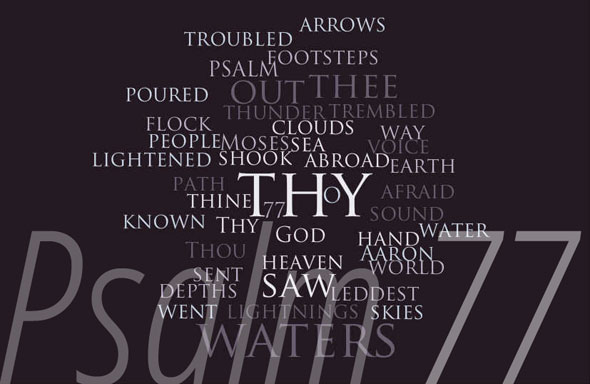
This week, Jo (my wife) and I have been reading a psalm each morning. [3] We are doing it because we have set these psalms for our church congregations to read as a shared act of prayer each day. Over the past three days we have read Psalm 77, [4] Psalm 82 [5] and Psalm 86. [6] They are psalms which express something of the confusion and fear of the times which our world is experiencing at the moment. Listen to a few of the sentiments expressed:

Psalm 77: 1-3

I cry aloud to God;  I cry aloud to God and he will hear me. In the day of my trouble I have sought the Lord;  by night my hand is stretched out and does not tire; my soul refuses comfort. I think upon God and I groan; I ponder, and my spirit faints.

Psalm 77: 6-9

I commune with my heart in the night; my spirit searches for understanding. Will the Lord cast us off for ever? Will he no more show us his favour? Has his loving mercy clean gone for ever? Has his promise come to an end for evermore? Has God forgotten to be gracious? Has he shut up his compassion in displeasure?

Psalm 82: 2-4, 8

‘How long [O. Lord] will you judge unjustly and show such favour to the wicked? ‘You were to judge the weak and the orphan; defend the right of the humble and needy; ‘Rescue the weak and the poor; deliver them from the hand of the wicked. …………………

Arise, O God and judge the earth, for it is you that shall take all nations for your possession.

Psalm 86: 1-4

Incline your ear, O Lord, and answer me, for I am poor and in misery. Preserve my soul, for I am faithful; save your servant, for I put my trust in you. Be merciful to me, O Lord, for you are my God; I call upon you all the day long. Gladden the soul of your servant, for to you, O Lord, I lift up my soul.

It is only through the honest expression of what we feel, to a God who hears our prayer, that we will find any hope and peace. I still remember well the time when I was suffering with acute depression and the only part of scripture that I could read was the Psalms. I found in them the honest expression of my fear, my doubts and my confusion.

“There are times when life is so hard, when those who are against us appear to be so powerful that we fall into a state of utter despair. We feel our ……… enemies have such control over our lives and fate that we begin to doubt whether even God has the power to save us from this disaster. ………….”

In these times, when we are losing those we love and respect, to a pandemic that seems to be completely beyond our control; when we are contemplating funerals with few or no mourners; when careworkers and NHS staff have to watch those they are caring for facing painful struggle at the end of their lives, while at the same time risking their own health and well-being; when hospital chaplains stand alongside those who work so hard but can only offer their presence in the midst of that pain; and when we cannot come together physically to worship. It is the Psalms which offer us the opportunity for honest grappling with pain that we most need. No feelings need to be excluded when we express our concerns to God – our anger, our doubt, our anxiety, our hurt are all acceptable, all embraced by the love of God.

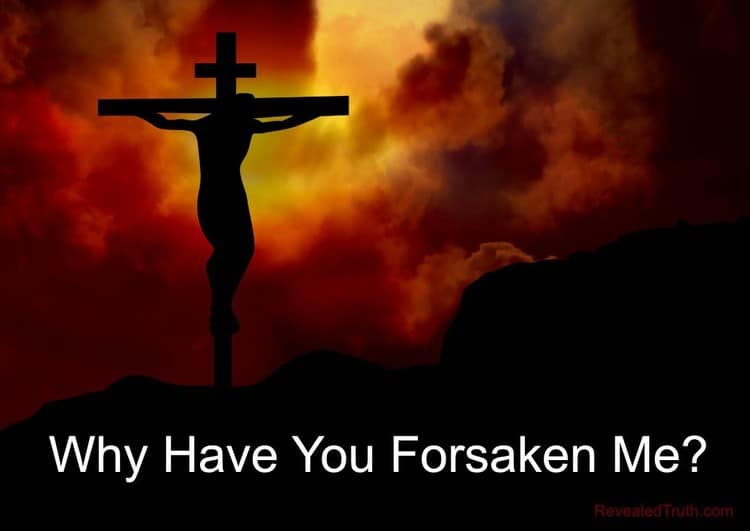
And as God sits with us in the pain he continues to point so very gently to the Cross. The place where God, in the person of Jesus, reached out arms of love and embraced all that we could lay on him. The Cross is the measure of the love of God, there can be no hiding from the truth at the Cross. Great pain, unbelievable anguish, harsh actions by those who do not understand, faithless and faithful together in one place. the whole of life caught, trapped in the experience of a few hours. And the hurtful and horrible truth of the words expressed by Jesus who feels so much pain:

“My God, my God, why have you forsaken me? Why have you left me alone to die here? Where are you now?”

I like the title of the article in the Church Times about Matt Redman: “Honest songs will be relevant to people’s lives,” [2] but the truth is actually more profound than that. The truth is that we will only be able to handle the deep dark nights of the soul when we bear that soul honestly before God, when wide hide nothing in our worship, when we refuse to pretend that things are OK.

At the moment, in April 2020, they are, clearly, anything but OK. ……………….

References

  1. https://myktis.com/songs/10000-reasons, accessed on 18th April 2020.
  2. Madeleine Davies; Honest songs will be relevant to people’s lives; Church Times, 12th August 2016;https://www.churchtimes.co.uk/articles/2016/12-august/news/uk/honest-songs-will-be-relevant-to-people-s-lives, accessed on 18th April 2020.
  3. The Common Worship Psalter; https://www.churchofengland.org/prayer-and-worship/worship-texts-and-resources/common-worship/common-material/psalter, accessed often but on this occasion on 18th April 2020. The booklet we have prepared is in the Appendix below.
  4. https://www.churchofengland.org/prayer-and-worship/worship-texts-and-resources/common-worship/common-material/psalter/psalm-77, accessed on 18th April 2020.
  5. https://www.churchofengland.org/prayer-and-worship/worship-texts-and-resources/common-worship/common-material/psalter/psalm-82, accessed on 18th April 2020.
  6. https://www.churchofengland.org/prayer-and-worship/worship-texts-and-resources/common-worship/common-material/psalter/psalm-86, acessed on 18th April 2020.
  7. https://www.scross.co.za/2014/01/strength-from-psalm-77, accessed on 18th April 2020.

Appendix

Praying together through the month


Good Friday: The Prophet Jeremiah: “How desolate was the city that was once thronged with people…”

A very short reflection for Good Friday.

“How desolate was the city that was once thronged with people………” says Jeremiah ………. Lamentations 1:1

I have just listened as the lay clerks and choral scholars of Worcester Cathedral Choir performed “The Lamentations of Jeremiah- Part 1” set to music by Thomas Tallis. The Lamentations of Jeremiah are sung during the Holy Week Tenebrae services in the Catholic rite. This offering for Good Friday was recorded on 20th March 2020, before the current government guidance and lock-down came into effect.

“How desolate, how lonely sits the city that once was full of people!”

It is almost impossible to avoid drawing a parallel with our experience of lock-down over Easter. The minor key the composition by Tallis expresses something of the misery that many will be feeling over these next few days as  they are prevented for sharing the holiday weekend with others, as they are prevented form gathering for worship.

The passage from the Book of Lamentations is a lament for the destruction of Jerusalem and the removal of the people of Judah into exile.

The first chapter of Lamentations goes on the evoke something to the reality of loss being experienced by God’s people:

How deserted lies the city, once so full of people!
How like a widow is she, who once was great among the nations! …
Bitterly she weeps at night, tears are on her cheeks.

The roads to Zion mourn, for no one comes to her appointed festivals. All her gateways are desolate, her priests groan, her young women grieve, and she is in bitter anguish. …

All her people groan as they search for bread;
they barter their treasures for food, to keep themselves alive. ….
“Look, Lord, and consider, for I am despised.” …

See, Lord, how distressed I am! I am in torment within, and in my heart I am disturbed, …

“People have heard my groaning, but there is no one to comfort me. … My groans are many and my heart is faint.”

Now, the parallels are in one way quite weak, the exile of Judah  is not the same as what we are experiencing at the moment, locked-down and locked-in by Covid-19. Most of us have not been removed from our homes. But … we are experiencing a kind of internal exile, we can no longer do the things we long for, our freedom has been curtailed and we cannot hug many of the ones that we love. And, for those of us who claim a Christian faith, we have lost an ability to be in present in Communion with each other around the Lord’s table. We cannot share the peace. We are missing out on the usual, comforting and also challenging time of Holy Week and the journey to Easter.

Listen again to the cadences of the choir from Worcester Cathedral, read again the words of lament which come from Lamentation 1: 1-22 above, allow yourself to feel the loss and the pain that is our shared experience.

And remember. ……………… Remember that the loss we feel has already been experienced, has already been consecrated and hallowed by the journey of our Lord Jesus Christ from Palm Sunday adulation, through intense loneliness during Holy Week, to the desolation of the Cross and the rupture of his relationship with God the Father.

Our pain, is his pain, our loneliness is his loneliness, our fears are his fears. We are not alone.

Maundy Thursday – John 13

Headline news on Huffington Post (an internet news site) in 2014:

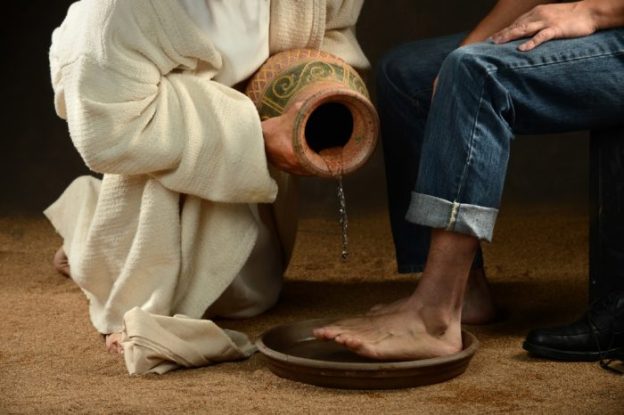
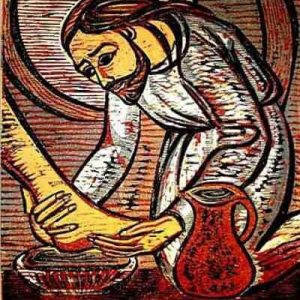
On April 17, 2014, Pope Francis will visit the Centro Santa Maria della Provvidenza Fondazione Don Carlo Gnocchi home and wash the feet of the residents, many of whom are elderly and have disabilities. The ritual will happen on Maundy Thursday, which remembers the Last Supper of Jesus Christ with his disciples, when Jesus humbles himself and washes the feet of his apostles prior to their Passover meal.

Shortly after being elected, Pope Francis made headlines when he washed the feet of two women at a Rome youth prison, a sharp departure from the foot-washing of 12 priests in Rome’s St. John Lateran Basilica. [1]

Wikipedia says that : “In a notable break from the 1955 norms, Pope Francis washed the feet of two women and Muslims at a juvenile detention center in Rome 2013. In 2016, it was announced that the Roman Missal had been revised to permit women to have their feet washed on Maundy Thursday; previously it permitted only males to do so.” [2]

Over many years, the usual papal ritual has been for the Pope to wash the feet of 12 selected priests in an endeavour to mirror Jesus’ action at the last supper. Pope Francis sought to move away from this careful and beautiful choreography towards something more meaningful.

As Pope Francis did this, he symbolically took the place of Jesus and his message was the same. Jesus said, “If I, your Lord and Master, have washed your feet, you also ought to wash one another’s feet.” Pope Francis was saying the same to those who accept his leadership: “If I, you spiritual leader, have washed the feet of the elderly and infirm, the least you can do is treat them as human beings and honour them by serving them as you would serve your Lord.”

This is the most obvious challenge in the passage from John 13 for those of us who want to faithfully follow Jesus. If we were to stop with that thought, we’d have something worthwhile to think about on Maundy Thursday.

However, this is not the only challenge that faces us in the passage from John 13.

Let’s think about Peter’s response to Jesus. He says, “You will never wash my feet.” In these words is another challenge, which for many of us might be more significant?

So often our focus in the evening service on Maundy Thursday is on Jesus, and rightly so. His humility and servant love call for a response. And so, perhaps, we make a mental note to be a little more generous in the way we deal with other people. Or we feel something as the service progresses – our emotions are affected and we feel like behaving differently.

But what does the story feel like, if instead of identifying with Jesus, we take Peter’s place. … What was it that provoked Peter to say: “You will never wash my feet.”

Was it a sense that it wasn’t right? Perhaps Peter felt that a leader should not do something usually done by the lowest of slaves.

Was it embarrassment? My feet are so dirty, they’ve got corns and bunyons, my toes are mis-shapen. I don’t want you to see.

Or, was it embarrassment for another reason? Did none of the disciples want the job? Were they looking round at each other wondering who would crack first? And then shock, horror – it is Jesus who picks up the slave’s towel.

Or, was it pride? Under no circumstances am I going to be so demeaned as to have you touch my feet.

What do you think it was that provoked Peter’s response? .Take a few moments to think about this. …….

Then I’d like to ask you a few other questions.

In a moment or two, in this article, we will move on to think about the particularly unique circumstances which face us in Holy Week in 2020, but let’s for a moment stick with the story in John 13 and with our attempt to identify with Peter.

What is it that has governed your decision on Maundy Thursday in the past. When you have been presented with the opportunity in church to have your feet washed. What has it been that has kept you in your seat? Or come to that, what is it that propels you out of your seat to come forward to have a foot washed?

Let’s translate the same question into more general circumstances. … When someone offers to serve you in another context, or seeks to help you, what is your response? Would it be one of these?

‘I am not prepared to accept charity.’

‘Go away, I don’t want your help.’

‘What is in it for you?’ ‘There must be a catch!’

What governs/governed your decision? Is it, or was it, a sense of propriety? Is it, or was it, embarrassment? Was it pride? … Is (or was) your response like that of Peter: “You will never wash my feet.”

There is a phrase we sometimes quote: “It is better to give than to receive.” There are times, however, when the giving is easy and the receiving is so much harder. It is actually often easier to serve than be served; often easier to serve than to take praise for our service; it is sometimes easier to give than to receive. The real challenge for us can be the need to be willing to receive the love shown to us by others.

Perhaps you could take a few moments to think about how you respond to love shown to you before you go on to read the rest of this reflection. …………………………….

We are in very strange circumstances in 2020. It feels as though Holy Week and Easter has been cancelled. Not that they have, of course. Our additional challenge is to find a way to engage over the next few days with the most important stories of the Christian faith and to do so in a way that unites us as members of the body of Christ.

We have been told that Archbishop Justin Welby, “will not be conducting the annual Maundy Thursday public ceremony of foot washing this year.” [3] That statement was made before a decision had finally been taken to close our Churches to protect us from the COVID-19 pandemic. But it is true. No clergy will this year be washing the feet of members of our congregations. It seems as though many things now serve only to emphasise our isolation – the inability to share in the physical Eucharist, the loss of our regular services, the need to communicate only by phone, email, text, face-time and letter, the loss of physical contact with people from other generations in our families. All these things, and more leave us alone or even lonely – isolated from what means most to us.

Yet, the spirit of service, that essential commitment to caring for others, which is so dramatically played out in the story of John 13 is with us in the most purposeful of ways. There are those today who are choosing to touch what is untouchable, who are choosing to place themselves in harm’s way. There are those who, without the benefit of suitable PPE are touching and washing not just the dirty feet of others, but whole bodies as well, bodies that are infected and so are dangerous to touch. What seems to have brought isolation to so many, is also demanding so much from others.

The idea of foot-washing seems to be somewhat irrelevant in the context of all that is going on. The loss of the ceremony seems almost to be an unimportant footnote in the current crisis.

But the loss of this ceremony is significant. The loss of this, specific, personal contact is relevant. This loss is symbolic not only of all our other losses, but symbolic too of the selfless giving of others. I hope that in future years we will be able to see this ceremony as a focus for our gratitude that physical contact is once again possible for all of us, and as an act of gratitude for the love and care of others. I hope that we will all see having our feet washed as one essential part of the flow of the seasons of the church’s year.

References

  1. https://www.huffingtonpost.co.uk/entry/pope-francis-foot-washing-maundy-thursday_n_5166531?ri18n=true&guccounter=1&guce_referrer=aHR0cHM6Ly93d3cuZ29vZ2xlLmNvLnVrLw&guce_referrer_sig=AQAAANEBjpyhkw1W-xYGm1dtHzvRW7NgD0A-lpDCNny11KZrixpVUQWfGBzUaxQCSMVBxn3UgeJQ6nCaYDvUufx6jZgAN3OfMF2900mqmw1qRyMNRo7VKbaCWJbCMfoeDTSxCM6TQihtitpRUt4sXcYnBHguAAtM3C7JZJVoNKrjBBJl, accessed on 5th April 2020.
  2. https://en.wikipedia.org/wiki/Foot_washing, accessed on 5th April 2020.
  3. https://premierchristian.news/en/news/article/welby-won-t-be-foot-washing-this-maundy-thursday, accessed on 5th April 2020.

Palm Sunday – 5th April 2020: Isaiah 50: 4-9a and Matthew 21: 1-11

Our Old Testament reading used the phrase, “I have set my face like a flint.” How might we phrase that today? “Go for it, no matter the cost.” “Climbing over dead men’s bodies.” “The end justifies the means?”

The phrase conjures up a sense of dedication and a refusal to be deflected no matter what happens. Determined, committed, purposeful.

It could be like a powerboat moving so fast towards its destination that its wash overturns everything in its wake. Real winners don’t put time limits on their commitments! They are committed with no conditions, and when they begin, they’ve made up their minds to finish!

Martin Luther King, Jr. said something a bit different: “If a man is called to be a streetsweeper, he should sweep streets even as Michael Angelo painted, or Beethoven composed music, or Shakespeare wrote poetry. He should sweep streets so well that all the host of heaven and earth will pause to say, here lived a great streetsweeper who did his job well.”

Ambition, determination, whole-hearted commitment to our goals are quite good things in themselves. Often, however, when our hopes conflict with the interests of others we can produce all sorts of justifications for less than generous attitudes and actions. Our readings speak of whole-hearted commitment. Jesus, on Palm Sunday, sets his face like a flint towards Jerusalem, nothing will stop him fulfilling God’s will – nothing will deflect him from the path of the cross.

Success for Jesus is, however, measured in terms of apparent personal failure. In Jesus’ weakness, God’s purposes are fulfilled. For Jesus to meet his goals he has to die.

In Isaiah, the Suffering Servant, sets his face like a flint into the suffering that is coming his way – confident of God’s help to endure. There’s no disgrace, no shame, in the torture he faces because he knows that he can trust God for his future, for his ultimate vindication.

How different these attitudes are to our own? We struggle and strive to protect ourselves. We’ve learnt to be self-reliant. “Look after number one – no one else will!”

We’ve learnt to see failure and weakness is shameful. Success in the world=s terms is important to our sense of self-worth. We cannot be seen to fail, even if that means that we need to put others down.

Is that a fair assessment? Is that what I am like?

Perhaps I need to ask my self a few questions. …. How willing would I be to embrace apparent failure, like Jesus did, for the sake of others? … Would I be prepared for you to think bad of me, to reject me – if I only knew that I was doing what God wanted?

But things are never quite as stark as this. Things are never that clear-cut. It=s in the smaller things that I need to learn to place the needs of others above my own, in the smaller things that I need to learn to set aside self-protection and look to the interests of others. So, what does Christ-like determination and commitment look like?

Our reading from Isaiah gives us a clue:

The Lord God has given me the tongue of a teacher that I may know how to sustain the weary with a word. Morning by morning he wakens  – wakens my ear to listen as those who are taught.”

Says Isaiah – we need the “tongue of a teacher” – the openness that doesn’t hoard knowledge (because knowledge is power) but shares it with others. Openness that shares ourselves with others. Openness which allows us to share the glory and praise with others. Openness that makes ourselves vulnerable so as to lift others from their weariness.

And, says Isaiah, it is not only a willingness to share but a willingness to listen. … We must not close our minds in some sort of self-righteous crusade. (We know what is best and we’ll do it. Blow everyone else!)

No. It was because Christ was open to others, vulnerably sharing himself with them listening to their needs, that he set his face like a flint to the cross. Because he loved of others – he chose suffering a death.

The challenge for us is to be so open with others that we are prepared, if necessary, to set aside our well-being, our comfort, so as to meet their needs. So, how do we succeed?

Jesus answer: “By becoming vulnerable, willing to die, willing to embracing failure.”

By accepting that Palm Sunday’s adulation will give way to Good Friday’s rejection.”  A very different measure of success!

Collect

Loving Father, whose Son Jesus Christ set his face like a flint toward the cross. Give us, your people, such love and compassion for others that we, like Christ, may be prepared to place others needs above our own. Through Jesus Christ our Lord. Amen.

Prayers

Let us pray for the world and the Church and let us thank God for his goodness. ….. Almighty God, our heavenly Father, you promised through your Son Jesus Christ to hear us when we pray in faith.

We bring before you the needs of our nation: we pray for those living below the poverty line, for the unemployed, the homeless, the dispossessed, those unjustly accused, those longing for justice.

We pray for all who govern and lead us. The Queen and her minsters of government, the opposition, civil servants and other government employees. Our Councillors and local authority workers. All who make decisions which affect our daily lives. We pray for the rule of law and that we will be justly and peaceably governed.

Lord in your mercy, hear our prayer.

We pray for nations around the world, for regions of conflict. Bring peace to our world, bring to power those who seek not only for their own good but for the good of others.

Lord in your mercy, hear our prayer.

We pray for your Church throughout the world, across all our denominations. Bring unity and a sense of common purpose in serving you. Help us to see Christ in one another and be alive to each others needs. Strengthen our bishops, church leaders and all your church in the service of Christ. May we, and they, place serving you above party spirit and narrow ambition.

Lord in your mercy, hear our prayer.

Merciful God, in silence we lift to you the names of those we love, our families, friends and neighbours. … Break down the barriers that we so easily erect, and open us up to sharing with each other in love

Lord in your mercy, hear our prayer.

Comfort and heal all those who suffer in body, mind or spirit – those whose names rest heavily on our hearts, …. those in our street, our parish, our community and further afield, who we don’t know, … those known only to you – all of whom need your healing touch. Gather them into the warmth of your embrace, give them courage and hope in their troubles, and bring them the joy of your salvation.

Lord in your mercy, hear our prayer.

Hear us as we remember those who have died, those whose funerals have taken place this week. May we, and they, share in your eternal kingdom.

Merciful Father accept these prayers for the sake of your Son our Saviour Jesus Christ. Amen.

A prayer over your Palm Cross

If you have been sent a Palm Cross, or if you have one from last year, please use this prayer and give the Cross pride of place in your home over Holy Week and Easter. ….

God our Saviour, whose Son Jesus Christ entered Jerusalem as Messiah to suffer and to die, let these palms be for us signs of his victory; and grant that we who bear them in his name may ever hail him as our King, and follow him in the way that leads to eternal life; who lives and reigns with you and the Holy Spirit, now and forever. Amen.

John 11: 1-45; Ezekiel 37: 1-14; Romans 8: 6-11. Love

How do you feel about the future? Optimistic? Pessimistic? What fills you mind as you think about the next few years?

Can you look forward with hope at this most difficult time for the whole human race? Does Coronavirus fill you heart with fear?

What about the future of the Church?

It is easy to feel despondent. We’ve been told time and again that numbers attending churches are dropping, that the church is no longer relevant. The evidence seems to support a general air of despondency. And at times many of us will have wondered whether there is any point carrying on coming to church.

I’ve heard people saying things like: “It’s dry and musty, it’s not my kind of thing, it’s just like a bag of old bones – no life there at all. Why would I want to come to church?”

And yet for others of us, Church does not feel that way at all. Somehow God has reached out and touched us through the worship. Sometimes there is a tingling inside us when we think about coming to worship – and we say that coming to church seems to give our life a sense of purpose. We have hope for the future again.

For others, the presence of the church in the midst of life is so very important. It is the bastion against all that threatens to pull us down. It is the one constant in a shifting world, a place we can always turn to in an hour of need. And this current time, with the threat of disease hanging over us, is just such a time.

The readings set for Passion Sunday are long. But they clearly have one theme in common. New life breathed into dead bodies. It was obvious in Ezekiel, just as obvious in the raising of Lazarus. Both these readings have a sense of hope and life.

Both in Ezekiel and in the story of Lazarus the seemingly impossible happens. In Ezekiel’s case it is in a vision, in Lazarus’ case the story asks us to accept that he was raised by Jesus. Both are saying to us in their own way that the seemingly impossible is possible with God. God can even raise the dead! Ezekiel wants his hearers to believe again that defeated, hopeless Old Testament Israel can again be a living, dynamic force.

And Ezekiel’s vision was taken up as a primary rallying point for black slaves in America. “…Dem bones, dem bones, dem dry bones … hear the word of the Lord.”

And as generations past, hopelessness was transformed into belief and action. The slave trade was abolished and later, the sporting success of a person like Jesse Owen brought dignity and hope to black people. And people like Dr. Martin Luther King took on the establishment and brought an end to official discrimination.

Hope rose from the ashes of despair.

There have been other instances in the history of the world where darkness is defeated. The fall of communism and the downfall of the Berlin Wall in 1989, the end of apartheid in South Africa in the 1990s.

And in our Gospel reading Jesus speaks into a tomb and raises Lazarus, prefiguring his own resurrection which was to take place only a few months later. Martha clearly believed in the resurrection, but for her it was something remote, something which would only happen come judgement day. …  Jesus wanted her to have hope now, hope for the present and the immediate future – and so he raises Lazarus.

It would be so easy for us to relegate hope and hopefulness to the hereafter. So easy for us to think that our faith only really works as we look beyond death and pray that God will accept us home to heaven. But ‘life to mortal bodies’ isn’t just for heaven. Life and hope are for now as well as for the future.

Just as in Ashton-under-Lyne we saw, 12 years ago, a new market rise from the ashes of the old – like a Phoenix. Jesus wants us to believe that he can through his Spirit breath new life into us as individuals and new life into our churches. We might feel small and insignificant, we might feel hopeless. But our bible readings talk of God’s Spirit energising and strengthening us.

All Lazarus had to do was respond – he could have stayed in the tomb, but he chose to come out into the light. Ultimately, all we have to do is to respond to what we see God doing in our churches and in our wider communities.

No doubt the signs of new growth will be fragile. They will need tending and caring for, they might even seem small and insignificant. But God’s Spirit is at work, we need to feel his breath inside us and respond, like Lazarus walking out into the light.

“If the Spirit of him who raised Jesus from the dead dwells in you,” says Paul in Romans, “he who raised Christ from the dead will give life to your mortal bodies also through his Spirit that dwells in you.” (Romans 8: 11)

This is the theme of all of the lectionary readings set for this Sunday. … God’s life can and does reinvigorate our lives.