Category Archives: Comments and Reflections

Mark 10: 2-16 – A Warm Welcome – St. Andrew, Ryton – 6th October 2024 (19th Sunday after Trinity)

A series of clipart images are included in this article/sermon which I believe are free to download and royalty free. The first, at the head of this article is a picture of a welcome mat.


People place welcome mats outside the front door of their houses. Do you have one? ….. I think they carry a mixed message, something like this: “It is nice to see you but please do wipe your feet before you come into my house!”

It conveys a sense that visitors are welcome if they …..?

A true welcome is really about greeting someone in a warm and friendly way. A few pictures to illustrate what we do to welcome people into our homes. …..

What things do we do when someone comes to our house to make them feel welcome?

Pretty much naturally, when we do welcome someone into our home we offer a warm drink, some biscuits, a comfy chair, a warm room, a welcoming smile and an invitation to return.

But, has anyone ever come to your house who you don’t want to welcome in? … Sometimes we get people selling us stuff we don’t want, or someone we find it difficult to likecomes to the door. I remember letting a bathroom salesman into my house and then spending the whole time he was there wishing I hadn’t.

Or what above a Jehovah’s Witness or a Mormon missionary….. Perhaps we keep them standing on the doorstep rather than let them in.

A challenging question for clergy might be what constitutes a true welcome be for the awkward and abusive homeless person on the vicarage doorstep?

How do you feel when someone you don’t want around is on your doorstep? Perhaps you feel a bit aggressive and defensive, or maybe mean, awkward, uncomfortable or even guilty, as you turn them away?

It’s not always easy welcoming some people into our homes, our places of work, our schools, or even our churches – is it?

Towards the end of our Gospel reading today, we heard about some people who were not made to feel welcome by Jesus’ disciples.

Jesus was teaching and people were bringing little children to have Jesus touch them. The disciples criticized the parents and told them to stop bringing their children to Jesus. When Jesus heard what his disciples were saying, he was very upset. “Let the children come to me and don’t stop them!” Jesus said. “The Kingdom of God belongs to those who are like these children. Anyone who doesn’t come like a little child will never enter.” And the Gospel tells us, that Jesus took the children in his arms and blessed them.

Jesus really knew how to make a child feel welcome. Perhaps you might be able to imagine how those children must have felt when Jesus took them up in his arms and blessed them? That image – that we often see in stained glass windows in churches – of Jesus with the children in his arms is one that should reminds us to make everyone feel welcome like Jesus did!

The kind of welcome we offer to others is critical. It says so much about us. When we welcome people into our homes or into our churches, we are sharing something of ourselves with them, and in doing so we make ourselves vulnerable. Because, at times, our guests can ride rough-shod over our hospitality.

The temptation is to respond like the disciples – to try to exclude those who don’t understand our ways of doing things – and there are plenty of churches that do just that. To come to the main service in the church that I grew up in, you were expected to have a letter of introduction from another similar church before you could be part of the worship!

Some churches refuse to have baptisms in their main services – because the wider baptism party may disrupt their quiet worship. Some churches refuse to even make their building available to the community – a great sadness when those churches are the only large indoor community space available.

In our Gospel, Jesus models a response of loving welcome – an acceptance of the mess and the noise that goes with children being around, but a true acknowledgement that they have so much to offer us. This is the response that we are called on the make in our churches, not only to children, but to all who need the love of our Saviour – open, loving, vulnerable welcome!

Back to our welcome mat and that gallery of welcome pictures. …

What does our figurative welcome mat say to those who cross the threshold of the church for the first time? Is our welcome warm, open and true? Or is it grudging and perhaps motivated by fear that we will have to be different, to change, if we truly welcome them?

Do we do our best to extend that welcome – perhaps with a warm drink, something to eat, comfortable seating, a warm space, a welcoming smile and a heartfelt invitation to come again?

What does our figurative welcome mat say to people? Wipe your feet, clean yourself up, sort yourself out and come in – or does it really say that people are welcome as they are?

The God we worship worship week after week offers an open, inclusive welcome to all. God includes everyone without exception and God calls on us to do the same.

Romans 1: 26-27 – ‘Against Nature’ (παρὰ φύσιν)

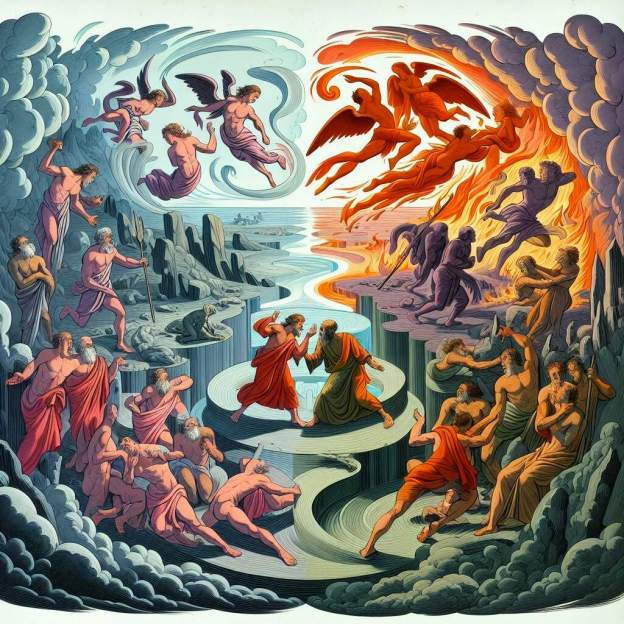
The featured image above is one person’s attempt to reflect the angst associated with ‘dishonorable passions’ and ‘natural relations versus those contrary to nature’. [22]

In a previous article about Romans 1: 16-32, (https://rogerfarnworth.com/2024/06/15/romans-1-16-32-pauls-discussion-considered), [2] I think we demonstrated that we cannot, with any integrity, assert that the first chapter of the epistle to the Romans makes an unequivocal negative statement about lifelong, loving, covenantal same-gender relationships.

It is possible that Paul is quoting what many a Jewish Christian might be thinking and then countering it with his ‘you therefore’ in Romans 2: 1. That interpretation, if correct, would mean that, rather than expressing his own understanding of God’s position in Romans 1: 16-32. He is, in fact, quoting Jewish Christians and then going on to challenge their sense of superiority over their Gentile siblings. Indeed, “some biblical scholars have long suspected that these verses were borrowed, with some reworking and paraphrasing, from some other source, as the language and word choices are atypical of the rest of the book of Romans.These verses resemble a rhetorical tool used by contemporaries of Paul to contrast the Jews and Gentiles, the basic argument being that idolatry, as practiced by the pagan Gentiles, leads to all manner of sinful behaviour.” [10]

In the midst of the passage is an assertion about particular same-sex sexual activities being ‘against nature‘ (παρὰ φύσιν). [Romans 1:26-27]

If we think that Paul is quoting others, then these words are tangential to Paul’s argument in Romans 1, and are of little importance. But, if these are Paul’s own words, then we need to give our attention to them. The meaning of those two words is particularly important if we remain unsure as to who is speaking. Is it Paul? Or is he quoting others, specifically Jewish Christians? This particular question is discussed in the article mentioned above (which can be found here).

Let’s work on the assumption that these words are indeed important. in that case, we need to consider two things if we are to understand the phrase ‘against nature‘ (παρὰ φύσιν):

  • We need to ask what particular activities are being referred to as being, ‘against nature’ (παρὰ φύσιν: para physin); and
  • We need to question what is meant by something being ‘against nature‘ (παρὰ φύσιν: para physin).

The intention in this article is to address these two concerns. In passing, we will also note a couple of other Greek words used in the two verses: ἀτιμίας (atimias) and ἀσχημοσύνη (aschēmosynē).

First, here are the words in the relevant verses translated into English in the NIV and the NRSV.

Romans 1: 24-27 in the NIV reads:

Therefore God gave them over in the sinful desires of their hearts to sexual impurity for the degrading of their bodies with one another. They exchanged the truth about God for a lie, and worshipped and served created things rather than the Creator—who is forever praised. Amen.Because of this, God gave them over to shameful lusts. Even their women exchanged natural sexual relations for unnatural ones. In the same way the men also abandoned natural relations with women and were inflamed with lust for one another. Men committed shameful acts with other men, and received in themselves the due penalty for their error.” [Romans 1: 24-27 (NIV)]

Romans 1: 24-27 in the NRSV reads:

Therefore God gave them up in the lusts of their hearts to impurity, to the degrading of their bodies among themselves, because they exchanged the truth about God for a lie and worshipped and served the creature rather than the Creator, who is blessed for ever! Amen. …  For this reason God gave them up to degrading passions. Their women exchanged natural intercourse for unnatural, and in the same way also the men, giving up natural intercourse with women, were consumed with passion for one another. Men committed shameless acts with men and received in their own persons the due penalty for their error.” [Romans 1: 24-27 (NRSV)]

Without wanting to chase back all the way through Romans 1, we can note that the ‘Therefore‘ of verse 24 refers back to the way in which people, probably particularly Gentiles, “exchanged the glory of the immortal God for images made to look like a mortal human being and birds and animals and reptiles.” [Romans 1: 23 (NIV)]

So, the argument in these verses goes like this: ‘because of their idolatry, God has given Gentiles over to the sinful desires of their hearts and to their idolatry (v24-25). And because of this (v26) God gave them over to shameful lusts/degrading passions. Women exchanged natural sexual desires for unnatural ones. Men abandoned natural relations with women and were inflamed with lust for one another committing shameful/shameless acts with other men.’

The Greek text is included in the references to this article below, at reference [8]. The key words are highlighted in italics above and in the Greek in the references. These are:

Shameful lusts/degrading passions: πάθη ἀτιμίας (‘passions of dishonour‘)

Unnatural: παρὰ φύσιν (‘against nature‘)

Shameless/shameful acts: ἀσχημοσύνην κατεργαζόμενοι (‘shame working out‘)

Having already considered the question whether this is Paul speaking, or whether he is quoting others, I guess our next question must be whether the acts being described are explicitly sinful or are to be seen in another category. The text sees these actions as shameful/shameless, degrading and against nature. Is that the same as being ‘sinful’? Is being ‘against nature‘ the same as being ‘sinful’?

A parallel question which we must consider is what exactly the text is saying is shameful/shameless and ‘against nature‘.

To be clear, traditional arguments appear to misread Romans 1. Those traditional arguments refer back to the creation stories, deriving from them what is seen to be the only form of marriage allowed in Scripture, that between a man and a woman. Those arguments go on to point to Matthew 19 and Mark 10 in which Jesus appears to say that that issues related to marriage hinge on how God created humanity. so, the traditional arguments say: “the sin of homosexuality is the giving up of natural desires and engaging in unnatural acts, which are defined as any same gender sexual activity.” [3]

But is that what the text says? Careful consideration of the text suggests that a different argument is being made. First, in Romans 1: 18-23, the argument is being made that the wrath of God is revealed from heaven “against all ungodliness and wickedness of those who by their wickedness supress the truth.” [NRSV: Romans 1: 18] … “Claiming to be wise, they became fools; and they exchanged the glory of the immortal God for images resembling a mortal human being or birds or four-footed animals or reptiles.” {NRSV: Romans 1: 22-23] This is, first and foremost, a concern about idolatry. “People have stopped worshipping God, who should be obviously known to them through the creation they live in. They turn to idol worship instead, and God allows them to experience life without Him.” [3]

So, God gives idol worshippers over to “impurity for the degrading of their bodies among themselves, because they exchanged the truth about God for a lie and worshipped and served the creature rather then the Creator, who is blessed for ever! Amen.” [NRSV: Romans 1:24-25] This is then developed by the next two verses: “God gave them up to degrading passions. Their women exchanged natural intercourse for unnatural, and in the same way also the men, giving up natural intercourse with women, were consumed with passion for one another. Men committed shameless acts with men and received in their own persons the due penalty for their error.” [NRSV: Romans 1:26-27]

We have already noted that degrading passions/shameful lusts: as the NSRV and the NIV translate πάθη ἀτιμίας actually mean something different, perhaps ‘passions of dishonour‘, something dishonourable, not highly valued, not held in honour or not respected. A translation closer to the meaning of the original words would not be ‘degrading passions‘ or ‘shameful lusts‘ but ‘of ill repute’ or ‘socially unacceptable’. It seems, perhaps, that the translators of the NRSV and NIV have allowed preconceptions of the meaning of πάθη ἀτιμίας to dictate their translation. πάθη ἀτιμίας actually “refers to something that is culturally unacceptable, rather than something that is morally wrong.” [3]

In judging whether it is reasonable to differentiate between ‘culturally unacceptable’ and ‘morally wrong’, it might be helpful to look back to Romans 1:18. In that verse, the text does refer to ‘wickedness‘ (NRSV/NIV), ἀδικίαν. In that verse, the wickedness referred to is the supressing of the truth of the Godhead, replacing it with idols. The same word (ἀδικίᾳ) appears in Romans 1:29. It heads a list of “every kind of wickedness, evil, covetousness, malice. Full of envy, murder, strife, deceit, craftiness, they are gossips, slanderers, God-haters, insolent, haughty, boastful, inventors of evil, rebellious toward parents, foolish, faithless, heartless, ruthless. They know God’s decree, that those who practice such things deserve to die, yet they not only do them but even applaud others who practice them.” [Romans 1:29-32]

The two occurrences of the word ἀδικίαν/ἀδικίᾳ appear either side of Romans 1:26-27 but the text uses a different word, ἀτιμίας when dealing with the specific sexual matters covered in those two verses. In those two verses, there is a different dynamic to the ‘wickedness’ (sinfulness/guiltiness) of the surrounding verses. Romans 1:26-27 appear to operate on the basis of a ‘shame’/’honour’ spectrum. Honour/dishonour in the eyes of society seem to be at stake. The text uses ἀτιμίας to describe those things mentioned in verses 26 and 27 of Romans 1. “The plain meaning of [ἀτιμίας] is something culturally unacceptable, and does not carry a moral connotation.” [3]

Codrington says that there is a “clear progression in [the text’s] description of a descent into moral decay, from idolatry to culturally unacceptable behaviour to sinful actions to moral decay to the complete destruction of humanity. ” [3]

Codrington asks us to consider other examples of the use of ἀτιμίας to which I have added one:

  • Romans 9:21 – ἀτιμίας “refers to a potter making a pot ‘for common use’. This is a euphemism for a chamber pot – not morally unclean, but culturally unacceptable to talk about in public … the same usage is found in 2 Timothy 2:20.” [3]
  • 2 Corinthians 6:8 the writer talks of being ‘shamed’ (ἀτιμίας) for the Gospel.
  • 2 Corinthians 11:21 – the writer refers to themselves as ἀτιμίαν, (NRSV: ‘To my shame…’.
  • 1 Corinthians 11:14 – it is ‘shameful’ (ἀτιμία) for a man to wear long hair – not a moral issue, nor a creation ordinance, just a societal norm being contravened.
  • 1 Corinthians 15:43 (ἐν ἀτιμία) – in a state of disgrace, used of the unseemliness and offensiveness of a dead body).

There is no New Testament occurrence of ἀτιμίας which expresses a moral judgment – it is used to refer to ‘unseemingliness‘, to cultural preferences and societal norms. “So when Paul calls certain passions ‘shameful’ in Romans 1:26, he is not saying they are wrong; he is merely saying they do not enjoy social approval and are culturally unacceptable.” [3]

There is a further word which we need to look at – ἀσχημοσύνη – it, or an associated word, appears only three times in the New Testament, in Romans 1:27, 1 Corinthians 12:23 and Revelation 16:15. In the book of Revelation, ἀσχημοσύνην is used to denote being seen naked as shameful. Literally, ‘without form’, not nice, unseemly, inappropriate. In 1 Corinthians it appears alongside ἀτιμότερα (less honourable). In that context, ἀσχήμονα seems to mean unpresentable [parts], less honourable parts. [9] It was socially unacceptable in Jewish Christian culture at the time to even name private body parts. “These references have no moral judgment in them.” [3]

In Romans 1:27 ἀσχημοσύνη appears to have the connotation of ‘lewdness’, of shameless behaviour. This seems to be the only location when the word is used in this way. Why, if it was intended to convey deep moral outrage, did the writer not use more unambiguous words? Does the use of ἀσχημοσύνη suggest that the actions to which it refers fall into a category of being unacceptable in Jewish Christian culture rather than morally wrong?

We have something else to consider before thinking about the meaning of the phrase παρὰ φύσιν. We need to try to determine exactly what it was that men and women were doing that was παρὰ φύσιν.

Women in Romans 1:26

Their women exchanged natural intercourse for unnatural, …” [Romans 1:26 (NRSV)]

This verse does not explicitly say that women were having sex with women. “It simply says that women were doing something unnatural with their bodies.” [3] Careful consideration of the context both in society and in the biblical text is critically important. What was it that Paul saw as unnatural?

The traditional argument relies of verse 27 and considers that Paul was paralleling the two matters – verse 27 refers to men having sex with men, so the reference in verse 26 must be about women having sex with women. But was that what Paul was saying?

Codrington reminds us that the “Old Testament never mentions, nor prohibits, lesbian sexual activity. In fact, there is almost no acknowledgement of female sexuality at all – the focus of all sexual prohibitions and instructions is the male. This is in line with Jewish – and ancient cultural – views on both gender and procreation. … Ancient cultures believed that all life was in the sperm, with the woman providing nothing more than an incubator for the foetus. That women would enjoy sex, or take an active role in it, was almost unthinkable. And for women to take a dominant role in sexual activity was considered, … ‘unnatural’.” [3]

The word that the NRSV translates as ‘intercourse’ is χρῆσιν (chrēsin). Apart from Romans 1:26-27 the word is absent from the New Testament but it is “used frequently in other literature of the time, and meant ‘use, relations, function, especially of sexual intercourse’ The emphasis of this word is on the functionality of the sex … insemination and procreation. Any sex that could not result in insemination is ‘unnatural’. [3] Verse 26 does not indicate the sex of the woman’s partner. Culturally, “the prohibitions on women having sex that was considered inappropriate include having sex during menstruation, oral or anal sex (these would involve non-procreative ejaculation), or mutual masturbation. Paul could also have been referring to having sex with an uncircumcised man.” [3]

It is, of course, possible that Paul is talking, in Romans 1:26, of lesbian sexual activity, but this is not certain and perhaps, in the light of the absence of references in the Old Testament and in the structure of Paul’s argument, unlikely. [15]

What Paul is probably saying is that “any sexual activity that is not aimed at insemination is considered socially unacceptable to the Jews.” [3] and as the letter to the Romans unfolds, Paul goes on in Romans 2 to tell his Jewish Christian readers that they should not judge others in this way and ultimately, in Romans 14:13-14 to say, “Let us therefore no longer pass judgment on one another. … I know and am persuaded in the Lord Jesus, that nothing is unclean in itself. …” [Romans 14:13-14]

Men in Romans 1:27

What does Paul condemn when he says, “Men, giving up natural intercourse with women, were consumed with passion for one another. Men committed shameless acts with men and received in their own persons the due penalty for their error.”? [Romans 1:27 (NRSV)]

We have noted that Paul’s argument focusses primarily on cultural rather than moral issues, societal norms rather than absolute morality, but what does Paul have on his mind as he writes Romans 1:27?

Paul could not help but be thinking here of Leviticus 18 and 20,” [17:p74] and the Holiness Code. Paul’s concern is to discourage his readers from involvement in Roman temple worship but also not to judge those involved. So in this verse, Paul could have been referring to pederasty. In Rome, “it was very common for young boys to give themselves to older men as a way of gaining social advantage. Mark Anthony had famously done this when he was a teenager, but was by no means an isolated case. This kind of mutuality in pederasty was considered “unnatural” (as in socially unacceptable) by Jews and most Gentiles as well.” [3][18]

Male same-sex sexual activity was normal in Roman and Greek culture. If Paul’s intention was to condemn all “homosexual activity in Rome, his words actually don’t go far enough. Paul is concerned here with men who’s sexuality is out of control.” [3] We must also note Paul’s use of the word χρῆσιν (chrēsin) which we have just seen relates to the ‘misuse’ of someone “upon whom a sexual act has been performed, and could apply to pederasty or temple prostitution. Both of these issues would make sense in the context of the passage, and be consistent with … Scripture … It definitely has the tone of abuse, excess and being out of control. The men are ‘inflamed with lust’.” [3]

So, is Paul condemning same-sex sexual practice, per se? Or is he more concerned about what is being done and for what reason? If same-sex sexual activity is occurring and neither partner is ‘inflamed by lust’ would he see that as wrong?

And what about the last phrase of verse 27 – ‘received in their own persons the due penalty for their error.’ We do not know what Paul was referring to here, but what is clear is that the word he uses to describe the behaviour to which he has been referring – ‘error’ (πλάνης (planēs)) – is a less judgemental word than ‘sin’, ‘evil’ or ‘wickedness’. When used elsewhere in the New Testament this word (it appears a total of six times) has been translated: ‘error’ (Romans 1:27); ‘deceit’, ‘deceitful’ (Ephesians 4:14); error, deceit (1 Thessalonians 2:3); ‘deluding’, delusion, ‘departure’, (2 Thessalonians 2:11); ‘error’, ‘wandering’ (James 5:20); ‘error’ (1 John 4:6). [19 + NRSV] The meaning of πλάνης appears to be around having been deceived, having wandered off. This meaning is far more neutral than other possible words such as ‘sin’ or ‘evil’. It is illuminating also to note that in each of the references to ‘deceit’ above, the sense is that of ‘having been deceived’ or ‘refusing to deceive others’ rather than ‘having been the deceiver’. So:

  • We must no longer be children, tossed to and fro and blown about by every wind of doctrine, by people’s trickery, by their craftiness in deceitful scheming.” [Ephesians 4:14]
  • Our appeal does not spring from deceit or impure motives or trickery.” [1 Thessalonians 2:3]
  • God sends them a powerful delusion, leading them to believe what is false.” [2 Thessalonians 2:11]
  • Whoever brings back a sinner from wandering will save the sinner’s soul from death and will cover a multitude of sins.” [James 5: 20] This is the closest link between πλάνης and ‘sin’, but sin here is regarded as a ‘wandering’ (πλάνης) not a wilful act.
  • From this we know the spirit of truth and the spirit of error.” [1 John 4:6] here the dynamic involved is truth/error, rather than right/wrong.

This begs the question of how certain we can be, that here in Romans 1:27, we find God’s final definitive statement against male same gender sexual activity?

Codrington asks: “If today’s LGBT people express their sexual activity without being “inflamed with lust”, and do not receive “the due penalty” in their bodies, can we say that God is not against their activity? … These verses … [are] not as clear as they may first appear.” [3]

We reached this conclusion without directly focussing on another important question of whether the same-sex sexual acts to which Paul refers are the same as loving faithful, committed, same-sex relationships which include sexual intimacy. As Michael Younis says: In Paul’s thinking, “the conception of sex and the roles of the respective partners differs drastically from today’s world.” [16] While there is undoubtedly still abuse in today’s world, for many gay couples, “Sexuality … is used not as a means for domination, but rather as a means of mutual love and respect. The use of sex as a means for domination constitutes rape or domestic abuse, both of which are criminal offences where the victim has the right to prosecute to perpetrator.” [16]

Against Nature (παρὰ φύσιν)

We focus now on the phrase that formed the tile of this article – παρὰ φύσιν.

Codrington tells us that in παρὰ φύσιν, παρὰ is a word that is familiar to modern ears because we have uses of the word derived from the Greek. παρὰ usually means ‘besides’, ‘more than’, ‘over and above’ or ‘beyond’. In English, we use this word to indicate similar things, “for example a paralegal is someone not totally qualified to be a lawyer, but who assists a real lawyer; and paranormal is something other than normal (rather than ‘opposed to normal’).” [3]

Codrington continues: In the Romans 1 context, the phrase παρὰ φύσιν “could mean ‘more than nature’ or ‘beyond nature’, but is probably better rendered ‘contrary to nature’ as most modern translations have it. But the sense of the phrase is not ‘in opposition to the laws of nature’ but rather ‘unexpected’ or ‘in an unusual way’. We might say, for example: ‘Contrary to his nature, John woke up early and went for a run’. This is not a moral issue, but refers to the character of something or someone.” [3]

In attempting to better understand the phrase παρὰ φύσιν,it is perhaps important that we look at other occurrences of its use, or of the use of φύσιν (or its derivatives). And here we have our first problem, The words φυσικός and φύσις, which are both translated as some form of the words ‘nature’, ‘natural’, or ‘instinctive’, present a considerable challenge. Paul only uses the phrase sparingly in his epistles. In fact, as Ness tells us, the word “is never used in the canonical books of the Septuagint, Paul’s source for Old Testament material. … The only other text in the [New Testament] that uses φυσικός is 1 Peter 2:12: ‘But these people blaspheme in matters they do not understand. They are like unreasoning animals, creatures of instinct (φυσικα), born only to be caught and destroyed, and like animals they too will perish.” [3]

So, perhaps Paul is speaking of something deeply engrained in human beings. Perhaps Paul is claiming that same-sex relations are unnatural, contrary to God’s plan for humanity, making all same-sex sexual relations a sin, regardless the context. If Paul was using παρὰ φύσιν in one particular way then that becomes a reasonable assumption.

However, we have already noted that the English phrase ‘contrary to nature’ does not necessarily refer to a moral issue.

To be sure of what Paul is talking about, we cannot just take our own understanding of one possible meaning, nor can we necessarily rely on our own instincts, our own cultural assumptions and apply them to the culture of Paul’s day. We have first to accept that in choosing to interpret the phrase ‘contrary to nature‘ as being about something utterly abnormal or abhorrent, we are making a choice to do so. We are perhaps, taking a cultural norm and making it a moral issue.

Here, starting with the example above, are ways in which the phrase, similar phrases or similar thinking might be used which imply no clear moral judgement, or which require considerable additional thinking to determine their ethics:

  • Contrary to his nature, John woke up early and went for a run;
  • Human beings cannot fly, if God had intended them to do so, he would have given them wings. Flight is ‘contrary to our nature‘, but we subvert that reality each time we fly to go on holiday;
  • Aldous Huxley: ‘Consistency is contrary to nature, contrary to life. The only completely consistent people are the dead.’ No moral judgement is implied by Huxley;
  • St. Augustine: ‘Miracles are not contrary to nature but only contrary to what we know about nature’;
  • Roger is naturally longsighted, so he wears glasses to correct his sight;
  • Is cosmetic surgery, or any surgery, contrary to nature?
  • Is genetic modification, or cloning, contrary to nature?
  • The choices made by different cultures about what it is appropriate to eat could also fall into this category – things that make me cringe, like the idea of eating dogs or horses, frogs legs or locusts.
  • Human beings cannot breath under water, yet, contrary to our nature we have found ways to over come this.

Perhaps we might want to argue that some of those things require significant ethical consideration before we agree that they are right or wrong, but simply describing them as contrary to nature does not get close to resolving the debate. Perhaps some of these things cause an emotional response in me either of fear or dislike.

Throughout history cultures have made similar judgements about a variety of things, men having long hair, the wearing of beards, women speaking/leading in church, what constitutes male or female clothing. Some of these things carry a lot of stigma in particular cultures but they are not, ultimately, moral issues even when they might be enforced as such.

Codrington encourages us to think carefully about this within the context of the Roman world: “This concept of ‘according to nature’ or ‘contrary to nature’ needs to be understood properly in context. It is only since the Renaissance that the concept of ‘natural law’ has embedded itself in Western philosophy. In Paul’s world, the concept of ‘natural law’ was something linked with Stoicism, and referred mainly to socially unacceptable behaviour. It was a commonly used concept, and was not typically associated with moral rights and wrongs built into the fabric of reality as we perceive it today. For example, the Greek Stoic philosopher Epictetus criticised men who shaved their body hair in order to look more like women, saying that such men act ‘against [their] nature’ (physis) (Discourses 3.1.27–37). [11] Philo of Alexandria, a Jewish contemporary of Paul living in Alexandria, used para physin three times in his ‘On the Special Laws’ (3.7-82), [12] where he applies it to: (1) intercourse between a man and women during her menstrual period, (2) intercourse between a man and a boy (pederasty), and (3) intercourse between a person and an animal (bestiality). He also calls men who have sex with barren women (instead of divorcing them and remarrying) ‘enemies of nature’. While we might find pederasty and bestiality vile and evil, what do we make of the other issues? The defining characteristic of these sexual activities is not consent, or mutuality or love. The defining characteristic that groups them together is that there is no possibility of having children. This is what is defined as ‘unnatural sex’ in classical literature.” [3]

Codrington quotes Marilyn Riedel who writes: “The concept of ‘natural law’ was not fully developed until more than a millennium after Paul’s death. He thought ‘nature’ was not a question of universal law or truth but, rather, a matter of the character of some person or group of persons, character which was largely ethnic and entirely human: Jews are Jews ‘by nature’, just as Gentiles are Gentiles ‘by nature’. ‘Nature’ is not a moral force for Paul: humankind may be evil or good ‘by nature’, depending on their own disposition. Paul uses ‘nature’ in the possessive, that is, not in the abstract ‘nature’ but as someone’s nature. Paul is therefore writing about the personal nature of the pagans in question.” [3][20]

Bryan Ness quotes James Brownson: “When we seek to bring ancient discussions into our modern context, we run into some problems. In the ancient world we see almost no interest at all in the question of sexual orientation, particularly among critics of same-sex behaviour. Rather, we see the kinds of discussion found in Romans 1 focusing on two problems: the subjective problem of excessive lust and the objective problem of behavior that is regarded as ‘contrary to nature’. Yet when these discussions are translated into a modern context, the question of lust tends to recede into the background, because, as we have seen, it seems irrelevant to the question of committed gay unions. Instead, the focus falls on the objective problem that same-sex eroticism is ‘contrary to nature’. Traditionalists generally are far more comfortable talking about sexuality ‘objectively’ than in dealing with the inner and subjective aspects of sexual orientation. This is true in no small part because the Bible does not envision the category of sexual orientation; it only addresses the problem of excessive desire.” [10][13: p170]

Returning to early Christian, and parallel Jewish, thought: “For early Jews in particular, the Alexandrian school had a great influence in what was considered ‘natural’. In the third century, Clement of Alexandria asserted that ‘to have sex for any purpose other than to produce children is to violate nature’. This concept was also taught by Philo (to a Jewish audience). For him, any use of human sexuality which did not produce children ‘violated nature’. For some early Christians, celibacy was as unnatural as homosexuality, and so was masturbation. Failure to divorce a barren wife was ‘unnatural’ as well. Jewish thinking … believed that ‘unnatural sex’ is any sexual activity which is not capable of inseminating a woman. This is not a moral category, but a cultural one. For example, Maimonides, an early Jewish scholar within the Rabbinic tradition (and hostile to [same-sex sexual] activity as well) … addressed the issue of ‘unnatural sex’ between a husband and wife: ‘A man’s wife is permitted to him. Therefore he may do whatever he wishes with his wife. He may have intercourse with her at any time he wishes and kiss her on whatever limb of her body he wants. He may have natural or unnatural sex, as long as he does not bring forth seed in vain’.” [3][14]

It is perhaps the last sentence of the quote from Maimonides that is the most instructive – the moral issue for him was about ‘bring[ing] forth seed in vain’. The natural/unnatural question was not a moral issue, it was neutral in any moral sense.

Codrington also reminds us that the letter to the Romans uses the phrase παρὰ φύσιν sparingly – in Romans 1:26-27, and Romans 11:24. It is used also in 1 Corinthians: “the word φύσις appears elsewhere in Romans and in 1 Corinthians.” [3] this is picked up in our next few paragraphs.

A biblical understanding of ‘Nature’

We have already looked at a number of biblical references with the hope of understanding what Paul and other authors understand by the use of the word φύσιν and the phrase παρὰ φύσιν.

There are more to consider:

  • Romans 2:27: Paul talks of Gentiles being ‘uncircumcised ‘by nature’ (ἐκ φύσεως);
  • Galatians 2:15: Paul talks of Jews being circumcised ‘by nature’ (φύσει) – often translated ‘by birth’ rather than ‘by nature’, but the same Greek word is used. Paul effectively argues that circumcision is a cultural practice, a social norm, rather than a moral requirement or an eternal command.
  • 1 Corinthians 11:14: Paul says: “Does not nature itself tell you that it is shameful for a man to have long hair.” (οὐδὲ ἡ φύσις αὐτὴ διδάσκει ὑμᾶς ὅτι ἀνὴρ μὲν ἐὰν κομᾷ ἀτιμία αὐτῷ ἐστιν). both φύσις and ἀτιμία are used here. Paul uses the same language when speaking of the length of men’s hair as he does when speaking about same-sex sexual activity.
  • Romans 11:24: Paul uses ‘nature’ (φύσιν), and ‘contrary to nature’ (παρά φύσιν) to describe Gentile conversion to Christian faith. “After all, if you were cut out of an olive tree that is wild by nature (φύσιν), and ‘contrary to nature’ (παρά φύσιν) were grafted into a cultivated olive tree, how much more readily will these, the natural (φύσιν) branches, be grafted into their own olive tree.” [Romans 11:24] Codrington comments: “Paul is saying, ‘you Jews might think that some of the actions of Gentiles are socially unacceptable, but God has done something even more culturally unacceptable to you as Jews: he’s included these Gentiles in His Kingdom, alongside you’. The key point here is simple: if God Himself can do something παρά φύσιν it clearly cannot be something inherently evil or immoral.” [3]

Alongside the fact that the idea of ‘natural law’ did not fully enter Western thought until the Middle Ages at the earliest (cf. Riedel, [20]) we can be relatively sure that ‘nature’ was not a moral force for Paul but rather a cultural/social norm or something personal to a particular person (according to ‘her nature’).

The evidence, here, is as clear as it can be. That something is ‘contrary to nature’ or ‘against nature’ does not make it “morally wrong, but rather indicates something that is against what the writer – and/or reader – would see as normal, expected and usual.” [3] The statement that specific sexual acts were ‘against nature’ does not necessarily mean “they were perceived to be morally wrong, but just [that] they were unusual, socially unacceptable or not normal.” [3]

In summary then:

In Romans 1 and 2 , it seems as though Paul holds his readers to account for judging others. He sees his readers’ position as being based on their own cultural mores and dislikes (their own ‘nature’). As the letter unfolds, it seems as though Paul is attempting to “encourage unity between Jewish and Gentile Christians, and to help them overcome the way they each saw each others’ cultural practices. Gentiles despised circumcision, and did not like the dietary laws of the Jews; and the Jews were disgusted by a whole range of Gentile practices, especially the way they flaunted their bodies in public at their bath houses, and their sexual habits.” [3] 

Paul wants his readers to recognise their own cultural prejudices. He chooses, when he is unambiguously speaking of same-sex sexual acts, not to use words which denote moral or ethical wrong. He is perfectly capable doing so as we have seen in parts of Romans 1. Where we might easily describe pederasty as heinous sin, the closest Paul gets to this is when talking of what he sees Gentiles doing more as ‘falling into error’ than ‘heinous evil’. He is cautious in his words and he is surprisingly unwilling to condemn. However, when talking of other things he is perfectly capable of condemnation: “They were filled with every kind of injustice, evil, covetousness, malice. Full of envy, murder, strife, deceit, craftiness, they are gossips, slanderers, God-haters, insolent, haughty, boastful, inventors of evil, rebellious toward parents, foolish, faithless, heartless, ruthless. They know God’s decree, that those who practice such things deserve to die.” [Romans 1: 29-32]

Romans 1: 26-27 is written in the midst of Paul’s comments about idolatry, cultic temple practices and Roman pagan activities in which same-gender sexual activity played a major part. It has to be stretched significantly beyond any ‘elastic limit’ to be seen as applying to faithful, loving, lifelong homosexual relationships today. And, even if this argument were to be pursued to its limit, it can only apply to sexual activity itself not to any ‘orientation’, feelings of love, or lifelong commitments of companionship and fidelity.

Even if everything is still remains less clear that this, Romans 1, for me at least, is not a passage which contains sufficient certainty of meaning to be used as a definitive statement of condemnation of those who as part of a loving, long-term, committed relationship engage in same-sex sexual activity.

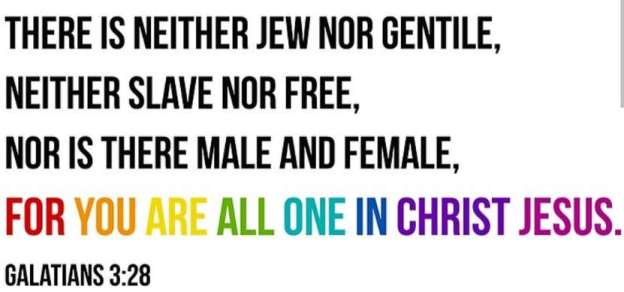
Romans 1 is not a passage that can safely carry that burden. It must as a result be subject to a wider theological, ethical and biblical thinking and to the paramount understanding of God as a God of love who reaches out to his creatures in gracious, merciful love, making no distinction between male and female, Gentile and Jew, slave or free, [Galatians 3: 28] and not making a distinction between people on the basis of “disability, economic power, ethnicity, gender, gender identity, learning disability, mental health, neurodiversity, or sexuality.” [21]

References

  1. N.T. Wright: https://ntwrightpage.com/2016/05/07/romans-and-the-theology-of-paul, accessed on 7th June 2024.
  2. https://rogerfarnworth.com/2024/06/15/romans-1-16-32-pauls-discussion-considered
  3. Graeme Codrington: https://www.futurechurchnow.com/2015/10/15/the-bible-and-same-sex-relationships-part-11-shameful-acts-and-going-against-nature, accessed on 8th June 2024.
  4. Graeme Codrington: https://www.futurechurchnow.com/2015/11/12/the-bible-and-same-sex-relationships-part-12-what-romans-1-is-really-all-about, accessed on 8th June 2024.
  5. https://en.wikipedia.org/wiki/Epistle_to_the_Romans, accessed on 9th June 2024.
  6. Daniel Castello; Introduction to the Epistle to the Romans; https://spu.edu/lectio/introduction-to-the-epistle-to-the-romans, accessed on 9th June 2024.
  7. Gary Shogren; Romans Commentary, Romans 1:18-3:20; https://openoureyeslord.com/2018/02/27/romans-commentary-romans-118-320, accessed on 10th June 2024.
  8. Διὸ παρέδωκεν αὐτοὺς ὁ θεὸς ἐν ταῖς ἐπιθυμίαις τῶν καρδιῶν αὐτῶν εἰς ἀκαθαρσίαν τοῦ ἀτιμάζεσθαι τὰ σώματα αὐτῶν ἐν αὐτοῖς, οἵτινες μετήλλαξαν τὴν ἀλήθειαν τοῦ θεοῦ ἐν τῶ ψεύδει, καὶ ἐσεβάσθησαν καὶ ἐλάτρευσαν τῇ κτίσει παρὰ τὸν κτίσαντα, ὅς ἐστιν εὐλογητὸς εἰς τοὺς αἰῶνας· ἀμήν. … Διὰ τοῦτο παρέδωκεν αὐτοὺς ὁ θεὸς εἰς πάθη ἀτιμίας· αἵ τε γὰρ θήλειαι αὐτῶν μετήλλαξαν τὴν φυσικὴν χρῆσιν εἰς τὴν παρὰ φύσιν, ὁμοίως τε καὶ οἱ ἄρσενες ἀφέντες τὴν φυσικὴν χρῆσιν τῆς θηλείας ἐξεκαύθησαν ἐν τῇ ὀρέξει αὐτῶν εἰς ἀλλήλους, ἄρσενες ἐν ἄρσεσιν τὴν ἀσχημοσύνην κατεργαζόμενοι καὶ τὴν ἀντιμισθίαν ἣν ἔδει τῆς πλάνης αὐτῶν ἐν ἑαυτοῖς ἀπολαμβάνοντες.
  9. https://biblehub.com/text/1_corinthians/12-23.htm, accessed on 26th September 2024.
  10. Bryan Ness; Paul on Same-Sex Sexual Relations in Romans; in Spectrum, 4th May 2021; via, https://spectrummagazine.org/views/paul-same-sex-sexual-relationships-romans/, accessed on 30th September 2024.
  11. https://classics.mit.edu/Epictetus/discourses.3.three.html, accessed on 1st October 2024.
  12. Philo; De Specialibus Legibus, III; via https://scaife.perseus.org/reader/urn:cts:greekLit:tlg0018.tlg024.1st1K-grc1:3.7, cf.; https://summerstudy.yale.edu/sites/default/files/chapter_3._gender.pdf, https://www.earlychristianwritings.com/yonge/book29.html, https://www.loebclassics.com/view/philo_judaeus-special_laws/1937/pb_LCL320.473.xml, all accessed on 1st October 2024.
  13. James V. Brownson; Bible, gender, sexuality: Reframing the church’s debate on same-sex relationships; Wm. B. Eerdmans Publishing, Grand Rapids, Michigan, 2013.
  14. cf., the Mishneh Torah Issurei B’iah 21:9 (https://www.myjewishlearning.com/article/judaism-and-sexuality), https://prism.ucalgary.ca/server/api/core/bitstreams/770995b3-cc5b-4ed2-90be-7d0cb53e46a8/content, all accessed on 1st October 2024.
  15. Codrington asserts that “In classical literature … lesbianism is never discussed in this way. … Male homosexuality was discussed a lot in classical literature. When female homosexuality was discussed, it was always preceded by discussions of male homosexuality, which was itself typically preceded by discussions on unnatural heterosexual sexual activity. This is a very typical progression when dealing with sexual issues in ancient literature. It’s very unlikely that Paul would break with this literary form, unless he was trying to make a different point. To say that Romans 1:26 forbids lesbian sexual activity is to read much more into the verse than is actually there.” [3]
  16. Michael Younes; Engaging Romans: An Exegetical Analysis of Romans 1:26-27; John Carroll University, Summer 2017, via https://collected.jcu.edu/cgi/viewcontent.cgi?article=1077&context=mastersessays#:~:text=Romans%201:26%E2%80%9327%20offers,over%20against%20the%20LGBTQ+%20community, accessed on 1st October 2024.
  17. James D.G. Dunn; 38A Word Biblical Commentary Romans 1-8; Word Books, Dallas, Texas, 1988.
  18. This is what Martti Nissinen believes to be the case, Martti Nissinen; Homoeroticism in the Biblical World: A Historical Perspective; Fortress Press, 2004.
  19. https://biblehub.com/greek/plane_s_4106.htm, accessed on 2nd October 2024.
  20. Marilyn Riedel; Hermeneutics of Homosexuality; [broken link: http://users.wi.net/~maracon/lesson1.html, attempted access on 2nd October 2024.]
  21. https://www.inclusive-church.org/the-ic-statement, accessed on 2nd October 2024.
  22. https://bible.art/p/cslrdLTqR4obex8ipiFo/romans-1:26-27-for-this-reason-god, accessed on 2nd October 2024.


‘Arsenokoitai’ and ‘Malakoi’ in 1 Corinthians 6:9 and 1 Timothy 1:10

I first looked at these two words in a discussion of the place of ‘Sodom and Gomorrah in the Bible‘ [1] Their use in the two passages above has always provoked controversy. ….

Men Who Practice Homosexuality’

This phrase is used in two translations of the Bible, the ESV and the 2011 revision of the NIV. This ‘catch-all’ phrase in these two translations is not warranted by the individual Greek words used in these two contexts. The translation of these two words has always been a matter of uncertainty and debate and an accurate translation should have made it clear that it is not possible to define their meaning exactly.

The way the two Greek words are treated is a case of over simplification by the translators. In an endeavour to simplify a reading of the text, they have allowed their assumptions to narrow down meaning and perhaps even obfuscate what is true. The truth is that scholars either do not know, or cannot agree on the meaning of two Greek words, The two words are arsenokoitai (ἀρσενοκοίτης) and malakoi (μαλακοὶ). Their exact meanings are seemingly lost in the past and scholars have been debating the best translation of the words for some length of time.

The assumption that the translators of the ESV and the NIV make is that together they are a kind of ‘catch-all’ for all homosexual acts. This is just one opinion, it is not a justifiable assumption for translators to make.

Look at how historic translations of the Bible have translated ‘arsenokoitais‘: “bugger (1557), liers with mankind (1582), sodomites (1735), abusers of themselves with mankind (1885), those who abuse themselves with men (1890). The closest meaning of ‘arsenokoitai’ over five hundred years of translation was men who took the active role in non­procreative sex. ‘Arsenokoitai’ did not define what we would call the sexual orientation of a person; it indicated the role played in the sexual act.” [7]

A shift began to happen in the late 1940s: “‘Arsenokoitai’ was translated in the 1946 Revised Standard Version (RSV) of the Bible as “homosexual.” This meant that the translation changed the meaning of the original word from a condemnation of any kind of man who played the dominant role in sex with another male to a condemnation of one specific kind of man—a gay person.” [7]

After the RSV translated ‘arsenokoitai’ to ‘homosexual’, …   ‘Arsenokoitai’ was soon translated variously: pervert (1962); sexual pervert (1966); sodomite (1966); and those who practice homosexuality (1978).” [7]

In the culture in which ‘arsenokoitai’ originated, the meaning was closest either to pederasty or to a man engaged in exploitative sex with a male with some sort of trade or money involved. “Such relationships were not and are not equal-status relationships; one partner has power, while the other is being used and degraded.” [7]

Note too that, while defining the meaning of ‘arsenokoitai‘ is fraught with difficulty, one thing is not in doubt. “It is clear from all its contexts that it does not refer to women in any way. Yet, when ‘arsenokoitai’ was mistranslated to ‘homosexual’, it immediately, by definition, came to include women as well as men.” [7] This shift in translation seems to have occurred, not as a result of a careful hermaneutic or as a result of  literary scholarship through a change in the translators “sexual ideaology.” [7]

Now look at how leading English translations treat these two words, ‘Arsenokoitai‘ and ‘Malakoi‘,  in 1 Corinthians 6:9: [2]

“men who practice homosexuality” (ESV; a marginal note reads, “The two Greek terms translated by this phrase refer to the passive and active partners in consensual homosexual acts”)

“men who have sex with men” (NIV [2011]); a marginal note reads, “The words men who have sex with men translate two Greek words that refer to the passive and active participants in homosexual acts”)

“male prostitutes … homosexual offenders” (NIV [1984])

“effeminate … homosexuals” (NASB 1995); a marginal note to the first word reads, “i.e. effeminate by perversion”

“effeminate … sodomites” (NKJV)

“effeminate … abusers of themselves with mankind” (AV).

We have already noted that a significant change occurred in the 1940s. But, even so, there is actually very little agreement over the exact meaning of each word. “These translations appear to agree that the individuals in view are men who are engaged in some kind of sexual activity of which Paul disapproves. But the translations’ differences outshine their agreement. Should the terms be understood together or separately? Does the term ‘malakos’ denote male homosexual activity (generally), the passive participant in a homosexual act, a man who engages in paid sexual activity with other men, or an effeminate man? Does the term ‘arsenokoites’ denote male homosexual activity (generally) or the active participant in a homosexual act (specifically)?” [2]

Reviewing the evidence in commentaries and academic literature only widens the uncertainty over the meaning of these words. A survey of the commentaries and academic literature would only yield further possibilities.

I have taken the short notes above from a conservative evangelical website [2] to illustrate that this breadth of meaning has to be embraced before the argument on that website concludes that, when taken together, the two words are a kind of ‘catch-all’ phrase which embraces all homosexuality, both inclination and action. The result is that many who hold the traditional position on ‘homosexuality’ argue that the particular texts which use these words, 1 Corinthians 6:9 and 1 Timothy 1:10, say that “homosexuals” will not inherit the kingdom of God. Hence, the church cannot affirm same-sex relationships without abandoning the gospel.

We have, however, to be very careful in dealing with these two words and we must look as closely as we can at their use in antiquity, particularly within the cultures of Paul’s day, and we must strive not to read back into them the cultural categories of our own times. This is a trap which we can all fall into so easily.

The term malakoi literally meant “soft,” in the Greco-Roman culture of Paul’s day. It was  often used to refer to, a lack of self-control, weakness, cowardice, and laziness. These were seen as negative characteristics and were often attributed to women in the societies of Paul’s day.

The term was also long translated as ‘effeminate.’ Although most uses of the term in ancient literature were not related to sexual behaviour, men who took the passive role in same-sex relations were sometimes called ‘malakoi’, which is why many non-affirming Christians argue that it represents a condemnation of same-sex relationships. But even in sexual contexts, ‘malakos’ was most frequently used to describe men who were seen as lacking self-control in their love for women. It’s only in the past century that many Bible translators have connected the word specifically to same-sex relationships. More common English translations in past centuries were terms such as ‘weaklings’, ‘wantons’, and ‘debauchers‘.” [3]

“‘Malakoi’ is easier to translate because it appears in more ancient texts than ‘arsenokoitai’, yet it suffers other complications when translated to modern English. Older translations for ‘malakoi’ are: weaklings (1525), effeminate (1582, 1901), those who make women of themselves (1890), the sensual (1951). … Then, just as happened with ‘arsenokoitais’, there was a radical shift over just a few decades. Following cultural stereotyping of gay people, ‘malakoi’ was translated as follows: those who participate in homosexuality (1958), sexual perverts (1972), male prostitute (1989).” [7][8]

Again, these changes reflect changed modern perspectives rather than a better understanding of the meaning of words within their original context.

Even so, doesn’t Paul’s practice of using ‘malakoi‘ and ‘arsenokoti‘ in tandem make it likely that he uses it in a way that refers to what we call ‘homosexual behaviour’?

The term ‘arsenokoites‘ “comes from two Greek words: ‘arsen’, meaning ‘male’, and ‘koites’, meaning ‘bed’. Those words appear together in the Greek translation of Leviticus 20:13, leading some to speculate that Paul coined the term ‘arsenokoites’  in order to condemn same-sex behaviour.” [3] Whether this is a speculation rather than a warranted assumption is a matter of dispute, because traditionalists argue that it is the most likely meaning of the word as Paul used it.

Speaking from a liberal perspective, Carolyn Bratnober argues in ‘Legacies of Homosexuality in New Testament Studies: Arsenokoitai and malakoi, fornicators and sodomites, in the history of sexuality and scripture‘, [4] that “the tragedy of conservative homophobia in the 1980s was this: that antihomosexual usage of biblical texts was enflamed by HIV/AIDS discourse — while, at the same time, the effects of the HIV/AIDS epidemic on communities in poverty and communities of colour were unreported for so long that the epidemic devastated these communities to a greater extent than it did gay communities. Progressive biblical scholars, as well as Christian Religious Right leaders, fed this focus on homosexuality in their studies of New Testament texts. They focused so much on homosexuality that they missed the big picture: anti-imperial, anti-exploitation theology. President Reagan’s condemnations of “welfare queens” and “moral failures,” bolstered by his supporters on the Religious Right, co-opted a version of Pauline ethics that supported empire rather than opposed it. Failure to acknowledge this deeply problematic history of Biblical literature is harmful for the contemporary LGBTQ community and for combatting the legacies of racism in the United States. There is a deep and urgent need for Biblical scholars and historians to heed the words of Emilie Townes and others calling for efforts toward a counterhegemonic history that overturns pervasive racist myths and invisibilized narratives that continue to marginalize oppressed groups based on perceived collective characteristics. Biblical scholars and those who utilize scriptural resources in their work must address the historic use of Pauline epistles in homophobic discourse. They must acknowledge that terms such as ‘arsenokoitai’ and ‘malakoi’ referred to those who were vulnerable to sexual and economic exploitation through the social institutions of slavery and forced sex in the Roman Empire.”  [4: p51-52]

Bratnober is prepared to state categorically that the translation of ‘arsenokoitai’ and ‘malakoi‘ to mean “homosexuals” or “sodomites” in the NRSV is false. “The idea of the ‘sin of Sodom’ can be traced to Biblical texts [although I question the link to ‘homosexual actions’], but not ‘sodomy’ or ‘sodomites’- these terms were developed in the medieval period.” [4: p46] And she mentions the work of Scroggs, who argued that  ‘malakoi‘ and ‘arsenokoitai‘ referred to counterparts in sexual encounters where prostitution and economic exploitation were involved—that ‘malakoi‘ would have had the meaning of a specific role, something similar to an “effeminate call-boy” or passive recipient in penetrative sex, and that ‘arsenokoitai’ would have meant the active partner “who keeps the ‘malakos‘ as a mistress or hires him on occasion.”[4: p18][5: p108]

Scroggs mentions that these themes/words appear side by side in 1 Timothy 1 with a third term ‘andropdistai’ – “which was used in several other ancient sources to describe one who is a kidnapper or, literally, a slave-dealer.” [5: p118-120] Scroggs interprets the author of 1 Timothy’s inclusion of ‘andropodistai’ in his list of vices as a reference to specific forms of the sex economy “which consisted of the enslaving of boys as youths for sexual purposes.” [5: p121] so, if it was this institution of sexual slavery that was being condemned in 1 Timothy and even in 1 Corinthians, then it is slavery and rape which must be the subject of all scholarship on ‘arsenokoitai’ and ‘malakoi’ in the New Testament—not ‘homosexuality’ as such. [4: p18]

Bratnober spends some time delving into the appropriate meaning of these two words, but ultimately concludes that much energy has been wasted on this work which would have been better spent on wider issues such as “those who were vulnerable to sexual and economic exploitation through the social institutions of slavery and forced sex in the Roman Empire.” [4: p52]

Just as we looked at early Jewish interpretations of the ‘sin of Sodom’, [1] we do well, in the context of this article to note that some modern Jewish scholars talk of the ‘sin of Sodom’ as prohibited, because “the Canaanites used homosexual acts as part of their pagan rituals. Therefore the Israelites were prohibited from doing this, not because it was an act between two men but because it was symbolic of pagan ritual. In today’s world this prohibition now has no meaning (and homosexual sex is permitted).” [Rabbi Michele Brand Medwin, as quoted by Patrick Beaulier][6]

If it seems that these arguments are about semantics rather than substance, it is worth remembering that dismissing arguments on this basis, or on the basis of seeking to adhere to what appears to be the ‘plain meaning’ of the text, is to fail to properly respect the texts we read. If we claim to respect scripture as the only authority, or even the most important authority, then we only do so if we are prepared to properly investigate what was actually meant by the words of scripture.

So, what is the substance of my argument about the words ‘arsenokoitai’ (ἀρσενοκοίτης) and ‘malakoi‘ (μαλακοὶ). It is simply this, that there remains significant disagreement about the meaning of these words among scholars, some of whom take a conservative position, others who are more liberal. That level of disagreement is sufficient to mean that we are clearly, at least at present, unable to be certain of the meaning and tend to take the meaning(s) that most suit our own arguments. The translators of the revised version of the NIV [2011] and of the ESV abandon the middle ground and assert both in the text and in the margin that these two terms are effectively used together in a ‘catch-all’ way to relate to all forms of homosexuality. This is very far from certain. The NIV and ESV translators should have accepted the ongoing struggle with the translation of these two difficult words (perhaps using the words which appeared in the original 1984 version of the NIV (male prostitutes … homosexual offenders – although, as we have seen, there is a problem with the use of the word ‘homosexual’) and should have placed commentary in the margins which commented on their particular stance in the debate.

References

  1. https://wordpress.com/post/rogerfarnworth.com/40703
  2. https://gospelreformation.net/pauls-understanding-of-sexuality/?print=print, accessed on 18th February 2023.
  3. https://reformationproject.org/case/1-corinthians-and-1-timothy, accessed on 18th February 2023.
  4. Carolyn V. Bratnober; Legacies of Homosexuality in New Testament Studies: Arsenokoitai and malakoi, fornicators and sodomites, in the history of sexuality and scripture; Union Theological Seminary, New York, 2017.
  5. Robin Scroggs; The New Testament on Homosexuality: Contextual Background for Contemporary Debate; Fortress Press, Philadelphia, 1983.
  6. https://www.sefaria.org/sheets/196548?lang=bi, accessed on 17th February 2023.
  7. https://canyonwalkerconnections.com/library/bible-verses/1st-corinthians-1st-timothy, accessed on September 2024.
  8. These translations of ‘malakoi’ are examples of the trend in the change of the words used to translate the term. For a more detailed review, please have a look at https://www.gaychristian101.com/Malakoi.html, (accessed on 11th September 2024) which gives a fuller list of the words used in different translations.

Romans 1: 16-32 – Paul’s Discussion Considered

Interpreting what the Bible says requires an approach which looks carefully at the context. Both literary and community contexts are always important. So, before considering particular verses in Romans 1, we need to look at the wider narrative context.

The letter to the church in Rome is Paul’s longest letter, and his most intricate argument. Many have seen it as a complete overview of Christian doctrine, but others feel Paul was dealing with a very specific issue as the ex-Jewish rabbi who became the ‘Apostle to the Gentiles’.” [2] As Graeme Codrington explains: “The view of Romans as a systematic theology has always been problematic, especially in how to integrate chapters 9 – 11 into the flow of the book. Any explanation of the purpose of the letter must result in a consistent exegesis that makes sense of the whole letter. And seeing it a summary of the Gospel does not achieve this.” [2]

So what might Paul be doing in the early chapters of the Epistle to the Romans? And indeed, throughout the whole of the epistle?

It seems to me that the traditional reading of Romans 1, that sees homosexual activity as part of a decent into immorality and, along with other things, a sign that God has abandoned people into the sin that they have chosen, is not an unreasonable initial reading of the immediate text of Romans 1: 16-32. A caveat to this comment must be that the verse which immediately follows this passage (Romans 2: 1) begs a question regarding Paul’s purpose in writing as he does in Romans 1: 16-32 and in the whole of the epistle. Is Paul, in some way, responding to Jewish views about Gentiles?

If these verses express Paul’s consider opinions, they might be better read as Paul having a specific set of excessive sinful behaviours in mind, rather than just homosexuality in general. A better reading of Romans 1: 16-32, is to see Paul speaking to a group of people who have “taken their sexuality to excess and gone against nature, descending into sexual depravity.” [2] In addition, it seems that the traditional reading of these verses fails to consider fully, given the ‘therefore’ of Romans 2: 1, the wider context of Paul’s concerns and hence his careful argument in the letter to the Romans. If either of these questions has some merit, then, as well as seeking to understand what particular excesses Paul is speaking of, we need to:

  • take time to understand exactly who is being talked of;
  • carefully ask whether this is Paul’s thinking, or whether he is effectively quoting others before then going on to comment on their beliefs, and if so, who they might be, and why might Paul be doing so;
  • think about what having ‘gone against nature‘ means.

Graeme Codrington comments that, “most scholars believe that Paul was mainly addressing the issue of Jews and Gentiles and how they were to integrate in the New Testament era. He uses the central theme of covenant and God’s faithfulness and righteousness in covenant relationship to us as his main argument.” [2]

He quotes N.T. Wright as saying that Romans is primarily, “A Jewish Theology for the Gentile world, and a welcome for Gentiles designed to make the Jewish world jealous. … The creator/covenant god has brought his covenant purpose for Israel to fruition in Israel’s representative, the Messiah, Jesus…. The actual argument of Romans, the ‘poetic sequence’ of the letter, relates to this underlying ‘narrative sequence,’ that is, the theological story of the creator’s dealings with Israel and the world, now retold so as to focus on Christ and the Spirit.” [1]

“In fact,” Codrington continues, “Wright goes further to suggest that Paul’s specific reason for writing the letter to church in Rome was to ensure that Jews and Gentiles in Rome worked together and acted as a unified church, in order to provide a base for his missionary activities in the West. This is a very compelling reading of the whole letter.” [2]

In the first of a series of articles about Romans, Daniel Castello explains it as follows:

“Here in the Epistle to the Romans, [Paul] is advocating something that earlier in his life he would have found detestable: the inclusion of the Gentiles in Israel. What a turn of events! When Paul says he is crucified with Christ, he is not just saying something platitudinous; he speaks this way out of a reality, one that undoubtedly causes him shame, inspires within him humility, and perhaps creates within him sympathy for his fellow Jews. And yet this gospel occasioned for Paul tortuous forms of physical hardship and persecution (including stonings and lashes).

These many features of his background led him to consider his apostleship with dedication and passion. At one point, he was persecuting fellow Jews for their beliefs in Jesus as Messiah; later, he became the greatest advocate for Gentile Christians among his fellow Jewish Christians. The shift was difficult for onlookers to believe and difficult for Paul to bear. The Jewish-Christian interface is not something that Paul talks about simply; it is the very stuff of his life.” [6]

Paul probably wrote to the Roman church from Corinth. The epistle is dated AD late 55 to early 57. Some textual variants name Phoebe, a deacon of the church in Cenchreae, as the messenger who took the epistle to Rome. [5] Codrington comments as follows:

“Emperor Claudius had banished Jews from Rome in 49AD, leaving an entirely Gentile church to grow without Jewish influence – a unique circumstance in the early church era. Claudius died in 54AD, and Jews began to return to Rome. Jewish Christians would have come back to the Roman church but probably not welcomed with open arms – there was considerable tension throughout the region between Jewish and Gentile Christians. Paul was planning to use Rome as a base for his missionary work in the western Mediterranean, but was nervous that Rome would succumb to the problems that had happened in Antioch when he was based there, when Jewish Christians had tried to impose Jewish traditions on the church there, and caused deep divisions between Jews and Gentiles. These problems are explained in Galatians 2 and Acts 15, including a confrontation Paul had with Peter himself over the issue of the divide between Jews and Gentiles in the early church.” [2]

This issue of the divide between Jews and Gentiles was the single most significant issue that the early church had to deal with, and provoked its first crisis.

Codrington argues that it is “no surprise that Paul dedicates a whole letter to the issue, and that in this letter we see some of his most passionate and insightful writings. This letter to the Roman church was written in order to show that the Gospel might have come to the Jews first, but it is intended for everyone. Gentiles should not marginalise Jews, nor Jews impose their Judaistic history on the Gentiles. Gentiles should not look down on Jews for their ancient spiritual practices. Jews should not try and impose these practices on Gentiles. Jews should not look down on Gentiles for some of the cultural practices of the Greeks and Romans. And Gentiles should be careful not to assimilate too closely to the Graeco-Roman culture, especially when doing so caused their Jewish brothers and sisters to battle with their faith. For example, in Acts 15:28-29, in a letter written to the churches, Christians were told that the Jewish law was no longer applicable, but that they should abstain from food sacrificed to idols and from sexual immorality. Paul specifically overrides this in Romans, with a few references to food sacrificed to idols, explaining that there are no issues with this at all in itself, but that Christians should be sensitive to each other, and especially sensitive to their weaker brothers and sisters and those with less faith (see Romans 14 in particular).” [2]

I think that this ‘theory’ about the letter to the Roman church is really quite plausible. If we are willing to accept that this is, at least, one possible way of reading the epistle, then we need to return to the text of its first chapter and look carefully at what Paul may be saying.

It seems to me that Codrington is right to assert that, “Paul begins his letter by using standard Jewish critiques of Gentiles, and especially Jewish critiques of Rome itself. These include the Jewish disgust of public nudity, public displays of sensuousness, the revealing clothes the Romans wore, homosexual relationships, and Gentile eating habits.” [2]

Codrington suggests that Jewish Christians, throughout the Roman Empire, were gravely concerned about Gentile Christians who still frequented the temples and ate food sacrificed in those temples. He says: “All of these issues were general concerns in many locations at the time – passages similar to Romans 1:18-32 can be found in The Dead Sea Scrolls, for example (in fact, some scholars suggest that Romans 1:18-32 are actually part of well-known Hellenistic Jewish literature which Paul goes on to critique in Romans 2.” [2]

Gary Shogren, in a blog which takes a traditional, non-affirming, stance on sexuality, highlights something of the parallel nature of this part of Romans with the text of particular parts of the Dead Sea Scrolls:

“In 1:29-31 Paul writes up a so-called vice list. Vice lists and virtue lists were a common figure of speech in that era, whereby the author would compile a list of [behaviours] and present them with little elaboration, in order to give his readers direction toward holiness and away from wickedness. One example from the Dead Sea Scrolls: “to the spirit of deceit belong greed, sluggishness in the service of justice, wickedness, falsehood, pride, haughtiness of heart, dishonesty, trickery, cruelty, much insincerity, impatience, much foolishness, etc.” (1QS IV, 9-11). Philo wrote one list that contains a whopping 147 elements. We have already mentioned 1 Corinthians 6:9-10; two other vice lists were likewise connected with exclusion from the eschatological kingdom (Gal 5:19-21; Eph 5:5). The fruit of the Spirit are presented in the form of a virtue list (Gal 5:22-23).

Paul mentions 20 elements in this list, ranging from breaking the Ten Commandments (“they disobey their parents”) to the mundane (“boasting”). If the greatest commandment of Torah was to love Yahweh with all one’s being (Deut 6:4), then to be a “God-hater” (v. 30) is the greatest form of wickedness.” [7]

The ‘You, therefore, have no excuse’ (Διὸ ἀναπολόγητος εἶ ὦ ἄνθρωπε = Therefore inexcusable you are O man) at the beginning of chapter 2 of the Epistle to the Romans is very significant. It is difficult to overemphasize its importance. The key question is who is being addressed in these words.

Codrington comments: “The only reading that fits into the overall flow of Romans and makes sense of the message of the letter is that in Romans 2:1 the shift to the direct address (the second person singular), along with the coordinating conjunction (Greek:  Διὸ), indicates that the reader who agrees with or [the person] responsible for writing Romans 1:18-32 is now the person addressed.” [2]

Having used a very Jewish form of critique of the Gentiles, Paul, in continuing his argument (Romans 2) is turning back to face his Jewish listeners/readers and saying: “You, therefore, have no excuse, you who pass judgment on someone else, for at whatever point you judge another, you are condemning yourself, because you who pass judgment do the same things.” [Romans 2: 1, NIV]. This is a rebuke and it is potent! [8][9][10][11]

If this is the case, Paul is effectively saying that those who believe the things stated in Romans 1: 18-32 are the one’s who will face God’s judgement. So, Paul speaks to those who support the words spoken in Romans 1:18-32 and he says:

Because of your stubbornness and your unrepentant heart, you are storing up wrath against yourself for the day of God’s wrath, when his righteous judgment will be revealed.” (Romans 2:5. NIV)

This is a shocking statement for the Jewish Christians in Rome. Really shocking! Paul speaks to them directly, he quotes their argument/opinions and follows it with this statement: “You, therefore, have no excuse, you who pass judgment on someone else, for at whatever point you judge another, you are condemning yourself, because you who pass judgment do the same things.” [Romans 2: 1, NIV]

Paul goes on, in the verses that follow, to argue that both Jew and Gentile have rebelled against God and that: “There will be trouble and distress for every human being who does evil: first for the Jew, then for the Gentile; but glory, honour and peace for everyone who does good: first for the Jew, then for the Gentile. For God does not show favouritism.” [Romans 2: 9-11, NIV]

It is from this base that Paul develops his argument in chapter 2-8 of Romans. God’s grace and justification ‘through faith alone‘ means that, as Codrington says: “Jews are welcomed equally with Gentiles, not rejected (chapters 9-11). So now the church must live in unity, characterised by love – for each other and for everyone (chapters 12-13). Unity requires agreeing to remain in diversity and accept differences in the way we express our faith (chapters 14-16).” [2]

The whole epistle is essentially the outworking of Paul’s understanding of God’s grace. Codrington points us to what N.T. Wright says: “The poetic sequence of Romans, therefore, consists of a major argument, as is now regularly recognized, running not just as far as chap. 8 but all the way to chap. 11. A good deal of this argument is a matter of setting up the terms of the discussion so that they can then be used quite directly when the real issue is confronted head on. Once the great argument is complete, Paul can turn to other matters in chaps. 12-16. These are not to be marginalized: 15: 7-13, for instance, has a good claim to be considered the real summing-up of the entire letter, not merely of 14: 1 – 15: 6.” [1][2]

Codrington also points us to” “A good summary of … the whole letter to the Romans … in Romans 14:13-14 (similar to 2:1): ‘Therefore let us stop passing judgment on one another. Instead, make up your mind not to put any stumbling block or obstacle in the way of a brother or sister. I am convinced, being fully persuaded in the Lord Jesus, that nothing is unclean in itself. But if anyone regards something as unclean, then for that person it is unclean.‘” [Romans 14: 13-14, NIV]

Ultimately, Paul makes his point in summary in Romans 15: 7-13: “Accept one another, then, just as Christ accepted you, in order to bring praise to God.” [Romans 15: 7, NIV] … “Jews and Gentiles alike have disappointed God, but God is faithful and has established a new covenant with us, in Jesus.” [2]

So, back to Romans 1:18-32. …

It seems as though Paul’s main concern is not, primarily at least, with the content of these verses but rather with what Jewish Christians might think about Gentile behaviour. Paul is concerned about Jewish judgement of Gentiles. If we are to understand these verses correctly, this is the context within which we must work. It is, effectively, the only way in which things makes sense. The pronouncements in these verses are the self-righteous expression of Jewish condemnation of Gentiles!

As Codrington states: “The list of sins is therefore more about what Jewish people found repulsive in Gentiles than what Paul did.” [2] As the list goes on, it becomes easier and easier to hear a developing bitterness and a repudiation/judgement on virtually every aspect of Gentile life. In fact, the list covers every perceived evil in community, family and individual life that must have also been as true of Jews as well as Gentiles! … For instance, who has never disobeyed their parents? [Romans 1: 30]

The anger and judgement expressed in this passage highlights the importance of Paul’s words about judging others which follow immediately in Romans 2: 1. Paul is not describing homosexuality as worse than any other sin, but rather talking of excesses in the Gentile world. It is difficult to equate the excessive behaviour Paul seems to be describing here, with loving, close and committed same sex relationships.

We cannot even be sure that Paul sees things the way that they are expressed in these verses. Paul is primarily pointing out that seeing other people’s activities as vile and condemning them for acting in this way brings judgement on those making the assessment. … This must give us grounds to take stock of our own attitudes.

On the other hand, neither can we be sure, from this passage, that homosexuality is not sinful. There are two grounds for this.

The first is related to the context in which Paul is arguing – the idolatry of the Gentile world and particularly as it appeared in Corinth and Rome. It is impossible to separate out pagan worship in Rome’s temples or the excesses of Roman patrons to their younger charges, or the behaviour of owners with slaves, from the excesses of which Paul writes. We just cannot tell what Paul or, perhaps, any other commentator would want to say about committed, faithful homosexual relationships which may, or may not have been recognised in the society of the time. We just don’t know.

The second relates to the use in this part of the letter to the Romans of the argument that some things are ‘against nature‘ (παρὰ φύσιν). [Romans 1: 26-27] We will come back to this conundrum in another article.

We cannot legitimately use Romans 1: 16-32 to condemn all homosexual behaviour, nor can we justifiably argue that committed, faithful homosexual relationships are acceptable. That they might not be within the scope of Paul’s developing argument does not, in and of itself, indicate approval.

If, however, we look at the whole of the letter to the Romans, which emphasises God’s love, faithfulness and kindness to us, it is “quite difficult to imagine that Paul would use these verses to speak against lifelong, loving, covenantal same gender relationships. The emphasis of Romans 1 is that people who push the boundaries of their behaviour to unnatural extents are sinning against God. But all of us do this in one way or another, and we’re all in need of God’s grace.” [2]

In this short article, we have, I think, shown that there are at least some grounds for questioning traditional assumptions about the first chapter of the epistle to the Romans. When these verses are, set alongside Paul’s emphasis in the letter on God’s grace, justification by faith, and God’s faithfulness and kindness towards us, they leave us needing to take great care in how we apply them in our own context.

We will be arguing from unsure foundations if we assert that the first chapter of the epistle to the Romans makes an unequivocal statement about lifelong, loving, covenantal same-gender relationships.

We are left, however, with one significant issue to address which might seem to be conclusive – the question of what is meant by something being ‘against nature‘ (παρὰ φύσιν). We will look at this question in another short article which can be found here. Although we will need to continue to bear in mind a reservation/uncertainty about the place that Romans 1: 26-27 has in Paul’s thinking. Is it Paul’s own views, or is he quoting others? Is Paul quoting what many a Jewish Christian might be thinking and then countering it with his ‘you therefore’ in Romans 2: 1? Or is he expressing, in Romans 1:16-32, his own understanding of God’s position?

References

  1. N.T. Wright: https://ntwrightpage.com/2016/05/07/romans-and-the-theology-of-paul, accessed on 7th June 2024.
  2. Graeme Codrington: The Bible and Same Sex Relationships, Part 10: Re-read Romans 1; https://www.futurechurchnow.com/2015/10/15/the-bible-and-same-sex-relationships-part-10-re-read-romans-1, accessed on 7th June 2024.
  3. Graeme Codrington: The Bible and Same Sex Relationships, Part 11; https://www.futurechurchnow.com/2015/10/15/the-bible-and-same-sex-relationships-part-11-shameful-acts-and-going-against-nature, accessed on 8th June 2024.

  4. Graeme Codrington: The Bible and Same Sex Relationships, Part 12; https://www.futurechurchnow.com/2015/11/12/the-bible-and-same-sex-relationships-part-12-what-romans-1-is-really-all-about, accessed on 8th June 2024.
  5. https://en.wikipedia.org/wiki/Epistle_to_the_Romans, accessed on 9th June 2024.

  6. Daniel Castello; Introduction to the Epistle to the Romans; https://spu.edu/lectio/introduction-to-the-epistle-to-the-romans, accessed on 9th June 2024.

  7. Gary Shogren; Romans Commentary, Romans 1:18-3:20; https://openoureyeslord.com/2018/02/27/romans-commentary-romans-118-320, accessed on 10th June 2024.
  8. https://www.bibleref.com/Romans/2/Romans-2-1.html, accessed on 13th June 2024.
  9. https://biblehub.com/commentaries/romans/2-1.htm, accessed on 13th June 2024.
  10. Dan Wilkinson; The Punctuation Mark That Might Change How You Read Romanshttps://www.patheos.com/blogs/unfundamentalistchristians/2015/09/the-punctuation-mark-that-might-change-how-you-read-romans, accessed on 13th June 2024. Note: this article draws on  reference [11] of which I have not been able to get a copy.
  11. C.L. Porter; Romans 1.18–32: Its Role in the Developing Arguement; in New Testament Studies, 40(02), 1994; p210.

Water into Wine – John 2:1-11

Epiphany 3, 2024 – John 2:1-11

What’s your most embarrassing moment?

My worst in church was being called up to help with the chalice at Communion in my church in Didsbury in the early 1990s and tripping over the steps on the way up to the altar. I fell flat on my face in front of everyone and then found everyone sniggering as I gave them the cup. How did I feel? … I wished that the ground would open and swallow me up!

The bridegroom in John 2:1-11 was in just such an embarrassing predicament. This was supposed to be his special time. He & his new wife had been escorted through the streets with burning torches, lighting their way to their new home. They weren’t going away on a honeymoon, but would keep open house for an entire week for people to come along and celebrate the occasion. This was Jewish custom, and the celebrations and showing hospitality to guests were a sacred duty. And what has happened, but the wine has run out! Not because his guests have been over-indulging. Apparently, he’s just been to stingy – he’s not bought enough.

Perhaps he’d underestimated how much wine he’d need. Perhaps he didn’t have the money to buy enough wine, even the cheapest available, to meet his needs. But there was no room for excuses – it was his duty to pay for the celebration. Deeply embarrassed, perhaps red in the face, getting hot, wanting a hole to open up and swallow him, he waited for the complaints from his guests to roll in. Can you imagine his prayer, “Why does this always happen to me? … Please Lord don’t let anyone notice.”

clay-jars1-960x250

But one guest did notice. Mary saw and she told Jesus. And Jesus quietly set to work. He gets the servants to fill the six water pots with water, the water is turned into wine and the bridegroom’s embarrassment turns to amazement and joy. The equivalent of over 700 bottles of wine, the finest wine appears from nowhere. No longer does the bridegroom face shame and humiliation.

df9f283bbc3d8ec5423e2b207f122756

The reading concludes: “Jesus performed this first miracle…… there he revealed his glory
and his disciples believed in him.” Those who were with Jesus knew that this was an act of divine power – an act in which the personal situation of the bridegroom was transformed. This miracle revealed the nature of Jesus’ ministry: Jesus, the provider of joy, transforming sadness and embarrassment into experiences of gladness and rejoicing. Jesus, the one who can overcome our mistakes/failings, bringing good out of seeming disaster.

The good news of the Gospel is that this is what God is like. If Jesus transformed one situation, then God can transform the situations that we find ourselves in today.

Perhaps we’ve made mistakes – like the bridegroom without enough wine. We may look back over our lives, and think “if only I’d not done or said that.” There may be things that have happened in the last few days – we’ve done or said something we regret. These things can linger with us, leaving us feeling embarrassed, ashamed, and not knowing what to do.

Perhaps we are low in resources – like the bridegroom who couldn’t provide adequately for his guests? There are times when we feel spiritually dry, we struggle to pray, we wonder where God is. Or we feel physically weak, no energy to do what matters. Or emotionally drained, with no motivation to sustain relationships or get on with our work.

Perhaps life is full of sadness – like the bridegroom who sees his joyful day disappearing before his eyes. We see others around who are happy, but find it hard to be like them. We know that others think we should be smiling, but it’s not as easy as all that…..

Whether trivial or significant, God in Jesus is ready to transform these situations. He can, and does break into our lives. We think or feel that we are defined by the past, by our mistakes and failings. But God says, “No!” Just as Jesus transformed the bridegroom’s day from failure to joy, God can transform our lives bringing good out of the mess we see in our lives.

Not only is God ready to transform situations, he is even at work when we cannot ask him ourselves. The bridegroom wasn’t actually aware that Jesus was working to help him until the steward announced that there was more, and even better, wine on offer. It was someone else, Mary, who noticed the need, and asked Jesus to act. When we are unable to pray, or don’t know what to pray for – we don’t need to worry that we’ll be left helpless. God will act.

cana-bw

God can act unilaterally, but more often than not it is through others around us. Those who notice the way things are and do something. … Action isn’t always appropriate. When we see our friends or family members struggling – we can follow Mary’s example. We can talk quietly to Jesus, in the background, and we can have confidence that we have done the right thing. For we have given their situation to God. And God is able to work for good in any situation.

And when Jesus acts, when God acts, we may be amazed at what happens – the bridegroom didn’t just receive enough wine to get by on. He got good, fine wine – more than he needed, better than he needed. The generosity of God was overwhelming at the wedding in Cana. And when Jesus acts to transform our situations, our lives, we can expect this same generosity. However, with Jesus, it’s not about quick fixes that solve the problem for the moment. No, God’s work in our lives will often be quiet, often over the longer term. We may experience setbacks, but God will not give up.

We can experience transformation, and as Jesus works in our lives the glory of God will be revealed – just as it was at Cana. And we can be part of that transformation in the lives of others by taking the mess and muddle that we see to God, by asking God to break in a bring hope and transformation.

Lord Jesus, just as you transformed the situation of the bridegroom at Cana, may you work in our lives, transforming our embarrassments, our inadequacies, our sadnesses, our mistakes, into experiences of gladness and joy, to the glory of your name. Amen.

Matthew 18: 21-35 – How Many Times?

The Parable of the Unforgiving Servant

A talk given on 17th September 2023 at St. Alkmund, Whitchurch.

If I were to ask for a show of hands this morning of those who have never wronged anyone. How might you respond?

Some might be ask themselves what right I have to ask a question like this. Is it, perhaps, the wearing of a dog collar that means I feel I can do so?

Some might think about what others around them might think if they put up their hand. … People here this morning probably know me too well. Although I know that I have never done anything too bad, I have certainly not broken any laws, they might remember that one time when I …………… What will they think of me?

Others might want to challenge my presuppositions behind asking the question. They might want to enter into a philosophical debate about my presumptions. … What might I mean by ‘wrong’? What might I mean by ‘never’? Do I mean ‘wrong’ in an absolute sense, measured against a set of laws? Or do I mean ‘wrong’ in a relative sense, in terms of the breakdown of relationships? Am I talking about ‘wrong’ in terms of personal moral responsibility, or of complicity in the actions, or failures to act, of my group, my family, my village, my class, my business, my society?

Ultimately, I guess, whether we readily admit our failings, or we only do so at our lowest ebb when self-doubt is strongest, very few of us would put our hands, and so today’s Gospel reading is for us, for you and for me. We all need or have needed someone’s forgiveness.

But our Gospel reading turns the question round the other way. It asks: What do you do when you have been wronged? What do we do when people hurt us or upset us? It talks about a need for us to forgive others.

There are many questions we could wrestle with this morning about ‘forgiveness’. But rather than embarking on a philosophical debate, let’s allow the Gospel story to speak. ……..

Just suppose, for a moment or two, that you have been hurt, maligned or mistreated by someone else.

Suppose (use fingers to count) someone lets you down, cheats on you, loses their temper with you, says some cruel and unkind things, steals from you, makes you look stupid, and breaks something of yours when you let them borrow it. … How do you respond? ……….

When Peter speaks to Jesus, he believes that he is setting a very high standard: “How often should I forgive someone? 7 times, Lord?” It seems as though Peter is saying: Seven times seems about the limit, fairly generous really. You might just as well give up on someone after that. Or perhaps, Peter is asking something like, “Am I being too generous, Lord, what do you think, perhaps after just 3/4 times?”

And Jesus response, I think, leaves Peter reeling – not seven times but seventy-seven times – or in some translations seventy times seven – 490 times. … “As often as is necessary,” is Jesus’ response. “Keep forgiving until you lose count completely!”

And Jesus then tells a story to help us understand that it is because we have been loved so much, forgiven so much ourselves by God, that we should forgive others.

Jesus’ story is about an employee or servant who has a wife and children and who has overspent on his company credit cards, someone who has maxed out. He has spent his boss’s money on himself and his family. He has stacked up a huge amount of debt with his boss.

The Boss calls for his servant and demands repayment of what is owed. The servant falls on his knees and begs to be given more time to pay. The master, the boss, feels sorry for his servant and lets him off the whole debt! Just like that!

The debt is cancelled. How does the servant feel? … I guess that, if you have struggled under the burden of significant debt, an unpayable mortgage, a large gambling debt, a payday loan which is escalating out of control. Then you will know something of the immense relief, the unbridled joy of the servant. …

Now that is just what the bible says God has done for you and for me. He has cancelled the debt we owe, he has forgiven what we have done wrong, and continues to do so, perhaps even things that only we and God know about! …. The meanness, the selfishness, the pride, the hypocrisy, the fibs, the tax evasion, the days ‘off-sick’ which weren’t, the snails and slugs we have thrown over the garden fence onto our neighbour’s property, our failure to recycle, the driving above the speed-limit on the motorway… you know, all those kinds of things, as well as what might be much bigger things ….. When we say sorry to God for these things he forgives us. The only question is whether we mean what we say when we say we are sorry, and, I guess, whether, ultimately, we are willing to make restitution to those we have harmed.

God has forgiven me and you more than we can imagine. It is just as though we owed God more than a million pounds (IOU a million) and he has cancelled the debt. The debt is gone, we have been set free of debt. (Tear up the I.O.U.). ……

So, back to the Gospel story, … here is this happy, free servant. He’s wandering back from the house of his master, his boss, to tell his family the good news. He’s over the moon, he’s delighted, it is wonderful. And he meets a fellow servant of his boss, his master. This fellow servant owes him a few quid.

And the same thing happens; this other servant falls on his knees and begs to be given more time to pay. But what does the first servant do? He grabs him by the neck, shakes him and has him thrown into prison until he can pay the debt.

What Jesus wants us to ask ourselves is this: Is it reasonable for the first servant to behave this way? Is it fair and right? What do we think?

Of course it isn’t. …

Yet forgiveness remains something we all find difficult – often impossible. …  Jesus is suggesting in this story that we will only begin to be able to forgive, if we can comprehend how much we ourselves are loved, how much we been forgiven.

Jesus says that it is when we know that we are loved without conditions, that we can begin to show that kind of love to others. 

The love God has for us is that kind of love.

Our regular Sunday services allow time for confession and for us to hear God=s word of forgiveness for us. We also join together in the Lord’s prayer: ‘forgive us our trespasses as we forgive those who trespass against us’. Weekly reminders of just how crucial forgiveness is.

It is only in the security and strength of God=s forgiving love for us, that we can be free to love and that we can begin to forgive others generously in return.

Yes, for their sake and for God=s sake … but actually also for our own sake. … For, finding a way to forgive, is essential for the sake of our own health and well-being. For when we hold onto grudges, it is as if we throw ourselves into debtors’ prison until the perceived debt has been paid. A failure, on my part, to forgive can destroy me. …. So, the last few words of our Gospel reading, as awful as they are, reflect no more than the natural consequence of the first servant’s failure to forgive. …

Rather than finishing on this negative note, let’s think forward to the central act of our service this morning. Let’s focus on the love shown to us in Christ. … On the forgiveness which is ours in Christ, no matter what we have done, no matter how guilty or ashamed we feel. And, as we prepare for our Communion, let’s allow ourselves once again, as we receive the elements of bread and wine, to sense the love of God suffusing our minds and hearts. This act of love which we re-member in our bodies, is an act of deeply healing, forgiving love from a God who thinks the world of each one of us. We are loved, forgiven, set free. Words are just not enough, but bread and wine, body and blood, warm our hearts and embrace us in God’s arms of mercy.

Leviticus 18:22 and Leviticus 20:13

How are we meant to read Leviticus 18:22 and 20:13?

The later part of this article attempts to understand the nuances in different arguments about the actual meaning of these two texts. Attempting to do this is, of necessity, complex and really requires a far greater understanding of Ancient Hebrew than I can aspire to, having only followed a relatively short course at theological college. They say that a little knowledge can be a dangerous thing. Nowhere is this more true than in the area of ancient texts and their meaning. Any misunderstandings of the arguments made by others and covered in this article are solely mine.

The traditional view and the approach of much of the English-speaking international church to these two verses is to continue to use what have been accepted English translations of the texts. So, we have these translations:

Leviticus 18:22: You shall not lie with a male as with a woman; it is an abomination.

Leviticus 20:13: If a man lies with a male as with a woman, both of them have committed an abomination; they shall be put to death; their blood is upon them.

In order to get to grips with these two verses we need, first, to understand their context and then look at the meaning of the original Hebrew text. As part of doing so we may also need to look at similar uses of the words used in these two texts.

In addition, we will need to ask what status these texts have for Christians who now live under ‘grace’ rather than under ‘the law’. Romans tells us, “‘sin shall no longer be your master, because you are not under the law, but under grace.’ [Romans 6:14] … In the New Testament (NT), the Old Testament (OT) law is described as something that ‘proved to be death’ to us [Romans 7:10], ‘came to increase trespass’ [Romans 5:20], and held us ‘captive’ and ‘imprisoned’ [Galatians 3:23].” [3]

However, we cannot just dismiss ‘the law’. “In Matthew 5:17, Christ teaches that he is indeed not progressing away from the law: ‘Do not think that I have come to abolish the Law or the Prophets; I have not come to abolish them but to fulfill them.’ … [and] … Romans 3:31 says: ‘Do we then overthrow the law by this faith? By no means! On the contrary, we uphold the law.’” [3] If this is also true, how do we live not under ‘the law’ but under ‘grace’? How do we interpret OT law in a NT age?

First, context! …

The Holiness Code

The section of Leviticus in which the two verses fall (Leviticus 17 to 26) is often referred to as the Holiness Code. The emphasis, throughout these chapters is “on holiness, on being holy, on being pure. And so what you eat, what you do, what you are, all these things can affect how holy you are, how pure you are.” [2]

And so,” says Jonathan Tallon, “eating the wrong food makes you less holy [Lev. 20:25]. Having a tattoo makes you less holy [Lev. 19:28]. Wearing clothes from different fibres – like wool and linen together – makes you less holy [Lev. 19:19]. Even having a physical disability makes you less holy [Lev. 21:16-23].” [2]

In part, the holiness code encouraged Israelites to be pure, separate from, different to their pagan neighbours. Everyday life became a symbol of that purity. Israelites were not to assimilate to surrounding cultures, just as different types of fibres shouldn’t be in the same cloth.

It is reasonable, therefore, in thinking about the meaning of the verses which make up the ten chapters of the ‘Holiness Code’, to ask what the prevailing cultural norms of those other cultures were. How were Israelites to be different from their neighbours?

It is probably also reasonable to note that there is no mention in Leviticus 18:22 & 20:13 of the actions/roles of two women.

But perhaps we are getting ahead of ourselves. Let’s look at the two chapters in Leviticus first.

Leviticus 18 and 20

I have found an article by Susan Day Pigott helpful as an introduction to these chapters. [25]

“Leviticus 18 and 20 forbid all sorts of sexual activity as well as foreign cult practices. In both, the purpose of the laws is clearly stated in the context of avoiding the practices of other nations. Lev. 18:3: “You shall not do as they do in the land of Egypt, where you lived, and you shall not do as they do in the land of Canaan, to which I am bringing you” (NRSV). Lev. 20:23: “You shall not follow the practices of the nation that I am driving out before you. Because they did all these things, I abhorred them” (NRSV). Thus, the first thing we should notice is that the laws of Leviticus 18 and 20 are about avoiding the practices of other nations—nations which worshiped other gods.

Leviticus 18 and 20 differ in the order and in some of the practices they list. Leviticus 18 simply cites the practices and sometimes labels them as abominations or other such things. Leviticus 20 tends to cite the practices and also commends punishments for each one. Often the penalty is death.

Both Leviticus 18 and 20 emphasize avoiding the worship of Molech, a foreign deity, especially in regard to child sacrifice (Lev. 18:21; Lev. 20:2-5). This is another clue that these laws revolve around avoiding the practices of other nations. Interestingly, the law forbidding sacrificing children to Molech appears immediately prior to the oft-prooftexted 18:22, usually understood to forbid homosexuality.

Most of the laws of Leviticus 18 forbid sexual relations amongst family members (Lev. 18:6-18). One verse warns against having sex with a menstruant (Lev. 18:19; cf. Lev. 20:18 which states that both the man and woman will be cut off from their people!). One verse forbids adultery (Lev. 18:20). And the next forbids sacrificing children to Molech (Lev. 18:21). Next comes our … verse (Lev. 18:22), followed by a verse forbidding bestiality (Lev. 18:23). The remaining verses emphasize that such practices are forbidden because the “defiled” nations practice them (18:24-30).

The laws of Leviticus 20 are more diverse. The chapter begins with the laws forbidding worship of Molech (Lev. 20:1-5). This is followed by forbidding the use of necromancers (Lev. 20:6), admonitions to remain holy (Lev. 20:7-8), and a warning against cursing one’s father or mother lest one be put to death (Lev. 20:9). The laws that follow focus on forbidden sexual relations, including our other … verse (v. 13) (Lev. 20:10-21). The chapter concludes with a restatement of the importance of making a distinction between Israel and the other nations (Lev. 20:22-26) and a final verse forbidding the consultation of necromancers (Lev. 20:27).” [25]

Tallon helps us to understand the prevailing culture in nations surrounding Israel in OT times: “In the surrounding cultures, the major socially acceptable form of same-sex activity was with male shrine prostitutes as part of temple worship to pagan gods and goddesses. And there is repeated rhetoric against these shrine prostitutes at different parts of the Hebrew Bible [see Deut. 23:17; 1 Kings 14:24 (linked with abomination), 15:12, 22:46, 23:7].” [2]

Susan Day Pigott draws attention to Leviticus 18:21 where pagan Molech worship is explicitly referenced and points to a passage in Isaiah:

Upon a high and lofty mountain you have set your bed, and there you went up to offer sacrifice. Behind the door and the doorpost you have set up your symbol; for in deserting me, you have uncovered your bed, you have gone up to it, you have made it wide; and you have made a bargain for yourself with them, you have loved their bed, you have gazed on their nakedness. You journeyed to Molech with oil, and multiplied your perfumes; you sent your envoys far away, and sent down even to Sheol.” (Isa. 57:7-9 NRSV).

Susan Day Pigott comments: “Clearly, in this text, setting up your bed is a symbol for worship of Molech. Perhaps the same is true in Leviticus. And since both Levitical verses speak of lying with a male on the beds of a woman, perhaps the issue is sacred prostitution, not homosexuality.” [25]

More widely in the ancient Near East there were cultures like Ancient Greece, where the dominant form of male-male intercourse was (usually married) men with boys – pederasty. Perhaps is is significant, then, that the translation of Leviticus 20:13 above, talks of a man lying with a male (a boy or a man).

This means that we have two areas of ancient pagan life from which the Israelites were called, in the Holiness Code, to be different – pagan temple coupling between males and pederasty. These two things are manifestly different from faithful, loving, committed relationships. Tallon provides a helpful image to help us visualise this:

This simple Venn diagram helps us to understand that what was condemned in Leviticus was different from the matters we are discussing in the church today. Some overlap is reasonable – all relationships can go wrong and become sinful. [2]

If we are to take these two verses from Leviticus seriously, we have to engage with their context.

Second, we need to ask what status these verses have for people who follow Jesus.

Status of the Holiness Code in a Christian’s Life

We touched on this earlier in this article. This is a serious question which relates to the applicability of OT passages in our own context. We cannot just say that we write-off the OT and particularly the Holiness Code as inapplicable to Christians. Jesus, himself, does not do this. Rather than negating or dispensing with the OT law, Jesus reinvigorates it. In the Sermon on the Mount, he takes external rules and applies them internally to our hearts, thoughts and lives. So, for example, he says: “You have heard that it was said, ‘You shall not commit adultery. ‘ But I tell you that anyone who looks at a woman lustfully has already committed adultery with her in his heart.” [Matthew 5: 27-28]

Here, I have to part ways with Jonathan Tallon. His argument is that, “Christians don’t have to keep the Law. Why not? Because, with the arrival of the Messiah, Jesus, the time of the Law has come to an end. [Romans 10:4; Galatians 3:24-26]. We have been given a new law – the law of love. Love God, and love your neighbour [Galatians 5:14]. So it doesn’t matter whether you get a tattoo, or wear a cotton-polyester blend, or work on a Saturday (which is the Sabbath). The only thing that matters is whether what you are doing is loving.” [2]

I think that he overstates his case. It is true that as Christians, we are not under ‘the law’ but under ‘grace’. It is not true that we can, as a result, ignore what the OT scriptures say. Evangelical Christians believe that all scripture is ‘God-inspired’, breathed out by God. Not only does that mean that we have to treat it with respect, which we manifestly need to do, but also we need to listen to it and allow it to speak into our lives. That is actually what Tallon was doing as he helped us to understand the context in which these verses were written. It is also what Tallon was doing as he helped us to listen more carefully to the message of these passages from Leviticus. He is actually acknowledging that these OT passages do have something to say to us about what it means to be ‘loving’ and to live under ‘grace’.

How should we apply these verses (and others from Leviticus)? Taking them literally will mean that we have to accept the death penalty for homosexuality. [Leviticus 20:13] We will also need to accept that adultery is punishable by death. [Leviticus 20:10] It will mean that a person who gets a tattoo should be cut off from the community. [Leviticus 19:28] It will also mean that we cannot have mixed-fibres in our clothes nor mix food on our plates. [Leviticus 19:19] Or we take all these passages literally but ignore the bits we say no longer matter – we pick and choose.

While it is true that there is significant problem with taking these passages, as we read them today, primarily in translation, literally. We must also acknowledge that a significant number of the things written about in the Holiness Code are still seen, and must ever be seen, as wrong – incest is a prime example.

So, rather than taking these scriptures literally or saying that they no longer apply to us, we are, I think, intended to think these things through carefully, to understand the original point being made and then to apply these scriptures to help us understand what it means to be under ‘grace’ and living according to a ‘law of love’.

There is a sense in which our discussion so far has not yet delved deeply into the meaning of these passages. We have noted the context and the contrasts being made with the pagan world around Israel in OT times. In doing so we have focussed to a great extent on the verses translated into English.

What happens if we try to focus primarily on the Hebrew text? Is the position the same, or do have to look agin at out thinking?

Lost in Translation?

How sure are we that the English translation of the verses we are looking at are a fair and accurate translation of the original text?

Perhaps we should start by trying to understand the process of translation and then try to consider the original texts. …

Translation from Hebrew into English (or any other modern language is not simple. The original Hebrew text had to be interpreted by later readers to add what we would call vowels to the original words. Wikipedia is not necessarily the best authority to turn to but it is of general assistance. Wikipedia tells us that:

“Biblical Hebrew has been written with a number of different writing systems. From around the 12th century BCE until the 6th century BCE the Hebrews used the Paleo-Hebrew alphabet. This was retained by the Samaritans, who use the descendent Samaritan script to this day. However, the Imperial Aramaic alphabet gradually displaced the Paleo-Hebrew alphabet after the exile to Babylon, and it became the source for the Modern Hebrew alphabet. All of these scripts were lacking letters to represent all of the sounds of Biblical Hebrew, although these sounds are reflected in Greek and Latin transcriptions/translations of the time. … No manuscript of the Hebrew Bible dates to before 400 BCE. … Vowel and cantillation* marks were added to the older consonantal layer of the Bible between 600 CE and the beginning of the 10th century. The scholars who preserved the pronunciation of the Bibles were known as the Masoretes.” [4]

* Cantillation is is the manner of chanting ritual readings from the Hebrew Bible in synagogue services. The chants are written and notated in accordance with the special signs or marks printed in the Masoretic Text of the Bible, to complement the letters and vowel points.

This does not necessarily mean that meanings were changed in this process. As writing systems changed and as pointing was introduced and developed, the scholars of the time were seeking to preserve pronunciation, not to change it. But that process means a that an inevitable layer of interpretation occurred over a period of perhaps four centuries. We only need to think of the differences between 17th century English and 21st century English to realise that in four centuries a great deal of change can and does occur over time in pronunciations, in the meaning of specific words and in the way in which letters make up words.

In addition, Ancient Hebrew sentence structure is different from modern English. It is not just written from right to left, rather than our English practice of writing from left to right. In sentences, verbs nouns, etc are placed differently. There is perhaps also a greater sense that the meaning of particular words sometimes has to be determined by the context in which they are used. In modern English, these words are called ‘Homographs’ (words spelt the same but with different meanings). Examples in English include: Content (‘satisfied’ or ‘what is contained in something’); Does (‘female deer’ or ‘the third person singular form of the verb ‘to do”; Desert (‘a course in a meal’ or ‘a hot, arid region’; Minute (’60 seconds’ or ‘tiny’). These may be pronounced the same or differently, but they are spelt the same. We determine their meaning either by the context or by the pronunciation.

All these factors mean that we have to accept that the process of translation, almost inevitably, can distort the original meaning of a sentence. We have to rely on the best efforts of those who do the translation and it is why, often, translation is done by teams of scholars rather than by individuals. It is still possible that those teams of scholars will be culturally influenced and share the assumptions of the prevailing cultures in which they live. Or that they may choose to “dispel ambiguity by making the translation as simple as possible.” [1: p240]

Susan Day Pigott says: “The problem with all [English] translations is they don’t reflect what the Hebrew actually says.” [25]

Is she right?

In the case of Leviticus 18:22, Lings suggests “that the translators’ attempts to clarify the Hebrew text presents a reading that is not only harmful, but incongruent to the context of Leviticus.” [1] Particularly, Lings focusses on two primary things: the introduction of propositions by English translators; and the use of the rare Hebrew word miškevē.

In Hebrew, Leviticus 18:22 says:

ואת־זכר לא תשכב משכבי אשה תעובה הִוא

 wĕʾet-zākār lōʾ tiškab miškĕbê (miškĕvê) tôʿēbâ hiw

A literal translation is: ‘With (a) male you shall not lie (the) lyings (or beds) of a woman. (An) abomination (tôʿēbâ) is that.’ [1: p231][5]

The Septugint reads thus:

καὶ μετὰ ἄρσενος οὐ κοιμηθήσῃ κοίτην γυναικός, βδέλυγμα γάρ ἐστιν.

The NRSV translation says: ‘You shall not lie with a male as with a woman, it is an abomination.’

In Hebrew, Leviticus 20:13 says:

ואיש אשר ישכב את־זכר משכבי אשה תעובה עשו שניהם מות יומתו דמיהם בם

wĕʾîš ʾăšer yiškab ʾet-zākār miškĕbê (miškĕvê) tôʿēbâ ʿāśû šĕnêhem môt yûmātû dĕmêhem bām

The Septuagint reads thus:

καὶ ὃς ἂν κοιμηθῇ μετὰ ἄρσενος κοίτην γυναικός, βδέλυγμα ἐποίησαν ἀμφότεροι, θανατούσθωσαν, ἔνοχοί εἰσιν

English (NRSV):

If a man lies with a male as with a woman, both of them have committed an abomination; they shall be put to death; their blood is upon them.

First, then, in Leviticus 18:22, English translators have added the prepositions as and with to give sense to the verse. There is an assumption made in that decision. That assumption is that the verse is making a comparison between a ‘normal’ action and a ‘deviant’ action. [1: p246-247] Lings points out that this assumption is not warranted by the verse. “To substantiate such a translation, the Hebrew equivalent for as () must be connected directly to miškevē (“lyings”) since the Hebrew preposition attaches grammatically to either a noun or an infinitive.” [1: p236-237] That does not occur in the verse. Instead, “miškevē is the direct object of the verb tiškav (you shall not lie).” [1: p237] “Similarly, another grammatical construction that validates the English translation “with a woman” involves the Hebrew preposition ‘eth appearing a second time in front of ’iššâ.” [1: p237] This construction does not exist in Lev. 18:22.

“The Hebrew phrase kӗšōkhēv’eth (“as one lies with”) also conveys the same meaning that traditional English translators seek, but it is not present within the original text.” [1: p237] The absence of an equivalent preposition in Hebrew casts doubt on an assumption that the verse compares “normative” and “deviant” sexual actions.

Secondly, “the plural word miškevē is a rare biblical word. Therefore, it warrants careful scrutiny. In fact, miškevē only occurs one more time in the entire Bible besides its parallel occurrence in Lev. 20:13. [1: p245, p241] In Gen. 49:4, the verse explicitly refers the incestuous activity of Reuben with his father’s concubine, Bilhah. While “lyings”, “acts of lying down,” or “beds” are possible translations for the word miškevē, the comparison to the Hebrew singular word for bed, yātsūa, suggests that the two Hebrew words are not interchangeable. [1: p240] Lings asserts that the plural miškevë may focus on the deviant nature of Reuben’s incestuous relationship with Bilhah. [1: p241] The philological nuance implies that miškevē means rape of a family member.” [1]

If Lings is right, the incestuous connotation of the word miškevē may make more sense in the context of Leviticus 18 as much of that chapter relates to divine condemnation of incest but the connection is not as clear there as it is in Leviticus 20 which focusses primarily on incest . In Leviticus 20:13, “the miškevē ‘iššâ is an act that is punished identically to other acts that are clearly incestuous. Therefore, the likely meaning of miškevē ‘iššâ refers … to incestuous male-male rape.” [1] If Lings is right, this certainly means that it is less easy to apply miškevē ‘iššâ it to all erotic, same-sex relationships.

Lings’ reading of the Hebrew text suggests that Leviticus 18:22 clearly condemns incestuous, same-sex rape. It is far less sure that it can be used to condemn all same-sex relationships.

מִשְׁכְּבֵי אִשָּׁה (miškevē ‘iššâ)

Are things really as simple as Lings suggests?

Scholars cannot agree on the right way to interpret Leviticus 18: 22 and 20:13. There are a significant number who argue for a traditional interpretation. Mark Preston Stone highlights many of these in the introduction to his paper which was published in the journal Currents in Biblical Research. [5]

The earliest of those on Stone’s list were arguing their point before there was any recognition of the possibility of faithful loving homosexual relationships and show little or no differentiation between varying forms of homosexual actions and relationships.

In 1994, Saul M. Olyan published an article which carefully considered philological issues (‘philology’ being the study of the structure, historical development, and relationships of a language or languages) which the two verses and their contexts raise. [6]

Oylan’s conclusion was that the verses related to male-to-male anal sex. Together with two other papers published in 1994 and 1995, Oylan’s essay heralded a new era in research into the two verses in Leviticus.

Since 1994, there have been 21 different scholarly studies which have been reported in French, English and German, all of these have differences of approach. Mark Preston Stone [5] has surveyed the papers produced and in doing so concluded that those which are still considered viable have 5 different main themes. Papers by Olyan [6], Dershowitz [7][8][9], Stewart [10][11], Töyräänvuori [12], and Wells [13] are representative of the main perspectives espoused by those studies.

“Much of the disagreement stems “from the Hebrew phrase משכבי אשה. English translations tend to gloss this as analogical, ‘as one lies with a woman’ … but literally we have … ‘And with a male you shall not lie down the beds of a woman’ … Many interpreters have assumed that משכב connotes ‘the act of lying’ … This may be possible but, as Wells [13] insists, the primary meaning of the noun is ‘bed’. What could this mean, and why is it worthy of proscription? We can see that all translations are freely interpretive in their understanding of משכבי אשה, so the question before us is whether such translations are justified or whether another rendering is preferable.” [5]

Oylan compares משכבי אשה with a similar, but male, reference in Number 31:17 and Judges 21:11-12, משכב זכר (‘the lying down of a male’) which, in both those contexts, refers to a woman who is a virgin (who has not know male vaginal penetration). [5][6: p184] Oylan argues that it is reasonable to assume that since משכב זכר has a restricted usage, it is likewise reasonable to assume that משכבי אשה must also have a very specific meaning. But we must note that משכב זכר is singular and that משכבי אשה is plural. Oylan considers that in Hebrew thought, male anal penetration was seen as analogous to vaginal penetration and that משכבי אשה is aimed at the penetrator rather than the one penetrated. [5][6: p186-188]

In commenting on Oylan’s paper, others, including Jerome Walsh [14] have argued that the one addressed is the one penetrated rather than the penetrator. Both agree on the link with Numbers 31:17 and Judges 21:11-12.

If we accept Oylan’s and Walsh’s working hypothesis that both Leviticus 18:22 and 20:13 proscribe male same-sex anal intercourse, we have to ask, why? Why might this have been an issue in ancient Israelite society?

Stone cites a list of those who see this as a blanket ban on all same-sex erotic behaviour. The actual references are not necessarily as important as the number of references: Smith (1967), Wenham (1979), Niditch (1982), Greenberg (1988), Alpert (1989), Levine (1989) Eilberg-Schwartz (1990), Biale (1992), Gagnon (2001), Kiuchi (2007), Zehnder (2008), Himbaza, Schenker & Edart (2012). [5]

A more restricted variant sees this prohibition as referring only to physical same-sex activity. Stone calls these views ‘traditional’. Stone tells us that, “the first explicit articulation of this broad reading can be traced to the late 4th century CE Apostolic Constitutions (linking it to Sodom in Gen. 19), it did not become the mainstream Christian reading until the Middle Ages with Peter Damian, Peter of Poitiers, and Peter Cantor. … Early Jewish views [were] similarly diverse and complicated … Both the uncertainty with and popularity of this view can be glimpsed in some of the earliest English translations. Wycliffe’s 1382 translation, for instance, offered two different renderings: ‘Thou shalt not be meddled with a man, by lechery of a woman, for it is an abomination. (Thou shalt not be mixed together with a man, like in a fleshly coupling with a woman, for it is an abomination)’.” [5][15: p217-18]

Stone also wants us to note that if Leviticus 18:22 & 20:13 can be accurately described as articulating a universal ban on homosexual behaviour, “then it would constitute the only known ban of this sort among ancient Near Eastern and Classical sources, which are typically concerned with issues of class, incest, and violence (see Olyan 1994 for a brief survey).” [5]

He further comments that, “if one insists that the opaque Hebrew of Lev. 18.22/20.13 really does represent an unprecedented ban on all male same-sex intercourse, the burden of proof remains high: The laws of Leviticus come from literate cultural producers, and the views found there do not always necessarily reflect Israelite culture as a whole but a limited segment (see Albertz and Schmitt 2012: p1-56) [5][16]. Even if we were to conclude that the most reasonable understanding of Lev. 18.22/20.13 was a blanket prohibition against ‘homosexuality’—certainly now the minority view among specialists—there is no obvious reason to assume this view would have carried the same weight in every context. The most we could say is that it represents one particular view from one segment of society. Many scholars have noted the contradictory views of sexual ethics by comparing the following: Lev. 18.9 and 20.17 forbid sex and marriage, respectively, with one’s sister. And yet in Gen. 20, we encounter Abraham’s marriage to Sarah, his half-sister, with no hint of censure. In Lev. 18.6 and 20.21, a man is forbidden from marrying the wife of his brother—in stark contradiction to the law of Levirate marriage in Deut. 25. Or compare Lev. 18.18, which forbids marriage to two sisters, with Jacob’s marriages to Leah and Rachel. We should reemphasize here not only the uniqueness of Lev. 18.22/20.13 within the biblical literature, but also—if one insists it articulates a blanket prohibition against either ‘homosexuality’ or even male same-sex anal intercourse in general— its sui generis character compared with ancient Mediterranean and Near Eastern cultures. On the other hand, laws against incest (Deut. 22.30, 27.20-23), adultery (Exod. 20.14; Deut. 5.18, 22.22-27; Num. 5.11-31; Ezek. 18.6-11, 33.26) and bestiality (Exod. 22.19; Deut. 27.21) are found elsewhere.” [5]

Stone also notes (as per Lings [16]) that the comparative particle ‘as‘ (not present in the Hebrew) has to be worked quite hard and has the potential to mean other things than most translators might intend. (For instance ‘as’ might be taken to mean ‘in the same way as’ which could give freedom for bisexual relationships provided the participant(s) do not use the same erotic practices with men as with women.)

An alternate traditional view which dates back as far as Philo of Alexandria (first century CE) is that Leviticus 18:22 & 20:13 should be seen as referring particularly to pederasty. Luther’s translation reflects this (‘Du sollst nicht beim Knaben liegen wie beim Weibe; denn es ist ein Greuel’, ‘Knaben’ = ‘boys’). While we today would condemn these relationship due to their predatory power differential, in antiquity they were condemned for their feminisation of boys, the squandering of sperm and the absence of procreative intent. [5][17]

Some commentators argue that Leviticus 18:22 and 20:13 specifically allude to Genesis 1-3. People can be found on the traditional side of the debate and on the more liberal side, that use an assumed link to Genesis 1-3 to argue their case. [5]

Comparative evidence from antiquity has also played a significant role in the debate. Stone notes that the available material is sparse, at best. It does exist in Hittite Laws and in the Egyptian Book of the Dead. [5]

In antiquity ‘active’ and ‘passive’ roles were seen differently depending on the prevailing culture. Oylan sees there as gendered [6: p189], ‘male’=active, ‘female’=passive. In other cultures the concerns about active and passive roles revolved around other factors such as class, social role and age. Walsh argues that since the Levitical laws are addressed in the first instance to the free male Israelite citizen, “The central issue in both laws is not gender confusion in general, but precisely gender confusion wherein the free male citizen takes on the “female” role….The male sexual role is to be the active penetrator; the passive role of being penetrated brings shame to a man (at least to a free adult male citizen) who engages in it and, in the later redactional stratum, also to the one who penetrates him. Apart from this situation, the Hebrew Bible is silent.” [14: p207-208]

Stone goes on to assert that “When scholars appeal to the evidence from the comparative material they broadly agree that the anxiety reflected cannot be reduced to a broad taboo against male same-sex erotic behaviour. On the contrary, sex acts between men of different status were not only allowed but even taxed (e.g., Greco-Roman pederasty) or at the very least broadly institutionalized and incorporated into specialized priestly roles. Some roles intentionally blurred the gender boundaries and seem to have involved some form of sex work (e.g., the Assyrian assinnu, kurgarrû, kuluʾu, and kalû) (see eg. [18: p28-36] [19]). [5]

It seems that across the ancient near- and middle-east ‘homosexuality’ was not a real concern and where these matters do appear, they are rare and cannot easily be mapped onto modern conceptions of sexuality. They seem to be concerned “with issues of power and social class, ancient conceptions of appropriate gender roles, and maintaining proper boundaries between these categories. … Sex benefitted the active/penetrative party, not the passive/penetrated. Note, too, that these ancient anxieties around male same-sex anal intercourse are largely premised on misogyny.” [5] what does seem to be a shared concern is male to male sex between parties of the same class which is effectively seen as rape by the penetrator. if this argument is followed then the better translation of Leviticus 18:22 would be “Sex for the conquest, for shoring up the ego, for self-aggrandizement, or worse, for the perverse pleasure of demeaning another man is prohibited. This is an abomination.” [20: p206 & 21: p132-33] It does not seem unreasonable to postulate that a concern for the social standing of the participants referred to in Leviticus 18: 22 & 20:13 is at least a part of reason for its consideration as tôʿēbâ.

A parallel possibility which must carry some weight in out thinking is what has often been referred to as ‘cult prostitution’. There is debate about whether this existed and in what form but a considerable number of scholars are listed by Stone as considering that activity as the focus of Leviticus 18:22 & 20:13. In concert with these views are a number who relate the principal concern of the two verses to ‘idolatry’. Stone quotes Deuteronomy 23:17-18 here:

None of the daughters of Israel shall be a temple prostitute; none of the sons of Israel
shall be a temple prostitute. You shall not bring the fee of a prostitute or the wages of a male prostitute into the house of the LORD your God in payment for any vow, for both of these are abhorrent to the LORD your God
.” (NRSV)

He notes, however, that there is nothing in the broader context of Lev. 18 and 20 that would suggest a restriction to the cultic sphere. [5]

There is also a possibility, argued for by Dershowitz [7] that the earliest textual version of Leviticus 18 did not include verses 18-23. This is a particularly technical proposal based on an apparent contradiction in the structure of the chapter which suggests additions by an editor. [5] [7]

Stone then concentrates on three specific hypotheses about Leviticus 18:22 & 20:13.

a. Töyräänvuori (2020) [12] “has recently proposed the novel view that male same-sex
intercourse is not even addressed in these verses. Instead, the law is concerned about ambiguous paternity resulting from a male-male-female threesome.” [5] In this scenario it is what is conceived in the womb that is an abomination (tôʿēbâ). “The children resulting from such situations would have unclear social roles, and ‘the statutes aim to prevent the creation of illicit and potentially abominable offspring. The creation of such offspring would be considered as disruptive to the social order, but ultimately it is questions of inheritance that the statutes aim to resolve’ [12: p249 & 250].” [5]

b. Stewart (2000, 2006) [10][11] “has argued that the laws are concerned only with male same-sex incest.” [5] His hypothesis has been picked up and expanded by Lings [1][15: p231-250] and Milgrom [22: p1786] Stewart’s argument revolves round משכב זכר (‘lying of a male’ – in Stewart’s argument this means ‘vaginal penetration’) and משכבי אשה (‘lyings of a woman’ – ‘vaginal receptivity’) Stewart points to Genesis 49:4 whereאביך משכבי (‘the bed of your father’ talks of Reuben’s sexual activity with one of Jacob’s wives – incest) and he argues that “The lyings-of-a-woman still presumes the agency of a male but refers to an act with another male by a kind of literary gender play. Just as the ‘lyings-of-your-father’ refers to a usurpation of the father’s bed by the son, the ‘lyings-of-a-woman’ metonymically refer to a male as incestuous object—a metonym because elaboration of the incest category has been (primarily) in terms of female objects (Lev. 18.7-16).” [11: p97]

Stewart also argues that the “singular משכב indicates licit sex, whereas the plural משכבי is a technical term indicating illicit sex. What is illicit? Incest, and in the particular case of Lev. 18.22, all the ‘male versions’ of prohibitions just enumerated [11: p74]. It is a catch-all phrase … tacked on ‘to make sure that the general prohibition against incest applies in all directions’ [1: p245].” [5] So, incest is the target of Leviticus 18:22 & 20:13, rather than male same-sex activity in general.

c. Wells (2020) [13] “has proposed that the issue is … that of prohibiting sexual intercourse with an ‘unavailable’ man—either due to his being married to a woman (i.e., adultery) or his being a younger male under the authority of another woman.” [5] He notes elements missing from both Leviticus 18:22 & 20:13, particularly that neither qualify the זכר ‘male’ with כל ‘all/every’. … “This is significant because the pattern elsewhere is to identify the illicit sexual partner, typically preceded by another word (e.g., ‘nakedness’) or a preposition, and אשה is always qualified so as to limit the prohibition to a certain woman or situation. Given this pattern, every illicit sexual partner in Lev. 18 is restrictively qualified unless we find כל or a similar all encompassing reference (e.g., 18.23). Since we lack any such indicator in 18.22 or 20.13, we should infer that the prohibition is similarly restricted to a particular person or situation. For Wells, this qualifier is משכבי אשה. … The second missing element is … the almost universal choice to translate [using] analogy, but we are missing a Hebrew particle of comparison.” [5] We have already noted this factor.

Given these two things, the missing ‘all/every’ and a missing analogy, Wells insists that משכב should in this context mean a ‘location’ rather than an ‘action’. He concludes this on the basis of the usage of the verb שכב elsewhere. “Outside of Lev. 18.22/20.13, there are eleven other uses of the verb שכב with an adverbial accusative. In eight of these, it is clearly an adverbial accusative of location (2 Sam. 4.5, 11.9, 12.16, 13.31; Mic. 7.5; Ps. 88.6; Ruth 3.8, 14). Wells draws an analogy to the modern English idiom, ‘I found the two of them in bed together’ [13: p129]. The remaining three are Priestly texts with an adverbial accusative of ‘manner’ (Lev. 15.18; 19.20; Num. 5.13), namely, שבכת זער ‘a lying of seed’ (i.e., seminal emission). ‘This use’, says Wells, ‘shows that the priestly authors…already had an expression at hand that they could use to convey the sexual nature of an act, and this expression does not occur in [Lev. 18.22 and 20.13]’ [13: p129].” [5]

Wells presents a carefully argued linguistic analysis/critique to support an understanding of ‘location’ rather than ‘manner’. This results in a relatively straightforward translation of the text of Leviticus 18:22 into English – ‘And with a male you shall not lie on the beds of a woman; it is an abomination’. He then goes on to consider why ‘lying on the beds of a woman’ might be worthy of censure. He starts by considering the particular form of the plural משכבי. Hebrew nouns can take different forms The normal plural form of משכב would be משכבות , “but the construct plural in משכבי אשה corresponds to the alternative form משכבים*. Besides Leviticus 18:22 & 20:13 there are very few other ancient Hebrew texts with this plural form.” [5]

I am not confident enough of what little I understand of ancient Hebrew to comment on the quality of Wells arguments. I have to rely on Stone’s analysis. Wells notes the parallel use in Genesis 49: 4, which we have already encountered, and a use in intertextual material (1QSa I, 8-10). “Wells concludes that these four occurrences (Gen. 49.4; Lev. 18.22, 20.13; 1QSa I, 10) … all refer to illicit sex [13: p139] In each case the noun related to the plural construct represents the opposite gender of the sexual partner. … Wells seeks to provide an interpretation that can incorporate both Gen. 49.4 and 1QSa I.10, the latter of which is clearly not about incest. This is an important point, but Wells’ discussion muddies things a bit by incorrectly describing the idiom in 1QSa I.10 as connoting an inherently illicit sexual act … Regardless, the more salient point is Wells’ broader conclusion, which does not require the assumption that the act is necessarily illicit: ‘In this way, I arrive at my proposal that משכבי [or] משכבים* is an abstract plural that communicates the notion of someone’s lying-down area or zone. We might even say that it stands for an individual’s sexual domain’ [13: p140].” [5] Stone carefully observes possible objections to this notion and, again, I have to defer to his capacity to engage with the detailed arguments put forward by Wells and the cogency of Wells’ conclusions. Nonetheless, in context, Wells’ conclusion is that no general prohibition is intended in our two passages but rather men who legitimately were not free to have such relations – those already married or those who, though single, fall under the guardianship of an Israelite woman. Stone comments: “As for who is left for licit male same-sex activity, the implication would be that male slaves, foreign travelers (but not a resident foreigner, גר), and possibly male prostitutes were permissible [13: p147-148]. The primary drivers include purity issues, but more pertinent are concerns to maintain social cohesion while ensuring the community behaves differently from certain groups of foreigners [23: p39]. Since there is no other legal material in the Pentateuch that comes close to speaking of such concerns, Wells also thinks the specific regulations found in Lev. 18.22 and 20.13, along with a handful of others, were ‘comparatively new’ additions [13: p154-56].” [5]

Conclusion

Stone’s conclusion, it seems to me, is very significant: “The sheer variety of proposals about Lev. 18.22/20.13 should lead us to emphasize the tentative nature of any hypothesis. While we might find some arguments more compelling than others, all are ultimately more suggestive than decisive. At present, no clear consensus exists, but research trends reflect a growing resistance to understanding the law as a blanket condemnation of ‘homosexuality’. As the survey has shown, many now find this to be an unacceptable category error and opt for alternative proposals related to issues of power and social class, ancient conceptions of appropriate gender roles, and maintaining the proper boundaries between these categories.” [5]

This ‘provisionality’, it seems to me, has to extend to the more conservative approaches to these two texts. Stone quotes Seow: “We must move beyond the explication of texts. The issue of homosexuality is not merely an exegetical one—that is, it is not merely a question of what the ancient texts ‘meant’. It is, more importantly, a hermeneutical issue, a question of how we understand the texts and appropriate them for our specific contexts.” [24: pX]

It seems to me that we will never be sure of the meaning of these texts.

There is a lack of clarity in the original Hebrew which has then been compounded by the choices made by translators. The net effect of these two factors is that two texts which are complex in their original form, have been rendered simply in English and have then been built on by others in a way that the original Hebrew probably does not warrant.

However, this conclusion, in itself must also be regarded as provisional. It may well be wrong. For me, personally, I would want to look elsewhere in scripture to form my theology and praxis. The English translation of these texts is not enough, neither is the ancient Hebrew. I would want to allow the New Testament to provide the appropriate theological landscape on which an approach were to be built.

References

  1. K. Renato Lings, The ‘Lyings’ of a Woman: Male-Male Incest in Leviticus 18:22?; in Theology & Sexuality Volume 15, No. 2, Equinox Printing, London, 2009: reported in https://blog.smu.edu/ot8317/2019/04/11/lost-in-translation-alternative-meaning-in-leviticus-1822, accessed on 18th July 2023.
  2. https://www.bibleandhomosexuality.org/does-leviticus-mean-homosexuality-is-an-abomination, accessed on 18th July 2023.
  3. https://openthebible.org/article/three-benefits-of-the-law-for-those-under-grace/#:~:text=We%20read%2C%20%E2%80%9CFor%20sin%20shall,Our%20salvation%20rests%20upon%20this., accessed on 18th July 2023.
  4. https://en.wikipedia.org/wiki/Biblical_Hebrew, accessed on 19th July 2023.
  5. Mark Preston Stone; Don’t Do What to Whom? A Survey of Historical-Critical Scholarship on Leviticus 18.22 and 20.13; in Currents in Biblical Research Volume 20, No. 3, 2022, p207-37; accessed via. https://www.researchgate.net/publication/361182281_Don’t_Do_What_to_Whom_A_Survey_of_Historical-Critical_Scholarship_on_Leviticus_1822_and_2013_Currents_in_Biblical_Research_203_2022_203-233_UNCORRECTED_PRE-PRINT, 25th July 2023.
  6. Saul M. Olyan; ‘And with a Male You Shall Not Lie the Lying Down of a Woman’: On the Meaning and Significance of Leviticus 18:22 and 20:13; in the Journal of the History of Sexuality Volume 5, No. 2, 1994, p179-206.
  7. Idan Dershowitz; Revealing Nakedness and Concealing Homosexual Intercourse: Legal and Lexica Evolution in Leviticus 18; in Hebrew Bible & Ancient Israel Volume 6 No. 4, 2017, p510-26.
  8. Idan Dershowitz; The Secret History of Leviticus; in The New York Times, 21st July 2018. Op-ed.
  9. Idan Dershowitz; Response to: ‘Was There Ever an Implicit Acceptance of Male HomosexualIntercourse in Leviticus 18?’ by George M. Hollenback in Zeitschrift für die alttestamentliche Wissenschaft Volume 131 No. 3, 2019, p464-466; in Zeitschrift für die alttestamentliche Wissenschaft Volume 131 No.4, 2019, p625-628
  10. David Tabb Stewart; Ancient Sexual Laws: Text and Intertext of the Biblical Holiness Code and Hittite Law; Ph.D. dissertation, University of California, Berkeley, 2000.
  11. David Tabb Stewart; Leviticus; in Deryn Guest, Robert Goss, Mona West, and Thomas Bohache (eds.), The Queer Bible Commentary; SCM, London, 2006, p77-104.
  12. Joanna Töyräänvuori; Homosexuality, the Holiness Code, and Ritual Pollution: A Case of Mistaken Identity; in the Journal for the Study of the Old Testament Volume 45, No. 2, 2020, p236-267.
  13. Bruce Wells; On the Beds of a Woman: The Leviticus Texts on Same-Sex Relations Reconsidered; in Hilary Lipka and Bruce Wells (eds.); Sexuality and Law in the Torah; Library of Hebrew Bible/Old Testament Studies No. 675; T&T Clark, Bloomsbury, London, 2020, p123-158.
  14. Jerome T. Walsh; Leviticus 18:22 and 20:13: Who is Doing What to Whom?; in the Journal of Biblical Linguistics Volume 120, 2001, p201-209.
  15. K. Renato Lings, Love Lost in Translation: Homosexuality and the Bible; Trafford, Bloomington Indiana, 2013.
  16. Ranier Albertz & Rüdiger Schmitt; Family and Household Religion in Ancient Israel and the Levant; Eisenbrauns, Winona Lake, Indiana, 2012.
  17. Note, however, that the sex laws in Leviticus 18 and 20 do not seem to consistently address this particular concern as “there are no laws against other genital acts that result in ejaculation without the possibility of conception (e.g., male masturbation, coitus interruptus, necrophilia, male-female anal intercourse, sex with a post-menopausal woman).” [5]
  18. Martti Nissinen; Homoeroticism in the Biblical World: A Historical Perspective (trans. Kirsi Stjerna); Fortress, Minneapolis, 1998.
  19. Saana Svärd & Martti Nissinen; (Re)constructing the Image of the Assinnu; in Saana Svärd and Agnès Garcia Ventura (eds.), Studying Gender in the Ancient Near East; Eisenbrauns, University Park, Pennsylvania, 2018, p373-411.
  20. Steven Greenberg; Wrestling with God & Men: Homosexuality in the Jewish Tradition; University of Wisconsin Press, Madison, 2004.
  21. William Stacey Johnson; A Time to Embrace: Same-Sex Relationships in Religion, Law, and Politics (2nd ed.); Eerdmanns, Grand Rapids, Michigan, 2012.
  22. Jacob Milgrom; Leviticus 17-22; Anchor Bible Commentaries 3A, Doubleday, New York, 2000.
  23. Hilary Lipka; Sexual Transgressions in the Hebrew Bible; Sheffiled Phoenix, Sheffield, 2006.
  24. C.L. Seow; Introduction; in C. L. Seow (ed.), Homosexuality and Christian Community; Westminster John Knox, Philadelphia, 1996, pVII-XII.
  25. Susan Day Pigott; Leviticus Defiled: The Perversion of Two Verses; in a Blog: Scribalishness; 28th February 2014; accessed via. https://wp.me/p4cVdH-2w on 24th July 2023.

Luke 2:33-35 – Mary the Mother of Jesus – A Mothering Sunday (Mother’s Day) Reflection

And the child’s father and mother were amazed at what was being said about him.  Then Simeon blessed them and said to his mother Mary, “This child is destined for the falling and the rising of many in Israel, and to be a sign that will be opposed so that the inner thoughts of many will be revealed – and a sword will pierce your own soul too.”

Sunday 19th March 2023 – Luke 2:33-35

An updated reflection. ………….

On Mothering Sunday (Mother’s Day) we give thanks for those who Mother us, for those who today and in years gone by have given themselves to and for us. For those who have made sacrifices so that we might enjoy life. In many communities now, only to say thank you to Mums, is to ignore all those who care for us. In families across our land, grandparents, aunties, uncles, fathers, foster parents and social services carers provide motherly love and care to many children. This is a day when we celebrate all who have and do provide motherly care.

Our Gospel reminds us that loving and caring in this way is a sacrifice of self-giving. A vocation to which many of us are called. A vocation which not only means a daily grind of tiredness and worry, but one which often can involve experiencing the deepest of pain – sometimes because that care is rejected by those we love, sometimes because of the hurt done to those we love and care for.

Mary understood that pain. At the death of her Son, she bore in her body the pain of the cross – she felt the nails being hammered into the wrists of her son, she agonised as she watched him die the most painful of deaths. She had to release her child into God’s eternal care long before his time. And as those things happened I’m sure she will have felt a mixture of all the emotions a mother can feel – anger, guilt, shame, and deep aching loss. Like any mother, her grief was unbearable.

Mary also understood the joy of motherhood – she watched her precocious child grow to be a wonderful man. She felt the joy of being part of the making of this special son.

Mothers today face all of these emotions. Today we stand with them, pray for them and celebrate their self-giving love. We pledge ourselves again, for another year to work for the stability of family life, to help those who find the burden of caring too difficult.

As we look around our world today, we reflect on the tremendous burden born by mothers, grandparents and others, as they watch the healthy younger generation around our world dying for lack of drugs to treat those who are HIV positive; who see children dying for nothing other than the lack of clean water, or the cost of a mosquito net; as we watch families still struggling to come to terms with Coronavirus for lack of available, affordable vaccines.

We see the burden of care carried by so few for so many children, we see children struggling for lack of food, their carers working night and day to bring in only just enough for survival. We see schools and their staff carrying an increasing burden so as to keep our society working.

In other ways today, our celebration is mixed with sadness and mourning.

We are acutely aware of people important to us, whom we have lost and who we wish were still with us.

Our prayers also carry the weight of what we see each day on our televisions and what we know to be true for many around our world. We try, in our worship, to imagine the pain of mothers on both sides of the Ukraine conflict. We struggle to comprehend the depth of loss felt by all parents, but particularly by mothers, who have lived through the earthquakes in Syria and Turkey.

And we bring all this, the stuff of life in our world, the joy and the struggle, with us as we pray and as we come to Communion. In the midst of many conflicting, painful or joyful feelings, we give thanks for all that our mothers mean to us, all that our mothers have meant to us. And as we quietly remember Jesus’ sacrifice, we seek to understand the pain of those who are suffering for love throughout our world today.

Sodom & Gomorrah in the Bible

Many people will have been told that the sin of Sodom was homosexuality. Despite the fact that we use the word ‘sodomy’ to relate to homosexual sin, it is by no means certain that Sodom’s sin was homosexuality. It does not fit well with the Old Testament references to Sodom and Gomorrah. We also have to note that the idea of being ‘homosexual’ was not a concept in use until the 19th century AD when the word was first coined. However, that the sin of Sodom was ‘homosexuality’ is the traditional position, and it is the position taken by much of the worldwide Christian community.

But we are getting ahead of ourselves. Perhaps, first, I should set the scene. The Old Testament book of Genesis tells us that Abram’s nephew  chose to live in the Jordan valley. Genesis 13 is the first time we hear of this:

And Lot lifted up his eyes and saw that the Jordan Valley was well watered everywhere like the garden of the Lord, like the land of Egypt, in the direction of Zoar. (This was before the Lord destroyed Sodom and Gomorrah.) … Abram settled in the land of Canaan, while Lot settled among the cities of the valley and moved his tent as far as Sodom. Now the men of Sodom were wicked, great sinners against the Lord.” [Genesis 13:10-13 ESV]

Not many chapters later in Genesis we get a substantial story of a meeting between Abram and God and two angels (all three appearing as men), that story develops into a bargaining by Abram with God to save the cities of Sodom and Gommorah, with God eventually promising not to destroy the two cities provided 10 righteous people could be found in the cities. [Genesis 18: 1-33]

Later, the two angels visit Sodom in the guise of men, they meet Lot sitting at the gates of the city. He invites them into his home. He shows the two ‘men’ hospitality. While they are with him, the book of Genesis tells us, “before they lay down, the men of the city, the men of Sodom, both young and old, all the people to the last man, surrounded the house. And they called to Lot, “Where are the men who came to you tonight? Bring them out to us, that we may know them.” Lot went out to the men at the entrance, shut the door after him, and said, “I beg you, my brothers, do not act so wickedly. Behold, I have two daughters who have not known any man. Let me bring them out to you, and do to them as you please. Only do nothing to these men, for they have come under the shelter of my roof.”  But they said, “Stand back!” And they said, “This fellow came to sojourn, and he has become the judge! Now we will deal worse with you than with them.” Then they pressed hard against the man Lot, and drew near to break the door down. But the men reached out their hands and brought Lot into the house with them and shut the door. And they struck with blindness the men who were at the entrance of the house, both small and great, so that they wore themselves out groping for the door. Then the men said to Lot, “Have you anyone else here? Sons-in-law, sons, daughters, or anyone you have in the city, bring them out of the place. For we are about to destroy this place, because the outcry against its people has become great before the Lord, and the Lord has sent us to destroy it.” So Lot went out and said to his sons-in-law, who were to marry his daughters, “Up! Get out of this place, for the Lord is about to destroy the city.” But he seemed to his sons-in-law to be jesting.” [Genesis 19: 4-14 ESV]

Genesis 19 goes on to tell of how Lot is removed from the city of Sodom by the two angels, Lot, his wife and his two daughters; and of how Sodom and Gomorrah are destroyed. The angels told Lot and his family to leave and to avoid looking back. But, in the story, Lot’s wife looks back and is turned into a pillar of salt.

There is no doubt that the Bible tells us that Sodom and Gommorah’s sins were very great. But what is it that led to the assumption that it was homosexuality that was the issue?

The key verse that is said to indicate that this is true is verse 5 of Genesis 19. “And they called to Lot, “Where are the men who came to you tonight? Bring them out to us, that we may know them.” [Genesis 19: 5]

There is a clear inference, in the word ‘know’, of sexual intercourse. But what is the motive and what is actually going on?

Lot does not interpret their request as a primarily homosexual request. He sees it as being something different. He offers his two daughters to the crowd, so that they might ‘know’ them instead. The desire of the crowd appears to be violent gang-rape. It is about power, control and abuse. The gender of those who were the objects of abuse is not important. But this is also, clearly, about the complete negation of the duty of hospitality.

There is nothing right about Lot offering his daughters to the crowd. It is heinous and wrong. It must raise questions for us today about Lot’s own righteousness. But it does say something very important about what was at stake. Abuse, dominance, control and rape. It has been accepted for sometime now that when a man rapes a woman, it is the exercise of dominance and power, enforcing his will on a woman, it is not primarily about sexual intercourse. The Rape Crisis Centre is clear about this. If there is no consent, “it’s not sex, it’s rape. No matter the circumstances.” [1] is also about hospitality. As Lot says, “Do nothing to these men, for they have come under the shelter of my roof.” [Genesis 19:8] We perhaps struggle to understand the gravity of this issue. Hospitality was a sacred trust.

Just as important is the theme of hospitality. As Lot says, “Do nothing to these men, for they have come under the shelter of my roof.” [Genesis 19:8] We perhaps struggle to understand the gravity of this issue. Hospitality was a sacred trust. This is emphasised, in the story, by Lot’s willingness to sacrifice his two daughters rather than give up his guests.

We know that, in Greek society, “hospitality, also called “guest-friendship,” was a social ritual expected of men in the Greek world. Under the rules of hospitality, men would be expected to host visitors, providing them with food, a bath, friendship gifts, the promise of safety for the night, and safe escorted travel to their next destination.” [2]

In Roman society, “Hospitium … [was] the … concept of hospitality as a divine right of the guest and a divine duty of the host. Similar or broadly equivalent customs were and are also known in other cultures, though not always by that name. Among the Greeks and Romans, hospitium was of a twofold character: private and public.” [3]

These values were shared throughout the ancient world and a failure to observe these values was a matter of grave dishonour. Great shame was brought on the household that failed to be hospitable. We, today, cannot fully enter into the gravity of that kind of failure.

From the story in Genesis, we have two areas to focus on as the awful sin of Sodom and Gommorah: violent gang-rape and negation of a sacred duty of hospitality. But what does the rest of the bible say about the sin of Sodom and Gommorah?

Sodom and Gommorah in the wider Old Testament

There are a number of references throughout the Old Testament to Sodom and Gommorah. Often these are graphic in their description of the punishment meted out on the two cities, see, for example: Deuteronomy 29:23. They are clear that Sodom and Gommorah had no shame, and flaunted their sinfulness before the world, see, for example:  Isaiah 3:8-9. They are used as comparators for the evil deeds of Israel itself, see for example: Jeremiah 23:14, Amos 4:11. The two cities are also used as a warning to others that Israel believes are godless evildoers, see for example: Isaiah 13:19.

Amid these various references are some which describe Sodom’s sin.

Isaiah, in condemnatory mode, compares the nation of Judah to Sodom and Gomorrah, saying that Judah needs to learn to do good, to seek justice, to rescue the oppressed, to defend the orphan, and to plead for the widow. … There is no mention of sexual sin.” [Isaiah 1: 9-17][4: p39]

The same pattern holds later in Isaiah, where Judah is judged for being like Sodom. Why? Because the people are ‘grinding the faces of the poor’.” [Isaiah 3: 9-15)][4: p39]

Ezekiel says: “Behold, this was the guilt of your sister Sodom: she and her daughters had pride, excess of food, and prosperous ease, but did not aid the poor and needy. They were haughty and did an abomination before me. So I removed them, when I saw it.” [Ezekiel 16:49-50 ESV] Ezekiel first focusses on Sodom’s pride, excess of food and prosperous need which did not result in care for the poor and needy. He then mentions an abomination. This is a term that we need to consider and we will do so later in this article.

There is one Old Testament passage that does not directly mention Sodom and Gommorah, but which appears to closely mirror the story from Genesis 18 & 19. That passage is in the book of Judges:

“In those days, when there was no king in Israel, a certain Levite was sojourning in the remote parts of the hill country of Ephraim, who took to himself a concubine from Bethlehem in Judah.  And his concubine was unfaithful to him, and she went away from him to her father’s house at Bethlehem in Judah, and was there some four months.  Then her husband arose and went after her, to speak kindly to her and bring her back. He had with him his servant and a couple of donkeys. And she brought him into her father’s house. And when the girl’s father saw him, he came with joy to meet him.  And his father-in-law, the girl’s father, made him stay, and he remained with him three days. So they ate and drank and spent the night there.  And on the fourth day they arose early in the morning, and he prepared to go, but the girl’s father said to his son-in-law, “Strengthen your heart with a morsel of bread, and after that you may go.”  So the two of them sat and ate and drank together. And the girl’s father said to the man, “Be pleased to spend the night, and let your heart be merry.”  And when the man rose up to go, his father-in-law pressed him, till he spent the night there again.  And on the fifth day he arose early in the morning to depart. And the girl’s father said “Strengthen your heart and wait until the day declines.” So they ate, both of them.  And when the man and his concubine and his servant rose up to depart, his father-in-law, the girl’s father, said to him, “Behold, now the day has waned toward evening. Please, spend the night. Behold, the day draws to its close. Lodge here and let your heart be merry, and tomorrow you shall arise early in the morning for your journey, and go home.”

But the man would not spend the night. He rose up and departed and arrived opposite Jebus (that is, Jerusalem). He had with him a couple of saddled donkeys, and his concubine was with him. When they were near Jebus, the day was nearly over, and the servant said to his master, “Come now, let us turn aside to this city of the Jebusites and spend the night in it.” And his master said to him, “We will not turn aside into the city of foreigners, who do not belong to the people of Israel, but we will pass on to Gibeah.” And he said to his young man, “Come and let us draw near to one of these places and spend the night at Gibeah or at Ramah.” So they passed on and went their way. And the sun went down on them near Gibeah, which belongs to Benjamin, and they turned aside there, to go in and spend the night at Gibeah. And he went in and sat down in the open square of the city, for no one took them into his house to spend the night.

And behold, an old man was coming from his work in the field at evening. The man was from the hill country of Ephraim, and he was sojourning in Gibeah. The men of the place were Benjaminites. And he lifted up his eyes and saw the traveler in the open square of the city. And the old man said, “Where are you going? And where do you come from?” And he said to him, “We are passing from Bethlehem in Judah to the remote parts of the hill country of Ephraim, from which I come. I went to Bethlehem in Judah, and I am going to the house of the Lord, but no one has taken me into his house. We have straw and feed for our donkeys, with bread and wine for me and your female servant and the young man with your servants. There is no lack of anything.” And the old man said, “Peace be to you; I will care for all your wants. Only, do not spend the night in the square.” So he brought him into his house and gave the donkeys feed. And they washed their feet, and ate and drank.

As they were making their hearts merry, behold, the men of the city, worthless fellows, surrounded the house, beating on the door. And they said to the old man, the master of the house, “Bring out the man who came into your house, that we may know him.” And the man, the master of the house, went out to them and said to them, “No, my brothers, do not act so wickedly; since this man has come into my house, do not do this vile thing. Behold, here are my virgin daughter and his concubine. Let me bring them out now. Violate them and do with them what seems good to you, but against this man do not do this outrageous thing.”  But the men would not listen to him. So the man seized his concubine and made her go out to them. And they knew her and abused her all night until the morning. And as the dawn began to break, they let her go.  And as morning appeared, the woman came and fell down at the door of the man’s house where her master was, until it was light.

And her master rose up in the morning, and when he opened the doors of the house and went out to go on his way, behold, there was his concubine lying at the door of the house, with her hands on the threshold. He said to her, “Get up, let us be going.” But there was no answer. Then he put her on the donkey, and the man rose up and went away to his home. And when he entered his house, he took a knife, and taking hold of his concubine he divided her, limb by limb, into twelve pieces, and sent her throughout all the territory of Israel. And all who saw it said, “Such a thing has never happened or been seen from the day that the people of Israel came up out of the land of Egypt until this day; consider it, take counsel, and speak.”

[Judges 19: 1-30]

The story continues with a gathering of the people of Israel and with the punishment of Gibeah and Benjamin in Judges 20 & 21.

There are strong parallels in this story from Judges with the story from Genesis. A key verse is directly equivalent:   “And they said to the old man, the master of the house, “Bring out the man who came into your house, that we may know him.”.” [Judges 19: 22] The story then develops with a very similar offer to the crowd before eventually the concubine is thrown out to the crowd who abuse her and leave her for dead.

This story provokes, in me, the same, if not more, revulsion as the Genesis story. But on this occasion the crowd go on to abuse the concubine in place of the man. There are no angels to prevent the abuse, this time. What we might call ‘homosexuality’ is clearly not the primary desire of the crowd. They wanted to dominate, to abuse, to destroy, to dishonour, to violently gang-rape the man, and the concubine was seen as an acceptable alternative recipient of their depraved actions. This is again a story of gang-rape and abuse. (There are parts of the Bible which I sincerely dislike.) And it also demonstrably clear, once again, that it is a story of flagrant disregard for the sacred duty of hospitality.

Sodom and Gommorah in the New Testament

There are four mentions of Sodom and Gommorah in the words of Jesus, two in Matthew and two in Luke:

Matthew 10:14-15 ESV: “And if anyone will not receive you or listen to your words, shake off the dust from your feet when you leave that house or town. Truly, I say to you, it will be more bearable on the day of judgment for the land of Sodom and Gommorah than for that town.”

Matthew 11:23-24 ESV: “And you, Capernaum, will you be exalted to heaven? You will be brought down to Hades. For if the mighty works done in you had been done in Sodom, it would have remained until this day. But I tell you that it will be more tolerable on the day of judgment for the land of Sodom than for you.”

Luke 10:10-13 ESV: “But whenever you enter a town and they do not receive you, go into its streets and say, ‘Even the dust of your town that clings to our feet we wipe off against you. Nevertheless know this, that the kingdom of God has come near.’ I tell you, it will be more bearable on that day for Sodom than for that town. “Woe to you, Chorazin! Woe to you, Bethsaida! For if the mighty works done in you had been done in Tyre and Sidon, they would have repented long ago, sitting in sackcloth and ashes.

Luke 17:26-30 ESV: “Just as it was in the days of Noah, so will it be in the days of the Son of Man. They were eating and drinking and marrying and being given in marriage, until the day when Noah entered the ark, and the flood came and destroyed them all. Likewise, just as it was in the days of Lot—they were eating and drinking, buying and selling, planting and building, but on the day when Lot went out from Sodom, fire and sulphur rained from heaven and destroyed them all— so will it be on the day when the Son of Man is revealed.”

None of these passages relate to ‘homosexuality’. The first, in Matthew 10 relates to a violation of ‘hospitality’. The second in Matthew 11 relates to a failure by towns to recognise Jesus’ ministry. The third relates again to a violation of ‘hospitality’. In Luke 17, in the last of these references, Jesus’ rebukes those who do not recognise the coming of the Kingdom of God.

Paul does not use Sodom and Gommorah as examples in his argument in Romans 1 & 2. He does mention them later in Romans as part of his discussion about righteousness coming through faith and not through obedience to the law. [Romans 9: 22-33]

He also does not refer to them in his argument in 1 Corinthians 6 (which incidentally includes a reference to homosexuality in the ESV and the NIV (later edition). Most other translators, against the choice of the translators of the ESV and NIV, recognise the dubious and uncertain nature of the two Greek words which are translated in the ESV and NIV as ‘men who practice homosexuality‘.)

1 Timothy also does not include a reference to Sodom and Gommorah in the arguments made in chapter one, although in the ESV and the NIV, verse 10 suffers from the same failure to recognise the uncertain nature of the Greek words which are translated as ‘men who practice homosexuality‘. [1 Timothy 1:10]

2 Peter does mention the two cities and God’s rescue of Lot, in an argument about God’s ability to protect the godly from trials. [2 Peter 2: 6-9]

The final reference in our bibles to Sodom and Gommorah comes in Jude 1:7 and talks of their punishment for indulging in sexual immorality and pursuing ‘unnatural desire‘. [Jude 1:7]

To summarise what we have already established:

  • Genesis sees the sin of Sodom and Gommorah as that of gang-rape, abuse of power and significantly, a violation of ‘hospitality’.
  • The wider Old Testament seems to support this but includes pride, excess of food and prosperity which did not result in care for the poor and needy. In one place, in Ezekiel 16, in addition a failure to care for the poor and needy, there is mention of an abomination. As already promised, we will come back to that term later in this article.
  • Jesus uses Sodom and Gommorah as examples of violation of ‘hospitality’ and what will happen to those who fail to recognise the coming of God’s kingdom. He also says that what happened to Sodom and Gommorah is nothing compared to what will happen to those who fail to accept the evidence of his miracles.
  • Paul uses the two cities as part of his arguments about righteousness coming through faith in Romans. Although not specifically in Romans 1 or 2. He does, however, use words in 1 Corinthians 6 (and which also appear in  1 Timothy 1) which some modern translators have chosen to render as ‘men who practice homosexuality‘. We clearly need to look at these references in more detail, but must note that neither of these passages mention Sodom and Gommorah.
  • Jude mentions ‘unnatural desire‘ and in doing so mentions Sodom and Gommorah. We clearly needed to consider this in more detail.

This means that apart from three possible references in our Bibles we have no grounds for considering the sin of Sodom to be ‘homosexuality’. But, let’s look at each of these references in turn: abomination; unnatural desire; and ‘men who practice homosexuality’.

An Abomination

The ESV translates the Hebrew word in Ezekiel 16:50 as ‘an abomination‘, the NIV translates this as ‘detestable things’, the King James, as ‘abomination’, the NRSV, as ‘abominable things’. There is a reasonable consistency in these translations.

Wikipedia offers the following …

Abomination (from Latin abominare ‘to deprecate as an ill omen’) is an English term used to translate the Biblical Hebrew terms shiqquts שיקוץ‎ and sheqets שקץ‎, which are derived from shâqats, or the terms תֹּועֵבָה‎, tōʻēḇā or to’e’va (noun) or ‘ta’ev (verb). An abomination in English is that which is exceptionally loathsome, hateful, sinful, wicked, or vile. The term shiqquts is translated abomination by almost all translations of the Bible. The similar words, sheqets, and shâqats, are almost exclusively used to refer to unclean animals. The common but slightly different Hebrew term, tōʻēḇā, is also translated as abomination in the Authorized King James Version, and sometimes in the New American Standard Bible. Many modern versions of the Bible (including the New International Version and New English Translation) translate it detestable; the New American Bible translates it loathsome. It is mainly used to denote idolatry; and in many other cases it refers to inherently evil things such as illicit sex, lying, murder, deceit, etc.; and for unclean foods.” [5]

Wikipedia is not the worst place to start looking for meanings of words. But it should definitely be treated with caution. We can confirm, elsewhere, that the word used in Ezekiel 16:50 is תוֹעֵבָ֖ה … ṯō-w-‘ê-ḇāh. [6] Transliteration of the Hebrew text can at times be a little confusing, as the same word can be rendered slightly differently, phonetically, in our own script. There is, however, no doubt that the word used in Ezekiel 16:50 is the same word as used in Leviticus 18:22 which says:

You shall not lie with a male as one lies with a female; it is an abomination.” [Leviticus 18:22]

So, surely this is the conclusive link, there is a verse that confirms that the sin of Sodom with homosexuality. … But does it?

It am not an expert on the Hebrew text, but I am told that “the Hebrew word “toevah” (translated “abomination” and “detestable act”) is a cultic, not a moral, term. The English “abomination” means abhorrent, loathsome, unspeakably bad. Toevah means ritually unclean. Eating pork is toevah; having sex with a menstruating woman is toevah. You cannot come to worship after doing these things until you have been purified.” [7]

Greg Koukl quotes this as being a fair understanding of the word but insists that to use this in an argument to minimise the ‘abomination’ involved, is, in his view, unacceptable. He takes a traditional position on this matter. In the context of Leviticus 18 there is a series of different condemnatory statements about sexual sin and, in that context, Koukl dismisses any distinction between ‘cultic’ and ‘moral’ meanings of the word. And, in that context, his arguments have some weight. When we look at that passage, we will need to listen carefully to what he is saying.

However, here, we are trying to ascertain the meaning of the Hebrew word in a different context, that of Ezekiel 16, not Leviticus 18 or 20.

If, as Koukl says, the word usually has a ‘cultic’ rather than ‘moral’ meaning. How is it used in other parts of the Old Testament than Leviticus 18?

Patrick Beaulier notes the usage of tōʻēḇā in Leviticus and then shares details of its usage elsewhere in what we call the Old Testament. He highlights the following: [8]

  • Every shepherd was “an abomination” unto the Egyptians (Genesis 46:34).
  • Pharaoh was so moved by the fourth plague, that while he refused the demand of Moses, he offered a compromise, granting to the Israelites permission to hold their festival and offer their sacrifices in Egypt. This permission could not be accepted, because Moses said they would have to sacrifice “the abomination of the Egyptians” (Exodus 8:26); i.e., the cow or ox, which all the Egyptians held as sacred and so regarded as sacrilegious to kill.
  • Proverbs 6:16-19 lists seven things which are also abominations: “haughty eyes, a lying tongue, hands that shed innocent blood, a heart that devises wicked schemes, feet that are swift in running to mischief, a false witness who utters lies, and one who spreads strife among brothers.”
  • Tōʻēḇā is also used in Jewish scriptures to refer to: idolatry or idols (Deuteronomy 7:25, Deuteronomy 13:14, Isaiah 44:19); illicit sex (e.g. prostitution, adultery, incest) (Ezekiel 16:22,58, Ezekiel 22:11, Ezekiel 33:26); illicit marriage (Deuteronomy 24:2-4); … temple prostitution (1Kings 14:24); child sacrifice to Molech (Jeremiah 32:35); cross-dressing – likely for the sake of confusing a person for illicit reasons (Deuteronomy 22:5); cheating in the market by using rigged weights (Deuteronomy 25:13-19, Proverbs 11:1); dishonesty (Proverbs 12:22); dietary violations (Deuteronomy 14:3); stealing, murder, and adultery, breaking covenants (Jeremiah 7:9,10); usury, violent robbery, murder, oppressing the poor and needy, etc. (Ezekiel 18:10-13).

Given this range of different things that are called tōʻēḇā, from relatively minor things to more serious matters; and things which are clearly culturally related to things which have a more lasting relevance, it is difficult to be sure that the use of the word in Leviticus necessarily is parallel to that in our passage from Ezekiel. It is a presumption to assume that the usage of the word is exactly the same.

We need to leave discussion of the Leviticus passages for another time, but this does leave us with a significant level of confidence that the word tōʻēḇā in Ezekiel is most likely to be best translated as ‘taboo’ or by a very similar word.

Of further interest is what Beaulier notes in the Talmud, specifically Sanhedrin 109b: [9]

When there was anyone who had a row of bricks, each and every one of the people of Sodom would come and take one brick and say to him: I am taking only one, and you are certainly not particular about so inconsequential an item, and they would do this until none remained. And when there was anyone who would cast garlic or onions to dry, each and every one of the people of Sodom would come and take one and say to him: I took only one garlic or onion, and they would do this until none remained.” [9]

There were four judges in Sodom and they were named for their actions: Shakrai, meaning liar, and Shakrurai, habitual liar, Zayfai, forger, and Matzlei Dina, perverter of justice.” [9]

When a poor person would happen to come to Sodom, each and every person would give him a dinar, and the name of the giver was written on each dinar. And they would not give or sell him bread, so that he could not spend the money and would die of hunger. When he would die, each and every person would come and take his dinar.” [9]

There was a young woman who would take bread out to the poor people in a pitcher so the people of Sodom would not see it. The matter was revealed, and they smeared her with honey and positioned her on the wall of the city, and the hornets came and consumed her. And that is the meaning of that which is written: “And the Lord said: Because the cry of Sodom and Gomorrah is great [rabba]” (Genesis 18:20). And Rav Yehuda says that Rav says: Rabba is an allusion to the matter of the young woman [riva] who was killed for her act of kindness. It is due to that sin that the fate of the people of Sodom was sealed.” [9]

These quotations are typical of the material in that part of the Talmud, there is no mention of sexual sins of any kind! At the end of that section, in the last quotation above, there is commentary from scholars. They affirm that it was the matters covered immediately above that were the sin(s) that brought condemnation on Sodom.

This evidence, together with the uncertainty over the use of tōʻēḇā and the matters discussed earlier in this article means that it is really difficult, with integrity, to assume that the sin of Sodom was ‘homosexuality’.

It is also difficult to see that the word tōʻēḇā is rightly to be translated as ‘an abomination’ on every occasion. The term tōʻēḇā may often have had a different meaning: “something permitted to one group, and forbidden to another. Though there is (probably) no etymological relationship, toevah means taboo.” [10] I don’t think I could express quite the same level of certainty over the meaning of tōʻēḇā, as in that quotation, but even so, its use in many situations is probably closer to ‘taboo’ than ‘abomination’.

Unnatural Desire

What does Jude mean by ‘unnatural desire‘? [Jude 1:7, ESV]

Let’s take the expression in context first. Jude 1: 6-7 says:

And the angels who did not stay within their own position of authority, but left their proper dwelling, he has kept in eternal chains under gloomy darkness until the judgment of the great day—just as Sodom and Gomorrah and the surrounding cities, which likewise indulged in sexual immorality and pursued unnatural desire (sarkos heteras), serve as an example by undergoing a punishment of eternal fire.” [Jude 1:6-7]

There is a case to be made that Jude’s comment about sarkos heteras (“other flesh”) is a reference to sex with angels. Verse 6 is probably a reference back to Genesis 6: 1-4 which in Jewish thought has angels indulging in sex with humans. So, in context, in Jude “it is not far fetched to think that the “other flesh” in verse 7 is a reference to the men of Sodom trying to have sex with Lot’s angelic visitors. If this interpretation is correct, it makes it less likely (though not … impossible) to see the sin of Sodom as being … the sin of homosexual practice.” [11]

However, this is not accepted by those who hold the traditional position on human sexuality.

There is definitely some warrant for thinking that Jude is making reference to Sodom and Gomorrah’s ongoing and persistent sin, whatever that sin was, rather just one occasion of Tring to have sex with angels.

But, Jude’s understanding of what happened in Sodom is at variance with the significant majority of Old Testament thought which, as we have seen, was primarily concerned with, either a negation of the sacred duty of ‘hospitality’, or about an ongoing failure to care for the poor and needy.

Jude does seem to be referring to Sodom’s ongoing sin, not just one sin on one occasion. In the context of his letter, this is related to angels who had perverted desires for human women. (Genesis 6: 1-4) The evidence of the Genesis story is that the men of Sodom intended violent gang-rape. So, whatever Jude means by ‘sarkos heteras‘. We have to subject Jude’s interpretation to the wider position of scripture which is that Sodom’s sexual sin was violent gang-rape. In the case in the Genesis story this happened to be focussed two men (who unknown to the men of Sodom were actually angels), but as that story played out could easily have been the violent gang-rape of two women. Their behaviour was probably typical of their actions on other occasions as they would readily set aside the sacred duty of hospitality for their own gratification.

We leave this passage in Jude with a sense of confusion about what is meant by Jude. It is not strong enough evidence to lead us to assume that the ultimate sin of Sodom was ‘homosexuality’. Neither is it reliable ground on which to make a firm case that Sodom’s sin was not ‘homosexuality’.

Men Who Practice Homosexuality

This phrase is used in two translations of the Bible, the ESV and the 2011 revision of the NIV. This ‘catch-all’ phrase in these two translations is not warranted by the individual greek words used in these two contexts.

In our discussion of Sodom’ sin we could ignore the question of these two words. Neither reference (1 Corinthuans 6 or 1 Timothy 1) includes a direct reference to Sodom and Gomorrah. However, the way the two Greek words are treated is a case of over simplification by the translators. In an endeavour to simplify a reading of the text, they have allowed their assumptions to narrow down meaning and perhaps even obfuscate what is true. The truth is that scholars either do not know, or cannot agree on the meaning of two Greek words, The two words are arsenokoitai (ἀρσενοκοίτης) and malakoi (μαλακοὶ). Their exact meanings are lost in the past and scholars have been debating the best translation of the words for some length of time.

The assumption that the translators of the ESV and the NIV make is that together they are a kind of ‘catch-all’ for all homosexual acts. This is just one opinion.

Look at how leading English translations treat these two words in 1 Corinthians 6:9: [12]

“men who practice homosexuality” (ESV; a marginal note reads, “The two Greek terms translated by this phrase refer to the passive and active partners in consensual homosexual acts”)

“men who have sex with men” (NIV [2011]; a marginal note reads, “The words men who have sex with men translate two Greek words that refer to the passive and active participants in homosexual acts”)

“male prostitutes … homosexual offenders” (NIV [1984]

“effeminate … homosexuals” (NASB 1995; a marginal note to the first word reads, “i.e. effeminate by perversion”

“effeminate … sodomites” (NKJV)

“effeminate … abusers of themselves with mankind” (AV)

These translations appear to agree that the individuals in view are men who are engaged in some kind of sexual activity of which Paul disapproves. But the translations’ differences outshine their agreement. Should the terms be understood together or separately? Does the term malakos denote male homosexual activity (generally), the passive participant in a homosexual act, a man who engages in paid sexual activity with other men, or an effeminate man? Does the term arsenokoites denote male homosexual activity (generally) or the active participant in a homosexual act (specifically)?” [12]

Reviewing the evidence in commentaries and academic literature only widens the uncertainty over the meaning of these words. A survey of the commentaries and academic literature would yield further possibilities.

I have taken the short notes above from a conservative evangelical website [12] to illustrate that this breadth of meaning has to be embraced before the argument on that website concludes that, when taken together, the two words are a kind of ‘catch-all’ phrase which embraces all homosexuality, both inclination and action. So, many who hold the traditional position on ‘homosexuality’ argue that the particular texts which use these words, 1 Corinthians 6 and 1 Timothy 1, say that “homosexuals” will not inherit the kingdom of God. Hence, the church cannot affirm same-sex relationships without abandoning the gospel.

We have, however, to be very careful in dealing with these two words and look as closely as we can at their use in antiquity within the cultures of Paul’s day, and we must particularly endeavour not to read back into them the cultural categories of our own times. This is a trap which we can all fall into so easily.

The term malakoi literally meant “soft,” in the Greco-Roman culture of Paul’s day. It was  often used to refer to, a lack of self-control, weakness, cowardice, and laziness. These were seen as negative characteristics and were often attributed to women in the societies of Paul’s day.

The term was also long translated as ‘effeminate.’ Although most uses of the term in ancient literature were not related to sexual behaviour, men who took the passive role in same-sex relations were sometimes called ‘malakoi’, which is why many non-affirming Christians argue that it represents a condemnation of same-sex relationships. But even in sexual contexts, ‘malakos’ was most frequently used to describe men who were seen as lacking self-control in their love for women. It’s only in the past century that many Bible translators have connected the word specifically to same-sex relationships. More common English translations in past centuries were terms such as ‘weaklings’, ‘wantons’, and ‘debauchers‘.” [13]

Even so, doesn’t Paul’s practice of using malakoi and arsenokoti in tandem make it likely that he uses it in a way that refers to what we call ‘homosexual behaviour’?

The term arsenokoitescomes from two Greek words: arsen, meaning ‘male’, and koites, meaning ‘bed’. Those words appear together in the Greek translation of Leviticus 20:13, leading some to speculate that Paul coined the term arsenokoites in order to condemn same-sex behaviour.” [13] Whether this is a speculation rather than a warranted assumption is a matter of dispute, as traditionalists argue that it is the most likely meaning of the word as Paul used it.

Speaking from a liberal perspective, Carolyn V. Bratnober argues in ‘Legacies of Homosexuality in New Testament Studies: Arsenokoitai and malakoi, fornicators and sodomites, in the history of sexuality and scripture‘, that “the tragedy of conservative homophobia in the 1980s was this: that antihomosexual usage of biblical texts was enflamed by HIV/AIDS discourse—while, at the same time, the effects of the HIV/AIDS epidemic on communities in poverty and communities of colour were unreported for so long that the epidemic devastated these communities to a greater extent than it did gay communities. Progressive biblical scholars, as well as Christian Religious Right leaders, fed this focus on homosexuality in their studies of New Testament texts. They focused so much on homosexuality that they missed the big picture: anti-imperial, anti-exploitation theology. President Reagan’s condemnations of “welfare queens” and “moral failures,” bolstered by his supporters on the Religious Right, co-opted a version of Pauline ethics that supported empire rather than opposed it. Failure to acknowledge this deeply problematic history of Biblical literature is harmful for the contemporary LGBTQ community and for combatting the legacies of racism in the United States. There is a deep and urgent need for Biblical scholars and historians to heed the words of Emilie Townes and others calling for efforts toward a counterhegemonic history that overturns pervasive racist myths and invisibilized narratives that continue to marginalize oppressed groups based on perceived collective characteristics. Biblical scholars and those who utilize scriptural resources in their work must address the historic use of Pauline epistles in homophobic discourse. They must acknowledge that terms such as arsenokoitai and malakoi referred to those who were vulnerable to sexual and economic exploitation through the social institutions of slavery and forced sex in the Roman Empire.”  [14: p51-52]

She is prepared to state categorically that the translation of arsenokoitai and malakoi to mean “homosexuals” or “sodomites” in the NRSV is false. “The idea of the ‘sin of Sodom’ can be traced to Biblical texts [although I question the link to ‘homosexual actions], but not ‘sodomy or ‘sodomites’- these terms were developed in the medieval period.” [14: p46] And she mentions the work of Scroggs, who argued that  malakoi and arsenokoitai referred to counterparts in sexual encounters where prostitution and economic exploitation were involved—that malakoi would have had the meaning of a specific role, something similar to an “effeminate call-boy” or passive recipient in penetrative sex, and that arsenokoitai would have meant the active partner “who keeps the malakos as a mistress or hires him on occasion.”[14: p18][15: p108]

Scroggs mentions that the two words appear side by side in 1 Timothy 1 along with a third term andropdistai “which was used in several other ancient sources to describe one who is a kidnapper or, literally, a slave-dealer.” [15: p118-120] Scroggs interprets the author of 1 Timothy’s inclusion of andropodistai in his list of vices as a reference to specific forms of the sex economy “which consisted of the enslaving of boys as youths for sexual purposes.” [15: p121] so, if it was this institution of sexual slavery that was being condemned in 1 Timothy and even in 1 Corinthians, then it is slavery and rape
which must be the subject of all scholarship on arsenokoitai and malakoi in the
New Testament—not ‘homosexuality’ as such. [14: p18]

Bratnober spends some time delving into the appropriate meaning of these two words, but ultimately concludes that much energy has been wasted on this work which would have been better spent on wider issues such as “those who were vulnerable to sexual and economic exploitation through the social institutions of slavery and forced sex in the Roman Empire. [14: p52]

Just as we looked at early Jewish interpretations of the ‘sin of Sodom’, we do well, in the context of this article to note that some modern Jewish scholars talk of the ‘sin of Sodom’ as prohibited, because “the Canaanites used homosexual acts as part of their pagan rituals. Therefore the Israelites were prohibited from doing this, not because it was an act between two men but because it was symbolic of pagan ritual. In today’s world this prohibition now has no meaning (and homosexual sex is permitted).” [Rabbi Michele Brand Medwin, as quoted by Patrick Beaulier] [8]

So, what is the substance of my argument about the words arsenokoitai (ἀρσενοκοίτης) and malakoi (μαλακοὶ). It is simply this, that there remains sufficient disagreement about the meaning of these words among scholars, some of whom take a conservative position, others who are more liberal. We are actually unable to be clear of their meaning and tend to take the meaning(s) that most suit our own arguments. The translators of the revised version of the NIV [2011] and of the ESV abandon the middle ground and assert both in the text and in the margin that these two terms are effectively used together in a ‘catch-all’ way to relate to all forms of homosexuality. This is very far from certain. The NIV and ESV translators should have accepted the ongoing struggle with the translation of these two difficult words (perhaps using the words which appeared in the original 1984 version of the NIV (male prostitutes … homosexual offenders) and should have placed commentary in the margins which commented on their particular stance in the debate.

Conclusions

Where does this leave us?

In this article we have established that:

  • Genesis sees the sin of Sodom and Gomorrah as that of gang-rape, abuse of power and very significantly, a violation of ‘hospitality’.
  • The wider Old Testament seems to support this but includes pride, excess of food and prosperity which did not result in care for the poor and needy. In one place, in Ezekiel 16, in addition a failure to care for the poor and needy, there is mention of an abomination. We sought to address the meaning of the Hebrew word in the context of Ezekiel 16 and concluded that the original Hebrew word is best seen in that context to mean something like ‘taboo’ rather than ‘abomination’.
  • We noted Jesus’ use of Sodom and Gommorah as examples of violation of ‘hospitality’ and what will happen to those who fail to recognise the coming of God’s kingdom. He also says that what happened to Sodom and Gommorah is nothing compared to what will happen to those who fail to accept the evidence of his miracles.
  • Jude’s use of words which have been translated in the ESV as ‘unnatural desire’ – sarkos heteras (other flesh), is confusing. We left that passage in Jude with a sense of confusion about what is meant by Jude. It is not strong enough evidence to lead us to assume that the ultimate sin of Sodom was ‘homosexuality’. Neither is it reliable ground on which to make a firm case that Sodom’s sin was not ‘homosexuality’.
  • And finally, Paul uses the two cities, Sodom and Gommorah, as part of his arguments about righteousness coming to God through faith in Romans. Although he does not use them specifically in Romans 1 or 2. He does, however, use words in 1 Corinthians 6 (and which also appear in  1 Timothy 1) which some modern translators have chosen to render as ‘men who practice homosexuality’. We clearly needed to look at these references in more detail, but we also had to note that neither of these passages directly mention Sodom and Gomorrah. We discovered that the evidence for that translation of the two words taken together is dubious.
  • So we discussed possible options for the translation of malakoi and arsenokoitai, our conclusion was the the meanings are confusing and that commentators view the words in different ways. My conclusion was that translators should accept that the meanings of the two words are uncertain and that translations of the Bible should continue to recognise this.

The overall conclusion of this article is that the sin of Sodom cannot simply be seen as ‘homosexuality’ but rather as a range of sins taken together: violent gang-rape, egregious abandonment of the sacred duty of hospitality, pride, and a corrupt system which failed the poor and needy.

References

  1. https://rapecrisis.org.uk/get-informed/types-of-sexual-violence/what-is-rape, accessed on 16th February 2023.
  2. https://www.sparknotes.com/lit/odyssey/context/historical/hospitality-in-ancient-greece, accessed on 16th February 2023.
  3. https://en.wikipedia.org/wiki/Hospitium, accessed on 16th February 2023, cf. Hugh Chisholm ed.; Hospitium; in Encyclopædia Britannica. Vol. 13 (11th ed.), Cambridge University Press, 1911, p801.
  4. Jonathan Tallon; Affirmative: Why You Can Say Yes to the Bible and Yes to People Who Are LGBTQI+; Richardson Jones Press, 2022.
  5. https://en.m.wikipedia.org/wiki/Abomination_(Bible), accessed on 16th February 2023.
  6. https://biblehub.com/text/ezekiel/16-50.htm, accessed on 16th February 2023.
  7. Greg Koukl; Leviticus and Homosexuality; https://www.str.org/w/leviticus-and-homosexuality, accessed on 16th February 2023.
  8. https://www.sefaria.org/sheets/196548?lang=bi, accessed on 17th February 2023.
  9. The William Davidson Talmud (Koren – Steinsaltz), Sanhedrin 109b.
  10. https://wp.me/ppy6l-1C, accessed on 17th February 2023.
  11. https://www.thegospelcoalition.org/blogs/kevin-deyoung/what-does-jude-7-mean-by-other-flesh, accessed on 17th February 2023.
  12. https://gospelreformation.net/pauls-understanding-of-sexuality/?print=print, accessed on 18th February 2023.
  13. https://reformationproject.org/case/1-corinthians-and-1-timothy, accessed on 18th Fenruary 2023.
  14. Carolyn V. Bratnober; Legacies of Homosexuality in New Testament Studies: Arsenokoitai and malakoi, fornicators and sodomites, in the history of sexuality and scripture; Union Theological Seminary, New York, 2017.
  15. Robin Scroggs; The New Testament on Homosexuality: Contextual Background for Contemporary Debate; Fortress Press, Philadelphia, 1983.

A Time for Change?

There seems to be a growing feeling within the Church of England that it is time for change. There is increasing evidence that many, both clergy and laity, see a need for change over the Church’s position on human sexuality. [13]

Three Church of England Bishops now say that Church of England clergy should be able to conduct and bless gay marriages. The Bishop of Oxford, The Right Reverend Dr. Steven Croft, wrote an essay in the late Autumn where he apologised for his views being “slow to change” and any hurt he had caused. [14] He was joined by the Bishops of Worcester and Dudley, the Right Reverend Dr. John Inge, and Right Reverend Martin Gorick respectively.

In his essay, titled Together in Love and Faith, Croft writes that gay clergy should also be able to marry partners. He identifies the debate around same-sex marriage as “what seems to me to be the most pressing question requiring resolution”. [20]

The increasing sense that change is needed is a cause of much angst for those arguing for the traditional position on human sexuality to remain the Church’s commitment and doctrine.

Over the winter of 2022/2023, the Bishops in the UK continued their discussions which have followed on from the latest listening exercise ‘Living in Love and Faith’. But the structures of the Church of England mean that decisions over this kind of issue are made by the General Synod advised by the Bishops, not, ultimately, by the Bishops themselves. In February 2023, the Bishops plan to bring the discussion back to the General Synod for debate.

It seems somewhat invidious to try to talk about the issues involved in an objective, theological way. As, ultimately, this is a discussion about people’s lived experience and about their very being.

I have, however, recently been drawn into discussion about human sexuality. I am all too aware of the strength of feeling among those who are committed to the traditional position and I have been seeking to revisit the debate in the light of ‘Living in Love and Faith‘, which is the current relevant discussion material produced by the Church of England. This has been a time for reconsidering the conclusions I have reached, in a less structured way, in the past. 

‘Inclusion’ or ‘Exclusion’? ‘Affirmation’ or ‘Rejection’? These are the essential dynamics of the debate, at least as I understand they are perceived by those who are members of LGBTQI+ communities. Within the Church of England and the Anglican Communion, the issues generally revolve around fealty to the Bible and the inherited traditions of the Church. The ‘orthodox’ position and whether it is reasonable to revisit it.

In February 2017, the Archbishops of Canterbury and York announced a decision to begin a project that would become Living in Love and Faith, they coined a powerful and controversial phrase. “The work that they were proposing on sexuality and marriage would, they said, reflect a radical new Christian inclusion in the Church. This must be founded in Scripture, in reason, in tradition, in theology and the Christian faith as the Church of England has received it; it must be based on good, healthy, flourishing relationships, and in a proper 21st century understanding of being human and of being sexual.” [11]

That proposal begs the question of what ‘radical new Christian inclusion’ might mean. The call to a ‘holy life’ could lead to forms of exclusion. A tension between inclusion and exclusion is evident in the pages of the Old Testament. Moabites, for instance are unambiguously excluded from God’s people (Deuteronomy 23:3-6), yet Ruth, the Moabite, is included and becomes the great-grandmother of King David. Two distinct voices exist in the Old Testament and it is no stretch to argue that the story “of Ruth stands closer to the overall moral and spiritual heart of the Old Testament, and of the faith rooted in it, than does the paragraph in Deuteronomy 23.3-6. It lines up, for instance, with the prophecy in Isaiah, in which God promises to bring foreign peoples ‘to my holy mountain, and make them joyful in my house of prayer …. for my house shall be called a house of prayer for all peoples’ (Isaiah 56.7). The judgement that Christians should privilege Ruth over the paragraph in Deuteronomy looks to be in line with the priorities of the Old Testament itself, quite apart from that of the New Testament.” [12: p225]

The question then perhaps arises whether, if the law in Deuteronomy 23 is relativized in the book of Ruth, there might be a similar relativizing or deprivileging of the Levitical prohibition of same-sex intercourse? Or does the absence of any texts commending what Leviticus condemns challenge such relativization?” [12: p225]

It is worth noting that “Exclusion in the New Testament is not about policing the boundary around a community that consistently achieves and maintains some standard of excellence. Rather, exclusion is reserved for those who reject and work against the Church’s calling, and who persist in that despite all attempts to win them round (Matthew 18.15-18; 1 Corinthians 5.3-6,11-13; 2 Thessalonians 3.6; Titus 3.9-11). The Church is a community called to stand against those forces in the wider world that reject and betray the love of God. It is called to recognize those forces and tendencies, to speak out against them, and to call its neighbours away from them. It is called to keep itself from falling into them – and to ask God’s forgiveness and help whenever it fails. … There is therefore, an unavoidable negotiation of inclusion and exclusion in the life of the Church of England which has often handled this negotiation very badly. It has all too often taken to policing its boundaries – refusing people welcome unless they measure up. It has often practised exclusion in ways that line up all too well with the forms of marginalization and oppression that mar the wider world.” [12: p226]

The church has sometimes made those whose marriages end in divorce feel unwelcome, and has often made LGBTI+ people feel that they don’t and can’t belong, simply because of who they are. We have, all too often, defined inclusion and exclusion by some standard other than the holiness, glory and love of God.” [12: p226]

Some believe that “the Church has failed to live up to its calling to inclusion, that it is being challenged to do much better by voices both from within and from wider society, and that it needs to rethink the images of sin and holiness that it proclaims, recognizing the ways in which they have been used to exclude. They believe that the Church needs to be much more inclusive, to better reflect the loving holiness of God. Others, while agreeing that there are undoubtedly issues of injustice and wrongful discrimination that call for repentance and redress, believe that the Church is called to uphold a distinctive way of life in the areas of sexuality and gender. They believe the Church is called to uphold forms of holy living that cut across many of our society’s understandings of what is permissible or desirable – and that might well conflict with understandings of inclusion widespread in our society. They believe that this distinctive way of life is profoundly good for human beings, and that upholding it is itself a way of displaying the love of God.” [12: p227]

Christians … agree that the Church ought to be a community where everyone is welcome. No one should be made to feel excluded simply because of who they are. The Church is meant to be a community that welcomes the poor, the marginalized, the excluded and the deprecated. We agree that the Church often fails in this calling and needs to repent of those failings. The Church is a community of people all of whom fail to follow God’s way consistently. We misunderstand. We harm ourselves and one another. We don’t live up to the standards that we proclaim. The Church should be a community of mercy. It should be a place where the weakness of our wills and the failures of our understanding can be acknowledged. It should be a community where we can face up to the harm that we have done and are doing, as well as recognizing the harm that has been done to us. The Church should be a community of grace. It should enable us to confess our sins to God, in confidence of forgiveness. It should help us to repent – to turn, and to keep on turning, towards the life God has called us into. It should be a community in which every person is enabled to follow this pattern of acknowledgement, confession and repentance, and to keep on following it.” [12: p228]

In the areas of identity, sexuality, relationships and marriage, however, we disagree about the patterns of behaviour that are consistent with this community’s calling. We disagree, therefore, about the kinds of change called for from the people who are welcomed into this community. We disagree about what it would look like for someone to work persistently against the life to which this community is called.” [12: p228]

‘Identity’ complicates matters. When we say to people whose very identity is that of a trans man or who have experience great liberation when they transitioned or a lesbian in a long and faithful relationship, ‘You are welcome, but we think that the way that you describe yourself is seriously mistaken, while you continue to live this way your involvement will be limited and you certainly will not be able to exercise leadership in this community’ How can we really expect them to agree that the Church is actually willing to welcome them as the person they believe themselves to be. Our welcome is very likely to be experienced as rejection and exclusion, “especially if [they] notice that no such questions about sexual activity are asked of [their] straight friends, and that nobody criticizes those friends when they say how central those relationships are to their identity and their well-being.” [12: p229]

Yet for those of us who do believe sexual relationships between people of the same sex are sinful, or that transitioning gender is a rejection of God’s good intention for us, the making of distinctions like this is unavoidable. It is a normal and necessary feature of the welcome that the Church extends to all. If the Church is understood as the community of those who follow the way of Christ, and if that way truly is incompatible with these behaviours, then it is necessary at some point to communicate that such ways of life are sinful and subject to God’s judgement. That means communicating God’s call to repentance as the means of being fully included in the life and ministry of the Church.” [12: p229]

Others of us disagree. We believe that there is nothing about same-sex sexual relationships, or about transitioning, that is incompatible with the life of Christ’s body. We therefore believe that placing limits on people’s full involvement in the life of the Church because of these things is a betrayal of the Church’s calling and identity. If the Church is the community of those who follow the way of Christ, and if that way truly is incompatible with this kind of exclusion, then people need to be challenged to leave behind behaviour that perpetuates these exclusions.” [12: p229]

How are Christians to discern what is compatible, and what is incompatible, with the life of Christ’s body? How are we to discern what is holy – what embodies and communicates the loving kindness of God?” [12: p229]

How is the Church of England to handle deep disagreements about these matters – disagreements about which forms of life are to be commended as holy and fitting for those in Christ, and which named as sins from which one needs to seek God’s grace and power to turn away?” [12: p229]

As part of the debate the Church of England has sought to listen to those for whom the matters being discussed are their lived experience and to those who seek to follow Christ as people in same-sex relationships, or who have transitioned from one gender identity to another.

I have discovered an illuminating book, written by Marcus Green and published by Kevin Mathew, entitled, “The Possibility of Difference: A biblical affirmation of inclusivity.” He is gay and I am not, but his words give me a sense of hope. I pray that there might be more who express similar views from both a traditionalist and a progressive perspective in the Anglican Communion as the months and years unfold. His position, it seems to me, is at one with the history of the Anglican Communion when it has been at its very best – a place where difference is acknowledged and talked about and where every effort is made to remain united as one family.

Green says: “As an evangelical and as a gay man, I want to be able to open my Bible and talk to others with open Bibles without there being no-go areas. I want to be able to disagree with traditionalist, conservative takes on sexuality without calling other people homophobes and without them doubting my commitment to Christ. I don’t want or need everyone to agree with me; though that would be nice for them… And I really don’t want the Church I belong to and love to split because people who are actually my friends think I’m worth splitting the Church over.Seriously, I’m not worth splitting the Church over. … So I want to find a way of looking at the Scriptures that is fair and biblical, and which lets those who disagree with me understand that we have the same heart and follow the same Lord. We just disagree. Sometimes quite strongly. But hope we’re trying (in Archbishop Justin Welby’s wonderful phrase) to disagree well.” [5: p65]

Green’s expressed hope remains out of reach. Our disagreements are probably just not amenable to that kind of discussion, however much we want them to be. Some disagreements are just too divisive. Living in Love and Faith is helpful in enabling us to understand more about the those disagreements. [12: p230-234] It suggests that it is helpful to think in terms of there being three broad types of disagreement:

  • First, there are disagreements in which each group believes the other to be advocating something simply incompatible with the good news of Jesus. They think the other group is teaching something that amounts to a rejection of Jesus’ call on one’s life. Some will say that the people involved are no longer serious about living as Jesus’ disciples, and that they cannot be considered Christians in any meaningful sense. Others will say that the people involved might still be Christians, but that their teaching is not- and perhaps that they are putting their own and others’ eternal salvation at risk.” [12: p231]
  • Second, there are disagreements that don’t cut right to the heart of our understanding of the gospel In this way, but that do undermine our ability to live and work together as one church. They make it hard to worship together, to share sacraments, to have a single structure of ministry, oversight and governance. A lot of ecumenical disagreements take this form. We recognize one another’s communities as Christian churches, teaching the gospel, but we disagree about matters that impair our ability to live and work together as one church.” [12: p231]
  • Third, there are disagreements that don’t make us think that those who disagree with us are rejecting the gospel, and that don’t prevent us working together as one church, even though we do think them wrong about something that matters.” [12: p231]

It seems that in the arguments over homosexuality, different parties understand their differences in very different ways. If I am to be honest, I probably want to place this issue in the third category above. I know, however, that for many others, these issues fall in the first category.

For some of us, the Church of England’s received teaching that the only proper place for intimate sexual activity is marriage between a man and woman is an integral part of Christian discipleship. Those who not only doubt that teaching but encourage other people in the name of the church to disregard it are advocating a path that leads away from following Christ.” [12: p232]

For others of us, a refusal to include LGBTI+ people in the life and ministry of a because of their sexual activity is itself incompatible with the way of Jesus Christ. Those who not only. persist in thinking this way themselves, but who are determined to perpetuate this exclusion in the authoritative actions of a church, cannot be recognized any longer as teachers of Christ’s gospel. They have betrayed the bonds of love and put themselves out of Christ’s company.” [12: p232]

Change?

A preliminary question might be: What constitutes ‘legitimate’ change in the Church?

Why should one kind of change not represent a fundamental betrayal of the gospel, when another kind does? Some people have tried to outline explicit criteria to evaluate legitimate developments – Cardinal Newman … was one – but the problem with most attempts to do so is that they depend on a prior discussion of arguments that have already taken place in the Church. It is much more difficult to stretch them to accommodate a completely unforeseen development in knowledge or understanding. That problem is particularly acute in questions of sexual morality, because the rapidity with which our knowledge of human physiology and psychology has developed in the last hundred years or so has completely outpaced many of the traditional lines of Christian moral reflection. But it is important, nevertheless, to hold on to a base distinction between what we regard as the essence of the gospel, and more secondary or derivative questions.” [7: p56]

Logically, this would seem to be a sensible way through this debate, but, sadly, it is also something which, in the context of this debate, is of limited assistance. The debate actually takes us directly into questions about what issues are central to the Gospel. One side of the debate, in all integrity, is convinced that the the issues in this debate are about the essence of the Gospel and cannot be treated as ‘secondary or derivative’. If this were not the case, there would be considerable room for what we call “reconciled diversity” below.

It seems to me that four questions must be considered as part of a debate on any matter of substance. These are:

  1. The interpretation of key Bible passages and the wider emphasis of scripture;
  2. The place of experience (and modern knowledge);
  3. The guidance of the Holy Spirit; and
  4. Jesus prayer for unity in John 17 that we ‘will be one as he and the father are one’.

The first of the matters listed above is a hermeneutical question and is answered with great integrity by different groups of people in the UK, the Church of England and the wider Anglican Communion in very different ways.

The answer to the second depends on our understanding of the role of the Holy Spirit in the world today and the hermeneutical process. There have been examples throughout history of increasing knowledge and experience challenging traditional understandings of issues and ultimately being accepted by the church. The one highlighted most clearly in the New Testament is the controversy over Gentiles being accepted into the church family without first being circumcised as Jews. [Acts 10 – 15] Peter calls into question what was an accepted position, primarily though his own encounter with the Holy Spirit and the Holy Spirit then falling on Cornelius’ household. Paul later brings the issue to the Council of Jerusalem. God is seen to be at work among the Gentiles and the then commonly accepted understanding of God’s will is challenged, renewed and, thankfully for us in the Gentile world, changed significantly.

The third depends on what we believe Jesus meant when he talked in John’s Gospel of ‘the Spirit leading us into all truth’. Is he talking of the Spirit as a guardian of historic truths, or as a creative improviser who takes what has been revealed and reinterprets it anew in each generation?

The fourth factor is, I believe, pivotal. It is the nature of Jesus’ prayer in John 17 that we ‘will be one as he and the father are one’. I have already written about this. The article can be found here. [1]

Jesus’ prayer suggests that the unity of the Church is of supreme importance. It is not “a merely practical arrangement. It is not just a question of finding mechanisms or rules that will enable us to hold together – though those things are often important in themselves. The unity of the Church is a moral unity, a unity that calls us out of our particular preoccupations, our tendencies to assume egoistically that we are entirely correct, and invites us to recognize our fellowship in Christ with all those who also seek to follow him.” [7: p57]

Because of Jesus’ prayer, we cannot rest in our own inner certainty that we are right, whether we hold a traditional position, or are convinced that we have discovered a new perspective on the implications of Christian faith. “We are bidden – if we take Christ’s call to unity seriously – to interpret the unity of the Church as a unity of charity, a unity that holds on as much as it can to the respect and love of our fellow Christians even when we are convinced that they are profoundly wrong.” [7: p57]

1. The interpretation of key Bible passages and the wider emphasis of scripture.

In a speech at the 2022 Lambeth Conference, Archbishop Justin Welby encouraged those on all sides of the debate about human sexuality to recognise the integrity and fidelity to Scripture of the other participants in the discussion.

He spoke of “profoundly different perspectives within the Anglican Communion about equal marriage, each the fruit of patient and faithful wrestling with scripture: ‘For the large majority of the Anglican Communion the traditional understanding of marriage is something that is understood, accepted and without question, not only by Bishops but their entire Church, and the societies in which they live. For them, to question this teaching is unthinkable, and in many countries would make the church a victim of derision, contempt and even attack. For many churches to change traditional teaching challenges their very existence. …….. For a minority, we can say almost the same. They have not arrived lightly at their ideas that traditional teaching needs to change. They are not careless about scripture. They do not reject Christ. But they have come to a different view on sexuality after long prayer, deep study and reflection on understandings of human nature. For them, to question this different teaching is unthinkable, and in many countries is making the church a victim of derision, contempt and even attack. For these churches not to change traditional teaching challenges their very existence.'” [3]

Justin Welby was recognising that both a traditional approach to the issue of human sexuality and thinking which challenges and questions the traditional position have strong claims to fidelity to Scripture. The critical question is hermeneutical, it is about interpretation, about how we approach the Scriptures with integrity, valuing them for what they are, the Word of God.

Ted Grimsrud, in an essay devoted to reviewing different perspectives on the debate about ‘Homosexuality’, makes a similar, very valid, point. In the conclusion to that essay, he asserts that, “to the extent that the controversy over sexuality lends itself to rational resolution, we would do well to devote more energy to trying to find common ground in relation to biblical interpretation. I do not believe the differences are so much based on different understandings of biblical authority as they are simply on different people finding different meanings in the texts. Hence, in theory we should be able to progress toward some common ground.” [4]

He goes on to say that, “to do so, we need to take each other’s good faith attempts to grapple with the Bible seriously. Perhaps our biggest challenge is to make the effort to understand one another before launching into our critique. Rather than treating this controversy as an argument to win or lose, we would do much better to think more in terms of a puzzle to solve – and that we all have a contribution to make to such a solution. No one is benefiting from the acrimony of the current impasses in which the churches find themselves.” [4]

The difficulty with both Justin Welby’s statement and the suggestion made by Ted Grimsrud is, it seems to me, that those who have the strongest commitment to the views that they espouse are apparently not happy with seeking common ground. Ultimately, they believe, with great integrity, as Justin Welby suggests, that they are being faithful to Scripture and to the God of the Bible and that anyone holding a different position cannot be being faithful to Scripture or to God’s intentions for his people.

Having read through a number of different arguments, I can see the case for both readings of the texts concerned and for both approaches to the wider biblical resource. This leaves me feeling that both sets of arguments are culturally conditioned in some way. The problem is not the text of Scripture itself, but our fallible efforts at interpretation.

There is a strong case for a literal reading of the text of the Scriptures. It rests on the eternal applicability of the words written under the guidance of the Holy Spirit. That case, however, demands something significant from those who argue it. It requires a consistent approach to the text of the Scriptures. Unless that approach is consistent then what is accepted as having eternal applicability becomes culturally determined. Essentially it becomes a matter for the interpreter to determine which texts have eternal applicability as written and which, while still being God’s Word, spoke primarily to the culture of the day and which need interpretation before seeking to apply them to new situations.

It seems to me that the stronger hermeneutic is one which accepts, first of all, that all scripture was written in a particular culture and that its application within that culture needs first to be understood. This requires the greatest possible attention to the cultures within which the bible was written. It then requires us to understand the message to that culture and only then to apply that message to our own. That same hermeneutic asks us to look first at the major themes of the Scriptures and then to place individual texts within those themes.

I have sought elsewhere to consider both what are considered the important proof texts for a traditional view on same-sex sex and what is said in Scripture as a whole that might also relate to this matter. You can find some discussion of the biblical material here. [6]

If we all accept that our interpretation of the text of the Bible is just that, an interpretation, then we are on better grounds to consider the meaning of the text and it’s interpretation for today. Our discussion and our arguments are then about different interpretations of the text, rather than being about loyalty to the revealed Word of God or the rejection of its message.

This brings me back to the Archbishop of Canterbury’s statement at the Lambeth Conference in 2022 which calls on us to accept the good faith of all parties in the debate. And it leaves me asking whether there are possibly other approaches which might enable us to grapple with these matters.

The discussion below highlights one way to consider these matters which is faithful to Scripture. It relies on the events which are portrayed for us in the middle chapters of the Acts of the Apostles. ….

2. The place of experience (and modern knowledge).

The use of this title probably seems, at least at first, to be a step away from the Scriptural debate. But I don’t believe that it is. I believe that it is about taking seriously the story brought to us in the middle of the Acts of the Apostles a story which is about the Gospel being set free to speak clearly in the Gentile world.

Perhaps first we should set the scene. …..

In the early chapters of Acts we see a new movement within Judaism developing rapidly. It clearly begins to include Hellenic Jews within its scope and we become aware of tensions which existed within this new community. It becomes necessary for the Apostles to appoint deacons to ensure a fair distribution of the community’s resources.

We also see the Holy Spirit at work in including Jews from the diaspora within this new community of faith. Philip’s encounter with the Ethiopian Eunuch leads to the Gospel reaching far beyond the immediate confines of the Eastern end of the Mediterranean. (Incidentally, it is the first introduction into the New Testament story of someone who had an uncertain sexual status and who was welcomed into the new community of faith.)

These things seem gently to push at accepted boundaries. The more significant changes are still to come.

The Holy Spirit intervenes once again. This time in the story of Peter’s stay in Joppa. This is, first of all, a personal encounter for Peter in the form of a dream/vision which encourages him to think beyond the confines of his inherited beliefs and the traditional guidance of his Jewish scriptures. He wakes with these words ringing in his ears, “Do not call anything impure that God has made clean.” [Acts 10:15] and as he does so there is a shout from the front door of the house where emissaries from Cornelius (a Roman centurion) stand waiting to take him to Caesarea, to Cornelius’ home.

As Peter speaks at Cornelius’ house, the Holy Spirit preempts any possible appeal by Peter and falls on all those present. We are told that, “While Peter was still speaking these words, the Holy Spirit came on all who heard the message. The circumcised believers who had come with Peter were astonished that the gift of the Holy Spirit had been poured out even on Gentiles. For they heard them speaking in tongues and praising God.” [Acts 10:44-46]

Peter, and those with him, were taken beyond the provisions of their own traditional understanding of their scriptures. They saw God at work among people that they thought God would not accept without them first becoming Jews.

In Acts 11, Peter explains to the gathered church in Jerusalem and we then read these words: “When they heard this, they had no further objections and praised God, saying, ‘So then, even to Gentiles God has granted repentance that leads to life.’” [Acts 11:18]

Apparently, this was not enough to resolve the matter, because in Acts 15 we read that, “Certain people came down from Judea to Antioch and were teaching the believers: ‘Unless you are circumcised, according to the custom taught by Moses, you cannot be saved.’ [Acts 15:1]

Paul and Barnabas challenge this teaching and a Council is convened in Jerusalem to consider the case. The result is a confirmation that Gentile believers do not need first to become Jews before they can encounter the grace and love of God in their lives. [Acts 15:1-35]

The result of a Council set up in Jerusalem was a recognition that traditional understandings needed to be set aside when challenged by the work of the Holy Spirit in the lives of people who came to faith through the witness of those who loved Jesus.

Peter, Paul and Barnabas are named, but others too, experienced God at work and as a result changed their inherited theological position and their understanding of the way God worked in the world.

The convincing factor was not a detailed treatise on the words of their scriptures, known to us as the Old Testament. The convincing factor was the work of the Holy Spirit in the lives of others who once were outside of the community of faith but who were now members of that community.

This process in Acts seems to offer us a biblical model for the resolution of major issues, a model which relies on the experience of God’s work in the world.

I have suggested elsewhere that this is, in fact, essentially the way the church makes decisions of this nature. Light is shed on a significant issue which seems to call into question cherished thinking and the Church then has to return to the Scriptures and review its theology. You can find some further discussion of this here. [6]

3. The guidance of the Holy Spirit.

Part of change and continuity is the way in which the Church has to rely on the Holy Spirit as its guide in all things. The Spirit will lead us into all truth:

When the Spirit of truth comes, he will guide you into all the truth, for he will not speak on his own but will speak whatever he hears, and he will declare to you the things that are to come.” [John 16:13]

One of the ways in which we allow the Holy Spirit to speak to us is through listening to the stories of others: “Listening in this way also allows us to begin to perceive where the Spirit is at work in those different from us, much as the early church listened to Peter and others in the controversies at the heart of the stories in the Acts of the Apostles.” [12: p49]

Part of any process of discernment must include listening to the stories of those whose lived experience is being discussed. This involves both to listening to their stories and allowing them to participate in any debate. Stories help us to “to step out of ourselves, out of our own world and concerns into those of another. They invite us to listen actively and attentively, laying down for a moment our own anxieties and fears in order to be present to another. In so doing we create a space for the work of God’s Spirit in us. We are exercising faith in the reality of Christ in each person, and in the possibility of Christ addressing us through the life of another. By paying attention to the stories of people who have different, and even opposing, understandings of abundant life, we are taking a first step towards something that we do not yet see and cannot perhaps even imagine: a community of believers whose love for one another testifies to the living Christ.” [12: p48]

This kind of attentive listening is an act of holy love through which the Holy Spirit can speak. It requires of us a willingness to examine ourselves to understand how and why we react to what we hear.  Pastoral Principles of Living Well Together gives some guidance “which will help us to discern together what the Spirit is saying to the churches (Rev. 2.11,17,29; 3.6,13,22).” [10: p4] Examining ourselves will help us to: address areas of our own ignorance; acknowledge prejudice (by welcoming people as they are, loving them unconditionally, seeking to see Christ in them and nurturing respect between people who disagree); admit hypocrisy (by not condemning certain behaviours and attitudes while turning a blind eye to others, remembering that we are all fallible, broken and equally in need of God’s grace are all are weak); cast out fear (by consciously demonstrating and living out what it means for perfect love to cast out fear even in situations of disagreement and by modelling openness and vulnerability as each of us wrestles prayerfully with the costliness of Christian discipleship); speak into silence (by remembering that we are the Body of Christ, called to relate deeply and openly with one another, sharing what is on our hearts as well as in our minds, and by practising deep listening, without a hidden agenda, that encourages conversations about questions of human identity, sexuality, relationships and marriage); pay attention to power (by being alert to attempts to control others, remembering that God’s Spirit alone can bring transformation into our lives and the lives of others, and through following Christ’s example of service and compassion as we accompany one another in following the way of the cross). [12: p4-5][cf. 10]

This kind of listening is Spirit-filled and, through it, each of one of us can be changed by God’s Holy Spirit.

4. Jesus prayer for unity in John 17.

This fourth matter is of paramount significance for the Church. It is part of our primary calling. It is something that the Church of England and the wider Anglican Communion has always sought to honour. It has been a ‘cultural’ position within the Church of England, part of its DNA, and seems to have governed our discussions on many issues throughout the centuries. It was deliberate policy in the production of the King James Bible. A translation which was deliberately placed in the hands of a range of scholars representing a range of positions within the Church of England and which  was intended to provide a ‘scriptural umbrella’ under which all could shelter. [8] Most recently it has given rise to the ‘mutual flourishing’ intended by steps forward first to the ordination of women to the priesthood and then again to their ordination to the episcopate.

However, that innate intention to remain as one seems now to be threatened. “The question of homosexuality does seem to strike at the very foundation of church unity. There’s something asymmetrical about the arguments within the Church. The problem is that homosexuality seems to overturn the moral witness of the whole of scripture. On the traditional view, homosexual behaviour is a sin, and the Church cannot compromise with sin. In effect it is a renunciation of the gospel. On that basis there can be no compromise on the question, because any admission that Christians could afford to disagree on this matter (or rather could afford to diverge in moral practice) would be to cancel out the Church itself, to abolish the Church.” [7: p57] This view, to some, seems narrow, but it is being loyal to centuries of practice and belief.

Those who favour change do not accept that homosexual behaviour is in itself sinful. They do accept “that there can be many sinful forms of homosexual behaviour, just as there can be of heterosexual behaviour. They do not on the whole deny their opponents their moral legitimacy, though of course they presuppose that their own understanding is the superior one. They do plead for a broader, more generous and inclusive interpretation of scripture. But generally they presume that the argument can be sustained at a reasoned, moderate level in the Church. One side cannot compromise with a sin; the other side assumes sin is not the issue.” [7: p58]

Given these asymmetric positions, the hope that we can all agree to differ within a kind of “reconciled diversity” [7: p58] is seemingly unsustainable.

Change?

So what can we say about a way forward, in this particular case, that accepts that unity is Christ’s prayer for us?

We have to accept that the question of the Church’s acceptance of everyone as a fundamental issue for the Gospel. Both sides in the debate are actually saying that this is the fundamental issue, even if they try to ameliorate their stance with generous words about each other’s attempts to be faithful to the Gospel.  Traditionalists see inclusion/exclusion of sexually active same-sex partners as fundamental to the Gospel, a Communion-breaking issue. But so too do those with more liberal views, they might want to talk about a broad church but this is also for them an issue which is fundamental to the Gospel. Both can argue their positions from Scripture.

This will mean that the two sides are essentially arguing over the same thing – a fundamental understanding about the Gospel of Christ.

Although attempting to be pragmatic will be very unlikely, at least in this case, to provide a way for those who most strongly argue their positions to be drawn together sufficiently to accept ‘reconciled diversity’ in the generous, Christ-like way that would be a sign of God’s grace and love to our world.

The unity that Christ prays for, ultimately, cannot be sacrificed because all who follow Christ are actually (ontologically, if you like) united. We believe that the word’s spoken by God achieve the purpose for which they were spoken. So we are united. Despite everything that the Church has done down the years to try to negate this, despite appalling battles between denominations and integrities, despite us burning each other at the stake, despite one side’s belief that its doctrines are superior to the other. We are still one. We share the same DNA as followers of Christ, no matter how ugly our difference get, no matter how much we shun or exclude each other. We are still one. No matter how little we love each other. We are still one.

This is true within our denominations and Communions, and it is true across those denominations. We are one. Our behaviour might not look as though this is the case, and to all intents and purposes we may be completely estranged and so appear disunited, but we are still one. Jesus prayer for us is that the unity for which he prays will become evident in our shared lives and the lives of our denominations. He prays that we will live the truth of our ‘oneness’ and that people will be amazed by how much we love each other even when the divisions we face are so great.

I would like us to be able to say, as the statement from ‘Integrity‘ says: “We believe in a Church which welcomes and serves all people in the name of Jesus Christ; which is scripturally faithful; which seeks to proclaim the Gospel afresh for each generation; and which, in the power of the Holy Spirit, allows all people to grasp how wide and long and high and deep is the love of Jesus Christ.” [9] I’d like us not to have to qualify this in any way. But I know that this is extremely unlikely to happen.

We are just not there yet. We are in a very different place. We are still at loggerheads and are unable to generously recognise that those who most strongly argue against us have integrity and are, like us, seeking God’s best for us all.

I suspect that the only thing that could possibly, hopefully, happen across the whole Anglican Communion in the medium-term is for there to be a grace-filled acceptance that different provinces must be free to make their own decisions which apply the Gospel as faithfully as they can within their own cultures. This will probably mean that there are dramatic differences between different parts of the Anglican Communion. There would need to be a way of regularising the intrusions of episcopal oversight into other provinces. There would need to be a generous willingness on the part of those travelling between different provinces to accept the oversight of the relevant Archbishop and Bishops. There would also need to be a generous willingness to accept the ministry of those who journey to be with us. It might be necessary in conservative provinces to provide some form of alternative oversight for churches/Christians who struggle with the prevailing position of the province just as there may need to be provision for alternative oversight for more conservative churches/Christians in more liberal provinces.

This will, however, require very significant change for both those who most strongly affirm inclusion, and for those who argue the traditional position. In the short-term its seems unlikely, if not impossible.

If it were to occur, there would continue to need to be an international forum (or forums) where these substantive issues are debated in depth, sometimes in anger, but at all times accepting that in God’s eyes we are one.  This will need to be a place (or will need to be places) which is/are seen to be able to hold our disagreements in tension and where our common status as loved and fallen children of God is strenuously affirmed. Because to deny our unity is, in itself, to deny our Lord.

That same level of active listening and debate would probably also need to be held, honoured as a safe place, in every province of the Anglican Communion. Living in Love and Faith provides a model for that ongoing listening and discussion

In Living in Love and Faith, The Archbishops of Canterbury and York say that: “Our vision must be that which Jesus prays for in John 17.21, ‘that they may all be one. As you, Father, are in me and I am in you, may they also be in us, so that the world may believe that you have sent me!’ Being one is not in the sense of being the same, but being one in love and obedience and holiness, so that the world may find the knowledge of Christ as Saviour and the peace of God in the experience of God’s Kingdom. There will probably never be a time when we all agree exactly what that looks like, but our prayer for the Church through this work is that collectively we demonstrate the same love to one another that we have experienced from God; the grace that includes everyone whom Jesus Christ is calling to follow him; the holiness that changes the world and the unity that calls others to faith in Christ. The gift of that kind of love for God, for each other, and even for those who oppose us, is, in the words of 1 Peter, a love that covers a multitude of sins and thus leads us to be holy as God is holy (1 Peter 4.8 and 1.16).” [2: pX]

It seems that all of us will need to be willing to accept that the core arguments will not be solved in the short or medium term. We will need to pray continually that the Holy Spirit will increase a generous sense of love, unity and trust in us as time goes by, leading us into all truth. [John 16:13]

But, and this is a big ‘but’, this is not a matter that can be parked for as long as it takes. This is about people’s lives. The Church of England has made some very significant pragmatic and pastoral moves. Essentially it has accepted that, while it currently continues to hold an orthodox position on sexuality and same-sex marriage, it can be pastorally more sensitive.

In February 2014, in their letter introducing the House of Bishops’ Pastoral Guidance on Same Sex Marriage, the Archbishops of Canterbury and York wrote that “the gospel demands that we all listen, speak and act with integrity, self discipline and grace, acknowledging that as yet our knowledge and understanding are partial.” [15]

They went on to say that the Bishops were all, “conscious that within both Church and society there are men and women seeking to live faithfully in covenanted same sex relationships. … The proposition that same sex relationships can embody crucial social virtues is not in dispute.  Same sex relationships often embody genuine mutuality and fidelity…., two of the virtues which the Book of Common Prayer uses to commend marriage.  The Church of England seeks to see those virtues maximised in society.” [15]

In the House of Bishops’ Guidance reference was made to Issues in Human Sexuality where the House of Bishops’ “affirmed that, while the same standards of conduct applied to all, the Church of England should not exclude from its fellowship those lay people of gay or lesbian orientation who, in conscience, were unable to accept that a life of sexual abstinence was required of them and who, instead, chose to enter into a faithful, committed sexually active relationship.” [16]

Consistent with that, the House of Bishops’ said in their “2005 pastoral statement that lay people who had registered civil partnerships ought not to be asked to give assurances about the nature of their relationship before being admitted to baptism, confirmation and holy communion, or being welcomed into the life of the local worshipping community more generally.” [17]

They also reinforced guidance that “the clergy could not lawfully refuse to baptize children on account of the family structure or lifestyle of those caring for them, so long as they and the godparents were willing to make the requisite baptismal promises following a period of instruction. [an recognised] many reasons why couples wish their relationships to have a formal status: … the joys of exclusive commitment and … the importance of legal recognition of the relationship. To that end, civil partnership continues to be available for same sex couples. Those same sex couples who choose to marry should be welcomed into the life of the worshipping community and not be subjected to questioning about their lifestyle. Neither they nor any children they care for should be denied access to the sacraments.” [17]

More recently, the House of Bishops’ has issued guidance on ‘Pastoral Principles of Living Well Together‘ [10] which encourages careful thought about how we relate when we disagree and how we acknowledge our own prejudices, ignorance, fear, hypocrisy and abuse of power. 

None of this addresses the underlying and, for some, overwhelming sense of rejection, that the formal position of the Church continues to engender.

One of the books that I have been reading is a collection of essays entitled, ‘An Acceptable Sacrifice? Homosexuality and the Church‘. [18] It raises the question of whether it is fair and reasonable that doctrinal development and a reconsideration of the issues should be allowed to continue without some clear sense of a real horizon ahead. “As things stand at the moment, the Church if England is asking of gay men and women an immense sacrifice. Is it an acceptable sacrifice?” [19: p7]

References

  1. https://rogerfarnworth.com/2022/11/19/john-17-a-pivotal-passage-in-scripture-and-its-implications-for-current-debates-in-the-church.
  2. Archbishop of Canterbury, Justin Welby and Archbishop of York, Stephen Cottrell; Forward; in House of Bishops of the Church of England; Living in Love and Faith; Church House Publishing, 2020, pvii-x.
  3. Quoted by Revd Dr William Lamb, Vicar of the University Church of St Mary the Virgin, Oxford, an Associate Member of the Faculty of Theology and Religion, University of Oxford, and a Fellow of Harris Manchester College; A Serious Call to a Devout and Holy Life: A Reprise; https://viamedia.news, accessed on 30th October 2022.
  4. Ted Grimsrud; The “Homosexuality” Debate: Two Streams of Biblical Interpretation; https://peacetheology.net/homosexuality/the-homosexuality-debate-two-streams-of-biblical-interpretation, accessed on 31st October 2022. Versions of this essay were published in C. Norman Kraus, To Continue the Dialogue (Cascadia Publishing House), and in Ted Grimsrud and Mark Thiessen Nation, Reasoning Together: A Conversation on Homosexuality (Herald Press).
  5. Marcus Green; The Possibility of Difference: A biblical affirmation of inclusivity; Kevin Mathew, Stowmarket, Suffolk, 2018.
  6. https://rogerfarnworth.com/2023/01/06/can-we-be-faithful-to-scripture-and-affirm-faithful-monogamous-same-sex-relationships.
  7. Jeremy Morris; The church and change: tradition and development; in Duncan Dormor & Jeremy Morris .eds; An Acceptable Sacrifice? Homosexuality and the Church; SPCK, London, 2007, p46-61.
  8. Adam Nicolson; Power and Glory: Jacobean England and the Making of the King James Bible; HarperCollins, London, 2003.
  9. https://www.inclusive-church.org/the-ic-statement, accessed on 21st December 2022.
  10. Church of England; Pastoral Principles of Living Well Together; Church House Publishing, London, 2019 and available at https://www.churchofengland.org/about/leadership-and-governance/general-synod/bishops/pastoral-advisory-group/pastoral-principle, accessed on 20th December 2022.
  11. Justin Welby and John Sentamu; Letter from the Archbishops of Canterbury and York following General Synod (Church of England, 2017); available at https://www.churchofengland.org/news-and-media/news-and-statements/letter-archbishops-canterbury-and-york-following-general-synod, accessed on 24th December 2022.
  12. House of Bishops of the Church of England; Living in Love and Faith; Church House Publishing, 2020.
  13. https://www.attitude.co.uk/news/church-of-england-bishops-support-gay-marriage-417523, accessed on 5th January 2023.
  14. https://oxford.anglican.org/news/same-sex-marriage-in-cofe.php, accessed on 5th January 2023.
  15. https://www.churchofengland.org/news-and-media/news-and-statements/house-bishops-pastoral-guidance-same-sex-marriage, accessed on 5th January 2023.
  16. House of Bishops of the Church of England; Issues in Human Sexuality; Church House Publishing, 1991.
  17. House of Bishops of the Church of England; Civil Partnerships: A Pastoral Statement; Church House Publishing, 2005.
  18. Duncan Dormor & Jeremy Morris .eds; An Acceptable Sacrifice? Homosexuality and the Church; SPCK, London, 2007.
  19. Duncan Dormor & Jeremy Morris; Introduction; in Duncan Dormor & Jeremy Morris .eds; An Acceptable Sacrifice? Homosexuality and the Church; SPCK, London, 2007.
  20. https://anglican.ink/2022/11/03/together-in-love-and-faith-the-bishop-of-oxfords-case-for-gay-marriage, accessed on 5th January 2023.