Category Archives: Ashton-under-Lyne Blog

Christ the King – Sunday 25th November 2018

This is the Sunday before the start of the Church Year. Advent Sunday and a period of waiting for the coming of the King precede the celebration of Christmas. Christians wait in the dark, for the coming of the light. ……

The Church has set three readings for the principle service on the Festival of Christ the King:

Daniel 7: 9-10, 13-14; Revelation 1:4-8; John 18:33-37

The world can be a very dark place.

It is difficult to avoid the darkness without pretending it does not exist. Some people close the curtains and put on the fire, others make their escape to warmer climes – Jo and I are just back from a week in the South of France. Increasingly people spend the summer in the UK and the winter in Spain. The shops throw themselves wholeheartedly into Christmas no more than weeks after the summer holidays are over. We don’t cope well with waiting, we don’t cope well with the darkness.

How do you cope – do you try to hide, try to escape, rush through the darkness looking for light and hope? How do you cope with the world as it is?

So many of us look for ways to avoid the bleakness of our world. And it is almost as though the readings for the festival of ‘Christ the King’ collude with our desire to escape the realities of our world, the darkness which sometimes seems as though it will overwhelm us. …….

Have you heard these before: “Pie in the sky when you die.” “Your faith is no earthly use, it does not affect the world in which we live, just a safety net when you die.” ….. And on “Christ the King” we listen to readings which are about that future – Christ in glory – and even Jesus in the Gospel reading says, “My kingdom is not from this world.”
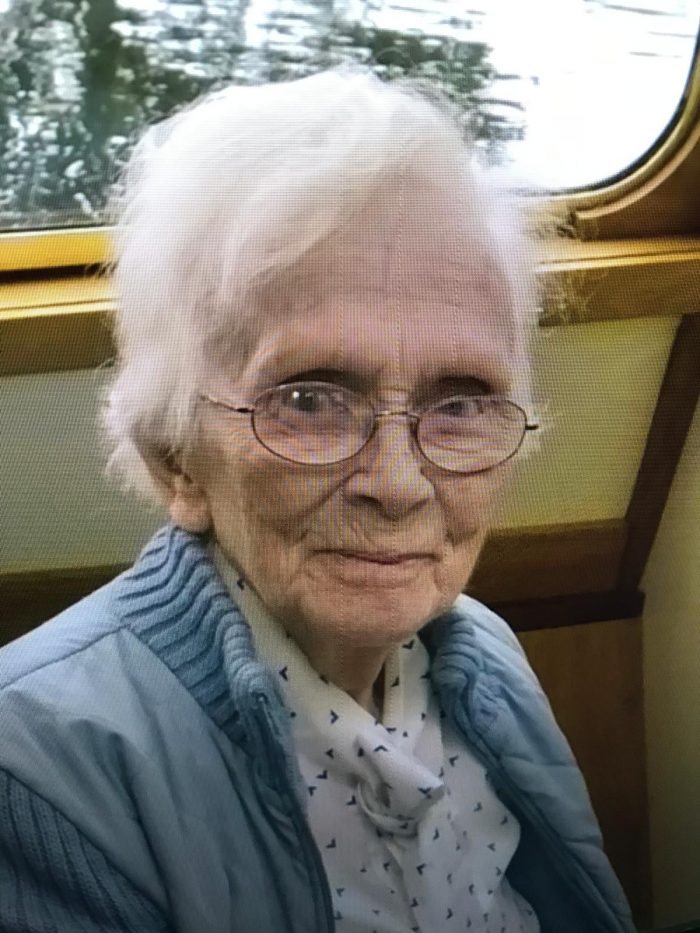
For me, personally, at this time, having so recently lost my mother, these promises have substance. … Yes, I am sure of Mum’s place at home with her Lord. … And despite the tears, when she asked me earlier in November to pray that she would be able to go home soon to be with her heavenly father, I prayed that prayer with confidence and hope. We were both crying, but we both knew that it was right. She was on her final journey and she was going home. For her, the journey was taking longer than she hoped, but her faith was firm.

The question of how we cope with the realities of our world has exercised the minds of people down through the centuries. Some people have retreated from the world, retreated into closed communities refusing to partake in the life of the world – people like the Hamish, like some very closed monastic orders. Others have given up on their faith altogether, becoming fatalistic – “How can God care,” they say, “when we see all this going on?”

The literature of Daniel and Revelation (and some other books of the bible) was one of the ways that people of Bible times were helped to cope with the realities of their world. They are books which still today mean a great deal to church communities facing persecution for their faith. In their difficult language they grapple with the reality of the world as it was when they were written, pointing to the signs of hope in the world of the day and on into the future to a time when God will put all things right.

Our churches are increasingly welcoming people from other parts of the world who have faced persecution, who are looking to escape the darkness, who long to live in the light of the Gospel. These are people we have come to love, who while their asylum applications are being considered still live in fear of the darkness. We pray with them in hope.

We live in difficult times. Times when the darkness feels like it might overwhelm us. ‘In-between times’ – times between Christ’s first coming and a day when he will return – times when we glimpse God at work in our world but when we also see things which make us wonder where on earth he is. More often than not our media and, in we are honest, we ourselves focus on the negative, we see the darkness rather than the light.

There are good things going on in our world. We could call them “signs of the Kingdom.”  But, in the end, we are still waiting for the fullness of God’s kingdom to come – the time when we will see for real, the whole of history enfolded in the arms of the God who created and sustains our world.

The readings for ‘Christ the King’ encourage us to believe, in the midst of darkness, that God is still Lord of History, that in the words of Baldrick off Black Adder, God still has a cunning plan, a plan which he will bring to fulfilment in due time.

Christ will one-day reign with obvious authority.

But these readings also encourage us to believe that God’s Kingdom is not just something for the future, that it is a reality now, and that it is something that we can work to bring to greater reality in our world.
How? … Through our faithfulness to the promise in the midst of darkness. We are called to faithfulness, to living God’s way, to being the people and the place where hope can be re-born in our towns and communities.

Ultimately, as Christians, we cannot flee the darkness or hide away from it or pretend it doesn’t exist.  We’re intended, by God, to be the one’s who are able, with the eye of faith, to see Christ, the Crucified King, in all his Kingly Glory and who can help those around us to sense the light and warmth of God in their lives. People who see things from God’s perspective and help others to do the same. Not people who escape the world, but people who enter the world with hope, bringing light into darkness and despair.
The Joys of Sunday 4th November 2018

What a wonderful day!!!!😇😇

Sunday 4th November has been a wonderful “full-on” day for this clergyperson!😇😇

Work started soon after 8am with time spent on final preparations for the day. Three sermons, written late in the week, needed reading through. I suppose you could call it a working breakfast!

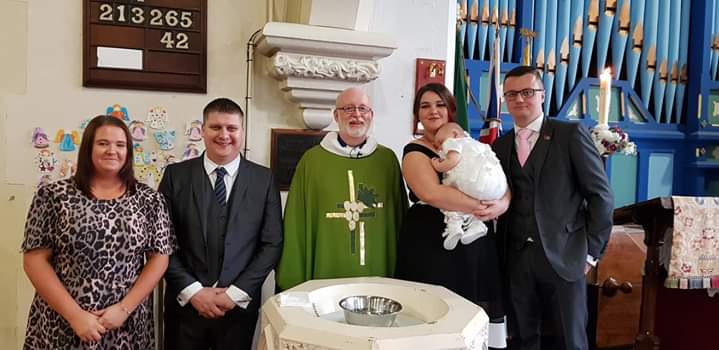
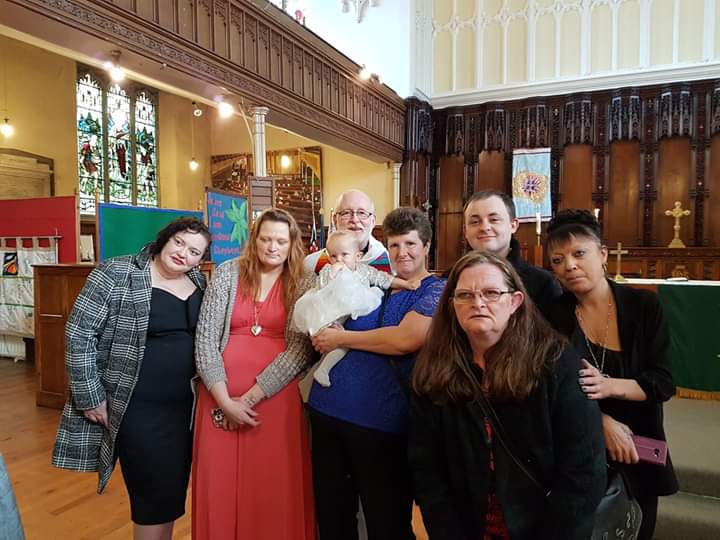
The first two services of the day were in two of the five churches that I have responsibility for. ……… St. James Church was full for Lilly Isabelle Anne Smith’s baptism at 9.30am, (early doors!)Because our clergy have a good number of things to do on Sunday and, perhaps more importantly, because Baptism is about becoming a member of Jesus’ family the church, we have our baptisms as part of our usual church services.

At St. James the baptism took place in a service of Holy Communion. The reading from Isaiah (25: 6-9) led me to think and talk about how the sharing together of food is one of the most important ways in which we acknowledge the importance of our relationships.

At St. Peter’s Church at 11.00am we baptised Elizabeth Leavy. I baptised her older brother a few years back. We welcome all the newly baptised into our church families.St. Peter’s is increasingly seeing visitors from other countries many of whom are seeking asylum in the UK. Some stay with us over many months either until they are moved elsewhere by our government, or their cases are decided. We seek where we can to support people through the asylum process and we are about to set up a drop-in centre in partnership with the Red Cross.

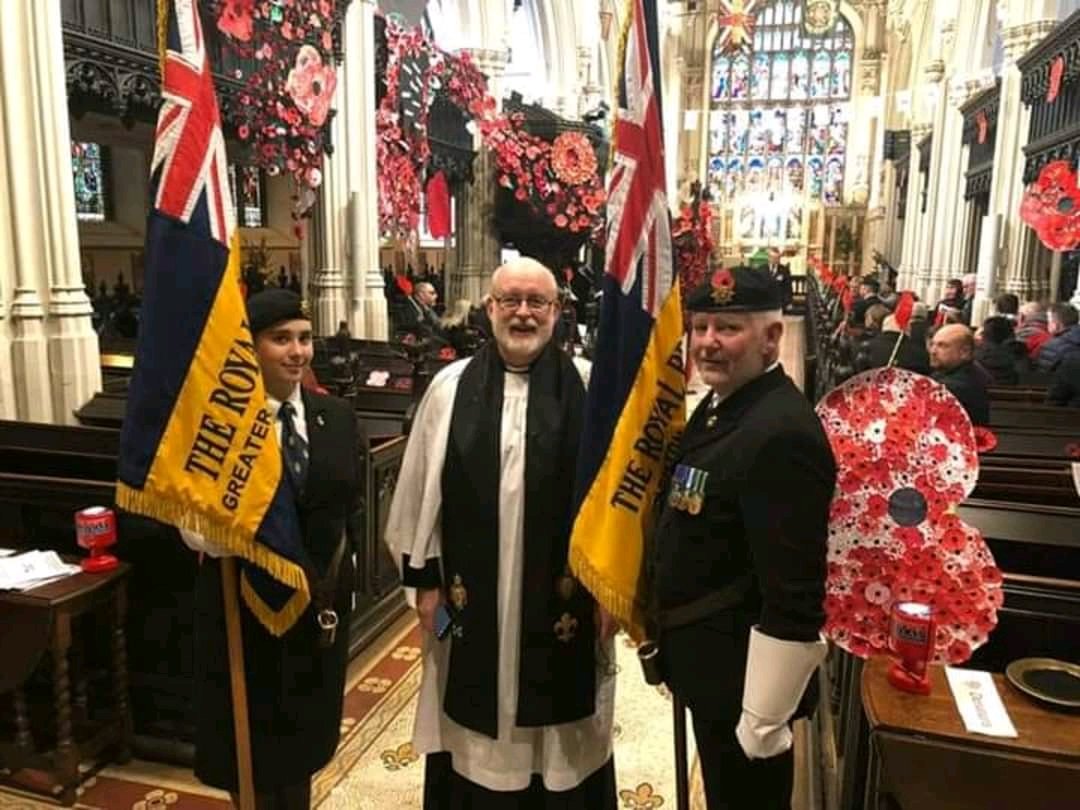
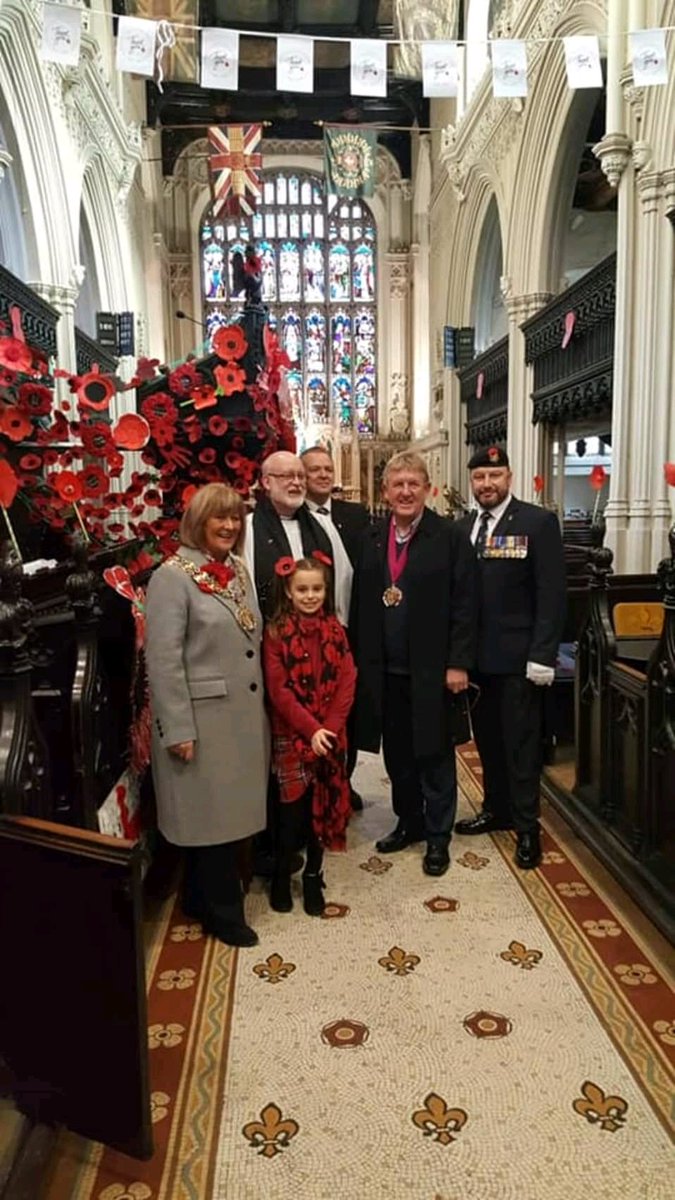
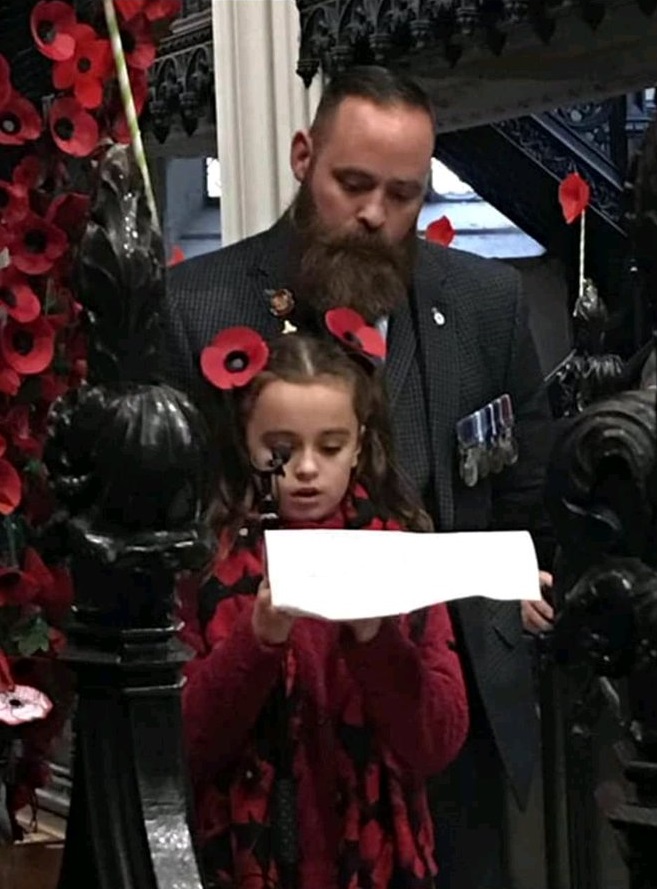
By 12.15pm it was time to dash to St. Michael’s Church, the civic church in Ashton. A number of community organisations and schools have worked with the Ashton Branch of the British Legion to create a poppy wall in church for the period from 3rd November to 12th November. Standards were processed, the poppy wall was dedicated and we had time to remember and give thanks, as part of the Legion’s ‘Thank You’ Campaign, for all who have worked for the betterment of society during and after the first world war. I have the privilege of being Padre for the local branch of the Royal British legion and so am honoured to take services such as these. By now, the day was just getting going! ….

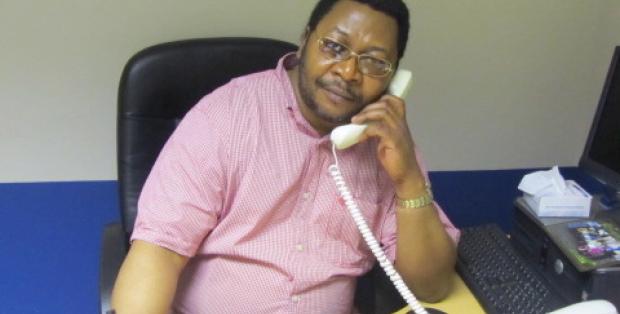
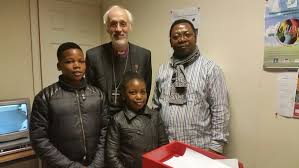
A close colleague has just moved on from our Parish – the Parish of the Good Shepherd, Ashton-under-Lyne. … Jules Mambu has served as a curate in the parish since he chose to move from the Roman Catholic Church to the Anglican Church. I have know Jules for 15 years. He was a refugee from the Democratic Republic of Congo, having served there as a Catholic priest and having discovered that being a faithful priest put him at odds with the government of the day.

Jules left the Congo after serving time in prison after challenging the policies of the government of the country.

Part of Jules’ ministry, over the past 15 years or so, has been to lead Tameside African Refugee Association (TARA) based in Ashton-under-Lyne. Discernment of God’s plan for his life has led him into the Anglican church and to move on from TARA.

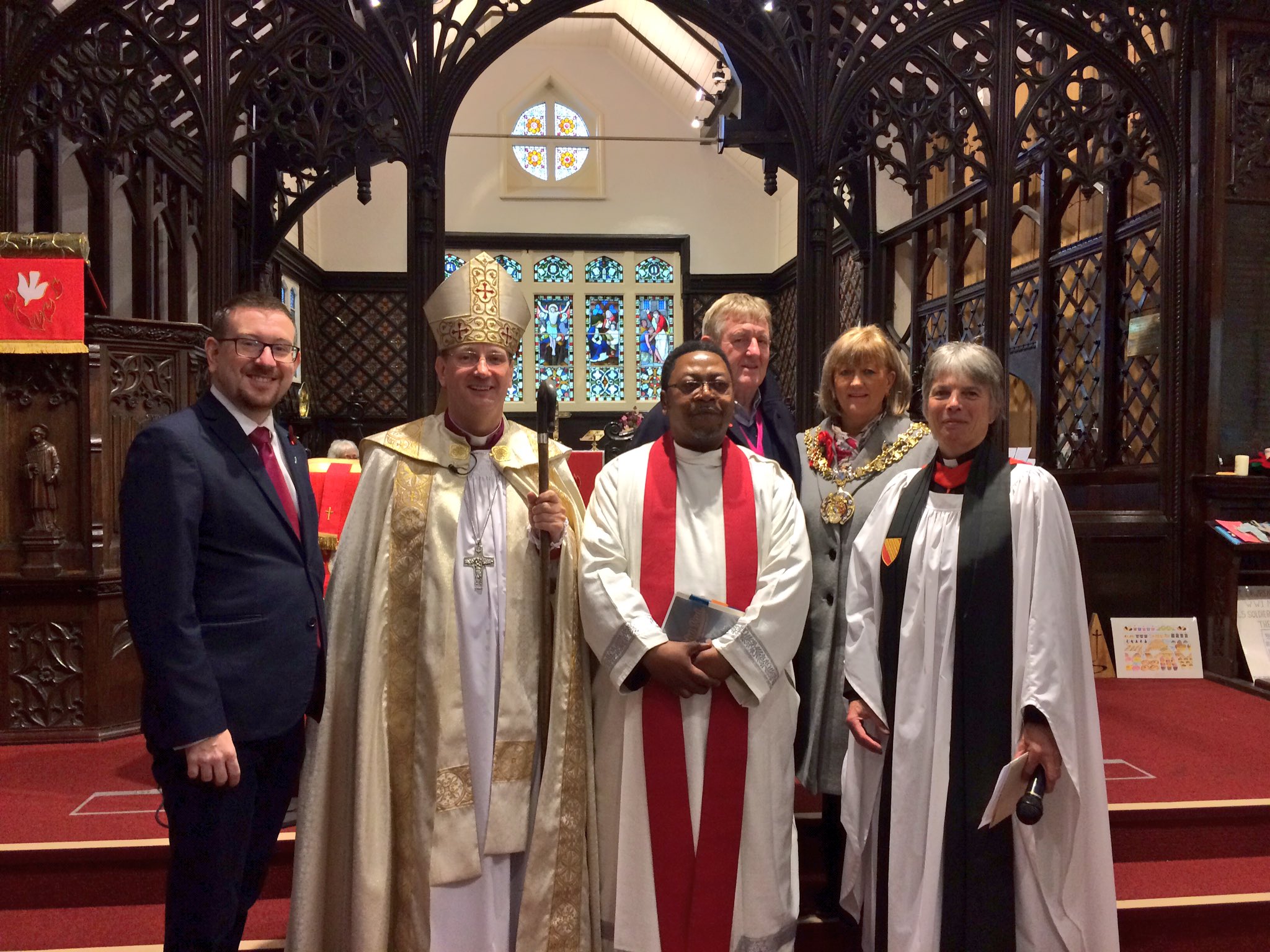
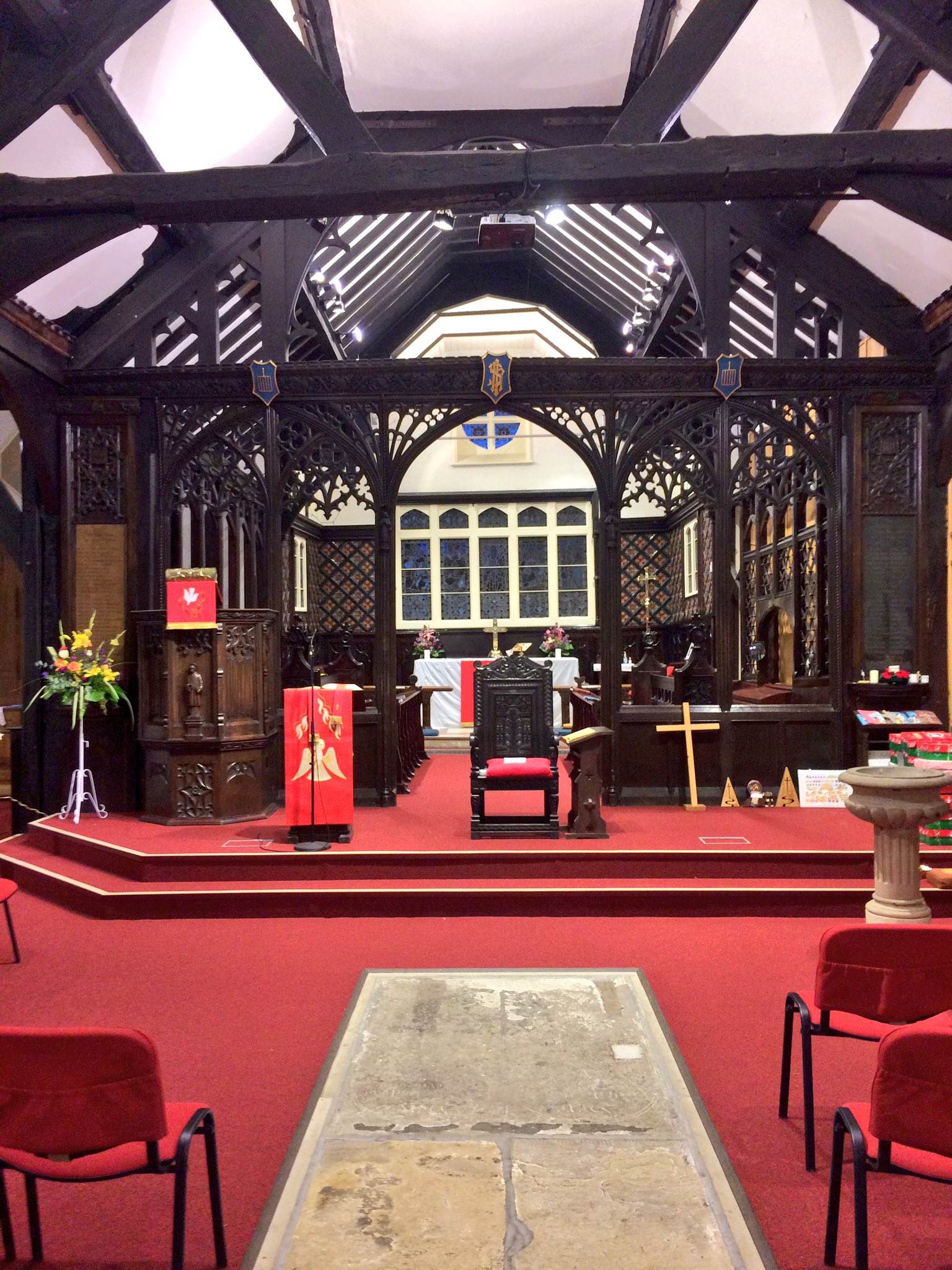
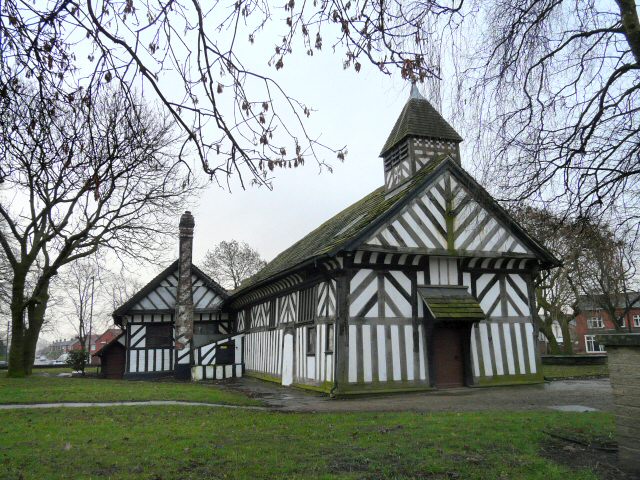
Jules now is licensed as Priest-in-Charge of St. Lawrence, Denton and will soon take on responsibility for St. Ann, Haughton as well. Both in Denton, both in Ashton Deanery, and both in Manchester Diocese. The licensing service at St. Lawrence’s was led by Bishop Mark Davies and Archdeacon Cherry Vann.Jules’ move to Denton leaves us (The Parish of the Good Shepherd) one member of clergy down. We wish Jules every blessing in his ongoing ministry in this new place and we pray for ourselves that we will revive additional resources for ministry in the centreof Ashton-under- Lyne. The church buildings which will fall within Jules’miniustry role ar e both really interesting structures!

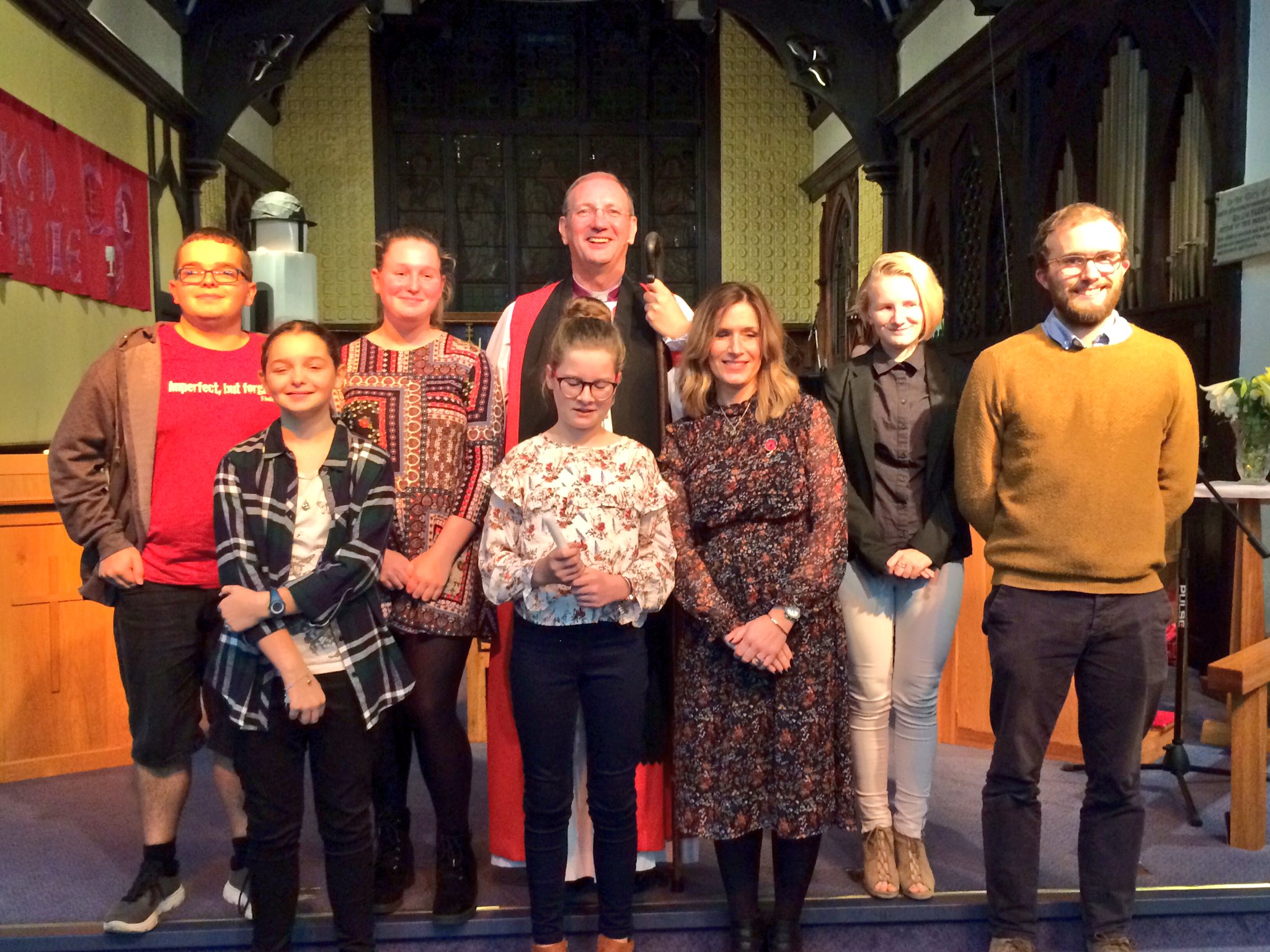
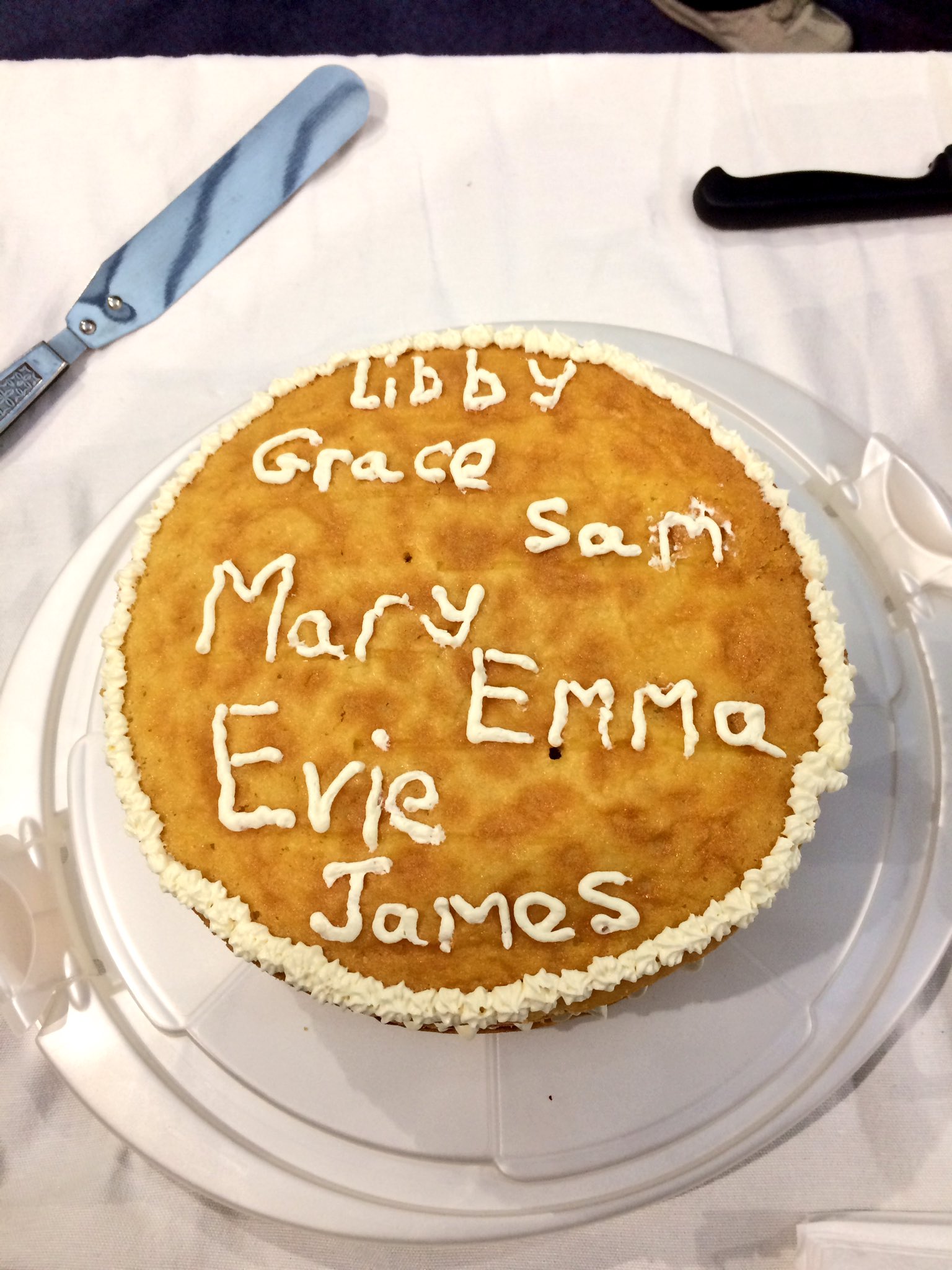
Jules’ installation and licensing were followed by a Confirmation Service at which the Parish of the Good Shepherd presented two candidates for Confirmation. It was a real joy over the past few weeks to be able to do Confirmation preparation with Emma and Evie.

Check out @BishMiddleton’s Tweet: https://twitter.com/BishMiddleton/status/1059522440605429761?s=09

A day in the llfe of a Manchester Diocese Clergy person!

Choices: John 6: 56-69; Joshua 24: 1-2a, 14-18; Ephesians 6: 10-20

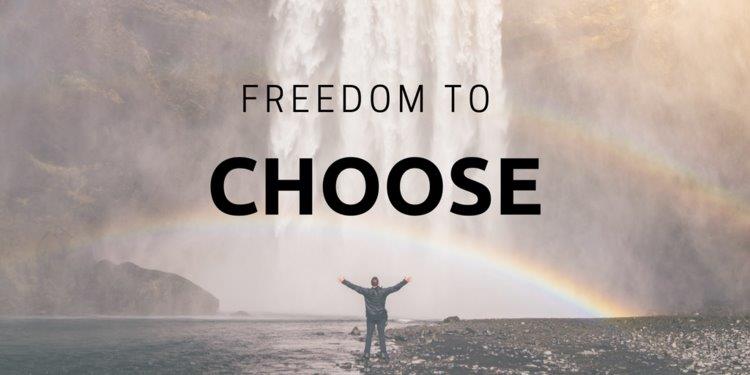
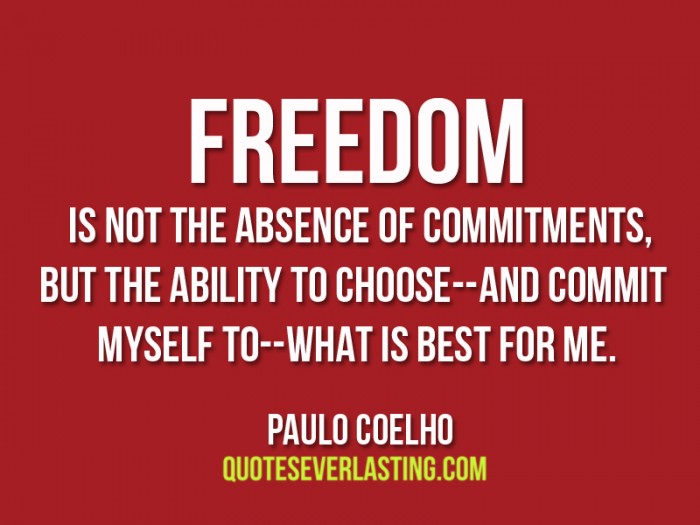
The right to choose. …. That phrase has been used in a whole series of contexts over recent years. It has become one to the defining characteristics of our society. We are told time and again just how important it is that we have the freedom to make choices. And rightly so, because the ability to make choices to make value judgements is one of the distinctive marks of being a human being.

I am sure you can think of examples – but here are a few …

A Woman’s Right to Choose – I am not going to enter the very complex debate about abortion. It is enough to acknowledge that a woman’s right of choice is an important issue in the ethical debate that surrounds abortion. This is the context that we most often talk of a right to choose.

The Right to Choose – is the title of a government advice booklet to agencies dealing with involved with handling cases of forced marriage. Each individual has a right to choose who they marry and an inalienable right not to be forced into a marriage for whatever reason.

The Right to Choose has recently been extended in the health service to mental health patients as well as those suffering physical symptoms. We can increasingly choose where we are treated and when we are treated. The Heath system is changing slowly to focus more on the patient than the clinician.

The withdrawal of the right to choose is also significant: Right wing totalitarian regimes deny freedom of choice to their subjects. Difference is frowned upon. Left wing/communist regimes value the proletariat above the individual, subjugating individual freedom to the needs of the masses.

In a very significant way, when we lose the ability to choose, we become less than human. Freedom and choice are really as fundamental to our lives as the right to shelter, food and water.

Successive governments have been right to emphasise freedom to choice.

Some of us might want to question whether we really do have freedom to choose. … So often, the right to choose a school for our children is limited, or perhaps negated, by the catchment area of the school. … Patients’ choice in the health service is often limited by our ability to travel to a hospital. … It is often almost impossible for a woman in abusive relationship to make the choice to leave, she feels completely trapped by her circumstances.

Nonetheless I feel so much better when I’m treated as an individual and given a say in the things that affect me. When I am given the freedom to choose.

Freedom of choice is so important. … Yet putting the two words “freedom” and “choice” in the same phrase is perhaps misleading. … For the very exercise of our freedom to choose restricts our freedom. When we choose to join a club, we are choosing to be bound by its rules, if not we very soon find that we are no longer welcome. When we choose to marry, we commit ourselves to one person, we are not free to play the field.

Choice, by its very nature restricts freedom.

Our readings set for 26th August 2018 seem to focus on that ability to choose.

Joshua actually uses the word. … “Choose this day whom you will serve,” he says. “As for me and my household, we will serve the Lord.”

Paul in Ephesians encourages us to make the choice to stand firm under attack, to stand against evil, and he promises us that God’s armour, God’s resources are available to us as we stand firm.

Jesus presents his disciples with a choice. “If my words are too hard for you,” he says, “you don’t have to stay!” And we heard Peter’s response, “Lord, to whom can we go? You have the words of eternal life.”

All three passages leave us with a challenge: “What choice are we going to make?”

Are we going to do our own thing, follow our own instincts, in life? Or are we going to commit ourselves to God’s agenda? Are we going to stick with God even when the going gets tough?

God gives us the freedom to choose. He does not force us to accept him. Jesus doesn’t demand our allegiance. He offers himself to us as friend and as Lord, with every possibility of our turning our back on him.

Vulnerable love, love which was willing to die for us, love which does not impose itself on us but waits patiently for our decision. Love which is prepared to release us if we choose to turn away from him.

We are free to choose.  …. Yet as we exercise our freedom to choose, we make commitments which on the face of it restrict our freedom. We cannot make Christ ‘Lord’ and still give other things a more important place in our lives. Christ being ‘Lord’, means just that, Lord of our lives, our families, our work, our lifestyle. The free choice we have made, the one we continue to make as we commit ourselves to Christ each week in worship, seemingly limits our freedom.

And yet, here is perhaps the greatest paradox of all, when we commit ourselves to Christ as Lord we don’t feel trapped by our choices – we feel set free, set free to be who we really are. Here in the Christian family, when it is functioning as Jesus intended, we find our true freedom, our true dignity, our true equality as we worship the one who is worthy of all the praise that we can offer.

Contemporary society talks of human rights and ‘the freedom to choose’. In Christian worship, we confess that we cannot speak of ‘our rights’, for we have been given everything and forgiven everything and promised everything, not as of right, but of the loving grace of God who, as we freely give ourselves to him, as we chose his sovereignty, freely gives us all things.

When we come to Communion, we exercise our right, our freedom to choose, and as we take bread and wine into ourselves, we commit ourselves again to a choice to be God’s children and family. The end of August heralds a new cycle, a new academic year, it is a time for re-commitment re-commitment to God’s sovereignty in our lives. And as we make that renewed commitment we experience once again the release that comes from being who we truly are! … Those who are loved, accepted and redeemed, chosen ourselves by the grace of God.

The Sheffield, Ashton-under-Lyne and Manchester Railway – 3

The Sheffield, Ashton-Under-Lyne and Manchester Railway[1] was opened in stages between 1841 and 1845 between Sheffield and Manchester via Ashton-Under-Lyne.

The company was formed in 1835 and it appointed Charles Vignoles as its engineer.[2] A route was proposed which required a 2 mile long tunnel and passed through Woodhead and Penistone. Vignoles and Joseph Locke[3] were asked to make independent surveys and in October met to reconcile any differences. Their meeting resulted in the decision to build a longer tunnel so as to lessen the gradients needed on the line.

The line obtained its Act of Incorporation in Parliament in 1837 and work on the tunnel started. Vignoles arranged for the boring of a series of vertical shafts followed by a horizontal driftway along the line of the first bore. Enough land was purchased for two tunnels but it was only intended to build one at first.

A ceremony was held on 1st October 1838 at the west end of the tunnel at which ground was disturbed for the first time. In 1839 work was progressing well with Thomas Brassey as contractor. However Vignoles was not relating well to the company’s board and he resigned. Joseph Locke agreed to act in a consultative capacity if the Board would appoint resident engineers for the day to day supervision of the work.

In 1841 Locke reported that the tunnel would probably cost £207,000, about twice the original estimate, because the amount of water encountered required the purchase of more powerful pumps. By this time a length of the line was open for business from Godley to a temporary Manchester terminus at Travis Street.

In 1842, Manchester Store Street (now Piccadilly) was brought into use and at the eastern end the line had linked to Broadbottom and Glossop.

By 1844, the western end of the Woodhead tunnel had been reached.

In 1845 the eastern section of the line in Yorkshire was opened between Dunford Bridge and Sheffield. The tunnel was finally ready for inspection in December 1845 and after it was approved the formal opening of the line took place on 22nd December that year.

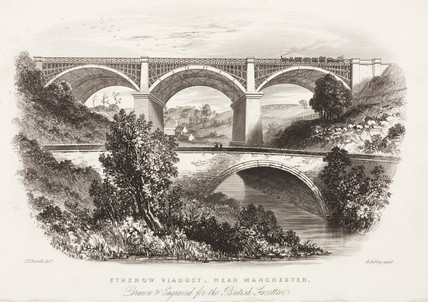
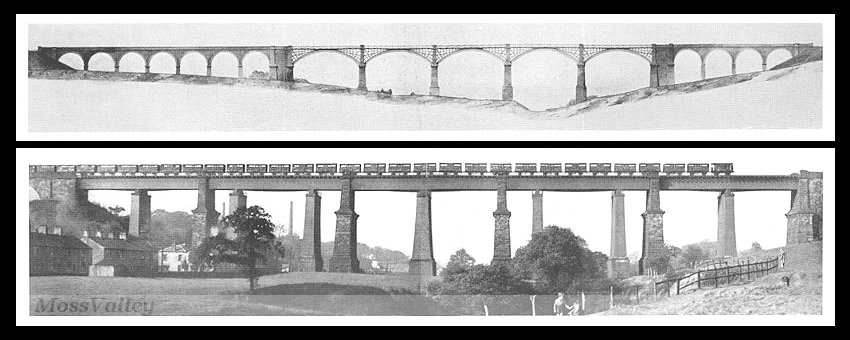
Besides Woodhead, there were short tunnels at Audenshaw Road, Hattersley (two), Thurgoland and Bridgehouses. Among the bridges the two most notable were the Etherow Viaduct and the Dinting Vale Viaduct, the latter with five central and eleven approach arches. The line initially terminated at a temporary station at Bridgehouses until Sheffield Victoria was built in 1851.Dinting Vale Viaduct – at the top, the original viaduct, at the bottom, the later replacement.
While the line was being built, the directors were looking at ways to extend it. They had hoped to connect to the Liverpool and Manchester Railway, but their approach to the board of that line was rejected. Eventually they secured a relationship with the London and Birmingham Railway which enabled the Manchester, South Junction and Altrincham Railway to be put before Parliament in 1845. That line was not completed for some years.

The Ashton to Stalybridge branch which had been part if the original scheme was completed in 1845. And in the same year a branch was built to Glossop itself, which needed no Act, since it was financed by the Duke of Norfolk and ran over his land, the original Glossop station was renamed Dinting.

In 1844 representatives of the proposed Sheffield and Lincolnshire Junction Railway made plans for a line from Sheffield to Gainsborough. Plans were also made for the Barnsley Junction Railway to connect Oxspring with Royston on the North Midland Railway.

The directors of the Sheffield, Ashton-under-Lyne and Manchester Railway realised that expansion was best achieved by amalgamating with other lines, after the pattern being set by the Midland under George Hudson.

In 1845, they gained shareholders approval for the Manchester, South Junction and Altrincham Railway,[4] the Sheffield and Lincolnshire Junction Railway,[5] and also the proposed Barnsley Junction Railway.[6] They would also lease the Huddersfield and Manchester Railway and Canal Company.[7]

The board also contemplated:

• a line from Dukinfield to New Mills connecting with the Manchester and Birmingham Railway (https://en.m.wikipedia.org/wiki/Manchester_and_Birmingham_Railway)
• an extension of the Barnsley Junction to Pontefract joining the Wakefield, Pontefract and Goole Railway.
• The Huddersfield and Sheffield Junction Railway.

In September 1845 agreement was reached in a meeting in Normanton, agreement was reached to amalgamate with the Sheffield and Lincolnshire Junction Railway and the Great Grimsby and Sheffield Railway. Further amalgamations included the Grimsby Docks Company Railway and an attempt to take over the East Lincolnshire Railway which was planned between Grimsby and Lincoln, although ultimately that was taken over by the Great Northern.

The merger received royal assent in July 1846 and the combined company was formed at the beginning of 1847. The line became the Manchester, Sheffield and Lincolnshire Railway.[8]


References

1. https://www.gracesguide.co.uk/Sheffield,_Ashton-under-Lyne_and_Manchester_Railway, accessed 9th March 2018.

2. https://www.gracesguide.co.uk/Charles_Vignoles, accessed 10th March 2018.

3. https://www.gracesguide.co.uk/Joseph_Locke, accessed 10th March 2018.

4. https://en.m.wikipedia.org/wiki/Manchester,_South_Junction_and_Altrincham_Railway

5. https://en.m.wikipedia.org/wiki/Sheffield_and_Lincolnshire_Junction_Railway, accessed 10th March 2018.

6. http://discovery.nationalarchives.gov.uk/details/r/C1793638, accessed 10th March 2018.

7. https://www.railscot.co.uk/Huddersfield_and_Manchester_Railway_and_Canal_Company/index.php, accessed 10th March 2018.

8. https://en.m.wikipedia.org/wiki/Manchester,_Sheffield_and_Lincolnshire_Railway, accessed 10th March 2018.

Word and Wisdom – John 1:1-14, Proverbs 8, 1-11, Colossians 1:15-20

The first Christians were Jews. They came from a small back water in the Roman Empire. A seemingly irrelevant outpost in a bustling and cosmopolitan world. They faced a big question. How could they help people throughout the Greek speaking Roman world engage with Christian faith? How could a faith which was initially expressed in the framework of the Jewish culture be understood by people of very different cultures? Throughout the book of Acts we see people like Paul, Peter, Silas, Barnabas, Timothy, James and others struggling with these questions – they knew what Christian faith looked like for a Jew living in Palestine, but what should it be like for a Greek intellectual in Athens?

Their situation is much like our own. Just like they did, we wonder how we can make what we believe intelligible to people in today’s world who have little or no experience of Church and who see Christian faith as irrelevant, if not ridiculous.

Our readings today relate to struggle the early church faced: How could they convey the Gospel to the Roman and Greek world – the good news which was so bound up with Jesus’ divinity and humanity. … They had experienced Jesus as both divine and human. They could talk of him as the image of the invisible God, the first born of all creation. How could they explain that a divine being became human? How could they help people understand? As they reflected on this they realised that their scriptures – the Old Testament had at least a couple of ideas that would help them.

We meet the first idea in Genesis – in the story of Creation – God spoke and something happened. God only needed to say a few words and a whole world and universe came into being. Words for God were not just things to say, concepts to express or write down. Words were effective, they achieved something. God’s Word was God at work in the world.

The second idea comes in other parts of the Old Testament. There they found passages about Wisdom. Today’s reading is an example. Wisdom is spoken of as a personality, a person, who existed before the worlds were created. Wisdom at God’s side as he created. Wisdom as the crafts-person moulding creation and delighting in what was made.

As Jewish Christians were asked about Jesus by their Greek neighbours. As the first Christian theologians tried to explain how God was born as a baby in Bethlehem. They saw something in the Greek culture that would help them to explain better to Greek and Roman people, just what they meant by Jesus being the Word and Wisdom of God, both divine and human.

The word for ‘word’ in Greek is ‘logos’. Greek philosophers used that word ‘logos’ in a special way – by the time of Christ – they used it to refer to a kind of ordering principle of the universe. Sometimes they used ‘nature’ and ‘logos’ interchangeably. What they meant was that there was an something behind all of nature – giving it a purpose and meaning. The principle by which life held together – perhaps ‘wisdom’. And as Greek philosophers talked of the ‘logos’ it was as though they almost gave it a personality.

Christians realised that here was a way of explaining to Greek and Roman people just who Jesus was – and the first verses of John’s Gospel were born. John gives the ‘Word’, the ‘Logos’, a central place. He describes the ‘Logos’ as God, the Creative Word, who took on flesh as the man Jesus Christ. … ‘God active in the created world’ = ‘Logos’. … God’s Word expressed as a human being. It might sound strange to us, but those early Christians had successfully managed to translate the concept of the incarnation into a form that Greek and Roman people might understand

The challenge to us is similar. To find ways of expressing what we believe in terms and in ways that people in today’s world will understand. We cannot say, it worked in the past so it will work again. We cannot just do the things we have always done. We cannot continue to use only the words that we understand. We cannot continue to be just the church we have always been. Words and customs move on. Meanings change, hopes and fears change. The world is shrinking and ideas from the four corners of the world now influence the values of every society.

You only need to think of the way that the meanings of words have changed over the centuries. I have mentioned this before: The word,‘Comfort’ – what does that mean now? On the Bayeux Tapestry it means something completely different. Look out for Bishop Odo comforting his troops …….

‘Organic’ – until very recently that was a group of chemicals which contained Carbon – a mixture of different substances both noxious and benign. Now we use it to mean wholesome food, untainted by many of the chemicals which would naturally have fallen into the ‘organic’ grouping.

You’ll know many other words which have changed their meaning over the years. Those changes are like small snapshots on what has been happening in society – a process of change which is accelerating not slowing. And if we don’t change in at least some measure, we will be increasingly misunderstood and become increasingly less and less relevant – having little or nothing intelligible to say to people who need to know the love of God.

As we participate in a process of change we do just what Jesus did ….. The Word, Jesus, became flesh and dwelt among us full of grace and truth. God changed, God became human, God learnt new things, expressed himself in different ways, felt tired for the first time, experienced limitations for the first time. God changed so as to bring his love to his creation. The early church changed its rules, expressed itself in new and different ways, so that its mission to the Roman world might be effective. And we are called to do the same to look for new ways to communicate the Gospel to those who live around us but who have none of the history of Church involvement that we have.

Timing is Everything – Luke 1:26-38

Today, Sunday 24th December 2017, is the 4th Sunday of Advent and it just so happens that this year it is also Christmas Eve. This evening and tonight we will be listening once again to parts of the Christmas story, but this morning, along with every church that follows the lectionary, we are remembering Mary and her role as a precursor, a witness, to the coming of the King and her role as mother of Jesus. Our fourth candle on the Advent wreath represents Mary.

Timing is everything.

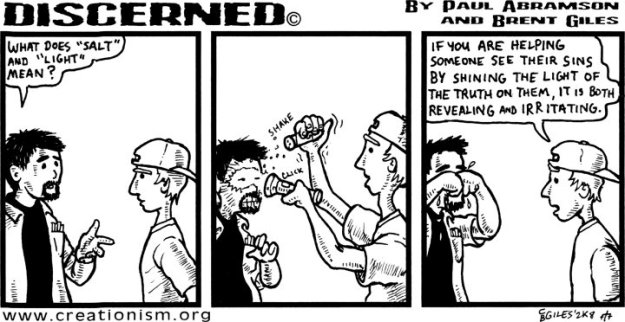
The Gospel reading set for this morning is usually read every year on one particular date, the Feast of the Annunciation which falls on 25th March each year – unless its date clashes with Easter or a Sunday.

Timing is everything.

The liturgical and calendar scholars among us will have noticed that 25th March, is exactly 9 months before Christmas Day. Our gospel reading makes a lot of sense as part of the Christmas story, but seemingly less so in March at or around Easter time. However, most of us will recognise that when we are talking about pregnancy, 9 months is a very important time period. The feast of the Annunciation is very carefully placed exactly 9 months before the birth of Jesus – which suggests that Jesus was neither a premature nor a late baby!

I was born on 11th May 1960, 9 months was a very important period for me – for my parents were married on 1st August 1959 (9 months and 10 days before I was born). I count as a honeymoon baby – but if pregnancies were usually 10 months then there would be something different to say about my status!

Timing is everything.

So, around Easter time each year, just as we are today, we are reminded of Mary’s call to be the Mother of God. Mary hears words from the Angel Gabriel which cause her heart to miss at least one beat – called to be the God bearer, the Theotokos, called to co-operate with God in creating his Saviour, called to bear the stigma of being with child out of wedlock. Both gift and burden, both grace and shame.

As we move on through our liturgical year, through Christmas and on to the Feast of the Presentation, or Candlemas, we will be starkly reminded of Simeon’s words to Mary. For her, not only would the pregnancy be a long a difficult time of waiting – but the whole of her life was to be spent waiting for a painful end.

And as we travel towards Easter, we will be reminded even more starkly of Mary’s encounters with joy and suffering. On Good Friday, we will appreciate again that Mary understood pain – she bore in her body the pain of the cross – she felt the nails being hammered into the wrists of her son, she agonised as she watched him die the most painful of deaths. She had to release her child into God’s eternal care long before his time. And, as those things happened, she felt a mixture of all the emotions a mother can feel – anger, guilt, shame, and deep aching loss. Like any mother, her grief was to be unbearable.

Mary also understood the joy of motherhood – she watched her precocious child grow to be a wonderful man. She felt the joy of being part of the making of this special son. And on the first Easter Sunday she had her son returned to her alive – wonderful, exciting, tremendous … but then she too, along with all those who knew Jesus, had to realise that she could not cling on to her Son. He was returning to his Father in heaven.

Timing is everything.

Here today we are called, by our Gospel reading, to see the Christmas events and those events which follow in the spring-time of our church year through the eyes of a mother – the eyes of Mary. We are called today to encounter Mary’s confusion at the words of the Angel. We are called too, to encounter Mary’s pain alongside the suffering of Christ, and as we do so, the pain will be just that bit more tangible.

We are called to feel the despair and the loss of Good Friday as we sit with Mary at the foot of the cross weeping for the loss of her beautiful son. And, if we are prepared to weep those deep tears of loss; if, in just a little way, we endeavour to identify with all mothers who have lost those they love; if, at least for a few days at Easter, we refuse to rush on to the joy of resurrection, because we have learnt patience like a pregnant mother waiting for the birth of her child; if we stay with the pain. If we struggle to understand the overwhelming and crushing burden of the grandmothers who because of HIV/AIDs now are sole carers for many of the grandchildren. Our encounter with the joy of Christmas in the services on Christmas Eve and Christmas Day, will be all the more intense.

For we will have understood the burden of pain carried by Mary and we will encounter something of the release she felt from the pains of labour as she welcomed her son into the world as a helpless child at Christmas. We might even feel something of the unbelievable joy of holding God in our own hands and arms, just as Mary did on that first Christmas Day. We might even feel some of the pride that she felt at the birth of her child and something too of her overwheming desire to tell everyone about the wonder of the Christ-child and that faith that was born with him.

Timing is everything – not 9 months but less than a day before the birth – this is a very important day in our preparation for Christmas. Now is our chance to listen, … to focus on the Christmas story. Let’s not let it slip by.

Great is the Darkness …..

There is a song which is sung relatively often at St. Peter’s Church in Ashton-under-Lyne. It starts like this:

‘Deep is the darkness that covers the earth, oppression, injustice and pain. Nations are slipping in hopeless despair. ………’

While the song goes on to call on Jesus to: ‘Pour out [his] spirit on us today’, the first words of the song have always seemed to me to be a very negative beginning.

The song is based on the words of Isaiah 60:2 …… ‘See, darkness covers the earth and thick darkness is over the peoples, but the LORD rises upon you and his glory appears over you.’

Our experience of life over the end of May and beginning of June seems to be very appropriately summed up in the first words of the song. ‘Deep is the darkness‘ ….. This has been a very difficult time. The bomb in Manchester Arena killed 22 and maimed many more. Two attacks in Kabul, Afghanistan have killed over 100 people and left so very many injured. The attack on a church in Egypt was devastating for the Christian community there. Then came the van and knife attack in Central London. ….

Deep is the darkness that covers the earth, oppression, injustice and pain.

We feel unable to make sense of all that is going on, we feel anger and despair, we grieve for the loss of innocent young lives. Why does God allow these things to happen?

‘Why’ and ‘How could’ questions are important, often they challenge our faith. How could a God of love permit such atrocities to take place? Ultimately, however these questions don’t take us very far, especially when the darkness we encounter is the result of human actions.

We are sentient beings who make our own choices. It is only when we are free to make our choices that love can thrive. It is because we are not automatons that we are free to make mistakes, free to make wrong choices, but also free to love. Freedom allows us to place others ahead of ourselves.

Love, peace and joy are offered to us as we faithfully follow Jesus. It is when we look elsewhere for meaning, that we open ourselves up to the darkness.  It is when we think that we know best that we lose sight of the light and allow the darkness in.

The song goes on to say: ‘Come Lord Jesus, … pour out Your spirit on us today. May now Your church rise with power and love, [your] glorious gospel proclaim. In every nation salvation will come to those who believe in Your name. Help us bring light to this world. ….’

No doubt you watched some of the concert held at Old Trafford Cricket Ground on Sunday 4th June. The call from so many of the artists at that event was for love to triumph over darkness and hatred.

Just as darkness only thrives where there is no light, so hatred only wins where love is absent. Perhaps it was no coincidence that the 4th June was Pentecost, the day when we celebrate the gift of the Holy Spirit to the first disciples. It is the Holy Spirit at work in each of us that enables us to love others, to place their needs first. It is the Holy Spirit who enables us to be those who bring light into the darkest places. It is the Holy Spirit that reassures us that we are loved, that we are safe in God’s loving embrace. It is the Holy Spirit who sets us free to love others because we are sure that we are loved.

The better questions are not, ‘Why’ or ‘How could …’ questions. The better questions are ‘What next’ questions: What can we do to overcome hatred with love in our own communities? What can we do to shed light into the darkest places of our own lives and communities? What can I do to ensure that I do not act out of envy or hatred, but rather act out of love?

“Do not be dismayed by the brokenness of the world. All things break. And all things can be mended. Not with time, as they say, but with intention. So go. Love intentionally, extravagantly, unconditionally. The broken world waits in darkness for the light that is you.

L.R. Knost

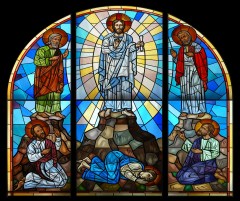
Matthew 17:1-9 – The Transfiguration

transfiguration-2I have two brothers and a sister – all younger than me. Academically, three of us did pretty well: we could read well before we went to school, we passed the 11 plus and got into the local grammar schools where we lived in King’s Lynn in Norfolk.

One of my brothers was different (and I hope he does not  mind me talking about him here). He struggled with his reading, only really getting going when he was about 8 years old – he went to the local secondary modern, and for the first 4 years there achieved little more, academically, than propping up the class with his results. Nothing academic seemed to interest him.

At least that was true until he decided what he wanted to do with his life. He set his heart on being a policeman. He was told that he needed some basic CSEs to get into training college and he began to work, he worked his socks off. He scraped the CSEs he needed and got into Hendon Police Training College in London. He had found something he loved and he was transformed – when he graduated from Hendon he came top of his intake.

Dare I say that he was transfigured by his desire to be a policeman? You may know a similar story of someone you know being changed in quite a dramatic way.

Late in his life, the Cellist and Conductor Pablo Casals was full of arthritis, but even at the age of 90 whenever he picked up his bow and began to play his Cello he was transformed. He became agile and supple – the artist that he had always been – consumed by what he was playing.

Illness and incapacity have been part the experience of many great people – Charles Darwin, Sigmund Freud, Florence Nightingale (she did most of her campaigning from her sick bed) – to mention just a few. For them, like Pablo Casals, when they were engaged in their most brilliant work, the limits which bound them just seemed to fall away.

You see, people can be transfigured in their experience of life. In some cases, out of pain, … beauty, humanity and ingenuity can be born.

And the more mundane of us – you and me?

Our lives too can be transfigured by finding our vocation, the thing that we do well. This is something that many people who have been called to be priests say, it is almost as though they have found themselves in a way that they had not done before. If you are interested, try asking one of us clergy, or perhaps someone else in one of the caring professions, perhaps even try reflecting on your own experience of discovering what you were going to do with your own life.

We’ve read today of Jesus’ transfiguration. … At the transfiguration, Jesus is revealed, as more than a carpenter turned Rabbi; more than a man whose legs ached as he walked round Israel; more than a preacher whose voice could fail after hours of speaking to crowds. More even, than one who could bruise and bleed when tortured and crucified. He’s revealed as God’s Son in human form, truly God and truly human.

We don’t know how Jesus= transfiguration relates to our perhaps lesser experiences of transfiguration. He was, after all, divine as well as human. But through his resurrection, and through our own baptism, we have been promised some share in his divinity. And simply by being human we have a capacity for being more … for being different. When our attention is held, much that’s negative in our lives, seems to get set aside.

It is possible to change, to be different.

Don’t let anyone tell you it isn’t. It is God’s work, and it is an essential part of the Gospel which we believe; that we are not trapped, not held captive by our past or by our present. This is a theme of our Gospel reading as we approach Lent. Transformation, transfiguration, is possible for us who follow Jesus. Not just momentary transfiguration, but transformation that will affect and change our future.

We know that this happened to Peter, James and John – cowering, frightened men became powerful proponents of the Gospel, fearlessly facing danger and death because they had been transfigured, transformed by the love of God. Jesus momentary experience became their permanent experience. The Gospels ask us to believe that the same can happen for us, as we let God work in our lives.

Salt and Light – Isaiah 58:1-12 and Matthew 5:13-20

During this past week we have celebrated Candlemas, the Feast of the Presentation. It is a point of change int he church’s year. Mary and Joseph take Jesus to the Temple to receive God’s blessing.  There they meet Simeon and Anna, two old people who had been faithfully waiting for God to break into their world.  When they saw Jesus they realised that this was who they had been waiting for – in Simeon’s words; “my eyes have seen your salvation, which you have prepared in the presence of all peoples, a light for revelation to the Gentiles and for glory to your people Israel.” But Simeon also says to Mary, “and a sword will pierce your own soul too.”

Just as Mary’s thoughts are disturbed by Simeon’s words, so at Candlemas, we mark the end of the season of Epiphany and start our journey towards the Cross and Good Friday, through Lent and Holy Week and on to Easter.  Candlemas is often celebrated surrounded by candles, the theme of light is important The reading set for the 4th Sunday Before Lent continue this theme.

In the Old Testment reading, Isaiah talked about what God looks for in his faithful people – let me remind you of his words…..

“When you share your food with the hungry
    and provide the poor wanderer with shelter—
when you see the naked and clothe them,
    and do not to turn away from your own flesh and blood?
Then your light will break forth like the dawn,
    and your healing will quickly appear;
then your righteousness will go before you,
    and the glory of the Lord will be your rear guard.
Then you will call, and the Lord will answer;
    you will cry for help, and he will say: Here am I.”

“If you do away with the yoke of oppression,
    with the pointing finger and malicious talk,
and if you spend yourselves in behalf of the hungry
    and satisfy the needs of the oppressed,
then your light will rise in the darkness,”

Isaiah reminds us that shining with the light of God’s love in the word around us is about caring for those who lack food, shelter and things to wear and caring for those who are oppressed.  He also reminds us to take care with the way we communicate – that if we point our finger and indulge in malicious talk then we are not letting our light shine.   The challenge is clear … “let your light rise in the darkness,” says Isaiah. Challenging stuff indeed!

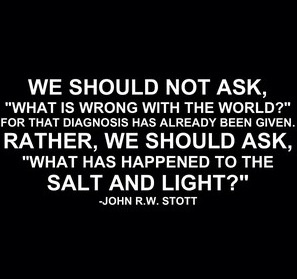
Matthew uses two images to help us understand what it means for us to draw people closer to God.  “As Christians,” he says, you are called to be salt and light to the world.  To be ‘the light of the world…… letting our light shine before others, so that they may see the good we do and praise God.’  To be the ‘salt of the earth’.

Both salt and light make a great difference.  Salt not only preserves and disinfects but it brings out the full flavour of other ingredients.  Light allows everyone to see clearly what’s around them.  So, we are called to do those things that let God’s light shine out from us, we are called to make a difference in the lives of those we meet.  In all we say, think and do, God asks us to reflect his values, his love, his life, his light.

However, if light and salt are not used carefully they can destroy rather than enhance. When you are cooking, adding the right amount of salt is critical to producing a dish that has a good flavour.  Too much and you’ve ruined the dish, all you will taste is salt and no-one will want to eat it.  Just the right amount, and you won’t actually taste the salt but the dish will be delicious – all the other flavours will be enhanced.  Used well, salt is helpful, used in a way that dominates, it is overpowering and destroys!discerned_saltandlight

We also have to be careful with light.  … Have you noticed how when people drive towards you in the dark, often your eyes get pulled towards their headlights and you get distracted from the road in front of you. … or if someone has shone a bright light straight at you, you’ll know how you are blinded and can’t see anything.  For light to be useful, it has to be carefully directed and its level balanced.  Too bright and in the wrong direction and no-one can see anything.  But just the right level of brightness and shining at what we want people to see, then it makes all the difference in the world.

Matthew prompts us to think about whether we are salt and light, but he also prompts us to consider how we are salt and light.

Things had gone wrong for the people Isaiah was talking to.  They had made their adherence to their religion a show – something to boast about. They were being heavy handed with the salt and shining the light too brightly into the eyes of others, so that all anyone could see was them carefully following religious practices. Their behaviour hid the reality of God’s love.  They didn’t make a difference in the lives of others and so were not working with God but against him.

1d5e83e00422b659f2c4a4a8dddb2678What about us?  What do people see when they look at us? Do we obscure the light? Or do others see people who are different, who are making a difference?  Do they see people who reveal God’s love, God’s peace, God’s joy and God’s hope?  Do they see people who are salt and light to the world?
What might we do to ensure that we are both salt and light in our world? I think Isaiah is very clear, and we could do a lot worse than listening to his agenda for mission:

“When you share your food with the hungry
    and provide the poor wanderer with shelter—
when you see the naked and clothe them,
    and do not to turn away from your own flesh and blood?
Then your light will break forth like the dawn,
    and your healing will quickly appear;
then your righteousness will go before you,
    and the glory of the Lord will be your rear guard.
Then you will call, and the Lord will answer;
    you will cry for help, and he will say: Here am I.”

“If you do away with the yoke of oppression,
    with the pointing finger and malicious talk,
and if you spend yourselves in behalf of the hungry
    and satisfy the needs of the oppressed,
then your light will rise in the darkness.”

Amen.


matthew5-13-15-scripturephoto_lg

St. Zacchaeus – Luke 19: 1-10

Sometimes someone will say to me – I’d like to come to church but I=m really just not good enough. I don’t have enough faith. Some people think that you are not acceptable in church unless you meet some sort of list of requirements.

Any church that gives you that kind of impression, has, somewhere along the line, got something very wrong; for Jesus would have no truck with those kinds of ideas. Jesus was always to be found among those who thought they were beyond the reach of God’s love.

Jesus’ willingness to be with those rejected by society extended even to the quislings of the day, the stooges of the Roman occupying powers – the tax collectors. Our Gospel reading tells the story of Zacchaeus and his encounter with Jesus. Zacchaeus is desperate to meet with Jesus and equally Jesus is delighted to meet with Zacchaeus, very happy to risk the scorn of the crowd for the sake of a man who clearly knows his own need to be changed.

Love, in Jesus, reaches out to this outcast and love changes him completely. All Zacchaeus did was to look out for Jesus and then welcome him when he came his way. That, ultimately, is what Christianity is all about – it is not about being good, although that may well result from an encounter with Jesus – for Zacchaeus was changed completely by his encounter with Jesus. No, being a Christian is not ultimately about being good. It’s not even about attending Church religiously every Sunday, although that is a real help to many – for it is good to be among people who are just as aware of their own shortcomings and their need of God’s love. And we really do all have shortcomings and we really do need God’s love and forgiveness, and each other’s love and forgiveness too.

No, being a Christian is not about being good, not about attending Church every Sunday – being a Christian is all about being real with ourselves and about meeting with God in Jesus. Zacchaeus was befriended by Jesus. As a result he saw himself as he really was and he was changed. In our churches each week, in those who make up our congregations, there’s a group of people who just like Zacchaeus have begun to see themselves as they really are and who have begun to acknowledge that they need God’s love in their lives. And on All Saints Sunday, we remind ourselves that people like this are called Saints.

Saints are people who are growing in their awareness that they need God’s love in their lives. Love that searches us out. Love that asks only that we come to him as we are, that we do not pretend that we are better than we are. Love, that by its very nature draws the best out of us. Love that transforms us. Love that chooses to call a sinner a saint, not because of some unreasonable blindness to their faults, but because that love is so strong, so overpowering, love unto death, that nothing can stand in its way.

catholic-cross-drawing-clipart-panda-free-clipart-images-x0wdhb-clipartHere is love, says the Bible, not that we first loved God but that God first loved us and sent his Son to die for us. The love of God comes to us at a cost – the death of Jesus. Come as you are, says Jesus and reaches out his arms wide on the cross. God dies at Easter so as to make reconciliation possible. We can come as we are because all that gets in the way between us and God was defeated in the death of Jesus. This is love, real vulnerable love, love which bore shame and rejection so as to bring reconciliation.

All we have to do is say, ‘Thank you, Jesus’. Jesus replies, ‘You’re welcome. You are welcome. Come as you are. Come just as you are.’