
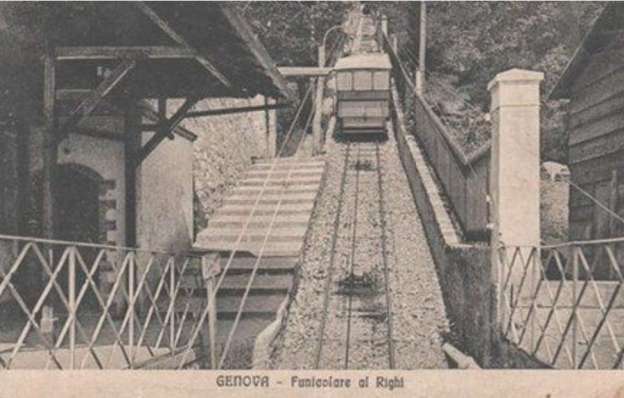
A. Zecca–Righi Funicular
The Zecca–Righi funicular (Funicolare Zecca–Righi) connects Largo della Zecca, on the edge of the historic city centre, with several stations on the slopes of the hill called del Righi , in the Castellaccio area, on the slopes of Mount Peralto. [1][4]
The line consists of a single metre-gauge track with a single crossing point. It rises 279 metres over1,428 metres and has an average gradient of just over 19%. The 42mm traction cable moves at 6 metres/second which means that the route can be covered in 12 minutes. The two articulated cars have 33 seats with a total capacity of 150 people. The ballast cable in 24mm in diameter. [4][10]
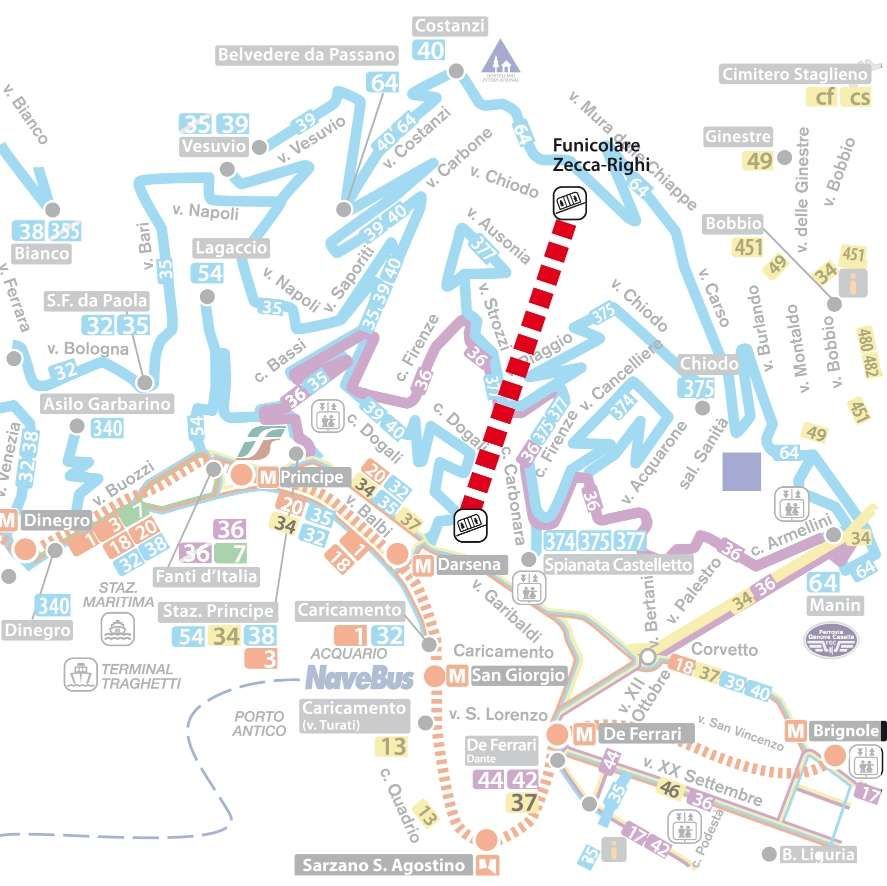
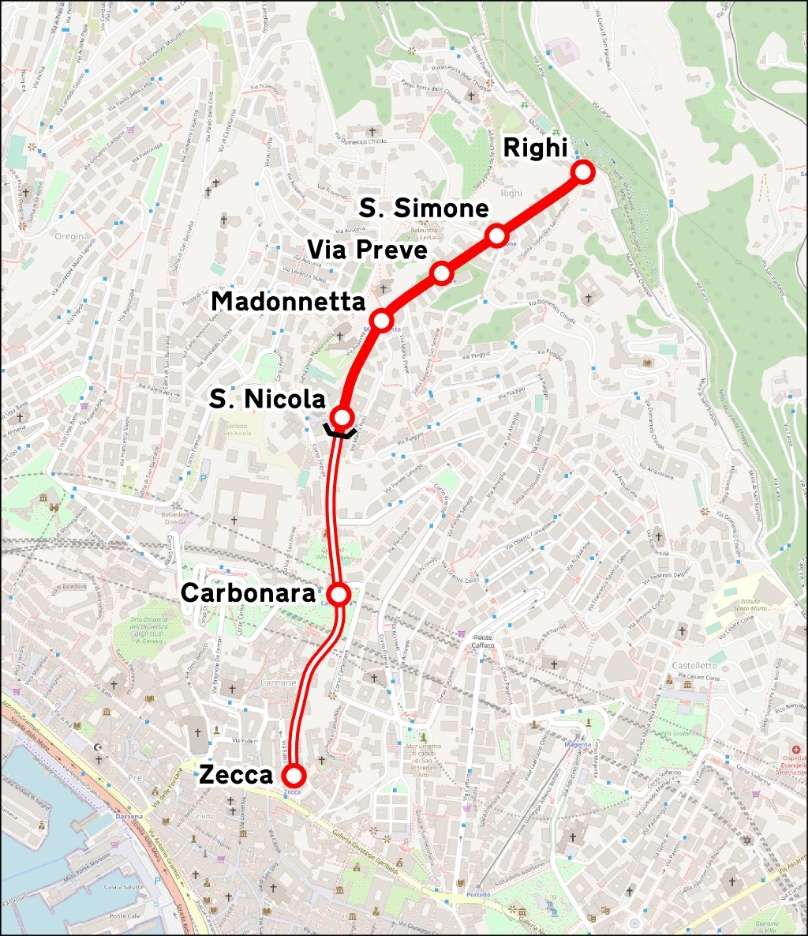
In 1890 the city of Genoa was convinced by Franz Joseph Butcher and his son Teodoro (Swiss citizens) to invest in a funicular railway which ran North from Largo Zeccan in tunnel as far as the church of San Nicola and then in the open, Northeast to Castellaccio. On 25th August 1890 the city offered the concession for this project to the Buchers. [5: p53]
Bücher himself decided to give the line the name “Funicolare del Righi” borrowed from the Swiss rack railways of Mount Rigi (pronounced Righi in German), which Bucher had already built in his homeland, and whose tourist success inspired him to design the one in Genoa. [6] The hilly area near the final station in the Castellaccio area has since then been commonly called the Righi, or simply Righi. [4]
On 28th February 1891 the Società di Ferrovie Elettriche e Funicolari (SFEF) was established in Kerns , with a share capital of 1,500 Lire. On 29th October 1892 a preliminary project was drawn up by the engineers Luigi Mignacco and Carlo Pfaltz; the latter, an Austrian, had already worked on the Gotthard tunnel and the Giovi branch. By 1894, when the work was nearing completion, the company capital was taken over by AEG. [4][5: p55]
The northern half of the project, which was simpler to build, was inaugurated on 28th September 1895. The tunnelled section was completed in February 1897. (It seems, however, that a final completion certificate and testing was not formally provided until January 1912). [5: p57]
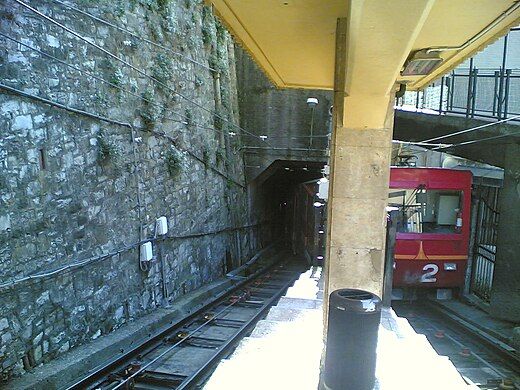
For some time the two sections effectively ran as independent systems sharing the San Nicola station where passengers had to transfer between cabins. AEG eventually brought these and other concerns together in the Unione Italiana Tranvie Elettriche (UITE) company in September 1901. [5: p62]
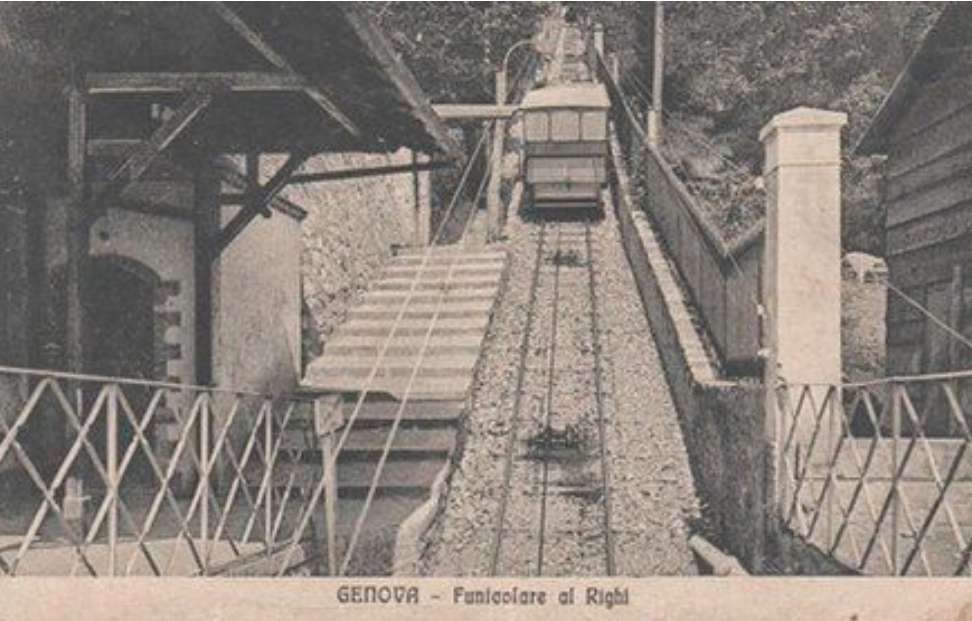
In 1906, the driving positions in the cars were enclosed to protect the operators from the elements. After the First World War and until the Second World War, the lower terminus was called Piazza Corridoni, in due course this became known as Largo della Zecca. [4][5: p69]
The 1920s saw the replacement of the cars and the improvement of the traction system which permitted the establishment of a new intermediate stop under Corso Carbonara, (opened on 1st January 1930). [4][5: p70-72]
In 1937, at the San Nicola crossing station, an original level crossing was replaced by a walkway that allowed people to step over the tracks and the cable. Between the wars both passenger and freight traffic increased significantly. During the Second World War, the bombings of 7th November 1942 caused heavy damage to the upper system, forcing its closure, while the tunnels of the lower one were converted into an air raid shelter. [4][5: p75]
After the Second World War the funicular was opened in two stages. The section above San Nicola in 1945, the remaining length in 1946. The San Simone stop was reactivated in July 1958 and the Madonnetta stop in September 1959. [4][5: p75]
After the War, the funicular was reopened in two phases. The length above San Nicola in 1945, the remainder in 1946. The stop at San Simone was reopened in July 1958 and that at Madonnetta in September 1959. [5: p78-79]
The Italian Wikipedia site tells us that the two parts of the system were not unified until the 1960s. The San Nicola Station became a crossing point rather than X double terminus. The Righi Station was moved 34 metres and built with viewing platforms above the terminus. The old wooden chalet with housed the terminus was dismantled. In addition to the total reconstruction of the route, the rolling stock was replaced. The Bell company of Lucerne completed the works in November 1964 but, due to a dispute with the ministerial commission that should have inspected the works, the funicular only entered service on 28th February 1966. [4][5: p81-89]
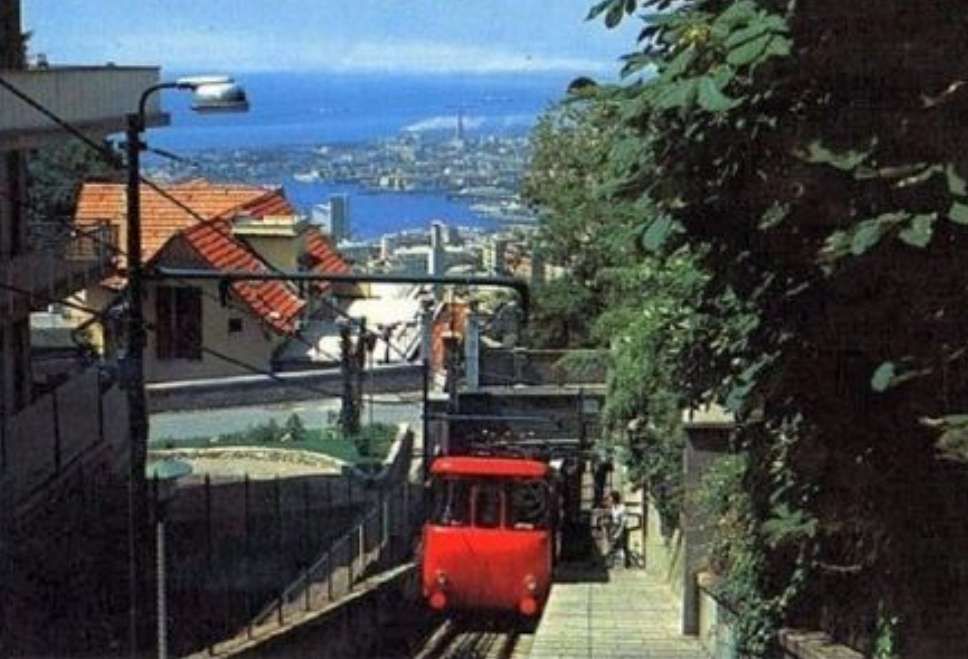
Changes in regulations meant that at the end of the 1980s, it was necessary to install an additional braking system; that and other work was undertaken between 1987 and 1990. The works involved the reconstruction of the track and the platforms of the stations, (lengthened to allow the use of new carriages that were longer than the previous ones), and of the mechanical parts as well as an increase in automation. The funicular returned to service in March 1990. [4][7][8]
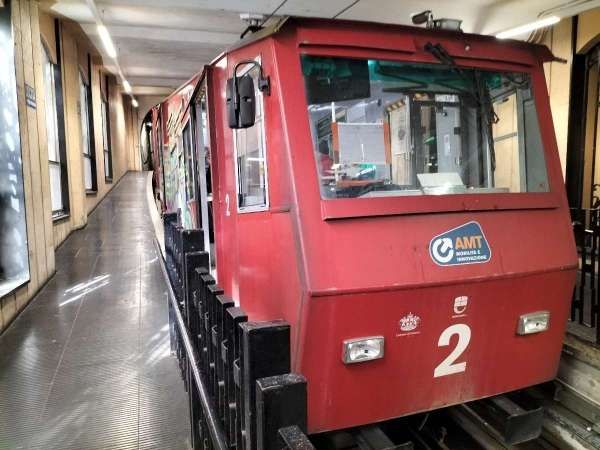
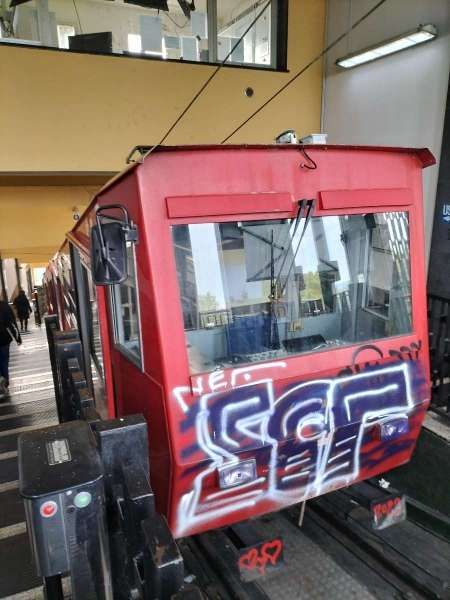
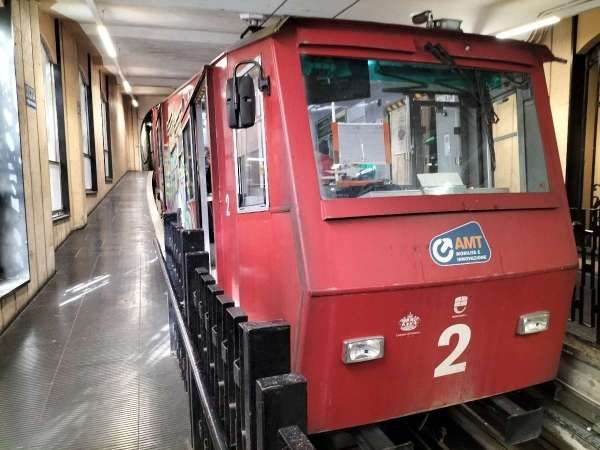
After 20 years of service, on 1st April 2010 the Zecca-Righi funicular closed again for a 20 year overhaul. It was closed untill 27th November 2010. During this closure, significant changes were made to the system, which was equipped with two new 458 kW engines. The carriages were repainted and their interiors were completely redone: real glass was fitted to the windows, the seats were no longer made of plastic but of fabric, the doors were no longer opened by compressed air but electrically. The ticket machines were removed from inside the carriages to be positioned at the various stations and a video surveillance system was installed both at the stations and inside the cabins. Numerous rollers along the tracks and the pulleys were changed. [4][5: p89-91][9]
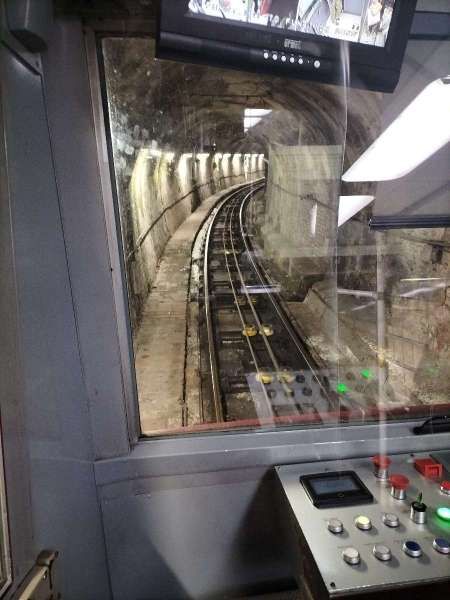
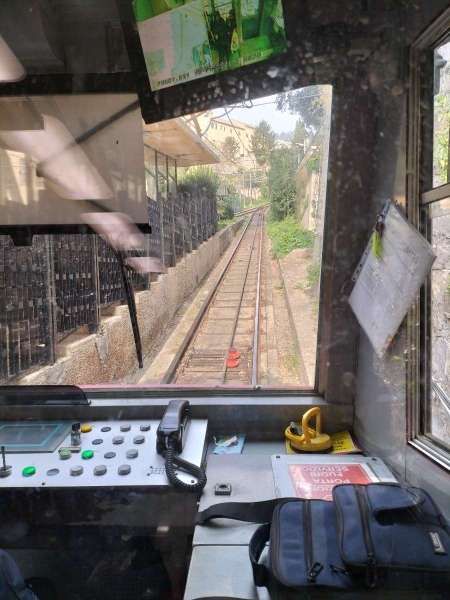
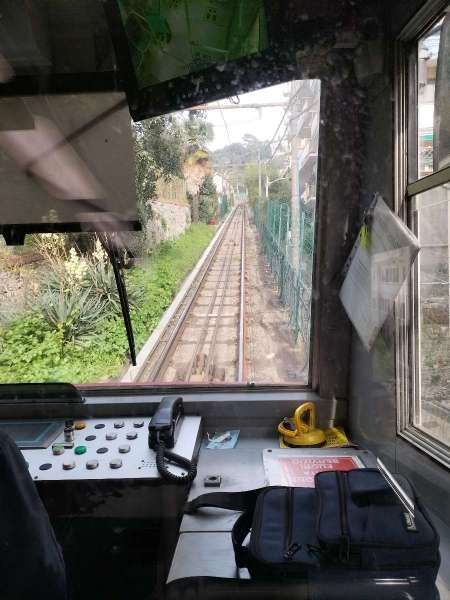
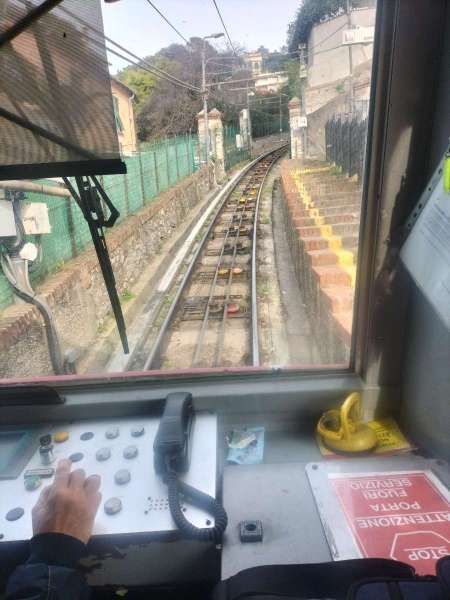
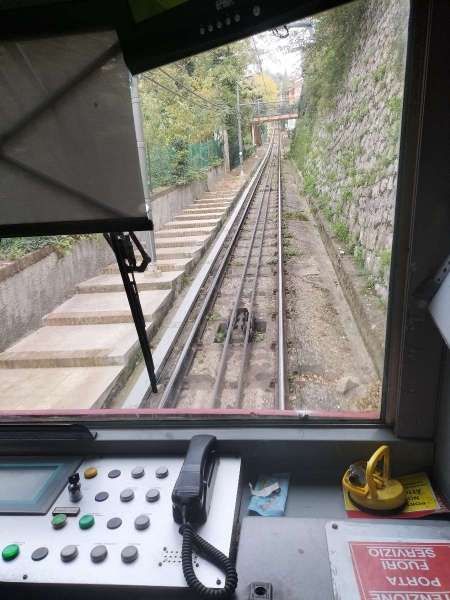
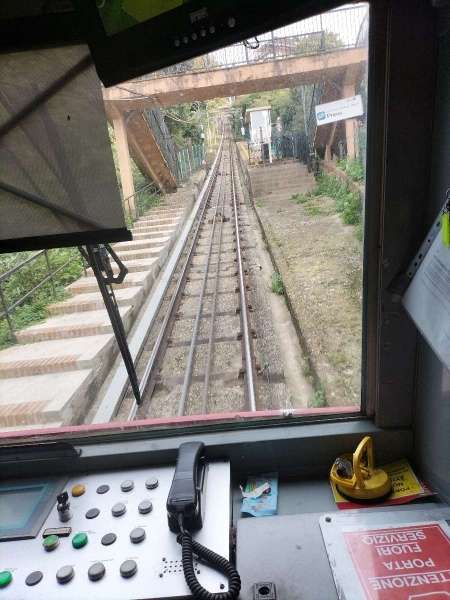
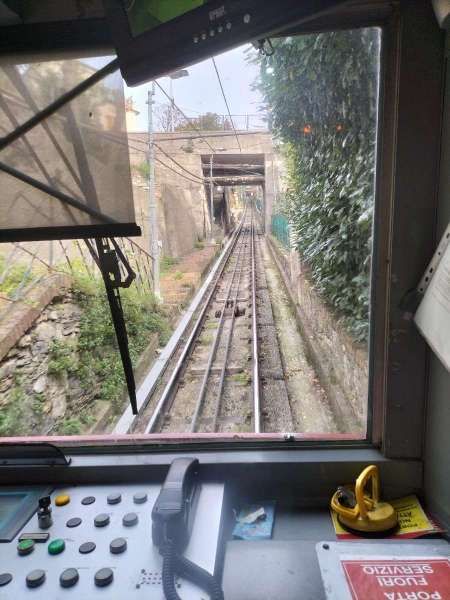
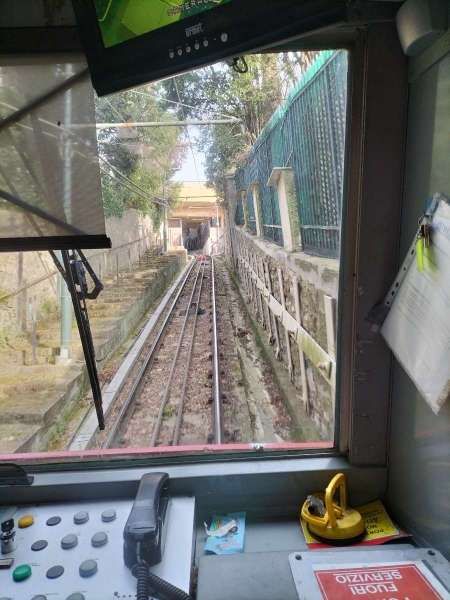
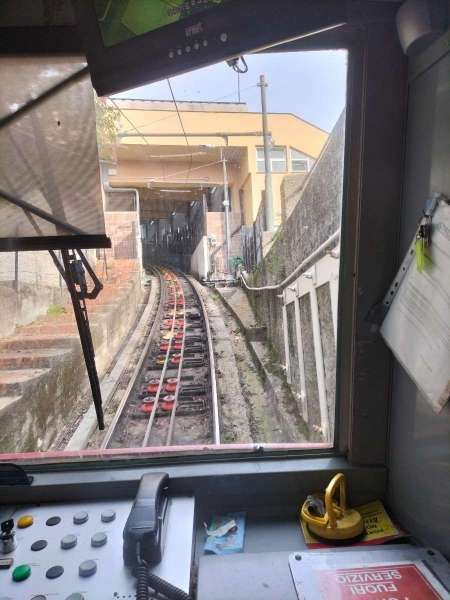
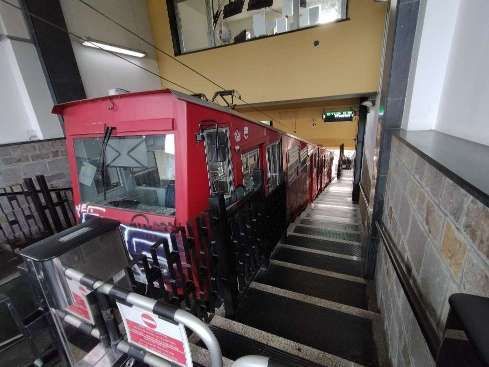
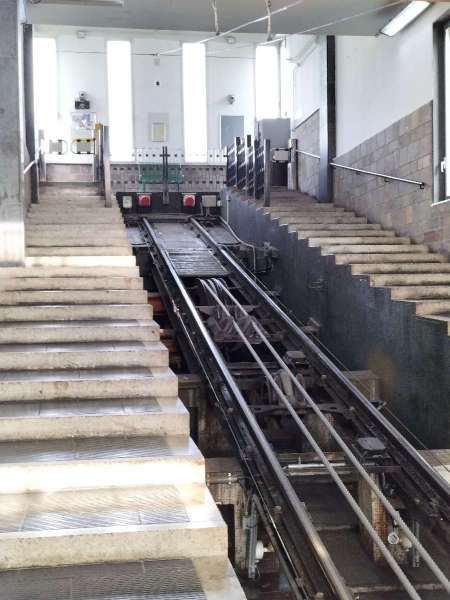
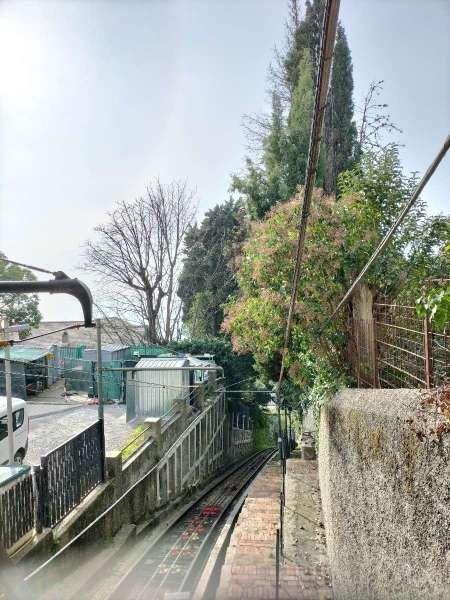
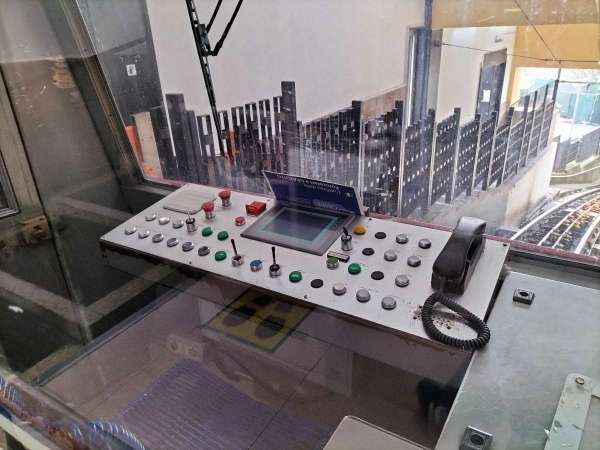
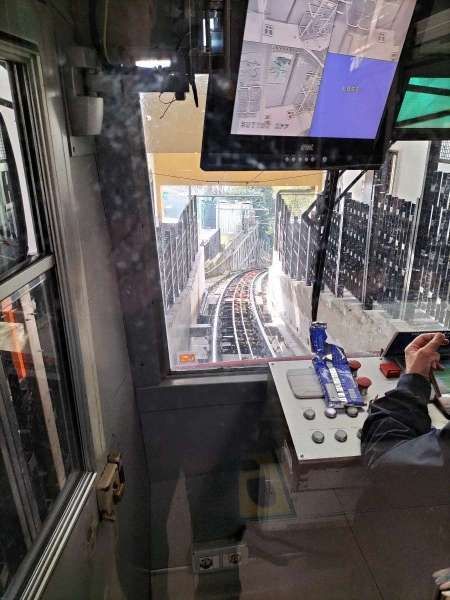
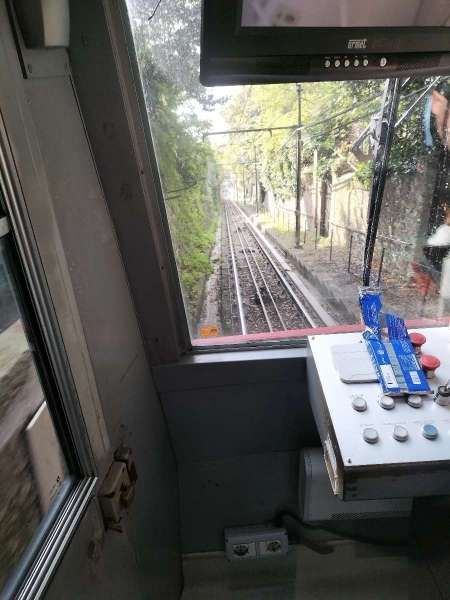
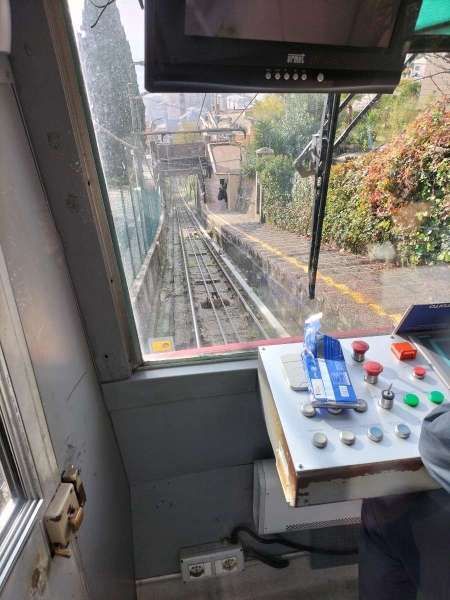
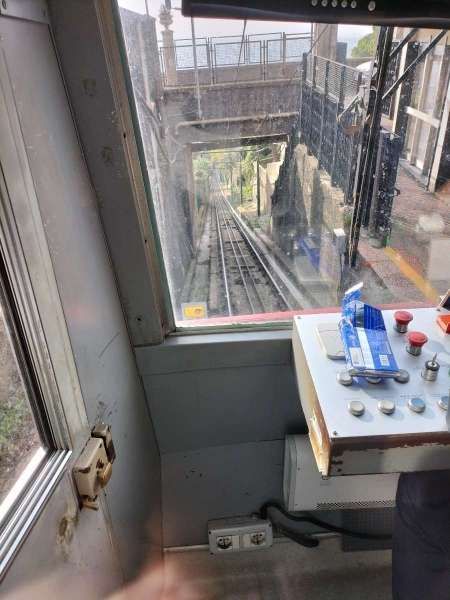
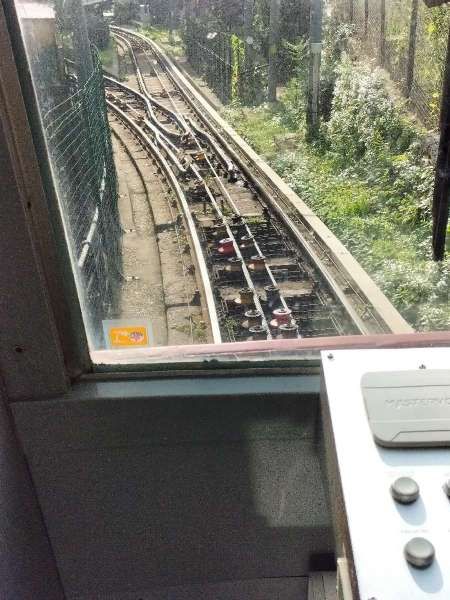
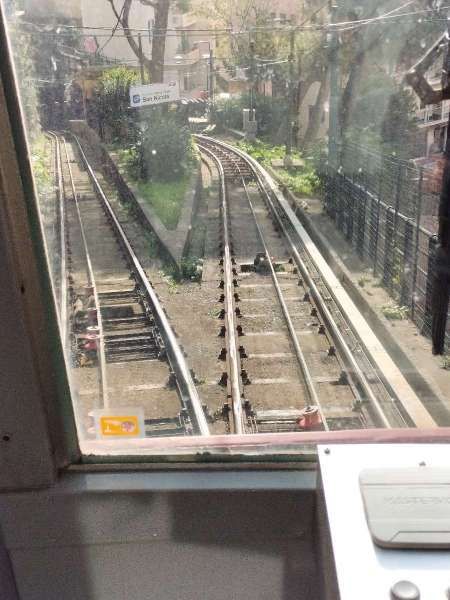
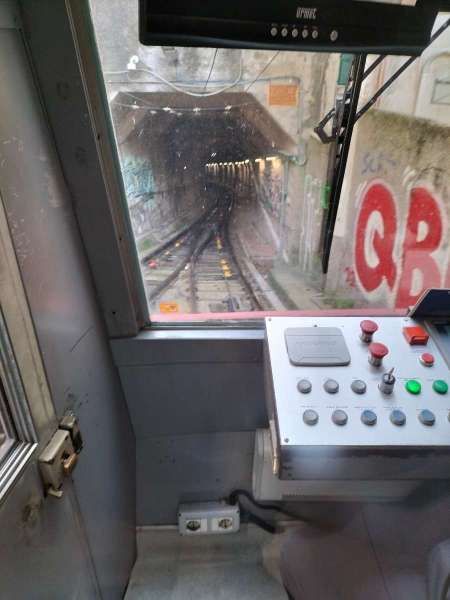
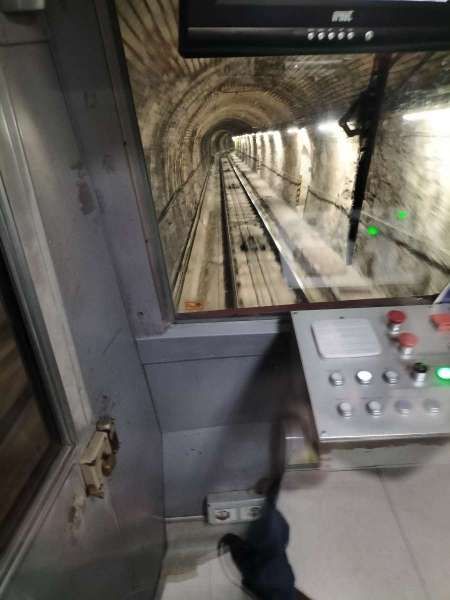
We travelled on this funicular on 12th November 2024. The photographs of this funicular in the galleries below were all taken by me on 12th November. Hopefully they give a reasonable impression of the journey up and back on the line.
B. Sant’Anna Funicular
The Sant’Anna funicular (Funicolare Sant’Anna) connects Piazza Portello, on the edge of the historic city centre, to the Corso Magenta. [2]
The funicular was opened in 1891, and was initially water-driven, with water filling a ballast tank under the carriage at the top station, and emptying at the bottom. The line was converted to electric operation in 1980, and was again modernized in 1991 following a fire that destroyed the top station. [2]
From 1st December 2021 it has been free to use courtesy of the Municipality of Genoa and AMT.[2]
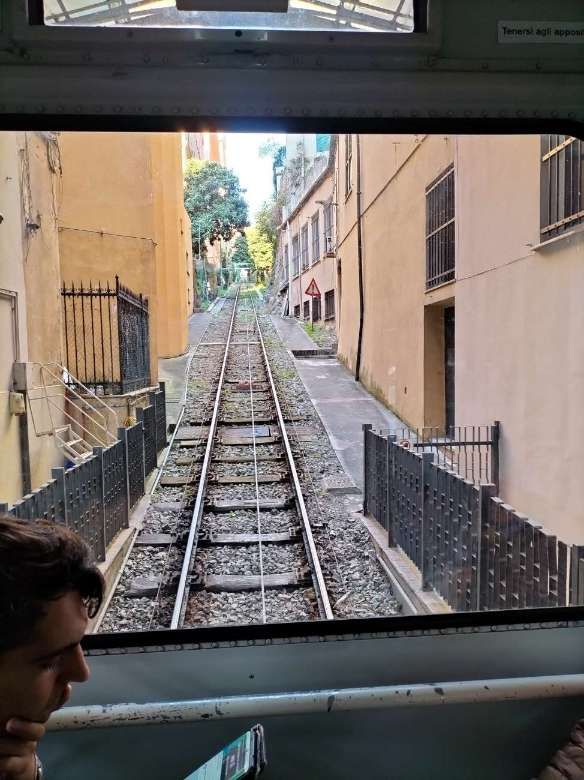
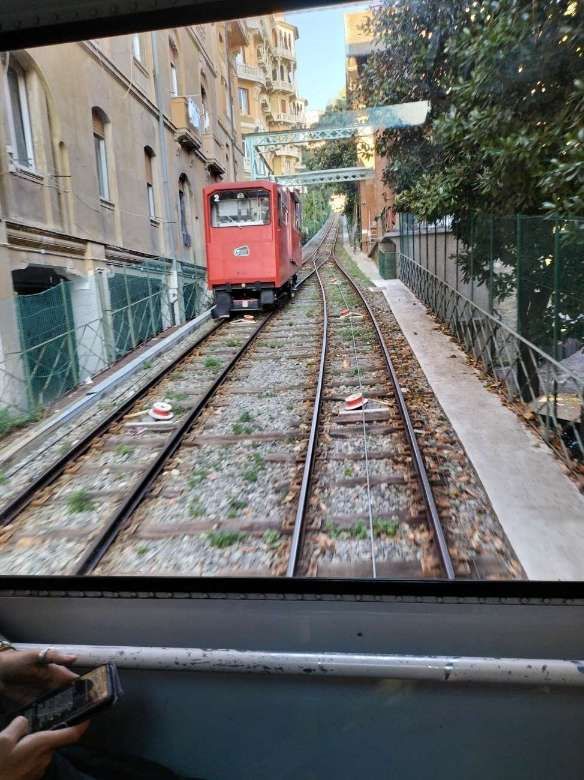
We travelled on the Sant’Anna Funicular in both directions on Monday 11th November 2024.
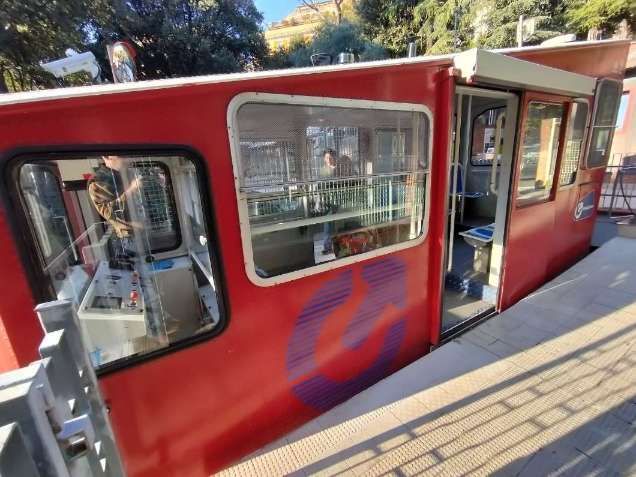
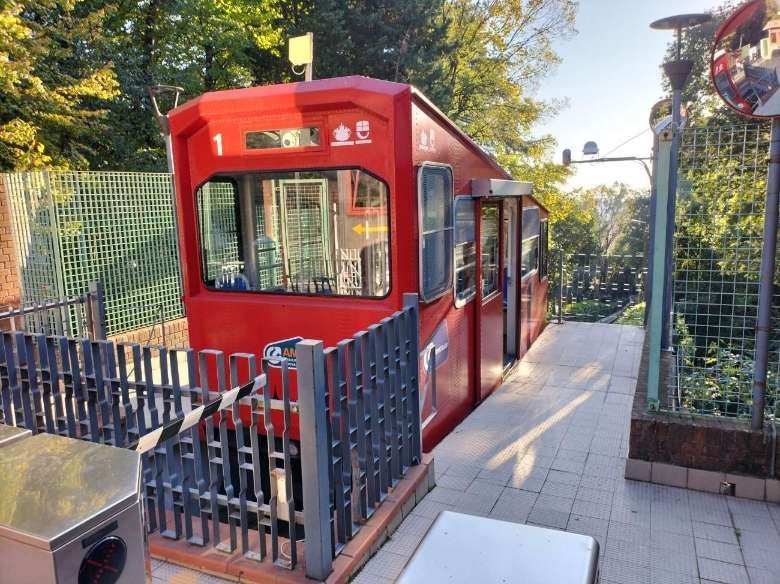
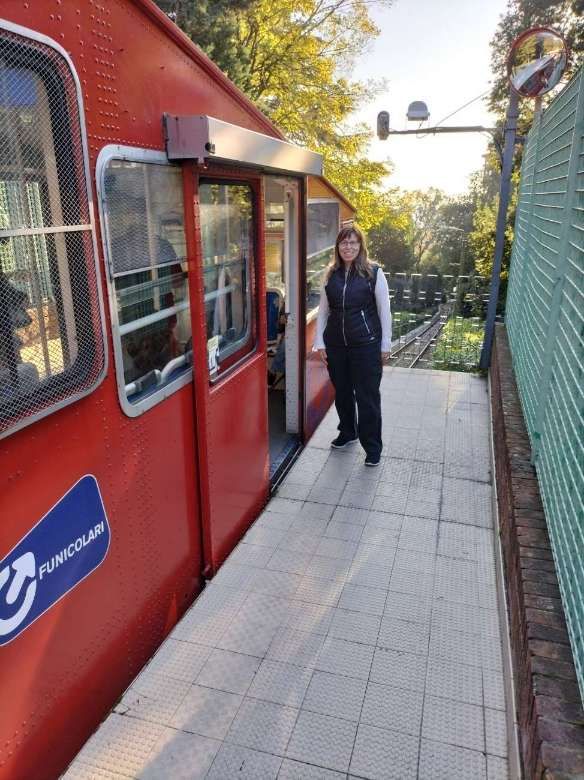
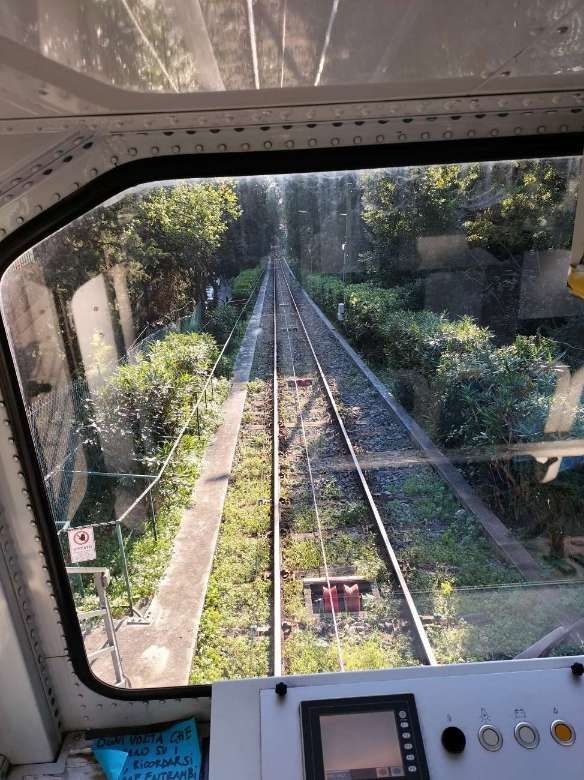
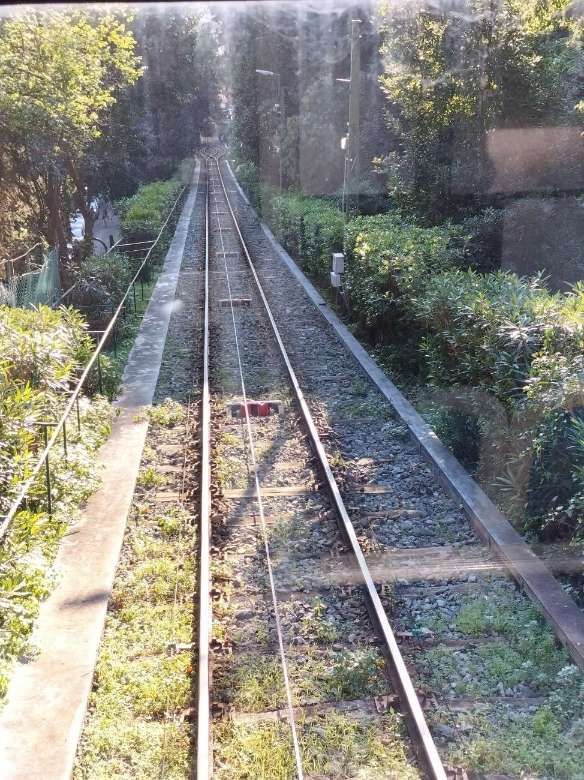
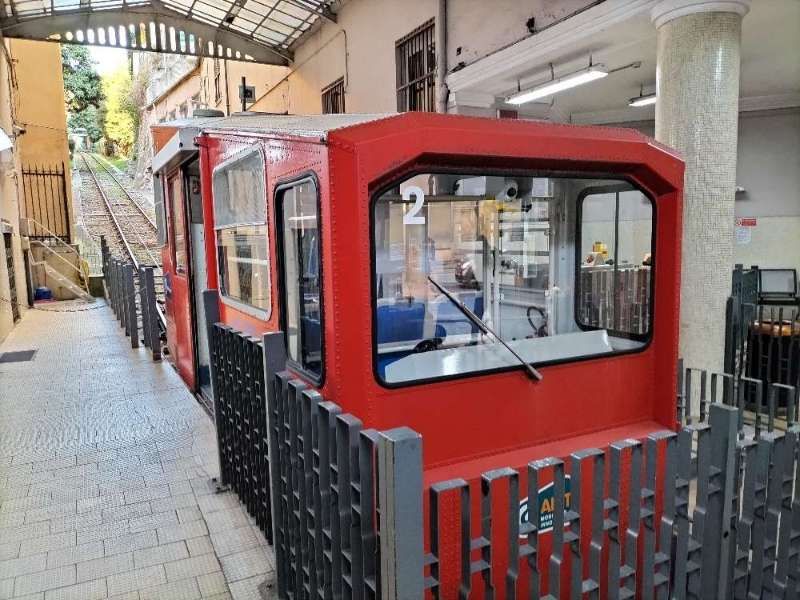
The line is currently (2024) managed by AMT Genova. These are its operational details:
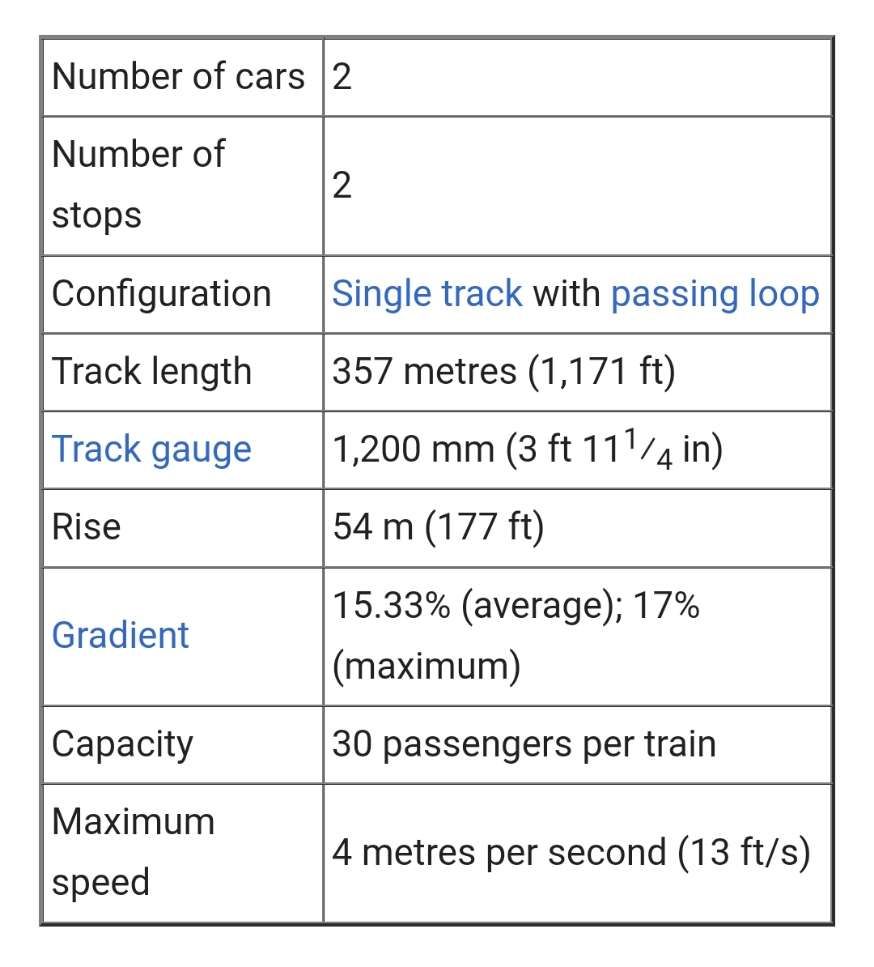
C. Quezzi Funicular
The Quezzi Funicular/Elevator (Ascensore inclinato di Quezzi) is a public inclined elevator with variable slope in the Quezzi quarter of Genoa which sits North of the heart of the city. It opened in May 2015 and connects the lower terminus at Via Pinetti to the terminus at Via Fontanarossa, with an intermediate stop at Portazza. [11]
We were unable to visit this funicular during our visit to Genoa in November 2024. There is some uncertainty in my mind as to whether it is actually a funicular.
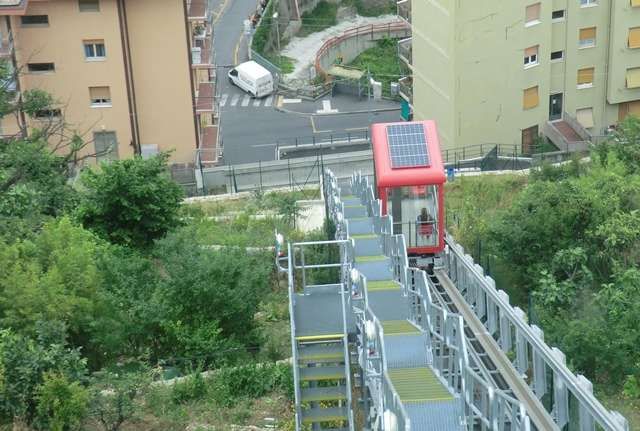
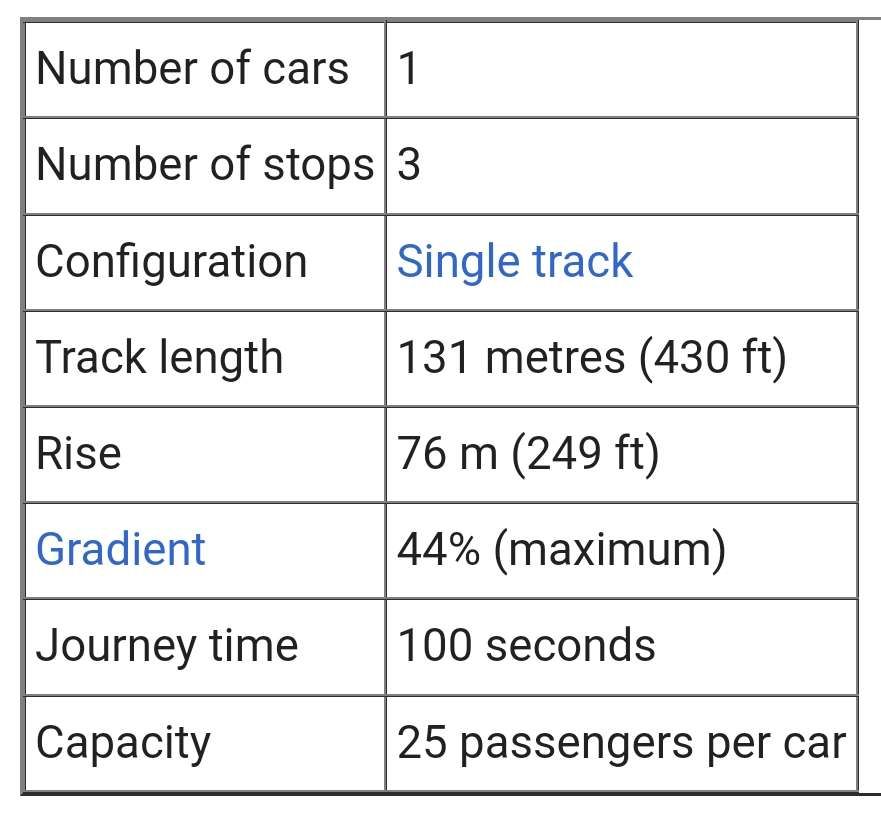
The elevator/funicular is managed by AMT Genova. It has a total length of 131 metres (430 ft), of which the lower 27 metres (89 ft) are in a tunnel, the middle 23 metres (75 ft) in a cutting, and the remainder on an elevated rail. The lower section has a gradient of 44%, transitioning to a gradient of 30% in the upper section. The single car is designed to tilt, in order to maintain the floor leveled, despite the change in gradient. [11][12][13]
These are the details of the line: [11][12][13]
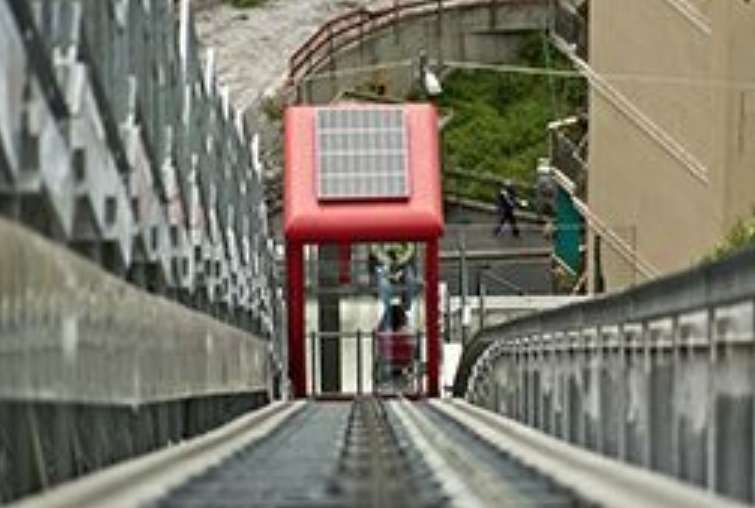
AMT Genova describes the system as an ‘elevator’ that consists of a single cabin that moves along two parallel steel beams that act as a runway; the cabin is tilting to adapt to the variable slope track while maintaining the horizontal position. … The runway is characterized by two different inclinations of 44.13º and 30.33º and by a connecting section. The use of different gradients is a national innovation for inclined elevators for public use. It limits the amount of excavation and causes less impact on the immediate environment. They believe that the system is truly sustainable as it:
- is equipped with solar panels to power the cabin lighting and ventilation.
- has low-energy LED cabin lighting.
- has a high-performance cabin air conditioning system.
- it runs on load-bearing wheels in Vulkosoft, a special high-tech material, resistant to abrasion and specifically designed to minimize noise emissions and the transmission of vibrations.
- has three stations, each equipped with sound diffusion systems and variable message panels for public information.
- incorporates pedactyl paths and tactile maps for the blind and visually impaired.
- complies with current legislation on the removal of architectural barriers.
The three stations are: Pinetti, Portazza and Fontanarossa. 1 cabin is used which is accessible to disabled people. [14]
References
- https://en.m.wikipedia.org/wiki/Zecca%E2%80%93Righi_funicular, accessed on 10th November.
- https://en.m.wikipedia.org/wiki/Sant%27Anna_funicular, accessed on 11th November 2024.
- https://www.amt.genova.it/amt/trasporto-multimodale/funicolari/funicolare-zecca-righi, accessed on 12th November 2024.
- https://it.m.wikipedia.org/wiki/Funicolare_Zecca-Righi, (translated from the Italian), accessed on 12th November 2024.
- Corrado Bozzano, Roberto Pastore and Claudio Serra; Genoa on the Rise; Nuova Editrice Genovese, Genoa, 2014.
- https://gazzettasvizzera.org/ricordati-a-genova-i-120-anni-della-storica-funicolare-del-righi, accessed on 12th November 2024.
- News , in Strade Ferrate, No. 40, July 1989, p. 91.
- Alessandro Sasso; New funicular for Genoa, in Mondo Ferroviario, No. 46, April 1990, p20-21.
- Giuseppe Viscardi, News , in I Treni, No. 346, March 2012, p6.
- Michel Azima; The funiculars of Genoa, in FuniMag , September 1996; https://www.funimag.com/funimag07/GENOVA02.HTM, accessed on 12th November 2024.
- https://en.m.wikipedia.org/wiki/Quezzi_inclined_elevator, accessed on 12th November 2024.
- Marco Cacozza; New funicular in Genova; in Today’s Railways Europe, No. 244, Platform 5 Publishing Ltd., April 2916, p18.
- Ascensore inclinato di Quezzi; (in Italian). AMT. 21st January 2015; https://www.amt.genova.it/amt/mobilita-sostenibile-prolungata-fino-al-31-luglio-la-gratuita-di-metro-e-impianti-verticali, accessed on 12th November 2024.
- https://www.amt.genova.it/amt/trasporto-multimodale/ascensori/ascensore-di-quezzi, accessed on 12th November 2024.
 Roger Farnworth
Pingback: Genoa’s Metro | Roger Farnworth
Excellent description & history! I’d read somewhere there are a dozen funiculars in and around Genoa, are they all still operating? There’s also one built in 1990, in the Ca’ Nuova district in the Centro Edilizia Popolare (CEP) di Pra’ development, with 8 stops!
Not sure Michael, I picked up on the ones included in the article. There may be more.