
This is the earliest Railway Magazine that I have so far been able to view. A rather tatty copy with both front two and at least the back two pages missing.
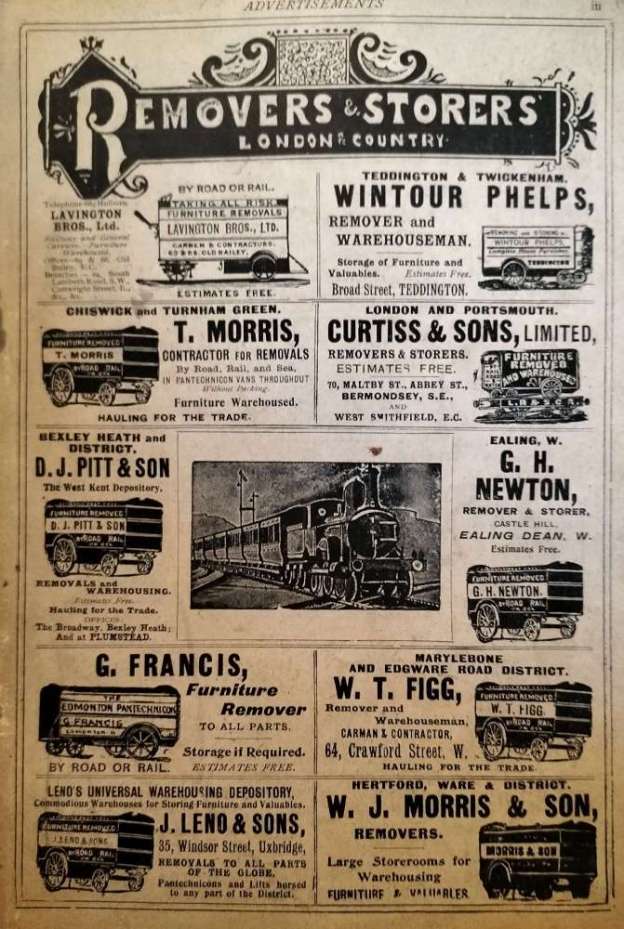
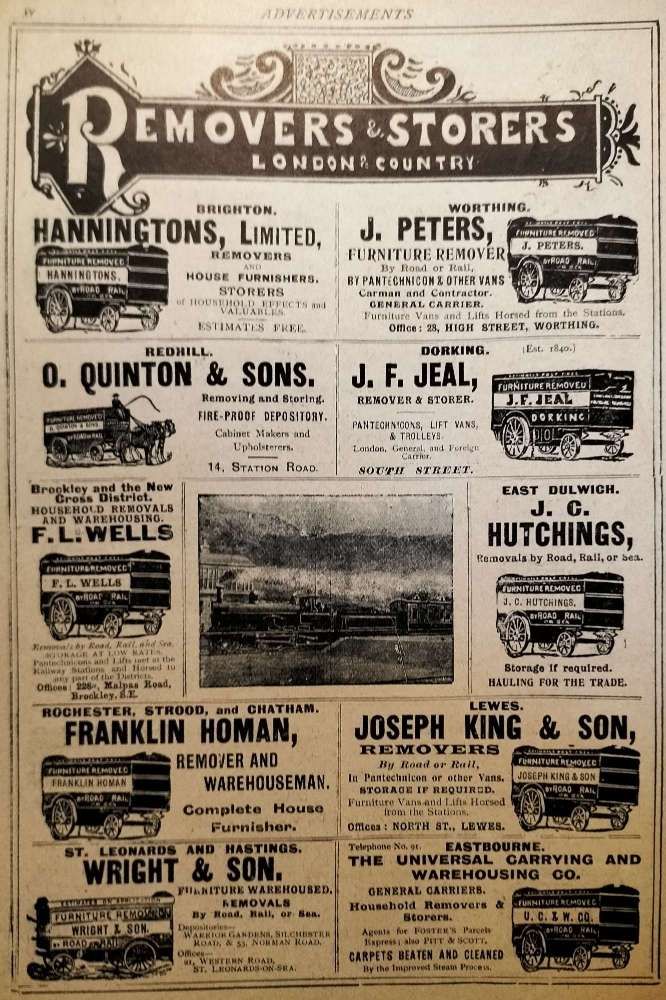
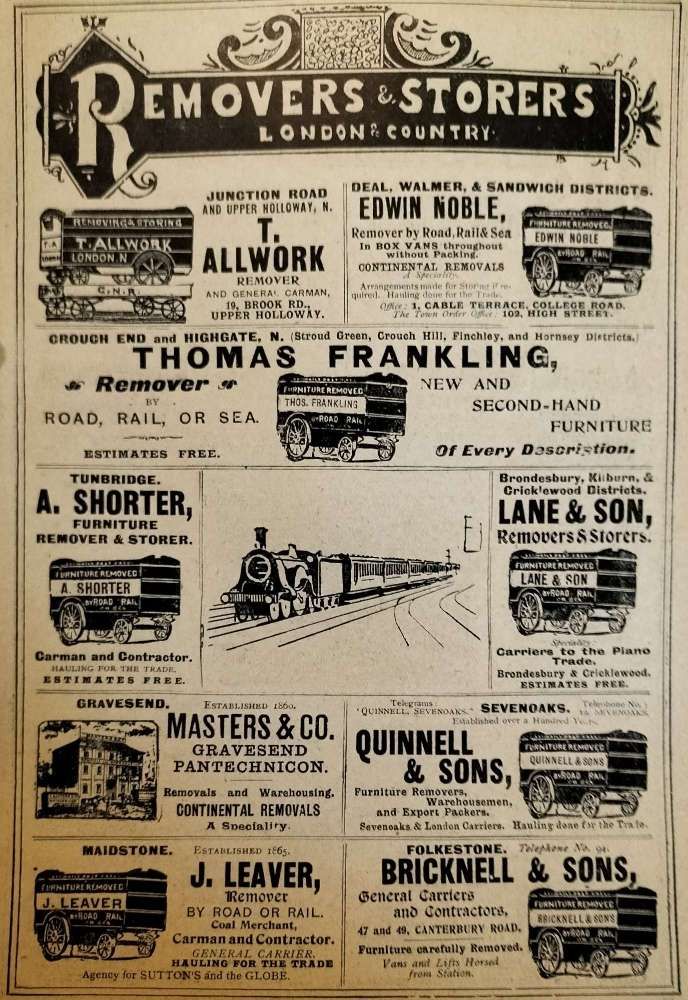
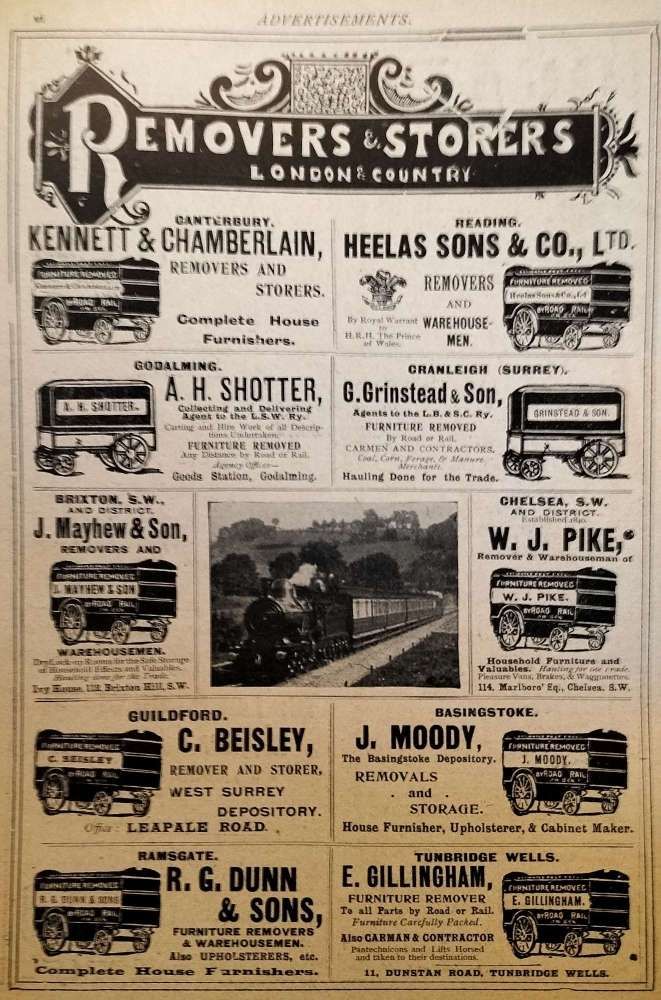
The first thing to note is the four pages of advertising given over to removal and storage companies! …

The fifth page of advertising is headed by what appears to be a dubious cure for deafness. Perhaps a third of the page is given over to an advert for an Organette with the remainder of the page devoted to The Railway Magazine’s publisher’s needs/offers: cases for binding The Railway Magazine; a request for return to the publisher of early editions of The Railway Magazine; the second edition of G.A. Sekon’s ‘Evolution of the Steam Locomotive‘.
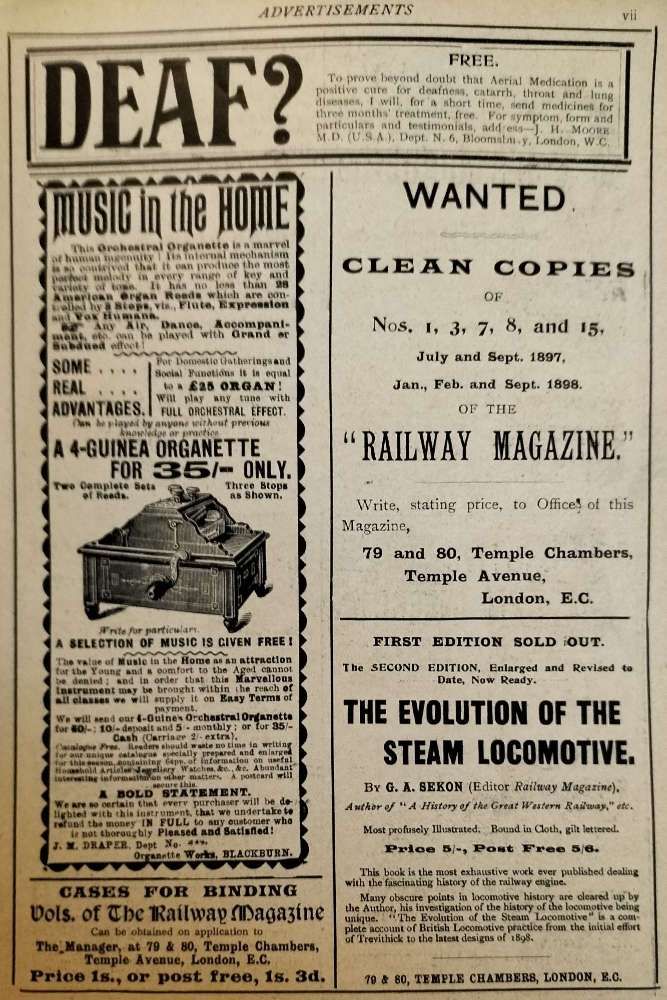
Advertisements for J.H. Moore’s Deafness Aerial Medication were relatively common in periodicals in the late 19th century. The offer of three months free treatment was also frequently made. Here is a second example, this time from 1894. ….
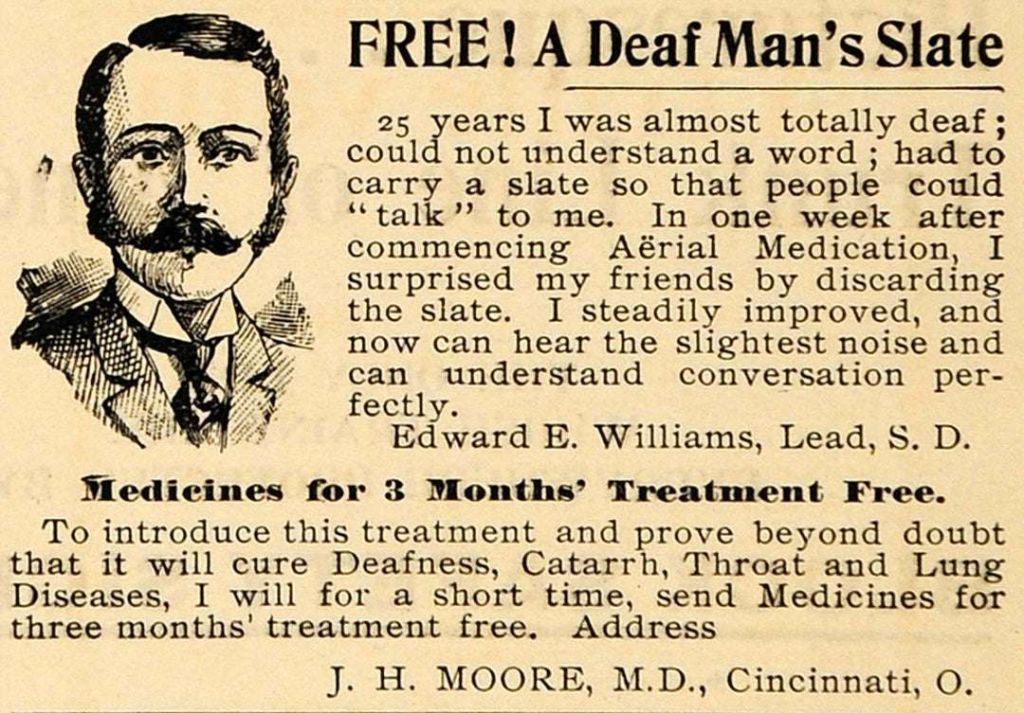
Searches online produce a series of references to these advertisements but no indication as to the veracity of the claims made in them!
The 4 Guinea Organette on the market for just 35 shillings was a relatively common place advertisement. Draper’s factory in Blackburn was claimed to be the largest such works in the world. The Journal The Music Box carries the story of the company. [3]
The next page of adverts focussed mainly on publications. ….
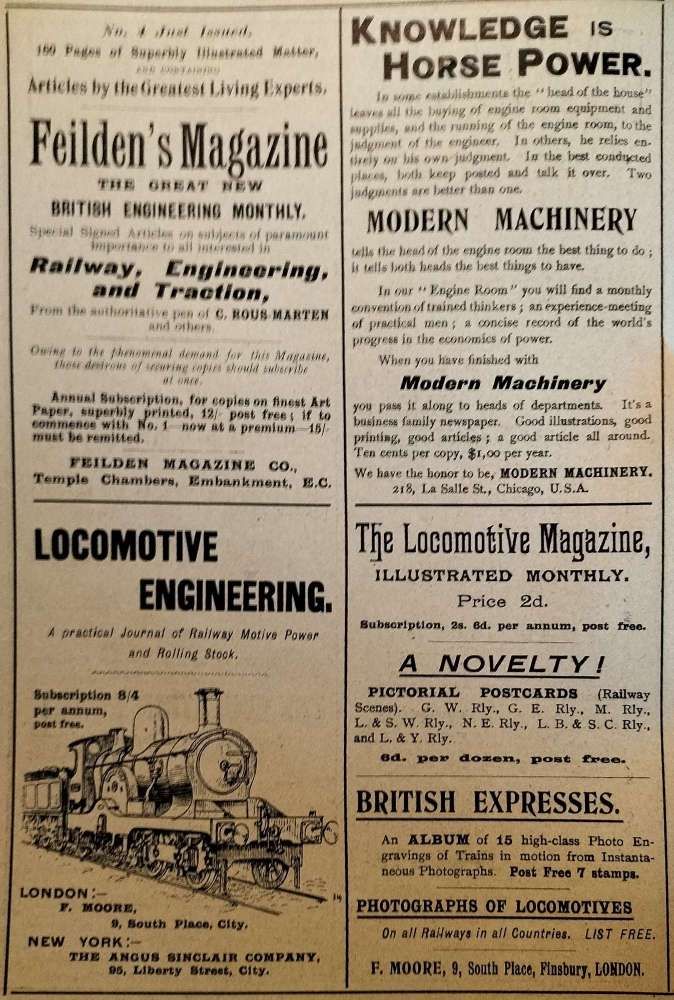
The journals which appear on this page are a mixture of British and American publications. A couple of the adverts are for publications sold by F. Moore of Finsbury, London. As we have noted in an earlier article, ‘F. Moore’ was not the name of a real artist, but rather the name adopted by the Locomotive Publishing Company, which employed the services of the rather reclusive Edwin Thomas Rudd to do the actual painting. [4]
That sixth page of adverts is followed by a page of notices of in-house publications by the publishers of The Railway Magazine. A sister journal was the ‘Railway Herald’. It was a weekly journal published between 1887-1903 which “reported on the activities of the General Railway Workers’ Union, the Railway Clerks’ Association and the United Pointsmen and Signalmen’s Society (and criticised the rival Amalgamated Society of Railway Servants). The newspaper included branch and district news for unions and welfare societies; general reports on the railway industry, including technical developments and descriptions of working conditions; information about railway-related accidents (fatal and non-fatal) and criminal offences; ‘The women’s corner’ (including recipes and household tips); correspondence and advertisements (including for clothing and patent medicines).” [5]
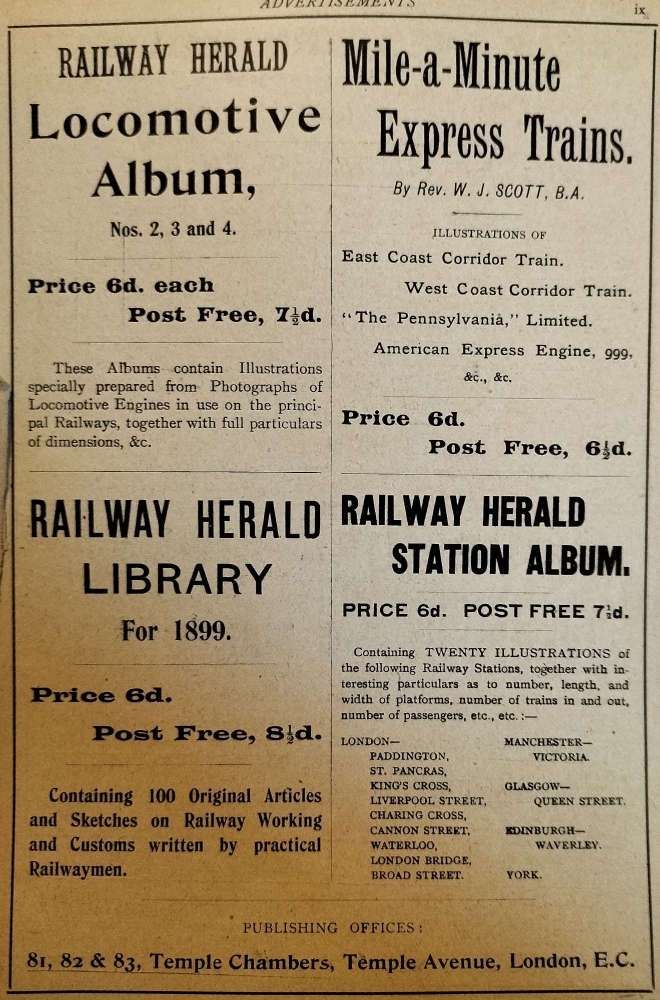
Alongside its weekly publication, the Railway Herald also produced a series of illustrated albums of Locomotives and Stations.
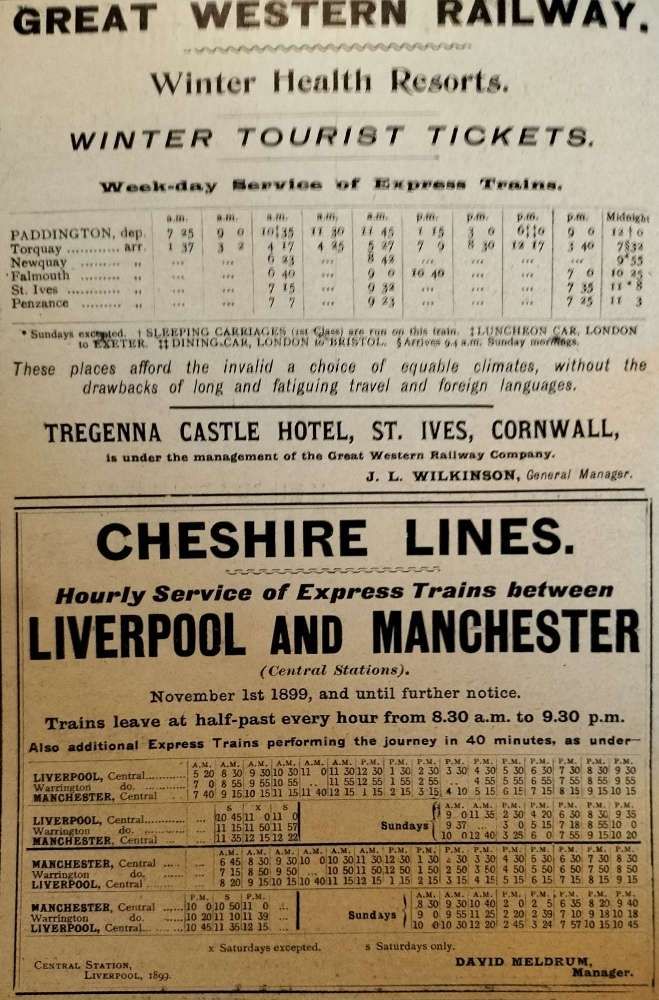
The next page consists of two adverts for train services. The first for GWR winter services to Cornwall and Devon, the second for the new timetable for express services between Manchester and Liverpool provided by the Cheshire Lines Committee. …
The contents page for the journal follows with a number of interesting articles which may well feature on this blog in due course. This page includes an advertisement by W.S. Laycock of Victoria Works, Sheffield.
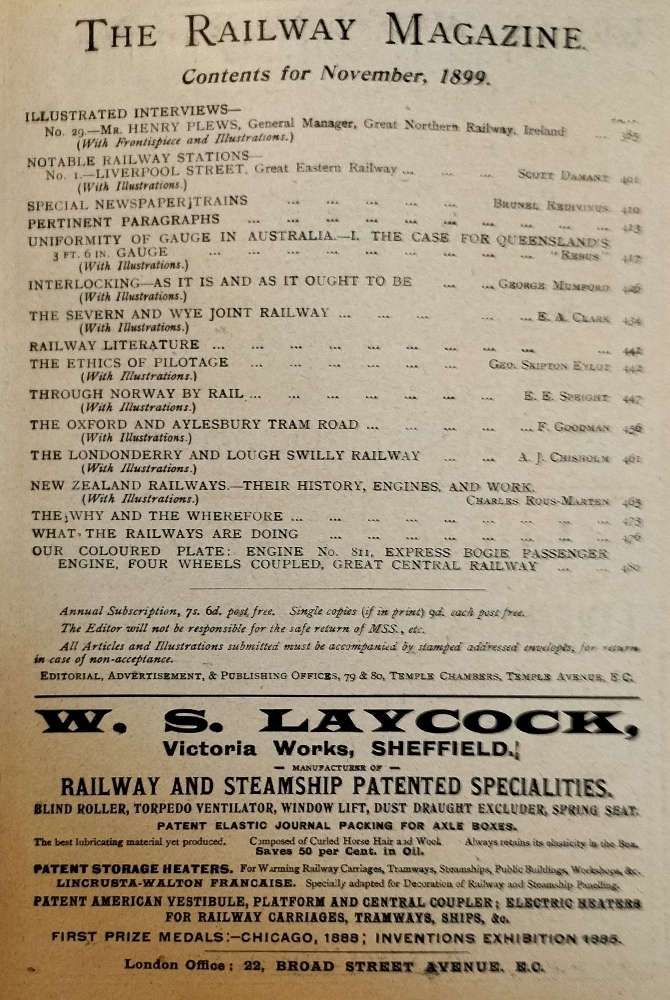
W.S. Laycock Engineering Ltd., was based in Sheffield. The company is covered in some detail by Grace’s Guide. [6]
The final page of adverts at the front of this edition of The Railway Magazine contains a full-page advert by the Linotype Company of Fleet Street, London.
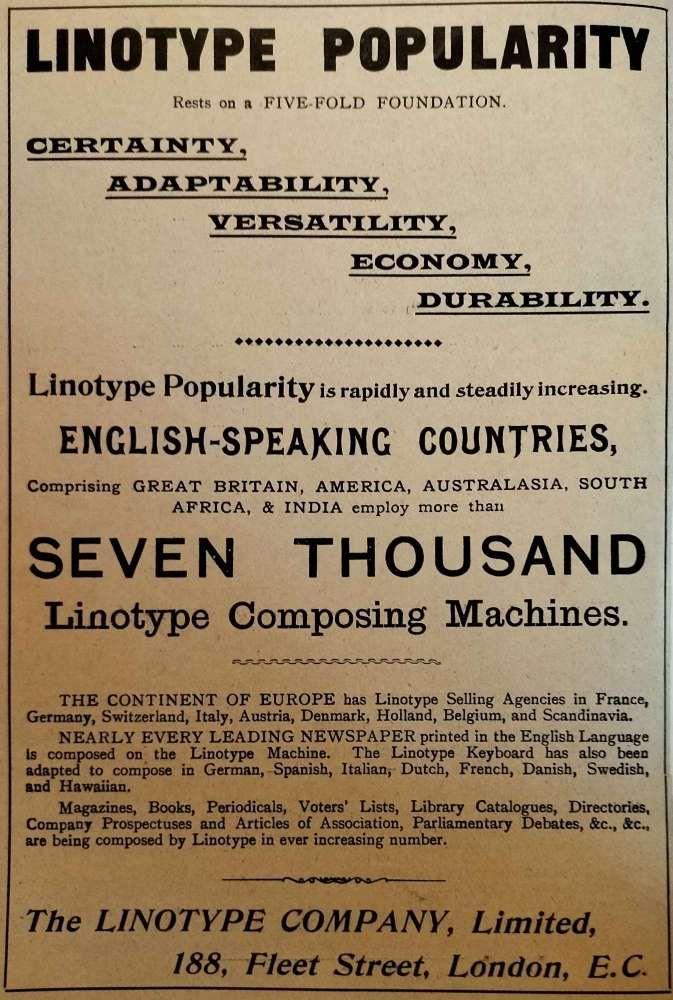
“The Linotype Company was set up in 1889 by a group of British businessmen in order to buy Linotype and other patents from American interests. These men included the publisher Sir Joseph Lawrence, founder of the Railway Magazine, later Sheriff of London and an MP; Lord Kelvin, the famous scientist, and other well-known men of the time. In 1889, Lawrence and Stilson Hutchins, a representative of the American manufacturer, brought three experimental machines to England. These caused great interest amongst the printing and newspaper industries. In 1895 Lawrence became chairman of the Linotype Company and remained so until his death in 1919.” [7]
“Funding for the project did not come from British banks, but from the American Mergenthaler Company, which granted the Linotype’s licence in return for shares. (By 1909 Mergenthaler controlled the British company and by 1921 both the chairman and the managing director were American.) The British company’s head office was at 188-9 Fleet St, London until 1947 when it moved to John Street, London, WC1.” [7]
The UK company started life at “Hulme Street, Oxford Road, Manchester, where a factory for assembling machines and making some of the simpler parts was built. Manchester had an abundance of skilled labour and also had good rail and canal networks for transporting raw materials, such as iron and coal, and for distribution of the completed machinery. As the company became more successful, the Hulme Street factory became overcrowded. In 1896 the Linotype Company took land at Broadheath, Altrincham for a new factory, which was formally opened by Lady Kelvin on Friday 14 July 1899. The Altrincham plant was sited next to the Bridgewater Canal which brought coal for the furnaces directly from the Worsley mines to the works.” [7]
The works in Altrincham were accompanied by a large housing development for the company’s staff which included social amenities. Morning can be found out by clicking here. [7]
References
- The Railway Magazine, November 1899, London, 1899.
- https://www.periodpaper.com/products/1894-ad-j-h-moore-treatment-deafness-aerial-medication-original-advertising-076453-mun1-262, accessed on 7th September 2024.
- Roger Booty; The Largest Organette Works in the World; in The Music Box Volume 21 No. 7, Autumn 2004, via https://acrobat.adobe.com/id/urn:aaid:sc:EU:437e688b-85d0-43f2-ada3-88eebf5144b2, accessed on 7th September 2024.
- https://culhamticketoffice.co.uk/bits/hidden-pages/fmoore.html, accessed on 7th September 2024.
- https://warwick.ac.uk/services/library/mrc/archives_online/digital/unionjournals/railway_herald, accessed on 7th September 2024.
- https://www.gracesguide.co.uk/W._S._Laycock, accessed on 7th September 2024.
- https://exploringtraffordsheritage.omeka.net/exhibits/show/the-linotype-works–broadheath/the-early-day, accessed on 7th September 2024.
 Roger Farnworth
I have British Exresses. 1898 magazine. Is it worth anything.
No sure, Vincent.
I tend to buy things which are low priced and perhaps in poor condition. The 1899 Railway Magazine was part of a batch of Railway Magazines which cost me £3.
Two things that piqued my interest:
Hi Ade
Thanks for the comments. Both really interesting.
Best wishes
Riger