
This article features advertising from the November 1929 edition of The Railway Magazine. It will probably be of interest to compare the various adverts here with those in The Railway Magazine of November 1938. An article about the 1938 magazine can be found here. [2]
The Southern Railway
The Southern Railway had a single page advertisement in the magazine which featured the Golden Arrow Pullman Service between London and Paris.
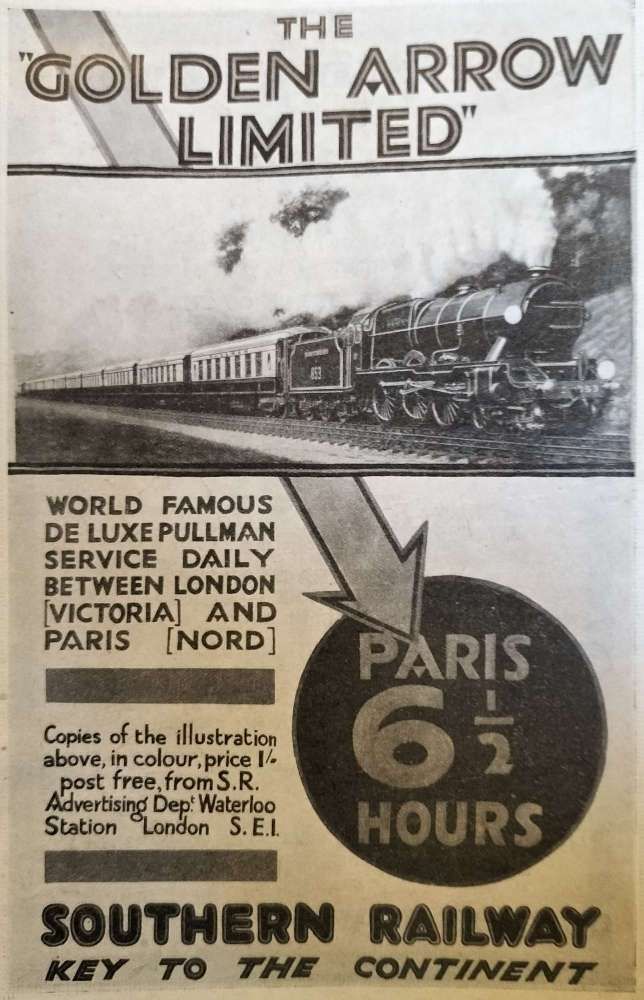
Wikipedia tells us that, “The Flèche d’Or was introduced in 1926 as an all-first-class Pullman service between Paris and Calais. On 15th May 1929, the Southern Railway introduced the equivalent between London Victoria and Dover while simultaneously launching a new first class only ship, the ‘Canterbury’, for the ferry crossing. The train usually consisted of 10 British Pullman cars, hauled by one of the Southern Railway’s Lord Nelson class locomotives, and took 98 minutes to travel between London and Dover. Because of the impact of air travel and ‘market forces’ on the underlying economy of the service, ordinary first- and third-class carriages were added in 1931. Similarly the first-class-only ferry, ‘Canterbury’, was modified to allow other classes of passenger.” [3]
It is not surprising that the train service ceased at the outbreak of the Second World War in September 1939. “It resumed after the war on 15th April 1946, initially running with the pre-war Pullmans and the Trianon Bar car, a converted twelve-wheeled Pullman. The Southern Railway flagship, the ‘Invicta’ replaced the ‘Canterbury’ from 10th October 1946. As of 1949, the all-Pullman train was scheduled to depart from London Victoria at 10:30, with the connecting train from Calais reaching Paris (Gare du Nord) at 17:30, and from Paris at 12:15, with the connecting train from Dover arriving in London at 19:30. This worked out to a scheduled journey time of 6 hours eastbound and 6 hours, 15 minutes, westbound.” [3]
Four Full-page Adverts from the LMS
The LMS had four full-page adverts in the November 1929 magazine:
The first advert was for a series of ‘Carriage Window’ books. …
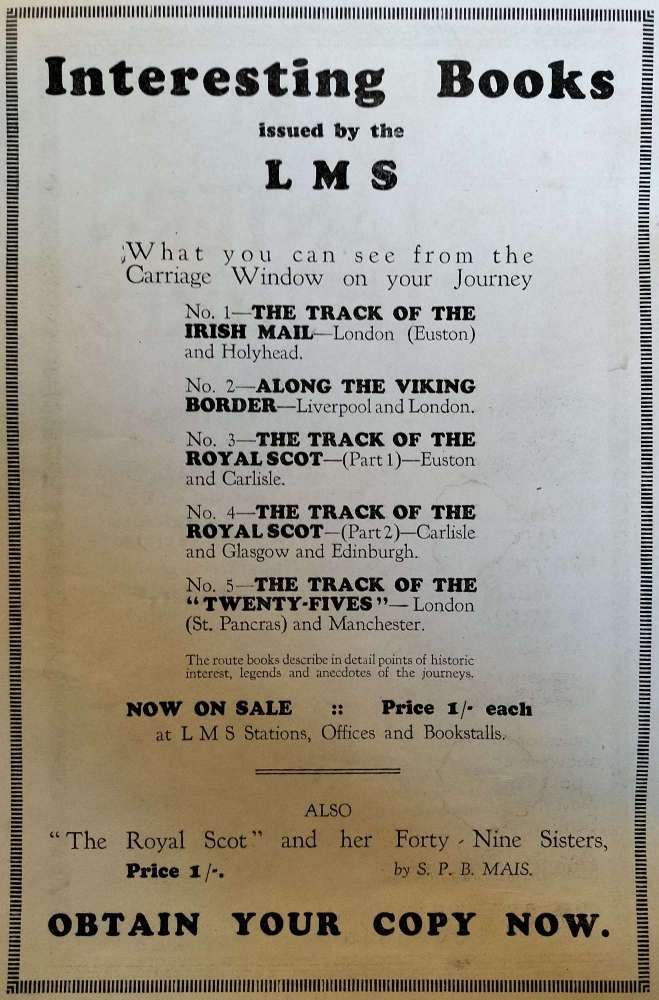
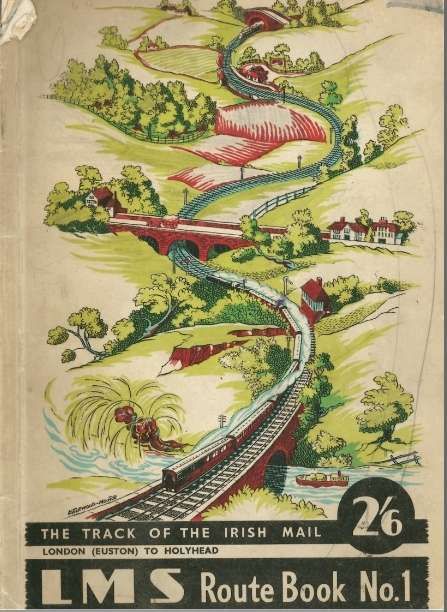
These ‘Carriage Window’ books were usually entitled ‘The Track of the …’. They covered a number of different main line routes.
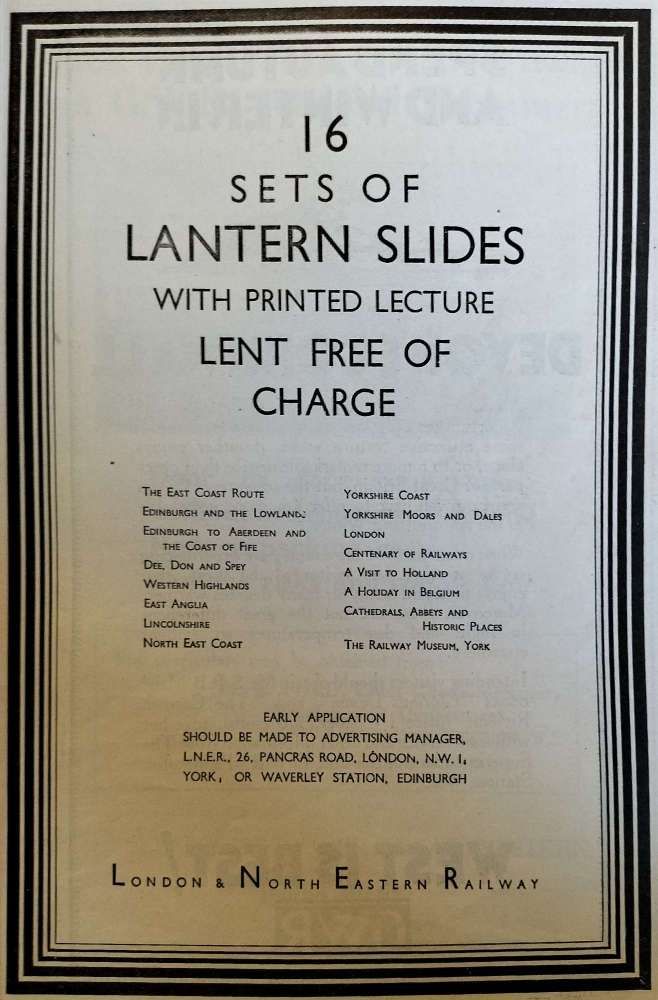
In the article about The Railway Magazine of November 1938 we noted that the LNER was supplying scripts and slides for talks about their network. In 1929, the LMS was offering a similar range of lectures. …

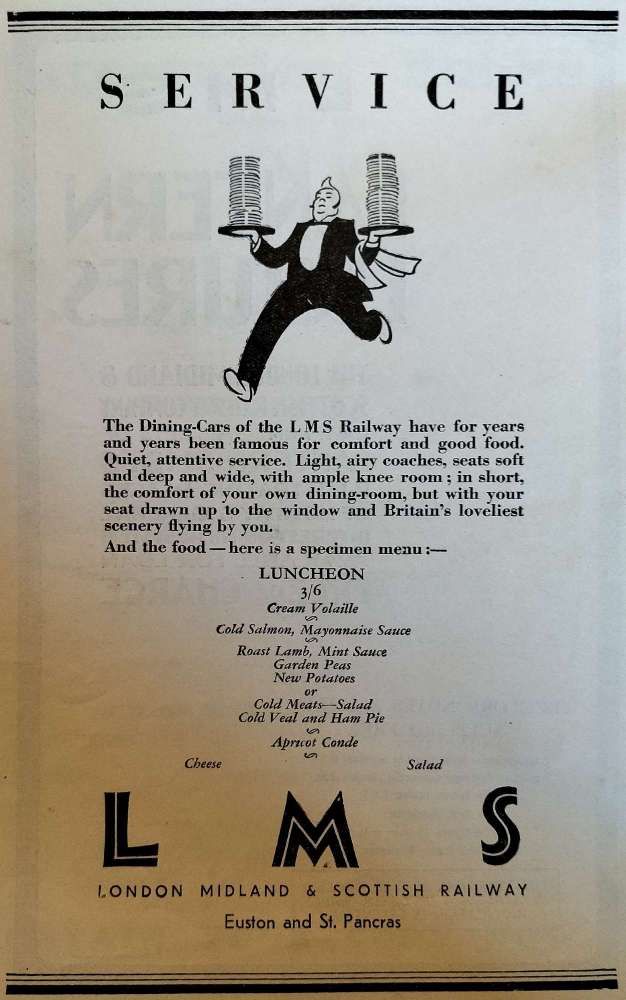
The LMS also advertised the dining experience on their express services. …
Four LNER Full-page Adverts
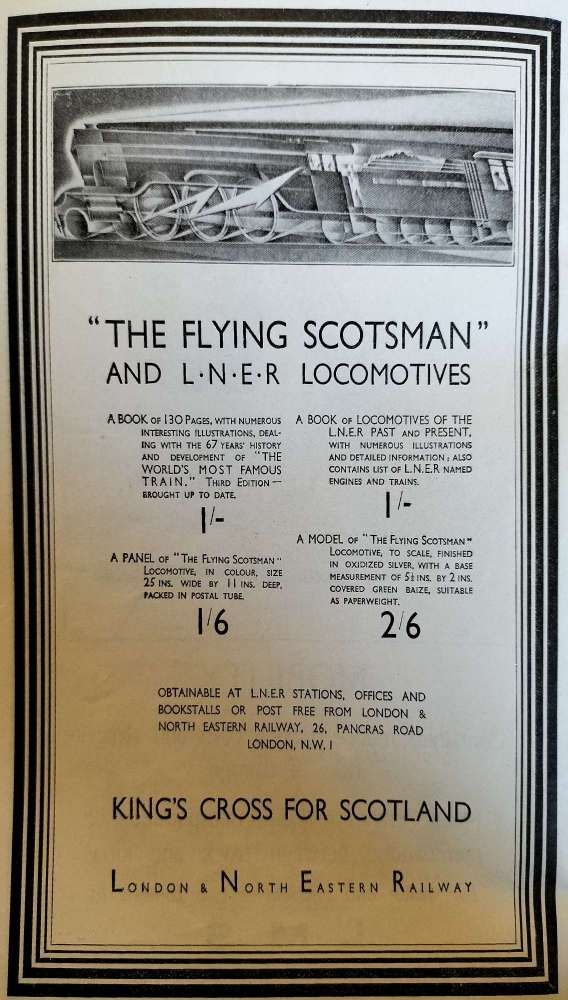
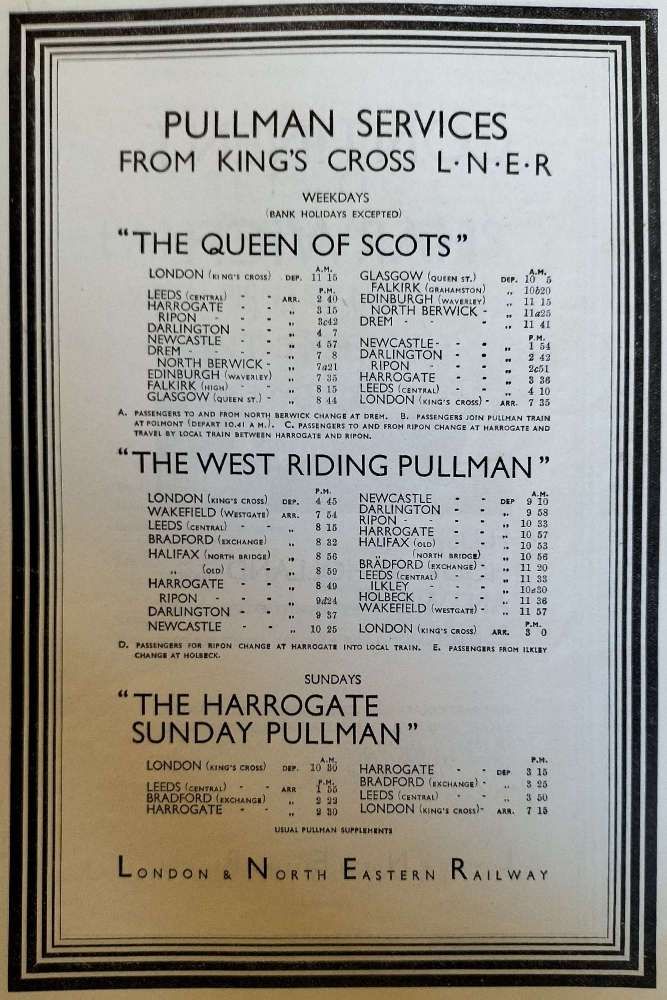
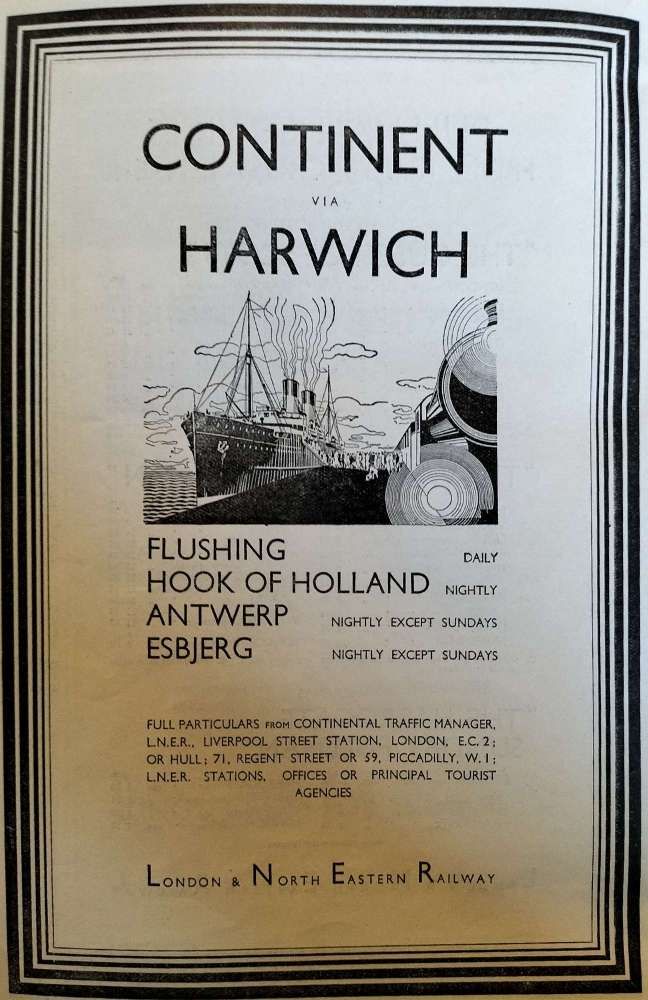
The first advert is for two books, a picture and a model celebrating ‘The Flying Scotsman’ and other LNER locomotives.
Two GWR Adverts
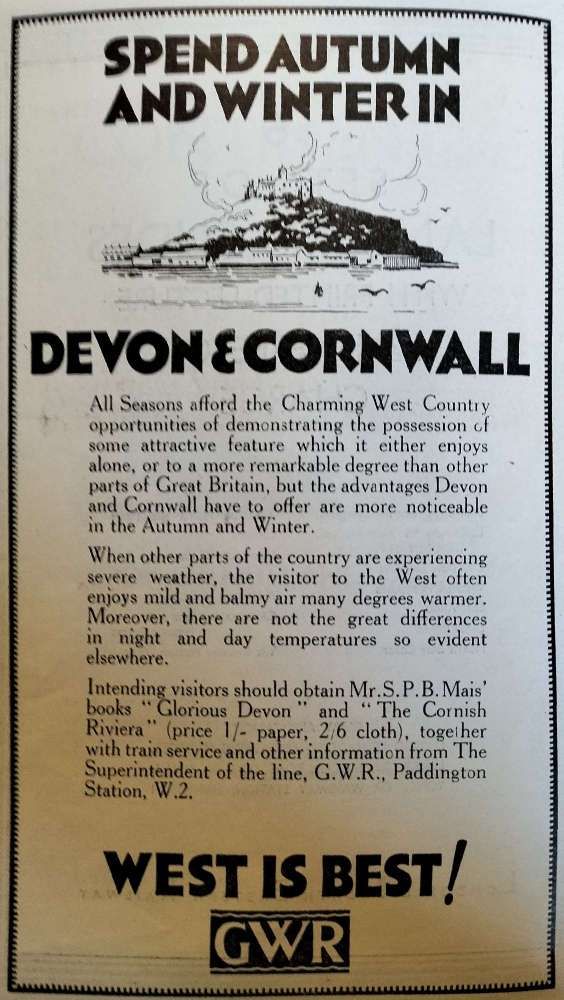
The first GWR adverts seems to be endeavouring to extend the summer season in the West Country. …
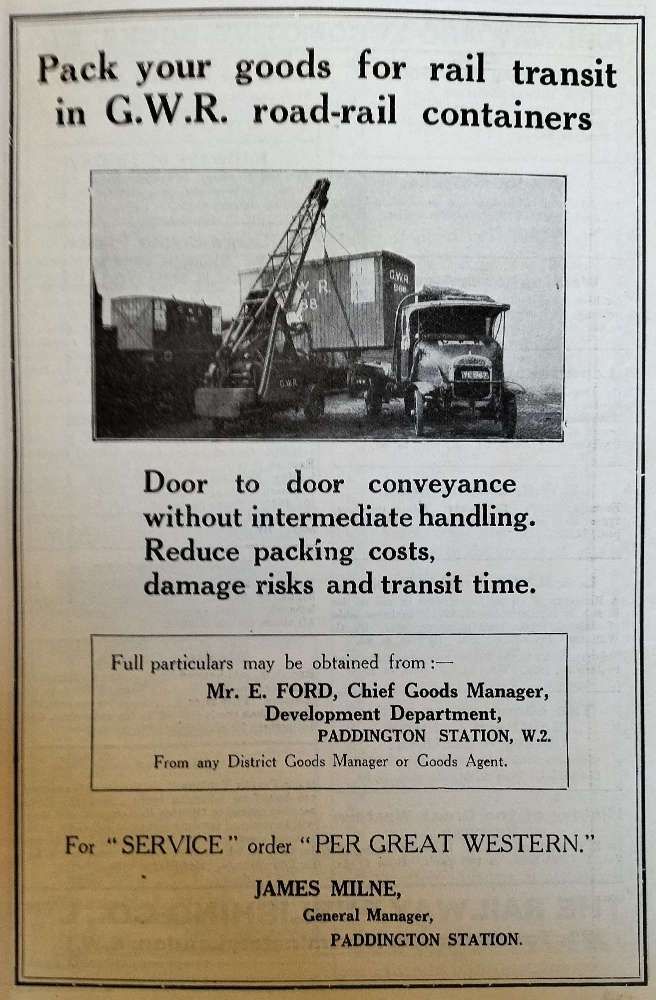
Their second advert focussed on their container service. …
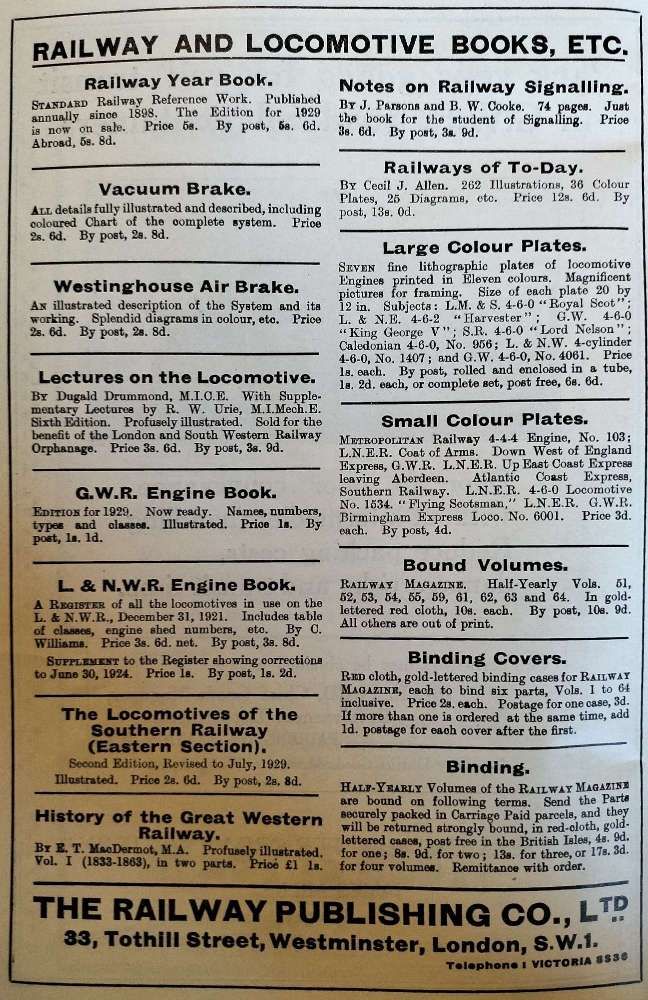
Other Adverts
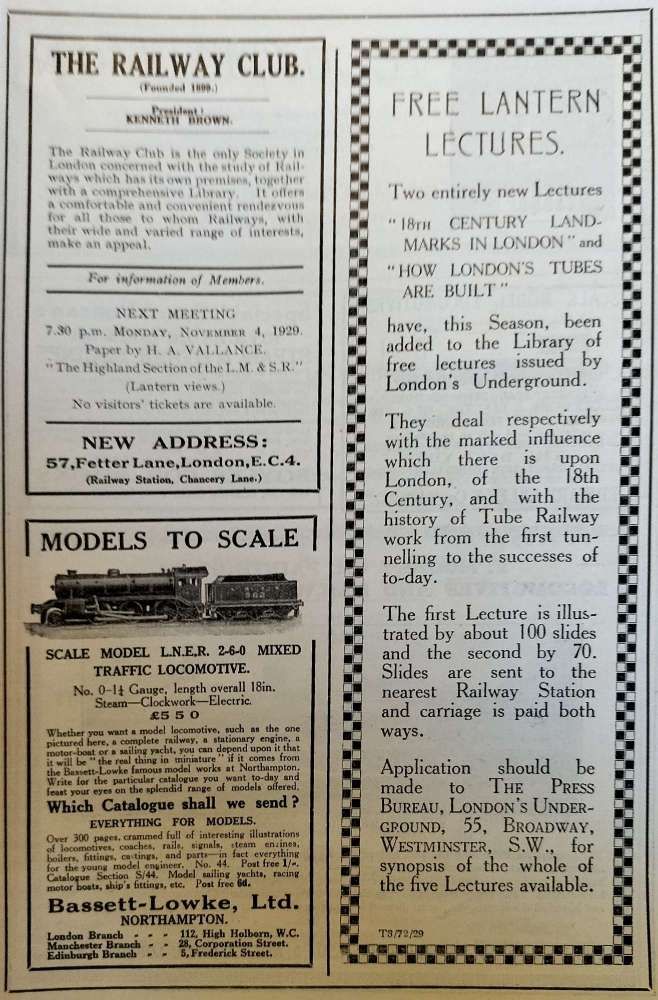
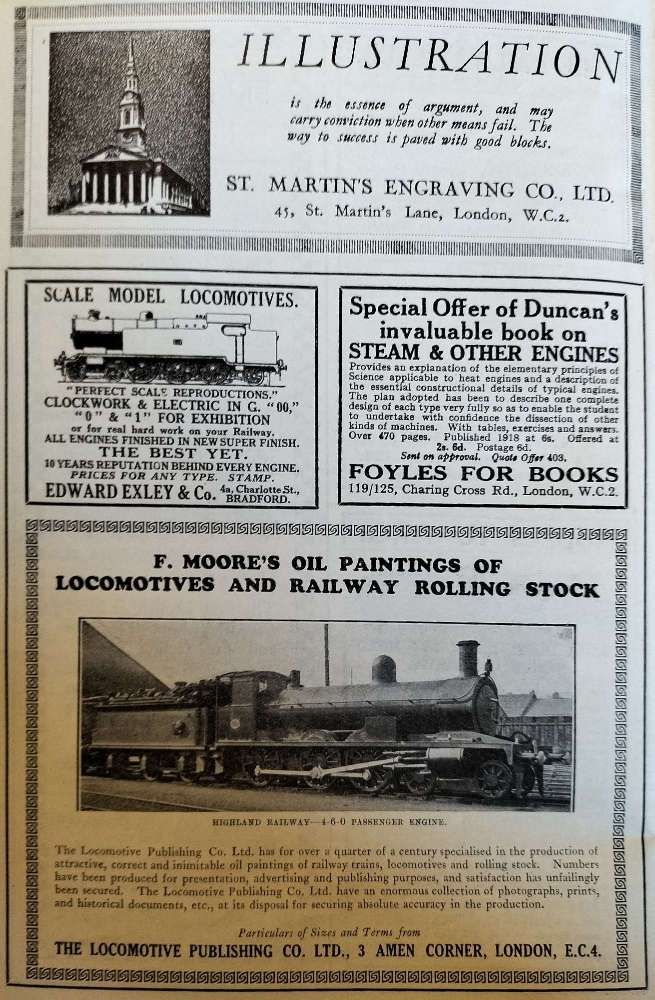
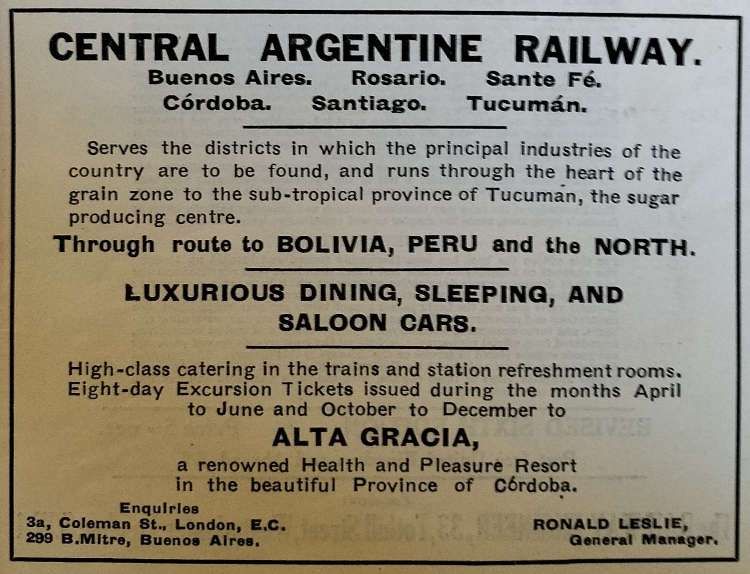
The Central Argentine Railway was one of four broad gauge (5ft 6in/1676mm) British companies that built and operated railway networks in Argentina. Established in the 19th century, to serve the provinces of Santa Fe and Córdoba, in the east-central region of the country, it eventually also served Buenos Aires, Tucumán, and Santiago del Estero. It effectively ceased to exist after nationalisation.
“British railway companies operating in Argentina, including the CA, were nationalized in 1948 by the Juan Perón administration. The CA took over the northern section of the Ferrocarril Rosario y Puerto Belgrano and then became part of the state-owned Ferrocarril General Bartolomé Mitre.” [7]
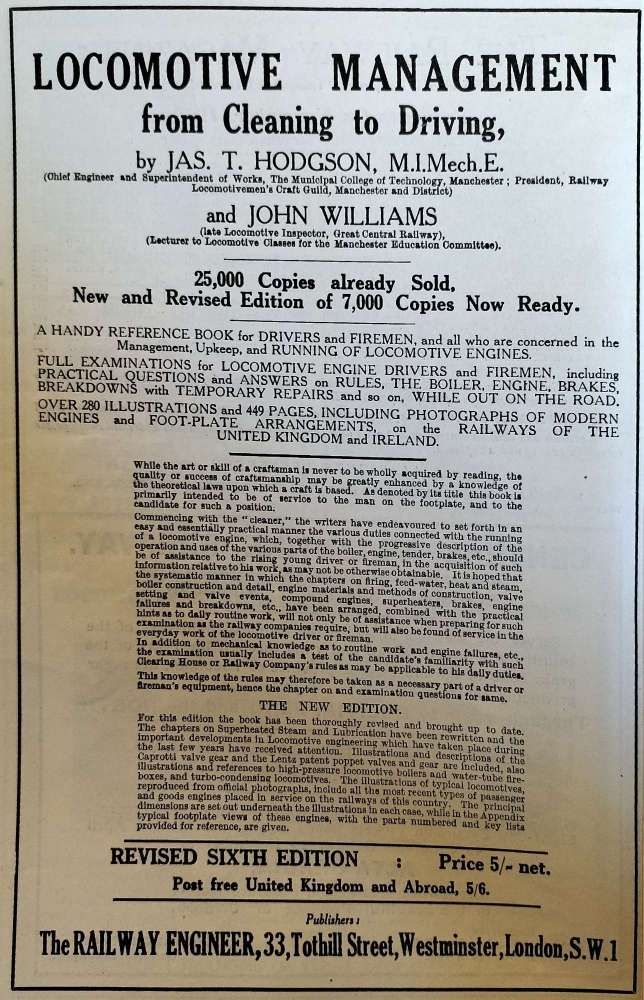
‘Locomotive Management – from Cleaning to Driving’ was a standard text which went through regular revisions to keep it up-to-date.
Some LMS “Business” Posters
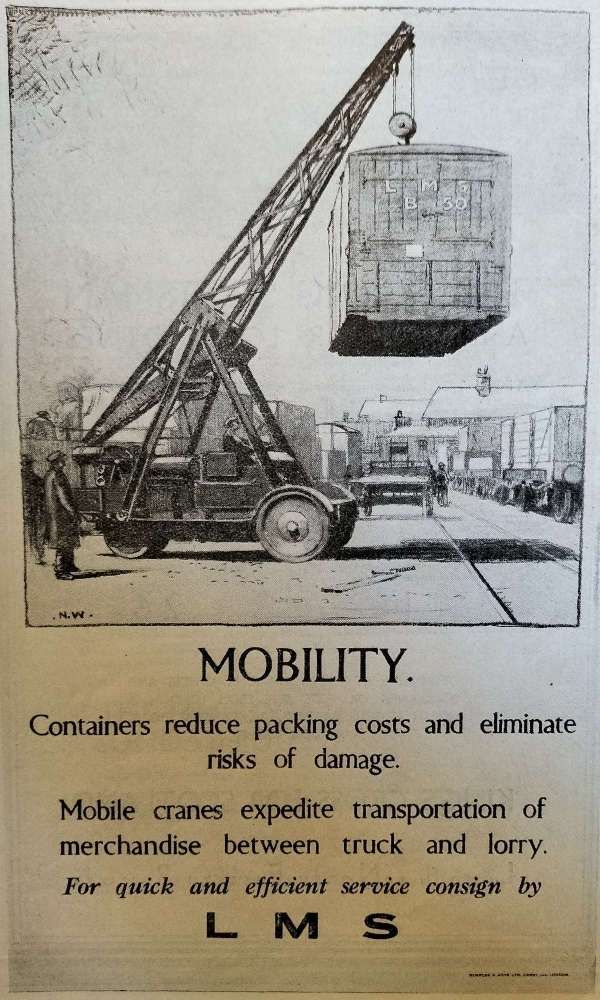
The LMS. sent specimen copies of an “admirable set of new posters recently issued by them depicting the various goods traffic facilities offered on their system. There [were] four posters altogether, all drawn by Mr. Norman Wilkinson, and these differ from the usual run of such things inasmuch as they are in black and white, with good bold red and black lettering beneath each picture.” [1: p412] Two were reproduced in the magazine.
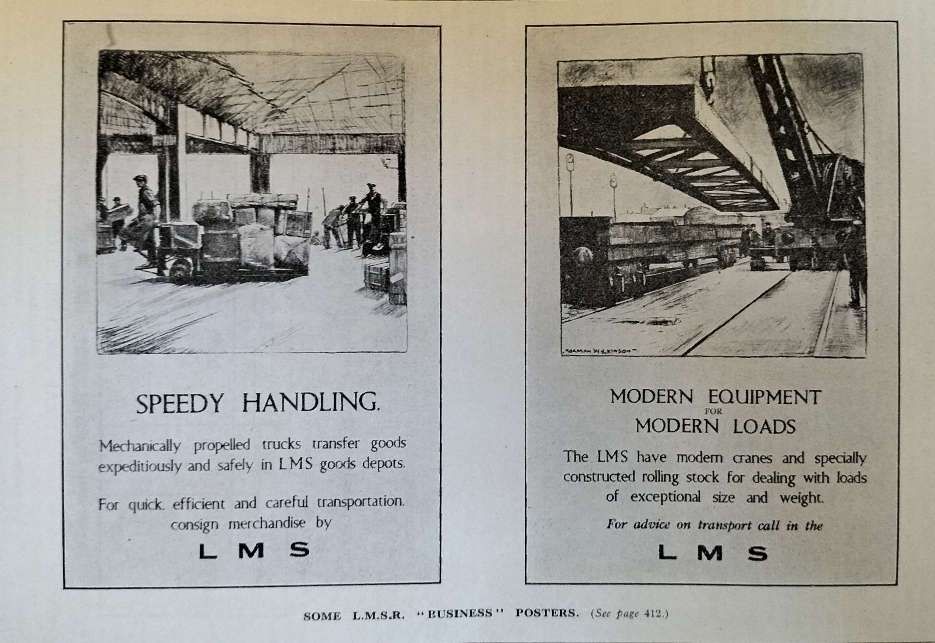
One poster dealt with “‘Modern Equipment for Modern Loads’, and illustrate[d] the fact that the LMS. have modern cranes and specially constructed rolling-stock for dealing with loads of exceptional size and weight; another is mainly concerned with ‘Mobility’, and stresses the fact that containers reduce[d] packing costs and eliminate[d] risks of damage – besides expediting transportation of merchandise between truck and lorry. A third poster – a specially fine bit of work, this illustrate[d] the LMS. method of ‘rapid transport of goods from ship to dock’ – that is, by means of electric trucks – the contention being that modern LMS. steamers and handling appliances ensure[d] safe and expeditious transportation of goods between Great Britain and the Irish Free State and Northern Ireland. The last of the series also deals with ‘Speedy Handling’ by means of mechanically-propelled trucks, which ‘transfer goods expeditiously and safely in LMS. goods depots’.” [1: p412]
New GWR posters
“Two posters which have been issued by Mr. E. Ford, Chief Goods Manager, GWR. … They may be regarded as good examples of the modern tendency to recognise that there is almost as much scope for advertising goods traffic facilities as for those provided by the passenger department. The first emphasise[d] the fact that express freight trains provide[d] for rapid transit, usually on the basis of collection one evening and delivery early next morning, while it is quite appropriate that a first-class express engine should be shown at the head of the train, in that the latest express engines [were] quite frequently employed for running these trains, especially those on ‘registered’ service, with which the poster [was] particularly concerned. The poster itself [was] in colour, with lettering in black, white and amber on a blue ground. Pictorial portions [were] in full colour, while the arrow [was] in green, with amber shading, to emphasise ‘The Sign of the Green Arrow’.” [1: p 413]
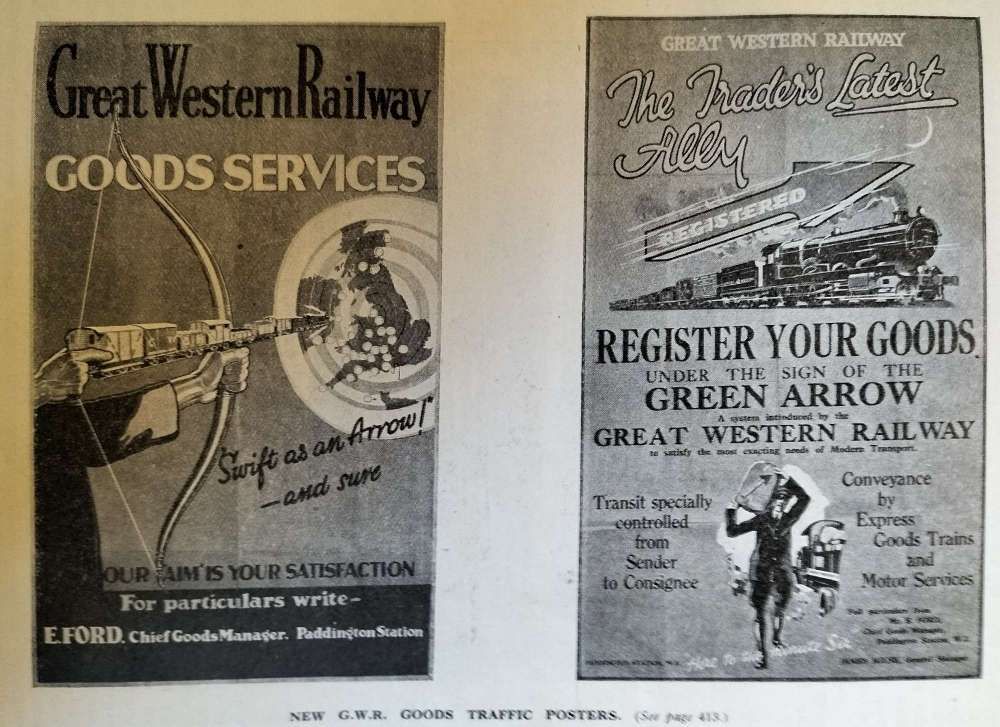
“The second poster also use[d] the symbol of an arrow to indicate, in this case, speed and sureness. The train itself [was] utilised as the arrow, while the target [was] an outline map of the British Isles in green, the name of the principal centres served by the GWR. was indicated as arrow destinations. The poster in other respects [was] on a green ground, utilising also blue, red and amber to an effective degree.” [1: p413]
These two posters go some way towards addressing the veracity of different views about the commencement of the ‘Green Arrow’ service referred to in my article about the November 1938 edition of the magazine. These posters demonstrate that the GWR, at least, was offering a Green Arrow service by November 1929 and suggest that the service reached into Scotland and so into the territories of the LMS and LNER.
References
- The Railway Magazine, Westminster, November 1929.
- https://rogerfarnworth.com/2024/07/20/advertising-in-the-railway-magazine-of-november-1938.
- https://en.m.wikipedia.org/wiki/Golden_Arrow_(train), accessed on 29th July 2024.
- http://www.britishtransporttreasures.com/product/the-track-of-the-irish-mail-euston-to-holyhead-l-m-s-route-book-no-1-anon-1947-ebook, accessed on 29th July 2024.
- https://en.m.wikipedia.org/wiki/Edward_Exley_Limited, accessed on 30th July 2024.
- https://culhamticketoffice.co.uk/bits/hidden-pages/fmoore.html, accessed on 30th July 2024.
- https://en.m.wikipedia.org/wiki/Central_Argentine_Railway, accessed on 30th July 2024.
 Roger Farnworth